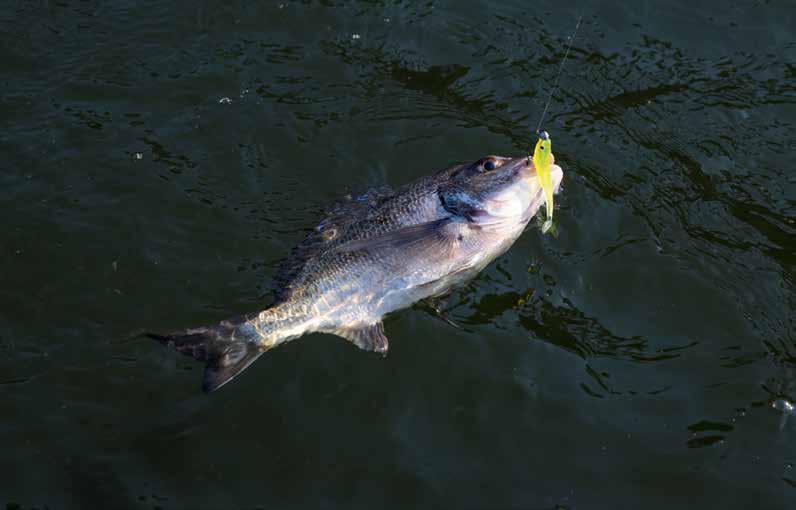
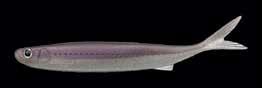
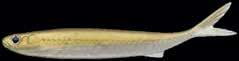
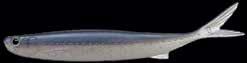
WHAT THE HELL IS HOVER STROLLING? FLATHEAD ON SWIMBAITS
REVIEWED: SHIMANO STELLA SW-D
REVIEWED: ST CROIX RIFT
PRECISION AND COMFORT, BUILT TO PERFORM
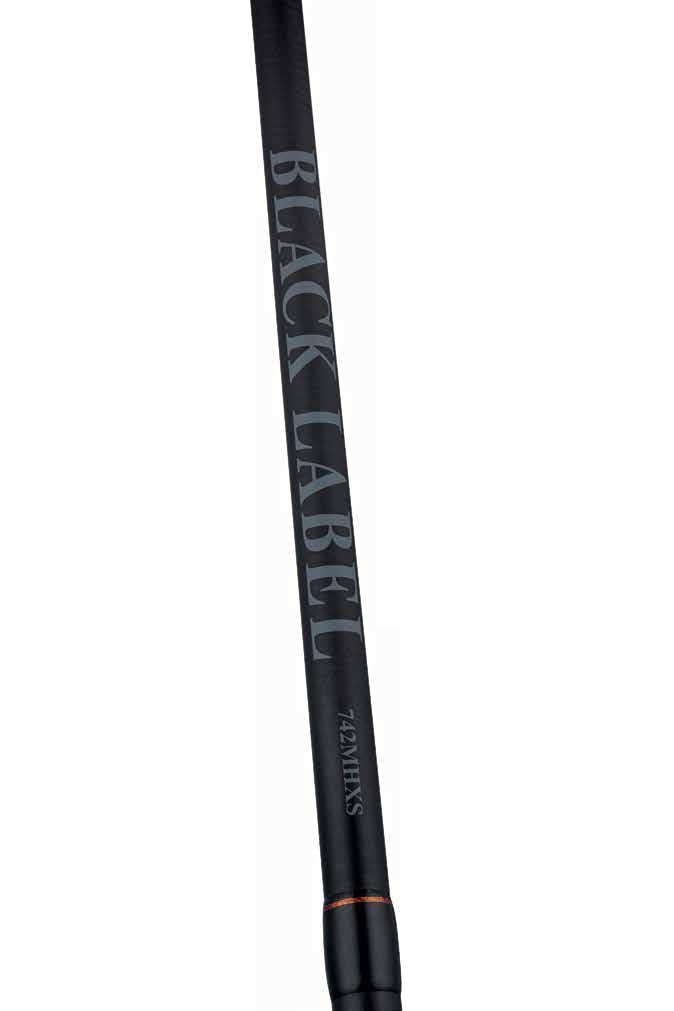
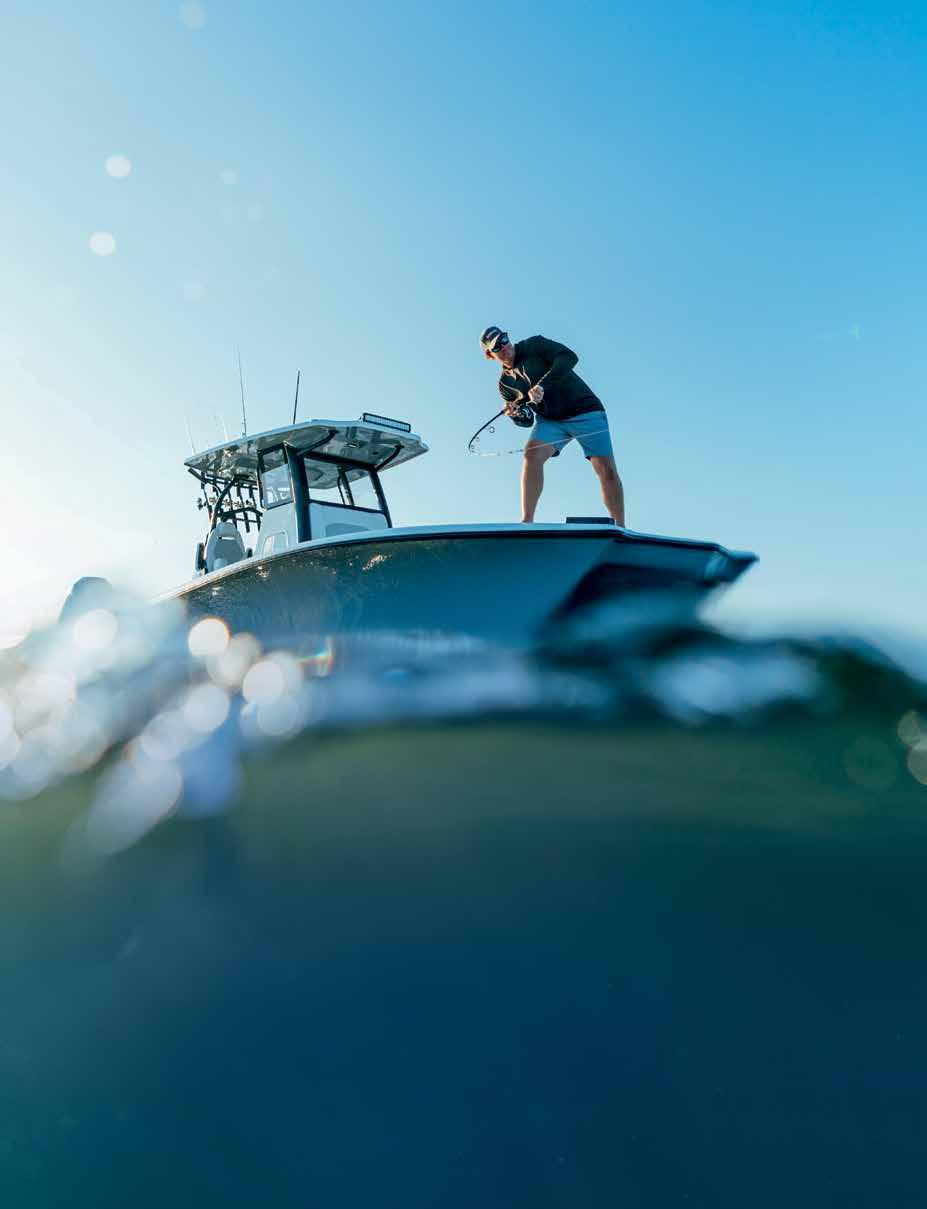
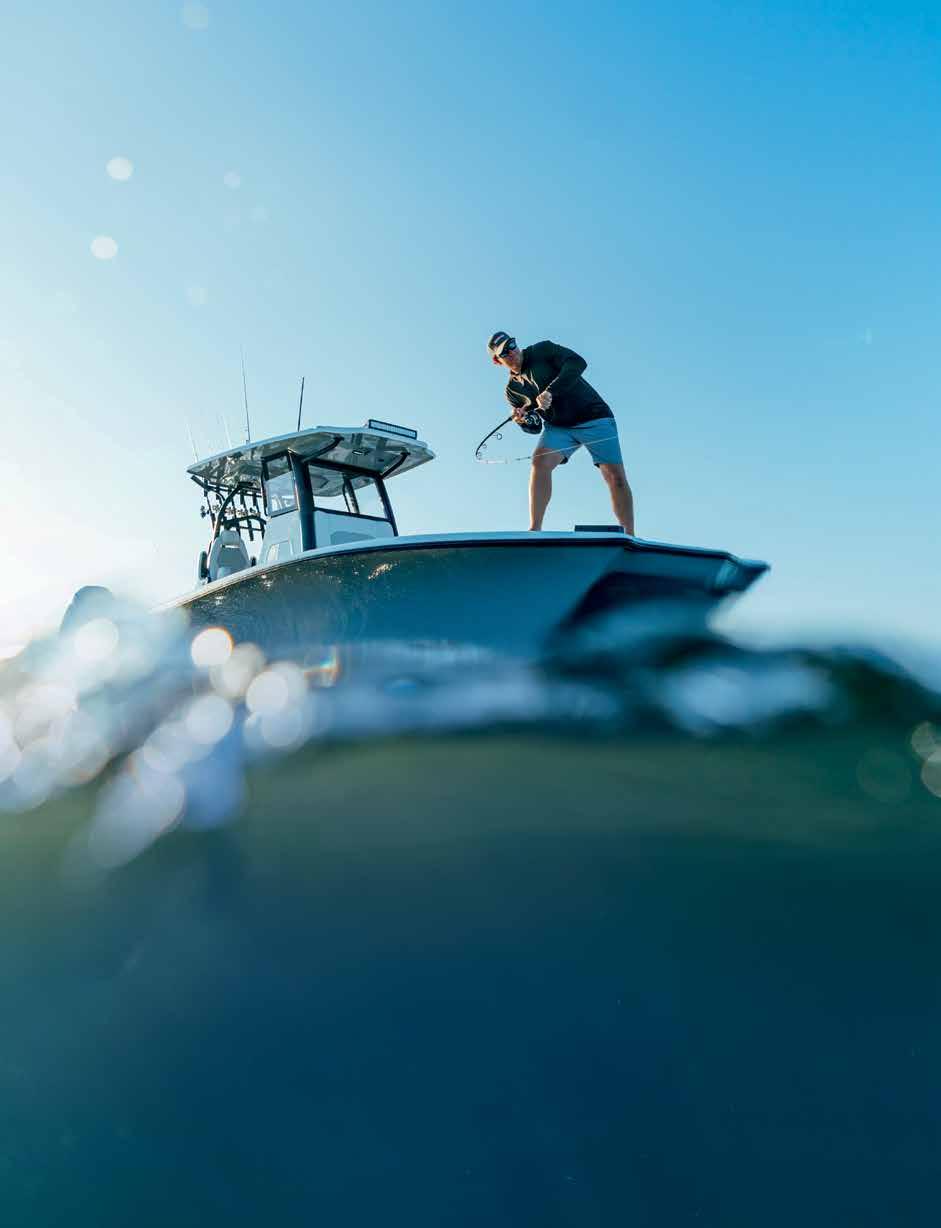
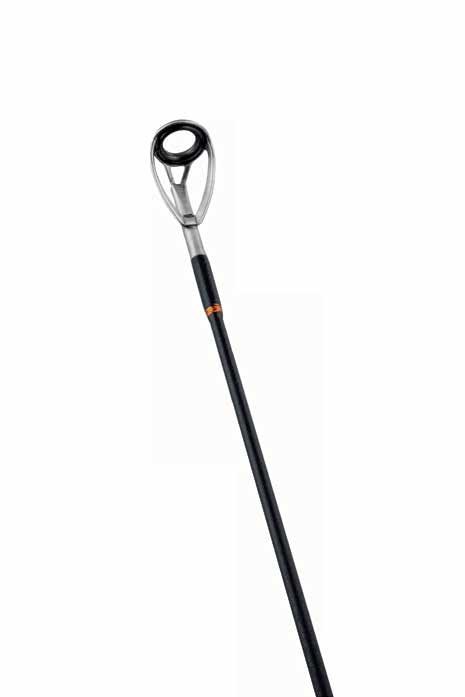
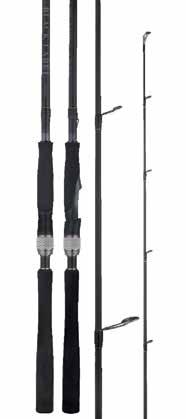
A popular series in the Daiwa range has returned to the line up. 26 BLACK LABEL steps up to the next level of design and performance. Featuring classic BLACK LABEL looks and feel, the range is loaded with diverse models, tapers and designs
HVF NANOPLUS blanks provide optimum blank sensitivity and weightlessness, while X45X FULL SHIELD increases torsional sti ness to help eliminate blank distortion and enhance blank strength and durability. The 2-piece models in the range receive the benefits of V-JOINT ALPHA technology for a true one-piece feel. Daiwa’s ZERO SEAT technology combined with a SPLIT GRIP design creates a low-profile ergonomic feel with optimum sensitivity and balance.
With a broad and varied range of spin and baitcast models the 26 BLACK LABEL series is a welcome return for a classic series that is primed to catch anglers and fish alike.
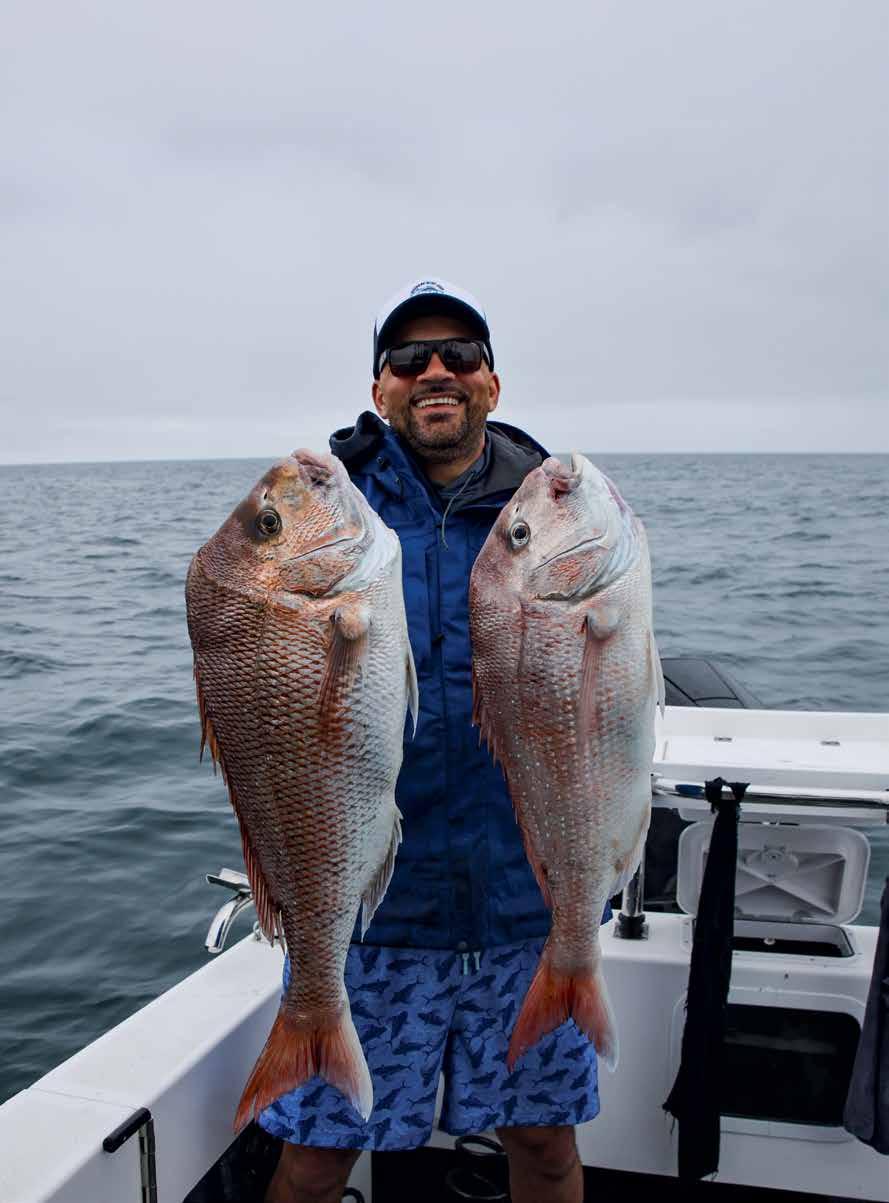
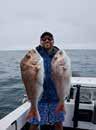
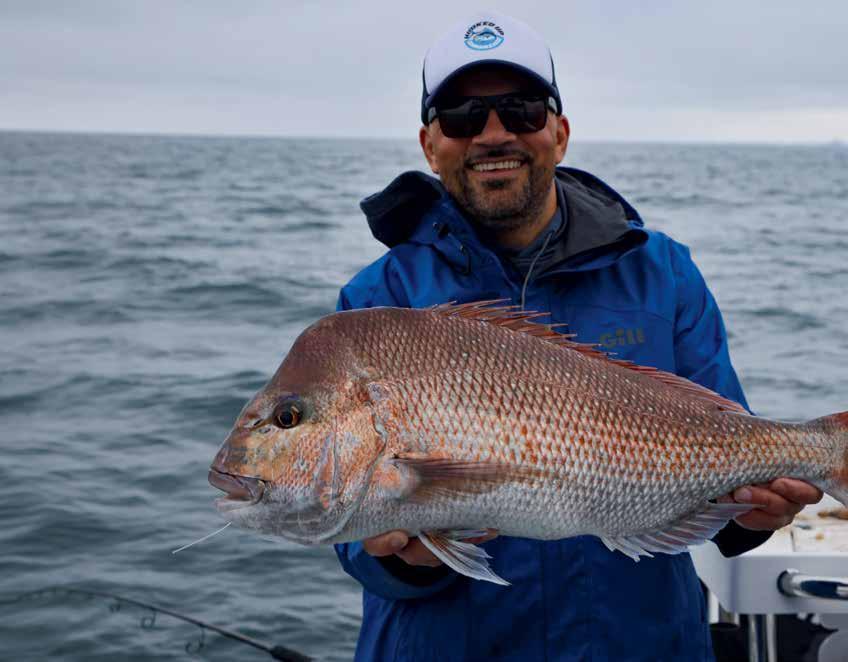
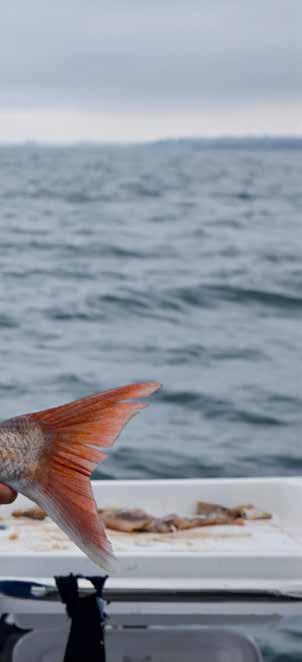
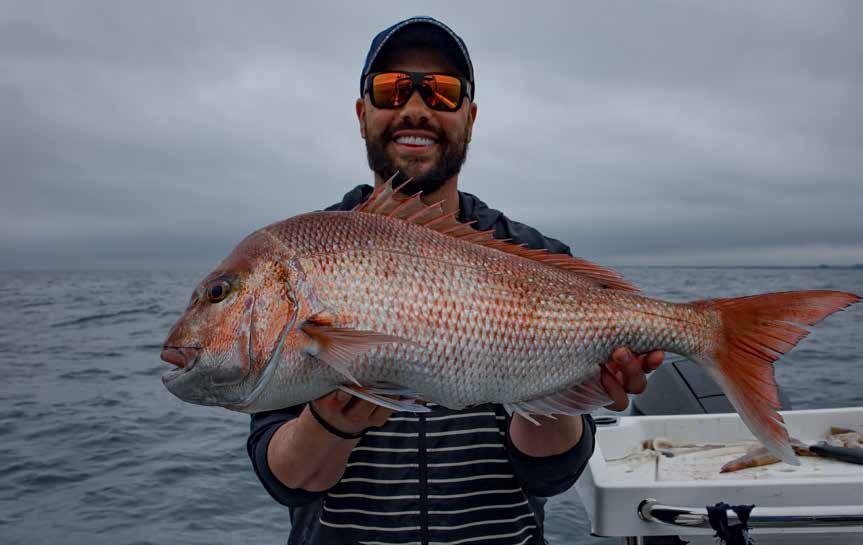
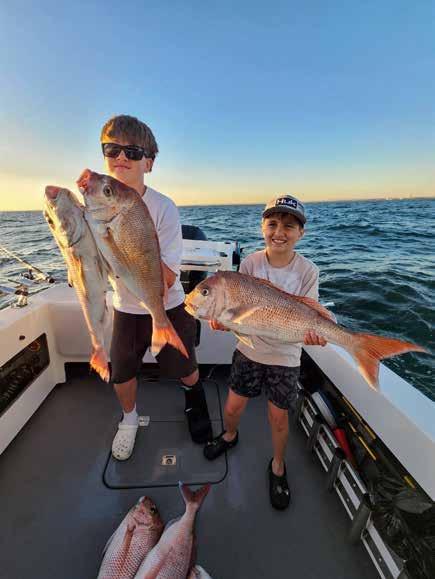
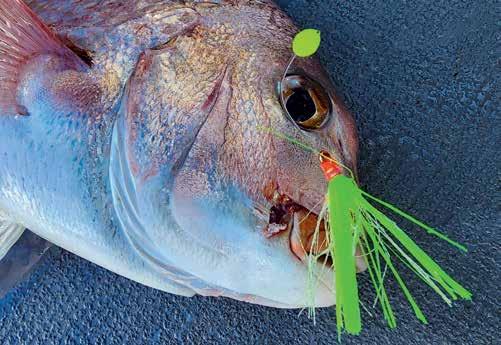
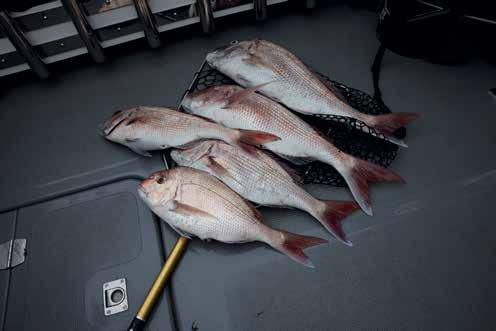
ON THE COVER: Kosta Linardos with a couple of solid Port Phillip Bay snapper taken on some fresh squid.
ARE YOU READY?
Spring has finally hit, and you can feel the season coming alive. After a brutal winter of cold mornings, lumpy bays and wind-chopped waters, it’s time to get out and make the most of it. Down here in Victoria, snapper season is shaping up nicely, and Port Phillip Bay is ready to deliver. The fish are on the move, the water’s warming, and if you’ve got your boat and gear ready, the next few months could be some of the best fishing we’ve seen in a while.
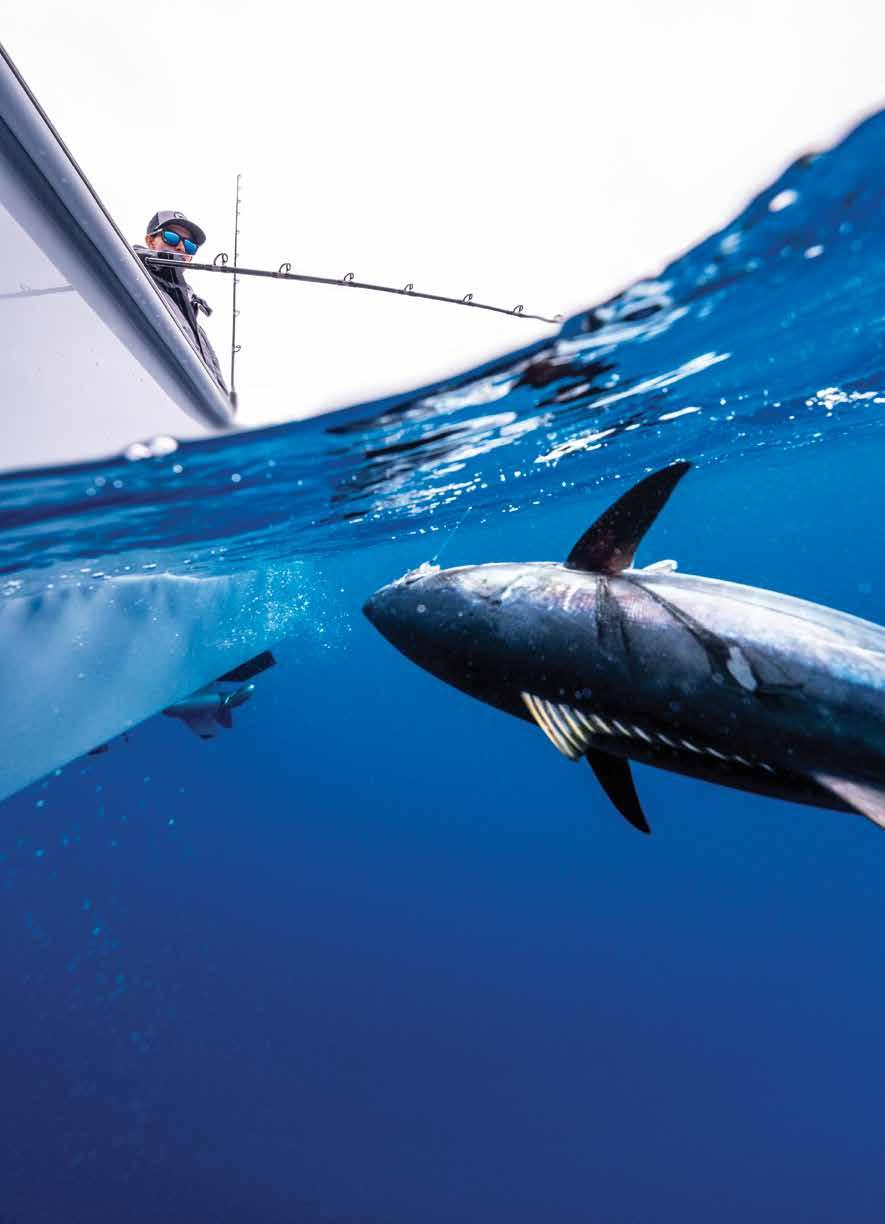
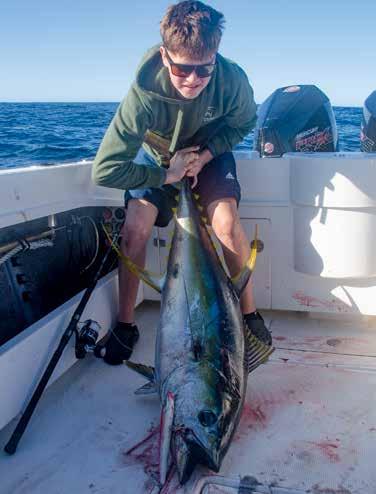
Up the east coast, the estuaries are stacked with big dusky flathead, giving anglers a chance to chase quality fish in calmer conditions. Off Bermagui, yellowfin tuna are still smashing it, and the action offshore is hot. This is the time of year when you get a bit of everything, whether it’s cruising the bay for snapper, drifting the estuaries for flathead, or trolling the bluewater for tuna. After the winter we’ve had, it’s a relief to see the bite start to fire and the fishing start to flourish.
This issue we’ve got some in-depth coverage of the latest craze taking the tackle world by storm – hover strolling. It’s a technique that’s changing how we target a variety of fish, particularly bass and barra, but we believe it will work on countless species. We break down the gear, the rigs and the subtle techniques that make it work, so whether you’re just curious or ready to give it a go, you’ll get a solid understanding of what the fuss is about.
I hope your boat and gear are ready. The season waits for no one, and now is the time to be on the water catching fish.
So, get out early, keep your eyes on the water, work the baits, and make the most of the conditions. The fish are ready – are you?
Kosta Linardos. Editor-in-Chief
CONTRIBUTORS
Jack Hammond, Mark Reinbott, Dean Linardos, Julian Coyne, Adam Hewson, Shane O’Shugrue ADVERTISING
info@hookedup.com.au
STRENGTH, SMOOTHNESS, & ADVANCED ENGINEERING
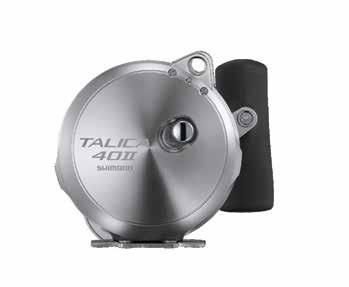
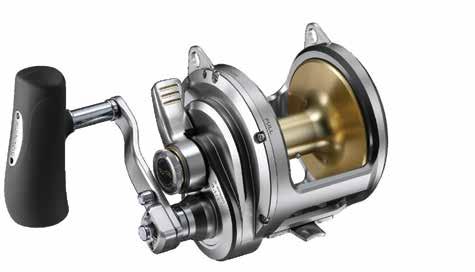
FOR YEARS, SHIMANO’S TALICA SERIES HAS SET THE STANDARD FOR TWO-SPEED LEVER DRAG REELS, TRUSTED BY GAME AND SPORT FISHERS WORLDWIDE FOR ITS COMBINATION OF STRENGTH, SMOOTHNESS, AND ADVANCED ENGINEERING.
With the arrival of the new Talica 40A and 50A, the line-up is now complete — covering everything from lighter tackle work right through to the heaviest offshore challenges.
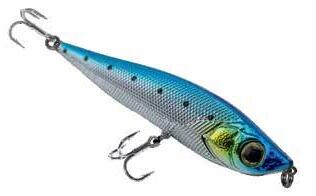
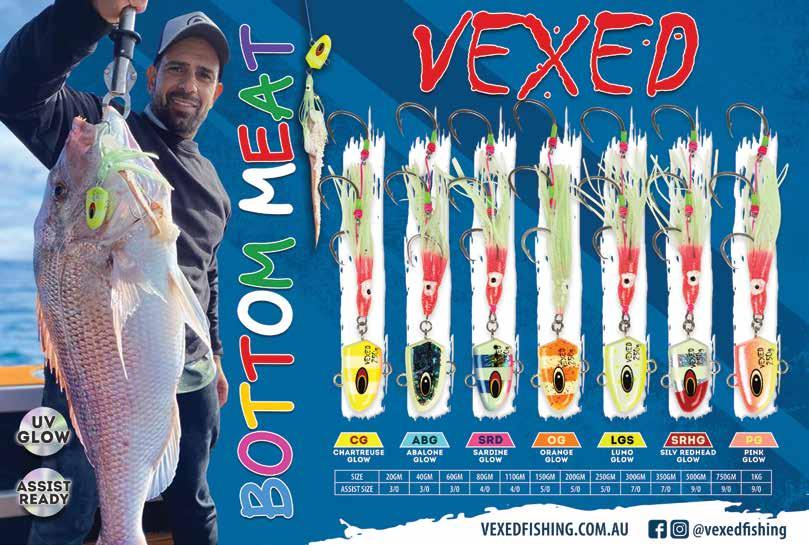
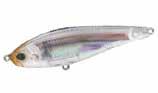
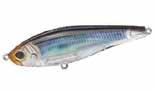
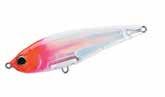
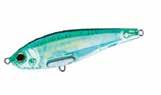
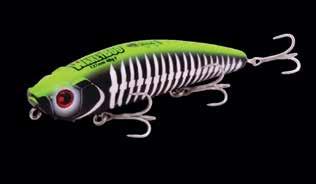
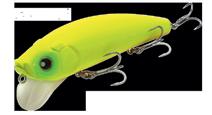
The CID Shiverstick is the ultimate casting stickbait. The Shiverstick has a unique ‘shiver’ action on the drop and the retrieve to imitate a fleeing anchovie, hardy head, pilchard and numerous other bait fish. Available in 12 colours and 65mm,80mm,95mm,110mm,125mm and 160mm and weights from 11gm to 85gm, there is a Shiverstick for all pelagic and inshore and offshore species. vexedfishing.com.au
MOLIX SB CRANK 55
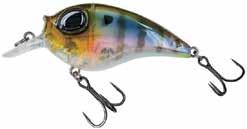
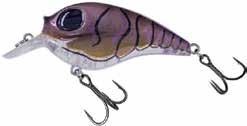
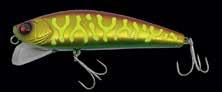
The Molix SB Crank 55 is a 55mm, 10.5g floating square bill crankbait designed for shallow water and heavy cover fishing. Its unique design allows it to glide effortlessly through dense structures while maintaining a distinct wobble action that Molix is known for. Cranked slowly or extremely slowly, the SB Crank 55 produces an appealing action that attracts predatory gamefish. Perfect for fishing in thick cover where larger fish often lurk, this crankbait offers reliability and versatility. Available in 6 colours, it is ideal for anglers looking to target big fish in challenging environments. ejtodd.com.au
YO-ZURI HYDRO MONSTER SHOT 80MM
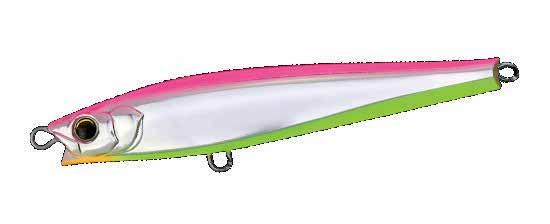
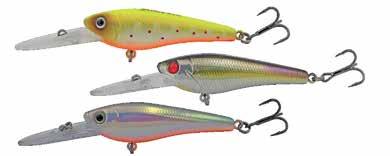
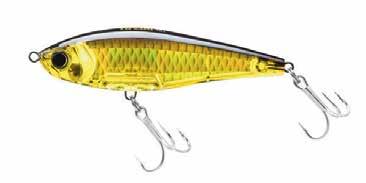
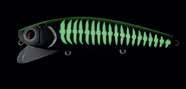
The Hydro Monster Shot is a heavy weighted lipped stick bait, that falls in a horizontal posture, with a side-to-side wobble that perfectly imitates a dying baitfish. It’s now available in a smaller 80mm/30g size for anglers wanting to match smaller bait profiles or target smaller species such as tailor, salmon and school tuna. On a straight retrieve it has wide wobble action, when jigged or twitched it has a sharp darting action and when burned across the surface it imitates a skipping gar or saury. Equipped with through-wire construction, a durable lead filled body and triple strength saltwater grade treble hooks it’s ready to target hard fighting fish. It comes in 6 colour patterns and 4 sizes to cover everything from mackerel, bonito, tailor or tuna. The thin profile mirrors a variety of bait fish with the added weight to make extra-long casts. Available in four sizes: 80mm/30grams, 95mm/40grams, 110mm/50grams & 125mm/60grams.
tacspo.com.au
STRIKE PRO GALAXIA MINNOW NEW COLOURS
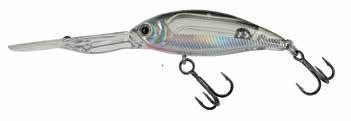
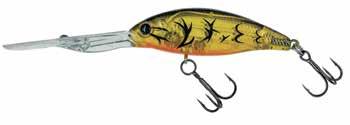
Strike Pro has released three new colours in its ever-popular range of Galaxia Minnow lures. The Galaxia Minnow is a deep diving baitfish profile lure, complete with sonic rattle and an amazing swimming action. The Galaxia Minnow is 6cm long, weighs 7gm and dives to approx 12ft. It is a lure with a proven track record on a wide range of species in estuary and freshwater and is suited to both casting and trolling. jurofishing.com
REINS ECHO MINNOW
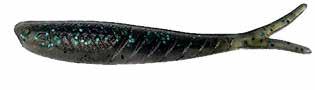
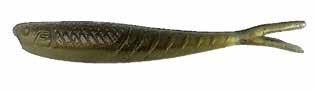
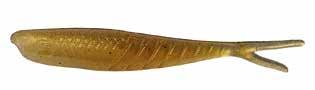
The Reins Echo Minnow is a versatile soft bait designed to entice bass, estuary perch, bream and trout in any environment. Its realistic, bait-like shape and ideal size of 2.3in make it effective across a wide range of conditions. Slash ribs along the sides catch water currents, keeping the lure from floating while ensuring a stable fall and swim posture from surface to deep water. The specially designed thin tail produces subtle vibrations even without rod action, adding lifelike movement. When given a stronger retrieve, the Echo Minnow easily creates wide, left-to-right darting motions that mimic a fleeing bait. Built with a unique density design—non-salt material on the back and heavier salt on the ventral side—the lure maintains a stable, natural posture in the water. Perfect for finesse presentations or aggressive retrieves. gladiatortackle.com.au
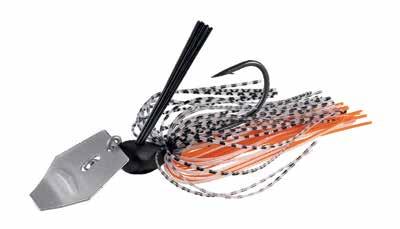
DAIWA STEEZ COVER CHATTER
The Steez Cover Chatter has been reborn and restyled as it returns to the Steez line-up in 2025. The new Steez Cover Chatters feature a very thin blade, which reduces drag in the water allowing the blade to vibrate at a higher frequency and with greater ease, meaning you can retrieve these baits slower than many others on the market. A thin fibre weed guard helps resist snagging, allowing anglers to fish a chatterbait in thick cover and vegetation. A hand tied skirt means there is no rubber band to deteriorate over time, allowing your skirt to stay perfectly aligned for the life of the lure, while a super sharp SaqSas hook aids in turning timid bites into solid hook-ups. Available in two sizes (1/4oz and 3/8oz) and six Aussie colours, the new Steez Cover Chatter is a bass angler’s new best friend and an Australia bass’ worst nightmare. daiwafishing.com.au
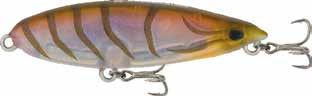
SAMAKI REDIC FALL PRAWN
When you see the Fall Prawn’s action on the sink you know its going to get bit! The Samaki Redic Fall Prawn is a small sinking pencil lure designed for finesse fishing around structure. With a vertical sinking action and a subtle flutter, this technical lure relies on angler-imparted action to entice bites. Its unique prawn-like profile makes it a deadly option for targeting bream around pontoons, pylons, boat hulls, oyster racks, weedbeds, and more. Equipped with the ultimate in finesse trebles, the Decoy Y-S25 and finished in 6 deadly colours including UV enhanced models. 40mm / 2.8g / Sinking RRP $19.95 samaki.com.au
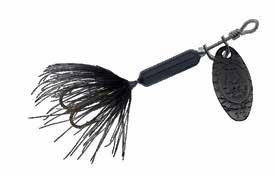
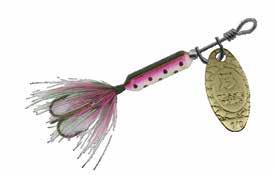
TASMANIAN DEVIL TASSIE TAILS
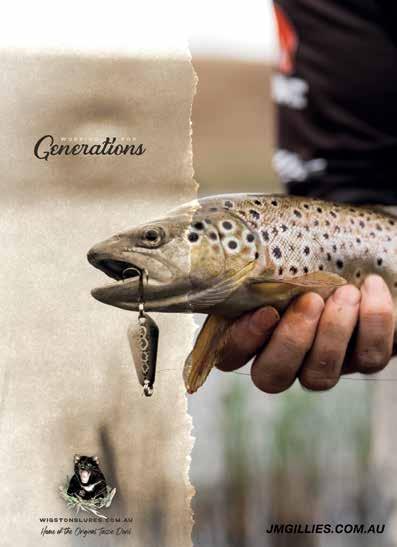
The new Tasmanian Devil Tassie Tails lure is a vibrating spinner designed to drive fish crazy with its pulsating hackle tail. This highly productive lure is perfect for catching trout, bass, redfin, and other freshwater species. Its design ensures excellent hookup ratios and minimal maintenance while attracting fish in various conditions. Whether you’re fishing in clear or murky waters, the Tassie Tails stands out with its irresistible motion. Available in 3 sizes (1/8, 1/4, and 3/8oz) and 8 vibrant colours, this lure is a must-have addition to any angler’s tackle box. Perfect for all freshwater fishing scenarios.
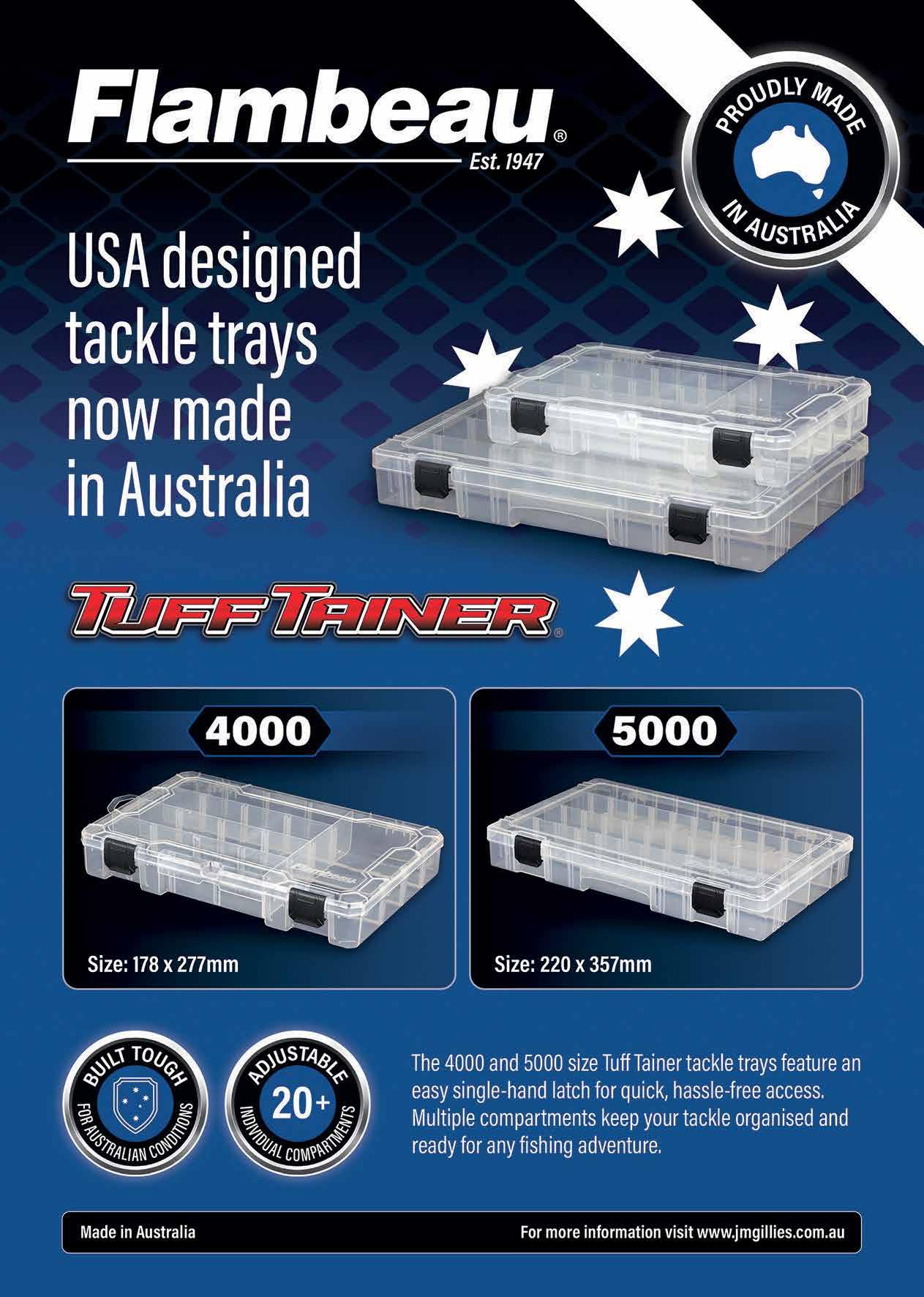
jmgillies.com.au
DAIWA SALTIGA 10
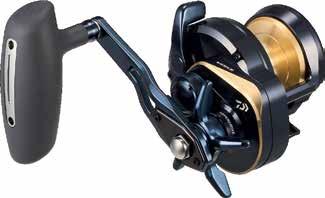
Daiwa expands its Saltiga overhead reel range with the new Saltiga 10, the smallest model in the line, designed as a compact yet robust jigging reel for offshore anglers. Built around Daiwa’s Hyperdrive Design, it combines strength, rigidity, and refined performance for the heavy demands of jigging. True to Saltiga’s high-end tradition, the reel features a Machine Cut Alloy Body, Magsealed Bearings, Clicking Drag, CRBB Bearings, Power Handle, Infinite Anti-Reverse, and Hyperdrive Digigear, delivering unflinching power and smooth precision. The Saltiga 10 offers impressive line capacity for its size, handling PE 1.5–600m or PE 3–300m, while its 9kg ATD drag and Saltiga 15-sized gearing ensure serious cranking power. Compact, durable, and engineered for performance, the Saltiga 10 is the ultimate choice for anglers seeking a premium jigging reel that doesn’t compromise on strength or refinement. daiwafishing.com.au
SAMAKI REDIC FOOTY BUG
Walk it, pop it, slow roll it – The Footy Bug is a wakebait and popper rolled in to one versatile package. The Samaki Redic Footy Bug is a floating surface lure designed for versatile topwater action. Its unique footy-shaped body enhances aerodynamics for improved casting distance and accuracy, while the small bib allows for walking, subtle popping, or a slow-roll subsurface retrieve, making it perfect for working over shallow flats and weedbeds. Equipped with deadly Decoy Y-S25 trebles, it delivers reliable hook-ups on the shortest of strikes. Perfect for targeting bream, bass, and trout, the Footy Bug delivers a unique style of topwater action. Detail 40mm / 4.8g / 1.0m samaki.com.au
MOLIX MX-35
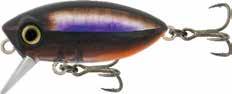
The Molix MX-35 is a compact 55mm, 9g floating crankbait designed for fishing depths of 8-11ft. With its specially designed bib, the MX-35 minimizes snagging and provides a unique swimming action with exceptional balance at any retrieval speed. The durable construction and finish ensure long-lasting performance, making it ideal for targeting fish in flats or near weed beds. Available in 6 colours, this versatile lure offers an effective presentation for both fresh and saltwater species. The MX-35 is available in November, providing anglers with a reliable tool for various fishing conditions. Action: Floating. Length: 55mm. Weight: 9g.
ejtodd.com.au
SALTY CREW SNAPPER CLASSIC
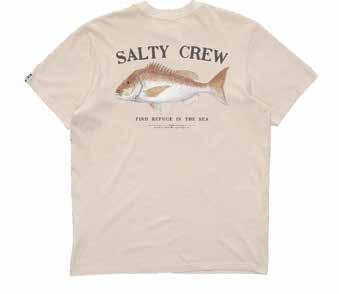
The Snapper Classic SS Tee in Pigment Sand is made from soft, 180gsm spun cotton jersey for comfort and durability. It features a Salty Crew branded trim at the sleeve hem and bold digital printed graphics on both front and back, giving it a classic, stylish look on and off the water. Perfect for relaxed days fishing or casual wear.Sizes: S, M, L, XL, XXL, XXXL salty-crew.com.au
SHIMANO
TALICA 40A & 50A
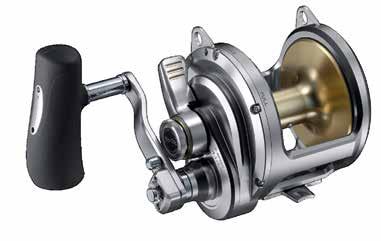
The 40A and 50A Shimano Talica two-speed lever drag reels round out Shimano’s Talica line-up, allowing it to cover everything from light through medium and up to heavy tackle. The 40A and 50A fill vital niches in the popular 24 to 37 kilo line class categories, with extremely generous line capacities, whether spooled with braid, mono or a combination of both. The Talica 40A and 50A feature an innovative dual plate drag system that maximises total drag pressure to a whopping 30 kilos without impacting the angler’s ease of cranking, even under extreme load and on the higher 4.1:1 gear setting. However, shift down to 1.7:1 (with a simple button push) and that cranking power reaches an epic new level. With a coldforged Hagane body, Infinity Drive gearing, X-Protect water resistance, longer handle arm with replaceable knob, extra drag cam for light tackle work and a 10% louder strike alarm clicker, these two largest Talicas are designed and engineered to conquer the ocean’s largest and most powerful predators. shimanofish.com.au
TACKLE HOUSE BITSTREAM 70S
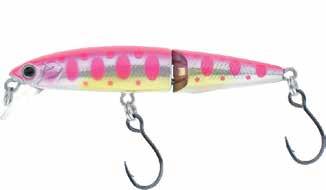
The Bitstream Jointed (S) is a compact 70mm, 8g minnow engineered for targeting large, wary trout in pressured waters. Its jointed body creates a natural swimming action with a subtle wobble, enticing cautious fish to strike. Designed with a fixed internal weight, it delivers excellent casting distance and stability, allowing precise placement in runs, pools, and deeper pockets. Perfect for clear rivers, lakes, or heavily fished streams, the Bitstream Jointed (S) offers a lifelike, versatile option when trout are finicky, making it an essential tool for anglers chasing trophy fish in challenging conditions. gladiatortackle.com.au
SALTY CREW TRANSOM TECH PANTS
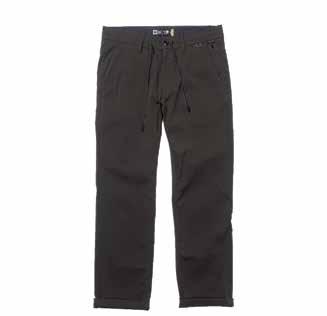
The Transom Tech Pant in Deep Forest is crafted from a 4-way stretch nylon/elastane blend that moves with you on the water. Quick-drying and stain-resistant, these pants are designed to handle the demands of fishing and boating. They feature multiple pockets including side pockets, back patch pockets, a high left zipper pocket and a mid-right plier pocket for convenient storage. Perfect for anglers who need comfort, flexibility and functionality in all conditions. Sizes: S, M, L, XL, XXL
salty-crew.com.au
MCLURES RAINMAKER 8 - NEW COLOURS
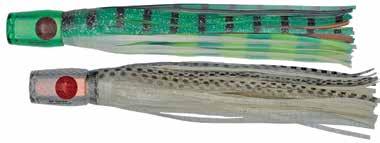
McLures has released two brilliant new colours in their popular Rainmaker range. The Rainmaker features a cup faced front with 4 jet holes in the head to help create an amazing bubble trail as this swims. These lures can be used in most sea conditions and positions in the spread. They range features varying head designs that complement the skirts with choices of luminescent, tinted and kauri shell. These lures come with most of the range offering a UV over skirt whilst the underskirt offers McLures exclusive “Luminite” (which glows in the dark on all colours). They also come with red crystal 3D eyes and the resin heads are near indestructible. The Rainmaker is 9.5in overall length with an 8in skirt and weighs 120grams. These lures are available in 15 fantastic colours that will appease any anglers targeting marlin, yellowfin tuna or southern bluefin tuna barrels.
jurofishing.com
SAMAKI PACEMAKER SCHMICKBAIT
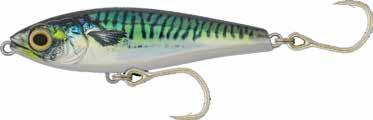
Built tough and designed to tempt the ocean’s biggest predators, the Schmickbait is your go-to weapon for both pelagics and reef flats predators. A full one-piece stainless steel wire runs nose-to-tail, giving you confidence when the fight gets down and dirty. Internal weights create a subtle flutter on the drop, triggering instinct strikes, while its versatile action adapts to any style: slow roll, twitch-pause, or a full-bore burn.Armed with premium Decoy terminals. At the front end Schmickbaits run the innovative R-51 front ring. At the business end premium Decoy singles —JS-3 Pike Type R (115mm) and JS-5 Castin’ (140mm)—this slow-sinking stickbait is ready to rumble. Available in 115mm and 140mm, the Schmickbait is easy to work, deadly effective, and engineered to perform when the stakes are high.
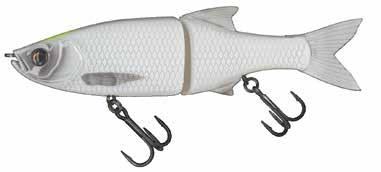
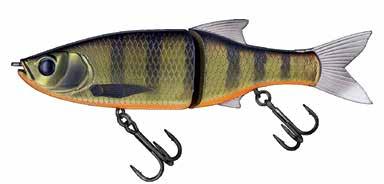
MOLIX GLIDE BAIT 90
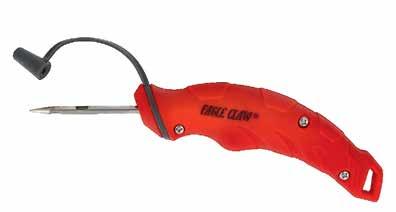
EAGLE CLAW FISH VENTING TOOL
Protect fish populations and stay compliant with regulations using the Eagle Claw Fish Venting Tool. Venting releases air bladder pressure in bottom-dwelling fish, helping them equalize and be successfully released. Equipped with a 10-gauge stainless steel needle and a comfortable ergonomic grip, the Eagle Claw Venting Tool is ready to help you successfully release more fish.
tacspo.com.au
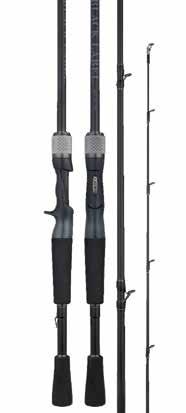
DAIWA 26 BLACK LABEL
The Glide Bait 90 is a smaller version of the popular Glide Bait 178 and Glide Bait 130. Coming in at 90mm 12.5g and slow sinking it is ideal for Australian Bass, natives as well as flathead and many other estuary species. Fitted with soft fins and rotating swivels for the trebles to attach which makes it very difficult for fish to gain leverage to throw the hooks. Available in 8 colours.
ejtodd.com.au
The Daiwa 26 Black Label elevates the classic series with modern design and performance. Lightweight HVF Nanoplus blanks deliver exceptional sensitivity, while X45X Full Shield improves stiffness, strength, and durability. Two-piece models feature V-Joint Alpha technology for a seamless one-piece feel. Zero Seat technology with a split grip reduces weight, enhances balance, and maximises sensitivity. Fuji SIC guides keep the guide train light and precise. With a broad range of spin and baitcast models, diverse tapers, and refined aesthetics, the 26 Black Label series offers anglers a high-performing, responsive rod designed for light tackle applications without compromising style or practicality. daiwafishing.com.au
SAMAKI REDIC SKIPPING PRAWN
Whiting weapon. Weighing in at 5.9g the Skipping prawn casts a mile and comes fitted with Decoy treble and assist hooks. The Samaki Redic Skipping Prawn is a floating surface lure designed for a dynamic skipping ‘walk-the-dog’ action on the retrieve. Its prawn-like profile mimics fleeing prey and the micro cupface mirrors the spitting sound of a prawn on the surface making it a deadly choice for surface-feeding predators. Fitted with a Decoy Y-S25 treble hook on the belly and custom-made Decoy twin assist hooks on the rear, it ensures solid hook-ups on even the most timid bites. DETAIL 75mm / 5.9g / Topwater samaki.com.au
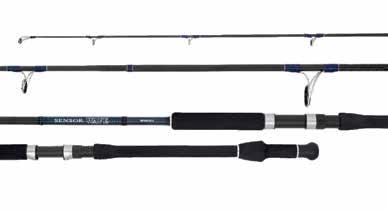
DAIWA 26 SENSOR WAVE
The Daiwa 26 Sensor Wave series builds on a long-standing surf and beach favourite, combining lightweight HSD Graphite with powerful performance. Braiding X blank technology reduces twist and distortion, boosting casting distance and hoop strength. EVA grips are tailored for Aussie anglers, while Fuji Stainless Steel and Fazlite guides deliver smooth, tanglefree casts. The series includes nine models, from the light 1062L to the extra heavy 1202XH and heavy 1503H, offering a variety of lengths, tapers, and handle profiles. Designed specifically for Australian conditions, the 26 Sensor Wave is perfect for fishing from beaches, rocks, and headlands, delivering strength, sensitivity, and control for surf anglers. daiwafishing.com.au
SALTY
CREW FLAGSHIP BOATSHORT
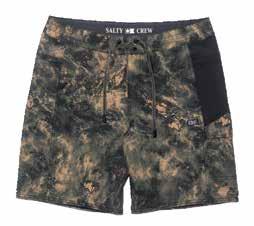
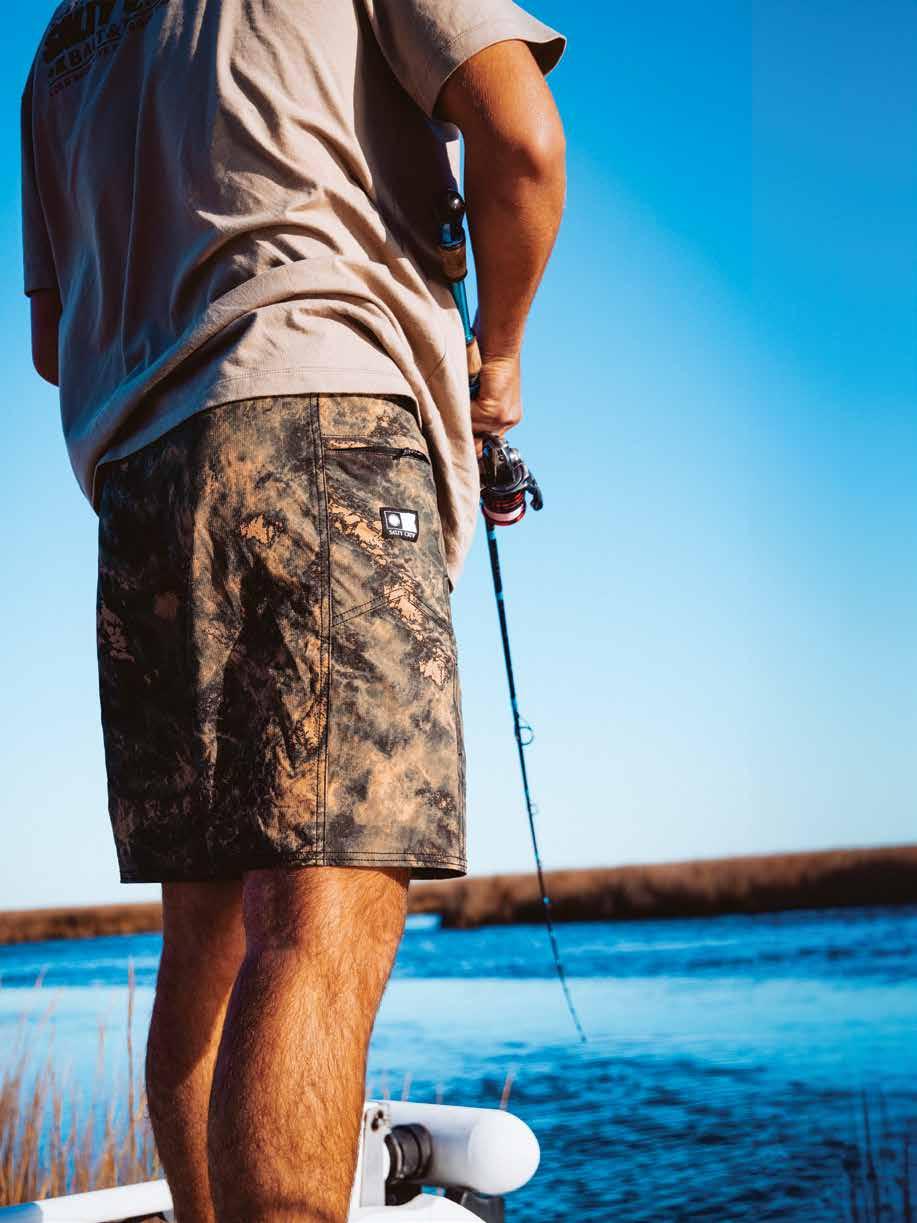
The Flagship Boatshort in Deep Forest is crafted from a 4-way stretch nylon/elastane blend with quick-dry fabric for maximum comfort and performance on the water. Designed with anglers in mind, it features a high right hip reinforced plier pocket with an internal magnet, a lower right cargo pocket, a left hip zipper pocket, and an anti-rash interior with soft thread for all-day comfort. Ideal for fishing or boating in any conditions. Sizes: S, M, L, XL, XXL salty-crew.com.au
SHIMANO TAG-EM RODS
The Shimano TAG-EM Rods bring game fishing within reach of all anglers, offering high-quality blanks and hardware at affordable prices. Built on durable E-Glass blanks and featuring Fuji SiNII fixed guides or PacBay rollers, these rods are designed to handle the toughest bluewater battles. Whether targeting jumbo tuna, sharks, marlin, or swordfish, the TAG-EM rods are ready for the challenge. Custom-designed ergonomic butts and contoured foregrips ensure comfort during long fights, whether standing or sitting. With 10 models in the range, TAG-EM rods provide the perfect balance of performance and value for both short encounters and extended battles with big game. shimanofish.com.au
Light tackle heavyweights.
Make room in the tacklebox, you’re going to want these in your line up.
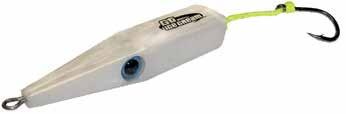
The GT Ice Cream is the Original long distance casting plug. Available in Needle Nose or Skinny Versions, the GT Ice cream is the ultimate long distance surface or Sub surface lure for when the wind is up or if you need a quick retrieve for species such as Tailor, Salmon, Queenies, Trevally, tuna, mackerel and many other pelagic species. Rigged with a Single assist for solid hook ups , the GT Ice Cream is available in 6 colours and sizes 1,1.5,2,3 and 4oz models. vexedfishing.com.au
SHIMANO SUSTAIN FK COMING SOON
The Shimano Sustain FK series continues the legacy of the Sustain family, trusted by both social anglers and tournament competitors. The 2025 range includes four models: 2500HGF, C3000HGF, 4000XGF, and C5000XGF, each incorporating technologies from Shimano’s flagship Stella reels. With InfinityDrive, InfinityCross, InfinityLoop, and the Anti-Twist Fin, these reels deliver exceptional smoothness, power, and precision. Built for long-term performance and durability, the Sustain FK offers whisper-quiet cranking, effortless casting, and reliable operation across seasons. High-end features combined with Shimano’s engineering excellence ensure every cast and retrieve is efficient and responsive, making the Sustain FK a versatile choice for anglers seeking premium performance in spinning reels, whether chasing trophy fish or enjoying everyday fishing adventures. shimanofish.com.au
BAIT JUNKIE COVERT JIGHEAD
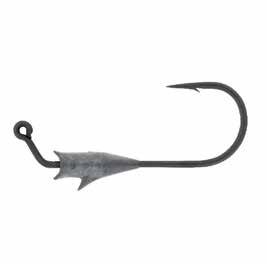
The Bait Junkie Covert Jighead is designed for finesse anglers seeking a more natural presentation. The weight system is concealed within the soft plastic, offering the most natural look and action. The unique bait keeper secures your soft plastic from cast to catch. Featuring BKK hooks coated with Daiwa’s SaqSas technology, the Covert Jighead ensures superior hook penetration for better hookups. Perfect for skip casting under structure or presenting plastics in open water, it suits all fishing situations. Available in both heavy and light wire hooks, with weights clearly marked for easy identification daiwafishing.com.au
REDINGTON RUN
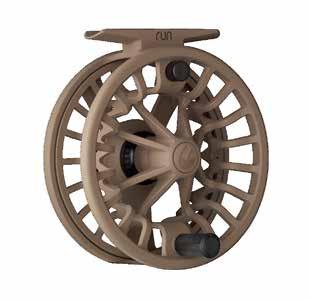
The Run fly reel was designed for the angler looking for a lightweight reel option with the stopping capabilities of a carbon fibre drag system. It’s durable, non-machinable die-cast aluminium construction features a unique ported arbour on the inner barrel of the spool for increase durability and decreased weight. This large arbour design allows for quick retrieval allowing you to keep the pressure on the fish, no matter how hard the fight is. Its compact carbon fibre drag is smooth and reliable in all types of environments. So, no matter if you’re chasing trout on the Goulborn or find yourself stalking barra during the flood tide, the Run fly reel is lite on weight, not features.
WHAT THE HELL IS HOVER STROLLING?
Let us walk you through this technique that’s taking the fishing world by storm.
WORDS: KOSTA LINARDOS IMAGES: A FULL CREW
You may have heard about a new technique named hover strolling, mid strolling, bottom strolling or stroll baiting; if you haven’t, I can guarantee you soon will. It’s a technique that was established in Japan, has taken off in the US in a big way and is just starting to gain traction here in Australia. It’s currently so big in Japan and the US that my Instagram feed (where I largely follow tackle companies from all the around the world) is filled with new strolling baits almost every day.
Before I delve into all the details of this new and highly effective technique, I’ll break down some core elements of what it’s all about then you can decide if you want to read on.
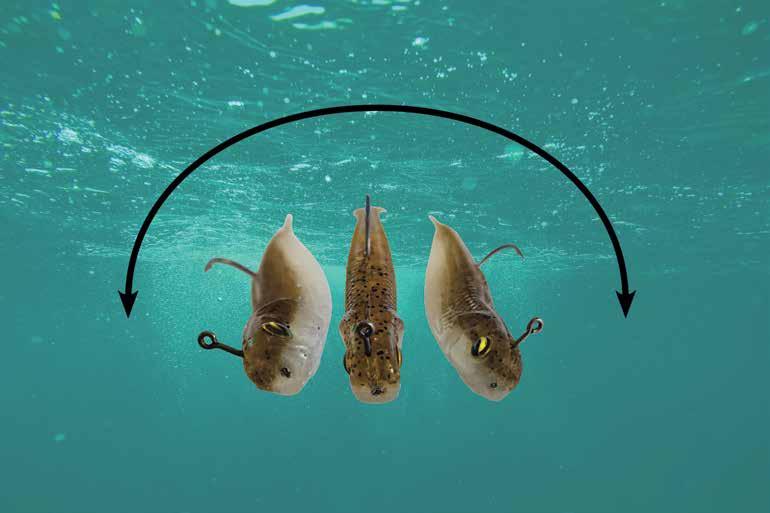
The action of the lure is the most unique element of strolling. A properly rigged strolling bait will swing on its axis from side to side, like a boat rocking on its keel, and it’s this new and unique action that fish find highly appealing. Most of these strolling lures are equipped with some sort of reflective element on the sides so they sparkle and flash as the lure strolls, attracting attention. This action really does look like an injured baitfish and is very different from the action you achieve with a standard jerkshad or paddle tail. It causes fish to strike at the strolling lure when they might usually reject other presentations. Now, it’s fair to ask the question – is this because the action is a great imitation of struggling prey or because it’s something
the target species hasn’t seen before? In Australia only time will tell, but it’s still very effective in Japan after five years and in the US after three years.
The other element about strolling is the momentum you use to retrieve the lure. The idea is to keep it in the fish’s face, almost harassing them with this strolling action right above their heads or in their face. You want as little up down and forward momentum as possible. Although you’ll always have momentum back toward the angler when reeling in line, this technique does keep the lure in the strike zone longer.
You may thinking that doesn’t sound like anything new, and we’ve all done that to some degree whether its tea-bagging a vibe, working a jerkshad or super slowrolling a paddletail, but it’s that unique strolling action that is the big difference.
Intrigued? Well read on. Putting the pieces of this strolling puzzle together has taken three months of heavy research. I’ve translated many Japanese texts and videos, watched countless videos, spoken to the few Aussie anglers who are already doing this and read the few articles written in English I could find. That finally led me to sourcing the right gear so I could pool-test my findings then confidently present it here.
BUT DOES IT CATCH FISH?
Yes, it does. The two species where this technique has really found a place in Australia is barramundi and Australian bass, but I strongly believe it will work on every species.
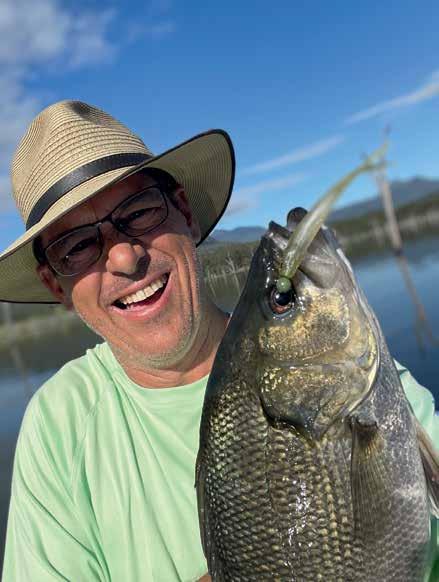
Things really kicked off here in November 2024 when American competition bass angler Jacob Wheeler came to Australia to fish an ABT barra comp and won it using this technique, it was his first time fishing for barra, and he cleaned up at Kinchant Dam. Not long after that we shot a video at Bemm River for Shimano where the bream had shut down and were all schooled up spawning in one spot. I was fishing with Shimano product development manager Josh Carpenter, who had been on to strolling for a while and had bought many products from Japan. As soon as he tied one on and started working it, he hooked up and we went on to catch multiple fish. So, I know it works for bream, and I’ve done enough research to know it works for both large and small mouth bass, barra and Aussie bass and I’m confident it will work for every fish. I think it will be dynamite on yellowbelly, and I can’t wait to use it for snapper, estuary perch, flathead and mulloway.
WHAT MAKES IT A STROLLING BAIT?
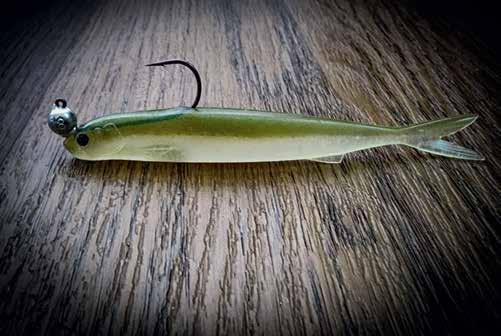
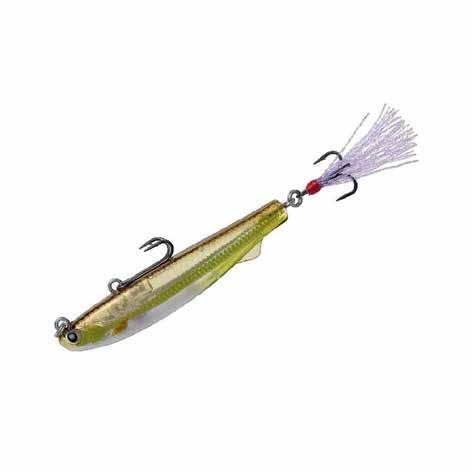
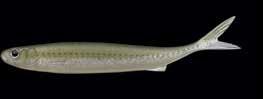
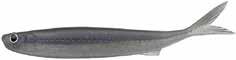
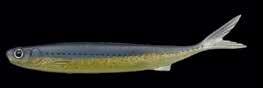
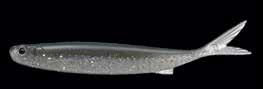
A strolling bait looks similar to a jerkshad, but has some subtle differences that allow the angler to get that rolling/strolling/swinging action. We experimented and pool-tested multiple plastics comparing standard jerkshads and lures that are marketed as strolling baits and there is a definite difference. With the right rod action (and correct jig heads) using a range of standard jerkshads, you can get a bit of that strolling action but it’s nowhere near the same. Soft plastic strolling baits in our findings are best when made from PVC (the non-stretchy style of plastic) as opposed to buoyant elastomer plastics (think Z-Man, Bait Junkie, Crush City). The heavier weight of PVC is advantageous, and the lures are often impregnated with salt in the lower half of the plastic, which increases the lure’s lower centre of gravity and helps achieve the strolling action. Generally, strolling baits have a curved shad-like belly with a flat top. They also often feature either a thin pin tail or a forked tail that runs horizontally or flat (like flounder or flathead as opposed to a vertical tail as on most fish and lures).
The flat top is what grabs the water and helps it stroll, and this – combined with the flat tail orientation – looks very cool
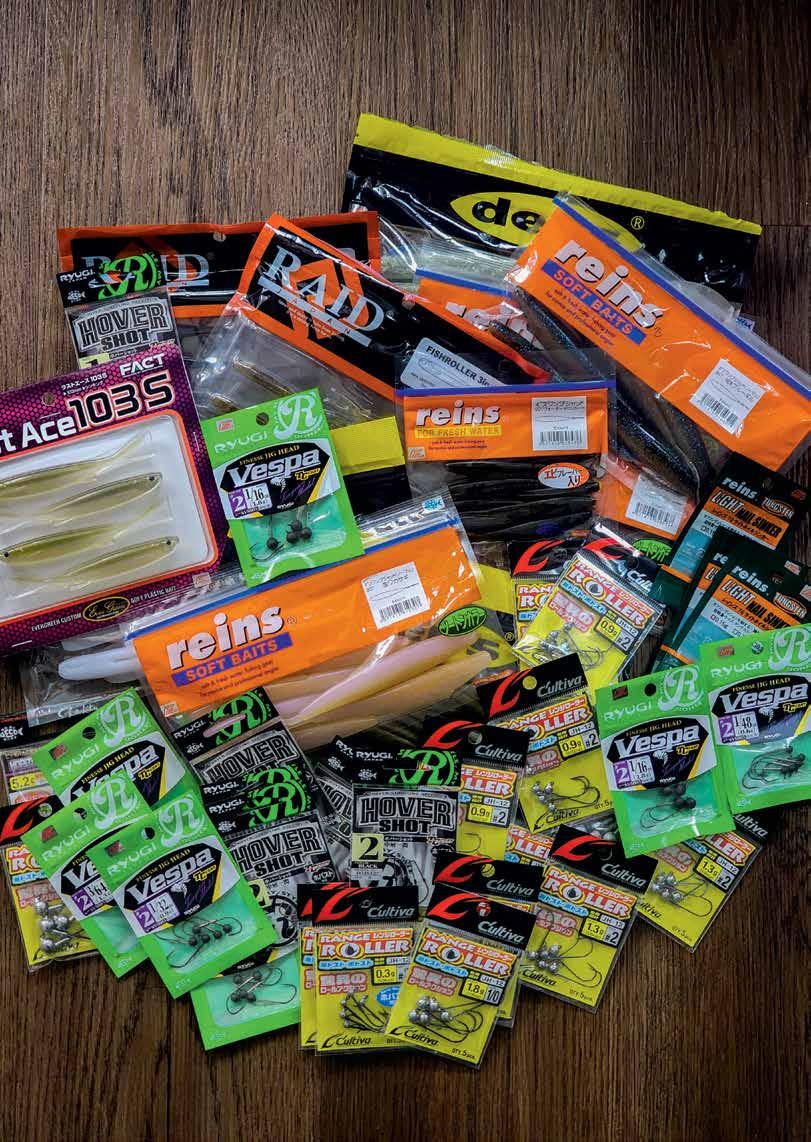
in the water. We tested a few strolling baits that are available in Australia: Raid Fish Roller, Evergreen Last Ace 103S, Tiemco Glimmer 7 (a hard bait) and the Reins Swamp Shad. We also tested some that aren’t available in Australia such as the Deps Sakamata Shad (extremely popular globally).
Now let’s get into the fun stuff – all that sweet tackle and how you need to set it up and work it.
HOVER STROLLING
There are three main types of strolling: hover, mid and bottom strolling. Hover strolling is the original technique and is focused on shallow water, a great technique for targeting finicky fish in the shallows. The first aspect of hover strolling is the sink action; if set up correctly, your plastic will slowly helicopter down in a spiral as it sinks, an action that fish find highly appealing as it imitates the natural dying sink action of a real baitfish. You then work the rod tip with short, fast shaking movements and this rod action gets the plastic strolling like the fish is on its last attempt to swim before it finally dies.
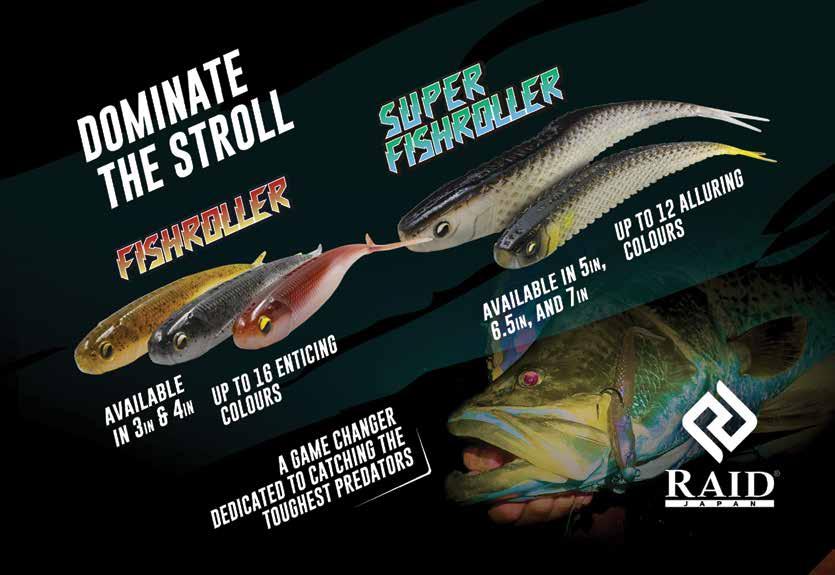
On smaller baits, correct set-up is crucial or you will not get that side-to-side strolling action. One of the original and globally most popular hover strolling plastics is the Raid Fish Roller. This is the first strolling lure I ever saw; I was given a packet at AFTA 2024 and when
The action you want from your strolling bait is for it rock from side to side. This is achieved by shaking the rod vigorously. Short, solid tipped rods make this action far easier to achieve.
I came home, I could see there was a lot that was different about it, most notably the fact it had a sealed air bubble within the plastic. I had no idea at the time what hover strolling was, but I knew there was something a bit special about these lures. After I learned a little about hover strolling (about a year later) I dug through my plastics to find the Fish Rollers, tied on a light jighead and could not get it to stroll the way I had seen in some videos. That’s when I went down the strolling rabbit hole and I realised there was some specific terminal tackle required to get this technique right. I watched almost every video Raid had posted on its YouTube channel and painstakingly made screenshots of the Japanese subtitles to translate in ChatGPT.
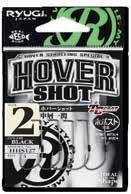
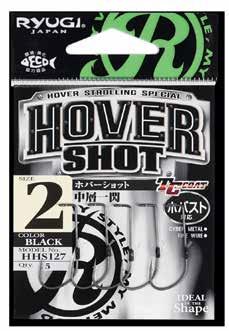
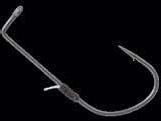
I learned that Ryugi (which many anglers will be familiar with) makes all the best strolling terminal tackle – and none of it was available in Australia. So, I went online and bought a heap of this terminal tackle from various Japanese sites and called all the Australian distributors to ask if they had any plans to bring it in. Viva Fishing is the distributor of Ryugi and will be bringing in two key products to the strolling equation. The first for when it comes to hover strolling is the Ryugi Hover Shot. A weightless jig hook with a very finesse and effective keeper and a tow point (the circle bit you tie your line to) that runs left to right as
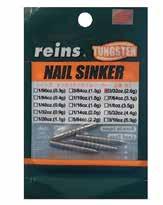
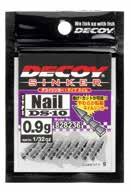
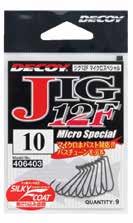
opposed to inline with the hook point like you’d see on the average jighead. The tow point running this way stops the line from sliding down the front of the tow point and keeps it up high, which helps the strolling action. You then use finesse nail weights (about .06g), which adds a low centre of gravity to the plastic, and this is what helps you achieve the desired action. The Raid Fish Roller has been designed for this set-up. It has a special place in it for the nail weight and is designed (like many strolling baits) to be dorsal rigged or back skin-rigged. You don’t rig it like a normal plastic, where you just put the hook point straight through the centre of the head; you pin it through the back of the plastic, so the shank of the hook sits as high up as possible. In the case of the Fish Roller, this prevents you popping the air sack, keeping it buoyant and gives you that low centre of gravity that allows it to stroll side to side on its axis. This is the correct rigging method for all hover strolling plastics. Once I had the light nail weights and the right hook with the Hover Shot, it didn’t take long to get that strolling action happening. The other hover strolling hook that is well revered is the Decoy Micro Jig 12F. I couldn’t get my hands on any, but I spoke with Josh Lowry, the owner of Bluefish Imports who is the agent for Decoy Australia and he plans to bring them in.
If you don’t want to play around with plastics, hooks and jigheads, the Tiemco Glimmer 7 is a unique hard bodied strolling bait that features a W hook on top that’s magnetised to the lure. It has an outstanding action and we have caught many bream on this lure.
was learning until I was given the number of an Australian competition bass angler named Mark Reinbott. Talking with Mark was akin to being stuck in a foreign country for a few months where you can’t speak the language and then meeting an Australian. Mark is a self-confessed tackle tragic (like me), a keen and competent barra and bass angler, and he was all over it. He had been down the strolling rabbit hole and had bought all the same products I had from Japan trying to get it right. He confirmed most of what I had learned, and he was equally happy to speak with someone else who understood what it was all about. As he had more practical on-water experience than I did, he was able to provide some great info. Mark fishes in deep impoundments chasing bass where he largely uses the Raid Fish Roller in what would be considered mid strolling or bottom strolling, which is essentially the same as hover strolling with weighted jig heads so you’re fishing the midwater column or ‘bottom’. He’s been
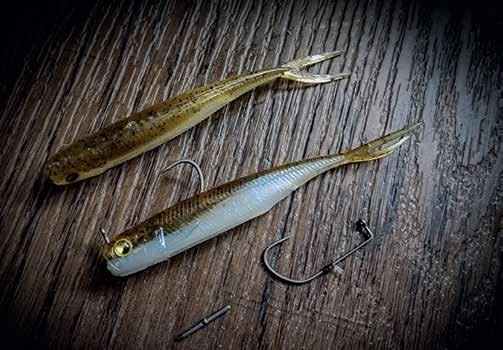
An Evergreen Last Ace 103S rigged with an Owner Range Roller. Note how it’s “back skin” rigged with the jig head sitting on top- this greatly aids the lure in achieving the strolling action.
The 3in Raid Fish Roller correctly rigged with a Ryugi Hover Shot hook and Reins nail weight to get that awesome strolling action..
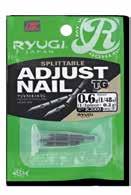
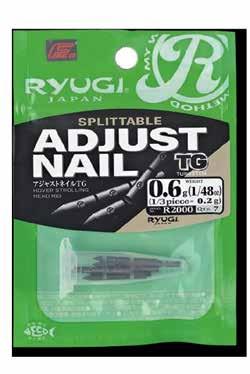
Finesse nail weights are essential in getting the hover strolling action right. Thankfully they are available in Australia with Reins, Ryugi and Decoy all producing a great product.
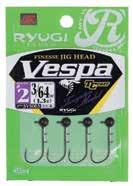
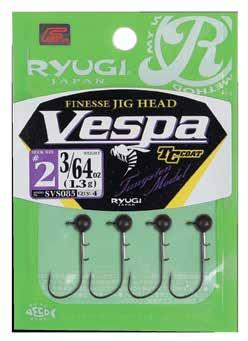
Ryugi produce the Hover Shot and Vespa which are designed specifically for hover strolling while Decoy produces the Jig 12F Micro Special for strolling.
targeting bass for over 30 years, and he couldn’t believe how effective this technique is. He’s catching fish that are sulking on the bottom and would never have touched other presentations. He also says that for bass it’s essential to get that side-to-side strolling action, but for barra it’s not as important – just the erratic darting of the lure in their face is enough. However, I believe without the correct terminal tackle few anglers are presenting stroll baits correctly and we’re yet to see it reach its full potential.
STROLLING JIG HEADS
I explained to Mark I was struggling to get some of the plastics I had to stroll, and he confirmed the jigheads made a huge difference. I had already placed my order for a range of jigheads from Japan and Mark confirmed I had ordered the correct products.
I ordered three brands of strolling jigheads – the Ryugi Vespa, the Owner Cultiva Range Roller and the Gamakatsu Horizon Head. Through all my research these were the ones that kept coming up with proficient strollers, along with an American brand called Queenie that I just couldn’t find. Even finding this gear online from overseas wasn’t easy as it’s sold out at most websites due to its popularity.
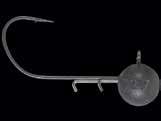
The Ryugi Vespa is a finesse jig head that comes in two hook sizes of 2 and 3 with weights ranging from 1/48oz (0.6g) to a maximum of 3/32oz (2.7g). These are perfect for the smaller three to fourinch baits you’d use for bream, bass, estuary perch and similar-sized species. The Vespa proved a game-changer, featuring the same hook configuration and finesse keeper as the Hover Shot and fitted with a tungsten round head. They really did make a difference on the smaller plastics and got that awesome strolling action quite easily. These aren’t currently available in Australia, but Viva Tackle is bringing them in, and they will be available soon. In my testing these jigheads proved invaluable for the more finesse baits, and standard heads from the likes of TT and Bait Junkie didn’t provide anywhere near the same action.
I also ordered the Owner Cultiva Range Roller in various sizes. These are a purpose-built strolling jig head with a unique design, featuring a ball head with a tall tow point and a lead fin that comes up to the base of the tow point. The hook shank runs out of the ball weight as low down as it can, rather than centrally, and this all helps create an easy and well-pronounced strolling action. These come in a larger range of hook sizes and weights for larger plastics and are excellent – they really do get the plastics
to stroll better. Michael Moore, the Victorian representative for Pure Fishing, the Australian distributors for Owner, explained they would probably not bring these into Australia as they don’t want them to conflict with their range of Berkley jigheads, which is unfortunate as this is a great product.
The other jighead I ordered after reading great things about it was the Gamakatsu Horizon Head. It’s probably the most popular jig head in America and proved to be excellent, especially in its larger sizes for the larger plastics such as the 6in Reins Swamp Shad and the Deps Sakamata Shad. There wasn’t anything noticeably different about the Horizon from a standard ball head, aside from a nice wide gape hook that was coated and a substantial keeper. It had me wondering if a standard ball jig head would work the same, but I couldn’t find any. However, I do believe there is something more to the Horizon. I spoke with Gerry Morsman, the Victorian representative for Frogleys Offshore, who distribute Gamakatsu, to see if they had any plans to bring it into the country, but there are currently no plans to bring it in. I called Tackle Tactics, spoke with Justin Wilhelm (their product development manager) to see if they were planning on producing strolling jigheads.
Mark Reinbott with a large Aussie bass taken on the Raid Fish Roller.
World leaders in hover strolling and mid-strolling terminal tackle.
Ryugi delivers tackle that makes your plastics perform at their peak. From the Hover Shot jig hook and Vespa tungsten jigheads to Hover Strolling nail weights, every piece is designed to get the bites and set the hook with confidence.
Don’t go strolling without Ryugi.
Precision-made for hover strolling, the Ryugi Hover Shot gives finesse anglers a perfectly balanced hook for targeting suspended fish. With a 90° eye and horizontal bait posture, it delivers lifelike presentations that draw bites when nothing else works. Fine wire, mid-shank keeper and TC Teflon coating ensure soft plastics stay in place and hooksets are fast and clean.
The Vespa is a purpose-built mid-strolling jighead crafted from tungsten for optimal action and a precise center of gravity. Its small, secure keeper holds soft plastics without disturbing the worm’s silhouette.
Adjustable knot placement and a horizontal eye ensure stable, lifelike action, making the Vespa a finely tuned finesse jighead where every detail enhances performance.
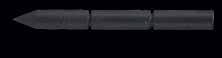
The Ryugi Adjust Nail is an ultra-lightweight, finely adjustable nail sinker designed for finesse rigs like hover strolling. Made from resin tungsten with precision slits, it allows easy, accurate splitting to balance your soft plastics perfectly. Working seamlessly with the Hover Shot, the Adjust Nail ensures optimal presentation, giving your plastics the natural action needed to entice bites.
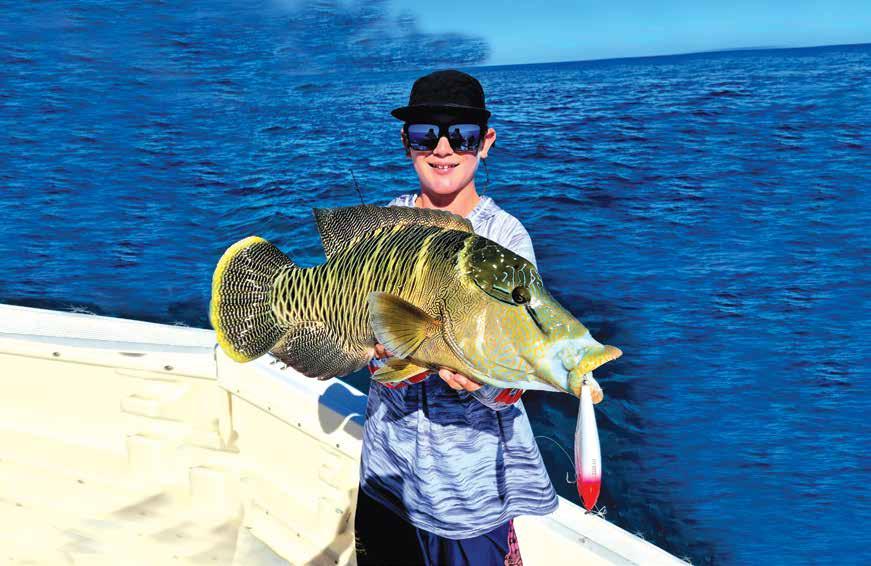
Bream love a well presented stroll bait, whether it be mid-strolling or hover strolling and are one of a growing list of species that this technique is proving its effectiveness on.
They are aware of the growing trend and have looked at it but had no definitive plans yet.
Daiwa have no plans in the near future to produce anything in Bait Junkie and Wilson, who have the current hottest plastic in the strolling world with the Raid Fish Roller, have played around with the idea but at this stage are not sure if they will proceed.
So, as it stands, we have finesse jigheads for strolling when the Ryugi Vespa arrives, and this is great news as these are truly awesome, but at this stage, nothing in the larger hook sizes and heavier weights. The correct terminal tackle is proving to be an issue and unless Pure Fishing bring in the Range Roller or Frogleys bring in the Horizon, Aussie anglers will be sending their dollars to Japan.
IS THIS ALL JUST HYPE?
It’s a fair question, and one that even those already successfully selling strolling product are asking themselves. I’ve been fishing a long time and I’ve been heavily involved in the world of tackle for 13 years. Hooked Up has brought a lot of new techniques to light from other countries with articles like this and there are some we have let just go by and fade away.
In my opinion, strolling is here to stay and by next AFTA in 2026, I think we’ll see strolling gear dominate the show. I believe this for a few reasons: it fits in with live sonar very well, but it’s not necessary to have live sonar to do it. The gear is cool and so many companies are producing strolling gear. It’s big in Japan and the US, where it’s holding up as a proven technique. It works on many species and the proven list of species it’s going to work on I believe will grow. Most importantly, at some point during every day, every week and every month, fish go into a shutdown mode, and this is a very refined technique that gets them to strike.
Do I want to spend a whole day shaking a plastic? Hell no! Will I do it when it’s necessary and they won’t take a crankbait, jerkbait, paddle tail, big bait, crab, bent minnow or any other number of lures and techniques that fill my boxes? Yes, I will, and I think most anglers would feel the same. It’s ticking a box and filling a hole in an angler’s arsenal of baits and techniques that we didn’t previously have. Will they get sick of seeing these baits and this action? Maybe, but it will take years before they do. I think it’s here to stay. So, get strolling now or come late to the party.
LIVE SONAR AND STROLLING
There is a misconception that strolling and live sonar are mutually exclusive, but this isn’t true. You do not need live sonar in any form to effectively use this technique. While the impoundment barra anglers are generally using them together, it’s a technique you can use on any fish that are schooling, shut down and sulking, or even if they’re actively feeding.
While live sonar has had a dramatic effect on the popularity of stroll baiting, you don’t need it to effectively stroll bait. The reason this technique goes together so well with live sonar, (especially in forward-facing mode) is the ability to constantly track where the fish are and where your lure is and to stroll it in the fish’s face. Anglers started employing more techniques where they could easily track and keep the lure in the fish’s face and stroll baiting is the perfect technique for this. However, you can just as easily find a school of fish on 2D sonar, spotlock on them and stroll bait at the depth they’re at. You can also just drift over likely ground such as flats or reef and use this technique. So don’t feel that because you don’t have live sonar, you can’t stroll bait – they’re not mutually exclusive techniques.
The Ultimate Strolling Bait
HOW TO CATCH PORT PHILLIP SNAPPER
Spring signals the start of the season for this much-loved species
WORDS & IMAGES : KOSTA LINARDOS
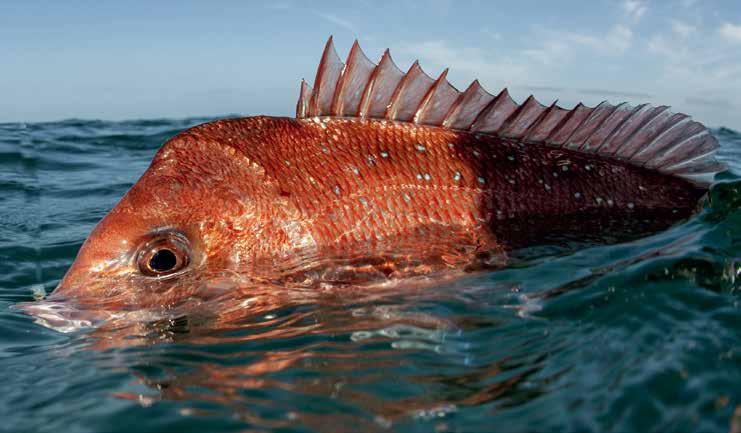
The Melbourne snapper season, and specifically in Port Phillip Bay, is one of Australia’s most popular fisheries. It is steeped in tradition and history that’s as Melburnian as the AFL Grand Final and the Melbourne Cup. It’s one of my favourite times of the year and I love it. If you want to get in on the action too, read on and we’ll provide you some great tips on how to approach one of Australia’s greatest fisheries.
WHEN IS THE PORT PHILLIP BAY SNAPPER SEASON?
The length of the season changes every year, but its true length is determined by when you start and decide to finish. You can start the first weekend after the AFL Grand Final, as tradition dictates, but it will be challenging and the risk of snapper burn-out is real. However, some anglers love the challenge of the early part of the season.
The snapper will eventually enter the bay on their annual spawning migration, and when they decide to feed is largely influenced by water temperature. When that water temp hits 16 degrees it’s time to start giving them a good crack. Once it hits around 17 degrees the fish will be going hot and as it hits 19 around early January, you’ll find them much harder to catch and the bite will slow. There is then another good run in late February that can go until late March, but again, it changes every year based on environmental factors, with water temp and salinity levels playing a large part in what gets snapper to breed.
There are always snapper in the bay, but when they migrate en masse into Port Phillip Bay in spring to spawn, it is the easiest time to catch them and most consistent time to catch them. However, it isn’t always like shooting fish in a barrel, and some years are more challenging than others. The 2023 season was one of the most challenging of the past five years, and even some very accomplished anglers I know struggled. You may get lucky on some days with snapper, but if you want to catch them with consistency and at good sizes, you need to take a methodical approach.
The 2025 season has started with relentless wind almost daily and this has kept most anglers off the water. At the time of writing we don’t have much to report, but the lack of rain makes me think we won’t see a strong bite in the north of the bay as the river run-off isn’t as strong. This is just an educated guess based on previous years where we have seen little rain at the start of spring. Anything could happen, but in previous years when there’s a lack of rain you don’t get that strong early bite around Williamstown, St Kilda and Port Melbourne but the bite tends to stay in the Carrum area, from Chelsea through to Mt Eliza.
BEST TIMES TO FISH
You should aim to have as many of the right conditions aligned for the best chance of catching fish. As with most fishing, fishing the tides is important when targeting snapper. Whether it be an incoming or outgoing tide, aim to fish the two-hour period either side of high or low tide, as this is a great fishing window and where you should concentrate
your efforts.
First light, sunset and sunrise are optimal times to target snapper. Having your baits in the water before first light and sunrise can be the most dynamite fishing for snapper you will ever experience. This means you must get up early enough to have your boat on the water and be anchored at your spot in the dark. It’s all part of the fun and I love it!
First light and sunrise are extremely productive times to fish for snapper in Port Phillip Bay. Snapper bite better in the morning in the early part of the season (October to mid- November) then the afternoon starts getting better leading into summer.
Snapper will often fire harder when there is a bit of stir in the water, so a slight chop and some lumpy conditions will often produce better results. Having said that, snapper can and often will be caught in dead calm conditions when other conducive factors align.
Moon cycles are always important, and I find that that three days before and after the full and new moon periods have always produced great results – the theories why can go on forever. Regardless, you can have red-hot sessions at any stage of the moon phase.
WIND DIRECTION
Wind direction plays a vital role in targeting snapper. It can dictate how they feed, and it also plays a role in how your baits will present in relation to the tide. Before we get into what winds are best, let’s take a moment to think about windwith-tide and wind-against-tide, which are terms you may have heard. When you have wind-with-tide, your baits will sit out nicely behind your anchored boat and therefore present naturally to the fish; when you have wind-against-tide, the lines will run either out to one side of the boat or you’ll have lines going under the boat, which is not only challenging to manage and avoid tangles, but also negatively affects bait presentation and therefore leads to fewer strikes.
As an example, if you have a south westerly wind (considered the best wind for snapper in PPB) and an incoming tide, you’ll have wind-with-tide – this is ideal. If you have an outgoing tide with a southwesterly, you’ll have wind-against-tide. Keep tide and wind direction in mind when planning your trip out.
BEST WINDS
Southerlies and westerlies and any combination of the two are ideal winds. Easterlies are OK too (there is an old saying that “east you catch the least” but I have caught many snapper in an easterly, so ignore that).
Northerlies are the winds I’ll always try to avoid. While a light northerly late in the season is OK, a strong northerly has always shut the fish down in my experience.
FINDING SNAPPER
You need a good sounder, and you need to know how to use it and what to look for. If you don’t have a quality sounder or you can’t tell the difference between a pinkie and a solid fish of 3kg or more, you’re not going to catch much. You can pay someone to come out with you and show you how to use your sounder, and that may help a little, but only time on the water and putting in the hours will help you understand your sounder and sonar readings.
Port Phillip Bay doesn’t really have any ‘spots’. The fish are always moving across its expansive flats, and you need to pick a depth and location to begin your search.
In Port Phillip, locations are referred to by the closest suburb and depth – for example Carrum 18m, Mt Eliza 16m or Mordialloc 17m is how you might describe where you caught fish. You need a network of mates who will share information, or have a good independent tackle store that can advise you where to go. Get whatever information you can, head out to the depth and area and start sounding. Sound slowly and always keep your GPS and sonar pages on while you’re sounding so when you see fish you can mark them, check over the mark again to be sure, and get ready to anchor if you read them again.
BEST BAITS
Across the country snapper eat different baits at different times of the year. They feed on crabs, mantis shrimp and scallops in the sand, mussels and oysters off rocks, various baitfish, octopus, squid, cuttlefish and pretty much anything they can get their big mouths around. Since 2023 almost all the snapper I’ve caught had mantis shrimp in their stomachs as well as yakkas.
With this huge variety of food on offer, fresh bait will always be best. I don’t
buy much bait. I collect my own bait all through autumn, winter and spring and Cryovac then freeze it ready for the coming season. The bait I catch at the end of summer, that is vacuum sealed and sits in the freezer until spring, is better than store-bought and saves me a lot of money. I never use pilchards as bait and rarely use silver whiting. I find most pilchards too soft and silver whiting is generally poor quality but sometimes you can get good quality silvers. I use squid and cuttlefish for 70% of my bait and garfish, Australian salmon, pike and couta make up the rest.
You can use store-bought bait, and you can catch fish on it, but it’s nowhere near as effective as the bait you’ll catch yourself. If you spend $200 on a Cryovac machine, you’ll save a lot of money on bait over the course of a season.
BERLEY
When I fish for snapper I berley hard and berley the whole time. There are various things you can use for berley such as formulated fish pellets, cubed pilchard and chopped fish and carcasses. Pretty much anything that gets them feeding and ravenous and keeps them under the boat will work.
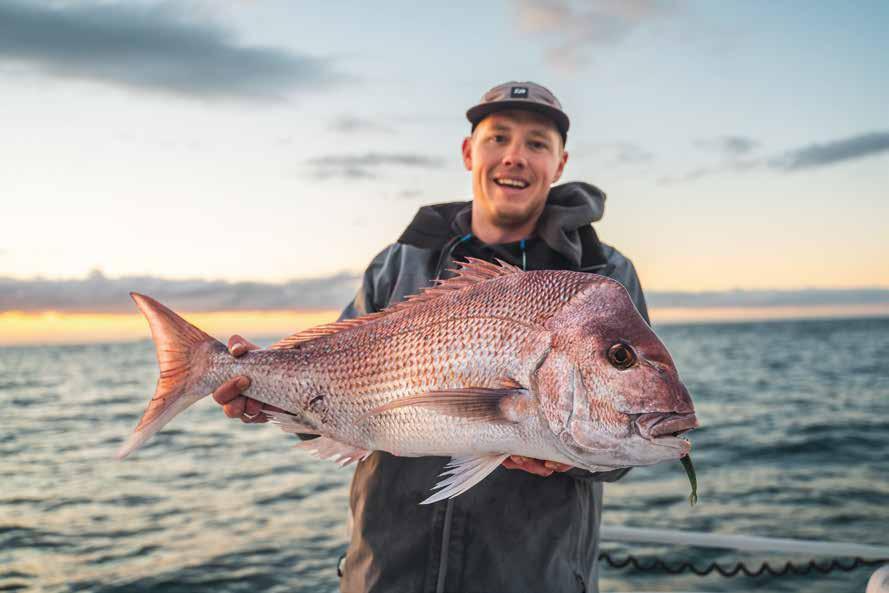
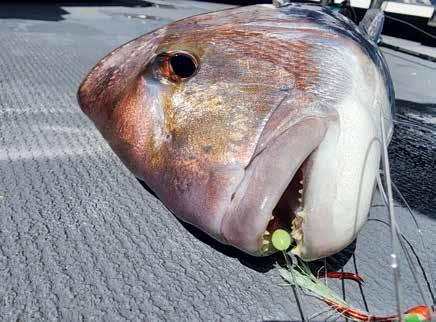
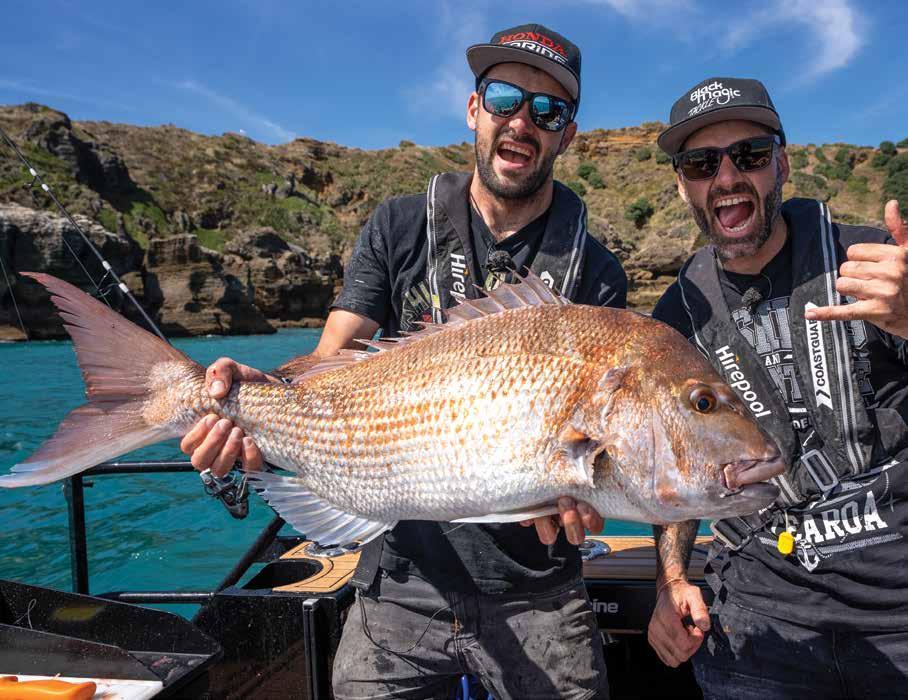
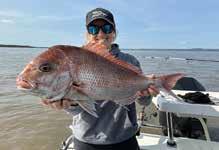
Shane O’Sugrue with a nice red taken on fresh squid.
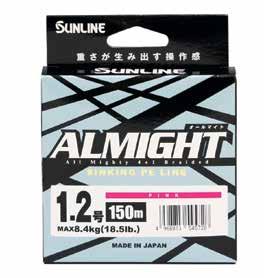
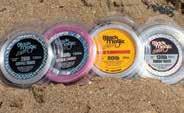
ALMIGHT is a hybrid sinking PE line with a specific gravity of 1.48, combining four ULT PE materials and a high density core for straightness, sensitivity, and precise lure control in strong winds or fast tides. Available in pink for high visibility, it offers all-around performance comparable to 100% PE lines, enhancing control over light lures sinking action and enhanced feel of your presentation.
Made in Japan
Available
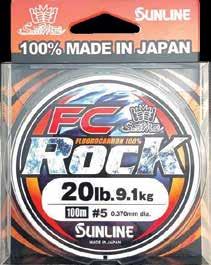
FC ROCK is a 100% fluorocarbon leader offering exceptional stability, clarity, abrasion resistance, and tensile strength for tough conditions. Supple and easy to handle, it provides excellent knot performance, natural lure presentation, and moderate elongation to absorb strikes and hook sets while maintaining sensitivity. Engineered in Japan for reliability and confidence on every cast.
Made in Japan
Available in:
100m in 2lb to 20lb
70m in 25m & 30lb
50m in 40 & 50lb- 25m in 60lb
20m in 70 & 80lb
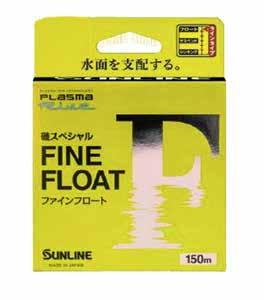
ity yellow floating monofilament, perfect for float fishing blackfish or drummer. Its buoyancy keeps the line off rocks, while Plasma Rise processing enhances water repellency and reduces deterioration. UV-R manufacturing protects against UV damage, extending line life. Supplied in 150 m spools, it offers reliable performance and easy tracking for confident float fishing.
Made in Japan
Available in: 150m 6lb to 25lb
The best way of distributing berley is via the Black Pete Secret Weapon Berley Bomb. This torpedo-shaped bomb allows you to drop berley quickly and efficiently to the bottom so it’s sitting under your boat. Once you’re over 12 metres of depth, if you throw berley over the side it’s drifting away from you by the time it reaches the bottom and is potentially sending your fish away and to another boat. With the Black Pete Bomb you can drop your berley right under the boat, and I highly recommend investing in one of these.
To save time and mess I buy pre-cubed pilchards, a product by Seaford Bait. I pour it in a bucket and mix it with fish pellets. I mix two bags of defrosted cubed pilchard with pellets in a 3:1 ratio – you don’t want too many pellets, but it helps fill the berley out. I pour a little water over it, let it sit then mash it with a berley masher to break up the pellets and the cubes. I don’t mash it to complete mush, but I break it down. This means when I drop the berley over it has a strong scent and disperses into smaller parts; this gets the fish feeding and hungry, but it doesn’t fill their stomachs and make them feel full. Using too many pellets over the side can make a fish feel full as the pellets
Ready for action.
expand in their stomach. I put the berley into the bomb using a kid’s sand shovel, so my hands and boat stay clean.
I have a Hisense chest freezer that cost me $280 and is nine years old, it’s never missed a beat and has run full-time. I keep all my bait, ice, and berley in here. The $280 spend has saved me thousands in wasted berley, ice and bait. I can make up a 20-litre bucket of berley, and if I don’t use it all, I just drop the whole bucket with the lid on in the chest freezer, refreeze it then pull it out the day before a trip to defrost. It makes everything clean and easy and allows me to concentrate more on fishing and less time cleaning and chopping berley on the boat.
RODS AND REELS
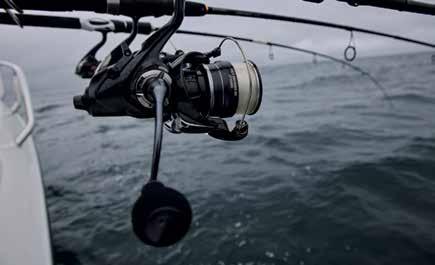
I believe in going as light as possible without the risk of losing fish will give you the most enjoyable fight experience. Snapper fight well but they are not kingfish, so don’t overdo it. In Port Phillip Bay, rods rated 6-8kg with a 4000-size reel spooled with 8kg nylon monofilament are ideal. Rod ratings aren’t exact, and some rods labelled as 6-8kg can be too light so you can go heavier if it feels right. Some of my rods are 6-8kg and some are 10-15kg. As long
as it has a sensitive tip, power in the butt and full EVA you’ll be right. If you check our last edition (September, No.160) we have a buyer’s guide for snapper gear.
I opt for lightweight composite graphite rods that offer sensitivity and help negate the stretch from the monofilament line. This will enable you to enjoy the smaller fish while still handling the fight with larger specimens. Rods that are 7ft to 7ft 6in long are ideal and you should go for something that has an action that doesn’t load up too quickly. Rods that load up really fast will cause the fish to feel the weight quicker and can spook them before the hooks are set. Rods that are too soft will have the opposite effect and you won’t be able to firmly set the hooks quick enough.
Use rods that have a medium/fast action – talk to your local store about the right gear. Reels with a baitrunner or free spool function are useful but not essential.
SNAPPER RACKS
Snapper racks are essential. You can have them custom-made or buy simple three-way racks. Just ensure they suit your rod gunwale holders. Your rod needs
to sit 10-15 degrees to the waterline, any higher and the baits move unnaturally, and the fish can detect weight when they pick up the bait, causing them to drop it and you’ll miss fish on the strike. You can buy threeway racks that are pretty cheap, or get racks custom-made.
RIGS
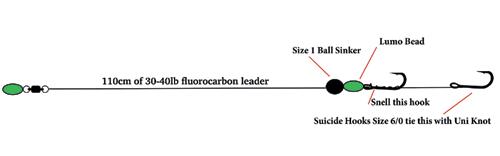
With Port Phillip’s shallow water and minimal current flow, a stray line rig with a size 1 ball sinker running down to twin snelled suicide hooks tied with 30-40lb fluorocarbon leader is the ultimate rig. Many years ago, I switched from 60lb monofilament leader to lighter 30lb fluorocarbon, and my catch rate increased dramatically. The fluorocarbon is more abrasion-resistant, thinner and less visible. You can tie this rig to your mainline via a quality barrel swivel. I use a lumo bead between the sinker and hooks as it acts as an attractant and cushions the sinker when casting and I run another above the swivel to protect my rod tip. This is a very effective rig that can hold almost any bait with maximum hook exposure. It presents the bait naturally, which is what entices the fish to strike.
For mainline you must use monofilament. If you think you can use a spread of six rods with braid, good luck to you. They’ll eventually tangle and you’ll have to cut everything and start again.
It’s important to use quality hooks when fishing for snapper in Port Phillip Bay and to use the right size. I use size 6/0 or 7/0 as it provides maximum hook exposure on all baits, which is extremely important. This is the best rig for snapper in Port Phillip Bay.
best rig for Port Phillip
is a snelled hook stray line rig. It’s a finessed rig that presents your baits as naturally as possible.
It always pays to run a few flasher rigs in the spread. The Black Magic Snapper
in lumo is a proven rig for the author.
It allows you to use any bait style with maximum hook exposure and presents the bait naturally.
If there’s two anglers fishing, I’ll have six strayline rigs out the back and then I’ll run two paternoster Flasher rigs down the side, usually Black Magic Snapper Snatcher. On the two Flasher rigs you can use braided line as they are out of the way from the rest of the stray line rigs and the zero stretch of braided line provides a better hook-set on the circle hooks.
My favourite hooks are Black Magic DX, Owner SSW Octopus and Daiichi Octopus. These are high-quality Japanese hooks that have never failed me. They are extremely sharp and are the right style for the various baits you’ll use.
Snatcher
The
snapper
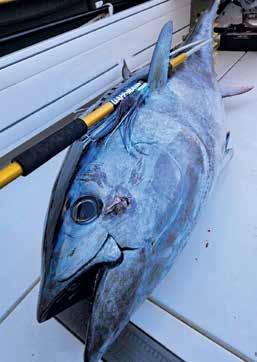
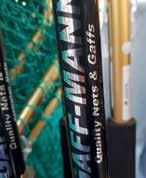
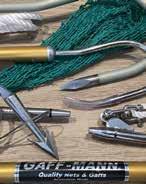
A high quality net is a must. The author uses Gaff-Mann nets as they are purpose designed for snapper and are built ultra-tough to last decades.
WORKING THE SPREAD
Be sure to keep checking and changing your baits and keep berleying the whole time. There are always pests, peckers and a host of undesirables that are going to ruin your well-presented bait. If your rod tip is moving and not buckling over, there is a good chance that your bait is gone or destroyed. Bait fishing for snapper is never a sit back, have a cup of coffee and wait affair. You should be constantly baiting, changing rods around the spread, having baits ready to be baited, deploying berley and always keeping your eyes on the rod tips. A slight lack of concentration means you could miss the fish of a lifetime.
Do this for 30-60 minutes and if you have no bites, reel in the rods, anchor up
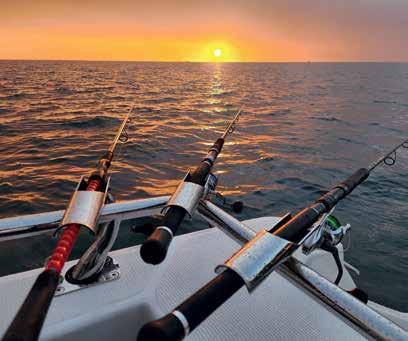
More rods in the spread means more baits in the water, which in turn creates more activity below the boat and therefore leads to more fish. Having snapper racks or rod racks and the ability to spread multiple rods around your boat is highly advantageous.
MORE RODS IN THE SPREAD MEANS MORE BAITS IN THE WATER, WHICH IN TURN CREATES MORE ACTIVITY BELOW THE BOAT AND THEREFORE LEADS
The more rods the better, but stick to what you can control at one time. There is no point having four rods go off at the same time if you’re going to end up in a tangle and losing all four fish. The more you do this technique, the better you will become at controlling it.
So hopefully that gives you a pretty good insight as to what’s required when targeting snapper in Port Phillip Bay. Enjoy the fight and the feed and
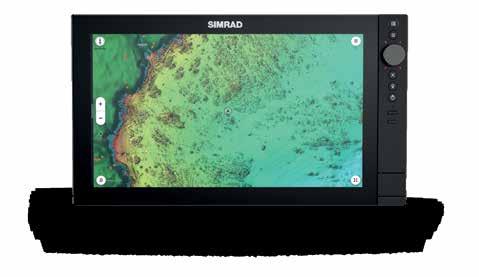
The Simrad showing a good school of snapper with some big models within it.
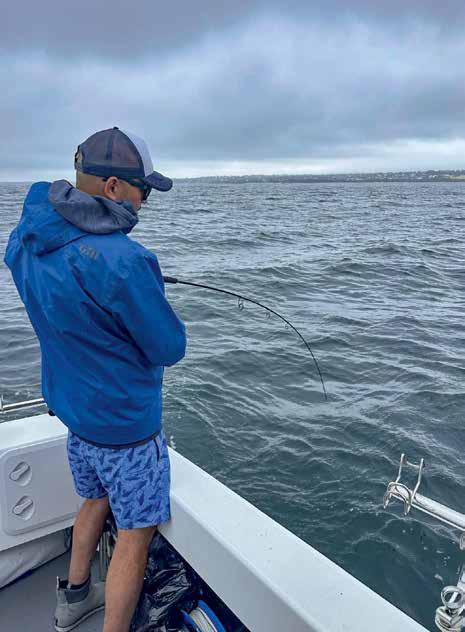
The author hooked up to a solid snapper on the Shimano Extraction 722.
BECAUSE BIGGER IS ALWAYS BETTER
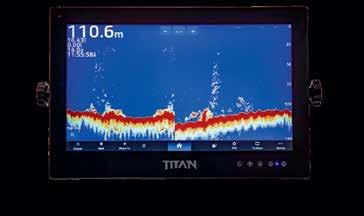
TITAN MARINE MONITOR – THE AFFORDABLE WAY TO BIGGER VISION
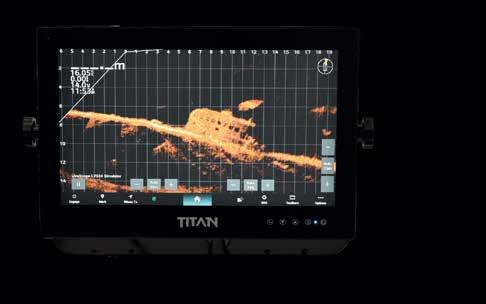
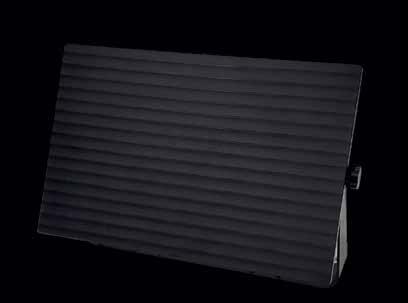
Introducing the Titan Marine Monitor – the next evolution in marine electronics designed to provide fisherman with an affordable solution to enhance their MFD experience. Titan offers a super size 18.5” or 24” touchscreen that dwarfs any MFD on the market. It seamlessly mirrors your existing marine MFD, giving you the benefits of a bigger screen at a fraction of the cost of purchasing a whole new MFD.
The Titan features a durable CNC-machined aluminum body, IP67 waterproof rating, and triple mounting points for aftermarket accessories. With a stunning 1920x1080 FHD display, 1300 nits of brightness, and polarized IPS glass, the Titan ensures superior visibility in all lighting conditions. Its 10-point touchscreen interface provides smooth, responsive operation, making it easy to control and monitor your marine systems while out on the water.
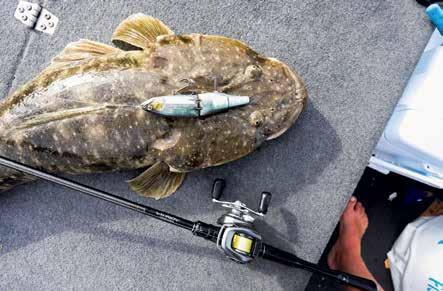
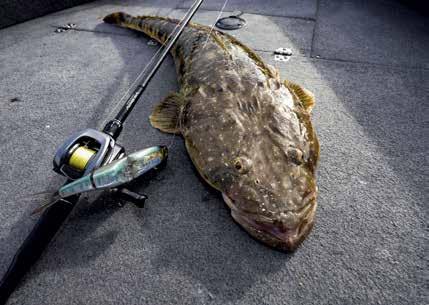
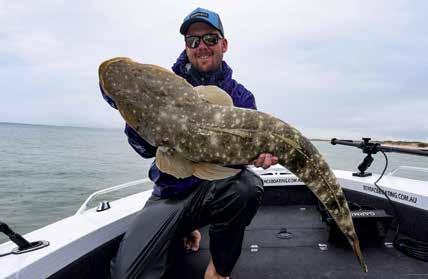
DUSKY FLATHEAD ON SWIMBAITS
Size matters when the action’s about to hot up for big flathead
WORDS & IMAGES : JACK HAMMOND
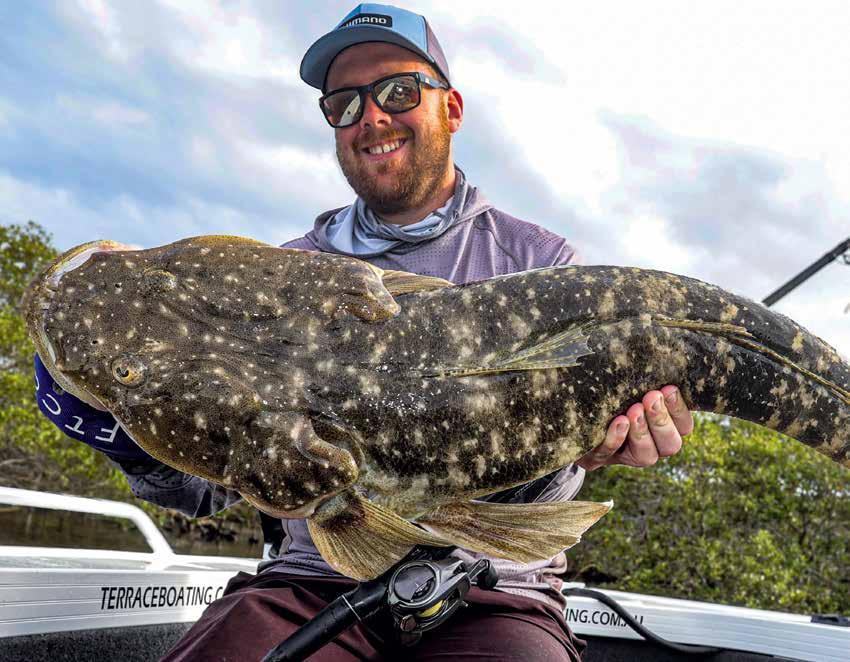
It’s that time of year when the weather starts to warm up, leading to one thing… big flathead season! So, it’s time to prepare to get in early as the mullet and whiting will start to push up into the shallows over the next few months and the big lizards will be sitting ready to ambush an easy feed.
After all the rain we have had along the east coast this year I think it’s going to be the perfect year to throw big lures for flathead. They will be hungry and the mullet stocks should be better than ever (they seem to like the brackish water as they have plenty of cover and there is plenty of sediment in the water for them to feed off), so it will be important to match the hatch – and big swimbaits are the answer.
AREAS TO FISH BIG SWIMBAITS
Giant flathead are not scared to push up into a foot of water to hunt for food so the best tools to find a good area to throw big baits is Google Earth and a good pair of polarised sunglasses.
Jump on the computer and have a look at your next flathead destination on Google Earth satellite view and read the waterway, look for big shallow sand flats where current will be flowing through, and look for signs where fish may be sitting around such as submerged rock bars, weed beds or edges, logs and shallow flats with gutter pockets in them where they can blend in and wait for food to come to them. Flathead move around but the easiest places to start looking are high current areas with those types of structures. If you have an idea where the structure is you can approach the fish stealthily, which will increase your chance of getting the bite, which is the advantage of using technology.
A good pair of polarised sunglasses helps in finding those hidden areas where a big flathead may be lying and if you’re
Fishing from a boat is great for big flathead as your casting deck and gunnels give you a height advantage to see further along a flat, but if it is supershallow and there is bait and even fish up in there, it is worth dropping the anchor to walk on the bank as they will hear you from a decent distance away in the boat. Once they are spooked they are unlikely to eat your lure, unless they are very baitfocused, so stealth is key.
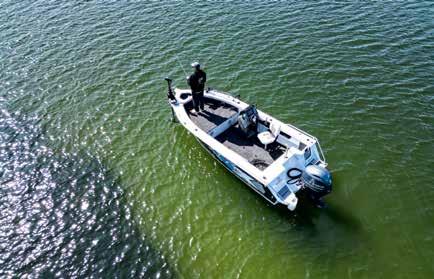
If you don’t want to walk a bank or it’s too muddy or rocky then an electric motor is a must for targeting trophy flathead. When I’m chasing large flathead I like to work an area as slowly as possible and make sure my lure covers every inch of a good-looking area where I think a big flathead may be lying. Positioning the boat down-current would have to be my biggest tip and fishing your lure as naturally as possible; cast up-current and work your lure back to the boat as if it’s a struggling bait fish, which will draw a flathead’s attention and if it’s in a feeding mode it will most likely eat.
PRIME TIMES TO TARGET
The author’s three favourite swimbaits for big flathead: 1. Shimano Bantam Arma Joint 2. Zerek Affinity 220 3. My Lure Box Soft Glide
Early morning is great for that first hour of light especially in highly pressured waterways where there is a lot of boat traffic getting on the water early can be critical some days.
Late afternoon would have to be one of my favourite times to target big flathead especially in early spring as it allows the water temps to rise through the day and the flathead fire up in those warmer conditions.
The low light periods are perfect times to target big flathead as all the bait fish push up into the shallows during the night to hide away from predators so it’s the best time to catch a big flathead, especially on an XL lure.
High and low tide tend to vary depending on where you are fishing and the best time for that area. On the high tide I like to push up right on top of the flats and close to sand bar edges and fish as shallow as I can. Good signs to know you’re in the right area are high bait activity, stingrays moving around and feeding on the bottom, and you still have
current flow so the water is stirred up to give the flathead good cover. On the last of the run-out and start of the run-in tide I like to fish the deeper drop-offs where the fish have come off those flats and have somewhere safe to get cover but still have the chance to find an easy feed. Good areas to look at are in main channels that join up to good flats with steep drop-offs or gutters nearby, deeper water with submerged logs or the bottom edges of rock walls as they position themselves to wait for baitfish to get flushed back into the deeper water.
TECHNIQUES AND EQUIPMENT
To throw a big swimbait for a big flathead you need the right gear to handle heavy lures. For rods and reels I can’t go past baitcast gear as they are lower geared and have the grunt to throw and retrieve big lures with ease. My favourite swimbait set-up has to be my G.Loomis IMX PRO 12-25lb 7ft6in, which is superlight in the hand and has the backbone to easily throw a big lure with confidence, matched to a Shimano 200 Curado
DC – the reason being that it has DC technology, which gives you better cast control and prevents over-spooling that could lead to breaking off an expensive lure and potentially spooking that trophy flathead. I like to run 30lb braid minimum matched to a 30lb leader as most of the fish you will catch on a big lure are going to be big, so you need the stopping power and the line strength to handle working big baits.
There are thousands of different swimbaits on the market but my top three would be the Shimano Armajoint 190SF, Zerek Affinity 220mm and My Lure Box Soft Glide. These three lures cover all bases while targeting trophy flathead as they all have unique characteristics and can be fished in different ways.
It is good to have a variety of swimbaits in your tackle box as every spot is different and conditions change. There may be whiting schooled up in the area, but in some areas you might have mullet or garfish, so it is key to try to match the bait. It is also handy to have a variety of
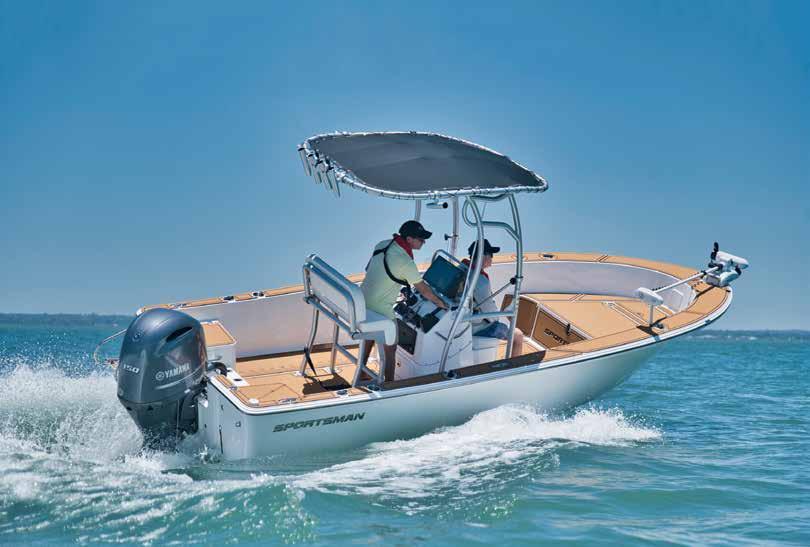
AUSTRALIA’S DRIEST RIDING OPEN BOAT!
floating and sinking swimbaits in your box for different areas and pack a few different sized chin weights so you can clip them on to change the sink rate of your lure.
There are many different ways to retrieve your swimbait but the main three are the slow roll, rip’n’dip, and the turn and burn.
Slow roll: Just like it sounds, slowly retrieve your lure at a suitable rate to keep your lure in that strike zone.
Rip’n’Dip: Crank your lure and drive it down into the sand to create a sand eruption, pause and repeat.
Turn and burn: Crank your lure half a metre to a metre and pause; this is the perfect retrieve to get that mega reaction bite.
Be patient while targeting trophy flathead on big lures, if one technique is not quite working change your lure or change your retrieve. Any day I’m on the water I always trying different methods until I can figure out how they are going to behave. Some days they will be fired up and some days they will be lazy and won’t move far from where they are lying so be prepared for the grind to catch the giants – persistence pays off.
CARE FOR BIG FLATHEAD
Looking after big flathead is important. After I’ve fought a big fish I like to keep the fish in the net for a few minutes before bringing it into the boat to let it settle down and stabilise itself as they are mostly worn out after a big fight. Minimise the time the fish is out of water as in the warmer months your boat deck will be pretty hot in the sun.
AFTER I’VE FOUGHT A BIG FISH I LIKE TO KEEP THE FISH IN THE NET FOR A FEW MINUTES BEFORE BRINGING IT INTO THE BOAT TO LET IT SETTLE DOWN AND STABILISE ITSELF.
Keep the fish in the net while setting up your camera and always wet down your brag mat before measuring to keep the fish cool and preserve its skin. Handling big flathead should always be done with care by using gloves or lip grips as they have some pretty gnarly spikes and a pretty mean set of teeth that can rip the skin on your fingers (speaking from experience) – and always support the belly of those bigger fish as you can damage their spine if you’re not careful. Remember each state has its rules and regulations for big flathead so make sure you know them when keeping flathead for a feed as in NSW the limits have changed over the past few years for dusky flathead (five fish per person between 36cm and 70cm, all other fish out of this range must be released).
The author uses quality baitcast gear for working big swimbaits.
Depth changes and edges of weedbanks are prime spots to concentrate your efforts.
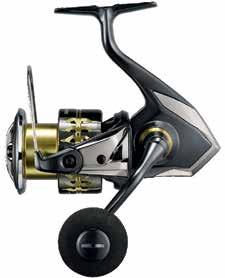
SHIMANO STELLA SWD 14000XG
Words & Images: Dean Linardos | Distributed by: Shimano Australia | Web: shimanofish.com.au
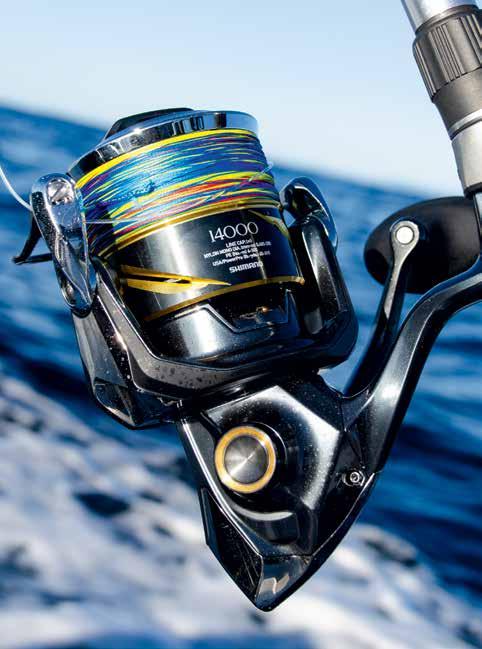
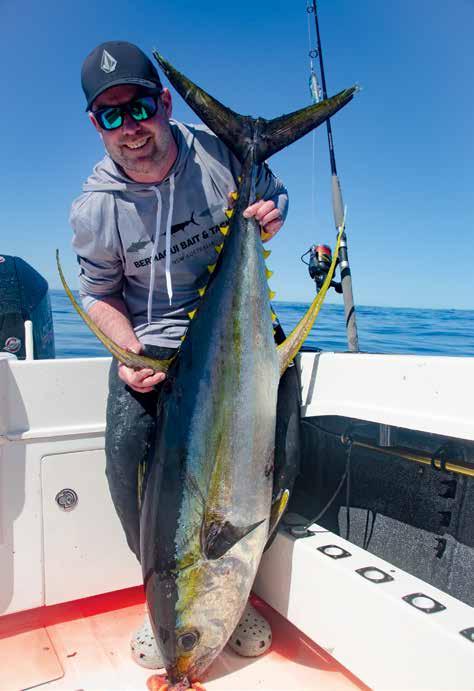
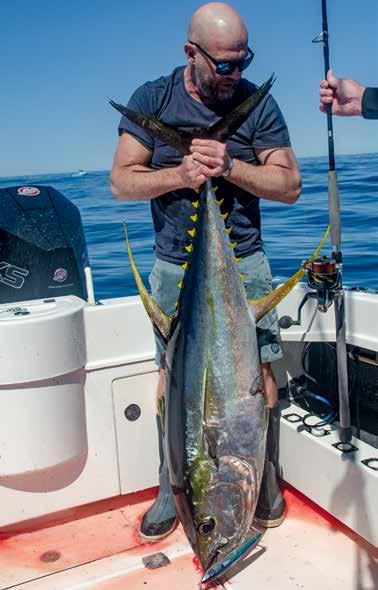
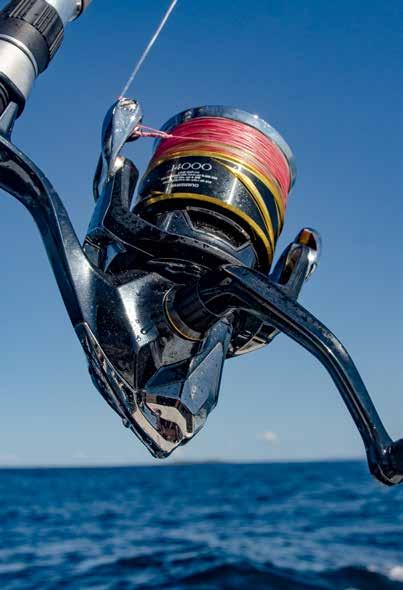
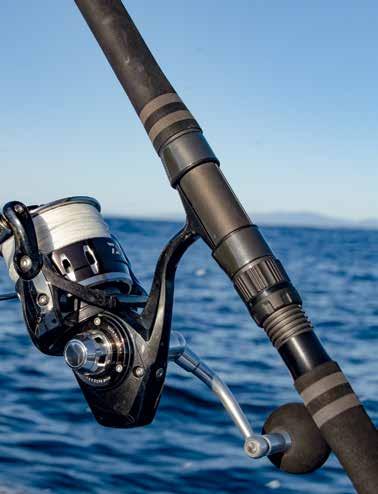
When Shimano launches a new Stella, it’s always big news in the tackle world. The Stella is the crown jewel of its spinning reel range and a name that carries serious weight with saltwater anglers across the world. But a new Stella doesn’t come along often, and history tells us each release sets a new precedent for what a saltwater reel should be. The latest version, the Stella SWD, replaces the much-loved SWC, and we put the 14000XG through its paces on Bermagui’s yellowfin tuna. It was one of the hottest bites the region has seen in 40 years, and the perfect test for a reel that promises more drag stability, improved heat management and enhanced line control.
THE STELLA LEGACY
The Stella SW first appeared in 2008 and quickly became the high-end choice of spinning reel for anglers chasing everything from GTs to dogtooth tuna, yellowfin and blue marlin. Each generation refined what was already an exceptional reel. The SWB gave us more drag and power, and the SWC added technologies such as Infinity Drive and improved waterproofing. By the time the SWC rolled out, it was widely regarded as the one of the most advanced heavy-duty spinning reels on the market. So, what could Shimano do next?
The answer is refinement in the areas that matter most when fighting big fish – drag stability, line lay, heat management, rigidity and gear durability. Aesthetically, it’s hard to see much of a difference between the SWC and SWD and on paper, the SWD may look
like an incremental step, but on the water those refinements add up. I don’t really care too much about aesthetics; when I’m targeting gamefish, I want dependability, and Shimano has made changes to the Stella that improve my enjoyment while fishing and enhance my ability to work lures then hook and land fish – and that’s what counts.
YELLOWFIN CHALLENGE
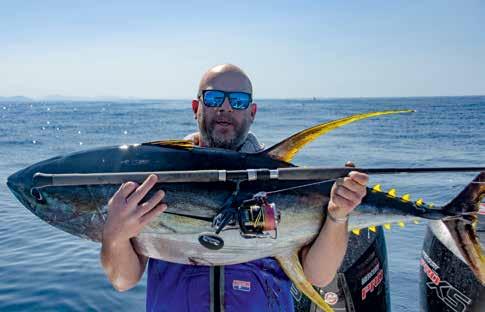
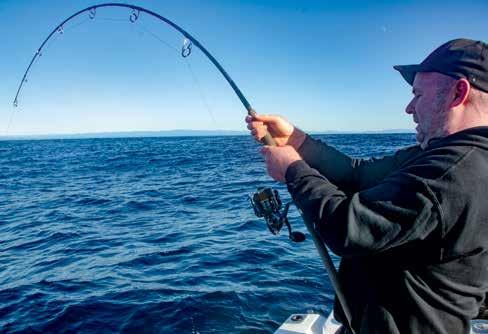
Our test wasn’t gentle. Over three days off Bermagui we fished through a range of conditions, in a bite that saw tuna numbers not witnessed in decades. The 14000XG was spooled with Shimano Ocea PE6 with a 150lb nylon leader and thrown into schools of rampaging yellowfin. We cast big 240mm stickbaits, put the drag to
work, and fought multiple fish.
The results were impressive. The drag was flawless – smooth, consistent and powerful throughout. Even after 5-10 minute battles with around 10kg of drag and long runs and stubborn fish, there was no fade or softening. The spool remained cool to touch, something we put down to Shimano’s new XX Tough Drag system and heat sink design. This set-up places larger carbon washers both above and below the spool, spreads load more effectively, and dissipates heat faster. Shimano claims up to 30% less drag loss from heat compared with the SWC, and in practice it felt every bit as stable as advertised.
Mechanically, the reel felt rock-solid. No creaks, no flex, no slack – just the rigid feel you want in a game reel. The rotor, handle and bail mechanism all offer a rigid and reassuring feeling while under load. Even when tuna were putting maximum load through the gears, the Stella SWD stayed smooth and secure. The new InfinityXross gear design, which distributes load more evenly across the teeth, delivers a real improvement in strength and smooth winding power under load.
CASTING AND LINE LAY
One of the most noticeable differences from the SWC came during casting. The SWD uses Shimano’s new InfinityLoop oscillation system, which lays line more densely and evenly. The oscillation speeds up as the spool rises and slows as it descends, creating a more controlled lay pattern. The result is less friction when line peels off, cleaner release during the cast, and better
handling of slack line.
This translated to longer, smoother casts, which was often necessary as the tuna became boat-shy. Anyone who’s spent time casting heavy lures for tuna or GTs knows how critical line lay can be. Poor lay causes reduced casting distance and leads to wind knots at the worst possible moment. The SWD removed that problem entirely, which in our book is a genuine upgrade over the SWC.
STELLA UPGRADES
The Stella SWC was no slouch, but the SWD raises the bar in a few critical areas. The most important upgrade is the drag system, which has moved from X Tough Drag to XX Tough Drag, placing larger washers above and below the spool.
TESTED
& REVIEWED
This change makes the system more resistant to heat and ensures drag pressure remains consistent across long fights, a major step for tuna fishing. Drag control during the fight is now easier thanks to a significantly larger drag knob, when I’m fighting a fish I don’t want to be looking for it, I just want to easily find it and adjust it and this is a marked improvement.
Shimano has also introduced a new drag heat sink that keeps the spool cooler and prevents fade, and this was noticeable on the water, with the spool staying cool under pressure. Casting performance has improved thanks to the InfinityLoop system, which delivers cleaner line lay, smoother release and better handling of slack, and this was arguably the most significant practical difference we observed.
Gear strength has also been enhanced with InfinityXross, which spreads pressure more evenly across the teeth, giving the reel a more secure feel under
load and promising greater longevity. Finally, seals and waterproofing have been upgraded with additional protection around the drag knob and handle, offering greater defence against saltwater and extending reel life in harsh offshore environments.
ANGLING APPLICATION
The 14,000XG is a fast retrieve model, picking up line quickly between big sweeps of the stickbait or chugs of the poppers. It’s also great when you want to burn a floating stickbait across the surface. At 6.2:1, it recovers slack effortlessly, yet still has the torque to handle big fish. For stickbaiting, topwater and casting work, the speed is ideal. In a trolling or purely jigging context you might prefer a lower gear, but for pelagics such as yellowfin and kingfish, the XG is the right tool.
The reel felt as tight and smooth at the end of the trip as it did at the start. After three days of punishment in heavy salt
spray, the reel showed no signs of water infiltration or fatigue.
CONCLUSION
Shimano hasn’t reinvented the Stella – it didn’t need to. Instead, the SWD 14,000XG takes what was already an amazing reel and makes it better where it counts. The drag is more stable, the spool stays cool under pressure, the line lay is cleaner, and the gears tougher. These aren’t cosmetic changes.
They’re genuine improvements that translate into more reliable performance when chasing the hardest-fighting fish in the ocean.
After landing a heap of yellowfin tuna during what could be a oncein-a-generation bite at Bermagui, I’m convinced the Stella SWD has what it takes to last me years, which justifies the substantial price (RRP $1849) but it can also handle a lot more than just tuna and I look forward to testing it on marlin this summer.
BOOK YOUR FREE TICKET!
TACKLE GIVEAWAYS ON RETAIL ISLAND!!
HOOKED UP’S RIG RUNDOWN
LIVE AT THE 2025 MELBOURNE BOAT SHOW
6 AMAZING BOATS ON DISPLAY ALL RIGGED UP WITH THE LATEST IN MARINE ELECTRONICS, ENGINES AND CHANDLERY.
Words & Images: Dean Linardos | Distributed by: Juro
The Rift has all the elements of a great casting rod with the benefit of it only being 7ft in length.
Toward the end of last year’s school bluefin tuna season, my cousin Kosta (Hooked Up’s Editor) sent me some YouTube links to what we agreed was a great angler fishing for bluefin tuna off Cape Cod in the US. He was doing a few cool things we liked in a fishery very similar to ours, and we picked up some new tips when it came to both casting and trolling for tuna, but one thing Kosta noted was these anglers were casting for tuna (all in that 30-40 kg range) with poppers and plastics using what were short rods compared with what most anglers (us included) use in Australia.
Most traditional game rods designed for tuna are quite short, as this puts less pressure on the angler and they are more manageable in a boat. The longer the rod, the more pressure is placed on the angler during the fight.
However, casting to sometimes finicky fish creates a need for distance and rod length helps. So, we liked the idea of being able to cast at fish with a rod that was under 8ft, as most of our casting rods start at around 7ft 6in through to 8ft 5in.
Kosta pointed out that most of our casting rods in Australia are probably long due to the Japanese influence, where there is a larger land-based market compared with our huge number of boat anglers. In general, shorter rods are better for fighting fish from a boat. The anglers we watched were casting similar-sized poppers to those we cast (around 140mm), and they were getting great distance. Kosta then mentioned one of his clients was distributing some high-end American rods and spoke to them. He called a few weeks later and said:
“I think I’ve found the rod.” It was a St Croix rod, a brand I wasn’t familiar with, and measured 7ft and rated 1540 lb. The rod is from the Rift series of saltwater rods that have been purposedesigned for saltwater use. It had a great design and was the kind of rod we were looking for. It features excellent high-grade EVA grips that are perfectly balanced for both casting and fighting, not too thin or thick, and it was great to see it was fitted with a rubber gimbal butt so it doesn’t spin in the coaming racks or rocket launcher – something every angler can appreciate when you pair the rod with a thousand-dollar reel. The tuna had died off by the time Kosta got the rod, so we took it to fish for gummies. That night we didn’t land any gummies, but we fought some huge Port Jacksons, rays and seven-gill sharks, and that gave us a great idea of its fight
action. It loaded up beautifully with a medium-fast action and was very comfortable to fight with under heavy drag pressures of around 7-8 kg. The big question was, how would it go casting? At 7ft, we were worried it just wouldn’t have the same distance longer stickbait and popping rods offer.
Like many Victorian anglers, I jumped at the opportunity to go and chase the recent run of yellowfin tuna that hit the east coast last month, where casting surface lures was the technique. Kosta reminded me to take the Rift and paired it with a Daiwa Catalina 5000H, which would be the equivalent of a current size 14000 Saltiga.
We had quite a few outfits on the boat, and as there were just so many fish around, it was great to be able to test out different styles of rods and reels. The thing all three of us on the boat noted immediately with the Rift was how easy it made casting. Not only were we getting the distance we wanted, but it was less taxing than some of the other longer and slightly heavier rods. I had
Ethan struggling to lift his 30kg tuna taken on the Rift.
my son Ethan with me, who is 14, and while he is an accomplished angler for his age, I thought the Rift would be the perfect rod for him as it was easier to cast with and would be less taxing during the fight. He was casting up to 245mm stickbaits weighing 115g, and while this would be the absolute max for this rod, it did it well. The rod suits smaller lures in that 150mm/80-90g range, but it handled the bigger lures.
Ethan took the biggest fish of the day on the Rift, weighing in at 30kg, but we caught multiple fish on it from 15kg25kg, with everyone on the boat really enjoying casting with the Rift, working the lures and fighting the fish. Under drag pressures of around 10kg, the Rift doesn’t experience any blank twist, and the addition of a locking nut on the reel seat provides extra security so everything feels rigid and powerful. It proved that Kosta was right, and the Yanks are on to something – you don’t need the longer 8ft rods to get casting distance with lures in that 140mm200mm size, and the shorter rods
are much nicer to fight fish with and manage on the boat. When the school bluefin are around the peninsulas of Victoria and the boat traffic is high, we often cast much smaller and lighter poppers at around 75mm, and this is where the Rift would probably struggle with distance. But when they’re taking poppers and stickbaits in that 140mm range, it’s perfect.
The Rift is built for saltwater use, so it’s fitted with stainless K guides and Alconite rings, so it’s durable and tough but is also light and refined. It will double as a rod for targeting gummy sharks, and you could troll with it if you’re happy trolling with spin gear. It also has an amazing 5 year warranty, where St Croix will replace the rod regardless of how you break it. All you need to do is register your details within 30 days of purchase, and even if you jam it in a car door or step on it, you’ll get a full replacement. At around $600, I think it offers great value for the performance, and I’m keen to try other models in the range.
The little things count such as a locking nut for the reel seat, high density EVA grips and a rubber gimbal butt.