
HEADLINES
By Mr J Munro
Our Cohort 10’s have been completing their English GCSE Speaking and Listening assessment over the past few weeks. I had the privilege of visiting sessions when these learners were preparing their speeches on a range of topics and some really personal to those preparing them. I was so impressed with the in depth thought, subject knowledge and quality of these they can each be very proud. Of course it isn’t just the writing of a speech that is required. It has to be delivered to an audience. This ability to express oneself fluently and grammatically in speech, and to understand and listen effectively to others is one of the most vital skills your child can develop during their secondary schooling.
Often overshadowed by literacy and numeracy, oracy is the “missing link” that underpins success not just in English exams, but across the entire curriculum and far beyond school gates.
Oracy is more than just talking; it encompasses four key strands:
• Linguistic: Using a rich vocabulary and structuring sentences coherently.
• Cognitive: Developing and expressing complex thoughts, reasoning, and critical thinking.
• Physical: Using body language, gesture, and voice effectively to engage a listener.
• Social and Emotional: Learning to listen respectfully, take turns, and manage disagreements constructively.
Within the classroom, strong oracy skills allow your child to articulate understanding during lessons, participate effectively in group discussions and debates and ask insightful questions to deepen their learning.
Studies show a clear correlation between high levels of oracy and improved academic results. When a learner can clearly articulate their ideas, they are more

likely to think clearly and write well. The world of work demands excellent communication. Whether it’s a job interview, a team meeting, or pitching an idea, employers consistently rank verbal communication and teamwork as top-tier essential skills. By fostering oracy, school is directly preparing your child for a successful career.
Being able to speak confidently in public and engage in meaningful conversations significantly boosts a young person’s self-esteem. It helps them find their voice, build strong relationships, and navigate social situations effectively, contributing to better overall mental health.
How Can You Support Oracy at Home?
You as parents / careers can support your child develop their oracy skills. Encourage them to talk by starting conversations. I appreciate this can be hard with teenagers and getting more than a ‘yes’ or a ‘no’ can feel like having pulled teeth out at times. However, try to make time for family dinners or discussions where phones are put away and everyone gets a chance to share their day, ideas, or opinions on a current event. When your child answers a question, ask “Why?” or “Tell me more about that.” This encourages them to expand their thoughts and use more sophisticated language. Show them what it means to give someone your full attention, ask clarifying questions, and respond thoughtfully. When you come across an unfamiliar word in a book, news article, or TV show, talk about its meaning and try to use it in a sentence later.
By valuing and encouraging good communication, you help your child unlock their full potential, ensuring they leave secondary school not just with good grades, but as confident, articulate, and thoughtful citizens.
Have a good weekend.
Mr J Munro
Deputy Headteacher

Year 7/8 Girls District Football Tournament
Team: Rosie Cagney (Capt), Hannah Cook, Nancy Cawley, Ella Thorogood, Isobel Jones, Sylvie Rassell, Florence Martin, Florence Mead, Emily Bloomfield, Carla Summers, Amalie Hinsbey, Lottie Ball, Mia Overy.
This was an excellent all round performance by the team as they had to deal with the late withdrawal of their goalkeeper due to illness. Rosie Cagney, Hannah Cook, Sylvie Rassell and Carla Summers all stepped up as stand-in goalkeeper and proved they were up to the task. Honywood put in solid performances in the pool stage which they won by only conceding one goal. Having won their Pool A, they then played the runner up in Pool B, Gosfield School, which they won 3-0. The final opponents were Alec Hunter and in an even first half of the game, the defence of Amalie Hinsbey, Hannah Cook and Isobel Jones enabled Honywood to keep a clean sheet. During the second half, the midfield of Ella Thorogood and Nancy Cawley took control with some excellent distribution play and with the help of the forward line of Rosie Cagney and Mia Overy started to create a number of chances. Captain Rosie Cagney ended the game scoring three times and the final goal coming from Nancy Cawley.
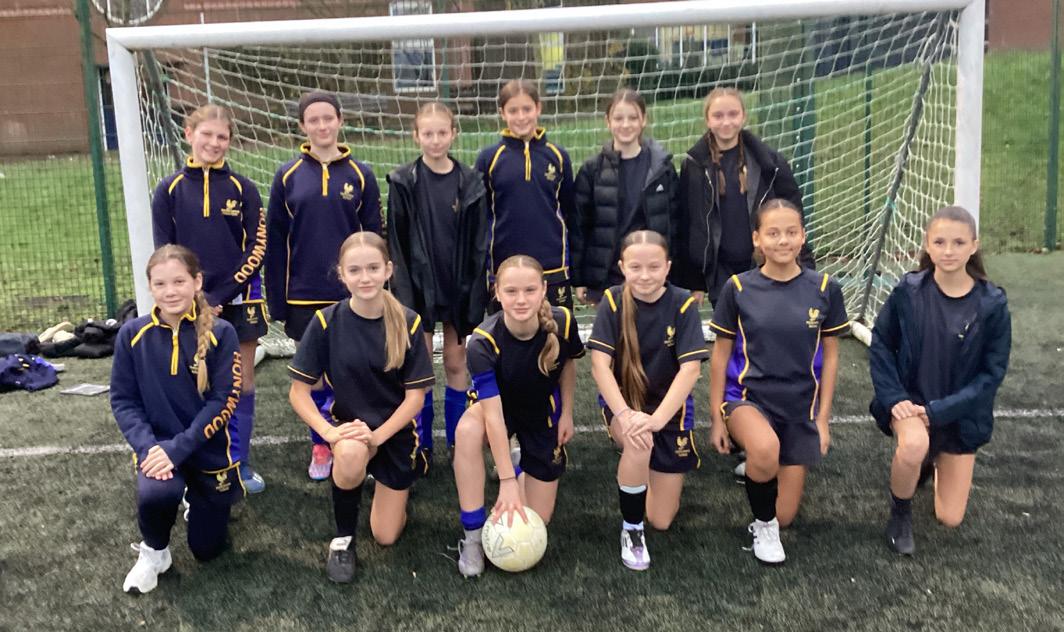
All the squad played a part in winning the tournament in very challenging weather conditions. Well Done Girls! Mr G Walters


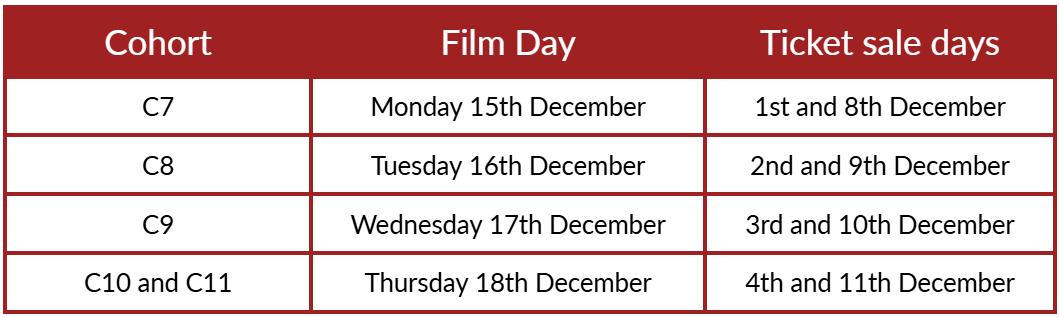
Christmas Film Week