HEADLINES
By Mr
D Smith

WHY REMEMBERING THE HOLOCAUST IS MORE IMPORTANT THAN EVER.
Holocaust Memorial Day 27th January 2026
I have always felt it a great privilege to teach History as a vehicle not only to develop critical thinking and other key skills, but also to confront prejudice, persecution, and hate. Sadly, the corrosive effects of antisemitism, racism, and hatred are all too present in today’s society. This year’s Holocaust Memorial Day is being marked at a time where, incomprehensibly, Jewish people have recently been killed for being Jewish, both here and overseas. In the face of rising hate, Holocaust education can play such an important role in promoting the universal principles of human rights, justice, and moral responsibility, as well as the importance of thinking critically in the world of social media and AI. As the last eyewitnesses to the Holocaust are dying, AI-generated content is confusing fact with fiction, and distortion and denial are becoming more and more widespread.
Holocaust Memorial Day takes place each year on 27th January because it marks the anniversary of the liberation of the Auschwitz-Birkenau concentration and extermination camp by Soviet troops in 1945. Auschwitz, located in Nazi-occupied Poland, was the largest site of its kind. This was the site of the systematic murder of over 1 million people, most of whom were Jews. Auschwitz was at the center of a network of over 44,000 camps, train stations, ghettos, and other sites of persecution, murder, slave labor, transport, testing, and torture. The industrialized mass murder of the Jewish people wiped out what had been a vibrant culture for over two thousand years. After just 12 years of Nazi rule, two-thirds of the Jewish population of Europe had been murdered - over 6 million people. Hundreds of thousands of Sinti-Roma people, Poles, Slavs, disabled people, homosexuals, Jehovah’s Witnesses, and others also met the same horrific fate.
Despite all of these concrete truths about the Holocaust, according to The Guardian in 2025, “a quarter of young people in the UK have come across Holocaust denial or distortion on social media,” and a “third of young people in the UK are unable to name Auschwitz or any Nazi death camp.” The dangers of misinformation are so acute today. A functioning society needs a “shared reality” - an agreed-upon set of facts - to enable a successful democracy. However, when a current powerful political figure made “30,573 false or misleading claims” in his first four years in office (according to the Washington Post), and continues to do so in his second term, it is clear that we are experiencing a crisis where truth is now considered by many as just another form of political opinion. The disinformation and dehumanization of the Jewish people delivered by the Nazis came through books, posters, speeches, radio, and film. Today, disinformation comes straight into our and our children’s phones, delivered by leading political figures as well as shadowy forces on the internet, and so we must upskill children in spotting it.
Following 1945, “never again” became an international rallying cry for the lessons of the Holocaust to lead to change. In the face of rising extremism, antisemitism, misinformation, and increased risks of global conflict, remembering the Holocaust is ever more important. I hope that remembrance is met with a strengthening resolve in our whole school community that we will use education as a vehicle to tackle prejudice and hate.
A huge thank you to Mr. Tolhurst for leading such thought-provoking and somber assemblies on this theme this week, and a huge thank you to all of the children at Honywood School who continue to engage so fantastically in their education about the Holocaust.
“The Holocaust didn’t start with bullets. It started with words.” Holocaust survivor, Al Miller
Daniel Smith
Assistant Headteacher

ENGLISH SPECIAL
What a busy term we are having in English!
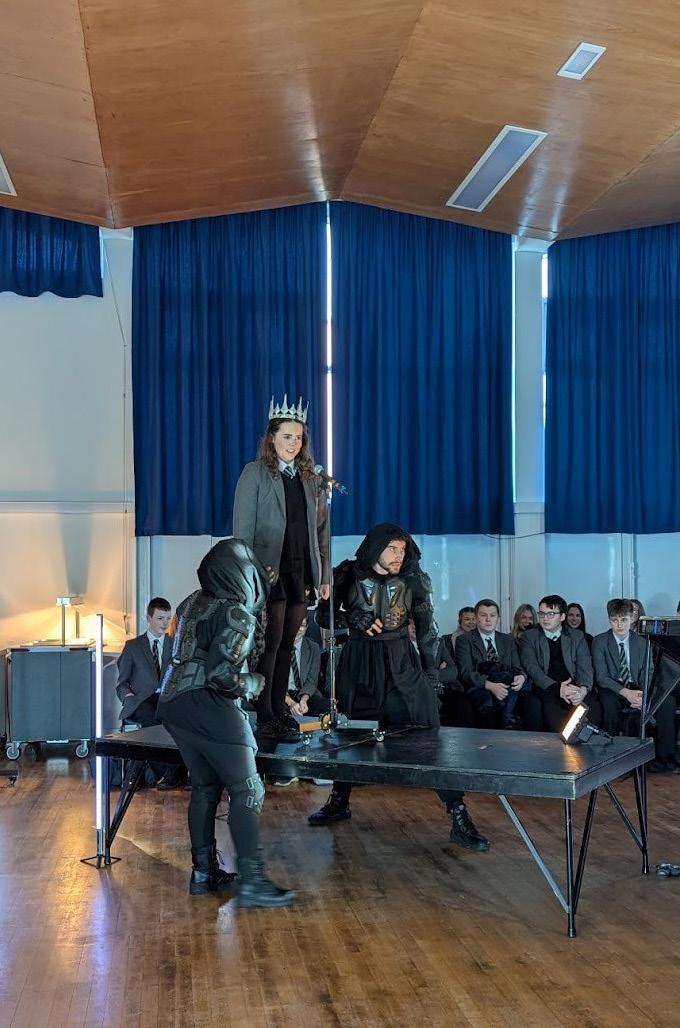
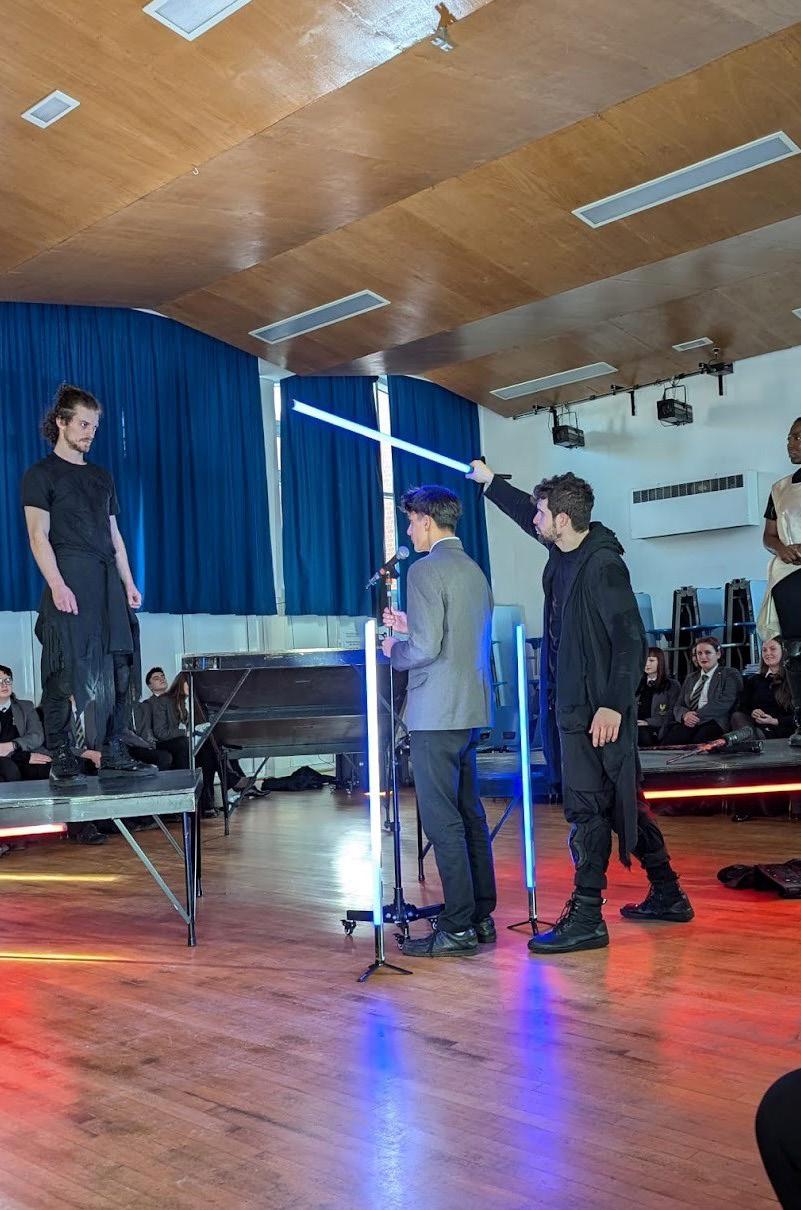
C7 are enjoying their study of Frankenstein, mixing the play version by Phillip Pullman with the original Mary Shelley text. They are exploring ideas around morality and ethics along with the wider ideas of scientific discoveries and The Enlightenment. C8 are studying celebration poetry and have created some fantastic work that showcases their understanding of a variety of poetic techniques and concepts. Romeo and Juliet is being enjoyed by C9 and there have been some lively interpretations of the scenes! C10 are working hard on studying English Language Paper 2 in preparation for their mocks and C11 are focused on revising all content before their final exams in the summer. C11 also enjoyed a visit from a theatre company who brought the play Macbeth to life!
We have a book fair coming up next week so there are even more opportunities for the learners to immerse themselves in reading for pleasure. World Book Day is also around the corner and is always well celebrated by staff and learners alike.
I continue to be so impressed at the learners’ dedication to the study of English; they tell us all about the books they are reading, interesting ideas they have come across and seem to really enjoy their lessons. They really are a pleasure to work with.
Mrs Sparrow - Subject Leader

LEARNER QUOTES
I have loved every English lesson I’ve had so far. Every time I’ve seen it on my timetable I’ve always got excited. The teachers have been so supportive and have pushed me to be the best I can. I’ve loved writing stories and learning new and more advanced vocabulary and I’m intrigued to carry on and learn even more.
Max Lesiak 7Y7
It is a delight to be in the class; my teachers are brilliant at teaching because they are funny, supportive and help me aspire. I really like this subject because at primary school I didn’t really like it but since I have joined Honywood, I have! It has made me realise how great I actually am at it. Also it has made me very proud of myself. I really do love how my teachers teach me because it makes me feel like it is the way I’m meant to be learning things!
Finley Weavers 7Y7
What I enjoy about English is when we’re able to write about our feelings towards a book or case study we have recently read - reviewing personal opinions. I like when we’re read to and reading an interesting book in class, however I also enjoy some CTG to see what areas I could improve on to be better in my next upcoming tests in English.
Ava Courtier 8Y4
I’ve always had an interest in English and I really enjoy studying and analysing the literature we read and uncovering the deeper meanings behind each word- it’s as if you unearth a whole other world of meanings and interpretations not visible to the usual reader. For this reason and my real enjoyment of the subject overall, I am continuing with it, doing English Lit & Lang as an A-level to combine both sides of English, both creating and analysing.
Jemima Stowers 11A1
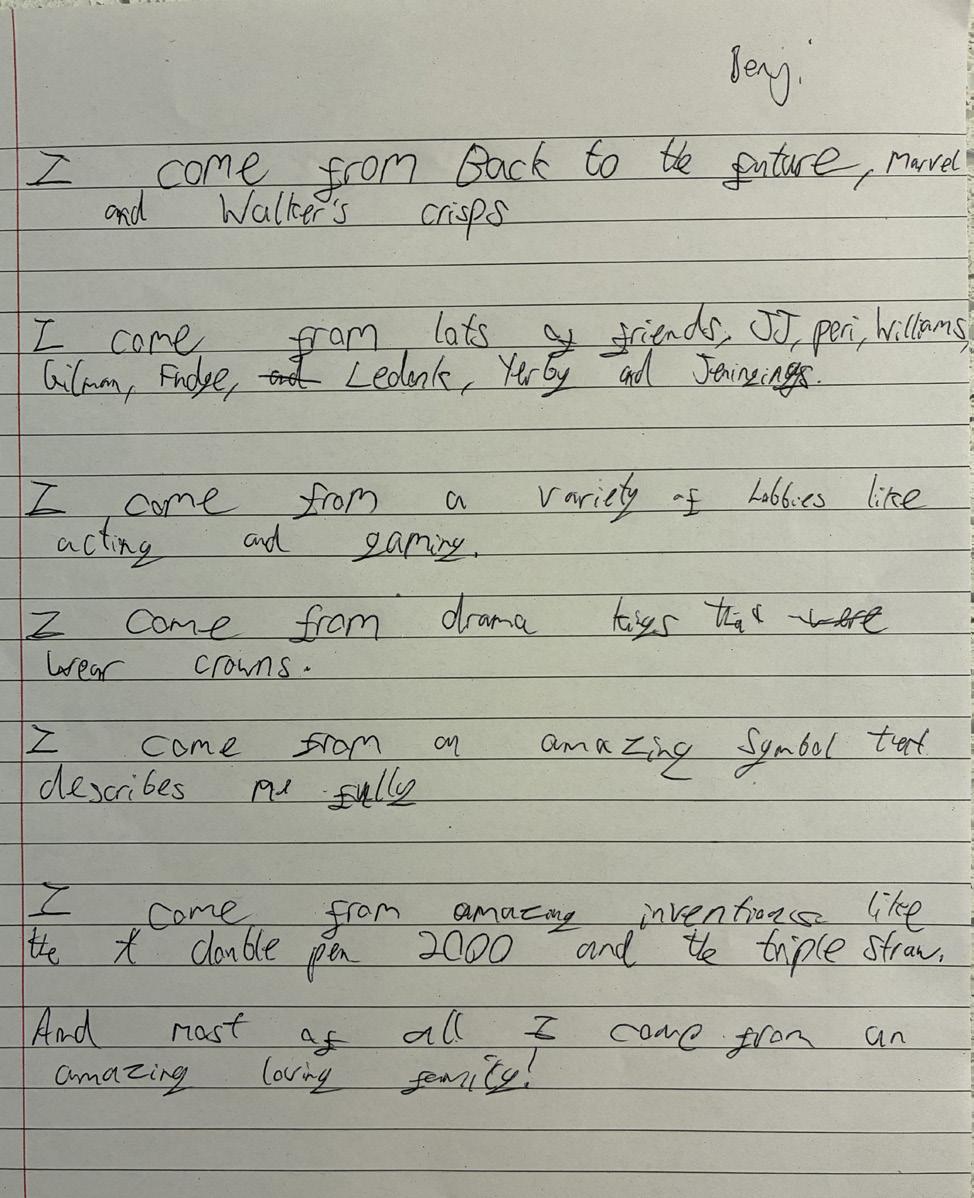
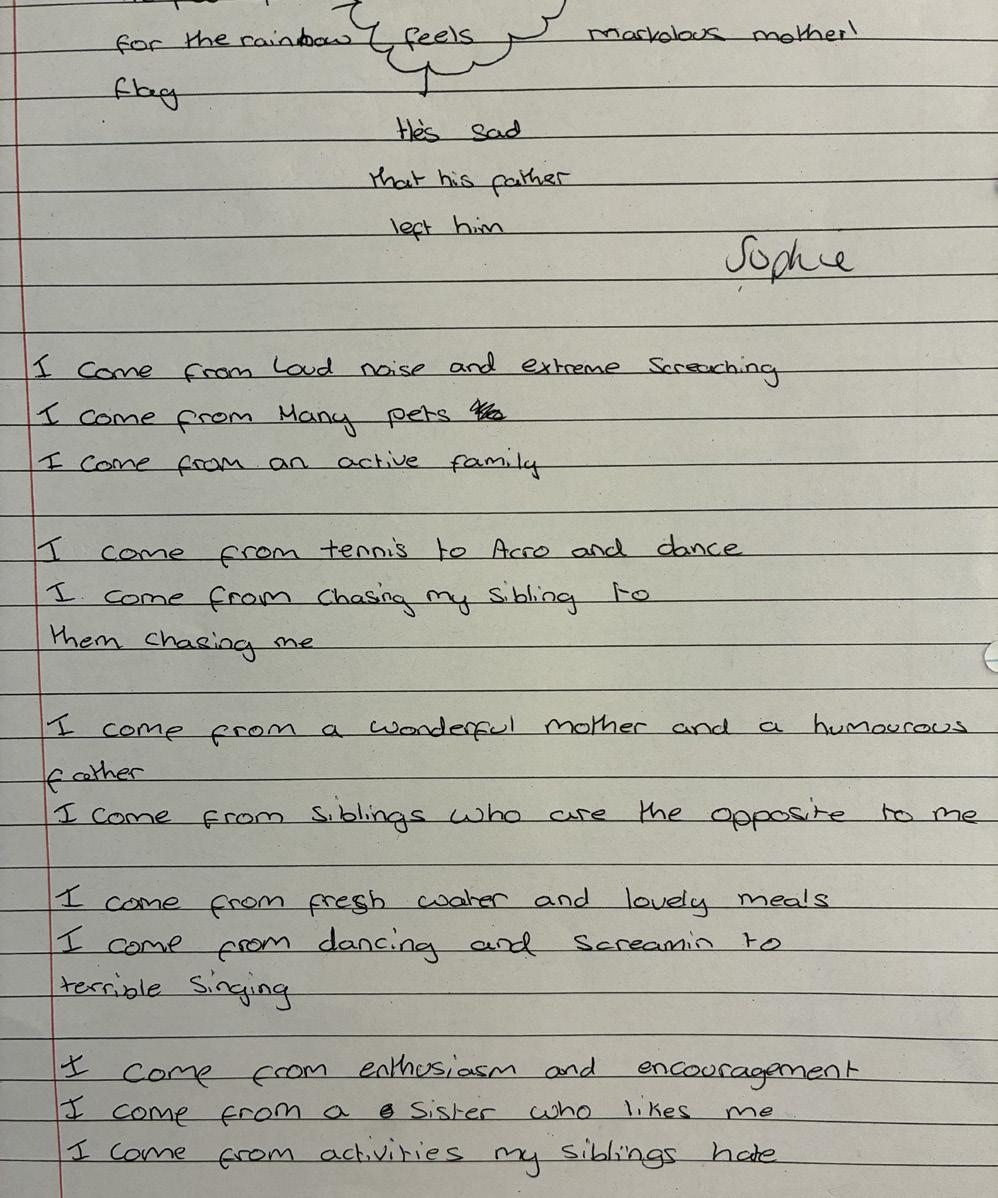
TALLULAH CRIDLAND
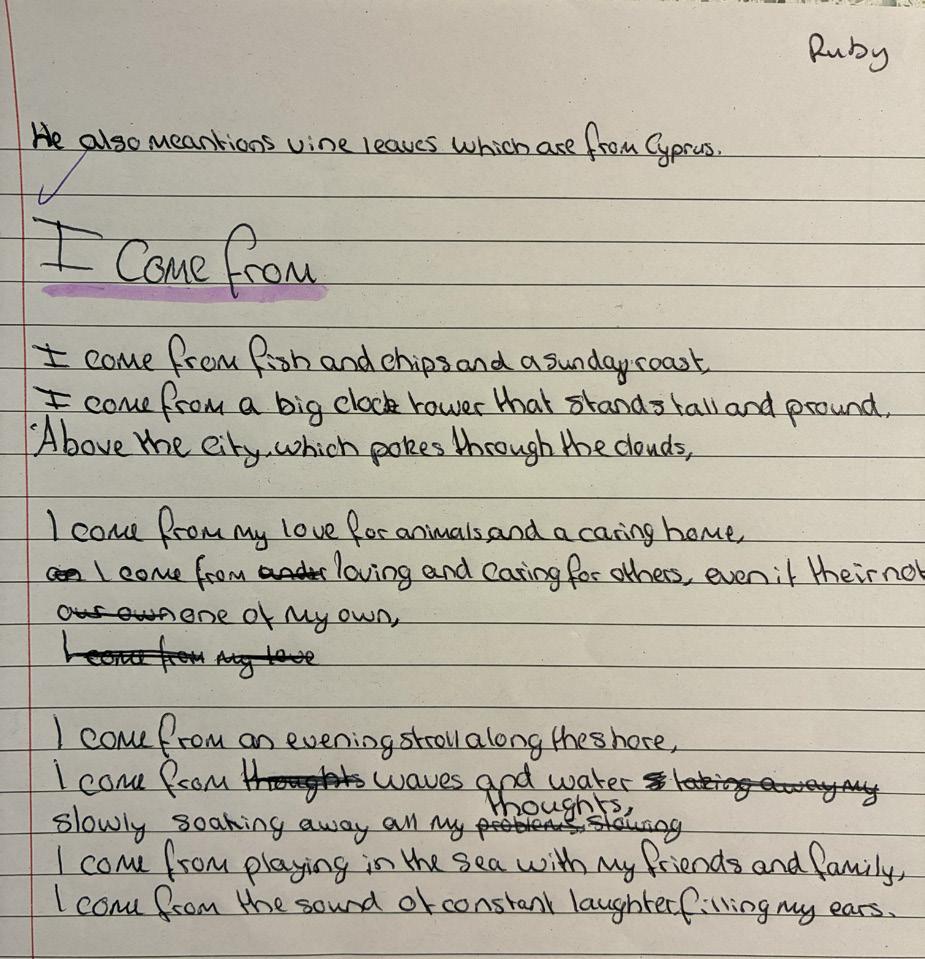
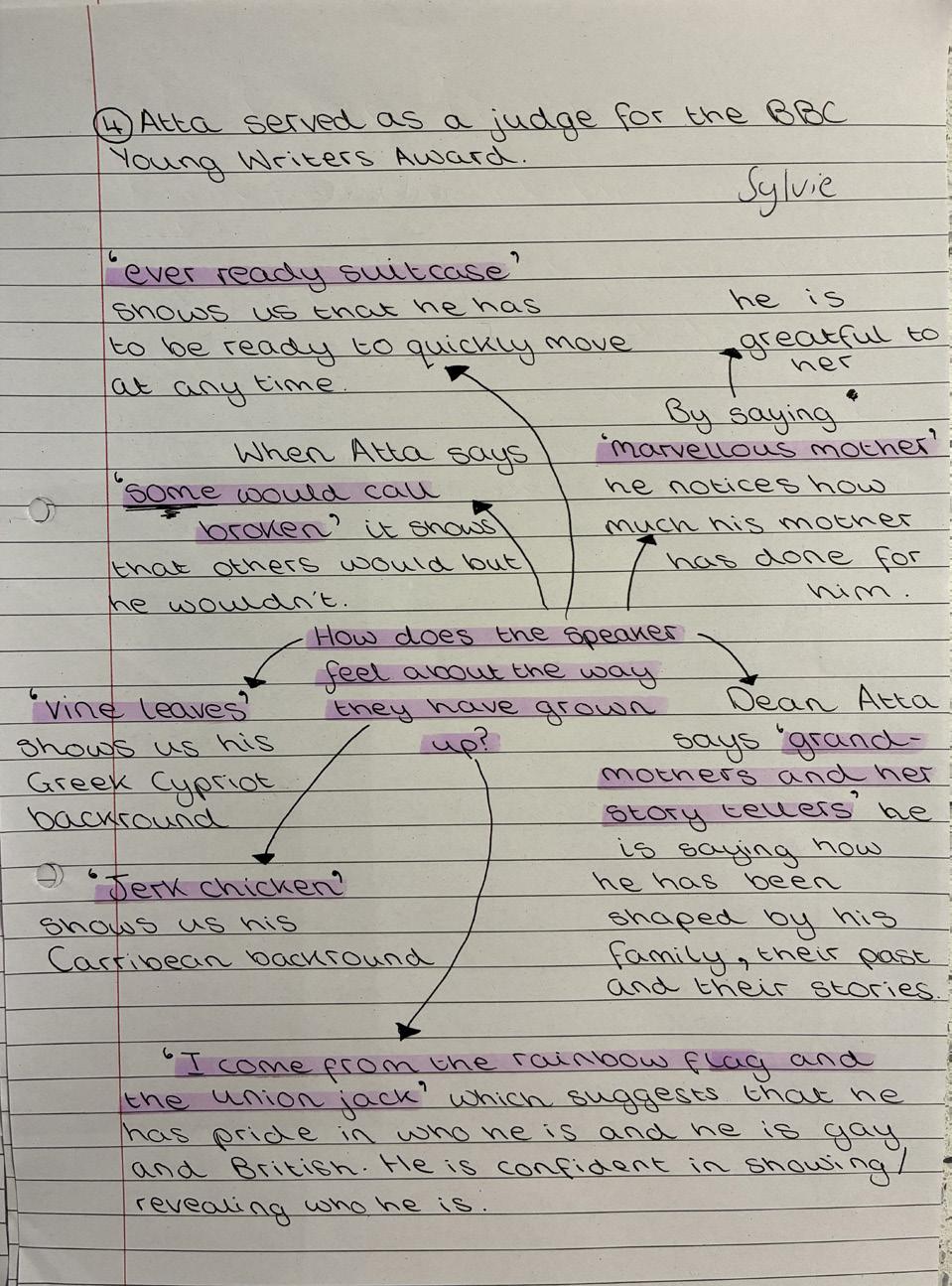
I come from family fun and karaoke chaos, I come from home cooked bacon and eggs And laying in bed, tired.
I come from bright colours hidden by fear I come from quiet corners And noise only I can hear.
I come from dancing in the lights I come from acting And the stage.
I come from a cheerful mother And I come from a humorous father And a sister the opposite of me.
I come from glitter on my nails I come from fresh cut flowers And animals surrounding me.
I come from children’s tea parties I come from watergum fights And birds on the bird feeder.
I come from jokes I come from lots and lots of family I come from stubborn but loving friends.
I come from confidence and tears I come from comfort and fears And the help along the way.
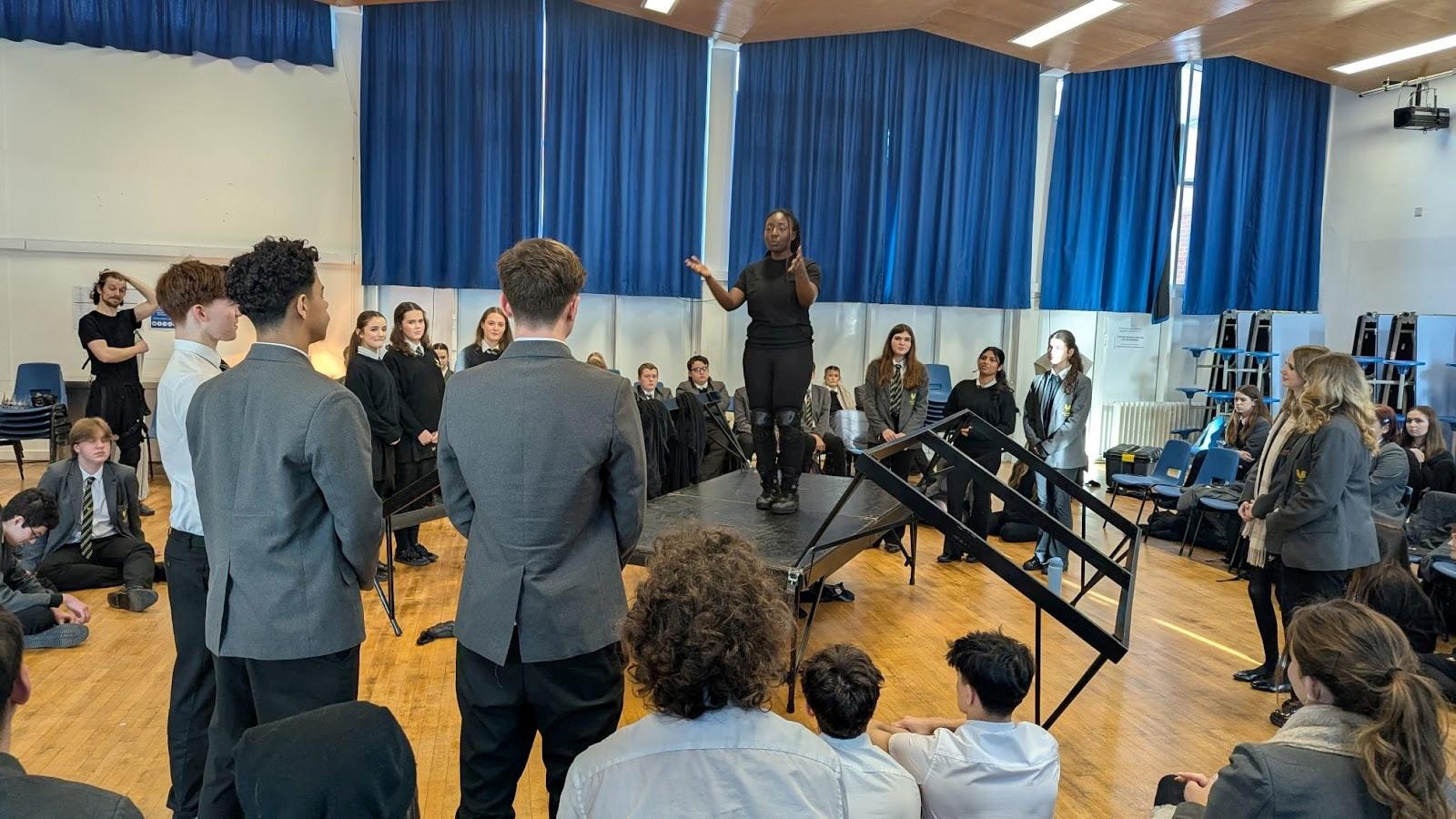
BOX CLEVER: MACBETH





Firstly, well done to everyone for joining Carbon Cutting Essex; Honywood is currently third place in secondary schools. Don’t forget to sign up and add your points here: https://www.essex.gov.uk/carbon-cutting-essex
Secondly, most of us are probably aware of the problems with single-use plastic and yet we still use so much of it every day. Some of the problems are:
Persistent Pollution: Plastic doesn’t biodegrade; it just breaks into smaller pieces (microplastics) that contaminate soil, water, and air for centuries.
Harm to Wildlife: Animals mistake plastic for food or get entangled, causing injury, starvation, and death.
Ocean Crisis: Millions of tonnes enter the ocean yearly, creating garbage patches and threatening marine life, with predictions of more plastic than fish by 2050. Climate Change: Made from fossil fuels, their production and incineration release significant greenhouse gases, intensifying global warming.
Our challenge to you this week is to consider how you could reduce your use of single-use plastic. One of the easiest ways to do this is to buy a good quality reusable drinks bottle that you can bring to school each day and refill as necessary. We would like to see a reduction in the amount of plastic bottles we use at school and would also love to know any other ways you have found to reduce your use of single-use plastic. There must be lots of you doing this as there are always a huge number of reusable bottles left behind in learner reception, so make sure you look after yours and don’t keep buying new ones - that defeats the purpose!
Dates for the Diary
Monday 2nd February
Thursday 5th February
5th - 10th February
Tuesday 10th February
Wednesday 11th February
Friday 13th February
16th to 20th February
23th & 24th February
Tuesday 24th February
Thursday 26th February
Thursday 26th February
Wednesday 4th March
Disneyland Paris trip departs
C11 Whole Cohort photo - 8.45am
Book Fair
C10 Jack Petchey Speak Out Challenge
C7 Parents Evening
Ski Trip Departs
Half Term holidays
C11 Learning Group photos - LS5
C9 RS trip to Walsingham
C11 Media Studies trip to British Film Institute
C7 Smashed performance
C8 Guided Choices Evening for parents