TECH SECTOR
INTERIOR DESIGN QUALIFICATIONS
PREPARED BY HOK | 2026

PREPARED BY HOK | 2026
HOK is a global design, architecture, engineering and planning firm. Founded in 1955, the firm has grown into one of the world’s most respected and diverse design practices, recognized for creating innovative, high-performance buildings and spaces that enrich communities, advance sustainability, and respond to the needs of people and the planet.
70+
Years in the Industry
55+
Million Square Feet of Workplace Designed Annually
#2
Fast Company Most Innovative Companies Workplace and 4x Honoree
150+
Design Awards 2024-2025
1
A/E Firm by Architectural Record Top 300 + Engineering NewsRecord Top 500 Design Firms
1
Planet Positive Firm of the Year by Metropolis Magazine
6
Ranking by Interior Design Magazine's Top 100 Giants and one of most admired firms
2x Honoree of TIME100 Most Influential Companies
With 27 offices working as a single integrated practice, HOK’s global network brings local insight and worldwide resources. Our team of visionary, human-centered designers blends science and art to create innovative, high-performance environments— actively delivering world-class solutions in 50+ countries.
EUROPE
London
Canada
Calgary | Ottawa | Toronto
United States
Atlanta | Austin | Boston | Chicago | Dallas | Denver
Houston | Kansas City | Los Angeles | Miami | New York
Philadelphia | Salt Lake City | San Francisco | Seattle
St. Louis | Tampa | Washington D.C.
Dubai
ASIA
Beijing | Hong Kong |
Shanghai | Mumbai
HOK is a collective of future-forward thinkers and designers who are driven to face the critical challenges of our time. We are dedicated to improving people’s lives, serving our clients and healing the planet. Together, we cultivate a culture of design excellence at the confluence of art and science, blending the power of creative expression with a clear sense of purpose.
We champion a culture of excellence by integrating design innovation, technical rigor, interdisciplinary collaboration, and thought leadership. Our commitment to design excellence reflects our belief that great design improves lives, inspires communities, and sets new standards for the built environment.
We design with empathy and purpose— creating spaces that promote health, equity, and well-being. Whether through inclusive design, community engagement, or human-centered solutions, we strive to positively impact the lives of those who experience our work.
We embrace our responsibility to heal the planet through sustainable design practices that reduce environmental impact, enhance resilience, and regenerate ecosystems. Every project is an opportunity to advance climate-conscious design and environmental stewardship.
We serve our clients by listening deeply, thinking holistically, and delivering solutions that align with their goals and values. Our integrity, responsiveness, and design excellence ensure that we build lasting partnerships and create enduring value.
HOK’s thought leadership reflects a legacy of research and design innovation. Through our integrated, practitioner-led Research Program, architects and designers conduct in-house research alongside project work, allowing discoveries to be rapidly applied to real-world challenges. Current initiatives focus on neuroinclusive design, sustainable material tracking, and future-casting design, which are informed by evidence-based research, publications, and industry engagement. By sponsoring roundtables, speaking at conferences, and publishing articles and white papers, HOK regularly shares knowledge widely, advancing sustainability, equity, and innovation while driving creative, multidisciplinary design solutions for our clients.
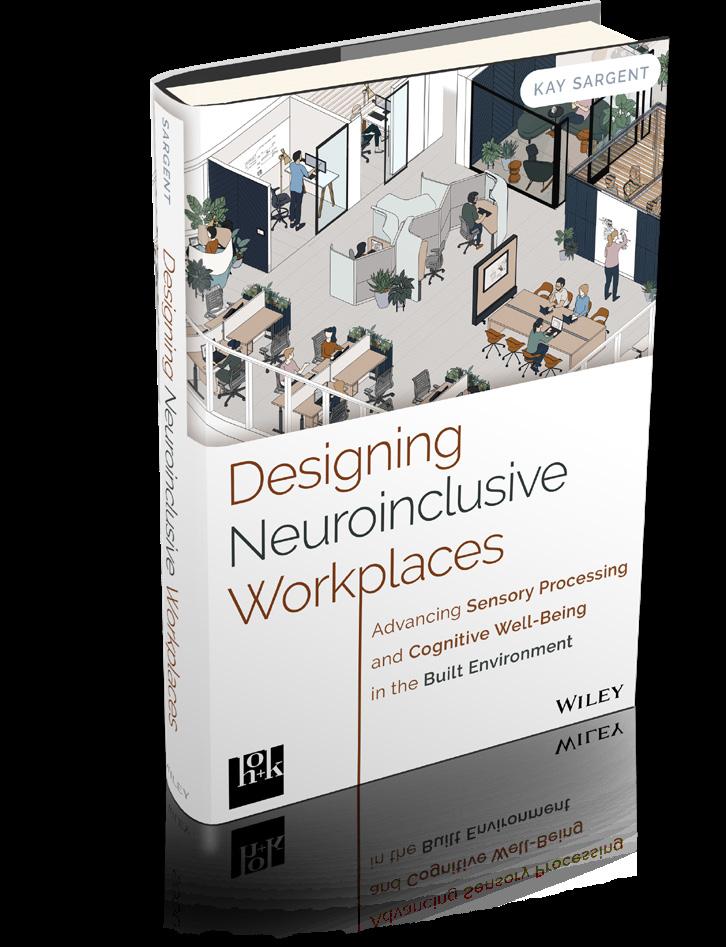
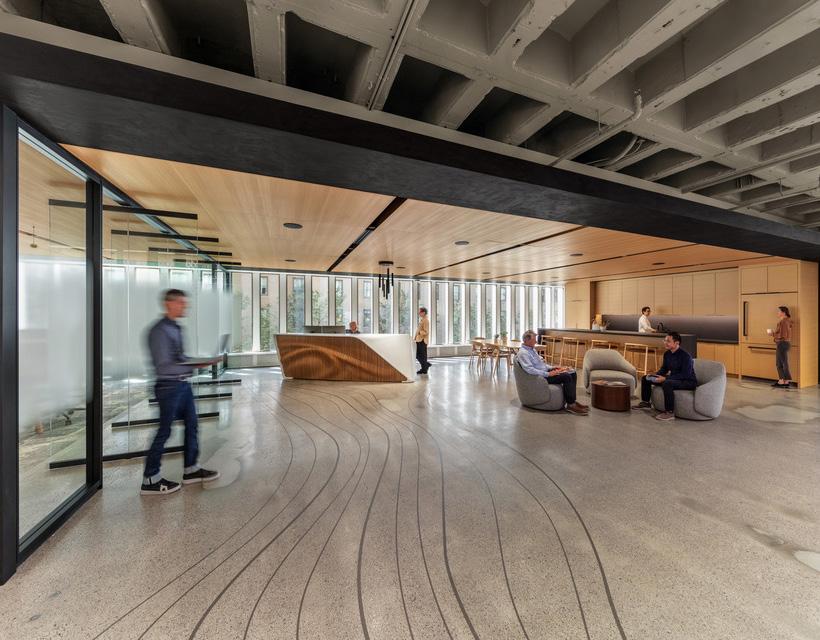
Samples of recent white papers can be found at the following links:
HOK Forward 2025: The Evolution of Neuroinclusive Workplaces
A Call for Purpose-Driven Design to Redefine the Workplace
HOK Forward 2024: New Ways of Working
How Coworking & Shared Spaces Are Impacting Work: Navigating Post-Pandemic Opportunities
HOK’s Sustainable Material Tracking: A Journey Toward Healthier Space
How HOK Is Designing Its Offices to Support Hybrid Work, Collaboration and Culture
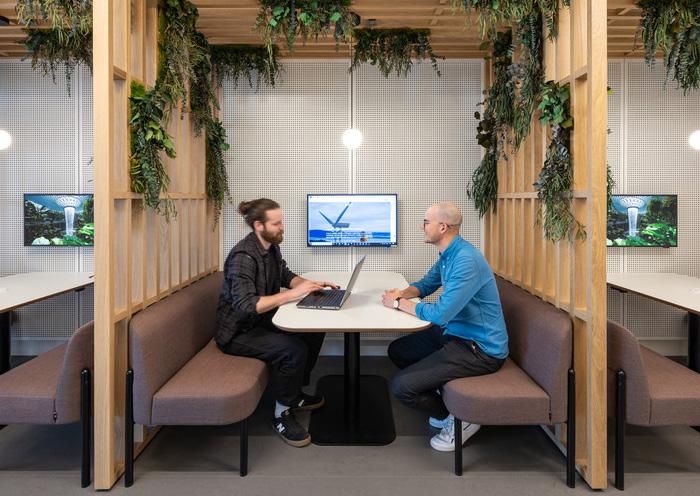
RECEIVING 20+ INDUSTRY AWARDS FOR RESEARCH, HOK HAS 8 ACTIVE RESEARCH INITIATIVES.
Part of what draws us to design is our deep desire to effect positive change. With equity and inclusion at the forefront of global conversations, HOK is taking decisive action to embed these values into the built environment and our design process. HOK’s commitment to equity and inclusive design is both structured and proactive. HOK has developed an internal Designing for Equity Toolkit, grounded in five guiding principles. This toolkit embeds equitable design into every project milestone and has already been tested across notable projects—like AstraZeneca’s R+D center in Cambridge and NYCFC’s future stadium in Queens.
guiding principles member advisory group
Partnering with communities
Planning for inclusion
Equity of experience
Promoting health and wellbeing for all
Championing environmental justice
Advisory group actively pilots and leads HOK's Firmwide Equity Platform
Working in tandem with the Diversity Advisory Council (DAC), focusing on internal initiatives like mentoring programs, career and opportunity surveys, and partnerships with organizations like NOMA.

HOK WAS NAMED DEI COMPANY OF THE YEAR BY THE LOS ANGELES BUSINESS JOURNAL IN 2023.
HOK is a proven leader in sustainable design, combining deep technical expertise, data-driven innovation, and firmwide commitment to reduce environmental impact and advance human well-being. Two decades ago, when we wrote The HOK Guidebook to Sustainable Design, green design was an emerging field. Today, we have embedded sustainability into our culture, workflows, and technical rigor, tracking the projected energy performance of every project, and we are committed to achieving a carbon-neutral design portfolio by 2030. With a wide range of sustainability practices, tools, and strategies in-house, our work is backed by proven results. HOK has more than 500 projects certified under global standards, including LEED, WELL, EDGE, Estidama, GSAS, BREEAM, Green Mark and Green Globes and hundreds more actively pursuing certification. At the forefront of circular design, regenerative systems, and inclusive sustainability research, our Sustainable Material Tracking initiative, which evaluates embodied carbon, green chemistry, and sustainable sourcing on all interior projects, enables healthier, lower-impact material selections across our portfolio.
5
6 sustainability practices strategies + tools
Operational Carbon
Embodied Carbon
Materials and Product
Transparency
HOK Net Zero Carbon Commitment
Building Systems
Life Cycle Cost Analysis
Water Cycle Tool
Carbon Tracking Tool
Energy Modeling
Existing Building Survey and
Gap Analyses Daylight
Analyses + Modeling
WE HAVE WON 10 AIA COTE AWARDS FOR SUSTAINABLE DESIGN EXCELLENCE AND ENR’S RECENT SURVEY RANKED HOK AS THE NO. 1 GREEN
BUILDING ARCHITECTURE/ ENGINEERING FIRM.
NAMED METROPOLIS PLANET POSITIVE AWARDS “2025 SUSTAINABLE FIRM OF THE YEAR”
HOK is built to support our clients wherever they work— consistently, efficiently, and at scale. For decades, we have managed hundreds of Master Service Agreement (MSA) client relationships, where we operate as an extension of our clients’ real estate teams, delivering the same high-quality service whether a project is 1,500 sf or a global headquarters.
Our centralized account model provides a single point of contact and a core team that maintains standards, ensures consistency, and coordinates regional HOK teams for on-theground delivery. This structure accelerates project launch, strengthens quality, and ensures every location reflects the same brand, experience, and operational expectations.
Through long-term partnerships, we help clients manage their entire portfolio—supporting them across regions, time zones, and project types with seamless communication, reliable delivery, and deep knowledge of their processes and goals. Our approach improves efficiency, reduces costs, and ensures a unified experience across every project, everywhere.
WE MAINTAIN OVER 100 GLOBAL MSA ACCOUNTS FOR MANY FORTUNE 500 CLIENTS LIKE ABBVIE, AMAZON, BANK OF AMERICA, CHEVRON AND MORE.
HOK is a truly multidisciplinary design firm, integrating interior design, architecture, engineering, planning, and consulting under one roof. This breadth allows us to address complex challenges from every angle, delivering innovative, resilient, and future-forward interior environments tailored to each client’s unique needs.
market sectors service areas
Aviation + Transportation
Civic + Justice
Corporate + Commercial
Government
Healthcare
Higher Education
Lifestyle
Mixed Use
Renovation + Refurbishment
Science + Technology
Sports + Rec + Entertainment
Architecture
Landscape Architecture
Lighting Design
Experience Design
Interiors
Planning + Urban Design
Sustainable Design
Engineering
Consulting
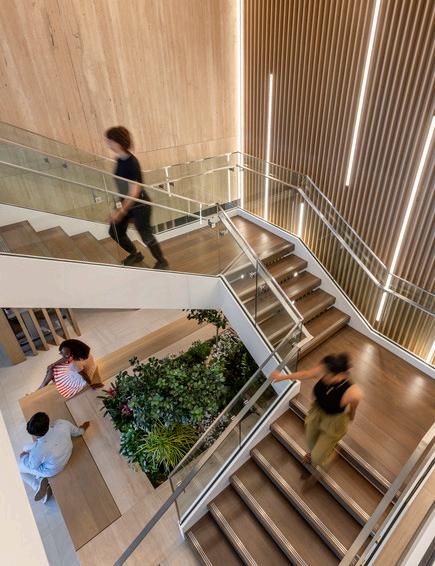
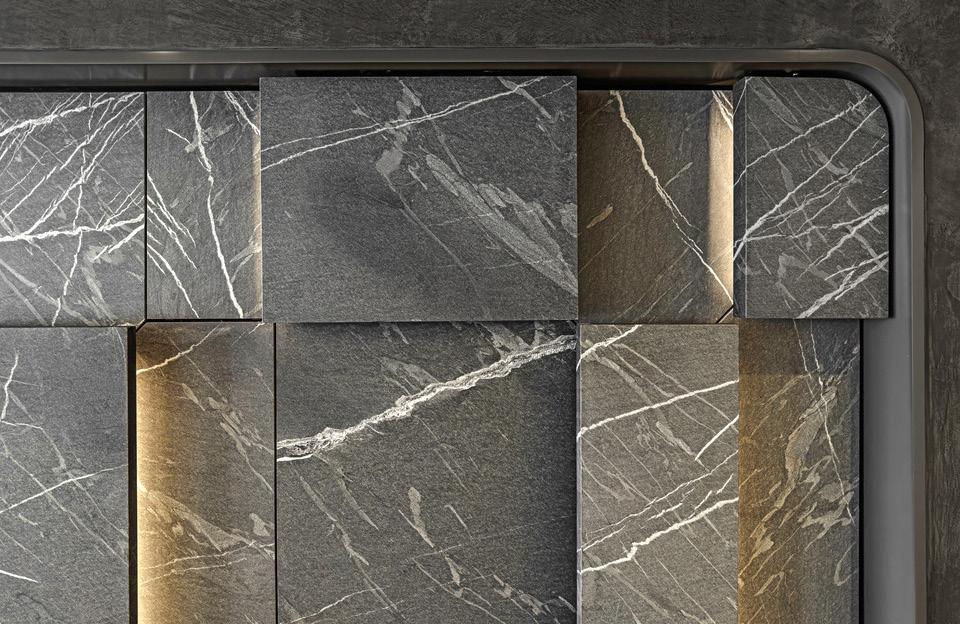
Beyond our core architectural expertise, we provide in-house services in Engineering, Experience Design, Landscape Design, Lighting Design, Stylization, Workplace Consulting, and Enhanced Visualization. This integrated model allows us to seamlessly align design intent with technical precision, human experience, and organizational strategy. By embedding these enhanced services directly within our studio, HOK ensures cohesive, innovative, and highly tailored environments that inspire, perform, and endure. More information on these specialities can be found on the following pages.
ENGINEERING EXPERIENCE DESIGN LANDSCAPE DESIGN LIGHTING DESIGN STYLIZATION WORKPLACE CONSULTING
Ranked as the #1 green building firm by Engineering News Record, HOK’s engineering teams bring deep experience in complex project types—from corporate workplaces and aviation terminals to science + technology facilities, stadiums and healthcare environments. Our solutions are rooted in technical excellence, data-driven analysis, and a commitment to innovation, delivering systems that perform on day one and evolve with our clients’ needs. Our engineers collaborate closely with HOK’s planners, architects, and consultants to create coordinated, efficient, and resilient environments that elevate occupant comfort, reduce operational costs, and meet ambitious sustainability goals.
structural engineering
Structural engineering design
Façade engineering
Foundation design
Seismic design
Long-span + special structures
Technical planning + conceptual studies
Existing building assessments
Renovation + retrofit design
Structural modeling + analysis
Blast + vibration analysis
MEP engineering
Air distribution systems
Central utility plants
Heating, ventilation + air conditioning
Mission-critical systems + clean rooms
Sanitary systems
Water retention + reuse
Fire alarm + smoke detection
Climate + micro-climate analysis
Energy modeling + analysis
Life cycle analysis
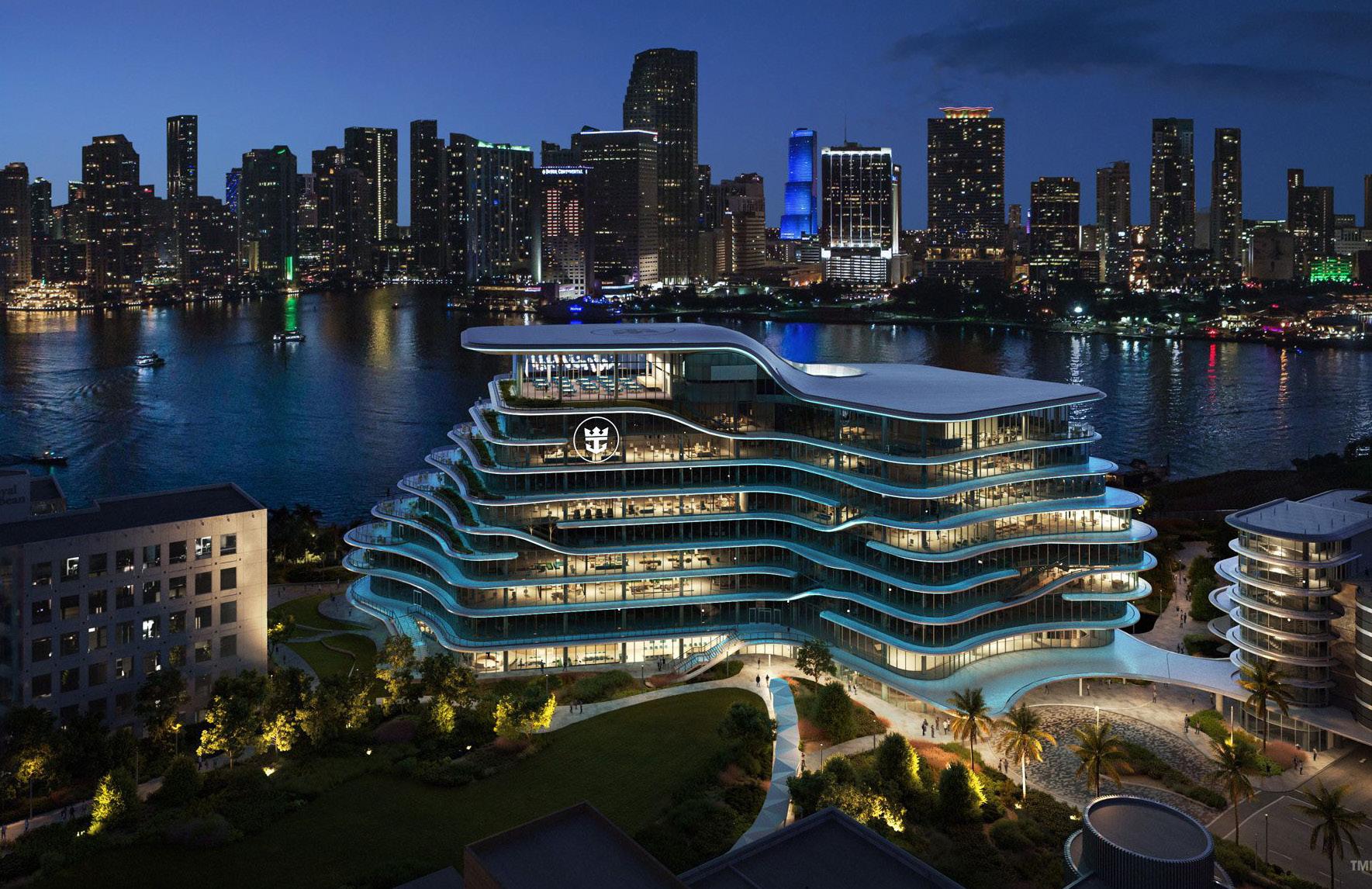
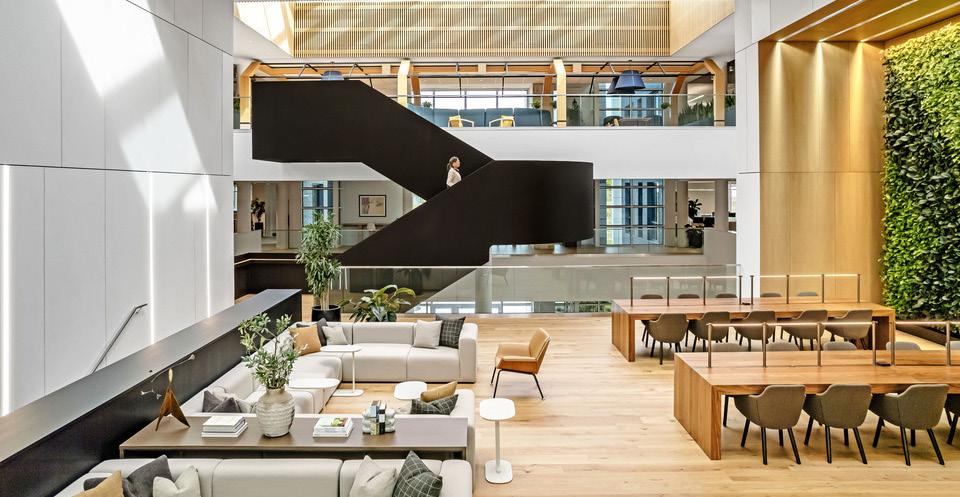
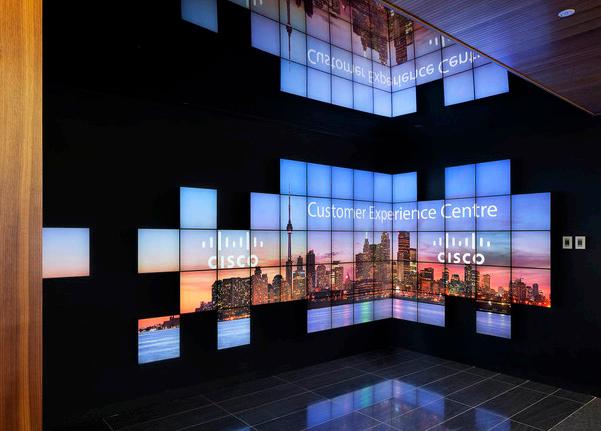
Our expertise goes beyond shaping physical spaces – we specialize in seamlessly integrating diverse media platforms that maximize user engagement, enhance spatial flow and leave a memorable impact. Our team of 20 designers creates dynamic, immersive experiences that strengthen our clients’ brand identity and foster meaningful connections. The practice draws on proprietary tools, sustainability and wellness standards, and a deep understanding of human behavior to deliver environments that inspire, delight, and foster lasting connections between people and place.
Identity + logo design
Brand applications
Media integration
Change management
Naming and positioning
Visualization brand design digital experience
Interactive content
Immersive environment
Content design
VR and AR
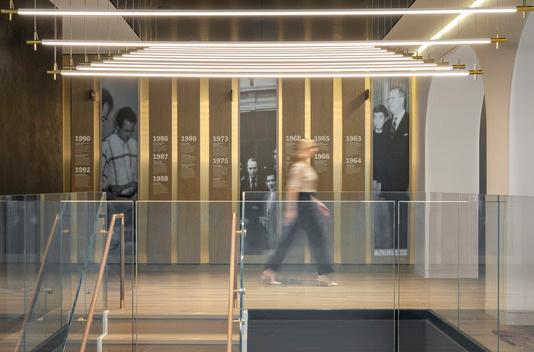

#1
+ Wayfinding by
Interior Design
Experiential graphics
Public art
Sponsorship
Donor recognition
Exhibits
Identification + numbering placemaking wayfinding
Design + standards
Assessments
ADA + life safety
Master plan strategies
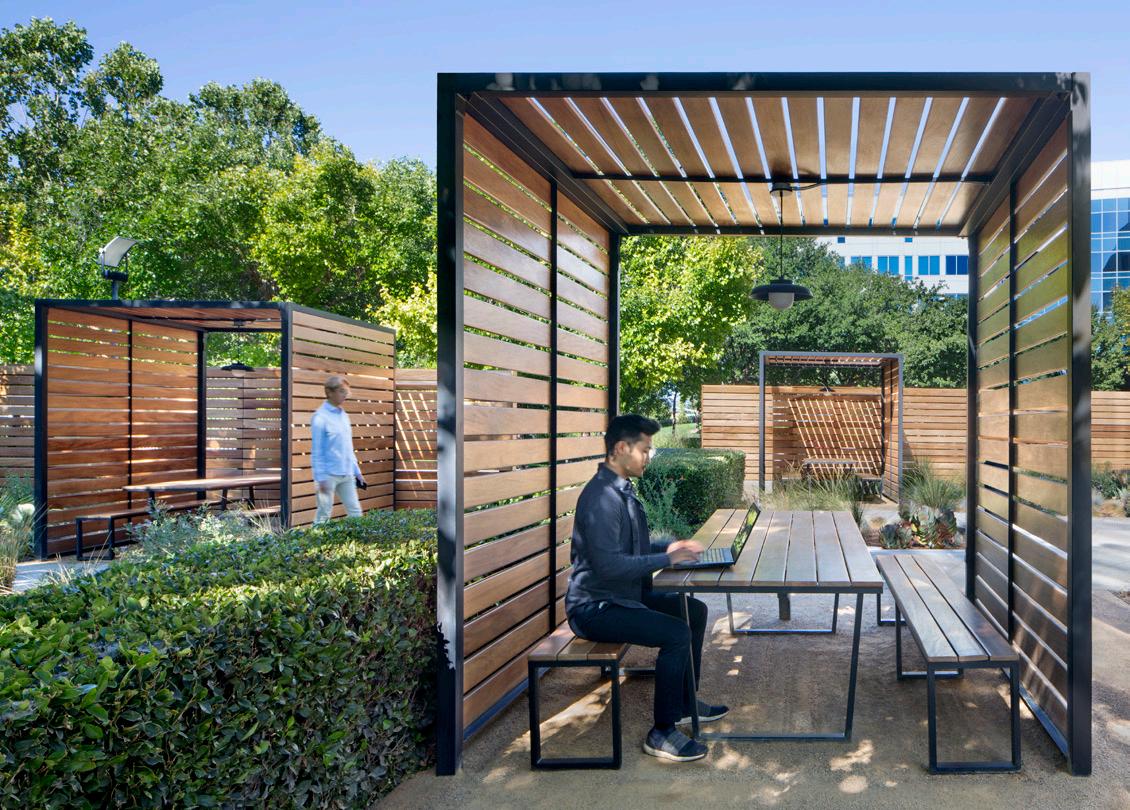
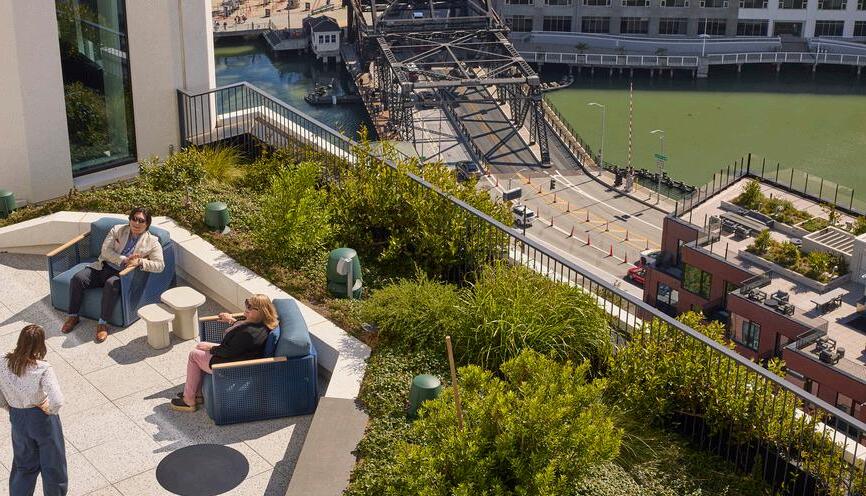
HOK’s landscape designers work hand-in-hand with architects, planners, engineers and environmental specialists to create resilient, high-performance outdoor environments that enrich communities, support ecological health and elevate the human experience. Our approach emphasizes regenerative design, long-term maintenance strategies and the creation of adaptable, future-ready landscapes that enrich both people and place. Working across scales—from urban districts and campus environments to workplace terraces, plazas and restorative landscapes—our designers blend design excellence, environmental stewardship and technical expertise.
SERVICES
site planning + site design
Establishing overall site organization, circulation, open space networks, and program relationships.
Streetscapes, plazas, promenades, waterfronts, public realm enhancements, and pedestrianfocused environments. urban design
amenity + wellness environments
Outdoor workspaces, healing gardens, rooftop terraces, fitness/wellness landscapes, and employee engagement spaces.
Long-range planning for campuses, mixed-use sites, corporate environments, civic spaces, and institutional settings. landscape master planning
Green infrastructure, stormwater management, habitat restoration, carbon-conscious design, and native/ecological systems. sustainable strategies
Landscape performance modeling, climate response analysis, and integration of ecosystem services into design. performance + environmental analysis
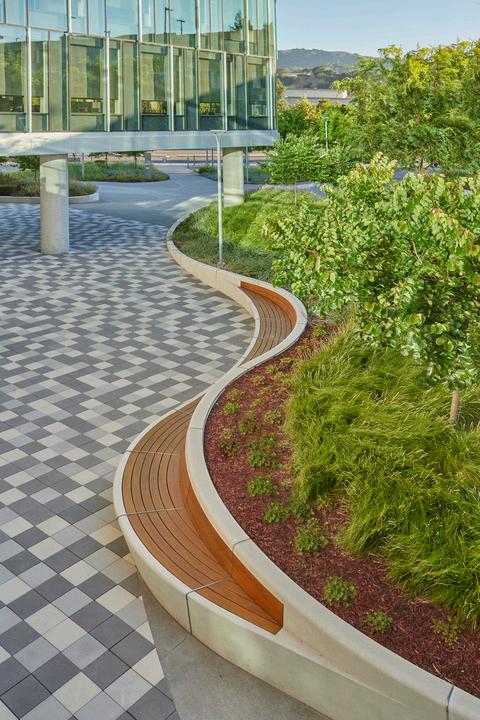
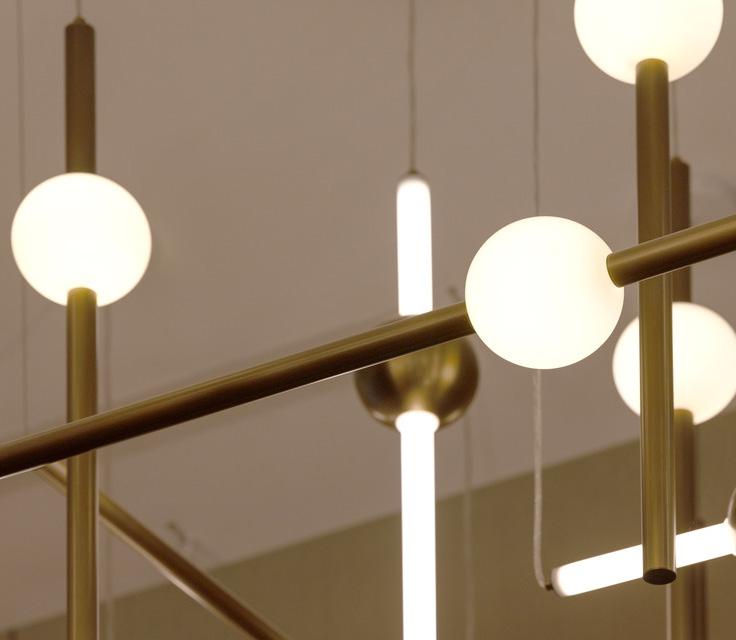
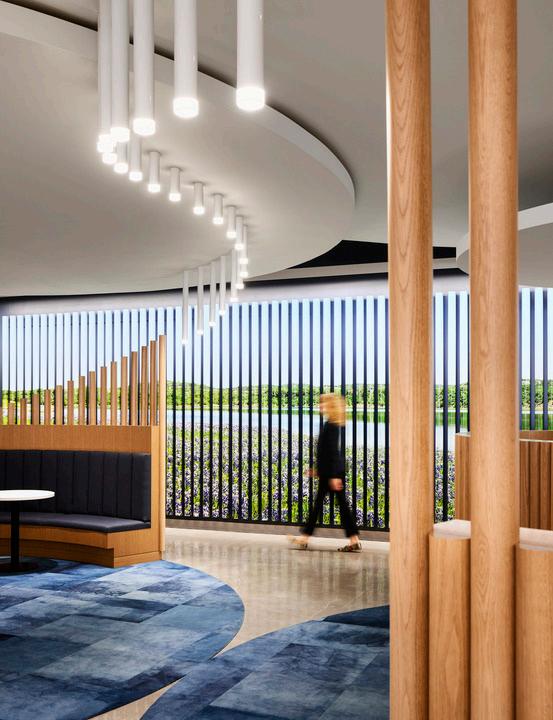
Light does more than illuminate—it has a significant impact on our health, our mood, and our experience of a space. Whether bold or subtle, lighting is an integral part of design, capable of bringing greater clarity and resonance to the environments we inhabit. HOK’s lighting group consists of six full-time dedicated lighting designers who collaborate with project teams to create unified lighting solutions, reinforcing a project’s design aesthetic with reduced energy consumption and maintenance targets.
SERVICES
lighting expertise
Architectural Lighting Design
Circadian Lighting Consulting + Design
Custom Light Fixture Design
Daylight Consulting + Design
Lighting Master Planning
Site + Landscape Lighting Design
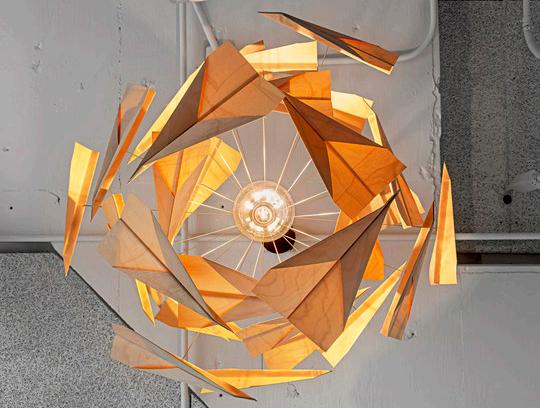
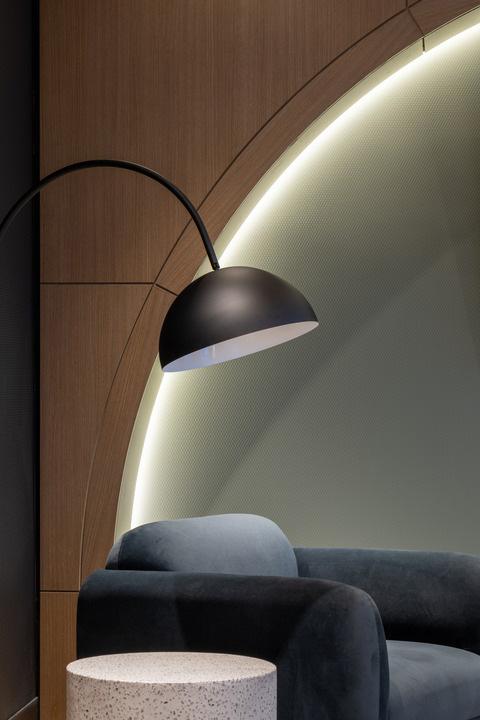
Stylization plays a crucial role in creating meaningful connections between people and the spaces they inhabit. It influences emotions, productivity, social connections, and mental well-being. Design elements can evoke awe, spark curiosity, admiration, and socialization. These captivate individuals, encouraging exploration and interaction. Design elements can also facilitate flow, help individuals slow down, focus, and reflect. These promote a sense of calm, enhancing productivity and well-being.
Stylization involves curating elements such as artwork, plants, objects, textures, and more to breathe life into a space. At HOK, the aim is to infuse personality without overwhelming the sensory experience. Artwork reinforces the overall aesthetic and adds visual interest. Objects and artifacts connect to local culture and history, fostering a sense of place and identity. Natural elements like foliage, textiles, and wood bring nature to the human environment with a sense of tranquility and biophilia. Experiential design creates a positive and engaging atmosphere. Visual harmony, symmetry, and balance are essential for all categories
HOK published an article in Work Design Magazine titled “Stylization: The Overlooked Design Strategy That Complements Hybrid Work.” This article delves deeper into the subject and provides insights into the benefits and implementation of stylization in the context of the evolving work landscape.
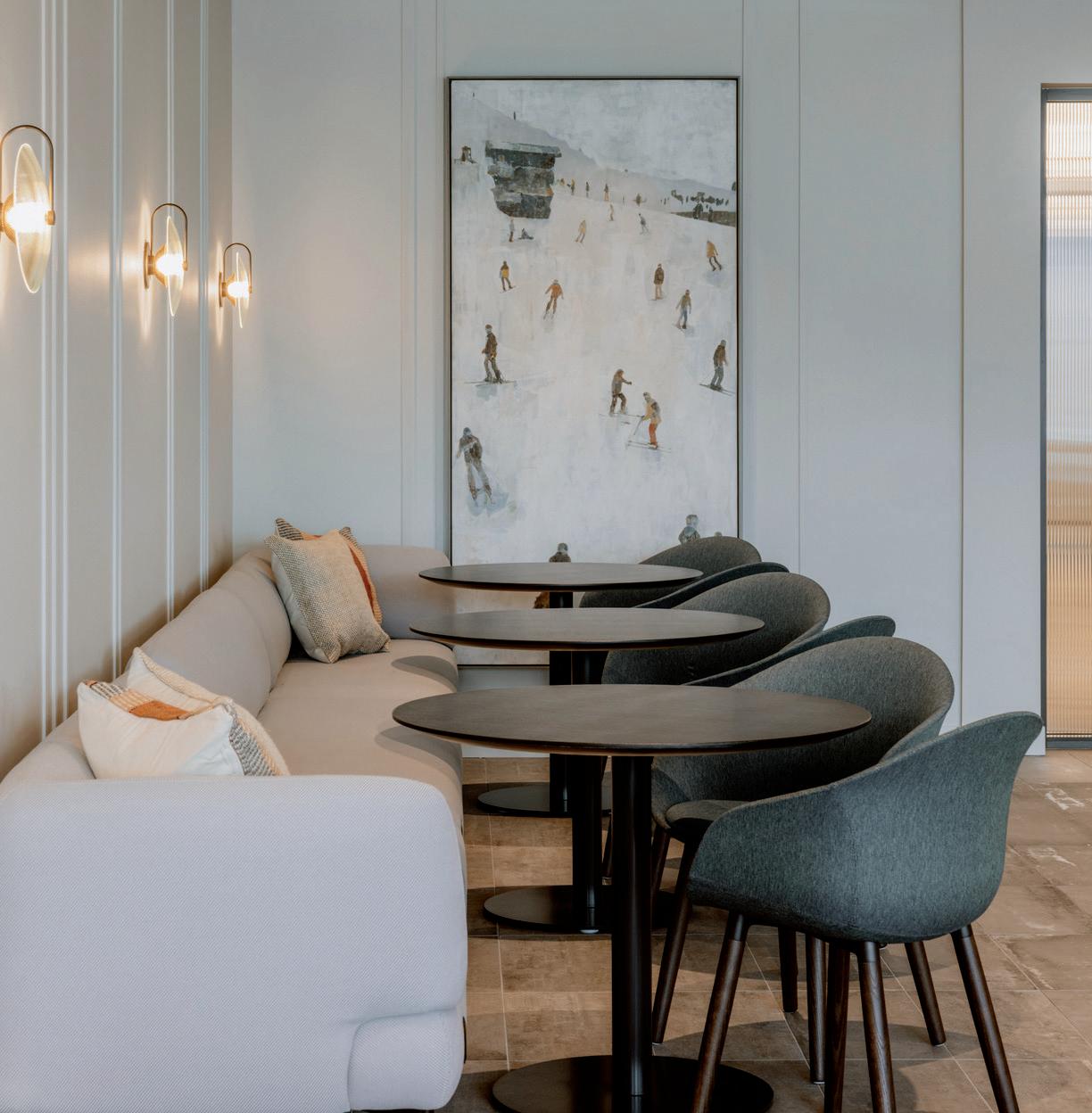
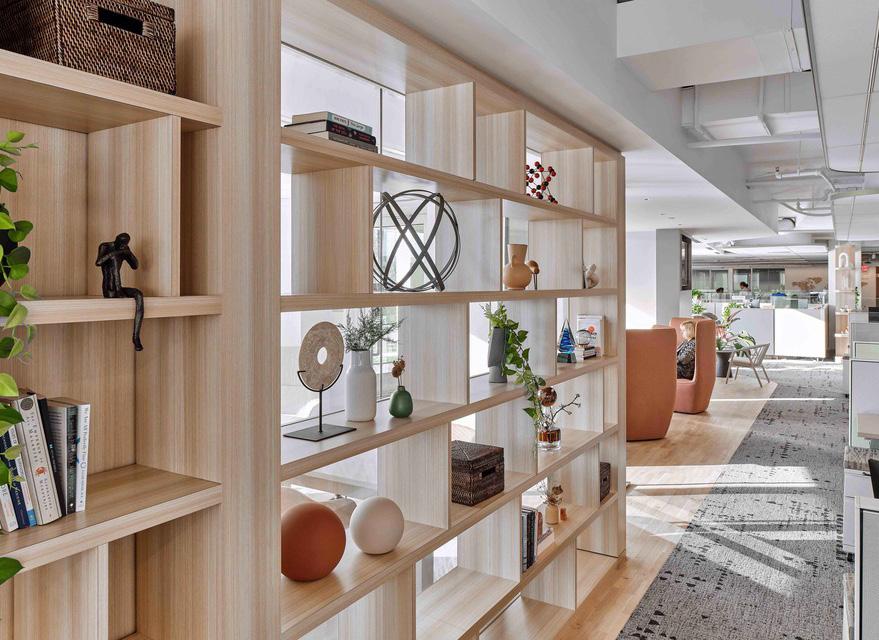
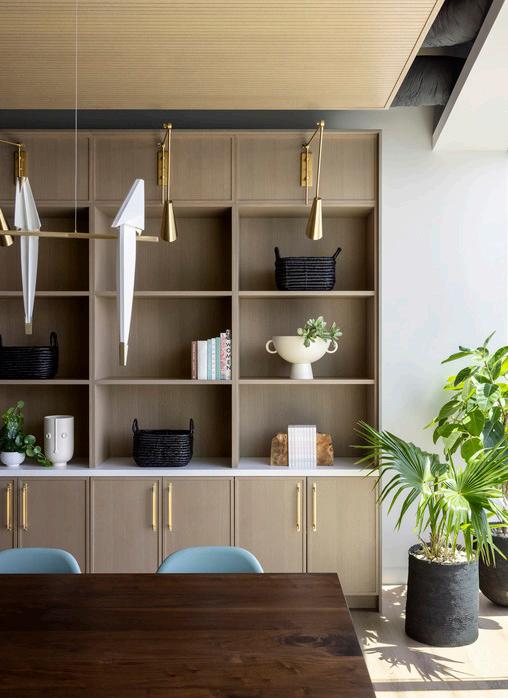
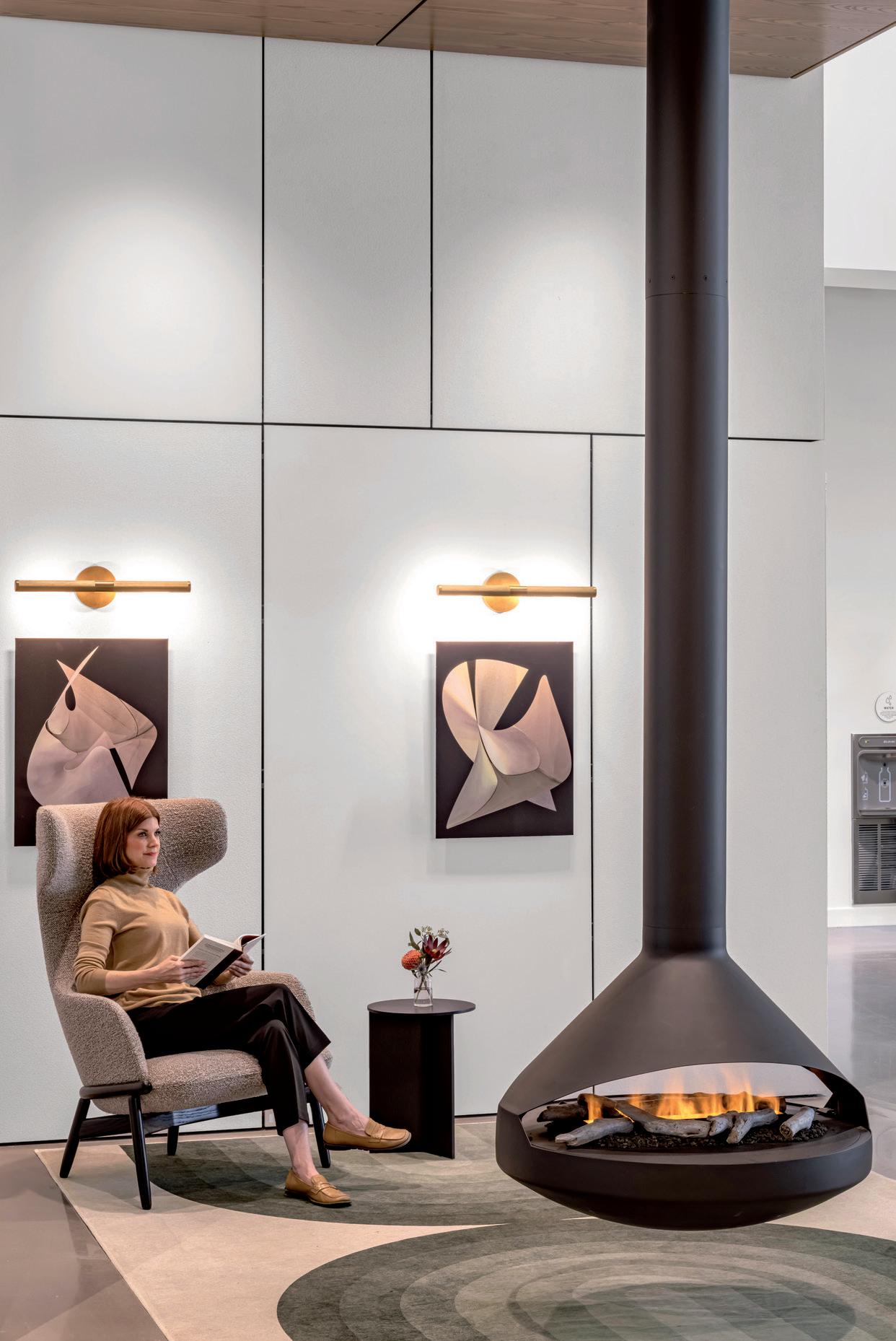
Practicing across industries—from technology to professional services to healthcare— HOK’s workplace consultants bring innovative strategies for the ever-changing workplace environment. Our team of ten seasoned strategists delivers integrated consulting services that elevate performance, strengthen culture, and align the built environment with business goals.
We specialize in three core areas. Workplace Strategy to help organizations use space as a strategic asset—supporting new ways of working, improving operational effectiveness, fostering cultural and behavioral shifts, and enhancing the overall employee experience. Change Management to minimize disruption, accelerate adoption, and maintain productivity throughout transitions, ensuring employees feel informed, supported, and engaged. Facility Strategy to translate business drivers into clear, data-driven facility programs that optimize space, integrate amenities, and create environments that empower people and reflect organizational values. Together, these services provide a holistic, future-ready approach that enables clients to adapt with confidence and unlock the full potential of their people and workplaces.
workplace strategy change management SERVICES
Workplace Strategy
Interactive Visioning Programming + Strategy
Workplace Experience Evaluation
Vision + Messaging Gap Analysis
Change Strategies
Change Program + Roadmap
facility strategy
Utilization + Occupancy Targets
Utilization Audit + Analysis
Workplace Metrics + Efficiencies
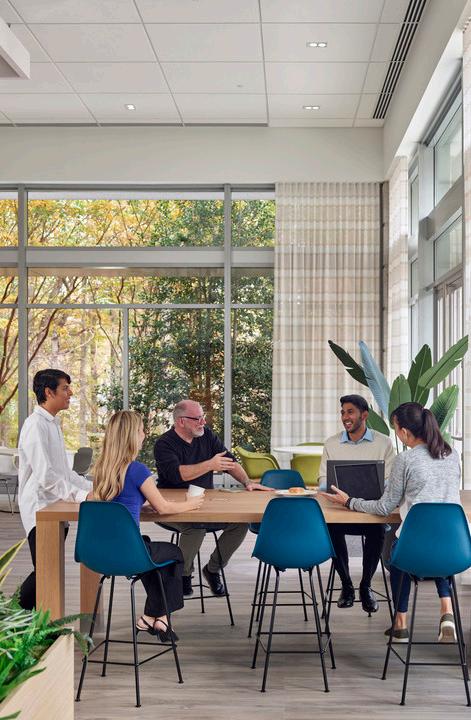
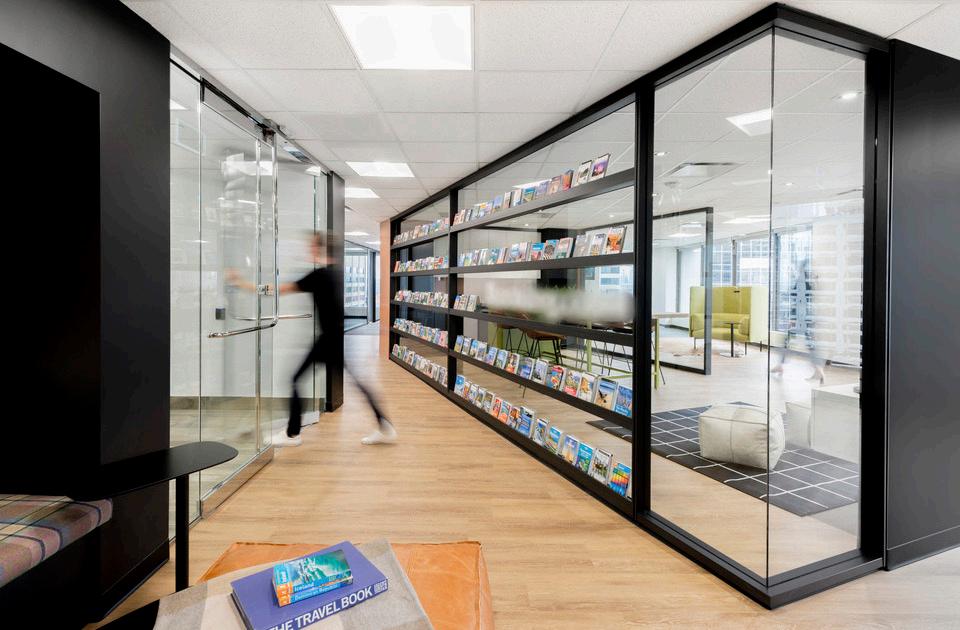
The tech sector has shifted from speculative expansion to a focus on purposeful productivity and infrastructure resilience. Business models are increasingly anchored by agentic AI , which has moved from experimentation to core infrastructure. Real estate strategies have pivoted toward elastic portfolios that prioritize high-performance, energy-independent spaces over traditional longterm leases. Success for tech firms now depends on their ability to connect a globally distributed, AI-empowered workforce to highquality physical hubs that reflect an organization’s mission, purpose and culture while fostering rapid ideation and innovation. These spaces have become cultural platforms.
The trajectory of tech giants remains a study in extremes. While the garage-to-trillion-pinnacle narrative persists—with Nvidia joining the elite multi-trillion-dollar club in 2024/2025—the landscape for startups has shifted. Higher interest rates and a focus on profitability over growth have replaced the ‘growth at all costs’ mantra of the previous decade.
In 2026, the ‘anywhere’ work phase is powered by AI-native tools that allow a dozen people to operate like a hundred. However, the culture of remote-first startups has led many to seek physical hubs earlier than before. Startups now favor Coworking Spaces with the flexibility of a membership or Spec-Suites—turnkey, highdesign spaces provided by landlords that offer the prestige of a private office with short termlease structures and fast move-in.
Scaling now involves managing a hydra workforce of full-time employees, contractors and AI agents. As firms hit the 50-person mark, the workplace becomes a tool for "investor readiness." A physical headquarters is often viewed by VCs as a sign of operational maturity and collision density, the likelihood of spontaneous innovation. This is the stage where M&A activity can fundamentally change a company's trajectory, either through strategic acquisitions to bolster the tech stack or by positioning the firm as a target for a larger exit.
For the giants, the office is no longer a container for desks. It’s a cultural platform. Established firms are moving toward Hub-and-Spoke models, maintaining a flagship Experience Center in urban cores while using satellite environments to support their global, work-from-anywhere talent.
The tech sector in 2026 is navigating a set of forces that are reshaping where and how its people work.
The industry is shifting from a ‘search and browse’ model to ‘agentic’ systems that provide direct answers and perform tasks. AI is evolving from a tool to a teammate, prompting a rethinking of roles, processes, training and workspace planning. This change threatens established revenue streams like search advertising and replaces static apps with evolving AI agents.
The TMT (Technology, Media, and Telecom) label has expanded into Everything-Tech
• Health-Tech: Amazon and Apple have moved from wearables to primary care, integrating clinical space requirements into their portfolios.
• Fin-Tech & AI: The convergence of generative AI and finance has turned traditional banks into software houses, competing directly for the same engineering talent
• Energy-Tech: With the massive power demands of AI data centers, tech companies are now becoming energy providers, investing in small modular reactors (SMRs) and proprietary grids.ii
The tech sector is increasingly dominated by a tiny group of companies. The "Magnificent 10”—Apple, Microsoft, Alphabet (Google), Amazon, Meta, Nvidia, Tesla, Broadcom, AMD and Palantir Technologiesiii —now account for 77-80% of earnings growthiv and 92% of U.S.
GDP growthv. This concentration means the broader economy is heavily leveraged on the performance of just 10 firms.
The 2020 Digital Tax was just the beginning. By 2026, the EU AI Act and similar U.S. frameworks have created Compliance-by-Design requirements for workplaces. Tech firms must now prove data sovereignty not just in their clouds, but in their physical sensors (IoT) within the office. The net neutrality debate—that Internet Service Providers must treat all internet traffic equally, without slowing, throttling, blocking or prioritizing content—has shifted toward ‘compute neutrality,’ ensuring fair access to the massive Graphics Processing Units, GPU clusters required to run modern business.
AI is increasingly the primary tool for administrative tasks, data analysis and writing. Some estimates suggest AI could eventually eliminate up to half of all entry-level white-collar jobs. The talent war is no longer just about hiring; it’s about finding the right people with the right skills. Prompt engineering and AI literacy are in high demand. With the working-age population shrinking in the West and parts of Asia, tech companies are using the workplace as a perk to attract elite talent who are increasingly choosing gig work—working for multiple companies simultaneously on a part-time, retainer or project basis.
Established tech firms now dedicate up to 10% of their floor plate to learning labs—physical spaces for hands-on training with new hardware, robotics and AI interfaces.
While tech companies are seeking new markets to decentralize and attract talent, the exodus from Silicon Valley has stabilized. San Francisco has reemerged as the center of gravity for AI talent, even as broader tech employment in the city has contracted.vii Meanwhile, operations and engineering have relocated to high-qualityof-life hubs like Austin, Miami and Mexico City.
The dominance of high-cost U.S. proprietary models is being challenged by high-quality, low-cost open-source alternatives. This ‘China Factor’ and the rise of efficient local models like DeepSeek are forcing U.S. tech giants to justify their subscription and enterprise pricing.
Buildings now learn. Companies are increasingly using customized dashboards for multinational tracking of portfolio data like never before. Using occupancy sensors and AI, the office automatically shrinks or expands its energy footprint based on real-time attendance, saving millions in overhead. Employers are leveraging thick data to identify workforce patterns and preferences so they can improve building operations and the user experience. This depends heavily on upfront planning and specification of flexible MEP systems. Older buildings and those with cheap systems will struggle to keep up.
AI models require massive amounts of electricity. The ability of the power grid to scale is a major gating factor, as some leading AI firms may eventually need up to 20% of current U.S. electric capacity.viii The search for
robust power and water infrastructure is now the primary filter for site selection. As AI firms deploy energy-intensive server clusters and robotics labs directly into the office landscape, standard electrical grids and cooling systems often fall short. Tech firms are prioritizing locations with redundant power feeds, proximity to substations and high-capacity liquid cooling loops. As thermal management becomes a critical operational cost, access to sustainable water sources and reclaimed water systems has become a competitive necessity. Locations that offer both energy resilience and long-term water security will be the most desirable for the next generation of advanced office facilities.
Tech companies are betting big on AI, with approximately $1 trillion in new infrastructure commitments.ix The industry’s growth depends on the assumption that these investments will generate new revenue within two years. Concerns are rising about "circular financing," where tech giants invest in AI startups that then use that capital to purchase hardware from the investors. This cycle can obscure true market demand and create a fragile valuation bubble.
The tech sector is facing a backlash over the polarization driven by social media algorithms. The industry is increasingly under fire for its impact on youth mental health and its role in isolating young adults, specifically men, from real-world social connections. Social media bans are spreading across many countries. And while major firms use their capital to influence policy, a growing countermovement of consumers is pressuring tech giants through coordinated spending cuts and subscription cancellations.
Following the lead of France and Germany, many North American tech firms have implemented "Digital Sunset" protocols, where internal messaging servers go into "quiet mode" after 7 p.m. local time.
Tech companies are using virtual replicas of physical assets to transform their real estate operations from reactive observation to strategic, data-driven management. By integrating real-time data from IoT sensors, Building Information Modeling (BIM) and AI analytics, organizations are creating digital twins that serve as living blueprints to optimize everything from energy use to employee productivity.
Office design is shifting as ‘tech’ spaces—small engineering labs, robotics labs, large server rooms—are increasingly integrated within office buildings. For AI-driven firms, the "tech core" consisting of localized data centers and highdensity server labs is no longer a basement function, but a vital part of the infrastructure. As tech firms pivot toward physical-digital integration, the ability to house specialized labs for robotics, prototyping and hardware testing within the same floor plate is becoming a primary driver for real estate selection. This phygital environment transforms the office from rows of work points into a high-utility innovation hub where science, engineering and creative collaboration coexist.
Inclusive design now focuses on sensory zoning to enable sensory processing, cognitive wellbeing and neuroinclusion. In 2026, workplaces feature low-stimulus zones for deep work and high-energy zones for collaborative sprints, recognizing that ADHD and autism-spectrum traits are prevalent in high-performing tech talent.x
As real estate becomes a strategic asset rather than a liability, tech companies are shifting from reactive space management to strategic portfolio optimization. This involves balancing a more assertive return-to-office (RTO) trend— with nearly 30% of companies expected to eliminate remote work by 2026 —against the need for "purposeful" hybrid hubs that foster human connection and innovation. Rather than one massive headquarters, firms are diversifying into regional innovation hubs near talent clusters and advanced manufacturing centers to reduce commute times and improve retention.
Tech firms are consolidating into highperformance buildings—all-electric, net-zero operational towers equipped with tens of thousands of IoT sensors to optimize HVAC, lighting and occupancy in real-time.
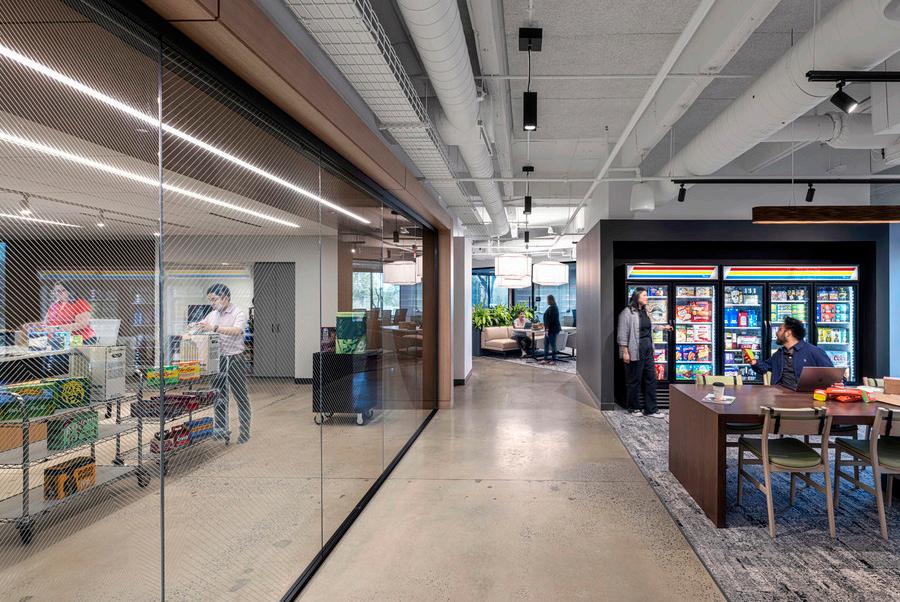
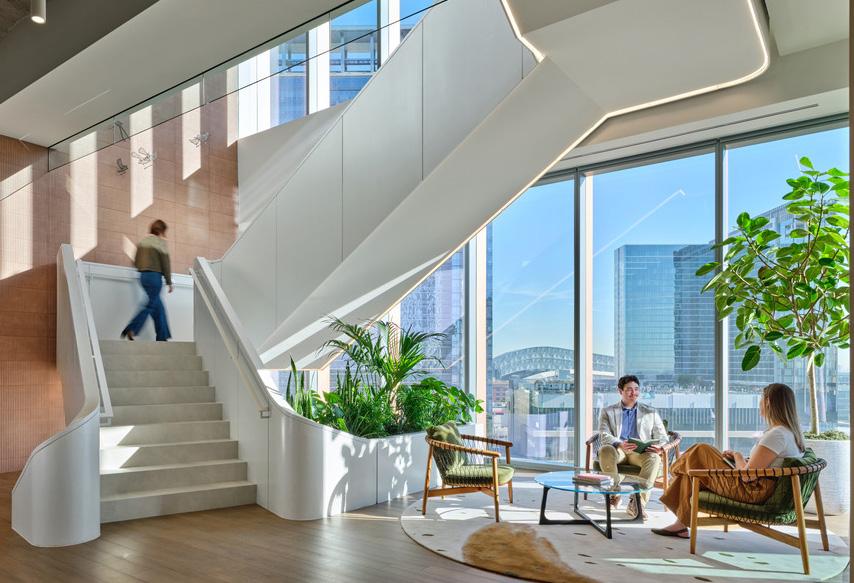
These shifts are already showing up in how tech companies design, operate and experience their workplaces.
1. THE CURATED EXPERIENCE (UX): Offices now function like high-end hospitality. Community Managers have replaced Facility Managers, focusing on programming events that make the workplace commute worthy. Companies are integrating technology with front desk staff positioned to provide concierge-level services to teams and their guests. Explore HOK’s Boston Consulting Group Calgary Office Renovation.
2. AI SHOWROOMS: Companies are creating front-of-house spaces where clients can interact with the firm’s proprietary AI and robotics firsthand. Explore HOK’s Honeywell Global Headquarters.
3. REGENERATIVE WELL-BEING: Beyond gym memberships, 2026 offices include circadian lighting systems and air-quality optimization to support cognitive performance. Tech companies are leaning into creative, restorative services and amenities to address well-being. The drab tenant lounge is gone. Amenity spaces are now the draw, with resort-level programming and spaces. Explore HOK’s Arup Office at One Centenary Way.
4. CIRCULARITY & CARBON TRACKING:
Real estate portfolios are now subject to strict "Scope 3" emissions reporting. Fit-outs going forward will be increasingly modular, designed to be disassembled and reused rather than sent to landfills. Explore HOK’s Sustainable Material Tracking: A Journey Toward Healthier Spaces.
5. SPEED TO LAUNCH: A new generation of AI startups is hermit crabbing into premium real estate recently vacated by larger tech firms
that have embraced remote or hybrid work or reduced staff. This lets emerging companies cut capital expenditure on furniture and construction and redirect their capital toward branding and technology, effectively upcycling the physical office to fuel the next wave of innovation.
6. SPACE FUSION: The "Work-Live-Play-Learn" model has evolved into the Vertical Village and Social Business Precincts that blend workplaces, residential units, learning spaces, collaboration zones, and retail and hospitality services into communal hubs. Explore HOK’s The Clover at Olive Crossing.
7. LOCATION, LOCATION, LOCATION: The traditional suburban campus has given way to a Polycentric Urban Model that prioritizes integrated, mixed-use ecosystems. While the past saw a rush toward vertical campuses in downtown cores, 2026 is defined by the rise of the 15-minute neighborhood, where work is distributed closer to where talent actually lives. Major corporations have pivoted from massive, singular headquarters to a hub-andspoke strategy, using smaller, high-quality collaboration centers across cities. Explore HOK’s Norfolk Southern Headquarters.
8. PLACEMAKING: To drive engagement, organizations are striving to create vibrant, purposeful environments with a strong sense of place and belonging. These areas serve as intentional destinations designed for connection. Cities are also creating precincts with a strong sense of place that serve as destinations for building community and leveraging the sharing economy to ensure people have seamless access to best-in-class services and amenities. Access is the new ownership. Explore HOK’s Graphic Packaging International Headquarters.
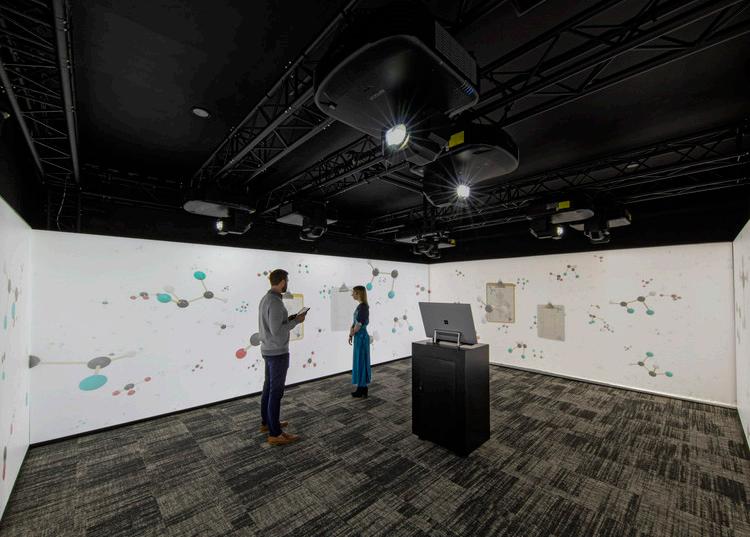
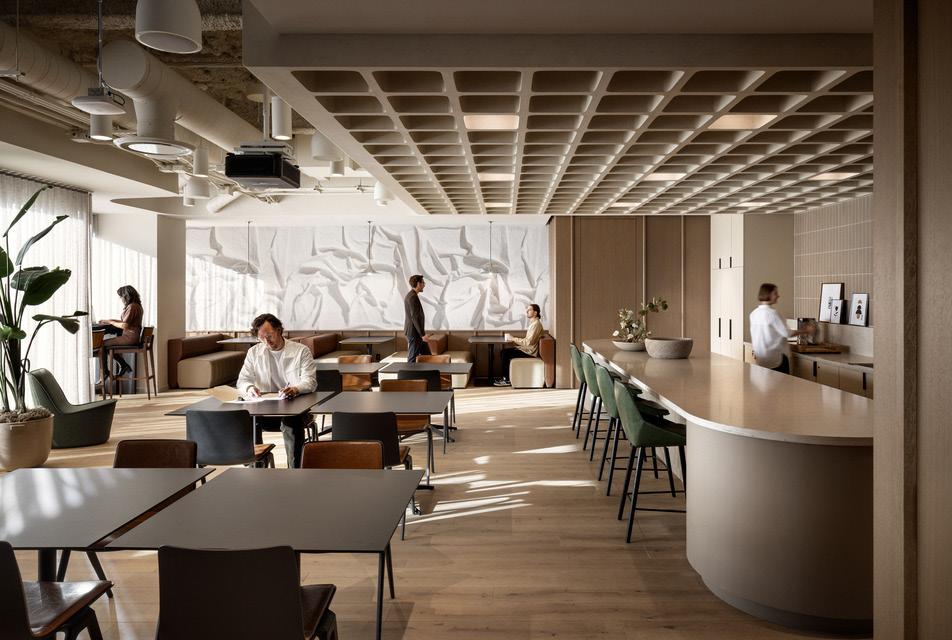
The 2026 tech workplace is no longer a place where people have to go, but a destination where they want to be. By merging human-centric design with the efficiency of AI, the office has become the ultimate social battery recharging the culture, innovation and connection that the digital world alone cannot provide.
ENDNOTES:
i Global Venture Capital Report 2025: The Shift to Sustainable Growth
ii Data Center Energy Demands and the Tech-Energy Nexus, 2025
iii https://medium.com/@profgalloway/how-does-the-end-begin-2a578f72a902
iv https://medium.com/@profgalloway/how-does-the-end-begin-2a578f72a902
v Research by Harvard economist and former Obama advisor Jason Furman.
vi JLL Future of Work
vii https://sfstandard.com/2026/01/28/ai-booming-tech-jobs-san-francisco/
viii Morgan Stanley (November 2025)
ix Goldman Sachs, June 2024,"Gen AI: too much spend, too little benefit?"
x The Neurodivergent Advantage in the AI Era, Journal of Workplace Psychology, 2026
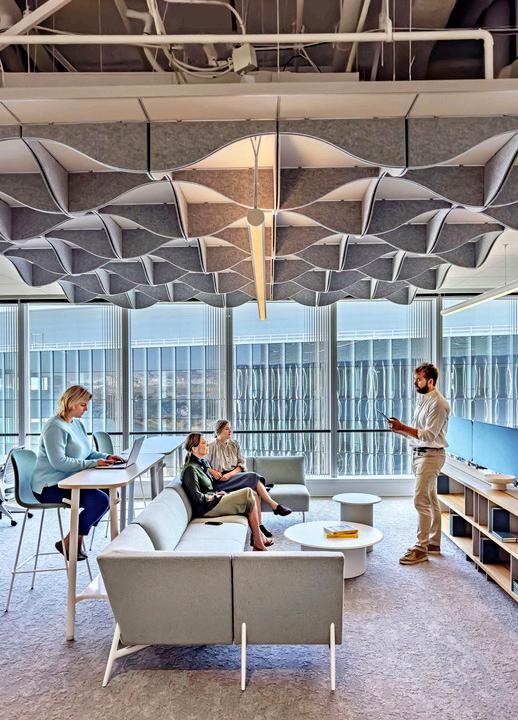
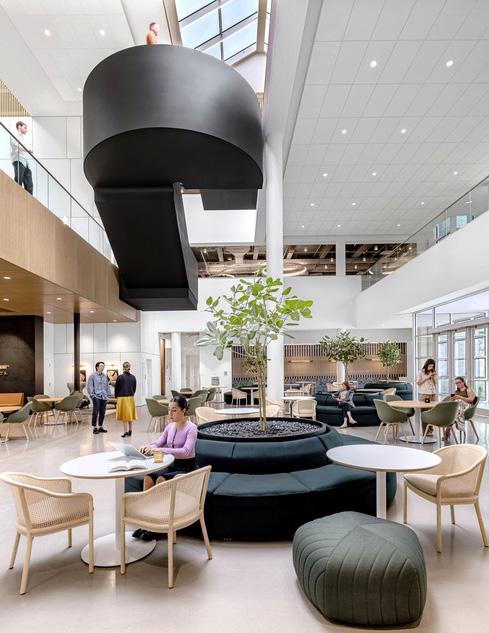
The modern workplace is evolving at an unprecedented pace, shaped by the convergence of technology, workforce expectations, and organizational priorities. Today’s firms are rethinking how space can enhance efficiency, support hybrid work models, and attract the next generation of talent.
From the strategic placement of individual work points to the creation of dynamic gathering spaces, from fostering a strong sense of community and culture to providing thoughtfully designed amenities, these drivers guide environments that are functional, engaging, and adaptable. Optimization and flexibility ensure spaces can evolve with changing needs, while accessibility and neuroinclusion make workplaces welcoming to all. Health and wellness are prioritized through daylight, air quality, and movement-friendly design, and integrated tools and technology create seamless, connected experiences.
Drawing from benchmarking data, our own research, and industry best practices, this section provides actionable insights into how forward-thinking design can deliver spaces that balance performance, well-being, and lasting impact.
WORK POINTS
OPTIMIZATION + ADAPTABILITY
GATHER SPACES
COMMUNITY + CULTURE
AMENITIES
ACCESSIBILITY + NEUROINCLUSION
HEALTH + WELLNESS
TOOLS + TECHNOLOGY
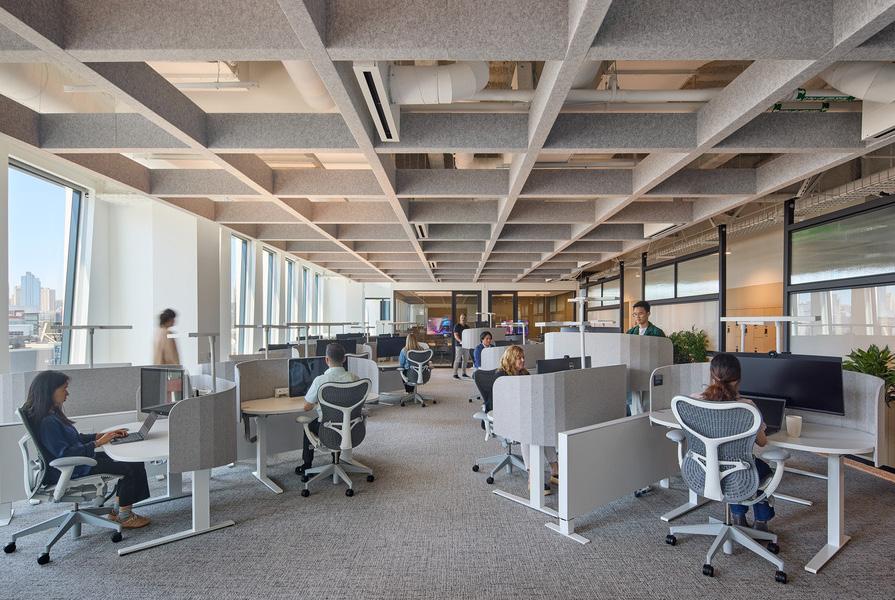
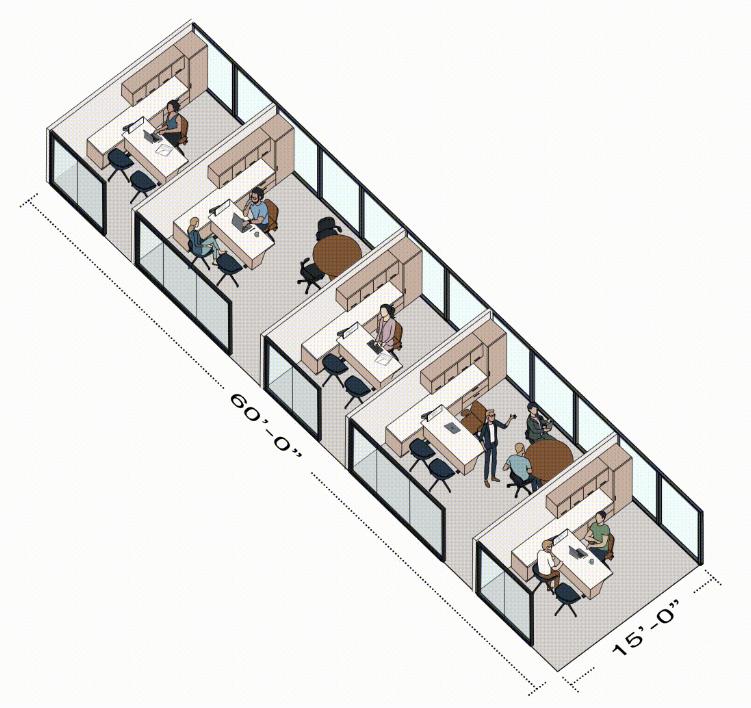
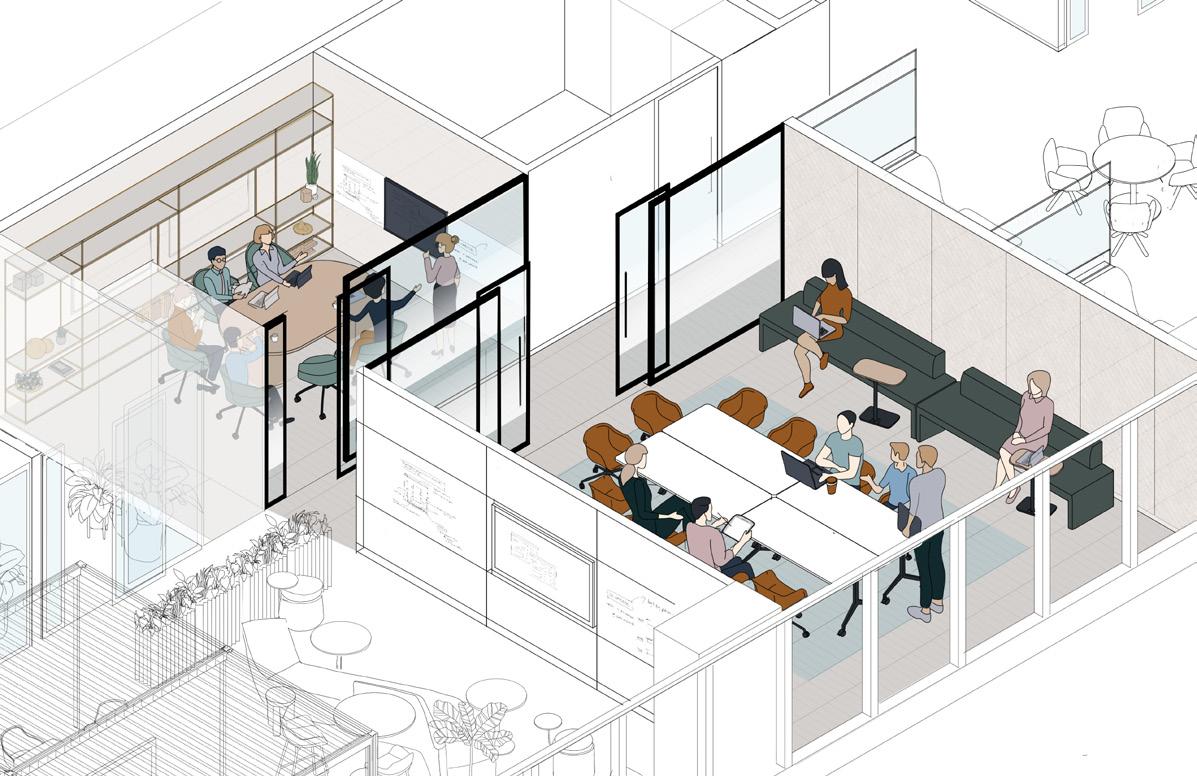
Today’s technology workplaces are shifting away from traditional assigned desks toward a dynamic ecosystem of purpose-driven work points that support a wide range of tasks, cognitive loads, and work styles. As hybrid work, AI-enabled workflows, and increasing digital intensity reshape how people work, employees need greater variety, choice and control over where and how they focus, collaborate, and innovate. Modern tech environments balance private, concentrative spaces with more energized communal settings, responding to the growing demand for both deep individual work and high-impact collaboration. This shift is well underway: by 2024, 36% of organizations had moved to desk-sharing models, replacing fixed seating with flexible work points. Employees with a high degree of agency in selecting their work setting are significantly more productive and far more likely to remain with their organization. Tech firms are now designing a “menu” of specialized spaces rather than one-sizefits-all layouts. These include:
Highly Complex Focus Spaces: Designed for deep, cognitively demanding work such as coding, data analysis, or AI model development, these spaces prioritize acoustic control, reduced visual distraction, and access to natural light.
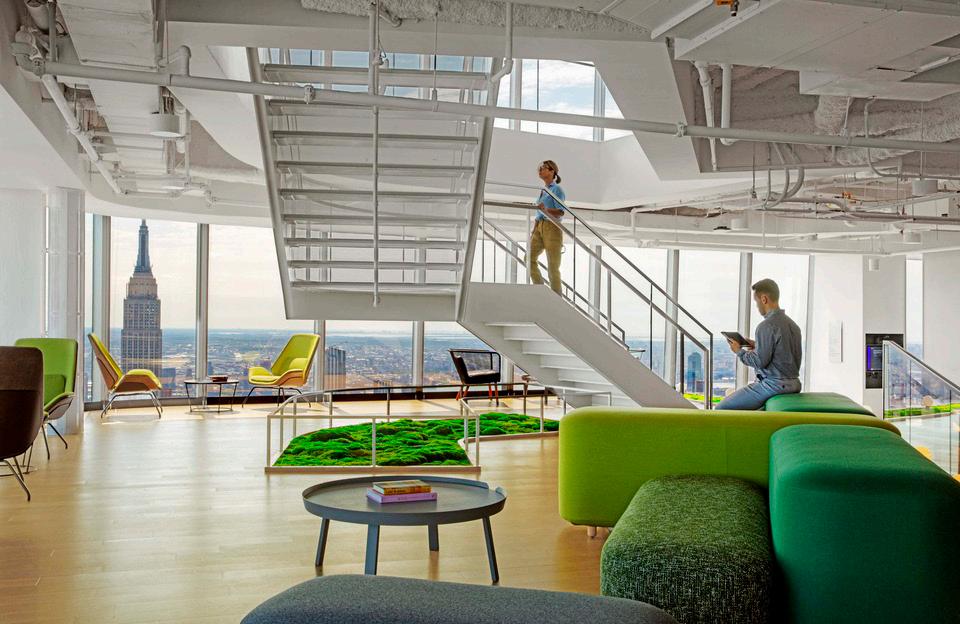
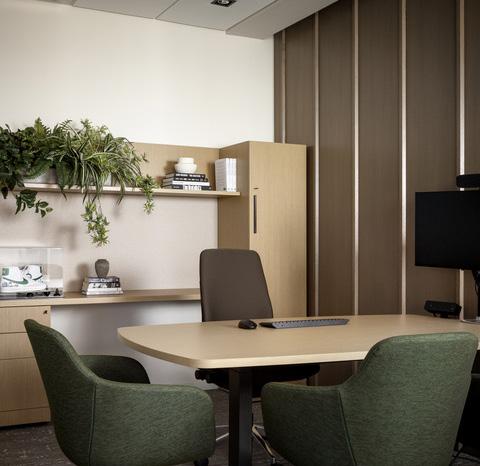
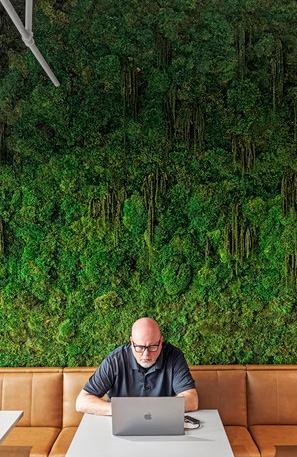
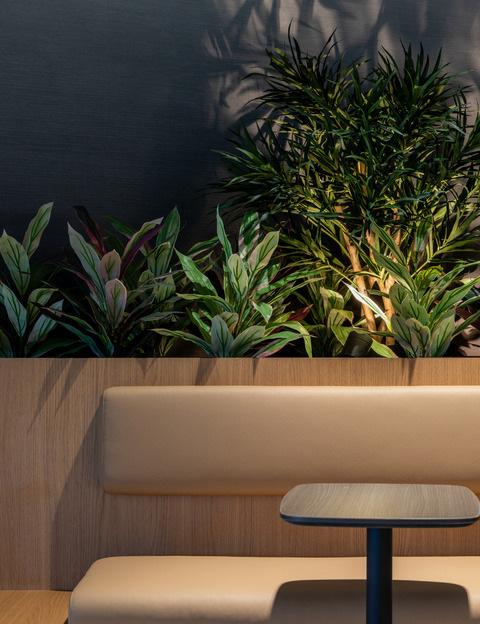
Inclusion of plants and greenery helps to divide spaces and provide sight lines to natural materials.
Purposeful Hybrid and Small-Scale
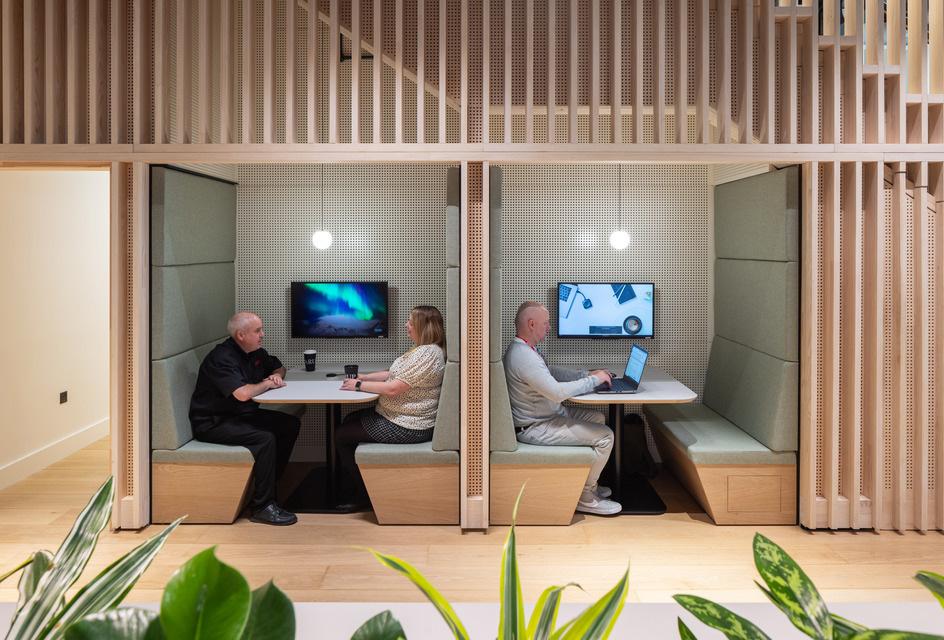
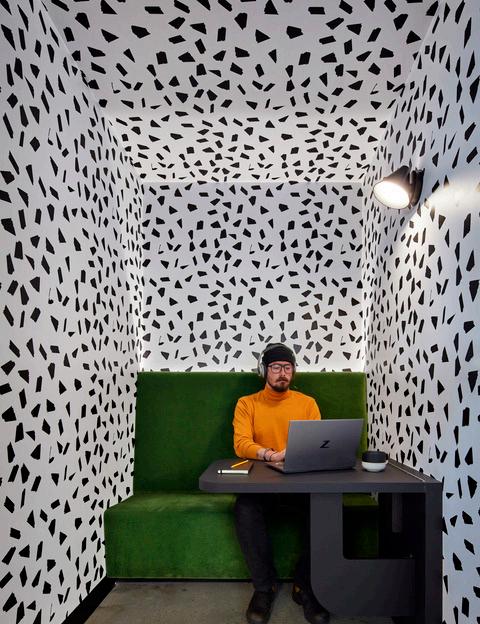
Flexible private spaces allow users to shift between focused and collaborative modes often follow a 70/30 approach, dedicating most of the room to its primary function while using the remainder for informal seating or secondary activities to add variety and flexibility. There is a huge spike in demand for smaller, highly functional rooms such as huddle spaces, phone booths, and privacy pods. Nearly one-quarter of employees cite a lack of small rooms as a major workplace frustration. These spaces support virtual collaboration, focused team work, and AI-assisted workflows without disrupting adjacent areas.
combat “technostress,” offices are increasingly installing scrum spaces and quiet zones where cellular signals are blocked to allow for true deep thought. These sanctuaries support uninterrupted concentration and help teams achieve higher levels of creativity and problem-solving.
By offering a thoughtfully curated range of work points, tech companies are creating environments that enhance productivity, support well-being, and reinforce culture.
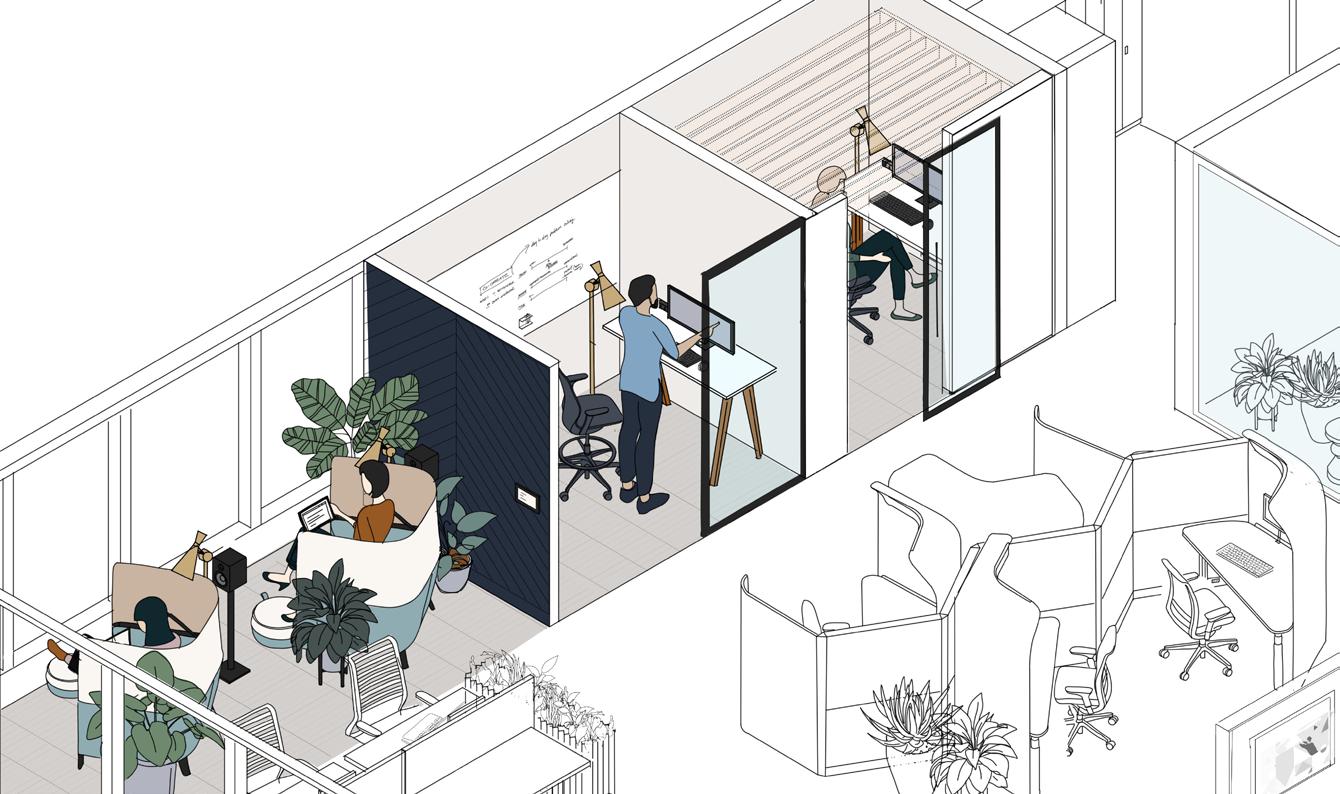
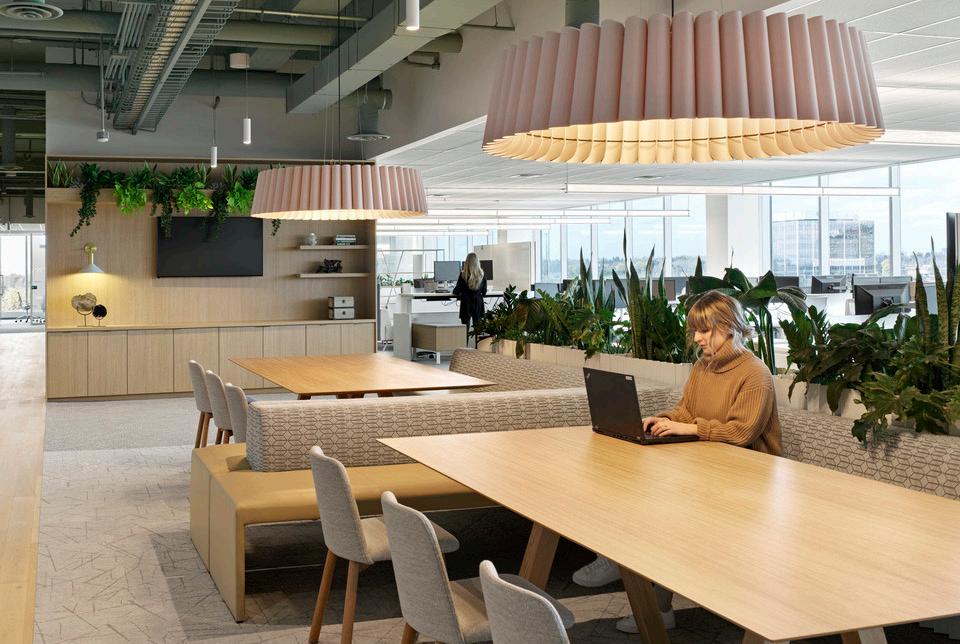
A variety of workspaces support different work behaviours and postures. Room type variety considers size, scale, quantity, level of openness.
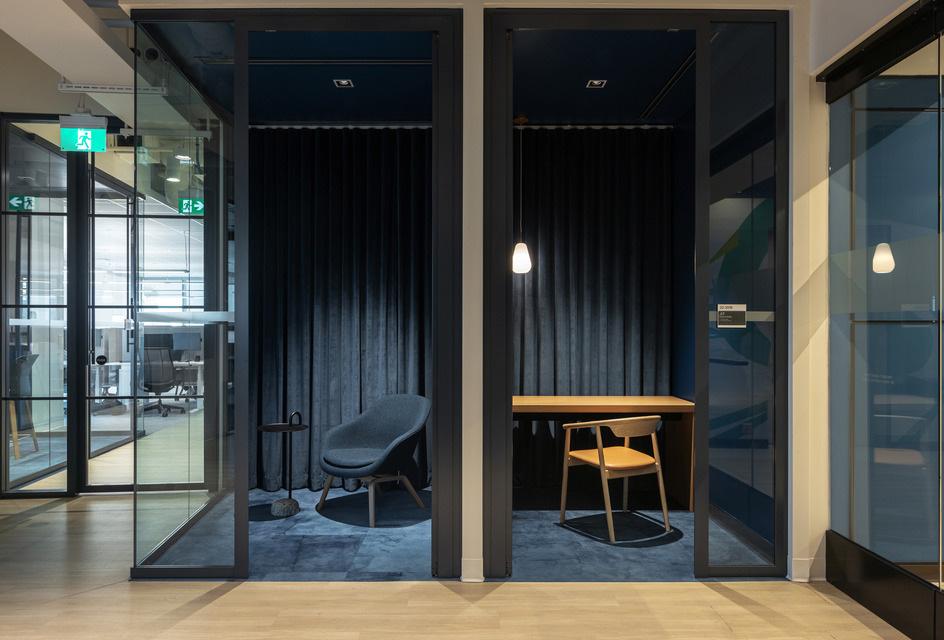
Tech firms are increasingly optimizing their workplaces by embracing flexible, adaptable environments that respond to changing work styles, team sizes, and technology needs. As employee expectations around how and where work happens continue to evolve, offices are being designed to support a wide range of activities—from focused work to collaboration and social connection—often within the same footprint. Modular planning plays a key role in this shift, allowing spaces to flex and evolve over time rather than remain fixed.
At the same time, real estate portfolios are now subject to stricter Scope 3 emissions reporting, driving a growing emphasis on circularity and carbon tracking. Future fit-outs are increasingly being designed as modular systems that can be disassembled, reused, and repurposed instead of being demolished and sent to landfill.
Current workplace trends favor utilization over occupancy, with fewer dedicated private offices or individual desks and more shared, collaborative, and multi-purpose spaces. While many organizations anticipate increased inoffice attendance in the coming years, data shows that employees are seeking choice rather than a return to traditional corporate layouts. This has driven growing demand for modular furniture, movable walls, free-choice seating strategies, and reconfigurable layouts that can be quickly adapted as needs change. Furnitureled solutions, in particular, enable faster and less disruptive transformations than permanent construction, while empowering users to redefine spaces themselves.
People are flexible and modular workplaces allow organizations to maximize resources, use space more efficiently, and reduce longterm costs. Planning blocks can be easily rearranged to accommodate shifts in hierarchy, fluctuating staff numbers, or new technologies through light-touch renovations and furniture reconfiguration. This inherent adaptability supports hybrid work models and ensures tech workplaces remain resilient, relevant, and future-ready.
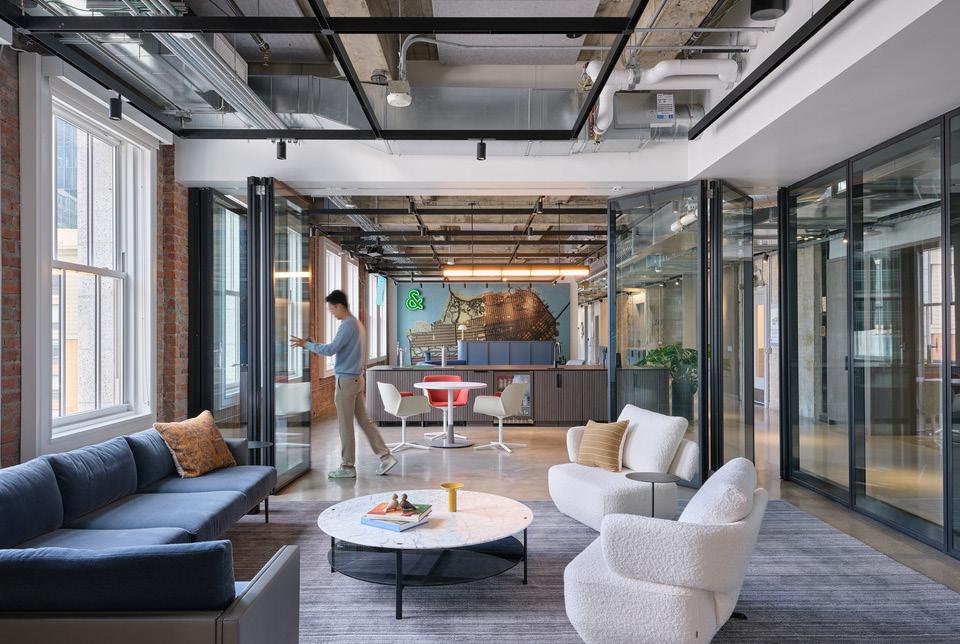
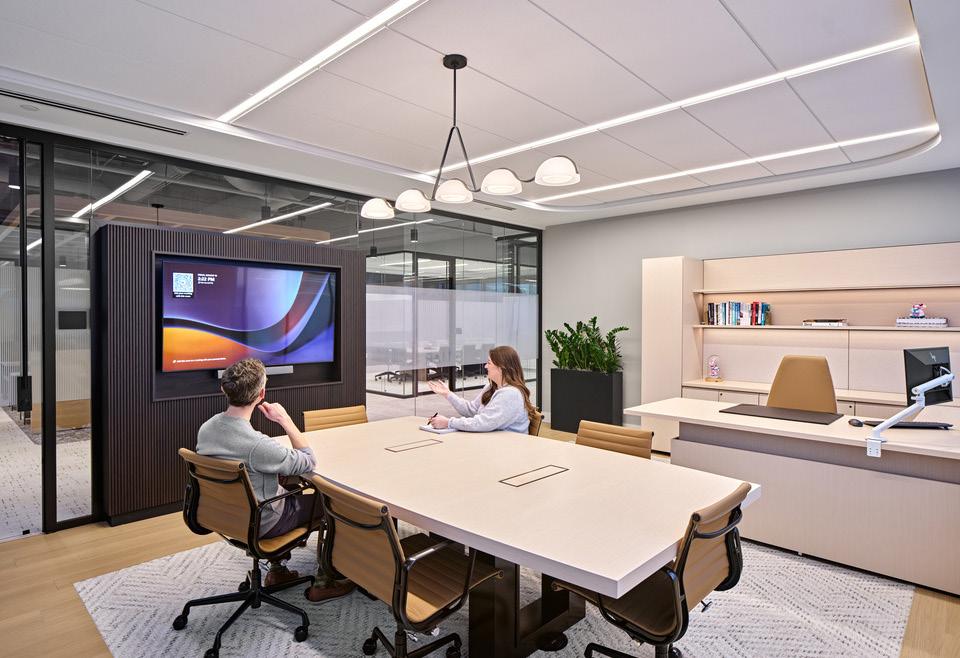
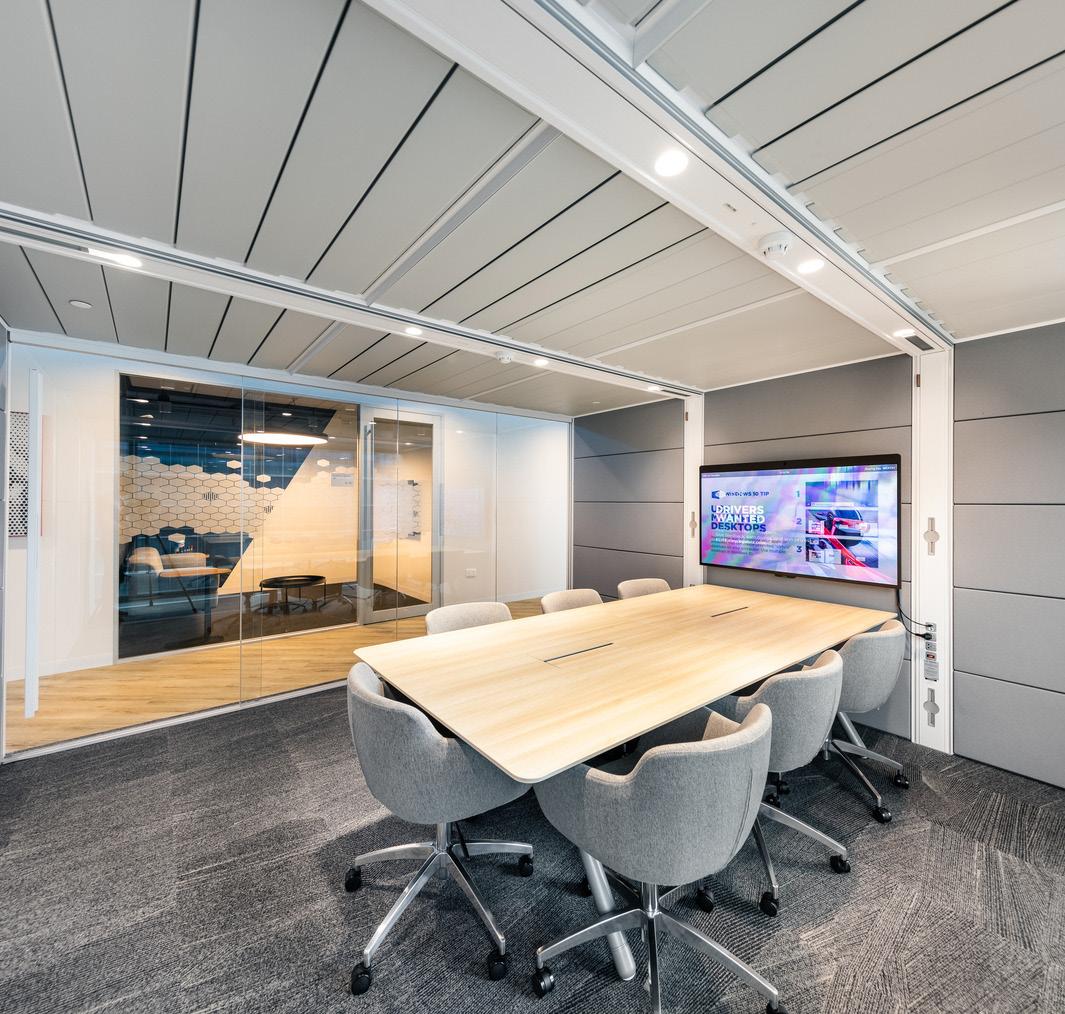
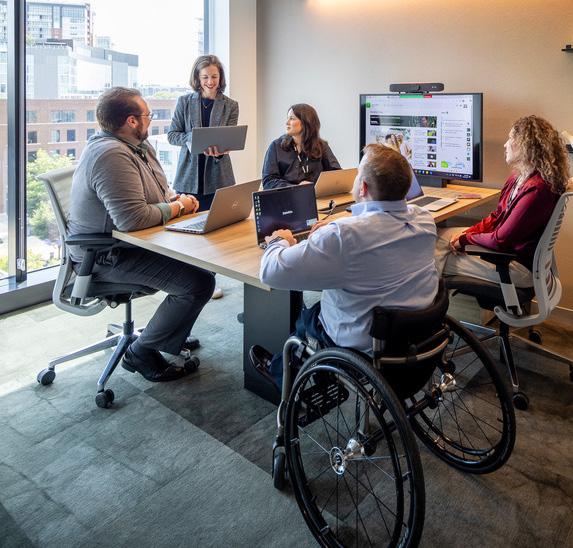
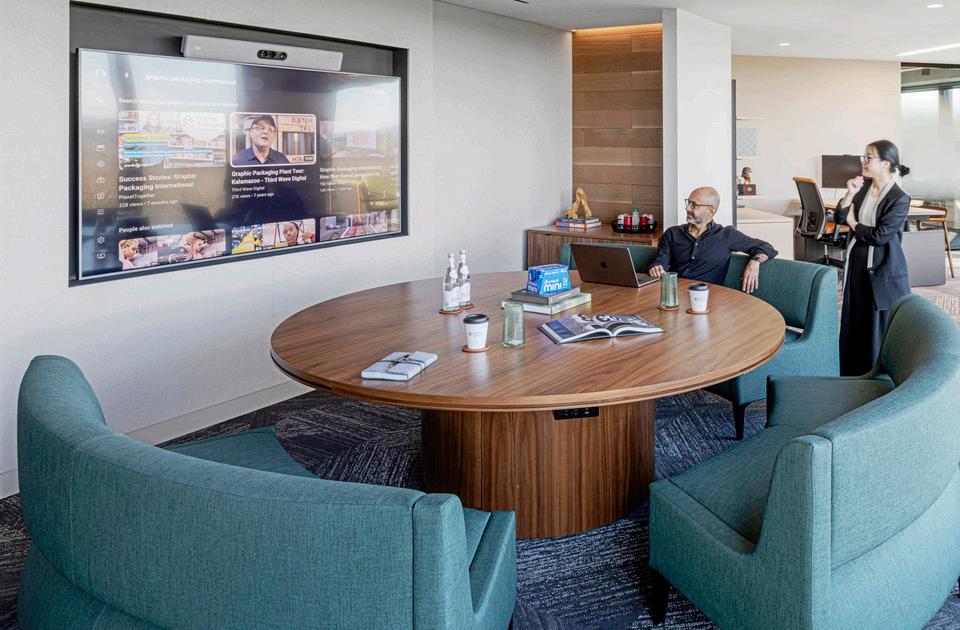
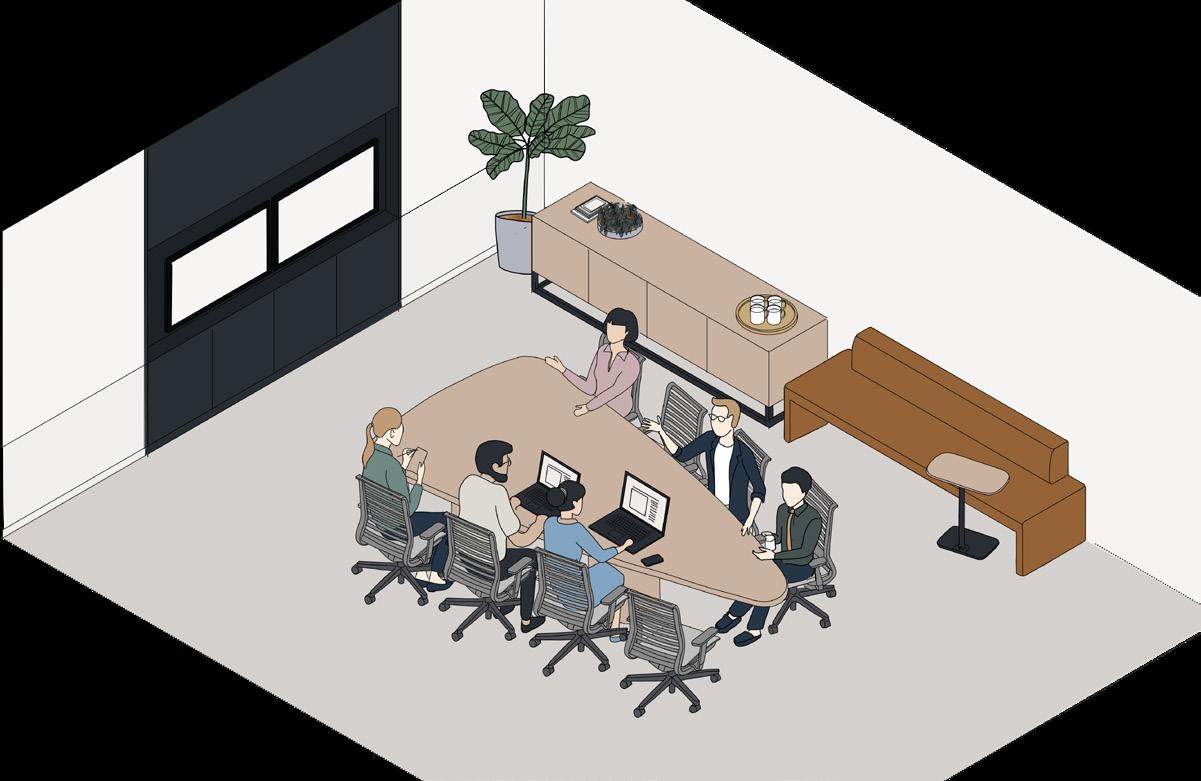
Today’s meeting spaces must support more than the people physically in the room. Smart AI room navigators and scheduling displays now eliminate “ghost meetings” by auto releasing rooms when no one checks in, while embedded wall monitors and hybrid ready layouts ensure remote participants can see and be seen. Furniture is shifting toward mixed posture settings—standing, leaning, perching—to support different neurotypes and give teams flexible ways to engage. Research driven design principles such as posture, mood, adjacencies, and modularity help shape rooms around specific behaviors and outcomes rather than generic meeting use.
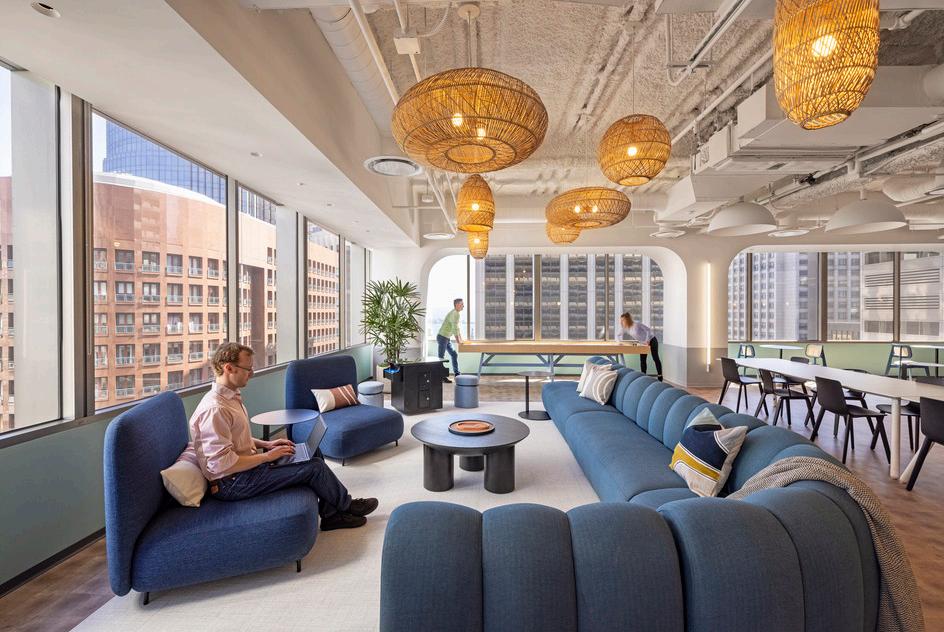
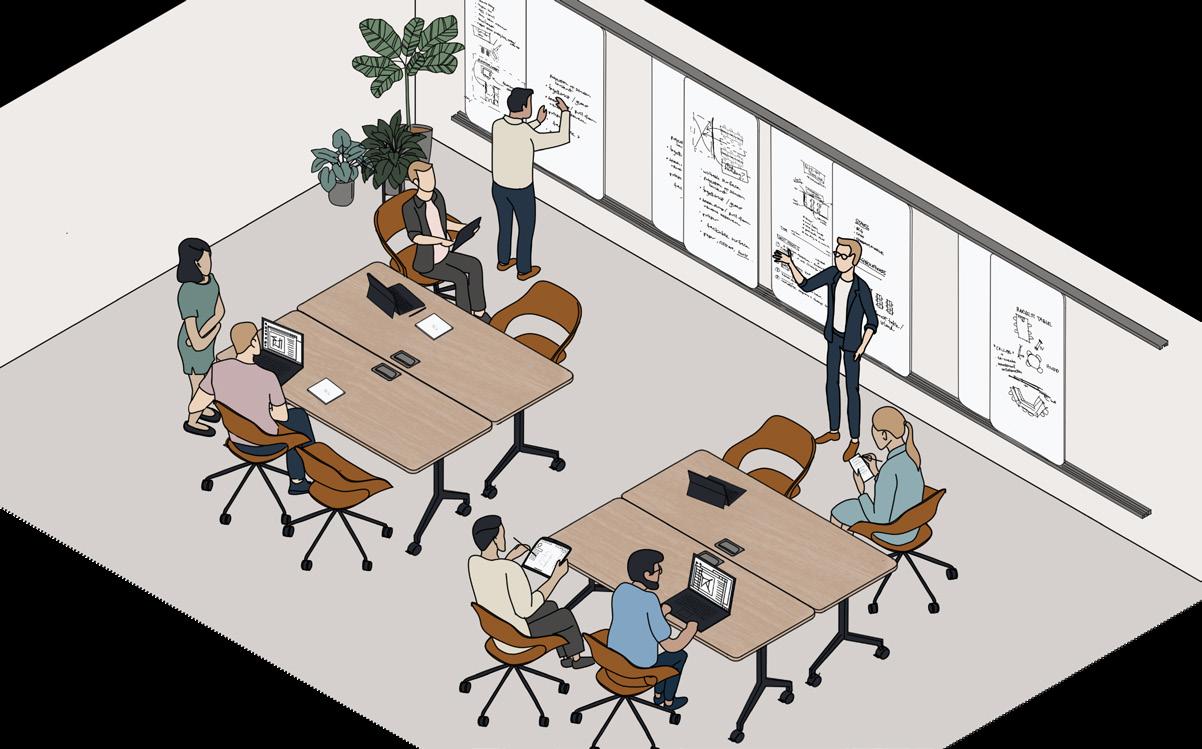
Collaboration is also moving into alternative “non meeting” zones: semi enclosed phygital hubs equipped with ultra-wide screens for casual professional hybrid syncs, and quiet cabs that allow people to work side by side in silence without feeling isolated. Creative Labs let teams ideate with writable surfaces, modular furniture, and tiered seating. Many tech firms dedicate 10%+ of their floor plate to hands on Learning Labs for emerging hardware, robotics, or AI—these scrums spaces are agile and can double as demo rooms.
Neighborhood Hubs are becoming another key layer, with clusters of rooms and collaborative zones tailored to specific team workflows (such as scrum spaces or war rooms). This approach reinforces belonging and team connection, especially as studies show workers with the strongest relationships sit near their teams. Overall, tech workplaces now feature fewer oversized rooms in favor of more right sized spaces tuned to specific activities—some with clear front-of-room hierarchy for focus moments, others intentionally tech free to encourage informal gathering. Unique room shapes and non rectangular tables reduce hierarchy and create more equitable interaction.
Across all space types, program beats square footage: rooms earn value through daily use, not occasional events. Furniture and tech support fast reconfiguration without facilities help; digital canvases keep work persistent after the meeting ends; and visual connection across floors strengthens a sense of shared momentum. Hospitality level F&B, integrated throughout, enhances comfort, care, and employee well being—ensuring everyone can find a work setting that feels inclusive, supportive, and functional.
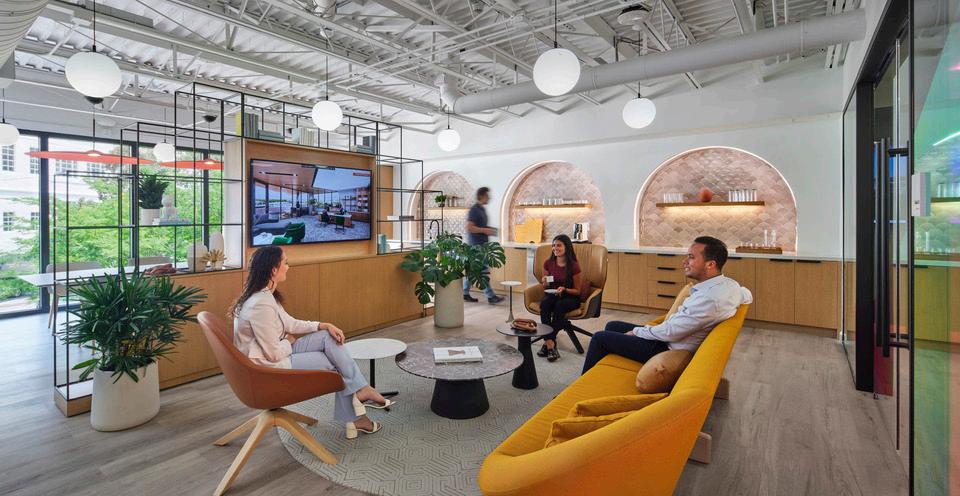
Modern tech offices are increasingly designed as culture engines—spaces that shape community, collaboration, and belonging. Research shows that environments built for connection and inclusivity can boost engagement by 20–25% , strengthening mentorship, teamwork, and shared purpose. As firms compete for talent, the workplace has become a strategic tool for reinforcing culture and identity through thoughtful, experience driven design.
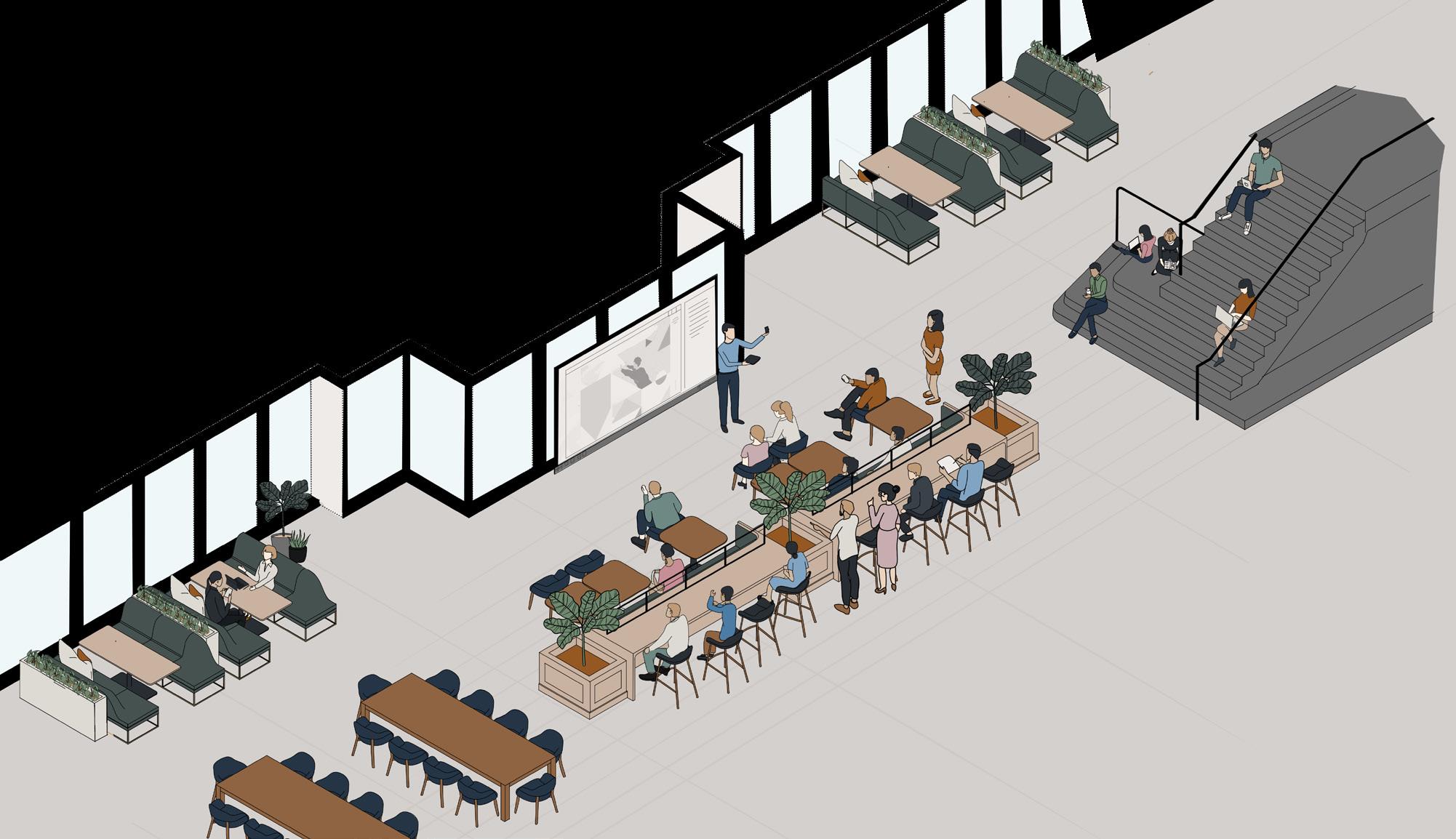
Convertible Cafés and Lobbies: Adaptable cafés, lobbies, and dining zones now function as all day community hubs—morning coffee spots, shared lunch areas, town halls, and evening social spaces. These hubs also support culture rituals like onboarding, demos, and community committee gatherings. Flexible furniture, catering hideaways, and integrated A/V allow the environment to shift quickly and stay active.
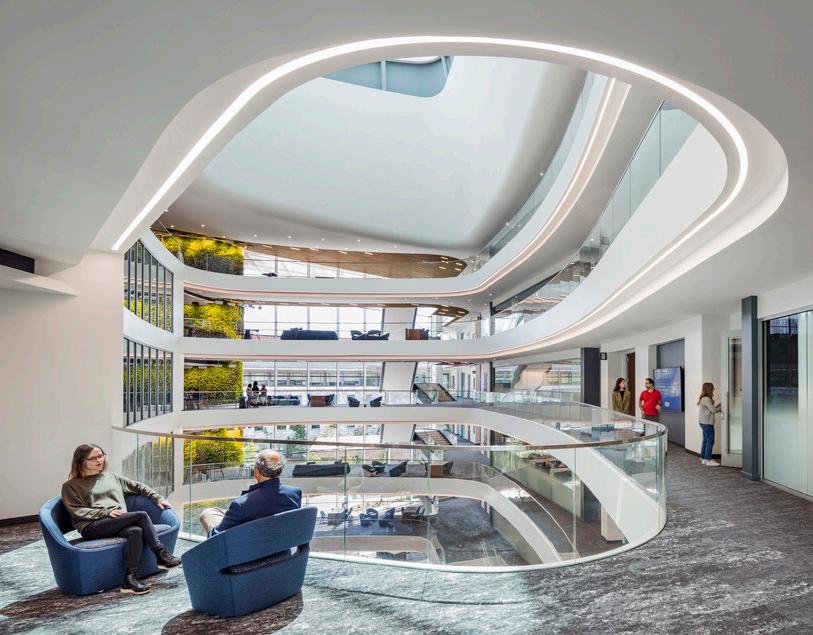
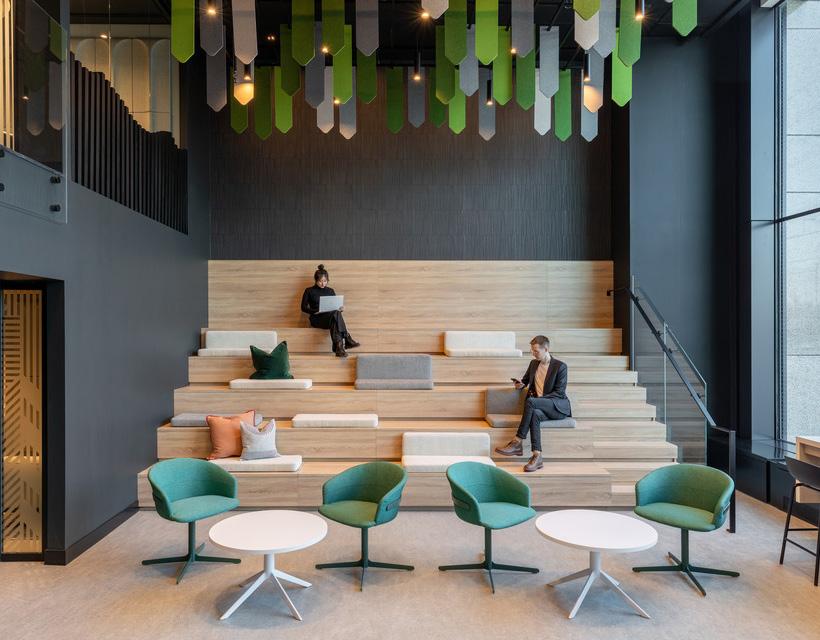
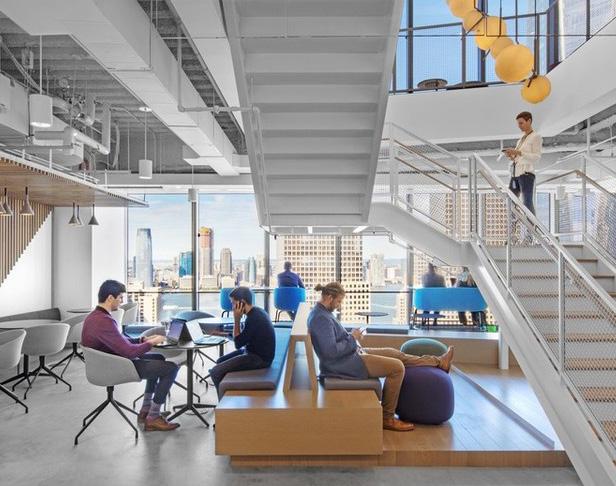
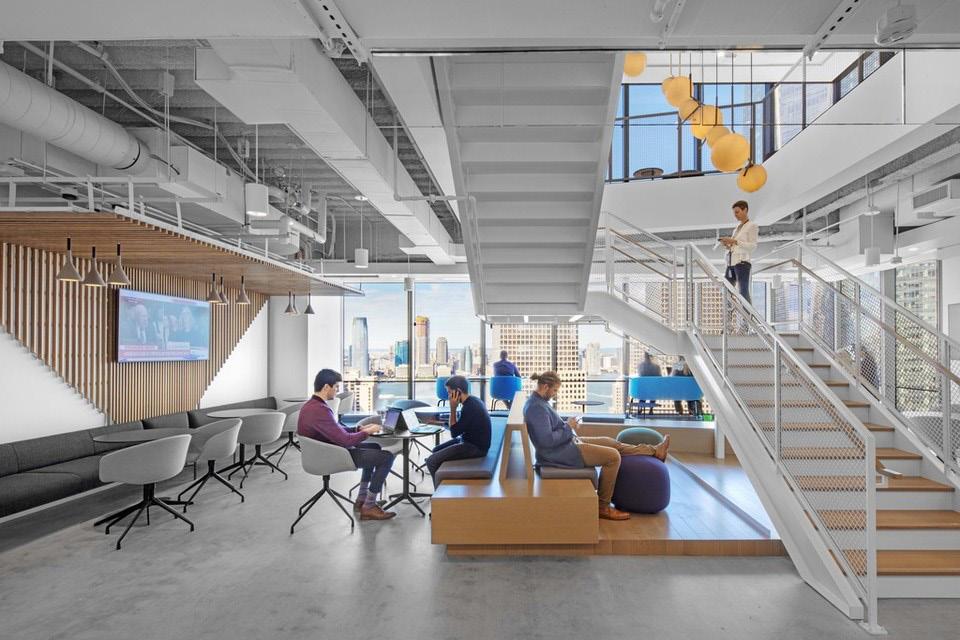
Interconnected Stairs: Designed as intentional collision points rather than circulation, these wide stairs include casual landings with power, Wi Fi, and comfortable seating. They act as informal amphitheaters for spontaneous gatherings and
foster cross team connection, reinforcing equity by avoiding “premium” spaces reserved by title.
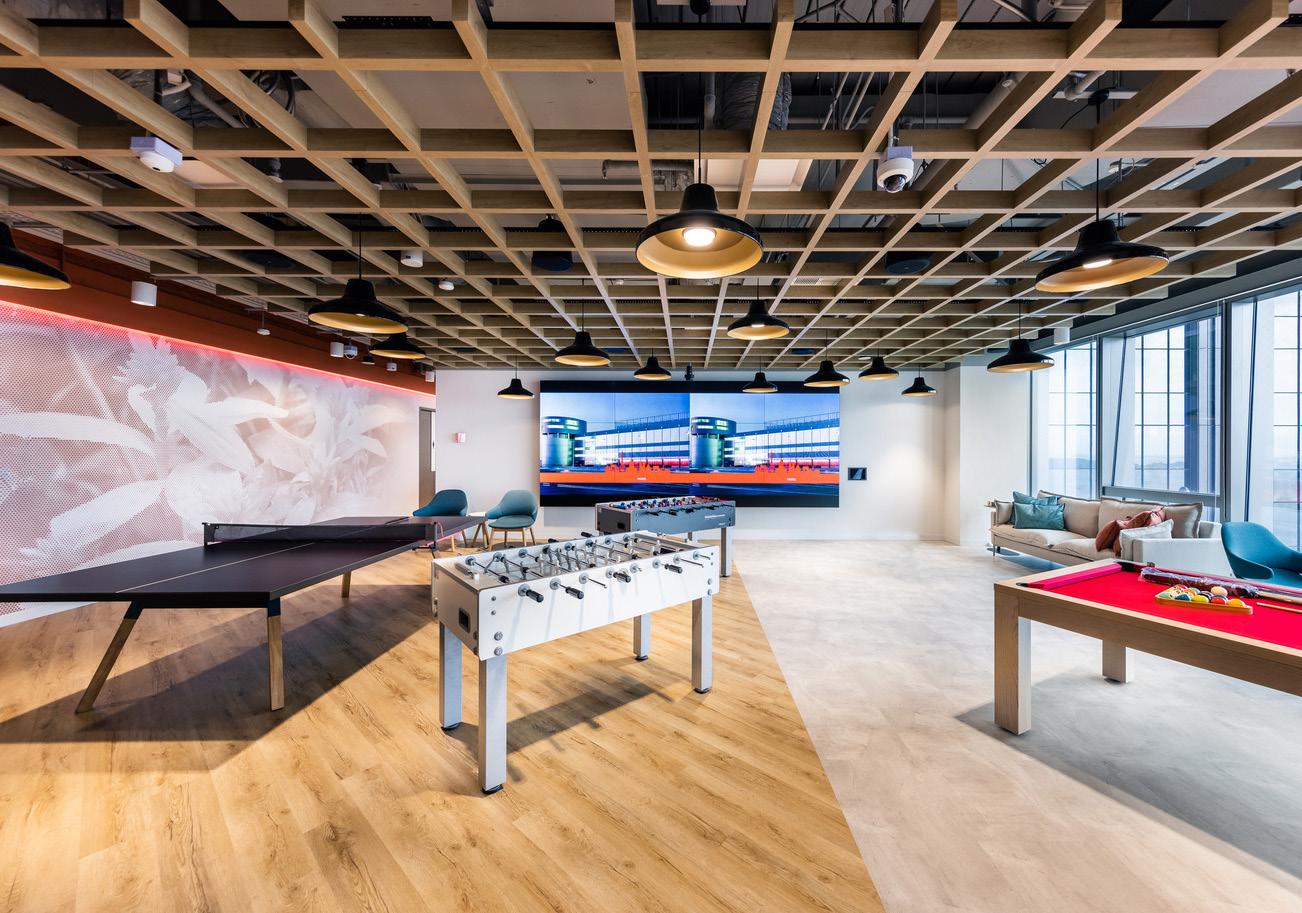
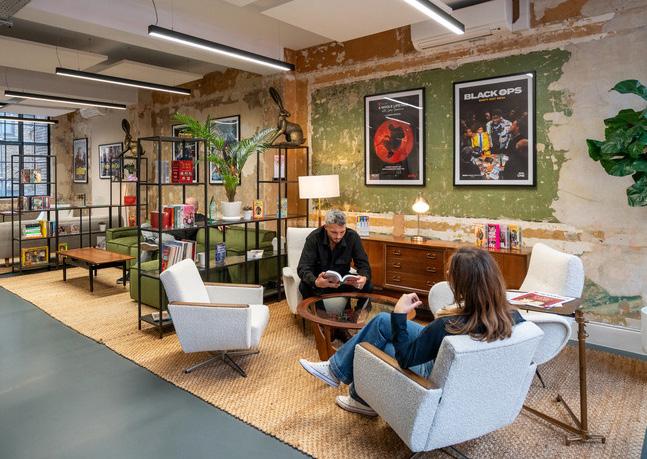
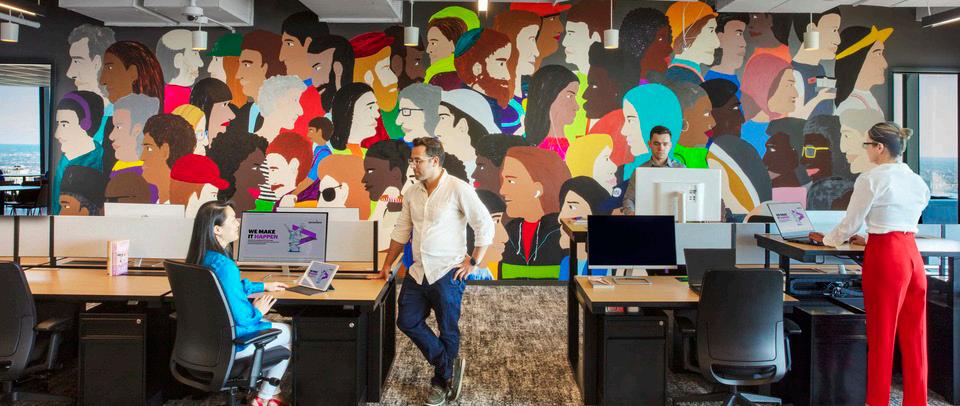
Branding and Culture: Companies are moving from logo heavy branding to identity expressed through experience. Local materials, regional food partners, and curated art—murals, interactive pieces, framed originals, textiles, plants, and sculptural installations—embed a sense of place and story. Personalization moments, from LEGO build areas to custom ping pong champion displays to lending walls, celebrate the people who shape the office. These layered, immersive details make the environment feel authentic and genuinely tied to both company culture and local identity.
Increasingly, tech offices operate like hospitalitydriven environments. Community Managers curate programming that makes the commute worthwhile— supporting rituals that build connection and belonging. And with hybrid work the norm, remote participants are designed in from day one through deliberate camera placement, lighting, and sightlines that ensure seamless inclusion.
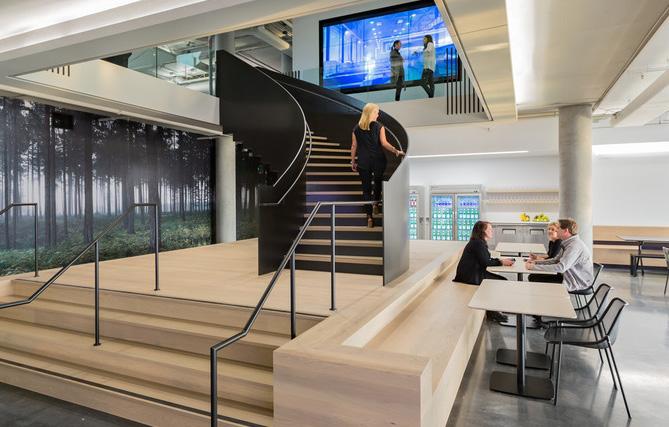
Tech has long been famous for all it’s amenities. Modern tech office amenities are shifting from "perks" to performance-driven investments centered on employee health, social connection, and frictionless technology. Lifestyle amenities are helping move offices away from traditional "corporate" settings and towards hospitable, creative environments that play a direct role in attracting and retaining top talent. Additionally, there is a growing emphasis on creating client-focused spaces for hosting events. Some common types of amenity spaces that are being incorporated in legal practices include:
People: People are the #1 amenity in any space. After all, that is why we build it and where we come together.
Large-Scale Entertaining Cafés: These spaces serve as a central gathering point for team members to use on a day-to-day basis. These café areas can include multi-vendor food halls or stadium seating with massive LED walls that allow the space to be flexed to accommodate town halls or firm networking events. They can have high-touch hospitality influences with dining and cocktail capability.
Fuel Stations: Food is an important incentive for onsite attendance with 78% of workers saying employerprovided meals improve their workplace experience. As a result, many firms are looking beyond central dining hubs to also include spaces where employees can refuel throughout the day. Moving beyond the snack wall, these smaller destination spaces can include coffee and cold brew taps, or tea bars or grab-and-go stations. Alternatively, some firms are also including bespoke spaces for employees to unwind, socialize, and entertain with in-house bars and speakeasies.
Client Zones and Multipurpose Spaces: Ditching formal boardrooms, these areas are specifically designed to cater to client meetings, board meetings, lectures and other events. Multi-purpose client zones feel like high-end airport lounges with
immersive digital galleries, hidden catering kitchens, and lounge-style seating to make clients feel like "guests" rather than "visitors."
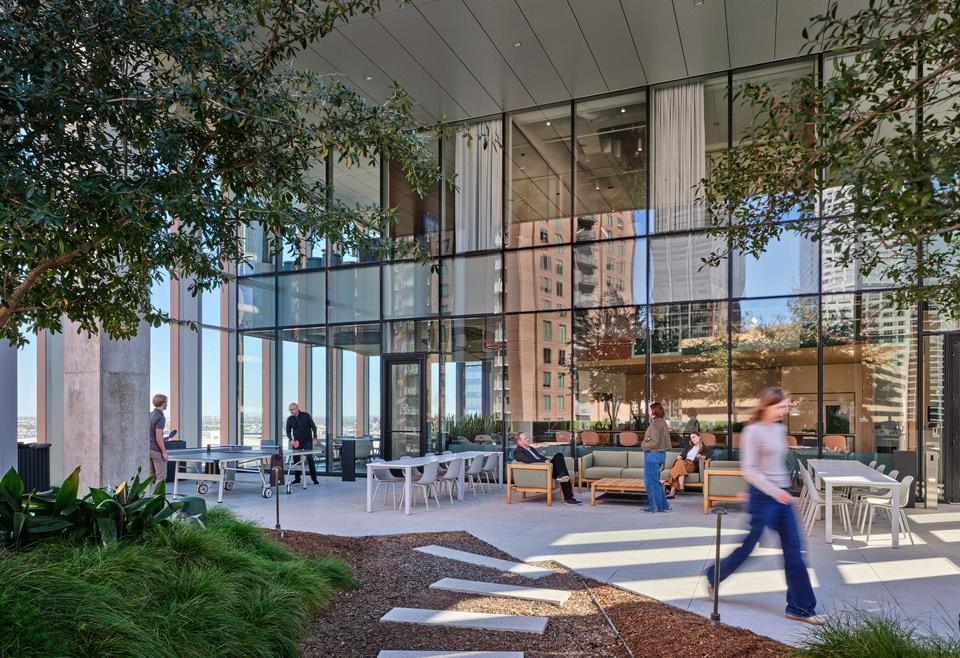
Wellness Amenities: Gyms, on-site exercise rooms and showers have transitioned from luxury to expected amenities. Rooftop gardens and outdoor terraces are among the most sought-after features, with biophilic integration (natural light, plants) shown to boost productivity by 6% and creativity by 15%. Wellness amenities like meditation pods, nap rooms or library-style silent zones that address the #1 workplace complaint of noise. Bike and scooter storage is another way tech firms are encouraging physical fitness and active commuting.
Technology Resources: Equipping the office with easy to access, centralized, and advanced technology resources, such as genius bars with tech support improve productivity and facilitates efficient communication both internally and externally.
The best workplaces will develop a synergistic relationship with their local communities— leveraging assets that already exist for their employees to use, and providing amenities or creating local partnerships that can benefit not just their workforce, but the local community too.
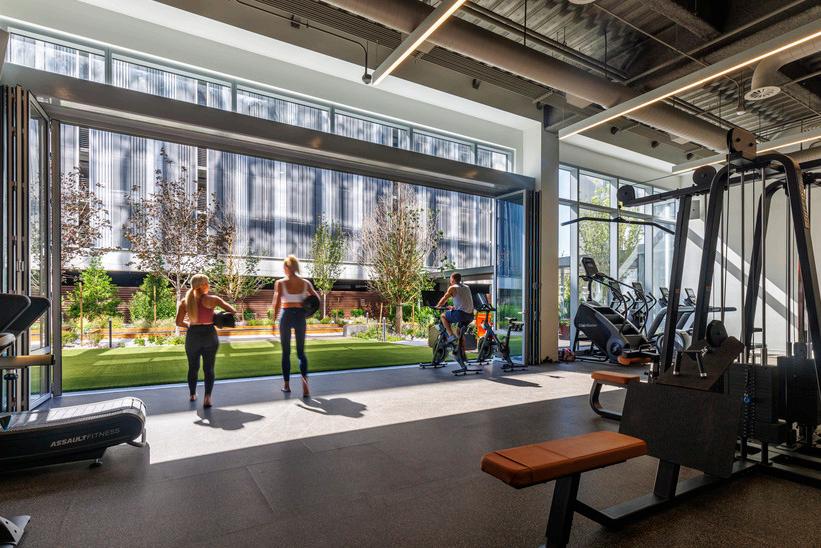
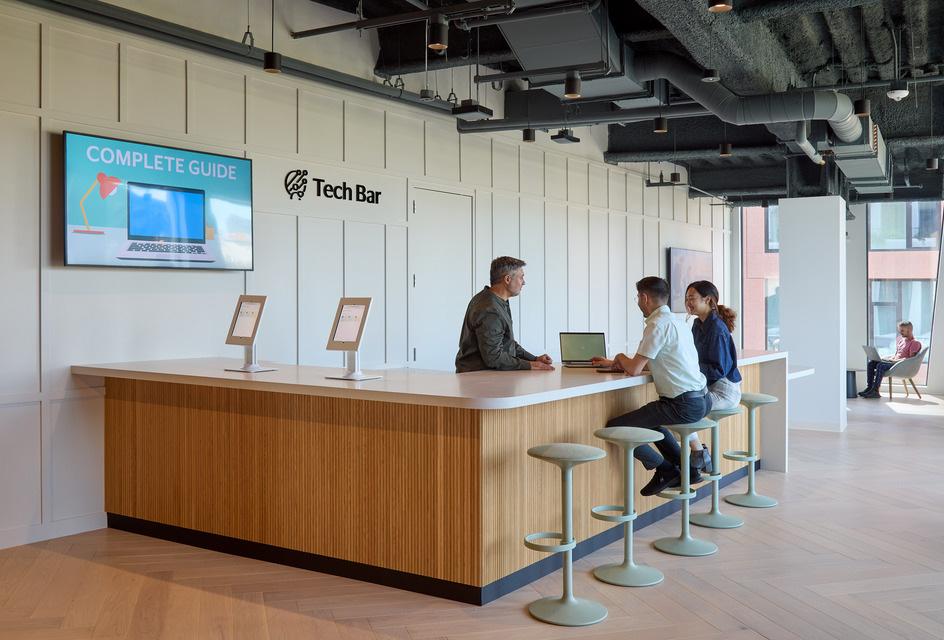
Neurodiversity—natural differences in how people think, process, and interact—represents 15–20% of today’s workforce. Neuroinclusive and accessible design has shifted from a reactive accommodation to a baseline requirement. In the tech sector, where innovation and cognitive performance drive value, research consistently shows that inclusive workplaces outperform traditional models. Organizations that prioritize neuro-inclusion report 20–30% higher engagement, improved retention, and stronger overall satisfaction. Teams that include neurodivergent professionals demonstrate up to 30% greater productivity in creative problemsolving, while employees with high environmental agency—control over lighting, sound, and seating— are 2.5x more likely to report high productivity. These insights are pushing tech companies toward choice-based environments supported by data.
The future workplace is moving beyond the openplan office toward task-based, sensory-zoned environments. Designers are creating a spectrum of work points: ultra-minimal focus rooms, lowstimulation sensory havens, and collaboration zones tuned for comfort and clarity. Environments designed to accommodate various preferences— dimmable task lighting, thermal zones and appenabled space selection—replace one-size-fits-all settings, allowing individuals to modulate their experience throughout the day.
Noise remains the #1 workplace distraction for both neurodivergent and neurotypical employees. In response, acoustic performance is now embedded into architectural design through sound-absorbing materials, acoustic panels, soft flooring, natureinspired sound masking and various focus areas that included enclosed rooms or pods, semi-private spaces, and open settings. These layered strategies support a range of sound levels across the workplace, reducing cognitive fatigue and improving focus.
Visual and spatial design is also evolving. Organic forms, strategic neutral palettes, and biophilic elements are increasingly used to reduce sensory stress and foster psychological safety. Clear wayfinding and intuitive layouts support accessibility, predictability, and ease of navigation—critical factors for neurodivergent users and beneficial for all.
As hybrid work becomes permanent, tech workplaces are being redefined as hubs for equitable collaboration. Advanced conferencing tools and AI-enabled systems enhance access, but true inclusion requires environments that balance high-tech innovation with low-stimulation, humancentered spaces. Looking ahead, neuro-inclusive and accessible design will be a defining feature of high-performing tech organizations—shaping workplaces that attract talent, unlock creativity, and enable diverse minds to thrive.
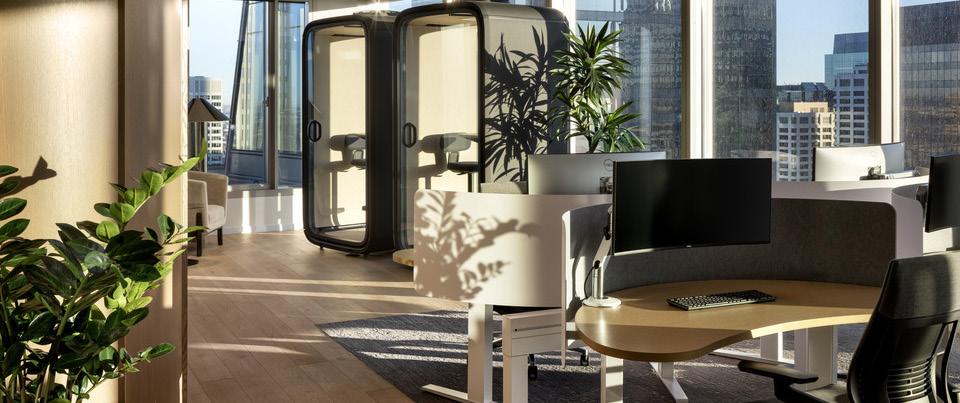
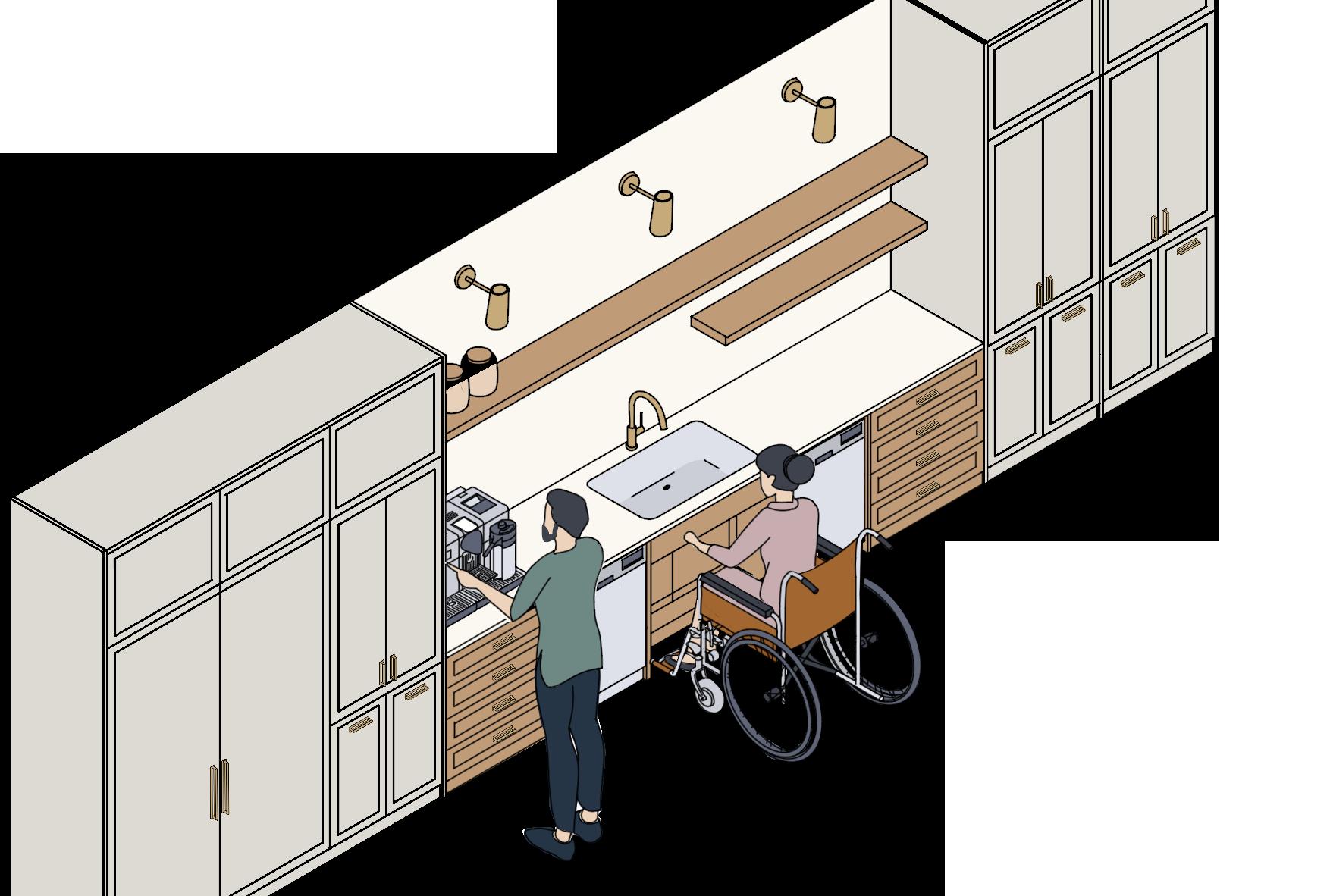
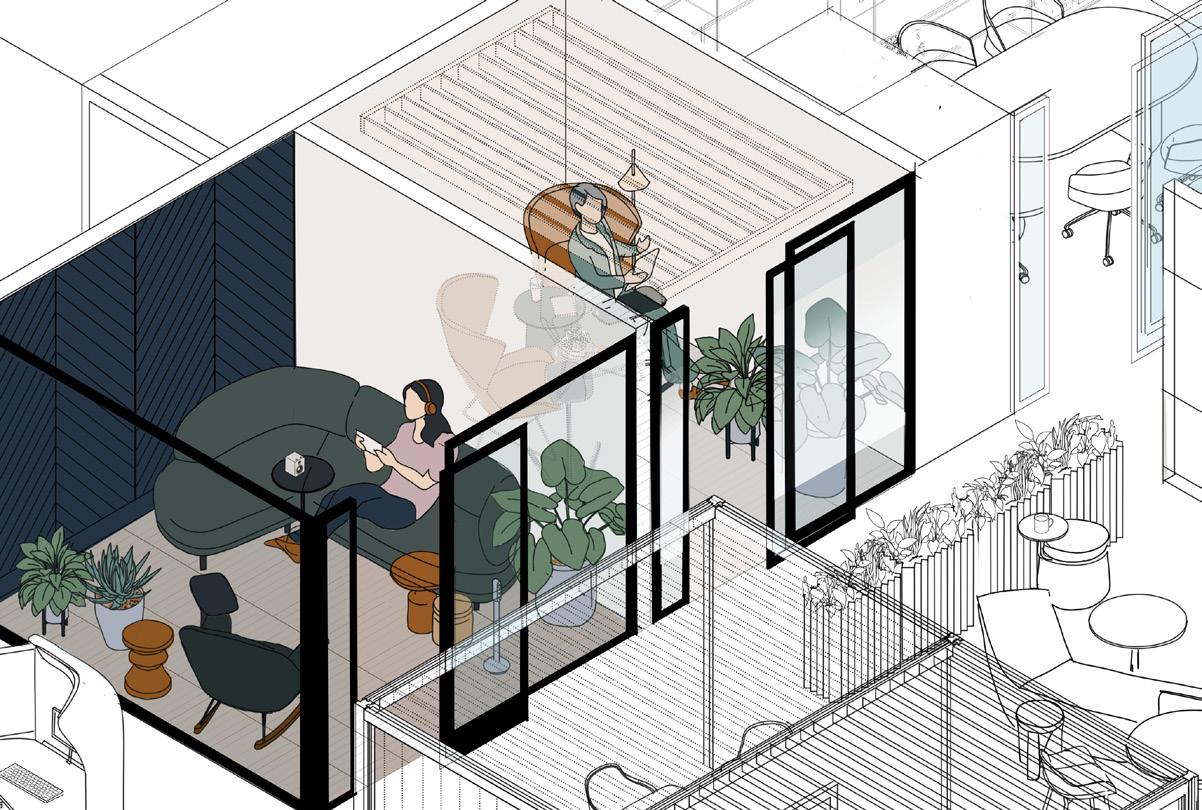
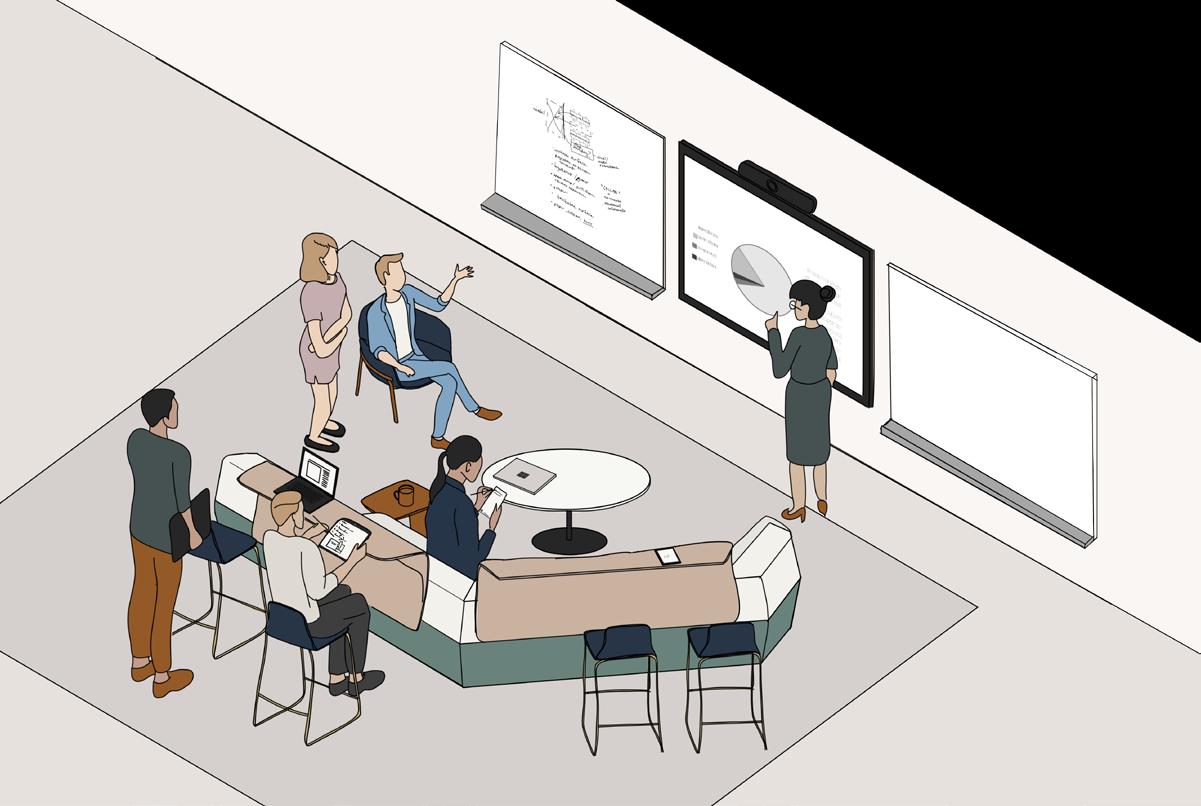
Organizations are placing greater emphasis on health and wellness in the workplace, recognizing that spaces supporting choice, stress reduction, and community help employees better manage work–life balance. The result is a healthier, happier, and more productive workforce which is key to recruitment and retention. Tech firms, in particular, are prioritizing thoughtful wellness office design strategies including:
Nature and Daylight: Research shows that biophilia— access to nature and daylight—significantly improves physical and emotional health. A growing trend is the “10:1 nature ratio,” which recommends employees be within 10 feet of a living plant or one meter of a window, a strategy shown to increase short-term memory performance. Firms are incorporating green walls and live plantings, natural materials, and diffused lighting, as well as carpets and wall graphics featuring organic or fractal patterns, which can reduce stress levels by up to 60%. Wi-Fi-enabled terraces and decks further extend access to the outdoors while keeping employees connected.
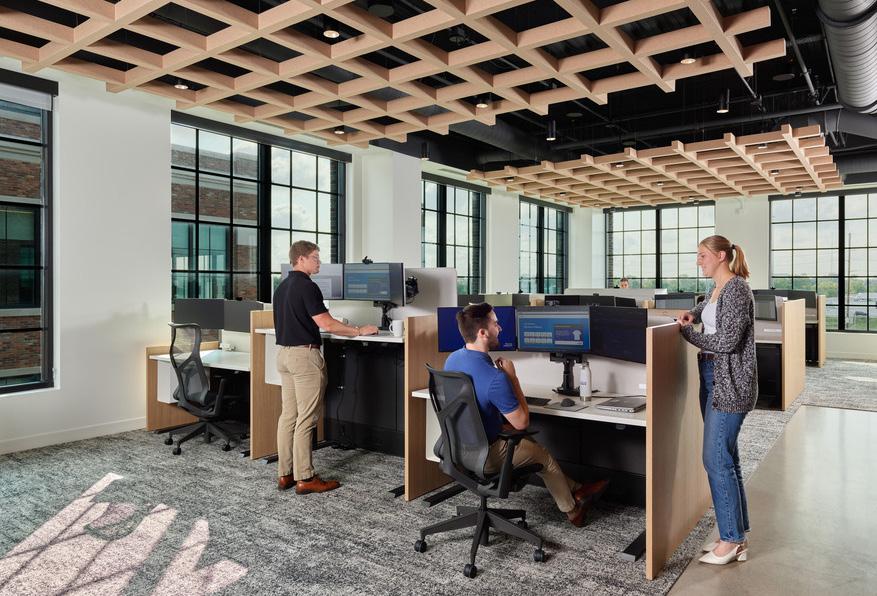
Ergonomics, Choice, and Personalized Comfort: Employees increasingly expect flexibility in how and where they work. Adjustable work surfaces, sit-stand
desks, and standing-height tables accommodate a wide range of body types, while perch seating and treadmill or cycle desks are being introduced into collaborative zones—not just individual work points —to encourage movement. Future-ready offices also feature localized and personalized comfort systems, including dimmable task lighting and app-based tools that allow users to adjust heating and cooling vents or reserve spaces based on their sensory needs. These options support employees across the neurodiversity spectrum, from those who thrive on stimulation to those who prefer quieter environments.
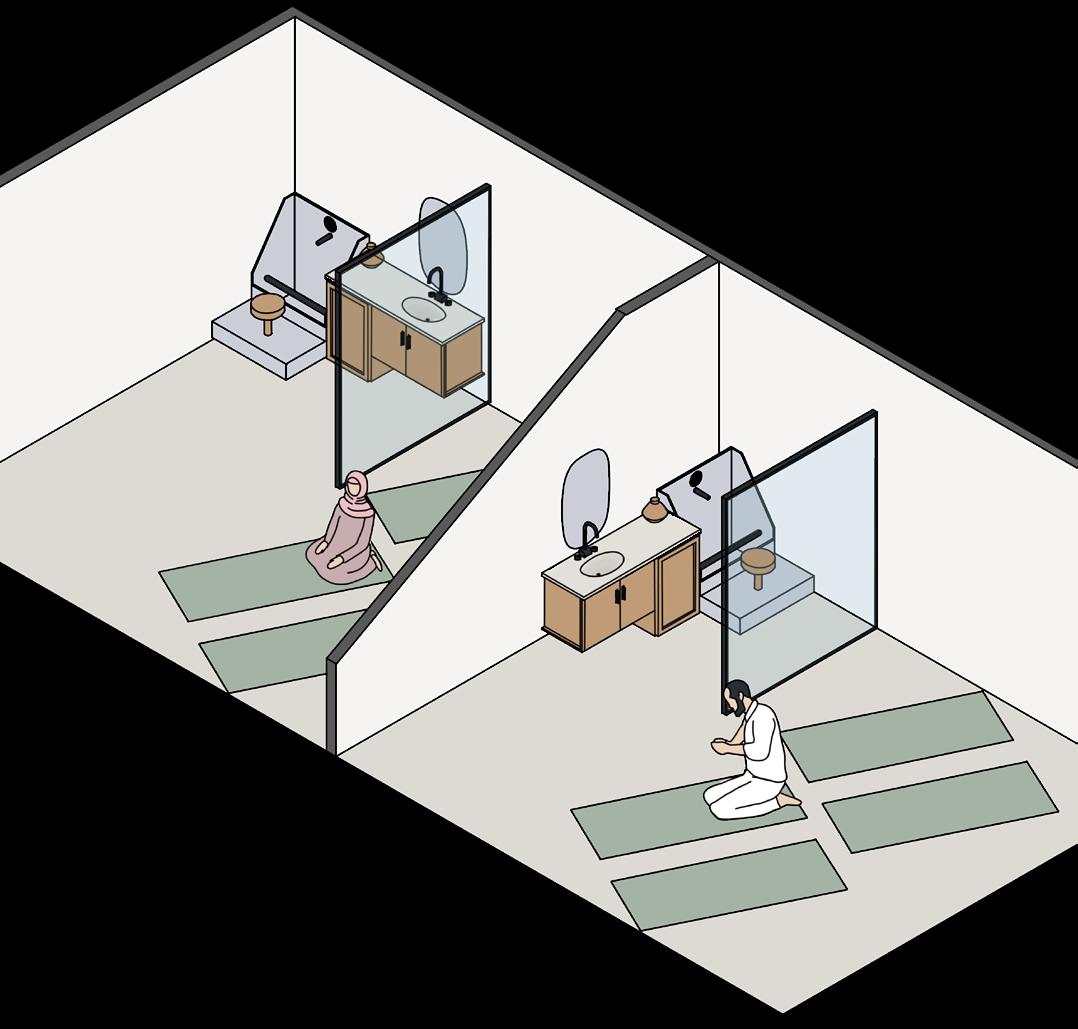
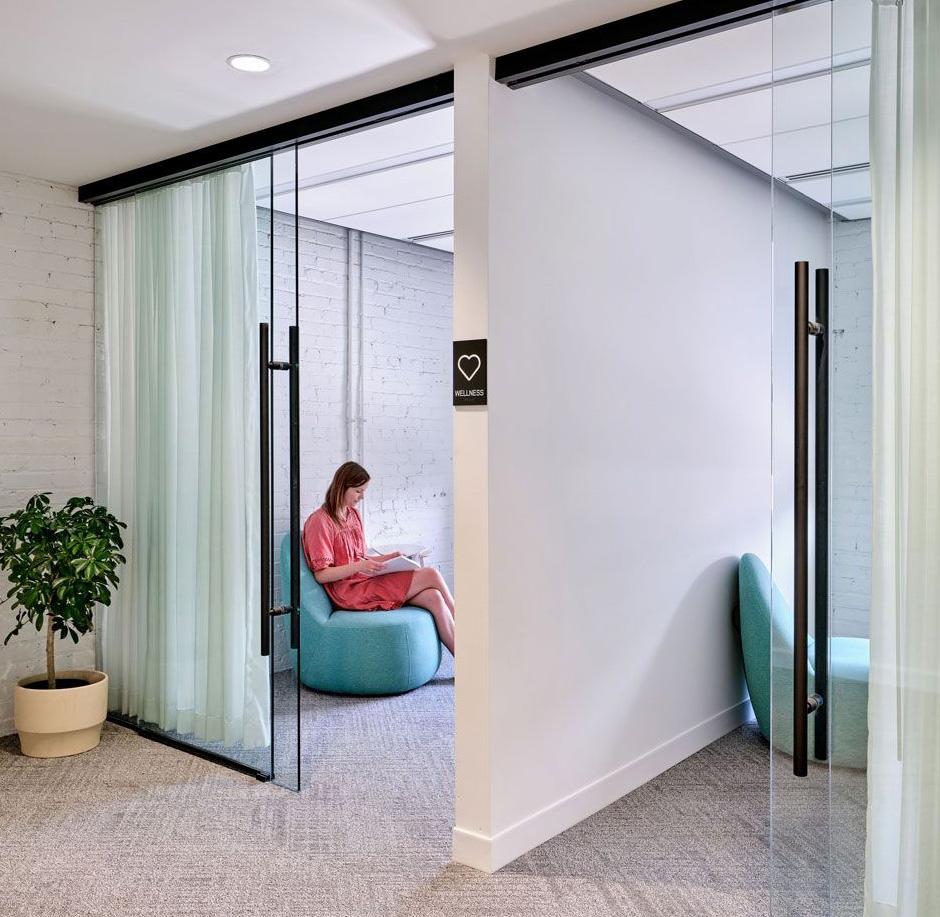
Wellness Rooms: The tech profession can be demanding, so dedicated spaces for rest and respite can significantly reduce burnout. Quiet rooms for meditation, prayer, or low-impact group activities like yoga support mental health, while lactation rooms promote work–life balance and whole-family wellness.
Executives estimate that well-designed offices can drive nearly a 22% increase in company performance.ii This means wellness-driven design not only improves human performance but also supports long-term organizational success.
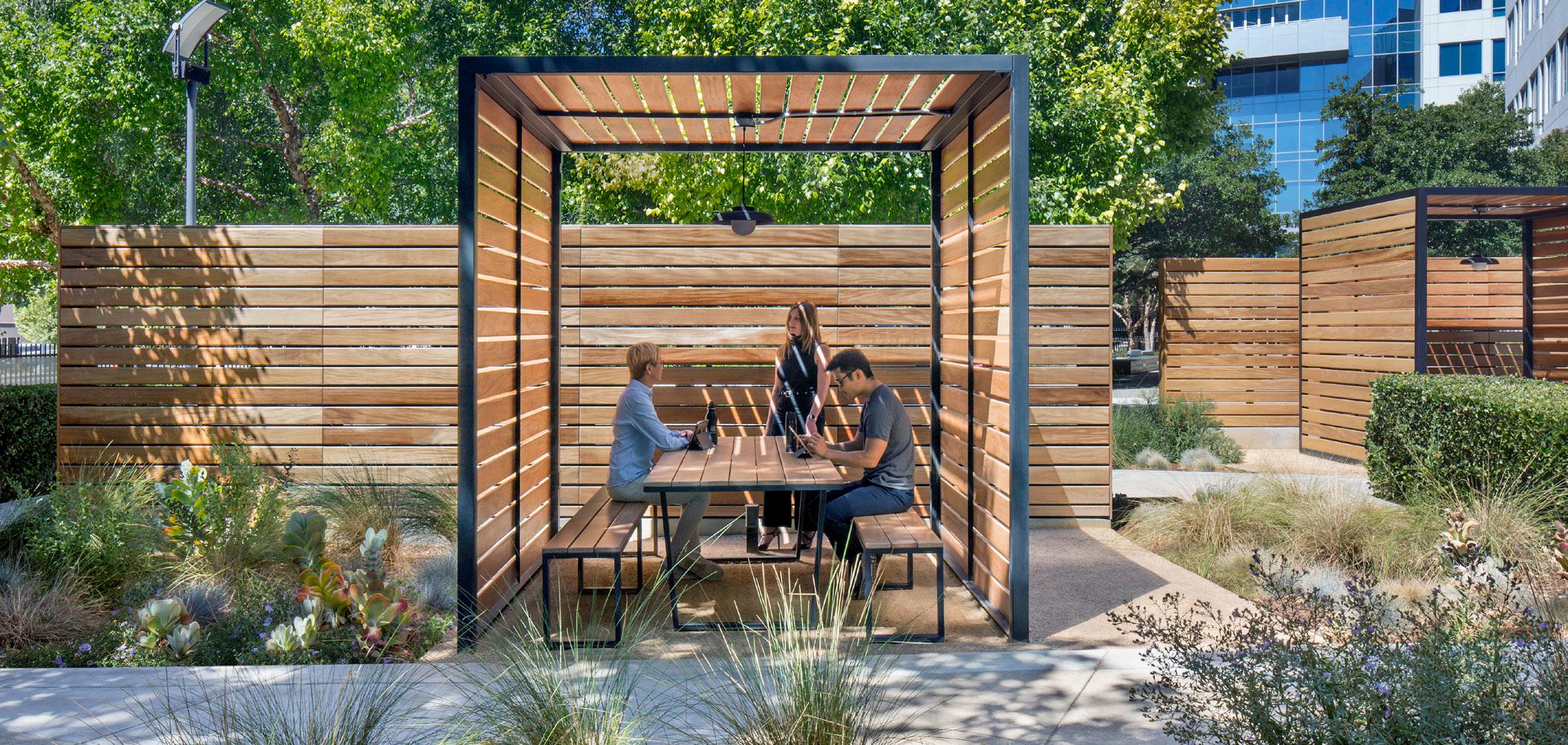
Tech workplaces are rapidly evolving from static environments into intelligent, adaptive ecosystems where technology actively shapes how work gets done. Rather than serving as a passive backdrop, technology is now a central design element— embedded seamlessly into furniture, surfaces, and architecture so tools feel invisible rather than intrusive. The next wave of workplace innovation is centered on anticipatory, data-driven systems. Buildings are beginning to “learn” using occupancy sensors, AI, and real-time analytics to automatically adjust lighting, HVAC, sound masking, and energy use—minimizing technostress while maximizing comfort. This trend is accelerating as organizations invest in connected screens, smart tables, integrated AV, climate controls, and sensor networks that feed into unified building management systems. Best-inclass technology in modern tech offices includes:
Immersive Collaboration Rooms: Spaces designed for hybrid teams using 360° cameras, spatial audio, interactive whiteboards, and shared digital canvases that create an “in-room” experience for remote participants.
AI-Enabled Conference Room Technology: Systems that automatically join meetings, manage room booking, control lighting and acoustics, transcribe conversations, and provide live translation or note-taking.
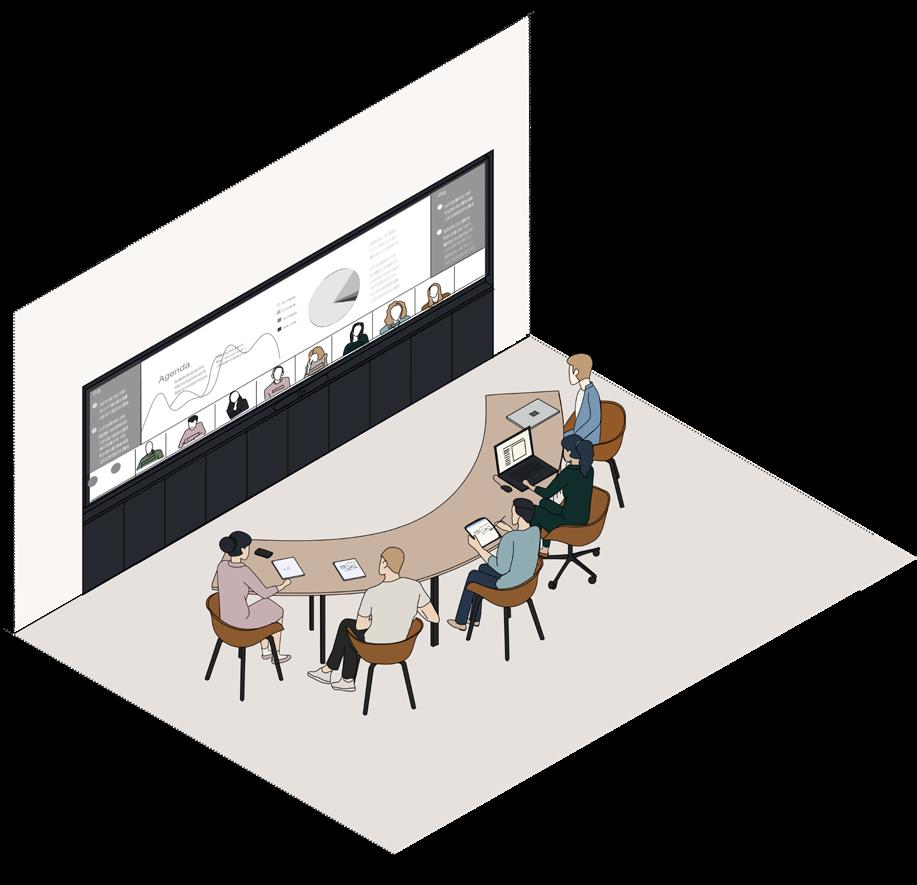
Touchless and Personalized Interfaces: From gesture-based room controls to mobile-based access and personalized environmental presets, technology is increasingly tailored to individual preferences.
Digital Experience Platforms (DXPs): Centralized systems that integrate room scheduling, wayfinding, visitor management, desk hoteling, and facility requests into one unified user experience.
Advanced Visualization & Simulation Rooms:
Dedicated spaces for product demos, immersive VR/AR collaboration, digital twin visualization, and real-time data storytelling.
Smart Furniture & Integrated Power: Work surfaces with embedded power, wireless charging, and cable management, enabling flexible work points and easy reconfiguration.
Looking ahead, hybrid is here to stay and AI will increasingly act as a silent partner in the workplace, predicting patterns and personalizing experiences— from meeting-room availability to environmental settings. As buildings become more responsive and data-driven, companies that leverage technology without compromising the employee experience will gain agility, reduce overhead, and create futureready workplaces.
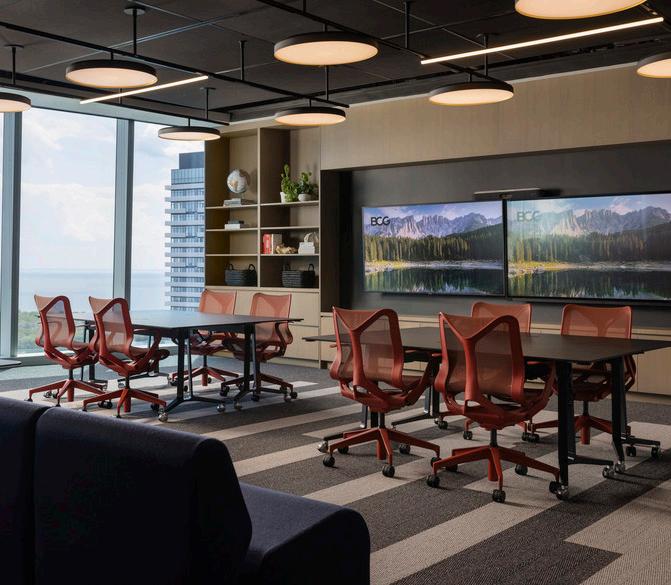
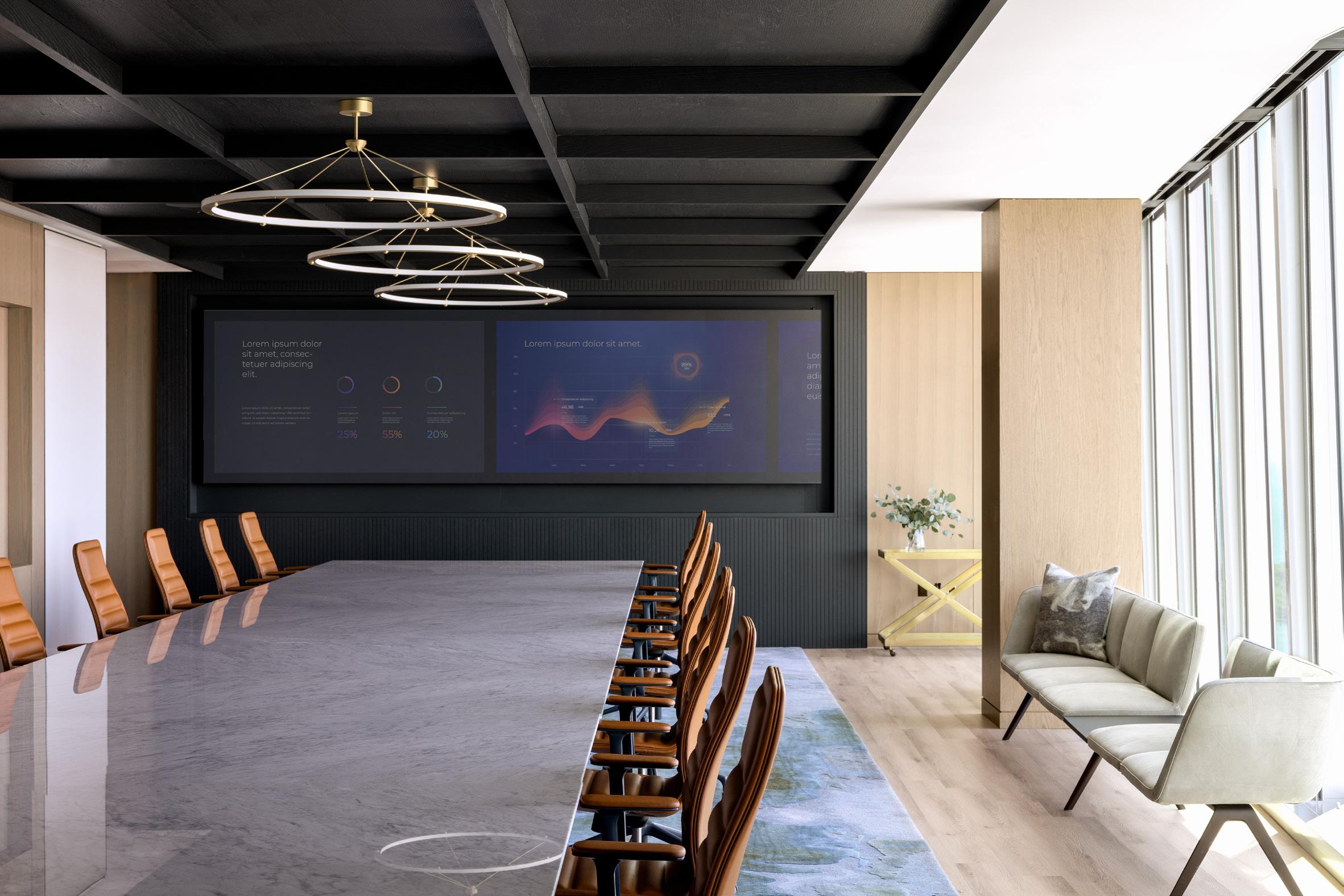
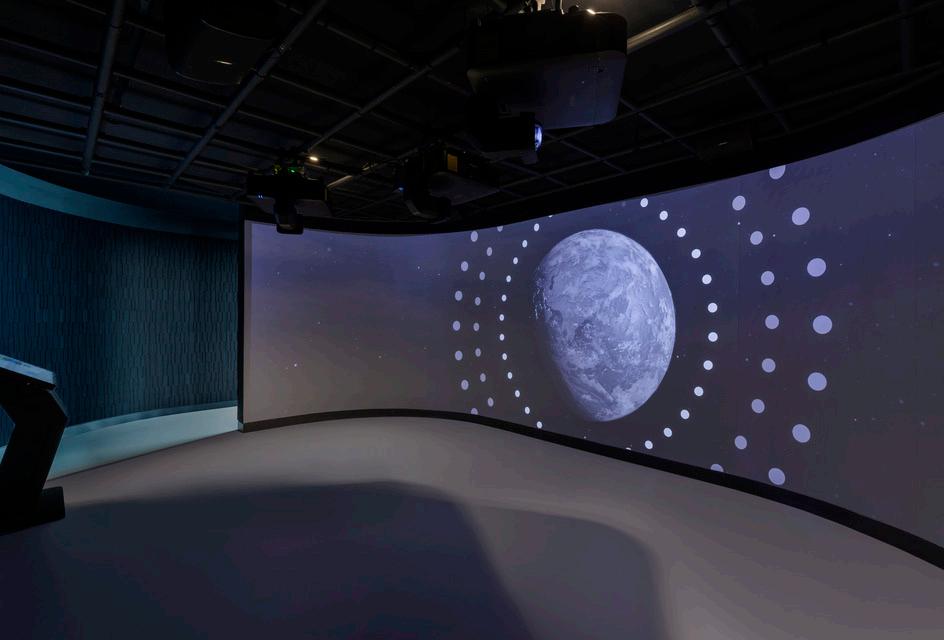
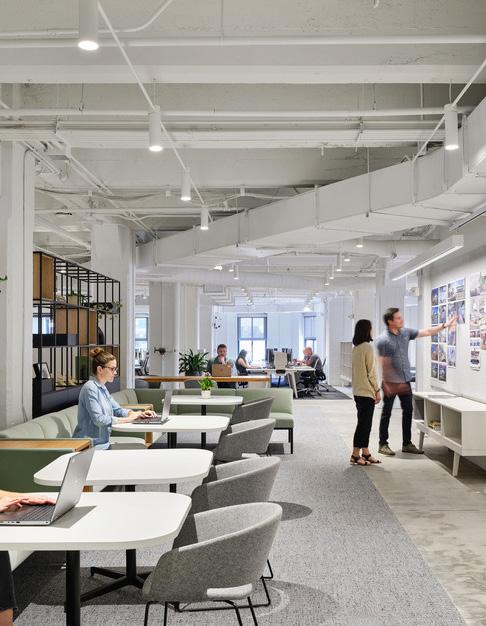
In the fast-paced world of workplace design, we believe great design starts with a thoughtful, disciplined process that is both rigorous and adaptable. Our methodology is organized into four integrated phases—Discover, Develop, Design, and Deliver each building on the last to ensure every decision is purposeful, every space is functional, and every detail is considered.
In the Discover phase, we immerse ourselves in your organization’s culture, operations, and goals, engaging stakeholders, studying workflows, and leveraging research and benchmarking to identify opportunities. Develop translates these insights into strategic concepts, exploring spatial layouts, adjacencies, and design directions that balance functionality, flexibility, and brand identity. During Design, ideas are refined into compelling, coordinated environments where aesthetics, performance, and technology converge, guided by meticulous documentation and quality control. Finally, in Deliver, we bring the vision to life, managing construction, commissioning, and move-in with precision while remaining responsive to emerging needs and opportunities.
Collaboration is central throughout—our process is structured yet flexible, allowing us to adapt to each client’s unique culture, objectives, and evolving requirements. By combining stakeholder engagement, data-driven insights, and forward-looking workplace strategies, we create environments that are operationally effective, visually compelling, and futureready. Ultimately, HOK’s approach goes beyond designing space; it shapes workplaces that inspire, enhance performance, and reflect the distinct identity of your organization, all delivered efficiently, collaboratively, and with unwavering attention to detail.

“We are no longer designing the environments — we are designing the experience.”
— Kay Sargent, Director of Thought Leadership
The whole process — Discover, Develop, Design, Deliver — is designed to be as collaborative as it is creative. It ensures that the finished workplace doesn’t just look beautiful, but functions as a catalyst for productivity, culture, and innovation.

We begin our engagement by uncovering the organization’s identity and what makes them unique
We then ensure the guiding principles are integrated into the plan and program.
We analyze, test and ideate on the possibilities to make sure the client is comfortable before proceeding with design.
Our imaginative designers explore design possibilities to create something bespoke and amazing for each client.
From furniture to materials, we narrow in on a vision that is informed by our previous phases and made robust through our methods and tools.
Technical excellence combined with onsite observations and robust deliverables will ensure the design intent is reflected in the final outcome

Every successful project begins with listening. In this first phase,
we work hand-in-hand with your team to uncover what makes your organization unique and how your workplace can bring that identity to life.
We begin with immersive conversations and workshops to ensure we understand your vision, culture, and goals from day one.
By studying your company’s story, values, and aspirations, we highlight the qualities that should shine through in your workplace. Over the past several years, HOK has refined its toolkit of research, processes, and engagement methods that explore the human side of workplace strategy. Our Engagement Toolkit is a robust and highly organized framework that goes far beyond traditional visioning exercises. Designed to engage stakeholders at multiple levels, it offers a flexible menu of workshops and tools that can be tailored to each client’s goals. These interactive sessions help uncover insights that might otherwise remain hidden—ensuring that design solutions are inclusive, evidence-based, and future-focused. Clients can select from 10 discovery workshops, including: Framing the Possible, Designing for Equity, Change Management, Personas, Gathering Spaces, Work Points, Amenities, Neurodiversity, Designing the Brand Experience, and Programming.
Taking into account everything we have learned from visioning, we ground insights in data—reviewing metrics, utilization studies, and employee feedback—then translate them into a clear, actionable program. Using HOK’s proprietary programming tools, we can quickly test different workplace scenarios, from mobility strategies and Activity-Based Working (ABW) to opportunities for right-sizing space. We build on your existing programming and test-fit, proposing targeted enhancements and refinements. This process ensures more informed design recommendations and leasing decisions, delivered with greater speed and accuracy.
Together, we establish guiding principles and measurable goals that will steer every design decision. Success is defined not only by how well the design embodies your organization’s values but also by our alignment on cost, schedule, and scope. HOK will prepare a detailed schedule with critical milestones to ensure timely delivery and a budget framework to keep the project on track.
This phase is about creating a strong foundation—a blueprint not just for space, but for possibility.
Change Management
Personas
Defining worker personas and identifying a mix of settings to support diverse individual needs.
Framing the Possible A comprehensive workplace and leadership alignment and gap analysis tool.
Gathering Spaces
Establishing characteristics for different meeting types and spaces that best support these activities.
Work Points
Helping determine the right type and variety of work points to support diverse workstyles.
Amenities
Elevating the employee experience by identifying services and amenities that align with your needs and create inviting destinations
Defining the change, achieving leadership buy-in, and creating a roadmap for success with strategies that engage and inspire.
Neurodiversity Tools for crafting spaces that support sensory processing, cognitive well-being, and neuroinclusion.
Designing the Brand Experience
Exploring audience, brand, and content to build a holistic experiential story that infuses your brand into every corner of the workplace
Designing for Equity
A guide to creating inclusive environments that are diverse, welcoming, and supportive for all.
Programming
Leveraging discoveries to create scenarios that optimize requirements within available space.
Designing for Sustainability
Guiding clients to make environmentally responsible choices for a healthier, more sustainable workplace.
With a deep understanding of your organization, we move into shaping solutions that balance imagination with practicality. This is where ideas begin to take form.
We test how the approved program fits into a real floorplate— validating square footage requirements, exploring initial layout concepts, and comparing multiple building options if needed. Blocking and stacking studies help visualize how departments, teams, and amenities align vertically across floors and horizontally within floorplates. These tools optimize workflow, adjacencies, and collaboration while also informing real estate and site selection decisions.
Through sketching, diagrams, and scenario testing, we evaluate multiple approaches, ensuring you’re comfortable with the direction before moving forward.
We define the tone and vibe of the workplace, presenting moodboards and narratives that capture the spirit of the space.
This step is iterative, collaborative, and forward-looking— building confidence that the design will work beautifully for today and flex seamlessly into the future.
MASSING STUDIES
SITE SELECTION
PROGRAM VALIDATION
AESTHETIC DIRECTION
CONCEPTUAL PLANNING
ADJACENCY STUDY
BLOCKING AND STACKING
TEST FITTING
Here is where strategy transforms into a vision you can see, touch, and feel. Our designers take inspiration from your culture, brand, and story to create a workplace that is both functional and extraordinary.
BESPOKE DESIGN SOLUTIONS + STORYTELLING
We craft spaces that reflect your unique identity—not a one-size-fits-all template, but a vision designed exclusively for your organization.From the big gestures to the smallest details, every choice contributes to a cohesive narrative that reinforces your values.
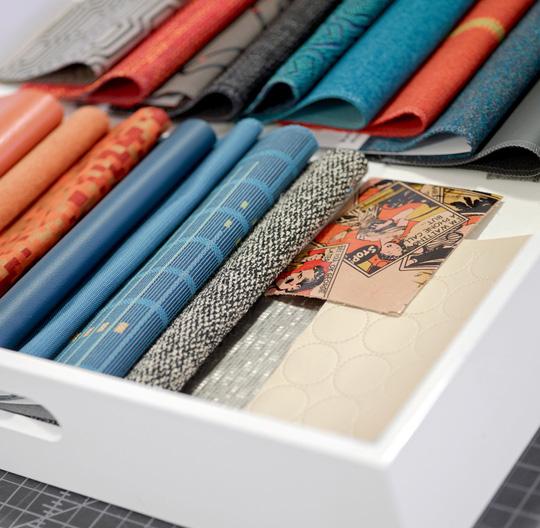
Colors, textures, and finishes are carefully selected to set the mood and express your brand, while HOK’s material tracking initiative, which is naturally ingrainded in our design process, ensures products are responsibly sourced, healthier, and aligned with ESG goals.
FURNITURE STRATEGY + DEVELOPMENT
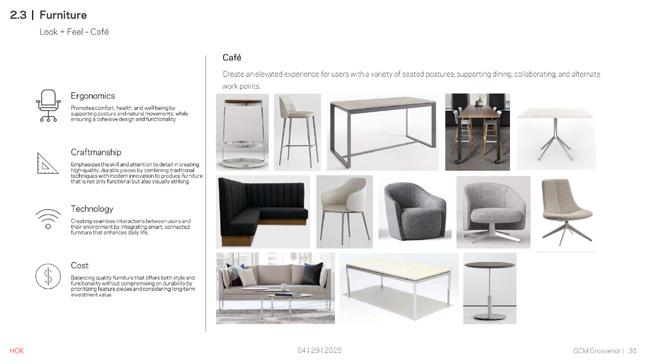
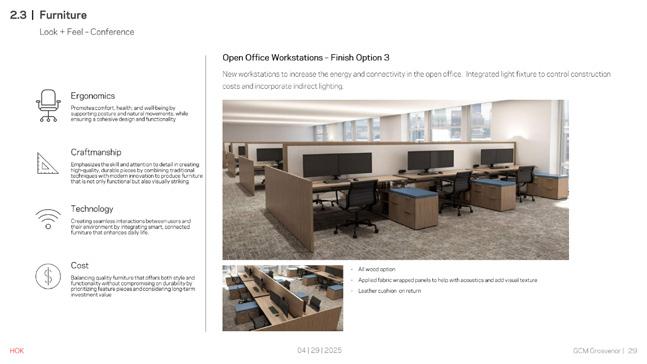
We curate and customize furniture solutions that balance function, comfort, and aesthetics. From ergonomic work points to collaborative hubs, furniture plays a critical role in creating adaptable, high-performing environments.
Clients can experience their future workplace through renderings, 360° walkthroughs, immersive VR, and interactive scenario testing—providing clarity and confidence in decisionmaking.
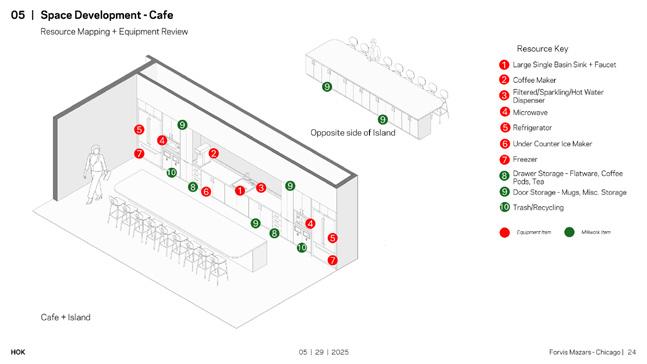
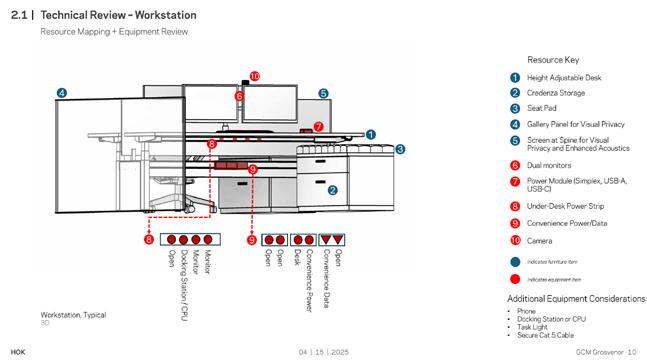
Behind the creativity is precision. We integrate performance-driven tools— such as resource mapping, lighting and power strategies, and technology planning—while documenting every detail to ensure flawless delivery.
This phase blends artistry with expertise, narrowing in on a design that feels both inspired and achievable while preparing the foundation for seamless implementation.
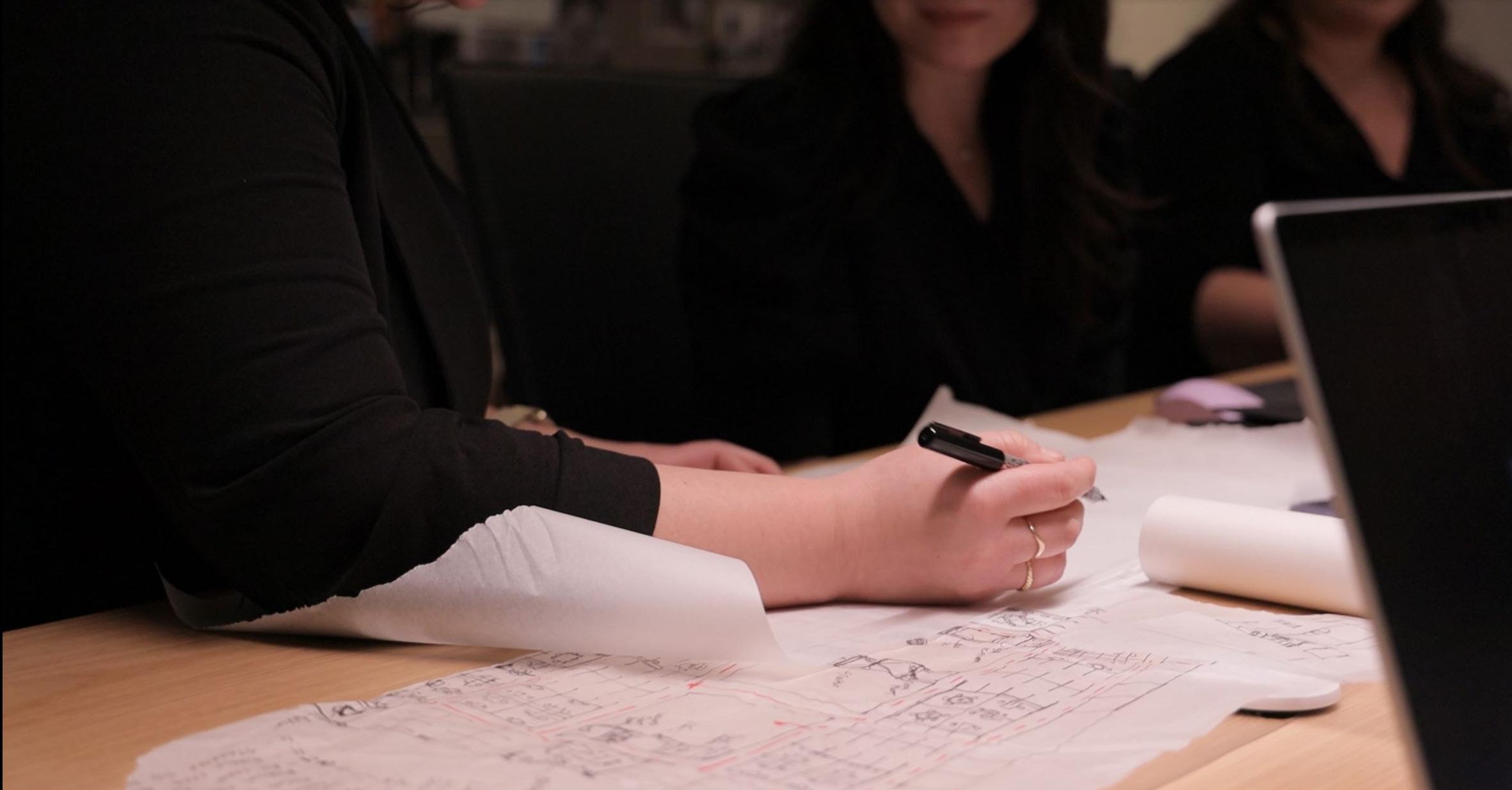
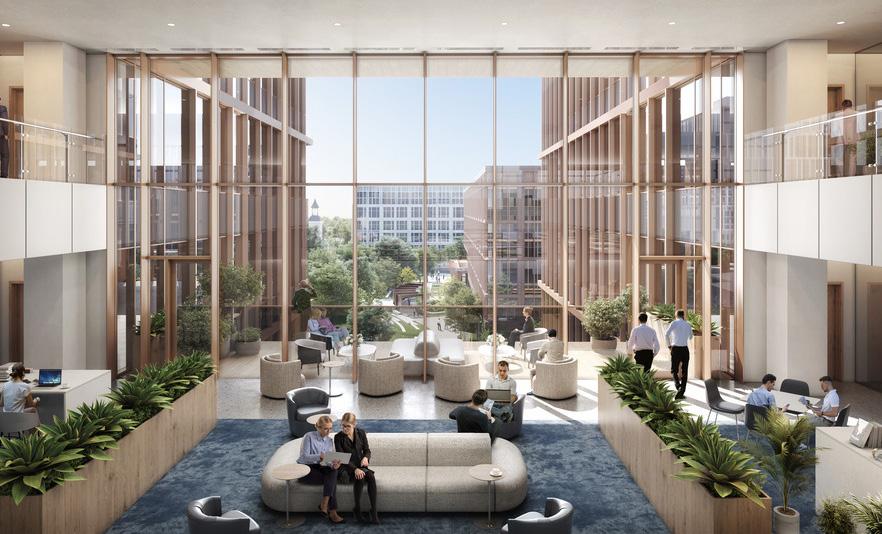
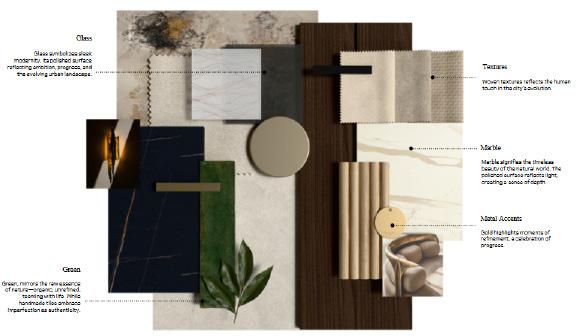
Here is where strategy transforms into a vision you can see, touch, and feel. Our designers take inspiration from your culture, brand, and story to create a workplace that is both functional and extraordinary.
DOCUMENTS + PERMITTING
Comprehensive, coordinated documentation provides a clear roadmap for builders and regulators alike.
ADMINISTRATION
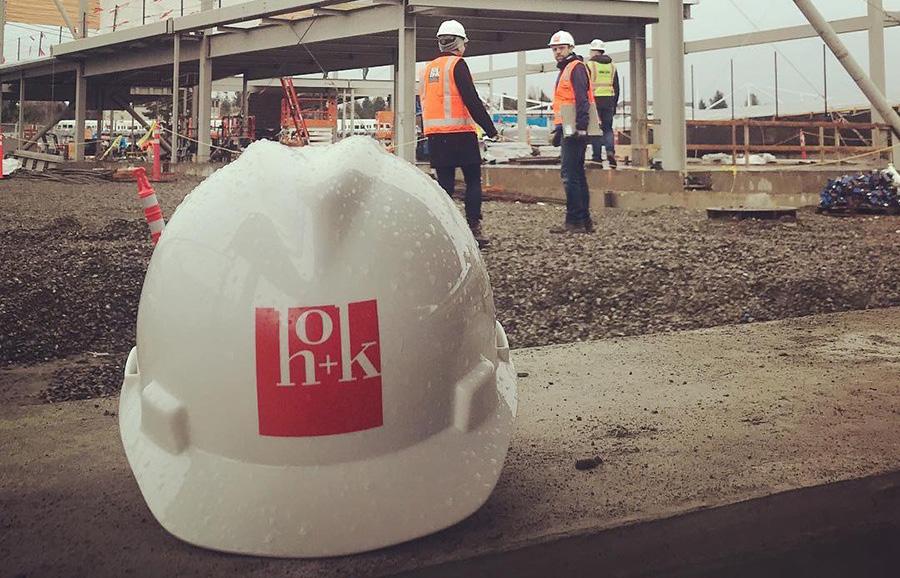
We remain by your side throughout construction—visiting the site, addressing questions, resolving issues, and coordinating with vendors to ensure furniture, technology, and specialty finishes are delivered and installed according to design intent. Our team monitors installations, materials, and finishes to ensure accuracy down to the smallest detail.
CLOSEOUT
From punch lists to as-built documentation, we provide a thorough handoff so your team can move in seamlessly.
TECHNOLOGY
HOK’s suite of tools—including BIM 360, Revit, dRofus, Trimble Connect, ProjectSight, Bluebeam Studio, MS Teams, Smartsheet, ConceptBoard, and Office 365—enables transparent, efficient, and collaborative project delivery. Clients and external team members can access many of these platforms, enhancing communication, coordination, and oversight throughout the project.
Deliver is where vision meets craftsmanship—bringing your new workplace to life with precision, care, and the confidence that every detail has been considered.
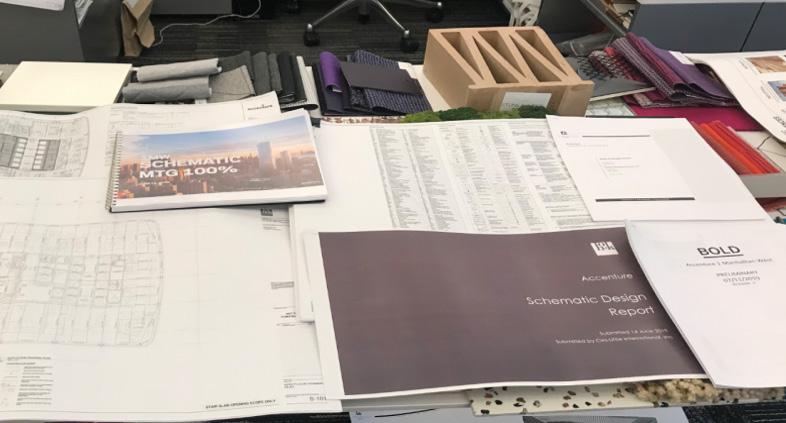
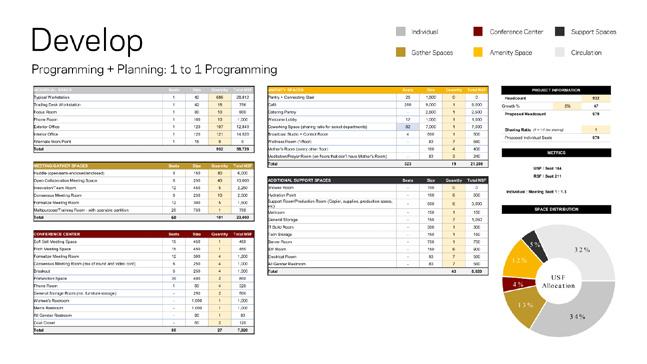
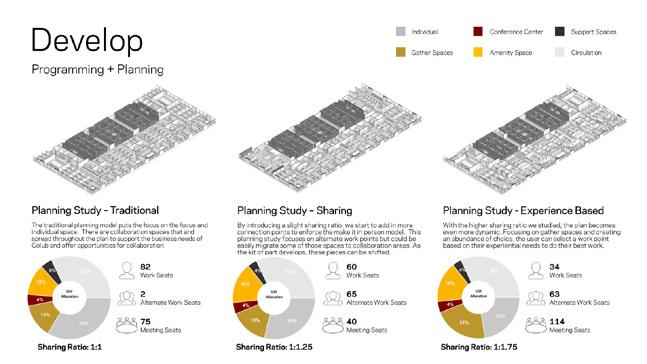
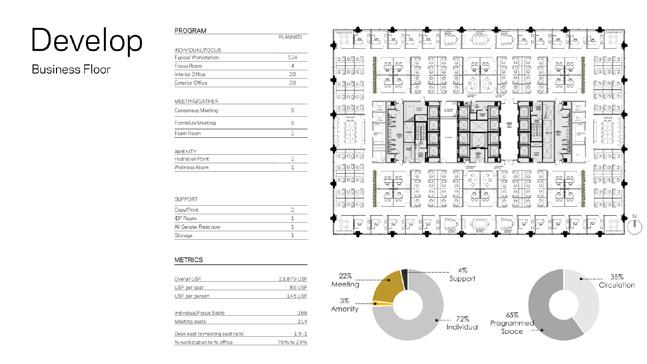
Our program and planning templates layer in our thought leadership, program data, space plans and graphic “dials” that represent how space is being utilized between collaborative and focused space. HOK is able to create scenarios quickly, so our clients can make informed decisions more quickly and with confidence.
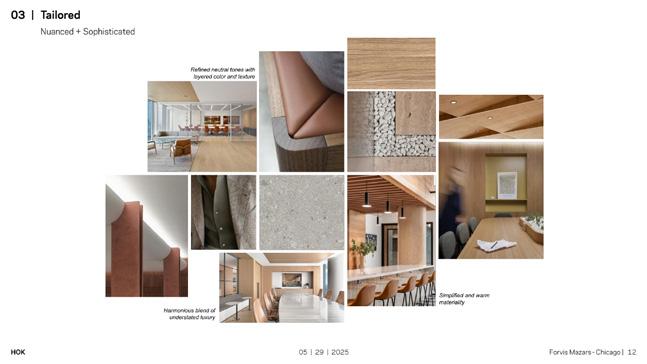
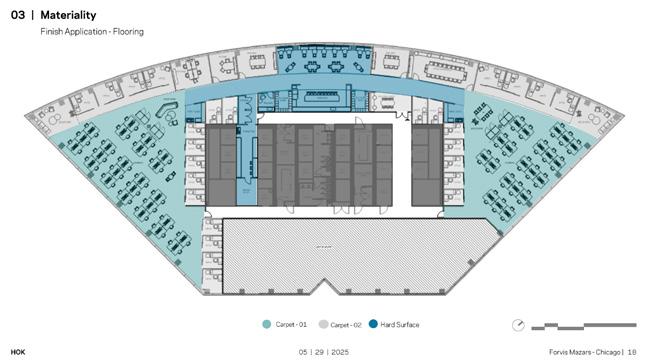
Our Design Development presentation is a compilation of the information gathered in the aesthetic and technical workshops. This package is a refinement of the schematic design presentation, with furniture forms, light fixtures and material locations and specifications identified.
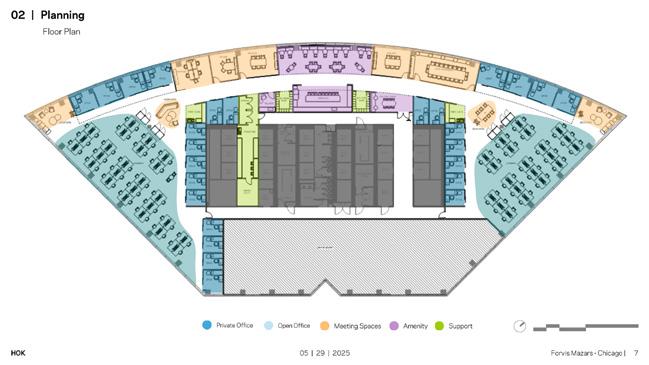
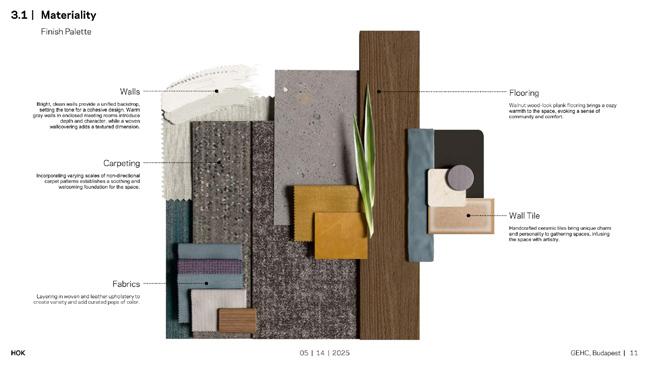
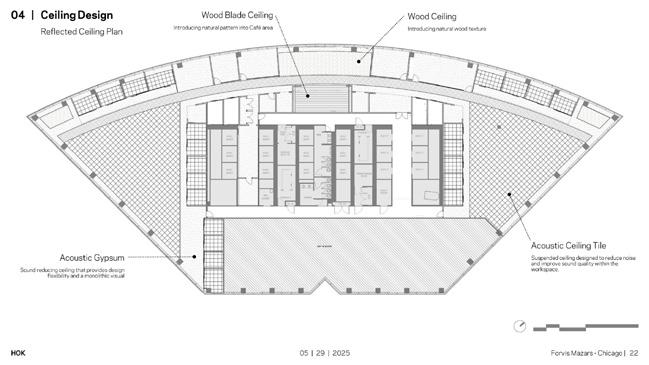
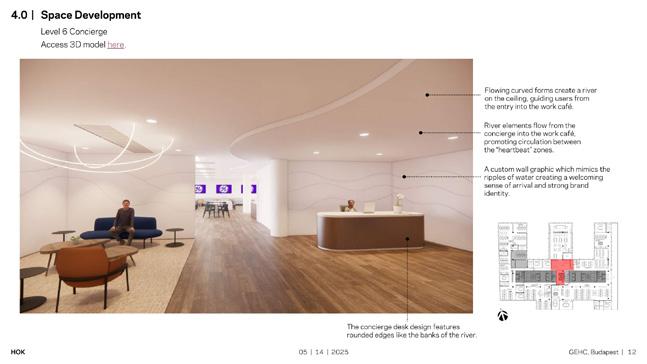
Our Schematic Design presentation is a compilation of the information gathered in the aesthetic and technical workshops. We gather equipment information in schematic design, so that spaces are correctly sized and configured. The Schematic package captures the look and feel of the space.
EARLY RELEASE MATERIAL / EQUIPMENT RELEAS E
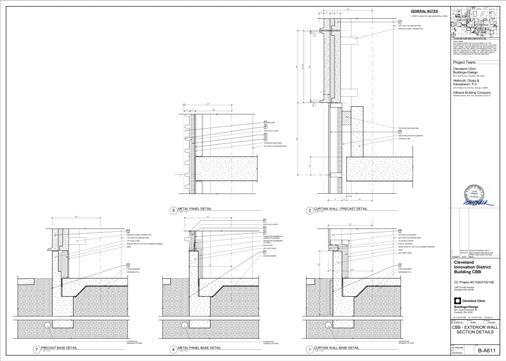
The Early Release Package is a set of contract drawings that are issued prior to the permit set. This allows the General Contractor on behalf of Origami Risk to order long lead items for an on-time delivery of the new workplace.
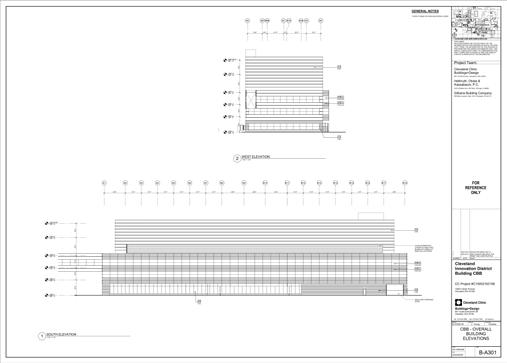
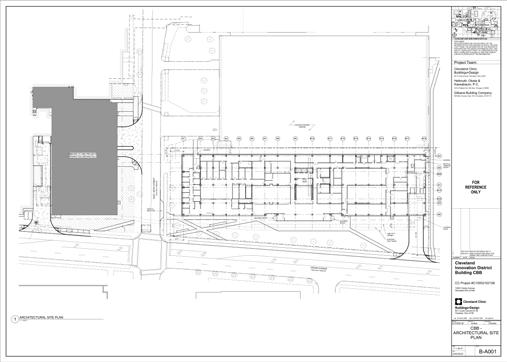
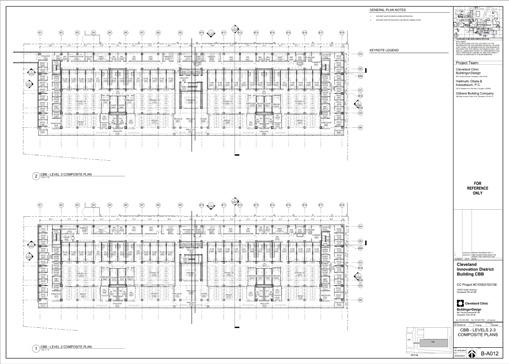
The Schematic Budget Pricing Package includes floor plans, reflected ceiling plans, renderings, schedules and a scope narrative.
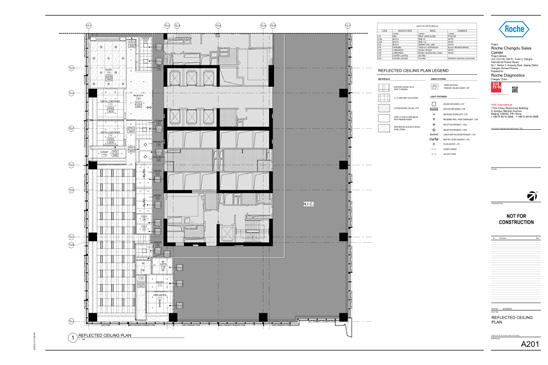
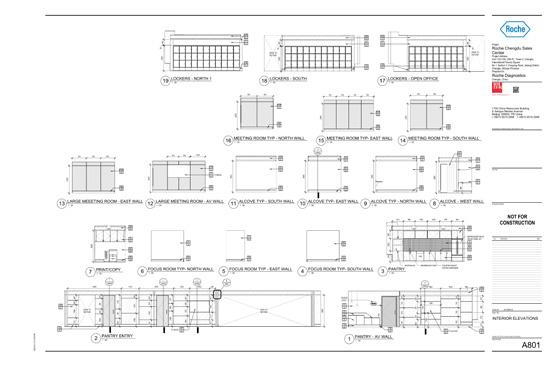
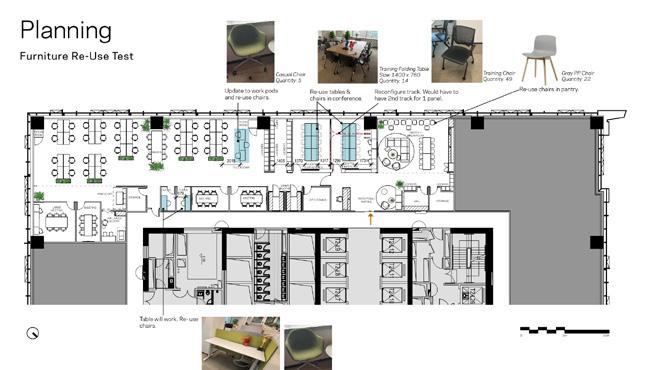
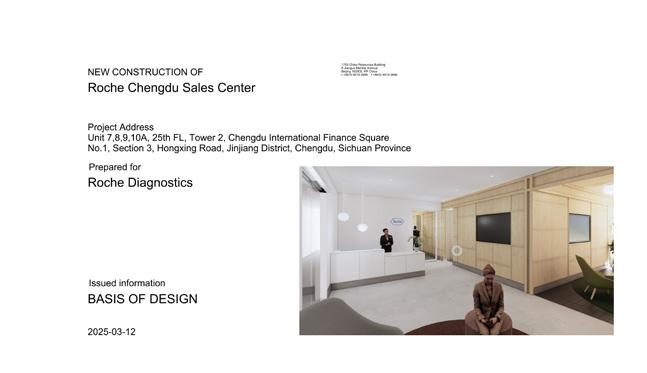
FURNITURE TYPICALS + INSPIRATION
The furniture package for the RFP identifies the type, location, specifications and aesthetic direction of the furniture package. The furniture dealer is able to provide an accurate furniture bid
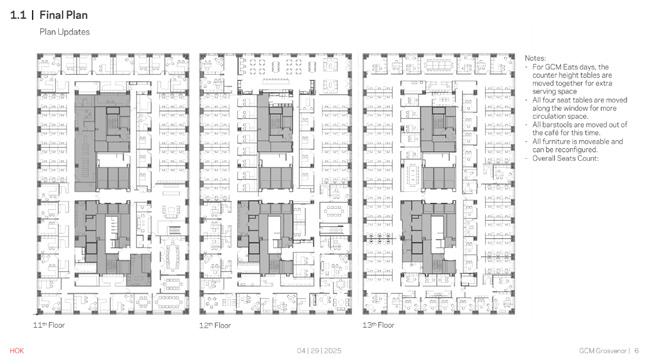
Partnering with many of the world’s largest and most respected technology companies, as well as innovative startups, HOK brings deep experience in technology-sector workplace design.. Through long-standing client relationships, we translate brand, culture, and business goals into high-performance, people-centered environments.
SELECT CLIENT EXPERIENCE
Accenture
Activision Blizzard
Adobe
Amazon
Apple
AT&T
Autodesk
Broadcom
CA Technologies
Cisco
Dell
Ericsson
Equinix
Gartner
Honeywell
HP
IBM
LG
Intuit
Lenovo
Manhattan Associates
Meta
Microsoft
Micron
Motorola
Netflix
Nokia
OpenText
Oracle
Red Hat
Salesforce
Samsung
Spotify
Symantec
TikTok
The Trade Desk
Verizon
Yahoo
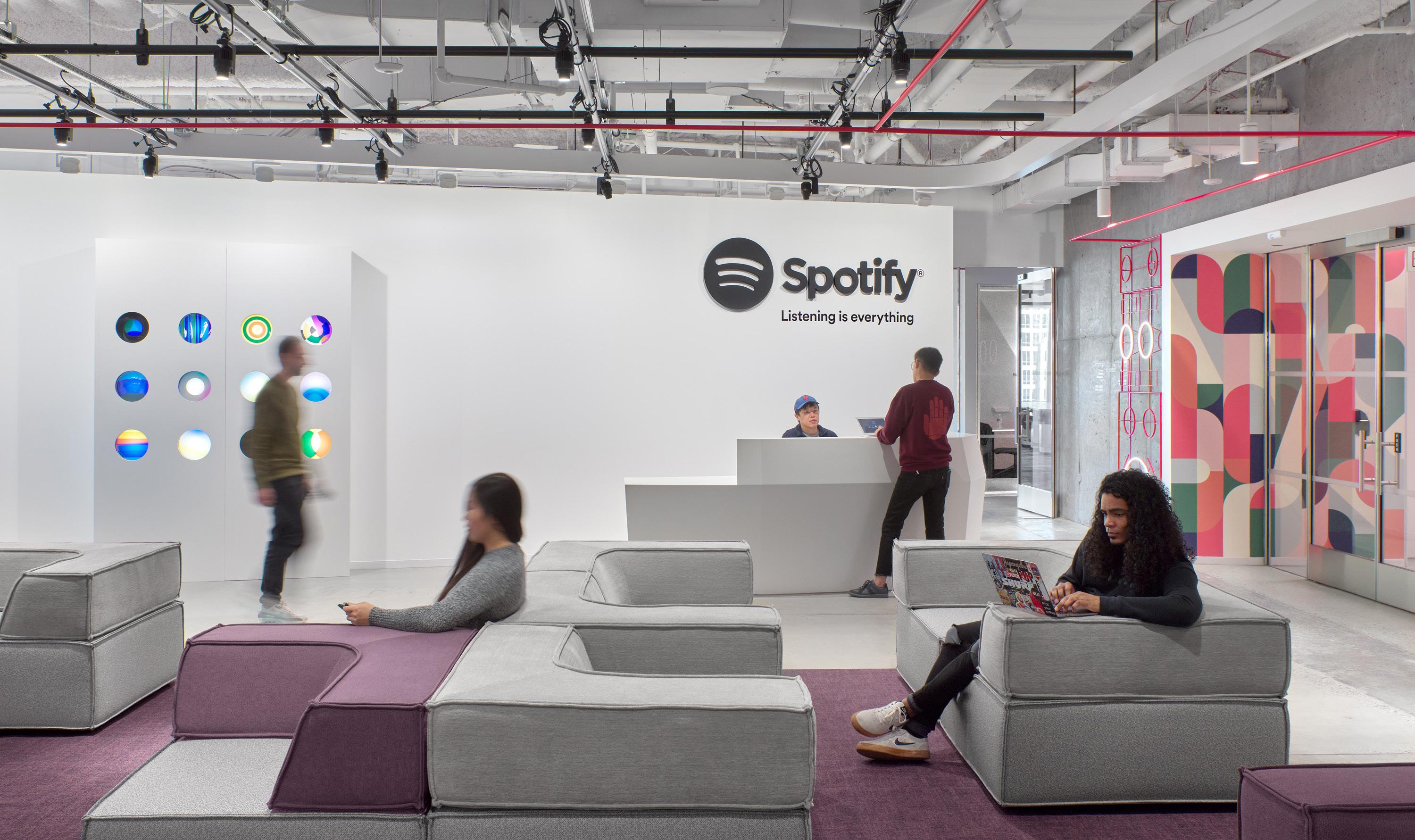
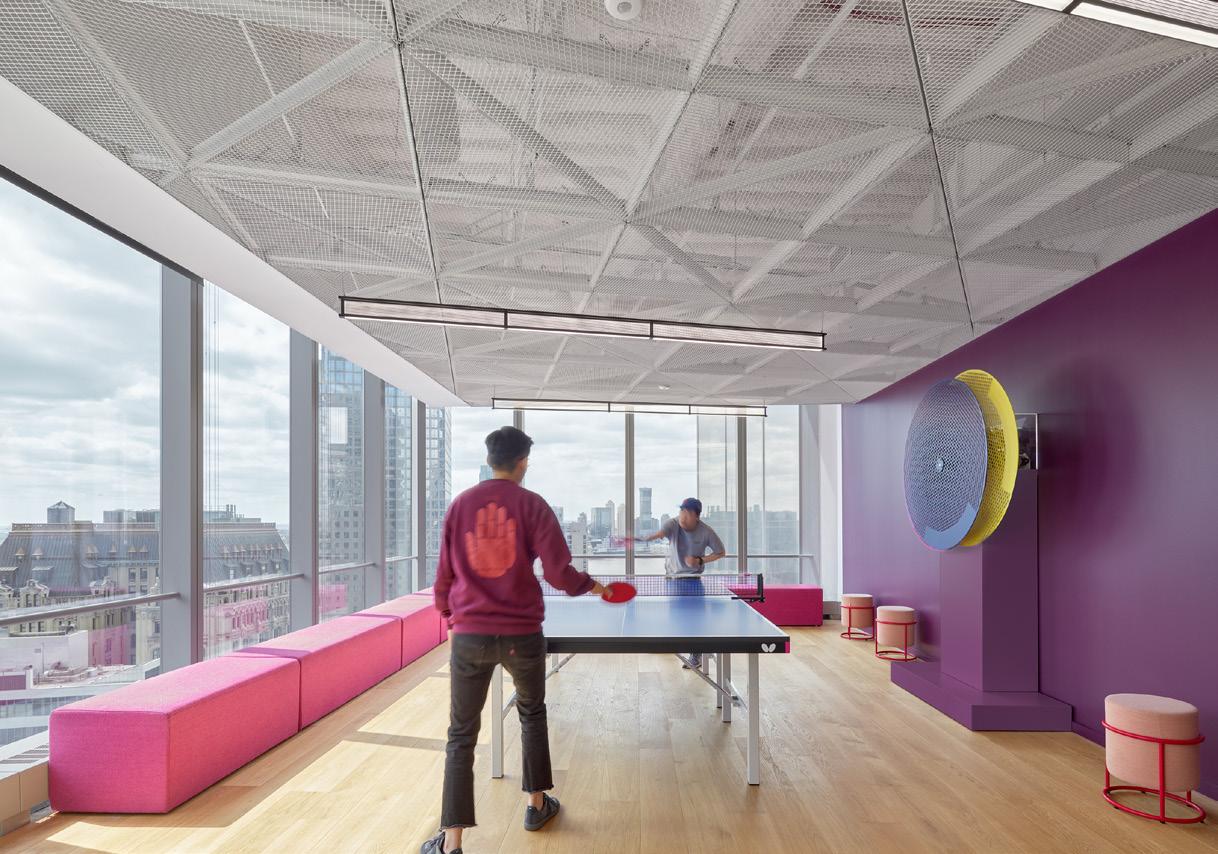
Spotify’s expanded New York office transforms a corporate workplace into a living, breathing expression of its brand, establishing a dynamic global benchmark where listening is everything.
In response to hyper-growth and the need to make room for 1,000+ hires, HOK expanded Spotify’s 4 World Trade Center office by adding two new floors. The refreshed and expanded workplace is flexible and dynamic to support rapid growth while also being colorful, playful and reflective of Spotify’s brand.
As a result of Spotify’s innovative “dynamic workplace” initiative, the office has its own flow decided by the people who work there and how they use it. Throughout 16 stories, the world of audio is unraveled and explored, creating a seamless look that’s immersive at every level, bringing to life Spotify’s core belief: listening is everything.
LOCATION
New York, New York
SIZE
55,000 sq. ft.
SERVICES
Interior Design
STATUS
Completed in 2022
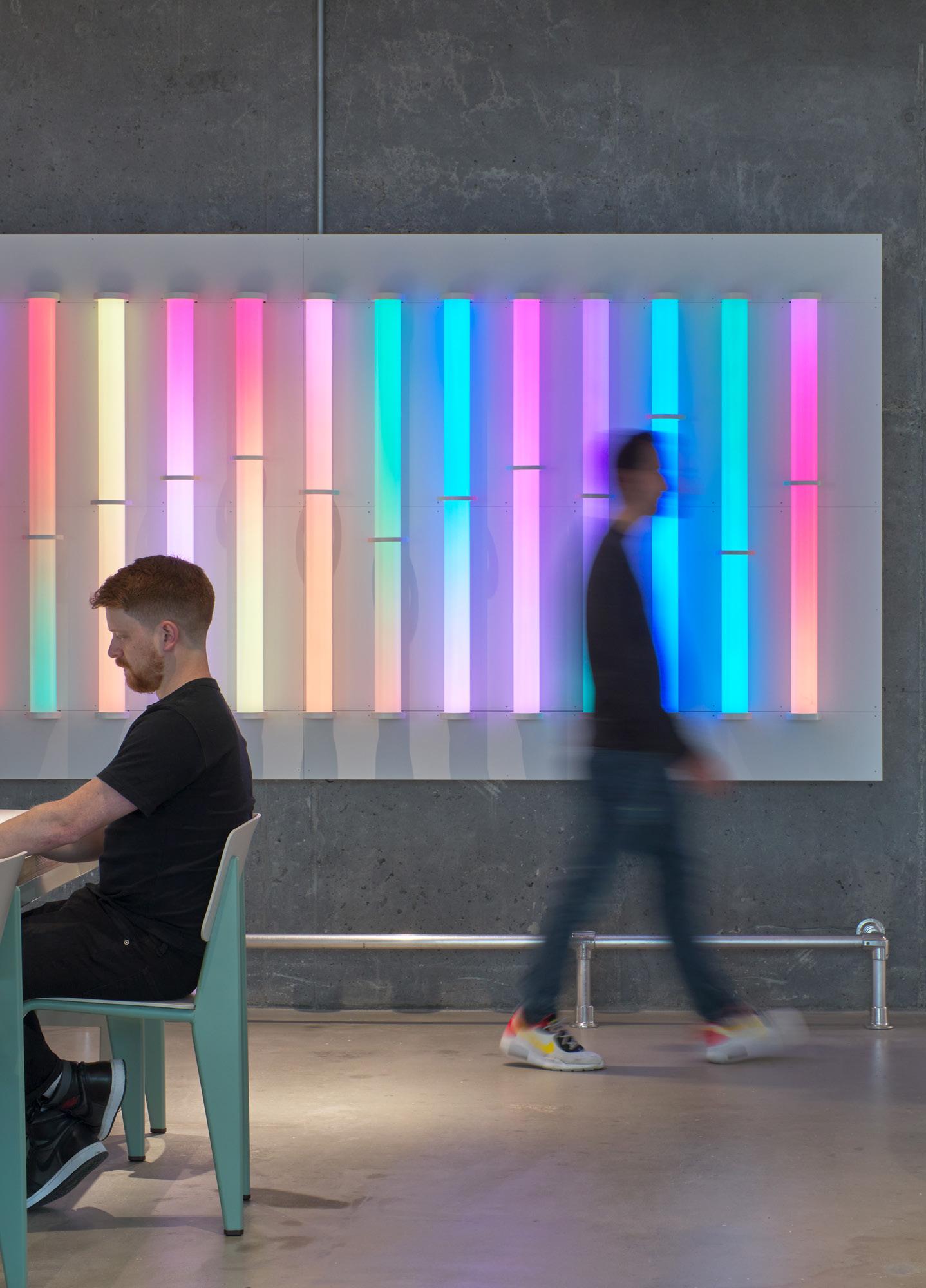
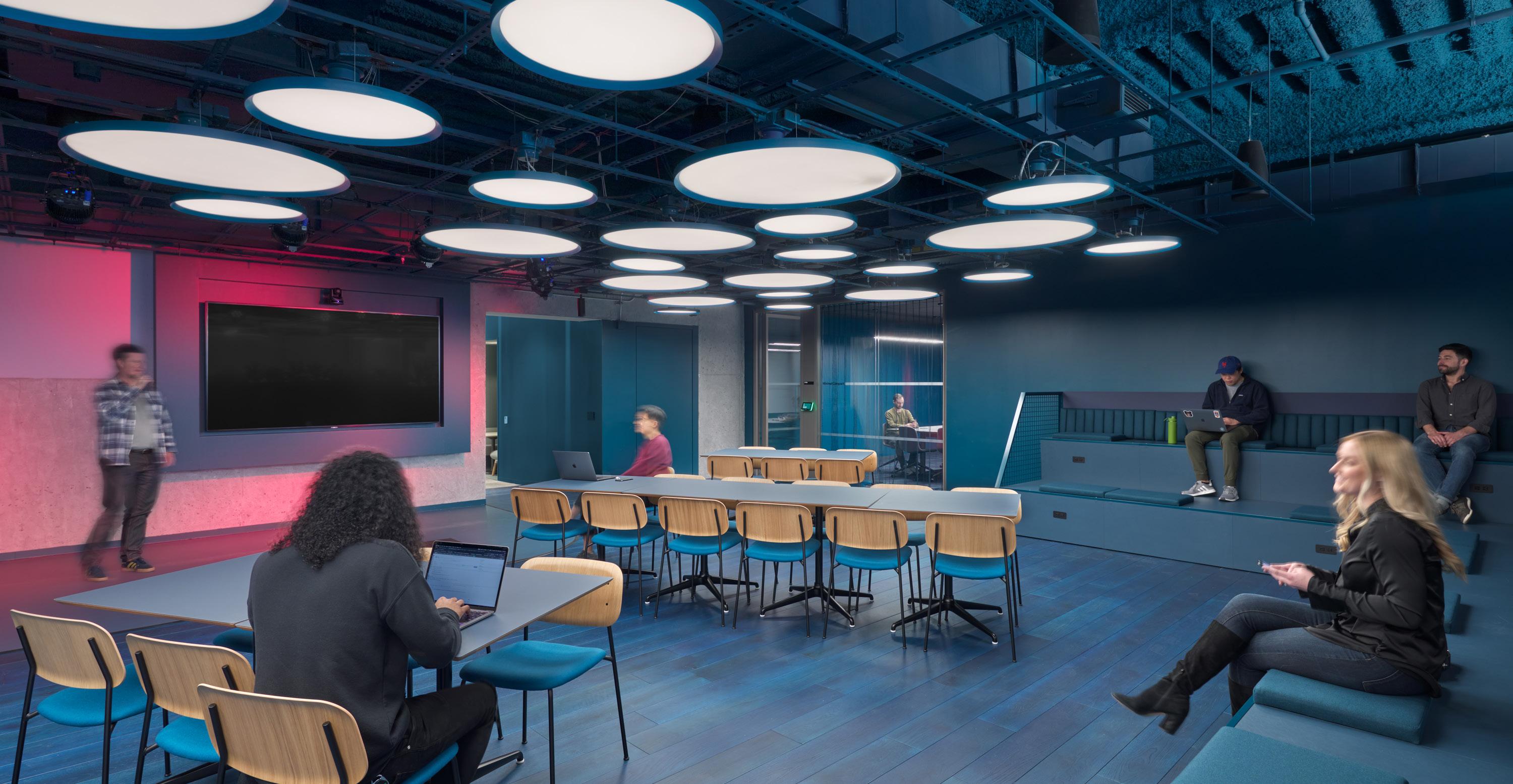
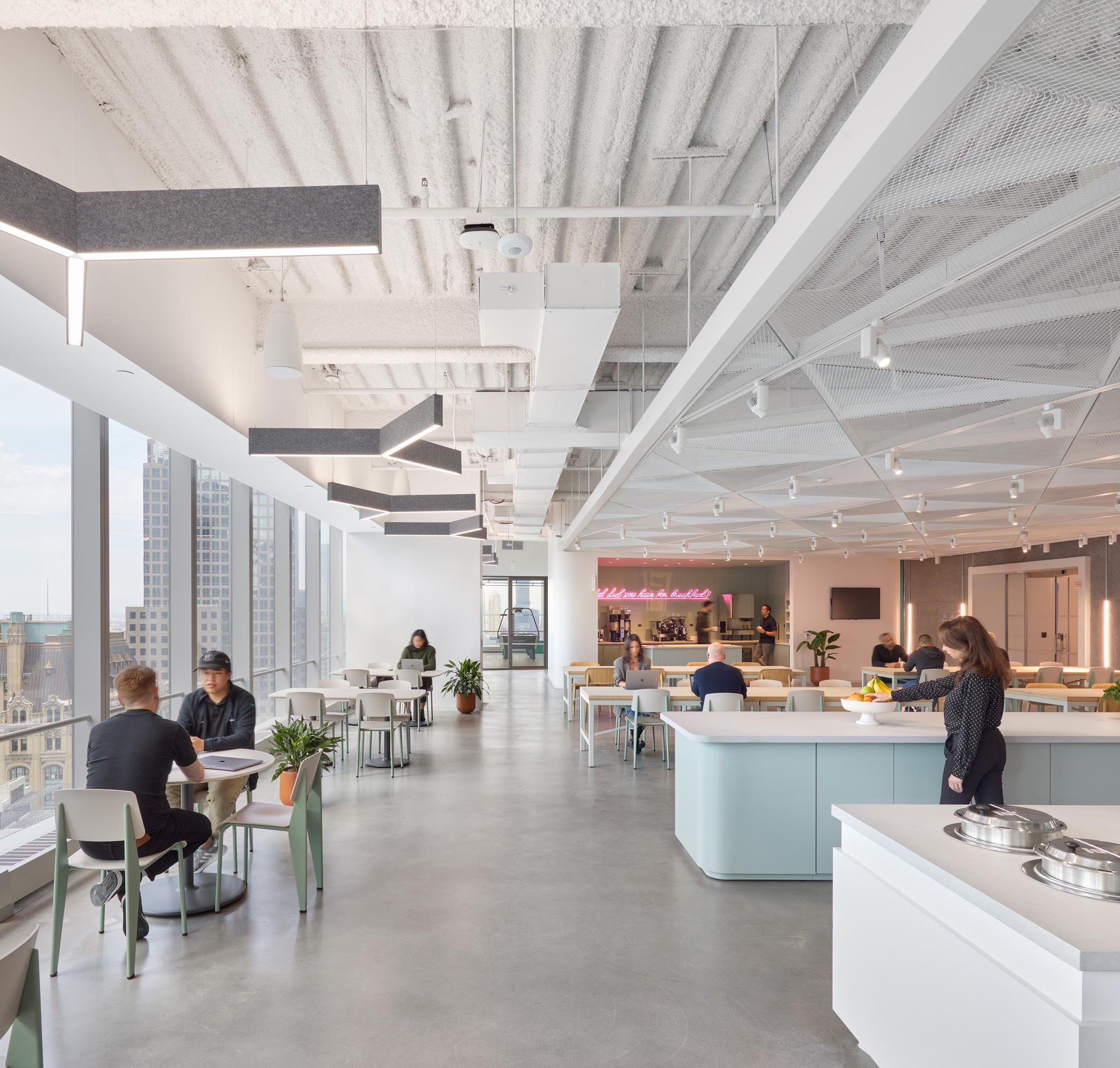
The heart of each floor is a large open “all hands commons” area that is inviting to guests as well as an energizing workspace for employees. The new space also features a collection of dynamic spaces, including coffee bars, grab-andgo food service, focus rooms, game rooms, multipurpose conferencing rooms and lounges. With areas dedicated to different styles of working and the different needs of their staff, there’s plenty of space to work and play.
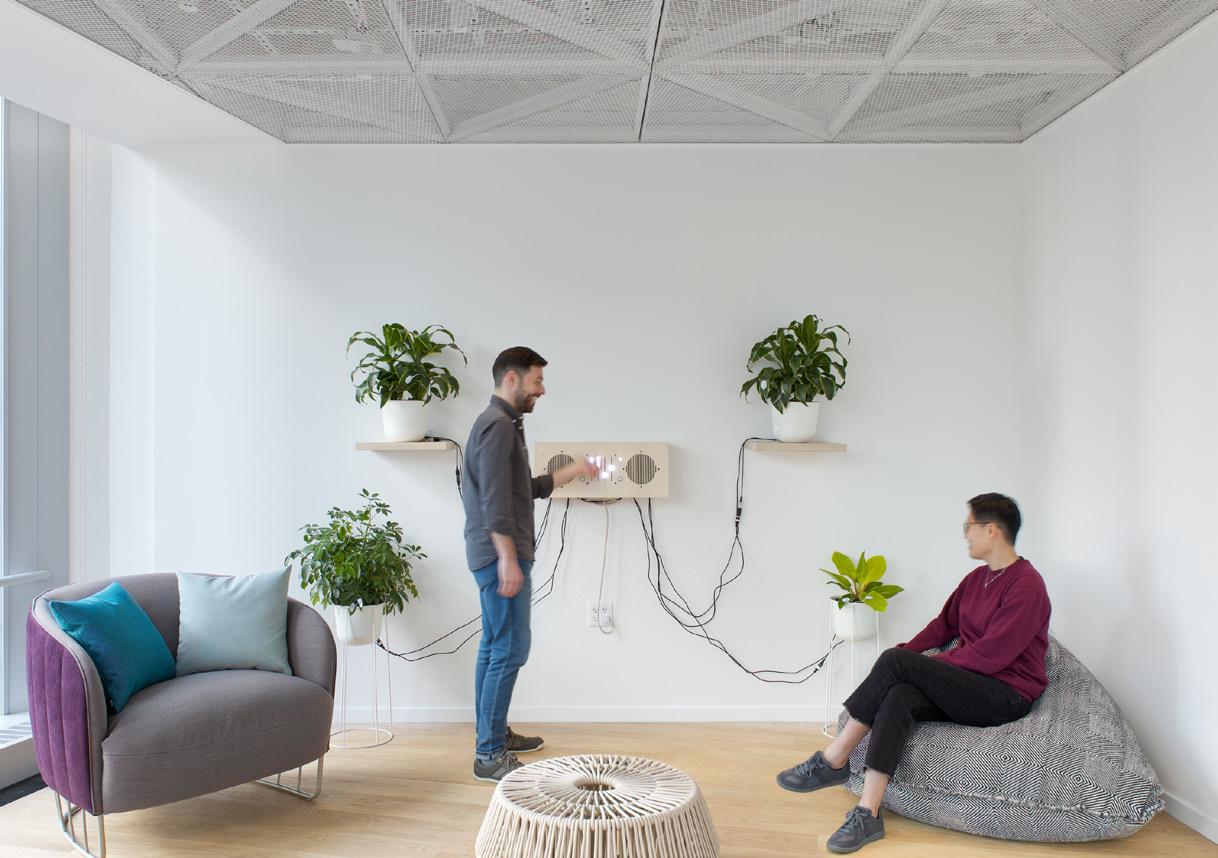
Refreshing and unexpected, every floor is a surprise. The artful curation of digital installations and physical artifacts reflects the core theme of shaping the future of audio technology. It is a clever physical expression of the brand and platform that celebrates artists and creativity.
The project transformed a white box office into a living, breathing expression of Spotify’s brand, establishing a benchmark for the entire global portfolio.
Bellevue, Washington
As The Trade Desk's long-term strategic design partner, HOK provides a flexible range of services—from developing global guidelines to executing local office refreshes—to create a consistent yet culturally unique workplace experience across their entire real estate portfolio.
HOK has a long-standing relationship with The Trade Desk, having collaborated on multiple office projects in California, Chicago, New York and Seattle, and also developing Global Office Design and Construction Guidelines. These guidelines ensure that all office spaces, regardless of size, maintain The Trade Desk's distinct "vibe" and align with their vision for a safe, engaging, positive, productive and welcoming workplace experience for employees and guests .
LOCATION
Multiple Locations in California, Chicago, New York, Seattle
SIZE
Varies
SERVICES
Varies: Architecture, ESG Consulting, Interiors, Sustainable
Design
STATUS
Varies
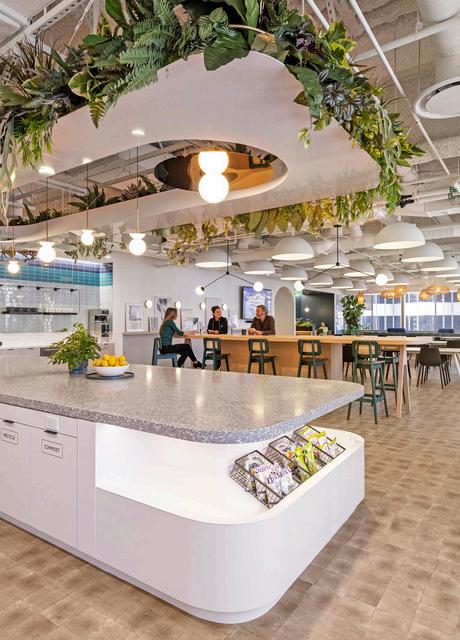
San Francisco HOK designed The Trade Desk's 23,000 sq. ft. San Francisco office to reflect the company's innovative roots and the local Bay Area culture. The design prioritizes employee well-being with large windows, natural light, biophilic elements and plants. Approximately one-fourth of the office space is dedicated to a social hub.
Chicago The 25,000-sq.-ft. Chicago office has a hospitable, distinctly Midwest feel, accommodating over 160 people. The office is centered around a social and entertaining space, featuring a 35-foot island and long farm tables. It incorporates organic, natural and industrial materials, along with art pieces from Chicago-based artists. Employee health and wellness are emphasized through abundant daylight and sit-stand desks.
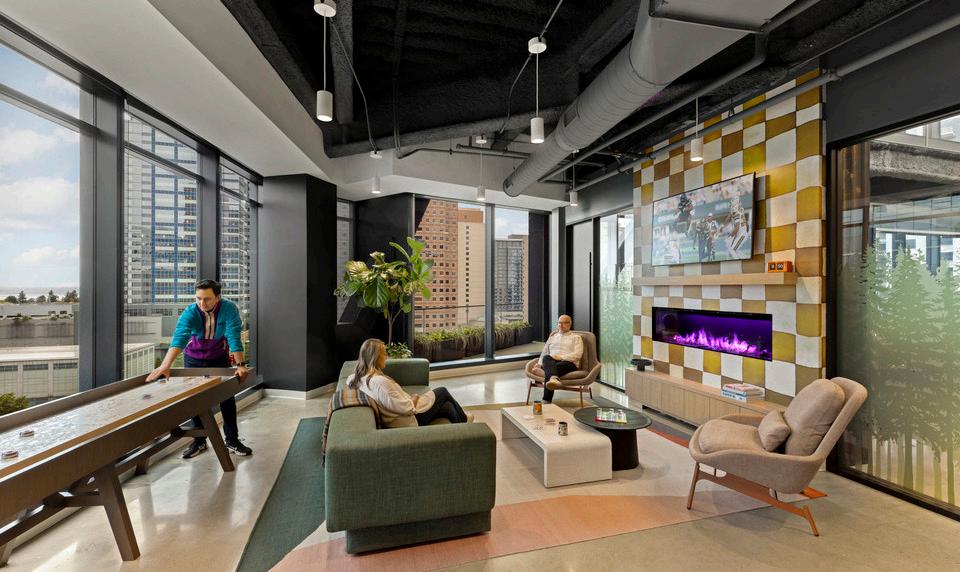
Bellevue The new office space for The Trade Desk in Bellevue, Washington draws inspiration from the concepts of urban and natural environments, capturing the essence of the local team’s personality and the city’s unique character. As a repeat client with global locations, this project follows a successful kit-of-parts approach while allowing for customization to reflect the specific environment.
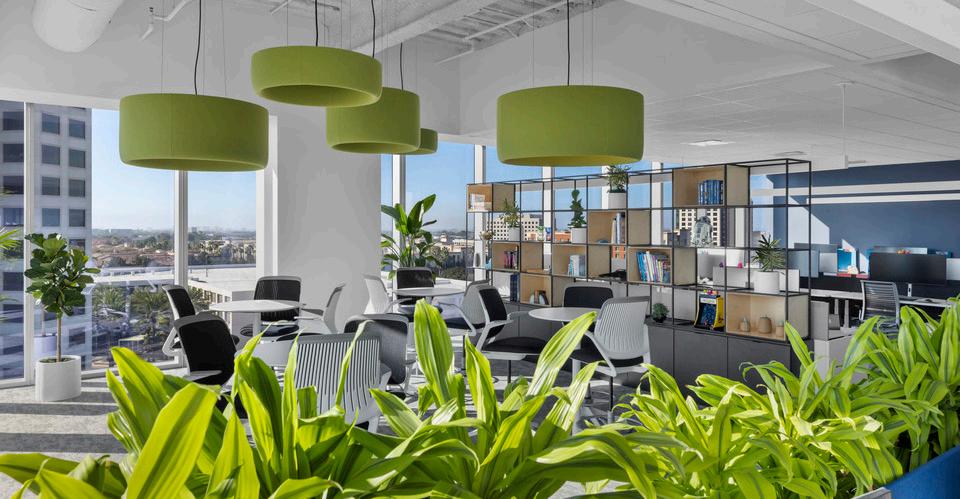
Offices that champion employee well-being, celebrate local culture and express a consistent, powerful brand identity.
projects spanning the United States in 2025
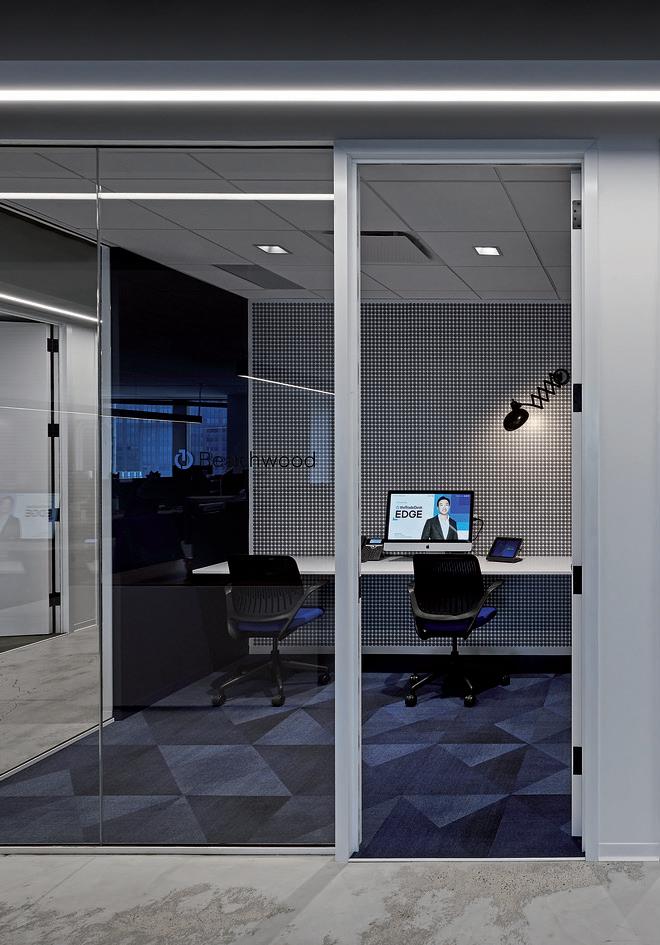
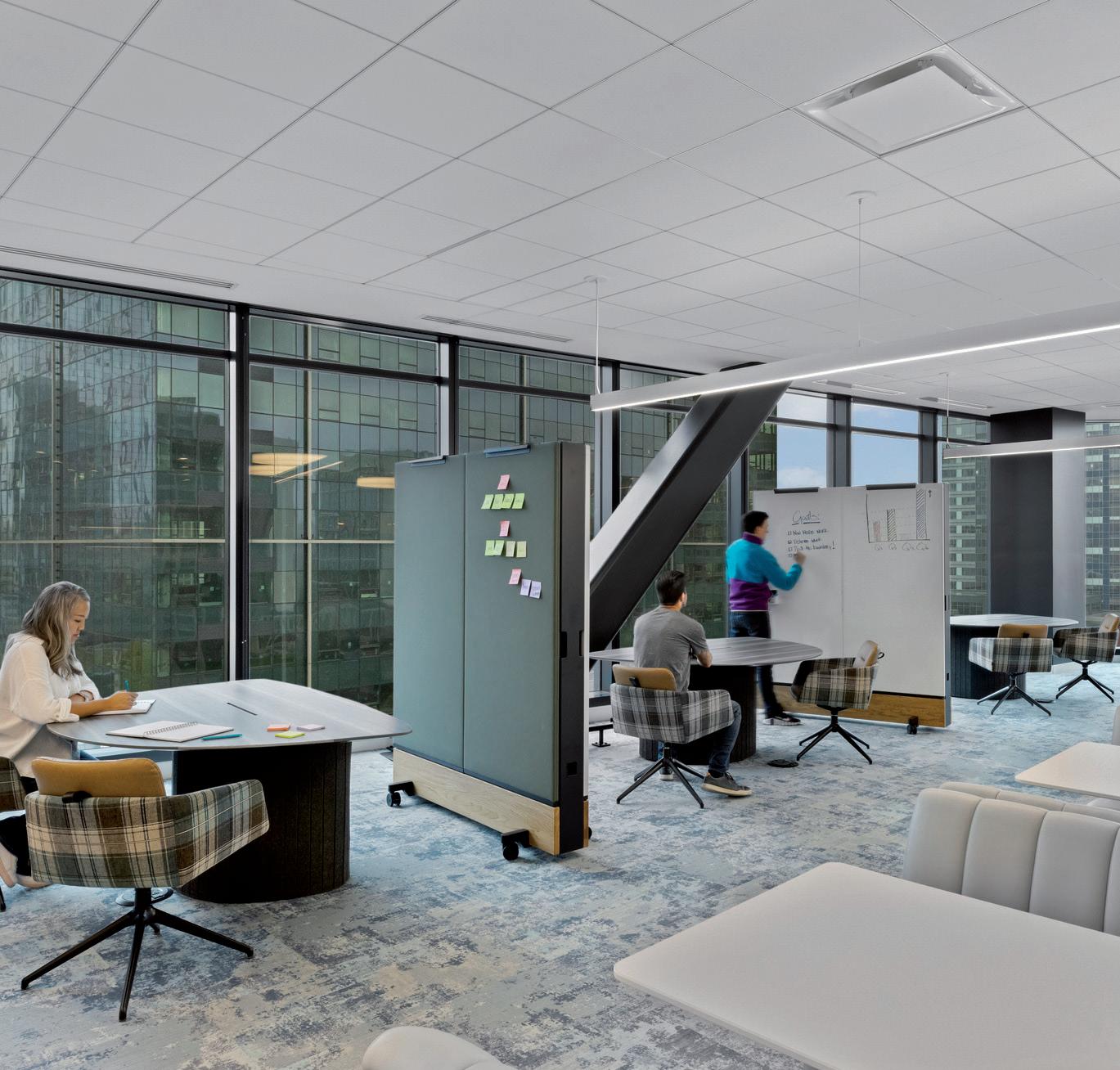
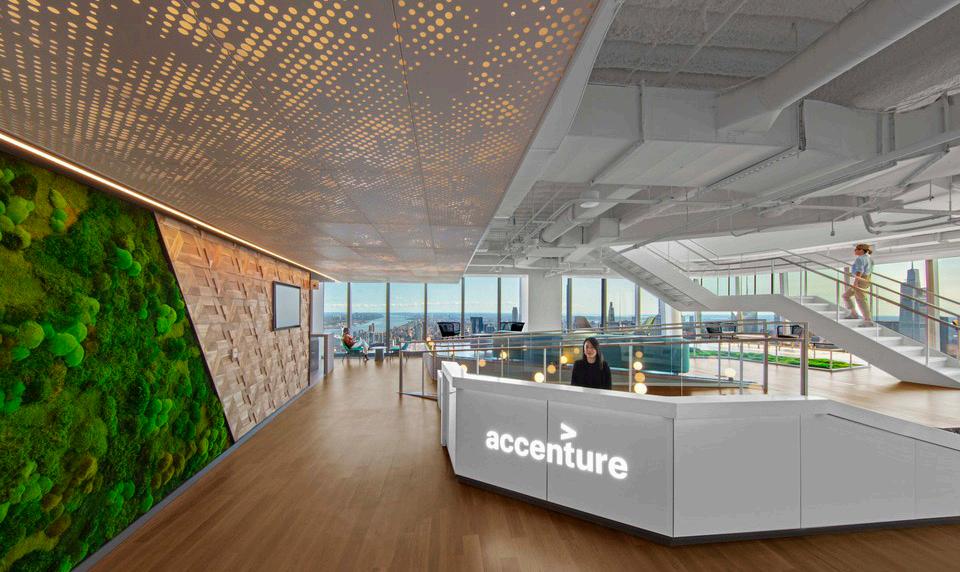
The Innovation Hub supports Accenture’s evolving work culture by enabling flexibility and fostering creativity, innovation and collaboration.
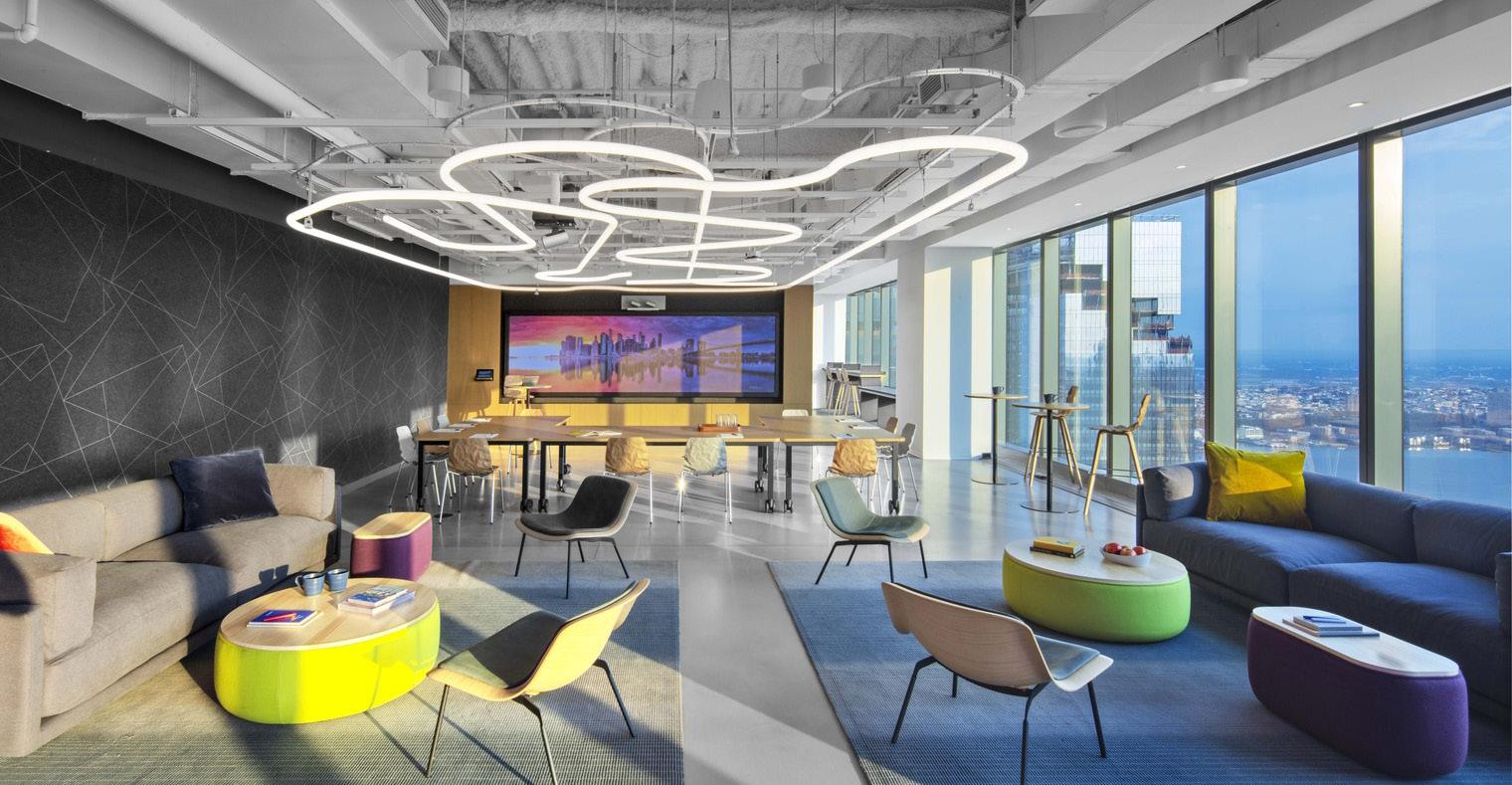
Accenture’s Innovation Hub at One Manhattan West brings people together in a flexible environment that fosters collaboration and creativity. The design responds to the need for an adaptable workplace that supports dynamic teamwork, employee health, client engagement and sustainability.
Spanning the top nine floors of the 67-story tower, the Innovation Hub offers a variety of settings for up to 5,000 people. Instead of assigning desks, the workplace provides 1,200 work seats and 2,500 total seats across multiple “neighborhoods,” allowing employees to choose between private and communal areas based on their needs.
LOCATION
New York, New York
SIZE
300,000 sq. ft.
SERVICES
Consulting, ESG Consulting, Experience Design, Interiors, Sustainable Design
STATUS
Completed in 2021
SUSTAINABILITY
LEED Gold, WELL v2 Platinum
RECOGNITION
One of North America’s largest WELL Platinum-Certified spaces
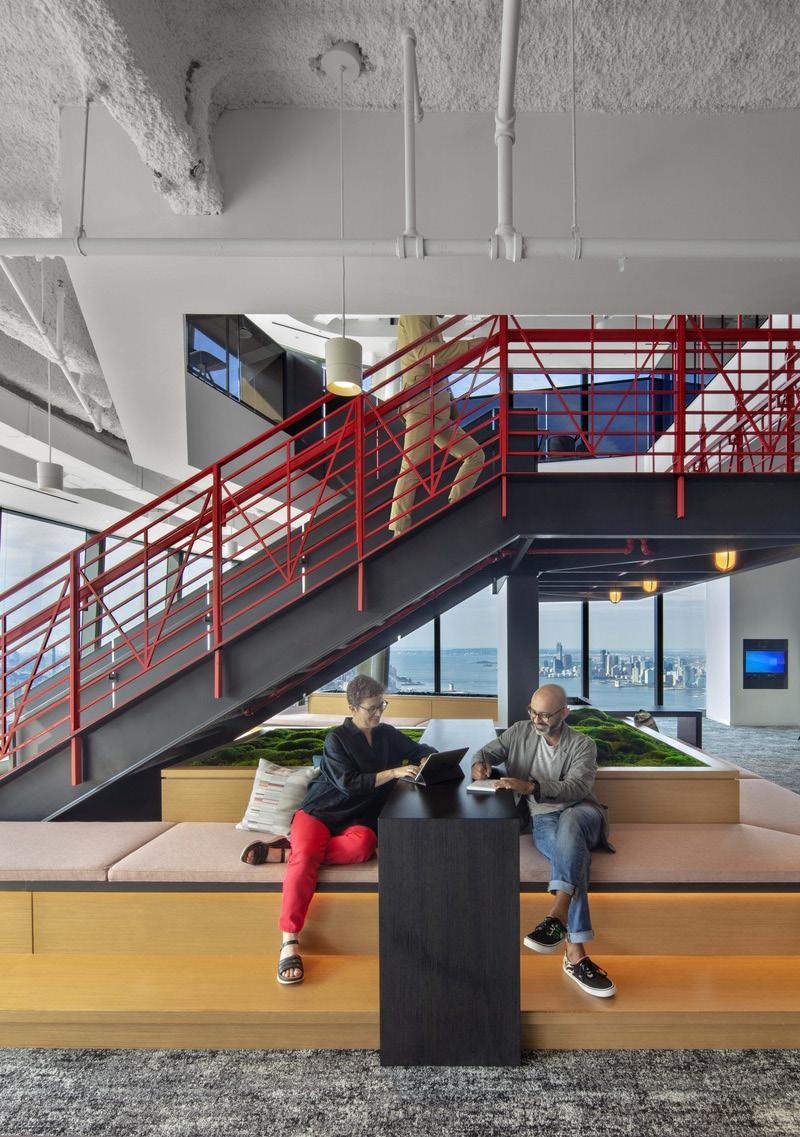
Each open-plan neighborhood has a distinct identity, with calm, well-lit zones for focused work and active amenity areas that encourage interaction. Raised pavilions at arrival points help separate workspaces from communal zones, while coffee stations near elevators foster informal connections. Eight interconnected stairways link the floors, promoting movement and spontaneous encounters.
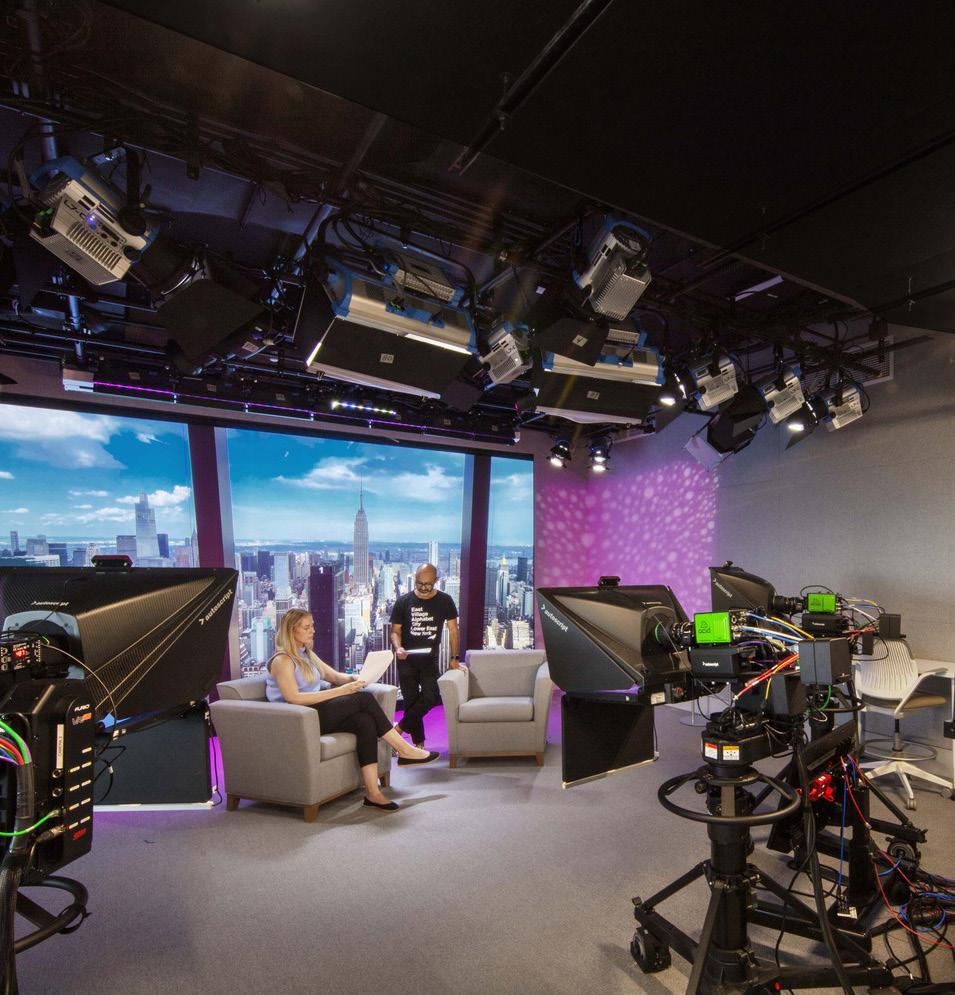
Specialized spaces include a client briefing room that doubles as a yoga studio, a broadcast studio, a VR lab and tech-enabled “hives” that showcase Accenture’s work in 5G, smart homes and cloud computing. Pop-up demo zones and “rumble rooms” for agile team sessions further support innovation.
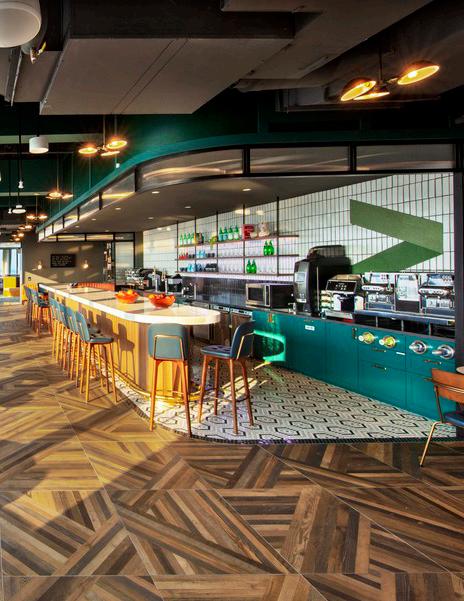
A cohesive palette of polished concrete, black metal, light wood and brick reflects New York’s industrial heritage in a modern interior. The city’s subway map inspired neon light fixtures throughout the space, while digital signage reinforces Accenture’s brand identity. An art program featuring commissioned works by local and national artists adds cultural depth.
"This
project exemplifies how a forward-thinking client like Accenture and an integrated design process can enhance the intersectionality between sustainability, health and wellness, and inclusivity."
— Tom Polucci, HOK Director of Interiors
BY THE NUMBERS
2,500 total seats across multiple neighborhoods
1,200 work seats
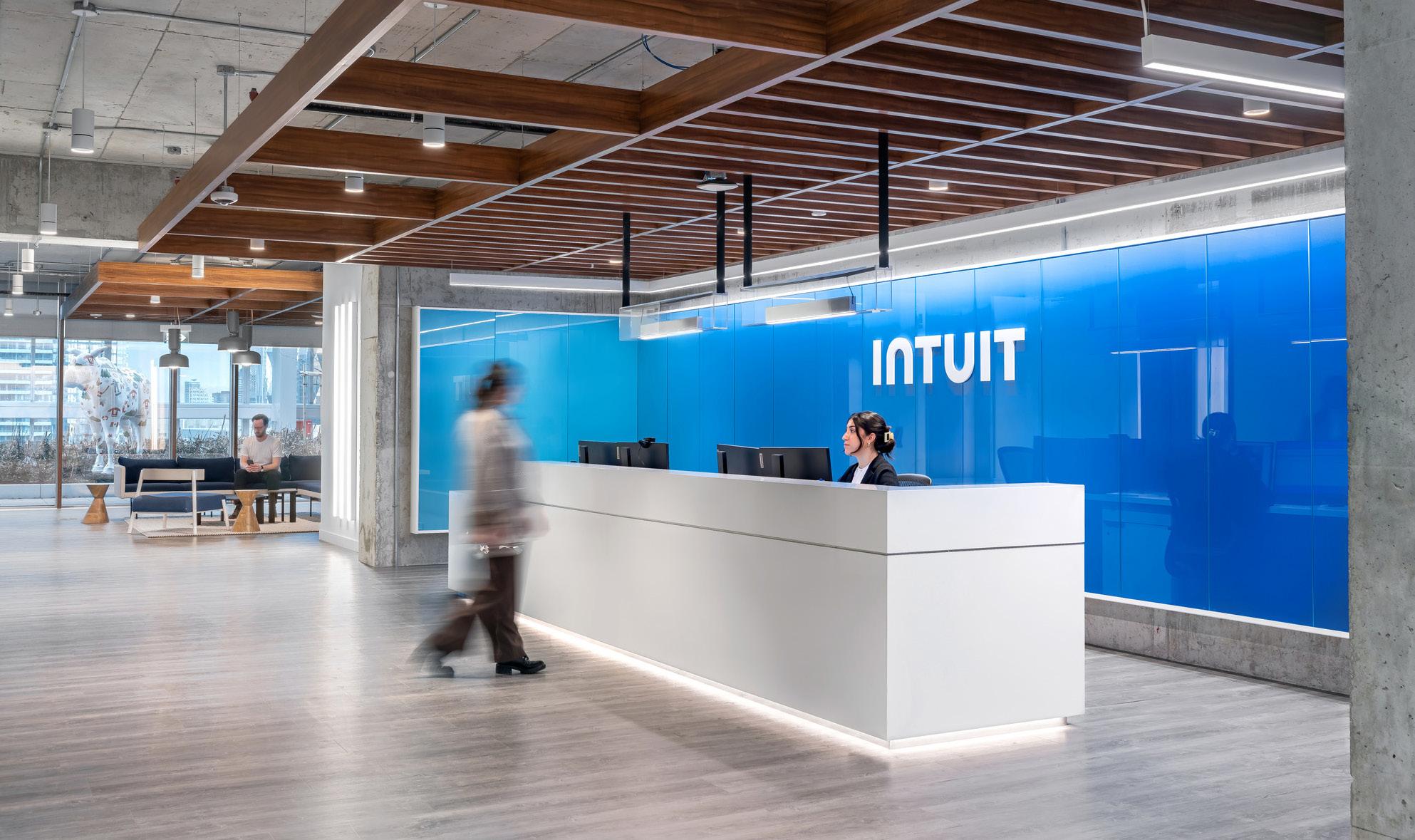
Intuit's new Canadian Headquarters launches their global "workplace of the future" standards, supporting a hybrid culture through a design that blends high-tech innovation with local Canadian heritage.
Intuit’s Canadian Headquarters is located in downtown Toronto’s The Well, a mixed-use development. The four-floor project marks the first integration of Intuit’s Workplace and Workforce of the Future standards, integrating leading-edge technology throughout the space.
Designed to support Intuit’s forward-thinking hybrid work culture, the headquarters seamlessly blends innovation with a rich tapestry of global and local Canadian design elements. The space contributes to talent attraction and retention while fostering meaningful relationships with employees, customers and the broader community.
LOCATION
Toronto, Ontario
SIZE
116,000 sq. ft.
SERVICES
ESG Consulting, Experience
Design, Interiors, Sustainable Design
STATUS
Completed in 2023
SUSTAINABILITY
WELL Platinum
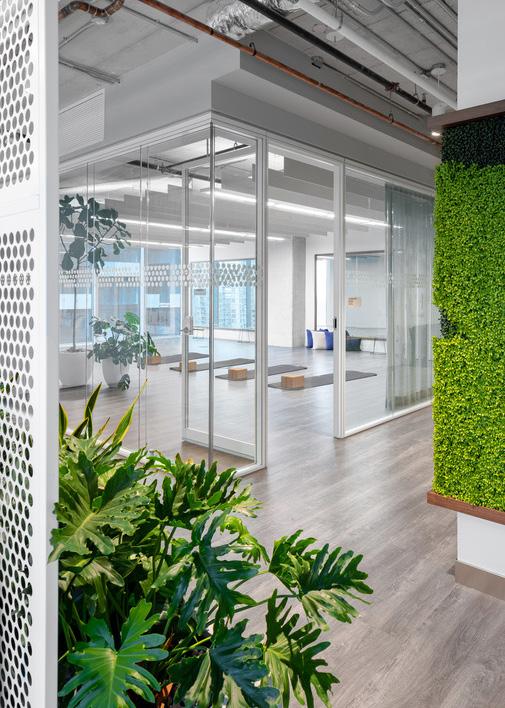
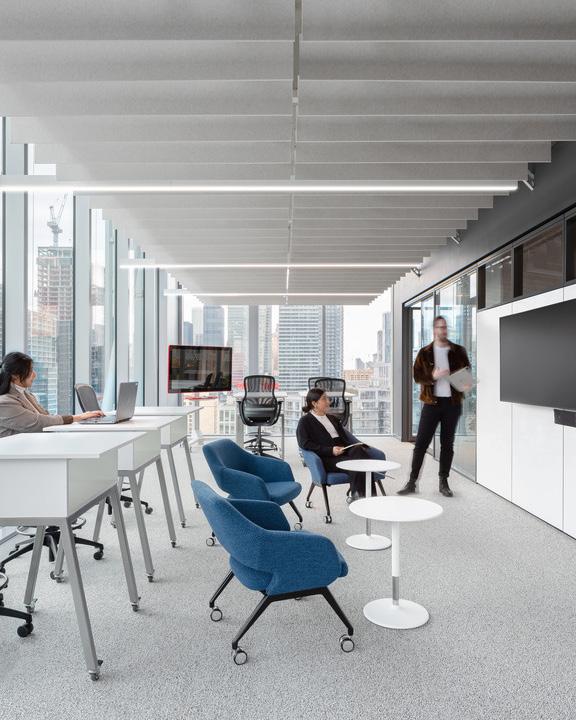
The high-tech workspace includes diverse neighborhoods with quiet focus areas and open collaboration spaces. Enclosed project rooms offer flexibility for long-term team initiatives, while a library zone provides a quiet work environment. Reflection and meditation areas cater to mental and spiritual well-being. Social hubs like the outdoor terrace and coffee stations promote employee wellness and interaction.
A shared community floor is paired with the building’s expansive 19th floor outdoor terrace. This collaboration-focused floor provides staff with a host of amenities including a reception area, full-service coffee bar, grab and go market, tech bar, gaming room, group activity room and expandable conference facilities.
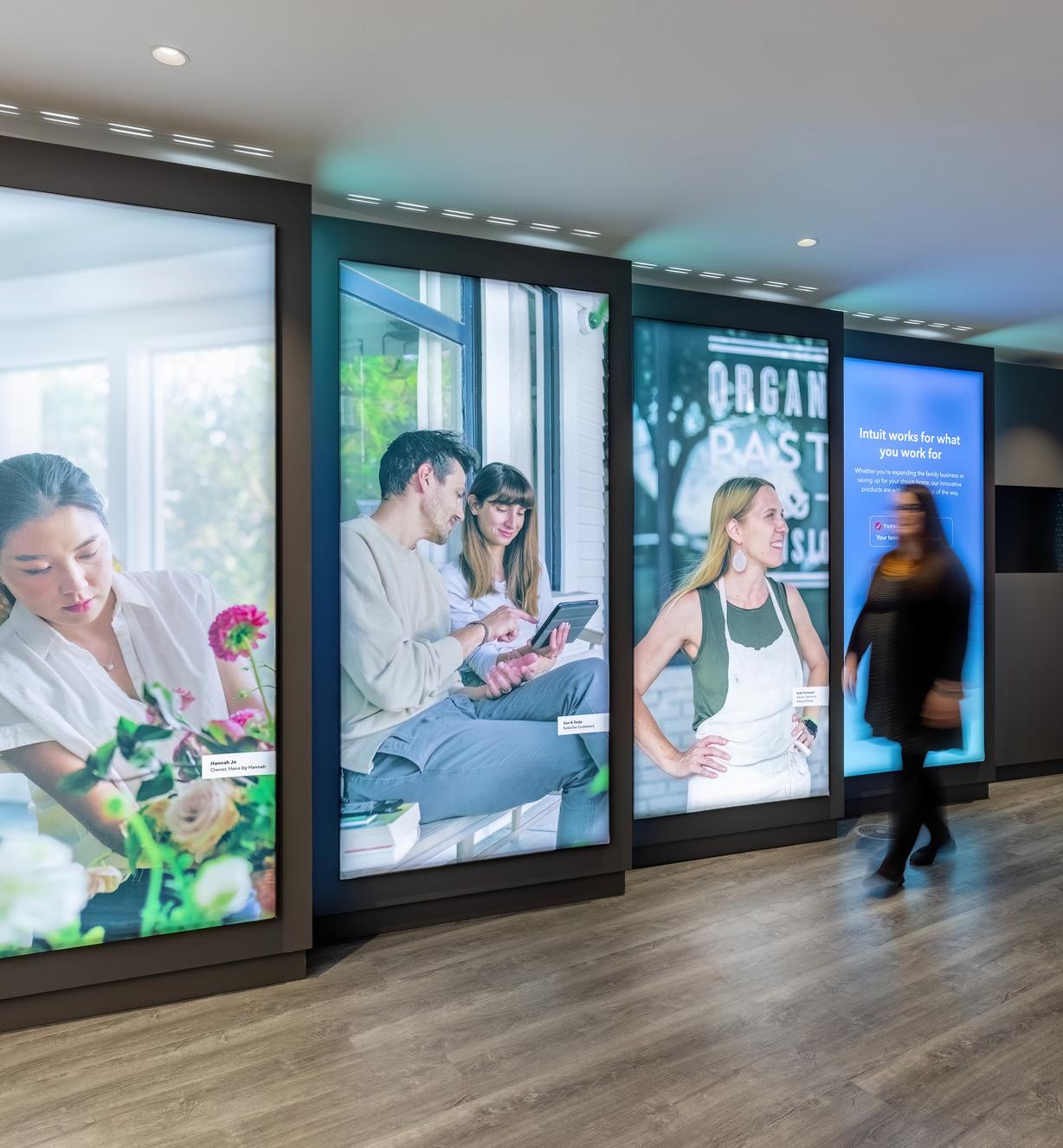
HOK’s Experience Design group created the graphics, wayfinding and space names, with the design drawing inspiration from Ontario’s rich cultural history and Intuit’s diverse customer base. A “brand gallery” features static and digital panels that showcase Intuit’s story and customer profiles. Custom glass film highlights local Toronto landmarks and parks, while Indigenous stories are depicted through custom walls and graphics. Biophilic elements include stylized Canadian trees, plants and leaf imagery in the branding.
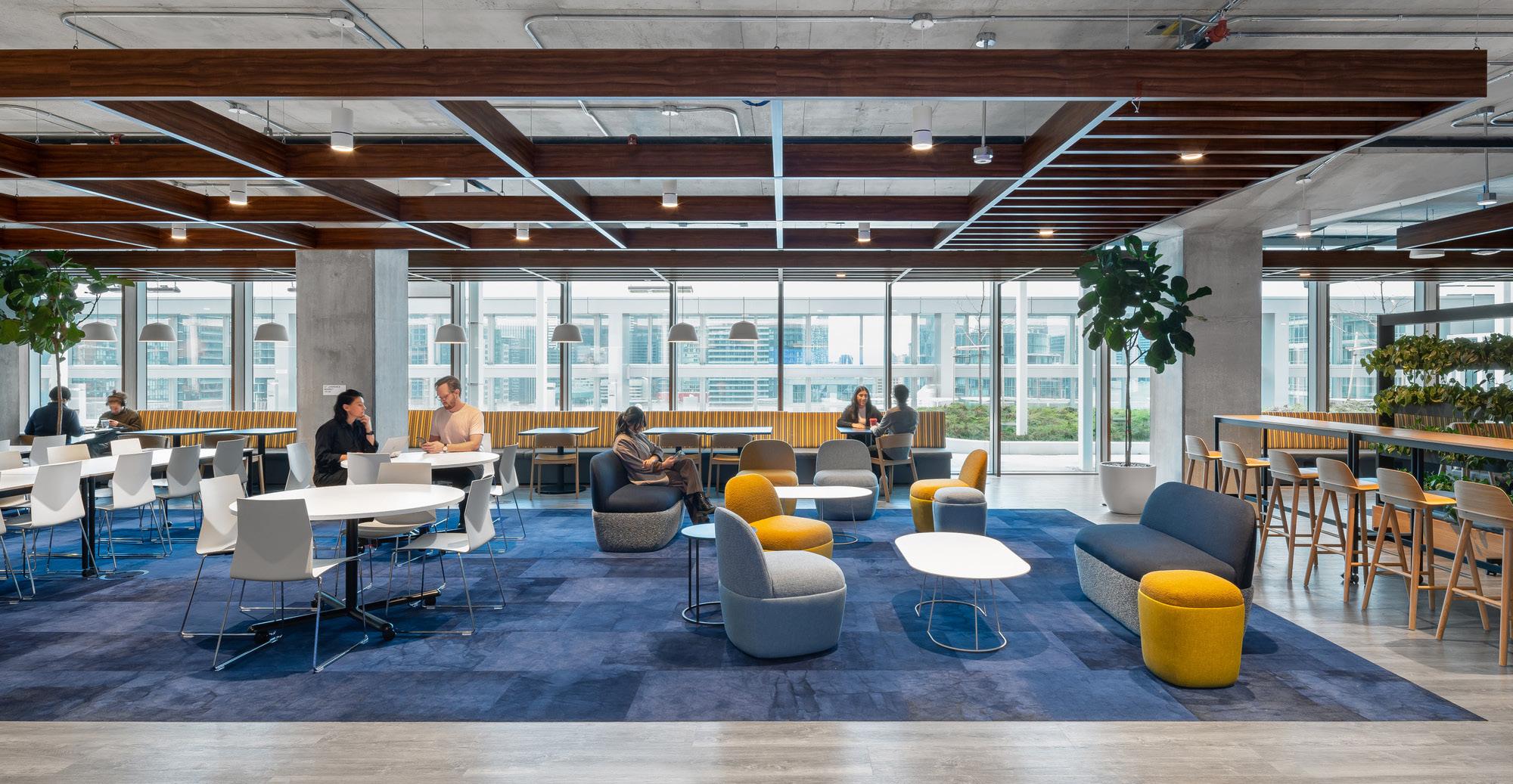
A diverse, tech-enabled workplace that celebrates local culture and creates an optimal environment for all.
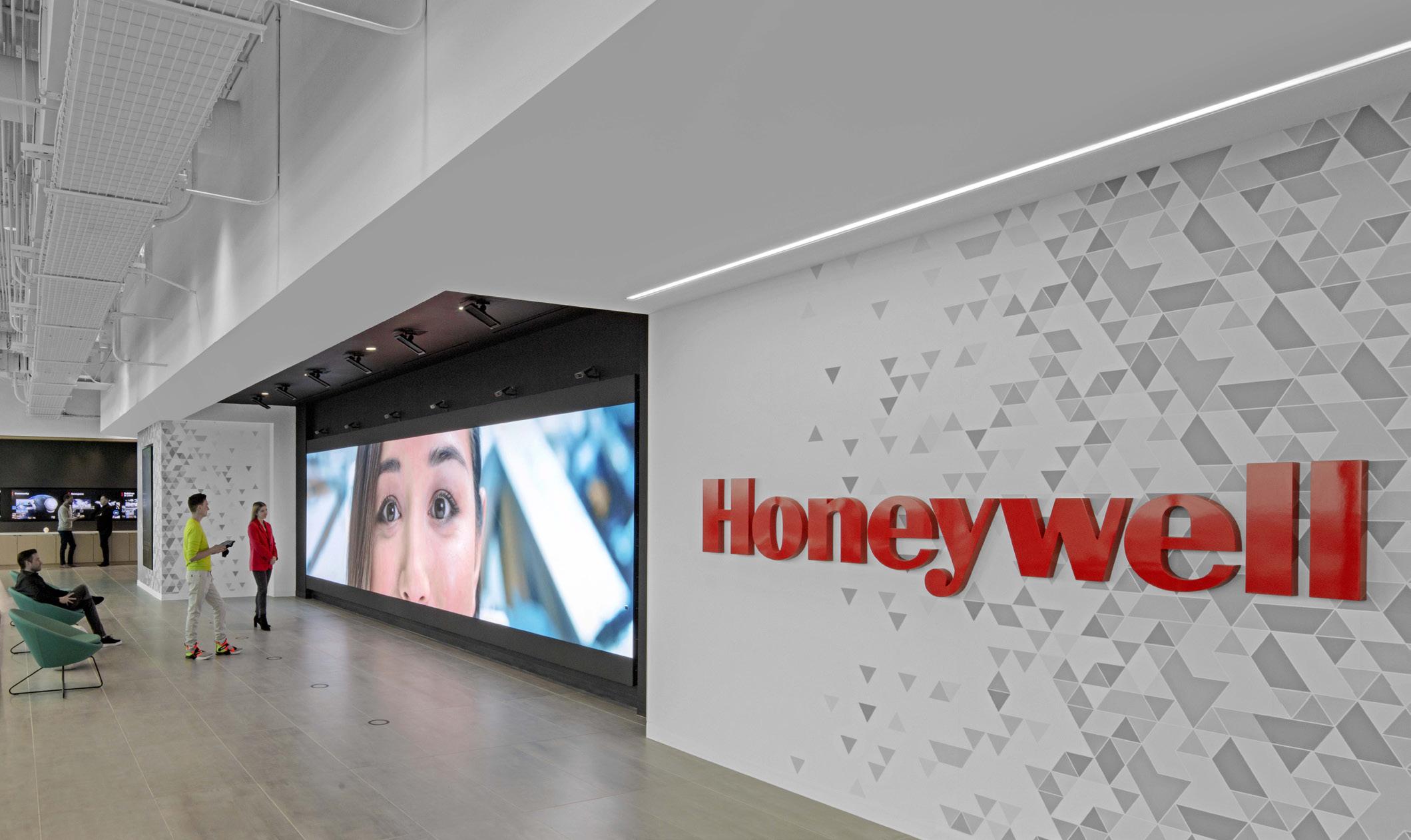
A living lab focused on neurodiversity and wellness, Honeywell’s new global headquarters supports its ongoing transformation into a leading technology company while showcasing its vast product catalogue.
When the Fortune 500 company relocated its headquarters from the suburbs of New Jersey to Uptown Charlotte, it invested in a futuristic, amenity-filled workplace that would drive innovation and attract top talent. The 10 stories of office space can accommodate up to 1,200 Honeywell employees.
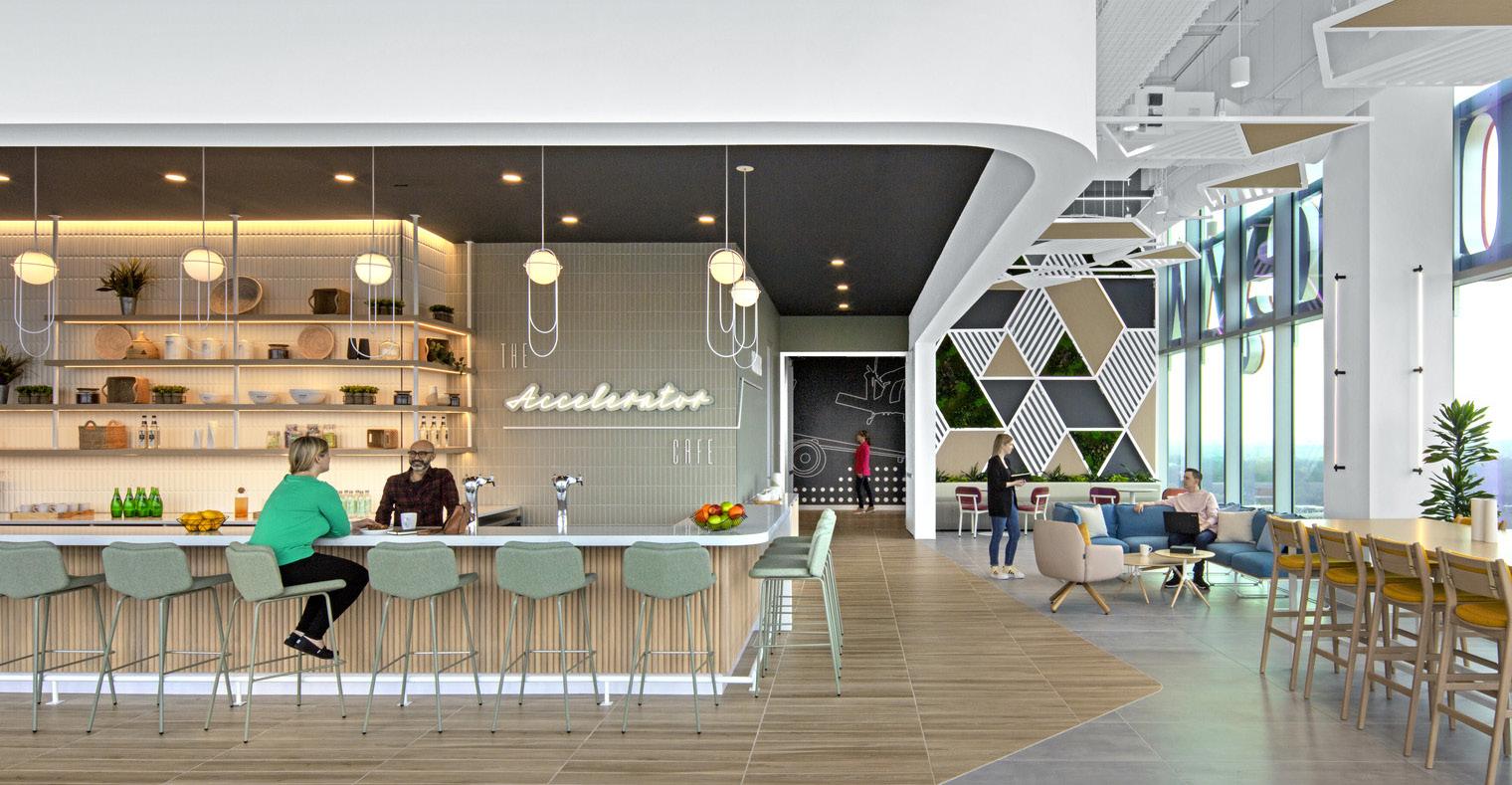
The team completed the space program before the pandemic. It included plenty of flexibility to accommodate the variety of choices and amenities people expect in today’s workplace. Office floors have open plans with dedicated team zones and unassigned seating. This creates neighborhoods for teams to operate from while giving individuals autonomy and flexibility to determine how and where to work.
LOCATION
Charlotte, North Carolina
SIZE
200,000 sq. ft.
SERVICES
Interior Design, Experience
Design, Structural Engineering
STATUS
Completed in 2021
SUSTAINABILITY
LEED Gold Certification
RECOGNITION
Finalist in Fast Company's 2023
Innovation by Design Awards
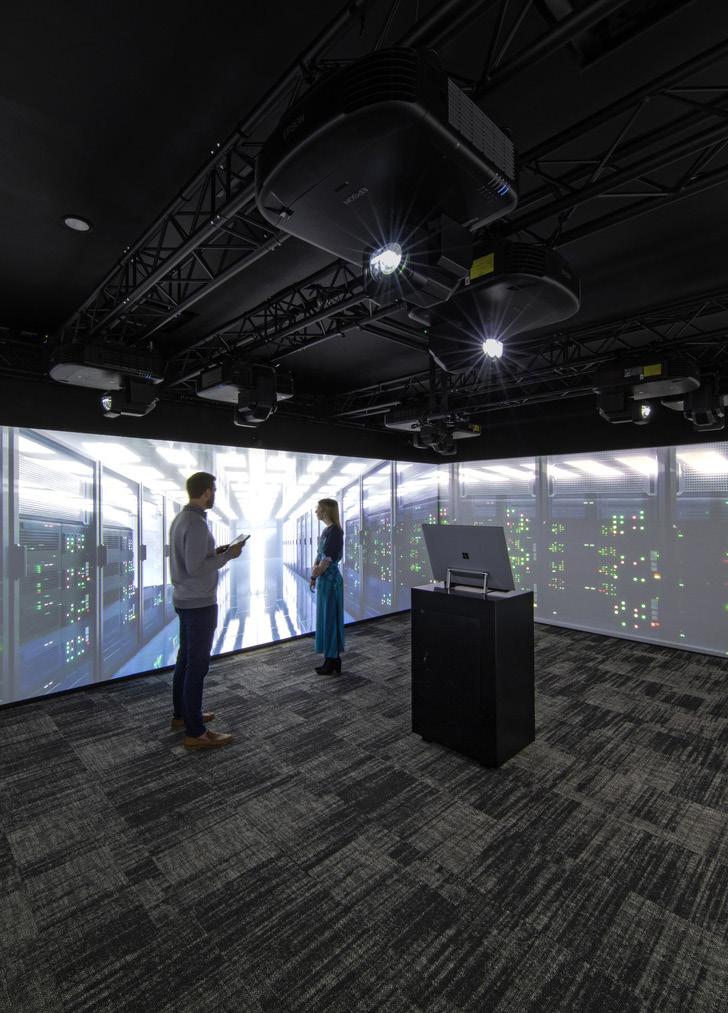
The Customer Experience Center (CXC), also on the 23rd floor, showcases Honeywell’s products and technologies in an interactive, hands-on space. Here, visual communication and experiential technologies fuse to create a fully immersive brand experience.
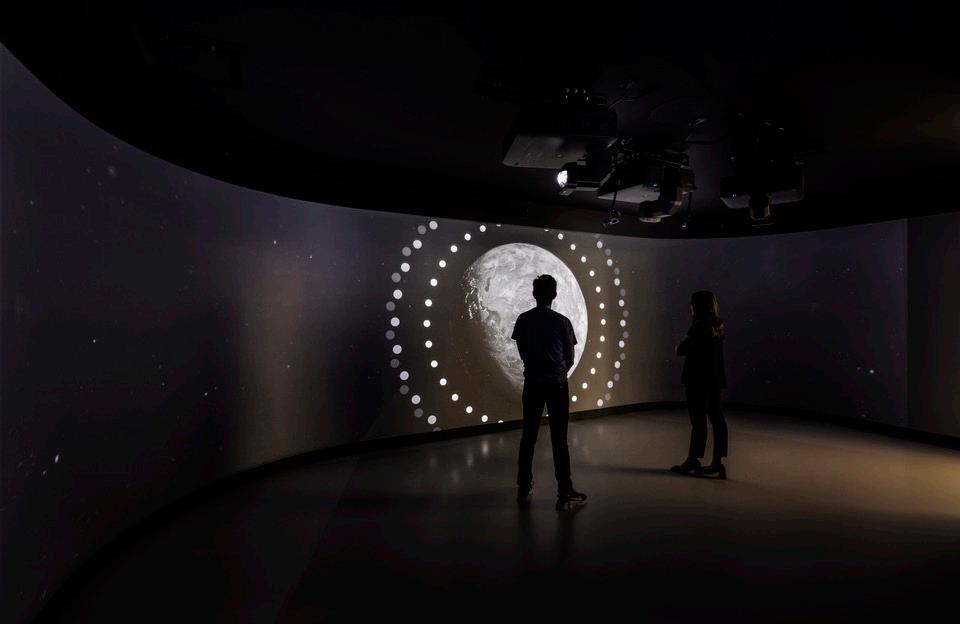
HOK’s Experience Design team led a journey mapping exercise that identified the CXC’s primary visitors and anticipated their movement throughout the space. Through this mapping, the design team identified branding, graphics, wayfinding and immersive experiences to incorporate along each user’s path of travel. An integral part of this interactive journey is the Immersion Room (below), which provides a customizable audiovisual experience with imagery on all four walls.
"What we wanted to do was create an environment that was both sustainable and a positive experience for our employees."
— Brian Norris, Honeywell Director of Global Real Estate
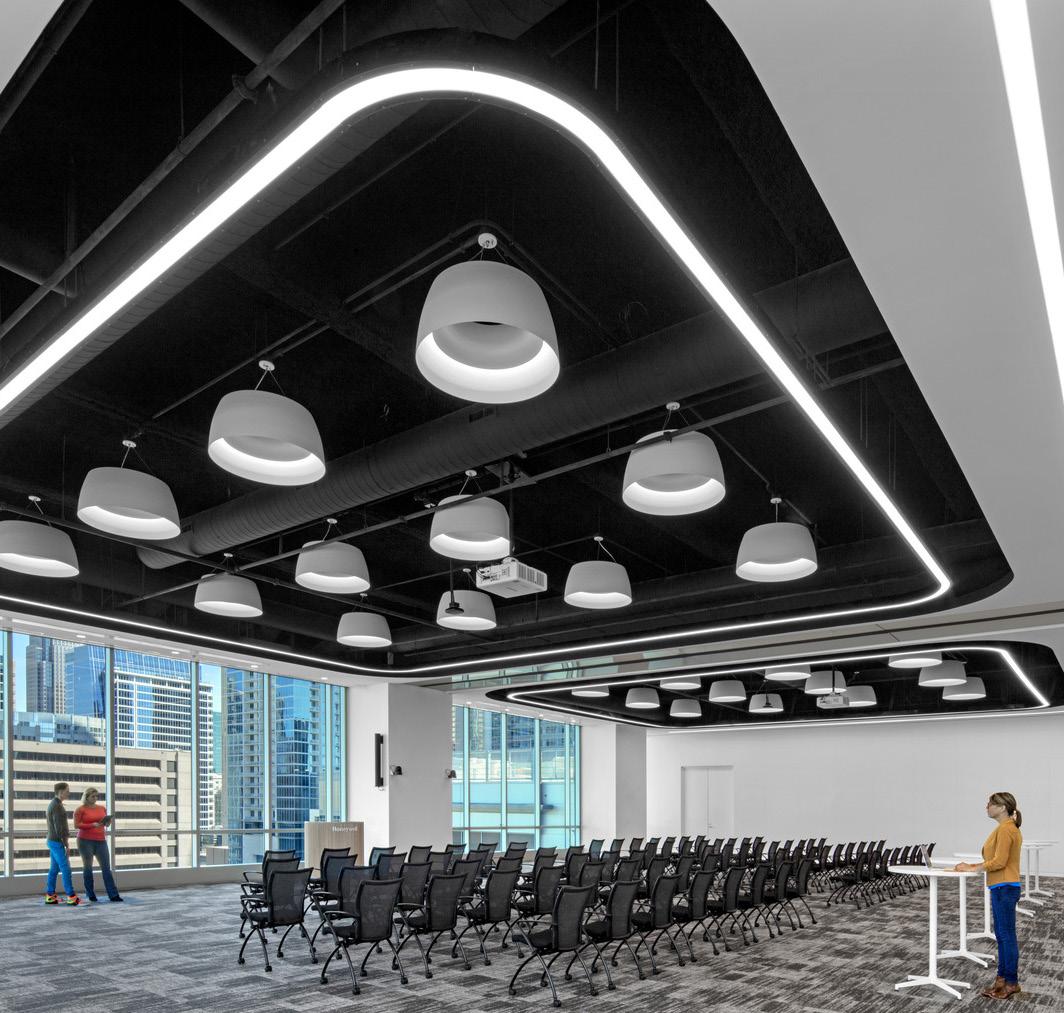
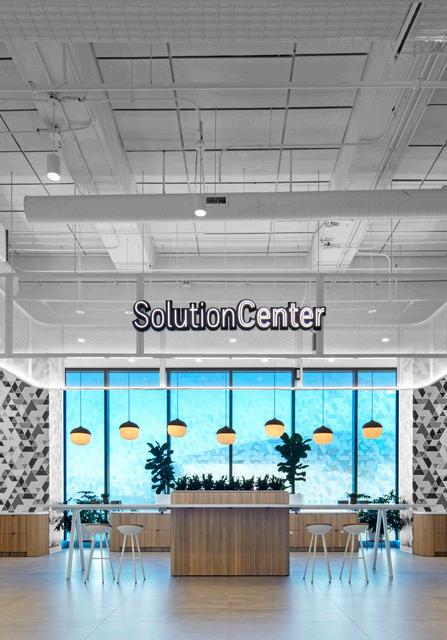
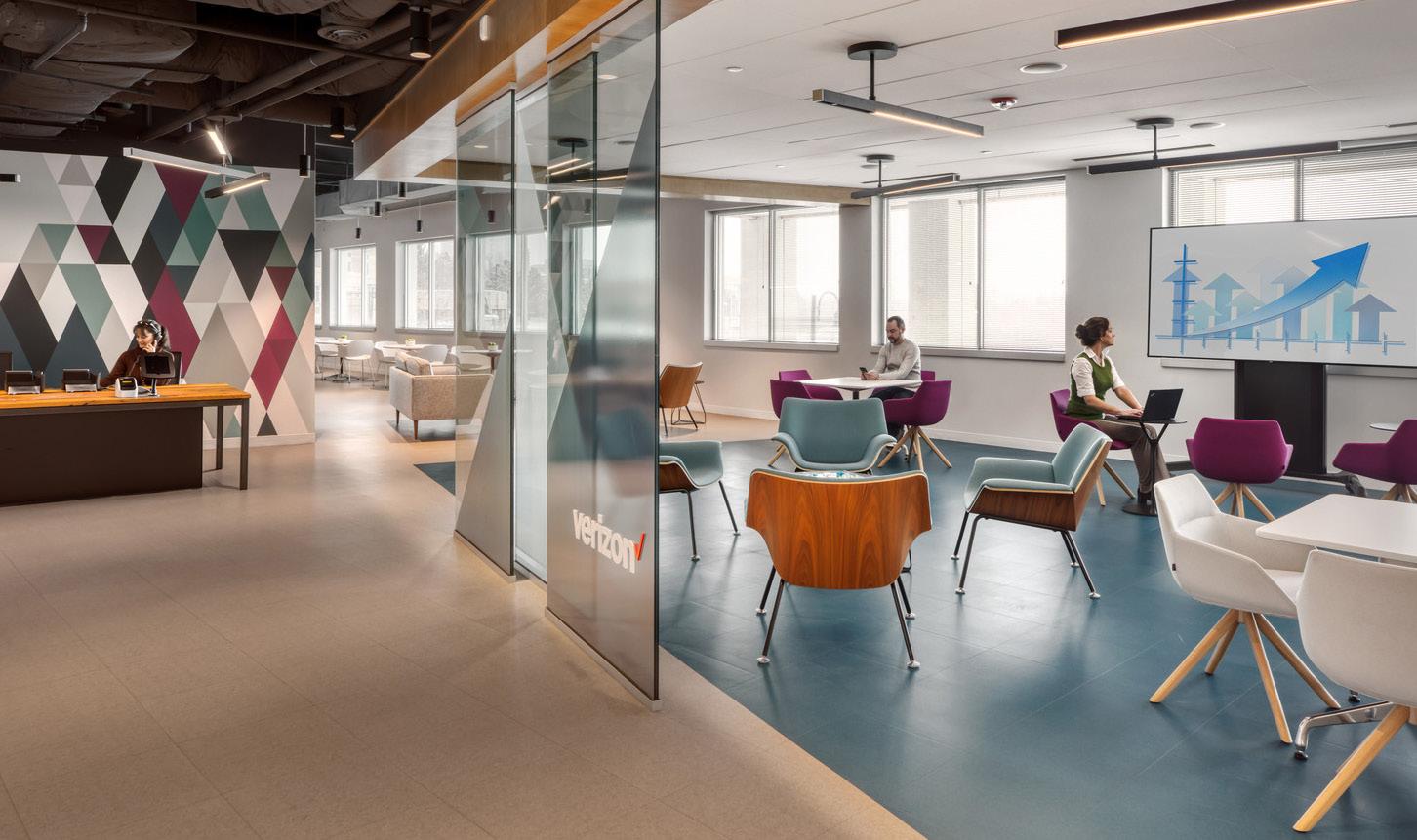
HOK has partnered with Verizon on numerous projects across the United States, implementing innovative Activity-Based Working environments and creating integrated, techenabled cultural centers to connect employees.
Verizon, one of the leading names in global communications and technology, engaged HOK to provide support on the delivery of renovation and relocation projects throughout the United States. In 2013, Verizon engaged HOK as their architectural provider in multiple regions under a Master Services Agreement.
HOK serves as the project team supporting the South Central and Western regions, delivering renovation and relocation projects throughout Texas. Working closely with Verizon’s workplace and design team, HOK has delivered more than a dozen projects out of the Texas offices, including the corporate office at 400 International Parkway.
LOCATION
Multiple locations in the U.S.
SIZE
Varies
SERVICES
Space Planning, Finish Palettes, Standards Reviews, Design Documentation, Construction Administration, Programming, Interior Design, Graphics and Branding
STATUS
Varies
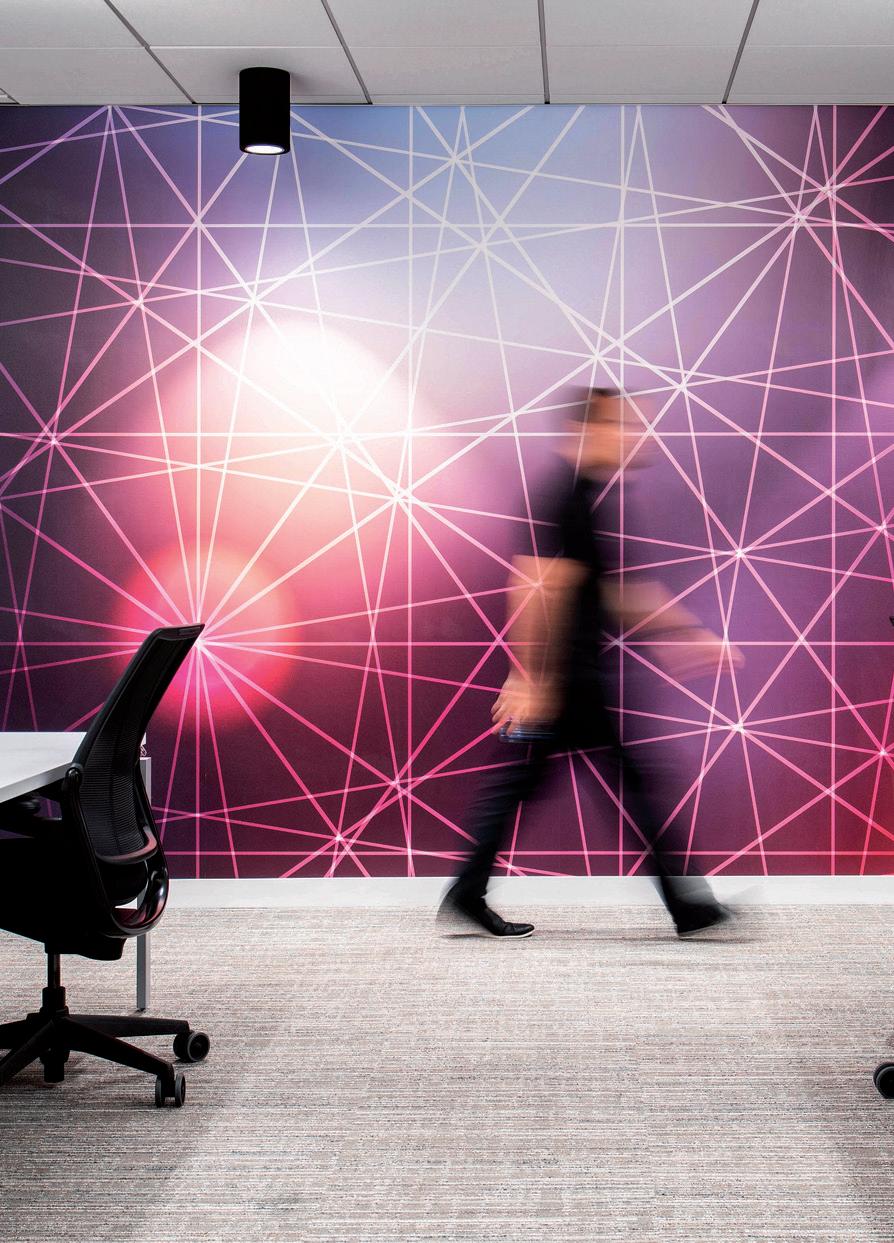
HOK has been integral in the implementation of Verizon’s new ActivityBased Working (ABW) work spaces. ABW splits the office into zones based on the type of work the employee is performing. Choice is the key element to making sure that Verizon staff are able to be productive and happy in their new environment and HOK has provided this at all of the locations we have completed.
Verizon’s Hidden Ridge campus in Irving, Texas serves as a worksite for thousands of employees in varying functions including consumer, business and network. In 2018, Verizon underwent a phased 100,000 sq. ft. refresh and renovation of their foodservice corridor to reinforce the company’s mission of creating cultural centers where employees can come together, work together and connect with each other.
The project focuses on the idea of integrated markets—a tech bar and coffee lounge, juice bar and gaming lounge, work and dining area. Taking cues from the local landscape, culture and emerging technology, the design layers natural materials with digital to create a rich environment. Digital artwork is displayed throughout, including a LED wall at the concourse connecting the tech bar and lounge to the dining area, that changes to mimic daylight throughout the different times of the day.
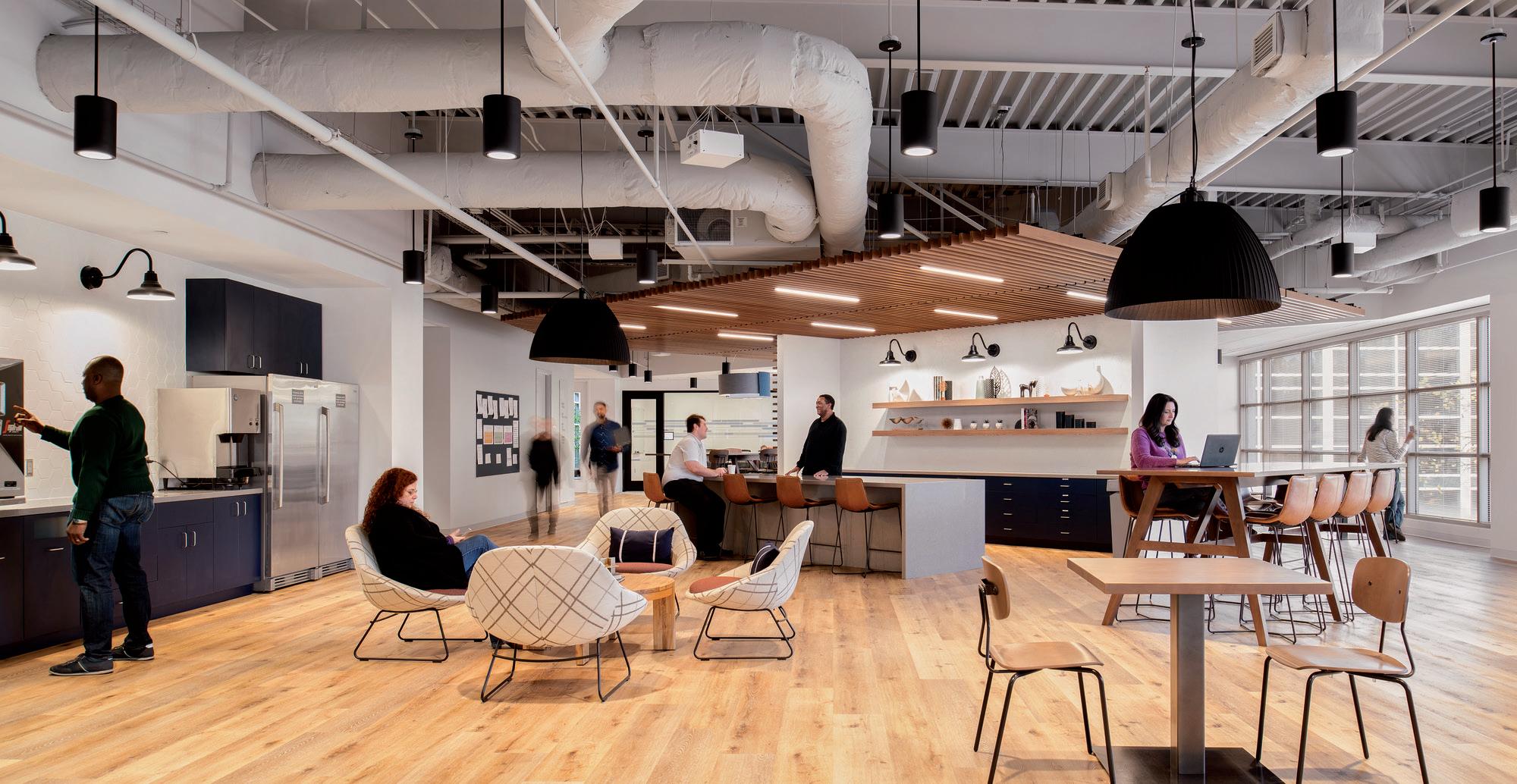
BY
projects spanning the United States
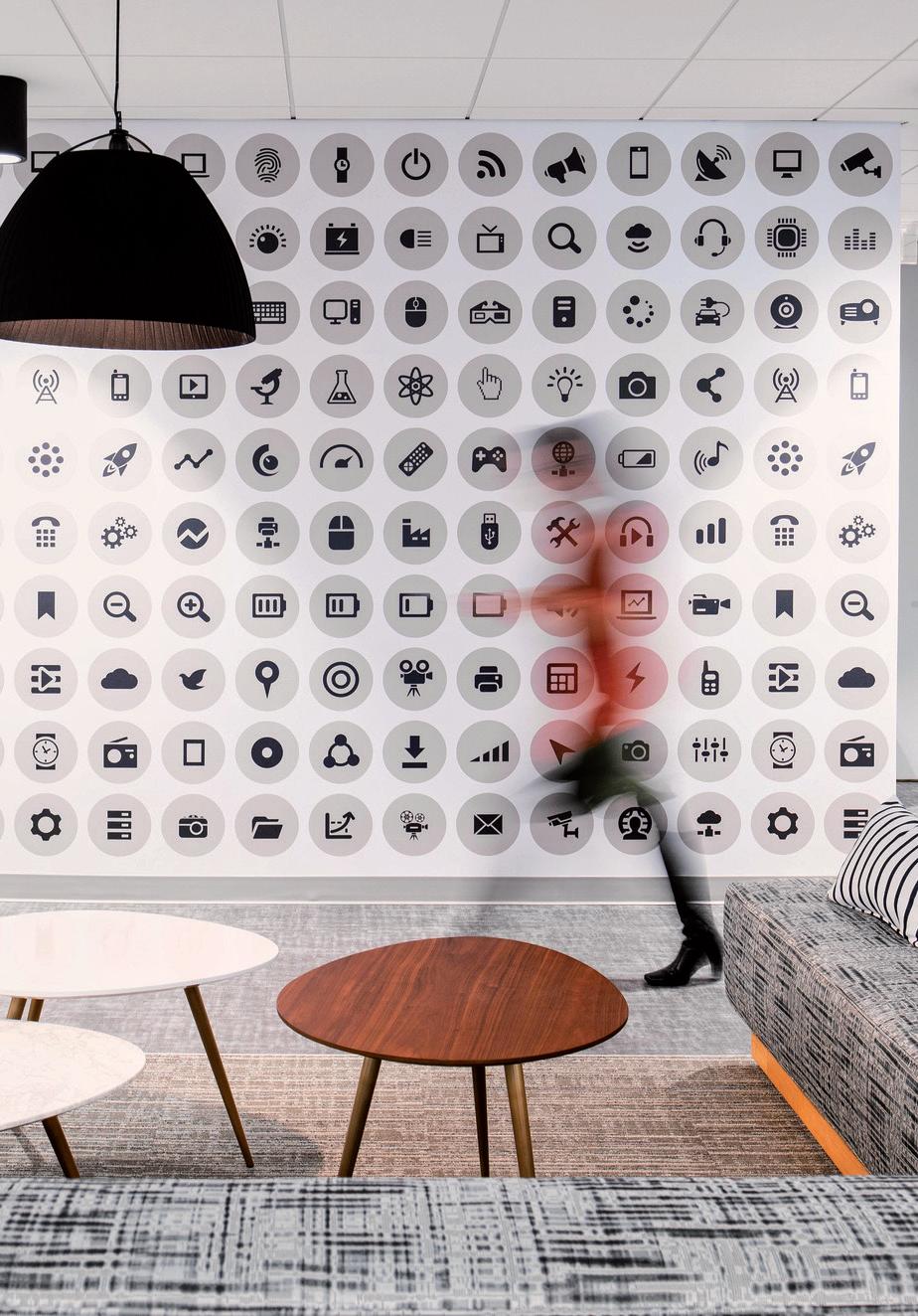
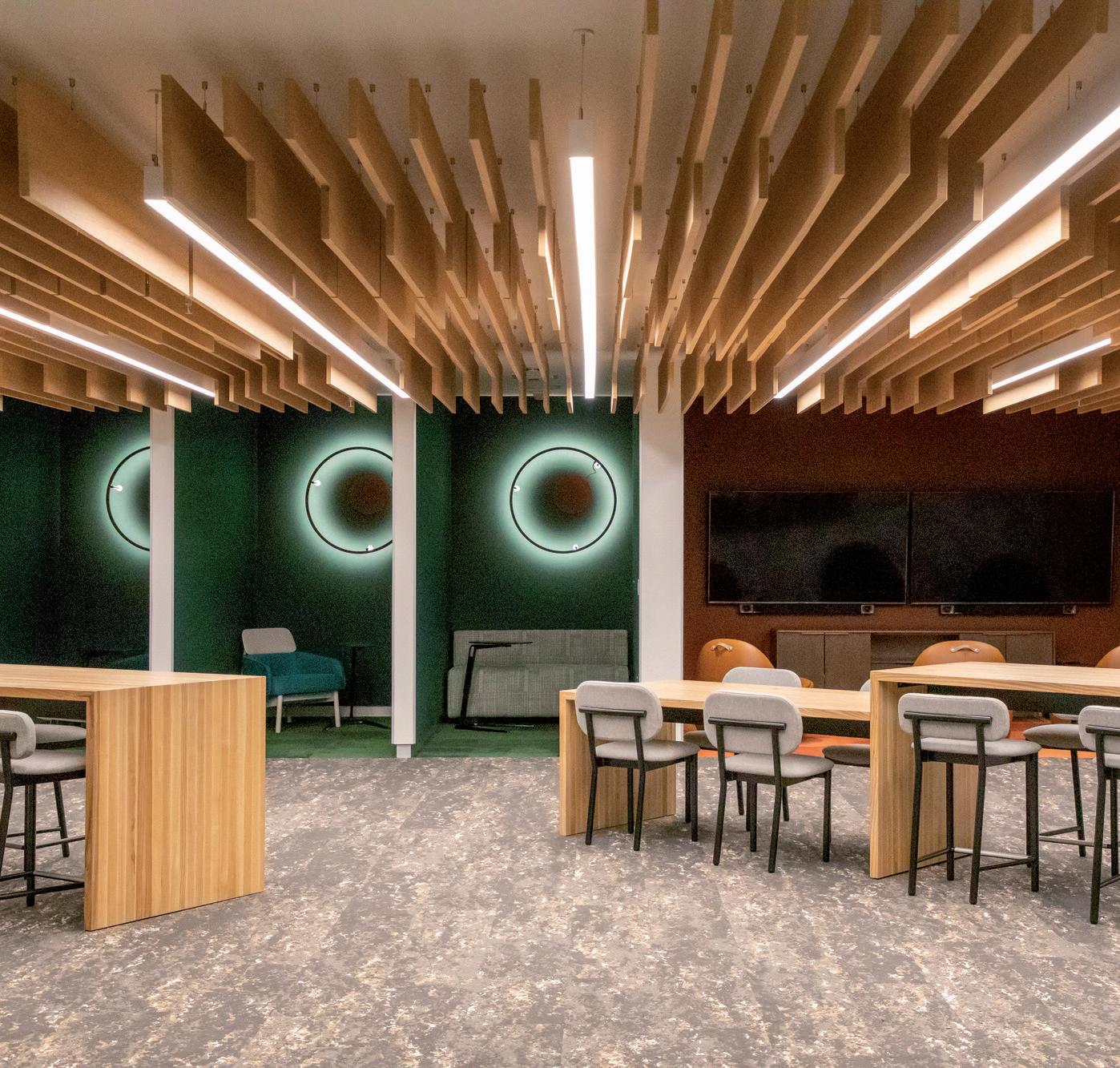
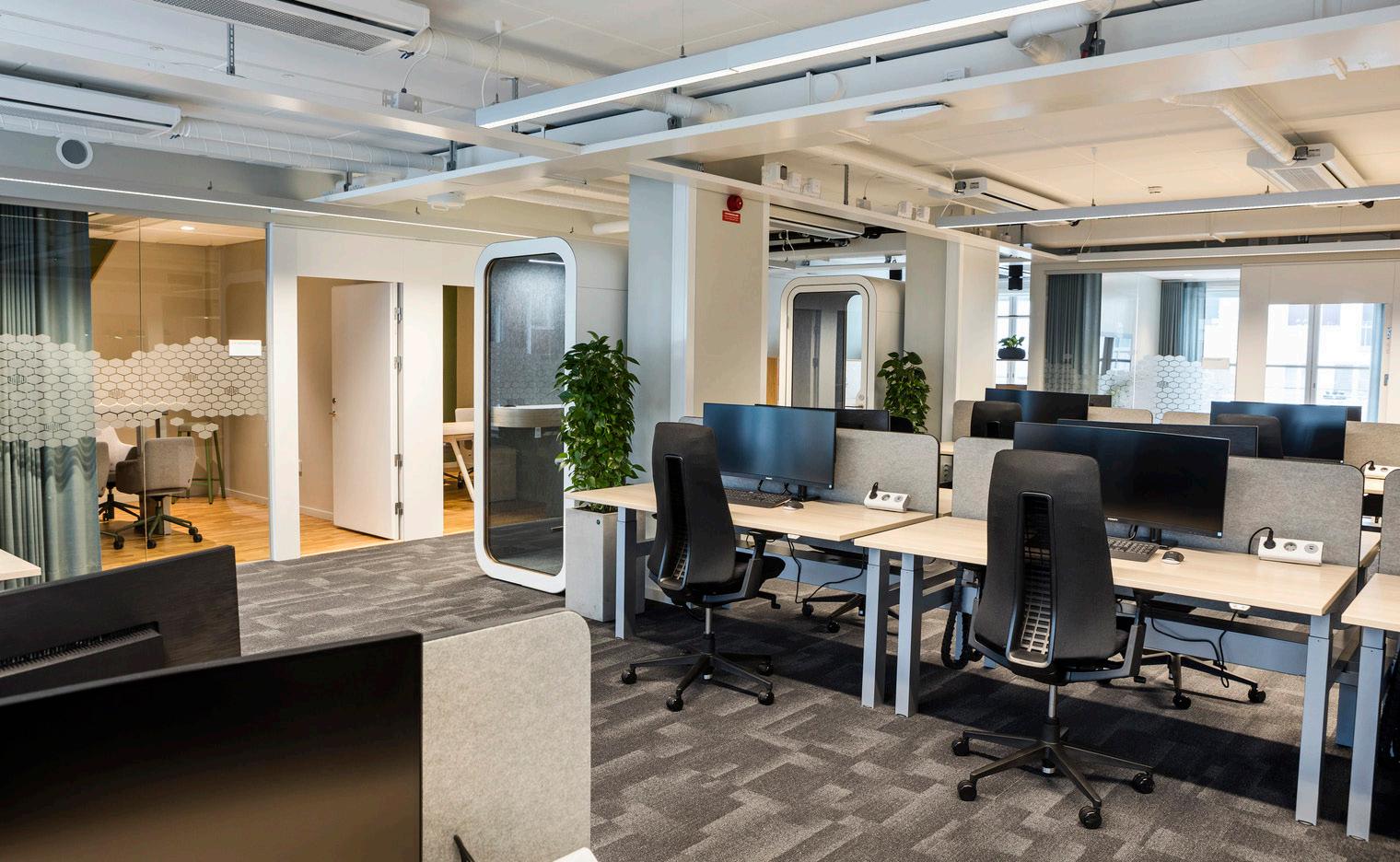
HOK's partnership with a confidential global technology client transforms their workplaces into innovative, employee-focused environments by developing and implementing comprehensive design guidelines across their international portfolio.
HOK has test-fitted, designed and built out multiple of fices around the world according to the brand’s global guidelines, which we also developed.
HOK has worked with this confidential technology client, a provider of mission-critical infrastructure services to businesses in 38 markets around the world, to revitalize their workplace environments into forward-thinking data user and employee-focused spaces. The design team works closely with the firm, their project stakeholders and partners, to ensure adherence to a comprehensive set of design guidelines and standards. By doing so, the team supports the firm's desire to create unique and innovative spaces. These design guidelines can be clearly identified throughout the various spaces.
LOCATION
Dallas, Houston, Tampa, Tokyo, London, Zurich, Toronto, Amsterdam, Singapore, Stockholm, Hong Kong, Madrid
SIZE
Varies
SERVICES
Workplace Strategy, Interior Design, Experience Design, Furniture
STATUS
Varies
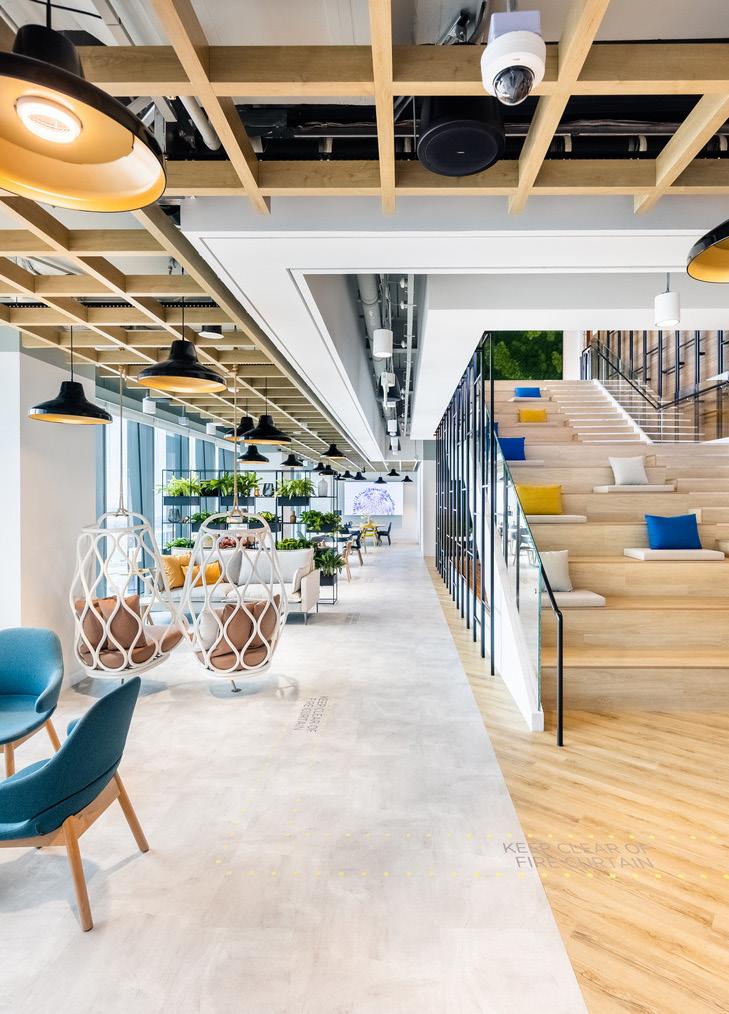
HOK’s services include workplace strategy, design advisory, workplace graphics, branding and way finding strategy, feasibility studies, test fits, furniture, fixtures and equipment and schematic design through construction administration on projects of various sizes in multiple locations.
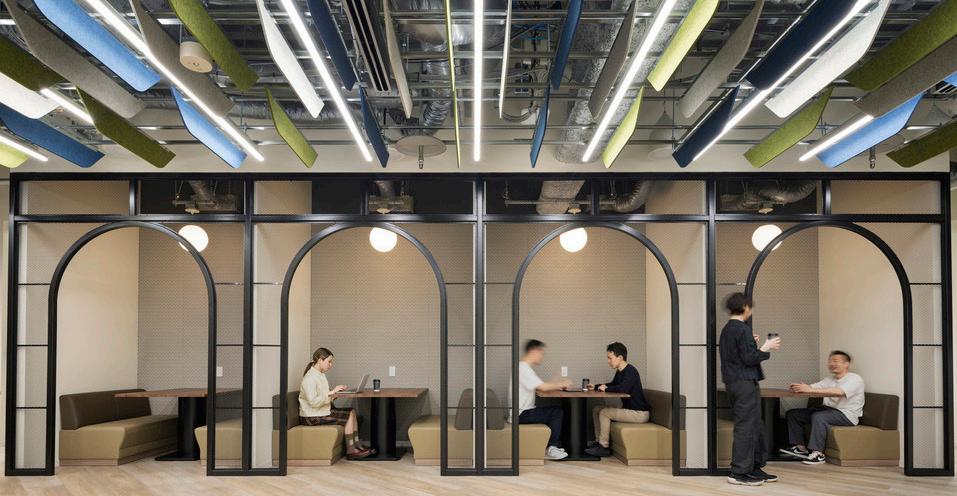
As a long-term strategic partner, HOK develops and implements global design guidelines for a confidential technology client, revitalizing their workplaces across 38 markets.
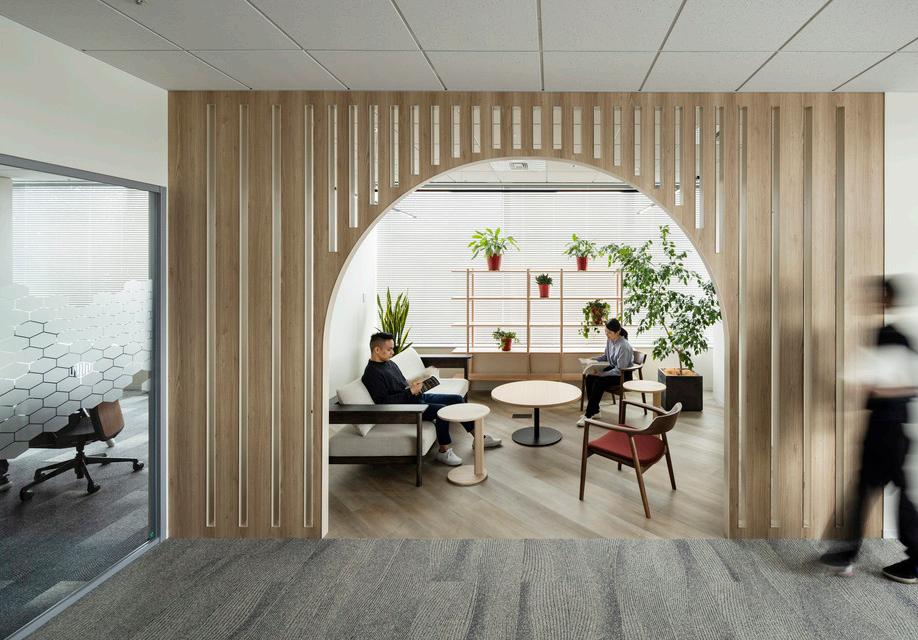
BY THE NUMBERS
cities represented in global account