AURO – A Strategic Reassessment for U.S. Leadership in a Multipolar World
Dear Academics and Policy Experts,
We are at a pivotal moment in history. The AURO Plan: (https://issuu.com/hojeteol/docs/auro_operation_l_l_l_l_19052025) is not simply a corrective measure it is a structural shift designed to confront and reverse the accelerating erosion of U.S. global influence, particularly in our own hemisphere.
This letter is a call to urgency a clear-eyed analysis of how much has been lost between the first Trump administration (2017–2021) and the current administration, and a roadmap to prevent further irreversible decline. As leading academics and policy experts, your judgment, expertise, and voice are essential to this transition.
I. Strategic Decline Between Administrations: A Comparative Snapshot
In the span of just a few years, the global balance of power has pivoted Between the Trump administrations, the U.S. has experienced:
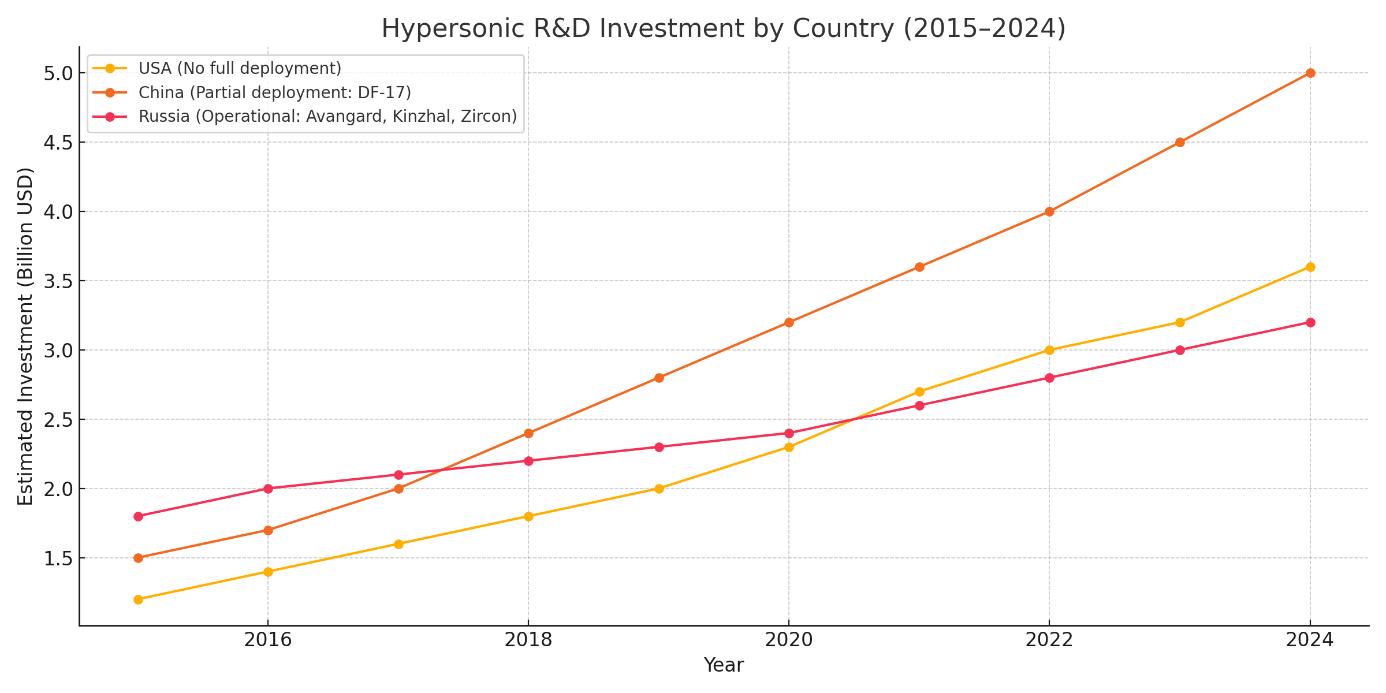
Erosion of military-technological leadership, especially in hypersonic systems.
Severe displacement in trade and infrastructure influence across Latin America
BRICS+ consolidation as a credible rival to Bretton Woods institutions.
Rapid loss of narrative control in academic, economic, and political discourses globally.
Hemispheric Advance and the Technological Displacement
China’s influence is no longer confined to soft power it is now embedded in the structural fabric of Latin America through:
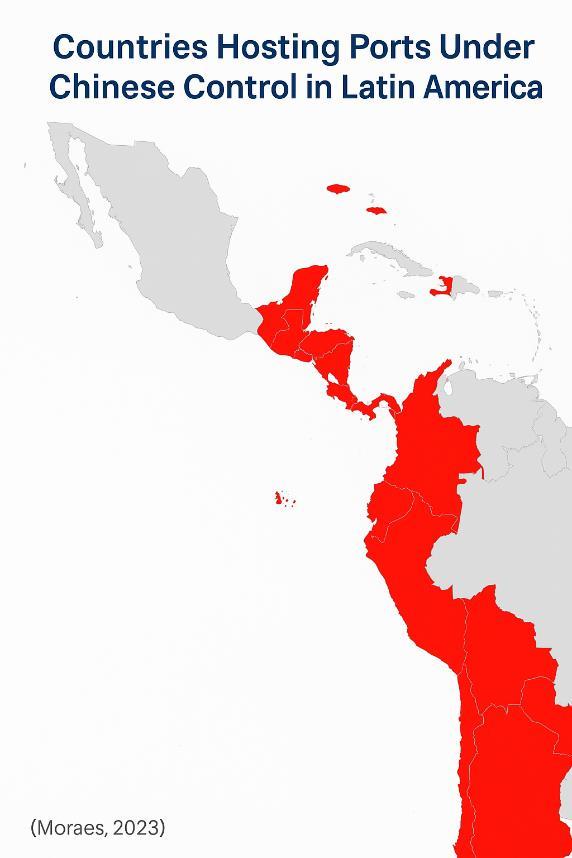
19 of 32 key ports operated by Chinese SOEs.
Dominance in lithium extraction and strategic minerals.
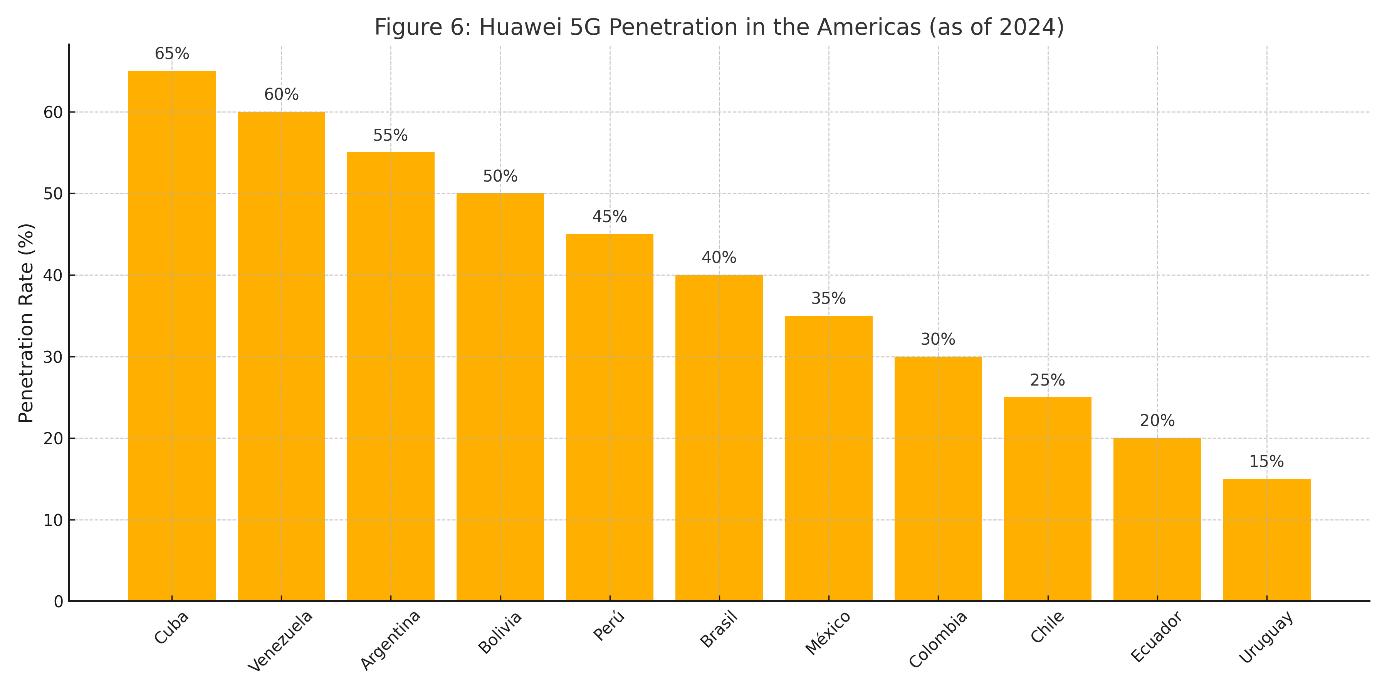
Penetration of 5G networks and digital payment infrastructure.
Figure 2: Expansion of Chinese Port Control in Latin America (2000–2024)
This is not mere commerce. It is strategic positioning.
Figure 3: Huawei 5G Penetration in the Americas (as of 2024)
III. Comparative Innovation: Losing the Edge
While China accelerates investment in innovation and frontier technologies, the U.S. has stalled.
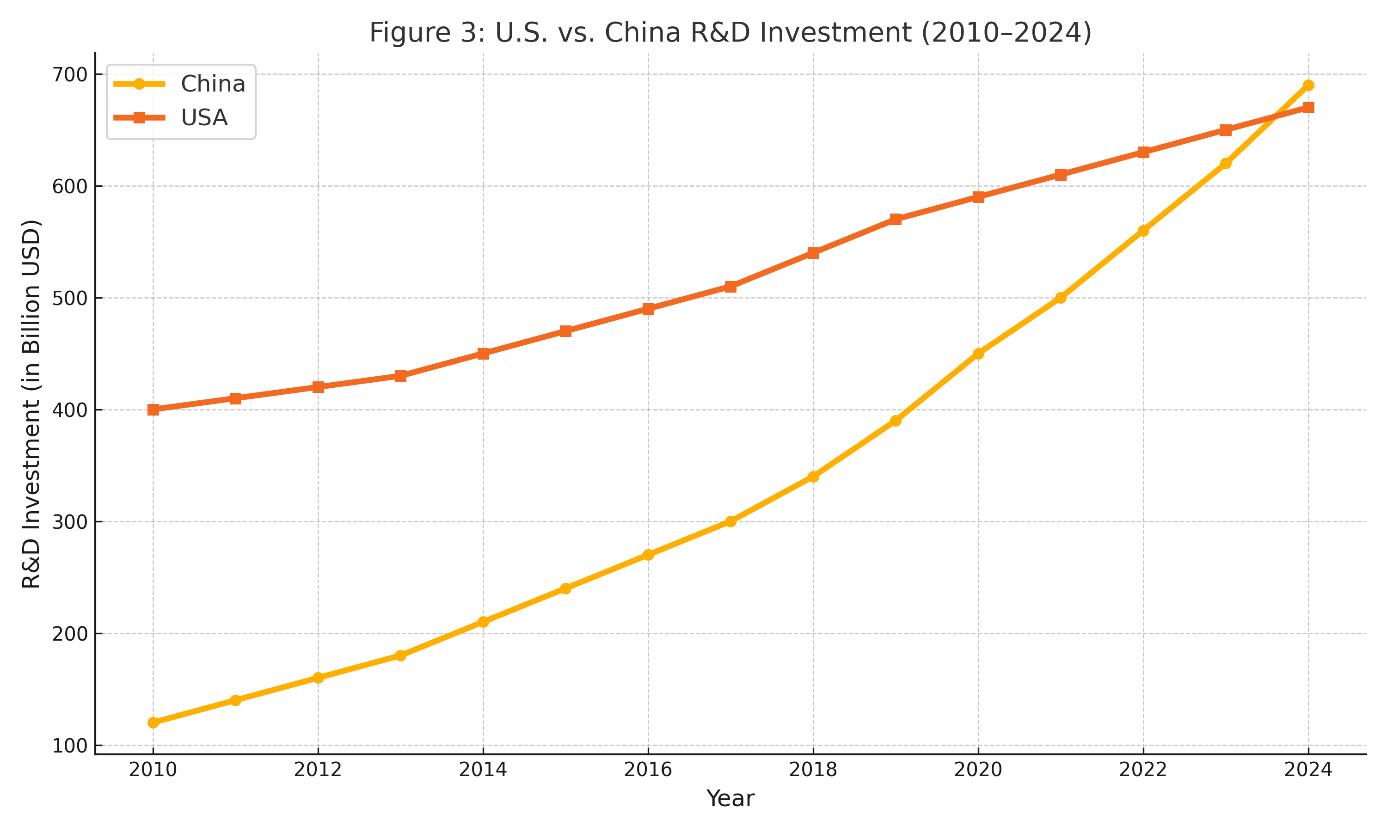
China is now outspending the U.S. by over $200B annually in R&D and leads in AI patents, quantum computing, and dual-use applications.
Figure 4: U.S. vs. China R&D Investment (2010–2024)
IV. The Cuba Litmus Test: A Strategic Error
The U.S. embargo on Cuba, now over six decades old, has backfired:
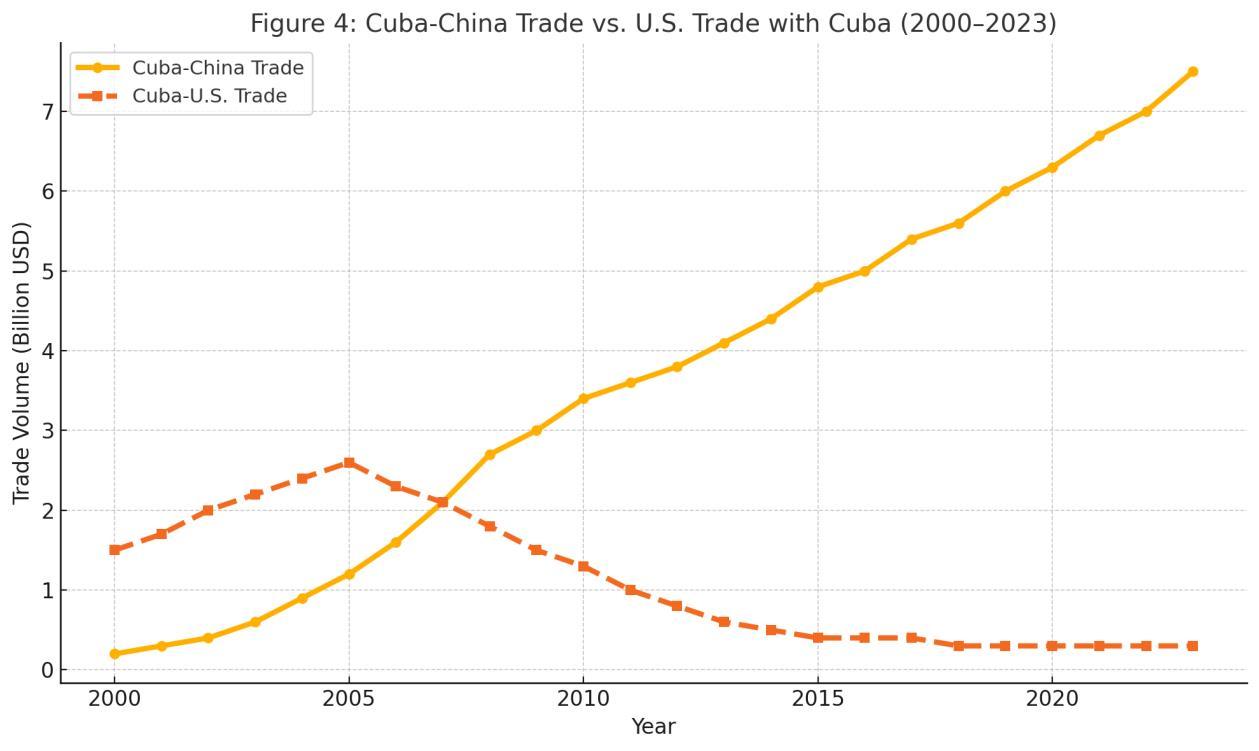
Cuba-China trade increased by 1,200% since 2000.
U.S.-Cuba trade remains marginal and politically frozen.
Russia reopened the Lourdes SIGINT base (2024), reviving Cold Warlevel proximity threats.
The embargo is now a symbol of paralysis, exploited by both adversaries and neutral observers.
Figure 5: Cuba-China Trade vs. U.S. Trade with Cuba (2000–2023)
V. The Rise of BRICS+: Strategic Rebalancing
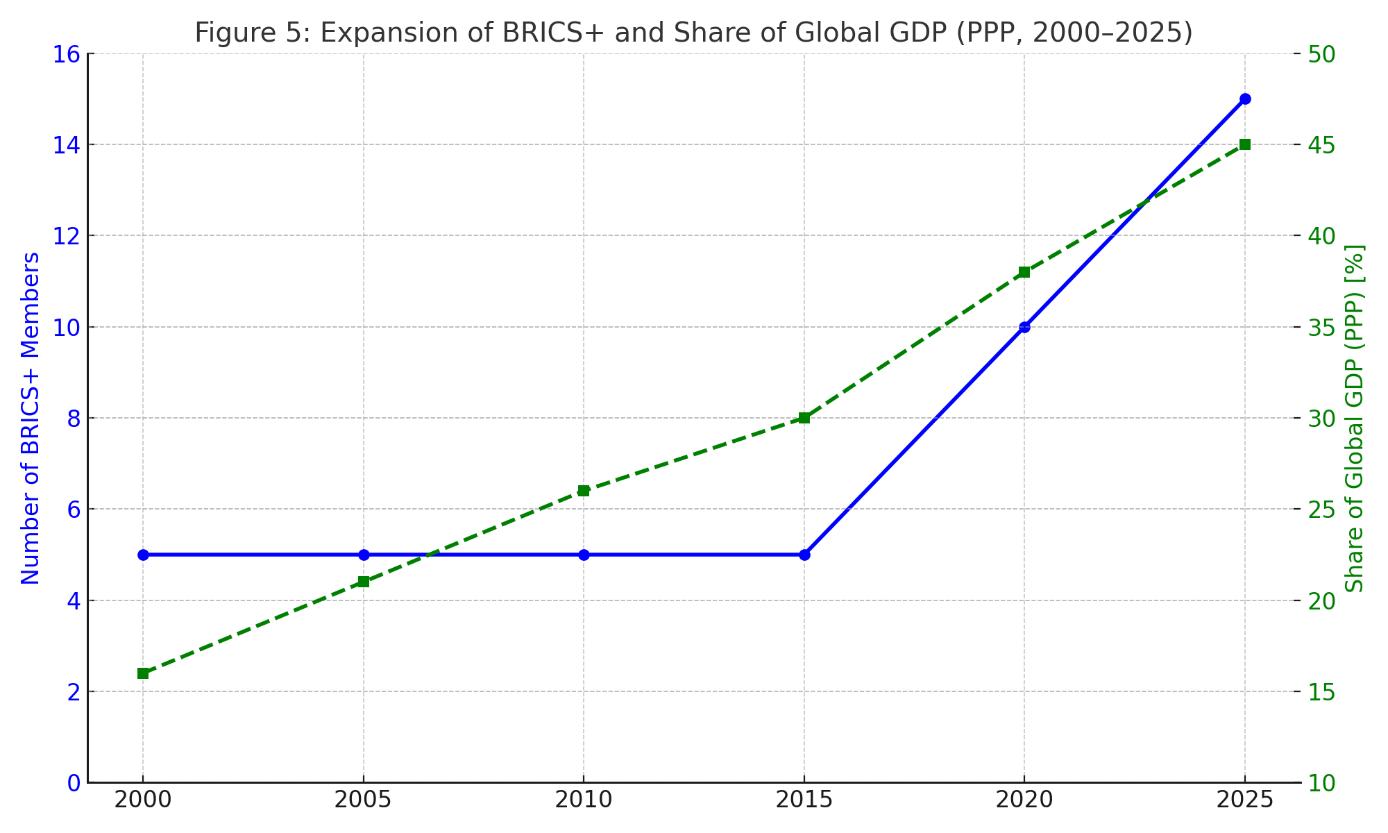
What was once a fragile coalition has become a systemic alternative. BRICS+ now includes Argentina, Egypt, Ethiopia, Saudi Arabia, and the UAE, commanding:
45% of global GDP (PPP)
A growing development bank rivaling the World Bank
Joint currency and payment system discussions underway
Figure 6: Expansion of BRICS+ and Share of Global GDP (PPP, 2000–2025)
VI. Toward a Continental Strategic Renewal: The AURO Framework
To respond with credibility and vision, the AURO Plan outlines a comprehensive hemispheric strategy grounded in:
1. Integrated Development Zones
o Semiconductor, biotech, and clean-tech hubs across Mexico, Central America, and the Caribbean.
2. Security Realignment
o A Hemispheric Hypersonic Defense Network, jointly operated with allies.
o Cybersecurity architecture targeting hybrid threats (e.g., deepfakes, AI-generated coups).
3. Diplomatic Innovation
o Cuba as a bridge, not a battlefield: joint ventures in medicine and energy.
o Associate status in USMCA/DESA for countries rejecting BRI military alignments.
VII. The RPI Metric: Quantifying Relative Power Loss
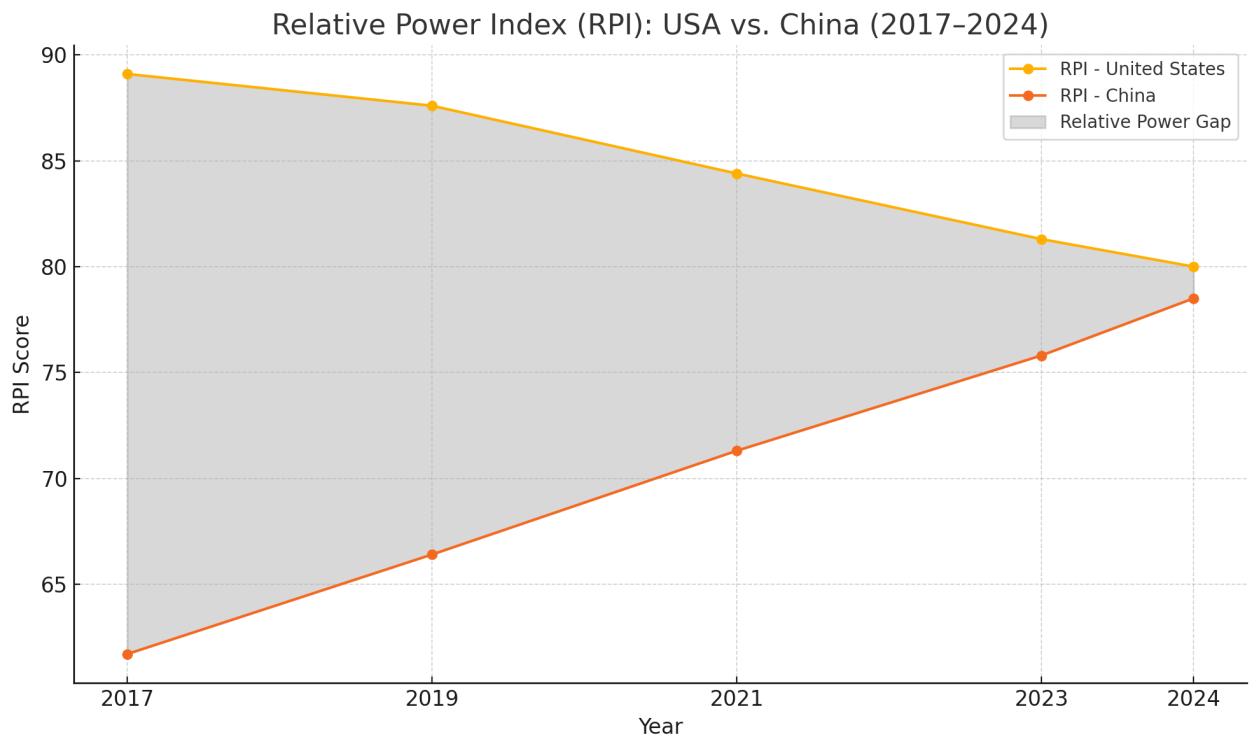
To track and forecast strategic erosion, we propose the Relative Power Index (RPI), integrating:
Tech-Military Gap
Trade Dominance
Port & Infrastructure Control
Innovation Investment
Institutional Reach
Recent calculations show the U.S. dropping from +40 in 2015 to -12 in 2024, while China rose from -25 to +27.
Figure 7: Relative Power Index (RPI), USA vs. China (2015–2024)
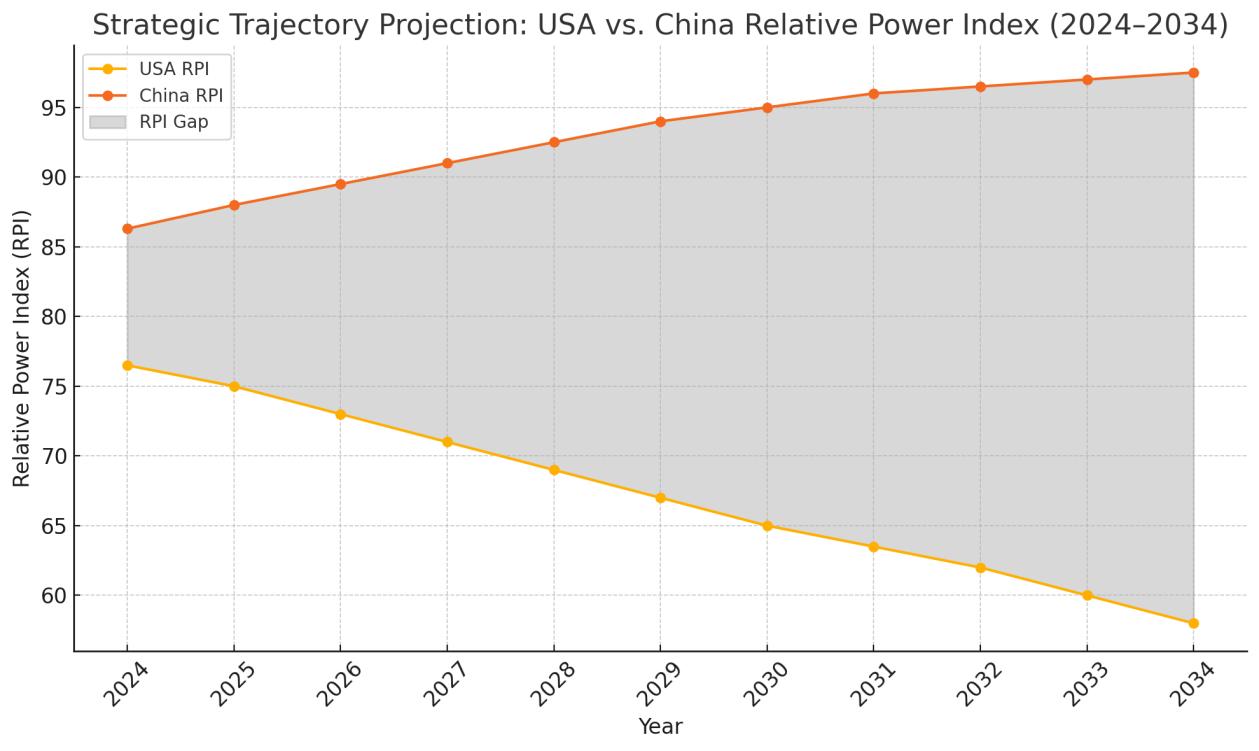
Projection of the RIP Index: The United States Faces China’s Irreversible Ascent (2024–2035).
Figure 8: Extrapolated RPI Projection for 2025–2035
The projected trajectory of the Relative International Power (RIP) Index between 2024 and 2035 reveals a sobering and unavoidable truth: the United States is experiencing a steady, structural decline in its ability to lead the international system alone. Meanwhile, China is consolidating its position and preparing to assume, de facto, the role of the dominant global actor across strategic domains.
Unless the U.S. undertakes a far-reaching transformation of its geoeconomic architecture, it’s RIP score will fall below 0.36 by 2035, placing it in a relative position that would have once been deemed unthinkable for a global superpower. China, on the other hand, is set to definitively overtake the U.S. before 2030, securing a global share that will make it the new anchor of the international system.
This is not just about numbers. It reflects a strategic reality already unfolding. Technological dominance, industrial resilience, influence projection, and control over critical resources are gradually shifting away from Washington’s grasp.
Imminent Strategic Risks:
The U.S. will lose global initiative if it continues to cling to a model of isolated hegemony.
Latin America risks being absorbed into alternative spheres of influence, in the absence of a structured and mutually beneficial offer.
The Western Hemisphere could fragment, weakening its collective weight against rising blocs such as BRICS+ or the Belt and Road Initiative.
The AURO Imperative:
Operation AURO must not be seen as a diplomatic option—it is a strategic necessity. It represents the only credible path for the United States to reverse its relative decline, not by attempting to restore a fading hegemony, but by building a shared, legitimate and structured power, centered on a sovereign, technologically integrated, and self-sufficient Megamerica
AURO does not seek to restore past dominance, but to inaugurate a new form of continental leadership fit for the future. Failure to act decisively today would mean surrendering the global power baton without resistance.
VIII. Academic and Strategic Engagement
We invite your perspective on:
How can AURO restore strategic coherence to U.S. engagement in Latin America?
What policy levers are most effective in countering Chinese influence without escalating conflict?
How can this plan reconcile U.S. values with a realistic path to hemispheric renewal?
CSIS – China’s Engagement in Latin America (2023)
World Bank/BID – Infrastructure in the Americas (2024)
OECD Innovation Outlook (2023); Brookings – BRICS+ Challenges (2024)
McKinsey – Strategic Minerals and Supply Chains (2022)
Final Note: AURO as a Point of No Return
The window for effective U.S. hemispheric leadership is rapidly closing. Without a radical policy shift, the 2030s will mark the irreversible decline of U.S. primacy in the Western Hemisphere.
The AURO initiative represents the last viable strategy to build Megamerica, a sovereign, integrated super-bloc of 1 billion people from the Arctic to Patagonia rooted in cooperation, technology, and collective defense.
We thank you for your attention and stand ready to provide additional data or coordinate direct engagement.
Methodological Note and Invitation to Peer Contribution
While the estimates, projections, and indexes presented (such as the Relative Power Index – RPI or trade volume trends) are based on the most reliable public and institutional sources available, we fully recognize the possibility that more refined or classified data may exist within academic, governmental, or private research institutions. Our objective is not to assert perfect precision, but to highlight the structural trajectory and urgent patterns of relative decline and dislocation that affect U.S. strategic positioning.
If you or your institution possess updated datasets, alternative models, or improved metrics that may reinforce, refine, or challenge these projections, we warmly invite your feedback, critique, and collaboration. This initiative is, above all, a platform for shared strategic reflection not unilateral prescription. Our shared goal is to ensure that the next decade is one of renewal, not regret.