HEMPSTEAD, NY
THE HOFSTRA CHRONICLE
KEEPING THE HOFSTRA COMMUNITY INFORMED SINCE 1935
fEatur ES
Black students at Hofstra University draw attention to racial issues on campus

By Natalia Rivera STAFF WRITER
Black students at Hofstra University say that the fall semester has been marked by fear, frustration and a lack of transparency after multiple incidents of racial harassment and discrimination on campus. From vandalism involving racial slurs to alleged bias inside the classroom, students say they feel unsafe and unheard.
Students’ concerns intensified on Oct. 2, when a car parked on the north side of campus was vandalized with a racial slur spelled out with Prime stickers. The slur targeted the Black community.
Sophomore film major Micah Gary witnessed the incident.
“I saw firsthand as they were vandalizing the car with Prime stickers and using the stickers to spell the hard ‘R,’” Gary said.
Gary recorded a video of the incident and immediately shared what he saw with other students. Days later, during Alpha Phi Alpha’s Ski Week opening event, he spoke publicly about what he
had witnessed.
“It’s widely known in the Black community on campus about what happened after I spoke about the vandalization of the car at the Alpha’s Ski Week first event,” Gary said.
Gary gave the video to the president of Black Leaders Advocating for Change (BLAC) who addressed the incident with administration. He said the video was also given to Public Safety. But after that, communication stopped.
“They did not catch the people who did it,” Gary said. “It was basically a dead end on their end.”
Public Safety was contacted multiple times for comment, but there was no additional reply.
The lack of follow-up has shaken Gary’s sense of safety on campus.
“My biggest concern is that other people on campus, including myself, are not entirely safe,” Gary said. “Promises were made to students [of color], not just on this campus but other campuses, and from what I’m seeing, those promises are not being met.”
He said he believes that change will only come if Black students speak collectively.
“The voices of the Black community need to be unified, because that is the only way that [leaders on campus] will listen,” Gary said. “The bigger the voice, the more likely they are to listen.”
BLAC confirmed that the organization has been supporting students who reported the vandalism and is preparing a statement addressing ongoing racial concerns on campus.
Students’ experiences aren’t limited to vandalism. Three Black students said that during their sophomore year, they noticed troubling patterns in grading, treatment and communication from a professor.
Donte Salgado, junior business management major, Omari Shand, junior business management major, and a senior mechanical engineering major referred to as S.C. for anonymity purposes, said they all experienced these issues.
Club feature: A cappella co-ed groups
By Hannah Mudry and Emilie Morrissette
FEATURES EDITOR AND ASSISTANT FEATURES EDITOR
Hofstra University has four a cappella groups on its campus. Two of which are coed mixed-voice groups that arrange their own music to perform at international collegiate events every spring: The HofBeats and Sigma’cappella. Each group has their own audition, rehearsal and performance process that prepare them for the competition.
The HofBeats
When junior psychology and criminology double major Grace Gustafson stepped into The Hof-
Beats audition room, she didn’t expect to find a home.
“[HofBeats] is my family. It’s the group of people that I feel safe with,” Gustafson said. “It’s where I get to be my most authentic self.”
Her freshman year, Gustafson auditioned for The HofBeats because her musical family members participated in a cappella groups during their college years. Gustafson first heard of The HofBeats when she received her college acceptance letter (Hofstra would attach The HofBeats cover “Hey Look Ma, I Made It” by Panic! At The Disco to the bottom of each acceptance email).
Dancing with the students CONTINUED ON
multim Edia
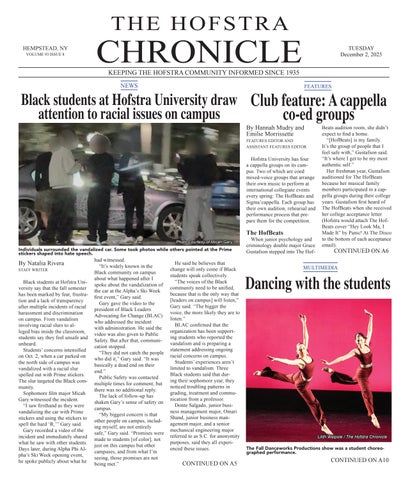
Individuals surrounded the vandalized car. Some took photos while others pointed at the Prime stickers shaped into hate speech.
Photo Courtesy of Micah Gary
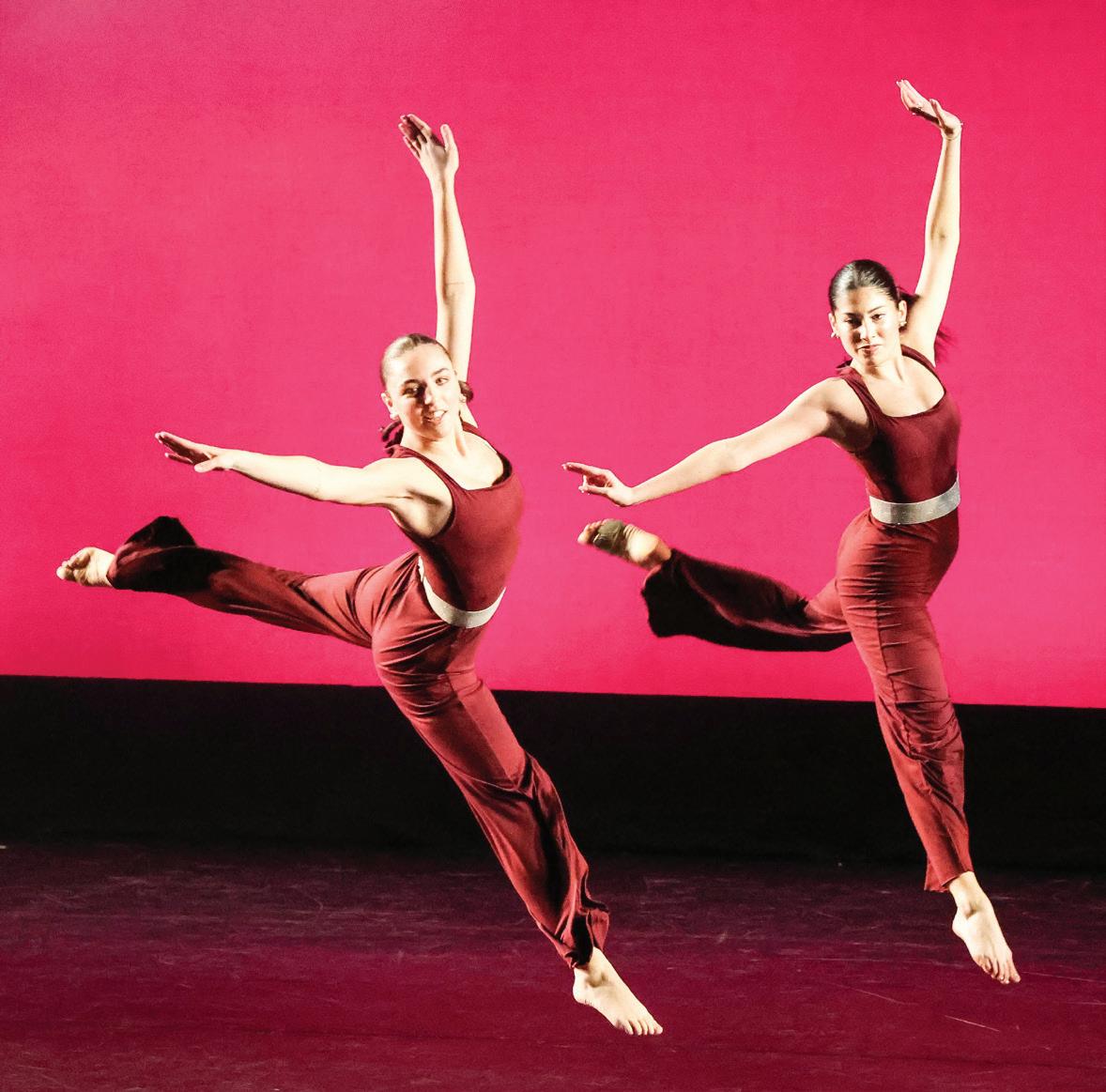
The Fall Danceworks Productions show was a student choreographed performance.
Lilith Walpole / The Hofstra Chronicle

Hofstra University appoints new dean for the School of Education
By Sahana Shastry NEWS EDITOR
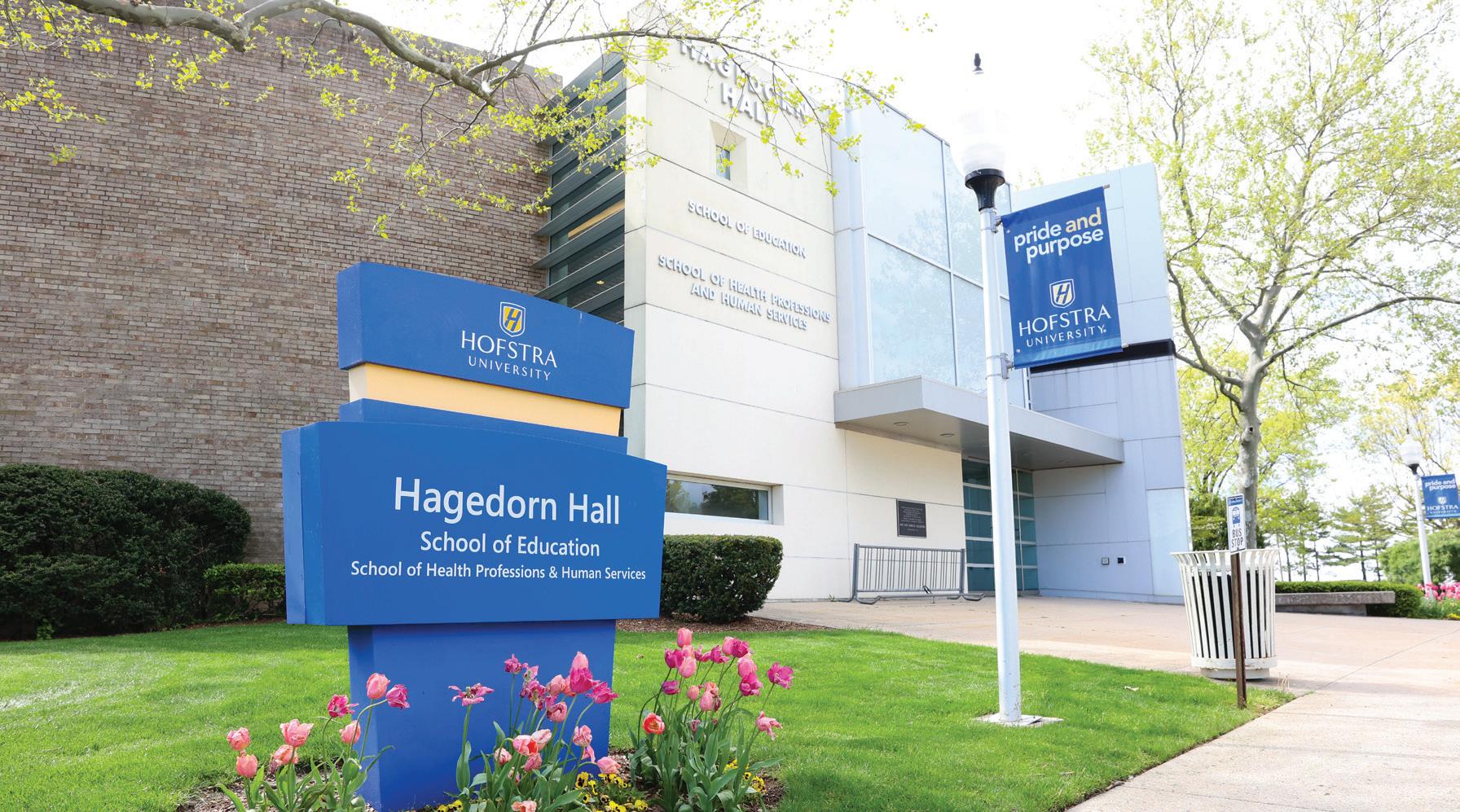
Ayana Allen-Handy bid farewell to Drexel University as she sets up for her new role as dean of Hofstra University’s School of Education, effective Jan. 1, 2026.
Allen-Handy has spent 10 years at Drexel University, starting as an assistant professor and most recently serving as professor of Urban Education and chair of the Department of Policy, Organization and Leadership.
With this new phase at Hofstra’s School of Education, AllenHandy said she looks forward to collaborating with students, faculty and staff as well as focusing on building relationships after having spent most of her formative and adult years in the Philadelphia, Pennsylvania, region.
“Relationships are important to me – having deep roots in the community,” Allen-Handy said. “Something I’m kind of looking forward to is being able to build new relationships that can have a transformative impact with the School of Education, but also in the local community.”
Hofstra’s School of Education
is being recognized nationally, ranking No. 207 (tie) out of 255 in Best Education Schools in 2025, according to the United States News & World Report’s Rankings, and most recently earned accreditation by the Association for Advancing Quality in Educator Preparation, which involves three years of data collection to mark quality.
The role of the dean of the
ity, the University welcomed Amy Catalano as interim dean. In her time at Drexel, AllenHandy became the founding director of the Justice-oriented Youth (JoY) Education Lab, which is focused on the pursuit of educational, racial and social justice. Along with her new administrative role, members of the JoY Lab, including some graduate and postdoctoral
“Something I’m kind of looking forward to is being able to build new relationships that can have a transformative impact with the School of Education, but also in the local community...”
School of Education for the past year was filled by an interim. As a part of Hofstra 100, a strategic plan introduced last year that focuses on interdisciplinary and new academic programs, community engagement, student success and organizational agil-
students, will be transitioning to Hofstra to continue ongoing grants. With this, Allen-Handy is hoping to inspire community driven intergenerational research to support pathways of research at the School of Education.
“[I hope to bring] an excite-
ment around teaching as a field,” Allen-Handy said. “One of the things I hope to do is really accelerate recruitment to the School of Education [and] nontraditional pathways to education.”
Jessica Sucharski, junior early childhood education major and president of the National Professional Association and Honor Society for Educators (Kappa Delta Pi) chose Hofstra for its many opportunities at the School of Education. One appealing reason for her was the 250 hours of clinical experience in elementary schools that students are able to get.
However, Sucharski mentioned the limited communication and openness around research opportunities and applications for certifications, which is a gap Allen-Handy could help address.
“[Research opportunities are] not advertised as much as I would hope,” Sucharski said. “If you’re in a class with a professor and they’re working on a research topic, you’ll know about it, and you can offer to help, or they’ll ask if you want to help. But other than that, nothing is really posted about research opportunities.”
As Allen-Handy prepares to start her new position, she is planning to have a human-centric approach moving forward.
“[First, I will get] to understand what the needs on Long Island [are and] as it relates to education, as it specifically relates to educational equity across myriad differences in our kind of polarizing context that we’re living in right now,” AllenHandy said. “Then, [I will be] able to strategize about how to collectively address challenges that may exist within the school, and then also within our local school districts or communities in Long Island and New York and beyond.”
Ayana Allen-Handy hopes to inspire more research and human-centric approaches moving for- ward in the School of Education.
Photo courtesy of Hofstra University / Matteo Bracco
What you may have missed
Task force plans changes to general education
By Jonathan Padilla SPECIAL TO THE CHRONICLE
and subject to change.
Malaysia plans to ban social media for children under 16 starting in 2026 – Sunday, Nov. 23
After Australia enforced its own ban to stop children under 16 from using social media, Malaysia’s Communications Minister Fahmi Fadzil announced that he is considering age verification on social media applications like Instagram, Snapchat and TikTok. Malaysia officials believe the ban could be effective toward ending cyberbullying and sexual crimes
Italian lawmakers agreed on a Femicide Law to prevent misogynistic violence – Tuesday, Nov. 25
A new symbolic Italian law labels murders of women killed for misogynistic reasons as femicide The new law will make the crime of femicide punishable by life in prison Italy now stands as the fourth European countr y to enact a legal definition for femicide Many people want the law to come with education about gender issues and better training for officials regarding domestic violence
Death tolls increase as a building fire in Hong Kong leaves 128 known dead – Wednesday, Nov 26
The Wang Fuk Court apartment complex caught fire and is being called Hong Kong’s deadliest fire in the last three decades While the initial cause is unknown, three men from an unnamed construction company were arrested as the fire blazed through layers of green netting and bamboo scaffolding An investigation is being conducted to check whether or not the walls met the fire-retardant standard
Guinea-Bissau faces government takeover following national elections – Wednesday, Nov. 26
After the presidential and legislative elections that took place on Nov 23, descriptions of gunshots were reported near the presidential palace in GuineaBissau Following the report, soldiers claimed to have seized power of the countr y on state television Acting President Umaro Sissoco Embaló was arrested and deposed in the coup
riculum pertaining to class sizes being too large and therefore time consuming when it comes to oral presentations.

General Education Task Force
100 of Hofstra University held a town hall meeting on Nov. 21, to discuss their ideas for changing the general education curriculum as it pertains to incoming students.
Heading the task force are three Hofstra professors: Brenda Elsey, professor of history, Craig Rustici, professor of disability studies, and Matthew Smylie, associate professor of physics and astronomy.
The co-chairs spoke on behalf of the organization to discuss some of the challenges regarding the general education curriculum and some of the solutions they plan on implementing for the following school years.
“With all those consultations –all the listening – we heard some sense of dissatisfaction with the existing general [education] curriculum,” Rustici said. “It’s a great deal of concern that it is too complex and too confusing.”
Rustici added that many students feel dissatisfied with the current written and oral communication assignments and that they are not being provided with enough engagement to satisfy their learning capabilities.
Rustici also highlighted some other concerns people have had with the general education cur-
Another area of concern deals with the loss of accidental discovery. Suppose the curriculum was shortened or made even more precise to each specific major studies, then students may miss out on classes or experiences that may have benefitted them.
In response to some of these concerns about the current general education curriculum, the task force highlighted five key points to improve the curriculum for the upcoming school year: literacy, inquiry, expression, engagement and agility. Each point is meant to tackle highlighted concerns and teach students to overcome obstacles, so they can walk away from their general education careers with a mentality and skillset to tackle all of life’s challenges.
All five key points are meant to foster personal growth and engagement within one’s community. Although the key points are meant to tackle the challenges that are currently a result of the general education curriculum, they are also a set of building blocks for creating a more effective and diverse curriculum for future students. Much of the process for creating a better curriculum is still in its early stages
Smylie explained that the true value of the general education curriculum is that it teaches students how to deal with people.
“All the core fields of the humanities and the liberal arts –think history, political science, language, culture [and] philosophy – [are] different aspects of the same thing, understanding how people work and how people interact with each other,” Smylie said.
Artificial intelligence (AI) was also an issue brought forth to the task force. Both Smylie and Rustici explained that the goal of a general education has never been to predict what new emerging technologies people are using or how to implement them, but rather how to understand people and what their needs are when it comes to AI.
The town hall was an opportunity for transparency and to collect thoughts on how people were receiving the task force’s ideas. The task force said they are eager to discuss more of their findings with their staff in December and plan to hear more thoughts through faculty surveys and future Hofstra College of Liberal Arts and Sciences meetings. They also said they plan on having a set plan for the general education curriculum by Spring 2027.
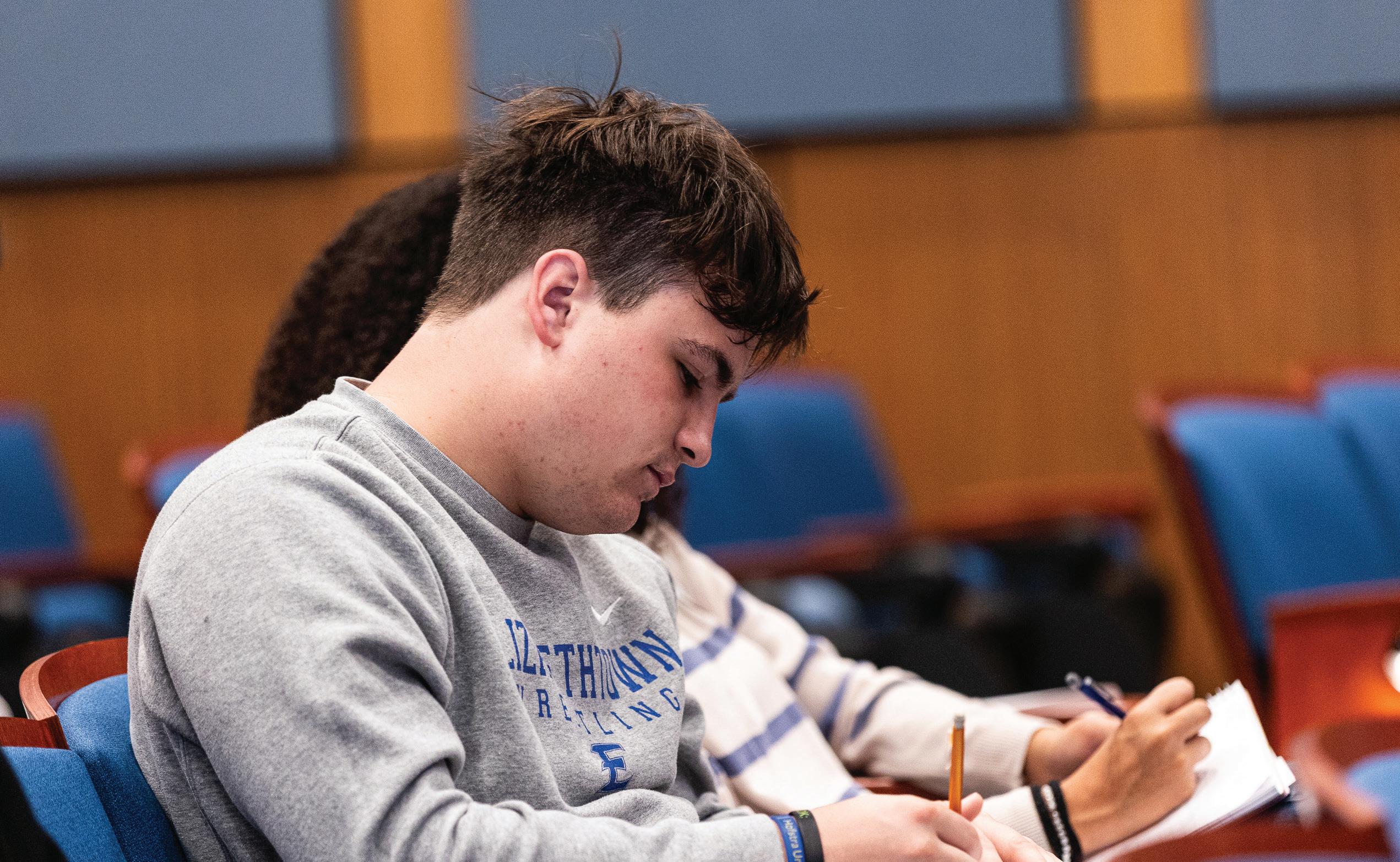
Katelyn Buchalter
There are five key points that will help build a more effective and diverse curriculum: literacy, inquiry, expression, engagement and agility.
Joe Orovitz / The Hofstra Chronicle
Senior send-off: Leaving Room 203
By Julia Capitelli NEWS EDITOR
At the end of high school, I played in the pit orchestra while my friend performed in our school’s production of “Hello, Dolly!” We held a “senior psych circle” to hype ourselves up and say some parting words before our last performance. My friend’s closing words have stuck with me since.
“Now I’m going to leave the circle,” she said. “And the hardest part is leaving the circle.”
The pit orchestra was a oneoff activity for me, but now I know what my friend meant. As graduation looms, I am going to leave Room 203 of the Sondra and David S. Mack Student Center: the office for The Hofstra Chronicle. And the hardest part is leaving Room 203.
It took me entirely too long to gain the confidence to start writing for the Chronicle. I was already three semesters into school when I finally talked myself into it. I had to start somewhere, right? At that point, I didn’t envision moving up to an editor position. I was actually quite content to remain a quiet writer who mostly kept to herself. Spring 2024 me would be shocked to know that Fall 2025 me would be writing one of these and thinking that she should’ve gotten involved sooner.
I feel like I’ve lived eight lives in Room 203. Amidst whatever might’ve been going on outside, the Chronicle remained a constant, an escape. It was a place of purpose and belonging.
There was no anticipating the community I would find in that room. Every person I’ve worked with, especially as I became an assistant editor and then an editor, has had an impact. A wonderful, memorable impact. High school often felt like a judgmental place. College meant unlearning the habits I’d built to protect myself from that judgment. The Chronicle community made that pretty easy.
I’ve learned so much at the
Chronicle. Professionally, it gave me the opportunity to build so many different skills and deal with a variety of topics, sometimes giving me real dilemmas of journalistic ethics to face. Personally, I grew significantly.
for helping me strengthen my skills in so many different parts of journalism and for working with me during a difficult semester.
I’ve said this before, and I’ll say it again, thank you to
I appreciate all the times you hyped me up about getting an internship and a job.
Gabe Prevots and Veronica N. Wakefield, I am so glad I met both you wonderful people. Whether it was accidentally
“Amidst whatever might’ve been going on outside, the Chronicle remained a constant, an escape. It was a place of purpose and belonging...”
My time with the Chronicle strengthened my leadership, confidence, decisiveness and taught me how to take pride in a job done well. Above all, it taught me about myself and my voice, as a journalist and beyond. I became a better version of myself in Room 203. There was a time when I thought sports broadcasting was the route I wanted to take with my future, and that’s what solidified my choice to attend Hofstra University. The merit of the program and facilities made Hofstra an obvious destination. As I started to pivot toward print news, that decision continued to prove itself to be the right one.
The Chronicle was a major reason why. Its history speaks for itself, and the student journalists behind the work are truly amazing people. I feel so honored to have been a part of this incredible organization, even if it was for a fairly short time.
I have so many people here to thank before I leave Room 203.
To our faculty advisor, Brian McFadden, thank you for your guidance and for being a sounding board in times of frustration.
To Professor Carol Fletcher, thank you for some of your first words in JRNL 011 back in the Fall 2023, “By the end of this class, you’ll know if journalism is for you.” I did learn that journalism was for me, and you set me on the very newsy path that I’ve been on ever since. Thank you to Professor Scott Brinton
Giovanni Salsa for your confidence in me and your constant encouragement. Thank you to Camryn Bowden for your trust in me and for all those goofy times at the news computer. Moriah Sukhlal, thank you for the warm welcome and guidance you gave me as a writer and later as an editor. Lily Spinda, thank you for the chat in the spring of 2025 that readied me for the rest of my Chronicle journey.
To Joe Orovitz, Christine Acuña, Shaina Skeen, Mari Steele and Anthony Favilla, I will greatly miss our chaotic yet educational photography Fridays. Craig Mannino, our spring news meeting chats were always something to look forward to.
creating a new bit or giggling over a funny anecdote, I really enjoyed the time we spent together in the News section. I know you’ll both do great work. Tim Daly, I’m glad I got to work with you this semester as cobusiness managers. We had our share of laughs and stresses, but we figured it out.
Natalia Rivera and Mark Lussier, it was truly a pleasure to work with you both this semester and watch your skills improve. I can’t wait to see what you both do going forward.
Katelyn Buchalter, never lose your spark. The ambition you’ve shown and the initiative you’ve taken this semester have been incredible. I am delighted that I
got to spend my last semester at Hofstra with you in our section.
Sahana Shastry, you are the embodiment of kindness, team spirit and passion. It has been awesome working alongside you this semester. We’ve had some really fun moments that will make me laugh forever.
Madeline Sisk, having you to lean on during my time as an editor at the Chronicle has been huge. Thank you for your guidance to the News section and thank you for making me take a step back when I needed it.
Kat Gladkowski and Kyle Kolber, thank you for being such great friends. You’re both huge parts of my Hofstra experience, and I am so grateful to have you in my life.
Kumba Jagne, I’m so glad I met you and so grateful to call you my friend. We’ve had some awesome times and made some great memories – I can’t wait to make more. You’ve made my last two semesters so much fun. I’ll miss talking to you for hours in the office.
It’s been an amazing time at the Chronicle. But now I’m closing the door to Room 203 and heading over to Herald Community Newspapers. Thank you to all of you, and I can’t wait to see what happens next.

The Hofstra Chronicle made my last two semesters at Hofstra University the best semesters.
Kumba Jagne / The Hofstra Chronicle
Black students at Hofstra University draw attention to racial issues on campus cont.
CONTINUED FROM A1
Salgado and Shand said that even when they followed instructions and met rubric requirements, there were discrepancies in their grades.
“We received lower grades than white classmates even when completing the same assignments with the same corrections requested,” Shand said.
The two have said they have been mixed up with other Black students in class, received emails typed in aggressive all capital letters and, in Shand’s case, been blocked from taking a non-proctored exam after arriving 10 minutes late.
“I disputed the exam incident,” Shand said. “The [department] later allowed me to take the exam for a grade.”
S.C., the only Black student in his class, said he received unusual focus during certain discussions.
“The professor stared at me during Black History Month discussions and looked directly at me whenever race was mentioned,” S.C. said.
He added that grades received on work did not match outside
professional evaluations.
S.C. also said the same professor treated an exam as if it were proctored when it was not supposed to be.
The professor from the Hofstra College of Liberal Arts and Sciences did not respond to requests for comment.
Some Black students say bias shows up in ways that are subtle but constant.
Diamond Tucker, president of Delta Sigma Theta Sorority and a senior theater performance major, said her department often makes her feel underestimated.
“It’s more of the underlining of being underestimated,” Tucker said. “Because my nails are long, my hair is long, my lashes are long … they feel that I’m not good, and my opportunities are very limited.”
“When I got into the [bachelor of fine arts] program,” Tucker added. “It was, ‘Diamond, how did you get here?’”
Tucker said the university needs to act with transparency and direct communication whenever racist incidents occur.
“Our voices really need to be heard,” Tucker said. “The faculty need to do more to make us
feel protected as students.”
Vice President for Equity and Inclusion Cornell Craig said he has not seen more bias reports this year, but he has seen a rise in complaints elsewhere.
“I haven’t seen an increase this year in overall numbers,” Craig said. “What I have seen is an increase in reports of incidents online. Students reporting other students who made comments in a virtual space that made them feel uncomfortable or targeted.”
He explained some of how the reporting process works.
“It really depends on who’s reporting and what’s being reported,” Craig said. “Any campus community member can report a bias incident.”
“If it involves a faculty member, it goes through the Provost’s Office. If it’s a student reporting a student, it goes through the dean of students,” Craig added.
Craig also explained why students do not hear updates throughout the investigation process.
“Students get frustrated because they report an incident, they’re interviewed and then they don’t know the status,” Craig said. “The
reason we don’t update each step is because of [the Family Educational Rights and Privacy Act] and because we don’t want to expose either the reporting student or the student accused.”
Also, according to Craig, once a case is closed, the university is supposed to notify the student that it has been closed, but that they will not be told what action is being taken.
Craig said his office provides resources for harmed students and tracks where incidents occur to target trainings and workshops. He also pointed to
Public Safety Briefs
Compiled by Sahana Shastry
reported to PS that they were contacted by another student who said they witnessed an unknown vehicle strike their vehicle and leave the scene. An investigation is being conducted into this matter.
On Friday, Nov. 14, 2025, at 9:35 a.m., an HU student
On Saturday, Nov. 15, 2025, at 1:17 a.m., the RA on duty in Netherlands Hall reported to PS that while conducting rounds in Tilburg House, they reported the odor of marijuana emanating from one of the rooms. Upon arrival, PS noticed the odor
of recently used air freshener. The students of the room have been referred to CS.
On Sunday, Nov. 16, 2025, at 12:12 p.m., the fire alarm in Constitution Hall activated due to a curling iron. The building was evacuated within three minutes without incident. PS and UFD responded to the location. The situation was corrected, and the fire alarm was reset.
On Sunday, Nov. 16, 2025, at 10:07 p.m., PS re-
sponded to Cambridge House on a call reporting that four HU students were smoking in their room. All four students admitted to smoking in the room and were referred to CS.
a recent campus-wide climate survey, the first since 2016 as an effort to be proactive.
“This survey is going to be a valuable resource,” Craig said. “We don’t want everything to be reactive; we really want to be proactive.”
He encouraged students who feel unheard to keep speaking up.
“They can come to my office, they can talk to the dean of students [and] the president has office hours,” Craig said. “The student voice is important, and the student voice needs to be heard.”
On Thursday, Nov. 20, 2025, at 8:12 p.m., the fire alarm in Nassau Hall activated due to burnt food in the kitchen. The building was evacuated within five minutes without incident. PS and UFD responded. The situation was corrected, and the fire alarm was reset.
On Thursday, Nov. 20, 2025, at 9:38 p.m., the RSR in Constitution Hall reported to PS that an HU student swiped an unknown guest into the building without permission. The HU student was not a resident of the building and was referred to CS.
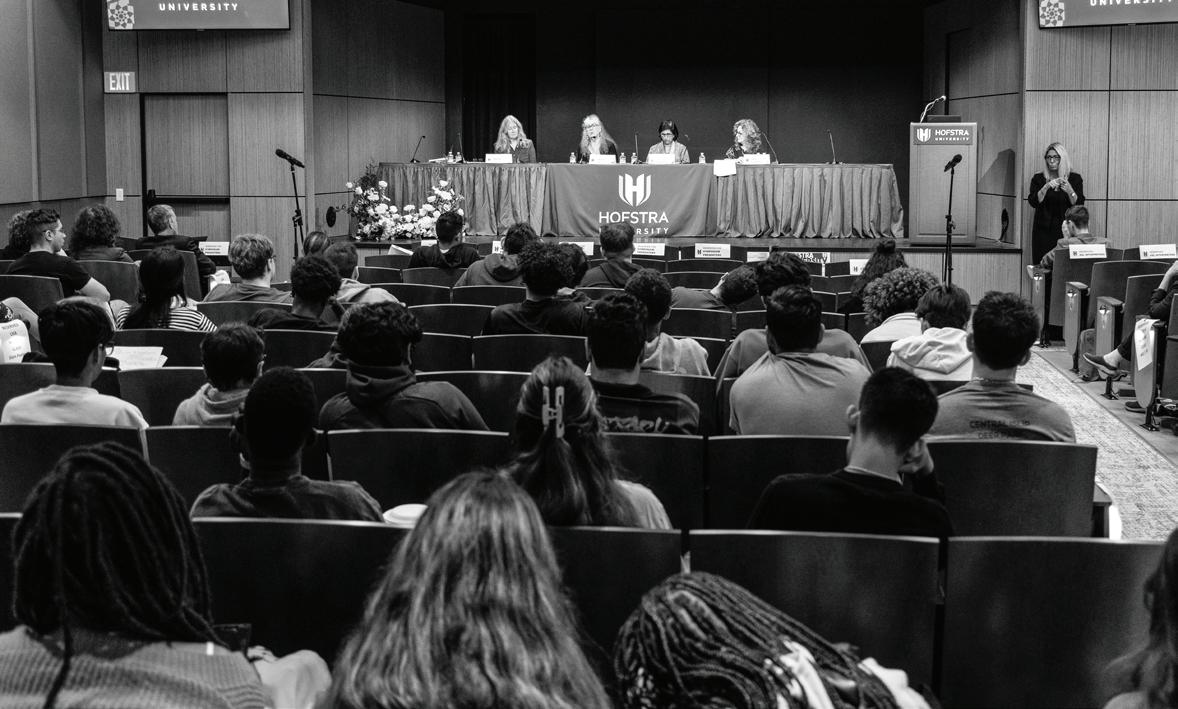
Hofstra University held a panel in September 2025 as a part of their effort to amplify diverse voices and provide a forum for the community redgarding racial equity.
Joe Orovitz / The Hofstra Chronicle
Club feature: A cappella coed groups cont.
CONTINUED FROM AI
The HofBeats don’t only perform around the university, they also perform at a competitive level in the International Championship of Collegiate A Cappella (ICCA) and smaller invitationals.
“Every single member is integral and essential to how we sound [and] how we function,” Gustafson said. “I feel so humbled and honored every time I’m in the room with such talented people.”
A cappella, the art of making music without instruments, combines all voices to make a sound that interprets a song. The HofBeats celebrate this art every day in their rehearsals.
The HofBeats rehearse twice a week for two hours each rehearsal. During each meeting, they begin with a warm-up then move on to practicing songs for an upcoming gig. After rehearsing together, each voice part separates into small groups to practice with their specific range.
“The vibe is very silly a lot of the time, but when we need to lock in, do work and learn music, we’ll lock in, do work and learn music,” said Jessica Sucharski, junior early childhood/childhood education major and president of The HofBeats.
During competition season, the group experiences a different rehearsal schedule.
“This is the fun part: we have a boot camp where we come back about a week early from winter break,” said The HofBeats secretary and junior psychology major, Emma Tarditi. “The campus is totally empty. We rent one of the dance rooms, and it’s ten hours of practice a day.”
Each day of the week has a theme to motivate members to have fun despite the busy schedule.
“We’ve had days like rhyme without reason and color wars before,” said Gustafson. “Boot camp was really the time I truly bonded with the group; it’s just so much fun.”
In a meeting dedicated to brainstorming the ICCA set, the team compiles three to four songs to perform the day of the competition. The set cannot be any longer than 10 minutes, so The
HofBeats really strive to reach right up to the 10-minute mark.
After deciding on a set, the group meets with Connor Martin, a 2018 Hofstra graduate and a cappella producer, to make tracks for each vocal group.
The HofBeats program is home to multiple range singers: soprano one and two, alto one and two, tenor one and two, baritones, basses and a beatboxer.
In auditions, The HofBeats looks for individuals who match the current team.
“There are so many amazing people who come to auditions and they blow us away. We just can’t take them because we already have ‘this many’ sopranos and we have ‘this many’ altos and stuff like that,” Tarditi said. “If we have too many, then it’s going to be an overpowering of [those] voices.”
The audition process typically lasts two days – a solo audition on day one and a blend test on day two. The blend test includes all current members of the team to see how the auditionee’s voice combines with everyone. The second day of the auditions is a callback. Auditionees hear back about their spot a day later.
Auditions take place at the beginning of the academic year, but The HofBeats will call a former non-accepted, but memorable auditionee at any time if a member drops during the semester or graduates in the December commencment.
The HofBeats takes each audition seriously, not only because of the collegiate competitions, but also to reach personal goals: their first extended play (EP) “Letters” was released in Sept. 2025.
“For me, [releasing an EP], was really, really cool,” Sucharski said. “This was the set that we performed at the competition my freshman year, so it was really cool to go from my first time doing competition with [The] HofBeats to now producing that album as a president of the group.”
“Being in [The] HofBeats has taught me a lot about believing in myself and not constantly comparing myself to other people,” Gustafson said. “It’s taught me to be brave when trying out for things.”
Sigma’cappella
Sigma’cappella (Sigma), Hofstra’s longest running coed a cappella group, was established in 1998 and welcomes singers of all voice parts and experience levels. President Taylor Sloley, a junior drama and computer science double major, auditioned their first semester of college after hearing the group perform during a Welcome Week event.
“I was lucky enough to get a callback after the audition, and I remember how accepting and affirming the environment was,” Sloley said. “You could tell everyone wanted you to succeed in that callback.”
Sigma gravitates towards alternative pop music, varying from the other a cappella groups on campus that tend to focus on more of a pop and rock vibe. This club aims to create music together as a group of friends who genuinely enjoy each other’s company.
“There’s something about openly choosing to spend your 6 p.m. to 8:30 p.m. on a Sunday with 16 other people that are also choosing to spend their night doing this,” Sloley said. “[It’s] the fact that everyone is just agreeing that they want to be here.”
They rehearse on Wednesdays 6 p.m. to 8 p.m. as well as Sundays. Sigma’s song arrangements are made by both former members and current members of the group, adding a sense of personal connection to each piece that is performed.
“It adds a little closeness to it, being able to show off what you make to the group,” Sloley said. “I think just that love amongst friends is what enhances our performances and makes things special.”
Similar to The HofBeats, Sigma holds an audition process at the beginning of the academic year, with a solo audition followed by a blend test. Students can sing the verse and chorus of any song that would generally be played on the radio. This club is always on the lookout for new voices that can bring in different ideas and talents to the group.
“Half of our songs for our ICCA set last year were picked by new members of the group. I just remember being so impressed

with the selections that the new members of the group had, seeing that creativity that you branch out from,” Sloley said.
There is no requirement for knowing how to read music or arrange a song. Sloley commented that this is something you could learn how to do when joining the group, along with the many other benefits, such as being comfortable and confident with performing.
“With a cappella in general, there’s a lot more regularity to the performances and there’s more stability in rehearsing every week,” Sloley said. “It also allows me to learn as a performer as well. I’ve taken lessons from performing a cappella songs and applied them to my auditions for the drama department or student films.”
Sloley touched on the importance of building friendships and connections in college, something that Sigma has helped them with tremendously.
“I think just having the chance to perform for your peers as well. Having some way for people to come up to you and be like, ‘Hey I saw you perform the other day!’ It’s a nice way of creating those organic human connections,” Sloley said.
This club balances strong musical performances while still focusing on having fun and maintaining a laidback environment.
“We are able to play our arrangements online, so that allows people to learn by ear, which is very helpful,” Sloley said. “We are able to make mu-
sic accessible to everyone.”
Much like The HofBeats, Sigma also participates in the ICCA’s and the a cappella tradition known as “boot camp.” Sloley recalled how tiring yet memorable and fun the experience was. In addition to the ICCA’s, Sigma participates in a yearly concert called invitationals where a cappella groups from Hofstra and other schools come together to perform.
Although the club has stayed traditional to its roots, there has been an integration of more diverse song selections and greater representation.
“The number of artists of color that we perform songs from now has grown a lot,” Sloley said. “Our ICCA set last year included three out of four artists of color – Mitski; Tyler, The Creator and WILLOW.”
Sigma’s arrangements can be heard under the name Sigma’cappella on Spotify.
As president of The HofBeats, Sucharski is dedicated to working with every a cappella group on campus.
“We do stuff together occasionally, but there isn’t as much collaboration as I would hope for,” Sucharski said. “I’m trying to make that improvement in my role.”
In the future, Hofstra may be seeing more collaboration between the two coed mixed voice a cappella groups, The HofBeats and Sigma’cappella.
Marilyn Steele / The Hofstra Chronicle
By Denivia Rivera
FEATURES EDITOR

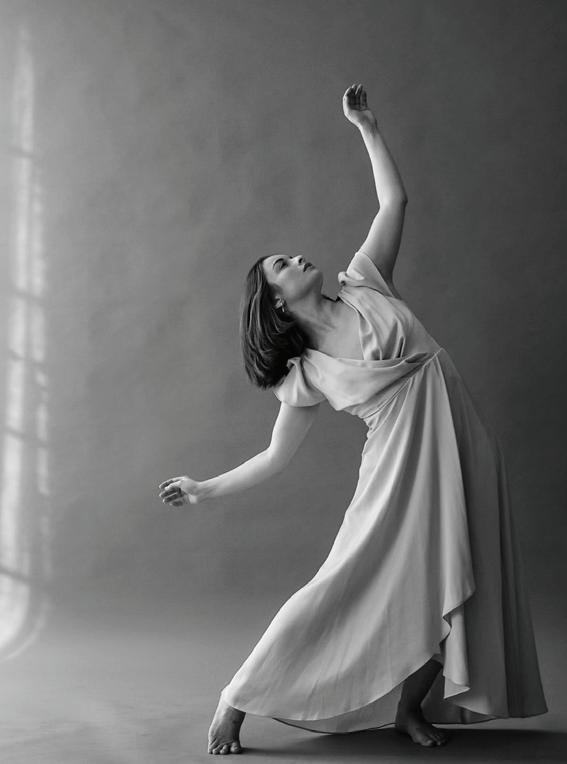
Gianna Guzzo graduated from Hofstra University in 2024, ready to take on the professional dance world.
Since graduating with a double major in dance and economics, Guzzo has danced with many professional dance companies. She recalls some of her connections with professors at Hofstra who set her up for success.
“One thing that I really appreciate about Hofstra is how connected I felt with professors and how my relationships with professors continued post-graduation,” Guzzo said. “Professor Dyane Harvey-Salaam introduced me to [Forces of Nature Dance Theatre] and I started performing with them as a sophomore. I continued that from then until now.”
Guzzo is a current company member of Forces, Robin Becker
FEATURES
Alumni feature: Gianna Guzzo
Dance, Amanda Selwyn Dance Theatre and i KADA Dance Company, and she has also danced for several other professional companies.
Guzzo said it was challenging to adjust to the time commitment and commute into New York City as a student.
“I had to get on top of managing my time and train schedules. The other challenge was being there in the room with dancers who are in their 30s and have already had a career for a decade and are super comfortable,” Guzzo said. “Working with them was a big inspiration because I wasn’t at that maturity yet. Forming relationships with them was extremely valuable.”
In addition to Forces, Guzzo was introduced to Robin Becker Dance by Hofstra professor Robin Becker. She most recently performed in the evening-length piece “Into Sunlight” in Hofstra’s very own John Cranford Adams Playhouse.
Former dance professor Amy Marshall was a mentor to Guzzo and a became her connection to Paul Taylor Dance Company.
“My first year out of graduation I was on scholarship at The Taylor School, and [Marshall] is now director of education,” Guzzo said. “She was a mentor to me at Hofstra in terms of planning out how to make life work as a dancer in New York post-grad.”
As a professional dancer in New
York, Guzzo said she loves the companies and projects she’s currently involved in because each of them gives her something different as an artist.
“I’m always looking for something new that challenges me and surprises me,” Guzzo said. “I love the things I’m doing now. [These things] and the schedule I have now with the dance companies is really enriching because I’m involved in many different projects.”
Guzzo said the most challenging experience she’s had as a professional dancer is being with company Dzul Dance.
“That company uses contemporary, ancient Mayan traditional dance, acrobatics, contortion and aerial work,” Guzzo said. “I was stepping in for another dancer, and it was extremely challenging. The partnering work was extremely hard and risky, and [it involved] so much trust and balance. It was so rewarding because I had to put so much work in.”
She said working with Dzul was very eye opening because she never thought she would be in something involving aerial, acrobatics and partnering work, but she loved the challenge.
An additional eye-opening experience for Guzzo as a dancer and artist was found in her time studying abroad in Amsterdam as an undergraduate student. She said that the exposure of dancing abroad made her open to different ways of moving.
“The opportunity to study abroad in the Netherlands was huge,” Guzzo said. “That was a great opportunity to be there during my time at Hofstra and meet other dancers and be exposed to other dance styles.”
Guzzo said the biggest lesson she’s learned from dancing professionally is to respect yourself and listen to your needs.
“When you walk into these rooms with all these other dancers, all different life experiences, dance experiences, different stages of life, different backgrounds and different countries they come from, you learn a lot about people, and it’s exciting,” Guzzo said. “I’ve learned it’s important to take care of yourself and make sure that you honor your needs and you honor your integrity.”
With the tension and high emotions present in the professional dance world, Guzzo said she had to learn what is meant for her and how to react.
“I really had to learn to take care of myself, make sure I’m good at what I’m doing, make sure I’m in the right spot at the right time and that I’m being safe because it’s impossible to control what other people are doing,” Guzzo said.
She plans to continue pursuing new opportunities that challenge her in the future.
“Going forward I just want to be involved in new projects that are avant-garde, something that challenges me and something that
is strange at first,” Guzzo said. “I like the excitement of that.”
In her time at Hofstra, she said that what she is most thankful for is the professors she connected with who supported her then and now.
“I would like to extend a thank you to Rachel List, [Becker,] former professor [Marshall,] Mama Dyane and a few of my economics professors. Professor [Constantine] Alexandrakis, Professor [Massoud] Fazeli and Suzanne Pike of the study abroad program,” Guzzo said. “I’d like to thank them for supporting me. Those relationships are some of the most valuable things that I got to take away from Hofstra.”
“I’m grateful that the support of these people extends,” Guzzo said. “There wasn’t an end. They’re still there for me and I’m grateful for that.”
How Hofstra helped me reclaim my last name
By Ethan Poole SPORTS EDITOR
I have always had an interesting relationship with my last name. As a young kid, most nicknames were directed toward my first name (“Wheat Thin” is still a personal favorite of mine). As time went on, people occasionally called me by my last name, “Poole,” or intentionally misnamed me as “Poolie,” but I was still mostly called “Ethan” by everyone except for my middle school band and history teachers until my sophomore year of high school. In the spring of that year, with COVID-19 restrictions fi -
nally starting to ease up, I started a band with a few friends, and I joined my high school’s junior varsity baseball team. In both of these environments, my last name was almost exclusively what I was referred to as – partially because both groups had people who shared my first name, but mostly because on the baseball team, everyone got the last-name treatment. The issues didn’t start until my junior year, when my band – and all of my relationships within it – imploded spectacularly. I had been stabbed in the back by four of my closest friends. They spread rumors about me, and every time we talked to each other ended in
an explosive argument. All of this with them still calling me “Poole.”
The baseball team was just as bad; I was the team manager for my last two years and the bullying was relentless. They’d belittle me, all while saying the name “Poole.”
All of this was incredibly damaging to me; I dreaded going to school because I knew I’d have to face all of those people for another day. Eventually, I grew to hate hearing my name, even from close friends and family. Every time I heard “Poole,” especially if someone was calling me by that name only, I wanted to crawl into a shell. It brought me back to ev -
erything I was going through.
This extended well after high school and into my freshman year at Hofstra University. I became very involved in school’s activities during my freshman year. I not only joined The Hofstra Chronicle, but also became involved with WRHU and the HEAT Network. Nearly everyone I met called me by my last name. At first, every time I was called “Poole” I was right back at baseball practice or at band rehearsal being berated or terrorized with that name.
However, things started to change around my second semester. I began to realize that people were saying my name
with joy when I walked into a room instead of mocking me with it. It was still a long process to become comfortable with hearing my last name consistently again. Eventually I was able to not only associate it with happy memories, but to reconnect with my last name and not see it as a vehicle for my torment. I owe much of this to the incredible people I’ve met on this campus; many of them don’t know how much their simple kindness and friendliness has helped me heal and feel whole again. Without them, I’d almost certainly still feel distant toward an incredibly important part of my identity.
Photo courtesy of James Jin
Photo courtesy of James Jin
M AN ON THE U NISPAN
“What’s on your holiday wishlist this year?”
By Denivia Rivera, Emilie Morrissette and Joe Orovitz FEATURES EDITOR, ASSISTANT FEATURES EDITOR AND MULTIMEDIA EDITOR

“I want a cardigan from Critical Role, but it’s all out of stock.”
- Wyatt Trzaskos, sophomore

O verheard @ h O fstra
“Why do you know that catcalling is a skill that you have?”
“Your hair is always so silky; I’m gonna harvest it.”
“I would rather french kiss a hobo than fly Spirit [Airlines].”

“Sleep.”
- Alexandria Yacoob, freshman
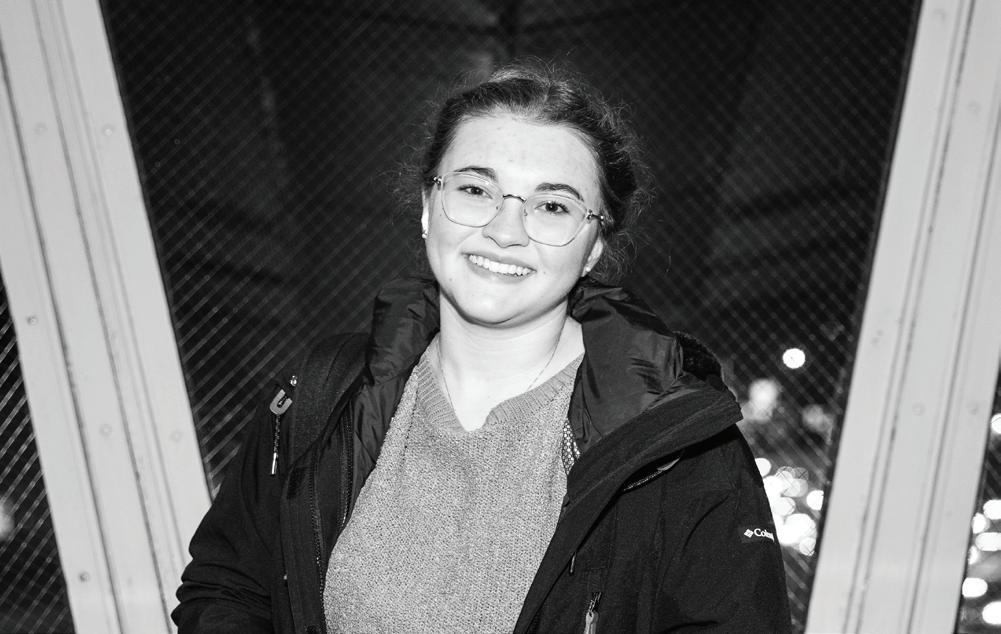
“A lot of books. That’s mostly what it is.”
- Kaia Henderson, freshman
“Why does Vecna have a 14-inch waist?”
“Not you two eavesdropping like Santa’s elves.”
“What in the arranged marriage?”
“She blocked me on LinkedIn.”
“I remember smelling him before I saw him. My nose was stupefied.”
“Why is it called Byler?”

If there’s something funny you overhear, you can now submit it here!
Spread by Hannah Mudry, Denivia Rivera and Emilie Morrissette
Joe Orovitz / The Hofstra Chronicle
Club feature: Ballroom and Latin Dance
By Kat Powers STAFF WRITER
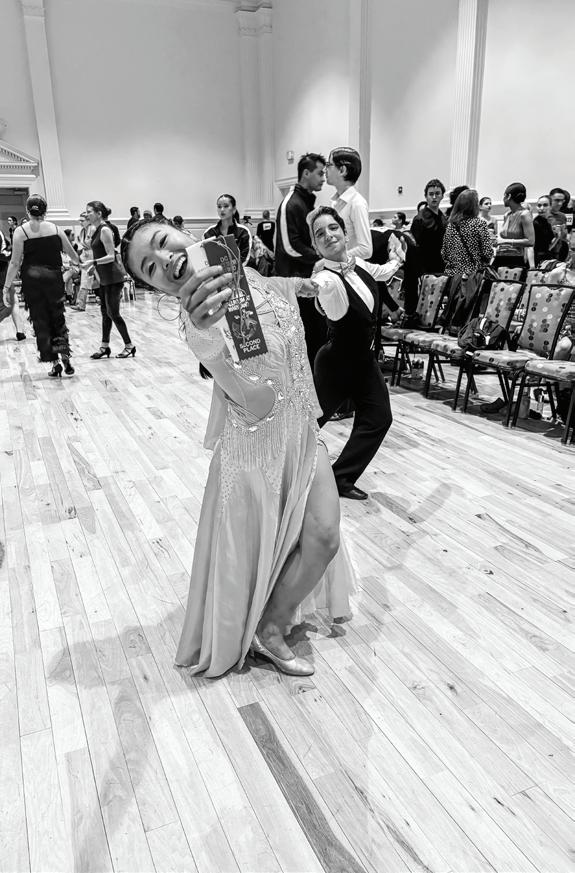
Trails of sparkles, half-used tubes of hair gel, streaks of sweated-off body makeup and 4 a.m. alarms are the lullabies of Hofstra University’s Ballroom and Latin Dance Club.
Ballroom dance, which is no longer a common social event, is still alive and well among the collegiate competition circuit. It consists of partner dances with one lead and one follow.
Mika Freitor, junior English major and vice president of the Ballroom and Latin Dance Club, explained that ballroom dance includes graceful and elegant styles.
“The term ‘ballroom’ encapsulates four styles of dance within the ballroom and Latin categories,” Freitor said. “The dances you associate with a ball: waltz, tango, and the like.”
Ballroom is then divided into
two more subsections: standard and smooth. Waltz, tango, Viennese waltz, quickstep and foxtrot are the standard and smooth dances. Standard and smooth have many of the same dances within them, but the rules differ. The biggest difference is that in standard, you cannot disconnect from frame, which is the positions dancers hold their upper bodies in, whereas in smooth, you can. Standard is an international style done around the world, but smooth is unique to the United States. Additionally, some of the steps differ. For example, standard foxtrot and smooth foxtrot are entirely different dances with completely different steps, but they are both jazzy in nature and are performed to similar music.
“The jazzy nature of foxtrot can be compared to jazz, with both of them having similar steps such as grapevines and jazz boxes,” said former club president and senior dance and forensic science double major Taryn Norrod.
Beyond ballroom, the club also does Latin dance, which tends to be more sensual, with hip movement and shorter gowns to add focus to the sharp leg motions. Under the Latin dance umbrella, there is a version called “rhythm.”
Latin is the international style with stricter rules than ballroom. The main rule in Latin is to keep your legs straight. Rhythm is the American version of the style that showcases bent legs.
“It’s difficult to find a parallel for [these styles] without reaching towards traditional Latin dance,” Norrod said. “The complex hip action and super precise legs in conjunction with the high level of performance quality required makes it different from most
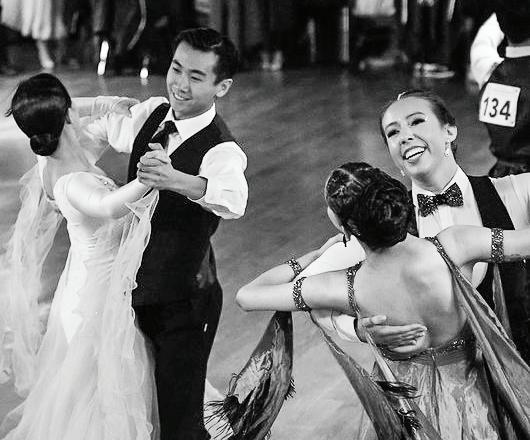
are also spectacular performers, whether that means looking wistfully reminiscent in waltz, or fiercely passionate in tango,” said Amber Sun, advanced ballroom and Latin dancer and junior biology major.
“The term ‘ballroom’ encapsulates four styles of dance within the ballroom and Latin categories. The dances you associate with a ball: waltz, tango, and the like...”
Norrod grew up a ballerina, which helped her with ballroom dance in some ways and hindered her in others. “Smooth has so many parallels to ballet in the way that you move and spin and hold yourself,” Norrod said.
popular styles of dance taught in studios.”
Another big part of all ballroom and Latin dance is the performance aspect.
“On the floor, you need more than technique: the best dancers
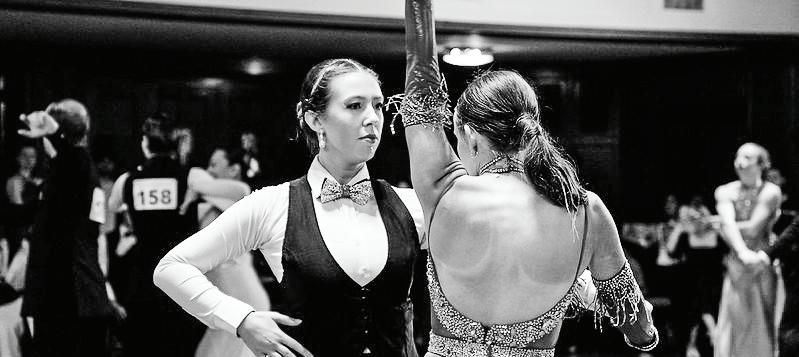
While the lead is the traditionally masculine role and the follow is the traditionally feminine role, Hofstra – both out of necessity and empowerment –features same-sex partnerships, meaning both the lead and the follow are women. Hofstra’s ballroom club is actually entirely composed of women.
“Switching to leading was one of the best decisions I’ve made, much better suited to my preferences and strengths,” Freitor said. “Being able to do both makes you better rounded as a dancer.”
Beyond just learning the dances, many of Hofstra’s dancers compete. There are four main levels: newcomer, bronze, silver and gold. There are levels above for advanced dancers, but most collegiate students dance within the first four. As you level up, you are allowed to compete more figures, which are essentially different moves.
“As a team, we go to two competitions per semester, but
sometimes the more advanced dancers will go to up to four,” said senior political science and global studies double major and competition coordinator, Cassandra Rogers. “Everyone always competes against people at their level, so if you are a newcomer, you will never be dancing with couples who have been dancing for years.”
Hofstra’s Ballroom and Latin Dance Club was established 11 years ago after the founding president, Ria Dela Rosa, took a ballroom class. Norrod said the class got Dela Rosa and her friends hooked and they wanted to make a club once they found out that Hofstra didn’t have one.
Dancers can choose the option of dancing socially at practices or training to compete.
“Social members are welcome to come and learn dances at practices here on campus, and for some of the more local competitions, you can come just to watch,” Rogers said.
Practices are held on Mondays and Thursdays from 8 p.m. to 10 p.m. and Wednesdays from 6:45 p.m. to 9:45 p.m. in Netherlands Hall North. Students of all skill levels are welcome. Professional dancer and coach James Repetti along with student executive board members teach lessons at the meetings.
More information on Hofstra’s Ballroom and Latin Dance Club can be found on their Instagram @huballroomdance.
Photo provided by Amber Sun
Photo provided by Carol Chin
Photo provided by Carol Chin
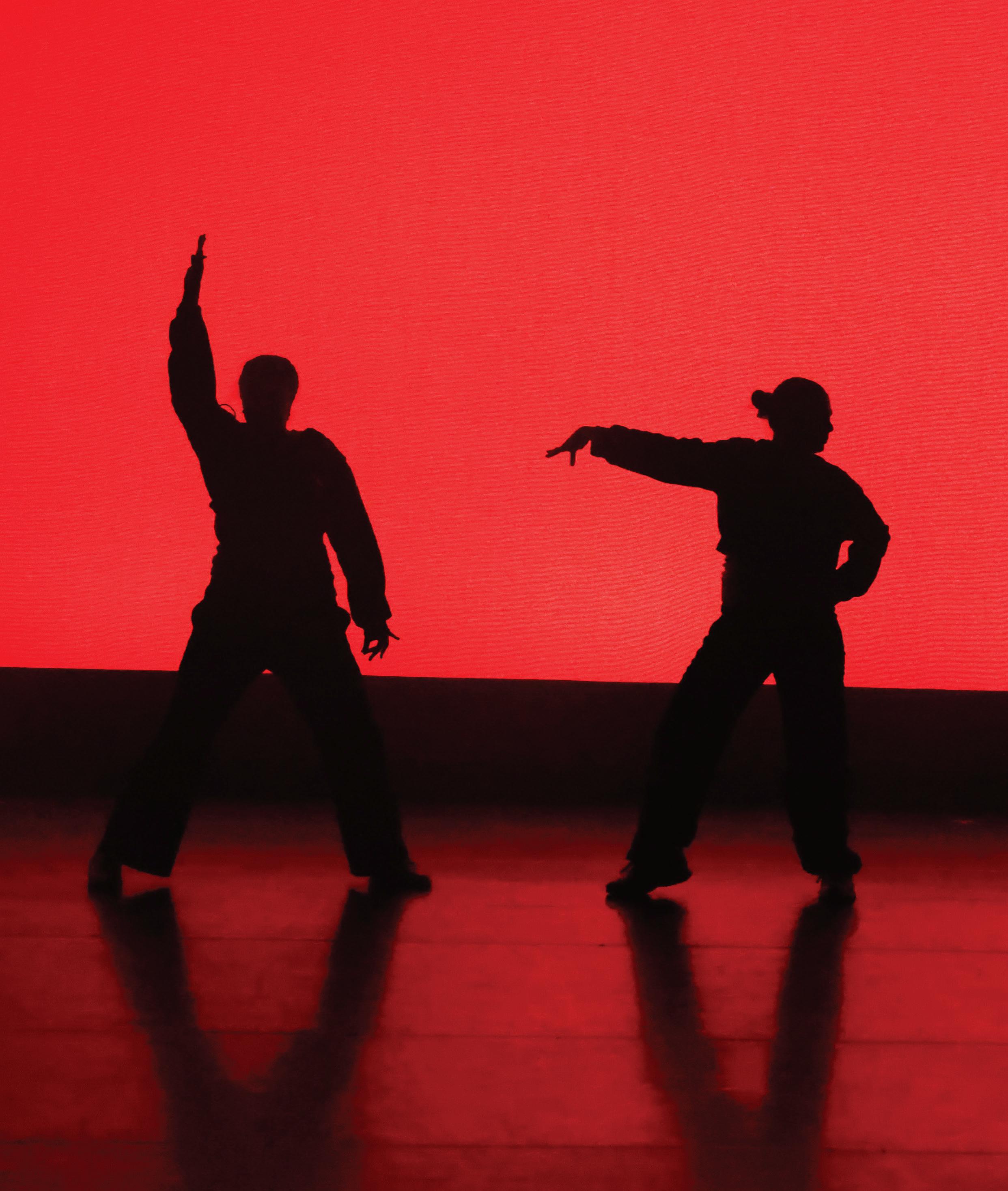
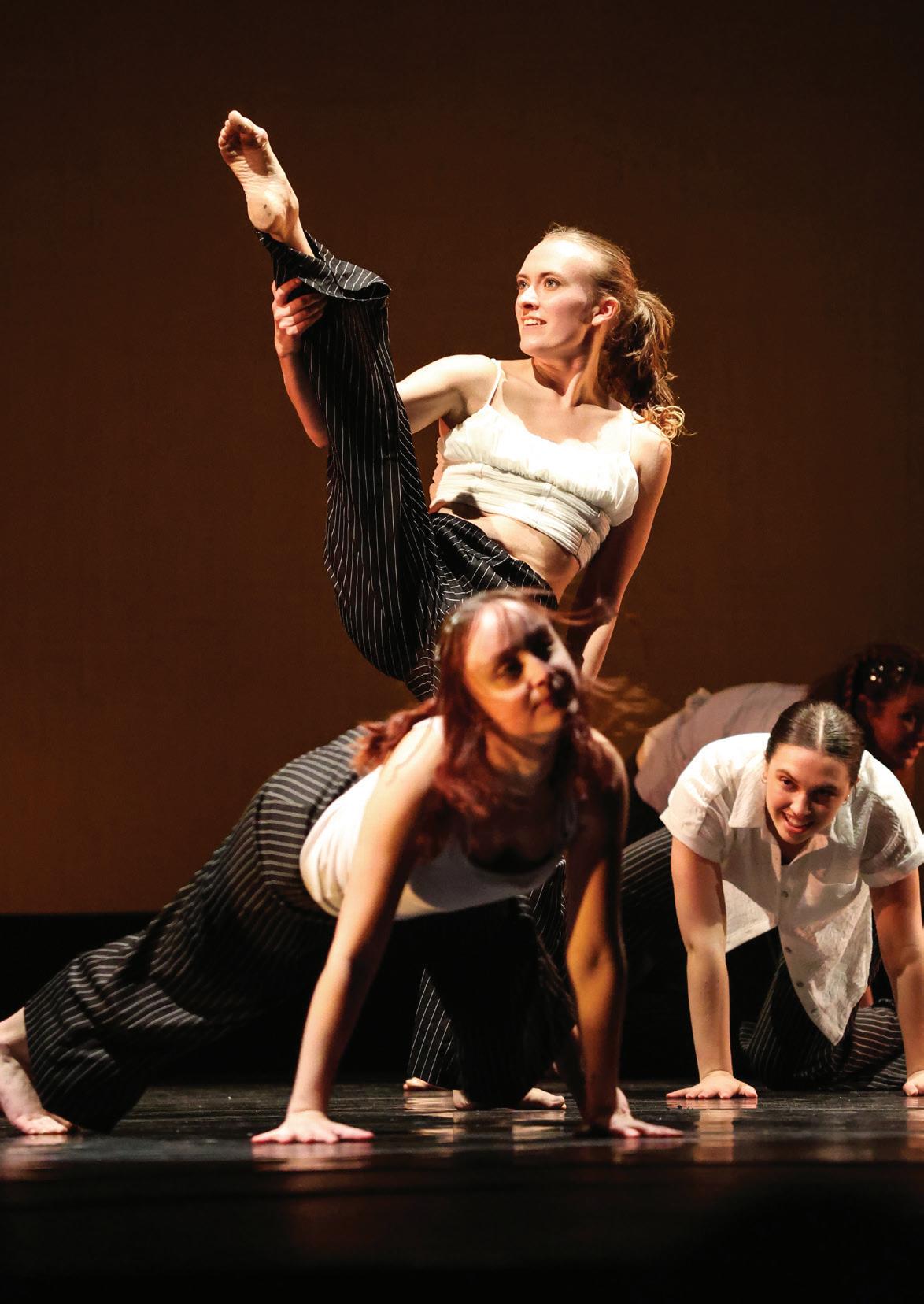
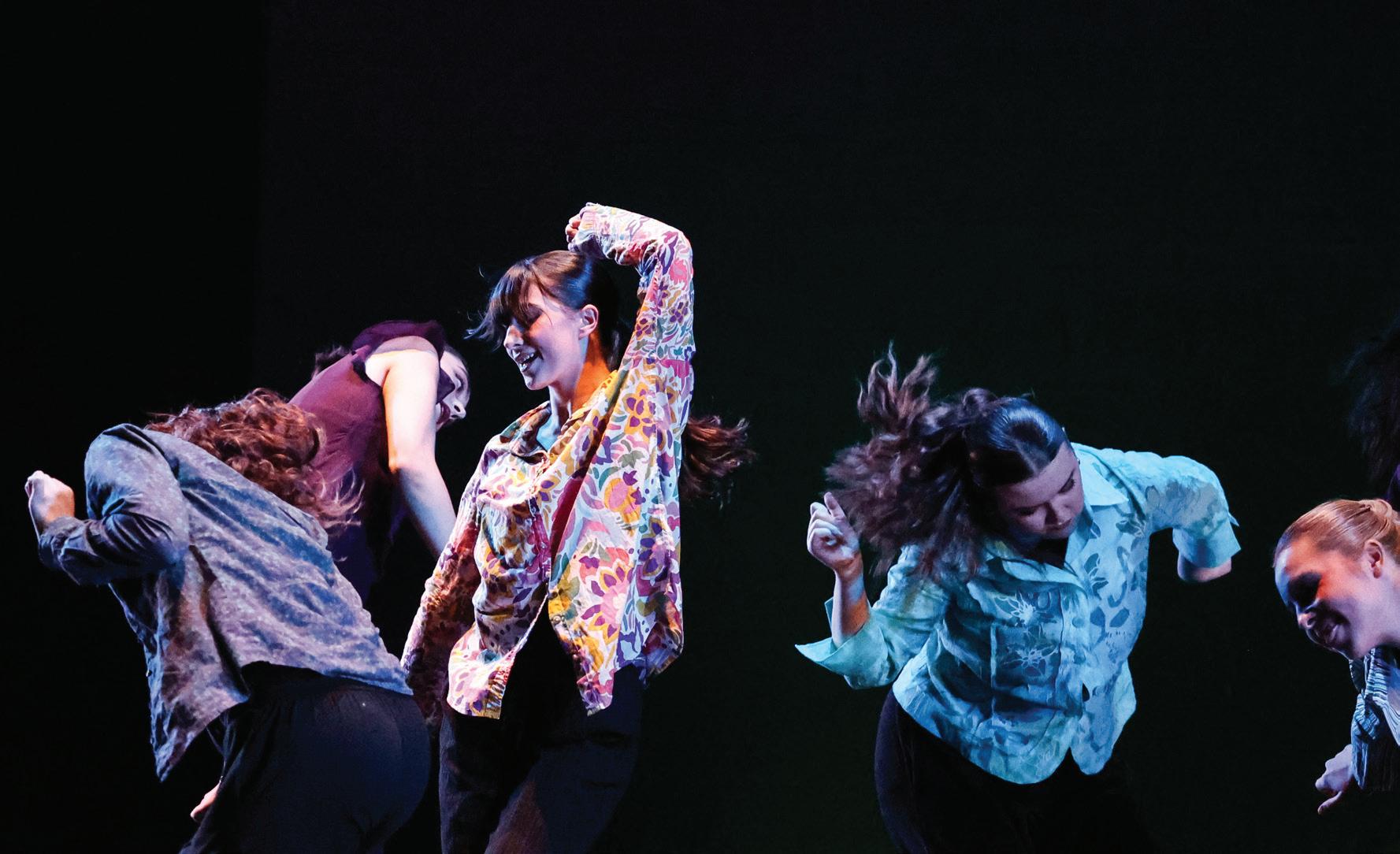
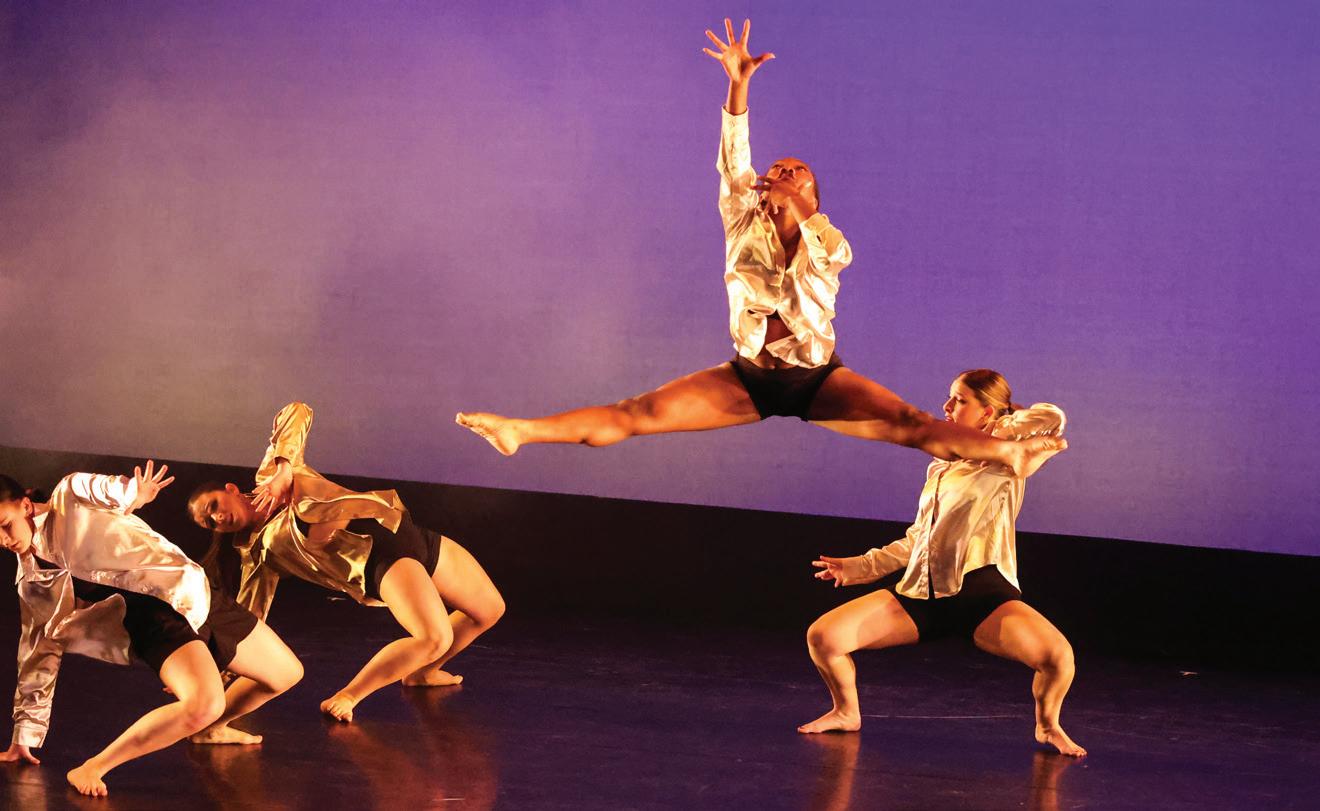
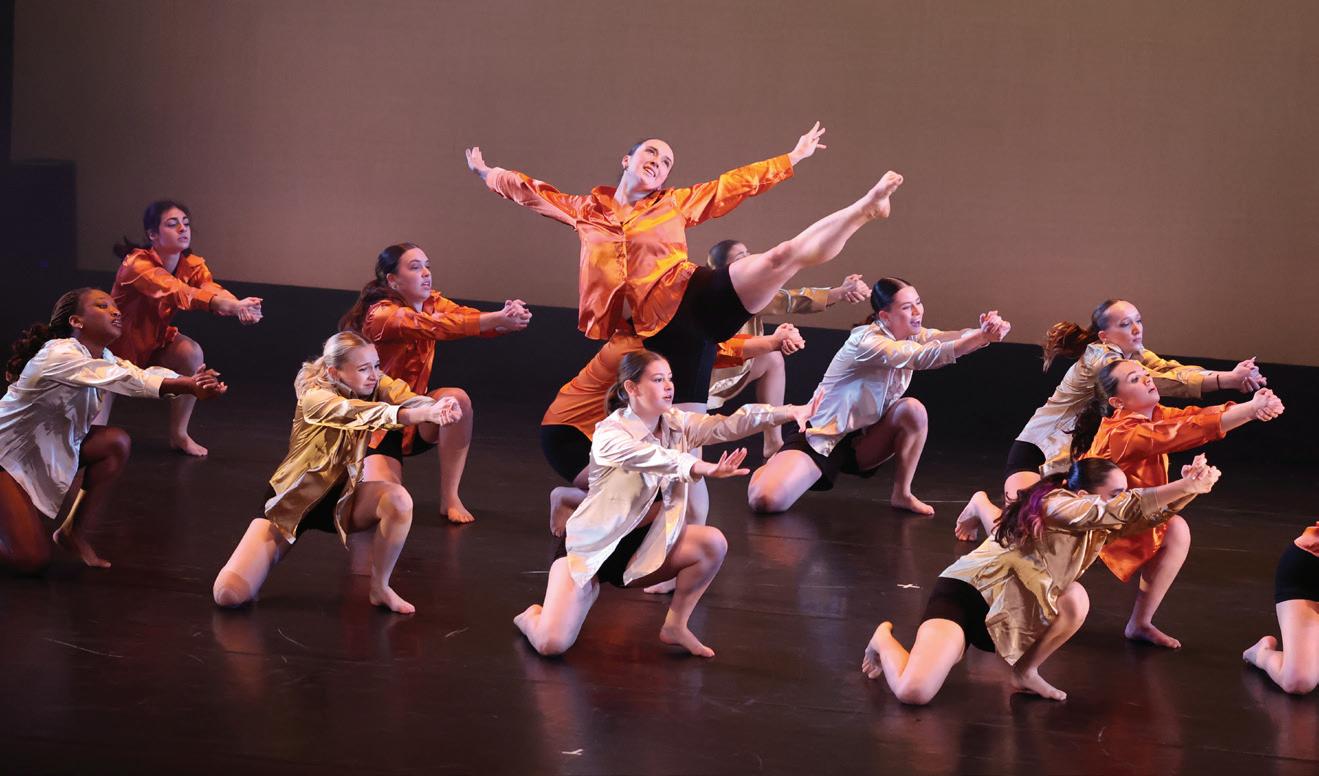
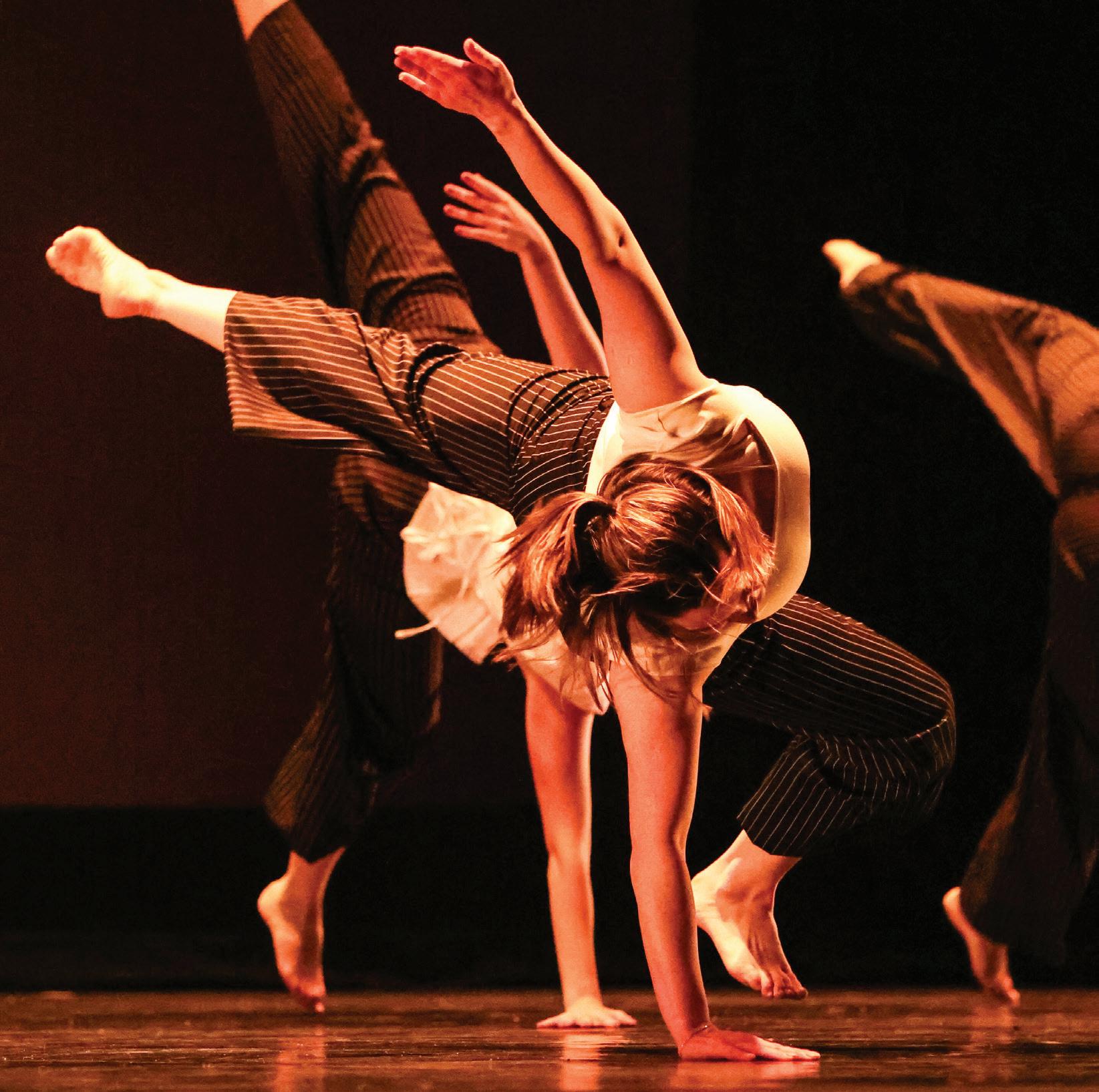
Student choreographers created pieces for Danceworks Productions’ semesterly show. The production featured a happy hour-inspired jazz piece, a 1980s style hip-hop and a Tyler, The Creator-narrated dance, among other performances. Announcing their philanthropy efforts, Danceworks executive board members weaved speeches through the production. The show was an experience of lights, music and dance.
Dancing with the students
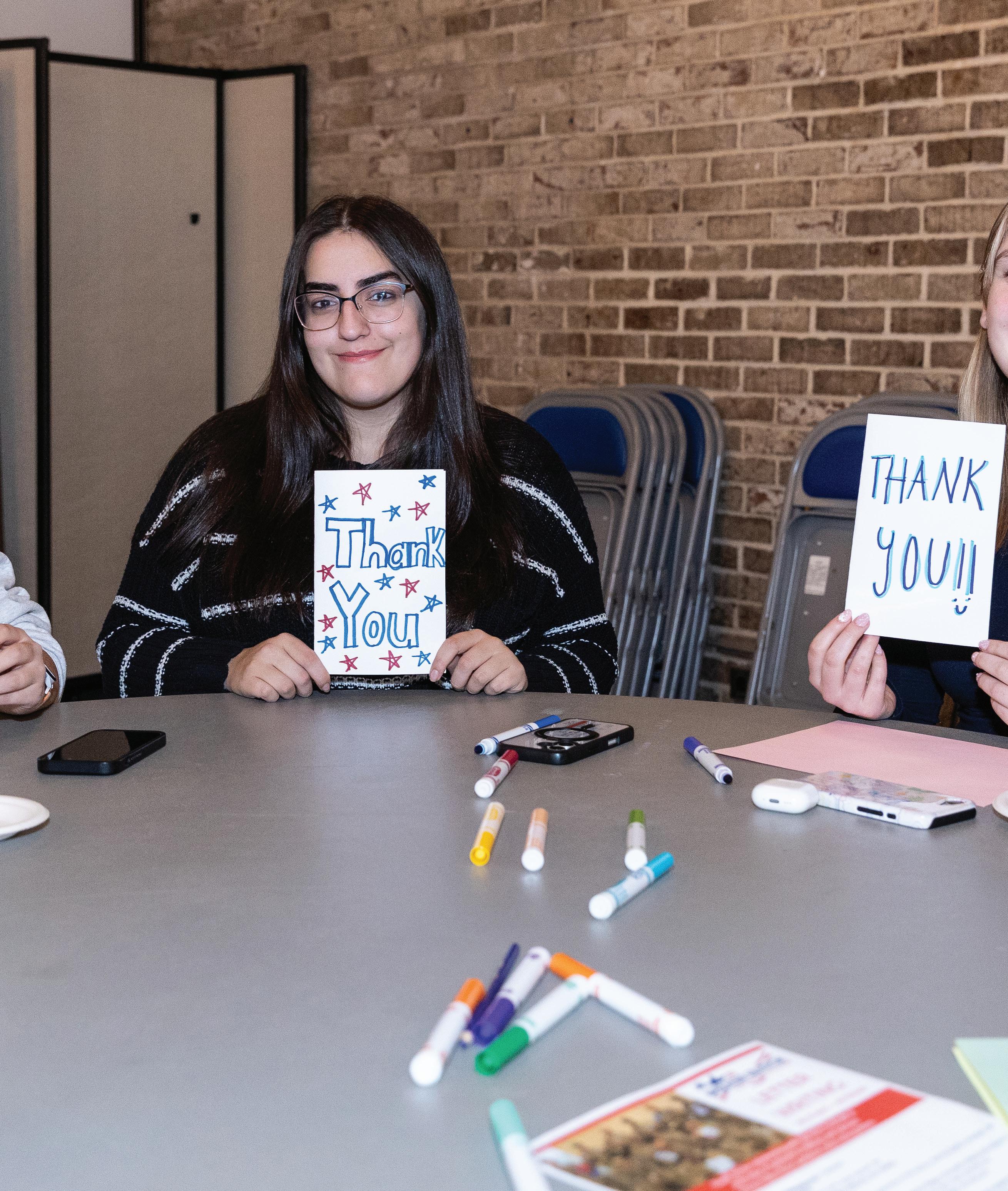
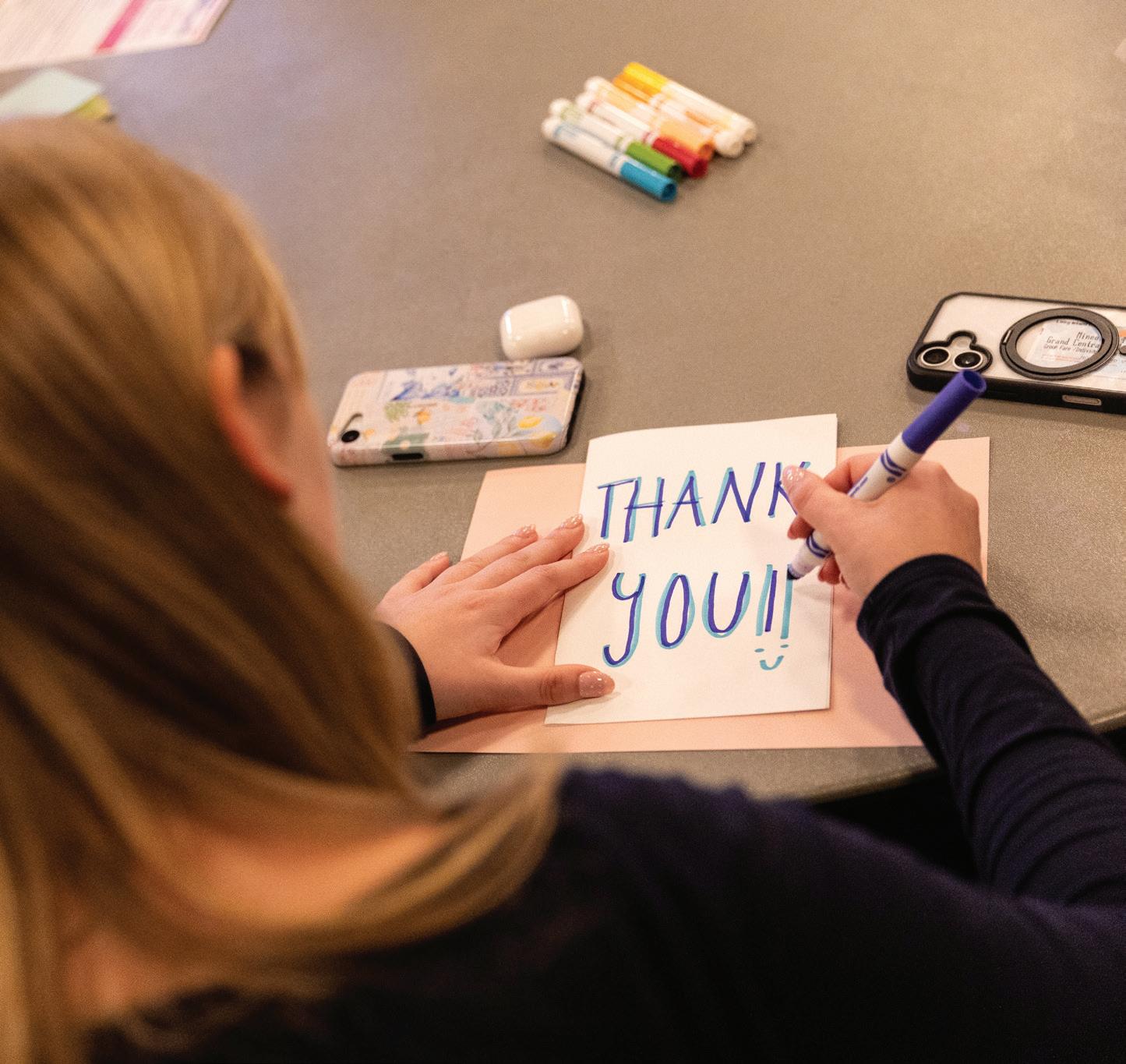
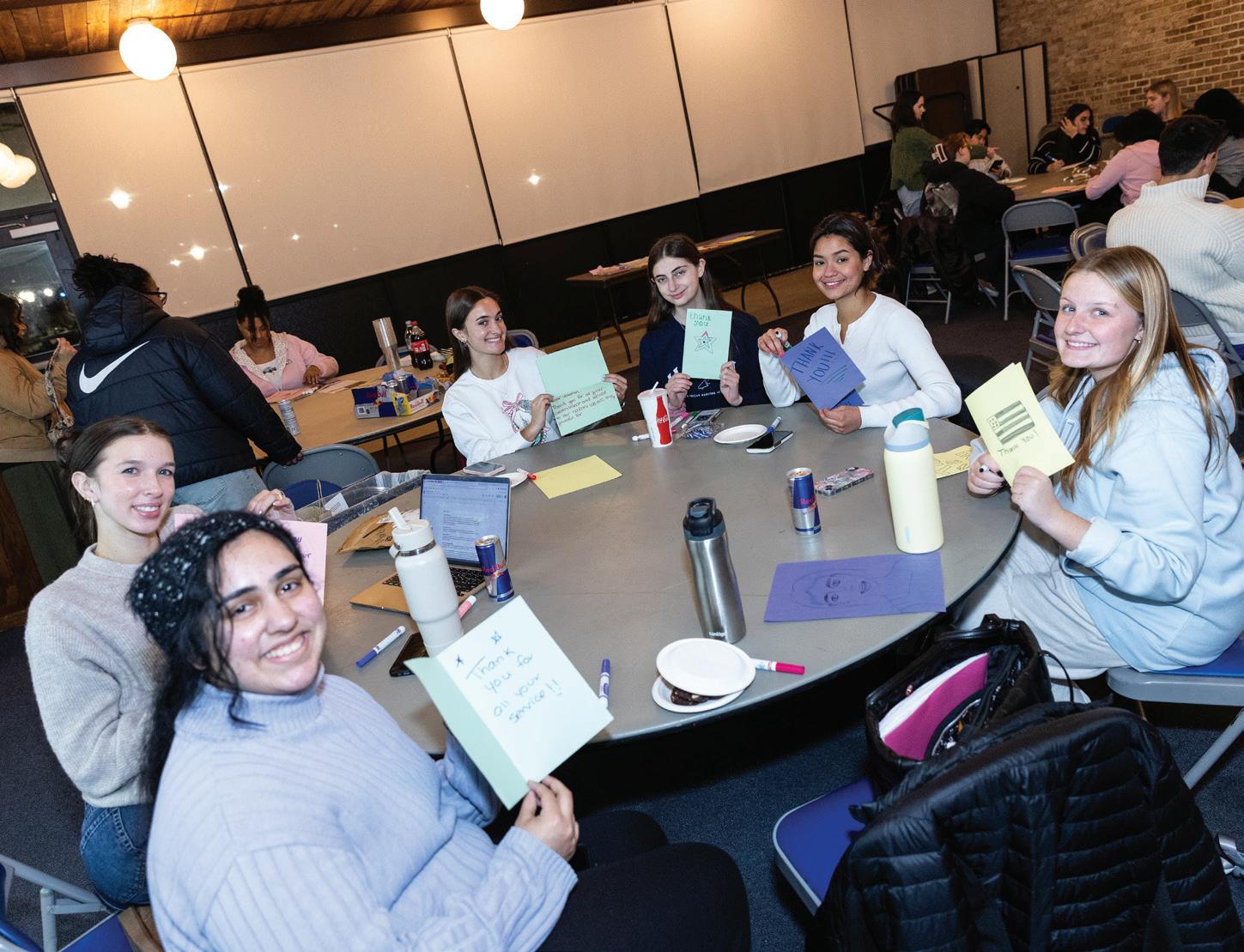
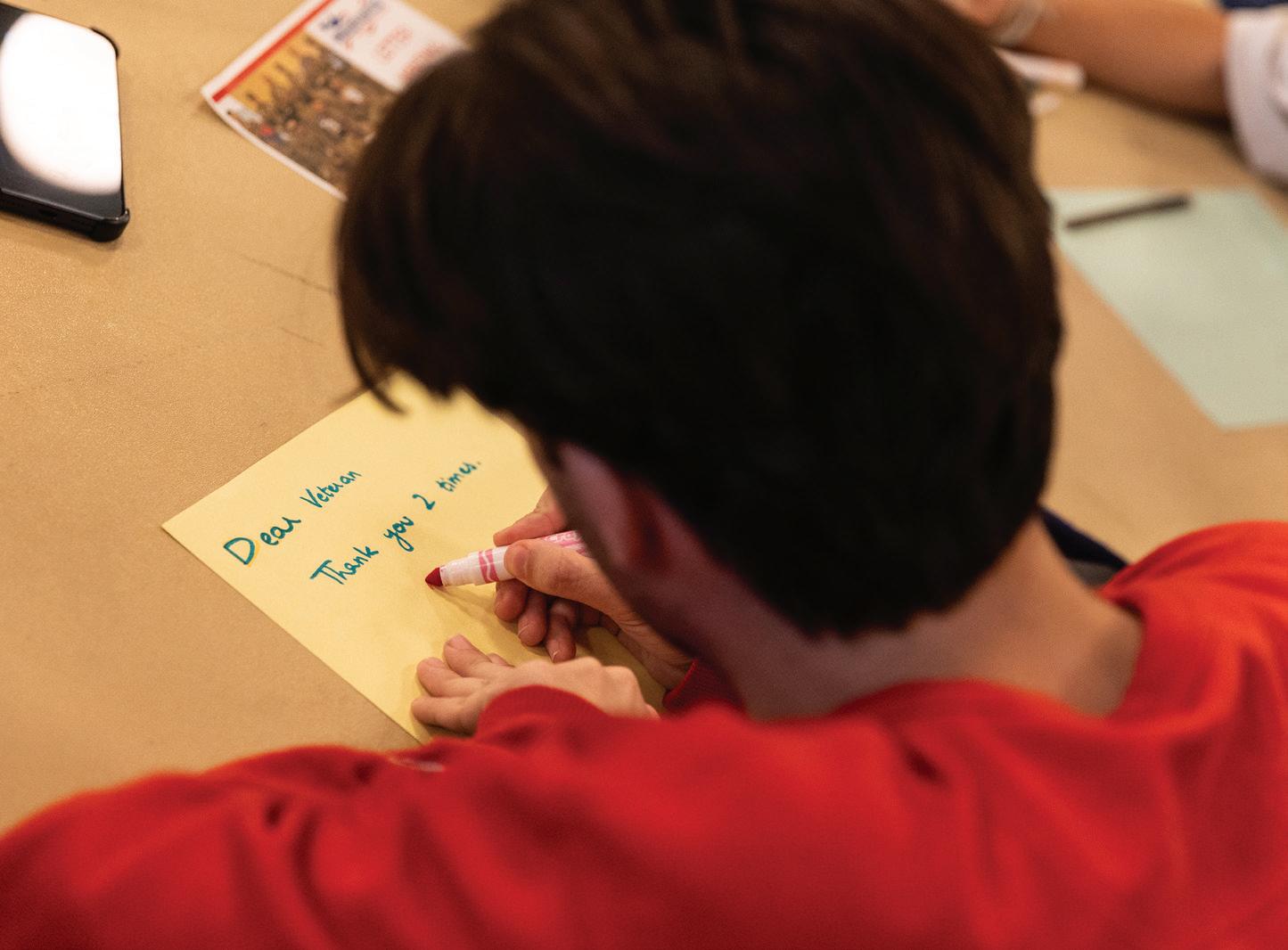
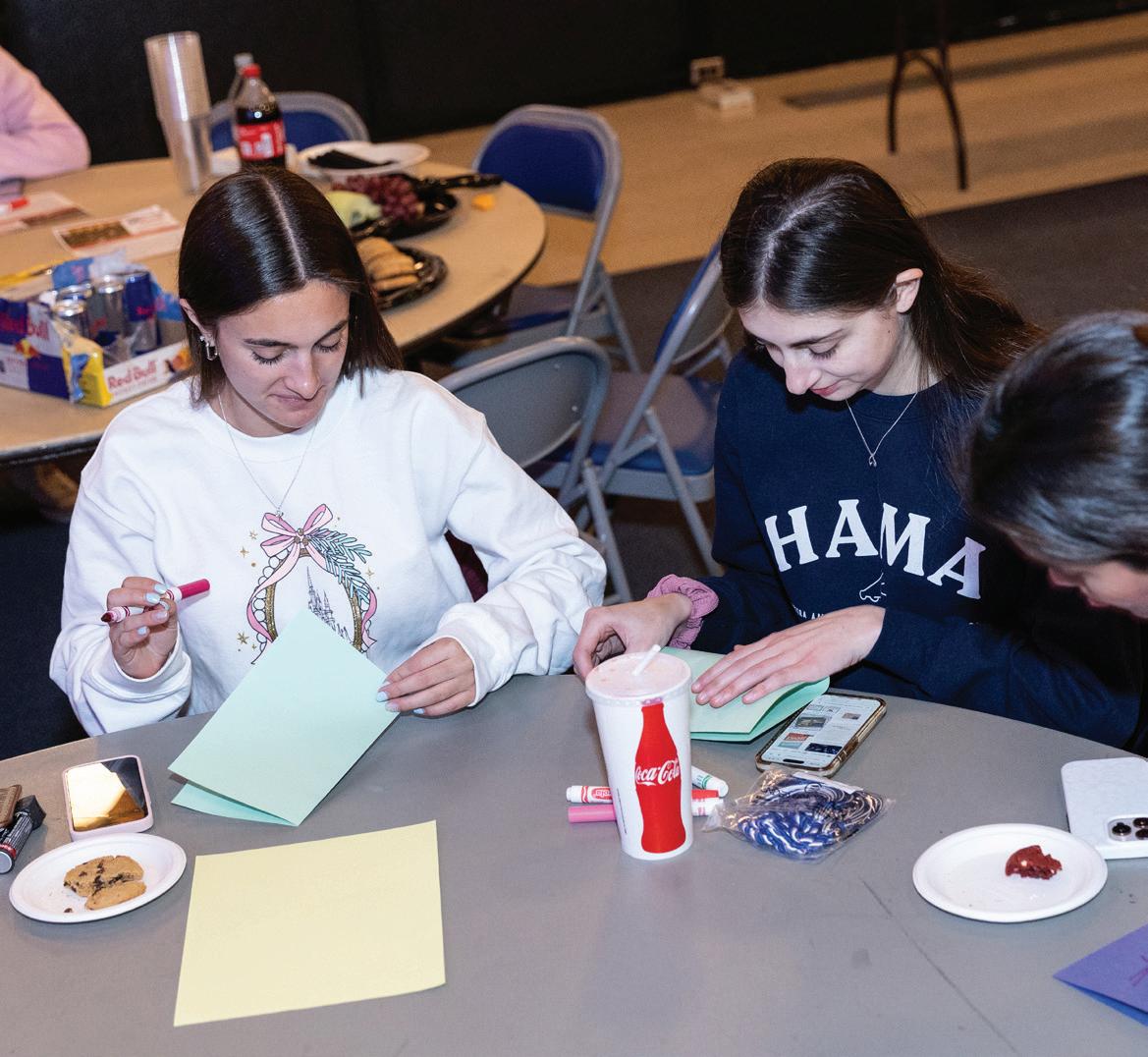
Hofstra University’s Association for Supply Management, SheEOs and the Hofstra American Marketing Association hosted a holiday card making event for veterans! Participants wrote colorful and cheerful notes with markers and construction papers for Operation Gratitude, a nonprofit which focuses on giving care packages to active and former military. The event helped students give thanks to those who protect our country.

Spread by Kumba Jagne and Joe Orovitz
Background by Joe Orovitz / The Hofstra Chronicle
Joe Orovitz / The Hofstra Chronicle
Spread by Kumba Jagne and Joe Orovitz
Background by Lilith Walpole / The Hofstra Chronicle
Lilith Walpole / The Hofstra Chronicle
Lilith Walpole / The Hofstra Chronicle
Lilith Walpole / The Hofstra Chronicle
Lilith Walpole / The Hofstra Chronicle
Lilith Walpole / The Hofstra Chronicle
Joe Orovitz / The Hofstra Chronicle Joe Orovitz / The Hofstra Chronicle
Joe Orovitz / The Hofstra Chronicle
Joe Orovitz / The Hofstra Chronicle
Arts And EntErtAinmEnt

Photo
Brighten your winter with these holiday rom-coms
By Kat Powers STAFF WRITER
From nostalgia-encrusted classics to 2000s flicks, I’ve gathered up some of the world’s favorite holiday-themed rom-coms.
“Love Actually”
As far as I’m concerned, this is the Christmas rom-com. Stories of heartbreak, loss, new love and old love dance across the screen, and somehow, they’re all tangled up together. Audiences are sure to recognize at least one face with a cast including Emma Thompson, Alan Rickman, Hugh Grant, Colin Firth, Keira Knightley, Liam Neeson, Laura Linney and Bill Nighy. The film opens with a scene of airport greetings and goodbyes playing beneath Grant’s opening monologue: “If you look for it, I’ve got a sneaky feeling you’ll find that love, actually, is all around.”
“Miracle on 34th Street”
This has been my favorite movie since I was a little girl.
By Josh Gordon STAFF WRITER
The year of 2025 has been amazing for music, with many artists challenging themselves to further their creativity and the quality of their music. I’ve listened to about 45 albums this year. All of them are unique in their own way, but there are always standouts. These are my top five albums of 2025. Ranking at the low end of the list is “Yuki” by Japanese art and jazz rock band, betcover!!. Given that this is jazz and rock focused, the instrumentation takes center stage.
On this project, the band plays with jazz fusion, specifically soft jazz coupled with art rock. The arrangement of music here is magnificent in scale, giving it a grand sound. The band also has a very sporadic tone, often quickly changing tempos masterfully. This contributed to the many reasons why I loved
I have yet to see the original black and white version from 1947, but the newer version with Dylan McDermott, Richard Attenborough, and Mara Wilson (“Matilda”) has had my heart for as long as I can remember. The movie would make a cynic believe in hope. Brian Bedford (McDermott) loves six-yearold Susan, daughter of Dorey Walker (Elizabeth Perkins) as if she were his own daughter. In falling in love with Dorey and her daughter, Brian fulfills Susan’s Christmas wish and proves to her that Santa Clause is real – all in less than a month.
“While You Were Sleeping”
This movie is like a warm cup of tea on a snowy day – you come in from shoveling the walkway, strip off your winter gear, curl up with a blanket and warm your shivering hands with a mug the size of your head filled to the brim with steaming cocoa. Leading lady Lucy (Sandra Bullock) falls in love, but not with the man she claims is her fiancé. When Lucy saves
Peter’s (Peter Gallagher) life, she is trapped into telling his family that she is engaged to him; a man she has never met. While Peter is asleep, Lucy falls in love with Jack (Bill Pullman), Peter’s brother, and grows closer to Peter’s whole family. With quotable lines applicable to nearly all situations, it is a true holiday staple.
“The Holiday”
Starring Jude Law, Cameron Diaz, Jack Black and Kate Winslet, this is a fan favorite. It tells the story of two women who travel across the Atlantic Ocean to get away from the bad patterns in their love lives. Amanda (Diaz) and Iris (Winslet) find each other’s homes on a house swapping site. Amanda lives in a Los Angeles mansion; Iris lives in a cozy English cottage. They have each other’s dream lives, and, as it turns out, access to each other’s dream men. Love blooms among frozen white snow and sun-filled windows. Relatable characters experience whirlwind romances
The best albums of 2025
the album.
Next is “God Does Like Ugly” by rapper JID. The 35-year-old artist is a very versatile rapper, and this album only further cements that status and his potential to become a legend.
I’ve always loved JID for his amazing flows. He raps over many kinds of instrumentals on this album, never failing to showcase his talent. His lyricism is the part of his music I love the most.
JID’s rhymes are always full of hidden meanings and references that really shine on this album, making it another one of my favorites from this year.
In the No. 3 spot is “Chrysanthemum” by Valeriey. This album was released in three separate parts – The Creator, Dancing Destroyer and The Preserver – with each part exploring a certain aspect of the universe.
Valeriey is a very unknown artist, having only about 160
over the backdrop of the most magical time of the year: Christmas.
“You’ve Got Mail”
This Nora Ephron classic features Meg Ryan and Tom Hanks. Their two characters start the film internet chatting not realizing that they’ve met in real life. Joe Fox (Hanks) is the son of the owner of a large conglomerate bookstore, Fox Books, who has recently opened a location only minutes away from Kathleen Kelly’s (Ryan) small children’s bookstore, The Shop Around the Corner. The big business threatens to close her shop’s doors. Knowing each other only as Shopgirl and NY152, they meet. What will happen when Joe realizes that Shopgirl and the “beautiful pill” from The Shop Around the Corner are, in fact, the same person?
So, if you needed something to watch to grow your holiday cheer, take a pick at one of these five movies.
Quick Hits

Want more A&E Content? Scan to learn more about what's happening in the world of entertainment!

four episodes
monthly listeners, but they’re already a master of their craft. In “Chrysanthemum,” Valeriey personifies the concepts of the universe to explore themes of adolescence, political revolution and love, as well as a multitude of other things.
Valeriey has a style between both R&B and rap, mixing them together on this project. In terms of creativity and concept, I consider it to be their best album to date.
No. 1 and No. 2 often swap places in my ranking. They are hard to compare because of their genres and themes, but number two ultimately is “Baby” by Dijon.
Dijon is one of my favorite artists and has been for some time. This album encapsulates everything I love about him, but most importantly, it encapsulates the genuineness he includes in all his art. He puts pieces of himself into his music, which is clear from his lyrics, which often include
experiences of his life.
His lyrics contain his views on love, family and being true to oneself. “Baby” is a culmination of all these topics, and Dijon truly outdid himself with this project. The album highlights his talents for songwriting and production, which only continue to evolve.
In my No. 1 spot is “Magic, Alive!” by jazz rapper McKinley Dixon. This was one of my most awaited albums of 2025, and it did not disappoint. On the 11-track project, Dixon tackles the concept of what it means to “live forever.” He does this through the portrayal of kids trying to resurrect a dead friend. Dixon addresses this theme with stories of generational trauma, violence amongst youths and the power of imagination. I love how Dixon crafts stories of substance and depth. That ability really shines on this project.


The first
of 'Stranger Things' Season 5 have premiered on Netflix.
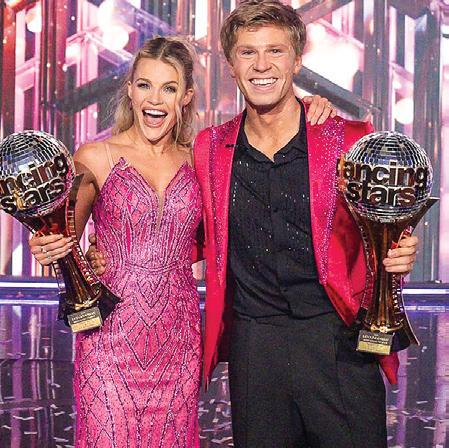
Robert Irwin and Witney Carson won Season 34 of 'Dancing with the Stars.' Read a full-season recap on our website!
Photo courtesy of AOL.com
Photo courtesy of Netflix
'One Day, Everyone Will Have Always Been Against This' by Omar El Akkad won the National Book Award for non-fiction.
'Zootopia 2' broke the record for highest global opening of an animated film of all time with $556 million (Deadline).
Photo courtesy of Amazon.com
Photo courtesy of IGN
By Craig Mannino ARTS & ENTERTAINMENT EDITOR
A residence hall’s resident assistant (RA) bulletin board is the first piece of the massive puzzle that makes up your semester. You’ll see it every time you enter the lounge, cook in the kitchen or wait to take the elevator. It’s inescapable. Even though a bad board doesn’t necessarily detract from the dorm experience, a good one can add a lot. As such, I chose to find the best boards on campus. Here are my top five.
Hofstra University’s best bulletin boards
5: VANDER POEL FLOOR 8
This is certainly one of the weirder RA boards. There’s no better way to describe this board other than “chronically online.” Though incredibly busy and overwhelming at first, its little details make it a campus highlight.
The board looks like a YouTube page, complete with large red circles and arrows, clickbait titles like “TOP 10 Hof-Cats!! #4 Will SHOCK you,” a YouTube logo (though, here it’s called “Floor8Tube”)
By Kimberly Lopez ASSISTANT ARTS & ENTERTAINMENT EDITOR
You can’t know pop culture without knowing John Cena. The wrestler-turned-actor is approaching his wrestling retirement come Saturday, Dec. 13. He leaves behind a memorable legacy in the ring while creating a new one in Hollywood.
The now 48-year-old was born in West Newbury, Massachusetts. He was a young fan of wrestling, influenced by his father, who was a ring announcer.
At 12 years old, Cena asked for a weightlifting bench after being bullied. It seems that the foundation of his beliefs to keep fighting were being established early. By high school, he was already a gym rat and deeply athletic. He later went to Springfield College, where he graduated with a degree in exercise physiology and became captain of the football team.
and even a few pictures of digital creator Jerma985. The massive drawn hands on both sides of the board are another highlight; they bring it together and make the board feel more like a tablet.
4: ESTABROOK FLOOR 10
This board feels like a real-life Pinterest board. Although it’s difficult to pick up on a coherent theme other than “girl,” I think that works well for it. The board features a collage of pictures of Elle Woods from “Legally Blonde,” Rory Gilmore from “Gilmore Girls,” some affirmations and, of course, a lot of pink.
This board is louder than most others, and that’s a good thing. Its design from the bottom-up screams personality, and that’s intensely important when dealing with the stress any semester brings.
3: VANDER POEL FLOOR 10
This board is simply adorable. Everything about it is uniquely inviting and certainly
took a good amount of work. The border is comprised of individual paper leaf cutouts. Paper versions depicting the faces of a lion and tiger are on the top right and bottom left, respectively, and two thin brown lines act as a branch where flyers can hang. That said, the best part about it is the paper monkey smiling and hanging from the top left corner.
Plus, the caption, “Welcome To The Pride Lands,” combines Hofstra University with the floor’s jungle theme, giving this board a massive boost.
2: SUFFOLK FLOOR 1
This board is simply breathtaking. The artwork is fantastic. The butterfly’s wings are a vivid blue gradient, the cocoon and caterpillar are insanely detailed and the tree branch extending from the left looks so good that it’s hard to believe it’s all just paper.
The aspect signifying the care put into this board is how the borders change color.
John Cena: The last time is now
Freshly graduated, Cena aspired to be a bodybuilder. That career was brief, though, as he was approached to take wrestling classes at Ultimate Pro Wrestling (UPW). Soon enough, he pivoted his career towards wrestling. Cena won the UPW Heavyweight Championship as “The Prototype” – his first major wrestling character. He quickly gained interest from WWE executives and signed a developmental contract with the company in 2001.
His official debut was in 2002, where he first signed with the “Smackdown” roster. Despite gaining some attention at first when going head-to-head with Kurt Angle, Cena’s character grew flat, and he was at risk of being fired. In a delightful twist, then then-CEO of WWE Vince McMahon’s daughter, Stephanie McMahon, heard Cena rapping on a tour bus one day. Impressed, she convinced her father to keep Cena and give him a new rapper per-
sona. This character was known as the “Doctor of Thuganomics,” and the rest was history.
After gaining a greater fanbase, becoming a “babyface” (a good guy or a hero-type character in wrestling) and winning the United States Championship in 2004, he was on the path to greatness. He cemented his role as the face of the company in 2005 when he won his first WWE Championship.
Here, the Cena we all know was born. The jorts, the “You can’t see me!” with the wave of a hand, the trumpets and, of course, the never giving up.
Now, Cena’s fanbase is even larger, extending through generations. He holds the record for most Make-A-Wish’s granted and is a record-breaking 17-time WWE World Champion.
Cena broadened his audience even more when he became an actor. He is best known for his roles in “Peacemaker” and the “Fast and the Furious” movies.
Though it’s a small and seemingly insignificant detail, it does a lot to make this board pop. An element like that makes me jealous of the residents who get to see this marvel every day.
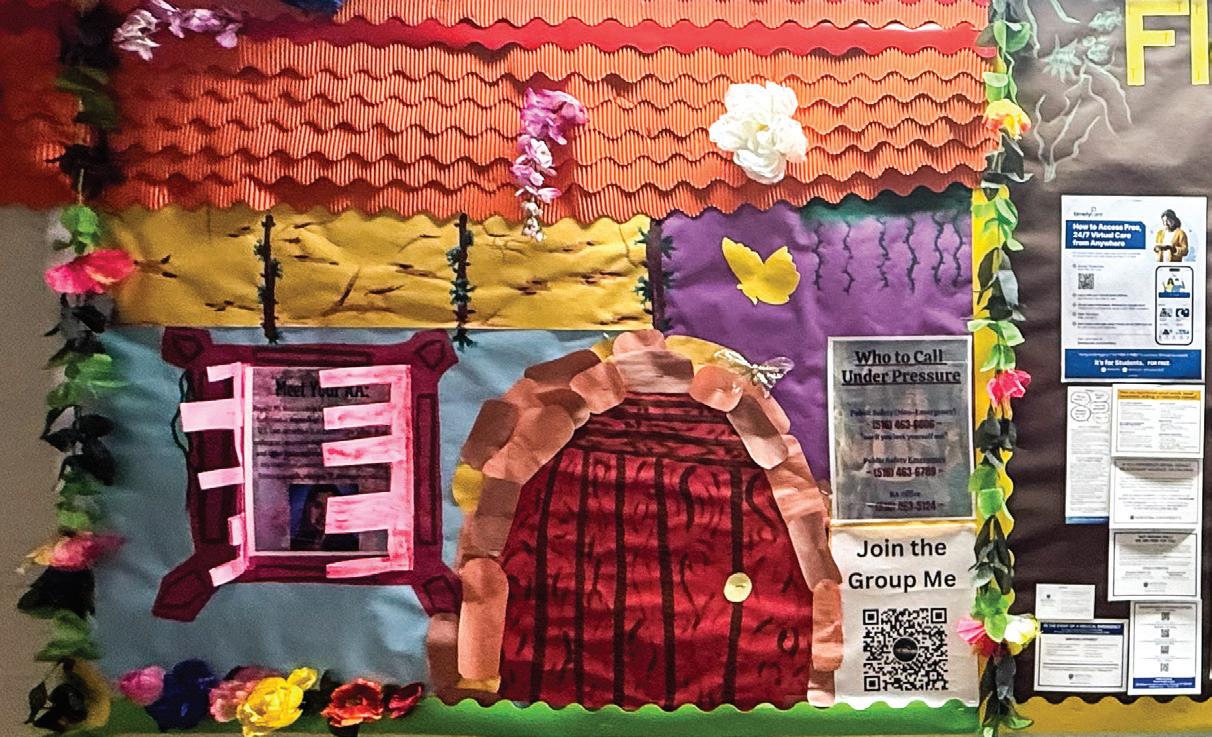
1: ALLIANCE FLOOR 4
A facet of any good bulletin board is working within its limitations and pushing the boundaries. This board does both in strides – so well that I can’t stop looking at it.
The left side is one of the prettiest things I’ve seen in a Hofstra residence hall. It’s the façade of a small house, complete with 11 rows of orange and red borders representing a Spanish tile roof, an open window and some drawn-in and taped-on vines – all combining to make the house feel abandoned and lived-in at the same time.
This board pushes the limits of what’s possible, and its color, character and life raise the bar for every other bulletin board.
Acting has become a priority for Cena and is likely where his future endeavors lie.
Cena announced his WWE retirement in July 2024 and revealed a retirement tour that has lasted through 2025. His last match will be at “Saturday Night’s Main Event” on Saturday, Dec. 13, in Washington, D.C.
For as long as I can remember, I have watched Cena on my screen, winning title after title. He was, and still is, my Superman.
Cena has created so many core memories for people around the
world, making his last match difficult for fans. His work ethic and passion for the business is what makes him so easy to latch onto, it feels impossible to imagine a wrestling world without Cena in it. There is no doubt Cena is a future hall of famer. When you think of professional wrestling, his name is sure to grace your mind, and it’ll be that way forever. Many will try, but there will never be another like John Cena. Soak up these final moments while we can experience him in that ring, before he takes his final bow.

John Cena became a WWE Grand Slam Champion on Nov. 10, when he defeated Mexican-American wrestler Dominik Mysterio.
Each dorm floor's and house's bulletin board builds on a greater residence hall theme to give each residence hall unique character.
Craig Mannino / The Hofstra Chronicle
Photo courtesy of Vice
By Paige Sanacora ARTS & ENTERTAINMENT EDITOR
It seems like every big-name author released a book this year, and while there isn’t enough time in a year to read them all, here are a few that you should put on your list for next year.
This year gifted readers with a lot of great fiction. Taylor Jenkins Reid’s new historical romance “Atmosphere” has stayed with me since I read an advanced reader copy earlier in the year. The novel centers around Joan Goodwin, one of the select few candidates participating in the 1980s Space Shuttle program at NASA. Set across four years, Joan must not only navigate her new responsibilities as an astronaut-in-training, but also learn how to form new relationships with her fellow candidates and nurture her existing ones with her sister and beloved niece. “Atmosphere” explores what one is willing to do for their career, for their dreams and for love.
The best voice in science fiction this year came from
Favorite reads of 2025
Nnedi Okorafor’s “Death of the Author.” Struggling author Zelu Onyenezi-Onyedele decides to write a book unlike anything she has ever written before: a space opera about Artificial Intelligence and the end of humanity. As a dual perspective story between the events of Zelu’s life after fame and the events of Zelu’s novel, “Death of the Author” blurs the lines between fiction and reality and defies the boundaries of what a novel is.
beyond. Their desire for stardom and their obsessive love of music tear them apart and pull them back together over
life as Beth knows it, this historical romance is wrapped up in a satisfying bow of mystery that had me clinging to every word.
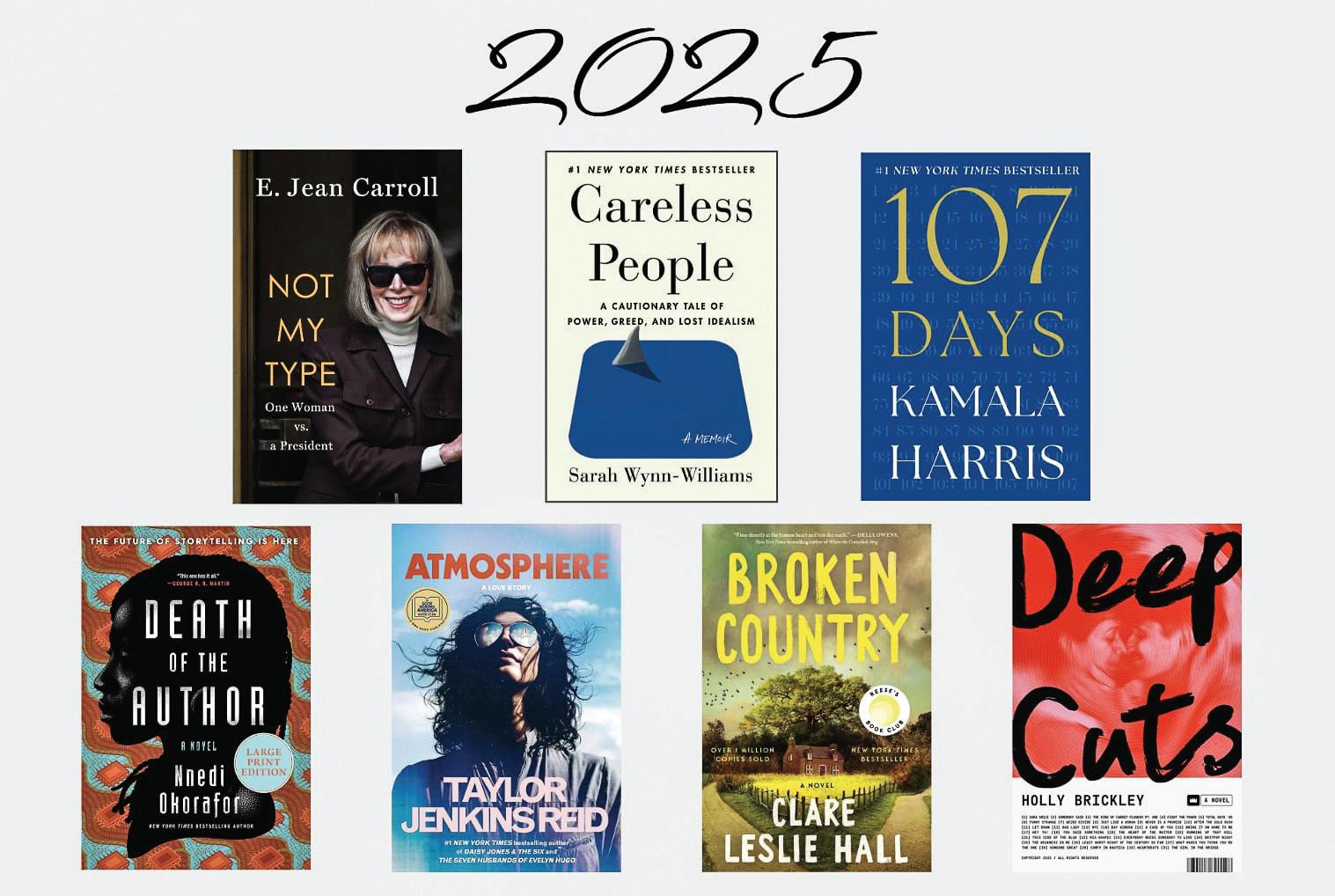
Music lovers will find a new favorite in “Deep Cuts” by Holly Brickley. Reminiscent of Reid’s “Daisy Jones & The Six” and mixed with the unique feel of author Sally Rooney, “Deep Cuts” follows Joey Morrow and Eileen Percy Marks from college and
and over again. My favorite work of fiction from 2025 has to be “Broken Country” by Clare Leslie Hall. We follow Beth through three different eras of her life, as they intertwine to create this beautiful story of grief, love and loss. With a love triangle, a trial and a secret that could bring down
Nonfiction truly shined this year through women telling their stories. There are three memoirs of particular note that deserve your time and admiration.
Most recently, “107 Days” by Kamala Harris chronicles her historically short campaign for President of the United States through day-by-day chapters, showing every detail that went into her bid for the presidency. It was a heartbreaking read and incredibly impactful. Over the summer, E. Jean Carroll released her memoir “Not My Type: One Woman vs. a President,” which chronicles her legal battle against President Donald Trump regarding his sexually assault-
ing her in the late 1990s. I will warn you; this is an incredibly hard read to stomach. It gives the explicit details of the assault, as well as the misogynistic standards of beauty and style that Carroll had to maintain at all times throughout both of her trials in order to make her case “believable.”
If you only read one book from this article, let it be this one: “Careless People: A Cautionary Tale of Power” by Sarah Wynn-Williams. As an ex-employee of Facebook, Wynn-Williams gives readers a look behind the curtain at how the sausage gets made, and just who’s making it. Interspersing her time at Facebook with other personal anecdotes of her life, this book left my jaw on the floor time and time again at the conduct that people are willing to overlook for the sake of money and power.
I could go on and on about these books and many others, but I think this list has a little something for everyone to pick up and bring with them into 2026.
Trisha Paytas concludes run in ‘Beetlejuice’ on Broadway
By Matt Fisher ARTS & ENTERTAINMENT EDITOR
The sad day-o has come. On Nov. 23, viral internet icon Trisha Paytas took her final bow in the musical “Beetlejuice” on Broadway at the Palace Theatre.
“Sobbing,” Paytas wrote in an Instagram post following her final performance, alongside photos and videos of her and fellow castmates. “From fan to family. Thankful. Grateful.”
Paytas’ final show comes almost two months after it was announced that Paytas would be taking the stage as Maxine Dean for a three-week limited engagement.
“I am joining the cast of [‘Beetlejuice’ on Broadway],”
Paytas wrote in a post to Instagram on Oct. 10, accompanied by a carousel of photos showing her love for the Warner Bros. property. “Words can never express my gratitude in this very moment. Beetlejuice the musical has been so near and dear to my heart.”
For the 37-year-old influencer, who has amassed over 20 million fans and 2 billion views on YouTube for her larger-than-life personality and wide array of content – including mukbangs, make-up tutorials and even parody musical videos – her connection to the Great White Way runs deeper than just a simple stunt cast.
“Broadway and live theater have always been my escape since [I was a] young girl,” Paytas said. “I so wanted to be a part of the stories with sequined costumes, catchy music and endings to everyone’s story perfectly wrapped in a bow.”
Longtime fans of Paytas are well aware of her “theater fever.” She previously made her Broadway debut in “Trisha Paytas’ Big Broadway Dream,” a one-night benefit concert featuring performances from Rachel Zegler, Joy Woods and Ben Platt. When she got the call offering her one night on the Great White Way, Paytas admitted she could
barely believe the news.
“You know what?” Paytas said during an interview with Theatrely in Jan. 2025. “I’ve always dealt with stuff myself before. Nothing ever comes to fruition. After, I’ve been doing [social media for] 15 years and people are like ‘we want to do a reality show for you. We want to go [do] this.’ It never happens. So I’m just like, ‘Yeah sure whatever.’ Literally not thinking about it.”
It wasn’t until plans began forming that the influencer realized her dream might become a reality.
“So then when it actually started coming [up] and we met with Skylar [Fox], the director, I was just like, ‘This might be happening,’” Paytas said to Theatrely. “I used to assume things just weren’t happening, but now I’m assuming things will just happen. I will be on Broadway. I will be in a movie.”
And while this was the first time Paytas made it to

Broadway, it wasn’t the first time her potential debut was announced. In celebration of April Fool’s Day a year prior, Theatrely posted an article jokingly reporting that the influencer would be playing Roxie Hart in Broadway’s “Chicago.” The news had fans so excited that they drove record-breaking visits to the site, causing it to crash.
“Obviously, I know that’s not real ‘cause no one approached me about it, but I was like, ‘What is this? This is so weird,’” Paytas told People Magazine
during an interview published in December 2024. “People were so happy for me, and I was like, ‘F--- .’”
Still, after sharing her love of Broadway on social media –posting videos of herself singing beloved theater hits like “Burn” from Hamilton in her kitchen and starring in high-production recreations of iconic numbers such as “Suddenly Seymour” from Little Shop of Horrors –Paytas’ recent Broadway run suggests that sometimes manifestation can work, after all.
Photo courtesy of Playbill
Trisha Paytas co-hosts a bi-weekly YouTube podcast, 'Just Trish Podcast.' There, she covers pop culture topics and regularly features guests.
According to the National Literacy Institute, 54% of United States adults read below a sixth grade reading level.
Graphic by Paige Sanacora
The views and opinions expressed in the Opinion section are those of the authors. They are not an endorsement of the views of the Chronicle or its staff. The Chronicle does not discriminate based on the opinions of the authors.
Implementing ChatGPT Edu is harmful
By Meredith Tarsi COPY CHIEF
Hofstra University recently implemented a student-wide subscription to ChatGPT Edu, and students are rightfully concerned. ChatGPT is arguably at the forefront of the revolution of Artificial Intelligence (AI), being one of the most used or at least most talked-about large language models (LLM). While there is a difference between an LLM and Generative AI, we should be wary of both, especially in academic settings.
As much as I hate using AI personally, it can be a helpful tool for data mapping, spreadsheet making and summarizing. For some students, having help with busy work like this can be beneficial without the tool full-on writing and creating for them. Algorithm based professions have been and always will be supported by emerging technology, but to
me, writing, creating and even editing are personal processes, and giving up your part in that is an injustice to the creation and the creator – you. Any type of reliance on this type of AI is a slippery slope for people who don’t know its dangers.
When people think of AI discourse in universities, chances are they think of academic dishonesty – cheating by asking AI to write your papers for you. Academic dishonesty is a huge concern around the implementation of AI in education, but at this point in time, I’d hope most people know better. It’s not always about violating academic dishonesty polices; it’s about academic integrity. Even though students might not be cheating or dodging their assignments, using ChatGPT to do your research for you, compile data or refine paragraphs is a disservice to your education. College is for refin-
ing skills, not learning how to make AI do work for you.
“AI is our future,” is another argument in its favor. Sure, AI is a developing tool that will seep into many fields eventually – likely coloring our future careers with its presence – but the dangers of it should not be forgotten in place of convenience.
There is room for emerging technology in our society, but not when it is affecting students’ skills. According to MIT, relying too heavily on AI can lead to increased productivity but decreased motivation. In my opinion, motivation is what keeps us moving toward our personal goals and keeps us engaged in our lives, not sheer performance.
When AI is overtaking your ability to research for yourself and write for yourself, when will it consume your ability to think for yourself as well?
The biggest concern about the extensive use of AI,
including Hofstra’s implementation of ChatGPT Edu, is its environmental impact. It is a proven fact that the high energy consumption of running LLM’s and AI models utilizes high amounts of water and emits high levels of greenhouse gases. AI is bad for the environment no matter how you look at it. To posit that the consumer should be absolved of blame in this problem is ignorant.
In this day and age, being a conscientious consumer is part of being a consumer at all. People suggest boycotts on companies for the people and actions they support with their profit all the time. Why should we be lenient when it comes to AI? People should be informed about the environmental effects of AI programs like ChatGPT Edu. And if they are properly informed, then the blame for its usage – and subsequent effect on the environment – must fall partially on
the consumer.
In the same way a consumer may make the choice to carpool to avoid more carbon dioxide emissions, people must choose to avoid the use of AI to avoid environmental damage. If the consumer is at all aware of the consequences of running an AI program, they are partially at fault for using it. Companies will be companies, and it is up to the consumer to use their programs responsibly.
Technological developments are inevitable, and we shouldn’t fight them all. However, until the environmental impact is lessened drastically and AI stops being a cause of stunted motivation, I don’t think concerns about its clutches on our population are ridiculous or invalid at all.
Meredith Tarsi is a senior writing for the screen major with an English minor. You can find her on Instagram @_heyitsmeredith.
The flaws of Hofstra’s digital student ID cards
By Joe Orovitz MULTIMEDIA EDITOR
Picture this: you are driving back to campus after spending the weekend with your family. It is currently 1 a.m. and in one hour you will get back to your dorm and rest in preparation for the start of the new week. Suddenly, an abrupt silence fills the car as your phone dies, the music and GPS dying with it. You do not worry, though, since you know your way back from here and can live without Bluetooth for an hour.
That wave of relief is quickly overcome by anxiety, however, when you realize that your only way into Hofstra University and your residence hall has died as well. Your student identifica -
tion (ID) card resides in your digital wallet through HofPass. As you arrive on campus, your zombie phone is barely able to tap you in at the front gate, but it does not work when you try to enter your building. You are locked out.
The above scenario is not just a hypothetical; it is exactly what happened to me the first weekend of November. I was locked out of my building for the fourth time this semester due to my phone being dead, and this time it was at 2 a.m., with no Resident Student Representative present at the front door to help me out. This experience – being as late at night as it was and having left me vulnerable without access to my building – really made me wonder, with Hofstra transitioning towards a future with less and less physical IDs, are
digital student IDs safe?
According to Campus Access and Security Systems, the advantages that HofPass brings are that it is easy to use, reduces plastic waste and enhances security due to the need for biometric or password activation. Even though all of these things are good, they should not come at the expense of students’ safety. From a parent’s perspective, I don’t think I would be too happy to know there was a possibility for my child to get stuck outside of their building late at night after returning from activities. If there were an emergency, being in the safety of a residence hall versus being stuck outside could be the difference between escaping a threat and something bad happening to the student. Some arguments that I’ve
seen suggest that one’s phone losing charge could be compared to losing your physical card and that having one less thing to lug around is worth the trade-off. I simply don’t think it is comparable since you now need to bring a phone, wallet and then a charger on top of that to be extra safe, which is a lot to carry around when one is out having fun.
In my experience with HofPass thus far, building access is not the only thing that a student needs to worry about, either. Since the ID card is how a student uses their dining points, HofPass is necessary at every purchase. Sometimes, I will be at the register trying to pay for my meals with my dining plan, when the system would require several tries of tapping my phone and re-
entering my password for the purchase to go through, even with sufficient charge. A system as new as HofPass is bound to have growing pains, but fundamental roadblocks remain. Is the solution to return to physical cards? It may be too late to turn back now, but nobody ever had to worry about their plastic ID card running out of charge and locking them out, or needing to re-enter their password several times to pay for a Freshens smoothie. I now make sure I have a charger on me at all times to avoid dire situations again, and I hope others do the same.
Joe Orovitz is a junior journalism major with a history minor. You can find him on Instagram @ joe_took_a_picutre.
OPINION
Graphic by Dana Livian
The views and opinions expressed in the Opinion section are those of the authors. They are not an endorsement of the views of the Chronicle or its staff. The Chronicle does not discriminate based on the opinions of the authors.
By Christine Acuña ASSISTANT MULTIMEDIA EDITOR
One Metro New York just sucks
For those that don’t know, starting on Wednesday, Dec. 31, the Metropolitan Transportation Authority (MTA) will officially replace their iconic MetroCard with One Metro New York (OMNY), a new payment method for riders to navigate New York City through its public transportation system.
The new OMNY system began back in May 2019. People could either tap with their bank cards or the OMNY card to get onto transportation. According to the MTA, the purpose of OMNY is to modernize the payment system and reduce travel expenses for commuters to ride around the city. However, riders aren’t happy with this new system. According to statistics, 74% of riders have reported having difficulties with
OMNY. Many online users have expressed their outrage over this new system. Commuters have also expressed their frustration with OMNY on radio station 1010 Wins, claiming they’ve experienced more trouble than before. Some say they are spending much more money than they would with a MetroCard, citing a lack of help from MTA staff and glitches in the system. One of the difficulties riders are facing is difficulty accessing the “unlimited swipe period.” With a MetroCard, unlimited plans were offered where riders would pay either $34 for a seven-day period or $132 for a 30-day period, and riders would have access to the public buses and subways as many times as they wanted throughout their chosen period. Instead of offering the same unlimited plan the MetroCard had, riders now have to tap
12 times with their bank or OMNY card within a seven day period to automatically obtain the unlimited access throughout the next seven day period. Even with this new system, there have been difficulties obtaining the new unlimited period with OMNY. Some riders complained about not getting the unlimited plan as it was stated. Many online users have expressed confusion on how the system works. One user claimed via Reddit that they tapped their card after a seven day period and instead of obtaining the unlimited rides as they were told they would, negative fares were being charged into their card. With MetroCards, commuters would save at least hundreds of dollars a year; now with OMNY, commuters who seek the unlimited period will have to pay more than they used to, which isn’t convenient.
There are also times when the tap-and-go machines don’t work. The machines either can’t read the OMNY or are turned off. According to The New York Times, at least 40% of people claimed their OMNY payments would fail to read which is why riders would tap twice. If not the OMNY cards, their bank cards would sometimes be charged late.
Not only do riders find delayed deductions from their cards, but sometimes they encounter unrelated fare charges. According to CBS and online users, riders have experienced their accounts being charged with fares they haven’t taken.
With this new shift to OMNY, commuters will be facing more difficulties navigating public transportation. The MTA would either have to fix some of the issues that were reported by riders or add more plans that will help riders navigate
their way through the city. One of the things MTA should definitely bring back is the unlimited plan that the MetroCards offered. This would be a great benefit for commuters who take public transit almost every day, that way they don’t have to spend as much money as they’re currently spending on OMNY.
By the beginning of next year, there will be no more MetroCards. The MTA has already been replacing the majority of the MetroCard machines with OMNY machines. Anyone that’s currently in the city that is interested in keeping a MetroCard, get them now before they’re all gone.
Christine Acuña is a senior film studies and production major with a fine arts minor. You can find her on Instagram @christineacuna_media.
The war in Gaza is less complex than we make it
By Craig Mannino ARTS & ENTERTAINMENT EDITOR
The place of Jewish people in the world has always been complicated. We have faced prejudice throughout written history – the Romans stripped us of our rights and worked to convert us, we were scapegoats during The Black Death and the Nazi Party killed over 6 million of us in the largest genocide in human history. Point being, to be Jewish is to stare down the barrel of over two millennia of generational trauma. We are in a unique spot: always persecuted and never in power. Well, we were never in power until the Balfour Declaration in 1917.
The question of what it means to harbor this trauma is a deeply complex one. How do we come to terms with a history of prejudice? What communities are actually safe for us? And, most importantly, how do we ensure that systemic extermination never happens
to us – or to any other group –ever again?
I’d argue there are dozens of adequate and necessary responses to these questions. Some Jews, like authors and Holocaust survivors Ellie Wiesel, Viktor Frankl or Primo Levi, used their stories to educate about the Holocaust. Others, like politicians Bernie Sanders or Brad Lander, place themselves in government positions to ensure we have a voice in policymaking. And thousands more use their voices every day to combat antisemitism. Now, that’s all well and good, but the real question is: where does Israel fall in all of this?
Israel is a complex country. Of all the answers to the generational trauma question, it is certainly among the least nuanced and most separated from our history. Because of what we have gone through, as Jewish people, we have a responsibility to our community and the world to be the first and loudest whistleblowers whenever there is a chance
– no matter how big or small –that genocide would be on the table. So, it is unthinkable that a state founded by British colonial declaration, established through the horrors of the Nakba and sustained via nearly a century of violence would claim to be our homeland.
Israel – a state whose flag proudly features the Star of David – is committing a genocide against Palestinians. Backed up by Amnesty International, the United Nations Human Rights Office and the International Association of Genocide Scholars, this is an indisputable fact.
There is very little vagueness here, yet we artificially graft complexity onto this conflict. Have Jewish people lacked a homeland for our entire history? Yes. Have we been on the receiving end of violence for our entire history? Also, yes. However, neither of those things justifies using violence to strip another group of their homeland.
The point here is that we’ve taken the complexity of Jewish people’s place in the world and conflated that with the simplicity of whether giving us a homeland justifies Israel’s actions.
The fallout of this conflation has been disastrous as shown by the inability of the United States to lead an adequate relief initiative or enforce the ceasefire it helped broker this October. Although there is no exact death toll for this war, some estimates indicate that, since Oct. 7, 2023, over 100,000 Palestinians have died, and dozens more perish each day under Israel’s government.
This means that an unthinkable number of people have died because we have accepted that the Jewish homeland must be in Palestine, and we have wrongfully accepted that the actions taken by Israel to establish that homeland are justified by the antisemitism Jews face and have faced. The issue is cut and dry, really: Israel is committing a
genocide against Palestinians, and that must end. The complexity of our generational trauma does not project complexity onto Israel’s actions here.
What it means to be Jewish in the 21st century is complicated. You stare down the barrel of millennia of generational trauma, navigate rising antisemitism and bear a responsibility to your community – Jewish or not – to prevent systemic discrimination. You must recognize that that complexity and your reactions to it can be far more nuanced than advocating for a homeland. And certainly, don’t let that complexity be a justification for a state that, while it may have nothing to do with you, is committing a genocide.
Craig Mannino is a senior writing studies and English double major. You can find him on Instagram @craigarg.
Hofstra’s season ends in penalty kicks
By Anthony Hidalgo SPORTS EDITOR
The Hofstra University men’s soccer team’s season ended dramatically, losing to Furman University 5-4 on penalties, in the third round of the NCAA Tournament on Sunday, Nov. 30. A winner could not be decided after 110 minutes of play, forcing a penalty shootout following a 3-3 tie. Head coach Richard Nuttall’s legendary 37year career came to a tragic end as the Pride finished the 2025
season with a 14-5-1 record.
Laurie Goddard tried saving the Pride’s season with two goals in just 68 seconds which tied the game at 3-3 with just over eight minutes to play in regulation. Thengill Orrason sent a cross from midfield to the edge of Furman’s 18-yard box. Daniel Burko rose above Furman’s Ryan Wagner to head the ball to the ground. The loose ball then rolled to Samuel Francou, who sent a chip pass that Goddard headed into the Paladins’ net.
Goddard wasn’t done, though. He immediately tackled the ball away from the Paladins and started another Hofstra attack. The Pride worked their way up the field, eventually finding Aleksei Armas on the right wing. Armas sent a perfectly placed cross to Goddard in the box, tying the match just minutes after Furman took a commanding two-goal lead.
There were six goals
throughout the first 90 minutes of action. Burko opened the scoring in the 17th minute, heading in a cross from Orrason to give Hofstra a quick lead.
After the shaky start, Furman found their confidence. The Paladins outshot the Pride 10-3 in the first half, slowly breaking down the Hofstra defense. The Pride looked up to the task through 44 minutes, but with 34 seconds before halftime, Furman finally broke through with an equalizer.
Furman quickly built upon this chance, making two passes before Diego Hernandez took a shot from distance. The shot was blocked by Francou and rolled out to Landon Hill. Hill’s cross landed at the feet of Luke Hutzell, who scored from seven yards out.
The Paladins remained in complete control to start the second half. Even with Hofstra bringing on goalkeeper Sean Bohan to help jumpstart
the Pride’s offense, Hofstra struggled to create quality chances.
Furman continued to chip away at the Hofstra defense, taking the lead with just under 14 minutes to play. Caleb Johnson sent a cross from the left wing into Hofstra’s six-yard box, and the pass was headed away by Gabriel Pacheco. The ball found its way to Hutzell, who took a shot from 20 yards out. The shot was redirected by a stunning back-heel shot from Wilfer Bustamante, catching the Pride’s defense by surprise.
Now chasing a goal, it went from bad to worse for the Pride, since they conceded another goal four minutes later. Armas made an aggressive slide tackle, taking out Hutzell as the Furman bench and crowd erupted in protest, calling for a foul. The chaos caused the Pride to freeze for just a second, but the official allowed the match to play on.
Hutzell’s original attempt to save the ball from going out of play then rolled down the left wing for Bustamante as the Paladins flew into Hofstra’s box. Bustamante dribbled into the box, but his shot rang off the right post. Hernandez was perfectly positioned for the rebound, sending the second effort into an open net.
After Goddard’s heroics brought Hofstra back from the brink of elimination, both sides played two scoreless overtime periods. With 110 minutes played and no winner, the match went to a penalty shootout.
Both sides converted their first two attempts, with Stefano Campisi stepping to the spot for the Pride. Campisi’s shot went just inches above the crossbar. Furman scored their final three attempts to end Hofstra’s season and secure their ticket to the quarterfinals.
Men’s basketball wins third straight game
By Eric Leaf STAFF WRITER
The Hofstra University’s men’s basketball team completed a sweep of their three-game, three-day slate at the Cathedral Classic, with an impressive 77-60 blowout win over the University of Pennsylvania on Sunday, Nov. 30. The Pride’s offense was too much to handle from start to finish, as every member of the starting five wrapped up the night in double figures.
“We played a really good game against a really good
team,” said Hofstra head coach Speedy Claxton. “Up until this point, I thought [Pennsylvania] was playing well. [They] had some really good wins. I was concerned coming into the game, but I think I’m finding out a lot about my team right now, and we’re pretty good.”
Hofstra once again struck gold with a dynamic twoguard duo, as freshman Preston Edmead and junior Cruz Davis have shown consistently throughout the team’s first eight games just how explosive they are. They are the latest example of how dangerous a backcourt

under Claxton can be.
“[Davis and Edmead] have been outstanding,” Claxton said. “Starting from the summertime, we knew that they were going to be our leaders. I can’t say enough about those guys. The way they approach the game every single day –they’re always the first ones on the court and the last ones to leave. They put so much work into it; they’re seeing their hard work pay off and I’m extremely happy for them.”
While freshman sensation Edmead hit only one field goal, his offensive presence was relentless. He lived at the charity stripe, going 9-10 to end his night with 11 points. Even with just three shot attempts, Edmead controlled the game as a true floor general, dishing out a game-high eight assists.
“I did not envision this,” Claxton said. “[Edmead] works extremely hard on his game. When I say he is our hardest worker, he’s by far our hardest worker. He loves basketball; he eats, sleeps and dreams basketball, so I’m not surprised at his success.”

Davis, the other end of this two-headed monster, was lethal, leading all scorers with 18 points on 50% shooting from the field. He barely left the floor. He once again lead the team with 38 minutes played. With his performance, Davis now rises to 19.1 points per game, standing alone as the Pride’s leading scorer. Hofstra’s once-number one defense in the Coastal Athletic Association faced a serious test against Pennsylvania’s frontcourt stars: senior Ethan Roberts and junior TJ Power. The Quakers featured a dangerous scoring duo, with Roberts putting up 20.9
points per game and Power contributing 16.4.
The Pride’s straitjacket defense lived up to its name, making life difficult for Power, who shot just 3-10 from the field and finished with only 10 points. Hofstra also slowed down Roberts, holding him to 16 points, nearly five points below his season average.
Hofstra will continue to stay at the Francis S. Levien Gymnasium, where they aim to extend their longest winning streak of the season against Columbia University on Wednesday, Dec. 3, at 7 p.m.
Preston Edmead won his third Coastal Athletic Association Rookie of the Week award.
Kim Nadler / The Hofstra Chronicle
Cruz Davis scored 18 points in the win.
Royce Dickson-Child / The Hofstra Chronicle
Women’s basketball falls in Puerto Rico
By Thomas Montana STAFF WRITER
The Hofstra University women’s basketball team lost its fourth game in a row in a 72-53 defeat to East Carolina University on Saturday, Nov. 28. The Pride now sit at 1-5 in the season and last in Coastal Athletic Association (CAA) standings. This is Hofstra’s worst record in its first six games since the beginning of the 2019-20 season, where the Pride held the same 1-5 record.
“We had a tough start there,” said Hofstra head coach Danielle Santos Atkinson. “[We]
really put ourselves in a hole. When you look at that second quarter, third quarter [and] fourth quarter, I think we played much better basketball.”
Hofstra has struggled during the beginning of the matches during the entire season so far, averaging just 23.2 points in the first half of the season’s losses. The second half of games hasn’t been much better, with the team averaging just 27.5 points in the second half of all the games throughout the season. However, the offense as a whole has been more coherent during the second half of their games, even though the Pride has averaged 53.8 points per game, which is dead last in the CAA. A combination of turnovers and missed opportunities for easy baskets has been killing the Pride.
“We still have work to do [and] still have to get healthy,” Santos said. “I thought they did a much better job with [competing and not rolling over] this game and coming out after getting ourselves into that hole.”
Despite letting up 72 points, the Pride’s defense was able to force 15 turnovers throughout the game. Forward Ayen Angoi led the game with four total steals and blocks, followed by Alarice Gooden with three. Gooden made 10 points and four rebounds while logging 37 minutes.
Hofstra’s leading scorer and rebounder, forward Sandra Magolico, was only on the court for 13 minutes, after which she fouled out of the game. This was a huge hit to every aspect of the Pride’s play. Magolico’s offensive and defensive presence has proven to be something needed by Hofstra all game long. The Pride can’t afford to lose her for tough games like this one.
Even though senior guard Emma Von Essen is having a quiet start to the season, she eclipsed 100 games played for Hofstra in her collegiate career, pushing her closer to the top 10. Von Essen is on pace to finish her Hofstra career with
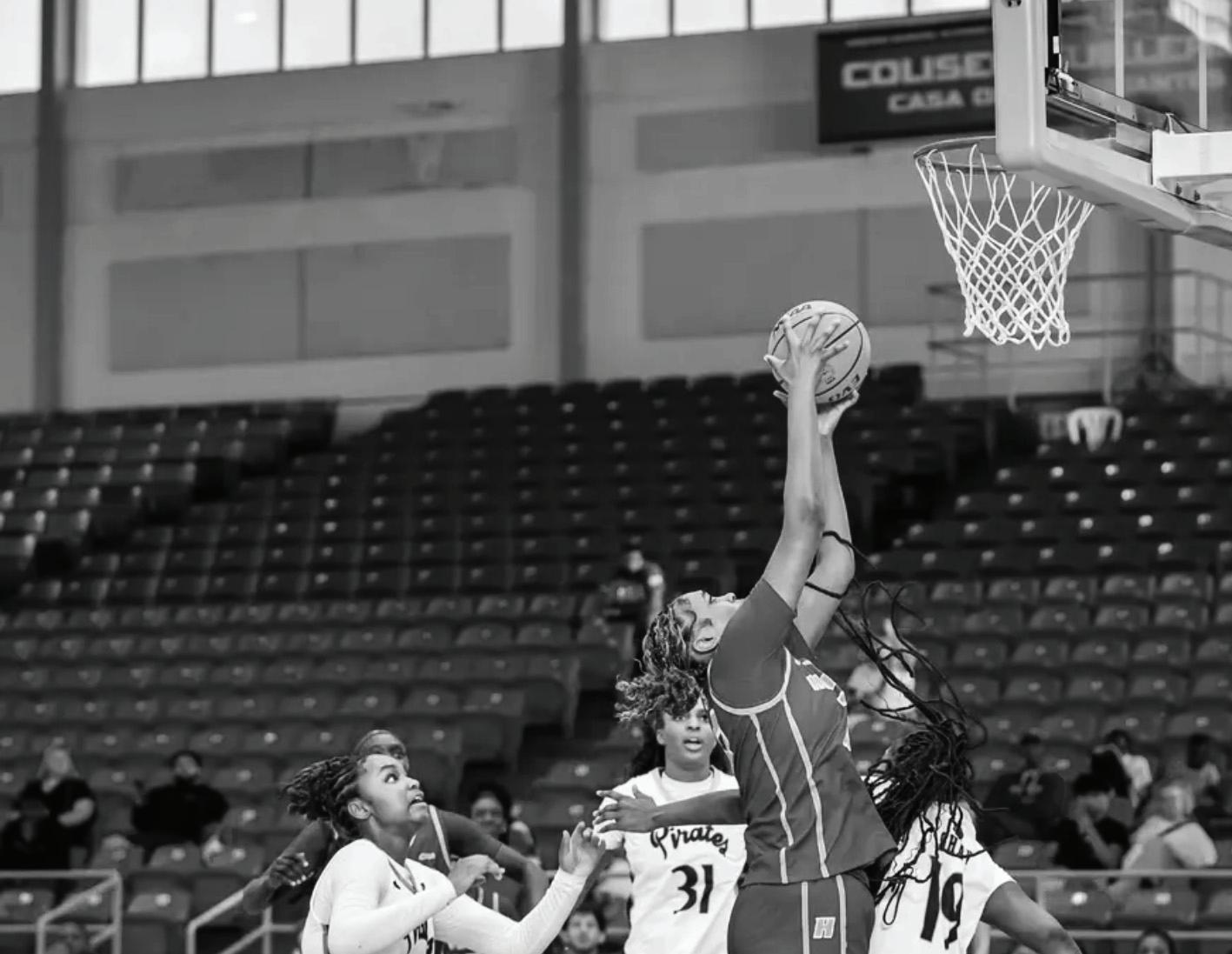
126 games played, after which she would be tied for fifth of all time with Cigi McCollin.
“We get to play [the University of Maryland],” Santos said. “We get to come out here and play a great East Carolina team. All those things are only preparing us for our ultimate goal, come CAA Tournament time.”
The Pride will take on Fordham University on Saturday, Dec. 6. Tipoff is scheduled for 2 p.m. at the David S. Mack Sports and Exhibition Complex. This will be their first matchup since 2020. Fordham leads the alltime series 10-7.
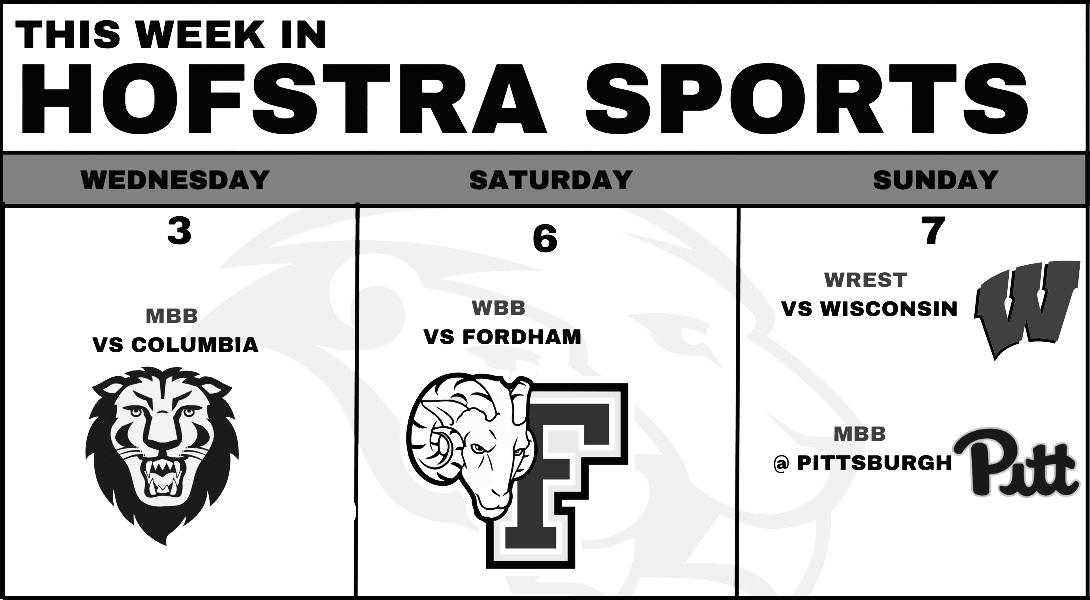
The Pride lost both of their games in Puerto Rico.
Photo courtesy of Mike Kathman
Hofstra volleyball: A season to remember
By Shannon Bickert SPORTS EDITOR
The Hofstra University volleyball team saw a devastating end to their 2025 campaign in the championship round of the Coastal Athletic Association (CAA) Tournament. While the season did not end the way they had hoped, the Pride saw their best season since 2018, were crowned CAA co-regular season champions and made their names known nationally.
The Pride opened their season with a bang, going on a historic run to open play. They tied their program-best start with a 13-2 record, only falling to the College of Charleston in that span.
From the get-go, the team’s culture seemed stronger, the rallies felt bigger and the wins kept pouring in. The Pride went unbeaten in non-conference play and held the best opponent hitting percentage in the nation for over two weeks. The Pride finished the season second in the NCAA in opponent hitting percentage, posting a .127 clip, just .001 behind the No. 1 University of Nebraska.
The Pride vied for the top seed in the conference all season, and in the final weeks of play, dropped a match to Towson University. This
pushed the Pride back down to the second-place spot in the conference. Thanks to some help from North Carolina Agricultural and Technical State University, the Pride found themselves tied atop the CAA on the last day of the regular season.
Hofstra finished the year with a record of 22-4 – including postseason – and a 13-3 mark in conference play, which earned them a first-round bye and firstseed in the CAA Tournament.
The Pride came into the semifinals round hot against N.C. A&T, only posting six attacking errors on the day. They also held the Aggies to just a .130 hitting percentage for the sweep.
Coming into the championship round, the Pride looked to earn their first conference title in seven years, but they ran into a foe whom they did not see during the regular season – Campbell University. The Fighting Camels earned the first set victory, then the Pride rallied to back-toback set wins. When it seemed like the Pride were about to close out the fourth set and go dancing, the Camels had other plans, and finished off the fourth set on 5-0 run, forcing a winnertake-all set five. Campbell took the momentum shift and ran away with the CAA title in the fifth set.
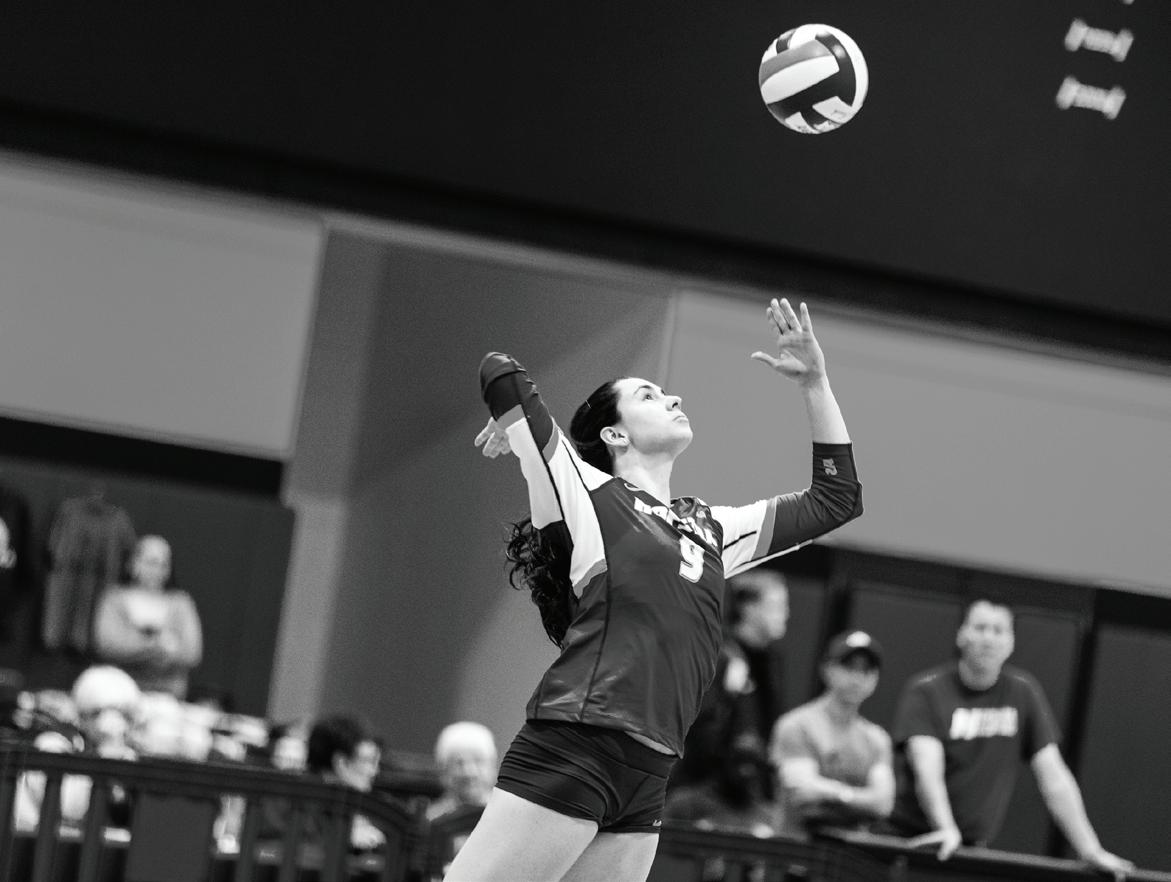
Despite the heartbreak in the CAA Tournament, the Pride saw greatness on the court through individual performances and historic marks this year.
Hofstra saw a mix of newcomers and seasoned veterans rising to the occasion. CAA Setter of the Year, Nina Jioshvili-Ravva, was stellar throughout her freshman campaign posting 915 assists, 44 kills, 41 service aces and 46 blocks.
Blocking was a concern heading into the season. Historically, the Pride lacked a crop of blockers that were able to lift the Hofstra defense. Freshman Julia Amorim helped change that. Both the Pride and Anorim ranked fourth in the nation in blocks per set, with 2.92 and 1.65 respectively. This was a huge improvement from last season, when the Pride averaged just 1.9 blocks per set. Freshman Lilia Duczek also helped build a net-front identity. The Polish-native tallied 80 blocks on the season, while averaging 1.4 blocks per set, which earned her 17 starts on the year.
“[Blocking] is a big improvement for us. Blocking has been something that in different seasons we have had different struggles, but I think they are having fun blocking,” said Hofstra head coach Emily Mansur.
After losing one of Hofstra’s greatest liberos, Chiarra Cucco, to graduation, defense was a question mark coming into the season. However, Nil Kayaalp quickly rose to become the go-to libero for the Pride. She ranked fourth in the CAA in digs per set and helped anchor the Pride’s defense.
Outside hitter Izadora Stedile was a pillar of the Hofstra volleyball program this season, serving as a premier attacker and defender. She earned CAA Player of the Year this season and eclipsed 1,000 career kills and digs, becoming only
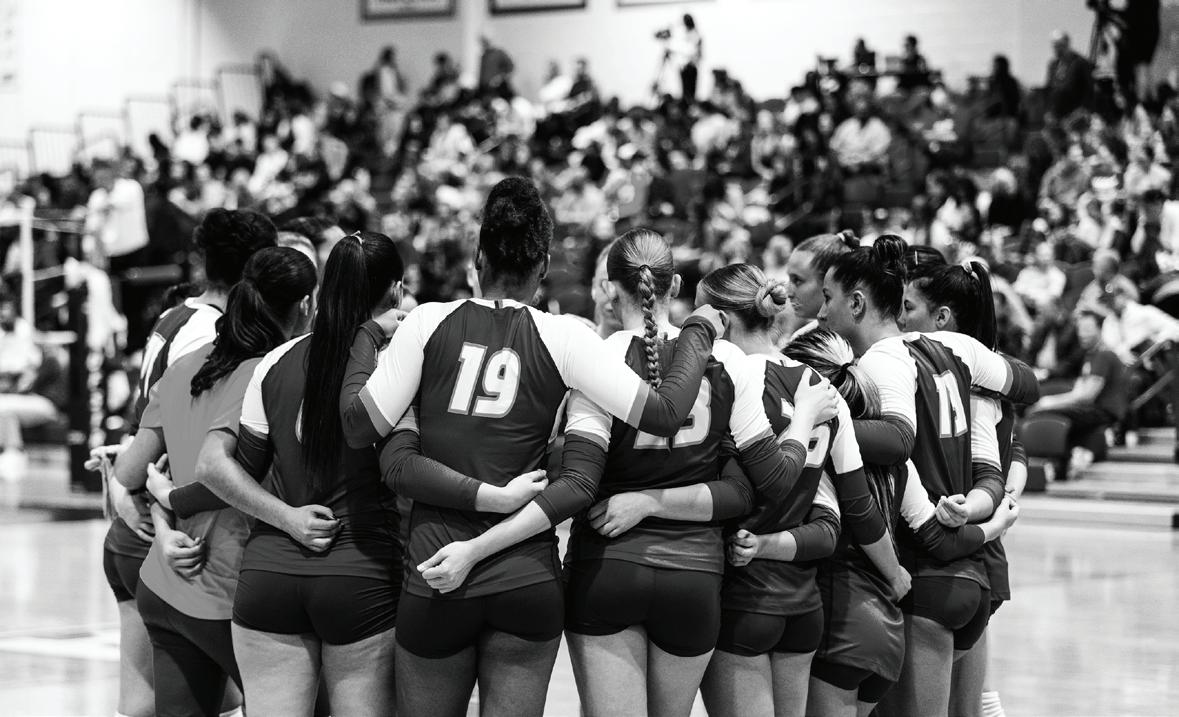
the seventh player in Hofstra history to reach that milestone.
After her illustrious career with the Pride, Stedile ranked ninth all-time in kills, with 1,221.
Clara Bal is another graduating member of the program who will be missed next season. Bal earned AllCAA Second Team honors and reached 1,000 career kills in the CAA Semifinals. This season saw Bal take a bench role instead of one of a starter –she acted as a sparkplug off the bench to help the team complete sets. Bal served as an adaptable piece who guaranteed firepower and accuracy. Her energy and immediate impact on the court will be irreplaceable.
Despite the huge losses to graduation, the Pride still have captain Beatriz Braga, who had a standout season and will likely be the leading attacker next season.
Braga earned All-CAA First Team honors and saw her best season with the program, posting 349 kills, which ranked fourth in the conference.
Braga recorded eight doubledoubles and showed up in the postseason, providing a team-leading 15 kills against the Aggies and a career-high 25 kills against the Fighting Camels.
“She has done a wonderful job and has been super serious since the spring, and she has put [in] so much work on herself and the people around her,” Mansur said. “We are very grateful for the work that she has done.”
While putting on a show on the court, the individuals on this team came together to create an electric environment while fighting day in and day out for one another. The foundation of this chemistry can be traced back to the summer, when many of the players stayed on Long Island and did not return to their respective home countries. The team worked not only on practicing volleyball skills, but also on forming a connection, which paid dividends come match day.
“All the sacrifices from our lives individually [and] off the court affected the team chemistry because if we didn’t spend the time with each other, we wouldn’t have this chemistry,” Kayaalp said. “This could be the best team I have ever played on in my whole life and my whole career. So, I feel very lucky to have this this year.”
Although the season came to an end without a championship, it was a year for the history books. It will go down as one of Mansur’s strongest seasons at the helm in her 11 seasons with the program. In 2026, the Pride have much to look forward to, as they have built a strong foundation on and off the court. Fans of the program will have to wait until August for the Pride to return to the court and start the chase for the title once again.
The Pride are losing four seniors to graduation.
Joe Orovitz / The Hofstra Chronicle
Joe Orovitz / The Hofstra Chronicle
Beatriz Braga was named to the All-Tournament team.
Senior send-off: Grateful beyond words
By Frankie DiCalogero EDITOR AT LARGE
I’ve always found it hard to find my voice; however, when it came to writing, I did not just find my voice, but I also became comfortable expressing myself. From the moment I stepped on campus freshman year, The Hofstra Chronicle helped me solidify my voice and strengthened my love for writing. Being able to tell a story through words is very powerful, whether it’s through sports, music, television, fashion or whatever it may be, there’s a story to be told everywhere. The transition from high school to college was startling. It was difficult to get accustomed to an “on-your-own lifestyle” with people that I’d never met before. I’d be lying if I said my first two years of college were great. I struggled to find my place at Hofstra University, but the one thing I did have to my benefit was the Chronicle. During freshman year, I would sit at the weekly
sport budget meetings and raise my hand to cover every single game possible. I mean, nobody else was volunteering, so why not?
My first position, outside of being a staff writer, was being named one of the new sports editors during my first spring semester at Hofstra. I was really excited that all my hard work in getting involved – even in certain sports that I wasn’t familiar with – was paying off. It was a tumultuous first year but becoming sports editor made me feel, even for a moment, that things were finally turning around.
However, the same day I was announced as sports editor, my personal life drastically changed. Not to ruin the mood, but on that night, I was told that my mother was diagnosed with a rare form of cancer. It rightfully sucked a lot of joy out of me. How could it not? I remember my family trying to keep me positive and focus my attention squarely on myself. It was challenging, and things
didn’t get better because my mom unfortunately passed away in December of 2022. That fall semester was already hectic, since I took a break from classes to stay at home and regroup. I weighed out all my options when deciding if I should return to Hofstra. In full transparency, I didn’t have much to come back to at the time, except for the Chronicle. Without the Chronicle, I probably would not have come back to Hofstra.
I thank whatever force is out there that guided me to come back to Hofstra. Without it, I wouldn’t have met the most fabulous friends I’ve had the pleasure of meeting. I wouldn’t have gotten the chance to be involved in as many extracurriculars on campus as I did. When I returned, I met former Arts & Entertainment Editor Aidan Judge – whose name I thought was Gavin. Thank you, Aidan, for being the best friend I could ask for and thank you for always uplifting me rather than putting me down,
especially during a time when I truly needed a confidence boost.
I would also like to shout out the 2024-25 Editor-in-Chief, Makenzie Hurt, who I had the pleasure of working alongside as Managing Editor during that school year. Thank you for trusting me in helping to form a clear vision of what the Chronicle could become. There’s nobody else I would’ve wanted to work with and I’m very excited to see you become the amazing lawyer I know you’ll be.
Finally, I want to thank Mike Senatore, Will Wiegelman, Andrew Fantucchio and Max Edelman for giving me a chance. That alone led me to being a part of such a safe family with the Chronicle. To our advisor, Brian McFadden, thank you for being a tremendous leader and role model for us all to look up to.
Within the walls of a rectangular office space lies a staff with the strongest work ethic I’ve ever seen. In a world where journalism is constantly being targeted, continue to lead
with integrity and passion. You all are bright lights, and I can’t wait to see where you take this paper next.
After positions such as Sports Editor, Managing Editor and Editor-at-Large, countless budget meetings, layout nights that would go to 3 a.m. and over 100 articles written, I can confidently say that the Chronicle will forever be home. I can’t put into words how fortunate I am to have been with this organization for four years. The memories will accompany me after graduation and into this next phase of my life.
One final piece of advice: Remember to always be yourself and to never change for anyone. Make sure to raise that hand, ask questions and be confident. And most importantly, cherish these moments. It may feel like a lot, but in the blink of an eye, this chapter will end. Don’t leave with any regrets and do as much as you can. The four years of college will be the most transformative years of your life.

Senior send-off: Seize your second chance
By Anthony Hidalgo SPORTS EDITOR
The Hofstra Chronicle was never meant to be such an important part of my college experience. I joined as a sophomore in 2019, and I was satisfied with writing sports recaps, attending home games and just being a part of a college newspaper. It was the first club I joined in college; I was still figuring out what I wanted to do with my career, and if being a sports journalist was truly the dream job that I wanted to pursue when I graduated.
I never really got the answer to that question. The following year, a global pandemic forced me to put my time at Hofstra University on hold. I didn’t think I’d ever come back, and I wasn’t sure how to feel about that.
When I finally had the opportunity to return in 2024 and finish my degree, I committed to making the most of what became my second chance. My first thought after being readmitted was, “I have to join the Chronicle again.”
Walking back into Room 203 of the Sondra and David S. Mack Student Center was like what I’d imagine stepping
out of a time machine would feel like. I was overflowing with nerves and excitement. Honestly, I was scared, but I quickly remembered what made the Chronicle so special. It was a chance for students to come together, connect and create something to be proud of.
The Chronicle became a safe space for me, and budget meetings soon became what I looked forward to the most every week. I desperately wanted to become a better writer, and being surrounded by so many talented people motivated me even more.
Becoming an editor has been one of my biggest accomplishments since returning to Hofstra. The sports
think I deserved to be in the role of editor, but I’m so proud to have been a part of that improvement while working alongside some of the smartest, hardest working and kindest people.
To Olivia Hillestad, Ethan Poole and Shannon Bickert, thank you for everything. You three made Mondays the day I most looked forward to. Whether it was figuring out captions for the back cover, fighting with Adobe InDesign or spending nights at layout with whatever sports game was on at the time, I wouldn’t choose anyone else to do it all over again with. I’m lucky to call you my friends and can’t wait to see the great things you will achieve
“The Chronicle became a safe space for me, and budget meetings soon became what I looked forward to the most every week...”
section has grown so much since I first joined. The quality of our content is the best I’ve ever seen it. At first, I didn’t
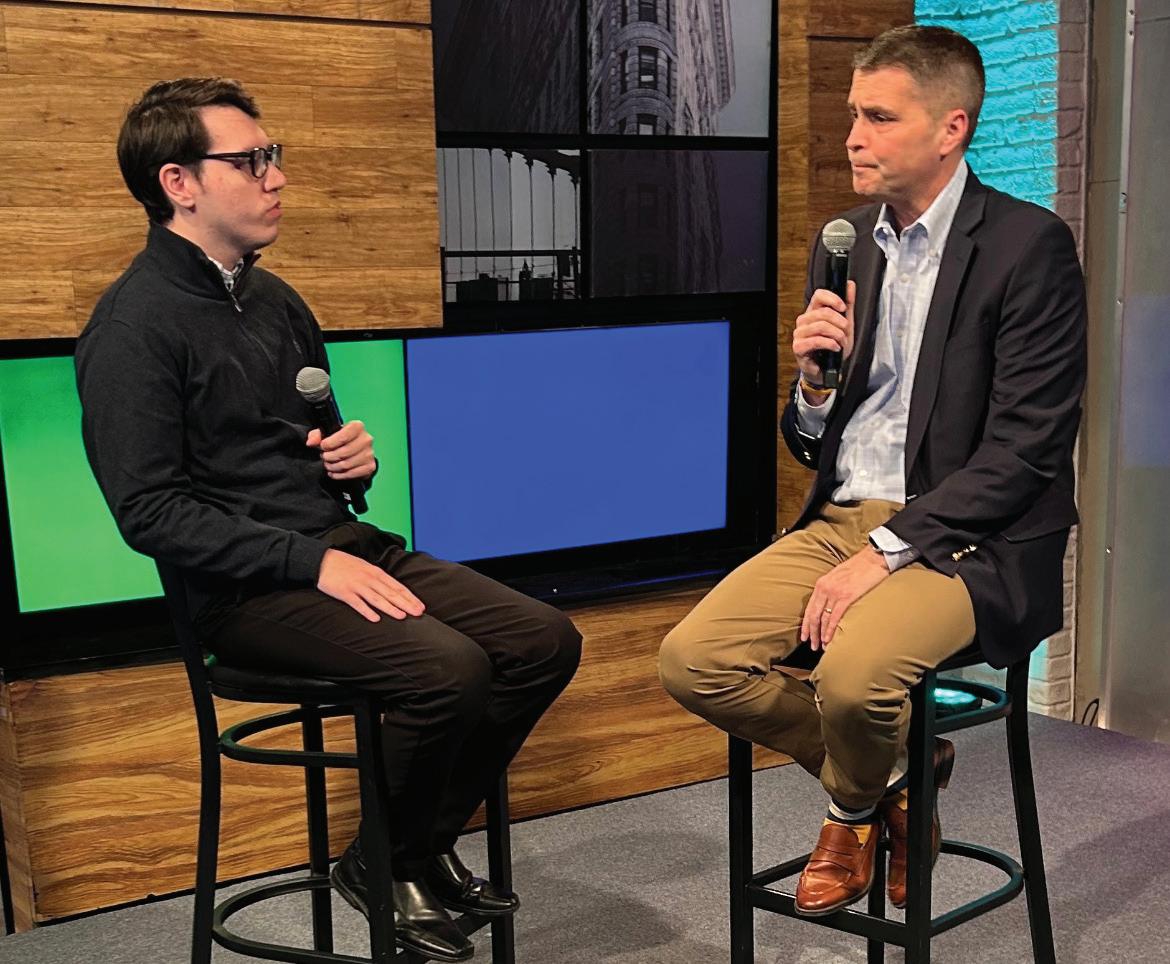
so much. I’ll miss sitting in the press box at the James M. Shuart Stadium, courtside at the David S. Mack Sports and Exhibition Complex (aka, the Mack) and beautiful spring afternoons at University Field or Bill Edwards Stadium. I’ll miss the post-game interviews with all the wonderful head coaches and players.
and make up for lost time.
To any current or future Hofstra student, please consider joining the Chronicle. While print newspapers seem to be going out of style, they still provide such important value to our community, and the opportunities to do truly great work are unlike anywhere else at Hofstra.
in the future.
To all the editors at the Chronicle, thank you so much for making me feel so welcome in my return and inspiring me every day. I’m constantly in awe of your dedication to your craft and your continued push to advance student journalism. The work you do is so important and I’m grateful for the chance to contribute to such an amazing organization.
I must thank my parents as well. I don’t always show you my appreciation, but your support has meant the world to me, and I wouldn’t be the person I am today without all the love and encouragement you give me every day.
It still hasn’t sunk in that my time with the Chronicle is coming to an end, that this will be the last time I see my name in print. I’m going to miss writing for the Chronicle
While there will be so much that I miss, that’s a good thing. The last two years have been so incredibly healing for someone who felt robbed of their college experience. I learned so many lessons about patience, perseverance and living in the moment. I learned that progress is not linear; time is a construct, and it’s never too late to go back
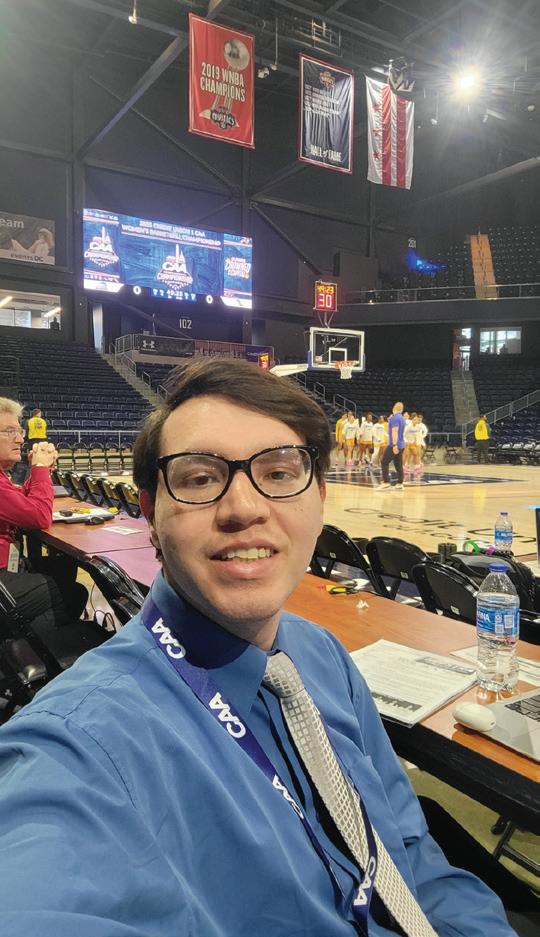
A piece of my heart will always belong to the Chronicle, and no matter what the future has in store, I’ll be sure to cherish the memories made here forever.
I had the privilege of covering the 2025 Coastal Athletic Association tournament for The Hofstra Chronicle.
The Hofstra Chronicle.
Anthony Hidalgo / The Hofstra Chronicle
Anthony Hidalgo / The Hofstra Chronicle
Anthony Hidalgo / The Hofstra Chronicle
I am a sports media major from Dix Hills, New York.
THE HOFSTRA CHRONICLE
SPORTS
December 2, 2025
L
ights are off , party ’ s over
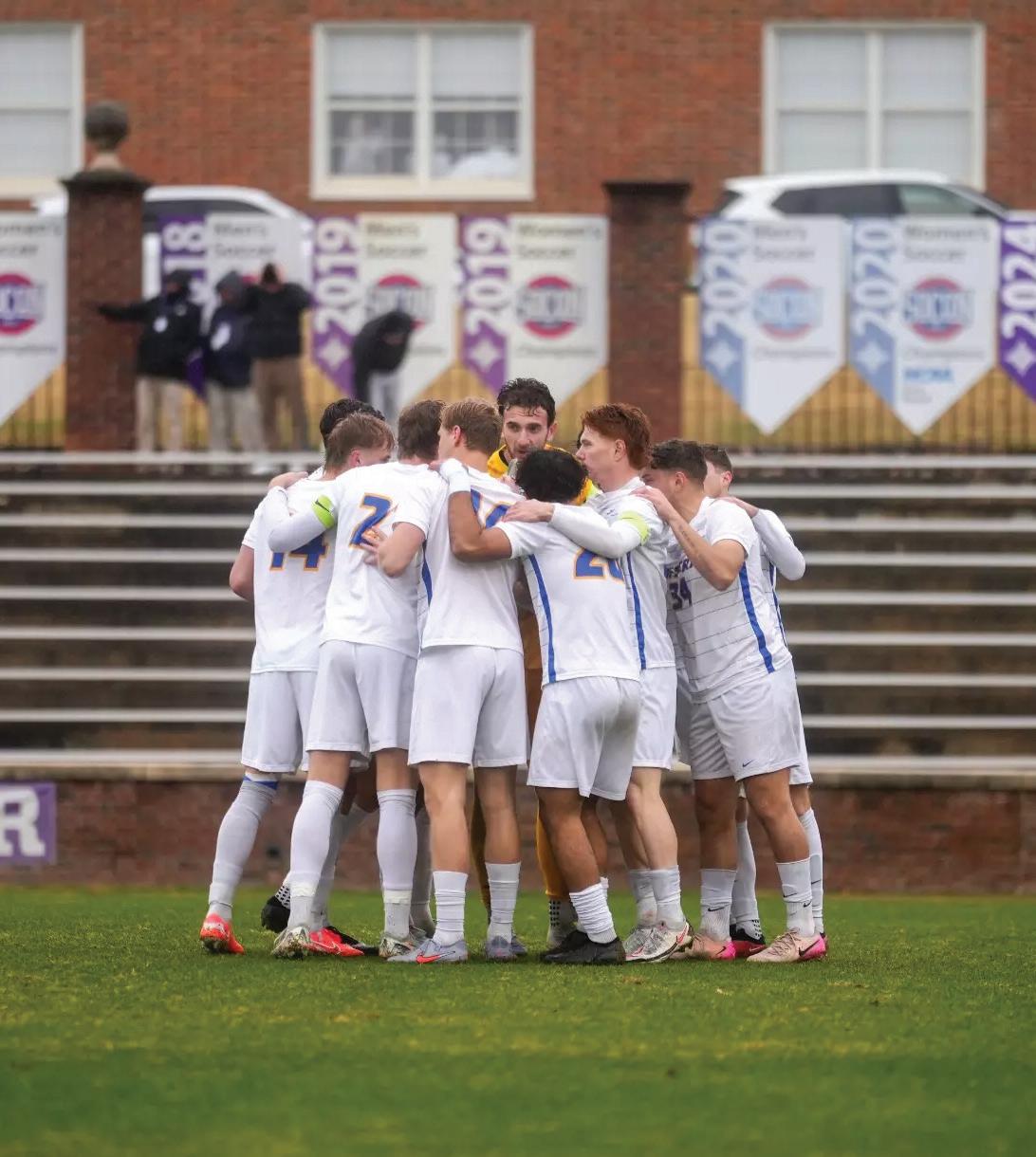
The Pride fell 4-3 in penalty kicks in the third round of the NCAA tournament, ending their season and Richard Nuttall’s career.
Photo courtesy of Alexis Friedman