> AI in Warehousing: Pallets, Picks, and Predictions
AI IN EVERYDAY LIFE: PRACTICAL APPLICATIONS
> Smart Assistants That Actually Understand You
> AI in Healthcare: Your Next Checkup Could Be an Algorithm
> Agentic AI: Digital Workers with
> Quantum x AI: Are We There Yet?
TOOLS AND HOW-TO GUIDES
> AI Tools You Should Already Be Using at Work
> AI for Content Creation: Your New Creative Team JUMP TO SECTION
> How Schools Are Teaching AI to the Next Generation
> What Most People Still Get Wrong About AI
> Why 95% of GenAI Projects Fail—and How to Succeed
> Inside Goldman Sachs’ AI Assistant Strategy
THE EDGE OF AI IN BUSINESS AND BEYOND
Artificial intelligence is no longer a distant frontier—it is rapidly becoming a part of our everyday decisions, workflows, and interactions.
THE REAL QUESTION IS NOT IF HUMANS WILL ADOPT AI, BUT HOW FAST.
Early signals show the pace is extraordinary—many experts predict AI adoption is outpacing even the historic rise of the iPhone, which transformed how billions connect and work.
Across industries, businesses are already experimenting with AI in meaningful ways. From automating routine processes
to empowering data-driven AI is not just a tool—it is teammate. Looking forward, entering an era where teams and AI agents will collaborate side, blending judgment, creativity, machine precision. This shift how organizations innovate, serve their customers.
This issue of GAIN Magazine to keep you on the leading transformation. Inside, you’ll real-world examples, and practical to help you understand improve your life, scale your and shape the way we live. your monthly guide to navigating opportunities—and challenges—of AI-powered future.
BEYOND
data-driven strategies, becoming a forward, we are teams of humans collaborate side by creativity, and shift will redefine innovate, scale, and Magazine is designed leading edge of that you’ll find insights, practical tools how AI can your business, Consider this navigating the challenges—of the
LETTER FROM THE EDITOR
By Robin Shelley, Editor-in-Chief
Artificial intelligence is changing everything — how we work, communicate, and solve problems. Yet for most business leaders, the challenge isn’t access to AI. It’s understanding how to use it wisely, ethically, and effectively.
That’s why we created GAINmag: to turn complexity into clarity. Each issue explores how AI is reshaping business and daily life, separating hype from what truly matters. We look beyond headlines to spotlight the companies, tools, and thinkers driving practical innovation — and the people learning to lead alongside intelligent technology.
Our goal is simple: to help readers gain the insight they need to act with confidence in an AI-powered world. Whether that means identifying a tool that saves hours a week, rethinking a workflow, or learning from brands on the leading edge of transformation, GAINmag is designed to make artificial intelligence actionable.
AI isn’t just a story about machines — it’s a story about us. How we adapt. How we create. How we lead. And this magazine exists to guide that journey — one idea, one experiment, one real-world example at a time.
Welcome to GAINmag. Let’s explore the edge of AI in business and beyond.
Robin Shelley Editor-in-Chief, GAINmag.com
SUPPLY CHAIN SECRET SAUCE
Wade Wickus is the CEO at Supply Chain Secret Sauce, a leading provider of Fractional Continuous Improvement as a Service (CIaaS) solution that help fast-growing companies streamline operations, cut hidden costs, and scale more efficiently. With over three decades of experience in the field—including expertise in logistics, warehousing, procurement, technology, and supply chain strategy Wade empowers organizations to extract maximum value from their supply chains by delivering targeted, hands-on improvements that drive both profitability and performance. Co-developer of the PSC diagnostic found at BGR packaging and contributor to the Packaging Supply Chain Book.
Earlier in his career, Wade held executive roles at major Fortune 100 and family owned organizations, where he honed skills in sales, sourcing, branding, fulfillment, enterprise logistics, and enterprise supply chain performance — managing high-value spending and delivering multimillion-dollar efficiencies. During this time, he also gained firsthand insights into how smaller businesses, lacking the resources of larger enterprises, often fall prey to overlooked “hidden costs” and missed growth opportunities.
This insight inspired the founding of Supply Chain Secret Sauce: a fractional-leadership model that brings the depth of Fortune-scale operations expertise to brands without the overhead of full-time hires. Under Wade’s leadership, the company has helped numerous clients—including those in grocery, food & beverage, e-commerce, and CPG—cut costs, optimize supply chains, and scale smarter with immediate ROI.
Wade Wickus is also the host of the podcast Supply Chains… “The Secret Sauce”, engaging with supply chain leaders in conversations about practical strategies, emerging technologies, and operational insights.
Beyond consultancy and operations, Wade is deeply committed to thought leadership and community. He regularly speaks at conferences—such as CSCMP and operational conferences. He enjoys diving into topics like “total cost to serve” and logistics optimization. He is a contributor of articles and white papers on issues ranging from AI deployment to cost-to-serve modeling.
WADE WICKUS Founder/CEO
AI IN EVERYDAY PRACTICAL APPLICATIONS
EVERYDAY LIFE APPLICATIONS
SMART ASSISTANTS THAT ACTUALLY UNDERSTAND YOU
In the not-so-distant past, talking to a virtual assistant was like arguing with a toddler holding a walkie-talkie. “Turn off the lights” often yielded weather reports or calls to a random ex. Fast forward to 2025, and suddenly our digital companions are articulate, proactive, and sometimes (alarmingly) funny.
Natural language AI assistants—powered by large language models like OpenAI’s GPT-4 and Google’s Gemini—are now context-aware, emotionally responsive, and enterprise-grade smart. They understand ambiguity (“remind me when I’m free next week to call mom”), can negotiate
(“how about Wednesday at 3?”), and even anticipate (“looks like it might rain—should I move your run to Thursday?”).
Take Rewind.ai, an AI memory assistant that passively records and indexes your digital life so you can ask things like, “What did I say about the packaging supplier last month?” and get an exact answer. Or Rabbit R1, a new pocket-sized personal AI device that can order lunch, schedule meetings, and clean your inbox—just by talking to it like a friend.
Thanks to transformer-based models and custom fine-tuning, assistants now
recognize voice tone, intent, and past interactions.
Google Assistant is now able to hold multiturn conversations, and Alexa’s AI 2.0 can summarize meetings or narrate your daily brief with uncanny nuance.
Even enterprises are adopting assistants as digital coworkers. Morgan Stanley’s wealth managers now use GPT-powered advisors to pull up client insights in seconds. Productivity? Way up. Headaches? Way down.
AI assistants in 2025 can handle nuanced, multi-step requests— and even initiate tasks.
Tools like Rewind.ai and Rabbit R1 make “total recall” and verbal task management real.
Enterprises report measurable productivity gains from deploying AI copilots.
AI IN HEALTHCARE YOUR NEXT CHECKUP COULD
From radiology to remote care, AI is becoming the newest member of your medical team.
Tools like Aidoc and PathAI are already assisting doctors in reading scans and pathology slides. Trained on millions of cases, these algorithms spot signs of stroke, cancer, or pneumonia with accuracy rivaling—or in some cases, surpassing—human experts.
One study from Stanford found that an AI model trained on dermatology images performed as well as 21 board-certified dermatologists in identifying skin cancer.
But it’s not just back-end diagnostics. Babylon Health’s AI chatbot triages symptoms before patients even see a doctor. Apple Watch algorithms detect atrial fibrillation and alert wearers in real time.
The real promise? Prevention. With enough real-world data, AI can flag high-risk patients months before issues occur—giving doctors time to intervene, not just react.
Of course, ethical concerns remain: data privacy, medical bias, and the risk of over-reliance. But with proper oversight, the future of healthcare could be faster, cheaper, and yes—smarter.
THROUGH BUSINESS TRANSFORMATION
AI
HOW WALMART QUIETLY BECAME AN AI POWERHOUSE
Walmart’s internal AI platform is used by 50,000+ employees daily
Predictive inventory and pricing systems increase profitability and reduce waste
1. 2. 3.
Computer vision tools are being tested in stores to improve customer experience
Walmart might not be the name that springs to mind when you think “AI innovator,” but maybe it should be. The retail giant is investing heavily in generative AI, machine learning, and automation—and it’s paying off in both margins and market dominance.
In 2024, Walmart quietly launched its own internal GenAI platform, allowing store associates and managers to query inventory data, staffing patterns, and delivery forecasts in plain English. Over 50,000 employees now use the assistant daily, streamlining everything from scheduling to vendor management.
Behind the scenes, AI models monitor customer behavior, anticipate restock needs, and adjust prices dynamically. According to McKinsey, predictive pricing systems can increase profits by 2–5%. Walmart’s AI platform uses data from millions of SKUs to do just that—giving it a competitive edge against Amazon in physical retail.
And the customer experience? AI chatbots answer online queries, and vision-based systems monitor stockouts in stores. Pilot programs are even exploring AI cameras that detect spills, messes, and long checkout lines.
AI IN WAREHOUSING
PALLETS, PICKS, AND PREDICTIONS
IN THE LOGISTICS WORLD, TIMING IS EVERYTHING— AND AI IS TURNING IT INTO A SCIENCE.
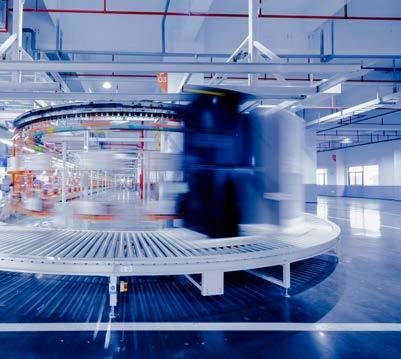
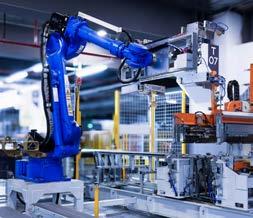
Warehouses used to rely on gut instinct, spreadsheets, and sticky notes. Now? Machine learning algorithms are predicting demand, optimizing labor, and even controlling autonomous forklifts that roam like Roombas on steroids.
Companies like Amazon, GXO, and BGR are integrating predictive analytics platforms (like Netstock) to manage inventory with pinpoint accuracy. Instead of guessing when to reorder, AI looks at sales trends, lead
times, seasonality, and supplier reliability to tell you exactly what to order and when.
Brightpick robots navigate warehouse aisles to pick items, reduce walking time, and communicate with WMS systems in real time. One 3PL saw labor costs drop 28% in six months after deploying vision-based robotic pickers.
And yes, even boxes are getting smarter. AI-powered packaging machines adjust
box size to the product, reducing void fill and lowering shipping costs by up to 20%— plus you save the planet while you’re at it.
Warehouses used to be cost centers. AI is turning them into strategic assets.
THE FRONTIER OF AI
EMERGING TRENDS
EMERGING TREND AGENTIC
AI:
DIGITAL WORKERS WITH INITIATIVE
FORBES NOTED IN MAY 2025, “AGENTIC AI WILL DO FOR WHITE-COLLAR WORK WHAT THE ASSEMBLY LINE DID FOR MANUFACTURING.”
Agentic AI is a buzzword with bite. Unlike traditional tools that wait for prompts, agentic AI tools—like AutoGPT, Cognosys, and Microsoft’s Jarvis—can launch tasks, build plans, and adapt in real time, all without micromanagement.
These systems connect to APIs, browsers, and databases. Give them a goal (“research and write a market brief on smart packaging”), and they’ll decide how to do it—breaking the task into steps, delegating subtasks to sub-agents, and compiling the result. Sound wild? It is.
Cognosys, a leading platform, lets teams deploy autonomous AI agents that act like team members: handling customer service queries, summarizing documents, and managing inboxes. Early trials showed a 40% reduction in human follow-up tasks.
However, there are risks. Agentic AI can “hallucinate” actions, overspend API credits, or get stuck in loops. That’s why guardrails—like permissions, real-time monitoring, and feedback tuning—are essential.
Still, the productivity gains are undeniable. As Forbes noted in May 2025, “Agentic AI will do for white-collar work what the assembly line did for manufacturing.”
Agentic AI tools act autonomously to complete real-world business tasks
1 Companies report up to 40% reduction in manual follow-ups with digital agents
2 Guardrails are key to preventing overreach, drift, or hallucinated actions
3
QUANTUM x AI
ARE WE THERE YET?
QUANTUM COMPUTING ISN’T
As commercial prototypes mature, AI researchers are exploring how quantum models could supercharge optimization, protein folding, and logistics.
Quantum computing has the potential to revolutionize AI by dramatically increasing processing power. Companies like IBM and Google are exploring how quantum AI can optimize complex logistics, simulate molecules for drug discovery, and analyze vast financial datasets faster than ever before.
While classical AI models are powerful, they can hit bottlenecks with complex simulations and calculations. Quantum AI aims to break through those limits.
Imagine being able to simulate thousands of potential drug compounds in hours, or solve supply chain disruptions in real time during a global crisis. Quantum AI can also help financial institutions manage risk and optimize portfolios in a fraction of the time.
IBM’s Quantum Lab and Google’s Sycamore teams are already testing hybrid AI models that blend quantum acceleration with conventional neural nets. Volkswagen recently used a quantum algorithm to optimize traffic flow in Beijing—reducing congestion by 17% during pilot tests.
But here’s the truth: we’re still in the early innings. Quantum hardware is fragile, expensive, and error-prone. Practical, enterprise-grade quantum AI is likely 5–10 years away.
Still, now is the time for enterprises to experiment. Understanding quantum logic and developing small use cases can offer an innovation edge when the hardware catches up. Call it the R&D of R&D.
Quantum AI blends quantum computing with machine learning for faster optimization
Early use cases include traffic modeling, drug discovery, and portfolio simulation
Most solutions are experimental today— but with massive upside for early adopters
AI TOOLS + HOW-TO GUIDES
AI FOR CONTENT CREATION YOUR NEW CREATIVE TEAM
IF CONTENT IS KING, AI IS NOW THE ROYAL COURT.
A cross industries, AI-powered tools are accelerating how teams brainstorm, write, design, and publish. And unlike most humans, they never miss a deadline.
Companies like HubSpot, Canva, and Jasper.ai are deploying AI assistants that generate marketing copy, social media posts, presentation decks, and blog outlines in seconds. AI is even being used to brainstorm ideas based
on real-time SEO trends— great for overworked teams with zero bandwidth.
Example: a mid-sized B2B software firm used Jasper + Surfer SEO to launch 80 content pieces in 60 days— resulting in a 46% bump in organic traffic and a 28% increase in lead form submissions.
It’s not just text. Tools like Runway and Lumen5 turn blog posts into short videos complete with voiceovers,
music, and branded graphics. In publishing and e-learning, Synthesia turns text into avatar-narrated training videos in dozens of languages.
Sure, it’s not perfect. Sometimes you get weird phrasing (“Unleash your business beast mode!”), but with light editing, you’re scaling content like never before.
The takeaway? Your content team now has a superpower. Just make sure to teach it good grammar.
SNAPSHOT
AI tools like Jasper, Canva, and Runway are accelerating content creation and repurposing
Companies report 20–50% faster time-to-publish and measurable growth in engagement
The future of marketing is human-AI collaboration—not competition
AI TOOLS
YOU SHOULD ALREADY BE USING AT WORK
If you’re still writing emails manually, toggling between apps, or attending meetings that could’ve been an AIgenerated summary... we need to talk.
AI TOOLS AREN’T FUTURE TECH— THEY’RE ALREADY YOUR SMARTEST EMPLOYEE.
Start with Otter.ai, which transcribes meetings in real time and emails you the recap (minus the awkward jokes). Notion AI drafts documents, organizes notes, and can even brainstorm if your brain’s on coffee break. And for marketing teams? Jasper.ai writes high-converting emails faster than your best intern.
Zapier is the duct tape of AI— connecting thousands of apps to automate busywork. A mid-sized B2B company used Zapier + GPT to respond to common support tickets, reducing agent workload by 32% in 3 months.
Want to really level up? Use Perplexity. ai to do research faster than ChatGPT, with real-time citations from trusted sources.
The takeaway: if you’re still dragging files around, writing repetitive emails, or drowning in meeting notes, you’re not overworked—you’re under-AI’d.
Otter.ai, Notion AI, Jasper, Zapier, and Perplexity are top tools to improve everyday workflows
Companies are reducing task time and manual labor by 25–40% with automation stacks
The future of productivity is modular, AIintegrated, and available now—not later
UNDERSTANDING EDUCATION
UNDERSTANDING AI & LITERACY
HOW SCHOOLS ARE TEACHING AI TO THE NEXT GENERATION
Students as young as 10 are now training basic models to recognize objects, predict outcomes, and even simulate conversations.
Reading, writing, and... reinforcement learning? That’s becoming the new norm in forwardthinking schools where AI literacy is getting baked into the curriculum alongside algebra and essays.
Programs like AI4ALL, MIT’s RAISE, and Code.org’s AI-focused extensions are making sure the next generation isn’t just using AI—they’re understanding and building it. Students as young as 10 are now training basic models to recognize objects, predict outcomes, and even simulate conversations.
In rural Kentucky, a public school piloted AI projects where students used Scratch + Teachable Machine to build mooddetecting music players. Meanwhile, Stanford’s AI4ALL program pairs high school students with mentors working on real-world AI problems—think: bias in hiring, facial recognition fairness, and health diagnostics.
Why it matters? Because by 2030, over 50% of jobs will require some familiarity with AI-driven systems. Kids today aren’t just preparing for the workforce— they’re preparing to shape it.
AI education isn’t just about coding. It’s about ethics, social justice, and understanding what happens when machines make decisions about people. And in that, there’s never been a better time to learn.
AT A GLANCE
K–12 AI education includes projects, ethics, and hands-on experimentation
Programs like AI4ALL and MIT RAISE are leading the charge in high school outreach
By 2030, over 50% of jobs will require AI fluency—not just usage, but understanding
WHAT MOST PEOPLE STILL GET WRONG ABOUT AI
Despite AI being in headlines daily, most people— including decisionmakers—still misunderstand what it is and isn’t.
First, AI is not magic. It doesn’t “think” like a human; it predicts patterns based on data. Yet surveys by Pew Research show over 60% of Americans believe AI can become “self-aware” in the near term. Yikes.
Second, AI isn’t one monolithic tech. Natural language processing, computer vision, predictive modeling—each is a different branch, with different risks, strengths, and applications. Lumping them together leads to bad policy, bad buying decisions, and bad outcomes.
One of the most persistent myths? “AI will take all our jobs.” The truth is more nuanced. Yes, AI will automate repetitive tasks. But it’s also generating entire categories of new work—from prompt engineers to AI ethicists.
Misconception breeds fear. Fear leads to resistance. And resistance kills innovation.
A better approach? AI literacy. Whether you’re a CEO or a student, you need to understand how these systems work, what they can and can’t do, and what ethical frameworks to apply. As Stanford’s HumanCentered AI Institute notes: “A society that fears AI cannot govern it wisely.”
TOP 3 TAKEAWAYS
Over 60% of Americans mistakenly believe AI is on the verge of consciousness
AI is a suite of technologies—not a single intelligence
1. 2. 3.
AI literacy is essential for innovation, governance, and informed public discourse
AINEWS & THOUGHT LEADERSHIP
Three reasons poor data infrastructure, objectives, and adoption.
WHY 95% OF GENAI PROJECTS FAIL—AND HOW TO SUCCEED
Generative AI is having its Big Bang moment. But behind the buzz are sobering stats: according to a recent MIT Sloan study, up to 95% of GenAI pilots in enterprise settings fail to scale or generate ROI.
Why? Three reasons keep popping up: poor data infrastructure, unclear objectives, and lack of employee adoption. A Fortune 500 logistics company launched an AI document assistant… only to find 85% of its workforce didn’t use it due to lack of training and unclear benefits.
Another common trap: building bespoke AI models when off-the-shelf solutions work
just fine. One SaaS firm spent 9 months and $800K fine-tuning a proprietary LLM— only to discover that ChatGPT-4 with basic prompts handled the task faster and cheaper.
Success stories do exist. Walmart’s GenAI platform was launched with internal marketing, strong documentation, and team-specific use cases. Adoption? 92% in month one.
The takeaway: treat GenAI like any other digital transformation. Start small. Train users. Measure obsessively. Don’t expect AI magic. Build AI muscle.
Up to 95% of GenAI projects fail due to infrastructure, adoption, or clarity issues
Overbuilt, underused custom AI is common— off-the-shelf often works better Successful companies invest in training, scope discipline, and small wins first
INSIDE GOLDMAN SACHS’
AI ASSISTANT STRATEGY
Goldman Sachs launched a GPT-based assistant used across its analyst workforce
Analysts cut research time in half and improved client report quality
Private infrastructure ensures compliance and data security in a sensitive industry
When you picture AI disruption, Wall Street might not be your first thought—but Goldman Sachs is betting big on it. In 2024, the bank rolled out its own internal AI assistant built on GPT-4 for use by thousands of analysts and associates.
Think of it as ChatGPT with a finance degree. Employees use the tool to summarize earnings calls, explain market moves in plain English, and even write compliance-safe client briefings.
David Solomon, Goldman’s CEO, called the move “a productivity revolution, not a headcount reduction.”
The assistant doesn’t replace people—it empowers them. One internal case study showed a junior analyst reducing research time by 58%, while improving clarity and consistency in reports.
Unlike public AI tools, Goldman’s system is trained on proprietary market data and housed securely within its own infrastructure—solving privacy concerns that have slowed GenAI adoption in other firms.
The lesson? If one of the world’s most conservative banks can embrace generative AI at scale, the rest of us might be out of excuses.