








Wendy Wu Tours, the UK's leading touring specialist are excited to announce an exclusive member discount to Historic Scotland members. Offering extraordinary, fully inclusive tours to Japan, China, Southeast Asia, India, Central Asia, Middle East, Europe, Africa & Latin America, your adventure with Wendy Wu Tours will be full of iconic highlights, hidden gems and authentic cultural experiences.
Our members can enjoy an exclusive 5% discount on any tour featured in Wendy Wu's extensive collection. Visit wendywutours.co.uk to see their full range of tours.
Tours include return flights, all hotels, all meals, expert guide, all transport in destination, all sightseeing & entrance fees and visas.

Whatdoeswintermeantoyou?Maybeit’s atimelyremindertomakethosedaytrips you’dplannedmonthsago.Orperhapsyou’ll choosetocoorieinwithfiresidepursuits.Iffriendsand familyarevisiting,you’llnodoubtbeseekingwaystokeep thementertained.
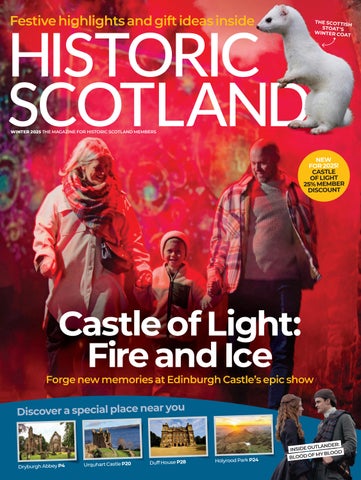
LooknofurtherthanyourwinterissueofHistoric Scotlandmagazine.You’llfindideasforgettingthemost fromyourmembershiponpage12,discoverournew archivalresourcesforhelpingwithfamilytrees(page10), andenjoyaselectionboxoffestiveactivitiesforallages, fromCastleofLight’sspectacularprojectionshowto seasonalfilms,playsandexhibitions(page52).
Onpage22,readabout10intriguingmysteriesconnected tooursites,whichwillhaveyoureachingforyour deerstalker,magnifyingglassandtrustymembers’guide.
There’sawarm1920swelcomeattheBlackhouse,Arnol, inourbilingualGaelicandEnglishfeatureonpage36. Thenonpage42,you’reinvitedtojoinourArchivesteamto discoverhowthehearthhasbeenafocalpointformillennia.
Onpage28,weexplorethehistoryofmentalhealthin Scotlandandhowgreaterawarenessandpioneering therapiesbroughtpositiveandlastingchange.
Ifyou’reneedingfestivegiftinspiration,turnto page48forsomecrackingideas,includingsixpicksfor thebookwormsclosetoyourheart.
CLAIREBOWIE Head of Membership & CRM

PAGE 22

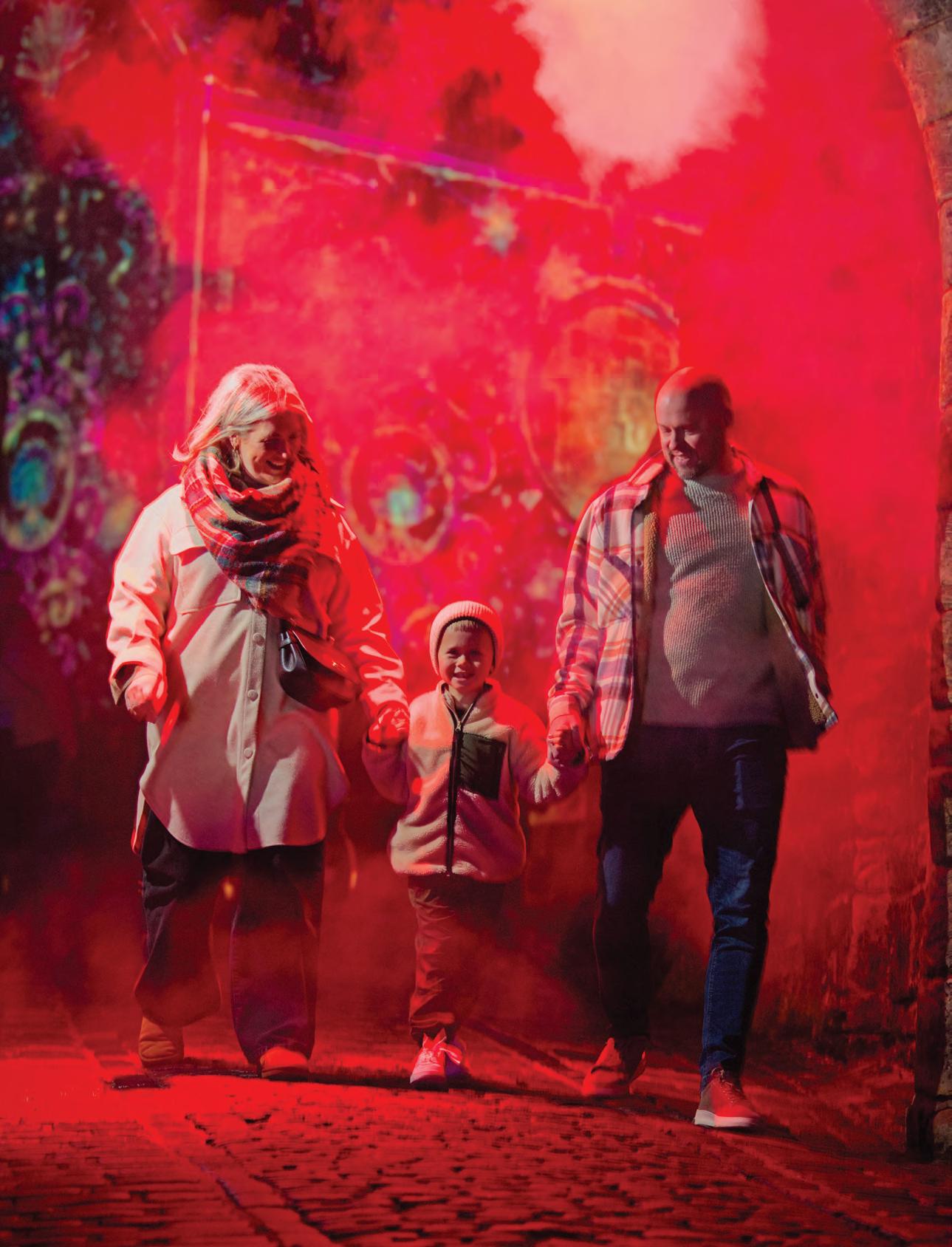
CastleofLightis backforanother season,onceagain bathingEdinburgh Castleinaspectacle oflightandsound. Thisyear’stheme ofFireandIce promisesanother magicalexperience. Don’tforgettomake useofyour25% memberdiscount, newfor2025.
Turn to page 52 for more details.

PRENTICE is the author of four historical non-fiction books. She has also made audio documentaries for the BBC.
PAGE 28

KIRSTYMACDONALD isafreelanceGaelic heritageconsultant, whohasworkedtohelp developGaelicand Scotland’straditional artsandculture.
PAGE 36

KELLYAPTER isanartswriterfor TheScotsmanand TheList
PAGE 42
CORRECTIONS
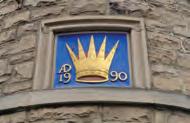
Intheautumnissue,the crowncarvingonpage18is fromEdinburgh’sRadisson BluHotelandinspiredJack Handscombe’ssuncarving. In‘Abeautifulmurder’on page24,Moray’smother soughtjustice.Andon page56,Edinburghtrams didnotbecomefully electricuntil1923.
HISTORIC ENVIRONMENT
SCOTLAND
Longmore House, Salisbury Place, Edinburgh EH9 1SH 0131 668 8600
hes.scot
Membership enquiries 0131 668 8999 members@hes.scot
Editorial enquiries members@hes.scot
Head of Membership & CRM
Claire Bowie
Membership Marketing Manager
Julia Haase-Wilson
Editor Indira Mann
indira.mann@ thinkpublishing.co.uk
Assistant Editor
Jonathan McIntosh
Design Matthew Ball
Managing Editor
Rachel Duffield
Andrew Littlefield
Advertising Sales
Jamie Dawson jamie.dawson@ thinkpublishing.co.uk
0203 771 7201
Executive Director, Think John Innes
john.innes@thinkpublishing.co.uk
Think 65 Riding House Street London, W1W 7EH 020 3771 7200
Photography
All images provided by Historic Environment Scotland unless otherwise stated. For access to images of Scotland and our properties, call 0131 668 8647/8785 or email images@hes.scot
Historic Scotland is published quarterly and printed on Galerie Brite Bulk, which is from wellmanaged FSC®-certified forests and from other controlled sources.
The views expressed in the magazine do not necessarily reflect those of Historic Environment Scotland. All information is correct at the time of going to press.
© Historic Environment Scotland.
All rights reserved. Reproduction in part or in whole is prohibited without prior agreement of the Membership and CRM Manager of Historic Environment Scotland.
Historic Environment Scotland
(HES) is a Non Departmental Public
Body established by the Historic Environment Scotland Act 2014. HES has assumed the property, rights, liabilities and obligations of Historic Scotland and RCAHMS. Visit hes.scot/about-us Scottish Charity No. SC045925.

28
Hear how music was used to soothe the unquiet mind

8 THE SCRIPT
Your guide to experiences at our properties this winter
20 SPOTLIGHT
Urquhart Castle
48 SHOP
52 EVENTS
Great days out for all 56 TIME TRIP
22 HISTORY DETECTIVES
Solving Scottish mysteries that would baffle even Rebus
28 HEALTH OF A NATION
The history of mental ill health in Scotland
36 VOICES OF THE BLACKHOUSE
A Gaelic Special Edition with bilingual text
42 THE COMMON ROOM
Gather round the fireplace and hear tales of winters past
A 12th-century ruin by the River Tweed that provides a glimpse into medieval monastic life
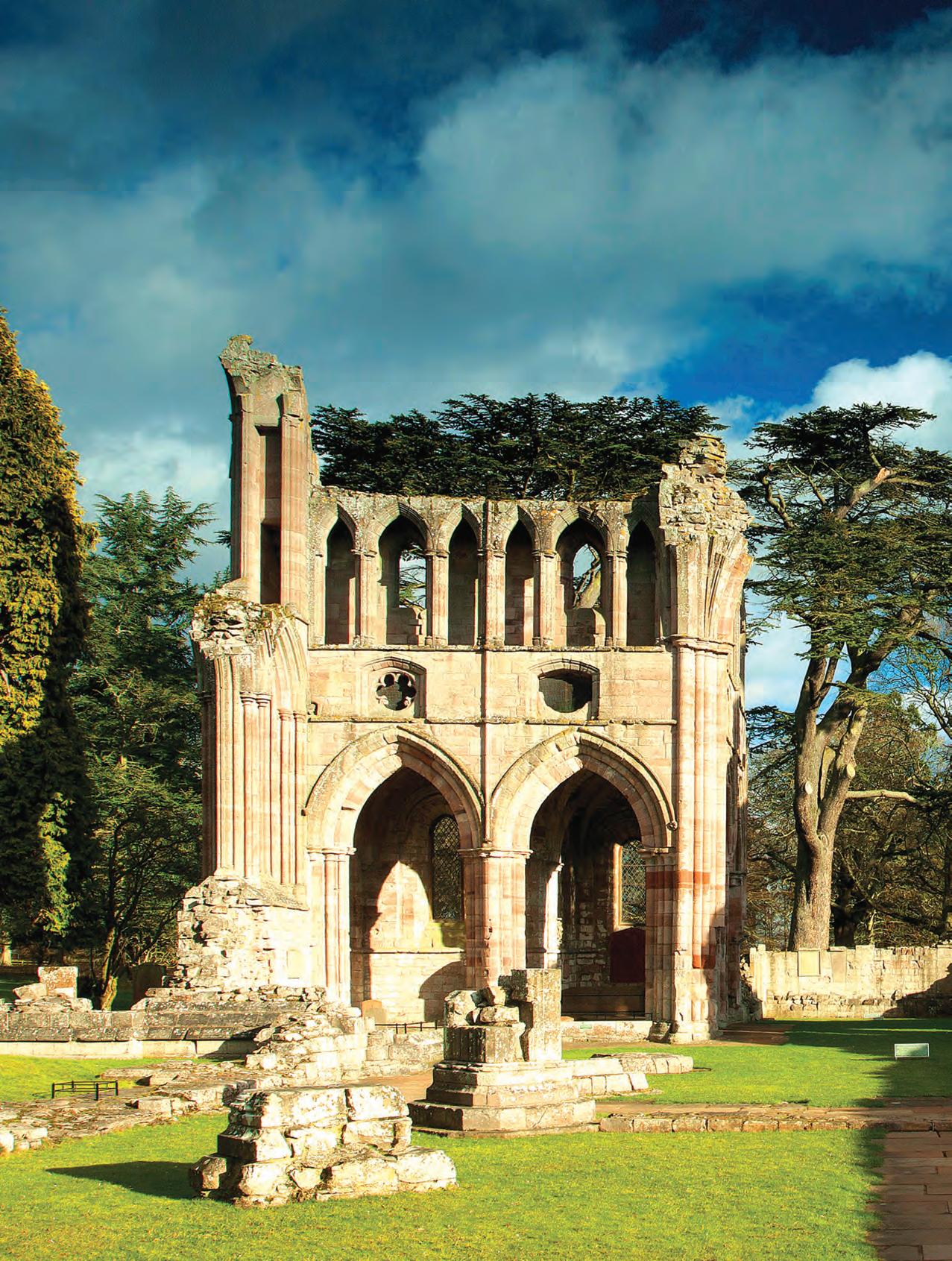
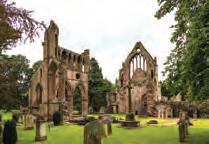
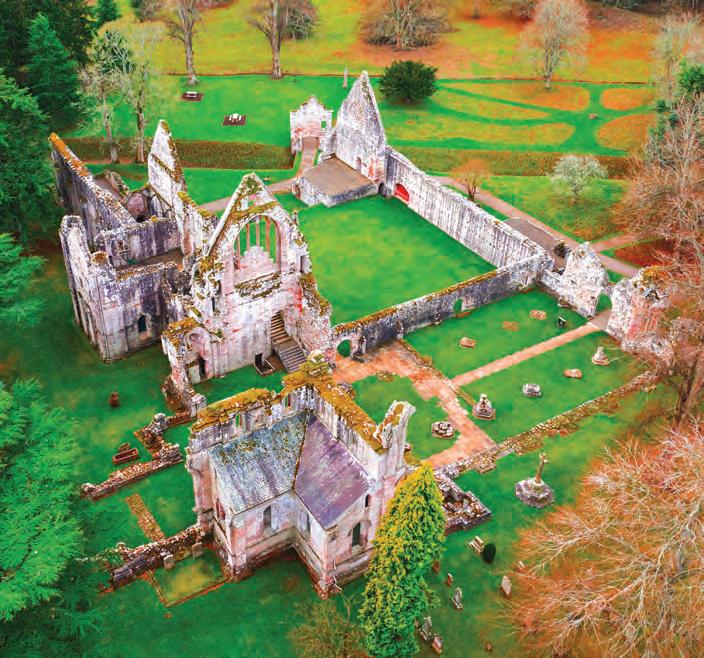
Nestled in woodland by the River Tweed lie the graceful ruins of Dryburgh Abbey, founded by Premonstratensian canons from Northumberland’s Alnwick Priory in 1150 on the invitation of Hugh de Morville, Constable of Scotland.
Dryburgh Abbey never became as wealthy as the abbeys of Melrose, Kelso or Jedburgh but it is a fine
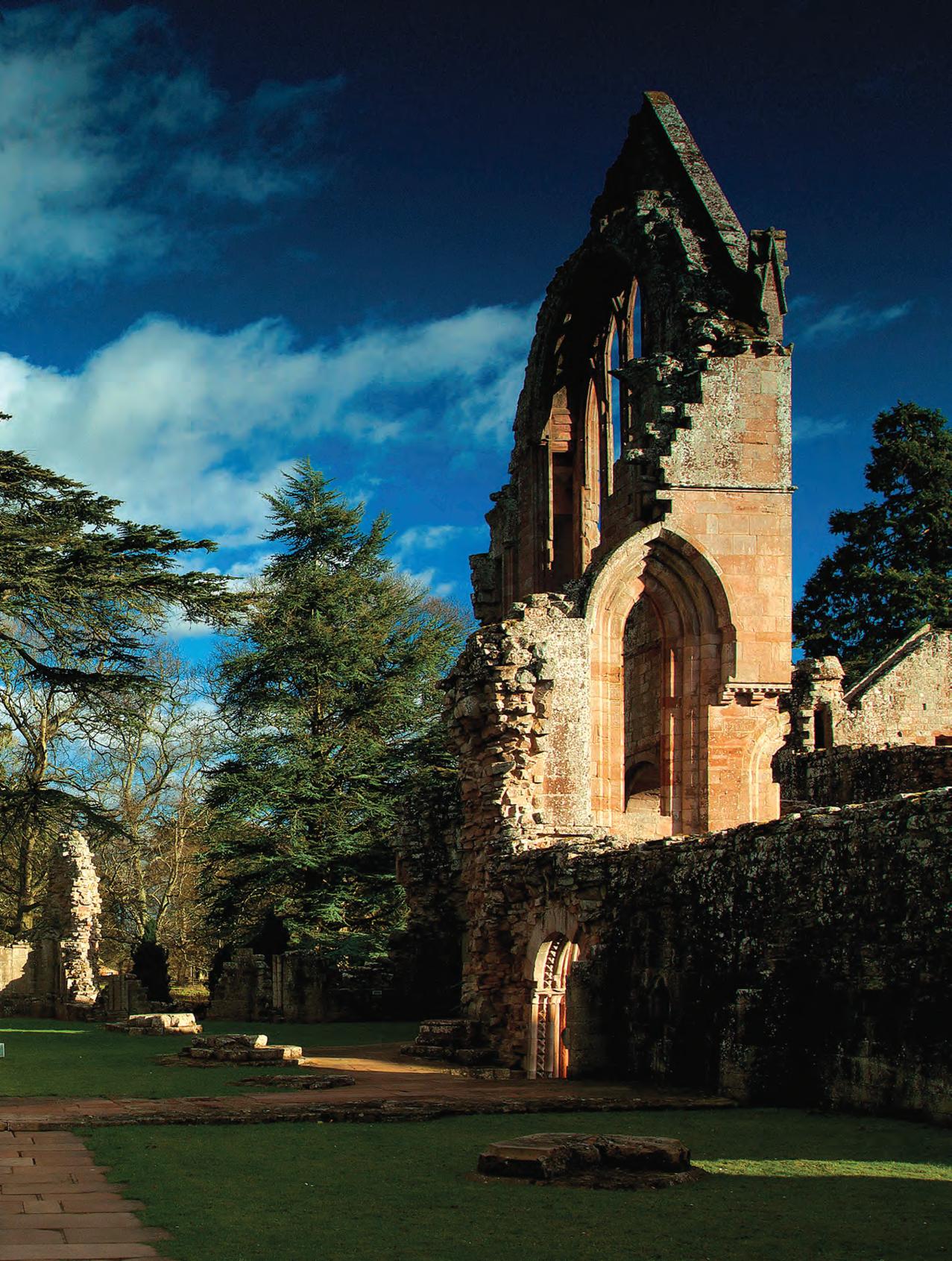
example of ecclesiastic architecture and stonemasonry.
Monastic life here was relatively peaceful. However, the abbey’s proximity to the Scottish border resulted in several attacks by English forces during its lifetime.
Robert I (the Bruce) used it as a base for raids into England in 1316. Revenge came in 1322, when Edward II’s army looted and set the abbey ablaze after
The abbey’s proximity to the border led to multiple attacks by English forces
hearing its bells ring out in celebration as his army retreated.
Rebuilding took 100 years and included a further attack by English forces in 1385, when the abbey was “devastated by hostile fire”. And there was another brutal attack in 1544 when 700 English troops raided and destroyed it and the nearby village of Dryburgh.
The Reformation of 1560 effectively brought monastic life here to an end. By this time, only eight monks and a sub-prior remained, and they were allowed to live out the rest of their days here.

David Erskine, 11th Earl of Buchan and founder of the Society of Antiquaries of Scotland, acquired the abbey in 1786.
He oversaw work to preserve the abbey as part of a romantic ruin within a designed landscape. He had a large formal garden laid out, complete with an obelisk commemorating Dryburgh Abbey’s foundation by Hugh de Morville. When the Earl of Buchan died in 1829, he was laid to rest in the abbey’s sacristy.
The Reformation of 1560 effectively brought monastic life here to an end. By this time, only eight monks and a sub-prior remained
MARK
REMEMBRANCE
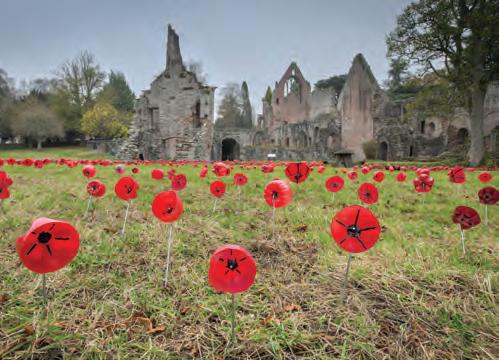
Don’t miss a unique poppy display in the abbey’s wildflower meadow from 8 to 16 November as part of commemorations marking the end of the
First World War. The flowers are created from recycled plastic botttles by schoolchildren during workshops we hold at primary schools across the Scottish Borders. The pupils learn
these ruins evoke the tranquillity of Dryburgh Abbey’s spiritual heyday. Visitors can explore the largely complete domestic homes of the medieval canons and appreciate its Gothic architecture, including the 13th-century chapter house.
about Anna Guérin, inventor of the Remembrance poppy, and Lady Haig, who ran Scotland’s first poppy factory and was buried at the abbey.
Literary lovers should pay a visit to the abbey’s north transept, which Sir Walter Scott called St Mary’s Aisle. The renowned Scottish novelist was buried here in 1832.
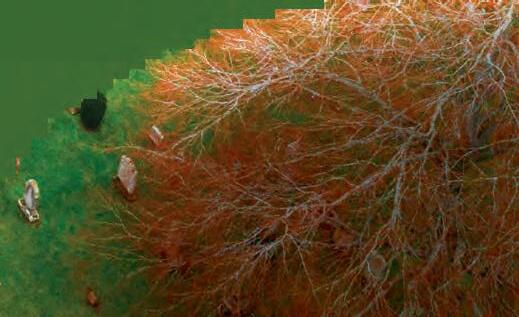
The Dryburgh Yew tree is believed to have been planted by abbey monks in 1136, making it older than the abbey and one of Scotland’s
most ancient trees. You’ll see other impressive evergreens at the abbey, planted as part of David Erskine’s romantic landscaping efforts.
The car park has two accessible bays. The abbey ruins are 130 metres from the visitor centre along a level concrete path. The gatehouse and refectory can be reached via a 100m-long gravel path.
Assistance dogs have full access to the site. Other dogs are allowed at the abbey but aren’t permitted in roofed areas.
You can help us protect Scotland's rich history for future generations by leaving a gift in your will.

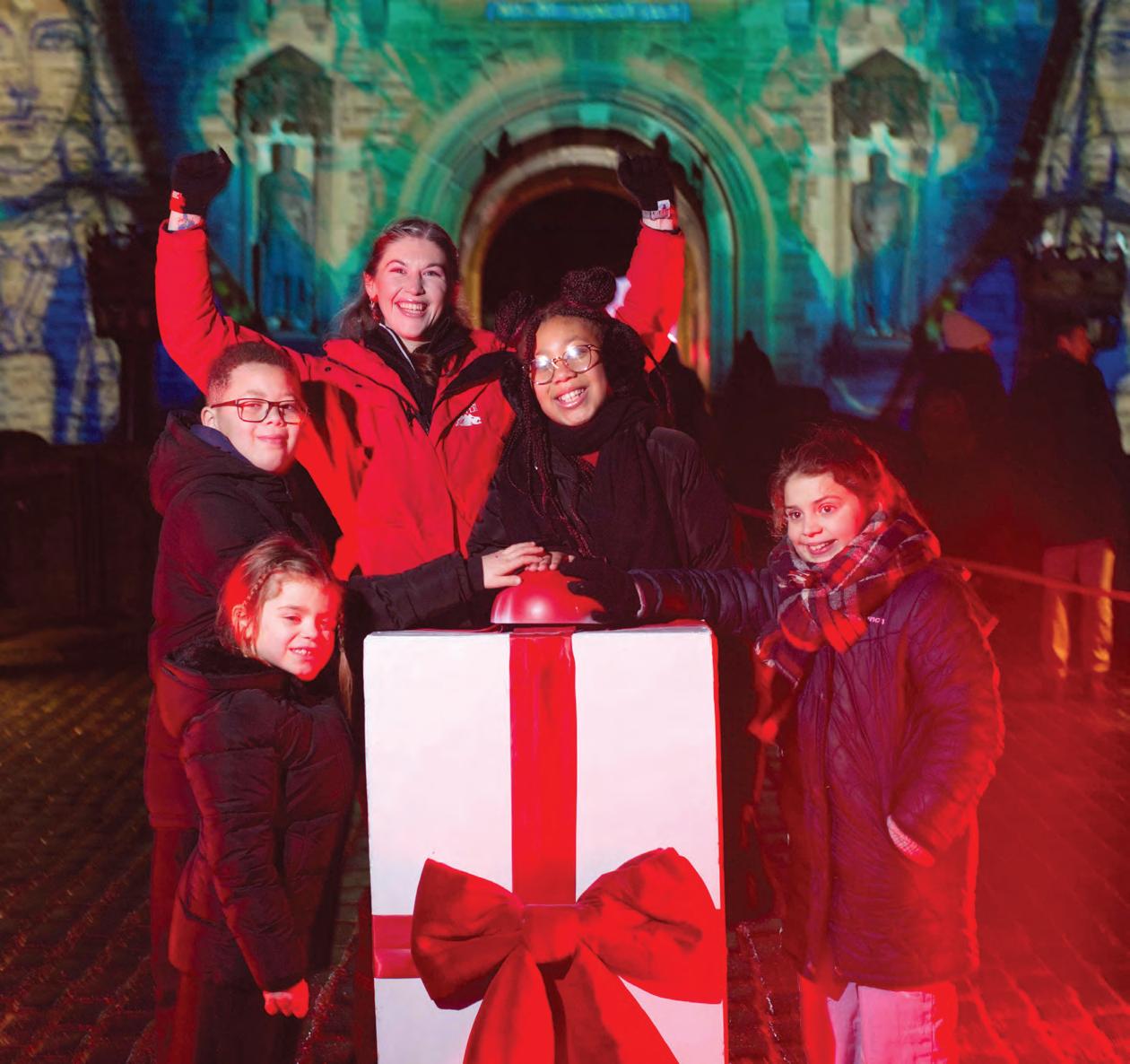
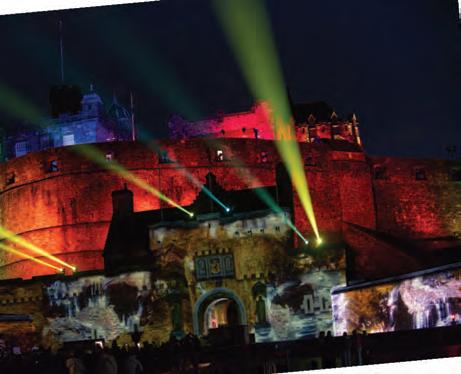



The UK’s largest annual projection show, Castle of Light returns to Edinburgh Castle for the sixth time
Edinburgh Castle’s epic show is back Castle of Light has a new theme this year: Fire and Ice. You’ll discover how these two elements intertwined to create the Edinburgh Castle we know and love today, and be mesmerised by immersive displays and interactive installations filled with fun and wonder.
Fuel your adventure with snacks and drinks from our café and street vendors, and toast marshmallows by the firepit.
Castle of Light: Fire and Ice takes place between 4.30pm to 9pm on select dates from Friday 21 November to Sunday 4 January 2026.
For the first time, members get a 25% discount on tickets. Book at castleoflight.scot
Members’ event spotlights design style’s story
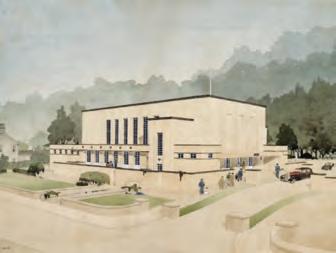
Join our Archives Team and Bruce Peter, Glasgow School of Art’s Professor of Design History, for a members’ exclusive event investigating Art Deco’s legacy in Scotland.
‘Art Deco Unveiled: An Archive Exploration’, which runs from 4pm to 5.30pm on 27 November at John Sinclair House, Edinburgh, will provide a rare and exciting glimpse
MEMBERS’ EXCLUSIVE EVENT
into archival materials that showcase how this decorative style has shaped our architecture, design and popular culture.
You’ll see historic architectural drawings and photographs capturing the elegance of a whole range of iconic structures, such as Kilbirnie’s Radio Cinema and Portobello Lido. Book at hes.scot/member-events
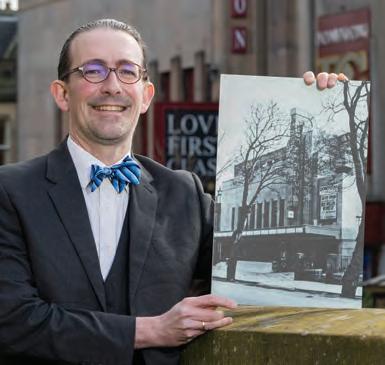
Bruce Peter, author of our recently released book
Think you know everything about Stirling Castle? Think again!
Special tours highlight stronghold’s hidden sides
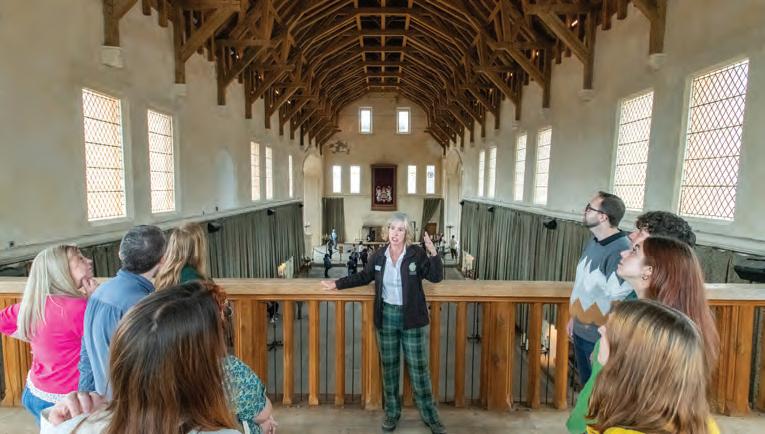
Take part in our new ‘Secret Stirling’ premium tour and explore hidden corners with exclusive access to areas of Stirling Castle that are normally closed to the public. Starting at 11am and 2pm every day, these tours will guide you into areas that were once known only to the craftspeople who built the castle, the soldiers who defended it and the monarchs who resided here. With a 10% discount for Historic Scotland members, tours cost £13.50 for adults and £11.70 for children, and are suitable for visitors aged 12+. Booking essential. Secure your space at hes.scot/stirling-castle

By the book
Scotland is a nation of bibliophiles
Stirling Castle’s ‘Inspiring the Nation: 300 Years of Libraries in Scotland’ exhibition, marking the 100th anniversary of the National Library of Scotland Act, runs from 7 November to 2 March 2026. It charts the evolution of libraries from their 17th-century origins as exclusive book collections for society’s elite, to their vital role in Scotland’s communities today. Find out more at hes.scot/events
Trinity House’s Christmas traditions
Experience a festive treat at our free ‘Traditional Christmas at Trinity House’ event.
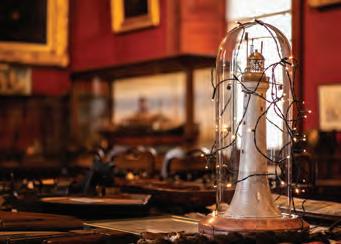
Between 12pm and 4pm on 12 December you can dive into Leith’s famous maritime history and explore this elegant building’s outstanding nautical treasures, before enjoying activities, arts and crafts suitable for all ages. Discover more days out at hes.scot/events
A TRIO OF CRACKING CHRISTMAS EVENTS
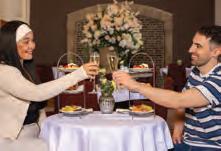
CHRISTMAS AFTERNOON TEA
Mistle-toast the holiday season at Edinburgh Castle and Stirling Castle by treating yourself to afternoon tea – available on select dates throughout December and January. It’s a feast fit for royalty.
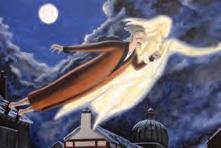
A CHRISTMAS CAROL Operation Moonlight’s production of the Charles Dickens classic at Stirling Castle is a seasonal favourite that’s sure to warm hearts.
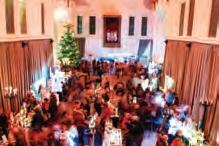
CHRISTMAS SHOPPING FAIR
Looking for gifts for the people on your nice list or spoiling yourself?
Pick up Scottish brands, crafts and fine foods at Stirling Castle’s Christmas Shopping Fair. Don’t miss the mince pies! See page 52 for more info and book at hes.scot/events
ArchivistJoeWaterfield explainswhythe German-Britishcartographer’s depictionscapturehisattention
Our archives are home to fascinating drawings depicting our historic sites across different time periods. Something that always grabs my eye is Henry Scharbau’s mid-19th-century survey drawings of Calanais Standing Stones on the Isle of Lewis.
Born in Lübeck, Germany, in 1822, Scharbau moved to Britain as a young boy. By the 1850s he was working as a cartographer for the Ordnance Survey in the Scottish Borders. These Neolithic monuments were erected between 2,900 and 2,600 BC, and it is believed that ritual activity occurred at the site for 2,000 years. The
FrederickAlexander-Reid revealshownewarchival resourcescanhelptrace familytrees
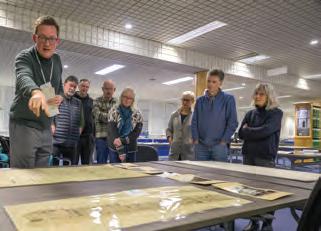
Interest in family history continues to grow thanks to TV programmes such as Who Do You Think You Are? and online services like Ancestry. Fittingly, we’ve strengthened our
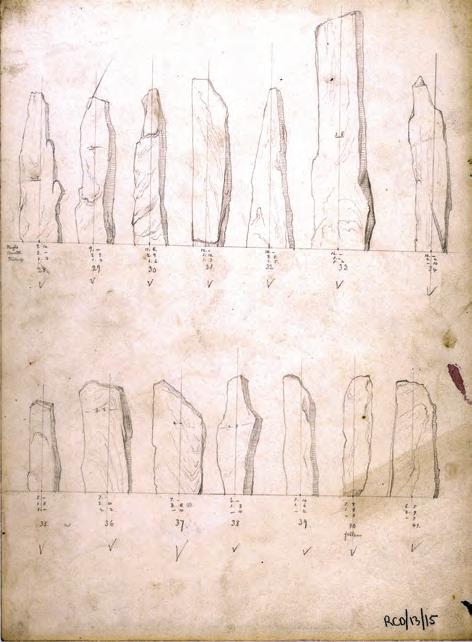
drawings include studies
area was gradually covered with peat between 1,000 and 500 BC. Centuries later, in 1857, peat cutting revealed the true height of the stones and a chambered tomb within the circle.
Scharbau produced his drawings shortly after this exciting period of discovery while he was completing a survey of the Lewis coastline and other islands for the
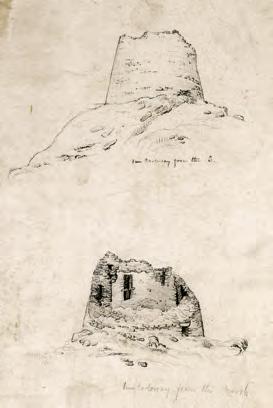
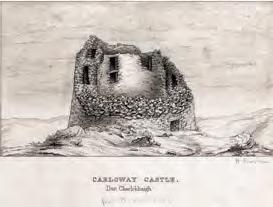
Royal Hydrographic Office during the 1850s and 1860s. He also documented Dun Carloway broch on Lewis while conducting this work. Each of Scharbau’s drawings are meticulously drawn. And today, they help build a clearer picture of the Calanais Standing Stones and Dun Carloway’s past. Find your own archive highlights at trove.scot
archives and library services for those investigating their roots.
We recently became a FamilySearch Affiliate Library. FamilySearch is a popular web service with more than 13 billion searchable names and six billion viewable images of historical genealogical records from over 200 countries. Visitors to our archives and library at John Sinclair House in
Edinburgh can access these resources for free. FamilySearch is part of our collection of free digital archival resources, which includes access to tools such as the British Newspaper Archive, Find My Past and the Who Owns Scotland database. Make sure to take full advantage of them to delve even deeper into your family’s story.

Discover the Isle of Mull's hidden gem, nestled in ancient Atlantic bluebell woods and surrounded by birds and wildlife. Take in the natural beauty of the forest's surroundings from your beautifully appointed, award-winning luxury lodge looking out down stunning Loch Na Keal.
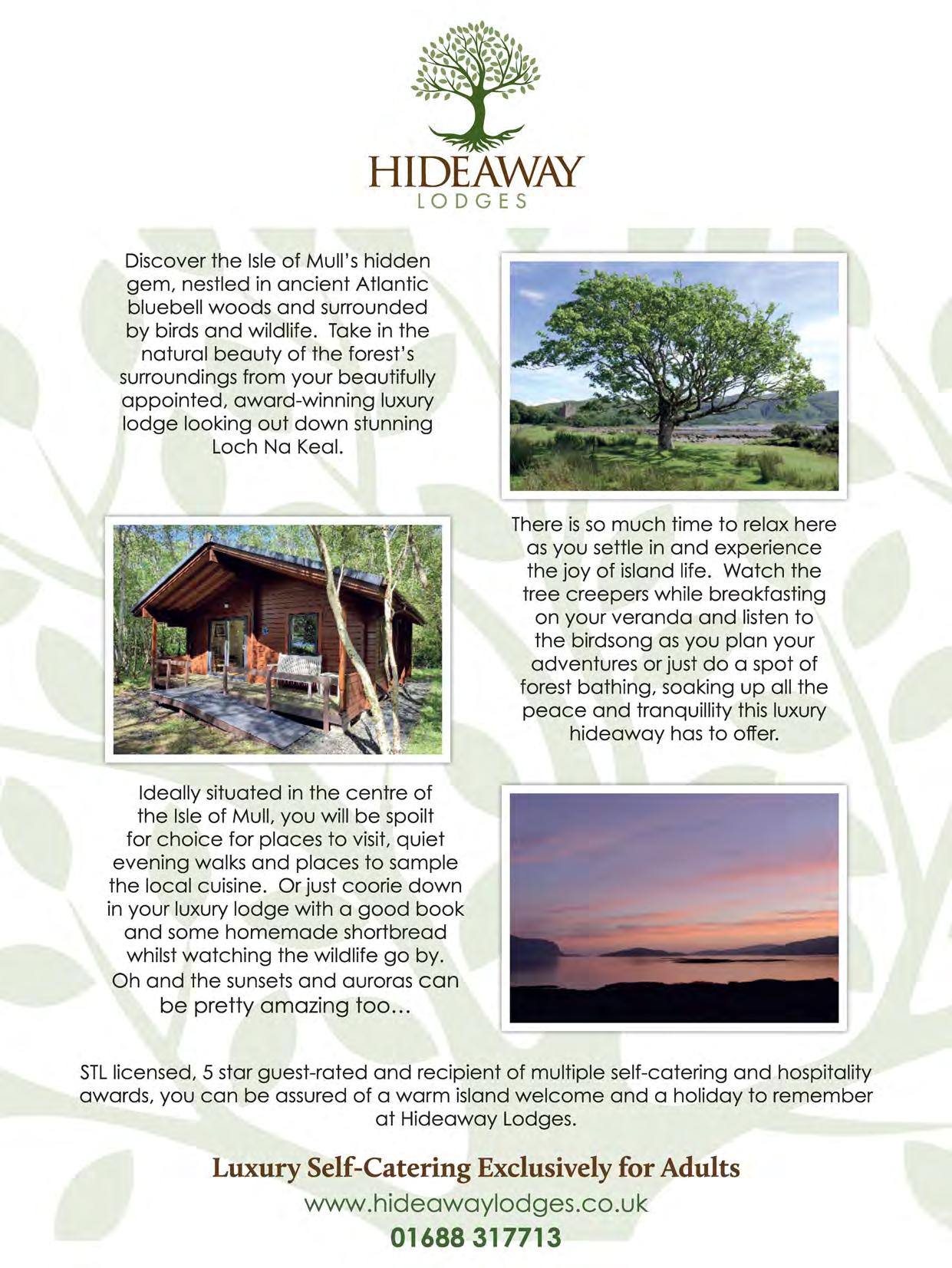
There is so much time to relax here as you settle in and experience the joy of island life. Watch the tree creepers while breakfasting on your veranda and listen to the birdsong as you plan your adventures or just do a spot of forest bathing, soaking up all the peace and tranquillity this luxury hideaway has to offer.
Ideally situated in the centre of the Isle of Mull, you will be spoilt for choice for places to visit, quiet evening walks and places to sample the local cuisine. Or just coorie down in your luxury lodge with a good book and some homemade shortbread whilst watching the wildlife go by. Oh and the sunsets and auroras can be pretty amazing too ...
STLlicensed, 5 star guest-rated and recipient of multiple self-catering and hospitality awards, you can be assured of a warm island welcome and a holiday to remember at Hideaway Lodges.
AHistoric Scotland membership is the key to unlocking the fascinating narratives that are central to the sites we protect.
As a member, you play an important part in supporting our mission to conserve our properties while preserving traditional skills, archives and collections for future generations to enjoy.
From planning your next unforgettable trip to discovering our sites’ secrets from the comfort of your armchair, we’ve rounded up seven ways to help you make the most of your membership.
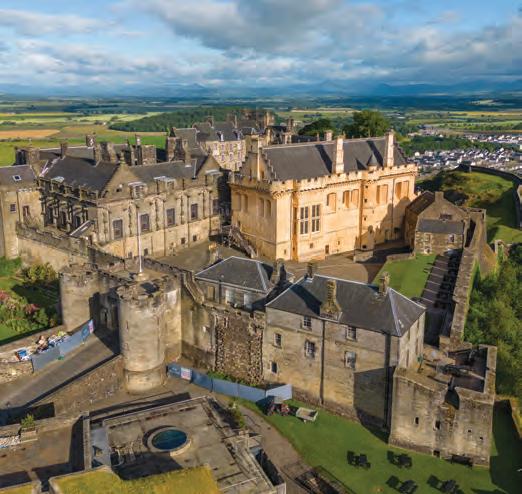


Your Historic Scotland membership lets you enjoy free entry to all our sites across Scotland. It also provides you with half-price entry to more than 500 English heritage attractions and Cadw properties throughout England and Wales – and the Isle of Man – in your first year of membership. And, for renewal members and lifetime memberships, you’ll enjoy ongoing free entry to English Heritage and Cadw sites.

2 Give the gift of membership
A Historic Scotland membership makes a perfect present. Recipients receive this quarterly magazine and a membership pack, which includes a guide to help plan days out.
Plus, existing members get a 20% discount when they purchase a gift membership.
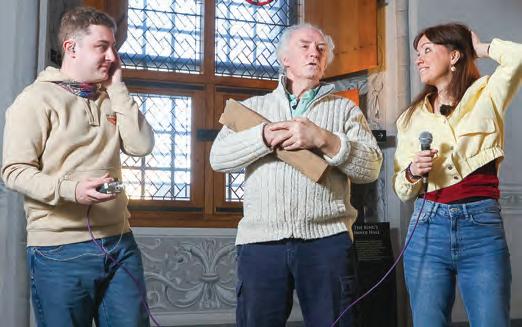
Tune into the Historic Scotland Podcast’s first season and join actor Sarah MacGillivray at some of our most iconic historic sites. From the tale of Bruce’s heart at Melrose Abbey to the legacy of empire at Stanley Mills, the podcast mines a rich seam of stories at the sites we care for.
Listen out for season two, which will land in 2026. Hear the first season at hes.scot/members-podcast
Led by our tour guides, historians and other experts in their field, our members’ exclusive events delve into the remarkable stories and objects connected to our properties.
Topics are wide-ranging, and they often feature unique opportunities to go behind the scenes at our sites.
This winter, discover more about Art Deco’s legacy in Scotland and explore Mary Queen of Scots’ links to many of our castles. Turn to page 55.
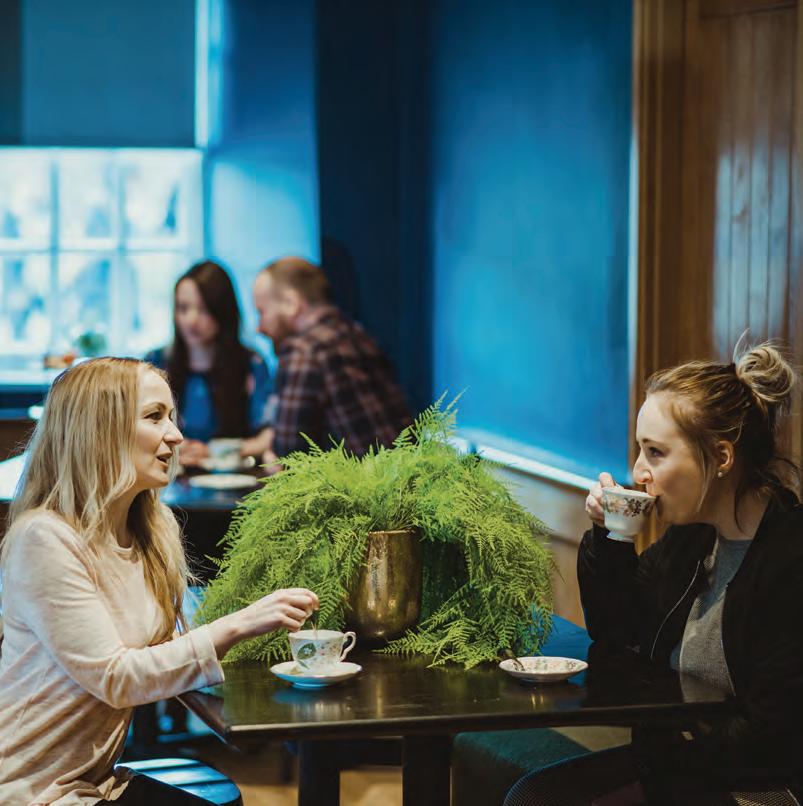
Exploring our sites can be hungry work. Reward your adventuring efforts this season at our cafés at Skara Brae, Fort George, Stirling Castle, Edinburgh Castle and Urquhart Castle – where Historic Scotland members enjoy a 10% discount. Serving up delicacies including delicious soups, coffees and seasonal bakes, our eateries are ideal pitstops to rest and refuel.

Head over to hes.scot/member to discover all your membership benefits
4 6
Collect them all!
Have you got all your History Hunt cards for 2025 yet? Each of our staffed sites has one of seven collectible cards and limited edition rare cards, available just for members.
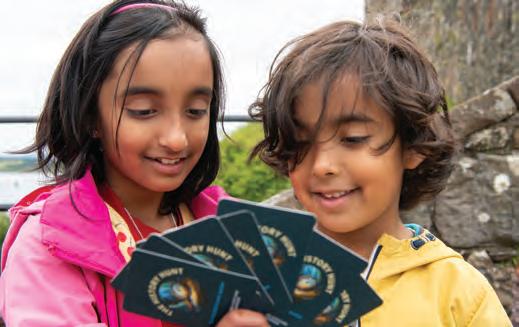

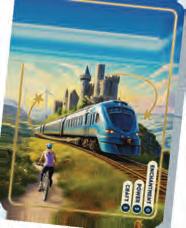

To get yours, show your membership card at participating properties – and pick up a card sleeve to keep your collection pristine. Produce your full set and claim your reward badge.
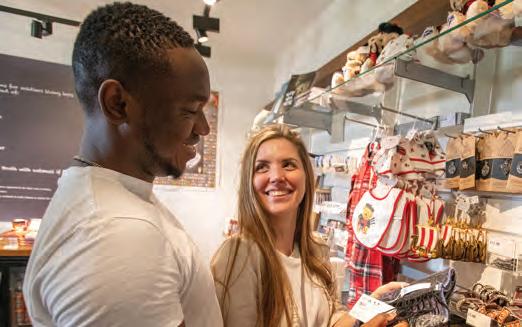
’Tis the season of gift-giving. Happily, members get 20% off all goods in our on-site shops and online store, stor.scot. Just remember to use the discount code ‘HES118’. Check out our Outlander tartan and souvenirs, and a captivating collection of books showcasing Scottish authors alongside our own publications. We’ve games for young history buffs too, and much more.

with Ranger Gordon Smith
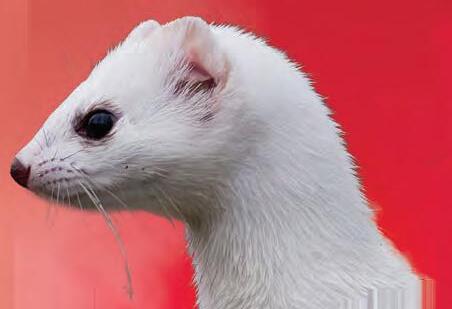
Revealing the secrets behind this mustelid’s impressive wintertime outerwear
Stoats are year-round residents of Holyrood Park and can occasionally be spotted darting across a path or road here. A winter sighting might be even more special.
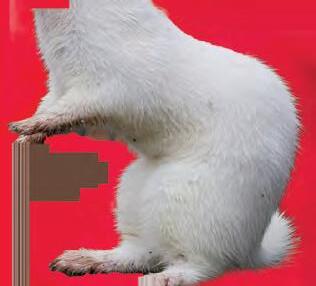
Rather than hibernate, stoats tough out Scotland’s chilly winters. The colder temperatures and shorter days trigger a process called ‘ermine’. This impressive adaptation sees their coat transform from chestnut brown to white while becoming thicker and warmer to trap in heat. Only two other species in Scotland possess this remarkable ability – the ptarmigan, a member of the grouse family of birds, and the mountain hare.
This seasonal camouflage allows stoats to blend into their snowy environments. But if snow is scarce, this winter coat loses its advantage and makes them more obvious to
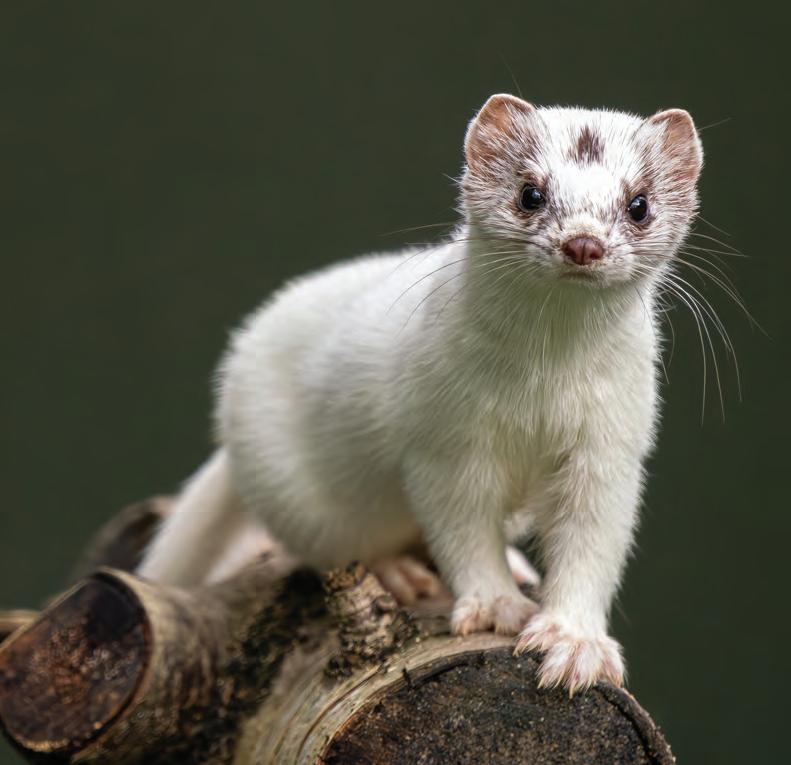
predators, such as birds of prey or foxes. For hundreds of years, the stoat’s ermine was highly sought after as a fur for ceremonial coats and robes for royalty, peers and judges. Thankfully, synthetic fur is now used to emulate their lush coats.
Stoats are members of the mustelid family, which includes otters, badgers and pine martens.
Not all stoats turn white for winter, however. In southern Scotland, only around 30% undergo ermine, while nearly all in the north of the country become white when the
Threesitestospotlocalcelebritiesthisseason
Lookforbeautiful orange-and-brownhuedheraldmothson ceilingsorledgesatthis formerhomeofthede Vaux,Haliburtonand Ruthvenfamilies.
Thisancient strongholdisagreat spottocatchsightof littleegret,aspecies ofsmallheron,on thenearbymudflats andsaltmarsh.
Keepyoureyes peeledforred squirrelsgoingabout theirdayinthe woodlandsaround this14th-century courtyardcastle.
mercury drops. Stoats in warmer parts of the UK don’t change colour at all, or they may take on a piebald appearance with patches of white fur. The black tip on a stoat’s tail remains all year. This marker is a telltale way to distinguish them from another member of the mustelid family, the very similar looking weasel.
A fierce predator, stoats are famous for hunting animals much larger than themselves and are adept at swimming, climbing trees and invading burrows to find their next meal.
Rabbits and rodents are their favoured prey. In the winter months, stoats in the Scottish Uplands have even been known to hunt mountain hare, which are eight times their size!
Stoats have featured in numerous myths, folklore and art. A famous Leonardo da Vinci portrait, called Lady with an Ermine, is considered the first modern portrait in history. A notable British work, The Ermine Portrait, features Queen Elizabeth I with a live white stoat, adorned with a gold crown around its neck.
Despite their small stature, stoats have certainly left a huge impression on the world.
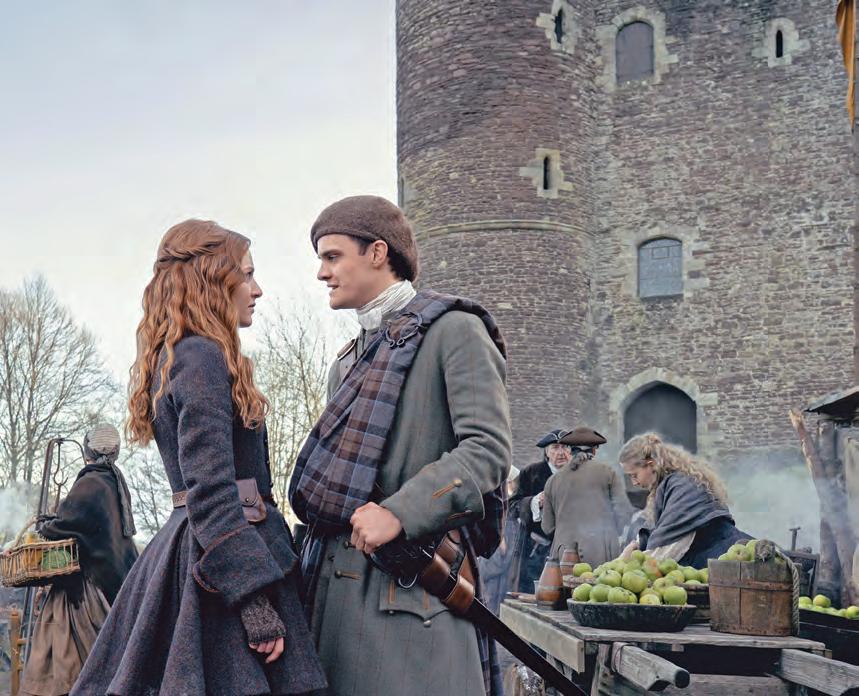
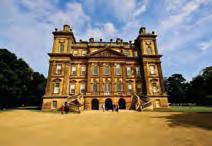
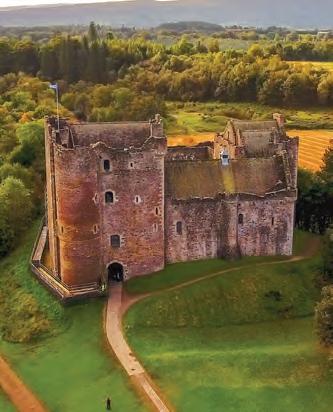
Doune Castle and Balvaird Castle star in the new Outlander spin-off series, Outlander: Blood of My Blood
Calling all Outlander fans: you can now stream the prequel to the hugely popular time-travelling drama based on Diana Gabaldon’s best-selling books, Outlander: Blood of My Blood, on MGM+ via Prime Video.
The much-awaited series follows the parents of Jamie Fraser and Claire Beauchamp, the original show’s central couple. Tune in to see Brian Fraser and Ellen MacKenzie’s love story unfold in 18th-century Scotland in parallel with Henry Beauchamp and Julia Moriston’s romance against the backdrop of World War I England.
Doune Castle appears once again as Castle Leoch, the fictional seat of Clan
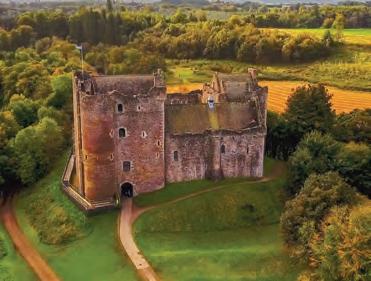
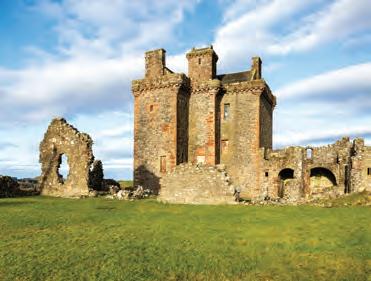
MacKenzie. Robert Stewart, the 1st Duke of Albany and later Governor of Scotland, acquired Doune Castle in 1361. It was used during the Jacobite Risings of the late 17th and 18th centuries.
Balvaird Castle also appears as Castle Leathers, the estate of Lord Simon Fraser. The Murray family owned Balvaird Castle for over 150 years.
Looking for something to keep you entertained this winter? Make Outlander: Blood of My Blood your new binge watch. And on your next visit to Doune Castle, don’t miss our digital audio guide, narrated by Monty Python’s Terry Jones and Outlander’s Sam Heughan, to uncover its illustrious film career.
Stream Outlander: Blood of My Blood on MGM+ via Prime Video now
Discover Marion Ogilvy’s story
Marion Ogilvy’s association with the Abbot of Arbroath, David Beaton (c.14941546) – an extremely influential figure in Scotland’s ecclesiastical and political circles of the day – likely started in 1525. The pair had eight children together: Margaret, Elizabeth, George, David, James, Alexander, John and Agnes.
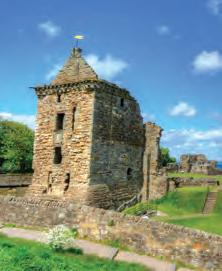
Beaton was made Archbishop of St Andrews in 1539. Marion was with him at St Andrews Castle the night before his assassination there on 29 May 1546.
She married William Douglas for protection in May 1547, but Douglas died shortly after, in the September of the same year. After his death, Marion spent the rest of her days at Melgund Castle in Angus.
Marion and her family remained fierce supporters of Mary Queen of Scots after the monarch was deposed in 1567. Marion died in June 1575.
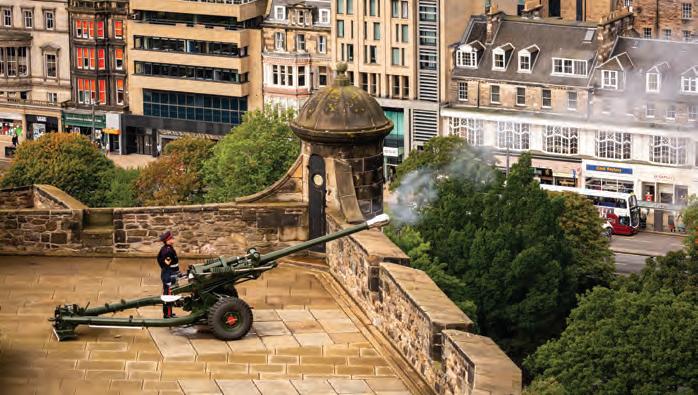
The actor, comedian and presenter reminds us why you should never be blasé about Edinburgh Castle
As a ‘Weegie’ I probably shouldn’t go public about how much I love Edinburgh Castle. But it’s stunning. I must have done the Queen Street to Waverley Station journey at least 300 times, but seeing Edinburgh Castle takes my breath away every time.
I’ve loads of pictures with my family from India at the castle when growing up. They’re all blown away by it and I’m sitting there unbothered. But when you’re wee, you don’t properly appreciate these things. Whenever I visit today, I can almost taste the homemade aloo parathas we packed in our picnics all those years ago.
A cousin from Vancouver came to Scotland when I was a 19-year-old student. I’d already taken him to all the trendy pubs and clubs in Glasgow, so we decided on Edinburgh for a trip. I remember worrying that he’d be bored, but he was fascinated by Edinburgh Castle. He pointed at one of its walls and asked, “How old do you think this is!?” Although I laughed, it made me proud of how rich Scotland’s culture is.
I was born in London and came to Scotland when I was three. As the son of Indian immigrants, I had to learn about Scottish culture very quickly –from The Krankies to Creamola Foam. Edinburgh Castle was another cultural cornerstone.
I didn’t have a reference point either the first time I saw it, so my eyes would’ve been like dinner plates.

A
And I certainly wouldn’t have been as blasé as teenage me. You should never be blasé about Edinburgh Castle because it’s not often you see a stronghold sitting atop a volcanic plug!
There are brilliant views across Edinburgh from the castle. You’ve got the buzz of the city, the sea and hills, as well as incredible history and culture. It’s even more magical in the winter thanks to the sparkle of the festive markets and
It’s worth reminding yourself that people from all over the world come to see treasures like this
Castle of Light’s amazing illuminations. Everything that makes Scotland special is served up on a plate here. Scotland punches way above its weight in terms of its history and culture. Being Scottish, we often look for the joke or adopt a cynical point of view when it comes to appreciating places like Edinburgh Castle. I live in the world of comedy where you’re supposed to slag things off, so I can be the worst for this. But it’s worth reminding yourself that people from all over the world come to see treasures like this.
Whether it’s Edinburgh Castle, Calanais Standing Stones or the Antonine Wall, it’s comforting knowing Historic Environment Scotland is ensuring they’re well looked after.
SANJEEV’S MUST-DO
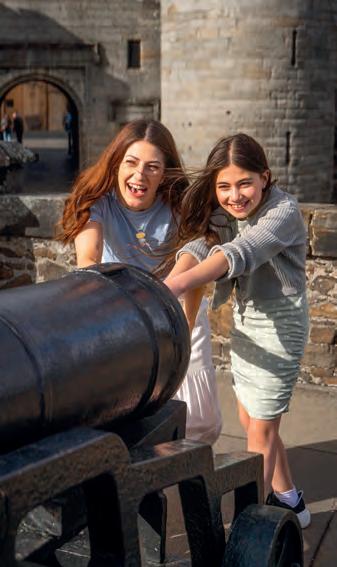
I always time my visits so that I can see – and hear – the One o’Clock Gun. I’m continually surprised by how loud it is! A cannon being fired in 2025 is quite something. It makes you feel like a kid again.
Discover the story behind this painting created by artist Richard Bentley Fairclough in 1933
This painting may look like a tranquil scene, but it depicts one of seafaring history’s most famous mutinies.
The HMS Bounty was a merchant ship owned by the British Royal Navy. In December 1787, it set out on an expedition to Tahiti under Lieutenant William Bligh’s command to collect breadfruit plants, which were to be used to feed enslaved people in West Indian colonies.
The crew reached Tahiti after 10 months and spent five months living a more comfortable life on shore than at sea or home. Returning to life onboard proved difficult. Weeks after leaving Tahiti, a mutiny broke out, led by the Bounty’s master’s mate, Fletcher Christian.
Bligh and 18 of his followers were forced to board the ship’s launch boat and were cast adrift. Remarkably, they survived and reported the mutiny on their return to England.
Christian and the other mutineers returned to Tahiti.
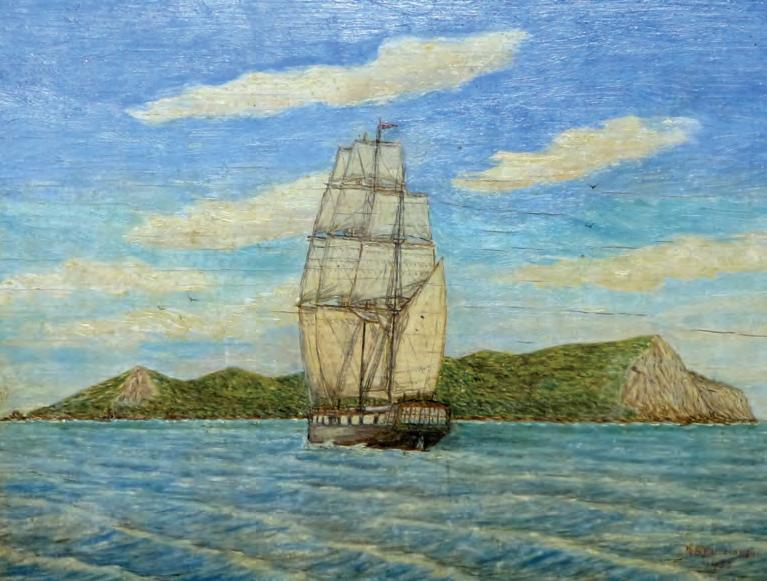
Fearing arrest, they moved to uninhabited islands where they were less likely to be found. Accompanied by a small group of Tahitian people, the mutineers arrived on Pitcairn Island in January 1790.
Pay our Perth Museum member event a visit
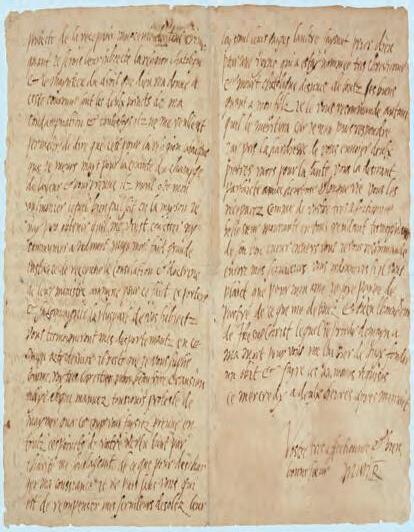
Come along to our members’ exclusive event at Perth Museum on 30 January (10.30am-11.30am, 1pm-2pm and 3pm-4pm) to see Mary, Queen of Scots’ final letter, penned at Fotheringhay Castle, hours before her death.
Our Senior Cultural Significance Advisor, Dr Nicki Scott, will be on hand to explore Mary’s
connection to many of the castles we care for, and why she still captivates us. The letter is part of Perth Museum’s exhibition, which runs from 23 January until 26 April 2026, to mark the 100th anniversary of the National Library of Scotland, who preserved this precious artefact. More details on page 55
Their descendants still live there today.
See this painting at Trinity House and explore other objects from its collections at trove.scot
' • /IL ', ;,r,,(,-fc fc, '.': c/f'! 1 -'19 ~"t:Nr. 1~r 0~··4t. 1/fi Jl'r ~Sf'Jl'~f 1e_y1··!t?t(,t' IJt)t'!N/Jd'Jf ( :.dr(','.k/ L-" :-11r,,r..-l-.c ,(,( .f,."tf ,,,.,,,.(i(!<.7/IAr?JlKt'4 (ff{r .~,n;,,,u,,"/!)(fie; t~!r;; J'#;;,_:f.rit; ff.A (JJ:.(A..,,.,.,.u{',.1c::,-';rukrfrl ;t"=.Jr( ~e 3/f.'ff;.f(f /(J'JJ'f,~~~;t. j,,~ /Hr cerfff~' "; ,_,,,,,;;,;,,.,,t¥"' ,7kt'. .'( )}((WY' 1/!;JI f W' klf', tJttfc {,r {lt<J'}f'/t" .I.:iA'Vtk,·.__-J41o'J,,i.X't'( !/":. JJtv11( <>.l· JY.,1J/ •.1J(,;JtJ'.'l:~,'1_.'/Nf}··•t,.-,t('lt;.;:/ ,7//; ~''}''f,,11 7('' ·,,,., r:t , .lr>m"(Jffi' 1?f.t' J~1.1f ('7Jfcrrr, '?ty i°nl,"JklOrl. / l J1/n111f J!/1(,~ 'J)!Jr'_, 'fjiu;.ri., , ,,..,f,,,r._.u >:<:f'/{fzr'i.t ci}fr,1-1n,,,1 :_ tl'.~c6mr h ftw; bH;ittf~ t~Jt1~1'!('/"il1·c-:_'.11r/ (tf•Y/;'ty C '- ·1,v,:n ~trt' {,l,/'htfJIIIJr ·4<11'ilrl1hrrf-:::_ ITf11<.rwht11fflf JJt({,ef:<?~1•(cJJ~J<(:_('Ir tk' ,1'1,11 Jt.:.f~to}ti'.11'1/.nrfr'/,, lt 1,~ur1u'tYif" {e,JJJK,·.}!JJ -·Qt!Cf>"Nf:f'l! ;~A.vnT~ (."1-r1({J~Jr ~1' { ,)1,!/ iJt,tftJlt:Z, (t?kf:_'k1r_Jpfrr/( r{r -C )My'~,• i/l(rf'(r(lltj)'"/h{J /'lf)ltz h('.'t''rt' e;• t'.'.:..r<'J11i:r(c f _,;,,fn'":!r(i, '(-,.,)m·: .',·o>f - "''' _'fMf- /t r~,f•'fp•,,·.fw,£, 10 ,>-::i int1r.~if)l/:.1-u "<' l':ul fdr ,1)11r ;~,, f'/f t[. n.rn,,t,.'('Jtcrr rtft~/rY1r1{r11/'f tt';;tJ/P"'-.,fc:to
Fairclough’s painting depicts the ship approaching Pitcairn Island in January 1790, nine months after the mutineers seized it
7 j .Htri :_;r., t c/1~1, :_•.,,he'~ Nmtr A·:1r· )".' l.'.'/K__
Mary’s last letter, written on the day of her execution
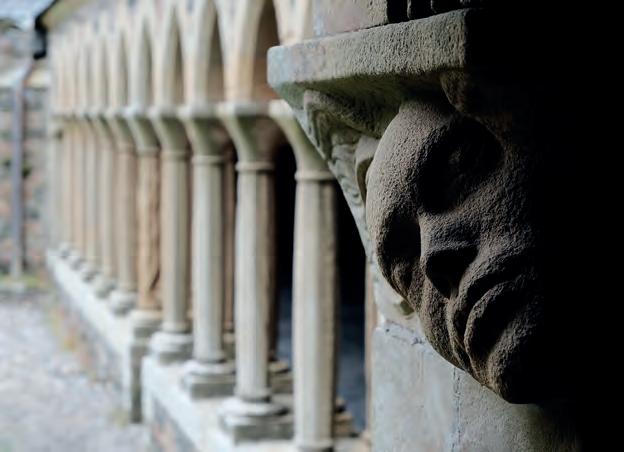
Enter our photography competition by 28 November
Afinal reminder for shutterbugs: submit your entries to our photo competition by 5pm on 28 November to be in with a chance of bagging some brilliant prizes.
This year’s theme is ‘epic days out’ and you can enter up to three images per person. We want you to get your creative juices flowing when framing your adventures and discoveries at our sites!
The overall winner will secure a £250 Amazon voucher, a trip to Edinburgh Castle with our Photo Unit, a free year of Historic
Scotland membership and a copy of Art Deco: Design and Architecture in the Jazz Age
Two runners up will each get an Edinburgh Castle afternoon tea voucher, a copy of A History of Scotland’s Landscapes and some delicious Urquhart Castle shortbread. Send your top shots to hesphotocomp@ thinkpublishing.co.uk. Results will be revealed in the spring 2026 issue of Historic Scotland For T&Cs, visit hes.scot/memberscompetition
Three prehistoric sites linked to the shortest day of the year, Sunday 21 December
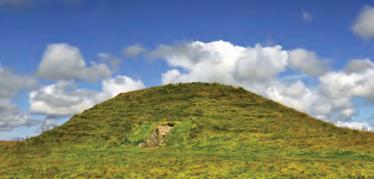
For around six weeks in winter, the setting sun glows through this cairn’s entrance and along its 15-metre passageway to illuminate the central chamber. On the winter solstice, rays play across the chamber’s rear wall. Maeshowe’s alignment may be linked to beliefs about life, death and the afterlife held by the Neolithic community who built it.
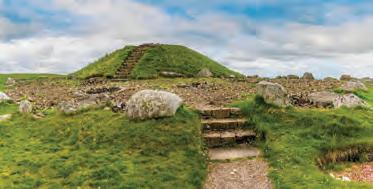
This ancient site has become a special place for modern-day winter solstice celebrations. We don’t yet know enough about the site’s alignment and links to celestial cycles, but it was clearly a place of great significance to the people of Neolithic and Bronze Age eras.
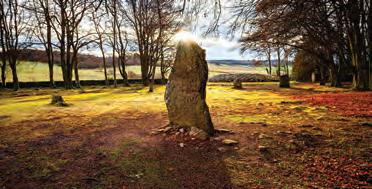

Consisting of circular cairns with a surrounding platform and ring of standing stones, this Bronze Age cemetery’s red and pink sandstone to the south-west glow red at midwinter. Seasonal events such as the winter solstice are likely to have been important to prehistoric communities.
Discover more days out at hes.scot/visit-a-place
A Scottish Highlands stronghold with a rich history and dramatic setting
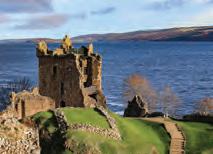
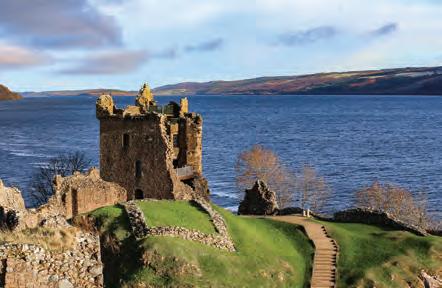
The imposing Urquhart Castle on the shores of Loch Ness
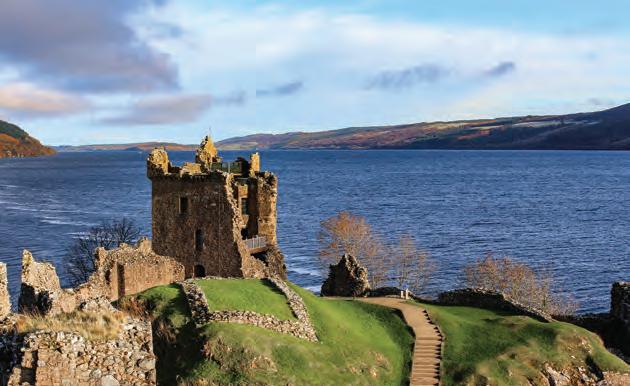
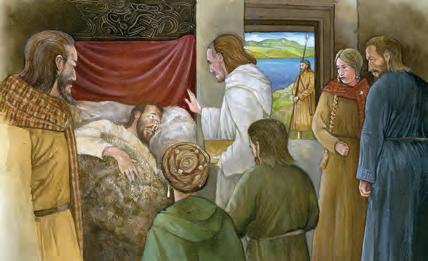
When you visit the picturesque ruins of Urquhart Castle in the Scottish Highlands, you’ll likely arrive by road. However, for centuries it was Loch Ness that provided the most efficient means of travel. It may have been the Picts who first took advantage of the promontory’s natural defences. There are traces of a rock-built fort, and a recorded encounter in the area between Irish missionary Saint Columba and a Pictish chief.
By the 13th century, a stone castle had been built for the Durward family, who were granted the lordship of Urquhart and tasked with stamping Alexander II’s authority on the Highlands.
The next three centuries saw various phases of rebuilding while
A Pictish fort is likely established on the headland. In AD 580, St Columba visits a Pictish chief at a settlement that may have been near the site of the later castle.
the stronghold served as a royal castle.
The castle was repeatedly fought over – by the invading army of Edward I of England and by Robert Bruce during the First War of Independence and, in the 1400s and 1500s, by the MacDonald Lords of the Isles. The latter had locked horns with the Crown over power in the Highlands, including the earldom of Ross.
After the final siege of the castle during the Jacobite Rising of 1689-1690, government troops destroyed parts of the castle, leaving it impossible to defend.
Today, visitors can gain a sense of those turbulent times while enjoying dramatic views of Loch Ness and pondering the myth of Nessie, the Loch Ness monster.
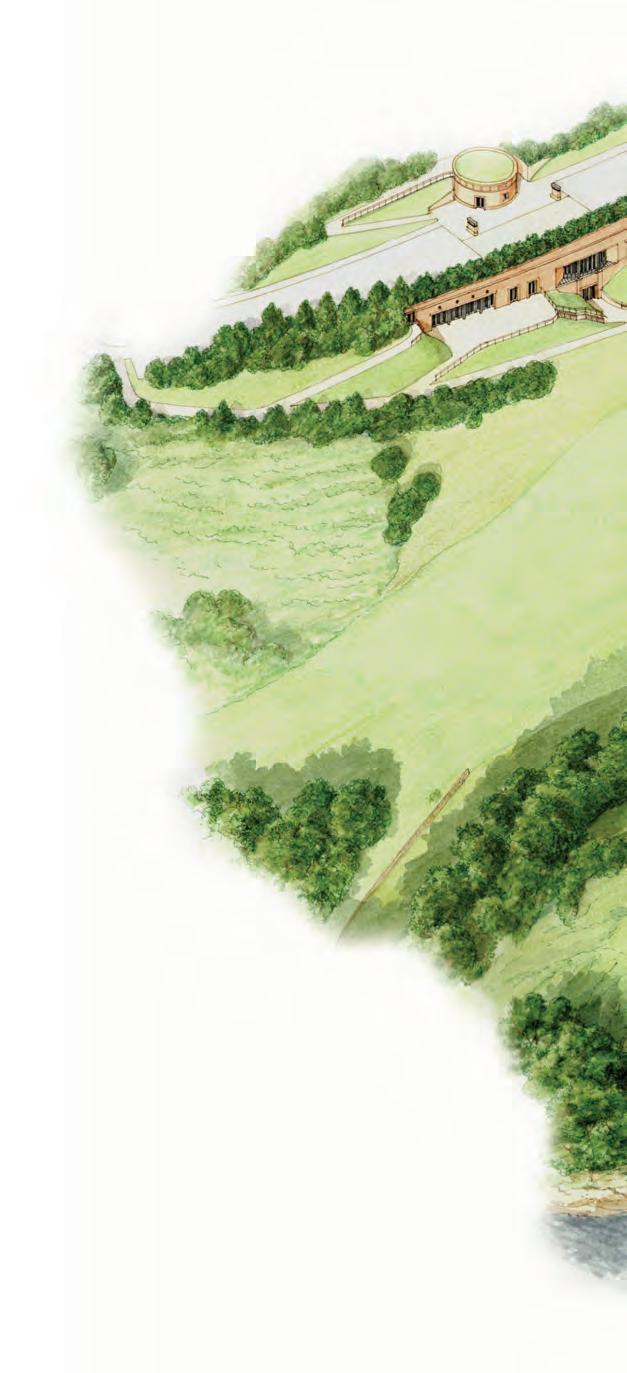
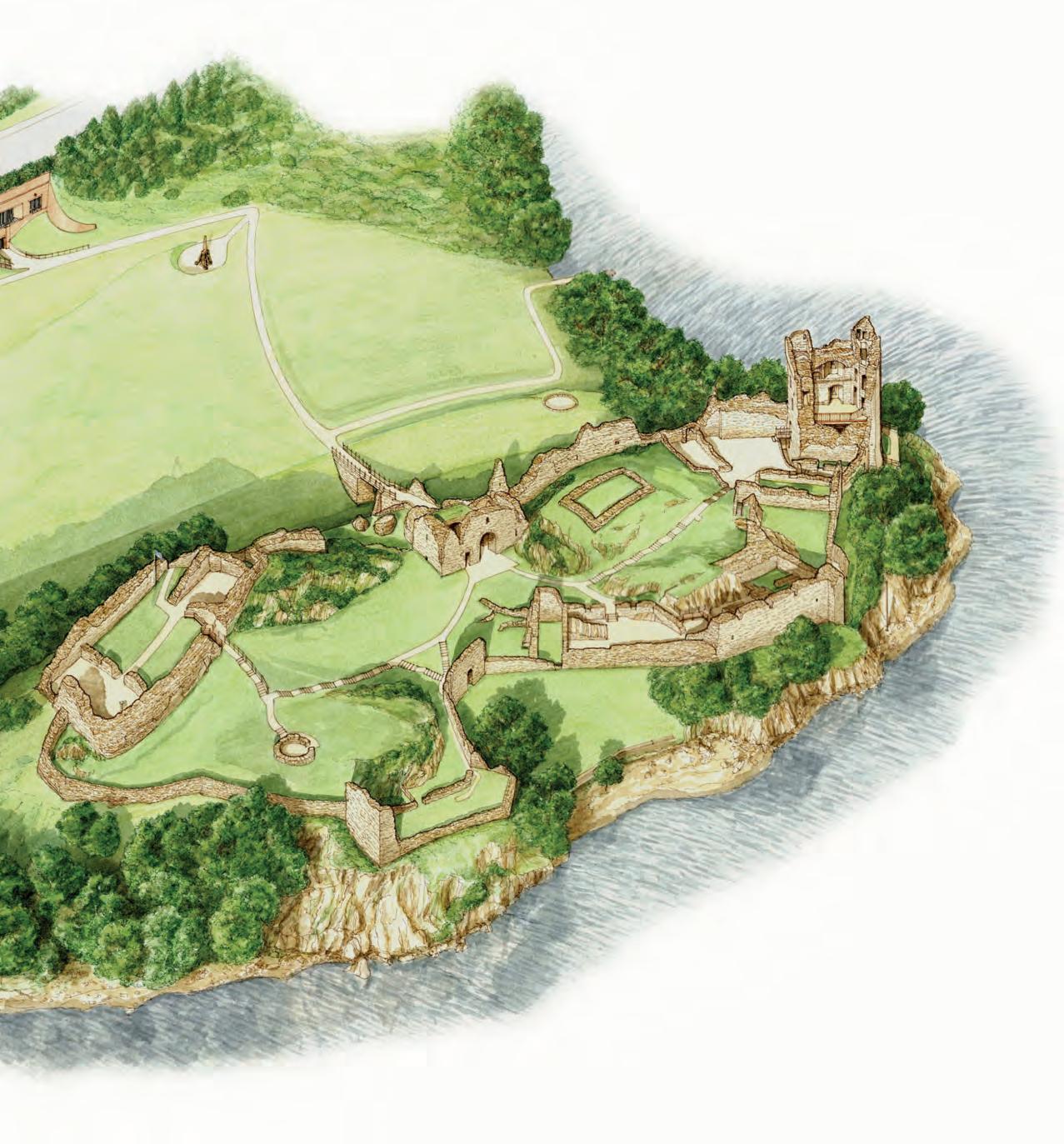
2GATEHOUSE
Part of a major development in the late 1200s or early 1300s, this well-defended entrance was blown up by departing government troops in 1692.
1230
Alexander II grants the lordship of Urquhart to Sir Thomas Durward. His successor, Sir Alan, probably completes the first stone castle on the promontory.
3SITE OF DRAWBRIDGE
The drawbridge, together with a highwalled causeway and rock-cut ditch, provided formidable defences and a means of counterattack for the castle’s inhabitants.
1275
John Comyn, Lord of Badenoch and Lochaber, receives the estate of Urquhart following the death of Alan Durward and the absence of an heir.
1WATER GATE
This essential access point to the loch would have been in constant uses for water-based transport to and from the castle.
1307
Robert Bruce and his forces storm the Great Glen, claiming Comyn strongholds, including Urquhart. He uses it as a power base during the First War of Independence.

4GRANT TOWER
This fashionable fivestorey tower house was the main residence in the final century of the castle’s life.

1390S
Donald of Islay, Lord of the Isles, stakes a claim to the earldom of Ross and his brother seizes the castle.
5NETHER BAILEY
This courtyard gave access to the great hall, chapel and other buildings when the focus of the castle shifted north from around 1300.
6GREAT HALL CELLARS AND KITCHENS
The great hall was the castle’s main public room from about 1300 until about 1500. It was served by the cellars, which survive along with an adjoining kitchen.
1545 MacDonald raiders plunder Urquhart Castle, sweeping the land “of every hoof and article of food or furniture which they could find”.
1689
Government troops stationed at the castle are besieged by Jacobite supporters, who eventually retreat. Two years later, the garrison leaves, blowing up parts of the castle to prevent the Jacobites from holding it again.






































Jonathan McIntosh turns private eye to investigate 10 intriguing mysteries surrounding our historic sites, some of which may never be solved
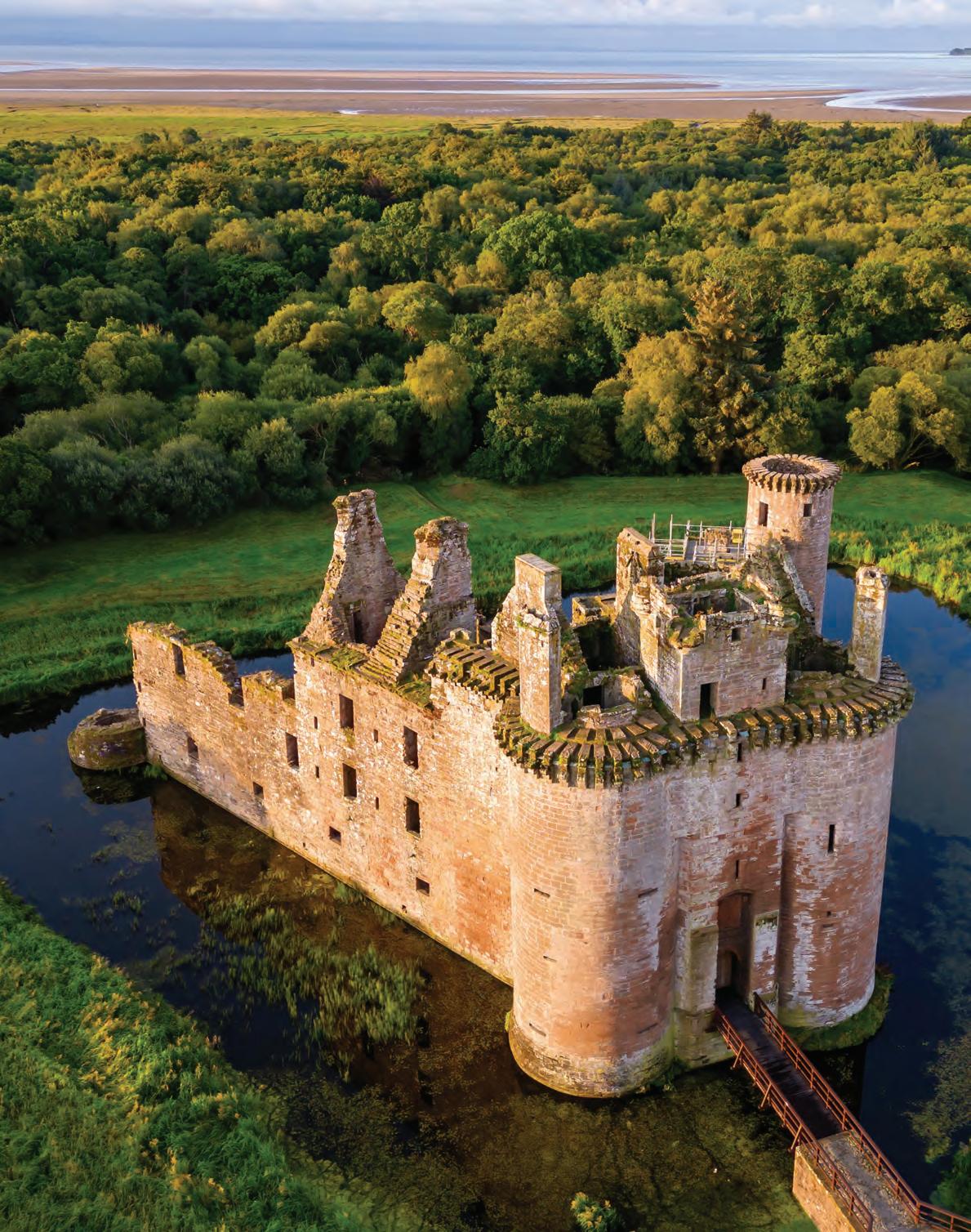
Containing more than 5,000 years of history across 300 properties, our sites are home to some remarkable stories.
But it can be tricky keeping tabs on five millennia of facts. Today, the distinct discoveries and interesting idiosyncrasies at many of our sites have left us scratching our heads. From Caerlaverock Castle’s harbour to the Arthur’s Seat coffins, I spy, scout and investigate my way through 10 curiosity-inducing questions in search of answers that separate the truth from the fantastical.
Ready to start sleuthing? Let the case cracking begin!
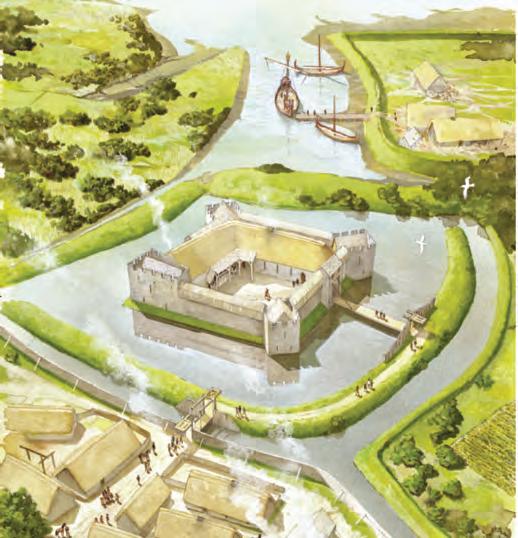
MYSTERY SOLVED? YES
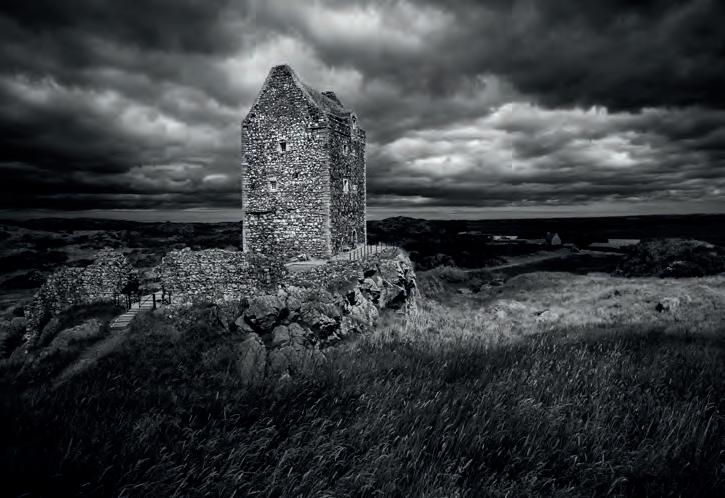
1Built by around 1277 as the chief seat of the Maxwells, the fairytale-like Caerlaverock Castle of today wasn’t the first stronghold built here. The original castle was erected in around 1220.
Situated between the old castle and the Solway Firth lies what was once thought to be Caerlaverock’s harbour. This tidal harbour was supposedly used by early inhabitants to ship transport supplies to the castles.
It was thought that the spot silted up and became unusable – apparently contributing to the abandonment of the old castle. Eventually, the harbour’s entrance was blocked off, likely to protect against storms.
Analysis completed between 2021 and 2022 dated layers of accumulated sediments to c.1200. This shows the harbour was never deep enough to facilitate boats during either castle’s occupation. It may have been used as a fishpond or somewhere to drive deer when hunting. FAST FACT The moat system surrounding the old castle existed by the mid-1300s and sometimes storms would push flood waters inland as far as this defensive feature.
MYSTERY SOLVED? YES
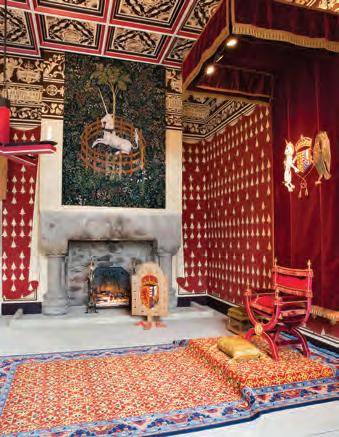
2A football was found in the rafters of the queen’s chambers at Stirling Castle during renovation works in 1981. Made from cow hide with a pig’s bladder inside to inflate it, the football dates back to between 1540 and 1570.
It seems that it was kicked there and then forgotten about. But some argue that it was placed in the rafters to protect against evil spirits during James V’s construction of the palace between 1537 and 1542.
Mary Queen of Scots – crowned at Stirling Castle’s Chapel Royal –supposedly loved the beautiful game. Following her defeat at the Battle of Langside on 16 May 1568, Elizabeth I detained her at Carlisle Castle. Sir Francis Knollys – responsible for Mary’s imprisonment – recorded her watching two football games here. According to him: “[Mary’s] retinue played the game for two hours very strongly, nimbly and skilfully without any foul play offered.”
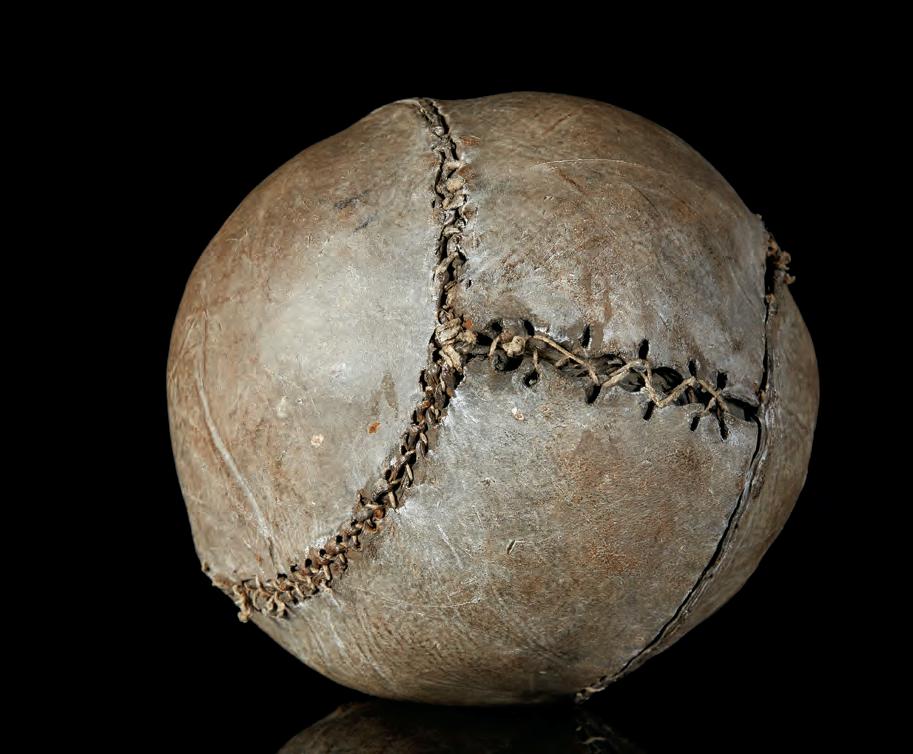
Is this the world’s oldest football? The Guinness Book of World Records says so. But it may be more accurate to say it’s the world’s oldest surviving football. See it at the Stirling Smith Art Gallery and Museum.
FAST FACT This football is roughly half the size of a modern-day one.
MYSTERY SOLVED? NO 3
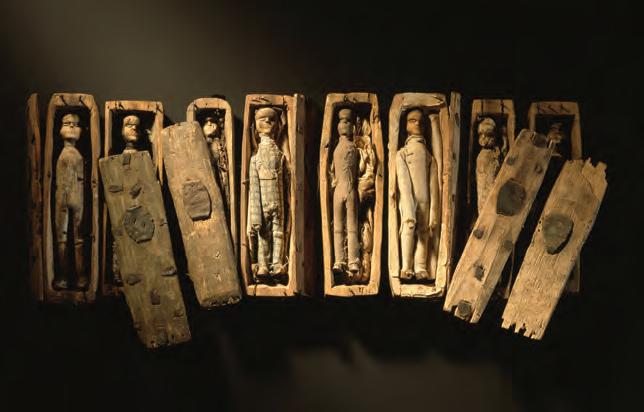
These 17 wooden coffins, each measuring just under 10cm in length, rank among Arthur’s Seat’s most beguiling stories.
Young boys discovered them in 1836 hidden in a small cave on the north-east side of the extinct volcano in Holyrood Park, Edinburgh, while rabbiting. Each was neatly arranged under slates in
three tiers and contained single clothed, carved figures.
Eight coffins were donated to the National Museum of Scotland in 1901 and can be viewed there today. But what’s their purpose?
Contemporary local media had several theories. The Scotsman, for instance, branded them tools of witchcraft and demonology. The Caledonian Mercury considered them effigies for those who had died away from home or at sea.
FAST FACT Author Ian Rankin references these coffins in his 2001 Inspector Rebus thriller, The Falls.
Scotland’s tallest early medieval sculpture

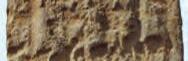
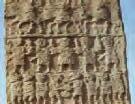
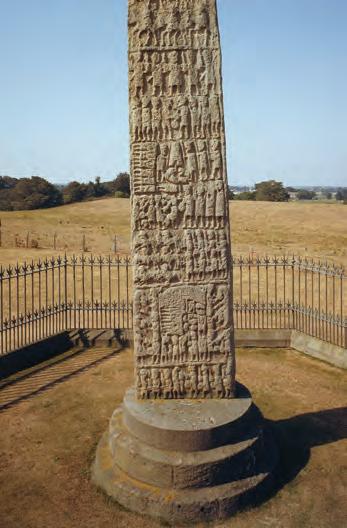
MYSTERY SOLVED? NO 4
Standing at seven metres, this Forres monument is Scotland’s tallest early medieval sculpture. Carved from local sandstone, it’s dated between the mid AD 800s and early AD 900s.
The Christian cross side has been interpreted as a royal inauguration. These carvings are unique in Pictish and early medieval Scottish art. The other side of the stone depicts a bloody battle, featuring horsemen, piles of the dead and a possible fort.
It’s likely these stories are linked. What connects them, however, remains unknown. Some historians argue the carvings are related to events that unfolded in the country in the mid AD 800s. This period was chaotic and witnessed conflict with the Vikings and a change from Pictish rule in eastern Scotland to the new kingdom of Alba.
The battle scene could represent a victory by Kenneth MacAlpin, who ruled over large parts of what is now Scotland in the 9th century.
That said, it may simply depict Christian messages or legends.
FAST FACT Sueno’s Stone has stood in its original location for more than a millennium, and is now protected from the elements by a glass case.
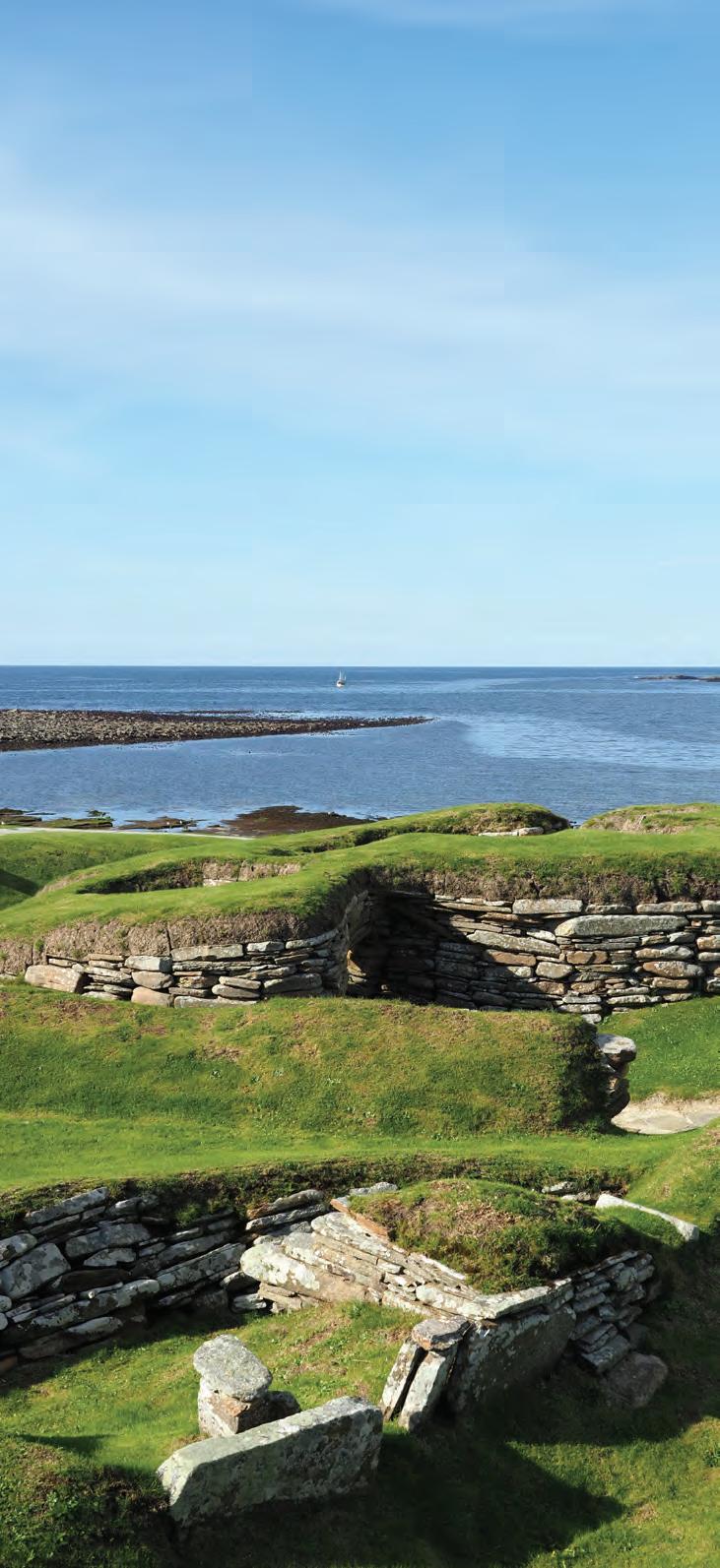
MYSTERY SOLVED? NO 5
The reasons why village life at this Neolithic settlement ended in around 2,500 BC remain unclear.
Vere Gordon Childe, the archaeologist who led excavations here in the 1920s, suggested a major storm – like one that uncovered parts of Skara Brae in 1850 – filled the community’s houses with sand, causing their abandonment.
Will we find
MYSTERY SOLVED?
But there is little evidence to support this claim.
There’s no indication of damage caused by raids or attacks, which rules this angle out. Perhaps an infectious disease affected the villagers. Or inclement weather made cultivating crops impossible. Perhaps younger generations found opportunities elsewhere. We may never know the answers.
FAST FACT Skara Brae became part of the Heart of Neolithic Orkney UNESCO World Heritage Site in 1999.
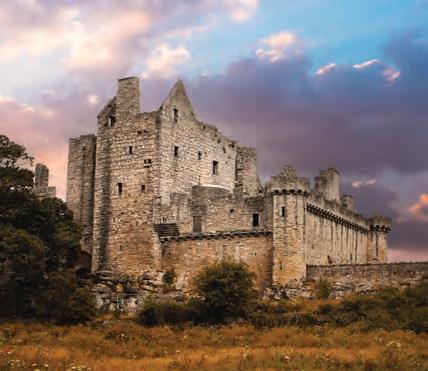
MYSTERY SOLVED? NO 6
John Stewart, Earl of Mar’s death after his imprisonment at Craigmillar Castle remains shrouded in mystery. He was held here in 1479 by his brother, James III, after the monarch allegedly accused him of conspiring against the Crown “throuch arte of magik”.
After being taken to a house in the Canongate in Edinburgh, Mar died in what many believed were mysterious circumstances. There is no evidence from that time to shed light on what happened, however, Bishop John Leslie chronicled in the 1570s that John’s veins were deliberately cut and he was left to bleed out.
It’s tempting to speculate. However, with no solid facts, we may never know exactly what happened to James III’s brother John, or what part the king may or may not have played in his death.
FAST FACT You can still visit Craigmillar Castle today and explore its great tower and prison.
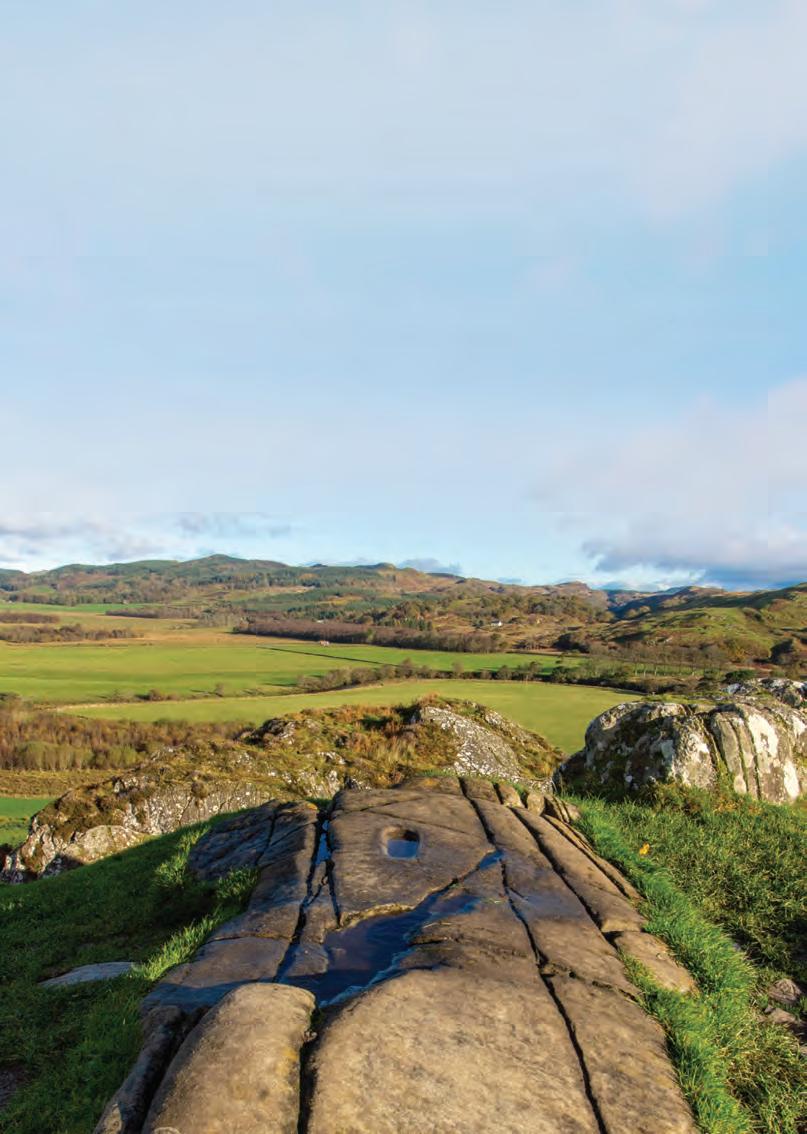
MYSTERY SOLVED? YES
7
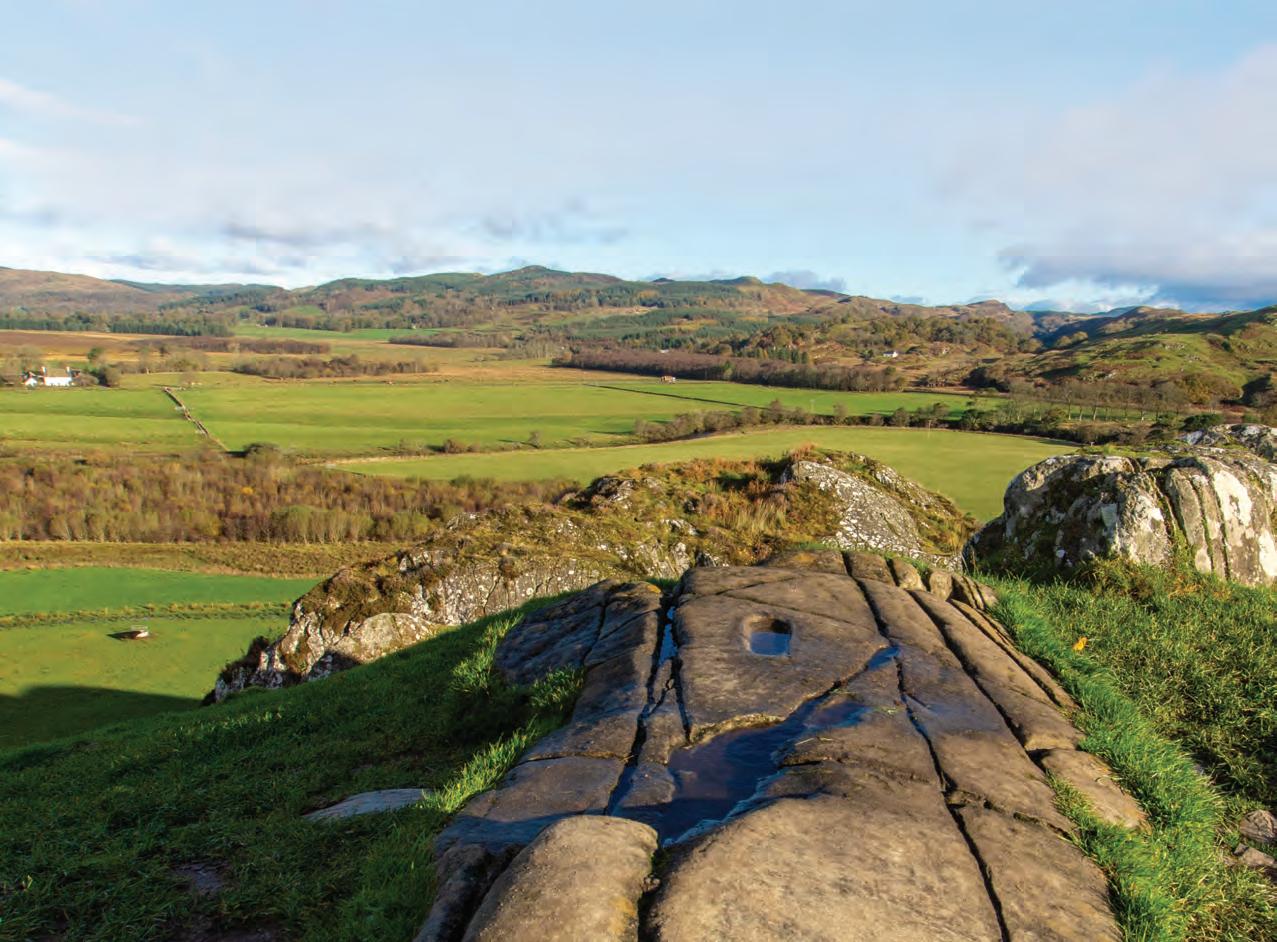
Rising from Moine MhÒr –a mossy bog that stretches across ’s south – stands Dunadd Fort.
Excavations in the 1980s revealed that the prominent rocky outcrop was used as a bulwark (a protective rampart) for more than two centuries. Between AD 500 to AD 800, however,
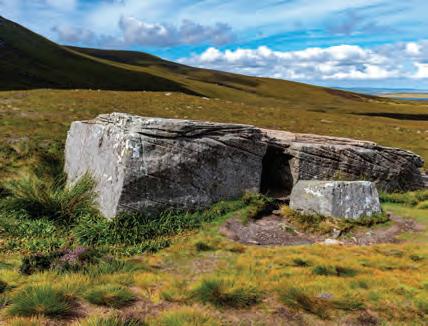
MYSTERY SOLVED? NO
This hunk of sandstone was hollowed out using stone, bone and wood tools between 3,500 and 2,500 BC.
The resulting space features a narrow passage that opens into a main chamber with two small cells off it. Lie down on the cell bed sections and you’ll quickly see how the site became associated with the legend of dwarves that supposedly occupied it.
this bastion was the power base for the Gaelic Kingdom of Dál Riata.
Unusual carvings below the fort’s summit include a boar, trough and a rock throne.
Most exciting of all are two footprints etched into Dunadd’s rock. One of these is protected by a cover featuring a replica carving. Likely used during inauguration ceremonies for Dál Riatan kings, they probably symbolised the new ruler’s jurisdiction over the land.
FAST FACT Dunadd Fort was first mentioned in the Annals of Ulster in 683 AD.
The Dwarfie Stane’s purpose remains unclear. Some consider it a Neolithic tomb because its design is akin to Mediterranean structures of similar age. Or it could have been a site providing protection against Scotland’s elements, perhaps for religious rituals and ceremonies.
There have been no recorded artefacts linking the Dwarfie Stane to a particular period.
FAST FACT The Dwarfie Stane remained sealed in the 1500s. The rock that blocked its entrance can be seen outside it.
MYSTERY SOLVED? NO 9
Look for the black and white of guillemots
A casket first appeared in the records after Mary, Queen of Scots was arrested on 15 June 1567 by the Confederate Lords at the Battle of Carberry Hill. Supposedly retrieved from the Edinburgh Castle chambers of her third husband, James Hepburn, 4th Earl of Bothwell, the casket contained a dozen poems, two marriage contracts and eight letters. The letters were allegedly penned by Mary to Bothwell, implicating them both in the murder of her second husband, Lord Darnley.
In December 1568, a similar casket was produced at a Westminster
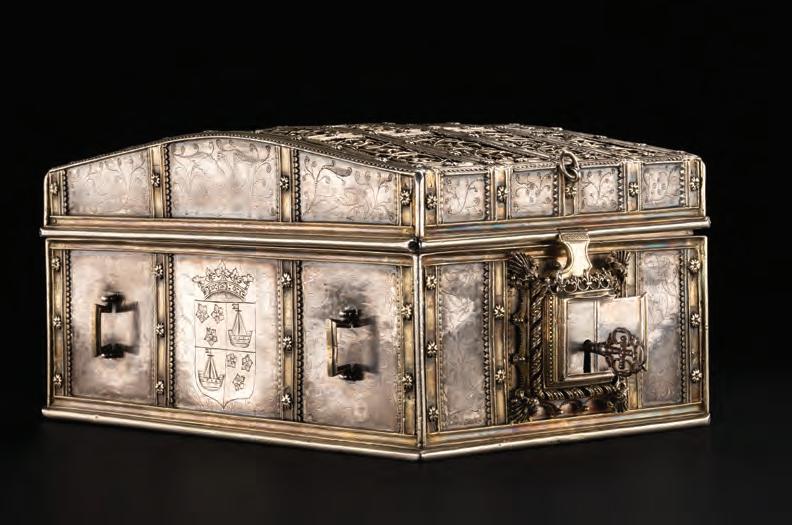
hearing ordered by Elizabeth I against Mary. However, none of the documents it contained were signed or addressed by name and only one was dated. Claims of forgery and doctoring also threw their authenticity into question.
The letters themselves failed to convict Mary. However, she remained
Is the Latinus Stone Scotland’s oldest surviving Christian memorial?
MYSTERY SOLVED? YES
10
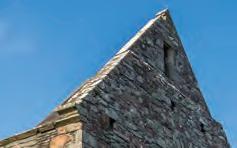
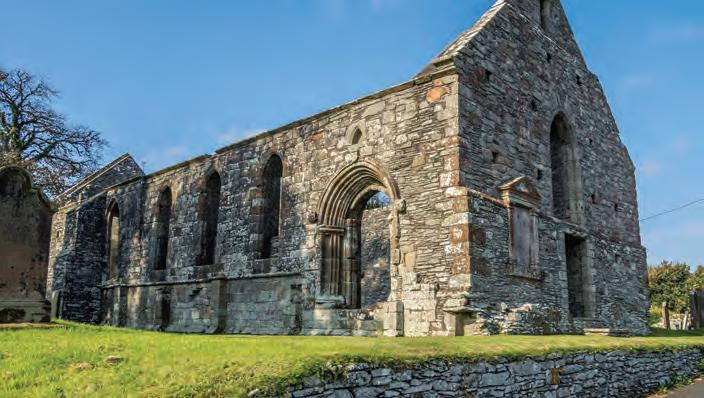
The Latinus stone dates back to AD 450 and is the earliest evidence of Christianity in Scotland. The stone had been reused in a wall of Whithorn Priory and was rediscovered c.1890. Latinus was the first Christian in Scotland whose name we know. This
stone commemorated him and his young daughter, and is evidence of a group of Christians living at Whithorn at that time. The stone’s inscription translates to: “We praise you, the Lord! Latinus, descendant of Barravados, aged 35, and his daughter, aged 4, made a sign here”.
Situated above the stone’s lettering are traces of the chi-rho symbol, meaning Christ, which looks like the letter P overlying the letter X.
Discover more about the Latinus Stone at trove.scot
a prisoner for 19 years. In 1587, she was executed for her entanglement in the Babington Plot to assassinate Elizabeth I, which would have placed her on the English throne.
FAST FACT Made in France between 1493 and 1510, the silver casket is now part of the National Museums Scotland collections.
The Latinus Stone’s inscription has been translated

The history of mental health in Scotland has its share of acts of cruelty and abandonment, yet, as historical records reveal, greater awareness and pioneering therapies brought positive and lasting change
WORDS: CLAIRE PRENTICE
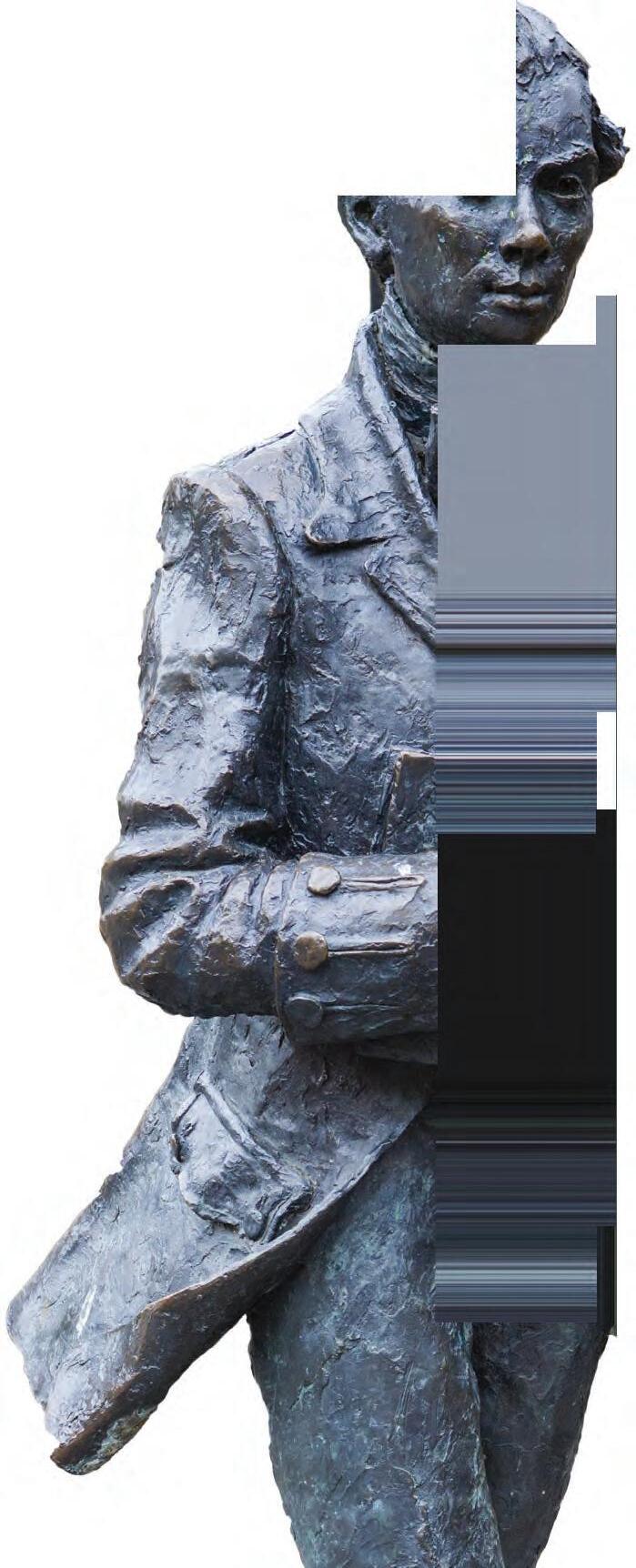
In late 1773 the Edinburgh poet Robert Fergusson wrote ‘To the memory of John Cunningham’, commemorating a fellow poet who had died at the age of 44 in a Newcastle mental asylum. Fergusson, a young man about town, suffered from melancholia and his poem reflects on Cunningham’s short life and the fragility of fame.
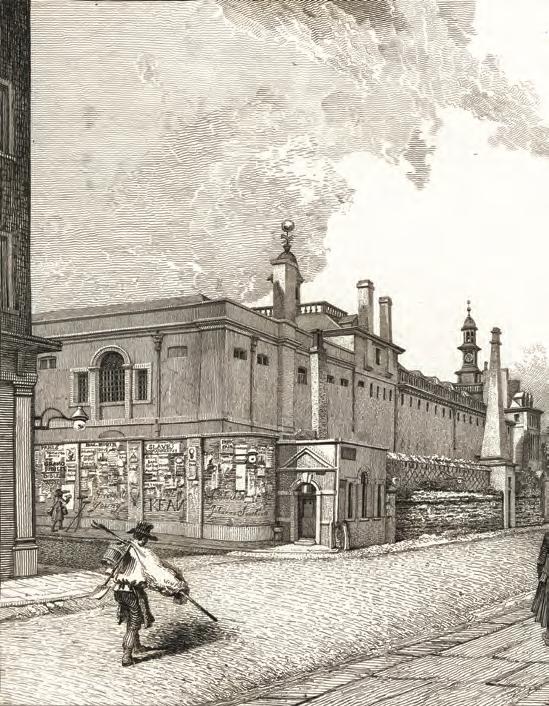
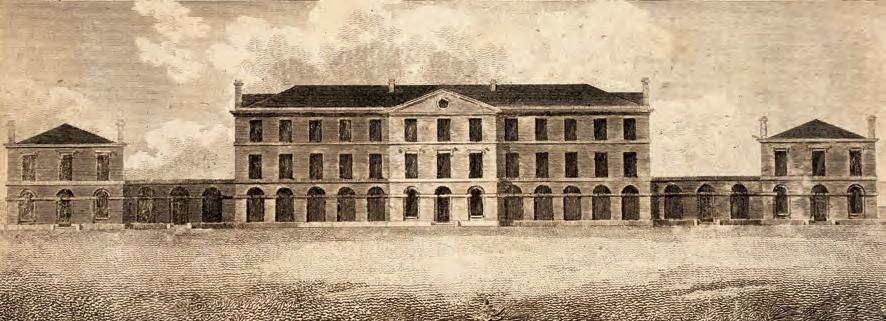
Tragically, the poem foreshadowed Fergusson’s own fate. The following year, Fergusson fell and suffered a serious head injury. He was deemed “utterly insensible”. His mother couldn’t look after him so he was taken, against his will, to Edinburgh’s ‘madhouse’, Darien House. Dubbed Edinburgh’s Bedlam (a reference to the famous Bethlem Hospital in London), its patients were chained to walls and locked up in cells with poor sanitation. He was visited there by Dr Andrew Duncan, a friend

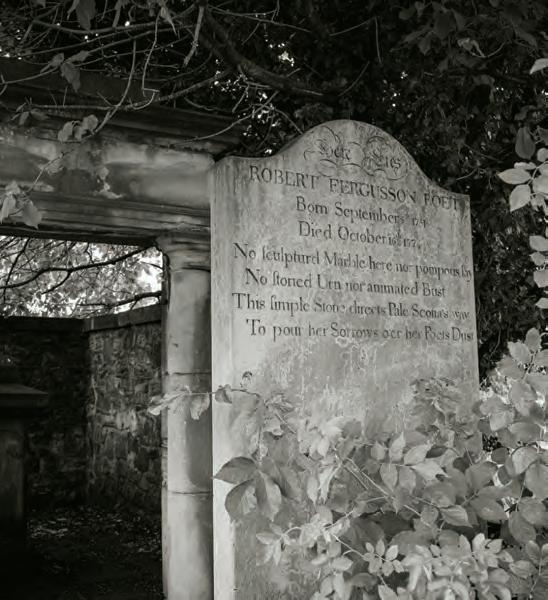
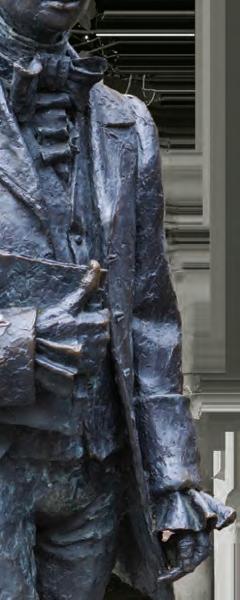


In the early years of mental healthcare, the emphasis was not on treatment, but on isolation, containment and restraint
from his student days, who was appalled by the conditions and vowed to work to improve them.
Fergusson died in October 1774, aged just 24. Duncan’s campaign for a more humane asylum finally bore fruit in 1813 with the opening of the Edinburgh Lunatic Asylum, known today as the Royal Edinburgh Hospital. Fergusson’s literary fame ensured that his story has been remembered.
For centuries, many Scots experiencing mental ill health remained in family homes, due in part to a widespread distrust of doctors. Others lived with paid carers or keepers, while some were sent to asylums, prisons or poorhouses. Some ended up on the street.
In the early years of mental healthcare, due to limited understanding, the emphasis was not on treatment, but on isolation, containment and restraint.
‘Remedies’ were crude and were typically only used on the ‘furious’ and those who could afford to pay for them. They included bloodletting, natural sedatives and purgatives.
There is a rich archive relating to mental ill health in Scotland, from private journals and letters, to the records of hospitals and asylums. And though individuals and their symptoms were often described in language – such as ‘hysterical’, ‘lunatic’ and ‘fool’ – which seems cruel today, the stories that survive offer fascinating glimpses into the mental health of our nation.
Lord Lewis Gordon fought in the Jacobite Rising of 1745 and raised troops at Huntly Castle. After the Jacobites were defeated at Culloden, where Gordon witnessed brutal clashes, he escaped to France where he became increasingly
mentally unstable. Describing his condition, an associate in Paris wrote, “Poor Lord Lewis Gordon is mad.”
He made repeated attempts to escape his keeper and, in 1751, another associate wrote, “I’m afraid he’ll never get the better of his disorder.” Gordon is reported to have mutilated himself and died before his 30th birthday. It is possible that his experiences on the battlefield left him suffering from what would today be called post-traumatic stress disorder.
The lives of wealthy women brought challenges of a different nature. Lady Dorothea Sinclair was a vibrant and determined young woman who rebelled against her strict, overbearing mother. In 1759, she married James Duff, one of the most powerful landowners in the northeast of Scotland, and Duff House became one of their residences. The couple did not have children and over
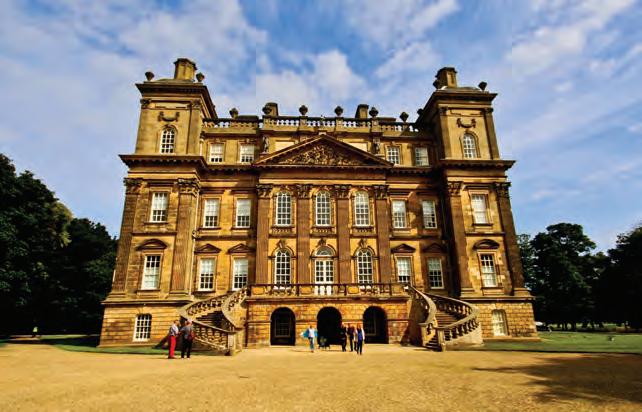
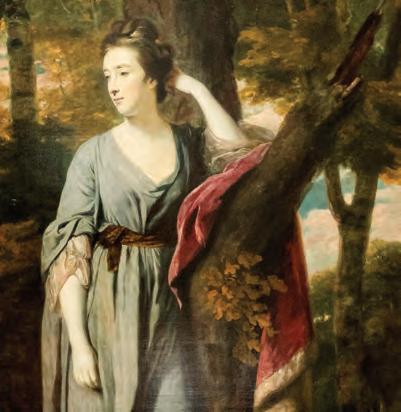

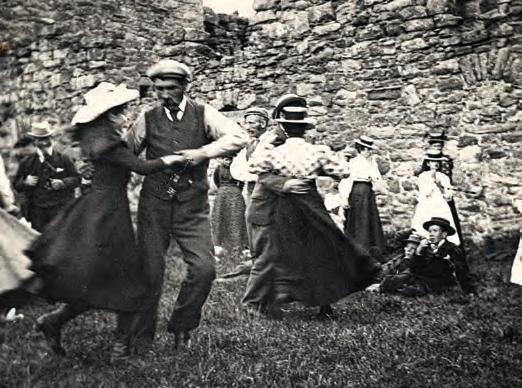
time the marriage grew strained, and they separated.
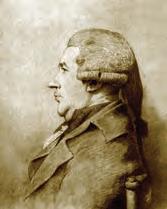
In letters, Duff describes Dorothea’s “madness.” Well into the 20th century she continued to be described as neurotic, an umbrella term used to describe symptoms and disorders without a physiological explanation, which gained popularity in the medical profession after the Scottish physician William Cullen coined the term ‘neurosis’ in 1769. Cullen was physician to David Hume and at the centre of Scottish Enlightenment attempts to systematise the study of medicine.
The Enlightenment’s emphasis on observation and collecting empirical evidence brought a more scientific approach to the diagnosis and treatment of mental illness. The focus shifted from containment and there was a growing recognition of the link between physical and mental health, and the beginnings of a more holistic approach to treatment.
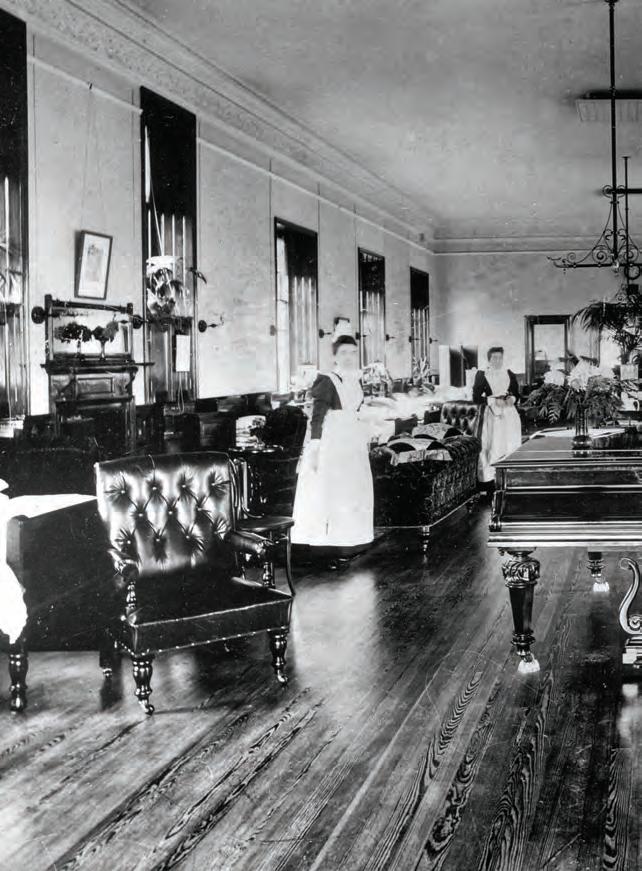
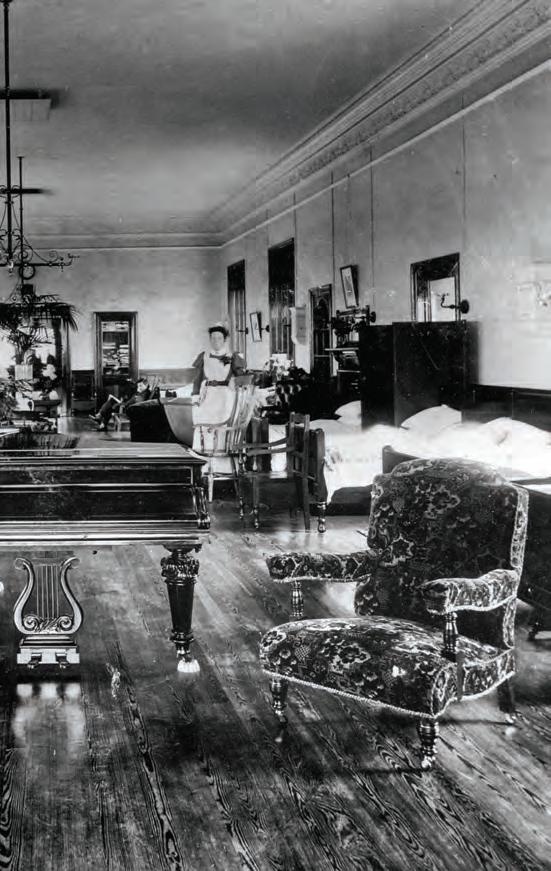
These principles were evident in the 1781 opening of the Montrose Lunatic Asylum (later Sunnyside Royal Hospital), Scotland’s first public asylum. It was the brainchild of writer, pioneering moral reformer and philanthropist Susan Carnegie, who stressed the need for a humane approach.
This asylum aimed to create a pleasant environment and a sense of community. It offered opportunities for physical activity and recreation through the provision of gardens, allotments and a library. Patients could take part in musical and theatre performances and art and language classes. A step in the right direction, it would be decades before this serene philosophy became widespread. Many sufferers were tormented by their symptoms, and with limited understanding of the causes of mental illness, doctors could offer little insight into their plight.
James Boswell, the Scottish advocate, biographer and friend of Dr Samuel Johnson, wrote candidly in his journals about his mental health struggles. He suffered from alternating bouts of melancholia and mania, and his journals record his heavy drinking and sexual compulsions, including regular liaisons with prostitutes.
Johnson and Boswell toured Scotland in 1773, visiting many sites now in our care, including Iona Abbey and Fort George. Johnson also suffered from bouts of ‘melancholia’, which he described as the ‘black dog’. He advised Boswell to follow a self-help regime that many modern doctors would approve of. It included taking exercise, keeping busy, avoiding excessive alcohol consumption and having regular social interaction. Modern writers have posthumously diagnosed Boswell with depression and cyclothymic disorder, a rare mood disorder.
Many sufferers were tormented by their symptoms, and with limited understanding, doctors could offer little insight into their plight
Assessing the number of people in Scotland who suffered from mental ill health at any one time is challenging. In his 1828 book A General View of the Present State of Lunatics and Lunatic Asylums, Sir Andrew Halliday surveyed asylum and parish records and concluded that there were 3,700 “insane persons and idiots in Scotland” in 1826, with more than half of those confined to private homes, often living with family, 648 in asylums, and upwards of 1,600 living at large “wandering over the country and subsisting by begging.”
Major changes in the treatment of the mentally ill followed the introduction of the 1857 Lunacy (Scotland) Act, which aimed to standardise practices and ensure better treatment. It included a programme for building publicly funded district asylums aimed at those who could not afford the fees charged by private and charitable ‘Royal Asylums’. It also created a centralised authority to oversee the wellbeing of individuals cared for in public asylums and at
James IV’s granddaughters kept a surprisingly low profile
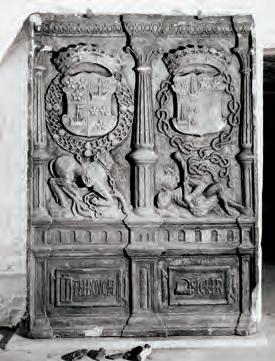
Unusually for women from prominent families, sisters Elizabeth, Margaret and Beatrix Douglas, granddaughters of James IV, kept a low profile. A letter from 1562 described all three as being, “certeyne tymes or the most parte of the yere distempered with an unquiet humour.”
Little is known about Beatrix, who married Robert Maxwell, 6th Lord Maxwell, but rather more is known about the other two sisters.
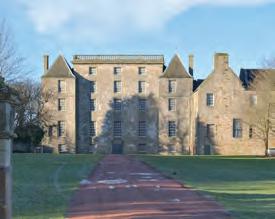
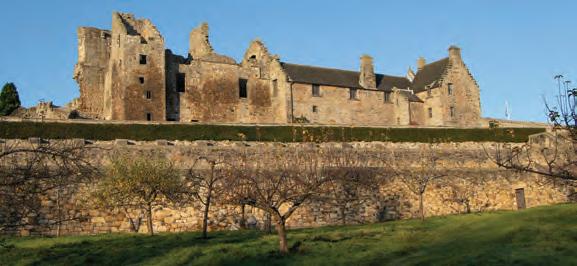
Elizabeth’s husband, James Douglas, was reputed to be one of the most ruthless men in Scotland. Through marriage he inherited an earldom and Aberdour Castle. While James entertained friends at Aberdour, Elizabeth spent her time at Tantallon Castle in East Lothian, far from political life. A record relating to Elizabeth described how, “She herself became
distracted of her wits.” Elizabeth was later denounced an “idiot and prodigal,” and forbidden to manage her own affairs.
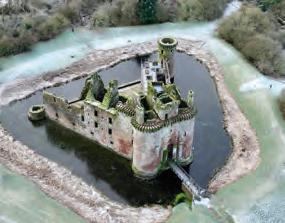
Margaret married James Hamilton, 2nd Earl of Arran, receiving Kinneil House near Bo’ness in the marriage settlement. They separated for time when Arran tried to divorce Margaret. They reconciled, but Margaret spent much of her time at Kinneil, away from the public gaze. Her son James (3rd Earl of Arran) was described as “ane idiot or altogidder furious” and in 1566, “was released into the care of his mother and kept latterly at Craignethan Castle”, prompting speculation the illness was hereditary.
home, and to investigate reports of ill-treatment or neglect.
For many families, though, asylums remained a fearful place. The young Arthur Conan Doyle, who would go on to become a physician and create the fictional detective Sherlock Holmes, was sent to stay with a family friend at Liberton Bank House in the 1860s. The move was to protect him from the influence of his depressive, alcoholic father, Charles Altamont Doyle. By the late 1880s Charles’s mental health had deteriorated to such an extent that he was sent to the renamed Montrose Royal Lunatic Asylum, which had received a Royal Charter in 1810.
In an early Conan Doyle short story, The Surgeon of Gaster Fell, a young doctor is accused of imprisoning an elderly man in a “sinister cage”. It emerges that the doctor is the man’s son, and that he has resorted to this desperate measure to keep his father from the lunatic asylum.
“It would weary you were I to describe the terrible experiences which his family have undergone,” Doyle wrote. “By the blessing of God, we have succeeded in keeping his poor crazed fingers clear of blood.”
Though fear of the asylum continued to cast a long shadow over those suffering from mental illness, some people saw them positively, as places of treatment and respite.
One woman staying at the mental hospital in Inverness in 1914 said: “I feel myself a different woman to-day, and have had a splendid appetite, better than I have had for many a day… I only wish I had come here a few months ago, and I would never have suffered as I have done.”
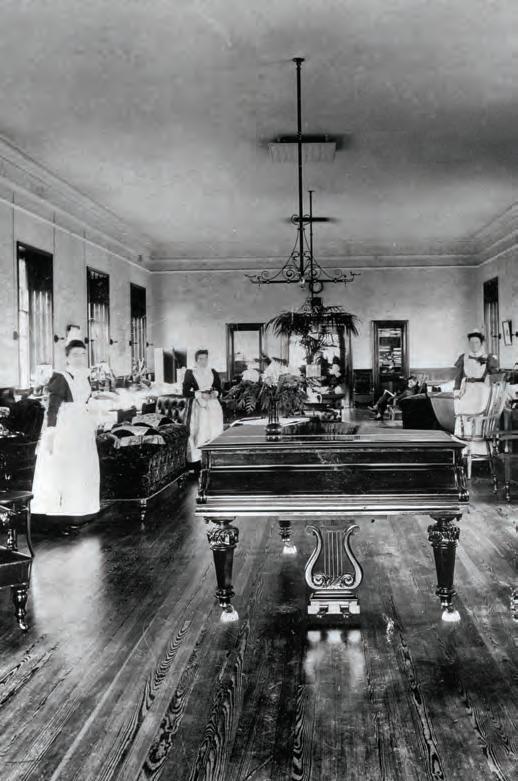
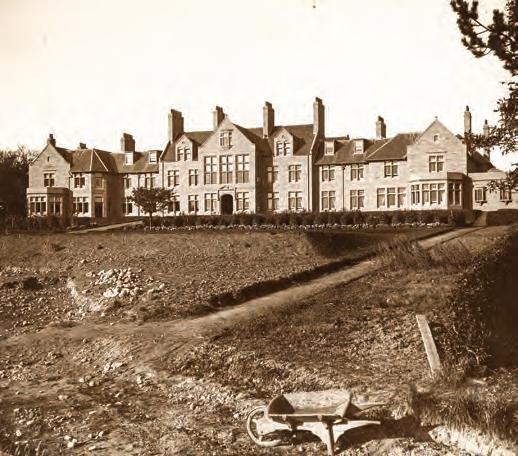
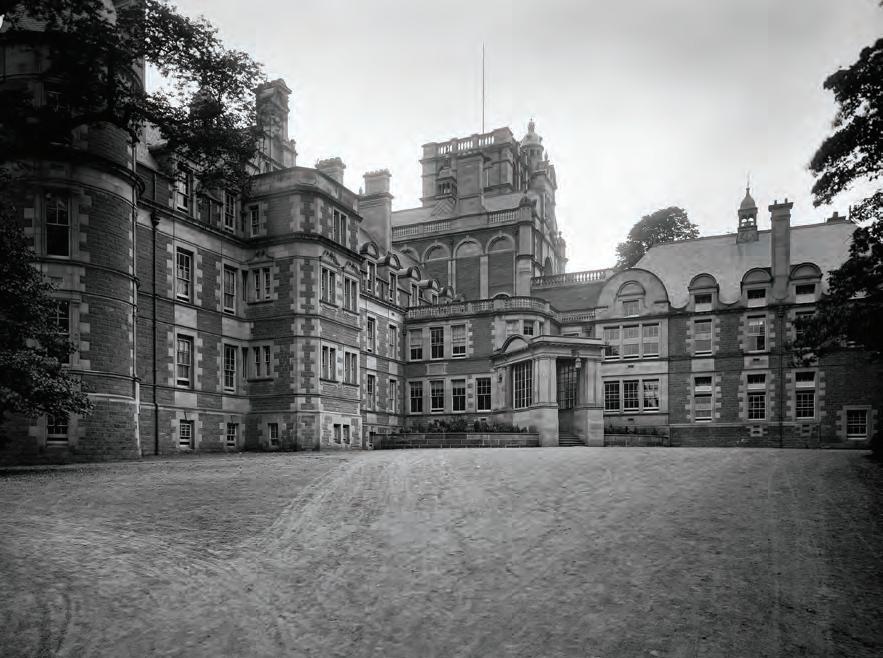
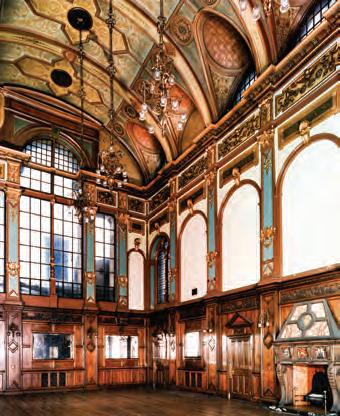
The first decades of the 20th century saw further developments in treatment. Returning soldiers from the First World War, including the poets Siegfried Sassoon and Wilfred Owen, were treated at Edinburgh’s Craiglockhart Hospital for ‘shell shock’ (today known as PTSD) by the pioneering Dr William Rivers, who
Exteriorandinteriorof Craiglockhartwheresoldiers suchasSiegfriedSassoon, below,weretreatedduring andaftertheFirstWorldWar
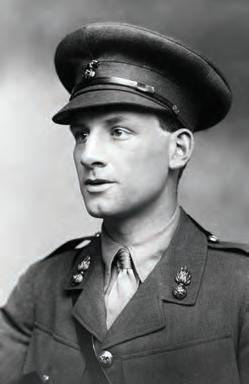
deployed ‘talking cure’ treatments (a forerunner to contemporary psychotherapy). The patient-centred approach at Craiglockhart encouraged activity, including exercise and other pursuits, such as contributing to the hospital magazine.
The hospital’s admission and discharge records survive and provide an insight into the reluctance of doctors filling them out to record psychological disorders, perhaps due to the lingering stigma. Though the term “neurasthenia” is used regularly, it is typically given secondary importance below physical complaints such as “gas poisoning,” “migraine,” “compound fracture of toe” and even “haemorrhoids.”
What lay ahead in the 20th century was a future of extraordinary advances, the growth of different analytical schools, a proliferation of talking-cure therapies, the introduction of psychopharmaceutical treatment in the 1950s, and the controversial ‘anti-psychiatry’ movement. All these innovations were based not only on generations of medical practice, but on the lived experience of mental ill health over hundreds of years.
Admission records provide an insight into the reluctance of doctors to record psychological disorders, perhaps due to lingering stigma
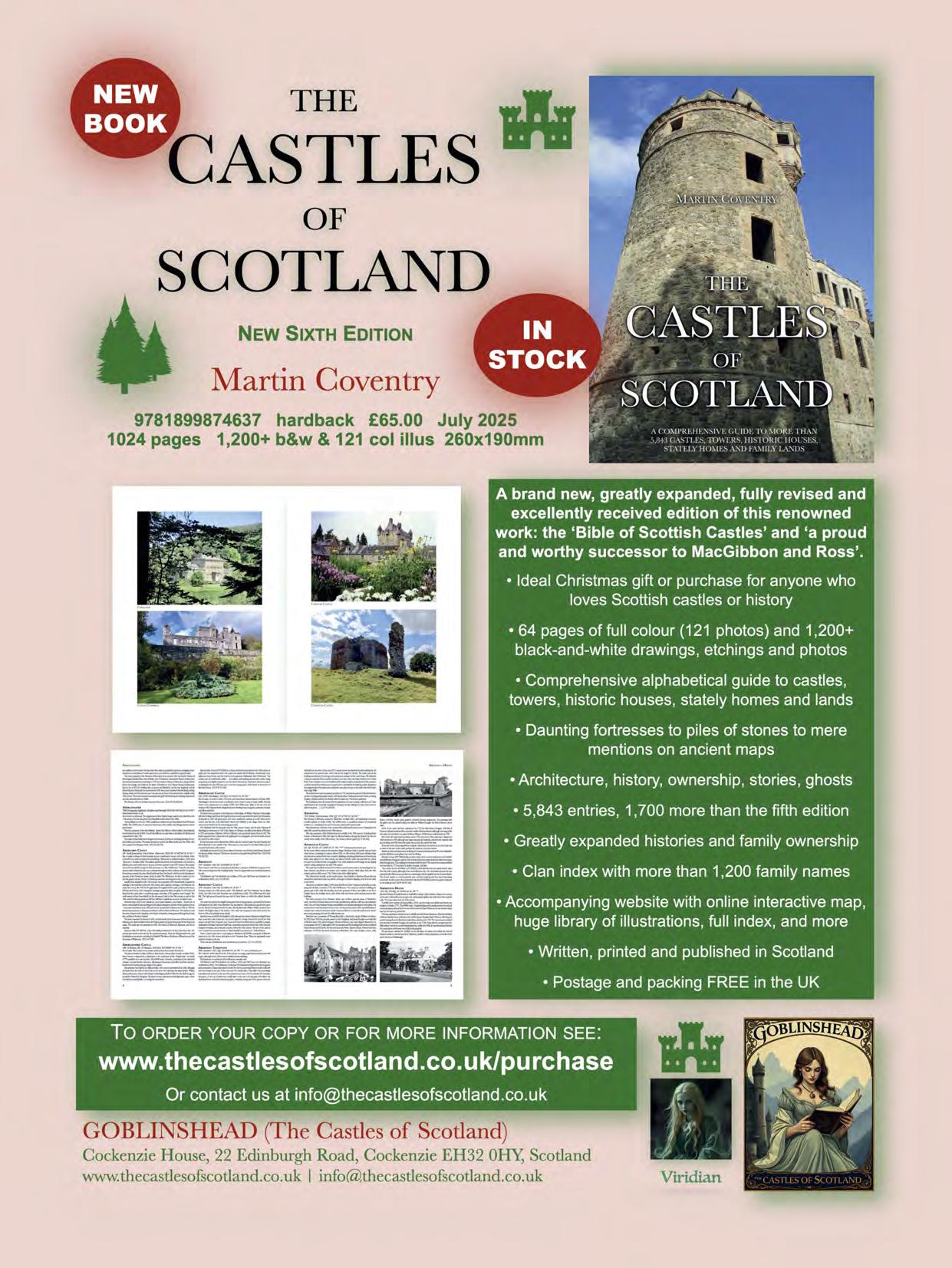
9781899874637 hardback
£65.00 July 2025 1024 pages 1,200+ b&w & 121 col illus 260x190mm
A brand new, greatly expanded, fully revised and excellently received edition of this renowned work: the 'Bible of Scottish Castles' and 'a proud and worthy successor to MacGibbon and Ross'.
• Ideal Christmas gift or purchase for anyone who loves Scottish castles or history
• 64 pages of full colour (121 photos) and 1,200+ black-and-white drawings, etchings and photos
• Comprehensive alphabetical guide to castles, towers, historic houses, stately homes and lands
• Daunting fortresses to piles of stones to mere mentions on ancient maps
• Architecture, history, ownership, stories, ghosts
• 5,843 entries, 1,700 more than the fifth edition
• Greatly expanded histories and family ownership
• Clan index with more than 1,200 family names
• Accompanying website with online interactive map, huge library of illustrations, full index, and more
• Written, printed and published in Scotland
• Postage and packing FREE in the UK
GAELIC SPECIAL EDITION
Bilingual text
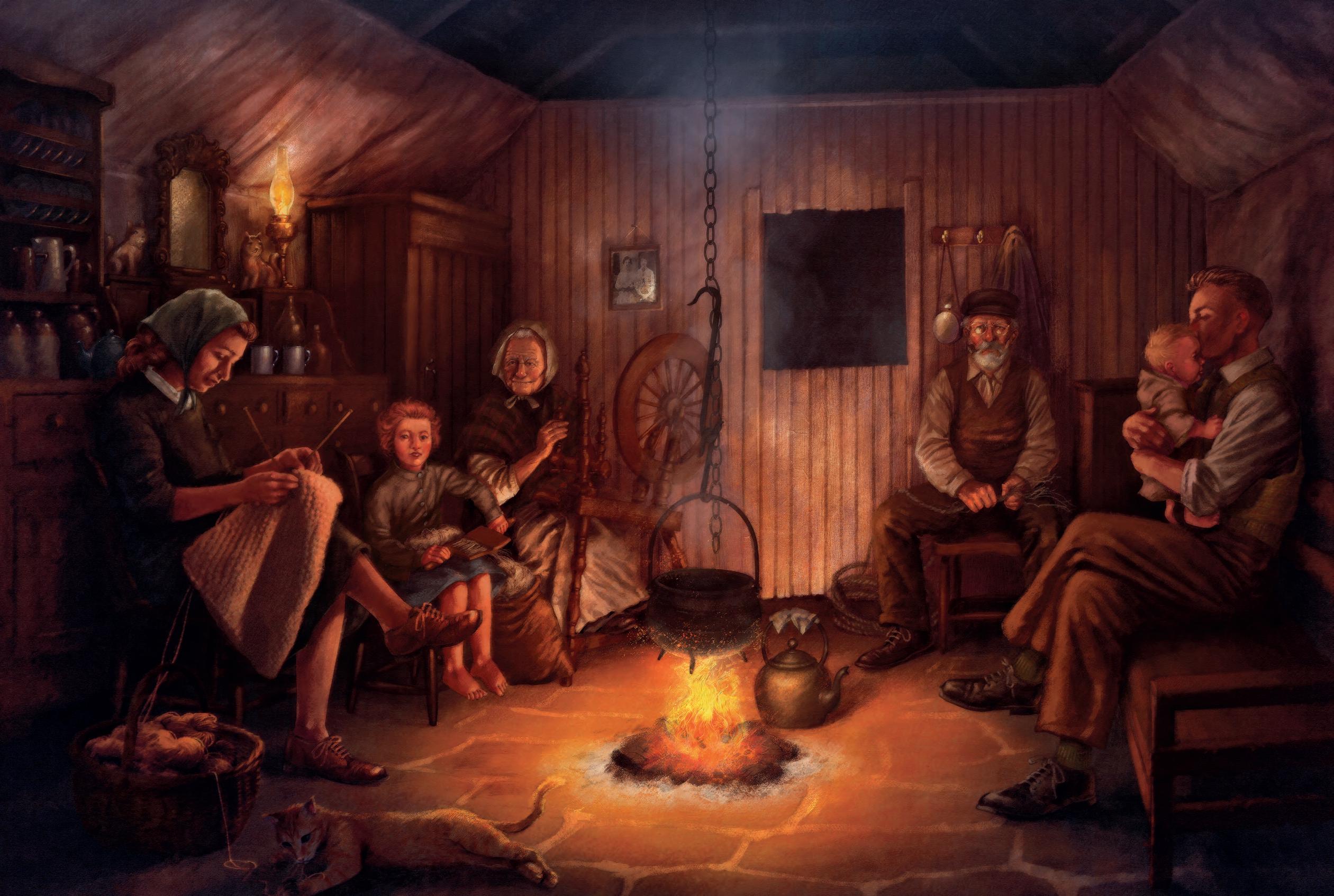
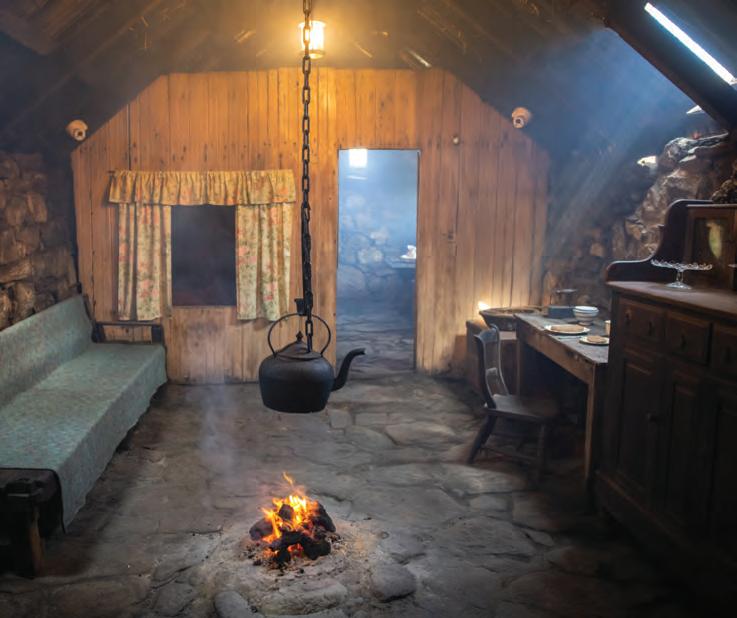
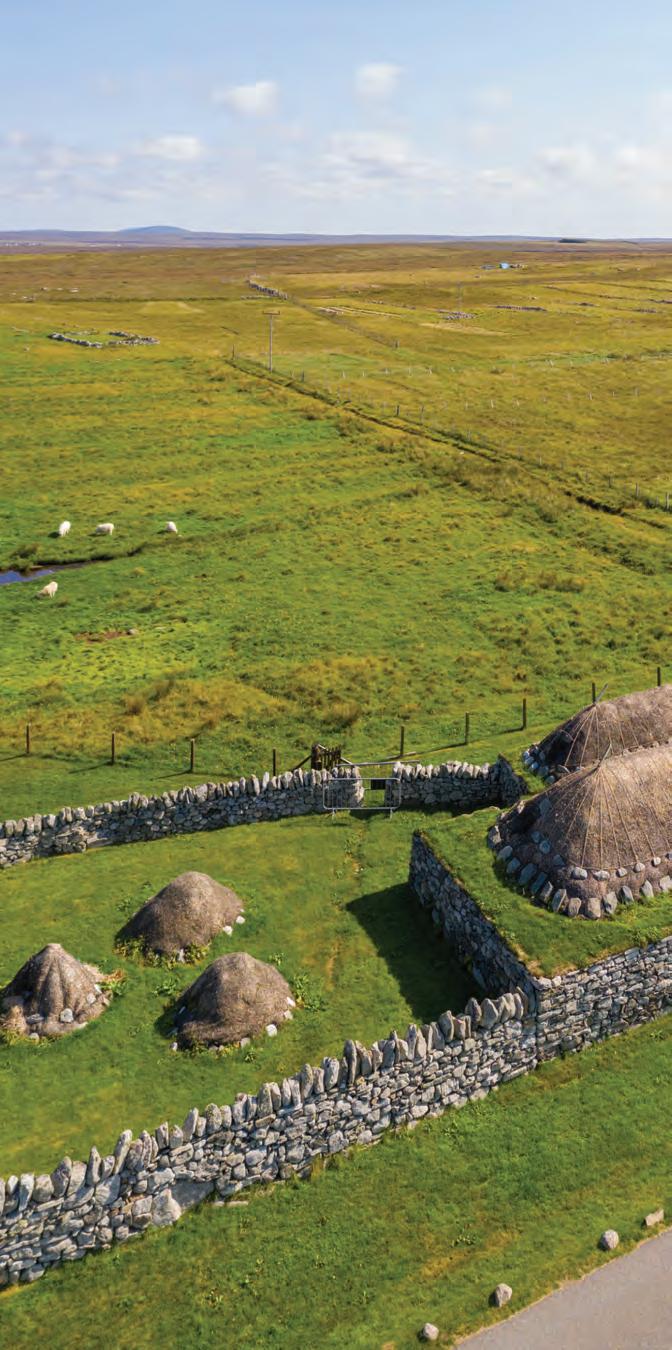
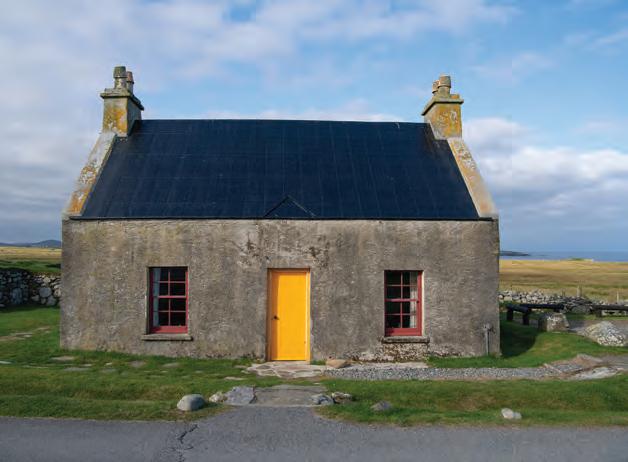
It’s hard to describe the mixture of emotions that arise when visiting the houses at Arnol, a village in the Isle of Lewis. Stepping into the Blackhouse, the evocative smell of the peat fire takes you right back in time. It’s hard to believe that just over 100 years ago the island style of architecture changed dramatically and new houses began to appear as part of a government scheme to modernise island life. Join me as I imagine a snapshot in time for a newly wed couple in the white house in 1920.
A westerly wind gusts off the Atlantic this November evening, the kind of gale that makes doors shudder in their frames and leaves windows dusted with sea salt. Sìde nan seachd sian, as they say here. Dusk is settling with the mist over Arnol, and inside the newly built white house, I – Màiri MacLeod – sit rubbing my hands together, breath misting in front of my face as I stoke the fire in vain.
The moment I lift the heavy latch on the Blackhouse door, warmth and comforting smells wrap round us
The clickety‑clack of the weaving loom in the loft stops and my husband, Alan, appears. “My fingers are frozen,” he says. “I had to give up.” He walks over to the window and pulls shut the curtains dancing in the draught. This isn’t quite what we had pictured when the government gave us a grant to build this modern house.
I sigh and wrap my shawl tighter round my shoulders. “It’s a poor sort of progress that leaves little difference between the gale blowing outside and inside! The powers that be clearly didn’t think too hard about the weather before designing these cold, damp boxes!”
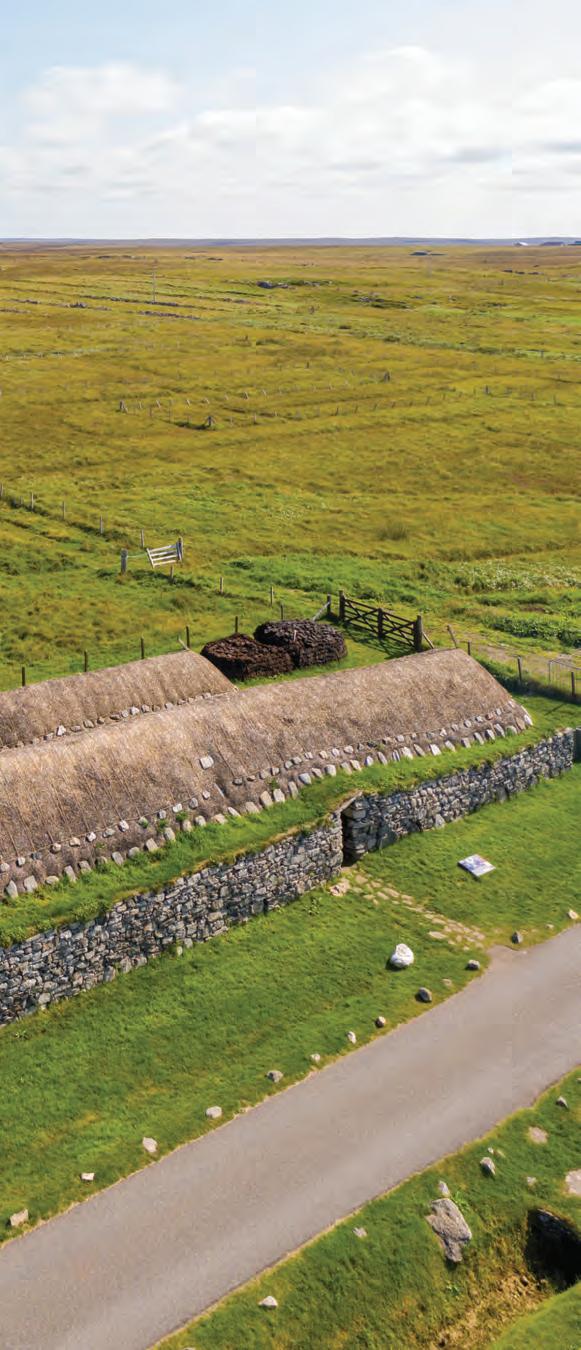
I pull back the curtain and look out the wee window to where the old taigh‑dubh of our neighbours, the MacAulays, stands – low, heather‑thatched, nestled into the earth like it’s been there since the world was young, nuair a bha Gàidhlig aig na h‑eòin, as my father says. Its roof lies still in the wind, and smoke curls slowly from the top. Its stone walls are so thick no wind can penetrate. I long for that warmth and shelter. Alan sees the look in my eye and nods before I speak. “Let’s go then,” he says.
Crossing the rough path, shawls pulled tight, our boots crunch through soaking grass and grit. The wind and horizontal rain push against us, but the moment I lift the heavy latch on the Blackhouse door, warmth and comforting smells wrap round us in the porch – peat smoke from the living room, corn from the barn and animals from the byre.
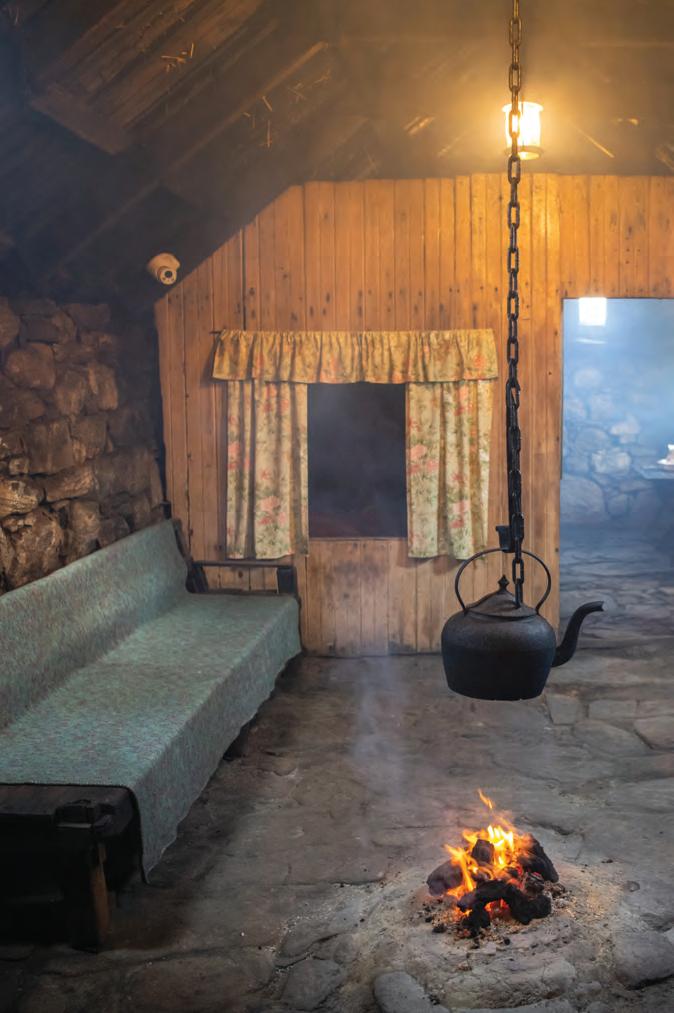
Inside, the living room pulses with life. The peat fire burns at the centre of the floor, its smoke
SOME GAELIC WORDS AND PHRASES
Sìde nan seachd sian – the weather of the seven elements (a bad gale)
Taigh-dubh – blackhouse
Nuair a bha Gàidhlig aig na h-eòin –when the birds spoke Gaelic Tughadh – thatch
Fàilte – welcome
Fraoch – heather
Teine – fire
Mar sin leibh – goodbye
Tha mi ag ionndrainn seo… An teine, na daoine, na beathaichean dìreach an seo ri ar taobh. Tha e duilich a chreidsinn
Chan eil e furasta mìneachadh a’ bhuaidh mhòr a bhios ort nuair a thadhlas tu air taighean Àrnoil, baile beag ann an Leòdhas. A’ dol a‑steach dhan taigh‑dubh, bidh fàileadh tarraingeach an teine‑mhònach gad thoirt air ais ann an tìm. Tha e doirbh a chreidsinn nach eil ach beagan a bharrachd air 100 bliadhna on dh’atharraich stoidhle ailtireachd an eilein gu mòr agus gun do thòisich taighean ùra a’ nochdadh mar phàirt de sgeama riaghaltais gus beatha nan eileanach ùrachadh. Trobhad còmhla rium agus mi a’ beachdachadh air oidhche àbhaisteach do chàraid a bha air ùr phòsadh anns an taigh gheal ann an 1920.
Tha gaoth an iar a’ siabadh far a’ Chuan Siar air feasgar Samhain; an seòrsa gèile a tha a’ toirt air dorsan a bhith a’ crathadh agus a’ fàgail uinneagan le sgàil de shàl. Sìde nan seachd sian mar a chanas iad an seo. Tha am feasgar a’ ciaradh leis a’ cheò air Àrnoil, agus am broinn taigh‑gheal ùr, tha mi fhèin – Màiri NicLeòid – nam shuidhe a’ suathadh mo làmhan ri chèile, m’ anail air beulaibh m’ aodann ’s mi a’ feuchainn ri teine dòigheil a thogail.
Tha fuaim na beairt gu h‑àrd a stad, agus tha an duine agam, Ailean, a’ nochdadh. “Tha mo chorragan reòite” ars esan, “b’ fheudar dhomh stad”. Tha e a’ coiseachd a‑null chun na h‑uinneig far a bheil na cùirtearan a’ dannsadh san fhuaradh agus tha e gan slaodadh dùinte. Chan e seo a bha sinn an dùil ris nuair a thug an riaghaltas taic‑airgid dhuinn airson an taigh ùr‑nodha seo a thogail.
Tha mi a’ leigeil osna agus a’ slaodadh plaide mu mo ghuailnean. “’S e adhartas annasach a bhios a’ fàgail glè bheag de dhiofar eadar an gèile a’ sèideadh a‑muigh agus a‑staigh! Gu dearbh cha do smaoinich iad sin cus mun t‑sìde mus do chruthaich iad na bogsaichean fuar tais tha seo!”
Tha mi a’ tarraing a chùirteir air ais criomag agus a’ coimhead a‑mach air an uinneig bhig far a bheil taigh‑dubh ar nàbaidhean, clann ’icAmhlaigh, na sheasamh – ìosal, le tughadh fraoich, air a stèidheachadh san talamh mar gun robh e ann on bha an saoghal òg, “nuair a bha Gàidhlig aig na h‑eòin” mar a chanas m’ athair. Tha am mullach sàmhach sa ghaoith, agus tha ceò ag èirigh gu socair às. Tha na ballachan cloiche cho tiugh ’s nach fhaigh gaoth no gailleann a‑steach. B’ fhearr leam gun robh mi an sin, san fhasgadh agus sa bhlàths.
Tha Ailean a’ tuigsinn sa bhad.
“Mach à seo ma‑thà,” tha e ag ràdh.
A’ dol tarsainn air an t‑slighe gharbh, plaideachan air an tarraing gu teann, cluinnear fuaim nam bòtannan ‘s a ghrinneal agus san fheur fhliuch. Tha a’ ghaoth ghailbhneach agus an t‑uisge còmhnard a’ putadh nar n‑aghaidh, ach cho luath sa thogas mi claimhean‑dorais an taigh‑dhuibh, tha blàths is fàilidhean seasgair gar cuairteachadh san fhosglan –teine mònach san t‑seòmar‑shuidhe, arbhar san t‑sabhal agus beathaichean sa bhàthaich.
A‑staigh, tha an seòmar‑suidhe beòthail. Tha an teine blàth am meadhan an ùrlair, an ceò a’ sruthladh suas gu na sparran dubha, a’ teicheadh mean air mhean tron tughadh. Tha faileas ruadh a’ leum air na ballachan cloiche, agus tha daoine air cruinneachadh mar‑thà – triùir bhoireannach nan suidhe air stòl ìosal, làmhan trang le clòimh, agus dithis fhireannach san oisean, an corragan ag
seeping upward into the blackened rafters, escaping through the tughadh where it can.
Orange light licks the stone walls, and there are folk already gathered – three women seated on low stools, hands busy with wool, and two men in the corner, their fingers working swiftly to twist long stalks of fraoch into heather ropes. The children huddle on the box bed at the far end of the room.
“Fàilte!” calls out Anna MacAulay, rising from her stool. “Come in out the cold. Is the new house not good enough tonight?”
I chuckle. “She’s fancy enough to look at, but she’s got a heart like stone.”
There is laughter, and space is made near the fire. A cow lows softly through the partition wall behind us. The animals are there, under the same roof, as they have always been.
Tea is poured and scones are passed round, still warm from the griddle. There may be a gale outside, but there is neither sight nor sound of it here. As the cups warm our hands, the cèilidh begins.
Old Seumas Mòr, with his craggy face and long memory, begins with a tale of the sea – of a night in 1888 when he’d been caught in a squall off Bràgar and only made it back by the skin of his teeth.
Outside, the wind and sea tangle in the dark, but here, the world is contained – safe, comfortable and warm
Then I tell a story – of the woman in the moor who sang the cows to sleep and was never seen again. The other women nod, needles clicking, and Anna finishes carding the wool and starts at the spinning wheel.
Between stories, we sing. The songs are mournful – it is still hard to find much laughter after the devastation of the Great War and the loss of so many boys from the village. I’m lucky my Alan returned.
At one point, he leans close to the fire, stretching out his hands.
“I miss this,” he murmurs to Seumas. “The fire, the folk, the beasts right there beside us. It’s hard to believe how much things have changed since I got home from the war.”
The teine crackles, casting shadows across the walls. The cows move gently behind the partition, comforted by the low hum of voices. Outside, the wind and sea tangle in the dark, but here, the world is contained – safe, comfortable and warm.
It’s late when Alan and I stand to leave. Our faces glow from the fire; our bellies are warm with tea, scones and stories.
“Mar sin leibh,” Anna says.
We step out into the night, the cold waiting to bite us, but it seems less sharp now – as if it, too, has softened in the telling of old tales.
AR BAILE | OUR VILLAGE
Cairistiona NicDhòmhnaill (Nis) | Christina MacDonald (Ness, Lewis)
Fàilt’ air an dùthaich is fàilt’ air a’ bhaile, Is fàilt’ air an dachaigh a dh’fhàg sinn, Ged bhiodh i gun chabar, ’s an nead air a creachadh, Nach binn guth an eòin far na dh’fhàs e.
Fuaim ceòlmhor na mara ri flodraich sa chladach, Fàile cùbhraidh an fhraoich is na mòna; Crodh is caoraich a’ bhaile air feur Linnteagarraidh, A’ lìonadh ar broilleach le sòlas.
Welcome to the land, welcome to the village, And welcome to the home we left, Though the rafters are gone, and the nest has been raided, How sweet the bird sings where it was raised.
The music of the ocean lapping on the shore
The smell of the heather and the peat; Cattle and sheep from the village grazing in Linnteagarraidh, Filling our hearts with joy.
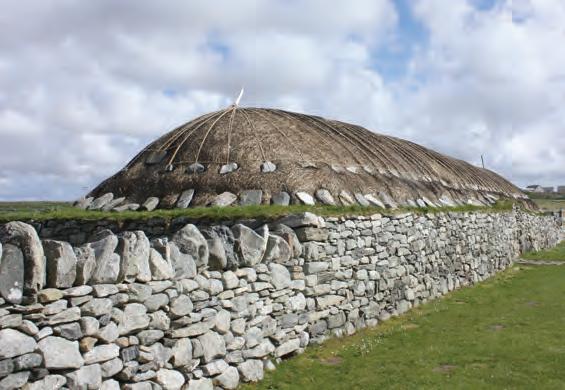
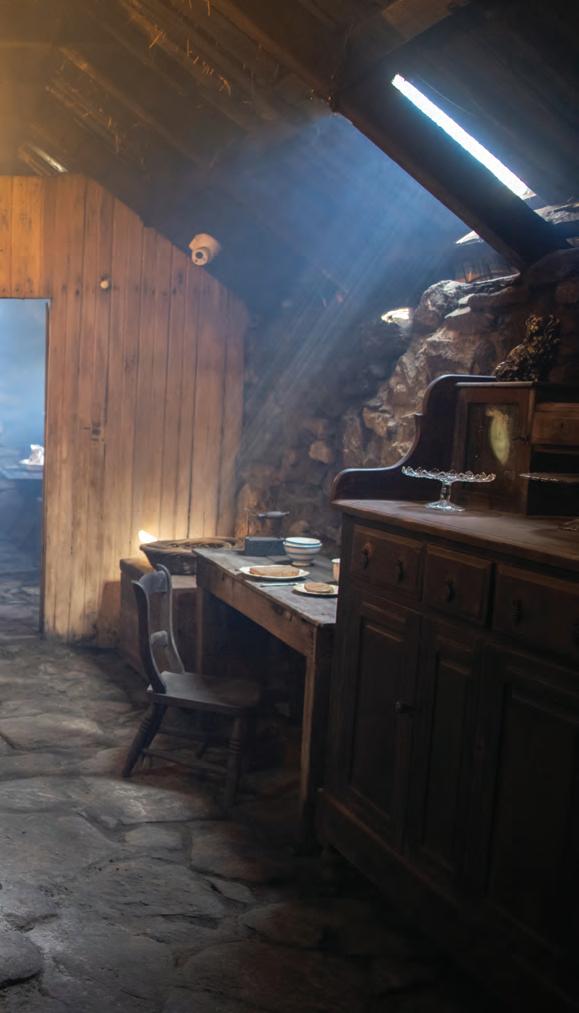
Visitors to the Blackhouse will still find a warming peat fire burning
Tha e anmoch nuair a sheasas Ailean agus mi fhèin gus falbh. Tha ar n‑aghaidhean a’ deàrrsadh bhon teine
obair gu sgiobalta gus sìomain fhraoich a dhèanamh. Tha a’ chlann nan suidhe air an leabaidh‑chùlaist aig ceann thall an t‑seòmair.
“Fàilte!” ars Anna NicAmhlaigh, ag èirigh bhon an stòl, “Thig a‑mach às an fhuachd; nach eil an taigh ùr math gu leòr dhuibh a‑nochd?”
Tha mi a’ leigeil gàire. “Tha i leòmach gu leòr, ach tha a cridhe cruaidh!”
Tha lachan‑gàire ann, agus tha sinn a’ suidhe sìos faisg air an teine. Tha nuallan na bà a’ tighinn gu socair tron bhalla fhiodh air ar cùlaibh. Tha na beathaichean an sin, fon aon mhullach, mar a bha iad a‑riamh.
Tha tì air a dòrtadh, agus sgonaichean a’ dol timcheall, fhathast blàth bhon ghreideil. Ged a tha gèile a‑muigh, chan eil for againn air a‑staigh an seo. Tha na cupannan a’ blàthachadh ar làmhan, ’s tha cèilidh a’ tòiseachadh.
Tha Seumas Mòr, aig a bheil aodann garbh agus cuimhne mhòr, ag innse sgeul mun mhuir – oidhche ann an 1888 nuair a chaidh a ghlacadh ann an sguaile a‑mach à Bradhagair cha mhòr gun do thill e idir.
An uair sin tha sgeulachd agam fhèin – mun bhoireannach anns a’ mhonadh a’ seinn dhan chrodh gus an do thuit iad nan cadal agus chan fhacas tuilleadh i. Tha na boireannaich eile a’ cromadh an cinn, biorain a’ briogadh, agus tha Anna a’ crìochnachadh le càrdadh na clòimhe agus a’ tòiseachadh aig a’ chuibhle‑shnìomh.
Eadar sgeulachdan, tha sinn a’ seinn. Tha na h‑òrain car trom – tha e fhathast doirbh cus toileachais a bhith againn an dèidh sgrios a’ Chogaidh Mhòir, agus na h‑uimhir de bhalaich a’ bhaile air an call. Tha mise fortanach gun do thill Ailean.
Tha Ailean fhèin a’ cromadh faisg air an teine, a’ sìneadh a‑mach a làmhan.
“Tha mi ag ionndrainn seo,” ars esan ri Seumas. “An teine, na daoine, na beathaichean dìreach ann a sheo ri ar taobh. Tha e duilich a chreidsinn cho mòr ’s a tha cùisean air atharrachadh bho thill mi bhon chogadh.”
Tha an teine a’ beòthachadh, a’ cur sgàile air na ballachan. Tha an crodh a’ gluasad gu socair sa bhàthaich, cofhurtachd aca bho na guthan ìosal. A‑muigh, tha a’ ghaoth agus am muir a’ bualadh le chèile san dorchadas, ach a‑staigh an seo, tha an saoghal sàbhailte, cofhurtail agus blàth.
Tha e anmoch nuair a sheasas Ailean agus mi fhèin gus falbh. Tha ar n‑aghaidhean a’ deàrrsadh bhon teine, ar stamagan blàth le tì, sgonaichean agus sgeulachdan.
“Mar sin leibh,” ars Anna.
Tha sinn a’ tilleadh a‑mach dhan dorchadas, am fuachd a’ feitheamh oirnn, ach tha e coltach nach eil e buileach cho geur a‑nis – mar gu bheil a’ ghaoth, cuideachd, air socrachadh le na seann sgeulachdan.
GET A COPY OF OUR NEW BILINGUAL GUIDEBOOK
The new edition of the Arnol Blackhouse Guidebook, written by Kirsty MacDonald, explores the story of this remarkable place and features side‑by‑side text in Gaelic and English. Get yours at stor.scot
3.
4.
5.
2.
6.
9.
7.
8.
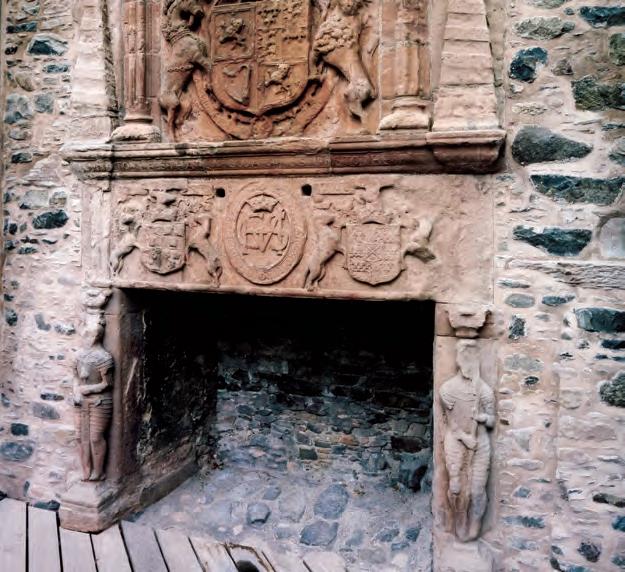
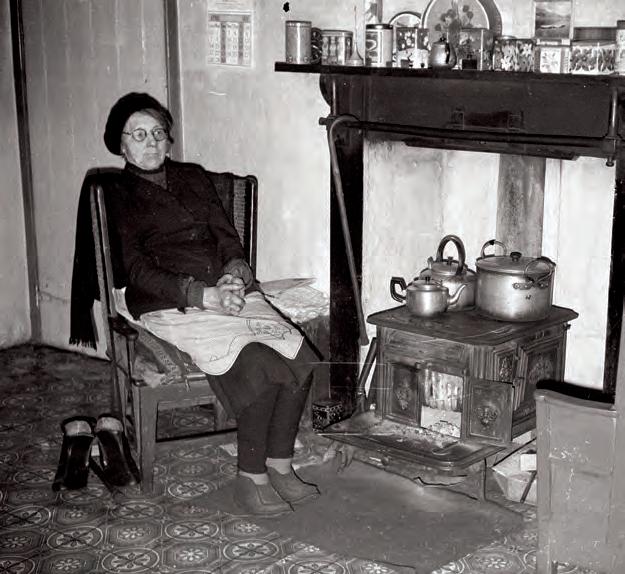
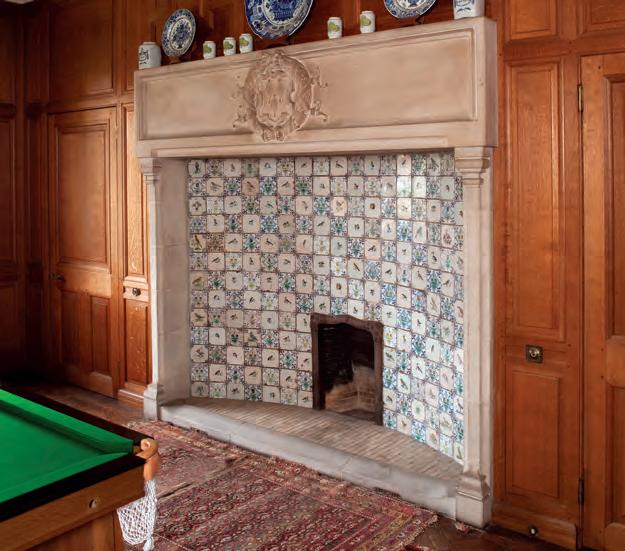
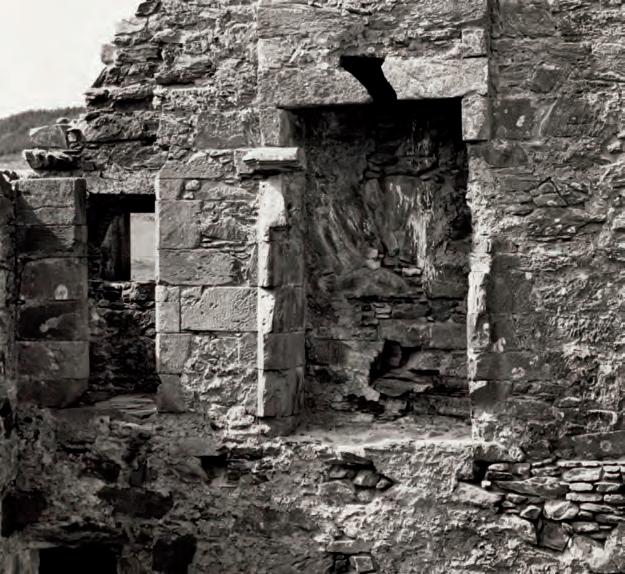
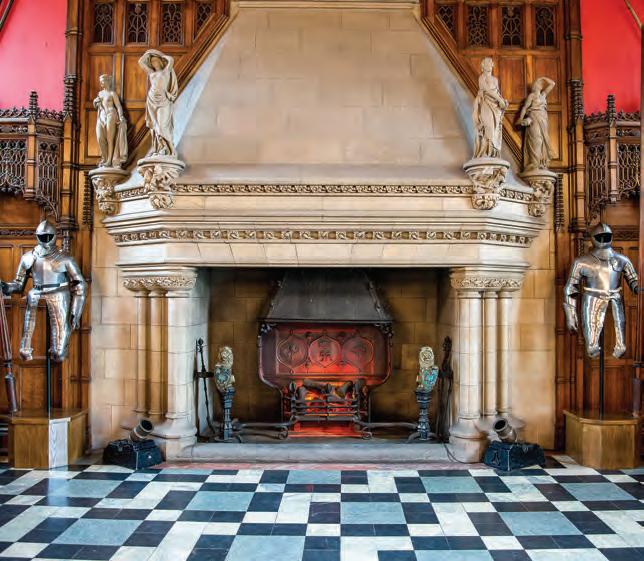
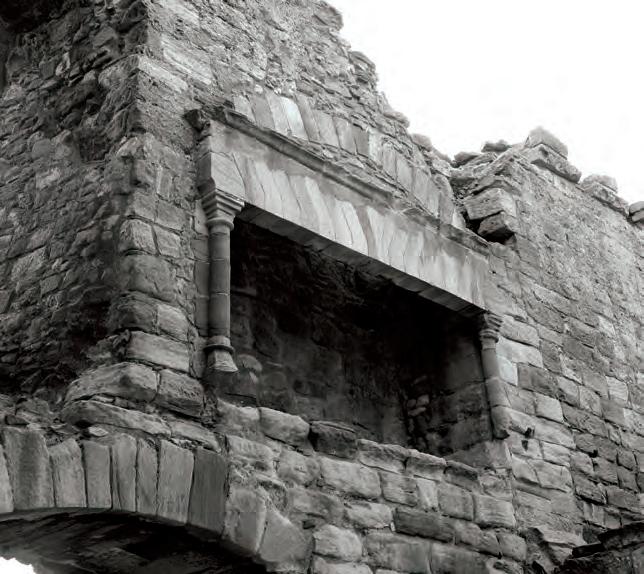
From browsing our online archive trove.scot, with over a million photographs, records and objects, to visiting properties in person, exploring how our ancestors congregated to stay warm in winter creates a link that spans millennia.
“Humans naturally make communities, so to come together in a warm, safe, lit place at a time of year when it’s cold and dark is a very universal experience,” says Nicki Scott, our Senior Cultural Significance Advisor.
“We’ve been gathering around fires for as long as humans have been alive. And especially in our climate, there’s something reassuring during the winter about the warmth and light that comes from fire.”
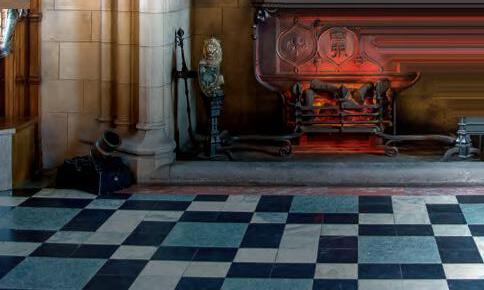
Across the millennia, humans have gathered in shared spaces for warmth, economy and displays of wealth and power. Gather round the Archives fireplace as we explore this toasty legacy within our historical records.
WORDS: KELLY APTER
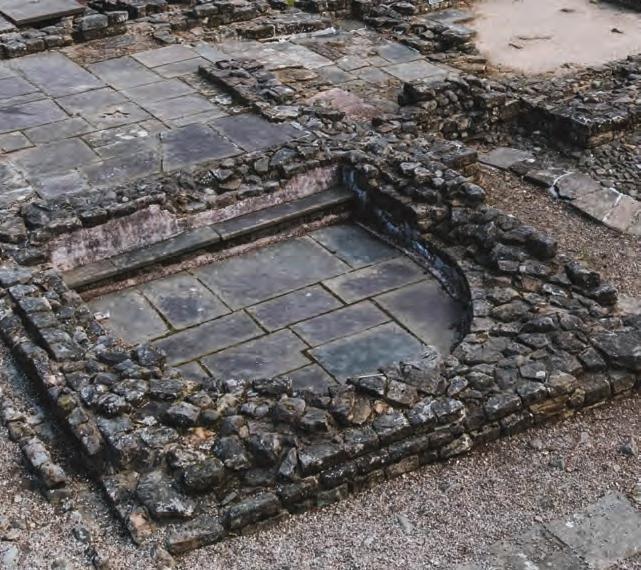
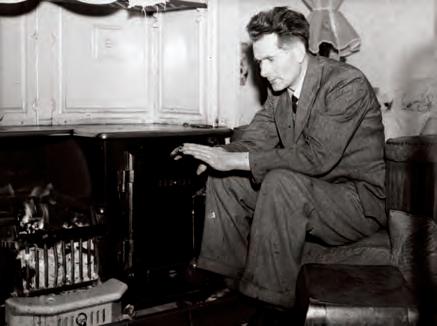
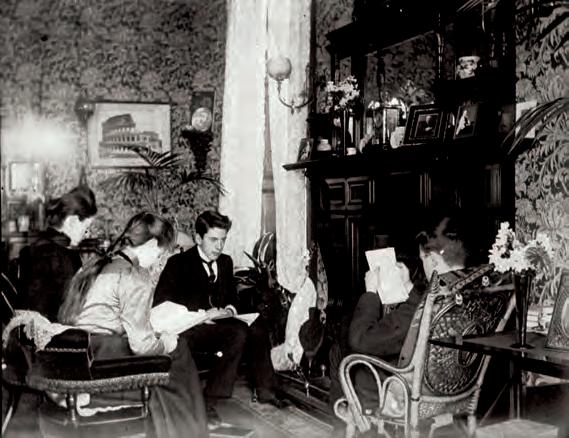
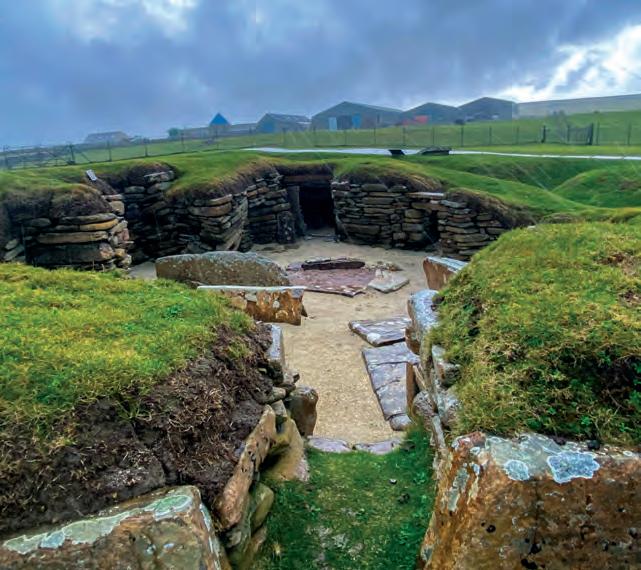
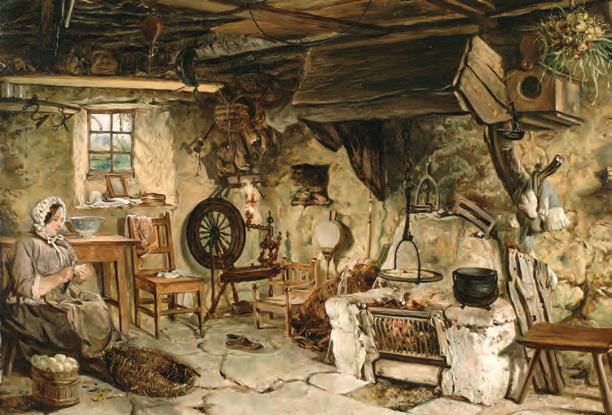
Sites such as Skara Brae in Orkney, the best-preserved Neolithic settlement in Western Europe, give us a unique insight into daily life over 4,500 years ago. Archaeological finds suggest that a central hearth in each house was used not only for cooking and heating, but as the principal source of light. In this space, box beds projected from walls on either side of the hearth (which is thought to have been constantly burning), keeping the whole family together in one room.
“It’s not like you could disappear to your own bedroom to watch television,” says Nicki, “so they were eating, telling stories, playing games, singing songs and taking part in other activities to pass the hours.”
Orkney is also home to the Broch of Gurness, at the heart of an Iron Age settlement, which demonstrates how double walls served as a form of prehistoric central heating. The space
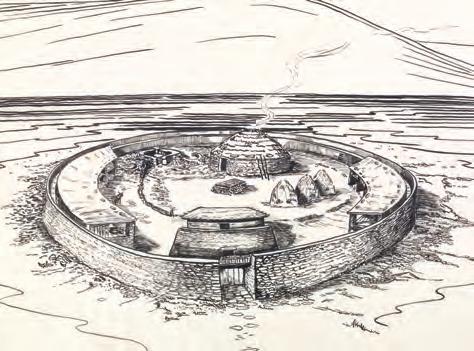
created prevented rain and snow from seeping through, while small holes in the inner wall allowed smoke from a central hearth to circulate and keep the entire structure warm. Exactly what took place inside the broch is a matter for conjecture, but a coming together of sorts seems likely, either as a metal workshop or for some form of communal ritual.
For millennia, central hearths were the main source of heat, fuelled by whichever materials people could lay their hands on.
“It was generally about burning whatever was available locally, whether that’s wood, peat, coal or animal fats such as seal and whale blubber,” explains Nicki. “And it’s only when you get to radiators in the modern era that things change. Before that it was about finding the most efficient way to burn fuel and gathering around it to make the most of the resulting heat and light.”
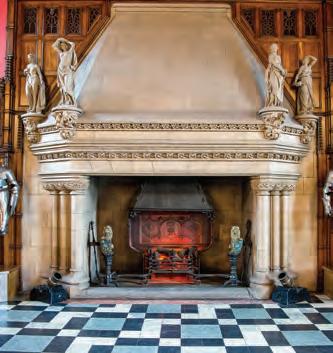
During the Scottish late medieval period, around 13th to 16th centuries, those who could afford it began to demand that the shared hearth be moved across the room, installing fireplaces, chimneys and flues –essential for buildings with multiple storeys. Tower houses at properties such as Huntly Castle, Clackmannan Tower and many more became increasingly popular, not only for increased security but to position private rooms above kitchens and halls.
“Some of the most prized rooms in medieval castles were the ones above the kitchen because they benefited from heat rising from below,” says Nicki. “Especially in large households, where kitchen fires were kept going a lot of the time. Across that period, there was also an increased desire for privacy with family and friends.
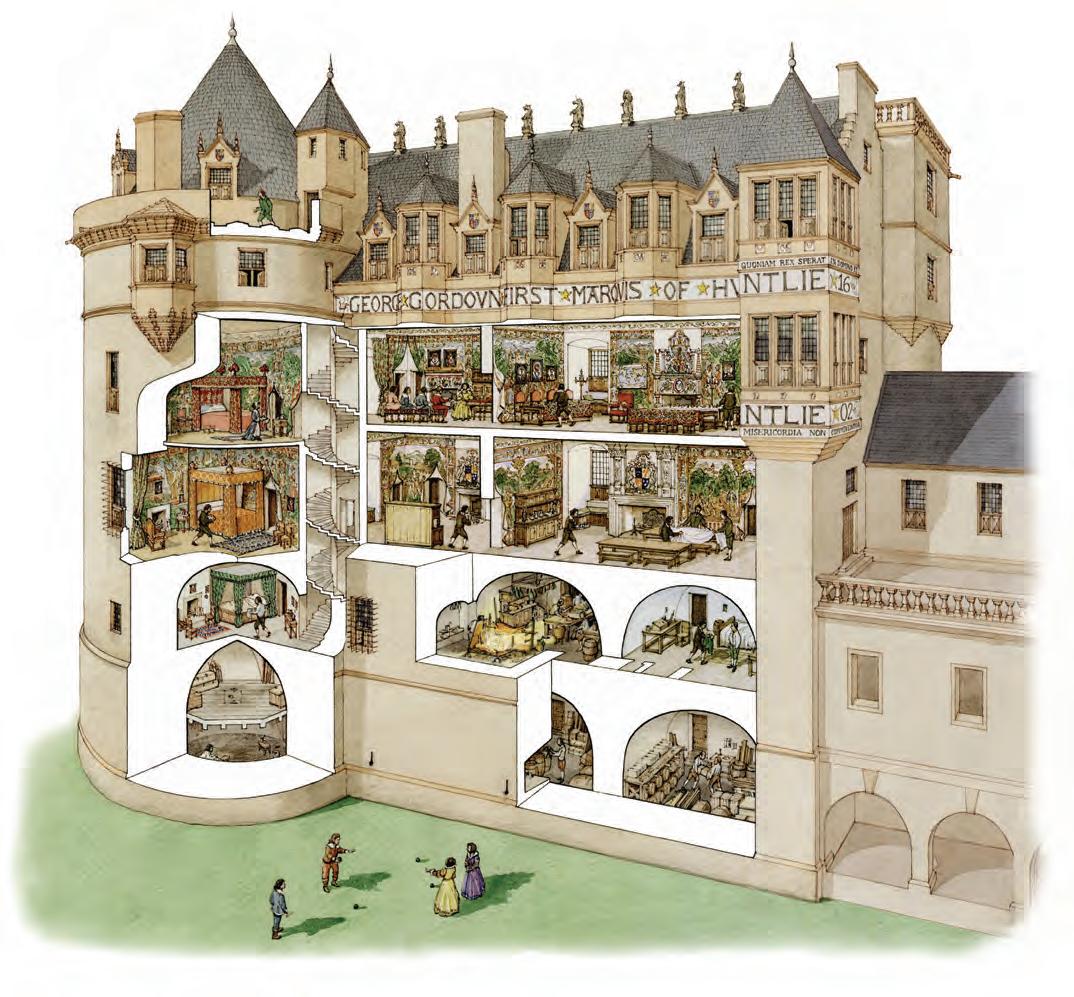
“So, the lord and lady might have two smaller rooms for their close confidants, which was easier to keep warm than trying to constantly heat a great hall. And again, here they would tell stories, play games, embroider or discuss private matters.”
Meanwhile, servants would bed down in the kitchen, and stable hands would spend the night with the animals, which was not an entirely bad deal. Animals generate a lot of heat, keeping not only themselves warm but also those around them.
“Even just standing still, their muscles and their biological processes generate warmth,” says Nicki. “So, within a fairly confined space, that heat builds up. It’s one of the reasons why, in much older buildings, the cattle were brought in at one end during the evening. And sleeping in a stable, which would often have levels just above the animals, kept you warm.”
Of course, it’s not just animals that generate heat; the coming together of people in a communal space afforded warmth as well as creating time to eat, talk and play.
Beyond the family network, we find communities of interest also bundling together to keep frostbite from their extremities – even those who had supposedly turned their back on luxuries, such as heat. The abbey buildings at Jedburgh, Inchcolm and Dryburgh each had a ‘warming room’, where the monks and other occupants
You can’t expect people, even the most dedicated monks, to go through a Scottish winter without at least some sort of fire
would break from ecclesiastical chores to take the edge off their discomfort.
“The idea of monastic living is that you give up comforts and live as basically as possible,” says Nicki. “But while those rules work very well in Mediterranean climates, they’re not necessarily that great for Northern Europe.
“So, warming rooms acknowledged that you can’t expect people, even the most dedicated monks, to go through a Scottish winter without at least some sort of fire. Even just from the point of view of the work they were expected to do, such as copying out manuscripts –you can’t do that with frozen fingers.”
Warming rooms were the only place in the entire monastic complex where a fire was allowed to be lit, and even then only at set times. They were often positioned near the dormitories, so at least a little residual heat would sneak through at bedtime.
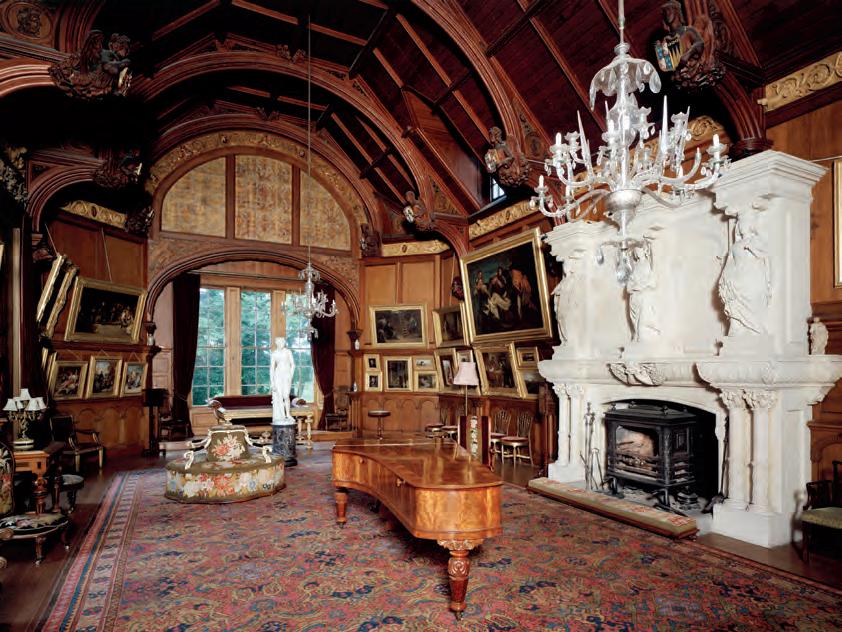
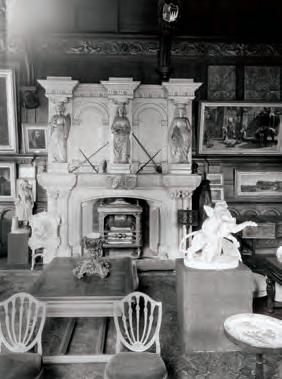
One wall in Inchcolm Abbey’s warming room has Latin words meaning “It is foolish to fear what cannot be avoided” inscribed on it – perhaps a wry observation on the necessity to head back to the freezing chapel!
1. Hospitalfield House, Angus, fireplace in the picture gallery, a fine example of 19th-century Arts and Crafts
2. The same fireplace recorded in 1956
3. Kingussie Courthouse. ground floor, the fireplace just outside the cells
4. Detail of the Hospitalfield House fireplace, showing Arts and Crafts skills deployed
Communal warmth outside the familial home can also be found at the fascinating Bearsden Bath House, sited at a point on the Antonine Wall. Bathing played a major role in Roman society, with socialising and business conducted as people moved from plunge pools to warm rooms. Bath house floors were built on columns, and hot air was directed into the space beneath to create an early form of underfloor heating.
Communal bath houses remained popular in Scotland until each household had access to its own bathroom. But looking at the beautiful goddess sculptures that have been found at Bearsden, it’s clear the Romans had loftier ideas about decor than the average public baths.
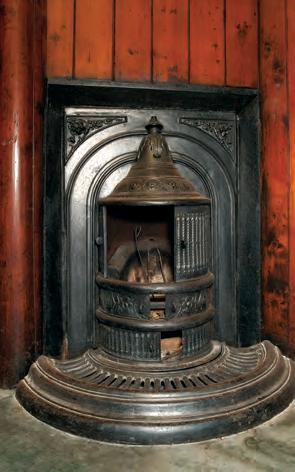
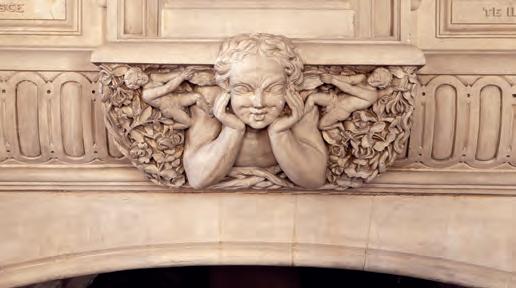
Access to heat has often been connected to wealth, and nowhere is that more obvious than with fireplaces. Once purely functional, they became important status symbols, particularly by the 18th and 19th centuries. People still gathered around them, but in more affluent homes it was as much to admire the design as to enjoy the heat.
“There are always going be people who like to show off how much money they have,” says Nicki. “And having a large fireplace, something that is beautifully carved or has an incredibly elaborate surround or backing, helps show off your status.
Our archives can help you take a closer look at objects or structures that are still there, but that you just can’t reach
“In the same way that the Great Hall fireplace at Linlithgow Palace has a finely carved surround, when you get into the Georgian, Victorian and Edwardian periods, it’s the same idea of showing wealth through your fireplace.”
The plethora of images on trove.scot illustrates the full range of fireplaces –carved from marble (Hospitalfield House) or wood (Glasgow’s Central Station), surrounded by complex tiling (Ardkinglass House) or intricate metalwork (Kingussie Courthouse), or even designed by Charles Rennie Mackintosh (Hill House). You can appreciate detail which may no longer be accessible, may not have survived or perhaps never existed in the first place.
“Our archives can help you take a closer look at objects or structures that are still there, but that you just can’t reach,” explains Archivist Joseph Waterfield. “For example, there are ‘flying fireplaces’ at some castles or houses, where the floor is no longer there – such as at Crichton Castle and
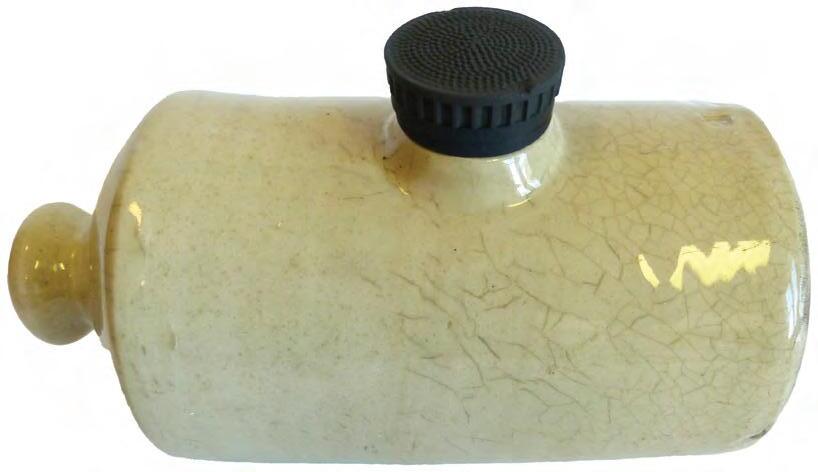
Above: Stoneware hot water bottle from The Blackhouse, Arnol, Isle of Lewis Below: Fragment of a 17th-century fireplace surround from Caerlaverock Castle
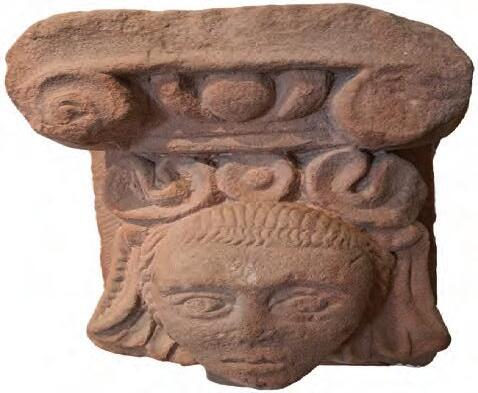
Carnasserie Castle. So, as a person on the ground, you can’t actually see the detail. But with archive material, it’s a way of getting up close. You can also see what a designer intended, which may not be what was constructed in the end because the client changed their mind or ran out of money.”
Part of the fun is looking beyond what’s in front of you. “Many of our properties are without roofs and open to the elements, and it can be hard to picture them being warm and full of life,” says Nicki. “So we like to encourage people to engage their imaginations and picture a lovely fire in the fireplace, plastered walls and wall hangings, or a central hearth and cattle lowing at the far end of the building.
“Because we humans have always been pretty ingenious at keeping comfortable, so we’ve always found ways to keep ourselves warm.”
Find more archive images of our historic sites at trove.scot
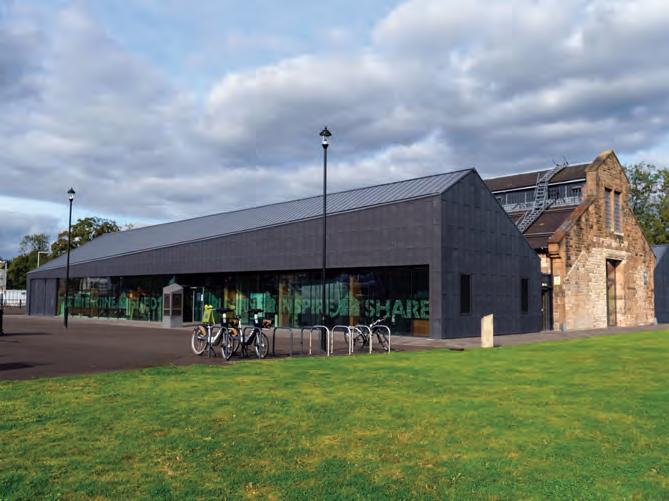
Based in Stirling, The Engine Shed can fire you up with great tips on improving energy efficiency
Since opening in 2017, our dedicated building conservation centre The Engine Shed has issued lots of free advice on how to care for traditional buildings (built pre-1919), including Properties in Care, homes and public spaces.
When it comes to staying warm in winter, many heritage buildings already have window shutters and thick masonry blocks that help keep the heat in. But if you’re keen to do more, our Guide to Energy Retrofit of Traditional Buildings details ways to improve energy efficiency while maintaining the historic fabric.
If your heritage home has fireplaces, you can also download our suite of Inform Guides, which provide advice on keeping
homes properly maintained. This includes guidance on fireplaces, domestic chimneys and flues, ventilation and fire safety management. Our Guide to Air Source Heat Pumps in Traditional Buildings has just been published.
“We want people to be healthy and safe,” says Content Officer Jennifer Farquharson.
“Our Inform Guides offer advice on how fireplaces, chimneys and flues are constructed, how they work, and how to look after them so they’re in their best functioning shape, plus what to do if you think there might be something wrong with them.
“We also encourage people to get a qualified expert out who knows how to examine your fireplace, chimney and flue and spot if there are any issues or build-up.”

ENERGY RETROFIT
Download our Guide to Energy Retrofit of Traditional Buildings at hes.scot/ energy-retrofit
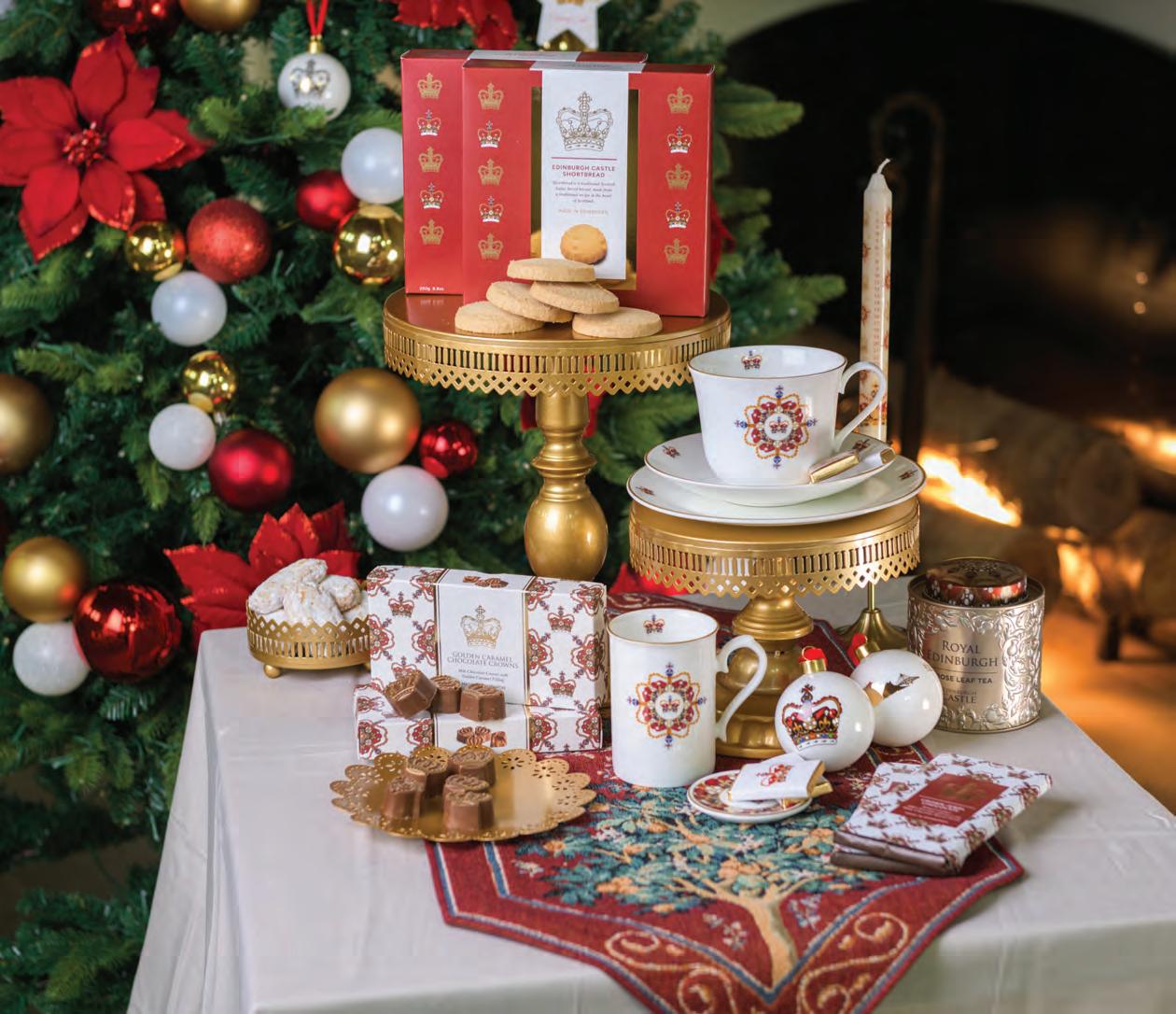
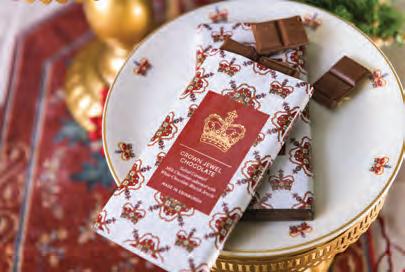
Add a little sparkle to your Christmas festivities this year with our ‘afternoon tea’ collection. Made from fine bone china, the design is inspired by the Honours of Scotland, the oldest crown jewels in Britain. Each item is made exclusively for our Edinburgh Castle Crown Gift Shop.
Add a sweet treat with our caramel-filled crown chocolates. Made by the Edinburgh-based company Quirky Chocolates, this indulgent treat will be difficult to share!
Hirundine Legacy Edition 15-year-old single malt is the second of two whiskies produced by Edinburgh, Scotland and British and Irish Lions Rugby stars, Duhan van der Merwe and Pierre Schoeman. This Speyside limited edition is crafted with patience and passion. It is matured for 15 years in a rejuvenated red wine cask, giving it a rich, deep red colour and a soft, gentle taste. Limited to just 375 bottles.
Hirundine Legacy Edition single malt, 70cl £150*
*Membership discount does not apply to alcohol






Sixofourtitlestogiftto bookwormsbigand smallthisseason
Art Deco Scotland: Design and Architecture in the Jazz Age
Bruce Peter Professorof Design History at Glasgow School of Art, Bruce Peterherecharts Art Deco’s origins and shows how Scotland’s architects and designers adopted its anti-traditional elegance. With over 400 photographs and illustrations, many from our archives, thishardbackbook spotlights iconic Scottish Art Deco structures including the Portobello Lido and the Clyde-built ship,theQueenMary.
£30
Daniel Gray
John R Hume is Scotland’s foremost expert on industrial heritage. Throughout the 1960s to the 1980s, he took more than 25,000 photographs of late-industrial and postindustrial Scotland. In this book, author Daniel Gray tells John’s story, whose images paint a portrait of Scotland’s industrial empire, its steady disintegration and legacy.
£20
who will be remembered here
Who Will Be Remembered Here: Queer Spaces in Scotland
Curated by Lewis Hetherington and CJ Mahony
Authors – including Louise Welsh, Mae Diansangu and Jeff Meek – explore the places that define their queer history. From theatres and hillsides to libraries and amusement arcades, this anthology reconsiders the built and natural environmentthrough a queer lens to uncover stories full of hope and humanity. £16.99
Mousa to Mackintosh: The Scottishness of Scottish Architecture
Frank Arneil Walker Architectand architecturalhistorian FrankArneilWalker examinesthe recognisableand recurringfeaturesin Scotland’sbuildings acrossthecenturiesto buildapictureof ‘Scottishness’inits builtheritage.This chronologicalview spansIronAgebrochs totheScottish Parliament,featuring worksbyarchitects includingCharles RennieMackintosh andRobertLorimer.
£30
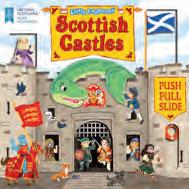
This book is packed with moving parts that let you pull up a portcullis and set off fireworks, and bright illustrations by Louise Forshaw that have been deemed “amazing” by our Publications Officer’s four-yearold daughter, Alice. Little history lovers will learn about Scotland’s stories by laying siege to Stirling Castle, spotting Nessie at Urquhart Castle and escaping from Edinburgh Castle’s dungeons.
£10.99
Don’t forget your members’ 20% discount

Above Scotland: Pocket HES
Whether it’s cities or mountains, aerial photography provides viewers with a unique perspective. Packed with wonderful contemporary and archive imagery complemented by illuminating words from writer and broadcaster James Crawford, the Above Scotland Pocket Book lets you experience the drama, romance and variety of the country’s breathtaking topographies. £9.99
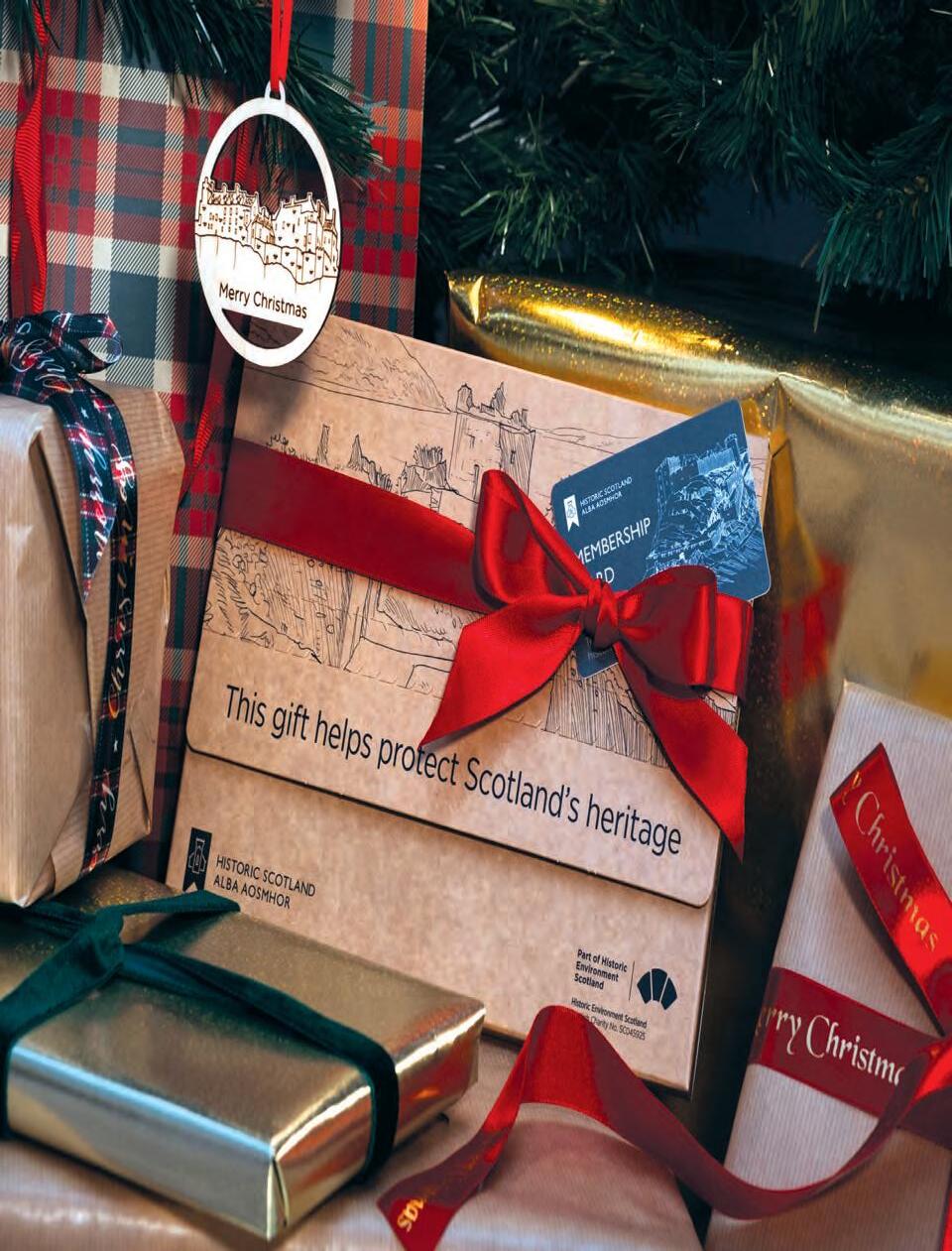


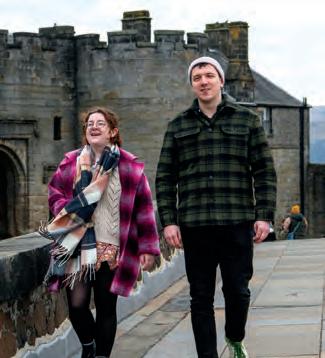

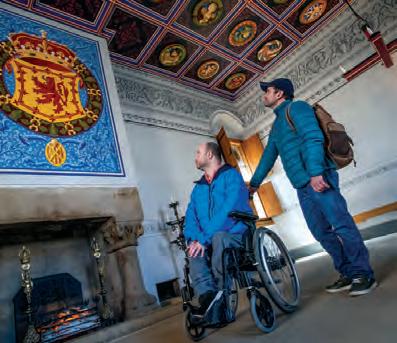

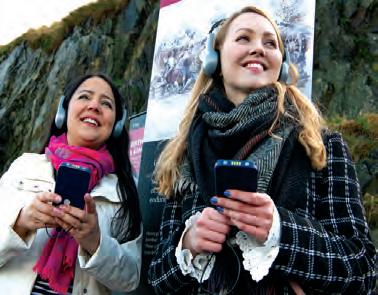

See a mighty dragon in the night sky during Castle of Light: Fire and Ice and meet the Ice Queen in her frozen realm in the Great Hall
BOOKING IN ADVANCE IS RECOMMENDED

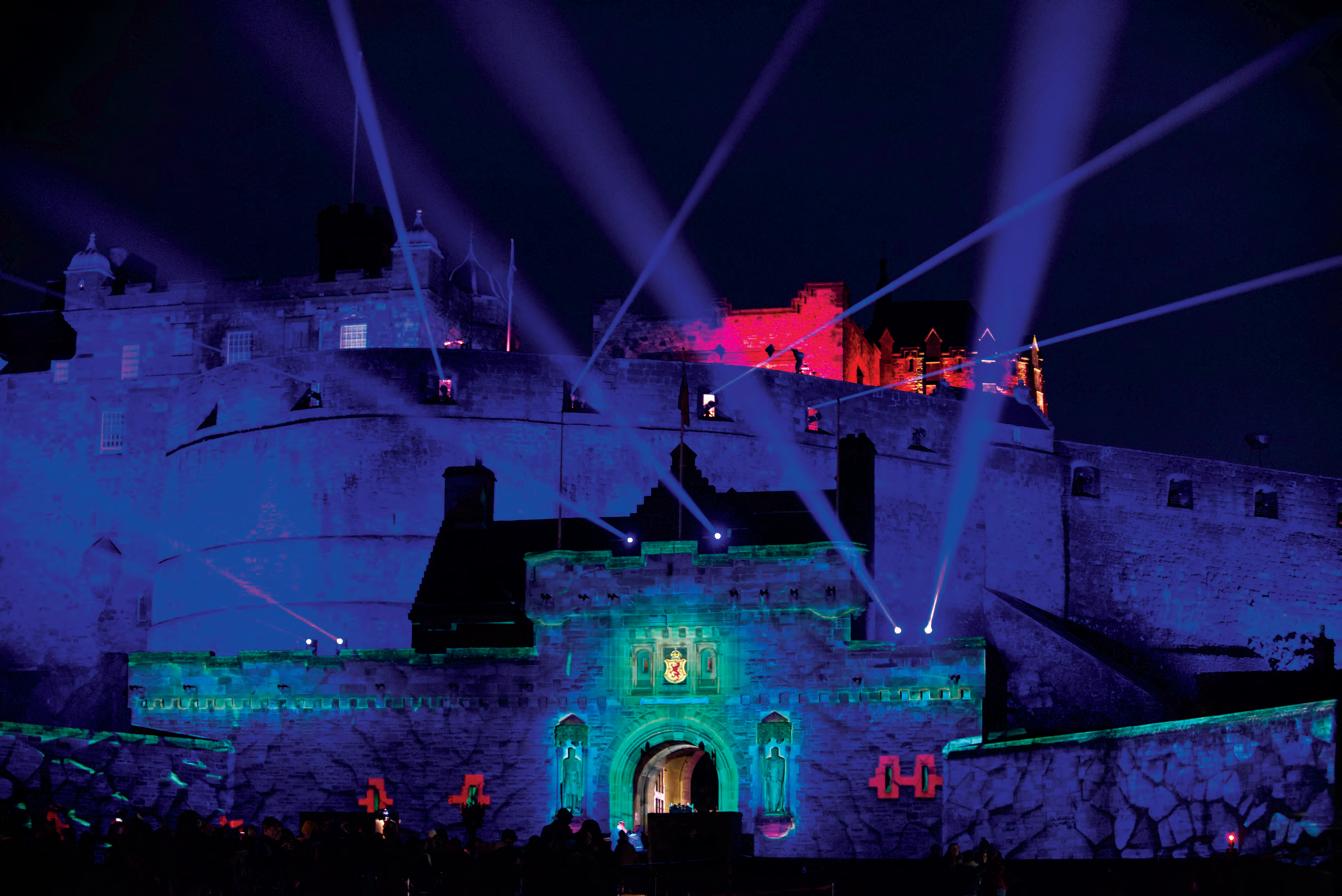
Castle of Light: Fire and Ice
EDINBURGH CASTLE
Castle of Light returns for its sixth year at Edinburgh Castle!
Prepare to be mesmerised by the forces of Fire and Ice as these two powerful elements intertwine throughout the castle to create unmissable immersive displays, interactive installations, music and wonder. Make Castle of Light part of your festive plans and enjoy the UK’s largest annual projection show.
l Various dates from Fri 21 Nov to Sun 4 Jan 2026, 4.30pm-9pm.
Quiet night Sun 7 Dec.
Tickets must be booked in advance. Members enjoy an exclusive 25% discount on tickets. Book at castleoflight.scot
Christmas Afternoon Teas
EDINBURGH CASTLE, STIRLING CASTLE
The Tearooms at Edinburgh Castle
Make Christmas 2025 special with afternoon tea in The Tearooms at Edinburgh Castle or the Great Hall at Stirling Castle and enjoy a dining experience fit for royalty. This package will include an afternoon tea for one person and castle entrance.
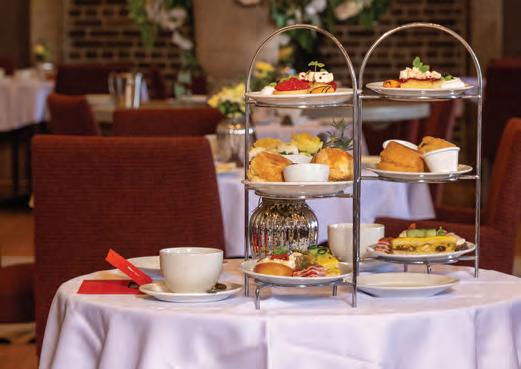
Edinburgh Afternoon Teas: l Mon 1 Dec to Sun 4 Jan 2026, sittings every 30 minutes from 11am-2.30pm. Stirling Afternoon Teas: l Sat 6 Dec, Sun 7 Dec, Fri 12 Dec, Sat 13 Dec, Sun 14 Dec, 1pm.
Christmas Shopping Fair
STIRLING CASTLE
The ever-popular Christmas Shopping Fair at Stirling Castle returns in early December. Stock up for the festive season in the splendour of Stirling Castle with stalls showcasing the very best of local Scottish brands, crafts and fine foods and drink.
l Tue 2 Dec, 6pm-9pm.
STIRLING CASTLE
Come along to our festive wreath making class with award-winning florist Victoria Bloom. Lap up the seasonal atmosphere and learn the skills to create a luxurious Christmas door decoration of your own.
l Sun 7 Dec, 11.30am & 2.30pm. 10% discount for members.
TRINITY HOUSE
Celebrate Christmas and dive into Leith’s famous maritime history and explore this elegant building which holds an outstanding collection of nautical treasures. Take part in festive activities suitable for all ages, including drop-in crafts and the chance to handle real and replica objects.
l Fri 12 Dec, 12pm-4pm.
CASTLE
Operation Moonlight brings Charles Dickens’ timeless tale of hope and redemption to Stirling Castle this festive season. Watch Ebenezer Scrooge as he discovers the true meaning of Christmas.
l Fri 19-Mon 22 Dec, 7pm start. 10% discount for members.
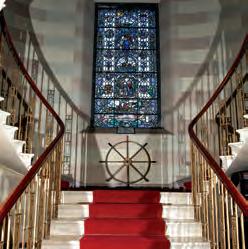
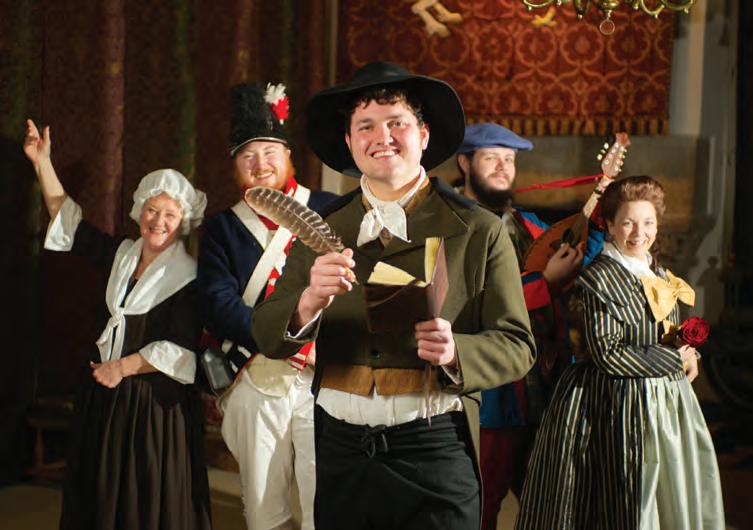
STIRLING CASTLE
In 1787 Robert Burns visited Stirling Castle, after which he returned to his hotel where he etched the now famous Stirling Lines. Join us at the castle that inspired these works to celebrate Burns and perhaps have a go at addressing the haggis.
l Sun 25 Jan 2026, 11.30am-3.30pm
STIRLING CASTLE
Bring your best friends along to Stirling Castle for a Galentine’s Day to remember. To celebrate this global holiday that celebrates women’s friendship, the Great Hall will be transported to the Regency period. Before the film screening, you can get a closer look at gowns
of the era, then kick back and relax for the perfect girls’ night out!
l Fri 13 Feb 2026, 7pm.
EDINBURGH CASTLE
Edinburgh has been the home to some of Scotland’s most influential women. Come along to the castle for this living
history event and the opportunity to meet a few of them ‘in person’.
l Sun 8 Mar 2026, 10am-4pm.
STIRLING CASTLE
Join us this International Women’s Day to meet some of Scotland’s most influential and powerful women from the past as you explore Stirling Castle.
l Sun 8 Mar 2026, 10am-4pm.
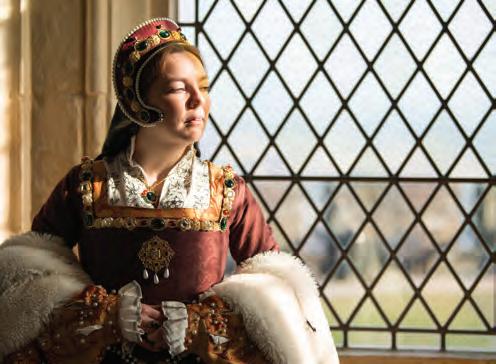
Celebrating Scottish gardens at Aberdour Castle
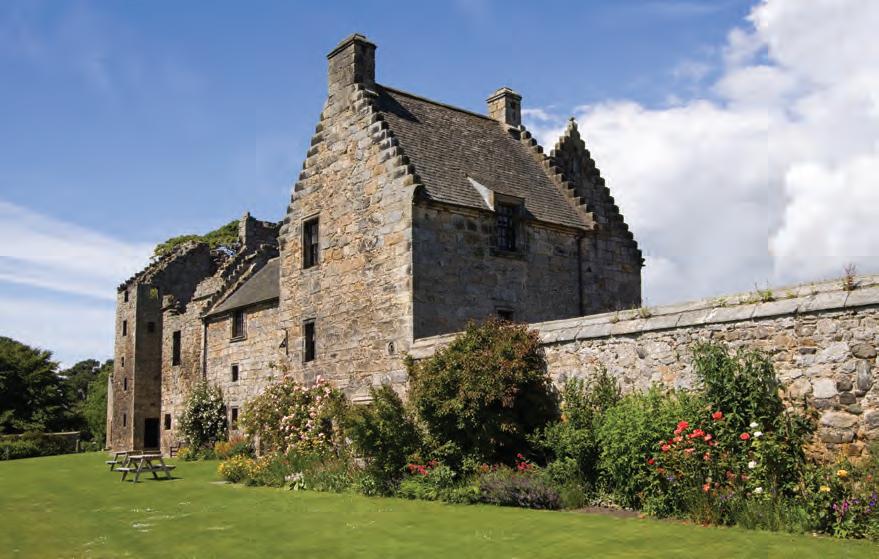
300 years of Libraries in Scotland
STIRLING CASTLE
For the 100th anniversary of the National Library of Scotland Act, Inspiring the Nation explores the history of libraries in Scotland. The exhibition looks at how libraries have developed from high society private book collections in the 17th century to vital spaces at the heart of our communities today.
l Fri 7 Nov-Mon 2 Mar 2026, during site opening hours.
Seeds of Time: Scottish Gardens: 1600 to Present Day
ABERDOUR CASTLE
Gardens and green spaces are an important part of our lives, but they can also tell us something about the past. This exhibition, using material from our archives, explores what we can learn about Scotland from our gardens, from the grand design of the aristocracy to the role of empire in revolutionising plant diversity at home, and city allotments.
l Until Mon 16 Feb 2026, during site opening hours
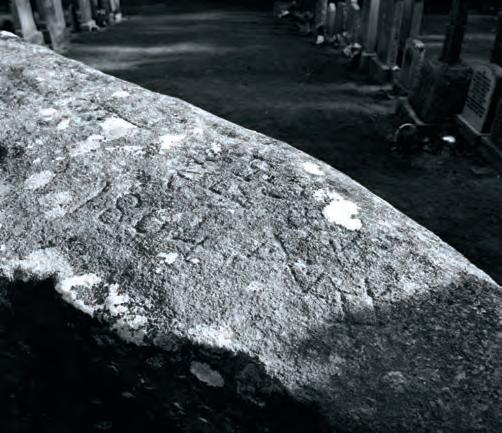
Markings of the present
meaning behind them?
BLACKNESS CASTLE
Co-curated by four community groups, Traces of Empire looks at how we can explore imperial histories, represent different voices and offer collective healing. Grounded in the lived experience of different communities, it tells the stories they are impacted by. Touching upon a breadth of themes including cotton, belonging, language, reclaiming past and future narratives, and healing, the exhibition seeks to understand some of the legacies of empire still experienced today, and explores how we might move forward together.
l Until Mon 9 Mar 2026.
FORT GEORGE
This exhibition will take you on a journey from the present day to some of the oldest markings to be found in Scotland. When you see a carved stone or a recent piece of graffiti, what do you think? Do you see the marking, the message or the
Featuring images from across Scotland’s historic environment, this exhibition will help you to explore the range of markings, the clear and hidden messages, and the intentions of the writers. It highlights stories of love, war, art and artists and everyday events that have inspired people to create lasting messages from Stranraer to Scalloway and St Abbs to Stornoway. l Fri 20 Mar-Sun 28 Jun 2026, during site opening hours.
Work in Focus: Stanley Spencer, Christ Delivered to the People DUFF HOUSE
Discover the history and symbolism of this great painting by English artist Stanley Spencer, the latest Work in Focus at Duff House, in coordination with National Galleries Scotland. ‘Christ Delivered to the People’ was painted in 1950, a year which saw Spencer seek reconciliation with his first wife, Hilda, and take out divorce proceedings against his second wife, Patricia Preece.
l Until Tue 25 Aug 2026, during site opening hours.
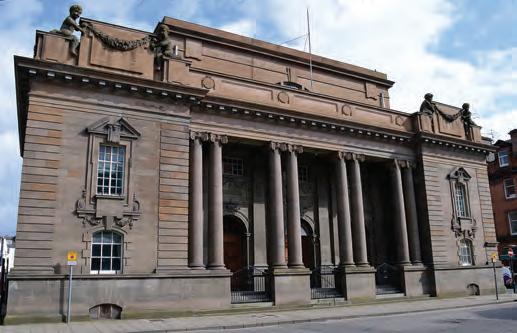
DON’T FORGET...
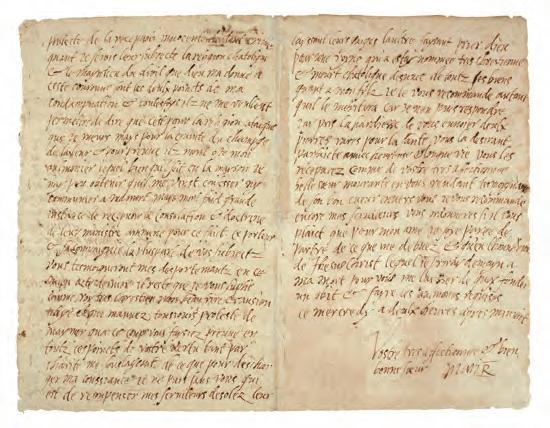
, ., /•;., "'·
ftbti{fr. _(c [,I_}: <,/t1/T ,'/l,J('((Hr.-~~r~,·o'I.\. f:',1/.'r·/<_;f;,,,rw•a·,.;(:,cc4,,l'<1r,;,:4K( .~f~, L- 'tt·')/,•¢la ,/4.t,z,,'f f':r,, (1/'J<#A 4JtKf" q crr{r ,"t1J;,,,Jt.,,r'lnf f<r (,.k!j.;-.,i11.dr,r,: ,~·A (~1.(AAJl!.th:,, c:7 uu/f<fyt 1t'":::.J1t1ke 1'1;,{[-7/f /t7'1Jf(f/J'."'1t./11'(1/Hf Ctft/~,Y ti )_',,!·t/,;,_ .,1/4, ,jc" Pki: !t )'X('l1/'fJJtptf1 11·1Ap: 1nn'r (w 0,1':('}c, tt'. /4/;x?·c 4 '/'6to'/',ZJt't( :t::. 111mf "-+vo,/ •;t~11J{J?1{~1~1_(-fxct1'/rmr-u;11; O: I; l;'f"f/?;1 l{'' ! •11/}rf~zt ,.7/f}W> '/f(t/ J1lf"1, P.ff (~ C'ff("I '9ty t',-,,:J/fl(1/1t1',t 'lrlm1rf.J1!1f.~ 'JJ!pr_'f.l.!d/Yll;t(, ih.Jf~;r~.f >1:(1fx/Jrj,(" (ni.r1/;,n~1t c .,.~ct,,,,!<' ',i. k~r'J/UJttf~_:,_;,"if!1tr/iwrc,:,:.i,;/(<'j,•>'kr,.C-:,'A.£""")f}/{flii'(,,f"'/ ,/c1w,/_;,4.v.l(, rXm~'!lt1'f :n.i,rwr f'JJ,f .n:tJt>:, ;?J 1/J{ 1h/ piA,"cft1kc; f11J-m/JJ(m "J!Jr 11~,r>i fiyte,.'fr' 7"iw_fy(.i<·~ept m, 1/i·/,k.'·:::...e-:r-rc~ ;(,,J/r<1tfu-imf('/",,(",;,-,,,,,,-/t1';''f1<j ,'J[A )>f~'f ,~)"}'V,Ji/ J-JfCf'1J;r,,·:t 'J<Jr 1/tzf-C:r--,f'f}t' H'( AA,!''"'~'f ,{,?Jqr_,r ((' 'lJr.(!-Y(t'VI>: ~l tli~•?<t10 1Yf 4Mrr/?Jt11t;,,,,,,-,' " / 1 , , -,,'.' JHPt' ');r ,rr/!nm,-_~' J:.•t1t, hm1t' «; 1i-' )1/ 11: 1 C ------------~---
l Thu 27 Nov, 4pm-5.30pm.
Ranger walks
There’s plenty of opportunity to get out and about during the winter months with our Ranger Service. Join walks and activities for all ages and abilities this season, including the Christmas Amble and Trees in Winter, both at Linlithgow Palace and Holyrood Park. l Pre-booking for some activities is advised.
Orkney Rangers
Explore the Orkney landscape and discover five millennia of history and prehistory. The Orkney Ranger Service will guide you on their free walks this autumn at the Ring of Brodgar, the Stones of Stenness and Barnhouse Village.
l No booking required for Orkney Ranger Service walks.
The Last Letter of Mary, Queen of Scots PERTH MUSEUM
On 8 February 1587, Mary, Queen of Scots wrote her final letter in the early hours before her execution at Fotheringhay Castle. Preserved with care by the National Library of Scotland, this letter will be displayed in a special exhibition at Perth Museum to mark the library’s 100th anniversary. Join our expert Dr Nicki Scott as she explores the woman, the queen and the myth that was Mary, Queen of Scots, and the connections that she had to many of the castles we look after today. l Fri 30 Jan 2026, 10.30am-11.30am, 1pm-2pm, 3pm-4pm.
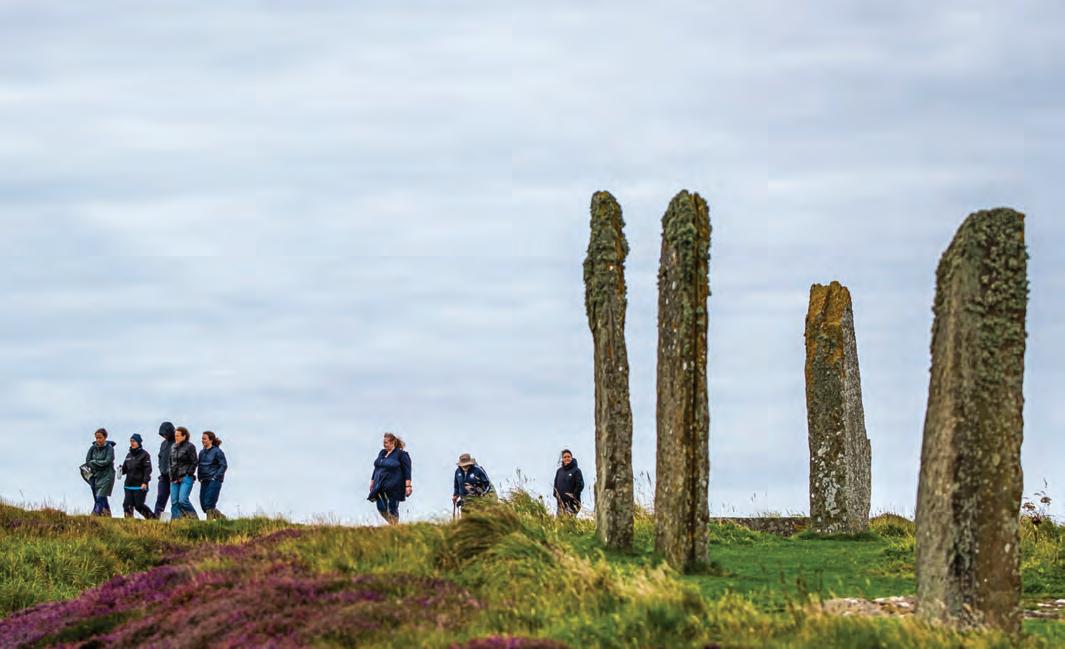
Join the Rangers for a ramble around the Ring of Brodgar, Orkney
Find images of Lumberjills and much more at trove.scot
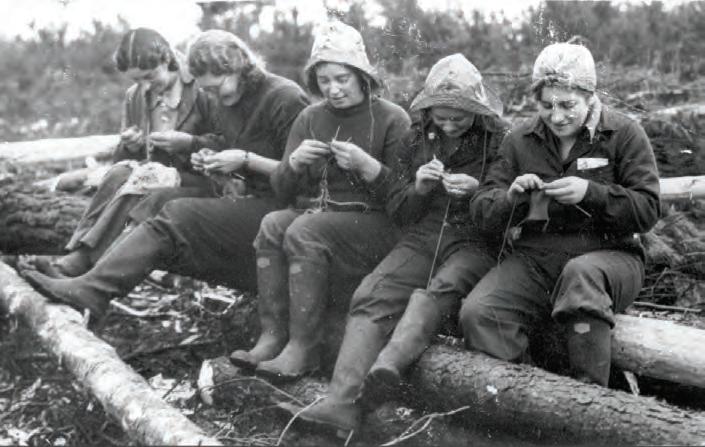
These trainees pose with their axes before getting ready to work. At the training centres, women did exercises to improve their strength.
While women continue to be under-represented in forestry in Scotland and the UK, during the Second World War, armies of women volunteers provided timber for the war effort while men were fighting overseas.
The Women’s Timber Corps, also known as ‘Lumberjills’, were a sister organisation of the Women’s Land Army, or ‘Land Girls’, who worked long hours for low pay to keep farms running and
the nation fed. The Lumberjills felled trees and ran sawmills, providing sawn timber vital for telecommunications, railways, coal mines and beach defences.
A working day in the woods began at 8am and ended at 5pm. With clothing rationed, it was important to ‘make do and mend’. Leaflets and classes explained how to unravel an old jumper and knit a new one. Women in uniform, including the Land Girls and Lumberjills, were given fewer clothing coupons to avoid
any unfair advantage. But given that forestry work was outdoors and through freezing winters, the women needed all the warm clothes they could get.
The Lumberjills were disbanded in 1946, but the Land Girls continued to work until 1950 due to ongoing food shortages. Both had followed in the footsteps of women’s voluntary services founded during the First World War. Yet their efforts weren’t officially recognised by the UK government until December 2007.
Steeped in history, Fingal Hotel in Edinburgh is a ship with a story to tell. Luxury cabins, seasonal menus and a first class crew. Step aboard, stay awhile.

Your favourite Scottish porridge oats and oatmeal now available in recyclable paper bags 9rown, milled and packed in 8cotland