


Upperclassmen face inevitable burnout after years of hardwork, but students can use stress as a cataylst for growth
by Isabella Nguyen
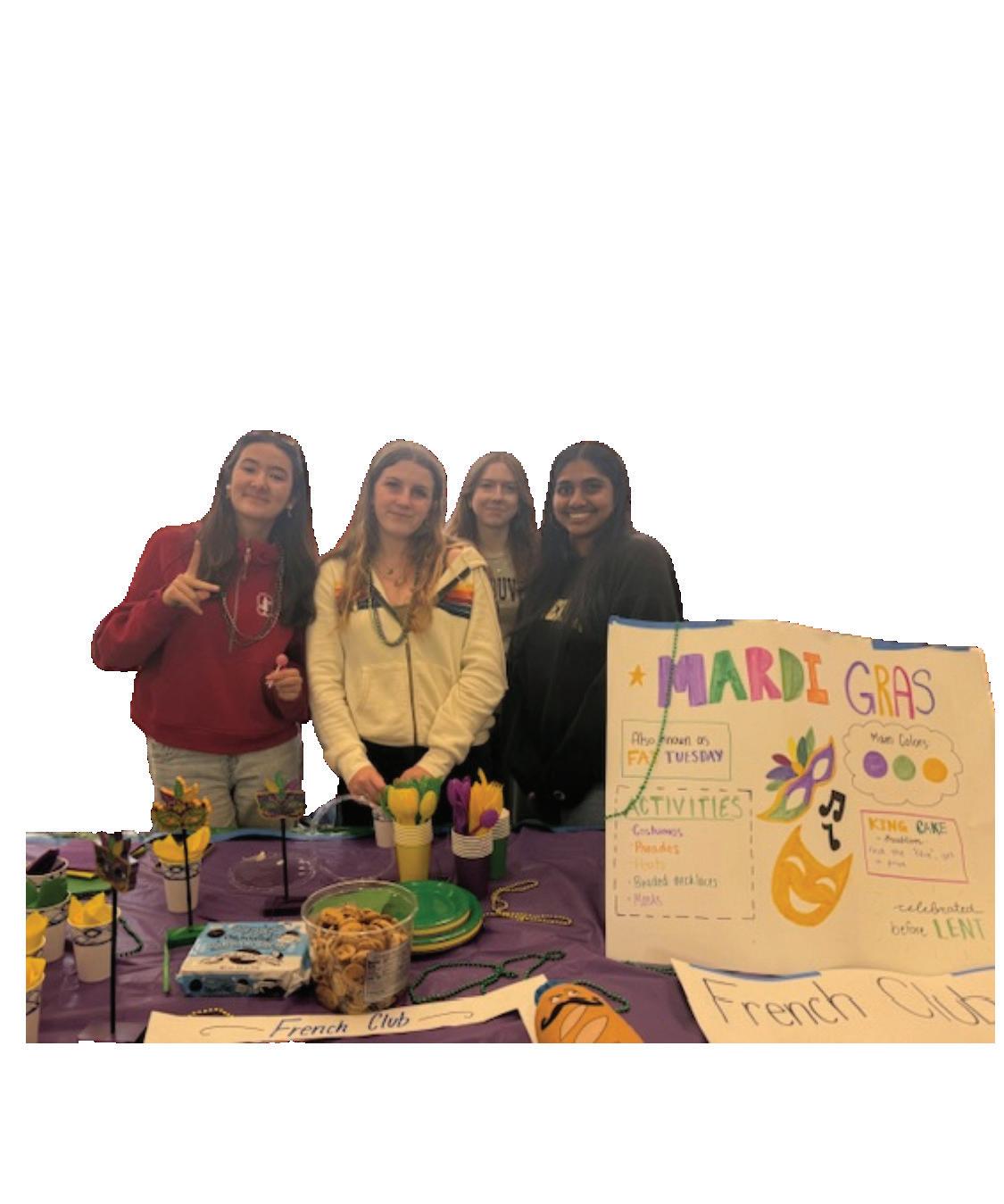
Despite the gloomy weather creeping up on Redondo Beach, the RUHS library buzzed with energy as dozens of students crowded around an assortment of purple, green and gold tables while enjoying music, food and learning about different cultures. Spanish Honors Society, the Brazilian Culture Club and French Honors Society collaborated to set up the Mardi Gras event, otherwise known as "Fat Tuesday," in the library on Jan. 17 in celebration of the final day before Lent.
“[Mardi Gras] originally started in Europe in Italy and France,” senior Mia Higuchi, president of Spanish Honors Society, said. “Back then, they would use masks to cover their social class so there would be people of lower and higher social classes mingling during the parties. Today, it’s celebrated in a lot of different places like New Orleans.”
Mardi Gras celebrates a unique combination of cultures such as African, Latino, French and more. One of Higuchi’s favorite parts of the event was celebrating different cultures that, according to her, don’t get enough recognition.
“I love planning events like these, where the whole school is invited because we all get to celebrate together and participate in these traditions,” Higuchi said. “We’re all united and we bring together and create this diverse community.”
The setup of Mardi Gras was a work in progress since December. Each club put in the effort to make the event possible, join-
ing forces to decorate the library.
“Each of the different clubs had their own section to set up in. In the French Honors Society, we brought posters from
said. “A lot of people were helping out. I know from our club, we had a lot of people volunteer to help out at our booth and it was fun. We worked on making masks, we made paper chains and we educated the people in our club about the event leading
editors-in-chief
Daniella Gross
Claudia Turner
Ava Anzivino
Priya Ramcharan
digital director
Valentina Masoni
news editors
Leyla Evenson
Carly Jacecko
Overall, the event had a “great turnout” of people. Although Higuchi and Jamrog will have graduated by next year, they both hope that there will be another Mardi Gras festival organized in the future and know the importance of honoring different cul-
“It’s important that we celebrate events and parties that are part of other cultures because it just lets us branch out and discover how other cultures celebrate throughout the year,” Shapiro said. “We don’t always see that in our own daily life.”
by Payton Rothluebbers
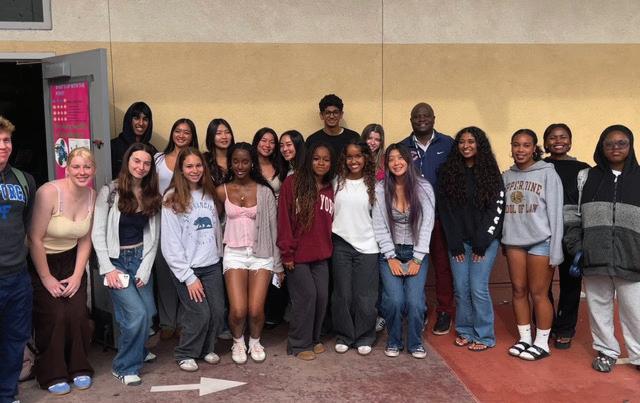
The smell of pizza wafts across the classroom as students listen to Principal Marvin Brown’s personal experience as a Black leader in education, the challenges he faced in becoming one and the effects of representation during his guest speech for Black Student Union (BSU), one of the multiple events BSU held in honor of Black History Month.
Sophomore Tahlia McKenzie, a BSU member who attended the event, finds the club “unifying” and “educational.”
“BSU helps me connect with people of color around the school. Even though we have a lot of students, there aren’t many people of color on campus, so having a place to connect with each other is super important. I love having that opportunity through BSU,” McKenzie said.
Vice President of BSU, junior Brooklyn Shell, finds herself continuing to learn and grow as a leader through the opportunities BSU offers her.
to participate in BSU. Although Brown is in a position of authority now, his rise to leadership was shaped by the challenges he overcame regarding his identity.
“It was good [to feel] that I could relate to our own principal, who is at such a high level in our school. I’m also the only Black kid in a couple of my classes now, and I relate to feeling like I’m sometimes looked at
stand out and that being a good example, a leader and a helper is possible for Black people, since we don’t have many examples of Black leaders [in education].”
In addition to resonating with the message of Brown’s speech, his words reminded students that they are bigger than the challenges that they face.
“I’ve been able to talk with different Black students and staff members on campus and learn from their experiences. BSU helps me further my own knowledge of African-American culture and achievements so I can share that with others,” Shell said. Brown spoke about his experiences leading up to acquiring his title as principal. In the past, Brown led the district’s Race and Equity Committee and continues
a different way or that I stand out,” Shell said. “Seeing how he was able to persevere and find his way in the community inspired me and showed me that I can really achieve whatever despite judgment or challenges.”
During the event, Brown communicated that he is “comfortable with who [he is] with being different,” a message meant to inspire students in the crowd.
“Mr. Brown is a great principal and a really great role model,” McKenzie said. “To me, his message was that it’s okay to
“It’s motivating for kids to hear that even if we feel like we’re being shown prejudice in our own school or community, all that matters is you and your commitment to achieving whatever you want to achieve despite your skin color, and how that makes different people feel about you shouldn’t impact how you go about your life,” Shell said.
BSU welcomes students to attend meetings and future events where they can engage in communal discussions and listen to Black leaders like Brown share their experiences.
“Everyone is welcome at BSU,” Shell said. “We try to make a community where all the African-American and Black students can feel welcomed and feel like they have a place at our school where it’s safe to talk about their unique experiences.”
features editors
Aashka Bhuptani
Sanaya Bhatt
opinion editors
Payton Rothluebbers
Jayla Dorbor
entertainment editors
Fi Borgese
Emery Min
sports editors
Sophie Rebbeck
Sam Schwartz
writing & copy editors
Emery Min
Deeksha Prasad
Samantha Kim
online editors
Hayden McMahon
Isabella Nguyen
Kayli Mai
Kate Lanzdorf
Allison Sutton
Francisco Villegas
Marlena Lipan
Kate Brucia
Kaitlyn Chang
adviser
Kerri Eastham
staff writers
Violette Alshin
Declan Williams
Coco Yamane
Willamena Hod-
son
Amelie Kircher
Ryan Chamides
Martina Parra-
Malandrino
Mahro Siddiqi
Reya Conte
Landen Gould
Madelyn Bain
Brooklyn Hesse
Katelyn Min
Adelyne Cai
Stella Sato
Gala DeSanto
photographers
Robert Packard
Grace Tayag
Kevin Phung
Finn Williams
Amanda Harrison
Lorelai Land
Ignacio Perez
Oliver Cody
Rowyn Salazar
Andrew Diette
Sophie Farias
Mishka Shibata
Connor Brodeur
Issey Kubota
Kacie Brincat
Ayla Rodgers
Safi Hamilton-Torres
Haruto Kuroda
Eliza Prangnell
Julia Bradin
Baran Taghvaei
Francesca Masoni
Sophia Riddle
Martina Parra- Malandrino
illustrators
Claudia Turner
Madelyn Bain
by Aashka Bhuptani
Through hosting RUHS’ first ever Political Action Night and organizing student political involvement on campus, the Young Democrats Club is encouraging more students to participate in local and global political conversations. Junior Olivia Kelly, Vice President of RUHS’ Young Democrats Club and Secretary of Beach Cities Young Democrats, got involved with the program in late November of her sophomore year.
“Our president, Kevin Leedy, made the Beach Cities chapter [of Young Democrats] after Trump became President. When I found out about it, I joined because I wanted to do something in my community [...] and become someone that was able to actually take action,” Kelly said.
The club was created to give students a way to respond to political changes and feel more involved on campus. According to Kelly, members have looked for more ways to address global changes and take action on matters that they care about.
“We were going to do a walkout at
RUHS [on Feb. 20]. We talked to [Marvin] Brown about it and we realized that a lot of students were probably not going to do the walkout at Redondo, just because their absences weren't going to be excused, and so we announced [Political Action Night] as our alternative,” Kelly said.
The club’s first major event of this school year involved a walkout on campus on Jan. 30. While their second attempt at a school-wide protest didn’t take place due to attendance policies, members began exploring other options. They decided on an after-school event dedicated to community collaboration and political activism.
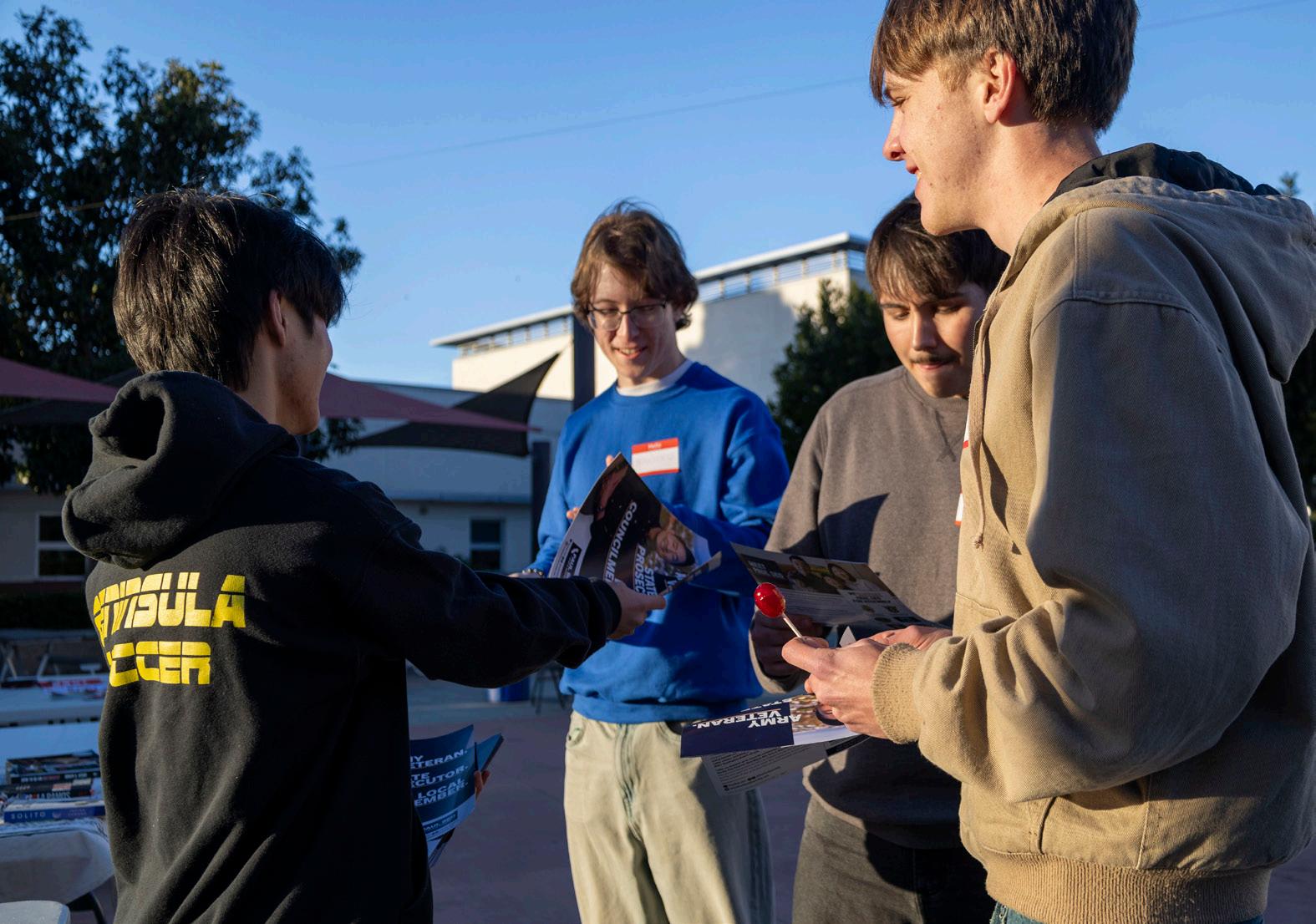
“With the event we hosted on Feb. 20 after school, a lot of people [like Sara Deen] who were running for local office and positions came on our campus and made themselves available to the students who attended,” Kelly said.
While the students lead many of the initiatives, Sergio Quintero Sanchez, the club’s advisor, also plays an important role. In addition to hosting events, the club meets regularly: once every week on Wednes-
days in his classroom. Quintero said that his goal is to make sure these conversations remain respectful and productive.
“As the advisor, my role is to provide my classroom as a space for [the Young Democrats’] weekly meetings. I try my best to listen to the kinds of conversations they’re having while ensuring that the conversations are meaningful and not infringing on anybody’s identities,” Quintero said.
According to Quintero, the organization is meant to help students think critically and stay engaged in their communities. He appreciates the club’s goal to motivate students to be aware of things that are occurring within local and global politics.

isfying and motivating for us,” Kelly said.
“Oftentimes, when we think of political stances and belief systems, we think of something global, but, in my opinion, there’s way more individual perspectives that we can be taking,” Quintero said.
Beyond campus activism and school events, the Young Democrats’ influence began to extend beyond RUHS with the walkout on Feb. 20. According to Kelly, it was encouraging to see other campuses become involved as well.
“It felt really good to see something that we organized spread beyond our own school to other campuses. Watching our impact across the South Bay and all the beach cities was really sat-
For Quintero, the most meaningful part of advising the club has been watching students take initiative. Seeing young people engage in important conversations gives him hope for the future. According to him, it’s an honor to be involved with the club and build a comfortable space for students to talk about things on their own.
“The most rewarding part of being advisor to the Young Democrats is to see kids engaging in those critical conversations and to observe a community of young people who care about things that are going on with our world,” Quintero said.
Students discuss how they cope with a lack of motivation and burnout
by Sophie Riddle

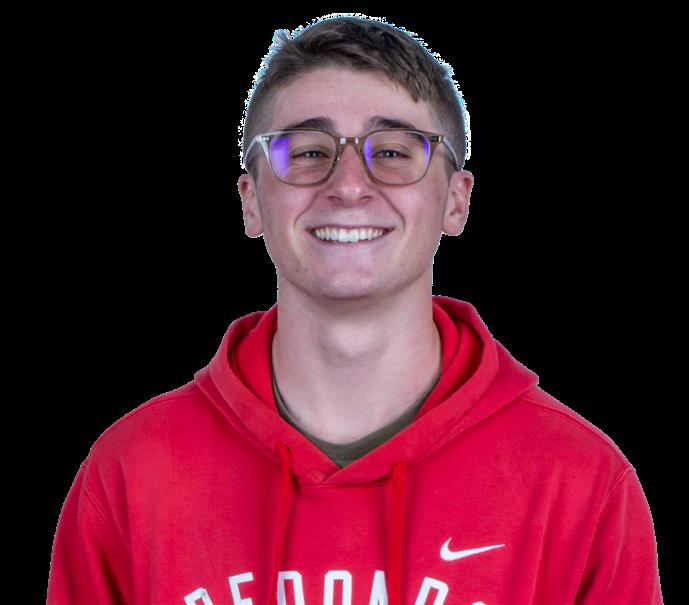


“I always take a day to myself. Sitting in bed
for
ally good
an hour without technology
is re-
to just use your
own
thoughts to
foster what
ideas you have. Another good way is staying true to your inspirations. For activities like music or sports,
it's good to have some sort of goal or some sort of person that you live up to. If you have a figure that you have similar goals to, it helps a lot."
-Berlin Cura, freshman
“I usually like to listen to music. I'll drive home and just listen to some good music, or I'll go on a bike ride or for a walk to get out in nature.”
-Liam Borgic, sophomore
“When I get too overwhelmed, I split my work out into what's manageable and what's due first. I get what I need to do that's due soon first, and after that I take it one day at a time so it doesn't seem overwhelming.
-Isabella Arzuaga, junior
“‘Find something that you're passionate about that can keep you going. I think senior assassin for seniors was a really good idea because everyone's super out of it now, and they want to stop coming to school, but now there's a reason to come to school and be active with your class."
-Charlotte Watts, senior
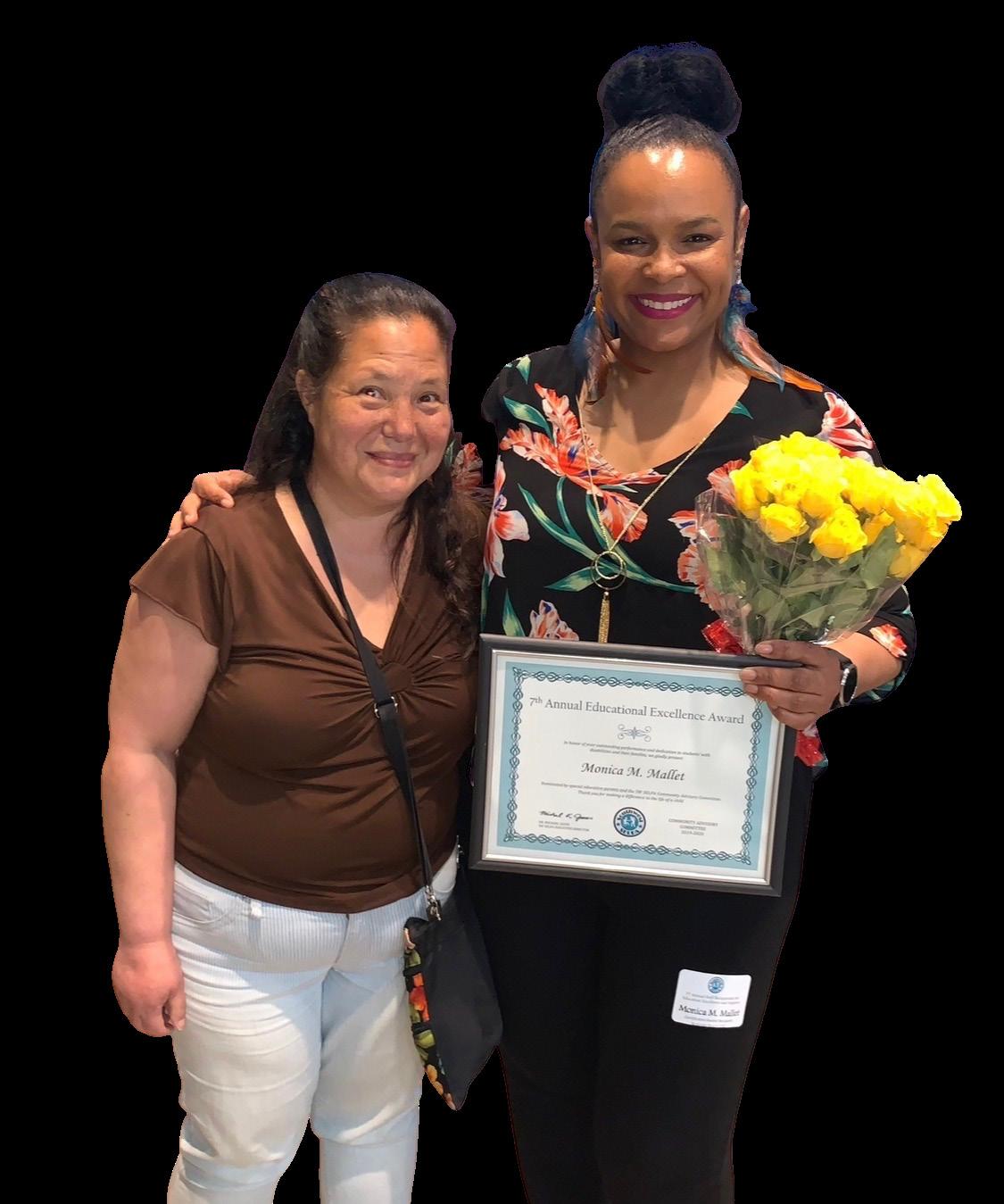

side-by-side with Laman. Brown remembers her selflessness and her ability to focus on everybody else's priorities before her own, no matter what was going on in
“Every single time she saw me, she always said hello, she always had a smile. She often asked how I was doing, how my day was going. She was a positive person and had the same positivity, attitude and support with the kids. The same way she made adults feel, she made students feel,” Brown
No matter what she was confronted with, such as struggle with students, at home, or with her own personal battles, Laman was always the teacher her students could lean on for support.
“[Laman] worked with a student in my class who needed a lot of support, and it was a difficult case. The way she cared for that student, helping him with all of his needs, helping him to be social and to be as independent as possible with his academics, it was truly something to see,” Mallet said. “She always knew what her students needed and exactly what to provide them with in every situation.” Laman has left the Sea Hawks and faculty with wisdom and kindness. Her ability to listen and her acts of care will live on through her
“[Laman] was a special woman and a special teacher,” Brown said. “If we, if everybody, could just have a little bit of [Laman] in them, the world would be a better
Winning gold is second nature to freshman Estella Hoar,who is a level seven gymnast and has been doing gymnastics for about nine years. Her participation in the activity ranges from placing in high school tournaments, to competing for state level competitions where she has leveled silver and gold, qualifying for regionals and the state team.
“For the different levels it depends on what programs you're in, but I started in Excel, which goes from level bronze, silver gold, platinum, diamond and then sapphire, which is the hardest. And I then moved to developmental program, and that goes from level two through ten,” Hoar said.
All of her accomplishments do not come to her naturally, however. Gymnastics has taught Hoar discipline, respect, patience, and kindness. Hoar’s friend, junior Chantelle Ross, has seen how gymnastics has helped Hoar and herself grow as individuals.
“It teaches us to keep going, obviously, and it takes a lot of determination to keep with the sport through many years, and reaching a high level, because most people just quit once you get to level eight because
it's just a lot of mental, strain, and physical strain. So I think that has really shaped us in how we are,” Ross said.
With all that hard work that she has put
in over the years, she wants to recognize her goals that she has set for herself along with what gymnastics has actually done for her in her personal life. For the many years
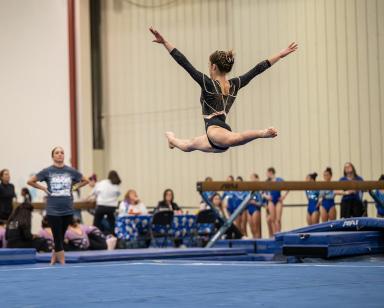
she has created a special bond with her teammates and coaches. She also hopes to be successful with gymnastics by the time she goes to college.
“I would love to possibly go to college for it, but mainly I want to be successful. I've made a lot of friends and memories which I'm very grateful for. I've also had a lot of fun experiences and kind of it's also changed the way that I see things and how I think,” Hoar said.
Hoar has faced many challanges in her career, however she has also had to overcome those challenges. Gymnastics has taught her to keep going and push through even when she feels like giving up and times are hard.
“I think of where I've come from. Obviously the sport is very difficult and there are a lot of times where I get upset or frustrated with myself or certain skills,” Hoar said. “But I've always looked at how far I've come and how before there's been other challenging things that have happened and how I've been able to push through that.”
Emily Hooper works at Premiere Dental Group and gains exposure to the medical field, which she hopes to pursue
by Reya Conte
For senior Emily Hooper, a trip to the dentist’s office doesn’t mean a checkup or teeth cleaning. When she walks in the doors of Premiere Dental Group, she sees her goals in the medical field ahead of her, and how this job is helping her get there.
Hooper’s mother, Dr. Helen Hooper, is one of the two dentists at Premiere Dental Group. With Hooper having worked at the front desk since October, she has already contributed a lot to the team.
“[Emily] brings great energy to the office, and she really assists the office manager by doing a lot of the extra [tasks], she checks the patients in and out, and she does a lot of the work that allows the front office manager to do other tasks,” Dr. Helen Hooper said. “It is really great that she can help so much.”
“ric place, I was not in the front, I was in the back with people who were actually working with the kids,” Hooper said.
Hooper’s interest in the medical field started with the personal experiences she had in it well before she started volunteering at Kids In Motion or working at Premiere Dental Group. Born with Beckwith-Wiedemann Syndrome, a one in 11,000 congenital growth disorder, Hooper was exposed to the medicine at an early age.
For some people the dentist is really scary. To be able to cater to what [people's] needs are, whether they need a happy smile or someone to uplift their day or someone to calm their nerves, it's fun to practice being that person.
EMILY HOOPER SENIOR
Hooper’s work at Premiere Dental Group has transferred her into a new field of medical care than what she’s experienced in the past. Over the last two summers, she volunteered at Kids In Motion, an office for pediatric occupational therapy, physical therapy and speech therapy. The two positions are quite different from each other.
“It's very different working with kids than it is with adults, because at the pediat-
“When I was growing up, I had a lot of health problems, which led me to spend a lot of time around health care professionals, and that inspired me to become a health professional,” Hooper said.
After seeing her at the dental job over the last several months, Dr. Helen Hooper is sure her daughter has found the right match for an occupation.
“Taking care of and helping people is definitely in [Emily’s] nature. It comes naturally. [When] she started volunteering at [Kids In Motion], she got a lot of experience working with, in particular, occupational therapists. She really enjoyed seeing the progress of the kids throughout the summer when she was volunteering,” Dr. Hooper said. “Going from a kid who couldn't walk in the beginning of summer to then being able to see them walk was amazing that they made a difference in this person's life. And so that kind
of clicked with her.”
as a career
Growing up, Hooper wanted to go into physical therapy, but once she started volunteering at Kids In Motion, her focus shifted to occupational therapy. She found that it fit for her, and is hoping to use the experience she has gotten from her job in the office in the future.
“I think that working at my mom's office is really good exposure for a glimpse into the medical field because as a kid, I heard my parents talk about insurance all the time, and how limiting it is, especially in America. What you can do depends on what your insurance covers, and if it doesn't cover it, it's out of pocket. It's really expensive,” Hooper said, “So, I think having the understanding of what patients can afford or how they're paying for things will be helpful for me in the future.”
Hooper not only observes the process of patients paying, but is often guiding them through their next steps.
ting him,” Hooper said, “and when I signed it off as me, he was so excited.”
The office has also become more organized because of the new updates. Between sorting through patients’ physical folders and trying to find the ones that have been misplaced, keeping information on the computer can be a big help.
“It's a lot easier when anyone can access [the information] at any time and anywhere, where having a paper chart is harder. It's harder to share, harder to keep track of. We have lots of patients, so if a chart gets filed wrong and then lost, it's an ordeal where you're like, ‘who has the chart?,’ ‘Did you find the chart?’” Hooper said.
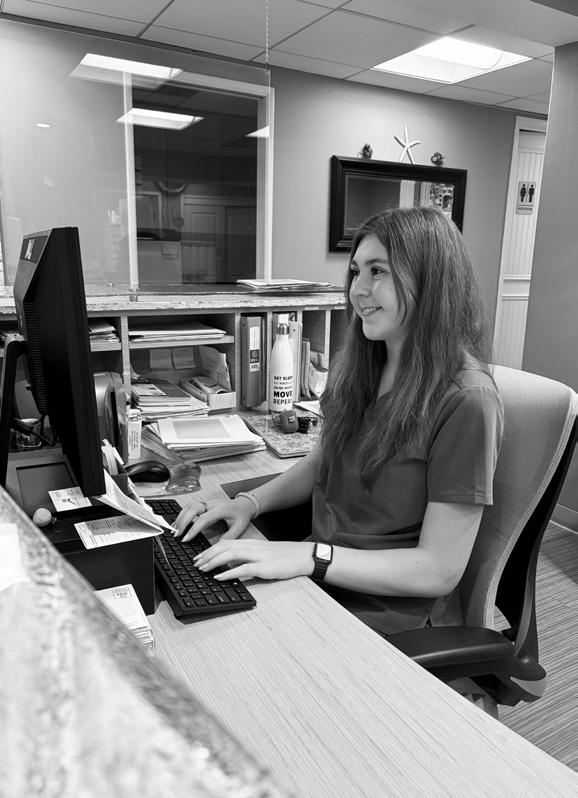
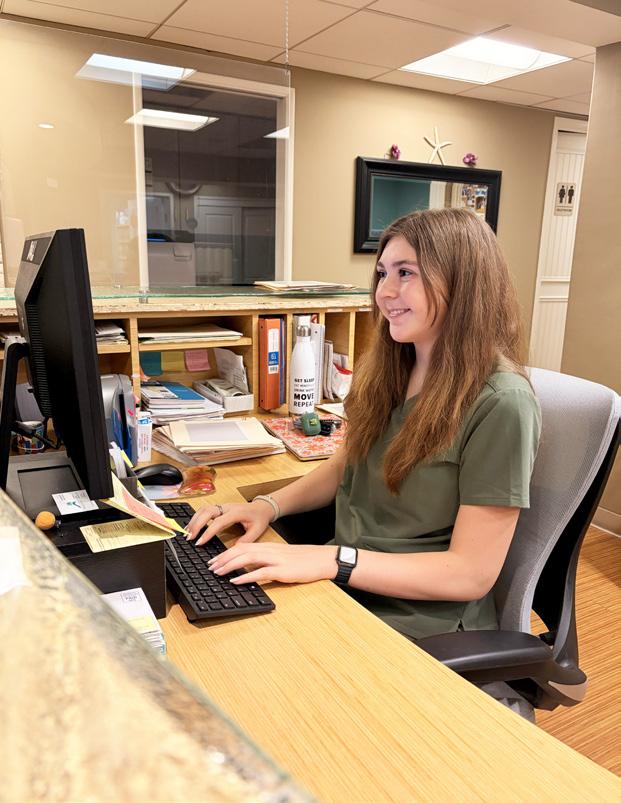
“[I] have to explain to them what they're being charged for, and then [set up] follow up appointments, I have to be good at having people skills,” Hooper said.
While that can be challenging, adjusting to the office's new technological updates has recently brought an unexpected heartfelt moment with her grandpa, who is a patient of Dr. Hooper.
“My grandpa sees my mom [for dentistry] and he thought [the reminder] was a computer, but I was the one who was tex-
Working with a wide age range of patients, ages 12-100, Hooper has been able to meet people in many different phases of their lives, and has learned so much from them that will help her through her career.
“I think that [this job will] help me in the future because it's always good to have a reminder that you never know what someone else is going through,” Hooper said. “They might walk in and have had a bad day, or for some people the dentist is really scary. To be able to cater to what their needs are, whether it's they need a happy smile or to calm their nerves, it's fun to practice being that person.”
1. Hooper working at her desk at Premiere Dental Group PHOTOS COURTESY OF EMILY HOOPER
Miu Ueha took a nanoscience course at UCLA last summer after discovering her interest in chemistry and other science pathways
by Sophie Farias
Nanoscience involves the study of structures and materials at the incredibly small nanoscale, and to junior Miu Ueha, those microscopic, hidden details are the most interesting. Ueha's interest first sparked when she joined the Science Olympiad club, and she has since been fascinated by several types of science.
“I did a topic in Science Olympiad relating to material science, which got me interested in learning more about chemistry, and [going into] chemistry honors [my sophomore year],” Ueha said.
1
Last summer, Ueha took a course at UCLA for nanoscience to develop her understanding of fundamental chemistry, helping deepen her understanding in the field.
“I've also been interested in science in general before I gained interest in nanoscience. So I'll try to continue to pursue that curiosity in every direction,” Ueha said.
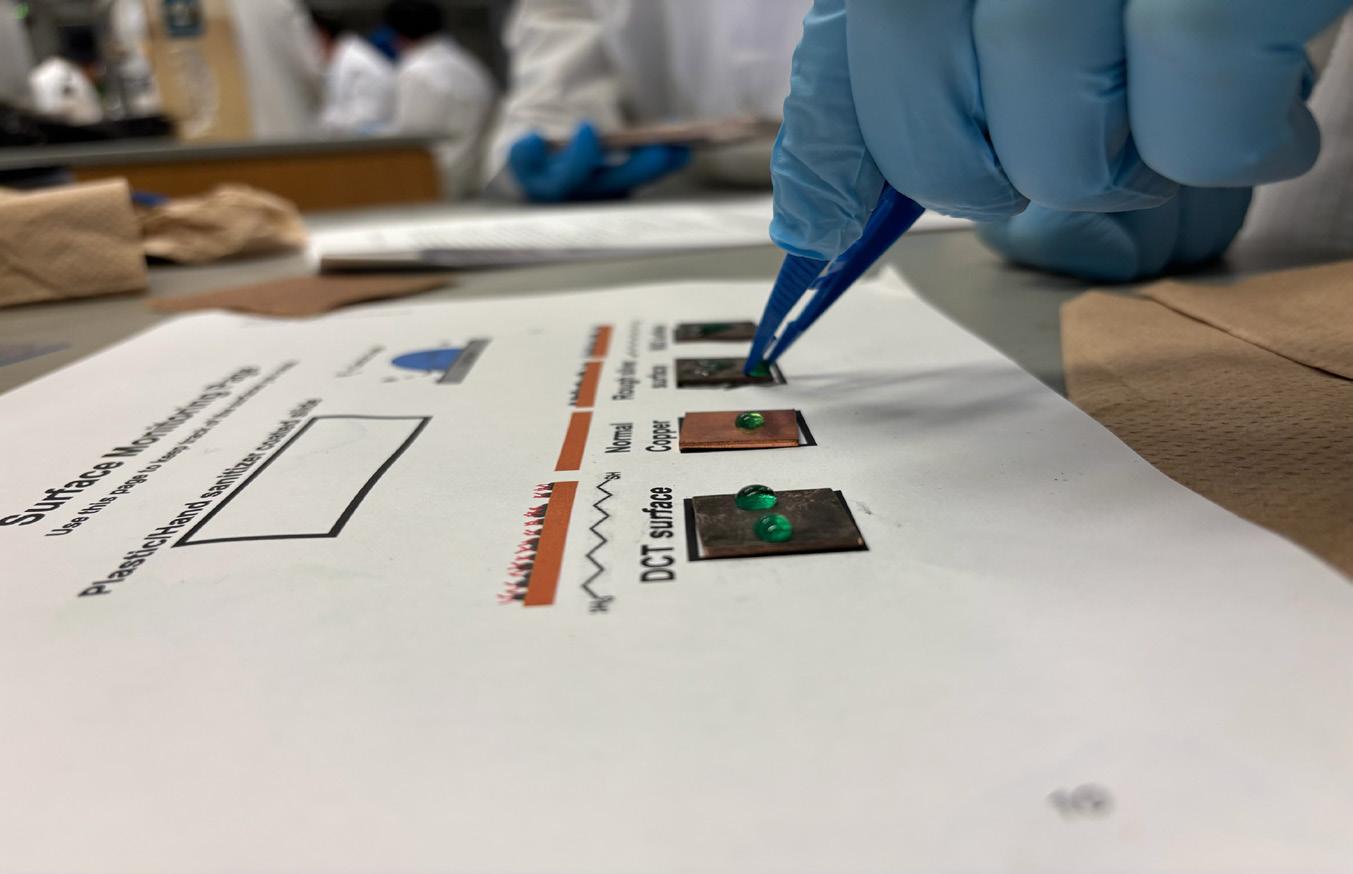
Throughout the summer course, Ueha worked with other students to make an business plan surrounding a pitch for a made-up product, using the newfound knowledge from professors and tools available. The vast types of lab supplies and technology allowed Ueha to use tools and gain experiences not necessarily common in normal high school settings.
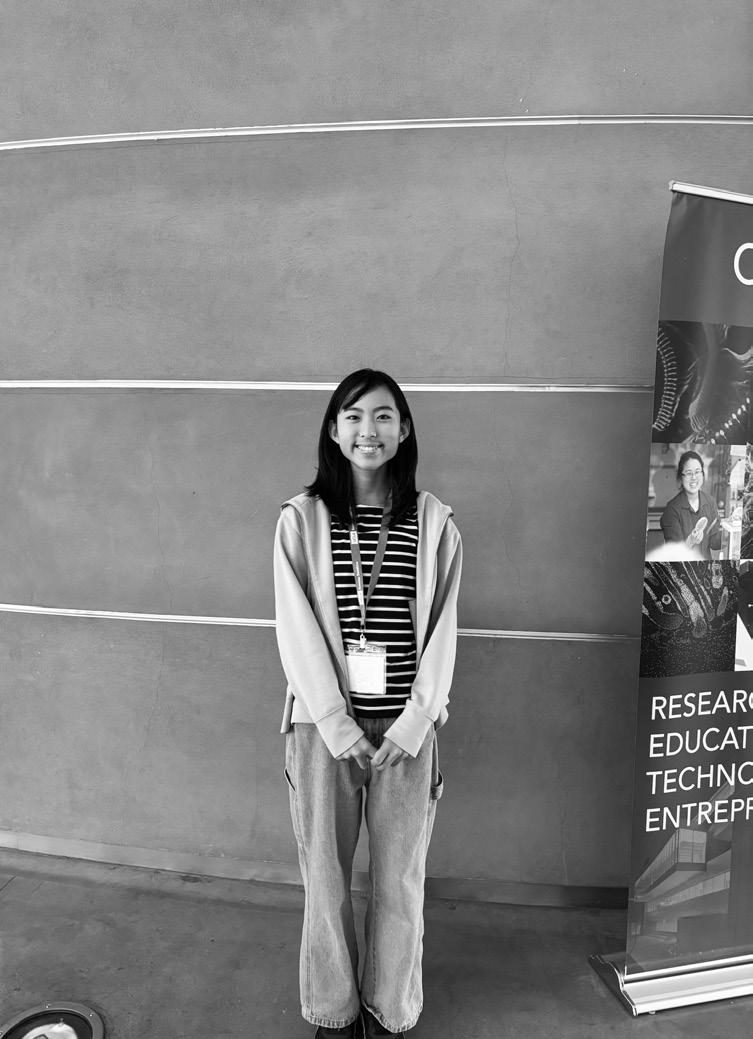
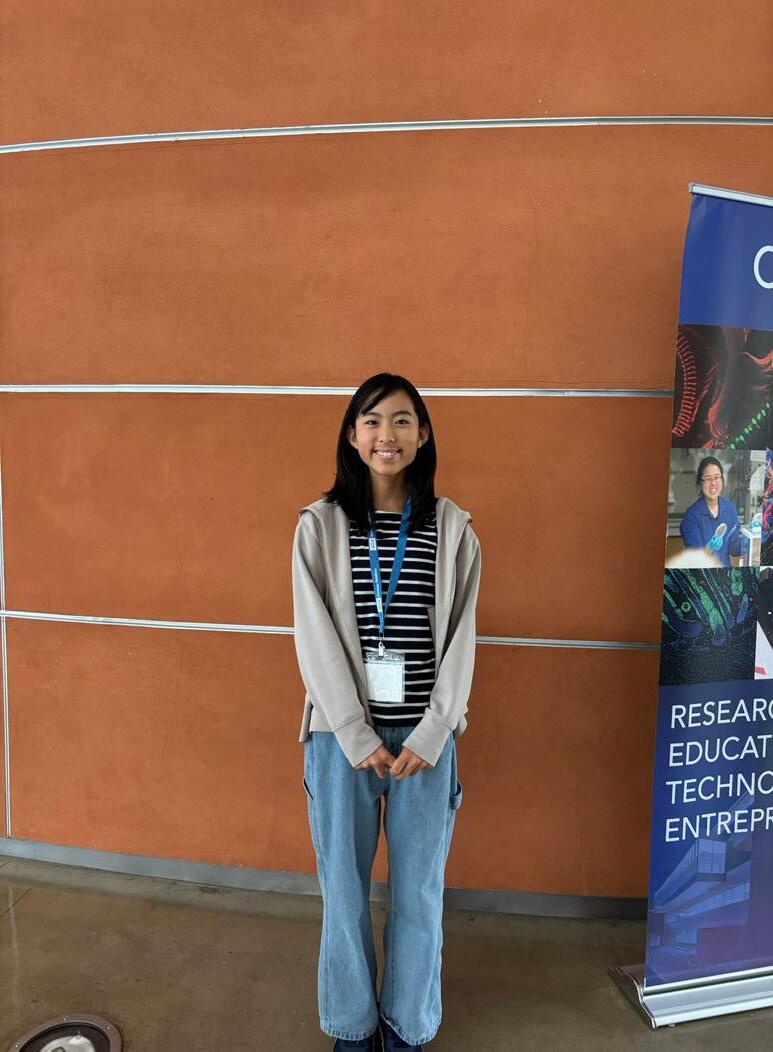
“My group and I designed an experiment that needed a special chemical, which is said to be toxic. So, we wouldn't have been able to use it if we were in a regular high school class. But with a lot of help from graduate students, [who are] experts in handling those chemicals, and using safety equipment, we were able to make our experiments actually happen,” Ueha said.
The business plan in particular allowed Ueha to hone her skills as a leader by overcoming difficulties, including dividing effort and making sure everyone got their work done in harmony. While learning, Ueha was also able to gain skills like leadership that can expand to future work environments or group projects that she can use in her everyday life.
“The biggest challenge was time management. I was one of the people who was leading the team. I realized that it was really hard to. I don't want to be too pushy or bossy, but I also want to get things done for the team. I learned a lot about team management [in all],” Ueha said.
Most of the program’s participants came

from countries all over the world, such as China and the Philippines, to participate in the program. She was able to bond with them, making many more friends in the program, despite the initial worry leading up to it, which her mother Noriko Ueha noticed.
“Before she started the program, as it got closer to the starting date, I saw that she was a bit worried about the new environment. If she could be able to catch up with the other students because it was such a specific, scientific thing. But as soon as they started, I saw her easing and getting confident. She was excited to make new friends, and in the topic itself,” Noriko Ueha said.
However, Ueha completing the program did not come as a shock to Noriko Ueha, as Ueha has always appreciated chances to do better and succeed.
"I'm proud of her that she's enjoying learning and challenging herself. I think that attitude is very important for her life,” Noriko Ueha said.
During the program, her passion for nanoscience not only grew, but it has also helped her work with new people and get exposed to other pathways in science for her future.
“I met several graduate students in various science majors, and also professors in the science field,” Ueha said. “[When I was there] I got to see the incubator at UCLA, where science related startups were researching and working to get their business going. And the summer experience was really inspiring, and it gave me ideas of what I might be doing in college or for jobs, using science in the future.”
Chloe de Villiers is certified as a Positive Psychology Coach and is starting a wellness program called Positivity in Action
by Martina Parra Malandrino
While teaching and psychology may be two distinct fields, they share something important: they are a way to help others. According to junior Chloe de Villiers, this idea is what sparked her interest in psychology. At only 16 years old, de Villiers has earned her certification as a Positive Psychology coach, being the youngest to ever graduate from the Positive Psychology Coaching Academy, where students are typically in their 30s and 40s. Now that she is certified, de Villiers wants to use her experience as a way to make a difference in her community.
“I've always loved helping others. I find a lot of meaning in it because not only are you benefiting or changing someone else's lives, but you feel satisfied after,” de Villiers said.
Now that she has been trained, de Villiers wants to start off by offering staff at Redondo with a wellness opportunity through the program she is working on, Positivity in Action. Though she is able to start charging for her services, de Villiers believes that showing gratitude towards her community is more important.
“I'm doing this as a way to give back to the community. I believe that if teachers are experiencing better positive emotions or if they're more engaged in their work, then their ripple effect really happens and students can feel ev-
erything,” de Villiers said. “I hope to help teachers first, and I want to see the impact that I can make within my school community.”
Through her mother, de Villiers was able to meet the founder of the Positive Psychology Coaching Academy, Niyc Pidgeon, a triple certified business coach and award winning Positive Psychologist and author. According to de Villiers, it was her efforts and persistence that allowed her to have the opportunity to be coached by Pidgeon and earn her certification.
“My mom wouldn't give me a direct connection to her because she had to work for all her connections and she believed that I had to work for all of mine. The only thing that she did offer to me was that I could be a

plus one to Niyc's birthday party, and if I made a good enough impression, then I could offer it myself,” de Villiers said.
In the program, participants across the United States and the United Kingdom would meet with Pidgeon online during the week and then use their own
by Declan Williams
Razor
"Last one ____ a rotten egg!" 58. Part of the crowd at 50 Across
63. Vietnamese tunic
64. Wise guy
65. New Orleans N.B.A. team, informally
66. Starts, as a computer
1. Turns in, as an assignment 2. "Got a clue?"
3. Star on the stand 4. "Aren't ____ lucky one?"
5. Golf peg
6. Oktoberfest souvenirs
7. Tehran native 8. Tic-___-Toe 9. German exclamation 10. Big ____ outdoors 11. "You think that matters to me?" 12. "Out of Africa" author 13. Bears witness (to) 18. "Desperate Housewives" role
Apartment coolers 24. Scorch 25. One-____ (old ball game) 26. Novelist Jaffe 28. Mr. Jefferson, for short
Denver time zone
Airplane assignment
Have ____ (freak out)
take a gander
Audacity
Villains
Continent mostly comprised of water
Round coffeecake
Major fuss
time to focus on homework. Along with that, students in the academy would get paired with each other to practice coaching one another.
For de Villiers, balancing the many hours of work she had to do in the program along with her rigorous schedule at school proved to be a challenge in her journey to get certified. That being said, de Villiers continued to persevere through the late nights and busy afternoons, determined to achieve her goals.
“I love challenging things, and it makes me feel more accomplished when I get them done,” de Villiers said. “I'd even have to schedule so many zoom meetings during school hours. I sat in the library or in the Nest for hours on Zoom meetings.”
In her time coaching de Villiers, Pidgeon could clearly see the effort and dedication that she had put into receiving her certification as a Positive Psychology coach. Unlike anybody else in the program, de Villiers was balancing her student life with her work in the academy, making her stand out to the group she worked with.
“[Chloe] really impressed not just me but other students in the program. While she was studying to become a positive psychology coach, she was taking her finals at the same time. To see someone show that much discipline and not complain once, she managed to balance it all, and she did a really, really good job.” Pidgeon said.
Being so young and already having experience in the field of positive psychology, de Villiers is prepared to continue her journey. According to Pidgeon, she was amazed by how “articulate, smart, and how great of a communicator” de Villiers is.
“The certification is already going to stand her apart and get her ahead. As well as that, she really shows up for other people. If you think about the positive impact of her being trained, then also her going to
work with clients, that's a really big positive ripple effect that she's able to have in the world,” Pidgeon said.
De Villiers’ certification is only the beginning of her journey. Combining her love for helping others and her passion for sports, de Villiers aims to become an National Football League Sports Psychologist.
“I think that the mental aspect and mental challenges are often looked over in sports. It’s like, ‘Did you warm up for this game?’ or ‘How is your body feeling?’ But if your mind isn't there, you're not going to perform to your standard that you set for yourself,” de Villiers said. “I'm so curious about how I could help athletes perform better if I can help them mentally perform better.”
Besides her certification, de Villiers was able to take away many insights from her time in the academy.
“In our program, we learned so much, and so many tiny, practical tools that you can integrate into your life so that you experience better positive emotions,” de Villiers said. “I learned how to practice gratitude and how to look at my strengths and how to apply my strengths because I have them.”
De Villiers’ passion for mental health and her focus on her community are a common theme in her passion for helping others. In the future, de Villiers hopes to create a space in which people aren’t afraid to speak up about their struggles and connect with others.
“I think that everyone deserves to be heard. Everyone struggles with something, whether they talk about it or not, or if they show it or not,” de Villiers said. “I think it's really important to create these communities because it's a way to bring people together and increase knowledge about it.”








The enormous pressure placed on high school athletes can lead to formerly



from NATA (National Ath letics Trainers’ Association), burnout derives from the stress caused by the rigorous physical and mental demands that come with being an athlete without allowing oneself to heal,
to her original speed or “love for running.”
“I would dread running after school because we had practiced five days a week. Especially freshman year, I just hated it,” Chan said. “Before the burnout [during the summer], I was feeling myself and I was running so fast. [Then] I felt absolutely [horrible] and I was trying my hardest to run, to get back to normal, but I just couldn't.”
It's important for athletes to under stand that [burnout is] normal, and I don't want young athletes to
leave [their sports] completely because they've experienced [burnout] once.”
Another instance of this burnout occurred for sophomore Stella Harper. Harper had played tennis for most of her life and got into it seriously for two and a half years. Her freshman year she was on the junior varsity girls tennis team, but this year, she made the choice not to play, because of the pressure from the previous year.
SAKURA KOKUMAI OLYMPIC LEVEL KARATEKA
“It got to the point where I was comparing myself to everybody else. [Because] this person is doing way more than me, that means I should be doing more,” Harper said. “But in reality, different people can handle different amounts of stress. For me, that threshold of stress [was] just lower.” Burnout does not apply just to high school athletes however, and even the highest level athletes can experience it. Sakura Koku-
hate cross country, I hate it so much.’ But now, I kind of miss it. It's very bittersweet to me because [like a] roller coaster, it has its ups and downs. My cross country experience definitely had a lot of downs, but it also had a lot of ups,” Chan said. “I had a good time, and I think it took me a long time to realize that because I was just so enshrouded and en-






because you're experiencing a burnout that doesn't mean you should be done. That just means that you need a break. You realize a lot of things in that gray period, whatever that may look like. You’ll either realize that you just needed time for yourself, or you'll realize that [sport] just wasn't for you. But I think [athletes should] be kind, and understand that burnout is so normal.”

Upperclassmen discuss senioritis, the phenomenon of high school seniors feeling less academically motivated the closer they get to graduation
by Fi Borgese

56% of American teens feel pressure to have their future life path figured out (ex: college, career and relationships).
INFORMATION FROM HARVARD GRADUATE SCHOOL OF EDUCATION


Physical symptoms of burnout: fatigue, increased frequency of sickness, body and headaches, loss of appetite, and insomnia.
INFORMATION FROM HEALTH WEBSITE WEBMD
Gen Z has surpassed millennials as the most burnt-out generation, with 74% experiencing at least moderate levels of burnout, compared to 66% of millennials in 2025.
INFORMATION FROM 2025 AFLAC WORKFORCE SURVEYS
Allowing flexible working hours is one of the most effective ways to help avoid employee burnout, according to 75% of senior HR leaders.
ing years of unrelenting stress.
“The way that it's talked about is prior itized as laziness or lack of motivation, but in reality, academic burnout really is a lot of transition stress, decision fatigue, getting really tired from having so many cisions to make, and also antici patory anxiety about the future,” Knaus said. “It's more of a stress response. So it's not so much about students not caring. It's often about being more so emotionally and men tally exhausted after so many years




INFORMATION FROM THE UK



burden of the uncertainty of what comes next.”

by Gala DeSanto
You’ve probably heard someone mention Roblox before, the infamous platform that houses a multitude of games, and which is known as arguably one of the most problematic apps of this era. One would imagine a platform with millions of players would be more put together, but practically all of Roblox’s recent and upcoming updates intended to fix issues have done the opposite.
As of this year, in the U.S., Roblox began to implement mandatory age restriction checks via Persona AI, as a requirement to obtain the chat feature, which allows players to talk to each other. The artificial intelligence (AI) essentially scans the user’s face and determines their age based on their facial features. Users are given access to the chat if they are determined to be older than 13.
In theory, this update seems like a good idea, considering the amount of backlash Roblox has faced regarding age restriction in the past. Before this update, faulty chat filters and extreme bypassing of moderation systems were fairly prevalent throughout Roblox, triggering multiple lawsuits for child exploitation and the endangerment of minors. Roblox knew they needed a change; they just didn't approach it correctly.
After the update had rolled out, I logged on to find myself with restricted chat, prompting me to hastily verify my age to unrestrict it. For reference, I’m 16-years-old, yet the AI fit me into the 21 plus category. I’m not the only one experiencing this issue. Tons of people have expressed how they were grouped into the wrong age category. I’ve chatted with friends of mine who are the same age as me, yet have been falsely identified as 12–13 years old. Considering how bad the AI is at identifying user’s ages, it wouldn’t be surprising if predators exploited this to trick the AI into identifying them into a younger age group to obtain access to the minors' chat, which may lead to an increase in the amount of younger players getting groomed through Roblox.
such. These “edgy” players completely desensitize younger audiences to the seriousness of the situation, and mock actual horrific events that have occurred in real life by making inappriopriate content into punchlines.
In attempt to resolve this issue, Roblox announced that, as of this year, they would soon enable a new way to check players’ avatars for violations that go against community standards. This means that every time a player decides to change their avatar, an AI will scan their character for any content that goes against their terms of service.
user-generated content (UGC) creators to create and sell their own emotes. The update itself was fairly exciting and allowed a lot of creators on the platform to release an assortment of unique poses and dances. Now, similar to the age verification and moderation of clothing, Roblox also uses AI to scan emotes for any graphic content before allowing the creator to upload them.
Naturally, the AI isn’t always able to catch every explicit emote which allows for slip-ups and graphic content to leisurely pass by and be uploaded. Around the time the update had been released, I had seen a huge amount of emotes that should not have been allowed on the platform. I remember logging onto Roblox around a month after the update to play the game Natural Disaster. Instead of being met with a “new location spawning” popup, I was unfortunately shown a user who was dressed as a less than accurate replica of a specific body part that should most definitely not be shown on a platform with audiences younger than nine years of age. Almost immediately out of sheer shock and confusion, I scrolled down the list of people in the experience until I found their profile. In their items equipped, it showed me that they had colored their avatar a specific way and used an emote to turn them into genitalia. The fact that this emote had somehow gotten past all the AI checks and was filtered correctly, and in the end published was absolutely insane to me.
There are over 1,000casesreported of predatory behavioroccurring on Roblox

To add more fuel to the fire, Roblox’s moderation, specifically regarding clothing, has become pretty notorious for not effectively filtering inappropriate content. It’s unfortunate to say that I’ve seen more than one person on their platform dressed up as Hitler. If I was a parent, I would be horrified to have my child playing a game where they could come into contact with someone dressed as
Now, while I do appreciate the platform's sudden urge to combat inappropriate avatars, Roblox might have a hard time accurately implementing these clothing checks. Based on how poorly the age verification update has been due to their partnership with Persona AI, I have a feeling that this update will end up the same: great idea, poor execution.
Up until mid-2025, emotes were strictly created by Roblox and could be purchased and equipped to people’s avatars. However, this all changed in August of last year when Roblox introduced a new update which allowed for
Considering the amount of effort it takes to manage such a huge platform, I can understand some of the reasoning behind why most of these updates fell through regarding their effectiveness and likeability. Roblox is based entirely on player-created games, which gives some inexperienced users more freedom and ability to create and share experiences that may not follow the rules and can slip under Roblox’s community standards radar. These current and upcoming changes to the platform have done a considerable amount of damage in certain aspects, and have permanently altered user experience.
As Roblox moves forward, I hope that its creators move away from using AI for moderation and allow users to file reports that can be handled more precisely by real people. This way, users would be exposed to less profane imagery and users wouldn’t be able to get away so easily sending harmful and scandalous chat messages. It’d also be nice to see Roblox reverse removals of many beloved features in order to preserve the nostalgia of the platform.
by High Tide Editorial Staff
Burnout is the culmination of years of chronic, unmanaged stress. The fact of the matter is: burnout is inevitable, since students spend years consumed by their academics and dedicated to their extracurriculars and athletic pursuits. But how can we recover from burnout?
Well, let’s start in the classroom. Burnout should not be met with aggression from the adults on campus. Instead, it should be met with leniency, like lighter workloads and mild late work policies. It is understandably frustrating for teachers to navigate lackluster performance from their students. But the more students are pushed, the less likely they are to work. Especially for seniors, who are not only completing college applications in the fall, but then making crucial life decisions in the spring, accommodating to these known seasonal stressors will likely yield better results for both teachers and students.
Coaches can also take part in helping their athletes when they’re experiencing burnout. Instead of scheduling egregious practice hours, allowing their athletes time to recover at least once a week may be beneficial towards the team’s success. In addition, encouraging healthy eating habits, and even mindfulness practic-
es in order to protect their athletes’ mental and physical health may ensure that athletes are able to rework their burnout into motivation to grow.
However, we can’t entirely place blame on coaches and teachers. In fact, most of the responsibility to recover from burnout falls on the students themselves. According to a mental health helpline called Help Guide, the best way to begin dealing with your burnout is to pay attention to the “Three R’s.” First, students must recognize the symptoms of burnout. Signs include constant exhaustion, feeling detached from responsibilities and experiencing irritation and anxiety when faced with day-to-day tasks. Identifying these issues will help the student carve out a path towards recovery.
The second, and most important step, would be to seek ways to reverse the damage caused by burnout. This could mean investing time in your relationships, as suggested by the National Library of Medicine, which notes that social contact with others, especially face to face, is one of the most effective stress relief methods. Whilst acting as a leading solution in recovering from burnout, it allows for students’ relationships and friendships to flourish, offering further mental health benefits. Students may also find that dedicating themselves to other passions outside of
their mandatory responsibilities will spark feelings of excitement that get lost when they experience burnout. Trying new passion projects, bucket list items and new hobbies can be one of the most gratifying ways to cure burnout.
The third and final “R” is building resilience. Reframing your perception of work through budgeting your time differently, or making new friends will make every day student life more appealing, preventing further burnout. Additionally, reevaluating your priorities and finding ways to cut unenjoyable time commitments out of your life is another way to persevere.
To the second semester seniors who are experiencing “senioritis,” feel motivated to make the most of your remaining time in high school. Pour into your friendships, discover new passions and indulge in the topics that interest you. If the second semester of senior year feels futile, make it memorable.
Burnout is a challenge that most students will endure, and while it will may feel taxing in the moment, it is ultimately a great catalyst for growth. If you’re experiencing burnout, there is certainly light at the end of the tunnel.
As American politics become increasingly polarized, debate is less based in fact

by Priya Ramcharan
One Trump supporter versus 25 college students.
One doctor surrounded in a room full of anti-vaxxers. “Prove me wrong” is the name of the game. Whether it be Jubilee or Turning Point USA, political “debate” videos gather millions of views on social media, and this medium of one-sided debate has spread to high school and college campuses, RUHS included. But rather than fostering “open dialogue" or “intellectual discussion” these so-called debates are poisoning our democracy.
I’ve had my share of “talking politics” at the dinner table, in the classroom and everywhere in between. My love for a policy debate is one of the reasons why I chose to attend college at one of the most politically active campuses in the world. But current styles of debate have come a long way from the Lincoln-Douglas Debates on the expansion of slavery in the 19th century.
Political debate in 2026, as modernly popularized by social media, is a lot more of a spectacle. A typical debate video might look like one person making a completely baseless and outrageous claim— like “men and women should not be equal” or “vaccinations don’t save lives” — and college students struggle them wrong.” But it’s im possible to prove them wrong, because de bate is pointless if one person is un willing to look at evidence.
How can you have a pro ductive con versation if both par can’t on the of basic to arare cats,
even believe in the concept of animals, our conversation is futile. It is a fact that animals exist, the Earth is warming at an unprecedented rate caused by human activity (NASA) and Haitian immigrants in Springfield were not eating people’s pets (ABC News) are not debatable. But do these facts matter in major political debates? No. President Donald Trump made 64 false statements in the 2024 presidential debate and Kamala Harris made 6, by The New York Times’s count. There were even more in the Trump and Biden debate. But that fact-checking didn't seem to matter. Our country's leaders lie, blatantly, putting human lives at risk, and it’s not a dealbreaker for voters. So if facts can't settle an argument, what can?
Political debates are, at their core, a clashing of values and world views. Two people could look at the same fact — ICE shot and killed six people in January — and see two different stories. One might see a federal agency that lacks accountability and has executed human beings with no consequence, and another might see a federal agency doing its job and whatever it takes to follow orders. The facts really don't matter, however damning they are, when it comes to changing someone's entire world view. So while facts are the entry tick et to debate, val ues decide what we do with them. And when people reject the entry ticket, debate be comes performance.


With the “debates” we see online, the crux is tribalism, humiliation and en tertainment value, and it’s poisonous for a democracy built on political discourse. In one video, “One conservative ver sus 25 LGBTQ+ Activists,” a conservative man attacks the participants' identities, calls them disgusting, and denies that their relationships are even real. At this point, debate becomes a public humiliation ritual. We live in a free coun try, and issues over how someone lives their life privately,
when it causes no harm for anyone else, is not a fit topic to debate. Giving a platform to hate filled rhetoric and extremist views chips away at the foundation of this country. Debate is dying because too many people have stopped caring whether what they’re saying is true, or even decent. As consumers, we need to stop rewarding misinformation with attention and stop confusing cruelty with intelligence — these “debates” will keep spreading like a disease, infecting classrooms, campuses and elections.
But beyond facts and values, political debate depends on something even more fragile: shared moral norms. A functioning democracy requires a basic cultural agreement that truth matters, that cruelty is not a valid argument and that the people on the other side are still human beings. We used to have at least a loose sense of political decency — a belief that you can't deny someone's humanity, mock their grief or treat their identity like a punchline. Now, the culture of debate rewards the opposite. We normalize a president who puts the face of America's first Black president on a picture of an ape and brags about grabbing women inappropriately. What happened to that standard of kindness and basic human decency?
Even when the facts are clear, people don’t just reject the evidence — they reject the moral responsibility that comes with it. If a country can’t agree that racism is wrong, that violence is wrong, that lying to millions of people is then it doesn’t matter how many statistics we throw at each other. Debate collapses not because we disagree, but because we no longer share the basic decency required to disagree without destroying each other. If we want to move forward, we need to change that cul-


by Kayli Mai
“Would you chew on a used piece of gum?” is a common question used to shame people engaging in hookup culture, while simultaneously endorsing purity through virginity.
American society is extremely polarized, and hookup culture and purity culture aren’t spared. Although they’re treated as opposites, I view them more as two sides of the same coin that work to reinforce misogyny and continue to stigmatize wom en and teenage girls having any sexual desires.
Hookup and purity culture put people in separate boxes, and I loathe how these cultures are isolated from one another. Hookup culture promotes casual sex without emotional commitment, while purity culture promotes virginity and sav ing yourself for marriage. Po larizing sexuality into completely independent schools of thought divides people, forcing them to opposite sides of this extreme spectrum. Both these cultures are harmful, so instead, I feel people should view sexual activity as a spectrum, not just two opposite poles.
ally, and something an individual has reflected on.


These normal sexual urges that teenagers are learning to manage shouldn’t be shamed, which is why consensual hookups are a part of society; however, I don’t think anyone should be “hooking up” with multiple different people every week, especially teenagers. On one hand, our brains aren’t fully developed, and most teens aren’t fully understanding of their personal boundaries, such as what sexual preferences they have, sexuality, or how sexual intimacy could negatively impact them. No one should rush physical intimacy. And on the other hand, I often notice those engaged in the dynamics of hookup culture are doing so to get over a past relationship, or even having sex as a form of self-harm instead of engaging with it in a sexually liberating way. But independent of the extremes, I’m not against recreational hookups, as long as they’re fulfilled consensu-
Having casual hookups supposedly works to do the opposite of what purity culture favors by sexually liberating everyone and normalizing sex. Yet, this culture of promiscuity can turn into not having standards, being desensitized to sex and can lead to situations one might regret, especially in environments where hooking up is extremely normalized. Teens who may not be ready to have sex can feel pressured to conform before they’re comfortable. However, I also don’t look up to people who extreme contentment in being celibate or abstinent. I often hear people who pride themselves on not hooking up with people, wanting to wait until marriage or abstaining from masturbation, while putting down others — specifically girls and women — who engage in these activities. If people naturally do not engage in sexual activities or want to wait until marriage, that is respected, but I do notice that bias is prominent especially by those who align with purity culture. These examples are from extremely polarized boxes, but they could be diffused if sex and sexual activities were more openly discussed. One of my main concerns about both these cultures is how they each drive patriarchal standards, where purity culture is disproportionately pushed onto girls and women. This purity narrative takes away sexual freedom from women, and often forces young girls to feel deep shame, guilt or self-hatred for developmentally typical behavior. Not only does this take away women's autonomy, but the value system of virginity, body count and especially the ideology behind “deflowering" plainly objectifies girls and strips them of humanity, creating a scenario where they’re only viewed as future wives, mothers or bodies, instead of as people.
These cultures often work together to reinforce misogynistic ideals, and shame women, especially teen girls, for whatever they decide to do with their own bodies. I cannot count how many times I’ve heard people celebrate men for being sexually active, while shaming women for exactly the same thing. Misogyny actively works against what hookup culture is supposedly trying to celebrate.
At the end of the day, the solution to confronting these topics is to educate the youth more thoroughly, not only on how to prevent pregnancy or the spread of sexually transmitted diseases, but in ways which normalize sex as something not tied to a woman’s conceptual purity, but as a facet of growing up and hitting puberty. I feel that education could play a big role on how society views premarital sex, and that if sex is discussed more openly, and students could have mature discussions on more than consent, these cultures can shift. Students should be well informed on what sex really entails, not fear-mongered into one camp or the other.
But as it currently stands, under purity and hook up culture, any woman or teenage girl deciding to align themselves with one of these groups, no matter what she does, no matter her sexuality, her desires, if she wants to wait till marriage or engage in consensual casual sex or not, is bound to get ridiculed for the same behaviors that have been normalized for men and teenage boys for hundreds of years.
The High Tide encourages greater input of perspectives from both students and staff. If you have an opinion about one of the articles, letters can be sent to the editor at hightideonline@gmail.com
We reserve the right to edit for content, grammar and space constraints. Letters must be signed and are not guaranteed to be printed. Please keep letters to a maximum of 250 words. Longer guest opinions are also accepted.
by Violette Alshin
If Emily Bronte saw the “Wuthering Heights” movie, she would burn her manuscript. I never went for more than two minutes of the 2 hour 16 minute movie without making a face of disgust. The original novel “Wuthering Heights” is a Victorian era story about obsession, racial and social hierarchies and how hatred can corrupt generations of people. Director Emerald Fennel made it a porny, gothic, miscommunicative romance.
Even if we put aside the fact that the movie cut the entire second act of the book, character assassinated Nelly (Cathy’s servant) and Cathy’s father and added heaps more sexuality than the novel ever had (they never even kissed in the book),
the movie still wouldn’t bring pride to its source material.
If you changed the names of the characters and removed the three cherry picked lines from the book, “Wuthering Heights” would be unrecognizable from the original narrative. Fennel explained that she wrote the screenplay based on her memories of reading “Wuthering Heights” when she was 14, which explains the stylized quotations around the movie title, but after watching the final product, we can come to the conclusion that either she completely forgot the point of the book, or she was a really horny teenager.

Fennel’s other notable recent movie release, “Saltburn," also starred Jacob Elordi and was also very sexual. Her directing style is a very distinct sensual gothic one, which is noticeable in the “Wuthering Heights” adaptation. Unfortunately, Fennel’s personal creative style overtook the source material, and both the script and direction suffered for it.
The main point of tension in the book is the obsessive and unhealthy relationship between Cathy Earnshaw and the young, racially ambiguous, but clearly not white, young boy her father adopted, Heathcliff. Their relationship is held back by Cathy’s racial and social prejudice against her childhood love, and she leaves to marry her neighbor, the wealthy Edgar Linton, and effectively forgets about Heathcliff, until he returns with a mysterious source of great wealth and revitalizes the obsessive relationship between himself and Cathy.
The movie not only cast Jacob Elordi, one of the
whitest men alive, as Heathcliff, but also cast Shazad Latif, a Pakistani man, as Edgar Linton. One of the central points was that Cathy chose Linton because he was wealthy and white, so this race switch detrimentally ruins one of the central themes of the book as one of the only Victorian novels to tackle race at all. Erasing Heathcliff as a man of color reads as tone deaf in a time of political divisiveness. The moral of race not defining worth was tossed out the window to shoehorn in Jacob Elordi in a disgusting misread of Cathy and Heathcliff’s relationship.
Cathy is a spoiled and selfish girl in the novel. The movie conveyed her love of tantrums well, but also mischaracterizes her as a yearning, remorseful soul who longs for Heathcliff during their time apart. Her character originally completely disregards Heathcliff until he returns wealthy and forces himself back into her life out of spite, seeking revenge for her heartless treatment of him.
In a similar vein, in the book, Heathcliff was much more vengeful and hateful. He did not forgive Cathy, and when she died in the book, he continued his obsession with her by tormenting her only daughter. The revenge he sought not only harmed him, eventually leading to his downfall, but reached generations of people, just as hate does in real life, then and now.
The set design in the movie was supposed to be that of the wild and windy Yorkshire, a naturally unsettling location, featuring two estates, a rich one embodying splendor and being saved, and a poor one showcasing the shame and moral uncleanliness of those inside it. Cathy’s move to the Thrushcross Grange, the wealthy estate, symbolised her shift towards wealth and power, as well as her trying to mask her natural inclination towards hate and obsession. However, in the movie, Fennel and the set designer, Suzie Davies, decided to make Thrushcross Grange unsettling and eerie as well, completely riding the design shift that was supposed to mark character development in the plot. This made it so no
matter where the characters were during the film, it was always creepy and unnerving, with no safe haven at all.
Similarly, the soundtrack of the film, done by Charli XCX, was discordant and ill-suited to the material, especially given that this story took place in the late 1700s. The opening sequence with booming audio didn’t align with the supposed ideals of the narrative. When I first heard that this period piece was being set to a British rave artist it gave me pause, to say the least. After seeing the film, my original instincts were right.
The costume design, done by Jacqueline Durran, was beautiful, haunting and totally wrong for this movie. In Margot Robbie’s first scene as Cathy Earnshaw, she was dressed like a sexy German yodeler, followed by hoards of latex, plastic and excessive skirts that are far from accurate, detracting focus from the thematic elements of the film.
The only saving grace in this movie was the acting itself, which was actually very good. The chemistry between Elordi and Robbie came across loud and clear, even if it was misaligned with their original relationship. The grief, longing and internal battles were all powerfully felt, and their acting abilities should not at all be judged in tandem with the mess that was this film.
If this movie was an original made with the fullest extent of Fennel’s talents and the budget and payroll this movie had, it could’ve been an amazing gothic romance, and I would’ve celebrated the artistic choices made. But instead they took the classic “Wuthering Heights” and massacred it until it fit with Fennel’s directing aesthetic, completely wiping the narrative, morals and character design. I’ve said it before and I’ll say it again— directors need to make their own stories! The influx of remakes and adaptations has led to sloppy storytelling and the corruption of beloved and existing work.
by Hayden McMahon
It’s over, go home. I wanted to scream Ferris Bueller’s words at the big screen for most of the movie, wishing everyone would realize that Brat Summer is ancient history. I suppose I could have, considering I was completely alone in the theater. Despite the frustrating nature of “The Moment”, a mockumentary about Charli XCX’s Brat Summer, coming out a little too late to meet the movement, I wish it had a larger audience. Such a clever, satirical portrayal of fame absolutely needs more hype.
I have never been the biggest fan of Charli XCX, and was one of the many who thought 2024 was covered in the slime green of her album “Brat” for way too long, but this movie was so real and raw that I couldn’t help but appreciate all of it. It felt like an exposé on the music and film industry for taking any ounce of talent it can find and dragging it out without any regard for the artist. At first, the movie made me annoyed at Charli’s constant rudeness, but after seeing the ridiculous amount of pressure she was under to remain in the spotlight, I was forced to empathize.
The acting was also fantastic. Alexander Skarsgard played such a good comedically overdramatic, yet hateable antagonist as Johannes; Hailey Gates was amazing as Celeste, and her fed up one-liners had me chuckling; and Jamie Demetriou as Tim Potts was kind of like a side character ver-
sion of Andy Saks from “The Devil Wears Prada”, and I enjoyed his futile attempts to please everyone thoroughly. And Charli was incredible. I had seen her on SNL before and was shocked at how funny she was, but her acting in this film was extremely impressive, even if she was just playing herself. It was so cool to see how she would be so confused and overwhelmed by everyone’s opinions, and yet still go out and perform for her fans without missing a beat.
I found the film humorous in the most unique way. Everyone was just so tired of everything and so indulgent to whatever would make them money that it became funny. I actually did a spit take in the theater when Johannes accused Charli of being a communist after her post about a credit card sponsorship almost destroyed the bank. I also appreciated everyone’s reaction to Johannes’ suggesting that they make her show more family friendly, as if the songs on the album weren’t about doing drugs at a nightclub. It was all so volatile and dramatic in the most hilarious way. And when Kylie Jenner came out, looking so airbrushed and flawless in an AI sort of way, next to Charli in her most vulnerable state, one couldn’t help but laugh a bit at the fakeness of her voice and the underlying thirst for relevance.
I did think the ending was a bit of a reach. The idea that by giving up what she
wanted and feeding into the glittery, consumerist image that everyone was forcing her into, Charli would be ending the moment of Brat Summer on her own terms felt delusional. It is unrealistic to expect to have any control over what becomes popular and what fades away and gets replaced, and it is absolutely impossible for one person to decide when something reaches or loses fame. No one knows who the next It Girl will be, and Charli definitely cannot choose when she is loved or hated by the public.
Despite this flaw, I was very impressed by the way “The Moment” emphasized everyone’s struggles with insecurity and mental health, especially those of the artists. While it is not a new topic by any means, being famous and talented in the 21st century has destroyed people from the inside out on many occasions, and it's revolting how people are produced and branded at the same speed as clothes from Shein and Temu for our entertainment. This film did a wonderful job of explaining that everything is a business, everyone is a businessperson, and the
only objective is to make money, no matter what that means for the artist and their original goal to showcase something new and unique.

"GOAT," co-produced by Stephen Curry, tells a compelling story related
own experiences and incorporates vivid worldbuilding
by Ryan Chamides
Stand in the tunnel. Back up toward the locker room. Turn. Launch from way deep. Don’t watch. Swish. That’s Steph Curry’s signature pregame shot. Years of hitting those moves and thousands of others have made him a fan favorite, and helped to inspire the movie “GOAT.”
I went in expecting just another generic basketball flick or a half-hearted attempt to recapture the magic of “Space Jam.” But "GOAT" surprised me: it’s humorous, unexpectedly touching and somehow made me care about a talking goat more than I ever thought I would.
Four-time NBA Champion Stephen Curry helped to produce “GOAT,” the story of Will Harris (Caleb McLaughlin), a Boer goat with dreams of playing professional Roarball (the “GOAT” equivalent of basketball) for the Vineland Thorns, his hometown team. In a sport dominated by larger, more physical animals, Harris is not only undersized, but he’s also the first small player to compete at the professional level. Despite his size, he’s a natural beyond the arc, as he relies on his IQ and skill to make up for what he lacks in strength. When a viral clip earns him a contract with the Thorns, he steps into a hostile locker room. With a “Claw” (Roarball’s version of a championship) on the line, every shot he takes becomes a test of whether he actually belongs in the league. The story mirrors Curry’s own journey as a professional, where he faced constant criticism for his smaller frame but ultimately rose to be-
come a true G.O.A.T.
The Roarball stadiums were incredibly creative. The different ecosystems made for some really cool arenas, some of which were located inside a volcano, an ice cave, a jungle, and even a river. As a result, “GOAT” ended up reminding me of “Zootopia” because of the stark ecological contrast between regions, and the way each species was naturally suited to its environment, much like animals in our own world.
The Vineland Thorns, along with the rest of the Roarball league, are co-ed and balance male and female players in a way most sports movies don’t. The most prolific Roarball player of all time is a female panther, and a female ostrich was a former number one pick in their league’s rookie draft. For the non-basketball fans who are reading, that's a huge deal. It’s a small touch, but I applaud this effort because the NBA is not the only basketball league anymore: the WNBA is becoming more popular by the day; therefore, that must be reflected in new media, so that both young boys and girls can see themselves on the big screen.
Also, “GOAT” was paced perfectly. At 99 minutes, it was exactly as long as it needed to be. Nothing felt rushed, and I was completely entertained. Best of all, I didn’t have to spend an excessive amount of time for a predictable outcome, and these days, that’s not an easy thing to do.
Curry’s excellent reputation allowed him to pull in some massive names for cameos. Basketball stars like national
champion and internet sensation Angel Reese, four-time WNBA MVP A’ja Wilson, 13time NBA All-Star Dwayne Wade and NBA champion Kevin Love all show up as minor characters. The movie also brings together Stranger Things alumni McLaughlin, Eduardo Franco, and David Harbour for a reunion in the voice cast. Then there’s Jennifer Hudson, an EGOT winner, and threetime GRAMMY winner Jelly Roll. With all that said, you’ve got an extremely stacked cast.
“GOAT" was the animation style. Not that it was bad, because it wasn’t, but I’m so used to the smooth 3D animation of Dis ney movies from my childhood that the stop-motion-esque style threw me off at
to Curry's
first, and sometimes it was awkward. For example, when Harris would dribble between his legs, it looked like the ball just phased through instead of actually going between them.
This movie was great for what it was. I always can applaud a family movie that promotes the value of hard work, determination, and kindness on the journey to success. Curry has been a role model for not only me, but thousands of kids across the world, and putting the characteristics of his underdog story into a film extends this story to the next generation. If you want a feel-good sports movie that gives viewers a protagonist who’s easy to root for, and to support a great individual in basketball, I’d

Absolutely's album "Paracosm" crafts a cinematic listening experience highlighted by seamless transitions, creative songwriting and beautiful vocals
by Samantha Kim
carousel on a woman’s head?
ASomehow singer-songwriter, Abby-Lynn Keen, better known by her stage name Absolutely, concocted a world through her music to reflect just what was depicted on her album’s cover art. With 13 sonically unique tracks, Absolutely’s second studio album, “Paracosm,” is absolutely successful in transporting the listener to a whimsical, funky, dreamy paracosm of her own. Listening to the album front to back was like sitting down to enjoy a show: an absolute experience.
Opening with “Natural Disaster,” Absolutely sets the tone with beautifully layered vocals and harmonies that carry throughout the rest of the album, especially in songs like “Simple Things” and “Elevator.”
Effectively mixing both traditional piano sounds with modern synths and a beat drop, Absolutely constructs the groundwork of her transportative world, and transitions seamlessly into the second track, “Nowhere to Hide,” which also carried similar synth elements in its production but with a much deeper, almost rock sound.
Now before I go on to talk about any other songs in specific, I must give attention to the transitions between the songs. As I previously wrote, the album is an experience, and the smooth transitions between multiple tracks make it such: it’s coherent, and it’s continually building and altering the atmosphere created by the music.

The next few songs, which I’ll refer to as the trifecta, were the album’s first highlight. “Painting by Numbers,” “Helium” and “Simple Things” all had something beautiful in common, being their shared floating, dream-like quality. This series was seamless, with the last note becoming the first of the following songs. Even more impressively, Absolutely was able to differentiate each of these songs despite their shared qualities. But the environments she creates in each song aren’t static. Specifically in “Helium,” the opening has lovely melodic piano arpeggios that
mesh well with her soft falsetto and backing vocals, but as the song progresses, hints of bass notes seep through until a saxophone and hollow beat is introduced. As if the song color saturation was turned up, the sound becomes fuller and deeper, and the saxophone and vocal outro feel like satiation after a multiple course musical meal.
The opening of the following track “No Audience” is yet again atmospheric, as if being swallowed by a modern church choir and organ. Toeing the line between major and minor notes, Absolutely’s vocals set me on a ride. She lays the foundation for a complete switch up as the opening of “Prototype” is abrupt, with big synths and underlying bass beats. In this confident, girlboss anthem, Absolutely is especially crafty in playing with her timing, which carries into the subsequent song, “No Furniture,” where she is intentional and artistic in syncopating her singing on top of a funky, synthy production, making for a fun, distinct listening experience.
In the context of the final tracks, it’s an opportune time to revisit the topic of her lyricism as in these songs Absolutely delivers creative, reflective and emotional writing for her listeners. In “Elevator,” she holds the listener close in her journey of falling in love again, utilizing the image of an elevator: her lover, like an elevator, is lifting her up again, giving her hope. “Trojan Horse” featured honest, reflective lyrics about someone who was a Trojan horse in her own life, and her delivery of the lyrics was spot on.
Absolutely’s lyricism carries into the title track “Paracosm,” and with its floaty, light piano production, I was transported again to the skies of the trifecta songs, flying away on a hot air balloon through pink
and orange clouds. Though she was singing about feeling small in the grand scheme of things, her vocals were anything but small. If anything, I felt this to be the first time she really went for the big, belty notes, and her voice sounded full and strong. The whole song was cinematic: I felt like I was watching the world she created through a snow globe while concurrently being inside of that world myself.
The final track, “Goodbye Glitter,” opening with a curious sounding piano and questioning vocals, transports the listener back to an altered, progressed version of the album’s beginning. The world swells throughout the song with the addition of a string section that melts with Absolutely’s vocals serving as a light illuminating in the darkness and transporting the listener to a rooftop waltz on top of gothic architecture at dusk. As the song ends, each element is pulled back until the song fades into silence, and the album ends like the closing of a velvet bound, gold flaked children’s book.
This album was a success for Absolutely, her talents highlighted through the sonic range contained in the various tracks. I found myself enjoying the album most during her more reflective, slower, calmer songs, but that’s not in any way to take away from the other tracks in this project. Each song was unique in its sound and was a testament to her being a bonafide artist: the choices she made in each song sounded intentional, and as I’ve referenced so many times, she created a world, a cinematic atmosphere with her music.
by Kacie Brincat
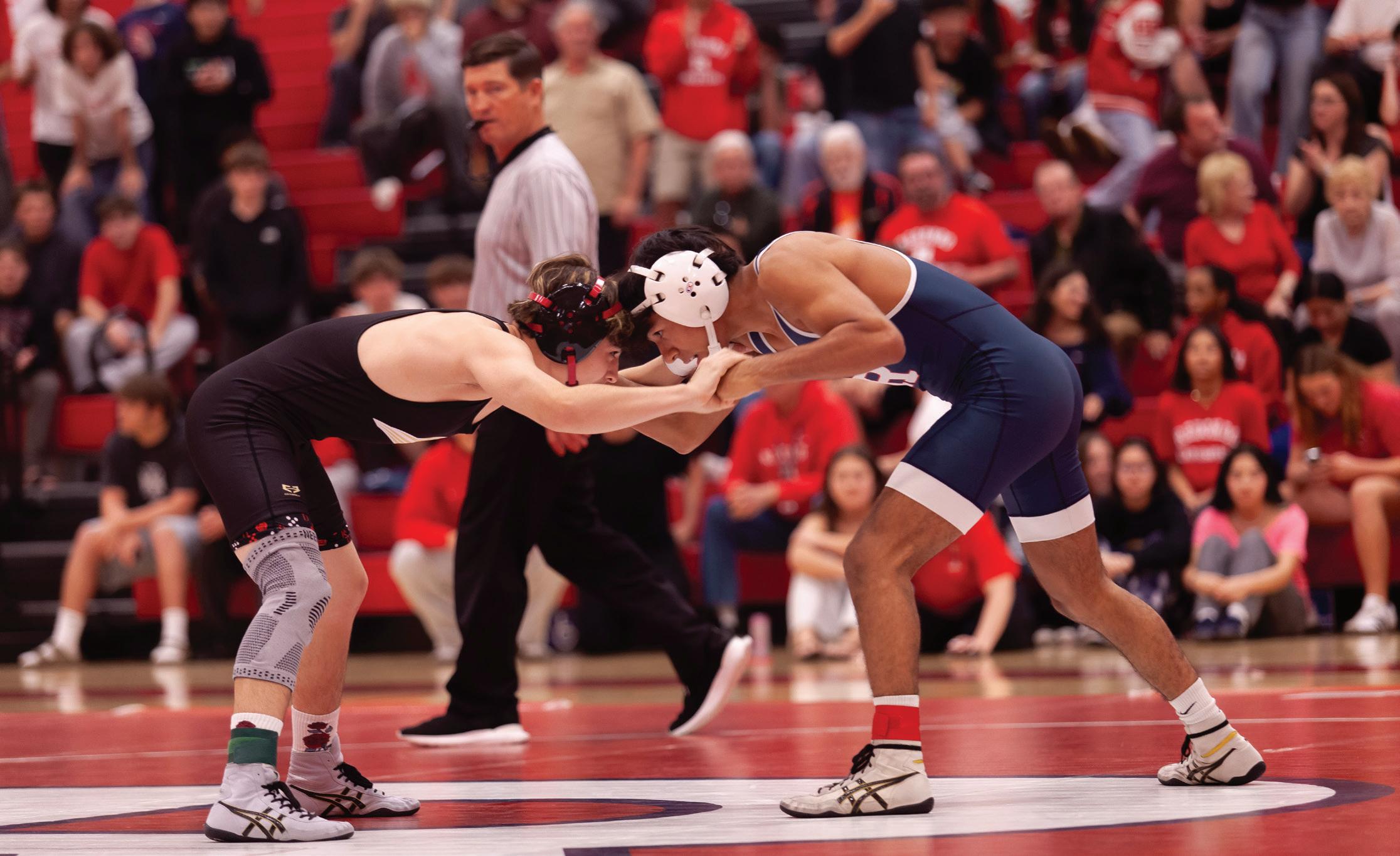
History was made in Redondo as our boys wrestling team won their first-ever CIF (California Interscholastic Federation) title against Heritage High School on Feb. 7, with a final score of 35-32. Redondo took the lead in their beginning matches, and then fell short after a couple more, but ultimately secured their win with junior Joaquin Aranda taking on their last match.
For Aranda, it was difficult to comprehend the history he made by winning his final match. His mindset of being so “determined and focused” on the task at hand shielded him from the remarkable accolade that just took place.
“I was excited, but not too crazy, because I was the last match and I was still
in that moment of [focusing on]wrestling. I was [more] just focused on what I was doing in my role,” Aranda said. “It didn't hit right away when I finished my match, and even a minute before the match ended when I was up by a good amount. It wasn't clicking to me that we really won a CIF title. I was just so focused on my match, and once it was over, I looked around and saw my team. That's when it settled in a little,” Aranda said.
Redondo started their matches off with Dylan Brown, Redondo’s 126-pounder, and ended with Aranda, Redondo’s 120-pounder. They really got into the groove when they secured their first win with Johnny Barbosa, who won by a major decision. The following win was from 160-pounder, Rhett
Boys wrestling wins their first CIF-SS title with a score of 35-32
Bise, who was followed by Lex Glaves, Michael Mack, Arly Cuevas, Bradley Pulvers, and Aranda.
“I think the lineup we had was pretty solid. We were only missing one of our weights, but even [if he had lost his match] we still would have won,” Aranda said. Winning doesn't just come naturally. Behind every winner are believing coaches and supporting parents. Coaches aren't just here to tell these athletes what to do; they are there to support and believe in them no matter what. Part of the boy’s CIF win can also be attributed to parents, who took time out of their day to drive their athletes to practices and meets, and to support and encourage them during a tough match. Junior Santi De La Torre gives thanks to all
the people who have helped him get this far in the sport he loves.
“I would give a lot of props to Coach Notch, Coach Andrew and the rest of the coaches, because there's been a lot of people that have come and helped us throughout the year, and I would also like to thank my parents too,” De La Torre said.
JOAQUIN ARANDA JUNIOR “
It's about the team and the work we put in and representing something bigger than just my individual win.
Since these wrestlers had such a long season, they were really excited to see all of their hard work finally pay off, especially at such an important meet. After winning their first CIF title in RUHS history, our boys will move on to individual qualifying tournaments to get into the CIF state tournament.
“Individually, I was ecstatic, I'm super happy with the win, and then just as a team, knowing how far and how long the season's been, I just felt amazing to see my teammates also succeed,” Aranda said. “It's about the team and the work we put in and representing something bigger than just my individual win. It was a team win, so my personal victory doesn't mean too much. Of course, it's nice to win, but what really matters to me is putting in the work and building myself up as a person.”
by Madelyn Bain
It’s the final battle for the Bay League title, and eyes are watching intently from the stands; one last game to make or break them. In the midst of the stress and the sweat, the girls all look to one person — named “player of the year” by the Daily Breeze for the 2025 girls volleyball season, senior Abby Zimmerman recorded a total of 689 kills, 92 total blocks, and 77 assists in just one season, leading to RUHS’ ultimate triumph over Mira Costa for the Bay League title, and breaking their 34-game winning streak. Despite the high stakes, Zimmerman and her team could not help but be ecstatic every step of the way.
“I think it was just an exciting moment to be in with all my teammates,” Zimmerman said. “I knew a lot of people on the Costa volleyball team, I had been playing
against them for multiple years, and also with them on my club team. So it was just a fun match overall to get to compete with them and have a lot of people there supporting and watching.”
Zimmerman was recognized by her coach as a “phenomenal leader from day one”, and served as a beacon for her peers as they navigated their way through the season. She notes that it is initiative and authenticity that placed her in such a position, and leadership, to her, demands action rather than words.
“[Leadership] [means] setting an example,” Zimmerman said. “I don't like to rub things in anyone's faces or say I'm better than someone. I just naturally try my hardest, every point, every practice, every time we step on the floor as a team.”
Zimmerman was not only named player
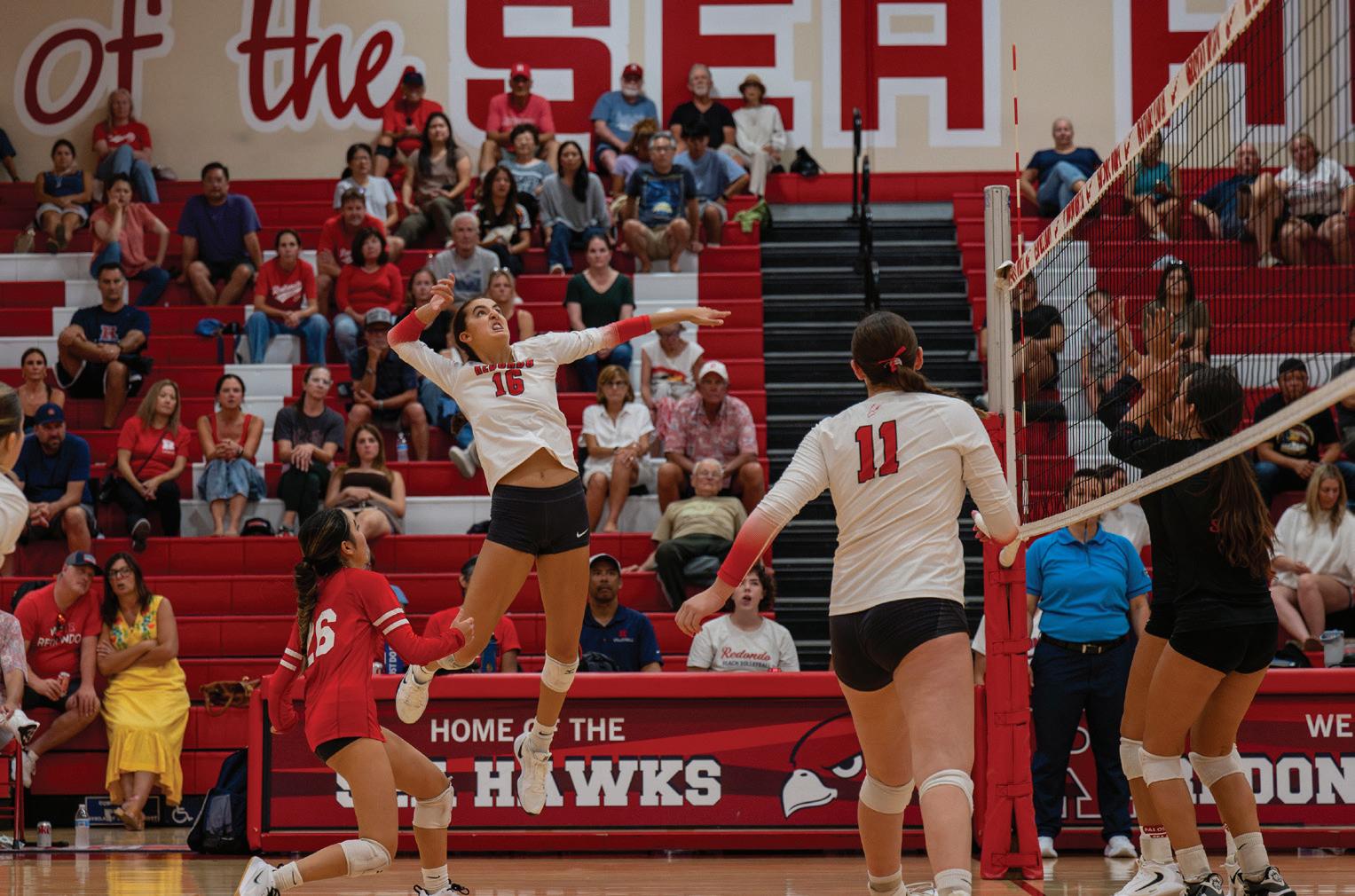
of the year, but Bay League MVP, demonstrating her elite performance and consistency in sports throughout high school. Regardless of her individual achievement, however, she was spurred onward by the extensive support of her teammates, who were always there to make every game more engaging and help her balance both sports and academics.
“My glory is shared with my teammates: they helped a lot and are always encouraging. I rely on them and they lean on me,” Zimmerman said. “I feel like we were really close this year, especially with some of the trips we took. We took a trip to Hawaii, and that helped us cultivate a lot of team dynamics that were really positive.”
Growing up in a sports-oriented household, Zimmerman became generally knowledgeable and experienced in athletics from a young age. She was also inspired to follow in her older sister’s footsteps, who also engaged with numerous sports throughout high school. Zimmerman’s mom, Lisa Zimmerman, contributed greatly to her involvement in sports.
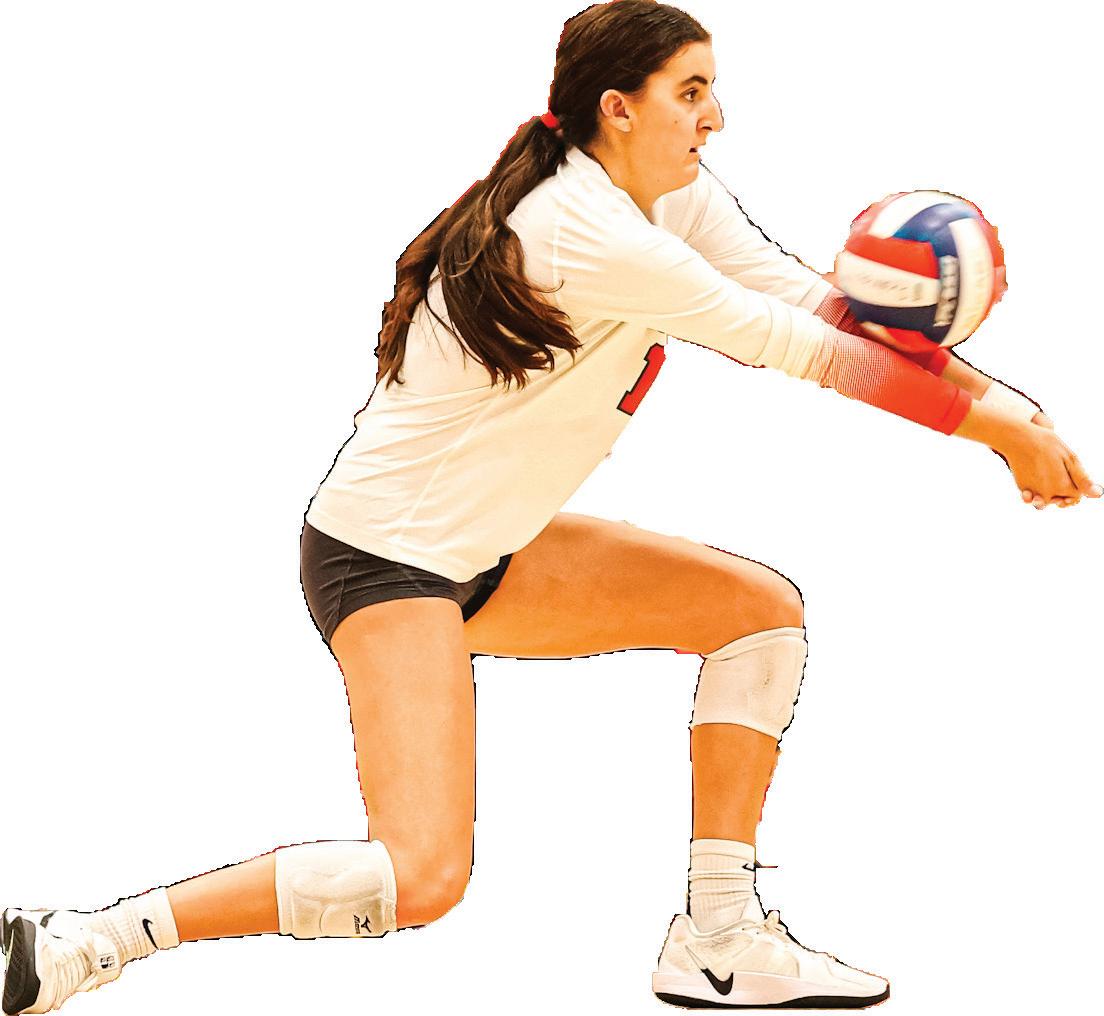
“We have always been a sports family, it was AYSO soccer, T-ball, softball, and then later on, volleyball,” Lisa Zimmerman said. “I used to coach volleyball, and she would come hang out and watch. She wanted to be a part of it even before she even liked sports.”
As a coach, Lisa Zimmerman could not help but notice that kids were becom-
ing less athletic — maybe they had played a single sport for 5-8 years, coming into high school, but they couldn’t jump, run, turn or pivot without the ball in front of them.
“It seemed to me, in order to find joy in the games, in a sport that you're playing, you need to have a variety,” Lisa Zimmerman said. “Also, it's really important to change it up for your body, so you're not doing one particular motion.”
Zimmerman emphasizes this advantage when asked about the skills that translate between sports, explaining that being proficient in more than one sport helps provide new insight and strategy from game to game. Sensing the ball’s position becomes instinctual, and an athlete must learn to trust in it.
“I feel like my quickness in volleyball, moving side to side, helps with defense in basketball; and then blocking too, in basketball, is translated over from volleyball,” Zimmerman said. “[The sports] just complement each other.”
The main message Zimmerman intends to send, beyond her skills and titles, is to encourage multi-athleticism and vigor in younger students who may want to go down the same path as her own. Practicing multiple sports is not only beneficial to oneself, but also to fostering a strong community identity and purpose.
“Keep putting in the work outside of the volleyball gym,” Zimmerman said. “Going hard in the weight room and making connections with your teammates off the court can always help you get stronger together on the court. Then always remember that it's fun, it's a game, and not to take everything too seriously.”
by Ayla Rodgers
Kgrees and intense winds chill ing the audience. Despite this cold, the girls lacrosse team kept the heat, winning 18-7 against Culver City High School. Excitement going into the game for seniors such as Maya Cozza helped the girls maintain their re lentless attitude, which encouraged them to play their best.
“I'm just happy to play and to end my last ‘first game of the season’ on a good note, and to be with my team mates,” Cozza said.
With a special meaning behind Feb. 17’s game, Cozza felt impassioned enough to make it even more special by contributing five goals overall and one assist. Her outstanding performance earned her player of the game. Cozza alongside many other players on the team worked their hardest to keep Redondo on the winning side against the centaurs from Culver City High School.
“Something that we always say about our team this year is that there's no one absolute star player. We can all score and we can all handle the ball, and that's really special,” Junior Grace Walker said.
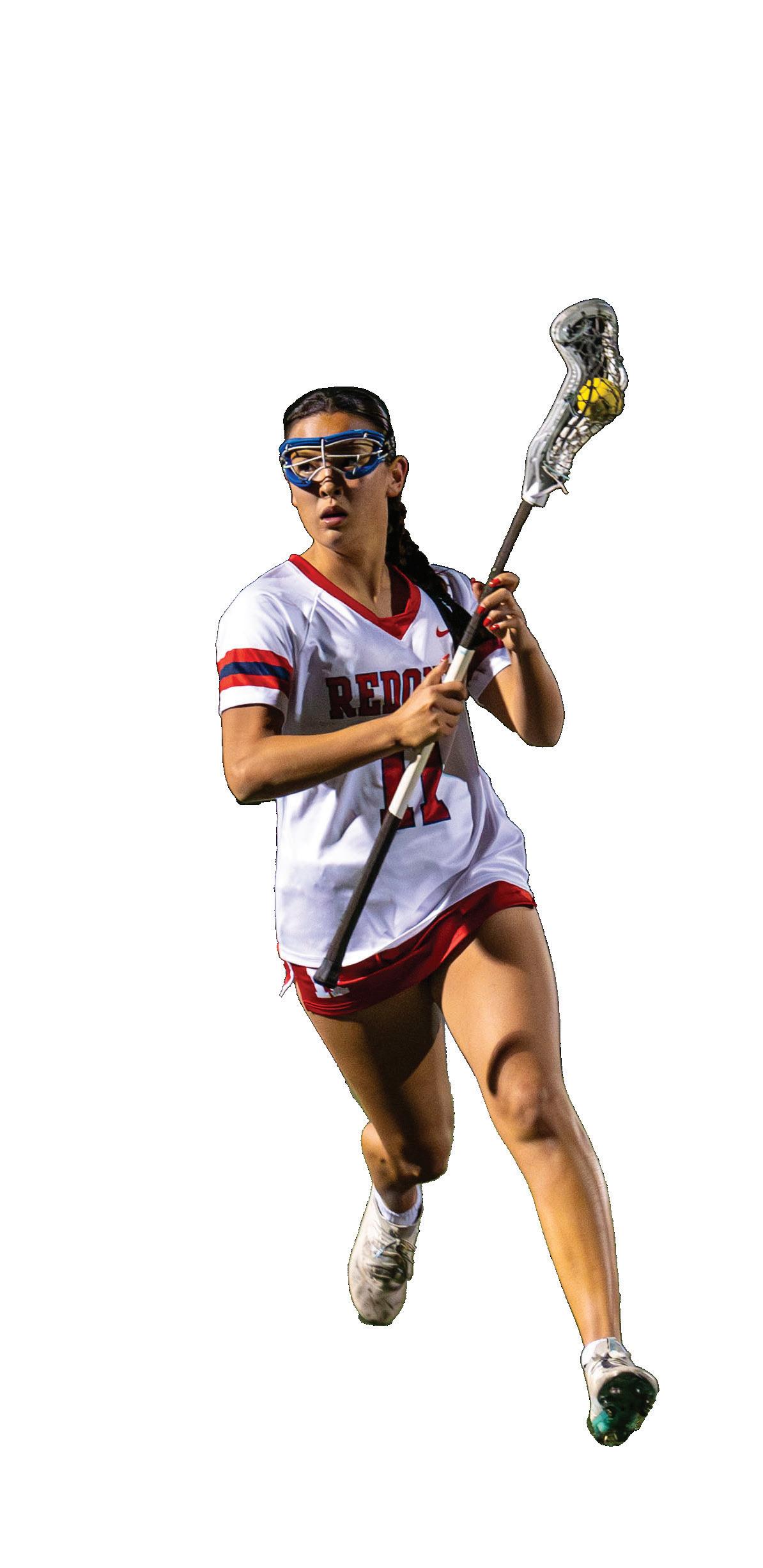
In addition to Cozza, Walker also had a great game, scoring four goals and providing three assists. Despite this impressive solo record, she still accredits most of their success as a team to everyone playing, not just to her or another specific player that had contributed the most to the scoreboard.
Momentum throughout the game for Redondo never seemed to die down, as passing and getting up the field remained consistent, leaving very little opportunity for the Centaurs to try and win back the game. Even with 18 goals from the Sea Hawks, the Centaurs managed to score seven, revealing ways in which the Hawks can improve defensively and prepare for games in the
“Once things go bad, we’ve learned we need to switch to having a better mindset quicker,” Cozza said. “We need to definitely work on something simple like passing and catching and then being able to handle the pressure
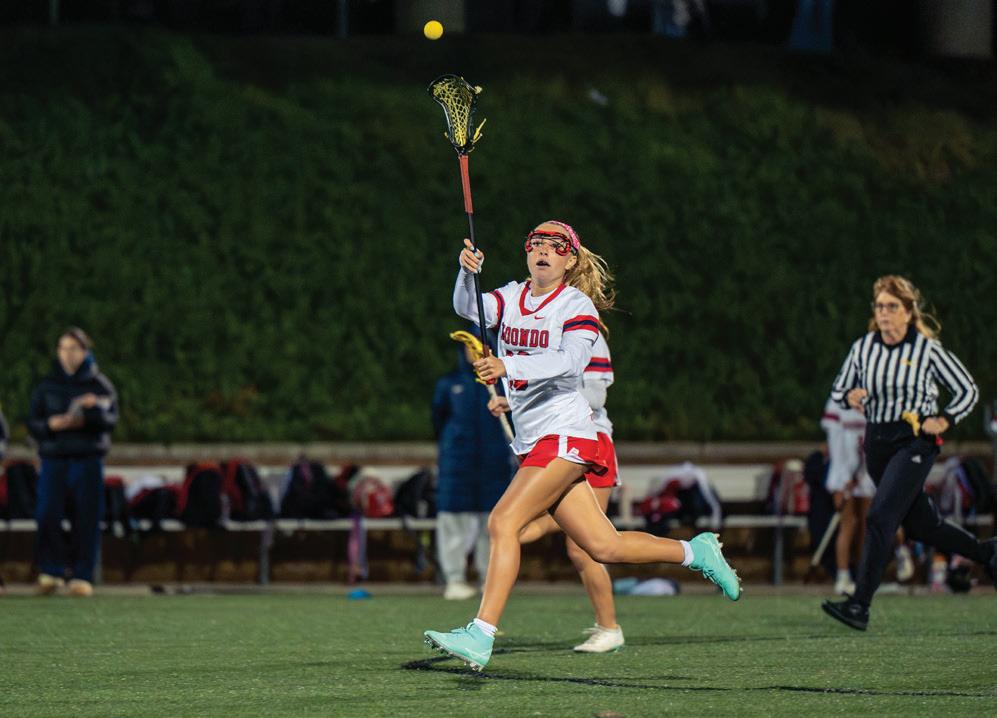
when a girl's on us.”
In the aftermath of an “amazing” game, Cozza didn’t just take away pride from the positive moments, but also lessons from the bad. Despite this early victory, they still are finding ways they can improve, but there’s lots to be proud of for Redondo in the wake of an 18-7 win, leaving many players smiling as they left the field.
“I'm really proud because we put in a lot of hard work during preseason and do a lot of stuff to get us to this point so it's really rewarding,” Walker said.
this game, the girls believe their current mindset will keep them on a path towards more wins, no matter the circumstances.
“One thing about this year is our whole team loves each other, so we're all very supportive so if something bad does happen,” Cozza said. “Let's just keep going and get the next one.”

With lots of hard work paying off in their first win, they still have the rest of their entire season to see if it can amount to much more. By staying motivated, and by each other's backs as shown throughout
by Francisco Villegas
Boys volleyball took down Palos Verdes in a physically commanding showing, opening their season with a 3-0 victory. The Sea Hawks showed their potential for dominance early, starting on a high with a strong senior class and high expectations.
Set one featured the most competitive play of the night as the boys found their footing. Seniors Vaughan Flaherty and Sergei Nikiforov got the team off to a good

start, dominating PV around the net by blocking their attacks.
“I think we're probably one of the most physical teams this season. We have a ton of size out on the court and that can come off the bench,” Flaherty said. “We're lucky to have that because if you're taller than like three out of six guys on the other team, you have a pretty big advantage. You don't need the pass as well or serve as well because the height across the board kind of makes it so that everything just works itself out.”
Any potential rust on Redondo’s game showed itself at the beginning of the game, with multiple inaccurate serves from the Sea Hawks. However, Palos Verdes made similar mistakes, so Redondo’s simple but effective physical advantage continued to give them the edge, alongside their great synergy and focus. The Sea Hawks closed the first set with a 25-16 win, and were on to set two.
Senior Gabriel Krikelas Simon explained the team’s strategy of researching opponents coming into this game that allowed the Sea Hawks to take over exactly as they expected.
“We were pretty confident we would win. Palos Verdes has never quite been that strong of a team. I think coach knew that everyone was gonna play [well] today,” Krikelas Simon said. “Volleyball is kind of a small world, so everyone knows all the good players already. If there's anyone that we're worried about, we would know them from club volleyball from previous years.
I think we have the potential to beat any team in the country, so it's really about whether we can put it together this season and in the finals.
VAUGHAN FLAHERTY SENIOR
Through sets two and three the boys continued to overwhelm the Sea Kings with progressively larger wins. After a start to the 2nd that resembled the tempo of the 1st, the Sea Hawks held a 11-5 that they pushed all the way to a 25-9 win by turning up the pressure yet another notch. With that 2-0 lead over PV, the Sea Hawks leaned heavily on the bench for set three. Still, the Sea Kings weren't able to match up effectively and Redondo ended set three on a strong spike by Flaherty into a Sea King defender, to take a 25-6 win in the set, and a 3-0 win overall on the night.
I don't think we were scouting anyone for this matchup, but definitely for future matchups we will be.”
As the Sea Hawks look out onto the bigger picture moving forward with this first step in the rear view, the large potential for them to build yet another memorable season is clear.
“I would say it's really our depth that can make us different this year,” Flaherty said. “We have a lot of up and coming juniors and sophomores, and we got to keep a lot of our starters from last year, so we pretty much have a guy coming off a bench at every position that can do pretty much just as well as the starters.”
Across the board, the confidence and must-win mindset that the team has going on through the season is clear, as both Flaherty and Krikelas Simon highlighted earning banners as their goals for the season.
“I would say my goals are pretty team oriented. Honestly, I just want us to win
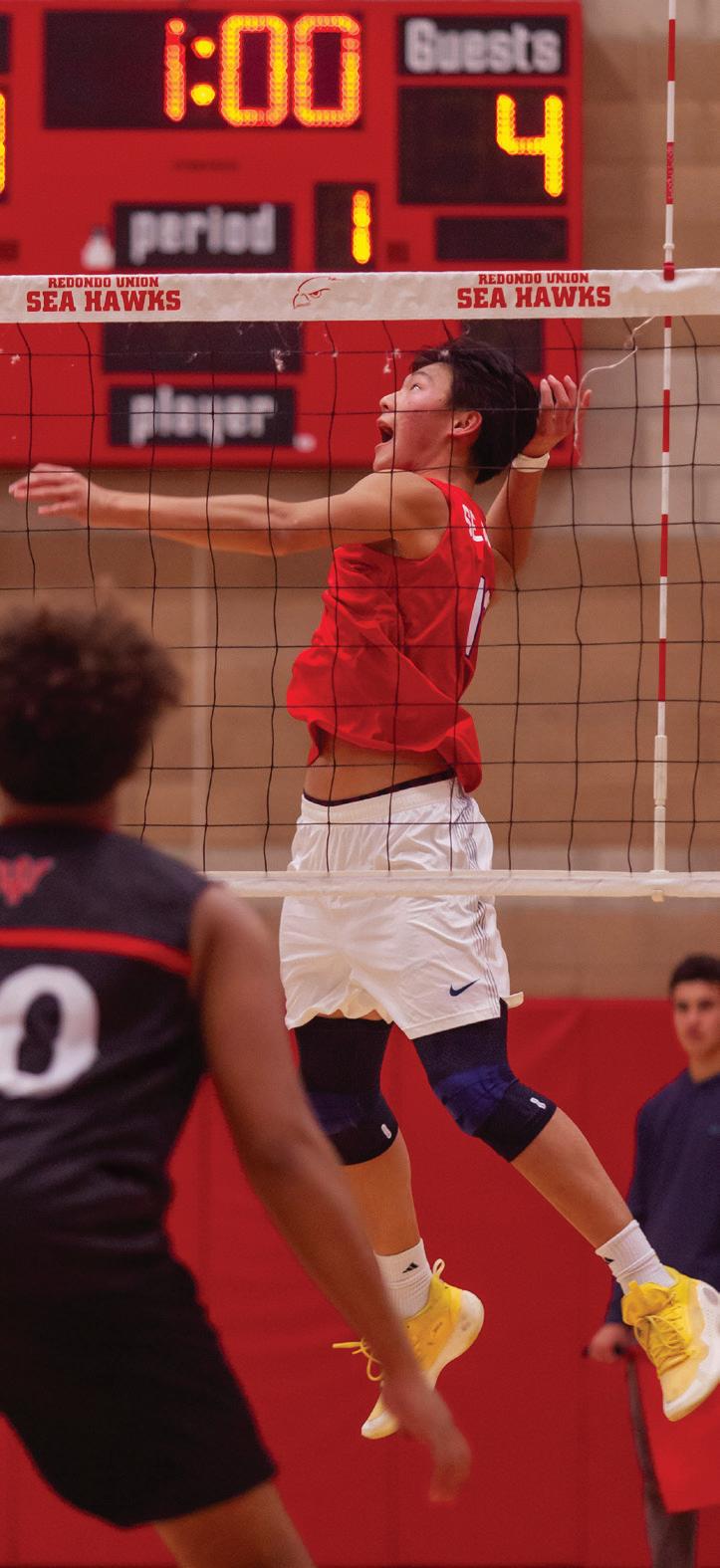
everything. That's my main focus, so whatever I can do to contribute to that is going to be what I'm working on all season,” Flaherty said. “I want us to win the Bay League, I want to hopefully win a CIF final, and then, I don't want to look too far ahead, but the state would be nice, too. I think we have the potential to beat any team in the country, so it's really about whether we can put it together this season and in the finals.”
Seniors who have committed to a university experience relief from academic workload, extracurriculars and application anxiety
by Allison Sutton
After three years of maintaining a high grade point average, volunteering and pursuing numerous extracurricular opportunities —not to mention enduring countless hours of research, writing essays, filling out forms and tracking teachers down for letters of recommendation— hitting “submit” on one’s final college application can be a surreal experience. Following years of preparation and dedication, finalizing college applications can feel like the definitive end to a long journey. With the sudden absence of a tangible and impending goal, most seniors are unprepared for the resulting shift in their perspective towards school. No longer in need of perfect grades, academic motiva tion often dwindles to unprece dented levels.
The term “senioritis” usually has a negative con notation, frequently associ ated with academ laziness and detachment. Correlated with spotty attendance, decreased effort on assignments and declin ing grades, senioritis is of ten viewed as a hindrance to students’ success— something that needs to be cured. However, contrary to popular opinion, academic burnout doesn’t always have to be detrimental.
Redirecting time, interest and motivation towards endeavors unrelated to school, ones potentially more creative or per sonal, can allow for new types of self-understand ing. Senior Lauren Mayer le, who recently committed to majoring in biomedical engineering at the University of Southern California (USC), has benefited from a new found lack of academic pres sure and expectations.
“Being committed to USC has honestly helped my mental health so much, and I'm no longer approaching things with stress or the fear that I have to do them well in order to get into college. I can take my time and enjoy these things, rather than always being worried or stressed about the future,” Mayerle said. “I can actually be in the moment, especially with extracurriculars.”
ics, while evidently beneficial to academic achievement, suppresses other essential aspects of personality and well-being, namely creativity, personal ambition and self-discovery.
Advanced Placement Psychology teacher Samantha Marcon has witnessed senioritis manifest itself in her
“
Being committed to USC has honestly helped my mental health so much, and I'm no longer approaching things with stress or the fear that I have to do them well to get into college.
LAUREN MAYERLE SENIOR
“Your identity is shifting, and you're also, at the same time, trying to figure out who your friends are and what’s important to you.”
During such a pivotal stage of life, senioritis offers the unique opportunity to pursue balance and formative experimentation.
simply engaging in relaxation can be productive and essential to achieving a sense of stable contentment.
“The sense of security [that comes with] being committed to college has allowed me to take risks and try new activities and things that I wouldn't normally do,” Mayerle said. “Senioritis definitely has given me the space to explore who I am, rather than always doing homework and studying. I have more time to myself to figure out who I want to be in the future and who I want to be right now.”

According to research conducted by the Indonesian Journal of Education and Youth Development, “elevated levels of academic stress significantly increase the likelihood of students experiencing what is termed 'languishing mental health,' a state characterized by a lack of positive affect and a sense of stagnation.” Concentrating the majority of one’s effort and energy on academ-
this phenomenon through the lens of development.
“Late adolescence and your early 20s, even into your mid 20s, is a very important time, because you're finding out who you are and what you want to be. Your role is changing,” Marcon said.
Reducing stressors like excessive assignments decreased student depression rates from 44% in 2022 to 37% in 2025
self-discovery and growth, as seniors can spend time previously devoted to schoolwork on new hobbies, building better relationships and/or further exploring former interests. Even time spent
As supported by the Journal of Strategic Leadership, structured, productive free time allows for “enhanced individual creativity” when accompanied by “increased autonomy,” reduced emphasis on extrinsic rewards (such as grades, acceptances, and academic rewards) and encouragement of risk-taking behaviors. Seniors, when able to make time-management decisions based on internal motivations alone, are able to pursue personal fulfillment and self-actualization. The removal of external pressures and strict direction grants students the time to try new things simply for the pleasure of discovery.
For Mayerle, this creative freedom has manifested itself in new artistic hobbies, including play production. She is currently participating in her first-ever theatrical production at RUHS as a member of the ensemble.
“I started theater, which I hadn't done all four years [of high school]. I finally got my chance, and I'm trying to express myself in new ways,” Mayerle said. “[Senioritis] has definitely been more about redirecting my energy and doing things that I enjoy. For me, that's thrifting. I also decided I wanted to start learning how to sew.”
As seniors transition out of high school and into adult life, self-discovery becomes an even more critical aspect of day-to-day life. Discovering who they are outside of the classroom can prove essential to building a stable, enduring
“My advice for seniors, if they're moving from a sole focus on academics into more exploratory and creative endeavors, is try lots of different things and figure out what you're actually interested in,” Marcon said. “What's cool about becoming creative or doing some different endeavors besides academics is that you will likely find out what you want to do later in life, as well.”