75th
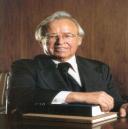
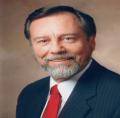
By S. Dale High, Chairman, The High Companies
ollowing is the content of a letter sent to each co-worker earlier this year:
Thank you for your many contributions to The High Companies. Whether you have been with the Company for a year or ten or twenty years or more, you have given of your time and talents for the betterment of this organization. You have helped The High Companies to grow, you have enjoyed its good times and endured its difficulties. The High Companies is a family-owned business and you need to know that I and my family appreciate all of your efforts!
Whether you have been with the Company for a year or ten or twenty years or more, you have given of your time and talents for the betterment of this organization.
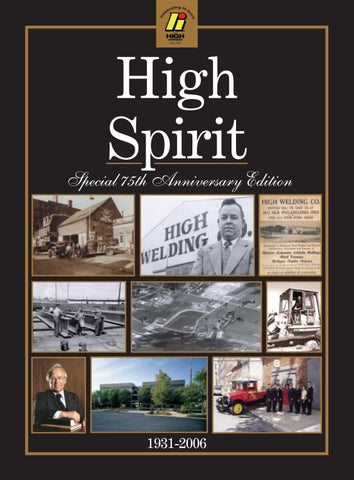
On the occasion of the 75th Anniversary of the High Family of Companies, we are pleased to provide a commemorative chronological timeline of the beginnings and growth of the organization. While we have tracked the changes in leadership by the High Family as Owners, there are not enough pages in this special issue of the High Spirit to recognize the hundreds of coworkers who have contributed significantly over the years. We pass along our thanks for your dedicated and loyal service.
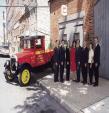
The 2006 year is special to us in that it is our 75 th year in business. Yes, my father, Sanford High, purchased King Welding Company 75 years ago in January of 1931. To memorialize this significant milestone, a 75 th Anniversary Committee is planning for special recognitions and events in which you will have an opportunity to participate. You will also receive a special, commemorative 75 th Anniversary issue of the High Spirit, which will be devoted to stories and pictures of our growth over the years. I trust you will read it with pride and satisfaction from our many accomplishments together and that you will receive new inspiration as we journey into the next 75 years!
During the year 1930, Sanford H. High was farming tobacco and potatoes with his father in Lime Valley, Pennsylvania. Considering potatoes were selling for 30 cents a bushel and tobacco at 6 cents per pound, this was not a very profitable occupation.
Sanford’s brother, Benjamin, had been employed by King Welding Company about six months when J. R. King decided to sell the business. Disappointed with his farming endeavors, Sanford decided to join Ben in the purchase of King Welding Company. So they obtained a $7,500 loan with the help of their father.
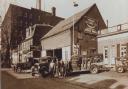
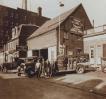
During a depression year was hardly the time to start a new business; nevertheless, Sanford and Ben opened King Welding Company in a former livery stable at 27 West Lemon Street in Lancaster, Pennsylvania, on January 1, 1931. They knew little about welding at the time, but learned quickly and continued with the conviction that there was a great future in the welding process.
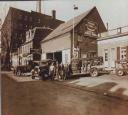
In order to obtain work, they fixed, built, and re-built anything, along with installing and replacing automobile and truck springs. The Company was a distributor for Stanley Spring Company (Harrisburg, Pennsylvania)
and Service Spring Company (Indianapolis, Indiana).
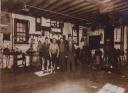
Welding was a relatively new and untried process. On many occasions, Sanford met with State Highway officials to promote the welding of steel bridges rather than riveting, which was the universally accepted practice at the time.
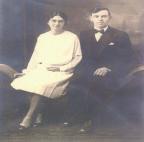
Sanford H. High married Erma Denlinger on September 23, 1931. On the way to their honeymoon destination of Florida, Sanford and Erma dropped off some High co-workers at a jobsite in Maryland
An experimental project was approved in 1933 for the welding of a bridge near Stewartstown, York County. This consisted of welding angle iron stiffeners, even though rivets continued to be used on the steel girders.

In 1936, obtaining a job thawing frozen pipelines in Baltimore, Maryland, often working in sub-zero temperatures, seemed like a golden opportunity because it paid $4.00 per hour.
Sanford purchased Ben’s portion of the business in 1937.
Also during this time, High Welding Company acted as a General Contractor on projects and was responsible for subcontracting concrete work, wood work, and painting.
During 1941, the need for additional space necessitated the move to the James and Water Streets location. By this time, the workforce had expanded to twelve.
Welding repair work continued to be a mainstay of the Company. A portable welder was transported to various customer locations in the back of the 1929 Reo truck.
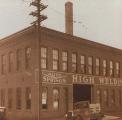
The firm grew steadily doing job shop fabrication and made several attempts to develop product lines. Manufacture of farm wagon chassis was pursued. Trailers and feed mixers were also manufactured; but during the war years (1941 to 1945), it became virtually impossible to obtain the necessary components and these lines were discontinued. Attention was subsequently directed toward production of fuel oil tanks.
When they were quite young, Sanford began grooming his sons to join the Company. As children, they went along with their father to the shop and visited construction sites, as well.
In 1946, the Company entered into a contract to re-floor the Belvedere bridge over the Delaware River. This was the first major project that involved the fabrication and erection of structural steel, which was to become the main product line in the years ahead. This was a major step for High Welding Company and it opened the door for future growth.
During the 1940s, fire engine bodies were also fabricated for the Lafayette, Landisville, and Rohrerstown Fire Companies. In 1947, the first winch truck was built.
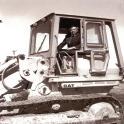
In 1949, the first truck crane, a 15-ton Lorain, and a tractor trailer, were purchased.
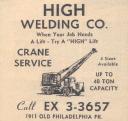
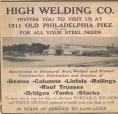
During this period, steel storage yards were maintained, first along Harrisburg Pike, and later along Dillerville Road. When it was necessary to vacate the latter area, it was decided to seek property outside of the City that would provide highway frontage.
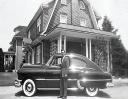
In June 1951, Calvin High joined the Company full-time.
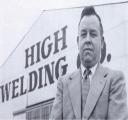
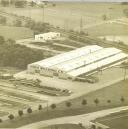
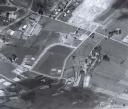
In 1952, a ten and one-half acre site was purchased along Old Philadelphia Pike in Lancaster, Pennsylvania, which was used for steel storage and outside fabrication until 1954, when construction was started on Plant One. This work was done mostly
by co-workers in the evening after doing a full day’s work at the shop in the city. When the building was completed in 1955, all equipment and personnel were moved to the new location, and the plant at James and Water Streets was sold. It was at this time that the spring portion of the business was sold to Sanford’s brother, Ben, who had established Penn Welding Company.
Beginning in 1953, the first sizable steel fabrication contracts were received, including a number of area schools and other buildings. Sanford’s eldest son, Calvin, worked in both the shop and yard.
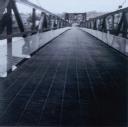
During 1954, High Welding Company was asked to rebuild a footbridge over the Kiskiminis River in Vandergrift, Pennsylvania. Over the years, the bridge had rotted and was subsequently closed. The crew from High Welding Company took on the challenge and worked a short distance at a time removing the rotted wood planks and beams and replacing them with a fine steel grid and supports as they worked across the river. The finishing touch was a hand railingwelded in place.
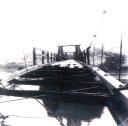
Shown is the foot bridge over the Kiskiminis River before (above) and after (right).
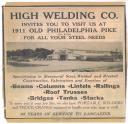
In 1956, High Welding Company had been in business for 25 years, creating a solid
reputation for reliability, versatility, and quality. High Welding Company became incorporated – it had previously operated as a proprietorship.
The Board of Directors as elected by the Shareholders consisted of Sanford H. High, Erma D. High, Calvin G. High, and Donald L. High. (Donald later left the Company to pursue other interests.) S. Dale High was elected as a Director in 1962.
In 1957, the Company had been doing extensive rebuilding of bridges and was now awarded its last sizable bridge repair project before moving on to bridge building. It was also during this year that a second shift was added to maximize the potential of the production area.
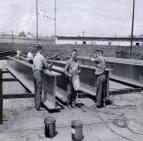
The Company really came into its own around 1958 and 1959. It was about this time that automated welding equipment became available and engineers started to design girder-type construction calling for welding instead of riveting. The first welded girders produced by High were on I-83 at Shawan
Road in Maryland. High also started using the submerged arc welding process.
Plant One was expanded to include space for a Parts Department, and a maintenance garage was added.

. . . by the late Jacob S. Risser, as stated in 1980
Jacob worked at High Welding Company beginning in 1959 and retired from High Steel Structures, Inc. in 1977.
I remember when Mr. Sanford High would come to work at 4:00 a.m. sometimes, well before we would arrive at about 7:00 a.m. His clothes would be just as soiled as all the other men, since he was cutting a lead coated tank from Slaymaker Lock Company to make smaller tanks.
. . . by the late John H. Mellinger, as told in 1980
John started with High Welding Company in 1950 when there were 12 co-workers. He retired from High Steel Structures, Inc. in 1975.
I was a painter and remember early projects such as riveting bridges, making fuel tanks, and repairing car springs. I feel very fortunate to have been an employee of High Welding Company. Sanford High was a very kind and considerate person. Very seldom did you see him without a smile and a kind “hello” or a “good morning.” When Sanford’s sons came into the Company, they followed the same ways as their father. It was a privilege to see the

Company grow as big as it is now (1980). The kindness still goes on. Now we retirees have a club named the High Beamers. The Company still shows much kindness to all of us.
A major event during this decade was the 116-day steel strike that changed the bridgebuilding industry forever. Because of the uproar this strike caused, other products were introduced into the marketplace. The most prevalent being prestressed concrete.
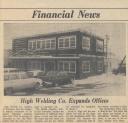
In November, 1962, additional office space, a lunch room, and tool room were added to the East side of Plant One. The second floor 1,500 square-foot office expansion allowed an increase in the drafting and engineering staff to four people.
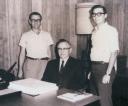
S. Dale High, youngest son of the founder, had gained experience with the Company by working second shift in the plant. He joined the organization full time in 1963, upon graduation from Elizabethtown College. As his brother before him, he also brought new expertise into the Company in the areas of administration, human resources, and finance.
Marking the beginning of expansion into other business arenas, High Realty Company was formed in 1963; predecessor of High Properties. The build-lease process started as the first building was constructed in Greenfield Corporate Center.

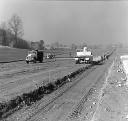
In the mid-1960s, land which was purchased by High Welding Company near what is now Greenfield Corporate Center, was
stoned in and used for set up and storage. A rail siding to accommodate inbound and outbound rail shipments was installed.
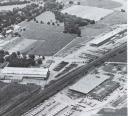
In 1967, Plant Two, measuring 80’ x 700’, was constructed. This plant was extended another 300’ in 1969.
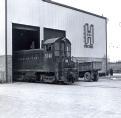
In the earlier years of Plant Two, raw material was delivered by locomotive directly into the plant. Now, material is still delivered by rail, but not directly into the facility.
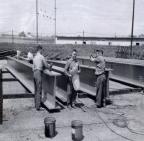
During April 1968, the High Welding Company Engineering Office in Pottstown, Pennsylvania, was established. The main purpose of this office was to prepare shop drawings for all New Jersey bridges and many Virginia and Maryland structures.
. . . by the late Franklin S. Kern
Frank started with High Welding Company in 1965, and retired from High Steel Structures, Inc. in 1974. Following are excerpts from his writings about his time at High.
It was in November of 1965 that I joined the High Welding Company team as a Machinist. I became one of approximately 75 co-workers at that time. We had several pieces of equipment that were located on the East side of the building. I remember many a morning during that first winter when I would be happy to feel the warm rays of the sun streaming in the windows, as the overnight low would turn the water in a bucket beside the machine into ice.
It was late in 1966 that another addition was built on the East side of Plant One, which was to provide additional room for

the Machine Shop. The equipment that was placed in this area seemed dwarfed by the space; however, we did have room for incoming material to be machined. This was soon reversed as we kept needing to add equipment. Within a few years, we had a total of 14 pieces of machinery, and little space for material.
I will always remember my trip to the Maryland State Lab with Dale High where we were involved in the design and machining of a portion of the equipment used to test many types of road surfaces.
I was not working for High very long before I realized that I had joined a team that was second to none. There were no strangers here, but rather warm smiles and friendly advice from Mr. Sanford High on down, which surely helped to smooth over the rough spots encountered along the way. Yes, I have had other productive years in my career, but the years with High Steel will always be outstanding.
. .
Charles began his employment at High Welding Company in 1966, and retired from High Steel Structures, Inc. in 1973.
During my six and one-half years at High, I was very proud to say, “I work at High Welding.” If I was talking to a good guy, I would say, “Why don’t you come in and fill out an application.”
Since my retirement, I am equally proud to say, “I worked at High Steel Structures, Inc.” Thanks for the opportunity to say it again.

During 1970, High Welding Company received a contract for the bridge spanning the Susquehanna River between Columbia and Wrightsville, Pennsylvania. This 8,000 ton project was the most tonnage in a single project received up until that time.
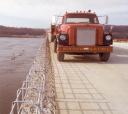
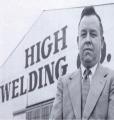
In 1971, the name High Welding Company was changed to High Steel Structures, Inc. to more accurately reflect what it had become . . . a leader in structural steel engineering, fabrication, and erection.
High Steel Structures, Inc. participated with the State of Maryland in testing of a new idea to curve girders. The heat shrink curve process was successful on the first try and specifications were written by Maryland State Highway Administration and High personnel. Although many other states were not receptive to the idea when it was first presented, the specifications written are now National Standards for the curving process.
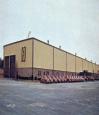
High Steel Structures, Inc. started using Volkswagen Super Beetles as escort vehicles in 1971.
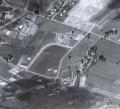
In 1972, Greenfield Corporate Center was expanded to include approximately 150 acres in the area west of Route 30 East.
The 1972 Plant Two expansion nearly doubled the size of the building.
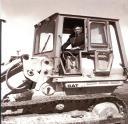
High Steel Structures, Inc. purchased its first hydraulic crane, a Grove 30-ton.
High Steel Structures, Inc. truck drivers toured the Mack Truck factory in Allentown, Pennsylvania, in April 1972. After the tour and dinner, twelve of the drivers each drove a new Mack diesel truck back to the Lancaster facility. These new trucks were outfitted with chrome stacks and grills, air-ride seats, airconditioning, and AM-FM radios.
Effective December 1, 1973, Calvin High was promoted to President and Chief Executive Officer of High Steel Structures, Inc., an office
he held until 1985. Dale High was named Executive Vice President and General Manager.
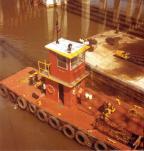
Increasingly complicated projects were undertaken by High Steel Structures, Inc., including marine work in 1976, requiring the purchase of a tugboat, the “High Queen”, for work over the Baltimore harbor.
High Realty Corporation, a residential real estate listing and sales office affiliated with ERA (Electronic Realty Associates), was formed in 1976. This Company was sold to Gateway Realty in 1990.
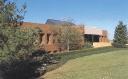
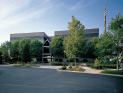
When the former offices of High Steel Structures, Inc. were under construction at 1905 Old Philadelphia Pike
in 1976, Sanford High visited the site to see his new office in the northwest corner of the second floor. To his dismay, he discovered that he could not see the HSSI operations from his office, as the only window was located on the west side of the building. Subsequently, the architect was asked to locate another window in the corner office, which is why there is a large window on the north wall overlooking HSSI.
During 1977, Kurtz Materials Corporation was acquired, including Kurtz Precast Corporation, predecessor of High Concrete Structures, Inc., and Kurtz Brothers Concrete, Inc., Lancaster Lime & Stone Corporation, and Kurtz Transport, Inc. The three latter companies were eventually sold while efforts focused on growing the precast component.
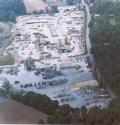
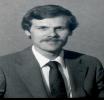
A new holding company, High Industries, Inc., was formed to oversee the growing number of High companies. Dale High was named Chairman, President, and Chief Executive Officer of High Industries, Inc. and it was under his leadership that the organization grew rapidly and became increasingly diverse.
Calvin High’s son, Richard L. High, joined High Steel Structures, Inc. during 1977 as Master Scheduler/Project Manager. Rick subsequently took positions at High Construction, Inc. and High Associates, Ltd.
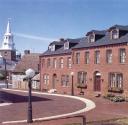
A partnership with High involvement commenced restoration of 59 blighted single-family homes and construction of 13 new dwellings in the southeast quadrant of Lancaster City. This area is known as Old Town Lancaster.
The predecessor of High Construction Company, Lantz Builders, Inc., was acquired in 1978.
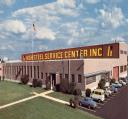
High Steel Service Center, Inc. opened its doors during September of 1978, in the former Jones & Laughlin Steel Warehouse at 400 Steel Way in Lancaster, Pennsylvania. It offered a full range of carbon and alloy steel products with stringent quality control and doorstep delivery.
. . . excerpts from an interview with Sanford High during the 40th year in business:
Question: You have been in business for forty years, just how did it all start?
Mr. High: I was twenty-three when my brother and I went into business. We had one mobile welder and two stationary ones. I learned to weld and would do outside jobs such as repair work on bridges. I married that same year, two major undertakings at once.
Question: What do you see as some of the main causes for the Company’s growth?
Mr. High: We always tried to give good service. When we went out on welding jobs, I instructed the men to always put down a good weld, to give good measure. I received good help also. My sons are helping. Key employees who have been loyal and hard-working have made possible this growth. All employees have worked hard.
Bob began his career with High Steel Structures, Inc. in 1976 and retired in 2006.
High Steel Structures, Inc. took a huge job in Baltimore with some very heavy fracture critical girders. The largest girder became known as Big Daddy and it weighed twice as much as the plant crane capacity could handle. I had been involved with the Estimating

Department in planning for this project, and it had to be a totally engineered approach so that the total weight of the girder was never completely lifted off of the floor. We came up with all types of devices and rolling equipment to accomplish that. Sanford High c alled me into his office and I thought, “What did I do?” He said, “I just want to know one thing — can you build that girder without injuring any of our co-workers?” That pretty well sums up where Mr. High came from, because his concern was not only getting the job done, but getting it done in a safe manner. I promised him that we could do it without any problem. He looked me square in the eye and said, “I believe you — end of discussion.”
Jack began his employment with High Steel Structures, Inc. in 1973 and retired in 1994. Following are excerpts taken from Jack’s written memories of his time at High.
Sanford High had done all the pricing and bidding before Dale came into the business. The Company had grown, and without an estimating department previously, Dale realized a more formal approach was needed. So I was hired in the early 1970s to set up and head the Estimating Department. We started with manual data sheets, switched the information to a main-frame computer, and eventually moved to personal computers over the years.
With many years at High, I could tell a lot of interesting stories.
The High Foundation is a philanthropic non-profit organization that was established in 1980 by members of the High Family. The Foundation’s Mission is to make the world a better place by contributing to worthy local charitable organizations and by assisting High co-workers in meeting the costs of college education for their children through its scholarship program.
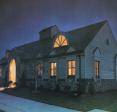
High Associates, Ltd. was formed in 1980 for the purpose of selling, leasing, and managing commercial, industrial, and residential real estate.
During 1981, Greenfield Associates, Ltd. was formed to provide consulting and organizational development services for High Industries, Inc. and outside organizations.
This Company was closed and comparable services, focused on development and training needs specific to the High family of Companies, are now offered through internal resources.
The 50th year in business was celebrated in many different ways during 1981. Various items were created by co-workers and presented to Sanford High. Each co-worker received a High Steel Structures, Inc. jacket and a commemorative pewter plate. Various contests were held and prizes awarded. An open house was held in May and a Fishing
Rodeo was held at the pond in Greenfield Industrial Park (known today as Greenfield Corporate Center), and an old fashioned picnic was enjoyed at the Circle M Ranch in Millersville, Pennsylvania.
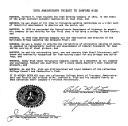
In honor of the High Steel Structures, Inc. 50th Anniversary, a tribute was received from LeTourneau College, Longview, Texas. In addition, the College honored Sanford High by conferring on him an Honorary Doctor of Science Degree in recognition of his outstanding business accomplishments.
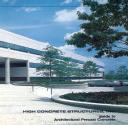
Formigli Corporation, a publicly-held Company later known as High Concrete Structures, Inc. of New Jersey, was acquired
in 1982. The plants in Williamstown Junction and Vineland were later closed as their product lines were exited.
High Industries, Inc. became involved in purchasing and growing small, local cable television systems in 1983 and formed High Cablevision in 1987. This vision provided the opportunity to divest these cable companies during the consolidation movement that has resulted in the very large cable companies that exist today.
High Steel Structures, Inc. received its first OSHA Star Designation in 1983. The STAR Designation is awarded to companies that have demonstrated excellence in their occupational safety and health programs.
On December 25, 1983, Sanford H. High, the founder of High Welding Company, passed away. With his vision, hard work, and perseverance, Mr. High started what has now become the High Family of Companies. He is remembered fondly by his family and others who knew him.
During 1985, High Investors, Ltd., was formed as an investment firm offering private real estate and venture capital syndications.
Williamsport Fabricators, Inc. was purchased as a High Steel Structures, Inc. facility in 1985. This was a perfect combination of the expertise of two well-established companies to increase market share and expand service to customers through increased volume and faster turnaround time.
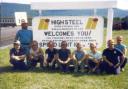
High Food Services, Ltd. was formed in July 1987, primarily to provide vended food and refreshment services for local businesses.
Cafeteria food services and catering were also offered. Rollie’s Refreshments, Inc. was subsequently purchased, providing immediate access to 150 accounts.
After years of growth and market domination, High was approached by larger acquiring companies and a decision was made to divest High Food Services, Ltd. in 2006.
High Employee Services, Ltd., a temporary employment agency, was created in September 1987 to provide temporary workers for clerical and light industrial jobs in the Lancaster community.
After expanding to four locations in Lancaster, York, and Cumberland Counties and serving its customers well, the Company was acquired by a larger organization in 2004.
High Communications Partnership was formed in 1987 to purchase radio properties in Virginia, North Carolina, and Kentucky, and was terminated as consolidations occurred.
American Helix Technology Corporation was started in 1988 to provide clients with
full-service creation, digital preparation, duplication, and packaging of compact disc products for the audio and computer industries.
This organization grew to a size that was attractive for others to acquire and was subsequently purchased by a Japanese company.
Until this time, the High organization was governed by a Board of Directors consisting of family members and senior management. In 1988, the first outside business leader was selected as a Director, beginning a trend toward the majority of outside business leaders who serve on the Board today.
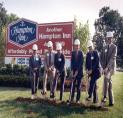
High Hotels, Ltd. was formed in 1988 to begin development and management of limited-service hotels. The first hotel, the 130-room Hampton Inn-Lancaster, was completed in 1989.
Steven D. High, Dale’s son, joined High Industries, Inc. as a Safety Specialist in 1989.
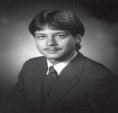
. .
by Ruth Ann Bailey
Ruthie began her employment with High Steel Structures, Inc. in 1982, and is currently working for High Hotels, Ltd.
My earliest memory is that of a woman working in a man’s world of welding. My supervisor and his crew in High Steel Structures, Inc. West Bay made my learning experience very good. Soon after I started, I had my hard hat and glasses on in the Plant One lunch room, where a gentleman was reading the bulletin board. He turned to me and asked how I liked working for High and if there was anything I needed to make my job easier. That gentleman was Mr. Sanford High, a man who cared about his people.
Another good memory was the First Aid Team trip to Allenberry Playhouse. It was in the late 1980s. Dale High was on the bus and I sat across the aisle from him. I thanked him for the trip. He just smiled and said how proud he was of the First Aid Team and all the time each one put into being true Brothers’ Keepers.
Then there was the open house at Greenfield Corporate Center. The old cars, giving people rides, and the bus shuttles to open companies. Calvin High was so proud of Greenfield Corporate Center.
Did my working with these people over the years affect my family? Surely, I raised a fine son and met many wonderful people. The lifestyle I enjoy is due to a wonderful working relationship with High.

Chet was employed by Greenfield Associates, Ltd. beginning in 1981, and retired in 1992.
One of my favorite memories focuses in the late 1980s. The Management Team felt the need for a statement of the High Ideals and Philosophy. The Team asked me to prepare a draft statement. After the draft statement was reviewed, the decision was made to send it to all of the High co-workers with a request to return responses.
Out of 600 co-workers, about 225 responses were received. There was much affirmation of the statement and a few suggestions about change. After revisions, a philosophy statement emerged - what we know today as The High Philosophy. This statement now hangs in High Company office group rooms, elevators, on desks, and it is printed on wallet-size laminated cards. It is used widely to describe The High Companies and how we work.
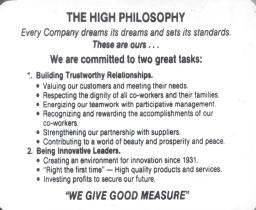
Dale had fun when The High Philosophy was first publicized, as he asked workers at a Company event if they had a High Philosophy card on them. If they did, they were awarded
a prize of $5. That little game got people thinking of the Philosophy. This statement is today part of The High Way training program and helps all to focus on High standards.
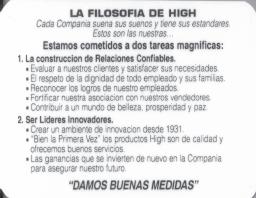
Because the message is so important to the High culture of inclusion, the updated card is also offered in Spanish.

In January of 1990, Greenfield Architects, Ltd. was formed to perform architectural services for High Companies as well as outside organizations.
The 1990s was a special decade for High Hotels, Ltd. Seven hotels opened during that time:
Hampton Inn-Harrisburg West in 1990.
Hampton Inn-York in 1992.
Hampton Inn-Reading was acquired and opened in 1994.
Homewood Suites-Harrisburg West in 1995.
Hampton Inn and SuitesAnnapolis, Maryland in 1997.
Hampton Inn-Middletown, New York in 1999.
Homewood Suites-Reading in 1999.
During 1991, Gregory A. High, Dale’s son, joined High Associates, Ltd. as Marketing Representative.
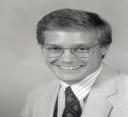
In 1992 Greg joined High Hotels, Ltd. where he has served in a number of leadership roles including Vice President - Development/Operations.
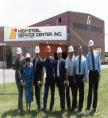
High Steel Service Center, Inc. broke ground on May 26, 1993, for a 52,000-square-foot addition. This larger facility gave the Company additional production capacity and the opportunity to add several new product lines.
On December 12, 1994, the High Industries, Inc. Board of Directors welcomed Steven D. High and Gregory A. High, third generation High family members, to its ranks.
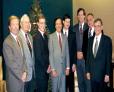
Board Members in December 1994 (from left to right): Tighe King, Jack James, Greg High, Dale High, Steve High, Kirk Liddell, Jack Kurtz, and Calvin High.
High Steel Structures, Inc. was awarded the Pennsylvania Governor’s Safety Award, named PENNSAFE. High Industries, Inc. was applauded for its long history of workplace safety.
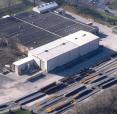
In the spring of 1997, the new Tee Bed Building was completed at High Concrete Structures, Inc. in Denver, Pennsylvania. The new building allowed HCSI to move a significant portion of its casting beds indoors, which created greater comfort for co-workers, increased productivity, and enhanced the product quality.
Second generation High family members were sought after to assume influential roles in the Lancaster community. The leadership of Dale High extended well beyond the High organization to include local Board memberships, among them Elizabethtown College, The Lancaster Chamber of Commerce and Industry, Lancaster County Community Foundation, and the Economic Development Company of Lancaster. In the 1990s, he was recipient of a number of awards, such as The Lancaster Chamber of Commerce and Industry’s Exemplar Award, the Central Pennsylvania Ernst & Young
Master Entrepreneur of the Year
Award, the Pennsylvania Chamber of Business and Industry’s Business Leader of the Year
Award, the Ernst & Young National Entrepreneur of the Year

Dale High receiving the Ernst & Young National Entrepreneur of the Year Award.
Award in Real Estate and Construction, and the Pennsylvania Dutch Council of Boy Scouts of America Distinguished Citizen Award.
Calvin High served for many years on the Boards of Directors of the Bank of Lancaster County, Economic Development Company, Lancaster Automobile Club, and Messiah College, and as a Trustee of the Historic Preservation Trust.
Calvin High retired from active management of High Industries, Inc. in 1997, and from its Board of Directors in 2003. He continues to be involved in real estate activities.
High Safety Consulting Services, Ltd. an Affiliate of High Industries, Inc., was started in October 1997, led by Steve High as President.
Construction was started on the Batch Plant and Architectural Building for High Concrete Structures, Inc. during 1999.
. . . by
Elizabeth Kennedy, wife of the late Howard Kennedy
Howard was employed with High Steel Structures, Inc. (formerly High Welding Company) for 29 years.
As the wife of a former employee of High, I remember . . .
...A happy smile on my husband’s face after he had gotten a job at High.
...A steady job with benefits and never any lay-offs. Overtime for years - by choice, of course! Means a lot to a man and wife who had four children and were paying for a home!
...Many times, my husband would come home and say Mr. Sanford High came around today just to talk and ask how things were going at home and on the job. I believe his employees meant a lot to him.
...Company picnics, Christmas banquets, Christmas bonuses, and best of all, profit sharing bonuses in the early spring.
I believe a man’s job should mean something more than just a place to spend eight hours a day. It should mean a job well done - receiving respect as well as giving respect to those in authority. I believe my husband was that type of man, as I am sure was Mr. Sanford High.
My husband retired in 1995 after working for 29 years at High, and passed away in 2002. I believe his motto would have been to everyone “You get what you give. Do your job well.”

In order to meet demands created by the passage of the Transportation Equity Act for the 21st Century (TEA-21), High Steel Structures, Inc., Plant Three (Williamsport) expanded its facility. A Paint Bay and Fabrication facility were added, along with expanding the existing office space, locker rooms, and cafeteria.
During 2000, High Steel Service Center, Inc. was the first High Company to achieve the ISO-9000 certification. This achievement is an international quality standard that only a small percentage of companies obtain. It is a slow, deliberate process, which involves a thorough review of the process and practice, and implementation of needed revisions.
High Industries, Inc. was named one of the Best Places to Work in Pennsylvania-2001.
In order to achieve this status, surveys were completed and the data collected was used to rank the participating companies. The award program was designed to identify, recognize, and honor the best places of employment in Pennsylvania - companies that benefit the State’s economy by growing its workforce and business base.
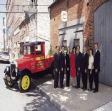
In 2001, the High Family was able to help preserve a part of its heritage and an important piece of Lancaster’s history by purchasing the property at 27 West Lemon Street, which housed High Welding Company when it first began.
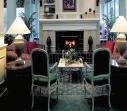
During 2002, a new Hilton Garden Inn was underway in Wilkes Barre, Pennsylvania, for High Hotels, Ltd.
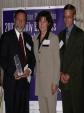
High Industries, Inc. was awarded the 2002 Family Business of the Year Award. This award is presented annually by the Wharton Enterprising Families Initiative of the Wharton School, University of Pennsylvania.
Businesses are evaluated on longevity, family involvement, uniqueness of its beginnings and vision, family relationships and structure, stewardship, professionalism, business practices, external relationships to the community, and performance.
High Hotels, Ltd. opened the Marriott Courtyard-Middletown, New York in 2003. This was the tenth HHL hotel, the first Marriott property in its portfolio.
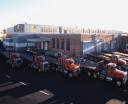
High Steel Service Center, Inc. celebrated two milestones in 2003. An Open House event was held in the new 58,000 squarefoot expansion of the facility, known as Bay Five, and twenty-five years in the service center business were acknowledged. The expansion allowed HSSCI to add new pieces of equipment, which significantly added to the processing capacity and opened up new markets for the Company.
The involvement of Dale High in the Pennsylvania Chamber of Business and Industry included a two-year term as Chairman of the Board. He was called to serve three Pennsylvania Governors on various task forces and advisory panels. His leadership in the central Pennsylvania community was recognized with the Rotary Club of Lancaster’s Community Service Award, the Business Achievement Award by the West Shore Chamber of Commerce and Commerce Bank, and the Elizabethtown
College Educate for Service Award –Service to Humanity. He was recipient of Honorary Doctorate Degrees from Elizabethtown College (Humane Letters) and Thaddeus Stevens College of Technology (Public Service).
High Steel Structures, Inc.-Lancaster became the first North American steel bridge building company to achieve ISO 9001:2000 certification. ISO certification recognizes world-class quality systems. The process leading to certification is lengthy, detailed, and a Company-wide effort.
High Concrete Structures, Inc. earned the 2003 Governor’s Award for Safety Excellence. The rigorous competition offers Pennsylvania employers a chance to showcase best practices in occupational safety and health and earn recognition for their efforts. One reason why HCSI was named a winner is the innovative practice of using employee teams to identify and correct potential safety hazards.
Sanford High was honored in 2004, posthumously, as one of America’s Top 100 Private Sector Transportation Design and
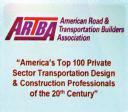
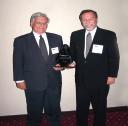
Construction Professionals of the 20th Century. This was presented by the American Road and Transportation
Builders Association (ARTBA) in recognition of his lifetime as a builder of trustworthy relationships and an innovative risk taker.
High Concrete Structures, Inc. leased a facility in Lebanon, Pennsylvania, for production of the CarbonCast™ line of products in 2004. CarbonCast is a lightweight, insulating precast product, developed by Altus Group, Inc., of which High Concrete Group is a part. HCSI now markets the CarbonCast line of products.
Concrete Technology, Inc. was acquired to form High Concrete Technology, LLC in November 2004. Its primary business is architectural concrete panels.
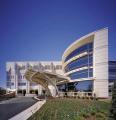
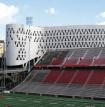
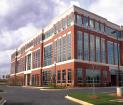
The Condell Building (above) is one of the High Concrete Technology, LLC projects completed in 2005.
During 2005, the real estate related companies, including High Hotels, Ltd., were organized under High Real Estate Group. A Board of Directors was elected, including Steve and Greg High. Dale’s daughter, Suzanne M. High, was elected to the Board of Directors of High Hotels, Ltd. Calvin High and Rick High serve on the Board of Directors of High General Corporation,

an entity responsible for the real estate assets owned within High Properties.
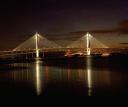
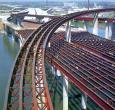
High Steel Structures, Inc. produced girders for the Arthur Ravenal Jr. Bridge across the Cooper River in Charleston, South Carolina, which opened in 2005, a year ahead of schedule. At three and one-half miles long, this eight-lane structure is the longest cablestay bridge in North America.
High Concrete Group produced the first CarbonCast multi-unit residential system for Habitat for Humanity. The threebedroom duplex was built in West Chester County, Pennsylvania.
In addition to its traditional markets, High Real Estate Group entered into retail development with construction of High Pointe Commons in Harrisburg, Pennsylvania.
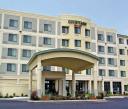
High Hotels, Ltd. opened the Courtyard by Marriott-Lancaster in August 2005, the second Marriott property in the HHL portfolio.
Effective January 1, 2006, W. Thomas Kennedy III was named President of High Industries, Inc., marking the first time that this Company was led by a nonfamily member.
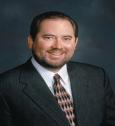
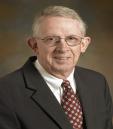
Nevin D. Cooley was named President and Chief Executive Officer of High Real Estate Group, LLC.
Dale High continues as Chairman of the Board of both organizations.
High Steel Structures, Inc. was featured on The History Channel as part of its Super Tools series in March 2006. This particular segment called Bridge, showed HSSI’s process of fabricating and transporting the 20-ton girders for the Woodrow Wilson Bridge project in Washington, D.C. Shipping of the bridge components is expected to be completed in early 2007.
by Zelda A. Rowley
Zelda began her employment in 2005, during the pre-opening of the Courtyard by Marriott-Lancaster.
I am a houseperson at the Courtyard by Marriott-Lancaster. I am privileged to have been a member of the “opening team”. Having never worked in the hotel business, this was a whole new experience for me. It has been a most rewarding and personally fulfilling endeavor. With the help of team-building
workshops and training sessions, we became not just co-workers, but friends. What began as a group of more than 40 individuals, very quickly evolved into The Courtyard Team.
What I found particularly remarkable was the fact that although these individuals would be working in various positions when the hotel opened - as chefs, front desk attendants, housepersons - I never once heard, “That is not my job.”
One of the first things I noticed was the appreciation we received from all of our supervisors and managers. They never failed to thank us for a job well-done or inquire as to how we were doing. Dayby-day, we made progress.
The hotel opened earlier than planned. For all of our hard work and effort, we now have a beautiful hotel. Co-workers are now working in their respective positions, but we still pull together to get the job done.


Today, all of the High Companies positively impact the communities in which they are located, by being good Corporate citizens, faithfully and consistently serving customers, and providing stable employment for hundreds of workers. The High Family of Companies has been listed among the top privately-owned companies, as compiled by the Central Pennsylvania Business Journal, since 2001, and as the Number One privately owned business for the past four years. Company growth can be attributed largely to the philosophy which was set down in the early years – that of giving good measure, as well as the faith, vision, innovative aspirations, and hard work of the founder, the
family leaders who have followed him, and the scores of co-workers who have served on the High team over the past 75 years.
S. Dale High, who took the reins of High Industries, Inc. in 1977, had the foresight to carefully plan for the continued growth and transition of the organization going forward, even beyond his own lifetime. The High Family Council was formed to chart the Company’s future and to ensure that ownership would smoothly pass to future generations.
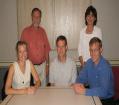
The High Family Council Back Row: S. Dale High and Sadie H. High. Front Row: Suzanne M. High, Steven D. High, and Gregory A. High.
The High Family Council developed its Mission statement:
The High Family Mission is built on core values. Our mission is to share these values and an ethical family awareness with future generations. We will integrate these values into our lives and the High Family of Companies. We will also support our community, nation, and world, by acting as contributing citizens of our society.
The High Family Council has also identified its business purposes:
To identify and develop (in cooperation with the Boards of Directors of High
Industries, Inc. and High Real Estate Group, and the Executive Committee) the family governance responsibilities.
To develop and communicate broad guidelines of family expectations for the Boards of Directors.
To communicate and discuss businessrelated issues so that all family shareholders are informed owners.
To understand and support the future strategic direction of the Companies.
To align the interests of the family and speak with one voice to the Boards of Directors.
To ensure the continuity of the Companies within the High Family of Companies.
The work that has gone into thinking through and developing these and similar documents is testimony to the leadership and commitment of Dale High as Board Chairman, and The High Family Council to continue the 75-year tradition of the organization.
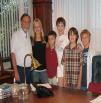
Dale hosted an orientation program about The High Companies for a number of his grandchildren (fourth generation).
Through development of well-planned strategies by the High Family Council and the respective management teams, all of the High Companies continue to have a solid base, grounded in The High Philosophy.