

From fitting to flourishing
Your expert guide to adapting to life with hearing aids
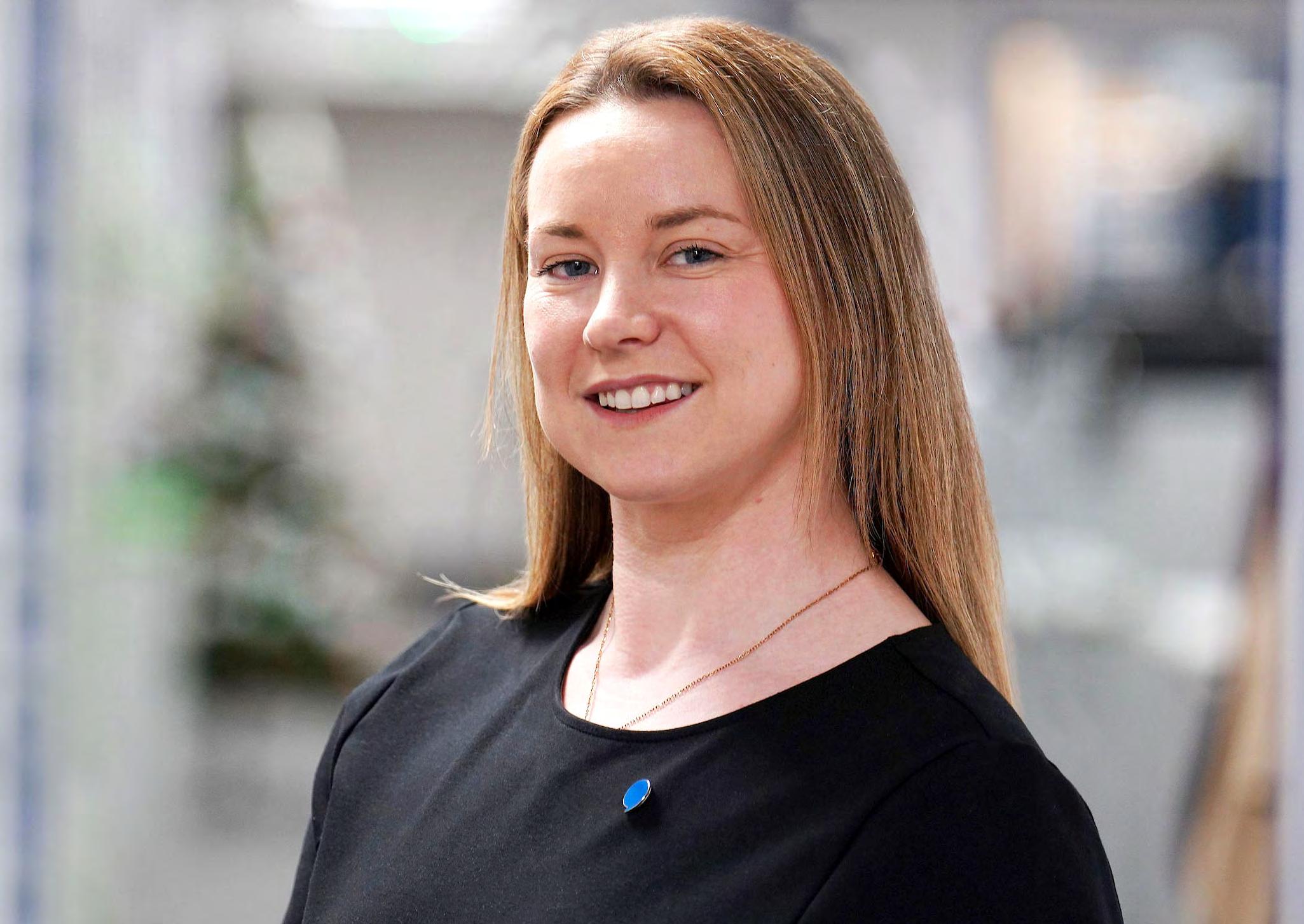
Laura Ewen has spent nearly 20 years helping people rediscover the sounds they love.
As Head of Audiology at Hidden Hearing and a Board Director of the British Society of Hearing Aid Audiologists (BSHAA), Laura believes better hearing changes everything. From leading expert teams to creating personalised care plans, she is passionate about making hearing solutions life changing so everyone can flourish with confidence.
Fitted isn’t finished
Welcome to the start of your journey to better hearing
Congratulations on having taken the first step towards better hearing! Acting on hearing loss is one of the most important decisions you can make for your health, confidence, and quality of life.
Many people don’t realise that, although getting your hearing aids fitted is a major milestone, it’s not the finish line. Nearly half of people fitted with hearing aids expect them to work immediately, like a pair of glasses, which isn’t always the case.
In my experience, successfully adapting can take time and getting the right support from your audiologist is important.
Your brain needs time to adjust, and your hearing aids will need fine-tuning – not just for your ears, but for your lifestyle. After all, you know better than anyone the situations where your hearing matters the most!
We designed this guide for anyone who wants help adapting to life with hearing aids, and for those wondering what to expect from a
professional hearing care experience. And inside, you’ll find practical tips, expert insights, and clear advice on how to adjust to your hearing aids.
At Hidden Hearing, we’d like to see more people who have been fitted with hearing aids flourishing and rediscovering the sounds they love. It’s our mission to help more people hear better and we want you to keep living the life you love.
Don’t give up:
hearing aids shouldn’t end up in a drawer
Getting hearing aids is a big step – one that can be truly life changing.
What we’ve learnt
We commissioned a nationwide survey1 to better understand how people use their hearing aids. The research involved over 2,000 hearing aid users, and looked at different groups to understand why some people successfully adapt to hearing aids, and some find it harder and give up.
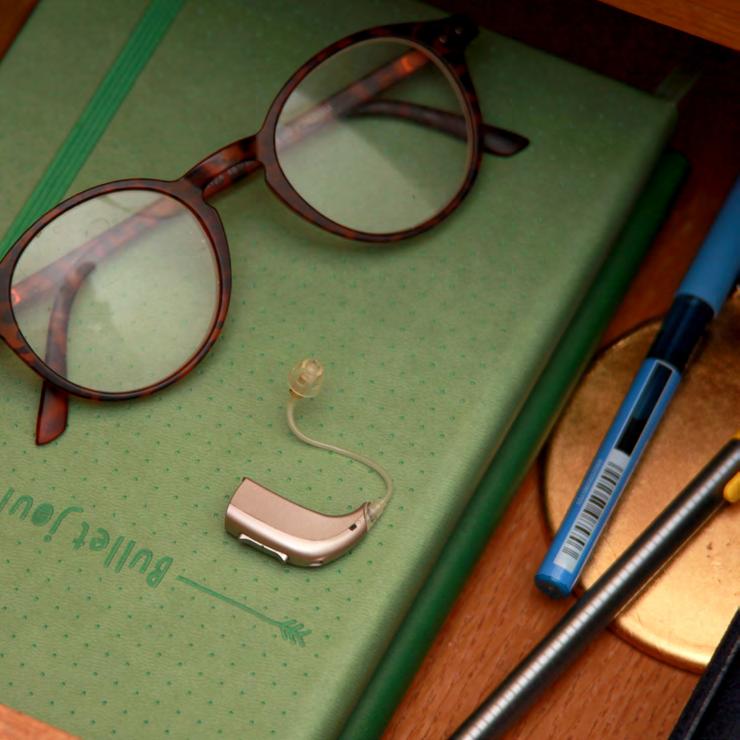
Our extensive research shows that people who don’t wear their hearing aids as recommended decide, on average, just eight days after their fitting that they’re unlikely to persevere. Many of these people would have waited for years to seek help, but their hearing aids end up in a drawer little over a week later.

“That first follow-up appointment was so important – the audiologist added a speech mode it was like another power tool to have.”
– Ian Jones, Leigh-on-Sea, verified customer
Here’s what we found
of those who gave up had already decided during their fitting appointment itself that they were unlikely to wear their device as recommended.
expected their device to work immediately like a pair of glasses.
experienced at least one challenge early on –but 87% say these challenges could have been overcome with better support.
of people who wear their hearing aids consistently say their aids improve their quality of life, boosting their confidence, social life, and relationships, as well as helping in their career.
We help thousands of people with their hearing each year and, with over 50 years’ experience in hearing care, we know that successful hearing aid use isn’t just about the fitting, it’s about what happens next.
During those first few weeks, your brain and ears need to relearn how to work together again.
This takes time, consistency, and support – and that’s completely normal.
“Don’t give up on your hearing aids; with the right support, they can transform your life.”
Tessa Sanderson CBE
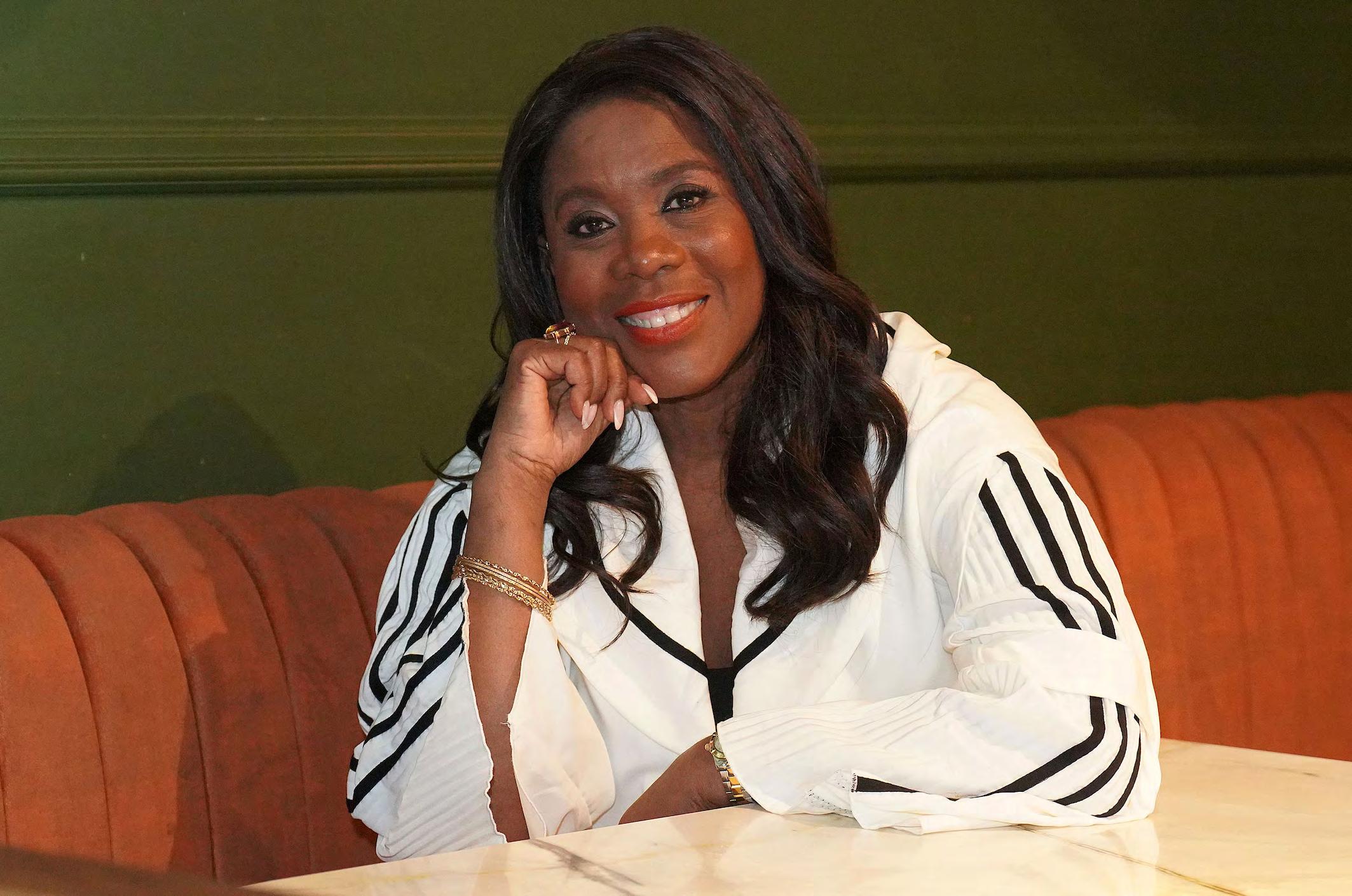
Tessa’s story
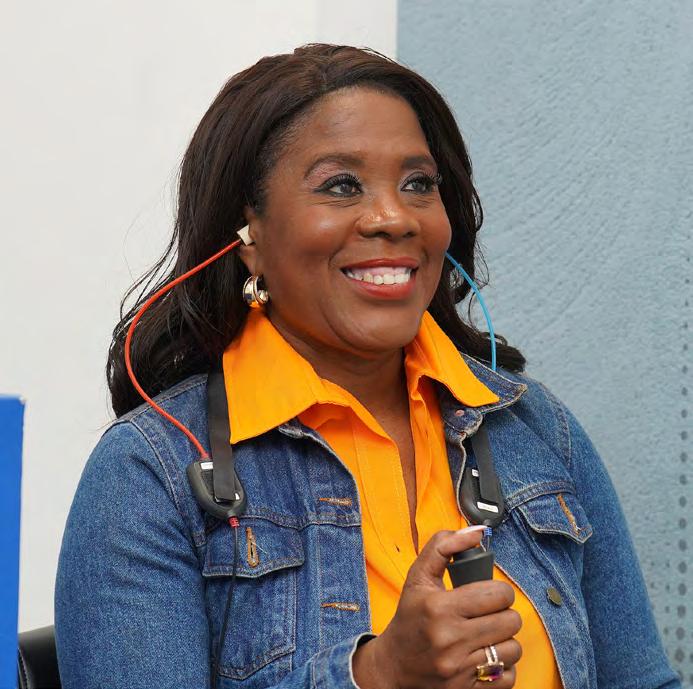
WhenTessa Sanderson CBE, Olympic champion, President of the charity Women in Sport and motivational speaker, was first fitted with hearing aids in 2016, she thought her hearing struggles were finally over. “I assumed it would be like getting glasses – instant clarity,” she says.
But instead of relief, she faced
disappointment. The sound was distorted, the devices were uncomfortable, and nobody explained that success takes time. “I wore them less and less. Eventually, I shoved them in a drawer and considered giving up completely.”
For someone who had built a life on confidence and connection, the impact was huge. She felt anxious,
self-conscious, and exhausted from straining to hear. Even at home, simple conversations were a challenge. “It was incredibly hard to face the prospect of losing this part of my life.”
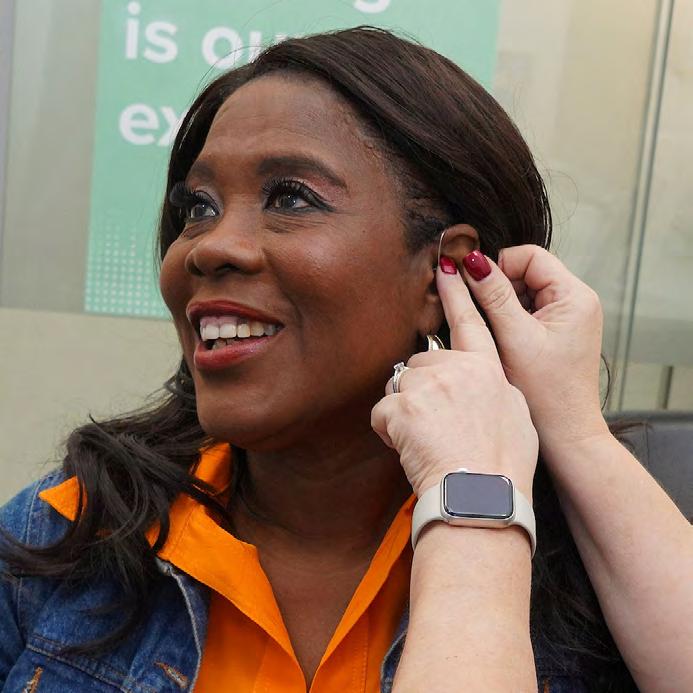
Everything changed when Tessa walked into her local Hidden Hearing clinic in Loughton. From the moment she arrived, she felt supported. Her audiologist Sue didn’t just fit her hearing aids and
send her away; she took time to explain what to expect, why things might feel strange at first, and how small adjustments could make a big difference.
Instead of a one-off appointment, Tessa had regular follow-ups where the sound was fine-tuned until it felt natural. She learnt how to use features that suited her busy lifestyle, like Bluetooth® for calls and TV, and received practical tips for handling background noise at large events.
Most importantly, she had someone who listened and reassured her every step of the way. “I call Sue my ‘Hearing Coach.’ She gave me the tools and encouragement I needed. I’ve retired from competition, not from life. My hearing aids keep me in the action and connected, every single day.”
Tessa’s advice to anyone who might be feeling the same early frustration:
“Better hearing isn’t
instant. Stick with it,
pester your audiologist, and let them guide you. It’s not just about the fitting, it’s about the journey. And the right care changes everything!”
Our experts’ top tips for adapting to hearing aids
“You might be aware of the hearing aids in your ears initially, but this usually fades with time.”


LAURA EWEN, HIDDEN HEARING HEAD OF AUDIOLOGY
RICHARD MASON, HIDDEN HEARING AUDIOLOGIST

ROSIE AYLWARD, HIDDEN HEARING AUDIOLOGIST
“Everyday noises – like birds singing or the rustle of a newspaper – may feel unfamiliar or distracting at first, but this will improve as you adjust.”
“Do not hesitate to get in touch with your hearing care professional if you have any queries or concerns. It’s natural to need help early on!”
“Wear your hearing aids regularly. The more you use them, the faster your brain will adapt to them and you’ll be able to enjoy the full benefits of hearing aids.”
“It’s important to establish what your hearing goals are. For example, maybe you want to hear your favourite TV show more clearly, or be able to hear your grandchildren at the dinner table.”
“Be patient with yourself. Your brain is relearning how to process sounds, so it’s normal to feel tired or overwhelmed at first.”
“Tell friends and family you’re adjusting to using a hearing aid. They can give you feedback & support.”
TOP TIPS AT A GLANCE
Start small, build up
Begin with quiet settings, then expand to more challenging environments.
Don’t give up too soon
Adaptation can take several weeks.
Keep notes
Bring feedback to your follow-up appointments.
Ask for help
Adjustments are part of the process.
Be kind to yourself
Celebrate small wins.
“The key to early success was following my audiologist’s advice.
I wore my hearing aids from day one, as long as I could each day. Now, I put them in when I wake up and don’t take them out until bedtime. At first, one aid felt a little uncomfortable, but that was quickly sorted at my ten-day follow-up. We changed the tubing size, and I haven’t looked back.”
– Steve Urry, Barnstaple, verified customer

Familiarising yourself with hearing aids
Every new hearing aid user goes through an adjustment period, and that’s completely normal. Any challenges aren’t signs of failure; they’re simply part of reconnecting with the world around you. With time and support, these changes lead to clearer, more confident hearing.
You might notice some of the following:
Everyday sounds feel “too loud” or “sharp”
Why it happens: Hearing aids restore missing sounds instantly, so things like clinking dishes, rustling paper or even ticking clocks can feel too loud or overwhelming at first.
The science: This is called auditory acclimatisation –your brain needs time to recalibrate.
What helps: Wear your hearing aids consistently. Within weeks, your brain will normalise these sounds. If things still feel uncomfortable, your audiologist can adjust the amplification settings or fine-tune specific frequencies.
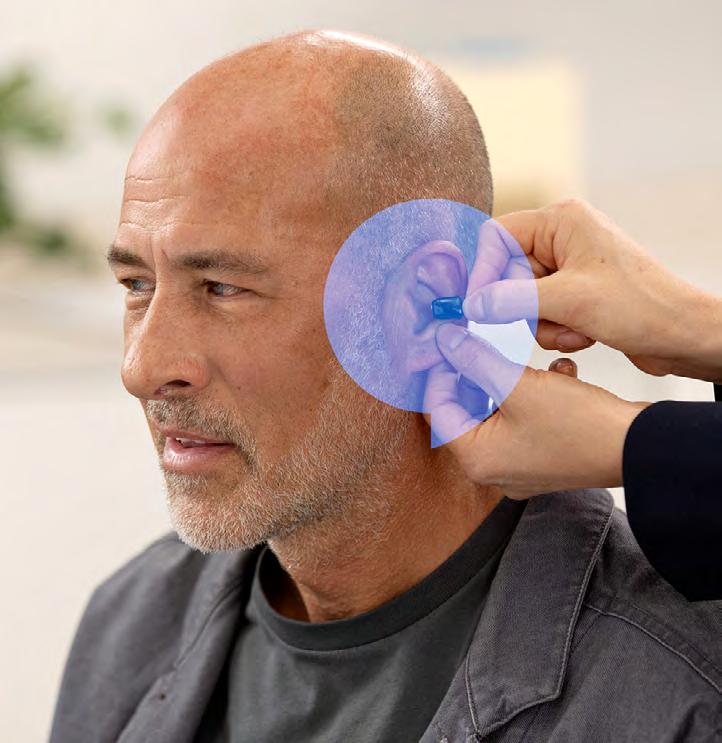
Background noise feels overwhelming
Why it happens: When hearing aids restore more sound, your brain needs time to relearn how to separate speech from background noise.
The science: Modern hearing aids use advanced noise reduction, but adaptation is still key.
What helps: Start wearing your aids in quiet places first before trying noisier situations. If you still find noisy places difficult after a few weeks, your audiologist can adjust settings or even activate special programs for challenging listening environments.
Your own voice sounds different
Why it happens: Hearing aids not only amplify external sounds but also the resonance of your own voice, making it feel “echoey” or “boomy” at first.
The science: This is known as the occlusion effect, and it’s common with newly fitted hearing aids.
What helps: Your audiologist can adjust venting or programming to reduce this effect. It usually improves as you adapt.
Feeling selfconscious
Why it happens: Many people worry others will notice their hearing aids or judge them.
The reality: Modern hearing aids are discreet and, often, almost invisible. Most people won’t even notice; they’re much more likely to notice the improvement to your hearing and confidence.
What helps: Focus on the benefits: clearer conversations, less listening fatigue, and reconnecting with life. Your confidence will grow as hearing aids become part of your routine.
Mild discomfort, or being aware of the device
Why it happens: Your ears aren’t used to having anything behind and/or inside them.
The reality: Physical adaptation takes time, just like wearing new glasses.
What helps: If discomfort continues, your audiologist can adjust the fit, change the dome or mould, or recommend a different style. Comfort should never be a long-term issue.
Why it happens: Adapting to hearing aids takes time. Everyone’s hearing is different and you may have needed help for years.
The reality: Your brain is relearning how to hear sounds that it may not have had proper access to for years. Plus, you’ll be getting used to wearing something behind and/or in your ear.
What helps: If things don’t feel right, reach out to your hearing care professional. They can make further adjustments and give you personalised support.
First month success plan
Your roadmap to better hearing
Start with a wish list of what you hope to achieve with better hearing. Think about the situations or environments that you’d like your hearing aids to help you with the most.
Review this as you go – both on your own and with your audiologist – identifying the small and big wins to help you on your journey.
For many people, if their first month of hearing aid use doesn’t go as well as they’d hoped, their hearing aids will end up in a drawer.
But during this first month, your brain is relearning sounds, and your hearing aids will need to be fine-tuned accordingly.
A good hearing care provider should offer personalised aftercare, so you can get the support you need every step of the way.
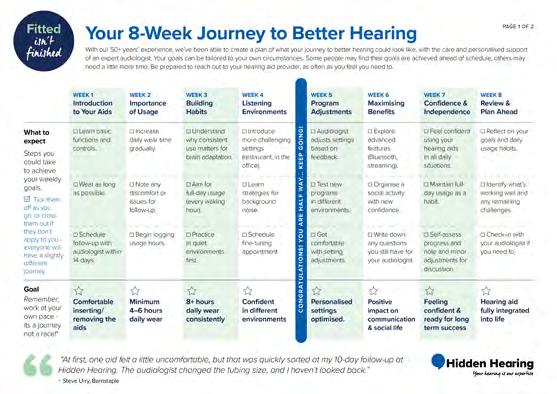
Use your 8-week planner to keep track of your progress

“I heard my cat’s squeak for the first time when I first got home with my new aids. Little things people take for granted – they mean everything.”
– Karen Hill, Maidstone, verified customer
Small steps can build confidence
• Practise putting your aids in with your audiologist.
• Wear your hearing aids for as long as possible every day.
• Expect some sounds to feel “too loud” or “different” – this is normal as your brain adjusts.
• Book your first follow-up appointment (within 14 days of fitting).
Tip from our experts: If you experience any acute feelings of discomfort, contact your audiologist for immediate support.
Add in social situations
• Try wearing your aids in different listening environments.
• Keep a journal of what feels good and what doesn’t.
Insight: People who adapt faster don’t avoid challenging environments – they ease into them gradually.
Fine-tuning time
• Share your notes, concerns and successes with your audiologist –it will help them make the right adjustments.
Why this matters: Hearing aids aren’t “one-size-fits-all.” There are millions of possible configurations; a good hearing care professional will keep adjusting your aids until they work better for you.
Open up a world of sound
• Test your hearing aids in different listening environments (such as restaurants or being outdoors).
• Celebrate your progress – notice any sounds you’ve regained.
Tip from our experts: If you’re still struggling, don’t wait to call your audiologist. With the right care and adjustments to your hearing aids, it’s still possible to achieve the comfort and clarity you need.
Your handy planner can be found on the next pages
Fitted isn’t finished
Your 8-Week Journey to Better Hearing
With our 50+ years’ experience, we’ve been able to create a plan of what your journey to better hearing could look like, with the care and personalised support of an expert audiologist. Your goals can be tailored to your own circumstances. Some people may find their goals are achieved ahead of schedule, others may need a little more time. Be prepared to reach out to your hearing aid provider as often as you feel you need to.
If you need extra help on your better hearing journey, visit hiddenhearing.co.uk/customer
WEEK 1
Introduction to Your Aids
What to expect Steps you could take to achieve your weekly goals.
☑ Tick them off as you go, or cross them out if they don’t apply to you –everyone will have a slightly different journey.
☐ Learn basic functions and controls.
☐ Increase daily wear time gradually.
☐ Understand why consistent use matters for brain adaptation.
Remember: work at your own pace –it’s a journey not a race!
☐ Wear as long as possible.
☐ Schedule follow-up with audiologist within 14 days.
☐ Note any discomfort or issues for follow-up.
☐ Log usage hours.
☐ Aim for full-day usage (every waking hour).
☐ Practise in quiet environments first.
☐ Introduce more challenging settings (restaurants, in the office).
☐ Learn strategies for background noise.
☐ If required, settings to be adjusted.
☐ Explore advanced features (Bluetooth, streaming, etc.).
☐ Test new programs in different environments.
☐ Organise a social activity with new confidence.
☐ Feel confident using your hearing aids in all daily situations.
☐ Maintain fullday usage as a habit.
☐ Reflect on your goals and daily usage habits.
☐ Identify what’s working well and any remaining challenges.
☐ Note any new sounds you hear.
☐ Get comfortable with setting adjustments.
☐ Write down any questions you still have for your audiologist.
☐ Self-assess progress and note any minor adjustments for discussion.
☐ Check-in with your audiologist if you need to.
“At first, one aid felt a little uncomfortable, but that was quickly sorted at my 10-day follow-up at Hidden Hearing. The audiologist changed the tubing size, and I haven’t looked back.”
Notes & Logging Area
NAME
WRITE DOWN YOUR GOALS AS AGREED WITH YOUR AUDIOLOGIST. TASK 1
“Better hearing would allow me to…”
Add a few words about what improved hearing could help you enjoy, like birdsong or clearer phone conversations.
If you need extra help on your better hearing journey, visit hiddenhearing.co.uk/customer
TYPE OF HEARING AID
Note any discomfort or issues for follow-up
Usage hours
You should be increasing your usage over time. TASK 2
START DATE
2
TASK 4
What changes have you noticed since any audiologist’s adjustments?
TASK 5
Identify what’s working well and any remaining challenges
TASK 6
Reflect on your original goals
Use this to check-in with your Audiologist.
TASK 3
Make a note of places where hearing felt easier or harder
Think about places where you have been recently where you feel your hearing has got better or where you are still experiencing challenges (e.g. noisy restaurants, group conversations).
I regretted giving up on my first set of hearing aids. But with Hidden Hearing’s help, I tried again and learnt what steps to take. Thanks to their guidance, I was able to hear my 6-monthold kitten for the first time.”
– Karen Hill, Maidstone, verified customer
What to expect from Hidden Hearing
We helped over a quarter of a million people last year with their hearing care needs, and we’re here for you too.
Love your ears with our personalised hearing care
Your hearing is as unique as your fingerprint, which is why we’ll make sure that your journey to better hearing is completely tailored to you and your hearing needs.
Hearing care experts
Our years of experience fuel our commitment to truly personalised hearing care and help more people hear better.
Innovative technology
We believe the best hearing solution is one that’s personalised to you.
Total commitment to your aftercare
Providing ongoing care and support means we can continue to personalise your hearing journey long after your first appointment.
We make all our customers a simple promise: we’ll help you rediscover the sounds you love in 60 days, or we’ll give you your money back.

From fitting to
flourishing
We hope you’ve found this guide helpful and that you’re feeling more confident about your hearing journey. Getting the right support is vital for flourishing with hearing aids.
Need extra help or advice on your better hearing journey?
Visit hiddenhearing.co.uk/customer to find out more or call 0800 740 8796 to speak to our customer services team.

As of February 2026