In 2025, experts project that over 2 million Americans will hear the life-altering words: You have cancer. And by 2040, the National Cancer Institute estimates that 26 million people in the U.S. will be living with the disease — a staggering number that underscores cancer’s growing toll.
What is even more alarming is who cancer is striking. While it has long been considered a disease primarily affecting older adults, the latest data tells a different and more troubling story: Earlyonset cancers — those diagnosed in people under 50 — are on the rise. “Cancer diagnoses continue to climb, especially in young adults,” says Howard S. Kaufman, MD, MBA, regional medical director of Huntington Cancer Center, an affiliate of Cedars-Sinai Cancer, and executive medical director of cancer services and surgical growth. According to the American Association for Cancer Research, rates of highly screenable cancers — like breast, cervical and colorectal cancer — are climbing fastest among younger individuals. The shift is not only statistically significant, but also life threatening: Colorectal cancer is now the leading cause of cancer death in men under 50 and the second leading cause in women of the same age group.
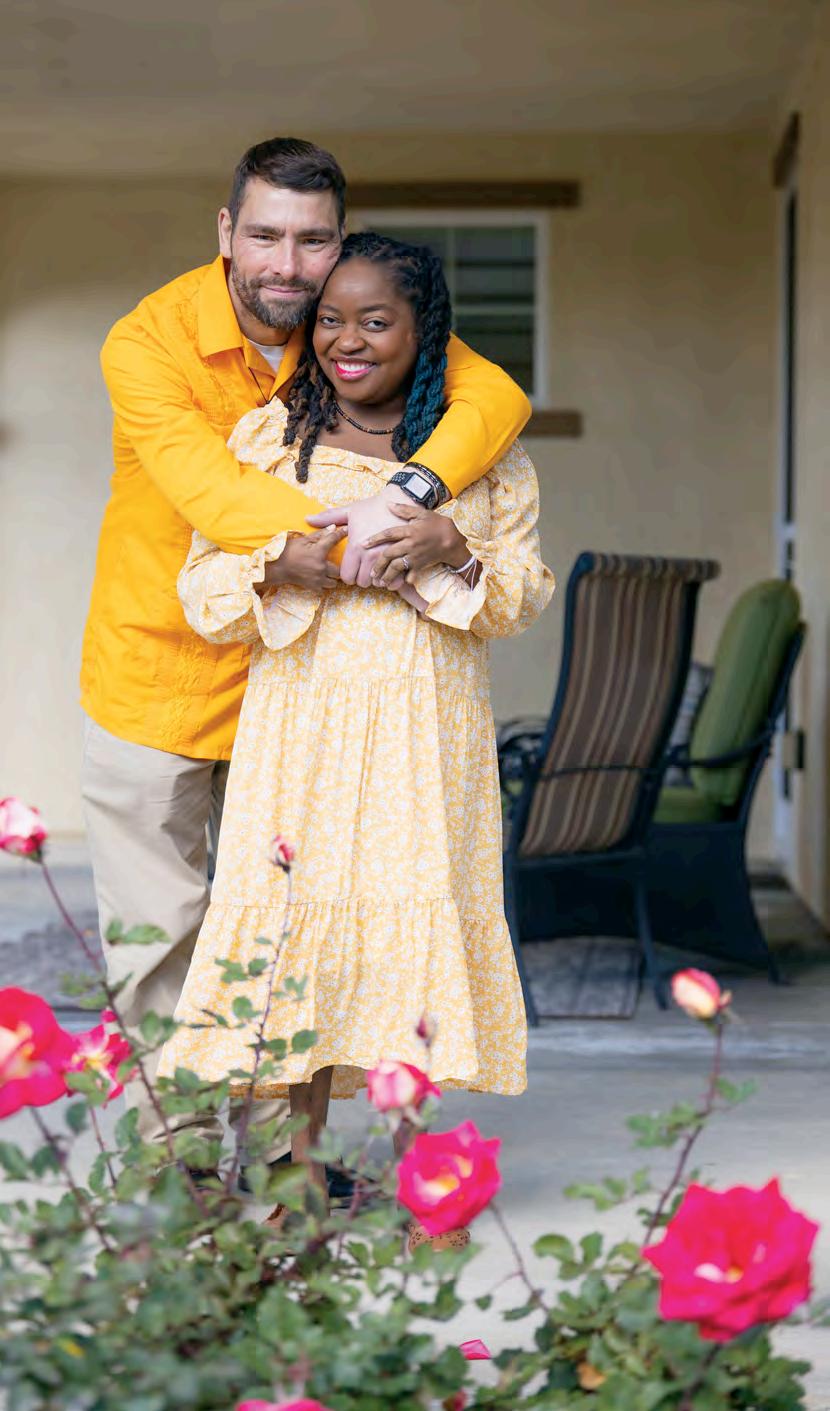
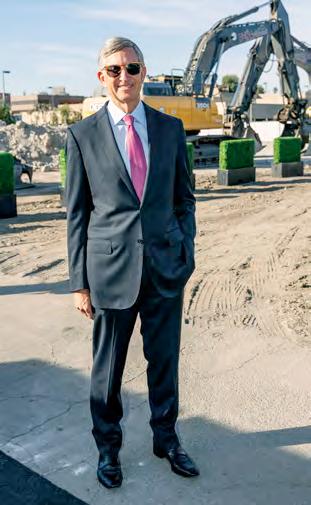
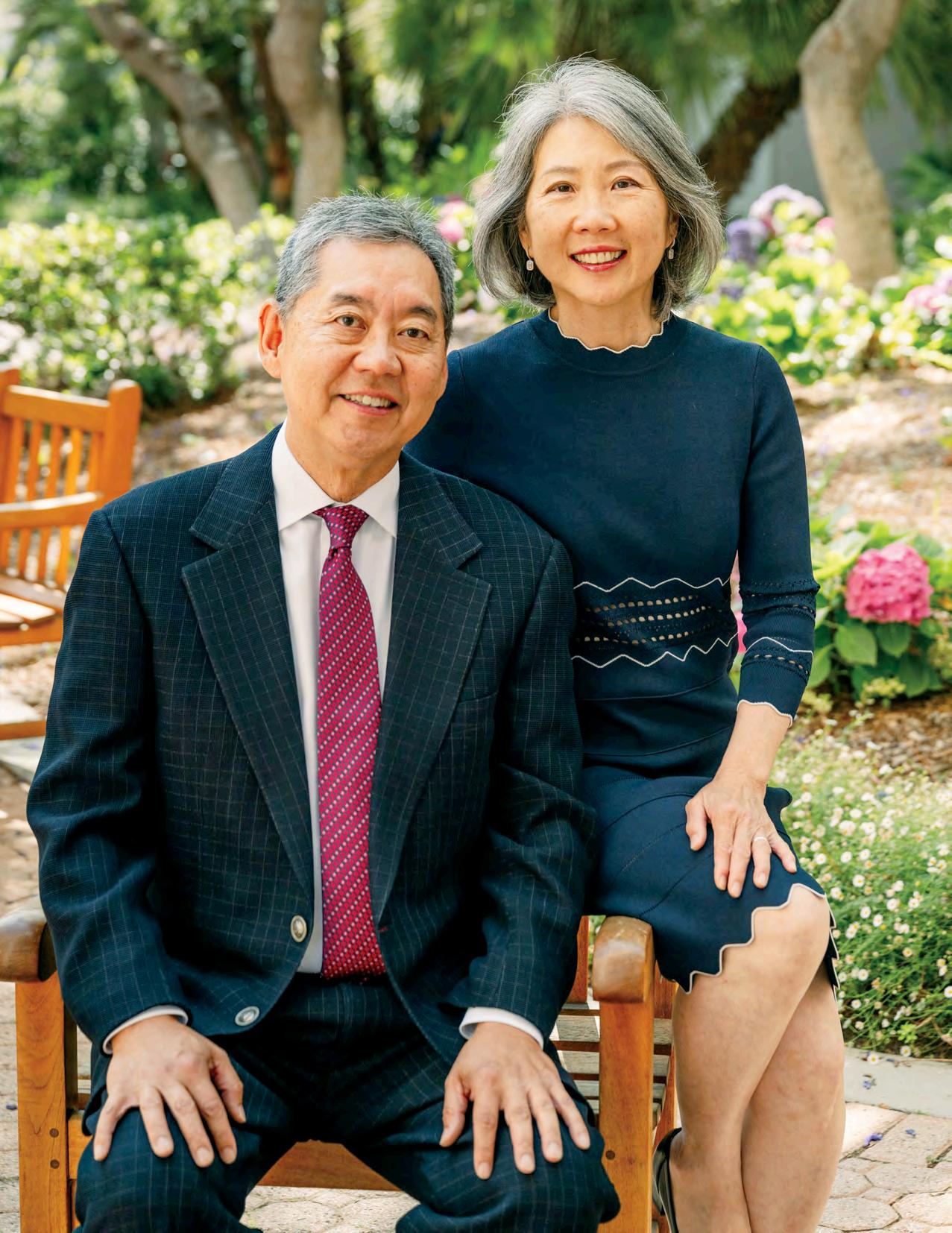
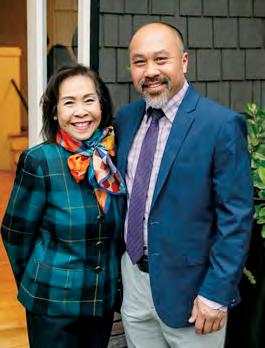
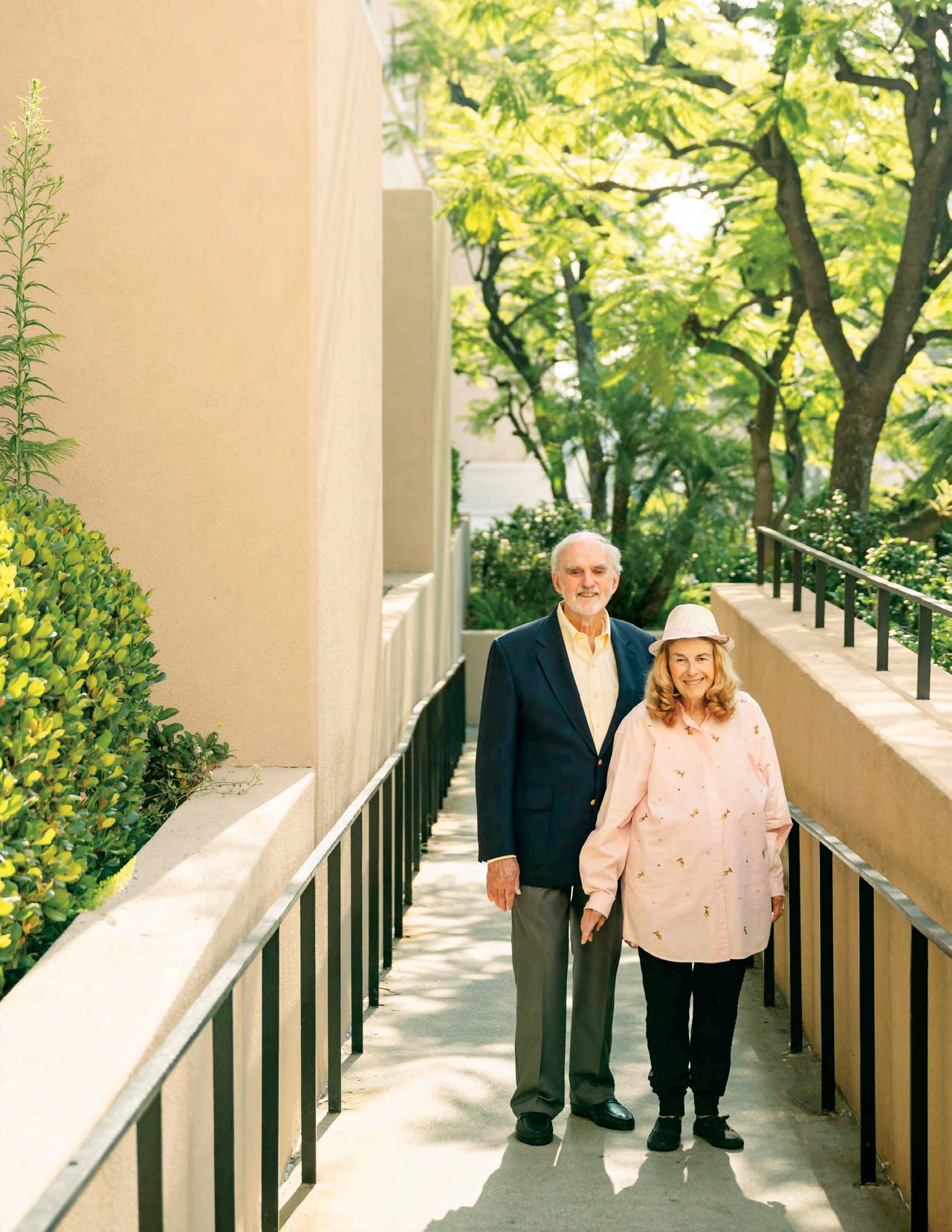
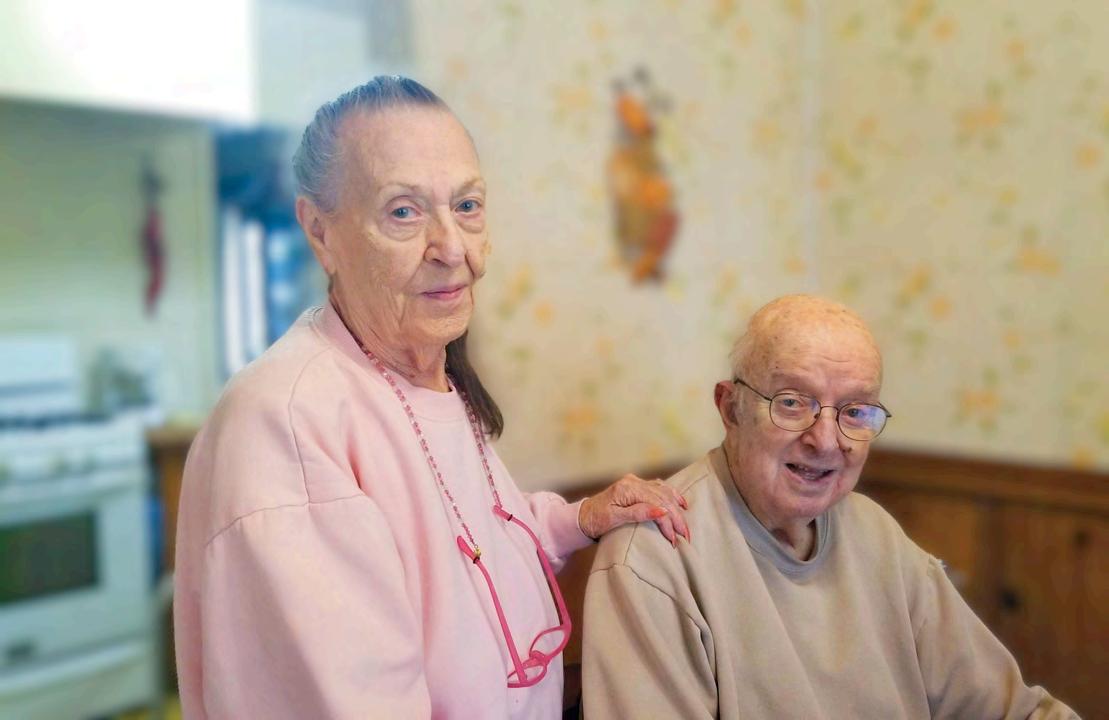
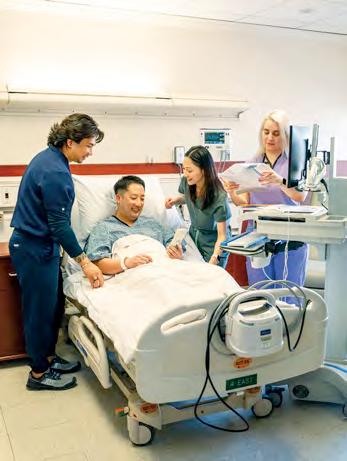
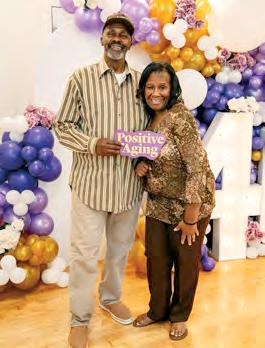
When a colonoscopy revealed that Michelle Usher (pictured with her husband, Jeremiah) had stage 2 colon cancer, she was immediately referred to Huntington Cancer Center, an affiliate of Cedars-Sinai Cancer. Her surgery was successful, and she was able to go home the next day to start the recovery process. The Terri and Jerry Kohl Medical Pavilion will expand access to essential cancer care for patients like Michelle — right here in the San Gabriel Valley.
A BEACON OF HOPE AND HEALING
To meet the growing demand for advanced cancer care, we are expanding our presence right here in Pasadena. At the heart of this effort is our new Terri and Jerry Kohl Medical Pavilion: A 100,285-squarefoot, state-of-the-art facility designed to be a beacon of hope and healing. This welcoming space will offer expert specialty care services, helping us better serve our community today and for generations to come.
Healing happens at home.
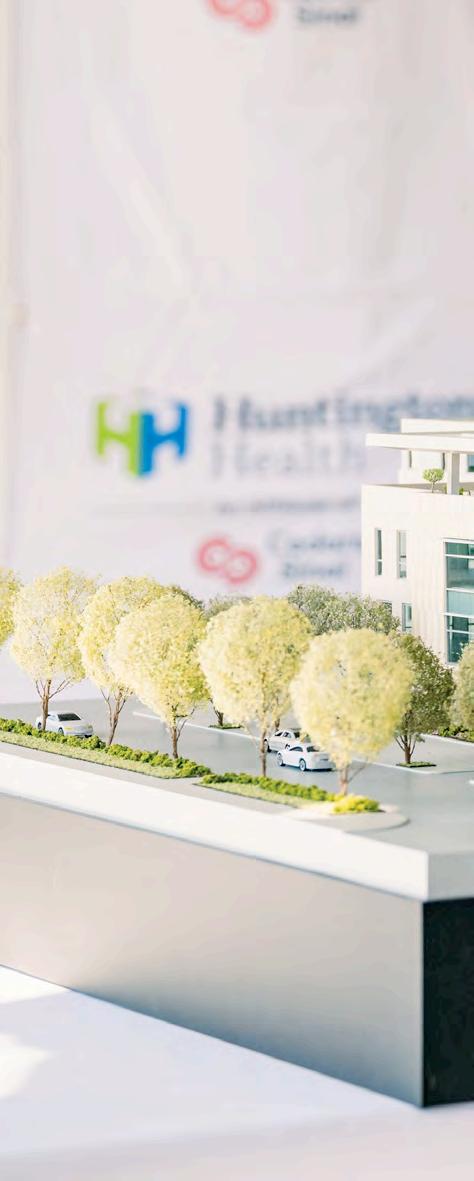
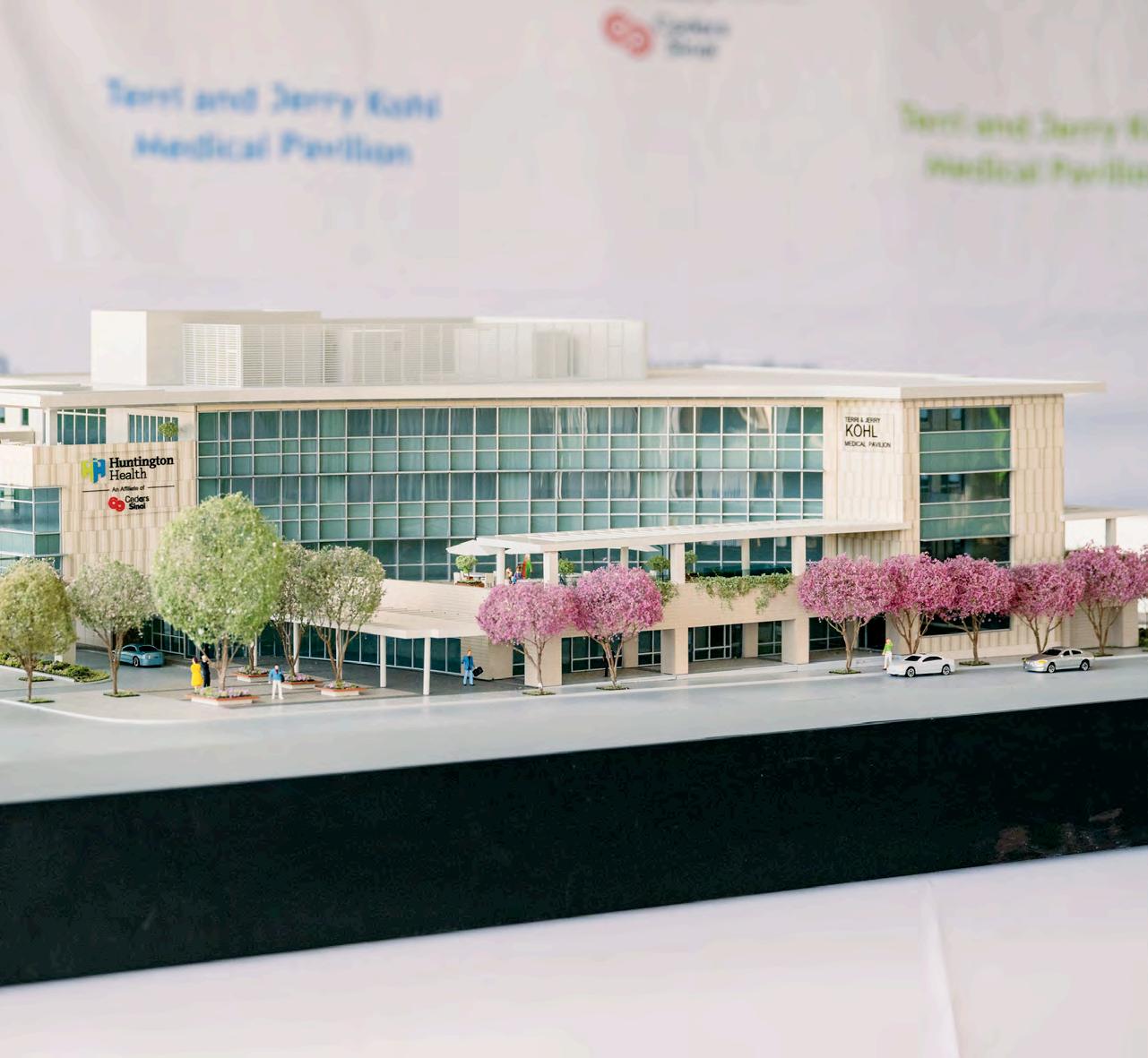
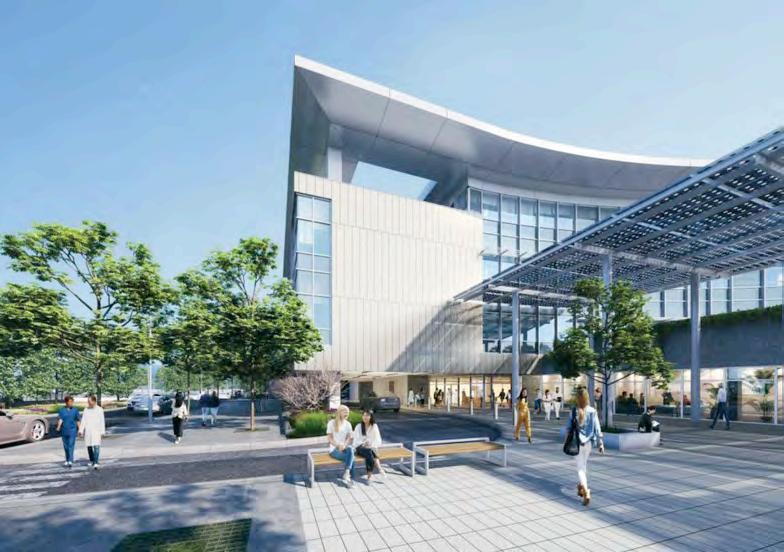
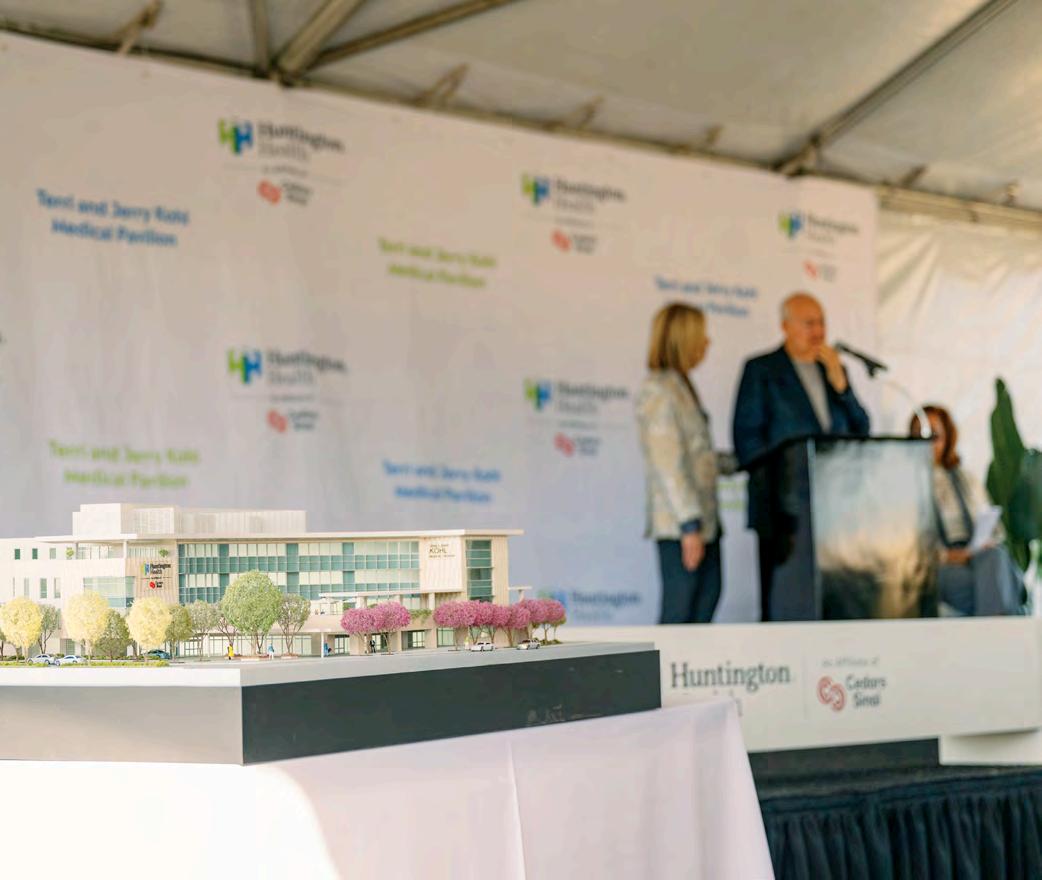
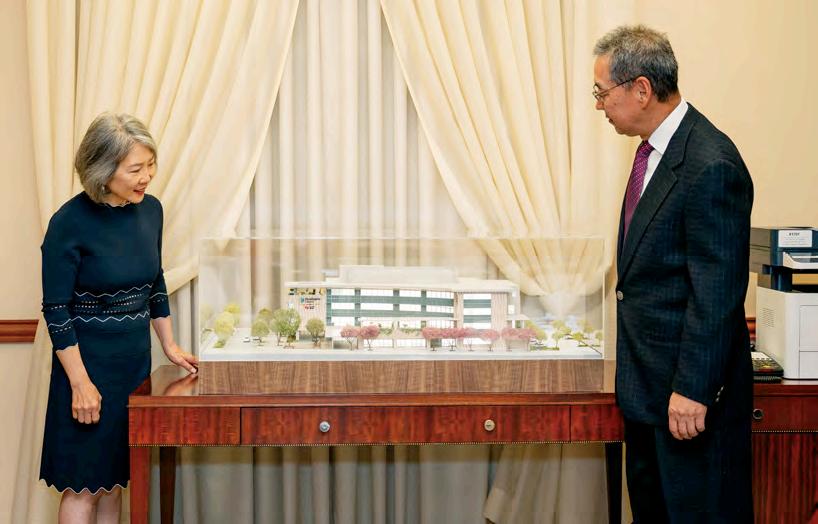
A model of the Terri and Jerry Kohl Medical Pavilion, unveiled at the October 2024 groundbreaking event, highlights the sleek, yet welcoming design of the four-story building.
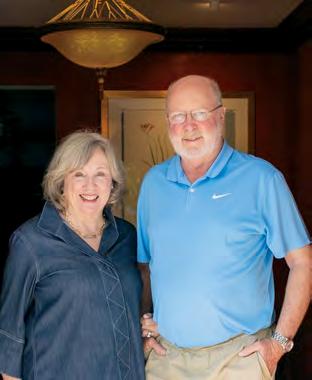
Shelley Allen and Bob Kohorst Champions from the beginning.
“Our parents were impacted by cancer so we recognize that it poses a risk for everyone. We want everyone in Pasadena to have access to cancer care — without having to drive far to get it.”
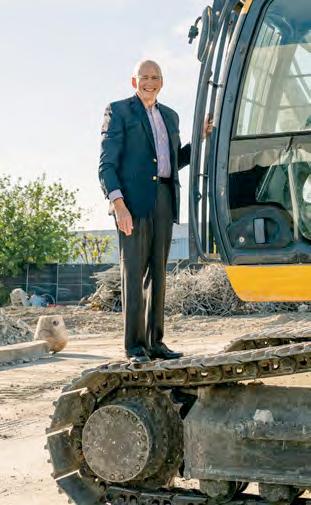
David Kirchheimer Devoted steward.
“I’ve seen how Huntington provides exceptional cancer care, from screening and diagnosis through treatment and supportive services. By enhancing Huntington Cancer Center, we will be able to take this care to an even higher level.”
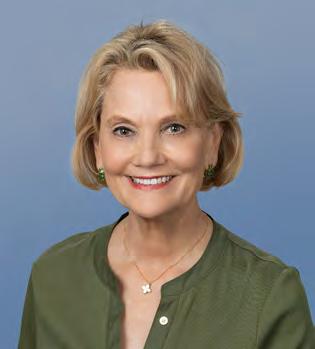
Jaynie Studenmund Longstanding leader.
“Being deeply involved with Huntington Health for nearly three decades has given our family much more than we could ever give back. So, supporting the Kohl Medical Pavilion, a vital addition for our community and campus, is a high priority.”
Beneath the Terri and Jerry Kohl Medical Pavilion, crews are laying the foundation for a state-of-the-art facility made possible by the generosity of early donors.
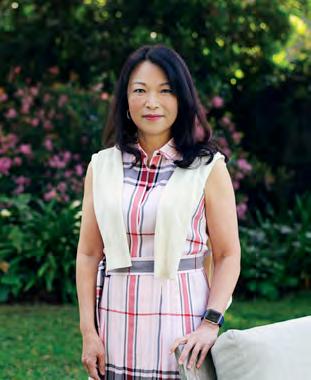
Renee Ying Advocate for excellence.
“I’m glad that Huntington Hospital is so close by. I don’t want to get sick, but if I do, that’s where I would want to go. It really is a firstclass institution.”
Paul Johnson Dedicated to quality cancer care.
“Excellence in health care isn’t optional — it’s our promise. That’s why advancing comprehensive cancer care for our community is a top priority.”
Scott Jenkins Lifelong local.
“We’re very fortunate to have access to the hospital’s high-quality care. We feel it’s our responsibility to help sustain such excellent care for future generations of local residents.”
In the Kohl Medical Pavilion, our expert oncologists and surgeons will meet with patients to discuss treatment options and help them make decisions about the next step in their care journey. Patients will be able to meet with multiple specialists in a single visit — eliminating the stress and inconvenience of traveling back and forth between appointments. The new building will be home to specialists who have extensive knowledge in a wide range of cancer types, including breast, colorectal and lung. It will also include an expanded
infusion center, so more patients can get lifesaving chemotherapy treatment close to home.
In addition to cancer, there will be space for other specialty care physicians, including gastrointestinal and colorectal surgery, vascular surgery, thoracic surgery, cardiac surgery and general surgery. The Kohl Medical Pavilion will offer a convenient location, across the street from Huntington Hospital’s main campus in Pasadena, for patients to receive personalized care.
Patients will be able to meet with multiple specialists in a single visit — eliminating the stress and inconvenience of traveling back and forth between appointments.
A BEACON OF HOPE AND HEALING
More than medicine.
Here at Huntington, we know that cancer is not just a medical diagnosis. It is often an intense, emotional and lifealtering experience. “We take a whole-person approach,” says Dr. Kaufman, “offering a variety of support services to help patients through every aspect of their journey.” At the Kohl Medical Pavilion, our dedicated nurse navigators will help guide cancer patients and their loved ones through diagnosis, treatment and survivorship.
Additionally, the new building will help increase access to clinical trials for cancer patients, providing access to cutting edge treatments and protocols. “With our recent affiliation with Cedars-Sinai Cancer, Huntington Cancer Center is now part of the largest provider of cancer care in California outside of Kaiser,” Dr. Kaufman says. Research nurses will be available at our Kohl Medical Pavilion to help enroll patients in Cedars- Sinai’s clinical trials and coordinate their participation. With cancer rates continuing to rise, especially among younger people, the need for advanced, accessible care is more urgent than ever. The Kohl Medical Pavilion will help us meet that need, offering expert cancer treatment and compassionate support — all right here in the San Gabriel Valley.
Sharon Arthofer It’s personal.
“As a breast cancer survivor, I’m proud to support Huntington Hospital in creating a comprehensive cancer center that provides the highest level of treatment, support and compassion for our community. This integrated approach provides peace of mind, strengthens outcomes and offers a bestin-class patient experience for those embarking on their cancer journey.”
Wayne Brandt Impact-driven leader.
“In my professional life, I’ve invested in growth. Here, my commitment is to invest in access to high-caliber cancer care in the San Gabriel Valley, ensuring patients have the care and support they need.”
Erin Baker The next generation.
“My father devoted so much of himself to this hospital. Supporting comprehensive care is my way of honoring him and ensuring his legacy of compassion lives on.”
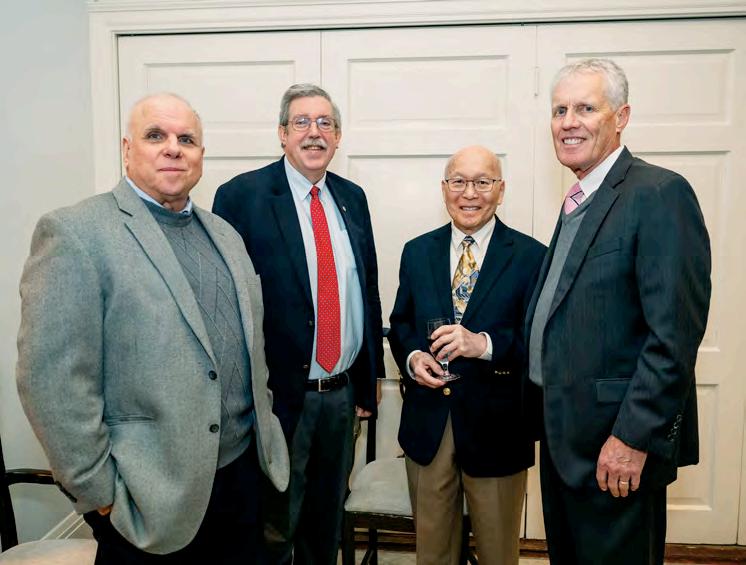
Our early donors bring both professional and personal commitments to building community resources for future generations. Their gifts toward the Terri and Jerry Kohl Medical Pavilion are helping Huntington Hospital lead the effort to plan and create a healthier, stronger community.
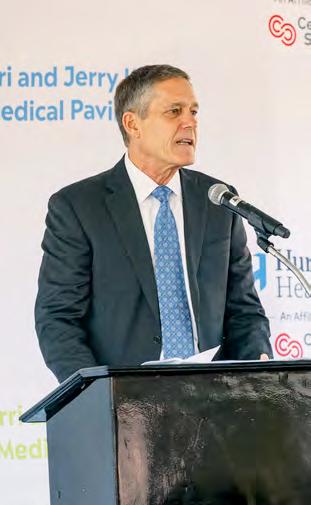
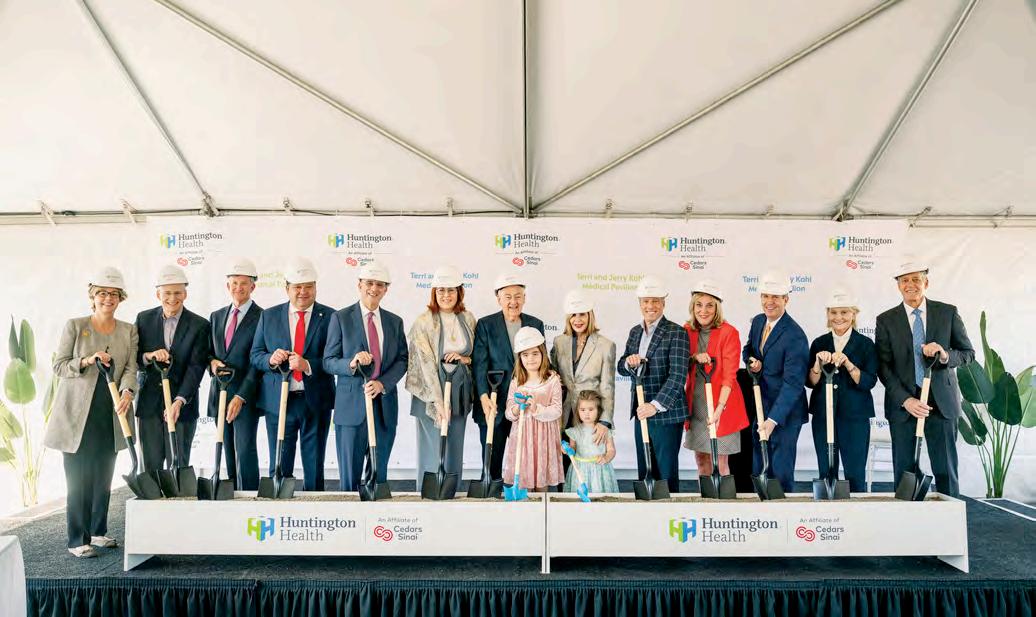
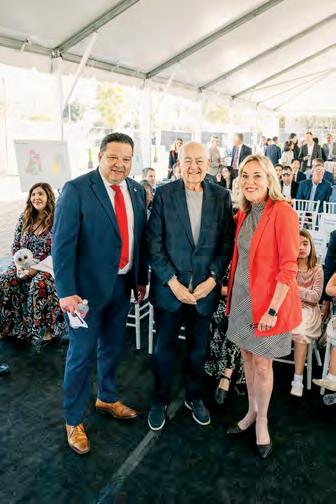
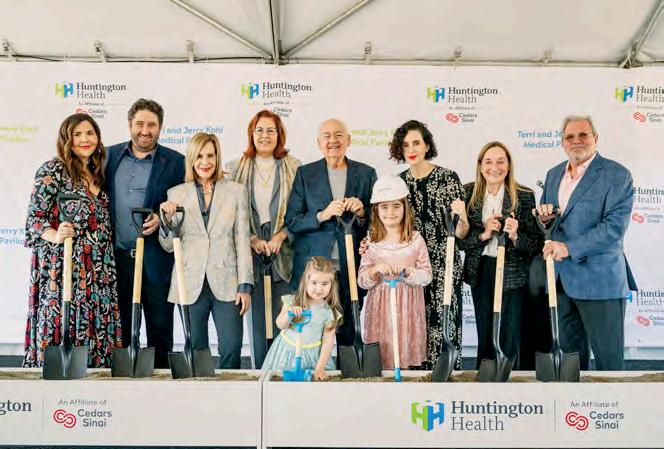
On October 21, 2024, we celebrated the official groundbreaking of the state-of-the-art Kohl Medical Pavilion, named for lead donors Terri and Jerry Kohl. Staff and board members, lead donors and public officials gathered at the ceremony on 786 South Fair Oaks Avenue in Pasadena, right across from Huntington Hospital’s campus. Among the attendees were LA County Supervisor Kathryn Barger, City of Pasadena Mayor Victor Gordo, Pasadena City Council member Jason Lyon, as well as Huntington Hospital’s board and executive team.
The new building will serve as a centralized hub for cancer and other specialty care in the San Gabriel Valley, so that patients throughout the region can get the services they need close to home. Construction of the four-story, 100,285-square-foot facility is expected to be completed in early 2028.
Breaking ground.
We are here for you.
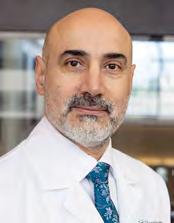
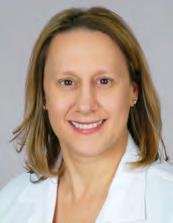
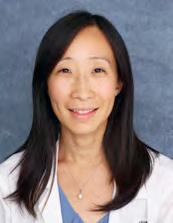
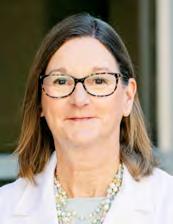
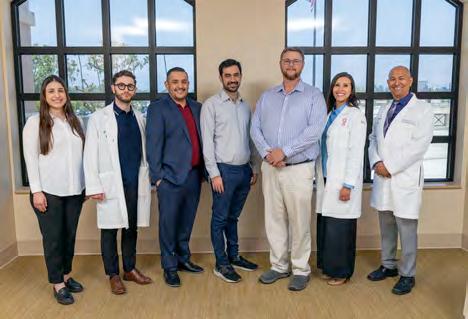
Here are few of our expert cancer specialists who will see patients in the new Kohl Medical Pavilion.
Mark Botnick, MD
Regional Medical Director of Radiation Oncology Board-certified radiation oncologist bringing more than 20 years of expertise in treating a wide range of cancers.
Juliane Y. Golan, MD
Colorectal Surgeon Board-certified in general surgery as well as colon and rectal surgery, Dr. Golan mentors Huntington’s general surgery residents.
Paul S. Lin, MD
Gynecological Oncologist
Specializes in obstetrics and gynecology, as well as gynecological oncology. Dr. Lin is board certified in obstetrics and gynecology.
Amirhossein Mahfoozi, MD
Thoracic Surgeon Board certified in thoracic surgery, Dr. Mahfoozi specializes in robotic minimally invasive surgery and lung cancer surgery.
Jeannie Shen, MD, FACS
Regional Medical Director of the Breast Program and International Health Fellowship-trained breast surgeon who is boardcertified in general surgery.
Alicia Terando, MD
Regional Medical Director of Surgical Oncology
Surgical oncologist with specialized expertise in breast cancer and melanoma. Dr. Terando is board certified in general surgery.
Tina Wang, MD
Clinical Director of Medical Oncology
Specializes in the treatment of breast, liver and lung cancer, with a focus on immunotherapy. Dr. Wang is board-certified in hematology, oncology and internal medicine.
Ruth Williamson, MD
Radiation Oncologist
Board certified in radiation oncology, Dr. Williamson specializes in the treatment of breast cancer and the development of psychosocial support programs for breast cancer patients and their families.
PREMIER CANCER CARE
With our recent affiliation with Cedars-Sinai Cancer, Huntington Cancer Center is now part of the largest provider of cancer care in California outside of Kaiser.
Terri and Jerry Kohl Pass it on. Building a healthier Pasadena together.
When you are fortunate in life, the greatest gift is giving back — not just for today, but for the future of your community. In Pasadena, neighbors become family and generations put down roots. That is why Terri and Jerry Kohl believe in investing in the place they call home — so it continues to grow stronger for all of us.
Above: Back row, from left, Christine Kohl, Matthew Kohl, Terri Kohl, Lori J. Morgan, MD, MBA, Jerry Kohl, Karyn Kohl, Gale Kohl, and Rene Chila. Front row: Lily and Iris.
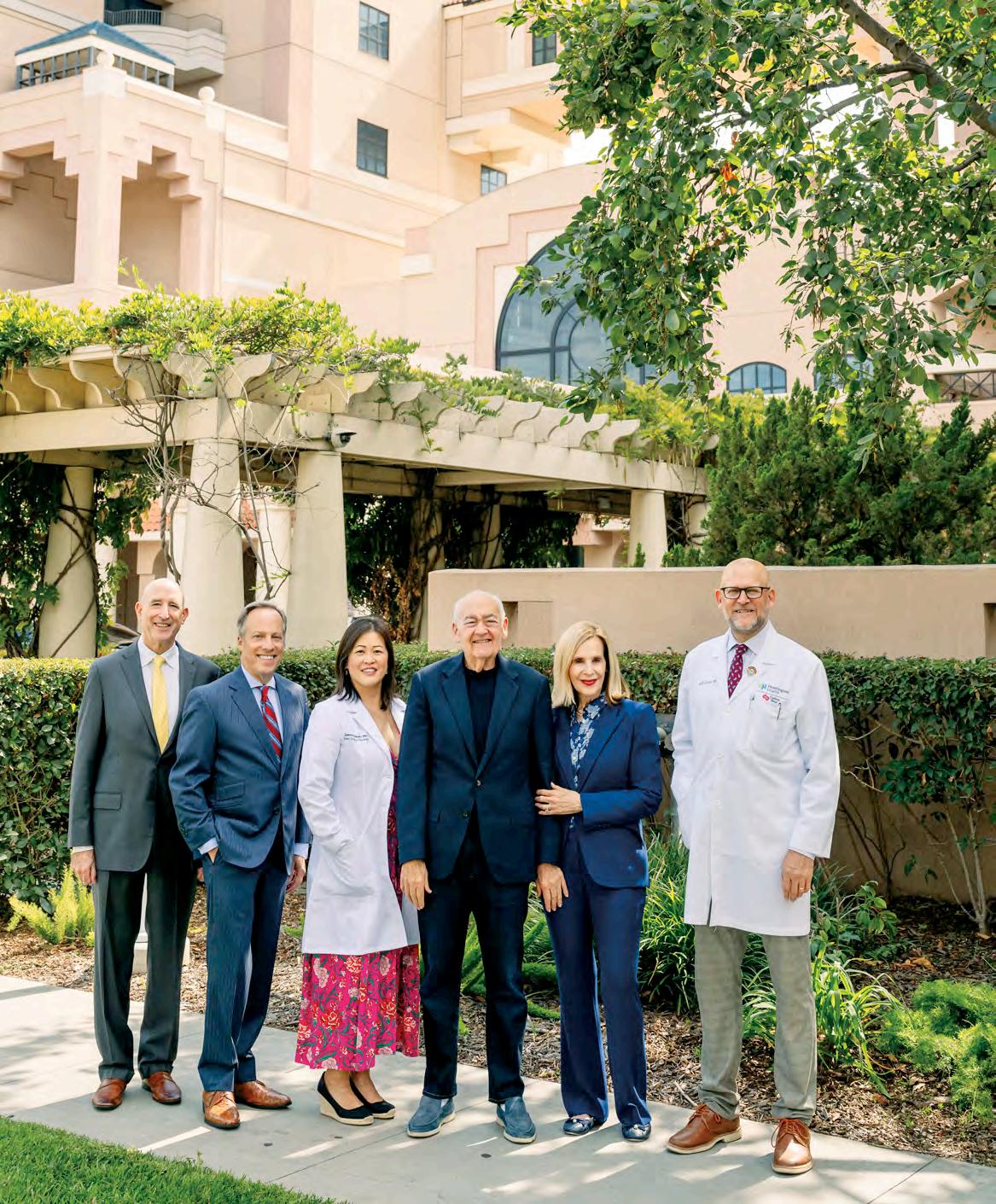
From left, Robbin Cohen, MD; Howard Kaufman, MD; Jeannie Shen, MD; Jerry and Terri Kohl; and John Corman, MD.
Care close to home.
Years ago, when Jerry’s brother needed cancer treatment, he had to make repeated trips to UCLA. The commute was exhausting — physically and emotionally — at a time when he was already carrying so much. That experience stayed with the Kohls, who believe no one should have to leave their community to receive lifesaving care.
The Terri and Jerry Kohl Medical Pavilion.
In October 2024, Huntington Hospital broke ground on the Terri and Jerry Kohl Medical Pavilion, a 100,285-square-foot, four-story facility, which will open in early 2028.
This state-of-the-art facility will bring together advanced specialty services under one roof, including cancer care, cardiology and other lifesaving programs. Patients will have access to world-class treatment without leaving the San Gabriel Valley.
The Kohl Medical Pavilion is designed with patients and families in mind and will include:
• A modern laboratory supporting an integrated patient experience and faster results during the healing journey.
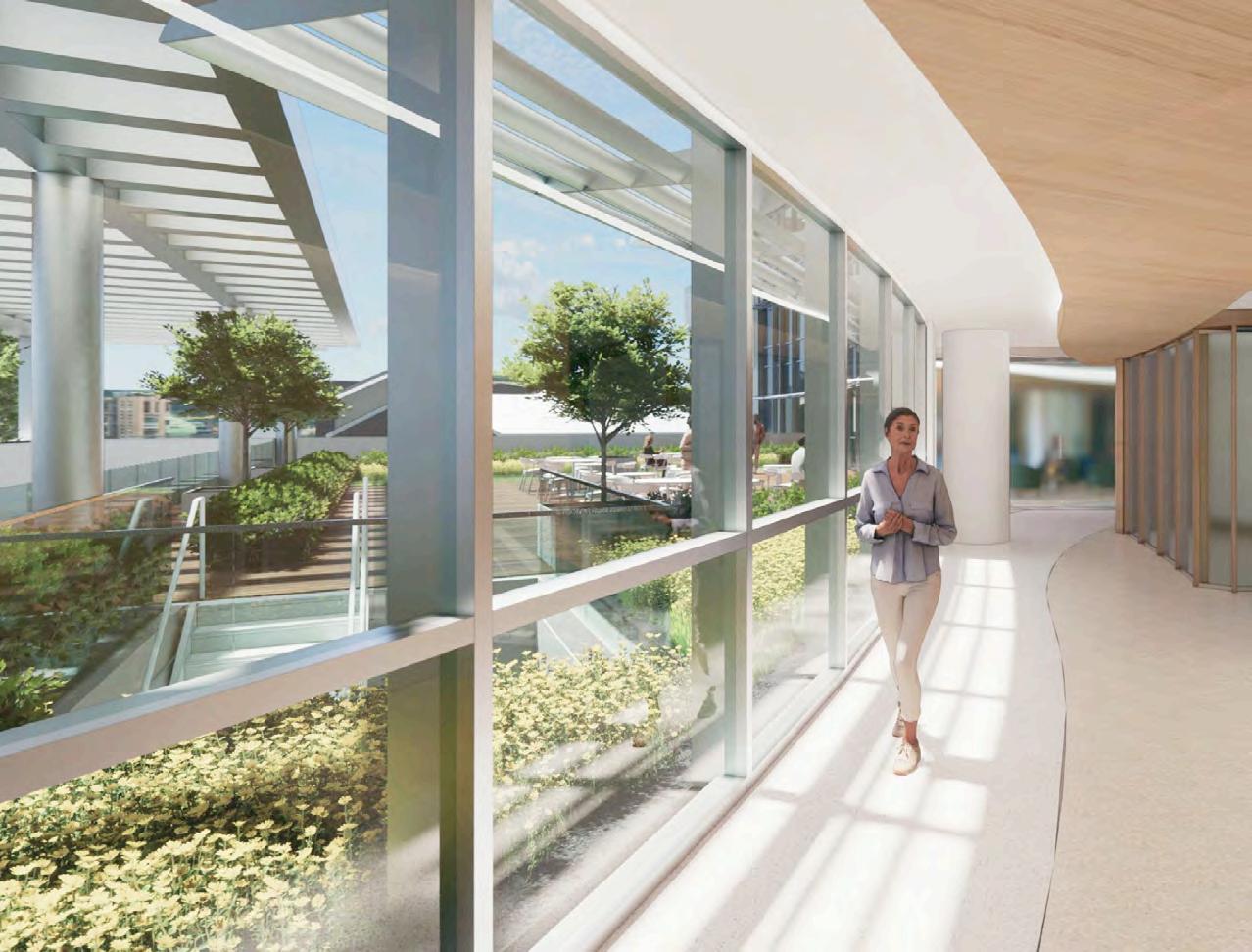
• Welcoming outdoor spaces for healing and reflection.
• Underground parking for convenience.
• Sustainable design built to LEED standards, close to public transportation.
More than just a building, the Kohl Medical Pavilion represents a vision: A future where patients can stay close to home, supported by family, while receiving the highest quality care.
Reasons to give.
For more than 40 years, Pasadena has been Terri and Jerry’s home. This community is where they raised their children, built their business Brighton and celebrated their 55th wedding anniversary. They have also relied on Huntington Hospital themselves — from cardiac care for Jerry and other family members, to a hernia repair surgery using the da Vinci robot they helped make possible. The Kohls have seen firsthand how investments in health care come full circle.
“You can’t take it with you,” says Jerry. “If you’re fortunate enough to give, give now — while it can help people and directly improve the lives of your family, friends, and neighbors.”
Pass it on.
For the Kohls, Pasadena is not simply another city and Huntington is not just another hospital. Pasadena is a community. Says Jerry, “I’ve lived in the same house for 41 years — and I’m still the ‘new guy on the block.’ People are born here, and they stay. That’s what makes this place so special.”
Terri and Jerry’s hope is that their gift inspires others to do the same: to pass it on. Give where you live. Support the community that has supported you. “Because together,” says Jerry, “we can make sure Pasadena continues to shine — stronger and brighter — for generations to come.”
“If you’re fortunate enough to give, give now — while it can help people and directly improve the lives of your family, friends and neighbors.”
By supporting our new Terri and Jerry Kohl Medical Pavilion, Teiji and Stephanie Kawana are continuing a legacy of giving that spans two generations.
Giving through the generations.
The
Kawana Family treat Huntington Hospital as an extension of their own family — and a part of their legacy. Frank and Sachi Kawana began supporting the hospital over a decade ago, driven by a deep belief in giving back to their community. That spirit of generosity now lives on in their son Teiji and his wife, Stephanie, who have embraced the same commitment.
We’ve always felt that supporting Huntington is not just important, it’s also personal,” says Teiji. “We want to honor what my parents started and hope our children will one day feel the same sense of responsibility and pride in continuing this legacy.”
Building on the work of previous generations is nothing new to the family. Their journey began in 1938 when Frank Kawana’s parents, Otoichi and Kume Kawana, founded Yamasa Enterprises, specializing in traditional Japanese fishcakes and seafood products. When Otoichi passed away in 1951, Frank stepped in to lead the company. Under his direction, Yamasa Enterprises expanded its offerings to include Asian noodles, wrappers and cookies.
In 1990, Teiji stopped practicing law and joined his dad to establish JSL Foods, Inc., marking the next evolution in the family’s food manufacturing business. Soon after, Frank retired and Teiji has run the company ever since. Today, JSL Foods has multiple manufacturing facilities in and outside of California and sells a wide range of food products throughout the U.S.
As the company evolved, so has the family’s involvement. Each of Teiji and Stephanie’s children — Kelsey, Karina and Kayley — has played a role in JSL Foods. Karina recently joined the company and Kelsey now serves as Vice President of Corporate Strategy, continuing the family
Left: Stephanie and Teiji Kawana celebrate their support for the new Terri and Jerry Kohl Medical Pavilion by posing with a model of the facility.
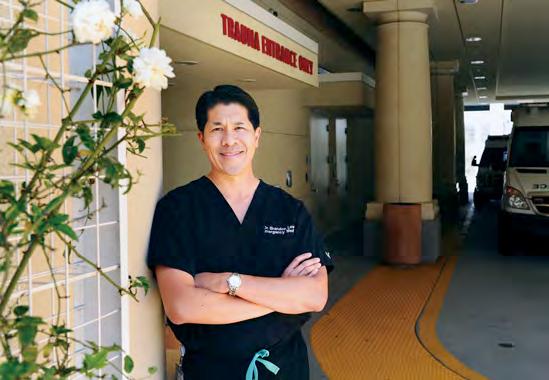
Right: The Kawanas’ bond with Huntington Hospital began with Teiji’s parents’ support of our emergency department and has grown increasingly personal over the years. Friends and family have received care here, and the couple maintains a close friendship with physician Brandon Lew, DO, who served alongside Stephanie on USC’s Asian Pacific Alumni Association board.
tradition into a fourth generation. “Each generation brings something new to the company,” Stephanie says, “as Frank did when he took over, as did my husband and now our daughter.”
A new vision.
In line with this spirit of introducing new ideas, Teiji and Stephanie are proud proponents of our future state-of-the-art Terri and Jerry Kohl Medical Pavilion. The Kawanas decided to support the project because they are invested in the hospital’s vision and are committed to supporting its expansion. “When we were deciding to make this donation,” Teiji says, “we looked at where the hospital was going and reflected on all the changes and accomplishments the hospital made over the years. We thought supporting construction of the new building was a good way to help them realize this vision.”
Set to be completed in early 2028, the Kohl Medical Pavilion will be a four-story, 100,285-square-foot facility located across the street from Huntington Hospital’s campus. Huntington Cancer Center, an affiliate of Cedars-Sinai Cancer, will be the anchor tenant of the new building, with exam rooms for oncologists and surgeons to meet with patients. Additionally, the building will include an infusion center and house specialty care physicians, including cardiac, thoracic and vascular surgeons. “Cancer is something we’ve experienced in the family,” Stephanie says, “and both of our fathers have suffered from cardiac complications. Cancer and cardiovascular care are both very important to Teiji and me on a personal level.”
Ultimately, the new facility will enable Huntington to meet the growing needs of more patients, right in their own backyard — eliminating the need to travel far and wide to receive lifesaving care. “The new facility is not about me or Teiji or our family,” Stephanie says. “It’s about the community.”
Fostering personal connections.
The Kawanas feel connected to the hospital in many ways. Over the years, their family and friends have received critical care from the hospital — especially the emergency department. Their personal experiences have helped them better understand the time and resources we need to provide quality care. In fact, Stephanie herself received care here and Frank was also a patient at the hospital during the height of the COVID-19 pandemic. “I witnessed Huntington’s compassionate care firsthand,” she says. “There were always small gestures of kindness, which really meant a lot to us.”
Frank and Sachi Kawana were longtime supporters of the emergency department, and Teiji and Stephanie also supported our COVID-19 response efforts. “All aspects of the hospital are important and it’s difficult to say what department is more important,” Teiji says, “but the emergency department really is on the frontlines. It’s just so important to the community.”
The family has become good friends with several physicians, deepening their relationship with the hospital. They are particularly appreciative of emergency medicine physician Brandon Lew, DO, who served on the University of Southern California’s Asian Pacific Alumni Association board with Stephanie. “He is just an amazing individual,” Stephanie says. “You can’t put a value on all of the things he and other doctors at the hospital have done for patients over the years.”
Investing in the community.
The Kawanas keep busy, finding joy in their work, volunteering, family, friends and their many hobbies. Between them, they golf, travel, explore new cuisines, play pickleball, garden, practice Tai Chi and spend time with loved ones.
Since the Kawanas moved to Pasadena in the 1970s, they have also maintained a strong commitment to community service. This includes serving on various nonprofit boards and volunteering for organizations such as Meals on Wheels, the Pasadena Humane Society and even Huntington Hospital. One of Teiji and Stephanie’s daughters was a candy striper here, and she supported mothers in the neonatal intensive care unit through a high school project that involved donations and personal care kits. “Having a strong community is critical,” Teiji says. “I encourage people to support the hospital because it’s important to think beyond your own family or circle.”
Transformational giving.
To honor and thank our most generous donors, Huntington Hospital established our Benefactor Circle program. Donors contributing gifts of $500,000 or more join this program and help provide the highest level of support for ongoing needs and other transformative work at the hospital. Benefactor Circle donors receive a Benefactor Card to facilitate additional patient support services on campus, including our Nan and Howard Schow Emergency & Trauma Center. They also enjoy special recognition on our campus.
For more information about our Benefactor Circle, please contact Cathi Chadwell, executive director of philanthropy and public affairs, at (626) 397-3241.
Brain matters
A closer look at stroke.
Stroke is one of the leading causes of death and the leading cause of long-term disability, yet many are treatable with timely, expert intervention. At Huntington Hospital, that is exactly the type of care we deliver. As a designated Comprehensive Stroke Center, we maintain skilled caregivers and staff, advanced technology and inpatient and outpatient rehabilitation programs to help ensure stroke patients have the best possible outcomes. Here, patients get a fighting chance — and often, a second chance at life.
We recently sat down with Arbi Ohanian, MD, a neurologist who has more than two decades of experience in stroke medicine and serves as the medical director of the Comprehensive Stroke Center at Huntington Hospital, to learn more about our stroke program. Read on to discover Dr. Ohanian’s perspective on how we stay at the forefront of stroke care, why stroke education is important and how your support helps save lives.
What drew you to neurology and stroke medicine specifically?
In 2004, during my residency, I did a neurology rotation at LA County Hospital, and I got placed on the stroke service. I recall witnessing how quickly a stroke could change someone’s life. In an instant, they could go from talking normally to not being able to speak. During that time, however, a few acute interventions were developed. These treatments could completely reverse the effects of stroke and allow the patient to return to a normal life. That experience compelled me to step into stroke medicine and work toward making a real difference. I joined the medical staff at Huntington Hospital in 2008. Today, I am proud to be a part of the stroke team, leading the field in treatment and intervention.
Can you give a general overview of what a stroke is?
A stroke occurs when blood flow to the brain is blocked or severely restricted, leading to the damage of brain tissue, which in turn causes loss of function. With a stroke, time is crucial.
You lose approximately 2 million neurons (brain cells) per minute during a stroke. Prompt treatment can mean the difference between life and death and can also minimize damage to the brain. At Huntington Hospital, we not only meet but also exceed national goals for door-to-needle-time — the time it takes from a patient’s arrival at the hospital to the administration of potential clot-busting medication.
You may have also heard of “mini stroke.” This is also known as a transient ischemic attack (TIA). TIAs occur when a blood clot goes to the brain, briefly causing symptoms of a stroke, but then resolves itself after several minutes. Even though symptoms go away quickly, TIAs should not be ignored. They are a warning sign that a more serious event may occur — an opportune time to intervene and potentially prevent a life-altering stroke.
You’ve been at Huntington Hospital for more than 15 years now. What have you noticed about the trend in stroke incidence so far?
Right now, we are seeing over 1,000 strokes per year at Huntington Hospital; nearly triple the number we saw a decade ago. Unfortunately, this figure is only expected to increase because of our aging population. Between now and 2050, the number of Americans 65 and older will nearly double, while the number of Americans 80 and older will quadruple. This trend is concerning because the risk of stroke exponentially increases with age — doubling with each decade after the age of 65.
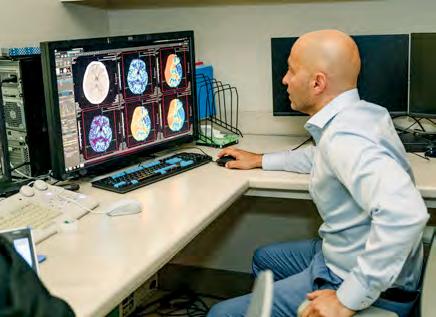
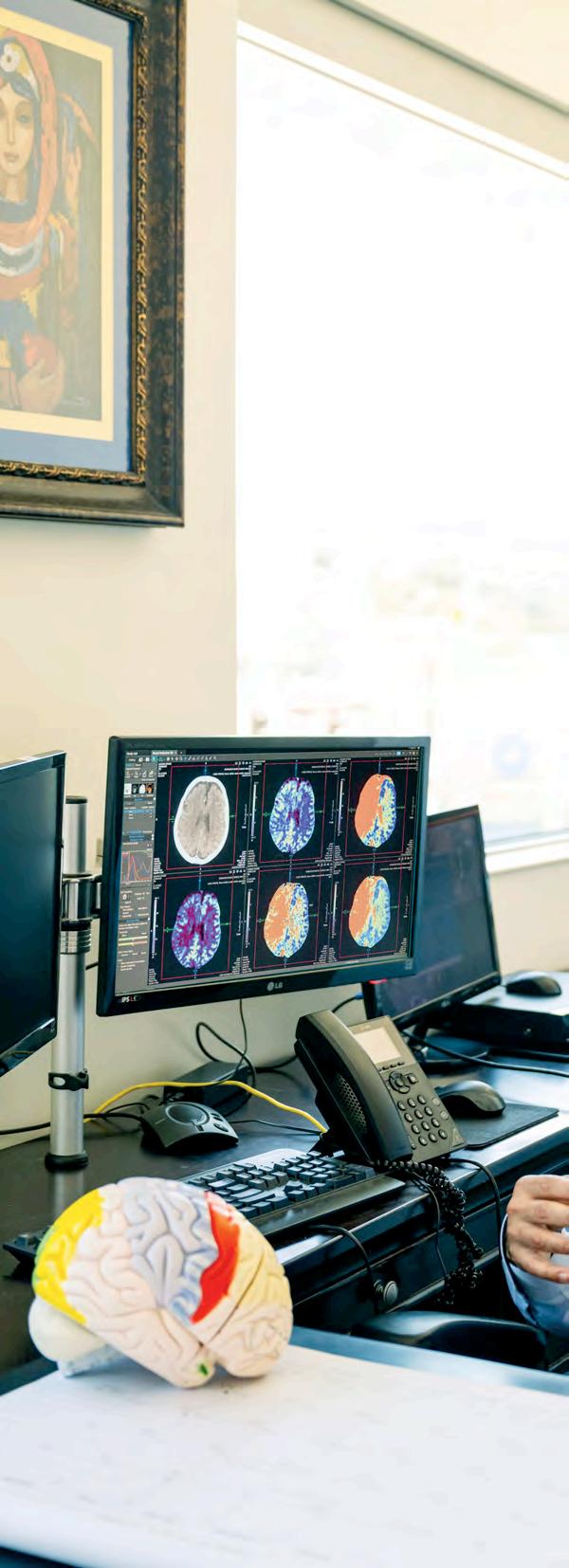
Here at Huntington Hospital, we are doing all we can to remain at the forefront of stroke care. We have acquired advanced imaging equipment to help make the best possible clinical decisions for patients. In addition, we have multiple stroke-trained neurologists and neuroradiologists on staff — a rarity in most hospitals. As such, we have a wide breadth of expertise and are especially well prepared to deal with complex stroke cases.
How is stroke treated?
There are two main ways to treat stroke:
1) Injection of clot-busting medicine called tenecteplase (TNK-tPA).
2) Thrombectomy procedure, where interventionalists directly pull blood clots out of the blood vessel.
Outside
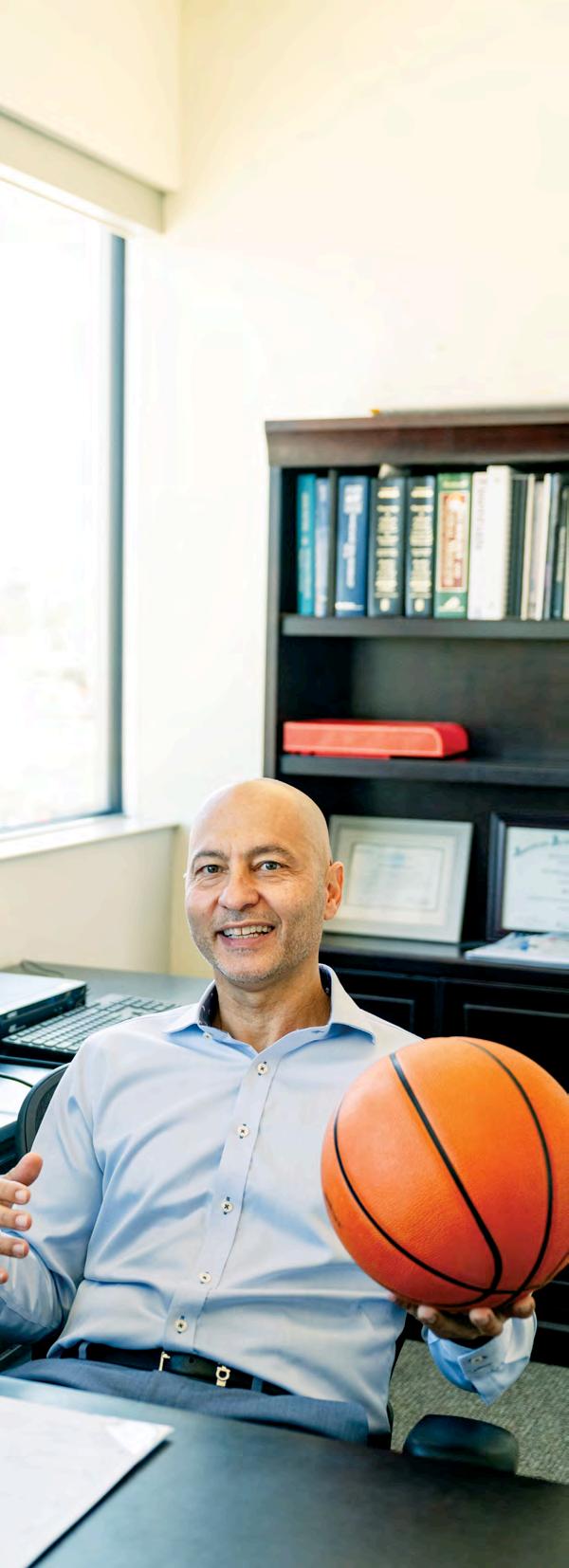
the hospital, Arbi Ohanian, MD,
medical director of
the Comprehensive Stroke Center, plays basketball to de-stress from the high-pressure world of stroke medicine — and get some extra cardio, too!
These two treatments are not mutually exclusive. Typically, we will use a combination of the two, depending on the patient and the severity of the stroke.
Thanks to donor support, Huntington Hospital was one of the first hospitals in the region to invest in telemedicine technology for stroke care. We use Viz.ai, an AI-based imaging software that allows our expert neurologists to receive images on their phone or laptop and remotely evaluate for bleeds and blockages, regardless of where they are. When a patient arrives at the hospital in the overnight hours, or at other times when a neurologist is not immediately available on site, we use this technology to support the best of care — and the best of care outcomes.
How do you spend your time when you’re away from the hospital?
Most of my time outside of work is basketball. I love the sport — whether it is coaching my youngest son’s team, attending my daughters’ practices and games or playing in a local recreational league.
Stroke medicine is a high-stakes, fast-paced field. Although I love what I do, basketball helps me step away from work and de-stress. And, as someone who has to run to and from the emergency room several times a day, getting the extra cardio in certainly does not hurt!
Have you seen the impact of philanthropic dollars on stroke care?
Absolutely. Over the years, philanthropic dollars have enabled us to lead through innovation. In fact, many years ago, we were able to purchase the first 320-slice CT scanner west of the Mississippi, thanks to a generous donation. Such giving has helped transform our stroke center into the esteemed program it is today — touching the lives of thousands. However, as the number of stroke patients we see continues to grow, philanthropic support is more essential than ever.
Supporting our stroke program is more than a donation: It is an investment in the health and future of your family, your friends and our entire community. With your help, we can ensure that when stroke strikes, our response remains swift, skilled, and lifesaving. Together, we can save lives.
BE FAST
is an easy way to remember the sudden signs of a stroke.
BALANCE
Ask the person if they have suddenly lost balance or coordination.
EYES
Ask the person if they have sudden double vision or loss of vision in one or both eyes.
FACE
Ask the person to smile. Does one side of the face droop?
Stefanie Nassiri
Always striving for a higher standard of stroke care.
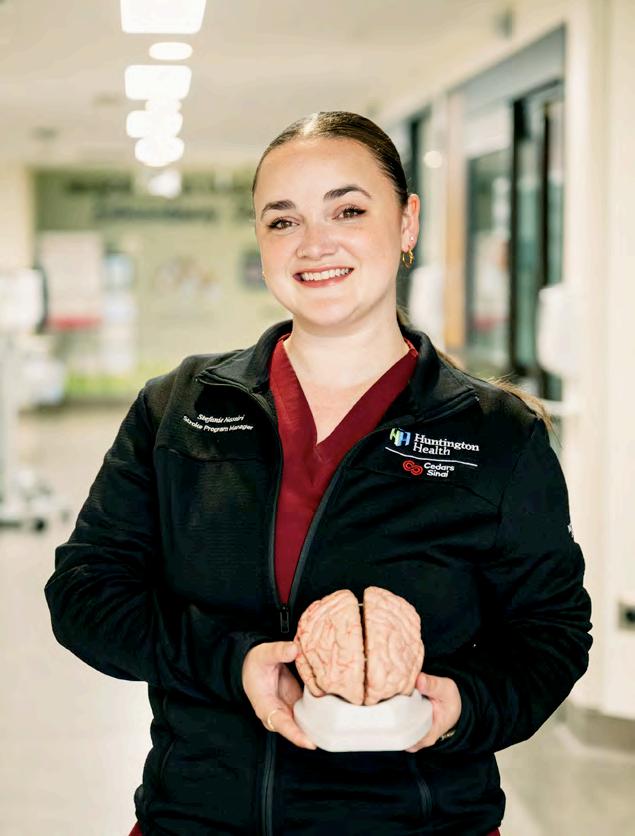
The success of Huntington Hospital’s stroke program is due, in no small part, to the leadership of our stroke program manager, Stefanie Nassiri, MSN, APRN, AGCNS-BC, SCRN. Since joining our team in 2022 as a clinical nurse specialist, Stefanie quickly distinguished herself, earning a promotion to program manager in 2023.
In her role, Stefanie oversees a team of stroke coordinators — who respond to our emergency room when a patient presents with stroke-related symptoms — and supports quality improvement efforts. “Time is brain,” says Stefanie. “The faster and more efficiently we act, the better the outcome for our patients,” she says. “Our goal is to act quickly so we can preserve brain function, reduce long-term damage and save lives.”
Stefanie’s passion for her work is deeply personal. With a mother who was a nurse and a grandmother who survived a stroke, she understands the importance of high-quality stroke care. “I get to implement innovative changes that can improve the quality of so many lives,” says Stefanie. “I can see the impact of what I do every day and that’s the most rewarding part of my job.”
A S T
ARM
Ask the person to raise both arms. Does one arm drift downward?
SPEECH
Ask the person to repeat a simple phrase. Are the words slurred?
TIME
If the person shows any of these symptoms, call 911 immediately.
Your giving helps keep hearts
Shirley Kearney was first diagnosed with a mild heart murmur 40 years ago.
Thanks to generous philanthropic support, we are able to deliver award-winning cardiac care to our community. Our full spectrum of cardiology services includes minimally-invasive surgical treatments that help patients get back to living their lives to the fullest.
Above: Shirley Kearney is surrounded by the love and support of family and friends.
beating strong.
Despite her condition, Shirley was able to live an active life, walking at least three miles a day, five to six times a week. Then, in 2020, she had a panic attack. She made an appointment with her primary care doctor, who conducted an EKG test. When they got the results, she was referred to Huntington Hospital-affiliated cardiologist Vyshali Rao, MD.
After a battery of additional tests, Dr. Rao determined that Shirley’s murmur had worsened. She was diagnosed with mitral valve regurgitation, where the valve between the left heart chambers does not close fully. Dr. Rao carefully monitored Shirley’s condition, checking in every few months.
For a while, Shirley needed no further treatment. However, in 2023, she started to feel tired all the time. “I couldn’t walk uphill without catching my breath,” she says, “and even mild exercise made me feel winded.” Dr. Rao ordered more tests, which showed that Shirley’s condition had progressed.
Shirley was referred to Robbin Cohen, MD, medical director of cardiothoracic surgery for Huntington Health and professor of Cardiac Surgery in the Smidt Heart Institute at Cedars-Sinai, and Dominic Emerson, MD, director of Robotic Cardiac Surgery and assistant professor of Cardiac Surgery in the Smidt Heart Institute, for evaluation. Ultimately, it
was determined that Shirley’s mitral valve needed to be repaired, and, in the spring of 2023, she underwent surgery at Huntington Hospital.
Dr. Emerson performed Shirley's procedure using a surgical robot. Robotic-assisted mitral valve repair typically involves less blood loss and less chance of infection. It also often requires a shorter recovery time than traditional open-heart surgery. Dr. Emerson accessed Shirley’s heart valve through small incisions between the ribs — avoiding the need to cut the sternum (breastbone). “I was actually the very first patient to have robotic mitral valve repair at Huntington Hospital,” says Shirley, “and I have Dr. Emerson to thank for that.”
Shirley’s surgery was a success. She went home after just a few days in the hospital. “I was blown away,” she says. “I didn’t have any pain, and I bounced back so fast!”
Shirley also notes that she was back to regular exercise routine within six weeks. “I’m certain that’s because the procedure was done robotically,” she says. Today, at age 78, she continues to walk almost daily and even sees a trainer two times a week.
“I’m so grateful for Huntington Hospital,” says Shirley. “Dr. Emerson and my cardiac team are the reason I can stay so active and keep doing what I love.”
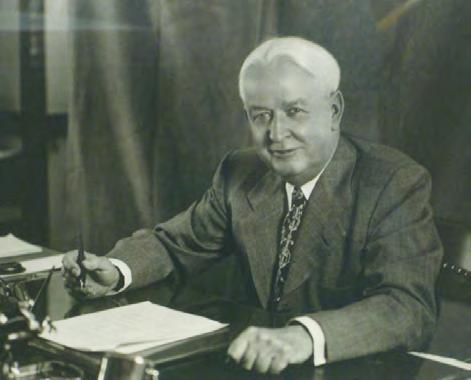
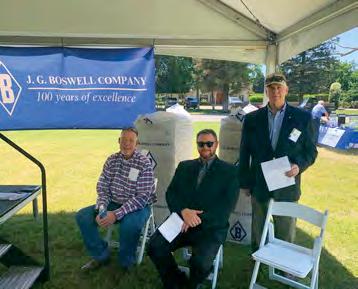
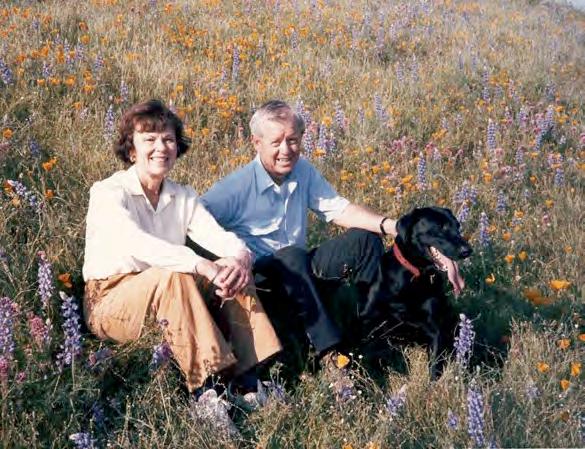
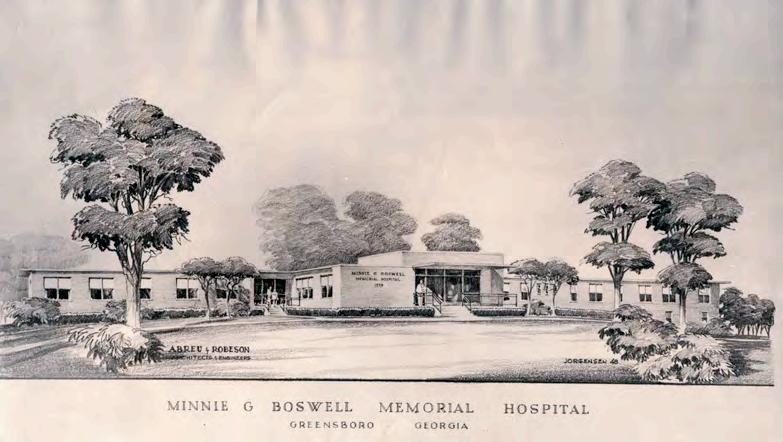
1. Colonel James G. Boswell founded the J.G. Boswell Company in 1925 and the James G. Boswell Foundation in 1947. 2. James G. Boswell II took over the Boswell Company after his uncle’s passing and served as President of the Boswell Foundation upon Ruth’s retirement. His wife, Rosalind M. Boswell, served as Secretary and Trustee of the foundation for 30 years. 3. One of the Boswell Foundation’s first donations was toward the establishment of the Minnie G. Boswell Memorial Hospital — named after Colonel James G. Boswell’s mother — in his hometown of Greensborough, GA. 4. Colonel James G. Boswell’s wife, Ruth C. Boswell, served as Secretary and Trustee of the Boswell Foundation until her husband passed away in 1952, when she took over as President until her retirement in 1986. 5. The Boswell Foundation’s current board consists of, from left, Vice Presidents George Wurzel and Cameron Boswell and President James W. Boswell. All three are also executives at the J.G. Boswell Company.
Sowing seeds of medical excellence.
The James G. Boswell Foundation
“We believe that training young physicians is more than an investment in health care. It’s an investment in the future of this region — helping to ensure excellent care for generations to come.”
At the heart of the James G. Boswell Foundation is a deep commitment to honoring and uplifting excellence in the communities where its team lives and works. Founded in 1947 by Colonel James Griffin Boswell — an industry pioneer in cotton growing and processing — the Foundation was created on the principle that business success should fuel community well-being. Today, that commitment lives on through a strong partnership with Huntington Hospital. United by a shared vision, the Boswell Foundation and Huntington are investing in the future of exceptional health care, working together to shape a healthier tomorrow for generations to come.
Honoring the past, investing in the future.
The J.G. Boswell Company first opened its doors in Los Angeles in 1925, later expanding its operations with cotton gins across the Central Valley and Arizona. In the 1990s, the company relocated
“These residents have such drive and a clear sense of purpose, often shaped by deeply personal experiences. Supporting this program is one of the most meaningful ways we can help ensure high‑quality care continues in our region.”
its headquarters to Pasadena, where it remains today. This year marks a remarkable milestone in the company’s history — its 100th anniversary.
Guided by a deep commitment to the well-being of the San Gabriel Valley, the Boswell Foundation set out to make a meaningful, lasting impact by investing in people and programs that foster a healthier, stronger community. After thoughtful conversations with internal medicine specialist Jeffrey Denham, MD, the foundation identified a powerful opportunity: supporting Huntington Hospital’s Graduate Medical Education (GME) program. Through our GME program, we offer top-notch training and experience in both internal medicine and general surgery, giving residents the opportunity to sharpen their skills, grow as physicians and step confidently into independent practice. “We believe that training young physicians is more than an investment in health care,” says James W. Boswell, chairman of the Boswell Foundation and great-nephew of its founder. “It’s an investment in the future of this region.”
Making dreams reality.
Our GME program draws some of the nation’s most promising young physicians, each eager to refine their skills and serve the community. “The program is very selective,” says Wafaa Alrashid, MD, internal medicine program director and a proud GME graduate herself. “We receive more than 1,500 applications for just 12 residency positions in internal medicine, which means those selected truly represent the best of the best.”
Recognizing this extraordinary talent, the Boswell Foundation has chosen to endow three GME internal medicine residents here since 2021. “All of the Boswell residents so far have wanted to be a doctor their whole lives,” says Amber Jaramillo, the Boswell Foundation’s executive director. “We are impressed by their extraordinary dedication to realizing their lifelong goals.”
That same sense of admiration was echoed by Cameron Boswell, a board member of the Boswell Foundation, during a recent visit to Huntington Hospital. After meeting with several residents and faculty members, he reflected, “I was really impressed by the caliber of the training program, but also by the people themselves. These residents have such drive and a clear sense of purpose, often shaped by deeply personal experiences. Supporting the program is one of the most meaningful ways we can help ensure high-quality care continues in our region.”
During his visit, Cameron had the opportunity to meet Jacqueline “Jackie” Deirmenjian, MD, the latest Boswell Resident to complete our GME program. Dr. Deirmenjian discovered her passion for endocrinology while training at Huntington Hospital and later presented research on diabetes and obesity medications at a national conference in Boston, Massachusetts. Grateful for her education, Dr. Deirmenjian is excited to carry the knowledge and experience she gained at Huntington into the next phase of her career. “Each clinical encounter I had at Huntington has helped me grow into the physician I am now,” she reflects. Upon completing her residency, Dr. Deirmenjian earned the only endocrinology fellowship position available at Cedars-Sinai Medical Center — a testament to her dedication and excellence.
Creating a healthier future.
Since its inception, the Boswell Foundation has contributed more than $100 million in gifts. In 1956, it established the Colonel James G. Boswell Scholarship, which provides four years of tuition (up to $25,000 annually) for two Corcoran High School graduates each year. To date, 138 students have received this life-changing award. Beyond its support of Huntington Hospital, the foundation also invests in advancing health and research through gifts to Stanford School of Medicine, Huntington Medical Research Institute and Valley Children’s Hospital in Madera, California. Huntington Hospital has always stood out as a leading institution, which Amber attributes to our consistency and communication. “I work with many different organizations, and Huntington Hospital is one of the most responsive,” she says. “They always acknowledge our gifts and provide updates on the GME program.” The hospital is also special to the Boswell staff for personal reasons, too. Amber shares, “Most of the employees at our corporate office were born at Huntington Hospital!”
From day one, the J. G. Boswell Company has existed to advance and build communities — a commitment that holds true for the Boswell Foundation as well. Thanks to the foundation’s investment in our GME program, we are not only training the next generation of physicians but also investing in the long-term health of the San Gabriel Valley. Together, we are building a stronger, healthier future for our region.
Cameron Boswell joins residents — whose training is supported by the Boswell Foundation — and staff from the Graduate Medical Education program. From left to right: Jacqueline Deirmenjian, MD; Nazar Akhverdyan, MD; Marco Franco; Keeyon Dabirian, MD; Cameron Boswell; Wufaa Alrashid, MD; and Rajkumar Dasgupta, MD.
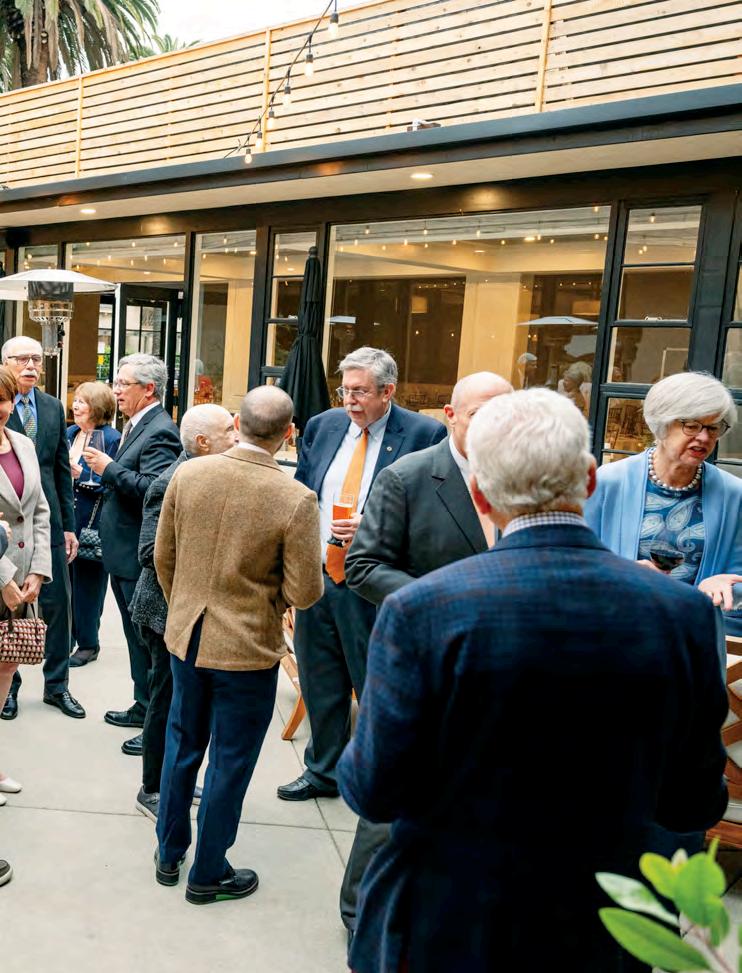
Huntington Hospital hosted a special dinner at the University Club in Pasadena on March 26, 2025, to recognize the generous contributions of our donors at the President’s Circle level.
President’s Circle Recognition Dinner
Driven by care and community.
Lynn and Elliott Murphy have lived lives dedicated to service — which is also reflected in their commitment to Huntington Hospital. The Murphys are proud members of our President’s Circle, a group of donors who support the hospital through annual gifts, at the Medicus Society level. “We’ve continued giving throughout the years,” Lynn says. “It fulfills a great need.”
The couple’s service to their community has gone on for decades. Lynn was the director of the Sunday preschool program at Our Lady of Grace Catholic Church in Encino for 30 years. Today, she continues to volunteer at different parishes in Pasadena and the surrounding areas, including serving as a facilitator for the Los Angeles Archdiocesan’s Protecting God’s Children program at St. Philip the Apostle Church.
Elliott, who has also served at various Catholic churches, was a longtime member of the Rotary Club of Pasadena, where he sat on the Community Grants Committee. “I particularly enjoyed the committee because it gave me exposure to what was going on in the Pasadena area,” says Elliott. “The resilience of our community always amazed me.”
Finding home in California.
Although they are now Dodgers fans who proudly embrace the Angeleno spirit, Lynn and Elliott were both born on the East Coast. “Both my and Elliott’s families have similar stories,” Lynn says. At a young age, her family made the journey from New York to California via train shortly after her father, who served in the navy, was temporarily stationed here. After experiencing California’s great climate, Lynn’s family was hooked, and decided to make the move permanent. Elliott’s father was also brought to California through his job to help establish a western home office for Prudential Life Insurance (now Prudential Financial). In time, he brought his family with him.
A graduate of the University of Southern California, Elliott began his career at a young age. After years of working in finance and aerospace engineering, he transferred his expertise to Avery Dennison (formerly Avery International), where he stayed for 30 years. Similarly, Lynn received her education in Los Angeles and Orange County, and then worked for more than 33 years as a preschool teacher. The couple got married in 1987 and settled in Pasadena.
Inspired by excellence.
In 2010, the Murphys gave their first gift to Huntington Hospital in support of the expansion of the Nan and Howard Schow Emergency & Trauma Center. “When Huntington Hospital announced the expansion of its Emergency & Trauma Center, we became more aware of the broad range of services they offered,” Elliott says. “When they requested community support, we knew it was a great cause that would help many people.”
The couple were inspired to increase their giving after experiencing Huntington Hospital’s exceptional services firsthand. When Lynn had both of her knees surgically replaced here, she and
Elliott were amazed by the standard of care. “We were very impressed by the staff and the attention I received,” says Lynn. “Dr. Richard C. Diehl, Jr., and Dr. Todd B. Dietrick were both incredible.”
Before and after her procedures, Huntington Hospital provided above-and-beyond support to Lynn. She notes that our joint replacement class prepared her well for what to expect during the surgery and recovery process, and answered all her questions — reducing any anxieties and concerns. “Coming out of the surgeries, they told me my knees would be perfect, and they were. I no longer felt any pain,” Lynn says. “They did an excellent job! I was up and walking the next day after both surgeries.”
Elliott has also been a patient here, as he has made a couple trips to our emergency department over the years. He recalls that the care he received was not only efficient, but compassionate and considerate. “They don’t just fix you up and send you out the door,” Elliott says. “Everyone treats you with kindness and they always give you helpful post-care advice.”
Giving with gratitude.
Today, the Murphys remain steadfast in their support of Huntington Hospital. As they have learned more about different departments and specialties throughout the years, they have continued to increase their giving. “Thank God we’re healthy, but one never knows when care services will be needed,” says Lynn. “We’re proud to do our part.”
Lynn and Elliott are grateful to the staff at Huntington Hospital that make such exceptional care possible. As they continue to enjoy their retirement years, the couple knows that their unwavering support is making a difference in the lives of thousands of patients every year. “We encourage others in our community to follow suit and provide support in any capacity they can,” says Elliott.
Leading through giving.
Each year, Huntington Hospital donors who contribute $2,000 or more to the Huntington Annual Fund are welcomed into our annual leadership giving society — the President’s Circle. We are honored to thank these generous supporters with a variety of special opportunities for recognition and deeper engagement. Donors at the President’s Circle level provide nearly 80 percent of all annual funds raised by the hospital, and we are especially grateful for their extraordinary commitment to sustaining exceptional care for our community.
Lauren Ploch
If you have questions regarding the President’s Circle, please contact Lauren Ploch, associate director of leadership giving, at lauren.ploch@huntingtonhealth. org or (626) 397-3747. Lauren brings years of experience in health care philanthropy, along with a deeply personal connection to Huntington Hospital. She is proud to support President’s Circle donors like you in making a meaningful impact on compassionate community care.
Annual complimentary hospital self-parking in the North and East parking structures.
Discounts at our S. Robert and Denise Zeilstra Gift Shop and in the Bistro Café.
Invitation to the President’s Circle Recognition event.
Complimentary flu shots each fall, as available.
Annual complimentary valet parking on our campus.
Annual recognition on the President’s Circle donor wall in our main lobby.
Invitations to additional President’s Circle events with leadership.
Invitations to special behind-the-scenes tours of Huntington Hospital, as available.
Personalized stewardship report on the use of your funds each year.
Invitations to small group gatherings with Huntington leadership.
Access to an estate planning specialist who can help you explore and weigh the benefits of estate planning.
Opportunity to meet personally with Huntington leadership to learn about the impact of your support.
Access to a patient relations representative during your hospital stay, as needed.
Additional recognition opportunities on our campus, as available.
FRIEND
$2,000 to $4,999
ASSOCIATE
$5,000 to $9,999
MEDICUS SOCIETY
$10,000 to $24,999
COLLEAGUE
$25,000 to $49,999
to $99,999
Your giving helps provide care
The last thing Kevin Donnellon expected on his vacation was a trip to the emergency room.
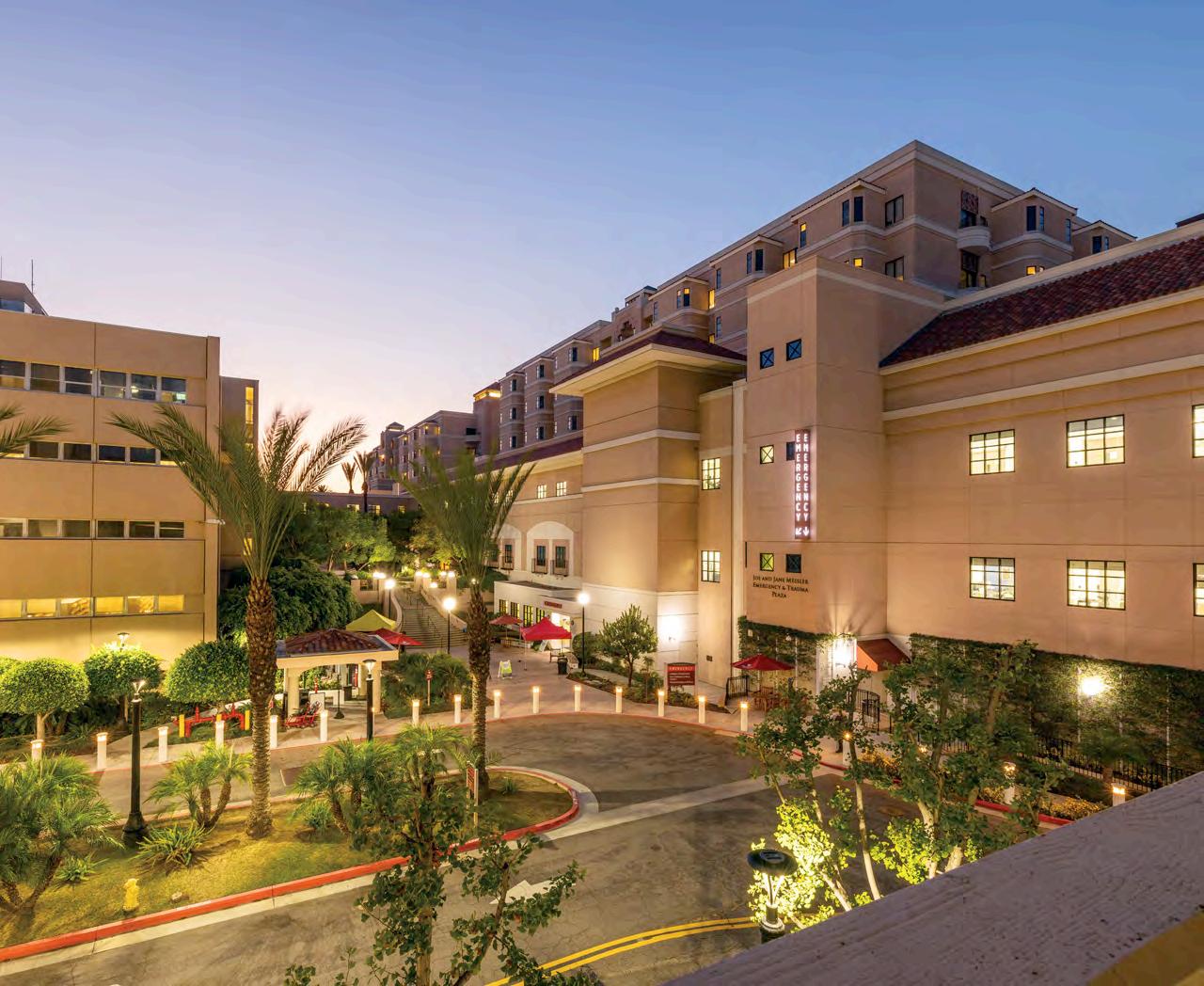
Huntington Hospital is home to the largest emergency department in Pasadena and a Level II trauma center. Philanthropic contributions help ensure our patients — even those who come from far and wide, like Kevin Donnellon — can get immediate, potentially lifesaving medical attention when accidents occur.
when an emergency strikes.
But earlier this year, when he flew to Pasadena to watch the 2025 Rose Bowl Game with some college friends, things didn’t go quite as planned.
After The Ohio State University, Kevin’s alma mater, defeated Oregon to advance to the College Football Playoff semifinals, spectators began clearing out of the stadium. Eager to beat the crowds, Kevin stepped over into the row of seats in front of him and stumbled, hitting his hip and head. He was escorted to the stadium’s first aid tent, where it was recommended that he seek further medical attention. He was taken by ambulance to Huntington Hospital’s Nan and Howard Schow Emergency & Trauma Center. “I was fortunate that Huntington was just an eight-minute ride away,” Kevin says.
Upon arrival here, Kevin was immediately impressed. “Everyone was so helpful and had such positive attitudes,” he says. Even though the Emergency & Trauma Center was bustling, signing in and registering at the front desk was easy and quick. Kevin especially noted the staff’s exceptional efficiency and their remarkable thoughtfulness and care.
Before Kevin knew it, a physician had evaluated him and ordered a CT scan. “It was one the fastest ERs I’d ever been to,” he says. “I was in and out in about four hours.” He even compared Huntington Hospital to the top institutions in his hometown of Chicago, commenting that our standard of care was unmatched. “Everything at Huntington Hospital just flowed smoothly, and I knew I was in really good hands.”
Fortunately, Kevin had no significant injuries and was able to fly home the next day. While sustaining an injury during travel can feel like a harrowing experience, Kevin’s overwhelmingly positive experience here left a lasting impression. He highly recommends the hospital to anyone who finds themselves in need of care, urgent or otherwise. “If you’re encountering an emergency situation or need medical attention,” he says, “Huntington Hospital is where you want to go.”
When Joyce Roque, BSN, RN, MICN, first joined Huntington Hospital staff in 2018 as a charge nurse, she knew she had found her professional home. “It quickly became clear that Huntington was the right place for me,” she says. “My values and goals aligned so well with the team.”
Behind the scenes. A trauma manager’s story.
This past April, Joyce was officially promoted to trauma program manager, after serving in an interim capacity last year. A key part of her role involves responding to trauma codes, which signal that a patient with a serious injury is arriving at the hospital. “We see more than 2,000 patients a year with urgent medical needs — from as far west as Glendale, north to Angeles Crest, east to Monrovia and south all the way to San Gabriel,” says Joyce. “That includes individuals who have been involved in motorcycle, bicycle or car accidents, or suffered major falls or other life-threatening injuries.”
When a trauma code is activated, our entire team springs into action. “Everyone the patient might need — surgeons, nurses, respiratory therapists and more — is mobilized at the bedside upon arrival,” Joyce explains. Joyce also leads a team of trauma registrars, who collect and organize data on every trauma case. That data is then analyzed by our trauma performance improvement coordinators to identify ways to continually enhance care.
Caring for patients with traumatic injuries means they often must travel through many different departments over the course of their stay at the hospital. After initial treatment in the trauma center, they might receive close monitoring in the intensive care unit, get a CT scan in our radiology department or undergo a surgical procedure
in the operating room. For Joyce, this means that she has to be familiar with the processes and protocols of every department. “It requires strong interdisciplinary coordination,” she says. “I’ve had to become very good at balancing different objectives and priorities.”
Joyce is particularly proud to work at Huntington Hospital Trauma Center, a Level II trauma center, which was reaccredited by the American College of Surgeons in July. She notes that under the incredible leadership of Amal Obaid-Schmid, MD, trauma medical director, Edward Kwon, MD, associate medical director, Andrew Singleton, MD, Richard Vasak, MD, and Danielle Dabbs, MD,
the trauma center runs like a well-oiled machine. Everyone — from surgeons to nurses to surgical residents — sets a standard of care Joyce has not seen anywhere else. “In more than 10 years of working in health care, I have never seen this level of brilliance,” she says. “Our trauma team has exceptional skills and dedication. Traumatic injuries are often unexpected and devastating. We rally together to save lives.”
Joyce notes that the trauma team’s commitment to the well-being of patients extends beyond the hospital walls. “The team regularly goes out into the community to spread awareness about trauma injury prevention,” she says. “As Benjamin
A continuum of care.
Primary care
Your primary care doctor is for day-to-day medical care.
Examples. Routine exams, annual physicals, ongoing care for non-emergent conditions and overall wellness services for adults and children.
Primary Care Pasadena (626) 792-2166
Primary Care Pasadena (North) (626) 792-3141
Primary Care San Marino (626) 441-4231
Pediatric Care Arcadia (626) 447-3516
Pediatric Care La Cañada (818) 790-5583
Pediatric Care Pasadena (626) 449-7350
huntingtonhealth.org/primarycare
Urgent care
Urgent care is for non-emergency medical conditions.
Examples. Broken bones, sprains and strains, cuts, scrapes and rashes, fevers, vomiting and/or diarrhea.
Exer West Pasadena 797 S. Fair Oaks Ave. Pasadena, CA (626) 385-1455*
Exer East Pasadena 3160 E. Del Mar Blvd., Suite 110 Pasadena, CA (626) 270-2400*
Exer La Cañada Flintridge 475 Foothill Blvd., Suite K
La Cañada Flintridge, CA (818) 528-6377*
exerurgentcare.com
Franklin believed, ‘An ounce of prevention is worth a pound of cure.’” In fact, the number one cause of trauma injuries — falling — is highly avoidable if you take the right precautions. That is why we partner with the Senior Care Network to teach older adults about safe movement and balance — even hosting Tai Chi classes. Huntington Hospital also offers Stop the Bleed courses at schools, libraries and other local institutions. These important classes help to empower community members to intervene during an uncontrolled bleeding emergency. Through our outreach efforts, we aim to prevent trauma injuries — and ensure that if they do happen, our neighbors and friends know how to help.
It is only with the community’s investment that our trauma team can continue to save lives. Thanks to donor support, Huntington Hospital is able to provide advanced trauma training for nurses across multiple departments, as well as acquire the state-of-the-art technology our caregivers need to do their best work. Without philanthropic dollars, Stop the Bleed trainings and other outreach efforts would not be possible. “To our donors: Thank you for believing in us and trusting us to take care of the community,” Joyce says. “Because of your contributions, we are able to deliver gold standard care.”
Emergency care
The emergency room is for emergency medical conditions.
Examples. Suspected heart attack or stroke, sudden loss of consciousness, major burns, bleeding that will not stop or severe unexplained pain.
Huntington Emergency Department
100 W. California Blvd. Pasadena, CA (626) 397-5112*
huntingtonhealth.org/emergency
Trauma care
Trauma care is for life-threatening injuries.
Examples. Injuries sustained during an accident, fall or attack. Call 911.
Huntington Trauma Center 100 W. California Blvd. Pasadena, CA (626) 397-5112*
huntingtonhealth.org/trauma
* When in doubt, always call 911.
Annual support to meet essential needs.
As a nonprofit institution, Huntington Hospital relies on charitable giving to remain a leader in providing trusted medical care in the San Gabriel Valley. Consistent support from our community helps us safeguard vital services — from care for babies born prematurely or with medical problems to nurse navigators who assist patients throughout their cancer journey to lifesaving trauma care services. Delivering
Ways to give.
the highest level of exceptional health care does not come without cost.
That is why we rely on philanthropic support from patients and community members to help us remain responsive to our region’s needs. By making a gift to our Huntington Annual Fund, you will provide unrestricted dollars that help bridge the gap between available revenue streams and the actual cost of care.
There are many ways your giving can make an immediate impact. Whether you choose to make an unrestricted gift, which gives us maximum flexibility to use funds where they are needed most, or designate your gift to a specific area of our work, you can provide an annual fund contribution in a number of ways.
Credit card
Visit giving. huntingtonhospital. com/donate to easily make a gift using a credit card on our safe and secure website.
Check
Make a check payable to Huntington Hospital and mail it to 100 W. California Boulevard, Pasadena, CA 91105. If you would like to designate your gift to a specific area of our work, please indicate your preference on the memo line of your check.
Matching gift
Many employers will match charitable contributions made by their employees to nonprofit organizations. Contact your employer to find out whether you can double, or even triple, your gift to Huntington Hospital!
Stocks & securities
A gift of appreciated stock, mutual funds or securities may qualify you for certain tax benefits. Please notify the office of philanthropy at (626) 397-3241 if you would like to transfer a gift of stock or visit giving. huntingtonhospital. com/how-to-give for detailed transmittal and wire instructions.
Grateful Hearts.
Show your gratitude for excellent care you or a loved one received while a patient at Huntington Hospital by making a gift in honor of one of our dedicated and compassionate team members. When you acknowledge a special physician, nurse, staff member or volunteer, he or she will be notified of your Grateful Heart gift and provided with a special lapel pin. Visit giving. huntingtonhospital.com/ caregiver to learn more.
Huntington Sustainers.
These donors make monthly, recurring gifts to the hospital via credit card. As little as $10 a month adds up to dependable support and helps protect and enhance our community’s health and well-being with high-quality, lifesaving care. Visit giving.huntingtonhospital. com/monthly to join Huntington Sustainers.
Isabel Sotomayor
For more information about how you can support our greatest needs, please contact Isabel Sotomayor, annual fund manager, at isabel.sotomayor@ huntingtonhealth.org or (626) 397-2508.
Isabel has a lifelong connection to Huntington Hospital. She was born here, receives care at the hospital as a patient and spent many years as a volunteer. Today, she is proud to serve as our new annual fund manager, raising critical unrestricted support for the hospital that has always held a special place in her heart.
“When our twin daughters, Frances and Caroline, arrived seven weeks early, we were thrust into a world we weren’t fully prepared for — but the NICU team at Huntington Hospital was. From the moment my wife, Jess Russell, was taken to the operating room until the day we brought our girls home, we felt safe, seen and deeply supported. The doctors and nurses did not just care for our babies — they carried us through one of the most vulnerable times of our lives. We made a Grateful Hearts gift to honor their dedication. We’re forever thankful.”
Nate Corddry, parent of NICU graduates Frances and Caroline, now thriving 23-month-olds.
Nate Corddry and his wife, Jess Russell, thanked our NICU team with a Grateful Hearts gift, recognizing the compassionate care that supported them when twins Frances and Caroline arrived seven weeks early.
Grateful Hearts Gratitude through giving.
Huntington Hospital team members deliver above-and-beyond care to our patients every day. In gratitude, many generous patients choose to give back through donations to our work.
Through our Grateful Hearts program, you can make a gift honoring a special physician, nurse, volunteer or other caregiver who went the extra mile to improve your experience here. When you acknowledge a member of our team with a Grateful Hearts gift, he or she will be notified of your appreciation and provided with a special lapel pin.
Grateful Hearts gifts support our Huntington Annual Fund, which directly benefits the areas of greatest need across our hospital campus and help ensure compassionate health care is available to all those who need it.
Scan the QR code or visit giving.huntingtonhospital.com/caregiver to learn more about how to make a Grateful Hearts gift today.
Giving back.
$144.5 million in community benefits provided in FY2024.
Promoting health equity.
16,332 adult hospitalized patients were screened for social determinants of health.
4,000 screened positive for one or more social determinants of health.
20,000 encounters to connect patients with needed services and programs.
Beyond our walls.
1,360 community members received complimentary flu shots.
1,500 people received free health screenings and counseling.
483 patients participated in cancer and diabetes support groups.
Support for older adults.
1,879 callers benefited from Senior Care Network’s Resource Center support and referrals.
629 older community members participated in a virtual educational lecture series.
851 seniors received help to continue living safely in their homes.
Health education and training programs.
1,210 residents, interns and nursing students received education and training.
1,238 community members received free Fentanyl and Narcan education.
300 people participated in free health education classes.
Your giving helps save the
Marlene Romo Franco was nearing the end of a normal, healthy pregnancy.
Huntington Hospital’s team of experts is here to care for premature and seriously ill babies 24/7. Philanthropic gifts help ensure our neonatal intensive care unit (NICU) has what it needs to continue to provide this crucial care for our youngest patients.
lives of our tiniest patients.
Even so, as she prepared to celebrate the arrival of her first baby with family and friends, she was filled with anticipation.
Just shy of 31 weeks into her pregnancy, she began feeling tightness in her stomach and noticed it was unusually bloated. Something was very wrong. “I felt like I couldn’t breathe,” says Marlene. “I knew I needed to go to the emergency room immediately.”
Marlene quickly went to Huntington Hospital’s Nan and Howard Schow Emergency & Trauma Center. When she arrived, our team determined that there was a serious problem with Marlene’s pregnancy. Her baby had hydrops fetalis, a critical condition that occurs when a baby has an abnormal buildup of fluid in multiple areas of the body. Complicating the situation, Marlene had developed mirror syndrome, meaning she began to develop similar symptoms to her baby’s. In Marlene’s case, this manifested as polyhydramnios, or a buildup of amniotic fluid, which can be potentially life-threatening.
With Marlene’s condition quickly worsening, doctors performed an emergency cesarean section. Our team of medical experts successfully delivered baby Liam — and saved Marlene’s life. Liam was taken directly to our Level IIIB neonatal intensive care unit (NICU), which offers the highest level of care for babies who are sick or premature. There, he was fitted with tubes to drain the excess fluid in his body and deliver nutrients. Huntington Health neonatologists Jamie Powers, MD, and Talia Glasberg, MD, worked around-the-clock to treat him.
While Marlene recovered in our Mother Baby Unit, further testing revealed that Liam’s condition was caused by a perforated intestine. Our NICU team consulted with pediatric surgeon Steven Chen, MD, to determine whether Liam would need surgery to fix the perforation. Ultimately, surgery was not necessary, and thanks to the continued monitoring and advanced treatment he received here, baby Liam was able to go home after 95 days in the NICU.
“I’m so thankful for the doctors and nurses that took care of Liam,” says Marlene. “Because of their nurturing care, he didn’t need any medication when he came home and was even able to eat on his own.”
Marlene, a native Spanish speaker, notes how comforting our team made her feel. “I was worried I wouldn’t understand what was happening because we spoke different languages,” she says. “However, everyone made sure I understood completely, which gave me so much comfort.” Marlene especially appreciated the attention of neonatologist Carolina Zenobi, MD, who spoke to her in Spanish whenever she attended to Liam, as well as social worker Stephany Ortiz, LCSW, who kept her up to date on Liam’s condition.
Today, Liam, who recently turned one, is a happy, 27-pound boy who is meeting all of his developmental milestones. Marlene feels immense gratitude for the medical professionals who tended to him. “Liam is thriving today because of the expert care he received,” she says. “I’ll always be grateful to Huntington Hospital for saving his life — and mine too!”
Patsy and Ritchie Payne
A legacyof love.
Patricia “Patsy” Anne Payne and John “Ritchie” Payne were the loves of each other’s lives. When they met in 1972, Patsy was 41 and Ritchie was 39. Both had been previously married. But even though they met later in life, there was no shortage of love between them. They had plenty to go around — and never stopped trying to make their corner of the world just a little bit brighter.
Patsy and Ritchie both passed away in 2023, but their legacy of kindness and compassion lives on. In the early 2000s, the couple chose to become members of our Legacy Gift Society by including Huntington Hospital in their estate plan. In fact, the hospital was ultimately one of only two beneficiaries of the couple’s estate. “Patsy and Ritchie wanted their money to be put to good use,” says their nephew, Scott. “They knew that the hospital would use it to care for patients for generations to come. Their gift is already changing lives — and is a testament to the power of planned giving.”
California love.
In 1931, Patsy was born in Ekalaka, Montana — a small town with 475 people and below-zero winters. It could not have been more different from sunny South Pasadena — nearly 1,300 miles southwest — where Ritchie was born, right here at Huntington Hospital.
Patsy and Ritchie would not cross paths until 40 years later. Having had enough of the cold, Patsy eventually moved to Southern California. By 1972, she and Ritchie were both working at the same engineering firm in Glendale, California — Ritchie as an irrigation engineer and Patsy as the executive secretary. The two fell deeply in love, and after 10 years of dating, they married and settled in South Pasadena. The couple made the most of their four decades together: gardening in the backyard, throwing barbecues for their friends and family and taking care of their beloved poodles, Cognac and Shadow.
Caring for their community.
The Paynes wanted to do more than just relax at home during their free time; they wanted to help their community. Patsy was very active in the South Pasadena Woman’s Club, where she served as treasurer for more than 30 years. She spent countless hours preparing homemade meals for a hundred women at a time, as well as knitting blankets for veterans, sewing pillows for children with cancer and stitching together more than 1,500 masks for local businesses during the COVID-19 pandemic.
Ritchie also loved serving others. He often helped Patsy cook meals for Woman’s Club and assisted her in her treasurer duties. After graduating from the College of Agricultural and Environmental Sciences at the University of California, Davis, and getting his engineering license, Ritchie dedicated his professional life to improving his community. He worked on numerous water supply and irrigation projects, becoming a prominent figure in his field. If you have eaten vegetables grown in California, Ritchie’s engineering work probably helped water them.
A hearty thanks to Huntington.
The Paynes’ decision to remember Huntington Hospital in their estate was largely based on the care Ritchie received here many years ago. When he was in his 60s, Ritchie began experiencing chest pain. He was told that one of his heart valves was not working properly — and he needed surgery immediately. The expert team at Huntington Hospital operated on Ritchie right away. The procedure was successful, but the damage had already been done, and he was not expected to live more than another 10 years. Ritchie, however, defied the odds and went on to live for more than two decades. He died peacefully in his home on October 22, 2023, just a few months after Patsy passed away.
Patsy and Ritchie never forgot the care Ritchie received here — and the extra time it gave them to enjoy life together. “They knew that their investment would help more people just like Huntington Hospital had helped them,” Scott says.
Honoring
the Payne legacy.
Patsy and Ritchie’s generosity continues to make an impact on many — including Scott, who is the executor of the couple’s estate. “It felt really good to help carry out my aunt and uncle’s wishes to support the hospital and improve the health of the community,” he says. “The experience has been eye-opening. It’s changed how my wife and I look at our own estate.”
Scott also shares that Patsy and Ritchie requested not to have a memorial or service. “My aunt and uncle didn’t want to be celebrated,” he says. “They just wanted to do the right thing. That included choosing to support Huntington Hospital.”
On Valentine’s Day 2025, Legacy Gift Society donors enjoyed hearing from Brandon Lew, DO, medical director of Huntington Hospital’s emergency department, who reflected on nearly 30 years of work in emergency medicine.
Legacy Gift Society
Donor Appreciation Luncheon
Make a difference for tomorrow, today.
We want to include you in Huntington Hospital’s Legacy Gift Society, which recognizes donors who provide for the future. By making a thoughtful and foresighted bequest or other planned gift, donors like you can leave a legacy of excellent health care.
Gift planning.
Legacy Gift Society donors use different strategies, but the outcome is the same: impacting the future through philanthropy. Many tell us they have established a charitable bequest by including the hospital in their will or living trust. Some legacy donors have named us as a beneficiary for a percentage of their retirement plans, including IRAs, 401ks, and 403bs. Others take advantage of income and tax benefits by establishing a Charitable Gift Annuity with us or including the hospital in a Charitable Reminder Trust. These types of gifts allow the donor to receive income for life and leave a legacy gift to the hospital at the end.
We are pleased to offer a variety of special recognition opportunities when you inform us of your legacy gift:
• Invitation to the Legacy Gift Society appreciation event.
• Notification of select events including our annual flu shot clinic.
• Special publications and communications from the hospital.
• Gift planning information from Huntington Hospital’s office of philanthropy.
We would like to welcome you to this distinguished group of forward-thinking legacy donors. Please visit huntingtonhospital.planmylegacy.org for additional information on planned giving opportunities or contact Helen Bechtolt, senior director of principal and planned gifts, at helen.bechtolt@huntingtonhealth.org or (626) 397-8681 to learn more.
Ways to give.
Many donors give to Huntington Hospital using tax-saving strategies.
IRA Distribution
When you make Huntington Hospital the direct recipient of a distribution from your IRA, you may be able to avoid paying income tax on the amount gifted. You also are helping to keep us strong.
Appreciated Stocks
By gifting appreciated stock, you can avoid taxes on any gains in the stock’s value, and take an income tax deduction on the fair market value — all while making a thoughtful gift to our work.
Donor Advised Fund (DAF)
Establishing a DAF through a community foundation or a financial institution gives you a significant tax benefit when you make a large gift. You can designate Huntington Hospital as a recipient of the funding from your DAF each year.
Legacy Gift Society donors help provide for the future of care at Huntington Hospital. Many legacy donors have remembered the hospital in their will or living trust.
Anonymous
Mary A. Adame
Carolyn Alexander
Suzan King & Stephen R. Allen
Grace Ray Anderson
Peter Arkley
W. Jefferson Arnett
Salpi Avedian
Bernard H. Babcock
Jim & Nancy Barthe
Sally Beckham
Jon E. Beebe
Mr. & Mrs. David W. Bianchi
Alison J. Birnie, RN
Neena Bixby
Jenifer Paul Bode
Robert & Vicki Bond
Mr. Paul Bonner
Bob Borgen
Mrs. Ann Boutin
Gretchen & Jack Brickson
Louise G. Brigham
James & Marcia Burnett
Karen & Thomas Capehart
Emiko & Eugene Chan
Sarojni & Suresh Chandra
John Y. Chang
Leilani Chu
Angelica Clark
Alicia Clark
Doris Young Coates
Wendy Cobleigh
Martha Coffey
Elizabeth & Paul Collins
Sherrill & Paul Colony
Mr. James G. Corry
Meg Quinn Coulter
Georgia Coye
Diane Coyer
Mrs. Linda Cseak
Cam Currier
Susan & Michael D’Antuono
Elizabeth De La Rosa-Lem
Tom & Nancy Delahooke
R-lene Mijares deLang
Frank & Risa DeQuatro
Mr. & Mrs. John E. DeWitt
Wendy & Jim Drasdo
Ann C. Edler
Ida Krull Elby
Claudia & Douglas Forbes
Anita Fromholz
Judy Gain
Lucy H. Gao
Donald J. Gaspard, MD
Anh T. Giang
Richard E. Goodspeed
Arno E. Grether
Barbara & William Hanna
Mark S. Harmsen
Gary & Priscilla Hoecker
Michael Horner
Jagath K. Jayaratne
Cindy & Scott Jenkins
Susan & Ed Johnson
Moon J. Kang
Shant Kazazian, MD
Rozlyn Y. Kelly-Jackson & Michael Jackson
Priscilla & William Kennedy
Lorraine (Shingu) Koyama
Ms. Randi M. Kummenmartin
Mitokawa-Kunitake Family
Jacqueline & William Landy
Chi Wai Leung Siu
T. June & Simon K.C. Li
Elvira Magianto
Marilyn A. Mallow
Margot F. Malouf
Jeanette & James Mamakos
Karen & Richard Mandeville
Ilene & Howard Marshall
Craig & Diane Martin
Laura Mason
Lois S. & Phillip D. Matthews
Dolores McClenney
The McCreight Foundation
Jim & Kathy Meagher
Jeanne Mignard
Allan & Arlene Miller Family
Diana & Charles Minning
Kazuko & Takeyuki Miyauchi
Victoria Stover Mordecai & Alfred Winborne Mordecai
Rena B. Morris
The Mothershead Family
Fumiko O. Murakami
Susie Lee & Keith Nakao
Philip D. Nathanson
Mei-Lee Ney
Elsa Ng
Joyce Nores
Pong Yang Sun & Kwang Paek
Terry Perucca & Annette Serrurier
Chung N. Pring
Carol Reynolds
Rufus V. Rhoades
Susan & Donald Riechel
Robert W. & Lillian O. Rogers
Kate L. Rose
Shirley A. Rosenkranz
George S. Sahagian
The SahanDaywi Foundation
Marcia & Elliot Sainer
Irene N. Sang, OD
Mary L. Schander
Cathleen & Barry Sedlik
Terry Seidler
Gerald R. Selby
Roger Servick
Shobha & Robby Sharma
Rod Shingu
Tadashi Shoji
Richard P. Shooshan
Mona & Randy Shulman
Dr. Robert Siew
W. June Simmons
Annie C. Siu, DDS
Claire Slaught
Marsha R. Stanton
David Stevenson, DDS
Cecil & Jin Sun
Ren Min Sun
Dr. David A. Swan
Johnny Ting
Martha Tolles
Ruth & Miles Turpin
Phuc T. Vo
Elizabeth Walker
Janet & John Webb
Mary & James Weidner
Dan Weiss
Mark White
Yuen Wong
Chi Yip
Henry & Margaret Yost
Jesse Jian Yi Yuan & Cui Xian Zeng
Mrs. Denise Zeilstra
As of July 31, 2025
Where leadership meets compassion.
Amar Gastelum
When Amar Gastelum began her new role as director of volunteer services at Huntington Hospital, her welcome was punctuated by unexpected crisis. On her very first day, the Palisades and Eaton fires broke out, turning her introduction to the role into an intense, fast-paced test of leadership.
Amar’s commitment to service has been a defining thread throughout her life. A proud Pasadena and Altadena native, she first discovered her calling to lead and build community as a sociology student at California State University, Northridge (CSUN). There, she stepped into leadership roles through student organizations, volunteered her time to strengthen campus life and began guiding others in their own journeys while working at the career center. Supporting students as they navigated their futures was more than a job — it marked the beginning of Amar’s lifelong dedication to service and leadership in her community.
After graduating, Amar brought her talents to Huntington Hospital as a volunteer coordinator, excited to grow her career in a place aligned with her values. Within eight months, her dedication and leadership were recognized with a promotion to manager. When longtime Director of Volunteer Services Stacy Miller retired, Amar’s colleagues recognized her potential. “They told me they would love for me to be their boss,” she recalls. Encouraged by their faith in her, and driven by a desire to elevate the volunteer program even further, she applied — and got the job.
Now at the helm, Amar leads with both warmth and vision. Her mornings begin with staff huddles, where she checks in with her team and ensures everyone has what they need to succeed.
Her days are filled with meetings — with her team, staff from other departments and volunteers. One of Amar’s greatest joys is listening to the stories volunteers share. “We have nearly 1,400 volunteers,” she says. “I love hearing about why they choose to be here. They give their time, but also heart.”
Outside of work, Amar finds balance through working out, hot yoga and dance — especially traditional Mexican forms like ballet folklorico and danza Azteca. Amar also continues to volunteer in her free time, supporting CSUN alumni and guiding high school students through College Access Plan, a program that once helped her on her own college journey. Through it all, Amar remains deeply committed to the volunteers she now leads. “Our volunteers are a vital part of what makes this hospital a place of hope and healing,” she says. “Whether they’re greeting a worried family member, guiding a lost visitor, supporting staff behind the scenes or wheeling a patient out to safely make it back home, their value is immeasurable.”
If you are interested in becoming a volunteer at Huntington Hospital, call Volunteer Services at (626) 397-5208 or visit huntingtonhealth.org/ volunteer to learn more.
Volunteers by the numbers.
1,393
Current volunteers.
109,253
Hours contributed by volunteers in 2024.
14 to 94
Age range of volunteers.
34,312
Service hours in nursing units in 2024, the highest of all departments.
As of June 2025.
A tribute to Stacy Miller.
After nearly 24 years of dedicated service, Stacy Miller retired from Huntington Hospital in December 2024, leaving behind a legacy of service.
Stacy’s connection with the hospital first began when she joined National Charity League Juniors, a group of women who raised funds for essential services and equipment at the hospital. It was during this time that she became deeply inspired by the hospital’s mission and decided to start volunteering here.
In 2001, Stacy accepted a position as administrative assistant in volunteer services. She was then promoted to supervisor of the Errand & Escort team in 2004, before being officially promoted to director of volunteer services in 2014.
During her tenure, Stacy led several impactful initiatives, including expanding volunteer roles in our emergency department, growing our pet-assisted therapy program, introducing Reiki therapy and more. In the face of the COVID-19 crisis, she also managed all in-kind donations, including masks, meals and other care items from the community.
Since retiring, Stacy says she misses interacting with volunteers and staff, but has found enjoyment in traveling, gardening and playing pickleball. She is also relishing more time with her grandchildren — ages four and one — and has stepped up to support her synagogue in the aftermath of the Eaton fire. “I’m enjoying retirement, but I loved every minute of my time at the hospital,” says Stacy. “I’m deeply grateful for the relationships I formed. It’s a very special place.”
Why I volunteer.
We are deeply grateful for the significant contributions our volunteers make and for their unwavering dedication. Here are what just a few have to say about their experience and why they choose to volunteer at Huntington.
Debbie Capriccio
Volunteer assignments
Errand & Escort, and Tour Lead Coordinator.
Service
18 years, 8 months.
Hours 2,071.
After my sons left for college and I had a health scare, I was inspired to give back to others. Volunteering at Huntington has been one of the most rewarding experiences of my life. It has been such a joy to give tours for the past 16 years, connect with people and share what makes the hospital so amazing — the unwavering compassion and care the staff provide to every patient. Each visit is a chance to learn something new and maybe brighten someone’s day. That’s what keeps me coming back.
Sandra Gaytan
Volunteer assignments
Community Outreach, Patient Relations, and Active Shooter Drills.
Service
12 years, 1 month.
Hours 1,626.
Volunteering has always been a part of my life. It’s something I grew up with and something that continues to bring me a deep sense of purpose. At Huntington, I get to support patients at the hospital and out in the community in meaningful ways. I truly feel like I’m making an impact — easing someone’s fear, offering a friendly face or simply being there when they need it. That human connection, that personal touch, is what I value most.
Kenneth Chan
Volunteer assignments
Errand & Escort, Emergency Department, and Resource Pantry.
Service 3 years, 10 months.
Hours 1,710.
After retiring from Boeing, I knew I needed to stay active and do something meaningful with my time. Volunteering at Huntington has been a privilege and an honor. We always say we help others to help ourselves — and it’s true. It’s a great feeling to give back, connect with people and be part of such a caring community.
Frank Johnson
Volunteer assignments
Huntington Ambulatory Care Center, Long COVID Recovery Clinic, and Phil Simon Clinic.
Service
Nearly 30 years, since 1996.
Hours
Over 7,000.
Volunteers often witness life’s most profound moments. I recently wrote a poem that reflects on those shared experiences.
From the strong grasp by a newborn baby on your finger in pediatrics; From the gentle loosening of the hand when a patient takes that last breath;
To leading a guest to the room of a relative or friend;
To walking with a patient who is on the secure path of treatment; Sharing this with them is to know, it is to live
The unspoken THANK YOU.
That is enough.
Introducing new members of our board of directors.
Huntington Health is pleased to welcome the following members to our board of directors.
Wafaa Alrashid,
MD, chief of medical staff, Huntington Health
Wafaa Alrashid, MD, became chief of medical staff at Huntington Hospital in 2025. Dr. Alrashid earned her medical degree from Howard University College of Medicine in 2004. After she completed her residency here in 2007, Dr. Alrashid became chief resident, then joined the Academic Hospitalist Medical Group (now Huntington Aligned Medical Group), specializing in internal medicine. Since 2015, she has provided care at our PasadenaCongress office and has been on the faculty of our Internal Medicine Residency Program. In 2023, she became the program’s director. Dr. Alrashid has served on several committees, including the Medical Staff Executive Committee and Quality Improvement and Patient Safety Committee, which she chaired from 2020 to 2022. She also serves on the board at Utah State University, where she earned a bachelor’s degree in biology.
Janet Braun
Janet Braun has more than 25 years of experience as a corporate lawyer, including serving as chief operating officer and General Counsel for HBT Labs, Inc. and Associate General Counsel for NeXstar Pharmaceuticals, Inc. and Santa Fe International Corporation. Since November 2022, Janet has been a councilmember on the South Pasadena City Council and currently serves as the Mayor of South Pasadena.
Janet has also served as chair of the City of South Pasadena Planning Commission and the Public Safety Commission. She is a past president of Women Involved in South Pasadena Political Advocacy and is an executive board member of the Women in Leadership Vital Voices, which promotes public policy issues. Janet has served on the boards of many nonprofit organizations, including the Boy Scouts of America Greater Los Angeles Council, American Youth Soccer Organization, Pasadena Ronald McDonald House and Flintridge Preparatory School.
James G. Ellis, MBA
Jim Ellis, MBA, and his wife, Gail, are philanthropists, who have generously supported Huntington Hospital and the community we serve for many years. Jim was the Dean of the University of Southern California (USC) Marshall School of Business for over a decade. Prior to his appointment as Dean, he was the vice provost, globalization, for USC.
In July 2021, he retired as a professor of marketing, a position he held for 25 years. Before his academic career, Jim performed many business roles spanning 27 years, including president and CEO of Porsche Design, CEO of Port O’Call Pasadena and the owner/partner of six other companies. Jim currently serves on the board of seven corporations, the University of New Mexico Foundation and the Rose Hills Foundation.
Pete Kutzer, MBA
Pete Kutzer joined the Huntington Hospital board in 2024. He has been a South Pasadena resident for more than 30 years and is an active community member. Pete is the co-founder and managing partner of Edgewood Realty Partners, and the founder and president of The Kutzer Company, both of which specialize in innovative, designdriven real estate projects. Pete received a Bachelor of Arts degree with honors in economics and distinction in general scholarship from the University of California at Berkeley. He also earned his MBA from Harvard Business School.
Pete is a founding board member of MUSE/IQUE and Civitas. He has held leadership positions on numerous boards and charitable organizations, including the Armory Center for the Arts, Huntington Health Physicians, the Institutional Review Board of Huntington Hospital, Young & Healthy, the Old Pasadena Management District and the South Pasadena Preservation Foundation. He has also served as the president of the board of education of the South Pasadena Unified School District. Pete is also an officer serving in the California State Guard.
Margaret Mgrublian
Mechanical engineering professional, philanthropist and community volunteer Margaret Mgrublian, joined our board this year. She and her husband, David, advocate for human rights through the Mgrublian Center at Claremont McKenna College. They have also focused on organizations that are dedicated to improving health and education in the greater Pasadena area along with those that serve the Armenian community.
Margaret is the former chair of the Pasadena Community Foundation. She is on the Los Angeles Mayor’s International Advisory Council and the Southern California Regional Council of the Armenian Assembly of America, and she is the vice president of the Los Angeles Chapter of the Armenian International Women’s Association.
Daniel Murray, MBA
Dan Murray brings an unique perspective to our board of directors. Since April 2018, he has served as president of CreatorIQ, a software platform that helps brands discover, manage, measure and scale influencer marketing campaigns. Dan leads the company’s U.S. and global expansion efforts. Previously, Dan was the chief financial officer of Dollar Shave Club and he also served in senior finance roles at Machinima, NBCUniversal Media, Comcast Interactive Media, Fandango, Academy123 and Overture Services.
He has been a member of the Flintridge Preparatory School board of trustees since 2019. He has also been involved with the Flintridge Prep Father’s Club, TreePeople, Penn State and Northwestern University alumni organizations, and the Josephinum Academy of the Sacred Heart.
Peter
L. Slavin,
MD, President and CEO, Cedars-Sinai
Peter Slavin, MD, is the president and CEO of CedarsSinai Medical Center and Cedars-Sinai Health System. For nearly two decades, Dr. Slavin served as president of Massachusetts General Hospital (MGH), where he led major growth in the hospital’s clinical care mission, research funding, scientific impact, workforce development and fundraising. During his time there, Dr. Slavin also taught internal medicine at MGH and served as a professor of health care policy at Harvard Medical School.
He has chaired the board of the Association of American Medical Colleges and became an elected member of the National Academy of Medicine and the American Academy of Arts & Sciences, providing an influential voice for hospitals nationally. He stepped down as MGH president in 2021 to pursue his interests in health care investment, advising and consulting. In October 2024, Dr. Slavin became the new president and CEO of Cedars-Sinai.
On May 14, 2025, Senior Care Network marked its 40th anniversary with a special event that brought together community partners, staff and volunteers to celebrate four decades of services to older adults and adults with disabilities in the San Gabriel Valley.
Senior Care Network 40th Anniversary Celebration
Through fire and time. A legacy of service.
Altadena Guild
In January 2025, the Eaton fire swept through Southern California, destroying more than 9,400 structures, claiming 19 lives and forcing mass evacuations. Among those affected were 25 members of the Altadena Guild, a group that has supported Huntington Hospital for more than seven decades. Known for its signature Home Tour — where neighbors open their doors to share Altadena’s unique homes and gardens — the guild has long raised vital funds for the hospital. Despite personal loss and the challenge of rebuilding, the guild’s commitment remains unwavering.
Decades of impact.
Founded in 1951 by a group of civic-minded women, the Altadena Guild expanded Huntington Hospital’s volunteer and fundraising efforts, building on work started by the Women’s Auxiliary 25 years earlier. Just one year after its founding, the guild launched its
first fundraiser — a tour of three homes that raised $428 to help furnish offices in the hospital’s new research building, now the Huntington Medical Research Institute (HMRI). That early act of generosity set the tone for decades to come.
Over the years, the Altadena Guild’s annual home tours have funded a wide range of programs, including the Constance G. Zahorik Appearance Center, scholarships for hospital employees and construction of the Helen and Will Webster Heart & Vascular Center. The guild also fulfilled a pledge to support the hospital’s new surgical suites.
Over and above its fundraising and scholarship activities, guild members provide an impressive amount of volunteer service to the hospital. They help staff the surgical center, the visitor’s lounge and the S. Robert and Denise Zeilstra Gift Shop, as well as serving as patient escorts throughout our campus.
For information regarding the Altadena Guild and future events, please visit altadenaguild.org.
Resilience in the face of fire.
Although the fires have halted the home tour, the guild’s spirit of service continues to shine. Each month, members come together to support one another and plan for the future. “We’re staying connected during this time of transition,” says Guild President Paula Orlandini, “and challenging ourselves to think outside the box when it comes to fundraising.”
Even without the home tour, many guild members continue to volunteer at Huntington. “Volunteering at the hospital is a bright spot — it gives us purpose and connection,” Paula shares.
She notes that the guild’s diversity — spanning cultures, ages and experience — will be a source of strength as members find new ways to support the Huntington in the years ahead. With a smile, she adds, “Even the fires can’t stop us.”
A closing chapter, a lasting impact.
Flintridge La Cañada Guild
For nearly 75 years, the Flintridge La Cañada Guild has been a steadfast supporter of Huntington Hospital, driven by a shared commitment to care and community. Each spring, their beloved annual horse show has brought this spirit to life. This year’s show was especially meaningful: It marked the guild’s final chapter, as members recently made the decision to dissolve after decades of service.
Celebrating community, care and courage.
Even with unseasonal rain, the 2025 horse show was filled with energy, including exciting equestrian competitions, lively entertainment and a spirited community coming together for a great cause. Even better, funds raised have helped equip our neonatal intensive care unit with critical, lifesaving technology.
Thanks to a new CritiCool system — state-of-the-art equipment for therapeutic hypothermia — we can gently lower a newborn’s body temperature, protecting their brain and vital organs. The treatment has been shown to significantly reduce the risk of death and serious complications like cerebral palsy, developmental delays and hearing or vision loss. Most important, it helps offer our tiniest patients something truly priceless: a stronger, healthier start in life. The 2025 horse show also paid heartfelt tribute to local first responders who served our community during the Eaton fire. In a powerful show of community support, proceeds from the event’s silent auction were donated to the hospital’s Caregiver Wellness — Wildfire Relief Fund, helping provide essential resources to employees affected by the disaster.
A legacy of generosity in action.
Since 1951, the Flintridge La Cañada Guild has been a cornerstone of support for Huntington Hospital, raising more than $2.3 million to advance patient care and medical innovation. Generations of patients and families have felt the guild’s impact, and their tireless efforts have left a lasting mark of healing and comfort throughout the hospital. Their dedication has supported critical programs and services across the hospital, from state-of-the-art equipment in our Neurological Rehabilitation (NeuroRehab) Center to the vital work of cancer nurse navigators, who guide patients and families through every step of treatment.
Opposite: Using a mannequin, one of our nurses shows how our new CritiCool system helps keep newborns’ body temperatures stable.
We are profoundly grateful for this enduring legacy of compassion and commitment. Such generosity has not only strengthened the hospital but uplifted our entire community, ensuring Huntington remains a place where lives are saved, and care is delivered with both excellence and heart.
We speak your language.
We are committed to providing you with compassionate care regardless of the language you speak.
Huntington Health complies with applicable federal civil rights laws and does not discriminate on the basis of race, color, national origin, age, disability or sex.
Huntington Health is committed to improving the environment. Advocate has been printed entirely on Forest Stewardship Council‑certified paper. FSC certification ensures that the paper used contains fibers from well managed and responsibly harvested forests that adhere to strict environmental and socioeconomic standards. We are proud to make this significant move to help our environment.
Board of Directors
Wafaa Alrashid, MD, President, Medical Staff, Ex Officio, Voting
Sharon Arthofer
Erin Baker
Wayne Brandt, Treasurer
Janet Braun
Michelle Quinones Chino, Secretary
Jim Ellis
Akila Gibbs
R. Scott Jenkins
Paul Johnson, Chair
David Kirchheimer
Pete Kutzer
Brandon Lew, DO, Past Past President, Medical Staff
Margaret Mgrublian
M. Christian Mitchell
Daniel Murray
Amal Obaid-Schmid, MD, President Elect, Medical Staff, Ex Officio
Elizabeth Graham Olson
Peter Rosenberg, MD, Past President, Medical Staff
Peter L. Slavin, MD, Ex Officio, Voting
Jaynie Studenmund
Deborah Williams
David Wrigley, Ex Officio, Voting
Renee Ying
Interim President and Chief Clinical Officer
John M. Corman, MD
Philanthropy Committee
R. Scott Jenkins, Chair
Sharon Arthofer
Wayne Brandt
Jim Ellis
Margaret Mgrublian
Kathy Podley
Renee Ying
Senior Vice President, Philanthropy and Public Relations
Jane Haderlein
Executive Director, Philanthropy and Public Affairs
Cathi Chadwell
Office of Philanthropy
Mark Anello,
Senior Director, Development Services and Strategic Planning
Helen Bechtolt, Senior Director, Principal and Planned Gifts
Jamie Brady-Smith, Associate Director, Donor Relations and Benefactor Program