
In 2020, Heritage Saskatchewan became an accredited Non-Government Organization (NGO) under the 2003 United Nations Educational, Scientific and Cultural Org anization (UNESCO) Convention for the Safeguarding of Intangible Cultural Heritage.
We extend our gratitude to all our volunteers, including the Board of Directors, who give of their time and expertise in guiding the work of Heritage Saskatchewan. Thank you to our consultants, partners, and sponsors who contribute to our work. We thank SaskCulture for their ongoing support, at many levels, as we continue our work as their Community of Interest for Heritage.
WE COULDN’T DO IT WITHOUT YOU!
Heritage Saskatchewan’s work traverses the traditional homelands of the Nehiyaw/Nehithaw/ Nehinaw (Cree), Nahkawe (Saulteaux), Dakota, Lakota, Nakota, and Dene, the homeland the Michif (Métis), which are territories covered under Treaty 2, Treaty 4, Treaty 5, Treaty 6, Treaty 8, and Treaty 10, a place many cultures now call home – Saskatchewan. We are committed to building relationships with Indigenous communities and learning to live on these lands in a better way.
Funded by

Heritage Saskatchewan was incorporated October 14, 2009

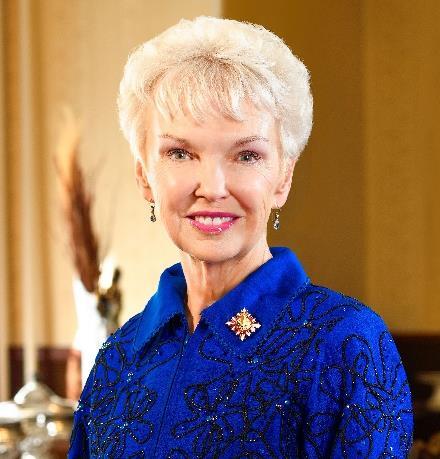
A Message from Her Honour the Honourable Bernadette McIntyre
A Message from the Lieutenant Governor of Saskatchewan, our Honorary Patron
February 12th, 2026
As our Monarch’s representative in the province, it is my privilege to extend greetings on behalf of His Majesty King Charles III, to the board of directors, staff, members, volunteers, and all s upporte rs of Heritage Saskatchewan.
I am pleased to serve as your Honorary Patron and grateful for your leadership of the Lieutenant Governor’s Heritage Awards . In addition, I would like to thank everyone who has contributed to creating and managing your organization’s children’s programs.
I thoroughly enjoyed meeting the young participants of the Provincial Heritage Fair in Government House this past June. The students’ creativity , and knowledge of their chosen subject matter , was impressive. It was also heartening to see their passion for education and Canadian heritage.
Best wishes to Heritage Saskatchewan with all your upcoming initiatives.
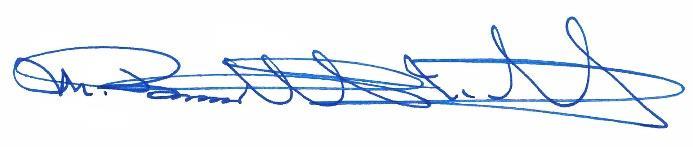
M. Bernadette McIntyre Lieutenant Governor Province of Saskatchewan
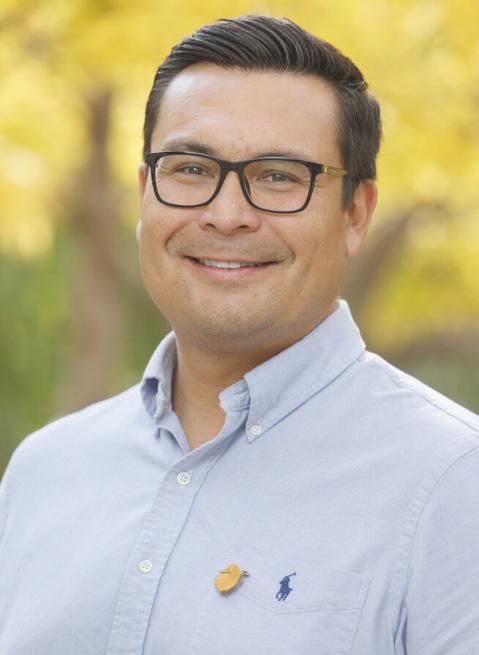
Ian Worme, President
We are witnessing growing challenges, political and global uncertainty, polarization and significant change and anxiety. At times, it is difficult to recognize what is truth, requiring additional critical thinking and evaluation of our beliefs and our actions. Is there room for hope?
In the midst of unrest, it is important that we reflect and build upon what we as individuals and communities can do to effect positive change, and to determine what our impact will be with the work that we are doing and can be doing in the future. Our work at Heritage Saskatchewan is always impacted by what we hear from communities and the global realities that impact how we respond. Within this Annual Report, you will find examples of our work, and we hope it will be informative and of interest. By focusing our work on Leadership, Research, and Empowerment, we do so to draw attention to and advocate for the value of our collective heritage as essential to our well-being. We encourage you to read through this Report and should you wish to engage further with us, we are always open to hearing from you.
With gratitude, we begin by thanking the Honourable Bernadette McIntyre, Lieutenant Governor of Saskatchewan, for serving as Heritage Saskatchewan’s Honorary Patron. This is Her Honour’s first year as our Honorary Patron, and we look forward to working and engaging with Her Honour during her term in office. Thank you for your enthusiasm and interest in our work, particularly through your involvement with our Heritage Fairs and the Lieutenant Governor Heritage Awards this past year.
Thank you to the Board of Directors who continued to govern the organisation, sharing their experiences and perspectives. The Board encouraged presentations at their meetings to learn and hear from organisations in Saskatchewan. These sessions provided the Board and Staff new knowledge that informed our work. The Board remained committed to governing through a policy governance model,
Cont on next page.

We welcome and celebrate a new Honorary Life Member! This honour is bestowed sparingly to those who have made a significant contribution to Heritage Saskatchewan. In our 16-year history, this award has only been presented twice. This year, the Board of Directors acknowledges the outstanding contributions that Rose Gilks, former CEO of SaskCulture, made to the formation of a Heritage Community of Interest that eventually evolved into Heritage Saskatchewan.
Rose worked with SaskCulture Inc. and its predecessor, the Saskatchewan Council of Cultural Organizations (SCCO), for 27 years, first as its funding manager and, for 22 years as its CEO before retiring in the summer of 2020. Prior to her work at SaskCulture, Rose worked as a consultant with the Saskatchewan Parks and Recreation Association (SPRA); as an executive director of three provincial sport organizations; and with the YM-YWCA in Newfoundland and Labrador - all of which gave her a unique understanding of non-profit organizations, effective governance and operations.
At SaskCulture, Rose saw the organization through a tremendous period of growth including ongoing support for the heritage community, first through the formation of an internal Heritage Community of Interest Committee and eventually to the formation of Heritage Saskatchewan.
Other key benchmarks during Rose’s time as SaskCulture’s CEO included - establishment of the Creative Kids Charity; creating a workplace that welcomed and practised Diversity, Equity and Inclusion (DEI) by hiring staff and developing funding programs to support it; a comprehensive review of the funding initiatives through the Culture Section of Sask Lotteries which culminated with the release of the Funding Review Implementation Strategy; a strong focus on volunteer board training and development, particularly within the context of Policy Governance; ensuring that the cultural community was well represented at table with government and the lottery partners, Sask Sport and SPRA; and leading the provincial initiative to be part of the National Culture Days movement. Rose left behind a strong, thriving organization that remains flexible and adaptable in addressing community needs and effectively facing challenges along the way. One of her proudest achievements during her time at SaskCulture was the organization’s work on Truth and Reconciliation.
Through this life membership we recognize and celebrate Rose’s strong support and vision to the cultural community in general and specifically her wealth of knowledge and contribution to the heritage community. Thank you Rose for your passion and support!
ensuring that the legal and fiduciary requirements to operate the organisation were fulfilled and providing time for meaningful dialogue focused on current and future trends affecting our work. With increased emphasis on advocacy, it is important that the Board be informed and engaged in this work and one of the Board sessions this past year provided opportunity to address advocacy and to review our ENDs statement to ensure that we remain on course and relevant. A synopsis of Board meetings continued to be provided through our newsletter.
Thank you to our members, volunteers, sponsors, consultants, and partners, for your support and willingness to engage with us. Extending our sphere of influence both within and outside of the provincial cultural community is necessary for our work. Communities throughout the province are concerned about the wellbeing of their citizens and do not operate in sectoral silos. The foundation of our work is building relationships and drawing from experiences that already exist within communities. Our greatest strength lies in the continuing nurturance of strong, diverse, cross-sectoral, and sectoral relationships, both within the traditional heritage community and beyond. We seek to dissolve silos and collaborate with a multitude of organisations and institutions to reach more people in Saskatchewan, and to better serve them. Through already established relationships that have developed into partnerships, we recognise that as a small organisation, we are dependent upon the expertise and knowledge that our partners bring to these relationships and thankful for their leadership, expertise and willingness to work with us.
Thank you to SaskCulture for their support and we look forward to strengthening our partnership, as we serve as one of their communities of interest. In addition, we appreciate the funding received through Saskatchewan Lotteries Trust Fund for Sport Culture and Recreation.
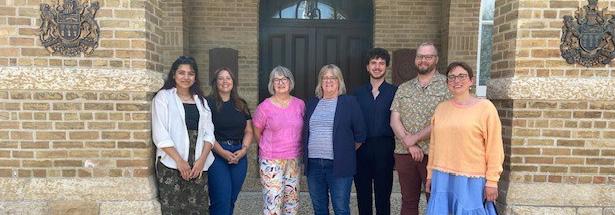
Our sincere gratitude is extended to the highly motivated and skilled staff for their ongoing commitment, leadership, adaptability, and dedication. This past year, we adjusted to change and recognized the need to strengthen our advocacy efforts to extend our messaging about the value of cultural heritage to existing and new audiences. This meant building new partnerships and adjusting quickly to new opportunities that emerged from our work in several areas including economic impact. Our initiative, for example “Key to Cultural Heritage”, in partnership with the Museums Association of Saskatchewan and memoryKPR, was in direct response to a trend in renewed Canadian identity and tourism which saw visitors choosing to explore their own country and province this past summer. The project sprung from conversations with our economic consultants and from there to building an initiative in response. This could not have happened as quickly and as well as it did without the collective support from Heritage Saskatchewan’s staff and their enthusiasm to participate. The results of those decisions were met with enthusiasm and a renewed sense of dedication to our purpose. As we look at future initiatives, we are thankful for this small staff that have never hesitated to engage, contribute, and support new directions at the same time as they continue to build upon their specific initiatives that continue to move our organisation forward. Thank you to Olivia Shumski, Katherine Gilks, Faith Boser, David Siebert, Maha Addas, and Frank Finley for your insights and experiences that are foundational to all the work we do. In addition, we extend our thanks to Darren Adams, our Accountant, for providing sound and expert advice. Numerous consultants were a part of our work, and we are grateful for their expertise in the areas of graphic design, economic impact and future planning.

This message began with a question: is there room for hope and the answer is absolutely! How do we navigate our way through uncertainty? Solutions lie in community, in meaningful engagement, in listening, and in working together. Our collective efforts to share lived experiences, our living heritage, can strengthen our ability to build a more equitable and vibrant future.

Ian Worme, President
Kristin Enns-Kavanagh (2009-2014)
Les Oystryk (2014-2017)

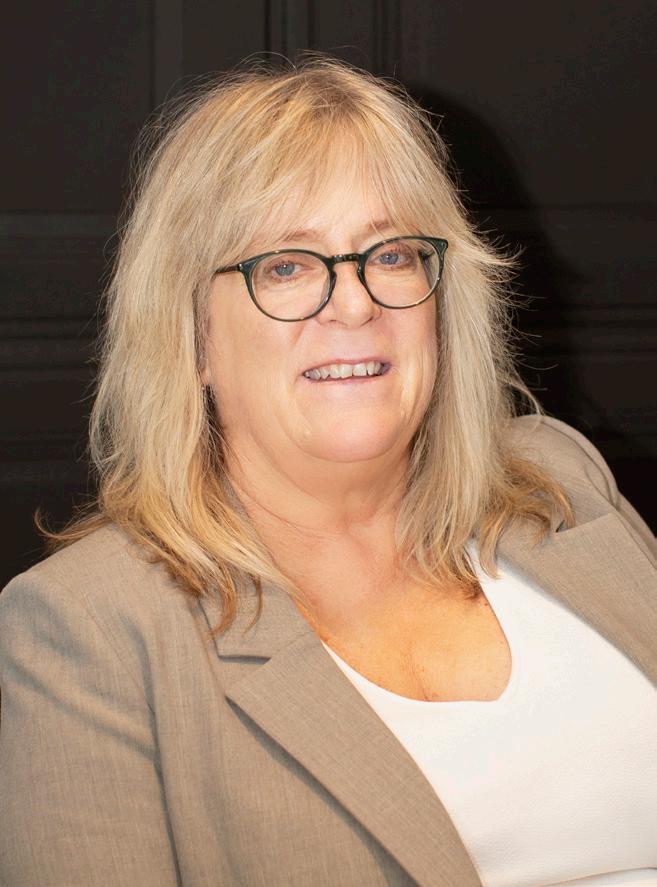
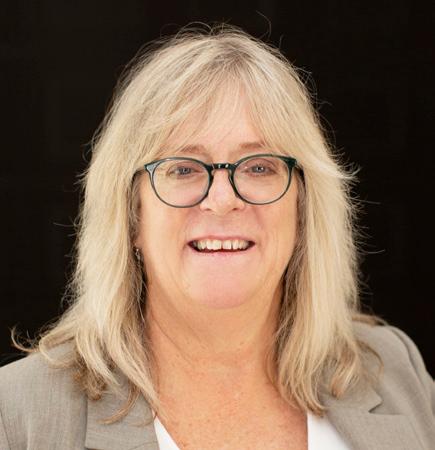
Ingrid Cazakoff, CEO
Wendy Fitch (2017-2018)
Tara Janzen (2018-2019)
Alicia Buckley (2019-2020) Tomasin Playford (2020-2021)
Emma Morris (2021-2023) Erin Folk (2023-2025)



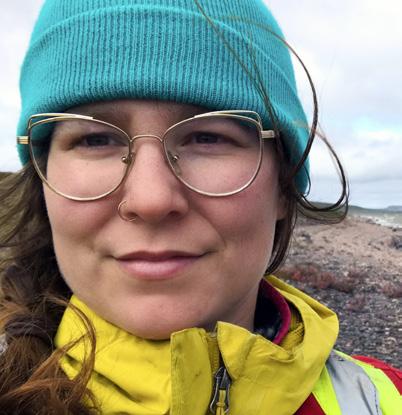





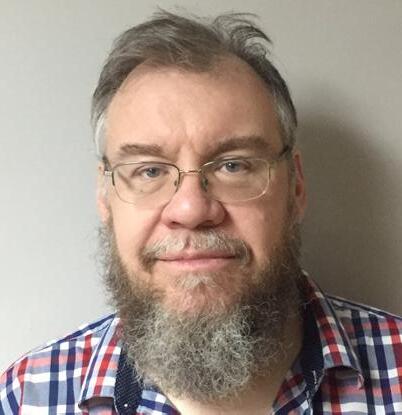
Ian Worme, President; Jennifer Fitzpatrick, Vice President; Erin Folk*, Past President; Haven Rees, Jennifer Rychlo, John Richards, Maria Mampe, Paige Hundt, Ranelle Sylvestre, Stephanie Danyluk, Tim Panas
*Erin Folk (resigned in May 2025)
AUDIT
Tim Panas, Chair
Chad Debert
Ian Worme
John Richards
Stephanie Danyluk
Jennifer Fitzpatrick, Chair
Haven Rees
Ian Worme
Jennifer Rychlo
Maria Mampe
Paige Hundt
Ranelle Sylvestre
Paige Hundt, Chair
Ian Worme
Jennifer Fitzpatrick
Tim Panas
PERFORMANCE EVALUATION & COMPENSATION
Ian Worme, Chair
Jennifer Fitzpatrick
Paige Hundt







Heritage Saskatchewan’s objectives and actions focus upon:
• Influencing policy development.
• Communicating the value of cultural heritage with outputs for economic growth and jobs in Saskatchewan.
• Working towards direct government and private sector investment in heritage activities, resulting in growth in the sector.
• Public awareness and understanding of living heritage as a dynamic aspect of daily life.
• Empowering communities to influence government agendas that includes the value of heritage.
• Incorporating wellbeing into community development, alongside economic indicators
• Recognising and celebrating communities - their traditions, traditionbearers, knowledge keepers, and customs
• Increasing understanding and dissemination of information about living heritage and its connection to wellbeing
• Building inclusive, cohesive, vibrant, and sustainable communities through living heritage
• Working towards a vibrant, active network of heritage practitioners in Saskatchewan

We are recognised nationally and internationally for our ground-breaking work in living heritage, its connections to wellbeing, and safeguarding of tangible and intangible cultural heritage. We advocate and communicate the social, environmental, cultural, and economic value of heritage, and are a facilitator of new ideas and conversations. We encourage and engage in long-term thinking informed by cutting-edge research and our experiences working with communities.
Our greatest strength lies in the continuing nurture of strong, diverse relationships, both within the heritage community and beyond. We seek to dissolve silos and collaborate with a multitude of organisations and institutions to reach more people in Saskatchewan, and to better serve them. We are adept at working within our established parameters to create results.
Our organisational ethos also values a dexterity that allows us to seize unexpected opportunities and meet the challenges of the moment with confidence. In so doing, we pave the way for a more just, equitable, and vibrant future: one built on the legacy of our collective living heritage.
A Memorandum of Understanding (MOU) signed annually with SaskCulture defines our commitment to work together in partnership as SaskCulture’s Heritage Community of Interest. The MOU outlines the need for engagement including Board to Board meetings and
CEO to CEO communications on a regular basis. In this advisory capacity, Heritage Saskatchewan continues to work with SaskCulture, ensuring regular communication and co-operation on heritage-related issues, and allowing for clear messaging and informed decision-making.
Heritage Saskatchewan published 12 new blogs to our website in 2025. The blogs posted between September 22nd and October 28th were part of a blog series initiated by David Siebert, called ‘Haunted Heritage’ (https://heritagesask.ca/ news/haunted-heritage-series). A combination of interest in the subject matter, guest bloggers sharing among their networks, and the repeated advertising of the series with updates increased readership over our regular blogs.
Our newsletter, Heritage Happenings, continues to be the most engaged way people acquire information from Heritage Saskatchewan and we encourage members, and others who are interested in our work, to sign up in order to get regular updates about heritage in Saskatchewan. www.heritagesask.ca
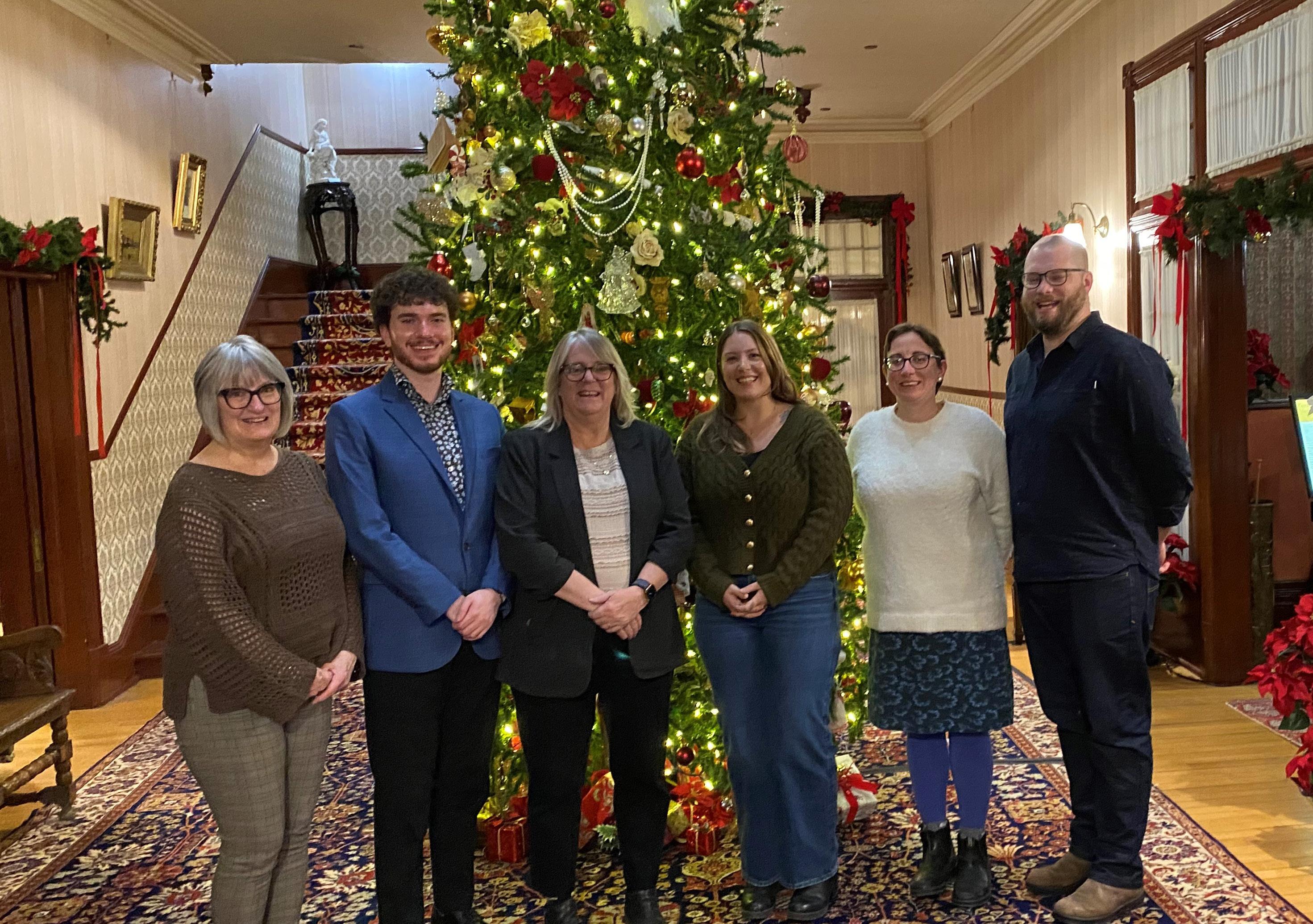

In October, we attended the National Trust Conference that was held in Halifax, Nova Scotia. “Heritage Now”, in partnership with the Canadian Association of Heritage Professionals (CAHP) and the Indigenous Heritage Circle (IHC). The Conference explored a variety of issues relating to heritage conservation and the evolving role of heritage in today’s current environment. Over 500 participants attended this conference. David Siebert from our staff, and Emma Morris, Executive Director of the Museum Association of Saskatchewan presented on our work “Economic Value and Jobs”. This presentation was very well received and drew attention from many provinces looking to do similar work.
The conference was also a time to celebrate, and a number of people and organizations from Saskatchewan were recognized for their outstanding heritage work. In 2025 this included
• The National Trust for Canada Governor’s Award presented to the City of Humboldt and Heritage Saskatchewan for “Relationship Building and Reconciliation through Living Heritage”; and
• The National Trust John Edwards Bursary supporting heritage volunteers’ participation at the Trust’s Conference, awarded to Carol LaFayette-Boyd, Executive Director, Saskatchewan African Canadian Heritage Museum.
Congratulations to all!
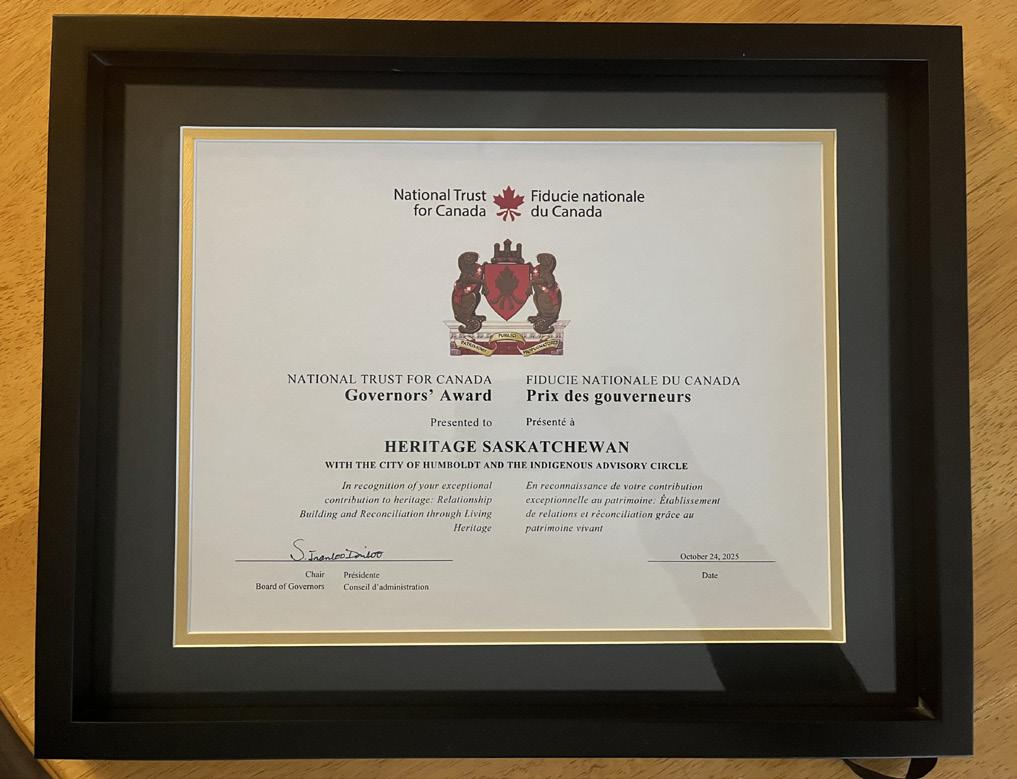
The National Trust for Canada Governor’s Award was presented to the City of Humboldt and Heritage Saskatchewan for their work on “Relationship Building and Reconciliation through Living Heritage”
The National Trust is responsible for the release for the Endangered Places list and information on the most recent list can be found by visiting: https://nationaltrustcanada.ca/what-we-offer/endangeredplaces in 2025. The Saskatchewan place recently added to this list is the Claybank National Historic Site.
Heritage Saskatchewan’s CEO Ingrid Cazakoff continues as a member of the Board of Governors for the National Trust and is currently serving as the Board’s Past Chair.
Heritage Saskatchewan staff continue to participate in National Council meetings. The National Council brings together regional and provincial heritage organizations from across Canada to discuss items of collective interest and to hear from and network with colleagues. This past year the Council met virtually except for the annual in-person event that occurred as a part of the conference in Halifax. Items discussed included disaster preparation planning, a review of a Halifax declaration, and an update on insurance which was welcomed by many of the participants. Across Canada there are considerable concerns regarding the inability to acquire insurance for older and, in particular, designated properties. Heritage Saskatchewan had opportunity to present a brief overview of our work here in Saskatchewan regarding the economic impact of cultural heritage. David Siebert is engaged in a specific National Trust working group relating to Emergency Disasters, and Ingrid Cazakoff was part of a working group relating to federal advocacy issues. Presentations from both of these groups formed a part of the National Council




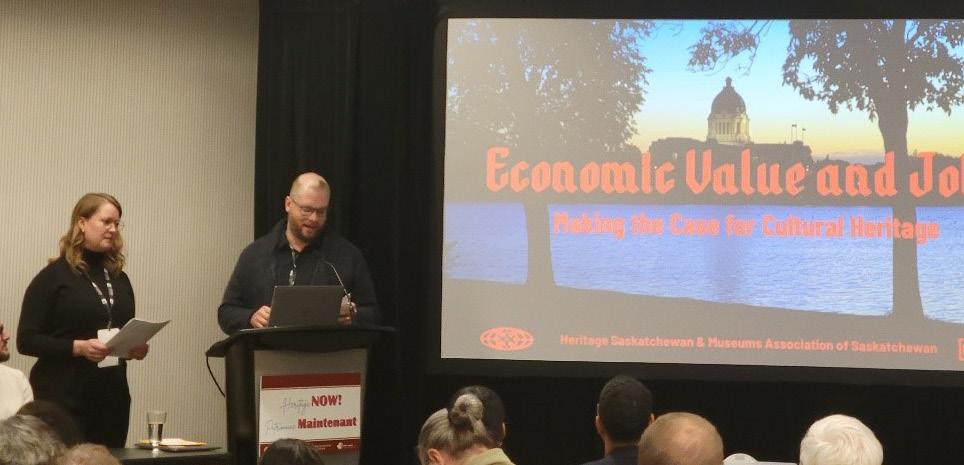
David Siebert, Heritage Sask’s Research Manager, and Emma Morris, Executive Director of Museums Association of Saskatchewan, are seen here presenting at the 2025 National Trust Conference
In 2025, we directed greater time and emphasis upon communicating and advocating for the heritage sector. This necessitated the development of partnerships both inside and outside of the heritage sector, including a coalition with the Museums Association of Saskatchewan (MAS), a like-minded organisation, to strengthen our efforts by building, supporting and equipping both organisations with consistent messaging. By jointly engaging in advocacy, we can encourage public action to safeguard Saskatchewan’s diverse cultural heritage.
A decision was made to hire Frank Finley as our Government and Public Relations Advisor, a position shared with MAS. Frank’s work led to the development of a joint advocacy plan which orients the goals of the heritage coalition and created an advocacy policy to codify advocacy responsibility within the organization. Together, we authored various letters to elected officials and other decision-makers on heritage-related issues; these advocacy letters contend with issues at all three levels of government including the maintenance of heritage funding at the municipal level and advocated directly to the Minister for Parks Culture and Sport regarding the present and future state of Claybank National Historic Site.
We had opportunity to meet with the Minister for Parks Culture and Sport and with the Opposition Critic to introduce our organisation and to encourage further conversations and opportunities to work together in the future.
In June, staff from both organisations participated in a day long workshop on advocacy to better equip ourselves for the work going forward. We were joined by two history students from the University of Regina who are interested in pursuing careers in heritage. The information was interesting and informative, and the gathering provided an opportunity for us to network with one another and to determine how we can work together regarding joint advocacy efforts.
The development of key messages for our use including communications utilising economic analysis and scientific opinion polling is ongoing. Relevant data and the creation of an advocacy toolkit are two important initiatives that we continue to develop in order assist member organizations in conducting their own advocacy.
On September 4, several of Heritage Saskatchewan’s staff and Board members attended the celebration of Saskatchewan’s 120th anniversary in Saskatoon, organised by Alex Fallon, Chair of the Western Canada Economic Forum. Great presentations were provided by keynote speaker Dr. Bill Waiser; the Office of the Treaty Commissioner; and by Saskatchewan’s Lieutenant Governor Her Honour the Honourable Bernadette McIntrye. The event provided us with a great networking opportunity, particularly bringing together individuals and organisations with an interest in both heritage and economics.

Living heritage and wellbeing* are relevant to Saskatchewan citizens. Our research demonstrates the connection between living heritage and wellbeing, its importance to daily life, and how it is necessary to address equitable policymaking.
Research informs our own work, and we endeavour to take it from theory to practice. Our ability to influence and inform new thinking about heritage necessitates that our research be shared with the people of Saskatchewan to strengthen our collective ability to lead, collaborate, develop, and promote living heritage. Most importantly, our research work is not done in a void – partnership and engagement are essential to all our work.
*Wellbeing is achieved when people are physically, emotionally and spiritually healthy; economically secure; have a strong sense of identity, belonging and place; and have the confidence and capacity to engage as citizens.”. -from our 2019 Saskatchewan Index of Wellbeing Report
Work continued in partnership with the Community Initiatives Fund (CIF) in 2025, where we commissioned the Canadian Index of Wellbeing (CIW) to provide an updated Technical Report for Saskatchewan. The CIW, a national resource, measures progress over time in 8 inter-connected domains, measuring overall wellbeing compared to GDP. The Index produced in October 2019 contained data that, when combined with the GDP, provided a comprehensive picture of wellbeing in Saskatchewan. The 2025 Report, Data and Trends in Wellbeing in Saskatchewan and Canada from 1994 to 2022: A Technical Report, was received and will continue to inform our work going forward. This is one important tool that tells a story of overall wellbeing. This tool and other wellbeing initiatives provide useful information for the need to incorporate holistic approaches, to community development at municipal, provincial and federal levels. Also in 2025, in collaboration with Dr. Iryna Khovrenkov, Associate Professor at Johnson Shoyama

Graduate School of Public Policy (JSGS), a municipal research project “Wellbeing in policy: How do Saskatchewan municipalities reflect community wellbeing in their decision-making practices” was completed. All of this new information will inform a presentation scheduled for the Saskatchewan Urban Municipalities Association (SUMA) conference in April of 2026.
Projects such as these help to inform our work at Heritage Saskatchewan and provides evidence for use in our advocacy initiatives. Our diverse and collective cultural heritage is important to our sense of wellbeing because it is the lens through which we see ourselves, our communities, and our futures. Individuals and communities with positive wellbeing will share a strong sense of identity, belonging and place.
Visit the website dedicated to wellbeing in Saskatchewan for current updates: www.saskwellbeing.ca


A significant part of our advocacy efforts includes the need for relevant data, particularly to build an economic case for the value of cultural heritage. Even though our purpose matters beyond economic indicators, it is important that we contribute to the current agendas of various levels of government and the private sector. Economic indicators along with social, cultural and environmental indicators are important to move wellbeing agendas forward. It is time to confirm that heritage contributes to the economy.
Why is this important? Challenges remain including the fact that 51% of heritage organizations in Saskatchewan operate on annual budgets below $50,000; 78%
spend less than $50,000 annually on construction and maintenance and there is a heavy reliance on seasonal staff and volunteers; infrastructure deficits and volunteer burnout are ongoing concerns. Despite challenges, we believe that investment in heritage supports job creation, tourism growth, and economic diversification, aligning with Saskatchewan’s Investment Attraction Strategy. Investment will not only drive job creation and tourism but will contribute to the safeguarding of cultural heritage, identity, belonging, and place for future generations.
...continued on next page
In partnership with the Museums Association of Saskatchewan (MAS), we contracted Alecxe Business Consulting in partnership with Glyph Creative Strategies, to provide a set of economic determinants and to build a business case for heritage industry development. The work involved consultations with key stakeholders including private businesses (archaeological companies, architects, engineers and others with a link to heritage conservation) as well as heritage sites and museums engaged in the tourism industry. The data received confirms that cultural heritage entities are a valued and valuable piece of Saskatchewan’s economy. Some key stats:
• In 2024, Saskatchewan’s heritage sector contributed $73.4 million to provincial GDP.
• In 2022, total direct GDP from archives, libraries, heritage sites, and architecture was $43.3 million.
• Heritage sector supported 866 jobs (604 full-time equivalents).
• Heritage-attributable visitor spending reached $106.8 million.
• Heritage tourism contributed to $2.8 billion in total visitor expenditures in 2022.
In July, we engaged Insightrix to conduct a poll asking, “Broadly speaking, do you support or oppose public investment to support economic development and job creation through cultural heritage?” The results were promising with 8 in 10 Saskatchewan residents in favour of investing in cultural heritage to promote economic growth and employment. Support is notably higher among females, individuals aged 18–34, and residents of Regina and southern Saskatchewan.
Working with Halter Media, we produced a ‘heritage sizzler’ video demonstrating the economic impact of heritage in Saskatchewan. Heritage Saskatchewan members have had a sneak peek of the video, and we are hoping to launch it more broadly in 2026. This, as well as the data we received through the consultants’ work, will be used in our future advocacy efforts.
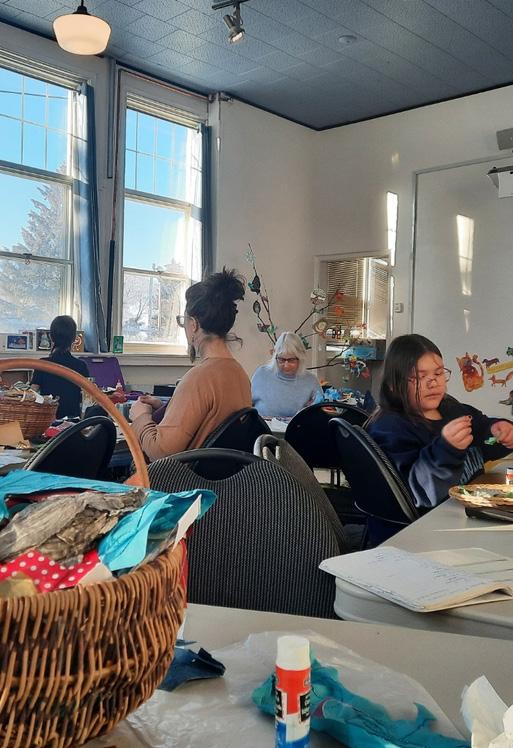
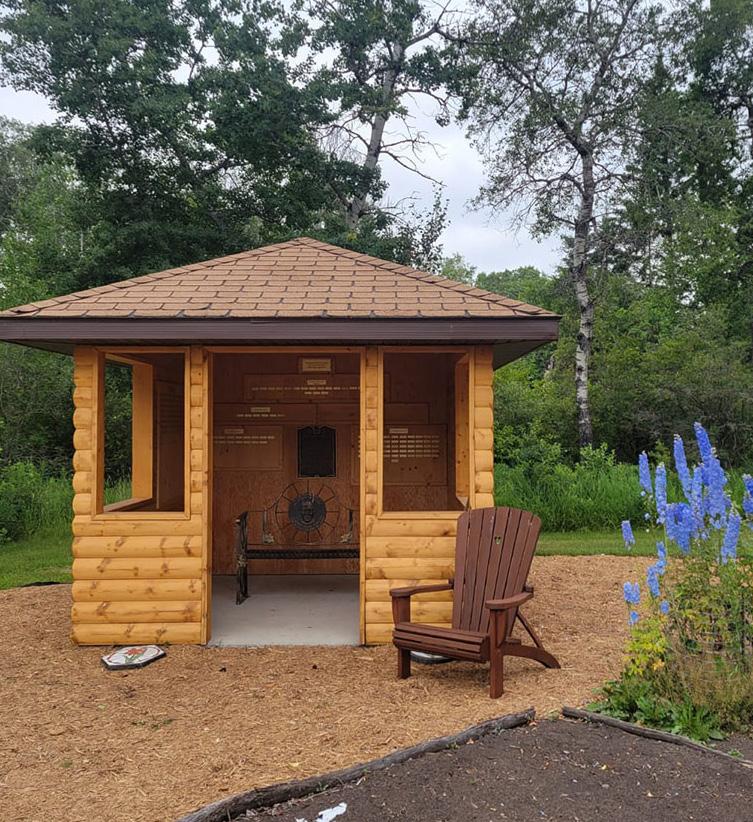
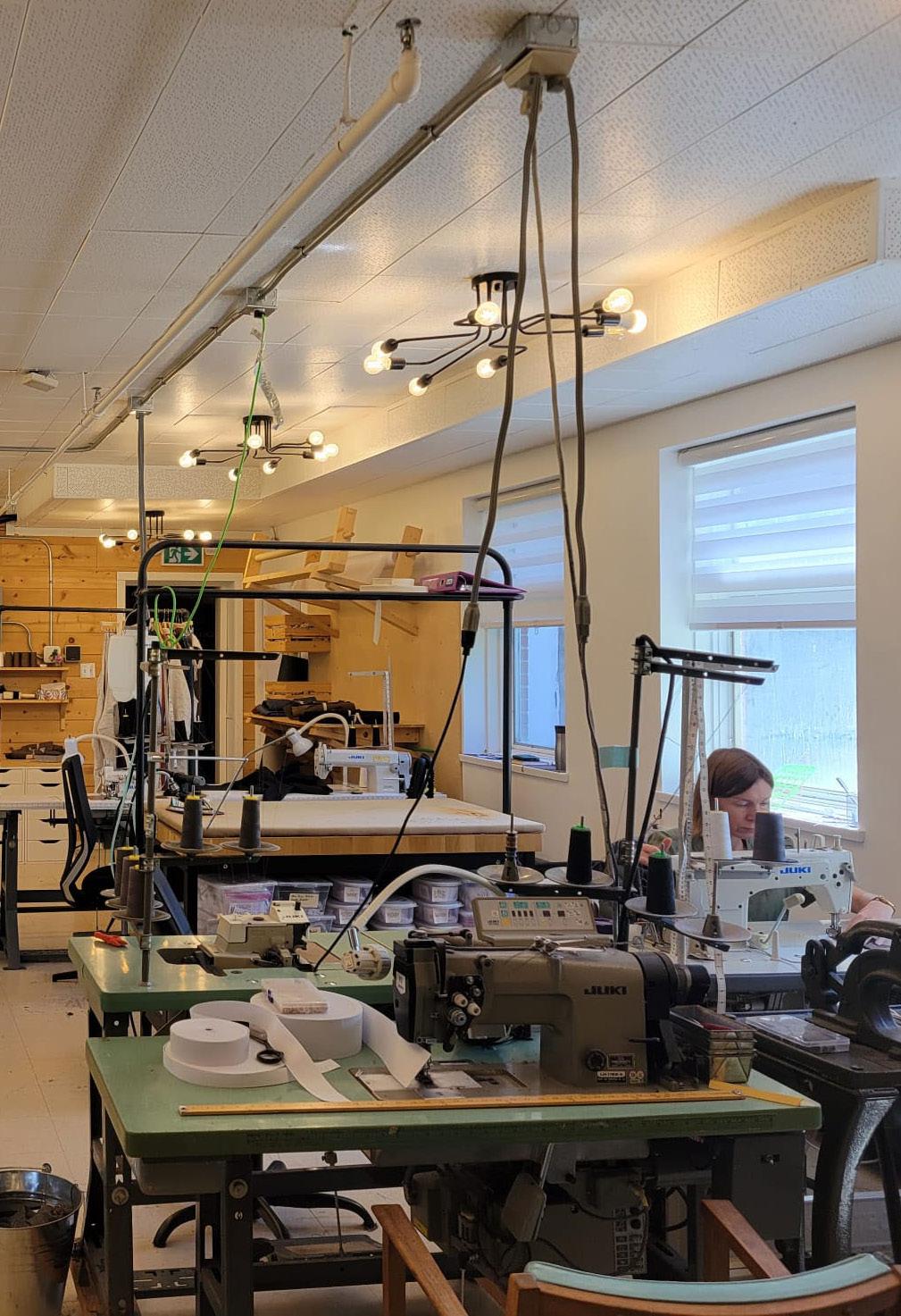
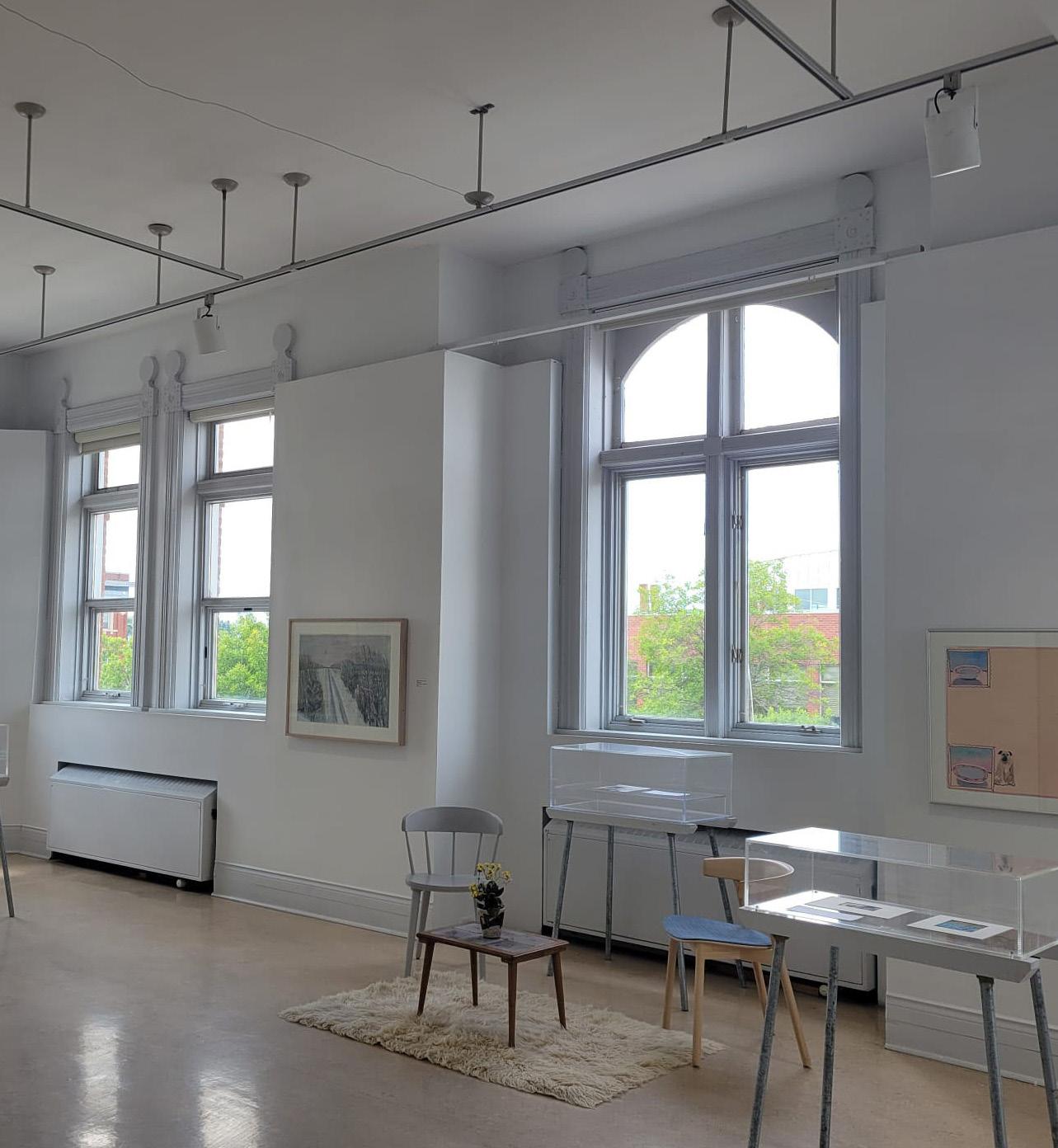
Funded through Young Canada Works in Heritage, Maha Abbas was hired to do a research project to put a face to the statistics coming out of the economic research. Maha selected four case study sites, visited each for fieldwork and mapped the activities and values onto the North American Industry Classification System (NAICS). NAICS is a standardized industry classification framework used by Canada, the United States, and Mexico to categorize businesses, organizations, and industry activity into specific sectors for statistical, economic, and policy purposes. The four sites included:
• Margo Fournier Arts Centre in Prince Albert,
• Qu’Appelle Valley Centre for the Arts in Fort Qu’Appelle,
• Signal Hill Collective in Weyburn, and
• the Honeywood Heritage Nursery near Parkside.
By mapping heritage site activities onto NAICS sectors, this research highlights the diverse ways in which heritage assets contribute to and fuel different components of the local economies. Together, the case studies reveal that heritage properties are not isolated cultural artifacts but platforms that support sustainable development, encourage entrepreneurship, foster learning, attract visitors, and cultivate social cohesion.
The opposite page includes photos of the case study sites.
We envision a future where heritage is recognised as essential to building a shared future. It is fundamental to our sense of identity, belonging, and place and is integral to building resilient and inclusive communities.
We cultivate an environment where we work with and empower others to promote heritage industries. Our work is informed by the diverse communities* within Saskatchewan. At the core of our role is community engagement, building relationships, and drawing from experiences that already exist.
These relationships are mutually beneficial and respectful. This emphasis on establishing and strengthening relationships within communities is evident in our annual programs, such as the Heritage Fairs and the Heritage Awards. By supporting and engaging in these activities, we create environments where we can empower others through recognition, education, and critical thinking.
*Heritage Saskatchewan defines a ‘community’ as: - a geographic or municipal entity; or - a group of individuals sharing common interests; or - a group of individuals united by one or more shared characteristics; or - a combination thereof.
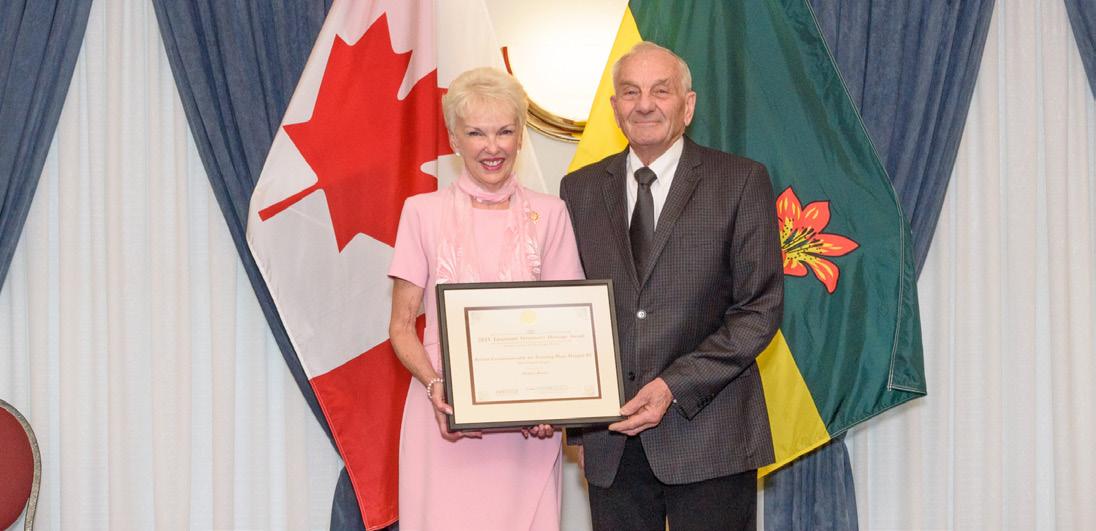
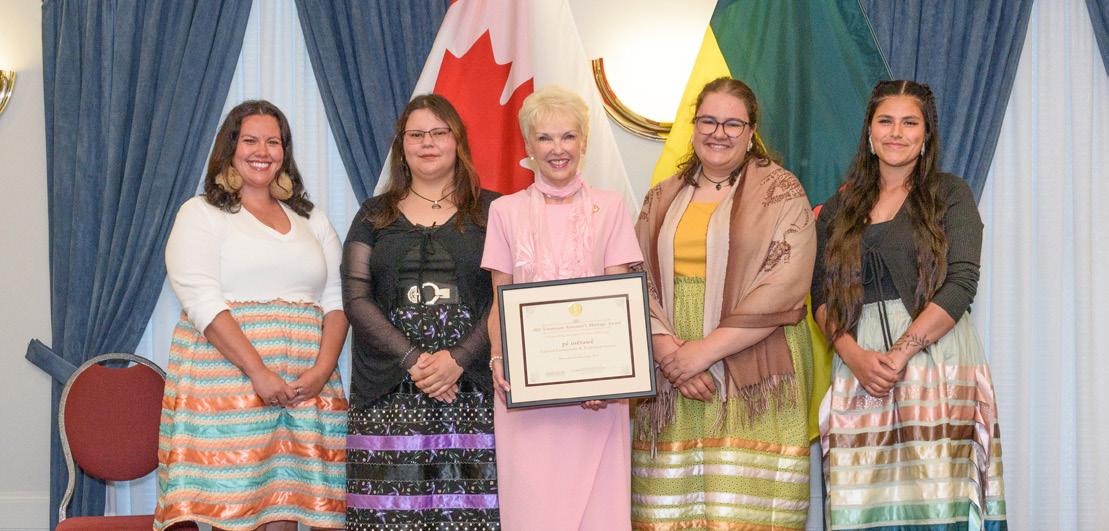
The Lieutenant Governor’s Heritage Awards took place at Government House on June 18, 2025. Her Honour the Honourable Bernadette McIntyre, Lieutenant Governor of Saskatchewan, presented the awards, continuing our relationship with the Office of the Lieutenant Governor of Saskatchewan. We received funding support for this initiative from the Saskatchewan Heritage Foundation (SHF), welcomed back returning sponsor Brxton Masonry Inc., and added a new sponsor, Wilhelm Masonry Inc. We sincerely thank the SHF, Brxton and Wilhelm Masory for their support.

The Heritage Awards is a time to celebrate the remarkable work undertaken throughout the province. The projects being recognised represent a small sample of the rich diversity of heritage, both tangible and intangible, that contribute to the identity, vibrancy and economic life of their communities. The winners are a testament to the value that individuals and communities place upon documenting, promoting, teaching, and safeguarding heritage for future generations.
New in 2025, the Museums Association of Saskatchewan presented the Excellence in Saskatchewan Museums Award of Merit to Climax Community Museum.
Congratulations to all the award recipients!
Safeguarding Intangible Cultural Heritage category
• Knife Making Workshops – Grant Schiller Knives, Carrot River
• Notice Nature, Hafford
• pê mêtawê: Cultural Connections and Traditional Games – Wanuskewin Heritage Park, Saskatoon
Conservation of Heritage Places category
• Battleford Court of King’s Bench – Adero Architecture
• British Commonwealth Air Training Plan, Hangar #3 – Hildor Braun, Swift Current
• Government House – P3 Architecture Partnership
• John Nugent Studio – Lumsden
• Melfort Court of King’s Bench – Moore Architecture Consulting Group Ltd.
• Ogema Grandstand – Town of Ogema & community partners
• Regina Soundstage – P3 Architecture Partnership
• SaskPower Head Office – Stantec Architecture Ltd.
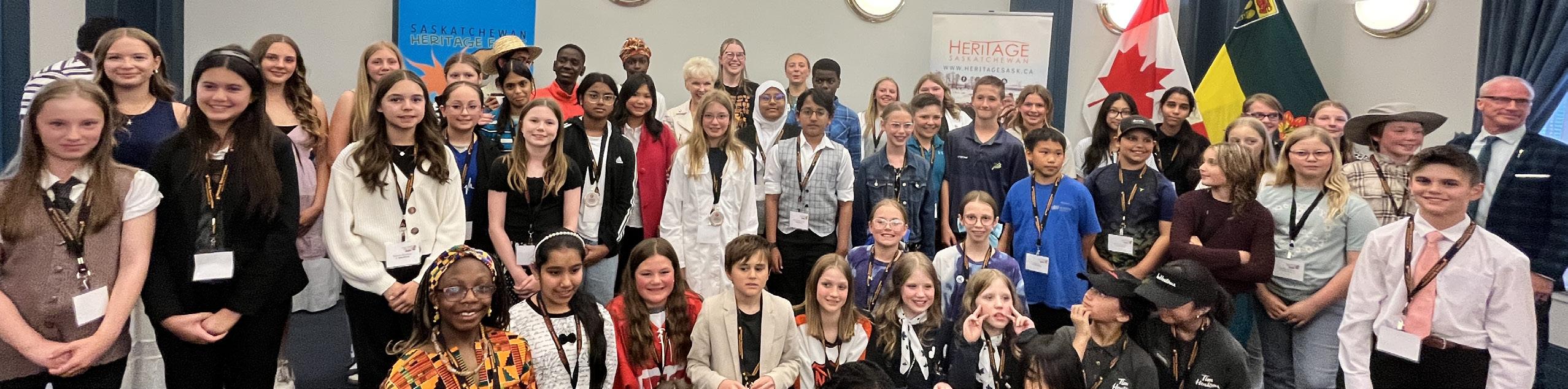
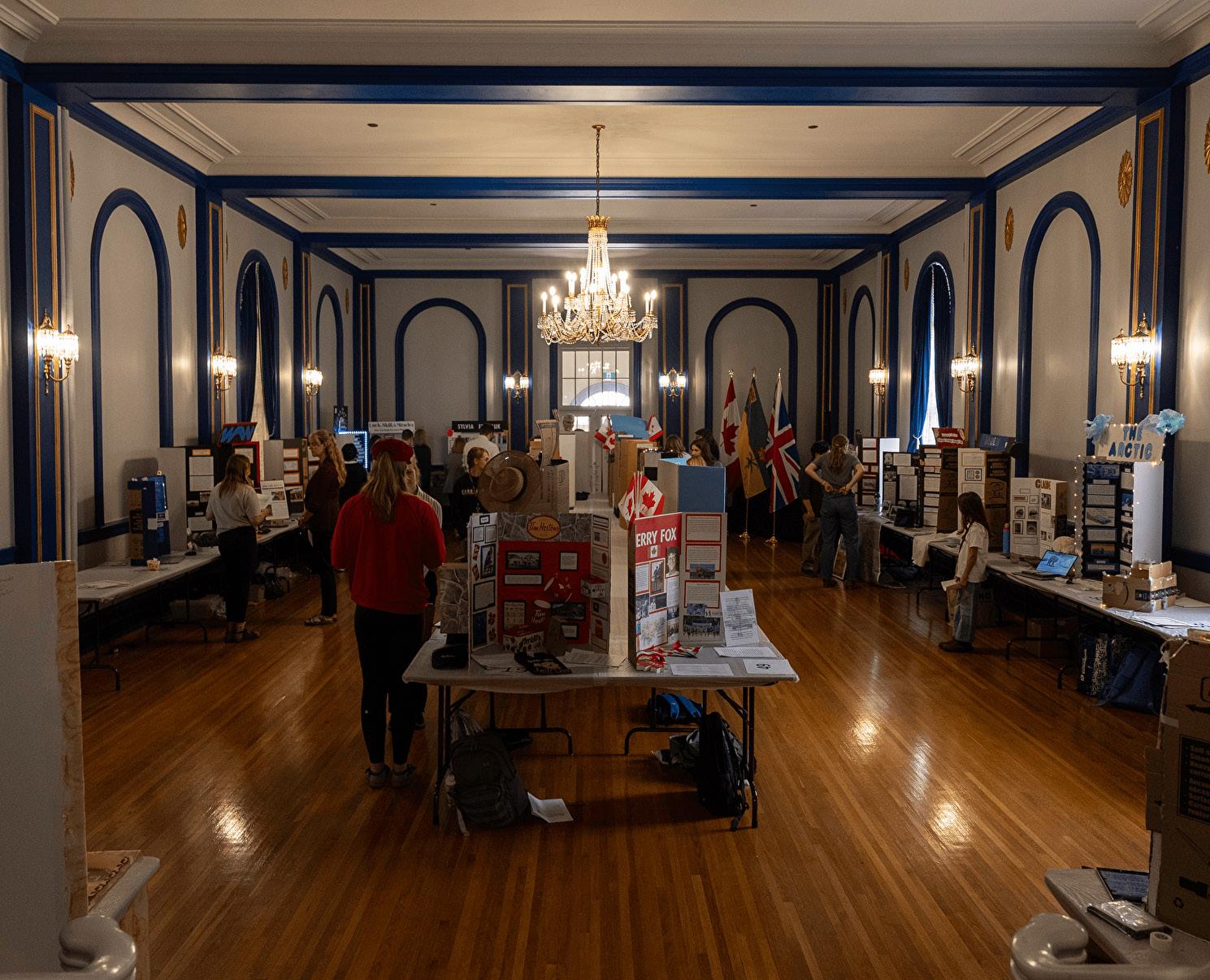
Participating in Saskatchewan Heritage Fairs provides the opportunity for students to establish a connection to place and community, and to form research, public speaking, historical thinking, and critical thinking skills.
The 2025 Fairs season was a great success. We held the Saskatoon, Regina, and Moose Jaw Regional Heritage Fairs once again and new this year, we held the Yorkton Community Heritage Fair, which had a good turnout for the pilot year of the Fair in that region. Students from all regions shared their projects on a range of Canadian heritage topics they are passionate about with their peers and communities.
This year, we included students as alumni judges who had participated in past Heritage Fairs, as a way for them to continue to build their skills and connect with their communities. It was excellent to see students excited to continue to take part in the Fairs and devote their time to Heritage Saskatchewan as volunteers.
We welcomed Faith Boser as our Heritage Fairs Assistant, who assisted Katherine Gilks in the planning and facilitation of the Heritage Fairs. At the beginning of the year, both Faith and Katherine visited several school Heritage Fairs in the Regina, Moose Jaw, and Saskatoon areas. Students were enthusiastic about their topics, and we had the opportunity to learn so much from them. It was lovely to get to meet so many passionate students, chat with teachers, and see a great array of projects reflecting the diversity of Canada’s heritage.
This year, we were back at Campus Regina Public for the first time since 2019 for the Regina Regional Heritage Fair on May 13th. We had a great turnout! There were 105 projects and 145 students who participated from Regina and the surrounding area. The students participated in activities facilitated by the Saskatchewan Science
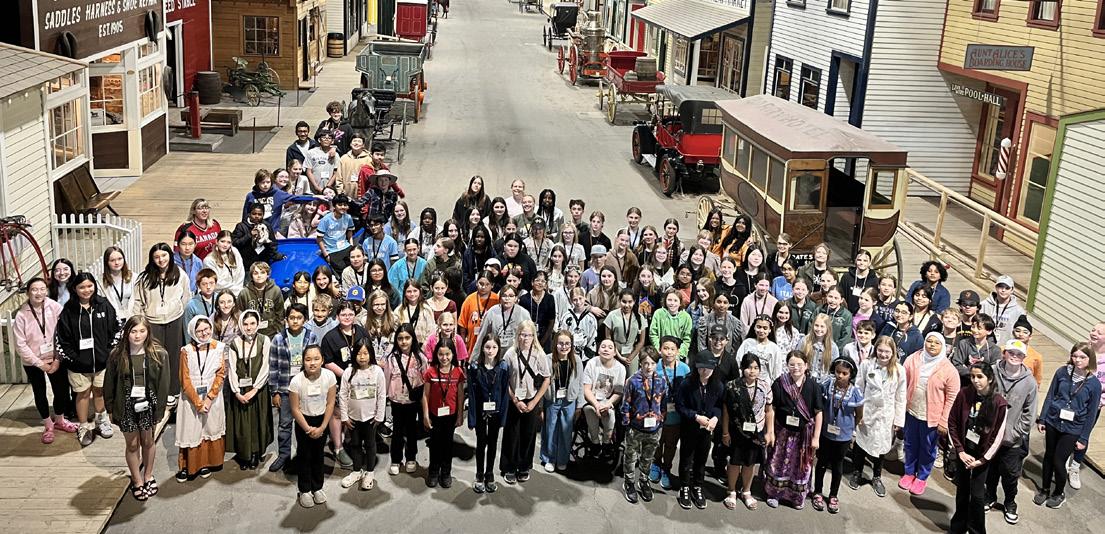
Centre and the Saskatchewan Archaeological Society.
The Saskatoon Regional Heritage Fair took place at the Saskatoon Western Development Museum on May 15th and 16th. The room was buzzing with excitement – there were 108 projects and 145 students who participated from across Saskatoon and the surrounding area. The committee organized three engaging activities facilitated by the Saskatchewan Archaeological Society, the Saskatchewan Science Centre, and the Western Development Museum. Everyone did a wonderful job, and we look forward to next year!
The Moose Jaw Regional Heritage Fair took place at the Moose Jaw Western Development Museum on the 14th of May. We had participation from 71 students with 60 projects from Moose Jaw and the surrounding area. The committee organized an exciting day with activities facilitated by the Western Development Museum, the New Southern Plains Métis local #160, and the Sukanen Ship Museum.
In partnership with the City of Yorkton, the first Yorkton Community Fair was held on May 7th at the Yorkton Public Library. We had a good turnout for the pilot year, with participation from six students. It was great to see participation in a new region this year. Our goal is to establish more Community Fairs to broaden opportunities for students in the future.
Our Virtual Fair had over 120 project submissions! Students from across Saskatchewan showcased their projects on our website during the month of May. There was a great range of projects displayed in creative ways – from videos to visual art, and poetry, the students did an amazing job!
Canada’s History introduced the National Online Heritage Fair Showcase this year, which featured projects from across the country
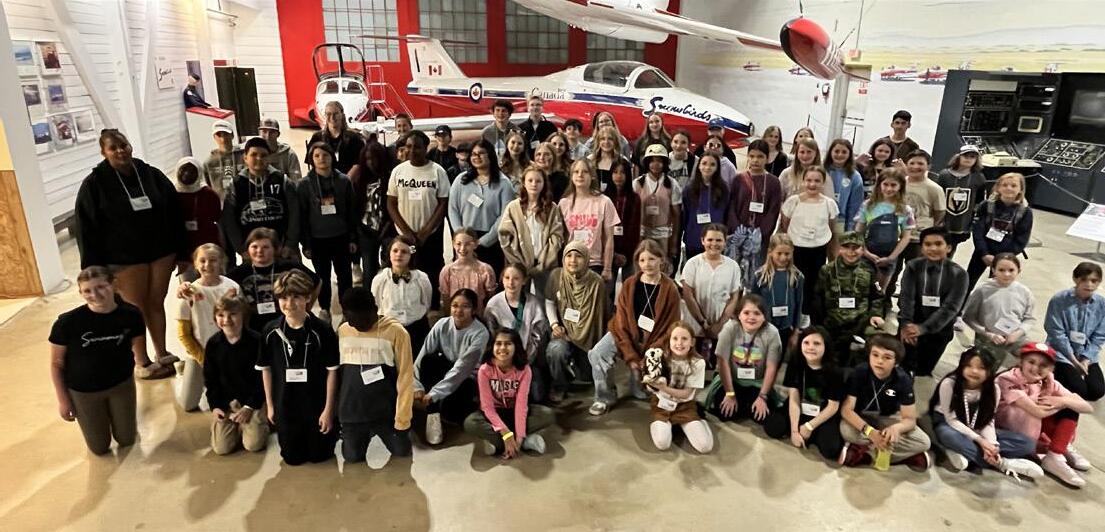
on their website during the summer. The top two projects from each of our Regional Fairs were chosen to participate, which was 10 projects (13 students). Great job to all the students who participated! While none of our students were among the top national winners, Brityn Palmer and Kendyl Johnston (from Fillmore, SK) had their project’s photo featured in Canada’s History magazine
The Provincial Heritage Fair was held on June 4th at Government House. Sixty students attended and had the opportunity to meet and present their projects to the Lieutenant Governor, the Honourable Bernadette McIntyre. The students were filled with anticipation and excitement as Her Honour made her way through the ballroom. Throughout the day, the students participated in activities facilitated by Government House staff. It was a lovely day; the students did a wonderful job!
We would like to thank the students, educators, staff and volunteers who helped make the 2025 Fairs season a success! For lists of award winners and photos of projects, visit the Fairs website: https://heritagefairssk.ca/
Speaking of websites, we launched the new Heritage Fairs website November 2025. We have cleaned up the content and made it easier to navigate. New resources have been added for teachers to help facilitate the Fairs projects, as well as topic specific teaching guides, and lessons. In addition, there are new research resources for
students and a step-by-step guide for creating their projects. Along with the website launch, we have started a Heritage Fairs Newsletter, which communicates our important dates and Fairs information, professional development opportunities for teachers, classroom resources, and opportunities for students. We hope these changes will help students and teachers participate in the Heritage Fairs with ease!
Testimonial on Heritage Fairs
“I wanted to reach out and thank you for allowing Weston to join in the fair festivities today. He took everything in and was so inspired by today’s events. In my professional world, I have never been more impressed with a meeting venue, topic/setting, and the special guests involved. I wanted to sincerely thank you for an amazing event. It was put together so well!” - Shari Chelack

Thank you to Saskatchewan Heritage Foundation for their support.
New in 2025, and in partnership with the Museums Association of Saskatchewan (MAS), we launched Key to Cultural Heritage, an initiative to encourage Saskatchewan residents to visit Saskatchewan’s cultural places. MAS and Heritage Saskatchewan partnered with memoryKPR, a Canadian image and story sharing platform, based in Moose Jaw, to bring this initiative to life. Tourism Saskatchewan also helped support the initiative.
The Key to Cultural Heritage initiative was inspired during conversations with our economic adviser from Glyph Consulting and was in response to an increased interest in Canadian identity and culture and visits to the United States down considerably, resulting in a renewed interest in visitors choosing to explore their own backyard.
Key to Cultural Heritage was advertised as an invitation “to visit Saskatchewan’s vibrant cultural spaces and heritage sites this summer”, with the goal to increase visitorship and viability of heritage places by tapping into tourism and social media.
To join the summer initiative, participants donated through MAS, and for their donation, they received a key chain (produced in Saskatchewan) along with QR code stickers. The QR code gave participants access to memoryKPR site and provided them with the ability to upload images and discuss other peoples’ images. Participants were encouraged to place the QR code stickers around the province, in places that they valued, and to share that place with the hashtag #secretSask, linking to memoryKPR to allow others to share as well. In addition to being able to share their favourite cultural places in Saskatchewan, participants who acquired a keychain were entered into a draw for a variety of prizes.
The 2025 Key to Cultural Heritage initiative was successful and garnered a great deal of interest from individuals and other organisations. Along with MAS and memoryKPR, Heritage Saskatchewan plans to continue this initiative in 2026!
See the Key to Cultural Heritage on memoryKPR

30, 2025
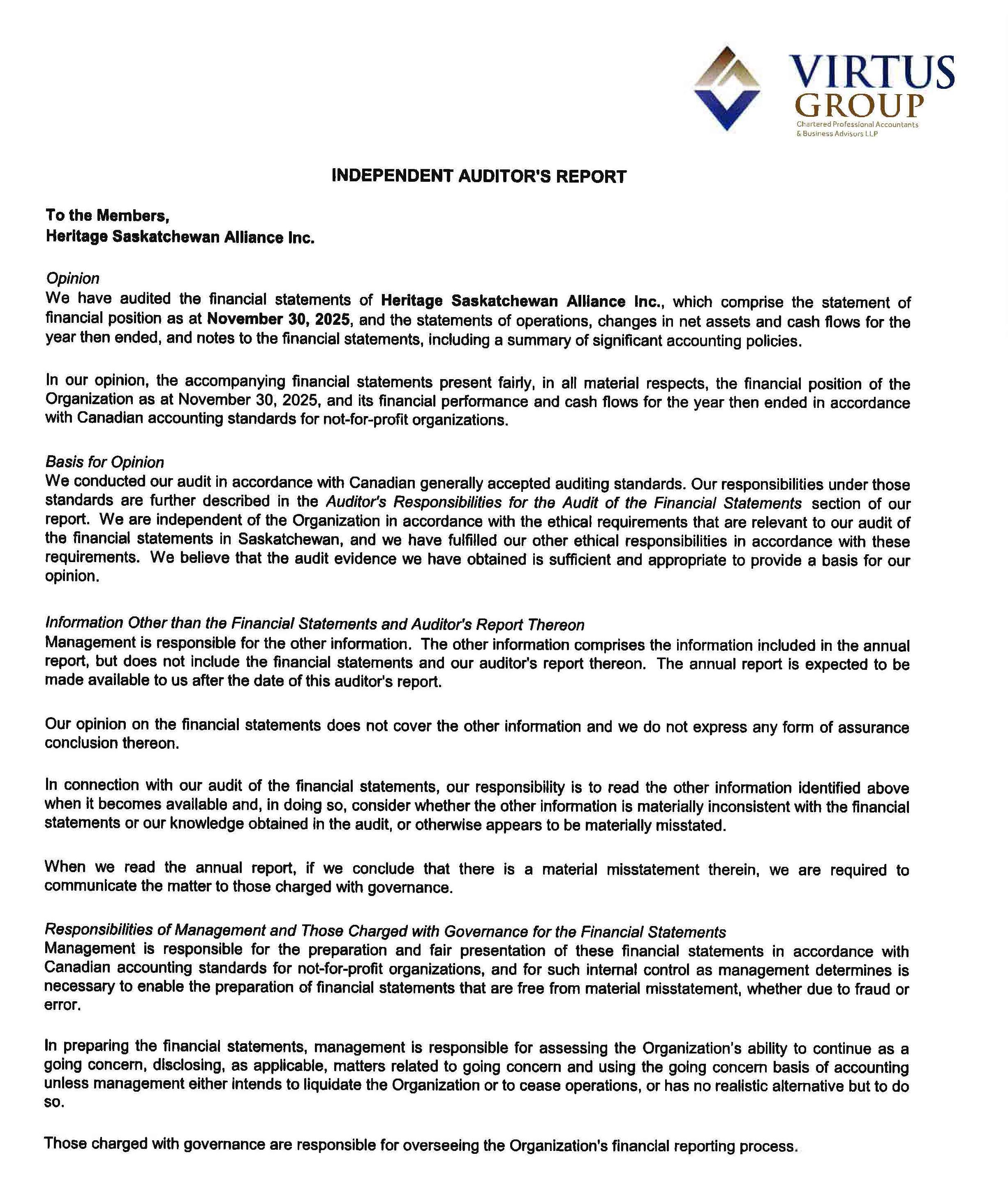
Please note that a condensed version of the Audited Statement has been included in the Annual Report. The complete Audited Statement is available from the Heritage Saskatchewan Office upon request.
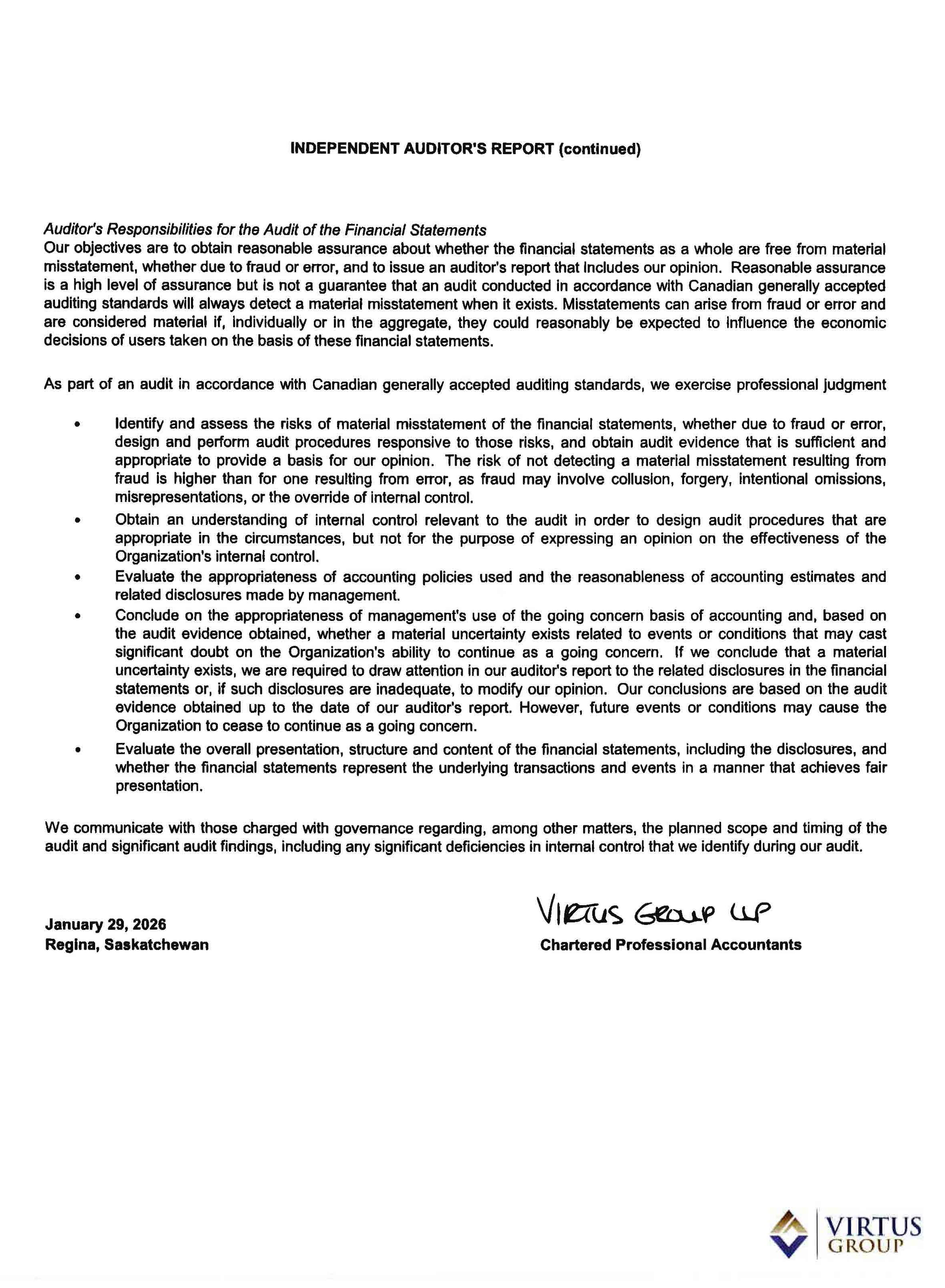
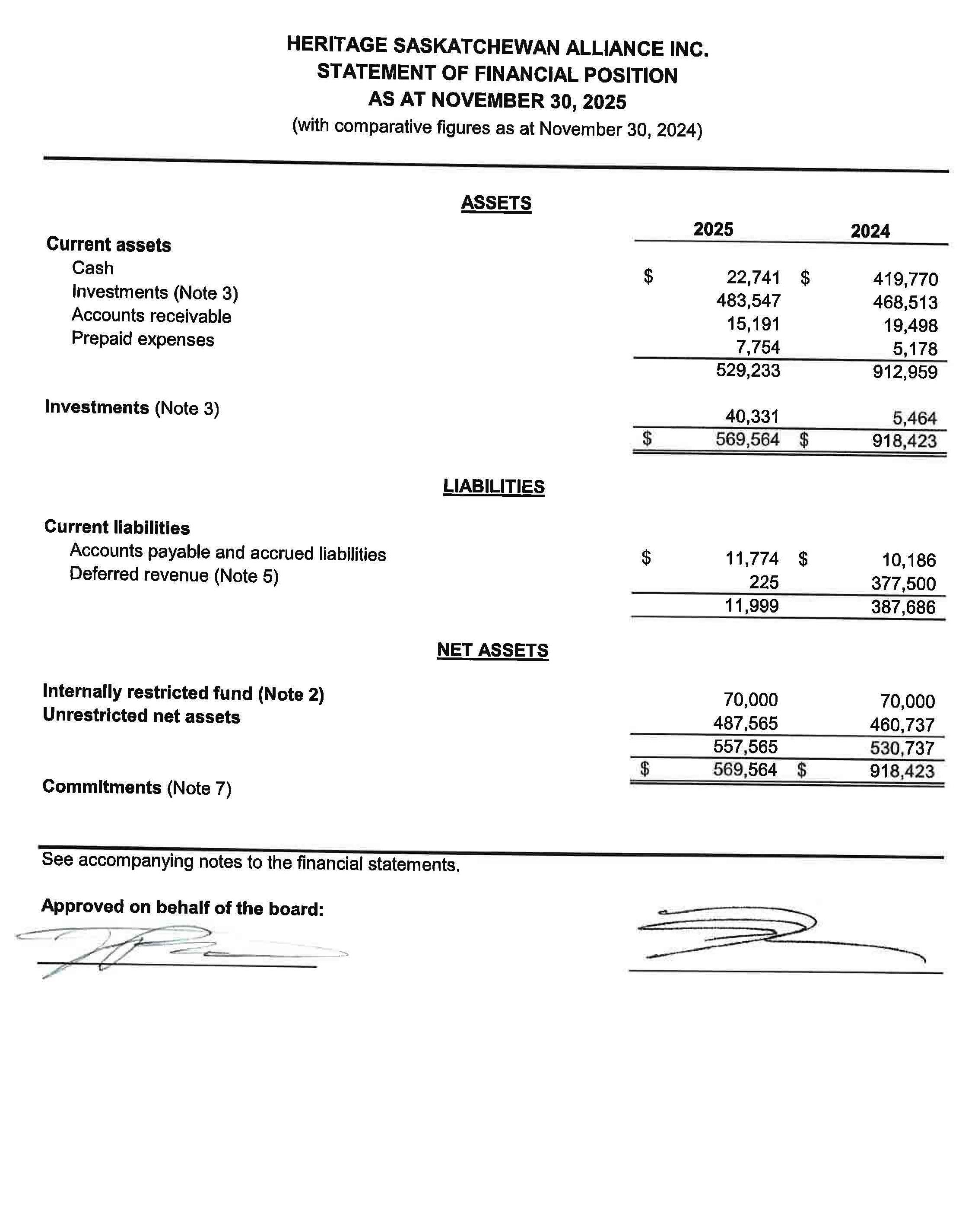
Please note that a condensed version of the Audited Statement has been included in the Annual Report. The complete Audited Statement is available from the Heritage Saskatchewan Office upon request.
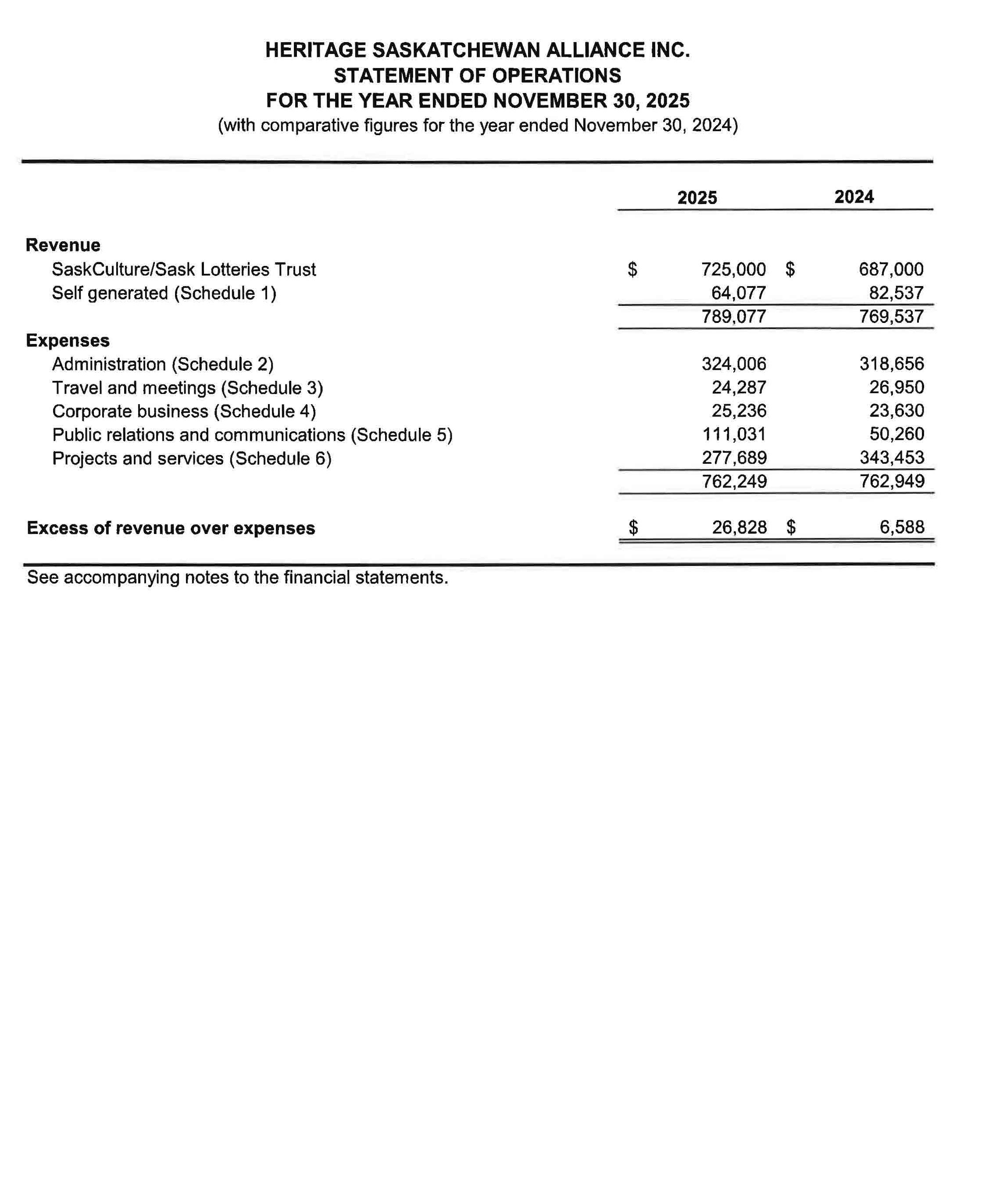
Please note that a condensed version of the Audited Statement has been included in the Annual Report. The complete Audited Statement is available from the Heritage Saskatchewan Office upon request.