Here Comes The Sun, Little Darling
Here Comes The Sun, Little Darling
2023
Lerato Mojapelo
Lerato Mojapelo
i
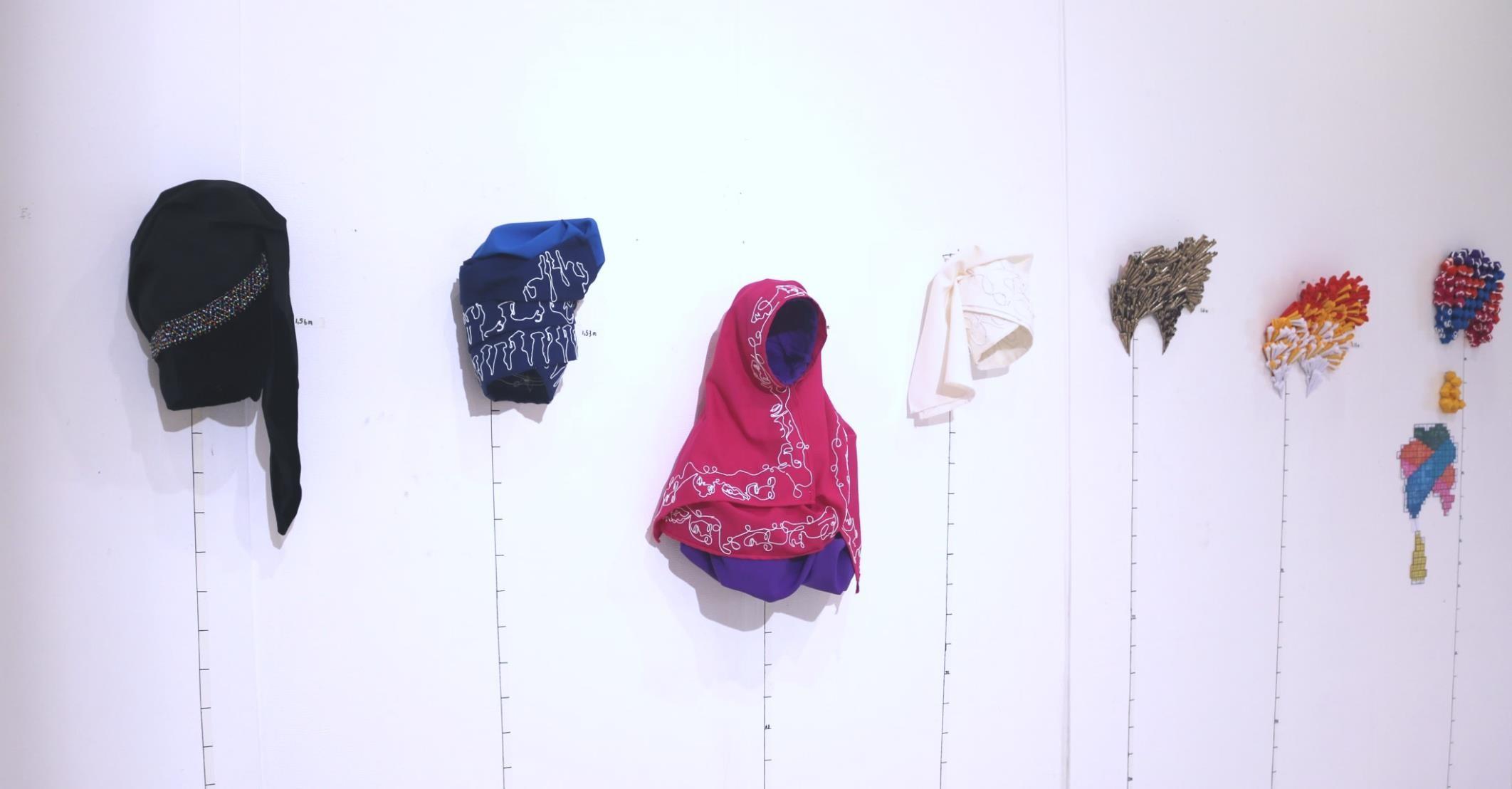
Figure 1: Lerato Mojapelo, Here Comes The Sun, Little Darling (2023)
ii
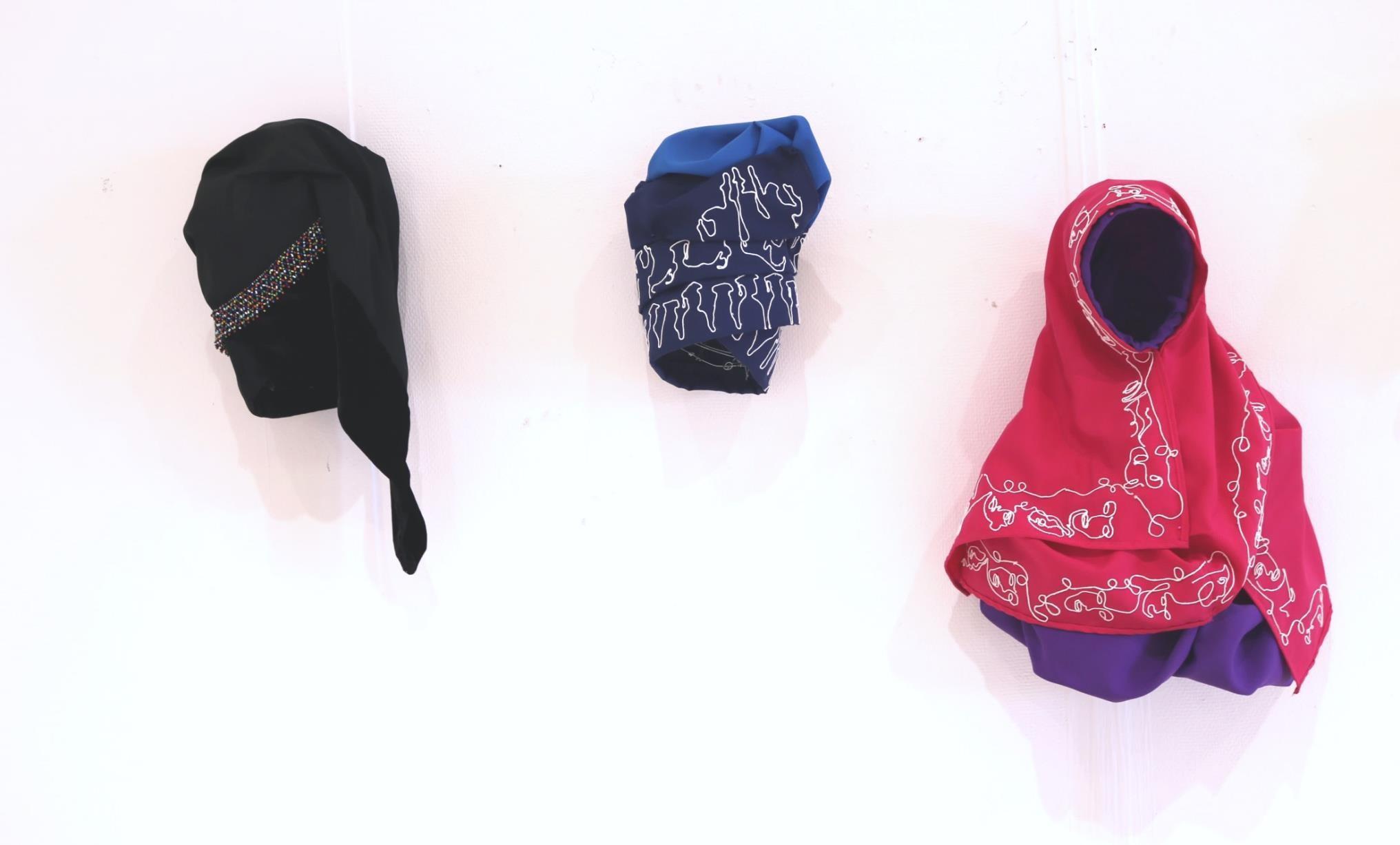
Figure 2: Lerato Mojapelo, Here Comes The Sun, Little Darling (2023)
About The Artist
Lerato Mojapelo is an emerging artist based in Johannesburg, South Africa. Mojapelo uses fabric, color and pattern to explore ideas about Femininity and representation. Her work depicts headwraps that are used as a metaphor that manifest feminine power. her artistic style is influenced by objects that represent femininity and have ideological connotations behind them like the headwrap, an apparel that is commonly worn by women. The headwrap is weaved into different cultural and traditions practices for women, specifically African and Middle Eastern Cultures. The ideologies that surround the headwrap in some cultures suggest gender roles that have created autonomous expectations of who women are and where their place exists in society. In using the headwrap, Mojapelo seeks to reconstruct these ideologies by highlighting the achievements of select women leaders. The referenced women leaders form part of a community that has a single message of motivation and inspiration for women of today’s generation. The main principles that guided the body of work is balance, variety, unity and realism. By using these principles Mojapelo intends to create an interactive space between the audience and the artwork.
Contents 1. Introduction 1 2. Background 4 3. Feminine figures that wore the headwrap in spaces of influence 5 4. Nina Simone 5 5. Winnie Mandela 6 6. Contemporary movements that use the headwrap as a marker 7 7. My art making process 8 8. Enslaved Women 10 9. Nina Simone 13 10. Winnie Madikizela Mandela 16 11. Tawakkol Karman 20 12. Prof. Mamokgethi Phakeng 23 13. Little Darling/Women of this Generation 26 14. Lerato Mojapelo 28 15. Artists that I draw inspiration from 32 16. Conclusion 33 17. List of illustration 34 18. Reference list 35 19. Curriculum Vitae 38 iii
Introduction
In my body of work titled “Here Comes The Sun, Little Darling (2023)” the headwrap and hijab are used as metaphors that depict the manifestation of feminine power from select women leaders. The work of women such as enslaved women, Nina Simone, Winnie Madikizela Mandela, Tawakkol Karman and Professor Mamokgethi Phakeng are used as references for the body of work. The objective of the body of work is to celebrate and recognize influential women who have shown qualities of leadership, boldness and taking the initiative. The justification for this is because women are often subjected to gender stereotypes that marginalize them and portray them as incapable of doing anything beyond the parameters of domestic servitude, childbearing and caregiving (Casad & Wexler 2017:755). The women who are referenced have proven abilities that destigmatize gender stereotypes; and because of this, they exemplify excellence and leadership that women of today can look up to.
The headwrap is also used as a metaphor that represents women of this generation. And how women of today use the headwrap as a marker for continued socio-political issues that affect women today. Contemporary movements such as The Black Doek Movement and Doeks on Fleek are discussed on how the headwrap is a marker for their sociopolitical movements. The headwrap is also used as a metaphor that describes my own heritage and traits of my identity. My interest with the use of the headwrap as a metaphor through these different women is that it creates a lineage of commonality and a sense of community that is relatable and inclusive of all women. The headwrap is an apparel that patriarchal ideology has at times used to suppress and limit women through stereotypes of how a woman should look (Griebel HB 1995). In using the headwrap as a metaphor the intention is to redefine it as something that women can use to create their own meaning of who they are.
1
2
Figure 3: Lerato Mojapelo, Here Comes The Sun, Little darling (2023)
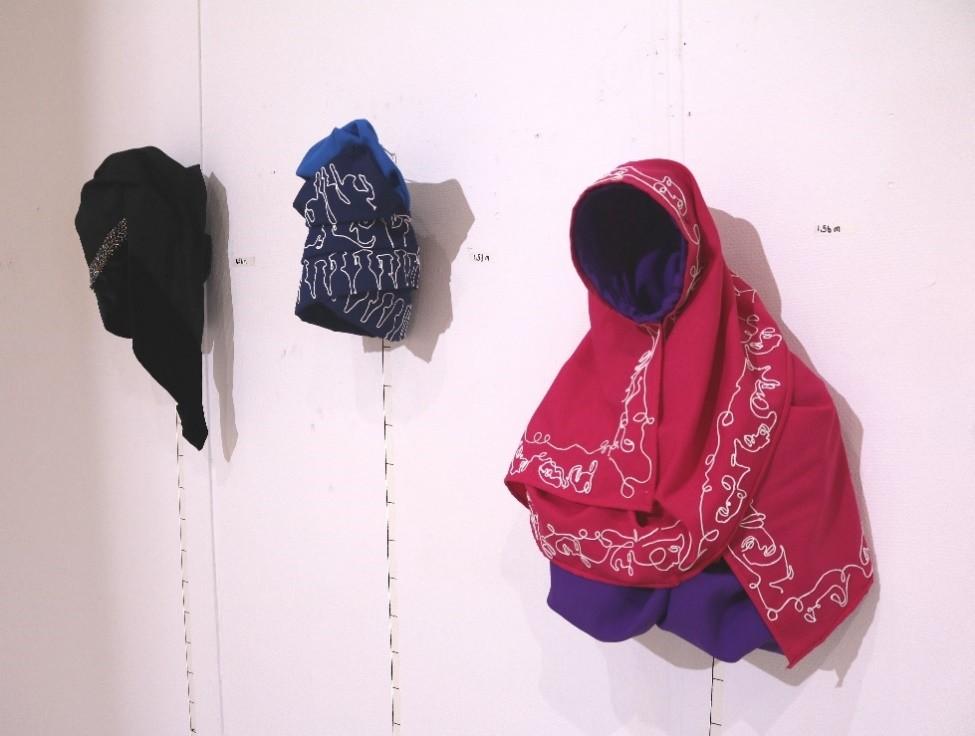
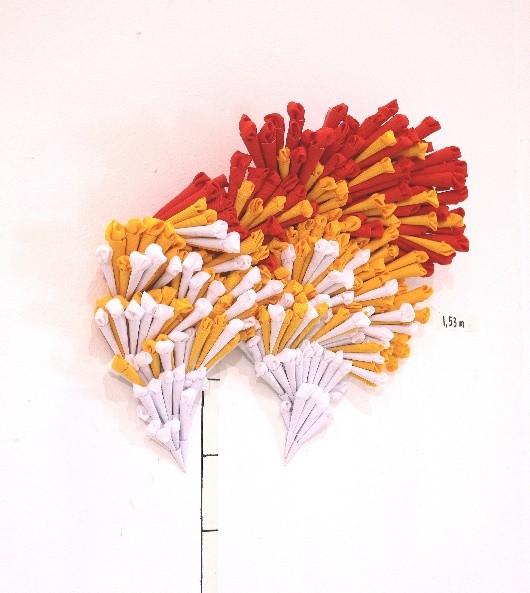
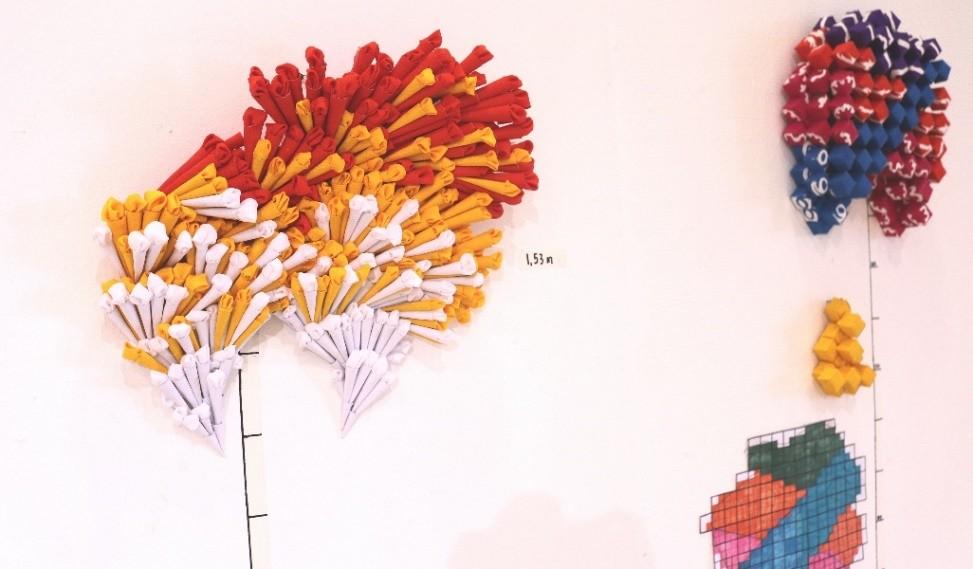
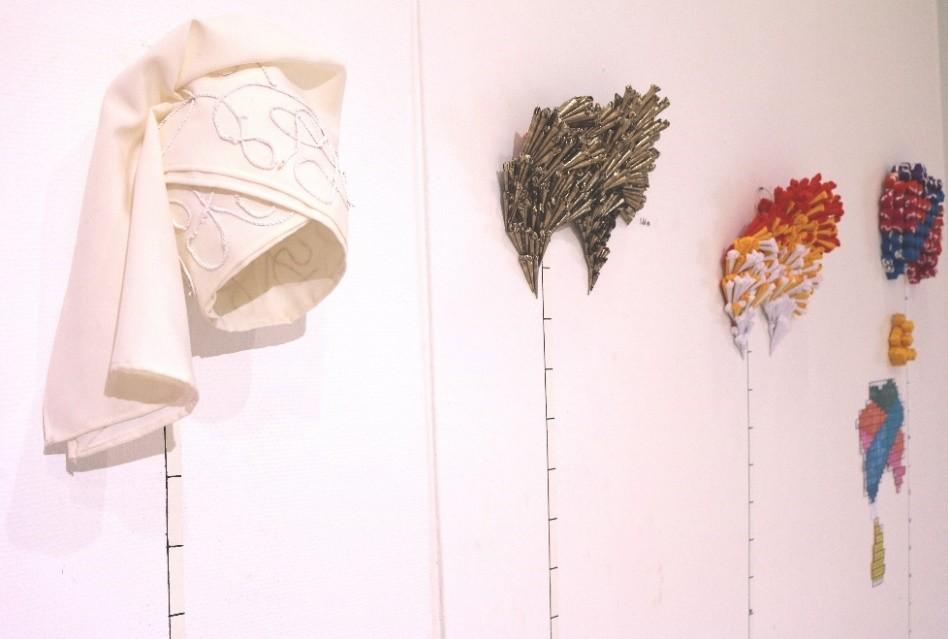 Figure 4: Lerato Mojapelo, Here comes The Sun, Little Darling (2023)
Figure 5: Lerato Mojapelo, Here Comes The Sun, Little Darling (2023)
Figure 6: Lerato Mojapelo, Here comes The Sun, Little Darling (2023)
Figure 4: Lerato Mojapelo, Here comes The Sun, Little Darling (2023)
Figure 5: Lerato Mojapelo, Here Comes The Sun, Little Darling (2023)
Figure 6: Lerato Mojapelo, Here comes The Sun, Little Darling (2023)
3
Figure 7: Lerato Mojapelo, Here Comes The Sun, Little Darling (2023)
Background
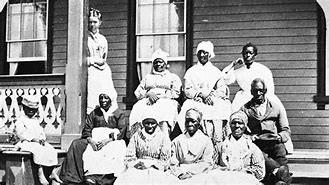
During the times of slavery and colonialism, slave traders and slave owners used the headwrap as a form of identity for slave women (Griebel 1995). It served as a marker for enslaved women, and it was used to create a distinction between women who were free and women who were enslaved. The headwrap was used to create division; a division that was an ideological system that symbolized a woman’s social status that would then determine how she will be treated.
However, enslaved women used the headwrap as their own ethnic markers and they chose to use the headwrap as a symbol that reminded them of their heritage and where they came from (Strubel 2014:6). In their own discreet way, enslaved women showed resistance by choosing to use the headwrap as a symbol of their heritage and cultural identity in the land of their enslavement.
4
Figure 8: enslaved women on plantation farm
Feminine figures that wore the headwrap in spaces of influence
Nina Simone
Nina Simone (1933-2003) was a musician and civil rights activist who openly sang and spoke about the socio-political injustices that affected black people in her time. In some of her performances Simone can be seen wearing the headwrap in spaces of publicity and influence. Her civil rights song titled Young, Gifted and Black (1970) is regarded as one of the most important song in the civil rights movement. On March 31, 1972, the mayor of Berkeley California Warren Widener, declared the day Nina Simone Day. The recognition and award was in honor of her civil rights participation through music. On the day of the award, Simone wore a headwrap. Because of her, the headwrap existed in a space of honor and recognition for her civil rights work. In her biopic film titled What Happened Miss Simone (Garbus 2015), she can be seen wearing the headwrap as she incites retaliation and political resistance to her audiences. Through her activism, Nina Simone reconstructed the symbol of the headwrap in spaces where she had the power to influence resistance and political activism. She translated the headwrap into a symbol of boldness, activism and perseverance. In Today’s time, Nina Simone is remembered and celebrated through some of her iconic looks and one of her iconic looks is of her wearing gold headwrap, making her look regal, honorable and bold (see image below).
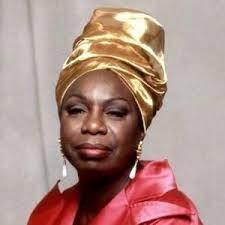
Figure 9: Nina Simone in one of her iconic looks
5
Winnie Madikizela Mandela
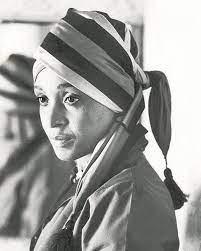
Another prominent figure of political resistance and activism is, Winnie Madikizela Mandela (19362018). She was instrumental in the fight against the Apartheid regime, and she played a vital role in changing the political sphere of South Africa (Lameche 2017). She led many protests and movements against the racist regime. Her active involvement in political resistance and civil rights made her a threat to Apartheid ideology. Mandela recruited soldiers into Umkhonto We Sizwe and she worked with Chris Hani and Oliver Tambo in retaliation to the Apartheid regime. At some point she was the highest ranking official of Umkhonto We Sizwe(Lameche 2017). Winnie Mandela also wore the headwrap in many of her political activities. Because of her, the headwrap existed during a turbulent time that would change the political landscape of an entire country. Because of Winnie Madikizela Mandela, the headwrap symbolized power; resistance and femininity’s ability to lead fearlessly even in the most hostile conditions.
6
Figure 10: Winnie Madikizela Mandela
Contemporary movements that use the headwrap as a marker
Black doek movement
The Black Doek movement is a South African movement that is about helping women who are victims of gender-based violence (James 2021). The movement also represents women who have lost their lives to GBV. According to Dereleen James (2021), “It is also a movement that represents hope and solidarity for survivors of GBV”. In the movement, participants wear black doeks while protesting for women’s rights and raising awareness around gender-based violence in South Africa.
Doek on fleek
Another movement called “Doek on Fleek” (established by Thandi Mavata) is a women empowerment movement that is focused on getting rid of the “pull her down” syndrome (Mavata 2023). The “pull her down” syndrome can be described as women denigrating other women. This movement empowers women through career guidance, business coaching, life coaching and encouraging women to support each other. These contemporary movements use the headwrap to symbolize their social activism for women of today. Both movements are active on social media platforms, making them accessible to social media users who would like further information or participation in the movements
7
My Art Making process
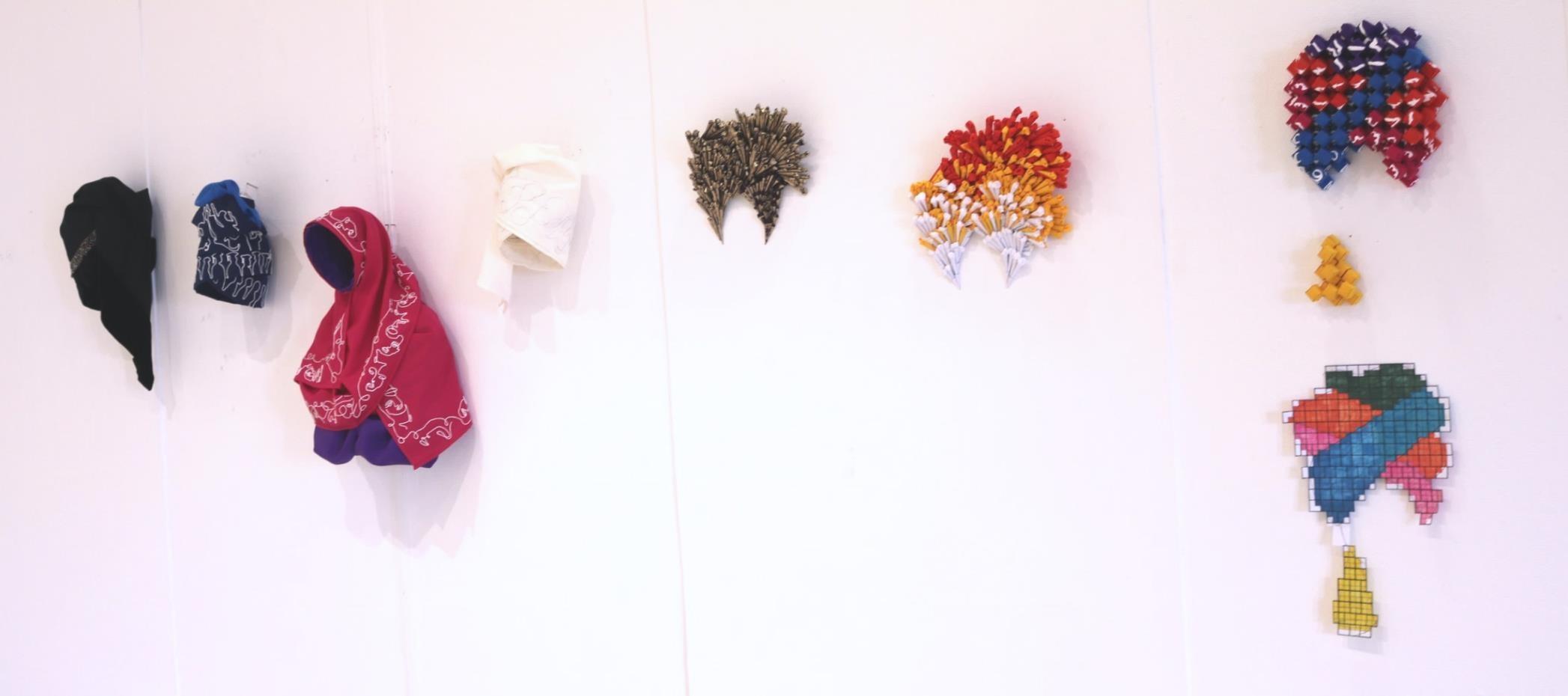
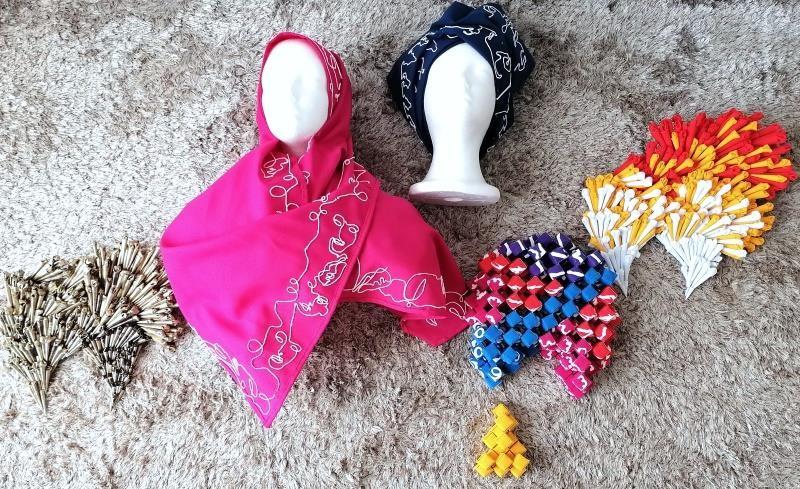
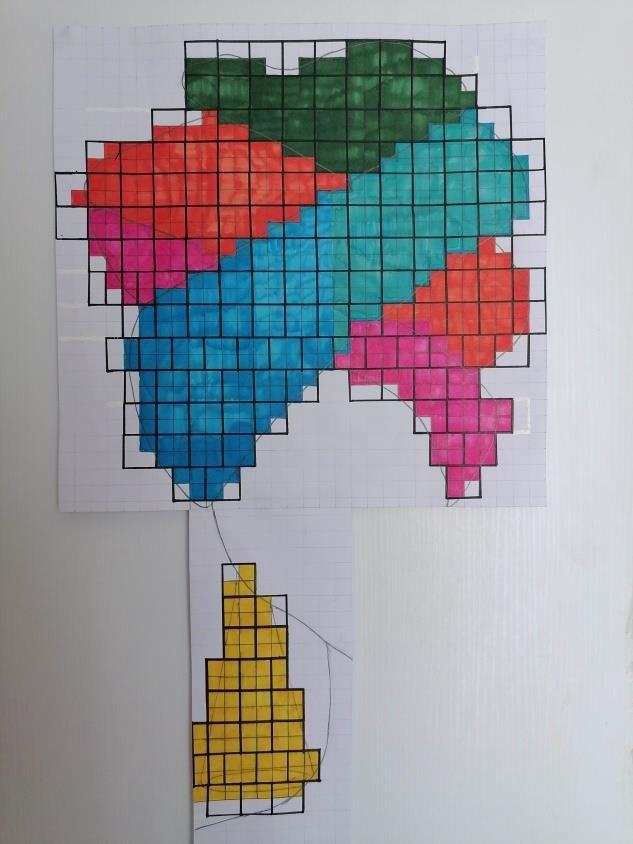
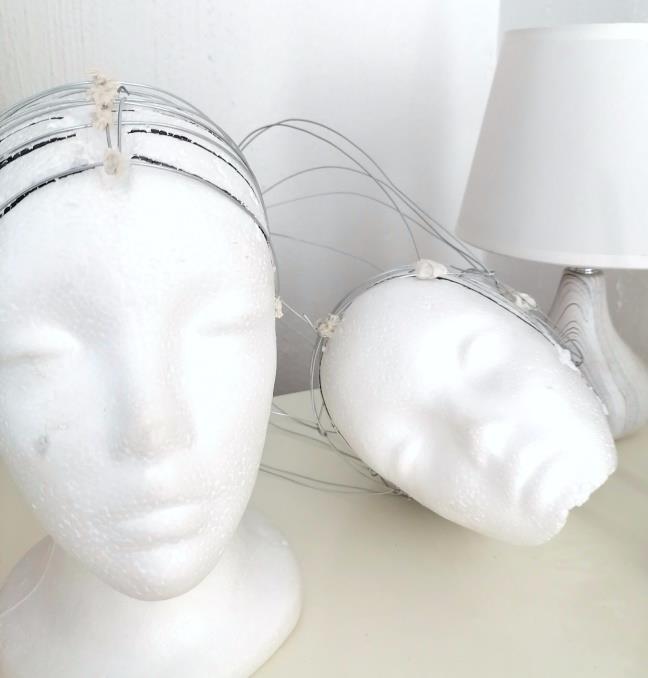
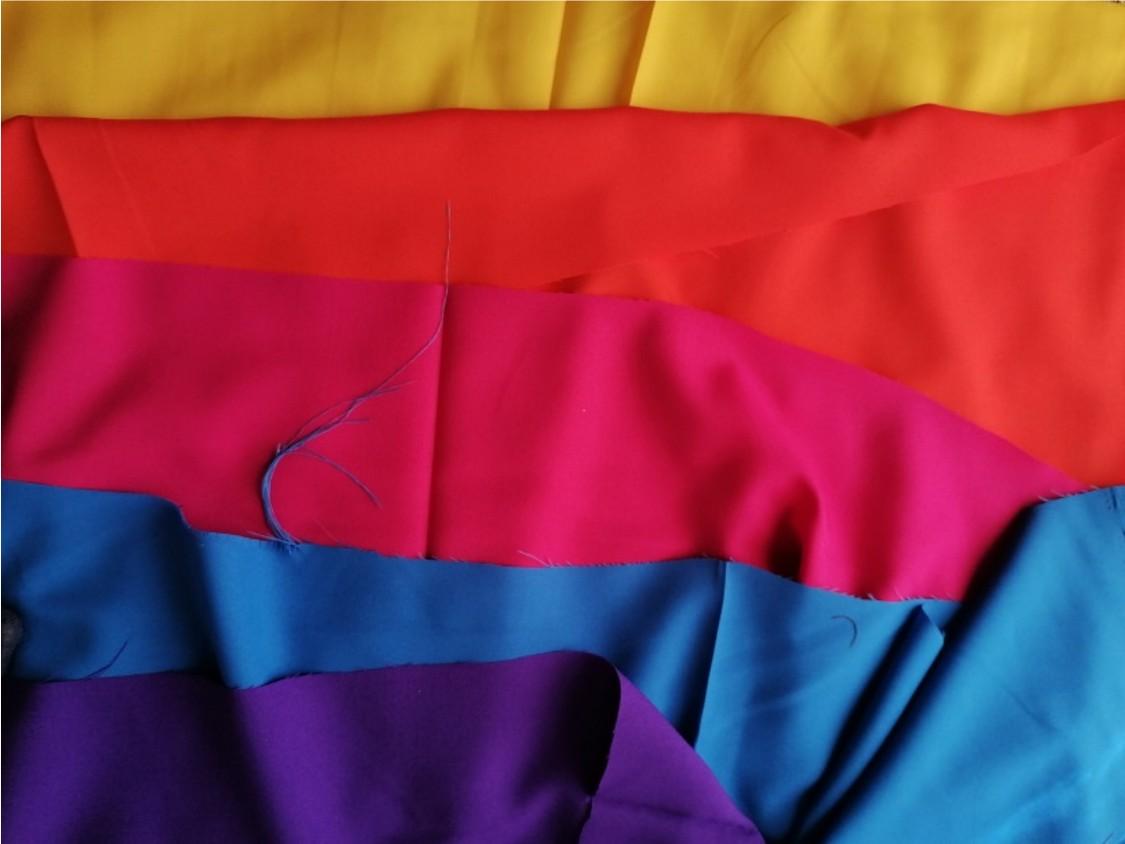
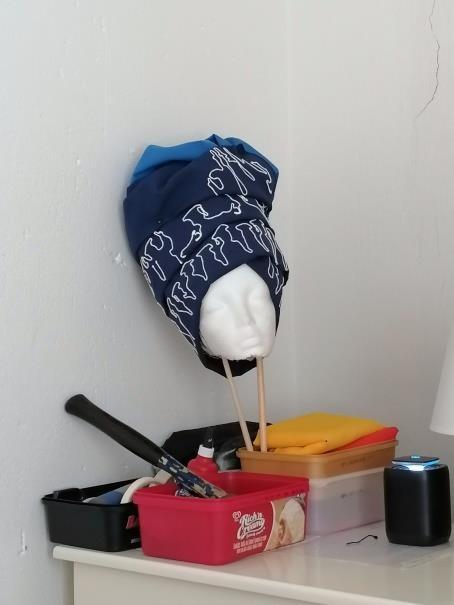
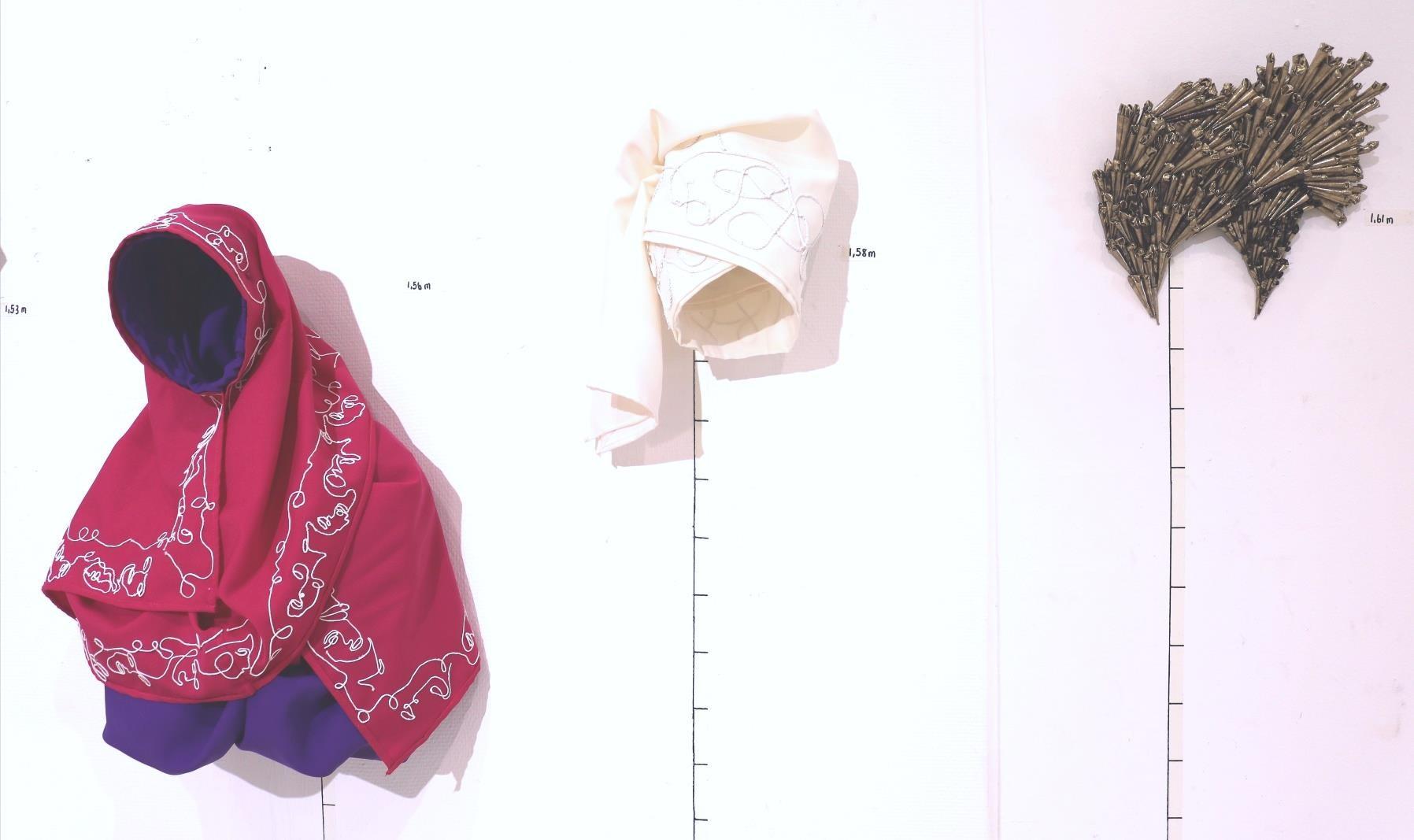
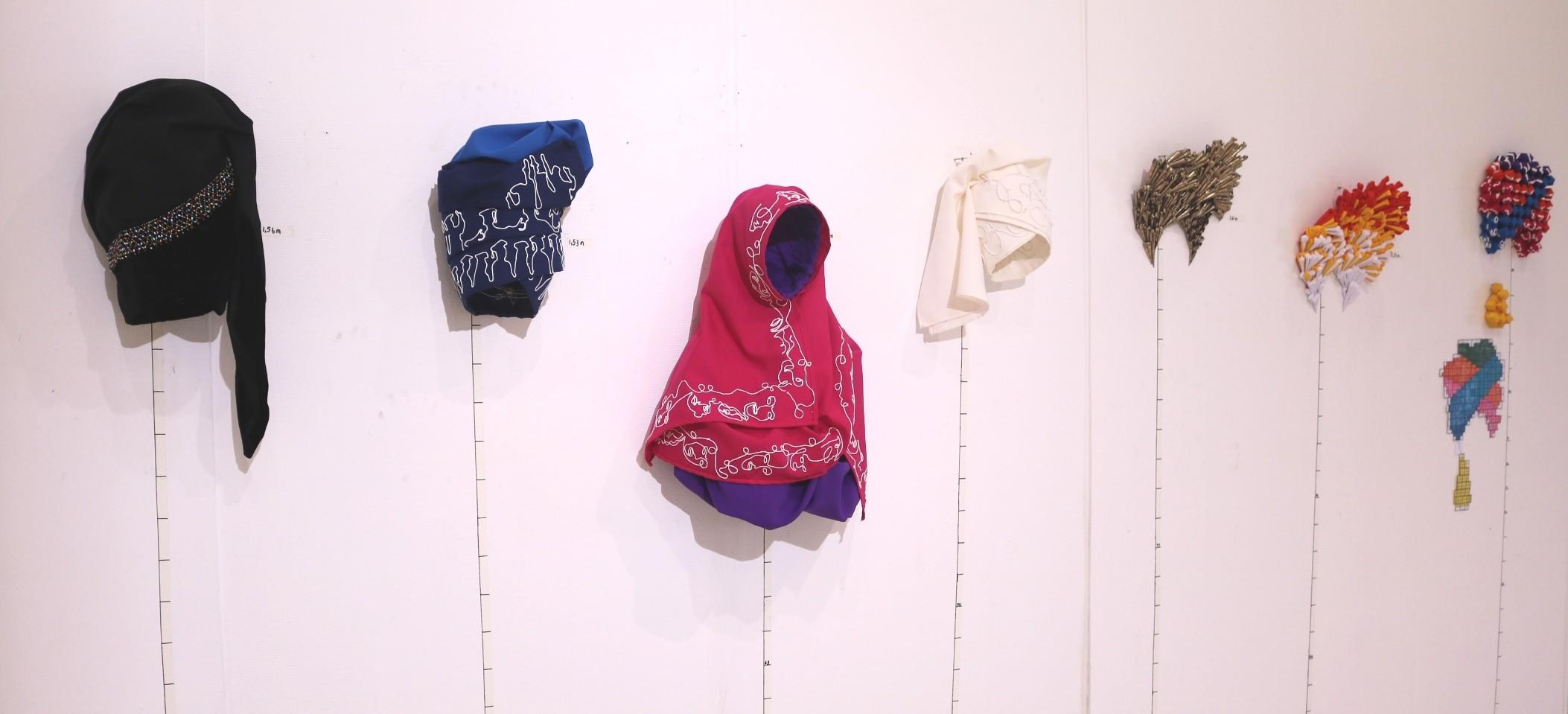
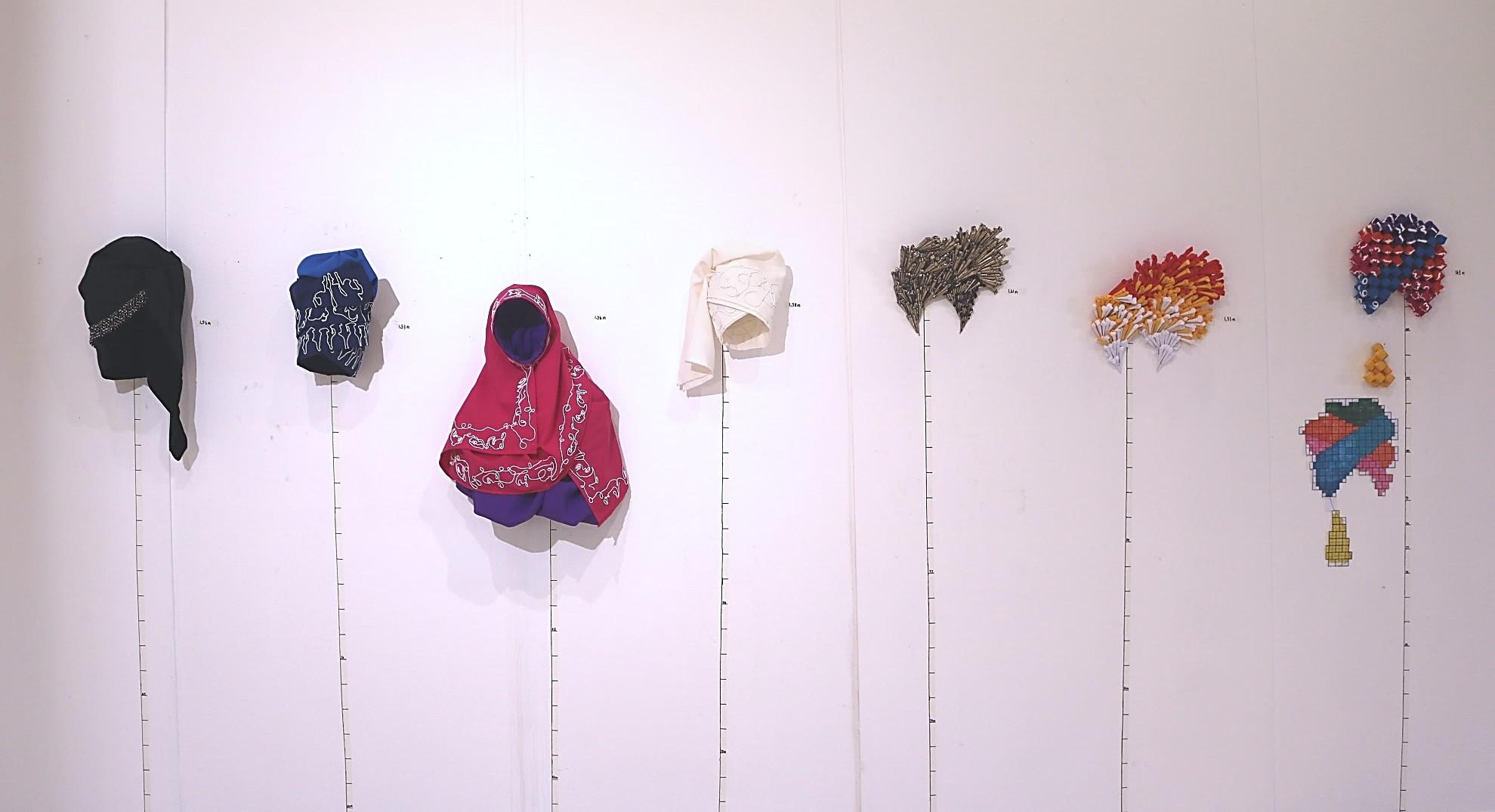
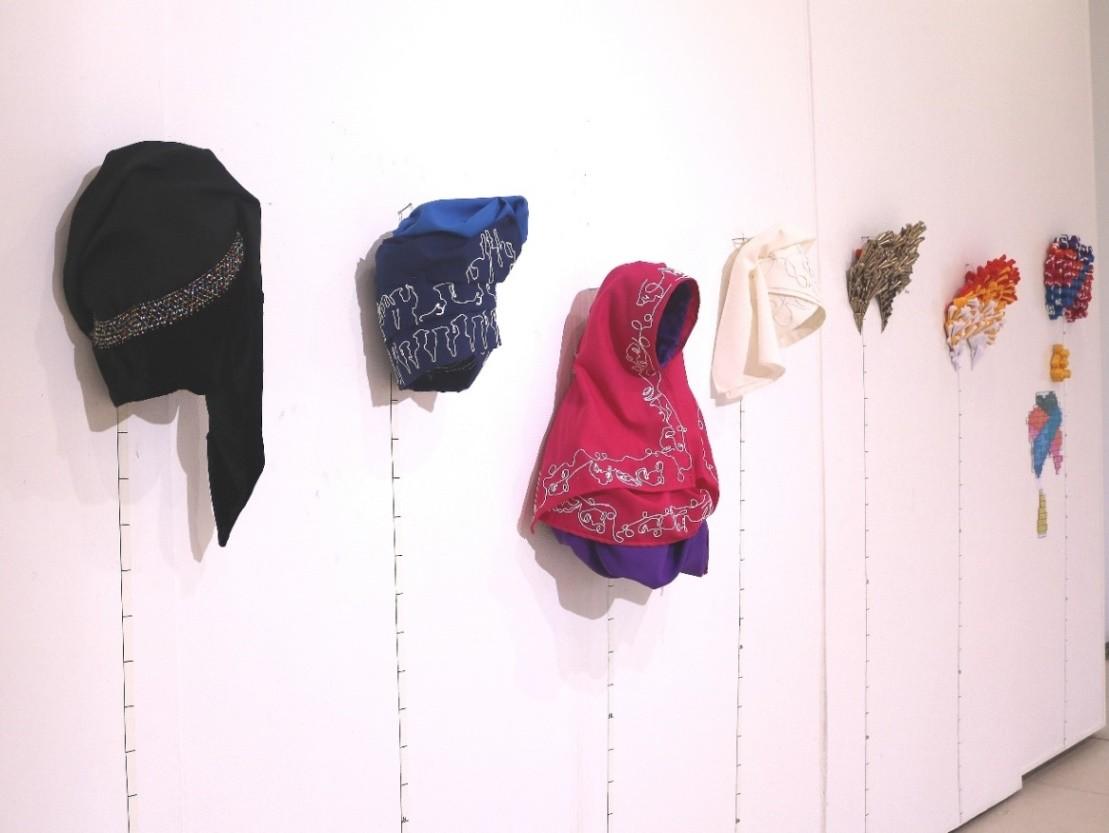
The community of headwraps are 7 headwraps in total, 3 of the 7 headwraps are made from different shapes, namely; cones and cubes. 4 of the 7 headwraps are in literal form so that audiences understand what the artwork is about. The community of headwraps propose a strong-willed identity of feminist power. I manifest the community of feminine power with references to influential female leaders with the headwrap. Therefore, my headwraps are modeled from enslaved women, Nina Simone, Winnie Madikizela Mandela, Tawakkol Karman, Prof. Mamokgethi Phakeng, Women of today’s generation and my identity. The materials used in creating the body of work are fabric, color and pattern
8
1.
4. 5. 6. 9
2. 3.
Enslaved women
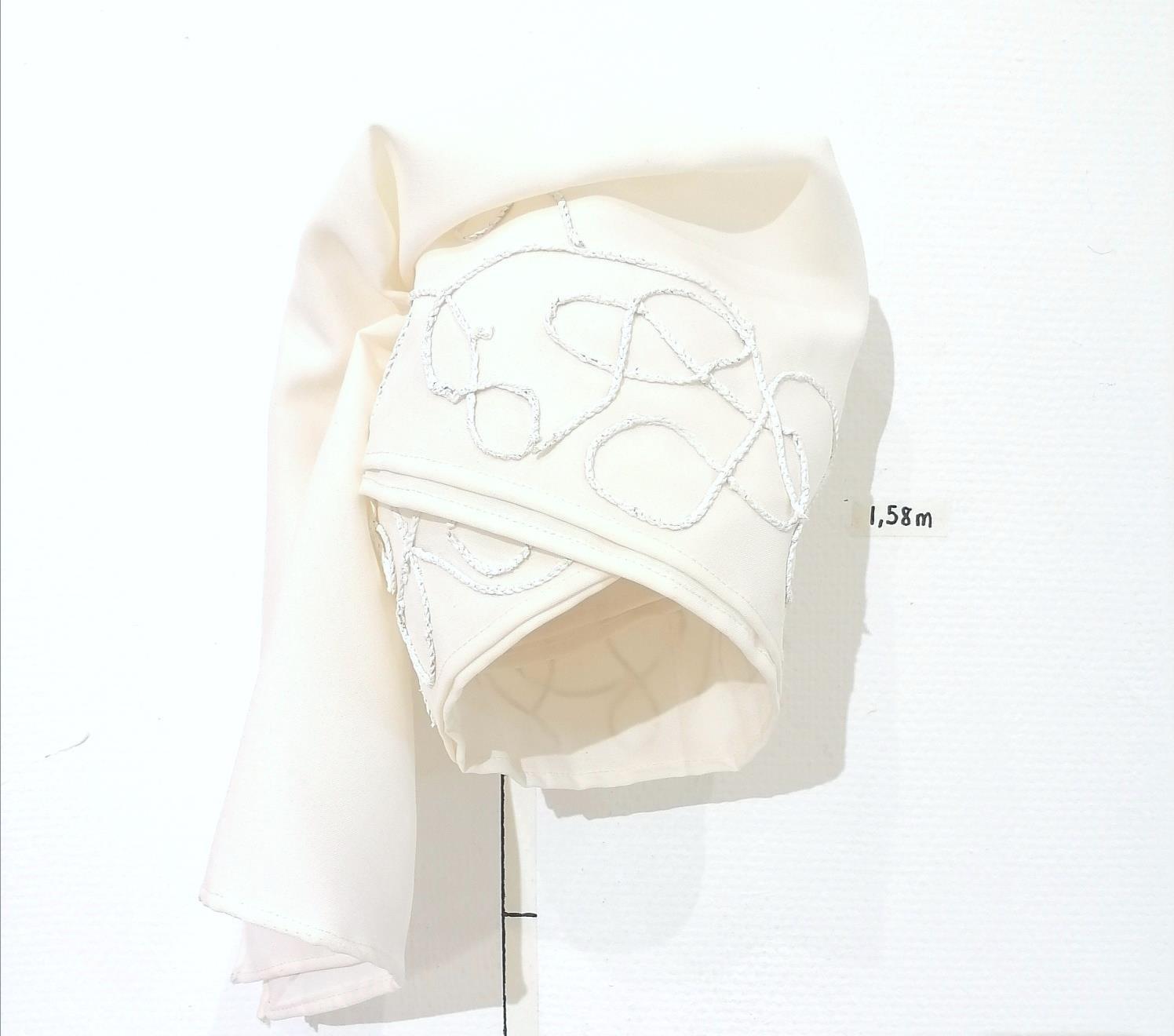
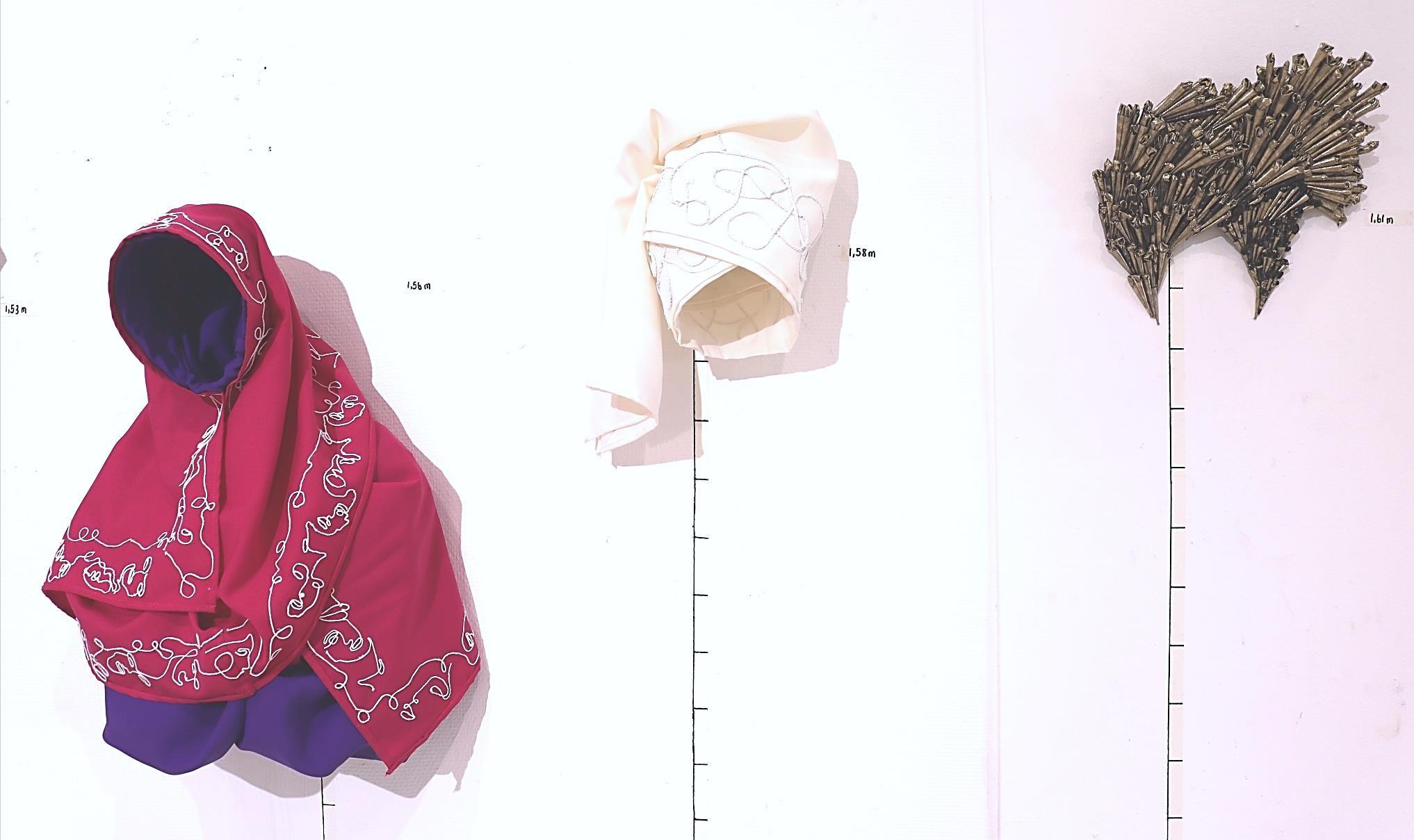
The following headwrap is made from an off white/cream fabric with a white weaved pattern. The white weaved pattern on the fabric represents the systematic and paralyzing ideology of slavery that was enforced on black women. The similar but contrasting colors of the cream fabric and white pattern represents the silver lining that separated one race from another, it connotes how something as small as skin pigmentation would determine your position in society during the times of slavery and the slave trade. The headwrap that represents enslaved women is a part of the community because their history matters. Their history informs issues of racism and gender stereotypes that still exist today. The following headwrap is also a metaphor that symbolizes a form of modern day slavery called the Kafala system.
The Kafala System is a form of modern day slavery that is practiced in some Middle Eastern countries (such as Dubai, Saudi Arabia, Jordan and Lebanon). The system subjects foreign women from 3rd world countries into domestic servitude, physical and sexual abuse under the false pretense of finding work so they can support their families back in their home countries (Klovborg 2018). Kenyan Senator, Emma Mbura is an activist against the law that allows women to go to Middle Eastern countries for domestic work. In her activism, she started a grass roots campaign that works to reinstate the ban of Kenyan women from taking domestic work in Middle Eastern countries (Klovborg 2018). This headwrap serves as symbol of awareness that represents past and present forms of slavery that continue to affect women in this present time.
10
11
Figure 11: Lerato Mojapelo, Here Comes The Sun, Little Darling (2023)
12
Figure 12: Lerato Mojapelo, Here Comes The Sun, Little Darling (2023)
Nina Simone
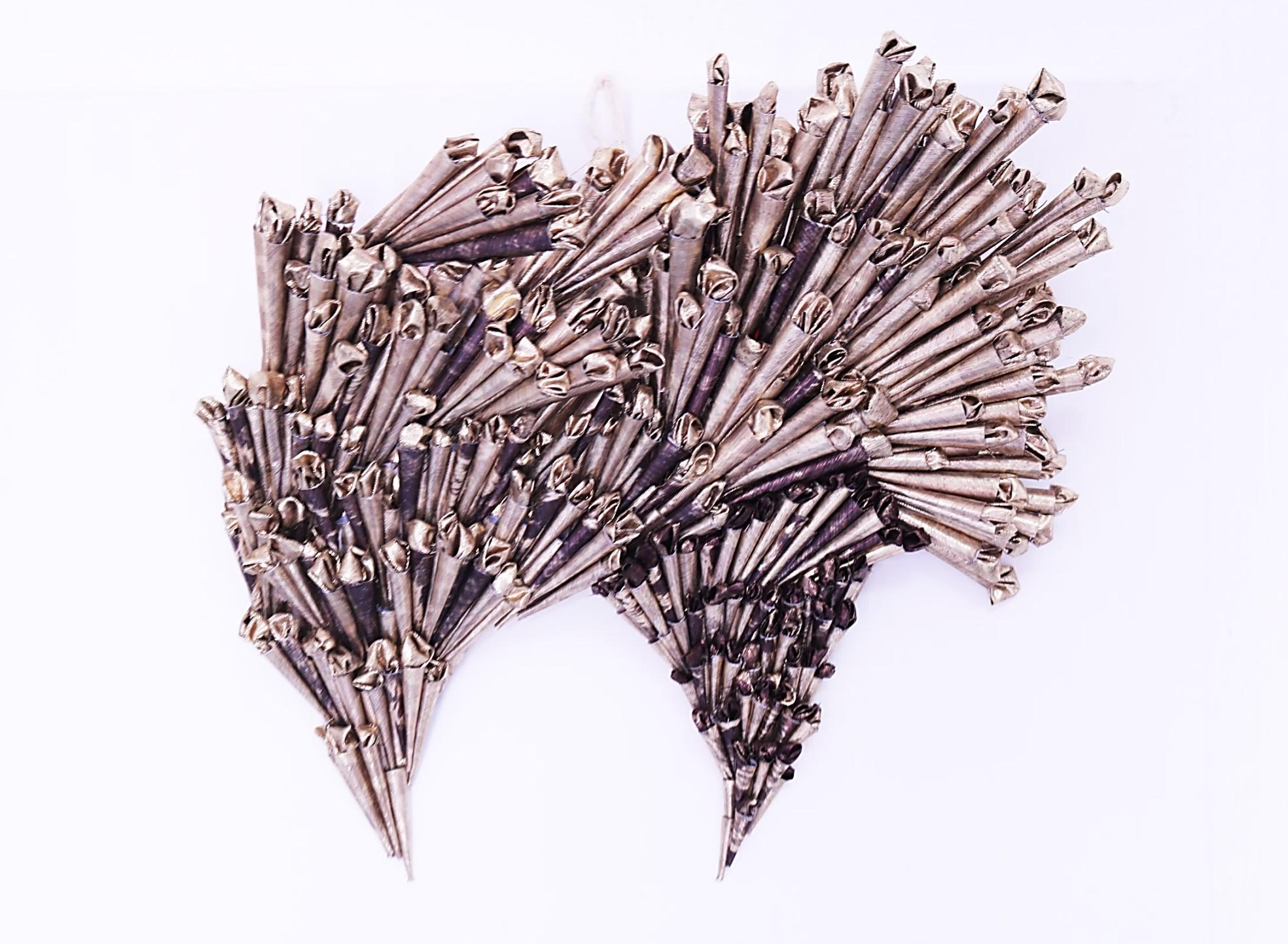
The following headwrap is made from cone shaped, leopard printed gold fabric. In her biopic film, Simone mentions that she directly told Dr. Martin Luther King that “I am not none-violent” (Garbus 2015). This was because Dr. King believed in non-violent protests but Simone did not, she believed that the freedom of black people should be fought for with violence if necessary. The material used for this headwrap is inspired by Nina Simone’s “not none-violent nature” and her activism in civil rights movements through music. The title of the project “Here Comes The Sun, Little Darling” is inspired by her rendition of the song from the music band, The Beetles. In the song, Simone sounds as if she is encouraging a young lady that has been through a tumultuous time, she gives a sense of hope and enlightenment which relates to the whole point of this project. Nina Simone is a part of this community because she used her musical talent to spread awareness about the racism and social injustice toward black people in America. In her biopic film she expresses how important it was to be an artist that reflects that times she was in. Her words were, “I choose to reflect the situations in the times I find myself in, How can you be an artist, and not reflect the times we live in” (Garbus 2015). The gold fabric is inspired by her bold nature and activism for human rights; it is also inspired by one of her iconic looks (see p. 5, figure 9)
13
14
Figure 13: Lerato Mojapelo, Here Comes The Sun, Little Darling (2023)
15
Figure 14: Lerato Mojapelo, Here Comes The Sun, Little Darling (2023)
Winnie Madikizela Mandela
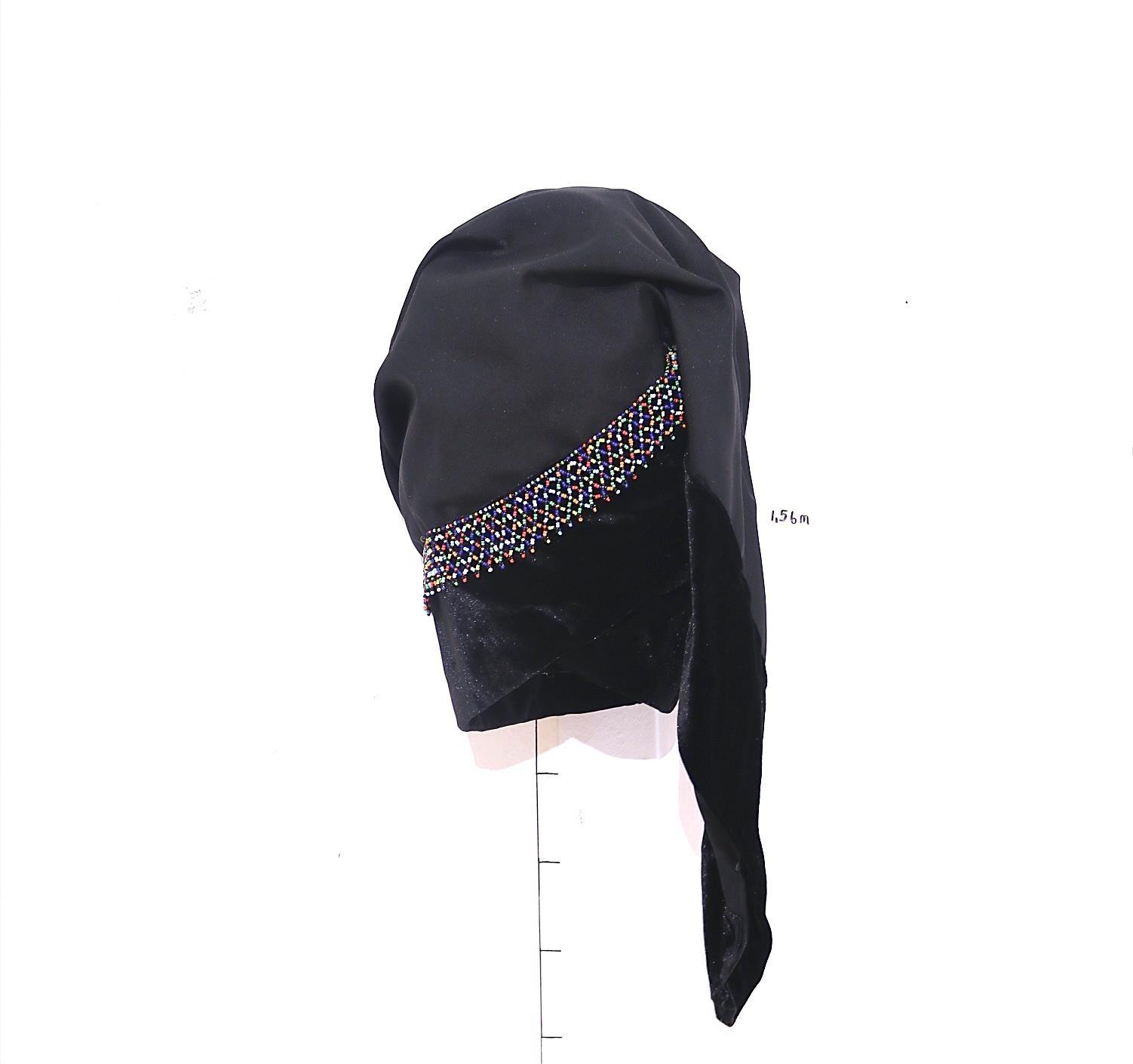
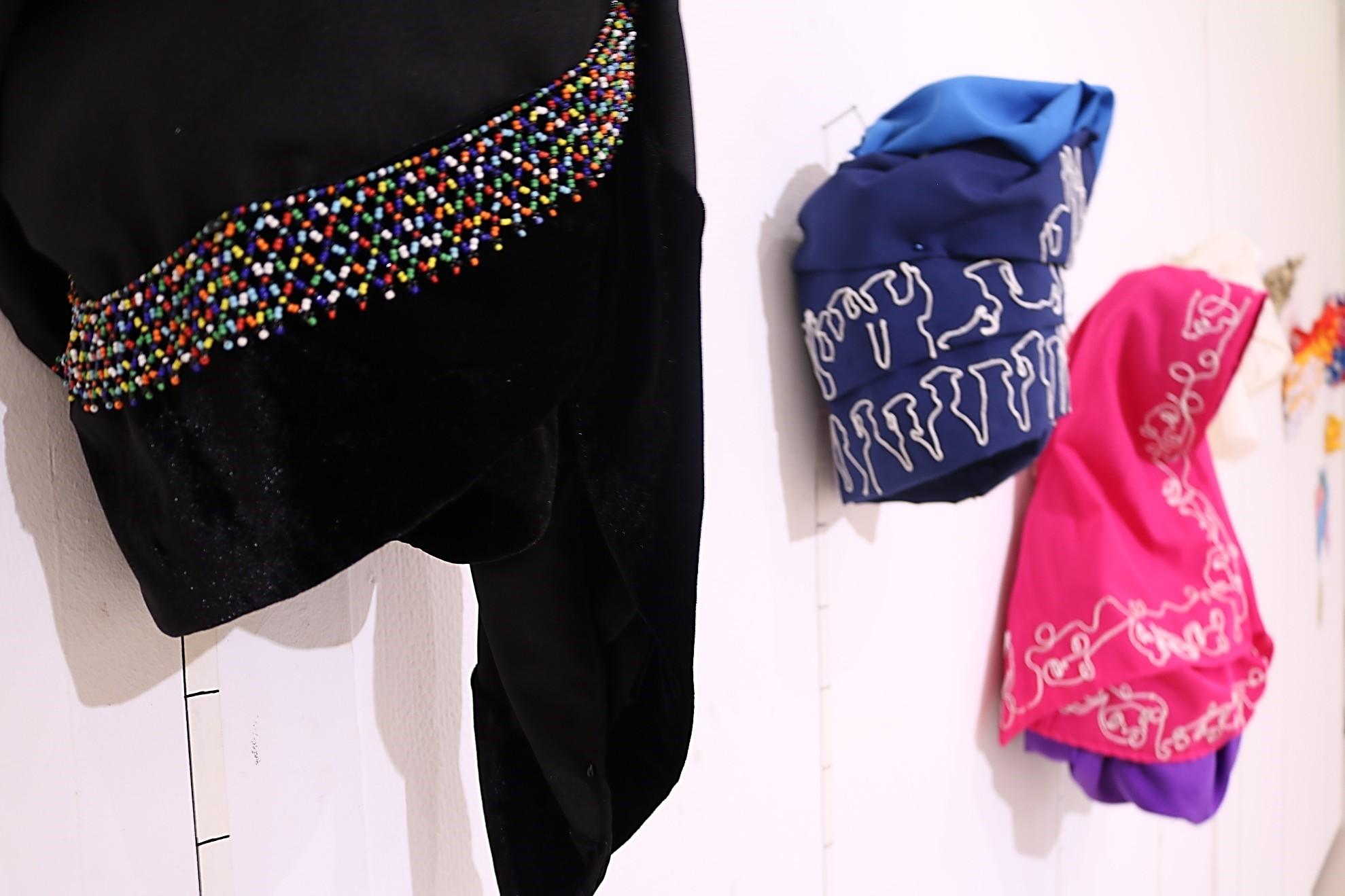
The following headwrap is made from black velvet and black fabric. This fabric choice is inspired Mandela’s socio-political struggle for black people in South Africa; the black velvet material is inspired by Mandela’s decorum, firm and influential nature as black woman during South Africa’s political struggle. The headwrap represents her leadership and boldness of standing firm in the face of hostility against a racist regime that committed atrocious crimes against humanity. Winnie Mandela is a part of this community because of her political struggle against the racist Apartheid regime. Her role as a civil rights activist in South Africa has changed the narrative of my place as black woman living in South Africa today. Because of her, I have the freedom to vote for any political party. Her political work influenced the formation of human rights laws that defend every citizen (despite their race) against any kind of discrimination in South Africa (www.gov.za). Winnie Mandela played an essential part in changing the political landscape of an entire country. Her prominence in South Africa is still remembered and celebrated today; on the 26th of September 2023 William Nicol Drive was changed to Winnie Mandela Drive (www.news24.com). This proves that Winnie Mandela continues to be recognized and celebrated for her political activism that changed the lives of many black South African citizens.
16
17
Figure 15: Lerato Mojapelo, Here Comes The Sun, Little Darling (2023)
18
Figure 16: Lerato Mojapelo, Here Comes The Sun little Darling (2023)
19
Figure 17: Lerato Mojapelo, Here Comes The Sun, Little Darling (2023)
Tawakkol Karman
Tawakkol Karman is a contemporary figure of political resistance. As a Nobel Laureate and women’s rights advocate in Yemen, Karman exemplifies boldness and leadership for women’s rights and peace making through non-violent protests. The pink fabric references her feminine strength to lead a movement in country that is governed by patriarchal dictatorship. The line patterns on the fabric are faces of women, the pattern is inspired by what Tawakkol stands for as an activist for women’s rights in Yemen.
Tawakkol Karman is a part of this community because she is the embodiment of sociopolitical leadership. Karman displayed courage by publicly opposing the dictatorship government of former president Ali Abdullah Saleh; she was also imprisoned for leading protests against Saleh’s regime. However, her imprisonment led to the protest's growth in number and support (rfkhumanrights.org). Karman’s influence and leadership in peaceful protests awarded her a Nobel Peace prize in 2011, making her one of the youngest recipients of the prize (nobelprize.org).
20
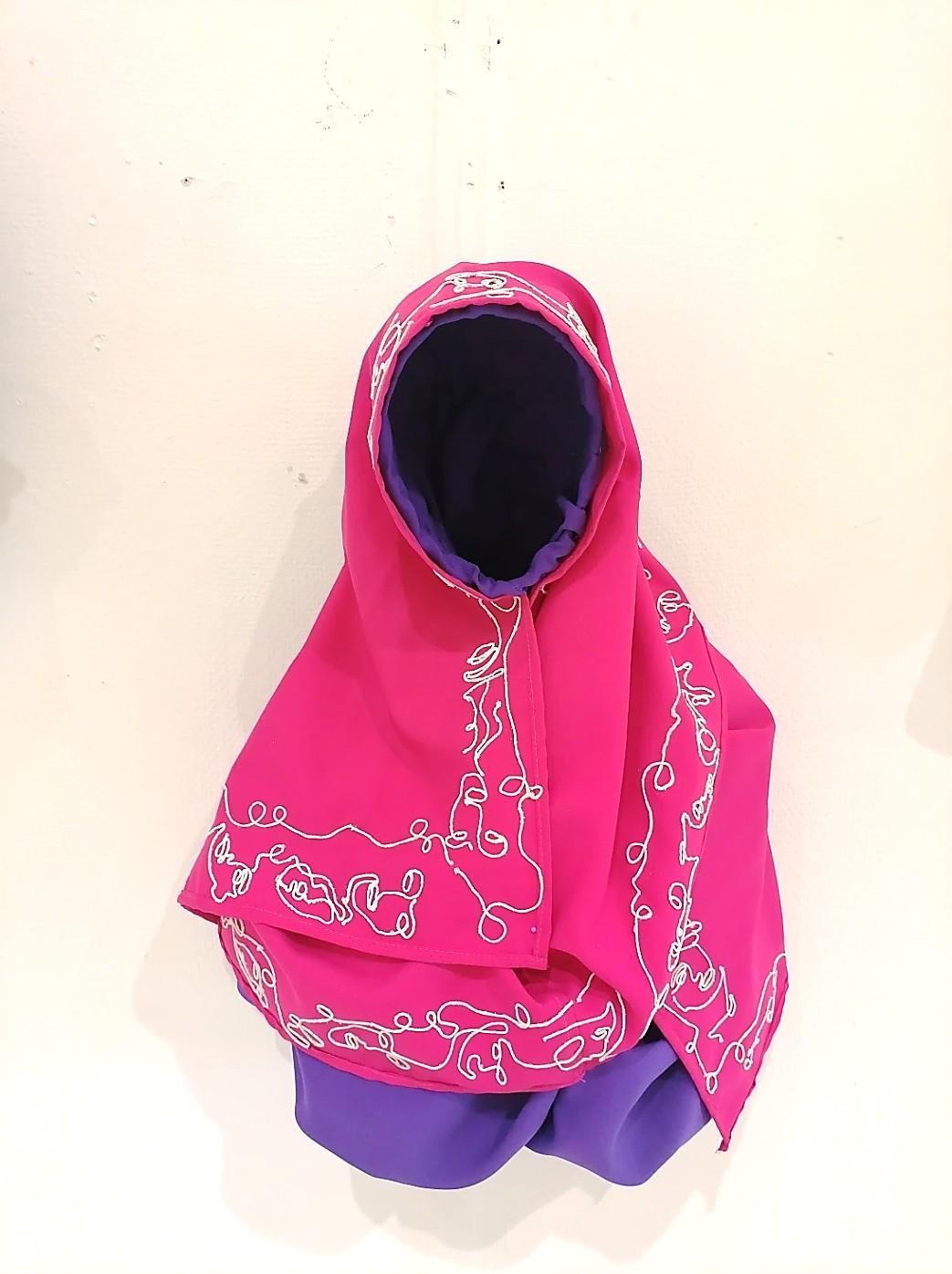
21
Figure 18: Lerato Mojapelo, Here Comes The Sun, Little Darling (2023)
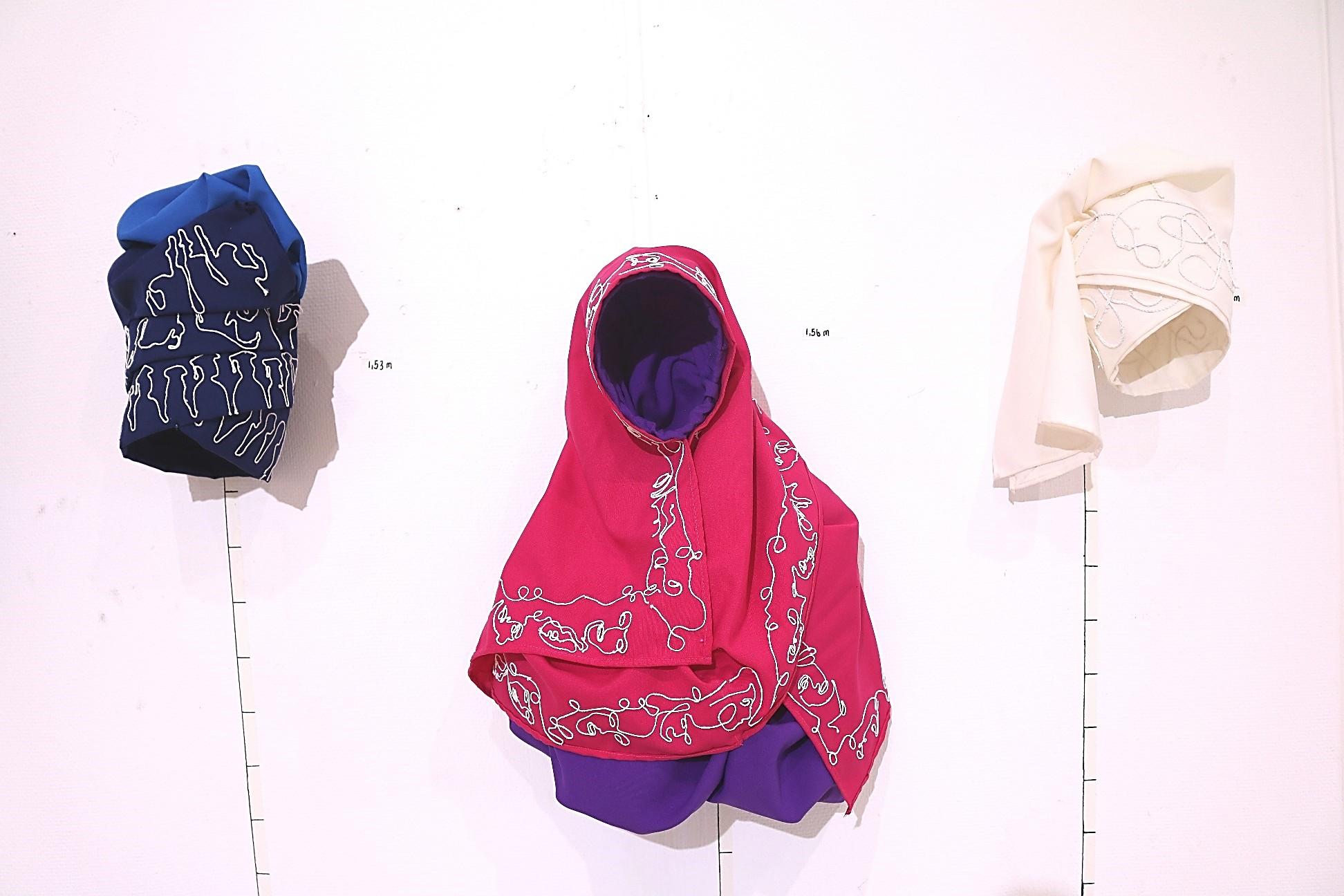
22
Figure 19: Lerato Mojapelo, Here Comes The Sun Little Darling (2023)
Prof. Mamokgethi Phakeng
The following headwrap is inspired by Prof. Phakeng’s academic and career achievements. Prof Phakeng is the first South African female with a PhD in mathematics education. She also served as vice chancellor for Africa’s top University, University of Cape Town from 2018-2023. She is a contemporary figure of leadership in education and an inspiration for academic excellence for South Africa’s youth. The pattern that is used for Prof. Phakeng’s headwrap references her advocacy for education in South Africa’s youth.
The denim blue color is inspired by one of her looks in headwrap (see image below), the light blue color on top of the headwrap references her time as vice chancellor at UCT (University of Cape Town). In the beginning of her term at UCT, Professor Phakeng used the funds that were intended for her inauguration at UCT to help fund outstanding fees for some post-graduate students. Her charitable, selfless act exemplified her integrity in advocating for education in South Africa’s youth. Today she continues to be a leader and motivator through educational tours that she does across South Africa

23
Figure 20: Prof. Mamokgethi Phakeng
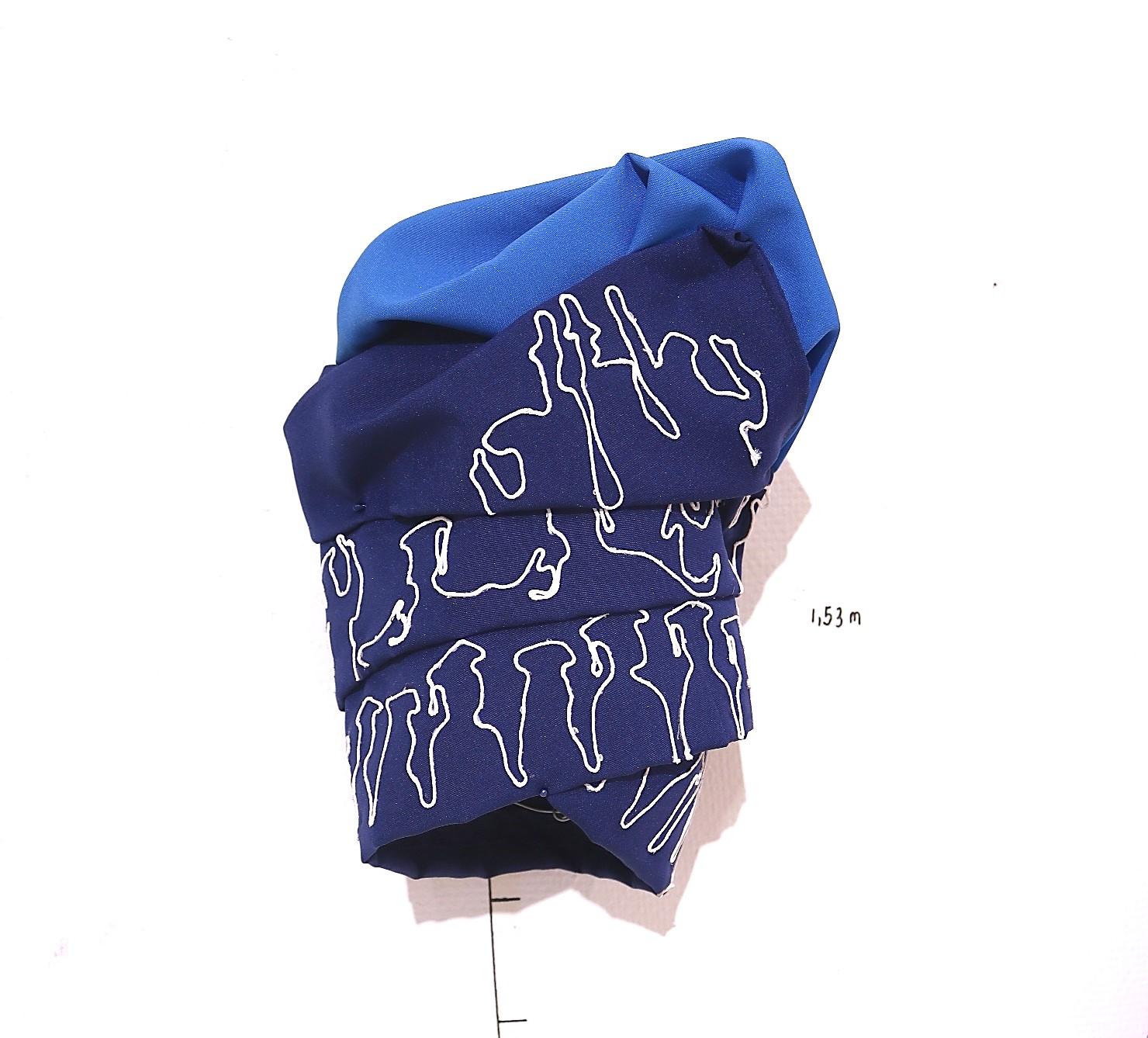
24
Figure 21: Lerato Mojapelo, Here Comes The Sun, Little Darling (2023)
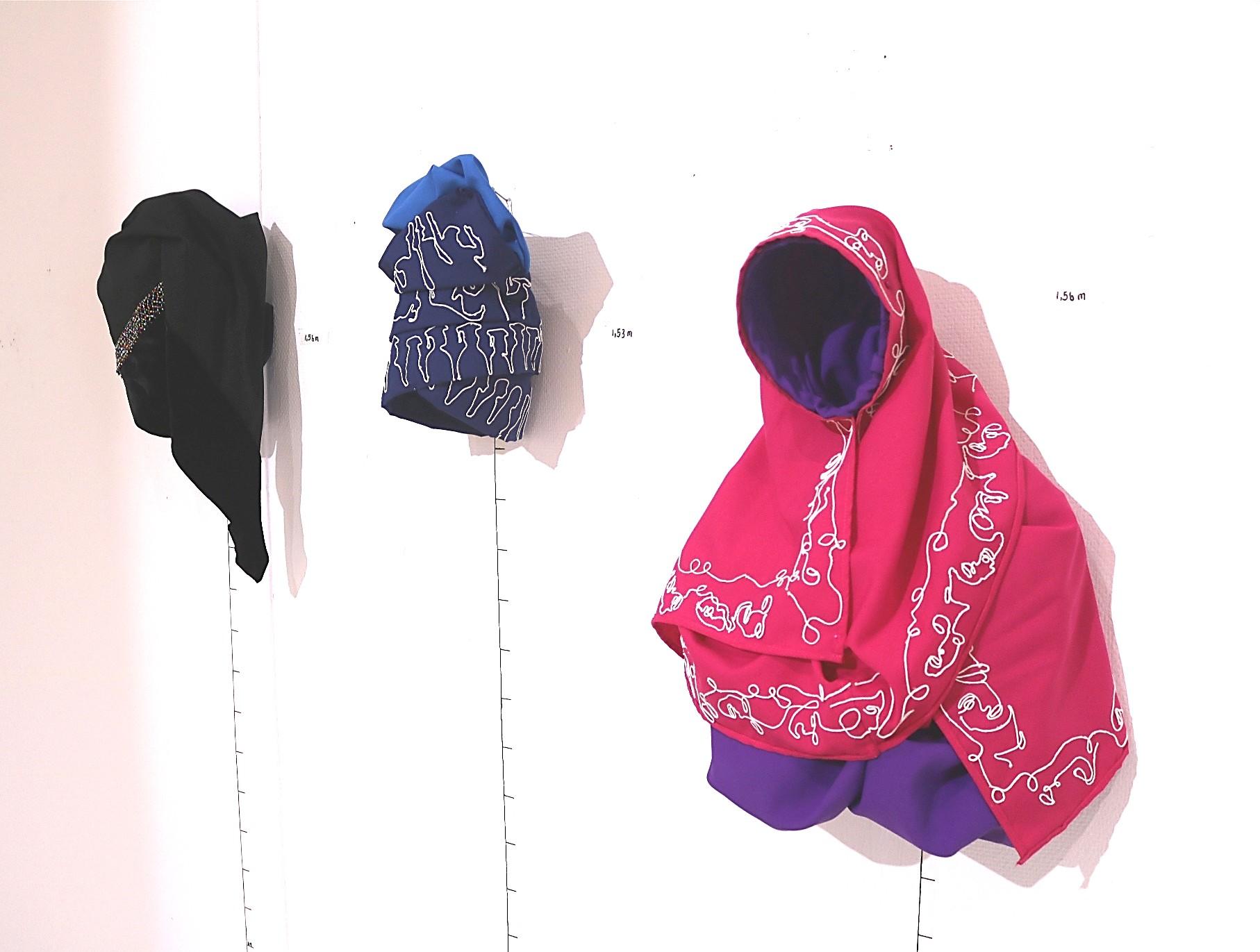
25
Figure 22: Lerato Mojapelo, Here Comes The Sun Little Darling (2023)
Little Darling/Women of this generation
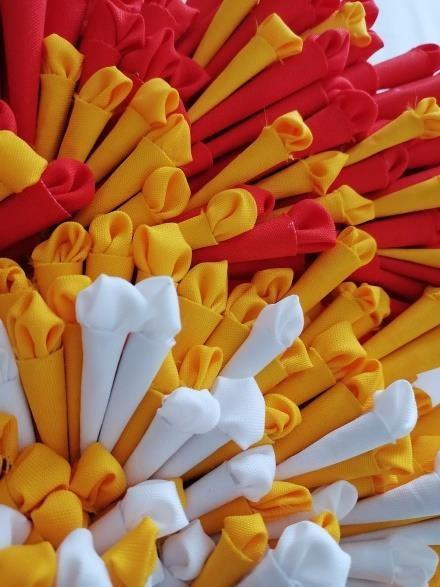
The following headwrap emulate the colors of the rising sun and it represents women of today, the title of the project (“Here Comes The Sun, Little Darling”) speaks specifically to women of today. This headwrap symbolizes my recognition for today’s women, their struggles, injustices and tribulations that they continue to face in their environments. This generation of women is exactly who Nina Simone was singing to with words of encouragement and hope. Countries like South Africa are plagued with gender based violence, gender stereotypes and discrimination. These types of issues can be discouraging and give a sense of hopelessness. Therefore including this headwrap in the community is meant to encourage women of today, so that they can see themselves as a part of a community of overcomers, leaders and change-makers.
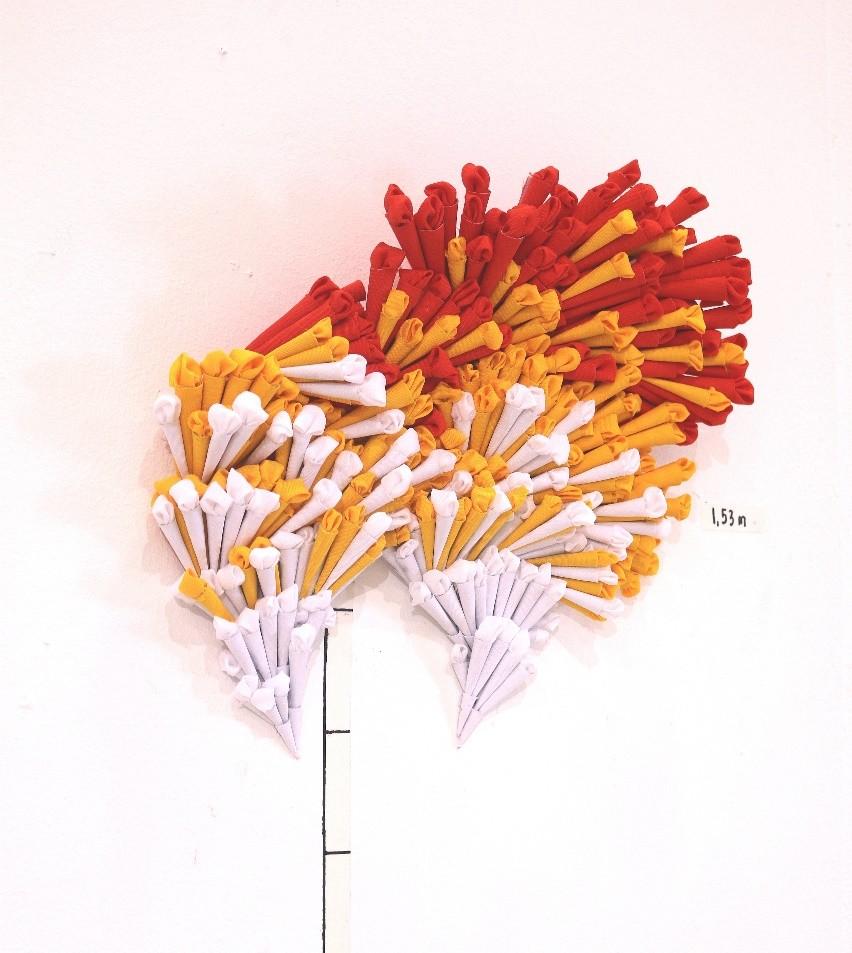
26
Figure 23: Lerato Mojapelo, Here Comes The Sun, Little Darling (2023)
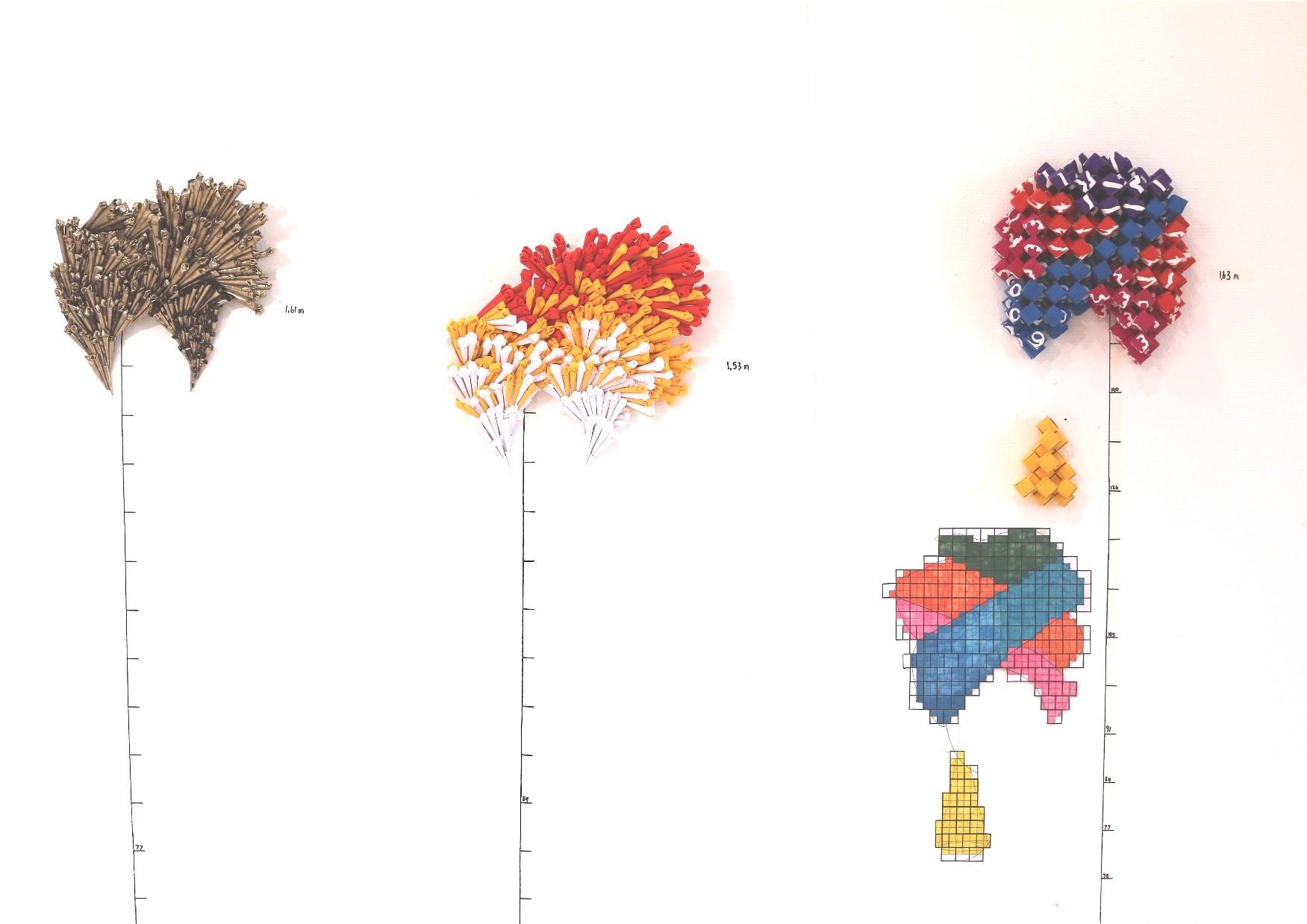
27
Figure 24: Lerato Mojapelo, Here Comes the Sun, Little Darling (2023)
Lerato Mojapelo
The following headwrap is a reflection of where I come from and who I identify as. The colors of the cubes are inspired by colors that can be found in my Bapedi culture. The patterns represent the outline of the Limpopo province (which is where I come from), my spirituality and my gratitude for cultural importance in shaping my identity.
The abstraction of this headwrap references my complex but orderly nature as woman, this headwrap represents my existence and inclusivity in this community of headwraps. My advocacy for feminine power through these headwraps obligates me to identify with what I am advocating for. I am a part of this community because have the same feminine power that exists in this community of women.
28
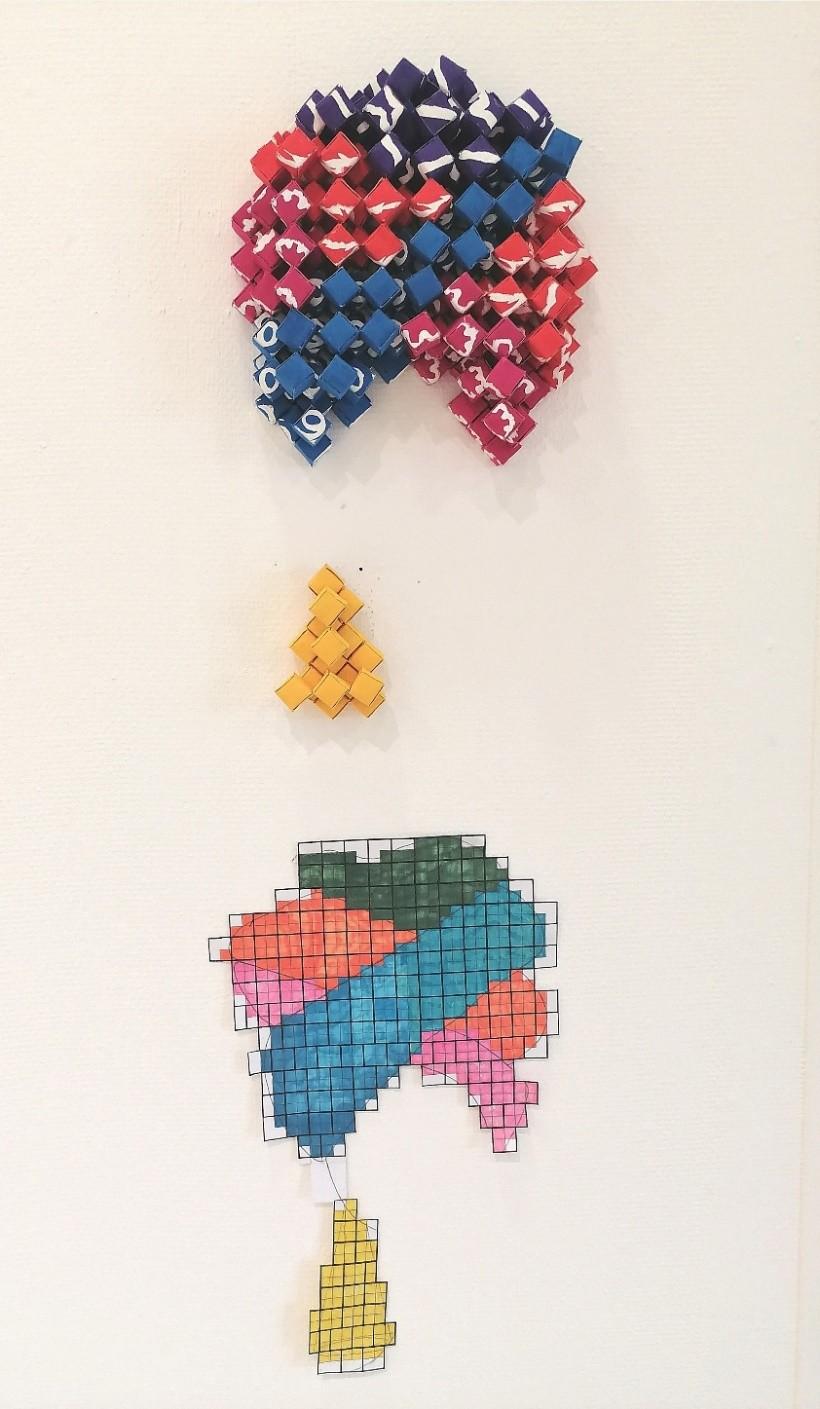
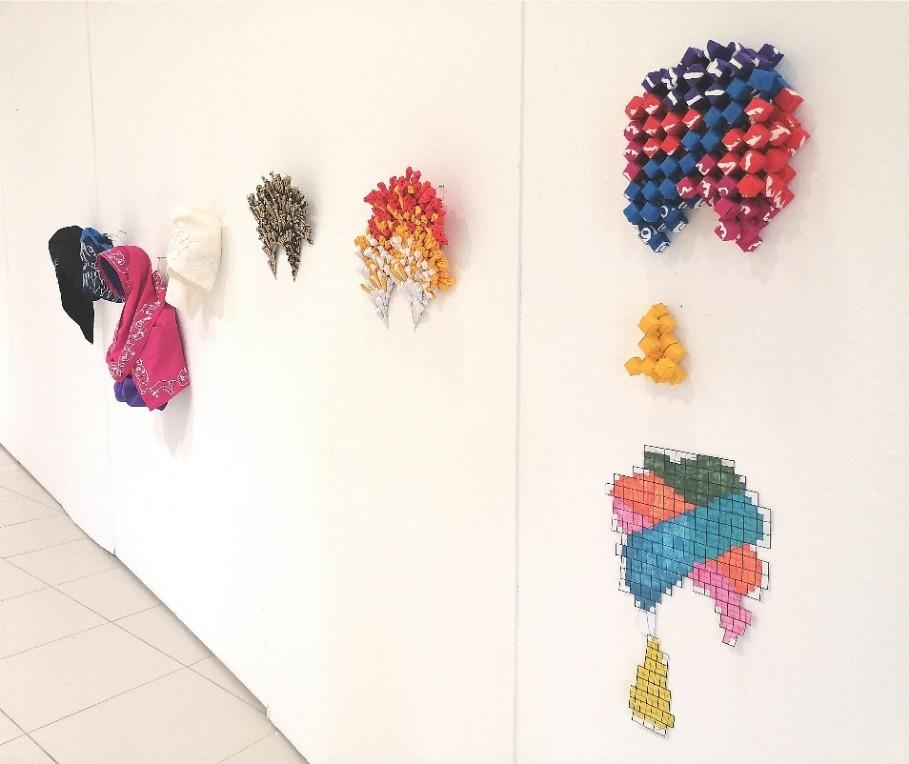
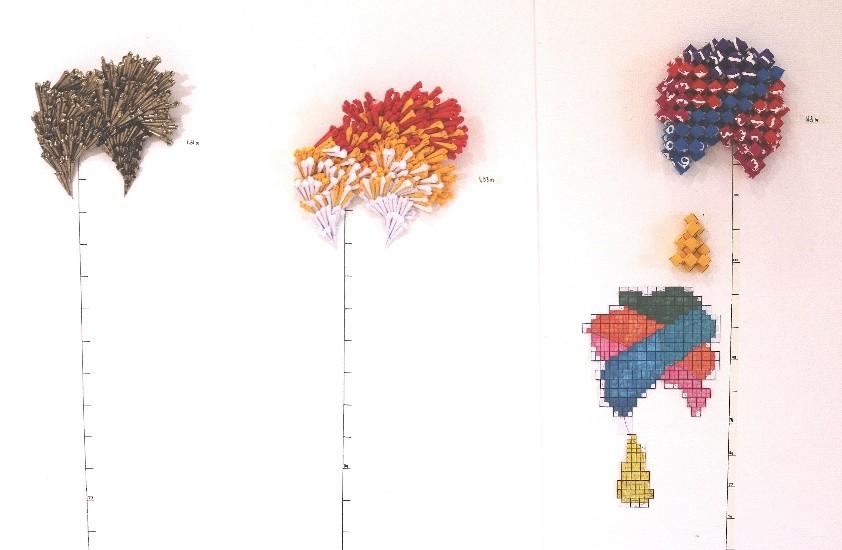 Figure 25: Lerato Mojapelo, Here Comes The Sun, Little Darling (2023)
Figure 26: Lerato Mojapelo, Here Comes The Sun, Little Darling (2023)
Figure 25: Lerato Mojapelo, Here Comes The Sun, Little Darling (2023)
Figure 26: Lerato Mojapelo, Here Comes The Sun, Little Darling (2023)
29
Figure 27: Lerato Mojapelo, Here Comes The Sun, Little Darling (2023)
30
Figure 28: Lerato Mojapelo, Here Comes The Sun, Little Darling (2023)
The community of headwraps is placed at different heights to convey the median height range of women. The measuring lines on each headwrap are made to create an interaction with the artwork and audiences. In creating the range in height of the headwraps, the intention is to portray the realism of these influential women leaders, but most importantly for women to be able to see their faces in these faceless headwraps. The height differences do not depict the actual height of the female figures but the various heights of women in general. The height of the headwraps range from 1.53m to 1.63m
31
Figure 29: Lerato Mojapelo, Here Comes The Sun, Little Darling (2023)
Artists that I draw inspiration from
Bisa Butler is an artist that I draw inspiration from, she uses color fabric and quilting to create her artworks. She uses fabric to create portraits of black people to represents them in a way that esteems them. I am inspired by how she is able to create representation for black people using bright colored fabric to tell a story of their existence.
Yinka Shonibare is another artist that inspires me in how he uses African printed fabric. He uses different fabric to explore themes of identity and representation. His ability to connect Eurocentric and African cultures using fabric inspires me to explore the significance of patterns and colors in the role of representation.
Through Butler and Shonibare’s work, representation takes its form in the use of color and patterned fabric that they use. In my work title Here Comes The Sun, Little Darling (2023) I use fabric, color and patterns to represent different facets of women. Through the different women in the project, I also explore ways of expressing their personality and advocacies.
32
Conclusion
The body of work for this project uses the headwrap as metaphor to express feminine power through references made from women leaders who have been influential leaders in politics and education. I validate feminine power through these headwraps to inspire women of this generation. The community of headwraps is meant to create different examples of feminine power. So that women of this generation have referential examples of inspiration against the struggles of life that continue to linger on. My hope with this body of work is that women will see those who’ve come before them and then see that same power as something that exists in them too. Women leaders like Winnie Madikizela Mandela, Nina Simone, Tawakkol Karman and Prof. Phakeng have exemplified their capabilities and strengths to lead while maintaining decorum and assertiveness in their respective fields of work.
Contemporary Socio-political movements such as the Black Doek Movement and Doek on Fleek, use the headwrap in symbolizing their messages. These movements focus on women empowerment and resistance on social issues such as gender-based violence in today’s time. The headwrap was also used as a metaphor for women of this generation and as a form of representation for my own identity. In including a reflective headwrap of my own identity, the intention is to see myself as someone who is just as capable of defying stereotypes that undermine my capabilities. The patterns on the reflective headwrap are meant to remind me of who I am and where I come from. Overall, the body of work is made to foster motivation and encouragement for women who need it. Identity is a fundamental building block for anyone to have, and this community fosters a range of options that women have to look up to and remember what they are capable of after seeing what other women who are just like them have accomplished.
33
List of Illustrations
Page i Figure 1: Lerato Mojapelo, Here Comes The Sun, Little Darling (2023)
Page ii Figure 2: Lerato Mojapelo, Here Comes The Sun, Little Darling (2023)
Page 2 Figure 3: Lerato Mojapelo, Here Comes The Sun, Little Darling (2023)
Page 3 Figure 4-7: Lerato Mojapelo, Here Comes The Sun, Little Darling (2023)
Page 4 Figure 8: Enslaved Women
Page 5 Figure 9: Nina Simone
Page 6 Figure 10: Winnie Madikizela Mandela
Page 9 pictures (1-6): images of the process
Page 11 Figure 11: Lerato Mojapelo, Here Comes The Sun, Little Darling (2023)
Page 12 Figure 12: Lerato Mojapelo, Here Comes The Sun, Little Darling (2023)
Page 14 Figure 13: Lerato Mojapelo, Here Comes The Sun, Little Darling (2023)
Page 15 Figure 14: Lerato Mojapelo, Here Comes The Sun, Little Darling (2023)
Page 17 Figure 15: Lerato Mojapelo, Here Comes The Sun, Little Darling (2023)
Page 18 Figure 16: Lerato Mojapelo, Here Comes The Sun, Little Darling (2023)
Page19 Figure 17: Lerato Mojapelo, Here Comes The Sun, Little Darling (2023)
Page 21 Figure 18: Lerato Mojapelo, Here Comes The Sun, Little Darling (2023)
Page 22 Figure 19: Lerato Mojapelo, Here Comes The Sun, Little Darling (2023)
Page 23 Figure 20: Prof. Mamokgethi Phakeng
Page 24 Figure 21: Lerato Mojapelo, Here Comes The Sun, Little Darling (2023)
Page 25 Figure 22: Lerato Mojapelo, Here Comes The Sun, Little Darling (2023)
Page 26 Figure 23: Lerato Mojapelo, Here Comes The Sun, Little Darling (2023)
Page 29 Figure 25-27: Lerato Mojapelo, Here Comes The Sun, Little Darling (2023)
Page 30 Figure 28: Lerato Mojapelo, Here Comes The Sun, Little Darling (2023)
Page 31 Figure 29: Lerato Mojapelo, Here Comes The Sun, Little Darling (2023)
34
Reference list
• Butler, B. 2018. The Safety patrol, I know why and Southside Sunday [O]. Available: https://www.bisabutler.com/porfolio Accessed 20/07/2023
• Casad, BJ & Wexler, BR. 2017. The sage encyclopedia of psychology and gender: Gender Stereotypes. Pp(755-758). SAGE Publications, Inc. Online ISBN: 9781483384268
• Garbus, L (dir). 2015. What Happened, Miss Simone? [Film]. Netflix.
• Griebel, HB. 1995. The African American Woman’s Headwrap: Unwinding the symbols. In Dress and Identity. (ed) Higgins M, Eicher J & Johnson K. p (445-460) NY: Fairchild, 1995
• Human Rights | South African Government (www.gov.za)
• Human Rights | South African Government (www.gov.za)
• James, D. 2021. “The Black Doek Movement”. Interviewed by SABC News. 21 Aug 2021.
• Youtube link: https://m.youtubr.com/watch?v=l0BWm5kmrFM
• Klovborg, S(dir). 2018. Maid in Hell. [Film]. BBC
• Kirkland, T. 2018. Clothing as resistence. pp 41-42.
https://ualresearchonline.arts.ac.uk/id/eprint/19481/ [ACCESSED 27/02/2023]
• Mavata, T. 2023. “Doek of Fleek”. Interviewed by SABC News. 3 April 2023
35
Reference list
• Tawakkol Karman - Nobel Lecture: In the name of God the Compassionate the Mercifu l (nobelprize.org)
• https://www.nobelprize.org/uploads/2018/06/karman-lecture_en.pdf [ACCESSED 02/11/2023]
• William Nicol Drive officially renamed Winnie Mandela Drive | News24
• https://www.news24.com/news24/southafrica/news/william-nicol-drive-officially-rena med-winnie-mandela-drive-20230926
[ACCESSED 02/11/2023]
• Youtube link: http://m.youtubr.com/watch?v=3od0ycYl4Rw
• Lameche, P(dir). 2017. Winnie. [Film]. Netflix
• South Africa. Minister of State Sercurity. 2021. Winnie Madikizela-Mandela. [O].
Available: https://www.thepresidency.gov.za/national-orders/recipient/winnie-madikizela-mandel a Accessed 20/07/2023
• Strubel, J. 2014. African headwraps. In Strauss, M & Lynch, A (Eds). Encyclopedia of ethnic clothing in the United States (pp 5-7). Lanham, Maryland: AltaMira Press
• https://rfkhumanrights.org/assets/documents/Tawakkol-Karman.pdf
• Tawakkol-Karman.pdf (rfkhumanrights.org) [ACCESSED 02/11/2023]
36
Curriculum Vitae
Lerato Mojapelo
Born December 1990
Group Exhibitions:
Unisa 3rd year Exhibition 2023 – Emerge graduate exhibition (2 Dec 2023 – 30 Jan 2024)
Email: mojapelolerato7@gmail.com
Cell: 081 579 0759
Website: Coming soon
38