by Henry Butcher Malaysia
MALAYSIA PROPERTY OUTLOOK

THE YEAR OF THE FIRE HORSE. WILL THE PROPERTY MARKET EXPERIENCE A FULL GALLOP OR A SLOW TROT?
As we look back at the year that we just left behind, we cannot help but feel a little relieved that by and large we, as a nation, managed to transit into the new year relatively unscathed, given the disruptive trade wars between the great powers of the world as well as the many territorial conflicts that were happening in Europe, Asia, The Middle East and Africa.
Our economy has been quite resilient and is expected to grow by between 4.0% to 4.8% for 2025 and between 4.0% to 4.5% for 2026. The country’s unemployment rate continues to be at a low 3% rate whilst inflation remains at a stable 1.3%. In the negotiations with the U.S., we managed to reach agreement on a lower 19% reciprocal tariff rate whilst there will be more than 1,700 items which will be exempted from the tariffs.
Malaysia’s trade performance has continued to be positive, with overall trade in the first nine months of 2025 growing by 9.8% year-on-year to RM257.51 billion. During this period, we also managed to attract a total of RM285.2 billion in approved investments, mainly in the manufacturing, services, and primary sectors.
The Malaysian Ringgit has rebounded and managed to become the best performing currency in the world in August 2024 and has since continued its improvement against most major currencies, buoyed by several key drivers. The Ringgit is nearing a four-year high and has emerged as the best performing currency in Asia in 2025.
With Visit Malaysia kicking in in 2026, the country’s tourism sector has seen a strong performance, with tourist receipts for the first nine months of 2025 already matching that for full year 2024 and so it looks likely that the high targets set for tourist arrivals and receipts under VM2026 can be comfortably achieved.
Against a stable economic backdrop, the Malaysian property market has performed commendably although the transaction statistics released by NAPIC would suggest that the market seems to have reached a plateau. The Malaysian property market registered a mixed performance in the first nine months of 2025, with the overall volume of transactions declining marginally by 2% compared to the same period in 2024 whilst the value of transactions increased by more than 5%. The residential market in particular, was a bit lacklustre with both volume and value of transactions recording slight declines. The star of the market, as has been for the past few years, was the industrial sector which recorded increases in both volume as well as value of transactions. Although the office sector managed to maintain its occupancy rate, it faces increasing pressure due to added supply of new developments in Kuala Lumpur and Selangor. The retail sector managed to chalk up an increase in occupancy rate and could benefit from the expected increase in tourist spending arising from the VM2026 campaign which should also benefit the hospitality sector.
Kuala Lumpur, Selangor, Penang and Johor continue to be the mainstays for the Malaysian property market but Johor with its stars aligned and shining bright, has become the current darling with investors.
For 2026, we note that there are still some dark clouds on the global front. The year started off with a surprise manoeuvre by the Trump administration which ended up with the abduction of Venezuela’s president and his wife to face charges in U.S. courts. The Trump administration has also reiterated its desire to take over Greenland. Nearer home, the spat between China and Japan over Taiwan as well as the border clashes between Thailand and Cambodia have created a sense of unease and uncertainty. As Malaysia is an open economy depending

LONG TIAN CHEK
GROUP MANAGING DIRECTOR
B.SC., FRISM, MRICS
Registered Valuer (V-241)
on international trade, it is vulnerable to global events which are disruptive to trade.
Nevertheless, with a stable political situation and positive economic growth projected for the year, we believe that the Malaysian property market will still continue to be stable although growth will be at a more moderate pace rather than a gallop, particularly the residential sector which will benefit from the lower interest rate environment and the few mega infrastructure projects currently under construction which will boost accessibility. The industrial sector is expected to continue to shine whilst the retail and hospitality sectors will be able to reap the fruits from the VM2026 promotions.
In concluding my message, I, on behalf of the Henry Butcher Malaysia group, would like to wish all our clients, business partners, associates, fellow directors, management and staff of the group, a happy and rewarding 2026 and all the best in navigating the challenges that may come our way in the year of the fire horse.
Malaysia Property Outlook 2026
Kedah
Penang
Perak Klang Valley
Negeri
HEADQUARTERS
Henry Butcher Malaysia Sdn Bhd No. 25, Jalan Yap Ah Shak, 50300 Kuala Lumpur, Malaysia.
T 603 - 2694 2212 | 2692 3437 F 603 - 2694 5543 | 2694 3484
E hbmalaysia@henrybutcher.com.my W www.henrybutcher.com.my
Henry Butcher Real Estate Sdn Bhd No. 25, Jalan Yap Ah Shak, 50300 Kuala Lumpur, Malaysia.
T 603 - 2694 0881 | 2694 0879 F 603 - 2694 1261
E hbre@henrybutcher.com.my
KEDAH
Henry Butcher Malaysia (Kedah) Sdn Bhd No. 169, Kompleks Alor Setar, Lebuhraya Darulaman, 05100 Alor Setar, Kedah, Malaysia.
T 604 - 731 5525 | 731 5405 F 604 - 731 5699
E hbkedah@henrybutcher.com.my
Henry Butcher Malaysia (Kulim) Sdn Bhd No. 239, Jalan Raya, 09000 Kulim, Kedah, Malaysia.
T 604 - 491 2999
F 604 - 491 2311
E hbkulim@henrybutcher.com.my
PENANG
Henry Butcher Malaysia (Penang) Sdn Bhd No. 142 M, Jalan Burma, 10050 Penang, Malaysia.
T 604 - 229 8999
F 604 - 229 8666
E hbpenang@henrybutcher.com.my W www.henrybutcherpenang.com
Henry Butcher Malaysia (Seberang Perai) Sdn Bhd No. 2708, Chain Ferry Road, Kimsar Garden, 13700 Prai, Penang, Malaysia.
T 604 - 397 5888
F 604 - 398 8777
E hbperai@henrybutcher.com.my
PERAK
Henry Butcher Malaysia (Perak) Sdn Bhd No. 29B, Persiaran Greentown 4, Greentown Business Centre, 30450 Ipoh, Perak, Malaysia.
T 605 - 253 9933 | 253 3933
F 605 - 254 9933
E hbperak@henrybutcher.com.my
SELANGOR
Henry Butcher Malaysia (Sel) Sdn Bhd No. 36-1, 2 & 3, Jalan SS 15/4D, 47500 Subang Jaya, Selangor, Malaysia.
T 603 - 5631 5555
F 603 - 5632 7155
E hbselangor@henrybutcher.com.my
Henry Butcher Malaysia Solutions Sdn Bhd Level 4, No. 14, Jalan Yap Ah Shak, 50300 Kuala Lumpur, Malaysia.
T 603 - 4270 2072
F 603 - 4270 2082
E hbampang@henrybutcher.com.my
NEGERI SEMBILAN
Henry Butcher Malaysia (NS) Sdn Bhd No. 11, Ground Floor, Jalan Tunku Hassan, 70000 Seremban, Negeri Sembilan, Malaysia.
T 606 - 761 8681
F 606 - 761 8687 E hbns@henrybutcher.com.my
HB Perspective 2026 is a Malaysian property market report published by Henry Butcher Malaysia Group of Companies “Our strength begins in your market and takes you anywhere in the world.”
MELAKA
Henry Butcher Malaysia (Malacca) Sdn Bhd No. 324 A & B, Jalan Melaka Raya 1, Taman
Melaka Raya, 75000 Melaka, Malaysia.
T 606 - 281 2188
F 606 - 281 2189
E hbmalacca@henrybutcher.com.my
JOHOR
Henry Butcher Malaysia (Johor) Sdn Bhd No. 52, 52 A & B Jalan Padi 1, Bandar Baru UDA, 81200 Johor Bahru, Johor, Malaysia.
T 607 - 236 8060
F 607 - 235 3060 | 236 3060
E hbjohor@henrybutcher.com.my
Henry Butcher Malaysia (Muar) Sdn Bhd No. 134, 1st Floor, Jalan Meriam, 84000 Muar, Johor, Malaysia.
T 606 - 955 5968 | 954 6639
F 606 - 955 5967
E muar@henrybutcher.com.my
Henry Butcher Malaysia (Kluang) Sdn Bhd No. 78, (1st Floor), Jalan Kluang Perdana 1, Pusat Perniagaan Kluang Perdana (Parkland), 86000 Kluang, Johor, Malaysia.
T 607 - 739 2000
F 607 - 739 2042
E hbkluang@henrybutcher.com.my
Henry Butcher Malaysia (Pontian) Sdn Bhd No. 18-2, Jalan Delima 7, Pusat Perdagangan Pontian, 82000 Pontian, Johor, Malaysia.
T 607 - 688 3060 | 686 3060
F 607 - 688 2060
E hbpontian@henrybutcher.com.my
PAHANG
Henry Butcher Malaysia (Kuantan) Sdn Bhd No. 11A, 1st & 2nd Floor (China Town), Jalan Putra Square 3, Putra Square, 25200 Kuantan, Pahang, Malaysia.
T 609 - 512 4111
F 609 - 512 4555
E hbkuantan@henrybutcher.com.my
TERENGGANU
Henry Butcher Malaysia (Terengganu) Sdn Bhd No. 1118-D, Tingkat 1, Jalan Pejabat, 20200 Kuala Terengganu, Terengganu, Malaysia.
T 609 - 620 3838 | 620 3839 F 609 - 620 3828 E hbtrg@henrybutcher.com.my
KELANTAN
Henry Butcher Malaysia (Kelantan) Sdn Bhd Lot PT 265, Tingkat 2, Wisma Nik Kob, Jalan Sultan Yahya Petra, 15200 Kota Bharu, Kelantan, Malaysia.
T 609 - 747 4001 | 747 5002
F 609 - 747 5003
E hbkelantan@henrybutcher.com.my
SABAH
Henry Butcher Malaysia (Sabah) Sdn Bhd Suite 326, 3rd Floor, Wisma Sabah, 88000 Kota Kinabalu, Sabah, Malaysia.
T 6088 - 255 000 | 257 000
F 6088 - 257 333 E hbsabah@henrybutcher.com.my
Henry Butcher Malaysia (Tawau) Sdn Bhd
TB 314, 1st Floor, Block 37, Fajar Commercial Complex, 91000 Tawau, Sabah, Malaysia.
T 6089 - 779 380
F 6089 - 779 381
E hbsabah@henrybutcher.com.my
Henry Butcher Malaysia (Sandakan) Sdn Bhd
Lot 15, 1st Floor, Block A3, Utama Place (Phase 2 & 5), 90000 Sandakan, Sabah, Malaysia.
T 6089 - 223 833
F 6089 - 223 822
E hbsabah@henrybutcher.com.my
SARAWAK
Henry Butcher Malaysia (Sarawak) Sdn Bhd L4 14 & 15, DUBS Commercial / Office Centre, Lot 376, Section 54 KTLD; Jalan Petanak, 93100 Kuching, Sarawak, Malaysia.
T 6082 - 423 300 | 231 032 | 231 037
F 6082 - 231 036
E hbsarawak@henrybutcher.com.my
Henry Butcher Malaysia (Miri) Sdn Bhd
Soon Hup Commercial Complex, 1st Floor, S/Lot 9 (906-1-9), Jalan Merbau, 98000 Miri, Sarawak, Malaysia.
T 6085 - 442 800 | 442 898 | 442 899
F 6085 - 429 699
E hbmiri@henrybutcher.com.my
SPECIALIST SERVICES
Henry Butcher Malaysia (Mont Kiara) Sdn Bhd Unit D4-3-3 & 3A, Solaris Dutamas, No. 1, Jalan Dutamas 1, 50480 Kuala Lumpur.
T 603 - 6205 3330 F 603 - 6206 2543
E admin.assetmgmt@henrybutchermk.com W henrybutchermk.com
Henry Butcher Art Auctioneers Sdn Bhd No. 25, Jalan Yap Ah Shak, 50300 Kuala Lumpur, Malaysia.
T 603 - 2691 3124 | 3095
F 603 - 2691 3127
E artauction@henrybutcher.com.my / info@hbart.com.my W www.hbart.com.my
Henry Butcher Shopping Centre Consultants Sdn Bhd
No. 43-1, Jalan Manis 3, Taman Segar, Cheras, 56100 Kuala Lumpur, Malaysia.
T 603 - 9130 5550 | 9130 7550 F 603 - 9130 4003 E tanhaihsin@yahoo.com
Publisher Henry Butcher Malaysia Sdn Bhd
Publishing Agency Rightwiz Sdn Bhd
Printer
Percetakan CL Wong Sdn Bhd
AS-84, Jalan Hang Tuah 4, Taman Salak Selatan, Cheras, 57100 Kuala Lumpur.
© 2026 Henry Butcher Malaysia Sdn Bhd. All rights reserved.
No part of this publication may be reproduced in any form without the prior permission of or attributing credit to Henry Butcher Malaysia
To contact us, please email hbmalaysia@henrybutcher.com.my
MALAYSIA PROPERTY OUTLOOK 2026
General Economic Overview 2025 & Outlook for 2026
Malaysia’s economy continued to be resilient in 2025 despite the many challenges that it encountered, in particular having to delicately navigate and negotiate the Liberation Day tariffs imposed by the Trump administration. The country’s GDP grew 5.2% year-on-year in Q3 2025, leading to a 4.7% expansion in the first nine months of the year. Malaysia’s economic growth is projected by Bank Negara Malaysia (BNM) to touch the upper range of the official 4% to 4.8% forecast for 2025 whilst for 2026, it is expected to record a more moderate growth rate of between 4% to 4.5%. In Q3 2025, it is also noted that the country recorded a surplus in the services sector for the first time in fourteen years and the current account balance also came out positive at 12.2%.
The country’s unemployment rate continues to be at a low 3% whilst inflation remains at a stable 1.3% and although the export horizon remains uncertain, the 19% reciprocal tariff rate negotiated with and agreed with the U.S. has provided some degree of certainty, especially as there are 1,711 items which will be exempted from the tariffs. With Visit Malaysia 2026 commencing in the new year, the country’s tourism sector has seen a strong performance with tourist receipts for the first nine months of 2025 already matching that for the full year of 2024.
Investments
For the first nine months of 2025, Malaysia managed to attract a total of RM285.2 billion in approved investments, mainly in the manufacturing, services and primary sectors. This is made up of RM150.8 billion (52.9%) in Foreign Direct Investments (FDIs) and RM134.4 billion (47.1%) in Domestic Direct Investments (DDIs). There was a net inflow of FDIs into the country amounting to RM8.5 billion in the third quarter of 2025, up from RM1.6 billion in Q2 2025, supported by larger equity injections. Johor received the highest amount of investments at RM91.1 billion followed by Selangor at RM51.9 billion, Wilayah Persekutuan at RM45.9 billion and Penang at RM23.7 billion.
Trade
Malaysia’s trade performance continued to be positive, with overall trade in the first nine months of 2025 growing by 9.8% y-o-y to RM257.51 billion. Exports in September rose by 12.2% y-o-y to RM138.68 billion, the second highest export value posted this year. Meanwhile, imports went up by 7.3% to RM118.82 billion, leading to the country recording a trade surplus of RM19.86 billion, a 54.7% growth y-o-y and the 65th consecutive month of surplus since May 2020.
All major export markets recorded positive growths: Asean (+19.2%), U.S. (+14.5%), China (+12%) and Europe (+8.6%). Major exports from Malaysia were E&E (electrical & electronics) products (47% share), petroleum products (6.3%), palm oil & palm oil based products (5.4%), machinery, equipment & parts (4.6%) and optical & scientific products (4.1%).
(Source: MIDA)
Industrial Production Index
Malaysia’s Industrial Production Index (IPI) grew by 6% in October 2025, up from 5.7% recorded in the preceding month. Manufacturing output led the way, with an increase of 6.5% followed by mining with a rise of 5.8%. The IPI stood at 143.9 points as at October 2025 compared to 135.8 points a year ago, a rise of 8.1 points or close to a 6% jump.
Source: Trading Economics / DOSM
Malaysia Industrial Production Index Oct 2024 – Oct 2025
Crude Oil Prices
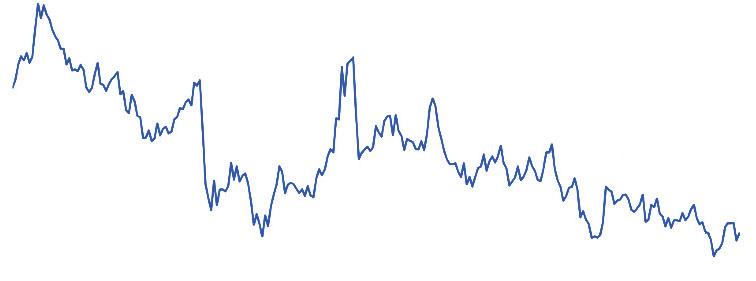
WTI crude oil prices fell from US$68.98 as at 18 November 2024 to US$59.66 exactly a year later, down significantly from its peak of US$123.64 as at 8 March 2022 but still higher than the US$41.64 recorded as at 18 November 2021. The price then fluctuated but settled at US$57.42 as at 29 December 2025.
Malaysia, being a net exporter of crude oil will certainly be affected by the lower revenues earned from crude oil exports but stand to benefit economically from any improvement in prices.
Performance of Malaysian Ringgit
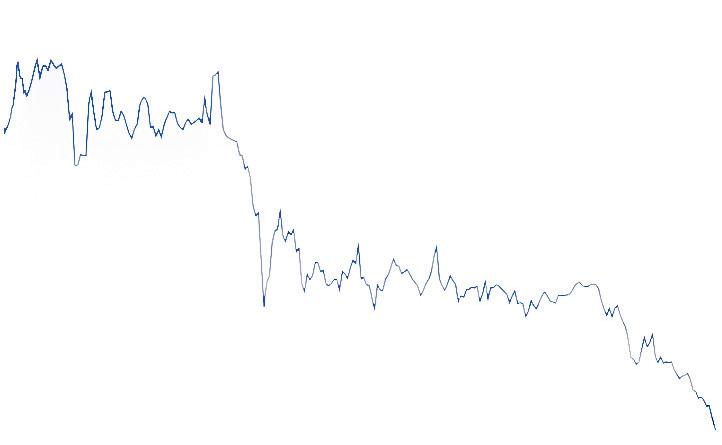
After earning the dubious honour of being the worst performing currency in Asia in 2023, the Malaysian Ringgit rebounded and managed to become the best performing currency in the world in August 2024 and has since continued its improvement against most major currencies, buoyed by several key drivers. The Ringgit is nearing a four-year high and has emerged as the best performing currency in Asia in 2025. According to a report in The Star on 17 November 2025, a number of economists and foreign exchange strategists have projected the US Federal Reserve to slash its benchmark rates by next year, which would then propel the Malaysian Ringgit to rise further against the US Dollar.
In addition, economists noted that Malaysia’s strong economy and ongoing fiscal consolidation by the government are other drivers that would help to strengthen the local currency against the US Dollar moving into 2026. This will also provide BNM the leeway to keep the overnight policy rate (OPR) steady in 2026. Nevertheless, the stronger Ringgit may affect the country’s exports as well as tourist arrivals in the country.
Stock Market Performance
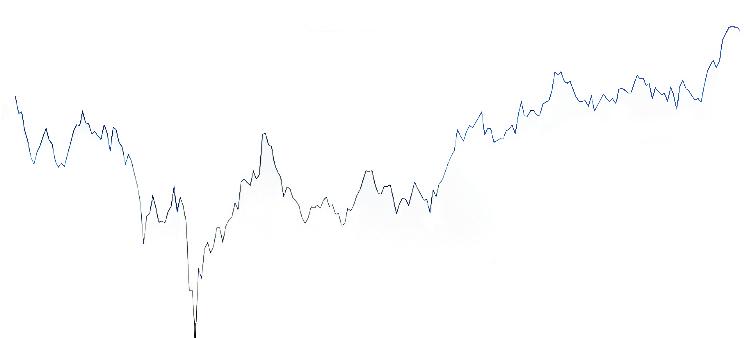
From a starting point of 1,632 points on 2 January 2025, the FBM KLCI plummeted to a low of 1,400 points on 9 April 2025, in the aftermath of the Trump administration’s announcement of the Liberation Day tariffs on 2 April 2025. When countries including Malaysia began negotiations with the US trade team, the KLCI gradually recovered and picked
Source: Yahoo Finance
Performance of FBM-KLCI (Jan–Dec 2025)
Source: Yahoo Finance
WTI Crude Oil Price Movement Dec 2024 to Dec 2025
Source: Trading Economics
Performance of MYR Against USD (Jan–Dec 2025)
up steam, peaking at 1,637 points on 2 October before closing at 1,681 points on December 31, 2025. With an agreement reached between Malaysia and the US, and backed by a stable economy, the Malaysian stock market is expected to remain in positive territory.
Political Situation
Despite facing some challenges, the Malaysian political situation appeared to be quite stable with the Madani government having lasted longer than the previous three administrations post-GE15 and is expected to complete its full term before going into GE16 (16th General Elections).
The holding onto power of the GRSPH (Gabungan Rakyat Sabah - Pakatan Harapan) government in Sabah in the recent state elections has provided the Madani Federal Government some respite from various negative developments including the call by politicians from both sides of the political divide in Sabah for the federal government to honour its pledge to return 40% of income generated back to the state. The political stability augurs well for the country’s growth and economic prosperity.
Overnight Policy Rate (OPR)
BNM has lowered the OPR to 2.75% on 9 July 2025 after having maintained the interest rate at 3% since the last increase in May 2023. This is positive for businesses and supportive of economic growth for the country.
Major Infrastructural Projects
There are a number of ongoing and proposed major infrastructural projects which will improve accessibility and enhance the attractiveness of the areas which are located at, along or near these infrastructural projects. Some of the major infrastructural projects include:
• JB-Singapore RTS (Johor Bahru–Singapore Rapid Transit System (RTS) Link
• ETS (Electric Train Service) between Kuala Lumpur and Johor Bahru
• Penang Mutiara LRT (Light Rail Transit) project
• Port Klang Link for the ECRL (East Coast Rail Link)
• Gemas-Johor Bahru EDTP (Electrified Double Track Project) line
• LRT3 line from Bandar Utama to Johan Setia (expected to be completed by end 2025 but reportedly will be delayed to 2026)
• ECRL route connecting Kota Bharu to Gombak (expected to be completed by end 2026)
• The Klang Valley Double Track Phase 2 (KVDT2) connecting Bandar Tasik Selatan to Seremban and Simpang Pelabuhan Klang
• The North-South Expressway (PLUS) Traffic Dispersal Project from Juru Toll to Sungai Dua Toll
• Construction of an underpass to connect Mount Erskine Road to Burma Road at the intersection of Mount Erskine Road/ Gottlieb Road/Burma Road/Bagan Jermal Road, Section A: Underpass
• Upgrade of the Senai-Desaru Expressway Phase 2A: Cahaya Baru to Sungai Johor for JS-SEZ (Johor–Singapore Special Economic Zone)
• Upgrade of Route FT100 (Section 10.4) to Route FT3145 leading to Lumut Port (Section 5.4), Manjung, Perak; Phase 5: Tanjong Malim to Lumut Port;
• Construction of a PLUS interchange to support the development of Malaysia Vision Valley
• Upgrade of the Kuantan-Segamat Highway
• Construction of a new road from the Kuala Terengganu Bypass at Kampung Bukit Bayas to the junction road at Kampung Kubang Tangga, Kuala Terengganu
• Upgrade of the Federal Road from the Batu 9 junction to the Jalan Dato Alias junction, including the construction of a flyover at the Batu 9 Intersection, Cheras, Hulu Langat
• Construction of the Labuan Waterfront –Phase 1
• New four lane North Coastal Paired Road spanning 10.61km from Tanjung Bungah to Teluk Bahang in Penang slated for completion in 2031 will significantly reduce travelling time and improve traffic conditions
• 17.3km eight lane elevated highway with multiple interchanges linking Juru to Sungai Dua on the Penang mainland and due for completion in 2030 is expected to provide quicker commutes for residents
• Land reclamation is currently underway for the creation of Silicon Island in
Penang and to date 100 of the planned 510ha has been reclaimed. The island is expected to anchor Penang’s future thrust into semi-conductor manufacturing
• Upgrading of Penang International Airport will boost passenger capacity from 6.5 to 12 million passengers annually. This is expected to provide a big boost to businesses as well as the tourism industry in the state.
Overview of the Malaysian Property Market in 2025
Overall Market Performance
The Malaysian property market registered a mixed performance with the overall volume of transactions declining marginally by 2% in the first nine months of the year compared to the same period in 2024 whilst the value of transactions increased by more than 5%.
Residential Property Sector
The performance of the residential sector was however a bit lacklustre, recording a marginal 2.75% decline in the volume of national transactions in the first nine months of 2025 compared to a 5% jump for the corresponding period in 2024 whilst the value of transactions inched down slightly by 0.3% compared to a close to 7% rise the year before.
Based on data published by BNM, the value of loans approved by banks for the purchase of residential properties have registered double-digit growth in the first ten months of 2021, 2022 and 2023 but then slowed down to just 1% in the first ten months of 2024. The pace has nevertheless picked up again with the value of approved loans for the first ten months of 2025 already matching that of the full year of 2024.
Based on NAPIC’s latest available statistics, the number of new residential units launched nationwide registered a drop of 5.5% in the first nine months of 2025 compared to the same period in 2024 whilst overall sales performance declined from 34% to 22%. Single, two and three storey terraces made up about 54% of the new residential units launched followed by condominiums/apartments which contributed about 31%.
Meanwhile, the Real Estate and Housing Developers’ Association Malaysia (REHDA)’s Property Industry Survey 1H2025 revealed that the number of new units launched by their members in the first half of 2025 declined by 26% to 12,938 units compared to the 17,404 units launched in the second half of 2024. The sales take-up rate reported by REHDA members also came down from 55% to just 24%.
Most of the residential units launched in the first half of 2025 were in the midmarket segment with 57% of units priced between RM300,001 and RM700,000, 14% priced below RM300,000, 16% priced between RM700,001 and RM1 million, 12% between RM1 million and RM2.5 million and only about 1% priced above RM2.5 million.
The number of unsold residential units from new launches in the country as at
Malaysia - Overall Volume of Transactions (Jan-Sep 2022 to 2025)
Source: NAPIC
Volume of Residential Transactions (Jan-Sep 2022 to 2025)
Source: NAPIC
Malaysia - Overall Value of Transactions (Jan-Sep 2022 to 2025)
Source: NAPIC
Q3 2025 meanwhile was recorded at 28,672 units, representing about 19% of the total new residential units launched and up 30% compared to 21,968 units as at Q3 2024. Condominiums/apartments contributed the lion’s share (about 51%) of the total unsold stock.
The Malaysian House Price Index (MHPI) which has always been registering positive growth throughout the years saw the rate of increase begin to slow down in 2017. The All-House price index crept up just marginally as at Q3 2025 compared to 2024. All house types recorded improvements except for high-rise which recorded a slight decline. The highest increase was recorded by terrace houses.
Budget 2026 tabled by the Madani government continued to allocate priority to the education, health and defence ministries with 32.1% of the budget allocated to these sectors.
As in past years, there were not many goodies announced in the budget for the property sector. Some of the industry’s positive measures announced in the budget included the extension of the current full stamp duty exemption on transfer instruments and loan agreements for the purchase of homes by first time home buyers for houses priced up to RM500,000 for another two years, until December 31, 2027. A sum of RM20 billion will also be allocated under the Housing Credit Guarantee Scheme (SJKP) to support housing financing and this is expected to benefit 80,000 first time home buyers. This represents a doubling of the sum allocated under last year’s budget as well as that of 2024. At the same time, a sum of RM500 million will be allocated under Bank Simpanan Nasional (BSN) to finance first time home buyers who are contract public servants.
The government has also proposed to allocate a sum of RM672 million for urban renewal programmes and the building of affordable homes for Malaysians under the Residensi Rakyat and Rumah Mesra Rakyat programmes, with several projects expected to be completed next year.
Value of Residential Transactions (Jan-Sep 2022 to 2025)
Malaysian House Price Index by Type
Source: NAPIC
Value of Residential Loans Approved from 2019 to 2025 (RM millions)
Source: Bank Negara Malaysia
Source: NAPIC
Residential - Factors to Watch in 2026
• Based on the first half 2025 survey by REHDA amongst its members, it is noted that developers are more cautious about the market not only for the second half of 2025 but also for 2026. The survey disclosed that about 73% of the survey participants indicated that they had no intentions to expand their workforce over the next 12 months whilst only 38% planned to increase their land bank within the same period.
• BNM has maintained the OPR at 2.75% since reducing it from 3.0% in July 2025. This is positive for businesses as well as for the property sector as a rise in the OPR will increase borrowing costs and house buyers may be deterred from going into the market. If interest rates go up, this will hike up borrowing costs as well as reduce the amount of loan that they will be eligible to borrow.
• The Ministry of Housing & Local Government (KPKT) has tabled the Urban Renewal Bill 2025 for its first reading in the Dewan Rakyat on 21 August 2025 but the second reading has been deferred due to concerns expressed by various quarters of the potential for abuse of power. This Bill is aimed at rejuvenating ageing and dilapidated urban areas and revitalising cities and seeks to lower the consent thresholds for redevelopment (80-100% for old buildings, 51% for abandoned ones). KPKT also mentioned that the potential redevelopment of some 139 pieces of land in Kuala Lumpur could generate an estimated gross development value (GDV) of RM332.5 billion.
• Malaysia’s economy grew by 5.2% in Q3 2025 compared to just 4.4% in Q2, driven by robust performance across all sectors despite global uncertainties, geopolitical tensions and external trade headwinds. The continued positive economic growth provides the stable backdrop for the residential market to move forward positively.
• Based on the survey carried out by Oppotus Research, consumer confidence in Malaysia declined to 124 points in Q2 2025 from 127 points in Q1 2025. Consumer confidence in Malaysia has averaged around 119.07 points from 2018 until 2025, reaching
an all-time high of 155.00 points in Q3 2024 and a record low of 92.00 points in Q2 2021. This indicates that consumers may be more cautious going forward with regards to their investments in the residential property market.
• KPKT will be introducing the Real Property Development Act (RPDA) to replace the Housing Development (Control & Licensing) Act 1966 (Act 118) to update legal provisions and the standard sale & purchase agreements to synchronise with current market needs and trends like mixed use developments, and to hold developers accountable for fraudulent practices & abandoned projects, and prevent the developers from fleeing the country.
• KPKT has approved the construction of 511,544 units of affordable homes, surpassing the 500,000 units target under the 12th Malaysia Plan. This is a positive move which will benefit the lower income group.
• Areas which will be served by proposed new major infrastructure projects like highways, LRT/MRT networks will become more accessible and this will lead to more projects being undertaken by developers in these locations. These are growth areas which will be of interest to both investors and house buyers. It is noted that the completion of LRT 3 (Shah Alam Line) has been delayed until at least the second quarter of 2026. The RTS Link project connecting Singapore and Johor Bahru is scheduled for completion by December 31, 2026, with an operational launch in January 2027. This will facilitate and ease travel between the two connecting points and provide a boost to the leisure and retail sectors in the state of Johor. Meanwhile the express train service between Kuala Lumpur and Johor Bahru has commenced operations on December 12, 2025. This will provide a convenient and inexpensive alternative to driving or taking a flight for people travelling between the two cities.
• The Government has proposed a ten (10) per cent special tax deduction on costs incurred to convert commercial buildings into housing, capped at RM10 million. This measure is a positive one for the property sector as it will encourage developers/building owners to convert old, vacant or poorly occupied office/ commercial buildings into residential buildings if studies show that there is demand for residential properties in that location.
• The government has proposed to raise the stamp duty on residential property transfers by non-citizens and foreign companies from four (4) per cent to eight (8) percent. Permanent Residents will be excluded. This is a bit of a setback to the housing industry, especially to developers who are developing higher priced homes targeting at foreign buyers or who are hoping to tap the overseas market to take up the slack caused by slow demand for their houses by local buyers as the higher stamp duty means an increase in incidental acquisition costs that the foreign investor have to bear.
• Although a peace agreement has been signed between Palestine and Israel over Gaza, the situation remains uncertain with continued military action launched by Israeli forces on targets in Gaza. Ukraine and Russia have yet to come to an agreement to end the war between the two countries. The recent tensions between China and Japan over Taiwan have created an uncertain situation in the region. These regional conflicts are factors which could affect investors’ sentiments which would then have an impact on the property market.
• At the same time, although a truce has been called in the trade war between China and the US, there is still a risk of disagreements flaring up even though temperatures have cooled down somewhat. The European Union is still trying to get China to reduce the massive trade deficits that they face in their trade with China and France has threatened sanctions on China if no firm steps are taken by the latter to resolve the issue. These uncertainties may turn into wider trade conflicts which may impact Malaysia’s trade and economy and ultimately, the property market.
• Malaysia and the US have signed a reciprocal trade agreement which has brought down the tariff rates on Malaysian exports to the US with 1,711 product lines exempt from tariffs. This has provided a welcome relief to Malaysian exporters and helped to create a conducive environment for Malaysia to continue to enjoy positive economic growth.
Residential - Bright Spots for 2025
• For 2026, we are confident that the residential property market will likely be stable and continue to enjoy positive growth in volume as well as value of transactions, albeit at a slower pace. However, as construction costs have continued to go up, we believe that house prices could at the same time go up as developers try to recoup higher construction costs. Nevertheless, the prevailing global uncertainties which has led to more cautious consumer sentiments could pull a handbrake on how much developers will be able to raise prices.
• As the supply and demand dynamics of each state are not the same, the performance of the residential property markets in each state will be different. Nevertheless, we believe that the general focus of the residential property market in 2026 will not be very different from past years and will continue to be focussed on the following:
- landed residential properties, principally single and two storey terrace houses, will continue to be the preferred house types for most Malaysians and enjoy stronger demand.
- Mid to high-rise apartments in the affordable price range (around RM500,000 and below) in the major towns and cities especially in the more popular or high growth locations and RM300,000 and below for the smaller towns will still be well supported by satisfactory sales take-up.
- smaller sized units which will bring down the absolute price of the unit
- niche high-end projects in good locations where supply is limited - projects which are designed to comply with eco-friendly and green building standards particularly in the urban areas where buyers are more discerning.
- projects with innovative concepts, designs and themes which set them apart from the usual fare in the market
• The visa free policy for citizens of China and India has now been extended to December 31, 2026 and this will boost not only the retail, leisure and entertainment industries but also probably, the property sector.
• Established locations which enjoy proximity to a wide range of social, educational, shopping and recreational amenities and which are popular with local home buyers as well as expatriate tenants will always remain attractive to investors especially where there is limited land available to carry out new projects which means future supply of houses in the area will be limited.
• In Budget 2026, the government has proposed a ten (10) per cent special tax deduction on costs incurred to convert commercial buildings into housing, capped at RM10 million. This measure is a positive one for the property sector as it will encourage developers/building owners to convert old, vacant or poorly occupied office/commercial buildings into residential buildings if studies show that there is demand for residential properties in that location.
• A sum of RM20 billion will be allocated under the Housing Credit Guarantee Scheme (SJKP) to support housing financing and this is expected to benefit 80,000 first time home buyers. This represents a doubling of the sum
allocated under last year’s budget as well as that of 2024. This measure, together with others targeted at the affordable homes segment, will assist the B40 and M40 groups to buy and own their first home and thus stimulate demand for this segment of the market.
• The Youth Housing Financing Scheme under the Public Sector Home Financing Board has been extended with the financing limit raised to RM1 million.
• The government has proposed to allocate a sum of RM672 million for urban renewal programmes and the building of affordable homes for Malaysians under the Residensi Rakyat and Rumah Mesra Rakyat programmes, with several projects expected to be completed next year.
• A sum of RM500 million will be allocated under Bank Simpanan Nasional (BSN) to finance first time home buyers who are contract public servants.
• The Government has also announced plans to build affordable homes under the Kota MADANI concept which will showcase Malaysia’s vision of a smart, AI-driven and green city. The first of such projects named Kota MADANI in Precinct 19 in Putrajaya will offer 10,000 homes of which 80% of the units will be reserved for civil servants. Two other projects under this concept include Rumah Bakat MADANI SkyWorld Pearlmont in Seberang Perai, Penang, and Residensi Aman MADANI, Bandar Sri Permaisuri, in Kuala Lumpur.
Office Sector
National Supply & Occupancy Rates
The total supply of privately-owned, purpose-built offices (PBOs) in the country stood at 18.48 million sq metres as at Q3 2025, down slightly from the 18.83 million sq metres recorded in Q3 2024 whilst the occupancy rate was recorded at 71.9%, about the same as that in the corresponding period a year ago (71.7%).
As the supply and demand dynamics of each state are different, the performances of the office sector of each state vary depending on the supply and demand situation of each state.
The outlook for the office sector will be mixed, with states like Terengganu, Perak, Negri Sembilan and Penang which do not have many new PBOs being built, expected to continue to enjoy stable occupancy and rental rates whilst Kuala Lumpur and Selangor, which will see a substantial increase in supply of new offices over the next few years, will face increasing pressure on occupancy and rental rates.
Supply & Occupancy Rates of Purpose-Built Offices (Private Owned) in Malaysia (as at Q3 2025)
Purpose-Built Offices Rental Trend in Klang Valley, Johor Bahru & George Town (Q1 2020 to Q2 2025)
Source: NAPIC
Office - Factors to Watch in 2026
• Older buildings which have not embarked on any upgrading exercises will tend to lose out in the competition to not only attract new tenants but also retain existing ones as the newer buildings offer better quality specifications, amenities, M&E infrastructure at not significantly higher rentals. Tenants tend to prefer Grade A, green, smart buildings with good amenities, driving demand for modern, integrated spaces.
• Multinationals as well as local companies have placed increasing importance on environmental, social and governance (ESG) issues and in response, new office buildings have adopted designs which will comply with ESG or at least green-certified building requirements in order to attract such tenants.
• Rising costs and changing employee expectations as well as work from home arrangements have led to companies choosing locations and office space which offer more flexibility and which are conveniently located near LRT/MRT stations. This has led to organisations choosing buildings with such features including co-working space as an alternative arrangement.
• The Government is promoting the setting up of family offices in designated areas. It has been reported that the Single-Family Offices Incentive Scheme in the Forest City Special Financial Zone has been quite successful with six (6) family offices approved within a period of less than a year with total assets under management (AUM) of nearly RM400 million. It was reported in Budget 2026 that there are another thirty (30) family offices which have expressed interest,
Source: NAPIC
and if that materialises, it will put Malaysia on track to achieve RM2 billion in assets under management (AUM) by the end of 2026.
• The imposition of Sales & Service Tax (SST), currently at 8%*, on rentals of commercial space (office and retail included) where the service provider’s total taxable rental or leasing income is more than RM1 million in any 12-month period, have increased the cost burden on companies renting space in office/commercial buildings and this may cause some of them to review the amount of space that they may want to keep or additional space that they are thinking of taking up. The SST issue has also put a handbrake on rental increases contemplated by landlords as tenants and potential tenants may be deterred by too high rentals. (*NB: The Prime Minister has
just announced that the SST rate on the rental of commercial buildings for eligible Micro, Small and Medium Enterprises (MSMEs) in Malaysia has been reduced from 8% to 6%, effective from January 1, 2026. The annual sales threshold for MSMEs to be exempt for paying this service tax has also been raised from RM1 million to RM1.5 million).
Office - Bright Spots for 2026
• The continued positive economic growth enjoyed by Malaysia has led to companies becoming more optimistic about future prospects and this has led to stronger demand for office space by existing companies as well as new ones setting up offices in the country.
• New economic initiatives such as
Retail Sector
Review of Performance of the Retail Sector & Trends
Buoyed by the stronger than expected 4.9% growth in Q3, Retail Group Malaysia (RGM) has forecasted a 5% increase for Q4 and a 3.6% overall growth rate for Malaysia’s retail industry in 2025. For 2026, RGM has projected retail growth to be at 4%.
Several new government policies were implemented during the third quarter and this had a direct impact on consumers’ purchasing power and shopping behaviour. They include:
• A new electricity tariff structure was implemented within Peninsular Malaysia from July 1.
• The Malaysian government started the expansion of the Sales and Services Tax (SST) from July 1 for selected services.
• Higher sales tax rates were also imposed on selected luxury consumer items at the same time.
• On July 9, Bank Negara Malaysia cut its Overnight Policy Rate (OPR) from 3.00% to 2.75%.
• The enforcement of the monthly minimum wage for companies with less than 5 workers started from August 1.
There was also a livelihood supplementary scheme from the government where every Malaysian aged 18 and above received a one-off RM100 credit through MyKad from August 31 under the
the Johor-Singapore Special Economic Zone (JS-SEZ) and the Special Financial Zone (SFZ) in Forest City have provided a boost to economic activities in the state of Johor and this has led to an increase in demand for office space as well as the introduction of modern, better quality office buildings in Johor Bahru.
• The country has continued to attract foreign investments into the country and this is expected to spur economic growth which in turn, will lead to business expansion and increased demand for office space.
• The services sector which includes tourism, finance and information & communications technology (ICT), is the largest contributor to the economy, accounting for roughly half of the country’s GDP annually. The strong performance of the sector will ultimately
drive demand for more office space.
• The entry of several multinational corporations (MNCs) to set up regional offices in the country as well as expansion of business activities by existing ones have contributed to an increase in demand for office space.
• The possible oversupply situation in Kuala Lumpur may lead to some developers rethinking about their new office projects and shelving or deferring them. This will help avoid an oversupply situation from building up.
• Strata titled offices have seen an improvement in both sales take-up as well as occupancy rates possibly due to the better quality buildings with higher specifications that have been put on the market compared to the earlier developments.
- Retail Sales & Other Economic
expanded Sumbangan Asas Rahmah (SARA) initiative. Every Malaysian citizen can use this credit to purchase essential goods from 14 categories at more than 4,100 retail stores located throughout the country until December 31, 2025. Before the end of September, more than 13 million Malaysians have redeemed the credit worth about RM11 billion.
Higher cost of goods led to several discount retail chains increasing their prices. In April, Setia increased its standard price for all its goods from RM2.40 to RM2.60 for Peninsular Malaysia. Its direct competitors, NINSO and ECO-Shop followed with similar price increases in the same month.
Adopting a different strategy, numerous online retailers also started physical outlets in 2025 to increase their customer base.
For the first 6 months of 2025, the Buy Now Pay Later (BNPL) scheme has accumulated 102.6 million transactions worth RM9.3 billion. This was a 31% increase as compared to the same period
Notes: NA -not available; (e) -estimate
Source: Retail Group Malaysia / Bank Negara Malaysia
last year. 40% of these transactions were made by Malaysians aged 30 and below. Many Malaysians used the BNPL scheme to purchase lifestyle and high-valued goods with interest-free instalments.
Higher food prices and increased operation costs remained the greatest challenges for F&B operators in 2025. To avoid losses, many F&B operators increased its menu prices and/or reduced food serving portions. At the same time, the Israel-Palestine conflict led to a few international F&B franchisees and licensees closing down numerous retail outlets in prime areas in all parts of the Klang Valley due to loss of business arising from the boycotts.
The blind box phenomenon reached a climax in 2025 among F&B operators in Malaysia. Koi Thé, Kenangan Coffee, Ilao Ilao, Beutea, Inside Scoop, Starbucks, Krispy Kreme and many others organised blind box promotional campaigns to capture more sales.
For the year 2025, at least 101 new brands from 12 countries opened their first stores
(shopping centres only) in Malaysia. This was the highest number of first store openings by foreign brands ever recorded in the history of Malaysia’s retail industry. Klang Valley accounted for more than 87% of these new entries in Malaysia. In addition, Kuala Lumpur contributed 72% of Klang Valley’s new supply of foreign retailers.
50% of the new brands came from China (including Hong Kong). For the second consecutive year, Malaysia was one of the most popular countries for retailers originating from China. 55% of the new store brands were in the F&B business whilst 19% of these new brands were in the business of fashion and fashion accessories.
Supply & Occupied Space of Shopping Malls in Malaysia (as at Q3 2025)
Source: Henry Butcher Retail
resort islands have generally enjoyed better sales due to the higher tourist arrivals in 2025.
The Malaysian government planned to introduce a High Value Goods Tax (HVGT) at a rate of 5.0% to 10.0% on certain high-value retail goods based on the threshold value of the goods. This tax, delayed since May 1, 2024, was to be re-introduced in 2025. However, the Malaysian government has now delayed this new tax indefinitely.
Retailers and food operators located in major cities, tourist-oriented towns and
The Malaysia Mega Sale Campaign, organised by Tourism Malaysia in collaboration with Mastercard, ran between June 15 and July 31. It featured over 100 participating industry players and more than 150 activities, deals and rewards during the campaign period. The 2025 Malaysia Year-End Sale Campaign, also organised by Tourism Malaysia, started from November 15, 2025 and will run until January 1, 2026.
Retail - Factors to Watch in 2026
• Retail Group Malaysia (RGM) has forecasted a 4.0% growth rate for Malaysia’s retail industry in 2026.
• Similar to previous years, the biggest challenges for the Malaysian retail industry in the new year will be the rising cost of living for Malaysian consumers as well as the increasing operating costs for retailers. According to the Malaysian government, the inflation rate is expected to rise between 1.3% and 2.0%. The RON95 subsidy rationalisation will allow inflation to stay partly under control in 2026 with RM1.99/litre for all Malaysian car drivers.
• Phase 4 of e-invoicing will commence from January 1, 2026. All companies in Malaysia with annual turnover above RM1mil and up to RM5mil will be required to start generating e-invoices for all B2B, B2C and B2G transactions. Taxpayers with an annual turnover or revenue of less than RM1mil are exempted from e-Invoice implementation.
• The imposition of service tax on rental income received by owners of commercial, including retail premises, if their total annual revenue from taxable rental/leasing services exceeds RM1mil within any 12-month
period will put an added strain on retailers as they will need to increase sales revenue to cover the additional operational costs. (*NB: The SST rate for micro and qualified SMEs has now been reduced to 6% w.e.f. January 1, 2026. The annual sales threshold for MSMEs to be exempt from paying this service tax has also been raised from RM1 million to RM1.5 million.)
Retail - Bright Spots for 2026
• Year 2026 is the highly anticipated Visit Malaysia 2026. The Malaysian government is targeting 47 million foreign tourist arrivals and RM329 billion in tourism receipts during this year-long campaign. VM26 is expected to provide a big boost to and benefit the retail sector.
• Besides attracting international tourists to visit all parts of Malaysia, the Malaysian government is also offering direct financial incentives to encourage domestic tourism. For Malaysians only, a special income tax relief of up to RM1,000 will be offered for expenses incurred on entrance fees to local tourist attractions, cultural programmes and heritage activities. These generous monetary incentives offered by the Malaysian government will definitely push higher tourist spending (from
Supply of Retail Space
The supply of retail space in shopping malls in Malaysia came down marginally by 3.86% in 2025 as some underperforming malls closed down or stopped operating whilst undergoing refurbishment. The occupancy rate of the malls however went up slightly from 77.6% to 78.6%.
both domestic and international tourists) in 2026. This will benefit retail businesses located in major cities and tourism towns throughout Malaysia.
• The Malaysian government has extended the visa-free entry benefit to visitors from China and India for stays of up to 30 days until December 31, 2026. This also applies to nationals of ASEAN countries except Myanmar. Countries which enjoy a 90-day visa free entry include Canada, Australia, New Zealand, United Kingdom, Japan and South Korea. This could ultimately lead to higher tourism receipts for the country.
• The government will also be promoting medical tourism which will benefit the private healthcare, hospitality as well as retail sectors.
• Phase 2 of Sistem Saraan Perkhidmatan Awam (SSPA) will come into effect in January 2026. For all civil servants under the management and professional category, they will receive a 7% increment on 1 January 2026. For all civil servants in the upper management category, they will receive a 3% raise on the same date.
• Based on the Budget 2026 announced on October 10, 2025, several monetary incentives will be
implemented to assist Malaysian consumers to manage their rising cost of living. The Malaysian government has allocated RM15 billion for Sumbangan Tunai Rahmah (STR) and Sumbangan Asas Rahmah (SARA), up from RM13 billion in 2025. In 2026, 9 million STR recipients will receive SARA of up to RM100 per month. 1 million STR recipients under e-Kasih will receive SARA up to RM200 monthly. Singles will receive RM50 per month through SARA. A household with income below RM2,500 a month and with 5 children will receive up to RM4,600 per annum. Similar to the monetary incentive introduced on August 31, 2025, the Malaysian government will provide a oneoff RM100 SARA to 22 million Malaysians aged 18 years and above in the new year. It will begin in February for Malaysians to prepare for Ramadan and the celebration of Chinese New Year.
Industrial Sector
Overview
Malaysia’s overall trade performance for the eight-month period January to August 2025 registered a rise of 5.4% to RM2.152 trillion with exports chalking up an increase of 6% whilst imports rose by 4.7%. The country continued to record a trade surplus of RM125.02 billion (up 19.1%).
The top five major export markets for the country all registered increases whilst four out of the five import source countries recorded increases. Major exports were E&E products which accounted for a share of 43.9% of total exports; it was also the main contributor to imports with a share of 38.6% of total exports.
The Industrial Production Index (IPI) grew at a moderate rate of 3.1% in the first nine months of 2025 compared to the corresponding period in the preceding year (January - September 2024: 3.8%), aided by the 4.0% expansion recorded by the Manufacturing index. On the flip side, the Mining index and Electricity Index both recorded marginal growths of only 0.2% and 0.1% respectively.
Malaysia attracted a total of RM285.2 billion in approved investments for the first nine months of 2025, reflecting a 13.2% y-o-y increase compared to the corresponding period the year before. The services sector was the main contributor with RM187.9 billion (65.9%), followed by the manufacturing sector with RM93.8 billion (32.9%) and the primary sector with RM3.5 billion (1.2%).
Foreign Direct Investments (FDI) contributed RM150.8 billion, a 47.5% rise y-o-y, accounting for a share of 52.9% of total approved investments while Domestic Direct Investments (DDI) contributed 47.1% or RM134.4 billion.
Focus sectors under the National Investment Aspirations (NIA) framework brought in RM137.9 billion, accounting for 48.4% of total approved investments. The 676 projects under this framework are expected to generate 49,488 jobs.
Singapore was the leading source of FDIs with RM52.7 billion followed by People’s Republic of China (RM35.8 billion), the United States of America (RM11.3 billion), the British Virgin Islands (RM6.6 billion), and Japan (RM4.8 billion).
The top five states with the highest approved investments were Johor with RM91.1 billion, Selangor (RM51.9 billion), W.P. Kuala Lumpur (RM45.9 billion), Penang (RM23.7 billion) and Kedah (RM17.5 billion).
The manufacturing sector managed to secure investments of RM93.8 billion or 32.9% of total approved investments. The top performing industries according to MIDA (Malaysian Investment Development Authority) were as follows:
• Electrical & Electronics (E&E), RM22.0 billion
• Chemical & Chemical Products, RM17.5 billion
• Transport Equipment, RM12.7 billion
• Basic Metal Products, RM9.9 billion
• Non-metallic Mineral Products, RM7.5 billion
Some notable manufacturing projects reported by MIDA for 2025 were as follows:
• A RM3.51 billion advanced semiconductor facility located at Kulim High Tech Industrial Park in Kedah.
• JXR Manufacturing Sdn Bhd, an advanced mineral processing facility located in Kemaman, Terengganu.
• Perusahaan Otomobil Nasional Sdn Bhd & PROTON Tanjung Malim Sdn Bhd. PROTON will be expanding its manufacturing complex in Tanjung Malim, Perak. The investment will establish production capabilities for new energy vehicles.
• Ferrotec Silicon Materials Malaysia Sdn Bhd will expand its facility in Pasir Gudang, Johor.
• Vitrox Technologies Sdn Bhd will be investing RM250 million in an advanced manufacturing facility in Penang.
• T Hasegawa will be investing RM185 million in a food technology facility at Techpark@Enstek in Negeri Sembilan.
• URC Snack Foods (Malaysia) Sdn Bhd will be expanding its manufacturing facilities in Pasir Gudang, Johor, to increase its production capacity for chocolate and confectionery products.
Industrial Property Market
The volume of industrial property transactions in Malaysia increased by 3.3% in the first nine months of 2025
compared to the same period a year ago whilst the value of the transactions rose 14.6%. Selangor continued to dominate the market, contributing the most to the national transaction volume (36%)
followed by Johor (17.8%). Terraced factories contributed the highest to the total volume of transactions, followed by vacant plots.
Volume & Value of Industrial Property Transactions (Jan-Sep 2022 to 2025)
Industrial - Factors to Watch in 2026
• Despite global uncertainties amidst geopolitical and trade tensions, Malaysia continued to record a positive trade performance and this could ultimately contribute to a higher demand for industrial space as new and existing manufacturers set up new plants and expand capacity. Moreover, the success of the country in attracting a higher level of committed FDIs as well as DDIs in 2025 will also help to boost demand for industrial properties. The value of total approved investments for the first nine months of 2025 increased by more than 13% compared to the same period in 2024 with FDIs contributing 53% of total investments.
• The trade agreement concluded between the United States and Malaysia, although criticised by some quarters as favouring the former, has cleared the path for Malaysian exports, especially E&E products, to continue to flow to the United States. This is positive for the industrial property sector as a continued strong trade performance will be a plus point for the manufacturing sector which will then benefit the industrial property sector.
• The stronger Ringgit may affect the country’s exports and this may impact Malaysia’s economic growth negatively.
• More data centres have been established and are still being built. However, due to a heavy strain on existing water resources, Johor will not be granting any more approvals for Tier 1 and 2 facilities which have high water consumption requirements but will continue to approve those in Tier 3 and 4. The state will also be enforcing strict rules like using recycled water for cooling, requiring the facilities to be located in designated industrial zones and carrying out detailed reviews by a new state committee so as to strike a right balance between growth and water conservation.
• Matured and established areas with good accessibility and proximity to source of labour will remain a popular location for manufacturers or warehouse operators.
• Improved accessibility arising from the completion of major infrastructural projects such as the RTS link between Johor Bahru and Singapore and the LRT line linking Penang island and the mainland could help to generate more investments in Johor Bahru and the Penang mainland respectively and lead to increased demand for industrial space. The commencement of the ETS train services between Kuala Lumpur and Johor Bahru have also added another option for travel between the two cities and will boost not only travel for leisure but also business purposes.
• The government has allocated a substantial sum of RM180 million under the New Industrial Master Plan (NIMP) Industry Development Fund to finance industrial development programmes in high-impact sectors. This is expected to boost the manufacturing sector and in turn benefit the industrial property sector and probably encourage more developers to undertake industrial park development.
Industrial - Bright Spots for 2026
• The manufacturing sector continues to record a good performance and this will support the industrial property market. Key indicators such as the IPI continue to register resilient growth, though at a more moderate pace.
• The E&E sub-sector, underpinned by the growth of artificial intelligence (AI) will continue to drive stronger growth in the manufacturing sector.
• The higher level of committed investments, both FDIs and DDIs secured by the country in 2025 should translate into increased demand for business and industrial space.
• The government’s New Industrial Master Plan 2030 as well as National Transition Road Map will provide a boost to the manufacturing sector and in turn benefit the industrial property market in the coming years.
Source: NAPIC
• As proposed in Budget 2026, the government has allocated a substantial sum of RM180 million under the NIMP Industry
Development Fund to finance industrial development programmes in highimpact sectors. This is expected to boost the manufacturing sector and in
turn benefit the industrial property sector and probably encourage more developers to undertake industrial park development.
Malaysia Investment Performance (Jan - Sept 2025)
5 Major States


Source: Graphics from MIDA
Hospitality Sector
Malaysia recorded a strong performance in the tourism sector in 2025, attracting a total of 28.2 million international tourists in the first eight months of the year and generating a revenue of RM186.4 billion. Compared to the 24.7 million tourist arrivals for the same period in 2024, this represents a 14.5% y-o-y increase over 2024 and is 16.4% higher than the pre-Covid-19 year of 2019. In terms of revenue, the performance was even more impressive as the percentage increase came up to 84.9%. In the process, Malaysia emerged as the best performing country in South East Asia in terms of tourist arrivals for the period.
Key factors which helped to drive the tourism sector included favourable government policies such as the introduction of visa free arrivals for visitors from China and India, the upcoming Visit Malaysia 2026 promotional campaign and growth in niche markets such as Muslimfriendly, MICE (Meetings, Incentives, Conferences, Exhibitions), medical and education tourism.
According to a news report by The Edge on 26 November 2025, Singapore (14 million), China (3.3 million), Indonesia (2.9 million), Thailand (1.6 million) and India (1.1 million) were the top source markets during this period and all these countries recorded increases in tourist arrivals compared to the previous year.
The government is targeting 31 million international tourist arrivals and RM216 billion in tourism receipts this year and has set a higher goal of 47 million visitors and RM329 billion in tourism receipts for VM2026.
Hotel Supply & Occupancy Rates
Malaysia has a total of 3,645 hotels as at Q3 2025 with a total of 297,226 hotel rooms. Hotels with between 100 to 299 rooms contribute the largest number of rooms (35%) although in terms of number of hotels, this category only makes up 16% of the total.
The category with the largest number of hotels is the 20 to 49 rooms group (39%) but its contribution to the total number of
rooms is less than 15%. The largest hotels with 300 rooms and above make up less than 6% of the total but contribute 33% of the total number of rooms.
Johor is the state with the most number of hotels (495) offering about 34,000 rooms. This is followed by Sabah (438) and Sarawak (390) which have a combined total of 47,747 rooms which is however less than the 51,293 rooms offered by the 269 hotels in Kuala Lumpur.
Penang has 252 hotels with a total of 25,583 rooms whilst Perak has a higher number of hotels (341) but lesser number of rooms (18,181). Selangor has 211 hotels and 26,781 rooms.
Hotels rated 3, 4 and 5 stars make up 22% of the total supply of hotels in the country but provide 59% of the total supply of rooms.
The supply of hotels is expected to increase in the coming years with a large number of the planned hotels located in Kuala Lumpur, Johor and Penang.
The average occupancy rate of hotels in Malaysia in the first nine months of 2025 was recorded at 56.3% which is an improvement from the 54.4% recorded in 2024 and 50.5% in 2023 but lower than the 56.6% recorded in 2019.
No. of Hotel Guests By State (Jan-Sep 2025)
All states, except for Perak, Sarawak and Terengganu, recorded an increase in average occupancy rates with the highest occupancy rate recorded by Pahang (76.2%) followed by Kuala Lumpur (65.4%), Penang (57.65%) and Putrajaya (55.9%). The lowest occupancy rates were recorded by Labuan (39.2%) and Perlis (41.3).
Source: Napic
Source: Tourism Malaysia
The country recorded a 3.6% rise in the number of hotel guests in the first nine months of 2025 from 73.6 million to 76.3 million. Domestic guests increased 3.1% from 47.6 million to 49.1 million whilst international guests went up 4.5% from 25.9 million to 27.5 million. Kuala Lumpur received the highest number of domestic as well as international hotel guests followed by Pahang, Johor, Selangor and Penang.
Based on data released by the Strategic Planning Division of Tourism Malaysia, the national average room rate (ARR) achieved in the first nine months of 2025 registered a slight drop of just 0.8% over the same period in 2024. Nevertheless, we note that each of the top five states in terms of ARR recorded a rise, with the best performing being Sabah which recorded a close to 27% jump in ARR followed by Terengganu with close to 21%. We also noted that six out of the thirteen states (Kedah, Penang, Terengganu, Pahang, Johor and Sabah) recorded a rise in the ARR whilst only one of the three Federal Territories registered an increase (Kuala Lumpur).
Hotel Sale Transactions
There were not many recorded sale transactions of hotels in 2025. The “Hotel Sale Transactions 2025” table lists the reported major transactions which occurred during the year.
Average Daily Rates of Hotels, Jan–Sep 2024 vs 2025
Location 2024 2025
Malaysia 240 238
Terengganu 355 428
Kuala Lumpur 350 363
Sabah 271 344
Penang 284 294
Pahang 275 279
Kedah 182 189
Johor 160 164
Source: Tourism Malaysia
(55 rooms)
Bayview Hotel Langkawi (282 rooms including suites)
Bayview Beach Resort, Penang (360 rooms)
(340
Hotel JB (381
Puteri Pacific Hotel JB (424 rooms)
Hospitality Outlook for 2026
• Malaysia’s tourism industry is expected to record a strong growth in 2026, driven by the Visit Malaysia 2026 (VM2026) campaign.
• A key thrust of VM2026 is to attract higher-spending tourists and promote sustainable tourism, including ecotourism, cultural heritage and Muslimfriendly options. This aligns with UN SDG (Sustainable Development Goals).
• The stronger Ringgit may deter international visitors from making Malaysia their holiday destination and negatively impact VM2026.
• The government has allocated a budget of RM500 million for promotions and infrastructure upgrades alongside tax reliefs and incentives for tourism operators to boost both inbound and domestic tourism.
• The strong performance of the tourism sector is expected to spur investment in new hotel developments and refurbishments of old ones in major cities as well as in serviced residences and short-stay apartments.
• Shopping malls, restaurants and entertainment hubs will benefit significantly from VM2026 which is expected to generate increased tourist footfalls.
• Some areas of the industry are continuing to face labour shortages, which could impact service quality despite efforts to import foreign workers.
• The way Malaysia regulates platforms like Airbnb could affect the availability of accommodation options and impact the growth of tourism. Selangor has announced plans to limit the operations of Airbnb and other short-term rental services in the
state. The plan, slated for January 2026, will introduce a maximum of 180-night stay condition in a year for short-term rental services in the state. Should they run beyond 180 days, the operators must apply for planning permits.
• The Selangor State Government will impose a sustainability fee on all residential accommodations including hotels, homestays and Airbnb units, starting next year. Local media reported that the fee will vary depending on the type of accommodation:
- 5-star hotels – RM7
- 4-star hotels – RM5
- 3-star hotels – RM3
- Homestays or Airbnb – RM2
• The Malaysian Association of Hotels (MAH) has expressed its view that the increase in the minimum wage from RM1,500 to RM1,700 w.e.f 1 February 2025 will further increase operational costs of hotels and put additional strain on their financial resources
• Domestic tourism is expected to play a big part in the tourism landscape as more Malaysians are expected to spend their holidays within the country instead of travelling abroad in view of concerns of a slowdown in economic growth if current global conflicts escalate and the hope for recovery of major economies like China and USA take a longer time to materialise.
Hospitality - Bright Spots for 2025
• The visa-free policy for China and India has been extended until December 31, 2026. The policy allows nationals of these countries to stay in the country for up to 30 days for business, tourism and family visits. This also applies to nationals of ASEAN countries except Myanmar. Countries which enjoy a 90-day visa free entry include Canada, Australia, New Zealand, United Kingdom, Japan and
South Korea.
• VM2026 is being eagerly awaited by the leisure and hospitality as well as retail industries as the promotional efforts by the government is expected to lead to an increase in tourist arrivals and boost hotel occupancy rates as well as spending on F&B and shopping.
• The government will also be promoting medical tourism as part of its plans to boost tourist arrivals in the country.
• In Budget 2025, more than RM700 million will be allocated to elevate the tourism sector whilst in conjunction with VM2026, the Government plans to provide tax incentives for the tourism and cultural sectors. A sum of RM20 million has also been set aside to boost health tourism programmes by the Malaysia Healthcare Travel Council (MHTC) and allocations have also been made to upgrade tourism facilities, including the restoration of Unesco sites such as Taman Negara Gunung Mulu, Sarawak; Lembah Lenggong, Perak; and FRIM Forest Park, Selangor, as well as geotourism attractions in Langkawi.
• Accessibility improvements such as the commencement of the ETS service between Kuala Lumpur and Johor Bahru and the start of flights between Ipoh and Singapore by Batik Air will help boost domestic as well as international travel.
• For Melaka, it was reported that close to 144,000 tourists out of nearly 250,000 who boarded the ships landed in Melaka via luxury cruise ships for the period November 2024 to October 2025. This is a boost to the tourism sector in the state.
KEDAH
Performance of Kedah’s property market continued recording positive growth in the first nine months of 2025 against the same period in 2024. Volume of transactions went up by 3.8% whilst value of transactions rose by 9.1%.
Kedah’s property market can be described as stable, affordable and driven by genuine owner-occupier demand with investors being more selective of their choices. The overall positive performance of the state came on the back of a stable Malaysian property market with a tone of cautiousness.
In spite of the cautionary tone, Kedah welcomed policy shifts related to land use where due consideration was given to allow certain paddy land areas to be converted for industrial or housing developments. The good news is that such a move also received the federallevel’s favourable consideration.
The rising cost of living has nevertheless made buyers in Kedah particularly in Alor Setar more price sensitive, with some exercising a little more caution and diligence than usual before making the decision to buy. This has directly influenced purchasing behaviours and loan affordability and at the same time, shifted demand strongly towards affordable residential properties, especially landed homes and low to mid-range units priced within realistic household budgets. This is expected to see the market continue experiencing a value driven trend towards affordable housing where it will remain as the strongest performing segment in the state in 2026.
The market should also be supported by the OPR reduction which could theoretically make home purchasing more attractive compared to when rates were higher owing to the improved borrowing conditions. The reduction, which took effect on 9 July 2025 by Bank Negara Malaysia (BNM) from 3.00% to 2.75%, could also be used as a selling point for affordability and loan friendly financing especially for clients in the middle income category.
On the industry front, Kedah’s economy was further boosted by the following economic drivers:
• National Energy Transition Roadmap (NETR) – Locally relevant as it includes projects piloting and local authority involvement for renewable energy and energy-efficiency programmes.
• New Industrial Master Plan (NIMP) 2030 – Inclined towards raising Kedah’s economic profile to become more sophisticated as it promotes manufacturing clusters in the state and also strengthens domestic linkages.
• Johor-Singapore Special Economic Zone (JS-SEZ) – It’s a large undertaking with high visibility in Johor that has boosted investor sentiments across Malaysia, including Kedah.
• KL20 Action Plan – As an indirect impact to Kedah’s economy with expected demand shifts that focuses on technology, start-ups and the commercialisation of R&D in Klang Valley.
From these programmes, Kedah’s potential rests on the foreseeable stronger demand for industrial land & small industrial lots, increased need for workers housing and mid-range residential properties, underscored by the continued preference for affordability.
The wellbeing of Kedah’s industrial economy will nevertheless be influenced by the reciprocal tariffs with the US, with warehousing, logistics and light manufacturing being most vulnerable to any movements of the tariff rates. But should the continuous development trends positively, it will create increased activities in the market and raise more enquiries for businesses.
In terms of infrastructure, Kedah can continue to look forward to its industrial base in Kulim Hi-Tech Park as it is undergoing an expansion at the moment and being positioned as the state’s hightech industrial cluster. Its completion will materially influence and directly drive demand in the state for industrial lands, built-to-suit factories, supplier yards and short-term accommodation for contractors & skilled workers.
Penang’s Mutiara LRT that extends to Seberang Perai will also induce strong economic spillovers across the northern region and due to its proximity, the improved inter-state commuting and
Factors to Watch in 2026
• National economic policies - New Industrial Master Plan (NIMP) 2030, National Semiconductor Strategy (NSS), National Energy Transition Roadmap (NETR).
• Rising cost of living and household affordability.
• Bank Negara Malaysia’s OPR adjustment and financing condition.
• Penang Mutiara LRT and the northern logistics hubs.
• Tourism and the agro-based economy.
Bright Spots in 2026
• Industrial expansion and high-tech manufacturing growth, particularly around Kulim Hi-Tech Park.
• Steady demand for affordable residential properties and midrange housing.
• Slightly improved mortgage affordability supporting residential take-up.
• Growth in commuter housing and logistics supporting facilities.
• Boutique hotels, homestays and agro-tourism supporting local property demand.
Outlook in 2026
• 2026 will be a year of steady and selective growth for Kedah’s property market.
• Kedah’s residential property demand should pick up slightly in 2026.
• Kedah’s industrial market will remain the strongest performer in 2026.
• The commercial and retail markets in Kedah are likely to stabilise in 2026.
• Tourism-related properties in Kedah should benefit from the higher visitor activity from Visit Malaysia 2026.
business connectivity makes nearby neighbours like southern Kedah and northern Perak more attractive for workers and firms that serve Penang’s economy.
The proposed Urban Renewal Act which gained significant attention in 2025 is expected to bring positive long term
structural change to Malaysia’s property market in 2026 if and when it is passed by the lawmakers. Its impact in Kedah, especially for capital city Alor Setar, will however be more gradual compared to major metropolitan cities. It will also help improve the appeal of older commercial precincts in Alor Setar and encourage redevelopment proposals for outdated shophouses and older strata apartments.
Investors keen on taking a position in Kedah in 2026 are encouraged to prioritise sectors that drive property demand and economic growth, and these may include the following:
• Specialised Manufacturing –Semiconductor supply chains, precision components and factory expansion.
• Tourism & Hospitality – Boutique hotels, homestays and cultural attractions.
• Automation & Robotics – AI-driven manufacturing support and robotics integration for factories.
Moving forward, Kedah’s property market, particularly Alor Setar, is expected to remain stable with opportunities for moderate growth in 2026. Economic diversifications, infrastructure developments and investor interest in key industrial sectors will be the key drivers.
Residential Overview & Outlook
After a decline last year, Kedah’s residential property market trended upwards in the period under observation with value of transactions rising by 7.8% and value of transactions growing further at 20.3%. This brought the market transactions in the first nine months of 2025 to 10,363 units valued at RM3.0 billion.
Like last year, properties below RM400,000 continued to be favourable with 81.5% of the transactions recorded in this segment. There was however a significant year-onyear growth in the number of transactions in the above RM1 million category, registering a 103.0% uptick or more than double the transactions last year.
Sentiments in the market may spot some changes from 2024 to 2025 in the different parts of the country but in Kedah, preference rests on landed properties, specifically the terraced and semidetached houses. These have remained as the most popular among local buyers in
Alor Setar due to their provision of space, level of privacy and suitability for families of various sizes.
Kedah is expected to see a moderate number of new launches in 2026 with developers focusing more on the affordable landed homes and low-rise apartments that match with local income levels. This is largely motivated by the continued high demand for cost effective housing.
To better encourage the market, the government may consider reinstating programmes like the Home Ownership Campaign (HOC) complete with stamp duty exemptions and rebates for firsttime homebuyers to stimulate demand in the mid-range and affordable housing segment.
In terms of overhang, Kedah’s residential market saw a relatively moderate number in 2025, concentrating mainly in the mid
2023 to 2025)
Source: NAPIC
Source: NAPIC
to high-rise units. This is in part due to the continued robust demand for affordable landed homes in the state.
In 2026, Kedah’s overhang is not expected to rise sharply although the mid and high-rise residential units could see slight increases unless affordability and location factors can be addressed more meaningfully.
As Kedah’s residential market is heavily driven by the local buyers, the proposed increase of stamp duty on residential property transfers by non-citizens and foreign companies (from 4% to 8%) will likely have only a very limited impact in the state. This is reflected by the modest and selective foreign buyer and renter activities in Kedah by Malaysia My Second Home (MM2H) participants in 2025 which only concentrated in the mid to high-end condos or landed homes categories. Most were attracted by the lifestyle factor and as part of their retirement decision.
Volume & Value of Residential Property Transactions in Kedah (Jan-Sep
Volume of Residential Transactions By Price Range in Kedah (Jan-Sep 2023 to 2025)
The market did not witness any major increases compared to previous years.
2026 should see Kedah’s residential demand pick up slightly especially in the affordable and mid-range homes.
Commercial Overview & Outlook
After the positive growth last year, Kedah’s commercial property market experienced a slowdown with volume of transactions dropping by 26.0% and value of transactions declining further by 44.5% in the period under review. The performance came on the back of a rather stable but cautious stance in the market with moderate occupancy and limited new developments, driven mainly by the local SMEs and subject to demand variation based on prime location.
Unlike last year where transactions concentrated mostly in the below RM100,000 category, NAPIC’s data for the first nine months of 2025 saw a shift in trend with continued interest in the RM500,000 to RM1 million segment, generating 29.7% of the total market transactions.
The potential for industrial and employment growth have been key to Kedah’s commercial property uptake such as the expansion of Kulim Hi-Tech Park, northern logistics hubs and nearby industrial zones, which have induced an increase in demand for office spaces, shophouses and supporting commercial facilities in the market.
Kedah’s commercial property market is expected to be stable with a gradual improvement in occupancy and targeted in 2026. Demand will be concentrated in prime locations and mixed-use developments while growth will be moderate driven by industrial activities, the local SMEs and also strategic redevelopment projects.
In the purpose-built offices (PBOs) segment, the advent of the ESG (environmental, social, governance) factors have inadvertently made old, nongreen offices in Kedah less attractive, resulting in some converted or left vacant while modern and sustainable offices become more in demand.
Volume & Value of Commercial Transactions in Kedah (Jan-Sep 2023 to 2025)
Source: NAPIC
Volume of Commercial Transactions By Price Range in Kedah (Jan-Sep 2023 to 2025)
In 2026, this trend is expected to continue, with demand focusing on eco-friendly, high-quality offices and fewer old offices available.
Retail Overview & Outlook
In 2025, Kedah’s retail market saw older malls closing while new lifestyle and mixed-use malls opened for business. This trend shifted shopping footfalls toward the malls that offer better retail experiences and dining options as consumers became more selective and focused on value and lifestyle spending.
Online shopping on the other hand continued growing, prompting retailers to adopt hybrid strategies like click-andcollect and omnichannel services.
Source: NAPIC
Visit Malaysia 2026 is likely to boost the retail property market by increasing tourist traffic, especially in popular shopping areas in Kedah. Higher footfalls are likely to lead to stronger sales, encouraging retailers to expand or open new outlets and potentially increasing rental values in prime retail locations leading to stronger overall market performance in 2026.
Overall, VM2026 is expected to have a positive impact on retail demand and market activity in 2026 with the heightened activities benefiting tourismrelated properties.
Hospitality Overview & Outlook
The hospitality property market in Kedah showed signs of recovery in 2025. Occupancy rates improved compared to previous years as domestic and international travel picked up. A few new hotels and boutique accommodations have also opened, targeting both the leisure and business travelers segments.
Older or underperforming properties in the market have either closed or underwent renovations in the same year with the market gradually stabilising with potential for moderate growth.
In 2026, tourism-related hospitality properties should benefit from the higher visitor arrivals from VM2026.
Industrial Overview & Outlook
Kedah’s industrial property market experienced an increase in volume of transactions but a significant drop in its value in the first nine months of 2025 compared to the same period in 2024. Volume went up by 5.7% while value decreased by 42.0%, signalling that most transactions have occurred in the lower priced industrial properties.
NAPIC’s data showed that properties priced below RM100,000 have recorded a 238.1% increase in the number of transactions compared to last year. The same category also captured 27.1% of the total number of market transactions in Kedah in the period under review.
Industrial properties priced above RM1 million however continued to generate the most number of transactions in 2025, with 71 transactions in total or 29.4% of the total number of market transactions.
Market sentiments have shown a preference for light industrial units and mid-sized warehouses for buyers in Kedah in 2025 as they offer a balance between affordability and functionality, making them ideal for SMEs, e-commerce businesses and logistics operators. The strong demand was also spurred by the growth of online retail, manufacturing activities and the need for cost-effective, well-located spaces to support business operations.
Volume & Value of Industrial Transactions in Kedah (Jan-Sep 2023 to 2025)
In terms of buying preference, a slight change has occurred in 2025 compared to 2024 where the smaller light industrial units used to be more popular due to the lower entry costs. In 2025, buyers have shown more interest in the mid-sized warehouses and purpose-built facilities to support growing e-commerce, logistics and manufacturing needs. Prices for well-located industrial properties also increased moderately due to the stronger demand and limited supply of the same in the market.
Kedah’s industrial property market saw strong demand for data centers, warehouses, and light industrial facilities with growth driven by e-commerce, logistics and manufacturing needs. Several new warehouses and industrial projects were also launched in 2025 in Kedah with prime properties sold at higher prices due to the limited supply in the market.
2023 to 2025)
The RM180 million NIMP (New Industrial Master Plan 2030) Industry Development Fund in Budget 2026 is expected to benefit Kedah’s manufacturing sector by supporting technology upgrades, automation and business expansion. This could increase manufacturing activity, leading to a higher demand for industrial properties such as factories, warehouses and logistics facilities. Overall, the additional fund is likely to stimulate growth in Kedah’s industrial property market in 2026.
In 2026, Kedah’s industrial and logistics sector will remain as the state’s strongest performers.
Source: NAPIC
Volume of Industrial Transactions By Price Range in Kedah (Jan-Sep
Source: NAPIC
PENANG
Penang’s property market in 2025 remained broadly stable, with signs of mild improvement, although performance varied by location and property type. NAPIC’s data for the first nine months showed a relatively stable market compared to the same period in 2024. Volume of transactions dropped by 3.0% while value of transactions went down by 3.7% to conclude the period under review with 17,268 properties exchanging hands valued at RM11.1 billion. Performance came on the back of a flattish trend up until H1 2025.
Overall, price movements were moderate and supported by fundamentals rather than speculative activity with the strongest performance observed in locations closely linked to employment centres and infrastructure developments.
Some of the significant events that have occurred in Penang in 2025 include:
• Launch of the Penang State Industrial Master Plan 2030 in mid-2025, mapping the state’s industrial land strategy covering areas like Batu Kawan, Bertam and Penang South Island, all of which reinforces investor confidence.
• The ongoing Penang Transport Master Plan (PTMP) implementation with Mutiara LRT moving into the preparation stage of construction.
• Tourism sector’s mobilisation ahead of Visit Malaysia 2026 with Penang positioned as a priority destination.
Meanwhile, cost of living pressures in 2025 had the most pronounced impact on affordability within the mass and mid-market residential segments. Buyers however adapted by demonstrating a preference for right-sized units and backed by longer decision-making periods, complemented also by the ample competing supply of properties along the high-rise corridors in Penang Island.
Amidst the changing behaviour, Seberang Perai on the mainland has also experienced an increased volume of buying activities. This is attributed to the robust supply of affordable properties that makes it a more value attractive destination.
With expectations of lower borrowing costs afforded by the downward revision of
Factors to Watch in 2026
• Short term LRT construction disruption eg. traffic, business displacement.
• Export-cycle/tariff uncertainty affecting electronics & electrical (E&E) capital expenditure and industrial timing.
• Uncertainty of the global tariff issue which may impact the industrial property market.
Bright Spots for 2026
• Medium-term transit-oriented development (TOD) premiums along Mutiara LRT alignment.
• Penang remains a core semiconductor/E&E node; high-spec industrial demand stays robust.
• Batu Kawan and its surrounding areas which are undergoing rapid development.
• SkyWorld Development Bhd launched the nation’s largest affordable housing project at Seberang Jaya under Rumah Bakat MADANI with a total of about 5,700 homes measuring 900sf each over 3
the OPR (Overnight Policy Rate), coupled with continued employment stability and further supported by Penang’s industrial base, affordability pressures are likely to ease marginally in 2026. Demand is nevertheless expected to remain price sensitive. Residential products offering better connectivity and welcoming liveability features should also continue to perform well in the market.
In relation to the OPR, Bank Negara Malaysia’s decision to reduce it to 2.75% from 3.00% on 9 July 2025, the first cut in five years, has shown to help affordability and raise property sales enquiry in Penang Island in H2 2025. In fact, there has been a gradual increase in market activity, particularly in financing related transactions for completed or near-completion residential and industrial units. The rate cut improved installment affordability and marginal loan eligibility, which translated into better enquiry-to-sale conversion rather than speculative price appreciation. The same however cannot be said about Seberang Perai’s market as the already affordable market has shown less or no sensitivity to the recent OPR movement.
phases and located within the prime location of Bandar Sunway Seberang Jaya, walking distance to Sunway Medical Centre Penang & Sunway Carnival Mall.
• The long-awaited Juru-Sungai Dua Elevated Highway, easing traffic between the Juru Toll Plaza to Sungai Toll Plaza, the most congested part of the North-South Highway in the northern region. Ground breaking ceremony was held in 2025 and scheduled for completion by 2030.
Outlook for 2026
• Penang’s retail and hospitality sectors are looking positive in 2026.
• Penang’s industrial and Seberang Perai’s residential sectors are expecting demand to rise in 2026.
• Penang Island’s property market in 2026 is expected to be positive.
• In 2026, Penang Island’s purpose-built offices (PBOs) market is expected to exhibit flight-to-quality with demand continuing to be robust.
National Boosters
In terms of government support, Penang as the semiconductor hub of the country has been able to reap from the National Semiconductor Strategy (NSS) and also the National Industrial Master Plan (NIMP 2030). Impact from these national plans have translated into demand across industrial land, manufacturing facilities and worker-oriented residential accommodation, thereby raising not just for the industrial manufacturing sector but also Penang’s property economy.
The other booster in the market is the Penang State Industrial Master Plan 2030 which offers greater clarity on industrial land supply and development direction, complete with clear functional zoning such as high technology industries designated for Bayan Lepas, large scale manufacturing for Batu Kawan and emerging industrial zone in Bertam.
The Master Plan is also anticipated to spur industrial property demand in Seberang Perai’s Bukit Minyak Industrial Park, Penang Science Park and Batu Kawan Industrial
Park 3. Industrial land values and rentals are as such expected to remain firm, particularly in Penang’s industrial hotbeds of Batu Kawan and Bayan Lepas, with increasing demand for high specifications and build-to-suit facilities.
Supporting the growth of these programmes are the ongoing infrastructure projects:
• Penang International Airport Expansion - supports a higher tourism volume and further strengthens Bayan Lepas as a key mixed-use and industriallinked employment hub.
• Mutiara LRT Line - it will enhance long term accessibility of Penang and attach a premium on key corridors along its alignment owing to the enhanced urban connectivity. Construction activities are also expected to increase along the route from Silicon Island, Bayan Lepas, George Town to Penang Sentral on the mainland in Butterworth. It is as such no surprise if market talks have hinted at transit-oriented developments (TODs) near or around selected stations. The key driving infrastructure of the Mutiara LRT Line is capable of also encouraging the property economy eg. redevelopment and re-rating of older properties located adjacent to future stations.
• Air Itam–Tun Dr Lim Chong Eu Expressway Bypass (Air Itam Bypass)targeted for completion by April 2027, it is expected to substantially reduce traffic congestion along Jalan Masjid Negeri, improving overall connectivity within the urban core.
The combination of air, rail and land infrastructure enhancements are a gamechanger for Penang as they will each contribute to improving commuting time for transport users and at the same time, support a more effective demand radius and highest-and-best-use shifts for transportation service providers in the market.
The other highly anticipated programme is the year-long campaign of Visit Malaysia 2026, which has already begun lifting market sentiments, in particular benefiting the hospitality and retail assets as well as positively influencing airport-related economies.
As Penang is also renowned for its pre-war shophouses birthed from its steep cultural heritage, the inventory of these ageing
urban strata developments can be quite significant, especially within the Island’s core areas and older mainland town centres of Seberang Jaya, comprising old and low cost housing schemes exceeding 30 years old. As such, should the Urban Renewal Act (URA) be passed by the parliament and implemented nationwide, its impact on Penang is anticipated to be positive and driven further by the improved feasibility for redevelopment of older strata blocks as well as the potential uplifting of residual land values for well-located ageing schemes. The overall liveability factor within established urban areas is also set to be elevated. That said, near-term impact will remain dependent on policy clarity, particularly in relation to compensation mechanisms, implementation phasing and social safeguard measures.
On the industrial front, and as Penang’s economy continues to be highly exportoriented with a strong emphasis in the electrical & electronics (E&E) and semiconductor sectors, the ongoing tariff uncertainty may introduce some form of timing risks to capital expenditure decisions by selected manufacturers. But while this curtails progress, it also reinforces Malaysia and Penang as a strategic risk diversification destination, directly playing into its favour as an alternative manufacturing node, more so if global supply chain networks continue to be re-routed. Its impact on Penang’s property market can as such be deemed as risk-skewed, not outright negative under the base-case scenario.
Further, the greatest sensitivity from this tariff saga is expected to influence the industrial and logistics segments the most, with secondary spillover effects affecting demand for workers housing. The continuous tariff uncertainty will also impede the conclusion of deals in the domestic industrial property sector which often involve deferring decision making to a more favourable time in the future.
In spite of the macroeconomic realities, Penang shines as Malaysia’s ideal hub for semiconductor, E&E and advanced manufacturing. Its established status is in fact a boon, just as the expansion plans of Bayan Lepas and Batu Kawan are welcoming news to players operating from these addresses because it provides the convenience to immediately tap into key technological sectors like artificial intelligence, robotics and renewable energy, with logistics and high-specification warehousing next on the pecking order. It is no secret then that Penang mainland’s
economic growth is directly correlated to the wellbeing of port- and airport-linked supply chains.
As for the leisurely-themed tourism sector, related assets such as hotels, serviced apartments and lifestyle retail are some of the state’s key beneficiary sectors, courtesy of Visit Malaysia 2026. The yearlong event should be reason enough for Penang to continue prioritising tourism, with the proposed vision of using “Made by Penang” ahead of “Made in Penang” a clever move by the state government. Revenue generated from such a simple yet meaningful exercise shall go a long way in helping the state’s economy and Penang’s property market.
Positive 2026
The outlook for Penang Island’s property market in 2026 is expected to be positively underpinned by structural and cyclical drivers like the major infrastructure initiatives of the Mutiara LRT Line and Penang International Airport expansion, both of which will improve long-term urban accessibility and strengthen the state’s economic competitiveness.
Penang Island’s continued investments into the industrial sector, which is supported by a clear industrial land planning mandated by the state government will further raise demand in the industrial, logistics and workers housing segments.
Visit Malaysia 2026 is also expected to meaningfully support Penang’s retail and hospitality sectors, particularly in established tourist and lifestyle precincts.
Over in Seberang Perai, the property market is anticipated to be active in 2026 attributed to the implementation of the Mutiara LRT Line, the Juru–Sungai Dua Elevated Highway, the rising pent-up demand in the residential sector and the strong E&E industrial sector. Major development areas such as Batu Kawan, Bukit Minyak, Juru and Seberang Jaya are well positioned for the positive year ahead.
Residential Overview & Outlook
Penang’s residential property market declined in both volume and value of transactions in the first nine months of 2025 compared to the same period in 2024. Volume eased by 4.3% while value dropped further by 7.0% to conclude the period under review with 12,642 units exchanging hands valued at RM5.7 billion. Out of these, Seberang Perai contributed 6,974 units valued at RM2.6 billion.
Owner-occupier demand continued to underpin the market in Penang Island with landed homes and well-located mid-market strata units recording steady transaction activity amidst selected highrise and serviced apartment segments experiencing more competitive conditions and slower absorption. Overall transaction sentiments for high-rise units softened compared to the previous year, reflecting increased buyer selectivity and existing supply overhang in some areas.
In Seberang Perai, the residential market was growing slowly up until H1 2025 with a large affordable homes project, the Rumah Bakat MADANI by SkyWorld Development Bhd, launched in Seberang Jaya. The scheme is reported to be attractive and further supported by an encouraging response.
Trend of the market in Penang Island in 2025 has been broadly consistent against the market movement of 2024 with the 2- to 3-storey terraced houses remaining the most actively transacted residential type among local buyers in Penang, accounting for approximately 19% of total residential transactions. This was followed closely by condominiums and apartments, which contributed around 18% of the Island’s transactional volume.
From a pricing perspective, the RM300,000 to RM500,000 range was the most favourable and active owing to its affordability. Demand was driven by owner-occupier cost-conscious considerations, cost of living pressures and continued preference for pragmatic as well as value-oriented housing options among first-time buyers and young families.
2023 to 2025)
2023 to 2025)
Newly Launched Residential Units and the Sales Performance by Price Range in Penang (as at Q3 2025)
Source: Napic
Volume & Value of Residential Property Transactions in Penang (Jan-Sep
Source: NAPIC
Volume of Residential Property Transactions by Price Range in Penang (Jan-Sep
Source: NAPIC
In Seberang Perai, single and double storey terrace houses between the same price range of RM300,000 to RM500,000 were favourable in 2025 although folks on the mainland prefer landed houses over high-rise condominiums. This is a consistent market trend from 2024.
Penang Island is expected to continue seeing new residential launches in 2026, especially in segments where market absorption has been proven. Developers are likely to focus more on affordable and mid-market homes, catering to sustained owner-occupier demand as well as flatted commercial developments with HDA (Housing Development Act) approvals such as serviced apartments in strategically located areas.
New launches are expected to be more measured and product-specific with greater emphasis on pricing, practicality and location rather than broad-based or speculative developments.
To support market activity, targeted state and federal level incentives would be beneficial, particularly in segments where structural demand exists. Rather than broad-based measures, well calibrated programmes could help address specific market needs. Priority initiatives could include accelerating approvals for affordable housing, first-home buyer support schemes focused on completed units in overhang corridors and planning or density incentives linked to transitoriented developments (TOD) along the Mutiara LRT alignment. These targeted measures could help improve absorption, support affordability and reinforce longterm urban planning objectives.
Like Penang Island, Seberang Perai can also anticipate more new releases from developers in 2026. Property acquisitions on the mainland could however be supported by the reinstatement of the Home Ownership Campaign. To spur activities, the government may also look at ways to reduce compliance costs for the developers.
Penang’s House Price Index continued trending upwards, reaching a forecasted 224.0 in Q3 2025 from 217.9 in 2024, demonstrating a relatively healthy market with price escalating rather organically.
There was also a slight increase of Penang Island’s residential overhang on a yearon-year basis, from approximately 2,570
House Price Index for Penang 2020-2025
units (Q3 2024) to 2,730 units (Q3 2025), registering a 6.2% uptick, with total value also inched up slightly but hovering around RM2.0 billion.
The increase was driven primarily by the condominium and apartment segments where the volume of overhang rose by 25.6% from 1,708 units (RM1.3 billion) to 2,146 units (RM1.4 billion). This reflects continued absorption challenges within certain high-rise sub-markets and in locations with more competitive supply.
Of the 2,146 unsold condominium and apartment units, approximately 1,291 or around 60% of them were priced between RM200,000 to RM500,000. This suggests that overhang pressures within the highrise residential segment are concentrated in the affordable housing category. Whilst the targeted lower income group finds it still prohibitive to purchase a home in this price category, the higher income groups are barred from buying houses in this controlled price category, thus contributing to slower sales take-up leading to the high overhang.
The overhang situation in Penang Island is expected to improve in 2026 supported by the reduction of the OPR. The lowered borrowing costs arising from this should enhance affordability and loan eligibility, thereby improving buyer sentiments and market absorption, especially for the completed residential stock.
Seberang Perai’s overhang market also trended upwards with a slight increase of 8% in the period under review. The overhang situation on the mainland is however not expected to rise further in 2026.
Source: NAPIC
In terms of foreign demand in Penang Island, concentration is primarily within the lifestyle and second home segments in prime locations. The proposed increase of stamp duty for non-citizens and foreign companies from 4% to 8% under Budget 2026 is therefore likely to have a targeted impact rather than a broad-based one, unlike in Seberang Perai where foreign purchases are not as significant.
In 2026, the higher stamp duty is expected to dampen marginal foreign investment purchases in Penang Island, especially for price sensitive or yield driven acquisitions. This may result in a shift in demand towards permanent residents and local buyers as well as a greater inclination among foreign interest toward rental-first or longer term leasing arrangements rather than outright ownership.
Foreign buying activity in Penang Island in 2025 remained selective, with rental demand more visible than outright purchases, including among participants under the Malaysia My Second (MM2H) scheme. Interest continued to focus on heritage as well as coastal residential areas such as Seri Tanjung Pinang, Tanjung Tokong, Tanjung Bungah and Batu Ferringhi.
No significant changes were spotted in MM2H’s adoption in Seberang Perai in 2025.
Commercial Overview & Outlook
Penang’s commercial property market was relatively steady in volume of transactions, declining by only 3.0% in the first nine months of 2025 compared to the same period in 2024. Value of transactions however dropped rather dramatically by 21.6%. This brought the total number of transactions to 1,698 units valued at RM1.6 billion.
In terms of distribution, Penang Island contributed 662 units valued at RM952.6 million in the first nine months of 2025, a drop of 2.1% and 13.5% respectively compared to the same period in 2024.
Seberang Perai on the other hand contributed 1,036 units valued at RM667.2 million, declining by 3.7% and 30.8% in volume and value of transactions compared to the same period last year.
By price range, properties between RM500,001 to RM1 million generated the most transactions with 29.7% of the market share in the period under review in 2025 followed by the RM200,001 to RM400,000 segment with 18.4% and the above RM1 million category with 14.8% market share.
Year-on-year performance was a mixed affair with some registering positive growth whilst others negative, and the RM100,001 to RM200,000 category holding steady with the same amount of transactions across both periods in 2024 and 2025.
Penang Island’s commercial/office market continued to display a two-tier dynamic with the newer and well-located buildings in prime areas such as Georgetown and Bayan Lepas maintaining healthier occupancy levels and rental stability, while the older secondary office stock faced pressure, necessitating rental adjustments and repositioning.
Performance in 2025 was mixed but showed signs of stabilisation. Prime and modern assets located within Georgetown city and key economic nodes maintained relatively stronger leasing momentum while the older secondary stock faced pressure and required rental re-adjustments to remain competitive. This was nevertheless supported by the recovery in tourism, steady activities in the services sector and a clear preference for well located and higher quality assets.
Penang Mainland
Volume of Commercial Property Transactions by Price Range in Penang (Jan-Sep 2023 to 2025)
Source: NAPIC
Supply of Commercial Properties in Penang (as at Q3 2025)
Penang
Source: NAPIC
Volume & Value of Commercial Property Transactions in Penang (Jan-Sep
Source: NAPIC
According to NAPIC’s data, volume of transactions concentrated heavily in Daerah Timur Laut (North East region) with 76.9% (509 units) of the total market transactions in Penang Island, compared to 23.1% (153 units) in Daerah Barat Daya (South West region).
Dissecting further, shop unit/retail lot concluded the most transactions with 17.8% (118 units) of the total transactions followed by pre-war shops with 13.6% (91 units) and serviced apartments with 13.1% (87 units). These were all recorded from the north east region.
Moving forward, Penang Island’s commercial property market is expected to remain stable in 2026 with selective improvement rather than broad-based growth. Performance will continue to be polarised by asset quality and location.
In addition, prime and modern commercial assets in key economic nodes, particularly those benefiting from tourism activity, strong demand from the services sector and good accessibility are expected to see firmer occupancy and rental resilience.
Visit Malaysia 2026 should also further support tourist-facing retail and hospitality assets, especially in established lifestyle and city-core locations.
Seberang Perai’s performance of its commercial property market moderated slightly with total volume and value of transactions reduced in Q3 2025 compared to the same period in 2024. This can possibly be attributed to the limited number of new launches, particularly landed shops and the limited supply of shops in strategic and soughtafter locations in the secondary market.
Volume of transactions were led by Seberang Perai Tengah (Central region) with 43.7% (453 units) followed by Seberang Perai Utara (Northern region) with 30.2% (313 units) and Seberang Perai Selatan (Southern region) with 26.1% (270 units).
Interestingly, the 2 to 2.5 storey shops dominated the transactions on the mainland with the northern region generating 18.1% of the market transactions followed by the central region with 16.2% and the southern region with 13.1%.
In 2026, Seberang Perai’s commercial sector is anticipated to remain flat with no major incoming commercial projects in the pipeline.
Purpose-Built Offices
The purpose-built offices (PBO) market in Penang Island exhibited a clear flightto-quality trend in 2025, increasingly influenced by ESG (Environmental, Social, Governance) considerations. The same however cannot be said about Seberang Perai as there is a limited supply of PBOs although prices of office lots have generally remained stable in the last few years.
Back in Penang Island, Grade A and greenready or ESG-compliant office buildings in prime locations such as Georgetown and Bayan Lepas demonstrated greater resilience, supported by stronger occupancy and rental stability. These assets were favoured for their energy efficiency, modern specifications and consistent with corporate sustainability requirements.
In contrast, Grade B and C offices, which generally lack ESG credentials and modern building efficiencies faced rental pressure. This reflects tenant preference for modern, efficient, well-located and ESG-aligned workspace, particularly among multinational companies (MNCs) and institutional occupiers.
Volume of transactions for commercial offices in Q3 2025 held steady, registering the same quantity of transactions with 44 units. Value of transactions however went up by 34.7% to RM24.5 million.
In 2026, Penang Island’s PBOs market is expected to continue exhibiting the flight-to-quality trend with demand likely to remain concentrated in Grade A and ESG-compliant buildings while owners of older stock will increasingly need to undertake refurbishments to defend
asset value, improve competitiveness and retain tenants.
Grade B and C office buildings are likely to be repositioned towards the rentalconstrained tenants, start-ups and smaller office users where cost sensitivity outweighs premium specifications. This bifurcation is expected to reinforce a two-tier office market, differentiated by asset quality, ESG credentials and target tenant profiles.
The newly introduced incentive scheme to encourage the conversion of old, vacant or poorly occupied office/commercial buildings into residential buildings is not expected to be widely utilised, primarily due to the high alteration and compliance costs involved in retrofitting older offices or commercial buildings to meet residential standards.
There is however a greater potential for adaptive reuse into serviced apartments or hotel-related uses, where planning requirements, unit configurations and building services generally more compatible with existing commercial structures. Such conversions are more likely to be viable in well-located urban areas or tourist-oriented precincts where demand fundamentals are supportive.
Looking back to 2025, ESG considerations stood out as a more pronounced differentiator in the PBOs market, influencing both leasing behaviour and asset valuation. This trend is more evident in Penang Island where a high concentration of multinational corporations (MNCs) within the industrial and manufacturing sectors place strong emphasis on ESG compliance as a core corporate requirement. As a result, ESGcompliant office buildings experienced stronger demand, higher occupancy and better rental resilience in 2025.
Looking ahead to 2026, demand for such assets is expected to remain robust and supported by MNC occupiers’
sustainability mandates. This is likely to further widen the performance gap between ESG-aligned buildings and the older, non-compliant stock in the market.
Total nett floor area of Penang’s PBOs as of Q3 2025 stood at 725,170 sq metres, a 10.6% reduction compared to the same period last year. Occupancy for the state however went up to 80.4% from 77.8% over the same period.
Retail Overview & Outlook
Penang Island’s retail segment showed improvement in line with stronger tourism activity and domestic consumption. Established lifestyle and tourist-oriented locations benefited from improved footfall and trading performance.
In 2025, one of the notable developments include the opening of Sunshine Mall in late 2024, which has reshaped the retail landscape in the Air Itam area by introducing a modern and communityoriented shopping destination, enhancing local footfall dynamics.
Net lettable area (NLA) for the mall is approximately 800,000 sq ft. It has also strengthened neighbourhood-level retail provision within its catchment.
Looking ahead, The Light Waterfront Shoppes, slated to open in mid-2026, will further enhance the retail sector.
The premium waterfront mall with approximately 650,000 sq ft NLA, is integrated with convention centre, office and hotel components. This development is expected to reinforce Penang’s positioning in the lifestyle, business and tourism-oriented retail segments while underscoring the growing importance of experiential and destination-led retail formats.
Overall, these developments reflect a continued shift toward well-curated, experience-driven retail assets, particularly those anchored by strong locations and integrated within mixeduse developments.
Visit Malaysia 2026 is anticipated to serve as a clear positive catalyst for Penang Island’s retail property market in 2026. In fact, it is being actively prepared and promoted as a key tourism destination, which should translate into higher visitor arrivals, improved footfall and stronger
Supply of Retail Space & Occupancy Rates in Shopping Malls in Penang (as at Q3 2025)
Source:
Current & Future Supply of Retail Space in Penang (as at Q3 2025)
trading performance for tourism-linked retail nodes. This in turn is expected to provide rental support for welllocated and well-curated retail assets in established lifestyle and tourist-oriented precincts.
Over in Seberang Perai, no significant retail development took place in 2025. Sunway Carnival Mall at Bandar Sunway remained as the most active shopping mall on the mainland.
Unlike Penang Island, Visit Malaysia 2026 is unlikely to cause any significant influence on Seberang Perai as it is not a major tourist spot.
Total nett lettable area of Penang’s retail market did not change much with a marginal increase of 19.25 sq metres from Q3 2024 to Q3 2025. Occupancy rate inched up slightly from 70.5% to 70.8% over the same period.
The future supply of retail space in Penang’s shopping malls is summarised in the “Current & Future Supply of Retail Space in Penang” table.
Hospitality Overview & Outlook
Like the retail sector, Penang Island’s hospitality market showed improvement in line with stronger tourism activity and domestic consumption. This was further supported by established lifestyle and tourist-oriented locations owing to the strong hospitality fundamentals that saw improvement in the market. Penang Island also recorded among the highest hotel occupancies nationally in 2025.
Visit Malaysia 2026 is expected to have a positive impact on Penang Island’s retail property market in 2026. The combination of the Penang International Airport expansion and coordinated federal and state tourism initiatives is anticipated to increase visitor arrivals, improve hotel occupancy rates, translating into higher retail footfall & improved occupancies and stronger rental performance for tourism-linked retail assets.
Over in Seberang Perai, the most significant undertaking in 2025 was Sunway REIT’s sale of its Sunway Hotel Seberang Jaya to parent company Sunway Bhd for RM60 million as part of a capital recycling exercise. The raised capital will be used to fund new projects in Seberang Jaya including the construction of a new hotel atop its existing shopping mall of Sunway Carnival Mall. Aside from this, no other significant or major hotel opening or closing was reported in 2025.
Like Seberang Perai’s retail market, Visit Malaysia 2026 is unlikely to cause any significant influence in the mainland’s hospitality sector since it is not a major tourist hotspot.
According to Tourism Malaysia, Penang registered a slight increase of 1.8% in its average hotel occupancy rates in the first nine months of 2025 to reach 57.6%.
Industrial Overview & Outlook
Penang’s industrial property market recorded a 12.3% decline in the volume of transactions in the period under review but hoisted 6.4% in value of transactions by its market strength in the period under review. This brought the total number of transactions to 327 units valued at RM1.3 billion.
Penang’s industrial sector remained the strongest-performing class, supported
2025 onwards
HARRIS Hotel Sunshine
by Fraser
JdV by Hyatt The Light City
Source: Henry Butcher Malaysia Penang
Volume & Value of Industrial Property Transactions in Penang (Jan-Sep 2023 to 2025)
Source: Napic
by the depth of the state’s E&E and semiconductor ecosystem, ongoing expansion in Bayan Lepas and the increasing supply on the mainland, particularly in Batu Kawan and Bertam.
In 2025, terraced factories and warehouses remain as the most favoured industrial property type among buyers in Penang Island, accounting for approximately 32% of total industrial transaction volume, followed by semidetached factories and warehouses, which contributed around 19%. These property types were preferred due to their functional layouts, scalability and suitability for a wide range of manufacturing and logistics operations. Terraced factories in particular would appeal to micro as well as SMEs due to budget and space considerations.
From a pricing perspective, transactions were predominantly concentrated in the above RM1 million category, which accounted for approximately 57.5% of total transaction volume. This trend has persisted from 2024.
In Seberang Perai, terrace factories priced from RM400,000 to RM800,000 were the most favourable in 2025 due to its affordability and also its versatility, suitable for many SMEs. This trend has also persisted from 2024.
The increasingly robust industrial market in Seberang Perai also witnessed Axis REIT acquiring an industrial property in Kawasan Perusahaan Perai for RM800 million from Ann Joo Steel Bhd, to whom it is leasing back the asset post-acquisition. The asset comprises 135.53 acres of land with an industrial facility built on-site. This is one of the highest value transactions in Seberang Perai in 2025.
The strong industrial property market in Penang in 2025 was further shaped by greater planning clarity under the Penang State Industrial Master Plan 2030, which provided clearer direction on industrial zoning and future land supply. This, in turn, helped sustain investor and occupier confidence.
Investor interest remained strong, particularly from the E&E, semiconductor and advanced manufacturing sectors. Notably, some investors and end-users showed a preference for acquiring idle, underutilised or ready factory assets as
Volume of Industrial Property Transactions by Price Range in Penang (Jan-Sep 2023 to 2025)
a means of achieving faster operational turnaround, compared to greenfield developments with longer lead times.
The allocation of RM180 million under the NIMP Industry Development Fund is expected to be supportive of Penang’s manufacturing sector in 2026 and it is likely to accelerate productivity enhancements, technology adoption and capacity expansion within high-value manufacturing industries, particularly in the E&E and semiconductor segments where Penang has an established ecosystem. The additional fund allocation is also expected to finance and support industrial development programmes in the high-impact sectors, enabling local businesses to innovate, expand and integrate into global supply chains.
As Penang also has a vision of turning the state’s industrial output from “Made in Penang” to “Made by Penang”, this is set to motivate the high-tech sector to participate and also stand a chance to reap the benefits from such an undertaking. At the same time, the rebranding initiative will also boost industrial property demand in both Penang Island and Seberang Perai especially sites located within industrial parks identified by the state government as suitable for the hightech sector such as the Penang Science Park, Penang Science Park North and Batu Kawan Industrial Park 3 in Seberang Perai.
In property market terms, this is expected to translate into additional take-up of industrial space with secondary spillover effects also anticipated in the market including an increased demand for
logistics facilities and worker-oriented housing, which will further reinforce Penang’s broader industrial property market.
Source: Napic
PERAK
After the rebound in 2024, Perak’s property market experienced a drop of 9.2% in the volume of transactions in the first nine months of 2025. Value of transactions however accelerated by 6.9%.
The decline in volume of transactions was influenced by the residential, commercial and industrial sectors’ transactions in Q3 2025 which were lower than the same quarter last year. Value of transactions on the other hand was supported by the commercial and industrial sectors in Q3 2025.
There were strong government and private investment activities in Perak in 2025, namely:
• 1,500 acres of KLK Techpark in Tanjung Malim.
• BYD’s 150 acres New Energy Vehicle (NEV) automotive assembly plant in KLK Techpark.
• IGB Bhd’s acquisition of the former MAPS (Movie Animation Park Studio) site in Bandar Meru Raya, Ipoh, for RM43.65 million.
• The Edge Malaysia’s launch of the special edition Perak Uncovered magazine covering a wide range of topics such as manufacturing, agriculture, renewable energy, tourism, education, heritage sites, large-scale infrastructure projects and more.
• ASEAN Agro City @ Tapah.
• Ipoh Sentral, a RM6.25 billion Transit Oriented Development (TOD) project launched in August 2025.
• The Kerian Integrated Green Industrial Park (KIGIP) in Kerian.
• The NR-REE (Non Radioactive-Rare Earth Element) and R&D laboratory and processing plants in Perak.
• Sunway REIT bought Aeon Manjung Mall for RM138 million from YNH Property Bhd.
• Regeneration of Ipoh Kinta Riverwalk and redevelopment of some of the satellite towns.
• Opening of AC Hotel by Marriott (formerly Syuen Hotel) in January 2025.
• Aeon Taiping Mall sold for RM147 million in March 2025.
• Opening of 200 beds Sunway Medical Centre Ipoh (SMCI) in April 2025.
• Opening of Ipoh Sentral Mall (formerly Aeon Klebang Mall) in October 2025.
• Batik Air launched the Ipoh–Singapore route in December 2025.
These were further supported by on-going projects from the past such as:
• Proton–Geely’s RM45.6 billion investment of the region’s largest auto city in Automotive High Technology Valley (AHTV) including New Energy Vehicles (NEV) at Proton City in Tanjong Malim, Perak (2023).
• Lumut Maritime Industrial City (LuMIC).
• Perak Halal Industrial Park (PHIP) @ Lekir.
• Silver Valley Technology Park (SVTP).
• Green energy and solar farming.
• Ipoh Heritage Tourism Project (IHTP).
• Northern Corridor Economic Region (NCER).
• MRCB Ipoh Raya Integrated Park.
Although Perak’s economy has witnessed a hive of activities from a wide variety of sectors, the rising cost of living has nevertheless weakened household disposable income with basic necessities such as food, transportation and children’s education taking precedence over big ticket purchases like housing. This has negatively affected residential property market transactions. This impact is expected to persist into 2026 as rising costs are expected to continue with global uncertainties weighing on local business activities.
Further, although Bank Negara Malaysia (BNM) reduced the OPR from 3.00% to 2.75% on 9 July 2025, the benefit of the lower borrowing cost has been offset by the rising cost of living. As a result, the impact on the property market has been only marginal and market sentiment continues to remain cautious.
Economic Fuel
Despite the challenges, Perak’s tourism sector continued demonstrating a strong performance, ranking as the third most visited state in the country in 2024 with 21.8 million domestic visitors, up from 17.1 million in 2023. Coupled with the government-led low-carbon industrial initiatives and the expansion of prominent listed companies into Ipoh, prospects for Perak’s commercial, tourism and industrial
Factors to Watch in 2026
• Transit-Oriented Development (TOD) and mixed-use developments/urban-renewal projects.
• Automotive High Technology Valley (AHTV).
• Green industrial developments.
• Seaport and transportation.
• On-going mixed developments.
Bright Spots in 2026
• Surroundings of Proton–Geely investment at Tanjung Malim and the relocation of Proton’s plant in Shah Alam to Tanjung Malim and KLK Techpark.
• Surroundings of Kerian Integrated Green Industrial Park (KIGIP) and solar farming.
• Lumut Maritime Industrial City (LuMIC) and ASEAN Agro City.
• Vicinity of Bandar Meru Raya, Sunway City Ipoh, Bandar Seri Botani and Tiger’s Lane.
• Satellite towns such as Parit Buntar, Bagan Serai, Taiping, Chemor, Manjung, Setiawan, Batu Gajah, Bandar Seri Iskandar, Tanjung Rambutan, Teluk Intan, Hutan Melintang, Behrang, Tapah and Tanjung Malim.
Outlook in 2026
• Perak’s property market in 2026 is anticipated to remain stable.
• The commercial property market in Perak is anticipated to continue improving in 2026.
• Perak’s retail sector appears promising for 2026.
• The industrial sector is expected to grow steadily or record an upward trend in Perak led by the industrial sector.
sectors in the coming years appear to be favourable.
In line with the above, initiatives such as the National Energy Transition Roadmap (NETR), New Industrial Master Plan 2030 (NIMP 2030), Northern Corridor Economic Region (NCER), Budget 2026’s tax incentives (eg. stamp duty, income tax, import duties & excise duty), Perak Sejahtera 2030,
Perak Digital Economy Action Plan, Perak Smart City 2030 Green Transport Agenda and the push for Technical and Vocational Education and Training (TVET) as part of post-secondary education have shown to contribute positively to Perak’s property market in 2025.
Other key growth sectors for the state include tourism, arts and culture, environmental conservation, AI and talent development, NR-REE (Non RadioactiveRare Earth Element) and NEX industries, solar energy, healthcare and LOHASoriented communities. The collective efforts in these areas support the advancement of ESG-driven corporate practices and further positions Perak for long-term and sustainable prosperity, providing a higher quality of life to its residents.
Contributing factors such as the emphasis on green energy, low-carbon initiatives and the transformation of cities into sustainable and environmentally friendly urban centres are also steering the state in that direction.
Infrastructure
In terms of infrastructure, development is advancing rapidly in Perak courtesy of both the state and federal government initiatives such as the road upgrades of PLUS Highway from Slim River to south Ipoh and the completion of the Perak alignment of the West Coast Expressway (WCE), which will further improve connectivity between neighbouring states, Selangor and Perak. The ongoing 60km West Ipoh Span Expressway (WISE) is also set to enhance mobility within the state, which will facilitate easier access between satellite towns and major cities, and in the process unlock economic growth prospects between the destinations.
Landmark projects such as LuMIC, a collaboration between the Port of Antwerp-Bruges International and the Perak SEDC (State Economic Development Corporation), is anticipated to strengthen Perak’s international presence and boost the state’s agriculture & aquaculture sectors, its overall business wellbeing, the green & conventional manufacturing industries as well as talent migration into the state. The relocation of Proton’s manufacturing factory from Shah Alam to Tajung Malim serves as a success story that brought about positive changes to the local economy.
Other factors going for Perak that will help produce skilled talent locally and strengthen the state’s multimedia and digital infrastructure as a competitive and sustainable hub for the industry, talent and innovation are the development of a TVET corridor in Perak and the establishment of a data centre in Bagan Datuk.
Urban Renewal
When it comes to the proposed Urban Renewal Bill, it has the potential to unlock “land-banking” opportunities and prime location plots, which could attract developers to target older estates or en-bloc developments in Perak’s towns, especially in Ipoh city centre, for redevelopment. Such initiatives have the potential to drive up land and property values, much like how Ipoh Sentral has experienced as a strategic urban redevelopment project that possesses the propensity to revitalise key town centers and create new commercial and residential opportunities.
On international trade, the industrial sector will benefit the most from the Agreement on Reciprocal Trade (ART) as it stabilises import and export tariffs, encourages two-way business and investments flows, and simultaneously strengthens Malaysia’s position as a trusted global manufacturing and supply-chain hub. In particular, the ART between Malaysia and the US is expected to open new investment opportunities in Perak, especially in the semiconductor, green technology, agriculture and NR-REE sectors.
With a host of economic drivers available for the picking in Perak, an investor’s key focus sectors include the green technology,
plantation, eco-tourism, automotive, food, healthcare, education, recreational & sports and the research & development (R&D) sectors.
Supported by the various government and private investments as mentioned above, and barring unforeseen circumstances from the global or local policies, Perak’s property market in 2026 is anticipated to remain stable with the possibility of a steady upward trend led by the industrial sector. This positive momentum is expected to lift both the commercial and residential property sectors while gradually easing the existing residential overhang.
Residential Overview & Outlook
Perak’s residential property market declined in the first nine months of 2025 compared to the same period in 2024. Both the volume and value of transactions contracted by about the same rate at 13.3% and 12.8% respectively.
According to NAPIC’s data, properties priced below RM100,00 were most favourable in the period under observation with 26.8% of the total market transactions followed by the RM200,001 to RM300,000 category with 26.0% of the market share.
Almost similar to last year, a big majority of the transactions took place below the RM400,000 threshold, recording 86.2% of the total market transactions, down slightly from last year’s 87.0%.
In terms of growth, the above RM1 million category was the only positive showing, registering a 43.8% expansion from last year.
Volume & Value of Residential Property Transactions in Perak (Jan-Sep 2023 to 2025)
Source: NAPIC
Like last year, Perak buyers favoured the single storey terraced houses priced between RM200,000 to RM300,000 owing to its affordability and even more welcomed too if they are landed properties.
Based on NAPIC’s data compiled up to H1 2025, planned new supply recorded a substantial drop and as a result, new launches are anticipated to be lower in 2026.
To instill confidence for property purchases in Perak’s property market, the state may consider the following:
• Extending or expanding first-homebuyer support schemes such as i-MILIKI and other low-cost housing initiatives.
• Reintroducing full stamp-duty exemptions for homes below a specified price threshold as implemented previously.
• Introducing additional support mechanisms such as loan-guarantee schemes or more favourable financing terms particularly for buyers without traditional employment income (eg. gig workers and freelancers), to improve access to credit for a wider segment of the buyers.
• Implementing flexible financing or payment schemes including rent-toown, step-up financing or flexible down-payment structures to reduce the upfront burden and support buyers with constrained budgets or irregular income.
The number of overhang residential units in Perak for the first half of 2025 recorded a significant drop to 3,266 units compared to 4,161 units in the first half of 2024, valued at RM1.1 billion over both periods, but market conditions remain challenging.
Perak’s overhang status is however anticipated to improve gradually owing to the reduction of OPR which will render cheaper financing to the market.
The proposed Budget 2026’s increase in stamp duty on foreign property purchases from 4% to 8% is expected to have limited direct impact in Perak as the state’s highend and luxury property markets are not as highly dependent on foreign buyers compared to Kuala Lumpur or Penang.
For the record, the minimum purchase price set by the state for the foreigners including participants of the Malaysia My Second Home (MM2H) programme is RM1 million.
Volume of Residential Transactions by Price Range in Perak (Jan-Sep 2023 to 2025)
Source: NAPIC
Commercial Overview & Outlook
Perak’s commercial property sector declined by 11.8% in volume of transactions in the period under review but value of transactions grew by 9.6%. This brought the total volume of transactions to 2,108 units valued at RM1.3 billion, higher than last year despite the lower number of units exchanging hands. Data by NAPIC up to H1 2025 however showed an upward trend in both the volume and value of transactions.
The most active property type in the commercial market up to H1 2025 was the 2 to 2.5-storey shops priced between RM400,000 and RM500,000 with 555 units transacted totaling RM290.8 million followed by vacant plots with 306 units valued at RM93.6 million.
Key driving factors for the transactions were attributed to increased tourism activity, new housing development schemes, the establishment of new industrial parks and improved infrastructure, supported mainly by state government initiatives as well as foreign and private direct investments.
Transactions continued to concentrate in the RM500,001 to RM1 million segment with 24.7% of the total market share. About half of the market’s total transactions however occurred below and above the RM300,000 price point, specifically 47.6% of them were from the lower price range.
Every price bracket observed by NAPIC recorded a decline year-on-year with the exception of the RM200,001 to RM300,000 and RM300,001 to RM400,000 segments, recording 1.5% and 1.7% respectively, demonstrating a steady market in 2025.
Volume & Value of Commercial Property Transactions in Perak (Jan-Sep 2023 to 2025)
Source: NAPIC
Moving forward, Perak’s commercial property market is anticipated to continue improving albeit gradually in 2026.
In the purpose-built offices (PBOs) subsector, no transactions were recorded in the state up to H1 2025 although overall occupancy rate in this market improved by 2.4%. Rental levels for PBOs remained generally stable.
The current trend is expected to continue, with some PBOs located near tourist areas potentially being converted into budgetfriendly hotels.
Thus far, Perak has shown clear openness towards building-reuse initiatives. In fact in 2024, the state government encouraged investors to take over old or abandoned buildings and convert them into tourist accommodations, demonstrating the support for adaptive-reuse of underutilised real estates. Special schemes offered by the government such as the conversion of old, vacant or poorly occupied office/commercial buildings into residential buildings as such may witness some participation by the asset owners in the state. Despite the support from the government, no such conversions were observed in 2025 and a similar trend is anticipated for 2026.
The impact of the ESG (Environmental, Social, Governance) initiatives in Perak remains limited with mild signs of adaptivereuse and selective redevelopment emerging. Older commercial or industrial buildings that are no longer competitive for office use are increasingly being repurposed by the asset owners especially after receiving support from the local authorities. Notable examples include the Perak Turf Club in Ipoh, which is converting its long-unused horse stables into Asia’s first “stable market,” blending heritage with modern community life.
Another is the adaptive reuse of the Teluk Intan’s shipyard into a corporate office and the conversion of a PBO in Ipoh into a hotel. These projects demonstrate the trend in practice and while such projects reduce the supply of pure office space, it increases the opportunities for alternative use including for residential, tourism accommodation and mixed-use development. This trend is expected to continue in the coming years.
Volume of Commercial Property Transactions by Price Range in Perak (Jan-Sep 2023 to 2025)
Source: NAPIC
Retail Overview & Outlook
Perak’s retail property market saw 96 properties transacted valued at RM20.4 million in the first nine months of 2025. Two shopping complexes and a supermarket made up the state’s noteworthy transactions, namely Aeon Mall Manjung (RM138 million), Aeon Mall Taiping (RM147 million) and Pasaraya TF Value Mart Manjung (RM35.4 million).
In 2025, the long-unused stables of the Perak Turf Club (PTC) in Ipoh was also repurposed into what is billed as “Asia’s first ‘stable market.’” The project aims to transform the stables into a vibrant marketplace featuring approximately 90 stalls offering food, artisan goods, local specialties, wellness services and cultural exhibits. The first phase is scheduled for completion in November 2025.
Aside from the above, malls that were undergoing upgrades and expansion include:
• Aeon Mall Kinta City - In March 2025, Aeon Co. (M) Bhd and KIP REIT (Real Estate Investment Trust) signed an MOU to expand and refurbish Aeon Mall Kinta City. The upgrade includes additional retail lots, improved common areas and enhanced facilities.
• Aeon Mall Ipoh Station 18 - Underwent renovation in 2025 and slated for reopening with 19 new brands including a pickleball facility and a modern fitness centre. These upgrades reflect a growing trend to diversify mall offerings beyond traditional retail.
Elsewhere, Central Impression Sdn Bhd has secured six major anchor and strategic
tenants for Sentra Mall @ Ipoh, scheduled to open by the end of October 2025. Anchor tenants include Parkson and Cold Storage, alongside attractions such as Sentra Splash water theme park, Funtasi Land by Carnivex Adventure and Pickle Land. The mall will also feature a pickleball and recreation hub with MAC Club, Pickle Venture and Sports Sync, creating a mixed-use environment combining retail, leisure and community spaces in Klebang, Ipoh.
In January 2025, YNH Property Bhd sold Aeon Manjung to Sunway REIT for RM138 million. The acquisition was officially completed in July the same year. The two-storey retail complex sits on 12.24 hectares (30.25 acres) of prime freehold commercial land and supported by an extensive parking facility. Fully leased to Aeon Co. (M) Bhd under a long-term lease, the property provides income stability with a remaining lease tenure of 12 years through December 2037.
The occupancy rate for shopping complexes in Perak declined slightly by 0.1%, from 88.5% in H1 2024 to 88.4% in H1 2025. Rental rates remained largely stable across most retail spaces with a gradual upward trend observed in several prominent shopping malls in Ipoh city centre.
Visit Malaysia 2026 is expected to act as a positive catalyst for Perak’s retail and hospitality property market in 2026, particularly benefiting tourism and medical-linked, well-located and wellmanaged retail properties. However, it is unlikely to automatically uplift the entire retail market across Perak. Areas outside tourism zones or those catering primarily
to local residents may not experience significant gains.
With Perak ranked as the third most visited state by domestic tourists, rising from 17 million visitors last year to 21 million this year, the outlook for the retail sector appears promising for 2026.
Hospitality Overview & Outlook
In the first nine months of 2025, there were 6 units of hospitality properties exchanging hands valued at RM26.2 million. Two of those transactions took place in the first half of the year - the 88 Resort Villa Riadah in Pasir Bogak, Manjung, and PI Hotel in Ipoh.
In terms of new hotel openings, Hotel M Hill in Ipoh is expected to be fully operational by 2027. The hotel will be located near Ipoh Parade shopping mall, in the heart of the city and estimated to have a gross development value (GDV) of RM110 million.
According to Tourism Malaysia’s data, Perak’s average occupancy rate (AOR) for Q3 2025 is approximately 50.8%, compared to the national AOR of 60.5%.
As of 2025, there are 341 hotels contributing 18,181 rooms in Perak’s existing hotel supply. These will be added with 7 additional hotels in incoming supply contributing 823 rooms and a planned supply of 1 hotel with 303 rooms. No new planned supply is in place according to NAPIC’s data up to Q3 2025.
In addition to the above, Perak State Development Corporation (PKNPk) has also launched a package of 10 projects ahead of Visit Malaysia 2026 (VM 2026), including the restoration of accommodation and houseboat services, upgrades to tourism attractions and the reopening of facilities.
Private sector initiatives such as Batik Air’s Ipoh–Singapore route expansion, visafree access for Chinese and Indian tourists and the opening of additional medical centres like Sunway Medical Centre Ipoh also add to the state’s medical tourism industry and further strengthens Perak’s overall hospitality sector.
Some of the ongoing major PKNPk (Perbadanan Kemajuan Negeri Perak)
Hotel Supply in Perak (as of 3Q 2025)
tourism and hospitality projects in Perak as reported by The Edge Malaysia include:
• Casuarina Houseboat @ Temenggor
- Inactive since July 2024, it is undergoing restoration and expected to complete by December 2025.
- Operations is scheduled to resume in February 2026 to support ecotourism in Belum-Temenggor.
• PKNPk Eco-Tourism Expansion
- Tasik Cermin received over 600,000 visitors in 2025.
- Management of Gua Tempurung is anticipated to commence in early 2026 and aims to nearly double visitor numbers.
- Planned additions include glamping sites, adventure hub and safety enhancements.
• Hotel Casuarina @ Pangkor
- Full makeover underway including new Water Villas linked to LuMIC.
- Construction is expected between 2028 to 2030.
• Teluk Batik Resort
- A modern resort with 29 units of accommodation has been planned.
- Construction is scheduled to begin in mid-2026.
• Bandar Meru Raya Upgrades
- Enhancements to Casuarina Hotel and Convention Centre, installation of smart solar streetlights at Bulatan Sultan Azlan Shah and restoration of traditional Malay houses to be repurposed as cultural or dining spaces by early 2026.
• Balai Gambang Cempaka Sari Royal Cruise Vessel
- Fully restored and expected to revitalise river tourism along the Perak River.
Source: NAPIC
Industrial Overview & Outlook
Like Perak’s overall property market and the commercial sector’s performance, the state’s industrial property market also experienced a drop in volume but a rise in the value of transactions in the period under observation. Volume of transactions declined by 34.4% while value of transactions climbed 24.5%.
Perak’s three most transacted industrial property types in 2025 were:
• Vacant lots – 98 units valued at RM178.9 million, significantly higher than the RM114.5 million recorded in 2024.
• Detached factories/warehouses – 63 units valued at RM160.9 million.
• Semi-detached factories/warehouses – 55 units valued at RM37.3 million, a drop from 72 units valued at RM45.6 million in 2024.
By price segments, transactions for industrial properties valued at above RM1 million grew the most year-on-year, rising by 22.4%, followed by the RM400,001 to RM500,000 category with a growth of 16.0%.
By market share, properties valued at above RM1 million also contributed the largest number of transactions or 30.5%, followed closely by the RM500,001 to RM1 million category with 25.8%.
Interestingly, last year’s price segment with the most transactions, the RM100,001 to RM200,000 category, normalised in 2025 with 39 transactions from a high of 266 transactions.
Although there was an overall drop in the volume of transactions, the rise in the value of transactions more than made up for it, indicating that demand for Perak’s industrial properties remained strong and was driven mainly by its relatively lower prices compared to the neighbouring states such as Penang and Selangor
including its lower manpower costs and the supportive federal and state government policies and incentives.
Some of the notable trends spotted in Perak’s industrial market in 2025 include:
KLK TechPark Launch in Tanjung Malim
In September 2025, KLK Land, a subsidiary of Kuala Lumpur Kepong Bhd, officially launched KLK TechPark in Tanjung Malim, with a projected GDV of RM3.5 billion over the next 10 years.
Strategically located near the Automotive High-Tech Valley (AHTV), KLK TechPark spans 1,300 acres dedicated to industrial growth and 200 acres for supporting residential development. The project will be developed in phases from 2025 to 2035.
With direct access to the North-South Expressway and only minutes from Tanjung Malim town and the Behrang toll, KLK TechPark will offer build-to-suit solutions, industrial plots and ready-built factories, supported by essential infrastructure and connectivity. Notably, BYD has secured 150 acres within KLK TechPark for its NEV automotive assembly plant.
New Data Centre Investment in Bagan Datuk, Perak
In December 2025, Privasia was awarded a RM569 million engineering, procurement, construction, and commissioning (EPCC) contract for a new data centre in Bagan Datuk, Perak, with a 10.06 MW load capacity. This project represents a significant data infrastructure investment in the state, aligning with broader trends in the digital economy and the growing demand for data-hosting capabilities.
Kerian Integrated Green Industrial Park @ Kerian (KIGIP)
A major green tech hub focusing on high-value industries such as semiconductors, KIGIP emphasises sustainable development and the integration of renewable energy solutions. It is being rapidly implemented through a collaboration between SD Guthrie, Permodalan Nasional Bhd and the government, with a target completion by 2028 to meet investors’ demand and expectations.
Volume & Value of Industrial Property Transactions in Perak (Jan-Sep 2023 to 2025)
Volume of Industrial Property Transactions By Price Range in Perak (Jan-Sep 2023 to 2025)
ASEAN Agro City @ Tapah
A major agricultural and business hub is being developed in Tapah, Perak, by Tapah Holdings, focusing on agro-industry, trade and food. Leveraging Tapah’s reputation as an agricultural heartland, the hub aims to serve as a comprehensive platform for Asean’s food and agriculture sector, supporting production, trade and innovation across the value chain.
Support for Perak’s Halal Industry
MITI has outlined extensive support for Perak’s halal industry:
• A RM124 million Halal Industrial Park in Manjung district
• RM100 million financing through SME Bank
• RM2 billion in government guarantees via Syarikat Jaminan Pembiayaan Perniagaan (SJPP)
Additionally, free halal advisory services provided by the Halal Development Corporation will also assist SMEs in the adoption of the halal process and internationalisation of halal-certified goods and services. These initiatives are expected to further benefit the industrial property market in Perak, particularly for businesses linked to halal production and services.
Source: NAPIC
Source: NAPIC
KLANG VALLEY
Residential Review 2025
In line with the national trend, the residential property markets for both Kuala Lumpur and Selangor registered slight declines in the first nine months of 2025. Kuala Lumpur recorded a drop of just under 0.4% in the volume of transactions as compared to an increase of 3.5% for the same period in 2024 but the value of transactions went up by 6.9%. This indicates that the average value of the residential transactions was higher in 2025. Selangor meanwhile recorded a larger decline of 5.7% in the volume of transactions (2024: +4.3%) and a drop of 3.8% in the value of transactions (2024:+7.2%).
About 31% of the residential transactions recorded in Kuala Lumpur in the first nine months of 2025 are of those priced at RM300,000 and below whilst 23% are priced at between RM500,000 to RM1 million. Houses priced at RM1 million and above contributed about 22% of the total. The composition of the transactions is about the same as the previous year.
Meanwhile for Selangor, 35% of the residential units transacted were of those priced under RM300,000 whilst 26% of the transactions relate to units priced between RM500,000 to RM1 million. Only 11% of the transactions were of houses priced at RM1 million and above. As in the case of Kuala Lumpur there was no change in the composition of the transactions by price.
Volume Trend of Residential Transactions (Jan-Sep 2022 to 2025)
Value Trend of Residential Transactions (Jan-Sep 2022 to 2025)
2023 to 2025)
Source: NAPIC
Source: NAPIC
Source: NAPIC
Volume of Residential Property Transactions in Kuala Lumpur by Price Range (Jan-Sep
In terms of new launches, Kuala Lumpur recorded a total of 6,442 new units launched in the first nine months of 2025 (2024: 5,281) which is an increase of 22% over the same period in 2024. Selangor on the other hand recorded 14,718 new units launched (2024:7,794), a massive increase of 88%. Sales performance meanwhile declined from 37% in 2024 to just under 23% for Kuala Lumpur whilst Selangor registered a slight dip in the sales take-up rate from 35% to 33%.
The residential overhang (excluding unsold units under construction and not constructed) in the country as at Q3 2025 rose to 28,627 units compared to 21,968 units as at Q3 2024, representing a 30% increase. Selangor reported a residential overhang of 2,757 units, a 20% jump from the overhang of 2,304 units in the previous year for the same period. Interestingly, Kuala Lumpur put up a better performance as it registered a decline of 43% in the residential overhang from 3,273 recorded in the previous year to 2,287 units.
Volume of Residential Property Transactions in Selangor by Price Range (Jan-Sep 2023 to 2025)
Source: NAPIC
Kuala Lumpur Residential New Launches & Sales Performance (Jan-Sep 2023 to 2025)
Source: NAPIC
Source: NAPIC
Selangor Residential New Launches & Sales Performance (Jan-Sep 2023 to 2025)
(Q3 2024 - Q3 2025)
The House Price Index released by NAPIC for Q3 2025 showed that the index for Kuala Lumpur registered a marginal decline from 204.1 to 203.2 points, with the indices for semi-detached and highrise registering a decline whilst that for terraced and detached houses went up.
The index for semi-detached recorded a drop from 179.3 to 167.2 points whilst high-rise went down from 234.0 to 229.7 points. Terraced jumped up from 250.2 to 254.3 and detached climbed up 4.8 points from 108.8 to 113.6 points.
Selangor meanwhile saw little change in the index with both semi-detached and terraced inching up marginally whilst high-rise and detached recorded slight declines.
Residential Outlook 2025
As the most active markets in the country, we believe the residential property markets in Kuala Lumpur and Selangor will continue to be stable amidst more cautious sentiments in 2026. Developers will monitor the market situation closely before launching any new projects but we expect prices will remain stable although there may be some upward adjustments for those projects which have received favourable response for their earlier phases as the developers try to compensate for the higher construction costs and at the same time endeavour to chart an upward trend to establish a positive image for their projects.
Source: NAPIC
(Q3 2024 - Q3 2025)
Q3 2025
Source: NAPIC
Q3 2025
Kuala Lumpur Residential Overhang Market Status
Selangor Residential Overhang Market Status
Selangor House Price Index by Type 2015 to
Source: NAPIC
Source: NAPIC
Kuala Lumpur House Price Index by Type 2015 to
Factors to Watch in 2026
• The residential property market for the Klang Valley in 2026 will continue to be focused on:
- landed homes, particularly terraced houses in Selangor and high-rise apartments/condominiums in Kuala Lumpur in view of high land costs within and closer to the city which makes the development of landed properties not feasible.
- Homes priced between RM500,000 to RM1 million in popular locations in Kuala Lumpur and affordable homes costing around RM500,000 and below in Selangor
- Smaller sized units of around 1,000 sq ft and below in higher density projects especially in Kuala Lumpur
- niche high-end projects which can be strata or landed properties in good locations as there is unsatisfied pent-up demand due to scarcity of such projects being launched in recent years
- projects with innovative concepts, designs and themes which set them apart from traditional projects in the market eg. high-rise apartment where the resident can park their cars at their doorstep even on the higher floors, a residential development whose design concept is underpinned by AI and planned to accommodate domestic robots.
Commercial Property Sector Review, 2025
Whilst the commercial property sector for Kuala Lumpur recorded a 6% increase in the volume of transactions and a close to 12% rise in the value of transactions in the first nine months of 2025 compared to the corresponding period the previous year, Selangor recorded a 1.6% decline in the number of transactions but an increase of 8% in the value of transactions. This indicates that the overall commercial property markets in both Kuala Lumpur and Selangor are generally healthy.
In analysing the transactions further, we noted that 30% of the commercial properties transacted in Kuala Lumpur were those priced between RM500,001 and RM1 million whilst 44% were those priced above RM1 million. For Selangor, 27% of the transactions came from properties priced between RM500,000
• The stable economy and low-interest rate environment will be supportive of the residential property market.
• Selangor has announced plans to redevelop ageing housing areas which are more than fifty (50) years old with plans to commence in 2027 or 2028. This will be similar to efforts to be undertaken at the federal level under the Urban Renewal Act.
Bright Spots for 2026
• Selangor’s economy is projected to grow by between 5.0% and 5.8% in 2026. Key focus areas include innovation, green tech, SME support and digital infrastructure. The strong economic performance will be able to help support a stable property market.
• Bank Negara Malaysia (BNM) has reduced the OPR to 2.75% and looks set to maintain the rate for some time to come. This bodes well for the economy in general and will ultimately benefit the property market as any rise in interest rates will make property purchases more expensive and may deter some buyers from making any purchases.
• The continued positive economic growth projected for the country for 2026 will provide the right conditions and level of optimism for house buyers and investors to continue to buy/invest in the residential property market.
• The increase in house prices have tapered off in recent years and house
buyers who are financially capable and who are on the lookout for buying opportunities will likely take advantage of the lull in house price increases to invest in their dream home or investment property.
• The LRT3 line from Bandar Utama to Johan Setia is expected to be completed by the end 2025/2026 and this will provide a boost to housing demand for areas in and around the LRT terminals/stations.
• The ECRL (East Coast Rail Link) route connecting Kota Bharu to Gombak is expected to be completed by end 2026 and once completed, will benefit Gombak and the surrounding areas economically which could then boost housing interest in the area.
• The Klang Valley Double Track Phase 2 (KVDT2) connecting Bandar Tasik Selatan to Seremban and Simpang Pelabuhan Klang will benefit these areas and will make them more attractive for those looking to buy a home near transport hubs.
• The Government has also announced plans to build affordable homes under the Kota MADANI concept which will showcase Malaysia’s vision of a smart, AI-driven and green city. The first of such projects named Kota MADANI Precinct 19 in Putrajaya will offer 10,000 homes of which 80% of the units will be reserved for civil servants.
Volume of Commercial Transactions by Price Range in Kuala Lumpur(Jan-Sep 2023 to 2025)
Source: NAPIC
and RM1 million whilst another 27% were those priced above RM1 million.
62% of the commercial properties transacted in Kuala Lumpur were serviced apartments whilst in Selangor the figure was lower at 31%. Office lots contributed about 13% and retail lots made up 9% of the commercial properties transacted in Kuala Lumpur. For Selangor, 2 and 2.5-storey shops made up 19% of the transactions whilst office lots only contributed 13%.
For 2026, we foresee that there will not be any significant change in the commercial property market in the Klang Valley which will continue to register positive growth except that the service apartment market may face a more challenging market environment due to oversupply and the higher stamp duty imposed on foreign buyers.
Office Review 2025
Existing & Incoming Supply
The supply of privately owned purposebuilt offices (PBOs) in Kuala Lumpur was recorded at 9.634 million sq metres as at Q3 2025 of which approximately 7.520 million sq metres or about 78% of the total space available is located within the city centre. Selangor meanwhile have a current supply of 4.379 million sq metres.
The supply of PBOs in Kuala Lumpur will continue to grow as the official statistics from NAPIC show that about 58,000 sq metres of office space is due for completion as at Q3 2025 whilst there is an expected incoming supply of 823,000 sq metres, concentrated mainly within the city centre. Selangor will have a much lower incoming supply, with 90,000 sq metres due for completion and another 33,000 sq metres of space under construction or in planning stage.
Five new PBOs were completed in Kuala Lumpur in the first nine months of 2025 and this added approximately 145,000 sq metres of office space to the existing supply whilst in Selangor, three new buildings came onto the market and added another 131,000 sq metres to the supply. These newly completed office buildings are tabulated in the “New Office Buildings Completed in 2025” table.
Volume & Value of Commercial Transactions in Selangor (Jan-Sep 2023 to 2025)
Future Supply of PBOs in KL & Selangor (as at Q3 2025)
Source: NAPIC / HB Research
Total Supply & Occupancy Rates of Private Owned Office Buildings in KL & Selangor (as at Q3 2025)
Source: NAPIC
Source: NAPIC
The “Office Buildings Under Construction in Kuala Lumpur & Selangor (as at Q3 2025)” table shows the new PBOs which are expected to be completed over the next few years in Kuala Lumpur and Selangor. These buildings will add another 261,000 sq metres of office space onto the Kuala Lumpur market by 2028 whilst Selangor will see approximately 124,000 sq metres added to its stock of office space by 2026 and another 139,000 sq metres by 2030.
In addition, we noted that there are a number of proposed office development projects which have been announced which, if the developers proceed with their construction, will add significantly to the future supply of office space in Kuala Lumpur. Some of these involve the redevelopment of existing buildings. Nevertheless, some of these projects may not be launched in the immediate future if market conditions are not so favourable and the financial strength and space requirements of their developers/ promoters does not permit them to proceed with the projects.
Office Occupancy Rates & Rentals
The occupancy rate of PBOs in Kuala Lumpur inched marginally higher to 71% as at Q3 2025 from 70.1% as at Q3 2024. The occupancy rate of PBOs in the city centre was higher at 72% compared to the 67% recorded by PBOs located outside the city centre. Meanwhile, the occupancy rate of PBOs in Selangor as at Q3 2025 was maintained at 71.6%.
The office market was supported by the stable economic growth achieved by the country despite strong global headwinds. The positive sentiments led to an increase in demand for new office space as companies expanded and new ones were set up and this increase in demand has led to a rise in office occupancy rates.
Nevertheless, there has been a significant increase in the supply of office space in the Klang Valley over the past few years. We expect to see the supply continue to rise as buildings currently under construction reach completion between 2026 and 2030. This additional supply could impact occupancy rates as well as put some pressure on rental rates unless demand for office space can be increased substantially.
In terms of design and specifications, the new buildings are designed to be ESG (Environmental, Social, Governance) compliant or at least green certified with superior finishes, higher quality and modern M&E infrastructure and facilities. This will attract companies currently occupying space in older buildings to relocate to these newer buildings upon expiry of their existing tenancies especially if there is not a big differential in rental rates.
Based on NAPIC’s report for the first half of 2025, the rental index for PBOs for Klang Valley continued to register a marginal increase since recovering from the downturn experienced during the Covid-19 period.
The “Overall Range of Office Rentals (Q2 2025)” and “Rentals of Selected PurposeBuilt Office Buildings in Kuala Lumpur” tables summarise the current rental rates charged by Grade A and B purpose-built office buildings in various commercial hubs within Kuala Lumpur. The rental rates for both Kuala Lumpur and Selangor appear to be generally stable with some increases recorded. Nevertheless, the imposition
Purpose-Built Office Rental Trend in Klang Valley, Johor Bharu & George Town (Q1 2020 to Q2 2025)
Overall Range of Office Rentals (1H 2025)
Source: NAPIC
of service tax currently at 8% on rentals of commercial properties has increased the financial burden on tenants and this may cause them to rethink on their space requirements. This will at the same time make landlords rethink on any plans to raise rents as the added financial burden may lead to tenants cutting down on their space requirements or postponing their expansion plans.
Major Office Sales Transactions
There were not many transactions of office buildings in Kuala Lumpur and Selangor in 2025. The most significant transaction was the sale of the Campus Office in TRX by Lendlease as well as Menara Southpoint in MidValley City. The other sales involved smaller buildings. The “Major Office Transactions in 2025” table summarises the known office buildings that were known to be transacted in 2025.
Office Outlook 2026
Bank Negara Malaysia has projected GDP growth for the country to touch the upper range of the official 4% to 4.8% forecast for 2025 whilst for 2026, it is expected to record a more moderate growth rate of between 4% to 4.5%. The services sector which includes tourism, finance and information and communications technology (ICT), is the largest contributor to the economy, accounting for roughly half of the country’s GDP annually. The strong performance of the sector will ultimately drive demand for more office space.
The entry of new MNCs and expansion of business activities by existing MNCS could also generate more demand for office space.
Nevertheless, we note that there is a significant amount of office space which
Rental of Selected Grade A Purpose-Built Office Buildings (cont.)
Major Office Transactions in
will come onto the market in the next few years and although the office market has been quite resilient, there is concern that the market could become more challenging due to a potential oversupply situation which could then put pressure on occupancy rates and lead to a softening of rental rates as landlords compete to fill up their buildings.
The completion in recent years of mega office towers in Kuala Lumpur like Signature 106 now renamed as The Exchange106 @ TRX and Merdeka 118 has significantly increased the supply of office space on the market and this have led to concerns of an oversupply situation which will then put pressure on occupancy and rental rates. Although it has taken a while, The Exchange 106 has reported in October that committed tenants of the building have reached 75%. Merdeka 118 meanwhile has welcomed Maybank group as its anchor tenant, taking up 33 floors amounting to about 60,000 sq metres of space on a 21 year lease.
New buildings currently being built are designed to be ESG compliant and equipped with better quality and more current specifications as well as facilities to meet the requirements of modern businesses especially multinationals which have higher expectations. Older buildings which have not carried out any upgrading exercises will find it difficult to compete with these newer buildings unless they refurbish and upgrade or convert to other uses.
Retail Review 2025
As at Q3 2025, the Klang Valley (covering Kuala Lumpur, Selangor and Putrajaya) has 272 shopping centres with a total supply of more than 7.2 million sq metres of retail space as detailed out in the “Retail Supply & Occupancy Rates in Klang Valley (Q3 2025)” table.
On an overall basis, the average occupancy rate of shopping centres in Klang Valley has improved from 75.8% in 2024 to 83.7% as at Q3 2025. Meanwhile the average occupancy rate of shopping centres in Kuala Lumpur climbed from 78.0% in 2024 to 86.5% whilst the average occupancy rate of shopping centres in Selangor which stood at 73.8% in 2024 rose to 81.2% as at Q3 2025. The average occupancy rate of shopping centres in Putrajaya increased from 76.1% in 2024 to 85.7% in 2025.
• AlamandaShoppingCentreincreaseditsnetretailareaby27%withanoutdooradventureparkand29new stores.The14,120Sq.M.EscapePutrajayaopenedinFebruary2025.
• AshoppingcentrewasopenedinTerminalBersepaduGombak(TBG)transportationhubinMarch2025and consistedofthreeretaillevels(1stto3rdFloor),aweddinghall(ElissaGarden)onthe6thFloorandapickleball court(KLPickleballClub)ontherooftop.The1stand2ndfloorsoftheshoppingcentrewereoccupiedbya widevarietyoffoodkiosks,cafes,restaurantsandafoodcourt.The3rdfloorretailspacewasvacantasatearly December 2025.
• SouthPlaceShoppeswaspartofamixed-usedevelopmentlocatedinTropicanaMetroparkSubangJaya.It has3retaillevelswith70shops.OpenedinMay2025,thisstrata-titledretailcentreisanchoredbyMercato supermarketandAnytimeFitness.
• Originallyplannedforopeningattheend2024,tenantsofPavilionDamansaraHeightsMallPhase2started openingfromJune2025.TheFoodMerchantcloseddownitsoutletinPhase1andmovedtoamuchlarger spaceinPhase2.InSeptember,thesecondKinokuniyabookstoreinMalaysiaopenedinPhase2whilstthe firsteverToys”R”UsPlayGalleryopenedduringthesamemonthtogetherwithPavilionArena,aneventspace. Meanwhile,anupscalepickleballcourtnamedThePXPPickleballClublocatedonLevel5hascommenced operations.TGVCinemaswillbeopeningin2026.
• MajesticLabs,locatedwithinEcoMajestictownshipinSemenyih,offers47retaillotsover4levels.Well-known confirmedtenants(somewerestillunderrenovationasatearlyDecember2025)includedChefKecik,HockKee Kopitiam,Taning,CantonBoy,myBurgerLab,FuiChuaiChineserestaurant,IKEA,XiaomiandBelieveFitness. OthertenantsincludedseveralchildrenlearningcentresandchildrenplaycentressuchasMelodyKindyland, FlowAcademy,OpenPlayHouse,ClavieraandJungleGym.Inaddition,theEcoWorldpropertygalleryis locatedonthegroundfloor.
Source: Henry Butcher Retail
New Shopping Centres Opening in 2025
Nine new shopping centres and one extension to an existing mall were opened in 2025 in the Klang Valley, adding an additional nett floor area of 349,000 sq metres to the retail supply. They are listed in the “New Shopping Centres in Klang Valley in 2025” table.
Retail Supply & Occupancy Rates in Klang Valley (Q3 2025)
Klang Valley Future Retail Supply in 2026
At least nine (9) new shopping centres are expected to be completed in 2026 with a total nett floor area of more than 250,000 sq metres. Five of them are located in Kuala Lumpur, two in Selangor and another two are situated in Putrajaya. Some of these new shopping centres were supposed to open in 2025 but were delayed due to various reasons. These new shopping centres in the Klang Valley are listed in the “New Shopping Centres in Klang Valley in 2026” table.
Performance of Klang Valley Shopping Centres in 2025
Changing Trade Mix & Tenant Mix
Planning
In 2025, many national-chain retailers (local and foreign) that required large spaces of between 465 to 1,860 sq metres took up prominent retail space on the lower levels of shopping centres in the Klang Valley. They occupied prime retail space and enjoyed wide store frontages as compared to their predecessors a decade and more ago.
An increasing number of shopping centres are allocating more retail space for food and beverage (F&B) outlets. Since the Covid-19 crisis, F&B outlets had been playing a critical role to draw shoppers into shopping centres regularly. New shopping centres which opened in 2025, including KLGCC Mall, Sunsuria Forum Mall Phase 2, Majestic Labs, TBG Mall and Sunway Square Mall, offer a wide variety of F&B outlets.
Recreational and entertainment centres are now playing an important role to pull crowds into shopping centres. In 2025, pickleball games became the hottest recreational sports in Malaysia. Shopping centres throughout the country were adding this sports facility as long-term tenants whilst some centres in Klang Valley also organised pickleball competitions at its common areas.
Artisan markets, F&B festivals as well as baked goods events remained highly popular in shopping centres within the Klang Valley, especially during weekends and public holidays. They offered a wide variety of retail goods not usually found in retail shops within shopping centres. They attracted large crowds to these shopping centres.
New Shopping Centres in Klang Valley in 2026
• OriginallyplannedtobeopenedinOctober2025,OmbakKLCChasbeendelayedtill2026.Thisshopping centrehas6retaillevelswith120shopsandhasallocated18,580Sq.M.ofspaceforgalleryandcultural programmesplusa3,500Sq.M.rooftopgarden.
• DestinaPutrajayaisatransit-orienteddevelopmentlocatedbetweenPutrajayaSentralandPutrajayaHospital. DevelopedbyPutrajayaHoldingsSdnBhd,ithas3retaillevelsand8carparkinglevels.Thisretailcentreoffers 58retailshopsover9,000Sq.M.ofspace.
• TheBoulevardispartoftheOxleyTowersKLCCdevelopmentwithothercomponentssuchasSO/Kuala LumpurHotel&Residences,JewelbyOxleyKLCC,TheLanghamHotelanda2,300Sq.M.publicpark.The 2-levelretailcentreismanagedbyPavilionGroup.
• PlazaTerraispartofamixed-usedevelopmentinPrecinct8ofPutrajaya.Thisdevelopmentconsistsof2blocks ofresidentialtowers,a15-storeyserviceresidencebyFrasersHospitality,ashoppingcentreandaneventhall, andistargetedforopeningduringthefirstquarterof2026.
• 118Mallisa7-storeyshoppingmalllocatedatthebaseofthesecondtallestbuildingintheworld,Merdeka 118.Thisshoppingmallissurroundedbya4-acrelinearparkandoffers74,300Sq.M.ofretailspaceover7 floorswith300shops.VillageGroceristheconfirmedsupermarketoperator.Inaddition,ithasa3,700Sq.M. Makanizmfoodhall,MerdekaTextileMuseumandMalaysianArtisanDistrict(MAD).Over70%oftheretailspace has been leased.
METGalleriaisa2-storeyshoppingcentre.Itisthefirstretailcomponentwithinthemegamixeddevelopment ofKLMetropolis.Theshoppingcentreislocatedbelowaresidentialtowerwith616unitsofapartments. KLMidtownMallispartofaRM5billionmixed-usedevelopmentjointlydevelopedbyHapSengandNAZA TTDI.Aeonhasbeensecuredastheanchortenantoftheshoppingmall.
CoalfieldsRetailPark,locatedinBandarSeriCoalfields,SungaiBuloh,targetsforopeningbythesecond quarterof2026.Itoffers135retaillotswithconfirmedmajortenantsincludingVillageGrocer,HarveyNorman, Decathlon,KKV,PandaEyes,Harborland,BlueIceskatingringandPicklePark.
• TemasyaPrismaGalleriaispartofamixed-usedevelopmentwithan18-storeytowerwith216residentialunits. LocatedwithinTemasyaGlenmarietownship,thisretailcentreistargetedforopeningbeforeend2026.
Source: Henry Butcher Retail
New shopping centres also used social media influencers heavily to drive up public awareness and foot traffic during soft openings. This has proven to be effective in terms of public awareness.
Opening of Foreign Retailers in the Klang Valley
In 2025, at least 101 new brands from 12 countries opened their first stores (shopping centres only) in Malaysia. This was the highest number of first store openings by foreign brands ever recorded in the history of Malaysia’s retail industry. Klang Valley accounted for more than 87% of these new entries in Malaysia. Kuala Lumpur alone contributed 72% of the Klang Valley’s new supply of foreign retailers.
50% of the new brands came from China (including Hong Kong). For the second consecutive year, Malaysia was one of the most popular countries for retailers originating from China. 55% of the new store brands were in the F&B business whilst 19% of these new brands were in the business of fashion and fashion accessories.
Major Replacements & Closures
There were many large-format store replacements and closures during the year:
• Both Delifrance (France) and Long John Silver (United States) returned to Malaysia the second time but failed to keep their businesses alive. In 2025, Delifrance closed down its only outlet in Mont Kiara. Long John Silver closed down its last outlet in Putrajaya during the month of February.
• In February, Australia’s largest fabric and craft chain Spotlight closed down in MyTown Shopping Centre and IPC Shopping Centre.
• In March, Forever 21 closed down all its remaining Malaysian stores after its parent company in the United States filed for Chapter 11 bankruptcy.
• The viral café from the United Kingdom, EL&N shut down its outlet in Pavilion KL in mid-2025.
• By June 2025, Lulu from UAE had closed down all its 6 outlets in Malaysia after 9 years of operation.
• Skincare retailer mtm labo from Hong Kong closed down its two outlets in Suria KLCC and Pavilion Damansara Heights during the month of July.
• By the end of July 2025, Hoshino Coffee (Japan) has closed down all its 3 outlets in Malaysia.
• Lotus Vegetarian from Singapore closed down its only outlet in Berjaya Times Square in the month of September.
• Starting from October, South Korean F&B brand Street Churros in Malaysia changed its name to Churros+.
Sale and Refurbishment
A number of sale and refurbishment of retail malls took place during the year:
• KL Gateway in Bangsar South was sold for over RM237 million in 2024 and the transaction was completed in 2025.
• Plaza 63 in Sungei Besi was sold for almost RM34 million in 2024 and the transaction was completed in 2025. Plaza 63 was a 7-storey commercial building with a built-up area of 16,100 sq metres. Formerly occupied by Ninso between 2020 and 2024, it has been taken over by another Johor-based discount store operator, Cowboy.
• Since 2024, Shaw Centrepoint in Klang has been undertaking major refurbishments. It is expected to be completed in 2026.
• Jaya Shopping Centre in Petaling Jaya was acquired by Asian Pac Holdings for RM100 million.
• In February, Exsim Group bought Lucky Plaza in Old Klang Road for redevelopment.
• Da Men Mall was re-branded as EasyHome in March. A large majority of its tenants on the ground floor were vacated to make room for a new home furniture and furnishing centre.
• In May, Sentral REIT acquired 38 stratified retail units and 1,432 parking lots in Arcoris Mont Kiara from UEM Sunrise Bhd for RM70 million.
• NSK acquired retail space at the 2-storey Plaza Pelangi Astana for RM25.85 million.
• Paradigm REIT was launched on June 10 with 3 retail malls - Aeon Mall Bukit Tinggi in Klang, Paradigm Mall in Petaling Jaya and Paradigm Mall in Johor Bahru.
• The nearly abandoned One Kesas Mall was rebranded as VV eMall in June with new F&B outlets and an upcoming exhibition centre.
• The new owner of IOI Mall Damansara in Kota Damansara started a series of upgrading works on the shopping centre from the middle of 2025. The main entrance was upgraded, the car parking system was updated and new escalators near the supermarket were added. The former Village Grocer space has been divided into a new supermarket space and several retail shops. West Walk was also revamped with new F&B tenants.
• During the third quarter of this year, Kompleks Selangor in Jalan Sultan Kuala Lumpur commenced refurbishment of its building. It will upgrade its building
façade as well as add a new alfresco dining area in front of the retail centre.
• Since September 2025, Klang Parade in Klang has started its refurbishment while the shopping mall remained open to the public.
• 1 Shamelin Mall in Shamelin Perkasa started its upgrading works during the fourth quarter of 2025 with new escalators, new air-conditioning system, new event hall, new toilets, etc.
• Plaza Alam Sentral in Shah Alam closed down temporarily from November 1 for a major refurbishment exercise. Many of the existing tenants shifted its stores to nearby shopping centres including SACC Mall, Ole Ole Shopping Centre, Giant Section 13 etc.
• After Sunway Group acquired MCL Land from Singapore in September, it rebranded Wangsa Walk Mall in Wangsa Maju as Sunway Wangsawalk Mall in November.
• In November, part of the basement at Sunway Velocity Mall was re-opened with 30% more in retail floor area. Branded as Market Place, it offers 40 F&B outlets and retail stores.
• In November, a prime 3.837-acre land in Bandar Baru Sri Petaling was put up for sale. This land is currently occupied by The Store and about 15 retail shops.
• Lendlease sold its 40% stake in TRX mall and 60% stake in TRX Campus office for a total consideration of RM1.1bil in December
Rental Rates of Selected Shopping Centres in Klang Valley in 2025
The rental rates of selected shopping centres in Klang Valley are detailed out in the “Rental Rates of Selected Shopping Centres in Klang Valley 2025” table.
Retail Outlook in 2026
The Klang Valley shopping centre market in 2026 will remain highly competitive, with many new exciting concepts and brands being introduced into the market.
Major shopping malls in the Klang Valley will continue to draw family shoppers and diners on both weekends and public holidays. More recreational facilities and consumer services will be found as new tenants of shopping centres in the Klang Valley. Many retail landlords in the Klang Valley will try to fill up vacant space with many mass-market overseas retailers, especially foreign F&B brands.
Shopping centres with weak occupancy rates in 2025 will continue to struggle to find new tenants in the coming new year. The year-long Visit Malaysia 2026 campaign will benefit Klang Valley shopping centres located in areas popular with tourists.
Shopping centre owners in the Klang Valley will continue to face high operating costs in the new year because of high electricity charges, a new 8%* SST (Sales & Services Tax) on rental and leasing
services, increased fuel charges due to subsidy rationalisation, increased thirdparty maintenance charges etc. (*NB: The SST rate for micro and qualified SMEs has now been reduced to 6% w.e.f. January 1, 2026. The annual sales threshold for MSMEs to be exempt from paying this service tax has also been raised from RM1 million to RM1.5 million.)
Imposed by the Malaysian government, all shopping centres must offer a recycling facility within its premises starting from January 2026. Failure to do so will lead to its building managers being unable to renew its business licenses. This will contribute to a higher operating cost for these shopping centres.
Similar to previous years, the biggest challenge for the Malaysian retail industry in the new year will be the rising cost of living for Malaysian consumers as well as the increasing operating costs for retailers. According to the Malaysian government, the inflation rate is expected to rise between 1.3% and 2.0%. The RON95 subsidy rationalisation will allow inflation to stay partly under control in 2026 with
RM1.99/litre for all Malaysian car drivers.
Phase 4 of e-invoicing will commence from 1 January 2026. All companies in Malaysia with an annual turnover of above RM1 million and up to RM5 million will require to start generating e-invoices for all B2B, B2C and B2G transactions. Taxpayers with an annual turnover or revenue of less than RM1 million are exempted from e-Invoice implementation.
Based on the Budget 2026 announced on October 10, 2025, several monetary incentives will be implemented to assist Malaysian consumers to manage their rising cost of living. The Malaysian government has allocated RM15 billion for Sumbangan Tunai Rahmah (STR) and Sumbangan Asas Rahmah (SARA), up from RM13 billion in 2025.
In 2026, 9 million STR recipients will receive SARA of up to RM100 per month. 1 million STR recipients under e-Kasih will receive SARA of up to RM200 monthly. Singles will receive RM50 per month through SARA. A household with income below RM2,500 a month and with 5
Cheras Leisure Mall
children will receive up to RM4,600 per annum.
Similar to the monetary incentive introduced on August 31, 2025, the Malaysian government will provide a oneoff RM100 SARA to 22 million Malaysians aged 18 years and above in the new year. It will begin in February for Malaysians to prepare for Ramadan and the celebration of Chinese New Year.
Phase 2 of Sistem Saraan Perkhidmatan Awam (SSPA) will come into effect in January 2026. For all civil servants under the management and professional category, they will receive a 7% increment on January 1, 2026. For all civil servants in the upper management category, they will receive a 3% raise on the same date.
Industrial Review 2025
The volume of industrial property transactions in Selangor increased by nearly 12% in the first nine months of 2025 compared to just 8% for the same period in 2024 and a drop of nearly 5% in 2023. The value of the transactions on the other hand went up by 7.5% in the first nine months of 2025. The bulk of the industrial property transactions (13%) were of properties priced at RM1 million and above.
Although the volume of industrial property transactions in Kuala Lumpur rose by close to 29%, the value of the transactions surprisingly declined by 30%, indicating that the transactions were mostly of a lower value compared to those transacted the year before.
According to MIDA’s statistics, Selangor recorded total capital investments of RM51,986 million in the first nine months of 2025 comprising 53% DDIs and 47% FDIs. This represents a drop of 25% from the same period in 2024. For this period, DDIs in the state recorded a drop of 43% whilst FDIs registered an increase of 18%.
For Kuala Lumpur, total capital investments came down from RM59,382 million to RM45,886 million, down nearly 23%. DDIs declined from RM42.175 million to RM28,259 million (-40%) but FDIs inched up marginally by 2%.
There were a number of major industrial property transactions concluded in Kuala Lumpur and Selangor in 2025 and these are listed in the “Major Industrial Deals in 2025” table.
Volume of Industrial Property Transactions (Jan-Sep 2022 to 2025)
Value of Industrial Property Transactions (Jan-Sep 2022 to 2025)
Volume of Industrial Transactions by Price Range in Selangor (Jan-Sep 2023 to 2025)
Source: NAPIC
Source: NAPIC
Source: NAPIC
Kawasan Perusahaan Teluk Mengkuang (Vendor: Alpha Express Sdn Bhd; Buyer: AmanahRaya REIT)
Source: MIDA
Industrial Outlook 2026
The outlook for the industrial property sector in Selangor continues to look promising and the volume and value of industrial transactions are expected to record positive growth in 2026.
Demand for industrial properties is expected to grow with the influx and expansion of MNCs into the country and its spillover effect on SMEs and this will benefit Selangor which is a major manufacturing hub in the country together with Penang and Johor. The better trade performance registered by the country in 2025 could also contribute to increased demand for industrial properties.
We also note that more property developers have refocussed their attention on industrial development and are building new industrial parks which are a modern upgraded version of past industrial estates complete with higher quality infrastructure, 24 hours security, integrated ecosystems and functioning systems which synchronises with the direction set by Malaysia’s Industry 4wrd Policy and are able to cater to modern multinationals which look for more support beyond just a parcel of cheap land.
The following are the factors which will have an impact on the industrial property sector in 2026:
• Selangor has increased its budget for 2026 to RM3.23 billion, a 7.7% increase from the RM3 billion in 2025 and has forecasted a GDP growth of between 5.0% to 5.8% for 2026. Key focus areas for the state include innovation, green tech, SME support and digital infrastructure. This is expected to spur the manufacturing sector and in turn support the industrial property market.
• Google’s affiliate, Pearl Computing, has purchased approximately 58.2 acres of industrial land in Eco Business Park V (EBPV) in February 2025 and in addition, also took up a lease for approximately 92.44 acres to build a data centre facility for Google.
• The Central Region Industrial Cluster Development Initiative has been launched to create a unified ecosystem between the participating states of Selangor, Negri Sembilan and Melaka. The initiative which is projected to generate an annual contribution of RM24.5 billion to the country’s GDP per annum and create 5,000 high value jobs over five years will initially focus on the electrical & electronics (E&E), pharmaceutical & medical products and food manufacturing/halal products sectors.
• The Integrated Development Region in South Selangor (IDRISS) covering an area of 40,000 acres looks set to become the country’s next logistics and manufacturing engine and is attracting high-impact developments such as managed industrial parks, aerospace and data centres.
• The proposed capacity expansion at Port Klang through the construction of a new terminal at Pulau Carey and Westport is expected to support the state’s economic growth and facilitate the transportation of goods in and out of the country by manufacturers located in the Klang Valley.
Hospitality Review 2025
Visit Selangor Year 2025 succeeded in attracting more than 6.3 million visitors (domestic and foreign) to the state for the nine-month period January to September 2025 and achieving tourism receipts of RM11.4 billion. The top five nationalities that visited Selangor were from China, Singapore, Indonesia, Japan and India. The state is confident of hitting the target of welcoming eight million tourists by the end of the year. Selangor has affirmed its commitment to play a big part in helping to achieve the national target of bringing in 47 million visitors to the country for VM2026 and has set a target of attracting 8 million visitors. Meanwhile, Kuala Lumpur has set a target of 30 million tourists.
In line with the increase in numbers of both domestic as well as international tourists in the Klang Valley in 2025, the hotels in Kuala Lumpur, Selangor and Putrajaya have witnessed an improvement in occupancy rates. For the first six months of 2025, Kuala Lumpur chalked up an increase in the occupancy rate from 60.3% in 2024 to 63.6% whilst Putrajaya went up from 55.4% to 56% and Selangor from 47.7% to 50.8%.
Within the Klang Valley, Kuala Lumpur registered a 3.7% increase in average room rates in the first nine months of 2025 whilst both Selangor (-4%) and Putrajaya (-34%) recorded declines.
Hospitality Outlook 2026
Overall, the outlook for the hospitality industry for Kuala Lumpur and Selangor looks promising in the coming year. There are a number of factors which will provide a boost to the tourism industry in Malaysia.
• “Visit Malaysia” has been set for 2026. In line with this, the government has set aside a substantial budget under Budget 2025 to promote the country in order to attract international tourists to visit the country.
• The 30-day visa free programme for Chinese and Indian nationals has been extended till end 2026. This visa free programme also applies to nationals of ASEAN countries except Myanmar. Countries which enjoy a 90-day visa free entry include Canada, Australia, New Zealand, United Kingdom, Japan and South Korea.
• Selangor will be carrying out a number of programmes to attract both domestic as well as international tourists to the state as part of efforts to promote Visit Selangor Year 2026. These include SUKMA 2026 (Sukan Malaysia; Malaysia Games), Sultan’s Silver Jubilee, New Village Festival 2026 (Selangor is targeting 20,000 visitors for this specific event) and Asia Pop Con 2026.
• The Selangor State Government will impose a sustainability fee on all residential accommodations including hotels, homestays and Airbnb units starting next year. Local media reported that the fee will vary depending on the type of accommodation:
- 5-star hotels – RM7
- 4-star hotels – RM5
- 3-star hotels – RM3
- Homestays or Airbnb – RM2
• Selangor has announced plans to limit the operations of Airbnb and other short-term rental services in the state. The plan, slated for January 2026, will introduce a maximum of 180-night stay condition in a year for short-term rental services in the state. Should they run beyond 180 days, the operators must apply for planning permits.
• There are a number of new hotels currently being under construction in Kuala Lumpur and Selangor and when completed, will add onto the supply of hotel rooms but at the same time offer more choices to tourists. These hotels are listed in the “New Hotels Under Construction & Due for Opening in Kuala Lumpur & Selangor” table.
2026 onwards
Source:
NEGERI SEMBILAN
Negeri Sembilan’s property market continued registering a positive performance in the first nine months of 2025 as indicated by the increase in the volume and value of transactions compared to 2024.
The state recorded an increase of 4.2 % in the volume of transactions whilst value of transactions went up by 24.7% to reach 15,657 units valued at RM8.0 billion compared to 15,029 transactions worth RM6.4 billion in the same period in 2024. The growth in transaction value was mainly contributed by the industrial sector, which registered a strong performance in Q3 2025.
On a quarterly basis, Q3 2025 saw an improvement of about 4.9% and 9.0% in volume of transactions in the residential sector compared to Q1 and Q2 respectively. The commercial market experienced a surge as well, with value of transactions registering 4.6% and 16.0% respectively. While it is difficult to attribute the growth to the OPR reduction from 3.00% to 2.75% by Bank Negara Malaysia (BNM) on 9 July 2025, it is safe to say that the move has helped lower the cost of acquiring property. At a time when the rising cost of living has also impacted the masses, the move is a boon to the population in general.
Like the rest of the country and in fact around the world, the issue of cost of living has been a major concern for the majority of the population in Negeri Sembilan. This has however been given some breather by the various incentives extended by the Federal Government such as the Sumbangan Asas Rahmah (SARA) scheme RM100 cash handout and the continuation petrol subsidy under the Budi95 scheme which spots an even lower fuel price than before. These have collectively alleviated part of the people’s personal and household financial pressure.
In addition, Negeri Sembilan’s policy that mandates a higher percentage of affordable housing priced at RM130,000 per unit has successfully addressed the basic housing needs of the lower-income families. Coupled with both the Federal and State Governments’ effective policies in their fight against the rising cost of
living, the matter, although not easy to tackle or resolve, is likely to be better managed and remained under control.
Separately, the proposed introduction of the Urban Renewal Act offers a legal framework to address the many abandoned and run-down multi-storey commercial and residential projects in Negeri Sembilan and in particular the state capital of Seremban. Some of these neglected structures date as far back as the 1990s and have now become an eyesore to those visiting the city. Should the proposed Act be passed sometime in the future, the derelict structures shall have a legal remedy available for them to be redeveloped or removed.
Connected Future
Negeri Sembilan’s significant geographical advantage lies in its strategic location along the west coast of Peninsular Malaysia, which is also the most developed part of the country. This particular region has historically, and in fact continues today, to facilitate trade and investment, acting as a major economic nexus that is dissimilar to other states.
By location, the developed state of Selangor and the country’s economic centre of Kuala Lumpur are northbound from Negeri Sembilan while southbound, Johor is about two to three hours drive away. The interesting story about Johor is that it is currently experiencing robust growth, driven particularly by the JohorSingapore Special Economic Zone (JS-SEZ) and its emergence as a major investment hub. The completion of the Electric Train Service (ETS) in December 2025 connecting Johor Bahru to the northern states is as such a crucial turning point, and shall pose itself as an economic backbone that not only shaves commuting times between cities along its route but also act as a catalyst for various economic sub-sectors such as tourism and logistics.
The state of Negeri Sembilan too shall have reasons to shout about as the ETS will pass through three stations - Seremban, Tampin and Gemas. The potential as such is immense seeing that the rail connectivity will also link up commuters
Factors to Watch in 2026
• Various industrial schemes.
• Large estates with potential for data centres and other industrial purposes.
• Malaysia’s food security goal.
Bright Spots in 2026
• Malaysian Vision Valley City, Eco Business Park 7, Techpark @ Enstek Phase 3 and SPD Tech Valley, Senawang.
• Western part of Negeri Sembilan especially District of Port Dickson and District of Tampin.
• 2,000 acres F&N Agrivalley integrated dairy hub in Gemas –producing local milk, butter, cream and other upstream dairy products.
Outlook in 2026
• Negeri Sembilan’s commercial sector is expected to have some challenges in 2026.
to Klang Valley, Johor Bahru and soon Singapore, courtesy of the Rapid Transit System (RTS) upon its completion.
Another natural advantage of Negeri Sembilan is the many estate landbanks that it has which when converted can be channeled to purposes such as industrial. This augurs well for the implementation of federal government-led programmes such as the New Industrial Master Plan (NIMP) and National Semiconductor Strategy (NSS).
Aside from the above, several key initiatives for development that have already seen to be driving interest to Negeri Sembilan are worth mentioning, they are:
• Malaysian Vision Valley 2.0, covering an area of about 153,000 hectares targeting high-tech, aerospace and maritime industries.
• Digital Economy Blueprint 2027, promoting smart agriculture, tech parks and digital governance initiatives.
• Negeri Sembilan Maju 2045, a vision outlining a long-term plan for an inclusive, sustainable and innovationdriven economy.
Given that up to 90.7% of Negeri Sembilan’s GDP in 2023 was contributed by the manufacturing and services sectors, and encouraged by a modest 3.9% growth in the manufacturing sector alone in 2024, any impact brought about by the Malaysia-US Agreement on Reciprocal Trade (ART) will have a direct influence on the industrial property sector. As such, a stable outcome from the trade agreement is critical to Negeri Sembilan’s sustained growth in the sector.
Negeri Sembilan’s economy reached RM54.3 billion in 2024, recording a growth of 4.62% from 2023’s RM51.9 billion. It is anticipated that the state’s economy for 2025 will inch up as well and this is likely to see the state’s property market move in tandem and induce demand across the property sub-sectors, chiefly the industrial market.
Residential Overview & Outlook
From a dip last year, Negeri Sembilan’s residential market grew in the first nine months of 2025 compared to the same period in 2024. Both the volume and value of transactions went up by about the same margin at 4.2% and 3.9% respectively to reach 10,658 units valued at RM3.7 billion.
Negeri Sembilan’s residential sector dominated the property market in terms of volume of transactions although yearon-year growth came down slightly by 1.5%. The commercial property market however continued its upward trajectory, growing by 24.1%.
Terraced houses remained most favourable among housebuyers, accounting for about 60% of the total sales in the residential sector. Sales of the single storey homes outnumbered double storey terraced houses slightly in all the districts except for Seremban District.
Properties priced below RM200,000 commanded a share of about 30.6% in the volume of transactions in the first nine months of 2025. This was however superseded by the most welcomed price range of between RM200,001 to RM400,000, accounting for about 39.5%.
Prior to 2023, properties priced below RM200,000 dominated the market with the RM200,001 to RM400,000 price bracket trailing by a few percentage points. The tables have since turned and
Volume & Value of Residential Property Transactions in Negeri Sembilan (Jan-Sep 2023 to 2025)
2023 to 2025)
Volume of Residential Property Transactions by Price Range in Negeri Sembilan (Jan-Sep 2023-2025)
Source:
Source: NAPIC
Volume of Residential & Commercial Property Transactions in Negeri Sembilan (Q3
Source: NAPIC
NAPIC
2025’s data showed a better acceptance for pricier residences.
Interestingly, Negeri Sembilan’s terraced house price index has increased from 100 in 2010 to about 268.3 in Q3 2025, and higher in the District of Seremban at 282.8, which hints of a more vibrant and active market compared to other districts in the state.
Given the active market in 2023 and 2024 where new launches of terraced houses were priced at RM600,000 and apartments exceeding RM300,000, the uncertainties that shrouded the market in 2025 are anticipated to continue in 2026. This will likely ease the number of new launches entering the market.
NAPIC’s data showed that the number of overhang residential properties in Negeri Sembilan has been increasing in the last two years and continued into the first
Volume of Overhang Residential Properties in Negeri Sembilan (Jan-Sep 2023-2025)
Year (as at end of Q3)
nine months of 2025, registering a 30.0% growth to reach 5,786 of unsold units. This was however a modest increase when compared to the 62.1% growth last year that injected 1,706 units into the market. The overhang inventory is expected to rise in 2026.
Volume & Value of Commercial Property Transactions in Negeri Sembilan (Jan-Sep 2023-2025)
Commercial Overview & Outlook
Over the first nine months period, volume of transactions of Negeri Sembilan’s commercial property market improved markedly by 22.8% compared to last year while value of transactions held steady with a 0.1% growth.
The 504 transactions recorded in Q3 2025 is also an increase of 5 and 131 transactions compared to Q1 and Q2 2025 respectively. Value of transactions achieved RM292.4 million, an increase of RM13.0 million and RM40.3 million compared to the same corresponding periods.
Riding on the back of the momentum, Negeri Sembilan’s overall performance in the commercial sector in 2025 is expected to be on par with 2024 if not slightly better.
Source: NAPIC
Volume of Commercial Property Transactions by Price Range in Negeri Sembilan (Jan-Sep 2023-2025)
Across the state, there were about 27,500 commercial units as at Q3 2025 with 78% from the 2-storey (inclusive of 2.5-storey) and 3-storey (inclusive of 3.5-storey) shop offices. It is anticipated that more of such stock will enter the market in the near future given that 88% and 85.4% of such properties dominated the commercial landscape in 2024 and Q3 2025 respectively.
Key drivers of this sustained performance are attributed to Negeri Sembilan’s proximity to Klang Valley’s urban growth and spurred on by the overall expansion of other property sub-sectors in the state, especially industrial.
The District of Seremban, where Seremban and Nilai are located, has about 65% of the total commercial properties in the state despite occupying only 13.9% of Negeri Sembilan’s land area. As such, the District will continue to be the most active for commercial transactions.
Source: NAPIC
Source: NAPIC
As at Q3 2025, there were about 973 units of 2 (inclusive of 2.5) and 3 (inclusive of 3.5) storeys commercial shop offices under construction in the state, an increase of about 150 units compared to earlier years such as 2021, 2022 and 2023. Out of these, 853 units or 87.7% are concentrated in the District of Seremban which is anticipated to pose some challenges to the market upon completion.
Planned supply for similar shop offices as at Q3 2025 stood at 674 units, of which 74% will also be in the District of Seremban. Although planned supply has dropped, it is anticipated that in the coming years of 2026 and 2027, the subsector will have at best the same or lower occupancy rate as 2025. Shop offices in the less strategic locations will face capital and rental pressures as the overall supply will increase in the next two years.
Unsold units of the 2 (inclusive of 2.5) and 3 (inclusive of 3.5) storeys of shop offices have been on an increasing trend since 2024 with the District of Seremban experiencing a higher number of excess inventory compared to other districts in the state. The situation is expected to continue before it gets better, likely to be in 2027 or 2028.
On the whole, Negeri Sembilan’s commercial sector is expected to weather through some challenges in 2026.
Retail Overview & Outlook
Aeon Seremban 2 Mall, with a net lettable area of about 372,800 sq ft, is the most well received shopping centre in Seremban. It was opened in 2005 in a 2-storey structure sitting on a 13-acre site.
Expansion of the mall is currently underway and construction of a 4-storey building has commenced. It is reported that the new building offers an additional 2,000 car parking bays, 530 motorcycle bays, numerous EV charging stations and a total of about 350,000 sq ft of net lettable area. The expansion on the adjacent 23-acre lot cost about RM500 million and is expected to be completed by 2027.
Upon completion, it will make Aeon Seremban 2 Mall the second biggest in the retail group’s portfolio in Malaysia. Its completion is expected to add pressure to the existing malls in Seremban, which is already struggling with low footfalls and vacant retail lots.
Industrial Overview & Outlook
Negeri Sembilan’s industrial sector has in the past contributed a small portion to the overall market activity but things changed in Q3 2025 where it registered 126 transactions worth RM860.8 million, higher than the value recorded in the first nine months of 2023 and 2024. This has pushed up the volume and value transactions in the first nine months of 2025 to 376 units and RM1.6 billion respectively. Compared to the same period in 2024, this is an increase of 19.8% in volume and 129.1% value of transactions.
Source: NAPIC
As with the upward trajectory of the market, the state has also equipped itself with the strategies aimed at driving towards a progressive, prosperous and sustainable economy, comparable to its northern neighbour Selangor. To that end, it is placing a strong emphasis on the Malaysian Vision Valley 2.0 (MVV 2.0) as an economic driver to grow highimpact sectors and aligns it with the New Industrial Master Plan (NIMP) 2030.
MVV 2.0 is a large-scale economic development corridor encompassing the two most developed districts in the state ie. Districts of Seremban and Port Dickson, covering about 1,532 sq km. Plans are afoot to spruce up the districts
Volume of Industrial Property Transactions in Negeri Sembilan (Jan-Sep 2023-2025)
as an attractive development region for both the foreign and domestic investors.
Besides the older industrial areas in Nilai and part of Seremban, new industrial areas located within MVV 2.0 have also started to make their presence felt in the market (see New Industrial Parks in Malaysian Vision Valley 2.0).
To further enhance its appeal to the investors, the state government has also introduced the Negeri Sembilan Fast Lane Initiative, offering a quicker process from plan approval to building completion as well as obtaining operating licences, which leads to faster project execution where local governments are expected to speed up its service efficiency and shortening approval timelines from 24 to just 14 months.
Currently, two major data centre projects are underway in Negeri Sembilan. One will feature a green data centre financed by investors from the United States while the other will be an artificial intelligence (AI) data centre led by a renowned Malaysian infrastructure group.
As Johor is experiencing surging demand for its water-cooled data centres, it is anticipated that some spillover will reach Negeri Sembilan and foresee more similar data centres being developed in the state in the near future.
Volume of Industrial Property Transactions by Price Range in Negeri Sembilan (Jan-Sep 2023-2025)
inclusive of residential & commercial components
MIDA; Henry
New Industrial Parks in Malaysian Vision Valley 2.0
Source:
Butcher Malaysia Negeri Sembilan Research
Source: NAPIC
MELAKA
After the rebound experienced in 2024, Melaka’s property market remained stable in the first nine months of 2025 with volume of transactions rising by 4.37% while value of transactions held up by 10.23%. The residential sector continued as the dominant asset class followed by the commercial and industrial sectors.
Demand for property has however been affected by the rising cost of living, causing most young or first time house buyers to delay their purchases. Incidentally, the spike in living cost also coincided with an increase of auction properties in Melaka, similar to the scenario in some other states across the country.
The much talked about Urban Renewal Act shall not be a factor in Melaka’s property market as it does not have an overwhelming number of properties that are eligible for redevelopment, regeneration or revitalisation. As for Melaka’s unique pre-war properties, they fall within the ambit of the heritage buildings and are therefore prohibited from demolition, with renovation and restoration works guided by strict guidelines and criteria.
On the industrial front, impact arising from the Malaysia-US Agreement on Reciprocal Trade (ART) is likely to affect business, especially those manufacturing for the export market. This will inadvertently cause a ripple effect into Melaka’s industrial property market in 2026.
Melaka’s state government has nevertheless championed the Smart & Low Carbon City Action 2035 with the aim to attract more investors into selected and targeted industries such as data centres, renewable energy, green energy automotive manufacturing, semiconductors etc, in part as a way to move with the global economy and in another, to increase economic activities in the state.
Moving forward into 2026, Melaka’s property market is expected to continue its steady growth with more new launches of residential and mixed development projects. Major property activities are anticipated to remain in Melaka City Centre, specifically on the reclaimed areas of Kota Syahbandar towards Kota
Factors to Watch in 2026
• Increased number of service apartments, consisting of the existing, newly completed, under construction and those in the pipeline for upcoming launches.
Bright Spots in 2026
• Purchasers and investors from other states buying from Melaka’s new launches.
• The Melaka State Government lowered the minimum threshold for foreign investors to buy service
Bendahari and Klebang. Other landed development will continue to concentrate in Tanjung Minyak, Paya Rumput, Krubong, Durian Tunggal, Bukit Katil, Bemban and Ayer Molek.
The MOU signed in May 2025 between LBS Bina Group Bhd and Oriental Holdings Bhd to develop 561 acres of integrated mixed development comprising commercial, residential and industrial in Klebang with a GDV of RM7 billion and sited within the Straits of Melaka Waterfront Economic Zone (SMWEZ) is also expected to increase property activities in Melaka from 2026 onwards.
As one of the UNESCO World Heritage Sites in the country, Melaka is expecting a bull run in the tourism sector attributed to Visit Malaysia Year 2026 and also riding on the continued star appeal of Melaka’s Tourism Ambassador and international artist Fan Bing Bing. The collective influence is anticipated to draw both the international and domestic tourists to Melaka in a greater number than before.
Another good news was the announcement of the West Coast Expressway (WCE) extension from Banting in Selangor to Gelang Patah in Johor. Although still on the drawing board, it is slated to usher in additional inbound traffic to Melaka upon completion and will benefit the local commercial and also the leisure-property sub-sector.
But unlike WCE, Melaka’s railway stations located in Pulau Sebang in Tampin, Alor Gajah and Batang Melaka in Jasin are not expected to generate much interest for
apartments in Kota Syahbandar with separate approval from the state government when buying nonlanded properties.
Outlook for 2026
• Melaka’s property market is expected to perform positively in 2026.
• Melaka’s commercial & retail property markets are expected to remain stable in 2026.
• Demand for Melaka’s industrial property is anticipated to increase in 2026.
the property and local tourism markets as the stations are located a distance away from the usual touristy hot spots.
As Melaka’s GDP per capita has also increased in spite of the rising cost of living, the state’s property market is anticipated to remain active and perform positively in 2026.
Residential Overview & Outlook
The continued upswing of Melaka’s residential property market experienced last year persisted into the first nine months of 2025. Volume of transactions rose by 5.9% while value of transactions registered an 18.8% rise in the period under review compared to 2024.
By price points, NAPIC’s data showed that more than half or 52.0% of the market transactions have occurred between the RM100,001 to RM300,000 range. Expanding this to include properties up to RM500,000, it makes up 85.1% of the total market transactions.
The RM100,001 to RM200,000 category continued leading the market in 2025 with the highest percentage of buyers or 28.0% of the total market transactions albeit lower in comparison to last year’s 30.3%. This was followed by the RM200,001 to RM300,000 price bracket with 24.1% of the market share.
The RM400,001 to RM500,000 category bounced back from a dip last year to race ahead with an impressive 89.2% growth
year-on-year, the highest in the first nine months of 2025. This is followed by the RM300,001 to RM400,000 category with a 63.4% growth.
Properties below RM100,000 reversed its growth pattern from last year to register -45.4% in the period under observation.
NAPIC’s data showed that 90.4% or 4,432 of the transactions in the first six months of 2025 have occurred in the landed properties segment with the RM100,001 to RM200,000 category registering the highest number of transactions with 1,294 units exchanging hands.
Sentiments on the ground in 2025 favoured the single & double storey terrace and semi-detached houses with a price tag of RM350,000 to RM550,000.
Key residential developments in Melaka include Molek Residence, Bandar Botani Parkland, Bandar Scientex Mutiara Jasin, Bandar Scientex Jasin and several other developments along Jalan GapamBemban.
It is anticipated that there will be more new launches of subsequent phases of existing landed residential and larger housing schemes, and new service apartments in the Kota Syahbandar area in 2026.
To improve demand and spur Melaka’s property economy, the federal and state governments should consider reinstating previous incentives and programmes such as the Home Ownership Campaign, especially for the completed projects with unsold stock.
Melaka’s overhang residential market went up staggeringly in the period under review. Unsold units increased by 297.3% while its value went up by 344.5%. This came on the back of a higher number of units launched, which increased by 142.0% to 5,646 units over the same period.
The typically high bumiputra quota including its stringent requirements for release is one of the factors contributing to the state of the overhang in Melaka. With no adjustments or liberalisation on the release mechanism, its overhang residential stock is expected to increase in 2026.
The proposed uptick of stamp duty from 4% to 8% on residential property transfers by non-citizens and foreign companies in
2023 to 2025)
Source:
Source:
Volume of Residential Property Transactions by Price Range in Melaka (Jan-Sep 2023 to 2025)
Source: NAPIC
Residential Volume of Transactions by Type & Price Range Below RM500,000 (1H 2025)
NAPIC
Volume & Value of Residential Property Transactions (Jan-Sep
NAPIC
Budget 2026 shall have limited impact on Melaka’s property market as the state is not a hotbed for foreign purchasers. It is however worth noting that Malaysia remains an attractive real estate market regionally owing to the competitive chargeable taxes and fees when compared to countries like Singapore (above 60%), Thailand (4.3% when owned above 5 years), Indonesia (18% to 23%), Philippines (3.75% to 4.5%) and Vietnam (about 12.5%).
Commercial Overview & Outlook
Melaka’s commercial property market has been performing positively since 2021 and the momentum continued into 2025 except for its value of transactions, which dropped by 20.4%, a drastic difference from the 39.1% increase last year. Volume of transactions nevertheless improved by 20.0% in the first nine months of 2025 compared to 2024.
The RM400,000 price point continued as the sweet spot in Melaka’s commercial property market, with 45.9% and 54.1% of the transactions recorded below and above it respectively.
Transactions in the first nine months of 2025 concentrated heavily in the RM300,001 to RM400,000 category, recording an 83.2% jump compared to last year due to a steep increase of transactions in serviced apartments in Daerah Melaka Tengah. This is followed by the RM400,001 to RM500,000 and the RM500,001 to RM1 million categories, rising by 59.3% and 34.9% respectively.
Last year’s best performing category, below RM100,000, dropped the most this year by 74.8%.
The overhang status for Melaka’s commercial property sector showed an improvement in the period under observation in 2025, decreasing by 3.10% from 2024.
The rental market demonstrated stable growth and a high take-up rate, particularly in booming areas that are supported by a greater number of residences. The key driving factor was none other than the growth witnessed in Melaka’s tourism industry, which led to increased demand and also stable rental demand across various business segments. The
Volume & Value of Commercial Property Transactions in Melaka (Jan-Sep 2023 to 2025)
Source: NAPIC
Volume of Commercial Property Transactions by Price Range in Melaka (Jan-Sep 2023 to 2025)
blooming of new F&B and tourism-related businesses further contributed to this positive performance.
The commercial segment and its rental market are expected to remain stable in 2026.
Source: NAPIC
Purpose-Built Offices (PBOs)
Performance of Melaka’s purpose-built offices (PBOs) market reduced in 2025 in comparison to the same period in 2024. Existing space reduced by 18.0% whilst occupied space dropped by 16.8%. Occupancy rate however improved by 1.54%.
Existing PBOs are currently owner occupied whilst other similar premises used to be occupied by Melaka state government offices have since been converted into colleges, universities or city campuses of selected educational institutions.
No transactions were recorded for Melaka’s PBOs in 2025 and as such, the market is expected to remain the same in 2026.
Retail Overview & Outlook
Melaka’s retail market experienced a drop in the period under review in 2025 with existing space, space occupied and occupancy rate eroded by 11.0%, 19.6% and 9.7% respectively. This contrasts with last year’s 13.3% growth in the occupancy rate.
Amidst the drop in performance, Tarco Park injected a new retail experience in Melaka where it is built detached and are individually designed to elevate the state’s retail experiential factor, a departure from the shopping mall concept to individual shops.
Visit Malaysia 2026 is expected to attract more tourist arrivals to Melaka and shall induce stability in the retail businesses.
Melaka’s retail property market in 2026 is expected to be stable in terms of value and rental.
Hospitality Overview & Outlook
The overall hospitality sub-sector in Melaka enjoyed a higher number of hotel guests from January to June 2025 compared to the same period last year, which was further boosted by close to 144,000 tourists out of nearly 250,000 who boarded the ships landed in state via luxury cruise ships for the period November 2024 to October 2025. Although domestic tourists dropped by 0.1% to 1.7 million, the increase in
Supply & Occupancy of Purpose-Built Offices (Privately Owned) in Melaka (Jan-Sep 2023 to 2025)
Source: NAPIC
Complex Space & Occupancy (Jan-Sep 2023 to 2025)
international tourists by 3.0% to 0.8 million more than made up for it, bringing the total hotel guests to 2.4 million.
Occupancy rate across the hotels and service apartments improved in 2025, driven mainly by the increased tourist arrivals. The re-opening of Dusit Princess Hotel Melaka and Birkin International Hotel Melaka brought additional room supply to the market and this was able to address the room shortage issue in the state.
The average length of stay for tourists in service apartments in 2025 was recorded at 3.2 nights, with the overall occupancy rate ranging between 40% and 60%.
MATTA’s new policy which mandates that tour group tourists only stay in hotels rated 4-stars and above has been able to
Source: NAPIC
lift the hotel industry and this is expected to further elevate the occupancy rate in 2026. This timely measure complements Visit Malaysia 2026 positively and it is expected to boost tourist arrivals in Melaka, raising demand for hotel rooms and service apartments in the process.
Shopping
Industrial Overview & Outlook 2026
Melaka’s industrial property market held steady in the first nine months of 2025 compared to the same period last year with volume of transactions improving by 11.3% and countered by a 5.2% drop in value of transactions. The drop in value was nevertheless considered a normalised event given last year’s leap of 45.4%, attributed to a detached factory transaction in Melaka Tengah.
In the period under review, 64.4% of the transactions were recorded below RM500,000, up from last year’s 46.4%.
A steep increase in transactions was recorded in the under RM100,000 and the RM100,001 to RM200,000 categories, recording a growth of 108.8% and 50% respectively compared to the same period last year. Upon closer scrutiny of NAPIC’s data, the upward trend was caused by an increased number of transactions across all districts in Melaka and not by selected anomalies in the market.
Medium-sized semi-detached and detached factories, ranging from 4,000 to 12,000 sq ft, remained the most favourable among buyers. This preference is driven primarily by the fact that most SMEs are utilising these properties for warehousing and production purposes, a trend that has persisted since the past few years.
The National Industrial Master Plan (NIMP) Industry Development Fund is set to benefit Melaka’s manufacturing sector by supporting industrial automation, hardware & software improvements and overall technology development. With new investors coming in under the NIMP as well as through the state government’s initiatives, demand for Melaka’s industrial property is anticipated to increase, especially for small & medium industries that serve the larger manufacturing operations as their essential supporting facilities and part of the industrial value chain.
Volume & Value of Industrial Property Transactions in
(Jan-Sep 2023 to 2025)
2023 to 2025)
Melaka
Source: NAPIC
Volume of Industrial Property Transactions By Price Range in Melaka (Jan-Sep
Source: NAPIC
JOHOR
Performance of Johor’s property market in the first nine months of 2025 held steady against the same period last year with volume of transactions declining by 1.0% and value of transactions rising by 0.2%. This was after the continuous improvement seen in the market since 2023, positioning Johor as one of the most active property markets in the country in 2025.
Across the market, sectors like the residential, industrial and serviced apartments have shown a promising trend up until the first half of 2025 with anticipated strength continuing into Q3 and Q4 to conclude 2025. New launches of the serviced apartments in Johor Bahru city centre in particular have experienced a healthy take-up rate since 2024, supported by the notable and positive construction progress of the Rapid Transit System (RTS) Link. In line with this, loan applications have increased, attributed largely to the new project launches. Nevertheless, the central bank of Bank Negara Malaysia has also begun tightening loan approval requirements over the same period.
The rising cost of living has pushed more people in Johor toward the affordable housing segment while at the same time, cross-border demand from Singapore has strengthened over the same period due to the higher rental rates in Singapore, encouraged also by the relaxation of Malaysia My Second Home (MM2H) conditions.
In comparison to Kuala Lumpur and Singapore, the competitive cost of living and cost of doing business in Johor Bahru positions it as an attractive destination especially for businesses looking to expand or establish new operations. Looking ahead, this selective demand is expected to persist, sustaining the residential prices and rental in 2026.
Infrastructure Connectivity
The agreement for the high-profile Johor–Singapore Special Economic Zone (JS-SEZ) was inked by Malaysia and Singapore on 7 January 2025. The ambitious undertaking envisions the
Factors to Watch in 2026
• Rapid Transit System (RTS) Link, connecting Singapore to Johor Bahru.
• Forest City Special Financial Zone (SFZ) and proposed SFZ status designated for Medini City in Iskandar Puteri.
• The data center industry.
• The Johor-Singapore Special Economic Zone (SEZ).
• Potential revival of the Kuala LumpurSingapore high speed rail (KL-SG HSR).
• Economic uncertainties.
• Property overhang issue.
• Policy & regulatory risks eg. loan approval tightening.
• Affordability concerns eg. rising cost of living, compliance cost increases property prices.
Bright Spots in 2026
• Johor Bahru city centre and the RTS Link’s surrounding areas, sea fronting areas and where projects are located.
• The Iskandar Puteri region and Kulai areas.
cross-border relationship between Johor and Singapore will be enhanced with better regional economic development, business interactions, dynamic flow of the talent market, improved connectivity and trade.
The robust plan has been a key driver of Johor’s industrial and office sectors, presenting opportunity to the spaceconstrained Singaporean businesses through Johor’s abundant land and resources for ease of expansion. Johor’s lower tax regime is also a strategic proposition, attracting companies from as far as China to set up base here to take advantage of Johor’s location as an ideal transportation hub.
Supporting policies such as the National Energy Transition Roadmap (NETR), the New Industrial Master Plan 2030 (NIMP 2030) and the National Semiconductor Strategy (NSS), further enhances Johor, particularly for the ESG-aligned, high-value industrial and logistics investments. To this end, industrial land
• Projects such as the RTS Link, ETS (Electrified Double Track) and e-ART (Elevated Autonomous Rapid Transit) that enhance connectivity.
• Maharani Freeport - Malaysia’s first duty-exempt deep-water freeport, is set to transform Johor into a regional energy and maritime powerhouse.
• Construction of HSA 2 (Hospital Sultanah Aminah 2).
• The Johor–Singapore Special Economic Zone (JS-SEZ).
• Forest City Special Financial Zone (SFZ).
Outlook in 2026
• Johor’s property market is expected to remain steady in 2026.
• More new launches and sustained residential prices and rental are expected in 2026.
• Johor’s commercial property market is expected to remain stable or better in 2026.
• Johor Bahru’s purpose-built offices market is expected to remain stable and growing in 2026.
• Johor’s industrial sector is poised for continued demand in 2026.
values have already shown upward momentum linked to these initiatives.
Complementing the state’s progress are also development of the high-impact infrastructure projects for improved rail connectivity within Malaysia such as the RTS Link and Gemas-Johor Bahru Electrified Double Track (EDT), not forgetting the widening of the NorthSouth Expressway and Senai-Desaru Expressway.
The RTS Link stands out as the most influential infrastructure project for Johor Bahru and even prior to its completion, it has already stimulated demand for residential and serviced apartments in the city centre. This positive momentum is expected to carry into 2026 with anticipation for the project to be fully operational by the end of 2026. Once completed, it is expected to significantly enhance trade, tourism and talent mobility between the two cities.
In contrast, the e-ART (Elevated Autonomous Rapid Transit) system earmarked for Iskandar Malaysia remains at the RFP (Request for Proposal) stage, thereby projecting limited short-term influence to Johor’s property market.
As JS-SEZ matures and the Forest City Special Financial Zone (SFZ) takes shape, Johor Bahru could also attract supporting offices, back-office functions and cross-border business operations, allowing businesses to leverage upon the significantly lower costs of running an office when compared to Singapore.
Urban Renewal
In Johor, opportunities for urban redevelopment remain limited although the story is a little different when it comes to urban regeneration and revitalisation. For example, the retail complex of Plaza Sentosa is undergoing redevelopment, specifically as a serviced apartment project called Skyline One Sentosa. This serves as an example that the proposed Urban Renewal Act (URA) may have only a minimal impact in the short term in 2026 on Johor’s property market and should there be any consequential benefits post-2026, the effects are likely to be gradual rather than immediate.
However, the latest draft of the local plan, RTD JB (Rancangan Tempatan Daerah Johor Bahru) 2035 classified 26 sites as “Tapak Berpotensi Bagi Pembaharuan Semula Bandar” or Renewal Potential Sites with the definition of renewal expanded to include redevelopment, regeneration and revitalisation.
Sites cited by RTD JB 2035 include The Puteri Pacific Hotel, JB Waterfront City Mall, Felda Ulu Tebrau, Kampung Melayu Majidi, just to name a few.
Under the proposed Urban Renewal Bill 2025, the consent thresholds for redevelopment or renewal are:
• 80% consent for buildings less than 30 years old
• 75% consent for buildings over 30 years old
• 51% consent for abandoned buildings or those with a professional engineer’s visual inspection report
The 51% threshold is potentially a game changer which will allow developers or interested parties to undertake
redevelopment or renewal with just 51% owner consent, compared to the 100% requirement under the Strata Titles Act. This significantly reduces the obstacles to revive abandoned buildings and could over time spur targeted redevelopment in specific areas and in the process, enhance property values, spur market activities and create opportunities in the real estate market.
Malaysia-US Trade Agreement
The Malaysia-US Agreement on Reciprocal Trade (ART) is unlikely to have an immediate or broad impact on Johor’s overall property market. However, the industrial sector stands to benefit the most, especially if Johor fully leverages the JS-SEZ as a strategic extension of Singapore’s supply chain.
If the tariffs improve export competitiveness for Malaysia-based manufacturers entering the US market, Johor - given its proximity to Singapore, availability of industrial land and expanding logistics ecosystemmay attract firms seeking to relocate or scale up production capacity. This would support higher demand for industrial land, logistics facilities and manufacturing spaces in 2026.
This however does not mean Singaporebased companies can just relocate all manufacturing activities into Johor and repatriate the finished goods to Singapore and declare as “Made in Singapore”. According to Singapore Customs’ rules of origin, a product must undergo substantial transformation in Singapore before it can qualify; minimal processing or simple repackaging is insufficient.
A realistic example aligned with both tariff rules and JS-SEZ operations would be for Johor to perform upstream processes such as moulding, fabrication or semiconductor backend work, after which the semi-finished product is shipped to Singapore for final assembly, integration and software installation. This workflow allows Singapore to retain the high-value transformation required for origin qualification while Johor provides cost-efficient manufacturing support.
While the impact from such an operation on residential and commercial properties is expected to be limited,
the industrial segment is likely to see increased enquiries, investment interest and expansion plans if the reciprocal tariffs become favourable for Malaysia.
Opportunities
Investors looking at taking a position in Johor may consider the renewable energy and water-related industries. Recent policy changes indicate that Johor will no longer approve Tier 1 (private) or Tier 2 (colocation) data centres due to concerns over electricity and water capacity. In fact, new data centre applicants must now demonstrate a credible plan for securing sufficient long-term resources, particularly water and power, before approval. This reflects a structural vulnerability in Johor’s resource supply.
Under the 1962 Water Agreement, Singapore can import up to 250 million gallons per day (mgd) of raw water from Johor and supply Johor with up to 5mgd of treated water. The reality however is Johor currently imports around 16mgd of treated water from Singapore, far exceeding the agreed minimum and highlights ongoing local capacity gaps. These developments as such create opportunities in:
• Renewable energy infrastructure (solar farms, hybrid grids, energy storage)
• Water treatment, desalination and recycling technologies
• Industrial-scale efficiency solutions for power and water optimisation
• Green utilities and ESG-compliant industrial parks to support future data centres and manufacturing
Aside from the above, other sectors with potential in Johor are healthcare and education.
Outlook 2026
The property market in Johor is expected to remain steady in 2026, supported by strong cross-border demand from Singapore, RTS-related developments and ongoing industrial expansion under JS-SEZ, boosting both the national and state economy.
Project launches are likely to remain active, particularly in the Iskandar Malaysia region. In addition, a significant supply of high-rise apartments and
serviced residences is scheduled for completion in 2026–2027, especially in Johor Bahru city centre, which will further shape the residential landscape.
Johor’s industrial sector is also poised for continued demand in 2026, especially for logistics, data centres, renewable energy and ESG-compliant industrial developments.
Residential Overview & Outlook
Johor’s residential property market continued holding steady with volume and value of transactions recording 1.0% and 3.4% growth in the first nine months of 2025 against the same period last year. Although the growth rate is lower than last year, it nevertheless reached the highest since 2022, with 31,569 units exchanging hands valued at RM15.3 billion.
Interestingly, volume of transactions in Q3 2025 went down by 8.0% but were held up in value with a growth of 14.8% compared to the previous quarter. This is reflective of Johor’s resilient residential market where the buyers were unperturbed by the higher priced properties.
NAPIC’s data showed that half of the transactions recorded in the period under observation were divided from the RM400,000 price point with 50.4% of the transactions below and 49.6% above it.
By price segments, properties below RM100,000 registered the best improvement with 58.8% growth yearon-year, followed by homes priced above RM1 million, growing by 18.4% and was the best performer last year.
Landed terraced houses continued as the most favoured property where buyers were comfortable with prices below RM800,000 in both the primary and secondary markets. This commensurated with the affordability levels of many middle-income households in Johor, making it more accessible compared to higher-end properties.
Although Johor’s market anticipates more new launches to take place in 2026, it nevertheless can still be propped up with programmes to encourage transactions and deliveries by the developers such as:
Volume & Value of Residential Property Transactions in
(Jan-Sep 2023 to 2025)
Source: NAPIC
2023 to 2025)
Source: NAPIC
Volume & Value of Residential Property Transactions in Johor By Quarter (Jan-Sep
Johor
• Provision of subsidy or lower entry cost for first time buyers.
• Stamp duty exemptions for first time homebuyers (as announced in Budget 2026) to help young buyers.
• Revival of the Home Ownership Campaign with stamp duty waivers and developer discounts to benefit local buyers and stimulate the property market.
• Reduction of compliance costs such as development charges to enable developers deliver more affordable housing units, directly benefitting the local buyers and easing affordability concerns.
• The government to encourage developers in offering rebates to the local buyers to buy the unsold (overhang) stock from the market.
In terms of overhang, NAPIC’s data showed an increase in volume and value by 8.7% and 8.0% respectively with 3,293 of unsold inventory valued at RM2.8 billion in the period under observation. This came on the back of a higher number of units launched to the market, growing by 2.7% over the same period last year. Despite the rising numbers, and owing to the robust economic activity in Johor, the overhang status is expected to remain relatively constant or in fact reduced in 2026.
The proposed increase in stamp duty under Budget 2026 for residential property transfers by non-citizens and foreign companies (from 4% to 8%, excluding Permanent Residents) is likely to slightly reduce foreign demand/investor’s interest in Johor’s residential market. But when compared to the Buyer’s Stamp Duty in Singapore which ranges between 1% to 6% and an Additional Buyer’s Stamp Duty (ABSD) of 20% to 30%, Johor’s real estate stands out for the Singaporean buyers. Therefore, while demand may soften slightly if the proposed increased stamp duty comes into place, Johor will still present itself as a competitive alternative residential investment or retirement destination for Singaporeans.
In 2025, no significant changes were observed in Johor’s property market from foreign buyers or renters under the Malaysia My Second Home (MM2H) programme. That said, an increasing number of Singaporeans are expected to continue exploring property options in Johor, motivated mainly by the lower costs and lifestyle benefits.
Commercial Overview & Outlook
Johor’s commercial property market experienced a drop in the volume of transactions by 12.4% but by value, it grew by 29.4% in the first nine months of 2025 compared to the same period last year. Growth in the value of transactions was attributed to a spike in Q3 2025 which went up by over 107% compared to the previous quarter, driven primarily by highvalue transactions on commercial plots in the Johor Bahru area.
In terms of property type, the double and triple storey shophouses valued at RM600,000 to RM2 million have been the driving factors in the commercial property market, with up to 60.4% of the transactions occurring above the RM500,001 price point in the first nine months of 2025. Purchases were made for both investment and owner occupation units.
When measured based on price segments, only the lower pricing categories registered positive year-on-year growth. Properties below RM100,000 recorded an
Volume & Value of Overhang Residential in Johor (Jan-Sep 2023 to 2025)
Source: NAPIC
Volume of Residential Transactions By Price Range in Johor (Jan-Sep 2023 to 2025)
Source: NAPIC
Volume & Value of Commercial Transactions in Johor (Jan-Sep 2023 to 2025)
Source: NAPIC
18.8% increase while the RM100,001 to RM200,000 category rose by 17.0%.
Moving forward, the overall commercial property market in Johor is expected to remain stable or better in 2026 with commercial plots anticipated to command higher prices, driven by proximity to the RTS Link and land scarcity in prime locations in and around Johor Bahru city centre.
Over in the commercial office sub-sector where the statistics comprises a mix bag of office lots, soho/sofo/sovos and purposebuilt offices (PBOs), volume of transactions dropped by 17.5% to 80 units exchanging hands but value of transactions surged by 186.9% to RM126.8 million in the period under observation.
NAPIC’s data showed that on a quarterly basis, Q2 2025 experienced a spike in the volume and value of transactions, going up by 137.5% and 583.9% respectively, concluding the quarter with 38 units valued at RM47.9 million. This however paled in comparison to Q4 2024 where 114 units were transacted at RM86.0 million, and more recently, data for Q3 2025 also showed a strong growth in value at RM71.8 million despite only having 26 units transacted.
As for the purpose-built offices (PBOs) sub-sector, Johor has a supply of 980,583 sq metres of privately owned PBOs space of which more than 91% are located in Johor Bahru. Whilst the state as a whole enjoys an occupancy rate of 54.2%, the PBO’s in Johor Bahru has recorded a lower occupancy rate of 51.5% as at Q3 2025.
Performance has remained stable in 2025 with only 1 transaction registered in Q2 and 3 in Q3, indicating that this is not a primary focus of the state’s property market.
The trend for Johor Bahru’s PBOs market is expected to remain stable and growing in 2026, with no major shifts anticipated.
The government’s introduction of an incentive scheme to encourage the conversion of old, vacant or poorly occupied office/commercial buildings into residential buildings is not expected to be widely adopted in Johor. This is because such conversion is a challenging undertaking, in part due to the difficulties in meeting modern design standards,
Volume of Commercial Transactions By Price Range in Johor (Jan-Sep 2023 to 2025)
Volume & Value of Commercial Office Transactions in Johor (Jan-Sep 2023 to 2025)
Source: NAPIC
Source: NAPIC
service requirements and facilities expected by today’s savvy buyers.
In terms of ESG (Environmental, Social, Governance), Johor’s existing PBOs supply lack such features but on the flip side, demand has also not shown any noticeable demand or impact from the market.
ESG considerations are nevertheless expected to remain minimal for the PBOs market in the near term but are expected to be gradually developed by the developers, in tandem with the increase in market awareness and regulatory expectations.
Retail Overview & Outlook
The state of Johor has a total of 146 shopping complexes contributing 2.4 million sq metres of space as of September 2025. Out of these, more than half or 75 (51.4%) of the shopping malls were located in the capital city of Johor Bahru, generating 1.9 million sq metres or 78.3% of the state’s total shopping space.
Based on NAPIC’s data, Johor’s retail property transactions were separated only by an increase of 10 units or 0.3% in the first nine months of 2025 from the same period last year. Value of transactions on the other hand made a further leap, registering a 39.5% uptick to conclude the period under review with RM4.7 billion. The staggering value was likely to be contributed by some of Johor’s major mall transactions such as the Paradigm Mall JB and The Mall Mid Valley Southkey.
The average occupancy rate of shopping centres in Johor Bahru improved moderately from 70.9% in Q2 2024 to 73.4% in Q2 2025 before coming down slightly to 73.3% in Q3 2025, with most of the prominent shopping complexes achieving high occupancy rates of more than 80%. Occupancy rate for the entire state of Johor stood at 73.7% as of September 2025.
Shoppers have generally returned to physical malls after nearly three years of disruption during the Covid-19 pandemic. Although new shopping centres opened in the past three years did not achieve high occupancy rates during their initial openings, new tenants continued to commence business on a monthly basis in 2025.
Consumer spending habits in Johor remained balanced between on-site and online shopping. The JS-SEZ on the other hand is also set to transform Johor’s retail landscape, with shopping malls like The Mall Mid Valley Southkey, Paradigm Mall Johor Bahru, Johor Bahru City Square, KSL City Mall and Toppen Shopping Centre poised to benefit from increased tourist spending, a surge in Singaporean visitors and further supported by new retail-anchored developments catering to Johor’s rising demand.
Aside from the above, Johor’s retail scene was also kept busy with the opening of more grocery and sundry orientated
Volume & Value of Retail Property Transactions in Johor (Jan-Sep 2023 to 2025)
shopping outlets such as Maslee Express, Hwa Tai Supermart, Target Supermarket, Speed Mart 99, Jaya Grocer etc.
The anticipation of more activities can be spotted across the city centre like the upgrading works happening at Johor Bahru City Square (owned by Allgreen Properties), SKS City Mall, Horizon Mall in Iskandar Puteri scheduled to open in 2026, Coronation Square Mall in collaboration with CapitaLand slated for completion in 2029, among others.
The retail property market in Johor and also Johor Bahru is primarily driven by local consumer demand and shoppers from Singapore. As such, the year long campaign of Visit Malaysia 2026 is expected to only contribute a minimal impact to the already active market.
Hospitality Overview & Outlook
In the period under review in 2025, there was only 1 hotel transaction valued at RM4.7 million, compared to last year’s 2 transactions valued at RM22.7 million.
New hotel openings in 2025 include Sheraton Johor Bahru and Novotel Johor Bahru City Centre.
Prominent hotels within Johor Bahru city centre such as Holiday Inn JBCC, Capri by Fraser Hotel, DoubleTree by Hilton Johor Bahru, KSL Hotel & Resort recorded an average occupancy rate of between 67% to 88%, reflecting a strong demand in the city centre.
Johor Bahru as the capital city of Johor state continues to serve as a major tourism hub due to its strategic proximity and seamless connectivity to Singapore, with Singaporean visitors continuing to account for most of its international arrivals.
Johor’s hospitality market outlook remains positive, driven by an improving Average Occupancy Rate (AOR) and Average Daily Rate (ADR), coupled with redevelopment and enhancement projects by major operators.
Visit Malaysia 2026 is anticipated to generate continued positive growth in terms of tourist arrivals. The growing momentum is expected to continue in the near term with the longer horizon supported by the full scale implementation of the JS-SEZ and also the Forest City SFZ.
Serviced Apartments Overview & Outlook
In the first nine months of 2025, Johor’s serviced apartments sub-sector declined by about the same rate in both the volume and value of transactions, at -26.5% and -25.7% respectively. This brought the volume of transactions down to 2,615 units valued at RM1.7 billion. Both volume and value of transactions have also been dropping quarter-on-quarter since Q1 2025.
Overhang statistics of Johor’s serviced apartments continued contracting in the period under observation with unsold units reducing by 23.6% and its value dropping by about the same margin at 25.0%. The positive progress is supported by a steady
Volume & Value of Hospitality (Hotel & Leisure) Property Transactions in Johor (Jan-Sep 2023 to 2025)
Volume & Value of Serviced Apartment Transactions in Johor (Jan-Sep 2023 to 2025)
Source: NAPIC
Source: NAPIC
Volume & Value of Overhang Serviced Apartments in Johor (Jan-Sep 2023 to 2025)
number of launches compared to the year before with a slight drop of only 1.4%. This shows better market efficiency in 2025 with the ratio of excess unsold inventory absorbed by the market and reducing with time.
Source: NAPIC
Industrial Overview & Outlook
Johor’s industrial market continued to be resilient in the first nine months of 2025 compared to the same period last year with volume of transactions dropping by just 0.5% but value of transactions growing by 30.5%. The growth in value was attributed to a vacant plot transaction valued at RM1.3 billion in Johor Bahru in Q3 2025.
Rather surprisingly, year-on-year performance in volume of transactions showed a negative growth in all price points except for the two ends of the scale ie. below RM100,000 and above RM1 million.
Volume of transactions for properties below RM100,000 grew by 54.6% to 34 units while the above RM1 million category registered 10.1% growth to 883 transactions in the period under observation, qualifying it as the price segment with the highest concentration of transactions or 75.9% of the total market share.
Terraced factories continued as a favourable choice for the buyers, typically below RM2 million and subject to location, size and specifications. Such industrial units offer a lower entry point to the local SMEs compared to the larger semidetached or detached factories.
Johor has been actively promoting itself as a major data centre hub, attracting global tech giants like Microsoft, Nvidia and ByteDance to its shores. The state’s competitive advantage stems from its abundant land, lower cost of operations and a stone’s throw away from Singapore. The growth of data center developments has also had a significant impact in driving up land prices in the industrial sector.
Like many parts of the world, Johor’s industrial sector is also where investments into green energy and other related industries can go in a big way.
Major industrial projects in the state launched in 2025 include Eco Business Park 8, MBW Innexus Industrial City, Maharani Freeport, and in 2024 the Forest City Industrial Park.
Volume & Value of Industrial Transactions in Johor (Jan-Sep 2023 to 2025)
Volume & Value of Industrial Transactions By Price Range in Johor (Jan-Sep 2023 to 2025)
Source: NAPIC
The proposed Budget 2026 allocated fund of RM180 million to the NIMP Industry Development Fund stands to benefit the manufacturing sector as it provides the necessary financial support and incentives for such businesses to upgrade their facilities, adopt automation and improve productivity. At the same time, it will also encourage innovation and set the tone for ESG compliance industrial real estate in Johor’s industrial property market.
Source: NAPIC
PAHANG
After the positive growth last year, Pahang’s property market softened in 2025. Volume of transactions dropped by 13.8% whilst value of transactions slid by 9.8% in the first nine months of 2025 compared to the same period in 2024. The dip in volume to 13,328 units was more pronounced and went below 2023’s level of 14,134 units. Value of transactions of RM4.9 billion however hovered above 2023’s transactions of RM4.7 billion. Owing to the sustaining value of transactions, Pahang’s property market was nevertheless stable throughout 2025.
The rise in cost of living may stand as one of the factors that softened property activity in Pahang, especially in the residential and commercial sectors as reflected by NAPIC’s data.
The good news however is the highly anticipated completion of the East Coast Rail Link (ECRL) by the end of 2026 which is expected to boost Pahang’s industrial and tourism sectors.
Speaking of the industrial market, segments such as warehousing, logistics and manufacturing are anticipated to be the prime movers for Pahang.
In terms of tourism, Visit Malaysia 2026’s aggressive marketing and promotional campaigns are likely to lend weight to Pahang’s already promising standing in the market. This is seen from the visitors’ arrival data and the average occupancy rate of its hotels in the state.
For 2026, Pahang’s industrial and residential sectors are expected to be the shining stars, supported by the infrastructure and logistics play in the former and affordable housing in the latter.
For the state’s economy, all eyes are on the tourism industry to usher in a stronger year for Pahang than before.
Residential Overview & Outlook
Pahang’s residential market experienced a decline in both its volume and value of transactions in the first nine months of 2025 compared to the same period in 2024. By volume it eroded by 15.6% while by value, it dropped by 21.3%. The dip also went below the performance recorded over the corresponding period in 2023.
Based on NAPIC’s data, properties below RM300,000 amassed 70.7% of the market’s total transactions in the period under observation, up from the 68.8% last year. Properties within the RM100,001 to RM300,000 on the other hand enjoyed a little more attention, chalking up 47.4% of the total market transactions. By property type, Malaysians’ favourite housing scheme of terrace houses continues to be popular in Pahang.
Across the board of every price segment however, transaction volume dropped between 3.7% to 38.3%, reflecting the softened market in 2025. In fact, homes in the RM500,001 to RM1 million category which experienced the highest growth last year had their fortunes turned around this year, dropping by the largest margin at 38.3%.
Factors to Watch in 2026
• Developments of townships in Kuantan.
• Tourism hotspots.
• Manufacturing and logistics.
• Data centres and digital hubs.
Bright Spots in 2026
• KotaSAS in Bandar Baru Kuantan.
• Genting View Resort in Bentong.
• East Coast Rail Link (ECRL).
• The proposed airport in Cherating, Kuantan.
• Pahang Technology Park, Gambang
Volume & Value of Residential Property Transactions in Pahang (Jan-Sep 2023 to 2025)
Source: NAPIC
The softened market had in fact brought down the volume of transactions of every price segment to dip below those recorded in 2023 with the exception of the RM400,001 to RM500,000 and RM500,000 to RM1 million categories which had 27 and 49 more transactions respectively.
To boost market activities and spur new launches, Pahang’s residential sector could be supported by programmes such as the reinstatement of the Home Ownership Campaign and Perumahan Penjawat Awam Malaysia (PPAM; formerly the PPA1M). The PPAM for one can attract buyers from the low-to-middle income civil servants market given that properties under the programme are stipulated to offer quality homes in strategic locations and at below-market prices that are supported by the government.
In terms of overhang, NAPIC’s data up until Q3 2025 showed an overall increase compared to last year with unsold units growing by 32.91% while value of the unsold units leapt by 42.9%. The stark uptick comes on the back of a higher number of launches, which added 25.7% or 1,205 units more to the market, reaching 5,895 units.
Commercial Overview & Outlook
With a subdued market anticipated to conclude the full year of 2025, Pahang’s residential market heading into 2026 is expected to ride on the continuous interest in the affordable housing segment. Pahang’s commercial property market has been soft but stable in 2025. According to NAPIC’s data, the volume of transactions in the period under observation tapered down by 2.3% but value of transactions surged by 28.7%. The anomaly was contributed by the transaction of a shopping mall in Temerloh, which exchanged hands at RM187.1 million in Q3 2025. Excluding this transaction, growth in the value of transactions would normalise to 6.1%.
Like last year, Pahang’s commercial market continues to be evenly distributed at the RM500,000 mark with 48.3% (last year 49.2%) and 51.7% (50.8%) of the transactions happening below and above the threshold respectively. The
Volume of Residential Property Transactions by Price Range in Pahang (Jan-Sep 2023-2025)
Volume & Value of Commercial Property Transactions in Pahang (Jan-Sep 2023 to 2025)
Volume of Commercial Property Transactions by Price Range in Pahang (Jan-Sep 2023 to 2025)
Source:
Source: NAPIC
Source: NAPIC
NAPIC
RM500,001 to RM1 million category also recorded the highest number of transactions this year to 36.0%, up from 35.8% last year.
In 2025, the RM300,001 to RM400,000 category bounced back from a decline the year before to leap the furthest, growing by 36.0% year-on-year from 75 units in 2024 to 102 units. On the opposite end of the scale, the RM100,001 to RM200,000 category which rose the furthest previously had dropped by 36.1% this year, the most across all price segments in 2025.
Commercial properties within the RM200,001 to RM500,000 and above RM1 million were the only price brackets that experienced a considerably good year, registering positive growths in 2025.
Pahang’s privately owned purposebuilt offices sub-sector saw a decline in terms of total space, space occupied and occupancy rate, dropping by 3.9%, 5.9% and 74.6% respectively in the first nine months of 2025 against the same period in 2024.
Retail Overview & Outlook
There were four malls less as at Q3 2025 compared to the same period in 2024 in Pahang’s retail sector. This pushed total nett floor area down by 8.6% while total space occupied also reduced by 6.4%. Occupancy rate however improved by 2.4% amidst the lesser malls and space.
Like last year, Pahang’s retail market continued attracting the budget friendly stores, spotting a stable and increased opening of stores like Family Mart, 99 Speed Mart, KK Mart etc in 2025.
Hospitality Overview & Outlook
According to Tourism Pahang, the state attracted 11.0% more tourists in the first nine months of 2025 with 11.5 million tourists compared to 2024 with 10.2 million tourists. Genting Highlands led the market with 7.0 million visitors followed by Kuantan and Cameron Highlands by a large margin with 1.8 million and 1.5 million visitors respectively. Interestingly, the districts of Maran and Jerantut grew the most in this aspect with 55.3% and 47.3% more visitors in the period under observation.
Supply & Occupancy of Purpose-Built Office (Privately Owned) in Pahang (Jan-Sep 2023 to 2025)
Retail Supply & Demand in Pahang
Source: NAPIC
Source: NAPIC
There were 7.3 million domestic and 2.2 million international hotel guests that checked into Pahang’s hotels in the first nine months of 2025. This placed Pahang second, behind Kuala Lumpur with 7.2 million domestic and 9.6 million international hotel guests.
In terms of Average Occupancy Rate (AOR), Pahang continued its gallant run in the first nine months of 2025 compared to the same period last year with a 1.2% growth to record 76.2%.
This left Kuala Lumpur in distant second with 65.4% although the capital city registered a commendable 6.9% growth over the same period.
Visit Malaysia 2026 is expected to push Pahang’s tourism market further in 2026 and record a positive growth in the headlining year.
Industrial Overview & Outlook
Pahang’s industrial property market mimicked the performance of the commercial sector with a drop in the volume but an increase in value of transactions at -18.9% and 4.6% respectively. The anomalies of significant take-ups spotted in the last two years did not occur in 2025, leading to the rather stable outcome in the first nine months of the year.
Sentiments on the ground suggest that the semi-detached, detached and industrial plots remained popular among industrial buyers. Their continued popularity made it a stable asset class with pockets of opportunity that also saw increases.
Transactions recorded for Pahang’s industrial properties concentrated in the above RM500,000 category, recording 45.5% of the total market share.
In terms of year-on-year performance, every price segment across the board experienced a drop in transactional volume with the exception of RM100,001 to RM200,000 and the RM200,001 to RM300,000 brackets. The latter category in fact experienced a surge of 257.1%. Upon closer scrutiny of NAPIC’s data, the steep increase was caused by a higher take-up across all districts in Pahang and not by any single outlier.
Preference on the ground for Pahang’s industrial properties remained within the SMEs and logistics sector with warehousing enjoying a fair share of attention.
Volume & Value of Industrial Property Transactions in Pahang (Jan-Sep 2023 to 2025)
Volume of Industrial Property Transactions by Price Range in Pahang (Jan-Sep 2023 to 2025)
Source: NAPIC
Source: NAPIC
TERENGGANU
According to NAPIC’s data, both the volume and value of transactions in Terengganu’s property market dropped by around the same margin in the first nine months of 2025 compared to the same period in 2024, at 5.1% and 4.6% respectively. The slide was nevertheless within a manageable range as the state’s tourism and industrial sectors showed resilience to hold Terengganu’s property economy steady for the year.
The rising cost of living has affected the residential market particularly on the low to medium cost segments attributed to the reduced purchasing power, making it harder for potential buyers to own properties. The financial squeeze is expected to intensify in 2026 and developers are likely to adopt a “wait and see” approach before rolling out their new launches.
As mentioned in last year’s report, the National Energy Transition Roadmap (NETR) has contributed to the state as an ongoing catalyst for the property market in 2025, inducing more activities across the different sectors. More investments are as such anticipated to pour into the solar and wind energy industries, underscored by the interest and support from Terengganu State Government, government-linked companies and the private sector.
The future completion of the ECRL (East Coast Rail Link) is also another positive development that is set to improve transportation connectivity. The landmark project offers itself as an alternative, faster and more efficient way to ferry passengers and move goods between the East and West Coast of Peninsular Malaysia. This will indirectly create a long term benefit for Terengganu’s economy, specifically via improved port and logistics accessibility whilst connecting the state to the global markets.
On the flip side, Terengganu’s overreliance on the petroleum and chemical industries poses a risk to its industrial market, having been casualties to the high US tariffs. As such, industry stakeholders are paying close attention to the developments of the Malaysia-US Agreement on Reciprocal Trade (ART) since its negative impact has jeopardised Terengganu’s economic
Factors to Watch in 2026
• Prices and rentals for commercial properties are expected to stabilise at the present level.
• Renewal energy (RE) is gaining popularity and investment on solar and wind powers are the biggest initiatives by the Terengganu State Government.
Bright Spots in 2026
• The hospitality sub-sector is expected to improve further in conjunction with Visit Malaysia 2026.
• The performance of the industrial sector is expected to improve further
growth and restricted its industrial estate’s expansion.
Moving forward, the continuation of the Green Technology Financing Scheme (GTFS) with an RM1 billion funding until 2026 is expected to drive greater adoption of renewable energy across all sectors and deliver lasting economic benefits to both the state and her people.
Standing alongside renewable energy will be one of Terengganu’s economic mainstays - tourism, and like last year, it is projected to continue as a promising growth sector with a target to welcome 8.5 million tourists in conjunction with Visit Malaysia 2026.
with the future completion of ECRL and continued demand for logistics hub and light industrial spaces.
Outlook in 2026
• Prices and rentals of Terengganu’s commercial property market are expected to stabilise in 2026.
• Terengganu’s PBOs market is expected to consolidate with some adjustments in capital values and rental levels in 2026.
• Terengganu’s hospitality sub-sector and industrial sector are anticipated to improve in 2026.
Residential Overview & Outlook
Performance of Terengganu’s residential sector mirrored the trend of the state’s overall property market in the period under review. Volume of transactions registered a drop of 6.5% while value of transactions went down by 7.6%.
Market appetite congregated below RM400,000 with up to 94.1% of the transactions recorded in this range.
Properties below RM100,000 make up the majority of Terengganu’s total residential transactions with more than half or 55.1% of the market share, followed by
Volume & Value of Residential Property Transactions in Terengganu (Jan-Sep 2023 to 2025)
Source: NAPIC
the RM100,001 to RM200,000 and the RM300,001 to RM400,000 segments with 21.8% and 9.0% respectively.
Unlike last year where selected price segments registered positive growth yearon-year, the first nine months of 2025 saw every category recording negative growth with the most pronounced in the above RM1 million category, down by 51.9%. This is indicative of the market trend, which gravitated to the affordable range and with properties between the RM100,000 to RM300,000 price bracket favourable among local first time buyers and government servants.
Due to the down trend observed in 2025, Terengganu is likely to see its residential market rolling out fewer new launches in 2026.
To better encourage the market, programmes such as the Homeownership Campaign should be reinstated, complete with incentives such as discounts and exemptions on the property as well as instruments of transfer and loan agreements for eligible properties.
The government should also make a comprehensive study on ways to reduce some of the burdensome compliance costs for the benefit of the property developers and the eventual buyers of the properties.
Terengganu’s overhang statistics in the first nine months of 2025 improved by reducing 9.2% in unsold units but value went up by 7.0%. Units launched to the market over the same period was 826 units or 10.0% more than last year.
Terengganu’s overhang residential market is anticipated to hold relatively steady in 2026.
In terms of foreign interest in the state, it continued to be subdued with no significant upticks. There were also no major movements in the Malaysia My Second Home (MM2H) programme owing to its hefty application price tag. The proposed increase in stamp duty on residential property transfers by noncitizens and foreign companies from 4% to 8% also did not cause any market jitters as the foreign demographics in the state remained small.
Volume of Residential Transactions by Price Range in Terengganu (Jan-Sep 2023 to 2025)
Volume & Value of Commercial Property Transactions in Terengganu (Jan-Sep 2023 to 2025)
Source: NAPIC
Source: NAPIC
Commercial Overview & Outlook
Terengganu’s commercial property sector enjoyed robust market activity with volume of transactions going up by 20.0% and value of transactions rising by 7.1%. This contrasts with last year’s dip of 21.1% in volume and 31.5% in value of transactions. The increase however did not reach the performance recorded in 2023.
Although NAPIC’s data showed an upward trend in 2025, sentiments on the ground were shrouded by a slower economic pace and a lower spending power, which connotes a mirage of stagnating atmosphere as far as commercial property transactions are concerned.
By price points, more than half or 56.3% of the transactions occurred below RM300,000 with the RM100,001 to
RM200,000 segment growing the most year-on-year with 74.4%.
The RM500,001 to RM1 million category amassed 25.0% of the total market transactions, just 0.3% higher than those recorded for properties below RM100,000.
Only three pricing categories experienced negative growths in the period under review, namely the RM300,001 to RM400,000, RM400,001 to RM500,000 and above RM1 million categories. All other price points enjoyed a growth of 20.0% to 74.4% year-on-year.
Moving forward, prices and rentals are expected to stabilise in 2026 or drop from 2025’s levels.
In the purpose-built offices (PBOs) subsector, performance in 2025 remained largely unchanged, with occupancy rate exceeding 90% over a total area of
119,546 sq metres across 30 premises. Last year there were 39 PBOs offering 132,315 sq metres.
The scheme introduced by the government to incentivise conversion of old, vacant or poorly occupied office/ commercial buildings into residential buildings is not likely to take off in a big way in Terengganu due to the lack of old buildings in the state. The much talked about ESG (Environmental, Social, Governance) is also not anticipated to influence significant changes to the market in Terengganu.
Terengganu’s PBOs market is expected to consolidate with some adjustments in capital values and rental levels in 2026.
Retail Overview & Outlook
Performance of Terengganu’s retail market was relatively steady with not much changes seen in 2025.
Shopping malls nevertheless experienced a higher footfall during the school holidays, thanks to the domestic tourists who flocked to the shopping complexes and restaurants. International tourists on the other hand tend to visit Terengganu’s renowned islands.
Hospitality Overview & Outlook
The positive momentum experienced in the hospitality market in 2023 and 2024 persisted into 2025, courtesy of the opening of Perhentian Marriott Resort & Spa in May 2024 and the Bidong View Resort (refurbished & rebadged from Gem Beach Resort in Batu Rakit in early 2024).
A new 3-star Tamu Hotel will be opened for business in Pulau Poh, Tasik Kenyir, in 2026 after a long delay. The abandoned Movenpick Resort & Spa in Cendering has also been earmarked for a new international operator as it overcomes the long lull after construction was awarded back in 2015.
In 2026, Terengganu’s hospitality sector is anticipated to further improve in conjunction with Visit Malaysia 2026.
Volume of Commercial Transactions by Price Range in Terengganu (Jan-Sep 2023 to 2025)
Source: NAPIC
Industrial Overview & Outlook
Terengganu’s industrial property market experienced a drop in the volume of transactions by 11.1% but value of transactions spiked by 49.2% to RM57.7 million. This was largely contributed by RM15.64 million of detached factory/ warehouse and RM14.6 million of “other type” transacted in Kemaman in H1 2025. The favourable demand for logistics hubs and light industrial spaces is also another factor where the take-up rate has been swift for properties above RM1 million, registering a 100.0% uptick from the same period last year and generating 58.3% of the total market transactions.
Interestingly, there were no transactions for industrial properties in the RM200,001 to RM300,000 price range but just a step up at RM300,001 to RM400,000, year-on-year growth soared 150%. All other price points however registered negative growths in the period under review.
According to a press statement by Bursa Malaysia, Pharmaniaga Logistics Sdn Bhd had on 30 October 2025 entered into a Sale & Purchase Agreement with Sinoria Sdn Bhd for the acquisition of a single storey detached building erected on a piece of leasehold land in Gong Badak Industrial Estate, Kuala Nerus, at RM19.5 million.
Budget 2026’s proposed allocation of RM180 million under the NIMP (New Industrial Master Plan 2030) Industry Development Fund is expected to create more jobs especially in the high skilled workforce sector and simultaneously help reduce unemployment rate in Terengganu. Adoption of new technology by selected companies is also expected to boost productivity and reduce the overreliance of manual labours. The fund allocation as such is a timely measure by the government as it will motivate industry players to expand their manufacturing business and in the process, acquire or lease a bigger space for their operations.
Volume & Value of Industrial Property Transactions in Terengganu (Jan-Sep 2023 to 2025)
Volume of Industrial Property Transactions by Price Range in Terengganu (Jan-Sep 2023 to 2025)
Source: NAPIC
Source: NAPIC
KELANTAN
After the impressive run in 2024, Kelatan’s property market eased down by 9.2% in volume but sustained a 6.9% growth in value of transactions in the first nine months of 2025 compared to the same period in 2024. The contrasting performance between volume and value is however not alarming and the state’s overall property market in 2025 has largely remained stable, with the residential and tourism sub-sectors showing some improvements.
The rising cost of living has affected the overall property market, with the residential and commercial sectors most affected. The reduced purchasing power has caused potential buyers to be more cautious in their spending including when making decisions to acquire properties. This situation is expected to continue in 2026 where property developers will only focus on small and medium-scale developments.
With involvement and initiatives by the State Government’s government-linked companies (GLC) and the private sectors, more new investments are expected to emerge in sectors related to solar and wind energy, leveraging the incentives made under National Energy Transition Roadmap (NETR).
The completion of the East Coast Rail Link (ECRL) will also further enhance the land transportation network system between the two regions of the East and West Coasts of Peninsular Malaysia. This is expected to create and increase demand for all property sub-sectors in Kelantan in the coming years.
The much talked about Urban Renewal Bill if passed into legislation is likely to only have a little impact on Kelantan’s property market sector as there hasn’t been many high rise developments such as apartments or flats built in the 1970’s and 1980’s.
Economic sectors in Kelantan that are most affected by the Agreement on Reciprocal Trade between Malaysia and the US are the manufacturing, petroleum and chemical-based industries. The high tariff rates are expected to affect the state’s economic growth and also the growth of industrial areas in the state.
Factors to Watch in 2026
• The uptrend of prices for all property sub-sectors in Kelantan is expected to continue like in the previous years due to the increase in the cost of materials and labour.
• With the full completion of the Central Spine Road (CSR) Package from Kuala Lumpur to Kuala Lipis in 2026, it is expected to further increase domestic tourist arrivals in Kelantan. Upon completion, the CSR or also known as Lebuhraya Lingkaran Tengah Utama (LLTU) will be a major toll-free highway that passes through the central region of Peninsular Malaysia, connecting Kuala Krai in Kelantan to Gua Musang, Relong, Raub, Bentong and towards Simpang Pelangai in Pahang.
Bright Spots in 2026
• The landed residential sector in selected good locations will continue to improve.
• In conjunction with Visit Malaysia 2026, the hospitality sector is expected to improve further in 2026.
• The performance of all property sub-sectors, especially residential, commercial and industrial, is expected to improve in 2026 with the completion of ECRL (East Coast Rail Link) and Central Spine Road (CSR) from Kuala Lumpur to Kuala Lipis.
Outlook in 2026
• Kelantan’s residential, commercial, hospitality and industrial sectors are expected to improve in 2026.
• The low development expenditure allocation of RM327.63 million (22.91%) in Kelantan’s Budget 2026 is unlikely to cause any significant impact in the state’s property market.
Kelatan’s agriculture & forestry, gold mining and tourism industries are regarded as some of the sectors with better opportunities in the state. These may be the low hanging fruits for keen investors to look at if they are considering investing into Kelantan.
With the Federal Government’s 2026 Budget allocation of RM2.2 billion for 43 flood mitigation projects nationwide including the Sungai Golok Flood Mitigation Project in Kelantan, it will benefit the state’s agricultural and residential sub-sectors in areas that are at risk of flooding especially during the monsoon season. Some of these include the districts of Pasir Mas, Tumpat and Kota Bharu. Activities for Kelantan’s property market in these areas are as such expected to increase, influenced by the potential positive outcomes from these projects.
Residential Review & Outlook
After the tremendous upswing last year, Kelantan’s residential property market continued growing in the first nine months of 2025 compared to the same period in 2024. Volume of transactions grew by 10.7% while value of transactions went up slightly higher by 13.4%. This saw 9,422 units transacted worth RM1.5 billion, the highest recorded since 2022.
According to NAPIC’s data, homes below RM100,000 generated 50.4% of the market’s total transactions in the period under review, slightly lower than the 52.6% last year. This was followed by the RM100,001 to RM200,000 category with 25.3% of the market share. The dominance of these categories reflects the market’s continued appetite for affordable housing in Kelantan.
Vacant detached plots priced below RM100,000 and landed residential properties priced between RM200,000 to RM400,000 have been favourable for buyers in 2025, given its affordability.
Growth by price segment continued its upward trend with the exception of the above RM1 million category which went down by 12.5% after growing by 166.7% last year.
Properties priced between RM500,001 to RM1 million registered an annual growth of 43.2% over the same period last year, making it the best performer in the market, followed by the market favourite of RM100,001 to RM200,000 price segment with a 19.1% increase. Although the RM500,001 to RM1 million category recorded the highest increase in terms of percentage growth in volume of transactions, it however contributed to only 2% of Kelantan’s total residential transactions.
Owing to the positive movements, Kelantan’s residential market is anticipated to roll out more new launches in 2026, focusing more on the small-sized housing schemes which coincides with the ongoing market demand.
To encourage better momentum from the already robust trend, Kelantan’s residential market may consider reinstating the Home Ownership Campaign tailored to buyers buying their first and second residential property. Such a campaign should also
Volume & Value of Residential Property Transactions in Kelantan (Jan-Sep 2023 to 2025)
Source: NAPIC
Volume of Residential Property Transactions by Price Range in Kelantan (Jan-Sep 2023 to 2025)
come complete with attractive discounts, exemptions on transfer instruments and loan agreements for selected properties such as those from the medium-high segment.
On the flip side, the government should also extend some resources to meticulously study the relevant compliant costs requirements so that it will not burden the property developers which will usually pass on such escalated costs to the end buyers.
In terms of new launches, Kelantan’s residential market is likely to see an almost similar number launched across 2024 and 2025. This is attributed to the developers’ wait-and-see attitude amidst the current economic conditions and political climate. Nevertheless, as the country’s economy has performed rather steadily in 2024,
Source: NAPIC
residential new launches are expected to increase slightly in 2025.
In terms of overhang, the situation remained unchanged in 2025 from 2024, with the market expecting to remain relatively steady in 2026 with not much changes taking place.
Kelantan’s residential property market is primarily domestic driven with an insignificant presence of foreign buyers, renters or signing up to the Malaysia My Second Home (MM2H) programme. In part, this was due to the uncertain global economy. As such, the proposed increase of stamp duty on residential property transfers by non-citizens and foreign companies from 4% to 8% is anticipated to generate very little impact to Kelantan’s market.
Commercial Overview & Outlook
Kelantan’s commercial property market held steady with a slight uptick of 1.2% in the volume of transactions in the first nine months of 2025 compared to the corresponding period in 2024. Value of transactions however continued its down trend from last year as it declined by 7.9% to record RM196 million from 594 transactions.
The increase in volume but decline in value of transactions can be attributed to the commercial properties transacted during the year being of lower value properties.
Moving forward, Kelantan’s commercial property market in 2026 is expected to perform the same as 2025 with prices and rentals expected to slightly increase from the 2025’s level in some locations.
Over in Kelantan’s purpose-built offices (PBOs) market, NAPIC’s data for the first nine months of 2025 showed a decrease of 29.5% in total space compared to the same period last year whilst space occupied reduced by 33.5%. Occupancy rate trended down as well by a margin of 5.7%.
One incoming supply is recorded in the statistics and will add 46,988 sq metres to Kelantan’s PBOs market.
The government’s proposed conversion of old, vacant or poorly occupied office/ commercial buildings into residential buildings from Budget 2026 is not expected to generate any significant impact in the market due to the lack of such old premises in Kelantan. The presently high occupancy rates would also discourage such initiatives from taking place.
Kelantan’s PBOs market is expected to improve slightly in 2026 with some adjustments of capital values and rental rates.
Volume & Value of Commercial Property Transactions in Kelantan (Jan-Sep 2023 to 2025)
Volume of Commercial Property Transactions By Price Range in Kelantan (Jan-Sep 2023 to 2025)
Supply & Occupancy of Purpose-Built Office (Privately Owned) in Kelantan (Jan-Sep 2023 to 2025)
Source:
Source: NAPIC
Source: NAPIC
NAPIC
Retail Overview & Outlook
Kelantan’s retail property market did not change much in 2025 after the rapid transformation witnessed in 2024 where the shopping experience morphed from the emporium and shoplot-styled retail to purpose-built shopping centres. Business carried on as usual in the new retail environment in 2025.
Visit Malaysia 2026 is not anticipated to generate much impact on retail activities except during the public and school holidays where domestic tourists will flock to the traditional markets and restaurants. Foreign tourists on the other hand would usually visit Perhentian Island and Southern Thailand near the Kelantan state border.
Hospitality Overview & Outlook
Kelantan’s hotel occupancy rate remained unchanged, recording an average of 50% in 2025 compared to 2024 during Visit Kelantan Year 2024.
The state’s hospitality sub-sector is anticipated to further improve in 2026 with Visit Malaysia 2026 and also supported by the extension of a 30-day visa-free entry for tourists from China to 31 December 2026.
Industrial Overview & Outlook
Kelantan’s industrial market underwent an acceleration phase with volume of transactions soaring by 90.9% whilst value of transactions reached a height of 199.5% growth in the period under review.
NAPIC’s data showed a significant growth in the RM500,000 to RM1 million and above RM1 million segments with a growth of 8 and 6 more transactions respectively compared to the year before. The same price segments also generated the most transactions in the market with 42.9% each of the total market transactions.
Sentiments on the ground showed preference for vacant industrial plots priced between RM100 to RM200 per sq metre and detached factories priced below RM5.0 million due to its affordability.
The government’s RM180 million injection of additional funds into the NIMP (New Industrial Master Plan 2030) Industry Development Fund is expected to further
Volume & Value of Industrial Property Transactions in Kelantan (Jan-Sep 2023 to 2025)
Volume of Industrial Property Transactions By Price Range in Kelantan(Jan-Sep 2023 to 2025)
increase demand for the manufacturing sector in Kelantan, especially to support two under construction industrial areas namely the Tok Bali Industrial Park in Pasir Puteh and Sungei Bagan Industrial Park in Machang.
Source:
Source: NAPIC
NAPIC
SABAH
Sabah’s property market rebounded from last year’s drop to register a 7.2% increase in volume and a 1.7% rise in value of transactions in the first nine months of 2025 compared to the same period in 2024. Total transactions concluded at 7,527 units valued at RM3.9 billion in the period under observation.
The primary market has seen mixed responses based on the projects’ differing pricing, salient factors and efficiency in each of their marketing strategies. Due to this, projects have experience anywhere between a relatively healthy take-up rate to a slowdown depending on the various factors that influence buying decisions.
For the sub-sale market, transaction volume generally remained stable especially with landed, prime and reasonably priced properties enjoying good demand. Non-marketable properties on the other hand and those overpriced in secondary locations continued facing an uphill task to sell with some experienced price corrections to attract buyers.
There was a notable decrease in new project launches especially in the main city area of Kota Kinabalu with most new launches targeted in the Tuaran and Papar districts. Notwithstanding the above, property prices in Sabah have generally remained resilient with well-demanded properties continuing to enjoy price appreciation.
Amidst the slower launches, buying opportunities from the working groups and young families have been affected by the rising cost of living with most unable to afford properties priced above RM500,000 without the support of family members. In particular, the medium to high-end condominiums were most affected and continued seeing a slower demand. The situation is expected to remain the same in 2026 as it may take a while before income is able to catch up to housing affordability levels in Sabah.
Factors to Watch in 2026
• Sabah’s 40% revenue entitlement from the Federal Government under MA63 (Malaysia Agreement 1963).
• The launch of several new townships across Sabah such as in Ranau, Kinabatangan, Kunak, Pitas and Tongod.
• Increased domestic consumption.
• Ongoing and new implementation of high impact investment projects.
• Political stability.
Bright Spots in 2026
• Negotiations are ongoing between the state government and federal government to formulate the payment mechanism for its revenue entitlement.
• The new township developments in Ranau, Kinabatangan, Kunak, Pitas and Tongod will contribute to the economic benefits of these rural poor districts and provide employment opportunities for the locals.
• Businesses have generally improved and spending in the state has increased with higher footfalls in most
Economic Drivers
Unlike some states in Malaysia, the reduction in loan interest repayment arising from the OPR adjustment from 3.00% to 2.75% on 9 July 2025 has encouraged more property investors in Sabah to purchase or add additional properties to their portfolio as they take advantage of the lower borrowing cost.
The latest high court decision on Sabah’s 40% revenue entitlement from the Federal Government under MA63 (Malaysia Agreement 1963) in October 2025 will be the main driver of Sabah’s infrastructure, economic and property growth, provided a successful payment mechanism can be worked out and implemented.
Another possible contribution to Sabah’s economy will be Visit Malaysia 2026 which if implemented and marketed successfully, can contribute to increased tourism receipts to the state.
The ongoing construction of the Pan Borneo highway is also another economic
commercial areas resulting in positive spillover to the rental market.
• The ongoing Pan Borneo Highway and foreign investment projects ie. Kibing, SK Nexilis, the proposed RM4bil hydroelectric dam in Tenom, are projected to contribute to the economy and job creation of the state.
• With the conclusion of the state general election and a continuation from the previous ruling government, the government can continue to focus on the development of the state, infrastructures and the people’s welfare.
Outlook in 2026
• Sabah’s property market will continue to remain stable and moderate in 2026.
• Development lands, prime shop offices, landed houses, sizable industrial properties and wellmanaged plantations will still continue to enjoy high demand and be well sought-after in Sabah.
contributor that has raised demand with notable appreciation in land value along its route. This is attributed to the improved connectivity and their potential for housing and commercial developments.
In terms of legislations relating to the property market, Sabah is anticipating a revised Building Management Enactment and the revised Land (Subsidiary) Title Enactment to be passed in the Sabah State Legislative Assembly to replace the current outdated Land (Subsidiary) Title Enactment 1972. If and when the new enactments are approved, Sabah’s property market will see a more streamlined process for property sales and management, allowing land surveys to be conducted during construction, providing better clarity and legal protection for property owners and empowering future management corporations to take over building management after the titles are issued.
Sabah’s industries with high economic potential continue to be in the agriculture sector such as palm oil & food alongside
tourism and industrial manufacturing. In fact, palm oil and tourism have been Sabah’s economic mainstays for many years. Specialised industrial manufacturing on the other hand has great potential in the state as there remains a lack of downstream manufacturers even with the high supply of raw commodities. Sabah’s industrial outputs are nevertheless domestic focused, relying much on consumption from its own immediate markets.
In 2026, Sabah’s property market will continue to remain stable and moderate, reflecting a similar trend in 2025. Aside from the ongoing state-level projects, no new major or mega projects have been announced in 2025, leading to an absence of catalytic impact to the economy and no additional revenue source can be expected to spur the state’s businesses and the property market.
Notwithstanding 2025’s flattish movement, landed properties in prime and well located places will continue seeing healthy demand with continued capital appreciation. Landed houses, commercial shops and industrial lands will also continue to be sought-after due to the ever present demand and progressive scarcity prevalent in the market.
Residential Overview & Outlook
Sabah’s residential property market rebounded in the first nine months of 2025 against the performance over the same period in 2024. Both volume and value of transactions rose up by about the same margin, at 8.8% and 8.7% respectively to record 4,187 units transacted valued at RM1.7 billion.
Pricing trend continued to hold steady from last year with more than half or 57.6% of the market transactions occurring in the RM100,001 to RM400,000 range followed by 18.3% in the RM500,001 to RM1 million category.
Transactions for properties between RM200,001 to RM300,000 escalated the most in the period under review, growing by 24.8% year-on-year.
Landed terrace and semi-detached homes in the medium to high income groups and the low cost apartments for the lower income group were the most favourable in 2025.
Volume & Value of Residential Property Transactions in Sabah (Jan-Sep 2023 to 2025)
Volume of Residential Property Transactions by Price Range in Sabah (Jan-Sep 2023 to 2025)
For the first and second time home buyers including the young working class, condominiums and apartments priced below RM500,000 and about RM650 per sq ft or less in prime locations near Luyang, Lintas and Damai have been favourable due to their affordability factor. This trend has remained steady and persisted from 2024.
Sabah on the whole is unlikely to see a high number of new residential launches hitting the market in 2026. But a new development in the bumiputera property ownership policy has generated positive feedback in the market. Specifically, Sabah’s Ministry of Housing and Local Government has implemented a policy since December 2024 via Sabah’s Council of Ministers that abolished the restrictions imposed on the resale of “Bumiputera Lot” to “Non Bumiputera” purchasers, which effectively allowed the sale of such a nature to proceed without the need
for approval from the Ministry of Local Government and Housing.
Another boon to the market to encourage more activities in the residential market is the infrastructure upgrades and improvements ie. road repairs & widening to ease traffic congestion, drainage, electricity & water supply, transportation hub (airports).
In terms of overhang, some of the new completions of the high density condominiums have injected an increased number of unsold units into Sabah’s property market. More overhang units are as such expected in 2026 as the market is looking at more completion of such high density condominiums, bringing with it inventory that have been difficult to sell.
Sabah’s take-up rate of the Malaysia My Second Home (MM2H) scheme is not reportedly high as the requirements
Source: NAPIC
Source: NAPIC
for it are still considered stringent for the foreigners compared to similar programmes from other countries. As such, the proposed increase of stamp duty on residential property transfers by non-citizens and foreign companies from 4% to 8% under Budget 2026 is expected to only generate a minimum impact to the market.
Commercial Overview & Outlook
Like the residential sector, Sabah’s commercial property market also rebounded from a dip last year. The commendable return recorded 25.1% and 34.3% growth in the volume and value of transactions respectively in the first nine months of 2025 against the same period last year. The period under observation concluded with 1,110 units transacted valued at RM782.3 million.
Properties in the RM500,001 to RM1 million category registered the highest number of transactions of 373 units or 33.6% of the total market transactions.
Sabah’s commercial shop offices in the city centre and prime areas continued enjoying high demand and high occupancies.
A sizable part of the market has also experienced steady price appreciation albeit at a slower pace compared to the last 10 years.
Rental rates have also been picking up and registering increases. Owing to its popularity, most new shop office developments have been priced at a premium by the developers.
Supply has however been limited for the commercial shop offices as the provision of such commercial lands have been reducing and in turn, this has led to a lack of such new commercial developments especially in Kota Kinabalu. Most new shop office developments have been launched in secondary locations such as Tuaran and Beaufort.
Sabah’s commercial shop offices subsector will continue to remain healthy in 2026 especially in well demanded areas as it remains the most attractive to investors in terms of rental yield, price appreciation and ease of management. Notwithstanding the prevailing trend, there remains a sizable quantity of commercial properties for sale in the market that are currently overpriced by the
Volume & Value of Commercial Property Transactions in Sabah (Jan-Sep 2023 to 2025)
Source: NAPIC
Volume of Commercial Property Transactions by Price Range in Sabah (Jan-Sep 2023 to 2025)
owners, which would take much longer to sell than anticipated.
Sabah’s purpose-built offices (PBOs) market remained low in demand and stagnant as local businesses prefer shop offices due to the lower associated overheads (ie. management fees) to maintain the premises. In addition, Sabah’s lack of large corporations taking such spaces is also another factor contributing to the lack of interest in the market.
Like last year, Sabah’s small PBOs market has not witnessed any new office buildings developed in recent years due to the low demand. In addition, a number of old PBO’s are still not fully occupied with most of the current tenants made up of government agencies and a handful of large corporations.
The government’s introduction of an incentive scheme to encourage the conversion of old, vacant or poorly
Source: NAPIC
occupied office/commercial buildings into residential buildings is unlikely to be feasible in Sabah due to the high cost involved which when undertaken by the developers may result in a loss.
The globally embraced ESG (Environmental, Social, Governance) trend is expected to only generate a minimal impact as buyers and occupiers in Sabah are still heavily focused on the price factor. This may however change in the future as offices with ESG are anticipated to be more in demand by the major corporations entering Sabah. The presence of ESG premises in Sabah in the future will nevertheless go on to contribute from the angle of compliance and CSR (corporate social responsibilities) initiatives for the would-be tenants.
Retail Overview & Outlook
There have been no new mall developments in Kota Kinabalu in 2026 with the only 3 main successful malls, namely Imago Shopping Mall, Suria Shopping Mall and Centre Point continuing to experience high footfalls.
Imago mall, as Sabah’s main and most popular shopping mall, has just completed its extension/renovation works by converting its basement car park into additional retail space. Business continues to be brisk and remains very popular with increased footfalls since the extension.
Performance of Sabah’s retail market in the poorer located malls however has generally been stagnant.
On the whole, Sabah’s retail business has generally picked up in 2025 due to an increase in domestic consumption.
Visit Malaysia 2026 is anticipated to usher in increased tourists to the centralised malls ie. Imago Mall and Suria Sabah. This will see much improvement in the respective malls’ footfalls and also generate better business in general.
Hospitality Overview & Outlook
Tourism Market
The tourism market in Sabah continued to improve with escalating tourist arrivals since 2023. By numbers, 2023 welcomed 2.613 million arrivals, 2024 saw a further increase to 3.147 million arrivals and between January to September in 2025, 2,826,390 arrivals that surpassed 2023’s full year arrivals. On a pro-rated basis, 2025’s arrival is guaranteed to exceed 2024’s performance owing to the further improvements in the state’s tourism market and also the increased number of direct flights including to new destinations.
In terms of airport developments:
• Kota Kinabalu International Airport (KKIA) - In November 2024, the Transport Ministry approved a RM442.3 million investment for the airport’s expansion and modernisation. This funding was allocated to support infrastructure enhancements to ensure KKIA remains equipped to handle increasing passenger volumes and continue to play its pivotal role in supporting Sabah’s tourism and business sectors including the regional economies.
• Tawau Airport - The Malaysian government has approved a comprehensive upgrade for Tawau Airport, with construction set to commence in early 2025. The upgrade aims to alleviate congestion and enhance the overall passenger experience, supporting the region’s growing tourism sector.
Hotel
The 5-star Sheraton Hotel with 307 rooms has just opened its doors in Kota Kinabalu during December 2025 whereas the proposed Fairfield by Marriott Kota Kinabalu of 281 rooms is under construction and expected to be completed by mid-2026.
The Wyndham Semporna Resort on the other hand has just started development and is expected to complete over the next 3 years.
In terms of Visit Malaysia 2026, should the programme be implemented and marketed successfully, it will contribute positively to Sabah’s tourism market.
Industrial Overview & Outlook
Sabah’s industrial property market trended upwards in the first nine months of 2025 compared to the same period last year. Volume of transactions went up by 17.7% whilst value of transactions rose by 3.1%. This concluded the period under review with 292 units transacted valued at RM476.4 million.
Based on NAPIC’s data, transactions concentrated in the upper price segments of above RM500,001, recording 72.6% of the total market transactions in this category.
By growth, the RM500,001 to RM1 million category recorded the steepest rise, growing by 63.0% year-on-year, followed by the above RM1 million category with 30.5% growth.
Larger industrial land and warehouses of more than 8,000 sq ft continued to be favourable and well demanded due to the expansion of industrial/logistics/supply and manufacturing businesses. Due to the limited supply, industrial players are also willing to pay a premium to procure prime industrial lands and warehouses at established locations. Industrial areas within Kolombong, Inanam, Sepanggar and Lok Kawi areas have been highly sought-after.
In February 2025, the Sabah State Cabinet approved the establishment of three new industrial parks. Thus far, the following are the only known details from the announcement:
• The first of the three parks will be the Blue Economy Industrial Park in Kudat, covering 1,600ha with Sabah Economic Development Corporation (Sedco) owning about 500ha to spearhead the development plan
• 6,000ha plot in Kota Belud
• 2,000ha in Beaufort District
Another industrial park launched in the market was the Q-SME Halal Industrial Park comprising 17 units of ready-built warehouses. It was launched in Kota Kinabalu Industrial Park on 16 June 2025.
Volume & Value of Industrial Property Transactions in Sabah (Jan-Sep 2023 to 2025)
Volume of Industrial Property Transactions by Price Range in Sabah (Jan-Sep 2023 to 2025)
Unlike some states in Malaysia, there is at the moment a lack of local expertise in Sabah for very large scale and complicated data centres and manufacturing projects. This is in spite of the appetite from local manufacturers and suppliers who have been enjoying high revenues and are constantly looking at ways to expand their business.
Source: NAPIC
Source: NAPIC
SARAWAK
Sarawak’s property market continued dropping in its volume of transactions in the first nine months of 2025 compared to the same period in 2024. The 4.8% drop in volume was however countered by a 3.9% rise in value of transactions over the same period.
Amidst the imbalance, sentiments on the ground felt a slightly slower performance in 2025 than in 2024, especially when NAPIC’s Q1 2025 data showed both the volume and value of transactions dropped by 6.2% and 8.9% respectively. In part, the softened market can be linked to affordability constraints caused by the rising costs of living even as interest rates fell in July 2025. If inflation, SST (Sales & Services Tax), rising cost of goods including cost of living pressures continue, many lower- and middle-income households may find homeownership difficult and this will lead to weakened demand for affordable entry-level housing.
Further, according to SHEDA (Sarawak Housing and Real Estate Developers’ Association), the lower OPR from 3.00% to 2.75% by Bank Negara Malaysia (BNM) on 9 July 2025 offers “little boost” where overall demand remains soft, with the tariff war between the giant economies of the US and China continue inducing market uncertainty ever since it began.
Sarawak’s export-oriented industries are however anticipating a return of confidence in investments should Malaysia be granted improved market access arising from a better reciprocal tariff with the US. This is set to benefit the industrial and logistics sectors the most, with some already taking advantage of the local national plans from the federal and state governments such as:
• National Semiconductor Strategy (NSS) / Sarawak Semiconductor Roadmap 2030
- Main driver of demand for industrial land and specialised facilities including increased demand for workers housing, commercial services and better logistics.
• NIMP 2030 (New Industrial Master Plan 2030) - Helping manufacturing and higher-value industries grow, leading to more demand for industrial land, warehouses and staff housing in growing areas.
Factors to Watch in 2026
• Kuching Smart City Phase 2 – AI traffic systems, smart utilities, and urban monitoring.
• Regional energy interconnectivity projects – cross-border renewable energy exports to Indonesia and Brunei.
• Airport and air-route upgrades - better domestic and ASEAN connectivity.
• Major cultural and international events – Rainforest World Music Festival, conferences and new festivals.
• Maritime and logistics facility expansion – ports in Bintulu and Miri supporting BIMP-EAGA (Brunei Darussalam–Indonesia–Malaysia–Philippines East ASEAN Growth Area) trade.
• Pan Borneo Highway full operation –traffic patterns, development zones and land values along the corridor.
• Sarawak State Budget 2026 is smaller than the budget in 2025 with development expenditure dropped from RM10.9bil to RM7.3bil amidst rising operating costs. Although federal funds increased slightly to RM6.0bil, the lower state allocation may slow new infrastructure and rural projects.
• Oil prices are expected to fall in 2026 according to the EIA (Energy Information Administration), Goldman Sachs and the World Bank due to higher supply and moderate demand. For Sarawak, lower oil prices could reduce revenue from royalties and energy-related activities, affecting the state’s spending capacity.
• NETR (National Energy Transition Roadmap) & Local Energy Initiatives eg. SCORE (Sarawak Corridor of Renewable Energy) - Boosted investor confidence in energy-heavy and green industries, supporting industrial parks and infrastructure, which also raised nearby property values.
Running alongside the above to benefit Sarawak are also:
• State Housing Programmes / 13th Malaysia Plan (Sarawak Affordable
Bright Spots in 2026
• Kuching as a Smart City - New industrial parks - 5 additional parks approved in Kuching, Sibu and Bintulu (417 acres total).
• Samalaju/Bintulu industrial expansion
- OCI Holdings from South Korea expanded its polysilicon operations, boosting Sarawak’s semiconductor role.
• FutureData Park - 500MW data centre in Kuching; first off-taker confirmed with construction taking place from Q2 2025 and to commission by 2026.
• Bintulu & Samalaju ports - upgrades and free zone development to support trade, export/import and industrial logistics.
• Aerospace Industrial Park (proposal) - Sarawak is considering a park for aerospace components, MRO (Maintenance, Repair, Overhaul) and related research.
Outlook in 2026
• Sarawak’s property market is expected to stay steady with mild, consistent and positive growth in 2026.
• Sarawak’s industrial property sector is expected to generate the strongest momentum in selected areas supported by key industries in 2026.
• The residential market in Sarawak in 2026 will remain firm with affordable units leading the market.
• The commercial property sector in Sarawak is expected to undergo a slow but steady recovery in 2026.
• Overall, 2026 is looking at a stable and positive year.
Housing) - Bringing increased activity in affordable housing projects and help reduce mismatches between supply and demand for lower-income homes.
• Large Infrastructure & Events Programmes (conventions, Borneo Games, business events, BCCK (Borneo Convention Centre Kuching) activities)Creating short-term demand in hotels, retail and some residential segments (like serviced apartments) and improved overall market confidence.
Of significance for Sarawak in 2025 was also the inauguration of the Satria Pertiwi Complex on 4 August 2025, establishing itself as a new landmark as the state government’s office and to a certain extent, drawing tourism activities given its grandeur appeal. In fact, Sarawak tourism receipts of RM4 billion in the first four months alone in 2025 indicates a substantial rebound and growth in the state’s tourism economy, motivating the market ahead of Visit Malaysia 2026.
Riding on the promising momentum of 2025, demand is expected to stay strong for industrial, commercial and affordable homes in 2026 while infrastructure projects and events will give a short-term boost to hotels and retail. Overall, the property market should grow moderately, especially near industrial areas, affordable housing and key infrastructure.
Catalysts
Speaking of infrastructure, Sarawak’s property market is expected to be positively influenced by the following key infrastructure projects that promise to improve connectivity and unlock opportunities in the real estate market:
• Pan Borneo Highway - bringing better connectivity, generating higher demand for properties along the highway, resulting in land values rising, all of which will impact the residential, commercial, industrial and agriculture sectors.
• Sibu & Bintulu Port Upgrades - supports industry growth, creating more demand for industrial land, warehouses, workers housing and nearby businesses; impacting the industrial, residential and commercial sectors.
• Kuching ART (Autonomous Rapid Transit) / Urban Transit - easier city commute, higher demand for properties near stations; impacting the residential and commercial sectors.
• Sarawak Electrification & Renewable Energy (SCORE, hydro, solar) - supports energy & green industries, boosts industrial parks, staff housing, logistics and nearby businesses; impacting industrial, residential and commercial sectors.
• Urban Infrastructure & Event Facilities (BCCK, stadiums, convention centres)creating short-term demand for hotels, serviced apartments & retail, improves overall market confidence; impacting residential, commercial & hospitality sectors.
To reap from the existing opportunities, investors keen to take a position in the Sarawak market should focus on industries that already have strong state support and rising demand, especially in sectors like renewable energy, specialised manufacturing (including semiconductorrelated activities), logistics, data centres and tourism-related developments, which have thus far demonstrated the strongest growth potential in Sarawak.
In 2026, Sarawak’s property market is expected to stay steady with a mild and consistent growth. The strongest momentum will come from industrial areas especially in locations linked to semiconductor activities, renewable energy projects and expanding logistics hubs. These sectors are likely to attract new investors and create supporting demand for nearby commercial and residential properties.
Housing demand will remain firm with affordable units continuing to lead the market, thanks to strong buyer interest and ongoing government support. Midrange homes may improve gradually as financing conditions stay relatively favourable.
Commercial properties, particularly retail and office space, should see slow but steady recovery, mostly in well-located or mixed-use areas that benefit from rising business activity and better infrastructure.
Overall, 2026 should be a stable and positive year, with growth centred around industrial-driven corridors and areas supported by state development programmes.
Residential Review & Outlook
Sarawak’s residential property market continued contracting in the first nine months of 2025 compared to the same period in 2024. Volume and value of transactions declined by 6.6% and 3.1% respectively to conclude the period under review with 7,956 units transacted valued at RM2.8 billion.
Terrace houses of 2-3-storey remained the most favourable type with the RM200,001 to RM300,000 price bracket as the most transacted. This can be attributed to their affordability, space considerations and its inherent appeal to the middleincome buyers, particularly the first-time homebuyers, young families and matching the financing capabilities of many buyers.
Sarawak’s residential property market is likely to see fewer new launches in 2026. To motivate the market, the government may consider the following:
• Reinstate a targeted Home Ownership Campaign (HOC 2026) for first time homeowners, young families and extend a full or partial stamp duty exemption for properties up to RM600,000 to RM700,000. Loan agreement duty waivers should also be included to reduce upfront cash requirements.
• Reduce compliance costs for affordable & mid-range projects to reduce or tiered development contributions for homes priced below a set threshold and fasttrack approval windows for projects compliant to the affordable housing category.
• Expand the Rent-to-Own (RTO) and Build-Then-Sell (BTS) options.
Volume & Value of Residential Transactions in Sarawak (Jan-Sep 2023 to 2025)
Sarawak’s residential overhang has improved from Q3 2024 to Q3 2025 given the reduction in its total volume and value in the market. If the economic conditions remain stable and developers keep focusing on constructing properties that cater to current demand, it is likely the state’s overhang stock may not rise substantially.
In terms of the proposed increase of stamp duty on residential property transfers by non-citizens and foreign companies from 4% to 8% under Budget 2026, it is expected to induce a small impact on Sarawak’s residential market with less purchases for the urban condominiums and investment units since the proposed scheme is also exempted for the permanent residents.
As for Sarawak’s version of the Malaysia My Second Home (S-MM2H) programme, the Sarawak State Government has tightened the requirements from 1 January 2025 where it requires applicants (including spouse/dependents) to place a fixed deposit of RM500,000 in a Sarawak-based bank to discourage casual or short-term foreign buyers.
Between January to November 2025, 397 applications were filed, comprising 618 participants that generated RM128.4 million in fixed deposits. Between January to October 2024, 450 applicants were approved with a total fixed deposits of RM90 million. This shows that despite the fewer applications, total fixed deposits was higher in 2025, reflecting a higher average deposit per participant.
Commercial Review & Outlook
Performance of Sarawak’s commercial property segment experienced a slight decline in the number of properties transferred but an increase in total value of transactions in the first nine months of 2025 compared to the same period in 2024. There were 1,955 units transferred valued at RM1.2 billion in 2025, representing a 1.6% drop in volume with value of transactions rising by 16.5%.
Market observation informs that this was driven by investors focusing on highervalue and prime-location commercial properties. Rising costs, inflation, tighter financing and limited supply of smaller units also led to the fewer number of transactions but higher transactional value.
Volume of Residential Transactions by Price Range in Sarawak (Jan-Sep 2023 to 2025)
Volume & Value of Commercial Transactions in Sarawak (Jan-Sep 2023 to 2025)
Volume of Commercial Transactions by Price Range in Sarawak (Jan-Sep 2023 to 2025)
Source: NAPIC
Like last year, although the market contracted in volume, there were more transactions logged in the above RM1 million category in the period under observation, registering a year-on-year 21.6% growth.
Source: NAPIC
Source: NAPIC
By market share, volume of transactions concentrated in the RM500,001 to RM1 million price range with 23.0% of the total market transactions happening in this range, followed by the RM100,001 to RM200,000 (16.4%) and the RM200,001 to RM300,000 (15.4%) categories.
In 2026, Sarawak’s commercial property market is expected to see stable growth in value but little change in transaction numbers, driven by demand for primelocation properties, rising costs and limited supply of smaller units.
In the purpose-built offices (PBOs) sub-sector, there were no transactions recorded in the first nine months of 2025. Occupancy rate of PBOs up until H1 2025 stood at 85.9%, a decline from 90.1% in the same period in 2024. Rental value was however stable from H2 2024 to H1 2025, ranging from RM10.70 to RM61.00 per sq metre.
Looking ahead to 2026, the market is expected to hold relatively stable but cautious towards Sarawak’s PBOs sub-sector. Occupancy rates may also experience a slight decline if demand does not improve while rental values are likely to stay largely unchanged.
The government’s scheme to convert old or vacant offices into residential units is unlikely to be widely used in Sarawak in 2026. This is largely attributed to the small number of suitable buildings available for such conversions, the development costs involved and also the limited demand in the market which even if taken up would only translate into a small number of projects taking place.
The story is different with ESG (Environmental, Social, Governance) which has started to influence office demand and leasing in Sarawak, though its impact is still modest. In 2025, ESG-certified offices likely had stronger demand and stable occupancy compared to the older non-ESG compliant buildings.
In 2026 however, this gap may widen with green buildings standing a chance to perform better while the non-compliant premises may face the pressure to upgrade, convert or risk becoming obsolete.
Retail Review & Outlook
Sarawak’s retail property sub-sector witnessed 182 units exchanging hands valued at RM71.6 million in the first nine months of 2025.
The retail market in Sarawak has seen a mixed bag of activities with a combination of online and on ground events taking place to satisfy consumer demand. Some of the more significant observations include:
• Events & Promotions - Sales events like the Malaysia Midnight Sales Carnival at Bintang Megamall boosted crowds and spending.
• Online Retail Growth - Sarawak’s online sellers generated around RM8 million sales in Q1 2025, showing rising demand in e-commerce.
• Supporting SMEs/Hybrid RetailProgrammes like Sarawak Digital Mall helped local businesses sell online, recording RM11.9 million in sales by late 2025.
• Festive Shopping Spikes - Holidays and cultural celebrations continue to increase mall and supermarket traffic.
• Older Malls Facing Challenges - Some malls and shoplots remained partially vacant due to oversupply and weaker demand.
• Experience-based or Experiential Retail - Malls are adapting by combining shopping with dining, entertainment and lifestyle activities to attract visitors.
Visit Malaysia 2026 is expected to boost Sarawak’s retail market due to the higher number of tourist arrivals which will in turn increase footfalls in malls and shopping areas. This is expected to raise sales and rental demand, especially in prime locations like Kuching, Miri and Bintulu. Retailers may also run tourist-focused promotions and events to encourage spending.
Hospitality Review & Outlook
Sarawak’s hospitality property sub-sector saw 2 units exchanging hands valued at RM13.5 million in the first nine months of 2025.
In 2025, Sarawak’s hospitality sector continued its gradual recovery from Covid-19, supported by domestic tourism and a slow return of international visitors. However, occupancy rate fell 3.3% and average room rates dropped 2.9% compared to 2024, reflecting a temporary dip caused possibly by market competition or delayed international travel.
New supply was also limited with only Imperial Hotel Bintulu opening and Meritz Hotel Miri undergoing major refurbishment. Most hotels were otherwise focused on upgrades or market repositioning.
Overall, performance of Sarawak’s hospitality market was uneven across locations but prime hotels in major hubs like Kuching, Miri and Bintulu remained relatively stable.
Visit Malaysia 2026 is expected to increase hotel occupancy and revenues in Sarawak, especially in Kuching, Miri and Bintulu. Well-located, high-quality hotels will also stand to benefit the most while the smaller or older hotels may see smaller gains.
Industrial Review & Outlook
Sarawak’s industrial property market continued rising with both volume and value of transactions registering positive growth, at 12.3% and 20.9% respectively. This brought the total volume of transactions to 557 units valued at RM507 million.
Volume of transactions of most price ranges tracked by NAPIC’s data showed positive growth year-on-year with the exception of the RM200,001 to RM300,000 and RM300,001 to RM400,000 categories which dropped by 50.7% and 5.4% respectively. But just a step up to the RM400,001 to RM500,000 category, it registered the best growth in the period under review with an 83.3% jump.
Transactions volume by market share were dominated by the higher price ranges, led by the RM500,001 to RM1 million with 24.4% of total market transactions and the above RM1 million category with 23.5%.
The most favourable industrial property type is the semi-detached factory/ warehouse whilst the by price range, and based on market observation, is RM1 million and above; a trend that persisted from 2024.
The vast industrial opportunities of Sarawak has played witness to a significant number of developments in 2025, they include:
• New Industrial Parks (late 2025)Sarawak approved five new industrial parks in Kuching, Sibu and Bintulu, covering 417 acres to support manufacturing, logistics and tech industries.
• FutureData Park (Q2 2025–2026)Construction of the 500MW data centre project in Kuching began in Q2 2025 with the first facility expected online in 2026.
• Advanced Industrial Clusters (2025 onward) - Bintulu and surrounding areas are being developed as hubs for greentech, semiconductors and advanced manufacturing with supporting infrastructure and energy expansion planned.
• Samalaju Industrial Port expansion (2024–2028) - Ongoing upgrades to strengthen export/import capacity and improve industrial-logistics infrastructure.
Volume & Value of Industrial Transactions in Sarawak (Jan-Sep 2023 to 2025)
Volume of Industrial Transactions by Price Range in Sarawak (Jan-Sep 2023 to 2025)
• Polysilicon/Semiconductor Facility (2025) - A high-tech manufacturing plant opened in Samalaju, producing highpurity polysilicon for semiconductors.
• Sarawak Aerospace Industrial Park (2025 announced) - Plans for aerospace component manufacturing, MRO and R&D are afoot including the activities to invite new investments.
The proposed RM180 million additional Industry Development Fund under NIMP (New Industrial Master Plan 2030) fund through Budget 2026 will help Sarawak manufacturers adopt new technologies and expand their businesses. This is likely to increase demand for industrial properties like factories, warehouses and logistics hubs, supporting manufacturing growth and also the property market.
Source: NAPIC
Source: NAPIC

Henry Butcher Malaysia Sdn Bhd
25, Jalan Yap Ah Shak, Off Jalan Dang Wangi, 50300 Kuala Lumpur.
T F E W
603-2694 2212 | 2692 3437 603-2694 5543 | 2694 3484 hbmalaysia@henrybutcher.com.my www.henrybutcher.com.my