It is with deep gratitude that I reflect on and share the impactful work we pursued in partnership with our community last year — and that we are continuing in 2025.
Like many organizations committed to health equity, racial justice, and economic inclusion, we approached 2024 with a heightened awareness of the potential implications of the presidential election on our work, our partners, and the communities we serve.
With the clarity of the present, it has become crystal clear that progress on the issues we deeply care about faces significant challenges.
Staying true to our purpose during these challenging times requires steadfast resolve. We know the years ahead may bring continued attempts to roll back hard-won gains — but we must move forward with bold intention. I’m proud of the progress we made in 2024 and the foundation we are building.
FROM THE PRESIDENT / CEO
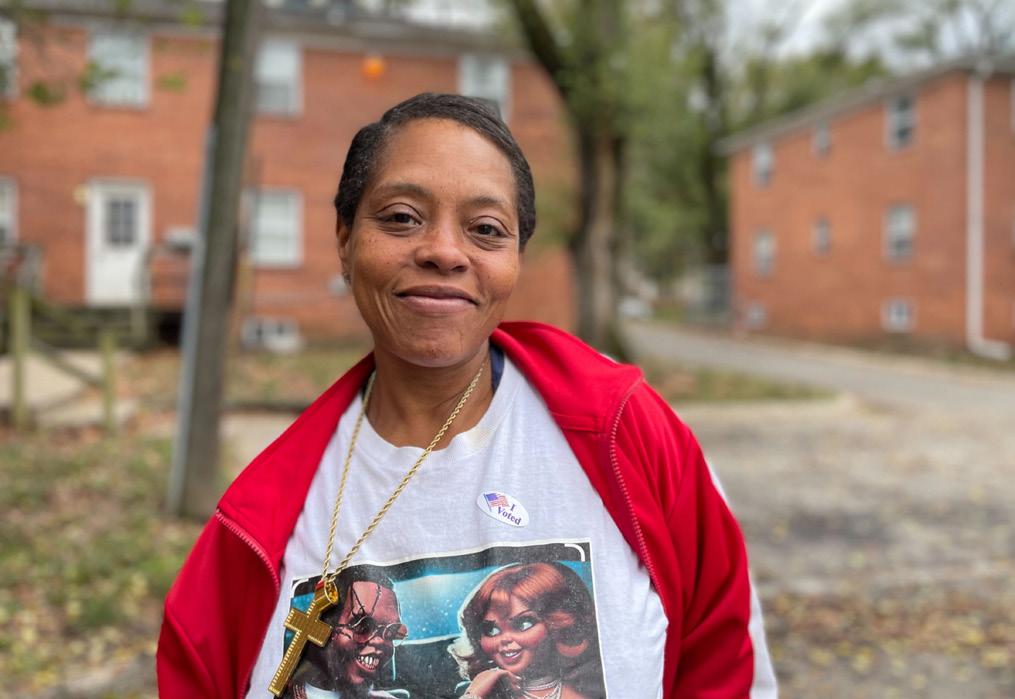
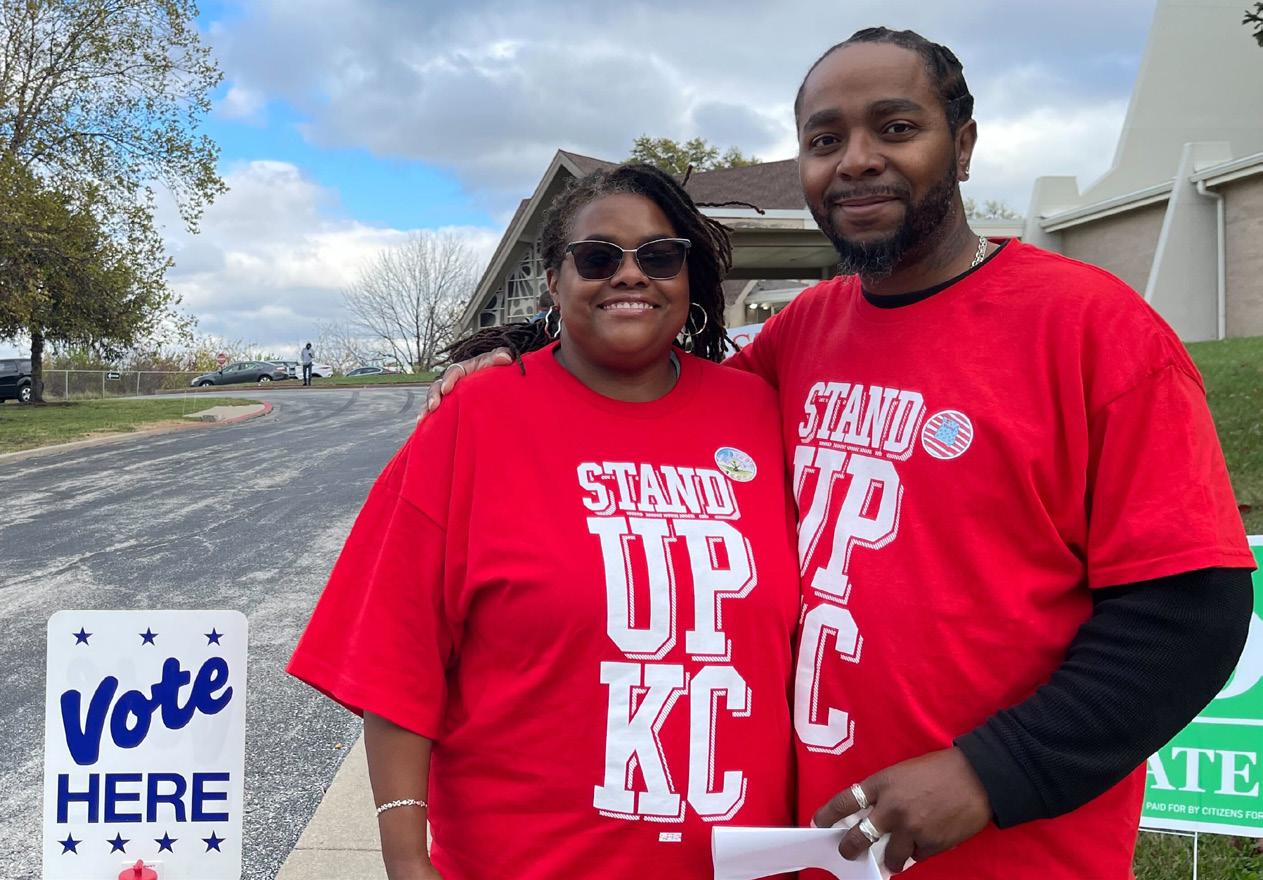
In this historic election year, we made significant investments in civic engagement. Partnering with organizations and movements across Missouri and Kansas, we worked to expand access, amplify voices, and help make the democratic process more inclusive, more equitable, and truly reflective of all communities. These efforts contributed to notable increases in voter turnout in both states.
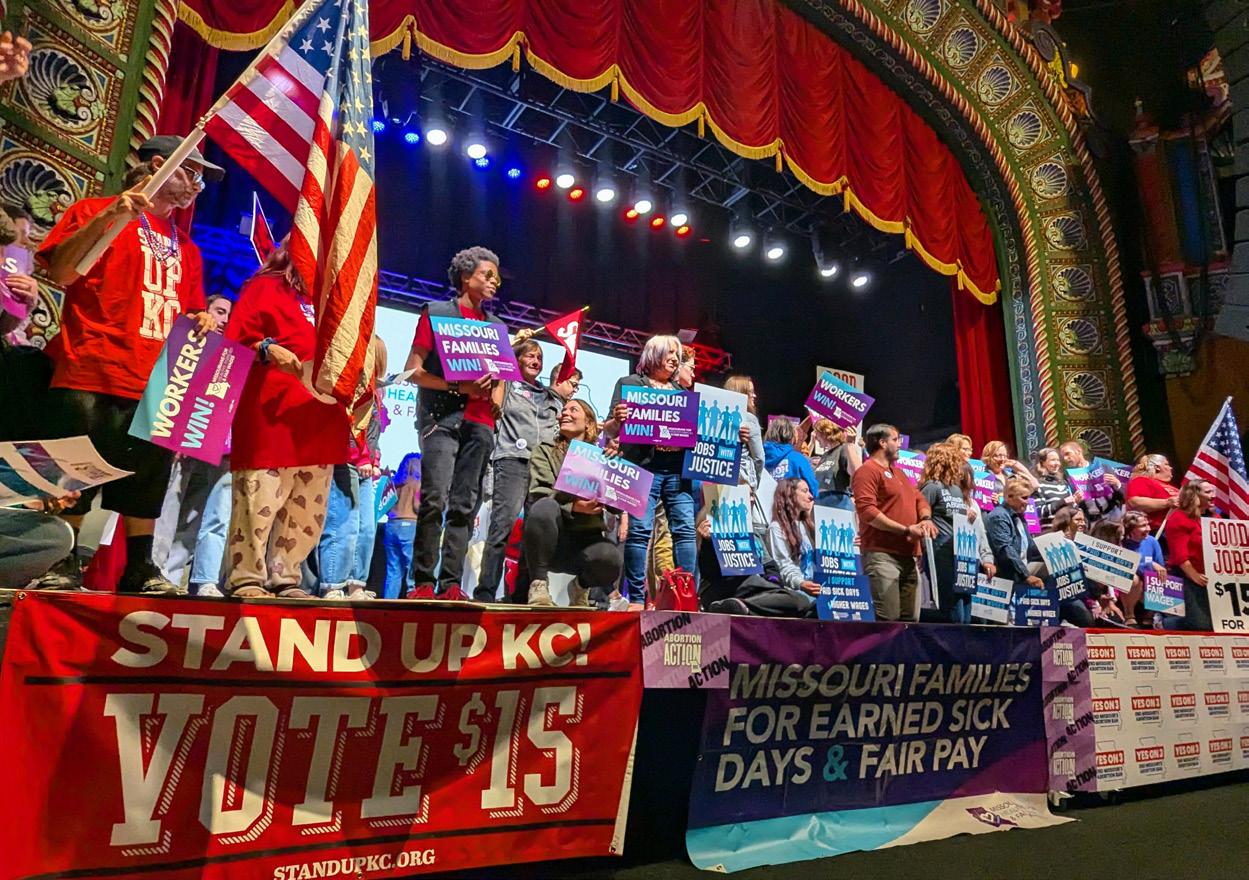
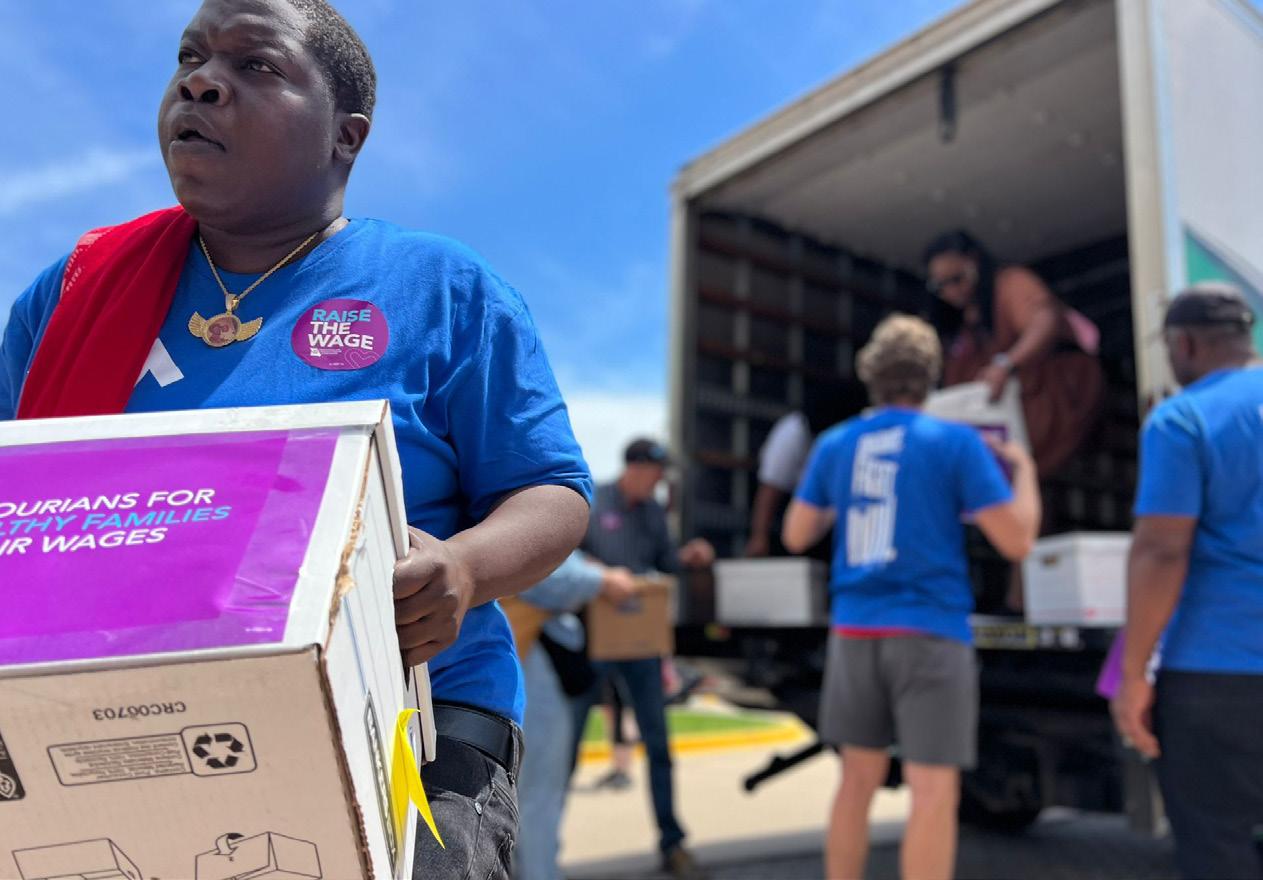
In Missouri, Health Forward supported two ballot initiatives that were ultimately passed by voters: Amendment 3, which ended the state’s total abortion ban, and Proposition A, which will raise the minimum wage to $15 per hour by January 2026 and provide paid sick days to hard working Missourians.
If you, like us, are closely watching what happens in Jefferson City, you’ll already know that these efforts will require continued advocacy to ensure we fully achieve the progress we seek.
In 2024, we celebrated another significant milestone — reaching $400 million in funding invested across our communities.
This achievement stands as a powerful testament to the impact of collaboration and our shared commitment to health equity. Building on this momentum, our work in 2024 advanced several key purpose areas.
• We advanced our affordable homeownership strategy through a $1.6 million invitation-based funding opportunity, supporting six organizations to provide downpayment assistance, minor home repair support, and credit and homeownership counseling. This work was bolstered by our Purpose Driven Investing efforts, which uses Health Forward’s capital to increase affordable housing stock and other health and wealth building opportunities.
• We continued to support organizations dedicated to ensuring equitable access to high-quality medical, oral, and behavioral health care, as well as social services that center and honor the full spectrum of people’s personal experiences — an effort bolstered by our multiyear investment of $10.65 million announced in 2023.
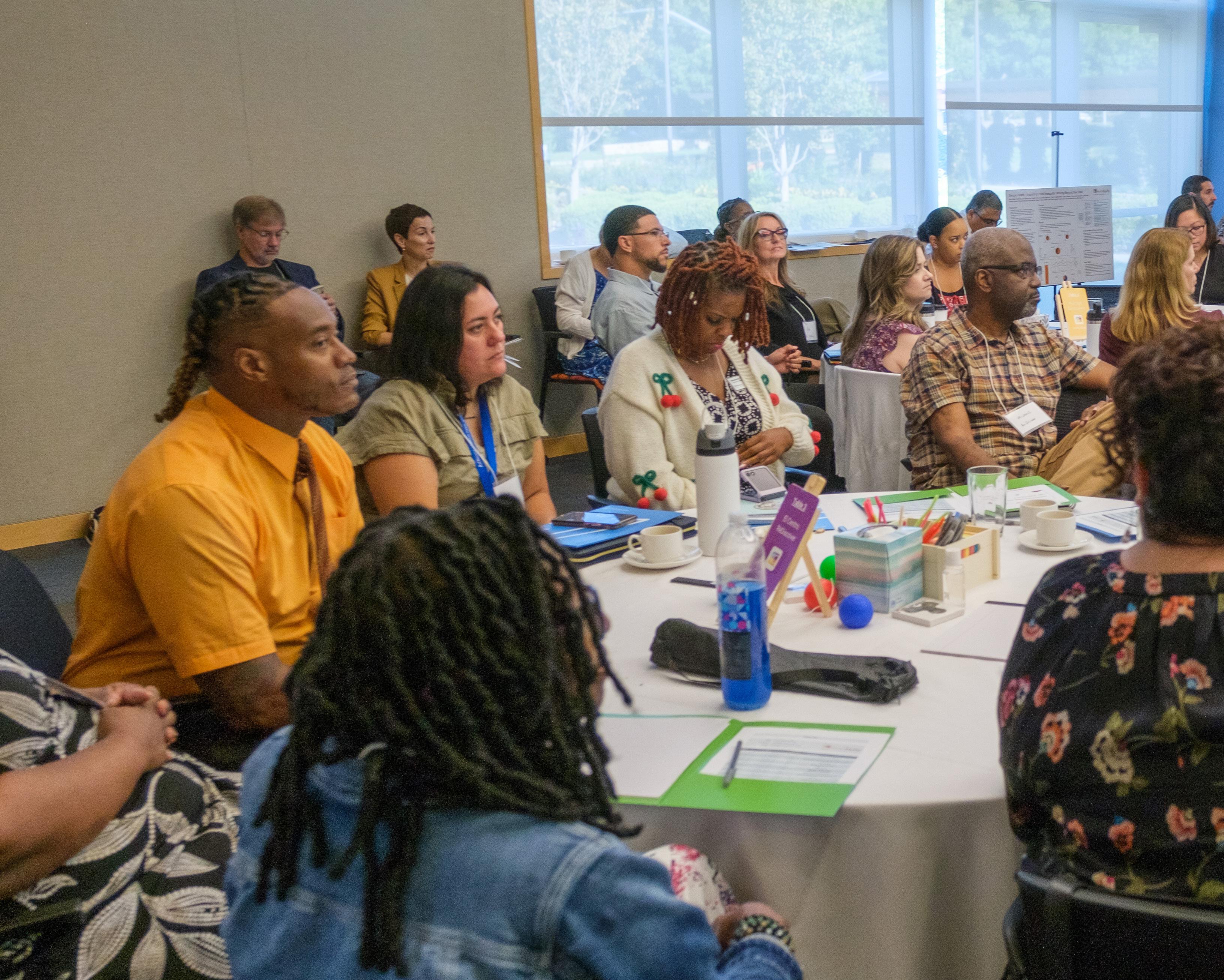
• We held a Food as Medicine Summit to advance a movement focused on demonstrating the clinical efficacy of and reimbursement for food as medicine in our region.
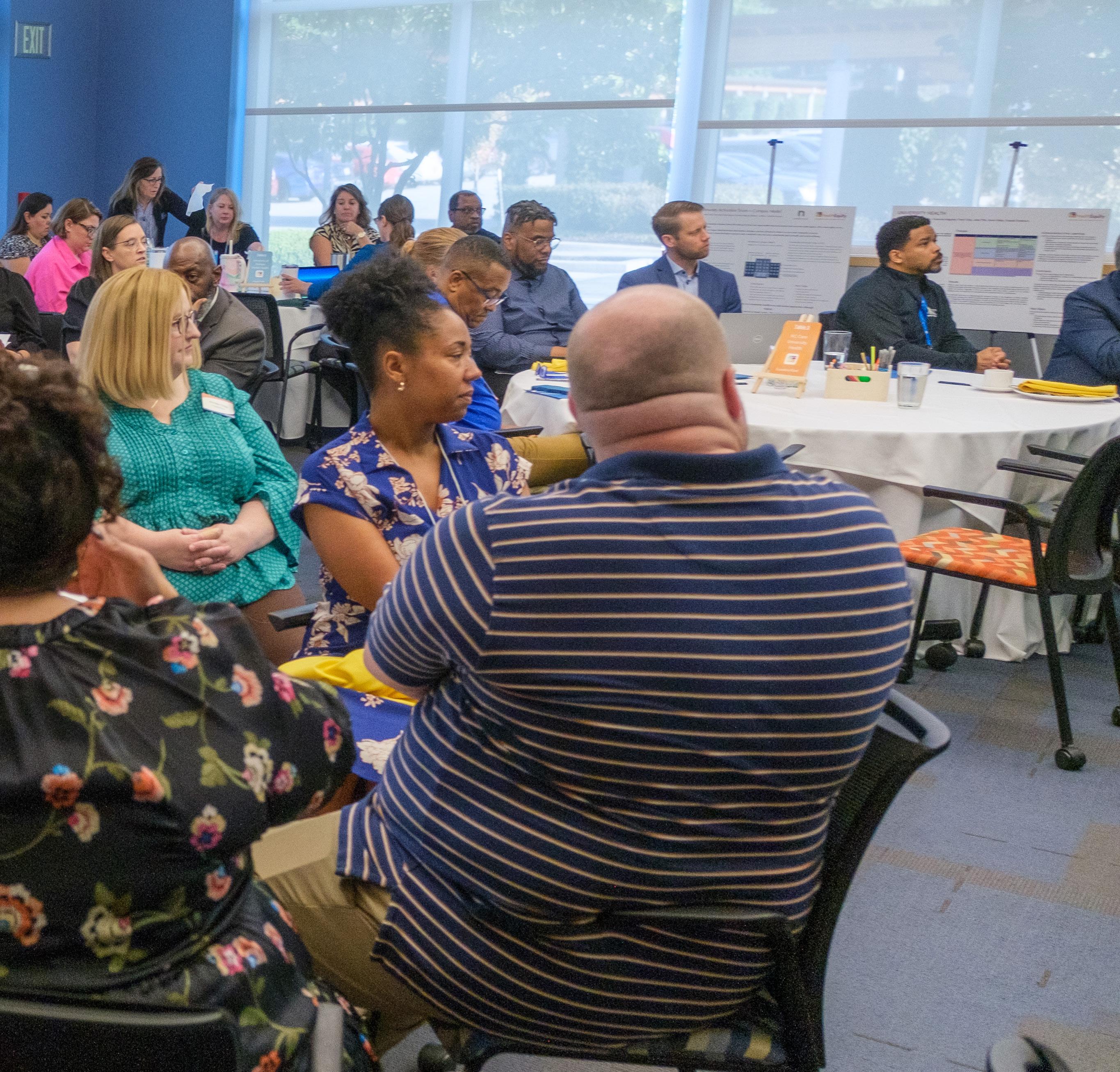
• The KC Health Equity Learning and Action Network (LAN) continued to offer a convening table for the broader health ecosystem to learn and grow in leadership of health and racial equity.
• In partnership with NORC at the University of Chicago, Health Forward continued to convene leaders from our health sciences workforce steering committee and community advisory board. These gatherings finalized a landscape assessment and reinforced collective commitments to diversifying the workforce.
• Additionally, our People purpose area awarded $1.5 million to seven partners including secondary education, higher education, adult certifications, tuition assistance, vocational training, mentorship, and support services.
• In 2024, Health Forward commissioned and released two reports from The Perryman Group. One highlighted the economic boost immigrants bring to Kansas and Missouri, while the other revealed the potential economic harm of antiDEI policies. Together, these findings underscore the importance of inclusive policies for equitable and sustainable growth and were crucial to our policy and narrative change efforts in both states.
Alongside these investments, we continued national field leadership in philanthropy for racial equity in asset management, reaching an estimated $500 million (approximately 53% of assets under management inclusive of commitments) with asset managers that advance our equitable representation aspirations and highperformance net asset return objectives. To deepen our understanding of structural racism and its impacts, Health Forward staff traveled to Montgomery, Alabama — the cradle of the civil rights movement — for a tour of local historical sites, museums, and the National Memorial for Peace and Justice. This powerful experience marked a pivotal moment in our organizational equity journey. It reinforced the urgency of reparative investments and partnerships, especially given philanthropy’s roots in systems built on the labor of enslaved Africans. While words cannot fully capture what we learned, our commitment to equal justice is stronger than ever.
Another key highlight from the year was breaking ground on our new home on Kansas City’s east side. This building is more than office space — it is a tangible symbol of our lasting commitment to racial equity and economic justice.
We take great pride in marking these milestones. Yet, we do some with a renewed dedication to a future defined by fresh challenges and opportunities. We understand that true success is measured not by these milestones alone, but the enduring change we create together.
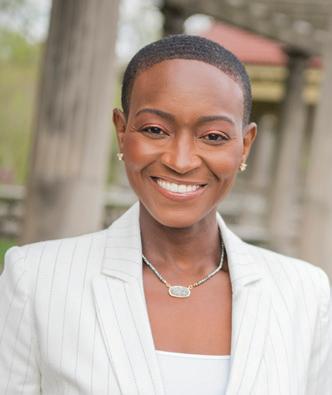
QIANA THOMASON President/CEO, Health Forward Foundation
PURPOSE AREAS
People
Our People purpose area addresses and seeks to remove barriers built into our health care system that prevent people from living their healthiest lives.
Our approach centers equity in all aspects of community health and focuses on strengthening the capacity and effectiveness of partners to provide whole-person, equitycentered care.
PlaceOur Place purpose area focuses on building health and wealth by improving access to safe, healthy and affordable housing and homeownership.
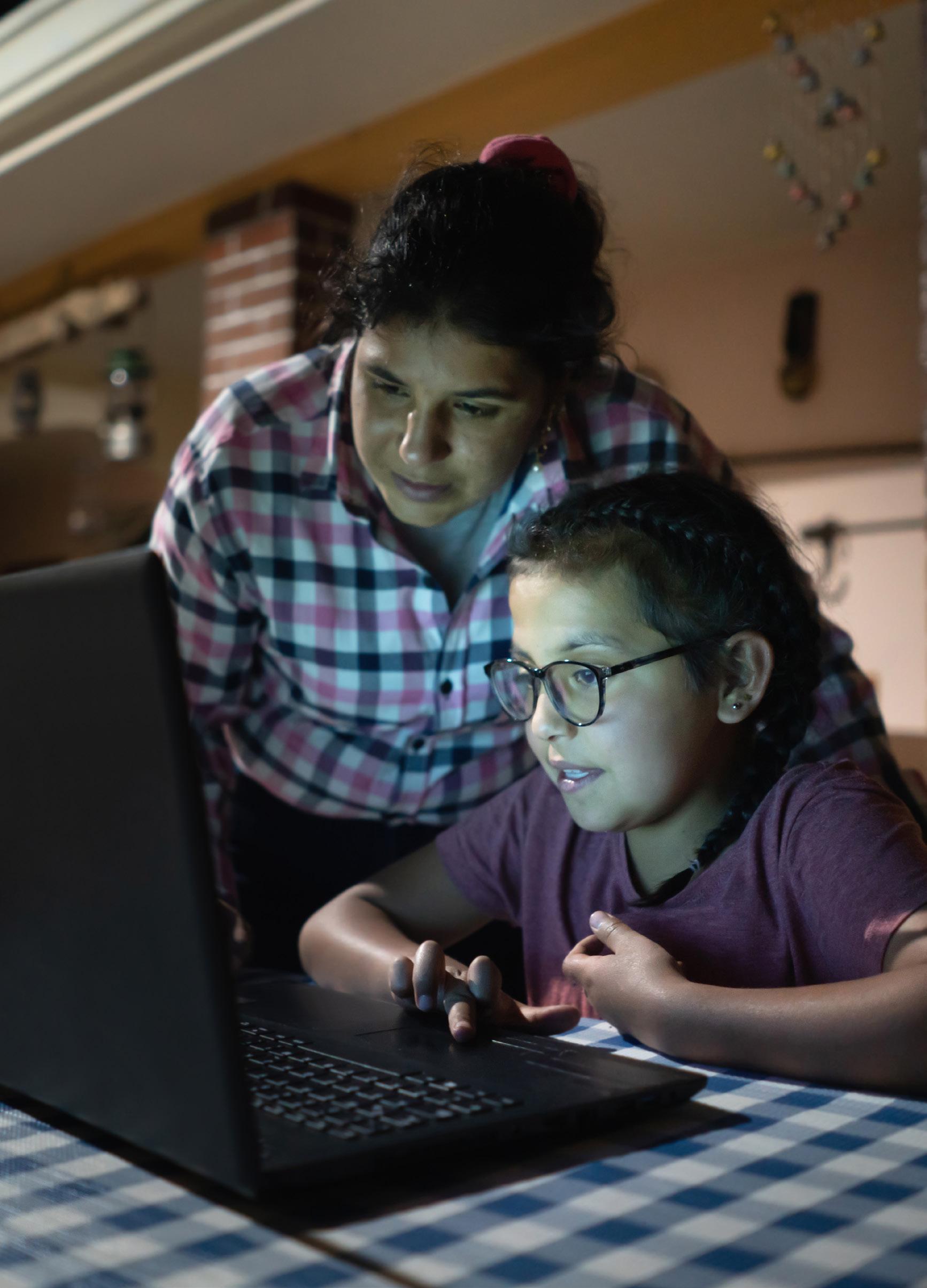
Our approach also includes digital access, working to make sure everyone has affordable digital tools and the knowledge and skills to use them.
PowerOur Power purpose area focuses on redistributing and sharing power with the people we serve. Our approach amplifies communitydriven movements, advances participation in democracy, and strengthens small, community-based organizations and leaders.
Platform
Our Platform purpose area focuses on advancing racial equity and economic inclusion by partnering with governments and funders to center equity and race in all decisions.
We are reshaping the way people understand and talk about racial, economic and health equity, along with investing our resources to align with this purpose.
People
66 Funded Projects
Amounting $17,445,000
Place
22 Funded Projects
Amounting $5,174,000
Power
46 Funded Projects
Amounting $3,002,284
Platform
33 Funded Projects
Amounting $2,581,291
167 Total funded projects, totaling $28,202,575
Health Forward is building and supporting
a high-quality, equitable community health ecosystem
Building policy support for community health workers
Community health workers (CHWs) play a critical role in addressing the social and economic barriers that prevent people from living their fullest and healthiest lives. CHWs are trusted voices within the communities they serve. Grounded in lived experience, they help people navigate complex systems, connect to resources, and advocate for their well-being.
Health Forward believes that CHWs are essential to transforming care. Yet despite a trove of evidence that demonstrates how CHWs improve health outcomes, there are not enough resources to support them. Often, when short-term funding ends, too often their work ends with it.
To change this, Health Forward has focused on policy solutions that create long-term stability. We partnered with the United Methodist Health Ministry Fund to co-author policy legislation in Kansas. Other organizations joined the effort, including the University of Kansas Medical Center, the Mid-America Regional Council, and the Community Health Center of Southeast Kansas.
This led to Medicaid reimbursement for CHW services and higher payment rates to help ensure CHWs are recognized and fairly compensated.
“For the last five years, we have worked with Health Forward to develop a vision that seeks to have the profession recognized,” said David Jordan, president and CEO of the Health Fund. “We also want to ensure that CHWs are fairly compensated and that we are always looking for new ways to bring people together to improve the profession’s sustainability.”
This work has largely focused on two key elements: establishing a process to credential CHWs and advocating for Medicaid reimbursement. In Kansas, Health Forward and the Health Fund convened a work group with the Kansas Department of Health and Environment (KDHE) to explore the history of CHWs, the evidence that demonstrates their impact, and the strengths and opportunities for expanding their presence. In addition, a Health Forward investment resulted in an updated intensive core training program for CHWs.
Both foundations advocated with KDHE to allow health systems to bill Medicaid for CHW services. In 2022, after numerous advocacy days and countless meetings with policymakers, the department recognized CHWs as a profession and established a Medicaid reimbursement for CHW services in 2023. It later increased the payment rate and allowed Medicaid reimbursement for CHWs employed by Federally Qualified Health Centers, Indian Health Centers, and Rural Health Centers. “It’s bumpy at times and it takes more time as you’d want, but we’ve had a lot of success,” Jordan said.
Now, the work group has turned its attention to educating providers about the new opportunity available to them. Ton Miras Neira, CHW project manager at the University of Kansas Medical Center, said that some providers may not even be aware that they can now bill Medicaid for CHW services. “So we begin to have conversations with them about billing codes, what is billable, what is non-billable, how the process works,” Miras Neira said. “Sometimes KDHE travels to different clinics to help them apply.”
It’s bumpy at times and it takes more time as you’d want, but we’ve had a lot of success...”
David Jordan, president and CEO of United Methodist Health Ministry Fund
Last year, Miras Neira secured funding from Health Forward, the Health Fund, KU, KDHE, and United Health to produce a documentary that showcases the work CHWs do and the impact they have on their communities. The documentary has been screened in the Kansas City region, across Kansas, and the United States. It has even had a few international screenings.
One critical fact stressed in the documentary is the return on investment that CHWs provide. For every dollar invested, communities see $2.47 in improved health outcomes.1
Erika Saleski, a health policy consultant with ES Advisors who has assisted with advocacy efforts, said that Health Forward played a critical role in making all this happen. “Health Forward really helped advance all of these policies,” Saleski said. “For 10 years, they supported our efforts to legitimize the role and to secure Medicaid reimbursement. It’s led us to where we are.”
Every dollar invested in CHWs results in healthier communities and stronger systems. This is why Health Forward remains committed to building policies and partnerships that support and sustain their work.
We are changing the system so CHWs can keep changing lives.
1
February 2020. Evidence-Based Community Health Worker Program Addresses Unmet Social Needs And Generates Positive Return On Investment. https://www.healthaffairs.org/ doi/10.1377/hlthaff.2019.00981
Shreya Kangovi, Nandita Mitra, David Grande, Judith A. Long, and David A. Asch.
Driving equitycentered change in Kansas City’s health ecosystem
The Kansas City Health Equity Learning and Action Network (LAN) was formed under the leadership of Health Forward Foundation to advance equity-centered innovation and infrastructure across the community health ecosystem. This aligns with Health Forward’s purpose to empower leaders in the Kansas City region to change systems by practicing health equity at community and organizational levels.
The LAN partnered with the KC Health Collaborative and the Institute for Healthcare Improvement (IHI) to create a high-quality, data-driven curriculum that promoted equity and anti-racist policies across the regional health ecosystem. As a result, LAN members have developed practices, policies, and programs to produce measurable improvements steeped in equitycentered health outcomes for all health care consumers.
“Our principal charge is to connect people to their positional power and authority to address health equity,” said Qiana Thomason, President and CEO of Health Forward Foundation.
More than 50 member organizations participate in the LAN including federally qualified health centers (FQHCs), community-based health clinics, health systems, physicians, payers, employers, community mental health centers, community-based organizations, and public health departments.
“The LAN is a microcosm of the entire health care ecosystem,” said Hayat Abdullahi, Health Forward’s Director of Community Impact. “This enables us to design bold, anti-racist practices, implement these practices, and then measure what happens in real time. The LAN is not a program or initiative. It’s a movement.”
The original LAN design included a CEO roundtable, a learning cohort, and an action cohort that provided a forum to create practices that measure improvements steeped in equity centered, culturally responsive health outcomes for all health care consumers.
“They gave us cultural insight and proximity to issues that we hadn’t encountered before,” said Jessi Johnson, Children’s Mercy Research Institute Director of Equity and Diversity. “We spent an entire session on language, exploring its nuances and how it reflects sensitivity and respect for the communities we serve. That experience shifted how we think about our work.”
Johnson shared that the LAN continues to meet to discuss issues within the region’s health systems and to collaborate on addressing disparities much larger than any one organization can solve. “The LAN gave us the opportunity to think outside the box and work collectively on these challenges,” she said. An impact report was compiled in 2024 to highlight accomplishments. After convening for more than two years, a few key successes include:
• CEOs, many from leading health systems, committed to make health equity a priority
• LAN members demonstrated continued strength when it comes to building equity capacity, building quality improvement capability, and building capability to tackle adaptive change
• LAN members experienced notable changes in systems, policies, practices, and programs to advance health equity
“This change is sustainable and adaptive and not just technical. And this was done in a community that is hungry to be together and to continue sharing, growing, and fostering a healthy, thriving community in Kansas City,” said Cecilia Saffold, CEO of Health TeamWorks and LAN facilitator.
The LAN is preparing for another iteration of health equity work, one that focuses on the region’s maternal health crisis with the aim to improve outcomes for Black women, birthing people, and their infants.
Thomason said, “we will center [belief] in that process — believing the voices of Black people and Black women and believing they are most knowledgeable about their own bodies and experiences. We’ll use meaningful disaggregation of race, ethnicity, and language data to uncover differential outcomes as they relate to care, treatment, and access.”
Thomason added that the LAN will explore how to bridge community with clinical systems, with a particular focus on addressing high blood pressure –— a condition that disproportionately affects Black women and Black birthing people.
“We’ll ensure that blood pressure, as a specific metric, is an area of intervention in this birth equity work,” Thomason said.
The LAN gave us the opportunity to think outside the box and work collectively on these challenges...”
Jessi Johnson, Children’s Mercy Research Institute Director of Equity and Diversity
Food as Medicine: How University Health’s FoodFARMacy tackles chronic disease
[Our goal] was to inspire lasting lifestyle changes...
Janet Rhone, Community Health Manager at University Health
To foster healthy people, Health Forward supports innovative ideas that make our community’s health ecosystem more inclusive.
University Health’s FoodFARMacy program is a great example of this, one that demonstrates how our funding partners are addressing food insecurity in both urban and rural communities.
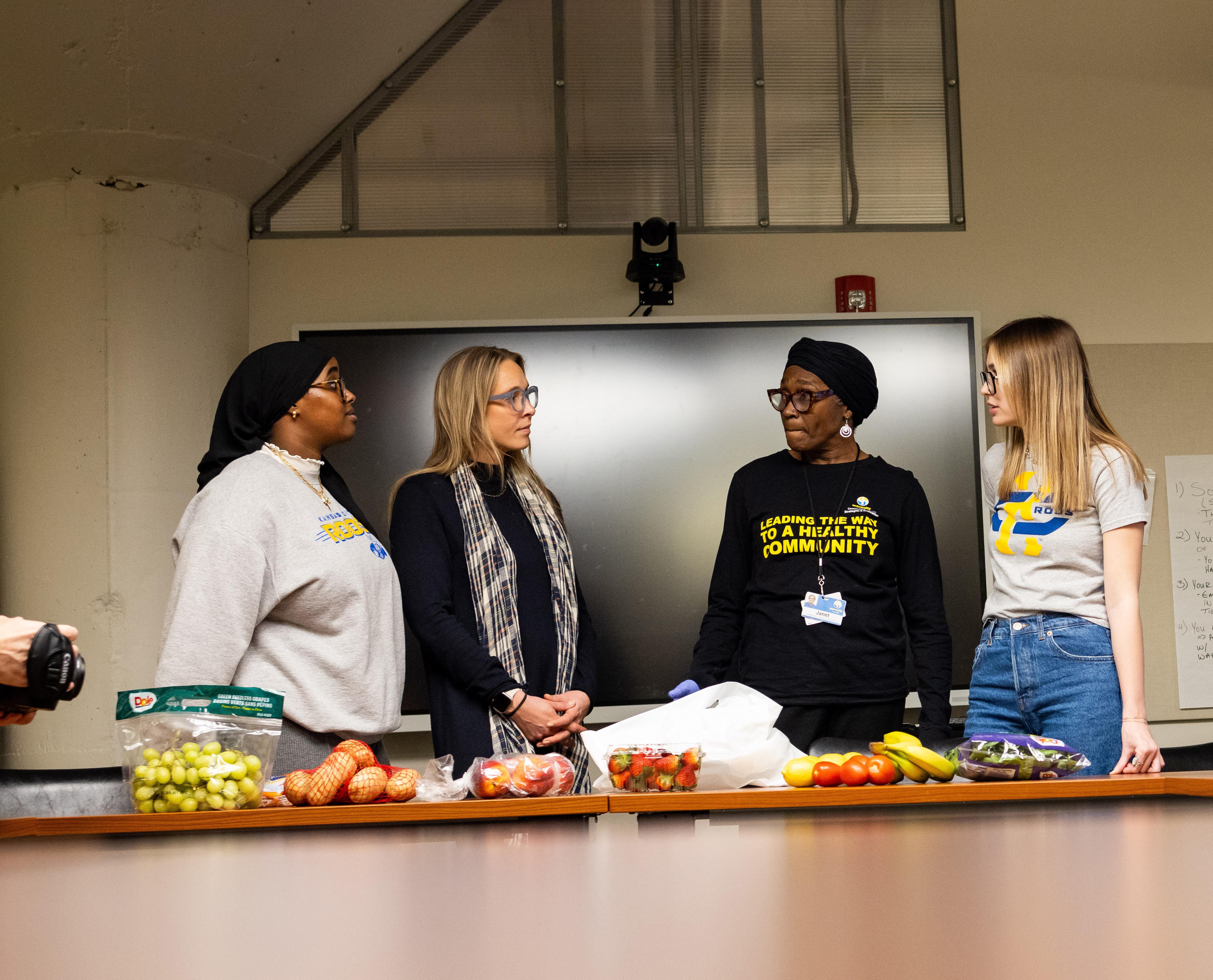
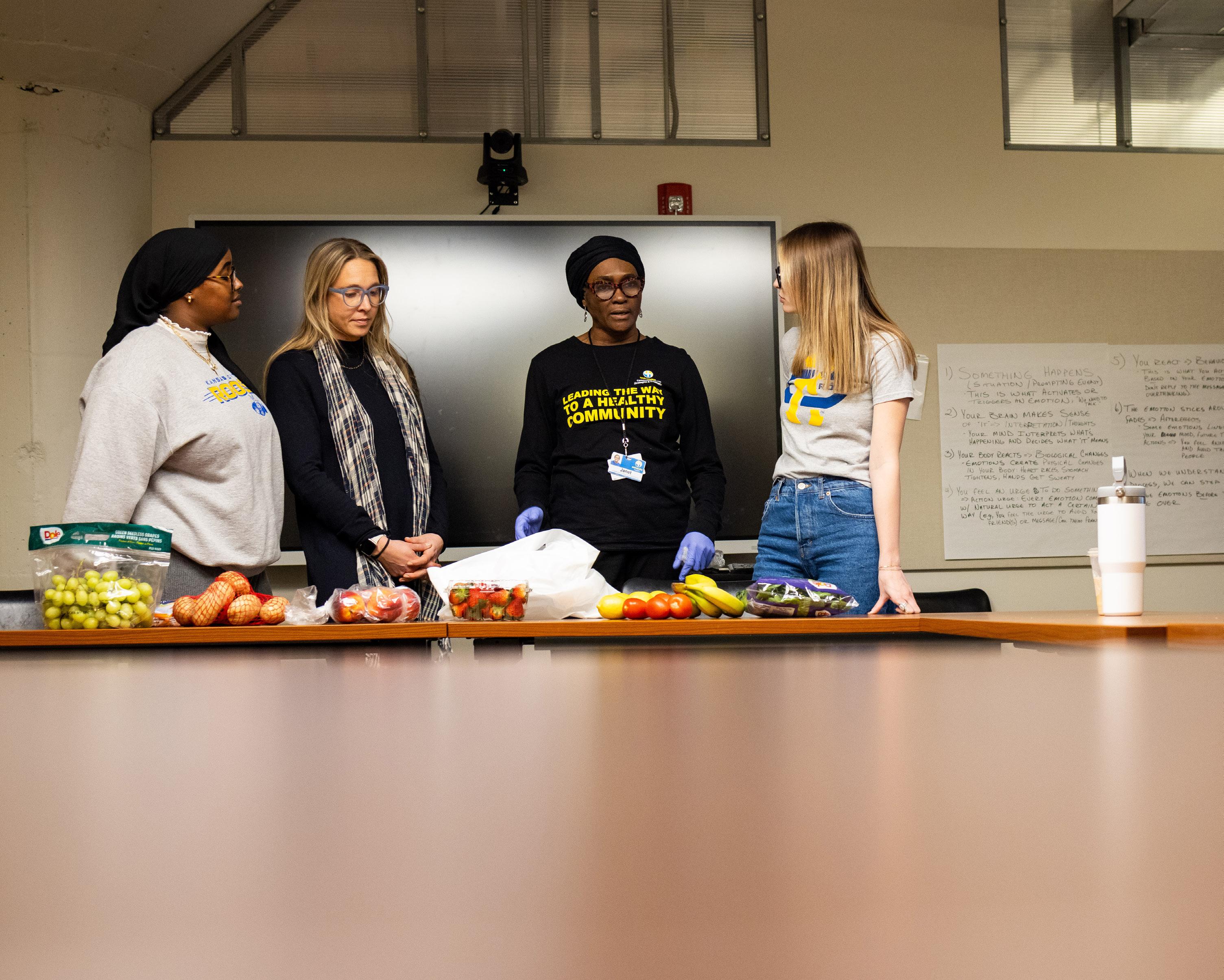
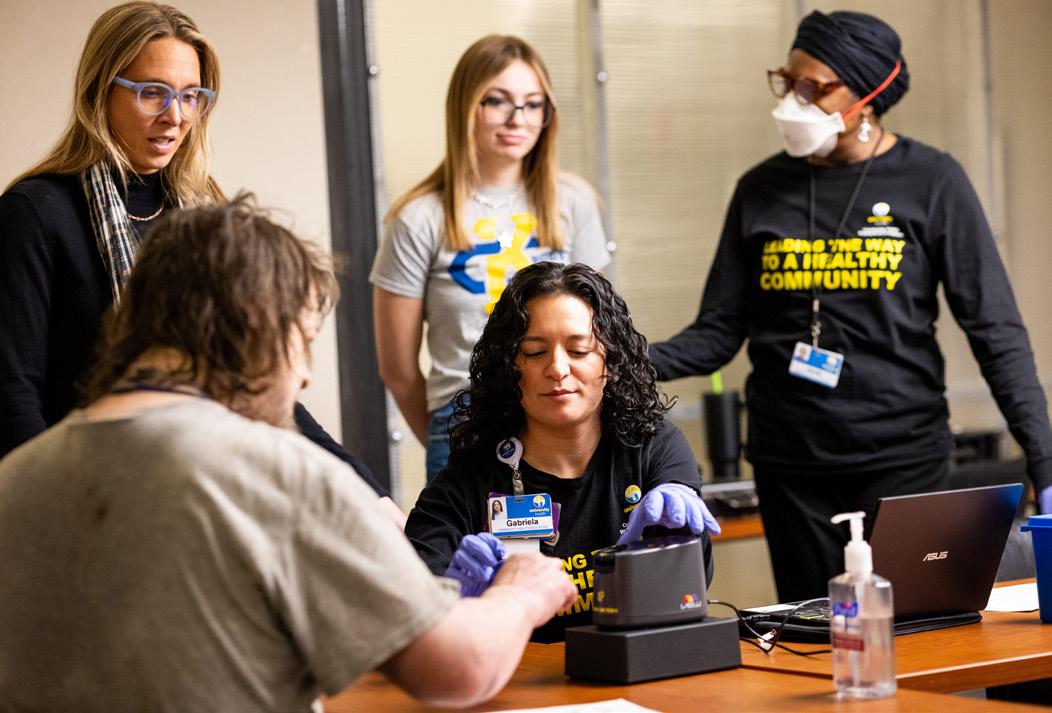
FoodFARMacy received $200,000 last year from Health Forward to implement a Food as Medicine model to help adults who don’t always have the food they need to manage chronic conditions such as diabetes, hypertension, or heart disease.
“Our goal wasn’t just to address food insecurity,” said Janet Rhone, Community Health Manager at University Health. ”It was to inspire lasting lifestyle changes, especially for individuals with chronic conditions and those living in underresourced communities.”
To reach those people, Rhone’s team worked with six community-based organizations providing health care and social services. These organizations identified clients with food access challenges who have one
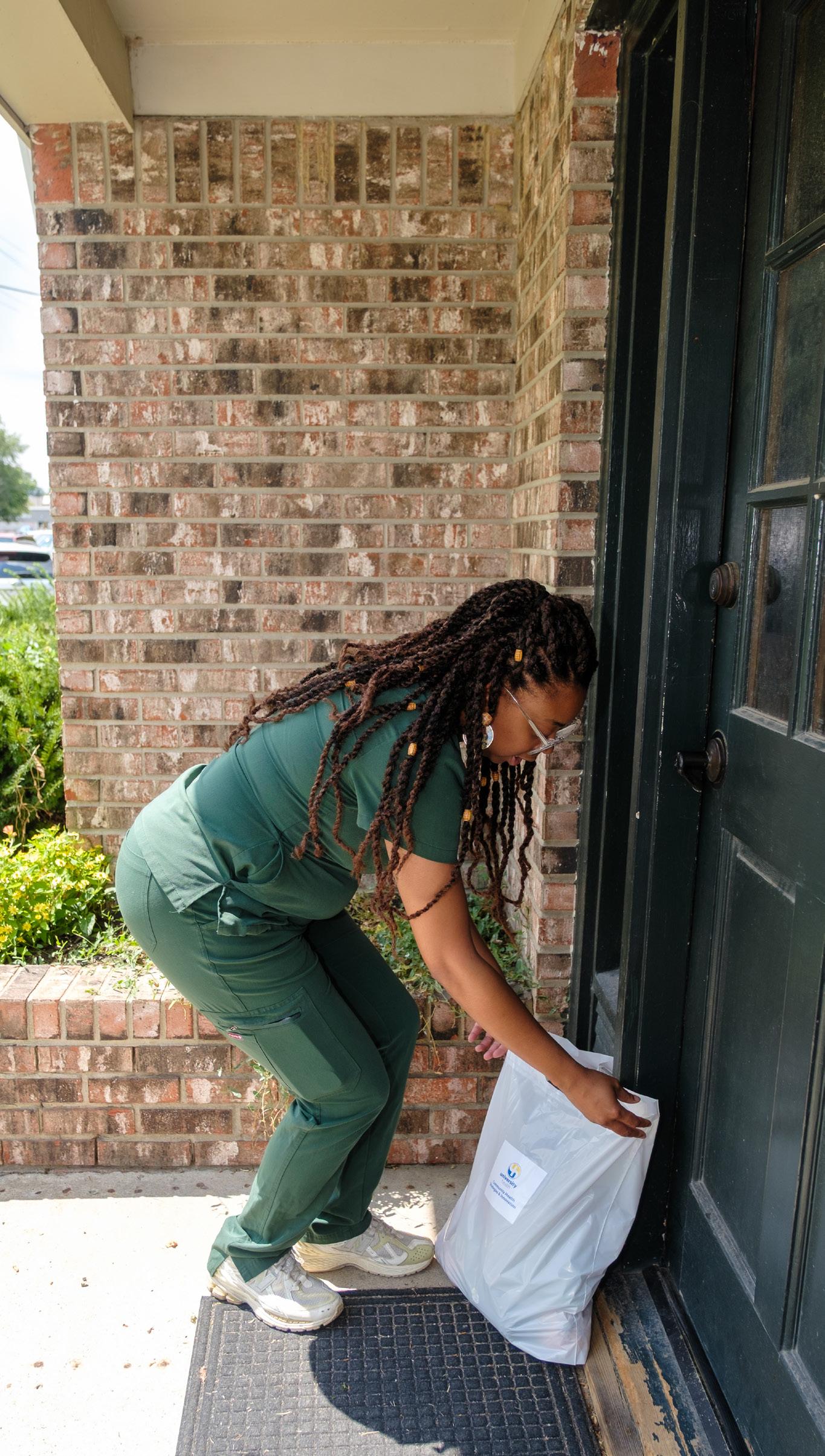
of 10 qualifying chronic conditions, and who have the ability and physical space to cook their own food. Every two weeks, participants meet with a trained FoodFARMacy coach for nutrition education, goal setting, and a bag of fresh produce with enough fresh fruit and vegetables to feed a family of five.
Each organization also identified employees who could serve as a coach to educate the clients about healthy eating and support them with lifestyle changes.
These coaches received training from both the University Health Community Health team and researchers at the School of Nursing and Health Studies at the University of Missouri-Kansas City. UMKC is a key partner in research and assessment. This includes establishing measurements to determine whether the clients have improved their diets and if those improvements are leading to better health outcomes. Weight, blood pressure, a cholesterol panel, and other biometrics are included in the measurements.
“A lot of our coaches are case managers or community health workers,” said Kelsey Gardiner, Assistant Professor in the Bachelor’s of Health Studies program at the School of Nursing and Health Studies. “Even though some interact with their clients in clinical settings, not all do. They’re often providing social services and case management and view their work through the social drivers of health.”
So far, the program has recruited 113 participants. Clients at four of the sites have completed the 12-month program. Preliminary measurements show that, across the board, the participants have consistently changed their diets and experienced improved food and nutrition security. And while it’s difficult at this juncture to measure lasting health improvements, Gardiner has seen overall fewer reports of emergency room visits. Some participants report getting off their blood pressure medications and others that their blood glucose levels have improved.
“Some of the participants have a complex medical story,” Gardiner said.“They might have up to six of the 10 conditions we screen for. It isn’t uncommon for one person to have hypertension, diabetes, and a mental illness.”
Both Gardiner and Rhone stressed that, over time, the data they collect is a critical part of advocating for policies that could make the Food as Medicine model a reimbursable intervention at the state level. “If the data demonstrates positive clinical outcomes and cost savings we will have a very good case to make to policymakers that Food as Medicine is an important tool for addressing a number of chronic health conditions,” Rhone said.
While most of its clients live in Kansas City, Missouri, the FoodFARMacy is inspiring at least one other organization to bring its concept to rural Missouri. Altruism Inc., a nonprofit organization that aims to reduce preventable deaths through targeted programs, advocacy, outreach, and education, plans to open a market later this year that will sell fresh produce, meat, and dried goods in Lafayette County. The market will accept food assistance benefits.
“There’s a huge need in Lafayette County for providing rural residents who are paid low wages access to fresh and healthy food,” said Tonia Wright, Altruism Inc.’s founder and CEO, who also owns a for-profit business, Grace Advertising. “Our hope is to partner with providers to provide healthy foods that can help participants battle co-morbidities, heart disease, diabetes, and gestational diabetes.”
Wright said that Health Forward played a critical role in getting her concept off the ground:
“Although they’re not underwriting this effort, we do thank Health Forward for connecting us to the FoodFARMacy. It’s because of them that we were able to forge this partnership.”
Health Forward is building and supporting
strong community organizations and voices
Informed voices, healthier communities: The impact of KC’s voter guide
Health Forward has long recognized the impact public policy and systems have on creating healthy people and places. Making it easier and more meaningful for people to participate in democracy gives them a greater say in how those systems operate and power to create healthier, economically vibrant neighborhoods and communities across our region.
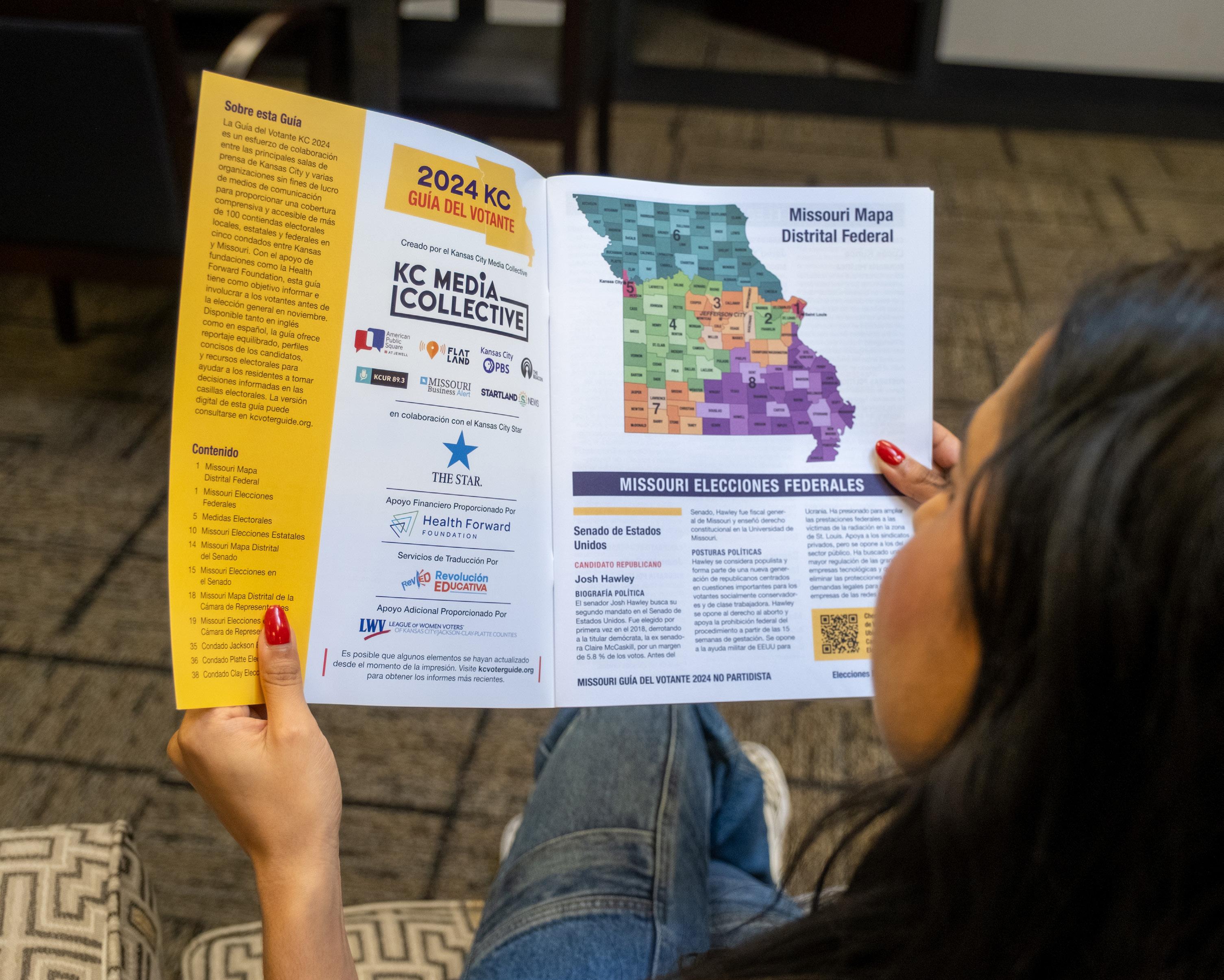
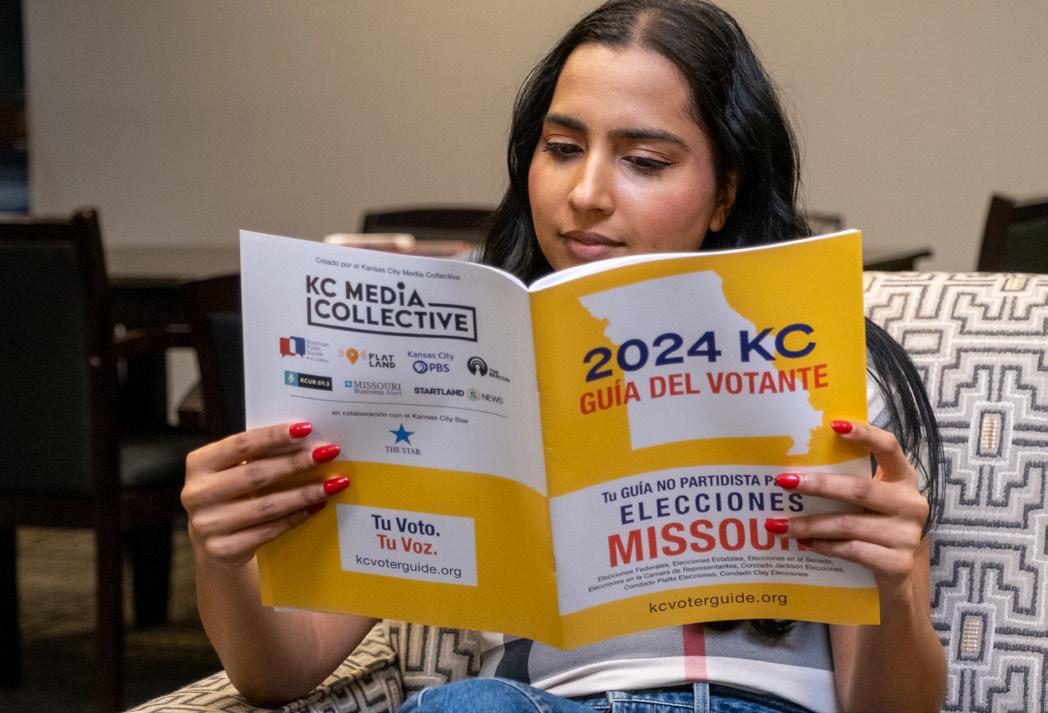
This is why Health Forward supports efforts to eliminate barriers to voting, especially among people who have been intentionally excluded and forced to the margins of our society. And it is why we supported local nonprofit news organizations to create a comprehensive voter guide for the 2024 elections.
“It was a really important election year,” said Shiri Asangwe, project manager for the Kansas City Media Collective. “We wanted to make sure the voters in the metro area could go to the polls with confidence to make the best decision that they could.”
The Kansas City Media Collective comprises six nonprofit news organizations: American Public Square, Kansas City PBS/Flatland, KCUR, Missouri Business Alert, Startland News, and The Beacon. The collective had the idea for a voter guide early last year and quickly realized it would need money to print, promote, and distribute the guide. For the project, the collective also invited The Kansas City Star, Revolución Educativa, and the Latino Education Collaborative as content partners to ensure diverse perspectives and interests were included. All content would be made freely available in both print and digital formats and in Spanish and English.
With KCUR as the fiscal agent, the collective applied for and received a $100,000 gift from Health Forward to underwrite these expenses. But Health Forward’s support went well beyond the check.
“Cash is great,” said Karen Campbell, Director of Institutional Giving and Communications at KCUR. “But Health Forward also included information about the voter guide on their website and in their newsletter. So it was getting out to their extensive network of funded partners, civic leaders, and the community at large.”
Campbell noted that KCUR and other members of the collective have audiences that are already civically engaged. “But we wanted to reach people who maybe aren’t users of KCUR or The Beacon or The Star. We wanted to tap into communities that these local media organizations don’t always reach.
Health Forward opened doors for us to communities that ordinarily may not have access to voter guides like this.”
The voter guide included about 200 candidate profiles and numerous ballot initiatives in five counties: Wyandotte and Johnson in Kansas, and Clay, Platte, and Jackson in Missouri. The collective printed 38,000 copies of the guide, 5,000 in Spanish. They distributed them to 200 organizations, including libraries, community centers, churches, and others, like the League of Women Voters. All but 100 of those copies made it into the hands of voters.
We wanted to make sure the voters in the metro area could go to the polls with confidence to make the best decision that they could.”
Shiri Asangwe, project manager for the Kansas City Media Collective
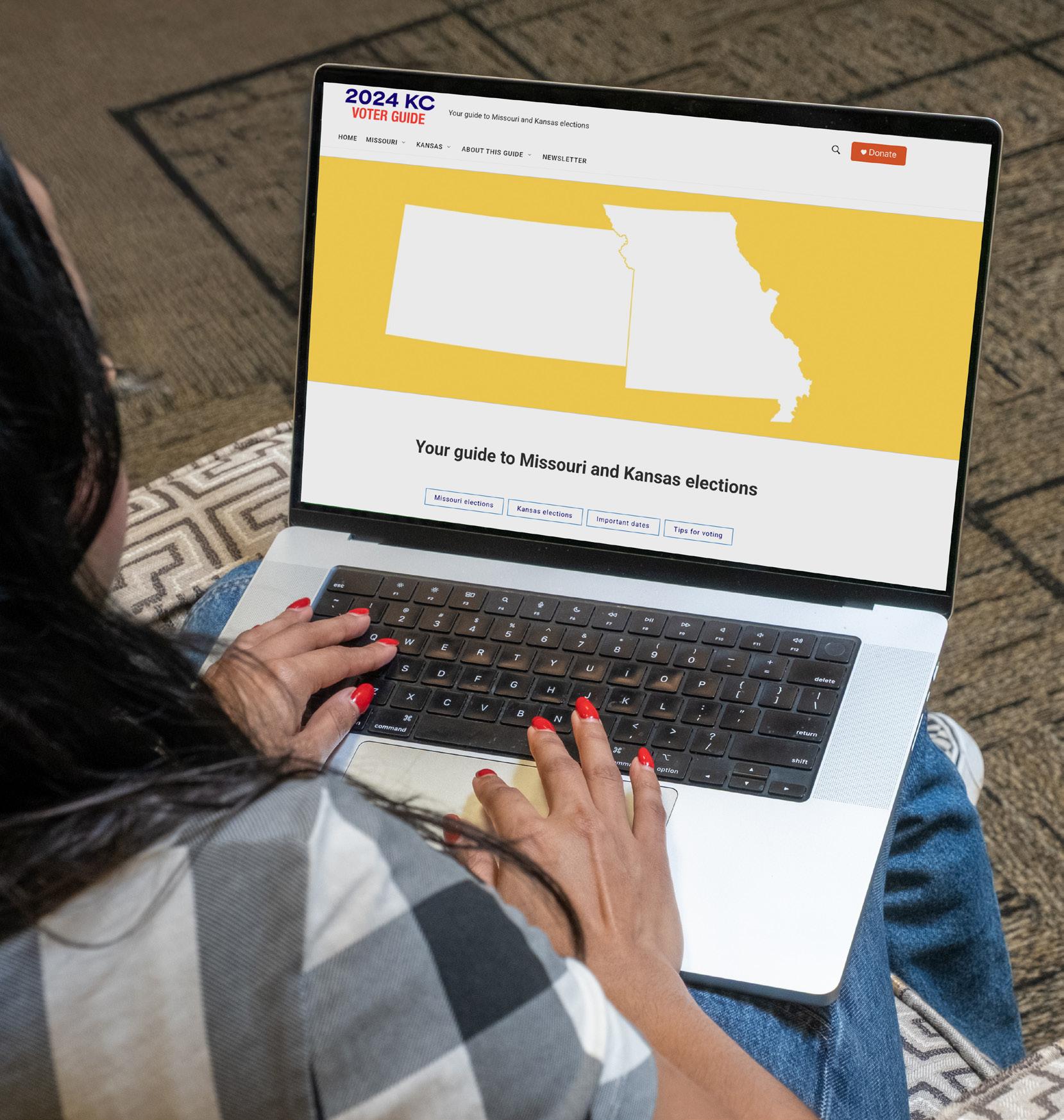
KCUR staff created a website that received 300,000 unique views. The website offered both English and Spanish versions of the guide. “At one point during election week our average time on the pages was 4-5 minutes,” Asangwe said. “Down ballot races got a lot of views as well. It was really nice to know that voters were getting information on issues that were on a much more local level and that they could be confident when going to the polls.”
The collective would like to build on the voter guide’s success and further advance its efforts to break systemic barriers to news access, including language barriers, disabilities, and educational inequity.
“These were goals that Health Forward shared with the media collective,” Campbell said. “They wanted their partners and the communities they serve to be informed at the polls. They are a really thoughtful and responsive funder. This voter guide couldn’t have happened without them.”
One of Health Forward’s strategies is to support strong community organizations and voices. To achieve this we need nonprofit and community organizations that address gaps in services,and the leaders of these organizations need support and resources to be healthy and to thrive in their positions.
To that end, we launched a pilot project last year that aims to keep these executives and the teams they lead as healthy as possible. It stands to reason that a healthy community needs healthy leaders to serve it.
Called BeWell, the project aimed to help Black,Latino/a, and Indigenous nonprofit executives renew their resilience in the face of the stress their jobs, and their desire to succeed at serving the community, place on them.
“I’m always in a go-go mode,” said Karla Juarez, executive director of Advocates for Immigrants Rights and Reconciliation, one of eleven organizations selected to participate in the project. “I feel as if I can never catch a break. This is especially true with small nonprofits that have limited capacity and even more true for people of color like me, who have to work hard to prove something since we were young. This makes for a great work ethic, but our self-care often suffers.”
Juarez, along with the other participants, met monthly for three months as a group with SoulMine LLC, a Kansas City business that promotes wellness through a trauma-informed framework.
They also met individually with a SoulMine coach for up to six sessions. Both group and individual sessions focused on identifying strategies to reduce stress and promote wellness among the executives as well as their employees.
The sessions, Juarez said, helped her identify ways to find more work-life balance and to accept that neither she nor her organization can tackle all the needs their community faces.
“That’s a challenge for us as a team,” she said. “We do immigrant rights work, which in this current environment is exceptionally important, so we feel as if we need to get stuff done. But we can’t save the whole world overnight. We’re now much more likely to say no to those things that don’t fit with our priorities.”
We’re now much more likely to say no to those things that don’t fit with our priorities.”
Karla Juarez, executive director of Advocates for Immigrants Rights and Reconciliation
As a result of the project, Juarez now takes regular walks during work hours and encourages her team to do so, too. She tries to meditate, or spend at least 15 minutes every day in silence. She organized two 3-hour activities for her team, including contractors: one to learn more about the science behind the need for self-care, the other a team-building session that focused on meditation techniques.
“I really applaud Health Forward for recognizing this need,” Juarez said. “They’ve always been great supporters beyond the money. The cohort they put together was amazing. But more importantly, by investing in our health, they’re investing in the health of the communities we serve.”
Building civic strength with Missouri Workers Center
Powerful communities are healthy communities. A number of recent studies have underscored this fact, demonstrating that civically engaged communities experience improved health outcomes.
This is why Health Forward supports organizations that aim to actualize historically disenfranchised communities’ power. Missouri Workers Center is among the many nonprofit organizations to receive our funding for their efforts to empower the people they serve — in this case, workers who aren’t paid very much.
Last year, we invested $100,000 in a voter registration drive that Missouri Workers Center organized in advance of the 2024 elections. The project, part of the Missouri Inclusive Democracy Fund, resulted in 2,500 newlyregistered voters.
“Missouri makes it very difficult to register voters,” said co-founder and executive director, Jeremy Al-Haj. “That means you have to spend a lot of time training people. But the effort is critical, because there’s such a huge gap between the voting age population and the number of people actually registered to vote, especially people of color. Closing that gap is how we create a more democratic society.”
Missouri Workers Center was founded in 2021 to build upon the efforts Stand Up KC had undertaken to advocate for low-paid workers in Kansas City. Its mission is to “advance the rights, dignity, and power of workers across Missouri through grassroots organizing, leadership development, and strategic advocacy.”
Last year, the organization helped lead the successful campaign for Proposition A, which raised the state’s minimum wage to $15 per hour and to guarantee up to seven days of paid sick leave. Earlier this year, with support from Health Forward, Missouri Workers Center fought the Legislature’s proposed repeal to portions of Proposition A. Although the repeal passed, Missouri Workers Center demonstrated its ability to quickly mobilize a large number of advocates to fight the proposal.
In its brief history, Missouri Workers Center has partnered with tenants rights groups in Kansas City to win greater protections for people facing eviction; fought for legislation to give local jurisdictions greater control over workplace health and safety standards; and brought together community and labor organizations in Kansas City to demand living-wage union jobs and affordable housing in the vicinity of the proposed downtown Royals stadium.
“We know that when workers have a voice on their job they have the power to advocate for a healthier and safer workplace,” Al-Haj said. “And it certainly helps to have partners like Health Forward who truly understand this.”
That understanding, he said, comes from Health Forward’s willingness to take the time to build a genuine relationship with its funded partners.
“They’re more tuned in to what’s happening, and why we’re doing the things we’re doing,” Al-Haj said. “They see what we’re doing on the ground. A lot of funders don’t bring an organizing perspective to the table, and don’t understand what that means. Health Forward does, and it’s based on actual experience.”
We know that when workers have a voice on their job they have the power to advocate for a healthier and safer workplace...”
Jeremy Al-Haj, co-founder and executive director, Missouri Workers Center
From grants to gifts: Centering equity and relationships in funding
Three years ago, Health Forward Foundation took the bold step of articulating a purpose that calls on us to build inclusive, powerful, and healthy communities characterized by racial equity and economically just systems.
We realized at the time that this purpose would require us to practice new values. We would have to share power, be inclusive, pursue justice, and avoid practices that perpetuate bias. Most importantly, we would have to align our funding processes with these values.
“We knew that the traditional grantmaking model wasn’t working for us or our community, that we needed to lean in even further to embrace our values,” said McClain Bryant Macklin, Vice President of Policy and Impact. “We took a close look at the historic power structure between the funder and the grantee and decided to upend that dynamic.”
In early 2024, Health Forward deepened its commitment to its core values by evolving to a primarily gifting foundation. This shift requires and engenders trust with funded partners by centering the work and relationships. Partners are informed of the funding by gift letter rather than a grant agreement. Instead of contractual terms, the letter outlines Health Forward’s understanding of how the award will be used based on what the funded partner included in their application. All gift funding is unrestricted, allowing recipients to apply those dollars toward organizational needs, which can occasionally shift. Because the relationship exists and both parties aim to strengthen the relationship, lines of communication are open and transparency is nurtured.
Flexibility and transparency are particularly important in an environment of sociopolitical landscape shifts and resulting budget cuts and pressure on non-profits to change their work.
The result is shifting to processes where both the funder and the funded partner share power, where both commit to transparency, where they work together to define outcomes, and to hold each other
accountable, positioning the foundation to learn from funded partners what works best instead of directing what they need to achieve.
“Our hope is to build more lasting, trusting relationships with our funding partners, the individuals and organizations on the ground who know best what it takes to strengthen and empower the communities they work with,” Bryant Macklin said.
In all, Health Forward leaning into its values has resulted in shorter applications, no mandatory reports, increased multi-year funding and core operating support, and increased flexibility for partners and Health Forward.
“We’ve heard from many funded partners that lengthy applications and excessive reporting requirements are barriers to organizations that are capacity constrained,” Bryant Macklin said. “This is especially true for rural organizations and community-based organizations led by people of color. Our aim is to reduce that burden and, in the process, address inequity inherent in the relationship. These changes have allowed our partners greater flexibility in how they expend the dollars to meet their and their constituencies needs.”
Health Forward cannot eliminate all information gathering. As a non-profit, we must still undergo an audit, submit a form 990, and steward dollars with care and responsibility.
We remain committed to being a learning foundation. Gifting allows us to learn differently. We now spend more time with our funded partners building relationships to understand their work. We prioritize face-to-face conversations, site visits, and check-in calls and in-person surveys instead of reports. These relationships help us to better understand the needs and opportunities our funding partners have.
As we work to balance power and deepen our relationships with community partners, we recognize that all solutions start at the root — with root causes and with grassroots organizations. While there is no one-size-fits-all approach to funding, we must always look for ways to improve our processes so that they work for our partners and our partners remain able to work for their communities.
Health Forward is building and supporting
equitable and just places that foster health and economic advancement
From broadband to better health: Investing in digital equity across the region
...our economy is ‘digital first,’ and that if you don’t have up-todate digital tools and skills, your access to jobs that pay a fair wage is seriously compromised. And so is your health.
Jeremy Al-Haj, co-founder and executive director, Missouri Workers Center
Research shows that where someone lives, and the infrastructure that surrounds them, can determine how healthy they are. This includes their digital infrastructure. That is why one of Health Forward’s strategies is to increase affordable access to digital tools and the digital economy.
According to the National Institute of Health and other research around Health and Life Expectancy, “Where an individual lives significantly impacts their health outcomes.” These factors are known as social drivers of health and can include housing and health care access, education, neighborhoods, the built environment, economic opportunity, and digital access, all which shape an individual’s health. Digital infrastructure, digital literacy, and equipment such as phones, iPads, and computers, are necessary to access the 21st Century economy and play an important role in accessing health, resources, and participating in democracy and staying connected to community especially in rural communities and communities of color.
For this reason, Health Forward has significantly stepped up its efforts to support nonprofit and grassroots organizations that promote digital inclusion in rural communities and communities of color. We do this through our advocacy, individual gifts and by making a significant contribution to the Digital Inclusion Fund, which is led by KC Digital Drive and administered at the Greater Kansas City Community Foundation.
In 2024, Health Forward awarded $515,000 to 17 nonprofit organizations committed to advancing digital access, skills, and equity throughout its six-county service area. The Digital Inclusion Fund received a $50,000 contribution from Health Forward, which coupled with other resources from corporate and private philanthropy, allowed them to distribute $175,000 to direct service organizations in the Kansas City region.
“Health Forward is doing more to support specific digital equity initiatives than any other foundation or funder in the region,” said Kari Keefe, Director of Operations at KC Digital Drive. “They understand that our economy is ‘digital first,’ and that if you don’t have up-to-date digital tools and skills, your access to jobs that pay a fair wage is seriously compromised. And so is your health.”
Research demonstrates that in the United States, Black, Latino/a, and rural households lag behind the general population when it comes to broadband access and digital literacy. This gap also affects the nonprofit and community organizations that serve these populations.
“Organizations like Catholic Charities, Hispanic Economic Development Corporation, and Welcome Wellness need digital tools for their clients because their core care depends on it,” Keefe said. “Their clients need to fill out job applications. They need to apply for assistance. They can’t do this without access to those digital tools.” These tools can be both cost prohibitive to individuals as well as non-profit organizations operating on tight budgets.
The KC Digital Inclusion Fund was established more than a decade ago in the years after Google Fiber selected the Kansas City region for its first market for high-speed internet service. Initially, the fund received its money from Google Fiber and a number of other corporate sponsors and foundations. When Google paused its investment, Kansas City Digital Drive realized it needed to diversify funding sources. Today, the fund’s primary support comes from Kansas Health Foundation, the Kauffman Foundation, and Health Forward, and GFiber.
“We are not a direct service organization,” said Aaron Deacon, KC Digital Drive’s Founder and Managing Director. “But we work with organizations that see digital barriers to get their work done. Safety net clinics. Housing organizations. Refugee resettlement organizations. A lot of those barriers come down to internet access, training, and knowledge.”
Both Deacon and Keefe said that Health Forward plays an important leadership role that goes beyond the money we invest. “We lean on them to be a thought partner and also to lead other people,” Keefe said. “They have outside influence on their communities in the way that they can advocate and even appeal to elected officials to influence digital policy issues.”
Health Forward also takes the time to listen to digital leaders in the community to learn more about the ever-changing nature of digital technology.
“They’re one of the few foundations that understand the moving goalposts and how to adapt to them,” Keefe said.
“They’re always engaging. They are definitely a leader in appreciating how the digital economy affects individual and community health.”
Advancing health and economic justice through housing
The safety, stability, and conditions of where we live not only contribute to the economic strength of our communities, but to our individual and collective health. This is why Health Forward supports organizations that create safe and affordable housing and pathways to homeownership.
Community Housing of Wyandotte County (CHWC), a nonprofit housing development corporation, is among the many organizations committed to these principles. By investing in the economic power of our neighbors to build communities that thrive, CHWC ensures that everyone can find a place to call home and stay in them.
The need for its work, and the work of other organizations like it, is well-studied and documented. On average, we spend 70% of our time in our residential environments. When faced with limited affordable housing options, families are often forced to live in lower-quality housing, exposing them to substandard conditions that worsen health.
Further, homeownership remains a primary opportunity for most Americans to generate wealth. According to the National Association of Realtors Research Group and the Joint Center for Housing Studies at Harvard University, people who own their home had a median net worth 40 times that of renters.
CHWC’s mission aligns with this research. Simply put, it aims to partner with or invest in communities and people so that residents can build wealth and thrive for generations. Fostering equitable wealth-building pathways is especially critical in Wyandotte County, where a variety of partners are working to overcome health outcomes that have consistently ranked lowest in the state. Their collective aim is to create a future where robust health outcomes are accessible to everyone.
CHWC recognizes that improving health rankings and economic prosperity requires dismantling systemic barriers to wealth creation. Housing has historically been the primary means for accumulating and maintaining wealth for most families. For that reason, CHWC is committed to building on the strengths of all communities, including the resilient communities of color in northeast Kansas City, Kansas.
CHWC also recognizes that it must do more than simply build homes.
“We have to make sure the people who live in those homes have the ability to stay in them and to keep them up,” said Warren AdamsLeavitt, CHWC’s director of resource development. “We’re building both the houses and the homeowners who live in them.”
To achieve this, CHWC is working to build a strong ecosystem that supports affordable homeownership and preservation of existing housing in Wyandotte County. Inability to keep up with home repairs often results in other costly fines and fees and reduces a home’s values and owner’s equity in them. Last year, Health Forward contributed $100,000 to CHWC’s home repair and improvement program. Through it, CHWC helped 103 families achieve or sustain homeownership.
Just as important: we want to welcome this community of homeowners, and others we serve, as partners in the effort to build generational wealth.”
Warren Adams-Leavitt, director of resource development, Community Housing of Wyandotte County
“We try to do what we can to help homeowners prevent foreclosures, to help keep them in their homes,” Adams-Leavitt said. “We want them to gain household wealth instead of losing it. Just as important: we want to welcome this community of homeowners, and others we serve, as partners in the effort to build generational wealth. We want to work with the community, not for the community.”
That community is growing. Last year, 398 customers participated in CHWC’s homeownership programs, which include pre-purchase homebuyer education workshops and prepurchase counseling classes. A $50,000 operating and capacity building grant from Health Forward helped support these programs.
“Health Forward is helping us secure a supply of homebuyers and homeowners,” Adams-Leavitt said. “And that’s not just for Wyandotte County. People who go through our classes are free to purchase a home anywhere in the metro.”
Adams-Leavitt noted that Health Forward’s support goes well beyond the check. By taking the time to listen to its partners and learn from them, Adams-Leavitt believes Health Forward has expanded its perspective on what it takes to build healthy communities.
“Their holistic approach to health, really looking at how to address the social drivers, has been a huge deal for us,” he said. “Health Forward is truly serving as a thought leader in that space and encouraging other foundations to do the same.”