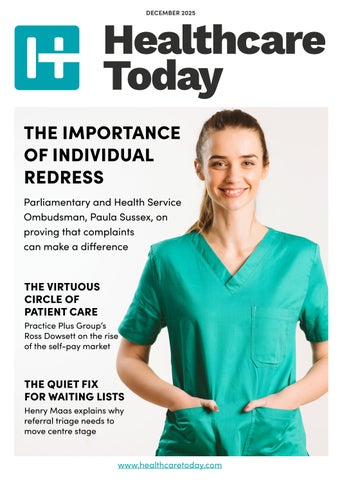
Ombudsman, Paula Sussex, on proving that complaints can make a difference
THE VIRTUOUS CIRCLE OF PATIENT CARE
Practice Plus Group’s Ross Dowsett on the rise of the self-pay market
THE QUIET FIX FOR WAITING LISTS
Henry Maas explains why referral triage needs to move centre stage
WELCOME
DECEMBER
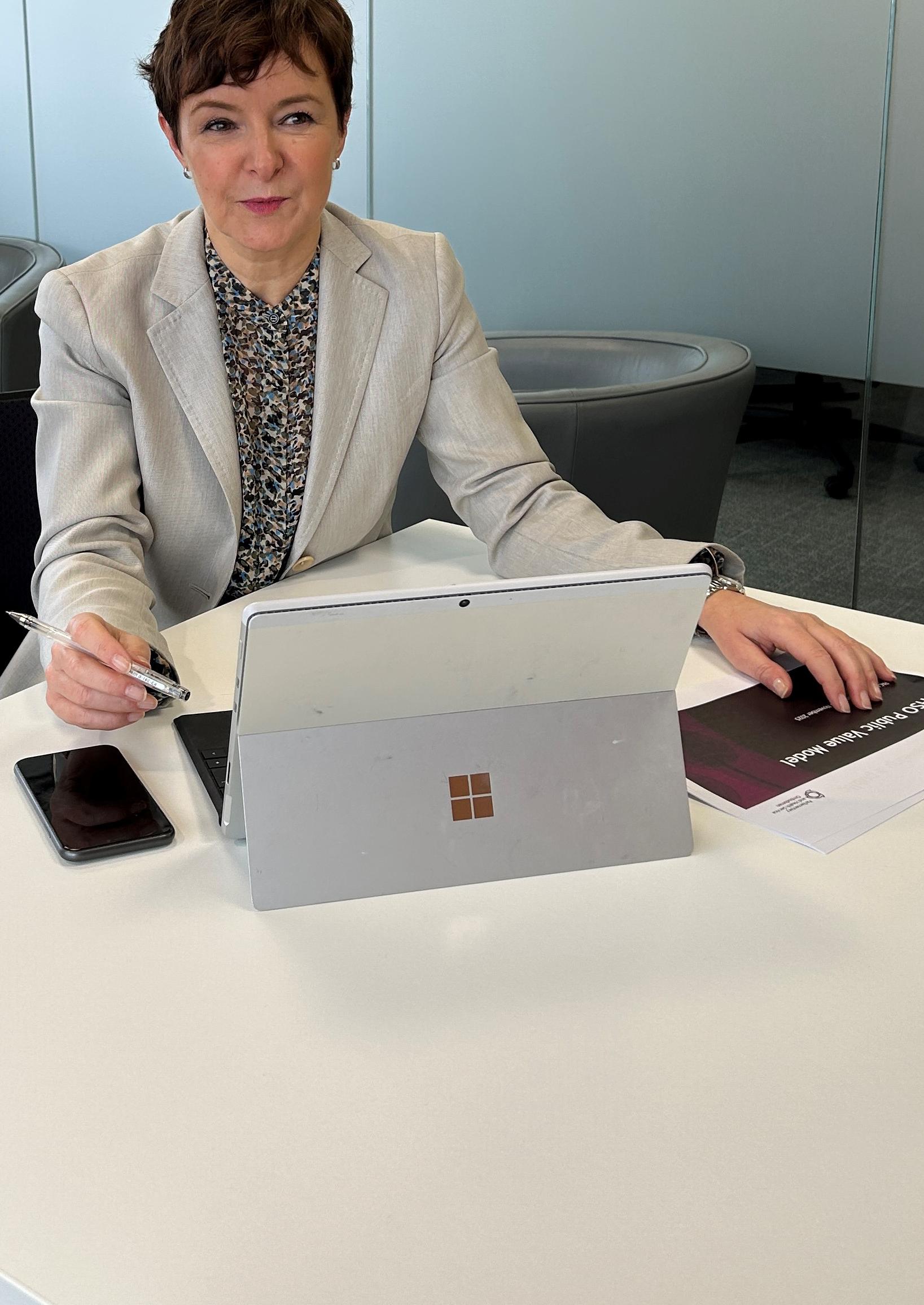
“What I am particularly interested in, within the health sector, is how complaints are responded to across the entire system, and how they are used to pinpoint where change is needed and where weaknesses lie,” says the new Parliamentary and Health Service Ombudsman, Paula Sussex.
Having taken up the post at a critical moment for the NHS, with rising pressure on community services and growing concerns that too many people struggle to get problems resolved before they become serious failings, Paula talks about why communication is often the problem, how she plans to work with other organisations and that complaints can and do make a difference.
Also in this issue, Practice Plus Group’s new CEO Ross Dowsett discusses the rise in demand of the self-pay market; Henry Maas, head of new initiatives at Consultant Connect, explains why referral triage needs to move centre stage; and much more...
We hope you enjoy!
Contact: Adrian Murdoch, Editorial Lead
28-31 34-37
Contact: Glen Ferris, Editor In Chief glen.ferris@healthcaretoday.com +44 (0)7780 298825
To download a copy of our media pack, click here.
FIRST DEMENTIA PATHWAYS SERVICE LAUNCHED
HEALTH IS ONE has launched Britain’s first dementia pathways service from its headquarters in Uddingston, near Glasgow.
Earlier this year, the World Health Organization pointed out that dementia is currently the seventh leading cause of death and one of the major causes of disability and dependency among older people globally and costs economies globally £960 billion in 2019.
What the mental health organisation says sets its private service apart is rapid diagnosis, as well as continuous support up to and beyond diagnosis, including wraparound support for families and carers.
“Opening our first-ever Brain Health service in Scotland marks the start of a phased rollout across the UK. For many years, we have provided psychological support to individuals and their families impacted by dementia and are aware of the personal cost to carers every day,” said chief executive Kevin McGeever.
“That’s why we are bridging the gap between medical diagnosis and long-term family wellbeing, covering practical arrangements, legal decisions, financial management and family dynamics,” he continued.
Although one in three of us is likely to develop dementia – a figure that is probably accurate and rising with age – Laurence Geller, Britain’s largest philanthropic supporter of dementia care research, told Healthcare Today in July that just 20-25% of the funding that goes into cancer research is allocated to dementia.
“Currently, there are more than 90,000 people in Scotland living with dementia, and this figure is set to rise considerably over the next twenty years,” said June Andrews, lead for Brain Health and Dementia Pathways at Health is One.
“Often, people are waiting more than two years for a diagnosis, risking accelerated decline which can result in costly care home fees and pressure on family members to give up work,” she added.
The challenge of dementia is being recognised by the government. Earlier this year, it backed four new research projects with £6.7 million funding to focus on developing technologies to help dementia patients manage memory loss, communication difficulties, and cope better with everyday tasks.
NEW visa rules threaten 50,000 nursing staff, and up to 42% of doctors could be driven out as Britain feels less and less welcoming, which would leave massive holes in the workforce. Research from the Royal College of Nursing (RCN) suggests that up to 50,000 migrant nursing staff could leave the UK if ministers press ahead with plans to extend the qualifying period to apply for indefinite leave to remain (ILR).
Prime minister Keir Starmer has vowed to curb net migration, and in late November, home secretary Shabana Mahmood said that the two million people who had arrived in the country since 2021 will now have to wait ten years for permanent settlement. Without ILR, migrant nursing staff are unable to move easily between jobs with their visas tying them to their employers. Not only is this expensive (application fees for ILR are £3,029), many have said it has led to exploitation in the social care system. It also leaves them unable to access state support like child benefit and disability support payments despite paying taxes in the UK and facing a greater risk of financial hardship than their UK-trained colleagues, as they are subject to the no recourse to public funds condition.
NEW VISA RULES THREATEN NHS STAFFING LEVELS
“This is no way to repay [migrant nursing staff] and amounts to a betrayal,” said RCN general secretary and chief executive Nicola Ranger. “Our international colleagues deserve clarity over their futures, not to be used as political footballs by politicians and left unable to access state support despite working in public services and paying taxes,” she continued.
The RCN said that it had surveyed more than 5,000 migrant nursing staff: 60% of those who don’t have ILR say the decision to extend the qualifying period would “very likely” affect their decision to remain in the UK. Mapped against the number of migrant nursing staff currently on entry clearance visas, it means as many as 46,000 migrant nursing staff could be at risk of leaving the UK.
The proposals have created profound distress among migrant nursing staff, with 53% extremely concerned about the impact on their financial security, 52% extremely concerned about the
impact on their family life, and a further 49% extremely concerned about the impact on their career, the research says.
The proposals could damage the pool of internationally educated nursing staff coming to the UK, with only 11% of respondents saying they would have come to the country had the route to settlement originally been ten years.
“These proposals are not just immoral; they would be dangerous for our patients. No minister who has any interest in the success of our health and social care system would press ahead with extending the qualifying period for ILR,” said Ranger.
At the same time, in the first significant year-on-year rise since the pandemic, data in the regulator’s report on the state of medical education and practice in the UK show that 4,880 doctors, who obtained their primary medical qualification outside of the UK and who had been working in the UK, left last year. This is a 26% increase on the previous year’s 3,869.
“Doctors represent a mobile workforce, whose skills are in high demand around the world,” said Charlie Massey, chief executive of the General Medical Council.
“Internationally qualified doctors who have historically chosen to work in the UK could quite conceivably choose to leave if they feel they have no future job progression here, or if the country feels less welcoming,” he added.
Any hardening of rhetoric and falling away of support could undermine the UK’s image as somewhere the “brightest and the best” from all over the world want to work, he continued.
Massey pointed out that doctors who qualified outside of the UK make up 42% of those working in the UK, and if there is even a small percentage increase in them leaving, then the health services would end up with holes that the government would struggle to fill. More to the point, this problem would be compounded in general practice, where half of first-year trainees last year qualified outside of the UK.
GREATER private investment and partnership with the independent healthcare sector will be essential to the implementation of the government’s 10 Year Health Plan, as well as its drive to reduce NHS waiting times.
A new report from the independent healthcare sector industry body points out that the sector currently delivers the equivalent of the activity of around 20 acute Trusts, with independent healthcare providers now removing more than one million patients from NHS waiting lists every year.
But with new investment needed across all parts of the healthcare system to tackle waiting lists and to shift care into the community, the Independent Healthcare Providers Network (IHPN) is calling for a major “step change” in how the NHS works with the private sector to both unlock capital investment and to build further capacity. This includes a greater role for the independent sector in financing new premises and equipment, alongside the ongoing delivery of NHS services to increase capacity and productivity.
10 YEAR HEALTH PLAN “NEEDS” THE PRIVATE SECTOR
“As the recent 10 Year Health Plan made painstakingly clear, the NHS’s capital regime is in desperate need of reform, with a lack of investment in services severely hampering both healthcare productivity and patients’ access to care,” said IHPN chief executive David Hare
“With public finances under considerable strain, it’s simply a no-brainer that much greater use of private capital is made in order to invest in new and improved NHS services,” he continued.
The rehabilitation of public-private partnerships was a core message of Rachel Reeves, chancellor of the exchequer, in her budget at the end of November.
The report calls for a “Strategic Council for Healthcare Infrastructure” to be established to provide crossgovernment leadership and to accelerate efforts in bringing private investment into the NHS, including the development of new neighbourhood health services as well as building and running new services in historically under-served areas.
Alongside the NHS Confederation and NHS Providers, IHPN is also calling
for the Treasury to clarify current accounting rules to expand publicprivate partnerships across the NHS, noting that the current complexity is seen by many NHS leaders as a blocker to further investment.
“Given the squeeze on public finances, we believe that private investment is one of the only options for raising the capital funding the NHS needs to develop the 21st century facilities that patients expect,” said Matthew Taylor, chief executive of the NHS Confederation.
“The government has set bold and ambitious plans for reforming the NHS and recovering core performance standards, but money and capacity are tight,” said Richard Sloggett, founder and programme director of Future Health.
“This research sets out some immediate and practical proposals for how the NHS can partner with the independent sector to unlock new capital investment and services that can deliver improvements for patients. The upcoming Budget is an opportunity for the Government to act decisively and help put new momentum behind its NHS reform plans,” he added.
GOVERNMENT SUPPORT FOR T
HE GOVERNMENT has reiterated its support for palliative care and endof-life care.
In a written statement to parliament, minister of state for care Stephen Kinnock outlined a palliative care and end-of-life care modern service framework for England, with a planned publication date of Spring next year.
The framework would put in place “a clear and effective mechanism to deliver a fundamental improvement to the care provided,” he said. It would enable adoption of “evidence-based interventions” that are proven to make a difference to patients and their families, he added. These would include earlier identification of need, care delivered closer to home by integrated generalist and specialist teams and strengthened out-of-hours community health support, including dedicated telephone advice.
He confirmed his support for the framework, speaking at a conference a couple of days later.
While he emphasised that the government is neutral on the ongoing passage of the Terminally Ill Adults Bill, it would “continue to work towards building a society where every person who needs it receives high-quality, compassionate palliative and end-of-life care”.
The position of the government was widely welcomed by the industry, with hospice chief executives calling it a “positive step”.
“For too long, palliative and end of life care was not a government priority,” said Hospice UK chief executive Toby Porter. “We welcome the government’s firm and clear commitment today to making certain everyone gets the care they need, where they need it, when they die.”
Similarly, Nick Stevens, joint chief executive and finance director of St Raphael’s, which provides end-of-life care to the Merton and Sutton suburbs of London, called it a “positive step forward”.
“[The government] highlights the need to prioritise end-of-life care and to make meaningful improvements so that everyone can access high-
quality, specialist support, live,” he continued.
“There are challenges with integrated care boards government plans which Lavinia Jarrett, chief executive provides care to children serious or life-limiting conditions.
The problem that all of As Healthcare Today has now 380 beds out of use England, a figures that has 25% since last year, when beds were out of use in
“The framework will… only in accessing palliative care identified if it is implemented level,” said Nick Carroll, based Together for Short
“To achieve this, it will need action to boost the workforce effectively, fill the £310 million
GOVERNMENT REITERATES FOR END-OF-LIFE CARE
support, no matter where they
with practices across and we welcome any which address these,” said executive of Demelza, which children and young people with conditions.
them highlight is funding. has pointed out, there are use in hospices across has risen by more than when it was revealed that 300 English hospices.
only solve the challenges care that ministers have implemented at local and regional Carroll, chief executive of BristolShort Lives.
need to be supported by workforce and use it more million gap in NHS funding
for children’s palliative care and hold NHS bodies to account in putting the framework in place,” he warned.
The publication at the end of November of the report by the independent expert panel into the current state of palliative care in England confirms how urgently the framework is needed.
The panel found that efforts to commission services are affected by complexities and variabilities, leading to differences in quality around the country. This variability also arises from a lack of a nationwide framework for how Integrated Care Boards (ICBs) should commission palliative care services.
ICBs were often found to not be equipped well enough to understand the palliative and end-oflife care needs of their local populations, in some cases due to a lack of access to data.
Because palliative care is often not prioritised in local areas, it faces insufficient funding from ICBs, which themselves face persistent funding pressures.
Spending on primary and community health care accounts for 11% of health expenditure for people in their last year of life, while hospitals receive 81% of the spending. Moreover, 22% of public expenditure per person at the end of life is on social care, compared to more than 50% of total expenditure on healthcare. The NHS workforce was found to be ill-equipped to meet the needs of people at the end of life because of insufficient provision of education and training.
And as has become the norm, the panel received evidence of systemic inequality throughout the country, both in terms of the quality of services available in different parts of the country, but also inequalities experienced by underserved or marginalised communities.
“We welcome this report, which brings forward yet more evidence of the scale of the crisis in palliative and end of life care and the impact it has on dying people and their loved ones,” said Katie Reade, head of policy and public affairs at Hospice UK. “It lays bare the inconsistency and inequity in how care is commissioned and delivered – as well as the lack of funding.”
NHS ENGLAND (NHSE) has failed to meet its post-COVID recovery goals to shorten patient waiting lists. The Public Accounts Committee (PAC) has found that despite NHSE spending £3.24 billion on transforming diagnostic and surgical services, it has now missed its recovery targets by significant margins, with too many people still waiting too long for tests and treatment.
The PAC’s report finds that these failures were driven in part by NHSE’s and the government’s flawed approach to improving its own services. Billions of pounds in spending were approved by the government without sufficient focus on what exactly its funding would deliver and without any focus on outcomes for patients.
Diagnostic transformation received the lion’s share of £2.2 billion, and £1.04 billion went to surgical transformation, at a time of scarcity for capital funding. A shortfall of 3.6 million tests led to the missed diagnostics target; for new surgical hubs, only the number of
NHS ENGLAND FAILS TO MEET POST-COVID RECOVERY GOALS
newly delivered hubs was tracked, with NHSE unable to say what contribution they actually made to total elective activity.
“Every unnecessary day that a patient spends on an NHS waiting list is both one of increased anxiety for that person’s unresolved case, and if they are undiagnosed, a steady increase of risk to their life,” said the PAC’s deputy chair Clive Betts.
In January, more than six million people were waiting for elective care, and progress in reducing waiting times appears to have stalled. Nearly 192,000 patients were waiting more than a year for care by July – a length of wait which should have been eliminated by March. And for diagnostic tests, 22% of patients were on a waiting list for more than six weeks – against a target of 5% by March, and an operational standard of 1%.
The report recommends that NHSE and the government should focus reporting on patient outcomes to ensure that funding delivers its intended outcomes, set out plans to
reach the 1% operational standard for six-week waits for diagnostic tests, and learn the lessons from the failure of the outpatients programme.
Responding to the report, Kat James, managing director of Consultant Connect, an advice and guidance provider to the NHS, recommended that the government take a step back and redesign the system if it is going to have any impact.
“The fire in this scenario is waiting lists. Everyone wants to see more patients and is trying to find extra staff to put on extra clinics. But what we need is to take time out to analyse pathways and figure out where things need to be set up differently to stop the waiting lists from growing out of control in the first place,” she said, also calling the criticism of community diagnostic centres “particularly apt”.
“The solution is to change the money flows to incentivise Trusts to work closer with local communities and diagnostic centres. There’s been a lot of stick so far in terms of targets, but we need the carrot if we’re going to accelerate change,” she said.
HEALTH SYSTEMS MAKING PROGRESS ON NHS REFORMS
HEALTH systems are already making significant progress implementing the government’s NHS reforms, but urgently need clarity over funding for redundancies to continue moving forward, a new report has found.
The NHS Confederation has found that system leaders fully support the government’s Ten Year Health Plan, with more than half already making progress on the three key shifts from hospital to community, from analogue to digital, and from sickness to prevention.
Based on a survey of senior integrated care board (ICB) chief executives and chairs and integrated care partnership (ICP) chairs, the survey shows that there is strong support for the government’s reform agenda.
“Councils remain committed to working collaboratively with health partners during this period of considerable change. As the report highlights, health and local government are two sides of the same coin, with actions and decisions made by each side impacting the other,” responded Wendy Taylor, chair of the Local Government Association’s health and wellbeing committee.
“The report rightly highlights the positive legacy of integrated health and care over the past few years in tackling health inequalities and improving outcomes. It is vital that this legacy is built upon as the new neighbourhood health model is delivered,” she added.
But the report also shows that ICB leaders are concerned that ICB redundancies and NHS reorganisation have created a significant distraction and barrier to
systems’ progress. The government has asked ICBs to reduce their running costs by 50%, which will require significant redundancies at an estimated cost of £1 billion.
Almost all (95%) of ICB respondents said they were very or fairly concerned about the impact of the required cost reductions on their ability to deliver against national and system priorities. Until this issue is resolved, ICBs are, the report says, in limbo.
One ICB chair said that “all attention has been on the process of reorganisation itself”, which has impacted their ability to focus on the government’s three shifts.
The report also highlights that while ICBs are committed to their role as strategic commissioners, leaders say further support is needed to develop the skills and tools needed to fulfil their strategic commissioning role. This is especially related to how they can work with providers, shape the provider market, and understand the impact of services over a longer term so they can ensure they provide
the best possible outcomes for local populations.
They are also concerned about the future of statutory responsibilities, such as all-age continuing care, safeguarding and medicines optimisation, which will remain with ICBs despite the shift in focus to strategic commissioning. ICB leaders are looking at how these can be delivered at this lower cost, but are concerned that they could potentially be subject to judicial review if they fail to meet statutory responsibilities they have not been resourced to deliver.
“ICS leaders are fully committed to implementing the government’s Ten Year Health Plan and making the key shifts it sets out… but they need further clarity, support and the right tools to do so,” said Sarah Walter, director of the NHS Confederation’s ICS Network. “Without urgent action to resolve funding for redundancies and provide strategic commissioning support, the NHS risks entering the next phase of reform on unstable footing,” she added.
ENGLAND HOSPICE CRISIS CONTINUES
HOSPICE UK has warned that there are now 380 beds out of use in hospices across England, up by over 25% since last year, when it was revealed that 300 beds were out of use in English hospices.
It comes on the back of a warning that two in five hospices are planning to make cuts this year. The number of beds that have either been fully deregistered or taken out of operation during the year accounts for nearly 140,000 days and nights of care unavailable.
Furthermore, this year’s data shows that 160 of these beds are permanently closed.
“The financial situation facing hospices is untenable, with even more beds out of use this year than last year,” said Hospice UK chief executive Toby Porter.
“We know many hospices have waiting lists and demand for end-oflife care is rising, so it’s not a case of lack of demand. Hospices desperately want to reach everyone who needs them, but financial pressure is holding them back,” he added.
The warning from Hospice UK comes on the back of the report earlier this month from the National Audit Office that the Department for Health and Social Care (DHSC) and NHS England (NHSE) do not clearly understand what proportion of palliative and end-of-life care is delivered by independent adult hospices, and therefore, how much they are reliant on the sector, or what the real impact of government funding is.
Funding from Integrated Care Boards (ICBs), through grants or contracts, met 40% of independent adult hospices’ expenditure on services in 2023-24, equating to more than £400
million. But a lack of central oversight from DHSC means it is unclear what this funding is specifically used for, or whether it is sufficient to maintain the sector’s future without more services having to be delivered by the NHS to meet increasing demand.
Nearly two-thirds of independent hospices reported a deficit in 202324, and overall expenditure was £78 million more than the income generated.
In response to this, some hospices have reduced service, and there have been cuts to both beds and staff. The financial resilience of the independent adult hospice sector faces further challenges due to the declining return on investment from fundraising.
The government announced £100 million of capital funding for the sector in December last year, which was released in two tranches – most recently in August.
CALLS FOR THE GOVERNMENT TO RECOGNISE LONG COVID
THE British Medical Association and the Royal College of Nursing have written to the government urging it to recognise long COVID and severe post-COVID-19 complications as a prescribed industrial disease for health and social care workers.
The unions representing doctors and nurses are urging the government to accept the recommendations of the Industrial Injuries Advisory Council paper as a first step in recognising the risks that health and care workers took on during the pandemic.
BMA chair Tom Dolphin and RCN general secretary and chief executive Nicola Ranger warn in the letter to the secretary of state for work and pensions of the “debilitating effects” of Long COVID on numerous doctors, nursing and midwifery staff, many of whom were previously left, or remain, unable to work, leading to significant financial detriment.
The letter notes that providing recognition of certain post-COVID complications as an occupational disease would allow some of those affected to receive Industrial Injuries Disablement Benefits.
Supporting the call for the government to accept the recommendations in the paper, BMA occupational medicine committee chair, Kathryn McKinnon, said: “It is deeply disappointing that we yet again mark another year where the government has failed to recognise Long COVID and severe post COVID-19 complications as an occupational disease in healthcare workers.”
INDEPENDENCE FOR TOP TRUSTS
HIGH-PERFORMING NHS trusts will be given more independence to deliver faster, better and more personalised care.
Health and social care secretary Wes Streeting wants to end the topdown control of trusts and give the highest-performing organisations new advanced foundation trust status. The new designation will reward the very best leaders in the NHS with greater freedom to make decisions locally –from how services are organised to how money is spent – so that care can be designed around what works best for local communities.
“Under our plans, if trusts manage their finances well, innovate and deliver for patients, we will give them the space to lead,” said Streeting.
“These reforms mark a fundamental shift from command and control to collaboration and confidence,” he added.
NHS England has nominated eight of the highest-performing trusts to become the first advanced foundation trusts, which will be among those eligible to be considered based on their record of delivering quality care, strong finances and effective partnerships with staff and local services.
The eight are Berkshire Healthcare NHS Foundation Trust, Dorset Healthcare University NHS Foundation Trust, Central London Community Healthcare NHS Trust, Northamptonshire Healthcare NHS Foundation Trust, Northumbria Healthcare NHS Foundation Trust, Alder Hey Children’s NHS Foundation Trust, Norfolk Community Health and Care NHS Trust and Cambridgeshire Community Services NHS Trust.
The trusts will be independently reviewed at least every five years. Those that can prove they deliver good services and have sound finances will be able to spend any money they’ve saved since last year on new equipment, buildings and improving patient care. If the amount trusts want to invest is less than £100 million, the level of paperwork will be vastly reduced.
“This new status would give us greater freedom and flexibility to provide better services, invest more money into the local system and deliver against the three big shifts set out in the 10 Year Health Plan,” said Birju Bartoli, chief executive of Northumbria Healthcare NHS Foundation Trust, while James Benson, chief executive of Central London Community Healthcare NHS Trust, called the news “an exciting step in our journey as a leading provider of community healthcare services”.
Trusted by Clinicians, Chosen by Patients
Located in the Harley Street Health District, Pharmacierge supports over 4,500 GPs and Consultants with seamless, secure e-Prescribing apps tailored for private practitioners.
With our state-of-the-art robotically enabled dispensary and nationwide delivery, we ensure your patients receive their medications promptly, while you prescribe with confidence - anytime, anywhere.
mPrescribe®
Revolutionises private prescribing by allowing you to prescribe flexibly without a laptop, for delivery to your patients nationwide.
Medication range
Due to the range of specialists we support, we stock and source medication not typically found outside of a hospital setting, including refrigerated, controlled, injectable and biologic medication.
Courier delivery
We include same weekday delivery to London postcodes, or next weekday nationally as standard. International deliveries are also available.
"Your mobile app changed my life!"
— Dr Dominic Paviour, Consultant Neurologist "Intuitive and secure."
— Dr Tim Wigmore, Consultant Intensivist & Anaesthetist
Join thousands of clinicians today. Download the app and register online www.pharmacierge.com/register
CORRIDOR CARE REMAINS A PROBLEM
THE problem of corridor care does not seem to be alleviating. A third (32%) of those aged 90 and older have waited 12 hours or more in A&E to be admitted or discharged home over the past year, and the number of instances of corridor care of 12 hours or more has increased 525-fold since 2015.
A report from Age UK says that while long waits and corridor care in overly busy A&E departments can happen to people of all ages, they are particularly likely to happen to older people, especially the oldest old, including some who are extremely ill or even dying.
Caroline Abrahams, director of the charity, calls it a “crisis hiding in plain sight”: “No one should have to spend their final days in a hospital corridor where it’s impossible for the staff to provide good care. It’s shocking this is what is happening to some old people in some hospitals. And as we head into winter, we fear that an already difficult situation in and around some A&Es will get even worse.”
It is a problem that Healthcare Today has frequently highlighted. Most recently, a snapshot survey from the Royal College of Physicians found that nearly three in five doctors reported they had delivered care in a temporary care environment between June and August 2025, including in corridors, gyms, offices, and even cupboards. And of those who reported providing care in a temporary environment over the summer months, 45% said they had done so daily or almost daily.
Corridor care is closely linked to long waits in A&E. It refers to the practice of providing care to patients in hospital corridors or other inappropriate care settings. The problem usually stems in large part from the hospital’s inability to process people quickly once they’re through the door. On any given day, there are 13,000 people medically fit for discharge stuck in hospitals, the Age UK survey says, almost all of them older than 65. These delayed discharges can happen for a number of different reasons, and the report makes clear that the following areas need to be addressed to speed up the flow in hospitals: poor organisation and co-ordination of functions and activities within the hospital; a lack of social care and other forms of support in the community; and delays in accessing community health services such as district nurses and occupational therapists.
The response to the report has been damning. “The situation is beyond shameful. I know that at times I, and many of my colleagues, can find it difficult just to walk through our departments because of what we see there,” said Ian Higginson, president of the Royal College of Emergency Medicine.
DISTRICT NURSING IS STRUGGLING
DESPITE government plans to move more NHS care into the community and out of hospitals, an estimated one in four district nurses left the workforce in the year to September 2024.
A report from the Nuffield Trust sets out how district nursing services, which are intended to provide care for patients and support for their families at home, in clinical settings and in care homes, are struggling.
The report outlines that the supply of nurses is plummeting while demand for care has risen and is set to rise further. From 2009 to 2024, the number of district nurses fell by 43%, while the need for the service is estimated to have risen by 24%. It is projected that, as more people live for longer and with more complex health needs, demand will increase by another 34% over the next 15 years to 2040. The Nuffield Trust estimates that restoring the service to 2009 levels, relative to the current population, could cost £376 million.
“The consequences we have uncovered are stark – far fewer
patients are getting crucial support from district nurses, despite the evergrowing need for these services,” said Nuffield Trust chief executive Thea Stein.
The analysis also found concerning variation in patient access to services across the country, with the number of staff recorded in district nurse roles significantly higher in the North West (13.7 nurses per 100,000 needsweighted population) but lower in the East (2.8), South East (3.3) and South West (4.4).
Previous studies have highlighted issues with district nurses’ experience of work. Up to a fifth (19%) of district nurses’ time is spent on administrative tasks, and in a 2023 survey, a quarter of the workforce reported that they are carrying out more than seven hours a week of unpaid work. The heavy workload is regularly cited as a factor by those leaving the workforce, while the lack of senior roles and access to professional training and development also impacts retention.
“Under these circumstances, it is little wonder these nursing experts face impossible workloads, with
unpaid work the norm and now many choosing to quit altogether. You can draw a straight line through the failure to invest in district nursing and the crisis we see today in hospitals, crammed full of vulnerable people who should not be there,” said Royal College of Nursing general secretary and chief executive Nicola Ranger.
The report sets out a range of recommendations to reverse these trends and improve the supply and retention of district nurses. This includes calling for the Department of Health and Social Care and NHS England to work with employer representatives to ensure there is a mechanism and funding in place, so all newly qualified district nurses have an appropriate role available to them.
“If the government doesn’t begin to address the glaring issues with district nursing and build a workforce plan that better supports this pillar of community care, it will be a core weakness of efforts to shift more care from hospital to home. Urgent action is needed to ensure the training pipeline for district nursing is fit for purpose,” said Stein.
SMART TEXTILES BRA TO HELP DETECT CANCER
RESEARCHERS at Nottingham Trent University (NTU) and the University of Glasgow (UofG) have developed a smart textiles bra to help detect cancer in women with intellectual disabilities.
The electronic textile, which would fit inside a bra and monitor whether a tumour is growing in real time, before alerting clinicians to potential risks.
Although women with intellectual disabilities have a lower incidence of breast cancer, they face significantly higher mortality rates due to barriers in accessing current screening methods.
Funded by Cancer Research UK, the technology uses a form of electrical current that can scan to spot subtle differences in body tissues. Because tumours tend to be denser and hold
ST MARY’S CARE
less water than healthy areas, the device can help differentiate them. The technology has the potential to detect growths as little as 5mm.
The device would record data and provide feedback via smartphone to the wearer, carers and clinicians so that assessments can be made.
The research team says there’s potential for the technology to be developed as part of a new bra altogether, as well as an insert.
HOMES
ST MARY’S Care Homes is finishing construction of an 86-bed care home in Adel, Leeds. The Bridlington-based group, which has nine homes already, has confirmed that the new home will welcome residents early next year.
The 86-bed home will provide residential, dementia and respite care for families across North Leeds and the wider region. The company says that its opening comes at a time of growing pressure on local care provision. Leeds has the secondhighest number of people diagnosed with dementia of any local authority area in England, according to Polimapper.
At 7,139 as of June last year, Birmingham leads with the highest
“Breast cancer can develop over time, and while some types grow quickly, others may progress slowly, making early detection critical for improving survival outcomes,” said Professor Yang Wei of the Nottingham School of Art & Design (NSA&D), one of the leaders of the research.
“This technology has the potential to save women’s lives by detecting tumours early, while being used as an added measure alongside all other normal checks and scans,” he added.
The research is being developed at NTU’s Medical Technologies Innovation Facility (MTIF) and the Scottish Learning Disabilities Observatory (SLDO) at UofG, with an investment of around £100,000 from Cancer Research UK.
The research is led by Wei and Deborah Cairns, director of SLDO in Glasgow.
FINISHING CARE HOME IN ADEL
number of dementia diagnoses, reflecting both its large population and the growing prevalence of dementia within urban areas. It is followed by Leeds with 6,724.
Situated off Sir George Martin Drive, Adel Square Care Home forms part of the wider regeneration of a longderelict site in Adel that is now being brought back into use for housing and community facilities. The company emphasises that Adel Square Care Home has also been designed to bring long-term employment opportunities to the area. At full occupancy, the home will support around 80 staff, including care, hospitality, wellbeing and support roles, with recruitment planned to begin later this year. “Adel Square Care Home represents
a major investment in both care provision and the wider community,” said managing director Kirsty Crozier. “Leeds has one of the highest levels of dementia diagnoses in the country, and families are feeling that pressure. This home will provide much-needed capacity, modern facilities and the type of personalised care people rightly expect. We are also creating around 80 jobs, which is an important part of our longterm commitment to the area. It’s a development we’re incredibly proud of, and we’re looking forward to opening the doors early next year,” she added.
The opening next year remains subject to Care Quality Commission registration.
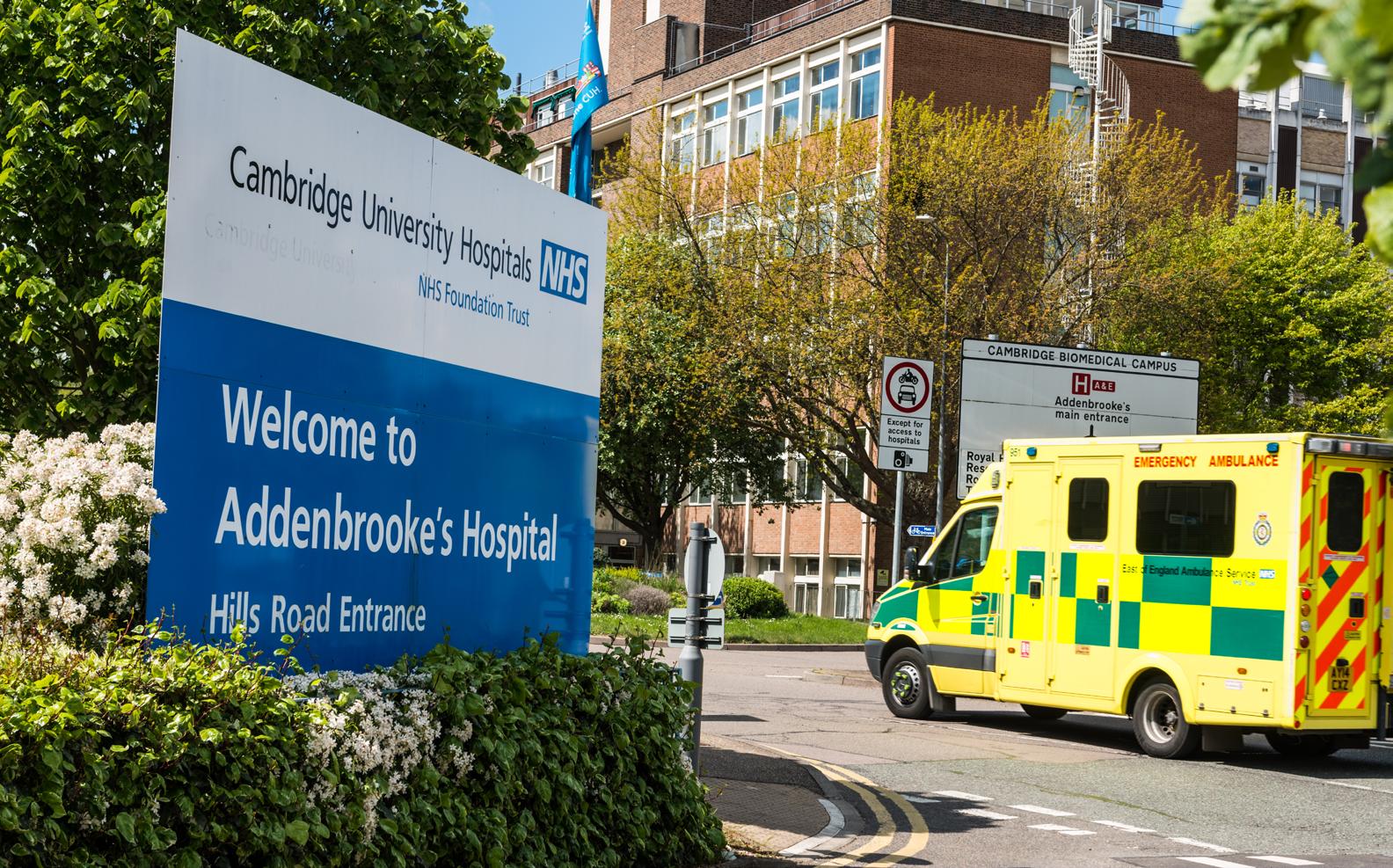
CALL FOR INQUIRY INTO ADDENBROOKE’S HOSPITAL
THERE should be a statutory public inquiry into Addenbrooke’s Hospital patient safety failings, according to the legal team at Hudgell Solicitors, which has written to health secretary Wes Streeting.
“On behalf of our clients, we are writing to strongly urge you to call a judge-led statutory inquiry into Addenbrooke’s Hospital’s management of Ms Stohr and its failure to protect patients from potential harm,” Elizabeth Maliakal and Maria Repanos, the heads of clinical negligence in Hull and Manchester, wrote in the letter seen by Healthcare Today
“The patients and families of those treated and operated on by Ms Stohr are entitled to know what happened, why it happened, who is to blame and – most importantly – what can be done to prevent this happening again,” the letter continues.
The firm has been in touch with 50 of the 800 patients treated by Addenbrooke’s Hospital’s paediatric orthopaedic surgeon Kuldeep Stohr.
Stohr was suspended in January after having her practice restricted by the Trust last October, when colleagues at the hospital raised concerns, as Healthcare Today reported.
The first concerns date back as far as ten years, and at the beginning of April, the external inquiry into issues with hip operations performed on children at Addenbrooke’s Hospital in Cambridge concluded.
In November, she had restrictions placed on her by an interim orders tribunal for 18 months.
At the tribunal, it was ruled that to return to performing surgery, Stohr must be appointed a dedicated clinical supervisor by a responsible officer, such as a senior clinician who monitors and evaluates the fitness to practice of doctors connected to that organisation, and be closely supervised.
She must not conduct a pelvic osteotomy, femoral osteotomy or any surgery related to developmental dysplasia of the hip unless directly supervised, except in life-threatening emergencies.
She is also required to maintain a log detailing every such surgery she is involved in, which her supervisor must sign.
A copy of this log will be given to tribunal members at her next IOT review, the date of which is still to be determined, alongside a report from her clinical supervisor.
Stohr previously worked at Chelsea and Westminster Hospital, the Royal National Orthopaedic Hospital in Stanmore and Great Ormond Street Hospital in London.
Specialist investigations company Verita looked into the surgeon’s actions in 2015, and the findings of that investigation were what Hudgell Solicitors called “damning”.
The Verita report, published in October 2025, identified how the trust failed to act upon the 2016 review findings and highlighted that none of the remedial steps suggested had been acted upon.
“The report was damning of the trust’s management of Ms Stohr’s practice, indicating that it had failed to properly reflect upon the 2016 review findings and ensure that it was understood,” the letter from Hudgell Solicitors said. “It said the trust miscommunicated the report to Ms Stohr and the colleague who raised initial concerns about her practice, together with the wider staff group within the paediatric orthopaedic department.”
The Verita report concludes that there were 32 missed opportunities to address the shortcomings in Stohr’s practice between 2012 and 2024.
ONLINE PLATFORMS THREATEN PATIENT SAFETY
MORE than half of GP practices in England have reported an adverse impact on patient care from changes to online access.
At the beginning of October, the government introduced changes to how patients contact their GP practice via online platforms. In what it dubbed an attempt to “end the 8am scramble”, the government required all practices to provide continuous online, telephone and in-person access throughout core hours.
More than eight million people submitted their GP request online during October 2025, up more than a fifth (21%) on the previous month and up more than two-thirds (68%) on last year, according to figures published at the end of November by NHS England.
As Ric Thompson, senior vicepresident of health and care at OneAdvanced, warned in Healthcare Today at the time: “The proposed “unlimited” online consultation requirement threatens patient safety, staff wellbeing, and the very fabric of primary care.”
Several months on, that is exactly what the reality has proved to be. In a BMA survey of more than 1,300 practices, GPs have confirmed that urgent and emergency requests have been submitted online, which risks patient harm and increases staff stress and anxiety, compounding the existing workforce pressures felt across GP practices in England.
“Over four in ten are having to reduce the number of GP appointments they can offer to their patients so they can manage/triage online requests and queries instead. If the government had chosen to listen to us and work with us, we could have made this so much more of a success,” said BMA GP committee chair Katie Bramall.
More than one in five practices in England responded, and over 1,300 unique practice responses were recorded. Of these, the majority (73%) had to change their ways of working due to the contract change.
A significant proportion of practices (42%) have had to reduce face-toface appointments – all reducing the time patients spend with their family doctor. A similar proportion of these
practices (45%) said they’ve had to redeploy staff to accommodate the changes. More than half (55%) of these practices had seen a negative effect on patient care. Despite GPs warning of the risk of patient harm, 74% of these practices said they’d seen an increase in workload, 68% reported an increase in stress, and 54% said there was an increase in working hours.
In the responses to the survey, some practices shared their experience anonymously.
“Patients submitting requests/queries for things that they need to go to A&E for at all hours of the day - you have to be vigilant to spot these requests and quickly divert them to A&E. If we are not manning the inbox constantly, these will be missed,” said one. “Patient submitting request at 6.20am with high fever and now bedbound, being unable to move and breathless. Required an ambulance to take to hospital to treat for sepsis,” said another. “When the volume of requests becomes unmanageable, triage becomes harder, and the risk increases that ‘false routine requests’ that are actually urgent are not picked up in time,” said a third.
2 IN 5 FEMALE MEDICAL STUDENTS EXPERIENCE SEXUAL VIOLENCE
HUNDREDS of medical students report being victims of sexual misconduct and institutional neglect in a UK-wide survey exposing widespread sexism and sexual violence whilst studying medicine.
In the survey from the British Medical Association (BMA) of almost 1,000 medical students, two in five female respondents reported being targets of sexual harassment or sexual assault at university, and a concerningly high number of reports mentioned criminal offences, including: 37 incidents of rape or assault by penetration, 85 cases of sexual assault, and 43 cases of drink spiking.
The data backs up the NHS Staff Survey, published earlier this year, which found 18% of medical and dental staff in training have been the target of unwanted sexual behaviour in the NHS from patients, service users, their relatives or other members of the public.
Major flaws in safeguarding have led to a breakdown in trust between students and institutions. Threequarters of respondents who reported sexual harassment or sexual assault
said they were ‘not really’ or ‘not at all’ satisfied with the outcome. More concerningly, 67% chose not to report an incident, noting that they believed ‘nothing would be done’.
“The lack of accountability coupled with the power imbalance for perpetrators, especially when they are senior doctors, can lead to the normalisation of sexist and inappropriate behaviours in the NHS and beyond,” said BMA deputy chair of council Emma Runswick.
“The scale of the problem clearly demands collective action, and UK medical schools must urgently sign and adhere to the NHS Sexual Safety in Healthcare Charter. This is a vital step in embedding a zero-tolerance approach to sexual misconduct and fostering safer, more respectful learning environments for future healthcare professionals,” said Laura Hamilton, council member at the Royal College of Surgeons of England.
The BMA has recommended a number of actions to be implemented urgently to protect and support medical students better. This includes bringing forward legislation that introduces a statutory duty of care on higher education institutions for their students. Medical schools are working together to agree clear, tough sanctions for sexual violence. Universities, medical schools and placement providers should provide channels for reporting, including anonymous reporting routes, to ensure students can confidentially disclose incidents without fear of reprisal. At the same time, measures to minimise interactions between the complainant and the accused must be put in place.
Steve Riley, chair of the Medical Schools Council (MSC), called the report “deeply concerning” and said that through the MSC, medical schools have been strengthening how to prevent, respond to, and address sexual harassment and discrimination.
“It’s our duty to protect our medical students by creating a safe and supported learning environment and ensuring a just course of action is taken when needed,” he continued.
APIL CALLS FOR REGISTER OF MEDICAL PRODUCTS
LAWYERS are calling for a national register of medical products to be set up to prevent health scandals like pelvic mesh implants from happening again. At the moment, registers are ad hoc.
“Creating a central register and making it obligatory to enter details of products, such as pacemakers and artificial heart valves, would build an accurate picture of how safe they are,” said Pauline Roberts, vice president of the Association of Personal Injury
Lawyers (APIL), which has taken the issue to the Medicines and Healthcare products Regulatory Agency (MHRA).
“We must never allow faulty products like pelvic mesh, which left thousands of women with permanent health issues and in terrible pain, to happen again.”
Pelvic mesh was used for years to treat incontinence and pelvic organ prolapse in women. But the netlike implant can erode and harden,
damaging tissue and causing serious pain. Thousands of women suffered life-changing complications, including urinary problems.
APIL, a campaign organisation made up of personal injury lawyers who are committed to protecting the rights of victims of negligence, told the MHRA that regulation governing the use of medical products in the UK needs to be tougher, with more rigorous and frequent checks on new products entering the market.
Providing first class medical consulting and therapy rooms at prime locations in Central London and Liverpool
London
tenharleystreet.co.uk 020 7467 8300 Liverpool eightyeightrodneystreet.co.uk 0151 709 7066
Harley-quarter-ad-60x100.indd 1
YOUNG CANCER PATIENTS SEE NHS IMPROVEMENTS
THERE has been “encouraging progress” in how communication and information are provided to children receiving NHS cancer care, although there is still scope for improvement within both the diagnostic process and privacy in hospitals.
The findings come from a new survey commissioned by NHS England and conducted by the healthcare research charity Picker. It gathered feedback from more than 750 children and parents of children who received cancer or tumour care in England between January and December last year. The findings cover young people’s care journeys through diagnosis, treatment, and care at home and in school, and they offer valuable insights into what is working well and where improvements can be made across NHS children’s cancer services.
“The results indicate progress in some key areas of person-centred children’s cancer care, particularly around communication and information provision,” said Amy Tallett, Picker’s head of research. “While areas of progress are encouraging, challenges remain. It is particularly concerning that fewer children felt that staff always talked to them, instead of just to their parents or carers,” she continued.
13/10/2016 11:08
Only 70% of parents or carers reported that they were definitely told about their child’s cancer or tumour diagnosis in a sensitive way. Similarly, 71% of parents or carers felt that they were seen at the hospital as soon as they thought was necessary after being referred by their GP. There were some improvements in how hospital staff communicated information when children were present. Last year, 77% of parents or carers said that hospital staff were “always” sensitive when discussing information in front of their child (up from 71% in 2023), and 80% felt staff always shared information with children in an appropriate way (up from 76% in 2023).
There were also improvements around privacy in hospitals – although a large proportion of parents, carers, and children still reported concerns. In 2024, 57% said that they “always” had somewhere private to talk to staff when in hospital, an increase from 50% in both 2023 and 2022. In contrast, the proportion of children who felt that hospital staff “always” talked to them, not just their parent or carer, decreased from 78% in 2023 to 71% in 2024.
CQC WARNS OF LACK OF INVESTMENT IN COMMUNITY SERVICES
THE health and social care system remains fragmented and under severe strain as it prepares for a shift from hospital to community care.
The annual state-of-care report from the Care Quality Commission (CQC) has warned that while there is some evidence of innovation, community services need significant investment in both capacity and capability to deliver the transformation in people’s care called for in the government’s 10 Year Health Plan. Without more support to help community services deliver the vision of the plan, there is real risk of erosion in care quality, with people struggling to get the care they need and the most vulnerable groups likely to be hit hardest through longer waits, reduced access and poorer outcomes.
The report also highlights longstanding inequalities with some groups of people – including older people, people with dementia, people with a learning disability, and those with complex mental health needs – more likely to struggle to navigate
services, often meaning their families and unpaid carers carry increasing burdens.
As Healthcare Today recently reported, district nursing services, which are intended to provide care for patients and support for their families at home, in clinical settings and in care homes, are struggling.
“The government’s 10 Year Health Plan is a real chance to improve care by putting people’s needs first,” said the CQC’s interim chief executive Arun Chopra. “But for the plan to succeed, community health and care services need more support. Without this, there’s a risk that fewer people will be able to access good care, with vulnerable groups hit hardest”.
Demand for local authority-funded social care support continued to rise in 2023/24. While vacancies in the workforce have fallen to pre-pandemic levels, the vacancy rate in adult social care is still three times higher than in the wider job market. Homecare services are particularly affected, with vacancy rates more than twice as high as those in care homes.
The end of new care worker visas is likely to put further pressure on recruitment, making it more important than ever that a sector-wide workforce strategy is agreed and the recently announced fair pay agreement has an impact.
More community services are urgently needed to help people stay in their own homes longer. However, CQC has identified factors that could limit the growth of the home care sector. Providers are handing back contracts to deliver care back to commissioners due to rising costs, and an increasing proportion of the market is made up of very small providers that may be less financially resilient than larger providers.
CQC’s local authority assurance work has found delays for people in getting access to home care due to shortages of both home care staff and in the workforce delivering shortterm care to people recovering at home after a hospital stay. Capacity in rehabilitation, reablement and recovery services is consistently the biggest cause of delayed discharges nationally.
PRIVATE EQUITY FIRMS TAKE
£250M FROM CARE SECTOR
PRIVATE companies operating care services in just three regions of England have taken more than £250 million in profits over the past three years.
Reclaiming Our Regional Economies (RORE), a five-year collaboration between not-for-profit organisations New Economics Foundation, Centre for Local Economic Strategies (CLES), Co-operatives UK and Centre for Thriving Places (CTP), has looked at how public money is being siphoned out of the care system rather than reinvested to improve services.
Last year alone, it reports, £3.8 billion was spent by local authorities to fund care services in the North East, South Yorkshire and West Midlands combined authority regions. Yet not all of that investment is reaching those it is designed to support.
“The vast majority of local authority
budgets is spent on care services, but far too much of it is leaking out of the system, extracted as profit and investor returns, instead of providing better services and fair pay for workers,” said Leah Millthorne, report co-author and associate director at CLES.
Between 2021 and 2024, £256 million of profit was made by companies providing care services in these regions. Over a third of those companies are owned by
private equity firms or companies based in tax havens (or both), and £45 million was paid out in dividends to shareholders while £33.6 million was paid in interest, up to 60% of which went straight to private equity and tax haven-owned companies.
The report dryly points out that directors of these companies were earning up to 60 times more than the average wage, while frontline care workers were often paid below the living wage.
“Our new figures are just part of the picture we can get from publicly available information,” said Rosie Maguire, report co-author and manager of policy and programmes at CTP. “We know there’s a deeper issue with big companies taking out even more money in debt payments and rent, but our systems are set up – from national to local level – to be unaccountable about where public money goes,” she added.
BRITAIN FACES £3.25BN HOMECARE FUNDING GAP
HOMECARE across the UK is now funded at levels that make legal compliance difficult, high-quality care undeliverable, and workforce sustainability unachievable. Drawing on freedom of information requests sent to 276 public bodies, the Homecare Association report believes that chronic underfunding has reached a tipping point.
It finds that 29% of councils and Trusts now pay average hourly rates that fail even to cover the direct employment costs of careworkers at the minimum wage in each UK administration.
“The figures show a system that no longer works – for the people who need support, for careworkers,
for councils or for the NHS,” said Homecare Association chief executive Jane Townson. “Homecare enables people to live well at home and reduces hospital pressures, yet it is commissioned at prices that make legal and safe delivery difficult. The result is a workforce leaving for retail and hospitality, and older and disabled people waiting longer for essential support,” she added.
The report finds that the UK faces a £3.25 billion annual shortfall to pay careworkers a fair wage, equivalent to comparable roles in the NHS, and keep providers sustainable: £2.64 billion in England, £320 million in Scotland, £135 million in Wales, and £155 million in Northern Ireland.
The NHS pays less per hour on average for homecare than local authorities, even for people with more complex health needs, which require care workers to have higher levels of training and supervision.
Based on the data received, NHS bodies have reduced the hours of homecare they have purchased over the past year.
This supports concerns raised by the Association of Directors of Adult Social Services (ADASS) in its Spring survey that NHS bodies are reducing or reclassifying continuing healthcare packages, and are shifting costs from the NHS to councils and individuals.
PHSO’S PAULA
LISTENING IS ABSOLUTELY
The new Parliamentary and Health Service Ombudsman says that she wants to listen to people and show them that their complaints matter.
Written by Adrian Murdoch.
PAULA SUSSEX has taken up the post of Parliamentary and Health Service Ombudsman (PHSO) at a critical moment for the NHS, with rising pressure on community services and growing concerns that too many people struggle to get problems resolved before they become serious failings.
Only five months into the job, she says that while individual redress is central to the role, she intends to improve public service. Here she talks to Healthcare Today about why communication is often the problem, how she plans to work with other organisations and that complaints can and do make a difference.
You are only five months into the job. How are you refining the Ombusman role beyond individual complaints?
When I came into the role, I made clear that while I firmly support the importance of individual redress, which is central to our statutory duty, I am equally focused on how the Ombudsman can play a more active role in improving public services.
A major part of that involves understanding areas of systemic or structural weaknessissues we can see emerging across multiple complaints. The voices of individual users
PAULA SUSSEX:
ABSOLUTELY CRUCIAL
Part of this starts right at the beginning - in clinical and medical education. How are the clinicians of the future being trained to receive feedback? As the relationship between patients and clinicians continues to evolve, how are they learning to communicate effectively, in both directions, at the moment when concerns first arise? Strong communication and constructive handling of feedback at the very first point of contact are essential. It is an area that deserves real focus.
When we talked to Helen Vernon, chief executive of NHS Resolution, she made clear the need to de-escalate the nature of complaints. What needs to change so that making a complaint feels supportive rather than adversarial?
We, along with NHS Resolution, are already discussing exactly this issue - how our two organisations can work more closely together. That may involve simply sharing insight, but we are also exploring how we might collaborate more actively to help de-escalate matters, exactly as Helen described.
A very large proportion of the people who come to us say: “I don’t want this to happen again”. They want their experience to be acknowledged and to result in improvement. Yes, financial remedy can be important, but it is not the primary driver in most of the cases we see. The question becomes: how can we work together to achieve resolution earlier?
Do you think the NHS continues to be defensive around complaints? All too often, complaints seem to finish with “the system is under pressure”?
Even in just four months, I have seen excellent examples within very
pressurised hospital trusts where there is no defensiveness at all – where leaders are genuinely oriented towards listening to feedback and learning from complaints. I recently met the executive team of a very large hospital trust, and at every senior level, they review complaints and feedback daily. It is a clear demonstration of the opposite of defensiveness.
Of course, there are instances where the response can be defensive - sometimes understandably, sometimes less so.
And, as with any cultural change, much depends on the leadership of those organisations. It may sound like a truism, but it remains absolutely right: strong leadership goes a very long way.
What are the risks for patients when complaints involve multiple providers across different settings? How can learning be ensured across boundaries, rather than changes being made only within one organisation?
In our investigations, we can make recommendations at multiple levels of the system – and that’s an important part of our role. We also have the advantage of voice: as a parliamentary body, we can shine a spotlight when we see structural problems emerging.
Often, an issue starts with a policy decision at the Department of Health and Social Care, which might then be compounded by a lack of skills or capability elsewhere in the system, and finally shows up as poor complaints handling in a trust or GP practice. All those layers add up. Getting the analysis right, really understanding where and how things are going wrong, is critical.
Where we can make direct recommendations, we do. But
we can also escalate matters by reporting to parliament in different ways.
Our relationship with select committees, for example, is hugely important in ensuring that analysis is heard and acted upon.
In my first few months, I’ve been struck by how keen parliamentarians are to hear from us - to understand what we’re seeing on the ground and where their attention might be needed.
How will you intend to reach the people least likely to complain – those facing digital exclusion, language barriers or fear of repercussions? How do you make sure their voices are heard?
This is a major focus for us at the PHSO. First, we need greater public awareness. People need to know the Ombudsman exists.
But it’s also about reaching communities who may find it culturally unfamiliar to bring a complaint to a parliamentary body. We’re talking with organisations in the voluntary and advocacy sectors to understand how we can get closer to the issues their service users raise.
That could mean creating some sort of portal so those organisations can act as trusted intermediaries.
We haven’t finalised a model yet, but we recognise that a mental health charity, for example, may have a level of trust with someone that we, as part of the state, do not - and it’s essential their voices are heard.
I also want to be very clear that complaints can and do make a difference.
I often cite the Windrush compensation scheme case: the Tobierre family persisted in raising concerns about compensation. We took up their complaint and worked collaboratively with the Home Office
- and as a result, the policy was changed.
That’s the point: if someone feels something isn’t right, they pursue the local process and still feel unheard, we will look at it - and if they’re right, we’ll push for change. It’s vital that people know the state listens. Do you intend to push for stronger levers - clearer reporting duties or consequences when learning is not adopted?
The PHSO has a set of reforms that would help us do our job better, like removing the MP filter - the requirement that a complaint to the PHSO must first be referred by a member of parliament.
They’re all sensible proposals. But realistically, this is a very busy parliament, and while we continue to push for those changes, we can’t rely on them. We still have to be effective with the powers we have.
That’s why communication, awareness and outreach are so important - really thinking about our audiences and building trust in us, and in the state. Listening, listening, listening is absolutely crucial.
Securing parliamentary time for certain issues can be very difficult. In the meantime, we focus on what we can influence: listening to people and showing that their complaints matter.
What will success look like for you in two years’ time?
If I can show that we have played an active part in improving a public service, that would be tremendously important. The PHSO isn’t an improvement body, what we bring is data, insight, independence and a powerful voice. So often that will mean working with other organisations, and sometimes our role won’t be very visible. But we will know that we’ve helped drive positive change.
DIGITAL COLLABORATION LIVES TODAY AND
FROM government to private and public industries, organisations are embracing digitalisation, and healthcare should be no different.
As the government’s recently unveiled Fit for the Future: 10 Year Health Plan for England indicated, the NHS’ future lies in digital transformation. Prioritising a shift from analogue to digital systems, the 10 Year Health Plan moves to harness the digital revolution and give patients more control over their care, liberating staff “from a burden of bureaucracy”.
In an era of increasing demand on the NHS, digital methods of collaboration are vital to bring the NHS into the modern age.
The days of analogue collaboration and siloed agencies are behind us –modern healthcare demands more.
Fragmentation across agencies slows down care and burdens staff with chasing information, taking the focus away from patients. We should embrace digital platforms that connect healthcare providers, harnessing best practices from across healthcare and the wider public sector, to empower professionals and ultimately improve care delivery.
The reality of digital collaboration is simple; by facilitating cross-agency communication across the medical and social care sector, from health agencies to police and government departments, we support patient welfare and practitioner wellbeing, bringing the NHS into the future.
Modernisation of the healthcare
COLLABORATION SAVING AND TOMORROW
Luca Leone, chief executive of Kahootz, explains that digitalisation should not just be a buzzword, it needs to be realised through action.
system is imperative. The NHS is part of our societal fabric, as are the professionals acting as the first line of care. It is critical that every professional and the patients they treat are supported in the most effective way possible. This is where digital collaboration becomes key.
Sovereign digital security to support society
Digital collaboration within healthcare is not optional. Digital innovation provides opportunities to do away with siloed processes and embrace technologies designed and developed within the UK, for the UK.
One benefit of digital collaboration is record security. Secure digital databases protect patient data while empowering patients. The Futures Collaboration Platform (supported by Kahootz’s software) is supporting the delivery of the Electronic Patient Records (EPR) programme. The rollout of EPRs will help to streamline data sharing securely, which allows practitioners to spend more time with patients.
Outdated record-keeping and information delivery methods are unsustainable.
By moving away from a disjointed approach of paper-based notes and multiple platforms towards a single
easy-to-use EPR system, patients can engage in greater partnership with healthcare providers across the country. Patients feel more involved in their care and bureaucratic burdens on staff are minimised by digital EPR delivery.
Ensuring that agencies can collaborate and share key patient information through digital platforms gives clinicians a rounded view of patient medical history. The delivery of EPRs through secure collaboration platforms is improving patient care and outcomes while protecting the integrity of sensitive medical histories.
Fixing operational fragmentation
For both patients and the practitioners treating them, time is critical and maximising time spent between the two is crucial for proper diagnosis and treatment. In comparison to analogue methods, digital platforms enable immediate information exchange amongst all involved in care, alleviating pressures created by information gaps and streamlining an increasingly complex treatment environment.
UK health agencies have historically operated using different systems. Futures helps to overcome this fragmentation by connecting thousands of individuals across
disparate agencies across the NHS environment and with social care workers and government departments. Futures is changing the way that health and social care staff can succeed by leveraging best practice sharing.
Digital collaboration proved its importance during the COVID-19 pandemic. With Futures in place, the NHS vaccination and screening programme was swiftly established, ensuring that professionals could coordinate on best practice information and programme reports.
As one of the NHS’s largest digital rollouts and now the core toolset enabling healthcare reform with over half a million users, Futures proves how crucial it is that practitioners are supported from the ground up. The platform has been further recognised for supporting critical initiatives, including mental health support, domestic violence prevention, and male suicide reduction.
Innovation saves lives
Innovation across healthcare does not just save time, it saves lives. In an era of constant digital change, healthcare cannot lag. Digitalisation should not just be a buzzword; it needs to be realised through action, supporting practitioners who dedicate their lives to helping society.
Healthcare professionals must be empowered by modern technological practices. By embracing the benefits of digital collaboration, from record security to inter-agency coordination, only then will the NHS be brought fully into the present.
ROSS DOWSETT: THE VIRTUOUS
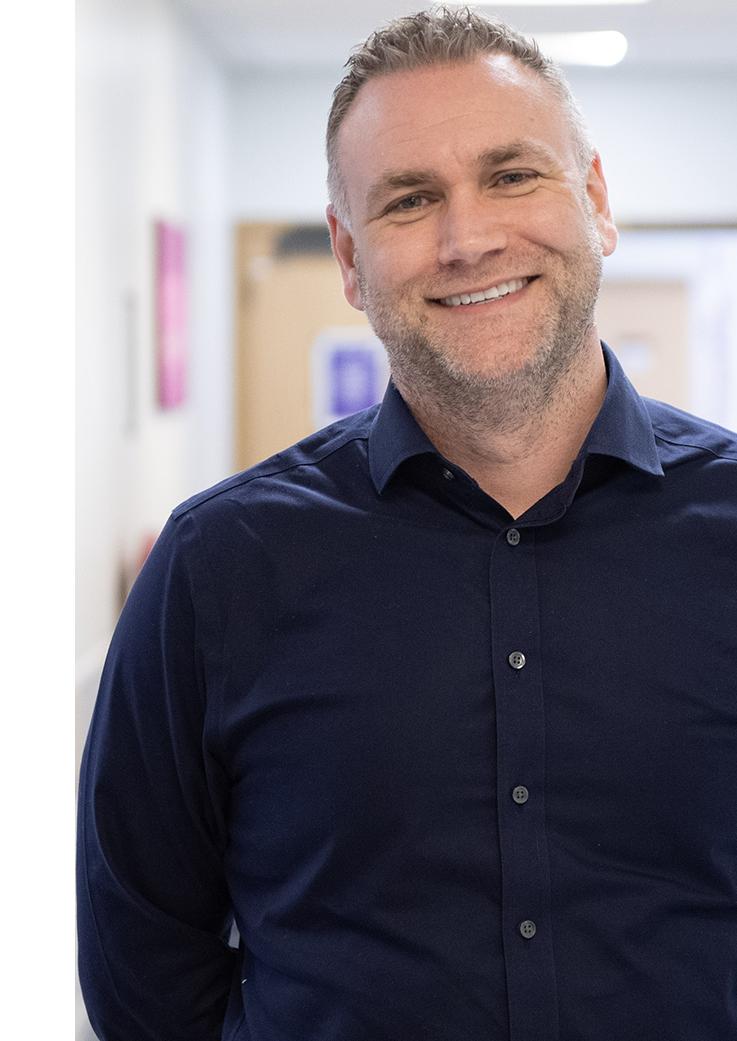
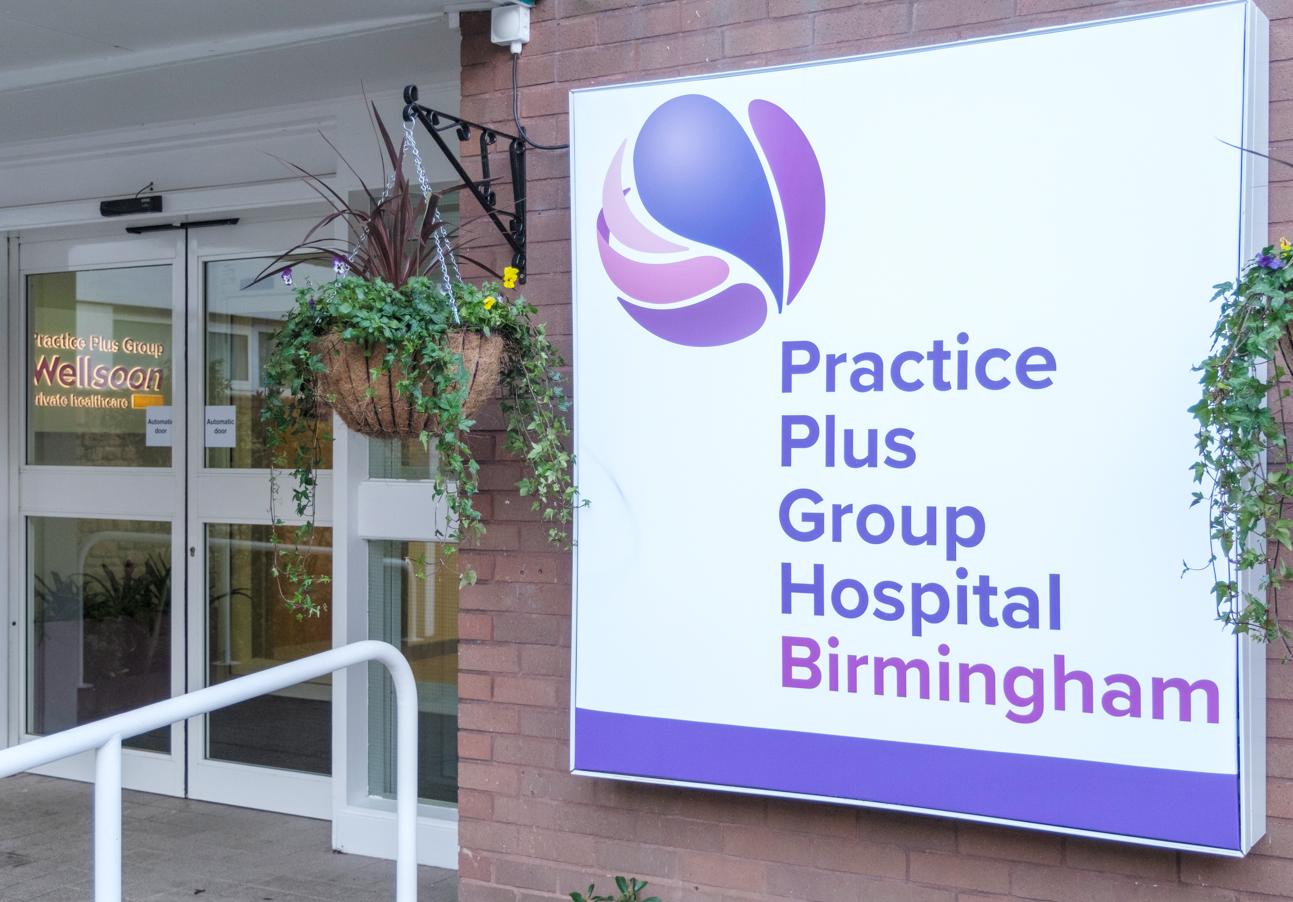
AFTER 17 years with Practice Plus Group, Ross Dowsett has stepped up as chief executive at a pivotal moment for one of the UK’s largest independent healthcare providers. The company’s secondary care business, which delivers both NHS and self-pay services across hospitals and surgical centres, has been acquired by Indian healthcare giant Narayana Health. In his first interview since becoming chief executive, Dowsett talks to Healthcare Today about what his priorities are going to be, what expansion will look like and the rise in demand of the self-pay market.
You’ve been with Practice Plus Group for 17 years and have now taken over as chief executive. What are your immediate priorities?
We are in the process of separating out the business, with a number of post-closure activities still to complete. Much of our focus at the moment is on ensuring that all regulatory and statutory requirements are fully addressed, and there is a great deal of work happening behind the scenes to make sure everything is covered.
Our first priority is to ensure that we remain safe and compliant. Once that foundation is secure, the focus shifts to preparing for the next phase: shaping our strategy for the future and putting in place the plans that will allow us to grow the business in the way we want to.
What does Narayana Health’s acquisition mean in practical terms for Practice Plus Group – for patients, staff and the NHS?
I’ll start with the NHS side of things. We have always been, and will continue to be, a predominantly NHSfocused organisation. In terms of what Narayana Health brings to us, there’s a great deal of shared DNA between the two organisations. We’ve grown
In his first interview, the new chief executive Plus Group talks about his priorities now group has been acquired by Narayana
Written by Adrian Murdoch.
up in the NHS world, operating within a tariff-based system for a long time, which means we’ve had to be incredibly efficient and productive to make ends meet. That efficiency allows us to generate enough surplus to reinvest – both in our staff and in our facilities, ensuring they remain modern and fit for purpose while maintaining quality.
Narayana Health brings valuable expertise in this regard. Their model in India, particularly in cardiac care, has achieved impressive results in making high-quality treatment more affordable. There’s a strong alignment in philosophy there. Where we see them really helping to accelerate our progress is on the IT side. They’ve spent seven years developing their own end-to-end system. It’s an exceptional piece of software.
That depth of technological know-how, combined with their operational experience, will be invaluable as we look to expand into other specialities and scale what we do.
What aspects of the organisation do you most want to preserve as it begins this new chapter?
Of course, we want to preserve everything that has made us the business we are today.
A big part of that continuity comes from the senior team, who have been leading the organisation for many years. That entire team will remain in place to continue driving our growth. So, I don’t anticipate any major cultural change. If anything, what
Narayana Health us culturally. It gives capacity to deliver have. I see this as than a shift – a partnership more of what we
Narayana Health delivering high-quality at scale in India. model might translate system?
They operate in some that we currently conversations have sensible and measured, on the importance too much too quickly. in situations like this build solid foundations expanding.
We don’t want to offering new specialities that we don’t yet expertise or infrastructure deliver properly. That wouldn’t be approach. Instead, to ensure that when move into those areas, do so with full
DOWSETT: CIRCLE
executive of Practice now that part of the Narayana Health.
brings is additive – it strengthens gives us the confidence and the deliver on the ambitions we already as an alignment of values, rather partnership that allows us to do do best.
Health has a reputation for high-quality healthcare What parts of that translate to the UK some specialities don’t. Those have been very measured, centred importance of not doing quickly. It’s vital this that we foundations before rush into specialities have the infrastructure to the right Instead, we want when we do areas, we
We are mindful of the financial pressures
facing the
NHS, but patients need to be seen and cared for.
knowledge, careful preparation, and the complete backing of our new owners. Narayana Health doesn’t do anything by halves – they’re very methodical and deliberate in how they operate. Once they make a decision, they commit to it fully and see it through. That kind of disciplined, thoughtful approach gives me a great deal of confidence about how we’ll move forward together.
Acquisition normally means expansion. Do you expect Narayana Health’s investment to accelerate growth?
Expansion is a significant part of our plan. If you look at our current footprint across the UK, we’re largely concentrated in the South and central areas. We don’t yet have a presence in the North West, the North East or the East of England – those are definite gaps for us. Within our longer-term strategy, site expansion features prominently.
We’ve had discussions about whether we want to become more of a city-centre operator, but that’s not really who we are. If you look at our existing sites, many of our most successful ones are outside
city centres – locations that offer great transport access and are much easier for patients to reach.
Accessibility is crucial. Patients value practical things like free parking, which can be a real problem at many NHS trusts. So, when we look at potential new sites, a major consideration is making sure patients can get to us easily, whether by car or public transport.
How do you ensure that the integration enhances rather than dilutes PPG’s existing relationships with the NHS and local health systems?
We’ve been operating for more than 20 years now, and in that time we’ve built strong, well-established relationships with commissioners. They remain a core part of what we do.
There is an aspiration to grow our private work – but always alongside our NHS work, not instead of it. When we launched our Wellsoon brand, for instance, it didn’t disrupt our NHS operations at all.
In fact, our NHS activity has continued to grow in parallel with
our expansion into the private sector. None of that diversification has distracted us; we’ve been able to balance both successfully.
How do you balance NHS partnership work with the growth of your self-pay and private patient business?
Most people go into clinical professions because they want to help patients, and the NHS is, quite rightly, seen as a fantastic institution.
There are, however, a couple of important points to consider. If we want to continue to grow in the way we plan to, private work has to be a significant part of that. It gives us a margin that allows us to do the things we want to do. It enables us to reinvest – particularly in our staff.
Over the past five to seven years, we’ve worked hard to enhance our staff offering. Part of the reason we’ve been able to do that is
the additional income from private work allows us to reinvest in our people and in improving patient care.
It also works the other way around. When we design and build new sites with private patients in mind – whether PMI or self-pay – the facilities look and feel fantastic. But because around 95% of our work is still NHS-related, NHS patients benefit from those same state-ofthe-art environments.
In January, the prime minister made clear his priorities to work with the private sector this year. How should the independent sector capacity be used?
We welcome all the statements that Keir Starmer has made, and it is encouraging to see him back up those statements. Behind the scenes, we have ongoing conversations about how we can better utilise capacity in the independent sector.
It is clear that the sector does have additional capacity that could support NHS waiting list initiatives.
We hope that with the upcoming budget, more funding will flow into these areas. We are mindful of the financial pressures facing the NHS, but what must not be lost sight of is that patients need to be seen and cared for. The independent sector has the capacity to help achieve those aims and begin to reduce waiting times.
Where do you see Practice Plus Group in three years’ time under this new ownership?
We want to take the best elements that Narayana Health can bring and apply them judiciously to our business. This will not be a sweeping or indiscriminate approach – we will carefully assess what works for our organisation and adapt those practices accordingly. We have spent a great deal of time with the
owners, who are genuinely sensible and methodical people. They are not trying to rush decisions, but they do understand the importance of acting efficiently and recognising the bandwidth required for sustainable growth.
In a few years, our goal is to have a couple of outstanding new sites operational and to expand our private medical insurance (PMI) offering, which we see as a significant opportunity. We are excited to work closely in this area.
While we are different from competitors in both approach and ethos, we aim to provide a patient experience that clearly demonstrates good value in this country. Patients should understand what they are receiving and have a transparent choice – whether that is through our services or, of course, through the NHS.
INTENT IS NOT
IT’S AN exciting time for tech in the NHS. Recently, Keir Starmer announced that a new online hospital would be launched by 2027, and Wes Streeting has regularly spoken about the need for a tech revolution in the NHS.
They’re certainly not wrong. One of the biggest challenges we’re facing is connecting the clinical expertise that is dotted around the system. Paramedics and GPs still find it far too difficult to get in touch with hospital consultants to get advice and identify the right pathway, first time. They often find their advice requests stranded on unanswered consultant to-do lists, or they use hospital switchboards, which can take a very long time to connect with the right person (if they even do at all).
In cases like this, primary clinicians are left with little choice but to send patients to hospital. However, it leads to far too many patients being added to waiting lists when they don’t always need to be there.
We know waiting lists have risen for the third consecutive month, and the reflex has been to add clinics, find extra staff and extend hours. It looks decisive, but it rarely creates lasting benefits.
What the NHS really needs is to prevent patients from being unnecessarily added to waiting lists in the first place. Integrating tech platforms throughout the NHS to streamline processes will go a long way in helping this, but focusing solely on firefighting won’t support this.
We need to incentivise NHS Trusts to step back, examine their processes and come up with effective ways to streamline and digitise in a way that works for them long term.
The first step is finding out which tech actually works in the NHS. Technology has
Kat James, joint managing director of Consultant Connect, explains how tech can douse the flames of NHS inefficiencies.
the power to fix a lot of things, but robot surgeons and AI won’t fix waiting lists on their own.
Impactful tech solutions in the NHS share three traits.
First, ruthless simplicity. If a tool is not easy to understand and NHS staff can’t learn how to use it in minutes, it will not get adopted. Doctors, paramedics and nurses are under so much pressure that they simply do not have time to learn new complicated tools. The NHS is years behind consumer tech in usability. The answer is not revolution, but simple updates.
Second, immediate clinical payoff. Clinicians need tech that starts generating results immediately; otherwise, they’ll question the point of it. For example, solutions that enable GPs to get instant specialist advice can change a patient’s outcome straight away. Where a GP might previously have sent a patient to a hospital just in case, specialist advice can keep patients out of hospital and get them seen in the right place, first time. That’s an instant impact that’s easy to understand.
Third, the impact spreads on its own. Successful technology starts small, yields results that are easy to communicate, and allows word-of-mouth to do the selling. If the only champions are vendors and comms teams, adoption will stall. When clinicians can point to time saved, referrals avoided, or faster decisions, the system follows.
These principles are what lead to impactful technology in the NHS, but there is a secret fourth ingredient outside of the
control of tech providers that’s incredibly important as well: stability.
NHS Trusts are often reluctant to adopt widespread tech changes for the simple reason that policies and budgets are constantly changing.
For example, the Elective Recovery was a very positive initiative that drove tech adoption. However, just as services found their rhythm, the rules changed, and then the support ended. These changes create scepticism and slow investment. Technology needs multi-year certainty to scale.
The government is making the right with the 10 Year Health Plan, but it will have the desired impact if they stick Intent is not delivery. Saying you will a diet is not the same as changing your eating habits. If the Government sticks this policy and gives frontline teams time and space to redesign systems make them more efficient, they’re onto winner.
The key for the NHS to stop firefighting is to have fewer sparks. For medtech providers, this means designing simple, effective tools that can streamline existing processes and create benefits that are easy to understand and communicate others.
For the government, this means setting framework and sticking to it. Give systems incentives that reward prevention and collaboration. Give leaders a plan that endures and allows them to adopt the technology that will save them time effort. Do that, and there’ll be far fewer waiting list fires to put out.
NOT DELIVERY
incredibly adopt simple are Fund drove services changed, slow multi-year noises will only stick to it. will go on your sticks to teams the systems to onto a firefighting medtech simple, existing are communicate to setting the systems and that the and fewer
IMAGINE you have an ongoing health issue. You finally reach out for help from your GP. They see there is an issue that needs a specialist review, and you are referred. Eventually, your referral hits the top of the list, and you see a consultant.
After perhaps an extended period, you finally get assessed. Then nothing. No explanation. No communication. Months pass until, by chance, you are given a copy of an internal letter stating a diagnosis. Something you don’t understand, that has never been mentioned or discussed with you.
No follow-up. No referral for treatment or support.
You would rightly question, query or even complain as to why you weren’t told or had the diagnosis explained to you. Imagine being told the consultant “didn’t know” they had to tell the patient the diagnosis. Imagine finding out about a second, different diagnosis, in the same way. Imagine never being referred for any treatment or support. Finally, imagine seeking answers for two further years, but still getting no answers.
As patients, we put our trust, health, our lives even, in the hands of healthcare professionals we have often never met before; reassured we are in “the best place”. But, unfortunately, all too often, things go wrong, and a secondary traumatic experience may be just around the corner.
Following procedure
As a patient, one would think that when things go wrong, one could rely on the NHS Trust to follow a rigorous procedure to investigate and identify where things went wrong. They would want to learn, improve and ensure the system was robust enough to ensure the cause was not repeated for future patients. What then, when the so-
PATIENTS, COMPLAINTS AND THE
called investigation makes excuses to the patient and doesn’t take any responsibility for what went wrong? The brick wall appears. “Take it to the Ombudsman,” they say.
Well, the Ombudsman must see the issues here and want to help resolve this issue for the patient. But the only evidence they see is directly from the Trust they are looking at.
Often, many months pass before a case reaches the Parliamentary and Health Service Ombudsman; time in which data may be lost, go missing, or be amended in some way.
By marking their own homework in the first place, Trusts have ample opportunity to ensure the right information is provided and rebalance the scales to reduce the likelihood of any further investigation.
Simon Shemilt, founder Honest campaign, gives patient safety
A change in the landscape
When one patient complains and lives with the unnecessary burden of this fight to be heard for many years, it could be seen as an anomaly. Unfortunate. A one-off. Bad luck.
That’s what I thought. But I figured the system should be far more robust, and if an articulate individual with a well-written, evidence-based complaint fell foul of the system, how would others fare? And so, the campaign was borne from a disenfranchised patient, wanting to change the world, and expecting to do so on their own.
COMPLAINTS THE NHS
of the Keeping The NHS gives a new perspective on safety and the NHS.
That patient, it turns out, wasn’t alone. The simple Facebook group began to grow. Ten members, then 30, then 100. Others had experienced similar problems. With little more than word of mouth, within two years the group had 400 members, and currently in excess of 520.
This was not a one-off. It affected all demographics, all locations, all home nations. And with growing numbers comes awareness, a louder voice and the real potential for change. Just look at the Post Office scandal; there is no longer a tolerance for injustice or cover-ups from big, powerful organisations.
The change that’s needed?
To overcome the hundreds of similar experiences that we became aware of, and to create a robust, reliable and efficient system, the proposal for a fully Independent NHS Complaints Service was put forward. The INCS would see the extraction of formal complaint investigations away from each NHS Trust (investigating themselves with their own staff); and their internal process of sanitising the outcome, to the new independent service. The experiences described by patients and their families all concur that the responses received after an investigation are, at best, watered down. At worst, something more serious. Patients and families should not need to spend years trying to reach the truth and find closure to what happened to themselves or their loved ones.
Experience shows us, as time passes by, vital information has the potential to be lost, deleted or misplaced.
The proposal
A new service, the INCS being separate in location, staff and funding from the NHS. A national body with regional locations for access for face-to-face meetings as needed; staffed by specifically recruited and trained individuals, employed for this service.
Teams able to gather all necessary records and information efficiently, before anything is lost or deleted, as is the case for investigations undertaken by the Health & Safety Executive (HSE). Investigations undertaken diligently and from a neutral perspective. Findings recorded centrally, with a database collating complaints from all Trusts to enable not just individual resolutions, but identification of themes, patterns and key areas of concern.
We want to take the service one step further and ensure the insight gained from patients is not the only source of learning and improvement. Our team includes current and ex-NHS staff, and we know that the insight from staff is just as vital for learning and improving. We want to empower staff to also be able to safely speak up and share their insight. Facilitating this through anonymous reporting structures into a specific team within the INCS, rather than through line managers, allowing their insight to be investigated and learning opportunities identified and fed into the same central learning hub, to work alongside patient complaints.
The key to learning and improvement of patient care and outcomes is truly listening and understanding the cause of problems. The benefits of this new service provide a platform for large-scale learning, tapping into the pot of gold that comes from the insight of service users and staff.
THE QUIET FIX NHS WAITING
NHS waiting lists dominate the national conversation - but still remain stubbornly high. As of August, almost half of patients on waiting lists have received no care since their initial GP referral
Long waiting times lead to unnecessary anxiety for patients. In many cases, they’ve been on a waiting list for so long that by the time a consultant sees them, their symptoms have resolved or changed, or they simply no longer need the appointment.
But there is a quiet fix – referral triage and validation – and it’s helping trusts take back control. Done well, it’s one of the most effective and efficient ways to reduce pressure on secondary care and get patients to the right outcome faster.
Streamlining outpatient lists
When a GP refers a patient to hospital, that referral often enters a queue, even when it might be better handled elsewhere. Referral triage allows consultants to review each case to check clinical appropriateness, urgency, and determine the appropriate setting for a patient to be managed.
That means patients who don’t need hospital care can be treated in the community, within primary care or directed straight to diagnostics or other services.
Henry
Maas, head
of new initiatives at Consultant Connect, explains why referral triage needs to move centre stage.
This streamlines outpatient lists and protects clinical time for those who truly need it. Working with more than 20 trusts across the NHS, our data shows that on average, 38% of referrals triaged can be returned to primary care with detailed management plans or safely redirected to more appropriate care pathways.
That’s almost four in ten patients avoiding an unnecessary hospital appointment – and instead receiving care that’s faster, closer to home, and better suited to their needs.
So why isn’t clinical referral triage and validation already standard practice? In many places, it comes down to consultant capacity. Triage takes time and headspace – and with hospital teams already under pressure, it’s hard to find either. But today, technology has made this challenge far easier to solve.
Consultant Connect’s National Consultant Network provides local trusts with support from consultants working remotely in other areas during their non-NHS hours.
These consultants act as an extension of the existing team, following local pathways, protocols
and supporting the local team. The network provides extra capacity when it’s needed most. It is essentially clinical capacity on demand. It gives trusts the ability to scale triage support up or down within 72 hours. It’s clinically safe and efficient.
The model is particularly valuable for high-demand specialities or in smaller departments where there simply aren’t enough hands to manage growing referral volumes.
Instead of the backlog just growing, trusts can bring in targeted help to triage and validate referrals at pace.
Immediate benefits
For patients, the benefits are immediate. Referral triage leads to faster decisions, and patients are sent to the right care first time.
This smoother journey reduces frustration, delays and duplication. And importantly, triage supports greater clinical fairness. It ensures patients with the greatest need are prioritised.
In one Midlands trust, remote consultants triaged more than 1,000 neurology referrals within eight weeks and cut the waiting list
FIX FOR LISTS
in half. Many patients were redirected to diagnostics or returned to primary care with guidance.
At a national level, more than 230,000 people are currently waiting for neurology appointments, with an average wait of 17 weeks. Interventions like this have the power to make a significant impact.
Referral triage isn’t a temporary fix or sticking plaster. It’s a practical, proven model that can be embedded into everyday care across the NHS.
Triaging makes a huge difference when done in real time – it enables local consultants to concentrate on delivering clinics and treating patients, at the same time as providing GPs with better advice to manage patients in primary care. To succeed, it needs to be treated as core infrastructure, not an optional extra.
What’s needed now is sustained funding to ensure referral triage is available to every trust that needs it. The NHS doesn’t have time to waste. Referral triage is one of the most scalable tools we have and it’s time to move it to the centre of the recovery plan.
A BREAKDOWN IN
NHS ENGLAND’S decision in June 2025 to make the NHS App the “default digital communication channel” marked a clear turning point in how the health service intends to communicate with the public. The move, expected to save up to £200 million over three years, reflects a longterm ambition to shift away from printed letters and embrace faster, more timely and accessible digital communication.
Momentum is certainly building. NHS App usage reached a record 45 million registered users by September, according to official NHS statistics. More patients than ever are accessing test results, appointment details and clinical correspondence digitally.
Initial progress has been made by digitising structured documents such as appointment reminders and standardised clinic letters, which are well-suited to templates and automation. But the NHS’s communication ecosystem is far more complex.
Unstructured mail – the typed clinic summaries, discharge notes, follow-up instructions and administrative documents produced daily across departments – remains a major barrier. Unless this part of the system is modernised, the full benefits of digital-first communication will remain out of reach.
The exact number of letters the NHS sends each year is not centrally published, but the service issues millions of documents annually across trusts, community services and primary care. Even at a local level, volumes are substantial. Last year, Royal Devon NHS Trust confirmed that it alone sends around two million letters a year. Scaled across more than 200 trusts, the national volume is enormous.
A significant proportion of these letters is unstructured. Findings from more than 200 FOI requests issued to NHS organisations indicate that between 45-60% of outgoing communication is unstructured.
Unlike appointment reminders generated from a patient administration system or EPR
Mark Statton, head of public sector strategy at Quadient, writes that digital-first will stall unless the NHS tackles its unstructured mail problem.
system, unstructured documents vary widely in format. Address blocks appear in different corners. Page layout and spacing differ between departments. Files are merged, edited or annotated manually. The result is a collection of communication that cannot reliably pass through automated digital workflows.
This variation is more than an irritation. It directly limits the NHS’s ability to route communication consistently through the NHS App, email or SMS. While structured communication has become easier to digitise, unstructured communication still takes the long route: printed in-house, corrected by administrative staff, or sent to external print rooms. For patients, this means receiving some updates instantly through the NHS App and others days later by post – depending solely on where the communication
COMMUNICATION
originated. Patients increasingly rely on digital channels to stay informed. But when different parts of the NHS send information using inconsistent methods and timings, the patient experience suffers. A recent article argued that communication is the basis of 17% of all formal complaints about hospital and community health services. When digital updates and paper letters conflict, confusion follows – for example, when a digital notification suggests an appointment is confirmed, only for a letter to arrive later with different details.
Communication inconsistencies create operational pressures too. Staff must reformat documents so they can be sent, correct demographic details, produce accessible formats and reissue letters when content is unclear. Each task is small in isolation, but across thousands of communications every week, the administrative load becomes significant.
Postal delays compound the issue. With variability in second-class delivery performance noted in recent Ofcom monitoring, printed letters regularly take several days to reach patients. Missed appointments, repeated contacts and re-bookings all add avoidable strain to clinical services.
Digitising unstructured communication is not as simple as introducing more templates. It requires the ability to recognise, interpret and standardise a wide variety
of documents – many of them created manually and without consistent formatting. Addressing this challenge can unlock several benefits. Once unstructured letters follow predictable patterns, they can move cleanly through digital channels, giving patients communication that arrives reliably and in the right place. It also strengthens accessibility.
The NHS’s duties under the Accessible Information Standard require information to be clear and usable for every patient, yet unstructured documents are the most likely to need layout, formatting or language adjustments. Standardisation makes accessible formats faster and easier to produce.
There are operational gains too. When documents arrive in a consistent, digitalready state, staff spend less time performing manual checks or reworking content and more time supporting patient care. And for patients, the experience becomes noticeably more coherent. Mixed messages and conflicting updates diminish when every communication, regardless of where it originates, travels through the same modern, consistent system.
The NHS’s commitment to digital-first is the right one. Real-time updates, clearer communication and a reduced environmental footprint all contribute to a more modern, responsive service. But the next stage of progress depends on addressing the complex, often unnoticed half of the communication ecosystem.
Structured documents have led the way. Now the strategic opportunity lies in bringing the unstructured majority into the same digital framework. Trusts that take steps to understand, standardise and modernise these documents will be well positioned to deliver truly consistent, efficient and patientcentred communication.
Digital-first is within reach – but only when the whole communication pathway is brought along with it.
THE
PHARMACEUTICAL
sector faces a critical juncture. Operational costs are climbing, and patent expirations between 2025 and 2030 are threatening more than US$300 billion (£227 billion) in global prescription drug revenues.
In parallel, the cost of developing new UK treatments often exceeds £20,000 to £30,000 per qualityadjusted life year, placing sustained pressure on commercial and medical marketing models. As a result, companies now find themselves rethinking how they operate and compete in an environment where efficiency, speed and cost control have become strategic imperatives.
Against this backdrop, agentic AI is emerging as a practical solution. Unlike traditional automation, which follows static, predefined workflows, agentic AI systems can learn, adapt, and orchestrate multi-step processes, with human oversight built into the loop. Recent research indicates that nearly three-quarters of pharmaceutical companies are now piloting or deploying agentic AI, clear evidence of how quickly the technology has entered the mainstream.
Its defining advantage lies in its adaptability. Rather than relying solely on predefined instructions, it continuously outputs as new data, constraints, or market conditions appear. This capability is vital for life sciences organisations moving swiftly from strategy to execution.
The momentum behind this shift is also reflected in the wider UK ecosystem. Investment in UK AI companies rebounded to £2.9 billion last year, signalling growing confidence in its transformative potential across regulated sectors.
One of the most visible impacts of agentic AI is in the way pharmaceutical companies engage healthcare professionals. Traditional
AGENTIC PRACTICAL
engagement models, heavily reliant on in-person visits and standardised messaging, have become less effective as clinicians increasingly protect their time and filter information more selectively.
Agentic AI enables a more targeted and responsive approach. These systems can analyse large, diverse datasets, including prescribing behaviour, clinical publications, digital interactions, and conference participation, to build detailed profiles of individual healthcare professionals, generating hyperpersonalised communications aligned with each clinician’s preferences, needs and clinical focus. This ensures communications remain relevant, compliant, and timely, supporting more meaningful interactions while reducing wasted effort and generic outreach.
Traditionally, handling medical information requests from
Joaquín Labado, healthcare managing director at Globant, agentic AI is reshaping the marketing workflows
healthcare professionals has involved resource-intensive manual processes, combining scientific literature review, regulatory checks, and internal approvals.
Agentic AI systems can assist by rapidly synthesising information from clinical trials, real-world evidence, regulatory documents, and peerreviewed literature to generate accurate, compliant responses. While final oversight remains with medical professionals, this automation significantly reduces response times and administrative burden. As a result, medical affairs teams can shift their focus towards higher-
AGENTIC AI IS A
SOLUTION
healthcare and life sciences
Globant, explains how the pace of medical
value activities such as clinical strategy, trial design, real-world evidence generation, and longterm educational planning. This not only increases efficiency but also improves the quality and consistency of support provided to the clinical community.
Despite its clear benefits, widespread adoption of agentic AI comes with challenges. Regulatory compliance, data quality, standardisation, and patient safety remain top priorities across the industry. Common barriers include fragmented data sources, slow content approval processes,
inconsistent data standards, and the ongoing dependence on legacy IT systems.
To address these limitations, pharmaceutical organisations are investing heavily in data infrastructure. According to MIT Technology Review Insights, 84% of industry leaders now view data integration and standardisation as a high or medium priority for unlocking the full value of agentic AI.
Beyond efficiency gains, agentic AI represents a significant economic opportunity for the life sciences sector. The UK government has reported strong growth in the national AI economy, with AI-related employment increasing by a third in 2024.
For commercial and marketing teams, this provides the foundation for more agile, cost-effective business models. Early investment in
robust data pipelines, governance frameworks, and complianceready systems enables companies to streamline workflows while meeting strict regulatory and ethical standards.
MIT Technology Review Insights estimates that agentic AI could generate between $60 and $110 billion in economic value globally across the pharmaceutical sector. These benefits extend beyond cost savings, supporting faster timeto-market, improved engagement strategies, and more responsive customer experiences.
A key strength of agentic AI is its role as an augmentative tool rather than a replacement for skilled professionals. By automating repetitive and time-consuming tasks, like data preparation, content generation, or initial research synthesis, AI frees commercial and medical teams to focus on strategic thinking, cross-functional collaboration, and decision-making.
This shift supports a cultural transformation within organisations, where professionals spend less time on administrative work and more on insight generation, creativity, and problem-solving.
Agentic AI is no longer a speculative trend. It is becoming an operational reality within UK healthcare marketing and medical affairs.
As the acceleration of agentic AI continues, the pharmaceutical industry faces a clear choice: adapt proactively or risk falling behind.
With its ability to streamline workflows, enable hyperpersonalised engagement, and support complex scientific operations, its influence is set to deepen over the coming years, reshaping not only how companies work but how they deliver value to both healthcare professionals and patients.
WHY MORE INFORMATION BETTER MALPRACTICE
IT CAN be tempting for clinicians to think that providing less information might secure a lower premium or a simpler application.
We sometimes hear frustration over the detailed questions insurers ask, from procedures and patient volumes to hospital history and past claims. This can be from clinicians or brokers.
However, experience shows that more information upfront leads to better protection. Sometimes while information may not be self-evident as to why it makes a difference to
George Maughan, THEMIS
Clinical Defence’s head of client relations, explains why sharing more detailed information at the point of application can lead to lower premiums and more comprehensive cover.
quotes, it may represent an impactor which can alter your policy if not declared correctly.
Medical malpractice insurance cannot be treated as a simple paper-form exercise. Both the clinician and the broker have a responsibility to scrutinise the application carefully to ensure it accurately reflects the scope of practice.
Why full disclosure matters
Incomplete or “managed” information carries real risks:
INFORMATION MEANS MALPRACTICE COVER
• Coverage gaps: Claims related to undisclosed procedures or practice areas may be excluded.
• Delays and disputes: Missing details can slow claims handling.
• Professional exposure: Regulatory or reputational complications can arise if coverage is inadequate.
2. Clinical experience: Prior hospitals, years as a substantive
consultant, and claims history.
3. Live claims data: Frequency and severity of relevant claims.
By focusing on these factors, we tailor coverage to each clinician’s real risk profile, rather than offering a generic policy.
Observations
Clinicians often describe the application process as detailed or time-consuming, especially in complex specialties.
Yet those who provide full, accurate information are far better supported
when claims arise. Conversely, omissions, even unintentional, can create uncertainty and complications during claims handling.
The bottom line
Premiums are visible, but they are not the whole story. Transparency and thoroughness in your application safeguards your career, finances, and patients. By giving underwriters, a complete view of your practice, you secure coverage that truly protects you; when it matters most.
For more information about THEMIS Clinical Defence, click here.
HOW CLEO EPS IS COMMUNITY PRESCRIBING
ELECTRONIC prescribing is no longer a future ambition - it’s here and it’s changing the way clinicians work across the NHS.
As trusts and community pharmacies seek to cut the burden of admin, improve safety and deliver faster patient care, CLEO EPS is emerging as a game-changer.
This accredited, instant electronic prescribing solution from CLEO Systems removes the need for paper FP10s, enables seamless prescription transfer to community pharmacies and gives clinicians a workflow that’s faster, safer and greener.
A real success story: Hampshire and Isle of Wight NHS Trust
Hampshire and Isle of Wight Healthcare NHS Foundation Trust (HIOW) offers a compelling example of what’s possible.
CLEO EPS has been deployed across 67 of its community teams, including:
• Urgent Treatment Centre
• Older People’s Mental Health
• CAMHS
• Perinatal Services
• Specialist Palliative Care
• Frailty and Eating Disorders
Today, around 300 prescribers –88% of the HIOW workforce – are using CLEO EPS and the trust has already issued over 19,500 electronic prescriptions, that’s rapid adoption at scale.
Why it matters
Community clinicians often work across multiple sites, travelling between clinics, homes and urgent care settings.
Paper-based prescribing created delays, risks and unnecessary journeys, none of which align with modern and responsive care. By eliminating FP10s, CLEO EPS has:
• Reduced admin overhead
• Prevented lost or illegible prescriptions
• Accelerated medication access for patients
For services like mental health, frailty and perinatal care, this reliability is critical - improving both outcomes and patient experience.
The benefits in numbers
HIOW’s rollout highlights the tangible gains CLEO EPS delivers:
• Clinical Safety: No handwritten errors, no lost FP10s, no delays.
• Efficiency: Prescriptions sent in seconds, saving up to seven minutes per patient, time reinvested in care.
• Flexibility: Mobile teams can prescribe anytime, anywhere – no printers, no office dependency.
• Patient Experience: No more trips to collect paper scripts; medication goes straight to the chosen pharmacy.
• Governance: Built on FHIR standards for full auditability and traceability.
• Sustainability: Less paper, fewer clinician journeys, greener healthcare.
Feedback from prescribers says it all:
“A million times quicker and easier than paper prescriptions. No lost prescriptions, no lost paper trail.”
“It’s a game changer! It has freed up my time and that’s priceless.”
A blueprint for the future
Electronic prescribing isn’t just a tech upgrade. it’s a critical milestone in NHS digital transformation. CLEO EPS proves that when solutions are intuitive, clinically aligned and scalable, adoption can be swift and impactful.
For HIOW, the results are clear: less paperwork, more patient care, and a prescribing process that matches the speed and complexity of modern healthcare. This is connected care in action, laying the foundations for tomorrow’s NHS.
CLEO EPS is not just transforming prescribing - it’s simplifying connected care.
IS TRANSFORMING PRESCRIBING
THE IMPORTANCE TEAM TO CHASE
IN TODAY’S healthcare environment, the relationship between a medical practice and its payers is more complex than ever. Insurers introduce new rules, documentation demands shift constantly, and reimbursement delays can threaten stability even in well-run practices. In this landscape, having a dedicated team to chase your invoices and manage insurer communication is not just helpful... It’s essential. Yet many practices still try to keep these tasks in-house, only to find that billing inefficiencies, staff turnover, and inadequate follow-up create avoidable financial strain. Outsourcing these functions offers not only operational relief but a strategic advantage.
This article explores why specialised support matters and how separating clinical relationships from financial relationships can dramatically improve outcomes for both patients and providers.
Why invoice chasing and insurer management matter more than ever
When reimbursements slow down or claims fall through the cracks, the impact is immediate and painful:
• Cash flow becomes unpredictable
• Budget planning becomes reactive
• Staff spend time on admin instead of patient care
• Patient experience deteriorates due to billing confusion
• Small errors escalate into large financial losses
Medserv’s Derek Kelly talks about why it pays to have backup when dealing with insurers directly.
Healthcare providers should not have to spend their days playing phone tag with insurers, resubmitting paperwork, or decoding rejection letters. But these tasks must be done, and done well, for a practice to run smoothly.
A dedicated billing team ensures that invoices are consistently followed up, rejections are appealed promptly, and no revenue is left uncollected.
The case for outsourcing: Expertise, efficiency, and financial clarity
Many organisations assume that keeping billing internal gives them greater control. In reality, the opposite is often true. Outsourcing to a specialist brings:
Consistent, professional follow-up: Billing follow-up is tedious, technical, and time-sensitive. Outsourced teams focus solely on revenue cycle tasks, ensuring the work never falls behind.
Immediate access to expert knowledge: Specialists stay ahead of insurer policy changes, coding requirements, and documentation standards. This reduces errors and speeds up reimbursements.
Better claim rejection management: Claim rejections aren’t just paperwork problems; they’re revenue leaks. Outsourced teams identify root causes, fix issues, and actively recover lost income.
Scalable staffing without HR headaches: No more scrambling to find cover for sickness, holidays, or staff turnover. Outsourced teams provide continuity and capacity.
Cost savings and predictable financial performance: With improved accuracy and faster payments, practices experience stronger cash flow and clearer revenue forecasting.
Outsourcing doesn’t just fill gaps, it raises the standard of the entire billing operation.
Protecting the clinical relationship by separating the financial one
One of the most powerful reasons to outsource billing is to protect the trust between clinician and patient.
When clinicians handle financial issues directly, a conflict emerges:
• Patients may feel uncomfortable discussing money with their provider
• Clinicians may hesitate to enforce payment policies
• Conversations meant to support health become transactional
• Time meant for patient care shifts to administrative work
• This blending of roles weakens both relationships.
IMPORTANCE OF HAVING A YOUR INVOICES
When a third party handles the financial conversation, everyone benefits:
For the patient:
• They maintain a purely therapeutic relationship with their clinician
• Billing questions feel less personal and more procedural
• They receive clearer, more consistent communication
For the clinician:
• They remain focused on care, not collections
• They avoid uncomfortable financial discussions
• Their time and mental bandwidth stay dedicated to treatment, not paperwork
For the practice:
• Financial processes become standardised, not emotionally charged
• Payment structures and policies become more effective
• Compliance and documentation improve
In short: Let clinicians be clinicians. Let financial professionals handle the finances.
The importance of dealing with insurers directly (but not personally)
Insurer relationships can feel adversarial, frustrating, and opaque. Every claim type, payer, and specialty comes with its own requirements, timelines, and quirks.
A specialised billing partner takes ownership of this complexity by:
• Speaking the insurer’s language
• Knowing escalation pathways
• Understanding appeal strategies
• Monitoring reimbursement trends
• Tracking what each payer is likely to deny
• Identifying patterns across multiple practices and specialties
• They can do this because they manage thousands of claims, not dozens. The volume creates insight.
And because outsourced teams act on your behalf, insurers still see a unified, professional, consistent point of contact, without the administrative load falling on you.
A more sustainable model for 2026 and beyond
Healthcare organisations are under rising pressure:
• More administrative complexity
• More documentation requirements
• More financial scrutiny
• Higher patient expectations
• Stricter insurer guidelines
The practices that thrive will be those that streamline operations, protect clinical time, and treat billing as a specialised discipline, not an afterthought.
Outsourcing your invoice chasing and insurer interactions is not just
a cost-saving decision. It is a structural investment in the stability, reputation, and professionalism of your practice.
Partnering with Medserv
Medserv provides comprehensive medical billing and practice management services designed to remove administrative stress and increase financial certainty. Our expert teams handle:
• Invoice chasing and full ow-up
• Denial prevention and appeals
• Insurer communication and escalation
• Claims management from submission to settlement
• Real-time reporting and revenue analytics
• Compliance support and documentation optimisation
We make your financial processes predictable, efficient, and professionally managed, so you can focus entirely on delivering exceptional care.
Your clinical expertise is irreplaceable. Your financial processes shouldn’t depend on it.
Separating these two worlds is the key to operational stability, healthier patient relationships, and long-term financial success.
Let 2026 be the year your practice frees itself from administrative burden and gains the clarity and confidence that come with expert billing support.
Published by Healthcare Today Media Ltd. Healthcare Today is editorially independent. Material is governed by copyright.
No part of this publication may be reproduced, stored in a retrieval system or transmitted in any form without permission, unless for the purposes of reference and comment.