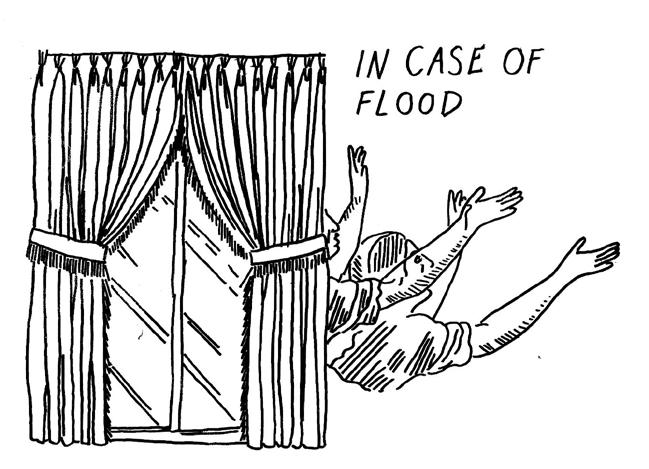
This booklet was published in conjunction with the exhibition In Case of Flood, curated by Jessi Sherbet at Gallery114@HCC Ybor City from August 21 through November 6, 2025.
Artwork and Conceptual Statements contributed by the artists featured in In Case of Flood.
All rights reserved. No part of this publication may be reproduced or utilized in any form or by any means without permission from HCC Art Galleries.
Program made possible in part by support of Student Activities/Service Fees and the HCC Ybor City Campus Student Government Association.
HCC Art Galleries gratefully acknowledges Food 2 Finish and their sponsor, Suncoast Credit Union, for their collaboration on In Case of Flood and their ongoing commitment to providing food to HCC students, faculty, and staff in times of emergency.
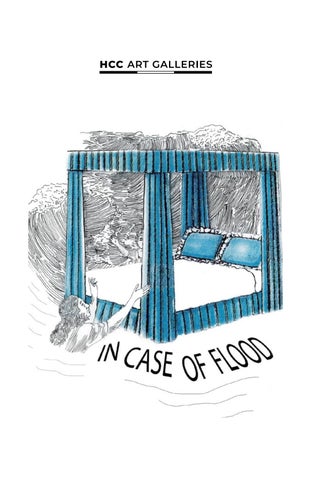
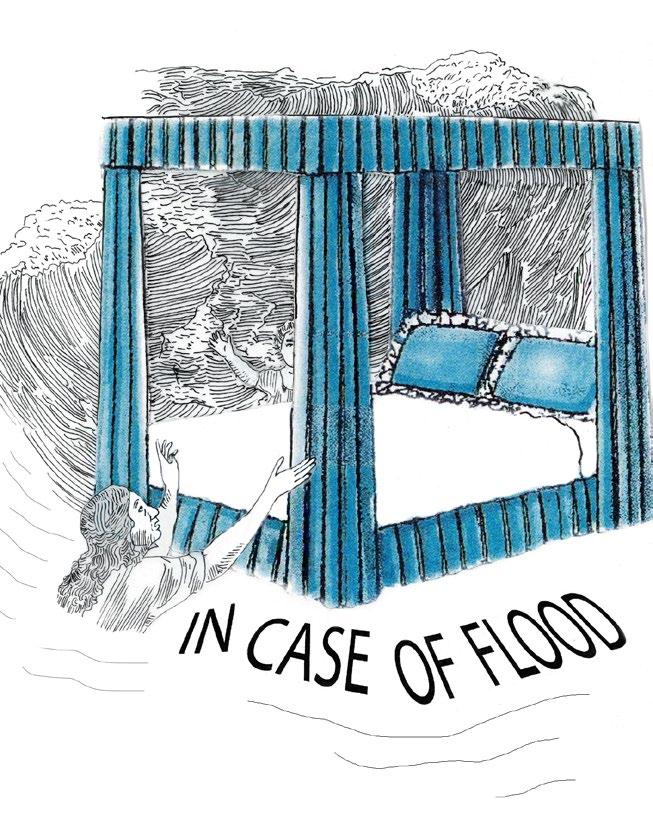
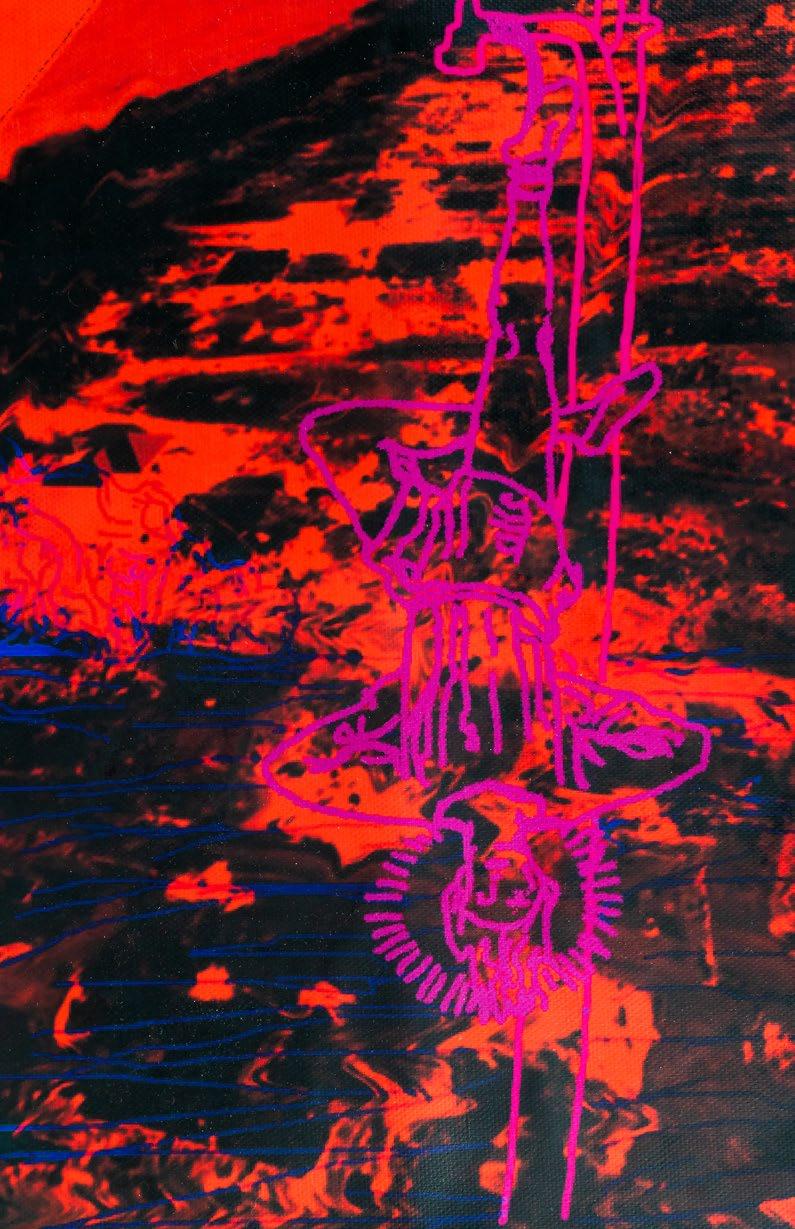
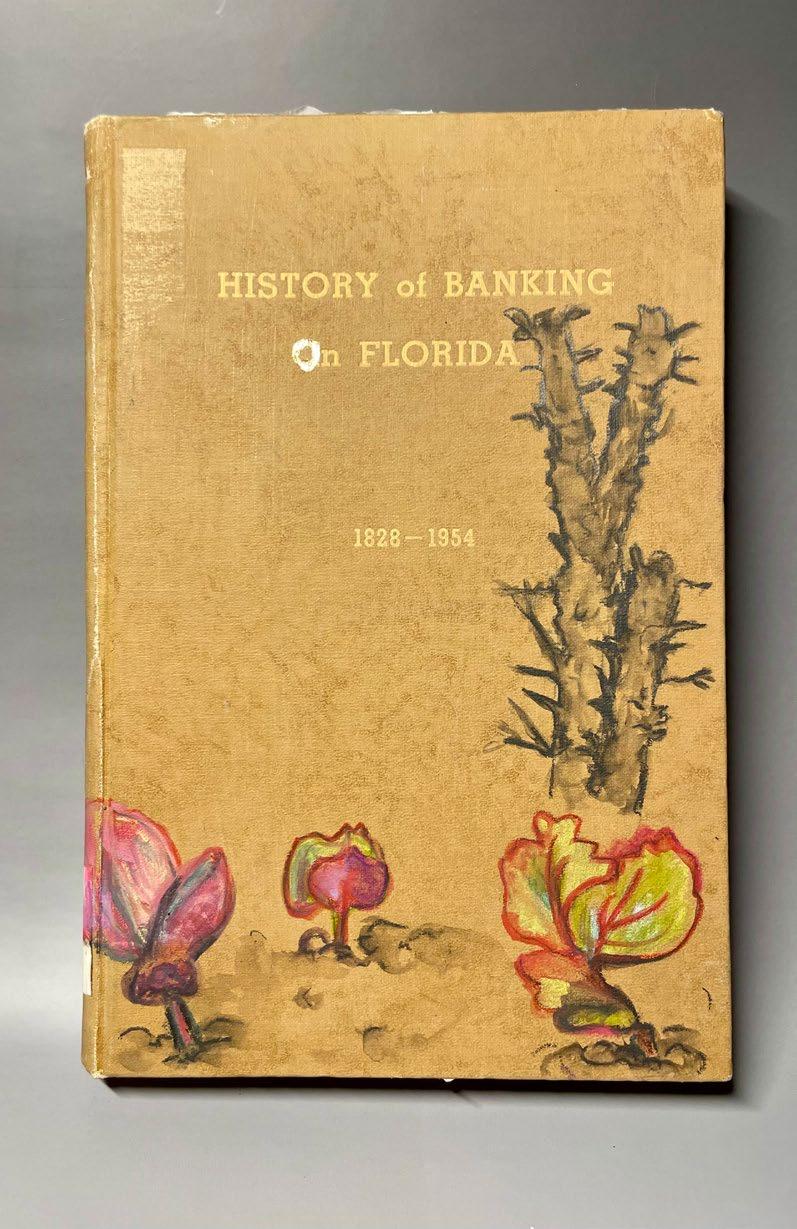
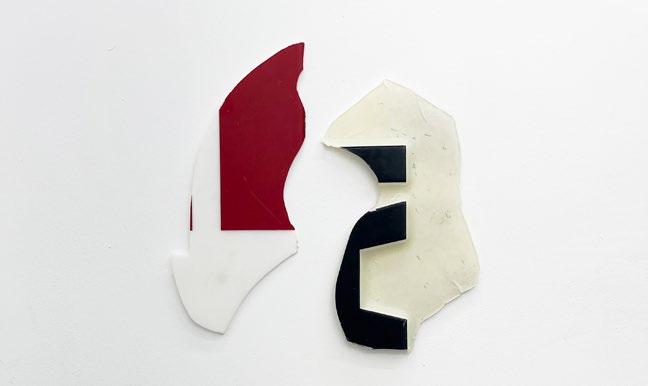
Cover: Multimedia collage by Jessi Sherbet (2025), sampling elements from the public domain engraving Affecting Instance of Maternal Affection (originally published in The Tragedy of the Seas).
ABOUT IN CASE OF FLOOD
What does it mean to create art that accepts the reality of loss?
Galvanized by last year’s unprecedented back-to-back 100-year storms—Hurricane Helene and Hurricane Milton—In Case of Flood includes artists and activists in the State of Florida whose work embraces creative adaptation, collective resilience and risk amid environmental uncertainty.
Whether visual, conceptual or functional, the artworks are bound by one condition: if floodwaters rise or hurricane winds return, they will not be prioritized for preservation. Instead, the exhibition will be surrendered to the elements, with any salvageable hurricane materials subject to mutual aid redistribution.
Engaging themes of futility, adaptation, acceptance and transformation, In Case of Flood invites audiences to reimagine the role of a gallery as storms intensify.
Artists include Elizabeth Anderson, Marisa Griffin, Kirst Austin-Harrow, Emma Chandler, Odessa Conner, Josh Corson, Rae Fernandez, Adda Farcus, Jim Graham, Kelsea Gustavson, Piper Harrow, Cort Hartle, Nan Keeton, Jason Lazarus, Kate Magruder, Cori Matyas, Trinidad Oribio, Kathy P., Kyna Patel, Emma Quintana, Kali Rabaut, Katelyn Rose, Anthony Record, Kristen Roles, Eszter Sziksz, Salma Taguja-Garcia and Becca Wahl.
MEXICO BEACH, 2025
Kate Magruder @fjshwjfe
Digital art printed on ballistic nylon | 24 x 36 in. | Lent courtesy of the artist.
The concept of sacrifice is not lost on the average Floridian. Residents are left to fend for themselves as life-preserving budgets are sacrificed to the whims of development and industry. The coast has become a futile barrier as reefs are dying, trees and foliage are removed and nothing is left to absorb the 145 mph impact.
While climate crisis continues to be a controversial subject, the hardest impacted are left in a state of loss, powerless as the discourse rings out. This work explores these themes in its representation of the destructive fallout from recent storms overlaid with the image of the hanged man, an enduring symbol of paradox and surrender. He teaches that the truth is often hidden in its opposite. Seeking to dominate nature, our lesson is never learned—the more we walk with nature in stewardship, the more it protects us.
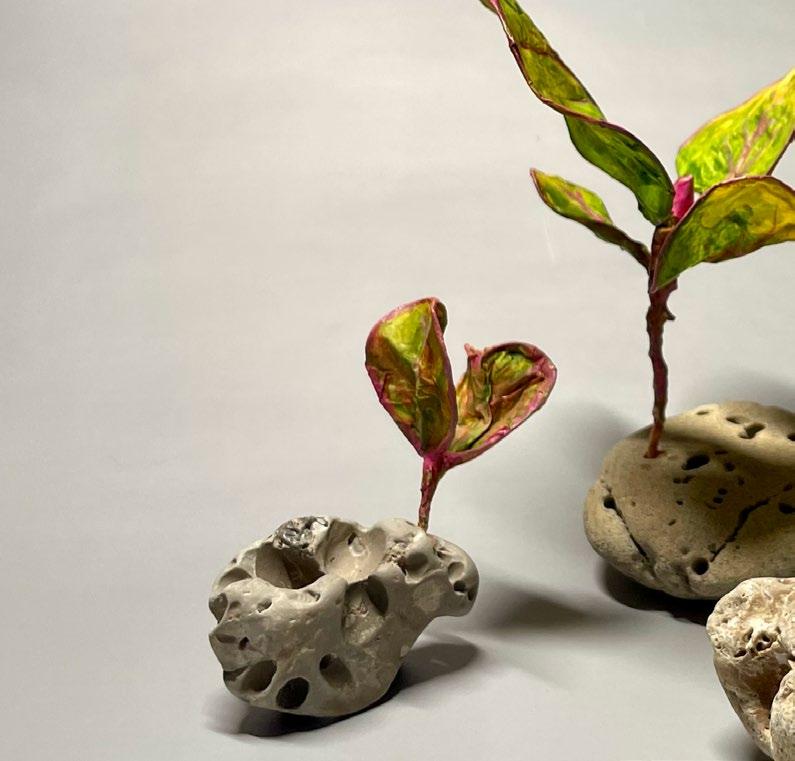
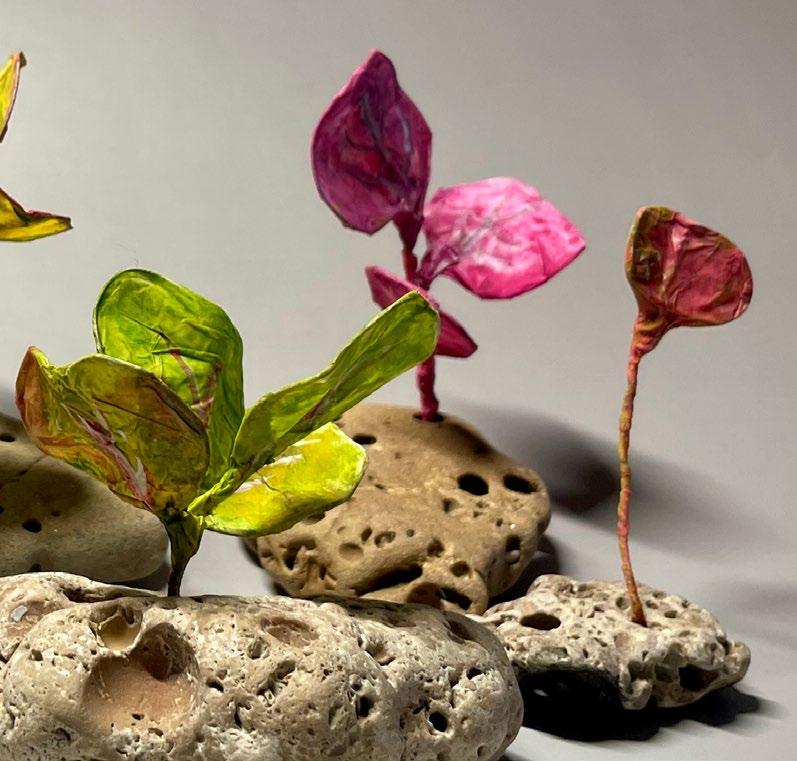
SEEDLINGS, 2025
Emma Chandler @eoliviachandler
Found stones, floral wire, tracing paper, tissue paper, watercolor, ink | 4 x 4 x 6 in. | Lent courtesy of the artist.
The sea grape is a native Florida plant, ubiquitous on our salty shores. This plant is key in both creating and holding shores. Additionally, the quick-growing trees help shield nesting turtles from human light sources on the beach, ensuring turtle hatchlings go toward the moon and the ocean.
The colorful leaves reaching and twirling from the individual perforated stones and shells resemble sea grape seedlings emerging from the sand. The plants work individually and in unison to build, maintain and protect the peninsula’s delicate ecosystems. This artwork was developed while in residency at the Hermitage Artist Retreat.
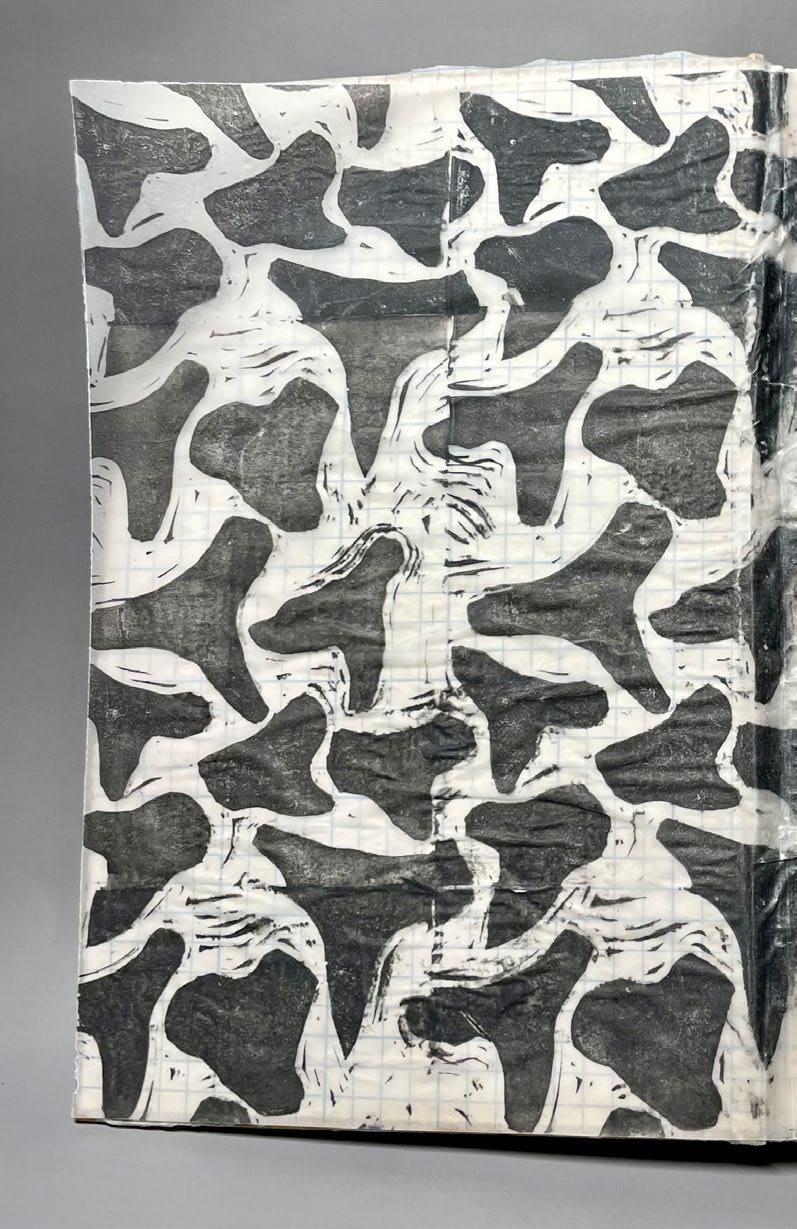
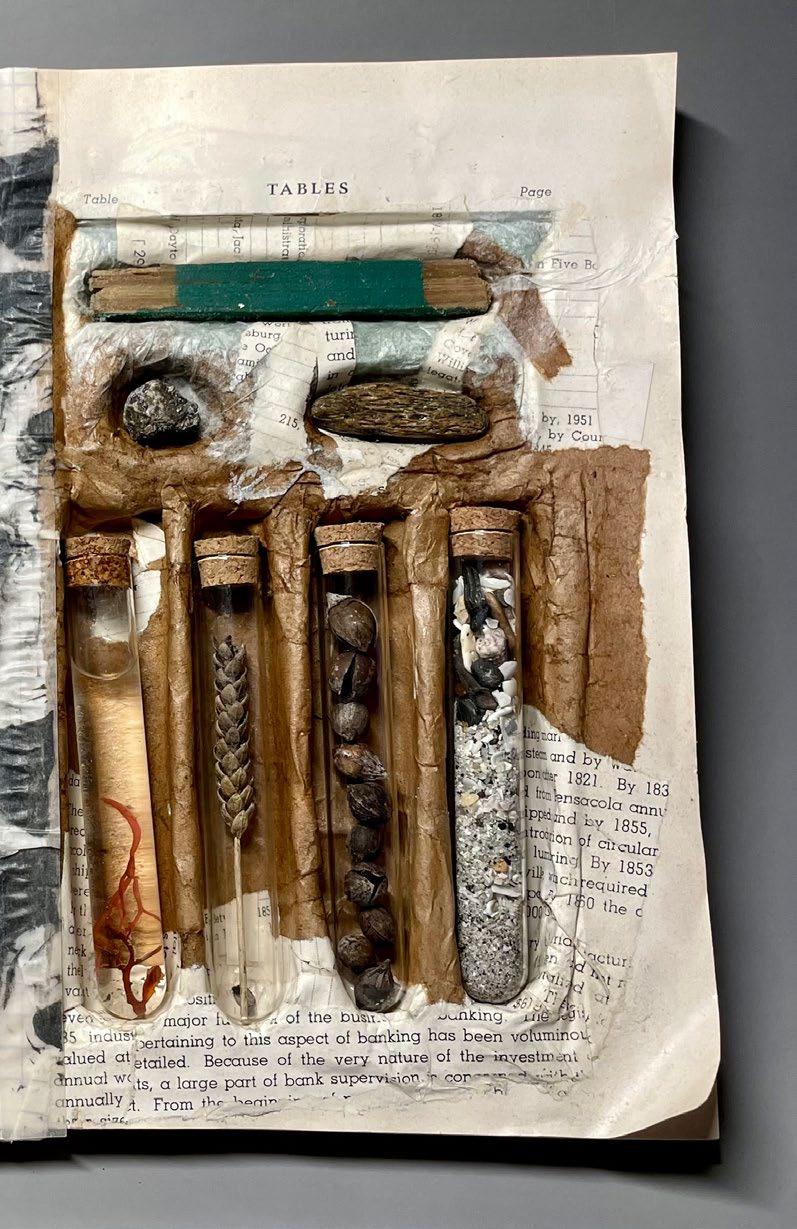
HISTORY OF BANKING ON FLORIDA, 2025
Emma Chandler @eoliviachandler
Discarded book, papers, test tubes, seeds, sea water, sand, rocks, found wood | 14 x 8 x 1 in. | Lent courtesy of the artist.
The excised pages of the carved book narrate the economic benefits of the exploitation of the land’s resources, dating to the earliest days of Florida’s colonial past. The ever-evolving extraction saw the removal of peoples, the obliteration of plants and animals and the reshaping of ecosystems. This degraded the environment, exacerbating the negative impacts of storms. The book now holds items representative in part of Florida’s history, including the costs and consequences of banking on, in, with and in spite of Florida.
This artwork was developed while in residency at the Hermitage Artist Retreat. Manasota Key and the communities of Englewood Beach have been deeply impacted by the increasingly frequent and powerful storms of years past. The items displayed in the book originated from the beaches there: a piece of painted wood, asphalt/driveway, Dougong rib fossil, sea water, seagrass pods, sea grape seeds and phosphate-bearing sand.
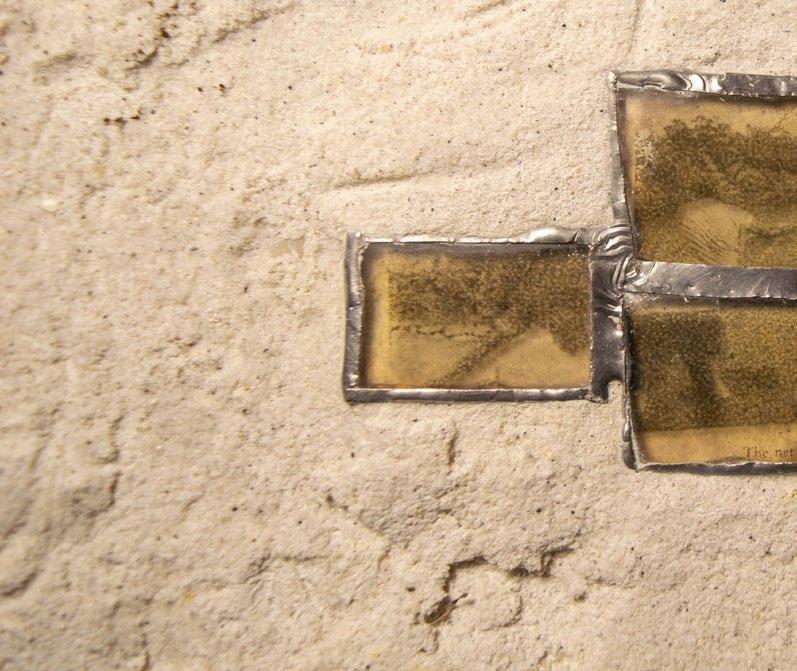
THE NET OPENS ITSELF, 2025
Becca Wahl @beccawahl
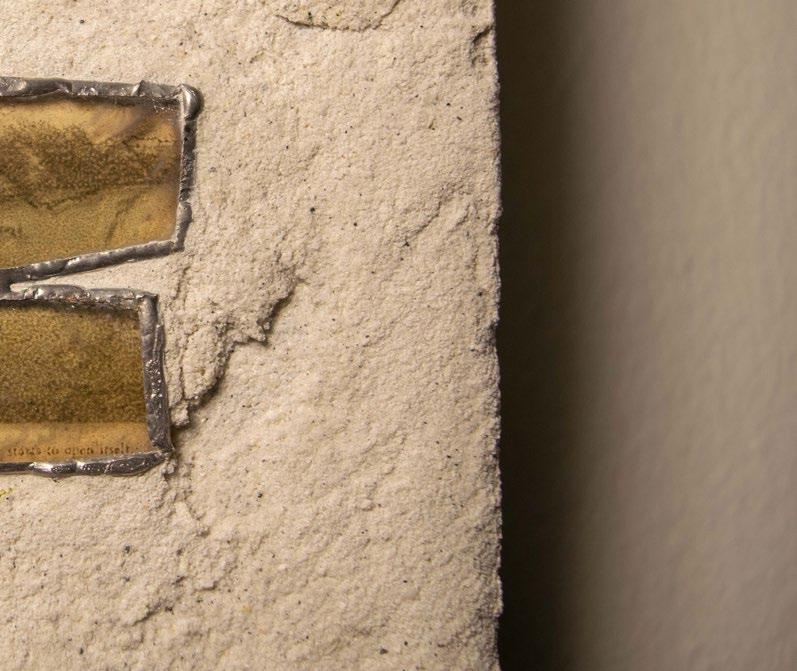
Paver, sand, grout, glass, photograph, solder, resin | 9 x 9 x 2.5 in. | Lent courtesy of the artist.
The Net Opens Itself is a sculpture exploring loss and return within the refinement of its material. A paver from my Florida home is covered in an impressed mixture of Clearwater Beach’s sand and grout. Embedded is a glass image transfer of a man casting a net held in a frame of soft metal. The glass bends light in self-reflection of its solid, yet amorphous return as melted sand.
Once materials are refined and used for construction, our certainty in their placement creates the falsehood that our paved areas are separated from the natural world. These developments, however, are porous, filtering what aspects of nature we experience but never eliminating its presence. The illusion dissolves after natural disasters, when our net of reality catches the destruction of our planned lives in property and life itself. Words within the glass portray this loss as an inevitability “the net opens itself.”
A SINGLE OAK TREE IN THE GARDEN OF SOUTH TAMPA, 2025
Trinidad Oribio @trinidad_oribio
Edible ink on sugar paper | 12 x 4 in. | Lent courtesy of the artist.
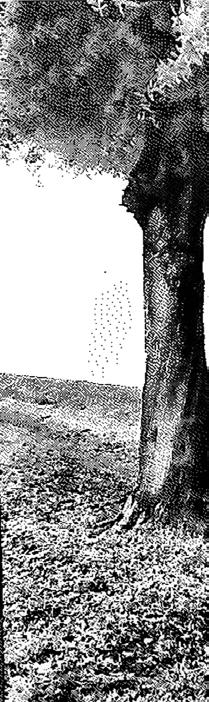
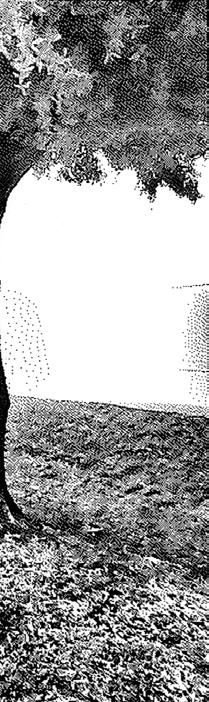
The triptych A Single Oak Tree in the Garden of South Tampa reframes a manicured suburban neighborhood as a site of ecological and emotional displacement. A lone tree becomes a witness to the flattening effects of privatization, erasure and loss. The title references Every Olive Tree in the Garden of Gethsemane by the late artist and educator Wendy Babcox. This work is conceived as a visual elegy—honoring
her influence and echoing some of her most masterful works.
The images were taken using an instant thermal camera and are printed to scale on edible sugar paper. They are meant to dissolve—like sugar on the tongue, like our indestructible infrastructure, like a mangrove-less shoreline.
TECHO DAÑADO, 2025
Salma Taguja
Salvaged material, mixed media | 96 x 36 x 24 in. | Lent courtesy of the artist.
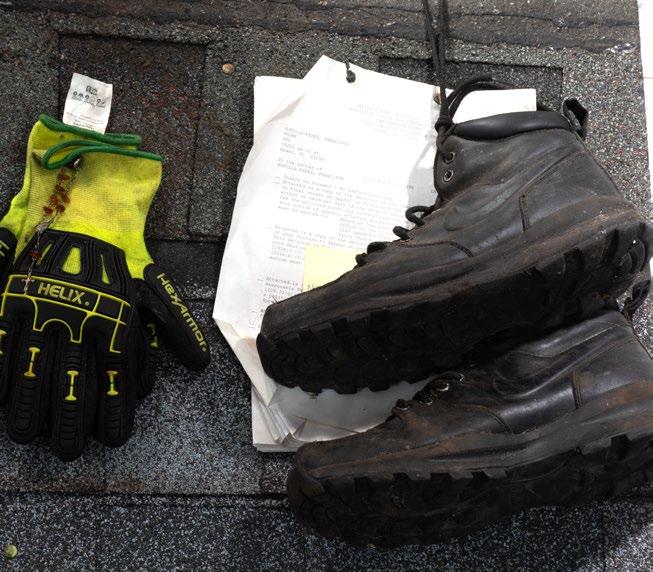
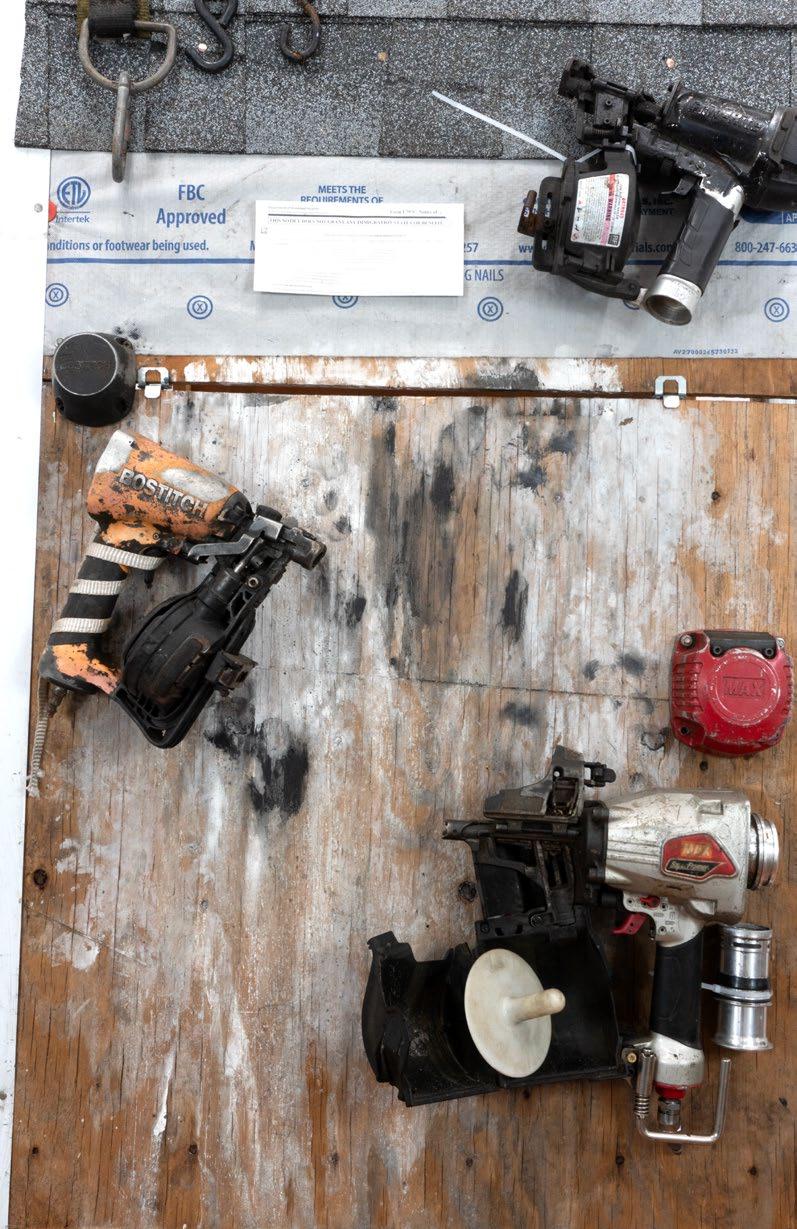
Techo Dañado is a piece about water damages that often occur from hurricanes and heavy rainfall during Florida’s rainy seasons. It reveals out-of-sight damages that build under the paper and shingle on the plywood of the roof. It’s also a silent testament to undocumented workers who often work for licensed companies where regulations aren’t strictly enforced or regulated.
PILLARS OF THE TIDES, 2025
Kelsea Gustavson
Photographs | 18 x 24 in. | Lent courtesy of the artist.
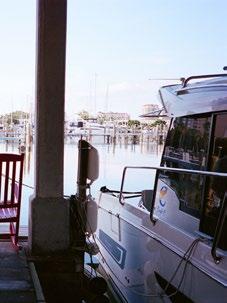
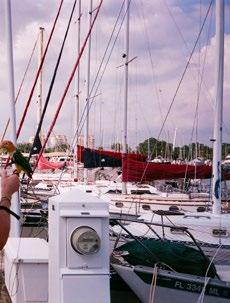
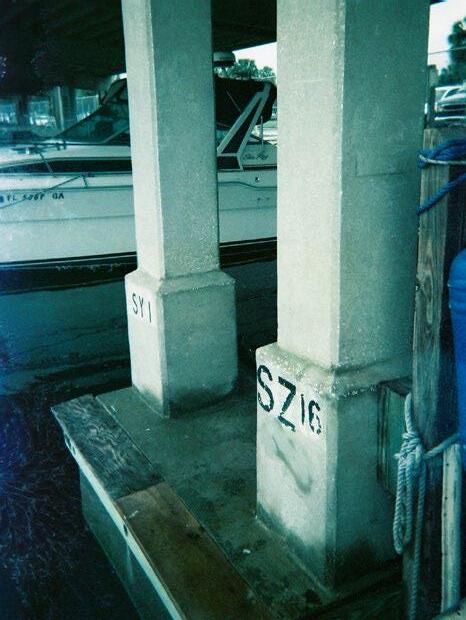
Pillars of the Tides is a collection of photographs that represent the structures seen and unseen that keep us anchored. Whether made of concrete, wood, bone, or flesh, they hold steady in shifting waters, offering safety in an unstable world. In the face of rising tides and a warming climate, these photographs explore the physical and symbolic pillars we lean on when everything else moves.
UNTITLED (BUOYS), 2025
Kelsea Gustavson
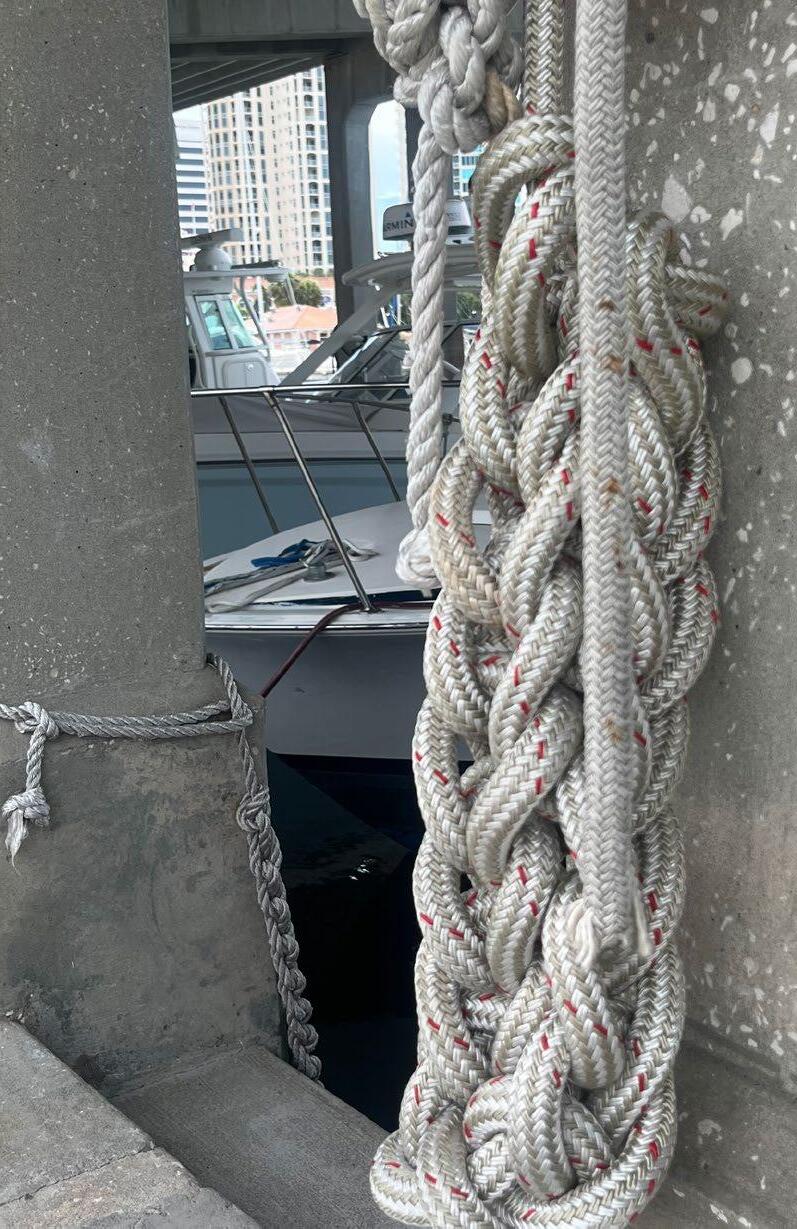
Found objects: rope, metal dock line hook | 70 x 20 in. | Lent courtesy of the artist.
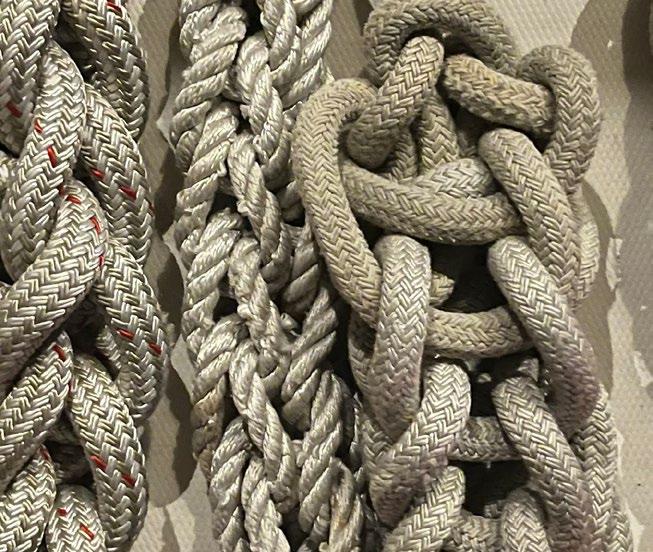
Untitled is a series of buoys (also known as fenders) crocheted from old dock lines using a dock hook in place of a crochet hook. Each found object was salvaged from the artist’s own boat and her mother’s nothing new was purchased. Some lines date back to her childhood, forming a quiet thread of time, protection, and continuity. Like real buoys, they soften life’s collisions, guarding what matters from being broken by the dock.
BE MY ROCK, 2025
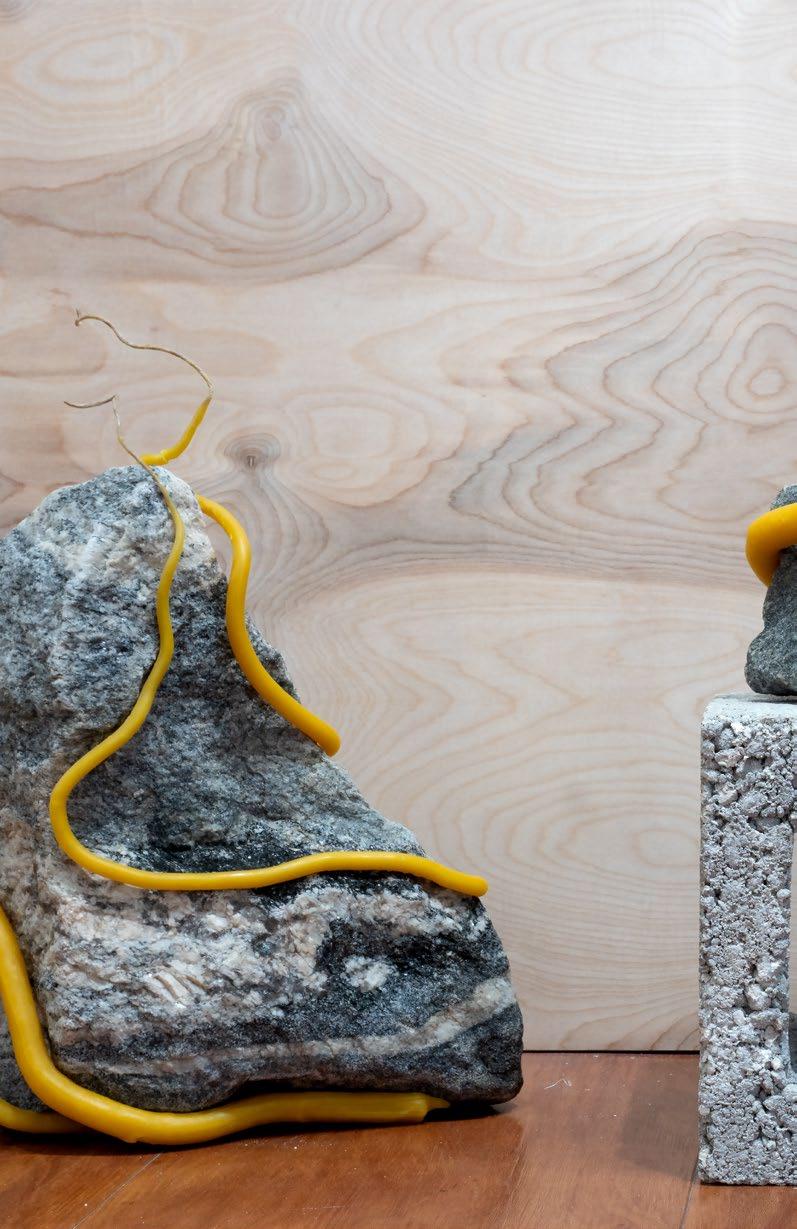
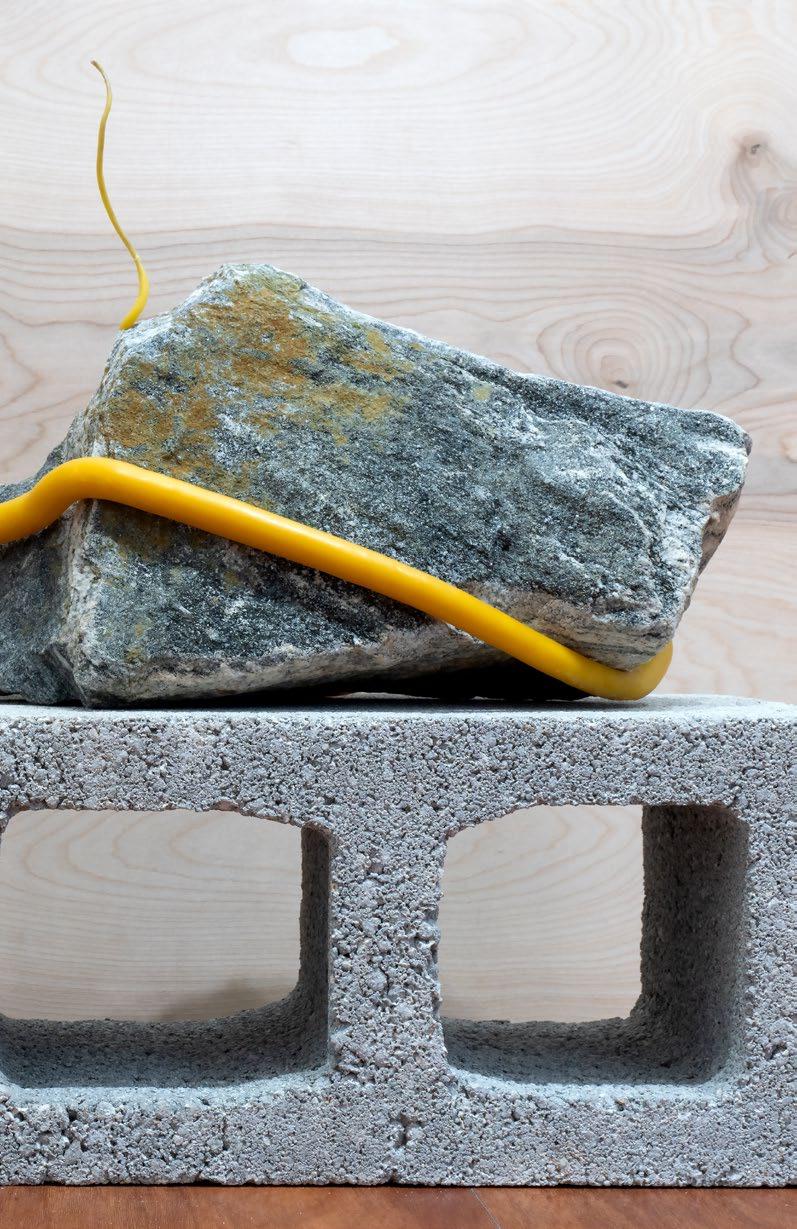
Odessa Conner @odessa_conner
Beeswax, hemp wick, rock | 16 x 8 x 14 in., 18 x 14 x 6 in. | Lent courtesy of the artist. Here for now, but not for long. The flame of a candle is impermanence solidified. Existing in space and time for only a moment, yet lasting forever, solid as a rock, as a memory.
Be my rock & I will be your light in the dark night
MARIA, 2025
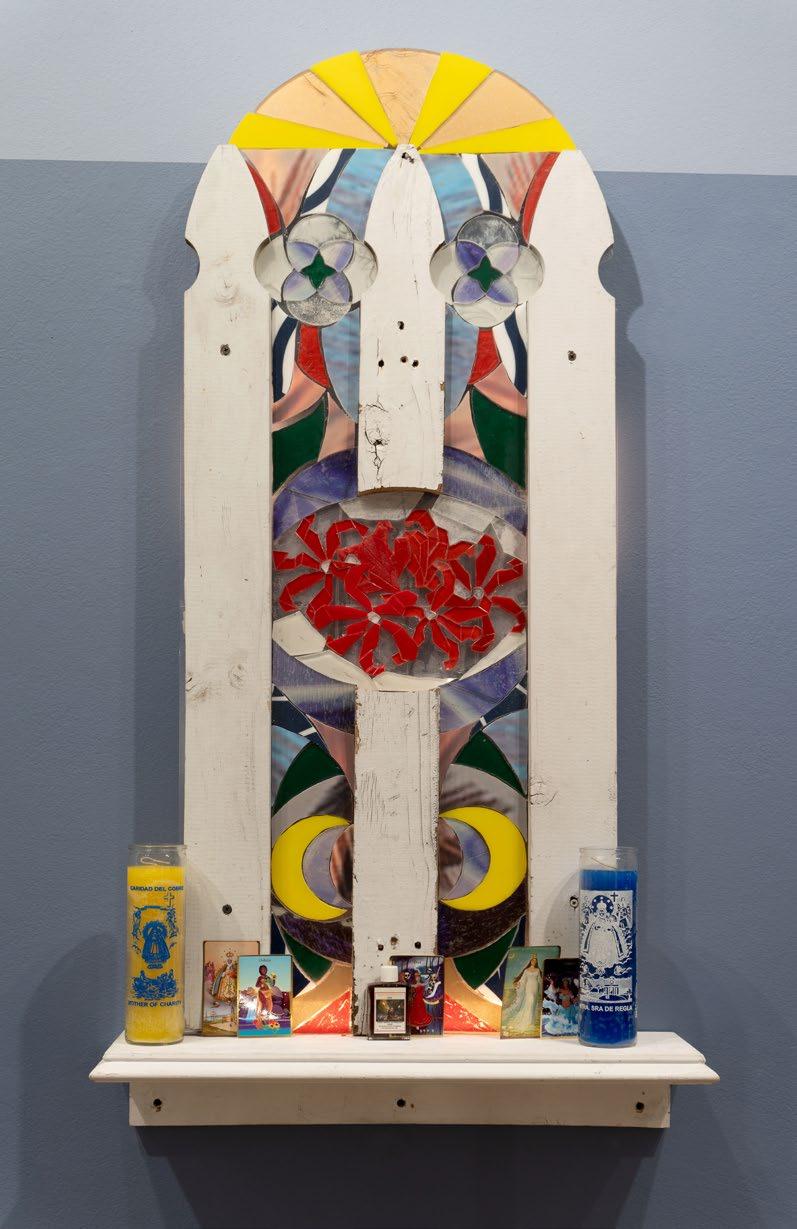
Kirst Austin-Harrow
Hurricane debris (plexiglass signs and fence pickets), acrylic, adhesive votive candles and other ritual objects | 20 x 44 in. | Lent courtesy of the artist.
Maria is a reflection on the faith and perseverance of Tampeños. It is comprised of hurricane debris collected after Hurrican Milton, including shattered signage from local businesses and churches as well as windswept fence pickets.
Evocative of stained glass windows, Maria acts as a meditation on the sacred and divine rituals within our multicultural community, persisting through natural disasters, municipal neglect and the ongoing threat of gentrification.
The center of the piece depicts Lycoris radiata, known here as hurricane lily, as it blooms with the season of our storms. Also known as resurrection lily, the flower is a welcome surprise after heavy rains and evokes a sense of hope and endurance through grief and loss.
Below the piece are various prayer candles from local botánicas, showing madonnas and orishas figures who are often honored with offerings left along the Hillsborough River and other waterways.
AS BELOW SO ABOVE, 2025
Piper Harrow @soiledsister
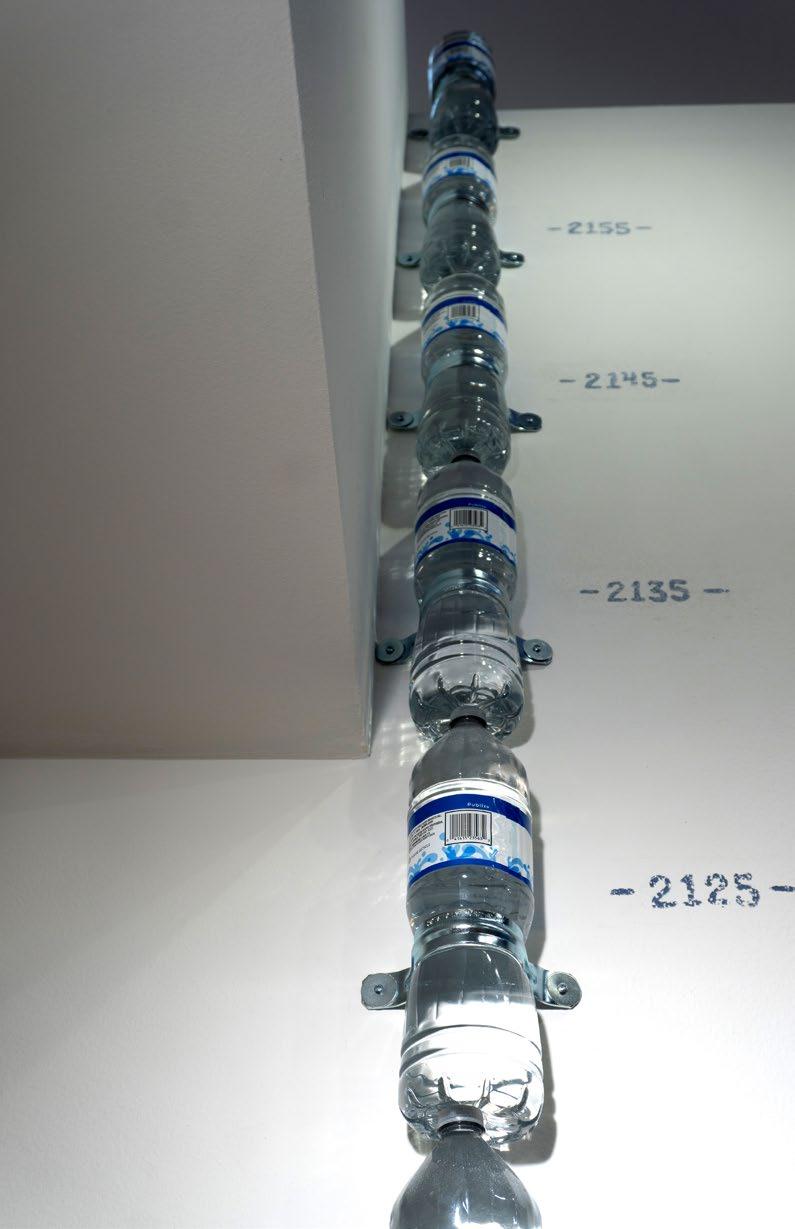
Video projection, audio, 24-hour video stream, water bottles, metal brackets | water bottles 12 ft., projection 7.5 ft. | Lent courtesy of the artist.
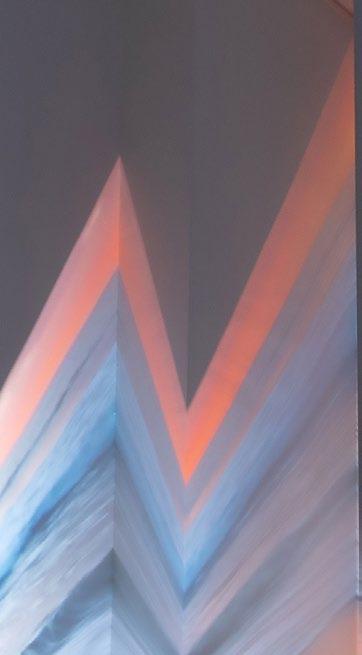
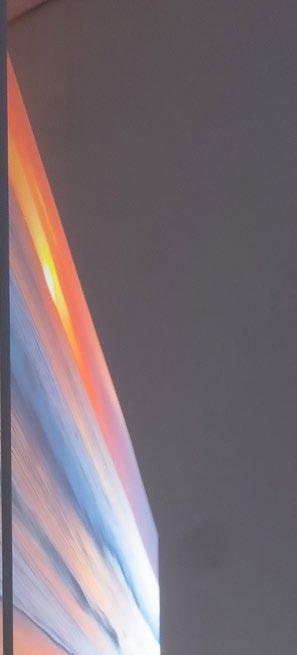
As Below So Above is a video installation that conceptually submerges a portion of the gallery, projecting ocean waves onto hurricane plastic placed in correlation with predicted rising sea levels in the next 155 years.
Sounds and images evoke the past, when ocean waves reportedly lapped the streets of Ybor City during the Great Hurricane of 1921, and suggest a plausible future in which the gallery could be partially or completely submerged—giving visitors a sense of scale and impact relative to their own bodies.
Furthering this sense are 12 12inch water bottles attached to the wall in a vertical line, with years printed next to the bottles to show rising water levels up to the higher estimate of about 12 feet or more when accounting for unprecedented storm surge.
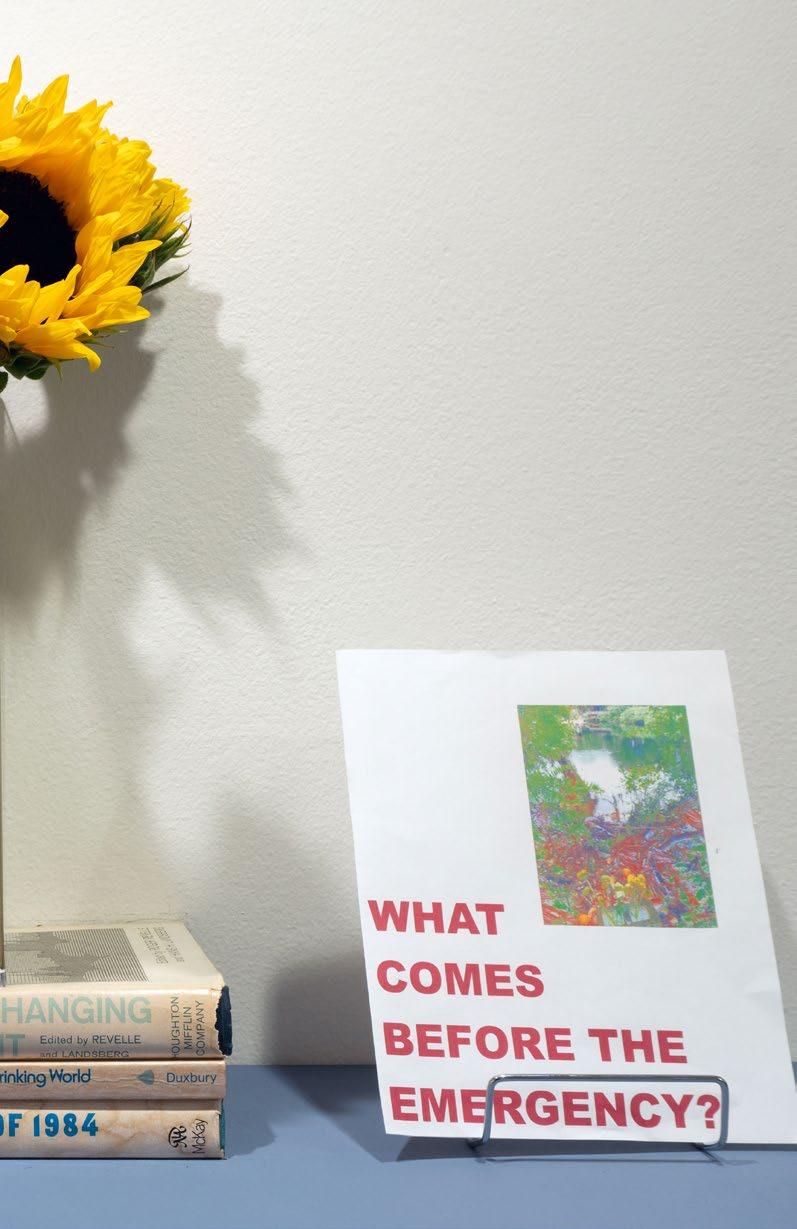
WHAT COMES BEFORE THE EMERGENCY? 2025
Piper Harrow
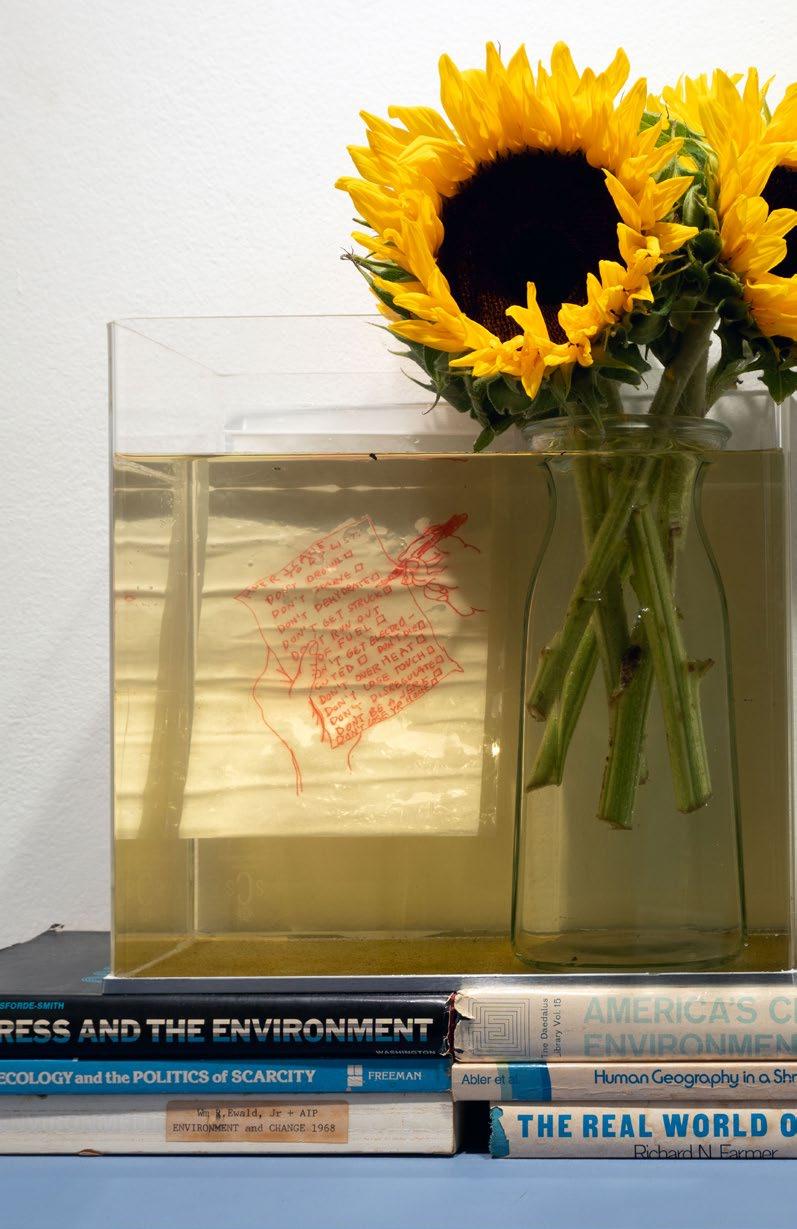
Small tank, flower vase, salt water, fresh water, flowers, ink drawing in plastic bag, vintage climate science books, printout | 18.5 x 24 x 6 | Lent courtesy of the artist.
What Comes Before The Emergency? is a a living assemblage of objects and ideas that follows up a cycle of pieces from last year’s hurricane called What Comes After The Emergency?
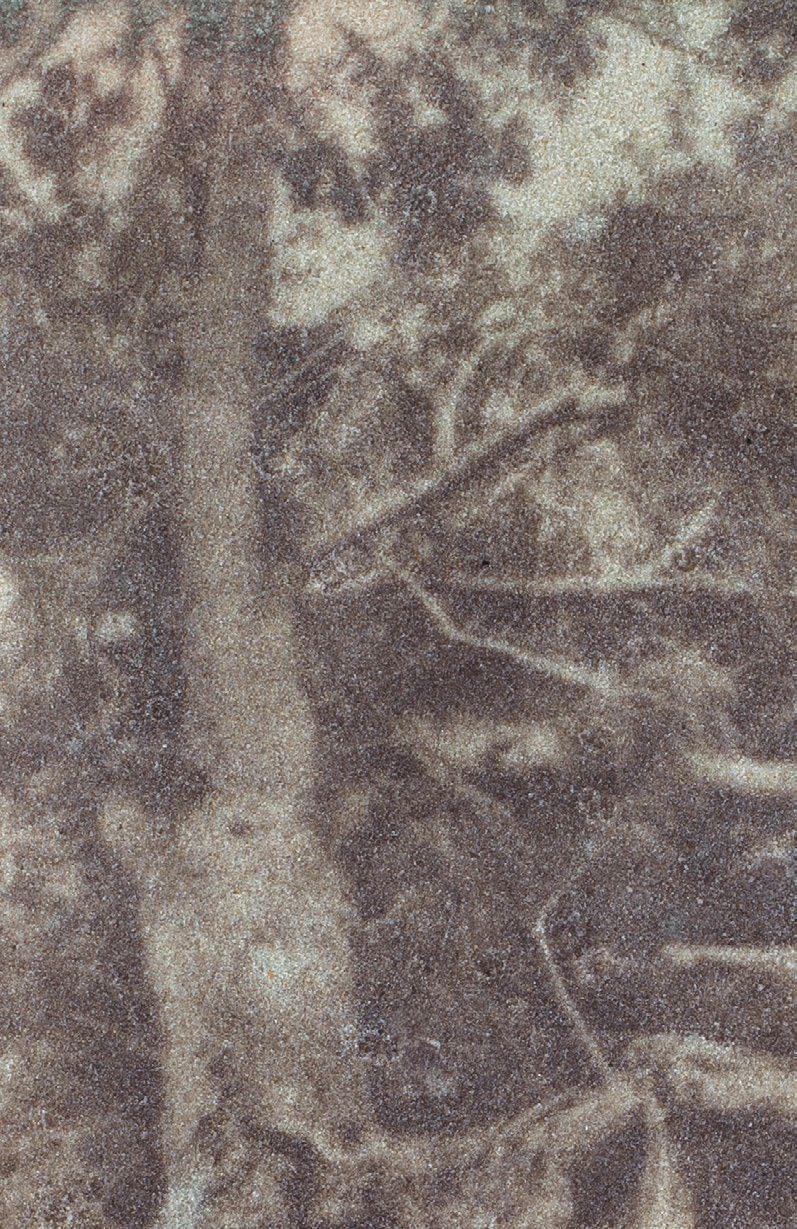
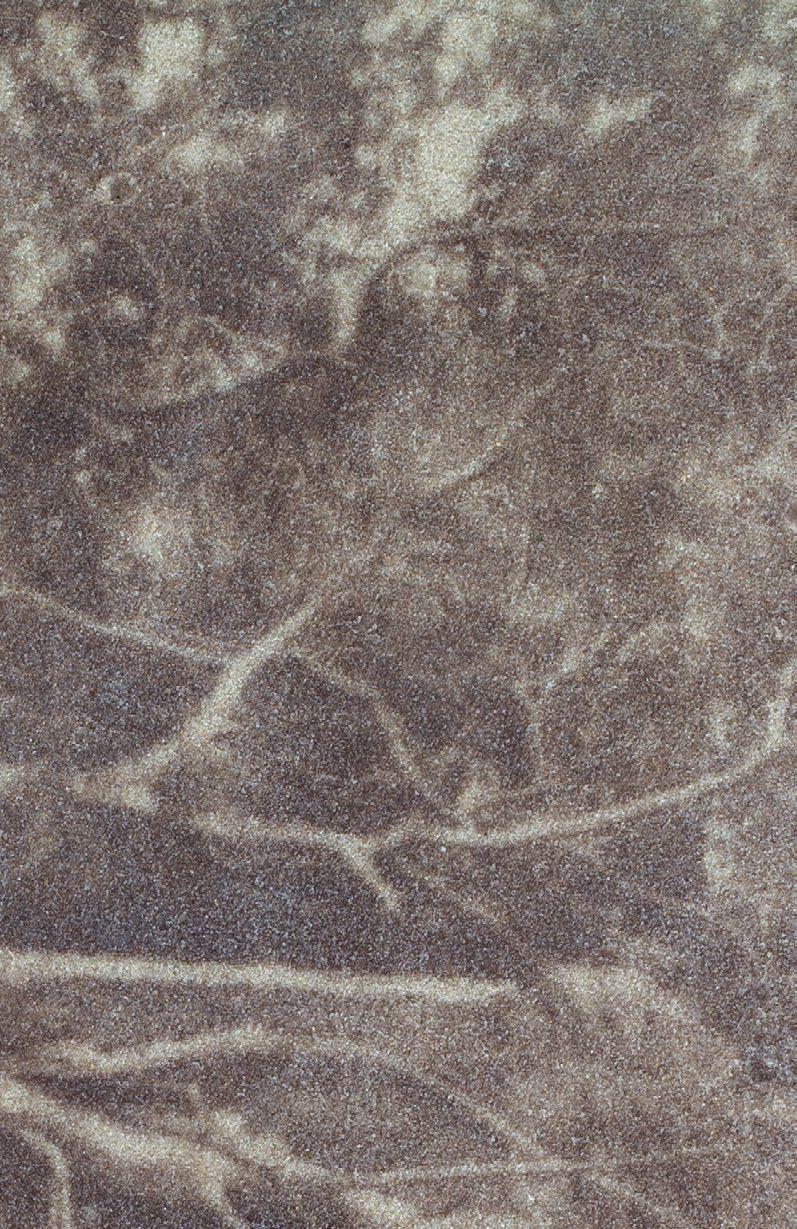
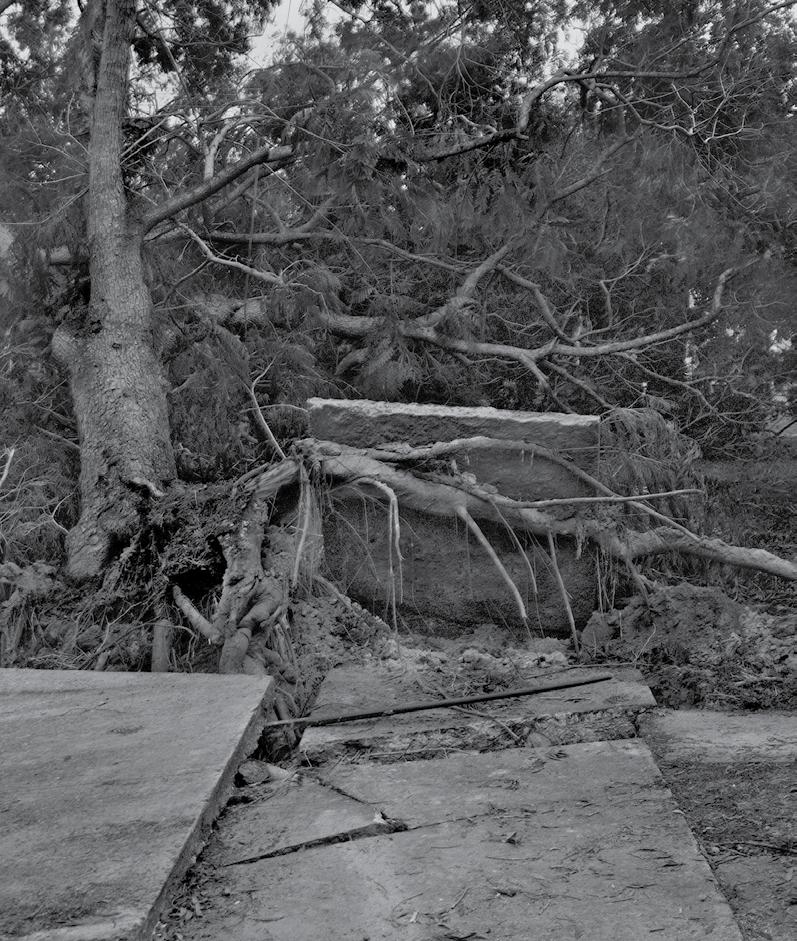
UPROOTED OAK, SEMINOLE HEIGHTS (10.12.24), 2025
Kristen Roles @kristenroles
Solarfast print from digital negative of scanned 4x4” film, sand | 16 x 20 in. | Lent courtesy of the artist.
Photographs can help us bear witness and ask us to look carefully at difficult things. They risk lighting hardship as spectacle and can suspend us between passive observation and active intervention. They also offer a false promise of stability, a consolation we chase with anthropocentric hubris. Nothing is archival through a long enough lens.
Hurricane Helene and Hurricane Milton uprooted boundaries we erect between ourselves and nature, between one neighbor and another, and with them, trees more than 100 years old. This photograph of Seminole Heights neighbors Alicia and Alan’s felled oak was imprinted onto a 16-by-20-inch plot of light-sensitized sand gathered from where the image was made.
Unfixed, the image will overwrite itself by the light of the gallery and become illegible through the run of the show, its wake leaving particles that might be swept into a sand bag for support in the next storm.
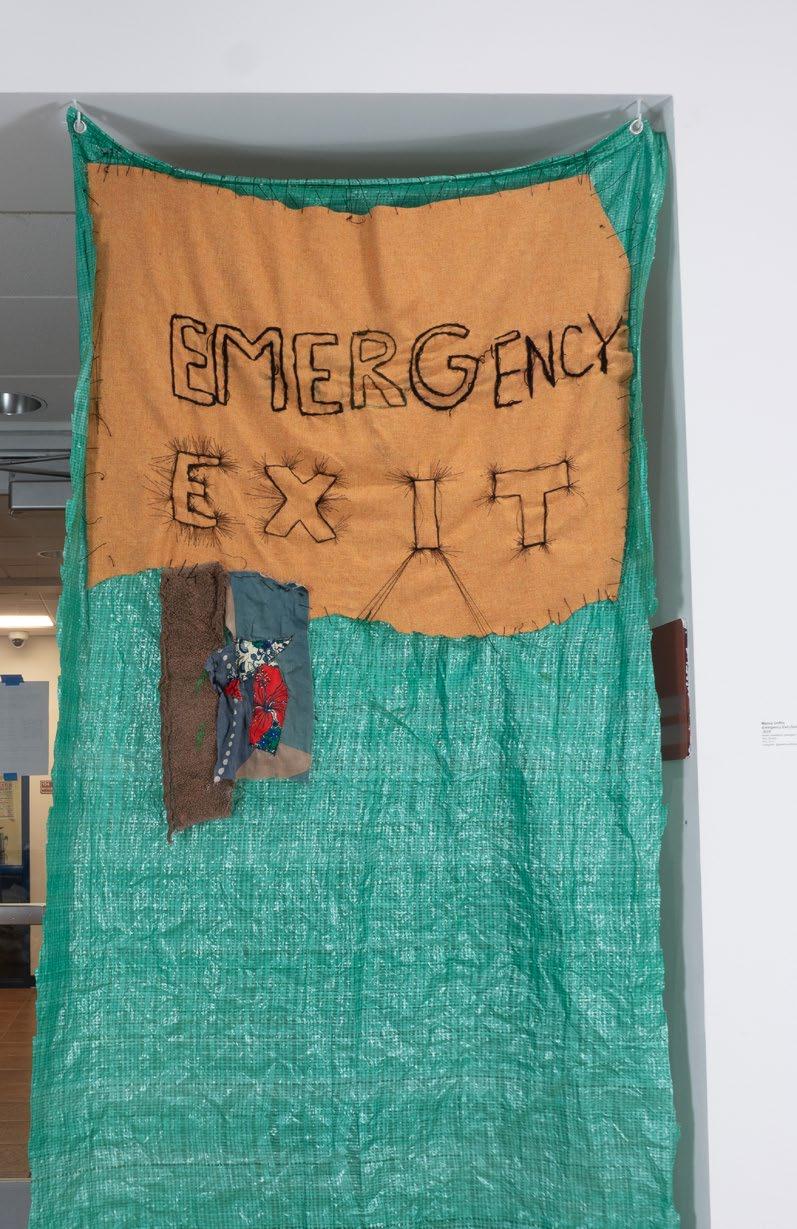
EMERGENCY EXIT (SOFT DOOR), 2025
Marisa Griffin @swampcraftstudio
Textile installation (salvaged fabric, tarp, thread) | 84 x 32 in. | Lent courtesy of the artist.
Emergency Exit (Soft Door) is a quilted textile sculpture made from salvaged storm materials towels, tarps and linens— stitched together in the shape of a door. I created this piece as a soft threshold, a space between what we carry and what we must leave behind. Each fragment is sewn with language I’ve heard during evacuation:
“Take what matters.”
“We’ll come back.”
“Stay safe.”
Sewing is my way of holding things together, even temporarily. It’s slow, intentional and rooted in care. Like mutual aid, it’s about making do with what we have and offering it back to others.
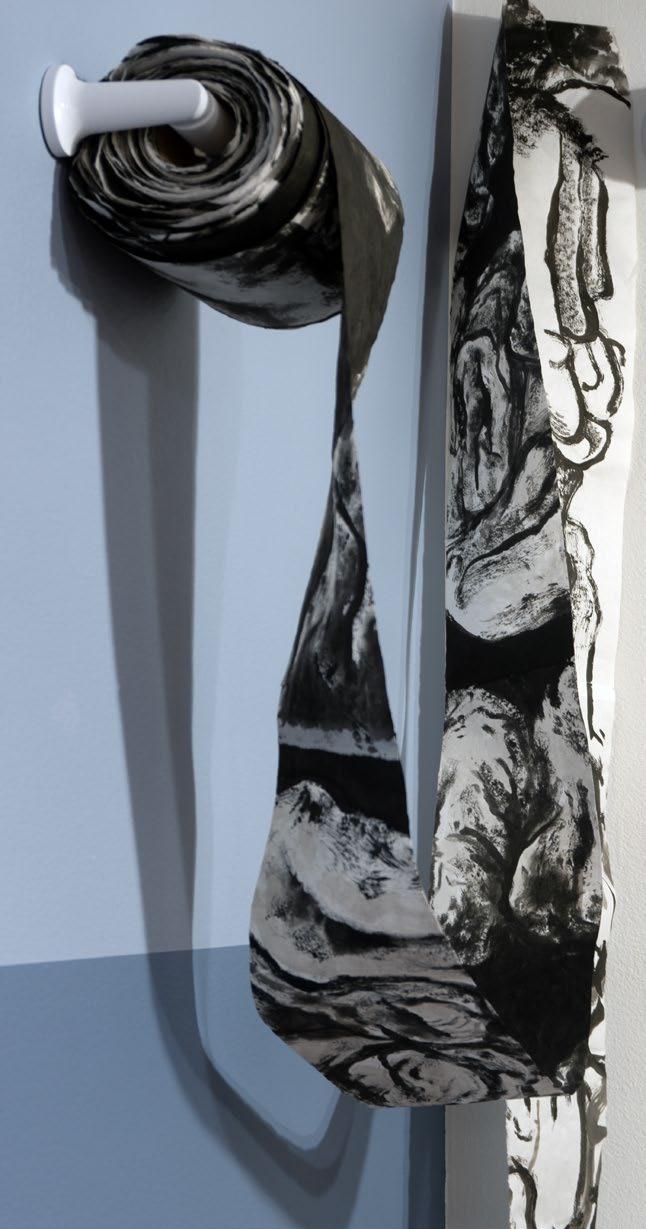
TALL PINES, 2020-2025
Anthony Record @anthonyrecord
Ink on paper, cardboard tube, toilet paper holder | Variable dimensions | Lent courtesy of the artist.
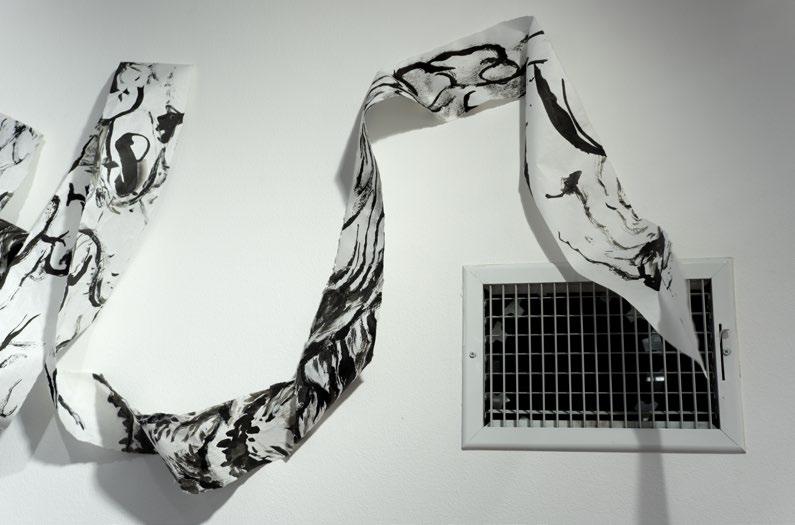
Tall Pines is a roll of toilet paper assembled from strips of my own failed ink paintings on rice paper. In historical China, particularly in the homes of the educated elite, failed paintings and calligraphy were sometimes preserved and repurposed, occasionally as toilet paper. I began this piece during the 2020 COVID-19 pandemic when toilet paper became absurdly scarce and strangely precious. In Tall Pines, what was once a failed attempt at art becomes quite literally a coveted object.
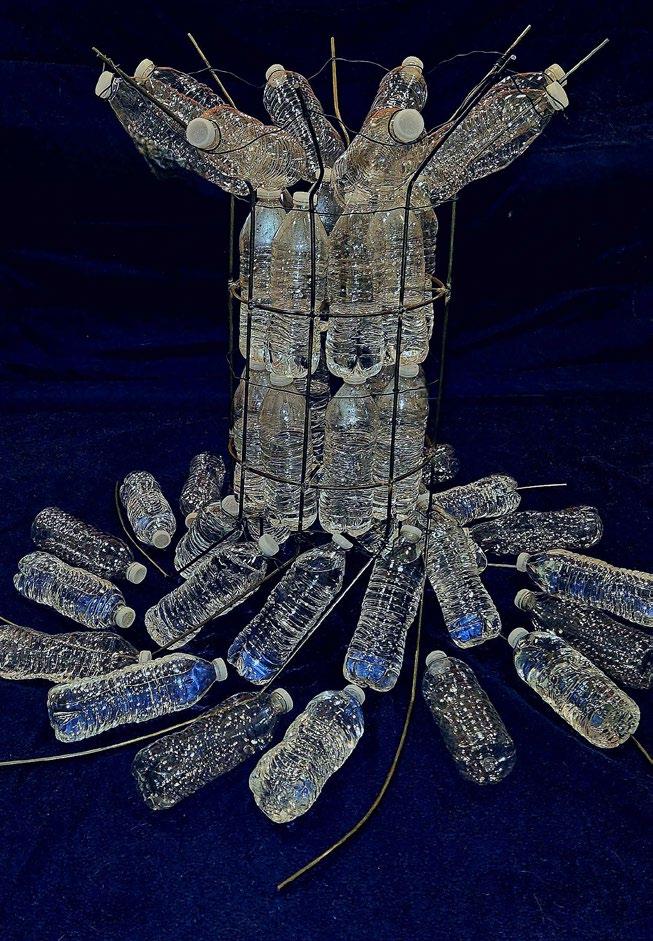
HURRICANE HYDRATION, 2025
Cori Matyas
Water, steel, plastic, NOAA maps | 48 x 48 x 4 in. | Lent courtesy of the artist.
This sculpture is educational, hydrational and customizable. It illustrates the primary (rotational) and secondary (in, up, out) circulations of hurricanes. It also shows how water moves within the storm.
The water bottles represent parcels of moisture-laden air.
They spiral towards the center.
The decrease in space causes them to converge and rise.
When air parcels rise, they cool, moisture condenses and water droplets grow and fall as rain.
As condensation and precipitation happens, the parcels lose moisture. This is represented by the water bottles emptying with height. At the top, the outflow changes direction bottles have released their moisture and are empty.
In case of water emergency, the full bottles can be distributed immediately and the remaining bottles filled as needed. Bottles with labels depict “rainprints” from hurricanes that dropped more than 10 inches of rain over Florida. Viewers can take one. Maps courtesy of scientists at NOAA’s Weather Prediction Center.
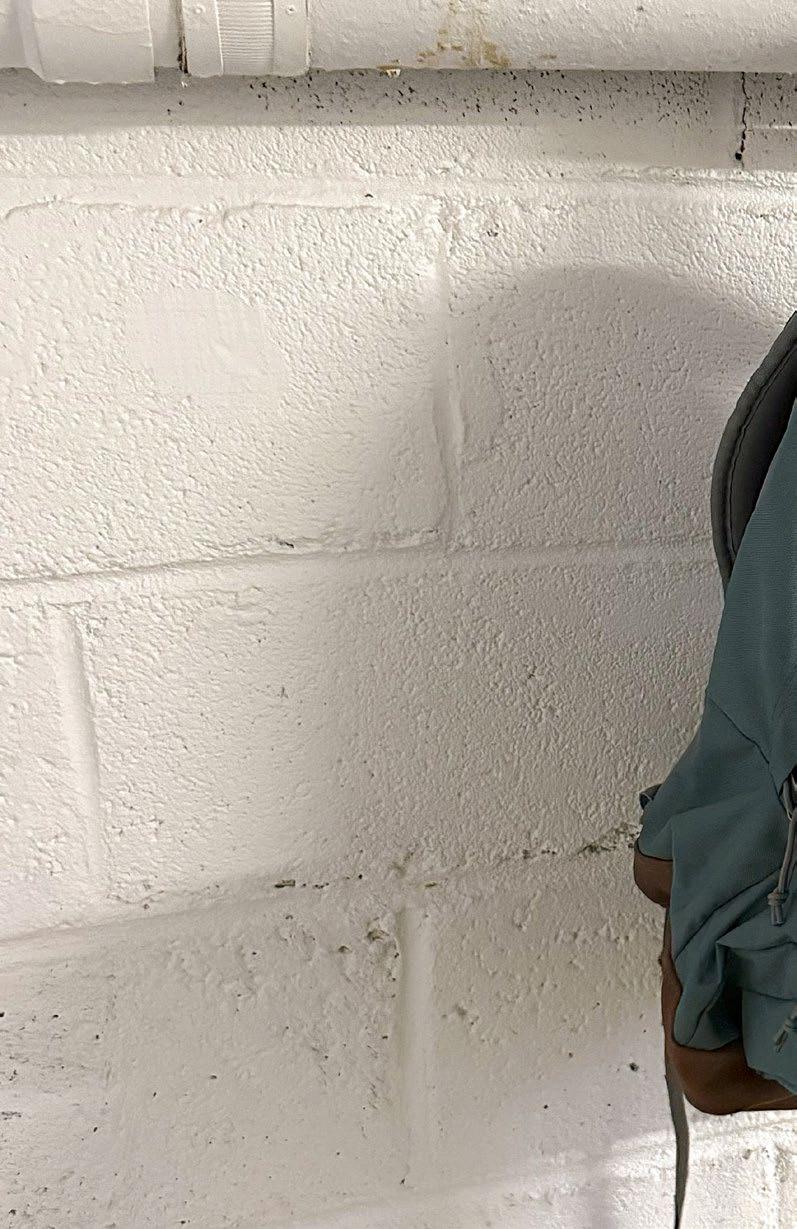
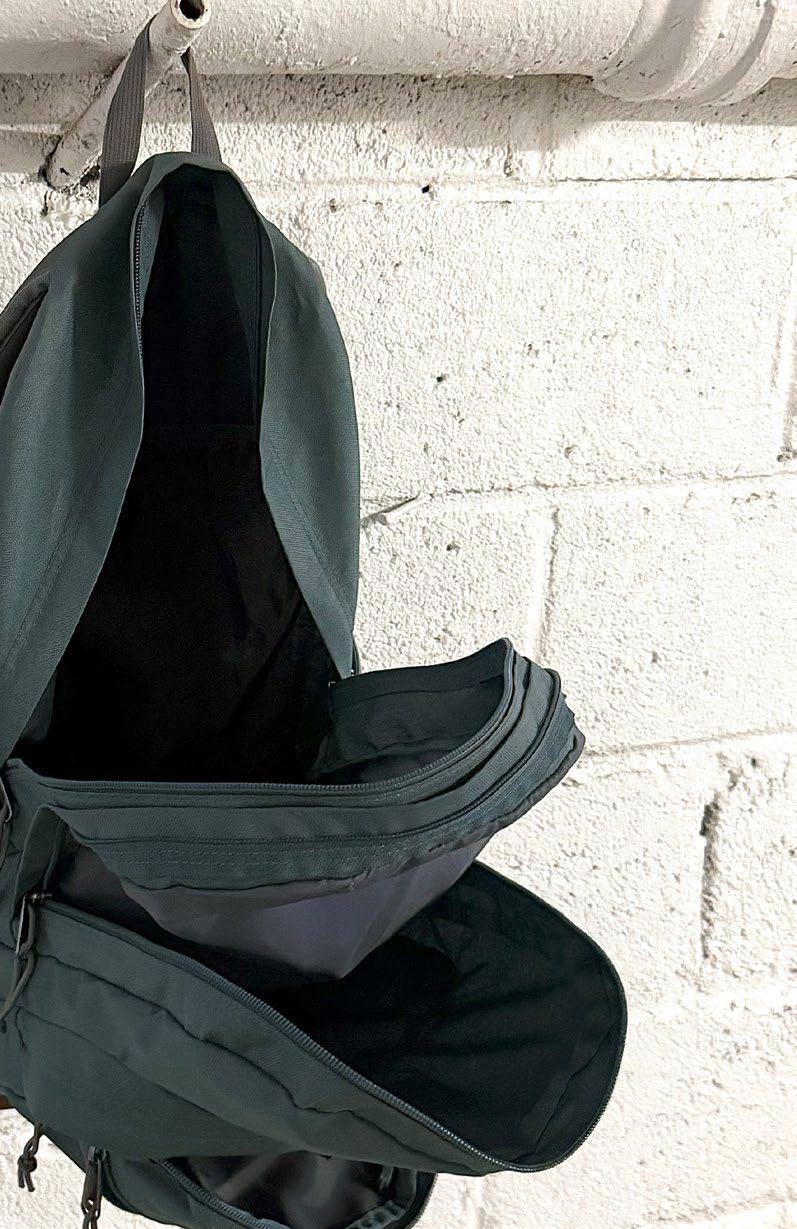
BUG OUT BAG, 2025
Cort Hartle @corthartle
Backpack used for hurricane evacuations 2017–2024 | 20 x 15 x 5 in. | Lent courtesy of the artist.
Bug Out Bag is the backpack I’ve used for hurricane prep since 2017.
Since my childhood home was destroyed in the 2004 hurricane season, I’ve obsessed over what to include in my “go bag,” making careful calculations over and over to ensure I can hold on to both what is important to me and necessary for survival.
Recontextualized here, it becomes an object of inquiry: how do we determine what is important enough to keep?
As climate refugeeism becomes more prevalent, how can we hold space for what is lost when balancing sentiment and survival?
What is the emotional toll of living always on the edge of disaster?
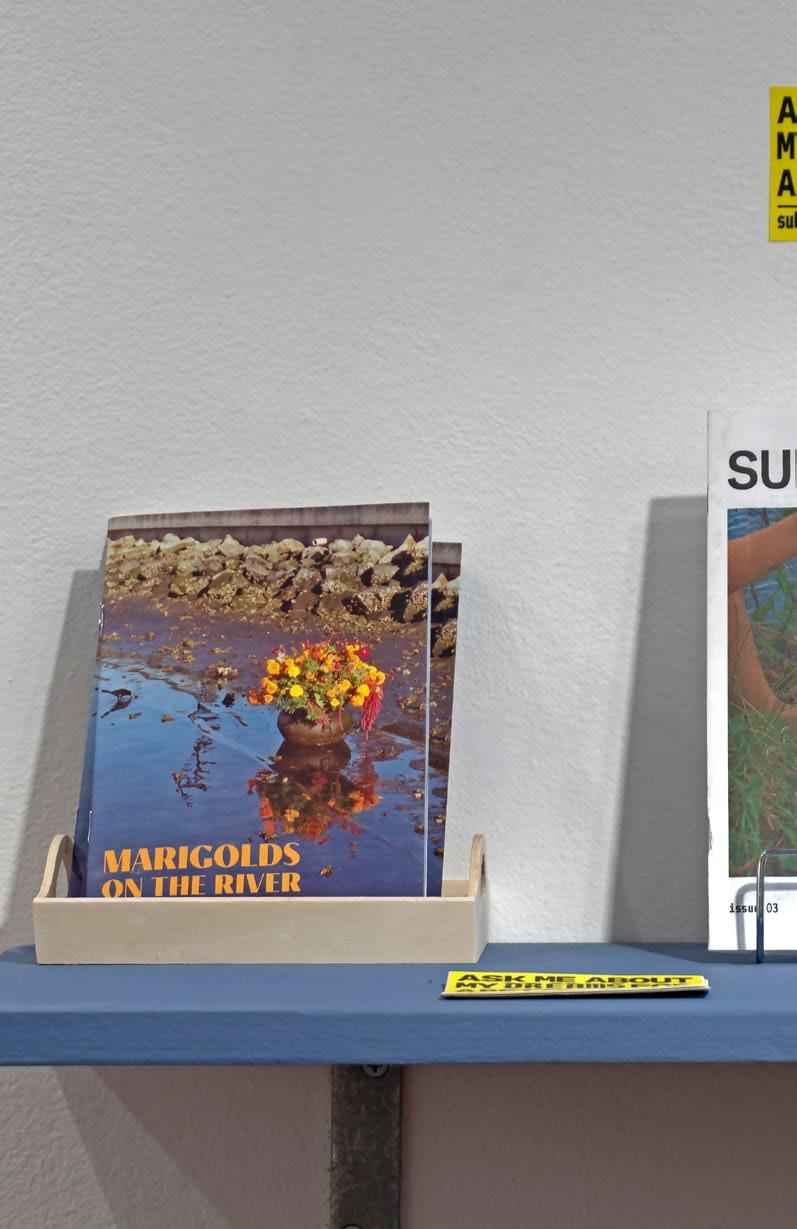
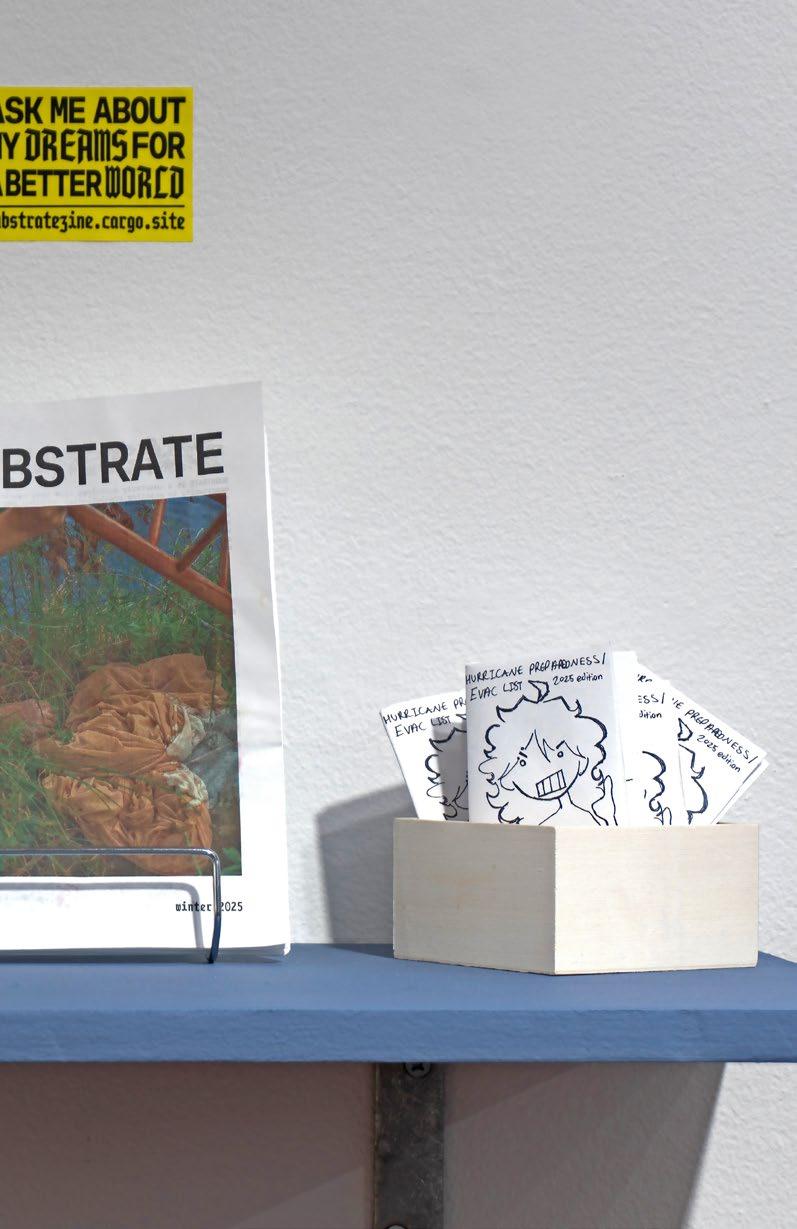
ZINE DISPLAY
Marigolds on the River, 2025, Kali Rabaut @blue_house_ florals & Katelyn Rose @katelynrose_studio, 5 x 7 in.
This zine is a reflection on a public art piece that took place on January 12, 2025. Marigolds on the River was conceived after botanical artist Kali Rabaut noticed a large, empty vessel that had washed up on the shore of the Hillsborough River after back-to-back hurricanes. As Los Angeles burned, the latest manifestation of the climate crisis, Rabaut was called to ground her ballooning climate anxiety in the vessel. She chose marigolds a loud, fiery, resilient bloom and let them stand out against the blue, muddied waters of the river before the incoming tide engulfed the piece. Photographed by Katelyn Rose on film over hours as the tide came in.
Substrate: No. 03, 2025, Published by Cort Hartle, 5 x 7 in.
Substrate is a quarterly anthology zine that asks artists and writers to consider what a better world might look like as one potential antidote to nihilism, apathy, and despair. Issue 03 was published in winter 2025.
Hurricane Evacuation/Preparedness Guide, 2025, Rae Fernandez, 5 x 4 in.
The concept of this work is to provide a short and accessible guide to hurricane preparedness and evacuation preparation, while being easy to carry and straight to the point. The zine is not to be sold but given, and free to reproduce by Florida residents. The information/resources presented will be updated every year and reformatted in order to stay accurate and current for every hurricane season.
MILTON #1, 2024
Kyna Patel @kynapatel
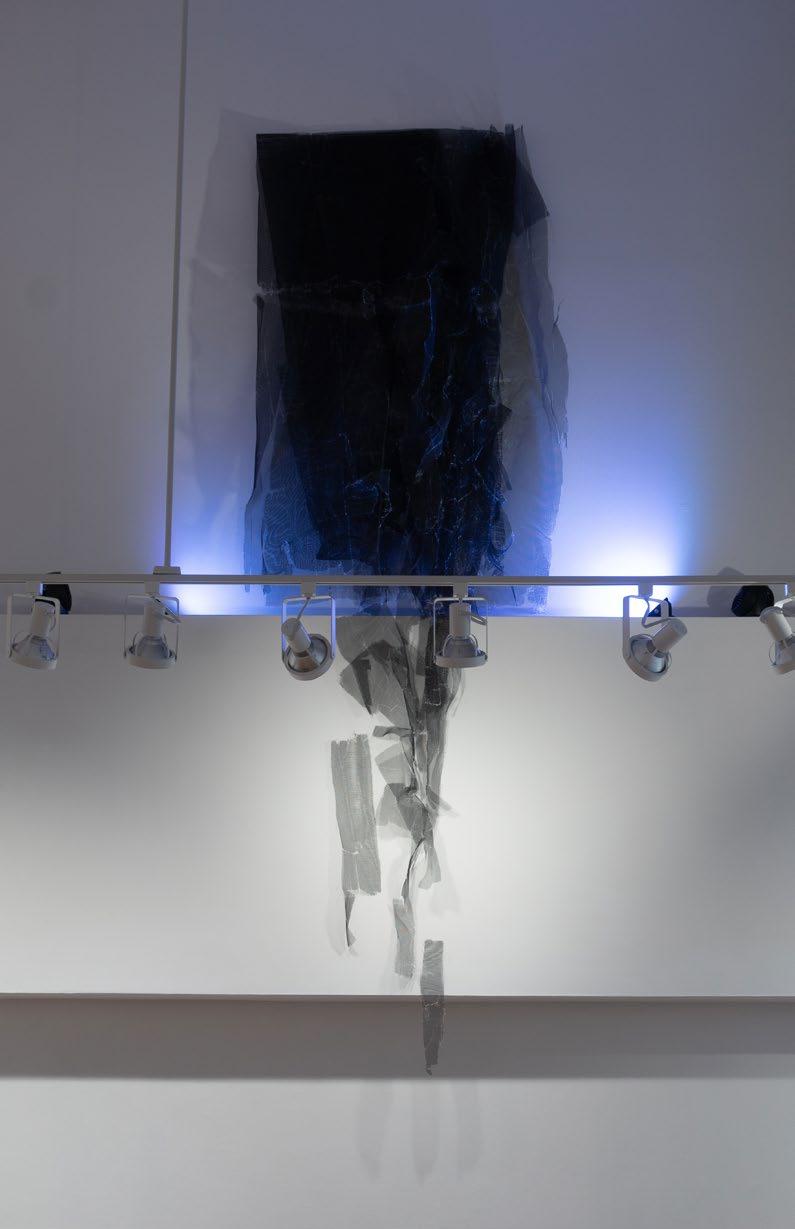
Fiberglass screen | 36 x 84 in. | Lent courtesy of the artist.
Made of woven fiberglass to create a porous barrier meant to repel neither rain nor wind, the screen was ripped from my parents’ home in Polk County during Hurricane Milton. What once was a screen used for privacy now is a record that lays bare and underscores the effects of rain and wind from a single storm at a time when hurricanes are becoming stronger overall and seasons feel more active than they did 20 years ago.
What will infrastructure and repair look like going forward with less government support and funding?
Will future storms force our architectural design choices to be driven by function over form?
COVER (A FREE LIBRARY), 2024
Adda Farcus @toubab_adda
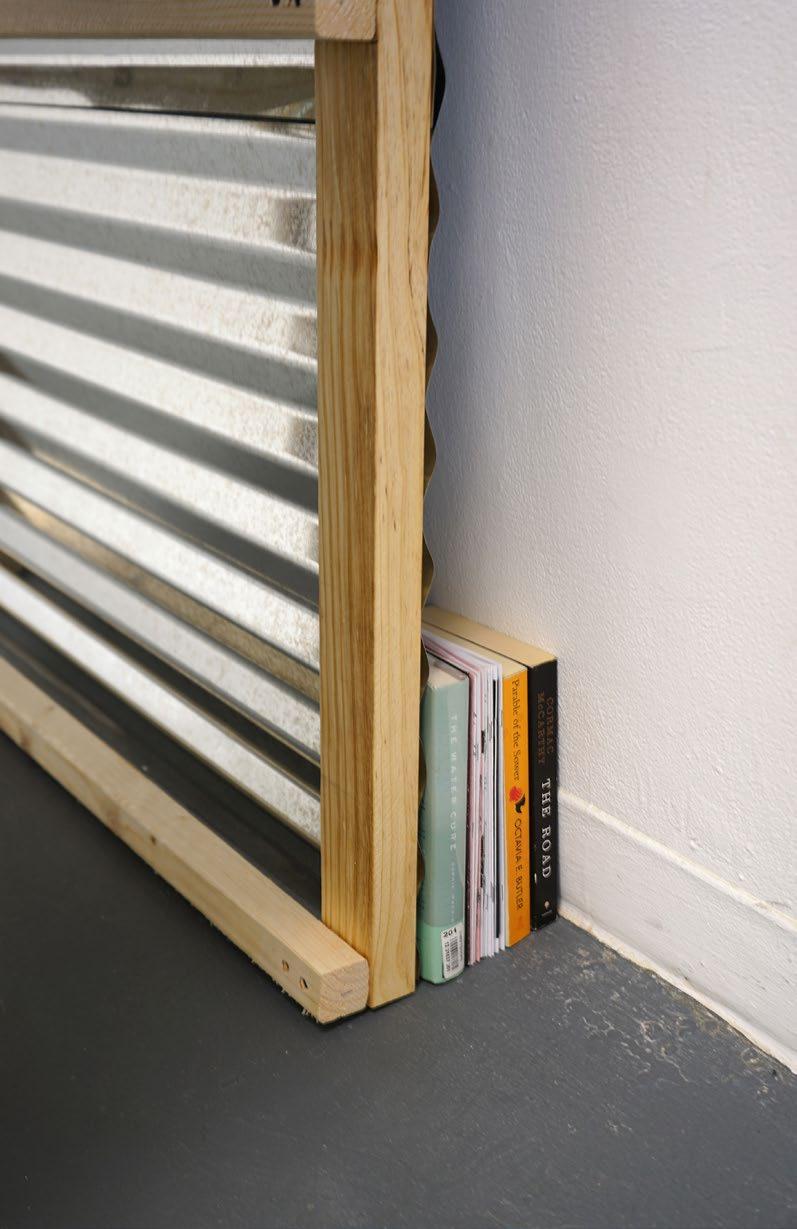
Metal, wood, hardware, climate fiction novels, activist zines | 60 x 64 x 40 in. | Lent courtesy of the artist.
The purpose of this work is to ask viewers not to ignore climate change and injustice, or their effects, but to confront their fears and anxieties, acknowledge how we are part of the issues, and find motivation and strength to be part of the solutions.
Cover (A Free Library) is a piece which conceptually offers a way of understanding resistance and resilience regarding climate change, injustice and their overlaps. Functionally, it is a lending library of DIY barricades, cli-fi novels, and activist zines that are free for anyone to borrow.
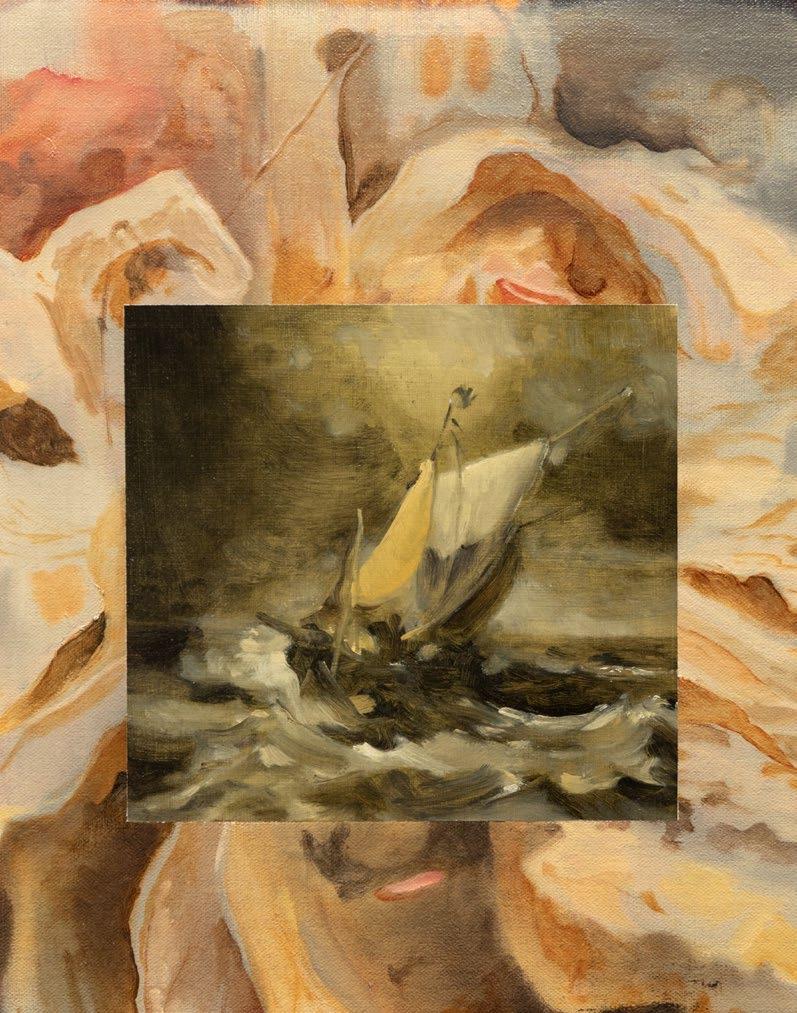
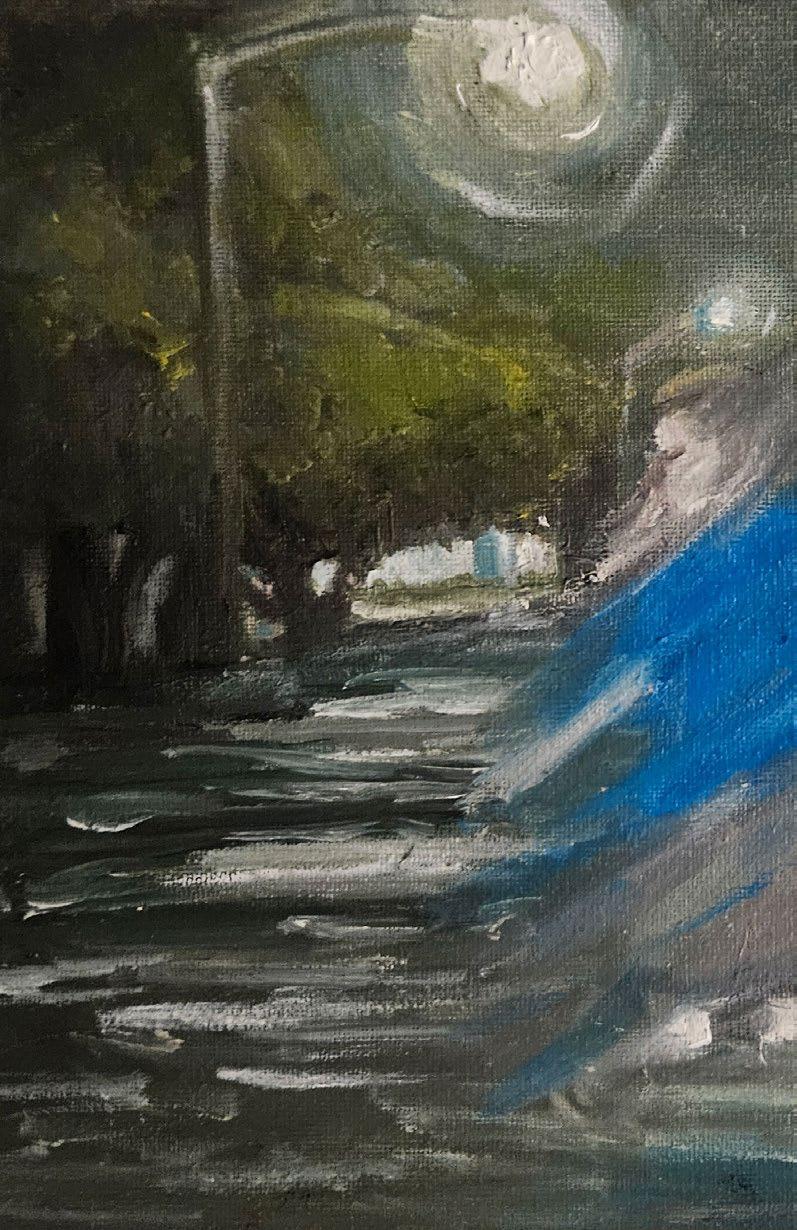
DEAD FLOWERS & ROUGH SEAS, 2025
oil on linen panel | 16 x 12 in. | Lent courtesy of the artist.
Jim Graham @jimgrahamart
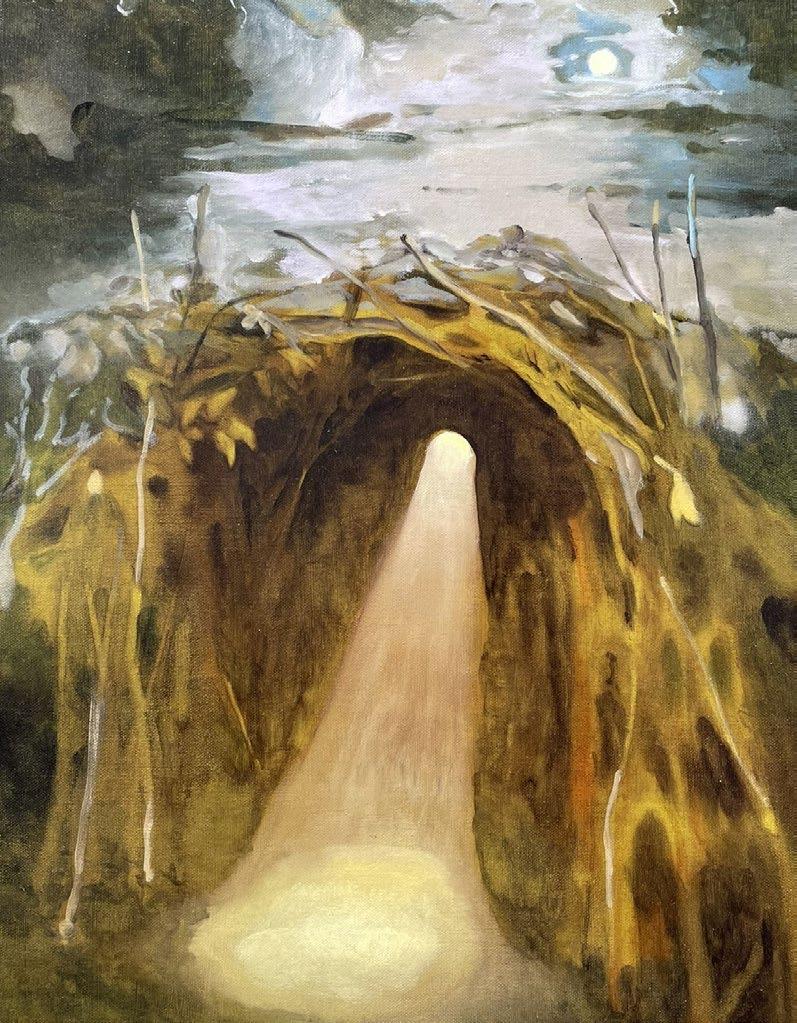
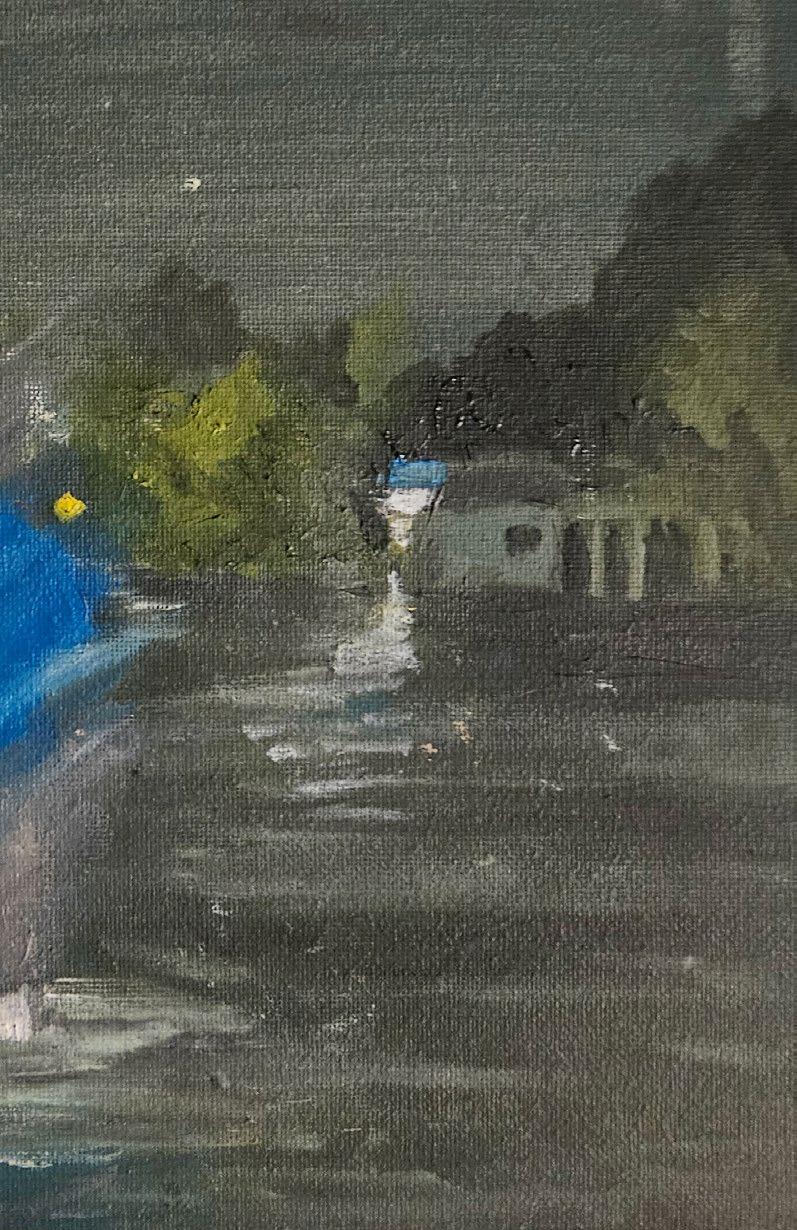
BIRD BLIND WITH FULL MOON, 2025
Jim Graham @jimgrahamart
oil on canvas | 14 x 22 in. | Lent courtesy of the artist.
The Backwater Paintings are a series of intimately scaled landscape and maritime-based compositions that engage with a diverse set of South Florida ecosystems. From levee to inlet, the project navigates multiple sites along South Florida’s Water Management Districts offering a firsthand account of some of the most ecologically important waterways in the country. The Backwater Paintings are made in the naturalist tradition working initially from observation, and then later refined in the artist’s studio.
NATIONAL WEATHER SERVICE #1, 2025
Emma Quintana
Projection, neon acrylic sculptures | 36 x 60 in. | Lent courtesy of the artist.
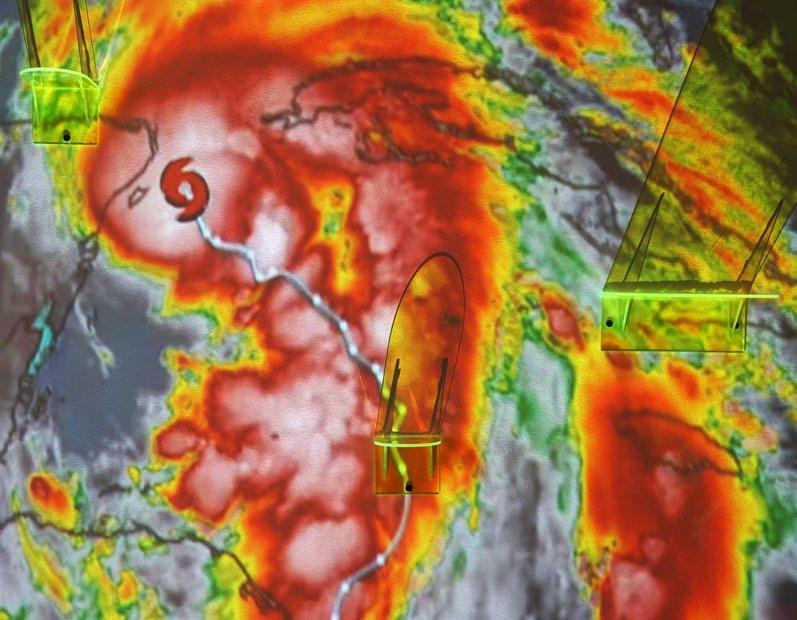
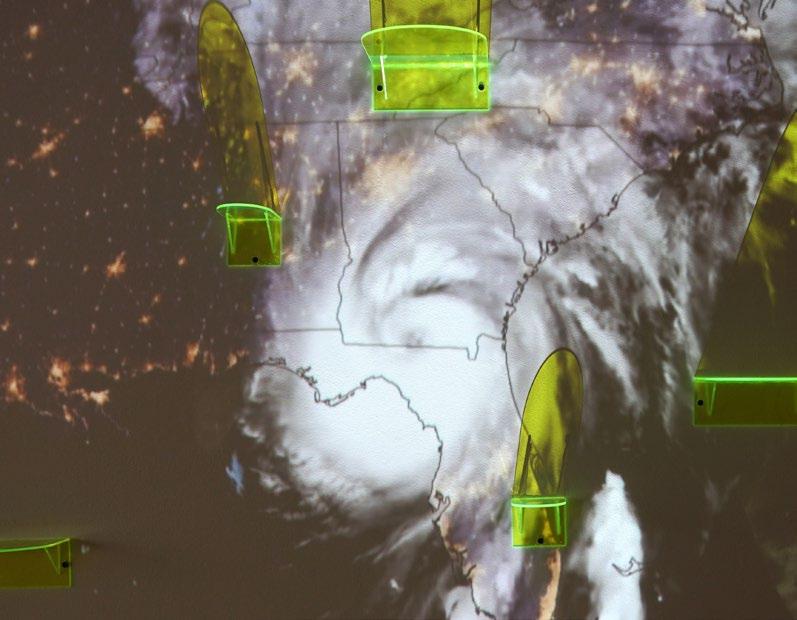
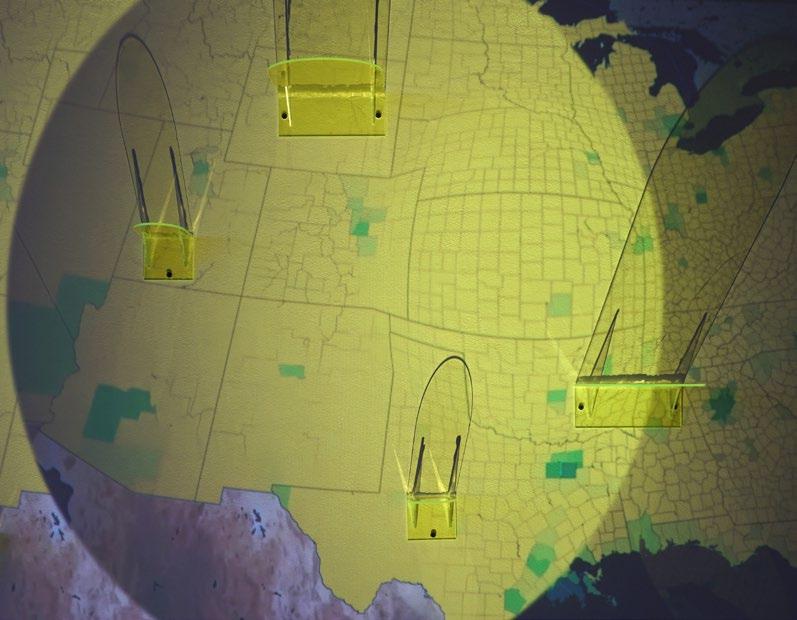
National Weather Service #1 integrates weather infographics and meteorological footage depicting hurricane-affected regions in Florida. By projecting this imagery onto a sculptural form, this installation examines how overconsumption, unchecked development and environmental pollution intensify the severity of storms. The resulting work highlights the paradox of disaster as both an inevitable consequence of human impact and a mediated spectacle within contemporary culture.
JOURNEY THE JELLYFISH, 2025
Kathy P.
Lantern, salvaged object, acrylics | 6 x 10 x 44 in. | Lent courtesy of the artist.
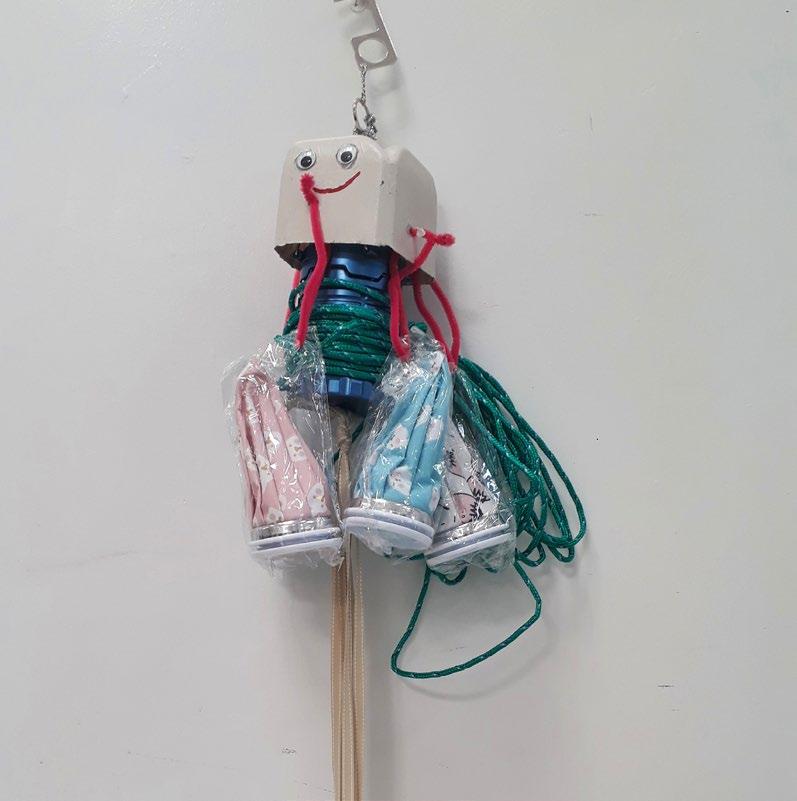
I am here in case of flood. My belly is a lantern; I will guide your way. My tentacles are made of ice bags and rope, which can serve several purposes. Who knows where my next journey will be? Just case of flood, you can count on me.
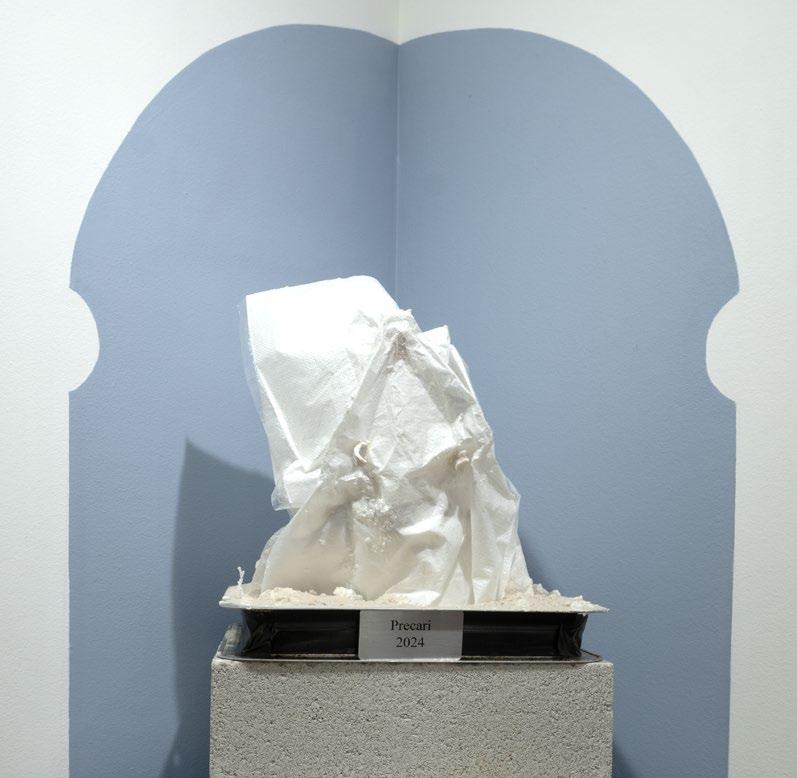
PRECARI 2024, 2025
Nan Keeton
Sand, sandbag, porcelain, aluminum found roasting pan, electric tape, paint stick, foam | 15.5 x 15.5 x 16 in. | Lent courtesy of the artist.
Precari 2024 conjures both the Latin word “Precari” meaning “prayer” and the root of our modern word “precarious.”
Thinking fondly of the “Mary in the Garden” statues occasionally seen in the neighborhood, this work assembles simple found storm objects to create a meditation on both fear and hope.
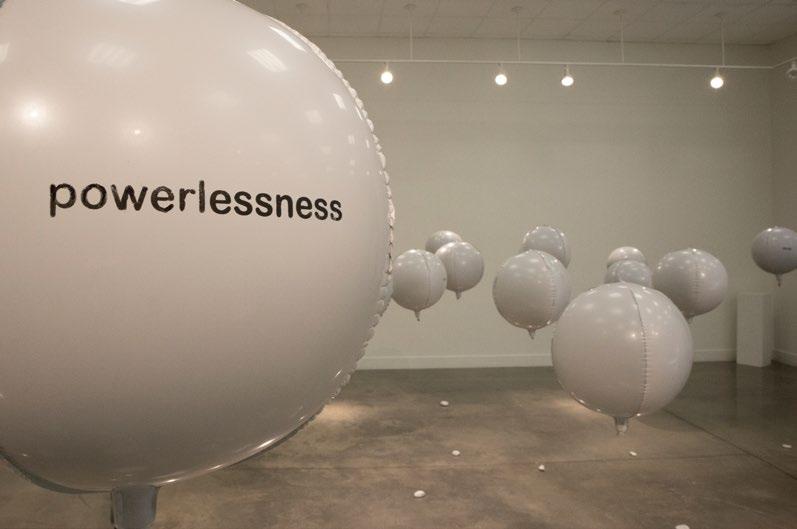
LET IT GO, 2024
Eszter Sziksz @szikszeszter
Intallation, helium-filled balloons | 22 in. tall | Lent courtesy of the artist.
The hurricane season of 2024 was particularly intense in Sarasota, Florida, where I reside. Initially, Debby caused flooding in my town. Helene hit in late September and by October 9, we were in the eye of Milton. While preparing and undergoing the mandatory evacuation, I started journaling the fundamental expressions I encountered. My collection expanded to 48 words, which I transformed into a visual poetry installation. For the Let It Go installation, I used helium-filled balloons and individually printed the expressions on them. I wanted the audience to interact with and explore each word at their own pace and participate in the new face of climate change. For the sound component, I collaborated with Douglas Tewksbury from Hamilton, Ontario, Canada. He solely utilized human voices to evoke the haunting sensation of the approaching hurricane.
UNTITLED, 2017/2025
Jason Lazarus
Hurricane Irma commercial signage debris | 20 X 24 in. | Lent courtesy of the artist.
This exhibition marks the debut of two roadside signage textshards collected in the aftermath of Hurricane Irma (2017). The artist has a nascent collection of similarly hurricane-liberated ‘letters’ ready for exhibition as a kind of concrete poetry.
DROP IN THE BUCKET, 2025
Josh Corson @josh_corson_
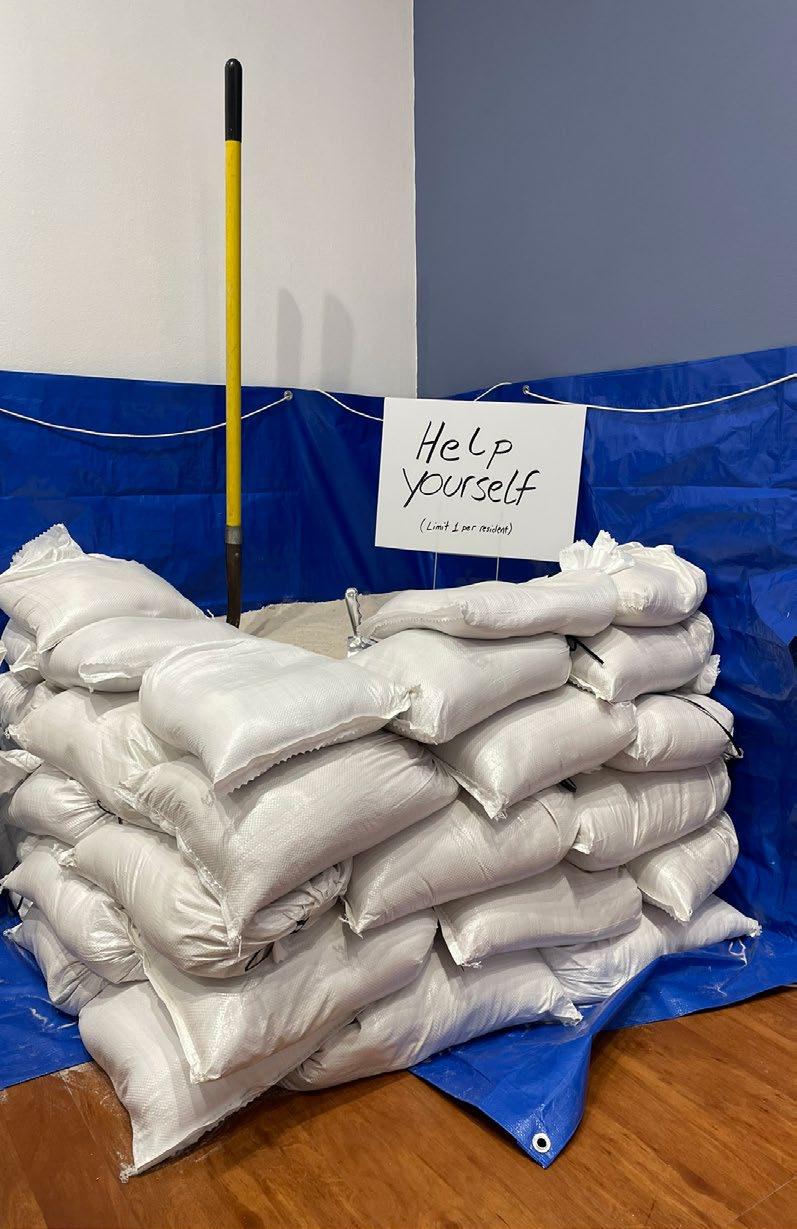
Sand, painter’s drop cloth, canvas sand bags, trowels (hand shovels), poster | 48 x 48 x 48 in. | Lent courtesy of the artist.
drop in the bucket
On the surface, free sandbag centers are a practical use of government resources. In fact, they seem to be exactly how a city fulfills the promise of a government for the people by the people. But a few sandbags are simply drops in the bucket compared to what our local, state, and federal governments are capable of doing to combat climate change.
They say protect your homes, but drill for oil off the coast.
They say stay safe while building roads with radioactive waste.
They say they’re sending help to the stadium that’ll be torn down.