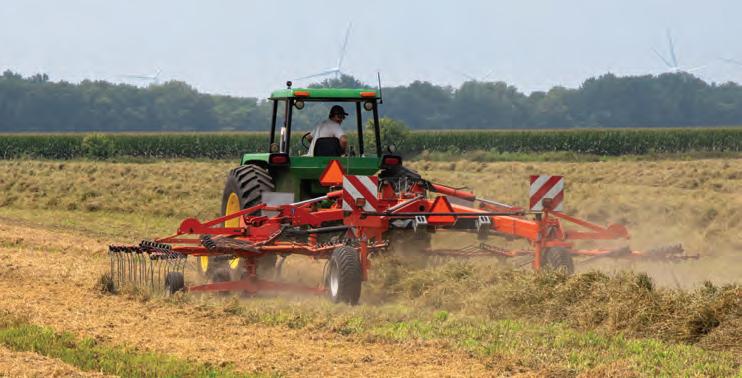
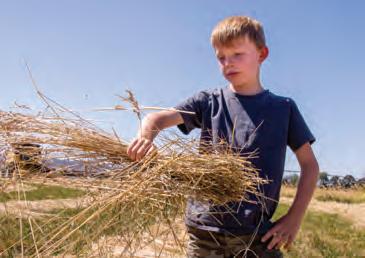
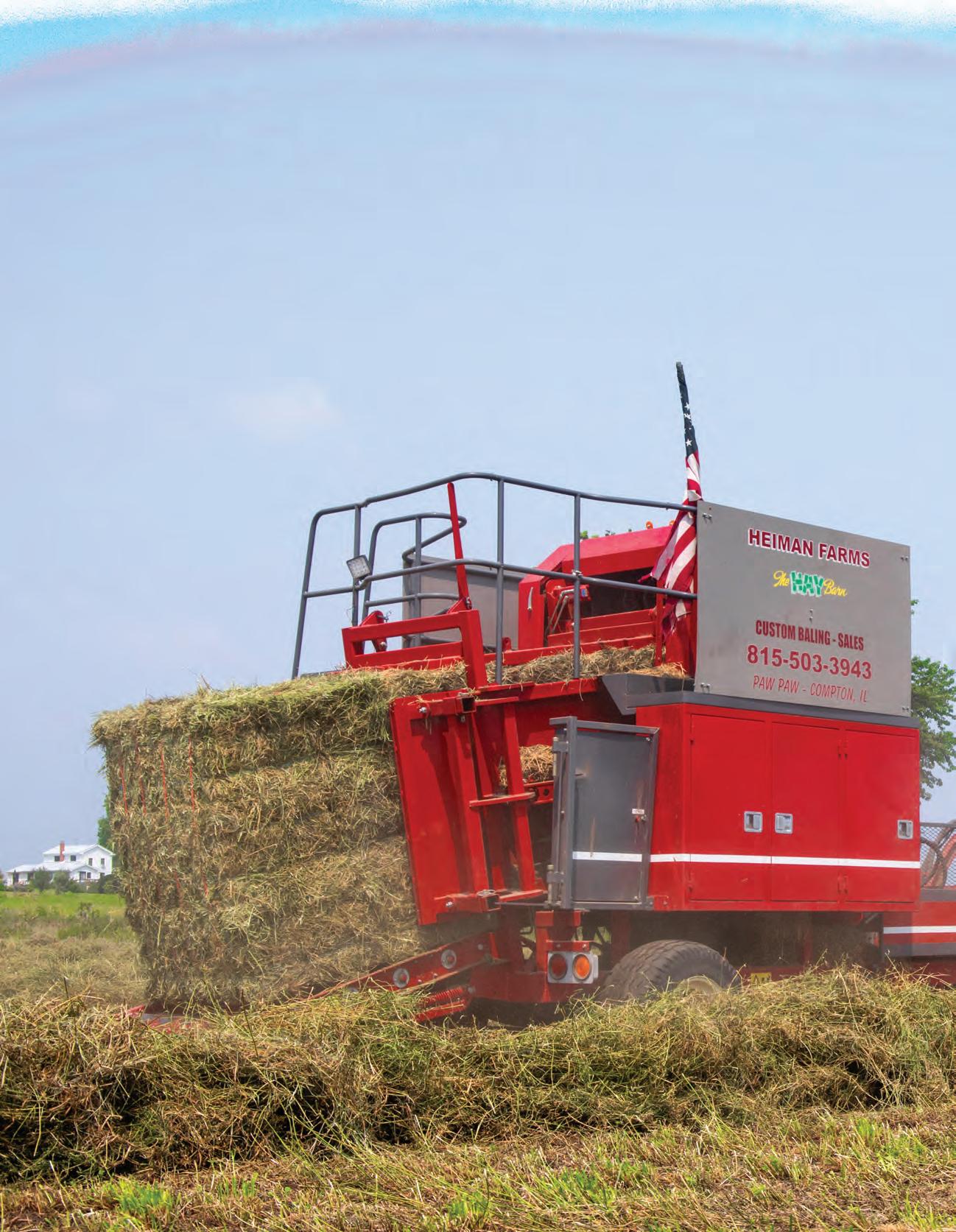
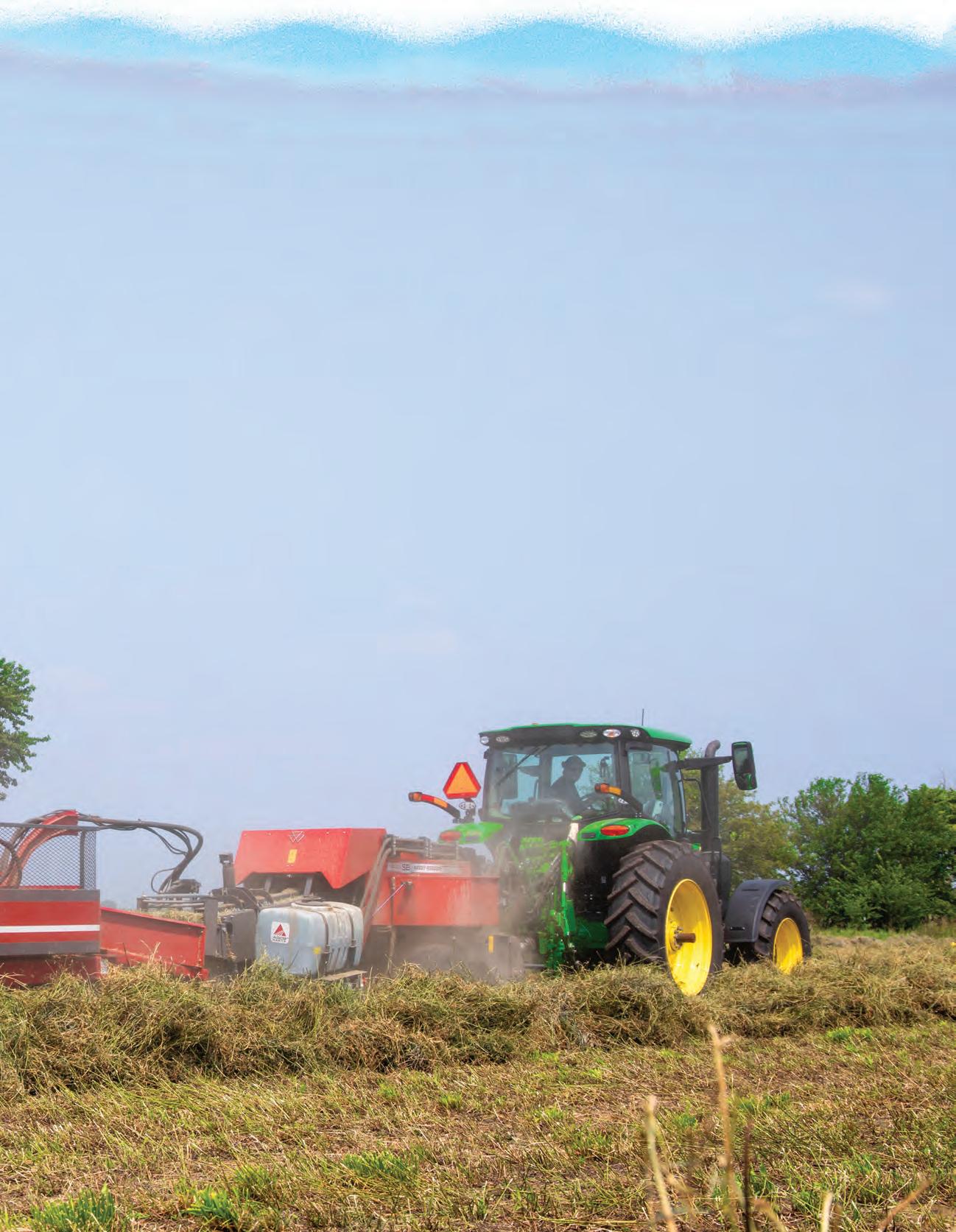
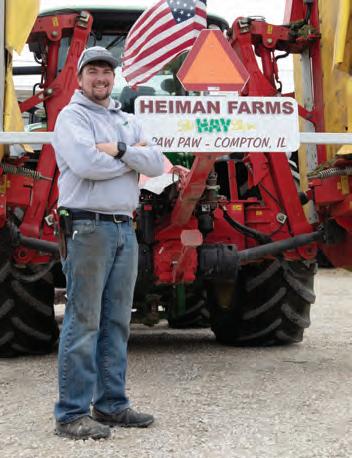
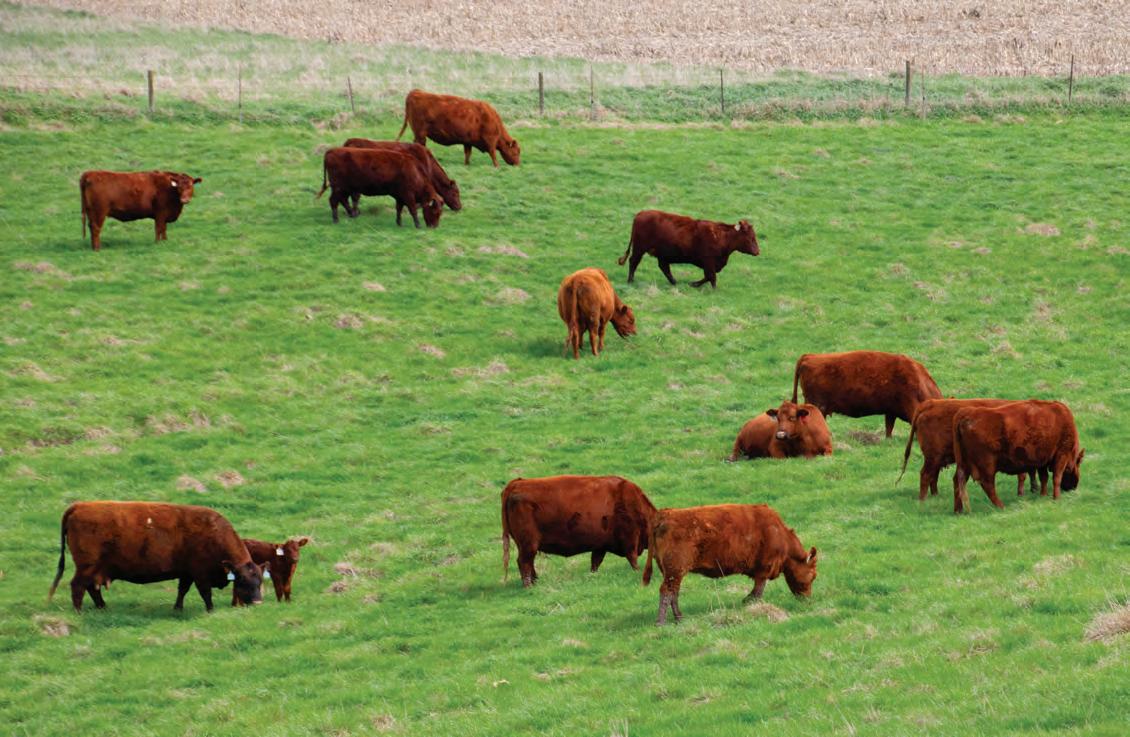
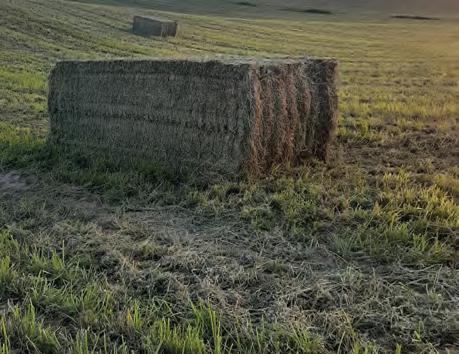
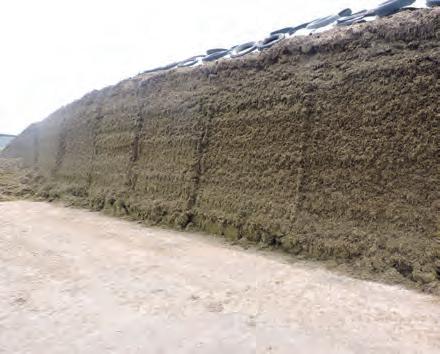
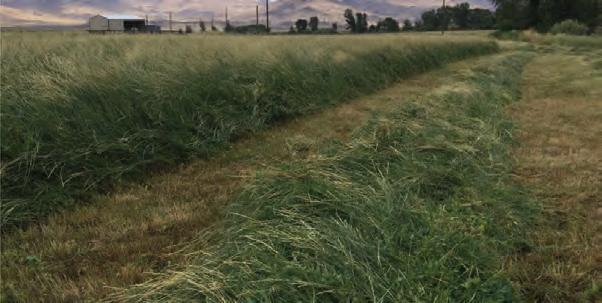
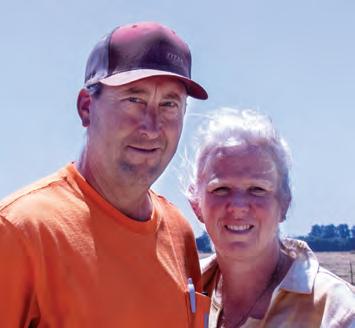
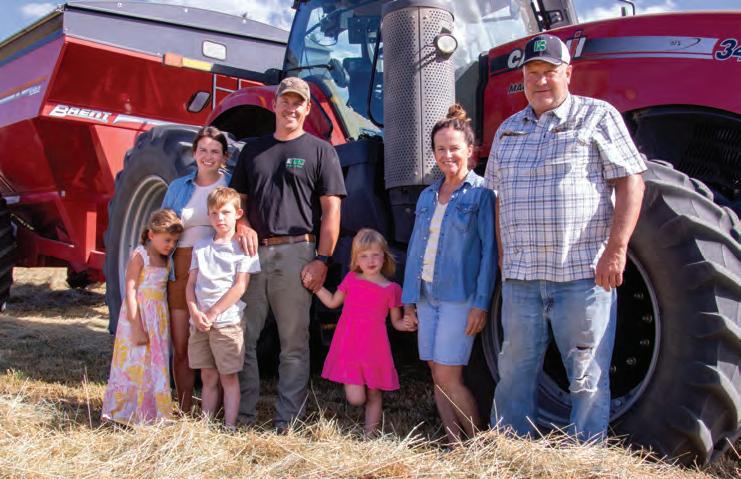
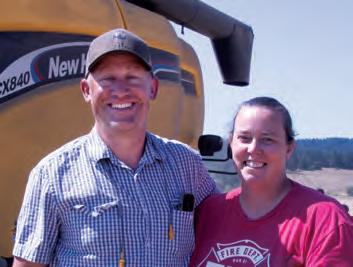
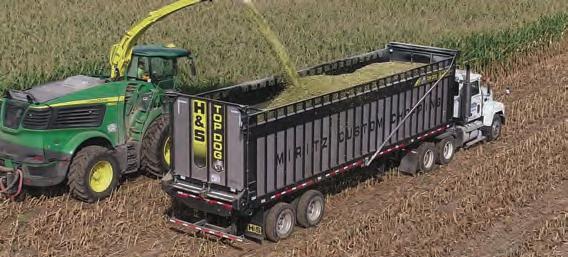
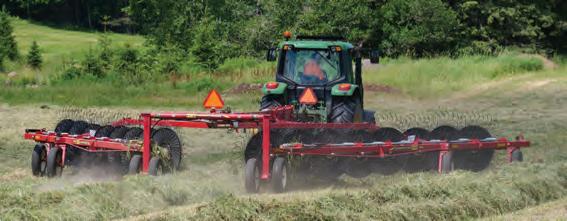
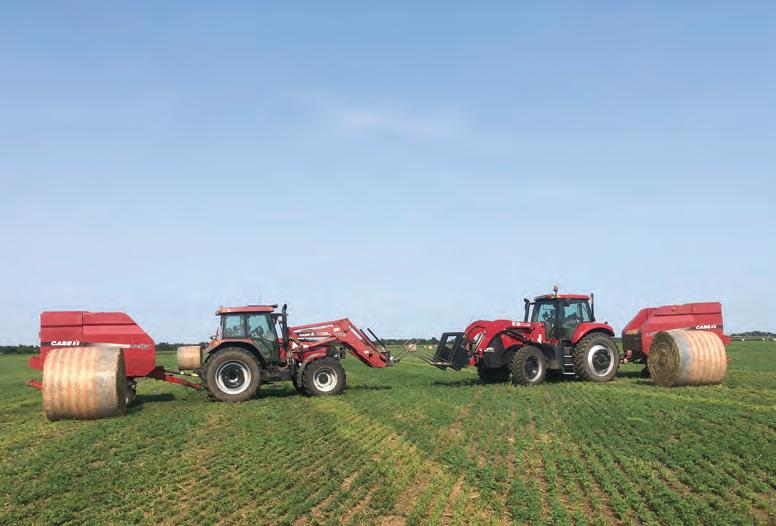
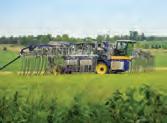
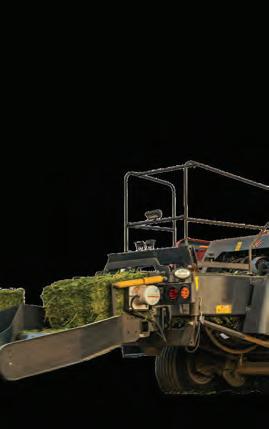
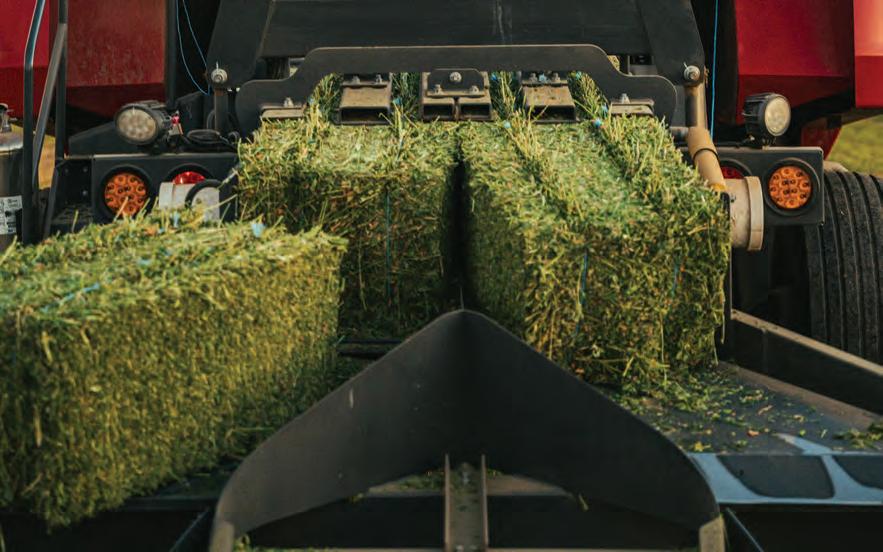
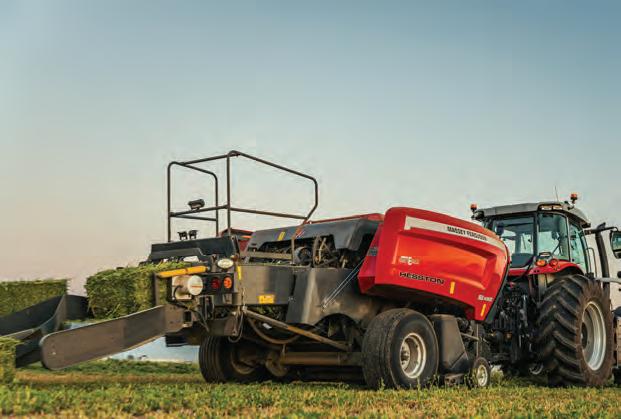
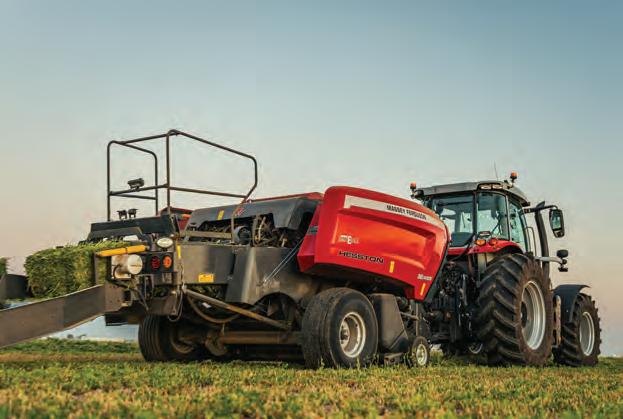
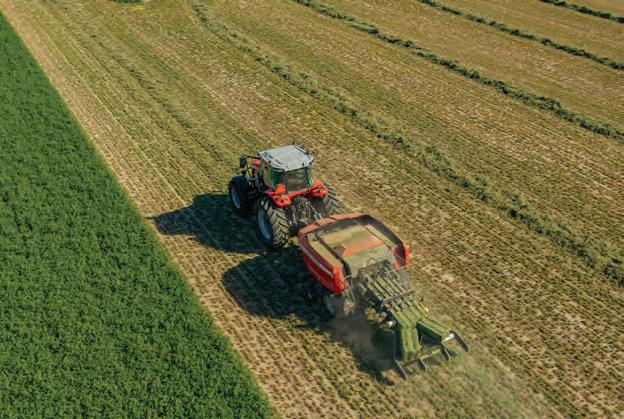
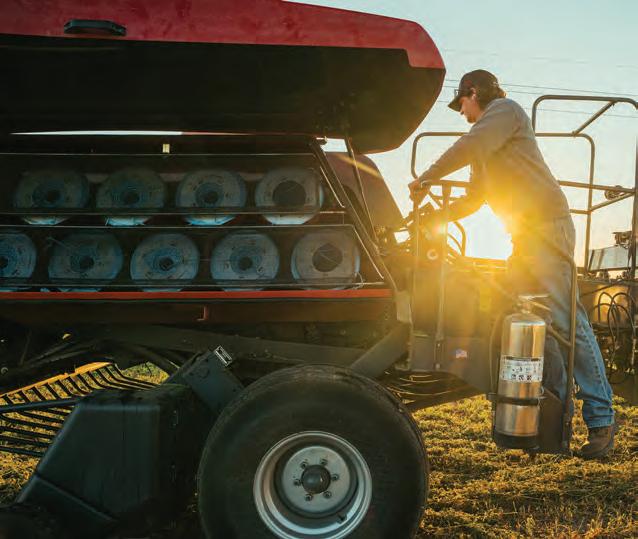
Illinois farmer Brandon Heiman entered the commercial hay industry as a teenager. Since then, his vision and determination have set his business apart from surrounding corn and soybean production.
Published by W.D. Hoard & Sons Co.
MANAGING EDITOR Amber M. Friedrichsen
SENIOR EDITOR Michael C. Rankin
ART DIRECTOR Todd Garrett
EDITORIAL COORDINATOR Jennifer L. Yurs
DIRECTOR OF MARKETING John R. Mansavage
DIGITAL MARKETING
Sam Rasmussen
Sidney Hebbe
ADVERTISING SALES
Kim E. Zilverberg kzilverberg@hayandforage.com
Jenna Zilverberg jzilverberg@hayandforage.com
ADVERTISING COORDINATOR
Patti J. Kressin pkressin@hayandforage.com
W.D. HOARD & SONS
PRESIDENT Brian V. Knox
EDITORIAL OFFICE
28 Milwaukee Ave., West, Fort Atkinson, WI, 53538
WEBSITE www.hayandforage.com
EMAIL info@hayandforage.com
PHONE 920-563-5551
DEPARTMENTS
Feedbunk
Sunrise On Soil
The Pasture Walk
Alfalfa Checkoff
Beef Feedbunk
Feed Analysis
Forage IQ
Hay Market Update
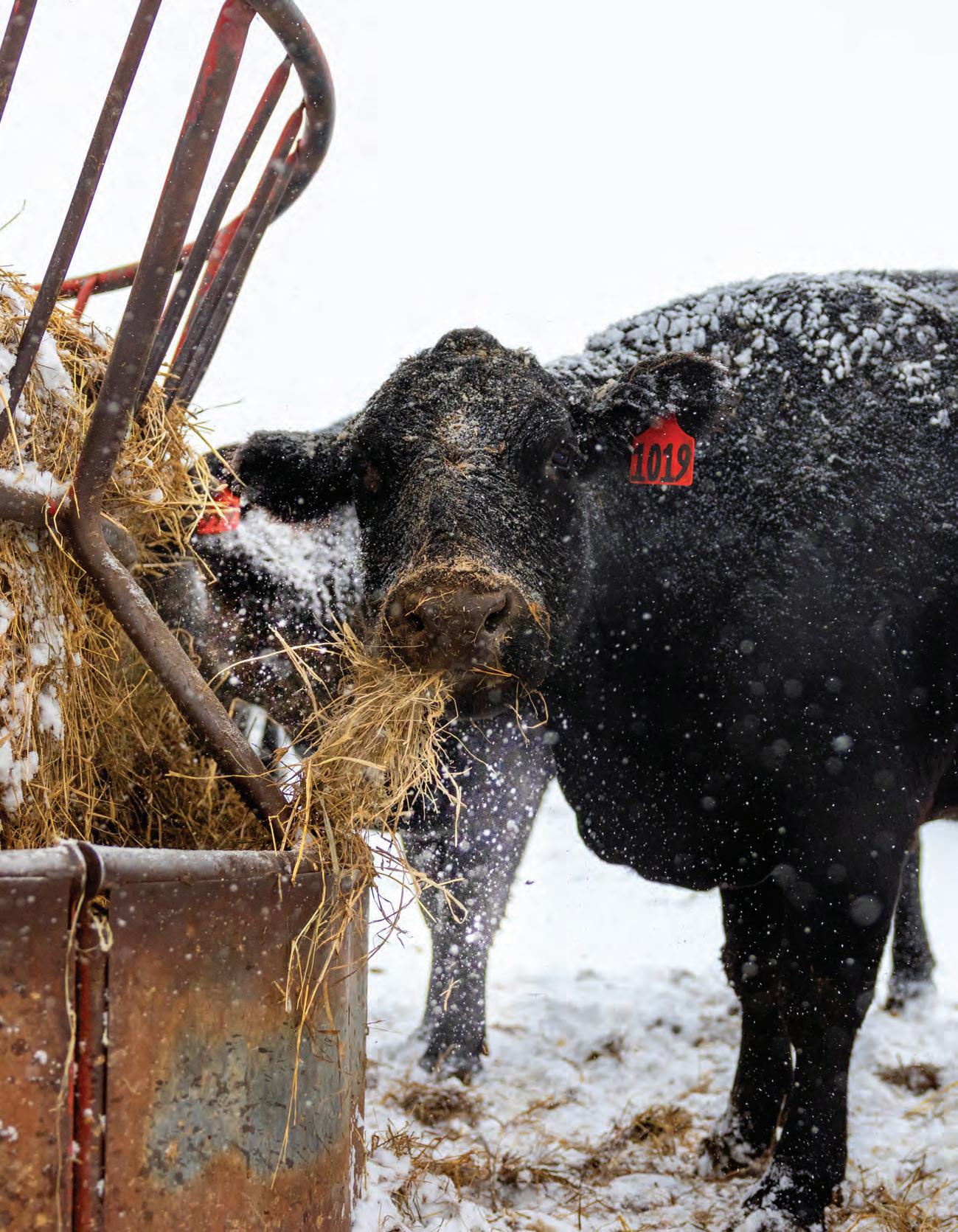
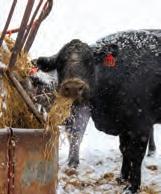
Testing hay and knowing forage quality becomes that much more critical to meet greater energy requirements from cattle when snow falls and temperatures drop. Luckily, there is light at the end of the tunnel for those feeding hay this winter with spring green up just around the corner.
Photo by Amber Friedrichsen
Fourth place
OBLIQUE Seville is one of the smallest professional sprinters in the world.
The 5-foot-6 Jamaican track and field athlete specializes in the 100 meters and is often the shortest and slightest lane assignment among much mightier competition. What Seville lacks in stature and brawn, he makes up for in precision and prowess. His underdog status easily makes him a fan favorite. But Seville isn’t a household name — not yet, anyway.
With an early athletic career defined by fourthplace finishes, he has struggled to advance to final rounds and earn medals that open doors to greater recognition. Perhaps one of the most disappointing examples was at the 2023 World Athletics Championships, a major steppingstone for runners on their way to the Olympics.
After advancing to the 100-meter final by winning his preliminary heat with a personal best, Seville was the fourth person to cross the finish line, missing the chance to gain ranking points needed for Olympic qualification by a hair. In a matter of milliseconds, his bronze-medal potential was swapped for an insignificant placing.
Alfalfa also has a track record of fourth place, often ranking as the fourth-most valuable field crop in the United States behind corn, soybeans, and wheat. Unlike the sport of sprinting, though, a fourth-place finish doesn’t reduce alfalfa’s importance as an agronomic pillar and a significant contributor to our nation’s economy, with an estimated $8.1 billion in 2024 farm gate sales.
A staple component of dairy and beef production, alfalfa also generates millions of dollars in export sales. It is heralded as the ultimate regenerative crop. And yet, alfalfa growers have limited options to offset losses when low hay prices and production pressures like rising input costs, dwindling livestock demand, and volatile growing conditions cause margins to shrink.
American Farm Bureau Federation economist Daniel Munch recently summarized alfalfa’s disadvantaged position in the article, “Alfalfa in the red: rising costs, falling returns.” Munch writes that alfalfa hay production is essentially an unbalanced equation with market prices that are far below full economic costs, heavily outweighed by fuel, fertilizer, labor, and machinery expenses. Even so, alfalfa has long been overlooked by policy support, including the new Farm Bridge Assistance Program.
Without standardized price discovery protocols, alfalfa can’t be covered by price- or revenue-based crop insurance policies. The indemnity payments and drought-relief programs that alfalfa does qualify for largely appeal to livestock producers who run short on feed — not the commercial hay grower whose primary income gets slashed by drought-induced production losses.
Alfalfa has characteristics that make it hard to compete with annual crops sold on the commodity market. It’s perennial lifespan limits producers’ ability to respond to market signals. In his article, Munch notes that when hay prices rise, new seedings can only comprise so many available acres. Even then, it takes a year or two for stands to reach their productive potential.
When prices fall, farmers are locked into a continuous cycle of cutting, drying, and baling hay for multiple years despite deteriorating returns. From 2000 to 2025, the national alfalfa acreage has slid from 23 million to 14 million acres, which Munch suggests is partly due to competition from field crops that are eligible for commodity safety net programs.
Some of the same characteristics that create challenges for alfalfa draw positive attention to it, though. Perennial root systems build soil organic matter and improve water infiltration. Continuous ground cover prevents erosion and runoff, while alfalfa’s ability to fix atmospheric nitrogen can benefit yields and reduce fertilizer costs for subsequent rotation crops. As Munch says, alfalfa’s overall role in United States agriculture is foundational. But without more responsive risk management tools and timely assistance, negative margins could accelerate the decline of the alfalfa industry’s resilience.
The 2023 World Athletics Championships was the last time Oblique Seville finished a race in fourth place. He persisted. He made it to the 2024 Olympics. And he recently won gold at the 2025 World Athletics Championships. Perhaps with similar perseverance and targeted advocacy, alfalfa will one day have a similar redemption story. That’s what needs to happen for alfalfa farmers to secure a more stable position in the broader agricultural market system. •
Amber Friedrichsen Managing Editor
LIFE ON THE CUTTING EDGE
HEGOTA BALER BEFORE A DRIVER’S LICENSE
Brandon Heiman started his commercial hay business the old-fashioned way in a region better known for its combines and corn.
Hard work and steady growth have put this young Illinois farmer in a position for future success.
by Mike Rankin, Senior Editor
BRANDON Heiman affirmed that he likes the stress of making hay in the summer and the ability to do his own marketing while also setting his own price. Such attributes aren’t offered by row crops, even though he grows those as well on his north central Illinois farm.
During his formative years, Heiman got the haymaking bug while working on his uncle’s Missouri farm in the summer. Then, at the age of 14, he bought a New Holland 575 baler and started custom baling for some of his Land of Lincoln neighbors. “I didn’t even have a driver’s license yet,” Heiman chuckled.
These days, the just-turned 26-yearold farmer harvests about 700 acres of hay on owned and rented land that dots the landscape within a mecca for corn and soybean production. Heiman has about 100 acres of straight alfalfa, 500 acres of an 80:20 alfalfa-orchardgrass mix, and another 100 acres of an orchardgrass-timothy mix. “We have a lot of small, rented fields that row-crop farmers don’t want to deal with and where landowners would rather look at hay instead of corn or soybeans,” Heiman explained. “I also have about 60 acres of what was left from my grandparents’ farm. Both of my parents worked off-farm jobs.”
Multiple packages
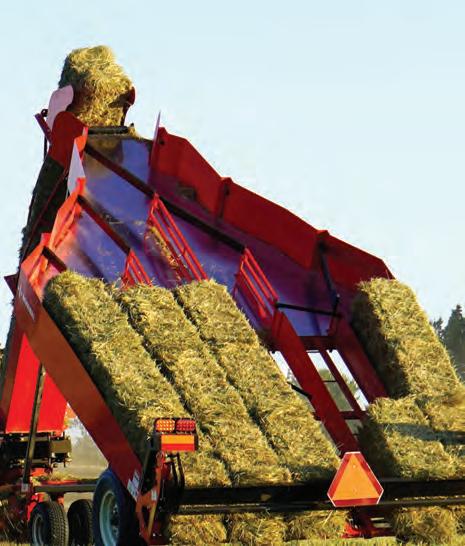
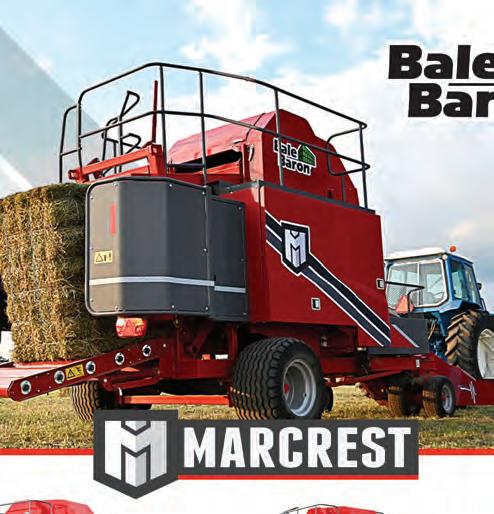
Heiman owns three balers and produces small squares, 3x3 large squares, and round bales. The small squares are bundled with a Bale Baron that he pulls behind his Massey-Fer -
guson in-line baler. Heiman decides which fields will be made into what type of bale by the quality of the hay. A lot of his first cutting goes into large square bales because they’re easier to market in the larger package. His first-cutting grass hay is made into round bales, as is hay that gets rained on. In the subsequent summer cuttings of alfalfa and grass hay, Heiman runs the small square baler as much as he can. He also does some custom round baling for neighbors.
The Paw Paw, Ill., haymaker cuts 100 to 300 acres at a time, depending on the weather window. “We can easily bale 100 acres per day if we’re running both the large-square and small-square balers,” he said. The full-time labor force consists only of Heiman, but he gets part-time assistance from his parents, two longtime friends from his high school days — Kaleb Ackland and Walter Barnickel — and a few current high school students.
Moisture mandate
Using a Pottinger triple mower with Circle C conditioners, hay is mowed in 10-foot swaths and allowed to dry. “I don’t like to ted
hay because I think we lose too many leaves,” Heiman said. He has both a wheel rake and rotary rake. The wheel rake is used on any first cutting that is baled into small squares. The rotary rake, which he has found is better for drying hay faster, is used for large-square bales and during the summer cuttings.
Heiman doesn’t like to bale alfalfa above 15% moisture or grass above 13% moisture. If he pushes that limit to 18%, then he will apply propionic acid; he bales a little wetter if the hay had previously dried down and only is picking up moisture from higher humidity. “Bundling small squares makes it more difficult for bales to cure and lose moisture, so applying acid offers some cheap insurance against heating and mold growth,” the haymaker said.
Heiman shared that he usually only takes three cuttings off his fields, but that conservative management yields him longer stand lives — as many as seven to eight years. He said his alfalfa stands yield about 5 tons per acre. When choosing his alfalfa varieties, Heiman focuses on winterhardiness and yield potential. On about 50% of his hay acres, he carries Pasture, Rangeland, and Forage (PRF) crop insurance, which is based on area precipitation historical averages.
Fertilizer is applied to hayfields in the fall and after first cutting. “If you skimp on fertilizer, you may not see
the impact immediately, but you’ll see it down the road,” Heiman asserted. Soil tests guide the fertilizer program that includes phosphorus and potassium twice per year and sulfur and boron for alfalfa in the fall. Grass fields get two 50-pound applications of urea fertilizer — one in March and another after the first cutting is taken.
Consistent markets
Heiman’s hay enterprise is appropriately named “The Hay Barn.” Initially, he used Facebook as his primary marketing tool. These days, word of mouth keeps hay inventory moving out of his two hay barns, one of which was just recently built. Most of Heiman’s hay is purchased by brokers who are reselling into the horse markets of Tennessee and Kentucky. He also ships hay into the southeastern states of Georgia and Florida. Round bales are mostly sold into the local beef market.
To avoid payment negligence, Heiman requires that new customers pay before the truck gets loaded. For established customers with a good
payment history, the reins get looser, and he’ll ship without cash in hand. Heiman tries to maintain a consistent
hay price from year to year, even if the market may be a bit higher or lower. However, if the growing season turns dry and he sees that his own production will be compromised, he informs customers that the original quoted price may go up.
As for the future, the young haymaker said he has room to grow his operation a little bit more, but additional hay acres would require the purchase of another small-bale line of equipment. Last year, he put 85,000 bales through his current baler. Based on current client requests, Heiman is contemplating seeding teffgrass after his winter wheat is harvested. This would allow him to enter the low-carbohydrate hay equine market.
Ten years into carrying a driver’s license, the still young haymaker has carved a notch in the hay industry at a location where combines and grain wagons dominate machinery dealer lots. It’s because of Heiman — and other entry-level hay farmers like him — that the future of hay production remains bright. •
Heiman bales hay for multiple markets and produces small squares, large squares, and round bales on his 700 acres of owned and rented land.
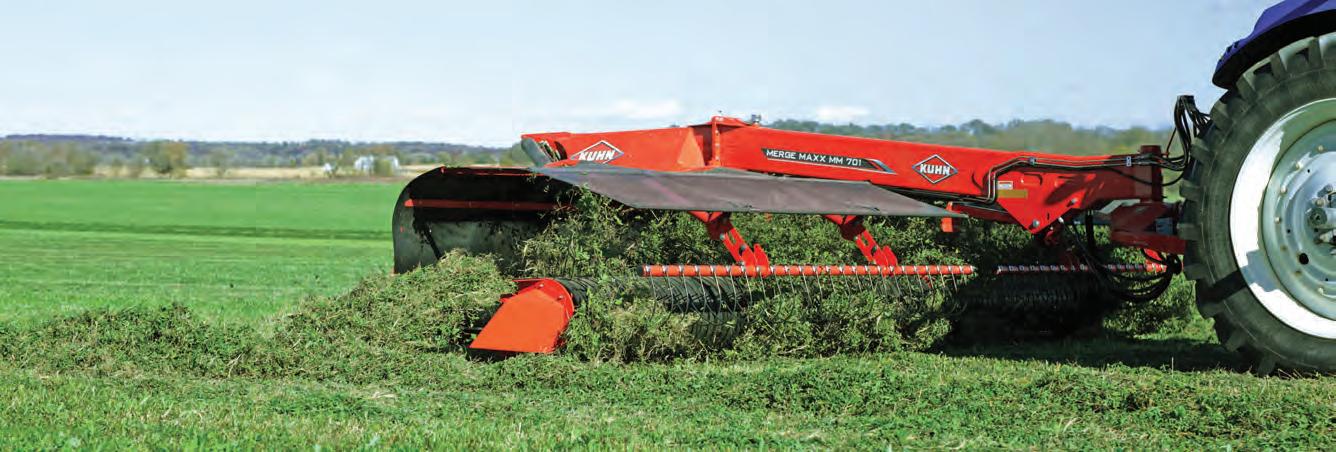
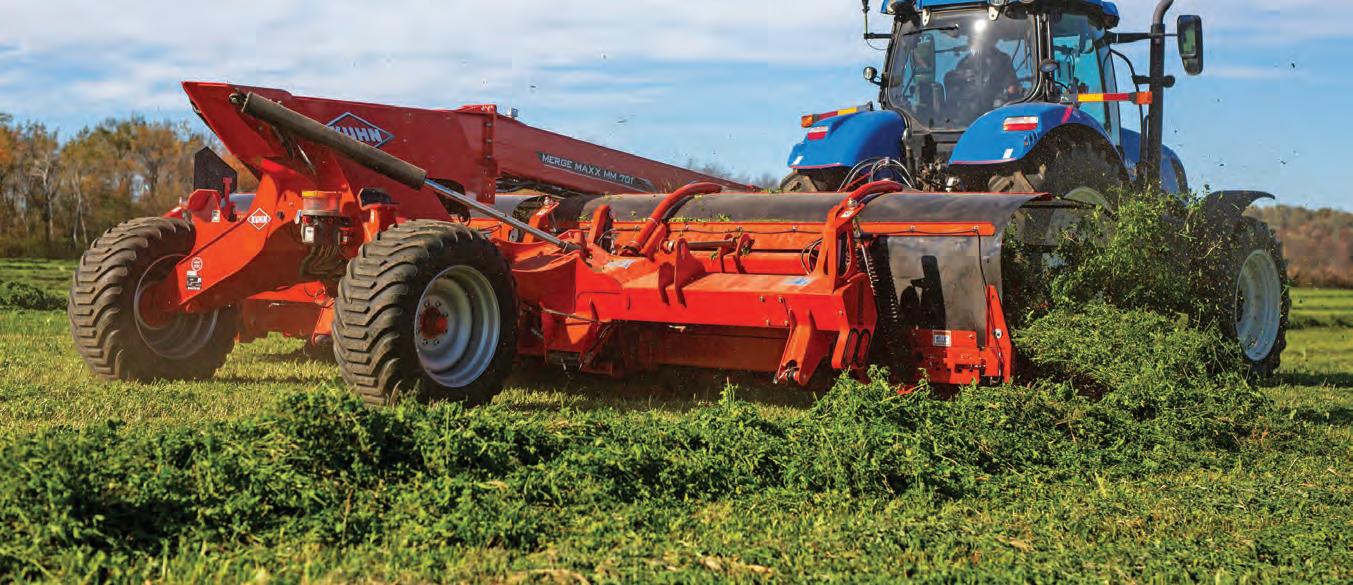
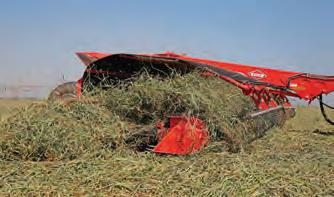
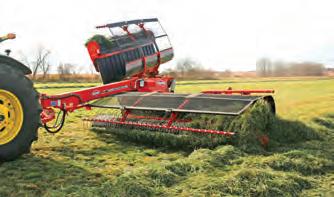
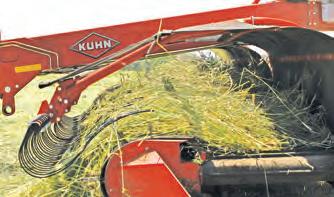
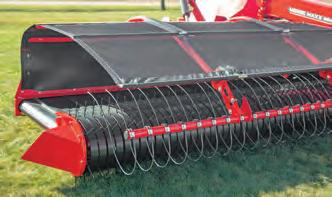
The MM 01 Series twin and triple Merge Maxx® hay mergers are unique in the industry and unmatched in their simplicity of operation, durability and merging capabilities. These machines offer pickup widths of 24’, 36’ and 42’ and complement the 30’ pickup of the existing MM 890 in our commercial merger lineup.
All KUHN’s 01 Series models now include easy to use technology and software. The IntelliMerge™ system allows an operator to run, adjust, and receive machine diagnostics and feedback on an intuitive color display. The OptiSense™ belt stall system (optional on MM 701) alerts the operator to when the belts start to slow down when approaching the capacity of the merger.
Multiple options to merge left, right, split or either wing raised Durable, yet gentle, crop handling provided by
The sweet spot for molasses in high-forage diets
HIGH-FORAGE dairy rations are an excellent nutritional strategy for optimizing production while controlling feed costs. High-quality, homegrown forages provide a cost-effective foundation for rations that support milk production and profitability. However, high-forage diets also present challenges, including reduced digestibility and long forage particles that raise the risk of sorting at the bunk.
Building a successful high-forage ration begins with good crop management, but once forage inventory and quality are set, other ingredients and practices can help maximize the value of those forages. Feeding molasses is one tool that can support this goal. When used appropriately, molasses can reduce sorting behavior and support rumen function. As with any feed ingredient, however, the benefits depend on good management, and molasses is not a magic bullet.
Reduce sorting behavior
There are three rations on every dairy farm: the ration balanced by the nutritionist, the ration delivered to the cows, and the ration the cows actually eat. At every step between formulation and consumption, opportunities exist for error. These errors may include weighing or mixing inconsistencies, but cows themselves also widen this gap when they sort against long forage particles.
Sorting is a particular concern in forage-based rations, where longer particle size enables cows to select concentrates and fine particles. When sorting occurs, the nutrient profile of the ration consumed by the cow no longer matches what was formulated. Sorting often shows up first in subtle ways at the feedbunk. Refusals may become forage heavy over the course of the day as cows preferentially consume finer particles immediately after feed delivery. Using a Penn State Particle Separator is one way to quantify the level of sorting that occurs by com-
Add molasses early in the mixing process and distribute it evenly across the ration.
paring the particle size distribution of refusals with that of fresh feed. Addressing sorting at the bunk helps ensure that cows receive a more consistent diet throughout the day, supporting stable rumen function and more predictable milk production.
The economic impact of sorting is well documented. A 2017 analysis from the University of Guelph found that every 10% refusal of long particles reduced milkfat percentage by 0.15 points and milk protein percentage by 0.05 points. Similarly, a 2013 analysis from the same researchers reported that every 2% bump in refusal of long particles at the group level reduced fat-corrected milk production by approximately 2 pounds per cow per day. Therefore, preventing sorting can improve income over feed costs without affecting ration expenses, allowing producers to capture more value from the feed that is already in their inventory.
Feeding molasses is one strategy producers can use to reduce sorting. Molasses-based liquid feeds help bind ration ingredients together and reduce
the separation of fine particles from forage. Water can sometimes serve a similar purpose — but there are some caveats. For instance, when total mixed ration (TMR) dry matter is below 60%, adding water can increase sorting and promote feed heating, especially in warm weather. In contrast, molasses can be added across a wide range of ration dry matter content without impacting spoilage risk. Research has consistently shown that adding molasses to lactating cow diets can improve dry matter intake, reduce sorting, and influence feeding behavior throughout the day. Similar responses have also been observed in dry cow diets.
Unlock fiber digestibility
Although both starch and sugar are highly digestible energy sources, they do not function the same way in the rumen. Starches and sugars differ in their structure and influence rumen fermentation differently. Unlike starch, dietary sugars typically do not reduce rumen pH, and, in some cases, may slightly raise it.
Sugars can also improve fiber digestion when they replace a portion of dietary starch. Fiber-digesting bacteria rely on readily fermentable sugars as an energy source, meaning that sugars can help “unlock” additional digestibility from forages already present in the ration. This effect is particularly valuable in high-forage diets, where maximizing fiber utilization is key to maintaining intake and production. In these situations, sugars provide readily available energy to fiber-digesting bacteria, supporting more efficient rumen fermentation without relying solely on additional starch. Rather than increasing grain inclusion to drive energy intake, sugars enable producers to better utilize the fiber already present in the ration, thereby helping to maintain intake and performance while preserving the benefits of a forage-based feeding strategy. Research suggests that the sweet spot for added sugar is approximately 5% of diet dry matter.
Good management
As with any feeding strategy, molasses cannot compensate for poor management. To realize the benefits of molasses supplementation, both feed management and cow management must be considered.
Stocking density plays a role in milkfat synthesis, particularly through its influence on de novo fatty acid production. To support optimal performance, avoid excessive overstocking and aim to keep stocking density at or below 110%. Provide at least 18 inches of bunk space per cow to reduce competition and sorting pressure. Other management practices can further support consistent intake, including separating first-lactation cows from older cows when possible, feeding at least twice a day, and pushing up feed frequently.
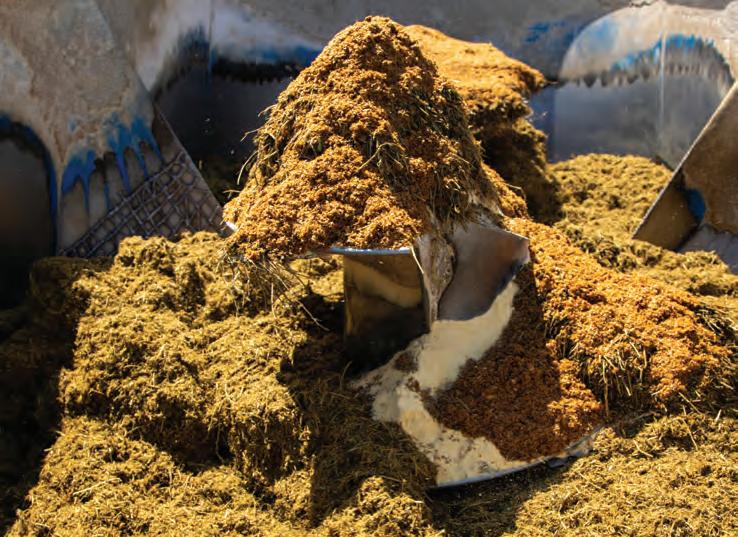
Feed mixing is also critical when adding molasses to the ration. Add liquids early in the mixing process and distribute them evenly across the ration rather than being applied in a single location. Avoid dropping liquid feeds directly onto mixer screws, and routinely check the mixer walls for buildup to ensure uniform incorporation.
When paired with sound feeding and cow management, molasses can complement high-forage diets by reducing
sorting, adding fermentable energy without heightening the risk of acidosis, and improving fiber digestibility. For producers aiming to capture more value from homegrown forages, molasses can be a practical tool, provided that it is used thoughtfully. Work with your nutritionist to determine whether molasses fits your ration and to identify an appropriate inclusion rate,
typically targeting around 5% of total dietary sugars. •
GAIL CARPENTER
The
Brand
Brand
PLOWDOWN
PLOWDOWN
$3.75/lb.
MIX 25%
MIX 25%
MIX 25%
MIX 25%
“Plowdown” alfalfa with your regular alfalfa seed. Expect a hearty yield increase your “new seeding” first year!
“Plowdown” alfalfa with your regular alfalfa seed. Expect a hearty yield increase your “new seeding” first year!
“Plowdown” alfalfa with your regular alfalfa seed. Expect a hearty yield increase your “new seeding” first year!
25%
“Plowdown” alfalfa with your regular alfalfa seed. Expect a hearty yield increase your “new seeding” first year!
MIX 25%
MIX 25%
“Plowdown” alfalfa with your regular alfalfa seed. Expect a hearty yield increase your “new seeding” first year!
“Plowdown” alfalfa with your regular alfalfa seed. Expect a hearty yield increase your “new seeding” first year!
“Plowdown” alfalfa with your regular alfalfa seed. Expect a hearty yield increase your “new seeding” first year!
“Plowdown” alfalfa with your regular alfalfa seed. Expect a hearty yield increase your “new seeding” first year!
“We noted 5 extra inches of growth above our 360-V (five) canopy height. We had mixed in 25% Plowdown and, this year, we will mix in more!”
– Harlan Horst,
Stanley, WI
“Plowdown” is #9 fall dormancy. It is supposed to winterkill, but has often been known to overwinter for a second growing season!
“Plowdown” is #9 fall dormancy. It is supposed to winterkill, but has often been known to overwinter for a second growing season!
“Plowdown” is #9 fall dormancy. It is supposed to winterkill, but has often been known to overwinter for a second growing season!
“Plowdown” is #9 fall dormancy. It is supposed to winterkill, but has often been known to overwinter for a second growing season!
“Plowdown” is #9 fall dormancy. It is supposed to winterkill, but has often been known to overwinter for a second growing season!
“Plowdown” is #9 fall dormancy. It is supposed to winterkill, but has often been known to overwinter for a second growing season!
“Plowdown” is #9 fall dormancy. It is supposed to winterkill, but has often been known to overwinter for a second growing season!
“Plowdown” is #9 fall dormancy. It is supposed to winterkill, but has often been known to overwinter for a second growing season!
You could plant “Plowdown” as a one year only crop. Great for a bean crop, for example, next growing season.
You could plant “Plowdown” as a one year only crop. Great for a bean crop, for example, next growing season.
You could plant “Plowdown” as a one year only crop. Great for a bean crop, for example, next growing season.
“Modern
You could plant “Plowdown” as a one year only crop. Great for a bean crop, for example, next growing season.
“Modern Forages Sold Nationwide And Canada”
You could plant “Plowdown” as a one year only crop. Great for a bean crop, for example, next growing season.
G RE ENWA Y SEEDS ww w.g reenw a ysee d .co m
You could plant “Plowdown” as a one year only crop. Great for a bean crop, for example, next growing season.
You could plant “Plowdown” as a one year only crop. Great for a bean crop, for example, next growing season.
“Modern Forages Sold Nationwide and Canada”
G RE ENWA Y SEEDS ww w.g reenw a ysee d .co m
You could plant “Plowdown” as a one year only crop. Great for a bean crop, for example, next growing season. G
G RE ENWA Y SEEDS ww w.g reenw a ysee d .co m Alan Greenway Seedsman Over 50 Years Experience! 208-250-0159 (cell) 208-454-8342 (message)
“Modern Forages Sold Nationwide and Canada”
G
(cell) 208-454-8342 (message)
G RE ENWA Y SEEDS ww
Greenway Seeds, Caldwell, ID • Warehouses in Caldwell, ID and Deerfield, WI
Distributing nutrients on the farm
LIVESTOCK producers know that defecation is daily, and if livestock were penned, then serious piles would accumulate over time. Livestock excrement contains nutrients, and those nutrients can be a liability if only considered a waste. On the other hand, they can be a resource to feed the growth of fresh forage if distributed over a pasture.
When excrement is concentrated and treated as a waste that accumulates over time, nutrients contained within the area could be lost as runoff to nearby streams or be leached through the soil profile and possibly into underlying groundwater.
Pasture-based livestock systems distribute excrement better since animals are offered larger areas to graze, ruminate, and defecate. But there are areas of concentrated nutrients in many pastures, too, as there is typically a single
source of water or a part of the pasture that is shaded from the sun. Moreover, supplemental feed may be delivered to the same part of the pasture close to the gate.
So, how concentrated are soil nutrients in grazed pastures? This was a question our research team in North Carolina had a few years ago that we explored with the collaboration of six farms across the state.
Results varied
Using a grid-sampling approach, we collected soil at a 4-inch depth every 130 feet and analyzed samples for total organic matter, soil texture, biological activity, soil pH, cation exchange capacity, and routine soil chemical nutrients. A total of 110 to 140 samples were collected on each farm.
We expected soil properties to be concentrated in areas that were frequently
visited by livestock, either to drink water, receive supplemental feed, or loaf under the shade. The full research results for the six private farms that practiced rotational stocking and the three research stations that utilized long-term winter feeding areas can be found by accessing the QR codes on the opposite page
Considerable variation in soil properties occurred within the individual farms — which included eight to 14 fields — and among the six farms in the study. Some of these variations were natural due to physiographic characteristics like elevation, climate, and soil formation. Other variations were the result of management, such as different pasture characteristics according to forage species, stocking method, stocking rate, fertilization, and cultural practices.
Some key soil findings among the
Mike Rankin
3 Research stations Relative enrichment of soil organic matter and nutrient properties
Soil-test biological activity
Mehlich-3 phosphorus
Mehlich-3 potassium
Enrichment ratio (aggregated zone / rest of paddock)
fields and across the farms included:
• Swine and poultry manure favorably enriched soil with infrequent applications; however, repeated applications led to excessive soil-test phosphorus and potassium.
• Positive impacts on total organic matter, particulate organic carbon, and soil-test biological activity occurred when livestock grazed perennial forages compared to annual forages or previous grain cropping.
• Enrichment of total organic matter, particulate organic carbon, and soil-test biological activity occurred with winter hay feeding, but excessive nutrient accumulation occurred if hay was repeatedly fed in the same location.
Congregating cattle
When defining an enrichment zone with elevated soil properties from four neighboring samples, the concentration of nutrients was associated with factors such as tree shade, drinking water location, or gates. These features attracted animals and led to feces and urine deposition, and the areas may have become denuded and susceptible to runoff loss and/or loss of forage. Hay feeding stations also attracted livestock and caused them to preferentially occupy smaller portions of a pasture. This led to an import and accumulation of organic nutrients in enrichment zones. Repeated animal behavior patterns that create enrichment zones and/or an accumulation of organic matter can enhance both soil microbial activity and sequestration of soil organic carbon.
Across the six farms, 40% of the 49
total fields had some form of spatial aggregation — mostly nutrient enrichment, but also depletion zones. Only 5% of the fields had separate depletion and enrichment zones of significance in the same field. Although significant enrichment of nutrients on livestock farms was found, it was not a universal occurrence, and it could be controlled or managed with appropriate attention. Since all six farms practiced some form of rotational stocking for at least five years, the occurrence and intensity of the enrichment zones could have been mitigated. The magnitude of nutrient enrichment was not as large
as it was when winter hay feeding was a routine operation in the same location due to convenience of farm infrastructure (see figure).
Overall, this study showed that improved grazing management can have positive impacts on beef farms in North Carolina, and likely in other states, too. Examples include rotational stocking, renovating pastures when needed, developing a silvopasture system to distribute shade and avoid congregation under trees, achieving year-round grazing with fall-stockpiled pastures, and closely assessing soil nutrients to avoid excessive applications. •
ALAN FRANZLUEBBERS
The author is a soil scientist with the USDA Agricultural Research Service in Raleigh, N.C.
Results of rotational stocking on the six private farms.
Results of long-term winter feeding on three research stations.
DRY HAY
HAYLAGE
BALEAGE
The private farms (blue) practiced rotational stocking, whereas the research stations (orange) had long-term concentrated winter-feeding stations.
Face your farm liabilities
This article is the second in a series designed to help you take control of your financials and know exactly where your farm stands.
by Jon Paul Driver
IN THE first article of this series, we looked at the power of writing down what you own and what you’ve produced. Assets and inventories give you a clear picture of your strengths. But that’s only half the story. Every farm also carries obligations — loans, bills, rent, and promises to pay — that deserve just as much attention.
For many hay producers, this is the part that creates the most stress. Debt feels heavy, and the sight of unopened bills on the counter can make your chest tighten. Even when you’re keeping up, the uncertainty of how much you owe can linger in the back of your mind.
The irony is that what we avoid is often what brings us relief. When you write down what you owe, the fear shrinks. The numbers may not change, but your relationship to them does. Instead of guesses, you’re dealing with real figures on a page.
Every farm runs on some form of borrowed resources. Balers roll because a bank or dealer financed them. Fertil-
izer gets applied to hayfields because a supplier extended credit. Pastures get planted because rent was paid. None of these things are bad on their own. The liabilities only turn toxic when you don’t have a handle on them.
Writing down your liabilities isn’t about creating busywork. It’s about identifying what’s due to whom and when. Then, you can see your obligations stacked against your assets and realize you’re not operating blind anymore. Let’s clear up one misconception right here: Financial statements are for you first and bankers second. Too many farmers think lists like this only matter when the lender asks for them, but the first person who benefits
from them is you. You’re the one with peace of mind, better decision-making, and the ability to talk with confidence about where your farm stands.
Three buckets
First, you’ll need to gather loan papers, statements, and maybe even call the dealer to confirm a balance. Then, you’re not building from scratch — you’re simply adjusting. A payment is made, a balance goes down, or a new bill comes in. The first list takes courage, but every list after that builds confidence. Categorize items on your list into three groups.
Short-term liabilities, due within a year:
• Feed or fertilizer bills on account at the co-op
• Rent due on leased ground
• Unpaid custom work or repair bills
• O perating loans or lines of credit that renew annually
• Credit card balances that are tied to farm expenses
Intermediate-term liabilities, due in two to seven years:
• Machinery loans, such as financing a new baler or tractor
• L ivestock notes, such as a cow-calf herd loan
• O ther vehicle loans for farm pickups or semis
Long-term liabilities, due in seven years or more:
• Farm mortgages
• Land contracts
• L ong-term improvements, such as irrigation system loans
For each liability, note the lender or vendor, the current balance, and details like the interest rate, payment amount, or due date. Include payment schedules to use in cash flow projections.
Keep it simple
Similar to building an asset inventory, the more stress you feel about liabilities, the more often you should refresh your list. If things are steady, twice-a-year updates may be enough, perhaps at tax season and after harvest. If you’re a little uneasy, check in every quarter to keep surprises from piling up. But if you’re lying awake worrying about cash, then updating monthly — or even weekly — will turn that stress into something manageable. Watching debt shrink, even slowly, reminds you that progress is happening. And then conversations get easier. Instead of giving your spouse vague estimates about how much you still owe on that tractor, you’ll have an answer. Instead of guessing with a banker, you’ll show them the facts. Keep your liabilities list simple. Use the same notebook or spreadsheet you used to track your assets. Don’t overthink it: Write down who you owe, how much you owe them, and when that payment is due. Tie this practice to a routine, such as every time you pay bills. Then, share the numbers with your family or business partners. It’s easier to make decisions when everyone is looking at the same page.
Owned and owed
At this point in the series, you’ve got two tools: a record of what you own and a record of what you owe. Those pieces form the backbone of a balance sheet.
Debt isn’t the villain — almost every farm has it. The solution to debt is managing it with your eyes open. Avoiding it feeds the fear, but facing it shrinks that fear down to size. So, grab a piece of paper, and start small. Write down one bill, one loan, one rent payment, and then add another. Before long, the whole picture of your farm financials will come into view.
Financial stress won’t vanish over-
night, but you can push back on it with tools that restore your control. A liabilities list is one of the most powerful tools, and it costs nothing but a little time. The returns are clarity, confidence, and credibility. •
PAUL DRIVER
The author is a farm and ranch management specialist with Washington State University Extension and the host of the “Hay Kings” podcast.
We normally put 2 windrows together for bailing, but could only bale one windrow on the Macbeth. James Willis: Willis Ranch
JON
*Jerry Hoagland, Seven High Ranch, Reynolds Creek, Owyhee Co, Idaho
*Jerry Hoagland, Seven High Ranch, Reynolds Creek, Owyhee Co, Idaho
*Jerry Hoagland, Seven High Ranch, Reynolds Creek, Owyhee Co, Idaho
Uncovering the unknowns of cereal rye allelopathy
by Marta M. Kohmann and Lisa Kissing Kucek
THE adoption of cover crops offers several benefits to agricultural systems, such as reducing weed pressure, soil nutrient losses, and soil erosion. A successful cover crop strategy aims to minimize trade-offs with other primary crops grown in the rotation. In other words, the goal is to maximize the benefits while minimizing — or even eliminating — any detrimental effects with the subsequent crops being grown.
Many cover crops can also be harvested for forage, providing additional biomass to livestock farmers. When harvested at the right time, forage from cover crops will have good nutritive value to support high performance in various animal categories.
Cover crop acreage has been growing in the U.S., with cereal rye being
the most popular choice. This annual cool-season grass and small grain species is used in both grain and forage systems. Recently, some producers have reported concerns with the establishment of primary crops — like alfalfa — after cereal rye termination. The negative effects could not be explained by competition for water or nitrogen, and this has led to the question: Could allelopathy be the cause?
What is allelopathy?
Allelopathy is the plant’s ability to produce substances that can reduce germination and growth of other plant species around it. This ability occurs naturally in many species, including cereal rye, and helps these plant species outcompete their neighbors.
The capacity of producing allelopathic substances is genetic and ranges from zero to highly allelopathic. Conse-
quently, we may be able to select for cereal rye varieties with or without allelopathy, depending on our needs and production goals.
There are several ways researchers have evaluated the allelopathic level of cereal rye varieties. Many methods use lettuce to detect allelopathy because lettuce is very sensitive to allelopathy. In the laboratory, a common method is to produce a water-based solution from the roots or shoots of a cereal rye variety and apply it to a Petri dish with lettuce seeds. Lettuce germination rate and seedling growth are evaluated in comparison to lettuce growing with pure water. If germination or growth of lettuce are smaller with the cereal rye solution, there is an indication that the cereal rye is allelopathic.
Analyzing the plant material itself or the soil where an allelopathic plant
Mike Rankin
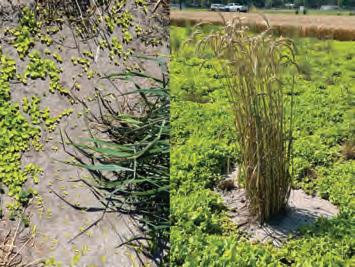
grew to estimate the concentration of allelopathic substances is also possible in laboratory settings, but it’s not common. Evaluating allelopathy in the field, rather than the laboratory, tends to offer a better estimate of how cereal rye would suppress weeds in a farm field. In the field, the Cover Crop Breeding Network (www.covercropbreeding. com) evaluates allelopathy by planting lettuce at a high seeding rate around cereal rye plants. If the plant is allelopathic, lettuce will not grow near the plant, forming either a halo of bare soil around it or a gradient of stunted lettuce plants in relation to their distance from the cereal rye plant (see photo). It is unknown whether results from tests using lettuce will translate to similar allelopathy damage in other crops such as alfalfa.
Many factors involved
There is no exhaustive list of cereal rye allelopathic varieties; however, we looked extensively through the available literature and came up with a rough list in the accompanying table that summarizes the level of allelopathy for tested cereal rye varieties. This table does not yet have confident data, as not many studies have evaluated allelopathy among cereal rye varieties. Moreover, each study differs in its testing approach, and some methods are less accurate than others.
We emphasize that these tests either
measured concentration of allelochemicals or evaluated the response of lettuce — so we cannot say with confidence how primary crops will be affected. More research is needed to understand which varieties of cereal
Allelopathy of rye varieties are observed and measured by the damage they do to lettuce germination and seedling growth.
rye produce allelopathy that affects alfalfa, corn, or weed species.
Allelopathy can also vary by soil type, weather, and termination timing, so work is also needed to understand which varieties of cereal rye might be ideal for different types of soil, termination, and cropping systems.
There is limited information available from field work with crops of interest. One study in the Southeast evaluated the performance of 10 alfalfa cultivars established after cereal rye
Summary of the level of allelopathy for tested cereal rye varieties
Cereal rye
Concentration of allelochemicals (plant or soil)
Type of test
Bioassay using lettuce Field screen using lettuce
Abruzzi Medium to high
Aroostook Medium Medium Low to medium
Bates Low
Bonel High
Elbon Medium
Maton Medium
ND Gardner
or after no cover crop. In the seeding year, researchers reported a 35% to 64% reduction in the number of alfalfa seedlings and a 5% to 43% reduction in biomass production compared to alfalfa established on fallow land. This variation in response occurred because some alfalfa cultivars appeared to be more sensitive to allelopathy than others. However, when researchers returned to the experimental site in the third year, alfalfa production was similar for stands established after cereal rye or where no rye was seeded, indicating that alfalfa was able to recover from the stress in the first year.
Some bioassays show that allelochemicals from cereal rye can reduce germination of weeds, particularly broadleaf (dicot) species. However, it is important to remember that cover crops also reduce weeds by forming a physical barrier to weed seedlings, shading the soil surface, and reducing the soil temperature. Since cover crops offer various avenues for weed control, it is difficult to identify how much of the weed suppression is specifically related to allelopathy compared to other mechanisms.
Looking for answers
There are many unknowns about allelopathy and its practical use in grain and forage systems. To help understand the implications and applications of allelopathic cover crops, a collaborative effort between University of Wisconsin-Madison and the U.S. Dairy Forage Research Center (ARSUSDA) is underway with field trials to investigate the effect of allelopathic cereal rye varieties on alfalfa and corn grain performance.
Medium to high
Medium to high
Medium to high Medium
Medium to high
High (in the field) High
Oklon Low Medium
Pastar Low Low
Wheeler Medium Low to medium
Wintercross Low Low to medium
WinterGrazer 70
Wrens 96
Wrens Abruzzi
Medium to high
Medium to high
High Medium to high
The team of researchers is also using a nonallelopathic cover crop in their studies to see if weed suppression and cash crop performance are being affected simply by the presence of a cover crop, or if an allelopathic cover crop is impacting changes in yields. Additionally, we are evaluating different termination strategies to identify practices that may reduce or intensify allelopathic effects. •
MARTA M. KOHMANN
Kohmann is an extension specialist with the University of Wisconsin-Madison. Kissing Kucek is a USDA-ARS researcher with the U.S. Dairy Forage Research Center.
Alyssa Woodard and Chris Reberg-Horton of North Carolina State University
HERE’S WHAT GROWERS ARE SAYING: (More testimonials available on our website)
“I’m phasing out all my varieties, including 2 Nexgro, 2 croplan, and R.R. varieties in favor of 360-V. The regrowth speed is just right. Two years in a row we have cut 6.25 ton with four cuts. 1st cut is always 2.5 ton! The variety is somewhat shorter but stacked with leaves. Always makes dairy quality.”
Levi Umbel - Torrington, WY
“360-V is my favorite variety! Quick recovery, heavy producer and a heavy 3rd cut!”
Andy Dobson, past president - Natl. Hay Growers - Mud Lake, ID
“360-V has leaves at every inch of the stem and the stem is very ne. Best alfalfa we have ever planted!”
“360-V will take heavy tra c.”
John Fierera - Stockton, CA
Greg Ball, Rexburg, ID
SHORT ON WATER ?
Two Alfalfas in One
are
Plant On Dryland Plant If Your Pivot Only Pumps 400gal/
Greenway Alfalfa
360-D
This Alfalfa has been called a tetraploid anomaly by alfalfa breeders. On the market since 1979, and being improved twice, It remains the highest yielding, low water alfalfa on the market!
HERE’S WHAT GROWERS ARE SAYING: (More testimonials available on our website)
“Ten years ago we planted 5lbs/per acre of 360-D mixed with some grasses. The pivot was so short on water, we had to plug some nozzles in order to water parts of the pivot. Over the years the grasses died out due to lack of water, but the 360-D kept increasing. Today, 10 years later, the pivot is solid 360-D and producing well, and still very short on water.”
Cade Davis Spring Valley Ranch - 30 miles east of Ely, NV
“We have 10 pivots of alfalfa in the Railroad Valley of Nevada. Tough ground with a high PH. 10 years ago we planted 30lbs/acre of 360-D. Today that pivot is the No. 1 pivot on our hay ranch, and testing well for dairy.”
Kennon Forester - 106 miles Southwest of Ely, NV
“First year, after seeding year, we harvested 3.4 ton on 1st cut and 1.7 ton on second with very little rain in the growing season. Over 5 ton on 2 cuts so far!” (Dryland)
Mosekian Farms - Cambridge, ID
“Our area has been in drought for several years. Everyone in the panhandle is short on water. We only pump 400 gallons on 120 acres. That's why we plant 360-D. Under that short water we still yield near normal and the quality is excellent because we plant 35 lbs/per acre. We planted 8500 pounds this year!” Dan Sawyer - Clarendon, TX
Alan Greenway
Over 50 Years Experience
Greenway Seeds
Caldwell, ID
208-250-0159 (cell)
208-454-8342 (message)
Alan Greenway
GREENWAY SEEDS www.greenwayseed.com
Warehouses in Caldwell, ID and Deer eld, WI
“Modern Forages Sold Nationwide and Canada”
√ Will produce AT LEAST 80% of crop with 50% of water
√ Will produce a subsequent cutting after water is gone
√ Plant on dryland/ guaranteed to out yield Ranger or Ladak
√ Plant under pivots that only pump 400 gal/
√ Plant on elds that have only early season creek water
√ Plant under end guns on pivots
√ Plant in the late fall with your dormant seeded
Getting used to shaggy pastures
WHEN we gained access to dial-up internet 25 years ago, one of the first resources I used was an Iowa State University online spreadsheet that calculated our cost of hay production. After entering our numbers in the correct boxes, I vividly remember the end cost was the same number as the price of a purchased bale. With that number in mind, we sold all our hay equipment and have been purchasing our needed hay supply ever since. At the time, our grazing management was based on keeping the fescue-based forage from reaching the reproductive stage for as long as possible. Looking back, I now know we were practicing managed overgrazing by not giving our grasses proper rest.
During our first spring without hay equipment, we learned rather quickly that with so many extra grazing acres, we were not going to have control over our grass like we did in the past. Moreover, spring is when we have the least control of forage. It’s also the season
that makes the most difference in our farm financials — the pregnancy rate of the cow herd and most of the pounds gained by stockers is determined by how well we manage the spring flush.
Mindset shift
Today, we manage abundant spring growth so cows put on weight before and after calving in April and May and into the breeding season. This ensures a high breed back percentage in a short, 45-day breeding window. We also want to put as much weight on stocker calves as possible, using only the spring flush of grass and managed grazing to do so before we hit the flattened growth curve of summer forage, at which point we sell them.
When we began managed grazing in the early 1980s, most of our ideas came from New Zealand dairy grazing methods: Keep the grass short and vegetative with tight rotations to keep forage quality high. But when we lost control of the spring flush, it was surprising to find the cows preferred taller, more mature
grass. Their full rumens and calm disposition during daily moves suggested a satiation that they lacked on shorter grass. We have since learned this is from a better energy-to-protein ratio. Dairy graziers can balance the high protein of short, vegetative grass with energy fed in the milk barn, whereas beef cows grazing the spring flush without an energy supplement can consume a diet that is out of whack.
So, we had to change our perspective and get used to working with a different grass height and growth level. It was a reset for both our eyes and our minds. But with time, we got used to grazing shaggy pastures and saw some real benefits — not only to the cows, but also to the grass, soil, and wildlife on our farm. Those benefits include:
• Moisture retention. The most important benefit is that we capture more moisture in the soil. When it’s dry, the shading of the soil and retention of dew by tall grass helps keep the soil moist and moderates soil temperature.
Steve Freeman
• More forage diversity. Since we have switched to shaggy grazing and longer rotations, the diversity of grasses and forbs has gone up. Forage diversity is important for many reasons but giving cows the choice to dilute endophyte-infected fescue is key.
• Better utilization. Cows don’t have the high-protein, “rocket blast” type of manure we used to see in spring pastures. Now, they are more content and hay is rarely needed to balance the spring flush if we have properly set up for early season grazing with stockpiled grass that naturally balances their energy-to-protein ratio.
• A longer growing season. Pastures seem to stay greener going into winter and begin growing earlier in the year than they previously did. This may be because the taller grazing and greater residual supports soil biology and allows soil life to stay active longer.
• Wildlife diversity. Bird life has improved dramatically. We see prairie birds like dickcissels, bobolinks, and northern harriers. Wild turkeys are
plentiful and have ample nesting areas. We even have some quail.
Go with the flow
With that said, shaggy grazing and longer rotations is not the only recipe we follow. We don’t want our grazing to become rote, as conditions and seasons constantly change and we have to be able to go with the flow.
At times, we will overgraze paddocks down to 3 to 4 inches. Sometimes, it’s for a purpose — grazing short will allow dormant seeds to sprout and boost diversity or thicken a stand. However, we try to avoid overgrazing in the summer and fall. We’ve seen a real difference in late fall and early winter pastures where we leave 4 to 6 inches of leaf area behind, which is enough of a photosynthesizing factory to jump start spring growth.
We still clip pastures, although we want to eliminate the recreational mowing we used to do. To keep the grass that cows missed from going directly into a reproductive state, we will come in behind the herd and clip
some paddocks to 6 to 8 inches. This seems to stimulate leaf growth and slow reproductive development.
Selling our hay equipment all those years ago and concentrating fully on grazing was one of the best decisions we’ve made. That doesn’t mean we don’t sometimes miss the tidiness that mowing and baling hay brought to us when looking at our now shaggy pastures. But good grazing requires working with biology and nature, which means each season will be varied, and possibly messy.
It’s all still a work in progress. Our main tenet is always to keep enough cover on the ground so we can capture most — if not all — of a downpour right where it falls. The more moisture we capture, the more grass we grow. •
The author is a beef producer from Hartville, Mo.
Ground squirrels distracting you from your daily to-dos?
Minimize the squirrel moments with Rozol Ground Squirrel Bait.*
STEVE FREEMAN
The only thing smaller than forage grass seed itself may just be the tight-knit group of Oregon producers who grow and harvest it in the Willamette Valley.
All photos: Amber Friedrichsen
IT'S A SMALL GRASS SEED WORLD
These farmers produce forage grass seed for hay and pasture systems across the country. It’s large-scale production with a coast-to-coast impact from three operations that are just miles apart.
by Amber Friedrichsen, Managing Editor
THERE are select few regions of the United States with ideal conditions for grass seed production, and Oregon’s Willamette Valley is one of them. Also few — but not so far between — is the number of farmers within the valley who specialize in forage grass seed.
Dave Goracke owns and operates Cala Farms Inc. with his wife, Lisa, on the outskirts of Shedd. Forage grass seed is the farm’s number one product, and using regenerative practices to protect soil health is Goracke’s number one priority.
Unlike most hay and forage growers who typically cite unruly weather as their biggest challenge — droughtstressed plants, moisture-induced harvest delays, and rained-on hay — grass seed producers in the Willamette Valley are usually granted sunny skies during their summer harvest season, considering their position between the Cascade and Oregon Coast Ranges.
“Our distinct rain season, dry summer, and low humidity make it the perfect environment for seed harvest,” said Goracke, who is the first vice president of the Oregon Seed Council. “We don’t typically have to dry our seed. Mother Nature does that for us.”
That distinct rain season is between September and June, with the majority of their 45-inch annual precipitation falling between December and April.
This provides dry forecasts when cutting starts in late June and prevents swathed forage from being rained on before grass seed is combined in early July. Grass seed harvest is usually completed by mid-August.
“Our rule of thumb is always combining 10 days after cutting. With western Oregon weather, I don’t even test seed moisture — we just go,” Goracke said. “If we do get a rain, it might keep us out of the field for half a day to a full day, but it’s not typical.”
Goracke produces tall fescue and annual ryegrass seed on about 2,500 acres. Additional acres are planted to various other forage crops, such as white clover, hairy vetch, chicory, and brassicas like mustard, kale, and radishes, which are also harvested for seed.
His crop rotation begins with an annual forage seeding before he establishes annual ryegrass and tall fescue. Volunteer seeding from annual ryegrass sustains those stands for two to three years, whereas tall fescue fields stay in seed production for several. Goracke accounts for varied soil conditions
during stand establishment, assigning annual ryegrass to wetter ground and planting tall fescue in well-drained soils.
Big on soil health
Goracke knows he’s playing the long game when it comes to restoring soil health in the grass seed business. Even so, his passion and patience for regenerative practices have yielded positive results, even if those practices are not status quo.
“We are a little different than the rest of the industry because we return pretty much all of our straw back to the farm. We have been doing that for more
Dave and Lisa Goracke prioritize soil health and no-till practices on their grass seed operation, Cala Farms Inc. near Shedd, Ore.
than 30 years,” Goracke said.
After combines spread the chaff, the harvest crew makes another pass over it with flail choppers to level residue on the soil surface and expedite decomposition. Doing so not only limits habitat and breeding ground for the region’s most prolific forage pests — voles and slugs — but it has also reinforced soil health and stand resilience.
“We are seeing some distinct soil-building qualities from leaving our residue out there. The only thing we are removing is the seed,” Goracke said. “The soil moisture we are conserving by having that organic matter on the ground is really helping, especially as we are seeing more dryness than usual in late spring into June.”
In the past, it was common practice to burn straw, but after a severe smoke accident on Highway 15 in the late 1980s, farmers sought other solutions to manage forage residue. Some started chopping and plowing straw into fields while others began baling it. But straw bales that are removed from a field take soil nutrients along with them, and Goracke believes the value of those nutrients is too important to part with.
“I look at the soil as more than just a growing medium — it’s really the life of what we are growing,” he asserted.
Along with leaving residue, Goracke implements no-till seeding on about 75% of his acres. “Some of the really small seed — like clover and some of the brassica species like kale and mustard — get planted into tilled ground,” he said. “They just don’t have the energy to get out of the ground and up through all of the straw residue that we have to plant through.”
Another no-till advocate
Orin Nusbaum feels similarly about no-till for soil health, as well as for cost savings. The sixth-generation grass seed farmer implements no-till in his annual ryegrass fields every other year but has long-term goals to phase tillage out more completely. In addition to annual ryegrass, the Nusbaums grow tall fescue and clover seed on 2,500 acres across land that is owned, rented, or cooperated with the William L. Finley Wildlife Refuge near the small town of Bellfountain, which is only a short drive southwest of Shedd.
“My tolerance for burning diesel fuel for tillage is just not what it used to be — the cash register in my head is
running any time we use a tillage tractor,” Orin said. “No-till is just better for the soil.”
Orin farms alongside his parents; his wife, Mandy, who operates a combine; and his 17-year-old son, Van, who is the chief bankout wagon driver. Other
members of the crew include family, friends, and members of the community who are available and eager to log long hours in the field when it’s go-time for grass seed harvest.
Annual ryegrass comprises about two-thirds of the Nusbaums’ total acreage. Tall fescue is the next largest slice of the grass seed production pie, followed by white clover, and a small percentage of their land is used for rotation crops.
“We don’t grow any turfgrass seed — it’s all forage,” Orin said. “Forage is our comfort zone.”
An affinity for 100% forage seed is partly due to their production preferences, and partly due to their marketing strategies. The Nusbaums used to market all of their seed to Willamette Valley dealers, who then sold product to retailers primarily in the Gulf States. Despite the convenience of this system, the Nusbaums felt a void without any connection to their end-consumers. So, they began selling forage seed directly to co-ops and independent dealers down South, which has opened doors to better business relationships and has saved them a few extra dollars in lieu of a middleman.
“It’s been a neat thing to get to know some of our customers on a personal basis,” Orin said. “Over the years, we’ve taken trips to Texas, Mississippi, Louisiana, Alabama, and Georgia to stop and talk to people one-on-one rather than just knowing them by a shipping label.”
Baling straw, bagging seed
The Nusbaums hire the co-owned Boshart Trucking and BOSSCO Trading companies to custom bale and market the majority of their grass straw to export countries like Japan and South Korea. At the same time those rakes and balers are busy gathering straw in the field, seed is being cleaned and bagged at the cleaning facility on the home farm.
“The four weeks or so of harvest is what drives our company for the rest of
The C&L Farms family includes, from left: Zoey, Emily, Wade, Brian, and Alice Woodcock, and Debbie and Collin Crocker.
Forage seed is Orin and Mandy Nusbaum’s comfort zone, which is why the couple exclusively harvests and markets forage varieties.
the year,” Orin said.
The family recently installed a palletizer to expedite their cleaning process. After seed is cleaned and bagged, those bags ride a conveyor belt to the top of the machine and are stacked onto pallets like Jenga blocks. Since the layer palletizer was installed, their crew is able to bag the same amount of seed across three, six-hour shifts per day instead of operating around the clock like they used to.
“We clean all of our own seed, unless there are varieties that specifically need to be cleaned in a certain way,” Mandy explained. “We have a lot of good employees here — we’ve got good longevity,” she added.
Cleaning seed at C&L Farms
C&L Farms is yet another nearby grass seed operation stationed in the Willamette Valley that is a mere 10-minute drive southeast of the Nusbaums outside the town of Monroe. After graduating from Oregon State University and working in the industry at a corporate level, Emily Woodcock and her husband, Brian, returned to the home farm where they both work today. Instead of a conventional palletizer at the end of their on-site seed cleaning system like the one at Nusbaum Farms, they have a robotic one that picks bags up with a clawed arm and arranges them on pallets, which is much more efficient than stacking the 50-pound sacks by hand.
Emily is the fifth generation on C&L Farms, which has a history in vegetable crop production. But when industry demand changed and canning facilities relocated in the 1990s, the family shifted their focus to tall fescue seed for both the forage and turfgrass industries.
“Farming has always been a part of my life,” Emily said, recalling her high school summers spent driving a combine during grass seed harvest. Now, when harvested seed arrives at the home farm, it is dumped into one of several bays outside the cleaning facility according to crop variety. Then, seed gets scooped into the pit.
“From the pit, it goes up the elevator and then it runs through the feed roll, which just spreads it out evenly throughout the machine. That is basically what the combines do, but at a finer level — it’s separating the seed and everything else out by size
and weight,” Brian explained from the cleaning facility floor.
“There are a bunch of different screens in there — some are scalping, so the seeds will fall to the bottom and the debris will run off the top, and other screens are sifting, so the seed runs off the top and the small stuff runs to the bottom,” Brian continued. From there, the seed fills bags stamped with lot numbers, gets stacked onto pallets
by the robot, and is stored in one of the farm’s warehouses before it is shipped across the country.
So, the next time you rip off the top of a grass seed bag and pour its contents into your preferred piece of seeding equipment, consider where those seeds came from. Producing grass seed is a mighty undertaking to maintain the forage industry at large, but it really is a small grass seed world. •
INVEST IN IRRIGATION FOR YOUR FARM
Today’s strong beef prices are creating an ideal opportunity, particularly from an end-of-year tax management situation, for cattlemen to protect and increase feed grain and grass production by investing in irrigation for their farms.
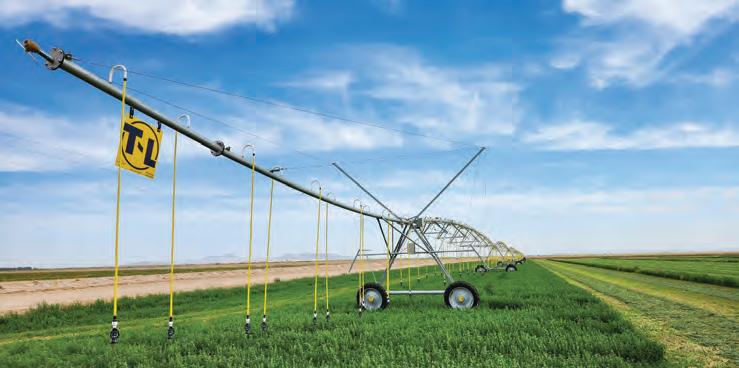
T-L’s hydrostatically powered center pivots, featuring continuous movement and the latest technology for control, convenience, and performance, can help cattlemen better protect yields, boost efficiency, and maximize return on investment. In fact, for hay and grassland, a T-L Irrigation system, Like No Other, can quickly pay for itself through enhanced production and, ultimately, efficient cattle weight gains.
T-L Irrigation dealers are ready to work with cattlemen this fall to help them line up the right irrigation systems for their farms, from cow/calf operations, to backgrounding and feedlots.
For more information, contact your local T-L dealer or visit tlirr.com.
151 East Hwy 6 & AB Road
P.O. Box 1047 Hastings, Nebraska 68902-1047 USA
sales@tlirr.com · www.tlirr.com
Phone: 1-800-330-4264
Fax: 1-800-330-4268
Phone: (402) 462-4128
Fax: (402) 462-4617
Insect-spread viruses explored
Hay & Forage Grower features results of farmer-funded research projects through the Alfalfa Checkoff, officially named the U.S. Alfalfa Farmer Initiative, and administered by National Alfalfa & Forage Alliance (NAFA).
LITTLE is known about insect-transmitted viruses’ effects in alfalfa. Erik Wenninger, an extension specialist and Integrated Pest Management coordinator at the University of Idaho, set out to address that gap by examining how virus pressure, insect vectors, and insecticide use interact, and whether managing vectors makes economic sense for alfalfa farmers. Apekshya Senchuri assisted him on this project as part of her master’s degree thesis.
“Alfalfa serves as a sentinel crop for pathogen accumulation,”
Wenninger explained. “It is grown over multiple seasons and cut several times each year, which can influence insect movement and pathogen spread.”
Despite these characteristics, insecticide applications in alfalfa are rarely targeted specifically at managing virus transmission.
Wenninger found limited prior research evaluating how viruses affect alfalfa yield, forage quality, or whether managing insect vectors could provide measurable benefits.
Aphid-vectored viruses, including alfalfa mosaic virus (AMV), bean leafroll virus (BLRV), and pea streak virus (PeSV), are known to infect alfalfa. Moreover, Snake River alfalfa virus (SRAV) was a previously undocumented virus they found to be prevalent in some Idaho fields. Subsequent surveys showed the virus was widespread across the Pacific Northwest.
The primary objective of the study was to determine whether reducing insect vectors could lower virus infection and improve alfalfa yield or forage quality. Over two growing seasons, insecticides targeting aphids and thrips were applied throughout the season and compared with untreated check plots.
Weekly stem samples were collected to monitor aphid and thrips densities, which were used to guide insecticide application decisions. Yield and forage quality were measured across multiple cuttings, and the prevalence of AMV, BLRV, PeSV, and SRAV was evaluated each year.
The research was conducted over two years using newly seeded alfalfa planted each year, with the first year’s seeding also evaluated during the second year. In addition to field trials, greenhouse experiments were conducted to evaluate whether western flower thrips could transmit SRAV. Their previous work detected SRAV in thrips, suggesting these insects might be involved in trans-
mission of the virus.
Insecticide applications reduced the densities of aphids and thrips in treated plots, but the effects were short-lived. More importantly, lower vector populations did not result in reduced virus prevalence, nor did they improve alfalfa yield or forage quality.
“It was surprising that even with a proactive insecticide program targeting vectors, we were not able to reduce the prevalence of insect-vectored viruses,” Wenninger said. “At least during the first two years, alfalfa appeared to tolerate insect pest and disease pressure without measurable effects on yield or quality.”
Practical implications
Another key finding was the impact of insecticide use on beneficial insects. Predators and parasitoids declined following insecticide applications, raising concerns that repeated treatments could disrupt biological control and raise the risk of secondary pest outbreaks.
Greenhouse studies did not support the hypothesis that western flower thrips are a vector of SRAV. Both inoculated plants and thrips tested negative for the virus, suggesting thrips are not responsible for SRAV transmission. From a management perspective, the results suggest that targeting insecticide applications solely to manage virus vectors in alfalfa may offer limited economic
PROJECT RESULTS
•I nsecticide applications reduced the density of aphids and thrips but did not reduce virus prevalence.
•B eneficial insect populations declined following insecticide applications.
•Western flower thrips were not found to be a vector of Snake River alfalfa virus.
benefit. While insecticides temporarily reduce the populations of aphids and thrips, those reductions did not translate
SUPPORT THE ALFALFA CHECKOFF!
Buy your seed from these facilitating marketers:
into improved crop performance.
“Our study showed no benefit in terms of yield, quality, or virus prevalence from managing aphids and thrips with insecticides,” Wenninger noted. He cautioned that insecticide use can disrupt beneficial insect communities, and thrips and aphids can rapidly recolonize treated fields. However, insecticide applications may still be justified when pest densities reach levels that cause direct damage.
This two-year project has concluded, but Wenninger sees value in lon-
Alforex Seeds by DLF America’s Alfalfa CROPLAN
Forage First by DLF Innvictis Seed Solutions
ger-term research. Evaluating virus prevalence and severity over a typical four- to five-year alfalfa rotation could help clarify whether virus pressure contributes to gradual yield decline or stand persistence issues as alfalfa ages. “Not surprisingly, we generally see higher virus prevalence in older fields, and this pathogen accumulation might contribute to stand decline over a longer time frame,” Wenninger added. A full copy of the final report can be found at alfalfa.org. •
Contact NAFA for information on becoming a participation brand
The alfalfa checkoff benefits you and the entire industry. Scan the QR code to learn more.
by Jeff Lehmkuhler
Different energy equations create variable hay test results
RECENTLY in Kentucky, forage testing has generated discussion as a new testing location was opened in Bowling Green. The state Department of Agriculture is closing their forage testing facility, so the University of Kentucky (UK) Regulatory Services is adding this service to the milk, feed, and fertilizer testing services they already provide. I have been working with the team at UK to bring our forage testing program online. This effort has brought to my attention several things that are worth reviewing.
Why test forage?
Obtaining a nutrient profile on your forages allows you to strategically feed hay based on the nutrient requirements of livestock and minimize supplementation. Many of our cool-season forages harvested for hay generally have sufficient protein to support most production phases of beef cows, with the exception of early lactation. The average crude protein (CP) for 2,539 hay samples analyzed in Kentucky hay contests from 2019 through 2025 for all forage types was 11%. The protein needs for dry, gestating cows are between 7% and 9% CP, while cows in early lactation may need 9% to 12% CP.
Energy from stored cool-season forages is generally more limiting for beef cow production in the Southeast, particularly for fall-calving cows that are reaching peak lactation when hay is fed. A forage quality test report may provide energy values as total digestible nutrients (TDN) and/or net energy for maintenance, gain, and lactation (NEm, NEg, and NEl, respectively). Forage testing laboratories utilize the nutrients measured in the proximate analyses or near-infrared spectroscopy (NIRS) scan to calculate the energy values. A variety of equations are utilized to calculate these energy values. In 2010, we reported results of a survey of 26 forage laboratories that indicated 12 different approaches to calculate forage and feedstuff energy
values. The Penn State NEl-acid detergent fiber (ADF) and the OARDC/Dairy NRC summative equations were the most common.
As the team began considering the energy equations for our new forage testing program at UK, I reached out to a few laboratories to learn what energy calculations were being used since our survey was from over a decade ago. Two private laboratories shared their approach for calculating energy, with both using the 2001 Dairy NRC summative approach; however, these labs had different approaches for calculating net energy values. The third contact, a university laboratory, utilized a variety of equations based on ADF that are specific to forage or feedstuff type.
Why does this matter?
We use energy values to make supplemental feeding recommendations based on the forages’ ability to meet nutrient requirements. As an example, consider alfalfa that was reported to contain 18.5% CP, 46% neutral detergent fiber (NDF), 36% ADF, 7.6% ash, 7.7% lignin, and 48-hour NDF digestibility of 45%.
Using a common TDN equation based on ADF alone, the calculated TDN is 55%. Based on the 2001 summative Dairy NRC equation, the TDN would be 60%. A modified summative equation calculates the TDN as 62%. Did we just create energy? No, those energy values were simply calculated differently.
Consider a beef cow with a peak milk yield near 20 pounds per day. Forage would need to contain approximately 60% TDN to meet the cow’s energy requirements. Depending on the equation utilized, a nutritionist could recommend supplementing calories or conclude that no supplement is necessary.
I share this only for informational reasons, not to say one forage testing laboratory is better than another. In the past, I have had individuals reach out after they sent samples from the same hay lot to different laboratories and received different energy values on
the reports. They wanted to know why the values were not the same.
Recognize that splitting samples can introduce sampling error and lead to analytical differences between samples. Also, when you choose to send samples to a different laboratory, it is worth knowing the approach they use to calculate energy values. When similar samples are sent to different testing labs, key in on the values for dry matter, CP, NDF, ADF, and ash, as these values should be relatively similar, too.
Keep in mind that forage test reports provide us with information on the nutrient content in forage — these reports don’t compute directly to an animal’s biological response. A hay test won’t give you information about whether the forage is musty or moldy, which can reduce intake. The energy values are calculations, so I suggest that farmers send samples to the same laboratory and learn how the energy values relate to the biological responses observed in their livestock over time.
For instance, beef cows offered hay with a net energy for maintenance (NEm) value of 0.52 megacalories per pound may not maintain body condition as you expect based on a nutrient requirement table. Keeping notes to rule out low intakes, unseasonably cold temperatures, wet and/or muddy conditions — along with the forage testing information — will allow you to learn how to make supplementation adjustments based on the forage test energy value. Reach out to your local extension office or nutrition consultant for additional information on forage testing and for advice about using your forage test results. Happy hay feeding, and be sure to test your hay! •
JEFF LEHMKUHLER
The author is an extension beef specialist at the University of Kentucky.
Forage recovery after Hurricane Helene
by Amber Friedrichsen, Managing Editor
BRUNO Pedreira summed up the impact that Hurricane Helene had on Southeastern forage systems in one word: devastating. The University of Tennessee Extension forage specialist shed light on the aftermath of the September 2024 natural disaster at the American Forage and Grassland Council’s Annual Conference last month in Asheville, N.C.
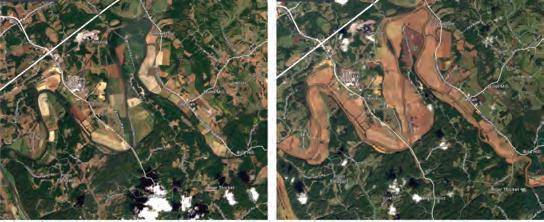
According to Pedreira, there was significant damage to more than 45,000 acres of pastures and hayfields along the Nolichucky River (see photo), which connects western North Carolina to eastern Tennessee. One farmer in that floodplain had more than 200 acres of pasture under water after the hurricane stormed through. When the water receded days later, that farmer and many others were left with mounds of sand and silt where forage used to grow — some up to 6 feet deep.
In the months to follow, University of Tennessee researchers analyzed sediment samples to measure organic matter and fertility. They also tested the sand and silt deposits for toxic metals that may have been carried in by contaminated floodwaters, for which all levels were well below dangerous thresholds. That was good news, Pedreira affirmed, but sand and silt weren’t the only things left behind by the hurricane.
“We found fields where up to 18 acres of pasture were now 18 acres of rocks,” he said.
Through the winter of 2024-25, researchers conducted greenhouse trials to see how forages would respond to the sediment. Pedreira said it was almost impossible to scratch the surface of samples with high sand content, and tall fescue and orchardgrass germination in this medium was very poor.
The researchers did discover that large-seed small grains — specifically oats and wheat — had better germination potential. But by the time spring rolled around, there was still major hurricane cleanup to be done, and trying to establish new forage was not a high priority for most farmers.
Heavy spring and summer rains caused gullies to develop and slice through sand-covered fields. Where silt deposits dominated, there was severe surface crusting. If there was an opportunity to plant, extension specialists encouraged farmers to seed a warm-season annual forage mix of crabgrass,
millet, and cowpea. In many cases, rainfall was adequate and seedlings germinated well, but plants that were established into sand-heavy fields did not grow to be healthy.
“There is no water-holding capacity or nutrient-holding capacity,” Pedreira said. On the other hand, when the recovery mix was seeded into silt deposits, forage growth was much more promising, with some fields yielding up to 2.5 tons of forage three months later.
Last fall, University of Tennessee Extension started perennial forage seeding trials on both the sand and silt plots. The treatments include tall fescue, tall fescue with wheat, orchardgrass, and orchardgrass with oats.
“We are trying to see if we can bring perennial crops back,” Pedreira said. Three soil amendments are also being tested in the trials: woodchips, biochar, and flooded hay.
“I’ve been telling farmers to keep your faith; progress takes time,” Pedreira said. Establishing mixes of grasses, legumes, and large-seed species will be the first step in reviving hurricane-damaged pastures and hayfields. The road to recovery will take years to navigate, but Pedreira assured farmers that he and his colleagues are in it for the long haul. •
“High PH. Produced well! Tested better than expected. We have ordered twice.” Kurt Larson - Claremont, SD
“We were surprised how well it established! This is white, sour, tough ground with high salt! (“Kochia ground”) George Loewen - Lakin KS
The ideal corn silage
IHAVE been asked what ideal corn silage looks like quite a few times over the past 15 years. With dairy and beef producers feeding greater amounts of corn silage to their herds, yield and quality are increasingly important to a farm’s bottom line. Hence, it’s logical to spend more time and effort understanding what comprises ideal corn silage and how to value the feed.
In 2024, the University of Wisconsin updated the MILK equations for corn silage evaluation to include the latest National Academies of Sciences, Engineering, and Medicine (NASEM) dairy diet energy model. Using test silage in a total diet model, the MILK2024 projects corn silage milk yield potential per ton and per acre. The model is responsive to current feed analysis measures, and then the user is presented with a theoretical milk yield output per ton or per acre of silage.
The milk yield prediction presents a few challenges. One is understanding how the silage may affect beef producers’ output. Further, milk yield potential may not always be the best silage evaluation metric for dairy producers. Moreover, different market conditions can affect how we value silage.
Intended consumer
As dairy and beef farms grow larger and may specialize in different stages of the cattle’s life cycle, the ideal corn silage for these operations can vary widely. Dairy farms tend to value and seek greater calorie density and high fiber digestibility in their corn silage for lactating cows. However, heifers and dry cows have different ration and nutrient needs, with functional fiber and less starch being desirable in many cases. The ideal silage for heifer farms and transition cow facilities will be the high-yielding hybrids with above-average fiber digestibility, but not necessarily the hybrids with the highest starch and grain yield.
Beef producers also seek different attributes in their corn silage relative to dairy farms. Finishing cattle are fed high-energy, starch-rich diets at feedyards. Corn silage can fit in these
diets as roughage, with the ideal silage bringing functional fiber along with excellent grain yield. For backgrounding rations with more forage, above-average corn silage fiber digestibility can often bring added value to the ration and put these cattle in a better position to gain.
Commodity market
There are different commodity and ingredient market conditions that can shift how we value silage. For example, with high corn prices, the grain and starch value in corn silage can carry an oversized value relative to the fiber. Alternatively, if corn is cheap but digestible fiber sources such as premium hay, soy hulls, or almond hulls are expensive, then the fiber carries more value.
Commodity and nutrient market conditions will shift across the different regions of the U.S. and over time. We can’t adjust silage value monthly; however, our definition for ideal corn silage can reflect longer term market trends by assigning an economic value to the digestible starch and the digestible fiber within corn silage, if warranted.
Land and water
The cropping side of dairy or beef farming can change how we define ideal corn silage. If water is a concern — not to mention an expensive one — yield and water-use efficiency become increasingly important. Hybrids that offer excellent nutrient density per ton but lag in tonnage often aren’t even
an option. This has been the case for brown mid-rib (BMR) corn for Southern and Western growers.
Limited cropland can also redefine the ideal corn silage. If your dairy is short on land, the ideal silage likely becomes the one that yields the most digestible nutrients per acre. We often need to double or triple crop to optimize the calories harvested per acre each year. Then, the ideal silage is not only the one that yields the most digestible nutrients per acre, but may also be one that responds well to later planting.
Don’t forget about seed and crop costs. I’ve been coaching producers to not only value corn silage digestible nutrient yield but to also consider production costs per acre. Just like we optimize feed costs per hundredweight, we can improve our bottom line by evaluating and reducing the cost per ton of digestible nutrients in our silage.
Lastly, remember that the ideal corn silage must be hygienically clean. There is less room for error in cattle health with today’s margins. Recognize that disease resistance and crop protection are important components to ideal corn silage for your operation. •
JOHN GOESER
The author is a dairy nutrition and management consultant with Progressive Dairy Solutions Inc., and an adjunct professor at the University of Wisconsin-Madison.
Four-State Dairy Nutrition and Management Conference
June 3 and 4, La Crosse, Wis.
Details: fourstatedairy.org
HAY MARKET UPDATE
Steady as she goes
According to USDA’s Crop Production Annual Summary released last month, 2025 hay production was almost even with the previous year, and total harvested hay acreage was up only slightly. The report also showed hardly any change in Dec. 1 hay stocks year-over-
year. Considering current market dynamics, there is little to no indication that hay prices will rebound in the near future. The prices below are primarily from USDA hay market reports as of mid-January. Prices are FOB barn/stack unless otherwise noted. For weekly updated hay prices, go to “USDA Hay Prices” at
We
Oregon
Norm Bennett Tillamook, Ore.
Washington
Bill Stevens Soap Lake, Wash
Montana
Jason Noyes Toston, Mont.
Idaho
Wade Simons Princeton, Idaho
Iowa
Dan Funke Larchwood, Iowa
South Dakota
Miles Lacey Brandon, S.D.
Minnesota
Josh Wentworth Cambridge, Minn.
Illinois
Bryan Henrichs Breese, Ill.
Indiana
Dave Fischer Birdseye, Ind.
Wisconsin
Daryl Woldt Brillion, Wis.
Michigan
Dave Mageean
Ann Arbor, Mich.
New York
Bruce Dimock Peru, N.Y.
Ohio
Travis and Marissa Hake Edon, Ohio
Pennsylvania
Kim Summers Chambersburg, Penn.
New Hampshire
Vermont
John Kleptz Milton, Vt.
Virginia
California
Brandon Fawaz Scott Valley, Calif.
Nevada
Emily Fulstone Smith Valley, Nev.
Arizona
Trevor Bales Buckeye, Ariz.
Utah
Steve Hanberg Randlett, Utah
Wyoming
David Hinman Wheatland, Wyo.
Nebraska
Brian Mumm Geneva, Neb.
Arkansas
Nick Taylor Havana, Ark.
Kansas
John Waechter Emporia, Kan.
Mississippi
Cooper and Katie Hurst Woodville, Miss.
Missouri
Bruce Lackman
St. Thomas, Mo.
South Carolina
North Carolina
Kentucky
Ellis Deweese LaCenter, Ky.
Georgia
Richard Watson Waynesboro, Ga.
Keith Tuck Moneta, Va.
Jim McClain Orangeburg, S.C.
Kim and Chad Woods Hurdle Mills, N.C.
Chris Gowdy Walpole, N.H
HANDLE LESS BALE MORE
THE HESSTON BY MASSEY FERGUSON SB.1436DB
For serious hay producers, time isn’t just money, it’s margin. The MF SB.1436DB is the small square baler engineered to keep your crew moving and your bottom line growing.
» Delivering twice the output of a standard baler with fewer stops, fewer hands and less fuel
» Built with heavy-duty Hesston heritage
» Made for dense, uniform bales and reliable performance, pass after pass, season after season
Because in the field, better isn’t a claim. It’s a return.