DECEMBER 13, 2025

CANDID PERSPECTIVES
As TruMP rAGes AGAinsT iMMiGrATion, i Mourn THe PerfecT iMMiGrAnT

BOOK REVIEW filiPinX – HeriTAGe reciPes froM THe DiAsPorA


BIBLE REFLECTIONS My Deliverer: A TesTiMony of GoD’s ProTecTion

DECEMBER 13, 2025
CANDID PERSPECTIVES
As TruMP rAGes AGAinsT iMMiGrATion, i Mourn THe PerfecT iMMiGrAnT
BOOK REVIEW filiPinX – HeriTAGe reciPes froM THe DiAsPorA
BIBLE REFLECTIONS My Deliverer: A TesTiMony of GoD’s ProTecTion
Some economists say the U.S. is in a recession and others worry of the possibility of stagflation (stagnant economy plus high inflation). Add to that the U.S. layoffs soared past 1.1 million in 2025, the highest level since the pandemic.
Despite financial and job uncertainty and a time of austerity, Filipino Americans who practice the tradition of sending money remittances (aguinaldos) to family and friends in the Philippines say they will do it again for this holiday season.
Why send an aguinaldo remittance?
Aguinaldos, or cash gifts to the Philippines during the holidays, to Filipinos take on several meanings. First and foremost, it’s an act of love, of sharing one’s blessings to people close to the heart of the sender. An aguinaldo remittance serves to bridge the distance between Filipino families. It’s a symbol saying despite our separation in time (often decades) and space, we are connected, our bonds unbreakable.
There is also a matter of utang na loob a Filipino concept that translates to “debt of gratitude” and reciprocity in relationships. For example, typically, family members like older siblings will help their younger sister (or brother) receive an education. If that younger sister gets a chance to move or work abroad, she will have a debt of gratitude to give back to her elder siblings. The most typical way would be the annual aguinaldo remittance which most likely would be spent on household needs like groceries, cleaning supplies, new appliances or other practical means like paying bills. But utang na loob is not a cold transactional reciprocity or requirement, rather it’s rooted, again, in love with deep appreciation.
While an aguinaldo remittance will spur consumer spending for immediate needs, the vast bulk of money remittances are sent by Overseas Filipino Workers (OFW) around the globe working in the U.S., other parts of Asia, the Middle East and Europe. That’s millions upon millions flowing into the Philippines to the tune of 9% of the country’s GDP.
This is the real money that will sustain OFW’s households, fund education, buy a car, buy a house, put meals on the table daily and cover healthcare costs. Millions of Filipino families are supported by OFWs and their remittances collectively is a significant economic driver of the Philippines which is often called the lifeblood that supports OFW families and communities.
There’s been pushback from Filipinos who’ve criticized the Philippine government for exporting its people and not being able to provide domestic opportunities to prevent the need for OFWs in the first place. Millions of Filipinos also speak of the lost years, lost time with their OFW parents, of them missing holidays, missing birthdays or not being with them as they grew up. Some will
(continue on page 3)

IPublisher & Executive Editor
t’s that favorite time of the year, the Christmas season, when we celebrate the birth of Christ, reconnect with loved ones, spread goodwill and joy. It’s also a time of gift-giving. For our Filipino community, we have a unique tradition of gift-giving called aguinaldo remittances – money that we send to our family and friends back in the Philippines. Associate editor Edwin Quinabo reports on this tradition as well as how all-year remittances from Overseas Filipino Workers (OFWs) bolster the Philippines economy and support millions of OFW families. While remittances have an overwhelmingly positive impact on Philippines society, there are certainly drawbacks as well like their economic overreliance that could indicate a false sense of economic strength or the harms social scientists say OFWs’ absence away from home for long periods can have on families.
Christmas is also associated with Christ’s miracles. We have a fascinating story in our Bible Reflections column written by Lily A. Montesines-Capalad of her personal harrowing experience of being robbed while in a public van traveling from Makati to Antipolo, Philippines. It was a terrifying life or death situation which she says “God had protected me miraculously. I believe He surrounded me with His divine shield.” Get the details.
We have two Christmas themed articles: 1) HFC columnist Rose Cruz Churma submits a book review “FILIPINX – Heritage Recipes from the Diaspora.” As Chef Angela Dimayuga says, “Writing this book has been a form of coming home – a way to get to know my family better and have them get to know me.” 2) HFC columnist Seneca Moraleda-Puguan contributes “Christmas Prayer for The Philippines.” She writes, “My prayer this Christmas is that joy would not be something we cling to despite our circumstances, but something we can celebrate because our nation is finally moving toward truth, accountability, and genuine progress.”
HFC columnist Carlota Hufana Ader gives us a warm, feel-good feature on the Na Wahine Na’auao (the Ladies of Wisdom) halau which is comprised of a handful of retirees from the Waipahu-Village Park-Roy al Kunia area. The halau performs at other communities and charities involving the elderly, at assisted living facilities, senior day care centers and nursing homes. We hope you enjoy these and our other articles.
Lastly, we have a special announcement about our newspaper. Last month we celebrated our 33rd anniversary at which over those years we’ve brought to our readers at minimum 24 issues annually. Due to both our printers -- Hawaii Hochi and the printer in Maui -- shutting down their operations, and no longer can support our printing needs, the Chronicle has decided to continue its publication online. We will also reduce the number of issues in a calendar year but print special supplements periodically as we go along like during election season. We will find a way to have them printed even if we have to go and print in the Philippines so that our readers who have no access to computers can get a copy of these special supplements. We ask that our readers still support us in this transition and get your free online edition by visiting our website thefilipinochronicle.com.
On behalf of the staff and management of the HFC, I want to wish you all a very Merry Christmas and a bright, healthy, and prosperous New Year. Until the next issue, Aloha and Mabuhay!

Charlie Y. Sonido, M.D.
Publisher & Managing Editor
Chona A. Montesines-Sonido
Associate Editors
Edwin QuinaboDennis Galolo
Contributing
Editor
Belinda Aquino, Ph.D.
Design Junggoi Peralta
Photography
Tim Llena
Administrative Assistant
Lilia Capalad
Editorial & Production Assistant
Jim Bea Sampaga
Columnists
Carlota Hufana Ader
Rose Cruz Churma
Elpidio R. Estioko
Willie Espero
Emil Guillermo
Gary Hooser
Arcelita Imasa, M.D.
Seneca Moraleda-Puguan
J.P. Orias
Charlie Sonido, M.D.
Emmanuel S. Tipon, Esq.
Contributing Writers
Clement Bautista
Edna Bautista, Ed.D.
Teresita Bernales, Ed.D.
Sheryll Bonilla, Esq.
Dr. Dylan Bothamley
Serafin Colmenares Jr., Ph.D.
Linda Dela Cruz
Carolyn Weygan-Hildebrand
Amelia Jacang, M.D.
Caroline Julian
Max Levin
Raymond Ll. Liongson, Ph.D.
Federico Magdalena, Ph.D.
Matthew Mettias
Maita Millalos
Paul Melvin Palalay, M.D.
Renelaine Bontol-Pfister
Seneca Moraleda-Puguan
Jay Valdez, Psy.D.
Amado Yoro
Philippine Correspondent:
Greg Garcia
Neighbor Island Correspondents:
Big Island (Hilo and Kona)
Grace LarsonDitas Udani
Kauai
Millicent Wellington
Maui
Christine Sabado
Big Island Distributors
Grace LarsonDitas Udani
Kauai Distributors
Amylou Aguinaldo
Nestor Aguinaldo
Maui Distributors
Cecille PirosRey Piros
Molokai Distributor
Maria Watanabe
Oahu Distributors
Yoshimasa Kaneko
Shalimar / Jonathan Pagulayan
Advertising / Marketing Director
Chona A. Montesines-Sonido
Account Executives
Carlota Hufana Ader
JP Orias

We join migrants, immigrants and immigrant communities across the U.S. in welcoming the efforts of Pope Leo XIV and United States Conference of Catholic Bishops (USCCB) in their strong advocacy for immigrant dignity and rights. The Roman Catholic Church has been among the most vocal critics among faith-based groups to condemn ICE’s cruel and in some cases unlawful apprehensions.
Pope Leo XIV on multiple occasions appealed for compassion and respect in the treatment of migrants. “We have to look for ways of treating people humanely, treating people with the dignity that they have. If people are in the United States illegally, there are ways to treat that. There are courts. There’s a system of justice,” he said.
Previously the Pontiff also said, “My own story is that of a citizen, the descendant of immigrants, who in turn chose to emigrate,” he told ambassadors at the Vatican. “All of us, in the course of our lives, can find ourselves healthy or sick, employed or unemployed, living in our native land or in a foreign country, yet our dignity always remains unchanged. It is the dignity of a creature willed and loved by God,” he added.
Pope Leo XIV called for the bishops in the U.S. to come together and take a unified stance on the migrant issue in the nation. Shortly after, the USCCB issued a rare and powerful message – endorsed by 95% of its members -- at their assembly which the Pope later
(Let’s Keep ....from page 2)
say the sacrifice of separation is not worth the money their OFW family brings.
The Catch 22 conundrum
Clearly remittances have consistently been one of the Philippines’ most significant sources of foreign exchange, labor out for money brought into the country. It’s been steady inflow of money rendering macoeconomic stability. It’s smart and necessary to continue to export their talent abroad.
But for decades of the Philippine government’s talk about weening off OFW money and strengthening their domestic economy, the result has been marginally successful at
supported, saying “When people are living good lives, and many of them for 10, 15, 20 years, to treat them in a way that is extremely disrespectful… I think the bishops have been very clear,” he said. He urged Americans “to listen to them.”
“We are disturbed when we see among our people a climate of fear and anxiety around questions of profiling and immigration enforcement,” the statement read, and added they are “saddened by the state of contemporary debate and the vilification of immigrants,” emphasizing that Christian teaching requires compassion for migrants.
The bishops also said they are “concerned about the conditions in detention centers and the lack of access to pastoral care,” and that they also opposed “the indiscriminate mass deportation of people.”
They’ve appealed to lawmakers and all people of goodwill to seek comprehensive immigration reform that includes:
• Protection of family unity
• Respect for due process and human rights
• Access to asylum for those fleeing violence or persecution
• Opportunities for legal status and integration for long-term residents
• Addressing root causes of migration through international cooperation
The bishops’ “special message” was the first time since 2013
best. The country has been spared from potential vulnerabilities -- like a global or regional recession -- in their overreliance of OFW money. But there could be new challenges ahead like anti-immigration policies in host countries.
There will always be opportunities abroad in the modern global economy, but Filipinos deserve equal or similar work opportunities domestically as abroad. The pay gap shouldn’t be too drastic between Philippines’ salary and salary from a foreign host country that millions of their own citizens “need” to enlist in the OFW lifestyle.
It’s apparent that remittances are deeply personal and transfor-
they had drafted a single-issue statement at one of their meetings. And their timing to unite with a single message couldn’t be timelier and bolder.
Priests across many dioceses have made the point that Jesus himself was a migrant and refugee.
Faith groups besides the Catholic Church have criticized the federal government for reversing a Biden administration directive prohibiting immigration agents from carrying out raids at sensitive areas such as churches, schools and hospitals.
In addition, a coalition of Catholic ministers are suing the federal government for the right to administer the Eucharist at detention centers that ICE has prohibited priests from doing.
Our immigrant community is fortunate to have a powerful ally in the Catholic Church and other faith-based groups. We see their leaders at protests and prayer vigils expressing passionate discontent with some of President Donald Trump’s immigration policies. Priests have accompanied migrants to their court hearings. One priest walked 900 miles across several states to bring awareness to the inhumane treatment of migrants.
Their position is not only rooted in the core teachings of the Catholic faith and the gospels but also resonates deeply with universal values of justice, human dignity, and the common good.
From a theological perspective,
mative for millions of Filipino families that keeps open the door for countless opportunities. In this vein, it’s true that OFWs are the heralded heroes their families and government say they are.
Remittances should be channeled in long-term investments that help to build the country like OFW families venturing into small to medium sized businesses.
Earlier it’s mentioned how aguinaldo remittance binds the connection between Filipino families. This alone is worth carrying on the tradition of remittance gift-giving during Christmas. But there is also another reason: remittances bind the Filipino diaspora like tho-
there are numerous scriptures that call for the stranger, the foreigner to be welcomed and treated as the local natives.
At the heart of the bishops’ statement is a profound moral imperative that echoes the biblical command to “love your neighbor as yourself” and reflects the Catholic tradition’s unwavering support for the vulnerable and marginalized.
The Church and faith-based group’s position on the current migration round ups is much needed moral clarity on this intense issue that is lost among many sectors of American society. Some could even argue that immigration is not a mere political issue – especially a policy that separates the undocumented from their families, individuals who’ve been living in the U.S for decades without any criminal record -- but a deeply religious one. It might sound old fashioned to some in modern society, but it bodes well that the Church takes a leadership role in social activism, specifically on immigration.
We must remember the valuable contributions that immigrants make to our communities. They enrich our culture, strengthen our workforce, and revitalize our neighborhoods. They strengthen our economy and certainly are not a burden as the Trump administration portrays.
Pope Leo XIV and American bishops are calling American Catholics and all Americans to reject fearmongering on our immigrant population and to work on solutions to be taken up in immigration reform. We support this.
se of us in Hawaii to our ancestral country. We are always wishing the best for the Philippines.
As the holiday season embraces us with its warmth and joy, we the staff and management of the Hawaii Filipino Chronicle want to extend our heartfelt gratitude to you -- our loyal readers, advertisers and friends -- for your years of support. Thank you for welcoming us to be a part of your lives and for your trust in our reporting. We wish you all a very Merry Christmas filled with copious love, fun and laughter. Joy to the world, that Christ is born.
By Edwin Quinabo
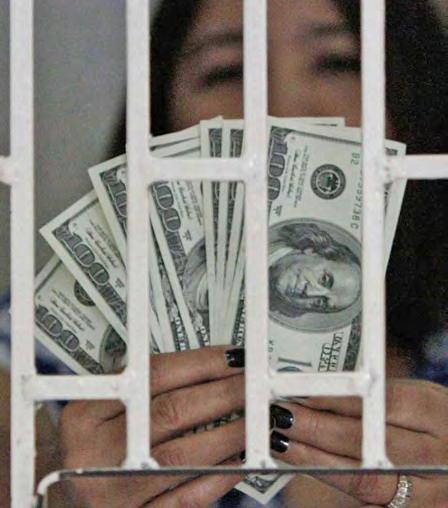
Overseas Filipino Workers (OFW) and their families, Americans living abroad and Filipino expats heaved a sigh of relief after a proposed 5% excise tax on money remittance transfers whittled down to 1% when the “Big Beautiful Bill” became law. Still, any new tax may cut critical income for families facing financial hardship, remittance industry experts say.
While some individual recipients of remittances could experience a greater impact, the Philippines Department of Finance (DOF) estimates the new 1% tax on remittances from the United States to the Philippines is expected to have a minimal impact on the Philippines economy. The DOF says it will affect only 0.009% of the country’s GDP.
The new 1% tax on remittances goes into effect Jan. 1, 2026. The Asian Development Bank (ADB) projects the tax could cost about $250 million of a whopping 38-40 billion dollars annually, about 9% of the nation’s GDP.
ADB found that during the global recession during COVID-19, remittances to the Philippines slowed down by a mere 1.7%. A tax of this size shouldn’t move the needle.
The Philippines ranks 4th in the world in money remittances behind India, China and Mexico. It has seen a steady increase over the past 10 years, with about $2 billion increases every year, primarily boosted by the 2.2 to 2.3 OFWs working in the U.S., Asia, Saudi Arabia, UAE and Europe.
Including overseas Filipinos in the OFW count brings the total to over 10.8 million, many of whom regularly send remittances. With that many Filipinos abroad, this is why remittances to the Philippines
remains steady and strong, experts say.
Cash remittances from overseas Filipinos rose 3.2 percent to $26.03 billion in the first nine months of 2025 from $25.23 billion recorded in the same period in 2024, according to the BSP, which is on target to finish at or above the normal annual total.
Bangko Sentral ng Pilipinas (BSP) reports typically there is a surge in December of money remittances because of the Filipino tradition of aguinaldos, gifting money for Christmas. BSP reports typically over $3.73 billion in remittances are sent in December alone. It says they are seeing higher remittances because of the adoption of digital remittance platforms, which have made transfers faster and cheaper.
The new 1% tax does not apply to bank-to-bank and app wire transfers and only applies to cash, money order and cashier’s check. Remittance industry experts say there are many ways to work around that tax. The proposed tax would be likely to reduce remittances sent through formal channels such as banks and money transfer operators like Western Union.
With less money flowing through traditional channels, industry experts say money transfer operators might be forced to raise fees. They calculate that the 1% tax actually becomes higher and more like 1.6% if fees are increased.
Supporters of the tax say it will boost U.S. Treasury revenue, improve money-tracking, and make it harder for illicit funds to leave the country.
Who must pay the tax? Originally U.S. citizens were excluded from the tax, but the new law includes
them along with, U.S. green card holders and non-citizens sending money abroad from a U.S. account. The sender pays the tax — not the recipient.
Aguinaldo is a traditional gift usually in the form of cash. The word originates from Spanish meaning Christmas bonus, and has evolved into a cherished custom where parents, godparents and elders give money to children and younger relatives. When sent as remittances from abroad during Christmas, it serves to strengthen family bonds and bridges the great divide physically.
Pinoy Kitchen blog describes aguinaldo, “[It’s] more than just wrapped trinkets and shiny envelopes [with money inside], aguinaldo embodies the heart of Pasko (Christmas) – a season overflowing with generosity, family, and the simple act of spreading joy.”
The blog explains it’s historical origin, “it originally referred to the Christmas bonus given to colonial soldiers. But in the Philippines, the term took on a new meaning, woven into the fabric of resistance against Spanish rule. Filipino revolutionaries used aguinaldo as a symbol of unity and support, offering gifts to one another to sustain the fight for
(
independence. With the dawn of freedom, aguinaldo evolved into a cherished Christmas tradition.”
An aguinaldo is not just a cash gift but could be anything from toys to trinkets or personalized items like in other parts of the world where Christmas is celebrated. “The spirit of aguinaldo transcends social
Will a shaky economy and recession deter remittances?
Unemployment has soared to its highest since the height of COVID-19, the most recent jobs report shows. Americans’ confidence in the economy is low. High cost of grocery and energy have many Americans including those in the Hawaii’s Filipino community concerned. Despite times of austerity, some Filipinos say this will not discourage them from sending aguinaldos.
Eve Salvador, Orange County, former Moanalua resident, said “Growing up, each Christmas my parents who are immigrants would send aguinaldos to their parents and siblings on both sides of the family. They’d send remittances on other occasions like when there’s a health emergency, funerals or special events. My parents weren’t rich but middle-working class. I know it was difficult for them to come up with annual aguinaldos because we are a family of five children. But it never stopped them from giving graciously and from the heart.”
Salvador says she has only a few cousins left in the Philippines, “Most of my family are in the U.S. and the older generation has passed on. But me and my other siblings in memory of our parents and in keeping this tradition alive – something our parents would want
barriers and economic limitations. In Filipino culture, the act of giving is paramount, regardless of one’s wealth or status. A simple fruitcake baked with love or a meticulously wrapped bar of soap holds the same value as a store-bought toy, for it’s the thoughtfulness and the generosity that truly matter,” the blog mentions.
– we still send aguinaldos.”
Flor Martinez, radio announcer, Ewa Beach, said “To me, it’s especially important to send money during the Holiday Season, like Christmas and New Year to brighten their days and lift their spirits. I still have close family in Barangay Bayawas in Urdaneta, Philippines. I send money every month for family and for the children’s school needs, especially for tuition. I have to be nice and helpful because in return, they take good care of my properties as if it were like their very own. It’s been over 10 years now that I been regularly sending money to them.”
Jerwyn Pascual is an immigrant who arrived in Hawaii in 2017. “I work as a cook. Money is tight but I’m happy to send money to my family back home. As long as I have a job, it’s something I will keep doing because my family needs the help and I feel good about giving during Christmas.”
He shared a moment of gratitude, “My aunty Flora never married. Growing up she would buy clothes and shoes for me. She often brought over food for me and my brother and sister. When I think of these times and her generosity, sending money to her during the holiday is my way of showing appreciation. I hope to see her again, maybe during Christmas,
“I recognize the weight of your [OFWs} sacrifice, and the strength it takes to provide for your families from afar. That is why we will never tire of honoring you and finding ways to improve your lives. You are at the heart of our government’s efforts, and you deserve not only our gratitude, but you deserve our full support.”
but not this year.”
New immigrants from the Philippines will likely keep the tradition of remittance-giving. Some in the community say the tradition could wane as the Baby Boom generation passes on and younger generation Filipinos have fewer relatives in the Philippines.
Who is receiving remittances and for what reason?
Hermelina Apuya, care home operator, Kapolei, “I have sent cash to the Philippines using money remittance but lately, I haven’t used it much because I don’t have many family members back home, but lots of nieces and nephews. I have sent small amounts when relatives were sick or when someone passed away and they needed to pay for funeral expenses. These relatives are usually poor so I’m not expecting any payment in return. I just send money from the heart as the need arises.” On the new tax, Apuya said, “It’s the law, so we need to comply with it.”
Angel Mendoza, retired hotel employee, Honolulu said sending money remittances is convenient. “I have helped my nieces and nephews who are in college to pay for their tuition and other expenses. One of my nephews is working but he still needs help to pay for his children’s expenses.
Another is my wife’s nephew whom we consider as ours since we never had a son. We treat him as if he was our son. We are very close to him. When he got married a little while ago, we went to his wedding. He was so grateful for our support and for spending time with him.”
On the new tax, Mendoza said, “what can you do about it? Prices for everything are up. I can’t really complain so I just go with the flow.”
Often called the lifeblood of the Philippines economy, remittances are crucial to sustaining millions of Filipino families. Remittances stabilize the country’s economy and support local business with increased consumer spending.
OFW families use remittances to pay for essentials such as groceries, utilities, clothing, transportation, healthcare and investments. It is also said it bolsters entrepreneurship enabling small businesses to prosper.
Education. Teachers in the Philippines say remittances play a crucial role in education. It’s a positive effect on human capital. If it were not for remittances, millions of children would not be able to cover tuition fees,
school supplies or transportation. Educators say remittances help reduce dropout rates and increase enrollment. They said studies show OFW families have greater opportunities to higher education.
Housing. Real estate accounts for a large bulk of OFWs investments that social workers say is the building block to a more stable community. It drives demand for affordable and midrange housing. Without stable living conditions for millions of Filipino OFWs, the country would be experiencing much worse poverty and crime, they say.
OFWs influence on their country are so profound that they are heralded as heroes. During a recent meeting in Osaka, Japan, Philippines President Ferdinand Bongbong Marcos hailed OFWs as “Bagong Bayani” or modern-day heroes.
The President pledged to prioritize the needs of Filipinos working abroad. “I recognize the weight of your sacrifice, and the strength it takes to provide for your families from afar. That is why we will never tire of honoring you and finding ways to improve your lives. You are at the heart of our government’s efforts, and you deserve
By Gary Hooser
After reading about “homeless sweeps” occurring throughout Hawaii, I thought I’d try an experiment to evaluate the availability of emergency shelters in each County.
I went online, searched “homeless shelters” and “homeless services” in all four Counties, and started making phone calls. My goal was to help a fictional homeless couple searching for a safe place to sleep.
After over 20 phone calls, I could not find a single shelter on ANY island that could tell me they had a place for this couple to sleep.
My fictional homeless couple was invited to come down for an “intake interview,” after which they’d be put on a waiting list. I was also told, repeatedly, “There’s nothing available tonight,” and no promises for tomorrow or the next day.
If you’re a single male and don’t mind sleeping next to a bunch of other single
males, there might be a place for you. First, however, you must come in for an evaluation. Only then will you know whether or not you’ll have a bed for the night.
80% of my telephone calls were answered by machines that required me to navigate through various responses and ultimately leave a message for a return call.
My first call to an organization purportedly offering statewide support for the homeless yielded this message: “The service you are calling is not available from this location. If this is an emergency, please dial 911.”
I searched online for the organization and found another number.
After navigating an unnecessarily complex AI menu – “Press 1, Press 2, Press 3, please complete the short survey,” I was eventually connected to a human, who gave me another number for a family emergency shelter.
No one answered there, and I was directed by an answering machine to leave a
(COVER STORY: Hawaii-Filipino ....from page 5)
not only our gratitude, but you deserve our full support.”
OFWs are a top priority for the Philippines government that it has four government agencies dedicated to helping OFWs in legal assistance, deployment, training, reintegration, counseling, financial assistance, health and social services, education and scholarship grants, and consular services.
Overreliance on remittances has drawbacks
False sense of strength. Randell Tiongson, Director of the Registered Financial Planner Institute Philippines and a well-known financial expert, said “While we celebrate their [OFWs] sacrifice and contributions, we also need to
message. I then called the men’s shelter, thinking that if the couple had to split and stay in different shelters, that still might be acceptable.
The person answering at the men’s shelter told me the homeless man I was trying to help had to come down in person for an interview to determine whether there was space at the shelter for him or not.
I was trying my darnedest just to find a place for two people to sleep for the night, and was completely unable to do so. Unfortunately, the situation in every county was the same.
The 2024 Hawaii Homeless Point In Time census counted 6,389 people statewide experiencing homelessness. 62% or 3,961 of those individuals were unsheltered.
The entire inventory of emergency shelter beds on all islands combined is less than 2,500.
Imagine: You’re homeless, living in your car, at the beach, in the woods, on the road... and you’re the
confront a difficult truth: our overdependence on OFW remittances is not sustainable. In fact, it poses serious risks to both our economy and the social fabric of our nation.”
He said the 9% GDP provides to the nation is a false sense of strength.
“Instead of building an economy driven by productivity, innovation, and industry, we rely heavily on money earned abroad. That money fuels consumption -- but not necessarily production. It’s like receiving allowance without working. With steady inflows of foreign earnings, the urgency for domestic job creation and industrial development lessens. There’s little incentive to reform sectors like agriculture and manufacturing, which should be
one making desperate phone calls (assuming you have a phone) and navigating a system that doesn’t have any beds available anyway.
Imagine the police coming through in the middle of the night, telling you to “move along.”
Where are you supposed to go?
There’s literally no legal place for you to sit, lie down or sleep.
There’s no affordable housing, no beds available at emergency shelters. There’s not even a legal place for you to park your car and sleep overnight, let alone a campground with bathrooms and perhaps a shower.
And yet you’re told to move along.
We can, and must do better.
The lack of adequate shelters and related services and staffing is an emergency.
We must dramatically expand funding, staffing, and facility support for the obviously overworked and under-resourced providers of homeless services.
They’re valuable members of our community,
our long-term economic pillars.”
Emotional toll on kids and broken marriages. OFW children also talk about the absence of a parent or sometimes both. Young children growing up without having a parent’s presence takes an emotional toll leading to loneliness and a lack of guidance. Extended periods of a spouse living abroad are a major cause of broken marriages.
Braindrain. Academics say overreliance on remittances and labor export -- especially among highly skilled workers like nurses, doctors, and engineers -- leads to a shortage of critical human capital within the Philippines. They argue the brain drain phenomenon can result in adverse effects
working in sometimes the darkest and most depressing of circumstances -- and they deserve full-throated and tangible support from both State and County government.
Emergency homeless shelters and related services must be made a priority.
And we must stop the sweeps until that happens.
Note: In my research I could find no evidence that validates the persistent rumors that other states or municipalities are sending us their homeless and houseless people.
Also, while it’s true that some of the unsheltered do not like the “rules and structure” they must follow at the shelters - the fundamental fact of the matter is that our emergency shelters on every island are full and have waiting lists of people who do want to use the shelter as a safe place to sleep. We must expand the number of beds and rooms and we must increase support for staffing and related services.
GARY HOOSER is a former Hawaiʻi State Senator and Majority Leader.
on sectors such as healthcare, education, and technology, potentially slowing national development and undermining efforts to improve public services. Filipino academics advocate for policies that maximize the benefits of remittances while mitigating the negative effects of brain drain.
A report of Statista in its chart of countries with the most number of educated migrants working in developed countries in the world, the Philippines is third to India and China. Yet, the Philippines population is dwarfed compared to both countries, indicating that the Philippines by percentage is sending abroad far more of its educated population than any country. Academics say the push away factors causing top skilled and educated
Filipinos to work abroad are political instability, low salaries, and limited professional development opportunities. In cases where students receive government assistance in higher education then decide to leave, brain drain is particularly looked upon as an economic cost since they will take with them the value of their training which was sponsored by the government. OFW remittance will be a part of Filipino culture and tradition for a long time even as the Philippines government works to build its domestic economy and structure. Specific to aguinaldo remittances, conventional wisdom is that as long as Filipino immigration to the U.S continues, so will this cherished holiday tradition.
fter 48 years of dedicated service to Hawaii’s families, Dr. Flora Medina-Manuel will retire from her pediatrics practice on December 31, 2025.
A familiar and beloved figure in the community, Dr. Flora Medina-Manuel began her journey in medicine as a brighteyed graduate of the University of Santo Tomas, Manila, Philippines, Class of 1970. She started her career locally as a neonatologist in the Neonatal Intensive Care Unit (NICU) at Kapiolani Children’s Medical Center, where she devoted herself to caring for the most fragile newborns.
She later transitioned into general pediatrics, building deep and lasting relationships that extended far beyond the examination room. To the generations of parents who entrusted her with their children’s care, from first steps to fevers and triumphs, she expressed profound gratitude for making her feel like a part of their extended families.
“One of the greatest privileges of my life was being allowed to care for your children as if they were my own,” Dr. Flora Medina-Manuel shared in a farewell letter to her patients’ families. “Each child has been a blessing and an inspiration.”
Dr. Flora Medina-Manuel will be dearly missed by her patients and their families, leaving behind a legacy of love, laughter, and compassionate care that spans almost five decades. She carries with her the memories of laughter, stories, hugs, and familiar faces that made her lifelong mission so rewarding.
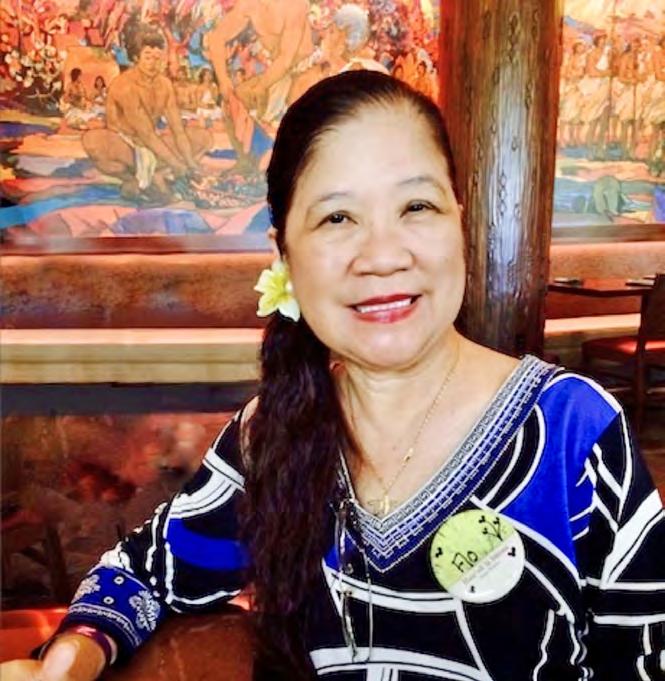
We extend our heartfelt wishes to Dr. Medina-Manuel as she embarks on a well-deserved retirement. Her unwavering dedication to her patients and her invaluable contributions to the medical community will be profoundly missed. Throughout her distinguished career, she has not only provided exceptional care but also inspired countless colleagues with her professionalism and compassion. As she transitions into this new chapter, we celebrate her remarkable achievements and the lasting impact she has made in the lives of those she treated and worked alongside.
Dr. Agnes Serranilla-Sonido, a Board Certified Family Physician, will take over her practice effective January 1, 2026, at the new clinic at 1712 Liliha St., Unit 302, Honolulu, HI 96817 (Liliha Medical Building). The new phone number is (808) 536-1754. Fax number is (808) 536-0315.
t’s been an honor and a privilege to write for the Hawaii Filipino Chronicle over the years. The Hawaii Filipino Chronicle has been a vital newspaper and resource for the Filipino community, providing readers with valuable information and knowledge through its stories and articles.
Congratulations to Publisher Charlie Sonido and Managing Editor Chona for the work and effort they have invested and contributed to the Hawaii Filipino Chronicle.
Free speech and free-

dom of the press are two necessary components of any society, and in today’s political environment, the voice of the loyal opposition and the unsatisfied electorate must continue and express the truth.
The Sonidos are to be applauded for their tireless energy over the decades.
As we end 2025 and the first year of Donald Trump’s second term, we see ourselves and our nation going down a path it has never ventured on.
A bad tariff policy, rising consumer prices, an unpredictable economy, questionable foreign policy decisions, ICE issues, and a strong appetite by the American people for the Epstein files have rocked the dictator-like and authoritarian figure Trump aspires to be.
The racist and bigoted policies against Hispanics and other people of color have brought a backlash against ICE officers and the Trump administration, and we must never tolerate or accept the behavior of ICE officers in our cities and towns when their actions violate our constitutional rights and bring fear and panic to


our families and neighborhoods.
Hopefully, the federal courts and judges will be the balancing act and authority that brings the Trump administration under control and stops some of the foolishness of the current regime.
Decisions by the courts have already impacted national guard deployments, wrongful federal firings, undocumented migrants, and tariffs, and I suspect more rational, reasonable decisions to come.
Polls have shown Trump’s approval ratings falling, and the partial release of the Epstein files has brought more interest and scrutiny to this subject matter.
I seriously believe this could be the beginning of the end of a tyrannical Trump as Congress votes on releasing the Epstein files so the public can determine the gravity of the information available and who was involved and in what capacity.
The Trump presidency is now the target as the world tries to find emails or evidence implicating Trump with possible sexual crimes against minors.
The Trump and Epstein relationship was a strong friendly time between the two men, and the vast amount of articles, photos, and videos of the two men together certainly are proof of a bond they shared.
presidency will falter or go forward based on the evidence found.
Will Trump be implicated in a high-stakes sex trafficking ring or not? Did Trump have sexual relations with underage teens?
We can’t forget that Donald Trump is a convicted felon, and had he lost the last election, there is a possibility that he would have been placed in jail or prison for his crimes.
Now he is trying to clear his name from the Epstein nightmare, and Trump’s efforts are failing as Congress gets more involved and seeks more information.
There are lawsuits, allegations, and stories about Trump and his alleged playboy lifestyle and his early days with Jeffrey Epstein.
It has been difficult to nail any situation or circumstance to the president since he has been in office for a second term, and his team has the power to create obstacles, delays, and roadblocks to meet its agenda.
But the current hysteria about the Epstein files won’t go away as Trump’s base (MAGA) demands answers.
The falling-out between Congresswoman Marjorie Taylor Greene is one example of Trump’s problems as a once loyal supporter of Trump has now announced her resignation from Congress due to the situation in Washington DC.
In 2026, many questions will be answered if the Epstein files are released in their entirety, as Congress is predicted to vote for. Donald Trump’s
The answers might be in the Epstein files, and as the 2026 midterm elections approach, many people are anxiously waiting for the hammer to fall.
This year has been filled with unpredictability and one questionable decision after another in the current Trump administration.
Next year will be the same. Whatever comes next will certainly be headline news that can impact the next election cycle.
There is much riding on the release of the full unredacted Epstein files. Has the DOJ and FBI scrubbed the Epstein files to protect Donald Trump? Will Donald Trump try to stop the release or is he willing to allow the public to view the documents and messages?
The future of his presidency and his legacy are now center stage for 2026.
Whatever the outcome, Donald Trump has shown that actions have consequences and past indiscretions and behavior could be exposed and possibly end his political career as we know it today.
Happy Holidays to all!
WILL ESPERO retired from the Hawaii legislature after serving 19 years in the state House of Representatives and State Senate. He is currently a novelist, poet, and supporter of the arts. Lingering Thoughts provides a glimpse of his perspective on current events and issues
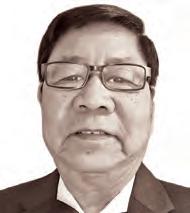
By Atty. Emmanuel S. Tipon
e has achieved success who has lived well, laughed often, and loved much.”
Bessie Anderson Stanley.
During the wake of the late newspaperman Angelo Castro in California many years ago, another newspaperman who looked like Willie Jurado remarked: “I am older than Angelo but I am still alive.”
To which another newspaperman who looked like Prud Europa remarked: “Matagal mamatay ang masamang damo.” (A bad weed dies hard.)
Laughter followed.
I am 92 years old. I will be 93 on December 24, this year. Have I achieved success? Have I lived well, laughed often, and loved much?
If the measure of success is living well, laughing often, and loving much, I submit that I have been successful.
I believe that I have lived well. I was born in Laoag City, Philippines on December 24, 1932. I studied at the Central Elementary School. We lived in Magsingal, Ilocos Sur, my father’s birthplace, for most of the war years. The Japanese officers occupied our home in Laoag. We survived the Japanese occupation.
After the war, I enrolled at the Ilocos Norte High School where I graduated in 1949. I went to the College of Law of the University of the Philippines and earned a Bachelor of Laws degree in 1955. I placed third in the 1955 bar examinations which I did not expect and did not strive for.
I reviewed for the bar just taking it easy. While reviewing I would go to the movies often to relax. All I aimed for was to pass it. I might have done better if my handwriting was good. I write like a doctor writing a prescription.
I started my legal career by working as a legal assistant to the former Judge Guillermo B. Guevara at the Calvo Building in
UP,
Escolta, Manila.
I went to Yale Law School without any intention of going. I accompanied a friend to the U.S. Embassy to apply for a Fulbright scholarship to go to law school. I did not apply right away. I was enjoying life. I had three girl friends in Manila, Tarlac, and Laoag.
“Just apply manong so you and I can go together”, my friend said. So I applied. I was accepted. My friend was not.
The key to my acceptance was probably my answer to the question: Why do you want to study in the U.S.? My answer was: To strengthen Philippine-American relations by using a similar legal system. After graduating, I will return to the Philippines, run for Congress, and introduce legislation patterned after American laws.
However, after returning to the Philippines, I was asked by a fraternity brod if I wanted to be the Chief Legal Counsel for an insurance company. I was interviewed by the owner of the Fieldmen’s Insurance Group and he hired me on the spot with a salary offer thrice what I was earning. It involved primarily defending the insurance companies from liability for fraudulent claims. We had a very high rate of success.
I joined Dole Philippines (the pineapple company) as Corporate Counsel. Juan Ponce Enrile, yes the man, was their former lawyer. He was appointed by Apo Ferdinand Marcos as Undersecretary of Finance and later Customs Commissioner.
I had to meet with him every Saturday at the Ponce Enrile law office for him to brief me on what ought to be done. The job entailed various corporate matters and obtaining the titles for the land occupied by the plantation.
I was asked by Brother Erano G. Manalo, my wedding sponsor, if I would like to be the lawyer of Provident Savings Bank. It was an offer I could not refuse even if the pay was much less.
One night while it was dark and dreary in 1971, I was reading an ad in an American maga-
zine seeking editorial writers for Lawyers Co-operative Publishing Co. in Rochester, New York. I applied.
I was asked to write an article and to cite applicable cases. It was accepted and I was asked how much salary I wanted. I did not know how much but replied at least $1,000 a month (at P3.90 to $1 = P3,900). They replied that they would start me with $1,400 a month. Wow.
I was given a H-1 visa by the U.S. Embassy. I told my wife that I was going to the States because I had a job there. She was surprised. “Why didn’t you tell me earlier,” she asked. I wanted to be sure before telling you, I replied. I will just try it for one year and then come back.
After a few months, my employer told me that they liked my work and to find out how to extend my stay. I went to the U.S. Immigration Office and they told me to apply for adjustment of status. My employer asked me to tell my wife to come to the U.S. with our one-year old child, Patricia. My second child, Emmanuel (Noel) was born in Rochester.
After working for 10 years, I asked my employer if I could transfer to their sister company, Bancroft Whitney Publishing, in San Francisco. My employer agreed. I continued working for another 10 years and then retired. I wanted to go back to the Philippines and resume practicing law there. One day, I saw retired Chief Justice Enrique M. Fernando (my former professor at U.P.) at the Manila Hotel and introduced myself.
He said he remembered me. I asked him if he could officiate at the opening of my law office and handed him my business card. “You are a “60 cents” (meaning a U.S. citizen)”, he exclaimed. “You cannot practice law here.”
“Why not, sir?” I asked. “You read the Cory Constitution,” he replied. Article XII, Sec. 14 provides: “The practice of all professions in the Philippines shall be limited to Filipino citizens, save in cases prescribed by law.” So I came back to the United States. I joined the U.S. Department of Justice as an immigration officer in Southern California.
(continue on page 15)


By Elpidio R. Estioko
Yes, Christmas is the year-ender month for bonding and fun!
It can mean different things to you and me. Of course, it means a religious celebration of the birth of Jesus, but mostly it is a time for family and friends. A season of gratitude, hope, bonding, and generosity.
For some, it’s about traditions and it can also be a time of reflection on the past year. Ultimately, what Christmas means to you depends on your personal beliefs, experiences, preferences, and cultural background.
While Christmas gives us many things to enjoy like parties, carols, and decorations… for my wife Delia and I, the true and lasting joy of the season comes from the hope of Jesus for a lasting family together… as one!
Our family comes first. Family above all things!
In the past, every year on Christmas day, we spent our holidays with my children coming to
our ancestral home in Milpitas, a modest house we purchased where we lived and enjoyed together.
My wife Delia and I brought with us five of our six children here in the U.S. when we immigrated in 1997 wanting to seek the American dream.
It was a challenge for us to start the family, a family of seven (5 of my 6 children, my wife and myself) in a country which is strange to us.
While I have four of my siblings in the Bay Area who may be able to support us in our initial years, this didn’t happen because we have to start on our own… unfortunately.
Through hard work and perseverance, we survived our difficult years until we were able to stand on our own and in our fourth year, we were able to buy a house which became our ancestral home.
It was hard but we were able to weather the storm through thick and thin, just like any of the ordinary immigrants seeking the American Dream.
So, we thrived and survived the acid test to

become US citizens and lived a comfortable way of life. Our journey to citizenship was captured in my memoir which I wrote entitled “Unlocking the Chain of Poverty: In Pursuit of the American Dream” available at Amazon and Barnes & Noble.
It was hard, difficult and very challenging, but we made it! We made it through a lot of Christmases and New Years in our journey to being naturalized citizens.
While Christmas gives us many things to enjoy, it’s important to remember and reflect that the true and lasting joy of the Christmas season comes from the hope of Jesus, our Salvation.
Our treasured Christmas traditions, such as exchanging presents and sharing a meal with loved ones, all beautifully remind us of the gift of Jesus Christ, our savior.
After waiting for almost 20 years for our visa to be approved, we finally got them but unfortunately, our eldest, Ma. Edelgrace, who was the only child when we were petitioned by my brother under the 5th preference, is no longer qualified because she turned 21 years old. So, we brought in five of our six children to the US without her.
While our children are dispersed in various parts of the country, Edelgrace “Gigi”, our eldest, is in Sydney, Australia with her husband Eric; John Edward is in Jacksonville, Florida with his wife Alvi and their two children, Kayla and Bibay, both in college; May is with her fiancée Steve Law in Manteca, California; and my youngest Paul is in Kapolei, Hawaii and so

with Tweety with his husband Sergeant First Class Jonathan Rasay with their 5-year-old daughter Ellie, also in Mililani, Oahu, Hawaii. Well, Charles Jayson is with us in Milpitas.
Every year, they come visit us in our ancestral home in Milpitas and spend Christmas with us.
This year, however, we will be spending the holidays separately in their respective homes with us travelling to Sydney and spending our Christmas with our eldest child Gigi and her husband Eric.
This is our second time to be in Sydney. The first time was in July, 11 years ago, during the winter season. This time, we will be spending summer in Australia.
Sydney is home for a lot of Filipino nurses and the rest of the medical profession.
In fact, my daughter’s husband Eric was a recipient of the nursing program of the government so many years back during the infancy of the program. His sister took advantage of the program ahead of him, so upon the prodding of his sister, he likewise took advantage of the program.
He applied and went to Sydney and completed the three-month training and at the end of the training took the government test and passed. That’s it!
He immigrated to Sydney as a Registered Nurse, now duly accredited by the city government of Sydney, and only after six months, he was able
to petition his wife, my daughter. In just a few more years, they became Australian citizens.
Many of his friends also followed suit, enjoying the same program, but now, they are stricter and instead of the three-month program, applicants now need to take the four-year course before they become eligible in taking the state test, and if they pass, they will be accepted as immigrants under the medical/ nursing program.
When we were there 11 years ago, those recipients of the program were already gainfully employed and enjoying the richness of life having steady and comfortable income, luxurious cars, and plush homes.
This must be the equivalent of the “American Dream’ in the US, the Australian way!
I was told that the program is still on but it’s already very stiff and now very competitive and even more expensive for those coming in, unlike before about 15 to 20 years ago.
My son- in-law was very fortunate he was able to join the program at the time that it was still at its near-mid-stage.
This December, we will be enjoying summer in Sydney, the city of kangaroos and koalas dubbed as the city “Down Under”
ELPIDIO R. ESTIOKO was a veteran journalist in the Philippines and a multi-awarded journalist here in the US. For feedbacks, comments… please email the author at estiokoelpidio@gmail.com
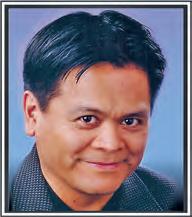
By Emil Guillermo
ethnic communities, when he said the U.S. would “permanently halt immigration” from 19 countries including Laos and Burma.
his, I am told, will be the last column on a bimonthly schedule for the Filipino Chronicle till further notice. It coincidentally coincided with the passing of my brother-in-law.
My Manong Virgilio could very well be the perfect immigrant. He came to America in the 70s for love and married my sister.
From humble beginnings in Ilocos Norte, Philippines (Laoag City to be exact, home of San Guillermo), Virgilio along with my sister built a solid middle class life in America.
They paid their taxes. Obeyed the law. Caused no trouble. Owned their home. Raised two college-educated Filipino kids.
Success!
When Donald Trump rages about immigrants during his presidency, think of Virgilio—the ones who believe in the Constitution and that American phrase, “Life, liberty and the pursuit of happiness.”
More of them are like him. Perfect to near perfect. Not criminals.
But Trump will use any excuse to malign the majority of people who seek a life in America.
Trump did it recently in the aftermath of that National Guard shooting tragedy in DC.
He was just looking for cover to go triple x/xenophobic on immigration.
Without knowing the real motive of the shooter, the president assumed an already vetted CIA operative, an Afghan national who worked side by side with American forces in Afghanistan and given asylum by the Trump administration, was initially not worthy of admittance to the U.S.
But he was.
Just like Filipino vets in the Philippines who fought side-byside with Americans in WWII and were promised citizenship. That is until the U.S. reneged in the infamous Rescission Act of 1946.
As Trump would say, “Things happen.”
This time, instead of waiting for all the facts, Trump used last week’s shooting tragedy to instill the fear of immigrants throughout the nations and in individual
Trump can’t make the kind of wholesale changes on immigration he wants without Congress, but this Congress, so far, has only tested him on all things Epstein, not all things immigration.
If Trump’s xenophobia continues to define policy, it will be in keeping with Trump’s regressive vision of America.
It hearkens back to 1924, when the U.S. adopted the Johnson Reed Act, the worst immigration law in American history that set racist quotas on Asian countries.
In other words, it’s in the U.S. political DNA to have remnants of nativist and eugenicist philosophies determine who gets to be American.
Here comes ethnic purity 2.0, American-style. That is unless we are loud and persuade the public that Trump-style racist is plain un-American.
But given the imminent demographic shift in the country when minorities are predicted to become the majority nationally by 2035 or 2040, Trump’s reaction should be no surprise.
MAGA doesn’t want to see the browning of America.
But in this column, let’s celebrate immigrants, in our Filipino American community at large of four million.
I don’t mean just the flashy individual success stories: the high-tech AI founders, the doctors, lawyers, entrepreneurs. Nor am I talking of the actors, singers, and other artistic wonders out there.
The vast majority of us are rank and file Filipino American; vin ordinaire.
We are the Filipino Americans who rarely get noticed.
The ones who take care of their families. And, considering our place in the care professions, maybe even others.
They do their jobs.
They keep their nose to the grindstone and work. Then, retire.
That’s the Asian work ethic.
Their joy is in family, family events. When they take a vacation, it’s generally for infrequent family
reunions to our ancestral homelands. They aren’t the headliners. They are literally the fabric of our country, part of the 27 million who make up our broader Asian American community.
They may or may not be fully documented. They may be visa overstays. But criminal? Immigration law is “civil” not criminal.
The majority of them surely aren’t gangsters. In the current ICE age, their Filipino faces make them susceptible for harassment and deportation. They are the unfortunate pawns in the president’s immigration reality show.
Virgilio
I want to salute them all today because they are just like my brother-in-law, Virgilio.
His life changed drastically when my sister went back to my father’s province for a vacation in the Philippines in the 1970s. It was the same year I went east to college. My sister went the other way, back to my father’s home town and met the man of her dreams.
At first, I wasn’t sure. My sister and I were the “born heres,” the
Americans. We didn’t need to import a spouse, did we?
In time, I grew to love my brother-in-law for who he was. A good, responsible man, who provided for my sister and his family, and did it all with a smile.
Virgilio had a good job, worked hard, and was the kind of person we want in America. Those who know it is better here.
Virgilio also liked the Warriors, Giants, and 49ers.
He liked sports, wore the gear. He ate fast food. That, not the sports, gave him the body of an average American. But he was careful in recent years to watch what he ate. He even ran 5Ks for fun.
Virgilio wasn’t famous, nor rich, but that was never the goal for the average person motivated by an opportunity for a better life away from the land of pesos and in the land of dollars.
Oh, and I don’t know what his politics was. We never talked about politics. We cared about our teams, the family, and each other.
Last month, on the day after we gave thanks, Virgilio died in San
(continue on page 14)
• Honolulu, HI, USA
• Full-time
• Monday - Friday 8:00am - 5:00pm
• On-call: Yes
• Compensation: $22.00 - $25.00 per hourly plus mileage, cell phone reimbursement and benefits

What’s in it for you?
• Paid Holiday, Sick, and Vacation Time
• Health, Dental, Vision and Life Insurance
• 401k Plan
• Healthcare Spending or Reimbursement Accounts such as HSAs, FSAs, HRPs, and HRAs
Summary: This role is responsible for completing maintenance work orders, performing apartment turnovers, and ensuring all building systems meet health and safety standards. Duties include repairing and maintaining electrical, plumbing, heating, mechanical, and locking systems; performing painting and general manual repairs; and maintaining documentation for fire and building safety systems. The position also requires keeping a safe, clean work environment, accurately documenting work, and participating in ongoing technical and safety training.
Qualifications:
Requires at least one year of maintenance technician experience, a high school diploma, and strong knowledge of general maintenance methods, tools, and building systems. Additional certifications (such as HVAC or CMRP) are a plus. The ideal candidate has strong problem-solving skills, manual dexterity, attention to detail, and effective time-management abilities.


By Carlota Ader
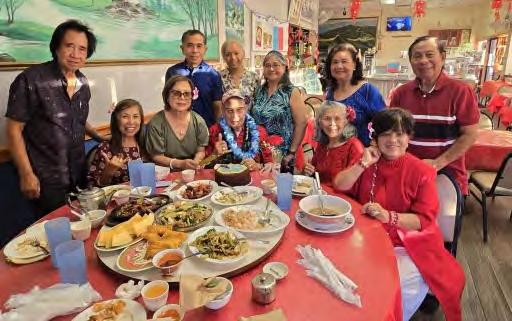
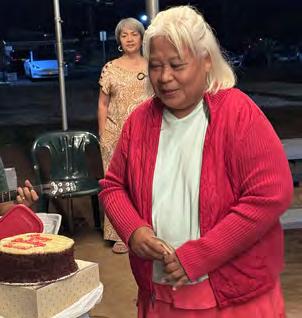
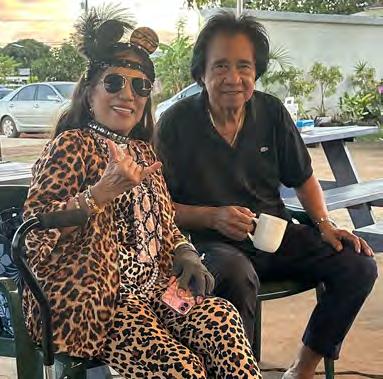
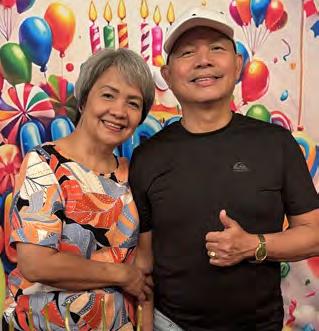
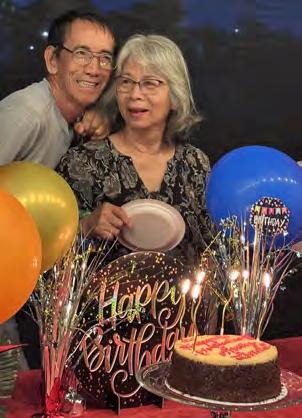
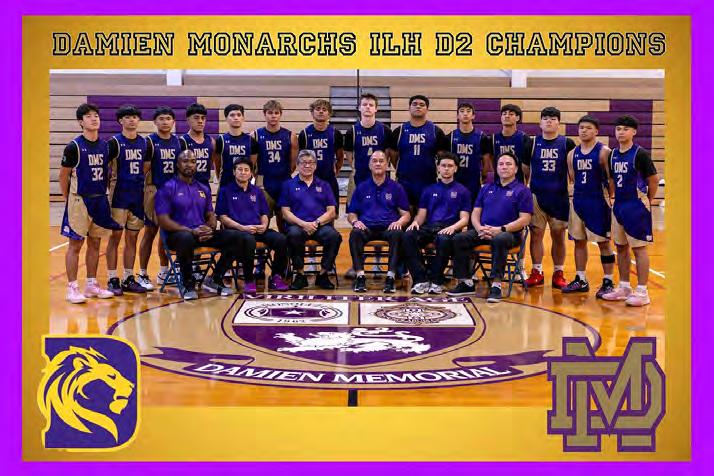
As the final issue of Hawaii Filipino Chronicle to appear bimonthly (for now), here are the latest celebrations from the Filipino community in Hawaii and beyond.
(CANDID PERSPECTIVES: As Trump ....from page 13)
Francisco at age 81. It was a day after the president essentially slurred all immigrants, even the good ones, as perhaps all being worthy of suspicion. But for what? For being “foreign”? For being non-white?
In the end, Virgilio, nearly 50 years in America was the example of what successful immigration is,
or at least what it should be, and who the opportunity should be bestowed upon.
The good, humble people who want a chance at an American life. Not a dream. A life.
Virgilio wasn’t the person with the cash to buy his way into Mar-a-Lago. Or the person with valuable “skills.” Not unless you
count honesty, decency and respect for the rule of law. (Hey, that makes him better than the president himself).
America shouldn’t be like applying to an Ivy League school, or like getting that top level job.
We want good people; people with such a stake in family and country that they willingly renounce

their native land and put America first.
That’s always been the principal idea, the basic deal that qualifies you to take the oath.
They may retain an accent, or practice customs. But there was no doubt, who and what they were. American.
Virgilio knew it perfect-
ly, as do the vast majority of immigrants to America. When I stood by him in his final days, I realized as Virgilio took his last breaths, he was as close to the perfect immigrant as it gets.
EMIL GUILLERMO is a journalist and commentator. His talk show is on www.amok. com.
By Rose Cruz Churma
This book contains recipes that Filipino immigrants brought with them when they left their country of birth to be part of the Filipino Diaspora. Usually, these dishes are prepared from memory and passed on to their children.
As Chef Angela Dimayuga says, “Writing this book has been a form of coming home – a way to get to know my family better and have them get to know me.”
The recipes that comprise this book speak of the heritage that the authors share with more than four million Filipino Americans.
Originally from California, Angela Dimayuga is a chef, creative and cultural tastemaker who has been named to Zagat’s “30 Under 30” list and honored as James Beard Rising Star Chef finalist. She was also
awarded Best Chef by New York Magazine.
Co-author Ligaya Mis han was raised in Hono lulu and graduated from Punahou School. She writes for the New York Times and T Magazine She was a finalist for the National Magazine Awards and the James Beard Awards. She has also written for the New York Review of Books and The New Yorker.

dishes evolved.
Ligaya dedicates this book to her Filipina mother and writes: “For my mom, who waited so patiently for me to find my way home.”
Although touted as a cookbook of heritage recipes, the book is also a socio-cultural commentary on the journey of growing up Filipino in the Diaspora. It also provides historical nuggets that describe back-stories to how certain
(WHAT’S UP, ATTORNEY?: A Life ....from page 9)
Then I decided to resume practicing law in San Francisco before moving to Hawaii in 2004.
I continue to live here and practice law, helping immigrants and their relatives obtain U.S. citizenship, petition for their alien relatives and fiancees, and represent them in deportation (removal) proceedings. My beloved wife passed away in 2019.
I have written law books and legal articles, including “Immigration Law Service. 1st ed.,” an 8-volume practice guide for immigration officers and lawyers. I enjoy our radio show at KNDI radio in Honolulu, 1270 AM dial, every Thursday at 8:30 a.m. We talk about immigration, current events, and politics.
As for love, I have had a very enjoyable love life. At the moment I am going out with a 20-something. Prior to that I was dating nurses, teachers, Fulbright scholars, secretaries, and students.
I am ready to go at any time.
ATTY. EMMANUEL SAMONTE TIPON was a Fulbright and Smith-Mundt
Although Angela’s voice and culinary perspective provide the basic framework for the book, this is the collective story of the Filipinx – the gender-inclusive term for people of Philippine descent, who are American-born and raised, but whose knowledge of Filipino cuisine and culture was not directly experienced from the Motherland but secondary sources, from parents and grandparents, cousins, titos and titas, ninongs and ninangs who left home for
scholar to Yale Law School where he obtained a Master of Laws degree specializing in Constitutional Law. He graduated with a Bachelor of Laws degree from the University of the Philippines. He placed third in the 1955 bar examinations. He is admitted to practice before the U.S. Supreme Court, New York, and the Philippines. He practices federal law, with emphasis on immigration law and appellate federal criminal defense. He was the Dean and a Professor of Law of the College of Law, Northwestern University, Philippines. He has written law books and legal articles for the world’s most prestigious legal publisher and writes columns for newspapers. He wrote the annotations and case notes to the Immigration and Nationality Act published by The Lawyers Co-operative Publishing Co. and Bancroft Whitney Co. He wrote the best-seller “Winning by Knowing Your Election Laws.” Listen to The Tipon Report which he cohosts with his son Attorney Emmanuel “Noel” Tipon. They talk about immigration law, criminal law, court-martial defense, politics, and current events. It is considered the most witty, interesting, and useful radio show in Hawaii. KNDI 1270 AM band every Thursday at 8:00 a.m. Atty. Tipon was born in Laoag City, Philippines. Cell Phone (808) 225-2645. E-Mail: filamlaw@yahoo.com. Website: https:// www.tiponimmigrationguide.com.
economic opportunities elsewhere.
The recipes are grouped into nine chapters starting with “Turo-Turo” specialties; soup and vegetables; rice and noodles; merienda items; breakfast things; dishes for celebrations; condiments sawsawan); kakanin and pastries; and cold things (such as halo-halo) and drinks. Pretty comprehensive.
All the dishes have spectacular photos you want to reach out and pull a piece from the page and taste them. The ingredients are readily available and the instructions for preparing the dishes are detailed and described lovingly like a ritual.
The segment on how to make chicken relleno tops them all. It includes a very detailed step-by-step narrative on how to debone and stuff the chicken, accompanied by photographs of the chicken as it gets trussed up.
The biggest surprise
was the recipe for homemade Spam. I had to do a double-take. What? a recipe for making Spam? This food item is a staple in Hawaii pantries – a versatile protein that can be an ingredient for anything – by just opening a can. But, I guess it is good to have a healthy alternative to the can – even if it takes more effort.
As we approach the holiday season, this is a good book to acquire or to give as a gift. It can serve as a roadmap to a Filipino-inspired all-day feast, or as a collectible to have around, to skim through when one is homesick for anything Filipino. It is available at Amazon.com.
ROSE CRUZ CHURMA established Kalamansi Books & Things three decades ago. It has evolved from a mail-order bookstore into an online advocacy with the intent of helping global Pinoys discover their heritage by promoting books of value from the Philippines and those written by Filipinos in the Diaspora. We can be reached at kalamansibooks@gmail.com.

By Seneca Moraleda-Puguan
Food on our table, a roof over our heads, protection from harm, and provision for every need… these are the things I thank God for every single day.
And as Christmas approaches, these are the very blessings I pray for the Filipino people to experience in full measure… and more.
The year 2025 has been a painful one for our nation.
One disaster after another battered our islands, leaving many families struggling to rebuild what little they had.
But perhaps the most devastating was not the one brought by wind, rain and the ground shaking, it was the revelation of widespread corruption and betrayal in government.
For a people already burdened by hardship, the sting of lost trust has been
even harder to bear.
I am writing this from Perth, Australia, where I am spending three months with family.
Each time I witness and experience the benefits of living in a firstworld country, efficient systems, reliable public transportation, quality healthcare, and a government that delivers services people can actually feel, I cannot help but wonder:
What if the Philippines could enjoy this too?
What if our taxes are translated into comfort, safety, and opportunities for every Filipino family?
What if our government’s promises were not empty words but realities fulfilled?
What if the nation –every sector, every department, every city and municipality – were led by men and women whose
integrity was unwavering, whose love for the people guided every decision?
What if the richness of our land were matched by the richness of leadership?
These questions linger in my heart every day, heavy with longing yet still hopeful. How beautiful it would be if our “what ifs” finally turned into reality.
As Christmas comes again- a season that reminds us of hope, jus-

tice, and redemption - my wishes are simple but profound:
JUSTICE, so that those who steal from the nation are held accountable, and the wounds of betrayal can begin to heal.
HEALING, for every Filipino who feels abandoned, unheard, or deceived, and for communities picking up the pieces after disaster.
EQUALITY, so opportunities are not reserved for the powerful or the privileged, but are accessible to every child, every worker, every family striving for a dignified life.
A BETTER WAY OF LIFE, where the wealth of our natural resources is matched by good governance and genuine service.
The Filipino spirit has always been resilient, joyful, and hopeful even
when tested.
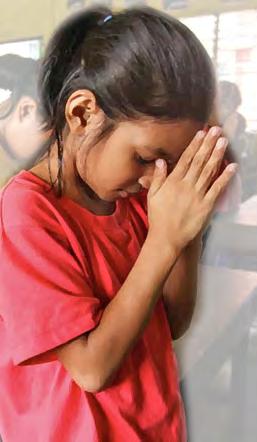
My prayer this Christmas is that joy would not be something we cling to despite our circumstances, but something we can celebrate because our nation is finally moving toward truth, accountability, and genuine progress.
May we all, wherever we are in the world, keep believing and working for the country we dream of - one where hope is not a luxury, but a lived reality.
With man this is impossible, but with God all things are possible. This is the heart of Christmas –Jesus came so hope could live in us.
For every Filipino, may there be food on your table, a roof over your head, protection from harm, provision for every need…and so much more.
Mahal kong Pilipinas, someday you will find your joy again.
The West Coast Health Alliance continues to strongly recommend vaccines to protect our children, noting that rigorous research of millions of people in multiple countries over decades provides high quality evidence that vaccines are not linked to autism.
The Alliance is deeply concerned about inaccurate claims to the contrary recently posted on the federal Centers for Disease Control and Prevention website.
Autism is a complex neurodevelopmental condition with multiple contributing genetic and environmental factors. Suggesting it stems from any single cause, such as vaccination, misleads families who deserve accurate guidance.
It is not only a disservice to families seeking clarity about vaccines but also potentially harmful to autistic individuals and their families.
Vaccines are thoroughly tested and remain one of the most important tools for preventing infectious diseases.
Public health guidance on immunization must be grounded in credible, evidence-based science to help parents and caregivers who may be receiving conflicting or inaccurate messages about immunization.
The Alliance encourages families to seek information from trusted health care providers and reputable medical organizations, including the American Academy of Pediatrics.
By Carlota Hufana Ader
After years of hard work, a number of seniors live their golden years quietly, before riding off into the sunset.
A few take a decidedly different path, fulfilling lifelong dreams by traveling the world, experiencing exotic cultures and sampling delicious foreign cuisines.
Some indulge in new hobbies such as gardening to keep fit, learn a new skill or language, or volunteer their time at churches and other local charities.
Still others, like a handful of retirees from the Waipahu-Village Park-Royal Kunia area, immerse themselves in new challenges. They have spent most of the past year learning to dance the hula and embracing Hawaiian culture.
The group of kupuna ages 50 and above first met in April 2024 for regular morning yoga and stretching exercises led by instructor Asel Villamin.
They called themselves WOW—the Workout Warriors of Kunia. For these kupuna, the workouts resulted in more than healthier bodies and minds.
“As time passed, we forged new friendships and learned to really appreciate life and the world around us,” said Percy Tamayo, 82. “Being in the group also meant more opportunities to learn and grow individually.”
One particular member stood out due to her graceful movements. She was none other than Leilani Jimeno, who was also an accomplished hula dancer. She agreed to teach hula
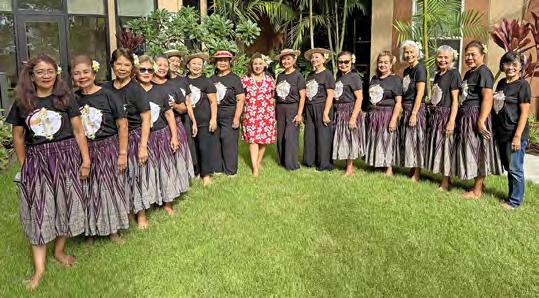
to the group which eagerly embraced the dance and its many aspects, including the rich Hawaiian culture.
The group eventually formed their own halau, calling themselves Na Wahine Na’auao (the Ladies of Wisdom). As the months passed, their expertise grew to a point that they decided to perform in public.
The halau celebrated their first anniversary on October 26, 2025 with a ho’ike pa’ina (celebratory feast) at Kaleipuu Elemen-
tary. Under the direction of Leilani Jimeno, they performed several hula dances.
The event was a resounding success, thanks to the help from a small army of volunteers and supporters.
Na Wahine Na’auao went on to perform at other communities and charities involving the elderly. They also spread cheer to residents at assisted living facilities, senior day care centers and nursing homes.
Prior to hula lessons,
the group continues with its morning yoga routine which increases their flexibility and core strength.
Halau member Lucy Llena, 59, says the group has come a long way from the first few hula lessons and continues to learn more about Hawaiian culture.
“Certain aspects of Hawaiian culture are rooted and built on the wisdom of our elders,” Llena says. “Their wisdom is the foundation of entire families which can help to guide future generations towards a brighter future.
“We’re also able to keep physically active, be a part of the community and share our love of hula with others. There is still a lot to discover and learn, and we look forward to a deeper connection with Hawaiian culture, our beautiful environment as well as each other.”
In a suit led by the Hawaiʻi Department of the Attorney General, the state of Hawaiʻi today won its lawsuit protecting four federal agencies from being illegally dismantled by the federal administration.
The United States District Court for the District of Rhode Island today granted a motion for summary judgment brought by Attorney General Anne Lopez and a coalition of 20 other attorneys general.
In April, Hawaiʻi, Rhode Island and New York led the coalition in suing the administration to stop the implementation of an Executive Order that would dismantle the Institute of Museum and Library Services (IMLS), the Minority Business Development Agency (MBDA), the Federal Mediation and Conciliation Service (FMCS), and the U.S. Interagency Council on Homelessness (USICH).
Attorney General Lo-
pez and the coalition sued to stop the administration’s elimination of three federal agencies:
● IMLS, which supports museums and libraries nationwide through grantmaking, research and policy development;
● MBDA, which promotes the growth and inclusion of minority-owned businesses through federal financial assistance programs; and ● FMCS, which promotes the peaceful resolution of labor disputes.
The court’s order permanently blocks the administration from eliminating these four agencies.
“I am extremely pleased with the result of this lawsuit, which protects so many different aspects of civil society in our state,” said Attorney General Lopez.
“In litigating this suit, we received tremendous support throughout the state — from government partners like the Hawaiʻi State Public Library System and the University of Hawaiʻi, to employer and labor organizations, along with others who be significantly impacted by the dismantling of these agencies.”
Stacey Aldrich, Hawaiʻi State Library stated, “I’m very grateful to the Attorney General for taking on this important case, which supported the importance of our nation’s investment in our libraries and museums through the Institute of Museum and Library Services. Both institutions play a crucial role in connecting us all to information, ideas, our history and each other.”
“Today’s Court decision to keep the Administration from dismantling these important agencies is welcomed news,” said University of Hawaiʻi Interim
Vice President for Research and Innovation Chad Walton. “We are deeply grateful to our Attorney General and her team of attorneys who led the efforts of the 21-state coalition in this case, to defend the interests of the University and our state.” The University of Hawaiʻi receives significant support from IMLS and MBDA.
In May, Attorney General Lopez and the coalition secured a preliminary injunction stopping the administration from implementing the Executive Order, which sought to dismantle these three agencies.
In June, the coalition filed an amended lawsuit seeking to protect another agency targeted by the same Executive Order, USICH, which coordinates the federal government’s efforts to prevent and end homelessness nationwide.
Attorney General Lopez and the coalition argued in the lawsuit that the Executive Order’s elimination of all four agencies
violates the Constitution and the Administrative Procedure Act by attempting to override Congress.
The president does not have the power to unilaterally eliminate federal agencies created and funded by Congress and he cannot arbitrarily and suddenly cease agency programs.
In its decision on the motion for summary judgment, the District Court sided with Attorney General Lopez and the coalition, ruling that the administration’s actions were unlawful and barred the administration from taking any future actions to carry out the Executive Order’s elimination of the four agencies. This lawsuit was brought by the attorneys general of Arizona, California, Colorado, Connecticut, Delaware, Hawaiʻi, Illinois, Maine, Maryland, Massachusetts, Michigan, Minnesota, Nevada, New Jersey, New Mexico, New York, Oregon, Rhode Island, Vermont, Washington and Wisconsin.
LET’S ZUMBA | Filcom Center | Consuelo Courtyart, FilCom Center, 94-428 Mokuola St, Waipahu | Every Monday at 6:15pm | Need to unwind in movement and dance after a long workday? Join the community as we Zumba through the evening. For more information, visit https://filcom.org/ communityprograms.
PASKO SA FILCOM | FilCom Center | Casamina-Flores Ballroom, FilCom Center, 94-428 Mokuola St, Waipahu | December 14, 3-7pm | Celebrate Christmas the Filipino way with traditional games, good food, and contests for everyone! Schedule to be announced soon. Follow FilCom Center on Instagram to stay up to date: https://www.instagram.com/ thefilcomcenter/.
SAKADA DAY CELEBRATION | FilCom Center | Casamina-Flores Ballroom, FilCom Center, 94-428 Mokuola St, Waipahu | December 20, 10am to 1pm | Honor the Filipino agricultural workers that migrated to Hawaii in early 1900s. For the schedule, follow FilCom Center on Instagram to stay up to date: https://www.instagram.com/thefilcomcenter/.
By Lily A. Montesines-Capalad
I’ve always believed that God is a God of second chances, and I’ve experienced this truth many times. My life has not been short of danger— whether it was a health crisis, being threatened by knife-wielding thieves, or being held hostage in a public van by holduppers.
In all these, God never left me. He protected me, just as He promised in Romans 8:28: “And we know that all things work together for good to those who love God, to those who are called according to His purpose.”
One unforgettable incident happened many Junes ago. I was exhausted from work and eager to get home. I boarded a public van from Makati to Antipolo.
As passengers filled the van and we began to travel, I suddenly felt uneasy. A still, small voice nudged me to get off and buy something. But I was already seated and resting my aching back—so I ignored it. I wished I had listened.
As we reached Kalayaan Avenue, a man beside me—face partially covered by a white towel—declared a holdup. He and three others took control of the van, demanding that we surrender our bags, jewelry, phones, and money. All the looted items were placed into my bag. They warned us not to make any movements. One showed us a .45 caliber gun and a (real or toy
just to cause fear) grenade.
Then, instead of heading to Antipolo, they forced the driver to turn toward the South Superhighway. Eventually, they let all passengers go—except me, another lady (who quickly escaped), and the driver.
I was terrified. I didn’t know the roads in the South, and I felt completely vulnerable. But God was with me. At Sucat, I noticed highway patrol officers nearby. The men beside me crouched to avoid being seen. I gave a quiet signal by blinking.
When the van stopped, a gunfight broke out between the holduppers and the highway patrol. I remained composed inside the vehicle, silently bracing myself for the possibility of being hit by a stray bullet as gunshots rang out.
At that moment, I prayed and entrusted my family to God—especially my teenage sons back then—asking Him to care for them if this was truly my appointed time to leave this world.
Strangely, I felt no fear. The gunfire inside the vehicle sounded muffled, unlike the loud blasts I could hear from outside.
I didn’t even realize the holdupper beside me had been shot—I heard no sound, nor felt any movement that indicated he had been hit. He slumped, lifeless, he was hit just inches from my head. God had protected me miraculously. I believe He surrounded me with His divine shield.

“The angel of the Lord encamps around those who fear Him, and He delivers them.” – Psalm 34:7
In the chaos, one holdupper escaped with what he thought was the loot—I can only imagine their shock and disappointment when they realized that the bag they had grabbed in their escape wasn’t the one filled with stolen money— but instead, it was my bag filled with documents and diskettes.
At that moment, I was reminded of Proverbs 13:11: “Dishonest money dwindles away, but whoever gathers money little by little makes it grow.”
Truly, anything gained through deceit never prospers, but what is earned through honest labor is lasting and blessed.
Meanwhile, I still had the passengers’ stolen items. Blood was on the road when I got out of the van. I walked to the highway patrol station where the others had regrouped. I returned their stolen belongings and informed the officers that the weapons were left in the van.
Once I felt safe, the trauma finally hit me—my
stomach churned, tears flowed, and I could barely speak when I called my husband. A woman, whose car had been used by the robbers as their getaway vehicle, spoke to him on my behalf. Later, at the police station, we filed a blotter report.
My husband and I made sure each passenger was brought safely home, from Parañaque to Antipolo. We finally arrived home around 4 a.m.
Soon after, my church friends called to pray with me and offer comfort. The trauma lingered for days, but God, in His mercy, comforted me through His Word.
“Praise be to the God and Father of our Lord Jesus Christ, the Father of compassion and the God of all comfort, who comforts us in all our troubles, so that we can comfort those in any trouble with the comfort we ourselves receive from God.” – 2 Corinthians 1:3-4
As this column comes to a close this December, I look back with deep gratitude to the God who has carried me through every season—through trials,
dangers, and even moments of fear.
Truly, He is my Deliverer.
In a time when wars rage, corruption spreads, and divisions deepen, may we not lose sight of the true meaning of Christmas. Jesus came to bring light into our darkness, peace into our chaos, and hope into our weary hearts. His birth reminds us that even in uncertain times, Emmanuel—God with us—remains our steadfast source of joy and strength.
Heavenly Father,
As we celebrate the birth of our Savior, we thank You for being our Deliverer and Source of peace amid life’s chaos. Though the world groans with wars, corruption, and despair, we hold fast to the hope that Christ’s light still shines in. Let Your peace guard our hearts and remind us that Emmanuel—God with us—is our greatest gift.
May the God who delivers and sustains us fill our hearts with His peace, joy, and unshakable hope this Christmas and beyond. Amen.
LILY A. MONTESINES-CAPALAD lives out her faith as a follower of Jesus Christ, continually growing in God’s Word and shining His light in her community and beyond. She remains deeply grateful to our gracious Provider for opening the opportunity to have testimonials published through the Hawaii Filipino Chronicle.