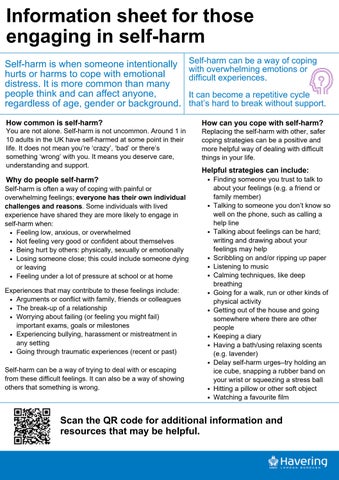
Information sheet for those engaging in self-harm
Self-harm is when someone intentionally hurts or harms to cope with emotional distress. It is more common than many people think and can affect anyone, regardless of age, gender or background.
How common is self-harm?
You are not alone. Self-harm is not uncommon. Around 1 in 10 adults in the UK have self-harmed at some point in their life. It does not mean you’re ‘crazy’, ‘bad’ or there’s something ‘wrong’ with you. It means you deserve care, understanding and support.
Why do people self-harm?

Self-harm can be a way of coping with overwhelming emotions or difficult experiences.
It can become a repetitive cycle that’s hard to break without support.
How can you cope with self-harm?
Scan the QR code for additional information and resources that may be helpful.

Some people are concerned about raising the topic of self-harm. However, research shows that asking about self-harm or suicidal thoughts does not put the idea into people’s heads
Getting help
In the longer term it is important that anyone engaging in self-harm can learn to understand and deal with the causes of the stress and overwhelm that they feel. The support of someone who understands and will listen to you can be very helpful in facing difficult feelings.
It’s okay - and brave - to seek help. You could reach out to someone you trust, a GP, a mental health professional or a helpline. People do care, even if it doesn’t feel like it right now.
At home: partners, parents, siblings or another trusted family member
If you’re in school: school counsellor, school nurse, teacher, teaching assistant or other member of staff you trust
GP: you can talk to your GP and they can make referrals for more help
Help lines
Samaritans: 116 123 (free, 24/7)
Papyrus HOPELINEUK: 0800 068 4141 (if you’re under 35)
Childline: 0800 1111 (free, 24/7)
NHS 111: urgent mental health help
999: in an emergency
Sometimes negative terms are used for self-harm, such as ‘attention-seeking’or ‘manipulative’.
This language is unhelpful and may make it harder for others to open up or ask for help Some people do need attention but aren’t able to find a positive way to get it
Creating a supportive and non-judgemental atmosphere will make it easier for others to seek help.
My friend is self-harming - how can I help?
Scan the QR code for additional information and resources that may be helpful.