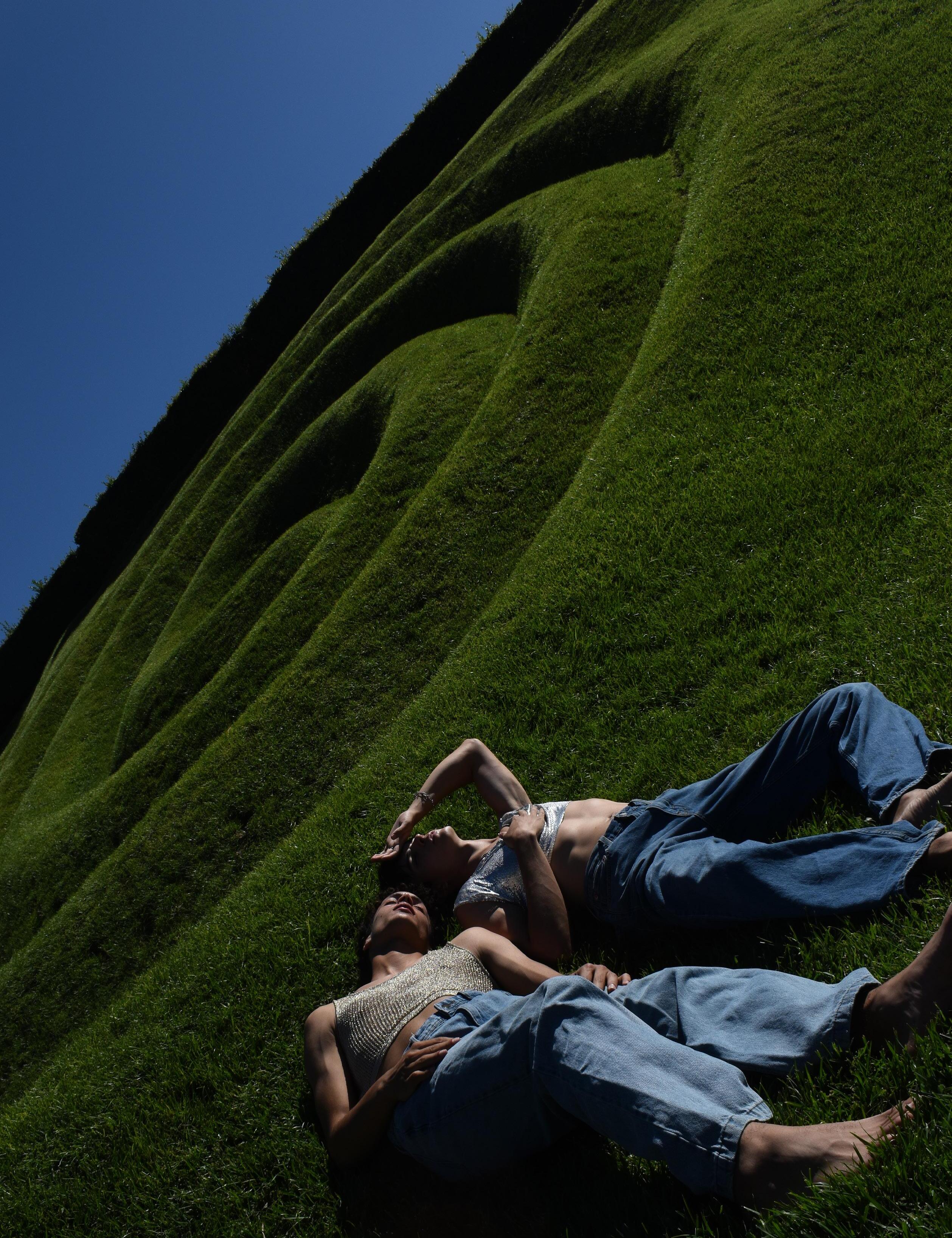
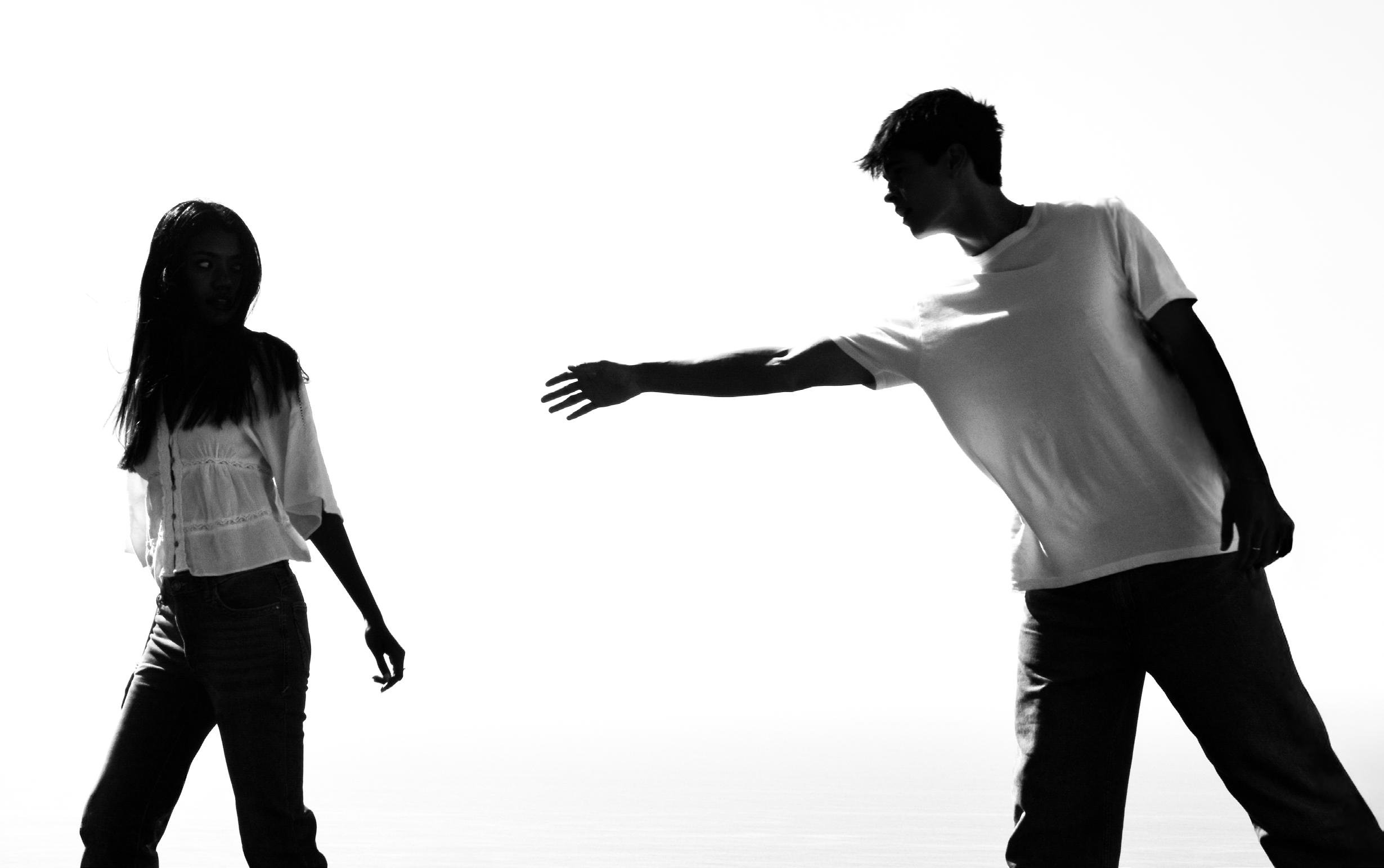
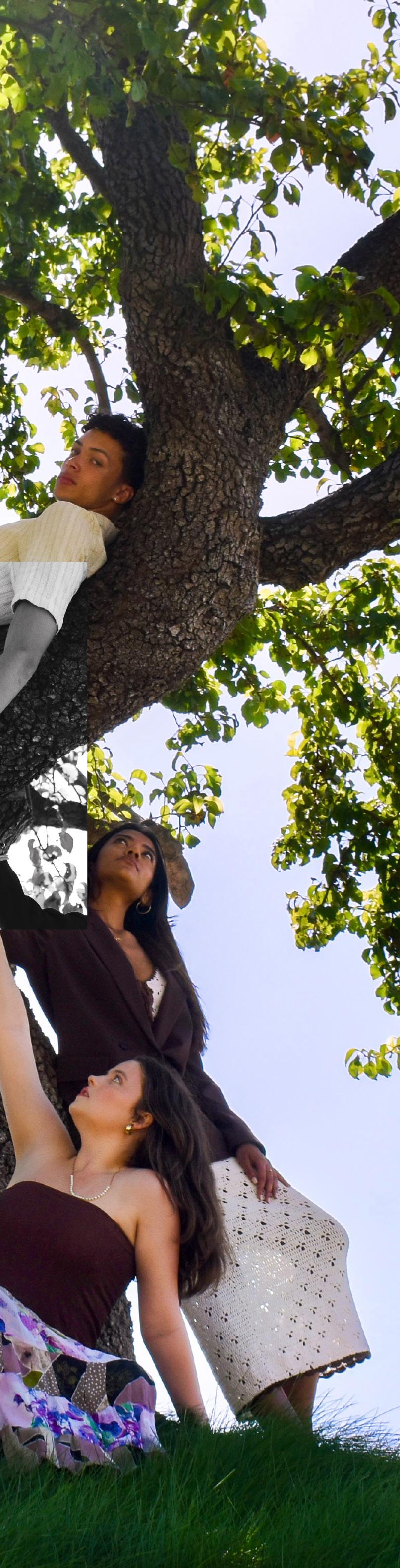
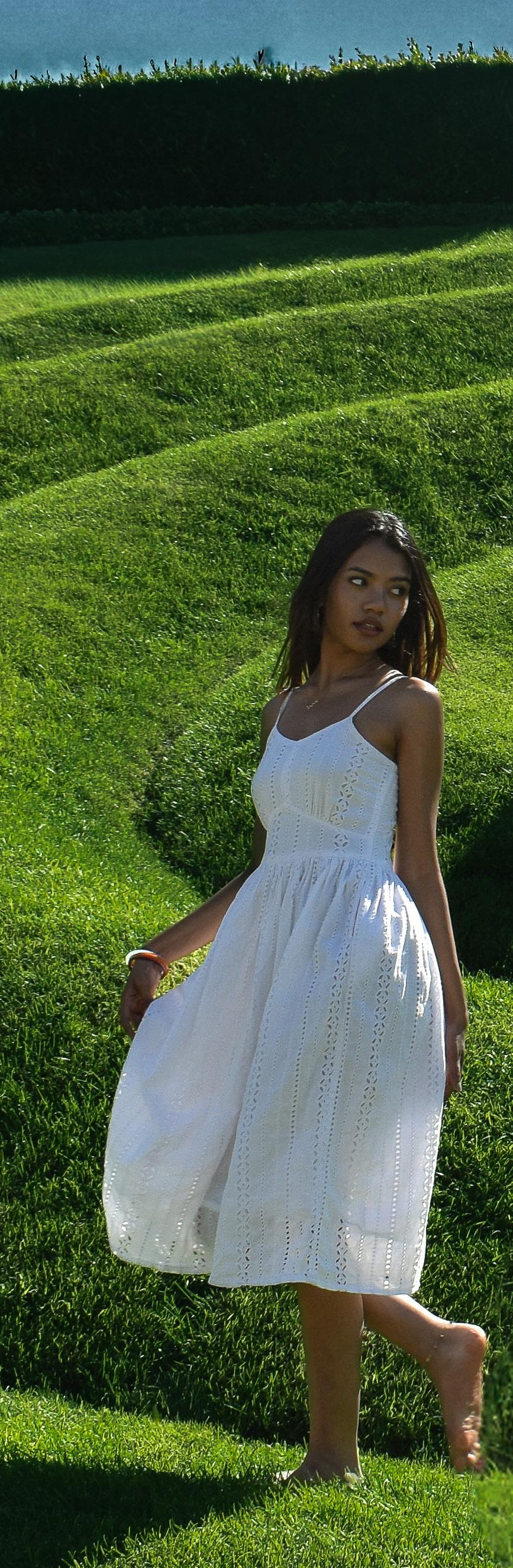
AINSLEY PHILLIPS
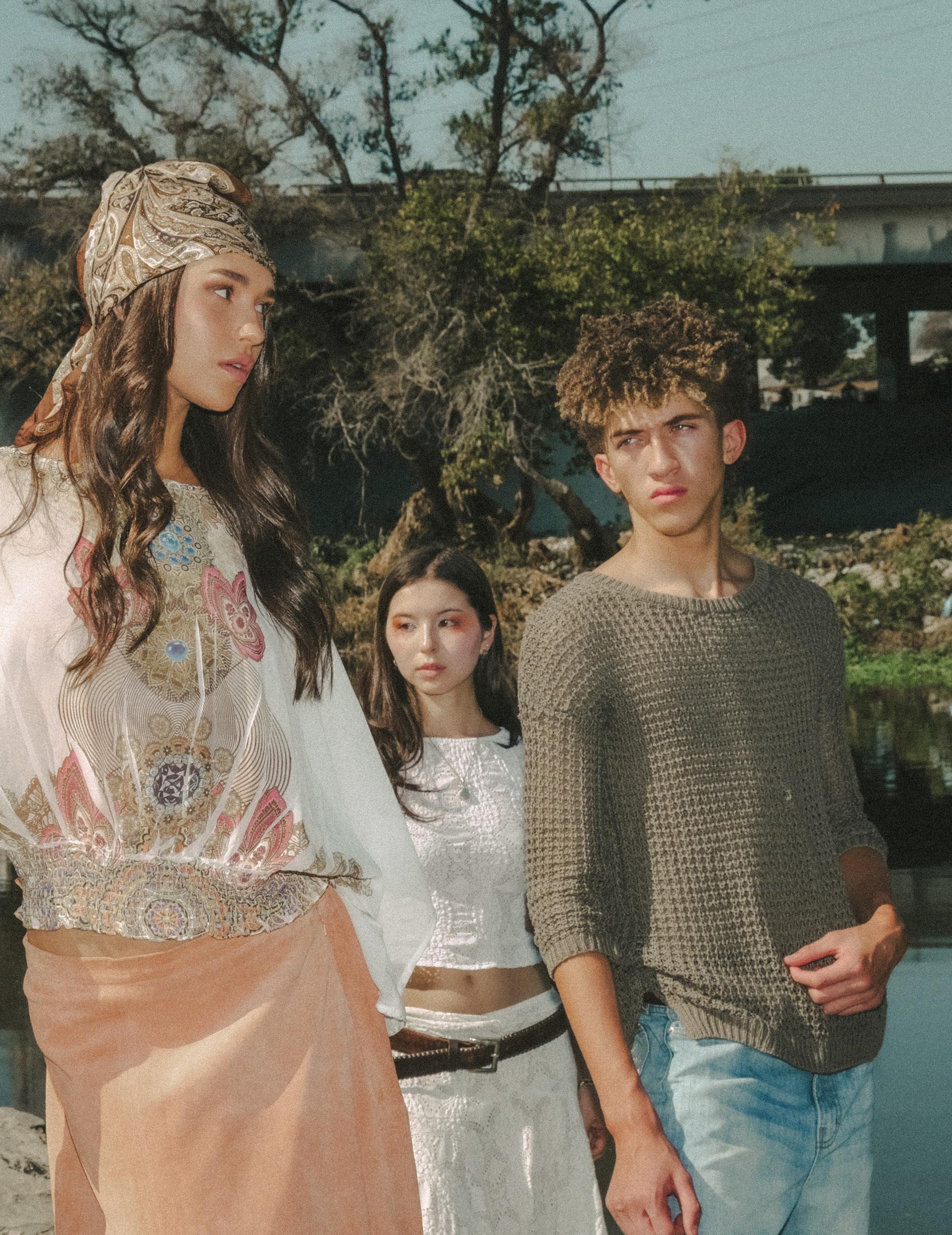
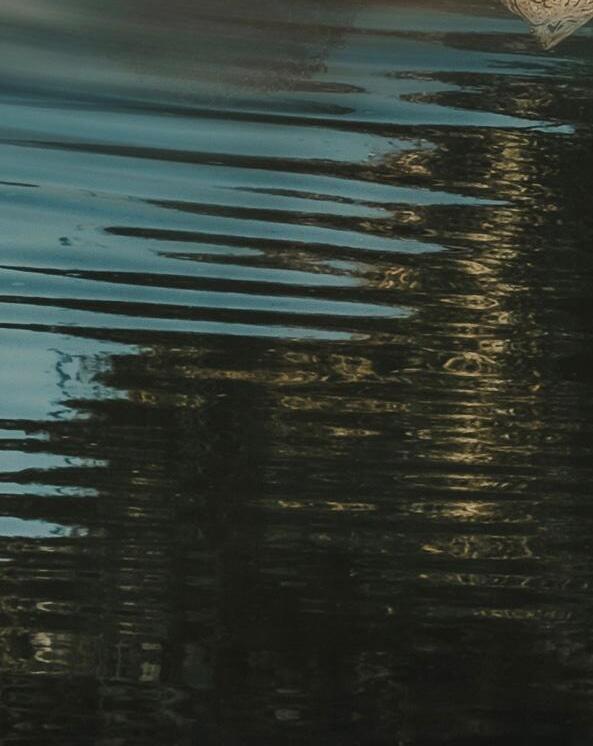
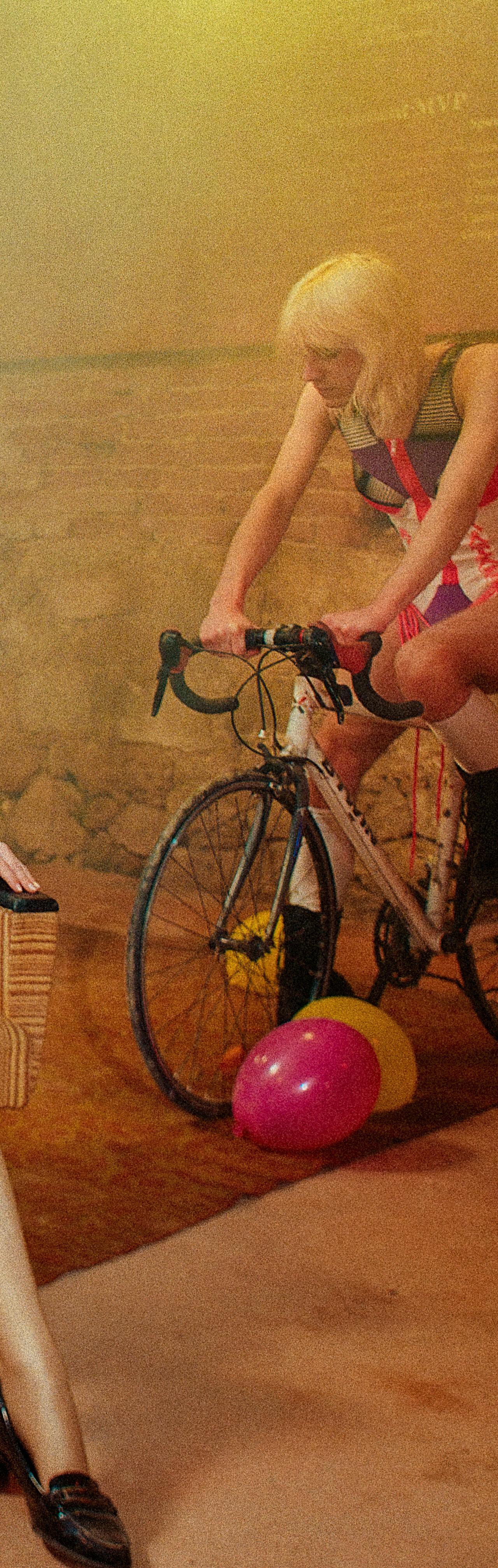
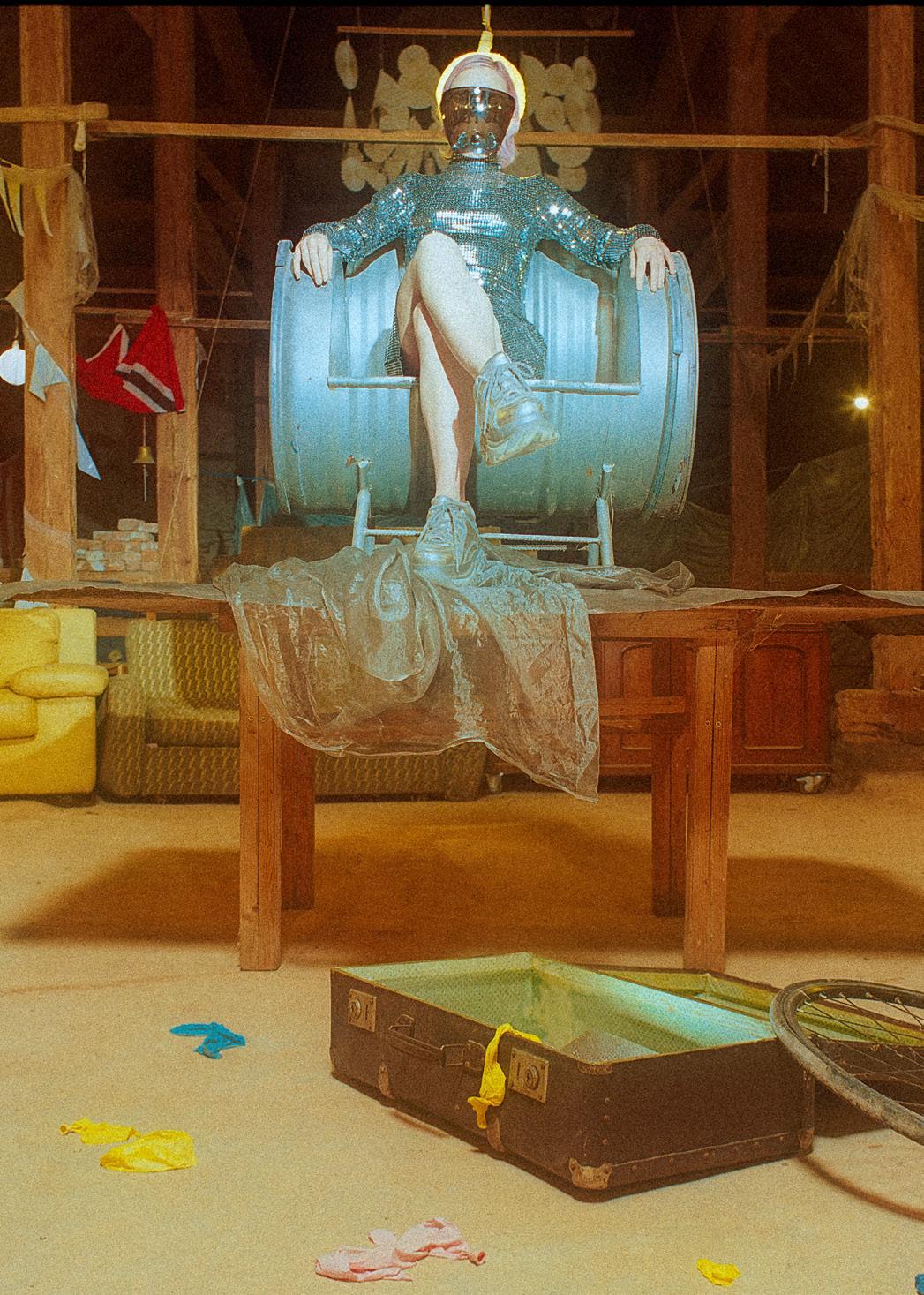
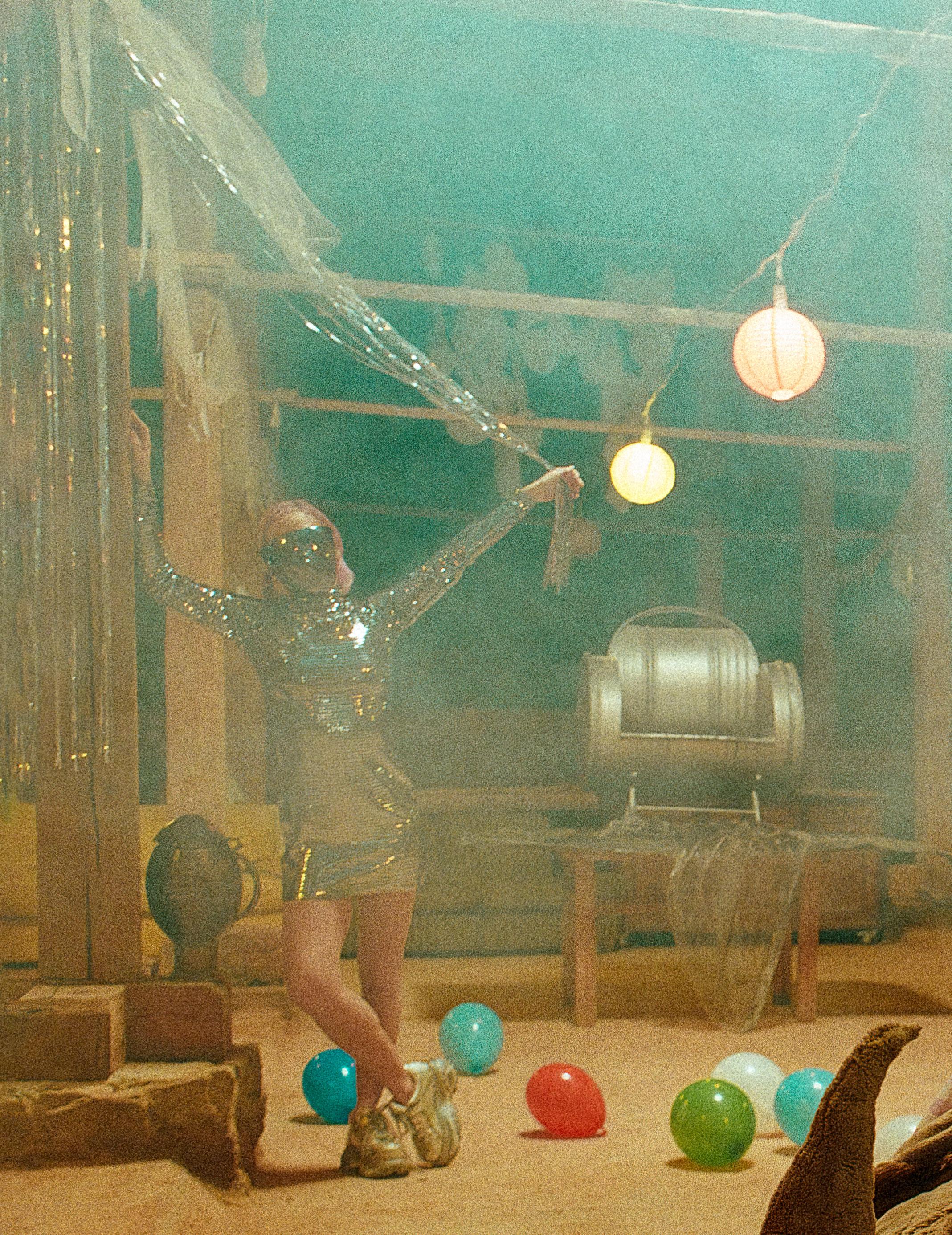
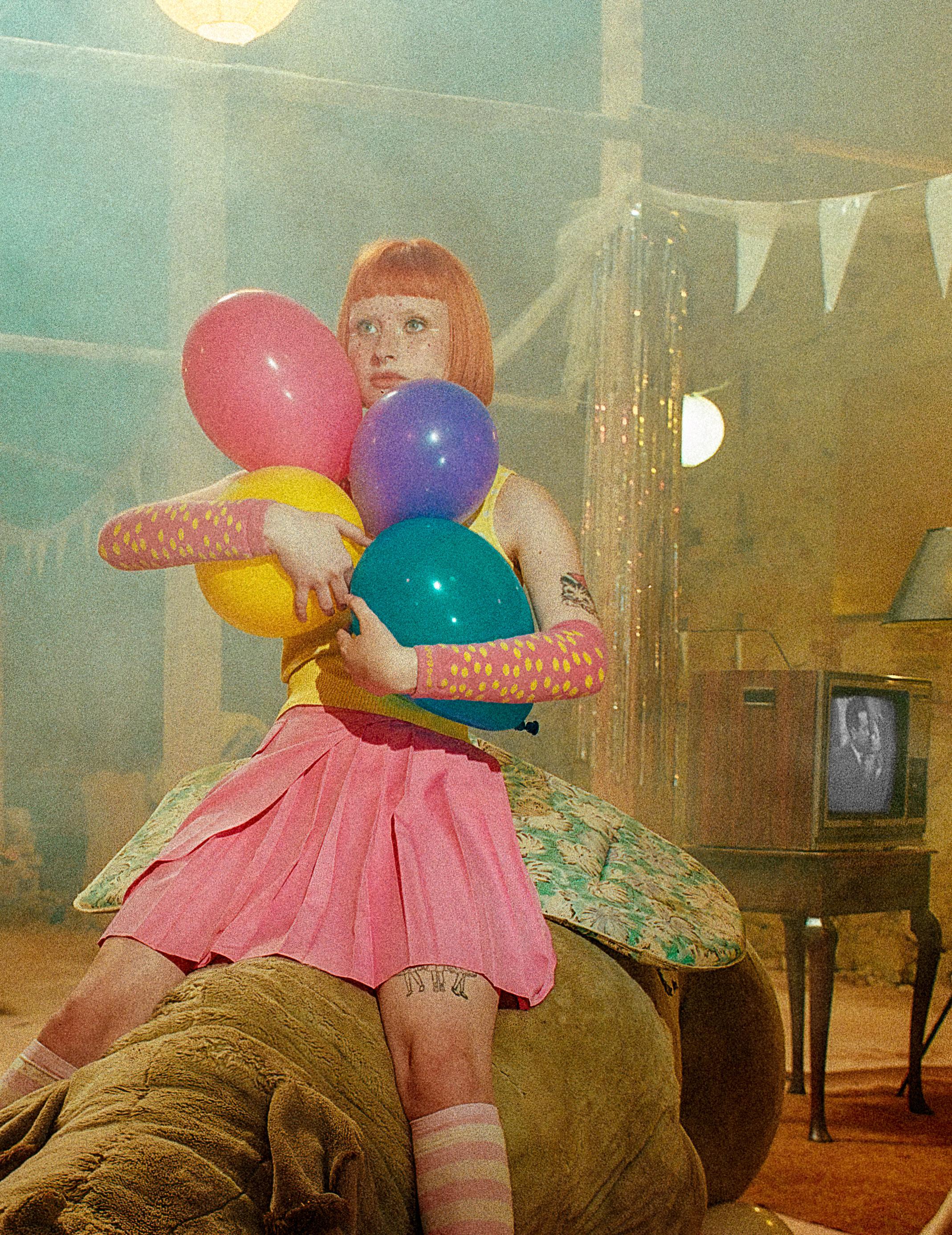
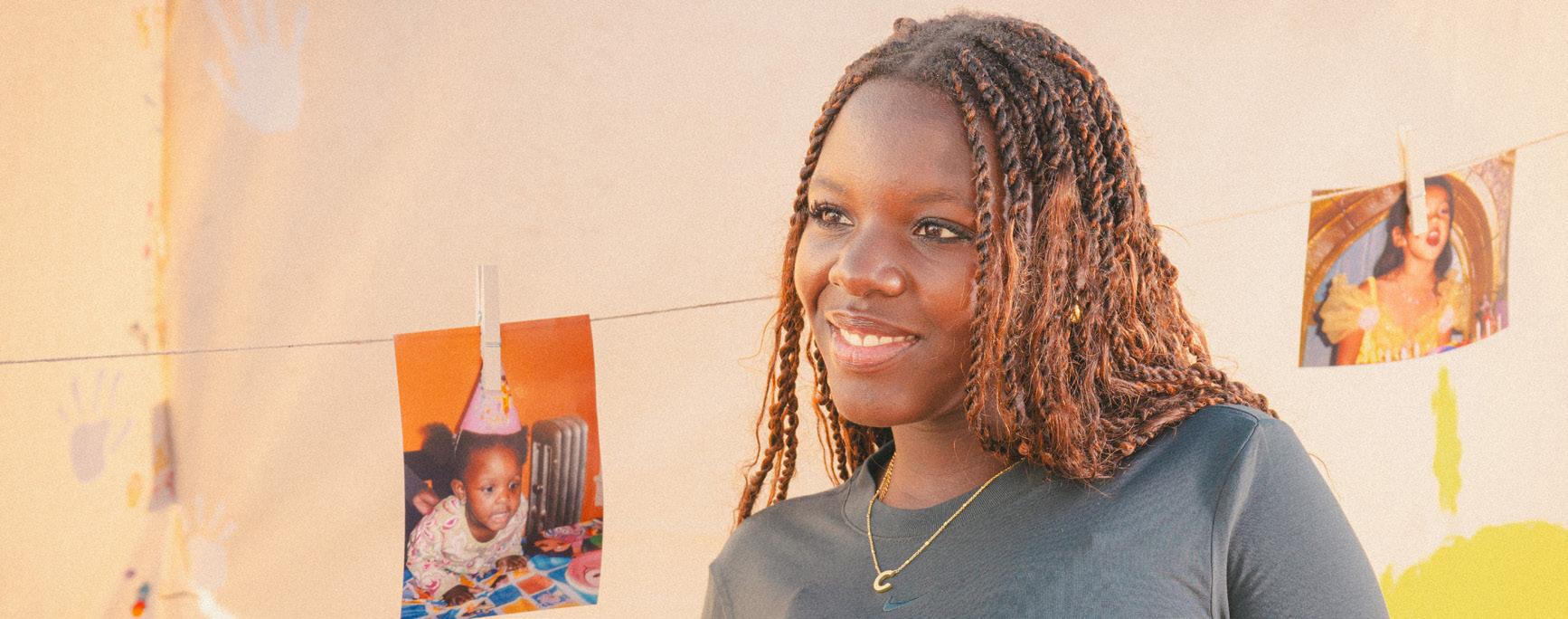
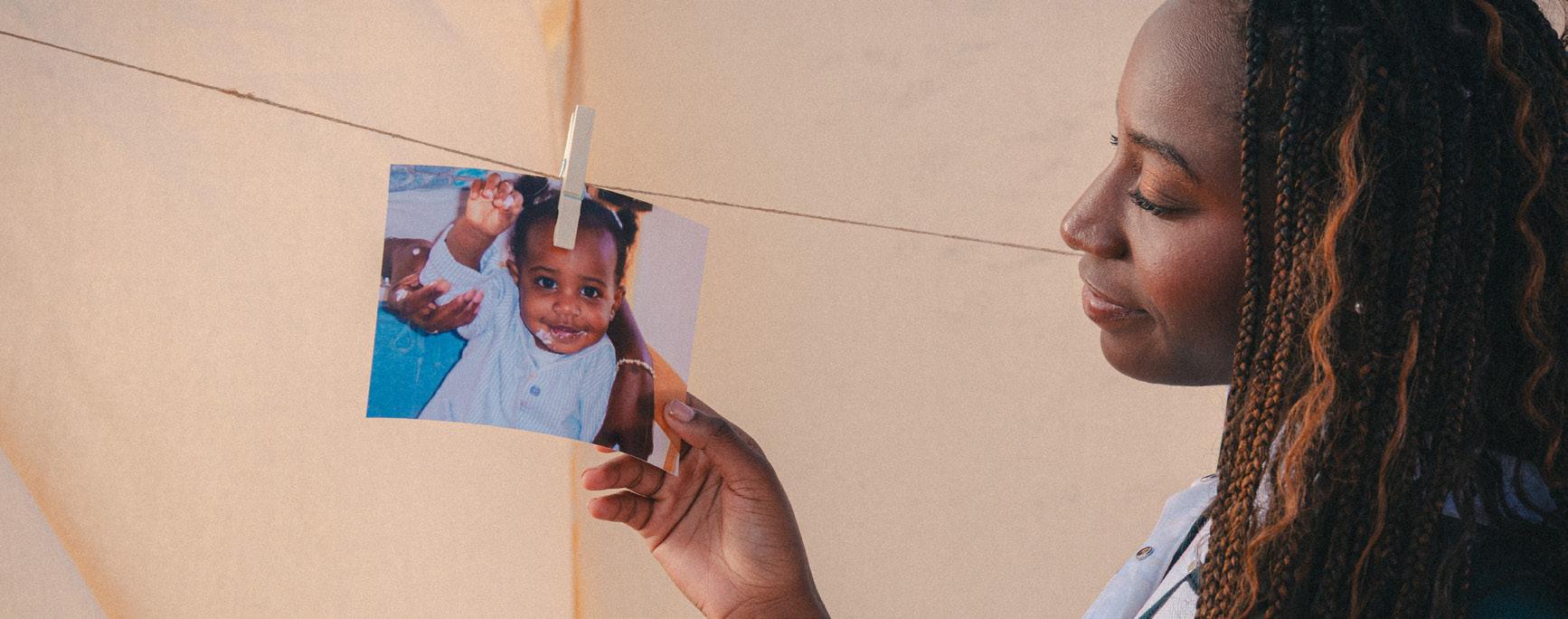
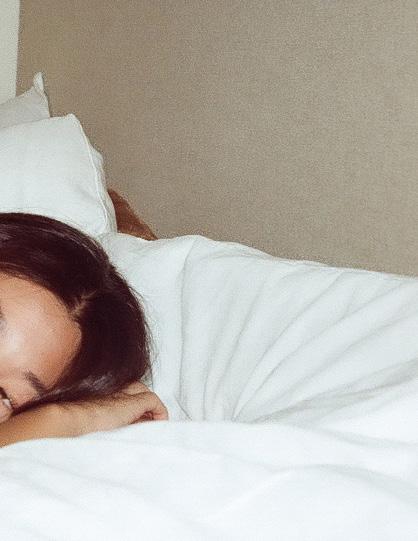
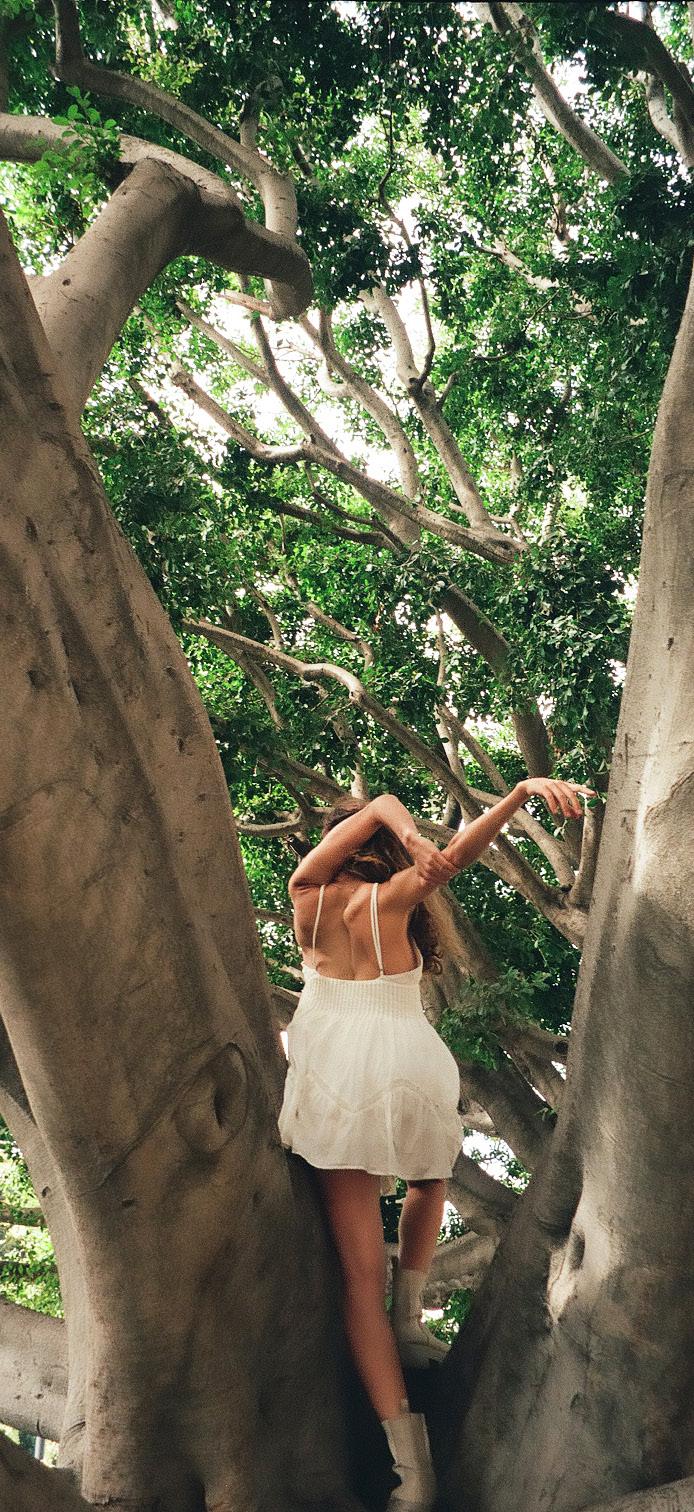
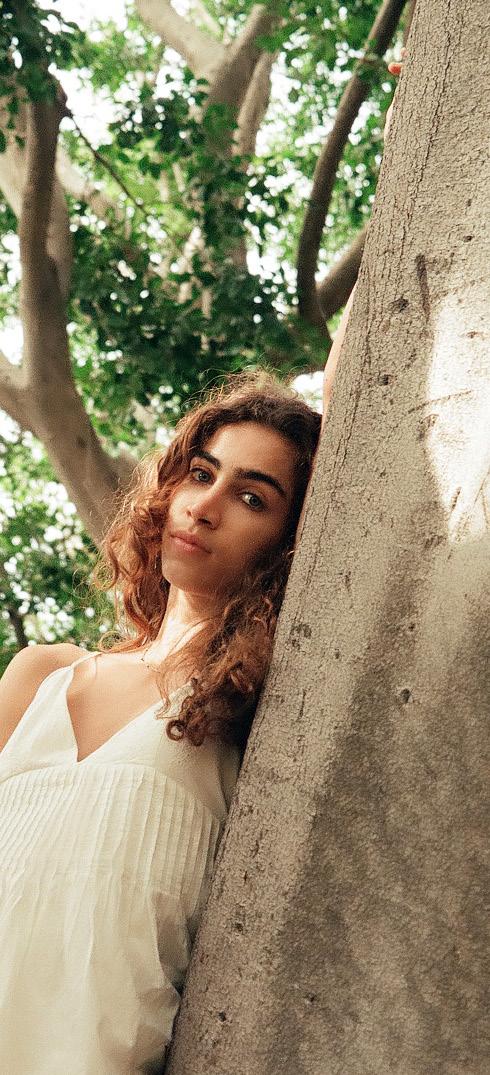
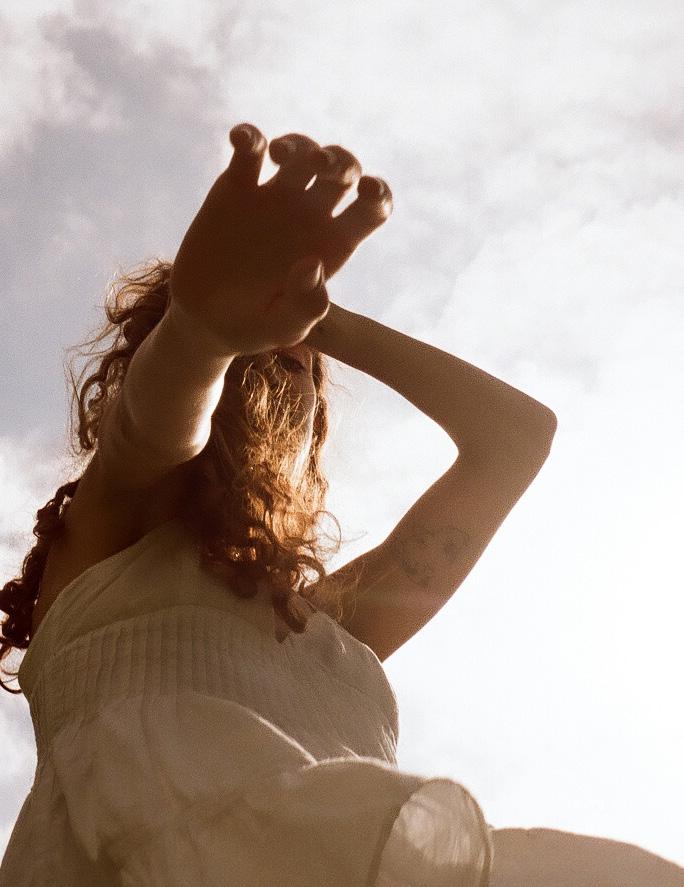
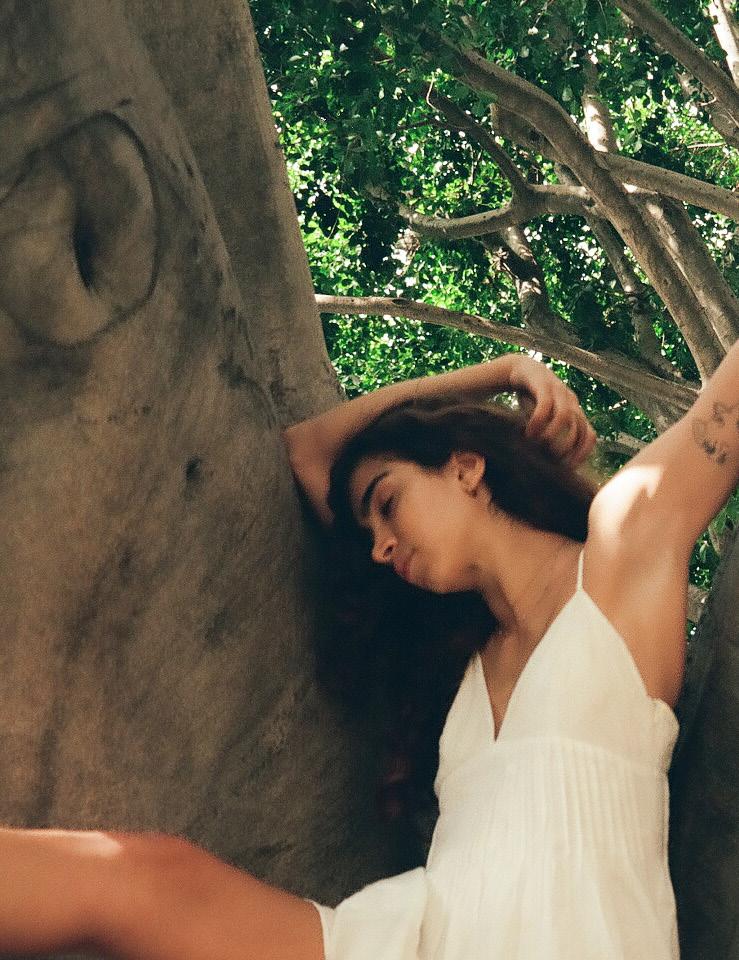
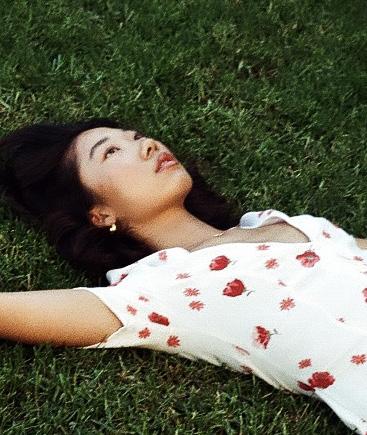
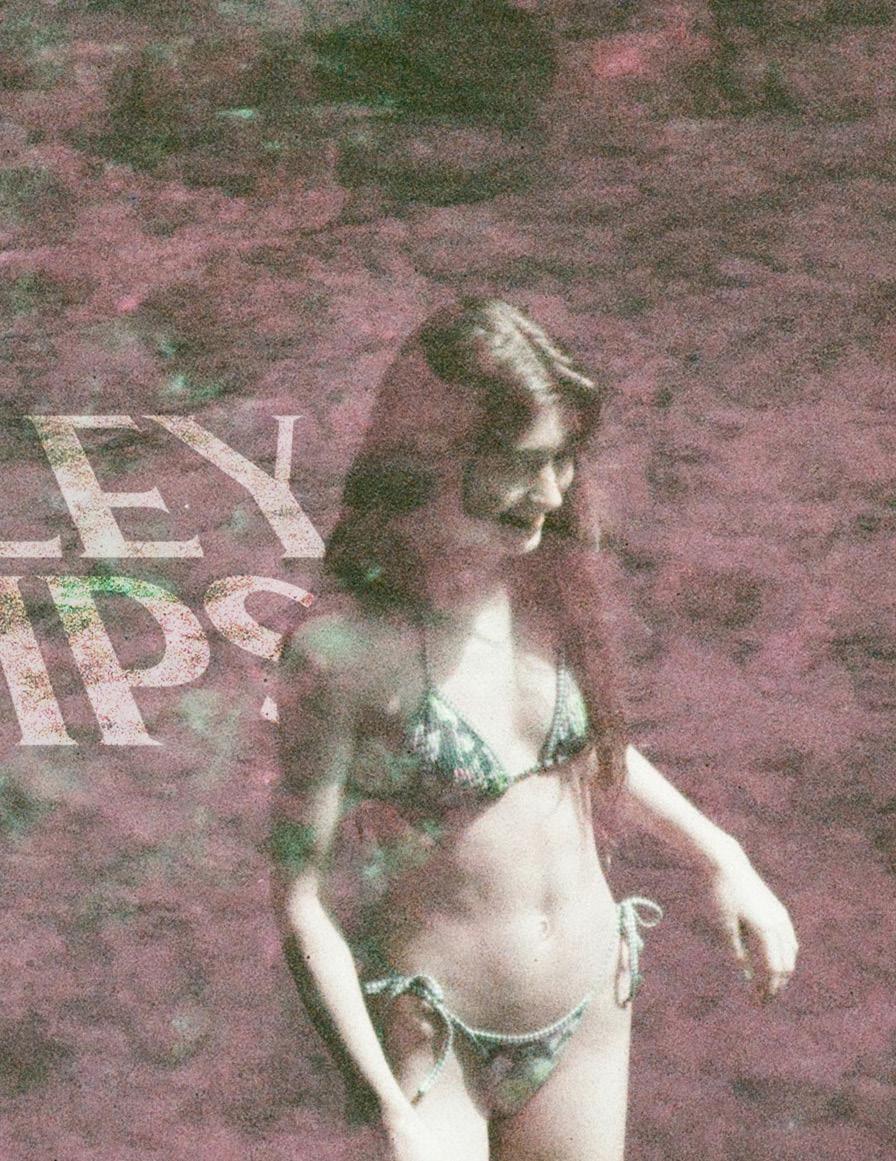
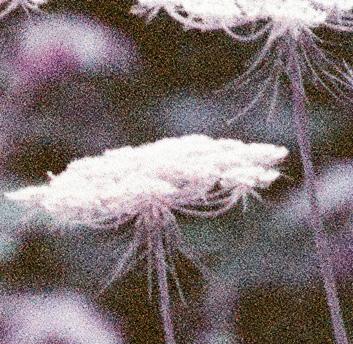
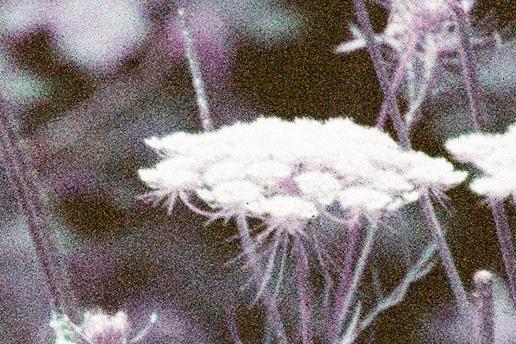
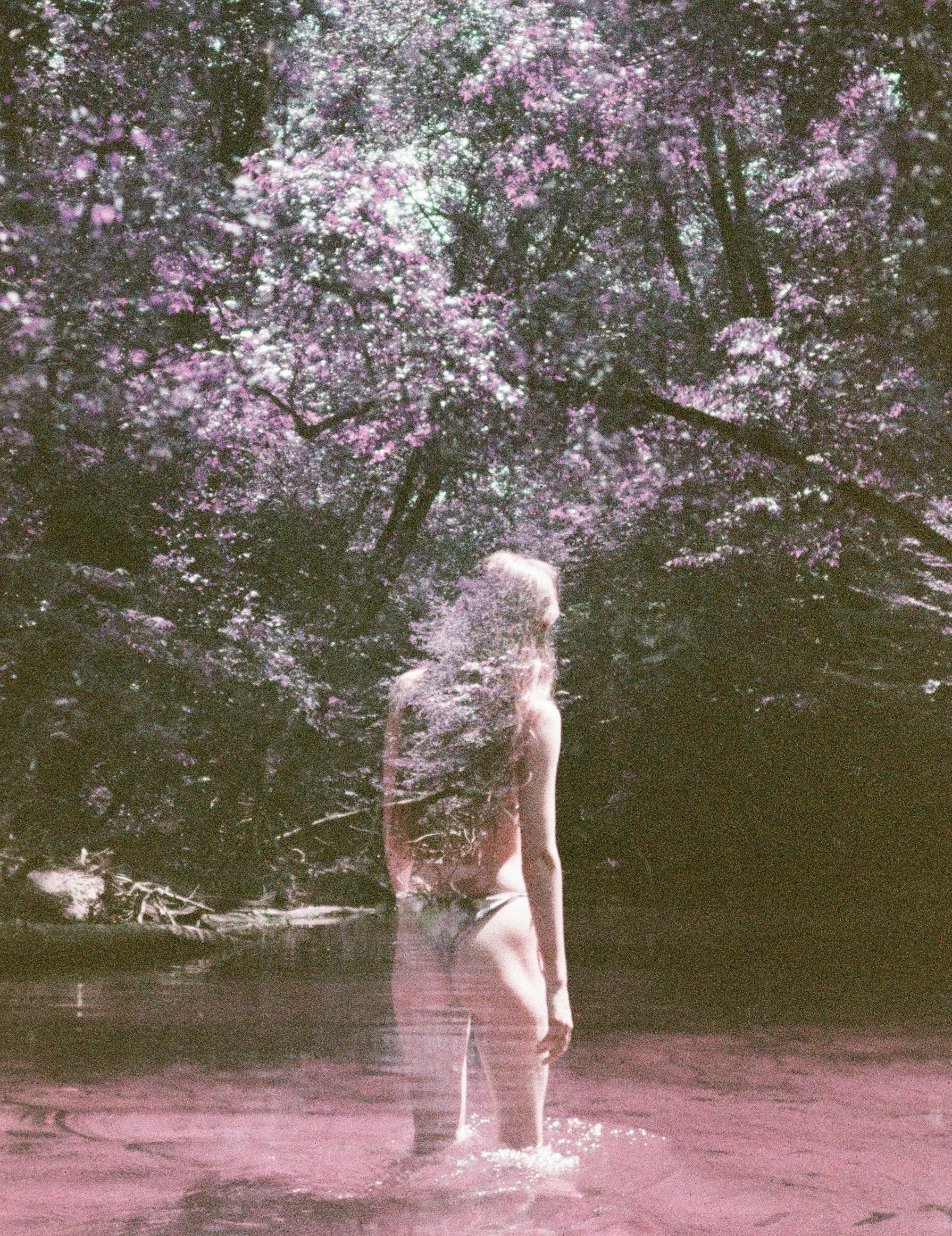
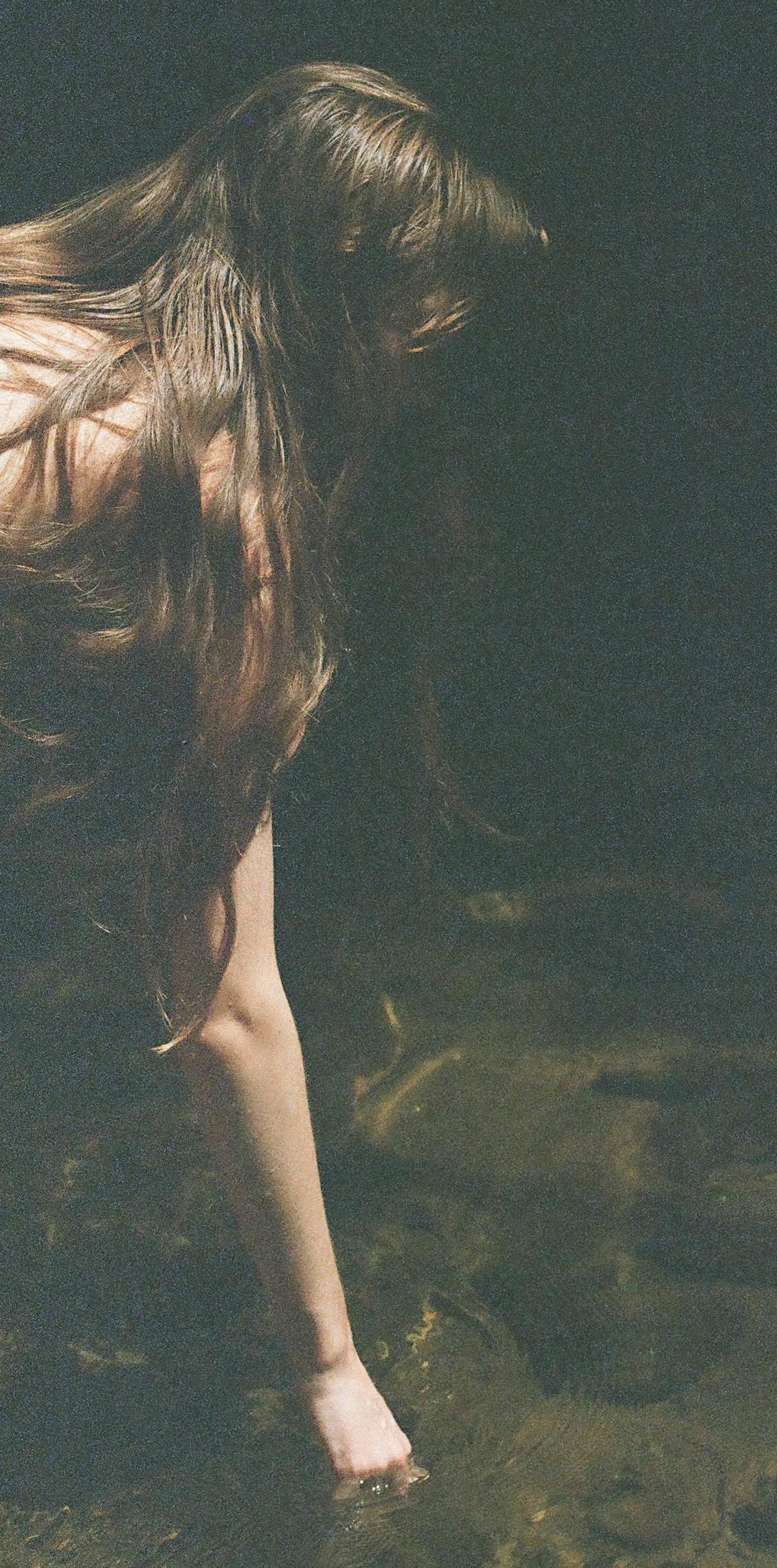
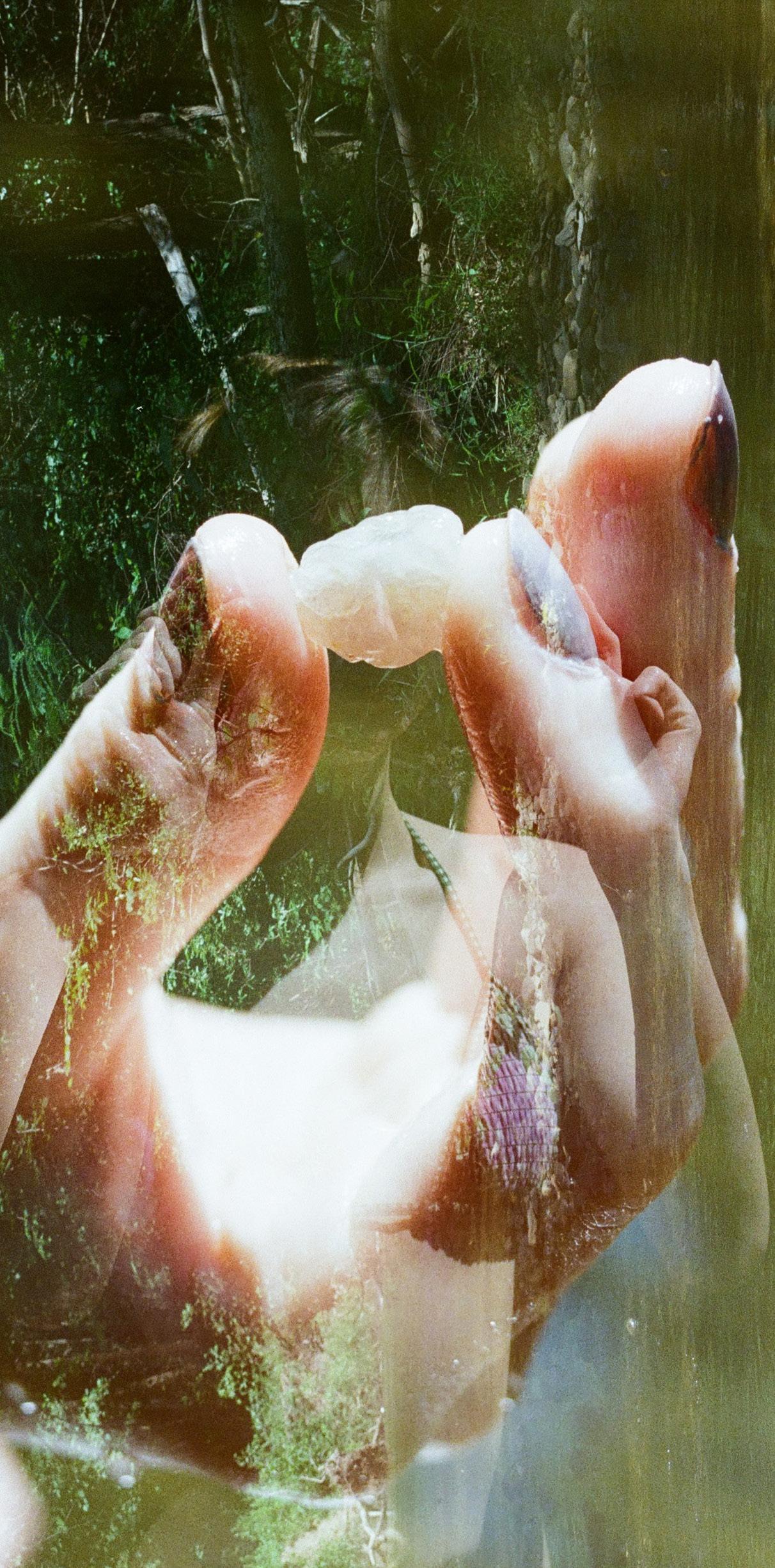
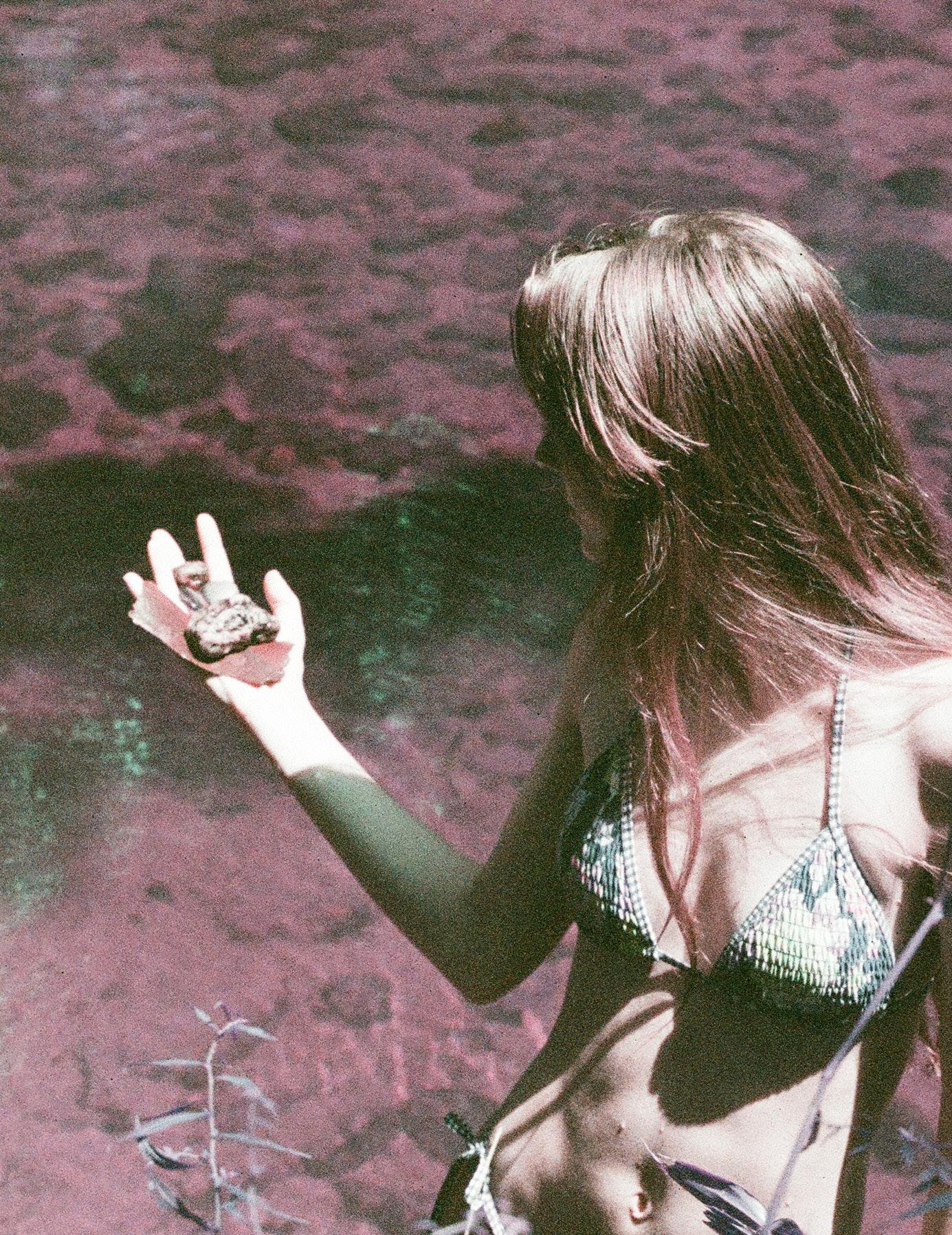
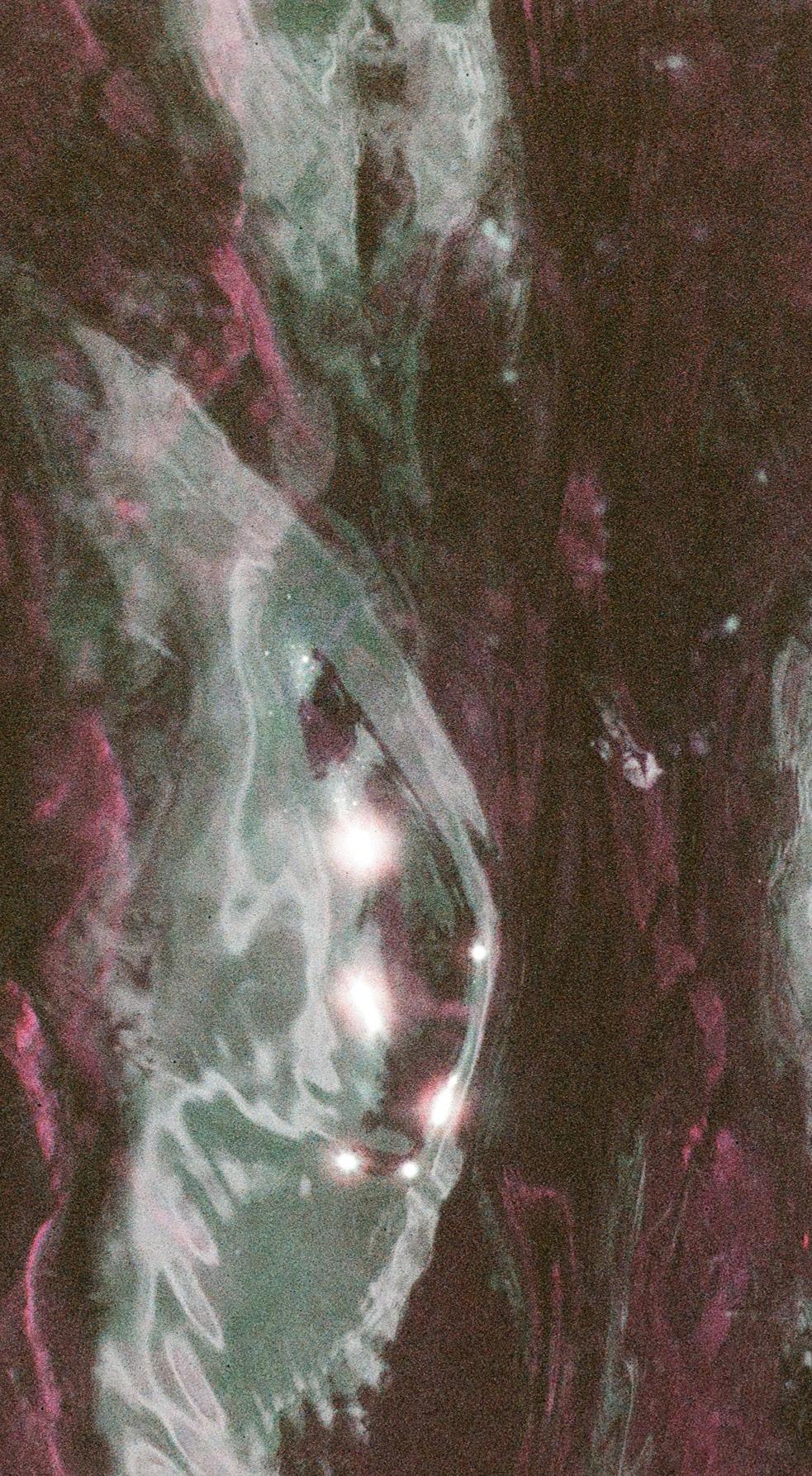
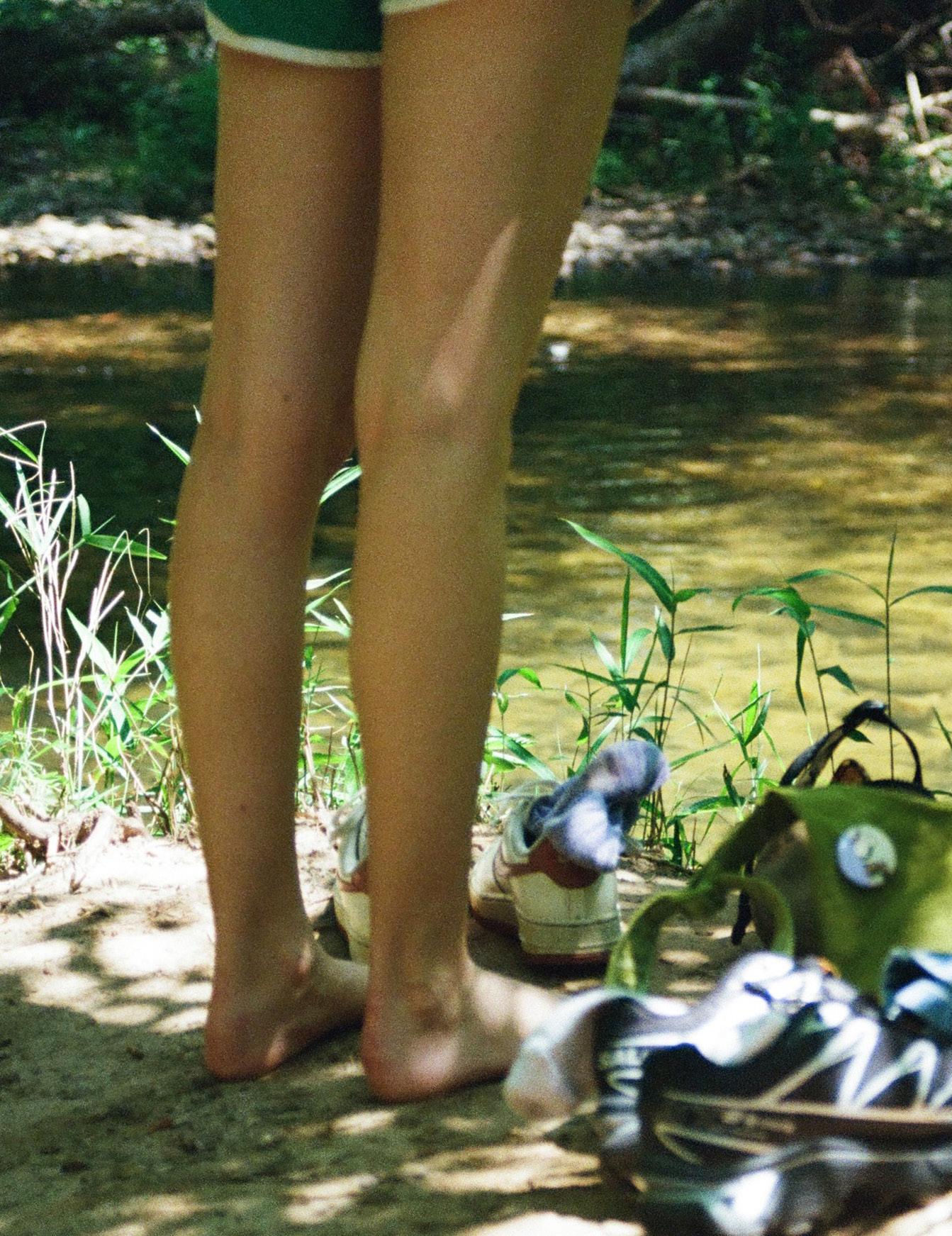
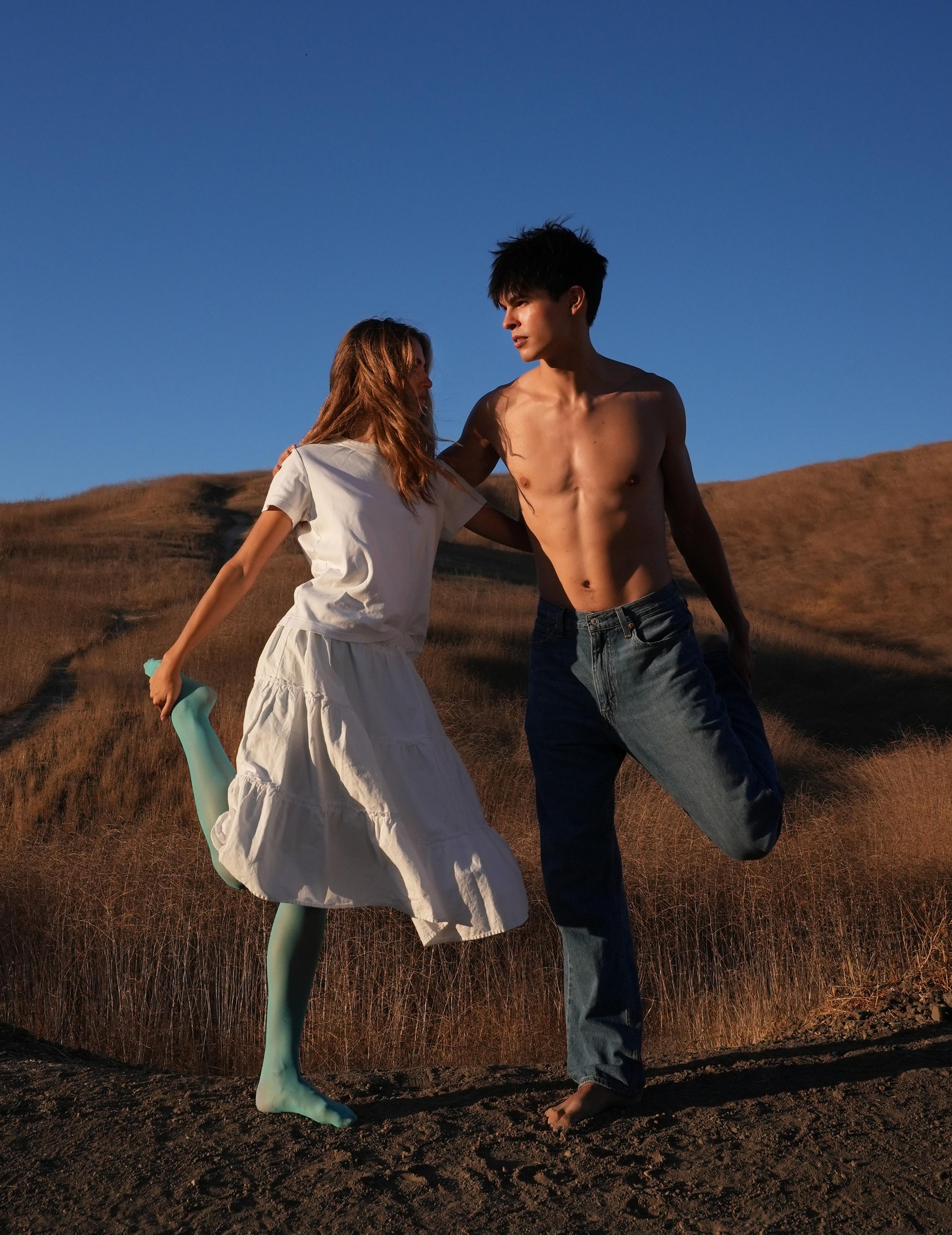
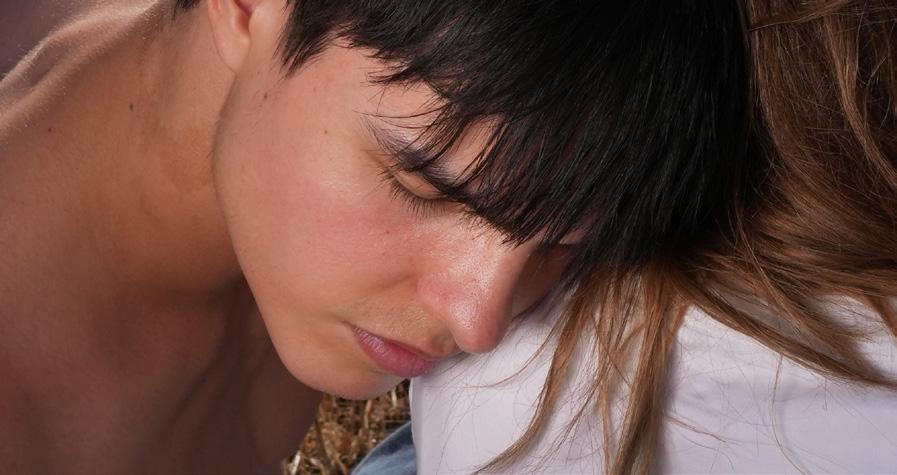
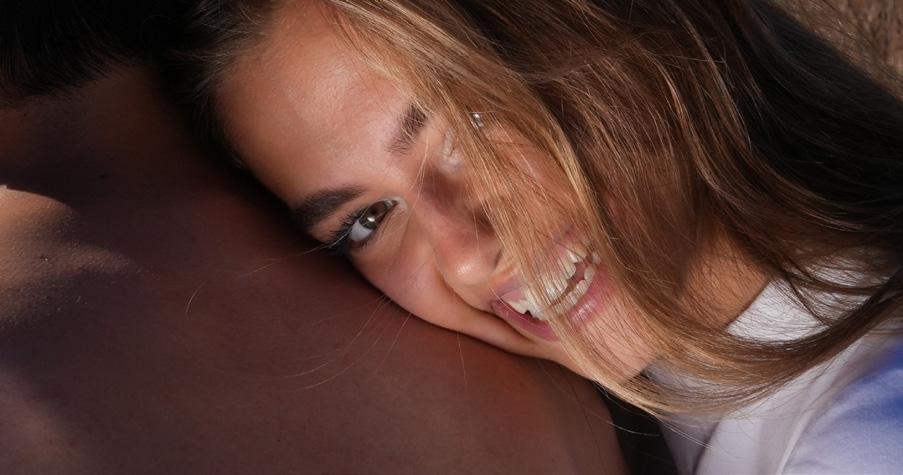
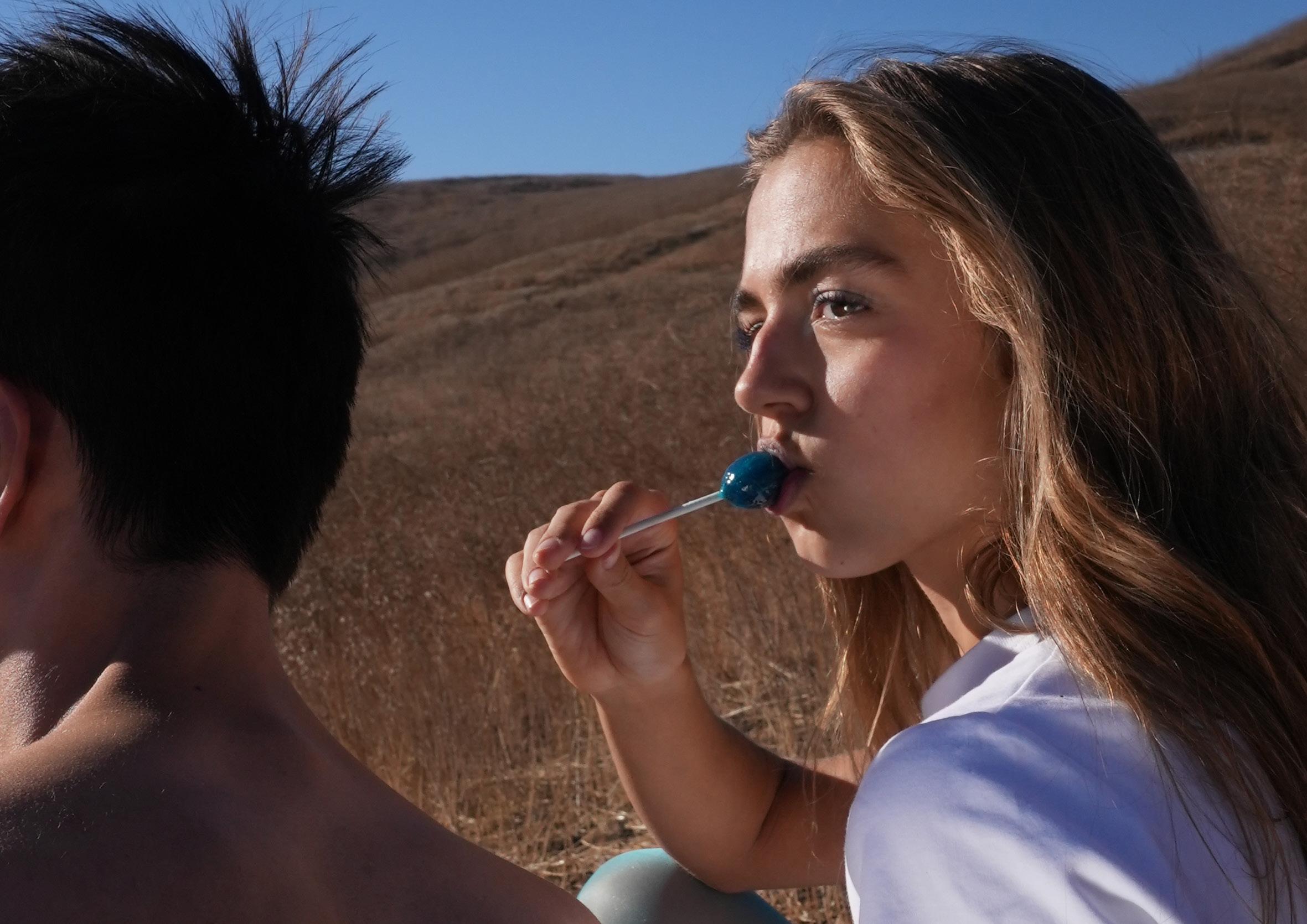
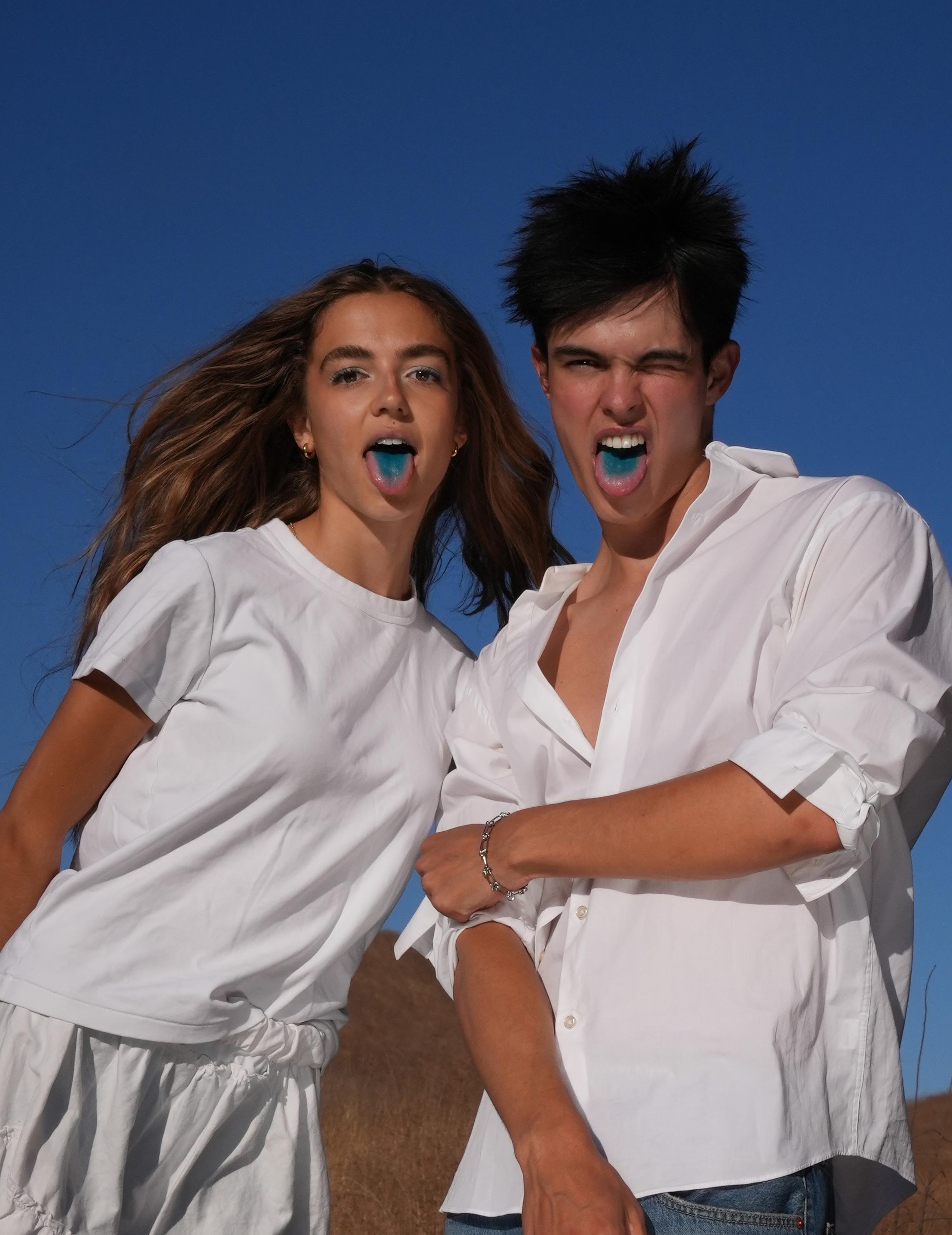
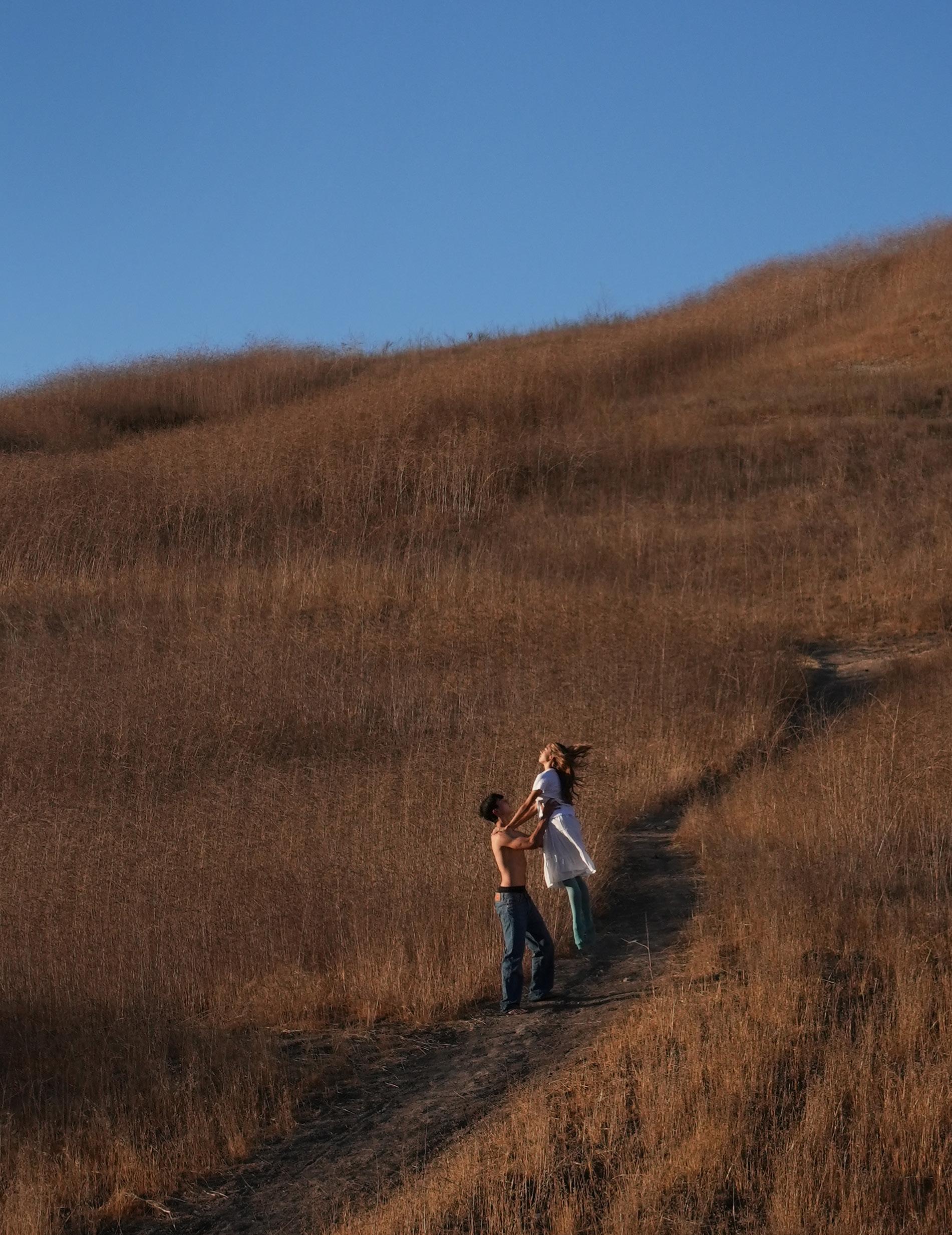
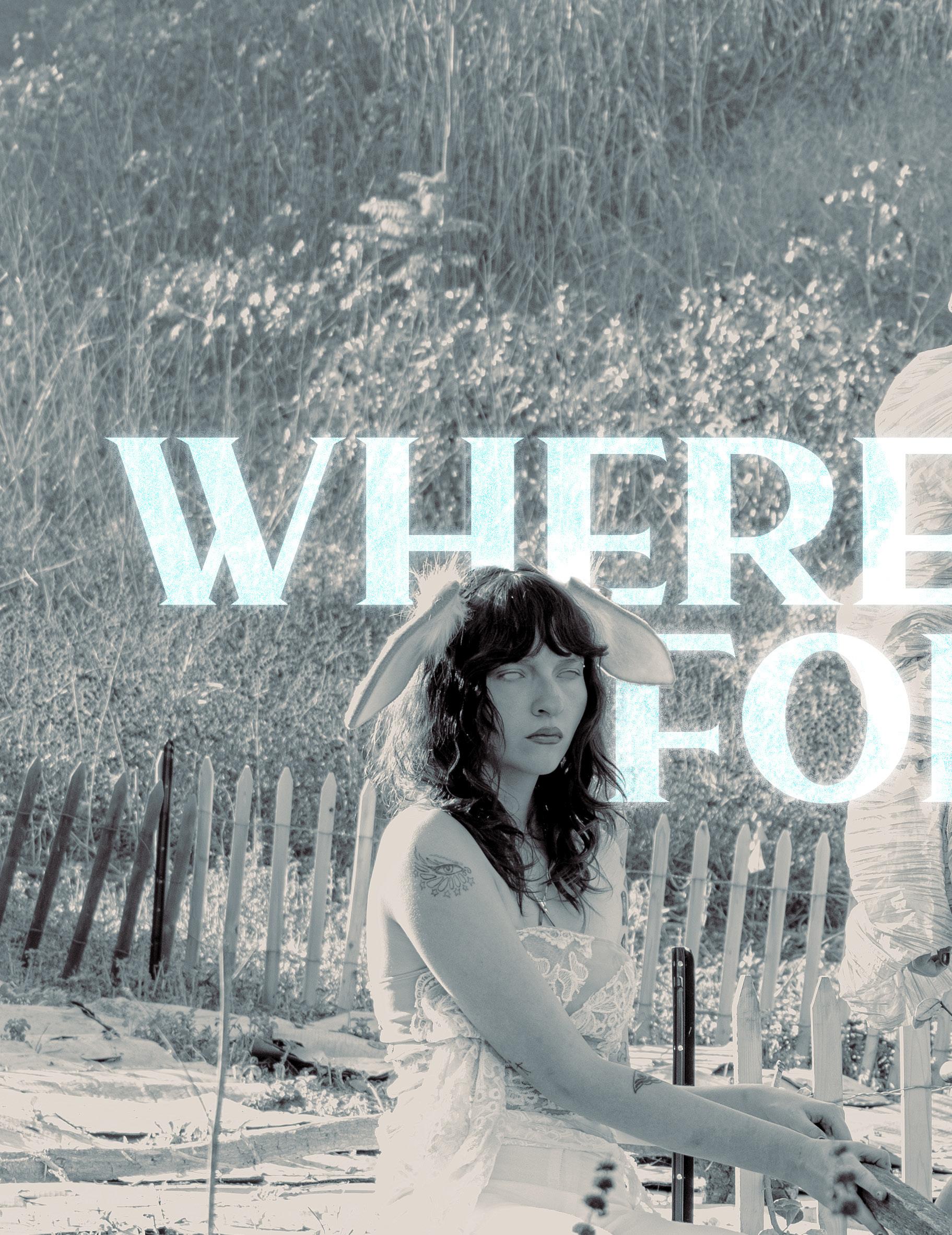
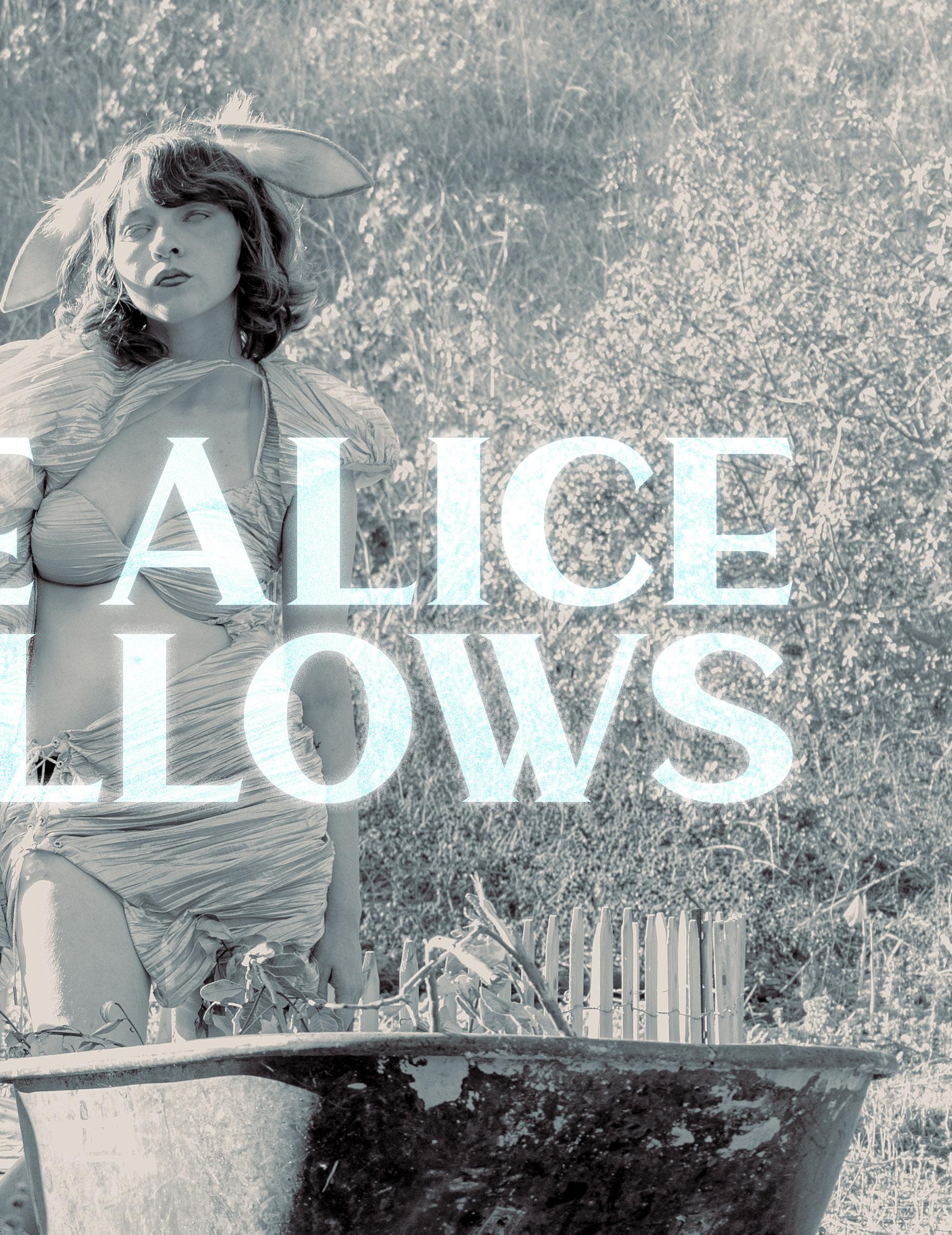
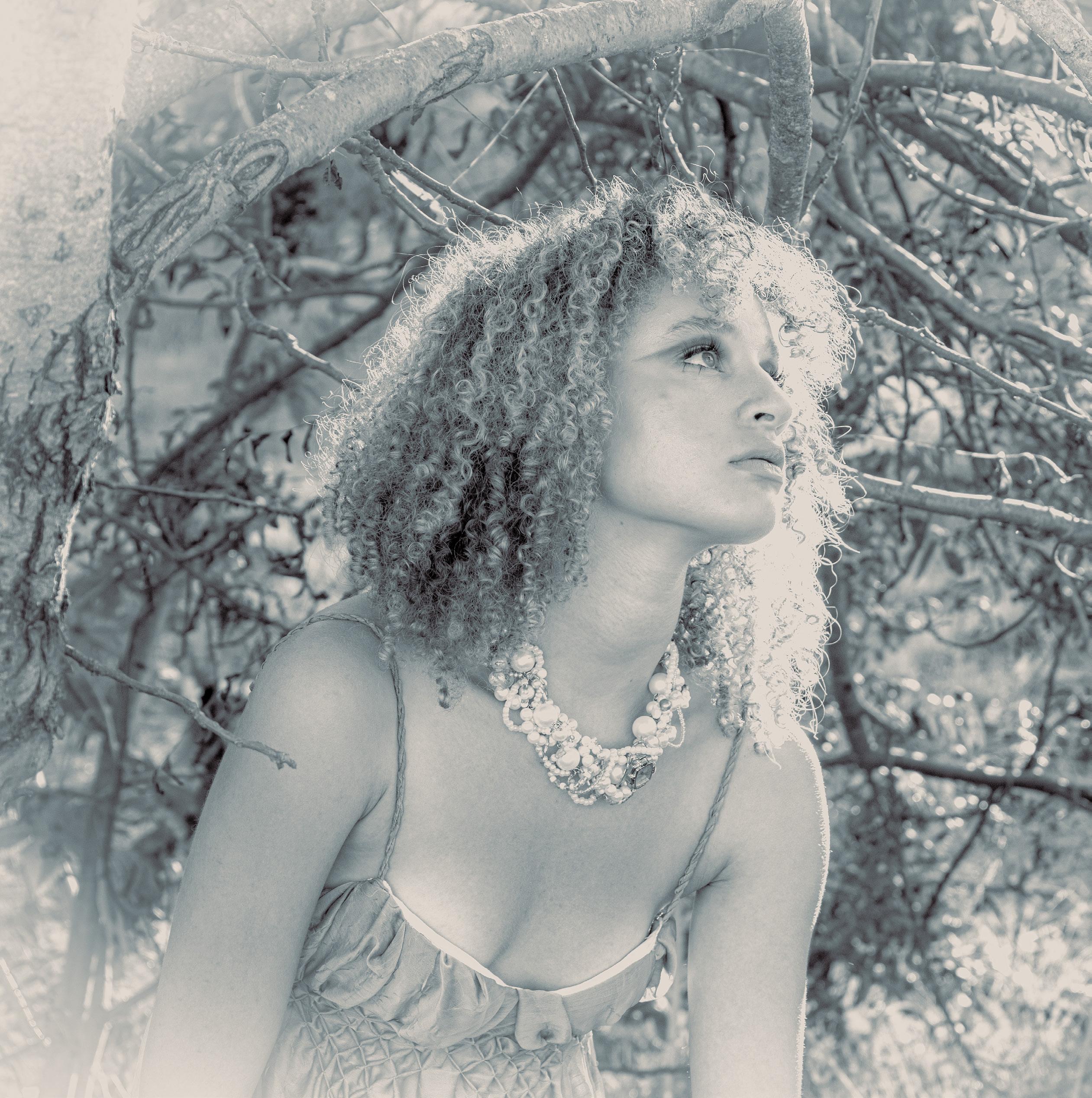
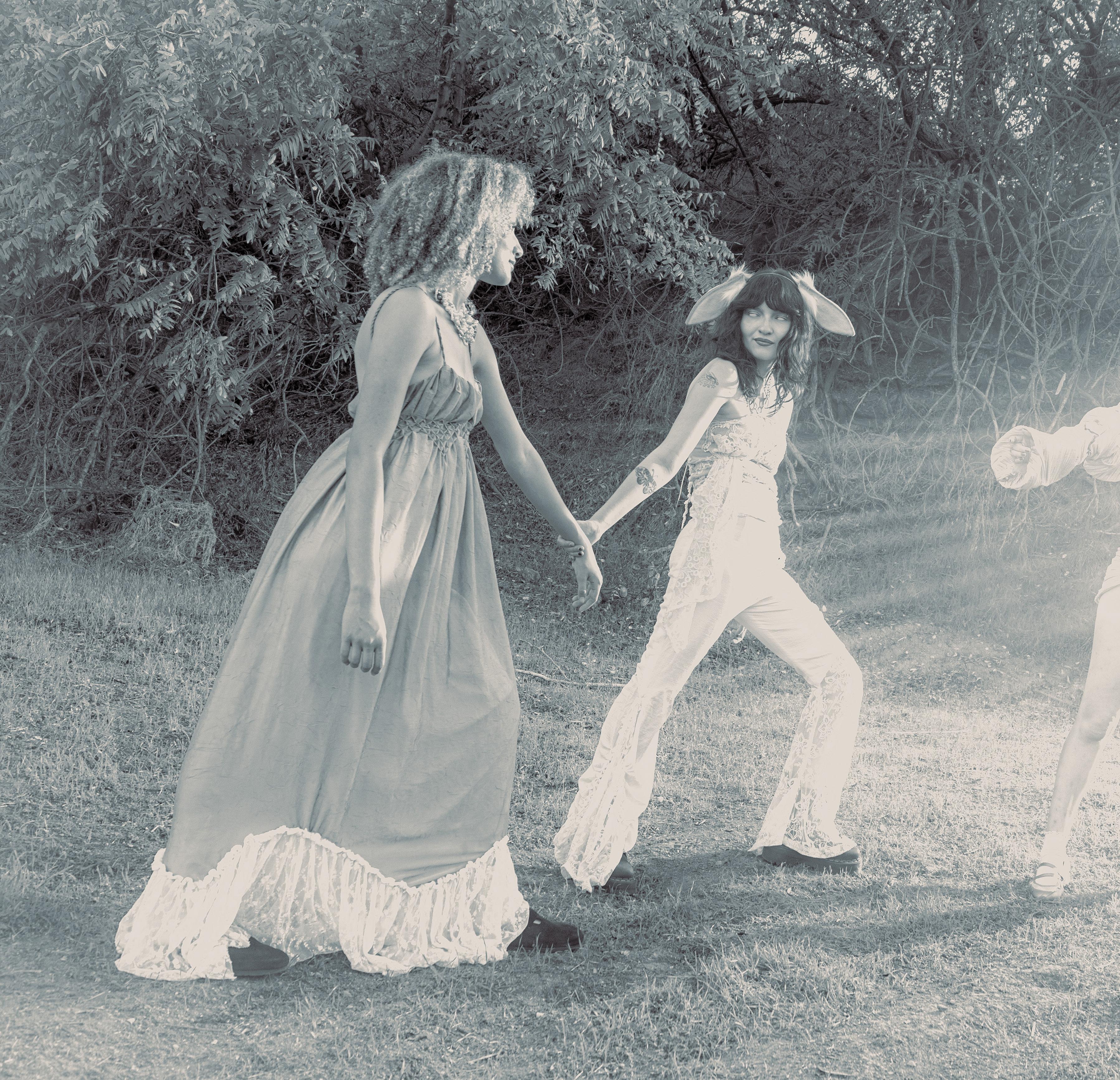
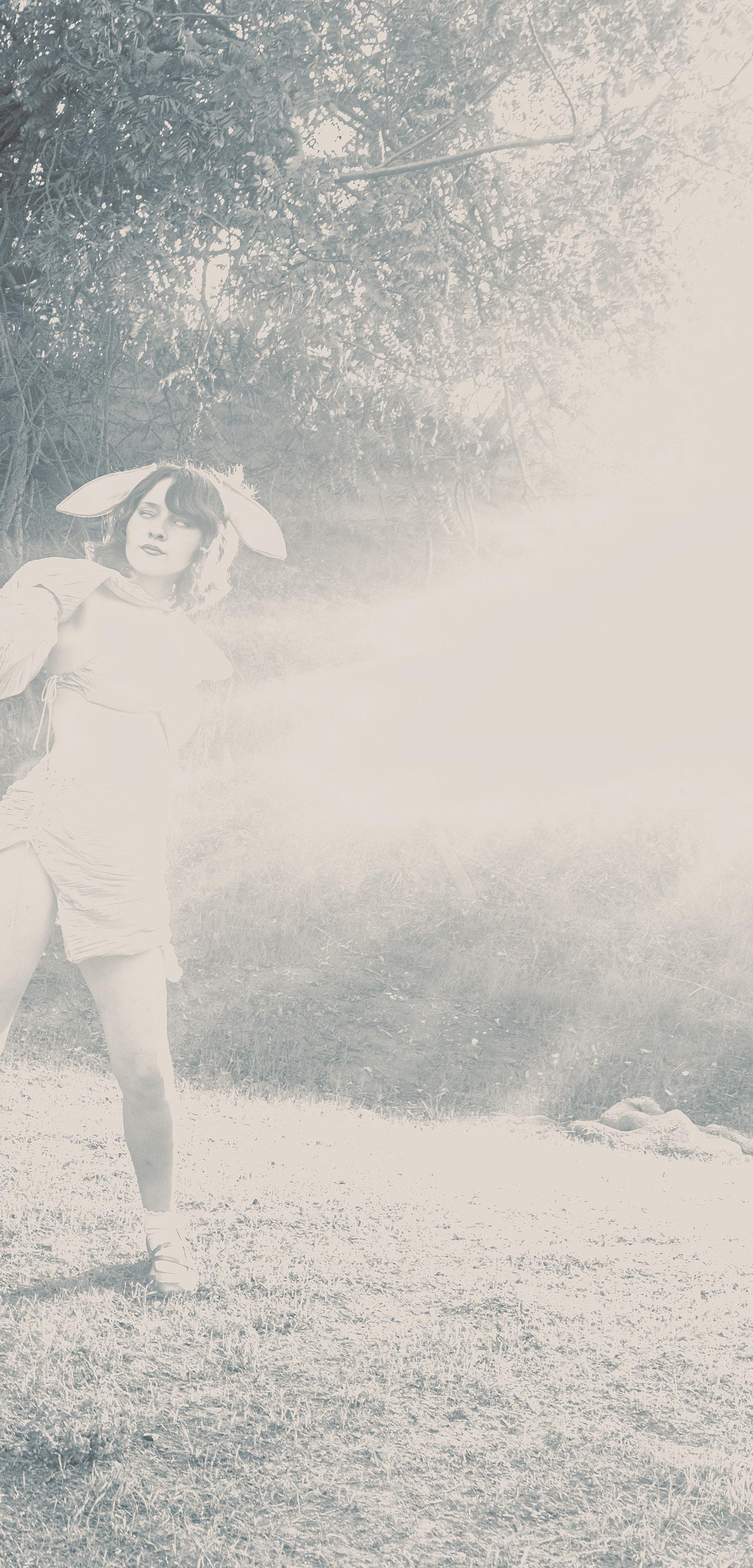
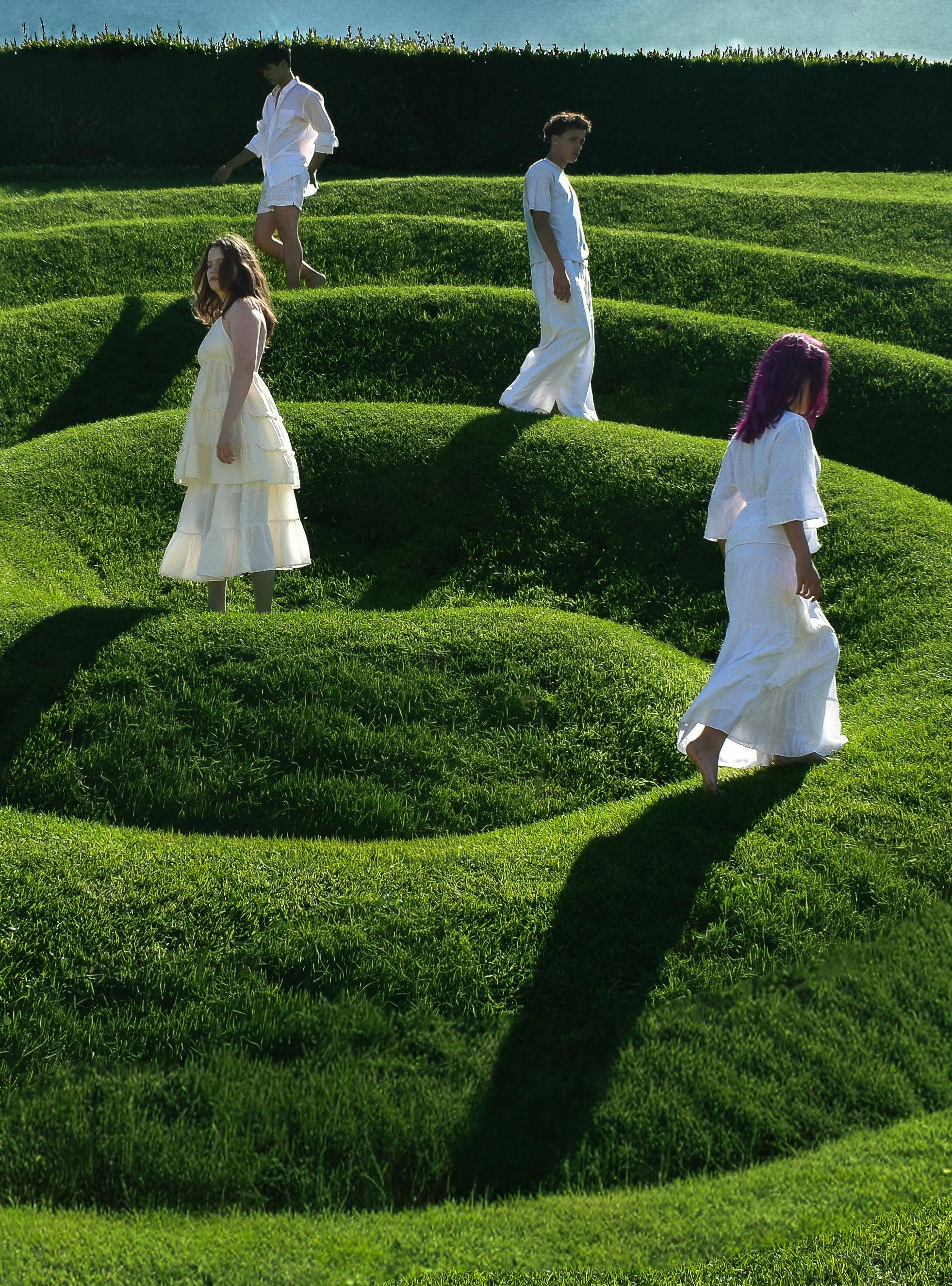
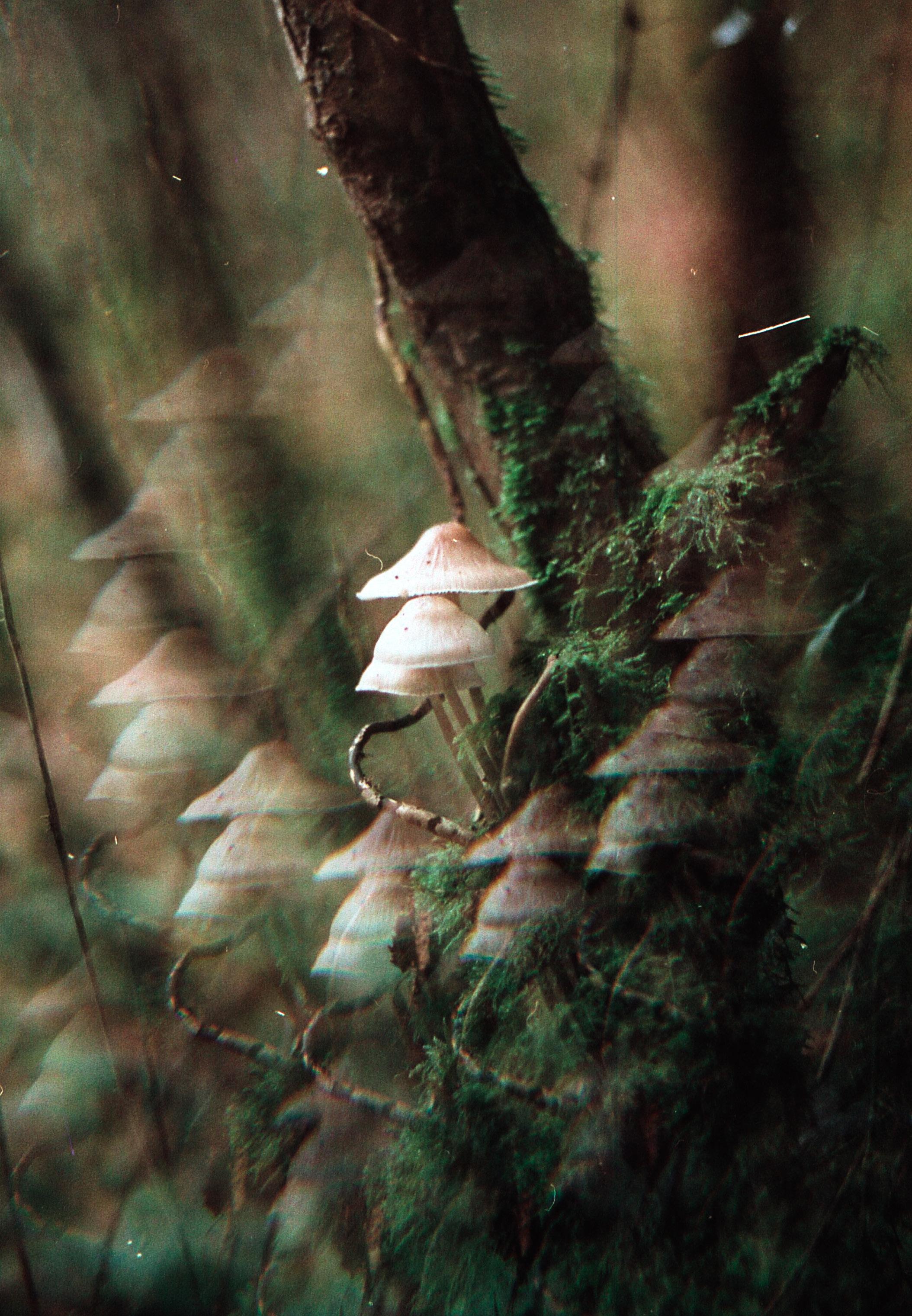
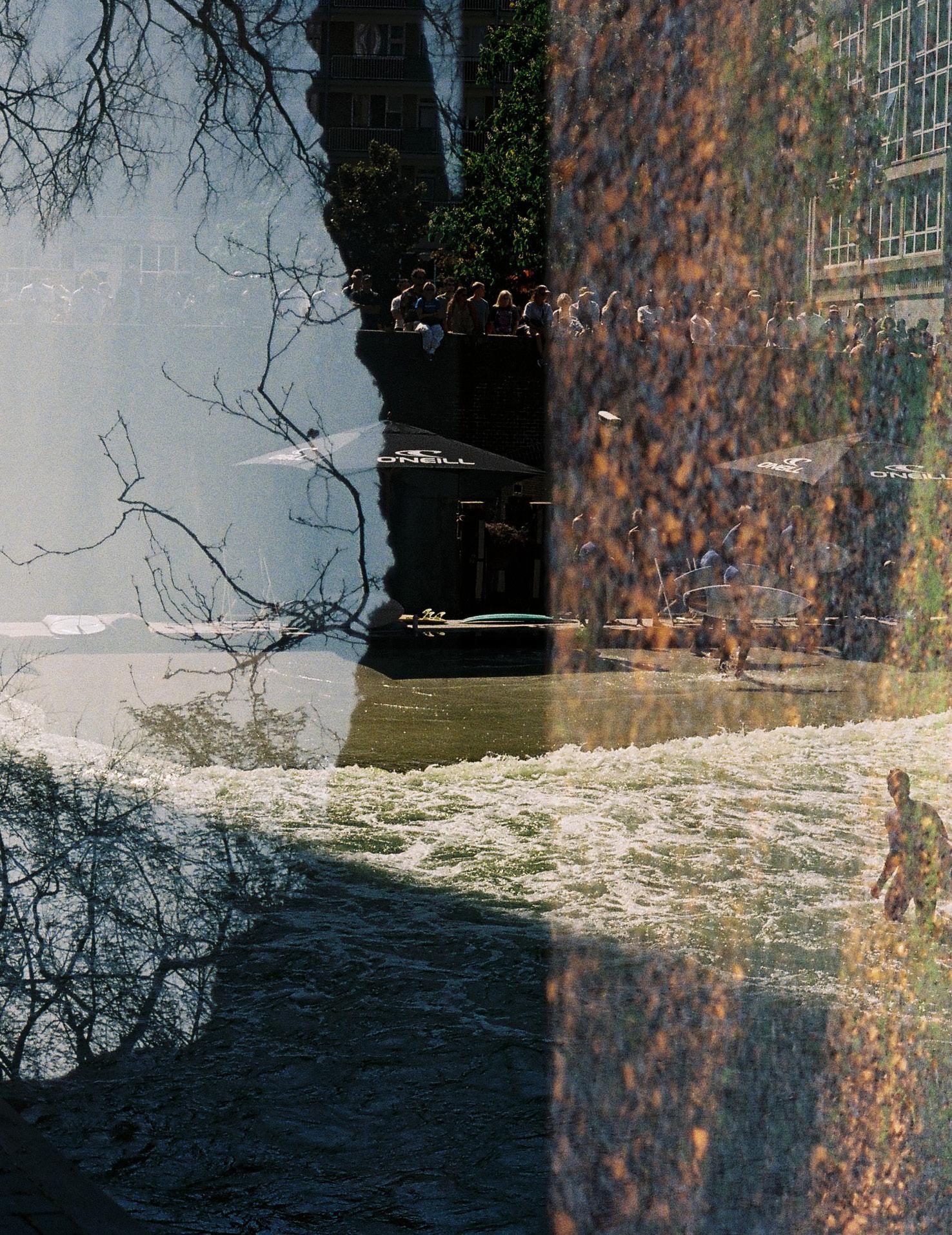
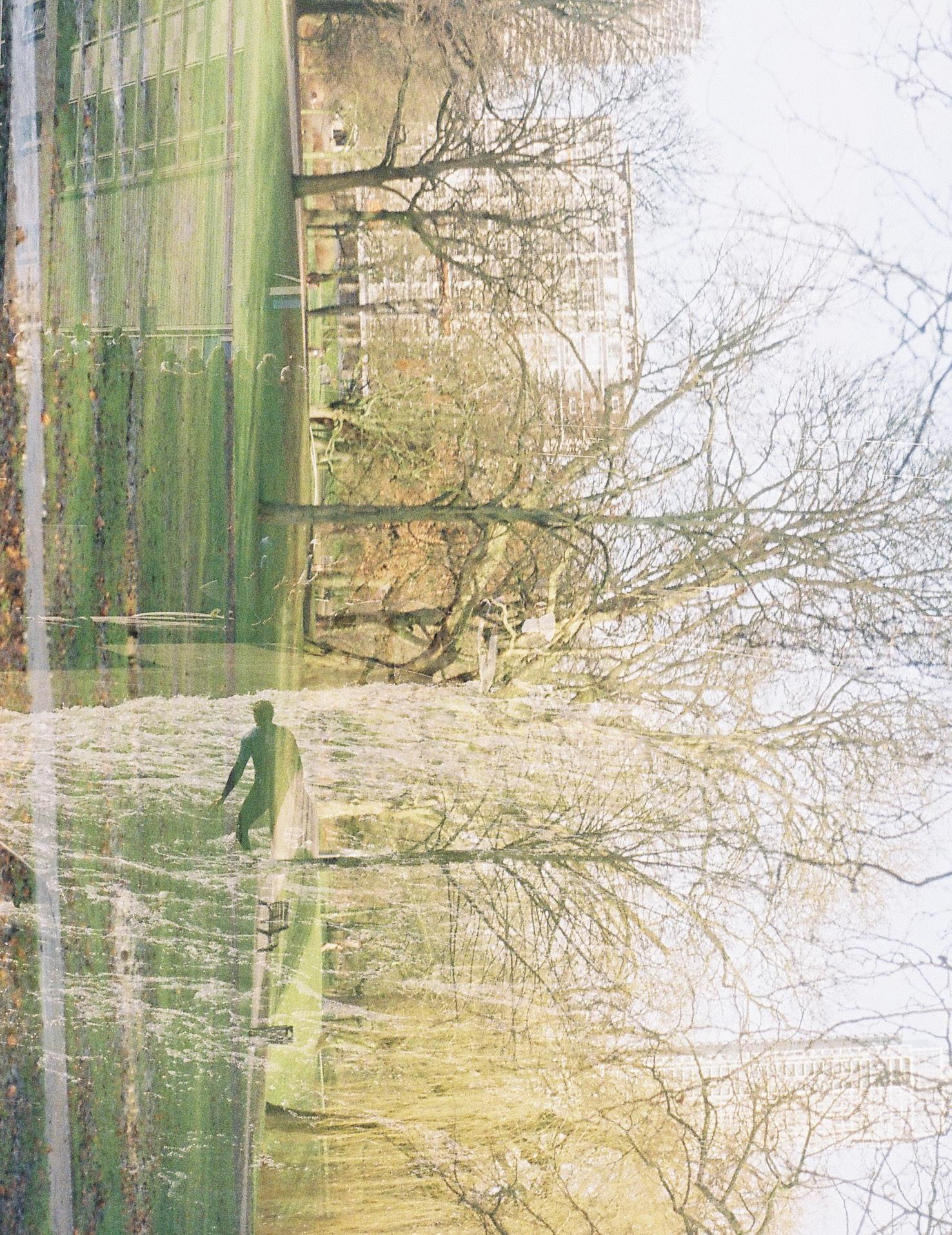
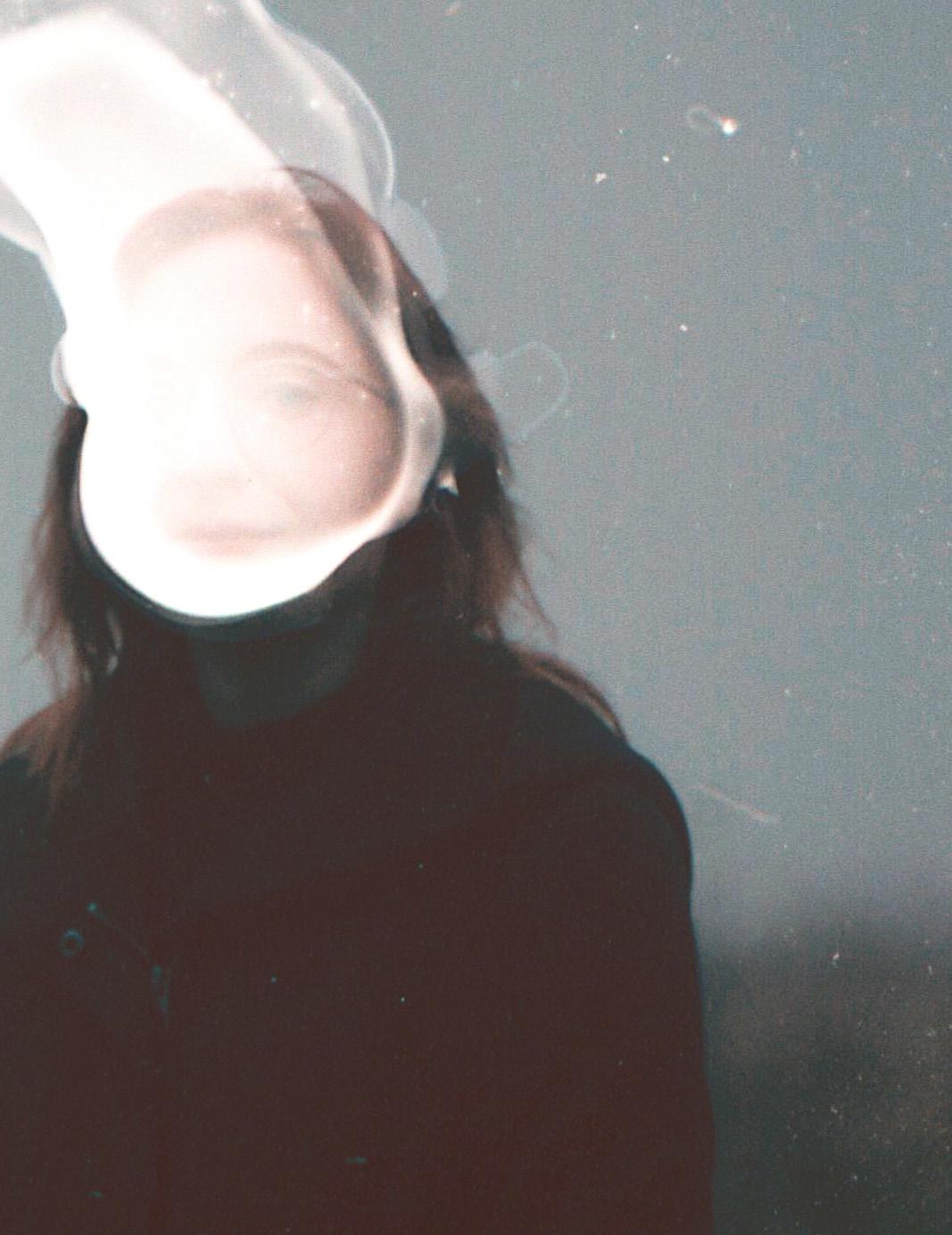
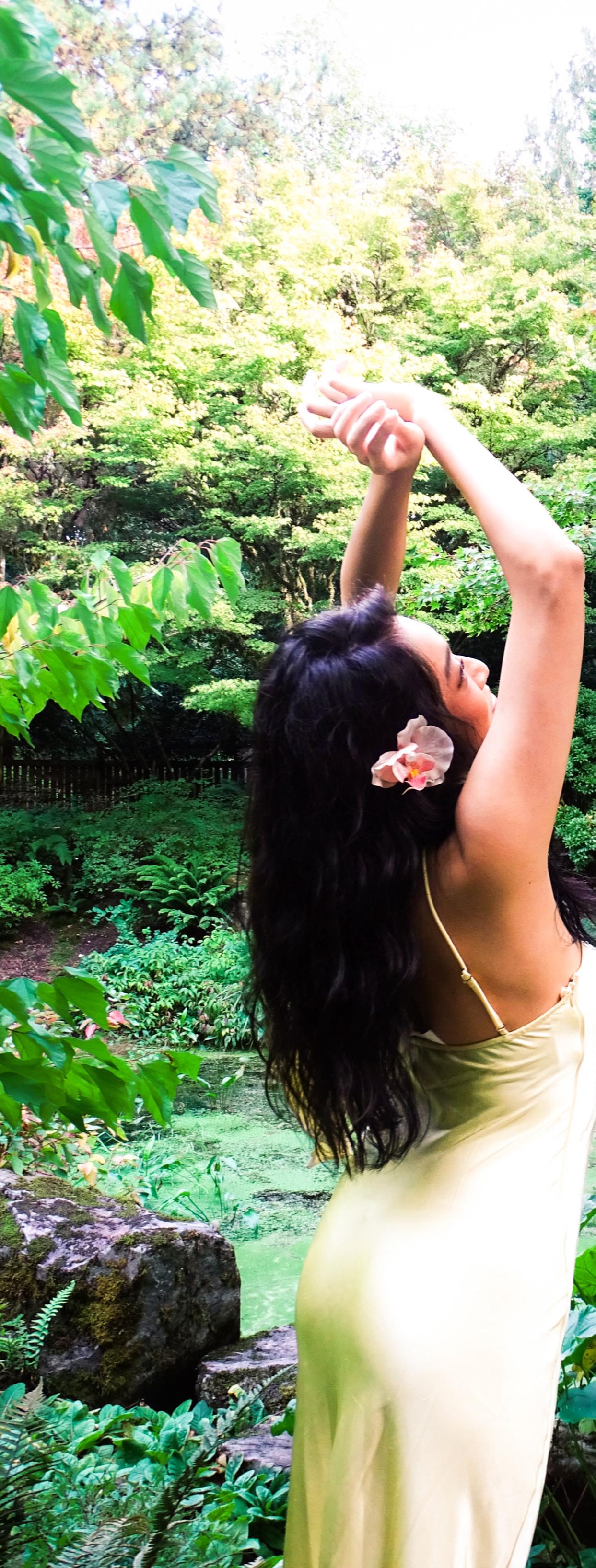
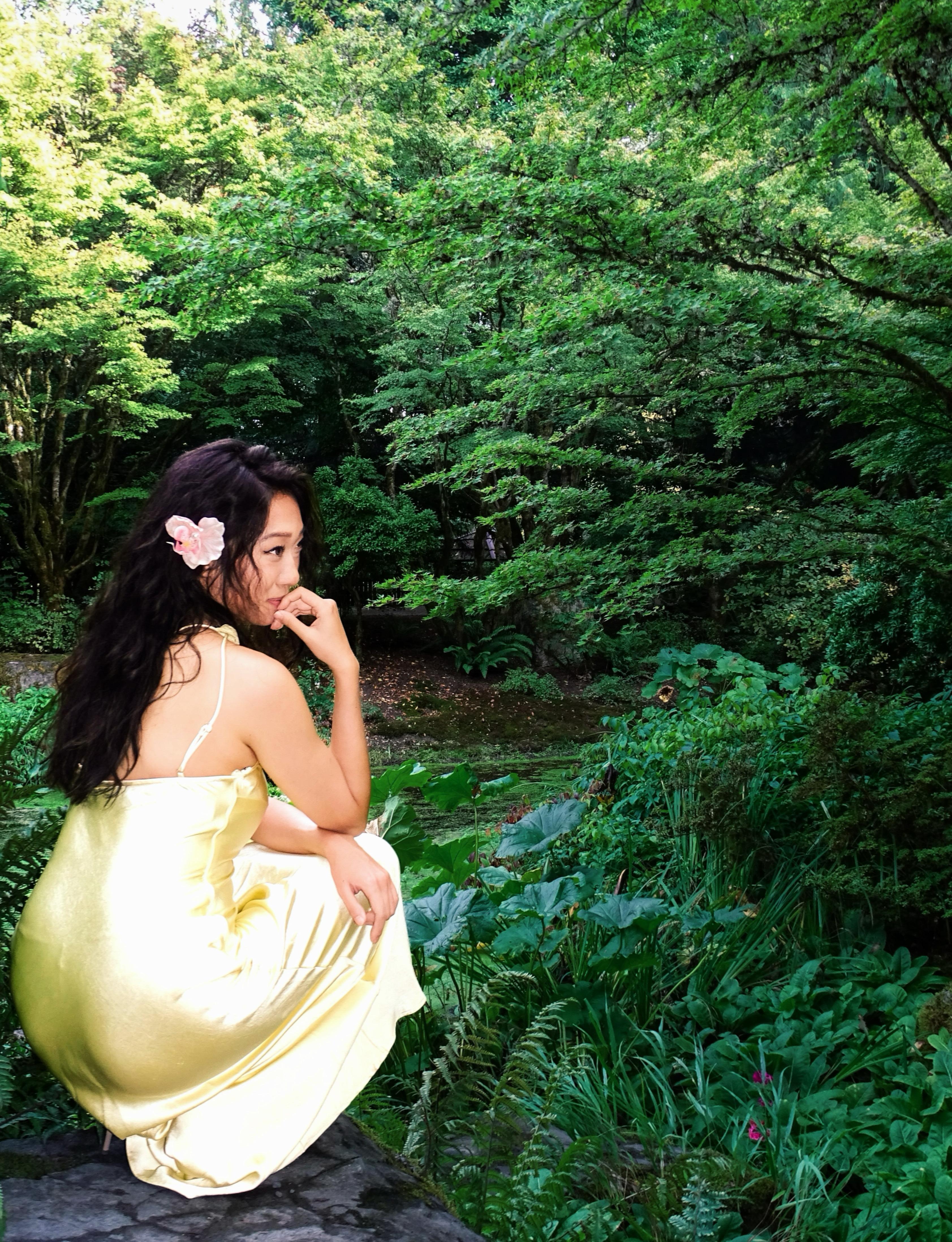
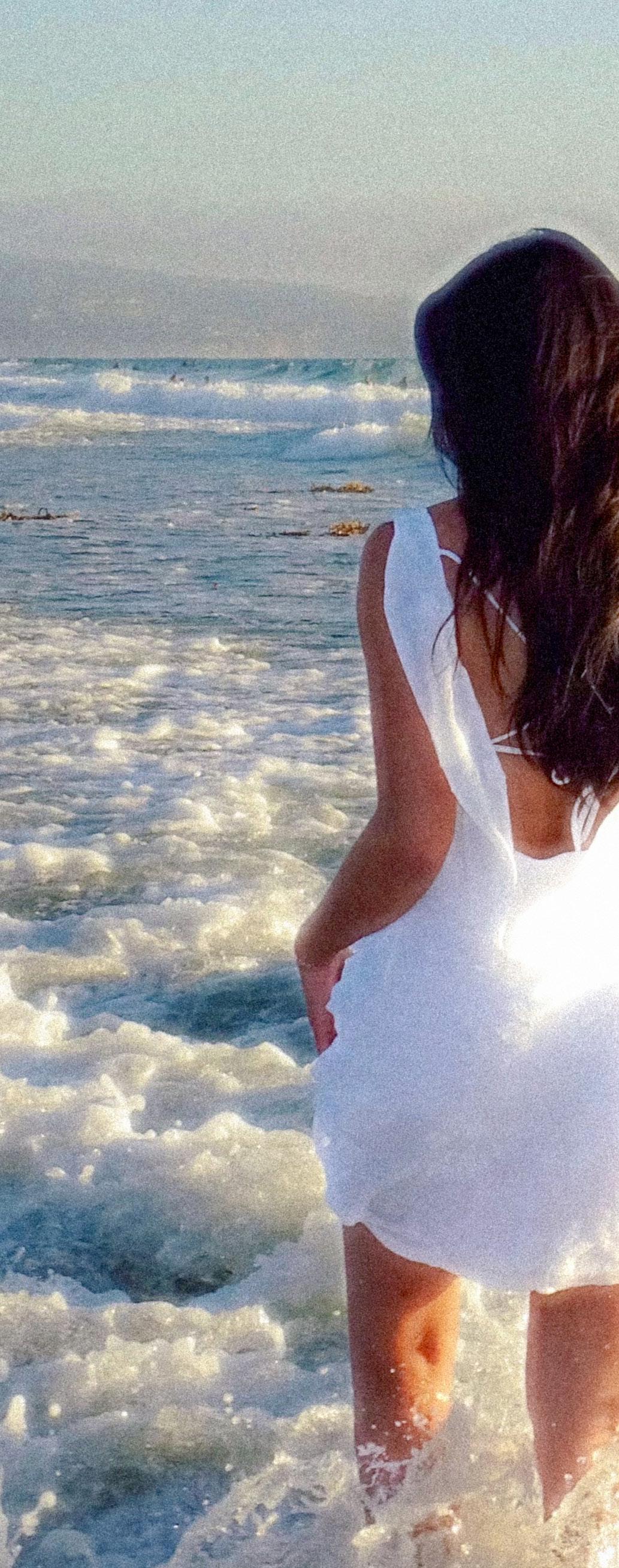
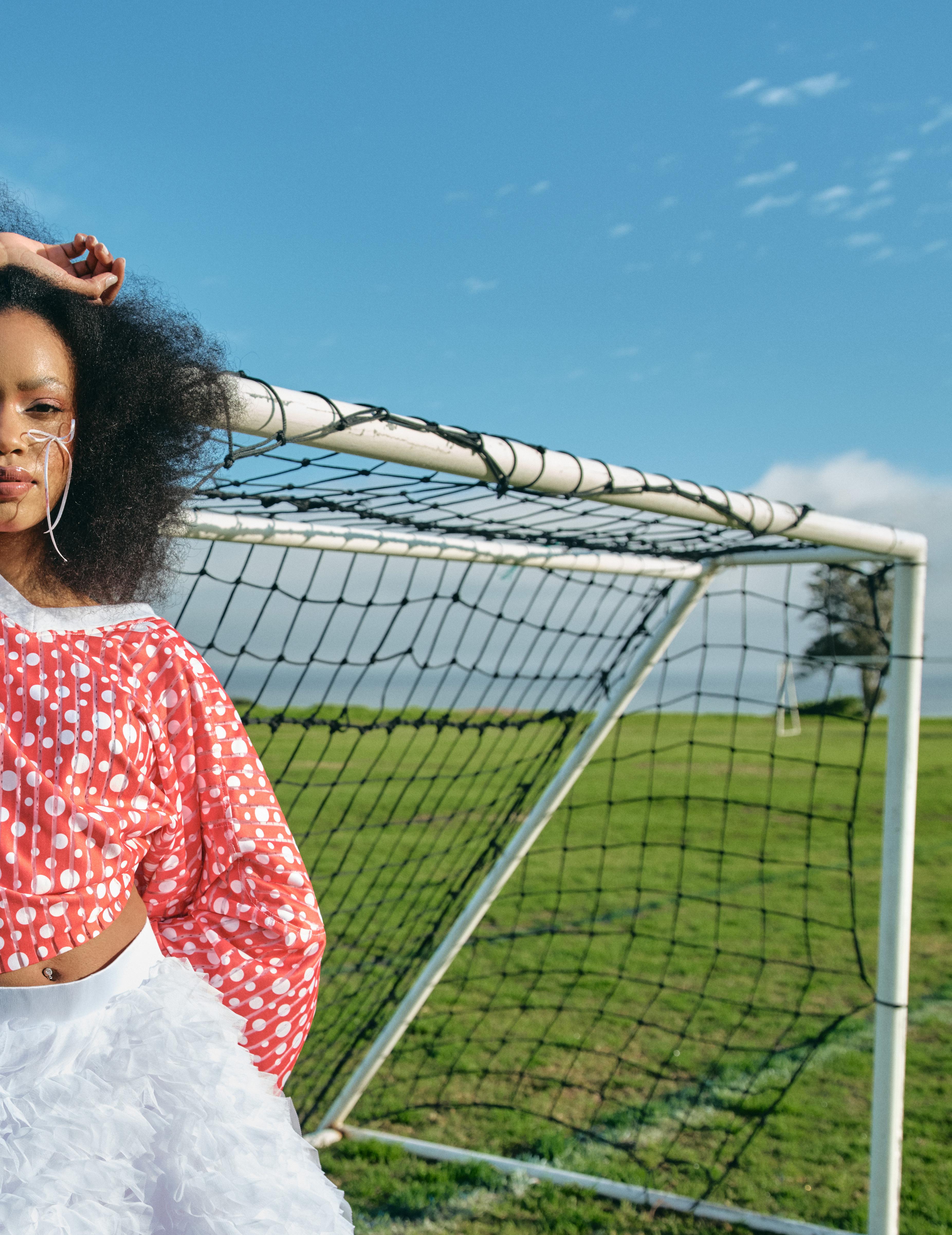
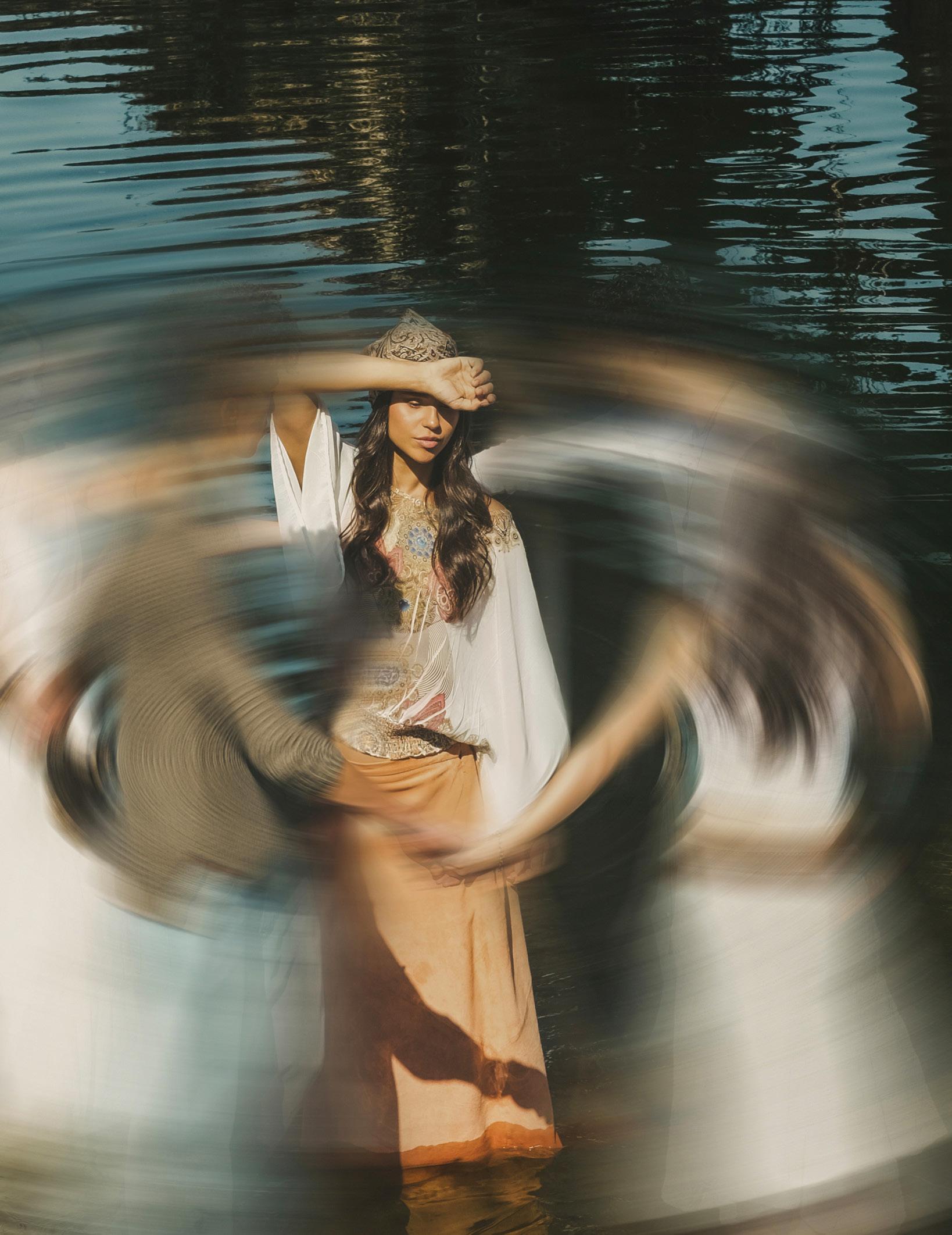
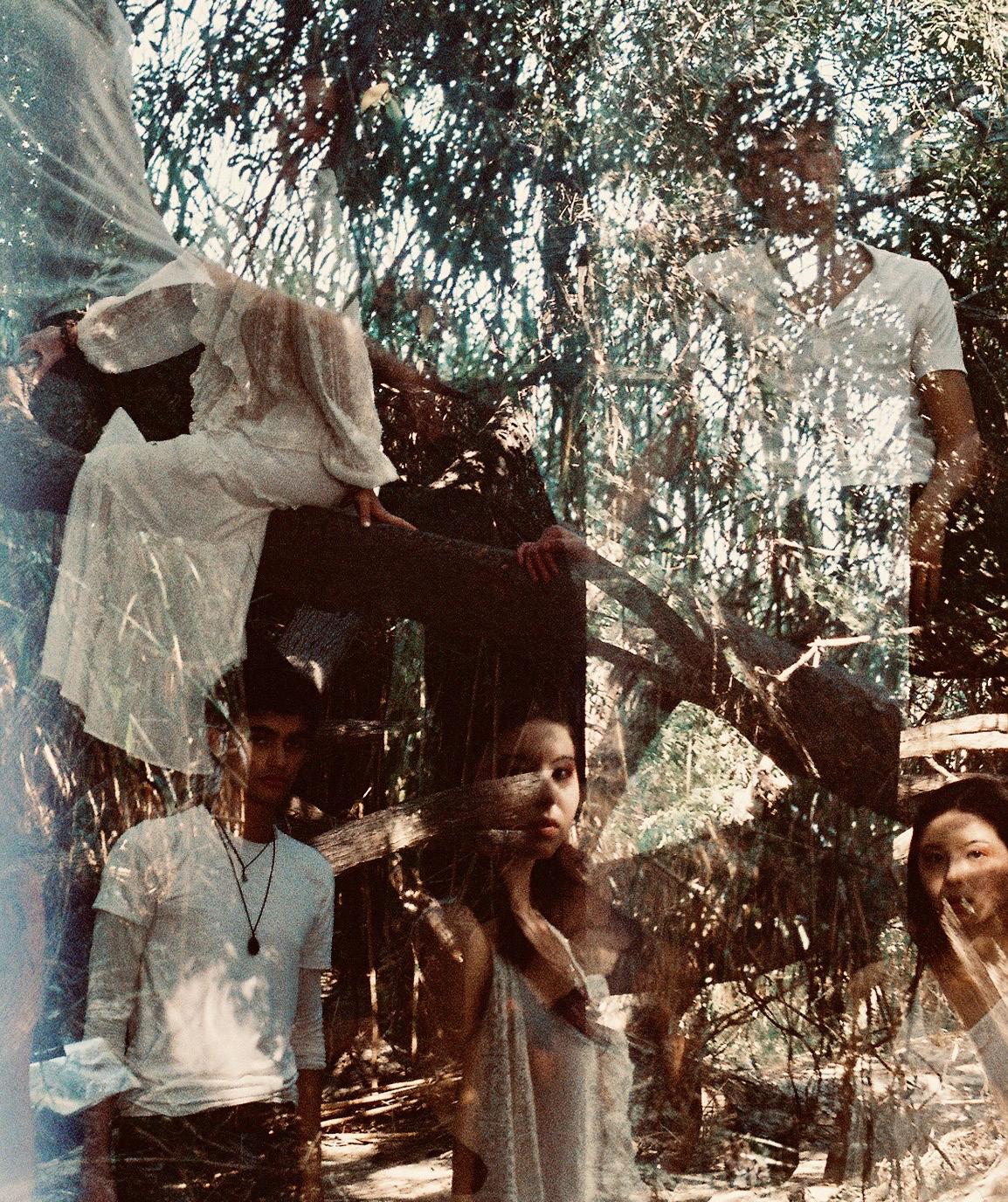
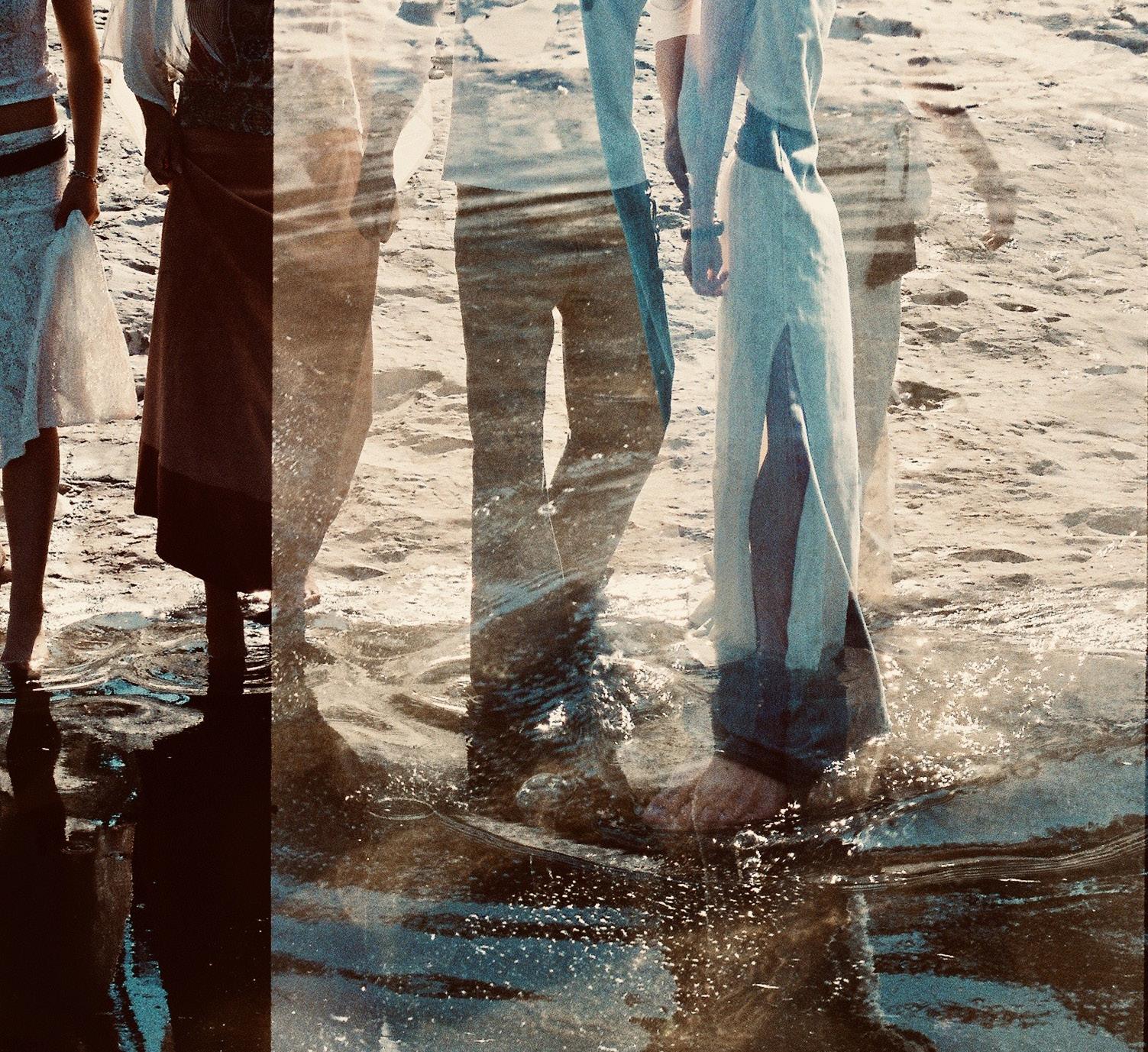
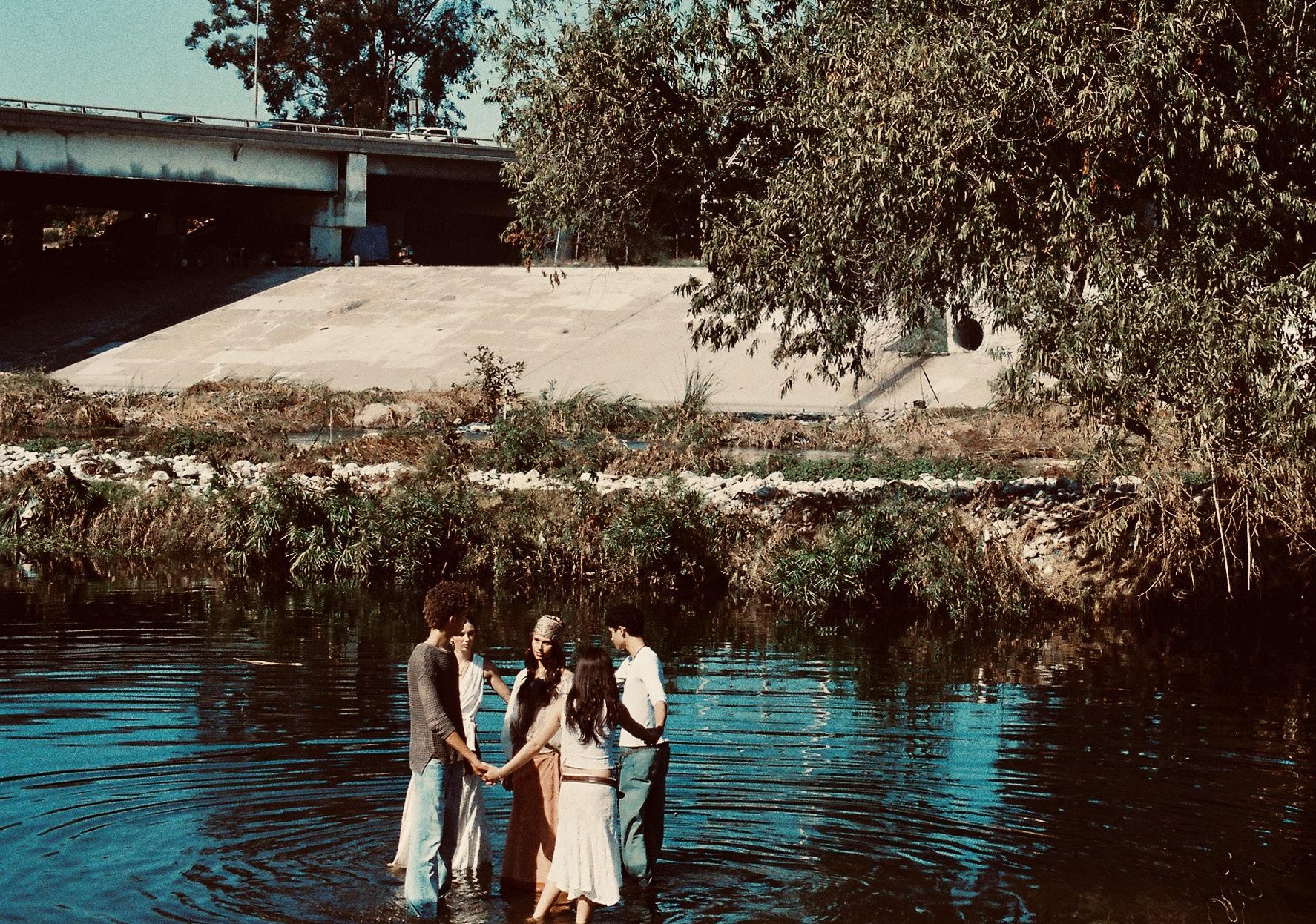
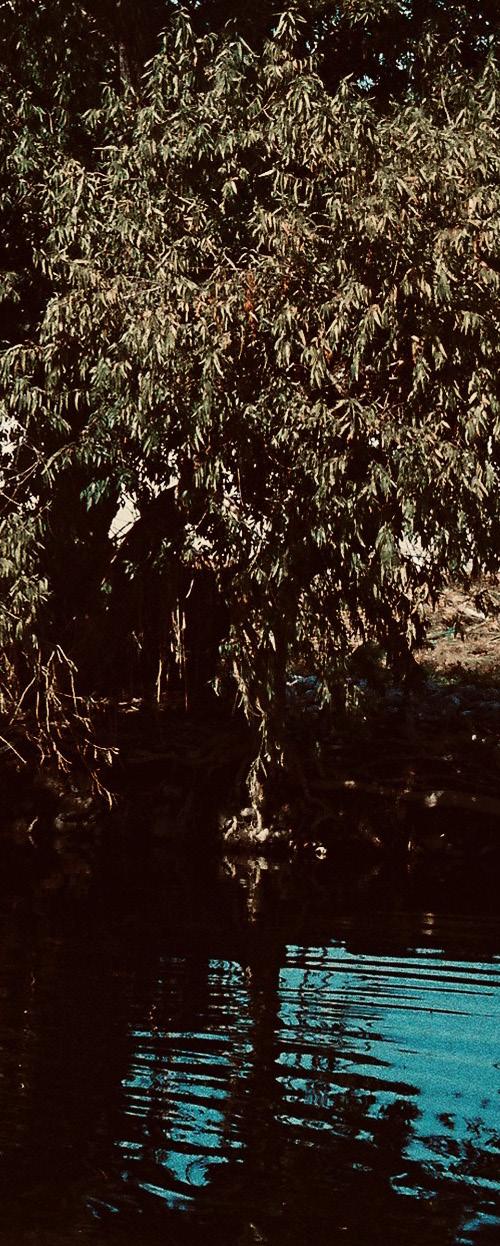
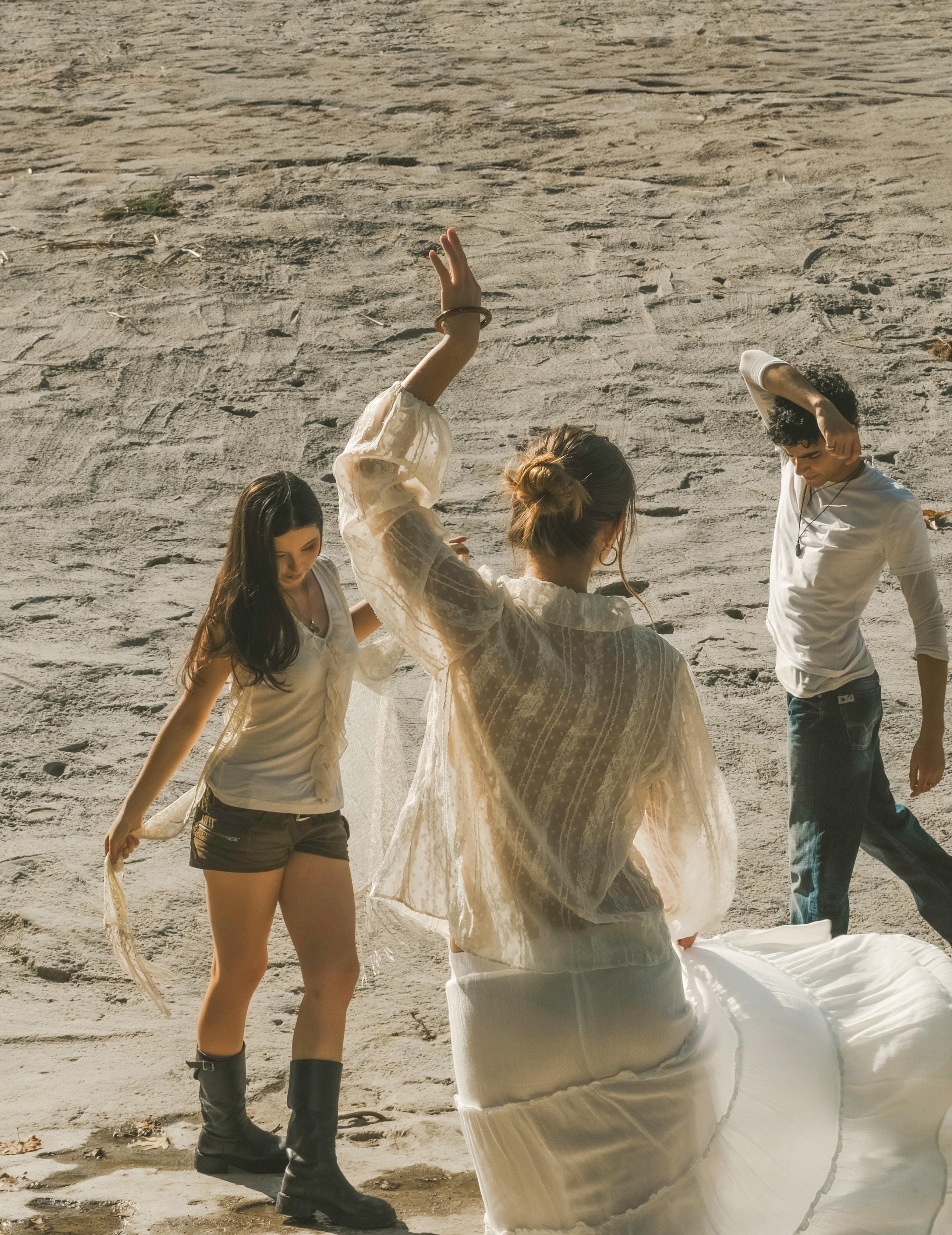
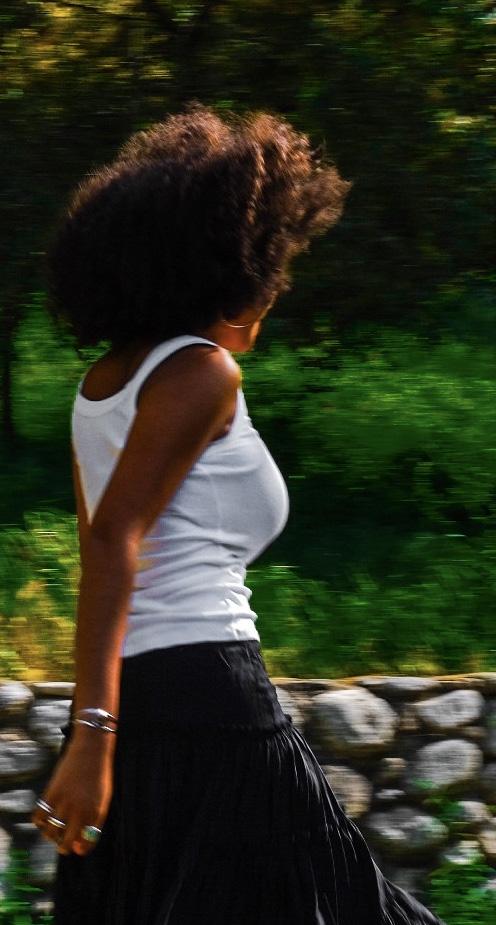
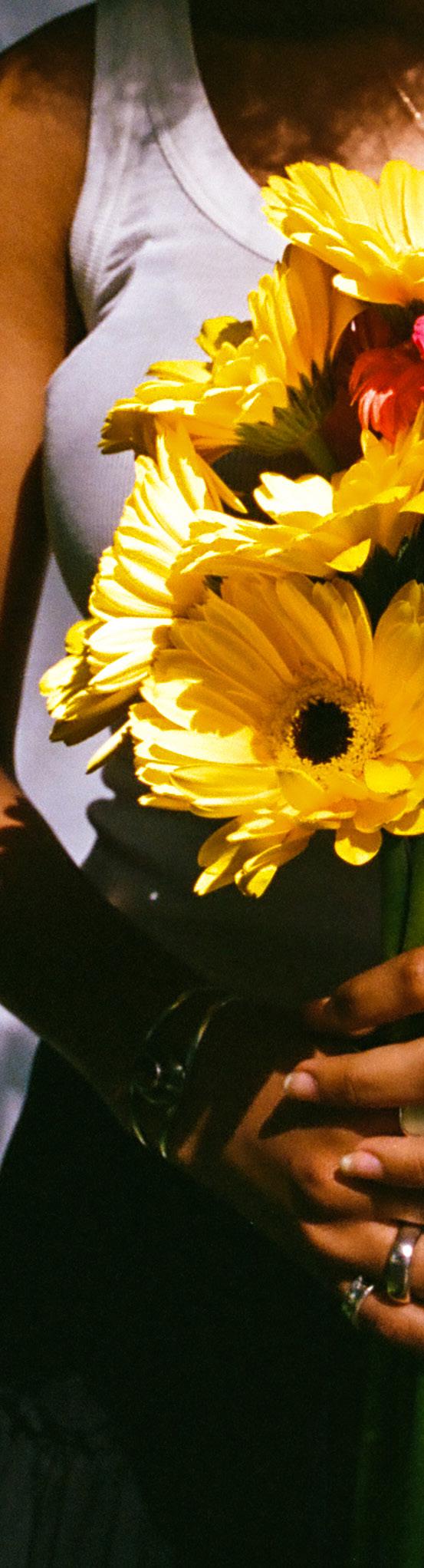
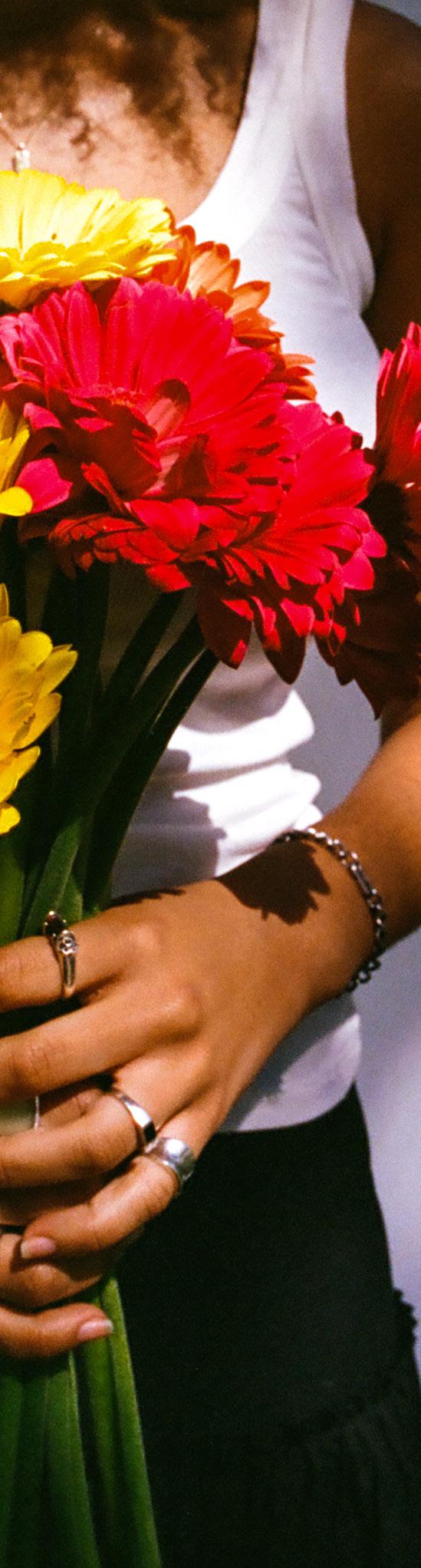
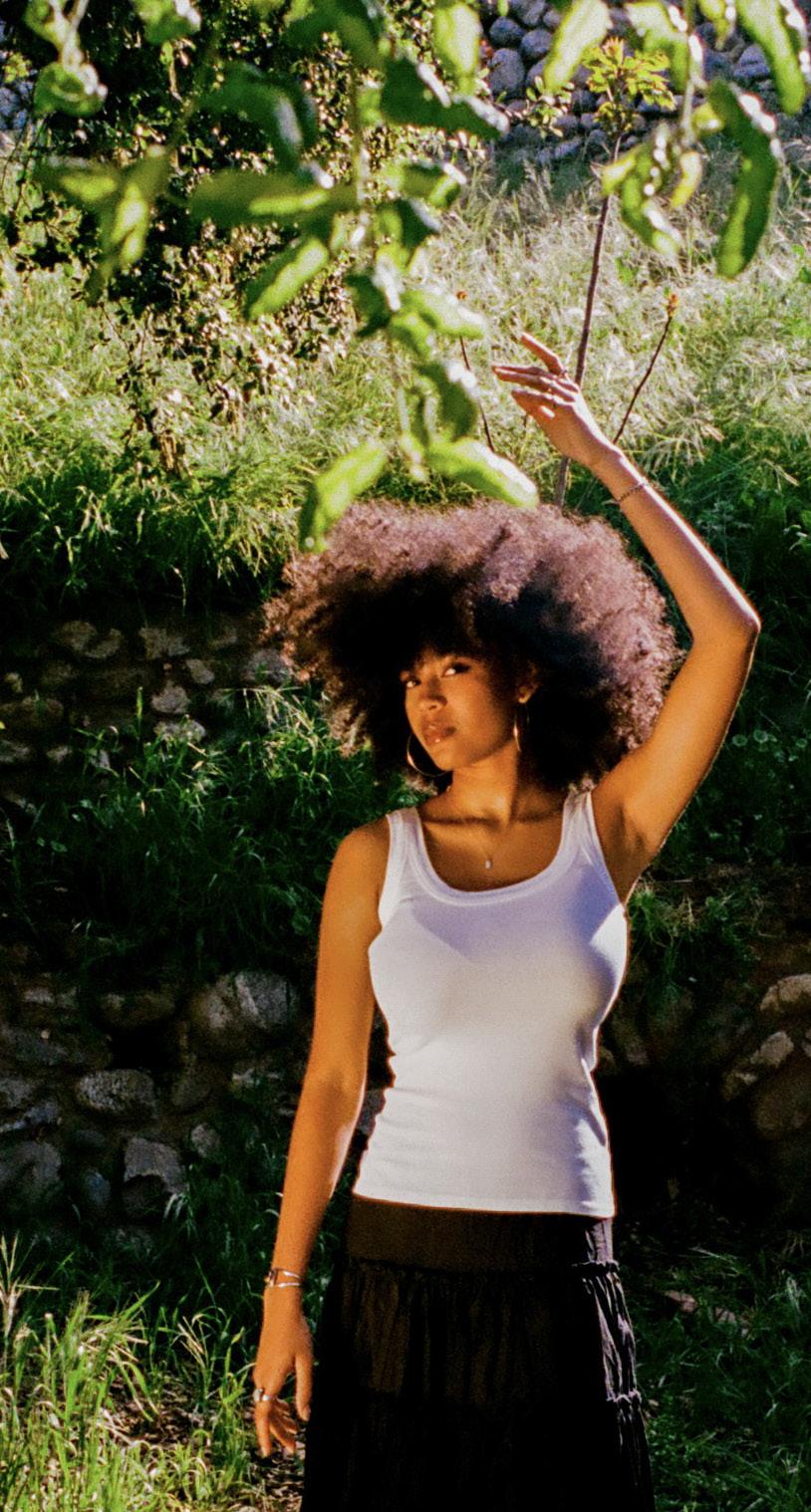
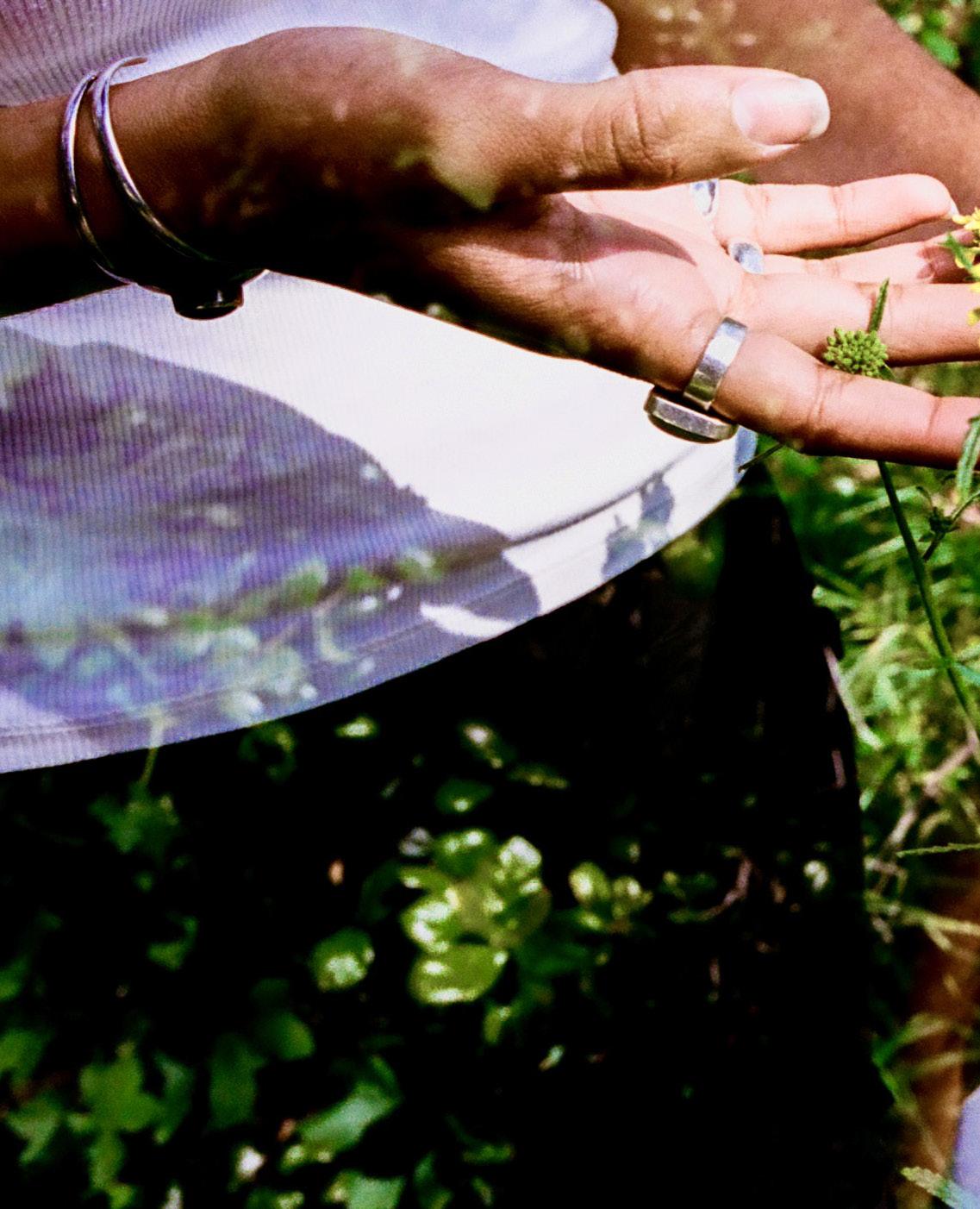
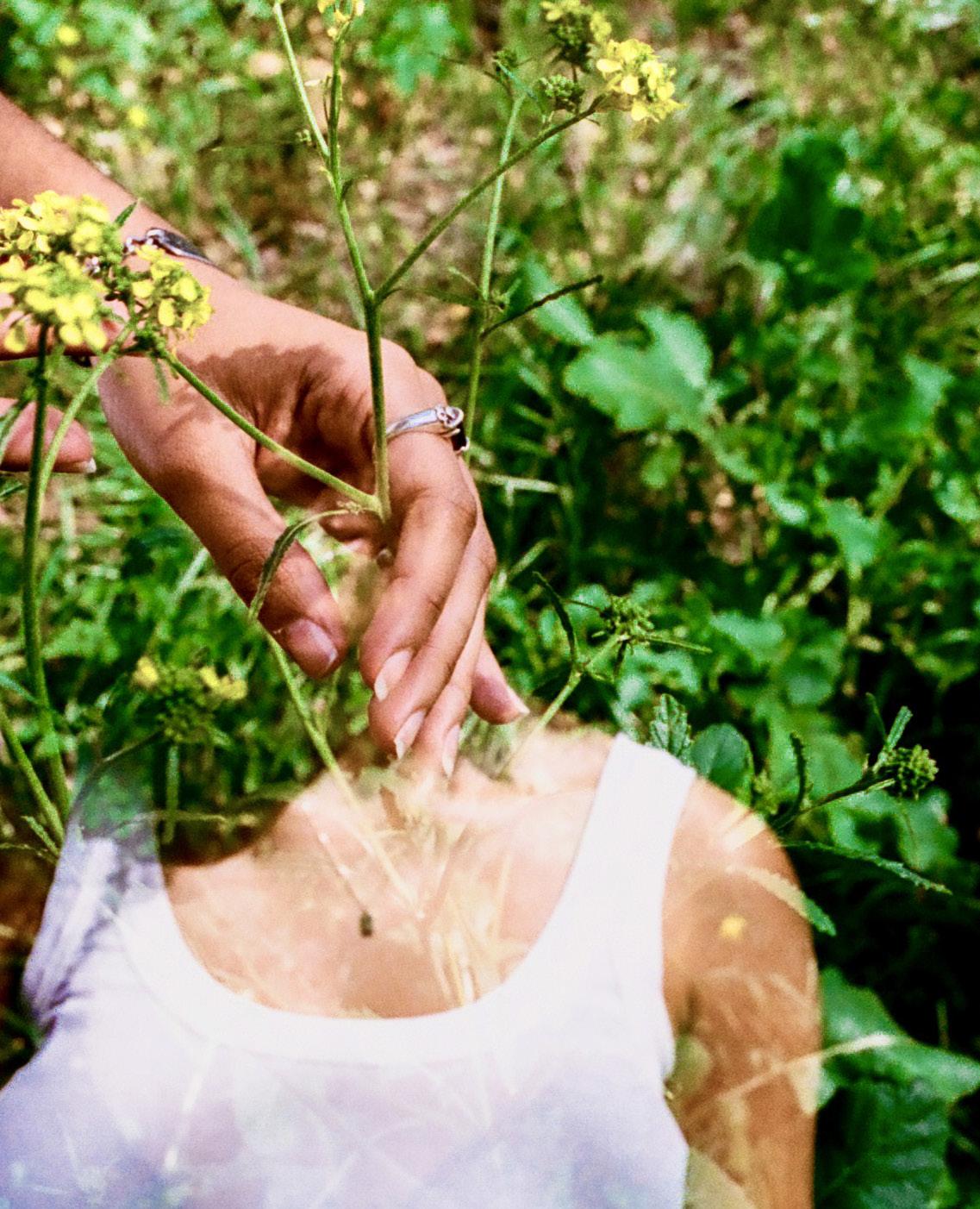
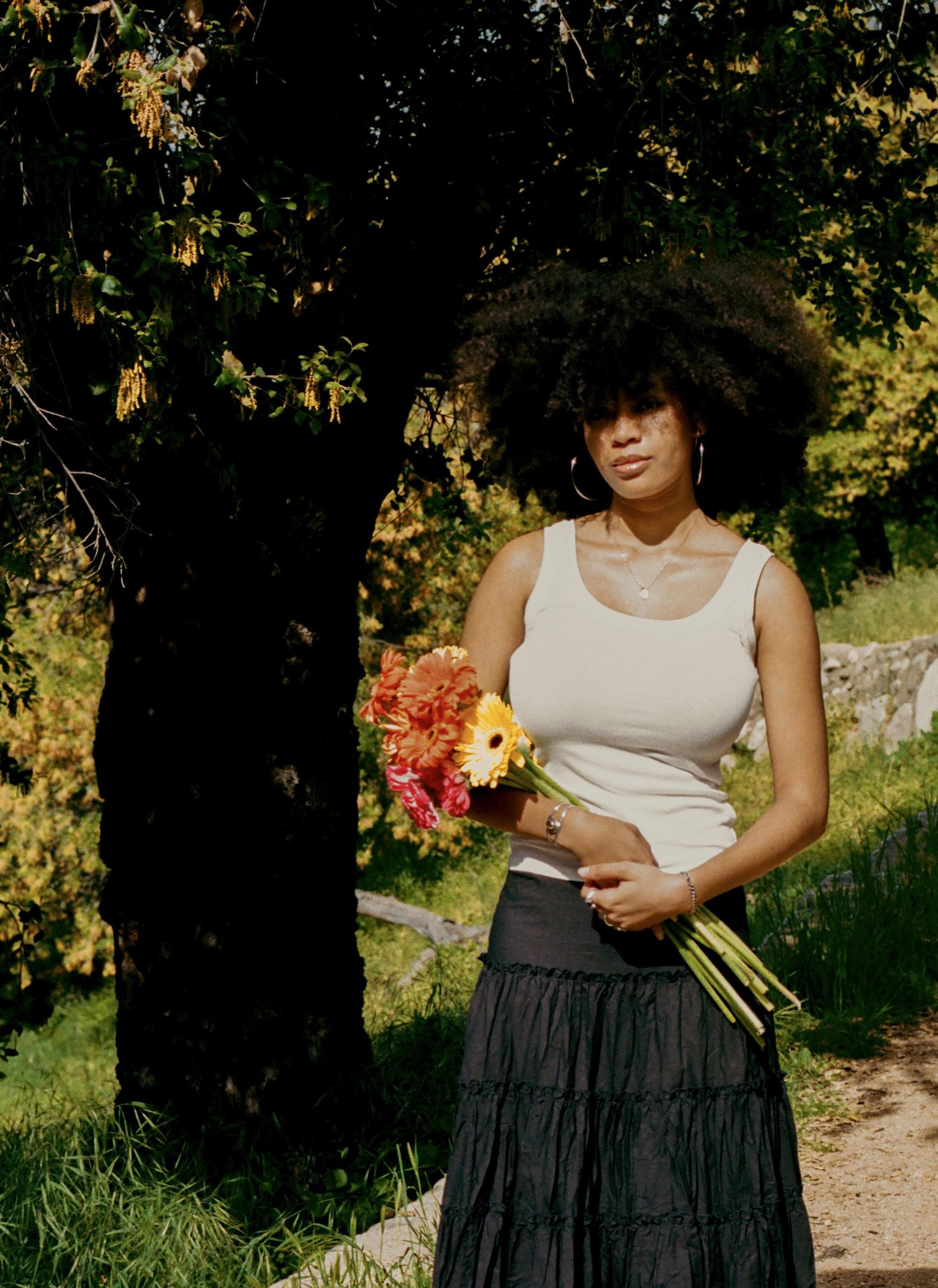
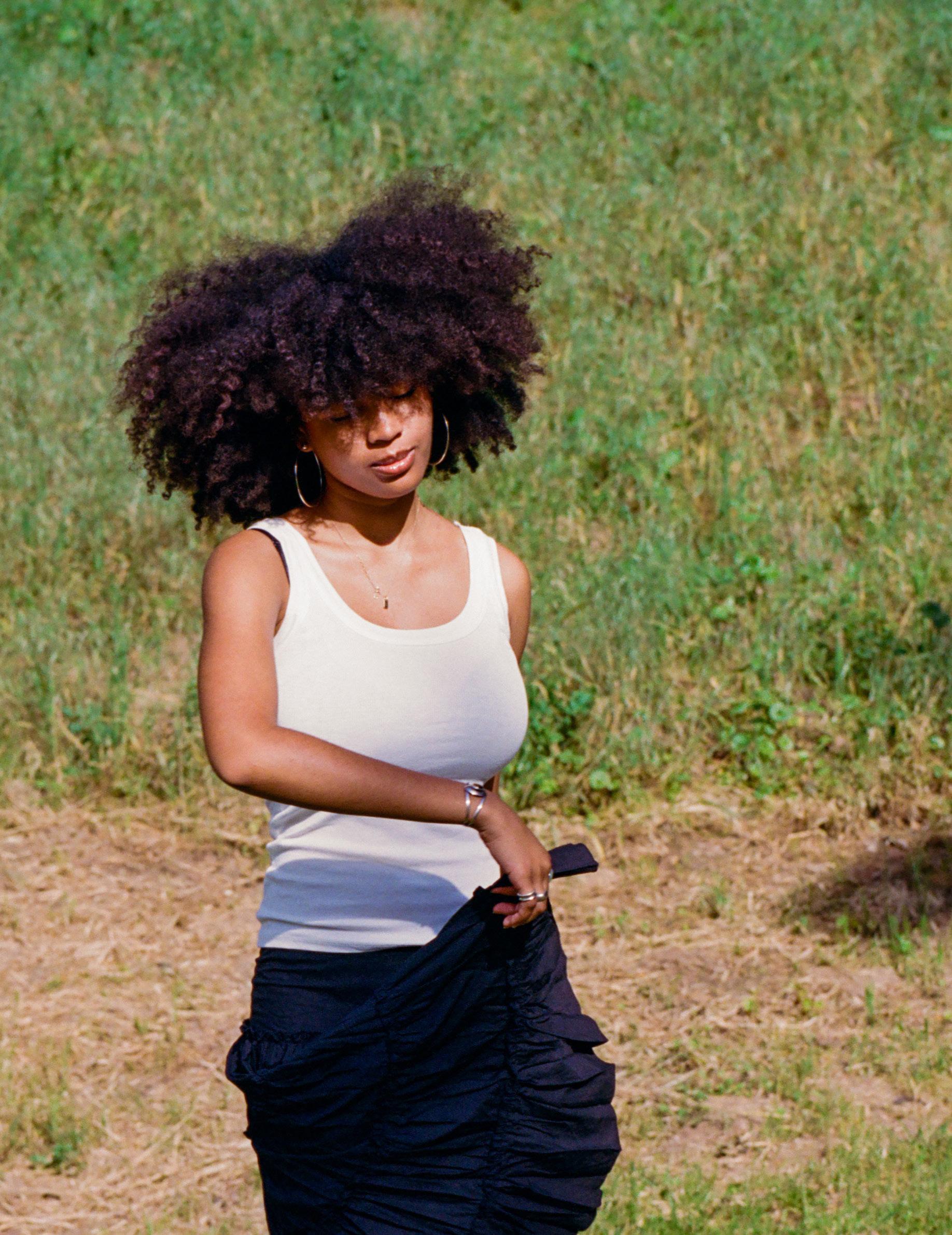
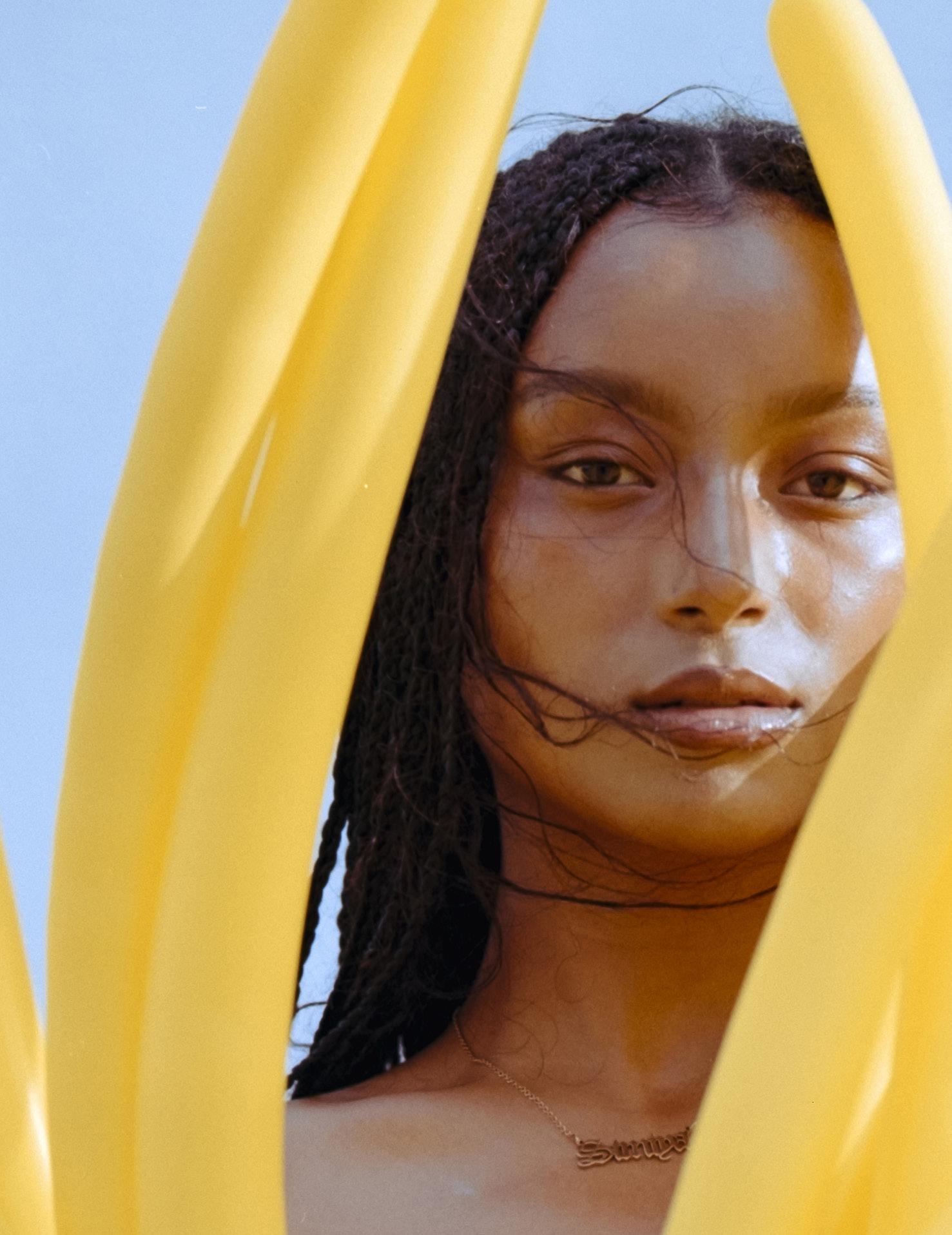
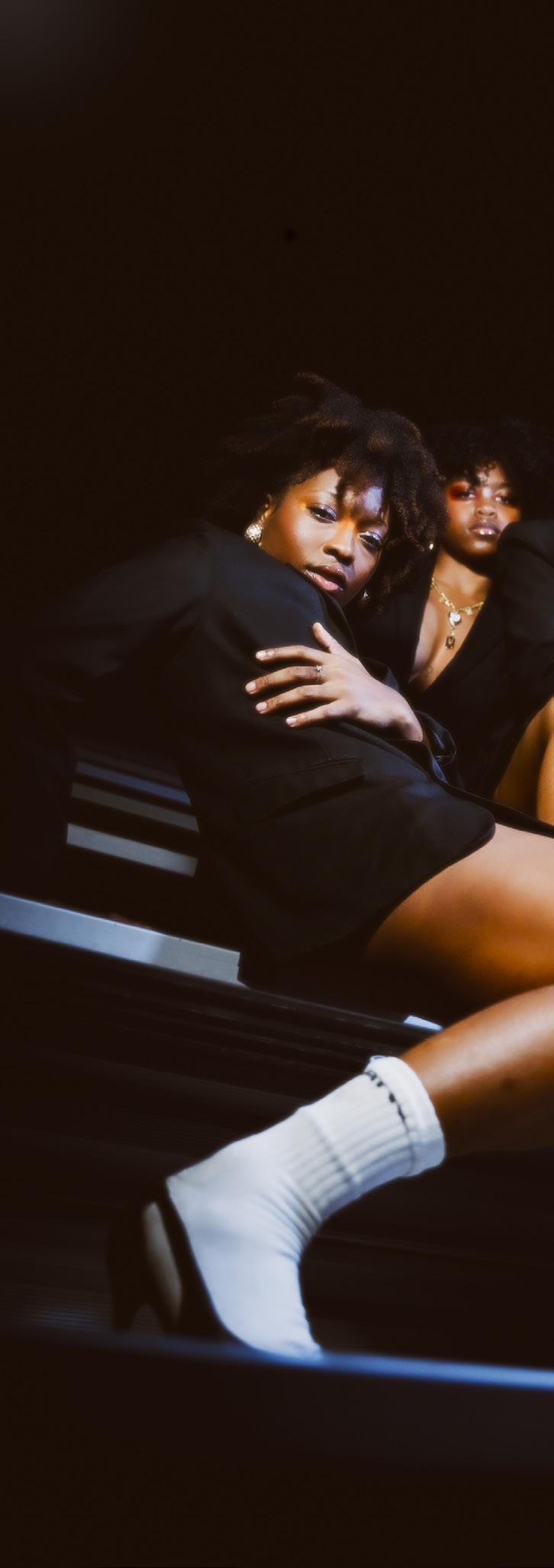
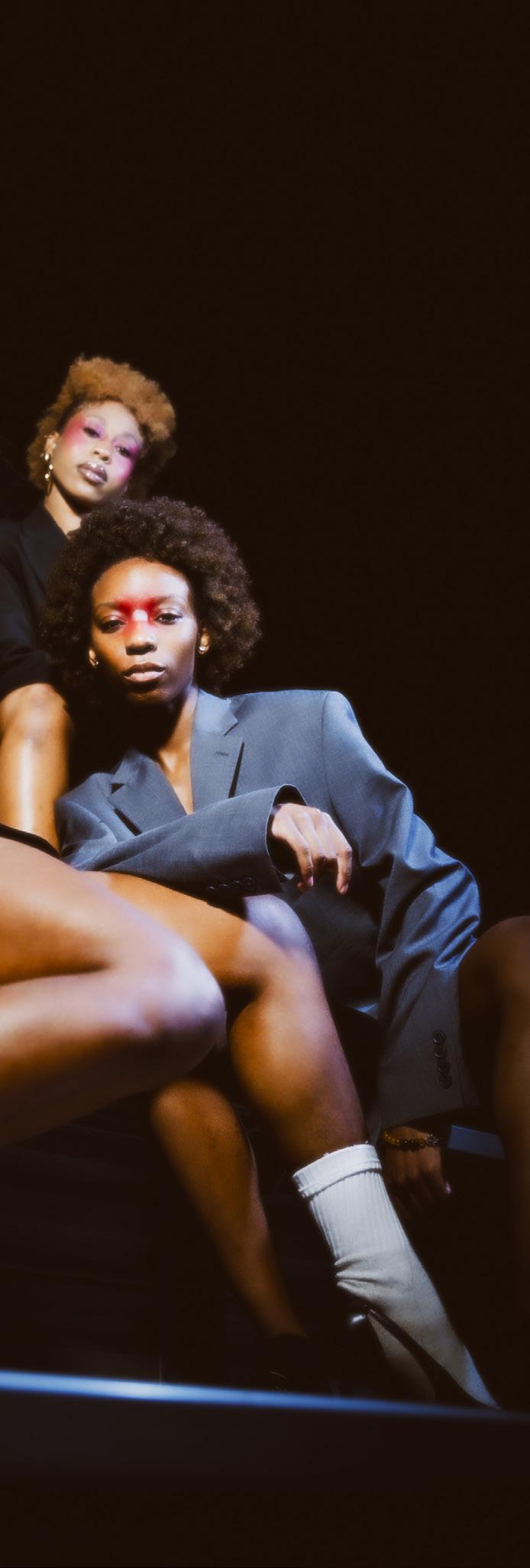
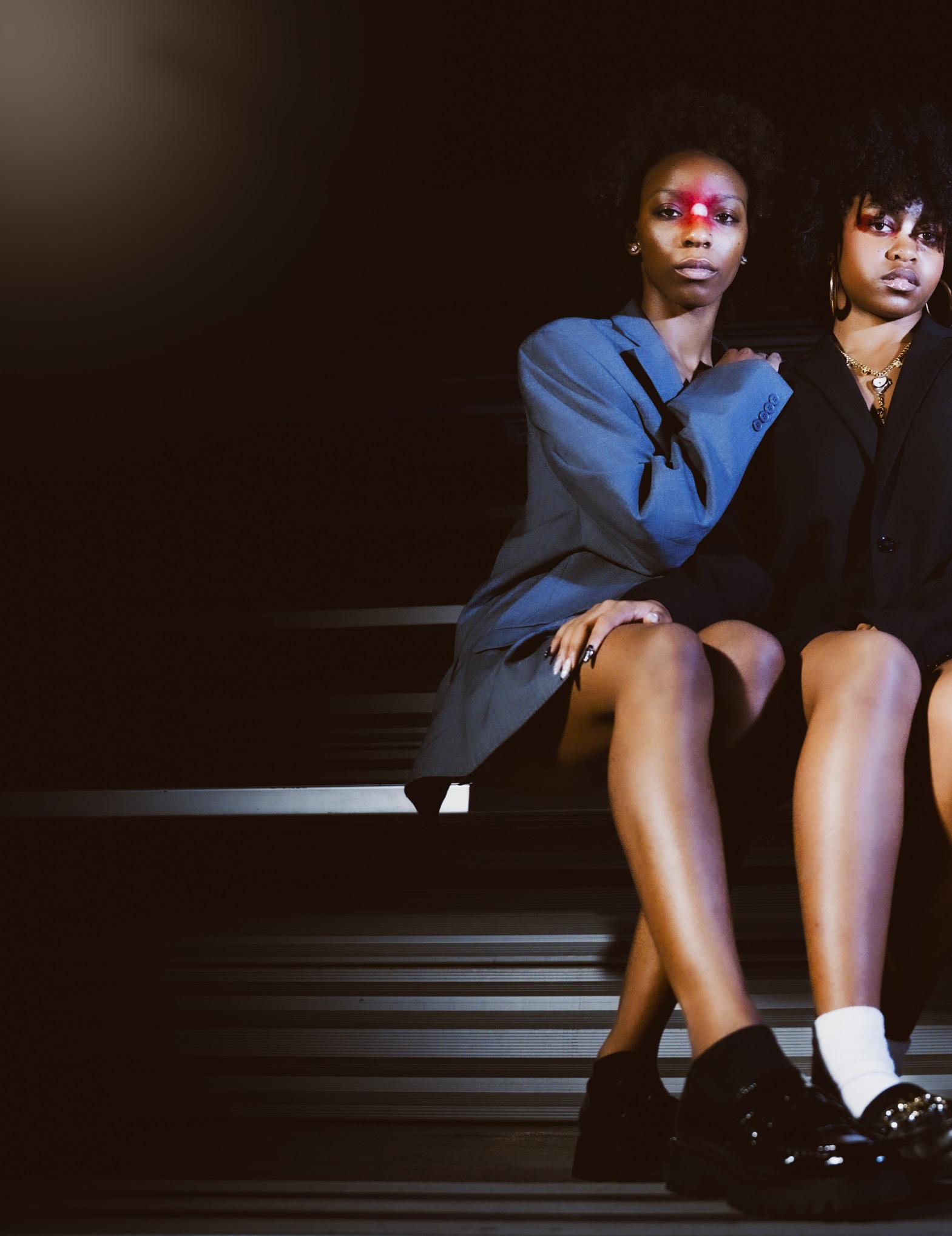
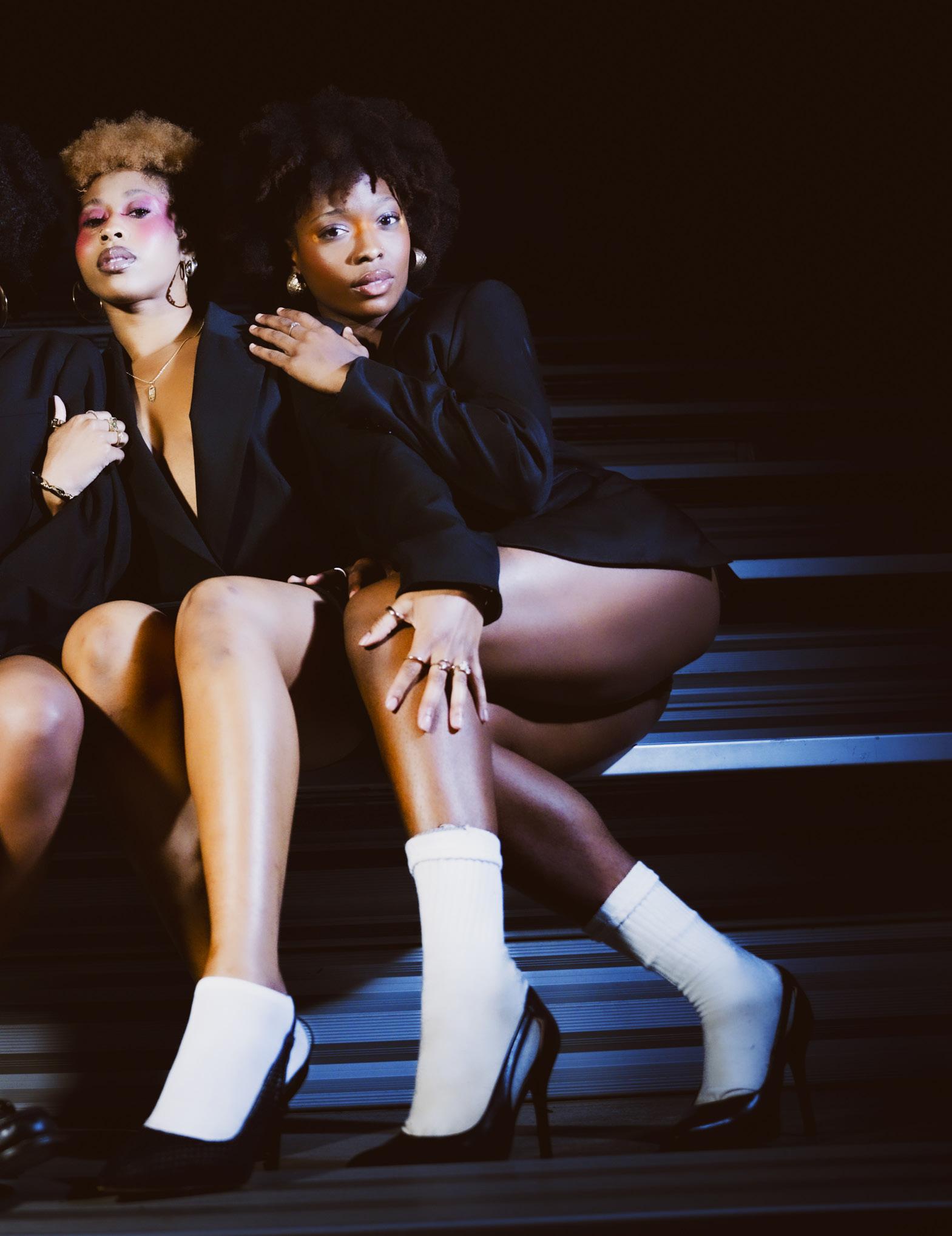
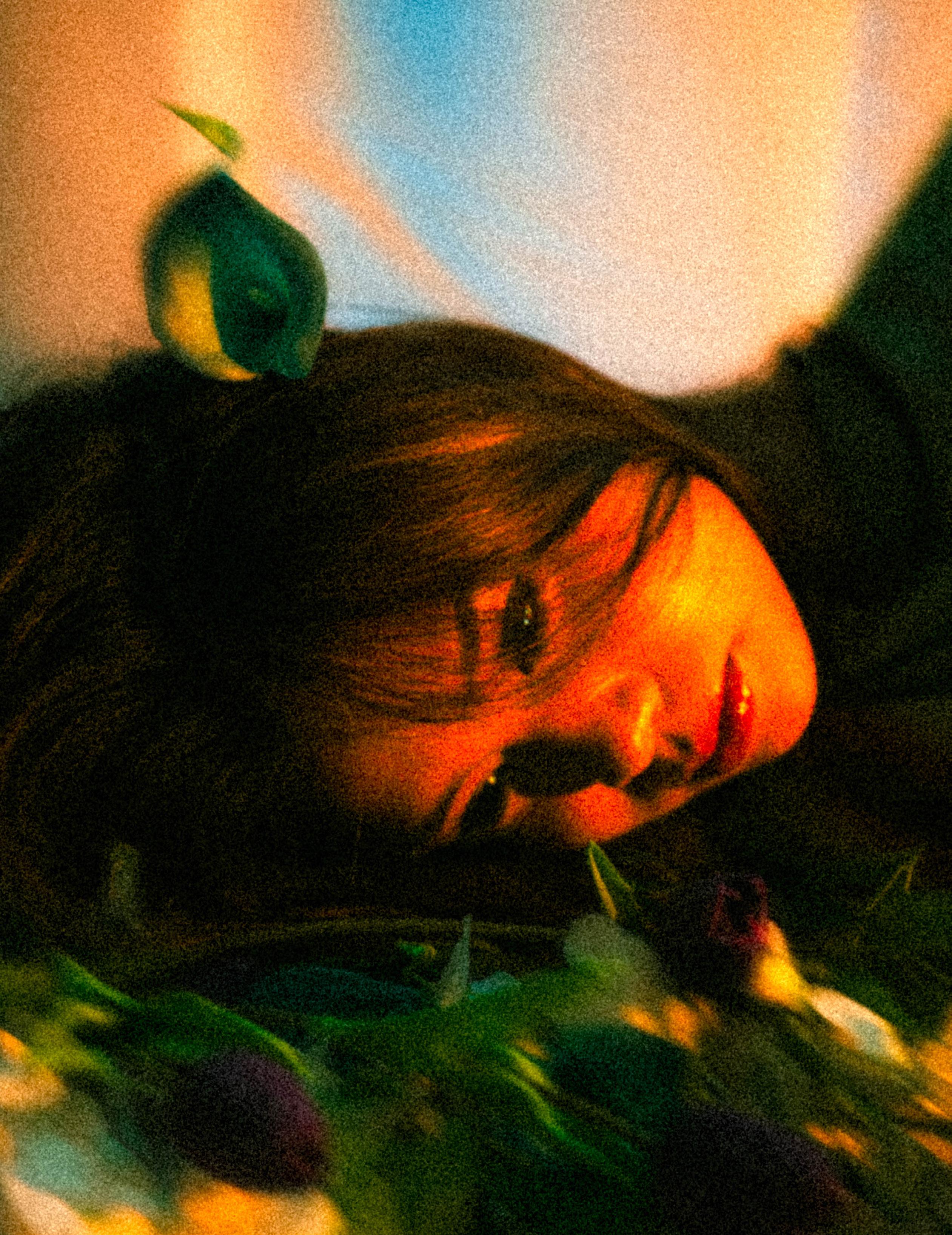
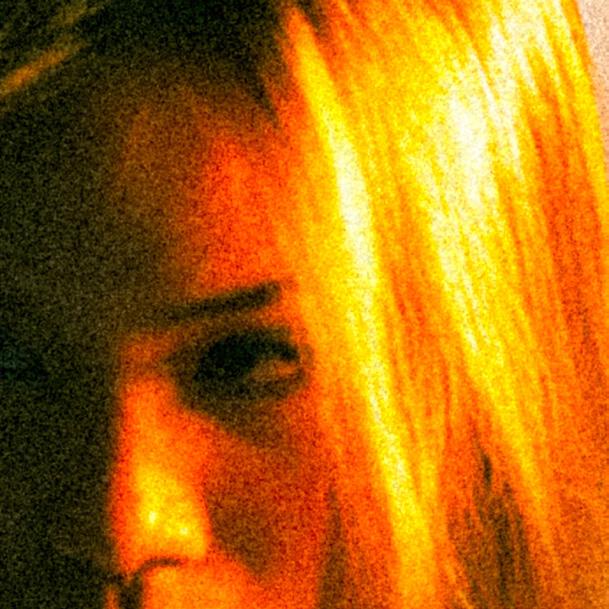
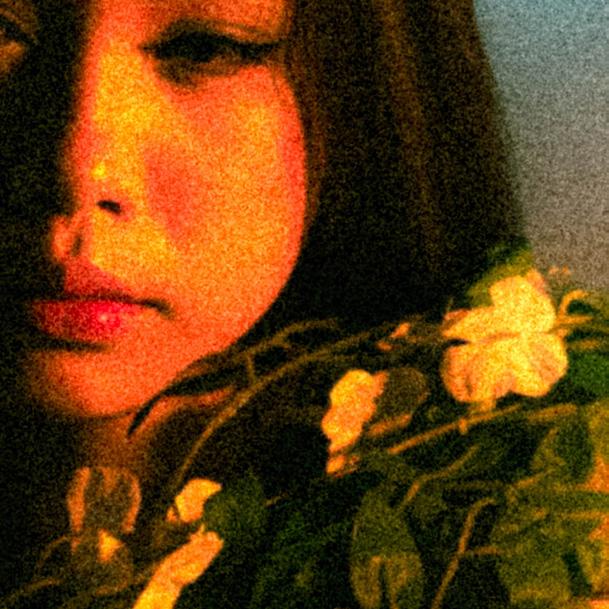
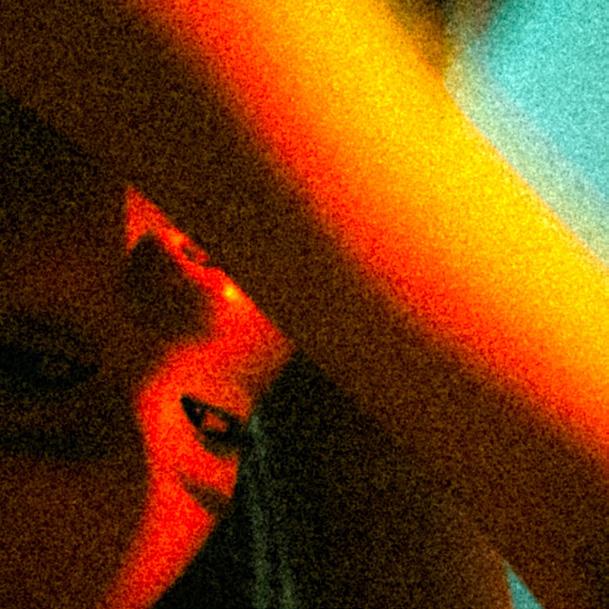
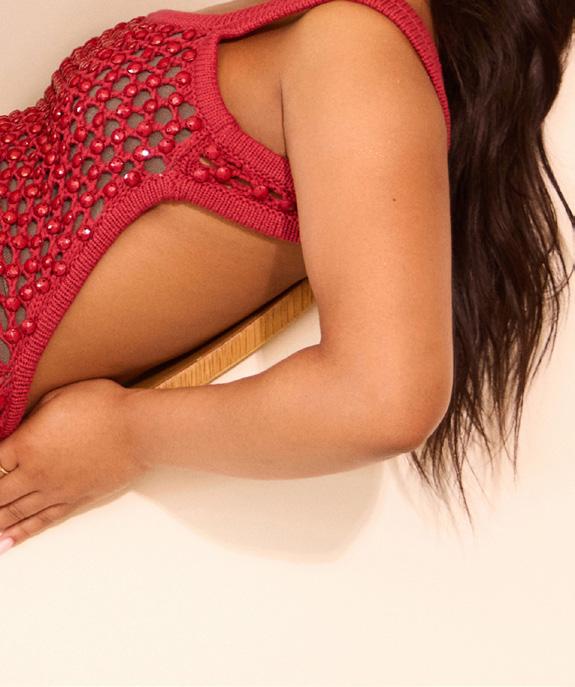
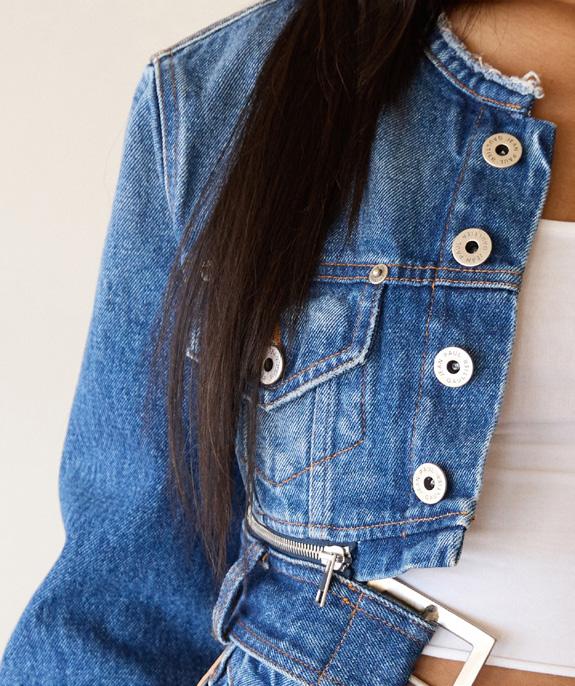
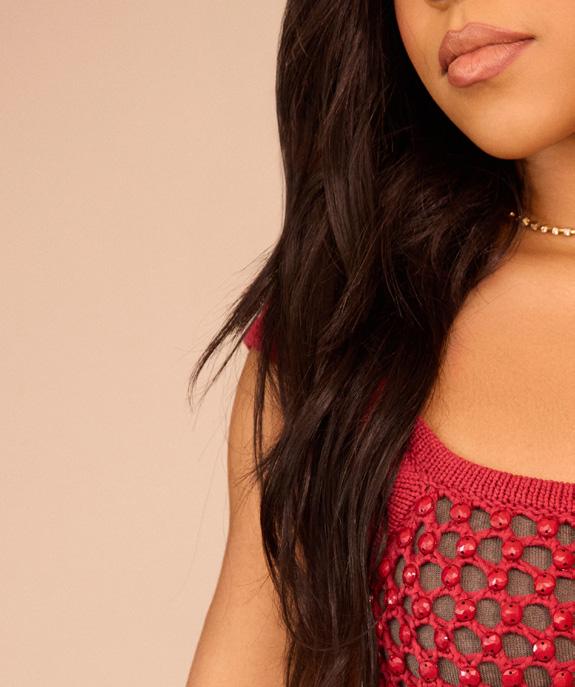
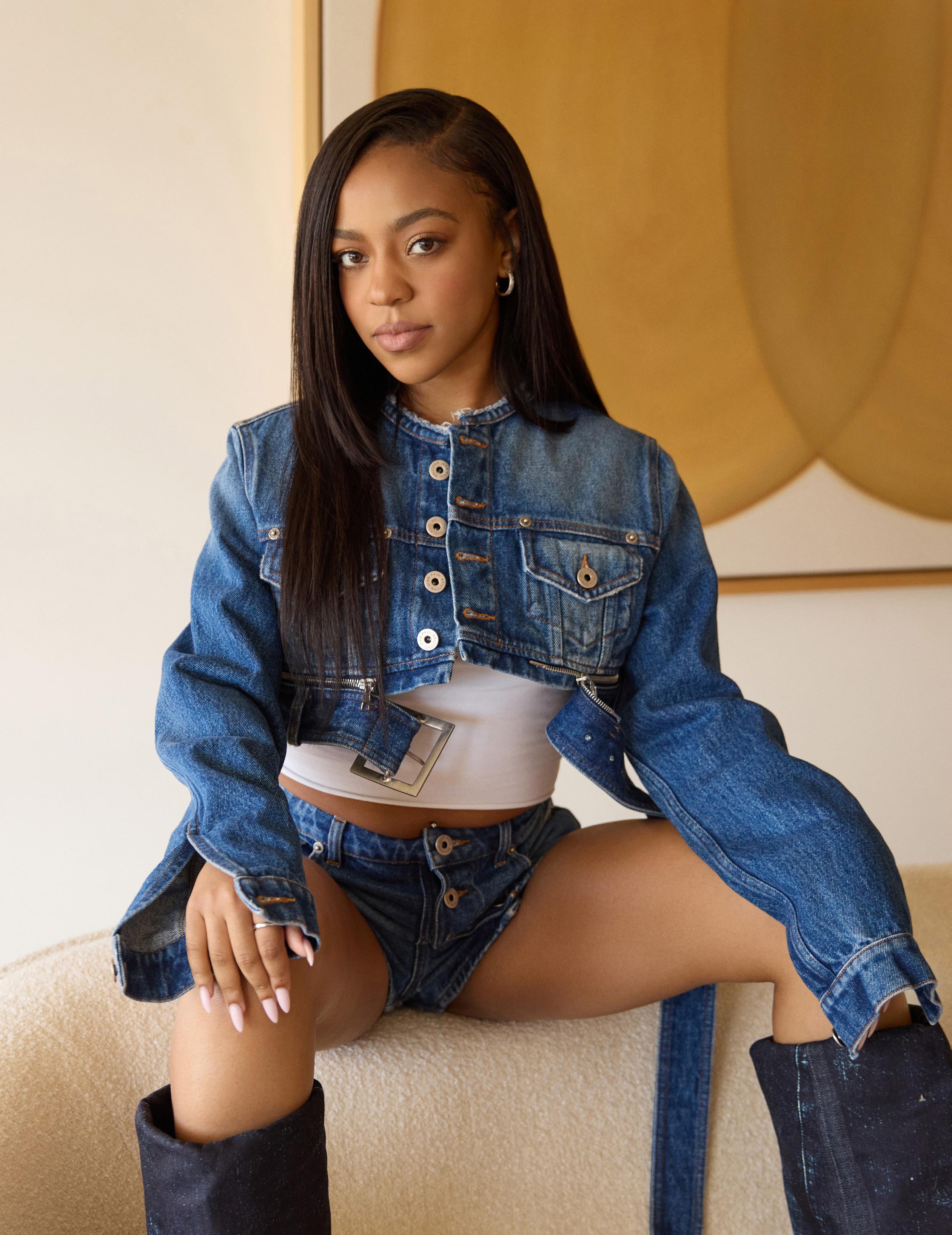
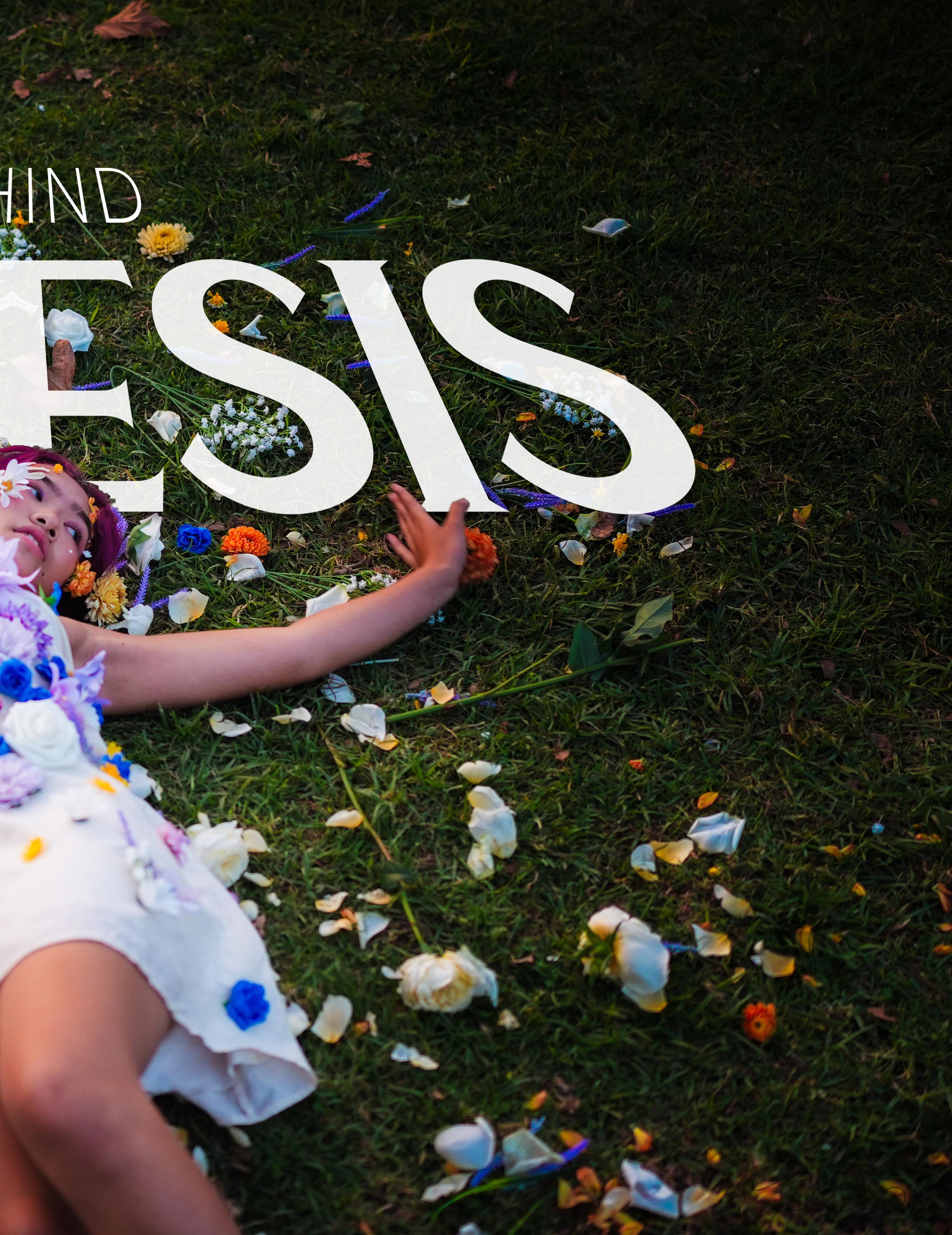
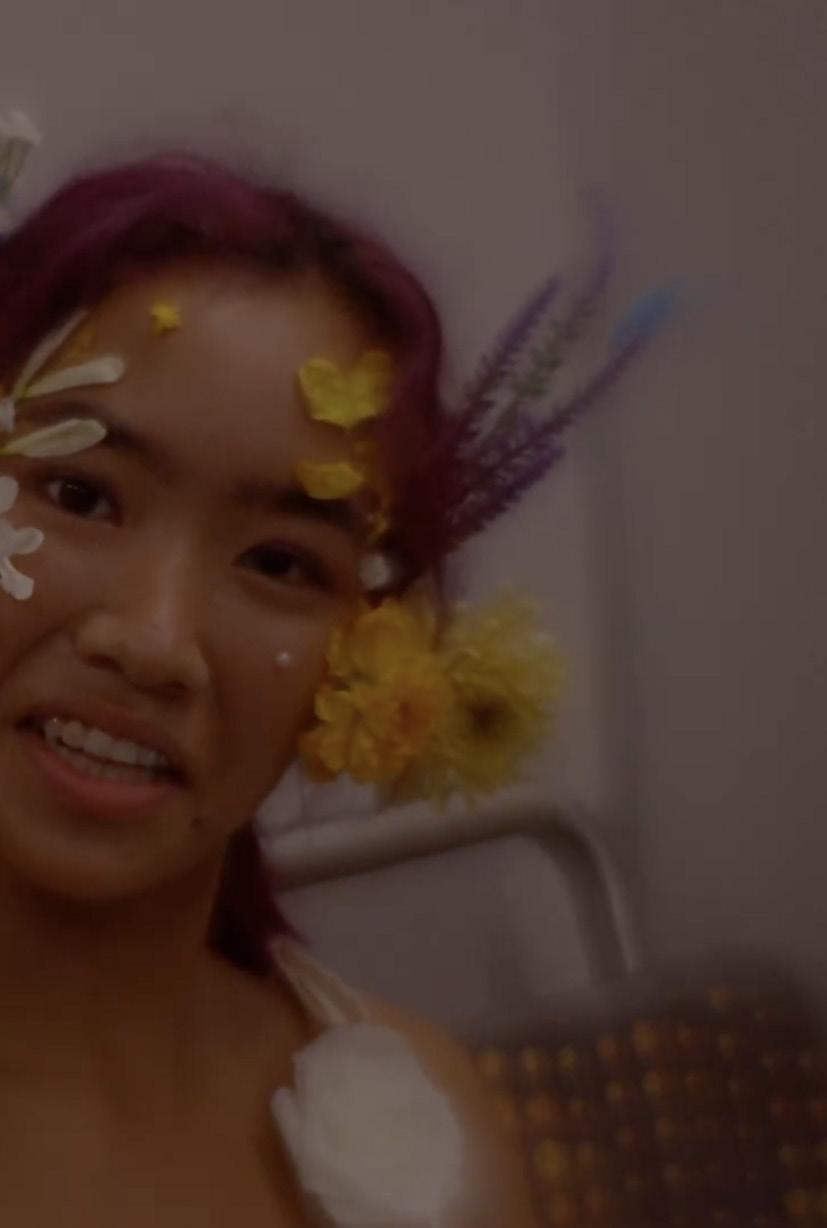
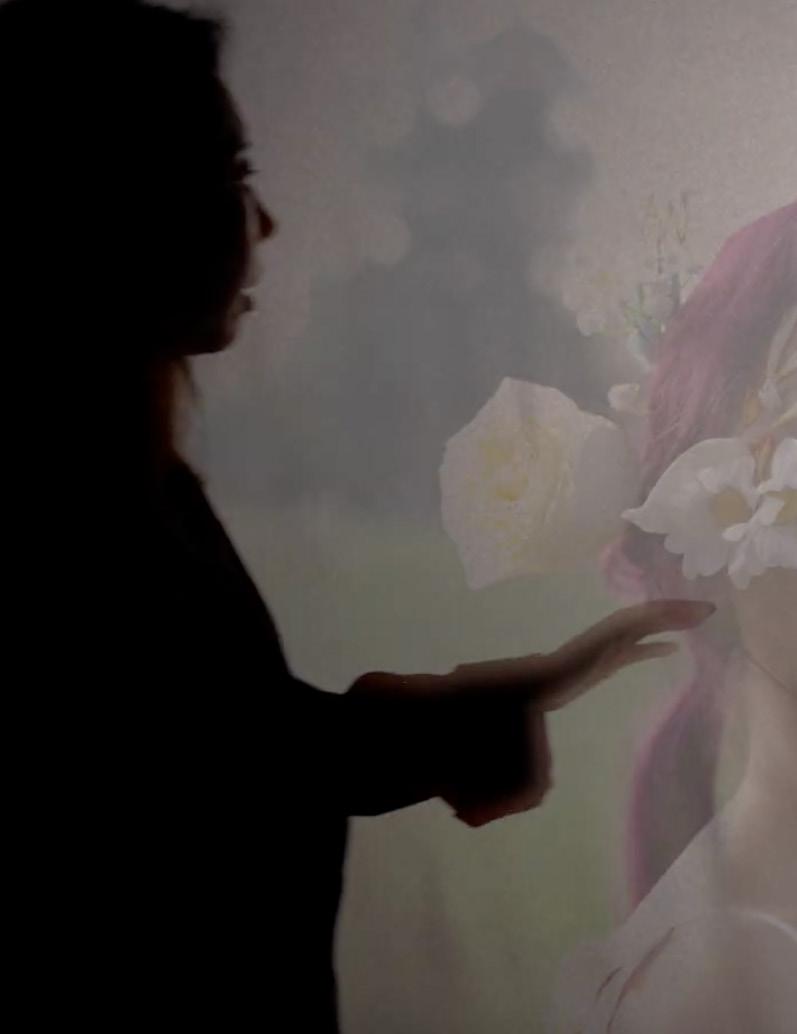
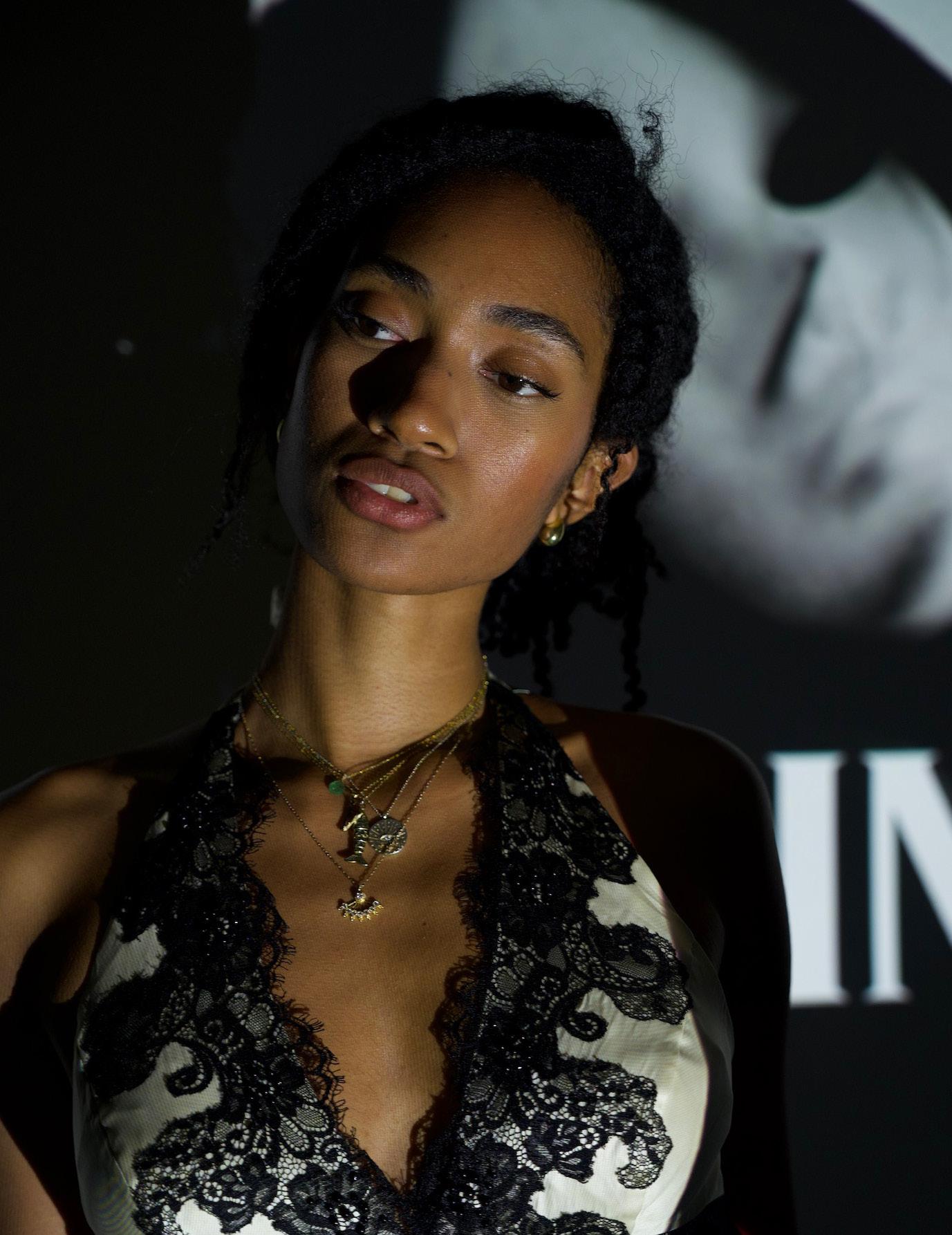
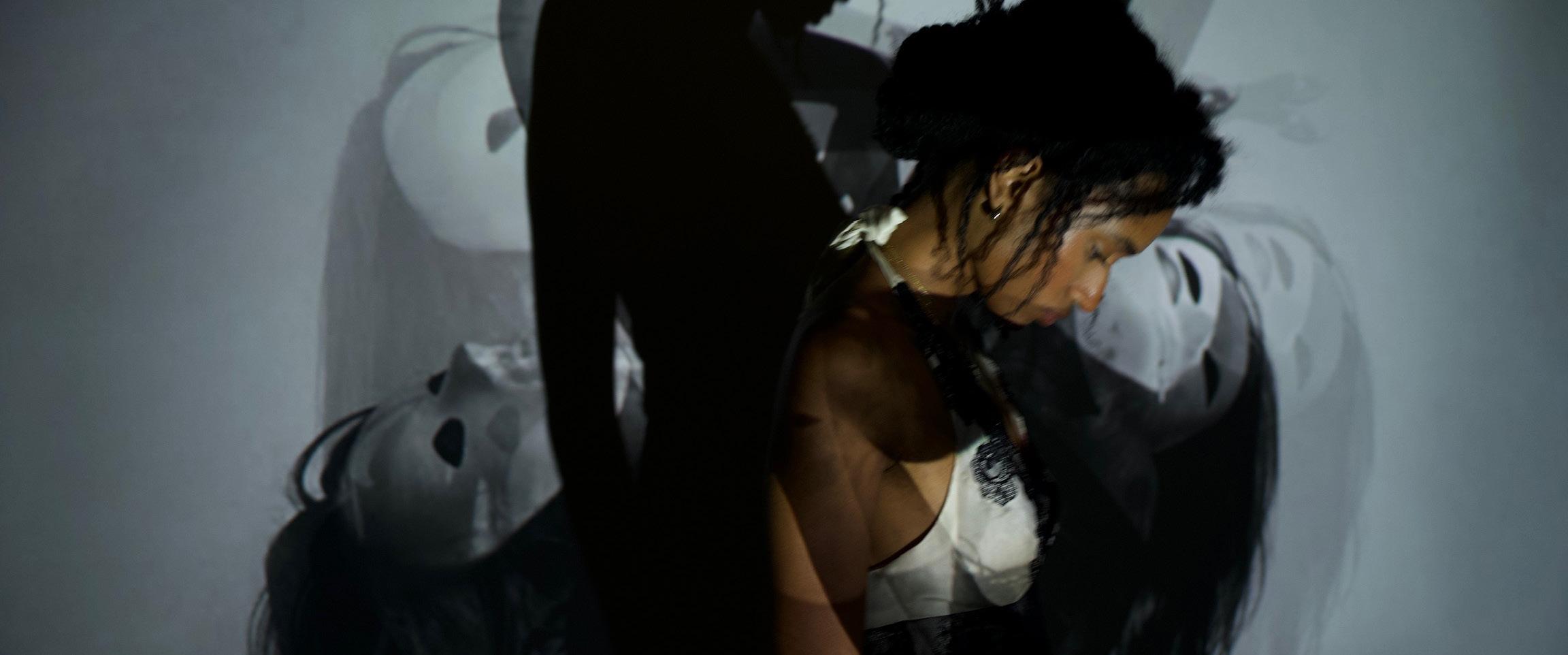
Ainsley Phillips is a Texas native and Brooklynbased photographer. She works primarily in 35mm film, specializing in layered multiple exposures that transform the everyday into something dreamlike and luminous. Drawn repeatedly to bodies of water and rivers as sources of reflection, both literal and spiritual, her work seeks out the small moments that serve as communion, finding divinity in nature’s shining gestures. Her latest project, Manus Dei, shot on Lomography Lomochrome Purple and Color 400 film, explores how slowing down in nature can become its own form of worship, capturing shimmering goldflecked water and honey-lit landscapes as acts of devotion. Phillips treats photography as painting with light, layering exposures to create depth and drama in each frame. Special thanks to artist and collaborator Twyla Roberts for modeling and trusting the vision throughout this series.
Arootin Asatourkazarian is a Los Angeles and San Fernando Valley-based designer. With an interest in spacial design and storytelling, he aims to explore the intersection of form, function, and culture. He is currently currently pursing a bachelor’s of architecture at the School of Architecture, University of Southern California.
My ex-wife is now seven years old. Yesterday she was ten, and days before that she was a rotten sixteen. On the last day she was forty-six, she had just signed the Papers.
We were seated in the kitchen, which was in that inbetween state of possession and became the habitual site for discussing matters of strong opinion.
“But who’ll take the bassinet?” She asked. She used her sour voice.
My ex-wife was in an odd mood that day. It could have been because of the Papers, but she was also reading one of her old-looking books, which always made her think about things far outside of herself. She liked those kinds of wistful poems and often quoted them between daily household chores. “The world is too much with us,” she would say, standing by the counter and scraping last week’s dishes. In recent years, she carried everywhere a sort of sadness, one that sank into her eyes and lips and painted her a lovely greige.
She had said the children weren’t the problem. And by children, I mean the ones we couldn’t have and lost every once and again. But I had seen how she held on to the traces of them, and I held her as she cried at certain hours of certain evenings.
“You can take the bassinet,” I said.
The next morning, her figure had transformed into that of a sixteen-year-old girl. I almost couldn’t believe it. She looked at me with a great deal of brightness, the rare kind that spilled through the windows and all over the furniture. Her eyes were soft and hazy, but they were her eyes, I was certain.
It appeared she had no concept of the Papers, nor of the series of failings that led to them. Although her mind retained little of its maturity, she recognized me with a strong sense of attachment.
“Do you have a car?” My sixteen-year-old ex-wife asked. Her voice was wildly saccharine.
I led her into the passenger seat of her silver minivan, the hopeful one she got all those years ago. Over time, the rear seats had accumulated a variety of clothing items and non-perishable goods, scattered in boxes labeled Eleanor. The young Eleanor then insisted I drive her to the nearest restaurant, her sudden youth having reinvigorated her appetite.
The last time we dined out together, she was fortyfive and we were married. I took her to some halfdark restaurant and she wore her silver sandals. I had stirred conversation about the dressed tomatoes, how they reminded me of a great thing she made back when she dreamed of pursuing culinary arts. But like most of our conversations that age, she had twisted it into a strange elucidation of adult unhappiness, which I admit I found unsavory.
“Stephen, don’t you see it?” My wife had said. “How we unknow the largest parts of ourselves, just to know everything real and small. It’s been years since I’ve dreamed, Stephen. I wish I could, but I don’t know how.”
I didn’t know what to say to her then. I probably should’ve consoled her, or nodded in agreement, or held her hand, which usually helped. But instead we became estranged in that moment; two small lovers with our large unhappiness.
I looked at my sixteen-year-old ex-wife, who sat across from me and snacked on potatoes. I looked at her and I wished she would never grow that sour kind of love, and maybe that she would dream of something sweeter than we could.
Days later, she transformed into a ten-year-old child.
In these days, I intercepted several calls about various items the forty-six-year-old Eleanor had neglected. Her old friend Helen had called about Sunday brunch. Her coworker Julie had a baby shower this July. Michael, her eccentric lawyer, inquired about the status of the Papers. I told the affected parties that Eleanor hadn’t been feeling well, which they all took soberly and hesitated to follow up with any questions.
The ten-year-old Eleanor, while a sweet, tender child, had grown restless, having spent days in her forty-six-year-old home. I promised to take her somewhere wide and open, where she could play big and happy in a place that didn’t remember her.
By the time we go, she is seven years old.
We drive up to the Big Hill, just behind the school and past the church, where the grass is long and yellow. The wind is mild today, just enough to brush the wisps of hair off her forehead. She takes my hand and we run, up and across and around, drawing twisted shapes in the field. We trip over sticks and roll through leaves. She cartwheels down the hill, and I follow her. For a second, I think this is the happiest moment of my life.
I can’t tell if we’re playing or fighting. She’s yelling at me about dinner and the dishes. She’s telling me she loves me for the first time. She’s crying about another miscarriage and crying because her knee scraped a rock. She’s signing the Papers and she’s vowing I do and she’s asking for a piggyback ride and she’s saying My name is Eleanor, nice to meet you. She is sixteen and forty-six and seven all at once. I laugh while I sob because she is everything real and small, greige and lovely, bright and sad.
When the sun leaves the Big Hill and the clouds go grey, I see my seven-year-old ex-wife again. She’s sitting in the long yellow grass, and I’m next to her.
“Can we stay here forever?” She asks.
“For ages,” I say.
She nods. She leans into me, and I almost think I know her.
My ex-wife is now an infant child. She is small, too small, and I’m afraid she’ll slip out of my hands. But I hold her still, closer than I did before. I lay her in the bassinet. She’s sleeping now, and I listen to the hum of her breath. I can tell she’s dreaming.
I try to remember Eleanor, my forty-six-year-old ex-wife. She is gone now, far outside of herself.
But I should remember. I try to.
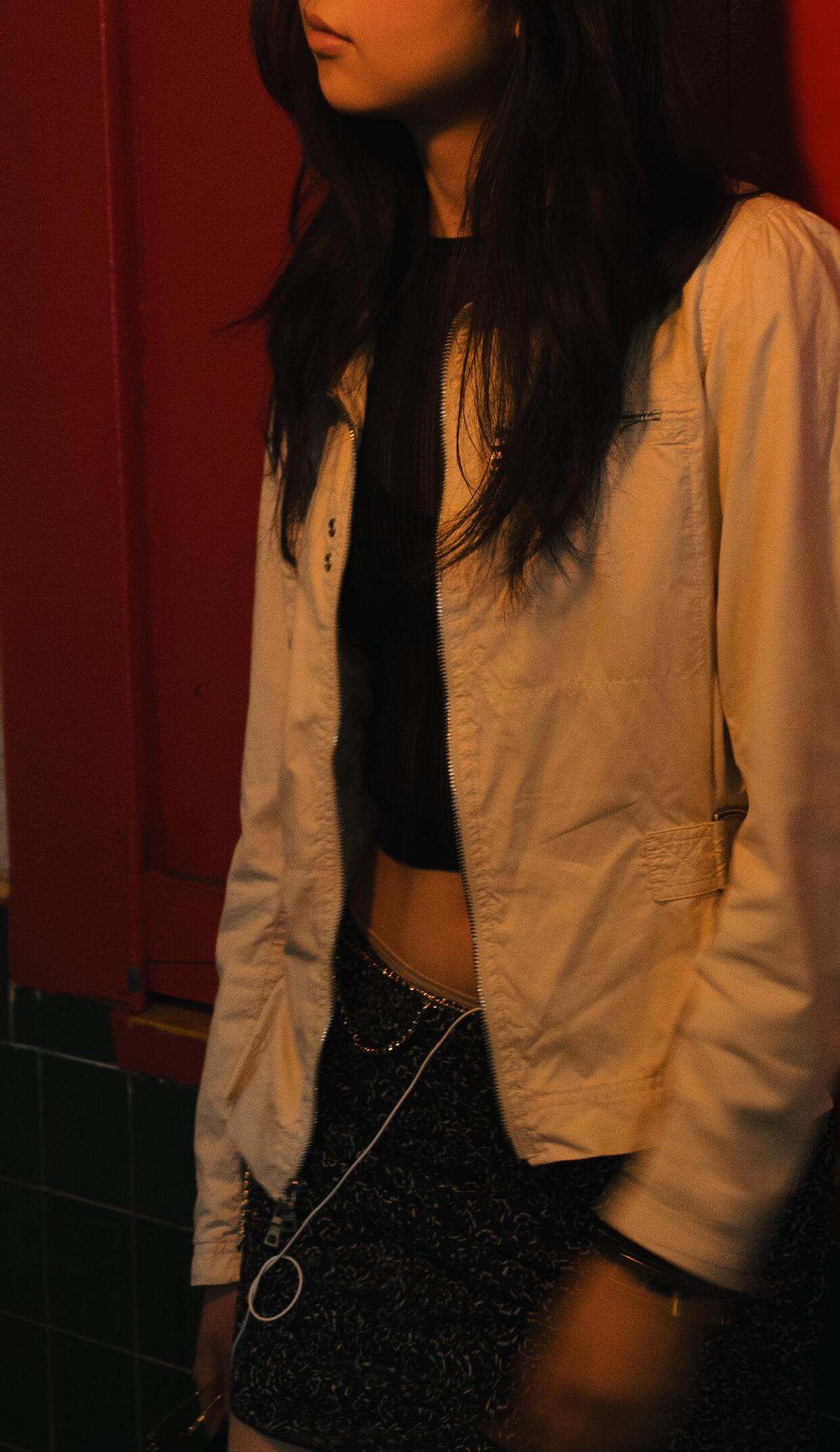
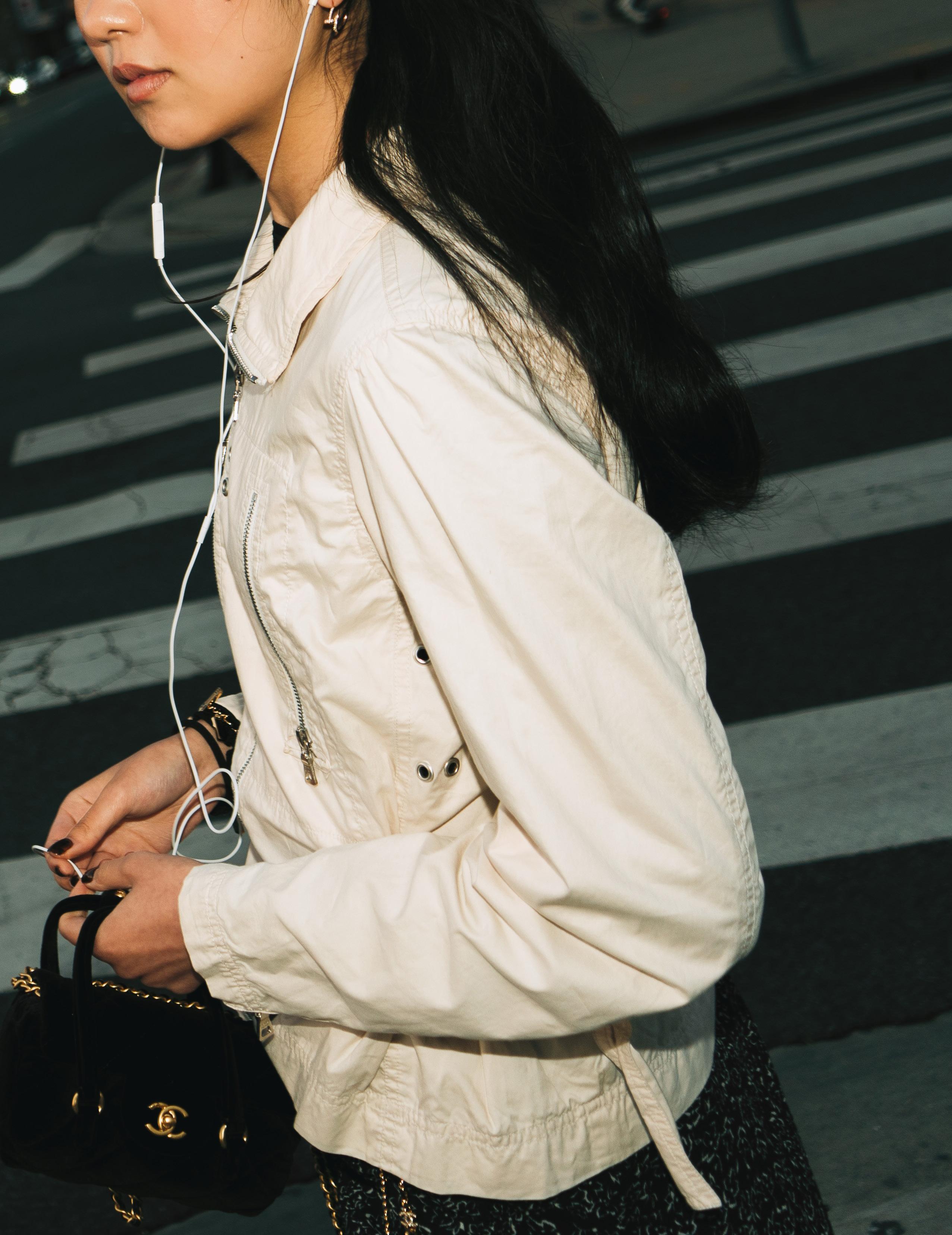
Cecilia Luoyi (Li) is a photographer and filmmaker based in Los Angeles. Previously living in Beijing and Boston, she finds inspiration in lived experiences and personal characters. Her past works mainly captured “mundane” subjects with natural settings, focusing on the narratives of each frame. Cecilia studies Film and Television Production at the School of Cinematic Arts, University of Southern California.
Leilani Mate is a Seattle and Los Angeles-based writer with roots in Vancouver, Canada, and Austin, Texas. Her work explores the emotional truths of the human experience through precise, lyrical prose. Leilani studies Creative Writing at the Dornsife College of Letters, Arts and Sciences, and Communication at the Annenberg School for Communication and Journalism, University of Southern California.
Annie Kersten is a New Jersey and Los Angelesbased graphic designer and digital artist with a passion for visual design. Her design style is guided by an aesthetic and simplistic approach to enhance visual elements. Annie is currently studying Business Administration with a Marketing emphasis at the Marshall School of Business, University of Southern California.
Models
Cat Gerbino
Martin Petersen
WHERE ALICE FOLLOWS
WHERE ALICE FOLLOWS
Cici Fang is a Shanghai and Los Angeles-based multimedia artist passionate about using visual storytelling and interactive design to advocate for social changes to explore humanenvironment relationships. She specializes in graphic design, data visualization, mapping, and web programming—and is currently exploring extended reality. Cici studies Global Geodesign and Media Arts + Practice at the Dornsife College of Letters, Arts and Sciences and the School of Cinematic Arts, University of Southern California.
Juri Kim is a Los Angeles-based visual artist, recognized by institutions like the National YoungArts Foundation and the National Scholastic Foundation of Art and Writing. Juri’s work has been exhibited at the Getty Center, Scholastics Headquarters in New York, and Glasgow Gallery of Photography. Juri studies Fine Arts at the Roski School of Art and Design, University of Southern California. She also serves as the Creative Director for Haute Magazine.
Producer
Mitchell Jung
Models
Kaia Mae
Anya Barrus
Rachel Barrus
Costume Design
Tiana Mai
Jewelry
Madeline Estelle
Styling/MUA
Emma Olivas
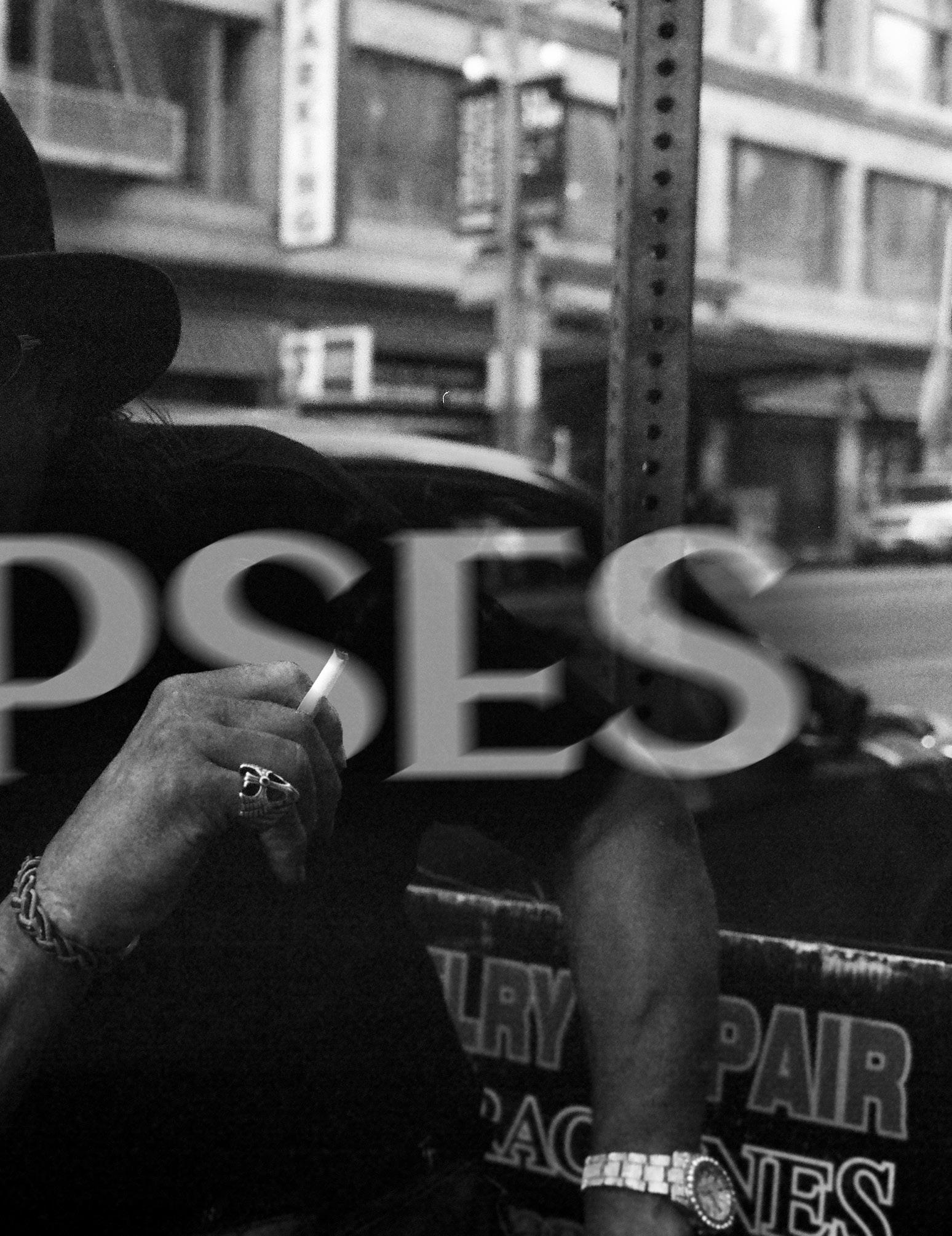
What I knew about him could be numbered and put on a list. Number one, he spent most of his time in the leather arm chair, so much that the few times he wasn’t seated there you could see the imprint of his broad shoulders on the grain of the leather, almost like he had never left. Number two, when keeping his post from the chair, he would click on ESPN. He liked sports. Allegedly he golfed- though I couldn’t imagine when or with whom or even picture him on the green, putter in hand taking a swing at the ball. A knock on the door and several minutes of back-and-forth with an environmental group trying to ban pesticides revealed number three. He was an esteemed chemist, something you’d only know if you saw his Ph.D. diploma and patents hidden in a legal box somewhere in the basement. He was perhaps the most modest man I had met, insisting that he and his peers stayed on a first name basis- “Doctor” was a title that felt too impersonable. There was something about him that felt impenetrable, that was hidden behind a closed-mouth smile and silent nods.
He remained in my life as a familiar stranger, his presence was only made known through empty cans of Diet Coke and freshly mowed lawns. When he did speak to me, every word he said was deliberate, and purpose-serving. Never one to embellish.
And then it appeared, on his neck. It started the size of a quarter buried beneath his skin, then ballooned. Though unsaid, and masked by false optimism, and clinical trials, when it appeared we knew the hourglass had been flipped. The sand was trickling down grain by grain. Our time with him was finite.
So I joined in his routine, sitting beside that leather recliner as I watched his eyes dart back and forth across the television screen. A collegiate football game. He studied the screen looking upon it with a furrowed brow, analyzing the defensive line. A pass, another ten yards, a score. The game was over. Pursing his lips he clicked off the TV and began.
This was the first of a few times he opened up- each narrative felt like a new piece of red yarn, connecting pins on an evidence board and unshrouding the mystery that surrounded him. But as soon as the stories started, and I felt closer to understanding the man who was at every family gathering and Thanksgiving dinner, they stopped. Something felt different about this silence. It was not a product of his own personal deliberation or usual tendency to get lost in deep thought, but a forced silence. Now, the lump on his neck was unavoidable and belligerent. His stories were reduced to sentences. The sentences became fragments.
His thoughts stagnated as I watched his conscious stream ebb…
As fewer and fewer words…
Were spoken…
I watched him search for words. It felt like the folds of his brain were unraveling before me. He himself knew this which unearthed a frustration in a man that, for all my years knowing him, had been gentle and level-headed. It wasn’t long until all words escaped him. The last time we saw one another, I was assured that (though he couldn’t speak) he could hear us and probably recognize us. I entered a room with sterile overhead lighting and he was seated in an arm chair, not his arm chair but one similar. It was just me, him, and silence. This should have felt familiar- most of our relationship revolved around each other’s silent company- but no, this was very different. The silence had transformed, it was emptier. It was forced.
We sat opposite each other. My mind was paralyzed as I tried to string together something, anything, to cut through the quietness.
An outstretched hand invited me to the other side of the room. No words were spoken, no conversations exchanged. I learned more about my grandfather in that final moment than I had throughout my entire relationship with him. I, for the first and last time ever, enjoyed his silence.
September was harvest season for the McIntosh Apple. If there was one thing that could be counted on, it was that in September the tree would produce fruit, that would be plucked from the tree, then cut, cored, and either jarred for the rest of the year or used for any number of apple crumbles, and pies, and crisps. Some years were more fruitful than others, yet, like clockwork, the tree blossomed with delicate white flowers in June Then, by early August, hard, green bulbs replaced them, and ripened and grew until harvest in September. As soon as the fruit appeared, it was stripped from the tree’s branches. Winter followed, when the leaves the tree once bore had been lost to the wind or burned as kindling.
I felt a sense of disjunction as I thought about the McIntosh tree. In my own life it became a paradox, a source of simultaneous continuity and change. I knew that whenever I looked out my window it would be sitting on the knoll, though sometimes accompanied by the dandelions and ragweed in summer or a blanket of white snow during Christmas. It was always there, but it was always changing. On days where the sun blisters my skin, I sit beneath the tree, its lush canopy and shielding me from the heat. It is my protector. When it storms, I hear its branches rattle against the panes of the window. I sit, crossing my fingers that a gust strong enough to uproot the tree and send its branches through the glass, does not come along. It is an aggressor.
Yet each year, in seasons of drought and in flood, the tree bears the same fruit- an exact replica of the fruit that came the season before. The same glossy red skin, polka dotted with green spots, seven seeds, and the tartness that filled the air as they were removed from the branch and put into wicker baskets. Each harvest, each fruit sharing and reproducing the same ancestry. I like to think about the roots of the tree, buried under layers of soil and compost, stretching and burrowing far beyond what I can see. They are the only part that feels untouched, unchanged, and invisible.
I hold the apple in my hand. I see its skin, its stem, its flower. I see the fruit but never see all that is subterranean. I see the branches and limbs that are nested in and climbed on but never see the minerals in the soil that cultivate them. I see the foliage and celebrate the yellows and reds and exclaim that fall is finally here but never see the sapling from which it grew.
Ella Kopper is a San Francisco and Los Angeles-based writer. Through themes of communication, family, and memory, her work seeks to explore the quiet truths that shape our relationships and sense of self. Ella studies History at the Dornsife College of Letters, Arts and Sciences, University of Southern California.
Ayan Patel is a photographer based out of the San Francisco Bay Area, Paris, and Los Angeles. He specializes in capturing people through portraiture, street, and documentary-style photography in both film and digital mediums. Ayan Patel studies Global Health at the Keck School of Medicine, University of Southern California.
Annie Kersten is a New Jersey and Los Angeles-based graphic designer and digital artist with a passion for visual design. Her design style is guided by an aesthetic and simplistic approach to enhance visual elements. Annie is currently studying Business Administration with a Marketing emphasis at the Marshall School of Business, University of Southern California. ANNIE KERSTEN 107
The Woman Before Me is a visual meditation on the cyclical nature of femininity and the earth the way the world celebrates our bloom yet forgets to honor our winter. It reflects on the tenderness and ache of womanhood where creation and loss are inseparable. Through the rhythms of nature and the body, it contemplates fertility, motherhood, and the impermanence of beauty. It is a love letter to all that grows, fades, and returns again.
Fiona Choo is an art director and multidisciplinary artist crafting visuals driven by boldness, experimentation, and a passion for pushing boundaries. Currently a senior at the University of Southern California School of Cinematic Arts pursuing a BA in Media Arts + Practice, her work explores themes of femininity, rebellion, embodiment, and systems of power in relation to the human experience.
Nicole Leihe is a Bay Area and Los Angeles-based designer and 3D artist. With a love for storytelling, she aims to convey meaningful narratives through her work. Nicole studies Game Art at the School of Cinematic Arts and Economics and Data Science at the Dornsife College of Letters, Arts, and Sciences, University of Southern California. She also serves as the Creative Director for Haute Magazine.
Model
Ava Tran
FIONA CHOO
at some undisclosed point between the beginning and end of the world:
the ground splinters and fractures beneath my feet and i wonder if, even for a moment, what it would feel like to be swallowed up by the earth again. if it would feel like sliding towards a precipice, that moment of suspension and silence and nothingness before —
— summer has come and gone in a smear of roughness and redness. The lake dried up weeks ago. She dangles her feet over the edge and kicks up red, raw dust, breathing the air that’s heavy with some sort of choking absence. All of them have been gone for what seems like months, off chasing their big cities and corporate fantasies. They promised they’d call—and she knows they will—but she won’t pick up. Her insides shrivel and shrink when she thinks about all their sugary-sweet sympathy rotting her from the inside out. Yes, they will call. And she won’t pick up. Not until there is some awakened spirit, a spirit she knows to be nonexistent, to rise up from the earth and save her from all that which is suffocating —
— the breath that is a presence wrapping its gentle grip around me and tying me to the universe. there is something distinctly otherworldly here that calls out to me, not like a chasing spirit, but one whole and content in its insignificance. i remember once being desperate enough to fill my pockets with dirt, sifting through for any indication of something corporeal— something real. but what can be realer than a stillness? a —
— footstep that lingers in the mud long after she’s walked past. There is a burnt taste that settles on her tongue as she walks West. West, towards where Nell and Lynn and Stevie lived in a row on the cookie-cutter 26th Street. West, the direction they faced as they placed one sneaker in front of the other on those stone walls, arms pinwheeling in the air. A balancing act. Now these houses sit empty; empty of the light tinkle of girlhood that spilled out the doors and down that long, and now very empty, street. This was love reincarnate. She cups her palms, holds them out and up to the bruised sky, and can almost imagine plucking those blinking lights out of a darkness determined to swallow them whole. Can almost imagine what it might be like to hold onto impermanence. But she toils onwards, a tireless soldier, all leather and —
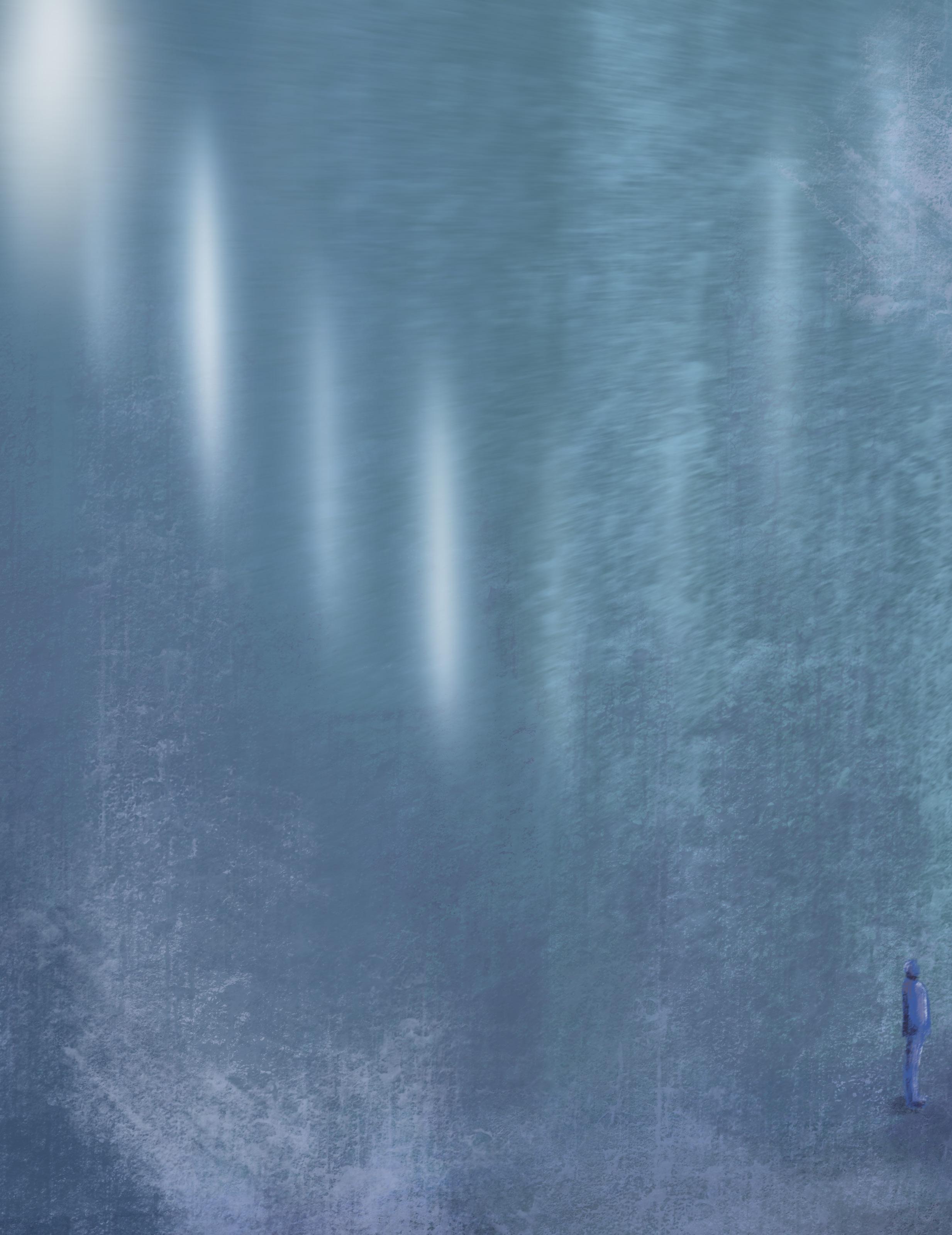
— longing that has evolved into acceptance. this body is a vessel and one that has memories pressed into my skin like clay. my world is quiet but not strange, isolated but not companionless or lonely. i have made friends of the planet and conversation with the earth’s chirp and hum. here, a murmur kisses the tops of that rolling green where we once laid, side by side, angels rooted to earth’s core. i press my ear to the ground and hear her command, slow and ancient, but i am unafraid to —
— watch as the hungry night drags the sun down to her feet. Vision and head clouded, she stumbles, drawn to her knees like some unintentional prayer. Gravel leaving moon-shaped dents in her hands, these scraped palms bring back playground memories. It’s enough so that she can almost taste that bitter and metallic rust on swingsets, the sand of the creek bed that must’ve gone bone-dry, all these cobwebbed corners. She tilts her chin up, a compass towards a gathering darkness, closes her eyes. Inhales deeply as a quiet grief reaches cold, outstretched fingers out towards her heart. Then, ribcage full, she hears it. Someone’s soft exhale. And she knows —
— time not as a puppet master or a reckless god but as a greater force. i have learned to embrace Her when she comes knocking and let myself be swaddled in that once terrifying warmth that whispers of heavy eyelids and a long sleep. to children of open mouths and wild hunger who are tied together with scraps, we are not born wise but born bare, forced to learn a difficult patience. forced to lie in wait for —
— something calling out to her. The earth has spoken and for a moment she only knows how to be fearful. But greater than her fear is her hunger, a hunger for sage counsel, warmth, what she can only describe as an eternal girlhood. The presence with her swells at that last thought, gentle but firm, and suddenly she can’t help but think of water slipping through cupped hands, and rivulets of sunlight running through rafters. A whisper of surrender, and a breath of deference. A hum grows in her ears not unlike a summer song: Listen, something—or someone—says, and then turn —
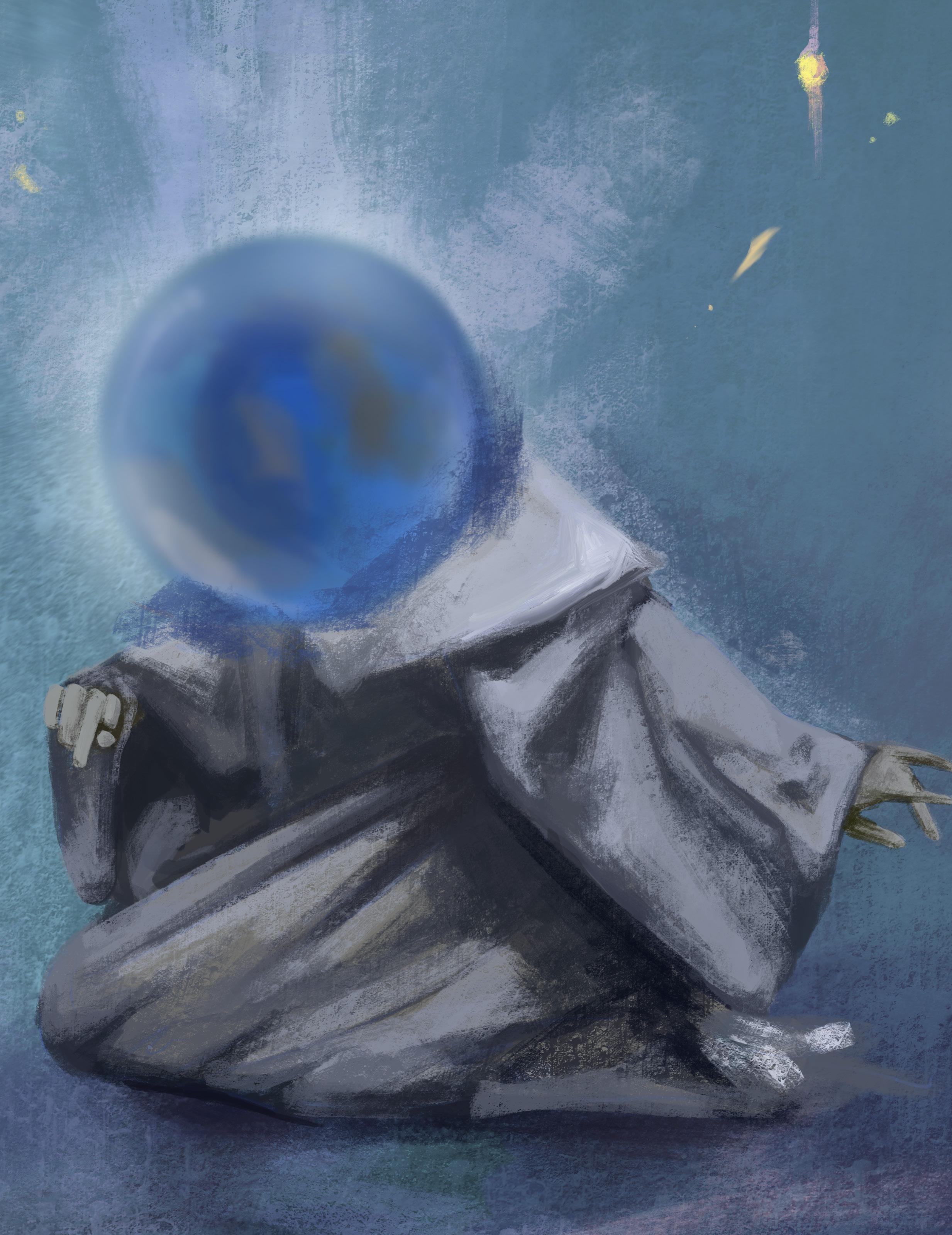
— to where i hover. i feel you now as you drift closer, untethered one. soften those clenched fists, let me envelop you in my arms and guide you back onto a fabled path towards these hollows and this hush. as i reach forward to take hold, your blurred edges come into focus and i know that i am looking into the soul of a dirty and radiant and trembling creature. i tell you only truths: that to long for is to love, that this homecoming is slow but certain, and i watch as understanding dawns in your doe eyes. you reach back, less desperation than instinct; something primitive stirs awake in my chest and i realize, in this breath we share, that there is a pulse thrumming with a red, undying energy in my veins. dust kicks up under us. our heart pounds —
— there is no other language or noise or being — — and i return to myself.
Lauren Sun is a Seattle and Los Angeles-based writer specializing in storytelling and creative nonfiction. She finds inspiration in nostalgia, generational and cultural dynamics, and the role of art in introspection and self-understanding. Lauren is currently studying Mechanical Engineering at the Viterbi School of Engineering, University of Southern California.
Lucy Chen is a Shanghai and Los Angeles-based designer interested in interdisciplinary forms of design ranging from printmaking, digital arts, and 3D design. Coming from a fine arts background, she seeks ways to express her creativity through experimenting with a variety of mediums. Lucy studies Media Arts and Practice at the School of Cinematic Arts, University of Southern California.
ALANA PARIS
ALANA PARIS
ALANA PARIS BENNETT
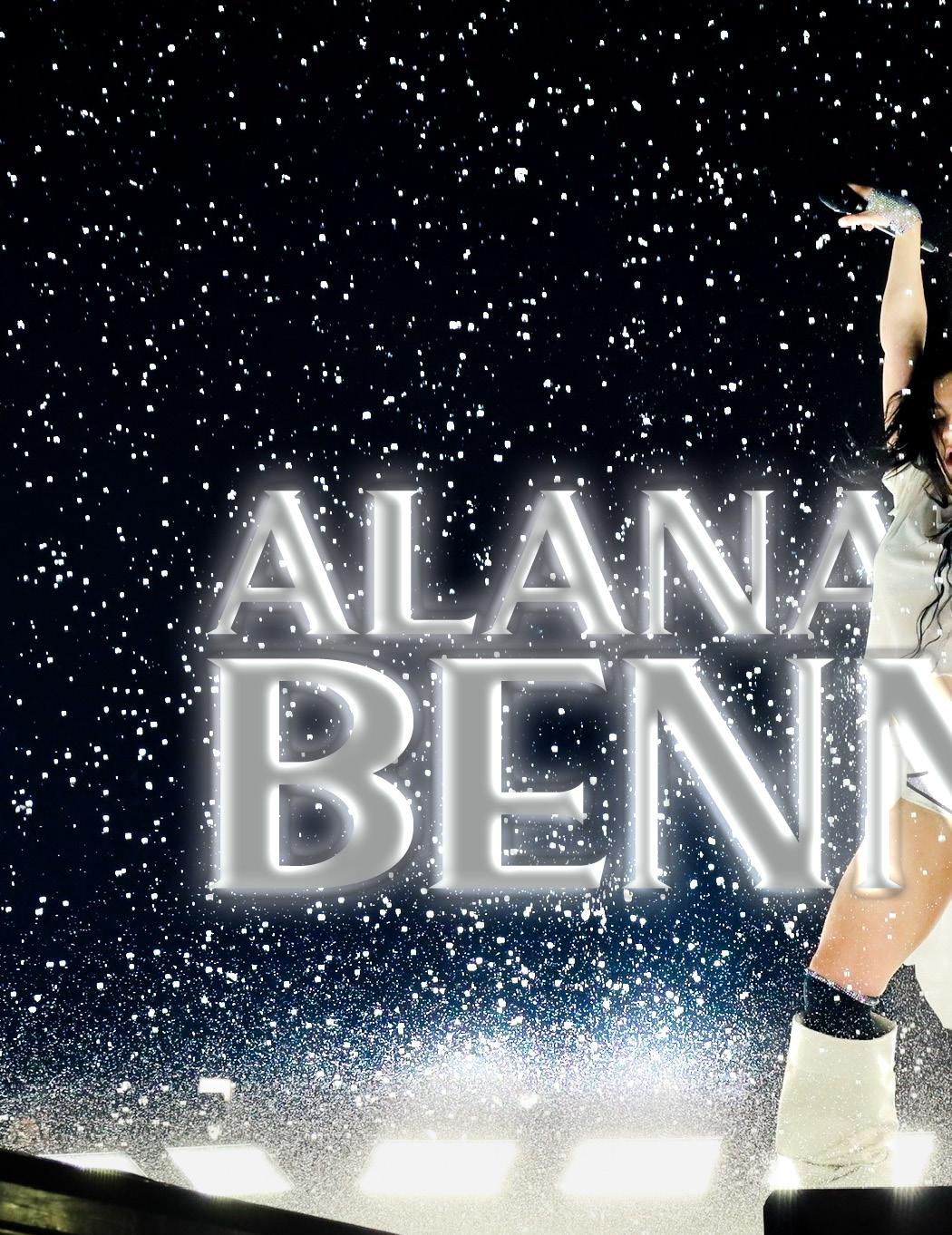
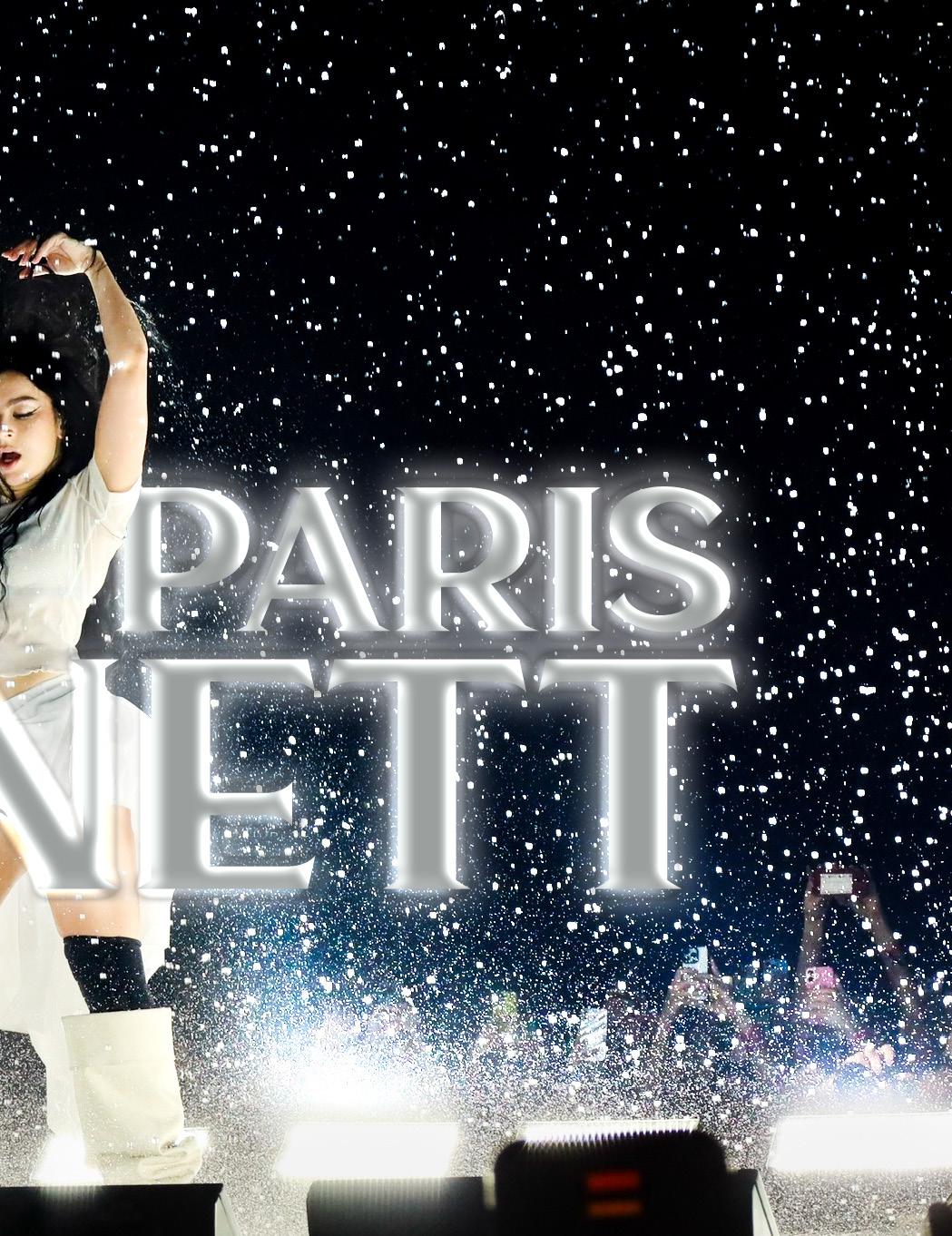
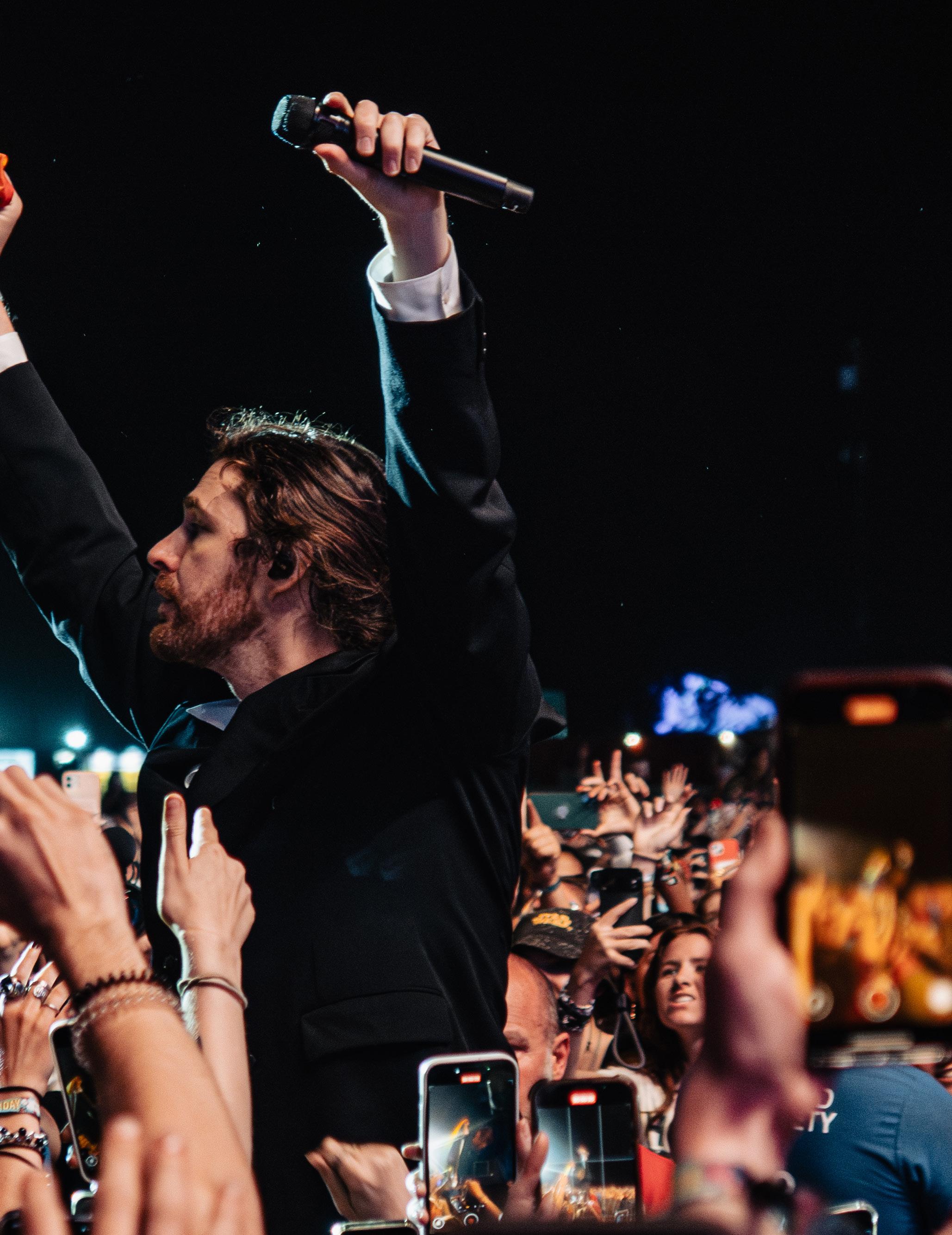
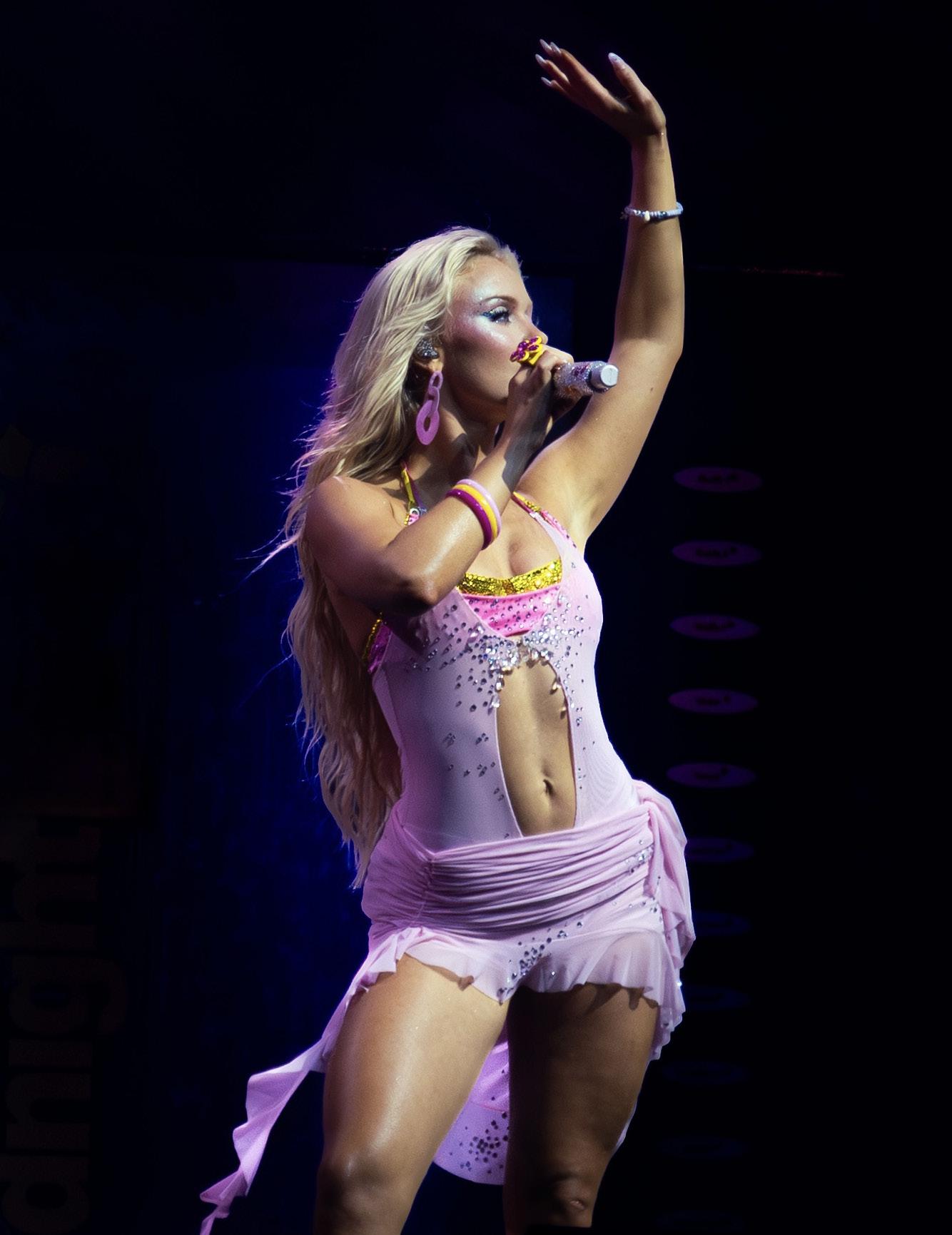
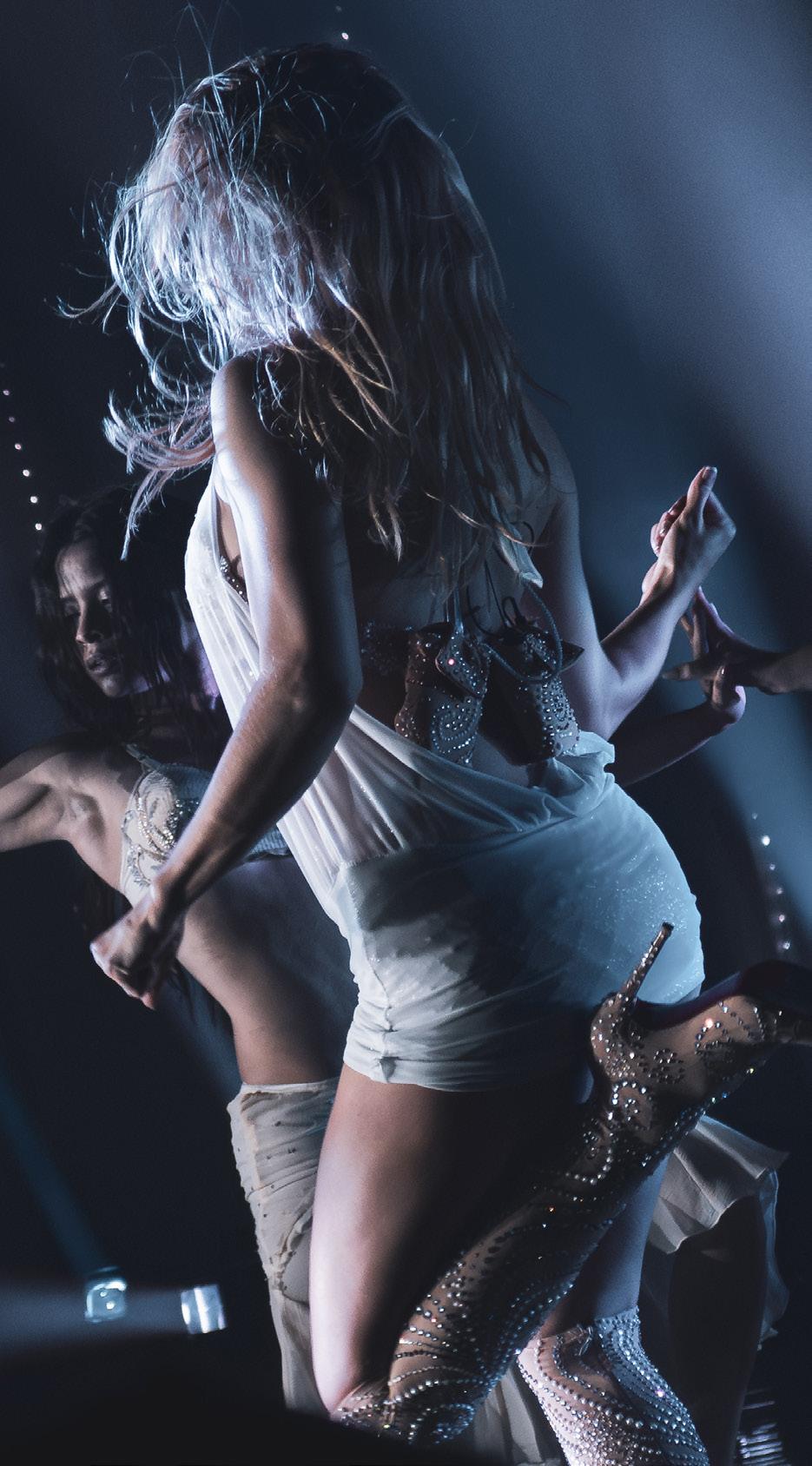
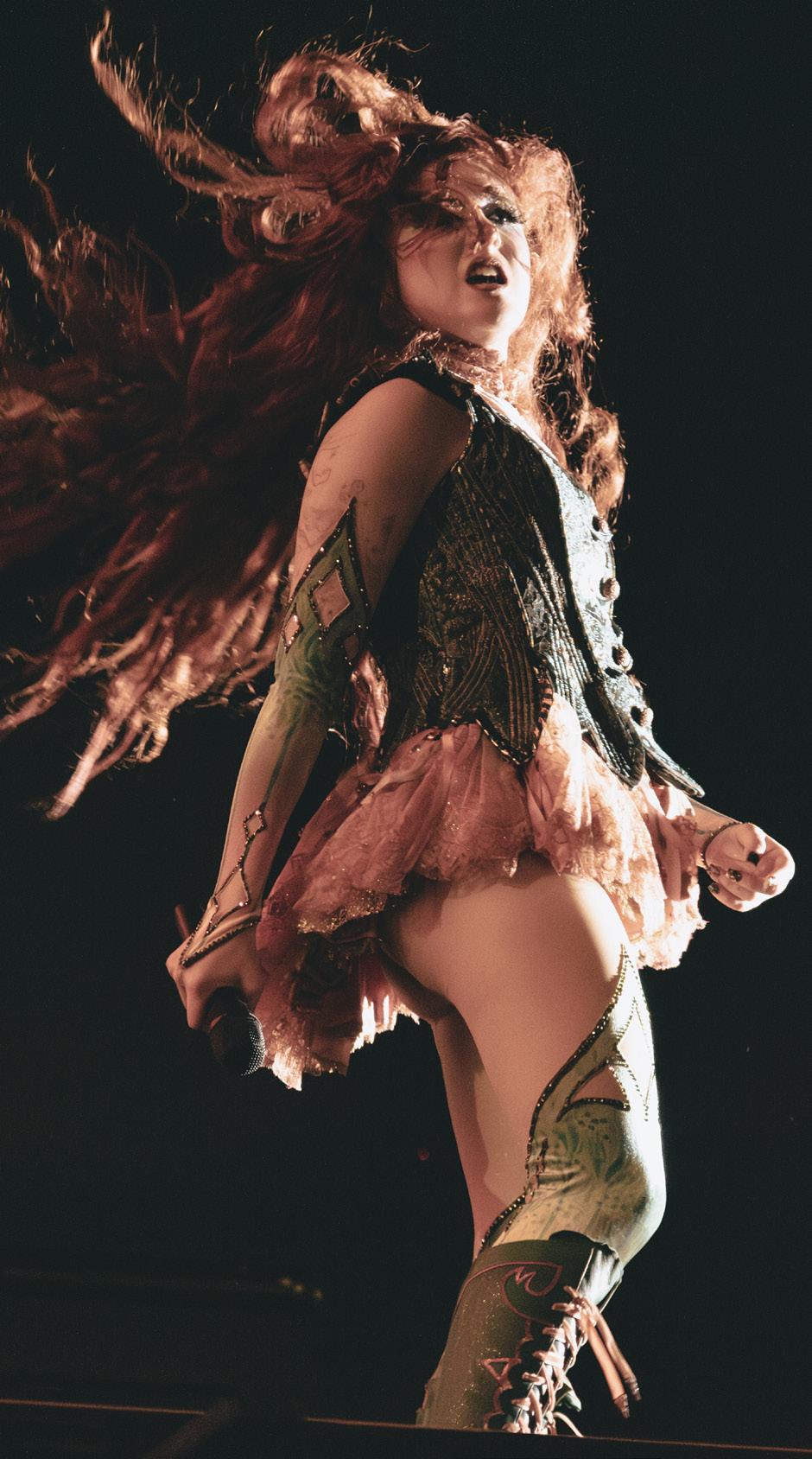
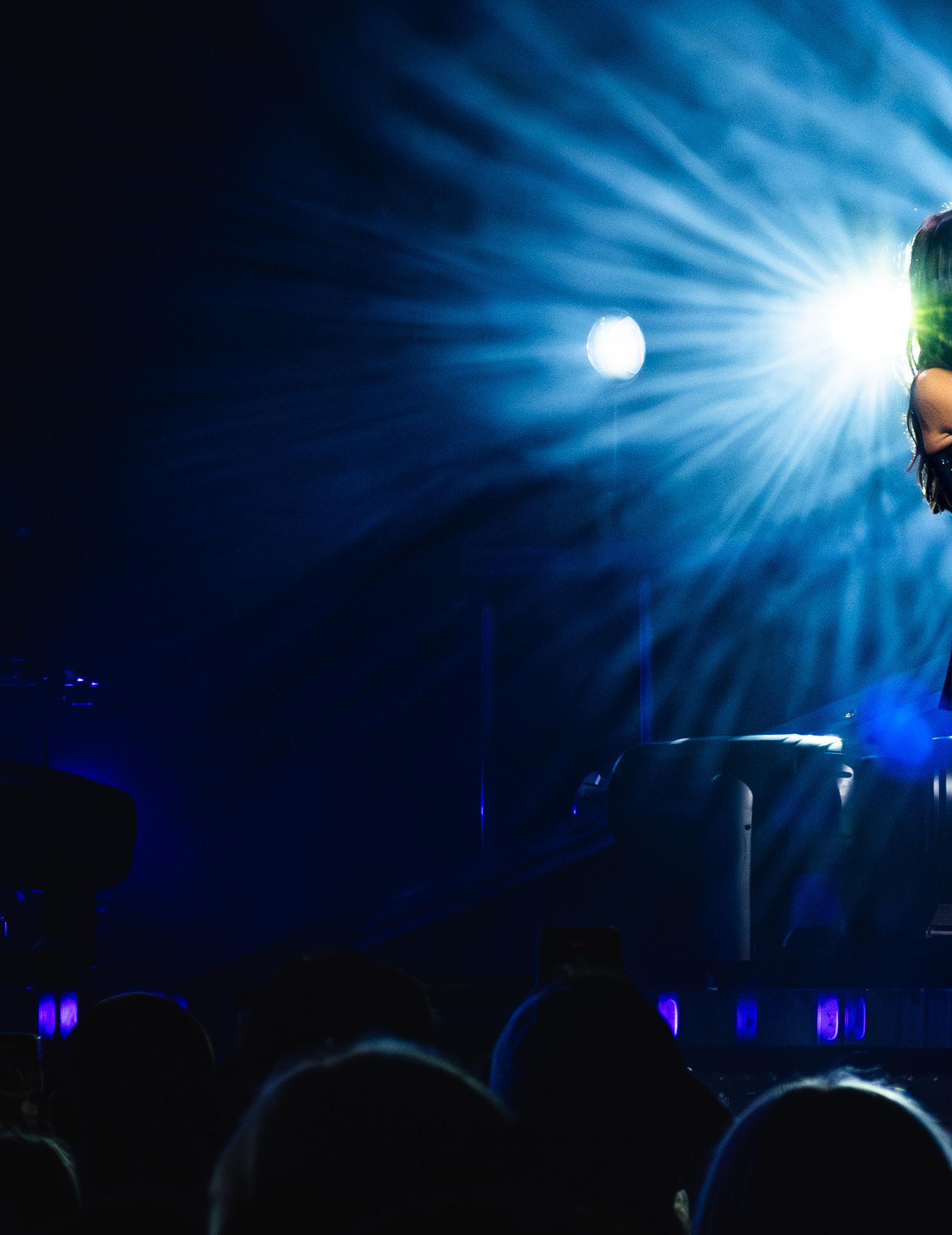
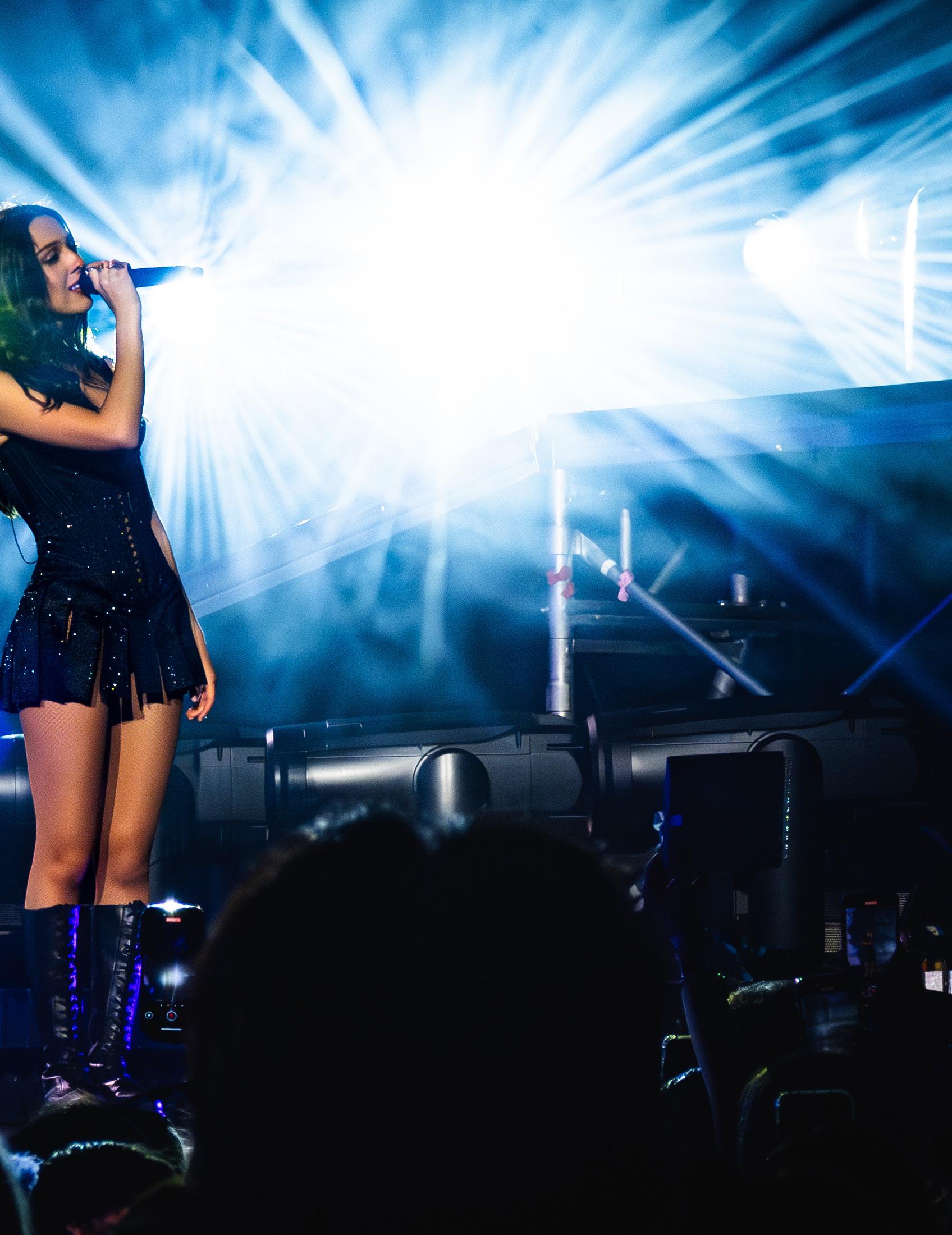
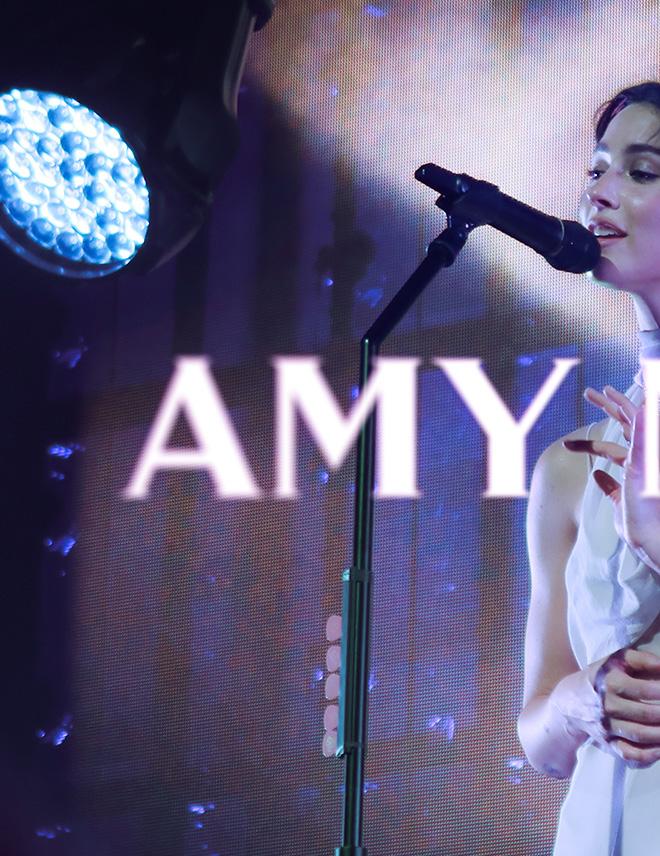
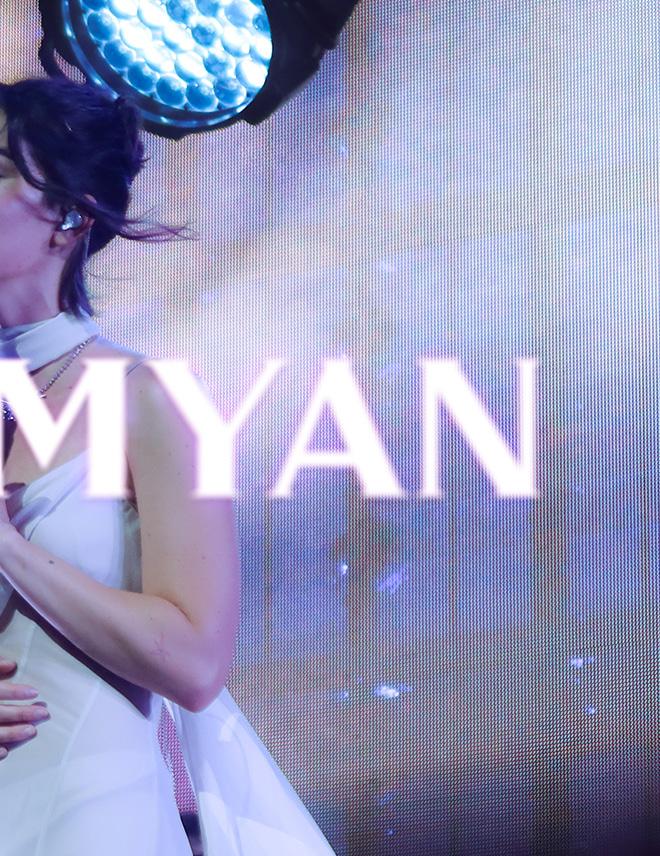
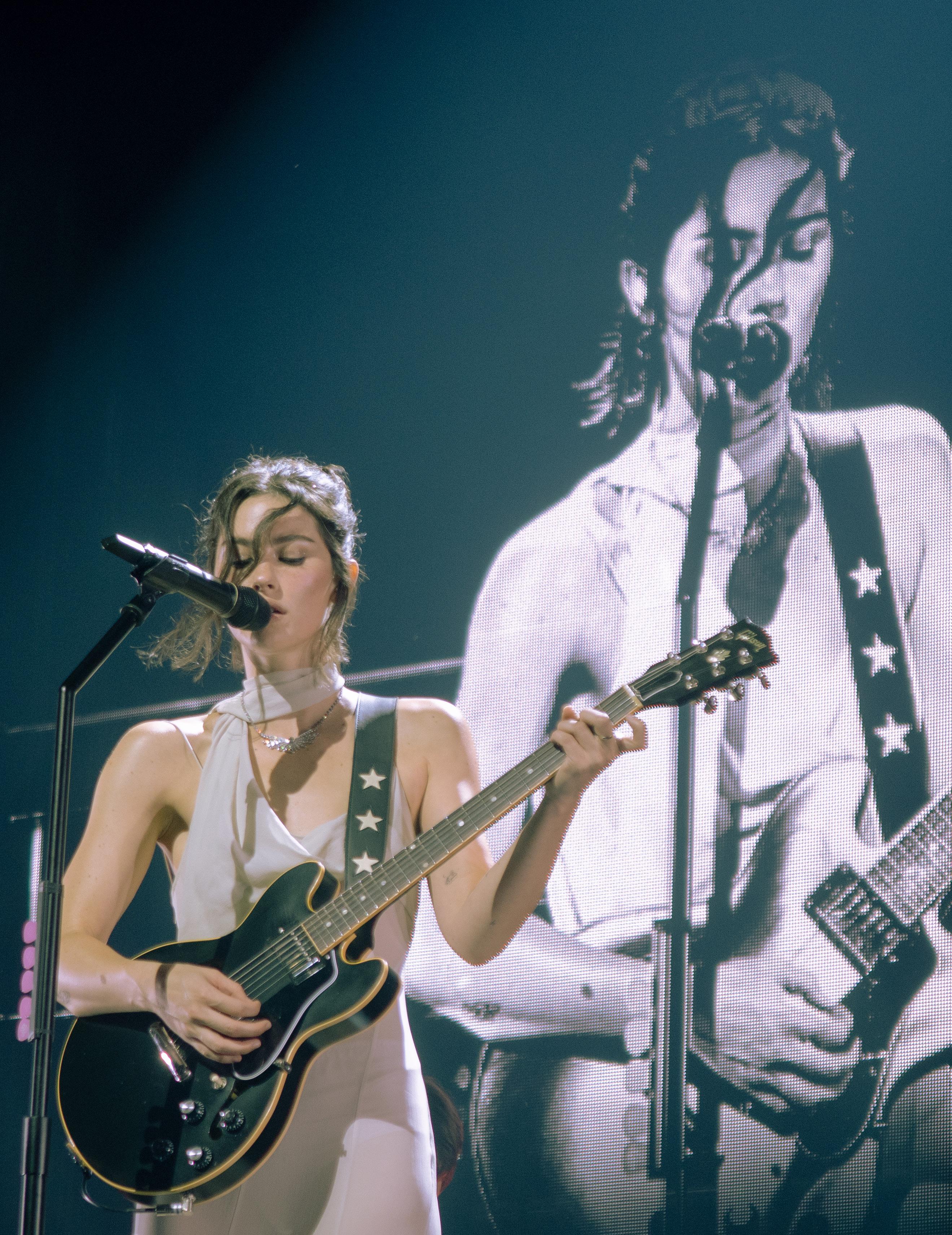
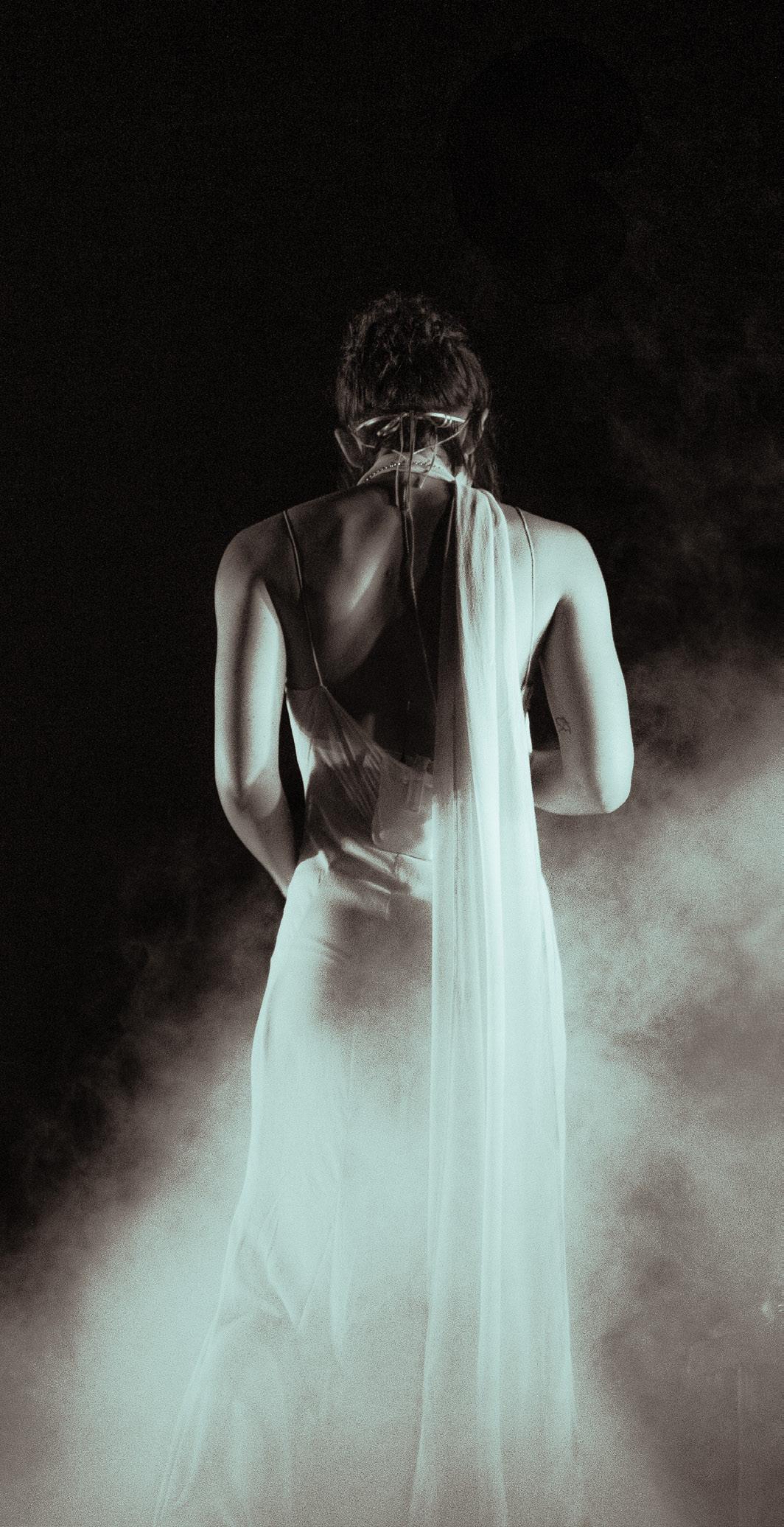
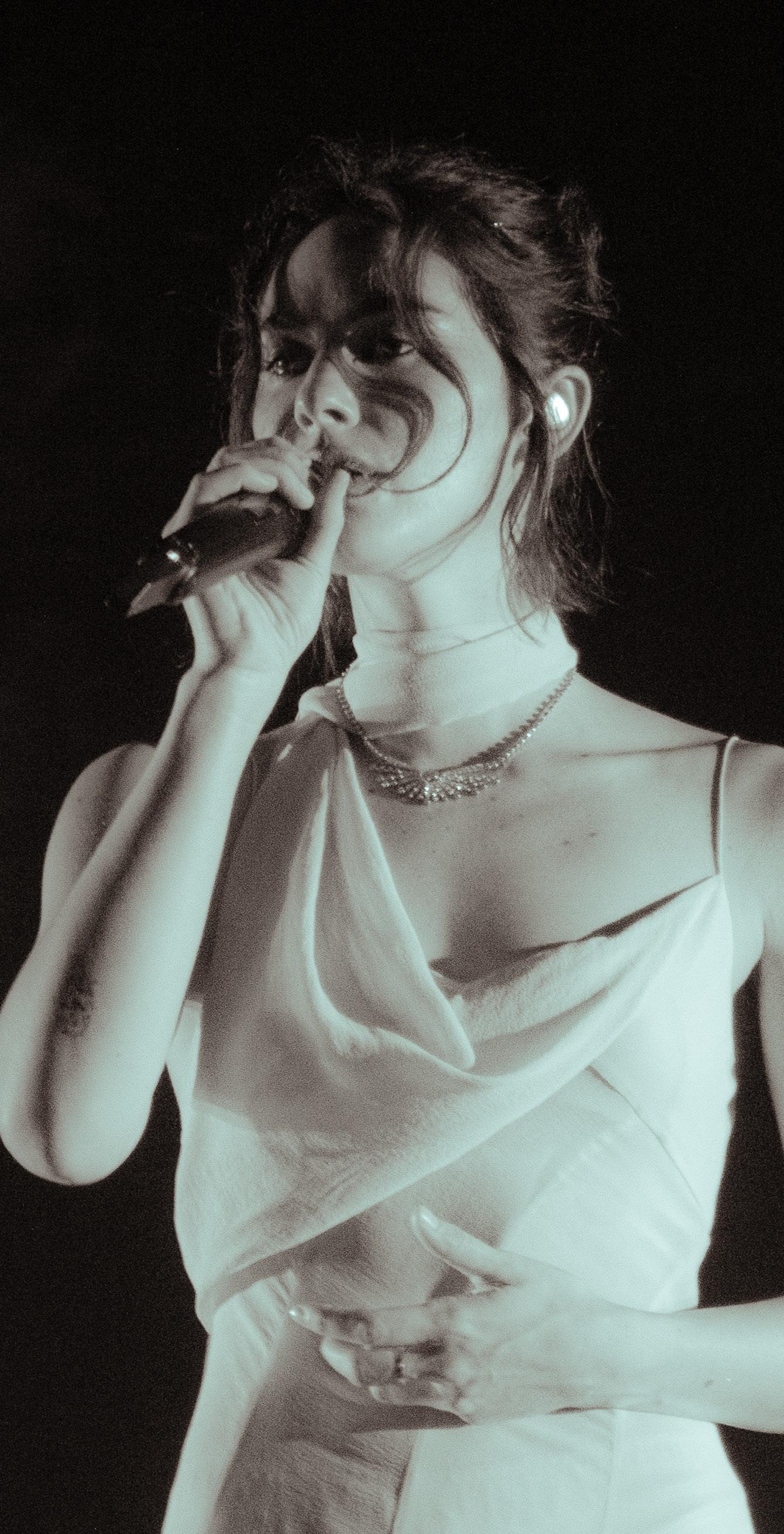
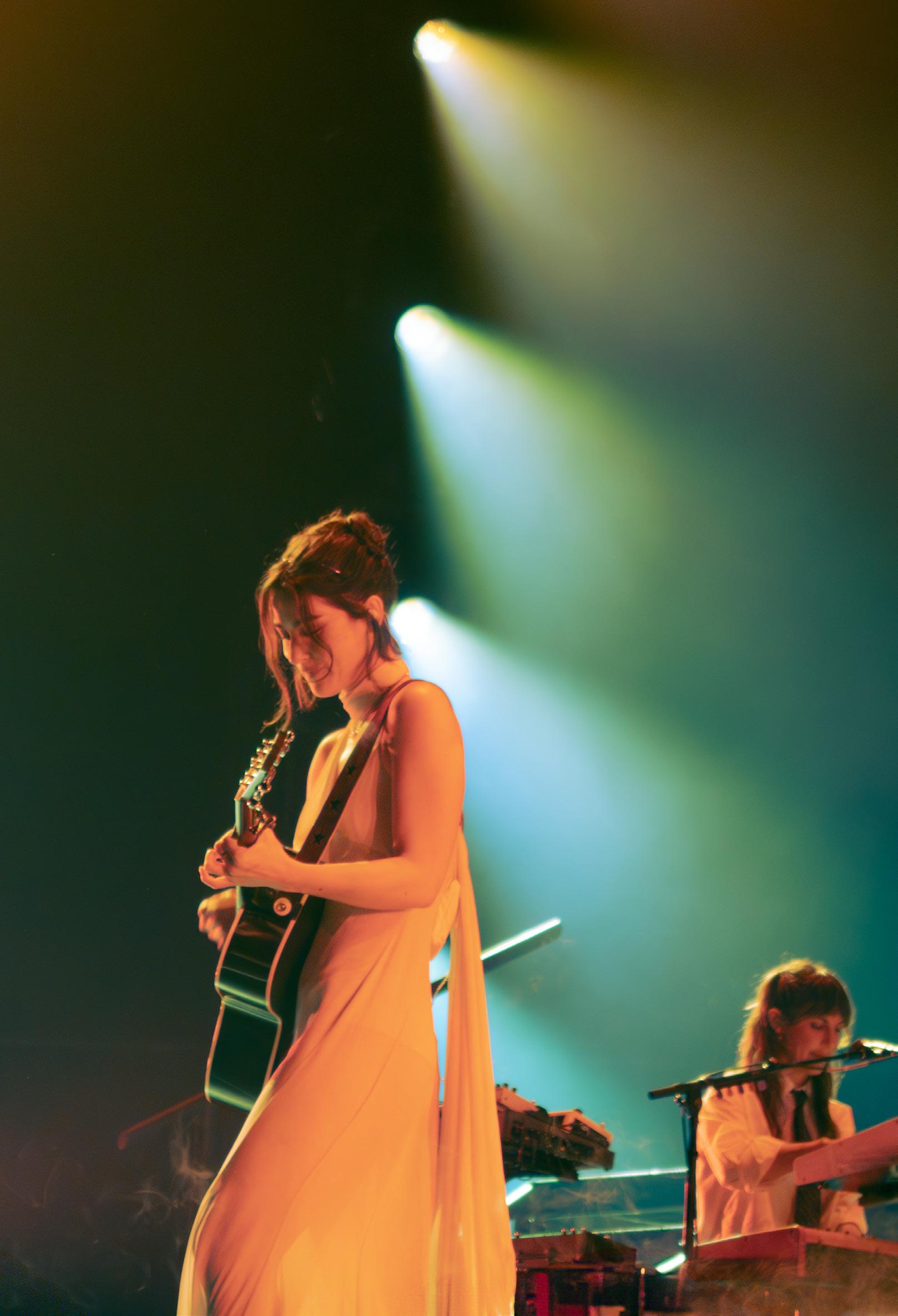
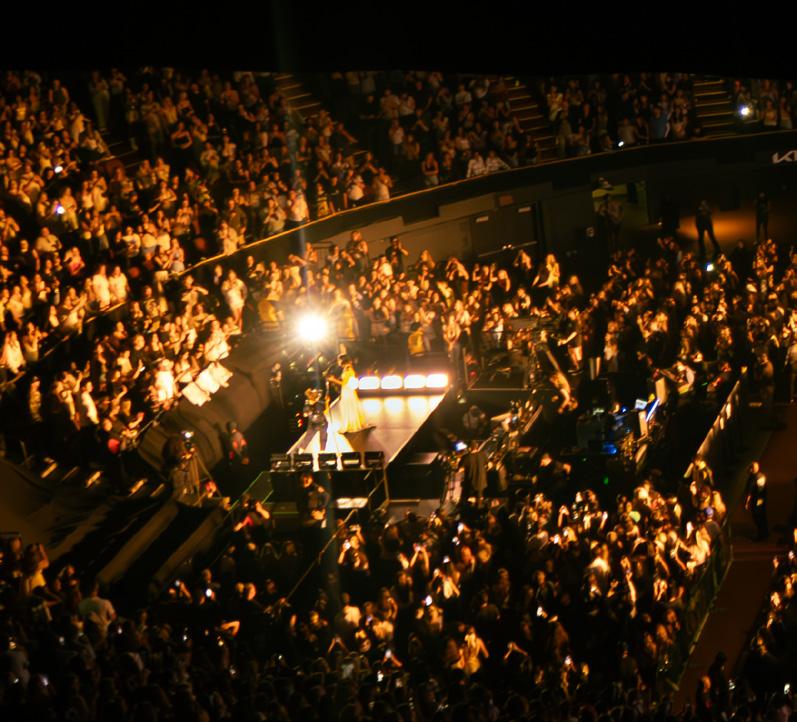
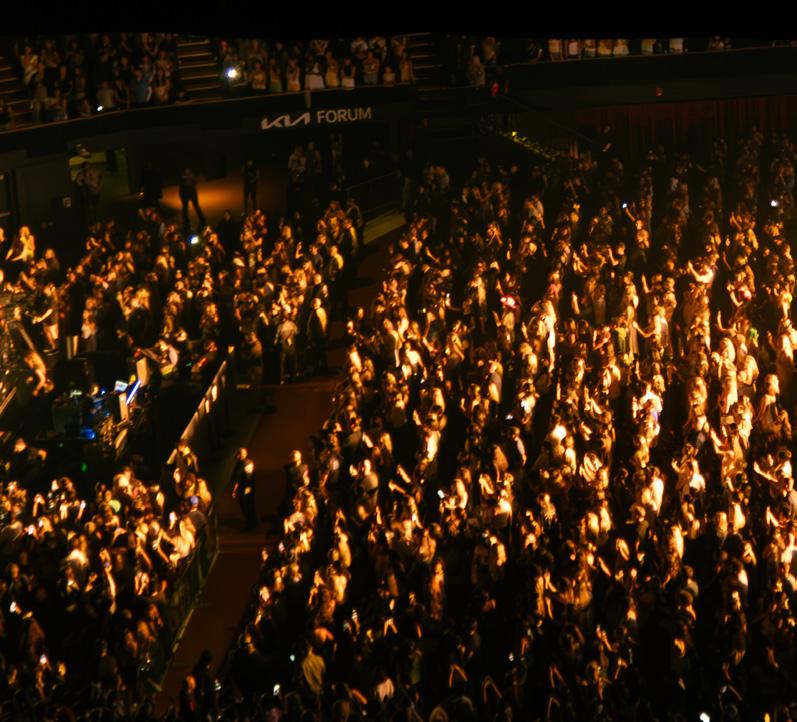
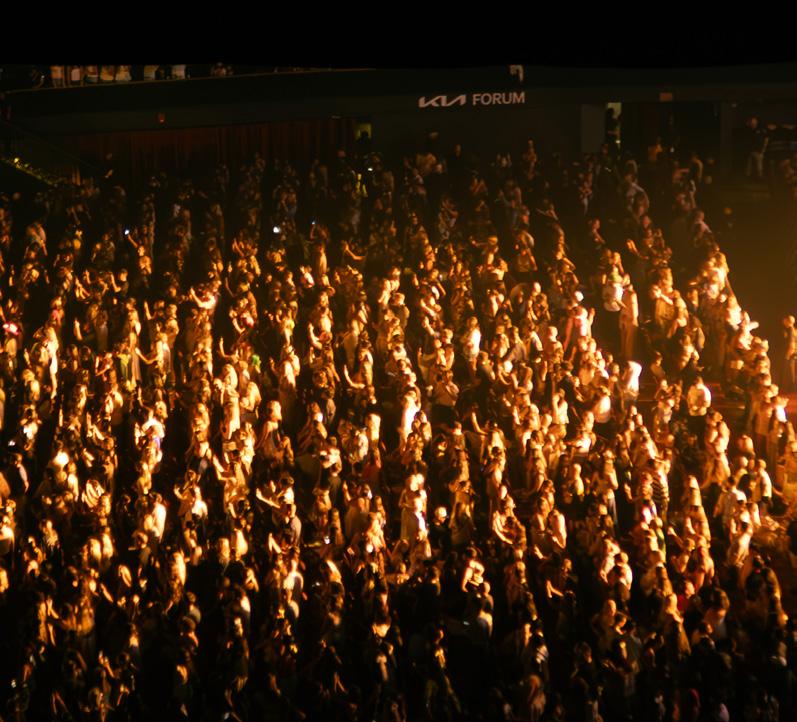
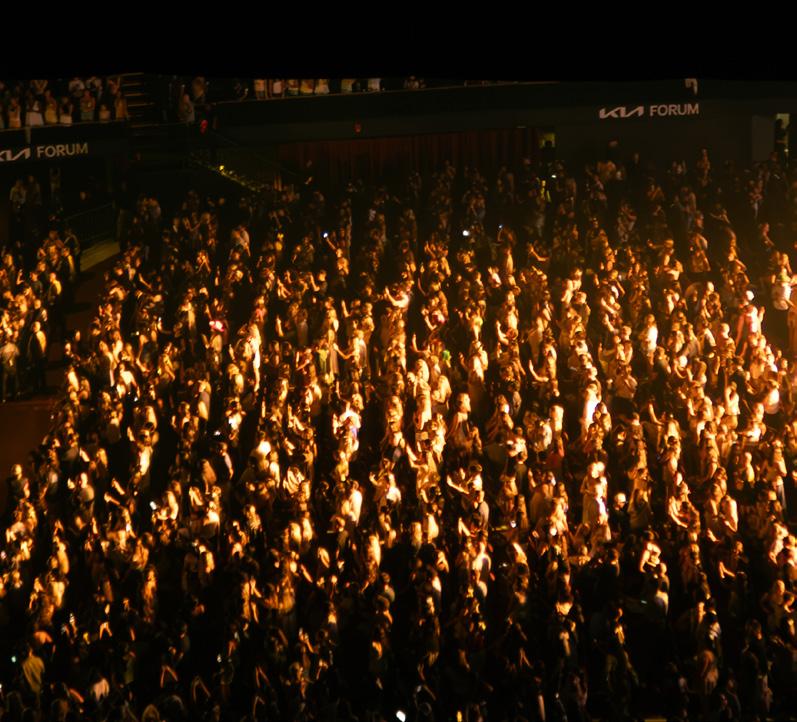
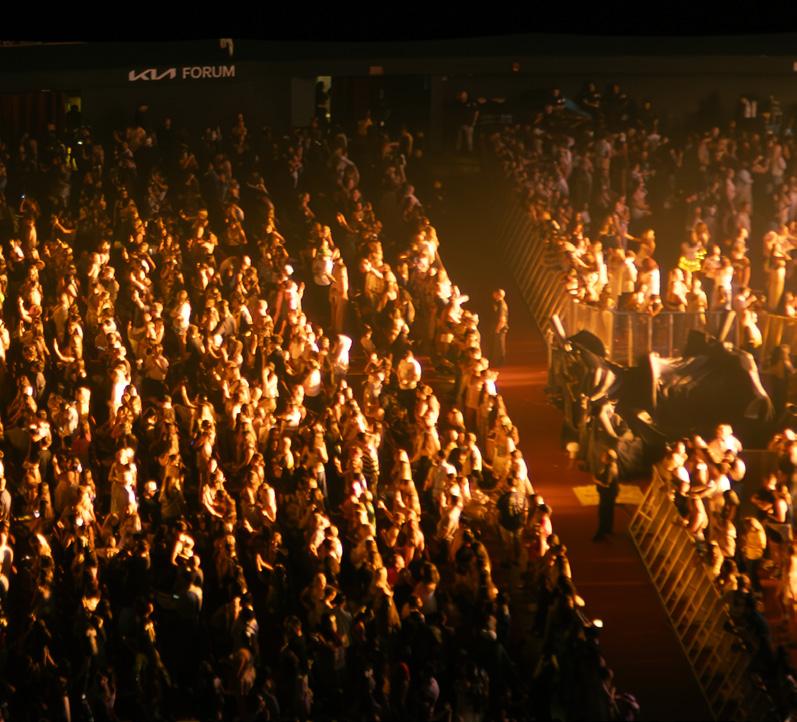
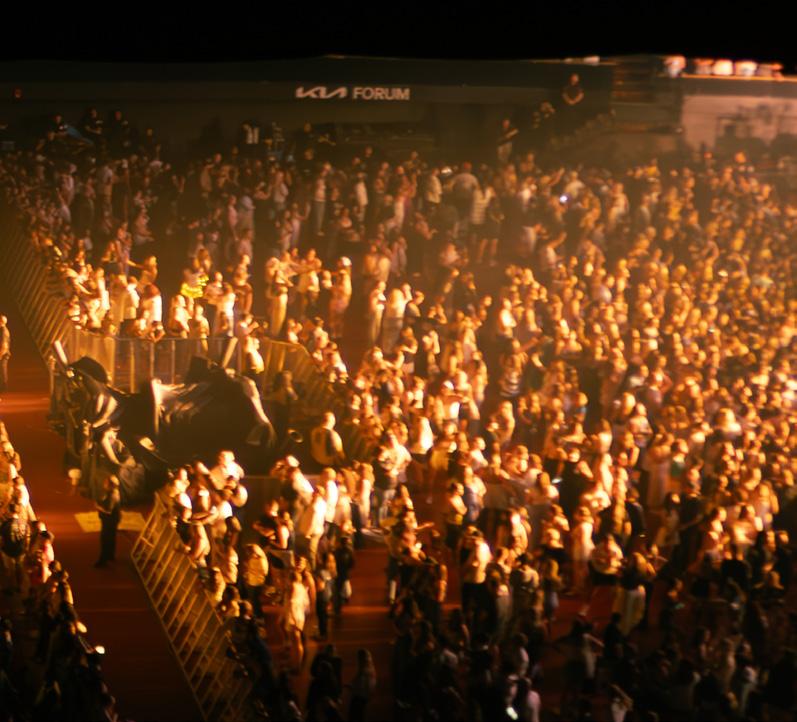
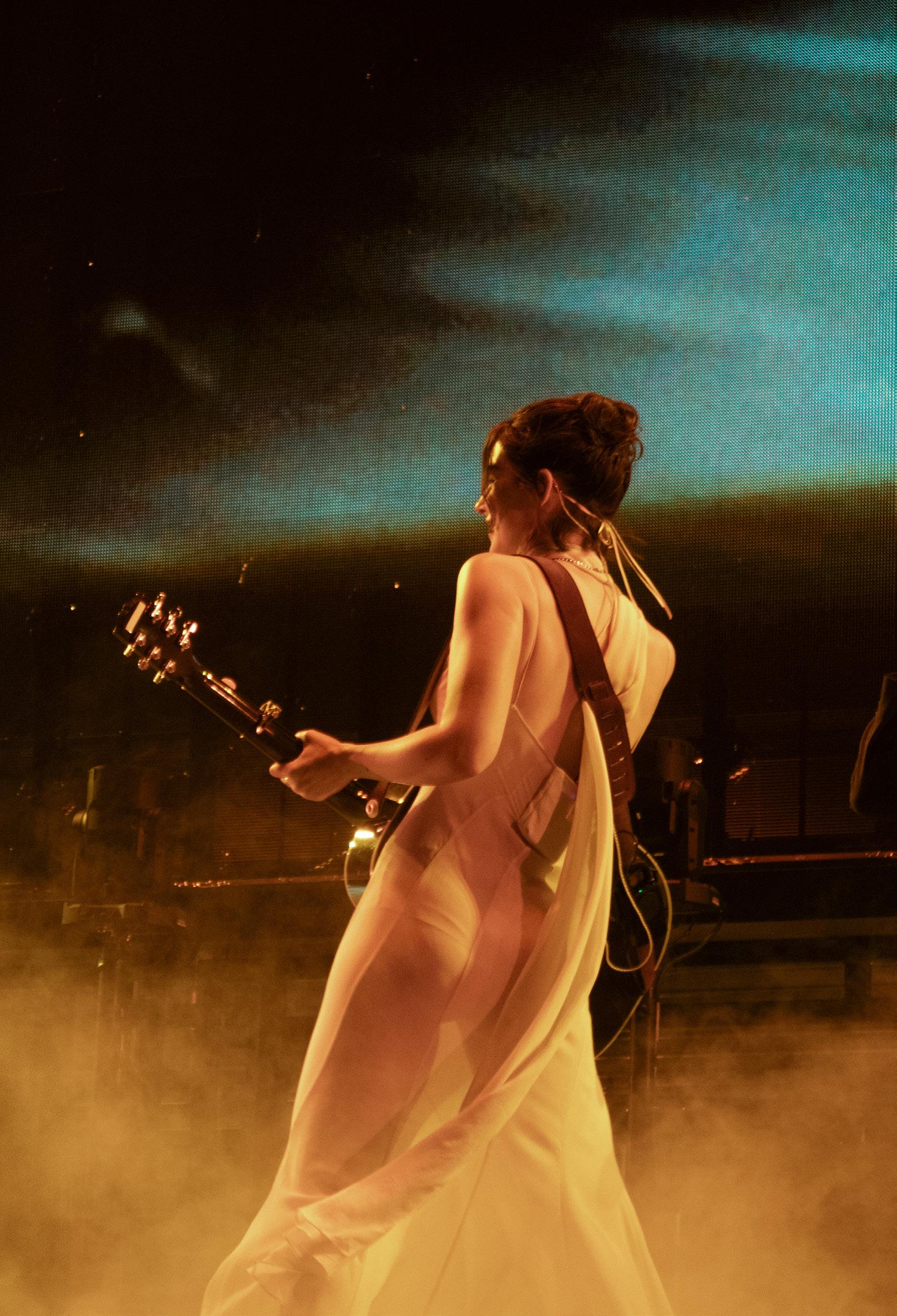
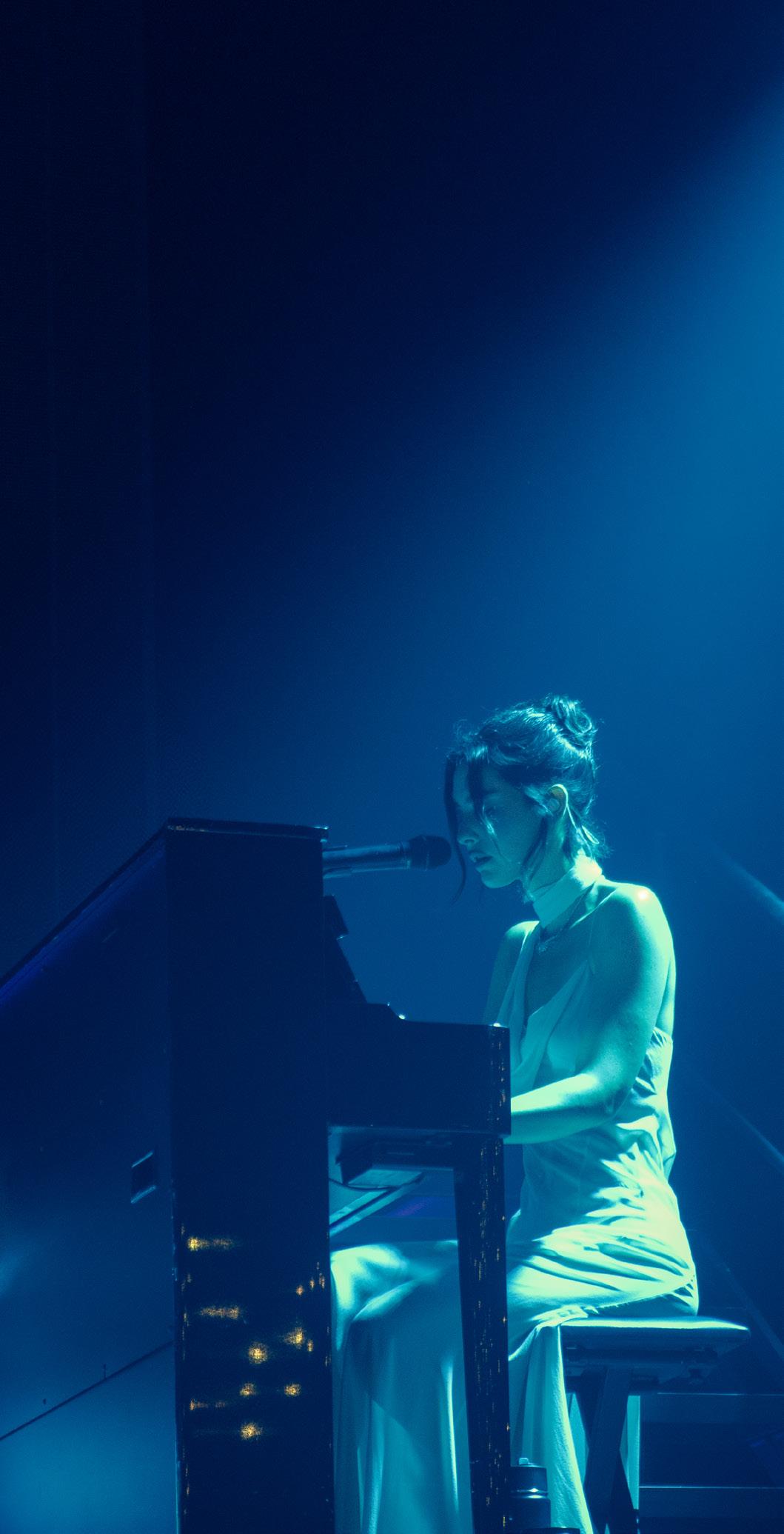
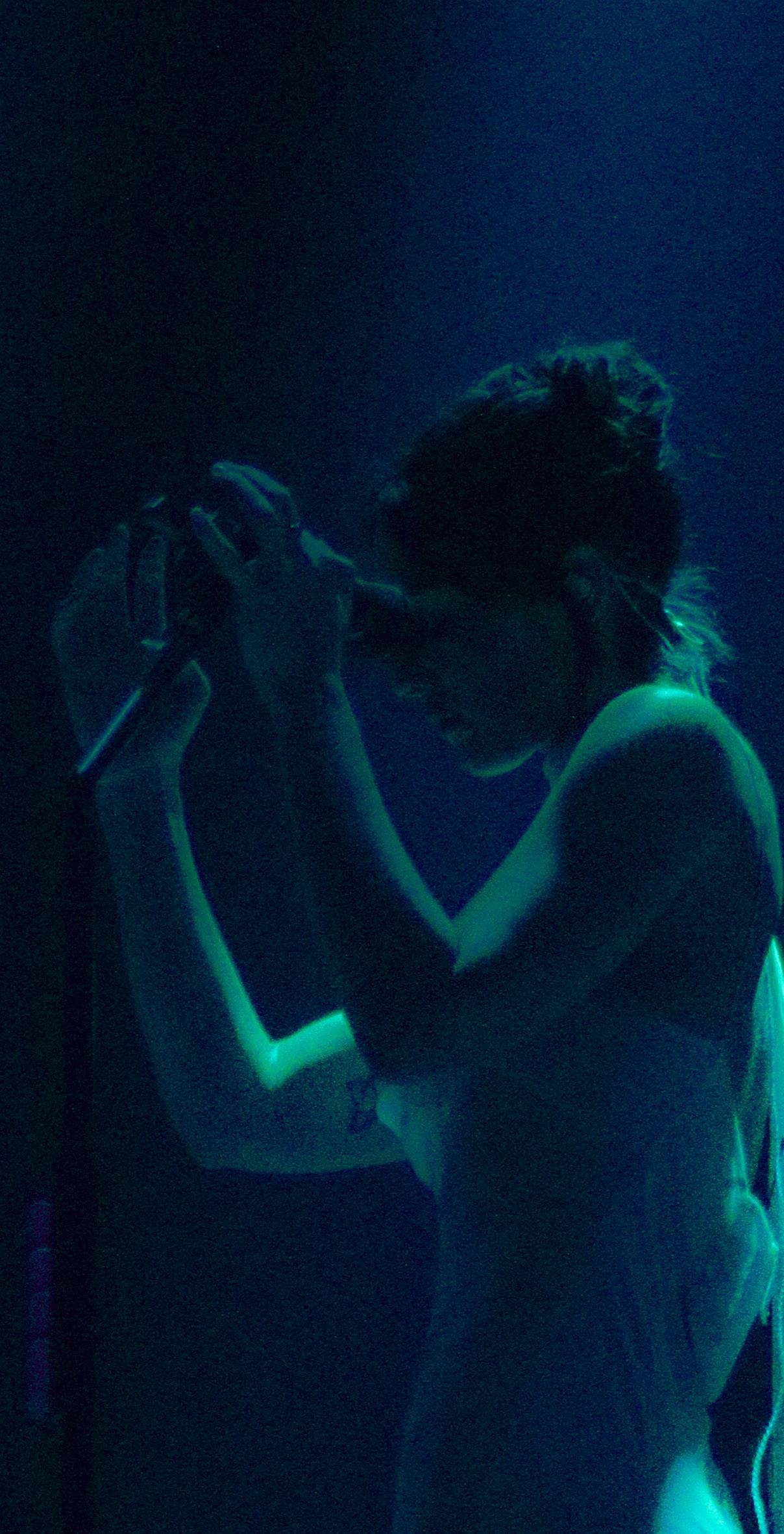
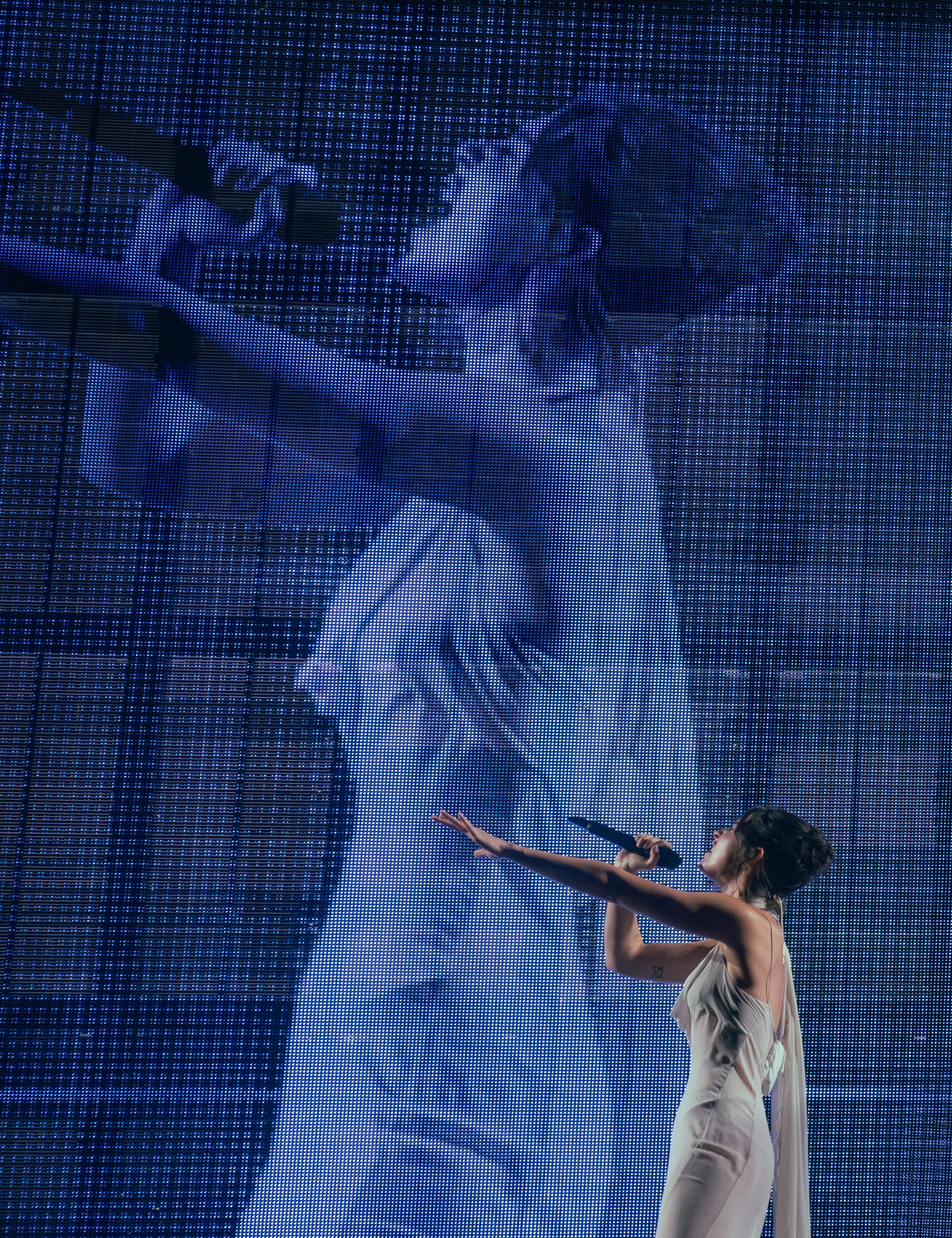
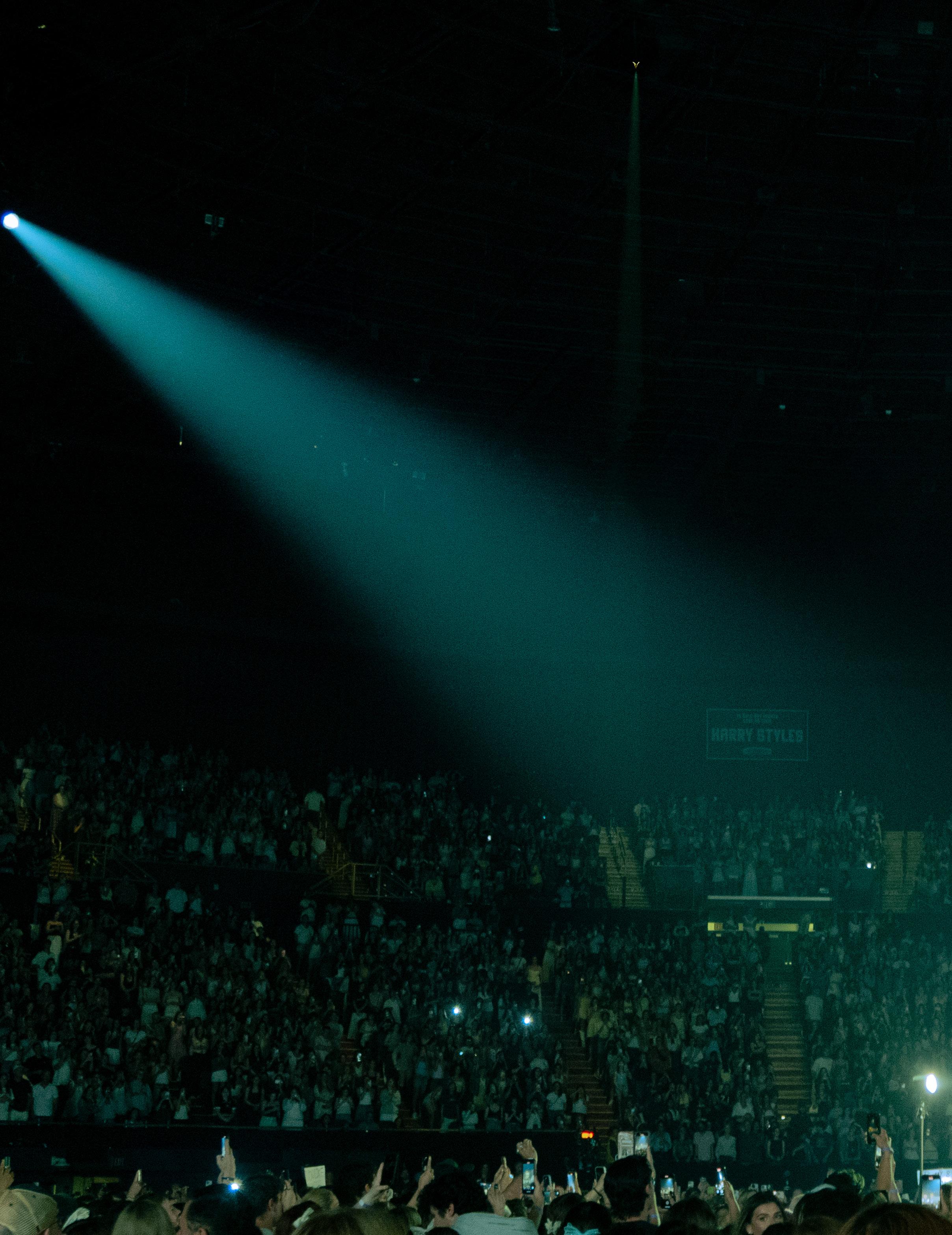
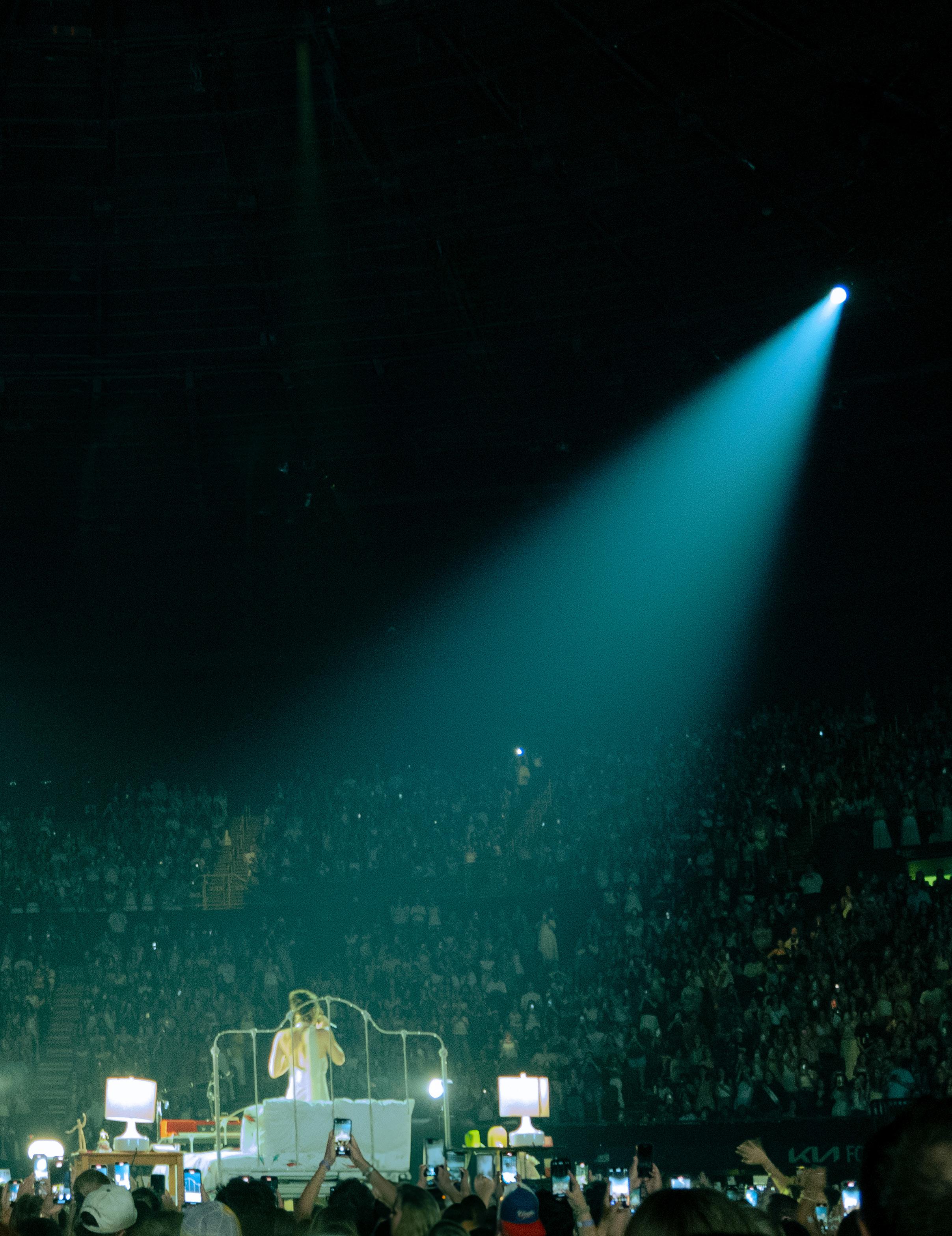
Alana Paris Bennett is a London-based but New Zealand-born and raised music photographer. She is self-taught, honing her skills while on the job, which in such a high-intensity and fast-paced environment like a live show, forced her to learn and adapt quickly. Since moving to the UK in 2024, she has built her portfolio shooting a wide range of musicians. Her style aims to showcase interesting movements and colours, and further the story the artist has created through their performance.
Nicole Leihe is a Bay Area and Los Angeles-based designer and 3D artist. With a love for storytelling, she aims to convey meaningful narratives through her work. Nicole studies Game Art at the School of Cinematic Arts and Economics and Data Science at the Dornsife College of Letters, Arts, and Sciences, University of Southern California She also serves as the Creative Director for Haute Magazine.
ALANA PARIS BENNETT
ALANA PARIS BENNETT
IThe rich man believes he is the face of the revolution, That the artists he commissions will consider him kindly, or that perhaps, to be immortalized on canvas is a triumph regardless— after all, do the lowly not paint kings out of reverence? Is a “fear of God” not righteous and just? He ignores news of casualties; It does not concern him. He pays young women his indulgence Sundays after church and quarters in lavish ballrooms and entertains cries for equality— he nods along, emphatic, prophetic, Oh—Yes, this world is so unfair to the deeply misunderstood. Oh, the unbelievers want to strip me of my satin pillowcases, my servants, The excess I earned. The rich man hears cries For revolution, and he does not imagine the dead girl from Texas, the son who aches for his mother across countries, Or the woman writhing in red. He sings along, and because His voice is the loudest, he usurps the martyr’s song.
The rich man prays sitting down, a folding of hands so blindly self-effacing, a body wrinkled and hunched with the effort of performance. The “picture of masculinity,” if lenses were only blind eyes. His soft knuckles; his shirts, iron-pressed. Palms, red with carnal sacrifice, some modern stigmata. The rich man likens his necktie to a noose, a guillotine, so if he should choke, he may blame the firing squad, homogenous hatred, these dissidents with loose lips. He may bow his head, but the rich man worships a god of revolting revolution, of lawless massacre. He makes idols of the bones of the common man, Incised, seized, and displayed behind panes of glass and exhibition labels: here lies the nameless soldier (who did not choose to fight). Here lies what remains of him.
His face, sharp
Like an omen, dark around The parts where I used to lay—
His hair, teeth, eyes. I hold this Ache between us like a Tourniquet, a pulsing body, bleeding through, and the pressure builds, And you don’t stop and at least it’s bleeding. So it all runs red—
Red like the avalanche of sand, Red like the expanse that shapes
My midwest, red like heaven, red
Like the watching eyes of god, perving Through metal and rubble and pine; Red like the tongue you bite blind
And the scratched record, and the burning paperback, and the last day on earth; red like anger, Like anything, like anything.
His face, bleeding
Into gray, into dusk; bleeding into
His pillow, bleeding into Anything, dark around the Parts where I used to pray—
At least it’s bleeding—
His hair.
His teeth.
His eyes.
I wonder if I am something tangible; Or if this body exists with unyielding effort To embrace my soul. I hope I am Something lovable but after you know Me I fear I will be Nothing at all.
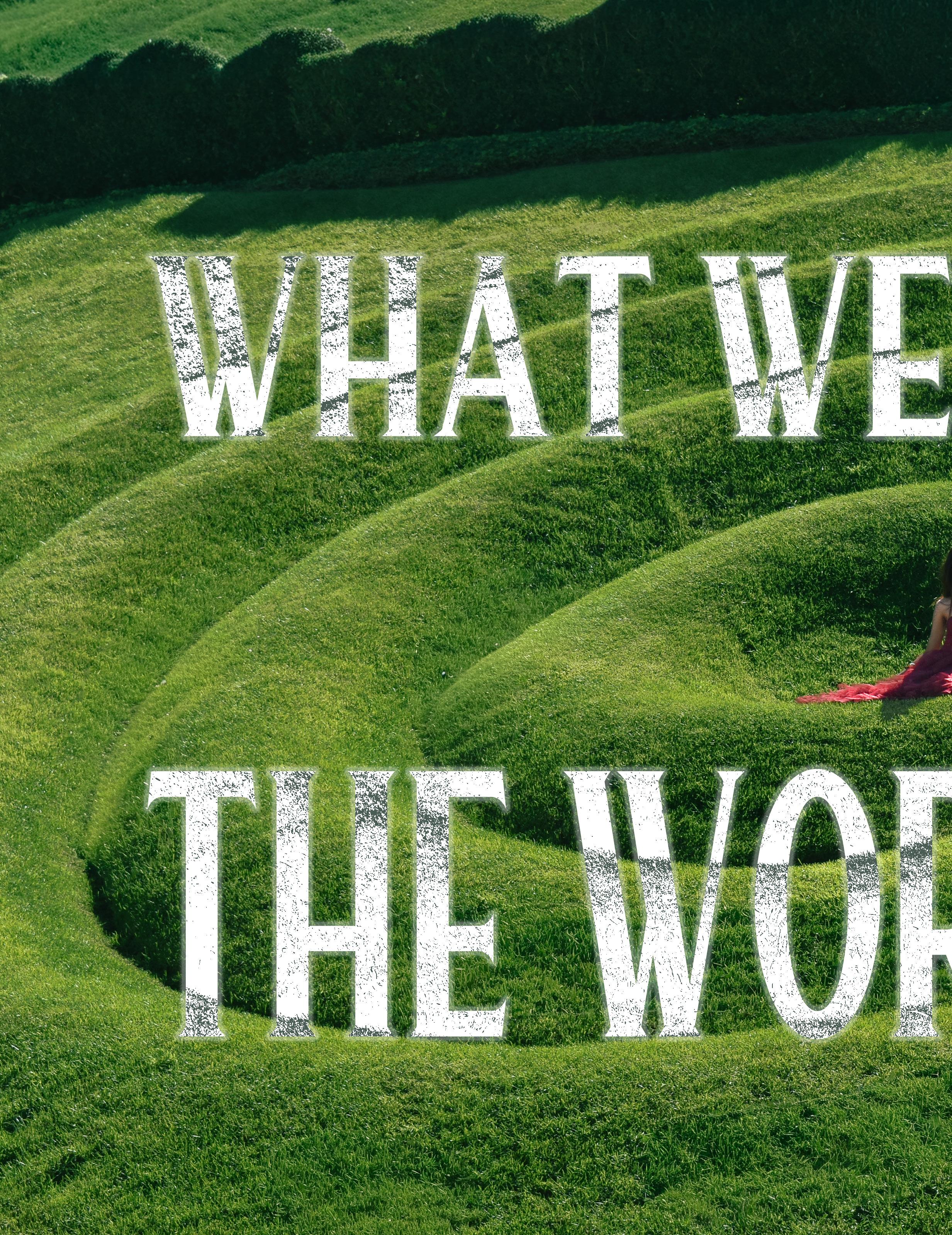
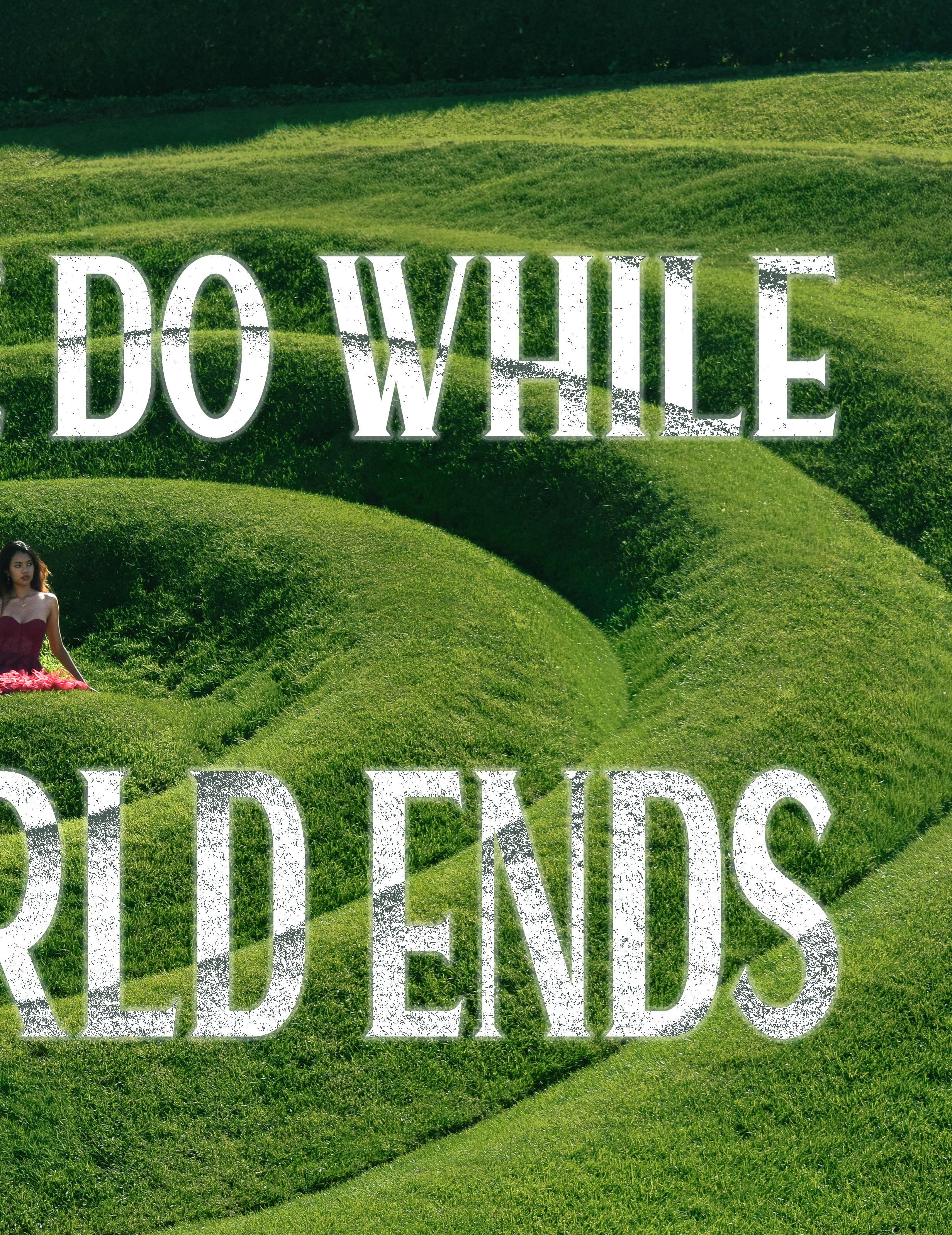
WHAT WE DO WHILE THE WORLD ENDS
Waiting to become something terrible, I make it true anyway. I know not of grace
When I sleep. I try
To metamorphosize, but hollow, I wake And gauze the gore— Worth healing. You made me In secret.
How much I strained until you killed The last thing here. I am An outline of something once thought to be beautiful.
see, now, that you are an absence of breath. you can chew words but cannot swallow and so you must cough them back up but There is no air and there is no bile and You do not have eyes to dry. you will Never be made of matter. Lament my body and make ears to hear me gloat. you are cursed to play god until everything but you erodes, and then, steeped in black and earth and nothing, you will pretend to know Him. You may even cry out. Mold knees to lower yourself and beg. Call the hard exoskeleton skin, call the din a voice, And the echo, a soul. And wonder Why you are the last thing left. This is as human as you will ever be.
VThere is only the afternoon, Dark and brooding
(like the boy on TV you used to pause the show for), (like the dead trench in the depths of the Pacific), (like the headlines and the waiting and the fallout)
And there is only the sky, Ripe with orange
(like the fruit your mom peeled and spread over a paper towel), (like the tan of a long girl from California), (like the sun through the smog of a forest fire),
And there are only the trees, Mighty and feathered
(like the birds flying south for fruitless winters), (like the wings you molded from wax and time), (like the thing that perches in the soul and
Makes the artist want, and the preacher talk
And the player sing, and the dog go belly-up; There is only the easy rhythm of a sleeping breath, And the repartee of old friends, and a forehead kiss, And the faded photo strip, and pining, and perishing, and the heart of a girl in church, and the way the light refracts Through stained-glass when you ache for god— And the stillness when you don’t).
There is only the body
Of the earth, uninspired as an afterthought,
Like the passersby who heard “wolf” repeated until the word meant nothing anymore.
Charlotte Hass is a novelist from Denver, Colorado. She loves a morally ambiguous female character that would be universally hated if she were a man. Her work has been commended by The Adroit Journal and Scholastic. Charlotte studies Writing for Screen and Television at the School of Cinematic Arts, University of Southern California.
Pauline Forstall is a photographer and filmmaker moving between Los Angeles, New York City, and Aix-en-Provence, France. She creates images that explore connection, tension, and the poetic choreography of human life through high-contrast imagery, with a signature palette of deep blues, greens, and stark black-and-whites. Pauline studies Film & Television Production at the School of Cinematic Arts, University of Southern California.
Brandon Taliaferro is a Portland and Los Angelesbased artist and graphic designer. Brandon creates vibrant, colorful works across multiple media and currently studies Design at the Roski School of Art and Design, as well as Psychology at the Dornsife College of Letters, Arts and Sciences, University of Southern California.
Models
Nikola Milicevic
Martin Petersen
Dallas Gardner
Nilanjana Sha Sudha
Joan Kristi Pandiangan
Charlotte Hass
KALEIGH HUNTER
Kaleigh Hunter is a Florida born hobbyist photographer now living in The Netherlands. After a long hiatus in digital, she took up analog in 2024.
Miyu Ikeda is a Tokyo, Singapore, Bay Area and Los Angeles-based designer and artist. With a passion to integrate design and immersive reality, she explores how movement and perception can be translated across mediums. Miyu studies Design at Roski School of Art and Design and Extended Reality Design and Development at Iovine & Young Academy, University of Southern California.
I. 姥姥
十六岁,我被嫁出去。 十九岁,怀上孩子。
在自己的孩子出生前 我没有童年。
细皮嫩肉的手招不来富贵。
下班许久,
那赤红的铁锈, 仍浸透在黄昏的味蕾。
我们送走她,只为给她更好的生活, 归来时,她身上满是风霜与恨意, 像条咬着项圈的狗。
只对父亲存着一丝感激--那个早已离开, 因出生好而养尊处优、十指不沾阳春水的男人。
她选择再次离去。
老茧也在我左手生根, 宣告它已残废。
我带着这残缺,度过余生--那是我失去的女儿 烙下的,最后一道绯红的印记。
I. GRANDMOTHER
I was married at 16 and pregnant at 19 and knew nothing of childhood until my own child. Even then, soft hands don’t bring in riches, and I could taste the crimson metal hours after I’d left.
We sent her away, boarding—a better chance at life—she came back old and resentful, a dog chewing at its collar, thankful, only, of her father, who’d left years before and had the softest of palms, because of birthright.
She chooses to leave. My callouses are dug so deep into my left hand I can no longer use it. I remain crippled and crimson as long as I live, a reminder of the daughter I no longer have.
II. 妈 / Mā
母亲总不在家。
只留下湛蓝而严厉的影子。
初潮那天,我在校医室, 独自哭泣。
她送我离开--我便决定,
此后的人生,
要靠我自己走下去。
For all the Uncle Sams and “We Want You”’s, it was the quiet lack of nationalism, of dictatorship, but also of passion, that left me yearning for spit and sweat and the dripping of the rain. The water here flows easily, silently, with no sense of spirit.
He is never home, never silent, entropic to a T—I learn that saying sitting alone at the grocery store as the white woman to my left lectures me on my unAmericanness; I am, apparently, Japanese to a T, nevermind the fact that I have never been to Japan—he returns only for food and love; would one call it love? That forceful gesture only a reminder of what I have now accepted as life.
She was born on a Tuesday, early in the morning, quietly, not fighting, almost dying—blue like the flag. They try to take her, and I show her, for the first time, rage.
II. MOTHER
Mother is never home and only stern, blue. I have my first period, on my own, crying in the nurse’s office. She sends me away—I decide that I shall make it on my own, really.
纵有山姆大叔和“我们需要你”的召唤, 真正让我渴望唾沫、汗水与雨滴倾泻的, 是这片土地上无声的匮乏。
没有民主主义、没有专制,但也失了激情。 这里的河水过于温顺地流淌, 悄无声息,没有魂灵。
他从不着家,永远喧嚣, 精确诠释着“熵增”-这词语 是我独坐杂货店时学会的, 当时左边的白人妇女正训斥我 不够美国化;我精准的 如同日本造物,尽管我从未踏足日本 。
他只为食物与爱而来; 那能算爱吗? 那种强制的姿态, 不过是不断提醒我已认命的生存。
她出生在周二的清晨, 安静地,不曾挣扎,几乎濒死, 泛着旗帜版的蓝色。他们试图带走她, 我首次对她展露暴怒。
I. Daughter
I find solace in my lack of ferocity, the tameness of my smile, the pride of red, white, and blue, of niceties, of barbecues and mowed lawns and acceptance—
—a concept as foreign to her as halcyon skies and alabaster cities. She thinks only of the mechanisms of a generation, of product, of legacy.
When I buy my first pet, a goldfish, small, more yellow than gold, I ask her how to let a fish swim, release it back into the ocean from captivity. She tells me she knows only how to pulverize fish, suck its juices out from its meat, leave its carcass sitting on the counter.
Sometimes, when I look at her that is all I can think of, what’s left behind, as if she’s left who she is back there, and I am merely her remains, the skin and meat and juice she tears apart at every meal.
I vow to leave it all behind, the frigidity, the rage, the sustenance, her attempts at affection only a reminder of my shins hitting the floor as my head bows down, and she teaches me what it is to be a generation.
I. 女儿
我安于自己的不够凶猛, 安于温顺的笑,安于星条旗的红白蓝, 安于烧烤派对和修剪齐整的草坪, 安于被接纳的体面。
这些概念于她,如同风平浪静的海面 与纯白无暇的城邦一样陌生。
她满心盘算的,无非是这一辈子的经营 是她的作品,是她的脸面。
当我买下第一条宠物金鱼, 那么小,金色淡近于黄。
我问她,该如何放生一条鱼, 如何将它从囚禁中释放,回归大海。
她告诉我,她只懂得
如何将鱼捣成肉酱,如何从鱼肉中 吸吮汁液,然后把残骸 丢弃在案板之上。
有时我凝视她,
能想到的唯有残留物,
仿佛她把本体遗忘在往昔,
而我仅是她的遗骸,
是每餐被她撕扯的 皮肉与汁液。
我发誓要抛弃这一切,
这冰冷,这暴怒,这赖以活命的给养, 她每一次试图示爱,都只让我想起 我跪拜时,胫骨撞在地板上的声响。
而她,正亲身教会我 何为“一个世代”的宿命。
Emma Yan / 严琳 is a Los Angeles and New Havenbased writer and filmmaker. With a foundation in screenwriting and film production, Emma specializes in writing alternative, experimental pieces, oftentimes working at the intersection of culture, genre, language, and media. Emma studies Writing for Screen and Television at the School of Cinematic Arts, University of Southern California.
Ellina Zhou is a visual story teller based in Los Angeles and China specializing in fashion, concert, and sports photography. Her work blends cinematic composition with an instinct for capturing authentic moments. Whether it’s the intensity of an arena, the chaos of backstage, or the stillness of a studio, Ellina brings a distinctive sense of rhythm and atmosphere to every frame.
Arootin Asatourkazarian is a Los Angeles and San Fernando Valley-based designer. With an interest in spacial design and storytelling, he aims to explore the intersection of form, function, and culture. Arootin studies Architecture at the School of Architecture, University of Southern California.
Models
Rui Zhang
Kennis Chong
Erin Poon
Translation by Lan Lin / 林岚
ROBYNN SHEN
ROBYNN SHEN
Robynn Shen is a Shanghai and Los Angeles-based photographer. She focuses on crafting strong visual narratives that connect culture, fashion, and storytelling. She is currently a senior majoring in Business Administration with a Digital Studies Minor, University of Southern California.
Jaimie Liao is a Los Angeles and New Jersey-based artist and designer passionate about exploring human experience and connection. She is currently studying Architecture and Inventive Technologies at the School of Architecture and minoring in 3-Dimensional Design at the Roski School of Art and Design, University of Southern California.
Model Coco Xiong
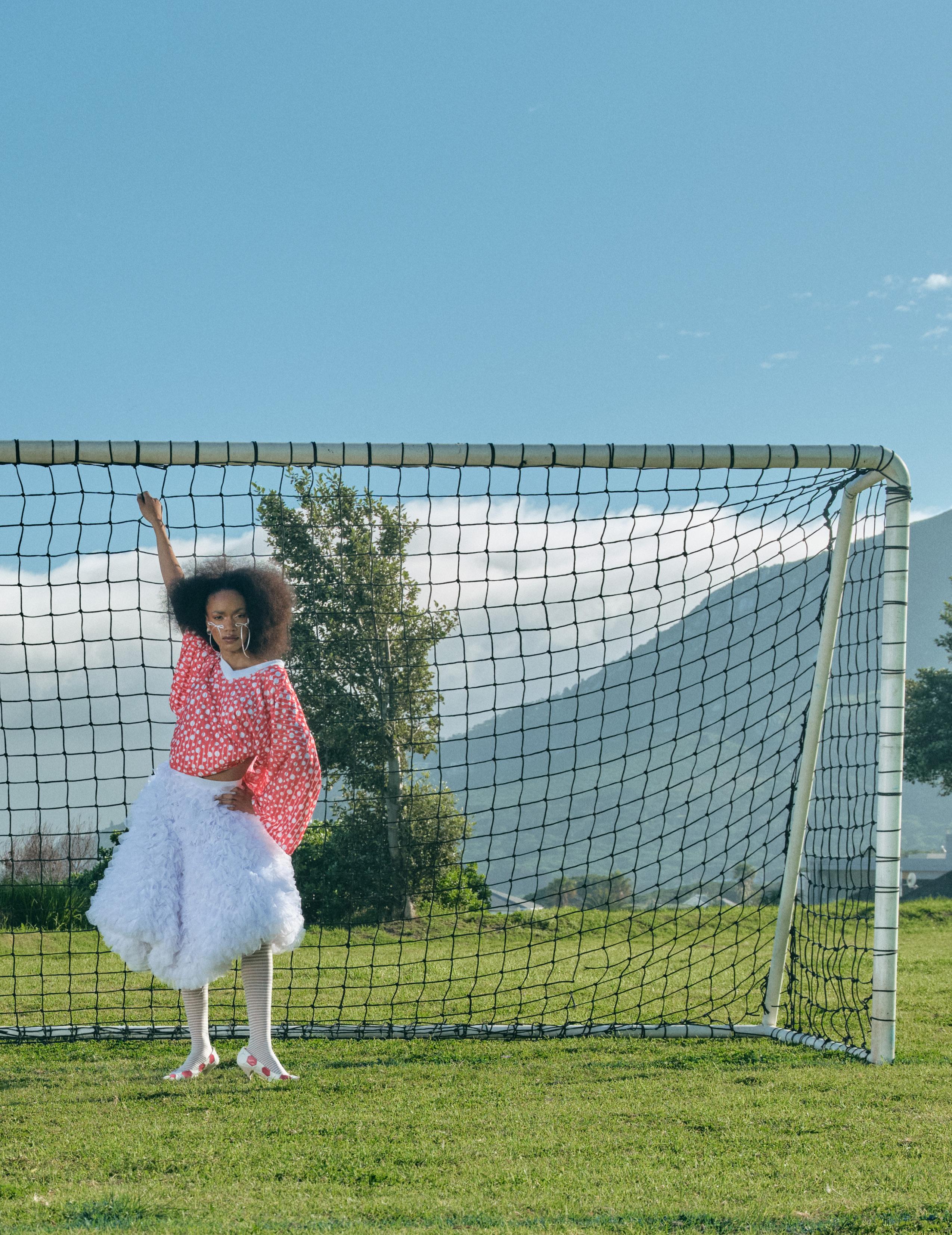
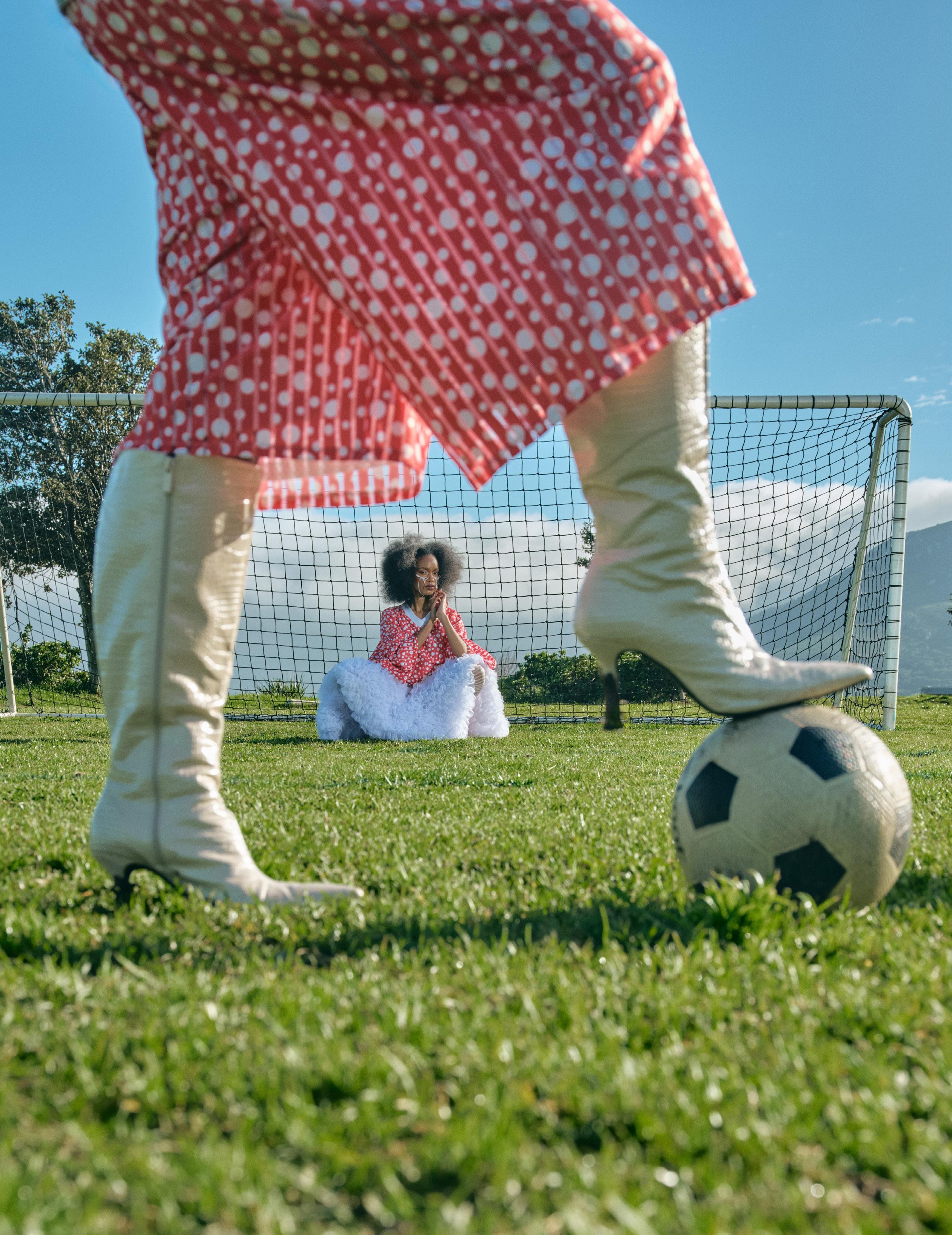
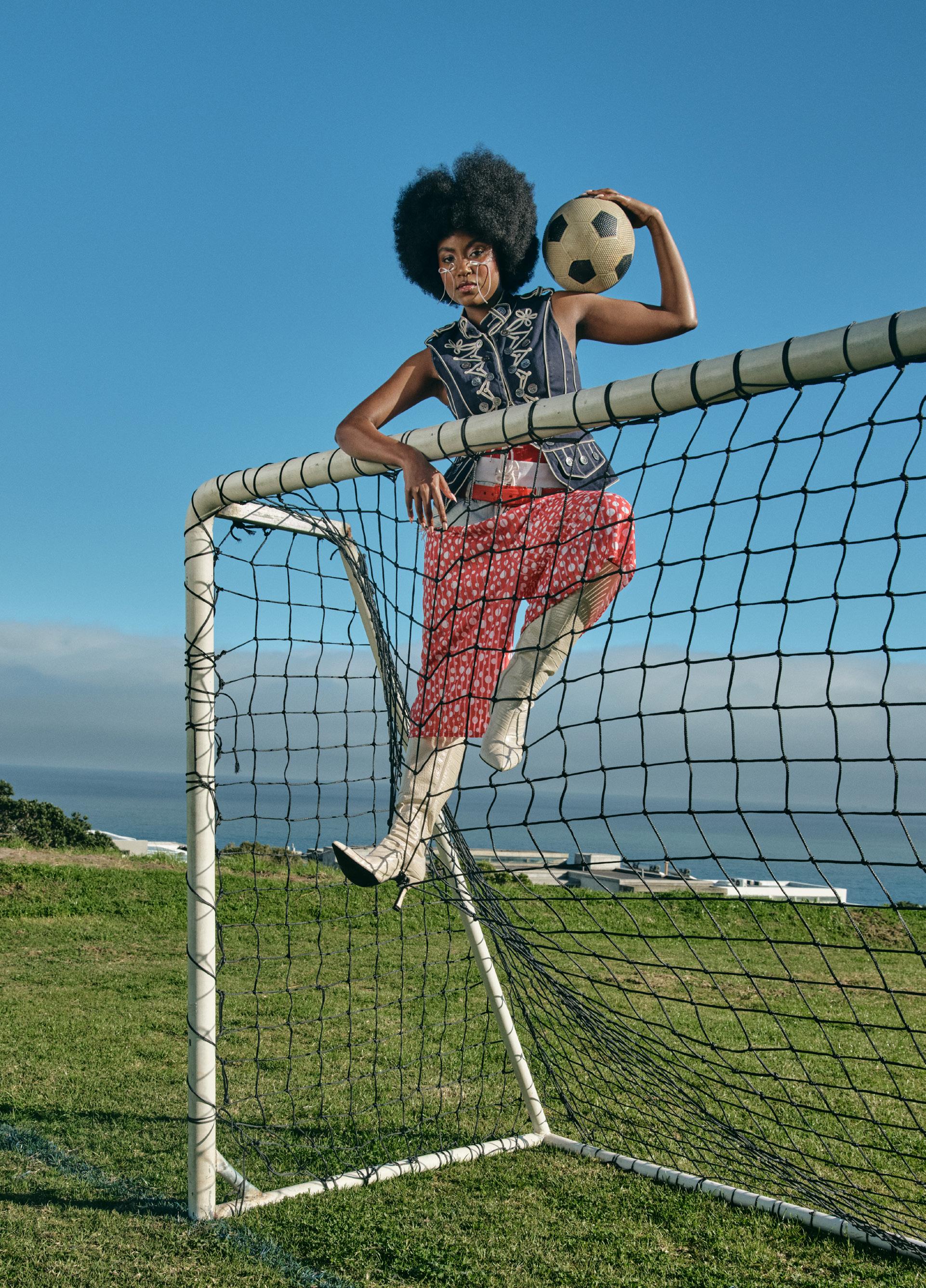
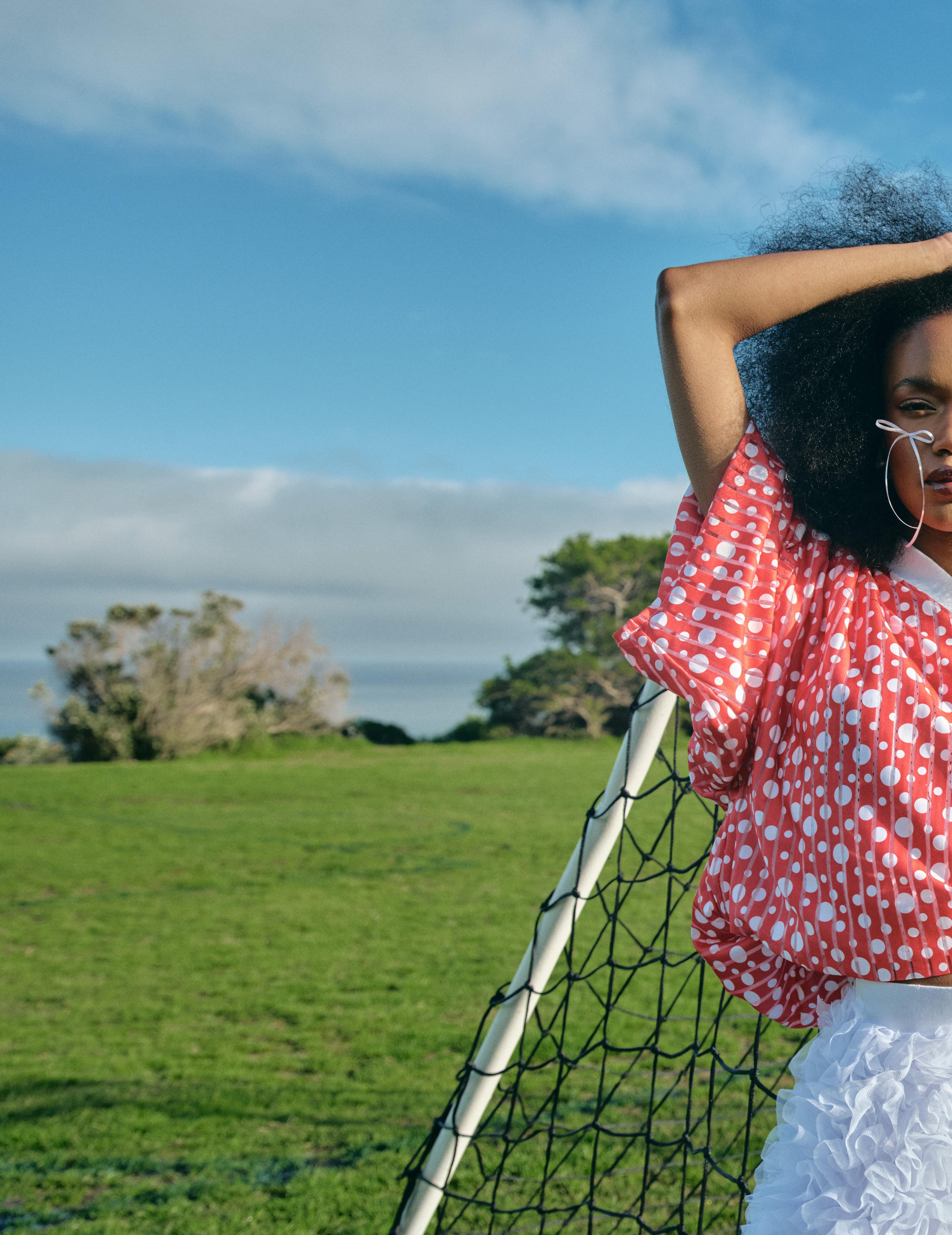
Nkateko Mondhlana is a Soweto, South African-born photographer working in the fashion and editorial industry. He received his Bachelor of Arts in Film and Television from the University of the Witwatersrand, and subsequent to his studies he has immersed himself into photography as that has always been his first mode of expression. His work can be characterised by a representation of beauty that is sensitive, playful and often he experiments with different landscapes and uses them as a backdrop to elevate his narratives. Currently, Mondhlana is based in Cape Town and Johannesburg.
Creative Direction & Styling
Panashe Ndhlovu
Lighting Tech
Lesego Selebano
Make Up Artist
Kelly Taylor
Art Director
Kgomotsego Letlhatlhe
Wardrobe
Stylists Own
Models
Malaika Cuambe-Jones
Natashler Molete
April Kwon is a Los Angeles and Seoul–based interdisciplinary creative. She explores the intersection of design, technology, and storytelling to craft experiences that are both intuitive and emotionally resonant, and reimagines how design can shape meaningful human connections. April studies Fine Arts in Design at the USC Roski School of Art and Design with a minor in Computer Programming, University of Southern California.
Saying goodbye to the last person at your birthday party and letting the wave of emotion hit you as you close the door. Rounding the corner of the parking lot and climbing into the car—letting your face relax from smiling now that you are alone again. Playing a song in your bedroom that you would never admit is your guilty pleasure, and dancing like your life depends on it.
Who are we when no one is watching?
Philosophers have been tackling different versions of this question for generations, however now more than ever with technological advancement, we find ourselves lost on what it means to be yourself. There are many more ways to create micro-identities on the internet—the “personal self” versus the “social self,” perception versus reality, existence versus essence.
This question, to me, is a modern-take on identity and its tie to perception. Are social and personal selves both us? Who are we when our societal labels are stripped away, when we are able to truly return to our “essence”? And is that the “truest” version of ourselves? It’s extremely difficult to parse the difference between these two categories of identity, largely because they are both performances. We perform all throughout our lives—in public, in private, for others, and for ourselves.
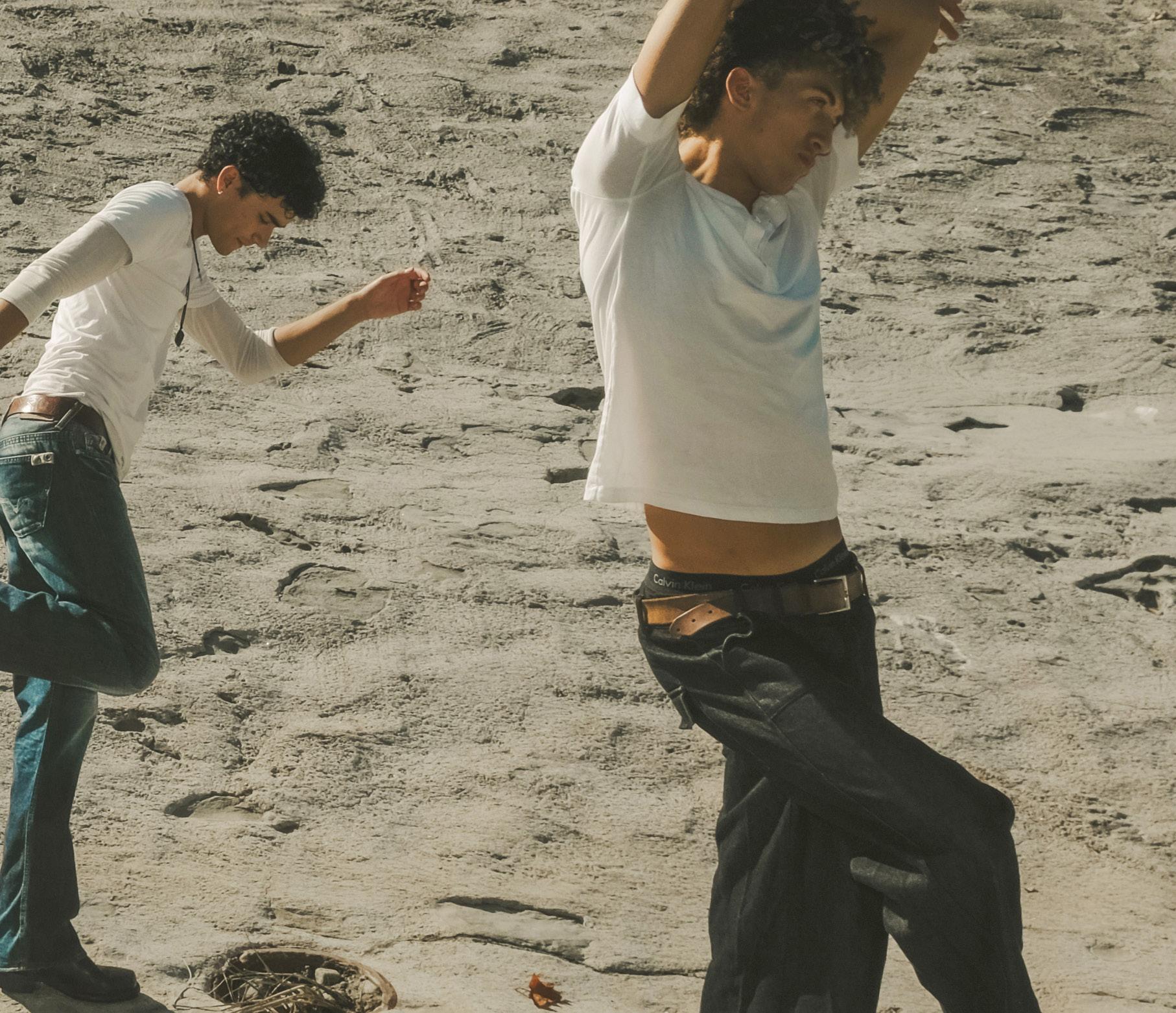
Concepts of self are inherently tied to philosophical thought— particularly the question of whether “essence precedes existence,” a common idea that is tied to theology (and in particular, Christianity), which suggests that a thing’s fundamental nature or purpose (essence) is determined before it is created (existence). Say, for example, that a carpenter would like to make a cabinet. Before creating the cabinet, all the carpenter has is concepts of what a cabinet is. He uses known production techniques to finally craft the cabinet. Based on this knowledge of what a cabinet is, and how to make it (for the sake of this argument, we will call this the “essence” of the cabinet), he was able to bring the cabinet into existence by physically creating it. In a more humanistic sense, this argument is that our essence exists with God before we are brought into existence, hence essence precedes existence.
On the opposite end, is the concept that “existence precedes essence,” an idea categorized as an existentialist concept. JeanPaul Sartre is a French philosopher and novelist who wrote the book Existentialism is Humanism. In the book, he explained the concept as: “… man first of all exists, encounters himself, surges up in the world – and defines himself afterwards. If man as the existentialist sees him is not definable, it is because to begin with he is nothing. He will not be anything until later, and then he will be what he makes of himself” (p. 28).
I believe that most people have at minimum, two selves: one inside society, and one outside. Though, those two selves are often deeply intertwined and almost impossible to separate. Many times this “societal” version of the self is seen as inauthentic, but I believe It is simply inherent to human nature to perform for others—an objective and neutral behavior.
However, that doesn’t take away from the idea that when we step out of society, we are able to define our essence in a different way.
Existentialism is commonly thought to be a pessimistic and nihilistic worldview—one that argues “nothing matters.” However, that is not the full definition. In reality, existentialism is the idea that “nothing matters until we give it meaning.” I find that concept to be extremely optimistic. Our experiences—and the ideas, memories, and emotions we take away from them—are meaningful because we decide that they are. As people, we are able to define our “essence,” and it is not something predetermined since birth. As we navigate life, we are constantly changing and re-defining our essence.
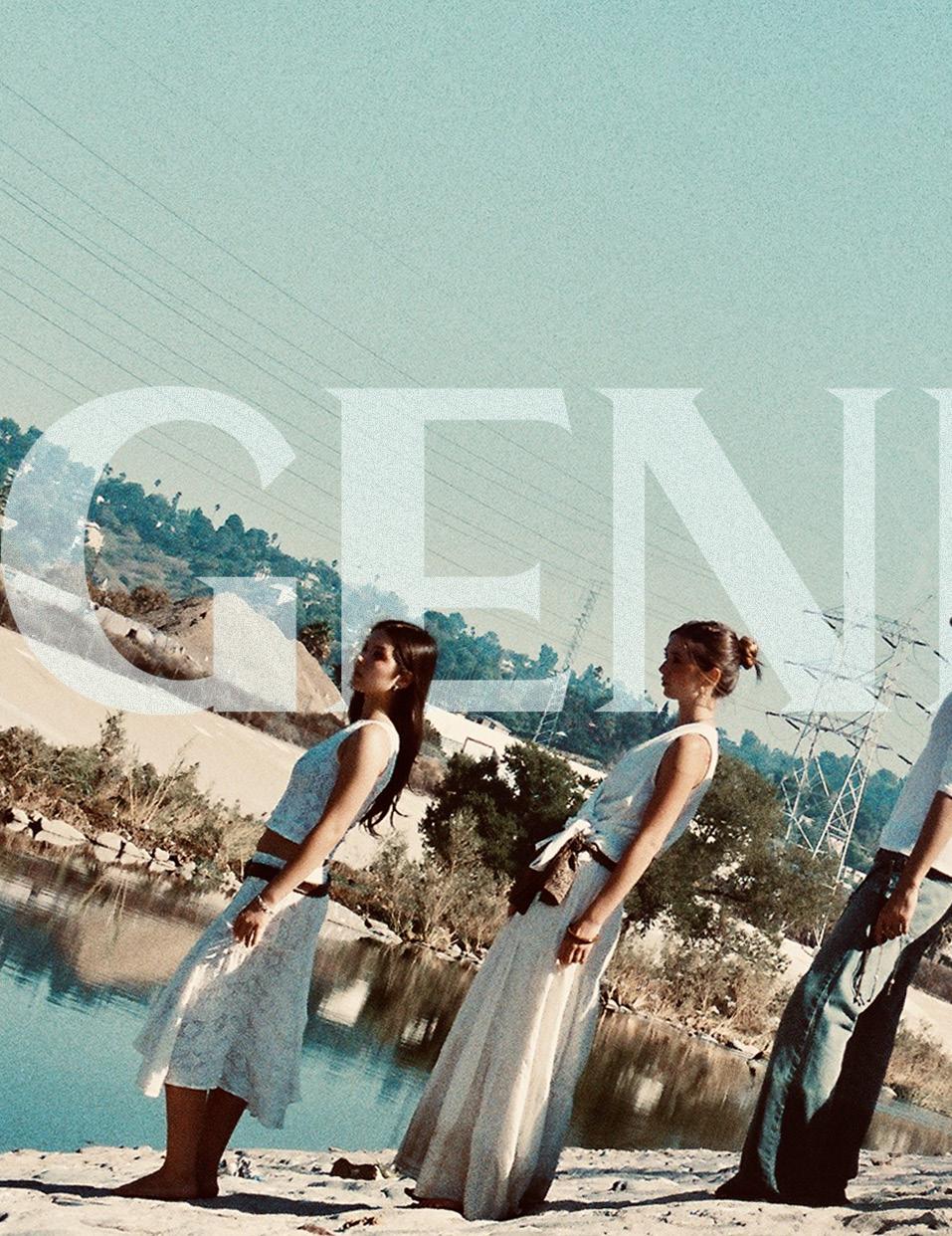
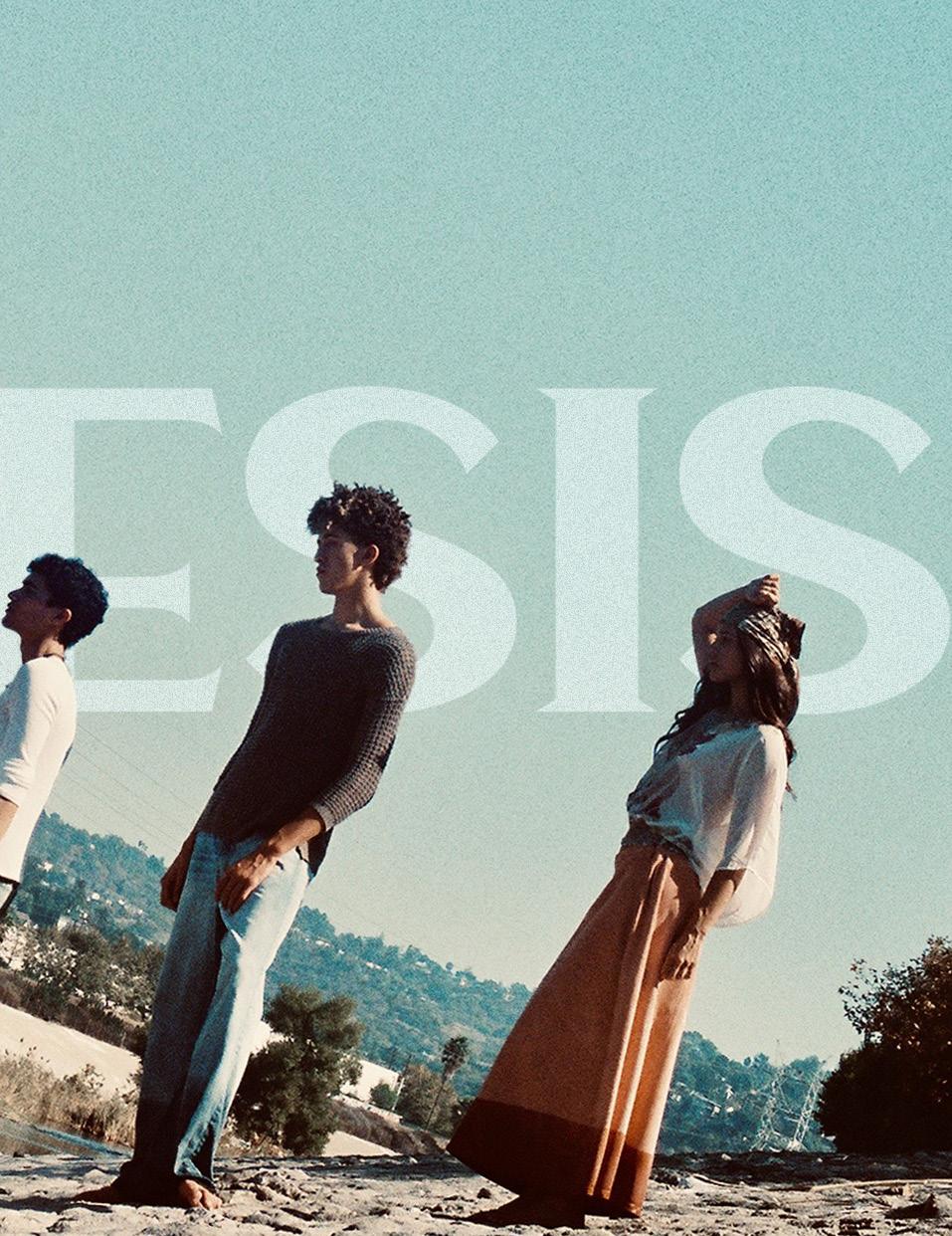
With Genesis, it is key to understand and explore the start of the “self.” Essence or existence? Meaning or meaningless? These concepts are all meant to be tangible ways to understand a concept that is largely intangible.
Let us step out of ourselves and see who we truly are.
Sage Murthy is a Los Angeles-based writer. She specializes in personal essays and reflective writing. Sage studies American Studies of Race and Ethnicity at the Dornsife College of Letters, Arts and Sciences, University of Southern California. She also serves as the Editor-in-Chief for Haute Magazine.
Alex Weir is a photographer based out of Atlanta and Los Angeles. He uses photography to explore deep, complex concepts and as a method of personal reflection. Alex studies Public Relations & Advertising at the Annenberg School for Communication and Journalism, University of Southern California. He also serves as the Director of Photography for Haute Magazine.
Tai Lyn Sandhu is a photographer based out of New York City and Los Angeles. She specializes in film photography, contrasting highly-stylized subjects with urban settings to draw attention to the dichotomies of life. Tai Lyn studies Film & Television Production with an Entertainment Industry minor at the School of Cinematic Arts, University of Southern California. She also serves as the Director of Photography for Haute Magazine.
Nicole Leihe is a Bay Area and Los Angeles-based designer and 3D artist. With a love for storytelling, she aims to convey meaningful narratives through her work. Nicole studies Game Art at the School of Cinematic Arts and Economics and Data Science at the Dornsife College of Letters, Arts, and Sciences, University of Southern California. She also serves as the Creative Director for Haute Magazine.
Models
Willow Bobae
Shaun Holmes
Alex Sebastian
Noah Prim
Ella Janes
Stylist
Sara Yamada
MUA
Gabrielle Desdune
WILLIAM BIGBY
WILLIAM BIGBY
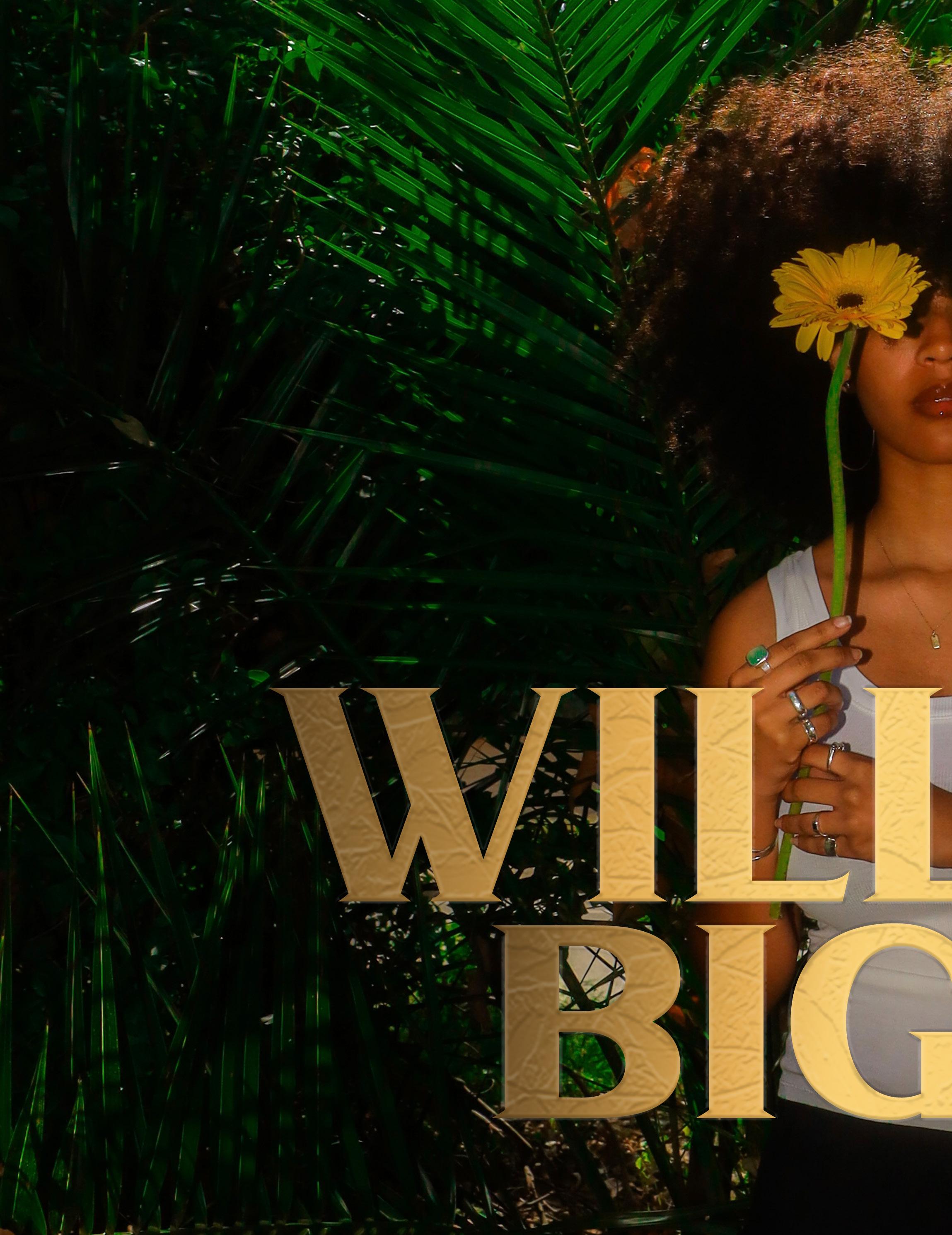
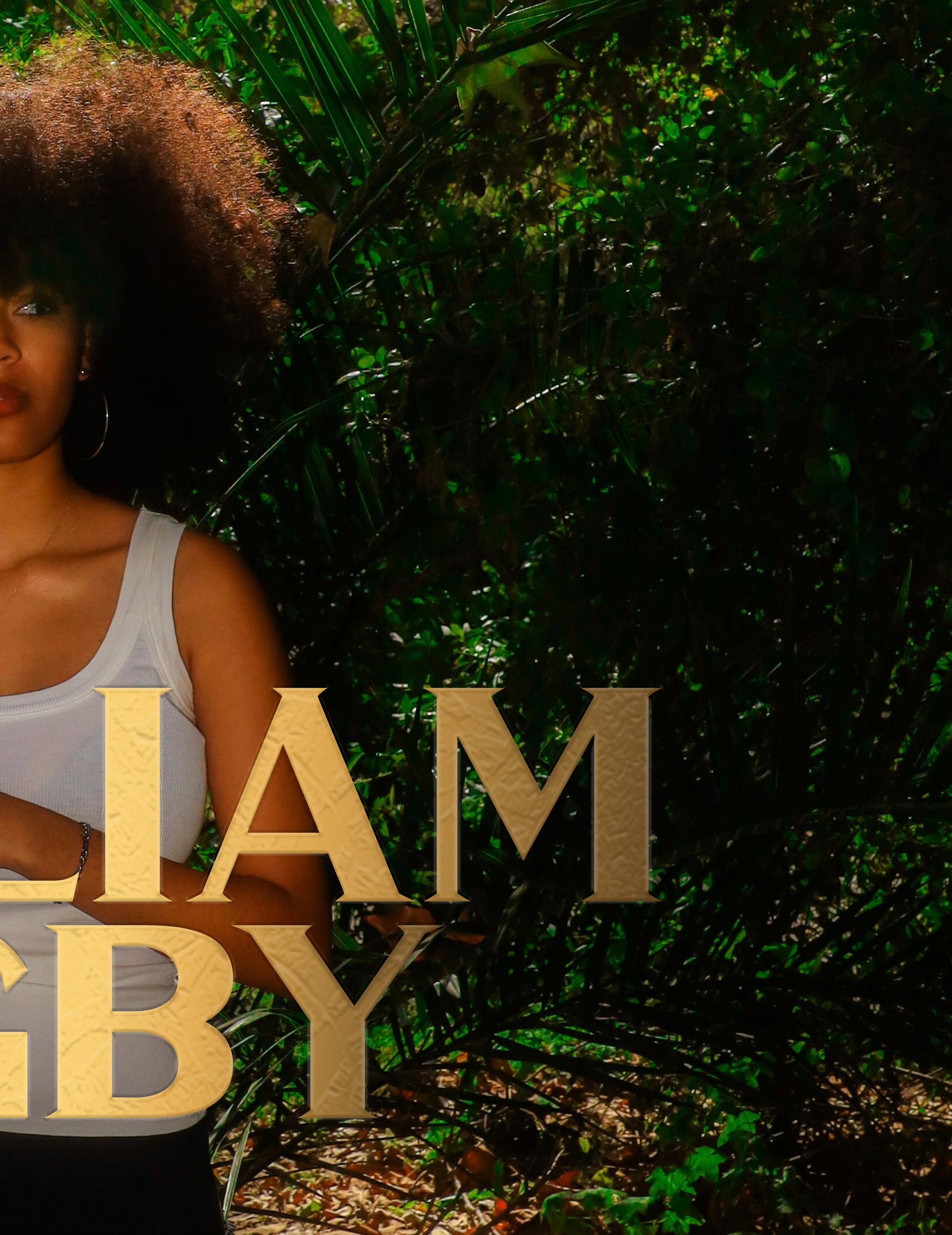
William Bigby is an artist and writer based in New York City and Los Angeles, California. His work is centered around themes of self identity, the beauty of banality, and the liberation of the Black body. The veracity to his work is affirmed by what he sees around him on a day to day basis—he encourages you to open your eyes, and take in all that surrounds you.
Tanisha Goel is a designer based out of the Bay Area and Los Angeles. She focuses on capturing the world around her with special attention to texture and vibrancy. Tanisha studies Design at the Roski School of Art and Design, University of Southern California.
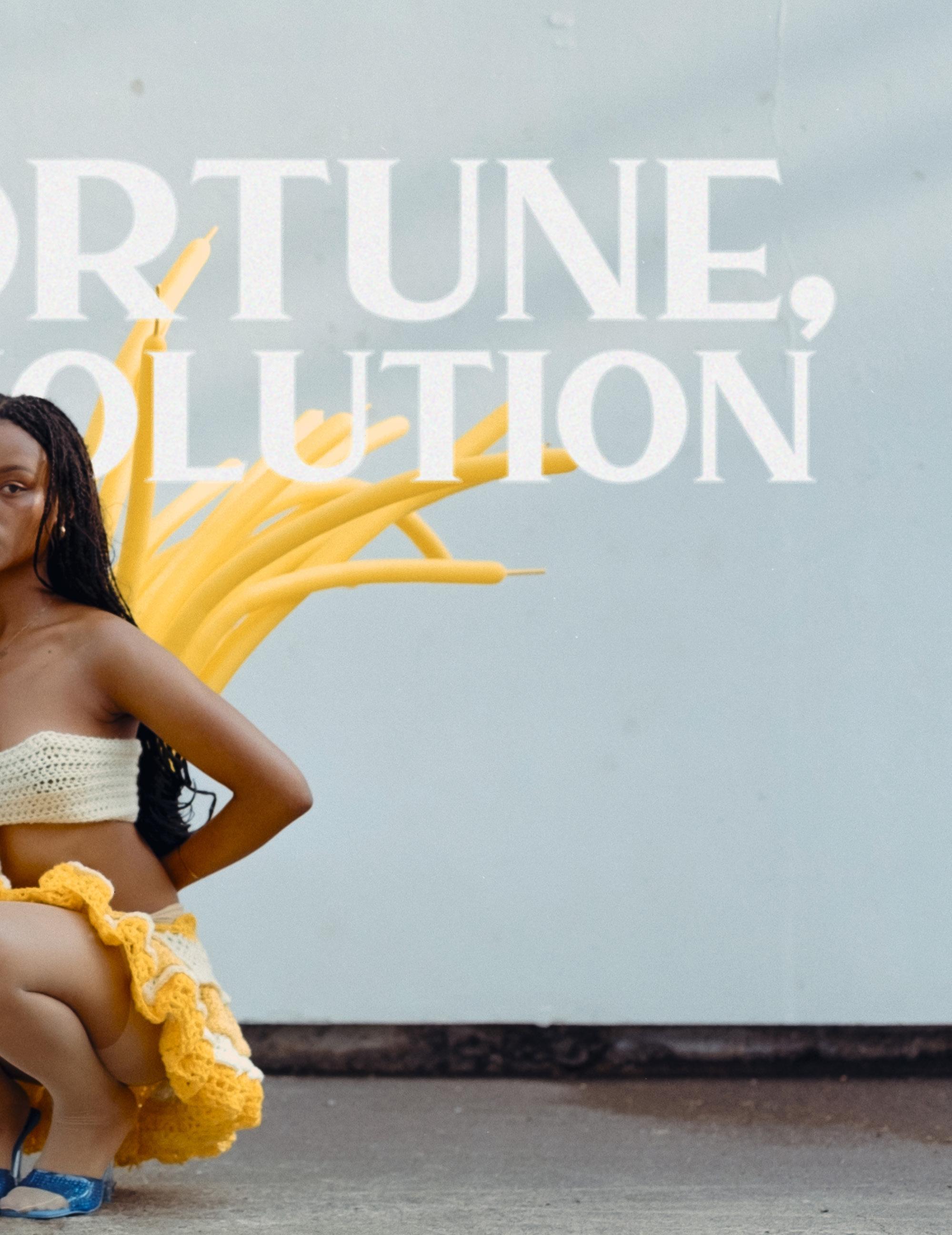
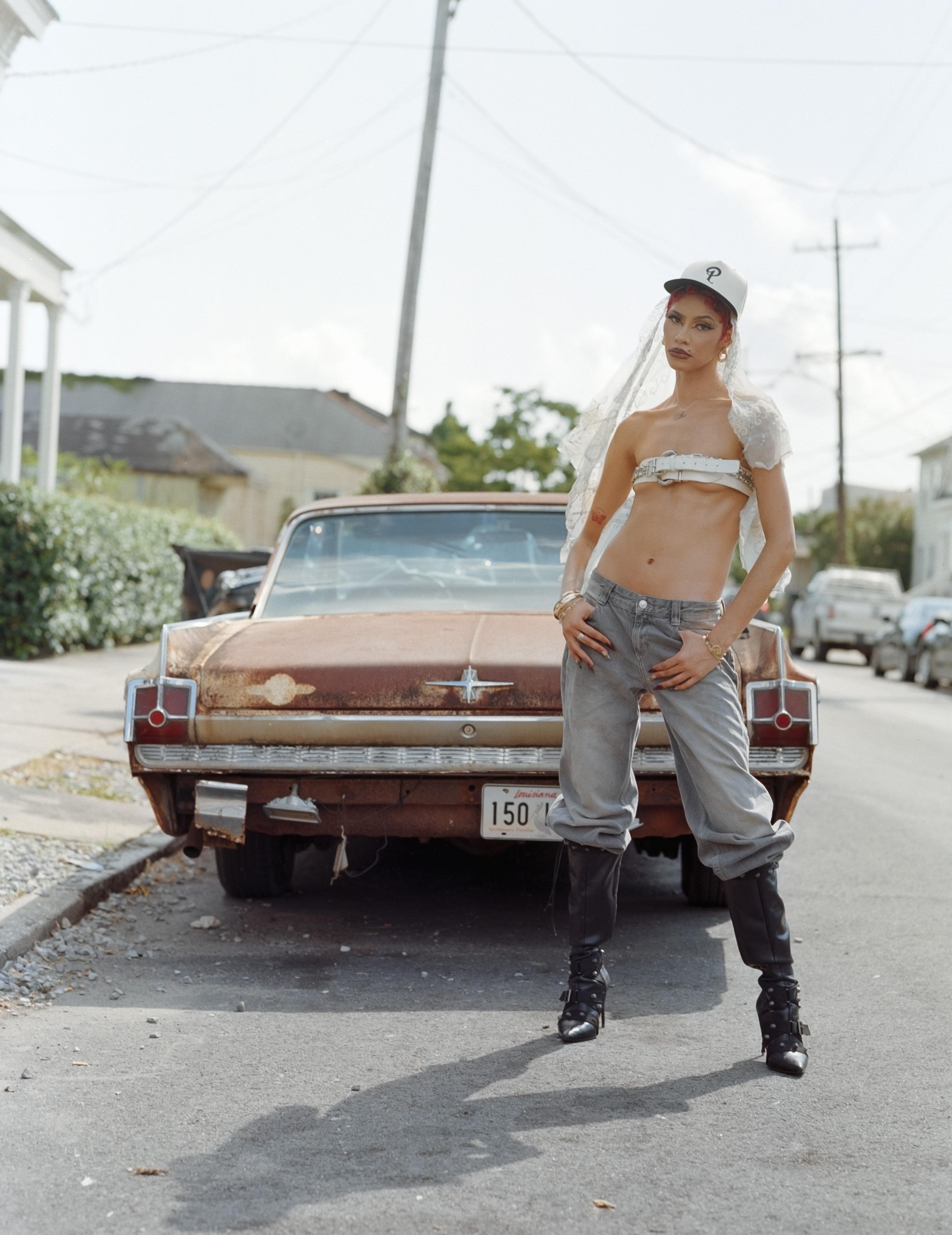
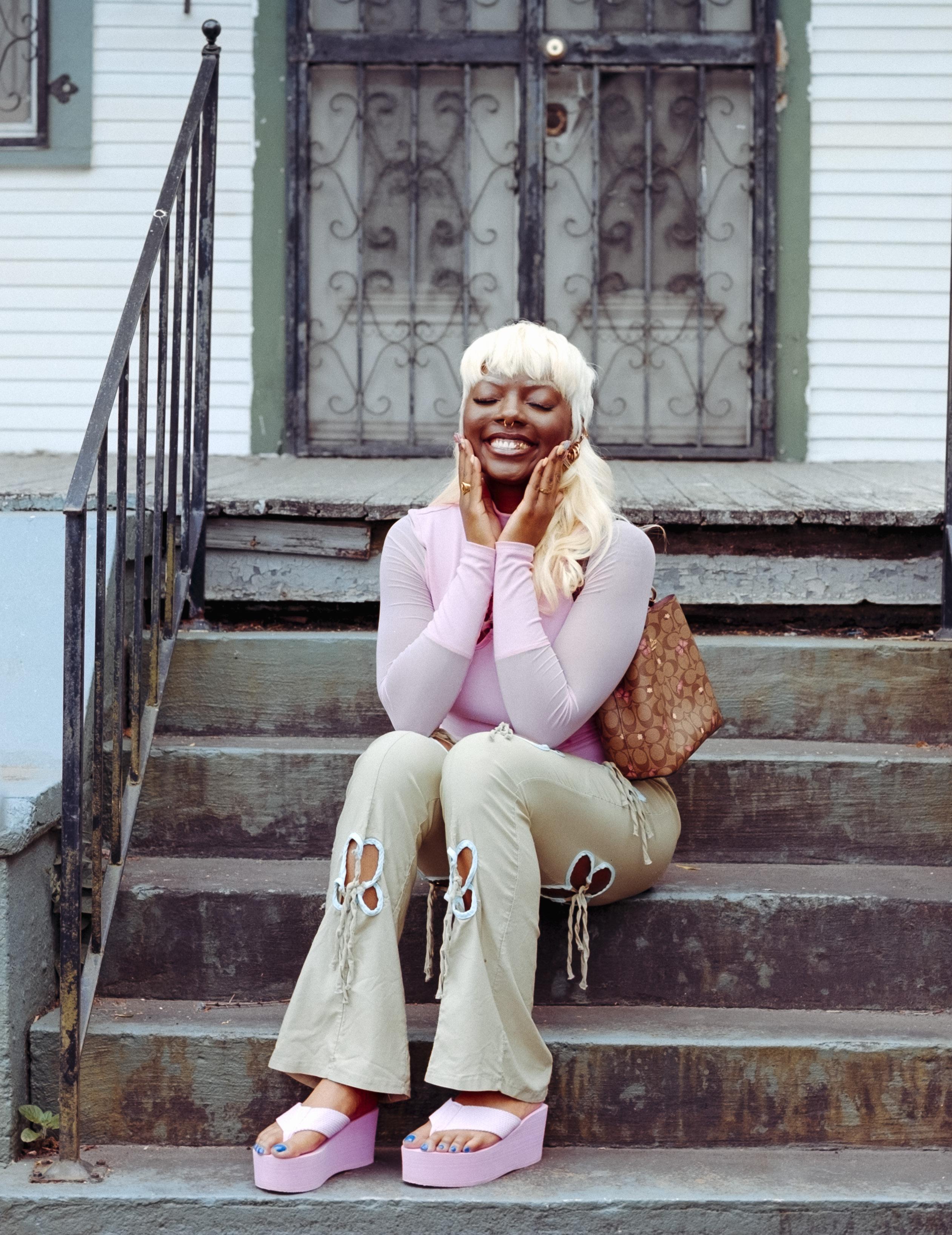
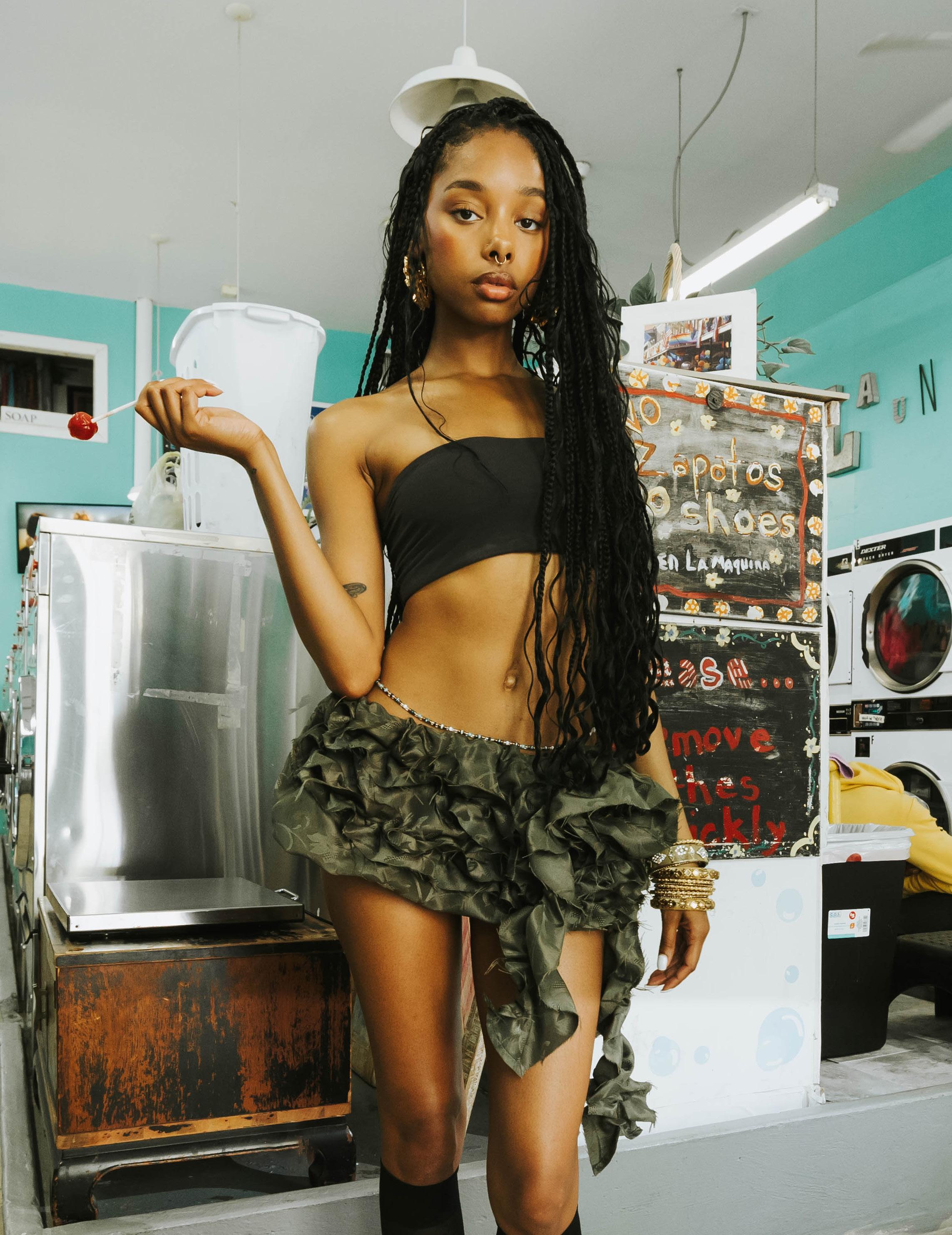
ZORA NELSON + JAMES JIMMY
pretty doves get to believe in God
black girl do.
black girl don’t.
black girl can.
black girl won’t.
black girl 4c.
black girl easy.
black girl
mother black girl martyr
black girl cross black girl jezebel black girl don’t black girl, don’t black girl don’t wear them shorts your father is home black girl just for the night but, (ain’t) you, a woman, too? black girl too grown in from your weeded roots black girl stop crying them white boys ain’t looking at you black girl don’t cry they won’t save you black girl pretty for a black girl magic is only how your ancestors cried black girl raise little doves black girl moans:
FIDI’s most coveted every friday night black girl you don’t get to be just “black girl” black girl dont, you know we believe in God because nobody saves us?
HER FORTUNE
The young girl asks Her — if Black girls go to Heaven, too if Jezebel ever prayed to Aphrodite? Her golden voice tells tales of our very own garden of eden planted by generations that carry mosaics of quiet resilience in the creases of their fingers, sprinkling seeds of lotus and chrysanthemum. The garden where She learned what love is in the tightness of the tapestries that live atop Her scalp a place in which She discovered Her softness in the touch of honey, lavender, and eucalyptus and safety in the aroma of cocoa, whimsy in the melodies of beads woven through Her coils and tugging at Her adorned waist, beauty in velvet skin made of a thousand rays from the sun. Her laughter a scandalous euphoria, where proof of relentless existence meets protest, reverberations of neo-soul lie in her cadence.
ZORA NELSON + JAMES JIMMY
To be desired with delicacy, sensual without permission, womanhood as liberation.
To see one another means, “I love you,” To let our crowns wrinkle with the trees means, “You’re beautiful,”
And forevermore for the little black girl, Radical Rebirth, Avowed Femininity become perfect replicas.
But where our cursed fortune ends,
Where erasure reigns, We begin.
black girl war
Where ostracization reigns, We begin.
black girl love
Where tolerance reigns, We begin.
Black Woman Genesis OUR REVOLUTION
Zora Nelson is a multidisciplinary creative based in Los Angeles. She uses her passion for storytelling as a means of resistance and a vehicle for liberation. Zora is a Master’s student in the Communication Management program at the Annenberg School for Communication and Journalism, University of Southern California.
James Jimmy, also known as Jeffrey Brandon, is a self-taught photographer from Baton Rouge, Louisiana, currently based in New Orleans. His work explores the beauty, rhythm, and resilience of Black and Southern culture through both digital and film photography. He aims to capture honest moments and give visibility to people and places that often go unseen. His inspiration comes from everyday life, family, street scenes, and the warmth of community that tells a deeper story through each frame.
Laila LaDuke is a Los Angeles-based designer exploring the intersection of human-centered design and creative storytelling. Laila is pursuing a degree in Arts, Technology, and the Business of Innovation at the Iovine and Young Academy, University of Southern California. She also serves as the Director of Visual Design for Haute Magazine.
When I moved to LA for school, I got a food industry job in the college shopping center. With its uniform red brick fronts and pompous namebrand chains, it wasn’t like the shopping centers I was used to. There were no crowded pylon stripmall signs in an array of different languages. Instead, a gently-lit information board sat prettily in the plaza center. Gone was the warm blacktop lot that embraced the cluster of small businesses – it had retreated underground to charge its customers for ‘convenience.’ In its place was a stark courtyard and a pretentious fountain.
It was completely unlike the stripmall of Los Angeles. It catered to the brand, to the donors, and to the students who longed to feel safe. Its gates, closed every night to those who didn’t hold a USC-issued ID, offered a sense of security (or exclusivity) that the old, worn out stripmall couldn’t.
So when classmates asked if my co-workers were also students, they were always shocked to find out they were students of other schools. Of ELAC, or LACC, or LATC, or CSULB. Of course, most of my classmates didn’t know these acronyms, so they’d settle with asking: so who are they, then?
Most of my coworkers were native Angelenos. As in LA City proper, not County. Still, there within the confines of those close walls that reeked of sanitizer, I felt familiarity. Like them, I knew the street names and the abandoned Sears building. Around them, I didn’t have to explain words like mimis or fuchy. Like them, I’d never seen so little Latino customers in my life. But unlike them, I came from beyond South Central, beyond city proper. I came from a divet in the land between the purple mountains and the southward hills.
I was from a place where they’d be shocked to see equal parts Asians and Latinos living within a 16-square mile boundary. Where I was from, my house seemed to always be ten minutes from wherever I was. Boba shops and coin laundromats punctuated streets lined with single-story homes. I was from LA, as in the County of.
They’d ask where I lived and I would say, oh, thirty-five minutes away by day and twenty-five by night, and they would say, Orange County? I’d say, no, San Gabriel Valley, you know the Ikea over there? and point East. A few would nod in recognition, some faux, some not. One of them asked me, so the suburbs? I paused, then said yes… but not like the suburbs suburbs, like, there’s a bunch of stores and freeways and not only houses.
How could I describe this place that I lived, the San Gabriel Valley? It was not metropolitan, but not the subdivisions and gated communities of Orange or the actual Valley. It’s someplace in between, where our favorite hole-in-thewall Thai place is down the street from the local high school, and the Ashley’s Furniture and the Walmart exist in the lot where you have to be careful or else your catalytic converter might get stolen. Here, our buildings grow out instead of up, and our backyards kiss the alley behind a stripmall.
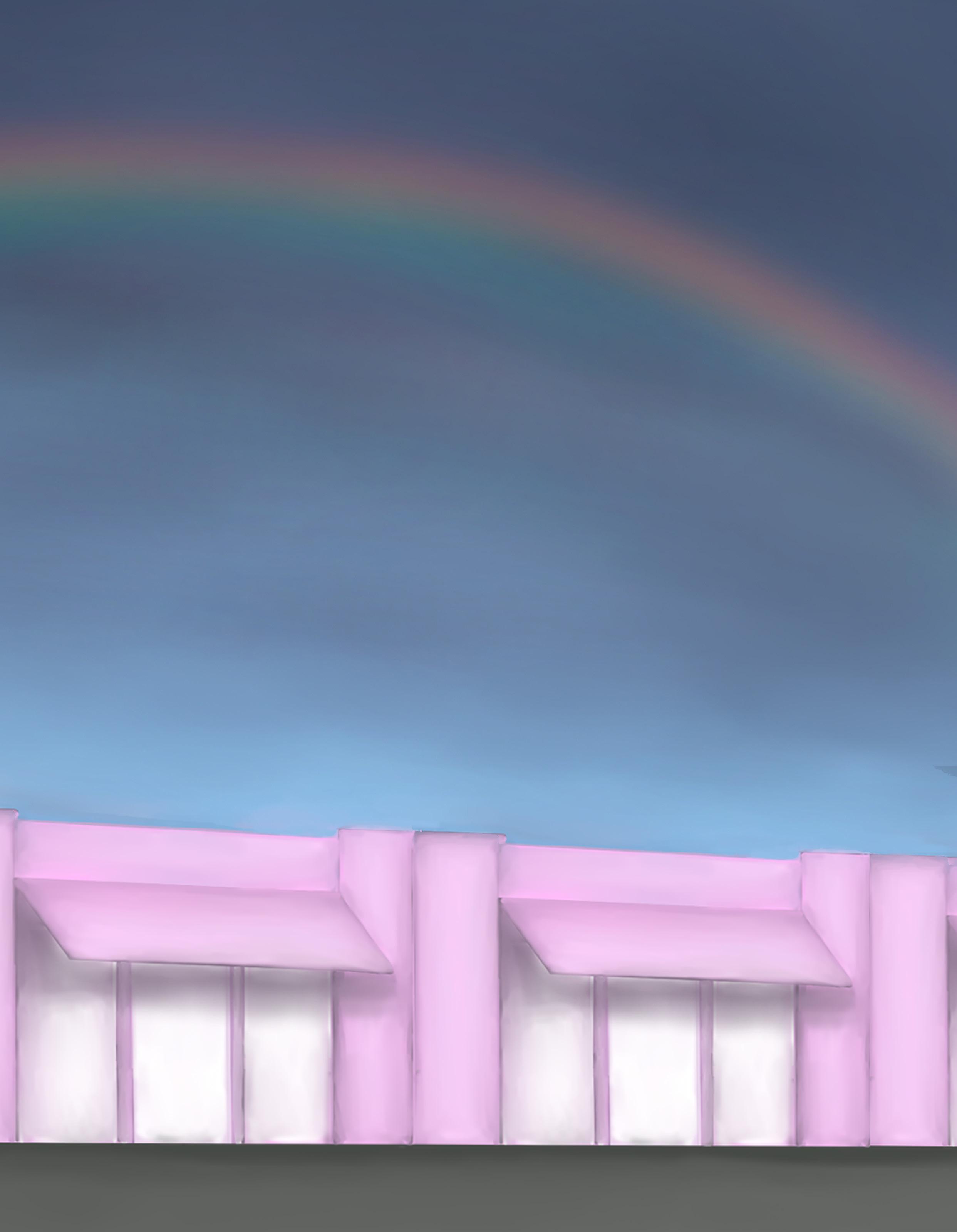
I remember working my first job at the local Italian restaurant and deli. I was a server, a cashier, a busser. I was everything and the kitchen sink, or rather the one chosen to take out the trash. It was a job that no one wanted, consisting of dragging heavy bags of half-chewed food through the back of the house, leaving behind trails of mysterious liquid. But I never minded, for I knew what awaited me beyond the back door. On those smothering summer days, the heat waves that rose off the cracked blacktop were preferable to the humidity of kitchen sweat. The taking out of trash offered moving air on which the sounds of children floated over fences shared with the beckoning alley.
I’d stand in the sun, visor torn off and face upturned. I’d take deep breaths, preparing myself to brave the dumpster fumes that threatened to choke out whoever dared to open it. It was back there that I could hear my younger brother’s yells as he played in his friends pool, just over the fence. I’d sometimes peek through the wooden slats and yell for his attention, throwing pieces of nibbled-on rolls over the divide. They’d splash chlorinated water in my direction. Eventually I’d step off the brick propped against the wall and brave the dumpster, strap on the visor, and head in once again, leaving behind the summer sounds of a pool party behind the stripmall. This alleyway was so very SoCal, so very San Gabriel Valley. I’m not sure anyone could relate.
If you were to look at the San Gabriel Valley from a plane, you might find it monotonous. Tedious, even. But not in the way that the rich burbs of Orange County may fatigue the eye, with the tired perfectionism of every shopping center. This place is where the houses go from Spanish to Victorian, from Sears catalog to the powdery freshness of a new mansion.
Here, shopping plazas line the streets that take sharp dips and dives and melt into one another: Mission Road, Foothill to Alosta, Ramona Boulevard. It is here that there are more ethnic enclaves in 200 square miles than many places across the globe. Still, everyone seems familiar. The sound of Cantonese, Spanish, and English floats on the wind to sing a beautiful song, the soundtrack of many childhoods. They carry in the wind, winding through California Oaks and under freeway overpasses to rest, jumbled in various colors, on the pyloned beacons of SoCal suburbia: stripmall signs.
So to take the San Gabriel Valley for just its buildings and architecture renders it confusing yet boring. A disorganized jumble of tract houses and stripmalls crossed by dry washes. A place where the smog settles and the heat festers under the pulsating California sun, interrupted only by the hardy blows of the Santa Ana winds.
To quote Joan Didion, “the future always looks good in the golden land, because no one remembers the past.” Of course, she was talking about San Bernardino, and God knows we avoid association with the Inland Empire at all costs. But the same could be said for the 626. The San Gabriel Valley has notoriously forgotten her noble roots, allowing herself to be boxed into the label of suburbia.
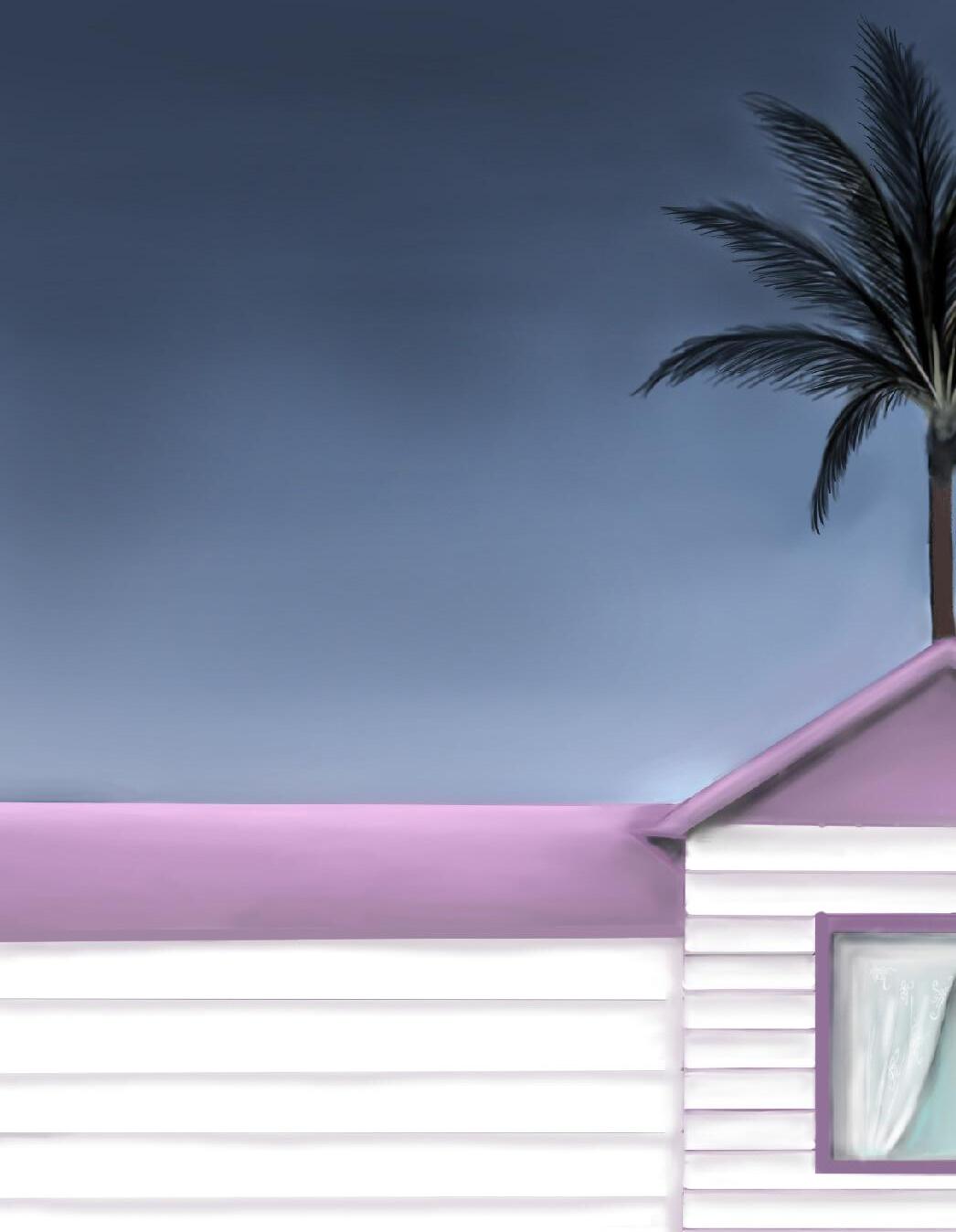
She’s torn down her Victorian homes and let prospectors ravage her vulnerability in the aftermath of wildfires. She’s smoothed over the Navel Orange orchards and left her Spanish mission to crumble; perfect, for it only leaves space open for another boba shop. This spirit was maybe caught from her house mother, Los Angeles city. There, community centers are parceled off to private entities that standardize her look. They strip her of her people, driving them away with locked gates and foreign storefronts where their neighbor’s corner stores used to be. Funny enough, the alien business signs are entirely in English.
But the SGV still has her time. Every street corner that is turned holds history, dilapidated and having faded into the fuzzy background of 21st-century life, but history nonetheless. Where the gas stations of the 70s used to live are vital ecosystems. Here, businesses pile onto one another, medical centers atop ramen joints and convenience stores. The smoke shop lives here too, right next to the attorney who speaks three languages. Generations of families fight for parking in these lots, where Electric Vehicle charging spots have not taken over. Here, the stripmall survives.
Natalia Rocha is a Los Angeles-based writer. Her favorite form of writing is the humble essay (haha!), which she frequently uses to explore nostalgia and the geo-cultural landscape of LA and the San Gabriel Valley. She is studying Narrative Studies at the Dornsife College of Letters, Arts and Sciences, University of Southern California.
Yeonsoo Lee is a Los Angeles-based multidisciplinary artist and designer from Vancouver. Her work is centered around highly satirical and abstract pieces that explore the various struggles society faces. Yeonsoo is pursuing Public Relations and Advertising at the Annenberg School of Communication and Journalism, alongside Economics at the Dornsife College of Letters, Arts, and Sciences, University of Southern California.
Yumeng (Alice) Liu is a photographer from Qingdao, China, based in Los Angeles. She captures slices of stories that evoke emotion and reflect our shared humanity. Alice studies Film & Television Production at the USC School of Cinematic Arts, with a minor in Advertising, University of Southern California.
Sandra Iraheta is a Los Angeles-based designer from Hayward, California. Her work explores the relationship between art and accessibility, using design as a tool to bring art into shared spaces and everyday life. Sandra studies Design at the Roski School of Art and Design, University of Southern California.
Model
Wenxi (Amy) Yu
Gaffer
Bennett Zeng
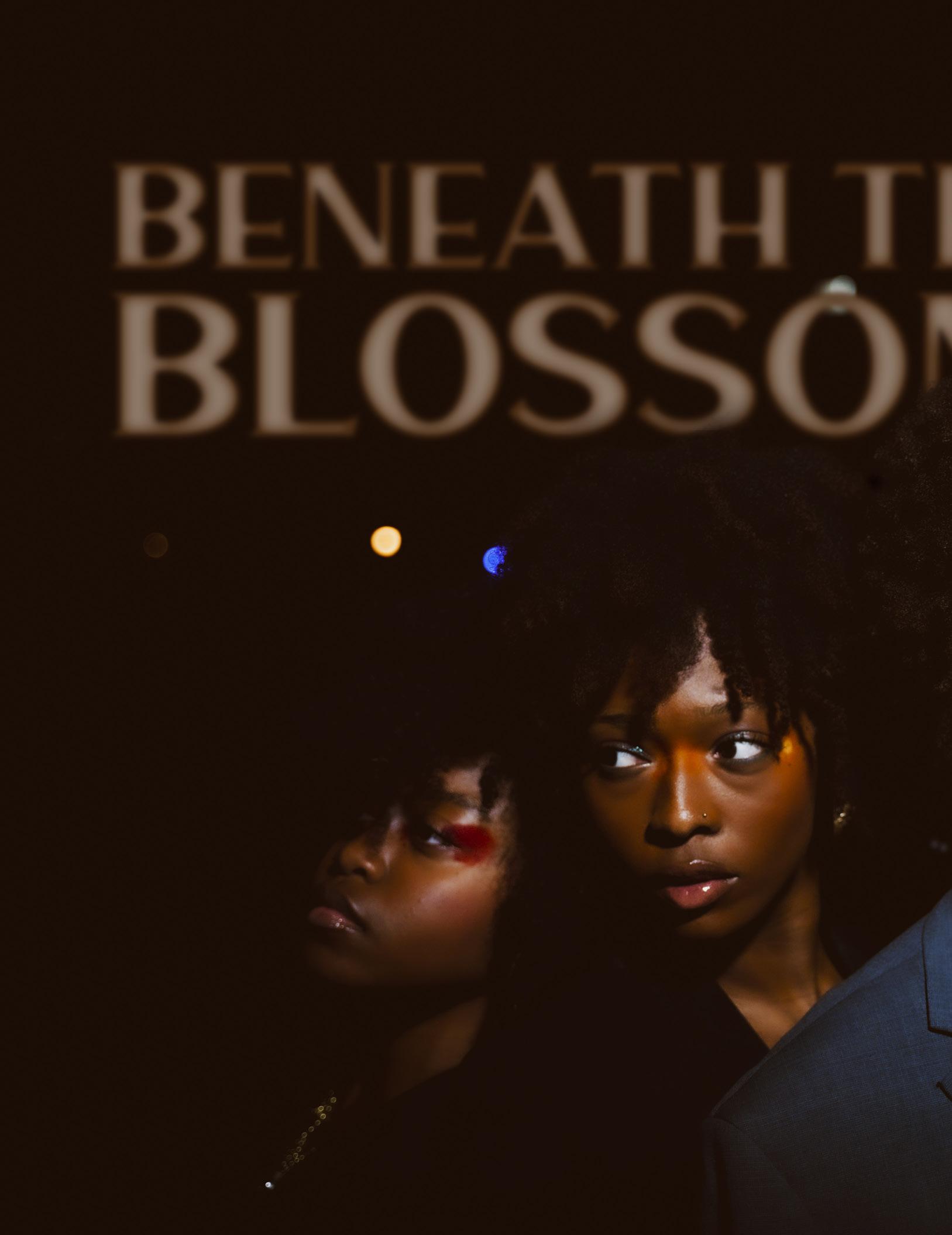
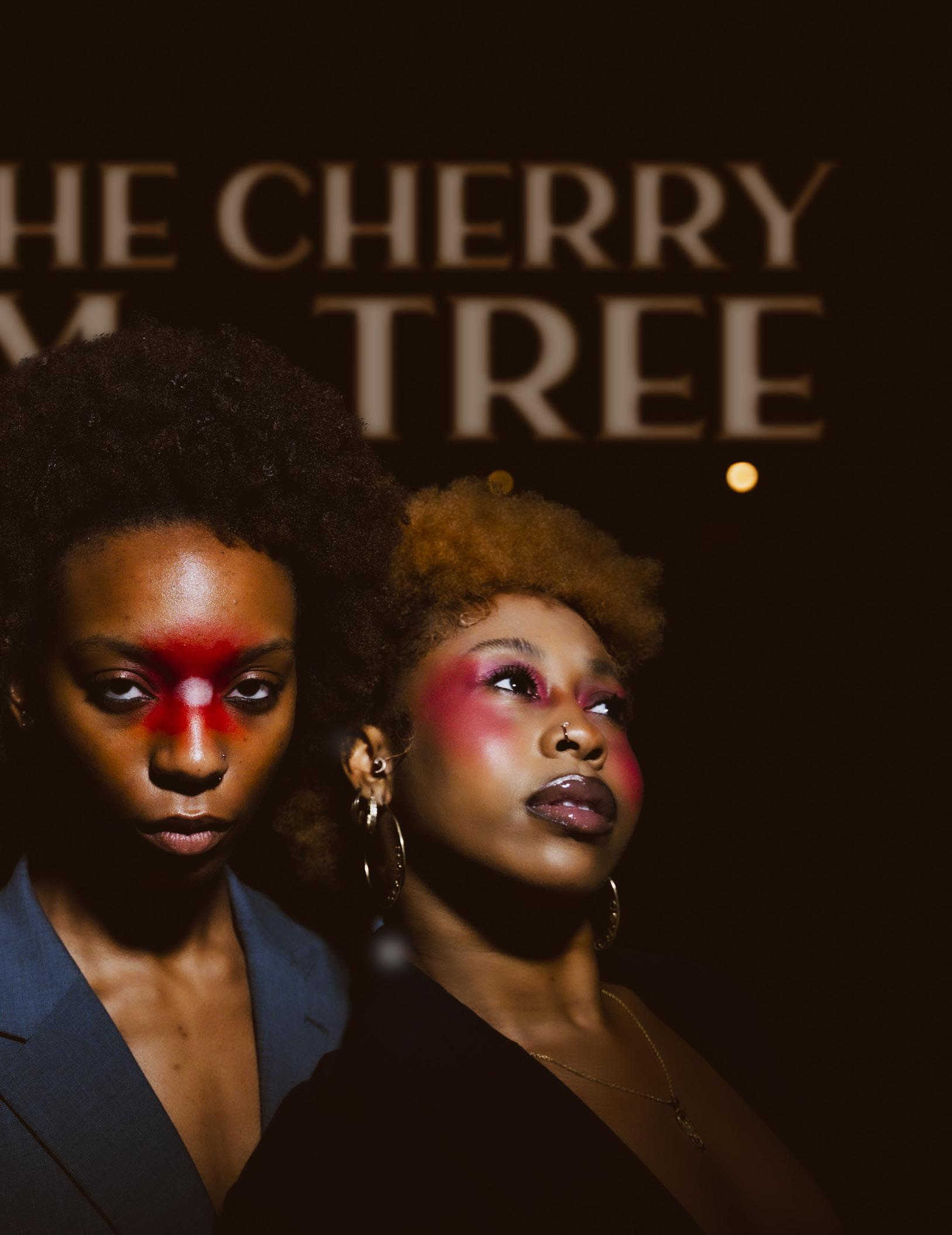
I was born beneath the cherry blossom tree. Each spring it dressed itself in light, each fall it undressed without shame. Under its branches, I learned the language of first greetings and goodbyes. It never warned me that beauty would hurt.
When I first fell in love, we sat beneath the cherry blossom tree. In the night sky, we traced constellations and made promises that the petals could never keep.
Thinking permanence was the reward for sincerity, I mistook the blossom for forever.
Then autumn came.
One by one, the leaves fell, drifting gently to the ground, teaching me the art of surrender.
Defying their wisdom, I grasped at every falling petal, but our love was gone.
When winter arrived, the cold found its way inside of me. The tree stood bare, and so did I.
I promised the tree I had finally understood. I’d learned the rhythm of loss, the inevitable death and rebirth of all things. I swore I’d never cling to the blossoms again.
The tree said nothing, only stood in its stillness as snow gathered at its roots. So I kept my word.
I let my heart freeze beside it, mistaking numbness for wisdom.
Seasons turned without me. Springs came and went, soft and indifferent. And then, when I had stopped expecting warmth, she appeared — my second blossom.
The girl who smelled of peaches and had summer in her eyes slowly thawed my winter.
BENEATH THE CHERRY BLOSSOM TREE
I took her to the cherry blossom tree that stood with the same quiet grace. The branches were heavier now, the roots older, and so was I.
Petals drifted around us beneath its shade as I spoke of the seasons — how everything blooms only to fall.
I warned her that nothing would last, not even us. She only smiled, brushing a petal from my shoulder, and said some things are worth loving.
Her warmth was patient, steady, undeserved. She didn’t try to melt me; she simply stayed close, until I could feel again. Her vines were a forever hug.
And though I told myself I was immune to attachment, I found myself needing her vines. But as the season turned, I began to hate how her vines were both my anchor and my cage.
I had seen the pattern, lived the cycles — cherishing spring, dreading fall, still hoping this time winter would forget me. It didn’t.
So I ended the bloom before winter could claim it. Now, leaning on the bare cherry blossom tree, I realized I had spent all my strength running from the ending, only to return where I began.
Water moved. Trains passed. Shadows shifted. The world exhaled its frost, and silence became gentler. The tree and I didn’t change so much as we were changed.
Ten springs later, I sit beneath the same cherry blossom tree, wiser to the hum of the universe.
Sunlight filters through its branches, warm against my face. The grass steadies me in its quiet embrace, and the wind brushes back my hair, revealing the face I no longer hide.
The petals shiver, and in their movement, the tree whispers: “You were always the bloom you sought, chasing echoes of your own roots. Now you see it: you and I are not separate. You are the branch, the wind, the bloom, the fall.”
I smile at the cherry blossom tree — the witness of my many lives. Together we’ve broken and bloomed, yet somehow remained.
I tell the tree, “I love you through every season, for you love me unconditionally.”
The cherry blossom glistens in its silence. “Then love without needing me,” it says softly.
A wind moves through its branches, and the tree dissolves into the air. The wind takes it.
The air shimmered with what was once alive, falling and returning all at once.
I was born beneath this tree, and now, at last, I have learned to live without it.
Kyle Sardo is a native of Los Angeles, who will be studying abroad in Madrid this spring. His creative writing often explores the duality of human nature. Kyle studies Narrative Studies at the Dornsife College of Letters, Arts and Sciences, University of Southern California
Annie Gu is a multimedia artist based in Los Angeles and China, specializing in visual storytelling and interactive media. Her work explores the intersection of technology, culture and identity, blending graphic design, 3D design, and creative coding tools. Annie studies Media Arts + Practice at the School of Cinematic Arts, University of Southern California.
Kobimdi Nwabuzor, otherwise known as Koko by her peers, is a Los Angeles-based freelance photographer whose creative work is centered on exploring the intersection of culture, fashion, and identity. Through a passion for innovation, she focuses on visual storytelling that captures the evolving narratives of self-expression and modern society. Kobimdi Nwabuzor studies Arts, Technology, and the Business of Innovation at the Iovine and Young Academy, University of Southern California.
Models
Sydney Matthews
Adisah Grimes
Layla White
Hannah Robertson
Trinity Ariona
Lighting
Milo Gittings
BENEATH THE CHERRY BLOSSOM TREE
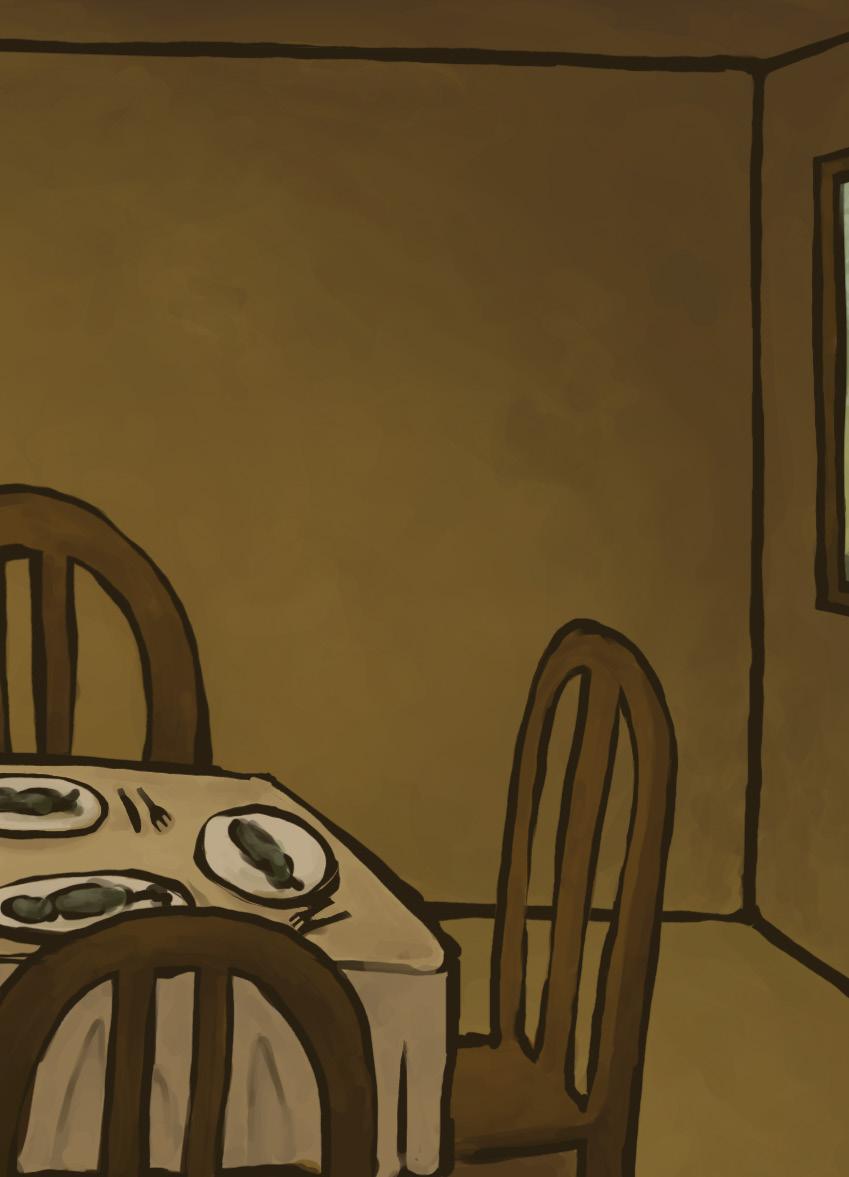
Rather than the comforting sounds of the morning birds, the only thing waking me up was the incessant chirping of my brothers’ arguing. They were playing a round of Call of Duty, and by the shade of red Rija was turning, I could tell they had been playing for a while, and he was getting tired of losing.
The warmth of the August sun was coming in through the window and warming my skin. Without a strict schedule to follow, I never woke up before noon. I was only eight, but I had already adapted a 16-year-old’s schedule of late nights and even later mornings. If I didn’t, I knew I wouldn’t be able to hang out with my older brother, Richard, at all.
Last night was another one of those late nights. Richard insisted on showing us another R-rated comedy. I think it was the third one that week. We stayed up way too late laughing our asses off. I didn’t know what half the jokes meant, but I knew my brothers found all of them hilarious. Me and Rija had spent the last couple nights sleeping on a mattress on Richard’s floor, wedged between his own, larger bed and the dresser where he kept his bulky TV.
I remember the day my mom brought the TV home from Savers. There was still sticky residue on one side of it from the $20 price tag. Only twenty dollars! My mom celebrated her rare find in a sing-songy voice as she watched over Richard setting his PlayStation up to it. Maybe this is the thing that would finally make him feel like a normal, American teenager.
Despite the blazing heat of the sun, I shivered under the blast of his AC. Richard’s room had the best AC in the apartment. Rija and I always joked that it was the only reason we slept there.
“Bro, you’re literally screen-peaking,” Richard spat at Rija as his character ducked behind a wall, causing Rija to miss his perfectly lined-up shot. Both of them were sitting on Richard’s bed above me. I observed the game and their reactions, trying to not remind them of my presence.
“I am not!” Rija whined. He let out an ear-splitting cry when Richard killed him again. He hit his controller against the bed, not hiding his anger at all. Richard grabbed his wrist, stopping Rija’s tantrum, and said through gritted teeth, “Do that again. See what happens.”
Rija quieted down. The grumbling of my empty stomach filled the room, reminding them both of my presence and of the fact that I needed to get taken care of. Richard got up from the bed and turned the TV off, careful not to step on me as he left the room to get us breakfast.
He was wearing his favorite checkered pajama pants and a souvenir T-shirt from his high school’s production of Hairspray. The role of Seaweed was written on the back in bold, black letters. I was in the audience every night of the show. My eyes sparkled as I watched my usually stoic big brother singing and dancing his heart out in ridiculous costumes. Rija said he was a really bad actor, but I was too starstruck to notice Richard’s wooden delivery.
I did theatre in high school, too. I was way more into it than any of my brothers, and I’ll never forget the opening night of the first musical I starred in my junior year. Richard was in the audience, and he was the first face I saw when I walked out. He was sobbing as he watched me sing, using the tissues his girlfriend had packed, knowing he’d get emotional. I remember being so shocked at his crying, like he wouldn’t be moved seeing his little sister belting on the same stage he did almost a decade ago. He got me flowers after the show and told me he was proud of me. I think that was one of the only moments I heard that from him.
LALOU RATSIMIHAH
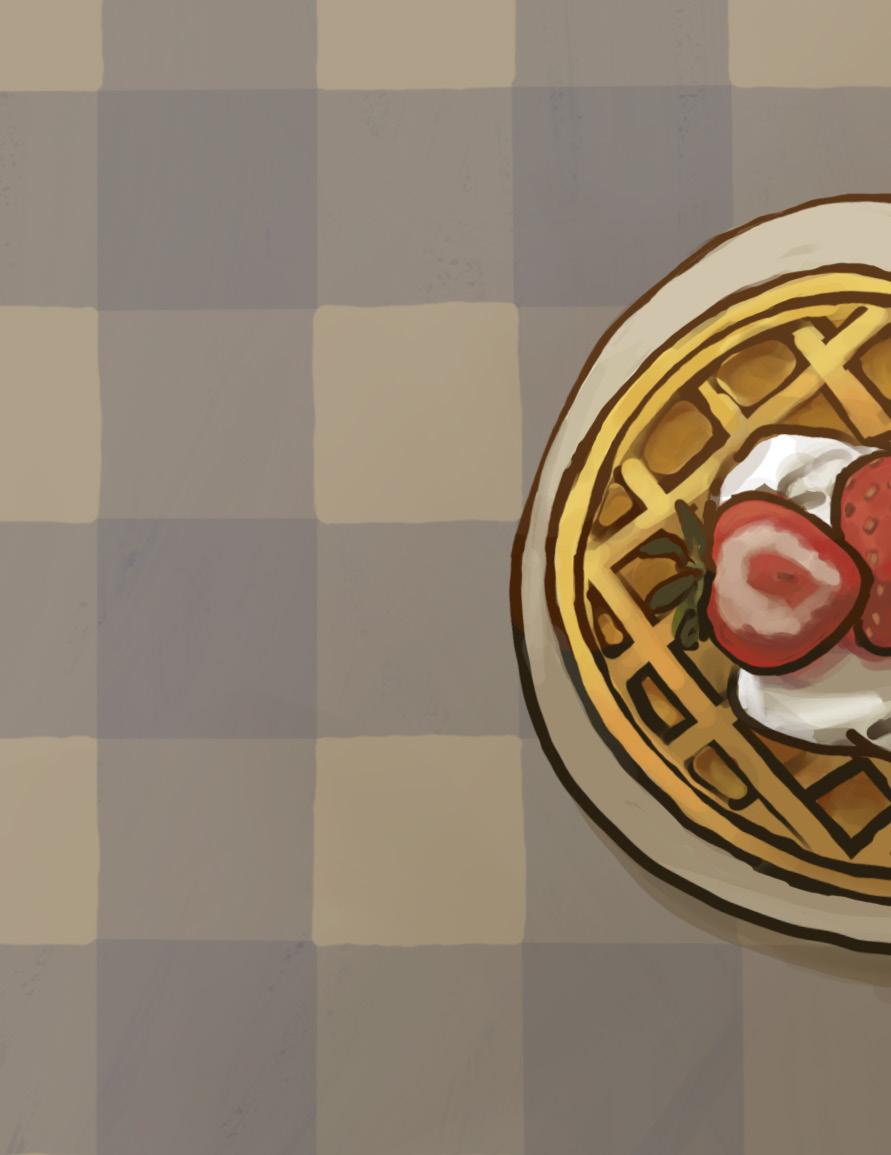
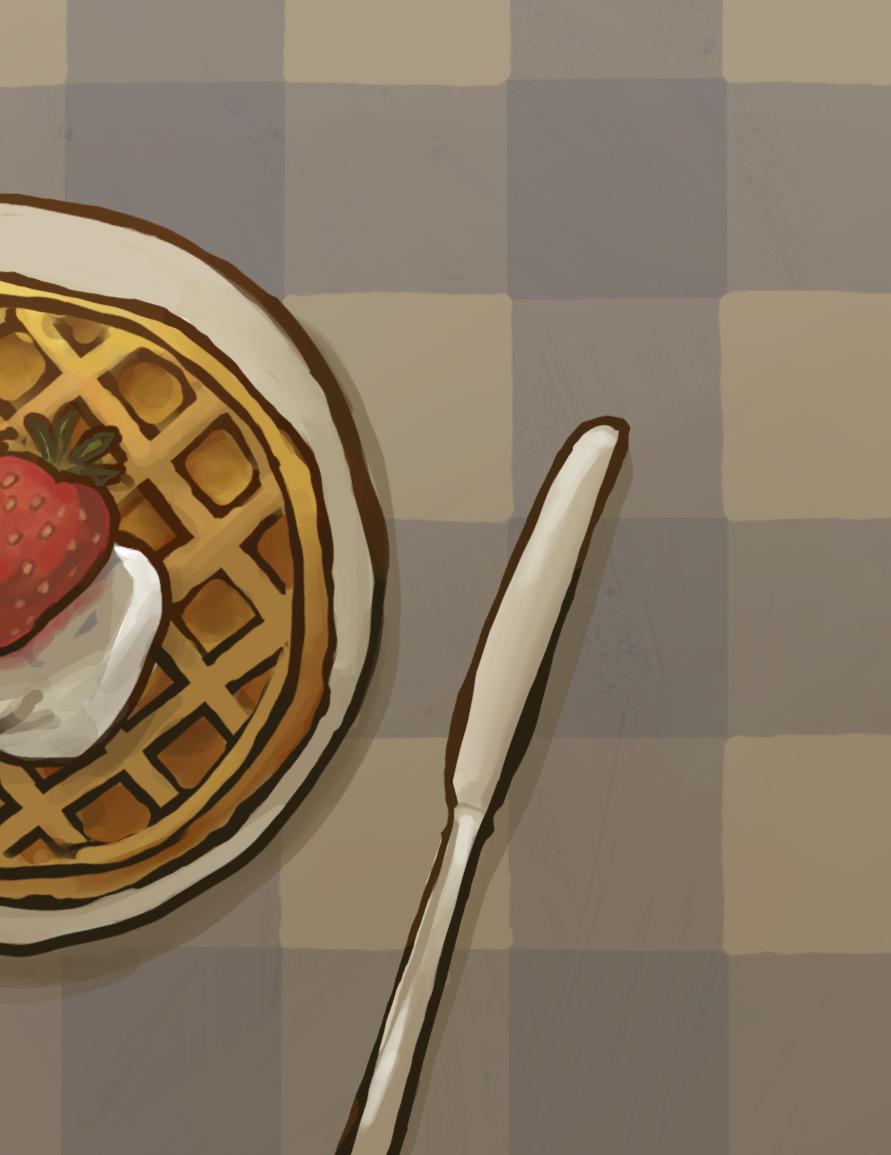
Richard walked back into the room after a couple minutes with a stack of microwaved waffles, three plates, and a jar of Nutella. A king’s breakfast.
He set the plate down on his bed, and Rija and I immediately started grabbing waffles like rabid animals. Rija was ripping chunks of waffle and messily dipping them into a glob of Nutella he had poured onto his plate. Richard handed me a knife, eyeing my every move as I spread a thick layer of the spread on my own waffle. The last time I used a knife, I had sliced three of my fingers trying to cut open a bagel. Richard scolded me as he tenderly wrapped my fingers in bandaids, telling me not to show mom and dad.
The day passed by slowly as my brothers continued playing Call of Duty, and I was stuck with nothing to do. I could have filled out the summer workbooks my mom insisted I do to keep my mind sharp. I could have played my own video games like The Sims or Animal Crossing. I could have even played outside like a normal kid, but I couldn’t get myself up from the mattress, watching my brothers with thick envy curling in my stomach.
Eventually the game was abandoned, and my brothers had resorted to an actual physical fight. Both my brothers did martial arts, but I did dance. I would have wanted to join, but I knew they wouldn’t actually try to hit me back. They weren’t allowed to. I was fragile like a porcelain doll to them, and it made me feel just as small.
“He’s not backing down, he’s not getting tired,” Richard narrated his moves as he wrestled Rija to the ground. Rija squealed when Richard picked him up over his shoulder, “He’s going for the finisher!”
Rija giggled as Richard slammed him into the bed and pretended to do a diving elbow drop. Rija sat up on the bed and threw punches that never landed as Richard expertly blocked them. I looked on from the mattress, my personal island.
Eventually, the sun set and my parents came home. We had our usual family dinner. I sat next to my mom and across from my two brothers. They were always playing with their food and cracking jokes only they could understand. I had my feet on my mom’s lap and laid my head on her shoulder as she told me about her day.
When my parents went to bed, we retreated back into Richard’s room.
Rija and I sat together on the mattress, our necks craning to see the TV better. The only light in the room was from the fuzzy TV screen, the resolution struggling to display the Netflix homepage properly. Richard was picking another movie, maybe Jackass, maybe an Eddie Murphy movie. Whatever it was, I knew we’d be crying, laughing, and quoting lines for the next week. Rija and I would fall asleep in each other’s arms before the credits rolled, and Richard would turn the TV off, careful not to step on us.
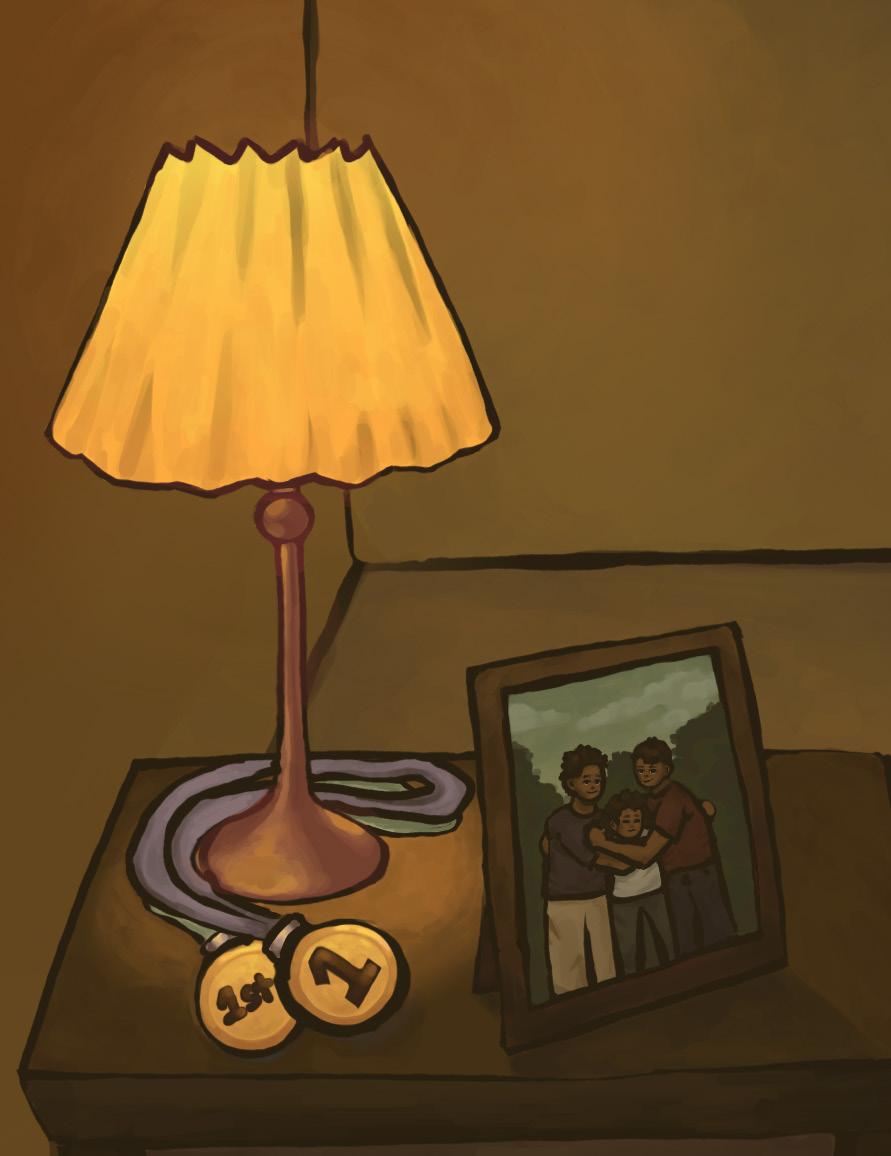
By my eleventh birthday, Richard had moved up north to college, and I moved into his room, separating me from Rija and ending our years of a shared bunk bed. His old TV and PlayStation were replaced with my laptop and makeup. I used the same desk he would, and whenever I was bored, I would root through the drawers, looking at the memories he left behind. There were medals from martial arts and music competitions. Some pictures of him in high school and on various trips. The only photo he took when he moved was of the three of us. Richard was hugging both of me and Rija, and all of us shared a huge smile. He got it framed when he moved out. The picture has been sitting on his nightstand since he was 18.
Every holiday dinner or family gathering, my family spends hours reminiscing about our favorite memories. They range from the same embarrassing childhood stories to long parables my parents have never told us. For some reason, my brothers and I never talk about the summers spent on the mattress.
My favorite memories with my brothers were ones made on Richard’s bedroom floor, but sometimes I catch myself forgetting they ever happened. Maybe it’s because our parents never knew about it. Maybe Richard doesn’t talk about it because we were actually as annoying as he pretended we were. Maybe we just miss it too much.
Lalou Ratsimihah is a writer and journalist based in Los Angeles whose passion lies in creative nonfiction. Lalou studies Journalism at the Annenberg School for Communication and Journalism, University of Southern California.
Ava Rathenberg is a Bay Area and Los Angeles-based designer and illustrator. She is inspired by showcasing personal stories and cultural experiences through surrealism. Ava studies Arts, Technology, and the Business of Innovation at the Iovine and Young Academy, University of Southern California.
LALOU
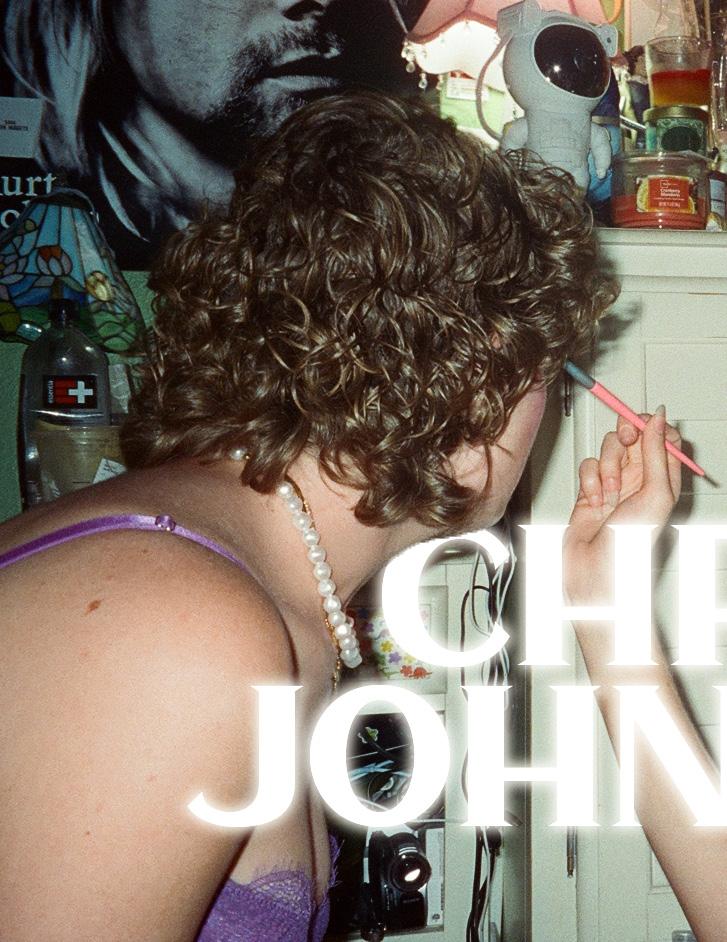
Chris Johnson is a Florida based photographer and filmmaker currently going to school for cinema production. In his free time he’ll be anywhere but home—kayaking, at the movies, finding books to read, or just driving to find new places to enjoy. He’s always looking for new creative outlets and new experiences to capture. Someday he would love to be doing concert photography or making horror films!
Dhrithi Vishwa is a designer based in the Bay Area and Los Angeles. She draws inspiration from nature and loves combining tangible and digital media. Through her work, she hopes to highlight diverse stories and voices. Dhrithi studies Media Arts + Practice at the School of Cinematic Arts, University of Southern California.
CHRIS JOHNSON
Everyone wants to fly until the ground comes up fast. If I were special, I could have escaped. But I was just another girl on Ocean Boulevard in plastic princess shoes that my feet outgrew.
I know why I died. Or why I will die. It was inevitable, like a crashing wave or the tossing of old clothes that no longer fit. But my mother always said I was greedy. I ate too fast, gulped too large, and wanted to collect the entire world in my pockets. Of course, she was right. Mothers usually are – to daughters’ dismay. But she has seen all my seasons, even the ones she didn’t understand. I’m sorry to her every day, because she sacrificed so much just for her daughter to be an asshole.
It was like any other day. Well, not really, but that came later. There was no indication – not a stale smell in the wind, or a muted, shy sun – that I would eventually crumble from my ambition. Luka and I were fighting again. My heart jumped when he yelled at me and pulled at the roots of his hair. He said I was impossible. This was passion, no doubt. So when I walked off, leaving him brewing in the street, I was smiling. I knew at that moment he couldn’t tell if he hated or loved me, and that made me perfectly, hysterically happy.
I have problems. Enough to flood a pharmacy. But I don’t care enough to “fix” myself. I don’t want to lose the character development I have built from years of hating myself and wishing I were dead. Now, people think I’m funny. They find me “magnetic.” Whatever that means. Some days, I think they mean zoo animal.
Something they can gawk at and thank their lucky stars they aren’t trapped behind a cage of their own history. Others, I think, want to touch me, taste me. It’s lonely but safe. And I am happy, but bored. So very bored.
As I walk home to my shitty apartment in a shitty neighborhood, I don’t bother to check over my shoulder. Whatever monster wants me can have me, and good luck to them, because I don’t come with a receipt. The man jumped out of nowhere. A bush? Behind a parked van? I can’t be sure. But I didn’t startle when he screamed in my face, waving his hands in the air. He was dirty and smelled of human excrement, wearing only a faded and ripped construction shirt and cargo pants with one leg rolled up above his knee. No shoes. Just black, splintered toes worn down by asphalt and pavement. Stronger than iron, but human. The humanness surprised me, and I felt stupid. Of course, he is human, but the man’s performance was rabid, untamed.Knotted hair like a stomach, thick and ropey. I stood emotionless, observing the creature before me. The words were indecipherable – English but splattered in a Jackson Pollock mumble. There are words aimed in my direction, spat at my shoulders, arms, torso, neck, forehead. My clothes have wet spots, yet nothing sinks into me when he is trying so desperately to make me feel something. There was no other course; I had to walk around him, leave him behind, shouting at weeds. Maybe I’ll name him if I see him again. I’m thinking Craig.
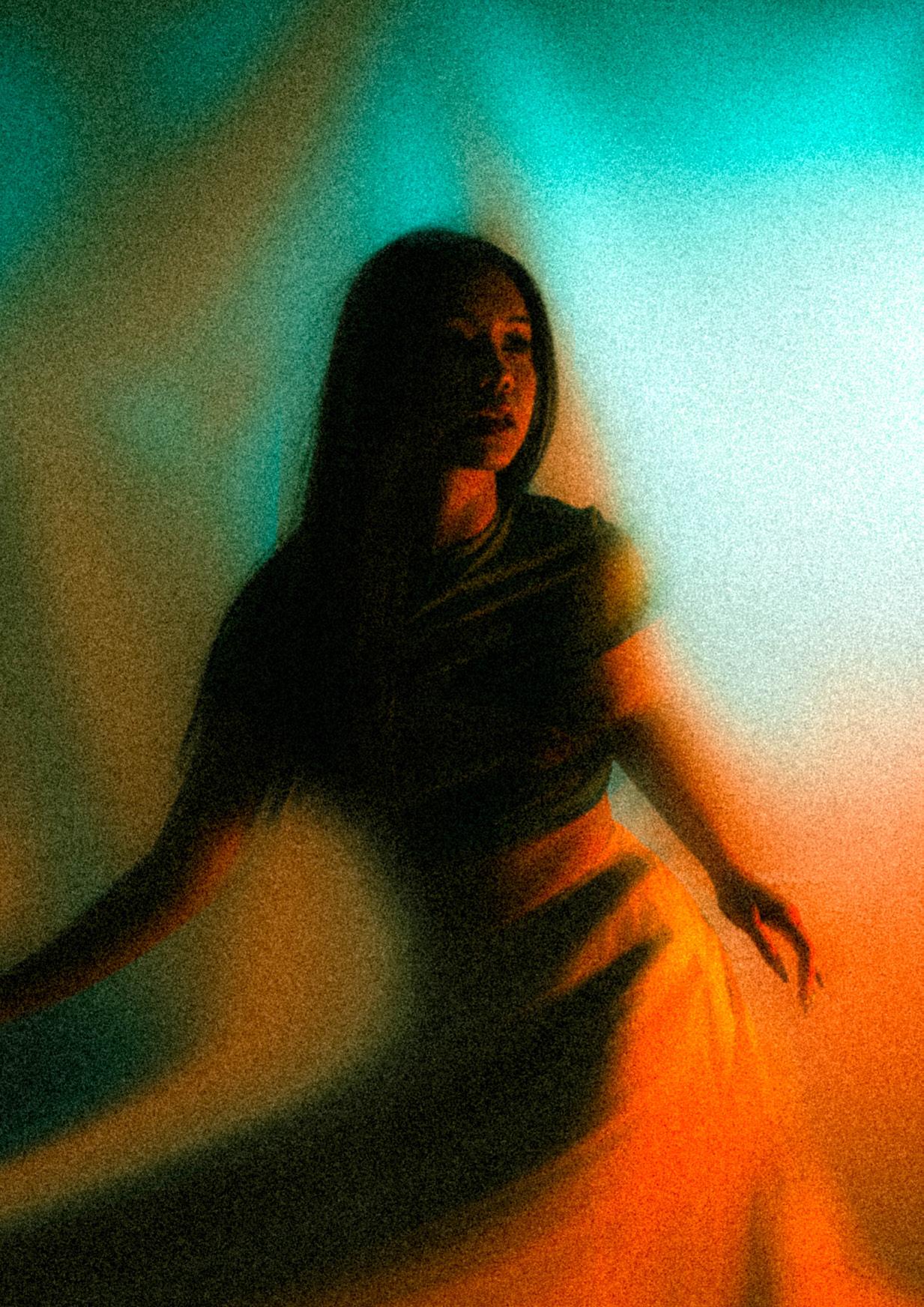
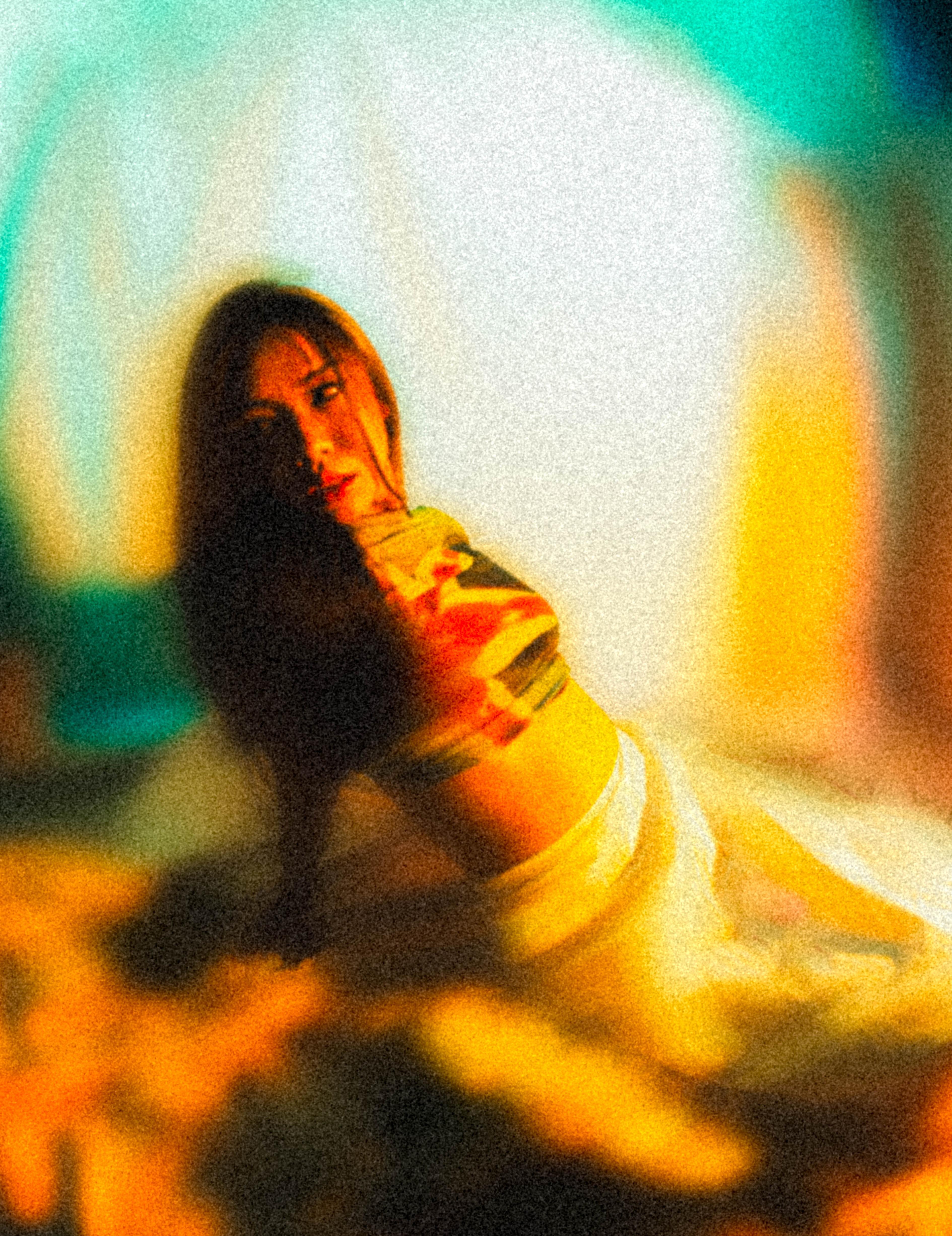
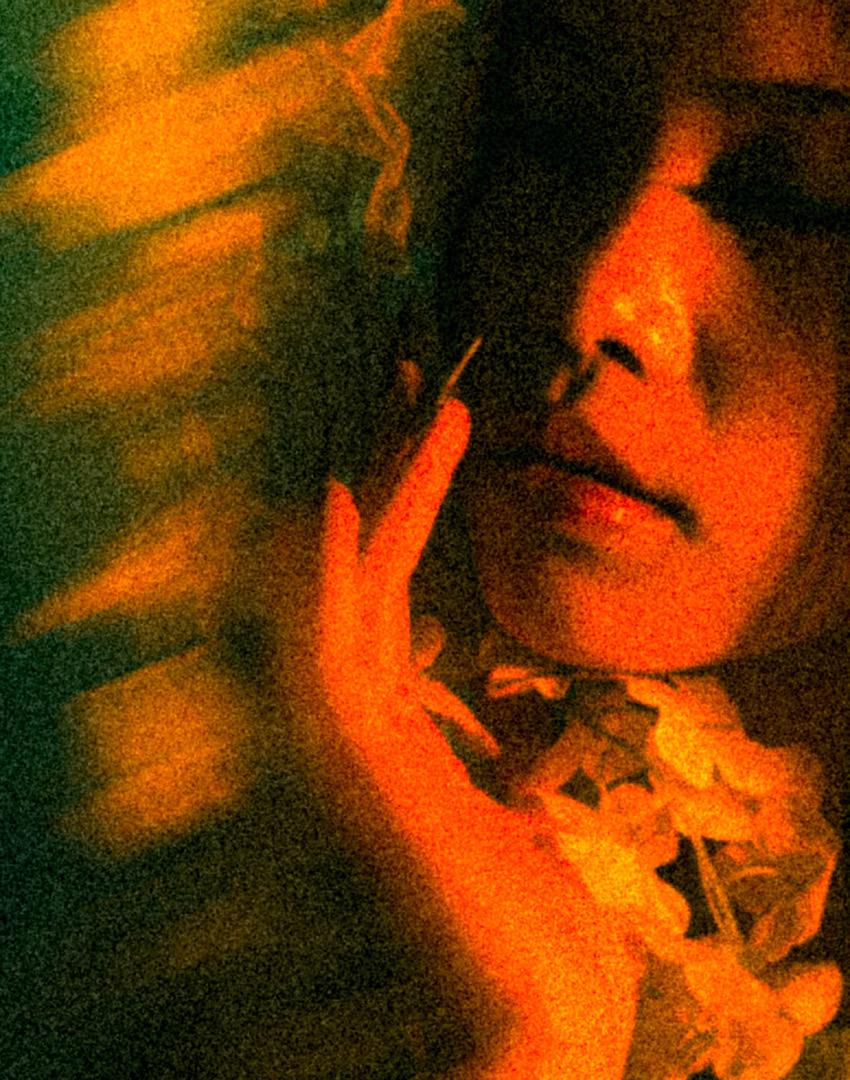
My poor boyfriends. They were never enough. It wasn’t their fault, but I made it their problem. Blame father, or the man he let touch me—hell, even the weather— blame anything but me. Why should I? I was molded this way for a reason. And in protest (protesting God, fate, or even Mother Teresa, who knows), I have no apologies for licking the last of the lollipop, or wasting my day hanging from the bow of a tree. I’ll ignore the warnings I’m getting too old, need to settle down, get a job, and instead drink until my liver gives out and my heart sputters cold smoke. I owed it to the princess’s shoes because she deserved the world. Lost potential. Mourning what she could have been, what sparkles faded from her eyelashes the moment adults showed up and felt entitled to treat her like anything but a princess. They left her small, delicate body amongst the poppies, wrapped her lovingly in white and remorse, and said goodbye and instantly forgot her name.
The car was hot, and the steering wheel burned my hands. It was hard to breathe, the humidity sitting fat on my lungs, but I closed the door anyway, locking myself in the oven.
This is what it was to be in SoCal. Vintage cars, open beach highways, and the ugly backstage of Hollywood that, for some reason, kept people coming back for more. A part of me thought about the times I wished I could afford to hop on a flight to anywhere and escape. Escape what, I still don’t know. Despite the haunting analepsis that scratches the vinyl in my brain every day, I am a very lucky girl. So very lucky. Thank you, God, for the luck that I have. I know it’s there, in the curve of my mother’s smile, and the jingle of my aunt’s laugh. Feel it in the tightness of my friend’s hug that lasts too long. Yes, it’s there, and though I don’t say it enough, I see it. I kiss it. Swallow it.
Tires squealed in my wake in an effort to keep up with my voracious appetite for speed. More, more, more, my foot pushed. The car was vintage. Cherry condition, worth more than my psychological need to feel anything at all. Chugging ahead, the engine gasps, and my fingers tighten on the wheel. Over the roar of the engine, I can’t hear all the things that I have to ignore.
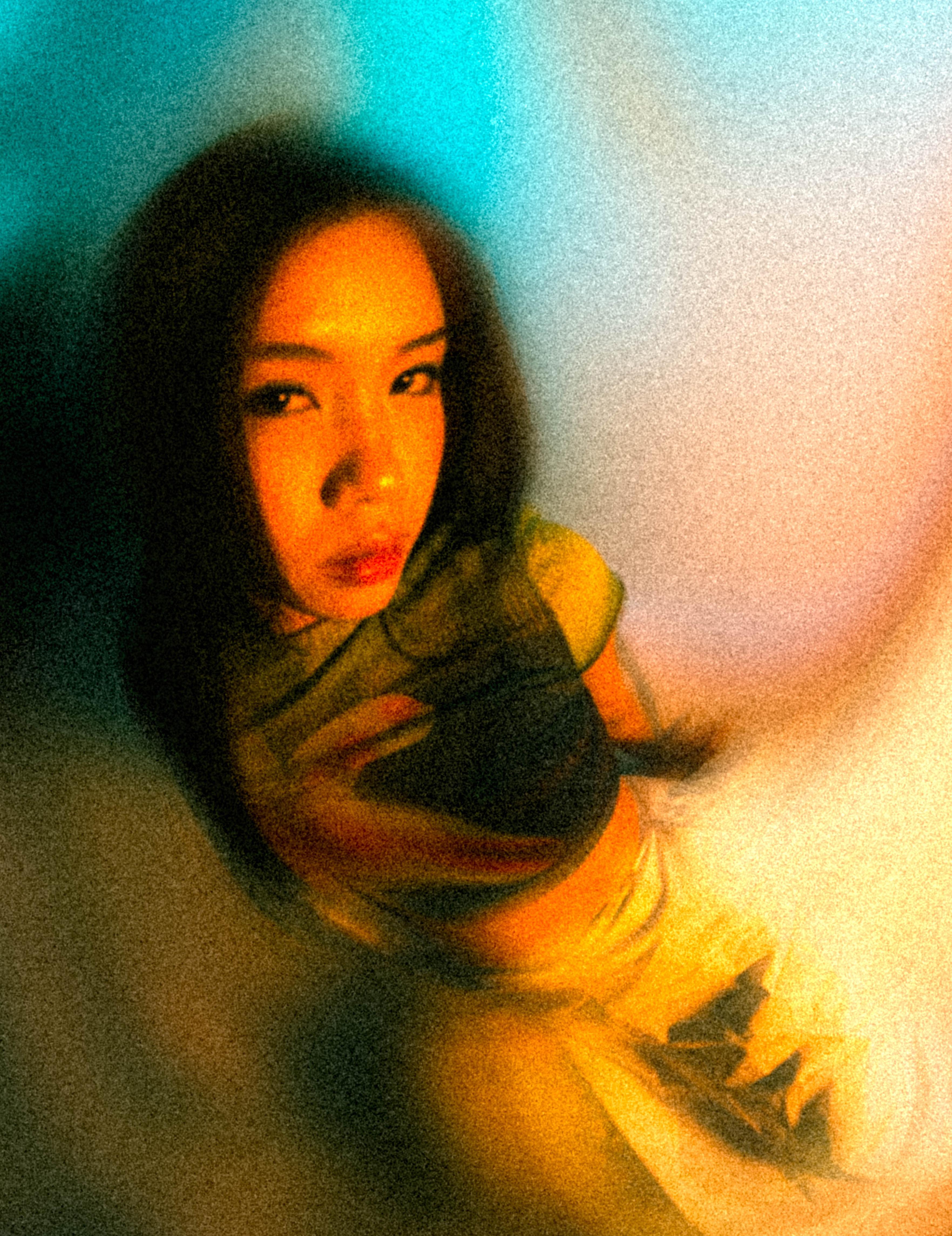
Artist? In this economy? You should have been a nurse. Nobody would notice if you disappeared. Fade into oblivion, do us all a favor. Attention whore. Nobody likes you. You are insufferable. An asshole. The sheer hubris to think that you matter at all in our lives. To think that you would be remembered. Stories will erase you. They will forget your face, your laugh, and your love. You are in debt. Money. Money. Money. You have none. Never had any. And you will die broke. Broken. That’s what you are, what you will always be. Who are you kidding? Healed? Better? A joke. A sick fucking joke. Who cares what songs you love or foods you eat or the list of names on your emergency contact list? Why should we listen to a word you say? A word you write? Make us care. Make us listen. Make us hear you.
The median came out of nowhere. I didn’t even see it. The road was empty. How did I not see it? The sky was bright, my eyesight is 20/20, and I am young. But it came out of nowhere.
My body flew through the windshield. I didn’t wear a seatbelt. The glass shattered, glittered in the air, catching the light in a crashing wave. I soared, flew with the reflected light. It was peaceful, seven feet in the air. I’ve never been afraid of heights, but gravity hated me. It was jealous of my freedom, the creeping adrenaline finally reaching my veins, and it pulled me down to the blacktop. Slammed me on yellow stripes and slapped my limbs onto the earth, snapping bones, slicing skin. My neck was crooked, unnatural, my eyes unfocused on the destruction of my car, no more cherry. Only warped metal and debris thrown like confetti on the highway. One of my sneakers rested on its side in front of the mangled grill. I can’t feel my feet, and my brain can’t recognize which of the left or right is exposed. Or if the other is still holding on, or dragging by my heel. I’m sorry.
Roadkill. I was roadkill cooking beneath the California sun. I’m sorry.
The ambulance came screaming. So did the police. They called my mother, found her picture in my wallet. She looked so beautiful and happy in the grain of the Polaroid. But I made her cry when she saw them winding my body in silk. Ribbons of satin, every shade of the things I should have said but lost the words. All I should have learned but closed my eyes. I’m sorry.
Craig stands behind the barricade. He finds my other shoe off the shoulder, covered in dust. Sits on the ground and slides it over his foot, perfect fit. Hands calm, no longer erratic, eyes solemn as he stares at the scene before him. Then mumbles,
Maybe she’ll slow down in the afterlife.
Nub-Petch Sinthunava is a Los Angeles based photographer. She specializes in editorial photography that blends creative direction with bold, authentic color palettes to capture genuine emotion. Nub-Petch studies Public Relations and Advertising at the Annenberg School for Communication and Journalism, University of Southern California.
Gia Carillo is a writer born in Long Beach and based in Los Angeles. She writes personal essays, flash fiction, and poetry that examine family, violence, and social tensions. Gia studies Creative Writing at the Dornsife College of Letters, Arts and Sciences, Music Production at the Thornton School of Music, and is pursuing a master’s in Literary Editing and Publishing all at the University of Southern California.
Cici Fang is a Shanghai and Los Angeles-based multimedia artist passionate about using visual storytelling and interactive design to advocate for social changes to explore human-environment relationships. She specializes in graphic design, data visualization, mapping, and web programming—and is currently exploring extended reality. Cici studies Global Geodesign and Media Arts + Practice at the Dornsife College of Letters, Arts and Sciences and the School of Cinematic Arts, University of Southern California.
Melani Shrestha is a photographer and creative director based in New York City and Los Angeles. She specializes in portraiture, street, and documentary style photography. Melani studies Human Biology at the Dornsife College of Letters, Arts and Sciences with a Business Minor at the Marshall School of Business, University of Southern California.
Brandon Taliaferro is a Portland and Los Angelesbased artist and graphic designer. Brandon creates vibrant, colorful works across multiple media and currently studies Design at the Roski School of Art and Design, as well as Psychology at the Dornsife College of Letters, Arts and Sciences, University of Southern California.
MORE THAN FRIENDS
Models
Ziyu Gao
Sophie Chuang
Meemaw’s apple fritter, ông nội’s bánh xèo, nana’s shepherd’s pie, vovô’s pão de queijo. It’s like a video game—once a parent upgrades to grandparent status, they unlock a signature dish. And, if lucky enough, their posterity will grow up with this particular dish, one that eventually becomes an emblem of the good old days.
Not all signature dishes are complicated or extravagant—in fact, the beauty sometimes lies in its simplicity. This was the case with my grandma’s dish. While she knew how to make a mean short-rib stew or an unforgettable marinated crab boil, what stood apart was my halmuni’s egg rice. Stacked atop a bed of steaming rice would be a bright orange slice of American cheese, melting all ooey-gooey under a fried egg, fresh off the grill. From there, one tablespoon each of soy sauce and sesame oil would be added, enhancing the dish’s savory, earthy elements. Finally, she would sprinkle on a handful of sesame seeds, finishing off the dish with a hint of crunch factor. With some kimchi or seaweed on the side, there was nothing that compared to this delicacy.
I never got used to my grandma’s craft; particularly, how she managed to cook the egg perfectly every time—just the right balance between over-easy and welldone—was incomprehensible to me. On days when I was lucky enough to eat her egg rice, I would beckon my family over urgently. Being the youngest, the rules of seniority had been ingrained into my head since birth, including the unfortunate “elders eat first!” rule. As a result, I knew better than to take a jab at my food before anyone else and, with great discipline and patience, would wait for my family members to make their way to the table. As soon as I saw my grandpa’s fingertips make contact with his chopsticks, I would stab the yolk and let its golden waterfall flow. As it seeped into the rice and coated each grain with its yellow shine, I would watch the dish grow into one big, amorphous, yellow blob until, eventually, it was impossible to distinguish what was egg and what was rice.
Just like the gold of my grandma’s eggs, the word “childhood” oozes pools of vibrancy in my head. Like the yolk, each moment of my youth seeps into other aspects of my life, washing over my adolescence and leaving a sheer, aureate tint. I was lucky to have experienced such a cherishable childhood, one as precious and valuable as gold. When I look back, my childhood serves as a shining testament to the love I received growing up. A culmination of all the sacrifices my family made for me, like leaving everything behind in their homeland to come and raise us in the so-called “land of the free.”
But just as the yolk would inevitably become an indiscernible part of the dish, my memories become an indiscernible part of my childhood—mere threads within a great, stringy web of reminiscent thoughts. Singing along to Once Upon A December with my sister, showing off my bedazzled pink princess necklace to my classmates,
strutting around in my bright blue light-up Skechers—these seemingly irrelevant moments have now all become timeless memories from my youth, like aging strips of film capturing the bliss of childhood. Even though I seem to remember each strip so vividly, as I weave these cuts of time together in my head, the golden radiance of each memory turns hazy, collectively fading into a dull yellow.
This wash of yellow—the nostalgia I feel when reminiscing—makes each memory fuzzier, creating the illusion that some memories were more pleasurable than they really were. I see this yellow when thinking of my favorite Secret Joujo doll and the satisfaction I felt as I brushed through her hair, remembering smooth and silky locks of lilac rather than the tangled nest of weedy string it really was. I see this yellow when remembering the obnoxious pink bubbles of Hubba Bubba that I would blow up in my friends’ faces— bubbles I recall being bigger than they really were, friends’ faces plastered with grins rather than the irritable frowns they really carried. The cartons of banana milk I would sip on are sweeter in memory than they were in reality, and the weekly showings of Running Man—my sister’s and my favorite gameshow—are a lot more invigorating than they were made out to be.
But nostalgia does more than just cast a yellow hue. It washes over and blurs my memories, invariably causing them to become harder to recollect, harder to recall correctly. Remembering my Secret Joujo doll is easy, but the memory of tearing it from my sister’s hands and consequently ripping its head off is more difficult. Yes, I loved chewing those pink wads of gum, but did I really get it stuck in my friend’s hair and proceed to lie about it when asked?
Altogether, we stitch together our memories into a big scrapbook, one full of yellow, saturated film strips. This scrapbook is fantastical, a dream-like contortion of the past
NOSTALGIA’S YELLOW HUE
that only consists of the good. The nightmares I had of my dad grading my math workbooks are not featured, and the terror I felt at the sight of my mom’s shattered red phone that had fallen from my hands is now a deceased fragment of an alternate reality. The memory of my grandma’s white neck scarf, which had reeked of sweat and felt like a chain choking against my skin, now appears as a gentle towel that wrapped softly around my neck, helping to heal my 104 fever.
The deep-rooted desire to live in the past—within the realm of simplicity that embodied our childhoods—drives us to change how we remember our memories. Nostalgia saturates these strips of film, casting its warm, yellow hue over our scrapbooks of childhood. It is a double-edged sword—both a warm, protective blanket that protects us from the difficulties of adulthood, but also a yellow stain on our memory recall that taints the reality of the past.
So why, despite knowing nostalgia’s manipulation of memory, do we cling to this feeling? Mindlessly, I craft my identity around these formative moments that make up my “childhood,” regardless of whether they were pleasurable or traumatizing. Is this wrong? Is adopting this “ignorance is bliss” mindset beneficial for preserving our childhood self that we never really grow out of, or is it ultimately detrimental?
Acknowledging this discrepancy between what really happened and what I choose to believe is just the first step; what do I do with this realization? Should I flesh out every seed of trauma planted in my brain, unearthing it from the depths of suppression
and facing all the pain that resurfaces along with it? Relatives, close acquaintances, best friends—should I go back and re-explore every possible source of conflict I might’ve had in any of my past relationships? And finally, if nostalgia really does alter my perception of the past, is my childhood one that truly deserves to be looked back on for comfort? Or is my “childhood” merely the byproduct of my own craftsmanship, a jaded vision of what I had wished for my childhood to look like?
What I’ve come to discover is that, whether or not we feel nostalgia, memories will inevitably become inaccurate. As time passes, the room for error in recalling our memories grows, and each film strip becomes fuzzier and more saturated. And while this method of preservation might not be accurate, it serves a greater purpose— self-protection. Regardless of how well one remembers, memory provides the stable groundwork from which identity is built. Just as popping the egg yolk meant I was sacrificing the ability to preserve my picture-perfect egg, succumbing to nostalgia means no longer being able to preserve our memories exactly as they were. And yet, as the egg’s flavors would seep into the remaining ingredients, the dish would always taste better. Similarly, allowing nostalgia to seep into each crevice of life enables us to hold onto the good, enhancing our outlook on our lives and identities. Nostalgia is yellow—it is a wash of color symbolizing happiness, optimism, and warmth. And while this hazy, yellow hue might color over our golden memories, it ultimately blurs the fears we hold of the future and protects us from them, establishing a web of entangled childhood memories we can always fall back on.
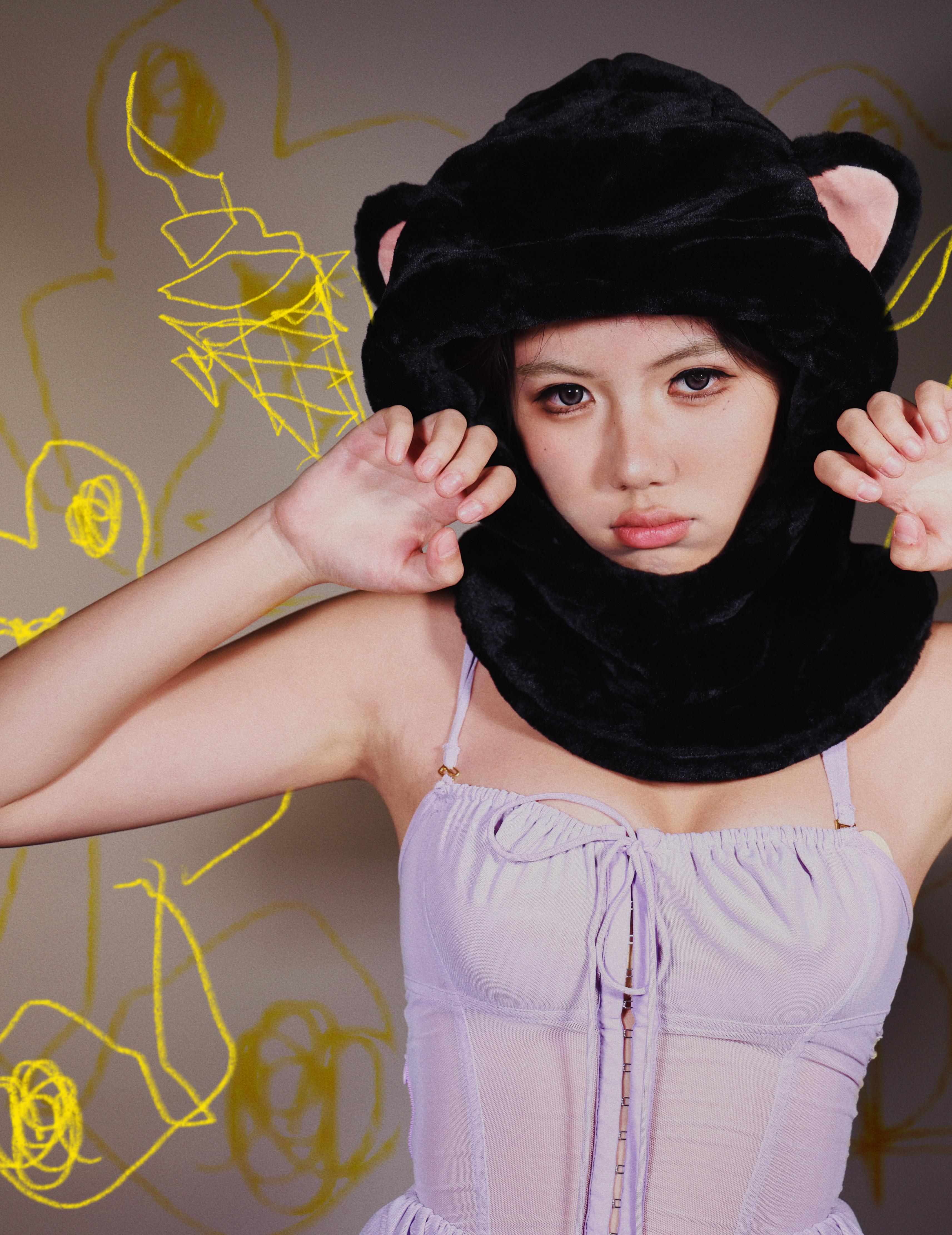
JEESOO KIM + JOY ZHAO
NOSTALGIA’S YELLOW HUE
Jeesoo Kim is a Los Angeles-based writer. She specializes in reflective personal essays that aim to explore the emotional nuances of everyday life. Jeesoo studies Psychology at the Dornsife College of Letters, Arts, and Sciences, University of Southern California.
April Kwon is a Los Angeles and Seoul–based interdisciplinary creative. She explores the intersection of design, technology, and storytelling to craft experiences that are both intuitive and emotionally resonant, and reimagines how design can shape meaningful human connections. April studies Fine Arts in Design at the USC Roski School of Art and Design with a minor in Computer Programming, University of Southern California.
Joy Zhao is a photographer from Beijing, China, specializing in fashion and portrait photography. Joy is currently studying Film and Television Production at the School of Cinematic Arts, University of Southern California.
Model Jaye Liu
Illustrator Rosie Weng
Amy MyAn is a Los Angeles based photographer studying at UCLA. Her work captures the intimate and fleeting moments that unfold between artists and their audiences during live performances. Inspired by the emotions that music evokes, she brings a cinematic eye to the raw energy of concerts, transforming sound into visual storytelling.
Angela Chan is a San Diego and Los Angeles-based designer specializing in product and graphic design. Angela studies Cognitive Science at the Dornsife College of Letters, Arts and Sciences with minors in AI Applications and Designing for Digital Experiences, University of Southern California. She also serves as the Director of Visual Design for Haute Magazine.
The wreck was a testament. In the cold humiliating mud, soaked in the consequence of his own compliance, Lyle realized the storm was on his side.
He looked at the fallen wooden ladder laying on the ground beneath the tree. Above him, Rex stood at the door to the treehouse. His face contorted with such fury that Lyle hallucinated the sounds of his screaming in the absence of real noise. “N-O-W,” Rex mouthed. A million raindrops obstructed the space between them.
Lyle’s fists grew tighter — his right packed with as many acorns as he could fit, his left cradling a beetle. He stared up at the ruinous treehouse. Rex’s attempt at a threatening glare was lost to his dark bushy eyebrows and a soaked combover that shrouded his eyes.
The longer he stared, the deeper Lyle’s feet sunk into the mud. Lyle imagined that every second he waited was a few hundred more raindrops weighing down on the half-fallen house.
Rex’s arms flailed with rage as he motioned for Lyle to lift the ladder. “M-O-V-E.”
Lyle was still. Rain washed away the beetle juice dripping from his knuckles. * * *
Rex sat on the circular woven rug at the center of the treehouse, which he had dragged all the way from his garage to the fortress. The fortress was a rundown treehouse situated just inside the thicket near Rex’s house, and he and Lyle had claimed it a few summers back. The two
friends would spend their time creating a world for themselves within the confines of the worn-down wooden structure. To Lyle, it was their secret clubhouse. To Rex, his empire.
The game was simple. There was no rule book. Just rules. Anything Rex says, goes.
“You want to collect as many things as you can in the next 15 minutes,” Rex explained to Lyle. “See this?”
He held up a green race car toy and placed it in front of himself. Lyle caught on and grabbed another car, propping it next to the green one.
“No, this is my pile. You want to collect as many things for your pile. But here’s the catch: for every minute that goes by, another rule is added.” The flip clock turned from 4:37 to 4:38. “Rule number one, anything on this half of the house is mine.”
He dragged a piece of red chalk from one end of the floor to the other, creating two separate forts.
“Ready, go.”
Rex scrambled to move everything to his side of the red line. Lyle followed, although he didn’t match Rex in speed or aggression. Before he could even get into the groove of the game, they had entered the second minute. Rex’s half of the room was a vibrant pile of books, toys, and random objects the two of them had brought to the fortress over the years. Lyle glanced at his own half. Barren was an understatement.
4:39.
“Rule number two, we can go outside now, but you can only bring one thing in at a time,” said Rex, already on his way down the ladder. “Also, you can’t choose the same thing as me.”
Lyle scrambled to catch up. The two of them exchanged an astute glance when large droplets of rain accentuated the gloomy weather. Rex wiped the rain from his forehead, brushed his hand over his slick combover, and quickly grabbed a tree branch before making his way back up. In the pressing span of just one minute, Lyle watched as Rex laid claim to every object in sight. The leaves, the fungi, a chocolate-smeared Reese’s wrapper from who knows when. Inanimate objects came to life at the hands of Rex, now subject to his rapidly expanding territory.
The rain fell harder, and Rex’s pile rose faster. 4:40.
They could bring two things in at a time. Lyle finally caught onto the brisk nature of the game, soon grabbing all that he could to add to his own territory: stones, pine cones, the dirt itself.
4:41.
Any object covered in dirt was eliminated. In an instant, Lyle lost half of his possessions.
4:42.
If they could steal it while the other person wasn’t looking, it was theirs.
4:43.
The items had to be piled into a tower to be counted.
4:44.
If the item was red, it was Rex’s. Lyle left and came back to find red chalk scribbled across his pile.
4:45, 46, 47, 48… the minutes absorbed the moisture of the rainstorm, obscuring the rules the way the rain dampened the wood. The greater the amount of items that Rex obtained for his empire, the more the empire consumed him. Given the pile of rules and the underwhelming looks of his own pile, Lyle had resorted to defense. He couldn’t bear to give up any more of his items to the monster that ruled over the opposite territory. He watched as the chalk turned to a bright Kool-Aid red, running down the grooves of the wooden planks and dyeing everything in its path. Even the storm was in on Rex’s game plan.
“Last rule. You need at least one living thing in your pile or it’s game over,” Rex declared.
Game over. How absurd. To think that Rex could pull the rug from beneath him when Lyle had lost his seat at the table before they even started. For Lyle, there was no force behind that threat. But to humor Rex’s turbulent obsession and avoid the unforeseeable consequences of disobedience, Lyle stood up to search for his last item.
It was the final stretch of Rex’s rigged clockwork. In the last sixty seconds, the fortress transformed into an arena and Lyle was waving the flag. Rex bolted for the red allure. The second hand on the clock poked at Lyle’s heels, shrinking the enclosure faster than he could muster up the energy to run.
This poor beetle. Lyle gently lifted the insect into the palm of his hand, capturing another pawn foar a battle already lost. Just as he was about to grab the ladder, the rickety object gave out. Not only was there no winning against Rex, there was no way of reaching him at all. Rex peered down at Lyle through the frame of the treehouse entrance. A pile of Kool-Aid-red leaves submerged his feet. He had claimed the fortress. The rules had accumulated the subjects to his rule. Rex’s empire had come to life. The fortress, obliterated. Game over.
Then the plank fell. The roof came down. The rain showered Lyle with shrewdness — Rex shivered in fear.
Kiyomi Miura is a writer based in Tokyo, Japan. Her work delves into the tensions between the individual mind and the structures that govern collective life. Kiyomi studies Philosophy, Politics, and Economics at the Dornsife School of Letters, Arts, and Sciences, University of Southern California.
Fiona Dong is a photographer based between Hong Kong and Los Angeles. Her work explores the intersections of humanities and fashion. Passionate about storytelling through imagery, Fiona’s projects range from documenting Tibetan traditions to capturing the pulse of urban life. Fiona studies Computational Neuroscience and Philosophy at the Dornsife College of Letters, Arts and Sciences, with a minor in Entrepreneurship at the Marshall School of Business, University of Southern California.
Kaitlyn Zhang is a Los Angeles-based designer and storyteller. She strives to craft delightful digital experiences with care and leave things better than she found them. Kaitlyn studies Art, Technology, and the Business of Innovation at USC’s Iovine and Young Academy.
Lighting
Daniela Jin
Models
Rui Zhang
Dallas Gardner
CHARLIE INGHAM
Miyu Ikeda is a Tokyo, Singapore, Bay Area and Los Angeles-based designer and artist. With a passion to integrate design and immersive reality, she explores how movement and perception can be translated across mediums. Miyu studies Design at Roski School of Art and Design and Extended Reality Design and Development at Iovine and Young Academy, University of Southern California.
Charlie Ingham is a student of Interior Architecture in the UK whose work explores the relationship between space, structure, and emotion. Through photography and design, he captures how environments evolve. Both physically and psychologically, his imagery focuses on light, texture, and form as storytelling elements, reflecting his belief that design begins with human experience.
CHARLIE INGHAM

Priah Ferguson, the young, talented actress from Atlanta, Georgia, is carefully and passionately embarking on the next chapter of both her career and life. Known for her vibrant and emotionally resonant performances, she strives to create nuanced characters with her work, inviting viewers to feel and see themselves represented. Playing the smart and sharp-witted Erica Sinclair on Netflix’s Stranger Things, Priah has captivated international audiences through her layered and compelling portrayal, lauded for her balance of being fearless yet endearing. With the cultural phenomenon concluding after a record-breaking, near-decade run, fans and viewers will get to unpack more shades of Erica as she continues to shine in her high-stakes adventure with the Hawkins crew. With new, exciting projects on the horizon, like the upcoming JeanMichel Basquiat biopic Samo Lives, Priah Ferguson is ready to transcend her career and integrate her voice through intricate performances and great storytelling.
With Stranger Things embarking on the final season, and you attending the premieres and doing press, how are you feeling? How has it put into perspective for you that this is the end of a near-decade journey?
It’s a very tender moment for me right now because this show has been a part of my life for a decade. I’m more familiar with it being a part of my life than without. Every time I finished filming a season for this series, there was always that anticipation or feeling of excitement that I had leading into the new season to know what my character has in store, or how she will help contribute to the arc of the story. So, knowing that I don’t have that feeling anymore for this particular character or series - it’s bittersweet.
It’s kind of sad for the fans as well because I’ve been seeing the TikToks, and people are showing their transitions throughout the years and how they grew with the show. For me, it’s exciting to see how the show has a fan base that has been by our side for so long. I love the fan base, and the dedication they have to even just watch such great storytelling. It’s all so crazy.
I think it’s just a testament to how much of a cultural staple it’s become. As you anticipated returning to the character from season to season, how did those gaps in filming impact your performance - especially tapping back into Erica’s younger age while you were growing up in real time?
I will say it wasn’t a struggle, but season 5, for me, felt the weirdest playing a 12-yearold because I had just turned 18 and was graduating high school. My priorities in my real world and life, separate from my work life, were a little bit different than Erica’s priorities have been, considering she’s fighting all these crazy monsters and has all this craziness going on. Plus - she’s 12, she’s in middle school - so there was a clear contrast in priorities.

Being 18 and playing a 12-year-old and being in all the kitty clothes and stuff - I felt awkward. I was like, “this doesn’t feel right”, but I guess I’m tapping into my younger self, or what 12-year-old Priah might have been doing. Growing with the show, since I started the show when I was 9, I honestly got to experience playing Erica throughout my teenage years and growing up. So, it wasn’t difficult, but the hardest part would be me, being 18, going backwards mindset-wise, and thinking about what a 12-year-old might be thinking about at that time.
Erica is my favorite character on the show. Every scene of hers fills me with joy, and the character has grown so much throughout the show. As you’ve grown up in real time, what has Erica, since she’s such a big part of your life, taught you about yourself, and how has she personally built on you?
One thing that I can definitely say about playing Erica is that I’ve learned a lot from her. I love how smart Erica is. I feel like you don’t see that much smart, nerdy girl representation on TV, so the fact that she represented for all the nerdy girls out there - I love her for that. It honestly kind of made me, since I’m a big history nerd and she’s a polymath, tap into that side. I wasn’t really a big math person in school, so in Season 3, when I saw her work through that equation by memory, when she was in the vent with Dustin and she’s using her brains to get her out of that sticky situation, she inspired me to want to go harder in school a little bit. She shows that it’s okay to be a nerd and be smart. Looks aren’t forever, so you have to have something in your brain, and she inspired me to - not that I was a bad student - just want to sharpen my math skills a little bit more.
You’ve built her balance of being nerdy and confident so well over the years and it’s a testament to what makes her character so captivating. Considering you’ve developed her character for so many years, what lasting impression - without spoiling, of course - did you want Erica to leave on the fans and the viewers?
When Erica was introduced in Season 2, she was known as the funny little sister who had quick remarks and one-liners, and while all of that is funny, I think sometimes people tend to forget that she’s also, like I said, very smart and a polymath. She uses her brains to help get her out of situations, but she also says what people are thinking. I know Erica is a beloved character, so when I go into playing her, I hope that I do great work and execute her the best that I can. I want to play her in a way that might relate to a lot of different young people out there, and that Erica left with people knowing that it’s okay to be real in serious moments and say what people are thinking, and that it’s also okay to be funny and smart. I think she gave a perfect balance of that, and I hope people take that from her, in a way.
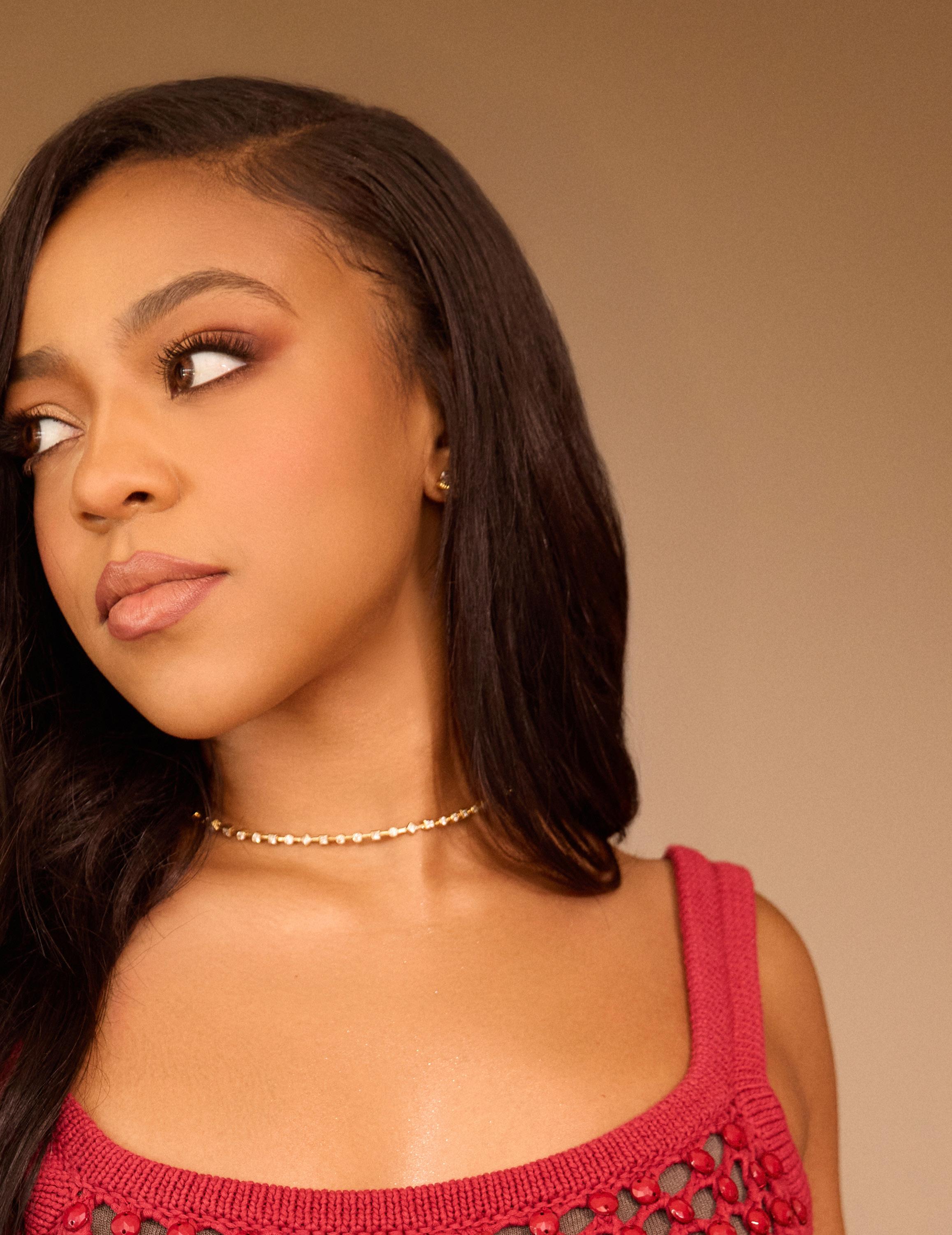
You’ve spoken candidly about being the only Black girl or girl of color on set, which is such a shared experience for many people of color who grew up or are based in predominantly White spaces. Reflecting on your experience, what would be your advice to people of color who aim to build confidence and take up space while encountering a similar situation?
I know I mentioned that in a recent interview, and some people completely took what I said and thought I was talking negatively about it, which was not the case. My castmates… we all love each other. I didn’t feel left out in any type of way. The experiences that I went through outside of the show, that was just something that I just personally would not bring to work, only because I’m there to work, and I have a support system for that.
Whether I was the only person of color in a predominantly white space or was not the only person of color, I always felt confident that I was meant to be in a space that aligned with the direction that I might want to go in in life. I’ve never felt like I did not belong anywhere because of the color of my skin, and that was confidence that was instilled in me at such a young age.
For all the young people of color out there who might feel like they can’t be in a certain space because of the color of their skin, I want them to get that thought out of their head because what’s for you is what’s for you, and that’s kind of how I always thought about it. I never thought that I did not get a role or was in a certain space because of the color of my skin. That comes with experiences that other people might not go through, but I specifically thought Erica is for me, so how can I tell this story of Erica to where she is a young girl that’s growing up in Hawkins - a predominantly white town. However, she has a confidence about her to where she feels like she belongs there, and I kind of took the confidence that I’ve always had as a young girl and put that into hers.
I don’t think it has anything to do with the way you look, or the color of your skin, although your journey or experience might be different than the next person, nobody will ever be in a position or in a space that I don’t think is for them.
I felt like this show was for me despite my experiences being a little bit different, and I didn’t bring them to work because I was at work. I still believe that Erica was made for me, and I was comfortable in that space and confident, but, there are things that come with being ‘the only’ that you may not be that comfortable talking about.
Totally understand - when there is someone else like you on set, it can make a difference because there is that level of connection and shared experience. How did these feelings contribute to your values for representing young Black and POC girls with the character of Erica?
It contributed a lot, honestly. There are a lot of situations where a lot of people of color might be the only one, and I think Erica is a great representation of that. She shows people of color in a really different way where she is the only one, but she’s also super smart and speaks really fluently. I think that that’s beautiful to show because she is sassy and stuff, but she’s not stereotypical if you get to study her. I think that brings a lot of value to young people of color who might be the only one at a school or a town they’re at. I grew up in Atlanta, so I saw a lot of people of color everywhere whereas someone who grew up somewhere else may really relate to Erica, because of the town they grew up in. I think somebody might see themselves in Erica, and telling somebody else’s story is a beautiful art to me - I hope that I did that and executed that perfectly.
It’s worth noting that you are younger than your castmates and started acting from a very early age - achieving massive success already, how would you encourage fellow young performers and creatives in finding their voice and recognizing their own potential?
I think it comes from having a North Star for where you want to go or what direction you want to go in. Then finding that confidence within yourself and recognizing what might make you different. What’s your story? Sometimes people want to hear other people’s stories and they might relate to someone out there. I think that really comes from the confidence that you try to find within yourself, especially growing up as Gen Z, and also
PRIAH FERGUSON
kind of not comparing yourself to the next person by making it a competition. I’ve never done that. I’ve always felt like what was for me was for me, and that your journey is your own journey. When you’re really locked in and focused on your journey and you, I think you’ll feel a lot better advocating for yourself and finding your voice.
With Erica having an increasingly larger role season by season, what has that journey been like for you? How has that progression and development been impactful in your direction for the character?
The way that the story happened for Erica getting a bigger role was crazy because I was only supposed to come in for a one-time situation in Season 2, just to introduce Lucas and his family. The Duffers kept finding ways in Season 2 to sneak me in there, which I’m so appreciative of, and then when I got the word that I would come back for season 3, and I saw how well written Erica was, I was super excited. Finding out that she was a nerd and all of this stuff, I was excited to see that and was ready to get to work. I have a little sister of my own, so I kind of took from her a little bit, but I was also open to what the directors might think. The directors were open to my ideas on how to execute Erica for each season, and I always find something new about her in each season. I’ve kind of approached her a little bit differently but the same in each season, especially considering that I am growing up with her and she gets more mature as the seasons go on.
I am so excited to see what we’ll get to learn and uncover about her this season, and how her journey will conclude! Moreso, with this chapter closing, there’s so much more to learn about you as an actress and what you have coming up next. This is a key transitional period of your life since you just graduated high school, and now Stranger Things, which has been a big part of your childhood, has also wrapped up. What has that feeling been like - what’s exciting you for the future?
Wrapping both season 5 of the show and high school, it was both bittersweet. I came to realize that it ended at a perfect time for me because I’m transitioning into a young woman, and I’m really excited to see the opportunities that come towards me. I’m just celebrating my youth right now, but I’m also bettering myself day-by-day.
I try not to get super nervous or think too much about what’s in store for me, but I often think that after high school, it does hit everyone, like that we’re stepping into the real world. Like what’s next? Although I started my career at a young age, I always make sure that I have other hobbies outside of the industry as well, as you never know and it’s good to always have something else you like to do. Although acting is my first love, I also occupy my time with a lot of different interests and passions that I might have. Nevertheless, I still wonder and have those same questions of what’s next. We’re adults now, and just navigating that process of balancing fun and locking in, so I’m still going through all those normal emotions.
Is there anything that you are going to miss about high school or carry with you?
You go to school with these people you’ve known since you were, like, 9, and it really clicked to me that I will never probably see them again - it is a memory. You think about the little times in high school that got under your skin, and it’s kind of like, was it really that big of an issue? Maybe I should have just enjoyed my time more instead of being caught up because what you’re worried about in high school is completely different after you graduate. With how fast that hit me once I graduated, I was like, “dang”, and then seeing everyone going their own way a month after graduating.
It makes me think about those “I didn’t like you for…” moments - was it for that big of a deal? Just beccause you skipped me in the lunch line - was it that serious? It was the innocence of it all. High school still has a certain innocence about it that I think you’ll never get back, and just the memories of going to the games and everything. My school personally wasn’t the best in sports, so I didn’t go to all the games, but now looking back, I probably should’ve cherished it a little bit more and not rushed it. When you’re in high school, you can’t wait to graduate, and when you really graduate, it’s like, “oh, I kind of missed it”.
As our theme, “Genesis”, centers around staying in tune with your childhood, I wanted to ask what your earliest memories of acting & entertainment were growing up? How has it influenced the actress you’ve become today?
Definitely starting off in local theaters. I wasn’t a theater kid, but I definitely did local theater, and I think, especially in the acting world or the industry world, that’s the first type of art an actress or actor might be introduced to. It’s just so raw and real, and the friendships and connections that you kind of make through theater are lifelong to me. Even when I go see plays, I wish I would have tapped into that theater side a little bit more because it just feels so raw. That was my first introduction to acting, with local theaters and playing a little Muppet in a show. Short films are just so real and raw as well, so those memories of seeing where I first started and then seeing where I am now on these amazing, big productions, makes me appreciate the work that I put in when I first started.
PRIAH FERGUSON
Rohan Baru is a Los Angeles-based creative from Milwaukee. With a foundation in media/entertainment production and business administration, he strives to imbue his artistic voice within creative direction and marketing strategy across numerous mediums. Rohan studies Business of Cinematic Arts at the Marshall School of Business and the School of Cinematic Arts, University of Southern California. He also serves as the Chief Operating Officer for Haute Magazine.
Angela Chan is a San Diego and Los Angeles-based designer specializing in product and graphic design. Angela studies Cognitive Science at the Dornsife College of Letters, Arts and Sciences with minors in AI Applications and Designing for Digital Experiences, University of Southern California. She also serves as the Director of Visual Design for Haute Magazine.
Photographer
Sarah Krick
Federico Borobio was born and lives in Buenos Aires, Argentina. A former lawyer, journalist, and cultural producer, he has spent the past eight years devoted to street, documentary, and social photography. His work, shaped by his curiosity for people and the vibrant energy of public life, has received recognition from institutions such as the Sony World Photography Awards and The Independent Photographer. Borobio’s photographs have been published internationally and exhibited in galleries and museums across Latin America and Europe.
Annie Gu is a multimedia artist based in Los Angeles and China, specializing in visual storytelling and interactive media. Her work explores the intersection of technology, culture and identity, blending graphic design, 3D design, and creative coding tools. Annie studies Media Arts + Practice at the School of Cinematic Arts, University of Southern California.
FEDERICO BOROBIO
The Genesis theme reveal video strives to takes a grounded approach to our worldview, demystifying ideas of power, class, and prestige. With raw acting performances, candid cinematography, and vibrant mixed media, “Genesis” bridges and humanizes today’s growing hierarchical gaps by shining a light on the childhood experiences that live at the root of our humanity. It’s a push for unity, empathy, and community by revisiting the joy and elation of being young and carefree. We wanted to invite audiences to connect through parallel experiences of being a kid – at the end of the day, we’re all wandering within the same circles of life, trying to navigate emotions, and realizations as we figure out the weight of this world.
Cast
Joan Kristi Pandiangan Gemma Kyle
Director Claire Ernandes
Executive Producers
Elise Anderson
Claire Renschler
Producer Ziyu Gao
Associate Producer
Molly Nugent
1st AD
Angela Alvarado
Production Assistants
Veronica de Osma
Miriam Law
Elle Zhou
Writers
Veronica de Osma
Jiayun Zhang
Director of Photography
Mason Carter
Assistant Camera
Isabelle Lee
Production Designers
Erica Gong
Ethy Yang
Editor
Amani Kalla
Assistant Editor
Miriam Law
Animators
Veronica de Osma
Isabelle Lee
Elle Zhou
Elise Anderson is a Fort Worth, Texas raised, Los Angeles–based filmmaker whose work spans narrative production, visual design, and collaborative storytelling. She focuses on crafting emotionally rich, visually intentional projects that highlight connection, character, and passion. Elise studies Film and TV Production at the School of Cinematic Arts and a minor in Business at the Marshall School of Business, University of Southern California. She also serves as the Director of Multimedia at Haute Magazine.
Claire Renschler is a Seattle and Los Angelesbased filmmaker. She crafts film under the philosophy that with storytelling comes the responsibility to tell authentic stories, amplify voices, and help people feel more connected and less alone. She studies Film and TV Production at the School of Cinematic Arts with a minor in Anthropology at the Dornsife College of Letters, Arts, and Sciences, University of Southern California. She also serves as the Director of Multimedia for Haute Magazine.
Nicole Leihe is a Bay Area and Los Angeles-based designer and 3D artist. With a love for storytelling, she aims to convey meaningful narratives through her work. Nicole studies Game Art at the School of Cinematic Arts and Economics and Data Science at the Dornsife College of Letters, Arts, and Sciences, University of Southern California. She also serves as the Creative Director for Haute Magazine.
Title Photo
Mason Carter
Talent
Edwin Zha
Kayla Suhaili
Director
Andrew Huang
Creative Director
Yana Pinto
Photographer
Juri Kim
Videographer
Angela Alvarado
Production Design
Rohan Baru
Editor
Jiayun Zhang
The “Haute x Jade Leaf Matcha” video connected with our community in a tastefully comedic way, leveraging the “performative male” phenomenon to tell an amusing story. While our issues typically discuss complex themes and subject matter, we still aim to ensure that our brand voice is equally lighthearted, and this video was the perfect opportunity to imbue such playfulness. The video follows our main character, equipping his wired headphones, Labubu, and feminist literature amongst his arsenal of all things performative male. As he starts the morning by making a matcha latte with Jade Leaf products, the video ends on a wholesome note with the protagonist making two drinks so he can enjoy with his girlfriend. The message was that not everything is performative - some things just taste good. Thank you to the Jade Leaf team for allowing us to showcase their brand and products in such a refreshing way.
Talent
Virginia Egere
Creative Director
Rohan Baru
Director of PhotographyEditor
Angela Alvarado
Photography
Fiona Dong
Lighting Assistant
Olivia Yun
BTS
Melani Shrestha
Composer
Anne Tilley
The “ISSUE 13 TEASER” took viewers on an issue-by-issue journey across Haute’s history, from Out of Context (2019) to Transcendence (2025). It is always important for us to honor the work that came before us and give us a space to create today, while also introducing new audiences to our previous work. The video depicts a woman rolling out a backdrop where she projects visuals from each of Haute’s previous 12 issues - reminding herself of all the work Haute has achieved in the past 6 years. As the projection reaches Issue 13, the projection glitches to a question mark, sparking mystery and allure around the upcoming theme, later revealed as Genesis. This short provided a space to reminisce on Haute’s past as we anticipated its future.
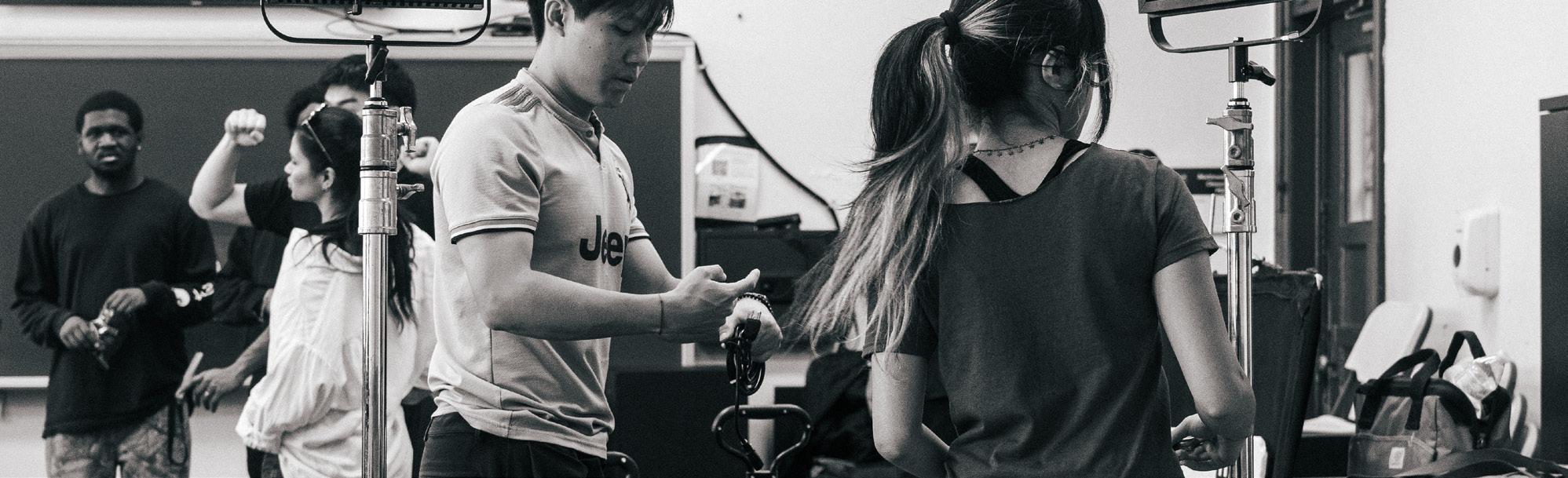
The “HAUTE: POWERED BY NIKE” video was especially exciting as it introduced our collaboration with Nike LA, so we wanted to ensure we created something that reflected our creative synergy while feeling authentically Haute and Nike LA. The video highlights the essence of being a creative: endurance, the pursuit of progress, and the unwillingness to quit - with the Nike Shox Shoes supporting performance and inspiration throughout the process. It visually highlights the creative work we do at Haute, from writing and designing to directing and editing, while integrating fast-paced cuts and musical composition to convey the narrative of struggling and ultimately succeeding in creating art. The message is simple: the finish line isn’t the end, it’s just another beginning. Creativity, like sport, is about showing up, locking in, and continuing. A very special thank you to the Nike LA team - we’re excited to continue our creative journey together.
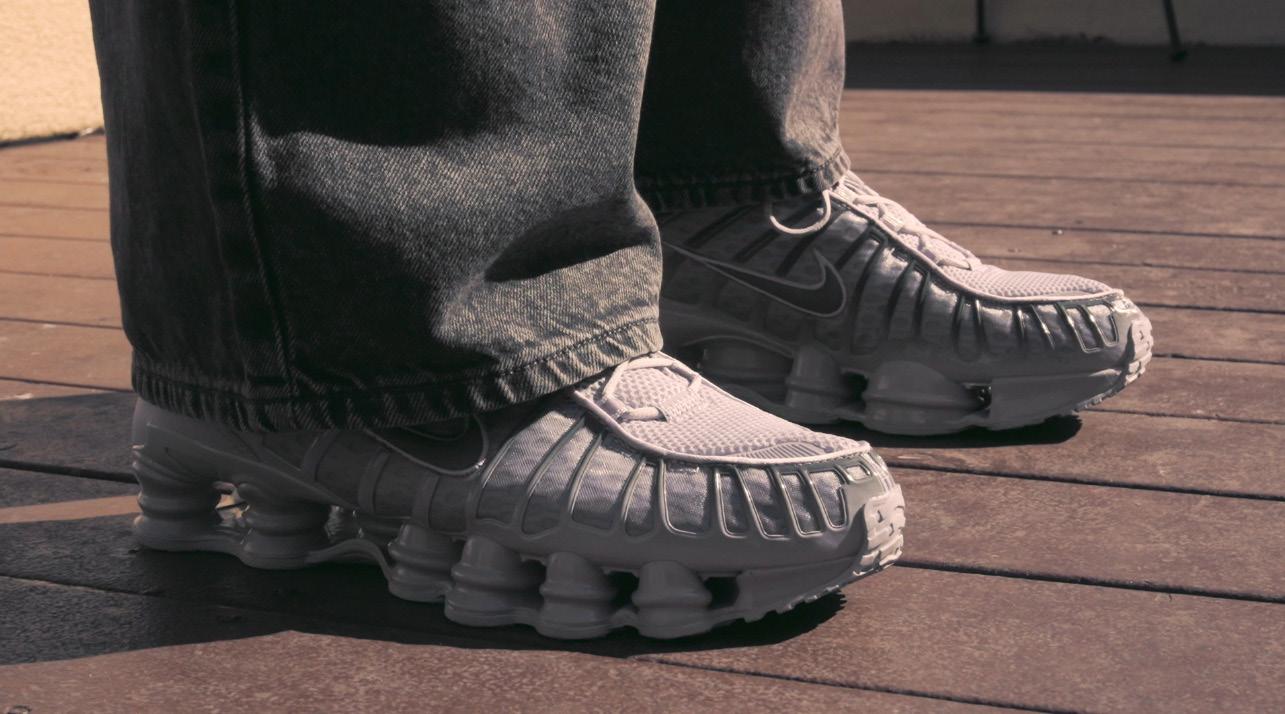
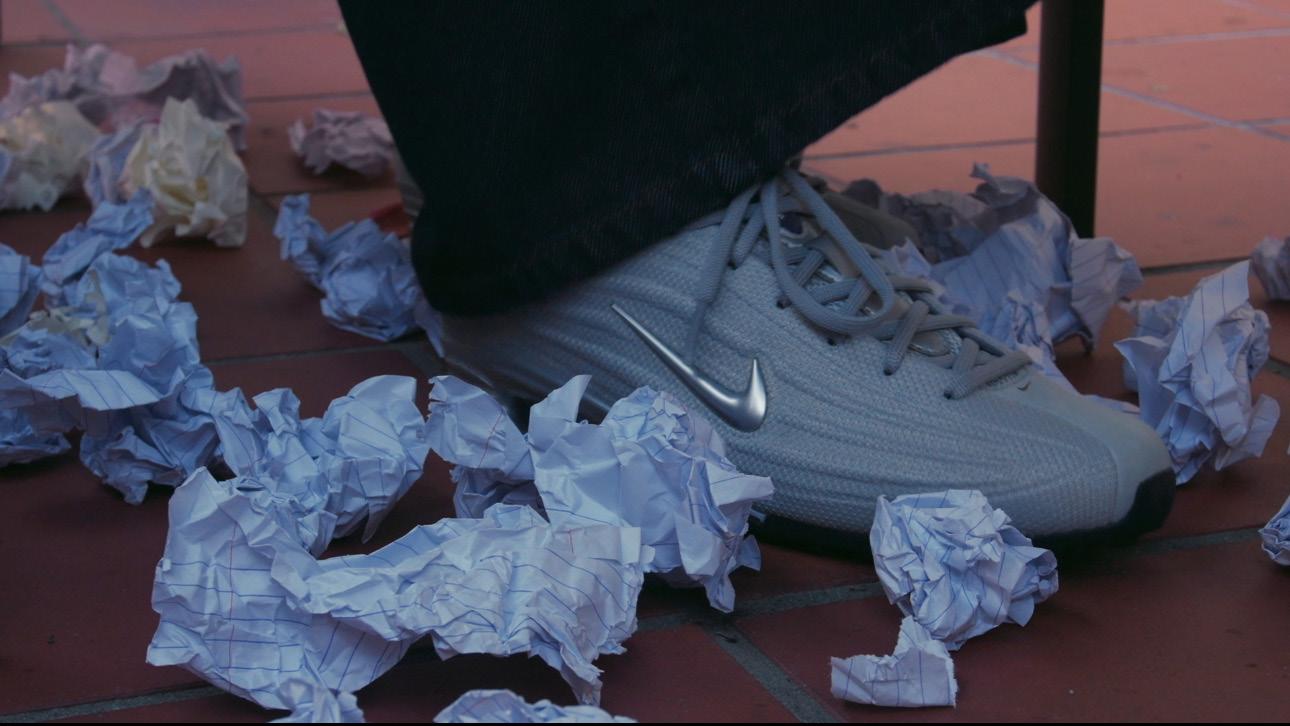
Haute prides itself on being a creative collective that is diverse in perspective, innovative in expression, and skilled in storytelling - providing new opportunities to unlock our potential and new avenues for collaboration. Reflecting upon our past accomplishments, we strived to elevate Haute’s scale and transcend to being recognized as a fully-realized brand and publication, rather than solely a student organization. Our digital presence became the vessel for communicating such intentions - allowing us to create projects that fill in the gaps and weave stories between the start of term and issue launch. This development introduced our Directors of Marketing and Content, who led teams of Haute members across teams in creating rich media - building cross-team connections and a deep understanding of what each member contributes. We have learned a lot from our content initiatives this semester, and are excited to continue expanding and innovating the division in the future.
Rohan Baru is a Los Angeles-based creative from Milwaukee. With a foundation in media/entertainment production and business administration, he strives to imbue his artistic voice within creative direction and marketing strategy across numerous mediums. Rohan studies Business of Cinematic Arts at the Marshall School of Business and the School of Cinematic Arts, University of Southern California. He also serves as the Chief Operating Officer for Haute Magazine.
Andrew Huang is a Shanghai and Portland-based actor, director, and producer. Driven by a passion for universal stories that transcend cultural and geographic barriers, he aims to create work that resonates across audiences in entertainment. Andrew studies Business of Cinematic Arts at the Marshall School of Business and School of Cinematic Arts, University of Southern California. He also serves as the Director of Content for Haute Magazine.
Yana Pinto is a Los Angeles and Dubaibased designer, innovator, and creative strategist. She focuses on brand growth and storytelling, helping businesses express their message with clarity and authenticity. Guided by a philosophy of individuality and originality, her work blends visual storytelling, cultural insight, and bold creative thinking. Yana studies Arts, Technology, and the Business of Innovation at the Iovine and Young Academy, University of Southern California. She also serves as the Director of Marketing for Haute Magazine.
Nicole Leihe is a Bay Area and Los Angeles-based designer and 3D artist. With a love for storytelling, she aims to convey meaningful narratives through her work. Nicole studies Game Art at the School of Cinematic Arts and Economics and Data Science at the Dornsife College of Letters, Arts, and Sciences, University of Southern California. She also serves as the Creative Director for Haute Magazine.
Cast
Rohan Baru
Willow Bobae
Samantha Caldera
Niles Cosey
Jenny Kim
Laila LaDuke
Nicole Leihe
Parth Suri
Director
Andrew Huang
Creative Directors
Andrew Huang
Yana Pinto
Producers
BJ Hardy
Aditya Mishra
Nik Williams
Assistant Director
Dillon Johnson