
Shutdown has forced health authority to ‘sharpen its focus’ to ensure a sustainable workforce, says Osborne
By Eric Plummer Ha-Shilth-Sa Editor
Port Alberni, BC - After more than two weeks of being closed, Island Health is working to find enough staff to reopen the West Coast General’s ICU “as soon as possible”.
The three-bed intensive care unit has been closed since Nov. 20, when leading physicians at the hospital determined that shutting down the ICU was necessary to ensure safe care for patients at the medical facility in Port Alberni. Since then, those who need the life-support of an ICU have been relocated by ground or air to another hospital once they are stabilized at West Coast General.
As of Dec. 9, 13 patients have been redirected to other sites who would otherwise be admitted to the West Coast General ICU. This is an average of less than one ICU patient a day, with most going to the Nanaimo Regional General Hospital. Before the Port Alberni ICU closed, approximately 30 per cent of intensive care patients were already being transported to other facilities for a higher level of care.
“The reason for the temporary ICU diversion is a shortage of specialty-trained ICU nurses and physicians,” said Josie Osborne, Mid Island-Pacific Rim MLA and B.C.’s minster of Health, in a social media post. “After discussions with medical leadership at WCGH, Island Health determined that temporary measures were needed to ensure patients could continue to receive safe care.”
West Coast General’s Emergency Department sees an average of over 50 patients a day, but the Intensive Care Unit typically took in about one person every two days, says Osborne. Still, Island Health states it is undertaking a list of initiatives to get the ICU back open.
“Physicians who work in the ICU (Internal Medicine Group) have already identified what they need to support critical care, and those requests are underway –including ordering specialized equipment and adding more support staff,” wrote Island Health in an email to Ha-Shilth-Sa.
The health authority is offering “significant” signing bonuses for nurses to work in the ICU and Emergency Department, and the hospital is being prioritized to secure travel nurses to fill vacancies. A targeted marketing campaign is underway to lure health professionals from the United States, and key WCGH roles are
being advertised on social media, according to Island Health. Funding has been approved for a nursing unit assistant to support and coordinate patient care at the ICU and ED, while a respiratory therapist will be available virtually for overnight shifts.
Also following the list of needs set out by the ICU physicians, a lab analyzer has been ordered and will be installed once it arrives.
“Island Health’s local team are closely monitoring physician coverage, particularly over the upcoming Christmas period when staffing challenges can be greater,” said Osborne. “When gaps appear, Island Health uses multiple strategies to fill shifts, including sending urgent messages to a large network of physicians.”
In January Osborne plans to hold a large meeting with health-care partners, local leaders, First Nations and Alberni Valley community organizations to discuss how to ensure a stable workforce in the future.
“Losing our ICU even temporarily has sharpened our focus on collaboratively developed solutions in the coming months and years,” she added. “We cannot rely solely on others to recruit new health care workers, it’s vital that we who know our community best make sure we are actively participating in finding, welcoming, and supporting health care workers who make the move to the Alberni Valley.”
Amid the region-wide alarm sparked last month by the sudden closure of the Intensive Care Unit, the Osborne pointed to the province-wide shortage of health care workers. A review launched last March to find efficiencies in the system is still underway, and this month the province announced that findings from this assessment will reduce administrative work in favour of prioritizing front-line services.
Surveys of over 15,000 health care workers across B.C. have led the province to consolidate administrative and corporate services in regional health authorities and the Provincial Health Services Authority into a new organization.
Since March 1,100 administrative positions have been cut, which is expected to save $60 million annually that can be reinvested into front-line care.
“The changes will remove bottlenecks, reduce redundancies, improve supports and create more consistency and co-ordination throughout the system at a lower cost,” stated the Ministry of Health.
Bill would form independent commissioner, but some argue this is what governments should be doing already
By Eric Plummer Ha-Shilth-Sa Editor
The Ka:’yu:’k’t’h’/Che:k’tles7et’h’ First Nations are urging MPs in Ottawa to put their political differences aside to pass legislation that would create an independent commissioner to ensure modern treaties are fully implemented.
This fall Bill C-10 was introduced in the House of Commons, proposed legislation that would appoint a commissioner for modern treaty implementation “to conduct reviews and performance audits of the activities of government” related to ensuring that these agreements between First Nations and government are fully enacted. The Commissioner for Modern Treaty Implementation would act as an independently functioning body that would report to Parliament on Canada’s effectiveness in implementing modern treaties.
The bill was put forth by Rebecca Alty, federal minister of Crown-Indigenous Relations.
“As an agent of Parliament, the commissioner would provide us with a unique opportunity to establish a new parliamentary institution focused solely on modern treaties,” said Alty in the House of Commons on Oct. 7. “They would help make Canada a better partner by shining a light on areas where we can do more to address persistent and structural issues related to modern treaty implementation.”
A similar bill was proposed a year earlier in Parliament, but it didn’t pass second reading. With a minority Liberal government in Ottawa, Ka:’yu:’k’t’h’/ Che:k’tles7et’h’ hopes this legislation gains consent from enough political parties to pass.
“Modern treaties require – and deserve – continuous, comprehensive and specialized attention to ensure that none of our agreements fall through the cracks,” stated the First Nation in a press release.
“The commissioner will provide the necessary focus and expertise, ensuring that government remains accountable to the promises made in these constitutional agreements and Parliament is ultimately responsible for this.”
Ka:’yu:’k’t’h’/Che:k’tles7et’h’ is part of the Maa-nulth Final Agreement, a treaty implemented April 1, 2011 that also includes the Toquaht, Yuułuʔiłʔatḥ, Uchucklesaht and the Huu-ay-aht First Nations. While the bill was being debated on Oct. 7 Courtenay-Alberni MP Gord Johns stressed the need for the legislation to be passed immediately.
“I have heard from members of the
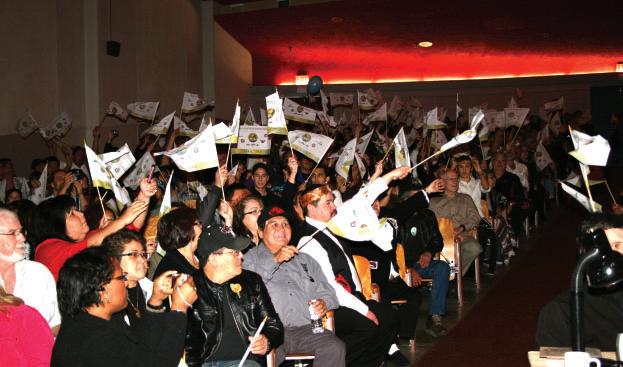
Ha-Shilth-Sa archive photo
Nuu-chah-nulth-aht celebrate in 2011 when the Maa-nulth Final Agreement was implemented. It established five First Nations as self-governing under provincial and federal law. More than 15 years later, Maa-nulth nations are pushing for an independent commissioner to ensure the treaty gets fully implemented.
Maa-nulth nations, who have signed a treaty, including Chief Anne Mack from Toquaht and Chief Wilfred Cootes from Uchucklesaht,” said Johns. “They said this an essential oversight mechanism to help ensure the effective and timely implementation of modern-day treaties in terms of nation-to-nation, governmentto-government and Indigenous-to-Crown relations.”
But at a time when the federal government is looking to save money and cut back on the number of civil servants on its payroll, some argue that setting another oversight office will add an additional public expense for something that the government should be doing anyway.
“Instead of holding those responsible accountable, the government proposes spending millions on a new office to supervise what should already be happening,” argued Conservative MP Jamie Schmale, who represents Ontario’s Haliburton-Kawartha Lakes riding.
“How many offices do we need to tell the government that it is failing? Adding one commissioner does not change culture or performance.”
Judith Sayers is president of the Nuuchah-nulth Tribal Council, and for over a decade represented her Hupacasath First Nation in their treaty negotiations. She believes that a commissioner is needed.
“It should be unnecessary, but unfortunately it’s the reality. Nothing is going to be implemented honourably unless you have somebody to oversee the process,” said Sayers. “How effective is it? It depends on how much teeth you’re going to give the commissioner.”
Treaties are formal agreements between First Nations, Canada and provincial gov-
ernments. These complex arrangements entail land ownership and resource responsibilities as affirmed under Canadian law, and often bring a period of financial settlements to First Nations.
“Treaties provide a framework for living together and sharing the land Indigenous peoples traditionally occupied,” states Crown-Indigenous Relations and Northern Affairs Canada. “These agreements provide foundations for ongoing co-operation and partnership as we move forward together to advance reconciliation.”
Many treaties pre-date Confederation, but the first in the modern era was the James Bay and Northern Quebec agreement signed in 1975. In British Columbia the Nisga’a Nation was the first to implement a modern formal agreement with governments in 2000. Seven other First Nations would follow, including the Maanulth nations, as well as the Tsawwassen and Tla’amin, which implemented their treaties in 2009 and 2016 respectively. But with over 200 First Nations in B.C., the vast majority do not have a modern treaty, leaving them subject to Canada’s Indian Act. Many are caught up in some stage of treaty negotiations, an expensive and protracted undertaking that for many stretches back to the early 1990s.
Among Nuu-chah-nulth nations, the Ditidaht and Pacheedaht are closest to implementation, having signed an Agreement in Principle with the provincial and federal government on June 28, 2019. This put them in the final stages of negotiations, although progress has taken longer than anticipated when the Agreement in Principle was celebrated at Victoria’s Empress Hotel over six years ago.
“[T]he fact that the minster has to table a piece of legislation dealing with the modern treaty shows the failure of the government,” argued Schmale in the House during the Oct. 7 debate. “In six years, Stephen Harper signed five modern treaties. The government has signed zero in 10 years. It has signed two selfgovernment agreements, but it has signed zero modern treaties.”
There has also been progress in B.C. over the last year, with successful ratification votes from members of the Kitsumkalam on Nov. 1, the Kitselas in April and the K’omoks First Nation in March. These votes from members of the affected First Nations now make implementation contingent on ratification from the provincial and federal governments.
The K’omoks treaty garnered 81 per cent support from the First Nation’s members, but opposition came from the Wei Wai Kum. Before the ratification vote the neighbouring First Nation filed for an injunction with the B.C. Supreme Court, citing territorial infringement in the proposed treaty. The court denied the injunction.
Territorial boundaries often arise during treaty negotiations, said Sayers.
“It’s a common issue that comes up with the First Nations Summit table all of the time. What are we going to do with overlaps?” she noted.
Even so, she believes that treaties should be treated like business deals that require more urgency than the decades of negotiations that the modern agreements entail. Sayers recalls an old photograph in the Hupacasath House of Gathering showing her grandfather and some Nuu-chah-nulth chiefs standing by the church that formerly stood at the corner of Josephine and River Road.
“They were all trying to negotiate treaties in 1922,” said Sayers of the photograph, who sees a continued reluctance from governments to formally recognize First Nations. “They just don’t want to give up some of the powers. They don’t want to recognize the powers and authority of First Nations, and they don’t want to give them money.”
“Ka:’yu:’k’t’h’/Che:k’tles7et’h’ urges all Parliamentarians to put their political differences aside and support the swift passing of Bill C-10,” stated the First Nation. “Implementation of modern treaties must be a non-partisan issue.
Modern treaties have been signed – and implementation challenges have persisted – under governments formed by different political parties.”

Following death, a woman was shot by police in Hitacu; she’s been released after serving for the confrontation
By Anonymous Reporter Ha-Shilth-Sa Contributor
Port Alberni, BC – The family of a man who was murdered in Port Alberni four years ago are hoping for long-overdue answers after an individual linked to the apartment where his body was found faced a series of convictions this fall.
Melinda Camille Martin, 34, has been released from a Lower Mainland prison after serving sentences for several violent crimes including assault against peace officers, brandishing an imitation gun and slashing the neck of a liquor store employee during a botched theft.
The Tla-o-qui-aht mother has spent the last few years in prison or in hospital following a series of offences which started, according to court records, with an assault on a family member on Christmas Day 2020.
But according to court records, her criminal history goes as far back as 2009 when she was sentenced to 90 days after being found guilty of assault causing bodily harm.
On Christmas Day 2020 Martin was arrested after she attacked and injured a younger, disabled family member. But it would take more than two years before she was sentenced to 90 days jail time for that crime.
During the following spring, RCMP were called to a residence in the Yuułuʔiłʔatḥ community of Hitatcu for a domestic disturbance. On May 8, 2021 Martin and her partner, Jonathan Thompson, were said to be intoxicated and fighting. An injured Thompson was removed from the residence and charged with obstruction.
When police tried to make contact with Martin, a confrontation ensued that ended with her being shot multiple times by officers. Police were cleared of any wrongdoing but two charges of aggravated assault on peace officers and one count of brandishing an imitation firearm were filed against Martin.
Martin faced a judge on November 6, 2025 to plead guilty to those charges.
The court heard that after Thompson was removed from the scene, Martin emerged from a bedroom yelling at officers and pointing what appeared to be a handgun at one of them. She was shot by police officers. Severely injured, she was taken by ambulance to hospital where she recovered after several months.
Martin was charged with two counts of assaulting peace officers and use of an imitation firearm during the commission of an offence for the Hitatcu incident.
Jonathan Thompson died of an overdose shortly after the shooting.
Family awaits charges for 2021 homi-
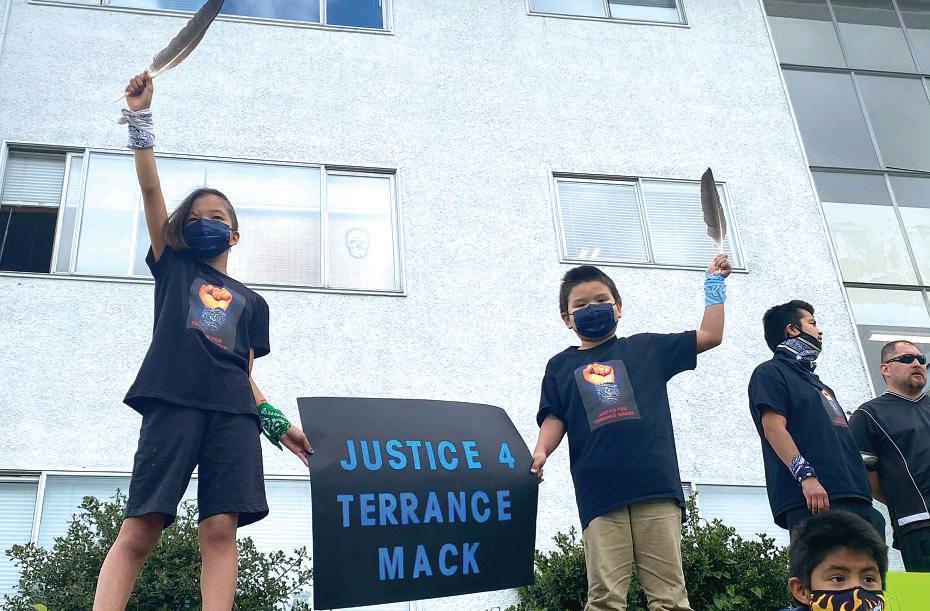
and
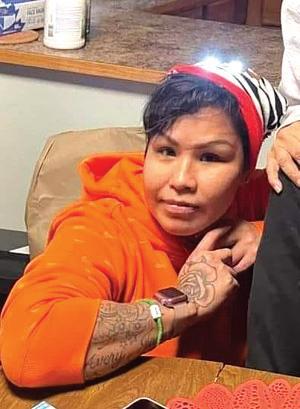
and friends identified the body as Terrance Mack, the children’s father. More than four years later, no charges have been laid for the murder. Mack’s body was found in an apartment rented by Melinda Martin (below), according to sources. This fall she was sentenced for other incidents, but has not been identified by police as a suspect in the Mack case.
According to Terrance Mack’s sister Allison Russ, her brother was found dead in a Port Alberni apartment rented to Melinda Martin in 2021. She said the family was notified on May 9 that the 33-yearold’s body had been identified and that the Yuułuʔiłʔatḥ First Nation member had been deceased for up to two weeks before his remains were discovered. Police determined his death to be the result of a homicide.
Mack’s family are frustrated by the lack of progress in their relative’s case. It was determined that Mack died of head injuries suffered during a beating. He was the father of two children.
The day before Mack’s body was found, calls to 911 started coming in from Hitacu. Police were directed to a unit at the end of a triplex on Albert Street where Martin, who was 30 at the time, and Thompson were said to be intoxicated and causing a disturbance.
Wilson Jack, Yuułuʔiłʔatḥ Tyee Ha’wilth, occupied the middle unit of the triplex. He remembers arriving home that day and wondering what all the police cars and ambulances were doing in the village. He recalls asking his wife at the time what was going on but she didn’t know.
“So, I went out to look,” he recalled.
Jack heard shouting then someone yelling, “Drop the weapon!”
Then Jack ducked back into his home as multiple shots rang out. He said it was lucky for him that the triplex walls were made of insulated concrete forms.
“Holy cow, you could hear the shots ricochet off the walls,” he shared.
He distinctly remembers being able to tell when the shots were hitting Melinda’s body.
“They sounded different,” he recalled.
He said his sliding glass door was shattered from the gunfire.
“It was lucky nobody was working at the band office that day,” he said, as shots were fired in that general direction. When things got quiet, Jack said he looked outside and saw a police officer slumped to his knees.
“I asked if he was okay and he said he was okay and he stood up,” said Jack.
“Everyone thought she was dead,” he added.
The ambulance slowly, cautiously entered and examined Melinda, who had been shot six times.
“She’s breathing!” someone yelled. Jack said emergency personnel worked franticly to get Martin packaged up for transport.
“You could see all the bandages on her body, where she was shot,” he recalled.
Jack alleges that the couple had been harassing him and damaging his property, kicking his fences down.
“They were not right in the mind… drugs, I think,” said Jack.
But more than four years went by before Martin was sentenced for what happened that day. She spent four months in hospital, recovering from her wounds.
And then on Aug. 9, 2022 Martin was caught stealing from a Port Alberni liquor store on Third Avenue. When confronted, Martin attacked the store employee with a sharp instrument, slashing her neck.
Martin fled and was found later that day at a Port Alberni residence where she was arrested.
In February 2023 the judge handed down a 901-day sentence to Martin for the liquor store attack.
While she was in custody, Martin was transported to Abbotsford Regional General Hospital to treat her gunshot injuries.
At the hospital she clashed with police officers and was charged with assaulting peace officers and uttering threats for an incident on June 4, 2024. For that she was sentenced to 30 days in jail and a lifetime firearm prohibition. Sentencing took place November 10, 2025.
On November 6, 2025, Martin was sentenced to 33 days in jail for the Hitatcu assaults against peace officers. With time served, Martin, in effect, was given three additional days to serve.
A person who knows her told Ha-ShilthSa that Martin was spotted in the Port Alberni Walmart on November 30.
The Mack family were not aware of Martin’s sentencing hearings in November. They continue to wait for any charges to be laid in Terrance’s murder. Police have not publicly disclosed any suspects.
“His daughter (now age 16) is taking it hard,” said Allison Russ of her niece.
She said the family has Terrance’s cremains and hope to have a small ceremony in his memory.
“But it feels like we should wait,” added Russ, referencing any future court proceedings.
New gravel spawning pad at Muchalat River is bringing salmon back, says restoration team with $1.3M project
By Nora O’Malley Local Journalism Initiative Reporter
Nootka Sound, BC – Optimism for the future of Chinook salmon is swimming up Muchalat River near the town of Gold River, B.C. in Mowachaht/Muchalaht First Nations (MMFN) territory.
Kent O’Neill, president of the Nootka Sound Watershed Society (NSWS), says he observed hundreds of fish using a newly restored gravel spawning pad at the outflow area of Muchalat Lake this fall.
“It’s really encouraging for the first year. They’re figuring it out. It just takes a few generations, and they’ll figure out that this is one of the best spots in the whole system to spawn and they’ll all start showing up,” said O’Neill.
Navigating a storm of challenges from historical logging practices that destroyed stream banks to droughty summers, Chinook salmon in the region were assessed as Threatened by the Committee on the Status of Endangered Wildlife in Canada in 2020.
To revive local Chinook salmon stocks, a collective effort led by NSWS, Ecofish Research, a Trinity Consultants Canada team, MMFN and the Pacific Salmon Foundation (PSF) was hatched.
PSF provided $560,000 in seed money to support the project and other partners raised an additional $740,000 for the project, bringing the total price tag for this first-of-its-kind project up to $1.3 million.
“This project is a big deal,” said Jason Hwang, PSF program officer and vice president, in a media release. “It’s a big deal in terms of the money going into it, but it’s also going to be a big deal in terms of the benefits to salmon and to this river.”
Enhancement of the critical spawning site in the Muchalat River began in August 2025 and was successfully completed in early September 2025 – just in time for the keystone species to spawn and lay their eggs.
Designed by hydrologists and geomorphologists, the 200-metre long spawning pad was constructed by hauling in 2,000 cubic metres (roughly 200 dump trucks) worth of high-grade spawning gravel. The gravel was screened, mixed and sorted uniquely for Chinook and Sockeye.
“The Chinook mix is in the centre of the pad going down the river and the Sockeye is along the two edges,” said O’Neill. “We had a University of Waterloo student doing her master’s dissertation on gravel
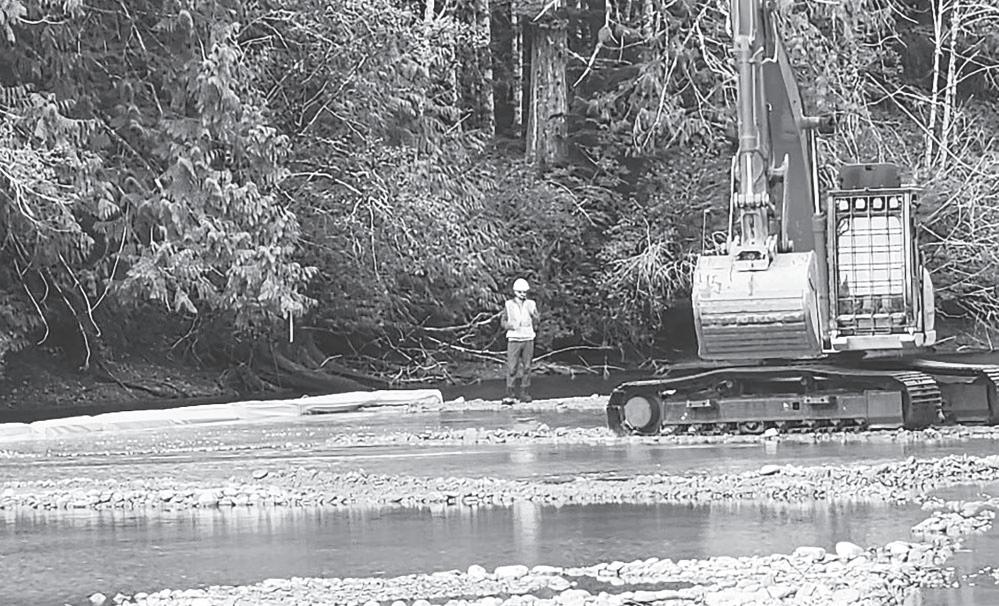
An excavator places high-grade spawning gravel along the outflow area of Muchalat Lake in August as part of a collaborative Chinook salmon revival initiative.
movement with high water levels doing research, so we knew what the risks were when we placed it. It’s been quite a collaborative process.”
Western Forest Products (WFP) also played a major role by providing in-kind donation of the gravel and access to the forest service roads.
“They provided probably one of the most significant contributions to the project. We wouldn’t have been able to do this project without Western Forest Products,” said O’Neill.
MMFN marine biologist Vanessa Moll says the restoration project was the brainchild of NSWS and Roger Dunlop, who now heads up the lands and resources department for the neighbouring nation of Nuchatlaht.
Moll is advocating for additional studies to monitor and quantify future runs, but anecdotally, said she’s already noticed a positive change in the surrounding environment and stream itself.
“It’s important to keep in mind there is a lot more impact that human activities have on the environment than we realize,” said Moll. “It’s nice to see that there is a pivot towards both protecting salmon when they’re in the ocean but also making better habitats for them to be able to bring back their populations.”
In 2023, MMFN was awarded $15 million from the federal government
for a Salmon Parks initiative designed to change the tide of industrial forestry activity in Nootka Sound. The majority of this government funding was put towards land acquisition costs, such as the buyouts of tenures held by forestry companies on Crown land.
Major funding scale-backs reportedly on the horizon for Fisheries and Oceans Canada (DFO) could impact the capacity of this special restoration project, says Moll.
“We are always watching the funding (DFO) provides,” she said. “We don’t want there to be a shift away from the capacity to have these programs and keep track of the fish populations.”
O’Neill agrees that the DFO funding cuts are concerning, as is the increased competition to funding streams, but he emphasized the strength and importance of the partnerships.
“Salmon is a unifying force. If we are applying for funds together, we have better traction. It’s a much more powerful message if we are trying to do it together,” he said.
O’Neill said they had to acquire 17 different permits to get the project approved, and everybody along the way thought it was a great idea.
“It’s a win for salmon, but more importantly it’s a win for everybody in this community,” he said. “There is no short-
cut in restoration work. It always comes down to the right partnerships.”
Nootka Sound Watershed Society anticipates the improved spawning habitat will significantly increase the number of fish annually spawning at the site to about 1,000 to 2,000 adult Chinook salmon. O’Neill says at capacity it could hold up to 4,000 fish.
It’s hard to know the origin of the fish using the new spawning pad, whether they’re natural spawners or enhanced fish from the nearby hatchery, O’Neill explained.
“All the enhanced fish are now adipose clipped, so we’ll know moving forward which fish are native spawners,” he said. The second stage of the project is slated for 2026. The team will plant trees along the Oktwanch River that connects to Muchalaht Lake and build an additional constriction feature to help retain water at the site, which is intended to protect the new spawning channel from drought and heavy rainfall.
“We’re never going to get old growth trees again, but we’ll get large trees, eventually. It’s a long play. The science all says nature heals itself given the chance,” said O’Neill.
This salmon restoration initiative is located on Tree Farm Licence (TFL) 19, a tenure held by WFP.

Mowachaht/Muchalaht’s Salmon Parks are proceeding with protected areas, despite no provincial designation
By Eric Plummer Ha-Shilth-Sa Editor
Tsaxana, BC - This has not been a good year for forestry as the industry continues to feel the pain from escalating tariffs, mill closures and job losses. But in Nootka Sound a First Nation is looking to a future where trees have a higher value staying in the ground.
Announced in early December, the closure of a pulp and paper mill in Crofton is the latest casualty for the coastal forestry industry, affecting 350 people employed at the sprawling operation on southern Vancouver Island. The owning company Domtar blamed a lack of available fibre and poor prices in global pulp markets for the mill’s shutdown. This comes at the end of a year that saw US tariffs on Canadian lumber triple to 45 per cent – further disrupting an already strained relationship with B.C.’s major trading partner for forestry products.
Meanwhile, on the other side of Vancouver Island, the Mowachaht/Muchalaht First Nation is looking at an entirely different economic approach to managing its territorial forests and waters in Nootka Sound. The First Nation’s Salmon Parks project aims to have 66,595 hectares, comprising approximately 20 per cent of its land territory, under a protected designation by 2030. The initiative strictly limits industrial activity within the Salmon Parks – particularly old growth logging – with hopes of eventually allowing nature to heal itself to the point that salmon runs rebound from the headwaters to the ocean.
Since he moved from the ancient village site of Yuquot as a child in the late 1960s, it’s been painfully clear to Anthony Dick that the resources within his nation’s territory have been mismanaged. This is particularly evident on Nootka Island, where Yuquot is situated at the southern tip.
“We’ve lost a lot of streams where we used to get a lot of our fishing,” observed Dick. “A lot of the places are dried up.” Mowachaht/Muchalaht Tyee Ha’wilth Mike Maquinna has seen continued encroachment in his Ḥahahuułi, from industrial logging of the forest to salmon farms and guided fishing tours on the ocean.
“Whatever decisions were made, they weren’t made by us, it was all made by the B.C. government,” said Maquinna, who believes that had it not been for his members observing industrial activity in the vast territory, more would have been
logged in Nootka Sound. “Those islands would have been harvested, had it not been for us – and a couple of other watersheds and elk corridors.”
“We’ve been experiencing a lot of push back in the forest harvesting aspects because it’s not set up for protection,” added the hereditary chief. “It’s set up for industry. It’s very concerning.”
‘Critical salmon ecosystems’
According to the province’s Vancouver Island Land Use Plan, Nootka Island currently falls “under standard integrated resource management strategies of the Forest Practices Code”. Most of the rest of Mowachaht/Muchalaht territory is designated as “Enhanced Forestry”, meaning the areas are to be “managed to produce higher volumes and values of timber while respecting environmental protection standards.”
But the Salmon Parks initiative determined that this wouldn’t be enough to ensure a future for the Ḥahahuułi. In fact, according to the project description, if the past rate of logging was maintained, all old growth in the Salmon Parks area would be gone in 15 years. The project also noted that Nootka Sound’s salmon populations have declined as industrial forestry expanded - with some going extinct - and warned that more of the wild species will be gone in 20 years without serious intervention.
Those warnings helped Salmon Parks

The entire Salmon Parks have been scanned with LiDar, which uses a pulsating laser delivered from aircraft to produce a detailed 3-D map of the area. This helped to inform the project’s zoning, which sets aside a small portion for sacred spiritual sites with highly restricted access, and another 15 per cent for what the project calls “sustainable forestry”.
Angel explains that this entails longer harvesting rotations, with smaller areas that are selectively cut.
“We’re going to have much more varied second growth,” he said. “Right now the prescriptions on cutting close to streams only apply to the larger streams in a watershed. We want to look at carrying those protections right through to the small ones.”
Maquinna noted that the First Nation’s approach is not to halt forestry entirely, as people’s livelihoods still rely on the industry.
gain a $15 million injection of funding from the federal government in October 2023. This has enabled the initiative to protect almost 39,000 hectares, an area that contains “critical salmon ecosystems”, according to the application sent to Canada’s Ministry of Environment and Climate Change. Approximately $12.5 million of this funding is being used for land acquisitions costs, which entail buying out tenures that forestry companies held under B.C. law. Currently the only industrial logging within Salmon Parks is occurring near the Burman River by BC Timber Sales, which was approved by the government before Salmon Parks were declared in 2023.
Other funding has come in from a long list of environmental organizations, such as the Ancient Forest Alliance, the Endangered Ecosystem Alliance, the Indigenous Watershed Watch Initiative, the Nature-based Solutions Foundation, Nature United and the Sitka Foundation. The project now employs four full-time and four part-time staff, five of whom are Mowachaht/Muchalaht members, plus two part-time contractors.
Despite all this, Salmon Parks are not recognized as a protected area by the B.C. government.
“We’re one of several nations across B.C. that are in a similar situation, waiting for the province to provide a mandate for its Water, Lands and Resource Stewardship department to negotiate,” said Eric Angel, general manager of the Salmon Parks Stewardship Society. “Now we’re actually starting on drafting a management plan for the Salmon Parks. The original idea was that we were going to do that in collaboration with the province, assuming that we would have some sort of agreement around what form of designation that would take, but because we haven’t got there with them, we’re going ahead with doing the management plan ourselves.”
“But it’s not needed at the active rate that it’s been harvested. We need to put more thought and sense into how it is to be harvested, than just going and clearcutting it all of the time,” he said.
“As a sustainable resource, it could not be sustainable if they continued harvesting at the rate that they do, and that’s not good for our future or our children’s future.”
A ‘conservation economy’
As the project seeks an economic future, the Salmon Parks initiative is looking at the economic value of keeping trees standing by selling carbon credits. Worth the equivalent of one tonne of carbon dioxide that would be emitted into the atmosphere, a carbon credit is a tradeable commodity on the international market which acts like a permit for a company or government to release greenhouse gases. These credits are verified by lands stewards and technology before being sold to industrial emitters.
“Most of the trees in the Salmon Parks would be harvested, especially the old growth sections,” explained Angel. “By not harvesting we essentially create what’s called a carbon offset. Those are worth money we can sell through a number of different markets.”
According to the World Bank Group, carbon credits have become an important tool in large-scale finance and development.
“Today, about 28 per cent of global greenhouse gas emissions are covered by a direct carbon price, and jurisdictions representing two-thirds of global GDP have adopted carbon taxes or emissions trading systems,” states the international organization.
“It’s actually worth more than harvesting trees under current economic conditions,” said Angel. “Carbon is an economic driver. What we’re actually looking at doing is finally trying to put in place this new kind of conservation economy that people have been talking about for decades now.”

Ha-Shilth-Sa newspaper is published by the Nuu-chah-nulth Tribal Council for distribution to the members of the contributing First Nations, as well as other interested groups and individuals.
Information and original work contained in this newspaper is protected by copyright and may not be reproduced without written permission from:
Nuu-chah-nulth Tribal Council P.O. Box 1383, Port Alberni, B.C. V9Y 7M2.
Telephone: (250) 724-5757
Fax: (250) 723-0463
Web page: www.hashilthsa.com facebook: Hashilthsa Ntc
Non-Nuu-chah-nulth, Ahousaht, Ehattesaht,Toquaht and Ucluelet members are subject to a yearly subscription fee of $40 in Canada, $50 in the US and $60 for overseas. Payable to the Nuu-chah-nulth Tribal Council
Manager/Editor/Reporter
Eric Plummer (Ext. 243) (250) 724-5757 Fax: (250) 723-0463 eric.plummer@nuuchahnulth.org
Reporter
Denise Titian (Ext. 240) (250) 724-5757 Fax: (250) 723-0463 denise.titian@nuuchahnulth.org
Reporter
Nora O’Malley (604) 353-8488 nora.omalley@nuuchahnulth.org

Audio / Video Technician
Mike Watts (Ext. 238) (250) 724-5757 Fax: (250) 723-0463 mike.watts@nuuchahnulth.org
Editorial Assistant
Holly Stocking (Ext. 302) (250) 724-5757 Fax: (250) 723-0463 holly.stocking@nuuchahnulth.org
Please note that the deadline for submissions for our next issue is Jan 2. 2026
After that date, material submitted and judged appropriate cannot be guaranteed placement but, if material is still relevant, will be included in the following issue.
In an ideal world, submissions would be typed rather than hand-written. Articles can be sent by e-mail to holly.stocking@nuuchahnulth.org (Windows PC).
Submitted pictures must include a brief description of subject(s) and a return address.
Pictures with no return address will remain on file. Allow two - four weeks for return.
Photocopied or faxed photographs cannot be accepted.
Although we would like to be able to cover all stories and events, we will only do so subject to:
- Sufficient advance notice addressed specifically to Ha-Shilth-Sa.
- Reporter availability at the time of the event.
- Editorial space available in the paper.
- Editorial deadlines being adhered to by contributors.
Ha-Shilth-Sa will include letters received from its readers. Letters MUST be signed by the writer and have the writer’s full name, address and phone number on them. Names can be withheld by request. Anonymous submissions will not be accepted. We reserve the right to edit submitted material for clarity, brevity, grammar and good taste. We will definitely not publish letters dealing with tribal or personal disputes or issues that are critical of Nuu-chah-nulth individuals or groups. All opinions expressed in letters to the editor are purely those of the writer and will not necessarily coincide with the views or policies of the Nuu-chah-nulth Tribal Council or its member First Nations. Ha-Shilth-Sa includes paid advertising, but this does not imply Ha-Shilth-Sa or Nuu-chah-nulth Tribal Council recommends or endorses the content of the ads.

A wave of overdoses hit Duncan and Nanaimo in November, prompting new alerts
By Denise Titian Ha-Shilth-Sa Reporter
Vancouver Island, BC – A particularly toxic supply of illicit drugs hit the streets of Cowichan Valley in mid November that led to more than 80 overdose calls in one night. The following day, first responders continued to treat overdoses in Duncan, so many that the local Naloxone supply was depleted.
With emergency services pressed to the max, a call was made to neighboring communities for Naloxone kits. A toxic drug alert for the Cowichan Valley was issued a day later, on November 19. Two days later an alert was issued for the city of Nanaimo.
On November 26 health officials extended the Drug Poisoning Alert for the Cowichan area, saying there are higher rates of drug poisonings in the community.
Sadly, despite the alerts, another Nuuchah-nulth life was lost December 8 in Nanaimo, leaving a family heading into the holiday season heartbroken.
“I’m saddened to hear of another Nuuchah-nulth persons life taken too soon,” said Nuu-chah-nulth Tribal Council VicePresident Les Doiron.
The former Yuułuʔiłʔath elected chief is all to familiar with the pain, having suffered the loss of some loved ones to the illicit drug epidemic.
According to a BC Coroner’s Service report issued December 5, there were 150 suspected unregulated drug deaths in British Columbia during the month of October.
The report says about 70 per cent of the deaths are people between the ages of 30 to 59. Of that number, 77 percent are male.
The numbers from October represent a fatal overdose rate of under five people a day. This indicates a gradual decline from when fatalities peaked in 2023, putting this year on pace to have the lowest number of deaths since 2020.
But 2025 also brings a disturbing trend.
“[T]here has been an increase in youth (under 19 years) suspected drug toxicity deaths with 21 deaths between January to October compared to 17 deaths in the same period in 2024,” states the report.
The illicit drug epidemic is global and is

taxing public health systems around the world with the widespread availability of high potency synthetic opioids, particularly fentanyl. And it seems there is no end in sight.
The provincial government offers services to help people with recovery and harm reduction. For Vancouver Island, Islandhealth.ca has a website full of information from recovery options to information for safe consumption, including access to Naloxone kits and addresses for local supervised consumption sites. One thing that has been proven to help is Safe Consumption or Overdose Prevention Sites. There are several such sites on Vancouver Island and they receive thousands of clients. The BC Centre for Disease Control reports that there were 23,000 visits to Island Health’s OPS sites during March 2025 alone.
In March and April 2025, 38 overdoses were recorded in all Vancouver Island OPS facilities. Of those overdoses, there were no deaths. In fact, in British Columbia there has been only one recorded overdose death in an OPS facility since 2017, and that was back in 2022.
Doiron is all to aware of what this means.
“The message I have taken away from friends and family is, don’t use alone,” he told Ha-Shilth-Sa.
He urges people to check on their loved ones who are struggling in the streets.
“I’ve learned that it goes way beyond the person it’s taken – our parents, siblings, friends and community are all subject to the pain of losing a family

Ha-Shilth-Sa belongs to every Nuu-chah-nulth person including those who have passed on, and those who are not yet born. A community newspaper cannot exist without community involvement. If you have any great pictures you’ve taken, stories or poems you’ve written, or artwork you have done, please let us know so we can include it in your newspaper. E-mail holly.stocking@nuuchahnulth.org. This year is Ha-Shilth-Sa’s 51st year of serving the Nuu-chah-nulth First Nations. We look forward to your continued input and support. Kleco! Kleco!
member,” he shared.
As tough as it is, Doiron asks people to never ever give up on loved ones out on the streets.
“Your kindness and words can be that light that is needed in the darkness of addiction,” he said.
Doiron has been active on health issues for Nuu-chah-nulth-aht, including the opioid crisis. He offers his condolences to the families that have lost loved ones.
“I’m around if ever I can help,” he said.
To receive toxic drug supply alerts on your device, in British Columbia text the word “JOIN” to 253787 (ALERTS).
This free service provides real-time, anonymous information about highly toxic substances circulating in specific communities and regions of B.C. Towardtheheart.com is a service of the BC Centre for Disease Control offering free toxic drug supply alerts via text message. People may also receive information through texts about where they may have their drugs tested or where to find Naloxone.
Overdose Prevention Sites are locations where people can use uncontrolled substances under supervision by trained staff who can provide emergency response services if necessary. The Vancouver Island Health Authority website lists the locations of Safe Consumption or Overdose Prevention sites on the Island. The website contains helpful information about current toxic drug supply alerts in the province as well as safety recommendations for substance users.
The advertiser agrees that the publisher shall not be liable for damages arising out of errors in advertisements beyond the amount paid for space actually occupied by the portion of the advertisement in which the error is due to the negligence of the servants or otherwise, and there shall be no liability for non-insertion of any advertisement beyond the amount paid for such advertisements
& Alberta sign agreement to build oil pipeline to Pacific, with support from Alberta Indigenous group
By Denise Titian Ha-Shilth-Sa Reporter
Canada – Just when everyone thought the plan to build a pipeline carrying bitumen from Alberta to the B.C. coast was buried for good, Alberta Premier Danielle Smith and Canadian Prime Minister Mark Carney announced the signing of an agreement that reinvigorates the old plans with the promise of shared ownership and benefits to B.C. and Alberta First Nations.
The MOU, titled Agreement to strengthen energy collaboration and build a stronger, more competitive, and more sustainable economy, was signed November 27, 2025. It outlines the commitments of both Canada and the province of Alberta. For example, “Alberta commits to act as proponent for advancing the development of a bitumen pipeline to Asian markets, that offers the opportunity for Indigenous coownership and other forms of economic benefits, for designation and authorization under the Building Canada Act.”
But British Columbia’s First Nations are not sold on the idea. The 1989 Exxon Valdez oil spill and clean up remains fresh on the minds of Indigenous leaders, who saw for themselves the devastation that thick oil washing ashore caused to seabirds, coastal mammals and the environment.
The Exxon Valdez oil spill was a major environmental disaster that occurred in Alaska’s Prince William Sound on March 24, 1989. According to NOAA, 11 million gallons of crude oil spilled into the North Pacific when the tanker ran aground.
The spilled oil affected more than 2,100 kilometres of coastline as far south as the west coast of Vancouver Island. The oil killed an estimated 250,000 seabirds, 2,800 sea otters, 300 harbor seals, 250 bald eagles, 22 killer whales and billions of salmon and herring eggs.
The MOU between Alberta and Canada proposes to develop the construction of a project that would bring the total from all westbound pipelines to “at least one million barrels a day of low-emission Alberta bitumen with a route that increases export access to Asian markets as a priority.”
The proposed new pipeline, to be financed by private sector investors with Indigenous Peoples’ “co-ownership and economic benefits” would be added to the expansion of the Trans Mountain pipeline for an additional 300,000 to 400,000 barrels of oil going through northern British Columbia to be shipped to Asian markets. If the pipeline project goes ahead,
Canada has committed to suspending clean energy regulations and will not implement the oil and gas emissions cap in Alberta. For British Columbia, Canada will further reduce its environmental protection measures by enabling the export of bitumen from deep-water ports to Asian markets, “including, if necessary through an appropriate adjustment to the Oil Tanker Moratorium Act,” as stated in the MOU.
This means that Canada will “appropriately adjust” the British Columbia Oil Tanker Moratorium Act, legislation from 2019 that prohibits oil tankers carrying more than 12,500 metric tonnes of crude oil or persistent oil products as cargo from stopping, loading, or unloading at ports or marine installations north of Vancouver Island.
The B.C. Assembly of First Nations is calling on all governments to abandon the pipeline project, “and work instead toward sustainable, First Nations-led solutions that honour their rights and ensure the survival of the land and all its peoples,” wrote the organization in a Nov. 27 statement.
The BCAFN statement goes on to say that the MOU between the federal government and the Province of Alberta exposes a fundamental contradiction and ongoing disregard for the rights, laws and sovereignty of First Nations on whose territories the proposed bitumen pipeline is proposed to be built.
“Canada’s words of commitment to reconciliation and climate action are weak-
ened and deceptive as they make plans to prioritize a project that poses profound risks to First Nations’ lands, waters, and communities, risks that many First Nations strongly oppose,” said the AFN. Opposition has also emerged in Nuuchah-nulth territory. At its People’s Assembly on Nov. 21, members of the Huuay-aht First Nations unanimously voted against lifting the tanker moratorium. But there is Indigenous support for the project in Alberta. The Indigenous Opportunities Corporation (AIOC) announced that it has been named as a key partner in the MOU for the proposed pipeline. In their Nov. 28 statement the AIOC said it would facilitate loan guarantees to support Indigenous investment as a key cornerstone of this project.
They say their experience and leadership in economic reconciliation has helped to advance Indigenous partnership and has shifted the expectation of equity ownership as the new standard.
“AIOC remains committed to supporting Indigenous Nations and groups as they pursue ownership on their own terms and shape a future built on collaboration and shared prosperity,” stated the corporation.
“The work AIOC has done to date has directly supported 43 Indigenous Nations and groups across nine deals – representing over $745 million in loan guarantees. It is a proven model that facilitates access to capital and supports capacity building,” added the AIOC.
The BCAFN says that true reconcili-
ation demands that Canada and Alberta fully respect First Nations’ sovereignty and laws.
“Ignoring the will of First Nations violates the United Declaration on the Rights of Indigenous Peoples (UNDRIP), the British Columbia Declaration on the Rights of Indigenous Peoples Act (DRIPA) and First Nations laws, which emphasize free, prior and informed consent as a non-negotiable foundation for any development impacting their territories. Economic incentives, co-ownership, and piecemeal consultation processes do not replace genuine consent, nor do they absolve governments from their legal and ethical commitments,” stated the BCAFN.
Long-time Liberal Party cabinet member
Steven Guilbeault and two government climate advisors resigned over the MOU.
Nature Canada issued a statement about the resignation on Nov. 27.
“Steven Guilbeault’s departure from Cabinet is truly a loss for both the government and for Canada,” said the advocacy group. “It should be a wakeup call to the Prime Minister that Mr. Guilbeault now feels unable to remain part of his Cabinet, as the government undermines environmental protections, its obligations to Indigenous peoples, and its responsibilities to all Canadians.”
Conservative Party Leader Pierre Poilievre announced that the House of Commons would debate and vote on a Conservative motion, “for a new oil pipeline to the Pacific coast, overriding the tanker ban, to ship bitumen to Asia.”
The House of Commons defeated the motion on Dec. 9.
The Conservatives say that the Liberal Party is not aligned on the issue. They also say that Premier David Eby has stated that the pipeline will never be built.
“I am not in favour of shipping raw bitumen through our coast by lifting the oil tanker ban,” said the B.C. premier.
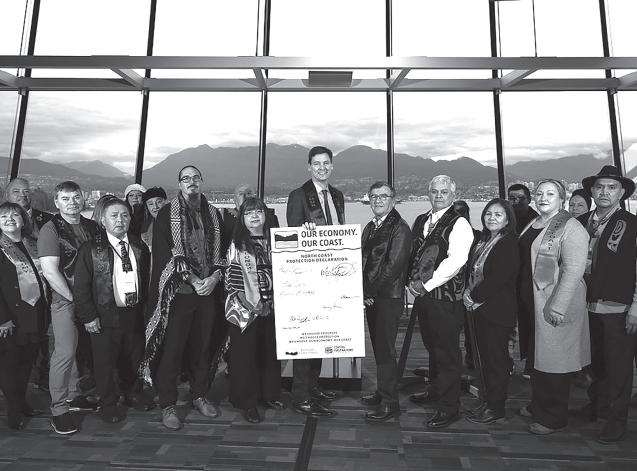
On Nov. 5 Eby, along with Chief Marilyn Slett, president of the Coastal First Nations, Mayor Garry Reece of Lax Kw’alaams, Jason Alsop, president of the Haida Nation, Paula Amos of Indigenous Tourism B.C. and hereditary elder Clarence Innis all signed the North Coast Protection Declaration.
The declaration speaks to the value the province and First Nations place on jobs and economic development that exist because of the natural beauty and renewable resource economy of British Columbia.
“Protecting our coast is not a barrier to economic prosperity – it is the source of it,” said Eby in a social media post.

Depicting a Nuu-chah-nulth whale hunt, carving was brought to Alberni from the Royal B.C. Museum in 2005
By Karly Blats Ha-Shilth-Sa Contributor
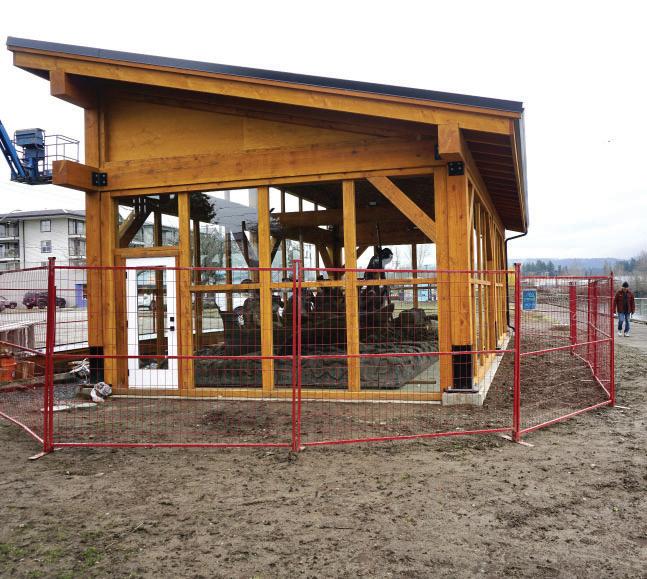
Port Alberni, BC -The Whaling Monument at Port Alberni’s Victoria Quay is being reassembled in its new home along the river.
The 30-foot red and yellow cedar whaling canoe was previously set up in a shed at the Victoria Quay. The shed was originally built as a place for carving the welcome figures that now stand nearby.
The original shed, designed by architect Scott Kent in the early 2000s, was only meant to be a temporary home for the whaling monument, but years went by and the piece remained in the open structure.
Over the years, damage occurred to the carving shed creating a need for a new and permanent structure for the large whaling canoe.
Artist Rodney Sayers from the Hupacasath First Nation, who carved the welcoming figures with Cecil Dawson, is tasked with putting the whaling monument back together after it was moved from the carving shed to its newly built home.
“The shed is in need of repair, it was never meant to be a permanent structure or a permanent home for the whaling monument. Hupacasath, in discussions with the City of Port Alberni, set out on this project to build this new building to house [the monument] and preserve it,”
Sayers said. “The task has fallen to me (to rebuild) because I was the one who put it together originally when it came.”
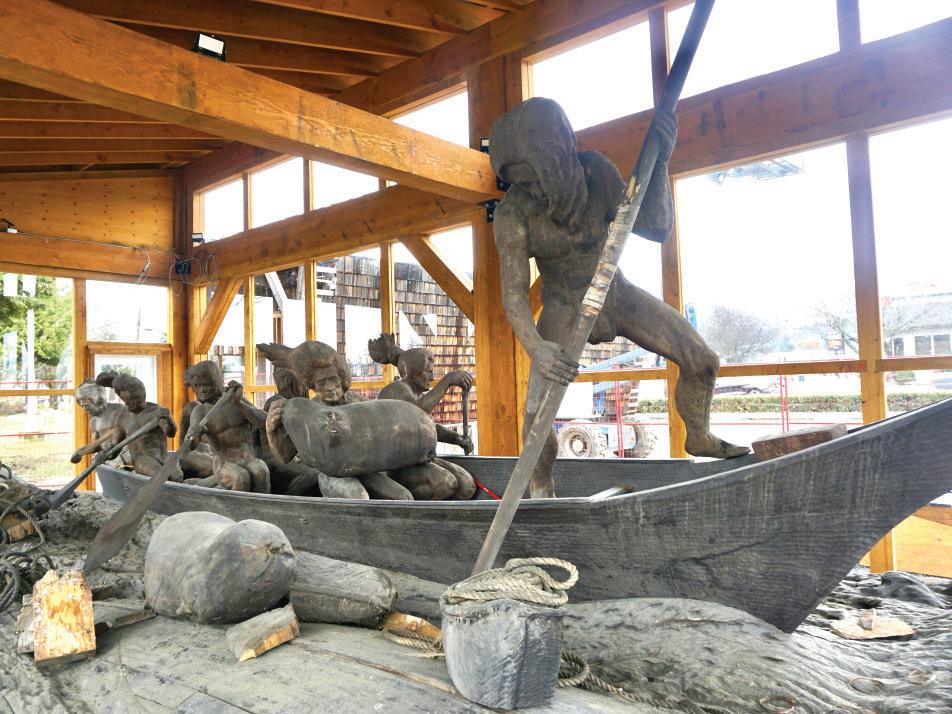
The large piece, depicting Nuu-chahnulth whalers pursuing a California gray whale, was created by Vancouver artist Lionel Thomas. Based on Thomas’ diorama, the actual carving was done by First Nations artists Godfrey Hunt and Douglas Cramner. It was repatriated from the Royal B.C. Museum and set up at the Victoria Quay in 2005.
The red cedar canoe is five feet wide and contains carved replicas of traditional equipment like floats, lances, a rope tackle box, bailer, paddles and harpoons.
The eight warriors depicted were modeled after real-life Nuu-chah-nulth figures and are carved in yellow cedar.
Sayers said moving and reassembling the large monument is a time-consuming task.
“It’s a very slow process because each piece has to be precisely placed,” Sayers said. “The base is made out of 14 separate slices, so each piece of the base is one long piece that are pushed together.”
Sayers said there has been some “bumps and bruises” to the carving from crews moving it which he has been fixing with
“It’s a very slow process because each piece has to be precisely placed”
~ Rodney Sayers, Artist
epoxy resin.
In addition to the new structure for the monument, other improvements are happening at Victoria Quay including landscaping, new lighting around the monument, welcome figures and boardwalk, as well as new bathrooms.
The two new automated washrooms were gifted to the City of Port Alberni from the City of Calgary.
Pat Deakin, economic development manager with the City of Port Alberni, said new parking spaces will also be added to the area.
Deakin said the funding for the updates came from the Time Immemorial grant through the B.C. government. The grant total was $148,000, with more than $40,000 going towards installing the washrooms.


Up to 20,000 whales are killed around the world annually through ship strikes, according to a research project
By Antonella Medina Arias Ha-Shilth-Sa Contributor
Vancouver Island, BC — Researchers are celebrating a major achievement in marine mammal protection with a new tracking tool integrated into the international navigation system.
On November 26 Ocean Wise and the Trelleborg Marine and Infrastructure Company announced the integration of Ocean Wise’s Whale Report Alert System (WRAS) into Trelleborg’s SafePilot Pro software, a high-quality navigation tool used by ship pilots globally.
Mariners can now submit real-time whale sightings to the Whale Report Alert System platform, such as visual observations or automated detections from partner organizations, to share alerts with nearby commercial marine pilots via email, SMS, and push notifications, and now directly into Trelleborg’s integrated navigation system.
“This collaboration demonstrates how technology innovation can drive environmental progress. We’re not just providing navigation tools; we’re enabling our users to be active participants in marine conservation,” stated Tommy Mikkelsen, managing director for the Navigation and Piloting division at Trelleborg Marine and Infrastructure. “This integration showcases our commitment to developing solutions that serve both operational excellence and environmental responsibility.”
Ocean Wise and Trellebog say the collaboration is proof of how conservation technology can be integrated into current maritime operations, creating a feasible framework for other organizations to
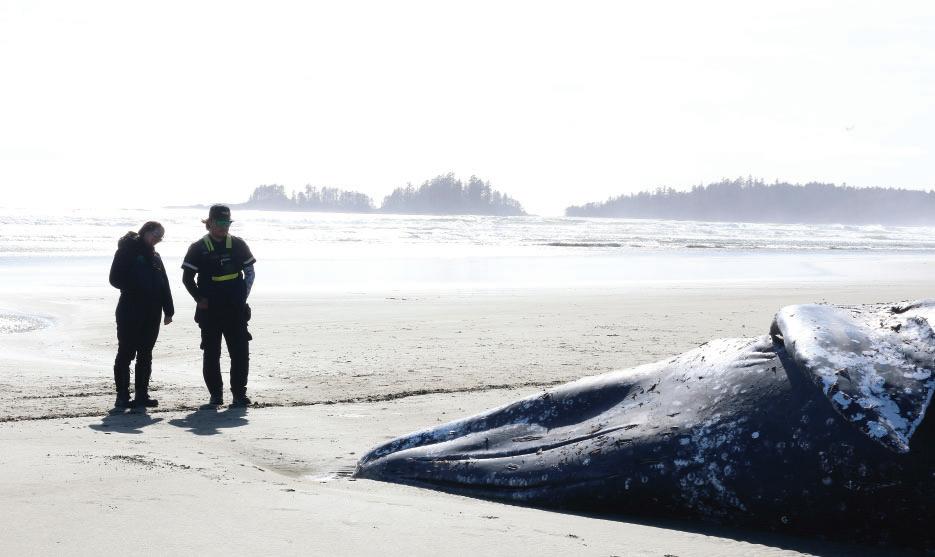
Ship strikes have increased threefold over the past two decades, according to recent research. In
washed up on the shore near Tofino. An examination of the carcass determined blunt force trauma, likely from a vessel, was the cause of death.
benefit both commercial operators and the marine ecosystem.
Ship strikes are the primary reasons for human-caused injury and death to whales, with vessel traffic increasing by 300 per cent over the past two decades, as the number continues to grow.
In 2024 a research team gathered data on 435,000 whale sightings across the five continents, dating back to the 1960s, from surveys and recordings. Then, they cross-referenced their findings with

176,000 cargo ship routes from 2017 to 2022. Their result estimated that up to 20,000 whales are killed around the world annually through ship strikes.
The study revealed that a high concentration of vessel traffic overlaps with the same waters used by humpback and fin whales to migrate and feed, with the southwest of Vancouver Island as one hotspot for ship-whale collisions. The zone encompasses about 40 kilometres of the island’s west coast, between Port Renfrew and Bamfield.
According to a biologist and Tofino resident who has been studying whales since the 1970s, approximately 200 grey whales live off the coast of Vancouver Island, and another 15,000 migrate offshore from Mexico to the Arctic every year.
Last Spring Tla-o-qui-aht Tribal Parks Guardian Gisele Maria Martin noticed the whale floating by the Esowista Peninsula.
On May 6, 2025 Fisheries and Oceans Canada (DFO) received a report of a whale floating off the Tofino coast. The DFO’s Marine Mammal Response Team coordinated an effort with Parks Canada, Tla-o-qui-aht First Nations and the BC Ministry of Agriculture to secure the whale and obtain the necessary information to perform a necropsy.
The necropsy process involved documenting the animal’s condition and biometrics by taking photographs of any visible injuries, followed by a thorough examination and collecting samples from the blood, organs and skin to determine the cause of death.
The results confirmed that the grey whale exhibited an unhealthy body and signs of blunt force trauma. Members of the Tla-o-qui-aht community present that day noticed how the section of the blubber from behind the head was remarkably slim, showing signs of malnourishment. This reached six inches at most, barely over half the measurement of the standard ten inches for gray whales.
Other members of the Tla-o-qui-aht community noticed a blood clot behind the head. The necropsy and examination confirmed that blunt force trauma, possibly from a ship strike as the whale was resurfacing, was the cause of death for the mammal.
The results of the necropsies will feed into DFO’s growing body of knowledge
to assist in assessing future threats to the whale population, identifying trends, pathogens, or other indicators that affect the whale’s life cycle.
The Tla-o-qui-aht First Nations community offered a ceremony before the necropsy for the gray whale. According to Martin, whales represent wealth in many Nuu-chah-nulth stories, with a strong connection to the supernatural.
After the ceremony, members of the community took part in a practice that once fed their ancestors by taking apart pieces of the deceased mammal. Tla–oqui-aht members present for this practice claim it was an incredible learning experience.
“At one point I counted 19 people cutting at once, and a whole other crowd of people watching and helping,” shared Gisele in a previous article. “There was little kids helping to pull off the blubber.”
The most recent whale harvest in the region was in March 2000, after a whale washed ashore, having died entangled in a net used for herring eggs in kelp.
Traditional whale hunting for Nuuchah-nulth ceased after the animals’ populations faced a massive decline due to commercial whaling. However, on March 18, the Makah Tribe, located in Washington State, applied to NOAA Fisheries for a permit to resume hunting a limited number of whales for ceremonial and subsistence purposes. They hope to receive approval for their permit and to hunt up to 25 grey whales over a decade.
Huu-ay-aht leaders report harassment via social media following dismantling of Cougar Camp, where responders spe
By Nora O’Malley Local Journalism Initiative Reporter
Vancouver Island, BC – The 15-foot wooden cougar sculpture erected this summer to block forestry workers from accessing the Upper Walbran Valley in Pacheedaht First Nations territory is a pile of cold ashes on the dirt road.
Pacheedaht elder Bill Jones, 85, has been a constant advocate for the old growth forest within Pacheedaht lands. He says his prayer hut and guest cabin were also torched during enforcement of the court-ordered injunction that was granted to Cawak ʔqin Forestry (Tsawak-qin), which is 35 per cent co-owned by Huu-ay-aht First Nation and 65 per cent co-owned Western Forest Products (WFP), began on Nov. 25.
“The RCMP stood by while my property was destroyed. I don’t know who did it because they wouldn’t let any witnesses up there,” said Jones.
“It was traumatic. It hurt me deeply. You get hurt when somebody goes to your house and burns it down,” he said, noting that he visited the site on Nov. 26, the day after the enforcement commenced.
This new wave of arrests in the Walbran Valley near Port Renfrew follows the Fairy Creek blockades in Tree Farm Licence 46, a tenure held by Teal-Jones Group, that started in August 2020. Teal-Jones was awarded a court injunction in 2021, which led to nearly 1,200 arrests and is known as one of Canada’s largest acts of civil disobedience.
In the middle of the Fairy Creek conflict, the Pacheedaht and neighbouring Ditidaht and Huu-ay-aht First Nations issued the Hišuk ma cawak Declaration, a document signed by hereditary and elected leaders asserting authority over their lands.
Along with the Hišuk ma cawak Declaration, the three First Nations demanded a two-year deferral of all old-growth logging in the Fairy Creek and Central Walbran areas, time required for the communities to undertake forest stewardship management plans with their members. The provincial government agreed to suspending old growth harvesting in the Fairy Creek watershed into 2025 and then later extended the temporary protections of almost 1,200 hectares in the Fairy Creek until Sept. 30, 2026.
Man cemented to road in ‘sleeping dragon’
New blockades arose in the Walbran this summer, and mounties say they have arrested seven individuals since they started clearing the Cougar protest camp; six for breaching the injunction, and one for criminal mischief. The individuals were








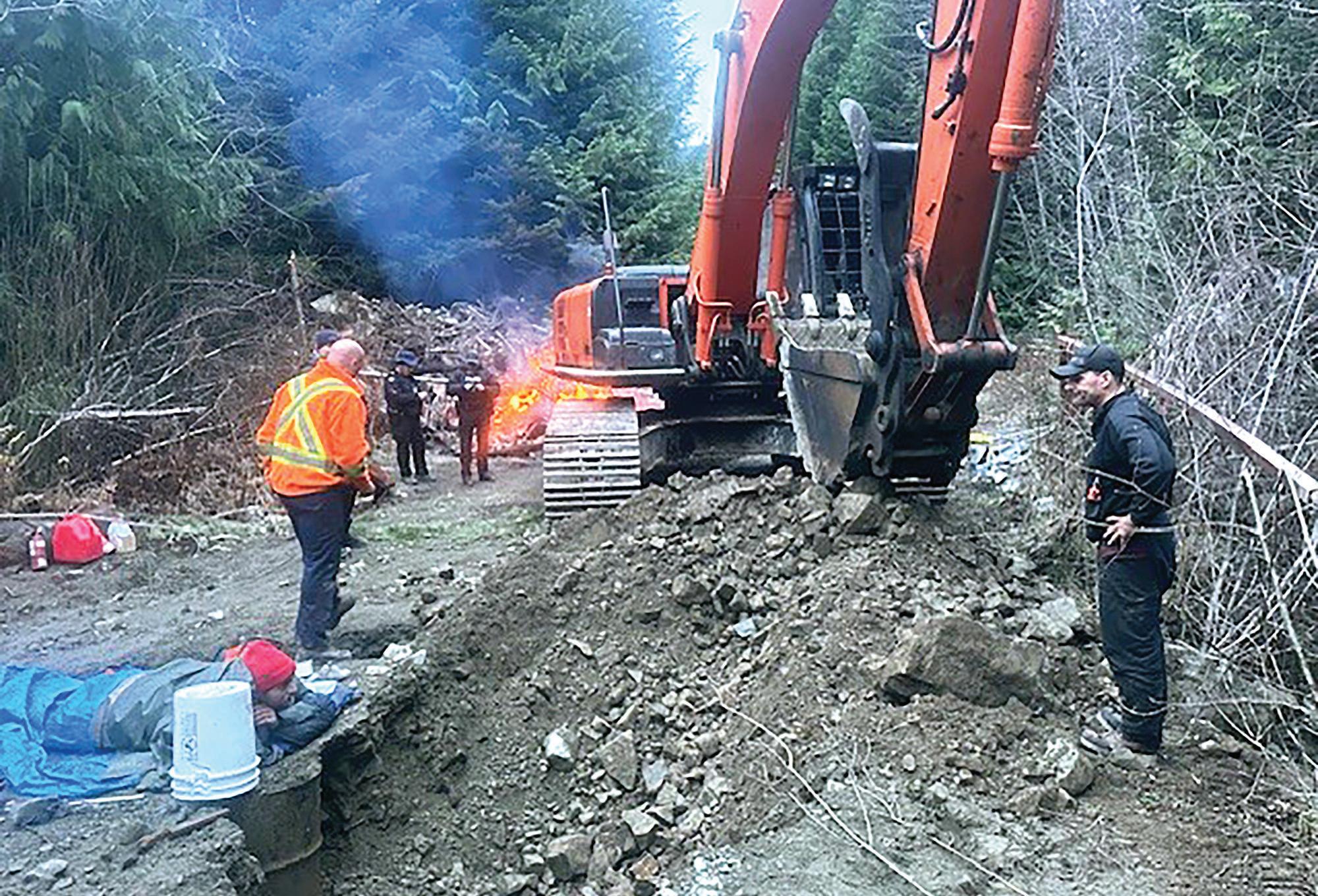
processed and released on conditions with a court date in January 2026, said RCMP in a news release.
A contractor working with the RCMP to clear the road so Tsawak-qin can resume operations says the actions of the protestors, who refer to themselves as forest defenders, are creating a “substantial risk of severe injury or death”.
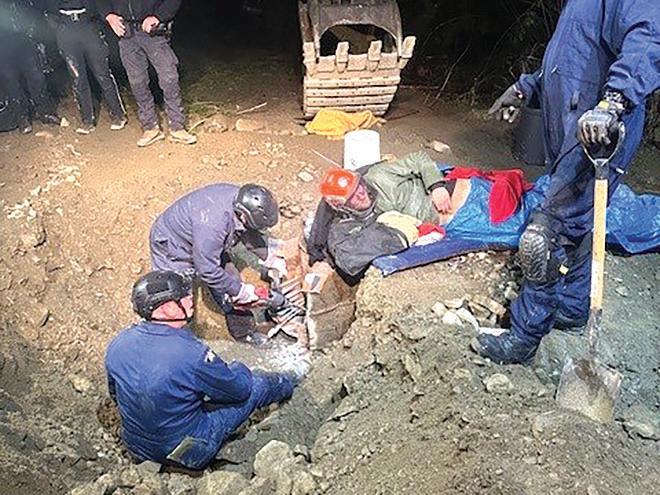
The local contractor said it took the RCMP task force roughly four and a half hours to safely remove an individual with his arm down a 45-gallon barrel wrapped with steel cable and cemented, a tactic known as ‘sleeping dragon’. He says the protestors also have an individual suspended on small poles off a bridge.
“How do you safely rescue someone from that?” said the contractor, who asked to remain anonymous. “In the workforce we could never ever put our employees at risk like that or we would be fined or our business would be shut down.”
The contractor wrote a letter to the Deputy Premier and Attorney General Niki Sharma and Mike Farnworth, minister of Public Safety and Solicitor General, asking for “strengthened legal, safety and costrecovery measures at injunction-restricted worksites.”
















“The current legal framework does not adequately deter these unsafe behaviors or provide sufficient tools for swift enforcement,” said the contractor.
“This request is not intended to diminish the right to lawful protest. Rather, it seeks to ensure that no person—worker, protester, or first responder—is placed in a situation where serious injury or death is a foreseeable outcome,” the contractor wrote.
Days after Cougar Camp was dismantled, Huu-ay-aht leadership reported that the social media accounts of Huu-ay-aht members were inundated with private and public messages from anonymous individuals who the First Nation believes to be associated with the blockades.
Huu-ay-aht said several of the comments included “threats and harassing language.”
“As a sovereign nation, it is our responsibility to balance the many competing interests and to steward decisions that are made for the present and future needs of our Nation and the ecosystems on our lands,” reads a written statement signed by Huu-ay-aht Chief Councillor John Jack and Hereditary Councillor Theresa Nookemus. “Our land is our culture, and it is our stewardship decisions that count. Working towards a balanced approach of culture,


traditions, and economics is a true integrated resource management process.”
“Together, these processes provide clear Indigenous-led direction to provincially-legislated procedures on forest landscape plans, old-growth management, and on-the-ground operational planning, while ensuring long-lasting socio-economic, environmental, and cultural benefits for everyone across the area,” said Huu-ay-aht.
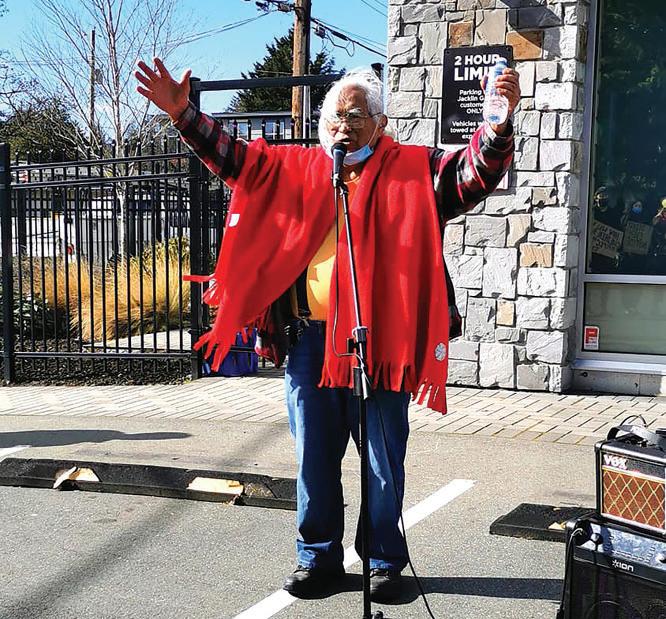
Pacheedaht Chief Councillor Arliss Daniels is asking blockaders to vacate the area immediately and to recognize Pacheedaht’s authority and stewardship of the territory.
“Our lands are not to be misused or disrespected under any circumstances,” said Daniels in a written statement.
“Our Nation has developed resource management and harvesting plans, including our draft Integrated Resource Management Plan (IRMP), and a comprehensive TFL 44 plan with Cawak ʔqin Forestry, based on our community’s values, priorities, and stewardship principles,” she continued. “These plans ensure the protection of cultural sites, old growth, biodiversity, and the balance of ecological and economic interests. All
ent hours removing a protester cemented into the ground forestry operations within our territory will continue under these Indigenous-led and community-driven directives.”
Decline in old-growth logging
The Wilderness Committee, a charity dedicated to protecting nature and defending wildlife, is placing the blame on the B.C. NDP government for this latest war in the woods. The organization says they are not involved in the blockades out of respect for the sovereignty and decision-making authority of the Pacheedaht First Nation and all Indigenous rights and title holders.
“People only turn to blockading when every other avenue is exhausted or ignored,” said Wilderness Committee forest campaigner Tobyn Neame in a Nov. 26 press release.
“When the BC NDP permits clearcutting in forests it’s promised to protect, it creates the conditions for conflict. It’s a mess for the communities and First Nations that pay the price, and it’s the fault of the politicians who made commitments and then refused to honor them,” Neame continued.
The B.C. government estimates that there are about 11.1 million hectares of old growth – excluding private land – left in B.C.
As of February 2025, coordination between First Nations and forests companies
has resulted in approximately 2.4 million hectares of old growth being deferred or protected since November 2021, according to the province.
“This is in addition to the nearly 3.7 million hectares that were already protected,” stated the provincial government.
Provincial tracking shows the total annual harvest area for old growth has consistently dropped over the last decade, from 246,305 hectares in 2015 to roughly 111,827 hectares in 2024.
“I don’t think there is much left,” said Jones, who is a former logger. “By the time we get done, all the trees will be gone…it’s plundering First Nations land and now they are fighting over the leftovers. It’s depressing.”
WFP notes in their 2025 Third Quarter Report that “forestry service and other revenue were $5.1 million in the third quarter of 2025, as compared to $2.8 million in the same period last year”.
“The increase of 82 per cent was due to an increase in the volume of approved projects with our First Nation joint ventures in the third quarter of 2025 compared to the same period last year,” according to WFP.
Cawak ʔqin Forestry said harvesting activities are conducted in compliance with provincial regulations and best practices, including measures to protect tall trees.
This policy protects trees within TFL 44 that are over 70 metres in height as well as the forest reserves associated with the tall tree.
“When it is safe to do so, Cawak ʔqin Forestry intends to resume harvesting activities in the area pursuant to its legallyauthorized cutting permit,” said general manager Geoff Payne in a written statement.
Logs harvested by Cawak ʔqin are processed by domestic mills on the east side of Vancouver Island and in the Port Alberni area, said Payne.
Meanwhile Fairy Creek protestors have established a new camp in the Walbran. They are calling it Beaver Camp.

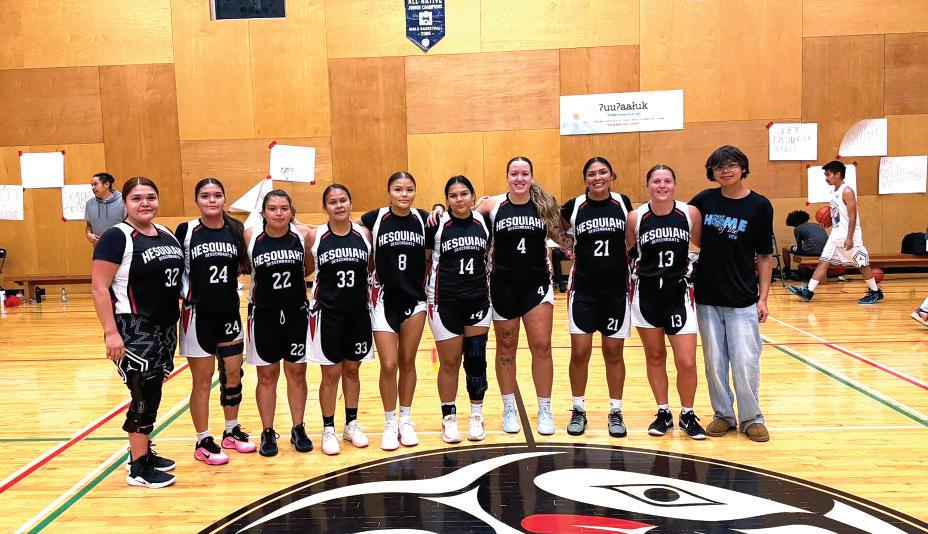
With 64 squads registered, three of five divisions for the 66th version of the basketball event are for female teams
By Sam Laskaris Ha-Shilth-Sa Contributor
Prince Rupert, BC – The Hesquiaht Descendants are confident they can improve upon their performance from last February at the upcoming All Native Basketball Tournament.
The women’s squad is gearing up for the 2026 tourney, which will be staged in Prince Rupert from Feb. 14-21.
The tournament, which will celebrate its 66th edition next year, is one of the most prestigious Indigenous hoops events in British Columbia.
The maximum of 64 squads will compete in the 2026 tourney. Clubs will be divided into five divisions.
The Descendants are one of three Nuu-chah-nulth squads that will be competing. The two other NCN clubs are from Ahousaht First Nation and will participate in the women’s and women’s masters categories.
The Descendants had hoped to match or surpass their 2024 second-place finish when they competed at this year’s tournament this past February. But after winning its first match the Hesquiaht club suffered two straight losses and was eliminated from further action, ending up with a sixth-place finish.
“Honestly, it was a pretty disappointing finish,” said Mariah Charleson, the Descendants’ captain who is also the chief councillor for her First Nation. “We lost to teams that normally we wouldn’t have lost to.”
Charleson, who founded the Descendants in 2015, said the club will be looking to rebound and have much better results at the upcoming All Native tourney.
“That’s the hope,” she said.
And she is confident the Hesquiaht club has the potential to accomplish its desired goal.
“We have a lot of talent on our team,” Charleson said. “Obviously we’ve proved it as long as everyone is healthy and in shape, then there’s no reason why we can’t make a top three finish. And I always think that we have the potential to make the finals.”
As in previous years, it’s always a challenge to try to get all members of the Descendants’ team together for practices.
“Our Hesquiaht members live all over
the map,” Charleson said.
Several players on the team’s roster did get together a couple of months ago and they placed second at a tournament in Hitacu.
The Descendants have also entered a two-day tournament starting on Boxing Day, Dec. 26, in Port Alberni.
Other than that, Charleson is not sure if the club will have an opportunity to play any other games before it heads to Prince Rupert.
“We’re open to playing in any type of tournaments,” she said. “It’s just quiet as usual. It’s pretty costly to host tournaments nowadays.”
Teams participating at the All Native tourney must have a minimum of eight players and a maximum of 12 on their roster.
Ten players have committed to making the trip and suiting up for the Descendants in Prince Rupert in February.
Besides Charleson, the others are Destiny Hanson, Skylene Touchie, Jada Touchie, Chantelle Thomas, Jaylynn Lucas, Shania Sabbas, Tamia Edgar, Kura Rorick and Heather Campbell.
“Everybody so far is healthy,” Charleson said, adding the club could potentially include some young up-and-comers but their status is unknown now since they are faring well with their high school teams. “But we have the same solid core that we’ve had for the last number of years.”
Charleson said team members traditionally incur upwards of $25,000 in expenses to travel and compete at the All Native tournament. The club is also looking for some financial help.
“The team is always looking for donations,” she said. “It’s a super expensive trip.”
To make a donation of any amount people can contact Charleson through her email address at mariah_charleson@ hotmail.com
Though the All Native tourney is one of the most popular Indigenous sporting events in the province, organizers are not looking to expand the number of participating clubs and have capped the number of entrants at 64.
“That’s all we can accommodate,” said Peter Haugan, who has served as the
president of the tournament organizing committee for the past 16 years.
Clubs that did not get automatically knocked out in two straight games at the 2025 event are automatically entered in next year’s event, provided they are interested in taking part again.
The list of participating teams for the 2026 tournament was set in October.
“No one has dropped out (yet),” Haugen said. “But we always end up with one or two teams that don’t come for whatever reason.”
All of the tournament divisions have a waiting list of clubs that are keen to take part if a spot becomes available.
Besides women’s and men’s categories, the tournament also includes women’s intermediate and masters divisions, as well as a men’s masters grouping.
The Descendants are one of 16 squads that will compete in the women’s division. This category will have the most teams at the tournament.
The women’s intermediate grouping has the second highest number of competing teams with 14.
Phrase of the week: yaayaaqapi %a+%iš %ayhii %u%usum%a+niš wištahyu %uhiš +upamis
Pronounced ‘Yah yah ka pi alth ish at hir i oh oh sum alt nish ka hurk oh ish clup mis my,’ it means ‘Nights are long and we need light and warmth.’ Supplied by ciisma.
British Columbia’s oldest high school sports event is set for Jan. 8, 9 and 10 at Alberni District Secondary School
By Nora O’Malley Local Journalism Initiative Reporter
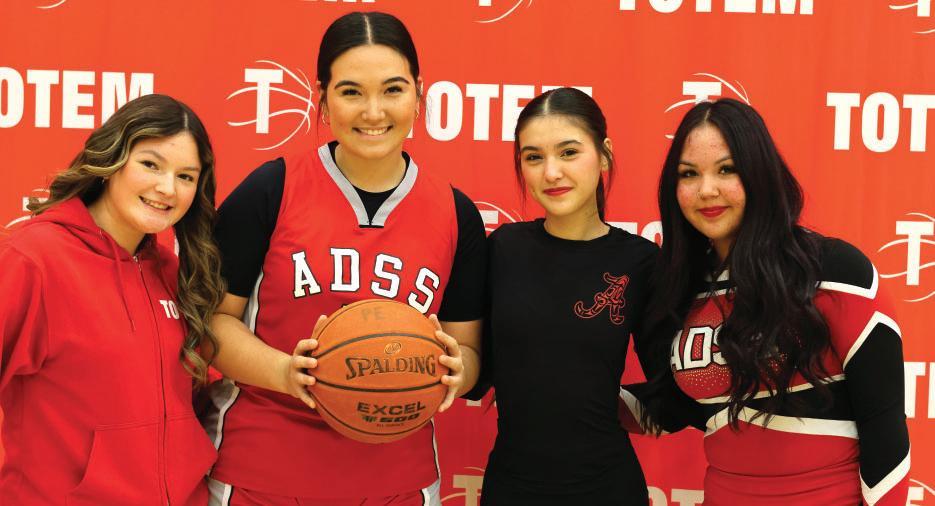
Port Alberni, BC – Time to rock the tie-dye and bell-bottoms you Totem fans because this coming January 8, 9 and 10, Alberni District Secondary School’s (ADSS) legendary Totem high school basketball tournament is turning 70.
Mariella Huebner says the whole weekend is going to be ‘70s themed. She is one of eight Grade 12 students vying for the Totem Spirit award.
“Even if you don’t go to the school, it’s such a big community. Everyone comes. You just feel the spirit and the love all around,” said Huebner, who is from Hesquiaht First Nation. “I have a lot of hope in our basketball teams. I think they can do it.”
What began as a four-team boy’s tournament in 1955 is now considered B.C.’s longest running high school tournament in any sport. Totem was exclusive to men until 2011 when female teams were included on the program.
Totem 70 features six girls’ teams and six boys’ teams, plus performances from the ADSS cheer and dance teams and the pep band.
Hayleigh Watts, a Grade 12 student and ADSS forward for the senior girls’ squad, will hit the Totem court for final time.
“This is my third Totem. I’m super excited for this opportunity to play for this team. I feel like we are going to have a good season,” said Watts, who is the niece of Tseshaht Chief Councillor Ken Watts.
“It’s an extra special tournament for me this year because it’s my last year playing. I’m so, so grateful to be playing. I feel like we’re going to have a really good turnout. We’ve worked really hard,” she said.
ADSS senior girls team head coach Neelam Parmar was born in 1970. He says he listens to a lot of AM radio and
that the game of basketball has “totally changed” from the ‘70s playbook.
“Everything revolved around getting it to the big man at the post. The three-point game didn’t show up until a decade ago,” said Parmar. “Old school ball was your traditional pick-and-rolls and defense was able to get away with a lot more.”
When it comes to his team, he says they are a smaller squad this year with 10 players on the roster.
“Hayleigh is awesome. Softball is her main focus, but we convinced her to come play with us,” he said. “We’re just happy she’s able to finish off her basketball piece with us because she’s been with us the whole way through from Grade 8.”
ADSS girls finished second at Totem 69.
“We have a Vancouver team coming over on the girls side so that will add a
little bit of spice. Pacific Christian is the defending champ and they are a basketball school. They are a smaller school, but they’re able to focus a lot,” said Parmar.
ADSS senior boys head coach Jess Black said their biggest threat are the Edward Milne Wolverines, the defending champs from Sooke, and their “giant” six-foot-eight player Malakai Hills.
“It’s been a few years since the boys won Totem. It’d be awesome if we could perform for everyone and get to that final and take it home. There are some good teams coming,” he said.
“We all have a good chance to take down Edward Milne this year. They’ve been coming for quite a few years and they got their first win last year. I know it meant a lot to them, but we are hoping to take it back from them,” said coach
Black.
He was unsure as to why no Nuu-chahnulth players tried out for the senior boys team this year, but says there are quite a few First Nations’ kids on the junior team.
Dance team member Carmen Bill says they’ve prepared a special routine to the tune ‘Le Freak’ by CHIC.
“We have a bit of a costume change, that’ll be new,” said Bill, who is from Tseshaht First Nation and has been dancing since she was three.
The Totem 70 disco ball drops on Thursday, Jan. 8 at 5 p.m. with ADSS senior boys taking on Kwalikum and at 7 p.m. with ADSS senior girls facing Dover Bay. Admission is $5 per day for students, $10 for 18 and up and free for kids under five. A tournament pass is $25.
By Nora O’Malley Local Journalism Initiative Reporter
Port Alberni, BC –Mike Roberts sinks into his chair after a full Totem 70 media day.
Going on 20 years as athletic director for Alberni District Secondary School (ADSS), Roberts is notably tired from the press blitz, but revs back up to sing praise about their new Indigenized logo.
“It’s the story of the great flood. It’s the storm,” he said as he pulls up a photo of a traditional woven basket on his phone.
The basket is crafted in a circular pattern to depict a tidal wave.
“Sold. I was totally sold. I shared this with our committee and I said, ‘Guys if you can’t figure out this, is it then we are all idiots’?” he shared.
“In a few years I’m going to retire, and I’d like to think I’ve done a lot here, but this is something I’m going to remember. There was a bunch of us that figured it all out and I think we did the right thing in the end,” Roberts said.
Hesquiaht artist Geena Powa Haiyupis says she feels “privileged” to be the person who created the new logo. She sent Roberts about 20 logo designs for consideration, and in the end, it was her modern take on her Grandma Daisy’s woven basket that came out on top.
“It’s a twofold story,” Haiyupis ex-
plained. “There is a story of kałkačuł, which is the snub nose lady who is in Mount Arrowsmith. That’s a landmark for Tseshaht First Nation. I wanted to honour the territory of the Tseshaht People because we all live and learn in the property of Tseshaht.”
Roberts says they really wanted to include Arrowsmith in the refreshed logo.
“Arrowsmith is the silhouette of a woman sideways. She laid down to protect the villagers below from the great flood,” he said.
Jen Wallman from Port Alberni’s JAL Designs worked with Haiyupis’ creation to make it flow nicely for printing and with the fonts. She also added the red portion in the centre.
“I think it’s great,” said Wallman, a member of the ADSS Class of ‘93.
“Things get updated with time. I know some people like to stick with tradition, but traditions grow over time and things progress. I think it’s a great logo; more modern. I was happy to be part of it. The athletics department was really easy to work with.”
For Roberts, who doubles as a leadership teacher, the new logo signifies a fresh start for the school and a tangible departure from the archaic Armada team name and ship logo.
Nora O’Malley photo
Hesquiaht artist Geena Powa Haiyupis shows love for the logo she created for the Alberni District Secondary School’s athletics department. It is a modern version of her grandmother’s woven basket that tells the story of the great flood.
“I haven’t heard one person not like it,” said Roberts, who graduated from ADSS in ’86. “This is us. Whether you have it on for your soccer team warm-up or basketball, we’re all walking around with the same thing. We’re together. We’re one. We are ADSS Storm.”
While the senior girls and boys ADDS basketball squads have a couple years
left to wear out their jerseys, the junior basketball teams will be sporting the new Storm logo this season.
The word wiiqsii, which means storm in Nuu-chah-nulth language, also appears on variations of Alberni’s logo.





Residents told not to drink or cook with tap water on Nov. 21, after a bacterial film is observed in storage tank
By Holly Stocking Ha-Shilth-Sa Editorial Assistant
Anacla, BC – On Friday, November 21 the Huu-ay-aht’s government office in Anacla issued a water advisory to its citizens due to a biofilm inside the water tank.
Biofilm is a bacterial film composed of a mixture of different micro-organisms that are held together and protected by glue-like materials (carbohydrates). The glue-like material that micro-organisms secrete allows them to attach themselves to surfaces.
The water tank holds 156,000 gallons and if filled by the maintenance staff from the Pachena River daily as it services all of Anacla, the upper and lower village.
The town of Bamfield is on a separate water system, getting their water from Sugsaw Lake, approximately three kilometres to the northeast. Water is withdrawn from the lake by gravity.
“It is not uncommon for these types of tanks to have biofilm in them” said Kaal Haugen, Huu-ay-aht’s director of capital and infrastructure.
Water samples were taken on Monday, Nov. 24 and tested through the First Nations Health Authority’s Drinking Water Safety Program. The water was considered safe for bathing and washing of clothes, just not for consumption before or after boiling.
The FNHA said that the advisory was a “precautionary measure,” and that it was lifted when results came within the “normal range”.
“FNHA continues to work with the com-
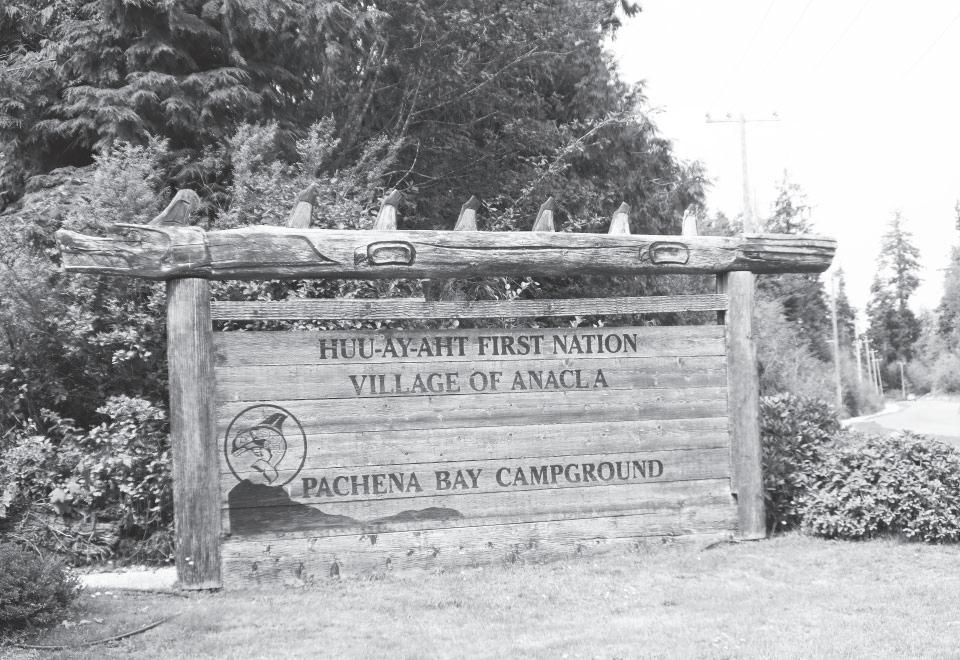
For over a week in late November Anacla residents were cautioned to not drink their tap water while it was being tested by the First Nations Health Authority. Clean drinking water was provided at the government office in the Huu-ay-aht village.
munity and the drinking water operator to ensure the safety of the water for all users,” said the health authority in an email to Ha-Shilth-Sa.
Huu-ay-aht took immediate action to arrange drinking water and it was provided to the citizens through the government
office in Anacla. Large jugs and water bottles were delivered down the Alberni Inlet by the Frances Barclay on Nov. 22nd
“The results came in on Friday (Nov. 28) but we did not lift the drinking water advisory until this morning because we did not want people to be confused over the weekend,” said Haugen on Dec. 1.
“First Nations community members can obtain the most up-to-date information on their drinking water through their chief and council, or their local FNHA environmental health officer (EPHO),” said the FNHA.

Seasons greetings everyone. We are coming up to a time of year that people celebrate differently. Whether it’s Winter Solstice, Merry Christmas or other things, I wish you the very best however you celebrate. Take the time to spend quality time with family and friends and always remember in your hearts those that are not with us at this time. Let their memories warm your hearts.
I am very pleased to see that our very own Cliff Atleo Jr. has been appointed UBC’s senior advisor and associate vice president (AVP) of Indigenous Affairs as of May 1. This is a huge accomplishment for Cliff and I applaud him and all Nuu-Chah-nulth should be proud of one of our own reaching such a high position at UBC. I am so very proud of Cliff as he has taken his education and work experience and achieved this position. We wish him the best as he strives to make UBC a place where all First Nations can attend in a safe learning environment and study what we want to and write our own histories and laws and much more.
It has been another busy month with many issues facing us. I did go to Vancouver to attend the First Nations Leadership gathering where First Nations meet the B.C. cabinet ministers and their deputy ministers. Meetings are a short 15 minutes so you have to be quick and to the point and give them time to respond. Over 1,400 people gathered for this meeting and we explored many issues, from racism to climate change and jurisdiction over children, the Heritage Conservation Act amendments and much more.
I also attended and opened the NC Achievement Foundation Indigenous Business Awards on behalf of the board. There are eight categories for awards and it’s always empowering to hear how First Nations or their people are doing business and achieving in this business world. I am particularly impressed with how many of our First Nations designers are showing their designs at Vancouver Fashion Week or Paris Fashion Week. Pam Baker from Squamish was one of the winners at the IBA. Ay lelum has a fashion house on the Snuneymuxw reserve and they have two new collections celebrating the art work of their late father and brother, which is fabulous. Amazing how their fashion designs are catching the fashion world on fire.
We had a directors meeting where the directors agreed to sign onto the Coastal First Nations Declaration to continue the ban on oil tankers in their waters. The government of B.C. stood with them in telling Canada not to lift that ban. NTC signed on to the declaration as well. Apart from supporting the north coast nations, we also need to speak up for our salmon resources which come through those waters and down the west coast of Vancouver Island.
The Directors also agreed to send letters to the Prime Minister and other ministers asking them to restore funding for specific claims. In next year’s budget starting April 1, 2026 specific claims search was cut from $12 million to $4 million. What is really needed is $35 million. This is for all Firat Nations across Canada and $4 million barely covers the amount of work needed to be done, and in effect stops or slows down necessary work on specific claims.
There was overall a two-per-cent cut to Indigenous Services Canada’s budget, so expect some cuts to your Nation’s budgets. First Nations are not happy about this and are addressing this to the Prime Minister and members of Parliament.
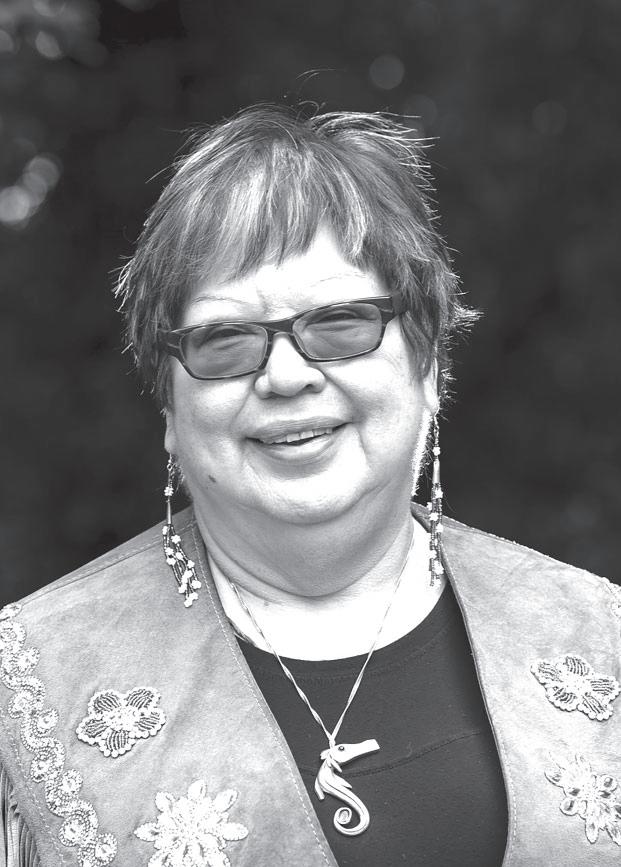
Between Canada and B.C. and their very tight budgets, First Nations are finding it hard to get the resources they need in their communities.
The big issue that arose in the last few weeks was that without any warning Island Health closed the Intensive Care Unit (ICU) of the West Coast General Hospital indefinitely. The ICU services at least 10 First Nations communities on the west coast. This is entirely due to not having the specialized staff needed in the way of doctors and nurses.
We have had two meetings with Island health and FNHA to find out how we can help both now and long term.
Right now anyone needing the care of the ICU is admitted and then sent by ambulance or helicopter to another city, be it Nanaimo or Victoria or wherever the care can be provided. People need to know they still can go to WCGH for immediate care. We are forming committees that can increase the work already being done on recruiting and retention of doctors and nurses. We need to let people know how wonderful it is to live on Hupacasath and Tseshaht territories. They are using incentives to get people to work here.
Longer term it would be great to see more of our Nuu-Chah-nulth people becoming doctors and nurses and other specialized medical staff. We need to work with the government to get more funding for our students so they don’t come out of university with a big debt load.
We are all so indebted to those doctors and nurses who work so hard for us in their offices and at the hospital. We need to let them know that more than we do. We did that during COVID but we should keep it going.
Every person that needs health care must be able to get it. Every family member supporting a patient in ICU transported out of Port Alberni needs to be supported. All of these things are being worked on.
The NTC realizes that there are people from all Nuu-Chah-nulth nations living in Port Alberni and that makes this issue a very important one.
Urban Gatherings were held over the first two weeks of December. Due to a bad cold I missed the first week and I really missed going and seeing all of you and enjoying some songs and a meal together.
Wishing you all the best for the Winter Solstice and a great New Year. Happy 2026!!
-Cloy-e-iis, Judith Sayers

Christmas Light Tour
December 16 5:50pm – 7:15pm
3500 Argyle St, Port Alberni
All families welcome. Gather at the EJ Dunn bus loop (18th ave enterance) Hot chocolate and snacks at the end of the ride.
Solstice Teachings
December 17 7:00pm – 9:00pm
Somas Hall, Port Alberni
Everyone is welcome. Call Aaron Watts at 250.724.1225 for more information.
NCN Mental Health Counselling
Tuesdays and Thursdays 8:30am – 4:30pm



4841 Redford Street, Port Alberni
NCN Mental Health Services – DropIn Counselling with Margaret Bird, Registered Clinical Counsellor and Play Therapist. For on and off reserve members of all ages of the Nuu-chahnulth Tribal Council. Call (250) 724-3939 to book your appointment.
Stirring up Connections
Every Friday 10am – 12:30pm
NTC Kitchen – 4841 Redford Street.
A warm and welcoming cooking group designed just for parents! Whether you’re a seasoned home chef or just learning how to boil water, this group is all about sharing recipes, laughter, and stories while preparing simple, nourishing meals together. Each session will feature: Easy, budget-friendly recipes; Tips for cooking with kids and picky eaters; Space to connect with other parents over food and family life. Contact 250-724-3939 for questions.

If you should be getting a copy of the Ha-Shilth-Sa paper delivered to your home, please contact: Holly Stocking at 250-724-5757
Vol. 27 – No. 25
December 14, 2000
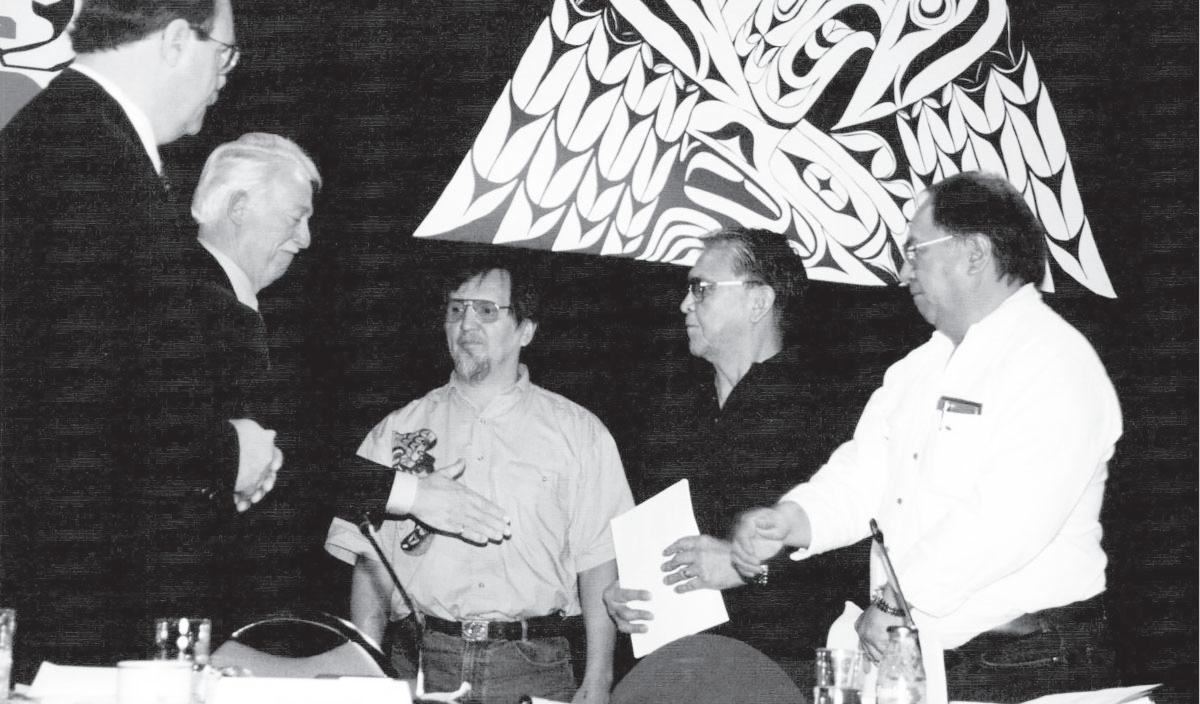
Treaty offers exchanged ing towards a post treaty environment. Tseshaht Chief Negotiator George Watts (Wahmeesh) presented the Nuuchah-Nulth Treaty offer.
On Dec. 11, 2000 the Hyatt Regency’s Ballroom in downtown Vancouver was filled with over 220 chiefs, negotiators and media members to witness the formal Nuu-chah-nulth Treaty Exchange. The event marked the first time First Nations had exchanged treaty offers with British Columbia and Canada, rather than B.C. and Canada simply presenting a single-sided treaty offer.
Trevor Proverbs, B.C.’s chief negotiator at the Nuu-chah-nulth table, said mutual respect had built a new relationship over the previous couple of years, and the government had heard the concerns of the Nuu-Chah-Nulth peoples in look-
“Since the time of contact, our people have been willing to share, so we’re here today to talk about what our Tyee Ha’wiih are willing to share with the non-Nuu-chah-nulth people,” said Wahmeesh. “We’re not here today to say yes or no to an offer, but to see where the two sides sit and to start serious negotiations from there.”
B.C. and Canada commended the NCN negotiators for the respect they had shown at the negotiating table.

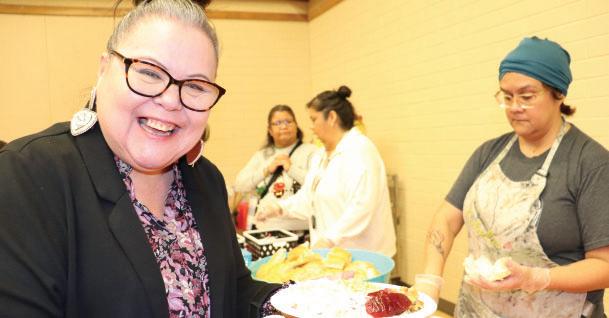
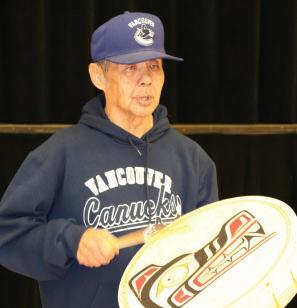
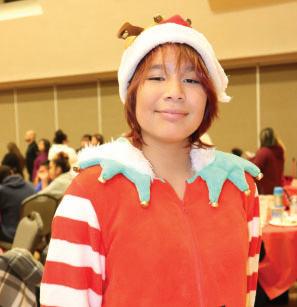
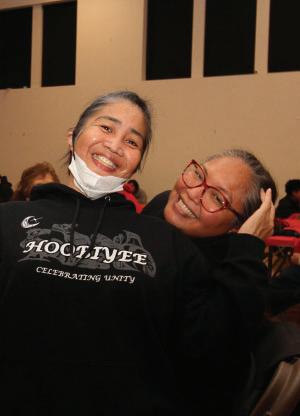
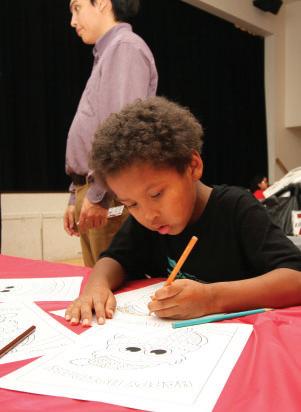
The west coast community raised $15,000 in three weeks for the school library to update its collection of books
By Nora O’Malley Local Journalism Initiative Reporter
Ucluelet, BC – For 30-minutes each week, students in Ucluelet Secondary School’s (USS) Reading for Pleasure are whisked away to the library to cozy up with a book and eat healthy snacks. No phones. No social media. The only AI in the room is All Imagination.
“The key is to have books that they actually want to read,” said USS librarian and English department chair Lucas Anderson. “A lot of the books were outdated and not connecting with the kids.”
Over the span of two years, Anderson got to work “rehoming” hundreds of antiquated books to make space for more accessible and visually appealing reading options like the Spirit of Denendeh by Indigenous author Richard Van Camp and the Diary of a Wimpy Kid novel series.
When USS put a call out to the community to contribute funds, Anderson says they raised $15,000 for the library in just three weeks. He orders 95 per cent of his books locally from Mermaid Tales Bookshop in Tofino.
“A lot of people came together,” he said. Anderson gave a special note of thanks to Jason Sam, Lucia Lyons and Julie Corlazzoli for all their help and to the Tofino Co-op, Ucluelet Co-op, Long Beach Lodge Resort, Clayoquot Biosphere Trust and Coastal Family Resource Coalition for their generous donations.
One semester into the new Reading for Pleasure project, Anderson says the students are “stoked” to request books.
“It gets me excited,” said the librarian. “We’re 100 per cent doing it next
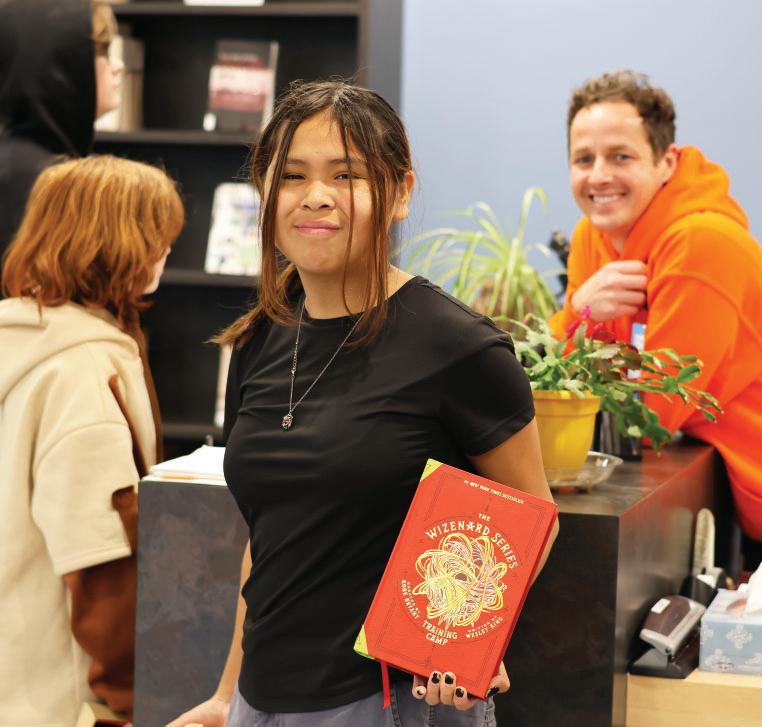
Samantha Clutesi renews the Wizenard Series: Training Camp, a book about young basketball players, as librarian Lucas Anderson smiles in the back. semester.”
The kids seem to love the literacy program too with many of saying they “wish they had more time” to sit in the library and read.
“I prefer a book to a screen. I’m actually working on my own (book). Reading on paper seems better,” said Grade 8 student Samantha Clutesi. Anyone interested in supporting the
Holiday book guide
For the baller
The Comic Book Story of Basketball: A FastBreak History of Hoops by Fred Van Lente and Joe Cooper
The Wizenard Series: Training Camp created by Kobe Bryant and written by Wesley King
For the dreamer
Monkey Beach by Eden Robinson
Embers: One Ojibway’s Meditations by Richard Wagamese
For youth
A Snake Falls to Earth by Darcie Little Badger
A Wolf Called Wander by Rosanne Parry
Counting with t’uc’up and his Grandmother
Reading for Pleasure program is welcome to reach out to Anderson at landerson@ sd70.bc.ca.