
THE PULSE | MAY 2026 ISSUE
ADVENTURES AT REGENERON
On Tuesday, April 7, the Honors Biology students at The Harvey School went on a field trip to the biotechnology company known as Regeneron. This trip was led by Upper School science teachers Ms Silverstein and Ms Tantillo, along with Ms Kreiness, the marketing and communications department associate.
Each class took a van to the research center, which is located in Sleepy Hollow, New York The groups left at around 8:10 a m and returned at around noon According to Ms Silverstein, “We went to the DNA learning center, which Regeneron sponsors, and they provide educational resources for high school and college students to come and get to actually do some hands-on experiments with genetics.”
By Aiden Tarpey
When we first arrived, all the students were taken to a lobby before being greeted by an education coordinator. Ms. Silverstein took us to a classroom with various lab equipment and explained that we would be working with E coli bacteria and learning how the bacteria transformation process actually works
Everyone was split into groups of two, with the exception of having a single group of three due to an odd number of students present. Once the groups were formed, the instructor taught us how to use micropipettes, which are tube-like tools that are designed to pick up precise amounts of a liquid, and we began to explain the procedure for the lab.
After we all learned how to use the micropipettes, we filled two tubes per group with 250 microliters (µL) of calcium chloride (CaCl2) One tube was labeled “PBlu,” and the other was labeled “-PBlu.” Then, each group took a sample from a petri dish containing E. coli, placed it in the two separate tubes, capped the tubes, and put them on ice
Then, 10 µL of the substance PBlu was added to the “PBlu” labelled tube, with students tapping against the tubes to make sure that there were not any bubbles.
Each group received four petri dishes and labeled them "X-Gal PBlu,” “X-Gal, ” “LB PBlu,” and “LB” with the group number written on them. The tubes then experienced heat shock, which was dipping them in extremely hot water for a minute and a half before taking them out
After being removed from the water, the substances were placed into the corresponding petri dishes. Students put 100 µL of the “PBlu” tube’s substance in the “X-Gal PBlu” and “LB PBlu” dishes and 100 µL of the “-PBlu” tube’s contents in the “X-Gal” and “LB” dishes
A minimum of three sterile glass beads were put in each petri dish before moving the plates side to side multiple times to spread out the bacteria from the tubes The plates were then taped together before being stored away.
In an interview with The Pulse, Ms Silverstein, the organizer of the field trip, answered several questions about the field trip process, including what the students learned and how the trip came to be in the first place.
When asked about the origins of the field trip, Ms Silverstein stated, “Someone from the DNA learning center had actually reached out last year, as they received my email contact as a local teacher in the area. We weren’t able to do the trip last year,” she continued “This year, when I was presenting at a conference in the fall, there were some representatives from the DNA learning center there. So I made some connections with them and then reached out to set up a field trip, especially after I had the chance to talk to the people and see what a trip would look like and get some more background from them ”
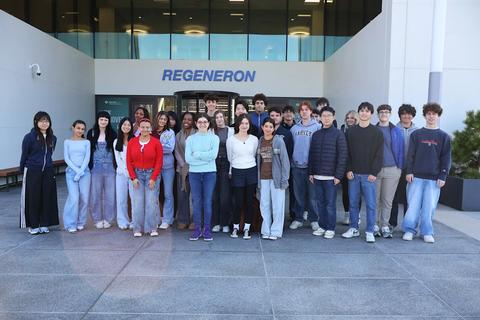
Honors Bio Students Standing in Front of the Entrance to Regeneron Image Credit: Ms. Kristine Kreiness / The Harvey School
Harvey News
THE PULSE | MAY 2026 ISSUE
HARVEY INTERNATIONAL SPOTLIGHT
By Ana Failla
The Harvey community is one with many different cultures, personalities, and backgrounds that make our school so special Part of what fosters this diverse group of peers is The Harvey International Student Program (ISP)
Continuing for 10 years now, the program currently hosts 30 students spanning multiple different countries International students come from countries all over the world, including China, Spain, Brazil, Italy, Poland, Sweden, South Korea, and more
Students attending Harvey from abroad live in campus dorms during the school week and stay with host families during weekends. International students truly become an integrated part of our Harvey world and their host families’ lives.
Ms. Alex Lindquist, Harvey’s ISP director, has been working with international students since 2017. Ms. Lindquist’s role encompasses many aspects of international student life, including working with families, recruitment, admissions, arrivals, and many aspects of these students’ daily and academic lives.
Ms Lindquist works to find new markets to promote Harvey She says part of her job is to “try to keep up with the ever-changing landscape of international policies and regulations for our students ” It is because of members of our community like Ms Lindquist that we are able to have such a lively and diverse international community here at Harvey
Being able to meet and attend classes with people from different countries who have lived a different experience their whole life gives all Harvey students the opportunity to learn from each other and broaden their horizons
I myself can truly say I love being able to connect with people from all over the world Meeting students from different backgrounds has given me the opportunity to learn about different cultures through the lens of my fellow peers With my family heritage from Italy, one of my favorite Harvey memories was playing the Italian card game Scopa with senior Ruggero Franchetti from Milan
Being new to a school is daunting enough as it is, let alone moving to a new country Harvey works with ISP students and their families to help them have a seamless transition.The international program at Harvey begins working with students the summer before they arrive on campus through Zoom meetings where they are able to talk with students and families about their Harvey experience.
Another aspect of Harvey’s International Student Program is the homes they return to on the weekend. Any Harvey family has the opportunity to host an international student during the school year. Ms. Lindquist shared how students are incorporated into the lives of their host families as they often support them at sports games or performances She even said many host families have visited their student’s home country, continuing their relationship
STAFF LIST:
Editor-in-Chief : Logan Kreisberg
Junior Editor and Layout: Ana Failla
Writers: Dylan Coughlin
Summer Jarbath
Aiden Tarpey
Lexi Vaughan-Johnson
Faculty Advisor: Ms. Holmes
Special Thanks: Mr. Del Campo
Credits: Harvey Communications

Senior Steve Liu told The Pulse about his experience with his host family Living with an Italian family, he has been exposed to not only American culture, but Italian, as well His host family taught him how to play an Italian card game, and they have provided tremendous support
CONT. ON PAGE 13
Ms Alex Lindquist greeting international students on movein day
Sports
THE PULSE | MAY 2026 ISSUE
PICKLEBALL TAKES A PERMANENT SWING
When deciding on how to celebrate her 18th birthday, Harvey senior Maya Taub didn’t choose a party or a dinner She rented two pickleball courts in Westhampton Beach and invited 12 friends and family members to play
“It was a perfect mix of being active and just having fun with everyone,” Maya said. “It was cool to see my friends rallying with my parents and getting the opportunity to teach my baby cousin how to play ”
Pickleball has become inescapable in the past decade. It has become a pastime that spans ages and demographics of people Across the country and around the world, courts in schools, country clubs, and community centers have been redesigned and expanded entirely to meet the needs of the growing demand of the pickleball phenomenon
A New York Times analysis of nearly 100,000 aerial photographs identified more than 26,000 outdoor pickleball courts built in the last seven years This report also determined that more than 8,000 tennis courts have been converted for pickleball use.
This trend might not be still growing in the exponential way it did in the early 2020s, but it has yet to plateau. According to the Association of Pickleball Professionals, more than 48 million adult Americans participate in the sport
Despite pickleball experiencing a relatively recent upsurge in activity, the activity has been around for more than 60 years
By Logan Kreisberg
USA Pickleball attributes the creation of the game to Congressman Joel Pritchard and businessman Bill Bell The Bainbridge Island, West Virginia summer residents invented an early iteration of the game in 1965 with ping pong racquets and plastic balls, playing on an old badminton court on Pritchard’s property
After The United States Amateur Pickleball Association (U S A P A ) was founded in 1984, domestic pickleball activity continued to rise steadily
By 2022, the Sports & Fitness Industry Association (SFIA) cited pickleball as the most rapidly-growing sport for the second consecutive year Two years later, the association reported a 311% growth rate since pickleball was first named this title
One of the reasons pickleball has become mainstream is because of its accessibility for all ages Standard pickleball courts occupy one-third of the dimensions of a tennis court, reducing the amount players need to run and cover ground during each point
In addition to games being relatively low-impact, the rules of pickleball are much simpler compared to other sports. Apart from certain rules like not being able to volley “in the kitchen,” the part of the court closest to the net, as well as some confusion that might surround score-keeping, players can learn to play after only a few games, especially if they are already familiar with other racquet sports.
From a practical standpoint, pickleball is also easy to access Paddles typically cost between $20 and $30 at major retailers, while balls are inexpensive and widely available in multi-packs. Access to courts has expanded, as well. According to Pickleball USA, there are now 15,910 courts nationwide
What keeps players coming back, however, is not just the ease of the game, but the culture surrounding it. A 2021 study published in MDPI attributed this appeal to the ability for beginners and experienced players to share the court without intimidation The study also found a connection between regular pickleball activity and lower levels of depression.
Pickleball’s rapid rise may be slowing, but its presence is already firmly established Supply has already increased, and demand, though still high, has begun to level off. With both the growth of infrastructure and participation in the sport, pickle-mania appears to remain in the zeitgeist
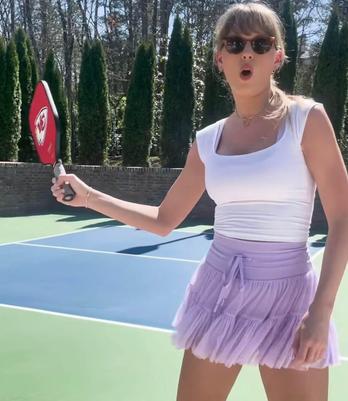
Popstar Taylor Swift on a pickleball court with a Chiefs-themed racquet in hand
Photo Credits: @taylorswift
Sports
THE PULSE | MAY 2026 ISSUE
GLIDING TOWARD THE GOLD
By Lexi Vaughan - Johnson
The 2026 Figure Skating World Championships is an annual event hosted by the International Skating Union, and it took place from March 24 to March 29 in Prague, Czechia. Each day consists of four main levels: men’s singles, women's singles, pair skating, and ice dance The World Championships were highly anticipated, coming off the Winter Olympics in early February, and many hoped to see how the performances would go.
According to U.S. figure skating and the international judging scale, a technical panel of five judges, consisting of a technical controller, two technical specialists, a data operator, and a video replay operator, identifies each element and evaluates its difficulty. Alongside this panel are up to nine judges who focus on the quality of each technical movement There is a grade of education score that ranges from -5 to +5, which is added or deducted from the skater’s final cumulative score.
Figure Skaters compete in two different programs: the short program and the free skate. As stated by the U.S. Figure Skating’s official website, the short program is a two-minute and 40-second routine featuring only seven technical requirements, meaning the focus is on specific skills such as jump combinations, axels, and spins. The free skate, also known as the long program, lasts four minutes to four minutes and 30-seconds, and features 12 to 13 technical elements. The long program emphasizes stamina, creativity, and choreography, with jumps featured in the second half, earning bonus points.
As reported by NBC Sports, the first day of the Figure Skating World Championships featured the women competing in their short programs. Amber Glenn, the bronze medalist, executed a successful triple Axel, triple loop, and triple flip - triple toe loop combination, which was an improvement from her performance at the Olympics Mone Chiba, the silver medalist, completed a variety of difficult elements such as the triple flip - triple toe combination, triple lutz, and high-level spins. Finally, the four-time gold medalist Kaori Sakamoto’s short program consisted of a double axel, triple lutz, and triple flip-triple toe combination
The men’s short program was highly anticipated following the Olympics, and the performances were highly successful According to Olympics com, Ilia Malinin set a new personal high score of 111 29 points and, for the third consecutive year, he won the gold medal with his program featuring a quad flip, triple axel, and quad lutz-triple toe loop combination This was a huge improvement from his performance in the 2026 Winter Olympics Also, Adam Siao Him Fa delivered a beautiful performance, scoring a 101.85, winning silver, alongside Aleksandr Selevko, who won the bronze medal
The women’s free skate was very successful and, as reported by Olympics com, Kaori Sakamoto executed an amazing routine, scoring her personal best for the final performance of her career. Featuring a triple flip-triple toe loop, along with challenging spins and step sequences, she scored a 158 97 and won the gold medal for her free skate, officially making her a four-time world champion Mone Chiba also scored her own personal best of 150.02 and won the silver medal, with strong technical elements and outstanding movement quality. Nina Pinzarrone, the bronze medalist, performed excellently, scoring 143 38 and received no negative marks for execution from the judges
The last day of the men’s singles free skate was incredibly impressive, with the skaters delivering some of their best performances. As reported by Olympics.com, Ilia Malinin scored a 218.11 with his program featuring five quadruple jumps, such as a quad flip and quad lutz, landing him in first place. Yuma Kagiyama also executed a remarkable performance, landing 10 jumps, four of them being quads, and scoring his personal best of 212.87 points, awarding him the silver medal Sato Shun received a 192 70 for his free skate and won the bronze medal for his first medal at the Figure Skating World Championships
The 2026 Figure Skating World Championships were highly successful this year, with some skaters receiving their own personal high scores Figure Skating is forever changing and evolving, with harder technical elements and stronger performances being executed every day, and the programs showcased in this competition definitely reflected that progress

Ilia Malinin, the gold medalist, celebrating his third consecutive win at the Figure Skating World Championships
Photo Credits: Michal Cizek
Travel
THE PULSE | MAY 2026 ISSUE
LAND
OF CASTLES: ALL YOU NEED TO KNOW ABOUT IRELAND
A land of green rolling hills, towering cliffs, and medieval castles, Ireland will capture your heart Ireland is a large island nation located in the North Atlantic It is rich in history and culture everywhere you look!
Over spring break, my family and I traveled to Ireland The flight from New York to Ireland is comparable to the flight from New York to California, lasting five to six hours, and it's comfortable if you're flying with the Irish airline Aer Lingus
Flying into Shannon on the western side of the country, there is much to see Go north for one hour to explore the gem that is Galway. Galway is a quaint city situated on Galway Bay, yet it's very lively Filled with traditional pubs and Irish shops, the city comes alive at night. Stop in McSwiggins for dinner to immerse yourself in good food and a lively atmosphere.
Close to Galway, the perilous cliffs of Moher stand at a whopping 700 feet, dropping dramatically into the sea. Noted as one of the best attractions in Ireland, according to Tripadvisor, these cliffs are beautiful and definitely worth a photo op. To avoid crowds and visiting fees, arrive early and enjoy the chilled morning air
South of the cliffs lie the Dingle Peninsula and the Ring of Kerry On the peninsula, there are cliffs, beaches, and the quiet village of Dingle that boasts shopping and pubs with a waterfront view This town is definitely worth a visit and showcases amazing seafood options.
By Dylan Coughlin
The Ring of Kerry is also incredible. Along the ring, there are prominent mountains, fog-covered lakes, and a gorgeous coastline with the Kerry Cliffs that rival the Cliffs of Moher. Despite this region not being very populated, it's full of natural beauty, including Killarney National Park. Near Killarney, Ross Castle and Muckross House are relics of the past, representing two very different eras in Irish history
If the western coast of Ireland isn’t for you, don’t worry, because the east is just as great Kilkenny is a vibrant small city with many ties to the medieval era and to the brewing of beer, which later became one of Ireland’s most profitable markets Boutiques, pubs, and hotels line the city streets, yet they don’t overpower the city's historical nature.
Kilkenny Castle stands triumphantly on a hill overlooking the River Nore The castle combines many different styles of architecture, going all the way back to the 13th century. This marvel that dominates the Kilkenny skyline does not stand alone; St. Mary’s and St. Canice’s cathedrals are also located on hills
Dublin is another city in Ireland's eastern region that lies right along the coastline, making it a major port city and Ireland’s largest metropolitan area Dublin is overflowing with culture and beauty Historic pubs like the Temple Bar showcase Ireland's charm and provide Irish folk songs for its visitors to listen to
For daytime sightseeing, the National Gallery of Ireland, St. Patrick's Cathedral, the Book of Kells, and Dublin Castle are all great options Each of these sites will allow visitors to learn about Irish history while also showcasing Ireland's art, architecture, and folk stories

The city has many shopping opportunities, especially on Grafton Street The street houses many of Dublin's designer and luxury stores, comparable to Fifth Avenue in New York or Rodeo Drive in Los Angeles Irish wool shops are common throughout Ireland, but Dublin contains an abundance of stores selling woolen goods like sweaters, scarves, gloves, socks, hats, and more
If the city is too overwhelming, travel to St Stephen's Green, where you will most definitely find peace and tranquility. The beautifully landscaped park is home to many wild geese and swans who reside in the park’s “Ornamental Lake.” At the center of the park, you will find rows of flowers and benches to admire the park's beauty, making it a perfect place to rest and recharge before doing more sightseeing.
If you are thinking about visiting the Cliffs of Moher, make sure you consider the Kerry Cliffs, which I found to be even more striking Avoiding seaside towns that are popular during the summer may be a good idea The town of Kinsale was small and gloomy, even with its colorful buildings It may be beautiful in July, but it was ultimately lifeless in mid-March
Of the cities I visited, Kilkenny was my favorite because it had the perfect mix of charm and industry, although the Ring of Kerry was also incredible with its diverse landscapes. Overall, a trip to Ireland is absolutely worthwhile
Cliffs of Kerry left, Ross Castle right
Photo Credits: Dylan Coughlin
Reports
THE PULSE | MAY 2026 ISSUE
THE RISE AND FALL OF TV REVIVALS
“Reboot” is a satirical comedy that premiered on Hulu in 2022, centered around the revival of a fictional early2000s sitcom As production began, a team of progressive young writers clashed with the show's old-school creator, and returning cast members brought years of off-screen baggage back to set
Though fictional, “Reboot” offers a commentary on the challenges of reviving beloved shows. It satirizes the generational divides that surface in writers’ rooms, the hazards of clinging to nostalgia, and the commercial motivations behind many studio decisions to revisit older material.
The series debuted amid a wave of revivals. In the past decade, Rotten Tomatoes has tracked at least 61 reboots, starting with “The X-Files” revival in 2016 Currently, Intellectual Property (IP) revivals are still prevalent on the little screen, with series like “Phineas and Ferb,” Scrubs,” and “Night Court” coming out with new episodes long after their original runs concluded
However, a wave that a few months ago might have shown no signs of slowing may be starting to decelerate Last year, a spinoff of the legal drama “Suits” began airing This revival came amid a newfound recognition for the IP during the COVID pandemic, with Variety reporting the series accumulated 55 7 billion total minutes watched in 2023
Despite this popularity, “Suits: L A ” was scrapped by NBC in May 2025 after releasing 13 episodes. The network attributed the show’s cancellation to its poor quality, which is revealed by low ratings during airing and an average IMDB episode score of 5.8/10.
By Logan Kreisberg
But the failure of this spinoff is not an isolated incident in Hollywood
Revivals of network television programs like “Sex and the City,” “How I Met Your Mother,” and “Gossip Girl” also had minimal success when modified into the streaming episode format While these shows allow for the introduction of familiar stories to a new generation while dating them for modern audiences, in practice, they struggle to match the viewership numbers and cultural impact of their originals
Currently, this trend of short-lived revivals of popular media is waning in part due to studio risk aversion
Roughly a year after Hulu announced a revival of “Buffy the Vampire Slayer,” industry sources began reporting the project was “dead ”
Despite early excitement surrounding the project, due to factors such as Oscar winner Chloé Zhao’s attachment and the lasting popularity of the original series, creative challenges and internal executive misalignment doomed the project, according to Deadline
Unlike its predecessors, “Buffy the Vampire: New Sunnydale” arrived at a moment when networks had begun reassessing the downsides associated with nostalgia-based content. Recent examples from the trend showed revivals struggling to replicate the sharp writing that made each original series successful, or simply failing to find balance when updating storylines for modern audiences. These challenges existed for the “Buffy” revival too, and with the precedent of most reboots in this format failing, the project offered much more risk than opportunity
The lack of successful revivals in the television sector also correlates to an increase in original content. Parrot Analytics, a company that tracks media trends, reported that 88% of new shows from the past few years are original IP
While revivals may continue to surface, their declining hegemony in Hollywood marks a shift in what consumers prioritize
As studios weigh risk versus reward, the future of TV may increasingly depend on inventing new stories instead of dwelling on the past.

Graphic of an array of TV revivals that have recently hit the little screen
Photo Credits: Reddit
As part of NASA’s Artemis program, with the overall goal of landing people on the moon in 2028 and eventually setting up a base, the Artemis II took flight April 1, 2026 from NASA’s Kennedy Space Center in Florida. Embarking on a 10-day mission around the moon and back, astronauts Reid Wiseman, Victor Glover, Christina Koch, and Jeremy Hansen made history traveling farther into space than any human, reported CNN
Aboard the Orion Spacecraft, measuring just five meters wide, the four astronauts gathered crucial scientific knowledge about space. During their time aboard the ship, they tested Orion’s capabilities in deep space This included life support, environmental systems, manual piloting, communication, and navigation systems They were also interested in studying sleep, motion, and biological responses to space travel.
Thinking even further into the future, NASA hopes research and data collected through the Artemis program will discover how humans could survive a trip to Mars. As the first step in the overall Artemis program, the mission of Artemis II was to gather as much information as possible, but the four astronauts also touched the hearts of everyone back on earth
Aboard the ship, the crew became a close-knit community, sleeping within such close quarters of each other Members of the crew have shared their experiences in interviews, expressing the forever connection they have created with each other. In a CNN interview, Reid Wiseman said, “Victor, Christina and Jeremy, we are, we are bonded forever, and no one down here is ever going to know what the four of us just went through ”
Reports
THE PULSE | MAY 2026 ISSUE
3, 2, 1 BLAST OFF!
By Ana Failla
The crew not only developed relationships with each other but also gave everyone back on Earth a wholesome event to tune into Platforms were swarmed with pictures and videos from the crew documenting their trip
America’s social media feed was taken over by heartfelt moments from the crew’s adventures that highlighted the groundbreaking work they accomplished, and they gave inspiration to future generations of scientists.
To highlight one crew member in particular, Christina Koch served as an incredible role model for young girls around the world who dream of reaching the stars She led by example, showing them that it is alright to be the only girl in the room, and that it is a position they should hold with pride According to Forbes, when asked how it felt to be the first woman to go to the moon, she said, “Firsts are only important because you’re not going to be the last ”
The crew had a multitude of touching moments aboard the ship. While circling the moon, they chose a lunar crater to name after Reid Wiseman’s late wife who died in 2020 According to AP News, the crew named the crater “Carroll” after Carroll Taylor Wiseman
Another fun aspect of the Artemis II trip was their beloved plush mascot “Rise ” Rise served as the official zero-gravity indicator designed by second grader Lucas Ye, chosen from more than 6,605 entries The plushy contained a microSD card with more than 5.6 million names gathered from the “Send Your Name” program, as stated by CBS News
The Artemis II achieved numerous records and gathered crucial data for NASA on their journey. They also sparked joy and hope in numerous people around the world. With their love for not only space but also each other, the group won the affection of everyone back on Earth
Through moving stories, broken records, symbolic achievements, and a shared love of space, the Artemis II crew will truly go down in NASA and world history!
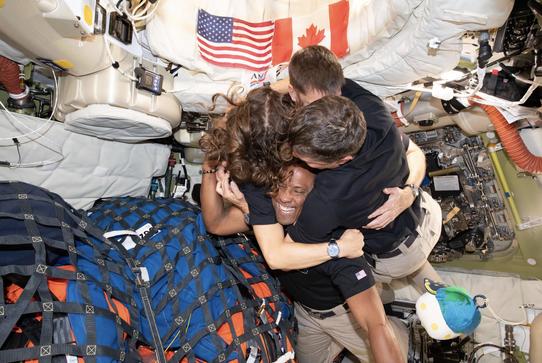
Artemis II Crew sharing a group hug on their way back to Earth, featuring Rise! Photo Credits: NASA
Reports
THE PULSE | MAY 2026 ISSUE
DORM-DECORATING DILEMMA…DUN DUN DUN!
As the school year winds down, there's a blissfully strange mix in the air: sunlight, freedom, and a tint of dread for September New beginnings always sound exciting until you realize that they come with a packing list, dorm rooms, and the pressure to reinvent yourself. Because as a student, moving into college isn't just about new pens and notebooks, but it is also about transition.
So where do you even start when it comes to dorm decorating? And the biggest question: How do students make the space feel personalized without spending a fortune? Balance is key to most things in life, and I would believe the same philosophy applies to dorm decorating.
The happy medium between personal belongings and practicality consists of curated aesthetics and real necessities. A way to integrate the two would be the classic photo printouts Most local Walgreens offer printing services, so the adorable selfie of your dog or the family photo taken during the holidays can have the opportunity to plaster itself on your dorm wall in a matte or glossy form The available sizes vary from 4x4 to 8x10 with pricing of $0.44 to $4.49 per print.
Nobody wants to feel like a stranger in their own room, especially when they’re far away from home. The goal is to create a space that feels lived in and entirely yours (alongside sharing with a potential roommate). One of the best ways to do that without overspending is by thrifting Stores like Goodwill, The Salvation Army, and Savers are full of overlooked pieces that just need the right person to revive them for a new life It's less about buying and more about the process of finding unique items to make the decor feel like it belongs with you
By Summer Jarbath
Small changes can completely shift a room. For example, dorm chairs are notoriously stiff and impersonal, but a simple chair cover can transform them According to Studlife, chair covers not only add a pop of color but also make the space feel softer. They’re inexpensive, washable, and an easy way to make the standard living spaces feel intentional
Lighting is another game changer Harsh overhead lights can make a room feel exhausting, especially for people who are sensitive to the atmosphere. Swapping that out for softening lighting can instantly change the mood Stores like Target sell small light lamps for around $10 and post celebration sales, such as those for Memorial Day, are perfect for finding string lights on a budget. A few warm light sources can turn a room from clinical to calming without costing much at all
For anyone preparing to decorate their dorm at Harvey, there are a few things I would strongly advise against (I learned the hard way) Do not bring carrots. Somehow, they will make your entire room smell like damp moss and dirt for weeks Do not bring a bean bag It seems cozy at first, but it will slowly replace your chair, your desk, and any sense of productivity while taking up half the room. Do not leave the heater on all day What starts at comfort quickly turns into a suffocating sauna. But, more importantly, if you live at Harvey, do talk to the dorm parents They are some of the most influential, supportive people on campus, and they genuinely care about you and your growth
As Grace Xue ‘25, a former Harvey student, puts it, “At Stony Brook University, my dorm consists of my mom’s calligraphy, anime pieces, and cute furry animal toys A bit different from my Harvey dorm.” Having lived with Grace in the dorms, I saw firsthand how intentional her space was. Every item reflected a part of her identity, not just her taste Her room gave the cover to the book on who Grace was
Moving into a new space can feel like a chance to reinvent yourself, but it's also an opportunity to understand who you already are. While decor can help shape that environment, it doesn't define you, and it doesn’t have to cost a fortune The real sense of self comes from experience

An empty dorm room, full of potential Photo Credits: Driven by Decor
Airports lines and the wait time for flights were getting longer, and this issue started on Feb. 14, 2026, when the Department of Homeland Security (DHS) lost their funding. According to CNN, Transportation Security Administration (TSA) workers missed their first complete paycheck in the middle of March, only receiving a partial one The government shutdown ended April 30, 2026.
Fox 7 news of Austin, Texas, states that this shutdown set “a new record for the longest shutdown in government history ” It was a result of Congress’s stalemate in a recent vote to bring back funding to the DHS
The Senate Democrats attempted to negotiate with the White House to refine Immigration and Customs Enforcement (ICE), as stated by CBS News. The Senate agreed to approve funding for DHS, excluding ICE. According to Time magazine, this decision was rejected by House Republicans, with Speaker Mike Johnson stating, “This gambit that was done last night is a joke I’m quite convinced that it can’t be that every Senate Republican read the language of this bill, we’re not doing that.”
Reports
THE PULSE | MAY 2026 ISSUE
TSA TROUBLES
By Aiden Tarpey
More TSA workers quit as time went on, and CNN states, “Nearly 500 TSA workers have quit since this started, and thousands continue to call out as the partial government shutdown continues into its sixth week A record number of TSA agents called out of work with a callout rate of 11.83%, marking the highest reported rate during the ongoing government shutdown, the agency reports.”
Due to these high rates, ICE agents were seen at airports, acting as security to make up for the absence of TSA workers According to NPR, “President Trump has deployed Immigration and Customs Enforcement agents to major airports across the country amid staffing shortages caused by the partial government shutdown.”
On March 27, 2026, President Trump signed an executive order to have TSA workers receive payment for the 41 days they worked without being paid, though this was only a temporary solution According to PBS News, “Caleb HarmonMarshall, a former TSA officer who runs a travel newsletter called Gate Access, said the staffing crisis won't improve significantly until officers are confident that they won't be subjected to more skipped paychecks. ‘If it's only for a pay period, that's not enough to bring them back,’ Harmon-Marshall said ‘It has to be an extended pay for them to come back or want to stay there.’”
The lack of employees also increased the lengths of lines at airports, and TSA administrator Ha Nguyen McNeill said, "Multiple airports are experiencing days where 40-50 percent of their staff are calling off because they simply cannot afford to report to work, This has led to the highest wait times in TSA history, with some wait times greater than 4.5 hours," as reported by USA Today This caused many problems in airports across the country, such as people missing flights due to these increasingly long lines and wait times.
Airports all over America struggled during the DHS shutdown, and with the sudden large number of missing employees, ICE agents were required to fill in for absent TSA members. The lines continued to grow as travelers waited for the government to come to a consensus about how to resolve the shutdown

People Waiting in Line at the HartsfieldJackson Atlanta International AirportPhoto Credits: Alyssa Pointer / CNN
Review
THE PULSE | MAY 2026 ISSUE
“I’M GOING ON CLEAN”: A NEW ERA FOR HARRY STYLES
Harry Styles released his fourth album “Kiss All the Time Disco, Occasionally” on March 6, 2026, and within weeks, it had already sparked intense speculation about what he is really trying to say. It is clear that Harry Styles is entering a new era, and I am fully here for it!
“Watermelon sugar high, watermelon sugar high ” the line has been played enough to become almost unavoidable Whether it puts a smile on our faces or makes us roll our eyes, there is no denying that Styles has made a lasting mark on fame.
From “The X Factor” to One Direction to films like “Don’t Worry Darling,” Styles has long been a paparazzi prize “Kiss All the Time Disco, Occasionally” diverges from his previous pop-rock sound and experiments with something more funky and soulful. The only song that includes its own music video is the opener, “Aperture,” and that feels intentional.
The lyric “aperture lets the light in” is repeated numerous times, and fittingly so An aperture is the opening of a camera lens It controls how much light gets in But in this context, the “light” does not feel neutral. It feels constant. It feels overwhelming.
By Summer Jarbath
In the music video, Styles runs through a hotel while being chased by a mysterious figure that never fully reveals itself. It does not feel like a person; it feels like something constant, something inescapable The contrast between the upbeat sound and the unsettling visuals is what makes “Aperture” so effective. It forces the listener to question whether the “light” he sings about is something he actually wants or is something he has learned to survive.
Styles is more than accustomed to flashing lights, screaming crowds, and constant attention. Fame has placed him in a cycle in which he is both elevated and exposed at the same time In this stage of his career, he is no longer just participating in the system of fame; he is exposing it. “Aperture” suggests that the same “light” that built his career is also what traps him in it
According to IMDb, before all of this success, Harry Styles was a teenager working at a bakery in Holmes Chapel, Cheshire He was just another person with big dreams, not yet consumed by cameras or expectations. To me, his opening song reframes and takes control of his own narrative with fame, suggesting that the very thing that seems to bring success can simultaneously distort it The “light” is not always something celebrities flourish in forever but is something they learn to endure.
Looking deeper into the lyrics, Styles sings, “I wanna know what safe is” and “we belong together.” The music video, published on Jan 23, 2026, adds another layer entirely Interestingly enough, former bandmate Louis Tomlinson released his third studio album on the same day Given the long history of speculation surrounding both Tomlinson and Styles during One Direction, the timing feels less like coincidence and more like something intentional, though what that intention is remains unclear
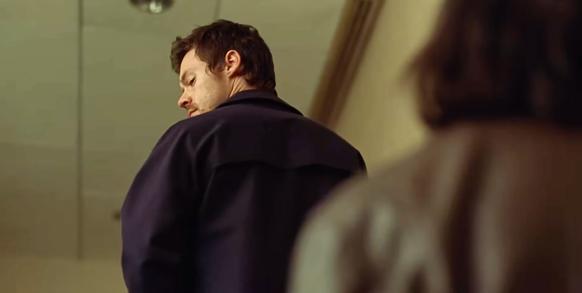
A screenshot of Harry Styles looking over his shoulder in his music video Photo Credits: YouTube
Review
THE PULSE | MAY 2026 ISSUE
PUSHED TO THE EDGE: SEASON 2 OF “THE PITT”
“The Pitt” Season 2 premiered Jan 8, 2026, on HBO Max, starring Noah Wyle, Katherine LaNasa, and Fiona Dourif. The show follows the staff of the fictional Pittsburgh Trauma Medical Center, which they call “The Pitt ” Each episode covers an hour of a 15-hour-long shift, giving the show a realistic feel as it tackles real-life issues alongside its fictional story lines
Season 1 ended with the doctors at the Medical Center treating patients from the mass shooting at PittFest This was a shocking turn of events and a major crisis, considering it was the first day of many for the first-year residents In addition, it was revealed that Dr Langdon, played by Patrick Ball, was stealing prescription medicine from patients, and he was forced to leave the medical center This was a tense conclusion to the first season, leaving viewers wondering how the show would continue.
Season 2 starts 10 months after the end of the Season 1 finale, on the Fourth of July, and Dr. Michael “Robby” Robinavitch, played by Wyle, is shown coming into work on his motorcycle without wearing a helmet This episode is the day before Dr Robby is leaving to go on a three-month sabbatical, and as he walks through the medical center, his co-workers comment on his leaving and his lack of a helmet Compared to the generally empathetic and caring Dr Robby of season one, this season’s Dr Robby shows signs of recklessness and irritability
New characters such as Dr. Baran AlHashimi, played by Sepideh Moafi, were introduced this season, bringing their own conflicts and storylines. Dr. Al-Hashimi is presented as the new attending at the medical center due to Dr Robby planning to leave on his sabbatical Dr Al-Hashimi wants to allow for new modern concepts, such as AI, but Dr. Robby is not in support of this new idea
By Lexi Vaughan - Johnson
There is also a new group of medical students, such as Joy Kwon, played by Irene Choi, and James Ogilvie, played by Lucas Iverson It is interesting to see a new dynamic between the characters, because the medical students from last season are now the ones teaching. Neither of these medical students is as eager to please as Whitaker and Javadi were in Season 1 Ogilvie acts extremely arrogantly, and Joy, although intelligent, does not seem all that interested in treating patients
Another surprising development in Season 2 is the return of Dr. Langdon. Since leaving the Medical Center, he was in rehab for his addiction, and upon coming back, Dr Robby has been ignoring him Since it is his first day back, he is re-adjusting to the emotional turmoil of working as a doctor again. Despite the tension and strain in his relationships, Dr Landon is able to push through it and rebuild his role within the team
A major plot point throughout this season occurs when they find an abandoned infant in the hospital restroom The infant, baby Jane Doe, is an ongoing case and point of tension throughout the season due to a lack of information about her identity The doctors show their affection to the child and do the most they can to help with the situation Although baby Jane Doe’s storyline does not get a clear conclusion, her story leaves a lasting impact on all the members of the Pitt
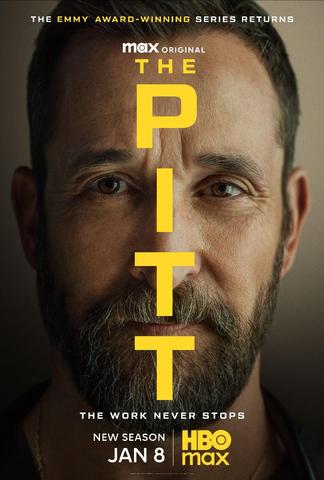
The finale of Season 2 was surprising to some viewers, compared to the high-stakes ending of season one Some viewers predicted, due to some not-so-subtle foreshadowing, that a tragic incident would unfold, featuring Dr. Robby on his motorcycle However, I think that it would have been too obvious of a storyline. Instead, Dr. Robby has an intimate moment with baby Jane Doe, and he consoles both her and himself about the current situation, revealing that he, too, was abandoned by his mother at a young age This scene is a beautiful display of Noah Wyle’s acting skills, who delivered an amazingly emotional performance to end the season
Critics, such as Variety, note that although Season 2 lacked a major crisis like PittFest, the show certainly did not suffer because of it The sophomore season of “The Pitt” was able to successfully display how this field of work can be both physically and emotionally grueling Viewers are able to see how the struggles characters faced from Season 1 to now are affecting their lives inside and outside the medical center. Many doctors, like Dr Robby, question whether it is worth it to continue in this line of work
In all, I truly appreciate the attention to detail within “The Pitt.” This season was more focused on Dr Robby than I was originally expecting, but it is through him that the show is able to convey the hardships that all the other residents and doctors experience, as well I would definitely recommend that anyone give “The Pitt” a try, because although I am not usually the biggest fan of medical dramas, “The Pitt” stood out to me and easily captured my attention throughout each episode
According to TVLine, “The Pitt” has been renewed for another season With the return of certain characters still uncertain and Dr. Robby’s sabbatical not fully resolved, viewers are left eager to see where the story goes next
Photo Credits: IMDb
Poster featuring Noah Wyle for "The Pitt" Season 2
Op-Ed
THE PULSE | MAY 2026 ISSUE
PLAYING PRETEND: THE DARKSIDE OF PARASOCIAL RELATIONSHIPS
Dear Pulse Readers,
Parasocial relationships are dominating the internet sphere and must be stopped Everyone experiences a parasocial relationship in their life, emotionally attaching themselves to celebrities they feel like they could be friends with. It's not a crime to feel connected to your idol, but when admiration transforms into obsession, the connection feels sinister.
According to Refine Magazine, a parasocial relationship exists when someone forms a strong bond with a public figure they don’t know personally. These connections are layered, with some people just feeling a distant attachment or comfort in the presence of a celebrity, but others jump to more extreme feelings.
As reported by Vogue, during a study about how many Americans have engaged in a parasocial relationship, 51% of people confessed This same study showed that 20% of the people surveyed have experienced bereavement after the death of a celebrity. These numbers don’t even include the people who wouldn’t admit their true feelings
In the past, people could see celebrities only on television or in magazines This put a barrier between the famous and regular citizens, making it seem like celebrities were distant from everyday life. With the invention of social media, it has become increasingly easy to know everything about the lives of others, creating toxic norms and encouraging harmful behavior. With the integration of social media into daily life, people are encouraged to share details about their lives, and in return, we, the consumers, watch without qualms or concerns. When you know so much about the lives of others, they almost feel like a friend to you, gaining your trust and connecting with you through funny stories and life advice
By Dylan Coughlin
People also rely on these relationships to cope. After experiencing hardship or having stressors in their life, people feel comforted and hopeful by staying tuned in to the lives of celebrities This bond is one-sided, of course, but to the parasocials, it doesn’t matter.
Then, when the influencer or celebrity does something to break the trust that has been established, it feels like the end of the world, and now their career must be destroyed. Parasocial relationships and cancel culture are inevitably intertwined, but it poses the question: How far is too far in a situation like this?
To come up with an answer to this question, it's best to examine situations where a parasocial relationship became too serious. The New York Times reported that global sensation Sabrina Carpenter recently performed at the Coachella Music Festival During one of her sets, she became puzzled when a fan did a ululation called a zaghrouta, which is used in some Arab and North African cultures
Carpenter responded by asking if the fan was yodeling and said sarcastically that she “didn’t like it ” The fan responded by saying it was her culture, but Carpenter was still confused by it and continued her sarcastic bit, retorting, “That's your culture, is yodeling?” She ended the interaction by jokingly saying, “What's going on? This is weird.”

What she had thought was just a comical, sarcastic interaction with a fan ended up landing her in an online scandal Sabrina was not aware of the cultural significance of the zaghrouta and was disoriented in the moment as the call from the audience happened during her set Fans online felt betrayed by Sabrina’s actions and felt that she was disrespectful and careless The New York Times even noted one user saying she was “Insensitive and Islamophobic ”
While her word choices may have been in poor taste, Sabrina seemed unaware of the history of the zaghrouta and later issued an apology on X, writing, “My apologies, I didn’t see this person with my eyes and couldn’t hear clearly ” She added to this by saying, “Now I know what a zaghrouta is! I welcome all cheers and yodels from here on out ”
The situation was, in total, a big misunderstanding, but instead of fans accepting the humanity of the situation, they went to take drastic measures and “cancel” Sabrina They judged her like a close friend who did something unforgivable and turned their backs on her in an instant Her fans did not know the intentions behind her words, yet they tried to categorize her motive as Islamophobic Humans will often make mistakes and mess up, but rather than faulting each other for these mistakes, it is important to educate and encourage growth
Another example of parasocial overstepping can be viewed in the engagement of Benny Blanco and Selena Gomez Vogue reported that after finding out about this union, fans were confused and immediately went to attack Blanco’s appearance and analyze the relationship between the two Fans crossed a line, acting as though they had a say in the matter when in reality, it is a very personal situation.
When people decide that they somehow have authority in relation to the lives of celebrities, a boundary is broken, but this barrier established by celebrities is there for a reason There must be a stronger line drawn to break this parasocial propaganda and repair the relations between notable figures and the average consumer. People beg to know more about the lives of these mysterious socialites, yet they complain if the information they receive isn’t satisfying
Sabrina Carpenter's reaction to hearing a chant from the crowd
Photo Credits: TMZ
THE PULSE | May 2026 ISSUE
ADVENTURES AT REGENERON
CONT. FROM PAGE 1
Ms Silverstein was also asked about how she believes a field trip can enhance student learning beyond a classroom According to Ms Silverstein, “I think when you get to learn about something in the classroom, it gives you one perspective It’s more like twodimensional, but when you get to be in a space where you can actually experience it, it’s more of a threedimensional thing I think field trips are great because they allow students to make more connections, some people really do better when it's hands-on, and you can’t always do that in the classroom as much. So getting to have that unique experience is normally pretty memorable for kids, it sticks out, and it's a nice thing to do ”
Another question was about her prior experiences working with science, and Ms Silverstein said, “I used to be a radiation therapist before I became a teacher, which was pretty cool. So I was treating cancer patients using a linear accelerator, which is very different from being in a lab but also super different from being in a classroom.” She also performed imaging studies and training protocols, making her work very technical
According to Ms Silverstein, the main goal of the Regeneron trip was to “have the opportunity to put some of what we learned about into practice. Genetics is so molecular, and we talk and use all these words, and it's hard to visualize what that looks like sometimes just because it's so small. So to be able to do a lab where you’re manipulating bacteria, and we can actually have our plates and bring them back to our classroom and see what grows, that sort of experience is like a physical manifestation of this work that we just did ”
Finally, Ms Silverstein was asked if there was anything else she would like to share about the field trip, and she stated, “It’s nice taking an honors group. We had conversations beforehand about expectations and representing ourselves, and I think everyone brought their best self to the trip.”
The Regeneron field trip gave students a better understanding of biotechnology through a memorable hands-on experience that was both fun and easy to follow The Pulse thanks Ms Silverstein for her time and her thoughts
PLAYINGPRETEND:THE DARKSIDEOFPARASOCIAL RELATIONSHIPS
CONT FROMPAGE12
Parasocial relationships have been overlooked for far too long and have allowed for toxicity to spread like wildfire through fandoms No one can control the lives of others, even if you think the person made a bad decision
No matter how wrong or evil you think celebrities are for making small mistakes, take a step back, and you’ll find that no one is perfect. Break the cycle of parasocialism and stop playing pretend
Sincerely,
Dylan Coughlin
HARVEYINTERNATIONAL SPOTLIGHTCONT.FROMPAGE2
Steve said that the beginning of the transition was a little challenging, but the Harvey community and all of its resources allowed him to adjust to the change. Steve shared how the theater program introduced him to a group of people he now considers some of his best friends.
Steve also said that through his dorm life, he strengthened his connection with students from around the world. To end his interview, Steve wished to share his love for Chef Suchada’s cooking, specifically her Thai food.
The International Student Program is something truly special about Harvey. It is a unique aspect that adds much to our community. Our student population truly would not be the same without the ISP.
THE PULSE RECOMMENDS:
Most looking forward to this summer:
Ms. Holmes Disney Cruise to Alaska
Ana Court Internship
Lexi
Gov Ball
Dylan Cape Cod Trip
Aiden Nantucket Trip