HARSHAL GULABCHANDRE
BSc Architecture
The Bartlett School of Architecture Portfolio
harshal.gulabchandre.21@ucl.ac.uk
The Kitchen Estate
Year 3
Tutors: Jhono Bennett, Zachary Fluker, Hannah Corlett
Site: Stepney, London, UK
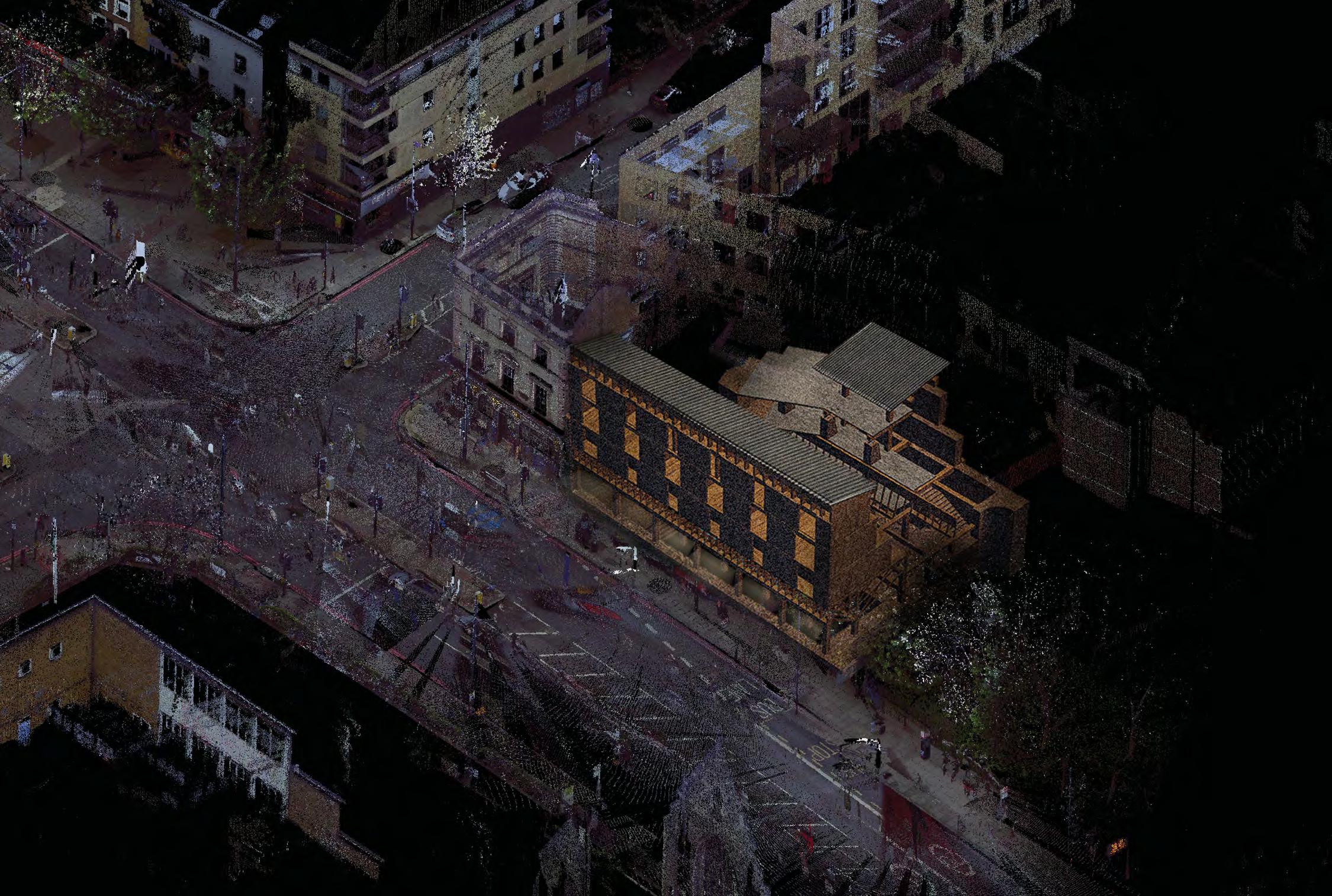
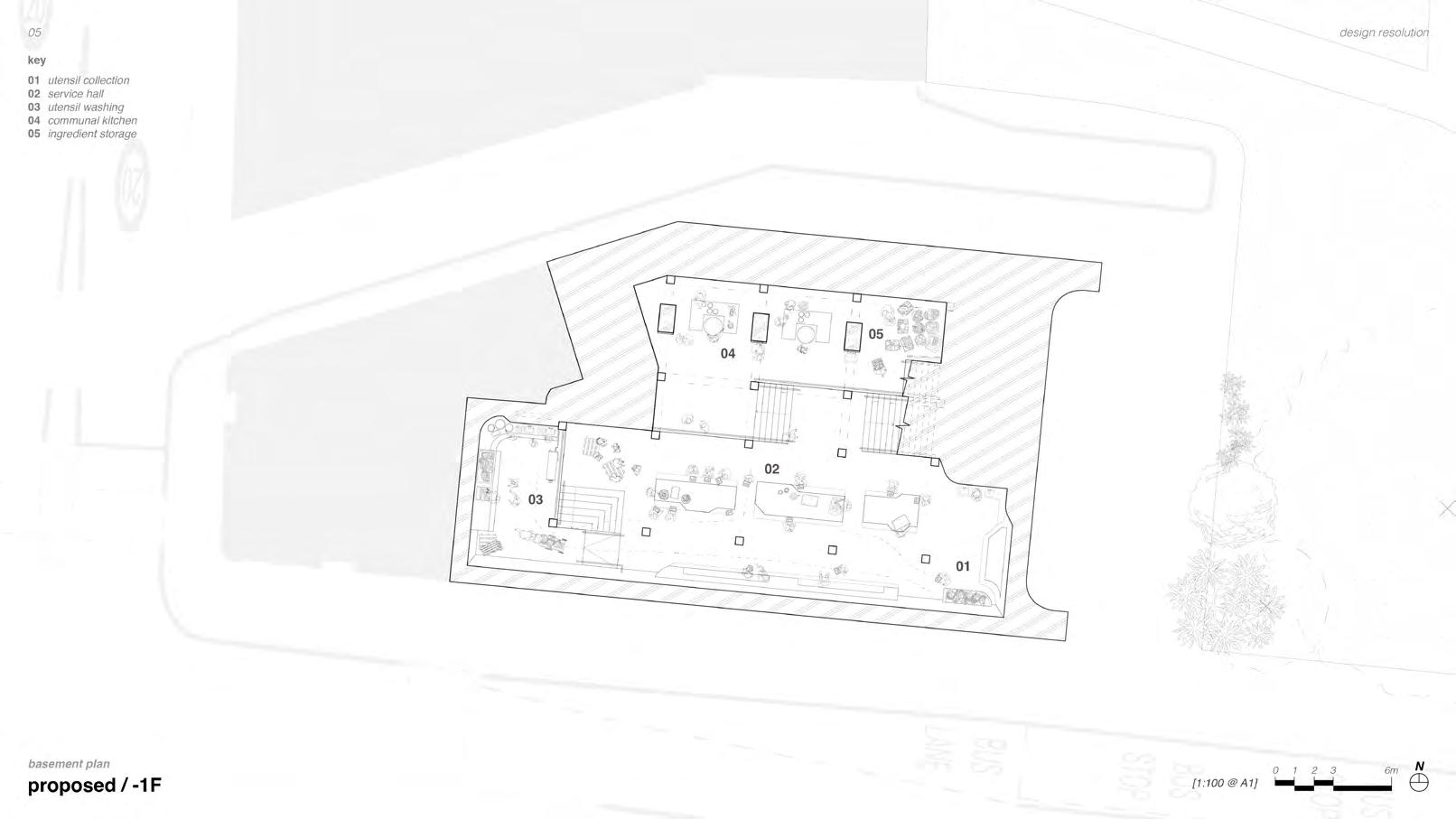
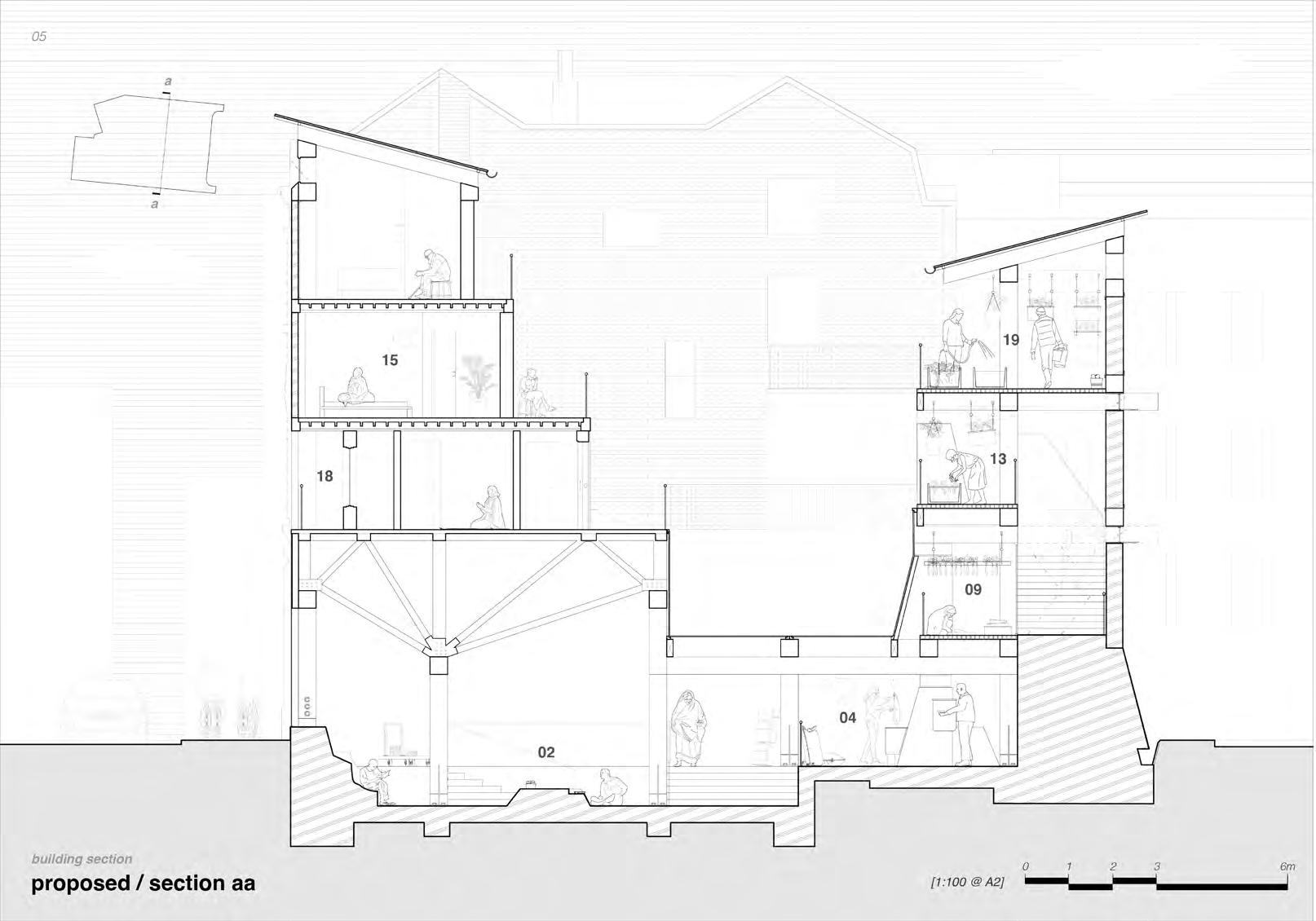
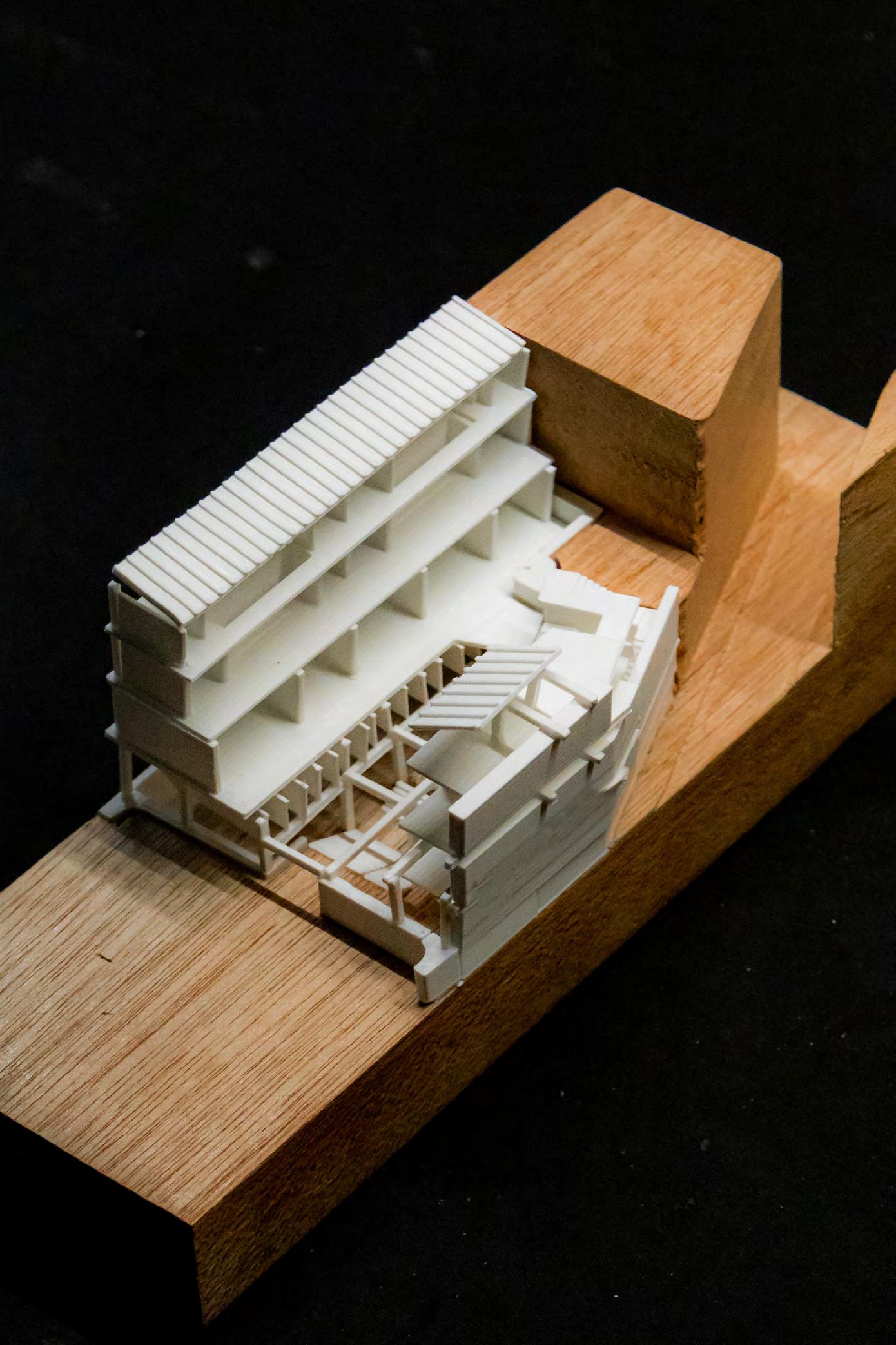
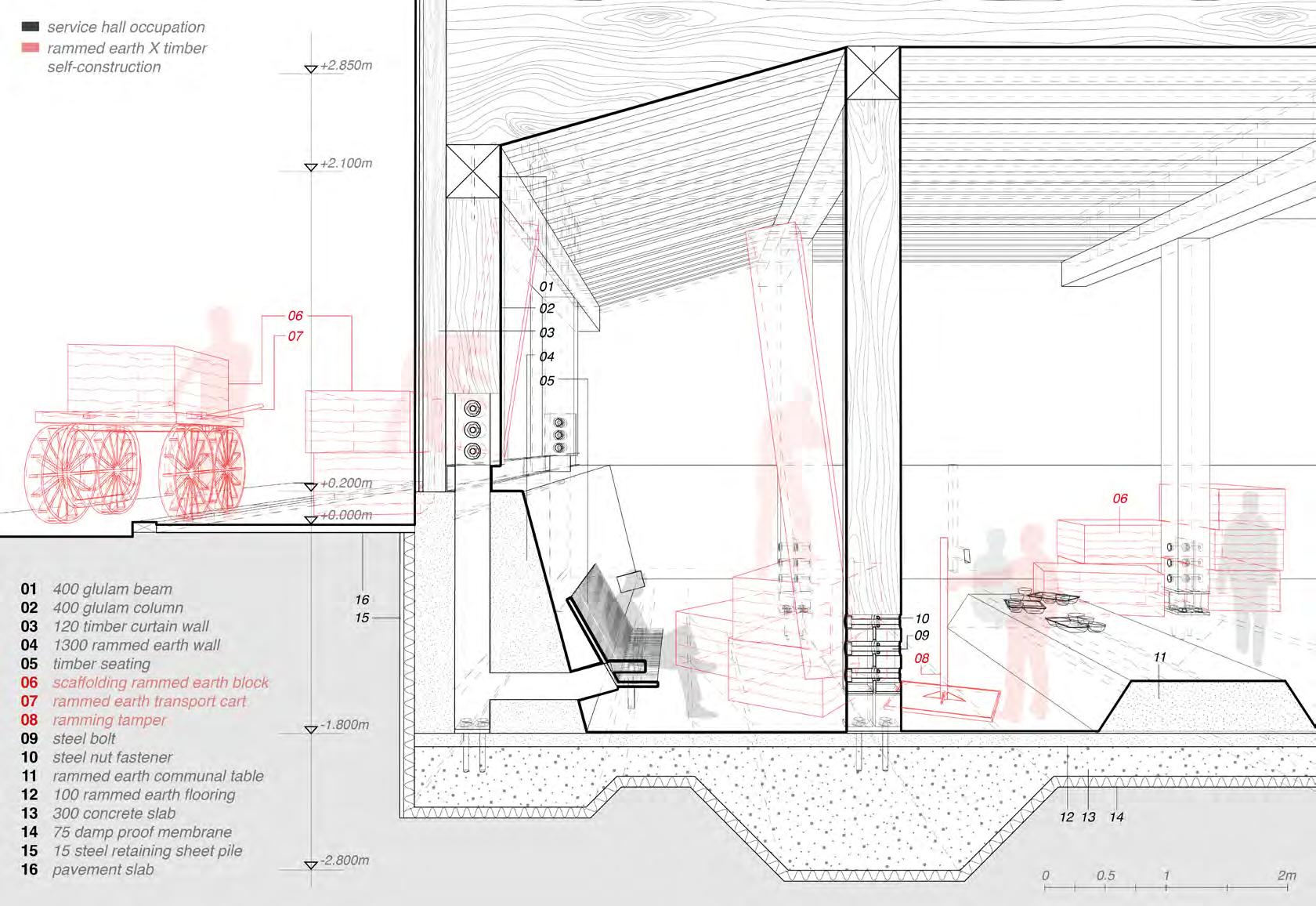
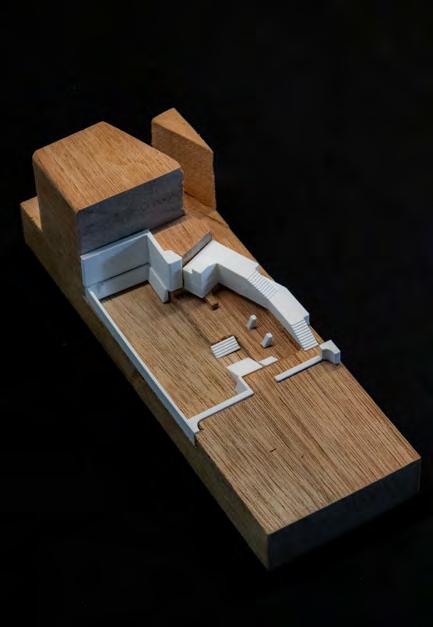
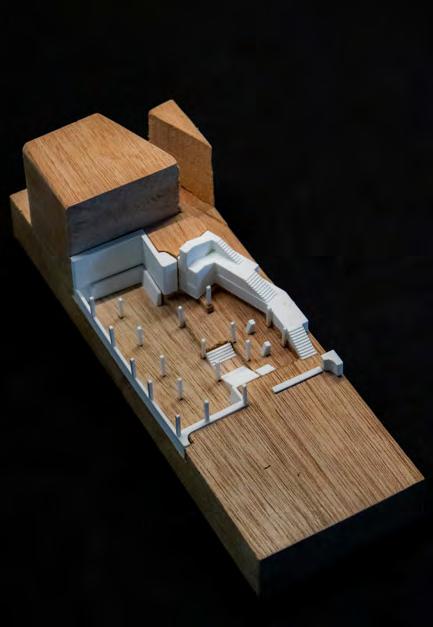
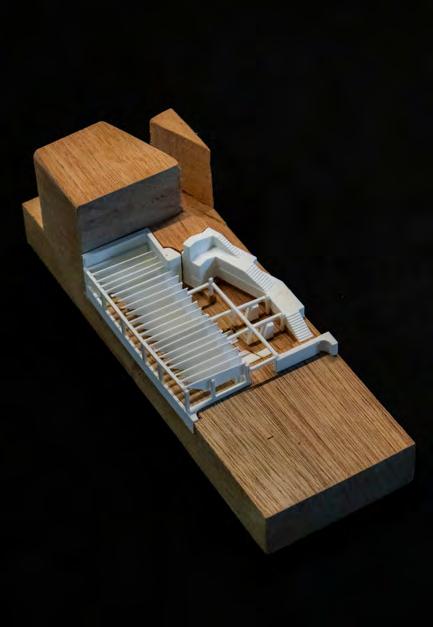
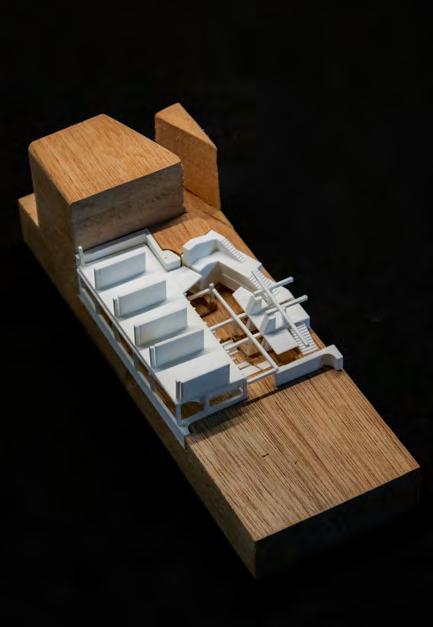
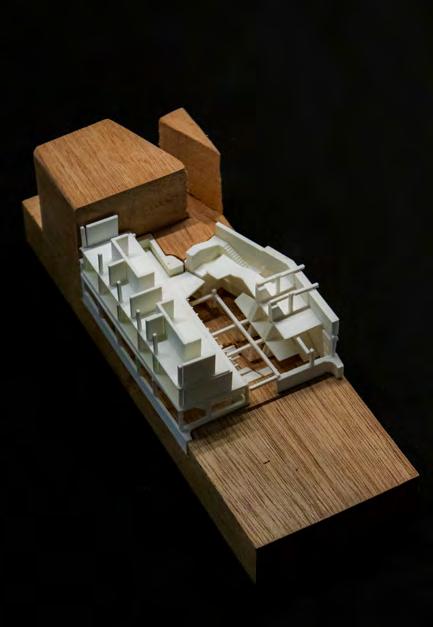
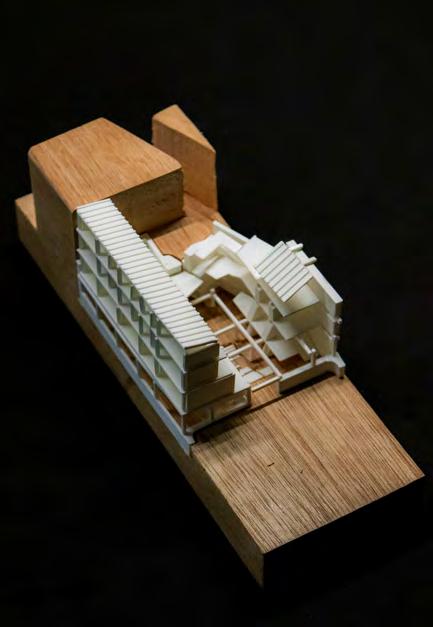
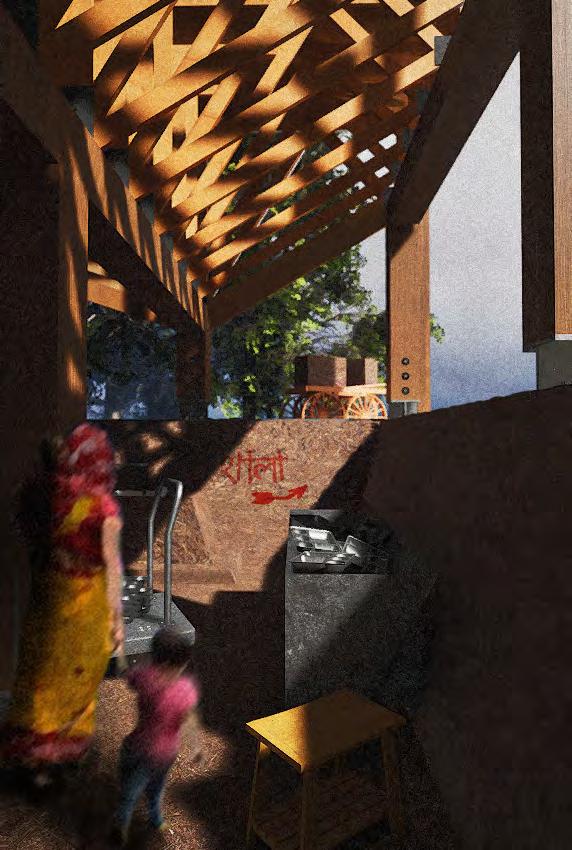
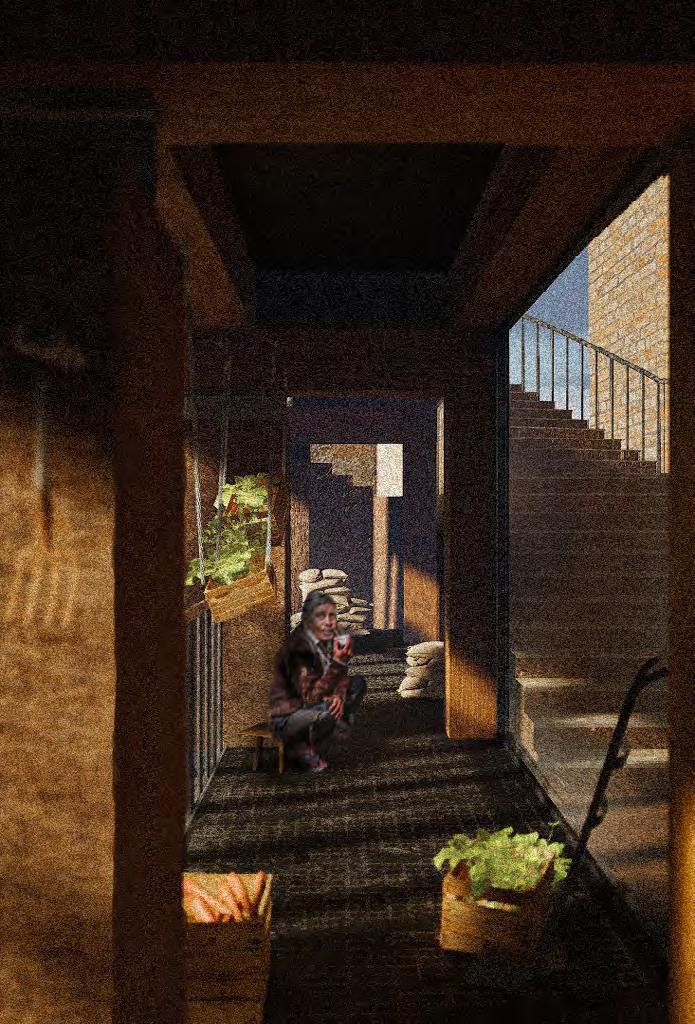
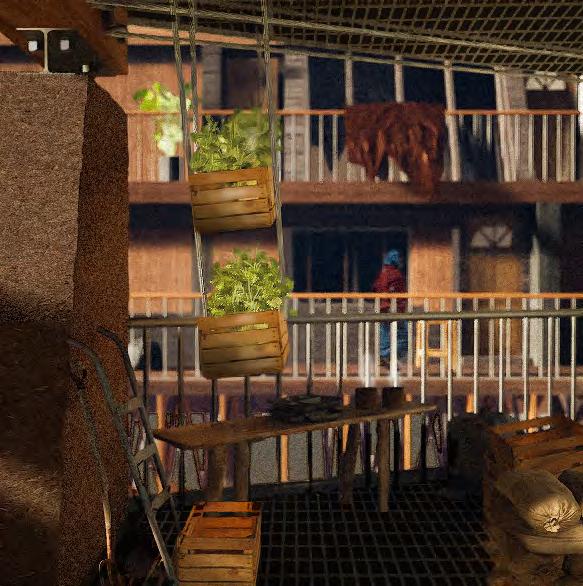
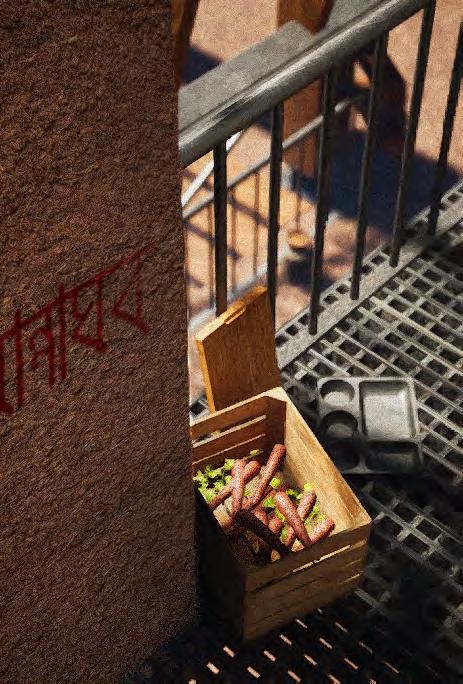
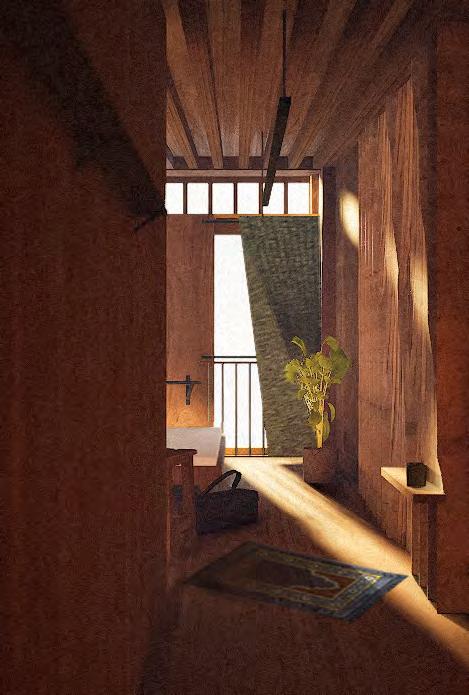
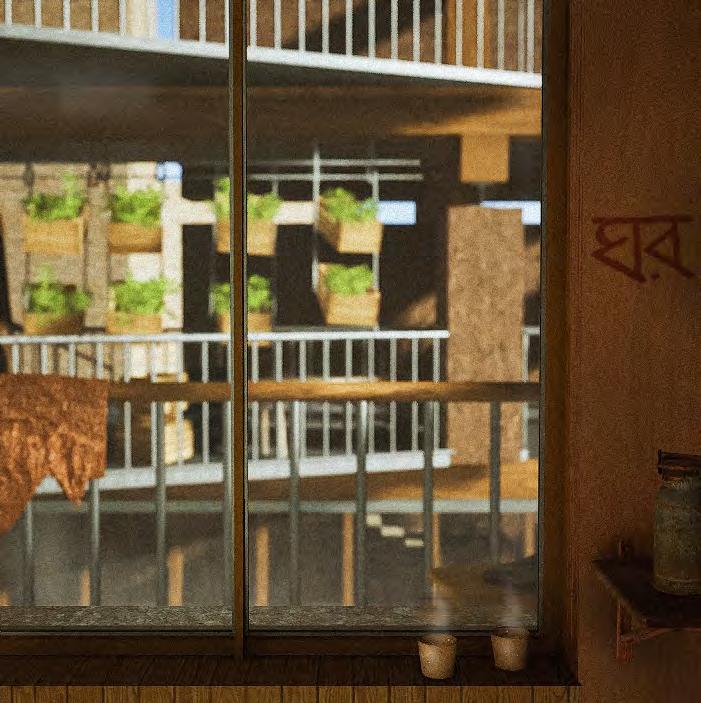
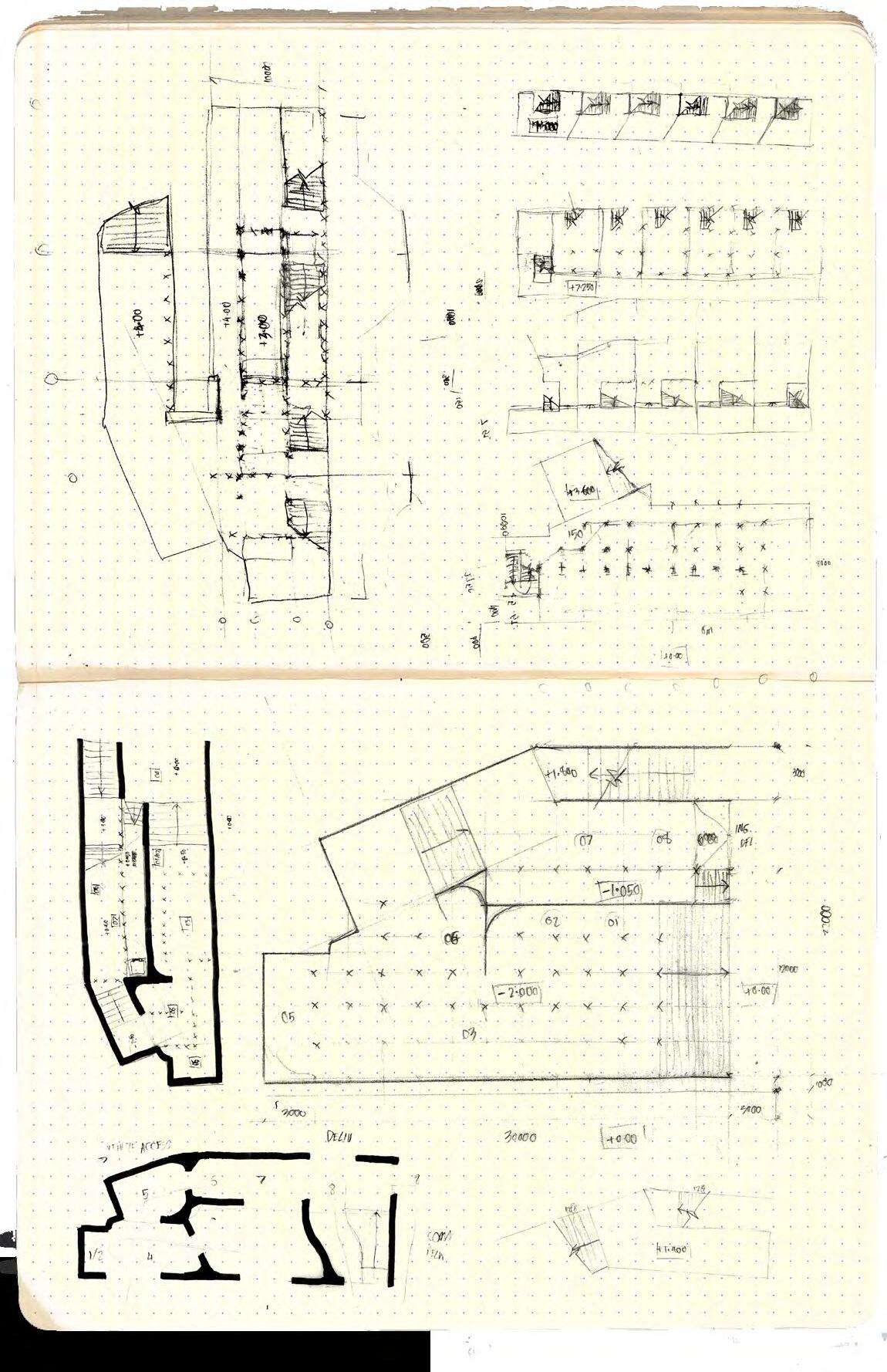
The project addresses housing and food insecurities faced by the Bangladeshi community on Commercial Road in East London. Through a community kitchen, vertical farm, social housing and self-built rammed earth construction, the project aims to repair local socio-economic and ecological disparities while empowering residents through community engagement and material localism.
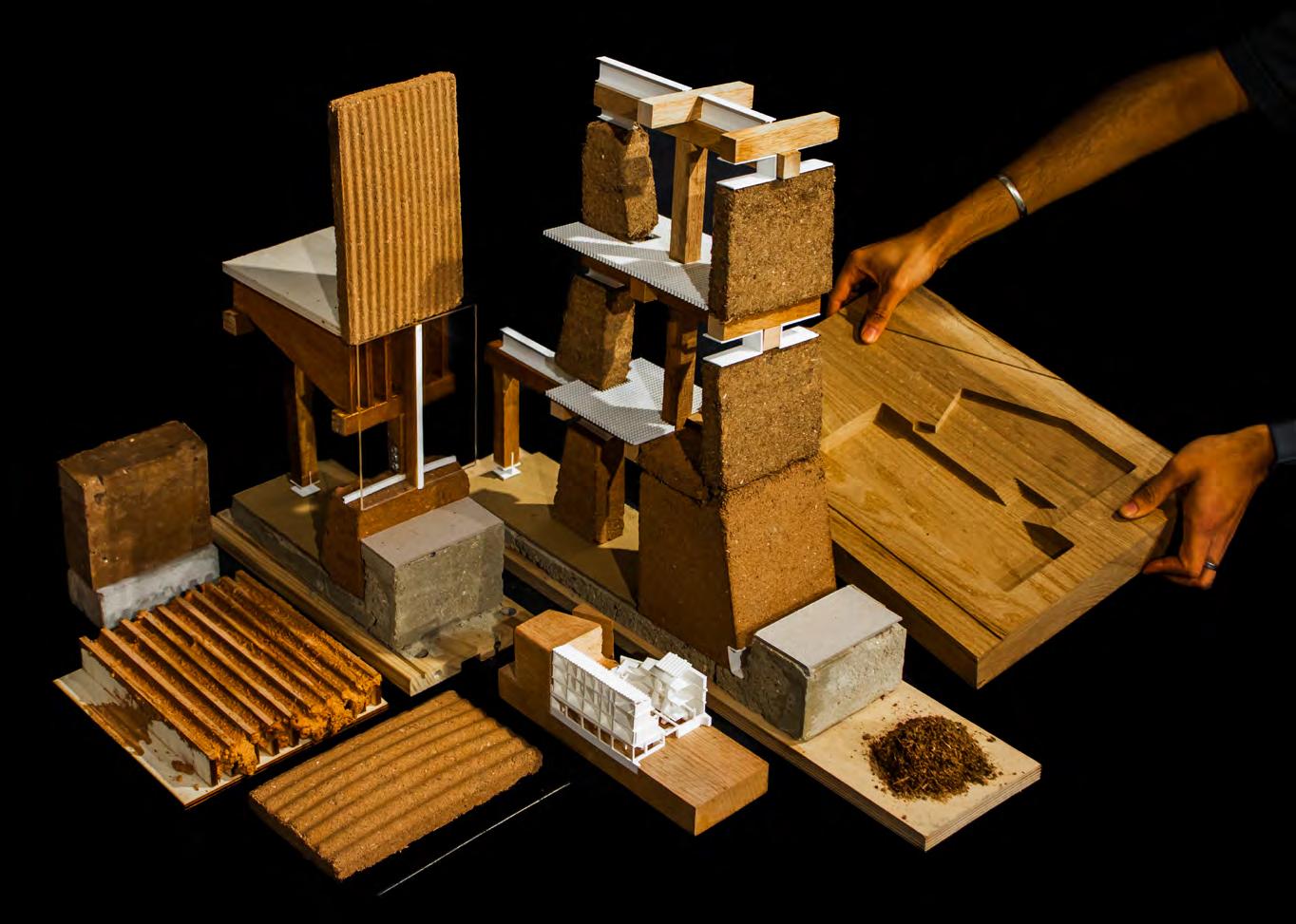
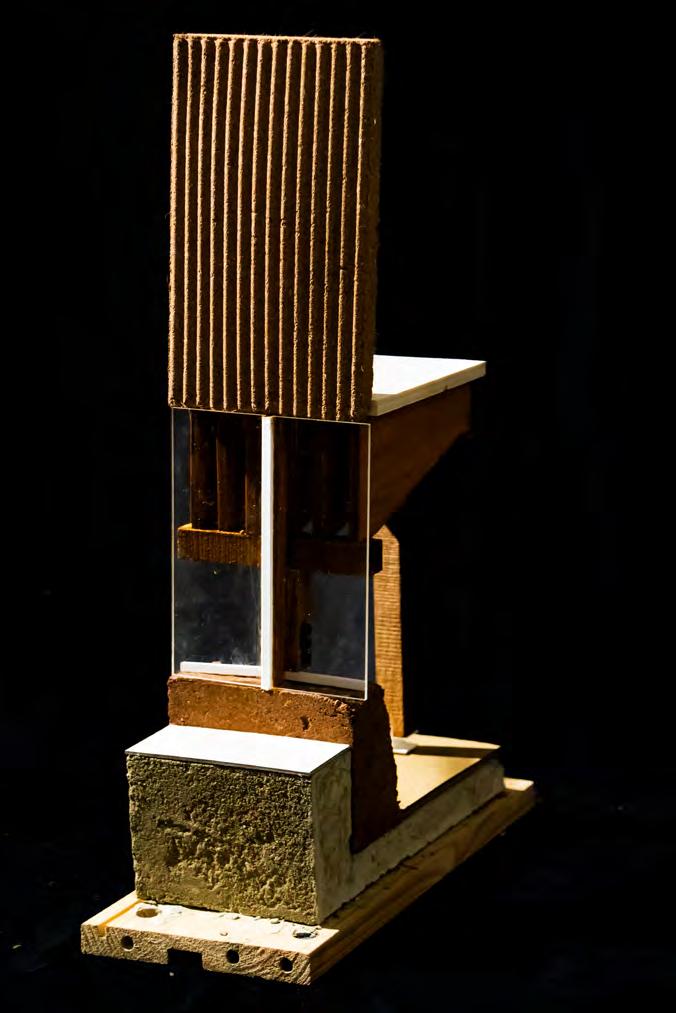
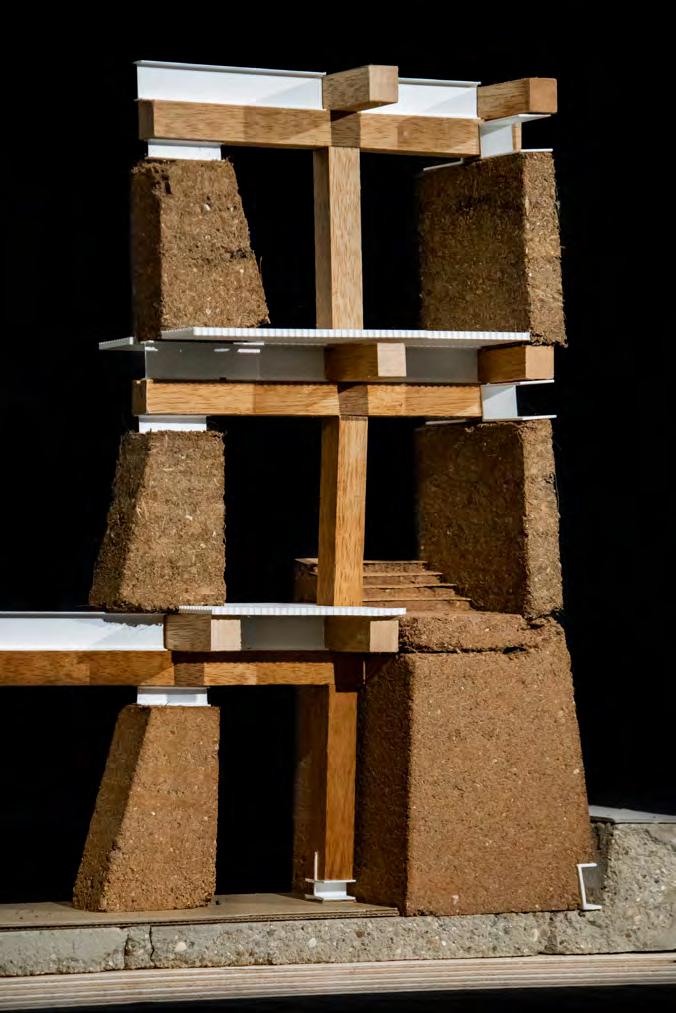
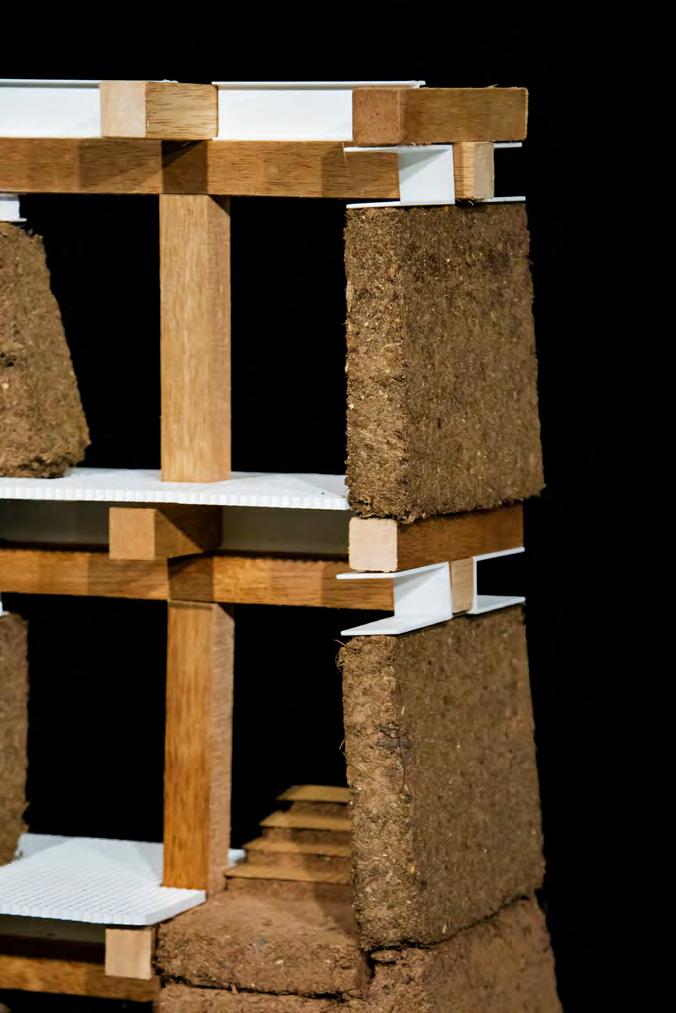
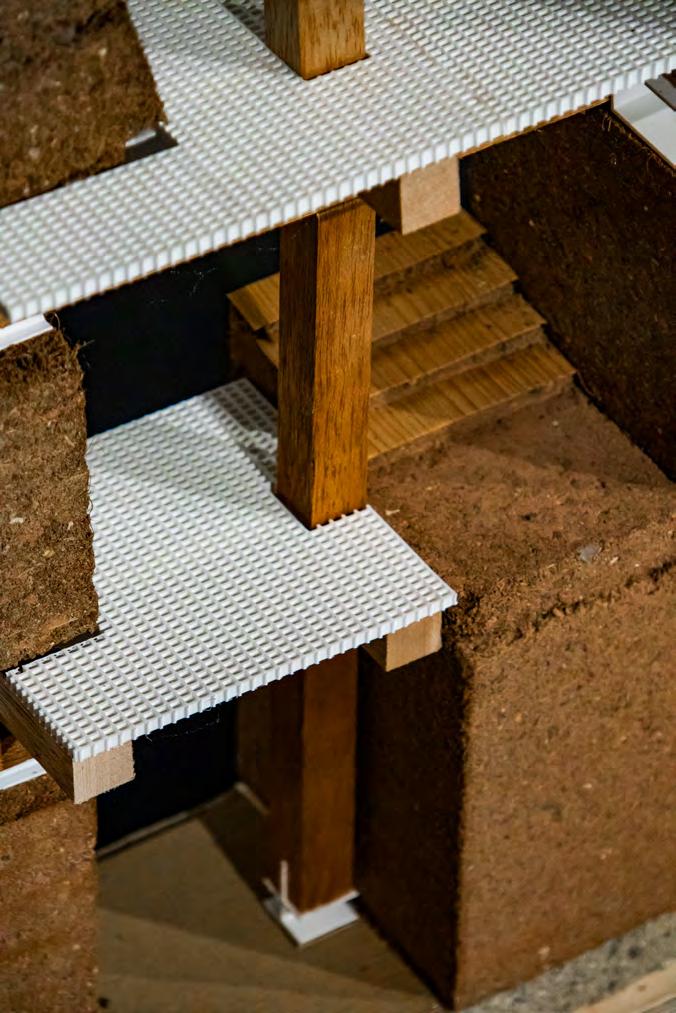
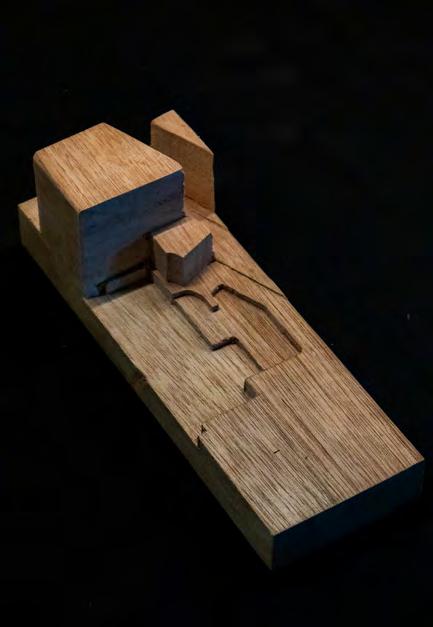
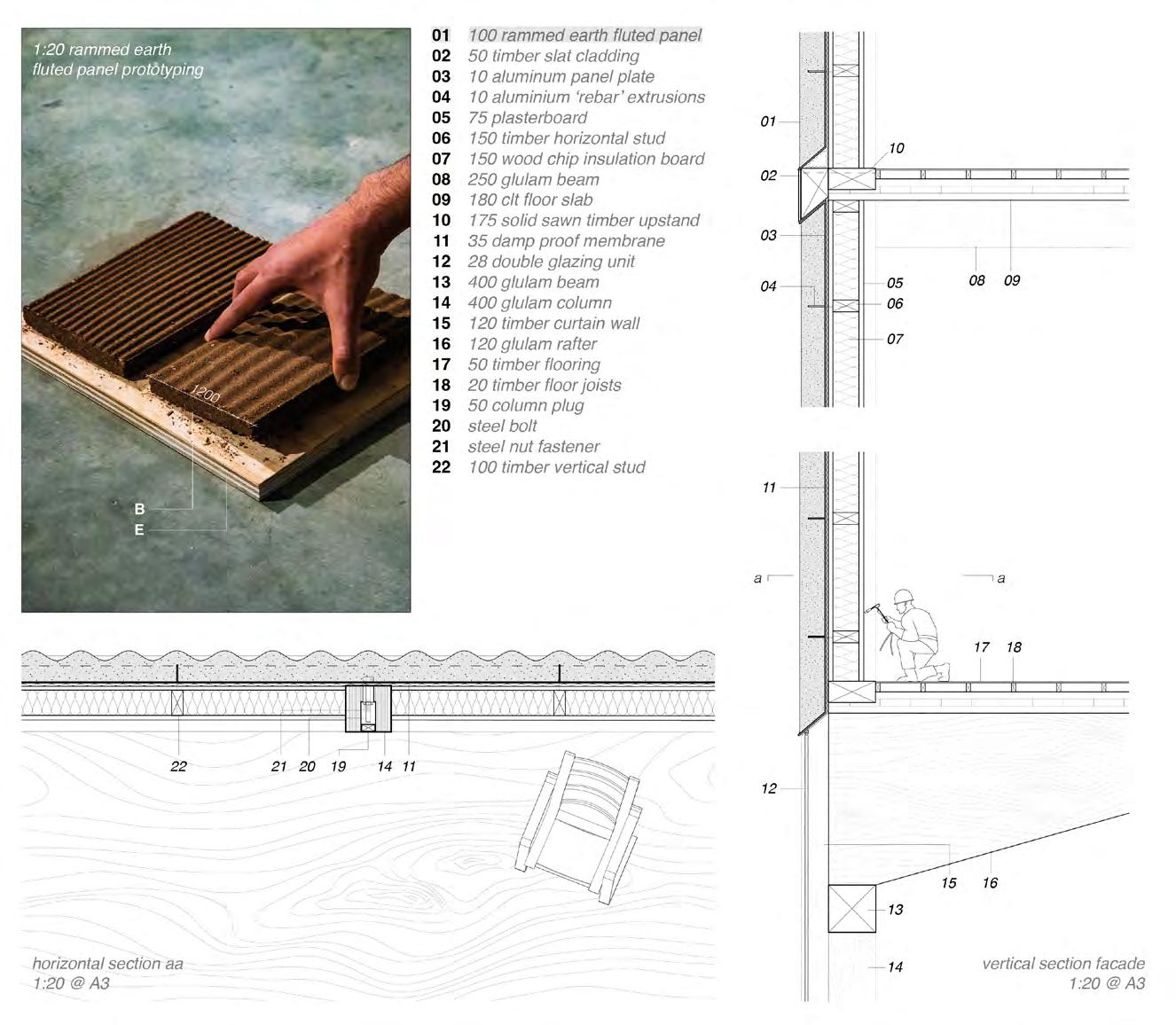
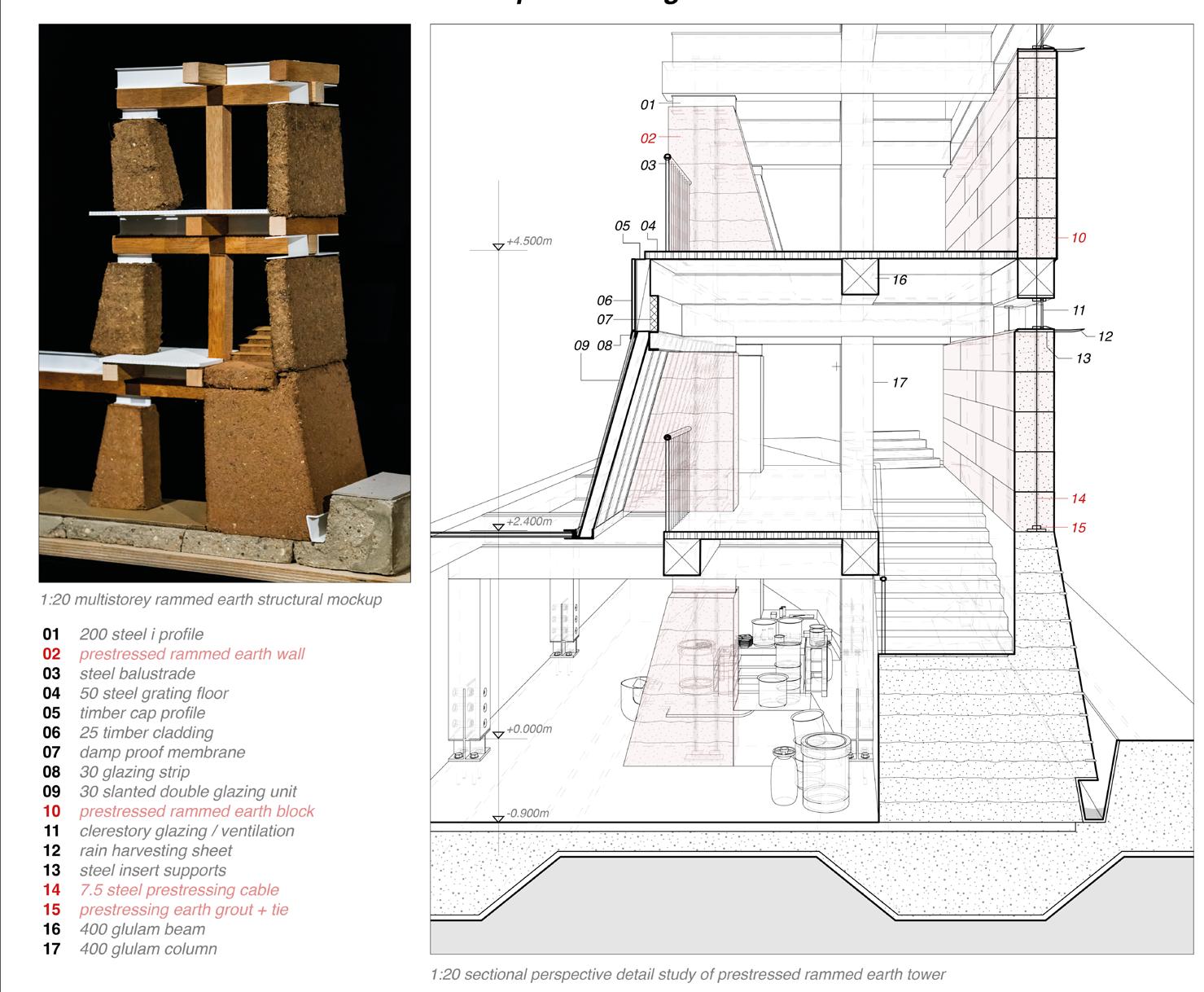
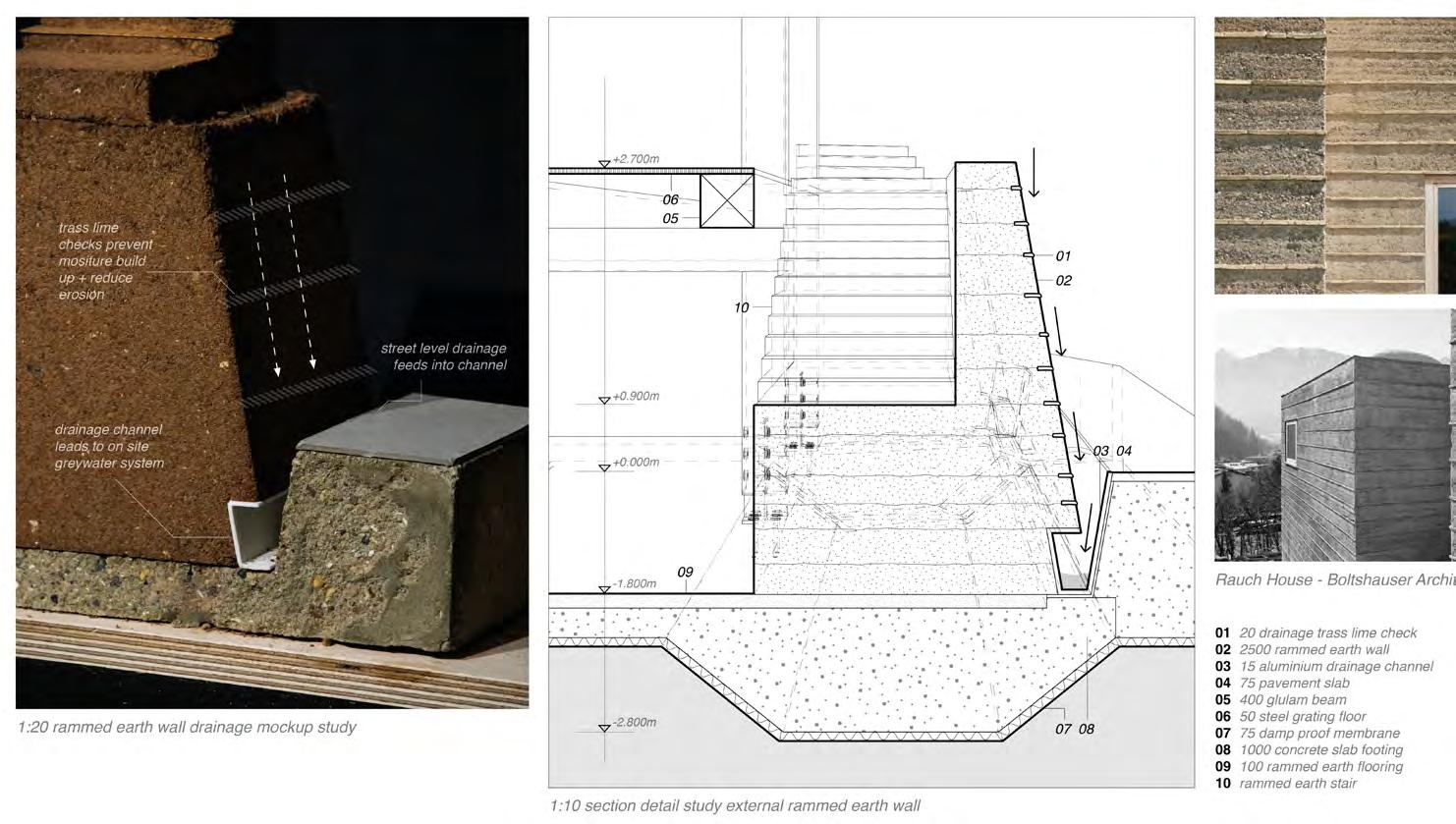
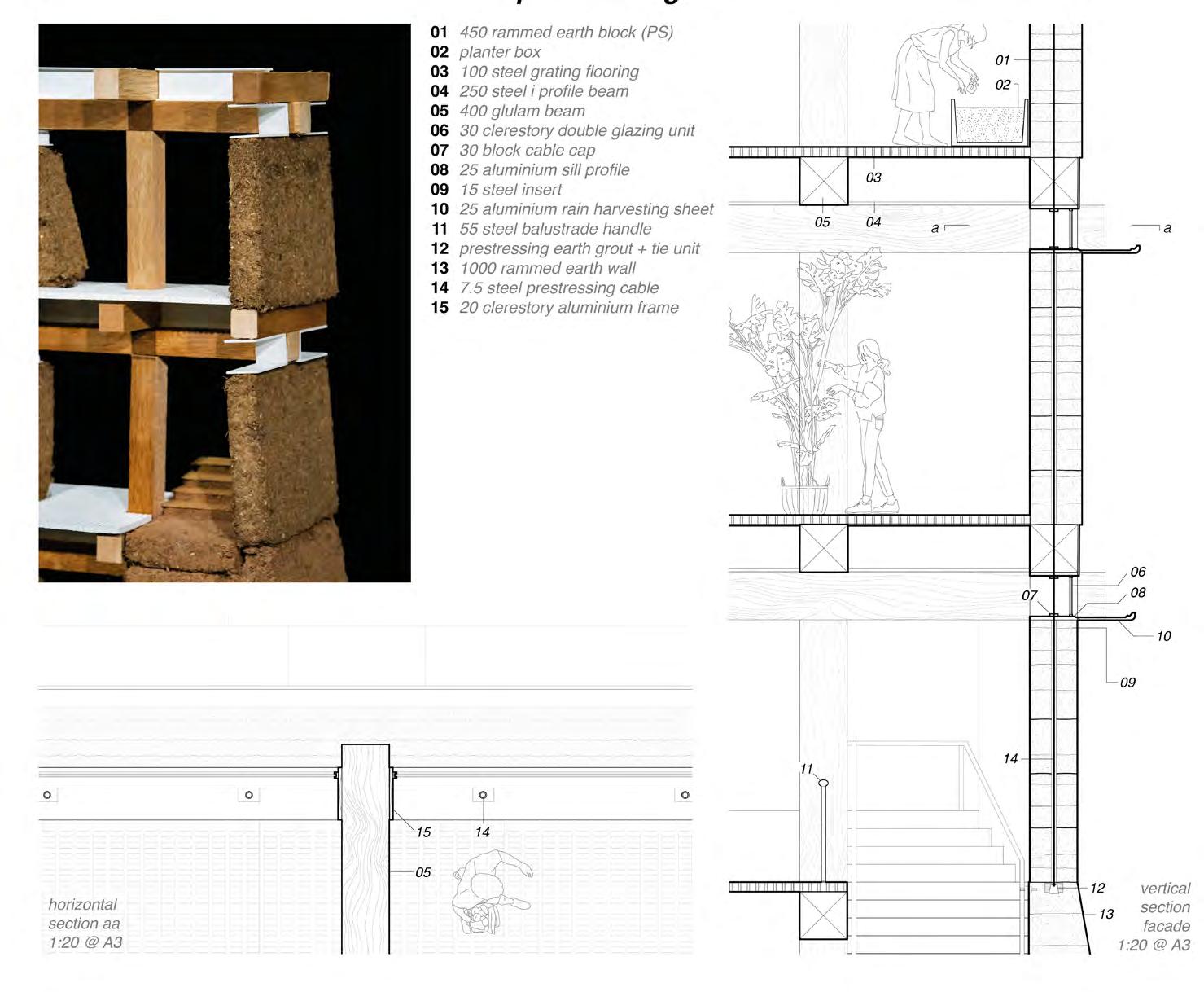
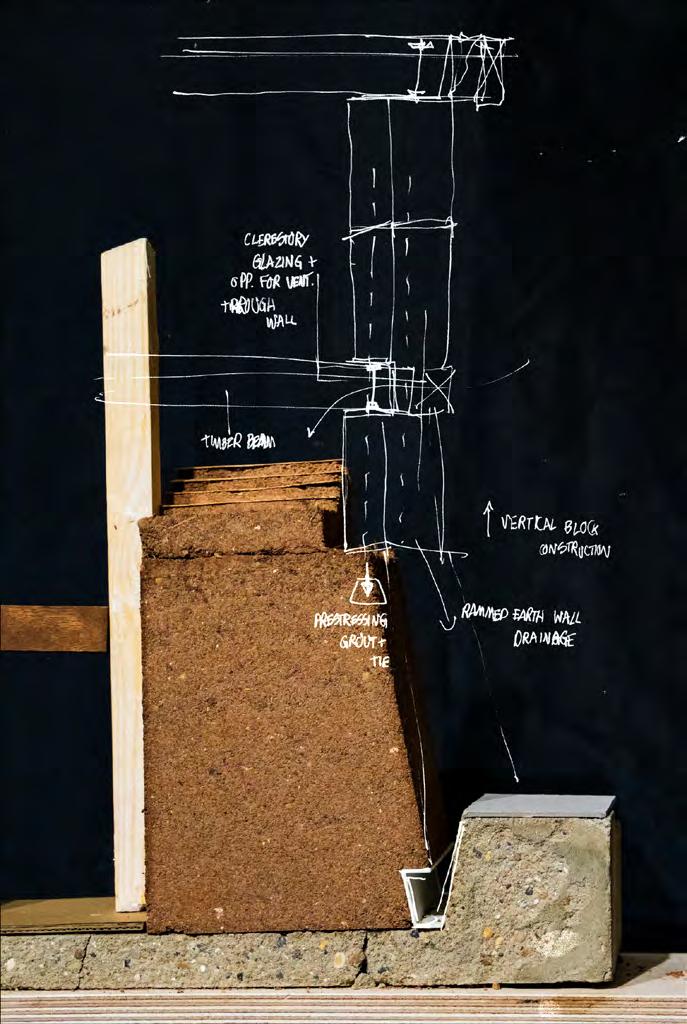
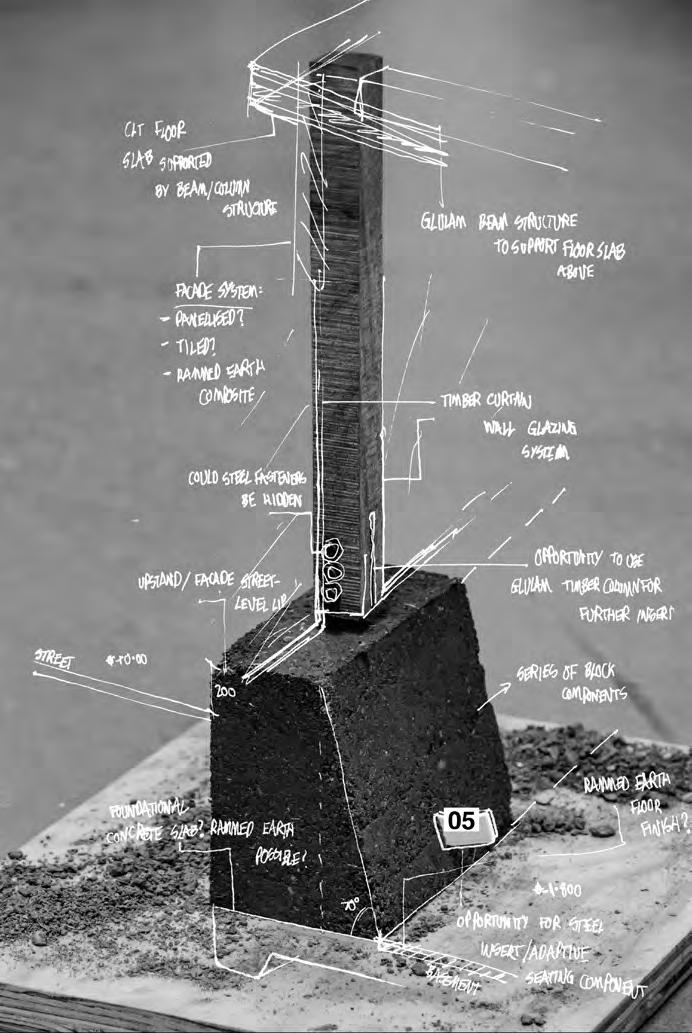
A concurrent technical dissertation focused on the use of rammed earth structural mockups to investigate the feasibility of selfbuild, community-led construction. The physical models tested a variety of floor, wall and facade elements, aiming to demonstrate an intersection between local sourcing, selffabrication and incremental development.
Isometric Render placed in 3D-scanned Context
Physical Mockups
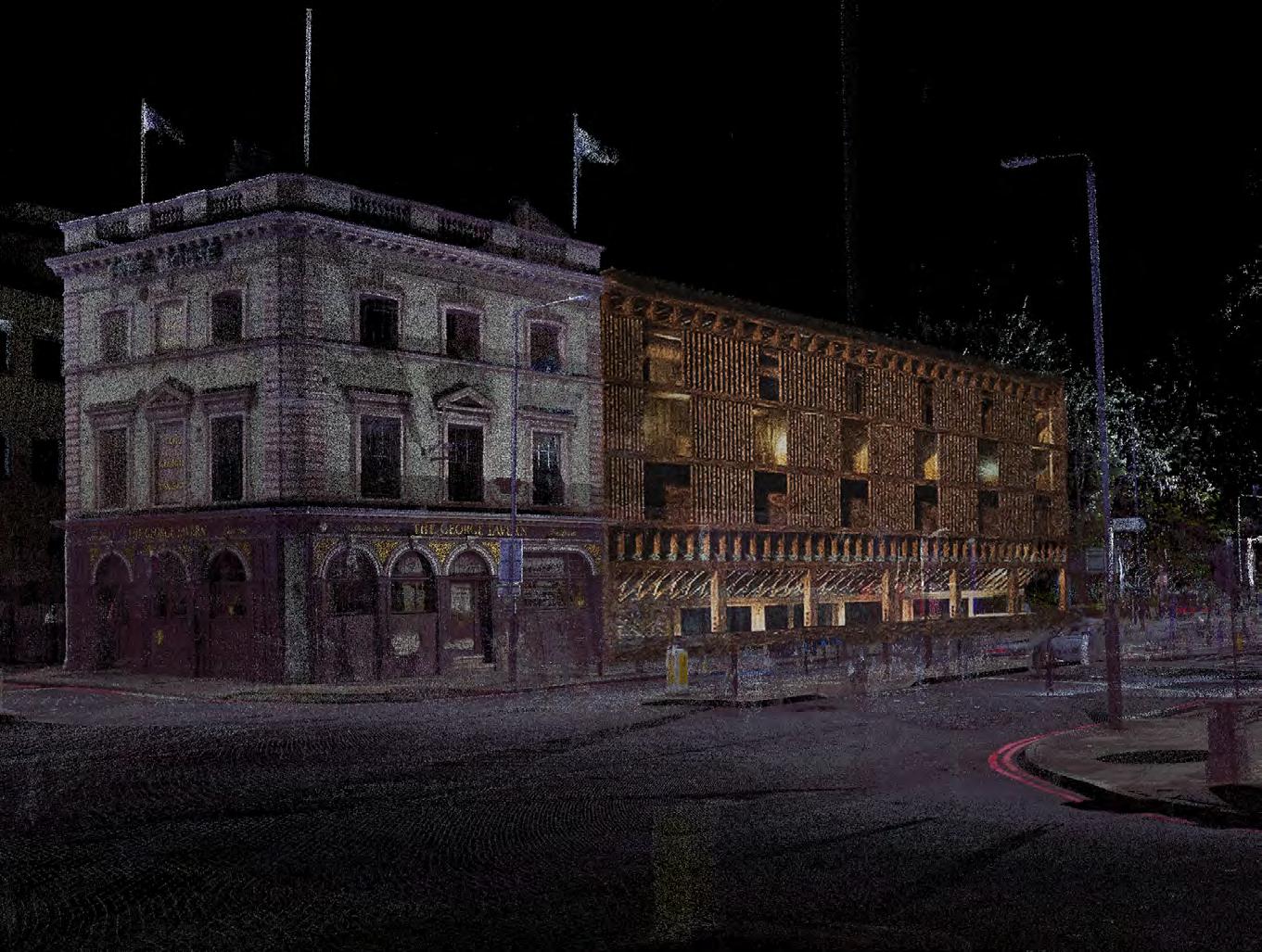
Exterior View Render placed in 3D-scanned Context
Social Housing
Vertical Farm
Community Kitchen
Construction Sequence
Community Kitchen
Vertical Farm
Vertical Farm
Vertical Farm
Social Housing
View of Vertical Farm from Social Housing
Year 3
Tutors: Jhono Bennett, Zachary Fluker Site: Limehouse, London, UK
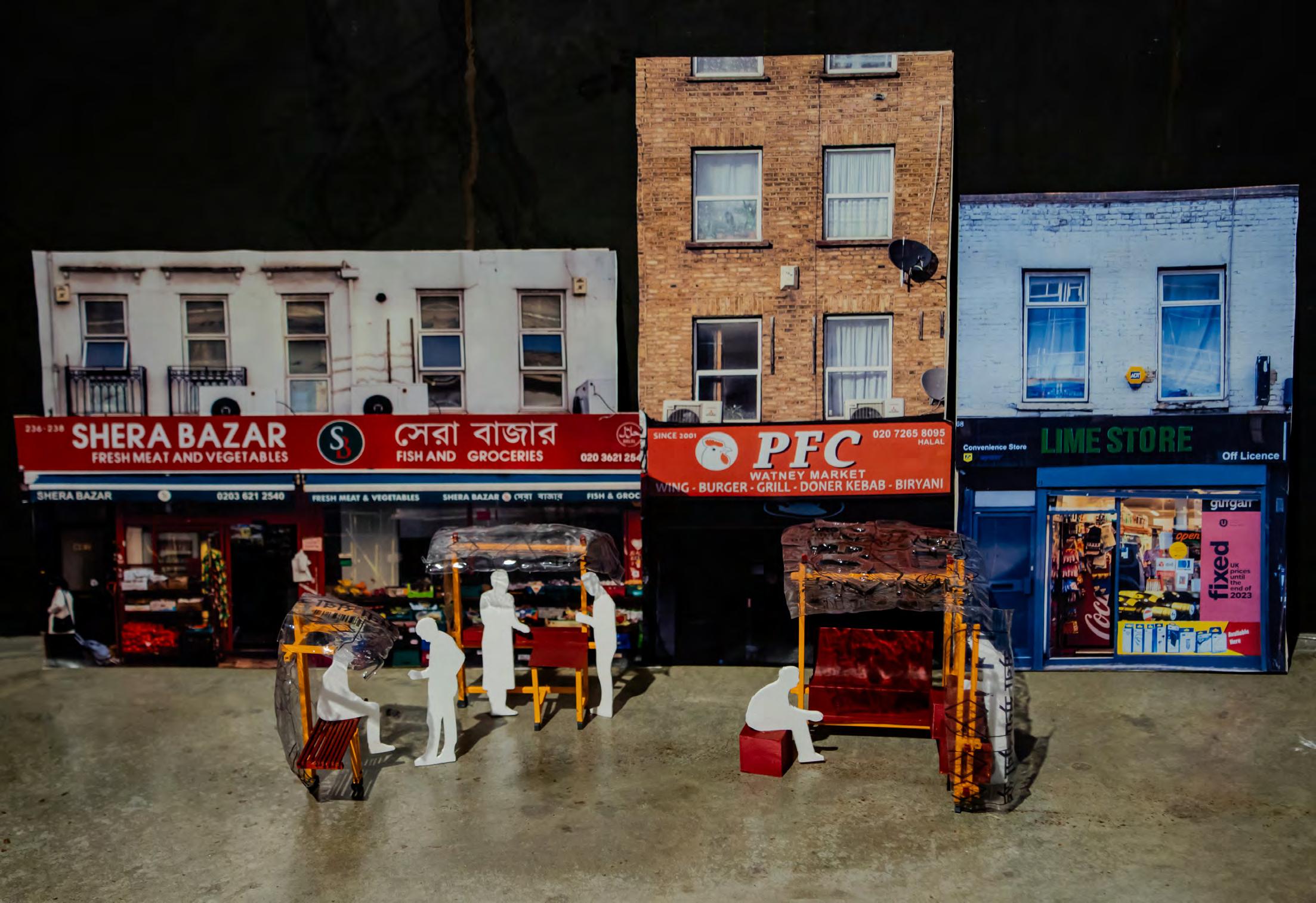
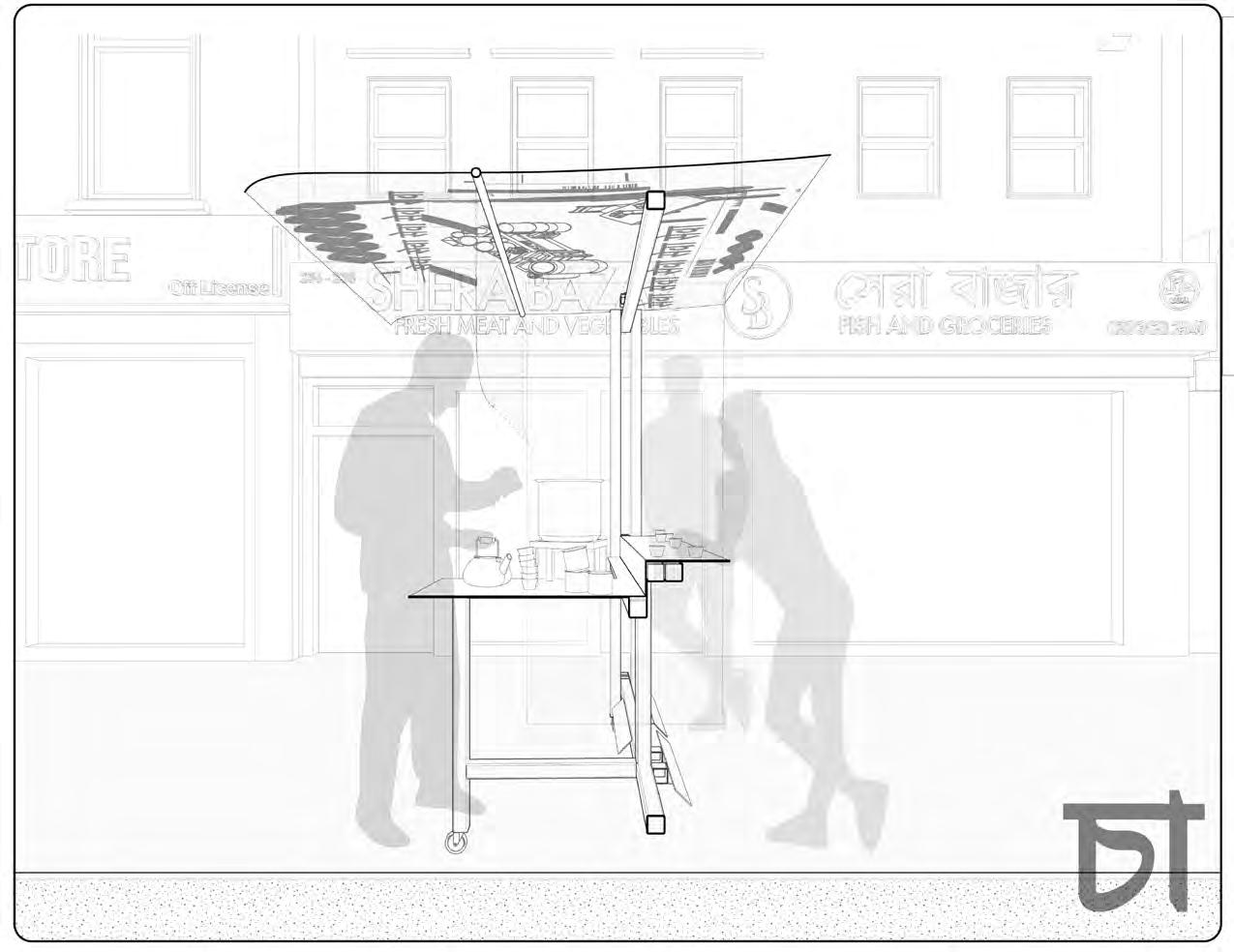
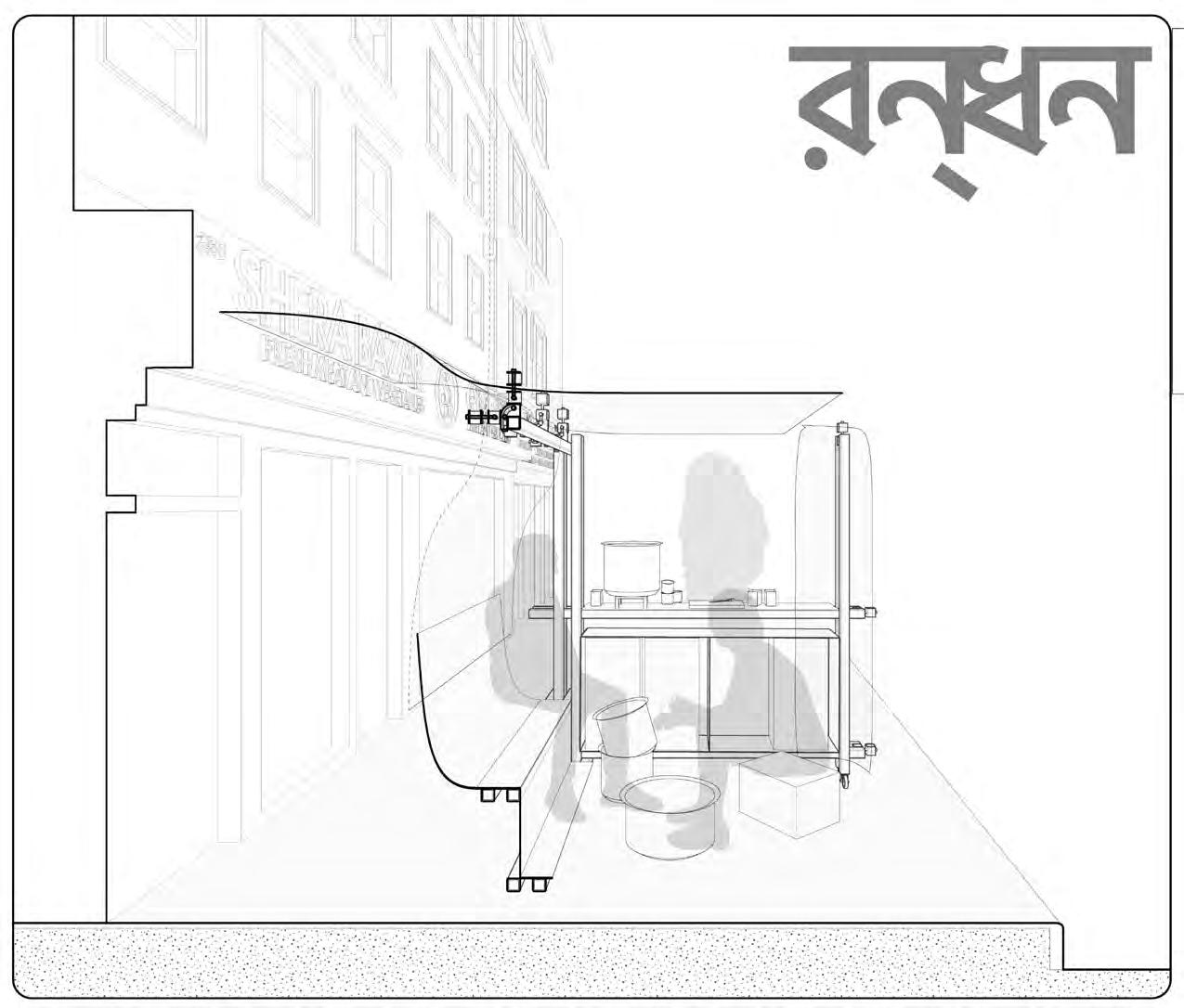
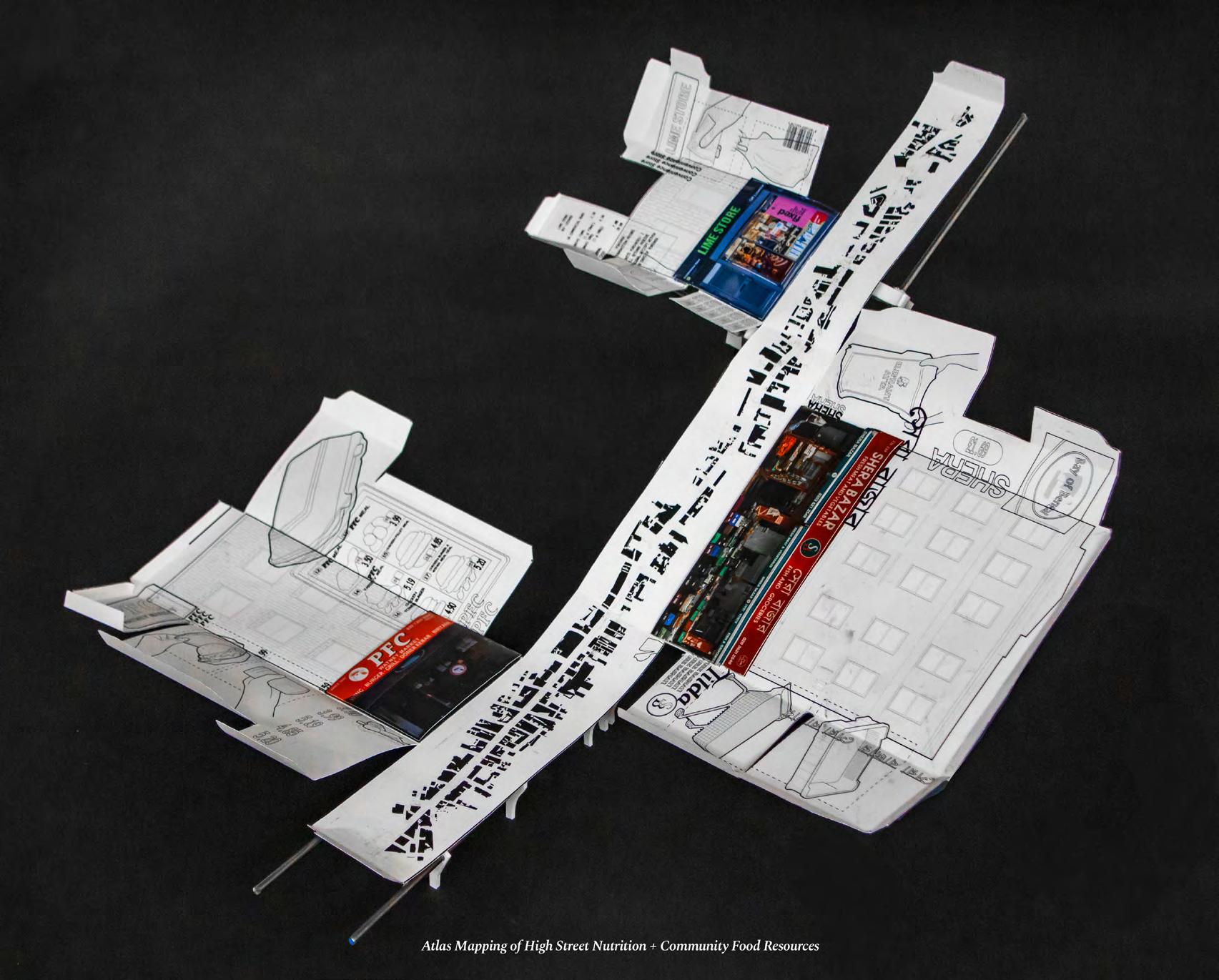
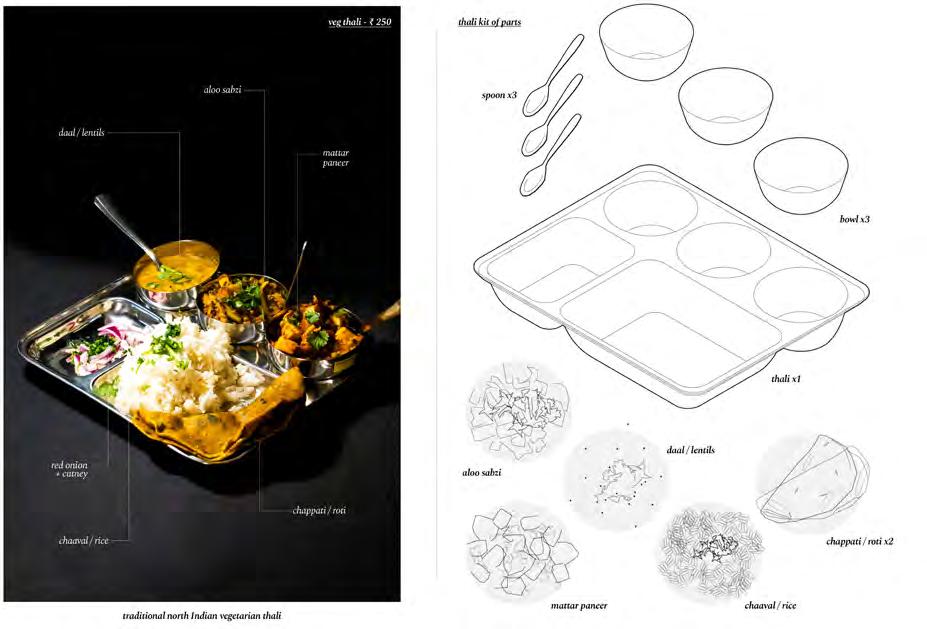
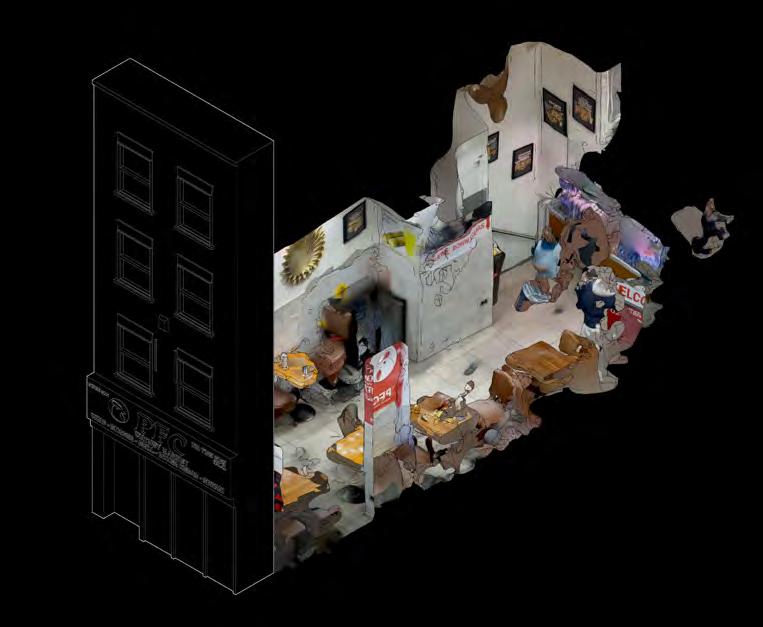
The high street and its facades become the object of urban repair and site of culinary intervention. Repairing to reconnect internalised cultural food systems with externalised culinary gestures, within a context of food practice as foundation for community bonds, high street interventions on Commercial Road seek to implement a series of dynamic installations impacting public + culinary space in the city. The system of repair aims to re-exploit the high street as a key socio-cultural infrastructure in which the local Bangladeshi community roots its physical and cultural identity.
High Street Installation @ 1:20
Chai Stall Device Perspective Section
Vegetable Preparation Device Perspective Section
What’s a Retrofill?
Tutors: Luke Jones, Joseph Augustin, Christopher Burman
Site:
Park Royal, London, UK
Year 2
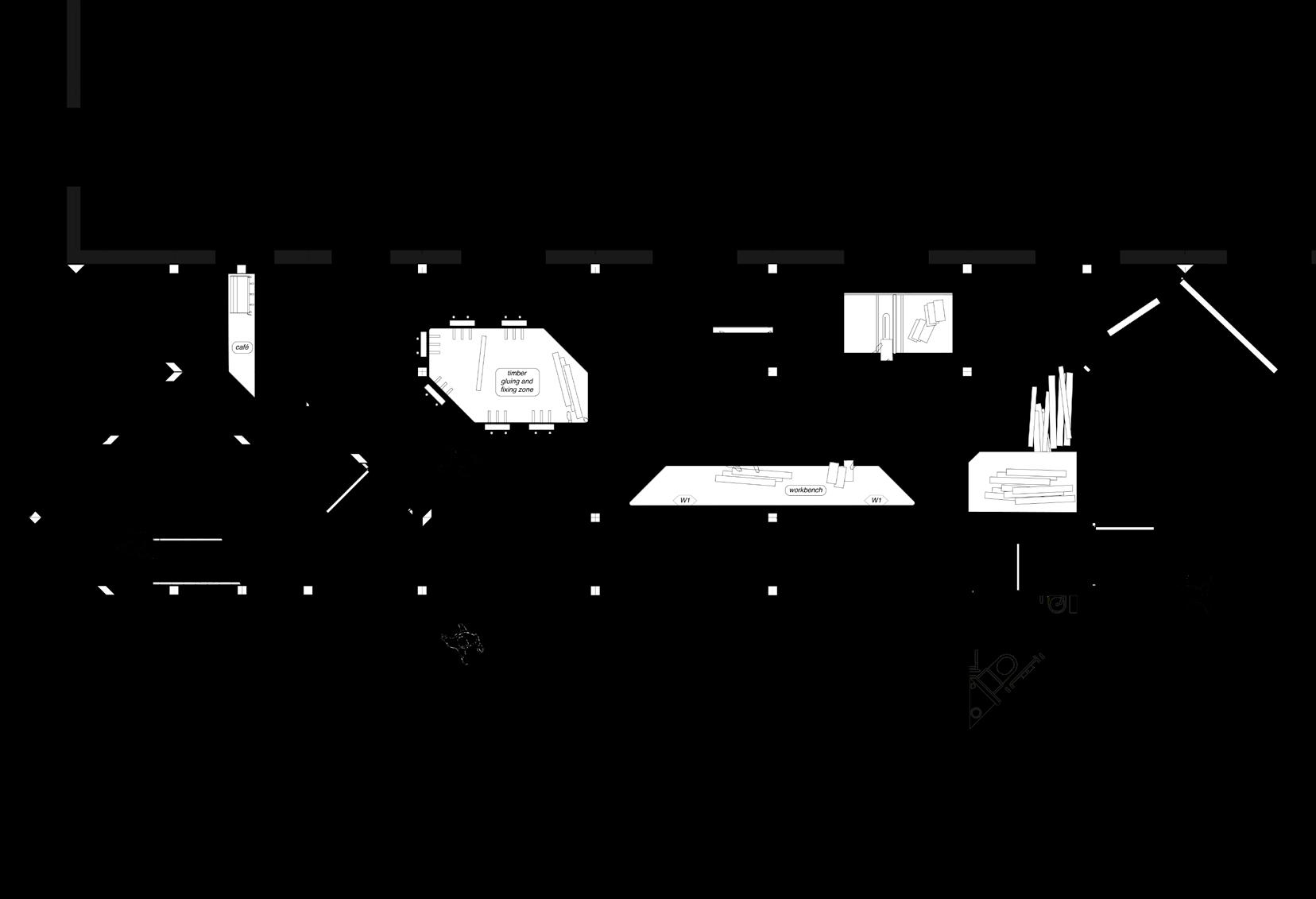
Traditional modes of urban development within industrial zones of the city overwhelmingly involve mass demolition and material displacement of existing building stock. The Old Oak / Park Royal industrial district in northwest London is the next in line for this inevitable and carbon-intensive process.
This project proposes a novel development typology called retrofill. Retrofill projects would aim to fuse the methods of infill – small-scale interventions in vacant gaps – and retrofit –improving material and thermal performance of existing buildings – to preserve industrial building stock by preventing demolition and adding value to these zones.
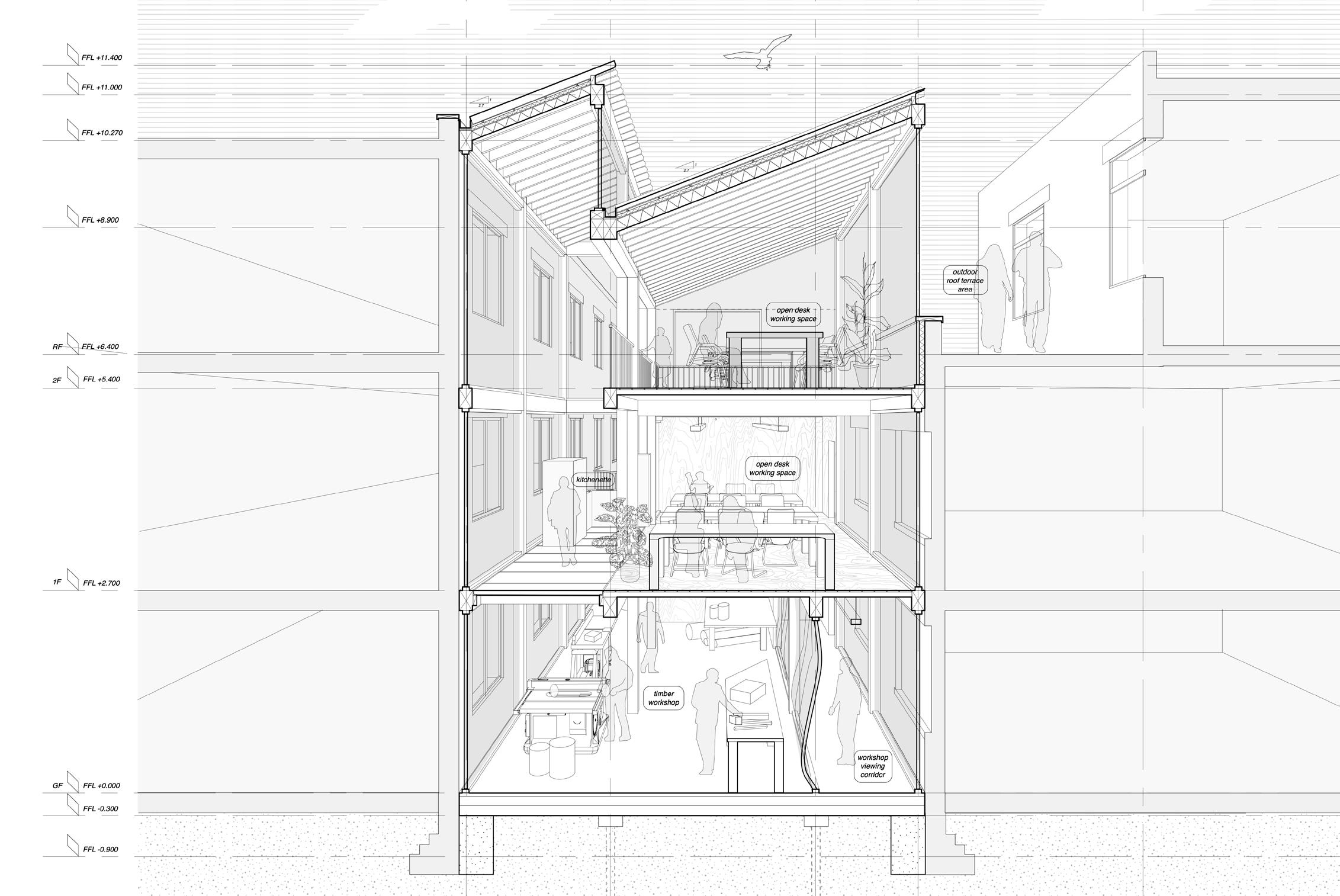
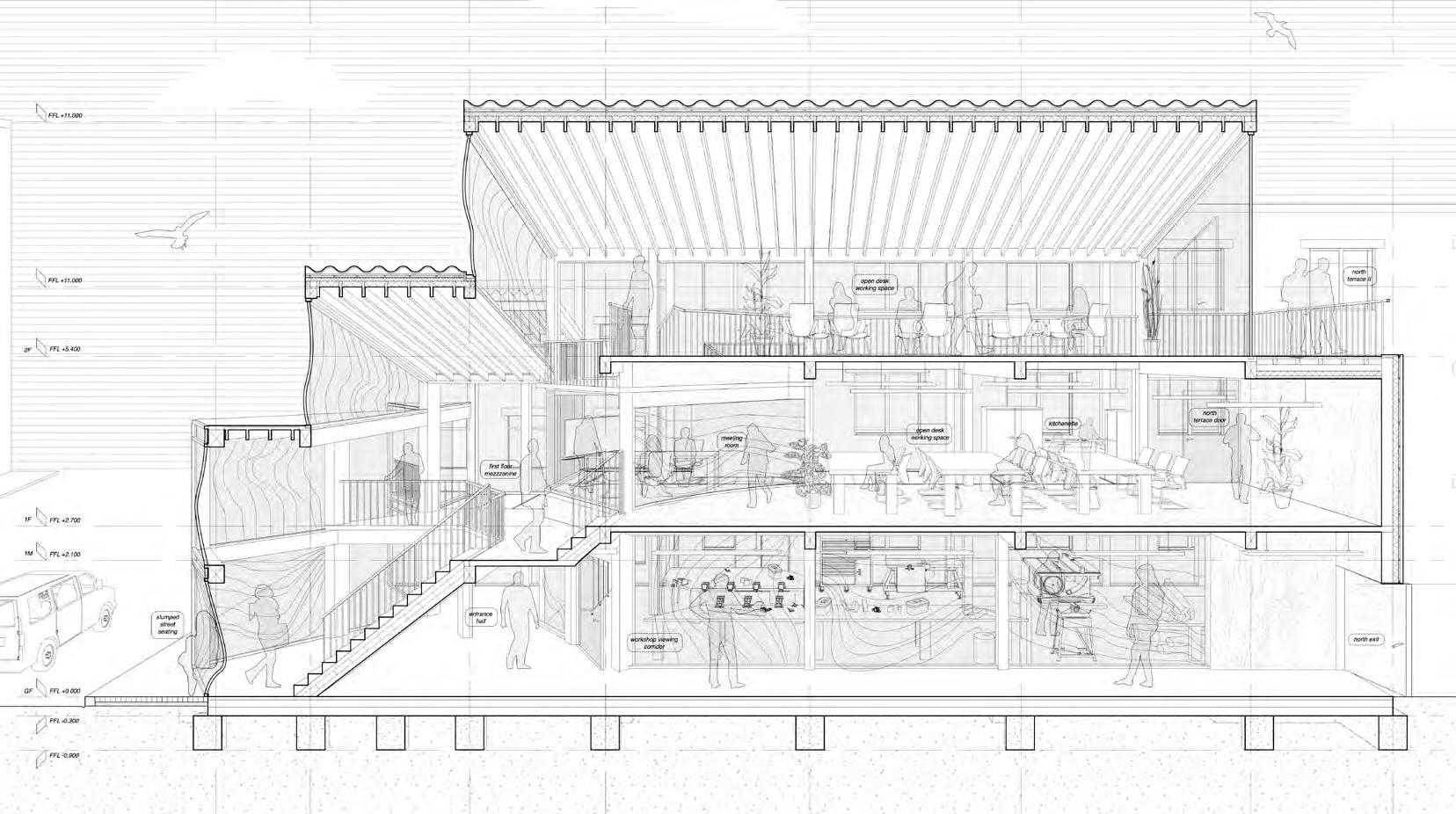
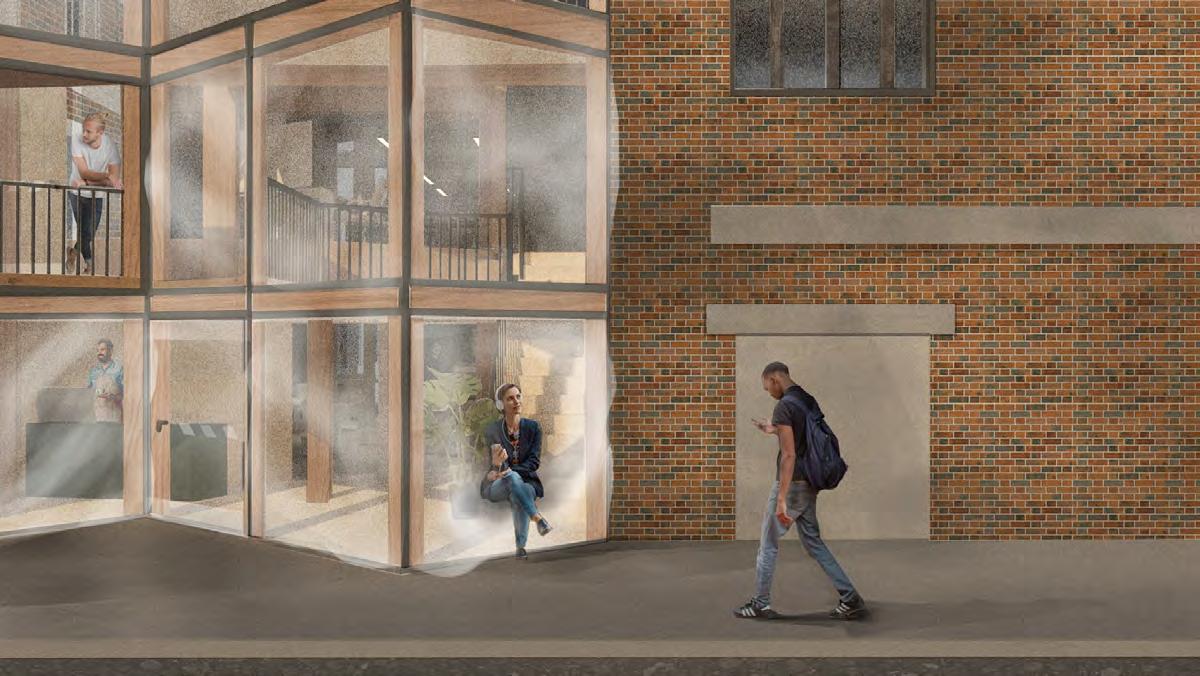
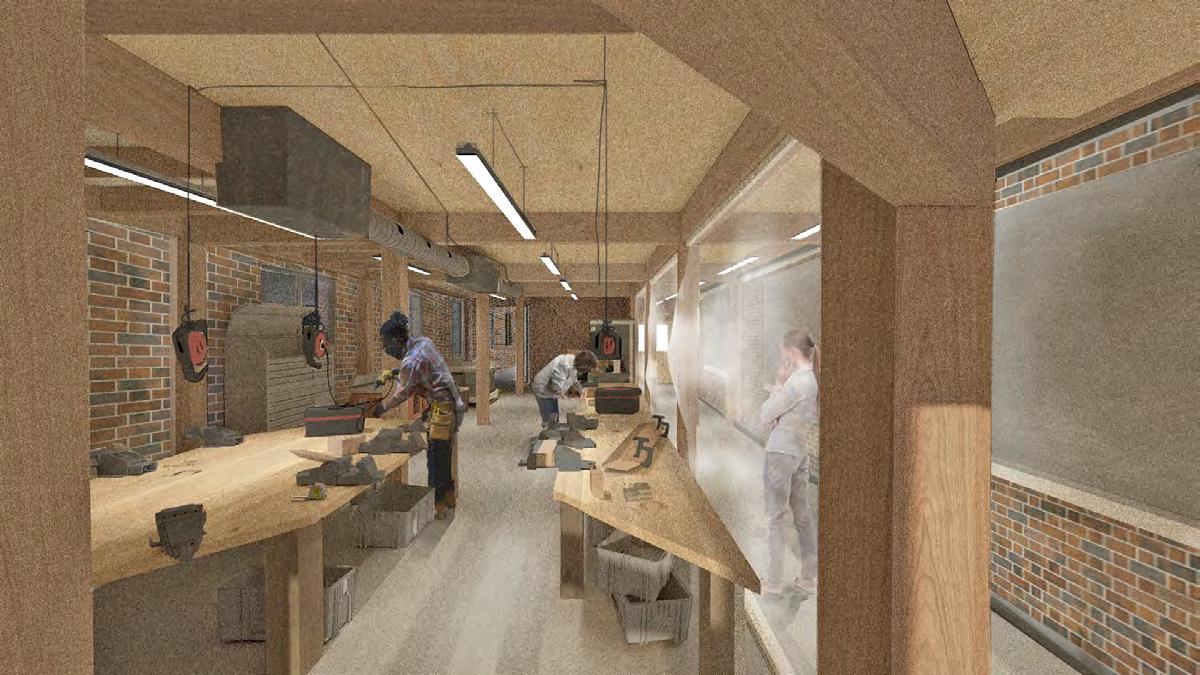
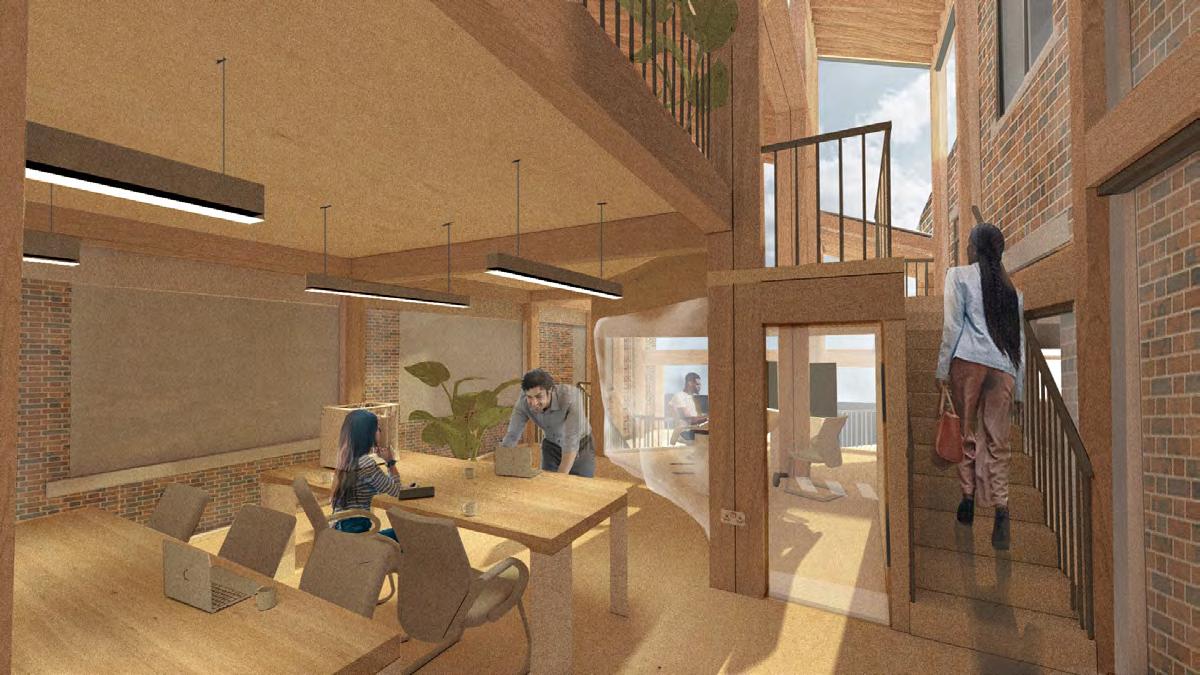
The resolved building design for the retrofill pursued by this project employs a prefabricated tectonic approach consisting of emerging mass timber and glass enveloping technologies. This allows the project to speculate on developing a kit of parts carbon tectonic that forms part of the retrofill programme. An architectural and material methodology that functions systematically across the industrial building stock framework to produce a growing network of these projects in a rapid, low-carbon manner.
Exterior View
Timber Workshop
Co-Working Office Space
Year Out Nepal Seva School
Practice: Seva Works (self-employed)
Site: Rural Nepal
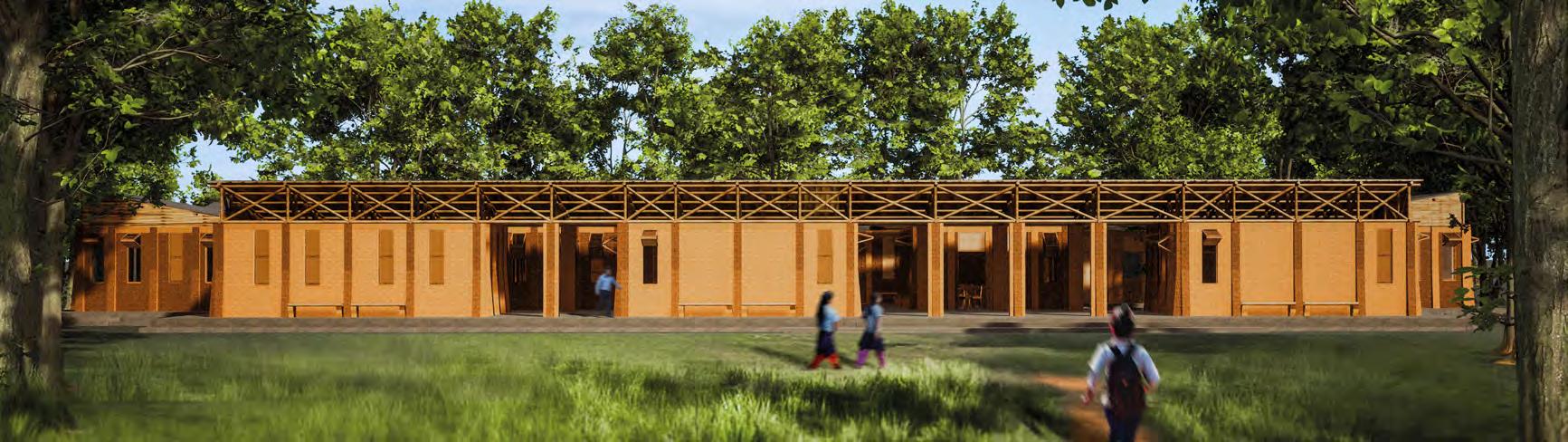
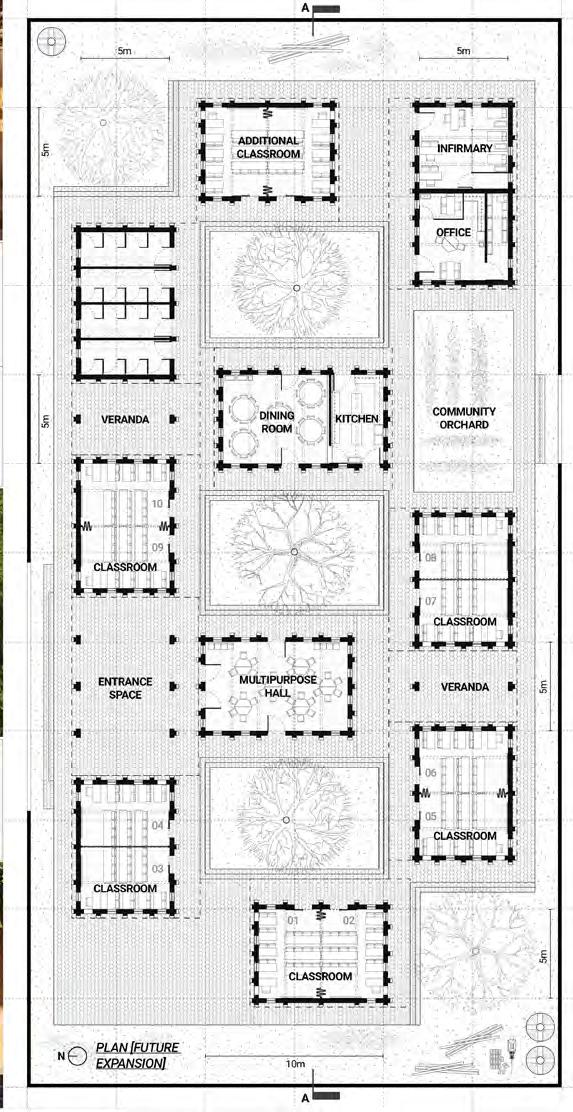
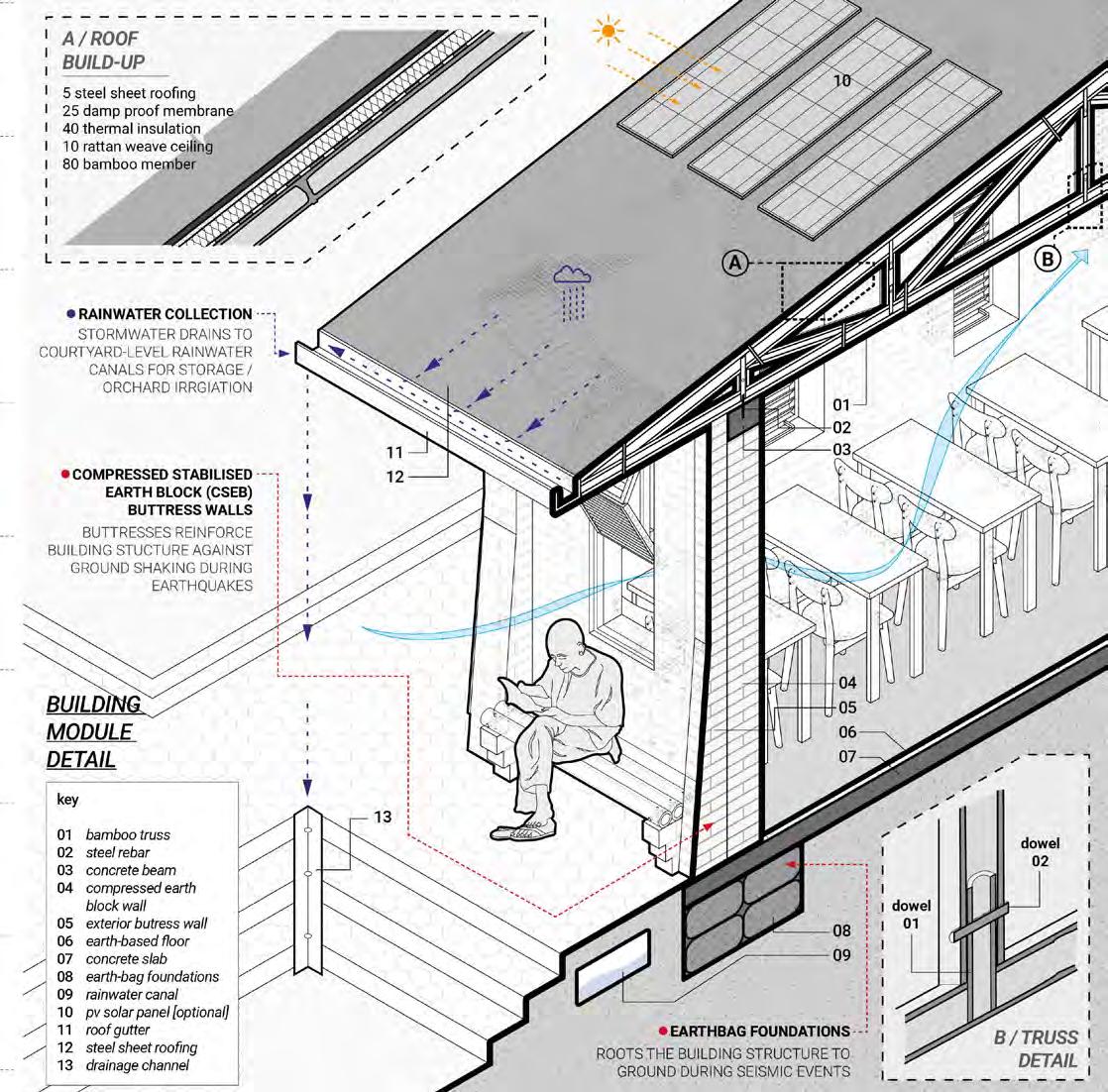
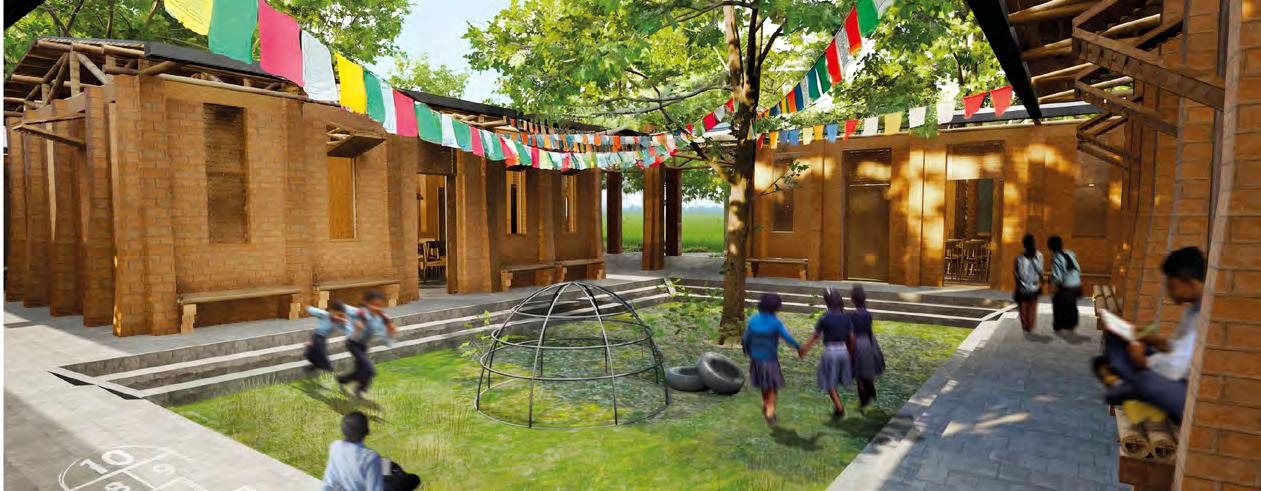
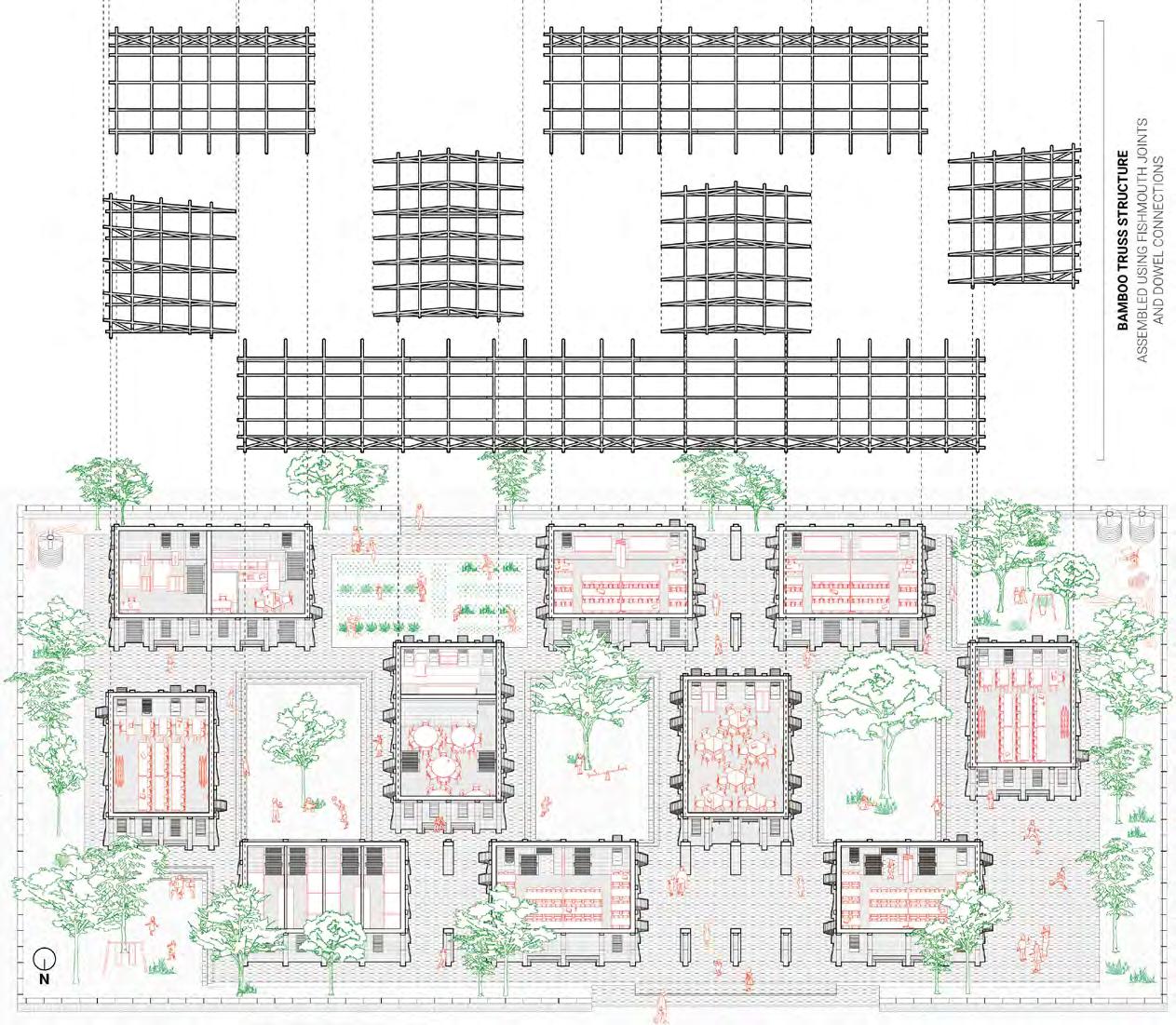
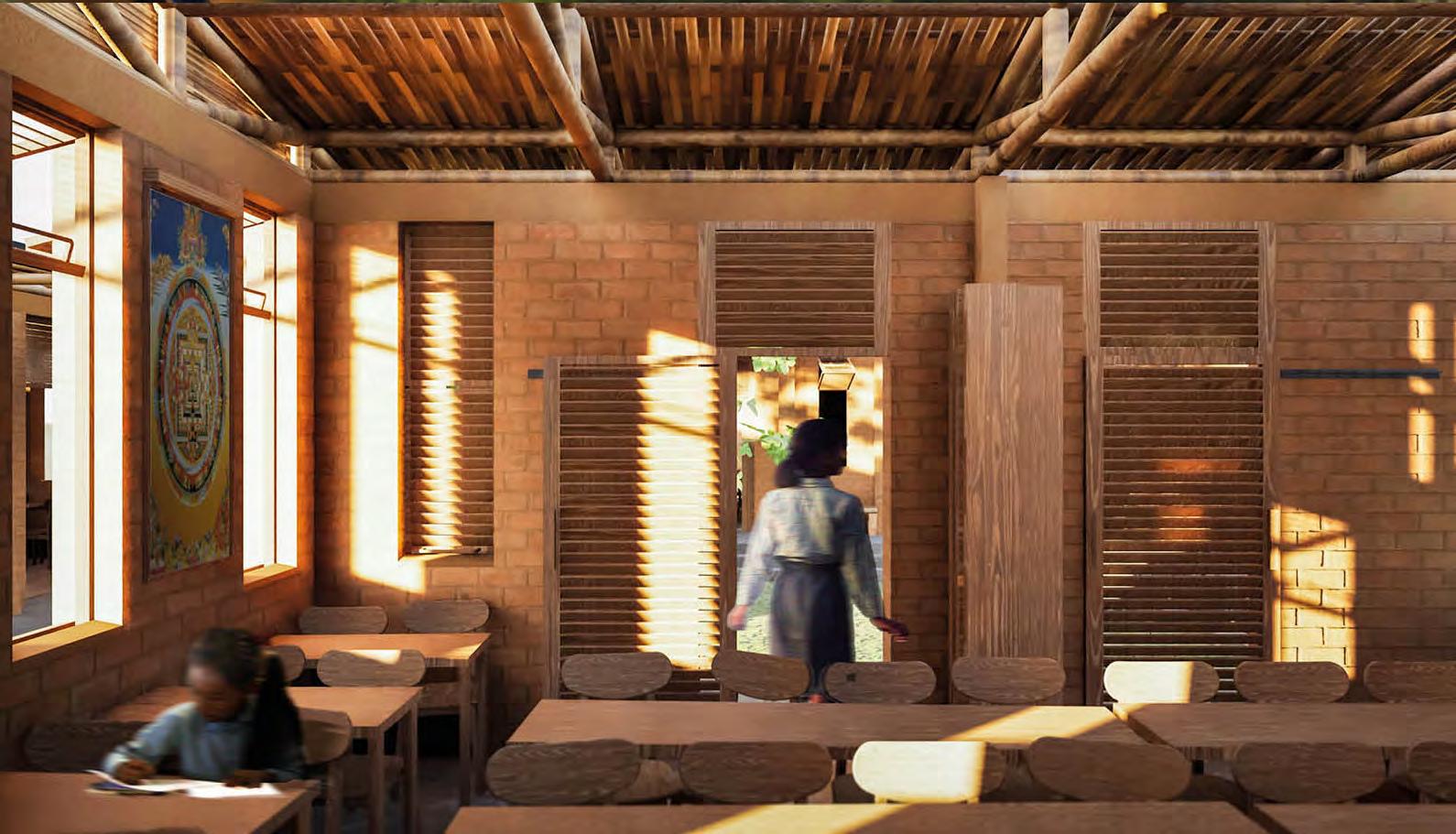
Seva School’s incremental concept allows for the gradual expansion of both its programme and its social value to the wider community, as a key asset for disaster resilience and cohesion. The core stage focuses on establishing a primary courtyard space, encircled by classrooms and the central multi-purpose hall. Additional construction of building modules allows the school to expand across the plot, forming more courtyards to accommodate the school’s different ages, as well as adding the canteen and community orchard space – which builds on the school’s potential for bringing local people together through food growing and preparation. The school further expands to add additional classroom capacity, as well as an on-site infirmary that may form an integral part of local health and wellbeing, especially during disasters. The school increasingly looks to serve its local community beyond only providing education, allowing Karmayog Foundation to continue its mission of selfless service (Seva).

Classroom Interior View
Public Open Spaces
Year Out
Practice: Seva Works (self-employed)
Site: Dhangadi, Nepal
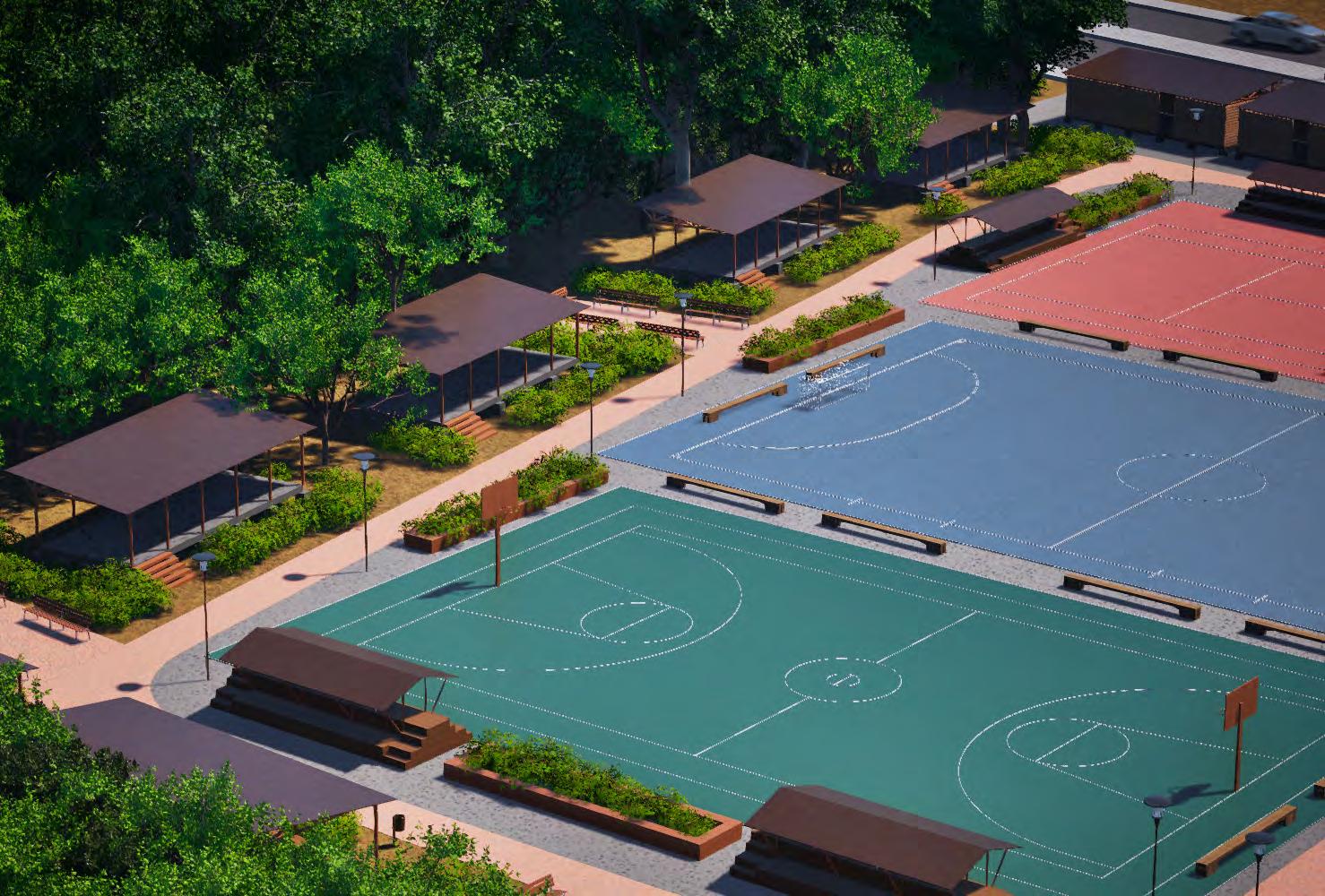
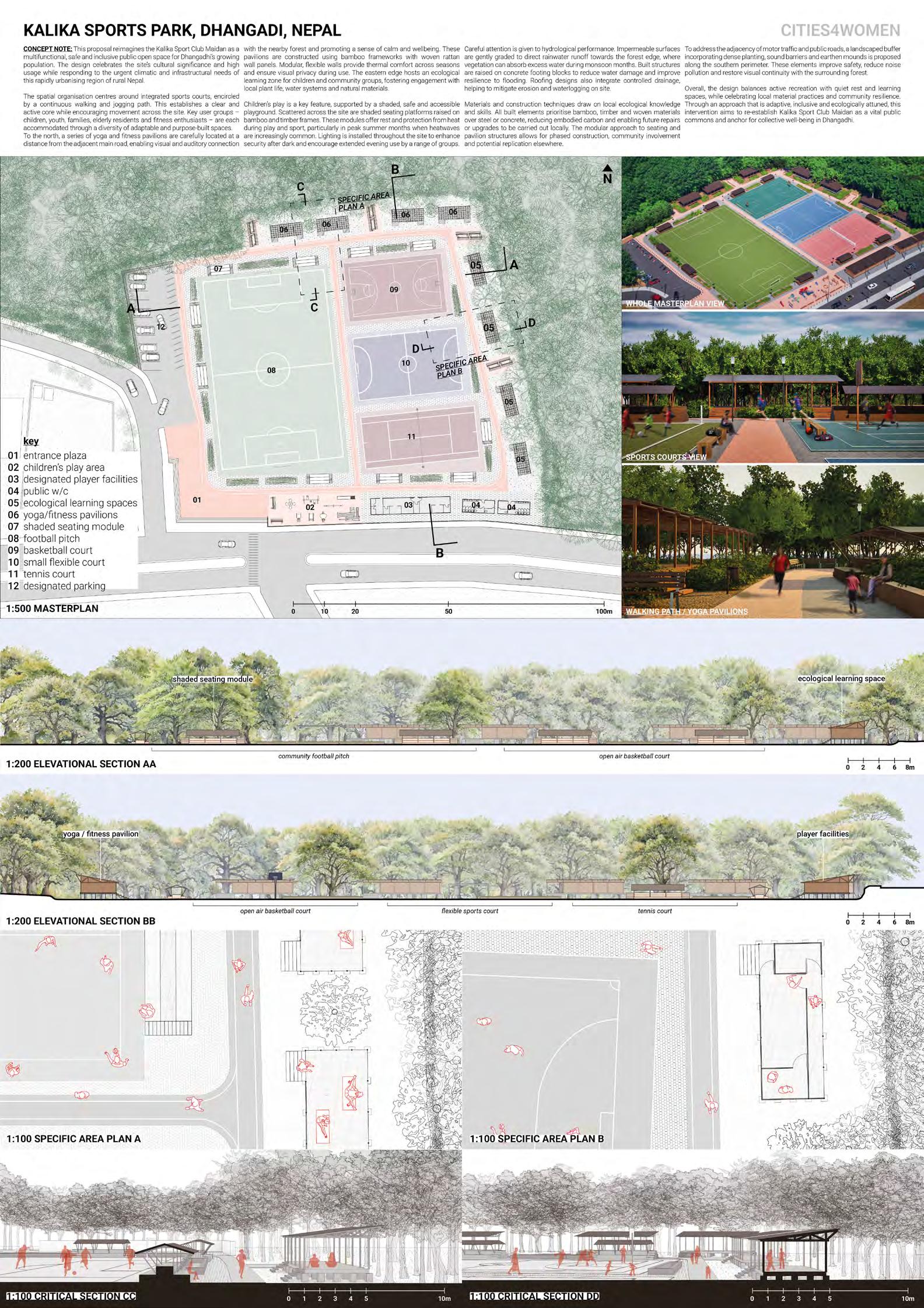
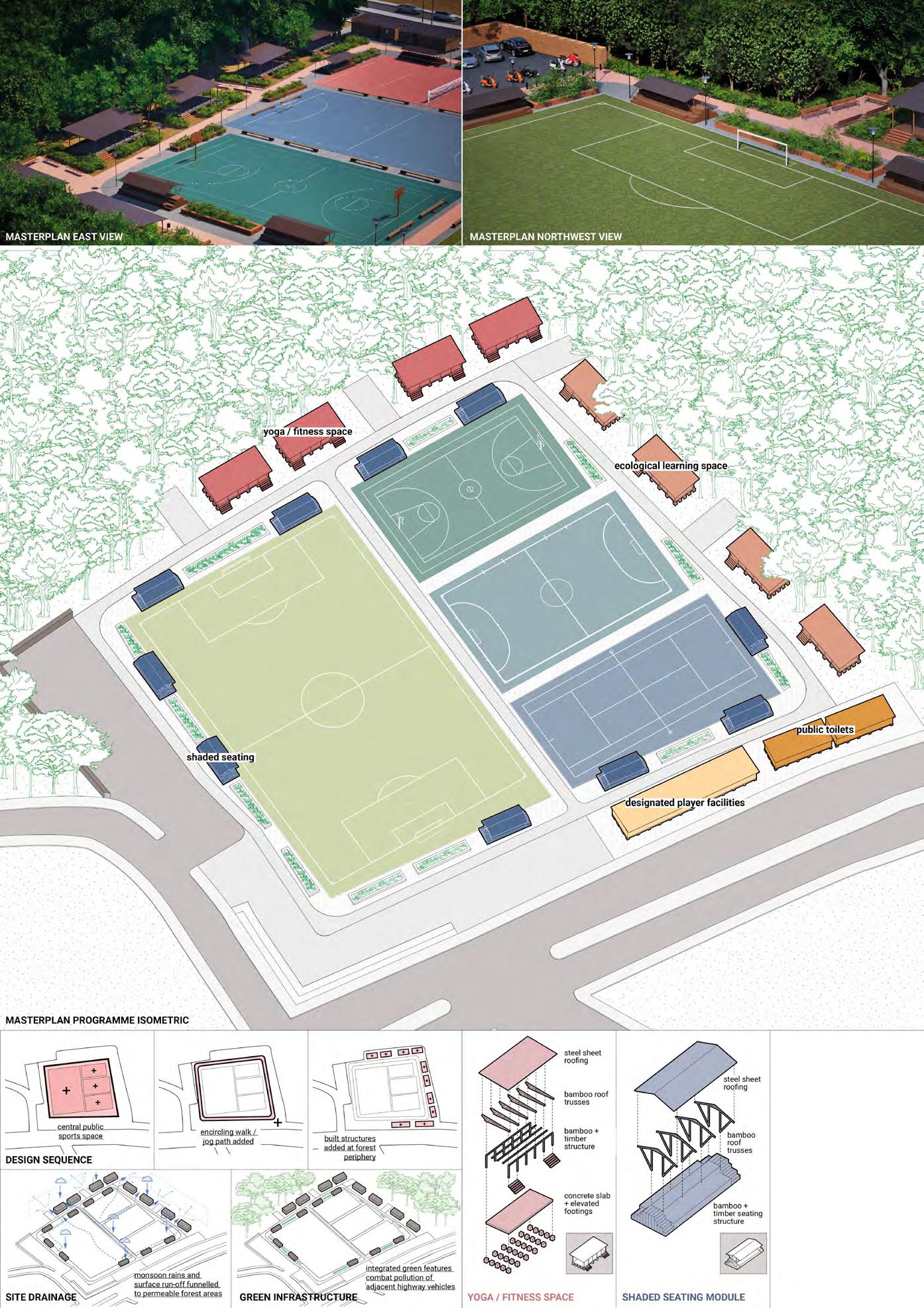
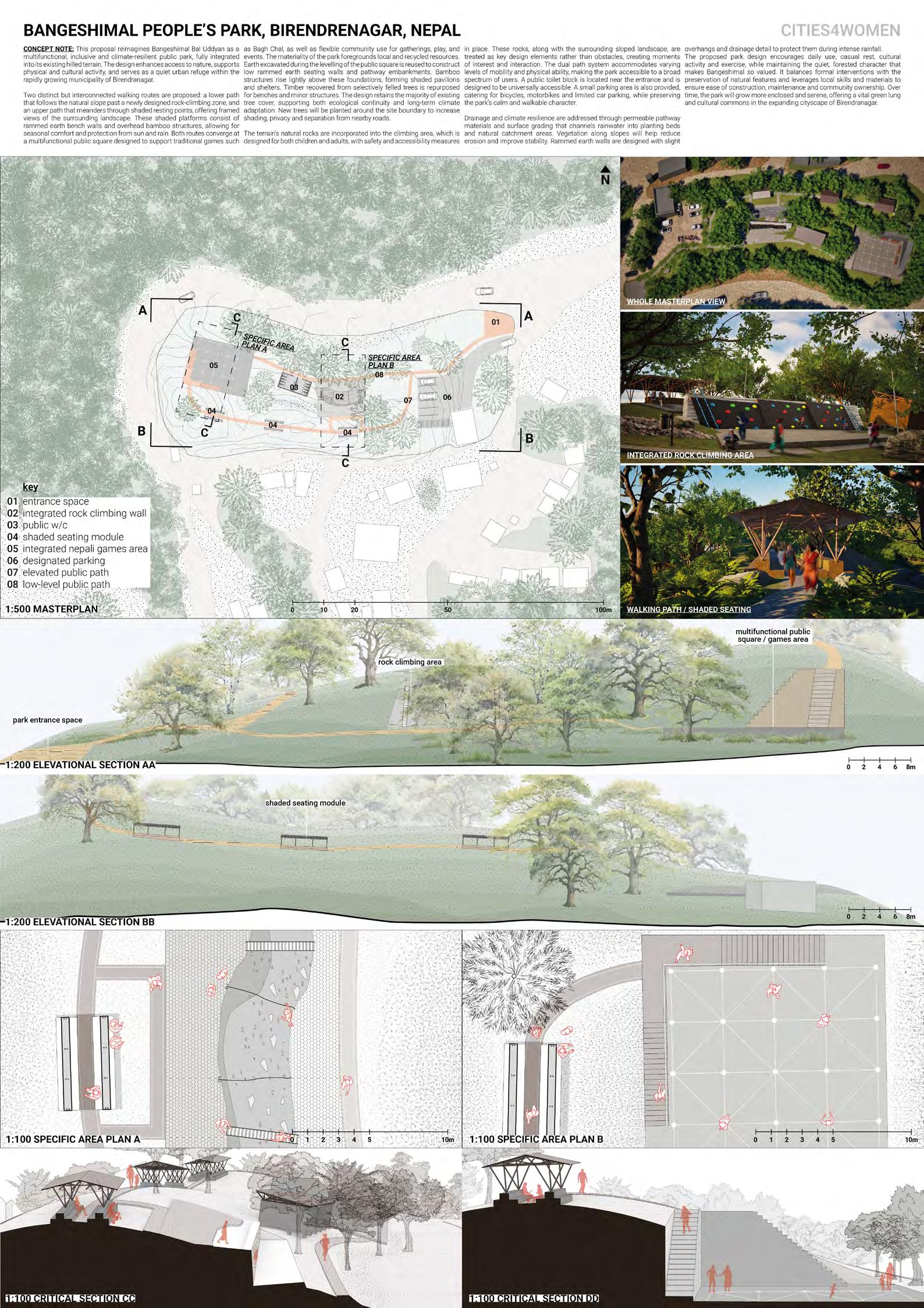
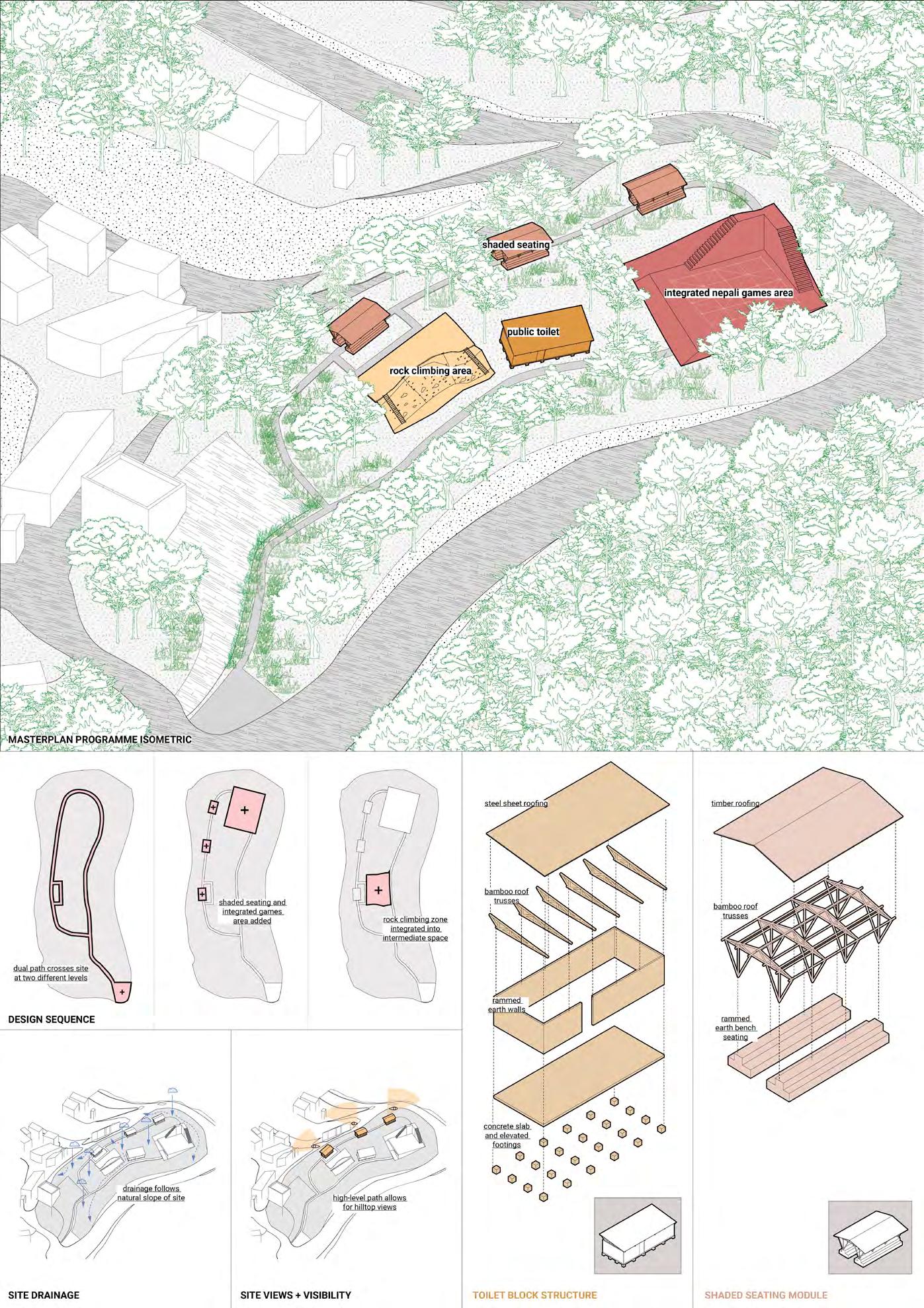
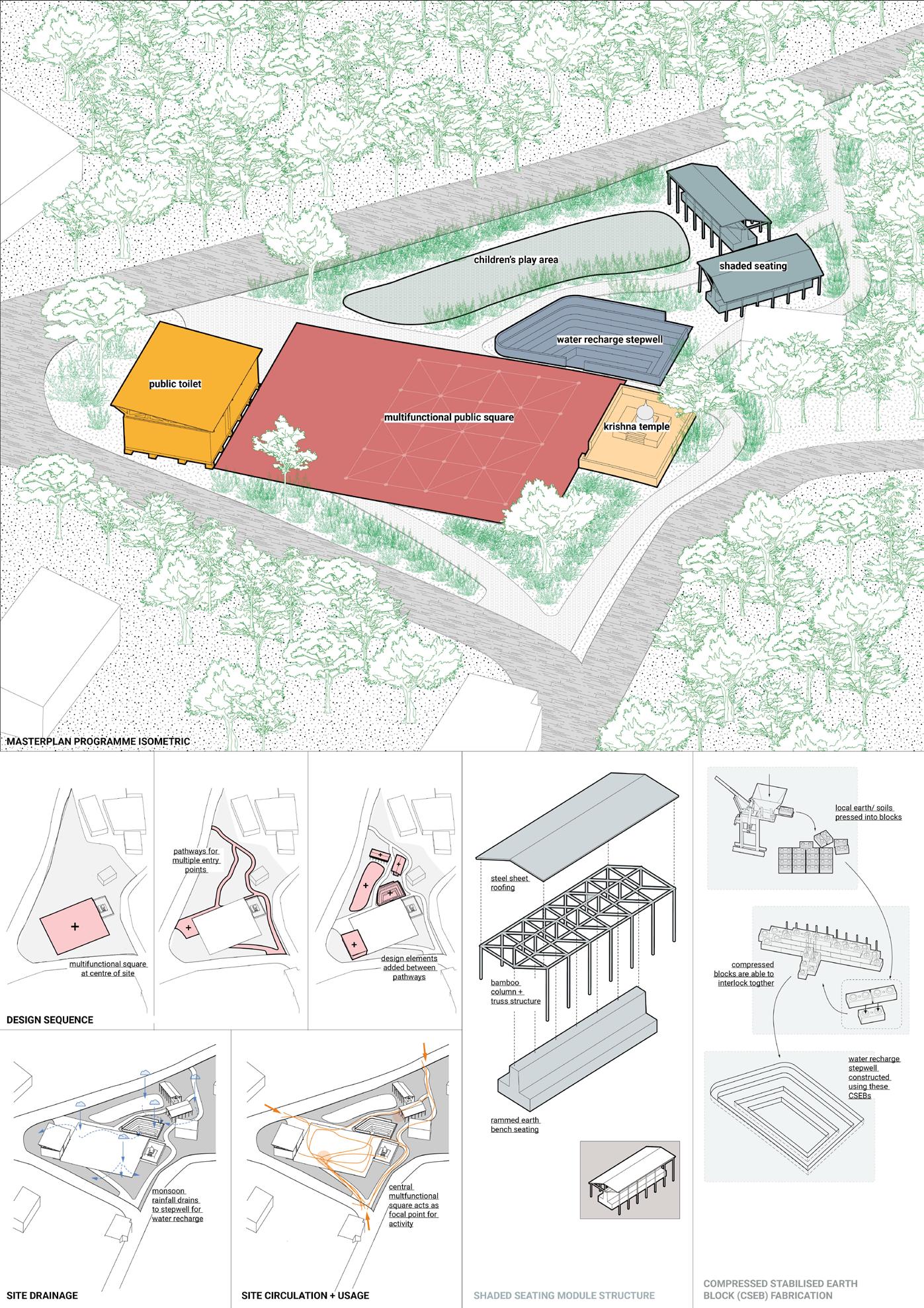
Climate-responsive public space designs in Dhangadhi, Birendranagar and Chandragiri, each tailored to local environmental conditions, terrain and community use. In Dhangadhi, Kalika Sport Club Maidan is restructured around central sports courts with a jogging path, children’s play area, yoga spaces, and ecological learning zones. Structures are built using bamboo and timber, elevated on concrete bases to reduce flood risk. In Birendranagar, a sloped site is adapted through a dual-path system: one route passes a rock-climbing area, while the other leads to shaded seating and a multifunctional games square. Excavated earth is reused for rammed earth benches, paired with bamboo roofs for comfort.
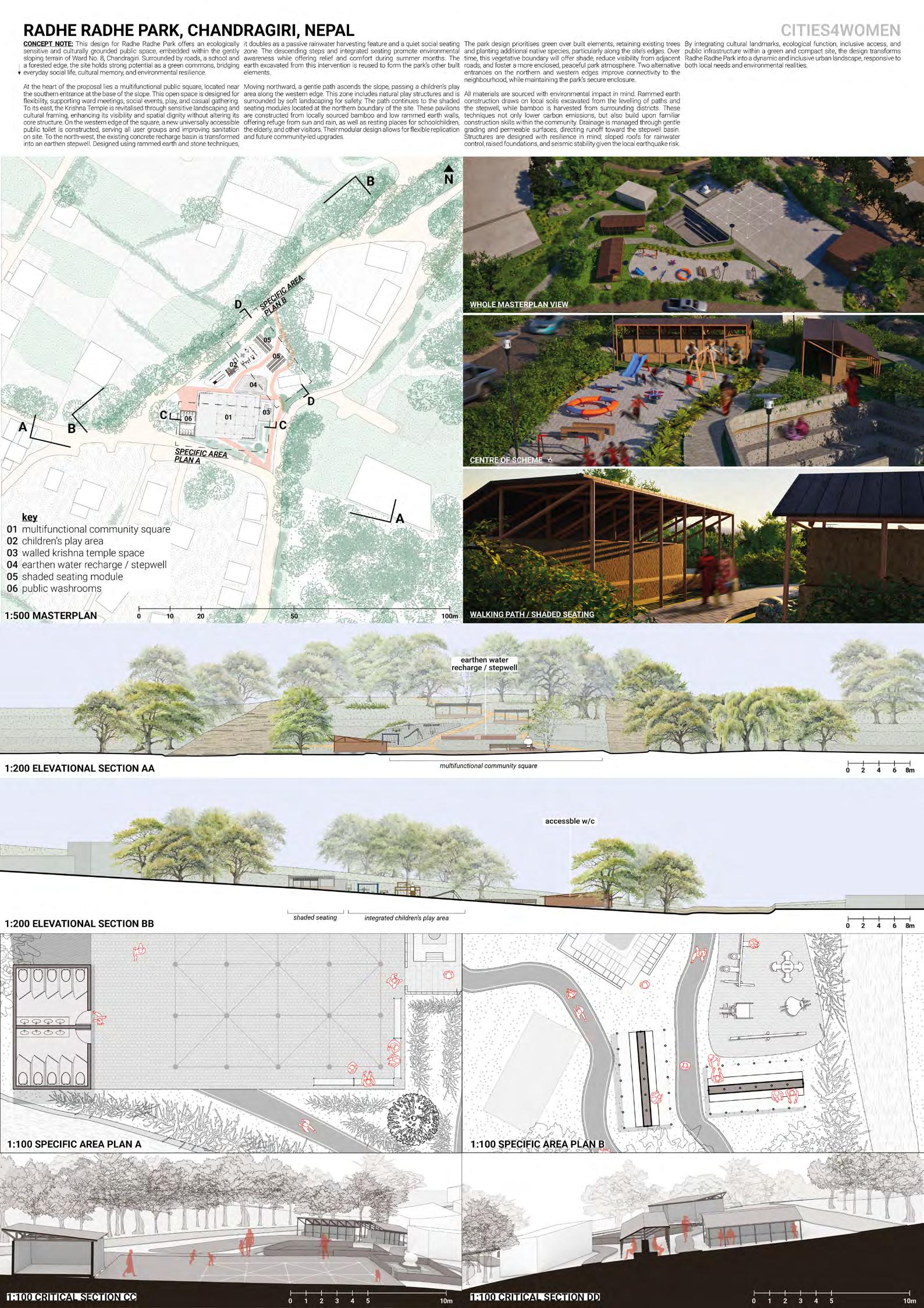
In Chandragiri, a central square anchors the design, bordered by a restored Krishna temple, accessible public toilets and an earthen stepwell with integrated seating. The upper park includes a play area and shaded rest spaces, linked by gentle paths. All three sites prioritise safety, accessibility, tree retention and passive water management. Materials are sourced locally, reducing carbon impact and supporting community construction skills. Together, these parks offer a scalable approach to public space design that strengthens social connection, improves urban resilience and supports the wellbeing of growing peri-urban populations in Nepal.
Sports Park Isometric Render