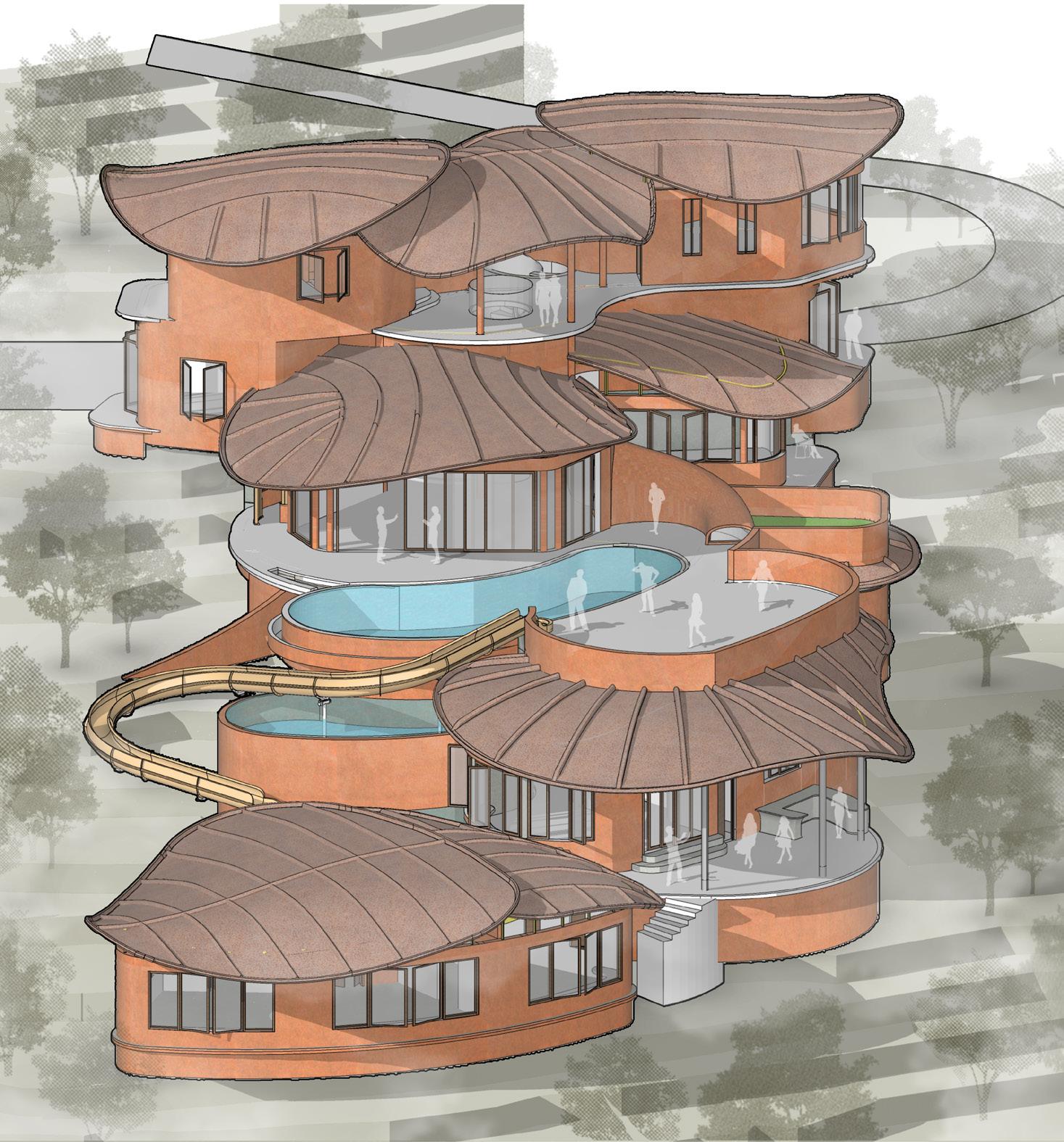
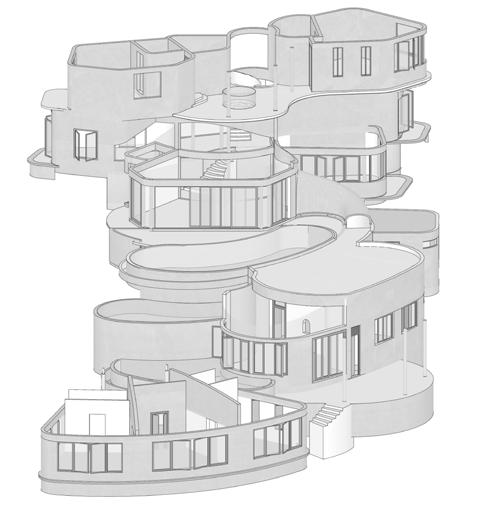
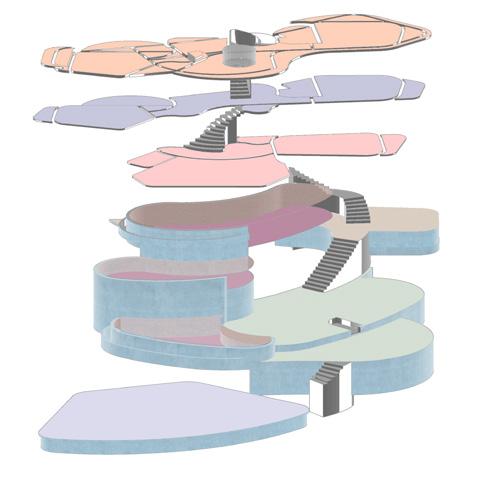
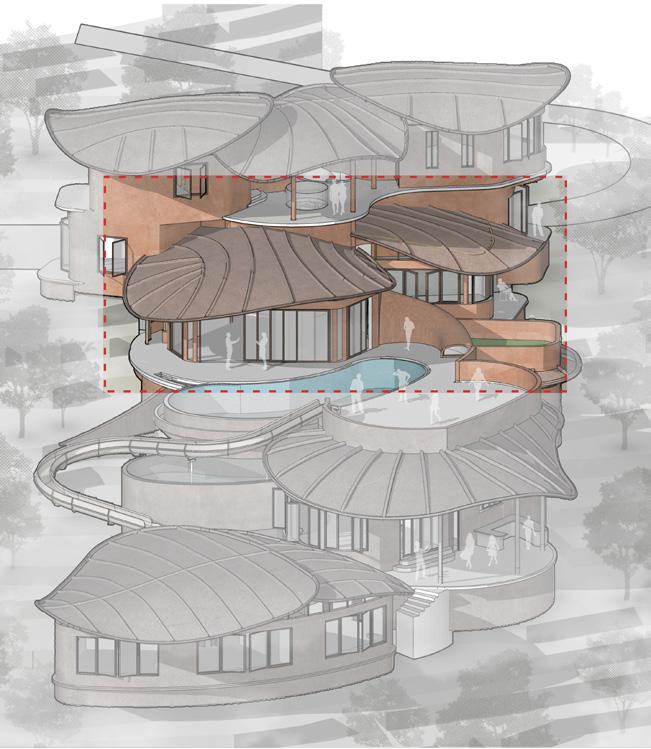
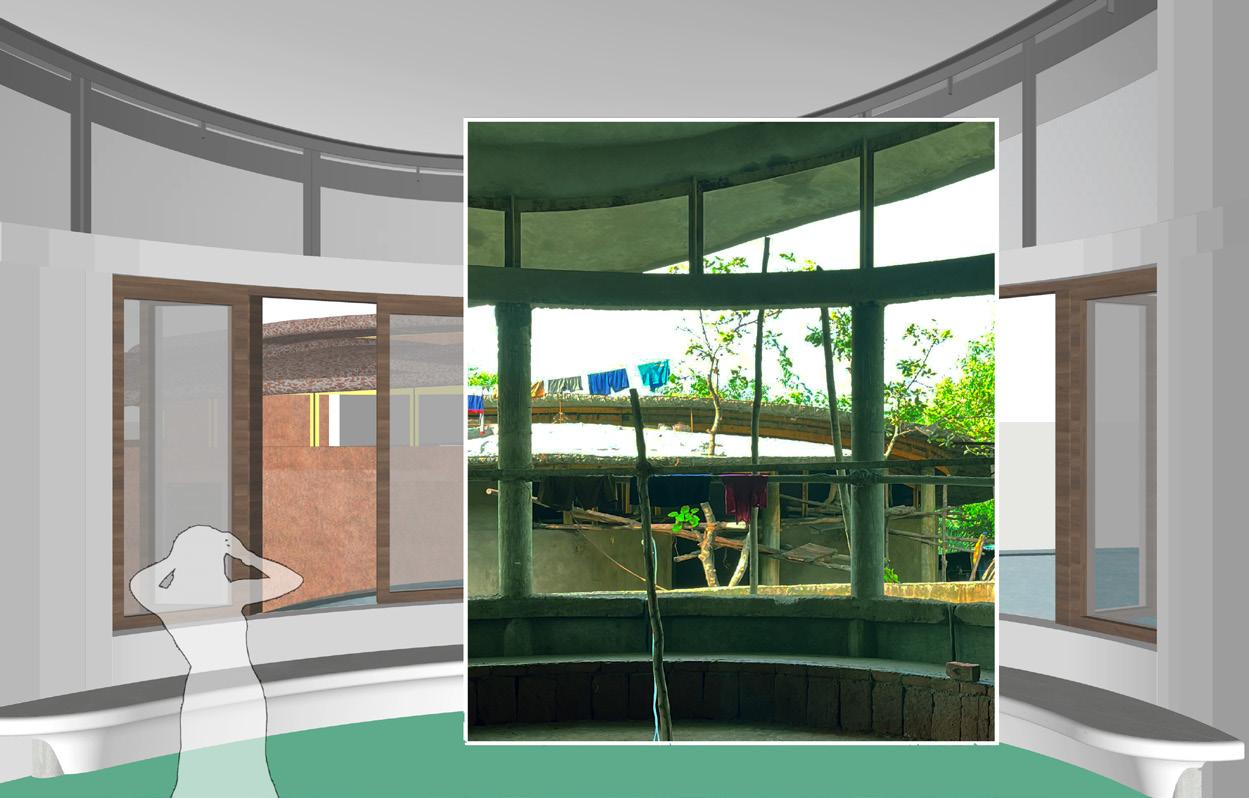
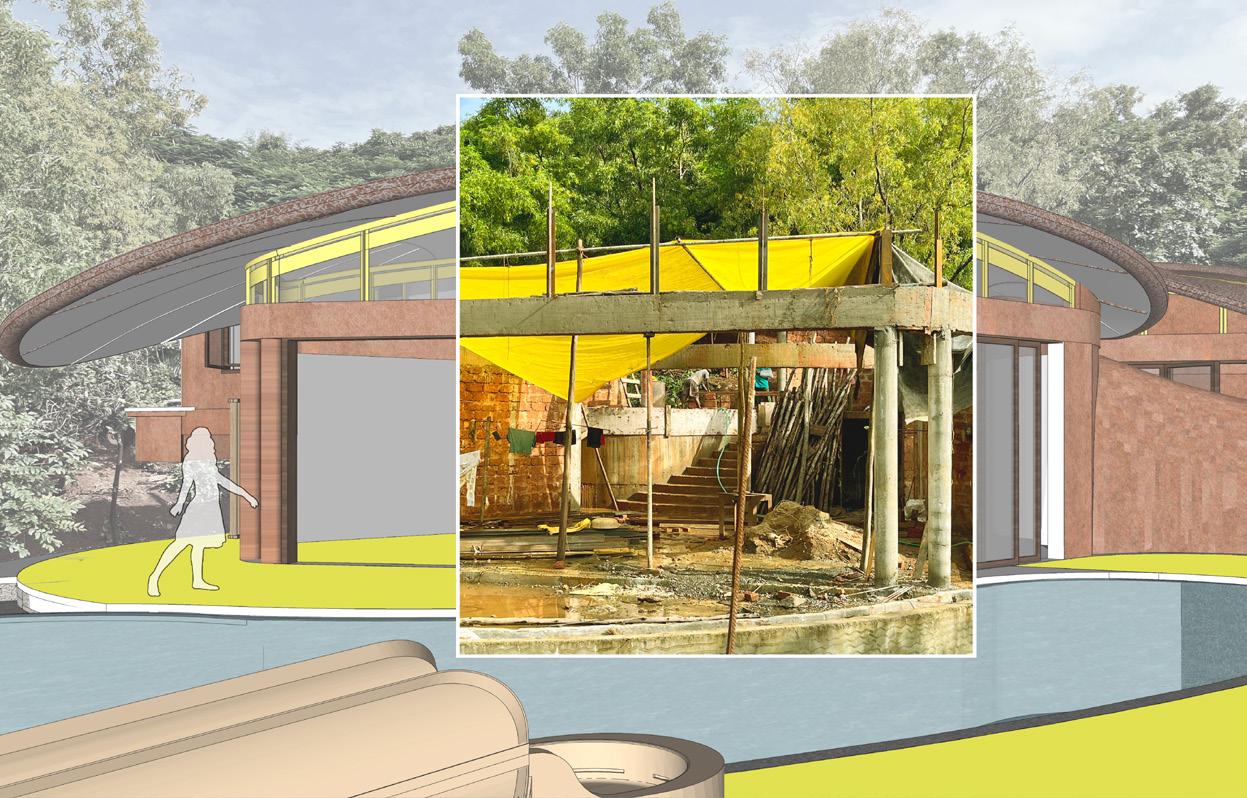
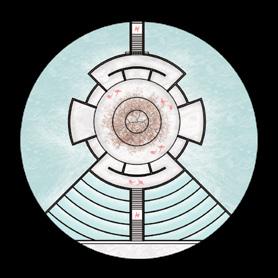
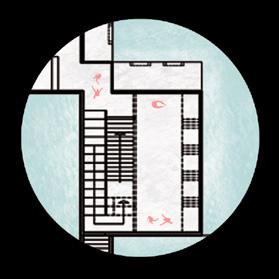
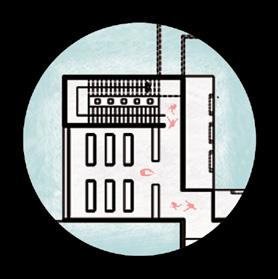
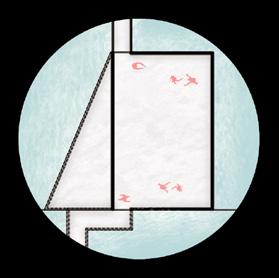
This residential villa in Goa is designed and situated atop a steep site with a contour ranging from 20-25 meters, indicating a challenging but potentially scenic location. Natural topography has been used to create cascading levels manifesting a design that integrates seamlessly with the surrounding landscape. The intentional use of curves has generated a flowing and dynamic interior layout. It is a hybrid structure with a significant load-bearing capacity due to use of locally available Laterite stone bricks which adds a local and traditional touch to the design. Spaces are enclosed by Doors & Windows made up of Teakwood implying a focus on quality and durability. The use of Ferro-concrete as a base material gives a unique and artistic roofing solution.
My role in this project: played multifaceted role from design conception to construction oversight. My other managerial responsibilities like site-supervision, vendor deliverables, construction drawings, material selection and roof mapping helped me bring the residential villa to fruition.
1. Coconutty House, Goa
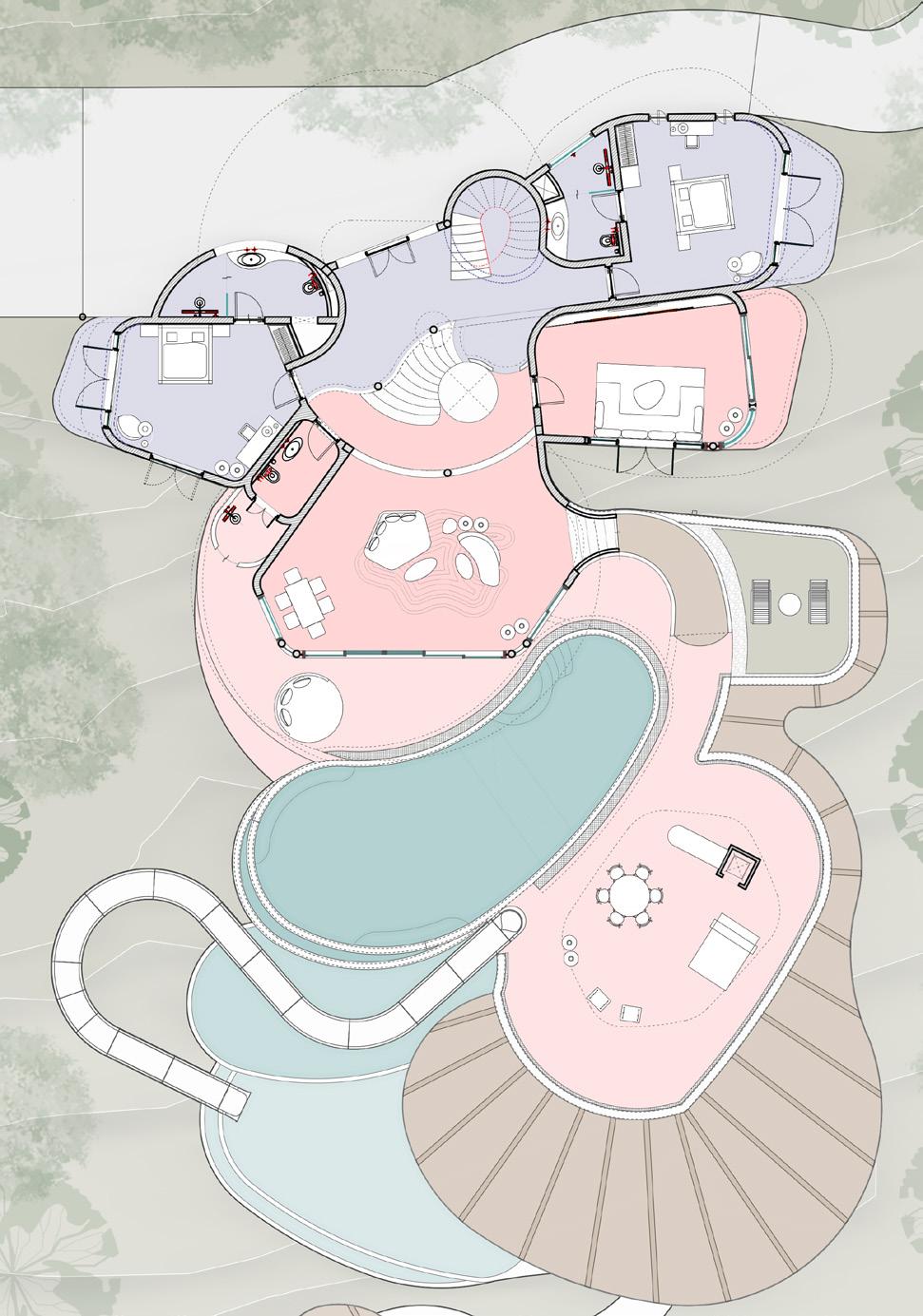
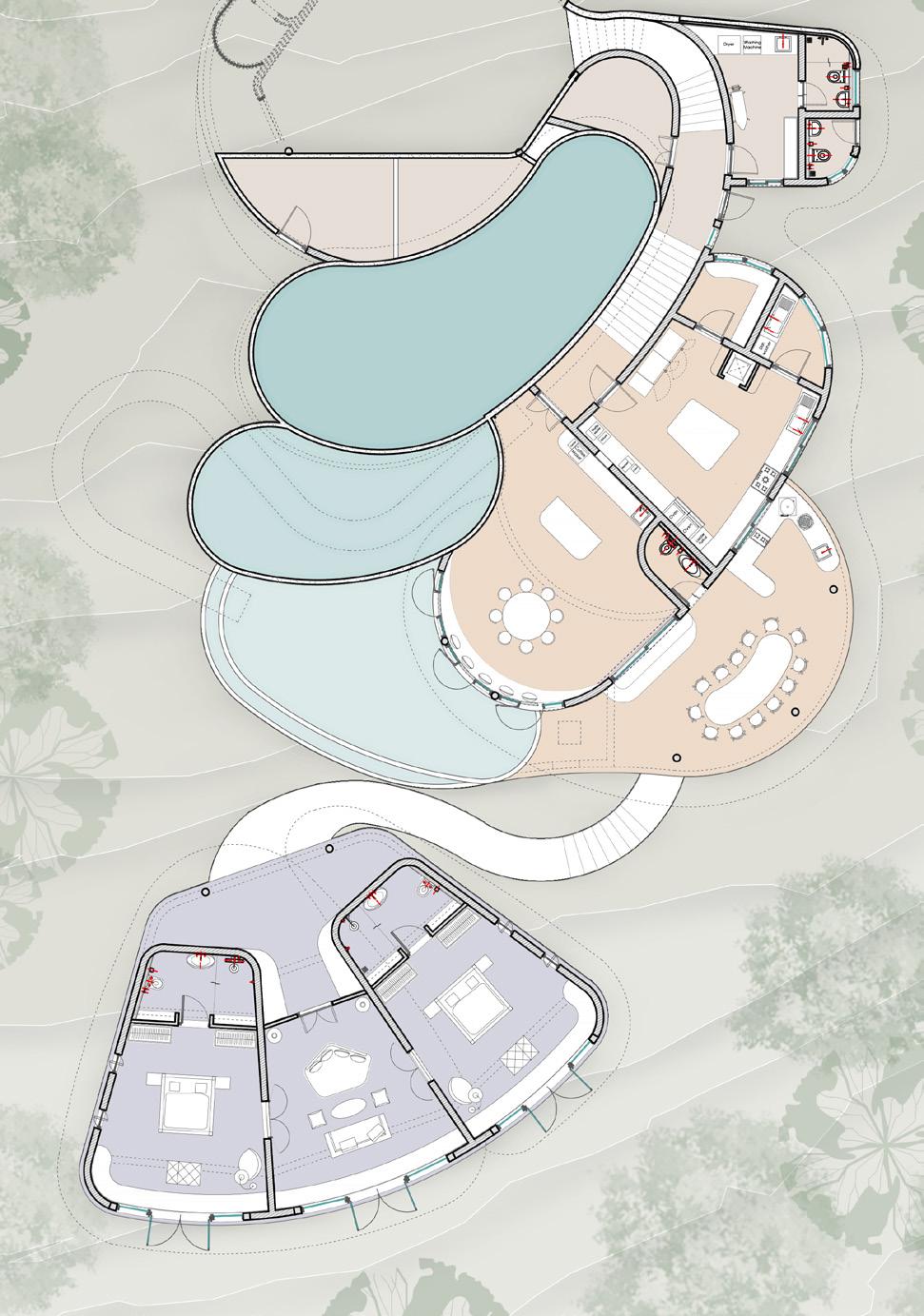
Title: Floor Plans
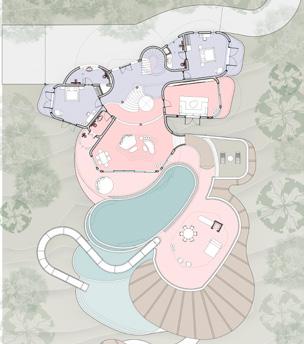
The spaces are spatially organised at different levels as per client's requirements.
The house is primarily divided into 3 blocksMain House, Social Block and Guest Block. Besides these spaces, there are 3 cascading Pools with two of them designed as swimming pools and one as a Bio-pool. The organic roof overhangs shelter all the spaces from intense heat and heavy rainfall in Goa. The design uses the cascading levels of site to its advantage by allowing gravity to recharge the well & water-recharge pits with harvested rainwater. It also uses a parcel of land for terraced vegetation farming and preserves as many existing trees as possible. The landscape of the site is deliberately designed to develop natural flora of Goa.
1. Coconutty House, Goa
Title: Building Markout Drawing
The design is purely organic and naturally our team derived a way to markout the curves on site. The load-bearing structure's every point has its own significance and so the curves had to be marked accurately..
The drawing provides a simple process for contractor to follow. Primary information is the Centerline which is made up of polyarcs and a few straight lines. All arc points and their focal points are marked using triangulation method. However, many curves are so sleek that it becomes difficult to find the focal points on site, for such curves, we provided arc details separately.
Title: Typical Structural Section
Structure's basic principle is to follow a loadbearing system. Following is the order (bottom to top) of structural members:
1. Sized Stone Masonry (Foundation)
2. Reinforced Cement Concrete (Plinth Beam)
3. Laterite stone wall (Load-bearing wall)
4. Reinforced Cement Concrete (Lintel Beam)
5. Steel Stub Column (Roof Structure)
6.
Beam (Roof Structure)
Following are the abbreviations used with reference to setting-out plan: - C: Stub Columns - X: Arc Points - P: Building Points - A: Arcs - R: Focal Point for Arcs
Note that points P() are existing points which are marked on site and should be used as reference points while doing the mark-out.
Note that column C35 has been eliminated, accordingly adjoining retaining wall RW2 will be extended as shown
Setting-out of Arc Points X10-X12, X14-X17 to be referred from '0363_CD_I_06_Lower Ground Floor Staircase Setting-out Plan_R1'
Setting-out of Arc A/34, A/35, A/37 to be referred from '0363_CD_I_08_Pool 01 & Pump Room 01 Setting Out Plan'' N O T E S
Arc Points and other points to be set-out from this dwg are as follows: X42-X117
Arc Details to refer from this dwg are: A/36, A/38, A/39-A/79
Following pair of Arc points & Building Points coincide (are same): X68-P46,
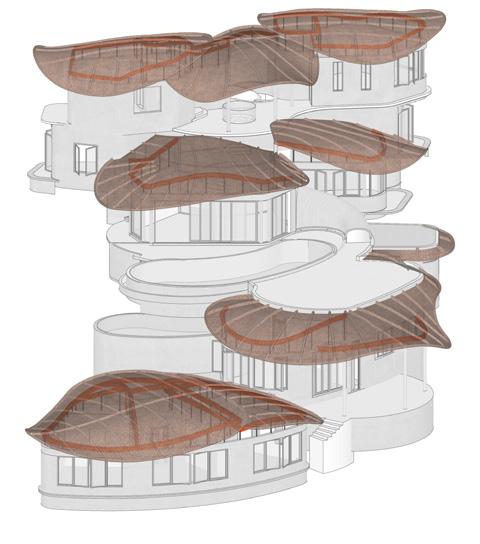
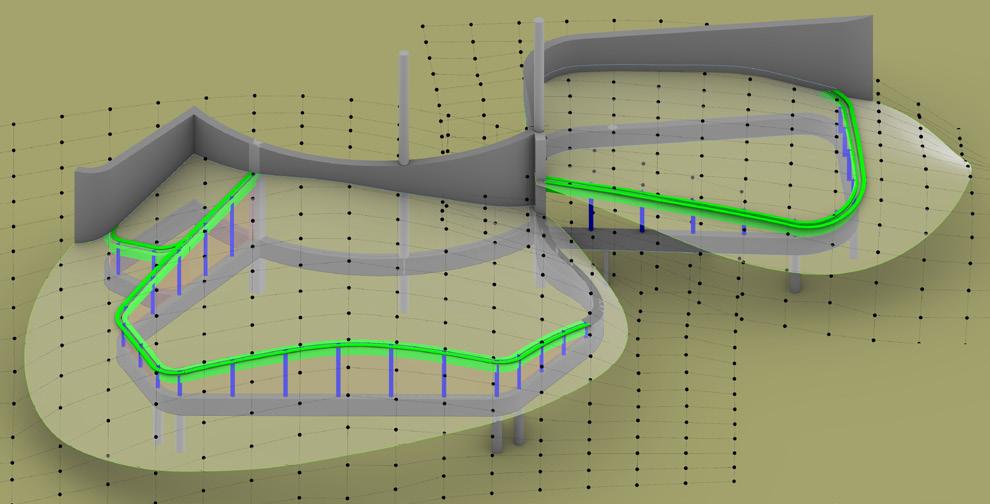
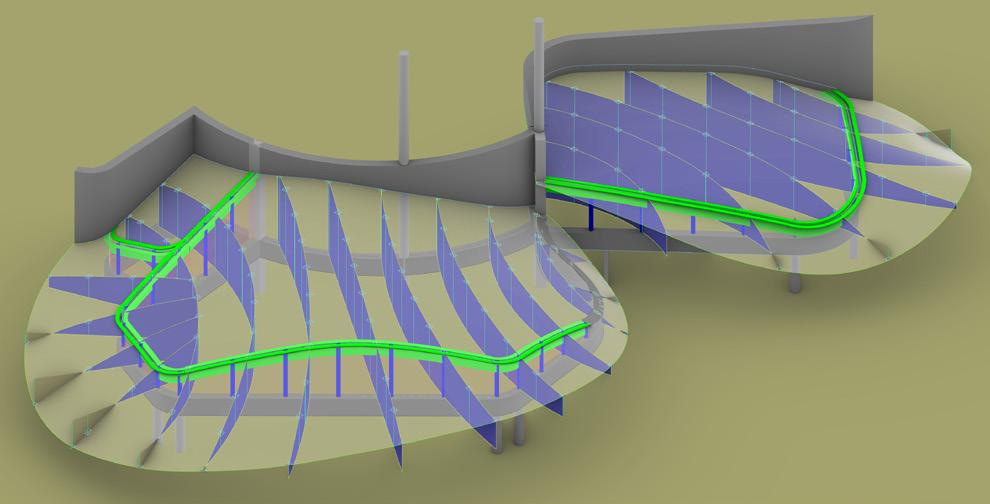
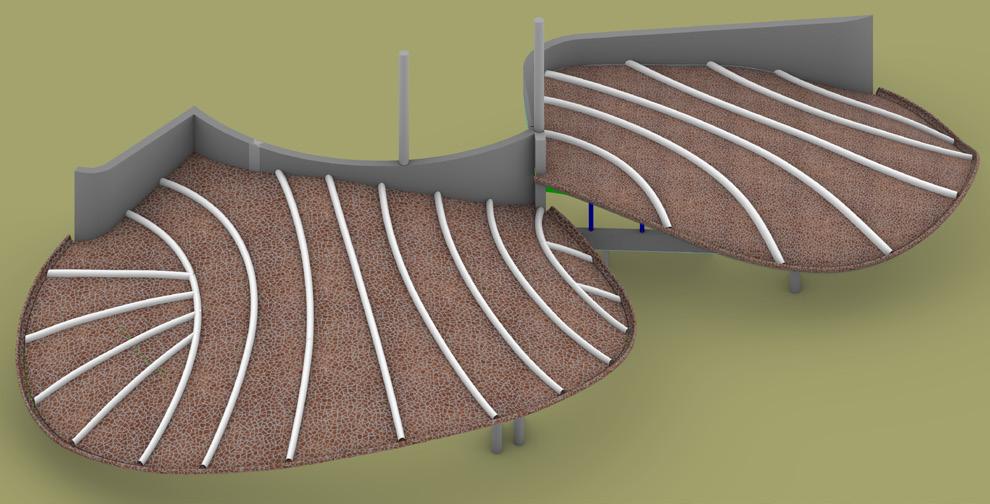
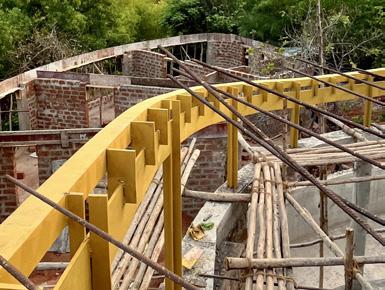
Our team derived a way to map organic ferroconcrete roofs using available information on site. Constraints like complex curvature, long spans, heat penetration and heavy-rainfall led to introduction of intermediate Ribs over the roof. These ribs become foremost members of roof structure that need to be assembled on site.
The drawing informs a simple process for contractor to follow. Following is the order of establishing essential points on site:
1. 1m x 1m Grid using existing reference points.
2. Rib points overalpping on the grid.
3. Peripheral points
Each point has an assigned level with reference to existing Lintel Beam Top level.
Following are the abbreviations used with reference to setting-out plan:
- C Existing RCC Columns - SP Starting Point - E: Ferro-concrete Roof Bottom surface Peripheral points
- MC Metal Star Columns
- MB Metal Beam - RFB: RCC Roof Beam
- RB: Ribs of Ferroconcrete Roof
- Q: RCC Roof beam bottom points
Note that points SP are Starting Points which shall be established using corners of existing RCC Column. After establishing SPs, the Grid must be determined.
Q: RCC Roof Beam bottom points to be established from this dwg - Q1-Q16 (Living Area Roof) & Q17-Q27 (Family Area Roof). Beams RFB1 & RFB2 must be constructed first.
E: Peripheral points to be established from this dwgE1-E27 (Living Area Roof), E28-E42 (Family Area Roof)
RB: Rib points of Ferroconcrete Roof Bottom to be established from this dwg - RB1-RB14 (Living Area Roof) & RB15-RB20 (Family Area)
Heights mentioned for points Q, MC, E & RB are from existing Lintel Beam Top (assumed to be ±00mm)
Basic Design of these Ferroconcrete roofs is done in 3 phases:
1. Roof language - Primary development of peripheral profile, ridge and valley points is done followed by topographic articulation of mesh control points.
2. Ribs design - Considering constraints like complex curvature, long spans, heat penetration and heavy-rainfall, the large roof surfaces are stiffened by these ribs spanning across existing Metal & RCC Beams giving a legible aesthetic to the roofs.
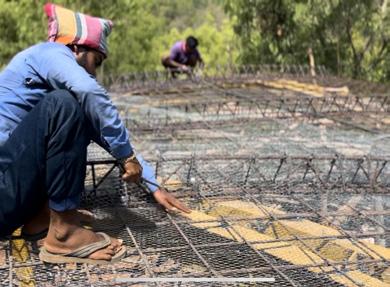
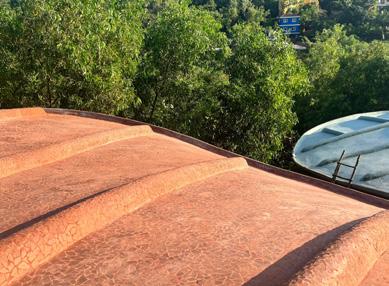
3. Roof execution - After ribs, the residual mesh is assembled which comprises of reinforcement cage and a G.I Mesh layer stictched over it. This is followed by pouring & curing of concrete, waterproofing and finishing with China Mosaic tile
Title: Living+ Family Area - Roof Details
Phase 1 - Roof Language
Phase 2 - Ribs Design
1. Coconutty House, Goa
Title: Design Ideation to Execution
The design of this house deals with irregular scales and proportions making it difficult to visualise the spaces in reality. Hence, team had to do site visits on a regular basis.
Site visits were extensively about - dealing with cutting and filling of soil, dilligent execution of critical structure points and imperative decisions affecting overall aesthetics of spaces.
Iterative visualisations, structural refinement and derivative architectural working drawings made it practical for site team to successfully realise the true language, body and architecture of Coconutty House.
Dining Area
2. HEAL - Regenerative Housing for Kerala
Location - Kerala, India
Project Vertical- Community Housing
Type- Professional Competition Work (Team of 6)
Year of completion- 2018
Result- Runner-up
ANTI - FRAGILE
“Some things benefit from shocks; they thrive and grow when exposed to volatility, randomness, disorder and love adventure, risk and uncertainty.” Imagine a tomorrow that builds on the resilience from unpredictability using elements of nature and power of regeneration, thereby creating a new habitat
Nassim Nicholas Taleb Author, Book ANTIFRAGILE, 2012.
This was an International Design Competition organised by UNI.
My role in this project:
Research, conceptualisation, strategy-making, design development, 3d-visualisations, renderings and panel compilation.
About HEAL:
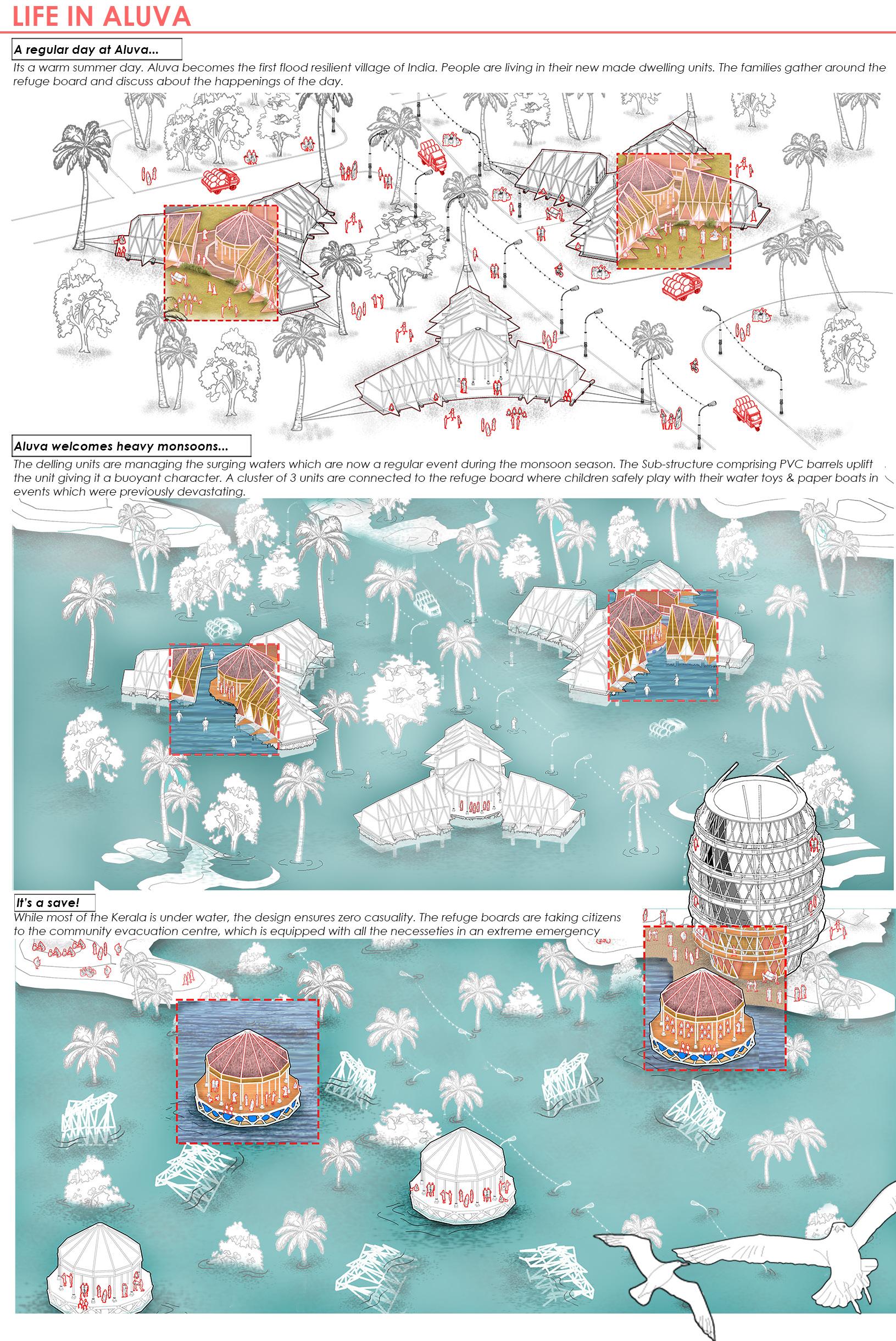
A community housing proposition that is scalable, heals when damaged and regenerates faster than before when broken down.
The design problem was to build unit microneighborhood for 100 families, with a case of use established in Aluva.
State government might not be able to bring forces to secure each of these households, with its limited funds. The challenge is to gather 100 households that work together to make a habitat which stands/works together in a situation of a flood.
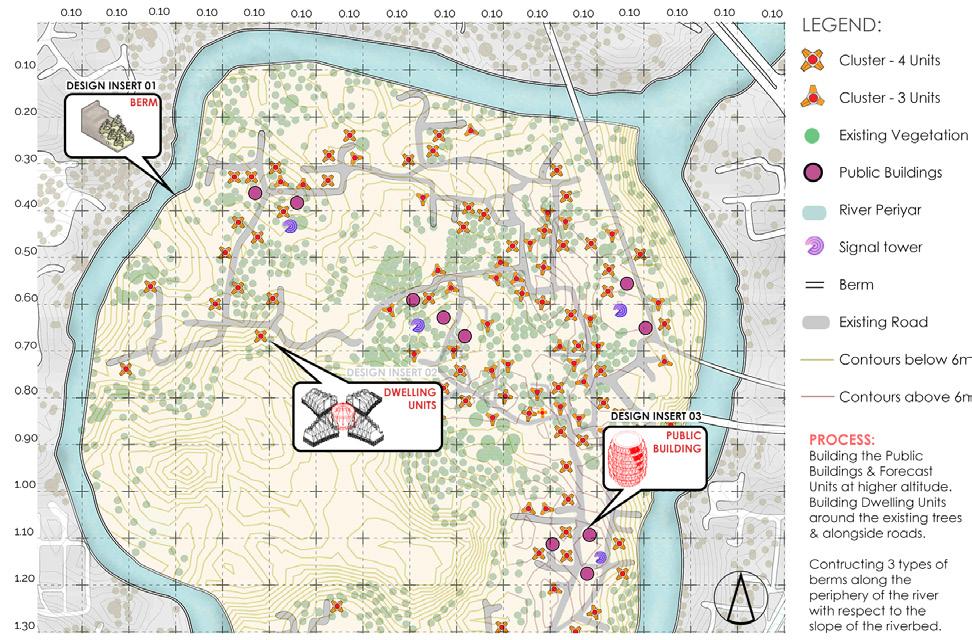
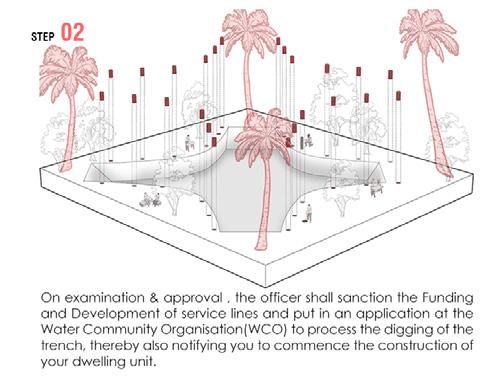
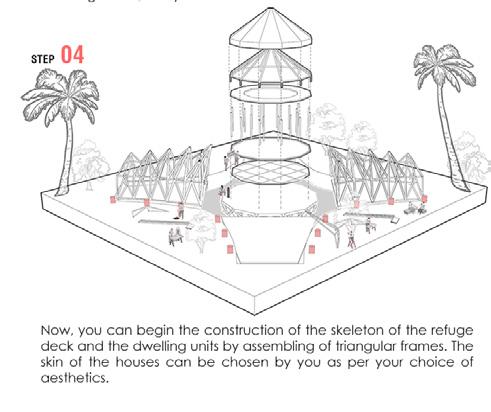
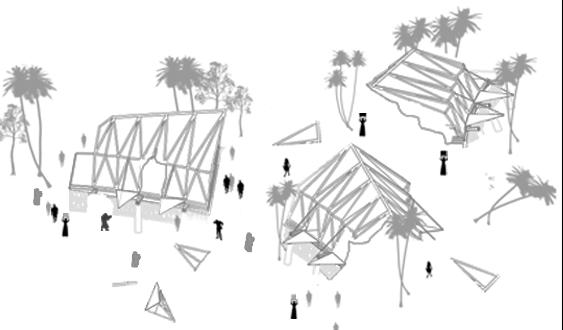
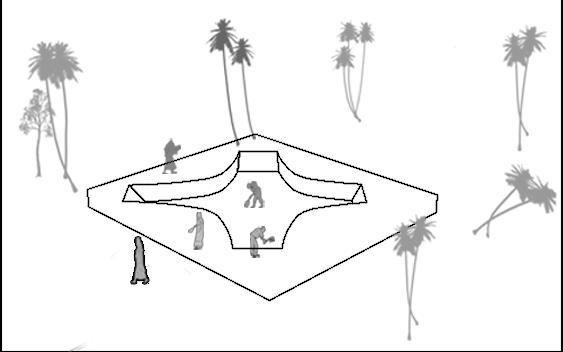
The project being a community housing creates micro-neighborhood in 1 cluster with 3 to 4 family units sharing an evacuation block; hence sharing their lives in both - normal and disaster situations.
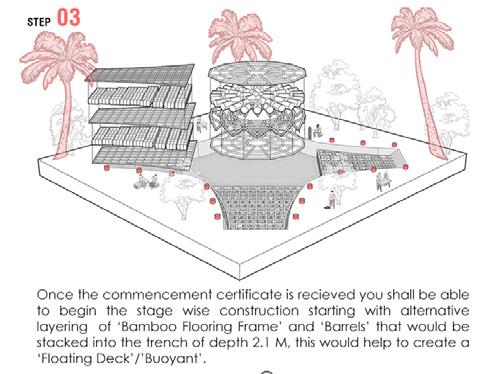
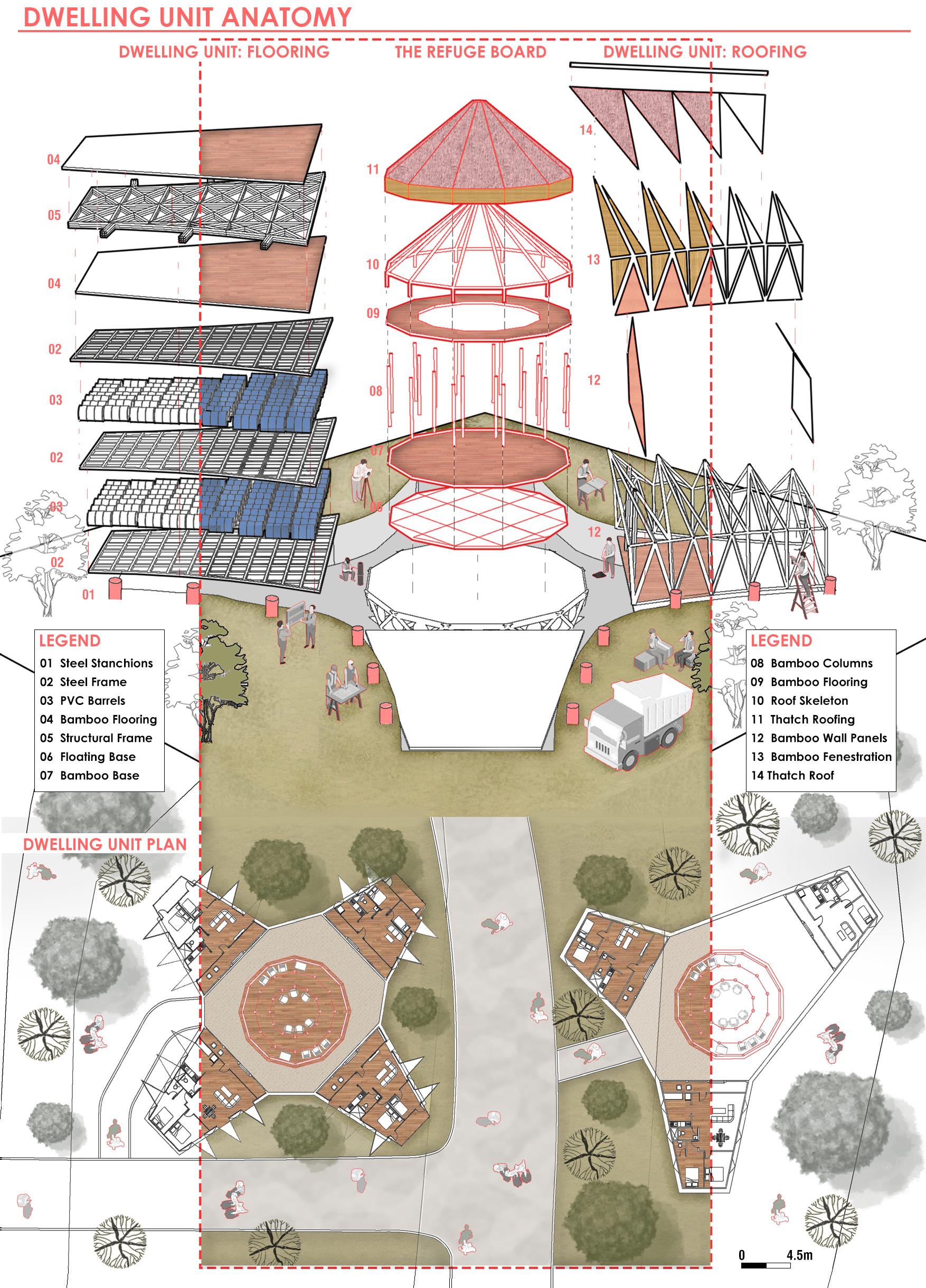
Construction materials include locally available PVC Barrels, bamboo and thatch making it easier for citizens to regenerate their neighborhoods post floods.
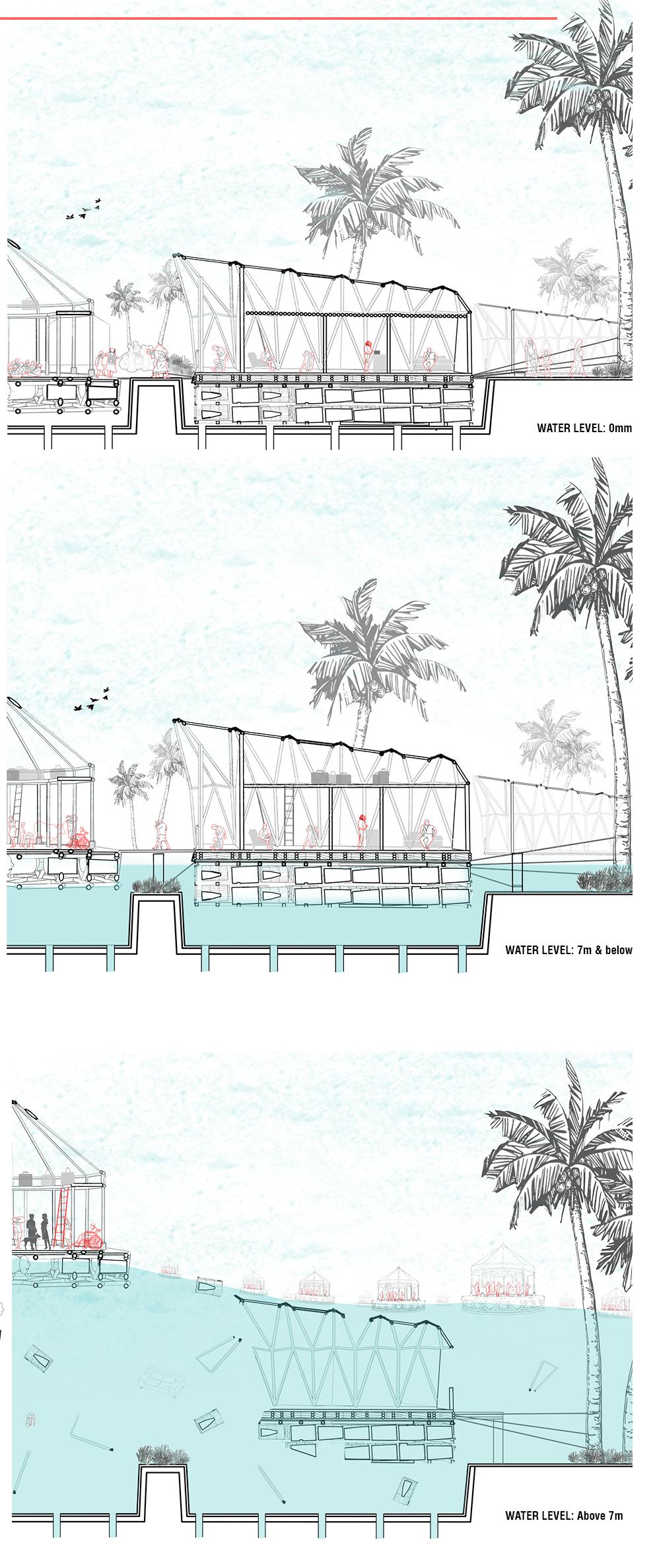
Title: Dwelling Unit Flood scenario sections
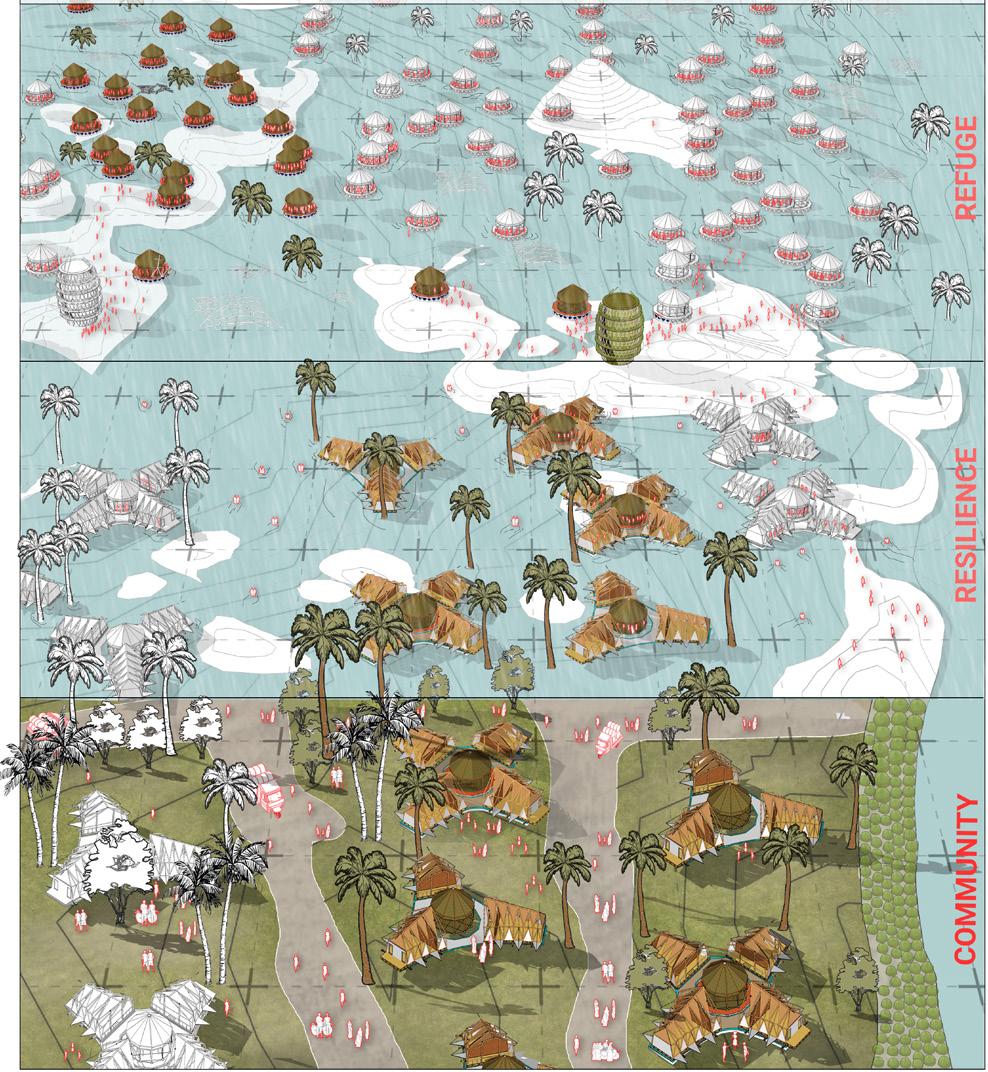
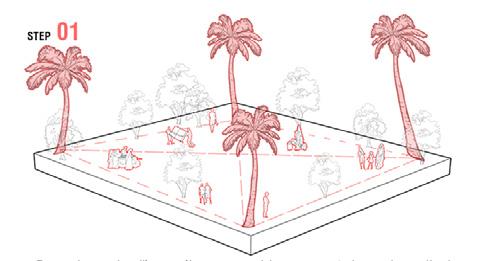
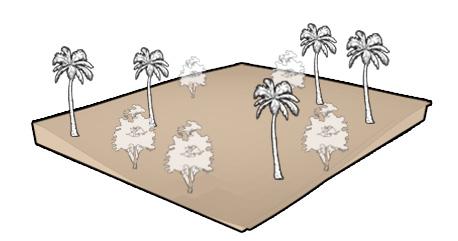
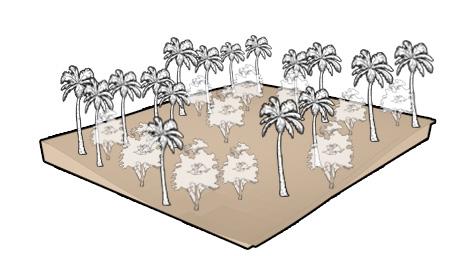
All the housing units in every cluster is anchored onto an existing tree which is part of unit property.
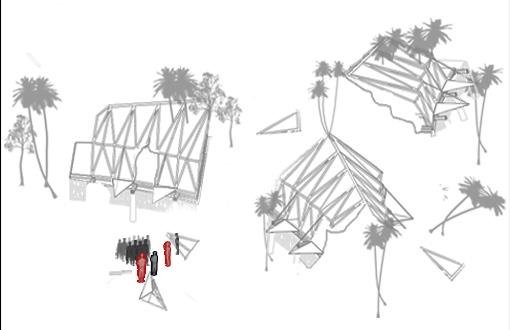
This hugely prevents immediate damage from gushing winds and rising flood levels. However, this is only an attempt to avoid complete devastation and wipe out of units and collecting re-usable material from the wreckage.
In catastrophic situation the evacuation block detaches away alongwith residents and reaches
Title: Dwelling Unit Anatomy
2. HEAL - Regenerative
Housing for Kerala
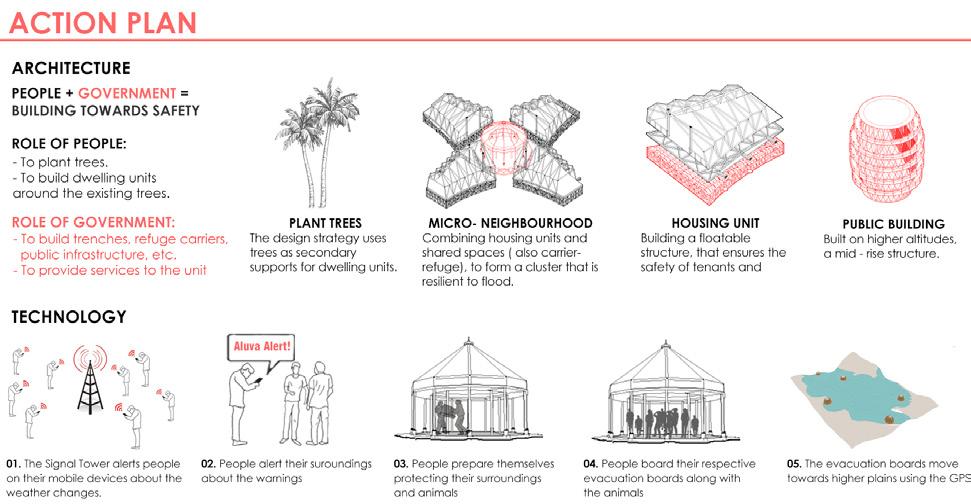
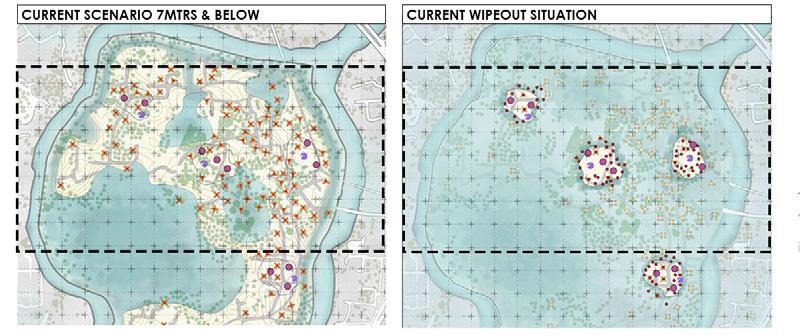
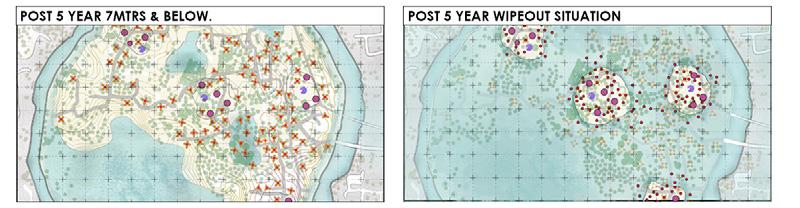
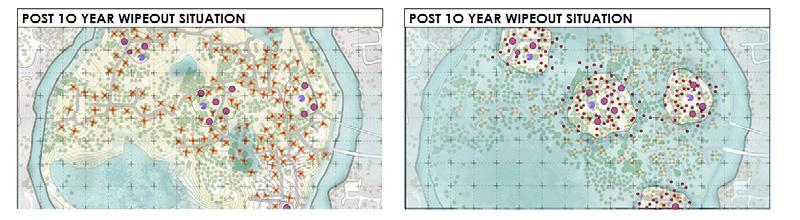
Title: 10-Year Action Plan
HEAL is an Anti-Fragile strategy which envisions long term goals of creating a regenerative housing. The strategy proposes a holistic approach by considering nature's forces and human limitations.
The idea is not to spend all the private resources of a person on a planned cooperative housing redesigned from scratch, but on pre-conceived shared systems that help to sustain the direct and indirect population of this unit neighborhood which contains households/owned plots already.
The next step would be how a top-down entity (government) helps these unit neighborhoods and make them thrive at a large level. Hence, preparing them for an action plan in the next hazard scenario.
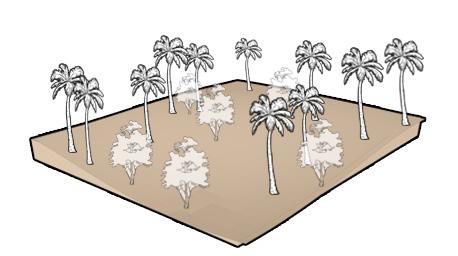
After wipe-out: People plant new trees After
3. STPA - Sculpting the Pioneers of Architecture
Location - Osaka, Japan
Project Vertical- Museum
Type- Personal Competition Work (Team of 3)
Year of completion- 2019
Result- Winner
This was an International Design Competition organised by Archdais.
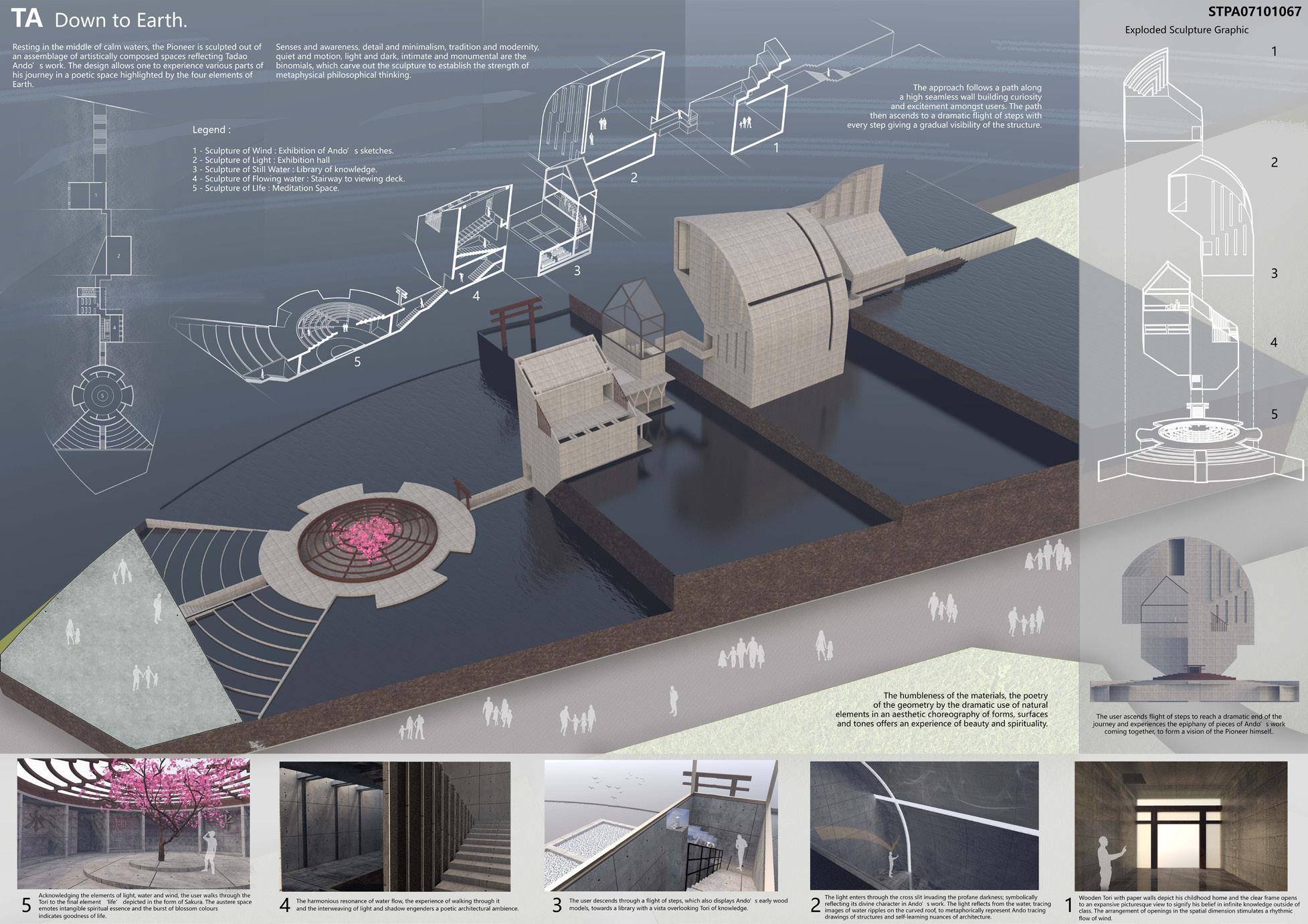
My Role: Leading, Interpreting and analysing competition brief, research, active discussions, design-developement, 3D-Visualisation, Panel composition and renderings.
The challenge was to design an accessible sculpture that acts as a symbolic representation of the chosen Architect's work. The sculpture should be able to explore stimuli and various possibilities to be physically experienced by the end users.
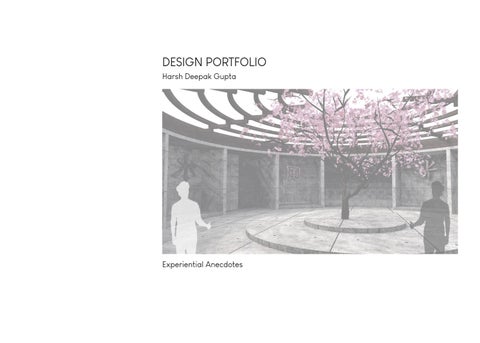
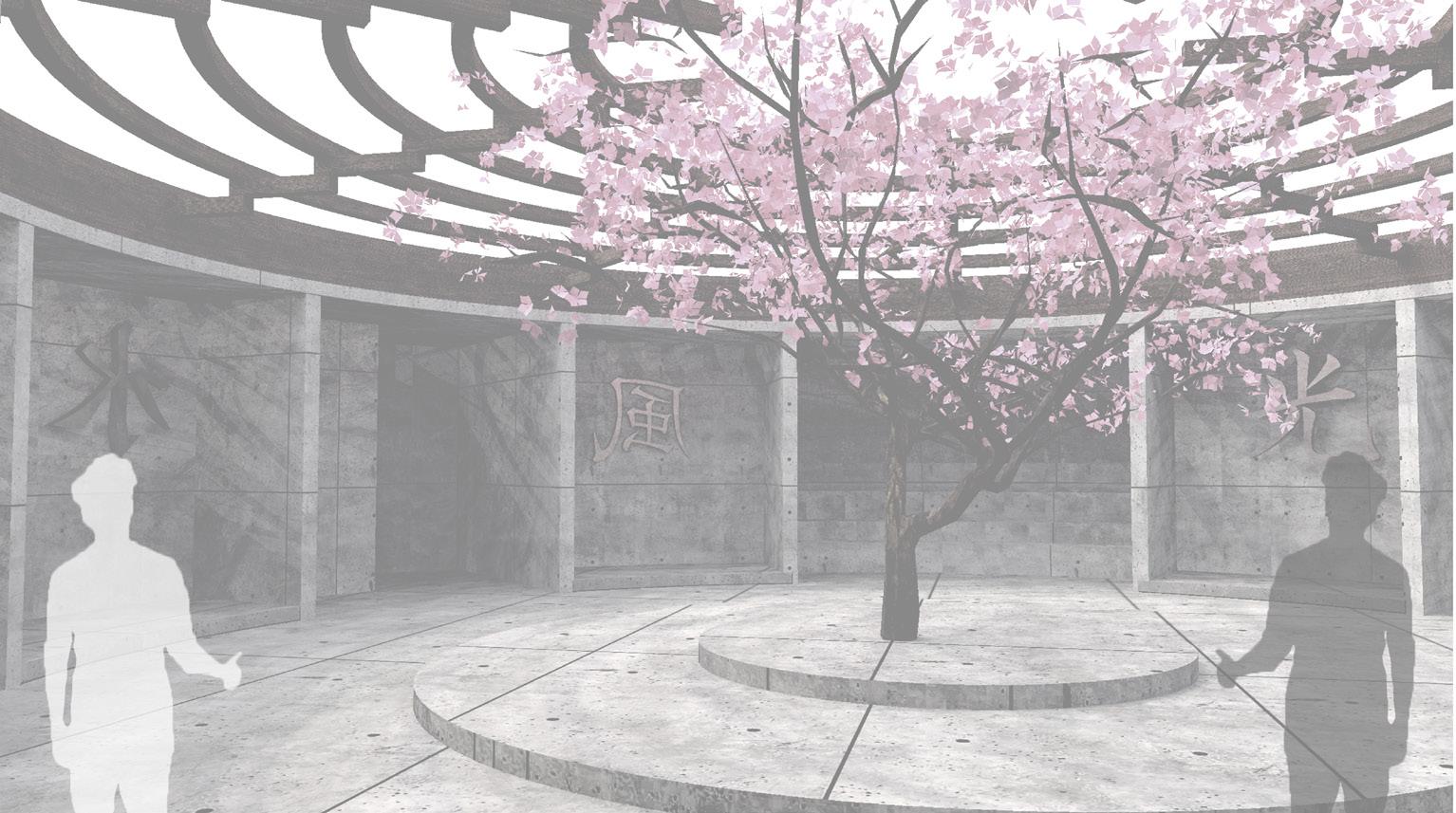
The Architect chosen to pay tribute to, was Tadao Ando. The sculpture is an amalgamation of various spaces manifested as kernels of his design ideologies.
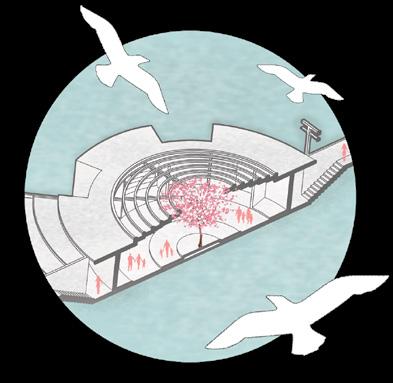
The order of these spaces has been meticulously planned to mimic his lifelong journey. These spaces are associated with forces of nature such as wind, light, water and life.
At the end of their journey through this sculpture, one can look back to these multiple blocks coming together to form an image of Tadao Ando
Community Center
Location - Kathmandu, Nepal
Project Vertical- Community Center
Type- Personal Competition Work (Team of 4)
Year of completion- 2018
Result- Top 15
This was an International Design Competition organised by ARCHsharing.
My Role: Interpreting and analysing competition brief, research, design discussions, designdevelopement, 3D-Visualisation, Panel composition and renderings.
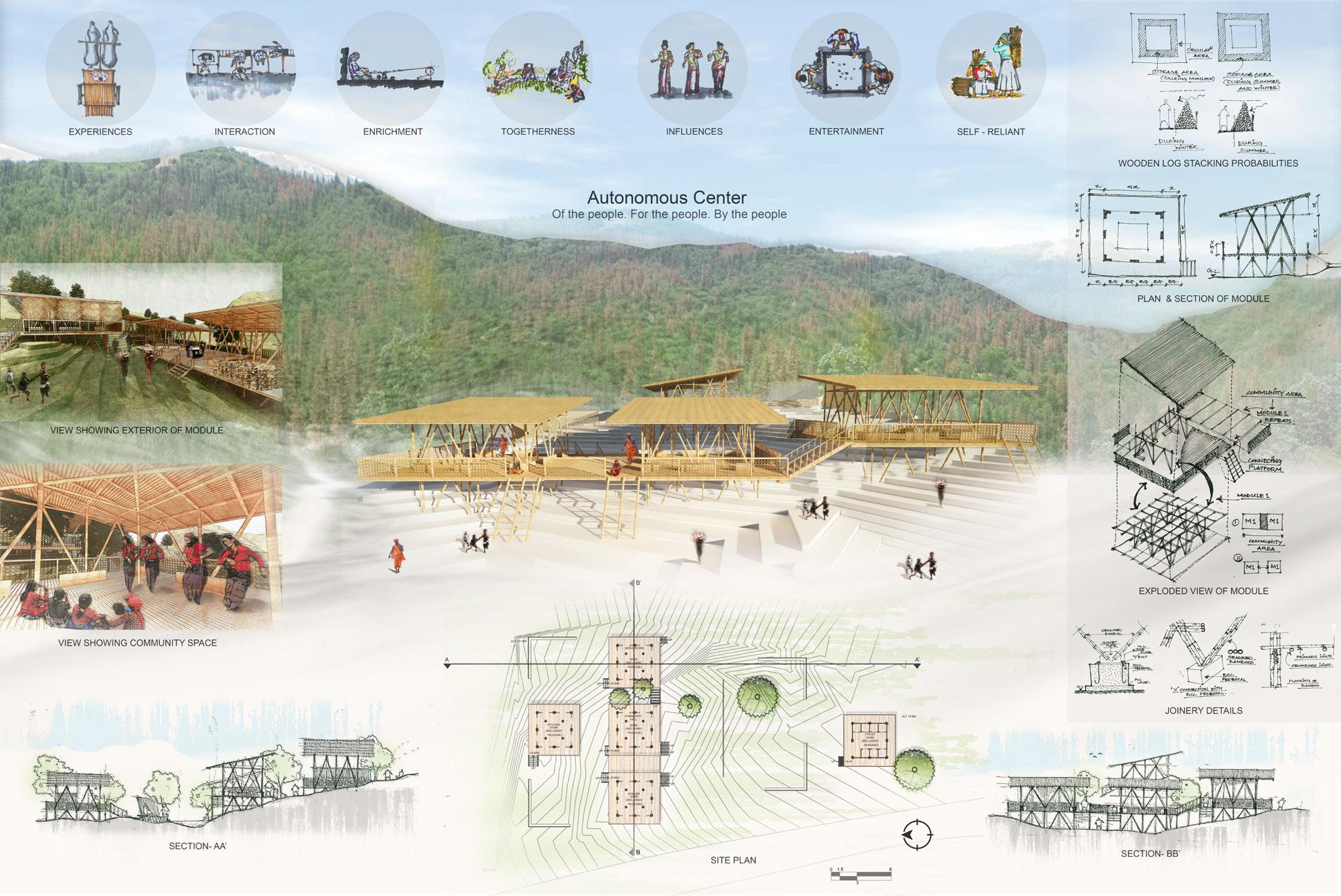
The challenge was to propose a useful infrastructure which improves daily life of the local inhabitants. It had to be a community building serving several of the village's unaddressed needs.
The design aims to create an Autonomous Center, a community space which will be by the people and for the people. It'll be defined by its openness and flexible spaces with no regards to the idea of a boundary for each space.
The construction methodology integrates vernacuclar architecture and modular design system for locals to adapt the construction technique to rebuild it themselves in future after unforeseen contingencies.
5. International Conglomeration Center
Location - Goa, India
Project Vertical- Convention Center
Type- Academic project, Thesis
Year of completion- 2020
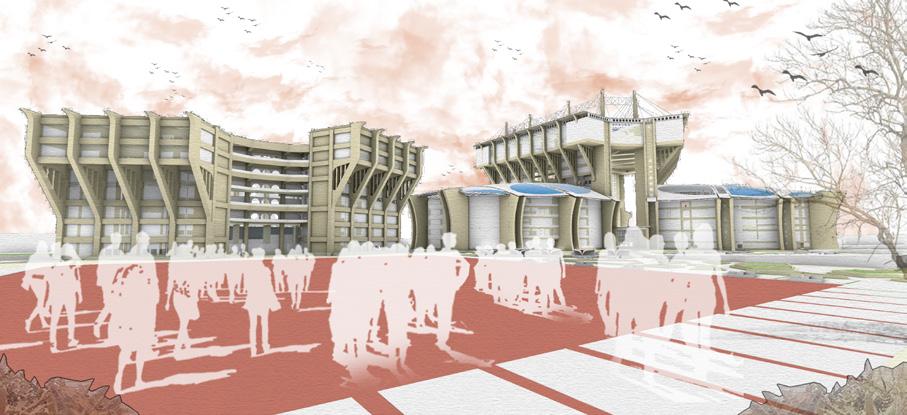
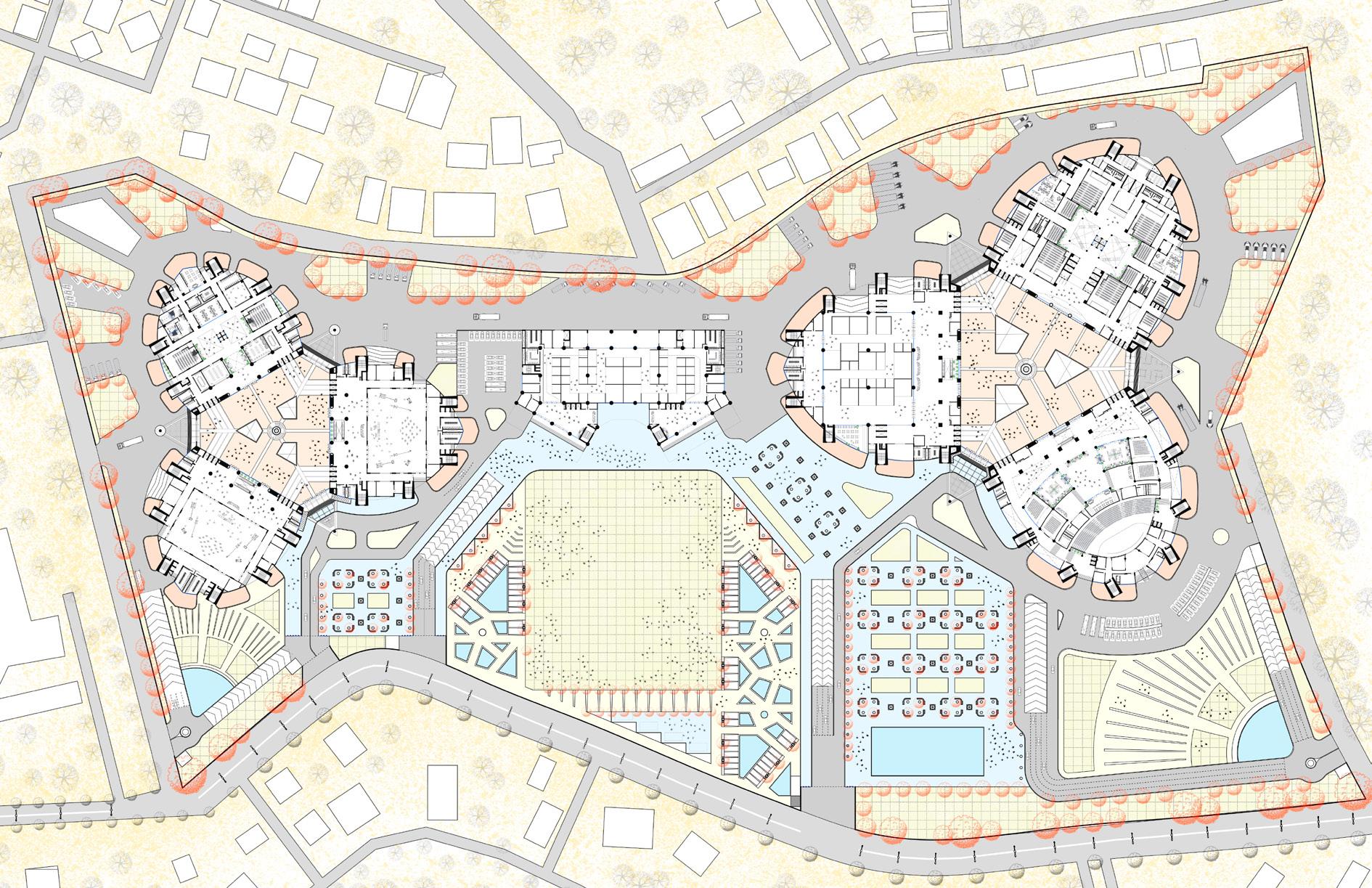
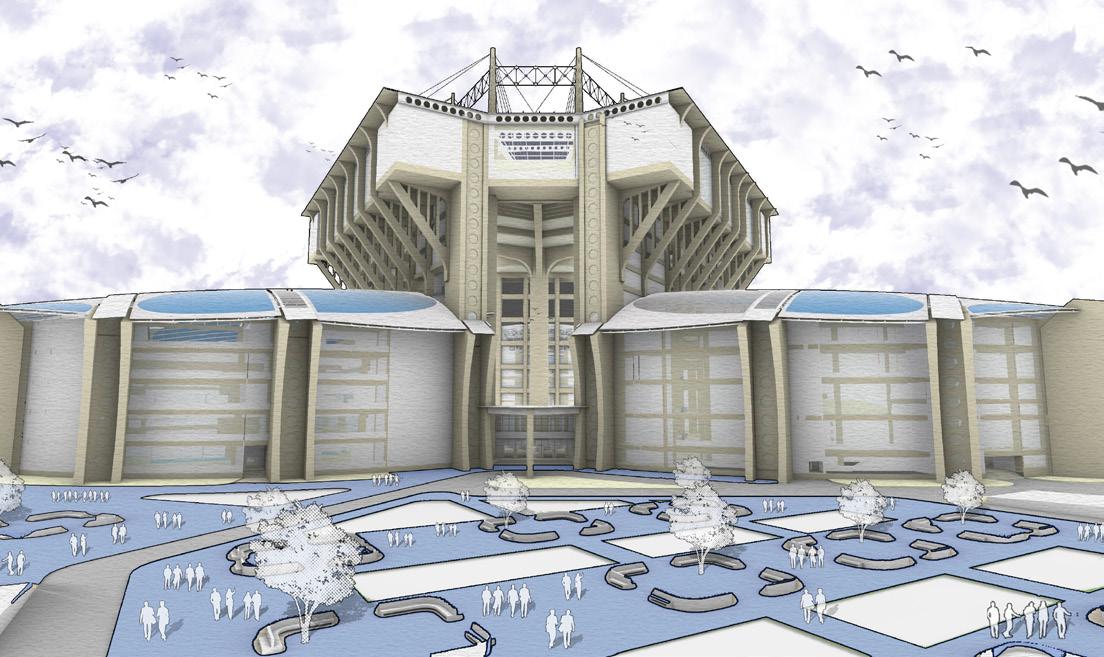
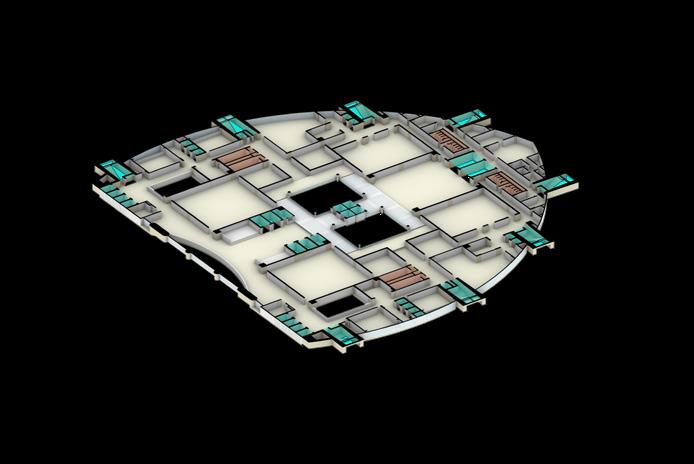
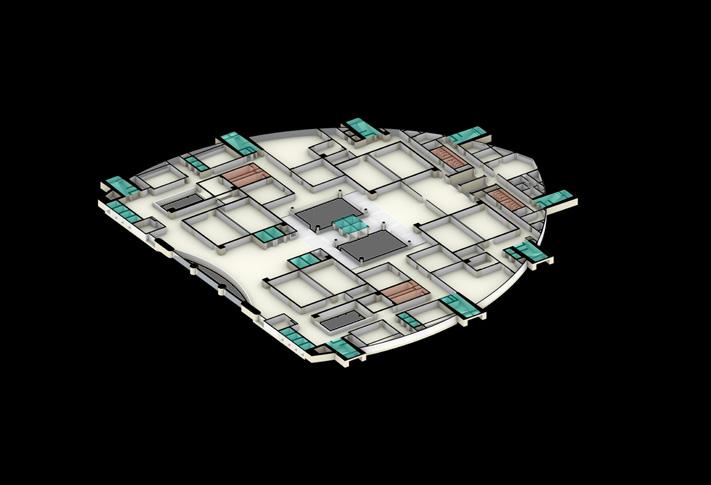
This Thesis project is focused on proposing a multi-functional built facility a Conglomeration Center, at Dona Paula, Goa to conduct various conventions, exhibitions and festivals with synergy. The facility aims to become a unique vista between the city, its people & the global community. In a long-term, the project specifically aims to become a permanent venue for International Film Festival.
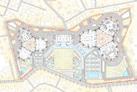
Title: Site Plan
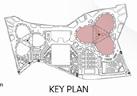
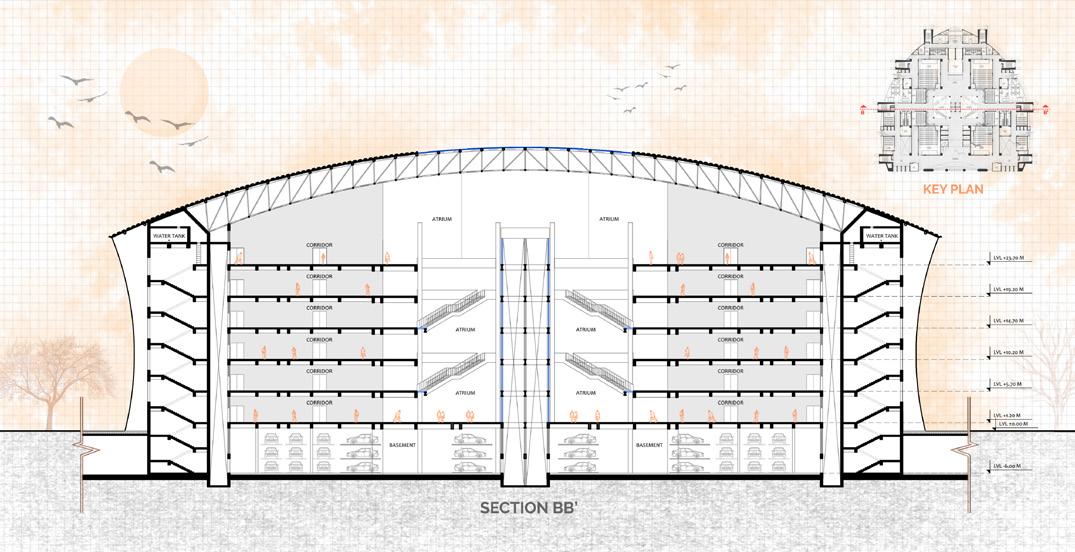
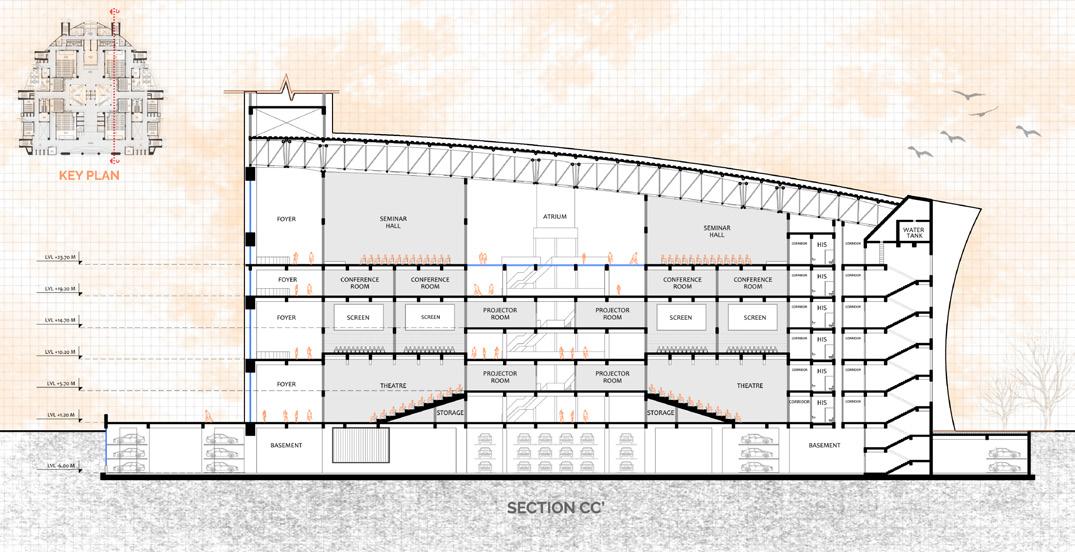
The facility comprises of 3 different complexes (right to left) - Convention Complex, Museum Complex and Film Studio Complex.
The spatial planning caters to all aspects such as volumetric aesthetics, circulation, services and other parameters.
The central open space and the 2 grand plazas each in Convention complex and Film Studio Complex are the 3 epicentres to carry out International events. Site Plan
Grand Plaza
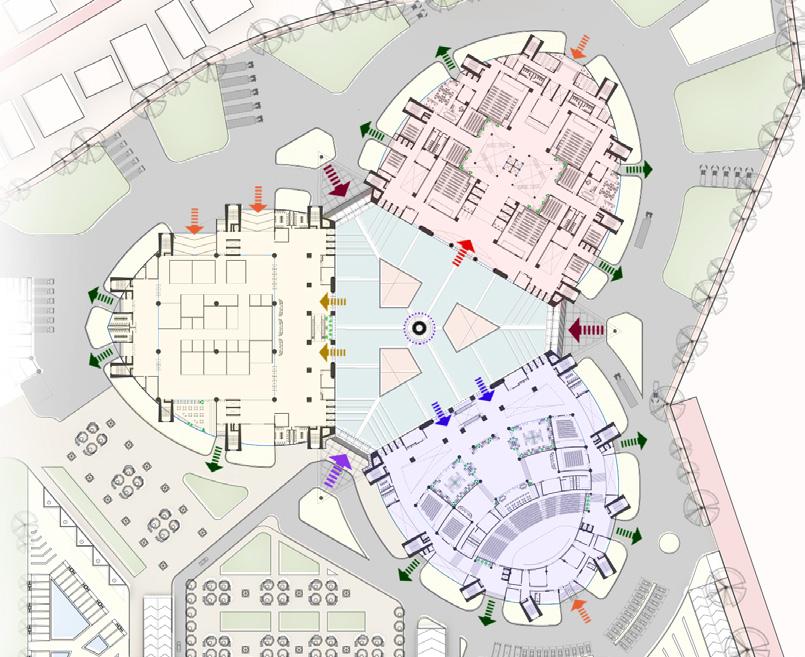
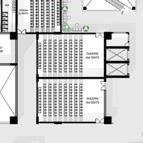
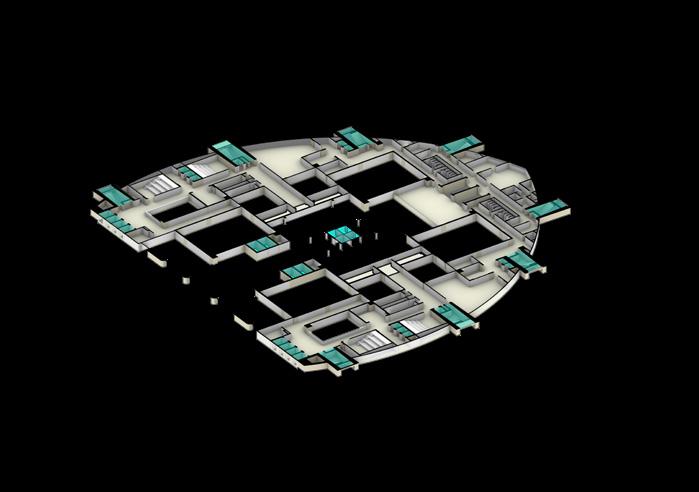
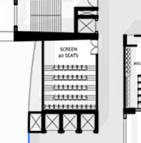
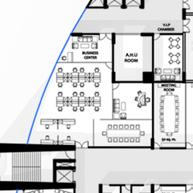
Title: Convention Complex Plan
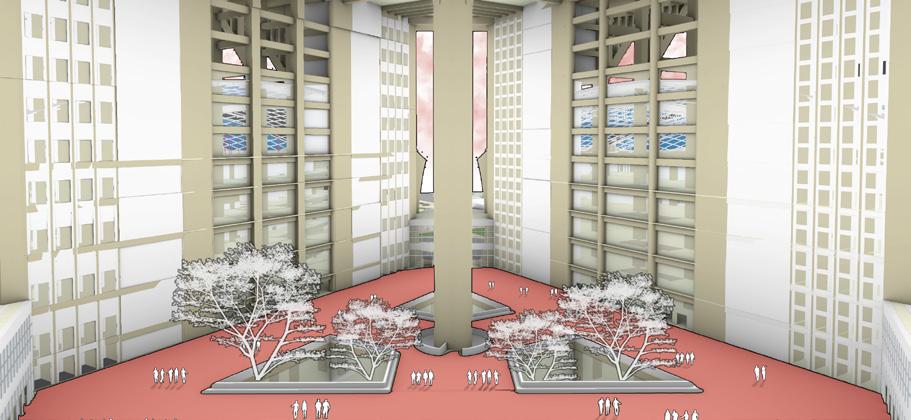
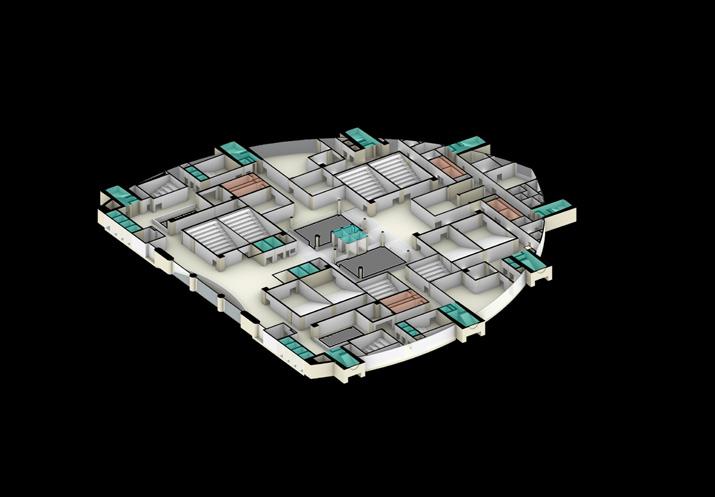
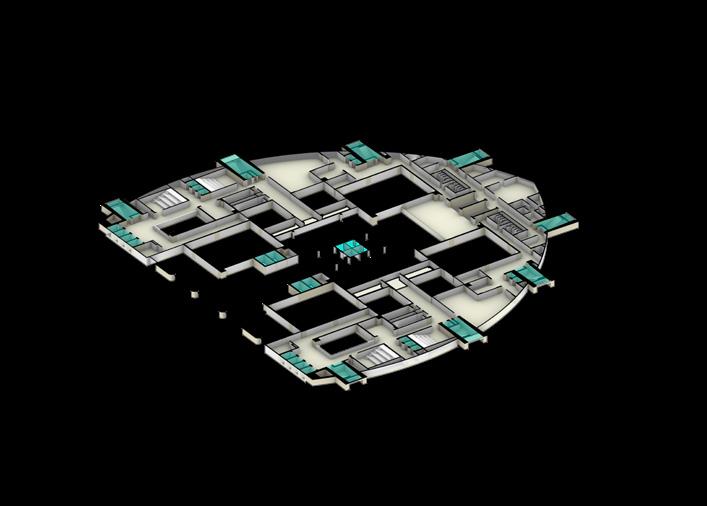
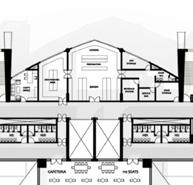
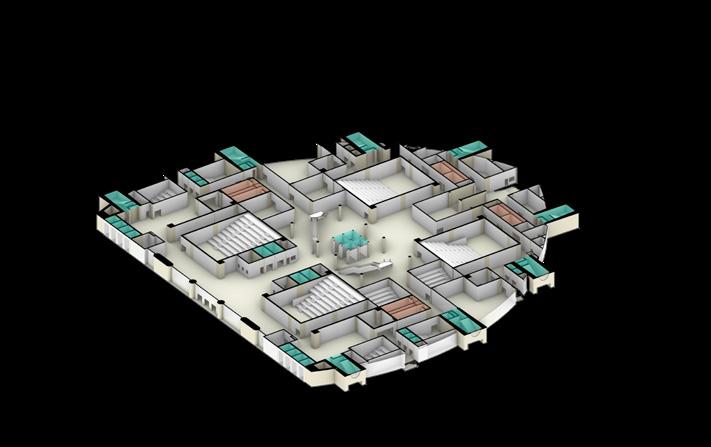
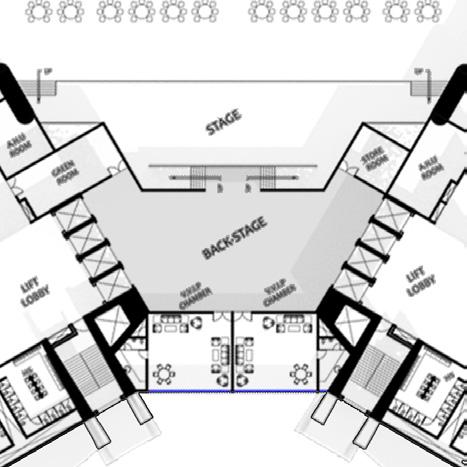
This complex is divided into 4 distinct areas (Clock-wise) - Convention wing, Auditorium wing, Exhibition wing and Grand Hall above the Grand Plaza.
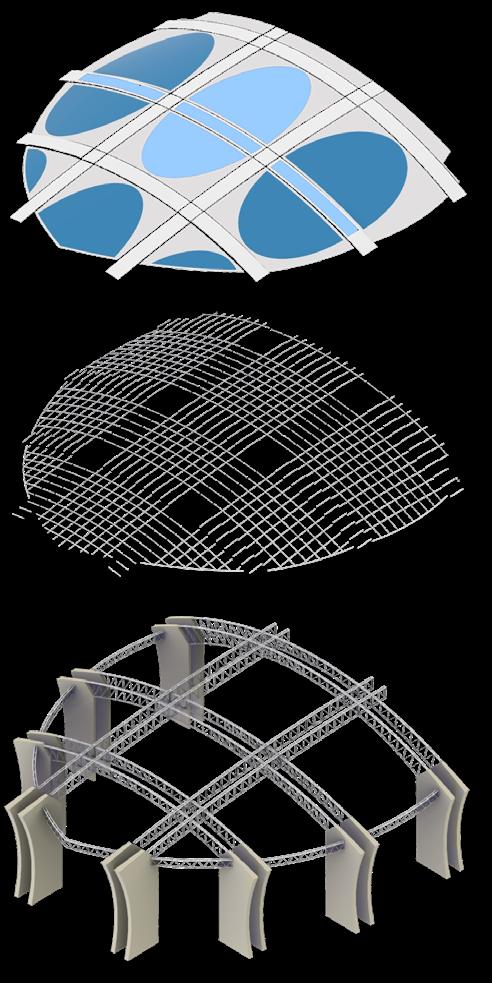
Title: Exploded Roof Structure
1. R.C.C Buttress and Steel Truss frame:
The buttresses are inspired from Churches based across the state of Goa followed by lightweight Steel Truss frames to form the skeleton of roof structure.
2. Steel Purlins:
The purlins span across the steel trusses to form a base for Roof Finishes.
3. Roof Finishes:
Roof sheets of 3 typologies - Opaque, Transparent and Solar PV Laminate are designed as per functional requirements.
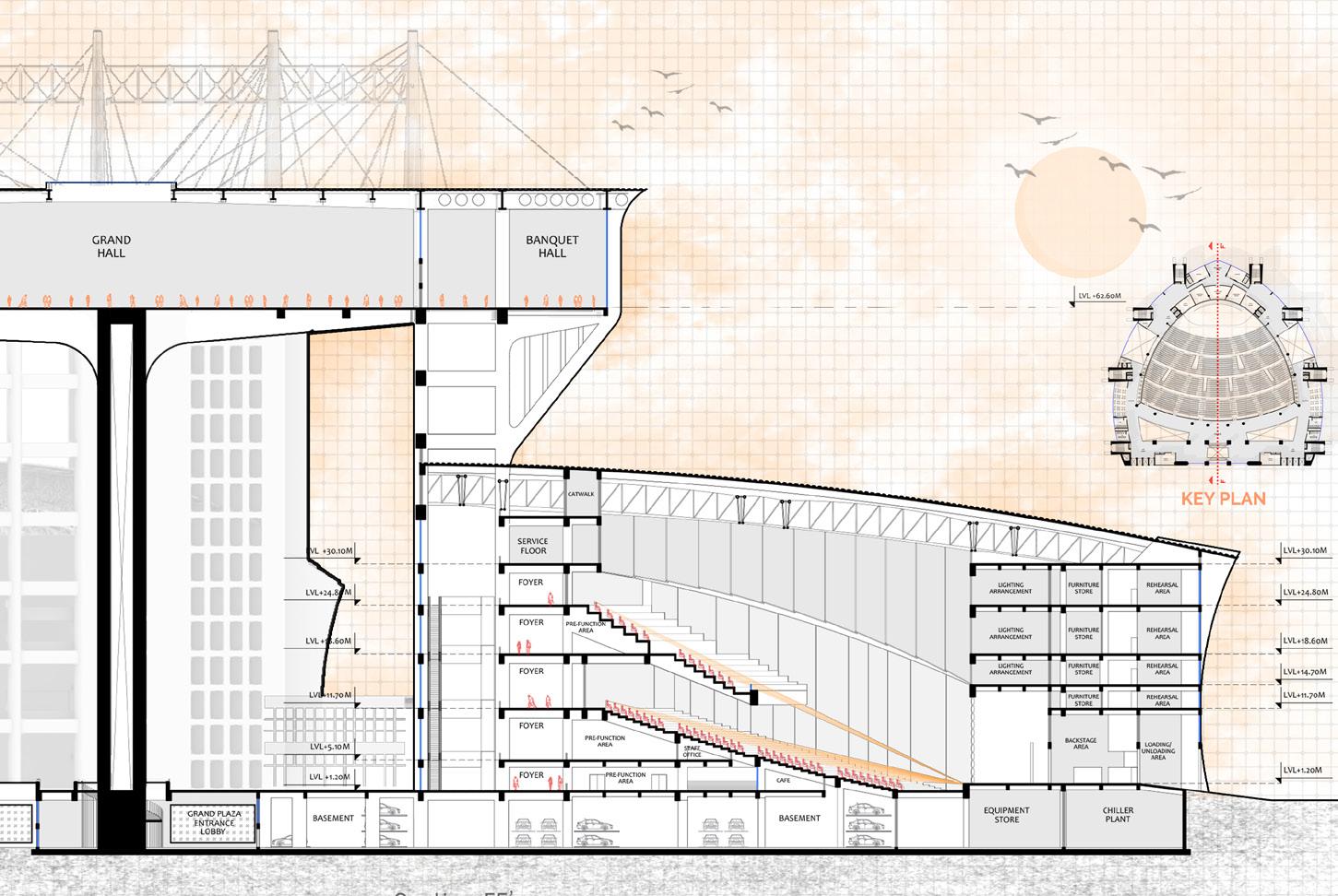
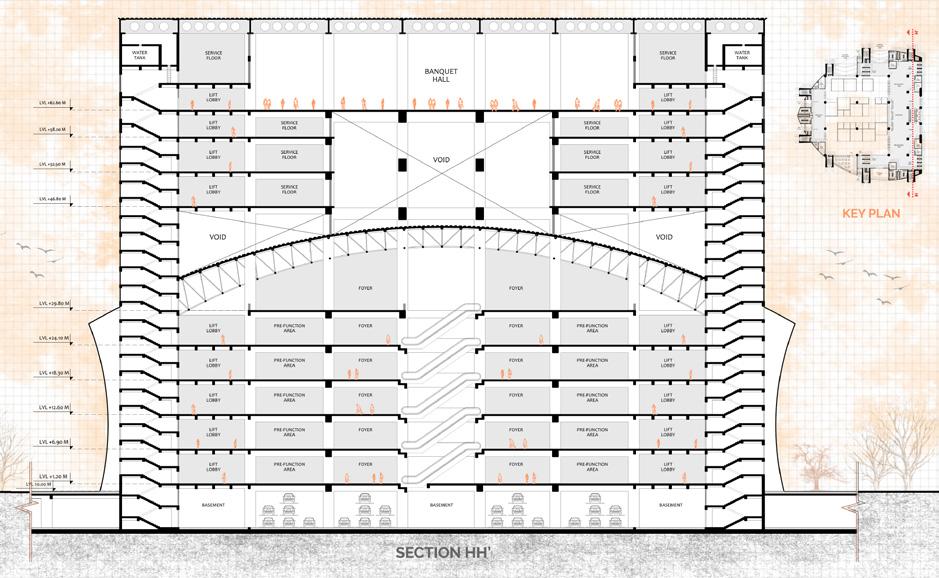
Title: Auditorium & Grand hall section
The section explains Inter-relation between multiple spaces and their respective scales and functions alongwith volumetric aesthetic of the Convention complex.
Part Site Plan (Convention Complex)
Roof Structure distinction
- Auditorium & Grand hall
Convention Complex
RCC Buttress and Steel Truss Frame
Purlins
Finishes
Conglomeration Center
5. International Conglomeration Center
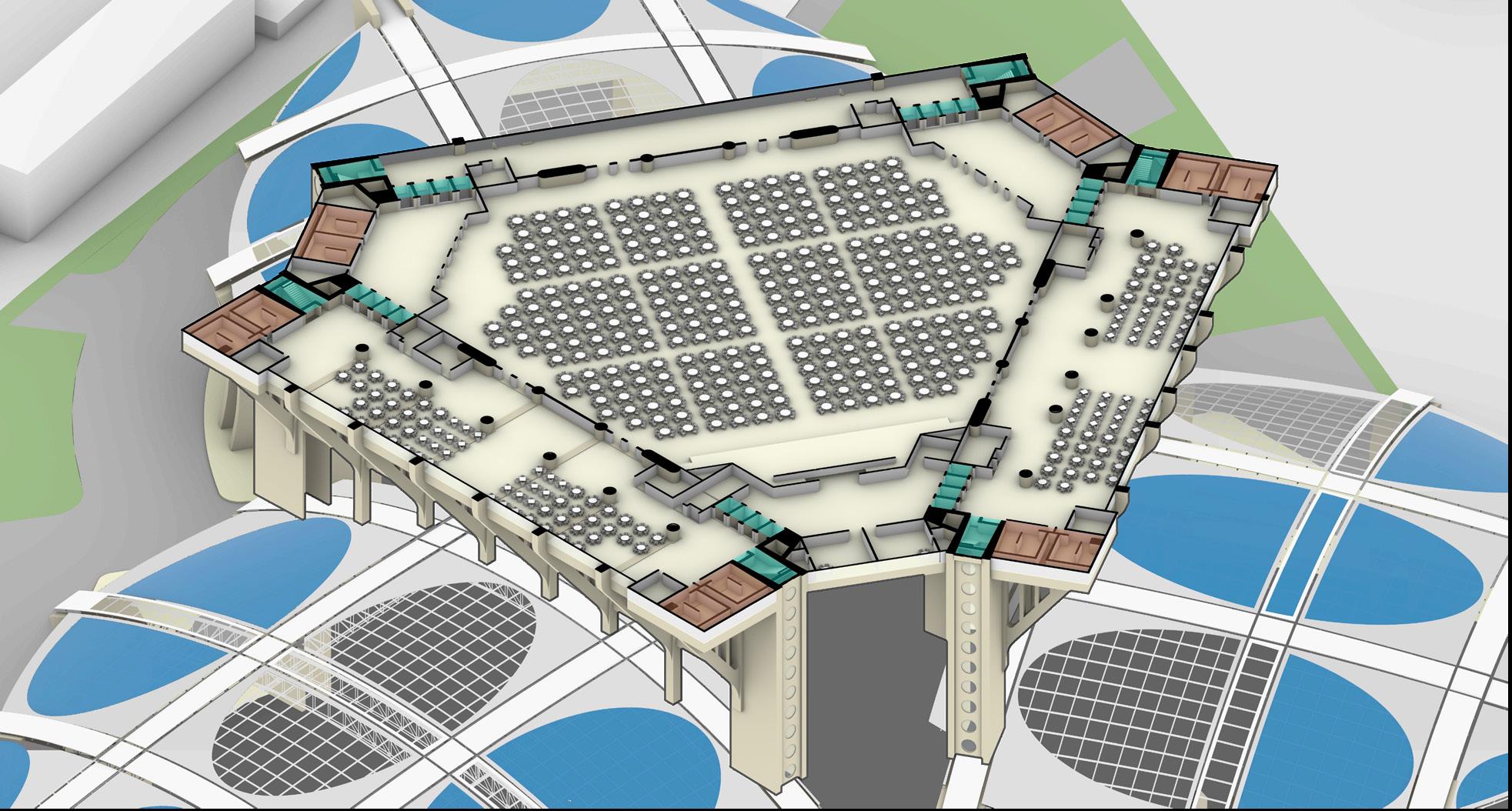
Title: Grand Hall
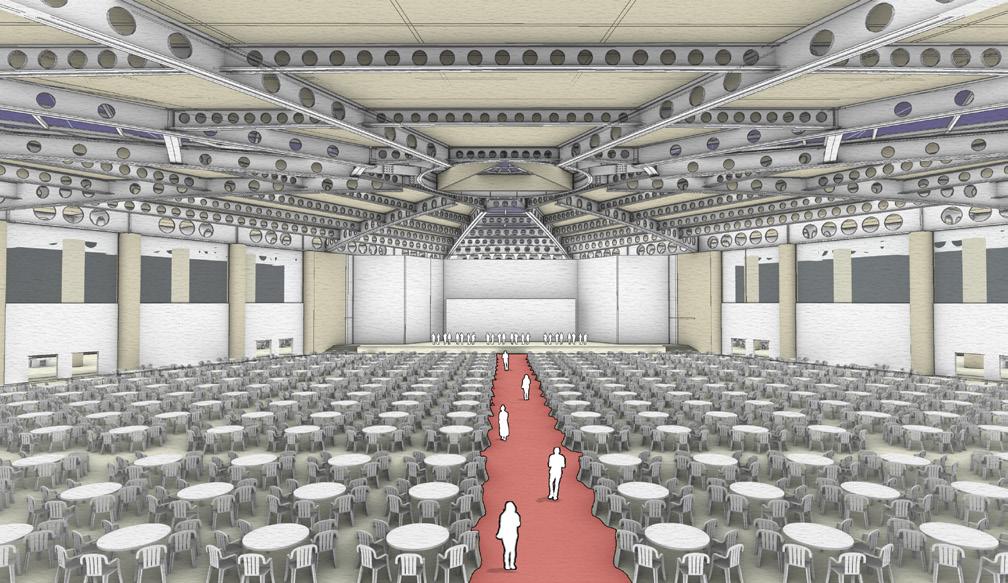
This space can house upto 5000 delegates at a time and can hold International Summits efficiently with proper crowd management.
It sits atop the grand plaza on a grand column and a framework of pre-tension beams.
Grand Hall's roof is a light-weight structure that follows suspenion cable system used in large scale bridges.