C Connecting Generations, Neighbours, and the Heart of the Valley
There’s something quietly powerful about a place where people still wave from their driveways, lend a hand when it’s needed, and show up rain, hail, or fundraiser. In this edition, we’re celebrating that spirit, the one that has always defined the Matcham–Holgate valleys.
When the Hall was built in 1915, it was neighbours coming together with local timber and a shared purpose. Over a
century later, that same spirit lives on in our ANZAC gatherings, produce shares, street meetings, and quiet acts of kindness right across the Valleys.
Some stories in this issue shine a light on those who keep our community strong. Others are a reminder that it’s the little things, checking in, lending a hand, having a chat that make this valley feel like home.
Thanks to everyone who contributed, shared a memory, gave an interview, or advertised this issue. Your support helps keep this little newsletter (and our Hall!) going strong
FRIDAY 25TH APRIL
FROM
10AMLoisEditor
AT THE HALL WITH... Hall President Ingrid
Can it possibly be half way through the year?? Our beautiful Valley has had so much to celebrate over the course of the year which you will undoubtedly read about in this exciting edition of the newsletter. I’m sure that you have enjoyed the changing of the colours as our deciduous trees turn from green to beautiful golden colours. I’m quietly looking forward to the Magnolias blossoming next month and the emergence of fruit on my passionfruit vine!
Thank you to the sponsors of our Anzac Day brunch – Kennedy Cross, Gittoes & Sandra Miller Conveyancing as well as the supporters of our silent auction which continues to be our major annual Hall fundraiser. The Hall could not continue its legacy without the patronage and support of the community.
The GoFundMe fundraiser has been a true testament to the commitment of the
The treasurer’s report will bring you up to speed with the fund-raising position for the replacement of the Hall floor.
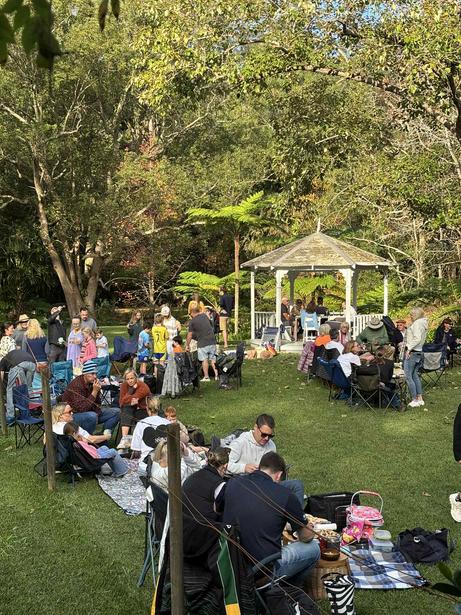
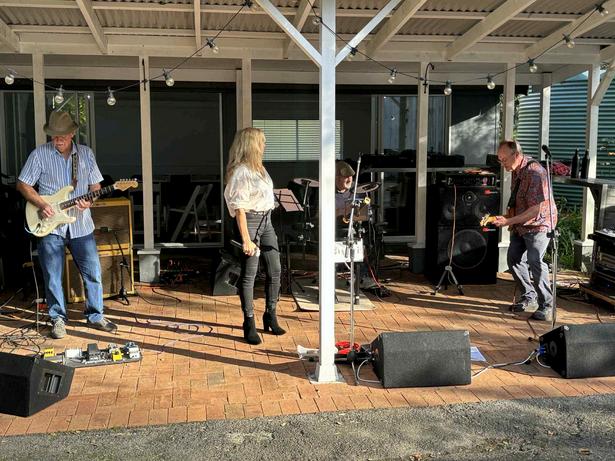
The first Sunday of June saw Fires Creek Winery host an inaugural community Sunday Sips session with popular local band Giraffe belting out the classics whilst locals and their friends made merry on the lawns. Don’t miss the next one on Sunday 21st September. This will no doubt become a popular tradition.
We recently held the Annual General Meeting of The Matcham Public Hall and the tight knit team the have been overseeing the operations have all committed to continuing with the addition of a new member. Many hands make light work!
Lastly, you may have noticed cars regularly parked outside the Hall. May saw the return of the ever-popular Baby Sensory classes Monday – Thursday and we are excited to confirm that Ann-Maree Morgan will be starting watercolour classes on a Friday.
The conditioned venue pedestrians Road. Until next time.
AThe Matcham 11th chaired was member team. taking new lease on life and a new floor!
A and meaning of community.
PRESIDENT
Ingrid Medlicott
VICE PRESIDENT
Ken Gray
TREASURER
Neil Rechlin
COMMITTEE MEMBERS
Lissa Rechlin, Brett Harris, Lois Harris, Kim Gray, Kevin Haskell, Ann-Maree Morgan, Karen Clunes.
The Hall News is made possible by the contribution of local advertisers. All of the funds raised go directly to the ongoing upkeep of the Hall. Please support those businesses who support our community.
A full colour digital version of the Hall News is available on the Community facebook page.
If you have any story ideas please email the editor lois.donaldson@me.com
UPDATE ON THE HALL Funding Status
II am delighted to share that we have raised just under $12,000 to date for the Hall floor renovation. Some incredibly generous donations from community members, including one donation from a non-resident who, through this initiative, discovered one of their direct relatives Joseph Pickett was celebrated on our Honour Roll in the Hall.
We have also been applying for grants from local and state government bodies, RSL’s, war memorial renovation funds, Bunnings etc. Grant applications are not easy – they require a lot of information (rightly) and take considerable time. If there are any community members who have a particular skill in this space –please do reach out – we would value your expertise!
So what next? We have had the final pest inspection from Norman at Pestmac (local valley business) – we have the all clear. This is important as disturbing any current termite or ant activity makes it worse not better! He has also put termite traps/baits all around the hall to ward off any future ‘attacks’.
We have a regular Hall user that does not rent the hall during school holidays. This provides us with a good opportunity to start (and hopefully finish!) the work during the October school holidays. Key tasks:
1.Remove the existing floor sheets on the kitchen side of the Hall (not the original floorboards on the other side)
2.Remove the beams and existing stumps (the pillars on which the old beams sit)
3 Replace the stumps as many are no longer in good enough condition
4.Replace the beams where necessary
5.Put a new floor down – ideally floorboards similar to the other side of the hall if possible and affordable
Whilst it doesn’t sound like that much –the discussions we have had with local builders certainly suggests its not 5 minutes work!! As this is only repairs to the existing floor we fortunately do not need a council DA. We are also not heritage listed – if we were, this would take on a whole different world of pain.
So, if you are around the first two weeks of October and perhaps want to lend a hand – there will be plenty of things the local community can do to help (where safe to do so).
Many thanks once again for the wonderful community support to date. We are still looking for extra funds. Our estimate at this stage is that we will need approximately $25k. Kennedy Cross (local accountants) have also kindly agreed to complete a report on all money raised and all money spent – we thank them for donating their time and expertise.
Neil Rechlin Hall Treasurer
0438 277 421
We offer an extensive range of residential pest control services and/or packaged programs for all common household pests & rodents
Timber pest inspection services, termite removal and prevention strategies
ANZAC DAY 2025
A Warm Community Tribute to the ANZACS
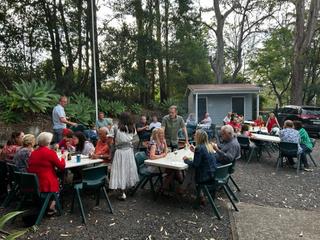
ANZAC Day at Matcham Hall began the way many of our best gatherings do with the smell of sizzling bacon and the sound of friendly chatter. Locals gathered early to enjoy a hearty bacon and eggs brunch, generously prepared by the talented VIP Private Chef team, Josh and Renee. It was a simple, welcoming start to the day, giving neighbours the chance to catch up and connect before the formalities began.
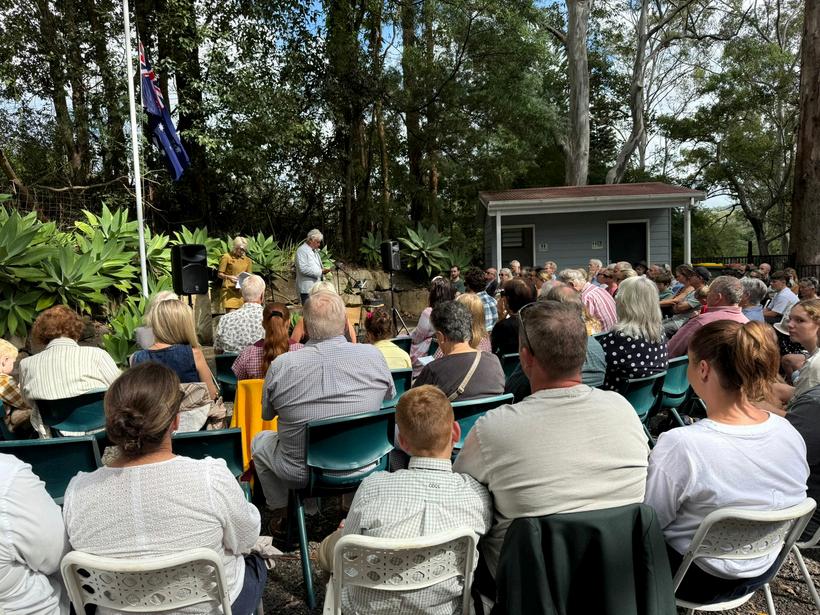
At 11am, the community moved into a more reflective mood as the service began with a powerful didgeridoo performance and Acknowlegement of Country by Brenden Moore, a proud Biripi man. It set the tone beautifully for what followed, a respectful, community-led service that was both heartfelt and gently informal, true to the spirit of Matcham.
Local Biripi Man Brenden Moore’s Acknowledgement of country
Hall President Ingrid Medlicott welcomed everyone and reminded us of the legacy of the Hall, donated in 1915 to honour the local men and women who served. This year marks the 110th anniversary of the Hall. Their story came to life through a reading by Lois Harris, who shared a 1915 article from the Gosford Times & Wyong District Advocate describing a lively dance for the local Matcham boys to farewelll the locals going off to war held in the very same hall.
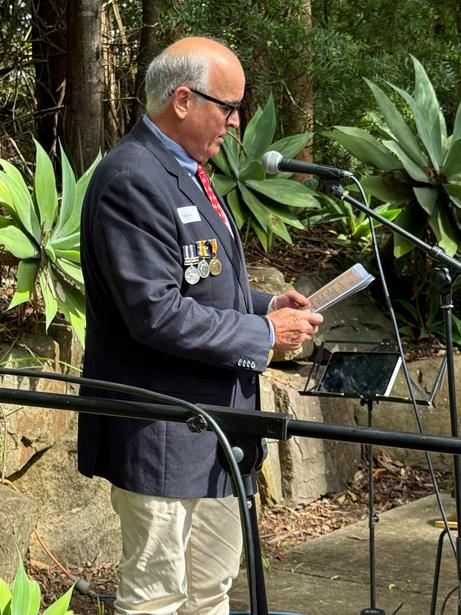
The service included thoughtful prayers, reflections and poems delivered by Ken Gray, Neil Rechlin, local school pupils Audrey Spencer, Bella Nealon, Malita O’Connell, and Stephen Gittoes, who shared a poem written by Captain A H Gribble and dedicated to his great-greatgrandfather, Major Morris Boam.
“To me Anzac Day means Joy, busy-ness and service. It’s the coming together of locals, and it unites our local community, which is something I look forward to and really enjoy doing”
Ken Gray Matcham Hall Committee
Stephen Gittoes dedicated his reading to his great-great grandfather
We also paused to acknowledge the recent passing of Mark Bunyan a long-time resident and past member of the Hall’s managing committee whose quiet dedication helped shape the ANZAC Day services we know today.
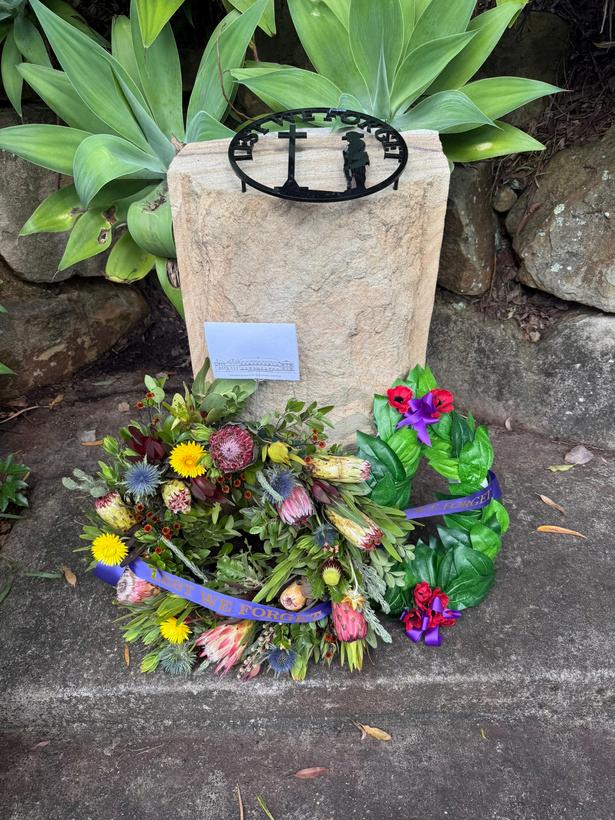
Wreaths were laid by Ian Medlicott on behalf of the Hall and Alan Papas on behalf of MP Adam Crouch, followed by The Ode, a stirring Last Post and Reveille performed by John Wiseman, and the National Anthem led by Peter Moroney.
As always, the day would not have been possible without the generous support of our volunteer Hall committee, sponsors Kennedy Cross Accountants, Sandra Miller Conveyancing, Gittoes, and many local businesses and individuals who contributed to the silent auction.
The formalities ended, but the community spirit carried on with laughter, lively conversation, and a spirited round of Children’s 2UP our own Matcham Holgate tradition. It was a day of remembrance, connection, and pride, simple, sincere, and filled with the kind of warmth that defines this valley.
Anzac Day Service began at the Hall in 2009
Service led by locals Ingrid Medlicott & Ken Gray
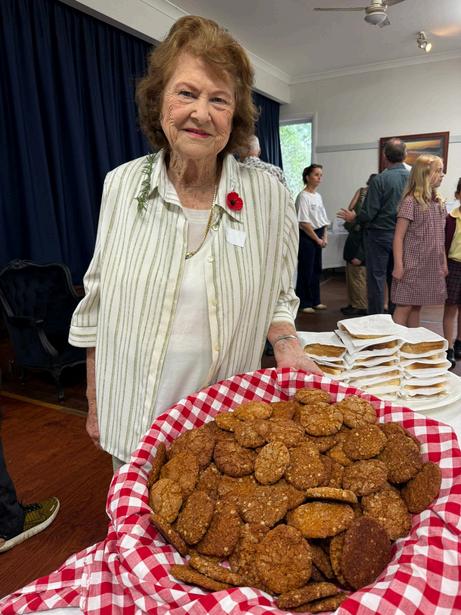
90 year old Vesta Harris makes over 100 Anzac biscuits every year for the community to share at our Anzac Day service and they are delicious!
Vesta’s Anzac Biscuit Recipe
1 cup of each plain flour, coconut, sugar and rolled oats
125g butter
2 tablespoons golden syrup
2 tablespoons of hot water
1 ½ teaspoons of bi-carb soda
Put the butter and golden syrup in a very large bowl and melt it. Then add the water into the bi-carb and tip into the butter and golden syrup. Mix into the dry ingredients.
Pop in the oven 150-160 for 10-12 minutes. This recipe makes about 18. You cannot double the mixture.
VESTA’S HOT TIP – Put the mixture in the fridge overnight
SUNDAY SIPS
Raising Spirits (and Funds) for the Hall
On the first day of winter, over fifty adults and a lively tribe of kids gathered at the beautiful Firescreek Winery for Sunday Sips, a relaxed outdoor fundraiser to help restore the ageing floors of the Matcham
The idea came from a few locals who wanted to do something small that could make a difference and in true valley fashion, the community rallied The band donated their time and talent, the winery offered the venue, and $5 from every cellar door drink sold was added to the hall fund.
Thanks to ticket sales and generous donations on the day, the event raised over $1,700—a fantastic result for just two hours in the sunshine. Treasurer Neil Rechlin thanked the crowd for their support and confirmed that the total funds raised so far for the flooring project puts the committee in a strong position to apply for matching grant funding.
SUNDAY 21 SEPTEMBER st 2PM
Local band Giraffe donated their time & tunes to Sunday Sips fundraiser
BUILT BY HANDS AND HEARTS
The Spirit that built and sustains the Matcham Hall
Back in 1915, a group of local residents, farmers, orchardists, and communityminded neighboursdecided the valleys needed something more than just paddocks and produce. They needed a place to gather. A space to farewell those heading off to war, to welcome them home again, and to build connection in what was then still a fledgling community. So, in true valley fashion, they pitched in. Someone donated the land, others brought tools, and together they built Matcham Public Hall, by hand, by heart, and by the community.
It wasn’t long before it became the centre of valley life. In fact, the Hall was so well used in its first few months that it had to be extended almost immediately From that moment on, the Hall became more than just four walls and a roof, it became the beating heart of the valleys.
And it’s stayed that way for over 110 years.
From the first Progress Association meeting in July 1915 right through to today, the Hall has been kept running entirely by volunteers. Committees have come and gone, some well-known, others quietly effective but all have shared the same mission: to keep the Hall alive, open, and meaningful for the community it was built to serve.
In the 1930s, committee meetings were held by lamplight. In the 1980s, locals rallied to stop the Hall being sold. In the 1990s, it was falling into disrepair until a passionate group of residents stepped up with paintbrushes, pot plants, and a whole lot of elbow grease. They replaced curtains, installed fridges, planted trees, and quite literally saved the place. In 1992, the Hall was officially incorporated, securing its place as a true communityowned space.
Today? Well, we’re waging a quieter war against time, termites, and wear-and-tear. From co-ordinating bookings and fundraising, to tending the garden and yes, cleaning the loos, it’s our volunteers who keep the Hall going, week in, week out.
But the spirit of the Hall isn’t just about who runs it it’s about what it holds.
Over the years, Matcham Hall has hosted it all: Sunday school and bush dances, trivia nights and birthday parties, school concerts, pony club presentations, sausage sizzles, art shows, odd disco and even Pickle Ball. It’s where ANZAC Day services are held and community voices rise on issues like fire safety, development, conservation, and road upgrades.
It’s also where many of our most important local campaigns began from roade safety to stopping powerlines fr carving through our bushland. The Hal not just a place for parties it’s a pla where people come together to prot the place they love.
That consistency of purpose is what’s extraordinary. The Hall was built to be place to meet, to commemorate, and celebrateand for more than a century, that’s exactly what it’s done.
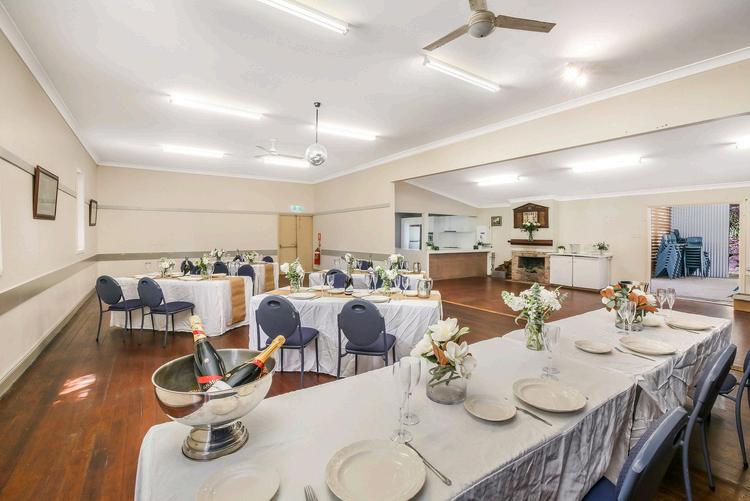
From Community Meetings (left) to xmas parties (bottom left), to weddings (top right) and local garden club meetings (above ) and this open party invitation from March 27 1940 in the Gosford times - the Hall has been a community hub for 110 years.
Where Luxury Meets Personalised Service.
“Adrienn and her team are by far the best Real Estate Agents I have dealt with. They came with positivity, experience, and an honest attitude for the sale of my property. I would recommend them to anyone selling.”
Vendor - 133 Coachwood Road, Matcham
prestigeproperties.com.au
WHAT’S ON AT THE HALL
Start your Watercolour Journey with Ann-Maree
Fresh from her art residency aboard a Grand Cruise with Holland America Cruise Lines, where she taught students from around the globe, watercolourist, AnnMaree is now offering beginner-friendly workshops right here at Matcham Hall.
Whether you’re picking up a brush for the first time, looking to refine your technique Ann-Maree’s classes will guide you through the essentials.
Fridays, 9:30am – 11:30am. During school terms, starting July 25th, at Matcham Hall.
Only $35 per class (materials provided) or just $25 per class (BYO materials) Book your spot now! Enquiries annmareemorgan@gmail.com
Baby Sensory Classes at the Hall
These multi award-winning classes will introduce you and your baby (or babies) to a wonderful world of sensory delights, where you can relax, spend quality time with each other and meet other new parents.
The programme has been specifically designed for babies from birth to 13 months, to aid your child's development . The classes are research based and packed with an incredible variety of activities.
Classes run Mon-Thur during school terms.
Enquiries 0490 0412 928 or visit centralcoast-nsw@babysensory com
Forprompt,friendlyandprofessionalservice,callPat.
Services include:
• Plumbing maintenance and repairs.
• Drainage.
• Gas fitting.
• Hot water system installation, replacement and maintenance
• Pump repairs and replacement.
• Drain cleaning using a high-pressure water jetter.
• CCTV drain camera for inspection of sewer and stormwater pipes.
• Servicing the Valley and surrounding areas since 1990.
• Over 40 years experience.
• Licensed and fully insured.
Pat Brennan
DELIVERING MORE THAN THE NEWS
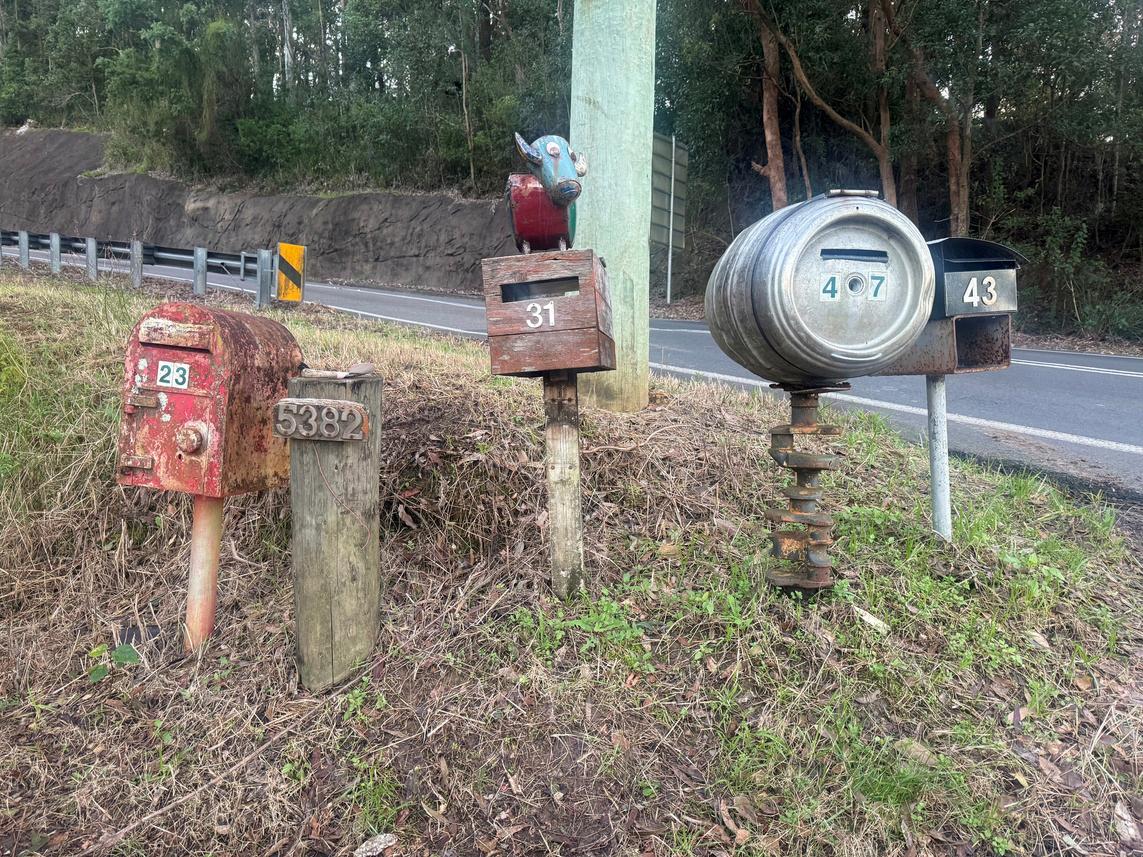
Meet the locals who keep our community connected one letterbox at a time.
Since the very first edition hit letterboxes in 1987, the Hall News has been a labour of love kept alive entirely by volunteers. From writing and editing to folding and hand-delivering, it’s the generosity of locals who’ve freely given their time that’s kept the pages turning and the community connected.
Over the years, delivery routes have changed hands and long-time helpers have moved on. But every time, someone new has stepped up to take the baton. In this issue, we shine a light on some of the friendly faces who make sure the Hall News reaches your mailbox.
Joy and Ross Robinson
Our families have holidayed on the Central Coast since around 1950 Joys family had a holiday house at Point Clare whist the Robinsons started camping at Avoca Beach, in the reserve opposite the Picture Theatre. Over the years our families have had holiday houses at Point Clare, Wamberal and Bateau Bay. After living in Beecroft for over 30 years we decided to move to the coast as we already had an established circle of friends.
In 2007 we purchased our piece of paradise in the rainforest at Holgate. In 2017 we offered to deliver the Hall News in our area. At first we enjoyed the walk around the area but with aging we now take the car. It takes us about half an hour to deliver to Pollard Close, our end of Wattle tree Road and Patterson Close. We enjoy taking in the bird life and seeing how the other half live.
The Hall News is an excellent source of Information and news in our valleys. We feel privileged to live in such s beautiful environment with friendly and helpful neighbours
Sandy Temperley
Our family moved to Oak Rd in 1988 and I joined the Hall committee soon after. The committee used to meet at my home (to save getting a baby sitter as hubby was at work) and assemble the newsletter by cutting and pasting the articles onto paper for the printer.
I’ve held various positions over the yearssecretary, bookings person, event organiser etc. Elisabeth Smith used to deliver the newsletters along all of Oak Rd, Mcgarrity & Blue Gum Close- when she moved out West I took over her run.
One of my favourite memories is a beautiful horse called Henry who lived in our paddock for many years- driving down Oak Rd with him pulling the “pony and trap”wasn’t much traffic in those days. Another memory is the Red Bus driving everyone home when the Oak Rd creek was up (and meeting the neighbours with chainsaws when trees fell down!)
Thankyou to our delivery team - you rock!
Kim & Ken Gray
Stephen Gittoes
Monique Jacobson
Sandra Rae
Mike Simpson
Ingrid & Ian Medlicott
Sandy Temperley
Ross & Joy Robinson
Trudi Rockoff
Sam Pethen
David Broughton
Mindy Carr
KINDNESS THAT TRAVELS Matcham Locals Reach out after
Taree Floods
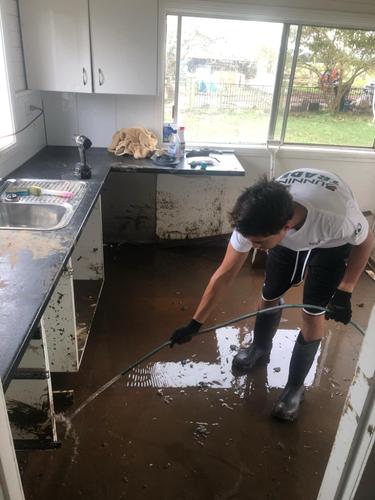
Transition Angels is usually the team you call when you're moving house, but when devastating floods hit Taree in late May, Matcham local Jenni and her team shifted gears from relocation to relief. Stories like this remind us what truly matters. While the news often moves quickly past disaster headlines, it’s the quiet acts of kindness that continue to make a difference long after the waters recede. Here founder of Transition Angels Jenni shares this wonderful story of community spirit.
Inspired to get involved
We saw the devastating impact the floods had on families in Taree, and it hit close to home. We’ve supported many people through life’s big transitions and felt compelled to do something practical and immediate to help them rebuild, starting with the basics.
We spoke directly with people on the ground and asked, ‘hat were some things they needed right now to get back on their feet’. Overwhelmingly, the answer was appliances fridges, washing machines, dryers and things essential to daily living that are expensive to replace. That’s where we focused our efforts.
Making it happen
It was a big task, but the community made it possible. We offered to pick up donations ourselves, cleared space to store them temporarily at our warehouse, and coordinated multiple trips to Taree. People were generous with both items and time. It really was a communitypowered effort.
Families across the coast and our clients past and present all rallied together to support the drive, donating items that they could have sold to earn some extra cash that they generously chose to donate.
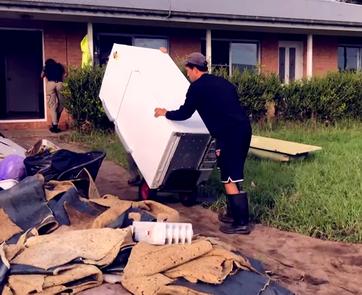
The team at Transition Angels delivering whitegoods and hope to those impacted in Taree Floods
We filled two trucks and a large van with household items, mostly fridges, washing machines, dryers, a few kitchen appliances, couches, and mattresses. We delivered the items to a local family in the area, who generously stored them in their shed. We also facilitated local drop-offs directly into the homes of families identified by local Taree support networks and community members.
The gratitude was overwhelming So many people had been living without the bare essentials, and just seeing a truck arrive with help brought visible relief. One woman hugged us through tears as we wheeled in her new fridge. It was a powerful reminder that even small comforts can mean the world when you've lost so much.
Among the many stories we heard, one stood out: an elderly couple waited for hours to be rescued, trapped in floodwaters with their cattle, they lost their home and possessions but were relieved to save their animals. We were
able to help restart their tractor and delivered donated furniture, which was a small step to helping them rebuild from the devastation.
Another family where a single mum, her children, and her mother had their farmhouse filled with contaminated mud. We were able to provide a washing machine and fridge to help them start over. The generosity from our local community was overwhelming. Families donated valuable items without hesitation, showing the true meaning of compassion.
The Matcham-Holgate community were incredible. The support came in fast within days we had more donations than we expected. The kindness, generosity, and teamwork from our local community was overwhelming in the best way.
It says we show up. We look after each other When someone’s in need, we pull together whether it’s across the street or across the state. There’s a strength and compassion in our community that makes things like this possible.
ON THE FRONTLINE & IN THE COMMUNITY
Meet Ian Goodman Captain of the
Matcham-Holgate Rural Fire Brigade
From pile burns to Santa runs the MatchamHolgate Rural Fire Brigade plays a vital role in valley life. At the helm is Captain Ian Goodman, who leads a team of dedicated volunteers and champions a deeper truth: strong communities are built on showing up for each other. We spoke with Ian about what first inspired him to volunteer, how the brigade operates behind the scenes, and why the Rural Fire Service is about more than just fighting fires.
A Spark of
Inspiration
I initially joined Matcham-Holgate Rural Fire Brigade because I believed that if my family home were ever under threat from fire, I would certainly appreciate a group of locals turning up with a fire truck to help So, it seemed only right that I volunteer to do the same for others. Being there for your neighbours in times of need is a valuable contribution to building a strong community.
The Matcham-Holgate community has always been a wonderful place to be part of. Joining the local Brigade helped with getting immersed in the community. Through Brigade activities, I've formed meaningful friendships and connections with many locals on occasions during challenging emergency situations which naturally creates stronger bonds.
In a strong community, we all pitch in to help each other in ways that align with our individual capacities and skill sets. Not everyone can do everything, but everyone can do something, and it’s this mutual contribution that makes a great community I've chosen to assist at the Fire Brigade, others are involved with the school P&C, or manage the community
hall, coach in a sports team, manage a pony club, run community interest groups, or publish a local newsletter, there's no shortage of ways to contribute, and strengthen connection with the community It’s the age-old saying: you have to give to receive, and you need to get involved to truly be involved.
The Local Brigade
The Matcham-Holgate Brigade is extremely fortunate to have a high calibre of volunteers. Our membership is a fantastic social mix of men and women, each bringing different strengths and levels of experience to support the Brigade in serving the community.
We have also been privileged to learn from local RFS legends such as George Slennett, who recently celebrated 50 years of volunteer service with the Matcham-Holgate Brigade and remains an active member of our executive team. Additionally, the late Jenni Farrell, who was recently recognised in the Australia Day National Honours List for her lifetime of service to Australian Fire Services.
Know Your Risks: Unique Challenges in Our Area
Our local area features a variety of landscapes and vegetation, each presenting different bushfire risks. The risk to individual homes largely depends on their location, aspect, and the surrounding vegetation. However, there are some common risks that affect many:
Limited road access: Most of the roads in our area have only one entry and exit point If access is blocked in an emergency, residents may find themselves unable to leave. We recommend making the decision to Leave Early before roads may become cut off and always have a Plan B in case you cannot evacuate.
Lack of a Fire Plan: Many households do not have a Bushfire Survival Plan that all family members understand, including when and how to act during a fire event. Preparing a Fire Plan is simple but can make an enormous difference in an emergency. We can provide guidance on putting together a Fire Plan please contact us anytime or attend one of our Street Meetings scheduled for spring.
Know your neighbours: Check in on your neighbours and exchange contact details. In an emergency, you may need each other's assistance or resources to get through a challenging situation.
Water supply: Most properties in our area rely on tank water. Bushfires are typically at their worst during hot, dry conditions often when water supplies are already low. We recommend maintaining a dedicated water supply with easy access for firefighting purposes.
Safe pile burning: Many bushfire incidents in our area are caused by pile burns that either get out of control or create spot fires from falling embers. That’s why we regularly promote safe pile burning practices. Ensuring appropriate pile sizes and safe burning conditions significantly reduces the risk of starting an emergency.
Property maintenance: Now is a great time to clear your property of autumn green litter and tidy the garden while you’re getting a break from lawn mowing
If you have any questions, please don’t hesitate to contact us or attend one of our S
These moments of connection are just as important as what happens on the fireground because they build trust, strengthen community resilience, and foster a sense of belonging. Events like street meetings, Santa runs, and community gatherings help create those personal relationships that can save lives in times of crisis They also provide an opportunity to encourage new volunteers to join, ensure important safety messages are shared, and remind everyone that community safety is a shared responsibility—not just something that happens when the fire truck arrives.
Besides - we're all a kid at heart, and the Brigade Santa Run is an event everyone looks forward to.
Get
more than you give
Speaking personally, I originally joined the Brigade with the simple aim of contributing to the community. I’ve achieved that, but what I didn’t expect was the incredible amount I would learn and the fantastic friendships I would form along the way. Not only have I gained valuable knowledge about fire management through the organisation’s formal training programs, but I’ve also developed a range of personal skills through mentorship and teamwork with
From Street Meetings to Santa Runs
fellow Brigade members, which was something I did not expect. I’ve met some great people many of whom I now consider lifelong friends.
Training and safety are central to everything we do, so there’s no need to worry about getting involved without experience.
If you’re considering joining but aren’t sure what to expect, don’t hesitate to get in touch. The Brigade holds training every Thursday evening from 7:30 pm, and anyone is welcome to drop by, meet the crew, and have a chat.
If you're interested in learning more, or have any questions, please don’t hesitate to contact us via our Facebook page:
www.facebook.com/matchamholgat erfs or email us at: matcham-holgate@rfs.nsw.gov.au or call the Station on (02) 4367-7563.
“THE MOST MATCHAM THING I’VE EVER DONE”
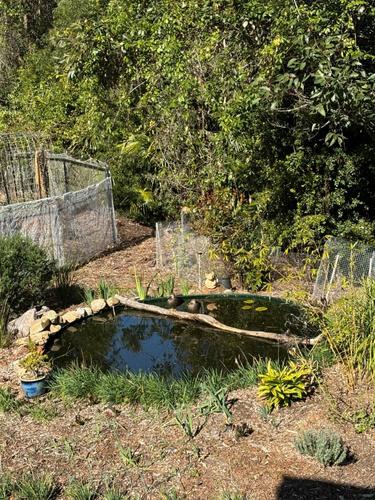
When a water tank split, a lotus pond bloomed — thanks to permaculture, neighbours, and a whole lot of heart. Meg McGowan, passionate gardener, writer, permaculture advocate and active member of the Matcham community shares her story.
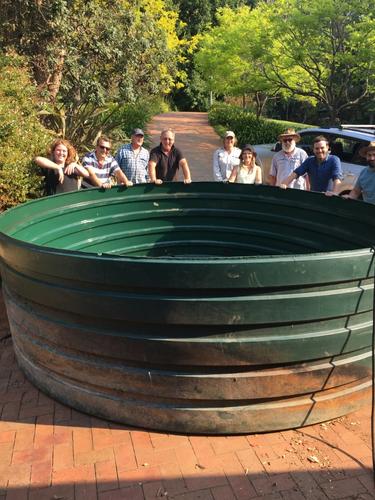
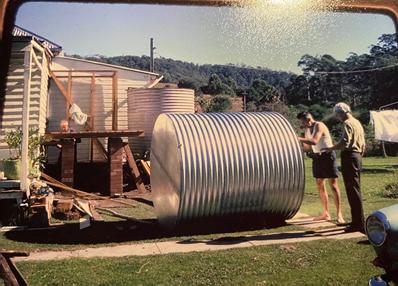
It started with a phone call from my nearneighbour, Dimity. Their plastic water tank had split and she was wondering if I had any ideas about how to avoid landfill. “Sure,” I replied, “cut the top in sections to make raised garden beds. The bottom section can be a pond. Actually, I’ve always wanted a lotus pond!”
We had a plan, but we needed help. I put a call out via the local community Facebook group and the Central Coast permaculture community. We quickly had all the people we needed and a borrowed trailer from another neighbour. contribution to people care.
My “pond” needed to be turned side on and rolled around the side of the house. What seemed an impossible task was easily
achieved with careful manoeuvring, and we all walked behind to see it safely delivered to our garden. At the end of our adventure, my neighbour, David, said, “I’ve done a lot of Matcham things since we moved here, but that’s the most Matcham thing I’ve ever done!”
At the heart of permaculture are three core ethics, “earth care”, “people care” and “fair share”. The test as to whether or not anything is permaculture is that it must align with all three ethics. Without community I can’t imagine how my pond would have happened. No neighbour calling me, no help to move it and nobody to share the joy of it once it was done.
There are mountains of research into the benefits of living in supportive communities. They provide us with safety, joy and significant health benefits, including better mental health. It’s also worth considering what happens when you don’t have community. Loneliness feeds depression, anxiety and poor physical health, and direct conflict with neighbours does the same During my time as a police officer I saw many otherwise reasonable people behaving in unacceptable ways because of a fight with neighbours.
Communities also cause a reduction in crime, because people look out for each other, easily spot suspicious people and help to keep properties safe when neighbours are on holidays. That’s a huge contribution to people care.
So that leaves us with earth care and fair share, which is why I’ve included the story about the tank. It’s just one example of how living in community also benefitted the earth through sharing fairly. The pond I’ve created is now habitat for native frogs, dragon flies, water dragons and ducks (who much prefer the pond to our swimming pool) so there’s some more “fair share” and we kept a whole lot of plastic out of landfill.
Our produce share is another example of how we can share our surplus, build community, reduce waste and provide care for people in just one hour a month. People bring along things to share and get to meet other people, have a chat, catch up on local news and take home something they didn’t have. For anyone without something to share there is a donation jar, and we choose a local charity each month, so sharing goes beyond each other. The whole thing is run by volunteers, as are so many of our community groups, including Wildlife Arc, the local RFS brigade and our great Community Hall.
Facebook might not seem like much of a match for permaculture, but when you use it to create a group where the focus is on building community and helping each other, it can be. Over the years we’ve seen our community Facebook group reunite pets with owners, bring together people with concerns for community safety, support people during natural disasters, educate people about risks to local wildlife and, perhaps best of all, promote the benefits of our beautiful local diamond pythons. It has also become a way for people to share things they no longer need, and for people to borrow things from others. All of this sharing benefits the earth, and the people in our community.
These days when people talk about their “tribe” they are usually describing a like-
minded group of people with common interests, and social media has made it possible for people to find connection with those that agree with them, but I think a real tribe is full if diversity It includes a wide range of opinions, beliefs and practices. Real tribes challenge us to respect the fundamental rights of everyone, even if we don’t see eye to eye. One of the permaculture design principles is “value diversity” and this applies as much to communities as it does to gardens. Monocultures are fragile.
COME ALONG TO THE MONTHLY MATCHAM
HOLGATE PRODUCE SHARE
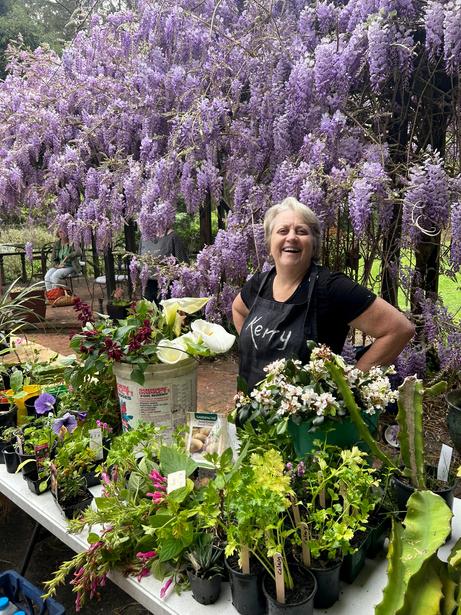
10am sharp on the 2 Sunday of every month rail, hail or shine at Fires Creek Winery. Bring your produce to sharefrom plants to fruits and veggies, home made pickles and jams etc or make a small donation to our charity of the month.
SAVE THE DATES
Meet Kerry one of the volunteers who make Produce Share happen
A LIFE ROOTED IN HOLGATE
Gwen’s story of Family and Community
My name is Gwendoline Margaret Rafferty (nee Tucker), always known as Gwen. I am now 87 and have not lived in Holgate for many years but it is where I grew up on Wattle Tree Road, went to school, left home at 16 to go to university but visited regularly until my parents died and my brother Arthur and his family moved away from their home on Paroo Rd. I went to Newcastle to University, briefly tried school teaching, but became a librarian for the rest of my working life. I have always retained an interest in the area and have frequently driven through it over the years, being fascinated by the way it and Matcham have changed.
Growing up in Holgate
In my young days Holgate was a fairly sleepy rural district with most folk involved with farming. The roads in Holgate and Matcham were all unsealed, very few people had cars or telephones, and electricity did not arrive until 1937, the year I was born. The school was one room and one teacher although a shelter shed was added during my time there. At most there were around 39 pupils in the 1940’s. The bus was extremely important as it was how most people got to Gosford for work, shopping, High School or the Convent or St Edwards, or to catch a train. The mail system was vital and worked,
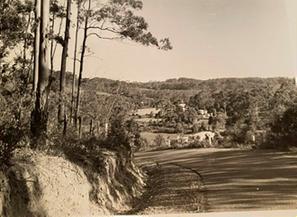
View of Holgate from Paroo Road c1960’s reasonably well thanks to the bicycle deliverers of the day. Since they knew everybody they easily delivered the right mail to the right box, there being no street or box numbers. If you wanted to post a letter, you left it in the mail box with a flag of some sort hanging out and it would be collected by the mail lady.
Families Ties
Both the Tuckers and my mother’s family, the Rays, were early Holgate settlers. My dad's father, Edwin Tucker and his wife Alice, two daughters and son, arrived in 1910, while John Ray and his wife Margaret arrived in 2009 along with their six children.
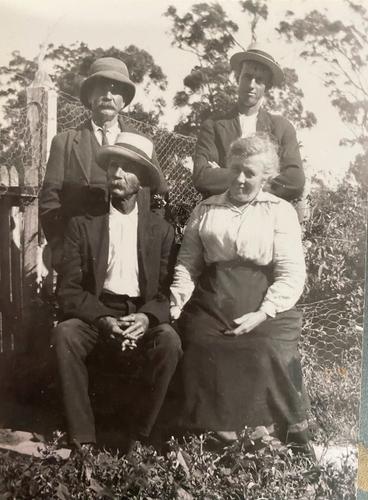
Edwin and Alice Tucker, my father Archie, right rear (late 1920’s )
My grandfather Edwin Tucker was born and raised in Paterson, his family having acquired land grants after his convict grandfather made good It seems he was encouraged to leave home at a young age to make his own way in the world. At some point he decided it would be best to remove his children from the “evil city influences”, hence the move to Holgate.
The block he purchased from the Matcham Estate was approximately where 295 Wattle Tree Road is now. My dad’s sisters fairly promptly married and returned to the city but my father lived in Holgate the rest of his life as did his parents. My Ray grandparents arrived in Holgate in 1909 having come from came from Holmesville in the Newcastle coalfields area. I am not sure what rompted them to come to Holgate but they acquired 14 acres on Wattle Tree Road, approximately 150 Wattle Tree Road, about two kilometres from where the Tuckers settled the following year. Some of the children from his earlier marriages also settled in the Central Coast area eg: the Rays of the Tumbi area.
middle by Fire’s Creek. Dad’s father help him get the mortgage to purchase it from a Mr Rigglesford Some clearing had been done but much was still virgin bush. By the time Mum and Dad married in 1922 a typical basic house had been built with two bedrooms and a kitchen and front and back verandahs.
Five children came along over the next 14 years: Len in 1923, Stan in 1924, Arthur in 1928, Archie in 1933, then me (Gwendoline Margaret) in 1937.
25 years of experience in designing and building challenging & unique pools with extraordinary landscaping
A Farming Community
My parents’ property is what is now 180 Wattle Tree Rd, close to the present school. It was divided roughly in the
Farming in Holgate and a lot of Matcham would probably be described as fairly small scale market gardening. There was a lot of oranges and other citrus, a lot of beans, some peas, tomatoes, potatoes, corn, and some stone fruit. The Patterson, Webber and Edwards families up the top end of Wattle Tree were possibly the biggest orchardists in the area. I remember being impressed by their big shed where they had a grading machine to sort different sized fruit before the packing into wooden cases and being sent on their way to the Sydney markets. On our farm, close to half was taken up by navel oranges but dad also grew beans,
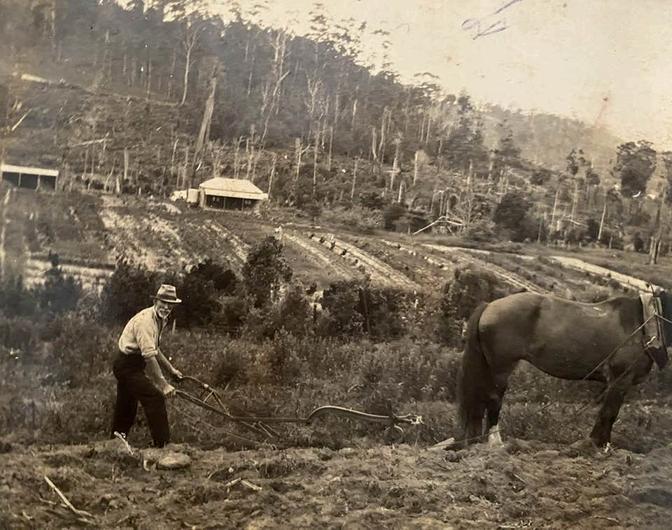
The original house my dad built on Wattle Tree Road. Photo taken from property opposite with a neighbour ploughing his own land
peas, tomatoes, and potatoes though it the beans I mostly remember becaus from a young age I had to help pick them a dirty, tiring, back-breaking job. On th plus side it was also how my brothers an I earnt money picking for other local when we weren’t needed on our ow farm.
The Holgate Post Office
I am not sure when Holgate got its first P but it was run by the Huftons, Sam an Fanny, out of their house up the norther end of Wattle Tree, about 100m north an down the hill from the Paroo Rd junction For many people, my family included, hike to Huftons was necessary if there was need for a phone call. For most of the 1940’s anyway, Mrs Hufton would ride her bicycle down to the end of Wattle Tree Rd, connect with the van who brought the mail from Gosford, sort it, then ride back up delivering into mail boxes on her way. Sometime in the late 1940’s the Post Office operations were taken over by the Gamble family who lived close to the
school. It also operated out of their house but in special room with its own entrance from a side footpath and with a counter to buy stamps, send telegrams etc. I was good friends with one of their children and during school holidays would sometimes accompany Lynette, each on our bikes, to do the mail run.
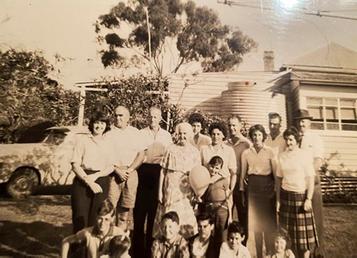
The extended tucker family c1955. I am on the far left
The original house my
A Community of Neighbours
Neighbourly assistance was a given. I can remember lying in bed vainly trying to stay awake till my father returned home from helping to fight a bushfire on the Ridgeway. All he had was a wet beanbag to try to douse the flames so I don’t know how effective it was, my memory fails me. I was about 4 when I began having attacks of croup. In the middle of the night dad was sent for Mrs White, our next door neighbour. She had raised a large family and was considered knowledgeable about such matters. She prescribed a flannel dipped in kerosene to be wrapped around my throat then they all stood at the foot of the bed watching me with great concern. I survived and subsequently scarce money was invested in a trip to the doctor for me .
World War II brought the local residents together to plan for a possible Japanese invasion, as unlikely as that seems now. I was old enough to have memories of the drills we had to go through at school in such an event. The bell would be rung and we would all have to run and crouch
in dugout clay ditches/trenches that had been dug by parents about 50 yards away and we would stay there till the bell was rung again. All the school windows were crisscrossed with tape to try to prevent shattered glass flying about. My brother related how the district adults got together to discuss how they would cope in the event of an attack. They devised a scheme for alerting all residents. Wardens were appointed and were given old brake drums which were to be belted in turn down the valley, starting at the far north end of the road. At an appointed time a
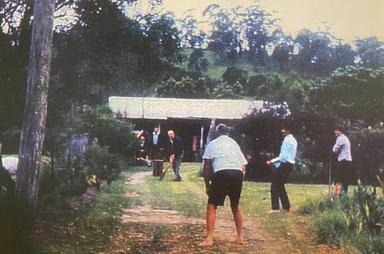
Regular Sunday Fun - dad at the wicket
practice was scheduled but it was not entirely successful. It was discovered that those in a straight line heard the sound OK but it bypassed those in the side valleys
Always connected to Holgate I don’t think non-residents thought Holgate was an especially desirable place to live in my time there. It had unsealed roads and no town water or sewerage and fewer people appreciated the quietness and beauties of nature. Quite a contrast to the present day.
I have lived in Sydney for many years but still feel a strong emotional attachment to Holgate. I follow the Matcham/Holgate Facebook page with great interest and am very grateful to John Duncan Watt for facilitating my joining. I find it delightful that so much wildlife seems to be returning - certainly there were no wallabies around in my day. There was a certain truth then to the local witticism “if it grows, chop it down; if it moves, Shoot it”.
Try as I might though I cannot enjoy the apparent widespread appreciation of snakes !
Construction of the indoor toilet at last!
FIRES CREEK
When the Creeks Rise, So Do We
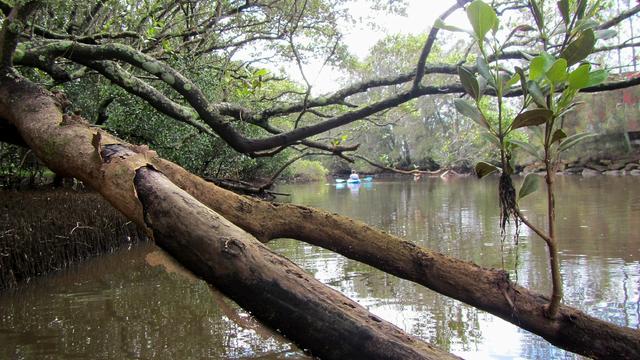
In Matcham and Holgate, Fires Creek is more than a line on a map. It’s part of our daily lives, sometimes quietly flowing past bush tracks and backyards, other times rushing across roads and turning morning routines upside down. And while rising waters can bring short term disruption, they also bring out the best in our community.
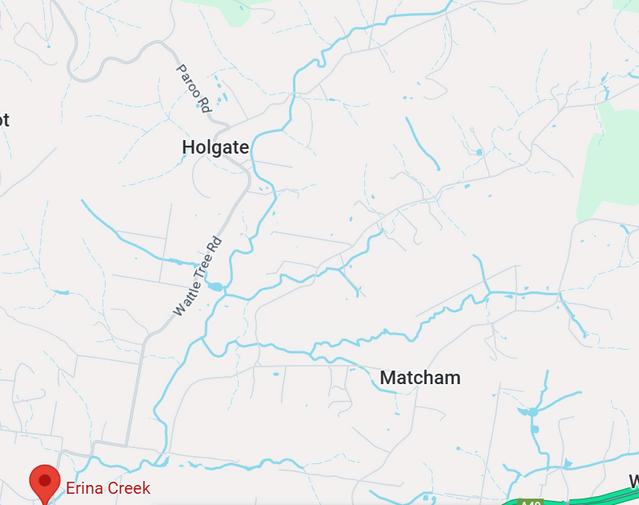
A Creek That Shapes a Community Fires Creek starts its journey in the rainforest gullies of Holgate from there, it meanders along the boundary of Holgate and Matcham, crossing roads like Oak and Wattle Tree. Along the way it is joined by Maddens Creek, then Erina Creek, where it weaves its way around the back of the
Sunken Monkey and finally spilling into Brisbane Water near Punt Bridge in East Gosford. Approaching the lowlands of Erina, the freshwater stream becomes an estuarine waterway. The lower reaches of Erina Creek, fed in part by Fires Creek, are lined with saltmarsh and mangroves and experience the rise and fall of the tide from Brisbane Water This means our local creek is directly connected to the Brisbane Water estuary – a tidal ecosystem of seagrass beds and marine life.
For new residents, it’s often a surprise to learn that Fires Creek is tidal. What this means in practice is that after a downpour, how quickly the water recedes isn’t just about rainfall it’s also about the tide. When tides are high, the water has nowhere to go. As one local put it:
“I never thought I’d move away from the beach to an acerage and still be checking tide charts.”
Where It Floods — and Why It Matters
This tidal influence becomes critical around a king tide or storm surge, the creek can back up from Brisbane Water, pushing water levels higher and flooding roads temporarily.
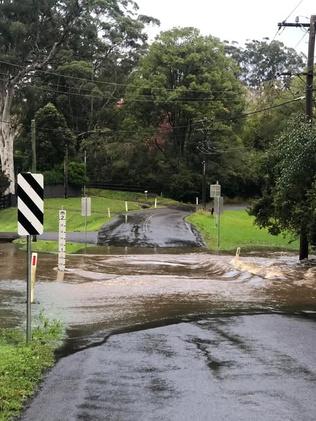
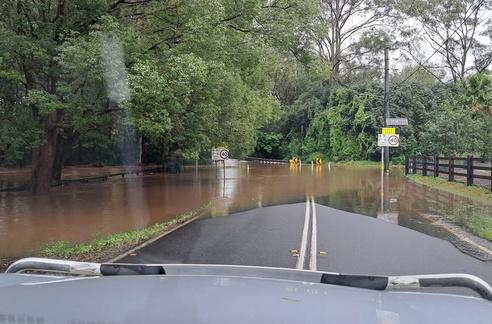
The 2015 Erina Creek Floodplain Risk Management Plan highlights the valley’s vulnerability. Of the 75 creek crossings in the catchment, 21 are in our valley and many of those are the low-lying fords and culverts locals drive daily. Floods can temporarily cut off access to homes and important health care and services. Oak Road alone has multiple crossings prone to flood, including the tragic site in Upper Oak Road Maddens creek crossing where a local man drowned in 2022 in his 4WD vehicle during a 2m flood surge .
The management of flood-prone land falls solely under Central Coast Council. Following the loss of life in 2022 the community came together at Matcham Hall to hear representatives from all
Oak Road crossing
three levels of Government discuss what lessons could be learned and actions taken as a response to these incidents. Following this the Council has installed flood markers and warning signs, but residents continue to advocate for stronger flood safety measures. It really is going to take infrastructure change with new bridges to ensure that everyone in our community has access in and out during flood incidents. A number of local residents are leading a renewed campaign with various levels of government to get urgently needed bridges across the two road causeways that flood regularly in Oak Rd If you would like to get involved with the campaign for improved bridges in the valley please get in contact with the Editor.
If it’s flooded. Forget it.
TWhat looks like a shallow crossing can hide deepfast-moving water. Just 15cm can sweep an adult off their feet. 30cm can move a small car. Roads can be washed out beneath the surface. Entering floodwater risks not just your safety, but also the lives of those who may have to rescue you.
“I’m constantly shocked that despite warning’s people in the Valley continue to think that they can cross the causeway where they cannot see what is underneath, and cannot gauge the strength of the water”
Carlton Road Flooding
Local SES Volunteer
Nature’s Course, and the Community Response
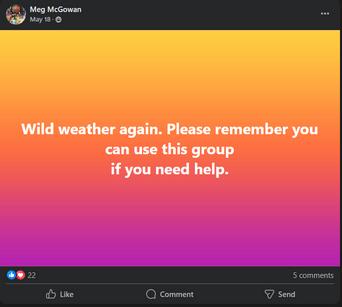
Over the years, we’ve seen neighbours ferrying supplies on quad bikes, helping stuck cars out of waterlogged verges, checking in on older residents, and welcoming wet, stranded families in for a warm drink Our facebook community instantly springs to life when the rain starts, full of real-time updates, offers of help, and sometimes a few soggy jokes.
Research shows that well-prepared communities recover faster and suffer fewer losses during floods. That means:
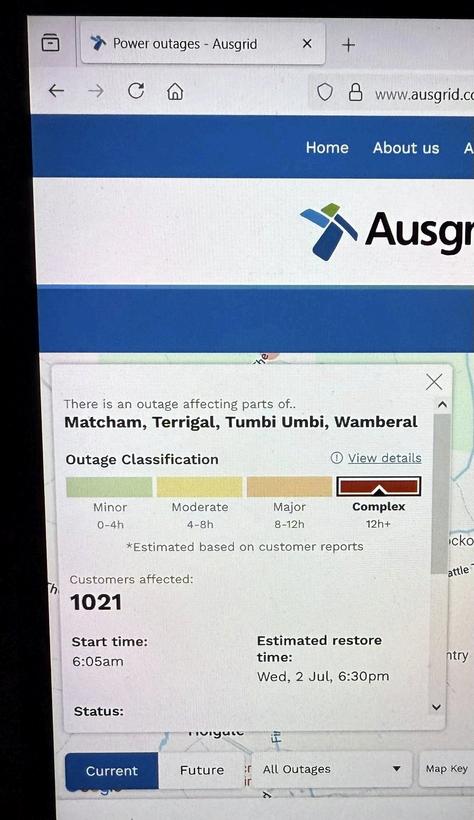
Knowing which roads flood and when. Having a plan for what to do when your road’s cut off. Often power can go down at the same time, do you have a back-up power plan?
Keeping an eye on weather warnings and tide times.
Checking on neighbours, especially older residents or those with limited mobility.
Nature’s Floodplain and How to Live With It
Despite the periodic inconvenience of floods, many see this as part of living close to nature. Some even enjoy the isolation that can come with the rising waters –even if shortlived, as the floods always recede quickly with the tides. The floods recharge groundwater and wetlands and nourish the creek’s ecosystems, reminding us of the valley’s natural processes. In
essence, Fires Creek is a vital artery linking our mountain forests to the sea.
We need to respect the creek’s power by maintaining clear drainage, not building too close to the water, and being mindful of what we place near the creek which could be swept down the creek in a water surge and cause damage down the way or end up in our
Recently on the facebook group one resident reminded people to not leave chopped wood in areas that could get swept away as they cause damage to others down the creek.
“The creek can be really powerful at times and it can pick up almost anything in it’s path.” says one local in the know.
Looking Ahead
Yes, Fires Creek floods. It always has. Locals still talk about the flood that washed away fence lines or the year the school bus had to turn back five days in a row. But they also talk about who checked on whom, who baked the muffins, and who brought the gumboots when someone forgot theirs. And it means continuing to share knowledge: about how the creek flows, where the pinch points are and who has a generator.
So the next time the water’s high and the road’s closed, take heart In our valley, floods may rise, but so does community spirit.
Erina Creek flowing into Brisbane Waters
The community lifeline of the facebook group
POTHOLE SEASON
The Rain Turns Our Roads into Obstacle Courses
After heavy rain, potholes can pop up faster than you can swerve to miss them. Dodging potholes is practically a sport here. But on a serious note they are dangerous. Here’s some information on potholes from Central Coast Council. The bottom line is report a pothole when you see one and don’t assume someone else has reported it - the more reports the quicker the response!
Causes of Potholes
As the road pavement naturally ages, cracks occur in the surface. Moisture and water seeps through these cracks into the base material beneath the road pavement
The vibration and/or the weight of the traffic causes this wet base material to settle or shift, forming a cavity. With nothing under the road surface to support it, the pavement will fall away creating a pothole.
Reporting a Pothole to Council
Council manages over 2,000 km of road network. Whilst we proactively inspect the road pavement to identify any defects, we encourage our residents and visitors to report any potholes and other safety concerns to Council. You can easily and quickly lodge these at any time through Council’s online Customer Central Coast Council Service Centre (which is also accessible through Council’s website centralcoast.nsw.gov.au). Lodging this way provides you with a reference so you can track your request's progress or receive updates regarding your request. Community reporting of potholes is particularly important during weather events where potholes can spontaneously appear, and the number of potholes can greatly increase. The reporting of any issues directly to Council also assists in scheduling maintenance in a timely manner.
Portable Generators: he Workhorse Solution
r many households, a portable petrol or esel generator is the go-to option. These nits are relatively affordable, easy to ove around, and powerful enough to run sential appliances like fridges, lights, umps, and even a small heater.
cals recommend diesel over petrol as trol degrades rapidly and the generator on't start when you need it most. As a neral guide, a basic setup to run sentials needs around 2,400 to 5,000 atts (or about 3Kva), right up to 15kva for whole house.
ey’re best used outdoors (always in a ell-ventilated area), connected either rectly to devices or, for convenience, rough a manual transfer switch installed an electrician.
r sensitive electronics like computers or edical equipment, consider an inverter nerator, They are smaller, lighter, and uieter and produce cleaner power that is
completely safe for sensitive appliances such as mobile phones and laptops. When choosing the right generator, there are websites and apps that can help you determine the right size - here’s a good place to start
2. Solar + Battery Storage: Quiet, Clean, and Long-Term
If you’re looking for a more sustainable and long-term solution, solar panels with battery backup are worth considering. During the day, solar panels charge the battery, which can then power your home during the night or in the event of an outage.
A 10–15 kWh battery can keep lights, a fridge, modem, and even some kitchen appliances running for 1–2 days. And because solar systems run silently, you’ll still be able to enjoy the serenity. While the upfront cost can be high, some rebates may reduce your long-term bills.
While some local residents swear by the solar solution, some consistent feedback suggests that solar batteries are good for short-term power shortages but not for longer ones
“Generally, the power goes out when it’s cloudy/rainy/middle of the night and depending on what time of the day that is, usually results in minimal left in storage, then resulting in being in the same position as not having the black out protection.“ local on Facebook group
3. Standby Generators: Whole-Home, Hands-Free Power
For those who want the lights (and everything else) to come back on automatically, a standby generator is the gold standard. Installed permanently outside your home, these systems detect when power goes out and switch on automatically often within seconds. They’re ideal for larger homes or properties with critical systems like medical equipment or large tank pumps.
They run on LPG, diesel or natural gas and can power an entire house if sized correctly.
You’ll need a licensed electrician for setup, and some council regulations may apply
“Our
neighbours have the rolls royce stand by generator and I am very envious when the power goes out. Thankfully
they are very generous with their offers of popping over to share their power”
4.Electric Vehicles: Your Car as a Power Source
One of the most interesting new trends is using electric vehicles as a power backup. Some EVs have Vehicle-to-Load (V2L) capability. This means you can plug devices like fridges, kettles, or routers directly into your car. More advanced setups, such as Vehicle-to-Home (V2H), let the EV power parts of your home through a special inverter. While not yet common in Australia, it’s a growing area and expected to expand.
Final Tips for Preparedness
Know your usage: A fridge uses ~150W, a pump might need 750W+, and most lights are under 20W. Store fuel safely for generators and rotate it every 3–6 months.
Test your backup setup every couple of months, especially before a storm Check smoke alarms and security systems, as some may rely on mains power or internet. Make sure your BBQ has gas as this is a great back-up stove
Bring solar garden lights indoors at night it’s free, safe lighting that recharges by day.
Need help or want to hear what others are using? Share your setup on the local community Facebook page or come chat with neighbours at the next Hall event. Let’s keep each other powered, prepared, and connected, whatever the weather throws our way.
“We have solar and a 10kw battery with automatic blackout changeover. , the battery will almost always get you through a typical local blackout supplying lights and essential power, however when we get a 3 day east coast low with power lines down etc, you’d be glad of a generator.” Matcham local
How Long Does Food Last Without Power?
Fridge: A typical fridge will maintain safe temperatures below 5°C for about 4 hours if unopened. Fridges don’t have much thermal mass. Unlike freezers, they’re designed to cycle cold air regularly — not hold it long.
Freezer: Full freezer: Up to 48 hours if unopened and fully packed
Don’t open the fridge at all. One peek can cost an hour of coolness.
IN THE WILD WITH...
Ardeidae – Our Herons, Egrets and Bitterns
This is the next in a series exploring some of our more special local wildlife residents, and what we can do to ensure they flourish in this wonderful area by Matt Barnett, Local Wildlife Enthusiast.
Who are we?
The Ardeidae family includes some of our most graceful wetland birds, the herons, egrets and bitterns. These long-legged waders are a common sight around waterways, yet many people don’t realise just how many species live right here in the Matcham valley.
From the elegant Little Egret to the ghostlike Black Bittern that slips through the shadows, these birds are a vital part of our local ecosystem. Most are expert fishers, using stealth and patience to stalk prey in creeks, ponds and flooded fields.
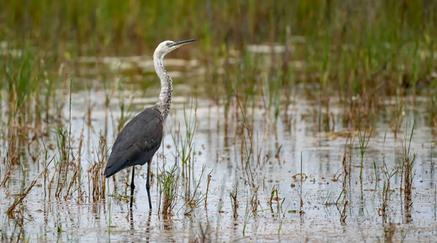
We’re lucky to have several species in the area, including the White-faced and Whitenecked Herons, Bitterns, Cattle Egrets (often seen following mowers or livestock), and larger species like the Great and Intermediate Egrets.
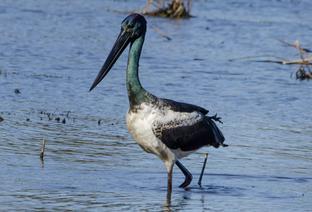
Though not part of the Ardeidae family, the majestic Jabiru (Black-necked Stork) is worth a mention. Rare but occasionally seen on the Central Coast, this striking bird can stand over 1.2 metres tall and is a sign of a very healthy wetland.
Where can you find me?
The best time to spot Ardeidae is around dawn and dusk, especially after rainfall when frogs, insects and fish are more active. Head to local creek systems, flooded fields, or farm dams, anywhere with still or slow-moving water.
Little Egrets and White-faced Herons are often seen foraging in open paddocks or
Black Bittern – one of our vulnerable species and a personal favourite.
or along creek banks. The larger Great and Intermediate Egrets prefer deeper water or quiet river stretches. Cattle Egrets are more terrestrial, often seen in groups near livestock or behind tractors.
The Black Bittern is the trickiest to spot. They prefer dense vegetation along creeks and move quietly through the undergrowth. Your best chance is early morning in shaded areas with overhanging foliage.
Keep an eye out during breeding season (spring to early summer), when these birds are more active. Many nest in colonies, often in tall trees over water, so don’t forget to look up when walking the creek trails!
The White-necked Heron – often seen in paddocks after flooding.
A
How can I protect and encourage them near me?
Wading birds like these need healthy wetlands and water edges to survive. To help them flourish:
Preserve riparian zones: Keep natural vegetation along waterways. Avoid clearing creek edges or draining lowlying areas, these are key feeding and breeding sites.
Avoid pesticides and runoff: Chemicals from lawns, gardens or paddocks can harm aquatic life, and in turn, the birds that feed on it.
Create safe feeding areas: If you have a dam or pond, plant reeds or sedges along the edges. These provide food, cover, and help reduce erosion.
Go slow near wetlands: When walking or driving near water at dawn or dusk, take your time. Many of these birds feed close to trails and are easily disturbed. Report sightings: If you see a Black Bittern or Jabiru, record it with eBird or Birdlife Australia. These records help
track rare species and support conservation. We have a pair of Black Bittern living (and possibly nesting) in our creek, deeper in the undergrowth away from paths. If you have similar areas, go exploring.
Whether you’re walking along the creek or just glancing out over a paddock, take a moment to look for a flash of white or grey. There’s a quiet elegance to these birds, and knowing they’re still thriving in the valley is a reassuring sign that we’re doing something right.
LEND A HAND TO THE WAMBINA RESERVE BUSHCARE GROUP
The 59 hectares of Wambina Nature Reserve has a bushcare group that has been active since inception (28 years). The group meets on the last Friday of the month (weather permitting) at 9:30am (for 2 hours) at the very end of Oak Road and walk up to the ridge. The group focusses on weed management and native regeneration. They need some more locals to help out and have fun. You’ll need a hat, gardening gloves, sturdy covered footwear and long sleeves/ pants and good secateurs; or just come along to check it out.
Contact John Duncan Watt on messenger for more details
A young Jabiru, spotted in Central Coast wetlands.
2025: WET AND DRY AND VARIATIONS
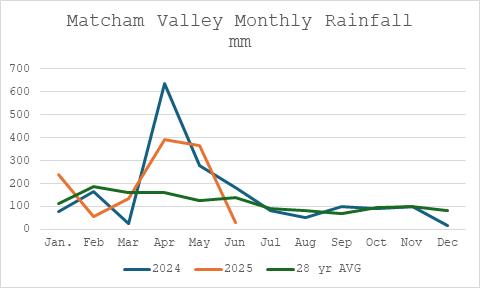
Over the last three editions we’ve looked at the history of rainfall data collection in the Valley over the last 28 years (1997-2024), the extremes in certain months (February and March 2022 and April 2024), differences between the first and second six months of the year (usually wet then dry), the current state of our acquifer (cumulative residual rainfall mass), differences in monthly rainfall between Matcham, Oak and Wattle Tree Road weather stations (Wunderground.com) (east wetter, west drier) and the differences between the recent 10 year and total 28 year averages (its wetter in the last 10 years).
In the April Hall News the 2025 rainfall article’s figures were for the first two months and 2025 was beginning to look like the 28 year average, albeit with the general concern that “things (can) change fast”. They did!! We’ve had the 5th wettest first half in the last 28 years and that’s with a really dry February and June (thankfully). Like April 2015, 2024 and February/ March 2022, we’ve had major storms and multiple “grid” blackouts. The chart shows the comparison of 2025 to 2024 (so far) and the 28-year monthly average. JDW
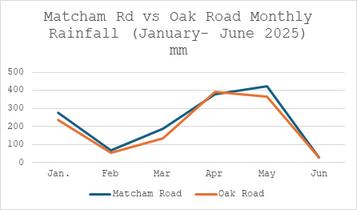
The chart onthe right gives an update comparing monthly rainfall at the end of Matcham and Oak Roads. The Matcham Road numbers still indicate consistently higher falls (and more rainy days!) than Oak Road with the 6-month total 12% higher in Matcham Road. No wonder you’re evolving web feet over there! JDW
our community!
ACCOUNTANT
Kennedy Cross 4365 6789
ARBORIST
Habitat Tree Works
Call George 0402 574 616
AL’s Tree Care
Call Al 0414 326 375
BUYERS AGENT
Bryson Buyers Agent
Call Mitch 0413833449
CARPENTER
Living Spaces Carpentry
Call Jason 0417 499 068
Ben J Built Constructions
Call Ben 0488 017 416
EARTHWORKS
ASAP EARTHWORX
Call Cheyne 0408 677 413
ELECTRICAL & DATA
Quick Connect Electrical & Data
Call Keiron 0407 668 689
ELECTRICIAN
Matt Smith Electrical Call Matt 0412 391 438 matt@mses.net.au
EXTERNAL CLEANING
Emerald Exterior Services
Call Joel 0401 266 299
Pacific External Cleaning Services
Call Tony 0412 446 748
GARDEN MAINTENANCE
Bens Backyard & Maintenance
Call Ben 0402 199 322
FENCING
Hidden Dog Fence
Call Tim 0413 404 133
HONEY
BEE-U-tiful Honey
Call Max 0424 168 590
LANDCARE
Gellatley Landcare Solutions
Call Richard 0412 636 550
LANDSCAPING
Silver Fern Landscapes
Call Joe 0432 589 318
Simply Foilage
Call Simon 0418 433 959
LAWYER
KOA Legal 43266522
MECHANIC
JC Auto Erina - Your Local Mechanic 0409 676 563 or 0416 109 982