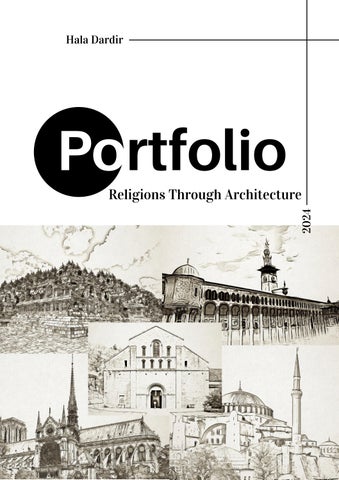
Portfolio
![]()
As the architect of Borobudur, I envisioned a monument that wouldn't simply house Buddhist teachings, but embody them. It guides the visitor on a journey towards spiritual awakening. Here's how the design facilitates a spiritual journey:
Eachtieroftheninetierssignifiesahigherplaneof existence,culminatinginthecentralstupa symbolizingenlightenment
The temple's architecture beautifully embodies the essence of Buddhism. Its design, reminiscent of a mandala, and the three levels symbolizing Buddhist cosmology, effectively convey and achieve the spiritual principles of the faith.
(The temple is designed to look like a mandela)
FirstRealm(kamadhatu):Desire
SecondRealm(Rupadhatu-Form):Theygoupinaclockwise path.Thesoulhasbeenpurgedofalldesires. Thepeoplestart toseethelightoftruth
ThirdRealm(Arupadhatu-formlessness)Thecircularform representstheeternitywithoutbeginningandwithoutend,a superlative,tranquil,andpurestateoftheformlessworld.They finallyachieveenlightenment.
As the architect of Hagia Sophia, my vision is to create a monumental structure that embodies the divine and unites the faithful through its architectural grandeur. Hagia Sophia will be a beacon of spiritual inspiration and religious significance, blending innovation with tradition to create a timeless masterpiece.
Religious significance ( 2 religions: one place)
Hagia Sophia was built to serve as a cathedral which is seen in the floor plan. (The central nave, flanked by aisles and galleries, will create a cross-in-square plan, symbolizing the union of heaven and earth.)
The architecture style of the cathedral is byzantine architecture. Islam:
when Islam became prominent in Turkey, some changes were made to Hagia Sophia to change it to a mosque.
A mihrab (prayer niche) was installed in the qibla wall, indicating the direction of Mecca. Minarets was added to the structure, enhancing its skyline and serving practical and symbolic purposes.
The byzantine architecture remained untouched however Islamic calligraphy was added featuring verses from the Quran and the names of Allah and the Prophet Muhammad.
Minarets that were added during the transition
IconicDome(untouched)
As the architect of the Great Mosque of Damascus, my vision is to create a sacred space that reflects the grandeur of Islamic architecture and serves as a unifying center for the Muslim community. This mosque will not only be a place of worship but also a symbol of the Islamic faith's artistic and cultural achievements.
Themosquefeaturesavasthypostylehall,characterizedbyaforestofcolumnssupporting theroof.Thisdesignwillcreateanexpansiveandopenspaceforprayer,allowinglarge congregationstogatherandworshiptogether.Thehall'ssimplicityanduniformitywill symbolizetheequalityandunityofallbelieversbeforeGod.
Theinteriorandexteriorofthemosquewillbeadornedwithintricategeometricpatterns, floraldesigns,andcalligraphicinscriptionsfromtheQuran.
WasatemplefortheromangodJupiter(the columnsusedinthemosquearecorinthian)
Turnedintoachurchinthebyzantineera.(can beseeninthefloorplanstructure(nave,aisle, etc..)
Duringtheumayyadperiod,thechurchwas turnedintoamosquebutthestructurewasleft asitisandanextensionwasadded(courtyard).
Interior shot showcasing the barrel vault ceiling and the high ceiling windows
As the architect of the Abbey of Fontenay, my vision is to create a monastic complex that embodies the principles of Romanesque architecture and reflects the spiritual and communal values of the Cistercian order. The design will prioritize simplicity, functionality, and harmony with the natural surroundings, fostering an environment conducive to prayer, work, and contemplation.
The abbey's design will support the Cistercian emphasis on community and work. Communal spaces such as the refectory, dormitory, and chapter house will facilitate daily monastic routines, while workshops and the scriptorium will provide areas for labor and study.
Decorative elements will be minimal and purposeful. The capitals of columns may feature simple, stylized carvings of biblical scenes or natural motifs, aligning with the Cistercian preference for modesty and focus on spiritual contemplation.
As the architect of Notre Dame de Chartres, my vision is to create a cathedral that exemplifies the heights of High Gothic architecture, embodying the spiritual aspirations and artistic achievements of the medieval Christian faith The design will integrate structural innovation, aesthetic magnificence, and symbolic richness, creating a sacred space that inspires awe and devotion.
Thechurchfollowsthesamestructureasallchurchesbased onthefloorplanwhichtakestheshapeofacross.
Gothicarchitectureisimplementedinthechurchtofollow thearchitecturestyleofthetime.thiswillbeachieved throughtoweringspires,pointedarches,andribbedvaults. Largestainedglasswindowswillfloodtheinteriorwith coloredlight,creatinganetherealatmospherethat representsdivineillumination.