


“I would do it all over again” – Philomena Sahoye-Shury
BY MICHAEL YOUNGE
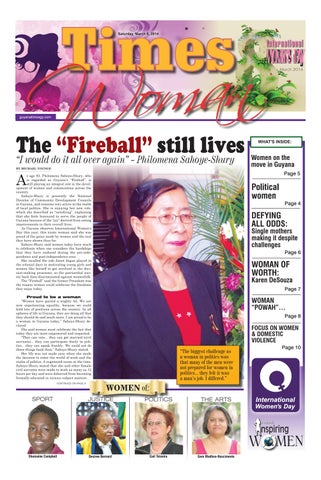
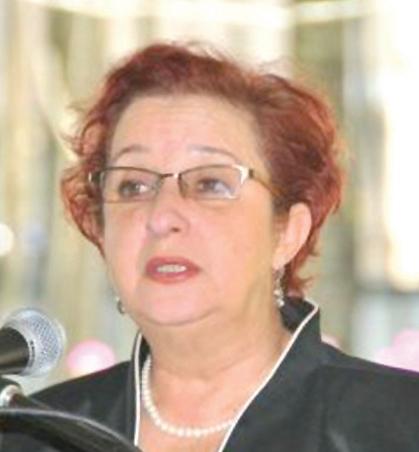
At age 83, Philomena Sahoye-Shury, who is regarded as Guyana’s “Fireball”, is still playing an integral role in the development of women and communities across the country.
Sahoye-Shury is presently the National Director of Community Development Councils in Guyana, and remains very active in the realm of local politics. She is enjoying her new role, which she described as “satisfying”, explaining that she feels honoured to serve the people of Guyana because of the “joy” derived from seeing improvements in their overall lives.
As Guyana observes International Women’s Day this year, this iconic woman said she was proud of the gains made by women and the zeal they have shown thus far.
Sahoye-Shury said women today have much to celebrate when one considers the hardships that they have endured during the pre-independence and post-independence eras.
She recalled the role Janet Jagan played in the colonial days in motivating young girls and women like herself to get involved in the decision-making processes, as the patriarchal society back then discriminated against womenfolk.
The “Fireball” said the former President was the reason women could celebrate the freedoms they enjoy today.
“Women have gained a mighty lot. We are now experiencing equality, because we could hold lots of positions across the country. In all spheres of life in Guyana, they are doing all that they should do and much more. I am proud to be a woman in Guyana today,” Sahoye-Shury declared.
She said women must celebrate the fact that today they are more empowered and respected.
“They can vote... they can get married (civil servants)... they can participate freely in politics.. .they can speak frankly. We could not do these things back then,” Sahoye-Shury stated.
Her life was not made easy when she made the decision to enter the world of work and the realm of politics. A registered nurse at the time, Sahoye-Shury stated that she and other female civil servants were made to work as many as 12 hours per day and were debarred from becoming formally educated in various subject matters.

“The biggest challenge as a woman in politics was that many of the men were not prepared for women in politics... they felt it was a man’s job. I differed.”









Congratulations to everyone belonging to the female class of the human species. Today belongs to you. Make good use of it and protect yourself from violence.
Ever since the observance of the first International Women’s Day (IWD) over a century ago, the world has seen many changes which continue to define and redefine our roles and contributions as men and women operating in a global environment.
Many things have also changed since the first observance of IWD and great improvements have been made to better the lives of women. The world has witnessed women travelling to space, women leaders of nations, women accessing higher education, and women penetrating maledominated professions. In retrospect, it would seem that women have been provided with real choices and equality has been achieved at least in part. Hence, the tone and nature of IWD globally has, for the past few years, moved from being a reminder about the negatives to a celebration of the positives.
However, we in the Caribbean and, more particularly, Guyana cannot be sure that the tone of our observations of IWD can enjoy that shift just yet. As long as there are impediments to economic efficiency, social justice and individual security and liberty, there will always be reason for highlighting the negatives in society. Until basic female rights to a violence-free life are not violated, then Guyana will be able to rejoice in the euphoria of positive

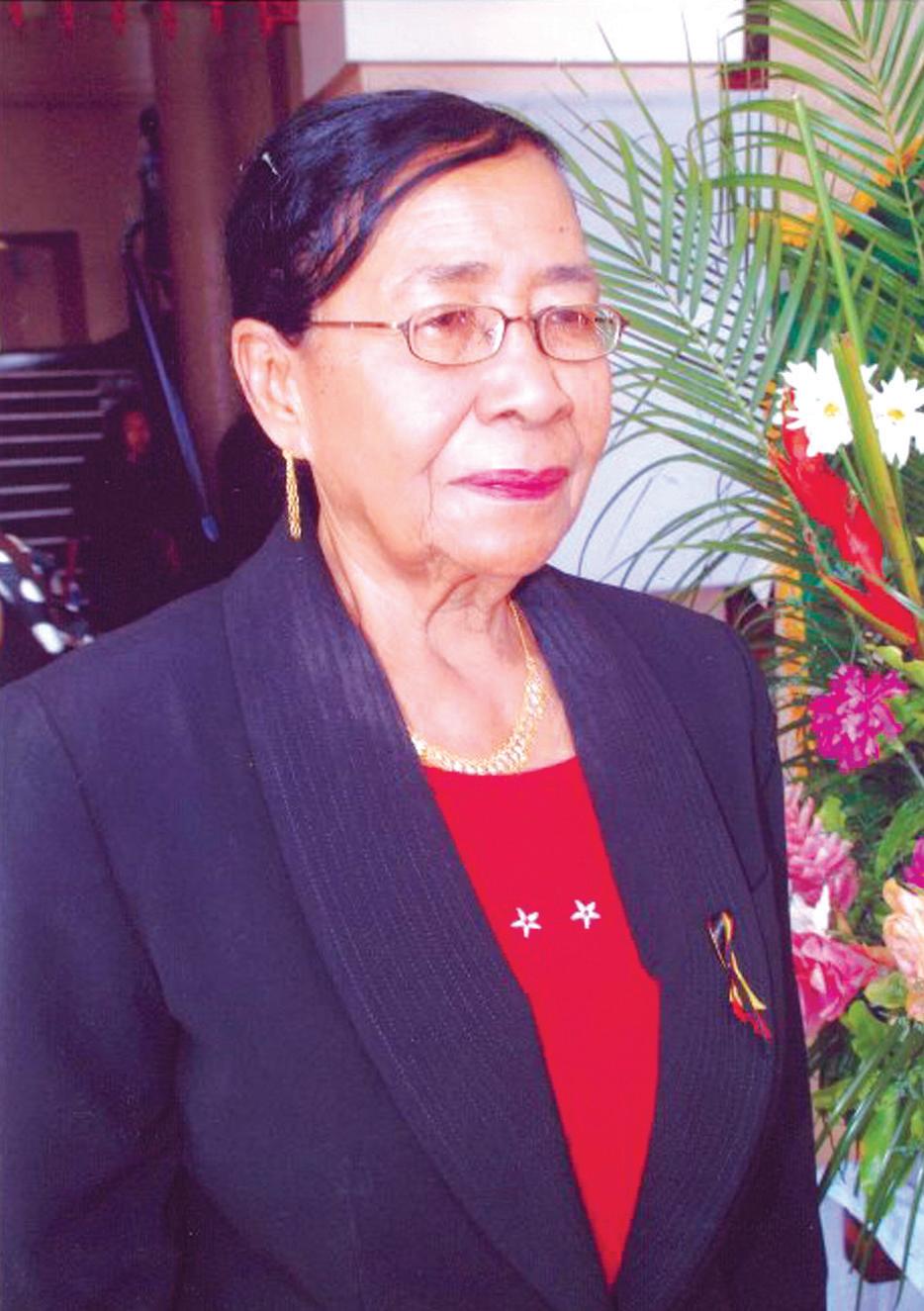
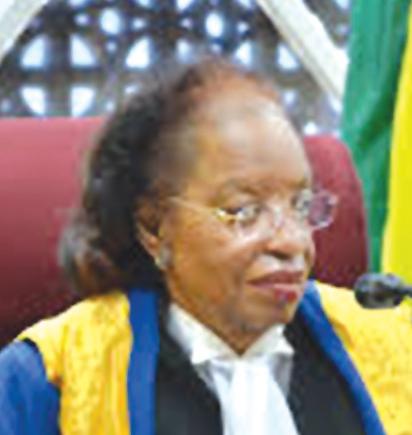
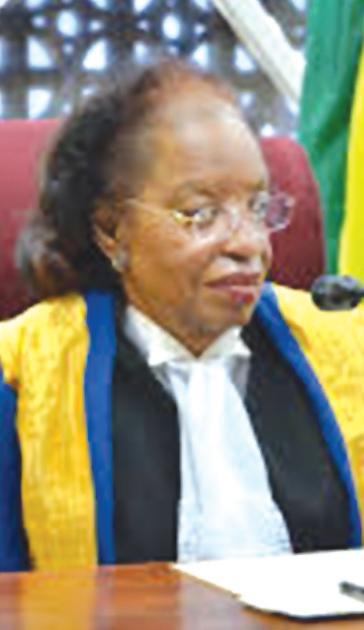
Born on March 2, 1939, the Honourable Madame Justice Desiree Patricia Bernard is perhaps Guyana’s most iconic female figure. Her many achievements have made her a woman of many firsts!
Justice Bernard took the first step into an exemplary career after she graduated in 1963 with a Bachelor of Laws Degree from the University of London. She qualified as a solicitor the following year, and in 1965, began practising in the High Court of the Supreme Court of Guyana. She would remain in private practice until 1980. Justice Bernard was appointed a Magistrate in 1970, the Commissioner of Oaths & Notary Public in 1976, and was admitted to the English Roll of Solicitors in 1977.
In 1980, she was appointed the first female High Court Judge of the Supreme Court of Guyana; 12 years later in 1992, she was made the first female Justice of Appeal. She went on to become the first female Chief Justice of Guyana and the Commonwealth Caribbean in 1996, followed by her appointment in 2001 as the first female Chancellor of the Judiciary in Guyana and the Commonwealth Caribbean.
Then came the biggest highlight of her career, her appointment as not only a Judge but the first and only female Judge
achievements.
In the meantime, however, we need to examine closely what is there within our nation that is demanding that we ignore the domestic crimes against women. It is something that cripples us from developing concentrated solutions to this problem. Even sometimes in cases where those crimes are being addressed, it is usually on a superficial level. National responses basically take the form of the ‘we’ and ‘them’ approach, as was discussed in my report. Or better still, it is usually in response to some international requirement to prove to the rest of the world that something is being done about the problem.
Although vio lence against wom en is perpetrated in every given society, there is a definite in crease in incidents in Guyana. Therefore for us in Guyana, to observe International Women’s Day without acknowledg ing the presence of vio lence against women would be insincere. We need to commit to do something about it. I invite every one of us to think about it this way: the next victim might be your mother, sister, aunt,
niece, cousin, or some female acquaintance.
Otherwise, we would all be guilty of insincerity if we operate with the false notion that Guyanese women are fully protected from this disaster. This endemic violence somehow remains silently and tolerantly contained in the home, its unspoken nature making it difficult for research to measure, let alone to identify and address. Violence against women has manifested itself in many forms such as domestic violence, forced early marriage for girls, forced pregnancy, rape, sexual ment, human trafficking, and although Guyana has not recorded cases of honour killings and sati, they are certainly other manifestations of violence against women that we need to watch closely – with the advent of free movement of people through globalisation.

Certainly, these crimes have evaded our most meticulous social planning and policy. We need not be naïve and behave as if it will all go away by the wave of a magical wand.
On the contrary, we need to see changes in the attitudes of both men and women who are determined to divorce themselves from their prejudices and stereotypical misconceptions about the societal status of women and embrace the ethics of human equality.
There needs to be a clarion call for change in this area where both males and females will be bequeathed with power and privileges to contribute significantly to the progress of the Guyanese society, with no violation to individual rights.
In concluding, I wish to draw attention to a quote from one of the world’s most influential leaders, Nelson Mandela who said, “As long as women are bound by poverty and as long as they are looked down upon, human rights will lack substance. As long as outmoded ways of thinking prevent women from making a meaningful contribution to society, progress will be slow. As long as a nation refuses to acknowledge the equal role of more than half of itself, it is doomed to failure.”
Women participating actively will help find the best solutions for the challenges that the country is facing today from economic recovery to the food crisis, to the energy crisis to climate change. As Guyanese, the power is with us to determine the kind of society we want to build in this new millennium.
Audrey Benn Former Head of the Women’s Unit of the University of Guyana
to date to sit on the panel of the Caribbean Court of Justice (CCJ). Justice Bernard took oath to the office of the CCJ at the Court’s inaugural ceremony on Saturday, April 16, 2005.
Apart from her long and distinguished career as a jurist, Justice Bernard has also been a part of many social societies and organisations, again breaking new ground for women in the Caribbean and around the world.
She was a member of various regional and international organisations. She was the founding Secretary of the Caribbean Women’s Association (CARIWA), which she served from 1970 to 1974; the first President of the Organisation of Commonwealth Caribbean Bar Associations (OCCBA) in 1976; and a member and Chair of the Caribbean Steering Committee for Women’s Affairs, which later became the Women & Development Unit of UWI (WAND) in 1978.
On the international stage, Justice Bernard served as rapporteur of the United Nations Committee on the Elimination of Discrimination Against Women (CEDAW) from 1982 to 1984. The following year, she became chair of the organisation and served in that position until 1998. She also served as a member of the International Association of Women’s Judges and Vice
President of the International Federation of Women Lawyers.
Scholar-jurist
Justice Bernard has penned many scholarly papers, and participated in numerous seminars and colloquia, both at the regional and international levels. Some of her work on gender and legal issues are “The Domestic Application of International Human Rights Norms as it Affects Women”, “Judicial Activism in Promoting the Human Rights of Women”,
and “Confronting Gender-Based Violence in the Caribbean”.
Her excellence continued in the area of volunteerism, as she attained high positions in religious, education, youth and women groups. Justice Bernard was the first female Chancellor of the Anglican Diocese of Guyana and the Province of the West Indies, as well as a member of the Guyana Girl Guides Association’s Board of Trustees.
For her exceptional contribution to the improvement of the status of women and to the development and practice of law, Justice Bernard has received several awards, the most notable being: the Cacique Crown of Honour and the Order of Roraima, Guyana’s third and second highest national awards respectively, while in 2005, she was the recipient of the Caricom Triennial Award for Women.
To remain faithful and committed to her work, Justice Bernard has remained single, but the joys of motherhood were not denied her, as she adopted a young girl, Carol Ann Bernard, who is now also an attorney-atlaw.
After nearly a decade as a Judge on the CCJ panel, Justice Bernard retired from the bench on February 20. A special ceremonial sitting of the Caribbean’s highest court was held in her honour in Guyana
during which she was hailed as an icon.
CCJ President Justice Dennis Byron, during the ceremonial sitting, had said “excellence and integrity” were embedded in the life’s work of Justice Bernard.
“One of the tenets that have been a guide is a constant surge for excellence in all her endeavours. As a student, leader, practitioner, a judge, a judicial administrator, she has always brought her best to date. Her service to the profession and the public, not only nationally or regionally but also worldwide, has been nothing short of service par excellence,” he stated.
The overwhelmed Justice Bernard responded to the outpouring of love and respect with much appreciation. She reflected on her tenure as a Judge of the CCJ, the self-proclaimed crowning glory of her judicial career, saying she never dreamt of attaining such heights.
“As I leave the court, I wish to give the assurance to the region that the Caribbean Court Justice is in safe and competent hands as it continues its voyage of the ports of the Caribbean encountering passengers willing to be a part of a destination towards the illusive dream: establishing a jurisprudence peculiarly our own,” Justice Bernard stated.
By Jomo Paul
Over the past two decades, women have grown to be so much more than colossal beings in the arts, in fashion, and music. One would think that these industries would be male dominated, but that’s not exactly the case as we see every day the emergence of more female personalities to grace these stages.
One such person is Jackie Hanover also known as “Jackie Jaxx”. This glowing young woman first appeared on the music scene on a track with wellknown local artiste Jory. She participated in the GT&T jingle and song competition but failed in her bid to capture the title. This did not serve as a disincentive to the songstress, but rather an opportunity to do much better in the future.
She subsequently released a slew of tracks with her latest being “Nakupeda” which has taken the local music industry by storm. It doesn’t stop there for the young lady who is a part of the Heat Wave band.


force to be reckoned with. Noel through her “Mariska’s designs” has taken over the region and the modern hot spots of fashion in the developed world. She has been a veritable ‘daughter of soil’ whose
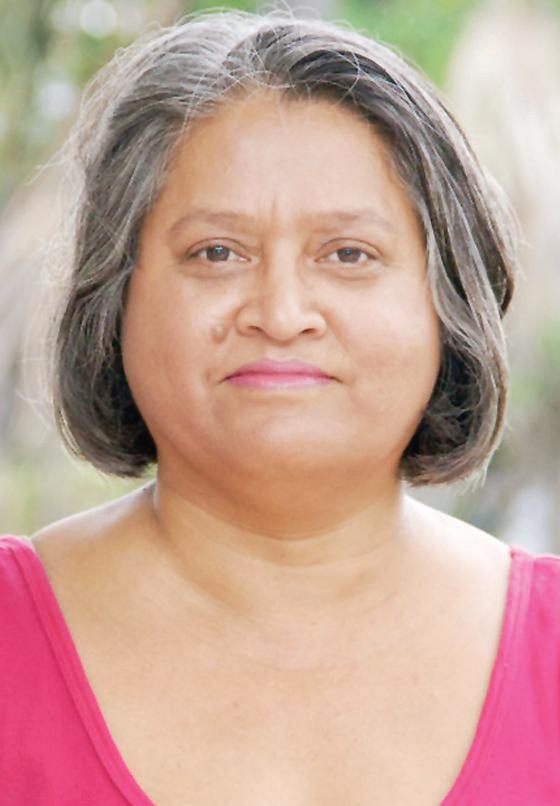
Also in music we have former Chutney Soca Monarch Fiona Singh. Fiona emerged in the early 2000s as a ‘SugarCake Girl’ and has since then done very well for herself. Although she has been unsuccessful in her bids to recapture her chutney title, the stalwart has remained poised in the local music industry. Almost every song delivered to the public from Fiona has been well received. Although there have been some naysayers, she continued and still continue in her undertaking.
More recently, she took part in the International Chutney Monarch Competition and although she didn’t win the top spot, she delivered a breath taking performance.
Meanwhile, Guyana’s Fashion Guru and First Lady of Fashion Sonia Noel remains a leader and
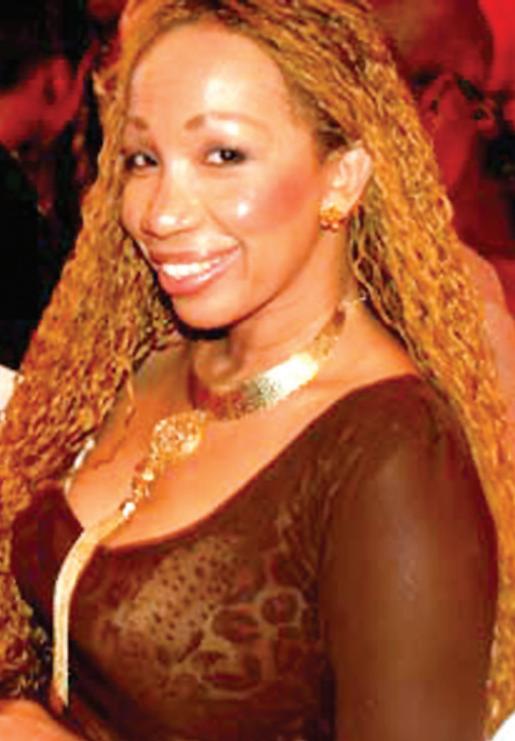
tireless work to make Guyana proud seemed to have paid off when she was awarded at the 2011 British Virgin Islands Fashion Weekend the accolade of Caribbean Fashion Ambassador.
She also received the GMSA Award for her involvement in youth development and cross border promotions of the local fashion industry.
Sonia has even worked with the Government of Guyana to found the Sonia Noel Foundation for Creative Arts (SNFA), where she works with young designers helping them to hone their craft and be the best designers they can be. She is also the CEO/Founder of Guyana Fashion Weekend.
Another designer that has her own brand is the famous Michelle Cole. Cole is the co-founder of Cole Facts, an intuitive brand that has offered a lot to the local fashion industry.
Over the years, Cole and the late Trevor Rose pioneered the Facts ’n’ Roses School designer
The participation of women in Guyanese politics have grown considerably over the past two decades. The country has moved from a time when there was no women in political office to more than 30 per cent of our parliamentarians and 20 per cent of our Ministers being women. In this article, Guyana Times will highlight, in brief, some of our stalwart women politicians.
Firstly, we look at Presidential Adviser on Governance Gail Teixeira. One of the longestserving members of the People’s Progressive Party (PPP), this towering political woman has ably served as Health Minister; Culture, Youth and Sport Minister; and finally Home Affairs Minister. She has been a Member of Parliament (MP) since 1992. Teixeira’s strong personality and grasp of politics led to her being appointed Presidential Adviser on Governance. Many believe that she would make a fine president one day. Former Member of Parliament and Deputy Speaker of the National Assembly Debra Backer has been another pillar of the political establishment for more than a decade. An MP since 1997, she was described by her peers as one of the more knowledgeable parliamentarians. The Attorneyat-law was the A Partnership For National Unity (APNU) main adviser on the Standing Orders and one of the coalition’s more
formidable members. Backer, who resigned from her posts this year owing to illness, was also APNU’s shadow foreign affairs minister.
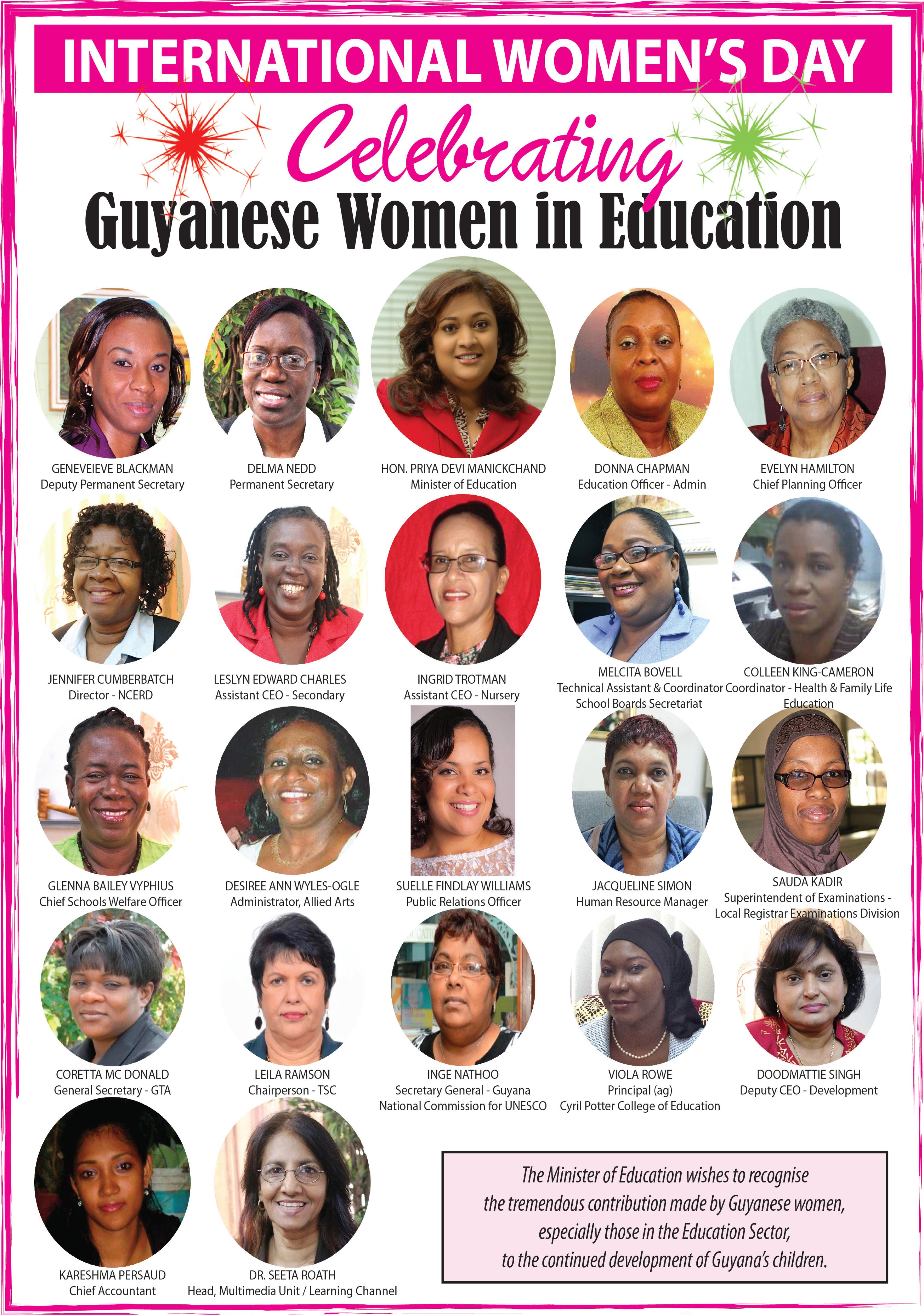
She is a member of the Central Executive Committee and Vice Chair of the People’s National Congress Reform (PNCR), the major party in APNU. Education Minister Priya Manickchand took the political scene by storm in 2006 when she was appointed Human Services and Social Security Minister. The lawyer by profession has piloted some of the most significant legislation on women and children issues through Parliament, including the Protection of Children Act and the Sexual Offences Act. One of the more outspoken female members of the PPP, she has never failed to deliver on debates in the National Assembly and even on issues that may have some backlash, for example calling out the opposition APNU for its recent move to demote fellow parliamentarian Vanessa Kissoon. In scolding the party executives for their reprehensible actions, she said such actions “put a dent in their (women’s) progress as a gender”.
Another political stalwart who represented her constituents well in the National Assembly was the late Alliance For Change Executive Member Sheila Holder, who started her political life as a Working People’s Alliance member. She entered Parliament in 2001 on a GAP-WPA ticket and was a member
of the Parliamentary Management Committee, the committee for the appointment of members of constitutional commissions, and the Standing Orders Committee. As a consumer activist, a Member of Parliament, and the prime ministerial candidate of the AFC (the second woman in Guyana with that distinction for a major party), she committed herself to the struggle for a just Guyana. A true patriot, she fearlessly represented her country and her party at countless meetings overseas. As Vice Chair and a founding member, she helped steer the party for a number of years before her death in late 2011.
Another noteworthy female politician is APNU’s Chief Whip Amna Ally. This solid example of a woman has been at the forefront of the coalition from the start and has always proved to be worthy in debates. Ally first served as a parliamentarian in the Eighth Parliament (2001-2006) and was appointed to the Management and Appointive Committees. A venerable and long-serving member of the PNCR, she served as National Secretary of the Youth Movement. She is presently a Central Executive Committee member and Director of the Party Organisation. A trained teacher, Ally has a degree in Management from the University of Guyana. Moving on, we have Carolyn Rodrigues-Birkett. The current Foreign Affairs Minister, she has
Sunday, Michelle was accepted as ‘Fashion Designer of the Year’ at the Young, Gifted & Black (YGB) Entrepreneurial Awards in New York.
competition. A competition which has birthed a slew of designers including Mark Murray and Channey Wong, both of whom are young designers doing quite well in the fashion industry. It was only last
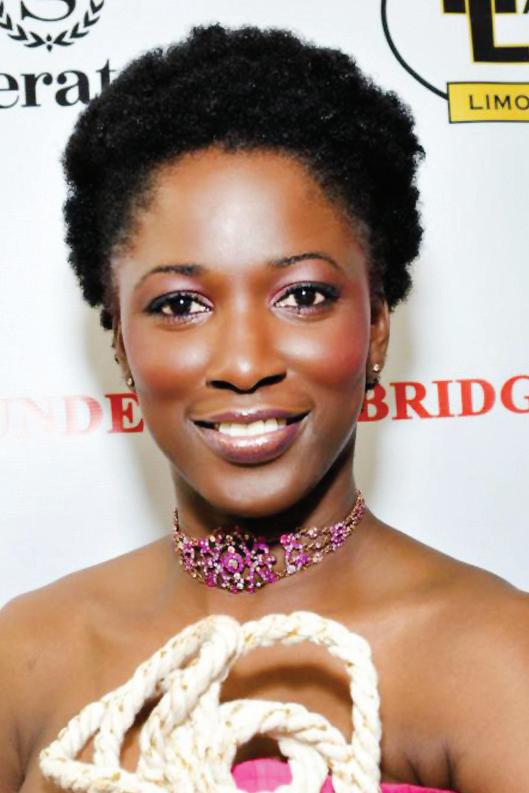

writing, producing and designing, it all happened because she decided to spend one day at a stage. Gem’s formal schooling in stage and production management came from Theatre Guild and other theatre workshops overseas. Possibly one of her biggest accomplishments would be the Link Show which commemorated its 29th edition in February. The Link Show first premiered in 1981 and was an instantaneous sensation, the show then and now presents, in lampoon, cultural, social and political life in comedy, skits, dance and songs each year. It was a by-product of a Theatre Guild production called the Brink Show, which was produced quadrennial by the late Frank Pilgrim. The Link Show is the only theatrical show to have such a lifespan in Guyana and possibly regionally.
YGB programme usually honours “AfricanAmerican & Caribbean professionals who are deemed the “unsung heroes” within their communities”, and a term that fittingly describes the illustrious Cole. She continues to pursue her dream as a fashion designer making notable appearances in runways worldwide.
In the field of acting, directing and production, we have theater stalwart Gem MahdooNasciemento. Gem is indeed a dedicated worker in the area of theatre with a perpetual love for the theatrical arts; Gem has made momentous contributions to the art, cultural life and tourism of Guyana.
During the early seventies, Gem became a member of the now obsolete PSU Drama Group, and although she is now proficient at directing,
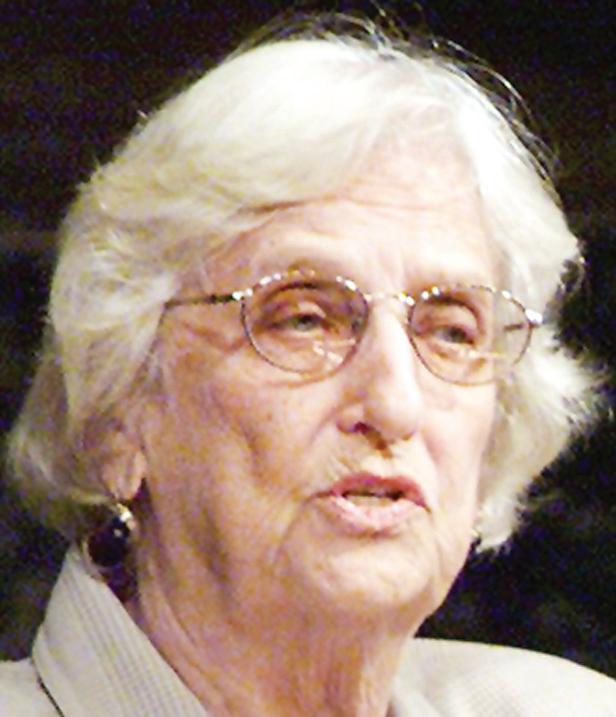
definitely proved herself a force to be reckoned with. RodriguesBirkett read for a degree in Social Work at the University of Guyana, while simultaneously managing the Amerindian Projects Programme of the Social Impact Amelioration Programme (SIMAP), a post she held for seven years prior to being appointed Amerindian Affairs Minister in 2001. Rodrigues-Birkett was the first Minister to be re-appointed to her position by former President Bharrat Jagdeo in September 2006, following national elections. In 2008, she earned the distinction of being the first female appointed Foreign Affairs Minister. She has fulfilled her duties with such verve, that she was presented with the Grand Cross of the Order of the General Liberator of San Martin by Argentine Foreign Minister Hector Timmerman in December 2013.
Another noteworthy political figure would be Cathy Hughes, a businesswoman and Executive Member of the Alliance For Change. This astute woman is one of the founding members of the AFC and has since served her party and her constituents with vigour. A Mass Communications graduate of the University of the West Indies, Jamaica, Hughes has worked in the Caribbean and international media for more
In 2006, Gem was also the very first local woman to produce the extremely contentious Vagina Monologues at the then Embassy Club. But her love for arts and culture does not begin and end with drama. Apart from a few recurring Jazz concerts she promotes, Gem is the publisher of Guyana Where and What, the official Tourist handbook of Guyana that just last month released its Seventh Edition.
Moving in to the field of acting we have famed local actor Sonia Yarde. She is a trained model, a skilled dancer and works in drama full time. Yarde has graced the most noteworthy stages in Guyana and continue to do so. The young actor has played several standout roles on stage and onscreen.
During an interview, she had contended that throughout her academic life, she was always aces in diction, impromptu speech and debating especially when it came to topics with which she was well versed.
than 20 years, with stints at the Caribbean News Agency, Jamaica Information Service, BBC Radio, and CNN under her belt. Early in 2012, she became a Member of Guyana’s 10th Parliament, representing the Alliance For Change.
All of these political stalwarts, however, are indebted to their unrelenting and fearless predecessors who laid the groundwork for their success, chief among them was the late former President Janet Jagan. Jagan was a true pioneer who had many political firsts and scaled heights not reached since in Guyana. Leaving her native America for the strange world of British Guiana after her marriage to Dr Cheddi

Jagan, she co-founded the People’s Progressive Party, Guyana’s first political party. She was the first woman elected to the Legislature, the first female Minister, the first female Prime Minister, and the first female President. A colossal political figure, pre and post-Independence, Jagan is an exemplar of what an individual can achieve. One of the longestserving parliamentarians (46 years), she has received many accolades, including Guyana’s highest honour, the Order of Excellence, and was named one of history’s most rebellious women by Time. Even her detractors agree, she brought about muchneeded change to the political landscape of Guyana.
march 8, 2014
Gender equality is again a hot topic of conversation in Guyana, reignited by recent events in Parliament. On February 10, People’s Progressive Party/Civic (PPP/C) Member of Parliament and Education Minister Priya Manickchand registered her disappointment that the longstanding tradition of the National Assembly to elect a woman as Deputy Speaker was not observed. On that day, A Partnership for National Unity (APNU) Member of Parliament Basil Williams was sworn in as Deputy Speaker to replace Debra Backer who resigned owing to serious illness.

By Gomattie Gangadin
She gave birth to life. She is a wife.
She is a mother, she is a friend. She is a sister, a daughter, A survivor.
Appreciate her, we don’t dare. Ask her worries, we don’t care. Wipe away her tears, They are invisible as air.
She can love fiercely Fight aggressively.
“Women are on the move…we are moving forward. We may not be on par with the male population but we are
getting there.” – Guyana Relief Council
Chairwoman
The minister had also related her disappointment that another APNU parliamentarian Vanessa Kissoon was demoted from the front bench to the back bench.
“Every little demotion, like we have seen here today, really dents our progress as a gender,” Manickchand said.
Her comments were not welcomed by APNU, which said it was party business, but Manickchand said “the cause of women is everybody’s business”.
In speaking further to the issue of gender equality, Guyana Relief Council Chairwoman Yvonne Hinds noted that despite the trials and setbacks society has thrown at women, they are making progress. She cited the current composition of two preeminent bodies, the
Yvonne Hinds
Cabinet and the National Assembly as an indicator of that progress. With some 20 out of 65 parliamentarians and five out of 19 ministers female, the law-making body has more female parliamentarians than any previous parliament (in excess of 30 per cent) and the Cabinet, the highest percentage of female ministers yet (38 per cent).
She added that it is the conventional mindset of society that men should lead, but women are slowly assuming the role of the head of homes and some companies too.
However, Human Services and Social Security Minister Jenifer Webster believes progress on this front has been unsatisfactory. She said Guyana has a long way to go before it can attain gender equality, as women are not being treated the same as men. “Gender equality means treating women as fairly as we treat our men,” Webster declared. In the same vein, Child Care and
Protection Agency head Ann Greene said while we are making strides towards achieving gender equality, “it is still a man’s world”.
Last August, the Women and Gender Equality Commission presented its report to the Parliament as a part of its mandate. In the report, recommendations were made to tackle a number of issues. They included Trafficking in Persons (TIP), sexual harassment in the workplace, and domestic violence.
Earlier in 2013, the commission, in partnership with the United Nations Development Programme (UNDP), unveiled its five-year strategic action plan. Within the next five years, the commission will be promoting human rights and respect for gender equality, in addition to organisational and institutional strengthening of the commission, women leadership and governance, women economic empowerment, and the fight against gender based-violence.
By Indrawattie Natram
LShe can be a victim, She can be a fighter.
She works, cooks, and cleans. She laughs, helps, comforts, and hides her pain. When you struggle, she pulls you through
All this is she and what do we do?
She can be raped, tortured, and abused. Told she is worthless, she is nobody, Yet she can forgive and forget, Having no regrets.
She can put her pain away, Smile, and listen to your troubles of the day.
She swallows her pride, puts her feelings aside.
Taken for granted, She does as you need, in order for you to be free. Ignoring your ignorance and tolerating your flaws.
You call her beggar, liar, tramp
She answers with pride, dignity, and a head held high Though tears swim in her eyes. You call her nothing.
But I choose to call her Wonderful, Obliging, Majestic, Accomplished, Nurturing, And Powerful I call her a WOMAN!

imitless at any age, inspiring and motivational, confident are a mere fraction of the words that can be used to describe and outline the importance of women in Region Two. Meet a few outstanding women in that region:
Mrs Diane Critchlow is a proud mother, an active church member and a woman of integrity. She is the Region’s Town Clerk on the Essequibo Coast. Critchlow said, “I love being a woman and would have preferred to have it no other way.”
Reverence Kayshena Dyal, of Riverstown Village, Essequibo Coast, is a mother of four. Dyal is a very enthusiastic individual who is presently the moderator of the Guyana Presbyterian Church. Dyal’s love for serving her fellow humans groomed her for her jobs as social worker and a councillor.
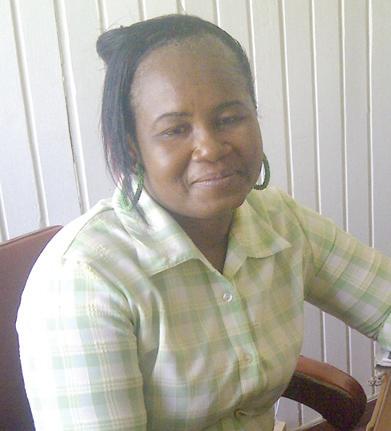
Hailing from St Densy Mission, Tapakuma Lake is Doreen Jacobis, 64, a professional midwife, a proud mother of two, Toshao and Chairperson of the Indigenous People’s Commission. During Jacobis’ term as a Toshao over the past 16 years she fought for the rights of women.
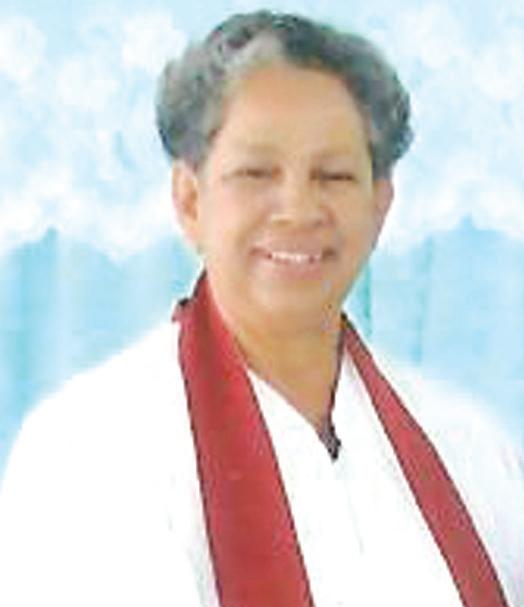
Mrs Vilma Da Silva is a vibrant women’s advocate, a proud mother, a counsellor, a farmer representative and an agroprocessor. Da Silva is known throughout the Essequibo Coast as a strong, dedicated, independent and successful farmer. Da Silva will be representing women on an international women’s Forum in the United States of America.
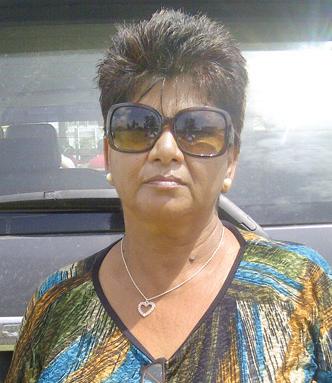
B
eatrice Naughton hails from Grant Try Best, Lower Pomeroon River, Essequibo, Region Two. She has led her community in the fields of education and health. She spent most of her life doing volunteering work; hence, moulding young women into independent and determined beings.
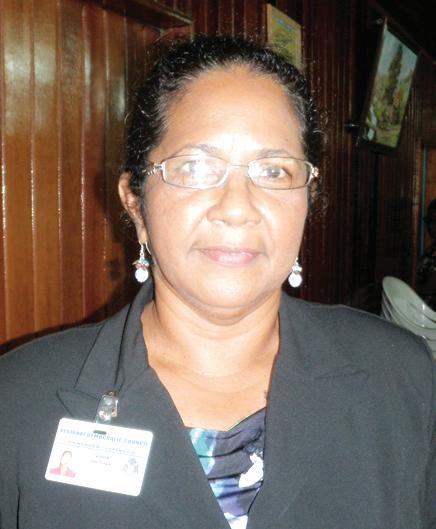
N
andranie Coonjah, 59, of 69 Suddie New Housing Scheme on the Essequibo Coast is an ambitious politician. Coonjah is now a household name in Region Two, since she would have touched many lives some way or the other. Her advice to other women is to stand up for their right and believe in themselves.
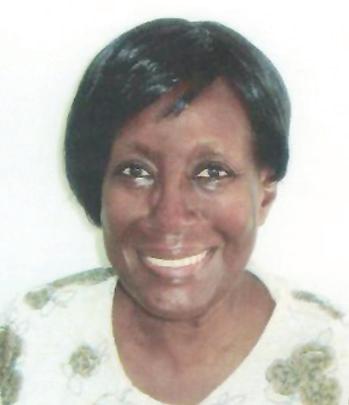
Sattie Ramnauth, 62, a businesswoman and rice farmer of Hampton Court has dedicated her entire life to empowering women in today’s society. Ramnauth, who is a very active member of the Sai Organisation, has been involved, over the years, in providing employment for women. Ramnauth, who is the daughter of the late Kayman Sankar, said she used her father’s business to give women the opportunity to earn and become more independent.
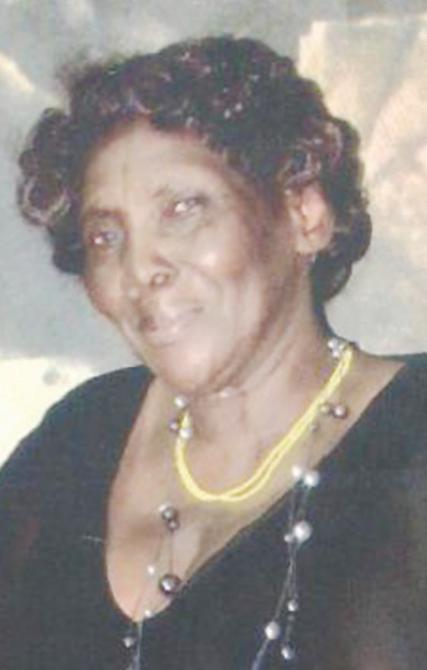
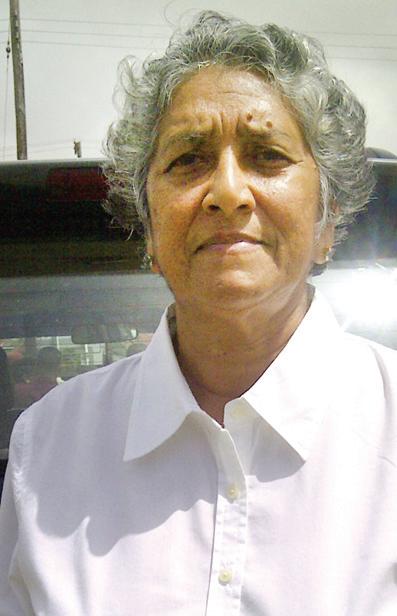
Cicely Ashby hails from Grant Dublin, Lower
and is a role model to many women in the riverine area of
Ashby, in the year 2000, started a bottom-house school under her daughter’s house with 15 children in the area. The final outcome of this brave woman of the soil‘s act is the formation of the Cicely Nursery and Primary School in Strong Hope Canal, Lower Pomeroon with Kenerick Edmonds as the principal of the annex.

n Guyana, female parents have been fulfilling their role and the role of their male counterparts in ever- increasing numbers, battling against the challenges that present themselves. It is one thing to be a single woman, but it’s another thing to be a single mother, living in Albouystown, Georgetown. The area is known for its slumlike conditions and heightened criminal activity. It is also home to many single mothers – women who want nothing more than to make a better life for their children.
Guyana Times was able to interview two single mothers from the community who have been in searing pursuit of happiness.
Thirty-eightyear-old Michelle Daniels is mother to four children. Over the
With an exemplary path blazed by Guyana’s most iconic jurist Justice Desiree Bernard, women in Guyana’s legal fraternity have since made notable advancements in the field, which is considered one of the most male-oriented.
True to this year’s theme of “Inspiring change”, Justice Bernard did exactly that, stimulating a change in the local judicial system and inspiring two generations of women lawyers.
Over the years, women lawyers, magistrates, judges and even paralegals have changed the age-old concept of the Judiciary being male-dominated.
Currently, there are many females in the legal fraternity who stand shoulder to shoulder with their male counterparts. Many of them even hold executive posts.
For example, the first female Director of Public Prosecutions (DPP) was Justice Roxanne George-Wiltshire who subsequently resigned from the post to become a Judge of the High Court in December 2004. Her successor, the current DPP, Shalimar Ali-Hack joined the Chambers in 1990. Under her guidance, a cadre of female counsels have been prosecuting for the state. These include the likes of Assistant DPP Sonia Joseph who joined the Chambers in 2007 as a Senior State Counsel and was appointed Assistant DPP three years later. Her colleagues include: Senior
past 10 years, she has been shifting from job to job, since, she “needed to take care of” her family. Her marriage came to an abrupt end after she decided that the endless physical abuse at the hands of her husband was overbearing. “I took my children and I move on with them, moving to apartment to apartment right in this area.”
Undisciplined men
After years of singleness, she decided to engage in another relationship. “I ended up taking somebody. He didn’t have a child, we got one together, but then things got bad and we left.” She lamented that men are undisciplined when it comes to taking care of their children.
Daniels currently works in the interior as a cook, saying of the experience: “Sometimes, it’s so hard for you to get your money, especially when you need it. And I always need my money.” Daniels said she has been given an additional burden, since her 15-yearold daughter gave birth to a baby a few weeks ago. “These are some of the things you have to put up with. I’m trying every day; in fact, I was working in the interior when she became pregnant. Being a single mother is a very difficult task.”
She hopes to one day be able to move from the area, so that much more improvement could be had in her life. “If I could get a land, from the government; in fact, I plan to approach the government, because I need betterment, I need good life.” was the last thing she said to this publication.
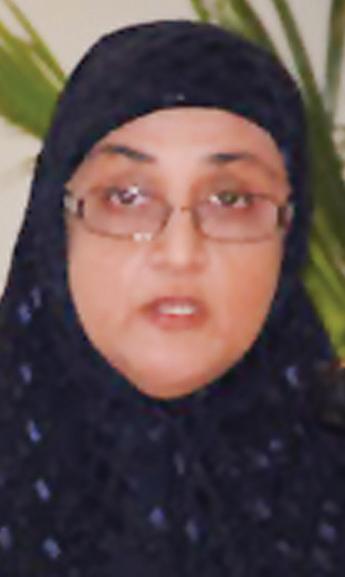
State Counsel Judith GildharieMursalin who joined the DPP’s office in 2009; Counsel Teshana James, who joined in 2010; and State Counsels Diana Kaulesar and Renita Singh, who joined the Chambers in 2011. Counsels Natasha Backer and Dhanika Singh joined in the subsequent years. The majority of lawyers in private practice launched their careers at the DPP Chambers.
Magistrates In the magisterial fraternity, the top post of Chief Magistrate has been occupied by a woman for several years. Former Chief
Magistrate Melissa RobertsonOgle was succeeded by current Chief Magistrate Priya Sewnarine-Beharry.
Another major achievement in this field is the fact that the magisterial complement is dominated by women. Some of the sitting female magistrates are Judy Latchman, Zamilla Ally, Rhondel Weaver, Ann Mc Lennan, Faith Mc Gusty, Sueanna Lovell, Leron Daley, Fabayo Azore, and Geeta Chandan-Edmond.
While this is a remarkable achievement, the same cannot be said for High Court
A little farther down the street was 35-year-old Andrea James. She has been selling beverages for quite a while to make ends meet for her and her two teenage children. Like Daniels, James separated from her husband, but not because he physically abused her, rather she left in disgust over the emotional and financial neglect she experienced at the hands of her childhood sweetheart. Since then, she has never left her children to go anywhere.
“There were so many opportunities that I could have gone to, but I chose not to. And never mind my husband left; I had decided that I would never be making children for different men around the place, and maybe that is what caused me to be in this situation right now,” she explained, adding that men generally want their partners to have their children.
James said she grew up in the community, which she constantly referred to as “the ghetto”. Life for her is not easy. “Even self if you take a $10,000 and you buy ration when the month come, you still got to buy greens. You still have to find money for them to go to school and so on. You have the father away who wants to bring money when he feels like.”
But, she says, she will never regret the decision she made to move on, on her own. “I feel every man and woman is free enough to make their own choice. And the choice you make, you have to live with it,” she told Guyana Times
She too has been praying daily for the day when she would be able to escape the stigma attached to the community.
judges with only four females gracing the ranks: Justice George-Wiltshire, Justice Dawn Gregory-Barnes, Justice Diana Insanally, and Justice Sandra Kurtzious. However, it was recently announced that the government has increased the complement of judges to 20, so, hopefully, the forthcoming appointments will see more females given the post.
Meanwhile, the field of private law practice is filled with female attorneys, who have struggled, over the years, to compete alongside and against their male

counterparts, but some have managed to overcome these challenges with great pomp.
Attorneys Sheila Trotman (retired), Emily Dodson, Deborah Backer, Jamela Ali, Latchmie Rahamat, Jaya Manickchand, Omeyana Hamilton, Bettina Glasford, Sonia Parag, Abiola Wong-Iniss, Kim Kyte-John, and current President of the Guyana Association of Women Lawyers, Simone Morris-Ramlall are just a few of the names of females in private practice. Also among Guyana’s legal decision-makers is former Supreme Court Registrar Sita Ramlal.
Driven by the passion to see women rise above societal challenges, primary among them domestic violence, Karen De Souza has, over the years, remained a force to be reckoned with.
As one of the founders and dedicated members of Red Thread, a local nongovernmental organisation, De Souza has, for more than a decade, dedicated her time and energies towards helping to give grass-root women a voice, as well as economic stability.
Simultaneously, efforts were being made by the organisation – which had its genesis in 1985 – to dispel racial myths that were permeating the society, and consequently, causing a discomforting ethnic divide.
De Souza revealed she was listed among the worst women who have been abused and deprived of employment. She was unjustly arrested in 1979 and tried in a court of law, simply because of her affiliation with a political party.
Although she was arrested on suspicions of burning down a public building, De Souza was charged and held for a few days for possession of a Guyana National Service kit.
Though a very young woman then, she was eventually able to adequately represent herself and even saw the case against her being dismissed.
But it was not until 1986 that the case would be dismissed, and by then her name had become tarnished, causing every possible door of employment opportunity to be slammed in her face without even a crease for her slender frame to slip through unnoticed.
“No one would employ me. It was like they were afraid of me. I had to depend on my sister and friends, too, for support.”.
This saw her taking leave to join the Guyana National Service and then the University of Guyana to boost her academic eminence. At the institute of higher learning, she studied English and Geography, and it was during this time that she became acquainted with
Political Activist, Dr Rupert Roopnaraine, of the Working People’s Alliance (WPA).
De Souza remained a committed member of the WPA, up until about six years ago, although she still maintains camaraderie with its existing members.
According to De Souza, Red Thread’s sustenance, over the years, has been hinged on the enormous commitment of the women who formed the core of the entity and have sought to not only embrace the policy of anti-racism and to work against poverty, but also to denounce abuse against women and children.
Perhaps the most important policy that De Souza has come to appreciate over the years is that of respect for those at the grass root level. She revealed that “a lot of what Red Thread has done was through the efforts of grass-root women, not women with high education.
“If we have proven anything it is that the certificates and so forth are not a measure of ability to make a difference.”It is for this very reason she believes that there are probably hundreds of women throughout Guyana that identify themselves with Red Thread and by extension, a woman who dared to use her daunting life experience to help transform the lives of many.
By Svetlana Marshall
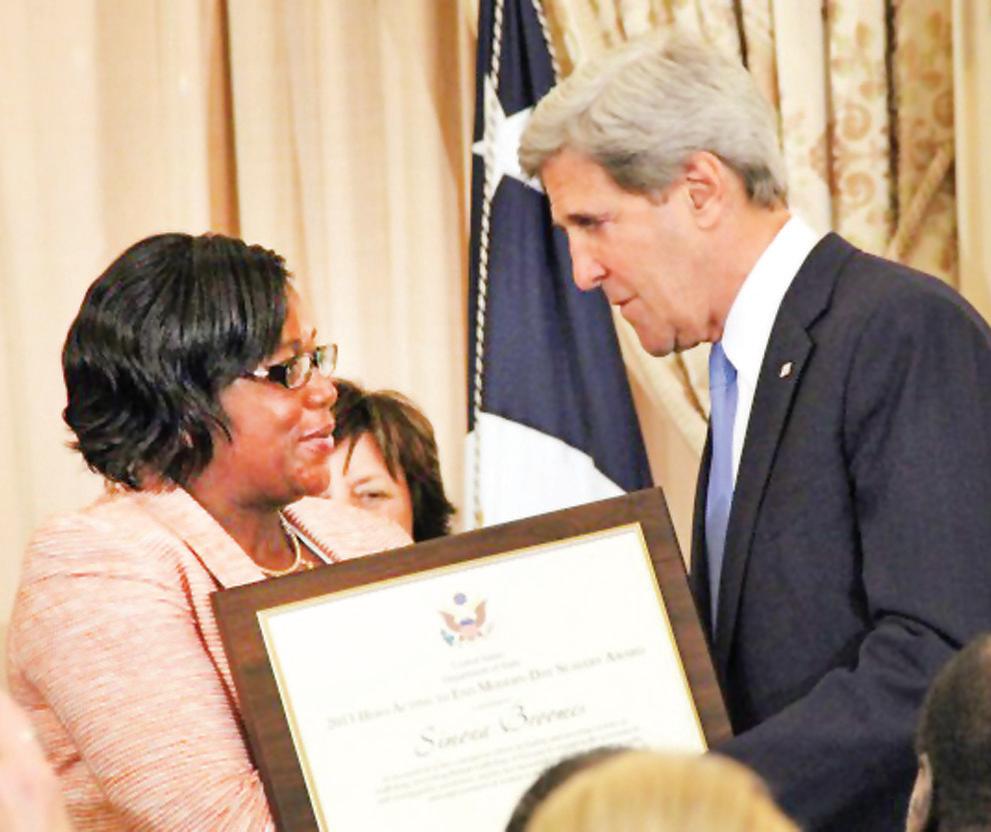
“Whenwe help countries to prosecute traffickers, we are strengthening the rule of law. When we bring victims out of exploitation, we are helping to create more stable and productive communities. When we stop this crime from happening in the first place, we are preventing the abuse of those who are victimised as well as the ripple effect that caused damage throughout communities into our broader environment and which corrupt global supply chains.” These were the words of U.S. Secretary of State John Kerry, minutes before he recognised Guyana’s very own Simona Broomes as one of the 2013 Trafficking in Persons (TIP) Report Heroes on June 19, 2013 in Washington, DC.
One day later, the U.S. embassy said Broomes has demonstrated extraordinary bravery and leadership in raising awareness of human trafficking in Guyana. After 25 years as a miner, the intrepid Broomes established the Guyana Women Miners Organisation (GWMO) in 2012 to empower women miners and address unique challenges women face operating in remote areas. The organisation then proceeded to rescue several young women from sexual slavery in the interior to international acclaim, highlighting the appalling situation of women in
Guyana’s gold fields. Today, Broomes continues to brave the weather, rescuing victims of modernday slavery despite many challenges. Since the start of 2014, GWMO has rescued five teenagers who were trafficked to Cuyuni, Region Seven. In 2013, the organisation rescued 29 women and girls, including one Trinidadian national. Of the 29, 16 were under the age of 18.
In the GWMO 2013 Report, released recently, Broomes said: “To date, our biggest achievement has been addressing social ills in the mining sector and confronting modern-day slavery in the form of Trafficking in Persons (TIP).”
There is no doubt that the GWMO has led the way in confronting this scourge in Guyana. “I am honoured to be here in this country, at this time, and as part of an organisation that will generate a wave of change against TIP while joining the chain of resistance around the world,” its head said.
Approximately 46,000 victims of trafficking were brought to light worldwide in 2012, compared to the 27 million that already exist, the U.S. TIP report revealed. According to the Global Report on Trafficking in Persons compiled by the United Nations Office on Drugs and Crime (UNODC),
the most common form of human trafficking (79 per cent) is sexual exploitation. Victims of sexual exploitation are predominantly women and girls. “Many governments are still in denial. There is even neglect when it comes to either reporting on, or prosecuting cases of human trafficking.”
Broomes has been a major critic of the Home Affairs and Human Services Ministries as well as the Guyana Police Force, owing to their apparent failure to rescue TIP victims, particularly women and girls who continue to be sexually exploited. Because of this, Broomes has been accused of “fighting for space in the newspaper”. She was even
arrested on one occasion, after a shopkeeper before the courts for TIP accused her of theft and assault.
On August 26 2013, the GWMO President was placed on $10,000 station bail for the incidents which allegedly happened at Puruni four months earlier during a TIP operation. Broomes told the press minutes after being released from police custody: “I know that it’s deliberate and I know it’s to send a message to me that I should stop. I expect it, I expect more and this is what I have to go through as a woman and a miner for standing up for children who are innocent.”
However, Broomes and her team have pledged to never give up.

Here is what some of the leading government legislators had to say about International Women’s Day 2014…
Minister of Education Priya Manickchand - It’s a day where by women should reflect on their life personally, what they want to do for themselves because we are mothers, wives, daughters, granddaughters, nieces, and employed at some institution or business.
Women should ask themselves on this day- what do I want for me? What can make me a better and stronger and better mother, wife, daughter etc.
It is often times difficult to think about ourselves when we are so busy giving to others and making the house is okay and the kids and husband is fed among other things.
But as women we should take the time and look after ourselves and make ourselves feel special for the true inspiration that we are.
We do often times neglect ourselves so that others can be happy but if we do not take of ourselves first we cannot make others happy.
So let’s spend this weekend reflecting and also enjoying the day that was set aside for us.
Presidential Advisor on Governance Gail Teixeira - As women we should be proud of our achievements, proud of ourselves as women. As we celebrate International Women’s Day, we must recognise that women in
other parts of the country are not fortunate like us in terms of rights as women, equal rights with men and their are many parts of the world there is civil war and women and children are the main victims.
We as Guyanese women we have our own struggles to overcome, particularly in the area of domestic violence and sexual violence in our society. But I do believe that in Guyana, Guyanese women have a lot to be proud aboutwe are ranked 19th in the world with women in Cabinet, 25th in the world with women in Parliament, and a result of the Government housing programme a lot of women in our country now own their own homes; while in the past, that was not possible.
There is a need for more women to get involved in the economy whether it is small business or as workers. We also need more day care and support systems for women.
So as Guyanese women, we have a lot to celebrate and be proud of. Happy International Women’s Day to all!
Minister of Foreign Affairs
Carolyn Rodrigues-Birkett –
The fact that we have a day to celebrate women all over the world is very important; and it allows us not only as women but as people to reflect not only the achievements of women but also how far
women still have to go.
In many countries over the world, women are still being discriminated and I am sure even in Guyana, we still have some of those situations, But in Guyana we have come a very far way in terms of what we have done in the country where women are concerned.
We have more women in the University, maybe more women in schools as well but we have to create that balance.
I am one of those persons that believe that for all of our people to succeed, men and women would have to play their roles, but also we know that women still face a lot of issues in the workplace and in several other places, but many of them do not want to speak about it.
But I am very optimistic based on what I have seen in the last few years or so, women are speaking up more.
I must say, though, that one of the things that bother me the most is the killings of women at the hands of their partners and take it head on and deal with it very strictly.
Every day is women’s day and it’s a good thing that we have International Women’s Day so that we can look at the issues that affect women and deal with them with whatever support we can provide.
Happy Women’s Day to all women!
By Shiran ramnauth
Extraordinary women emanate from Regions Five and Six who have, and are contributing to the development
of Guyana in almost every sphere.
These women undoubtedly have been shining example of what “women from the
countryside” can achieve. Meet just a few of Berbice’s phenomenal women who do things phenomenally:
Dr Vishalya Sharma is the Current Medical Superintendent of the New Amsterdam Public Hospital. She started the extended home-based care programme in Berbice. She is always assisting the less fortunate by hosting feeding programmes, Christmas parties, etc.
She is of the view that women should be honoured and praised for their accomplishments. She, however, believes that until they are liberated from poverty and the injustice of domestic violence, their goals, peace, security and sustainable development stands in jeopardy.
Nirmala Samuru Hussain is the graduate head teacher attached to the Corentyne Comprehensive Secondary School. In 1995, she was one of the first batch of student teachers to attend the Cyril Potter College of Education, in Rose Hall Town.
“ I love the classroom I love children and because of that I fully contribute in every possible way to ensure they are fully equipped with the necessary requisites to cope in society,” she said. Her advice to women is to respect their bodies and do not allow people to fool them into becoming what they don’t want to be .

Today marks 39 years since the world acknowledges International Women’s Day. The first global International Women’s Day was celebrated in the year 1975 and since then, women’s roles in society have evolved in many ways.
Many of us think of “traditional” gender roles as being those portrayed in a 1950s sitcom: Dad heads to the office, while Mom stays home and keeps house. But that scenario was just an aberration. For most of human history, it has taken the efforts of both men and women, whether working in the marketplace or in the fields, to keep the family afloat. And that’s the situation to which we seem to be returning.
Throughout history, men have been tasked with providing for the family. In our earliest days as a species, men’s days were consumed with hunting and bringing home meat for sustenance, while in recent times, earning a pay cheque was their daily focus. Women, on the other hand, took care of children and housekeeping. However, thanks to cultural movements such as secondwave feminism, it is now more acceptable for women to have a career.
According to a statistical study:
• 13 per cent of parliamentarians worldwide are women.
• 15-16 per cent of top corporate executives are women; these figures have

not moved since 2002.
• Even in the non-profit world, only 20 per cent of the leaders are women.
According to Hilary Clinton, who once ran for the post of U.S. President, described by some as the most powerful position in the world and is gearing up for a second run: “The status of the world’s women is not only a matter of morality and justice. It is also a political, economic, and social imperative. The evidence is irrefutable: when women are free to develop their talents and contribute fully to their societies, everyone benefits.”
Promoting gender equality Initiatives to promote gender equality in Guyana and around the world are gathering pace. With the most recent being CUSO International’s project on gender-equality promotion strategies which was launched on Thursday.
Women from Canada, the
United States of America and most Caribbean countries were among the audience. When asked for their comments on the changing gender roles in society, 70 per cent of the women who attended said roles are changing, solely because more women are stepping up to the plate and taking the lead, refusing to be pigeon-holed and stereotyped. They also noted that the objective was not to make men their enemies but rather partners in their drive to promote gender equality. The remaining 30 per cent said the change is not yet clearly visible in every society due to religious and mental boundaries compelling women in every part of the world. Nevertheless, the few women excelling in roles perceived to be male represent the many who had to endure abuse and stereotypes. It is only because of their struggles that the few prominent women around the world are where they are.
It was noted at the launch that it had been a norm in Guyanese society for women to be abused and stereotyped. Legislation criminalising domestic abuse was only passed in 1996.
Guyana’s representative to CUSO, Tara Persaud said it was because of these struggles that the new initiative is being launched in cooperation with the United Nations to make gender inequality a thing of the past.
She said while in her twenties, she ventured to a public meeting where she heard Janet Jagan speak for the first time. SahoyeShury remembered Jagan’s bravery and how she genuinely addressed the issues affecting women at that time.
“I entered politics because of Janet and Cheddi Jagan... those times, women did not have any initiatives and they felt inferior. She inspired me... after hearing her speak, I told my mother I have to become like Janet Jagan,” she said during the interview with Guyana Times
She immediately started to work with Mrs Jagan on a campaign around the country aimed at getting families to start investing in the education of girls.
“We went from door to door and from community to community,” she noted while underscoring that the fight then was for equal rights.
Asked what were some of the major challenges she faced when she entered the political environment, the “Fireball” remarked “resistance from men” and non-acceptance from the colonial elites.
Sahoye-Shury later went on to become the General Secretary of the Guyana Sugar Workers Union and worked feverishly to change the name to the Guyana Agricultural Workers Union (GAWU).
She faced severe hardships, along with her colleagues, back in 1964 as they attempted to
bargain for recognition of GAWU.
According to Sahoye-Shury, her next struggle was to fight alongside her comrades for the independence of Guyana. She later became President of the Women’s Progressive Organisation of Guyana.
Sahoye-Shury, who enjoys reading and giving inspirational talks, was appointed as a Member of Parliament for the People’s Progressive Party/Civic during the period 1968 to 1971. She was later appointed the Parliamentary Secretary for the Local Government and Regional Development Ministry and the Housing and Water Ministry. “I am hoping that we will have another female as President of this country before I die,” she said passionately, noting that the future of women looks even brighter.
“I don’t have disappointments,” she responded when asked about the criticisms women face today in their quest for gender equality and recognition.
“Women have handled it superbly so far”, and cannot afford to stop the journey just yet, Sahoye-Shury stated.
The only woman charged and jailed for sedition in Guyana, Sahoye-Shury said: “I have no regrets and if I have to do it, I will do it all over again, because I am a woman.”
She also paid tribute to all of the other sterling women who have played fascinating roles in shaping Guyana today, while paving the way for younger girls to take over the mantle.

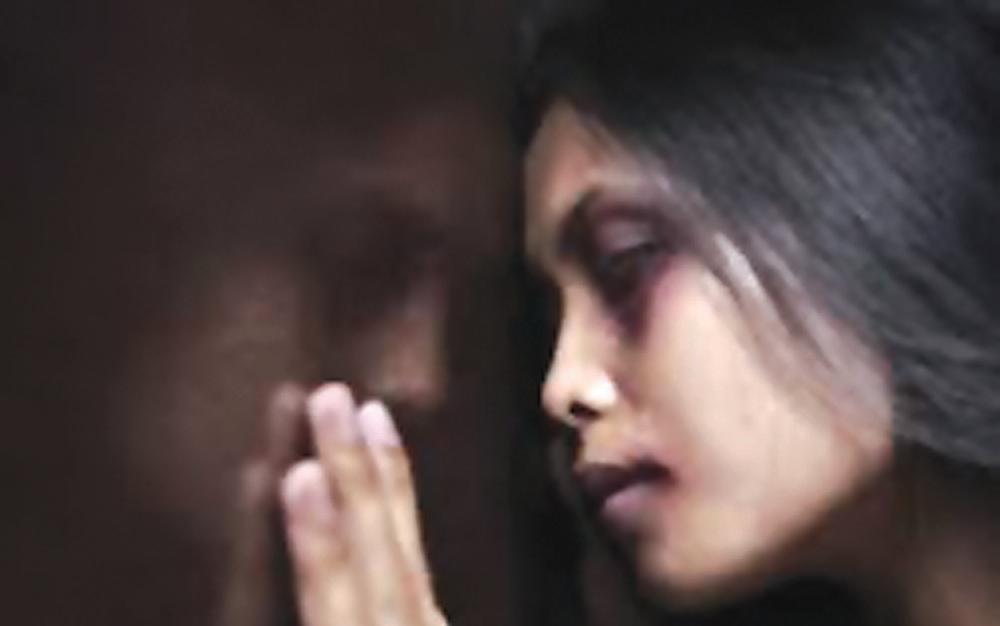
The noble efforts of governmental and non-governmental organisations to reduce the ever-increasing incidence of domestic violence in Guyana are becoming less combative as the days progress. The bane of domestic violence has taken root in every facet of the society, crossing all class and racial lines.
Organisers of International Women’s Day 2014 could not have found a more fitting and profound theme for the day’s programme, “Inspiring Change”. When directed to the issues relating to domestic violence, the theme creates a high level of urgency.
The numbers rise every minute of every day. Last year alone, some 21 women lost their lives at the hands of a spouse or lover. This year has already registered close to five deaths, with the most recent being that of a 19-year-old woman. A few days before that incident, another woman was stabbed 27 times by her husband, who later committed suicide. She was very fortunate to have survived the attack – a living testimony to other females
living under similar conditions.
But as the little hand on the clock continues to tick, chances are, the screams of these defenceless women will continue to sound, if more is not done to totally stamp out the social plague, which is rampant in all regions of this country.
We can take a minute or two to pay homage to the women who were savagely murdered last year by men who had promised to cherish and take care of them.
Among them: Samantha “Manda” Bagot, 37, of Kildonan Village, Corentyne, who was killed by her husband; Angela McAllister,17, of Diamond, East Bank Demerara, who was slaughtered with a cutlass and spade by her 18-year-old boyfriend; Sherry-ann Tiwari, 23, who had her throat slit by her lover; Geeta Bhisundial, who was strangled by the father of her children; and a pregnant Parbattie Mangru, 19, who was shot by the man she was to marry that very day.
Valiant efforts
The valiant efforts con-
tinue, as entities battle for the rights and security of women. Civil society organisations run public service announcements and train police officers, teachers, nurses, agricultural workers, religious groups, and health clinics to sensitise them on the damning effects of domestic violence. It seems, however, that little is being learnt. There is a Task Force on Violence against Women whose membership includes representatives from civil society organisations, law enforcement, the health sector, and youths. The Task Force has gathered data in preparation for drafting a motion on the social ill.
It is reported that between January and September 2006, Help and Shelter handled 414 cases of abuse including child, spousal, and other domestic abuse. Two hundred and ninety-seven of those cases involved spousal abuse directed against women. Help and Shelter, which receives private, donor and some government funding, runs a free shelter for victims of domestic violence and also operates a hotline to counsel victims.

There are other organisations that believe there is a special measure that could reverse the tide. These organisations believe that men should be the leaders in the reversal of domestic abuse since they are, for the greater part, the abusers. But focus should also be on placed on mothers, who help mould their sons – the men of tomorrow.
Sociologists credit the hike in domestic abuse to the fact that many families are headed by single mothers. As a result, boys lack a male role model and mothers are no longer as active in their sons’ lives, because they must spend time putting food on the table. To reverse this trend, mothers must be the prime movers, ensuring that their sons have viable male role models and instilling in them the need to respect women.
The bottom line is that women are the key to ending domestic violence.
But there is more. More often than not, an abused woman turns to her motherin-law for some comfort.
Lax enforcement of laws
While the government uses laws against domestic violence with some degree of success; the problems lie with the failure of those responsible for their enforcement. The Magistrate Courts are often insensitive to the problem of domestic violence and their role in ensuring the implementation of the law. In addition, not all police officers fully understand the provisions of the law.
Non-governmental organisations report a widespread perception that some police officers and magistrates could be bribed to make cases of domestic violence “go away”. The government rarely prosecutes cases in which the alleged victim or their family agreed to drop the case in exchange for a monetary out-of-court settlement. Enforcement of the laws against domestic violence is especially weak in the interior.
Non-governmental organisations assert the need for a specialised Family Court, which is yet to be operationalised in Guyana, owing to difficulties furnishing the building, although every other aspect is said to be in place.
Domestic violence is not something new; it has been with us for as long as humanity can remember. Men beat or abuse their wives for whatever reason and the women rarely get support. But Guyanese, both men and women, can do so much to “inspire change”. As we join in celebrating International Women’s Day 2014, let us seek to realise this year’s theme, not for today nor tomorrow, but for always.
Enough is not being done to protect
Our womenfolk are under attack and much of the progress made in fighting for an end to inequalities – which are direct consequences of women in our society being seen largely as “private property” – could be reversed, if there is no urgent rethink of key policies.
Sadly as Guyanese mark International Women’s Day this year, many families are left motherless or daughterless, as scores of women are losing their lives as a result of the scourge of domestic abuse. The blood of these ordinary women is being spilt because of the dastardly and reprehensible acts of an alarming and growing number of cowardly Guyanese men.
In response to this situation, our policymakers in the Executive, with support from mainly female legislators in the Parliament, have piloted a regime of legislation that is aimed at combating the evil of domestic abuse in all its forms. There has been much emphasis on harsher penalties and fines and the expansion of the law to cover all forms of abuse and violence.
This is not enough. While there has been much talk on the part of those policymakers about the implementation of the menu of measures set out in the legislation, there have been little progress and measurable gains. Talk is cheap and the truth is the situation has not gotten better because statistics show that the number of women being abused is growing yearly.
What has happened to the “Stamp It Out” and “Breaking the Silence” Campaigns launched by the government to curb the increase of violence against women and girls? What are the steps that have been taken by the government in partnership with civil society that will see the reduction of domestic deaths and the “effective and speedy” prosecution of all perpetrators of violence against girls?
Surely, the government will not dare respond by saying that the poorly-attended community outreaches in select communities are reaping benefits. Neither will it seek to take credit for the hard and well-appreciated work of several sterling non-governmental organisations in this country. Simply put, the argument that the government is not to blame for the spiralling levels of violence against women will not be accepted as it is a falsity being peddled to reject culpability for the saddening state of affairs in this respect.
There must be a policy shift. There is need for the focus to be removed from vilifying men and boys to empowering them through a menu of measures that could create a paradigm shift in the way they view womenfolk. Much of this cannot be done by an ill-equipped Men’s Affairs Bureau that visits schools and talks to boys and men. Men are not socialised to respond positively to change by force and they usually retreat when embarrassed or maligned and harden their stance. That is the problem that policymakers do not seem to comprehend. They are missing the mark!
The policy has to create an entire entity aimed at studying the behavioural patterns of males and females in our society. It must be tasked with coming up with timely and appropriate social and moral interventions.
The policy must see the creation of a semi-autonomous Gender Affairs Bureau that analyses the judiciary and its sloth in prosecuting instances where women or men are abused. This body must also take responsibility for public education and communication of the laws to the society. It must also have at the centre of its focus, the treatment of men too as victims of mental and verbal abuse from women.
An independent eye is needed to wage an all-out war against – not men – but the culture of domestic abuse in order to protect our womenfolk from further debilitation. Focus must be placed on the continued portrayal of females as only sex symbols and sexual objects via mass media and now social media.
Women too cannot escape blame for the situation in which they find themselves. They have been quiet and forgiving for too long. It is time that they speak up and assert themselves as the victors and not victims of the abuse perpetrated against them.
Women have always been seen as the backbone of society, but when they firmly reject violence in all its forms, they become heroines who will be credited for re-designing the modern Guyanese male who incidentally was born violencefree.


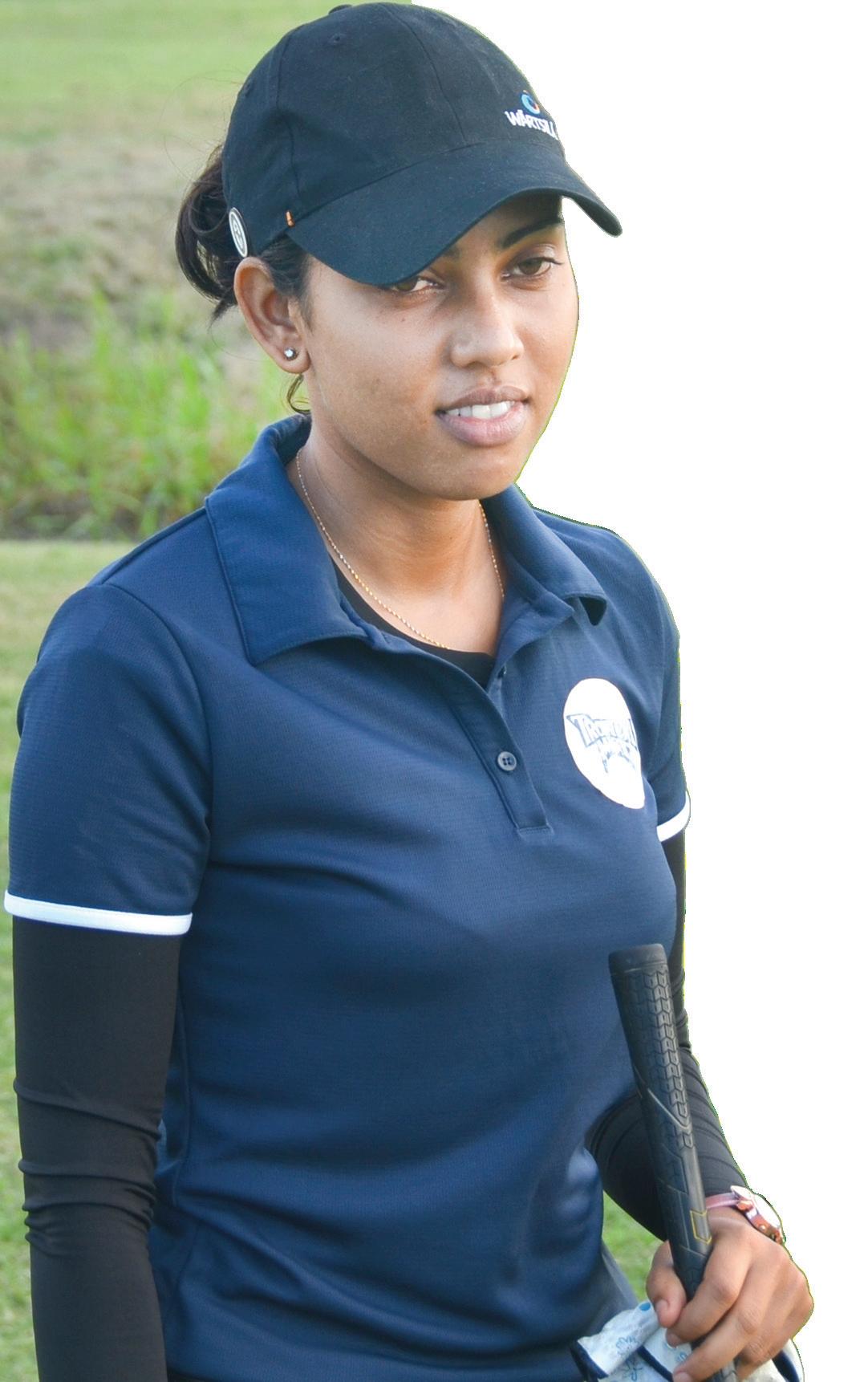
Winning the prestigious Guyana Open golf tournament is an achievement every local golfer craves.
The presence of high-profile local, regional, and international players
makes the tournament the premier event on the local calendar, one which separates the men from the boys, or in Christine Sukhram’s case, the ladies
You see, Christine is one of those players who have won the Guyana Open, not just once, but...wait for it…a phenomenal eight times.
Yes, your eyes did not deceive you…eight times!
It gets better. All those victories have come on the trot, a clear indication of her status on the greens and fairways.
No disrespect to the other female golfers – they have prevailed even when Sukhram is around –but it seems the Lusignan lass thrives on the big stage. She is simply unstoppable when it comes to the Guyana Open.
Living a stone’s throw away from the nine-hole Lusignan Golf Course, Christine developed a penchant for the sport from an early age. Her father, now deceased, was an avid golfer, so venturing into the sport came naturally to Christine. “I was born in Guyana, but my parents migrated to Grenada for about two years until I was six. My father was a golf coach there and he would give lessons for persons, and I would join in after school. At age six, I started playing, just learning the art of the game. I
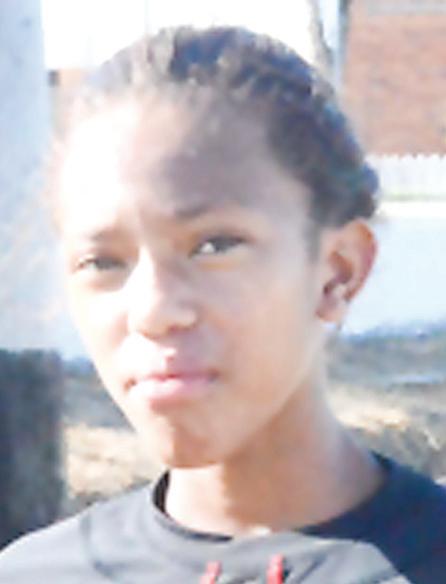
Behind every achievement, there is a story, and within every story, there are struggles. It is the mixture of struggle, failure and success that encompasses achievement which captures the imagination, as is the case with Linden’s junior sensation Cassey George.
In 2013, George won Guyana gold in the female under-17 1500 metres at the Junior Carifta Games, while notching silver in the 800 metres. She joined a small group of athletes who have medalled at the Games, an even smaller club who have won gold and a particularly select clique who have medalled twice at one staging of the Carifta Games.
With the likes of Alika Morgan, Jevina Straker, Jonella Jonas, and Andrea Foster all medalling at the event in the past, what makes George’s run different from theirs?
It must be understood that George hails from the mining town of Linden where the training facilities for athletes are riddled with cow holes that easily cause injury, and training time is limited due to lighting and the fact other clubs might be using the ground.
George started her journey at the Schools’
went with him as he would teach others, and from then on, I picked up the game,” Christine related.
Inspired by international golf champion Tiger Woods, Christine, now 25, is keen to see more females take up the game in Guyana, noting that the perception that golf is a male sport is totally untrue.
Winning the Guyana Open consecutively from 2006-2013 is no easy feat, as the other female golfers can attest. The likes of Joann Deo, Shanella Webster, and Juliana Prince and a host of regional and international ladies have tried to conquer Christine, but to no avail.
But what is the young lady doing so differently that has placed her leaps and bounds above her competitors?
“I will never forget what my father taught me. He told me never to stop at where I am, but keep elevating myself, and if I don’t do well, I should keep trying and give it my best,” she pointed.
Since entering the competitive fray, Christine has certainly given her best. By doing so, she has forced her rivals to also up their game.
Golf’s local poster girl is reigning supreme for close to a decade. There seems to be no stopping her.
With such an extraordinary record, Christine has firmly etched her name in the annals of golf history.
Surely, her achievements must serve as an inspiration to females, who wish to make a name for themselves not just in golf, but in the sporting sphere.
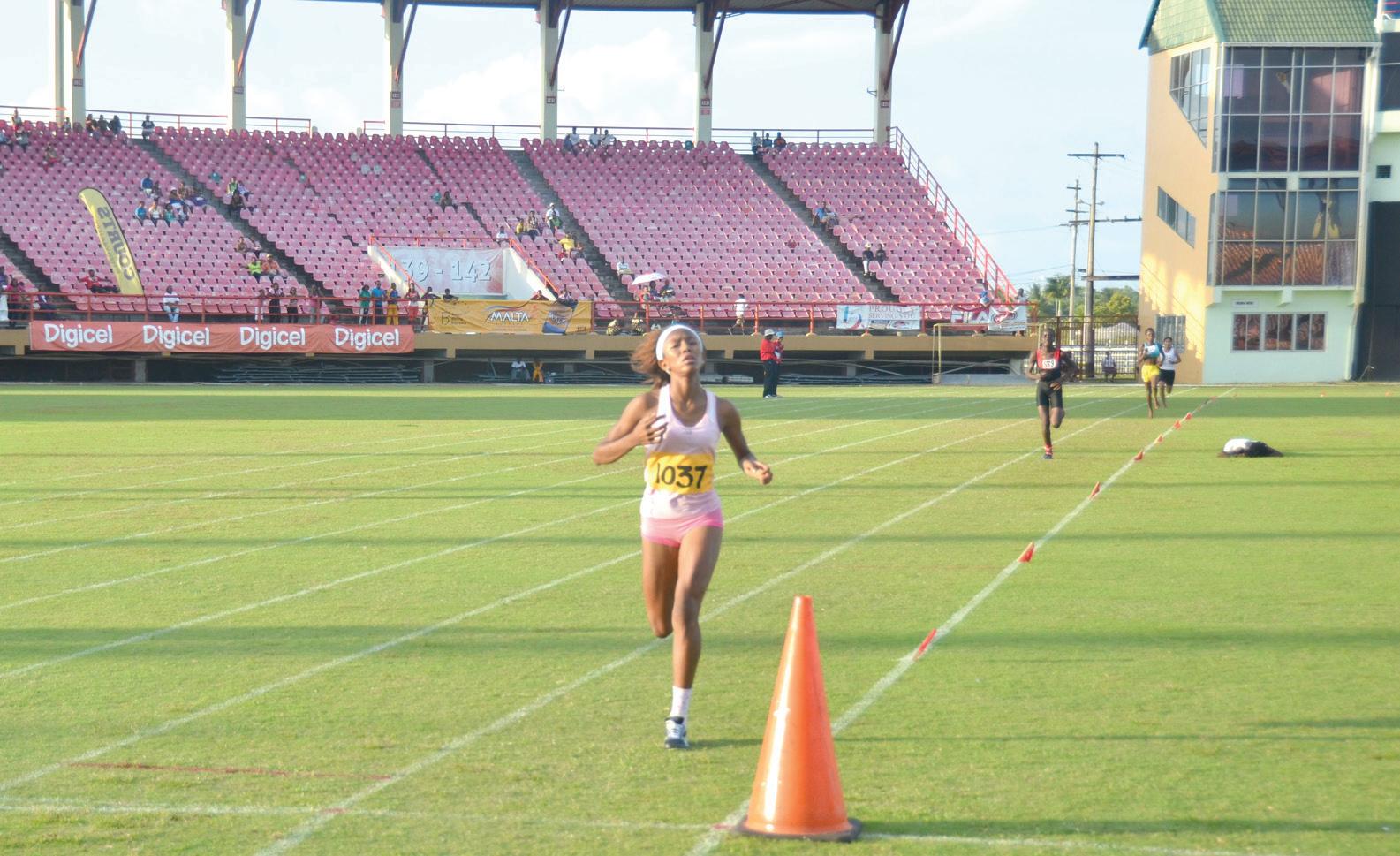
National Championships with a dogged rivalry with Delicia Harper of West Coast Berbice. In their under-12 years, both athletes would battle to the line before dropping to the ground, exhausted.
In spite of the limited coaching, George excelled, while Harper was left behind. She then continued her winning ways on the national scene, putting Guyana on notice of her talent with a dominant Carifta trials run to qualify for the event.
The 14-year-old would then prove her potential in the most unlikely manner, fulfilling the old adage “To be the best, you have to beat
the best”, as she trounced Morgan by more than 100 metres, just before winging off to the Carifta Games.
As further proof of her quality, at Carifta, George produced the fastest 1500 metres run by any Guyanese female, clocking 4:36.67, 3.97 seconds more than the Games’ record held by Jamaica’s Natoya Goule with a time of 4:32.70.
To indicate how impressive this feat was, no other Guyanese female 1500-metre runner has dipped under the 4:40 mark at Carifta; no other Guyanese female has won gold and silver at the same Carifta Games, and George is the youngest per-
son ever to accomplish such feats.
Her feats in 2013 saw her being named Athletics Association of Guyana Youth Female Athlete of the Year and National Sports Commission (NSC) runnerup Junior Female Athlete of the Year, accolades that she rightfully deserves.
George is just beginning to write her story. And with her yet-untapped potential, the only question is, will this female that deserves so much more support ever reach her true potential as an athlete or will her Carifta run be the pinnacle of what promised to be a master class of an athletic career?
By Rajiv Bisnauth
It’s a man world. Be it business, the arts, sports, media, politics, movies; women have al ways had to be satisfied with a supporting role while the “man” gets to be the hero.
Women’s cricket may not have the biggest of me dia profiles within the world of sport, but what West Indies Women’s all-round er Shemaine Campbell has achieved over the years is truly monumental.
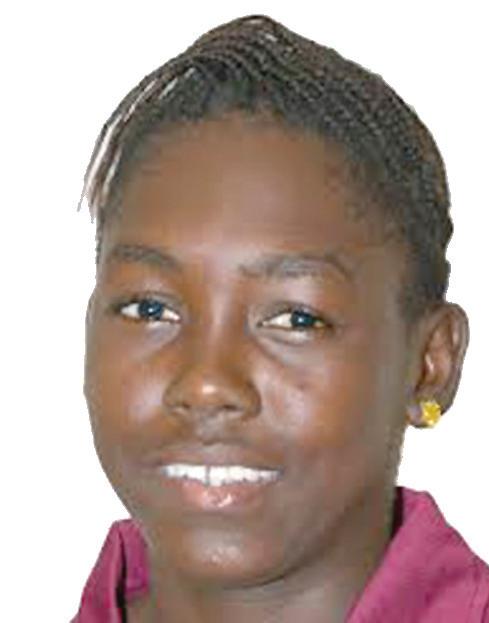
Campbell’s achievements can be attributed to her excellent work ethic, discipline and dedication. Her laudable feats are worthy of lavish praise and admiration.
Born on October 14, 1992, Campbell joined the Rose Hall Town Youth and Sports Club (RHTY&SC) at the tender age of 13 and worked very hard to fulfil her childhood dream of representing the West Indies at the highest level.
Along the way, Campbell became the only Guyanese female to score a century at all levels of cricket – inter-club, inter-county, regional and international. She became the only Guyanese and the second West Indian to score a One Day International (ODI) century last year. Campbell also led the Rose Hall Town Metro Team to becoming national champions when the Guyana Cricket Board (GCB) hosted the first and only national female cricket tournament in 2009.
So winning awards is nothing new to this outstanding model cricketer, who in the past has won seven RHTY&SC Female Cricketer-of-the-Year awards and the Berbice Female Cricketer award on four occasions. She has also won the national junior sportswoman runnerup award for 2010 and the Most Valuable Player (MVP) prize at the conclusion of the 2010 West Indies Cricket Board (WICB) female tournament.
Last year, on February 24, on her way to that ODI hundred, Campbell set a new World Record for the highest score by a woman player batting at number seven, as the West Indies Women team played Sri Lanka at the Rangiri Dambulla International Stadium.
Tremendous character
With the West Indies team in serious trouble at 23 for 5, Campbell showed tremendous character and grit as she revived and restored respectability with a magnificent 105 that was studded with four sixes and eight fours off 138 balls. West Indies made 180 for 8 off their allotted overs, with Campbell setting another World Record of getting the highest percentage of a team’s total of 100 runs or more.
She contributed 58.33 per cent of the overall total which bettered the previous record held by Australia’s great Melinda Clark of 57.48 per cent, with 142 of 247 for 5 versus New Zealand at Auckland on February 16, 1997.
With the face-saving 105, Campbell also returned excellent bowling figures of 6-0-30-1 and joined an elite group of players to score a century and claim a wicket in the same One Day International.
It is significant to note that no West Indian male player ever achieved that unique distinction of scoring an ODI century at the number seven position, much less a World Record. Campbell registered that feat at the age of 20 years, 133 days and became the second youngest West Indian player to score a triple-figure mark in Women’s ODIs. She was also a member of the West Indies Women team that created history and contested the final of the 2013 ICC Women World Cup staged in India against the mighty Australians whom they defeated in the Super Six stage.
Campbell was unquestionably Guyana’s most outstanding cricketer in 2013 – a most remarkable effort.