


Man committed to stand trial for Soesdyke bar rape
Over 114lbs of ganja found at Clonbrook

12 Lethem families receive new homes under Govt housing support initiative
Reg 1 cop under close arrest for disorderly behaviour, indiscriminately firing gun



Man committed to stand trial for Soesdyke bar rape
Over 114lbs of ganja found at Clonbrook
12 Lethem families receive new homes under Govt housing support initiative
Reg 1 cop under close arrest for disorderly behaviour, indiscriminately firing gun
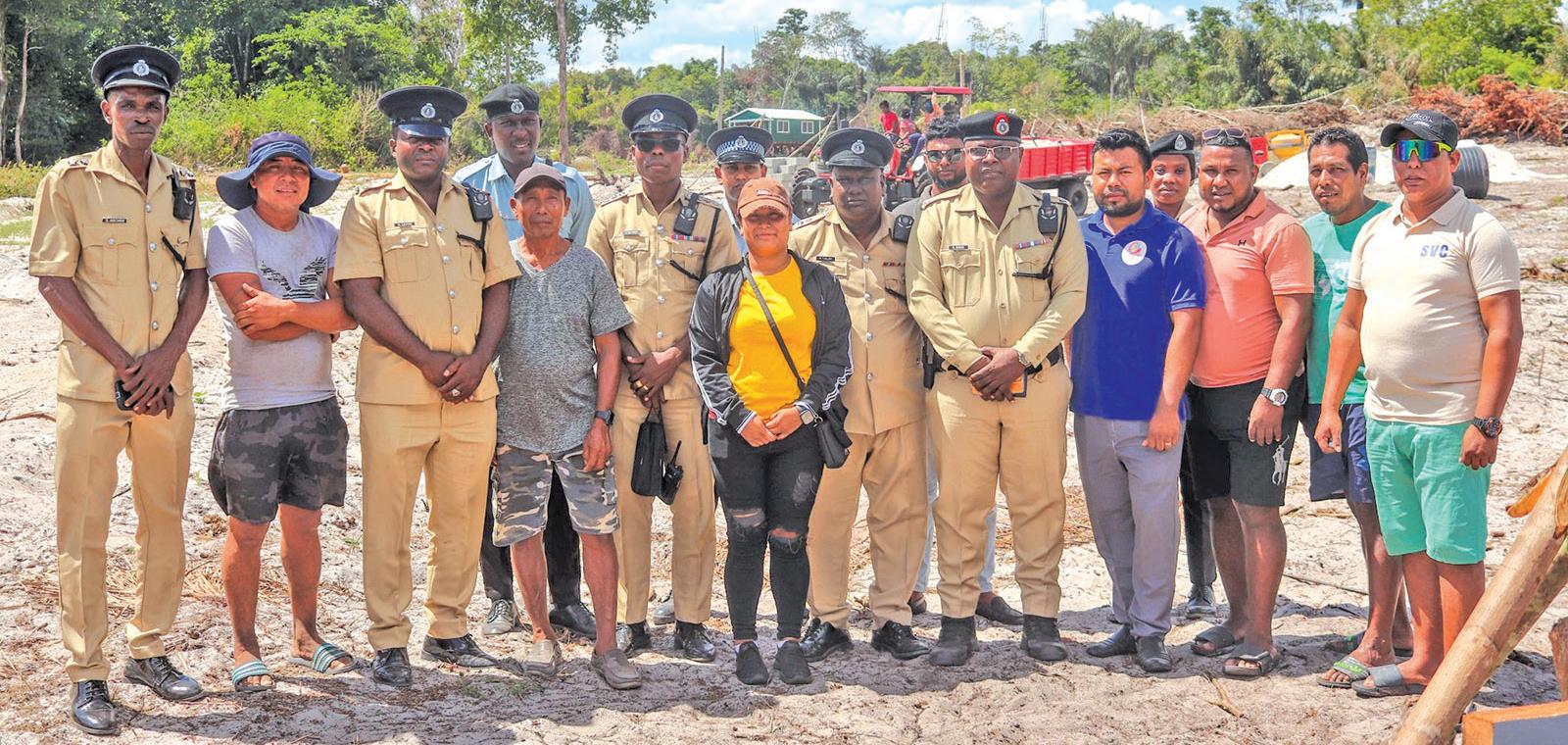
The proposed location for the upcoming Siparuta Mobile Police
Outpost has now been identified by Deputy Commander of Regional Division #6 (East Berbice-Corentyne), Superintendent Guy Nurse, and his team, during a site visit to the Indigenous community along the Corentyne River.
This week, Superintendent
Nurse led a team to Siparuta to assess the area and settle on a suitable spot for the outpost, which is expected to strengthen law-enforcement presence and improve response in the far-flung riverine village. The visit also focused on discussing preparations for construction and the basic infrastructure needed to support the facility once it is established.
During the exercise, the Deputy Commander and his ranks met with key community representatives. These residents worked along with the Police team to help pinpoint the most strategic location for the outpost and pledged their support in getting the site ready, including clearing and preparing the land and putting in basic amenities.
The selection of the site
for the mobile outpost comes shortly after President Dr Irfaan Ali announced that the Amerindian villages of Orealla and Siparuta are set to benefit from a virtual court system, as part of the Government’s push to expand access to justice in Region Six (East Berbice-Corentyne).
During an outreach to Berbice, President Ali explained that residents had raised concerns about the absence of a court in their area and the hardship of having to travel all the way to Skeldon to have matters heard.
“The residents of Orealla and Siparuta would have raised the need for a Magistrate court as they have to travel all the way to Skeldon to have their matters addressed,” the President said at a press conference following his visit. “So, we’re going to utilise technology, and with the aid of the containerised offices, establish a footprint for the people in Siparuta and Orealla to have access from one of those communities to

the Magistrate court,” he added.
The virtual court system is expected to reduce waiting times, cut transportation costs and significantly strengthen access to justice for hundreds of residents.
Earlier this year, Attorney General and Minister of Legal Affairs Anil Nandlall had assured villagers, “to OreallaSiparuta, we are promising here today that you will get a court, as you requested of me when I visited. The President has already instructed that we begin working on the establishment of a court there.”
Nestled along the
Corentyne River, Orealla and Siparuta have a combined population of just over 2000 people, with Orealla home to around 1200 residents and Siparuta housing roughly 450-500.
In recent years, the twin Indigenous communities have seen rapid development across several sectors. Construction is underway on a new secondary school that will allow students to complete their education while remaining at home, easing the financial and emotional strain on families who currently have to send children to the coast to attend secondary school.
GAWP celebrates 13th anniversary with inspiring church service

The Guyana Association of Women Police (GAWP) on Sunday marked its 13th anniversary with a church service under the theme "Still Standing: Pressing Through To Our Breakthrough", at at the Police Officers' Mess Annex, Eve Leary, Georgetown.
The programme opened with prayers from the three religions: Muslim prayers were led by Woman Sergeant Roberts-Pereira, Hindu prayers by Police Constable Singh, and Christian prayers by Ms. Calder-Padmore.
Following the opening, the Chairperson, Woman Deputy Superintendent Jillian Moore-Bowen, introduced a special welcome message and words of encouragement for women in law enforce-
ment from the President of the GAWP, Woman Senior Superintendent Dr. Nicola Kendall.
Although she could not be there in person, her inspiring message was shared with the attendees.
A special song was performed by Deputy Superintendent MooreBowen, and the sermon and benediction were conducted by Rev. Jean Roberts.
In attendance were the Minister of Home Affairs, Oneidge Walrond; Minister within the Ministry of Local Government and Regional Development, Pauline Sukhai; Commissioner of Police, Clifton Hicken; Regional and Branch Commanders, and representatives from the Joint Services.


The Berbice Bridge will be closed to vehicular traffic on: Monday, December 1 –13:00h-14:30h and Tuesday, December 2 – 13:50h–15:20h.


Parika and Supenaam departure times – 05:00h, 10:00h-12:00h, 16:00h, 18:30h daily.




Thundery showers are expected during the day and into the night. Temperatures are expected to range between 22 degrees Celsius and 29 degrees Celsius.
Winds: North-Easterly to Easterly between 1.79 metres and 3.58 metres.
High Tide: 13:29h reaching a maximum height of 2.57 metres.
Low Tide: 06:59h and 19:31h reaching minimum heights of 0.75 metre and 0.61 metre.








On Friday last, Home Affairs Minister, Oneidge Walrond had announced that the motor vehicle window tint will now be universally permitted at 35 per cent light penetration, removing the need for the long-utilised waiver system for standard tint approvals.
During a brief interview on Sunday, the Home Affairs Minister revealed that the policy’s urgency was triggered immediately upon her assuming office, when she was met not with celebration, but with a “large stack” of unresolved tint-waiver requests from confused citizens.
“On the first day, I was greeted with a large stack of requests for tint waivers,” Minister Walrond recalled. “People were calling and messaging, asking ‘What is the process? How do I get permission? I have a skin condition, I transport cash, I need security’. The confusion lent itself to bad actors manipulating citizens and the system itself.”
The new framework announced on Friday eliminates the waiver-approval bottleneck that existed under the former discretionary system, establishing automatic eligibility for all registered motor-vehicle owners to apply compliant tint, without needing ministerial permissions.
Under the proposed legislative amendment, vehicles will be allowed a maximum of 35 percent tint (or lighter) on side and rear windows and 70 percent tint on front windshields.
Defending the sweeping reform as a long-awaited response to public demand, scientific evidence, and procedural fairness, the Minister emphasised that the limits are balanced to account for both personal protection and road safety.
“It is not safe to have a heavy-tinted front windshield,” she clarified. “Seventy percent is lighter than thirty-five, but it still offers significant protection from UV exposure while preserving visibility for safe driving.”
The policy overhaul followed consultations between the Guyana Police Force and the Home Affairs Ministry, triggered by long-running public frustration and a mismatch between assumptions and reality.
According to Minister Walrond, internal reviews showed no empirical link between the presence of vehicle tint and increased criminal behaviour. Meanwhile, climate science presented a compelling counterargument–prolonged UV exposure is demonstrably hazardous.
“The belief was that tint encouraged crime,” she said. “But when we examined the data, we realised there was no correlation. And in fact,

we found the opposite–open vehicles exposed to high UV are unhealthy, especially in the context of climate change.”
“When citizens ask overwhelmingly for something safe and non-harmful, you must find a way to deliver it transparently, equally, and efficiently. This was, in my view, low-hanging fruit,” she added.
Formal exemptions will exist for government officials, security and defence personnel, diplomats and members of the diplomatic corps, and licensed high-ranking state security officials.
Medical waivers for tint levels darker than 35 percent will also remain available, but only when supported by certified medical documentation. The condition must be medically certified. The system is being designed so that it applies to everyone equally, while still protecting legitimate and evidentiary
medical claims.
The Minister explained that the pre-December 31 compliance window is a non-enforcement period. This period allows drivers to upgrade previously unauthorised tint or replace overly dark film that currently exists.
“The police force is expected to forebear on enforcement during this grey period so people can comply without friction,” she said. “But after December 31, strict enforcement commences.”
Tint meters, on-the-spot testing, and penalties
After the deadline, law-enforcement officers will be equipped with calibrated tint-testing meters, enabling roadside verification in real time.
A heavy fine of $75,000 will be levied on the spot if a vehicle is found not to be in compliance after December 31.
The proposed changes will be tabled in Parliament. The amendment will outline the
full enforcement regime, categories of exemptions, calibration and execution of tint meters, structure and timelines for penalties, and mechanisms for certified medical waivers.
Minister Walrond confirmed that the draft is largely complete, with only minor adjustments remaining.
The tint reform accompanies a wider modernisation push across national security systems, including upgrades to immigration screening, prison management, national fire services, and expansion of urban surveillance infrastructure.
The policy change is part of broader road traffic reforms that will introduce technology-driven security governance such as the expansion of Safe City and Safe Country initiatives using CCTV, facial recognition, and other technology systems that remove friction, bias, and human intervention, contributing to a 25 percent reduction in serious crime.
Minister Walrond assured Guyanese that the government will continue responding to public needs with fairness, equity, transparency, and predictability.
“Guyanese must know that they continue to have a government that responds to their needs and concerns fairly. This policy is about safety, equity, and transparency–nothing more, nothing less.


Editor: Tusika Martin
News Hotline: 231-8063 Editorial: 231-0544, 223-7230, 223-7231, 225-7761
Marketing: 231-8064 Accounts: 225-6707
Mailing address: Queens Atlantic Industrial Estate Industrial Site, Ruimveldt, Georgetown
Email: news@guyanatimesgy.com, marketing@guyanatimesgy.com
Anew article entitled “How to Topple Maduro”, published Thursday by the highly-influential “Foreign Affairs” journal, challenges the conclusion of our editorial from yesterday, “Next move on Venezuela”, which echoed the conclusions of a recent report by the International Crisis Group (ICG). This warned that, even if the US succeeded in removing Maduro, it could cause a general breakdown in security, whether from senior military officers, parts of the security forces determined to “wage a guerrilla-type war against the new authorities”, other armed groups already active in the country, including the battle-hardened Colombian rebel group, the ELN, urban-based pro-Maduro gangs known as colectivos, or all of the above. The deterring premise is that the US would find such a war of attrition unacceptable.
The author of the new article is Elliott Abrams, who served as Special Representative for Venezuela in President Trump’s first term. He also helped prosecute the contra war in Nicaragua during the 1980s as Assistant Secretary of State for Inter-American Affairs under former President Ronald Reagan and was former President George W Bush’s senior Middle East adviser on the National Security Council (2002-2009) during which he promoted the US. invasion of Iraq. With this background, Abrams is uniquely positioned to comment credibly on the more hawk-like elements in the US Administration – including President Donald Trump – on making a frontal attack on the Maduro regime in Venezuela, but without the need to commit large numbers of troops on the ground. It might very well, describe what President Trump has in mind when he recently broached the idea of extending Operation Southern Spear onto land.
This is his proposal: “First, Washington should expand its target list to include drug-trafficking speedboats in ports in addition to those on the high seas, because the threat must be brought home to the Venezuelan military. To protect US planes that may strike targets in Venezuela (and to demonstrate that such strikes are planned), US forces should destroy Venezuela’s air defence systems, F-16 fighter aircraft at the Palo Negro Air Base, and Sukhoi jets at the air base located on La Orchila, an island about 100 miles off the coast. Airstrikes should also target small airstrips in western Venezuela used for drug trafficking and bases in western Venezuela used by the National Liberation Army (known by its Spanish acronym, ELN), a Colombian terrorist group aligned with Maduro and also engaged in narcotics trafficking.
“No single step would have a greater effect on the Venezuelan military, intelligence services, and Police than removing [Interior Minister] Diosdado Cabello, the regime’s chief thug… …Removing him from power would show everyone in the regime’s security organs that they were not safe, and that its power to protect itself and them was fast eroding.
“It is not likely that [President Nicolás Maduro’s] regime could withstand such an assault,” according to Abrams, who stresses, that aside from the possible deployment of Special Forces to “apprehend indicted regime leaders”, “[i]t would be neither wise nor necessary to deploy US ground forces to Venezuela.”
“Maduro’s departure from power [would be] followed by the installation of the legitimate government led by [Edmundo] González [the presidential opposition candidate widely believed to have defeated Maduro in the 2024 election], followed by economic recovery, free elections, and the kind of negotiated amnesty (for all but the top figures of the regime) and national reconciliation that has been possible in other Latin American countries after dictators have fallen. The loyalty of the army and police to the new government cannot be assumed, of course, but if it can pay them using frozen assets or loans, their fealty to the departed Maduro will rapidly disappear.”
“The escape hatch should be clear: Maduro’s departure from power, followed by the installation of the legitimate government led by González, followed by economic recovery, free elections, and the kind of negotiated amnesty (for all but the top figures of the regime) and national reconciliation that has been possible in other Latin American countries after dictators have fallen.”

Simon Cowell is now washing his own blood to ‘age backwards’. What’s so wrong with getting old?
By Judith Woods
Space X titan Elon Musk is a major investor in the sector. His Amazon arch-rival, Jeff Bezos, wants to beat him to the holy grail. Tech magnate Bryan Johnson is a living experiment, and treats his body like a laboratory.
And now we learn that our very own music mogul, Simon Cowell, has joined the bonkers “Midlife Crisis Collective” of men striving to solve the “problem” of –whisper it – ageing.
Yes, the 66-year-old who gave the world The X Factor and One Direction is now setting his sights on if not eternal youth, then its next best equivalent: tinkering with his body fluids to turn back time.
Forget fillers and Botox –if you want to stay young, according to the “Age-Dodgers Alliance”, you have to start from the inside. In a new tabloid interview, Cowell cheerfully admits the lengths he goes to.
“I go to this place, this wellness clinic, where they actually take your blood, they rinse it, they filter it and then they put it back into your body,” he said.
“You do all these tests, and they tell you your age – so I’ve actually aged backwards by eating better, more exercise, less stress, certain supplements.”
I think by “rinsing”, he most probably means therapeutic plasma exchange, a technique employed in longevity clinics in which harmful substances, such as toxins, are removed.
If that sounds weird, consider Bryan Johnson, who has had, among other treatments, “multigenerational plasma exchange” – a transfusion of plasma from his then-teenage son. Icky doesn’t begin to describe it.
But what sounds like the stuff of a Bond movie baddie is par for the course in the high-stakes, high-reward world of the “Rejuvenati”. Sam Altman, who brought the world OpenAI, the company behind ChatGPT, is a whippersnapper of 40, but he has invested £138 million in a biotech startup that aims to extend healthy human lifespan by 10 years through reprogramming the body at a cellular level.
Crucially, those techniques could also then be used to treat dementia, which lends the endeavour a medical dimension. But the idea that some of the brightest minds on the planet are engaged in a deep-science, deep-pocket race – just so the wealthy can look better, live longer and beat biology – feels wrong on so many levels.
Now, I’m no purist. I’ve had skin peels and microneedling (yes, really) to stimulate collagen production and look fabulous. And I probably would have continued on, except at £350 a pop, I only went the once.
Would I emulate Kim Kardashian, who has documented her “vampire facials” of platelet rich plasma, or elect to have stem-therapy to treat an injury, as Madonna reportedly did? Absolutely. Those are rejuvenating and regener-
ative, and there’s nothing wrong with making the best of what Mother Nature gave us.
But to battle against ageing itself feels at best hubristic, and at worst, unethical. Ageing is living, and a natural continuation of life’s journey – to stigmatise it as a problem to be cured is insulting.
It’s a cliché, but who among us would swap their hard-won wisdom for youth? Or trade the sunny joys of grandparenthood for the 24/7 slog of parenthood?
It was Helen Mirren, still radiant at 80, who said: “Our 40s are good. Your 50s are great. Your 60s are fab. And 70 is f---ing awesome!”
Sharon Stone, who survived a stroke and a brain haemorrhage, regards ageing as a blessing: “I think that people who are embarrassed about being older are just stupid and ungrateful.”
As does 76-year-old Meryl Streep: “You have to embrace getting older. Life is precious, and when you’ve lost a lot of people, you realise each day is a gift.”
Earlier this month, I attended the Remembrance Day ceremony by the Cenotaph in London. I spoke to veterans who had turned up to pay tribute to comrades they had lost.
In Laurence Binyon’s poem, For The Fallen, he wrote the famous words: “They shall not grow old, as we that are left grow old.
Age shall not weary them.”
Without exception, the elderly servicemen I spoke to regarded ageing as a privilege, not a curse. Regardless
of aches, pains and other indignities, they mourned the friends who were cut down in their prime, and would never experience them.
Medical experts talk these days about healthspan rather than lifespan. Living to 90 is all well and good if you are fit and engaged, so we owe it to ourselves to invest in ourselves. To that end, eating well, exercising and maintaining social connections are more realistic goals than telomerase gene therapy, whatever that is.
Cowell quite clearly does all three, hence I struggle to grasp why that’s not enough. Maybe in a business obsessed with youth and always restlessly searching for the new, he feels the need for perpetual reinvention?
Certainly, his face has undergone many an iteration down the years, and he’s rich enough to indulge in any number of ultra-elite longevity fads.
But mercifully, Cowell has ditched a plan to have his body cryogenically frozen when he dies so he could be brought back to life in the future.
“I actually was going to freeze myself,” he told The Sun. “I thought, ‘Why not?’ Then I found out they chop your head off, so you come back in two thousand years as a floating head. I’m like, ‘No, I don’t want that.’” If visions of a disembodied Simon Cowell spouting opinions in 4025 aren’t enough to put the Silicon Valley dudes off their quest for the elixir of life, I think I can safely say we’re all doomed. Sorry.
(The Telegraph)

By Andrew CArmiChAel
Even as Guyana cements its place among the world’s fastest-growing oil-producing nations, the Government says the country is rapidly advancing along a parallel and deliberate path toward clean, renewable energy.
According to senior officials, Guyana’s historic Low Carbon Development Strategy (LCDS) and a new wave of solar and hydropower investments prove that the nation’s oil wealth is being used not to delay the energy transition, but to accelerate it.
This balanced approach, officials say, is rooted in nearly two decades of climate leadership that began long before Guyana struck oil.
Speaking during a recent address in Region Six (East Berbice-Corentyne) Senior Minister with Responsibility for Finance, Dr Ashni Singh, reminded that Guyana’s clean-energy journey did not begin with oil revenues, but with a global contribution no other country had made at the time: placing a monetary value on standing tropical forests.
He recalled that in 2006, then-President Bharrat Jagdeo delivered what Dr Singh described as “one of the most visionary speeches ever given in Guyana,” highlighting that the country’s pristine rainforest, covering about 18.4 million hectares, served as the “lungs of the earth,” storing vast amounts of carbon for the benefit of the world.
That vision led to the creation of one of the world’s first national low-carbon development strategies and later to the groundbreaking US$250 million GuyanaNorway Agreement (2009), of which Guyana earned US$236 million for proven
climate services.
“These resources were earned through strict global verification standards,” Dr Singh said, noting that Guyana also built a worldclass Monitoring, Reporting and Verification (MRV) system still considered a gold standard worldwide.
Oil revenues complementing–not replacing–clean energy investments
Guyana is now producing over 600,000 barrels of oil per day, expected to exceed 1 million barrels per day (BPD) by 2027. Yet Dr Singh stressed that oil production is not derailing the renewable agenda. Instead, the two sectors are advancing together.
He pointed to Guyana’s 33 megawatts of new solar farms now being built under the revived LCDS program, funded directly from the Norway earnings that had remained untouched from 2015 to 2020.
“These resources will finance a total of 33 megawatts of solar electricity generating capability, with 10 megawatts in Berbice alone, including two 3-megawatt farms in Region Six,” he said.
Additional farms are underway in Region Five, Linden, and Essequibo, expanding renewable generation to every major grid.
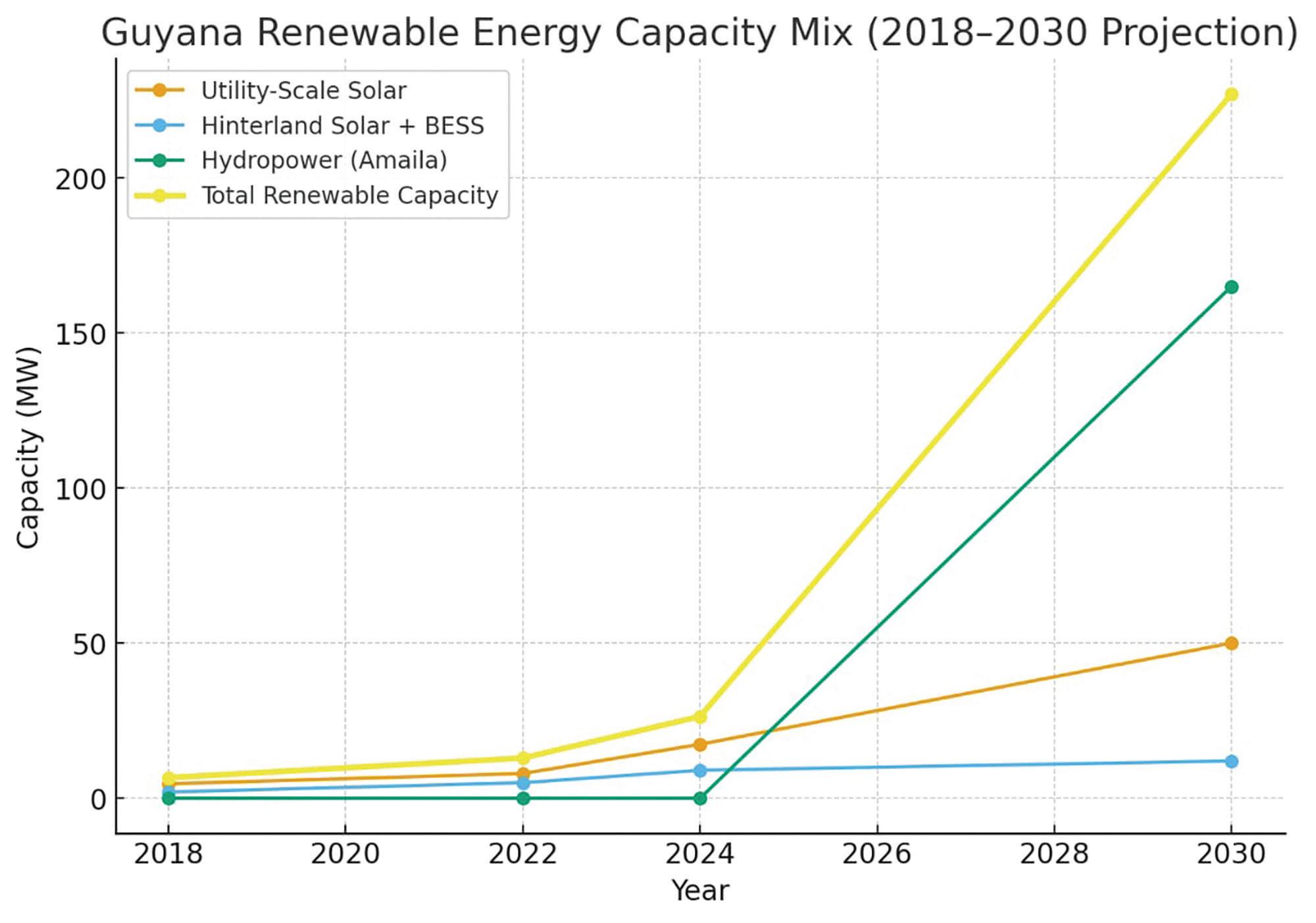
Guyana’s most transformative project remains the Amaila Falls Hydropower Project, which would supply 165 megawatts of clean electricity – more than the generating capacity of the entire Demerara-Berbice Interconnected System (DBIS) today.
“This is Guyana’s most bankable and attractive hydropower option. It has been rigorously studied, scientifically and financially, and we will develop it,” Dr
Singh emphasised.
He reminded that the project was fully financed in 2013, backed by global investment giant Blackstone, with Guyana contributing only US$80 million of the LCDS earnings. However, political obstruction at the time caused Blackstone to withdraw.
“If implemented, then Guyana would already have 165 megawatts of hydropower on the grid today,” Dr Singh said.
The Government has now recommitted to completing Amaila, alongside new micro-hydro and solar hybrid systems in hinterland communities under the expanding national renewable program.
The target is 70 percent renewable electricity by 2030.
The trajectory includes
33 MW of utility-scale solar, which is currently being implemented.
165 MW of hydropower (Amaila Falls), and 9 MW of solar with battery storage installed in 2023–2024 across hinterland communities.
Additionally, the Gas-toEnergy Project is expected to cut emissions by transitioning heavy fuel oil generation to cleaner natural gas.
The government is also anticipating massive private-sector interest in wind and solar under the LCDS 2030 framework.
With these combined, the Government says the country is on track to cut electricity emissions by 70 percent and significantly slash generation costs by 2030.
Dr Singh emphasised that the transition is also
Barry Sullivan, 28, has been committed to stand trial for an alleged rape that occurred at Raghoo’s Bar, Soesdyke, East Bank Demerara, after spending several weeks on the run. Police confirmed that Sullivan was arrested on July 28, following a manhunt, and was subsequently charged in connection with the incident, which reportedly took place on July 13.
His last known address was listed as Ice House Road, Timehri, East Bank Demerara.
Sullivan made his first court appearance on July 31 before Magistrate Tamika Clarke at the Friendship Magistrate’s Court, where he was remanded to prison. The case experienced multiple adjournments over the months to allow for full disclosure and the receipt of statements of the accused.
The matter proceeded via paper committal this past week, during which all statements were read, admitted, and tendered into evidence.
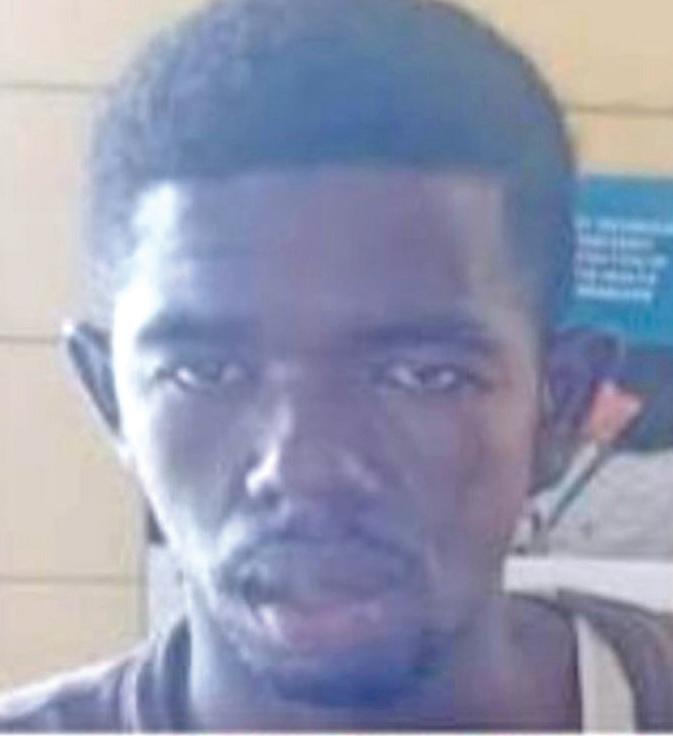
Magistrate Clarke ruled that a prima facie case had been established, and Sullivan was formally committed to stand trial at the next practicable sitting of the Demerara Sexual Offences Court.
Prior to Sullivan’s arrest, two other men were charged in con-
nection with the case. Thirty-sixyear-old DJ Leon Defreitas, of Kuru Kururu, Soesdyke-Linden Highway, and 30-year-old office assistant Ryan Rajnarine, of Soesdyke Back Road, were remanded to prison on charges of inciting Sullivan to commit the sexual assault. According to police, both men were part of the entertainment team at Raghoo’s Bar on the night of the incident and actively encouraged the attack while patrons watched. Authorities described their roles as “complicit and enabling”.
The incident, captured on video and widely circulated on social media, triggered national outrage. Investigators reported that the 20-year-old Amerindian survivor was allegedly drugged and sexually assaulted by three men, including Sullivan, during the encounter. The disturbing footage prompted the immediate closure of Raghoo’s Bar and drew condemnation from top government officials.
delivering immediate benefits on the ground, including construction jobs, permanent maintenance positions, and opportunities for young Guyanese in engineering, electrical installation, and environmental management.
Speaking about a new solar farm which was recently commissioned at Hampshire on the Corentyne, Dr Singh described it as truly historic, representing continuity from President Jagdeo’s LCDS, evolution under President Ali’s LCDS 2030, and proof that Guyana re-
mains a global model for forest-rich developing states transitioning to clean power. He reiterated that Guyana is proving it can simultaneously develop its oil sector, which funds national development, accelerate the shift to renewables, and remain one of the world’s top carbon-negative countries due to vast forest cover.
“What we are doing is demonstrating that oil revenues can help build the bridge to a low-carbon future,” he stressed.

MONDAY, DECEMBER 1, 2025
Interior angles: Interior Angles are the angles formed within or inside a shape.
Here, <ABC, <BCA and <CAB are interior angles.




By Lydia Nuamah
Exterior angles: Exterior angles are the angles formed outside a shape, between any side of a shape and an extended adjacent side. Here, <ACD is an exterior angle.
How to Construct an Angle (using protractor)
Draw a ray OA of any length.
Now, place the protractor at that point, and its midpoint should touch the marked point O.

Now mark the point as B on the top circular part of a protractor, according to the preferred angle for example 40°.
Draw a straight line joining those two points, O and B.

What is HIV?
HIV (human immunodeficiency virus) is a virus that attacks the immune system. HIV destroys CD4 cells (also called T cells). These cells fight germs and help prevent some kinds of cancers. In HIV, the immune system becomes weaker, making it harder for the body to fight off infections and some kinds of cancers.
It spreads from an infected person to another person through blood, semen, vaginal fluids, and breastfeeding.
Most people who get treatment ear-
ly and take medicines for HIV can live long, healthy lives. What is AIDS?
AIDS (acquired immune deficiency syndrome) can happen after someone has had HIV. In AIDS, the immune system gets very weak. So, serious infections and health problems can happen.
Medicines can help prevent HIV from developing into AIDS.
What do doctors do?
Health care providers usually can tell if someone has HIV through blood

tests. People who do are said to be "HIV positive."
If the immune system becomes very weak, someone is said to have AIDS.
How are HIV and AIDS treated?
Medicines can help people with HIV stay healthy. They can also prevent HIV from becoming AIDS. People with HIV and AIDS usually need to take a few different medicines. The medicines must be taken exactly as prescribed.
Regular blood tests will check to see how well the medicines are working. (Adapted from kidshealth.org)
The monster that lives within them makes their life miserable as opportunistic infections slap them each day in the face. Living with the scar, best and yet worst memories lingers. The heart crack into pieces as souls wishes no more than to escape.
As a dark flowers ripped from the roots, those living with HIV/AIDS have been acquainted with the night. The devastation they feel as people shun their company. Who will be their light?
They feel alone, trapped and in deep pain as the emotional sickness runs over their skin with a blade. Their world is locked in unbreakable chain.
This emotional trauma put down and pushes around, just to find a resting place in their crying heart. The journey of life becomes tough and rough. Their world is torn apart.
The battle of leaving an orphan behind rips their dark life. Their haunted heart trembles between hope and despair as there is death even before death. They feel like they buried alive in the tomb of despair.
Their souls are lost in a never ending fight as people make them cry each day. Show them your support and let them feel they are love in a special way.
Mark the degree of the angle made where two sides of the straight line intersect. World AIDS Day


Set your story in a place where something valuable is hidden beneath a waterfall.



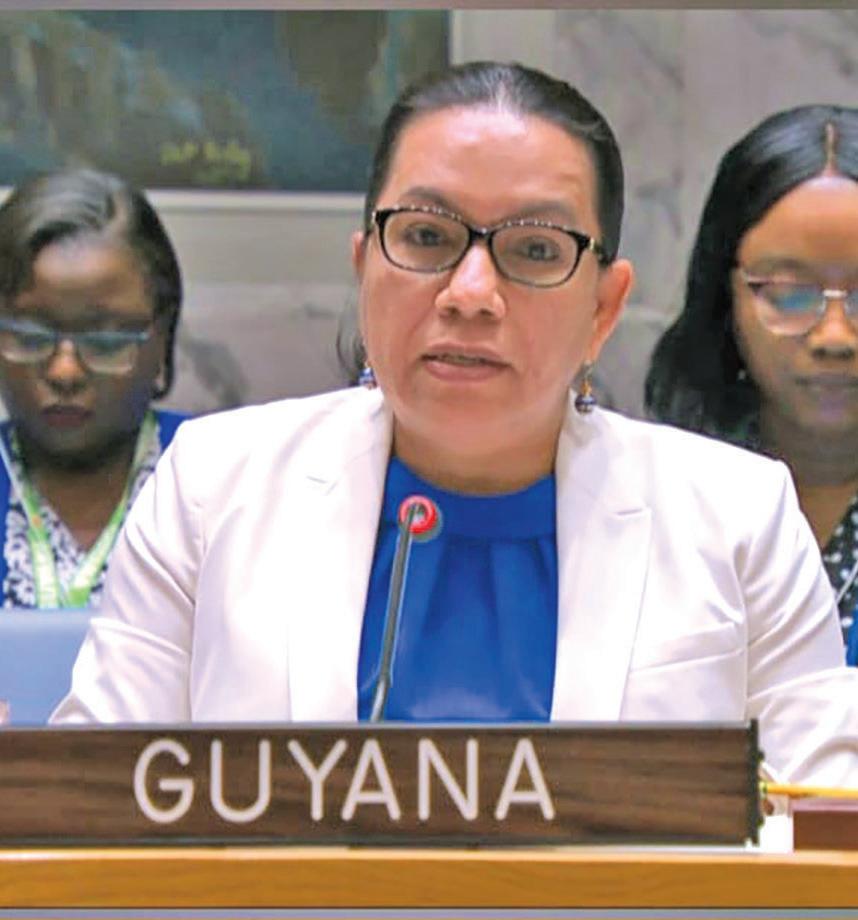
Speaking on Sunday’s episode of the Starting Point podcast, Permanent Representative to the United Nations (UN), Ambassador Carolyn Rodrigues-Birkett, offered a candid and sweeping breakdown of the Security Council’s mandate, structure, and the outsized role Guyana has played as a small state shaping global debates in a climate of growing geopolitical tension. Responding to international criticism over whether the UN has become “unfit for purpose”, particularly as wars continue in Gaza and Ukraine, Rodrigues-Birkett distinguished institutional failure from majority responsibility, attributing most obstruction to a small bloc of powerful states wielding veto authority.
Guyana, she said however, still believes in the UN’s value.
“The UN has served the world well. It delivered decolonisation, humanitarian assistance, disaster response, human rights frameworks, and diplomatic arbitration in dozens of conflicts,” she argued.
“Most countries said in high-level debate week, ‘If we did not have the United Nations, we would have to create it.’ That tells you the world has faith—but wants reform.”
But Rodrigues-Birkett did not shy away from critiquing the institution she serves. When pressed on the issue of reforming the veto system, she said change is impera-
tive. “There is no international organisation where one country can kill a decision,” she stated. “Africa and Latin America & the Caribbean (LAC) remain unrepresented in the permanent category—a historical injustice, especially for the African continent. Reform is needed to make the Council more democratic, more representative and more regionally bal-
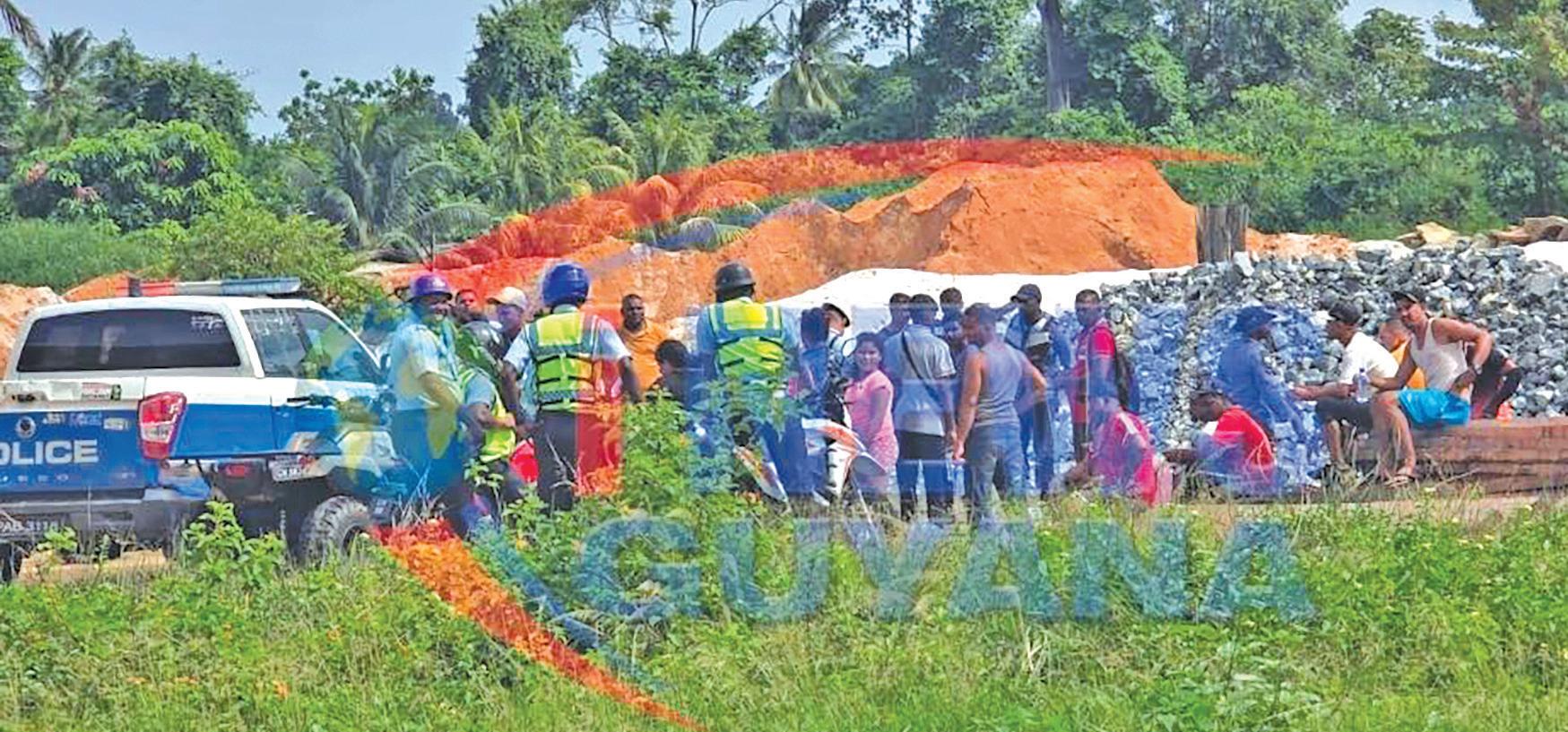
Authorities in Region Two (Pomeroon-Supenaam) have intercepted a vessel transporting a group of illegal immigrants, suspected to be Venezuelans.
The group was reportedly making their way to Guyana’s shore when they were intercepted by the Coast Guard. They were brought to Riverstown in Region Two
where they are reportedly being processed.
The group includes adult and children.
Last year, scores of migrants from Venezuela had showed up at the Golden Fleece beach along the Essequibo Coast in Region Two. They were deported the following day.
Up to press time no further information was available.

anced.”
She described the Security Council as “the most undemocratic body” of the UN, comprising 15 members—five permanent veto-holding nations and 10 elected every two years. Each permanent member can unilaterally strike down a resolution even if 14 other states support it. The permanent members include the United States (US), China, Russia, the United Kingdom (UK) and France.
She explained that the UN Security Council is charged with the maintenance of international peace and security—the founding mission at the heart of the UN, formed after World War Two to prevent the scourge of war from ever taking root again. When the Council issues a decision, it is legally binding across all 192 UN member states, making it the sole law-making body within the UN system.
Guyana at the UN She recalled that Guyana’s landmark entry into the Council in 2023 was fuelled by overwhelming global backing. The country secured 191 out of a possible 192 ballots—the highest margin recorded in that election cycle, signalling international trust not only in its leadership but its ability to represent small states with principled diplomacy, not political conciliation. “Being small does not mean you have small ideas,” she told the audience. “Small countries are the sticklers for
multilateralism. We know military solutions are not the answer to conflict anymore. We do not have large militaries, so we must insist on rule of law, territorial integrity, sovereignty, human rights and international humanitarian law. And that is exactly what Guyana has done every day for the past 23 months.”
The diplomat also referenced a defining moment early in Guyana’s Security Council term in April 2024, when the mission abstained from a United States-led resolution that “recognised” the need for a ceasefire but did not explicitly “demand” one in Gaza. Under UN protocol, without the use of a non-negotiable directive— words such as “decide” or “demand”—warring parties are not obliged to comply. Guyana recommended abstention. The resolution failed but, she said, the moment made one thing clear to the world: Guyana was not going to merely echo powerful states’ interests.
“That was the day the world recognised that Guyana would not enter this body just to follow— it would lead, explain, advocate and hold firm,” she said. “That has served us well since.”
She closed the exchange by placing Guyana’s rise into context—just over 50 years old as an independent nation, yet steadily building diplomatic capital through global leadership and representation. She name-checked Guyanese diplomats and leaders who expanded the nation’s reach long before the dis-
covery of oil transformed investor interest.
Vice President (VP) Dr Bharrat Jagdeo was named Champion of the Earth for his climate change advocacy while President Dr Irfaan Ali has since become a global voice on reparations, food security, biodiversity and a just transition to clean energy in fossil-fuel producing economies.
“Oil has only lubricated and amplified what was already present— an ambitious, cohesive, strategic approach to foreign policy,” RodriguesBirkett concluded. “Our Parliament speaks one language when it comes to sovereignty. Our leadership speaks one language abroad. So whether on our own or through CARICOM, whether coordinating Council reform or reshaping multilateral frameworks on oceans, biodiversity and climate—Guyana has held its own, expanded its reach and earned the world’s respect.”
As the Security Council term winds down, the message from the UN envoy remains unmistakable: Guyana will exit the Council’s seat, but not the world’s conscience. Its foreign policy, she said, is not a chapter ending—but a bridge built to a larger diplomatic horizon. Ambassador Carolyn Rodrigues-Birkett said too that the country will not retreat from the global stage, affirming that its diplomatic voice will continue to carry weight well beyond its final month in the Council’s chamber.


Used to be the song that “The Twelve Days of Christmas” summarised our expectations of the festival that’s the biggest one in Guyana – never mind what religion you belong to!! Remember the last verse?? “On the twelfth day of Christmas, /my true love sent to me /Twelve drummers drumming, /Eleven pipers piping, /Ten lords a-leaping, /Nine ladies dancing, /Eight maids a-milking, /Seven swans a-swimming, /Six geese a-laying, /Five gold rings, /Four calling birds, /Three French hens, /Two turtle doves, And a partridge in a pear tree!”
The countdown for the song started on Christmas Day – 25th Dec and continued into the new year – Jan 5!! But in Guyana we’re more literal, thank you, and the countdown starts on the 1st day of December – today and continues to the grand finale of Christmas Day!! So we have TWENTY-FIVE DAYS OF CHRISTMAS!!! In practical terms, this means that we Guyanese enter a whole different zone mentally – especially when it has anything even remotely connected to work!! We take offence that anyone could be so crass as to suggest we take our mind off “what we will do for Christmas”!! Our bonhomie index rises to the sky and we take the slightest excuse to “take a drink” to welcome “the festive season”!! At the workplace we all start collecting moneys for the Christmas gifts for workers; planning the Christmas parties and strategising how we would get home afterwards – since we would all be all sloshed!! At home, the wife would be going into a frenzy decorating the home with new curtains and mats – not to mention shanghaiing your Eyewitness into digging and dusting out the Christmas tree from the cupboard and figuring out which bulbs and streamers have to be replaced. We would be adding oodles of rum to “season” the Black Cake that had been set since September!!
So with all this distraction, your Eyewitness doesn’t see Sanction Man getting much traction in his quest for the Speaker to summon the Opposition MPs to elect him as the new LOO!! From what your Eyewitness understands, the Speaker’s abroad – and being Guyanese – would’ve received a long list from his boss – the Missus, thank you!! – on what he had to “pick up” from foreign for their Christmas table and such like!! When he returns there’s gonna be all sorts of social obligations which can’t be ignored in this Christmas season!!
But since WIN’s clamouring for a Parliamentary Opp meet and the PNC/APNU is quite lukewarm, maybe in the interest of a democratic parliamentary process the Clerk should first ascertain – confidentially through some secret process! - whether there’s unanimity for an immediate conclave.
It’s quite possible the Opposition MPs – being Guyanese – may look quite askance at the request!!
…of a clean GT?
Your Eyewitness’s feed was flooded by a video from newly-appointed APNU parliamentary leader of their anointed twelve – Terrence “Chicken Man” Campbell!! His camera focused on a hillock of garbage in a squatting area in Broad St as he castigated Min of Local Govt Priya Manickchand for wearing “designer glasses and fancy clothes” – along with the Min of Health, Social Services, etc -- for not taking care of the problem!!
But your Eyewitness wonders why Chicken Man didn’t include the M&CC for his harangue!! After all, aren’t they the ones directly responsible for the City under our laws that distinguish between the Central Government and Municipalities?? Weren’t they supposed to be collecting garbage from this area?? And if Central Govt got a role to play, what did APNU do about the garbage and housing when they were in office between 2015 and 2020??
But that’s the problem with these newbies, innit?? They don’t realise when they point one finger towards the PPP, three others are pointed towards themselves!!
…of oblivion
Your Eyewitness saw a report from St Vincent that after his 14-1 drubbing at the polls, Ralphie Gonsalves “conceded” defeat!! You think??!! But he expects the “courtesies and privileges of former “high” office holders!! No more Maduro freebies??

The Ministry of Education has dismissed as “fallacious and misleading” a social media claim that teachers are facing restrictions on their access to internet services in schools, insisting that no such policy or directive has ever been issued.
In a press statement, the ministry made it clear that at no point has it, whether through the Management Information Systems Unit (MISU), the Regional ICT Department, or any other arm, implemented or authorised any measure that limits teachers’ access to the internet provided in schools. It described the circulating assertion as inaccurate and contrary to the government’s ongoing efforts to expand, rather than reduce, information and communication technology (ICT) access across the education sector.
According to the ministry, the Government of Guyana is currently engaged in historic, multi-million-dollar investments aimed at modernising education delivery and ensuring equitable access to digital tools for both teachers and students. Over the past five years, the education sector’s ICT budget has grown significantly, reflecting a deliberate policy
thrust to integrate technology into teaching and learning nationwide.
These investments have supported the construction and upgrading of computer laboratories in primary and secondary schools, the expansion of resources for online, blended, and remote learning, large-scale procurement of computing devices, servers, and network equipment, and the installation of networks to provide connectivity in classrooms, laboratories, smart rooms, libraries, and administrative spaces. The ministry noted that interactive smart boards and other digital teaching tools are also being deployed in schools across Guyana as part of this transformation. These initiatives, the
statement explained, are driven by the Ministry of Education’s ICT in Education Policy and Master Plan, which treat ICT integration as a central pillar in transforming Guyana’s education system and equipping students with twenty-first-century skills.
The ministry reported that, in partnership with the National Data Management Authority (NDMA), internet connectivity has so far been delivered to 1,033 schools, including 385 nursery schools, 489 primary schools and all secondary schools. Over the last two years, 365 hinterland and remote schools have been connected to high-speed internet, while 134 schools have moved from LTE-based services to high-speed fibre-op-

tic connectivity to improve reliability and bandwidth for both teaching and school administration.
Claims unfounded under current extensive investments in network
A major component of the current digital drive is the Whole-School Network Initiative, which is being rolled out to provide full-campus internet coverage at schools across the country. For 2025, the ministry said installations are already in progress at 118 nursery schools, while works are scheduled to begin at 143 primary schools and 85 secondary schools. These installations are expected to deliver comprehensive campus-wide connectivity, including fixed wired infrastructure, wireless access points in every classroom, and a robust network backbone capable of supporting a wide ecosystem of technology solutions.
Among the systems and platforms that rely on this network are the Education Management Information System (EMIS) and other school administrative tools, digital libraries and content platforms, classroom technology for research and teaching, smart classroom environments, the “Connecting Classrooms”
platform, technology-enabled mathematics and literacy interventions, and digital training programmes for teachers. The networks also provide access for learners under the GOAL scholarship programme and other online students.
The ministry cautioned that, given these extensive national investments in connectivity and infrastructure, it would be “counterproductive, illogical, and inconsistent” with government policy to introduce measures that restrict teachers’ access to internet services in schools.
Clarifying how school internet is managed, the ministry said that the connectivity provided is intended to support teaching, learning, EMIS usage, research and overall school operations. It added that, in line with standard international practice, security filtering and monitoring tools are used to protect minors and ensure safe and appropriate use of the network. It stressed, however, that teachers are not blocked from accessing legitimate educational platforms or digital resources.
The ministry further explained that isolated connectivity problems affecting specific devices, such as tablets or laptops, are generally technical issues at the local
level rather than the result of national policy decisions. Schools experiencing such difficulties are urged to report them through the established ICT support channels so they can be resolved.
Reaffirming its commitment to digital transformation, the Ministry of Education said internet access in schools is being widened, not scaled back. It pointed to ongoing projects such as the National CSEC Mathematics Intervention Programme, under which 18 hinterland secondary schools have been equipped with interactive smart boards and high-speed internet. Through this programme, expert Mathematics teachers are delivering the CSEC Mathematics curriculum to students in remote regions via the Microsoft Teams platform, ensuring that learners in far-flung communities can benefit from the same quality of instruction available on the coast.
The ministry has urged the public, and particularly members of the teaching fraternity, to rely on verified information from official sources and to disregard unfounded claims that seek to mislead educators and the wider society about the government’s policies on ICT and connectivity in schools.

By Andrew CArmiChAel
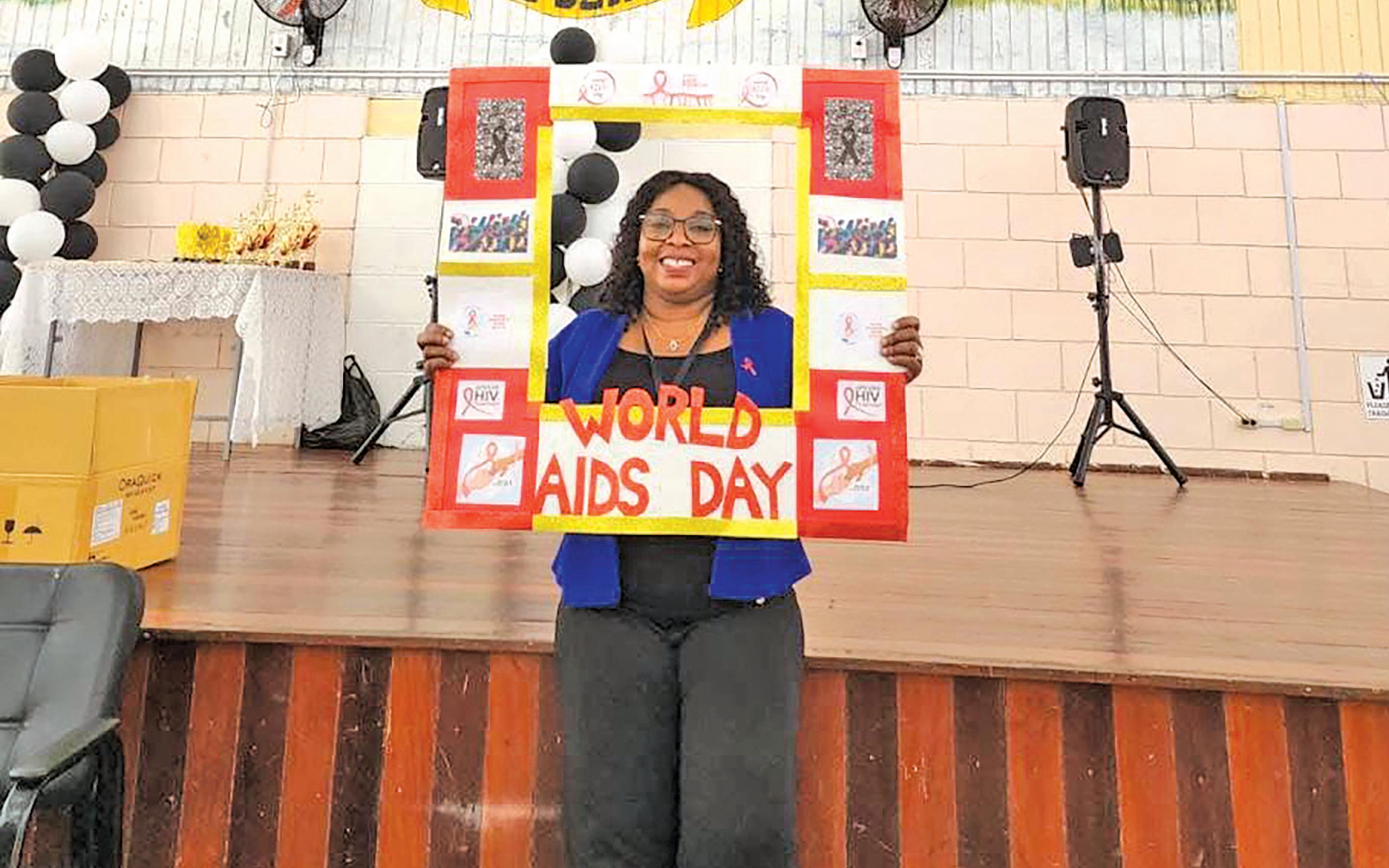
As Guyana joins the rest of the world today in observing World AIDS Day 2025, health officials are urging the public not to become complacent in the fight against HIV, even as treatment improves and deaths decline. National data from late 2024 and early 2025 estimates that between 10,000 and 11,000 people in Guyana are currently living with HIV. While treatment access and survival rates have significantly improved the Ministry of Health reports that new infections are rising, up 19 per cent since 2010, with 449 new cases diagnosed in the past year alone. Even more troubling, adolescents and young adults aged 15–24 accounted for 14 per cent of new infections, signalling an urgent need to strengthen education, prevention and youth-focused outreach.
Despite the rise in new infections, the country has seen a major reduction in HIV-related deaths. Fewer than 200 AIDS-related deaths were recorded in 2023, continuing a long-term decline. Between 2000 and 2019, HIV mortality fell by 20.8 per cent, largely due to
expanded access to free antiretroviral therapy and improved monitoring.
Meanwhile, Guyana moves toward 95-95-95 (1:95 per cent of all people with HIV to know their status, 2:- 95 per cent of those diagnosed to be on treatment, and 3:- 95 per cent of those on treatment to be virally suppressed) target, which is the standard set by UNAIDS, but a treatment gap remains. At the end of 2023, Guyana’s results were 94-72-87. While testing rates remain impressively high, the second indicator, treatment uptake, remains a concern. Around 7,000 people are currently accessing free Government-provided HIV medication, according to the Health Ministry, but hundreds more who know their status either don’t care or are not consistently taking medication.
Living with HIV
To understand the lived reality behind the statistics, this newspaper spoke with a man living with HIV, who agreed to share his experience under the pseudonym Michael.
Michael was diagnosed in 2017, after falling seriously ill at work.

“I was feeling unwell progressively,” he recalled. “One day, my colleagues had to take me to the hospital. I was admitted for two days. It felt like having the flu, plus feeling light-headed—you can’t even think.” He said the test result was not entirely surprising because he had lived “a reckless life,” but the way he was tested added to the emotional weight. “They took a blood sample, trying to diagnose the problem and one of the tests they did was HIV. My understanding is that those tests should not be done

ple who feel healthy on treatment, Michael became complacent in 2023, and stopped taking his medication for nearly a year. “I actually thought I was healed. My doctor realised I wasn’t coming to collect my supplies. They contacted me, counselled me, and did blood tests. My Viral Load was higher than it should have been,” he admitted.
The experience, he said, frightened him back into consistency. Michael believes he contracted HIV from a onetime unprotected encounter years earlier with a woman he had offered a ride home.
without consent. At first, I wanted to confront the doctor, but then I thought it would not do me any good. I needed to focus on getting better.”
What happened next changed his life. Michael started antiretroviral medication and, to his relief, he began feeling better within a week.
“Surprisingly, after being on the medication for one week, I was as good as ever,” he said.
“…I gained back weight and felt normal again,” he added. But like many peo-
“I can’t directly say who I picked it up from, but I think it was her. We had unprotected sex.” He says he has not knowingly infected anyone else, though one close call left him deeply anxious. Still, he has returned to treatment and remains committed to living healthily. His message to others is simple but powerful.
“I would advise anybody who is tested positive to stay on their medication. And those who are not, to have protected sex. There’s medication now you can use after the act if you make a mistake. And people living with HIV need to periodi-
cally get tested while they stay on their medication.” Meanwhile, as Guyana progresses, better survival rates, wider treatment access and free national prevention services have transformed HIV from a death sentence into a manageable lifelong condition. But the rise in new infections and the treatment gap reflect urgent challenges. World AIDS Day 2025 is a reminder that ending HIV in Guyana is not only possible, it is within reach, but it requires sustained action. More young people must be reached with prevention tools, more diagnosed persons must be, and remain on, treatment. Communities must lead the fight against stigma, testing must remain accessible and confidential and those who test positive must receive safe, non-judgmental care. Nevertheless, as the nation reflects on the lives lost, the survivors, and the families affected, one truth remains clear: HIV is preventable, treatable, and no longer a barrier to living a full and healthy life, if people access the care available to them. And as Michael’s story shows, hope, education and consistency can make all the difference.

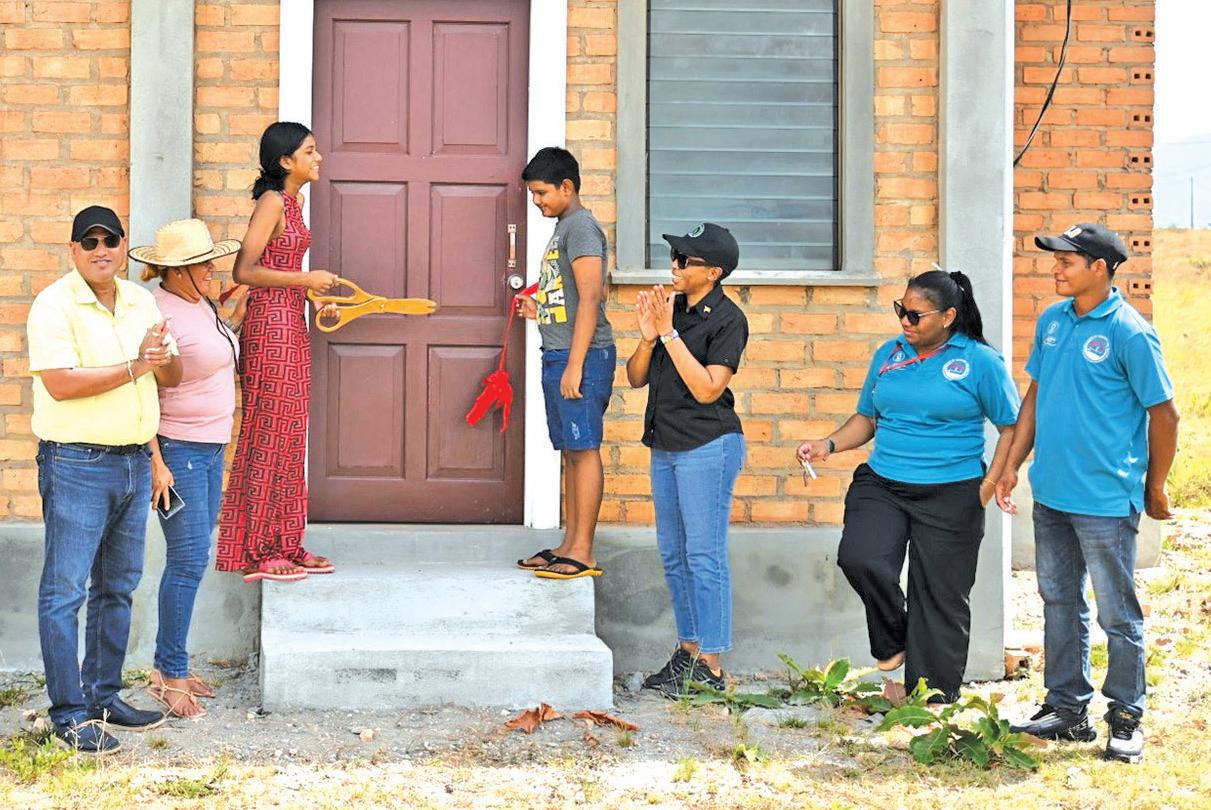
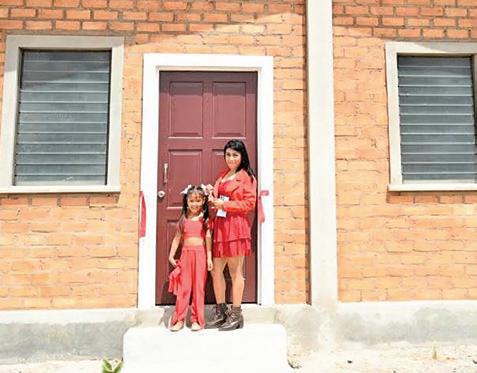
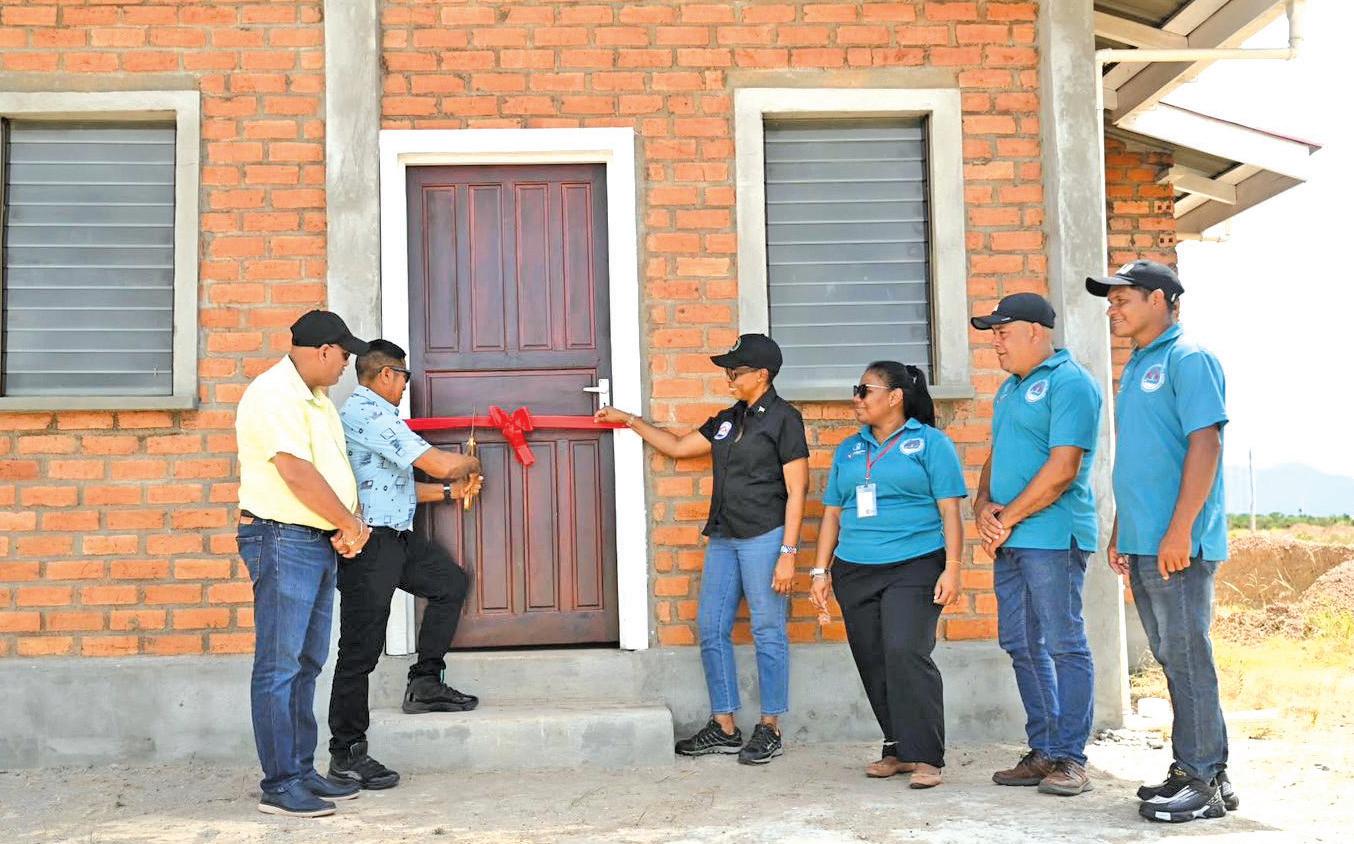
Twelve families in Lethem, Region Nine are now officially homeowners through the Government’s Lethem Housing Support Programme, executed by the Ministry of Housing–Central Housing and Planning Authority (CH&PA). The initiative, conceptualised by President Dr Irfaan Ali, supports low-income families who face difficulties in building on their allocated lands, by providing access to affordable homes.
According to the CH&PA
providing economic support to several communities in the region.
The keys were handed over to the new homeowners on Saturday by the Minister of Housing, Hon. Collin D Croal, and Minister within the Ministry of Housing, Hon. Vanessa Benn.
Sharon Malcolm, a single mother of two was visibly emotional as she received her keys. She described the moment as one of the happiest of her life and highlighted how transformative it will be for her
the home will primarily benefit his children. “We’re just waiting for this time to get the house so that we move inside,” he said, noting that his family has been anticipating this milestone.
For single parent Gianne Augustine, the home brings immediate relief after years of renting a cramped one-bedroom space. She said her children are especially excited about finally having adequate room—her daughter most of all.
“When she comes and she
social media post, each unit measures 550 square feet and includes two bedrooms and a living and kitchen area, along with a bathroom facility. Valued at approximately $3 million, the homes are supported by a $1 million building-materials subsidy provided by the Ministry, while beneficiaries finance the remaining cost through mortgages. The houses were constructed with the incorporation of locally sourced materials,
children. “My two kids, they can call this their home. So, no more renting… we have our own home.” She noted that the programme has empowered many single parents like herself to achieve what once felt out of reach, while also helping families build generational wealth.
Another beneficiary, Dennevoll Milliano, applauded the Government’s continued investment in the region and shared that
see that we have two [rooms] now, she was like excited... I’m feeling very happy, lucky to have a house of my own now,” she expressed.
The programme targets 600 low-income families in Lethem.
Minister Croal noted that construction of the first 100 houses is completed. Of these, 78 have already been handed over, while the remaining 22 are undergoing final paperwork before being presented to benefi-

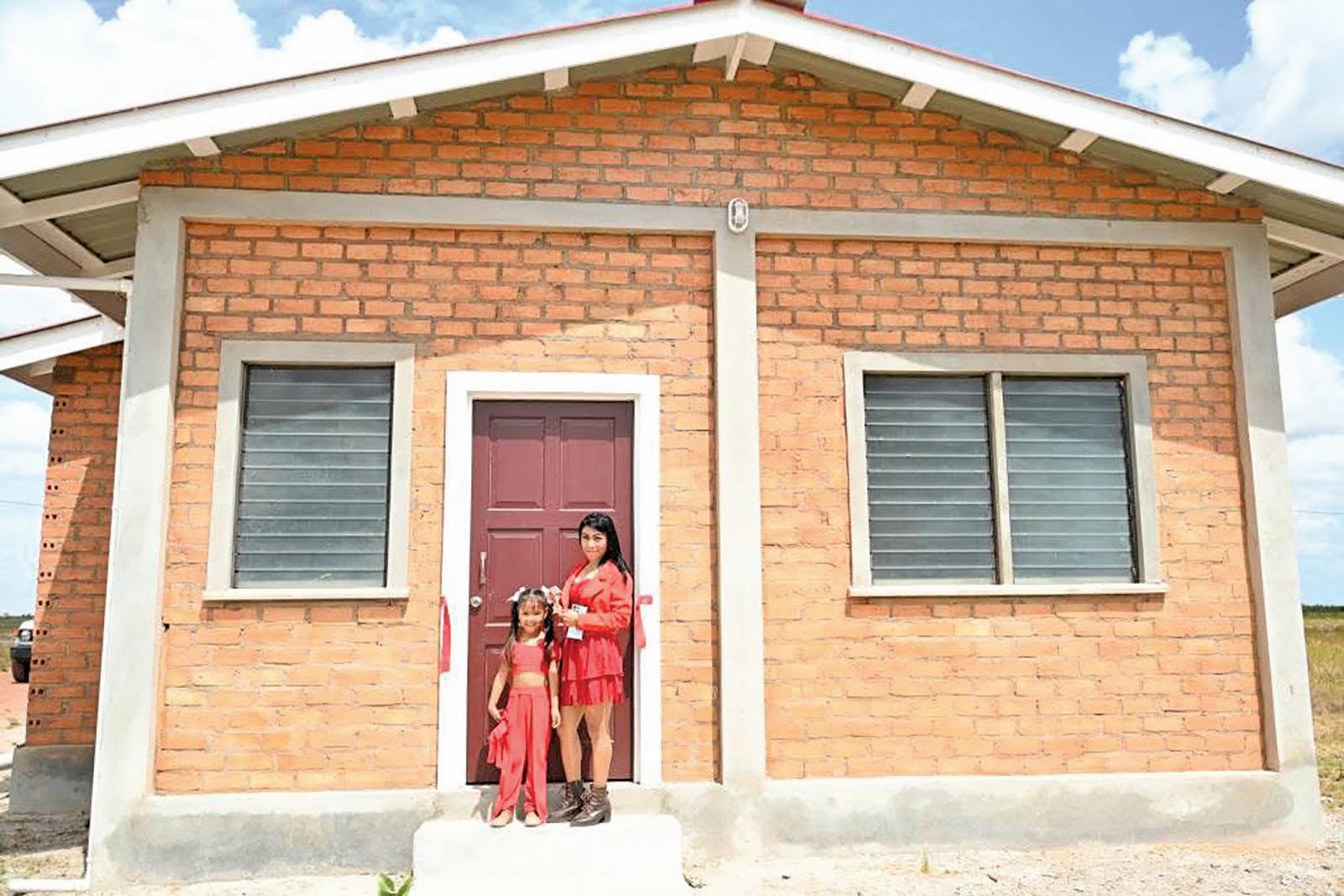
ciaries. “We are happy to make people’s lives better,” the Minister said, noting that every home handed
over reflects a promise fulfilled to families who need it most. He emphasised that the homes offer families im-
proved shelter and a stronger foundation for their future.


The Rupununi Expo, held November 28-29, 2025 under the theme "Roots Sports Complex, highlighted the unique business and cultural


"Roots to Riches: Cultivating Heritage and Enterprise" at the Tabatinga
heritage of the region. Here are some scenes from the event



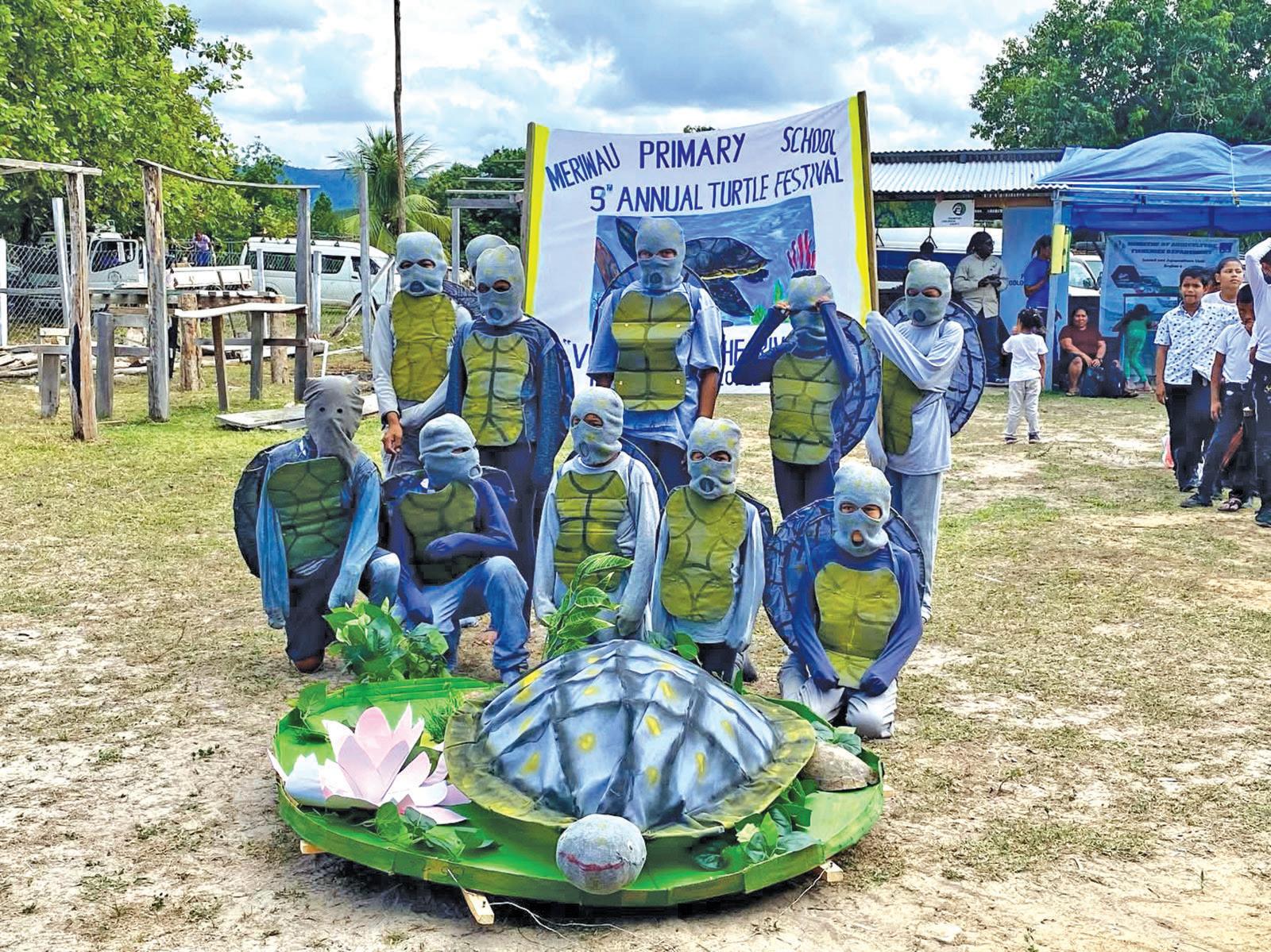
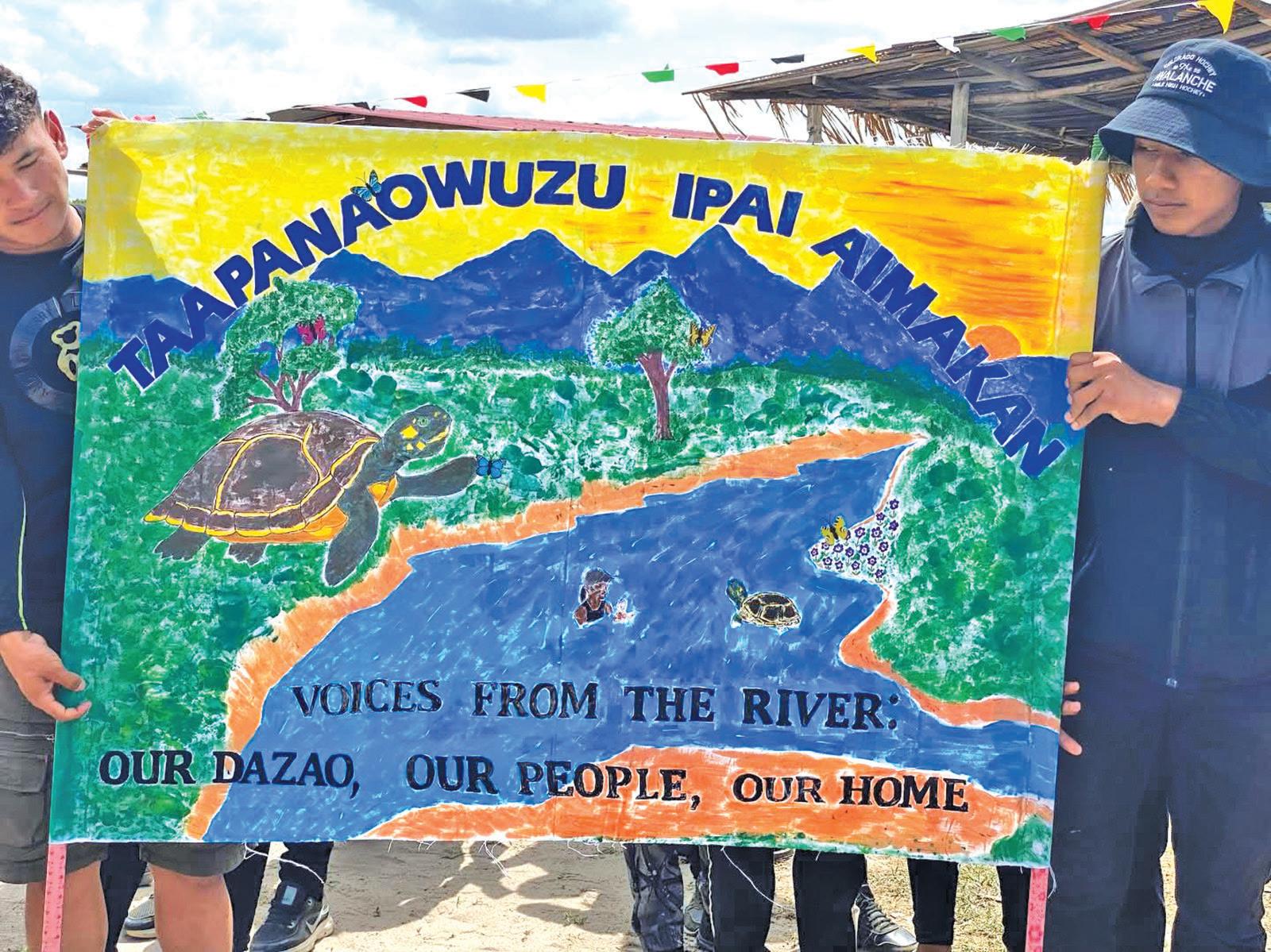
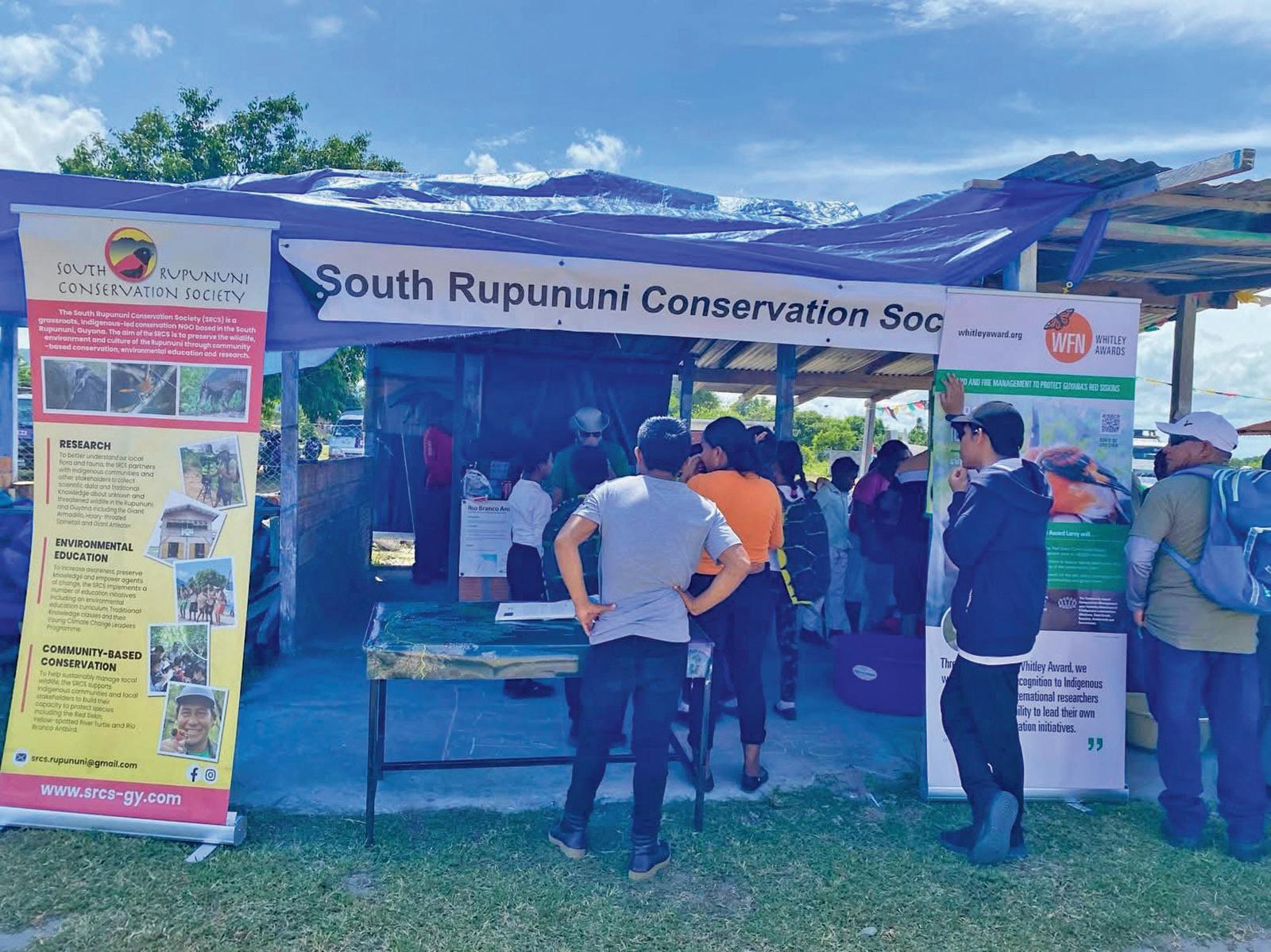
The 5th Annual Turtle Festival, hosted by the Sand Creek Village Council, on Saturday, in collaboration with the South Rupununi Conservation Society (SRCS), saw over 200 attendees in a vibrant celebration of the Yellow-Spotted River Turtle (Podocnemis unifilis) and its importance to healthy freshwater ecosystems and Indigenous
cultural heritage. According to the SRCS, youths enjoyed interactive turtle-themed games, competitions, educational booths with local, regional and national partners and the unforgettable grand finale—the release of approximately 200 turtle hatchlings into the Rupununi River.
In a landmark community commitment to con-
servation in the Rupununi, the Sand Creek Village Council, led by Toshao Alex Augustine, pledged GYD $2.5 million from the Low Carbon Development Strategy (LCDS) Funds to support the continued hosting of the Turtle Festival and strengthen the ongoing Turtle Research & Monitoring Programme.
This incredible commitment ensures long-term

impact for both the species and the communities who protect them.
The SRCS extended heartfelt gratitude to its principal event funder, the Frankfurt Zoological Society (FZS), and supporting partners: the Guyana Tourism Authority (GTA), Protected Areas Commission (PAC), Conservation International Guyana (CI), Sustainable
Wildlife Management Programme (SWM), South Rupununi District Council (SRDC), Tara’s Choices and Tours, Visit Rupununi (VR), Ministry of Agriculture –Fisheries Department, and the Sand Creek Tourism Committee – Suburun EcoTourism.
With special thanks to Sand Creek Primary School, Sand Creek Wildlife Club, Macushi Primary School,
Shiriri Primary School, Parikwarinau Primary School, Meriwau Primary School, and our friends from the North Rupununi District Development Board (NRDDB) for their unwavering dedication. Together, we continue to protect our rivers, strengthen cultural ties, and inspire the next generation of conservation leaders, the SRCS noted.
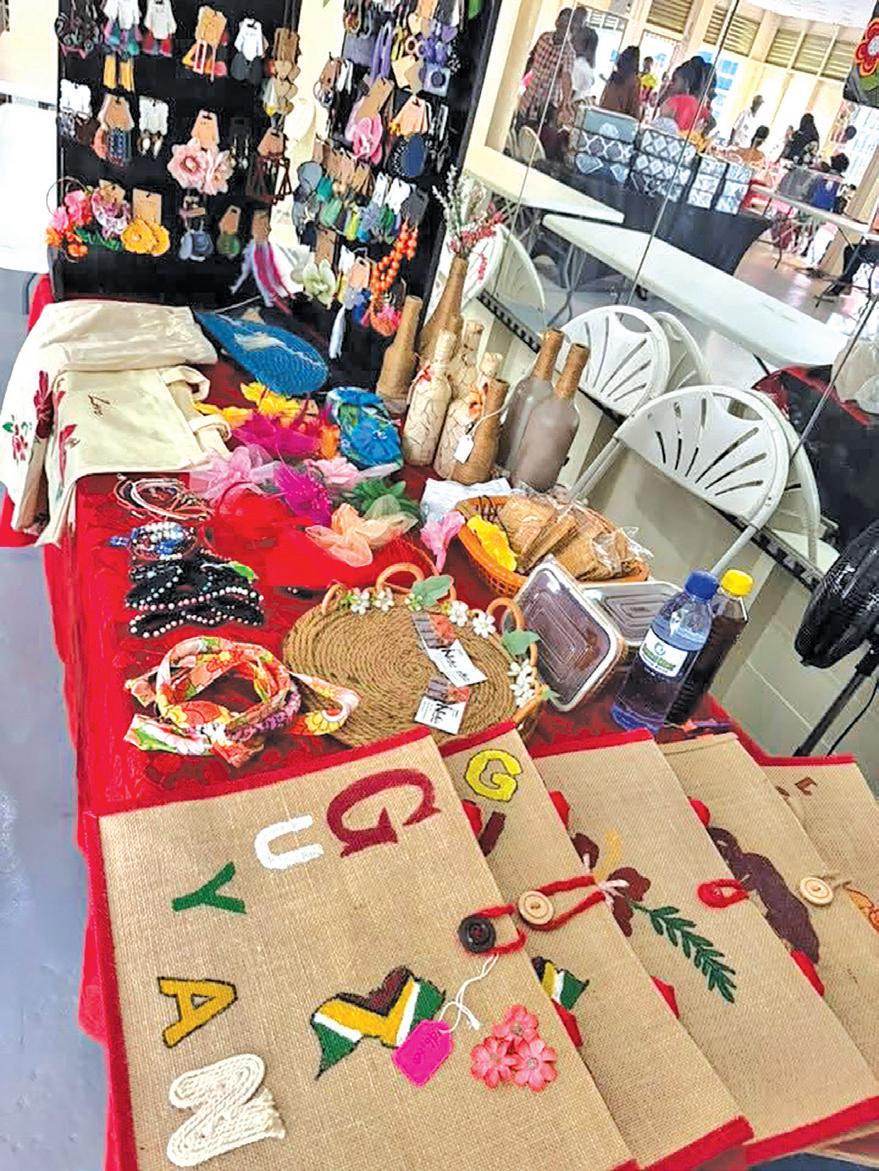
More than 40 vendors displayed their goods to appreciative patrons at this year’s Pepperpot Festival and Christmas Market, held Saturday, November 29 at
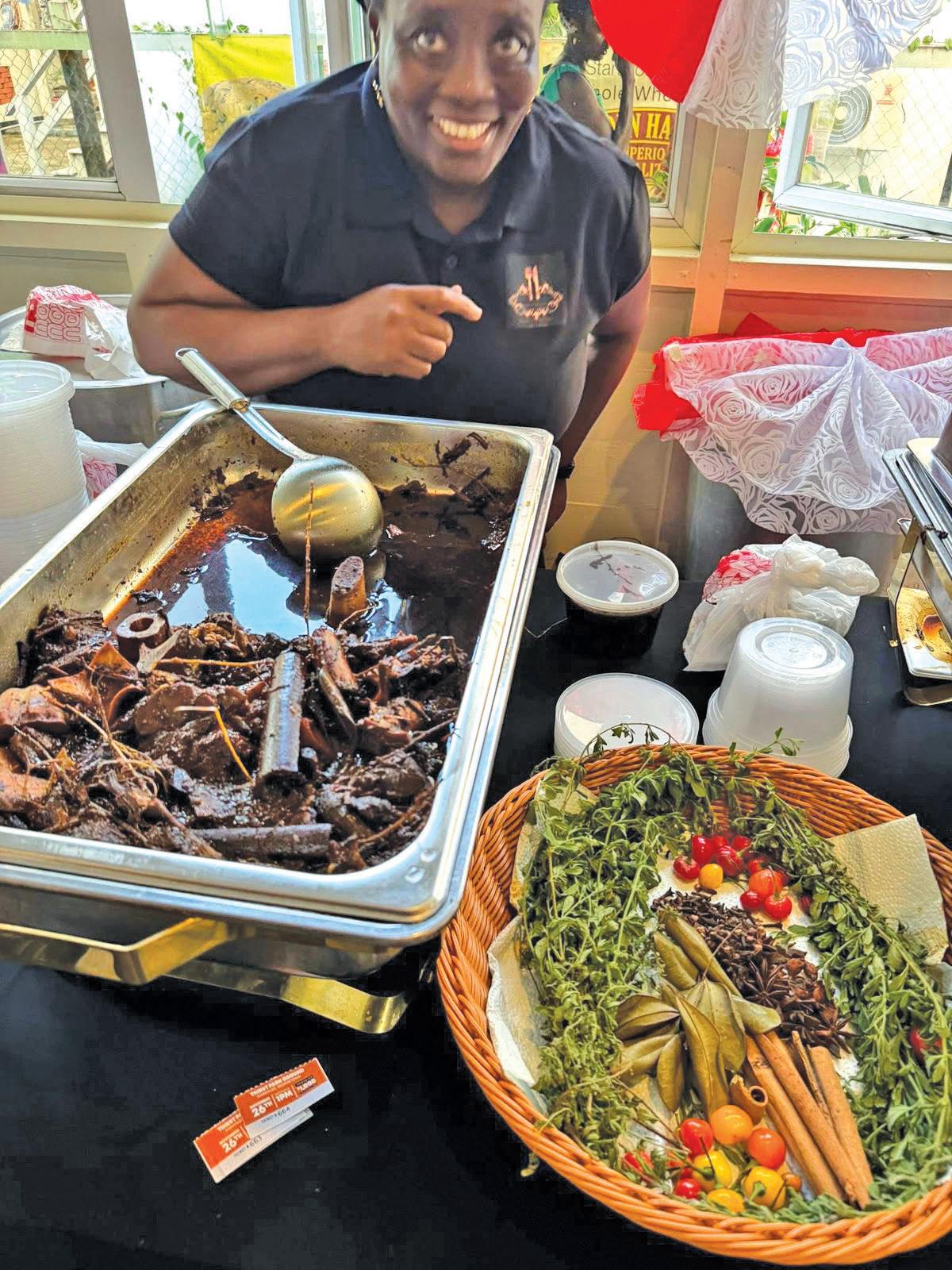
Lance Gibbs Street, Queenstown, Georgetown. The event premiered in 2022 and has become an eagerly anticipated annual festival. From food to ferns, the festival and fair showcased lo-
cal foods, plants and craft, along with traditional masquerade entertainment, for a festive weekend outing. Lucky persons also received prizes in the annual raffle draw held at the event.



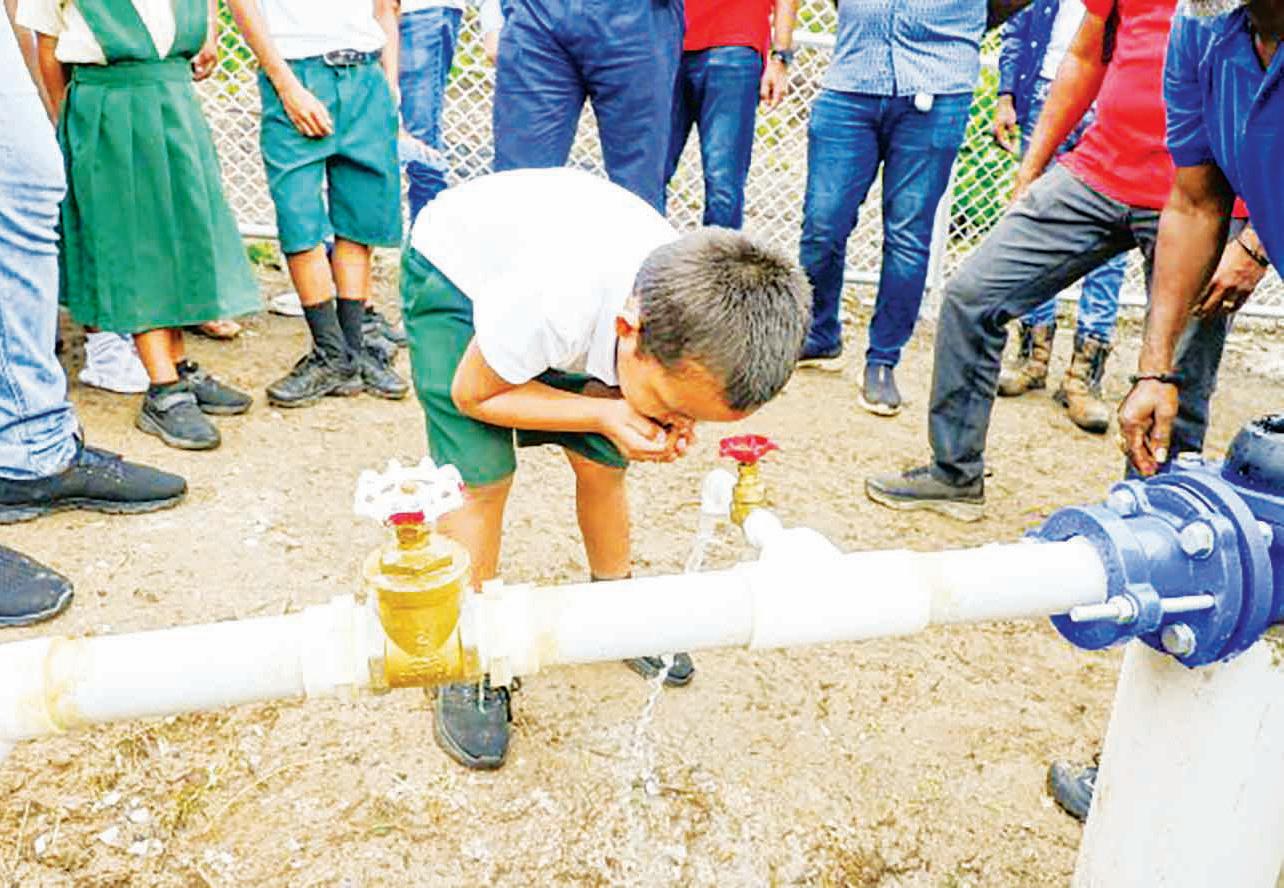
Some 250 residents of Great Falls, Region Ten (Upper Demerara-Berbice), are now turning on their taps to access clean, reliable water, following the commissioning of an upgraded water supply system in the community.
The facility was officially brought into operation on Friday during a simple but significant ceremony led by Minister of Public Utilities and Aviation, Deodat Indar.
The $15 million upgrade to the Great Falls Water Supply System was extensive, as it included the development of the existing well, the installation of a new photovoltaic pumping system, and rehabilitation works at both the well and the trestle site.
With the new system in place, approximately 95 per cent of the village now receives water directly to their homes. The remaining five per cent of residents continue to access potable water from standpipes located along the river banks.
The new level of service has brought particular relief to key public institutions in the village, including the primary school and the health centre, where personnel can now count on a steady supply of water to support their daily operations.
Village Toshao Sydney Allicock stressed how critical the intervention has been for the community, recalling that residents previously depended on river water that had be-
come unsafe as a result of intense mining activity in the area.
“We are thankful to the government because they have provided this well. If we did not have this well, we would’ve had outbreaks of many sicknesses and diseases in this area,” the Toshao shared, noting that the improved system has removed a major health threat from the lives of villagers.
Minister Indar pointed out that the delivery of safe, drinkable water to Great Falls forms part of the government’s wider commitment to narrowing the gap between coastland and hinterland communities, with a clear goal of achieving 100 per cent access to potable water across Guyana.
“This is about making sure that we deliver to people in the hinterland community, access to water that they can use to cook and drink,” he stressed.
He further explained that this kind of direct investment reflects the PPP/C administration’s hands-on style of governance, which is grounded in staying close to citizens and ensuring that government services translate into real, tangible improvements in their daily lives.
According to the minister, this approach is very much in keeping with the philosophy of President Dr. Mohamed Irfaan Ali.
“The heart of the President is with the poor people. He’s always meeting people trying to find ways and means for his government to help people
and to bring government services to people,” he added.
The intervention at Great Falls, Minister Indar noted, is yet another signal that the government recognises access to potable water as a fundamental right, and remains firm in its resolve to make that right a reality for citizens in every part of the country.
The minister was joined at the commissioning by Director-General of the Public Utilities Ministry, Alfonso De Armas, GWI Hinterland Services Director, Ramchand Jailal, GWI Regional Manager, Rawle Friday, as well as other regional officials and technical staff.
This commissioning came just after a new $30 million water supply system was commis-
sioned at Silver Hill along the Soesdyke, Linden Highway, bringing a major improvement to daily life after decades of reliance on creek water.
The project, which includes a newly drilled well, a solar-powered pumping system, and about three kilometres of distribution lines, now delivers clean, safe water to roughly 90 percent of households. The remaining residents access water through standpipes placed around the community.
Villagers say the system has ended years of hardship and is transforming routines, with easier access to water for drinking, cooking, hygiene, and small-scale farming. Community members also took part in laying the network, adding a sense of pride and ownership.
Twenty-one-yearold Gragery Miguel has been sentenced to five years’ imprisonment for unlawfully killing his brother, Wilfred Stephen, during a family dispute at Kumu Village, Central Rupununi. Miguel had initially been indicted for murder, but he opted to plead guilty to the lesser count of manslaughter when he appeared before Chief Justice (ag) Navindra Singh at the High Court in Demerara, after consulting with his attorney, Madan Kissoon.
The case was prosecuted by State Counsel Christopher Belfield, who was assisted by State Counsel Praneta Seeraj and State Counsel Geneva Wills. The court heard that the fatal encounter occurred on the night of July 31, 2023, while the brothers, who had been estranged for several months, were drinking with relatives at their uncle’s home in Kumu. An argument erupted around 21:00h., but appeared to have been settled shortly after.
Later that night howev-
er, tensions resurfaced at their mother’s home where Stephen had gone to collect food. A confrontation involving the brothers’ stepfather led Stephen to intervene in an effort to protect his mother. Miguel then confronted him, and another scuffle broke out between the two men. Their mother managed to separate them, but Miguel ran into a nearby house, armed himself with a steel-point arrow, and chased after Stephen.
As Stephen fell, Miguel stabbed him in the right
side of his back and fled the scene. Stephen died from his injuries about an hour later. Owing to the remote nature of the community, and severely limited access to communication and transportation, relatives were unable to promptly alert the authorities. Police eventually arrived in the village at around 2:00 a.m. on August 1, 2023, and Stephen’s body was later transported to the Lethem Regional Hospital.
Miguel was arrested the following day. In a video-recorded statement to
investigators, he admitted to stabbing his brother but claimed he was intoxicated at the time and did not intend to kill him.
A post-mortem examination later revealed that the steel-point arrow had penetrated Stephen’s chest cavity, severing major blood vessels and causing fatal internal bleeding.
In handing down the sentence, Chief Justice Singh said he started from a baseline of 24 years’ imprisonment for the offence. He then applied several deductions, including a
substantial reduction for Miguel’s early guilty plea, further time off based on a favourable probation report, additional consideration for what the court accepted as genuine remorse, and a further reduction in light of Miguel’s youthful age. These combined reductions brought the sentence down to five years’ imprisonment.
The Chief Justice ordered that Miguel must be credited for the period he has already spent on remand while awaiting the conclusion of the case.

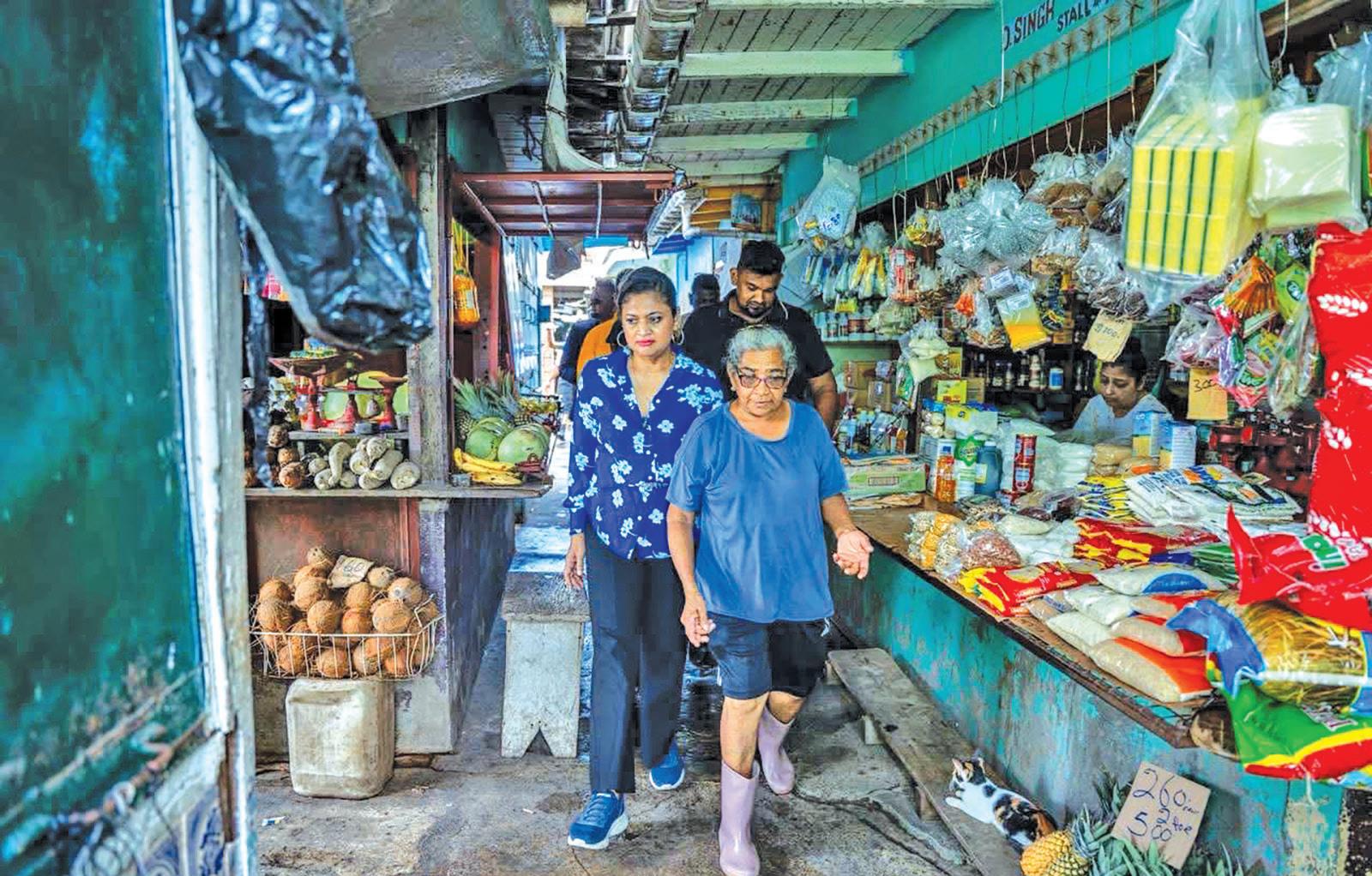
The Government is assessing ways to improve conditions at the Bourda Market in the city, aiming to deliver a cleaner, safer and more comfortable environment for vendors and shoppers. Minister of Local Government and Regional Development, Priya Manickchand, conducted a walk-through of the Bourda Market and Bourda Green section on Wednesday, where she met vendors who raised long-standing concerns about deteriorating infrastructure and weak oversight. A Department of Public Information (DPI) report said that at the meeting, vendors highlighted recurring problems, including poor drainage, inadequate sanitation, faulty sanitary
Guyana joins the rest of the world in observing World AIDS Day 2025, today, with public health officials, community organisations and regional health authorities renewing their commitment to reducing new infections, expanding treatment access and ending stigma and discrimination. This year’s theme, "Overcoming disruption, transforming the AIDS response" calls for sustained political leadership, international cooperation and human-rights-centred approaches to end AIDS by 2030.
The Ministry of Health noted that Guyana has continued to make progress in reducing new HIV infections over the past decade, driven by expanded testing services, decentralised treatment across the regions and the availability of modern antiretroviral therapy (ART). More people living with HIV are achieving viral suppression, meaning the virus becomes undetectable and untransmittable, a milestone that officials say is key to ending AIDS as a public health threat by 2030.
However, despite advances, health authori-
ties warn that stigma remains one of the biggest barriers to people accessing testing and treatment.
A senior health official in Region Six (East BerbiceCorentyne) told this publication that while medication is widely available and effective, many individuals hesitate to seek help due to fear of discrimination. “Communities must take the lead in changing the culture. World AIDS Day is a reminder that this fight is not just medical; it is social. When people feel safe to come forward, they get tested earlier, start treatment sooner and live long, healthy lives,” the official who asked not to be named said.
Across the country, several activities are scheduled for the coming days, including awareness walks, candlelight vigils, counselling sessions, school outreach programmes, and free HIV testing drives led by regional health departments and local non-governmental organisations (NGOs). Many groups will also use the opportunity to honour those who have died from AIDS-related illnesses and celebrate the resilience of persons living with HIV.
Guyana’s health sec-
tor continues to promote the message U=U — “Undetectable = Untransmittable,” emphasising that individuals on consistent treatment who maintain an undetectable viral load cannot transmit the virus to sexual partners. Officials say this scientific breakthrough has transformed the way the disease is understood and has reduced fear and misinformation. World AIDS Day, first observed in 1988, remains one of the most significant health awareness events globally. As Guyana reflects on the progress achieved and the work ahead, health leaders say the 2025, observance is a timely reminder that ending AIDS requires strong communities, strong systems, and sustained compassion for all. According to the World Health Organisation (WHO) after decades of progress, the HIV response stands at a crossroads. Life-saving services are being disrupted, and many communities face heightened risks and vulnerabilities. Yet amid these challenges, hope endures in the determination, resilience, and innovation of communities who strive to end AIDS.

facilities, leaking roofs and what they described as inattentive responses from the Mayor and City Council (M&CC) and its staff.
Minister Manickchand, in response, said the current environment is uncomfortable for both sellers and customers. “[It] cannot continue”, she declared.
She further reiterated President Mohammed Irfaan Ali’s broader vision for ensuring that the country’s development benefits every citizen, not only through large-scale national projects, but through improvements in everyday public spaces.
“President Ali was very clear that in the build out of this new Guyana and with our new resources, it will not only be about high rises and bridges and roads and good infrastructure, it is going to be every citizen feeling like they have a stake and like their life has gotten better –whether a market vendor or a market shopper.”
Minister Manickchand pledged that citizens will see and experience a very
different Bourda Market once plans are finalised. “We have to go back and look at a whole host of implications for building back Bourda Market, including how not to disrupt people who have to sell every day to make a living while we build back a Bourda market,” she explained. A key focus, she added, is maintaining the traditional feel of Bourda Market while introducing modern facilities.
“How do we keep the feel of Bourda Market even as we get those facilities? We are looking at [that] right now and you will see action shortly,” she said.
The Ministry is expected to outline the next steps once assessments are complete. According to Guyana’s National Trust, Bourda Market was originally built in 1880 then rebuilt in 1902 to accommodate more vendors and patrons.

The Caribbean Public Health Agency (CARPHA) yesterday handed over a stateof-the-art portable, mobile polymerase chain reaction (PCR) instrument, along with a supply of testing cartridges, to the Ministry of Health’s National Public Health Reference Laboratory (NPHRL). The donation represents a significant boost to Guyana’s capacity for rapid disease detection and outbreak response.
According to the Health Ministry, the equipment was handed over to Chief Medical Officer (CMO) Dr Narine Singh by CARPHA’s Executive Director, Dr Lisa Indar.
Valued at US$300,000, this advanced diagnostic equipment enables results within two hours, allowing health officials to swiftly identify priority pathogens and respond to public health
threats with greater efficiency. The portable system is designed for flexibility and can be deployed across regions, including remote and hinterland communities, ensuring equitable access to timely testing.
The PCR platform can detect a wide range of infectious diseases, including dengue and other vector-borne illnesses. Additionally, the cartridges provided support testing for food-borne pathogens, norovirus and leptospirosis, enhancing Guyana’s ability to manage both endemic and emerging diseases. Dr Frank Anthony, Minister of Health, emphasised that this new machine will be extremely valuable in delivering timely results and significantly improving the speed and accuracy of disease diagnosis.
Meanwhile, CARPHA’s Executive Director emphasised the importance of this
technology in strengthening regional health security. She noted that the machine’s rapid turnaround time and portability will significantly improve the country’s ability to respond to outbreaks quickly, safeguard communities and support ongoing surveillance efforts.
The Ministry of Health expressed deep appreciation to CARPHA for its continued partnership and commitment to enhancing public health capacity. The donation to the NPHRL forms part of broader regional initiatives to modernise laboratory systems, strengthen preparedness, and build resilience against current and future health threats.
With this new equipment, Guyana is better positioned to protect its population, support faster clinical decision-making and reinforce national and regional disease monitoring systems.


By Dr Tariq Jagnarine Fam meDicine
Sexual health is often spoken about in hurried whispers or avoided entirely in many homes across Guyana. But the truth is simple: every sexually active person, regardless of age, income, or background, is at risk of Sexually Transmitted Infections (STIs) and HIV if they are not properly protected.
Across the Caribbean, STIs remain one of the most common health challenges among adolescents and adults. HIV, although now treatable and manageable, continues to affect thousands of individuals and families.
The more openly we talk about prevention, the more empowered our communities become.
In an era where information is everywhere, but misconceptions still thrive, it is more important than ever to understand how to protect ourselves and our partners.
Why STI and HIV prevention matters
STIs such as syphilis, gonorrhea, chlamydia, Human
papillomavirus (HPV), and herpes often cause no early symptoms, silently damaging the body over months or years. Untreated infections can lead to infertility, chronic pain, complicated pregnancies, stillbirth, and increased vulnerability to HIV.
HIV, on the other hand, is no longer a death sentence. Treatment is free in Guyana, and people living with HIV can live long, healthy, normal lives, but prevention is still the strongest tool we have to stop new infections.
When one person becomes infected, the impact ripples through families, relationships, and the entire community. Prevention protects not just the individual; it protects everyone around them.
Understanding how STIs and HIV spread
Most sexually-transmitted infections, including HIV, spread through unprotected sex (vaginal, anal, or oral), sharing needles, or from mother to child during pregnancy or breastfeeding. Contrary to popular myths, they cannot spread through hugging, sharing plates, or sitting next to someone.
The risk increases when someone has multiple partners, has sex under the influence of alcohol or drugs, or engages in sexual activity without a condom.
Essential prevention methods that work
1. Consistent and Correct Condom Use
Condoms – male or female – remain one of the most ef-
fective ways to prevent most STIs and HIV. But effectiveness depends on correct and consistent use. Using a condom “sometimes” still leaves

protects the people you care about.
4. Pre-Exposure Prophylaxis (PrEP)
PrEP is a daily pill for

room for infections to occur.
In Guyana, condoms are freely available at health centres, hospitals, CSOs, and many community hubs. They remain your first line of defence.
2. Limit Number of Sexual Partners
Multiple partners increase the risk of exposure to infections. Choosing fewer partners – and knowing their sexual health status – significantly reduces your risk.
3. Know Your Status Getting tested is not only responsible – it is empowering.
Many STIs have no symptoms, so you cannot rely on how someone “looks” or “feels”.
HIV tests, syphilis tests, and other STI screenings are available at all health centers, and the process is private, confidential, and free. Knowing your status also
people at higher risk of HIV (such as individuals with multiple partners, sex workers, or partners of people living with HIV). It reduces HIV risk by over 95 per cent when taken correctly.
PrEP is available in Guyana through NAPS, the Ministry of Health, and several regional health facilities.
5. Post-Exposure Prophylaxis (PEP)
If you think you’ve been exposed to HIV –through unprotected sex, sexual assault, or needle exposure – PEP can prevent infection if started within 72 hours.
Time is everything: the earlier, the better.
6. Vaccination
Vaccines protect against Hepatitis B and HPV—two major sexually transmitted infections. HPV vaccination protects against cervical cancer, a leading cause of death in Caribbean women.

7. Avoid Alcohol and Substance Use During Sexual Activity
Alcohol or drugs can impair judgement, leading to risky decisions such as skipping condoms or engaging in high-risk activities.
8. Do Not Share Needles or Piercing Equipment
This includes needles for injecting drugs, tattooing, or piercing. Always ensure items are sterilised and disposable.
TREATMENT: WHY EARLY CARE MATTERS
Most STIs are easily treated with antibiotics—if diagnosed early.
Delays can lead to longterm consequences, including infertility, pelvic inflammatory disease, and enhanced HIV transmission.
HIV treatment is lifelong, but modern medication is powerful enough to make the virus undetectable. When someone’s HIV becomes undetectable, they cannot transmit the virus sexually – a scientific fact known as U=U.
RECOGNISING THE SIGNS AND SYMPTOMS
While many STIs show no symptoms, some early warning signs include:
Unusual discharge
• Pain during urination
• Sores, bumps, or rashes
Lower abdominal pain
Itching or burning
• Bleeding between periods
If any of these occur, seek medical care immediately. Do not self-medicate with antibiotics from shops – this causes resistance and makes infections harder to treat.
DOs AND DON’Ts FOR STI AND HIV PREVENTION
Do:
Use condoms every time
Get tested regularly
Discuss sexual health with partners
Take PrEP if at high risk
Seek treatment early
• Get vaccinated for HPV and Hepatitis B
Don’t:
Assume a partner is STI-free because they look healthy
Skip condoms because you “trust” someone Self-treat with antibiotics
Share needles
• Stigmatise people living with HIV or STIs
Protecting yourself from STIs and HIV is not about fear – it’s about empowerment. It is about valuing your health, your future, and your relationships. Sexual health is not a taboo topic; it is a critical part of overall well-being. Let’s normalise getting tested.
Let’s normalise talking openly and honestly about prevention.
Let’s normalise protecting ourselves and our partners. Knowledge is prevention. Protection is power. And staying healthy is your right.

Police in Regional Division 4 ‘C’ say they are investigating the discovery of a large quantity of suspected cannabis that was found Saturday November 29, 2025 at Section ‘C’, Clonbrook, East Coast Demerara (ECD) which led to the arrest of two females of Clonbrook,
ages 41 and 55. During an intelligence-led operation, ranks conducted searches at the location and found concealed in two large plastic barrels several bulky plastic-wrapped parcels containing leaves, seeds and stems suspected to be cannabis.
Both females who were present at the premises at
the time were arrested and escorted to the Cove and John Police Station along with the suspected cannabis.
The suspected cannabis was weighed in their presence and amounted to 51.9 kilograms (kg) where it was subsequently lodged as investigations continue.
indiscriminately

The Guyana Police Force (GPF) in a statement says that it has taken note of a video circulating on social media involving a police rank stationed in Regional Police Division #1.
The Commissioner of Police has immediately ordered a thorough investigation into the circumstances surrounding the incident.
The rank featured in the video has since been placed under close arrest and the Office of Professional Responsibility has been instructed to commence a detailed investigation immediately. The GPF wishes to assure the public that this matter is being treated with the utmost seriousness. The contents of the video form part of the ongo-
ing investigation which will determine the full extent of both disciplinary and criminal actions to be taken. The GPF remains committed to maintaining the highest standards of professionalism and accountability and further information will be provided at the appropriate stage as the investigation progresses.
Rixi Moncada, the ruling party candidate for Sunday's presidential elections in Honduras, denounced on Saturday "interference" by US President Donald Trump in the elections.
Trump stirred up the already polarized Honduran general elections by urging voters to support right-wing businessman Nasry Asfura of the National Party and announcing he would pardon former president Juan Orlando Hernández, who was sentenced last year to 45 years in prison for drug trafficking in the United
States.
Hernández governed for two terms on behalf of that political party, between 2014 and 2022.
"There is no doubt that there are two concrete actions (...) that are totally interventionist," said leftist candidate Moncada, whom Trump considers a "communist," at a press conference.
The US president got involved in the Honduran electoral process on Wednesday by expressing his support for Asfura, the 67-year-old former mayor of the capital, whom he con-
siders the "only true friend of freedom".
Trump attacked Moncada and the other main candidate in this close race, television presenter Salvador Nasralla, 72, of the right-wing Liberal Party.
Moncada added that Trump's messages are "two campaign acts" for "his puppet candidates" and called the pardon announced for former President Hernández, whom he referred to as "the biggest drug lord in the history of Honduras," a "crime."
(Excerpt from Listin Diario)
J’ca STI cases rise;
Jamaica has seen an increase in the number of people being treated for sexually transmitted infections (STIs), such as gonorrhoea, chlamydia, and trichomoniasis, over the past four years, with the highest rate recorded among young adults aged 20 to 24.
According to data from the island nation’s Ministry of Health and Wellness, 35,713 cases were seen in the public health system in 2024, compared to 34,278 the previous year, and 31,572 in 2022. In 2021 a total of 33,472 patients were treated.
Women continue to account for the majority of cases, with 28,220 patients compared to 7,493 males in 2024.
“The vast majority of what we see is genital discharge syndrome…well over 99 per cent, and about one per cent in terms of
genital ulcer disease,” Dr Nicola Skyers, senior medical officer at the National HIV/STI Programme in the Ministry of Health and Wellness, told the Jamaica Observer.
The data showed that there were 34,411 cases of genital discharge syndrome in 2024, while genital ulcer disease amounted to 86 cases.
Meanwhile, syphilis cases rose to 1,216 in 2024, following a low of 865 in 2023.
The highest STI rates continue to be seen among young adults aged 20 to 24, followed by those aged 15 to 19 and 25 to 29.
Dr Skyers attributed this trend to low condom use and multiple partner relationships.
The rise in STI cases comes as Jamaica also continues to see shifts in HIV trends. According to the latest UNAIDS statis-
The Barbados High Court has quashed the verdict of Coroner Graveney Bannister for finding that anaesthesiologist Dr Nigel Farnum was “criminally concerned with the death” of Warren Douglas Mottley, brother of Prime Minister Mia Mottley, some four years ago.
In handing down the decision on Friday, Justice H. Patrick Wells declared that the verdict was ‘Wednesbury’ unreasonable and irrational.
The judge explained that ‘Wednesbury unreasonableness’ applies to a decision which is so outrageous in its defiance of logic or of accepted moral standards that no sensible person who had applied his mind to the question to be decided could have arrived at it.
The legal action, brought by Dr Farnum, sought judi-
cial review of the procedures and outcome of the inquest into the death of Mottley that was conducted by Coroner Bannister.
In the main, the claimant advanced that the learned Coroner had no basis for finding in his verdict that he (Dr Farnum) was in effect criminally concerned with the death of Mottley.
“My determination on the verdict, regarding this particular applicant, is not a question of the need for additional evidence; it is instead about my view that the rationale of the coroner, on why he determined that this applicant in particular was in effect criminally concerned, did not meet the test for reasonableness and rationality set out in the law,” the judge declared.
Dr Farnum’s evidence is that on June 27, 2021, at the
request of Dr Sahle Griffith of Surgical Solutions Inc. (SSI), located at Warrens, St Michael, he consulted on providing oversight of anaesthesiology services to Mottley, a patient of Dr Griffith’s, following a colonoscopy done five days earlier.
The claimant also said that on June 28, 2021, he was contacted by a resident physician of SSI and was informed that Mottley was exhibiting symptoms of intermittent hypertension and urinary output and was complaining of abdominal pain.
He says he advised an immediate treatment regime of fluids and painkillers and continued monitoring. Thereafter, Dr Farnum indicates that he had no further involvement in the treatment of Mottley. (Excerpt from Barbados Today)
Tobago Chief Secretary, Farley Augustine, said he has been assured by central government that the military-grade radar system installed at the ANR Robinson International Airport a few days ago will not be used by the US to help attack Venezuela or any other nation.
tics, an estimated 28,000 Jamaicans were living with HIV in 2024, up from 26,000 in 2023.
However, there has been a decline in new infections to 1,100 in 2024, compared to 1,200 in 2023, and 1,400 in both 2021 and 2022. Men aged 15 and over accounted for 650 new cases in 2024, compared with 470 women.
Some 1,800 Jamaicans aged 15 to 24 were living with HIV in 2024, along with 290 children aged zero to 14.
The national HIV prevalence rate held steady at 1.1 per cent in 2024, lower than the 1.3 per cent recorded in 2021 and 2022.
Data on AIDS-related deaths for 2024 were not available, but 740 deaths were recorded in 2023, down significantly from 1,100 in 2022 and 770 in 2021. (Source: Antigua News Room)
He was speaking at a media conference on November 29 in Calder Hall, Tobago, following a debriefing with Trinidad & Tobago Minister of Defence Wayne Sturge, Attorney General John Jeremie and Chief of Defence Staff Don Polo.
In a stunning revelation, Sturge revealed there has been a marked increase in il-
legal flights and drones entering the country to transport illegal drugs and guns.
He said the presence of the US military in the southern Caribbean since late August has seen a decline in guns and drugs entering the country via the sea, which has redounded to the nation's benefit.
Sturge said drug traffickers are now changing their strategy, and Trinidad and Tobago needed to stay a step ahead. He insisted that the radar system was solely for domestic security purposes.
He said it would assist in identifying drug traffickers, gun smugglers and human traffickers, the latter of which he said has brought consid-
erable concern to Tobago recently. Sturge said the radar system will help continue to suppress violent crime in TT. Augustine and Sturge said the US does not need to use Tobago for any military operation.
They said the US assets in the southern Caribbean, including the USS Gerald Ford, an aircraft carrier, have the capabilities to launch any military attack.
The media briefing followed an alarm about the presence of US troops and aircraft in Tobago as well as the installation of a radar system at the airport.
(Source: Trinidad & Tobago Newsday)
ABahamian national has been indicted on multiple federal charges, including illegal voting, passport fraud, and falsely claiming U.S. citizenship to obtain state benefits, the U.S. Attorney’s Office for the Middle District of Florida announced Monday.
Rochelle Deborah Johnson, 65, of The Bahamas, faces a maximum penalty of 35 years in federal prison if convicted. According to the indictment, Johnson is not a U.S. citizen. In 2016, she alleged-
ly used a passport obtained by falsely claiming U.S. citizenship to take an international flight. In 2018, she attempted to renew her passport by making the same false claim.
The indictment also alleges that Johnson unlawfully voted in the 2020 U.S. presidential election and falsely claimed U.S. citizenship to renew and replace her Florida driver’s license.
“An indictment is merely a formal charge, and every defendant is presumed innocent unless and until proven
guilty,” the U.S. Attorney’s Office emphasized.
The case was investigated by the U.S. Department of State’s Diplomatic Security Service and is being prosecuted by Special Assistant U.S. Attorney Joseph Wheeler III. It forms part of Operation Take Back America, a nationwide initiative aimed at combating illegal immigration, dismantling transnational criminal organizations, and protecting communities from violent crime. (Caribbean National Weekly)


OPEC+ agreed to leave oil output levels unchanged for the first quarter of 2026 at its meetings on Sunday as the group slows down its push to regain market share amid fears of a looming supply glut.
The meeting of OPEC+, which pumps half of the world's oil, comes during a fresh US effort to broker a peace deal between Russia and Ukraine, which could add to oil supply if sanctions on Russia are eased.
If the peace deal fails, Russia could see its supply curbed further by sanctions. OPEC+ groups the Organization of the Petroleum Exporting Countries and allies led by Russia.
Brent crude closed on Friday near $63 a barrel, down 15% this year.
"The message from the group was clear: stability outweighs ambition at a time when the market outlook is deteriorating rapidly," said Jorge Leon, a former OPEC official who now works as head of geopolitical analysis at Rystad Energy.
Eight OPEC+ members have paused oil output hikes for the first quarter of 2026 after releasing some 2.9 million barrels per day into the market since April 2025, and Sunday's meeting reaffirmed that decision, OPEC said in a statement.
OPEC+ still has about 3.24 million bpd of output cuts in place, representing around 3% of global demand. The Sunday meetings did not alter those.
These comprise a 2 million bpd oil output cut by most members which is in place until the end of 2026, and the remaining 1.24 million bpd of a 1.65 million bpd reduction that the eight members started to return to the market in October.
OPEC said the OPEC+ group had approved a mechanism to assess members' maximum production capacity to be used for setting output baselines from 2027, against which members' output targets are set.
The assessment will be done between January and September 2026, sources said after the meetings, in time for 2027 output quotas to be decided.
Among the OPEC+ members, Russia, Iran and Venezuela are under Western sanctions.
OPEC+ has been discussing the production capacity and quotas issue for years and it has proved difficult because some members such as the United Arab Emirates have increased capacity and want higher quotas.
Other members such as African countries have seen declines in production capacity but are resisting quota cuts. Angola quit the group in 2024 over a disagreement about its production quotas. (Excerpt from Reuters)
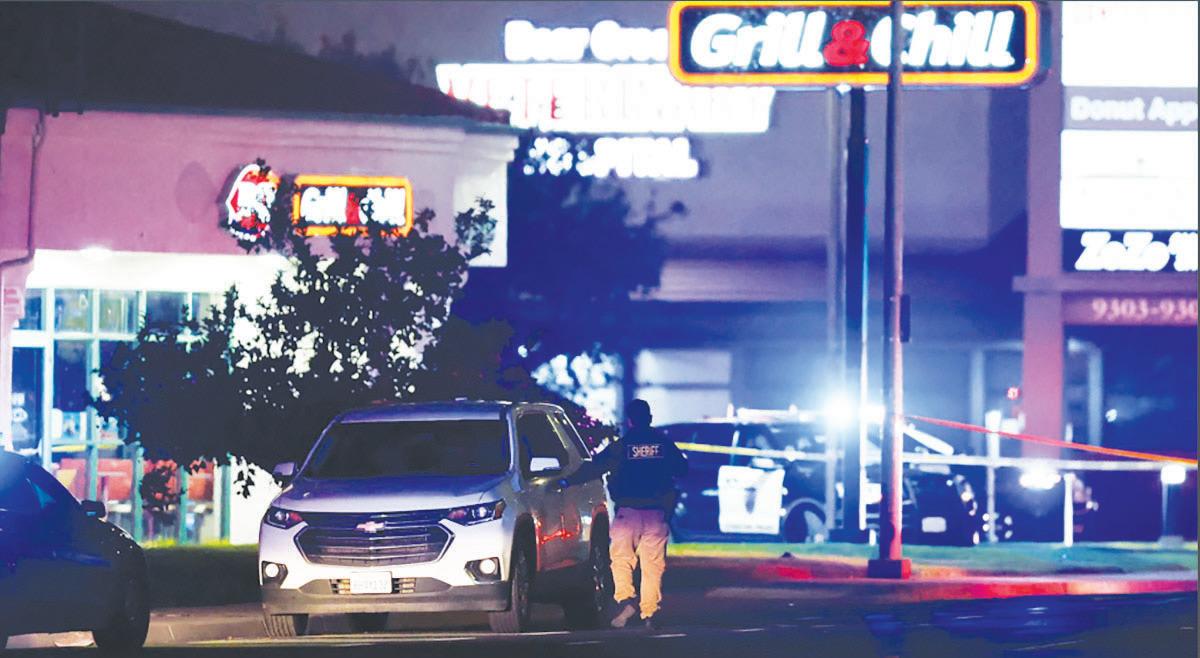
San Joaquin County Sheriff’s Office has said the incident may have been targeted
Four people have been killed and ten wounded in a mass shooting at a child’s birthday party in California.
The San Joaquin County Sheriff’s Office said a total of 14 people were shot, four of whom were confirmed dead, just before 6pm local time in Stockton, which sits approximately 80 miles east of San Francisco.
The shooting took place
at a banquet hall where a family had gathered to celebrate, local media reported.
A spokesman for the San Joaquin County Sheriff’s Office said early indications suggest the incident was targeted and that some of the victims were children. The suspected shooter is still at large, police told local media. (Excerpt from The Telegraph)
At least 334 people have been confirmed dead across Sri Lanka as authorities continue to battle rising floodwaters in parts of the capital, Colombo, after a powerful cyclone left a trail of destruction.
President Anura Kumara Dissanayake declares a state of emergency to deal with the aftermath of Cyclone Ditwah.
In an update on Sunday, the Disaster Management Centre (DMC) said on Sunday nearly 400 people remain missing and warned that more heavy rains brought on by Cyclone Ditwah are expected across the island nation in the coming days.
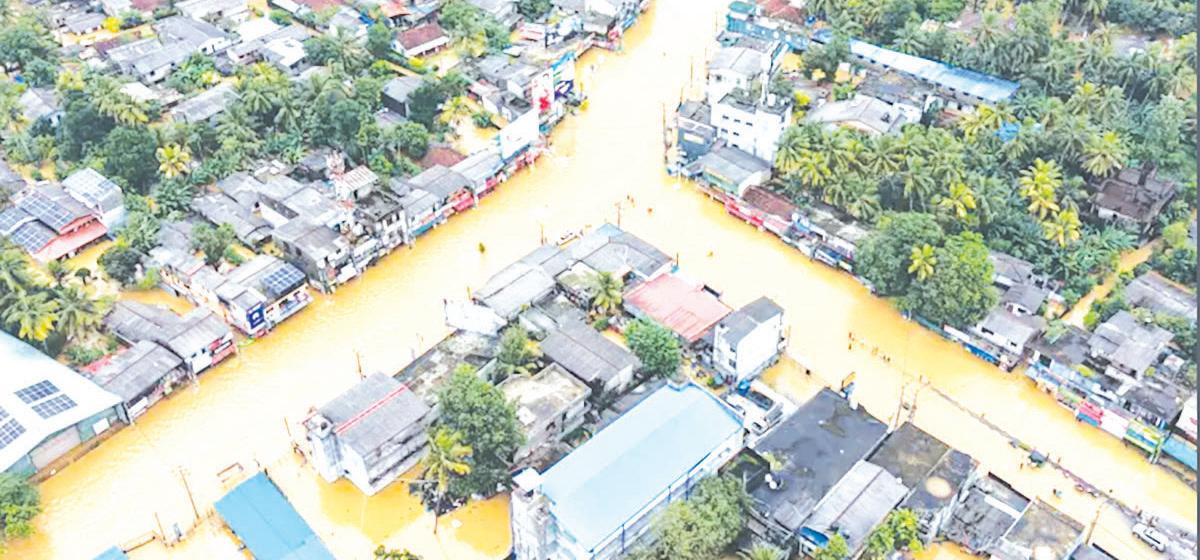
An aerial view shows houses partially submerged in floodwaters
Sri Lanka’s Daily Mirror publication reported that among those missing were five Navy personnel who were last seen trying to cut off overflowing water at a Naval sub-station in Chalai Lagoon,
northeast of the country.
The extreme weather system has destroyed nearly 15,000 homes across the country, sending almost 44,000 people to state-run temporary shelters, accord-
ing to the DMC. More than 24,000 police, army and air force personnel are still trying to reach families stranded by floods, authorities said.
“Although the cyclone has left us, heavy rains upstream are now flooding low-lying areas along the banks of the Kelani River,” a DMC official said.
The cyclone has become Sri Lanka’s deadliest natural disaster since 2017, when flooding and landslides killed more than 200 people and displaced hundreds of thousands. (Excerpt from Al Jazeera)
Ukrainian negotiators met US officials in Florida to thrash out details of Washington’s proposed framework to end Russia’s war in Ukraine, as Kyiv faces pressure on military and political fronts.
The secretary of state, Marco Rubio, the special envoy Steve Witkoff and Jared Kushner, Donald Trump’s son-in-law, sat down with a Ukrainian delegation on Sunday before planned US talks this week in Moscow with Vladimir Putin.
Rustem Umerov, the secretary of the national security and defence council in Ukraine, posted a photo of the

meeting on X and described it as focusing on “steps toward achieving a just peace”.
pendent and with an opportunity at real prosperity,” Rubio said in brief remarks.
“This is not just about peace deals,” he added as the teams sat down at the Shell Bay Club, a golf and racket club developed by Witkoff in Hallandale Beach.
Israeli Prime Minister Benjamin Netanyahu asked the country's president on Sunday for a pardon in his long-running corruption trial, arguing that criminal proceedings were hindering his ability to govern and a pardon would be good for Israel.
Netanyahu, the country's longest-serving prime minister, denies the bribery, fraud, and breach of trust charges. His lawyers said in a letter to the president's office that the prime minister still believes the legal proceedings would result in a complete acquittal.
"My lawyers sent a request for pardon to the president of the country today. I expect that anyone who
Diplomats focused on revisions to a proposed 28-point plan developed in negotiations between Washington and Moscow. That plan has been criticised as being too weighted toward Russian demands. As the meeting began Sunday, Rubio focused on reassuring Ukraine.
“The end goal, obviously, is not just the end of the war. But it’s also about securing an end to the war that leaves Ukraine sovereign and inde-
Umerov responded to Rubio by expressing his country’s appreciation for US efforts, a message geared toward Trump, who has previously claimed that Ukraine has not been sufficiently grateful for US assistance during the war. “US is supporting us. US is working beside us,” he said. (Excerpt from The Guardian
wishes for the good of the country support this step," Netanyahu said in a brief video statement released by his political party, the Likud.
Neither the prime minister, who has been on trial for five years, nor his lawyers made any admission of guilt.
Opposition leader Yair Lapid said Netanyahu should not be pardoned without admitting guilt, expressing remorse, and immediately retiring from political life.
Pardons in Israel have typically been granted only after legal proceedings have concluded and the accused has been convicted. Netanyahu's lawyers argued that the president can intervene when public interest is
at stake, as in this case, with a view to healing divisions and strengthening national unity.
President Isaac Herzog's office described the request as "extraordinary" with "significant implications". The president "will responsibly and sincerely consider the request" after receiving relevant opinions, his office said.
U.S. President Donald Trump wrote to Herzog this month, urging him to consider granting the prime minister a pardon, saying the case against him was "a political, unjustified prosecution".
Herzog's office said the request would be forwarded to the pardons department in the justice ministry, as is
standard practice, to collect opinions, which would be submitted to the president's legal adviser, who will formulate a recommendation for the president.
Israel's Justice Minister, Yariv Levin, is a member of Netanyahu's Likud party and a close ally of the prime minister.
In the letter, Netanyahu's lawyers argued that criminal proceedings against him had deepened societal divisions and that ending the trial was necessary for national reconciliation. They also wrote that increasingly frequent court hearings were burdensome while the prime minister was attempting to govern.
(Excerpt from Reuters)
Rescuers in Indonesia are searching for at least 400 people who have been reported missing, many believed to be buried under landslides, after cyclonic rains caused disas-
trous flooding nearly a week ago. The death toll on the island of Sumatra has risen to more than 440, the government says.
Aid has been sent into af-
fected areas by air and by sea, but some villages have yet to receive anything, and there are reports of people stealing food and water to survive.
Torrential rain and storms have devastated parts
of Thailand, Malaysia, the Philippines and Sri Lanka, affecting millions of people and leaving more than 900 dead across the region this month. (Excerpt from BBC News)







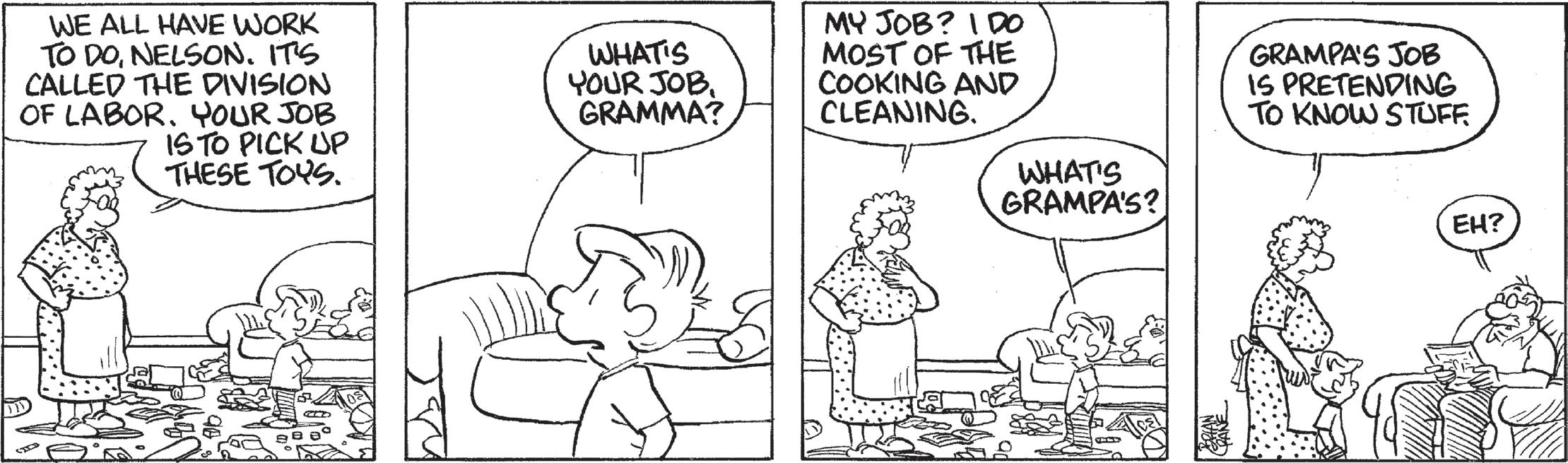


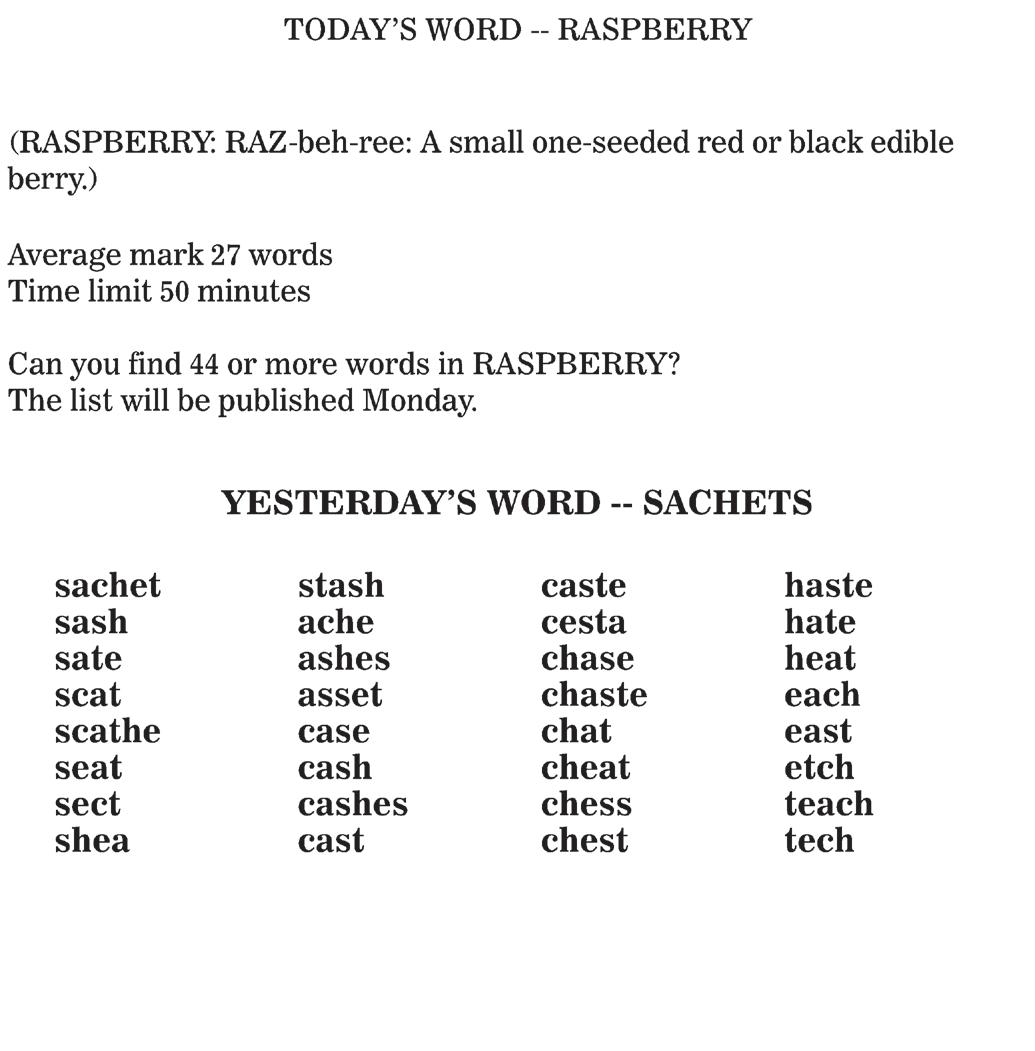






















Refuse to let emotions interfere. Organization and diplomacy will determine your success and your leadership ability. Knowing when to say no and how best to apply your talents will help.
Stop stewing over things you have no control over and start living life your way. Discipline, coupled with creativity, will help you change what bothers you.
A change of heart can lead to new beginnings. Test what’s available to see if it’s a good fit for you. Share your thoughts, make a difference and enjoy the outcome.
Focus more on finances and less on what others are doing, buying into or want from you. Make choices that adddress your needs. You have more skills and attributes than you give yourself credit for.
It’s OK to show off if you have something worthwhile to offer. Don’t be shy; use your attributes to help others, and you’ll have a positive impact on those you encounter.
Think before you act or say something you may regret. You may want change, but timing is essential if you want to maintain your reputation and attract the right crowd.
Simplify your plans to meet financial demands and ease the minds of those fearful of failure. Talks, travel and testing your theories will encourage you to finish what you start.
Change can be good; however, it’s how you bring it about that makes a difference. Discipline and innovative ideas will result in widespread opportunities, knowledge and a positive platform.
Take a moment to breathe, then pick up get going. Test your ideas and enforce change. The outcome will favor you if you are selective, honest and diligent.


Consider your options and move forward alone or in secrecy until you have everything in place. Prioritizing your emotions can lead to errors that are difficult to correct.



You will face opposition if you are sloppy or uncertain in your approach. Offer proof, explanations and facts to people who are hesitating or trying to discredit your decisions.

Be a good listener, but don’t follow someone who doesn’t share your values or who is heading in a different direction. Opportunity comes from doing what’s best for you.





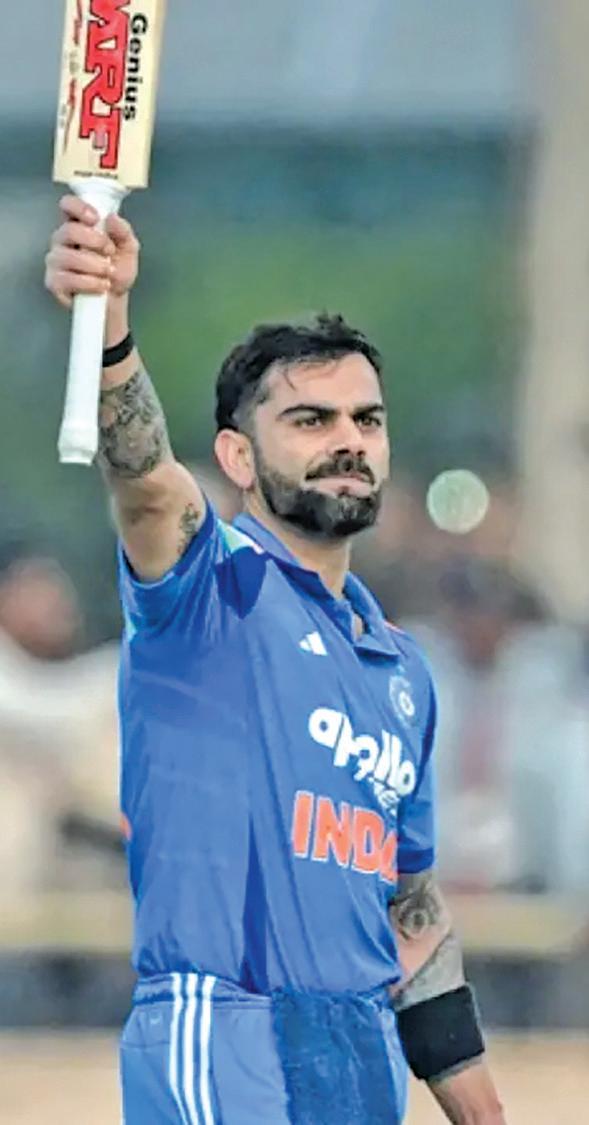
Despite Corbin Bosch's best efforts, South Africa fell short of the 350-run target by 17 runs India 349 for 8 (Kohli 135, Rahul 60, Rohit 57) beat South Africa 332 (Breetzke 72, Jansen 70, Bosch 67, Kuldeep 4-68) by 17 runs
Virat Kohli added to his world record of most OneDay International (ODI) hundreds, Rohit Sharma brought up the world record for most ODI sixes, and a Sunday full house on a pleasant evening in Ranchi enjoyed watching India beat South Africa in a close first ODI of the three-match series. Kohli and Rohit turned back the clock in a 136-run partnership, Kohli went on long enough to hit seven six - es, and the
fast bowlers inflicted just enough damage before the pitch eased out in the dew under the lights.
The toss disadvantage that India had to overcome – having lost a 19th consecutive one in ODIs – was huge. During the afternoon, the old ball proved to be difficult to hit, resulting in a slowdown after the start Kohli and Rohit gave India. In the night, the pitch became dramatically easier to bat on. In the end, India needed every last bit of that start of 161 in 21.2 overs and the two wickets in the first over that Harshit Rana bowled with the new ball. Even after being 11 for 3, this is how South Africa's next three partnerships went: 66 in 10.2 overs, 60 in 6.4 and 97 in 11.1. Marco Jansen and Matthew Breetzke scored 70s, Dewald Brevis and Tony de Zorzi 30s, and the target came down to 123 from 17 overs when Kuldeep Yadav got the wickets of Jansen and Breetzke in the same over to ease India's breath.
South Africa still refused to go away with Corbin Bosch's 67 bringing them to needing 19 off 10, but with only the last man for company, Borch found himself handcuffed against Arshdeep Singh's yorkers. It was especially heartbreaking for Bosch after he had bowled overs 46, 48 and 50 for just 21 runs to keep India down to 349.
This ODI followed the grammar of ODI cricket in recent years in India. The new ball does nothing in the afternoon, but you can cleverly offset it with the pitch's slowness when the balls go soft. Under lights there is a small window of movement with the new ball, which you need to maximise, because once the dew sets in, batting gets easier on every count.
early wicket of Yashasvi Jaiswal brought them together. For the first time when batting first in his career, Kohli hit two sixes in the first 10 overs, both offdrives that not long ago he might have kept down. Rohit, who is generally used to quicker starts, hit successive slog-swept sixes off offspinner Pernemal Subrayen to catch up with Kohli in no time.
Rohit's third six, a pull off Jansen moments after bringing up his fifty, took him past Shahid Afridi's world-record tally of 351. It was also India's eighth, the most they have hit in the first 20 overs of an innings. The next short ball from Jansen stayed low, trapping Rohit in front.
Kohli, now 72 off 61, five sixes to his name, was deprived of strike as the next

and the team management show so much faith in him. In the second over of the innings, he swung the ball both ways and also found seam both ways to take the wickets of Ryan Rickelton
Kohli and Rohit respected the need to maximise the new ball themselves when the
two batters struggled to come to terms with the slowness of the pitch. Ruturaj Gaikwad scored 8 off 14, Washington Sundar 13 off 19, and they also dominated the strike. Kohli had to grit his teeth and get through this period. He kept picking up singles with ease, but the period from Rohit's dismissal to Kohli's hundred brought India just 72 runs in 16.3 overs.
When he brought up the hundred, Kohli broke into an emotional celebration. This was his first hundred since February; while he plays only one format, there is scrutiny around his and Rohit's future. And now, Kohli went into a renewed assault, hitting two more sixes and scoring 35 off the next 17 balls. KL Rahul, who fought through the initial period, took India's six tally to 16 and the score to 349.
Rana immediately showed why the selectors
and Quinton de Kock for ducks. Rickelton lost the top of middle with the ball swinging away and nipping back. Away swing and away seam were enough to take de Kock's outside edge. Aiden Markram, captaining in the absence of the resting Temba Bavuma, looked to manufacture a cut off Arshdeep at the start of the fifth over, but edged through to Rahul.
By now the ball had stopped moving, the pitch had begun to skid, and the outfield had become moist only to become damp pretty soon. Everything played into the batters' hands, leaving you wondering what a massacre it would have been but for those three early wickets.
Kuldeep got de Zorzi lbw for 39 off 35, clever bowling from Rana contained a marauding Brevis for 39 off 28, and still Jansen and Breetzke proceeded to give
India a right scare. After de Zorzi's dismissal, Breetzke took upon the role of taking singles and watching the damage other batters did. What damage Jansen did in his 39-ball 70, the fastest fifty by a South Africa batter in India and the second-fastest against India.
The dew got so heavy India had to forget about spinners for a while. Washington bowled only three overs. It was after having run through the fast bowlers that Rahul went back to Kuldeep, who, as wristspinners can sometimes do, drew the toe end
aaa
India (50 ovs maximum)
Yashasvi Jaiswal c †de Kock
b Burger 18
Rohit Sharma lbw b Jansen 57
Virat Kohli c Rickelton
b Burger 135
Ruturaj Gaikwad c Brevis
b Baartman 8
Washington Sundar c Bosch
b Baartman 13
KL Rahul (c)† c †de Kock
b Jansen 60
Ravindra Jadeja c Markram
b Bosch 32
Harshit Rana not out 3
Arshdeep Singh b Bosch 0
Kuldeep Yadav not out 0
Extras (b 5, lb 4, w 14) 23
Total 50 Ov (RR: 6.98) 349/8
Did not bat: Prasidh Krishna
Fall of wickets: 1-25 (Yashasvi Jaiswal, 3.1 ov), 2-161 (Rohit Sharma, 21.2 ov), 3-183 (Ruturaj Gaikwad, 26.3 ov), 4-200 (Washington Sundar, 30.3 ov), 5-276 (Virat Kohli, 42.5 ov), 6-341 (KL Rahul, 48.5 ov), 7-347 (Ravindra Jadeja, 49.4 ov), 8-347 (Arshdeep Singh, 49.5 ov) •
DRS
Bowling O-M-R-W
Marco Jansen 10-0-76-2
Nandre Burger 10-0-65-2
Corbin Bosch 10-0-66-2
Ottneil Baartman 10-0-60-2
Prenelan Subrayen 10-0-73-0
from Jansen on a long hop. In the same over, Breetzke holed out to long-on, perhaps having got too close to the pitch of the ball. Incredibly, South Africa still refused to go away. Bosch kept South Africa interested with his maiden fifty, but never had the support left to pull off this heist. Arshdeep's wicket-maiden in the 47th over seemed to have sealed the game, but Bosch still kept gasping. In the end, it probably came down to the two full tosses he missed from Prasidh Krishna in the 46th over. (ESPNcricinfo)
South Africa (T: 350 runs from 50 ovs)
Aiden Markram (c) c †Rahul
b Arshdeep Singh 7 Ryan Rickelton b Harshit Rana 0 Quinton de Kock † c †Rahul
b Harshit Rana 0 Matthew Breetzke c Kohli
b Kuldeep Yadav 72
Tony de Zorzi lbw b Kuldeep Yadav 39 Dewald Brevis c Gaikwad
b Harshit Rana 37
Marco Jansen c Jadeja
b Kuldeep Yadav 70

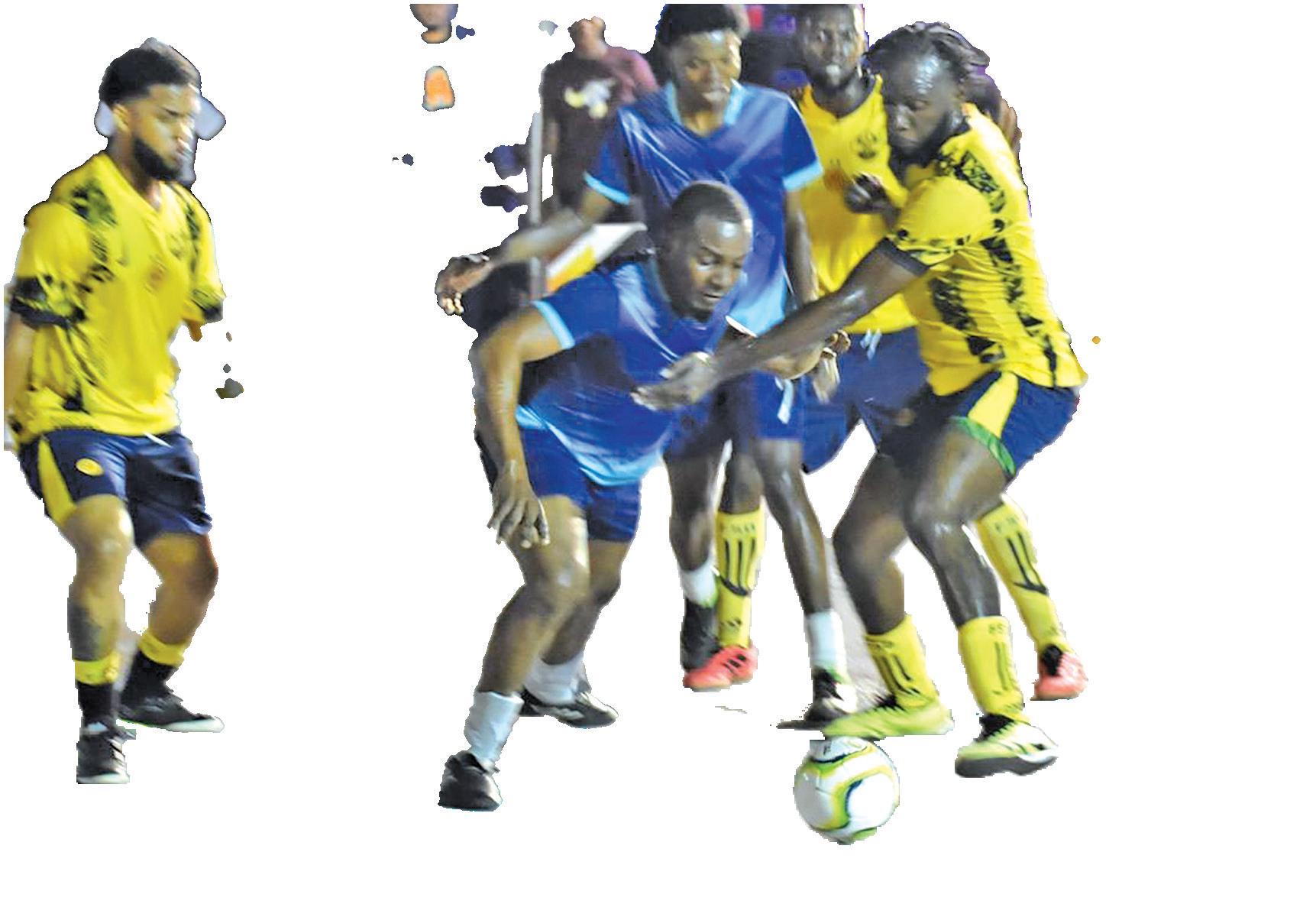
Silver Bullets de
throned holders
YMCA to win the ExxonMobil Guyana Futsal Championship, prevailing 2-0 on penalty kicks at the Retrieve Tarmac.
Each team were allowed three attempts in the penalty shootout, which was required in front of the mammoth crowd to decide the outcome after full time ended 5-5.
Taking the first kick from the distance, Silver Bullets, via Omar Williams, scored with a
finish down the centre of the net.
Silver Bullets then secured the lead at the end of the first round as YMCA failed to score from the distance after Keyshawn Dey lashed his effort onto the crossbar.
Silver Bullets then doubled their advantage to start the second round after Damion Williams blasted his effort into the top left corner.
Needing to convert to keep his team’s hopes alive, Jermaine Padmore sealed

Lando Norris, Max Verstappen and Oscar Piastri will contest a final-race championship showdown in Abu Dhabi after Red Bull's Verstappen won a gripping Qatar Grand Prix.
Verstappen benefited from a strategy call from McLaren that flew in the face of decisions made by every other team during an early race safety car.
It was a costly decision that sacrificed track position to Verstappen in the final stages and in hindsight threw away the race win for Piastri.
Dutchman Verstappen won to take his seventh win of the season, equalling Norris and Piastri, while the Australian was second and the Briton fourth behind the Williams of Carlos Sainz.
Norris won himself an extra two points by passing Kimi Antonelli's Mercedes on the penultimate lap.
The Englishman has been left with a 12-point lead over Verstappen, who moved ahead of Piastri by four points heading to Abu Dhabi on December 5-7.
To win the title, Norris must finish at least third at Yas Marina if Verstappen wins the race next Sunday.
The key moments of the dramatic race in Qatar were: McLaren's decision not to stop when a safety car was called on lap seven for a crash between Alpine's

Drakes, and Sigmund Cobena scored one goal each. For the losers, Dey and Kevin Gittens bagged braces, while Kymani Sealey netted once.
Bullets with a brace, while Rodensio Tudor, Colwyn
With the result, Silver Bullets walked away with $1,500,000 and the championship trophy, while

YMCA pocketed $750,000 and the second-place award. On the individual side, the Silver Bullets goalkeeper was adjudged the Most Valuable Player (MVP) and rode away with a motorcycle.
Meanwhile, Hardknocks squeaked past DC Ballers 9-8 in the thirdplace playoff. Dexter Milo and Kemani Field recorded respective hat-tricks,
while Kendolph Lewis bagged a double. Adding a goal to the score was Sese Norville. For the losers, Andre Mayers tallied six goals, while Antwoine Gill and Nicholas Gentle scored one goal apiece.
With the win, Hardknocks pocketed $350,000 and the third-place trophy, while DC Ballers received $200,000 and the corresponding accolade.
Pierre Gasly and Sauber's
A decision led by Piastri to bring forward his final stop in a desperate attempt to challenge Verstappen came to noth-
A surprise second podium for Sainz gifted by McLaren's strategy
How did McLaren lose out in Qatar?
The fateful moment for McLaren was when Gasly and Hulkenberg came together as the German tried to pass the Frenchman around the outside of Turn One on lap seven.
Hulkenberg's car was left damaged beside the track. That brought out the safety car.
The critical part of the timing was that it left exactly 50 laps remaining in the race.
With Pirelli imposing a 25-lap safety limit on the tyres, that meant anyone who pitted at that time was locked into a rigid strategy with a second stop on lap 32.
McLaren explained the decision not to stop to their drivers by saying that to do so would rob them of strategic options later in the race.
Everyone else – knowing stopping under the safety car saves time compared to a standard stop, figuring on the difficulty of overtaking around the Lusail track, and on the fact that this was a one-stop race in which they were being forced by Pirelli to do two – decided to stop and lock in their track position.
Norris questioned the decision after the fact, but by then it was too late.
When everyone else decided to pit, McLaren's decision almost inevitably meant they were going to
be sacrificing the lead to Verstappen if the race ran without incident until the end.
That's because they would fall behind Verstappen after their own first stops, reclaim the lead when he made his final one, but unless they could pull out a huge lead, fall behind again when they stopped for the final time.
That's exactly how the race played out.
Had McLaren waited until 10 laps to the end and fitted the soft tyres, they would have had a big pace advantage, but with probably no change to the end result.
The complication for McLaren at the time of the call was that if they had stopped both cars, Norris would have had to be stacked behind his teammate.
He was already behind Verstappen after the Red Bull had passed him at the start. Stopping in this way would also have dropped him behind at least two other cars, Antonelli's Mercedes and Sainz’s Williams.
So there will be questions as to whether McLaren's desire to be fair to both drivers – stated often this season –was instrumental in the call they made.
Piastri not happy; Verstappen on a charge
In desperation, Piastri convinced the team that the only chance they had was to make their second stop earlier and give themselves more time to chase down the Red Bull.
Piastri came in on lap 42, with 15 laps to the end, and fitted hard tyres, but although he was able to reduce Verstappen's lead to eight seconds by the end, the four-time champion was un-
der no pressure.
"No words," Piastri said over the radio at the end of the race.
He added in his postrace interview: "Clearly, we didn't get it right tonight. I drove the best race I could, as fast as I could, but there was nothing left out there. Tried my best, but didn't get it done.
"In hindsight, it's pretty obvious what we should have done, but we'll discuss it as a team. A little bit tough to swallow at the moment."
Verstappen said: "This was an incredible race for us. We made the right call as a team to box. It was smart. And super-happy to win here and stay in the fight to the head, incredible.
"It was a little bit offset because of it all, but for us it was a very strong race on a weekend when it was a little bit tough, but we still got it done."
He described McLaren's strategy as "an interesting move", adding: "But still you have to keep the tyres alive."
Norris, who would have won the title had he won the race, said: "I had no expectations going into the weekend. I try to do my best. It wasn't good enough today, but that's life.
"We made the wrong decision, that was clear as soon as it happened. It was more of a gamble doing what we did than what they did."
Piastri should have taken a comfortable victory, but Norris struggled more, even though second was on offer had McLaren made the right strategy call.
He had a massive moment at the high-speed Turn 14 on lap 35, just rescuing a crash, at a time when the McLaren drivers were trying to build as big a gap as possible before their final
stop.
Instead, fearing he had damaged his floor, Norris had Verstappen right behind him until his final stop.
Norris came out in fifth place, behind Sainz and Antonelli, and for a long time struggled to pass the Italian.
Until, with just over a lap to go, Antonelli ran wide, and Norris was able to move ahead.
He closed in on Sainz, and crossed the line 0.6secs behind the Spaniard, for whom a second podium to follow the one in Baku was an extraordinary feat.
Sainz's unlikely podium
Sainz drove a strong race, running fourth in the early laps thanks to George Russell making a mistake on the early lap and losing two places.
Sainz gained a place on Antonelli when the Italian had to be held for other cars during the safety-car pitstop scramble, and showed strong pace to benefit from McLaren's error.
Russell took sixth behind Antonelli, inheriting a place when Fernando Alonso spun his Aston Martin.
At the time, the spin looked to have damaged a strong weekend for Alonso, who had controlled the midfield pack after the first stops and looked set for sixth before a spin cost him two places to Racing Bulls' Isack Hadjar and Russell.
But a puncture on Hadjar's car gave Alonso one of those places back and seventh is still an excellent result for the veteran Spaniard in his uncompetitive car.
Ferrari's Charles Leclerc, Racing Bulls' Liam Lawson and Red Bull's Yuki Tsunoda took the final points. Top 10
1. Max Verstappen
2.
3.
5. Kimi Antonelli (Mercedes)
6. George Russell (Mercedes)
7. Fernando Alonso (Aston Martin)
8. Charles Leclerc (Ferrari)
9. Liam Lawson (Racing Bulls)
10. Yuki Tsunoda (Red Bull)
What's next?
The all-important title decider at Abu Dhabi's Yas Marina. The circuit itself does not create the most thrilling racing, but once again this twilight race hosts an event which promises to be every bit as dramatic at Sebastian Vettel's maiden championship in 2010, or Verstappen's highly-controversial first title in 2021. (BBC Sport)

West Indies and New Zealand will lock horns in the first of three Test matches today, Monday , December 1, from 18:00h local time.
The teams will be in competition at Christchurch , New Zealand, and Guyanese Tevin Imlach is ready for the challenge.
Speaking to the media on the eve of the match, Imlach said concentration and consistency for long periods were key ingredients in West Indies' winning.
"Preparation is good so far. Different conditions from back home. More bounce and seam compared to back home. It also swam more when it passes the bat. I am enjoying the challenge," he related.
The wicketkeeper-bats-
The final day of the Gokarn Ramdhani Memorial Tournament produced thrilling match-ups, standout performances, and a major upset in the men’s doubles division.
In one of the biggest surprises of the tournament, Nkosi Beaton and Daniel Tan upset favourites Akili Haynes and Tyrese Jeffrey – 21-17, 17-21, 21-16 in the men’s doubles finale.
The match was a gripping three-game battle, showcasing excellent resilience and teamwork from Beaton and Tan.
In her closing remarks, Guyana Badminton Association (GBA) President Emily Ramdhani thanked all the athletes: “I extend my heartfelt congratulations. Whether you
2nd Alimah Eastman
1st Mishka Beharry



man also said the batters had good preparation in the warm-up game.
"I was able to spend some time in the middle. I would have wanted to bat the fast bowlers a bit more, but the guys bowled more spin in that game. In terms of keeping, it was good; the ball moved around more, and I handled that challenge. The team looks in a good place; the bowlers are ready to go, and the batters look good, with good scores in that match," Imlach said.
"Every series is important. You want to win games for your family and your supporters. I anticipate this series will be competitive as well."
The T20 International (T20I) and One-Day International (ODI) series
were both competitive, but West Indies came up on the losing side in both series.
According to Imlach, the Test series will also be competitive.
"We have done well in patches. This series we have to stay consistent with the good things for a longer period. Once we put the ball in the right area, it's all about consistency throughout."
West Indies Test squad: Roston Chase (Captain); Jomel Warrican (Vice Captain); Alick Athanaze; John Campbell; Tagenarine Chanderpaul; Justin Greaves; Kavem Hodge; Shai Hope; Tevin Imlach; Brandon King; Johann Layne; Anderson Phillip; Kemar Roach; Jayden Seales and Ojay Shields.

It will be a battle to determine who is the best in Region One, but more importantly the best in the country when the MVP Sports Girls’ Under- 1 PeeWee final is staged next Saturday.
This is by virtue of a thrilling semi-final round on Saturday, which saw Waramuri and Santa Rosa Primary overcoming their opponents in contrasting fashion in order to punch their final tickets.
In the first semi-final, Waramuri cruised past St John the Baptist Primary 2-0. After a goalless first half, Alina Lewis broke the ice in the 37th minute to put Waramuri ahead. Three minutes later, Alita Marks added to the tally to seal the victory.
Santa Rosa Primary were made to toil for their win in the following semi-final, taking on Marian Academy.
The Carifesta Avenue out-
fit took the lead first, through a stunning ‘Olympico’ goal off the boots of Ella Fernandes. However, an error in Marian’s defence saw Rovena Johnson equalising for Santa Rosa in the 46th minute, just minutes before regulation time expired.
When extra time bore no fruit, the contest went down to kicks from the penalty mark, in which Santa Rosa prevailed 5-4.
Earlier in the day, the four semi-finalists secured victories to advance to the semis.
St John the Baptist were the first to advance, needling Agatash Primary 1-0 through a seventh-minute strike off the boots of Amira Edwards.
Then, Santa Rosa Primary mauled St Aloysius Primary 15-0. After Ava Wilson opened the scoring in the second minute, it was the Rovena Johnson show as she netted 10 goals in the 4th,

secured a medal or not, your effort, dedication, and love for the game made this event a success. You have represented yourselves, your clubs and Guyana with pride.”
In a missive, the GBA noted that “this tournament is more than just a competition; it is a celebration of
WINNERS:
Men Doubles: 3rd Vereendra Bhagwandin & Jason Stephney
3rd Frank Waddell & Ruel Rambiriche
Gokarn’s lifelong commitment to badminton and the foundation he built for the sport in Guyana. Watching our athletes compete with such passion reminds us that his legacy continues to live on in every shot played and every young player inspired.”
A very special thank
2nd Akili Haynes & Tyrese Jeffery
1st Nkosi Beaton & Daniel Tan
Women Doubles: 3rd Asiyah Eastman & Alimah Eastman
3rd
Mixed Doubles:
3rd Grandison Robinson & Amande Low
3rd Ruel Rambiriche & Gabrielle Felix
2nd Nkosi Beaton & Mishka Beharry
1st Akili Haynes & Asiyah Eastman
11th, 12th, 13th, 16th, 30th, 35th, 39th, 40th and 41st minutes.
Bre Atkinson netted a hat-trick in the 6th, 10th and 17th minutes while Naomi Henry also added her name to the scoresheet in the 37th. A brace from Haley Haberkorn (38th, 40th) and one off the boots of Fernandes (35th) helped Marian Academy down West Ruimveldt 3-0.
Waramuri Primary later drubbed Potaro Primary 6-0 to move on to the next round. Marks recorded a hat-trick in the 8th, 15th and 24th minutes. Saskie Albert added a brace in the 27th and 36th minutes while Shelly La Cruz had a solitary strike in the 30th.
The MVP Sports Girls Pee-Wee final is scheduled for Saturday, December 6 with Santa Rosa and defending champions Waramuri clashing for the championship.

you, on behalf of the GBA, also went to sponsors Massy Distribution, under the Blue Waters and Ocean Spray brands, and SOL Guyana.
“Your generous support has once again strengthened this tournament and helped create a memorable experience for all. The Guyana Badminton Association deeply values your continued partnership,” the Association shared.
It added, “We also acknowledge the ongoing
support of the National Sports Commission and the Ministry of Culture, Youth & Sport, who remain instrumental in the growth and development of badminton across the country.”
“As we close this year’s event, we the GBA remains committed to advancing badminton throughout Guyana, expanding opportunities for our youth, and building stronger pathways for excellence. Together, with the continued support of our partners and the dedication of our badminton
Day 3 Matches – November 29th, 2025
community, we will carry Badminton forward.”
The Gokarn Ramdhani award for the Most Outstanding Player of 2025 was presented to Mishka Beharry. In 2023, this prestigious title was awarded to Akili Haynes, and in 2024 to Frank Waddell. Beharry, the U19 girls champion, exhibited exceptional performance, discipline, and unwavering determination throughout 2025 which truly exemplify the spirit of excellence that this honour represents.
23 Men Singles Semi-Finals: Frank Waddell vs. Yonneil Benjamin 20-0 retired
Under 23 Men Singles Semi-Finals: Christopher Jordan vs. Ruel Rambiriche 21-17, 21-11