Recycled paper. Genesee & Wyoming is committed to using resources wisely.
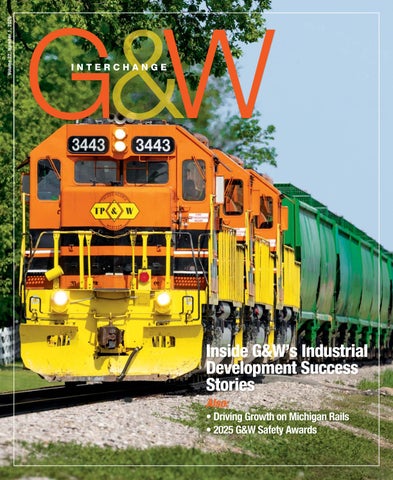
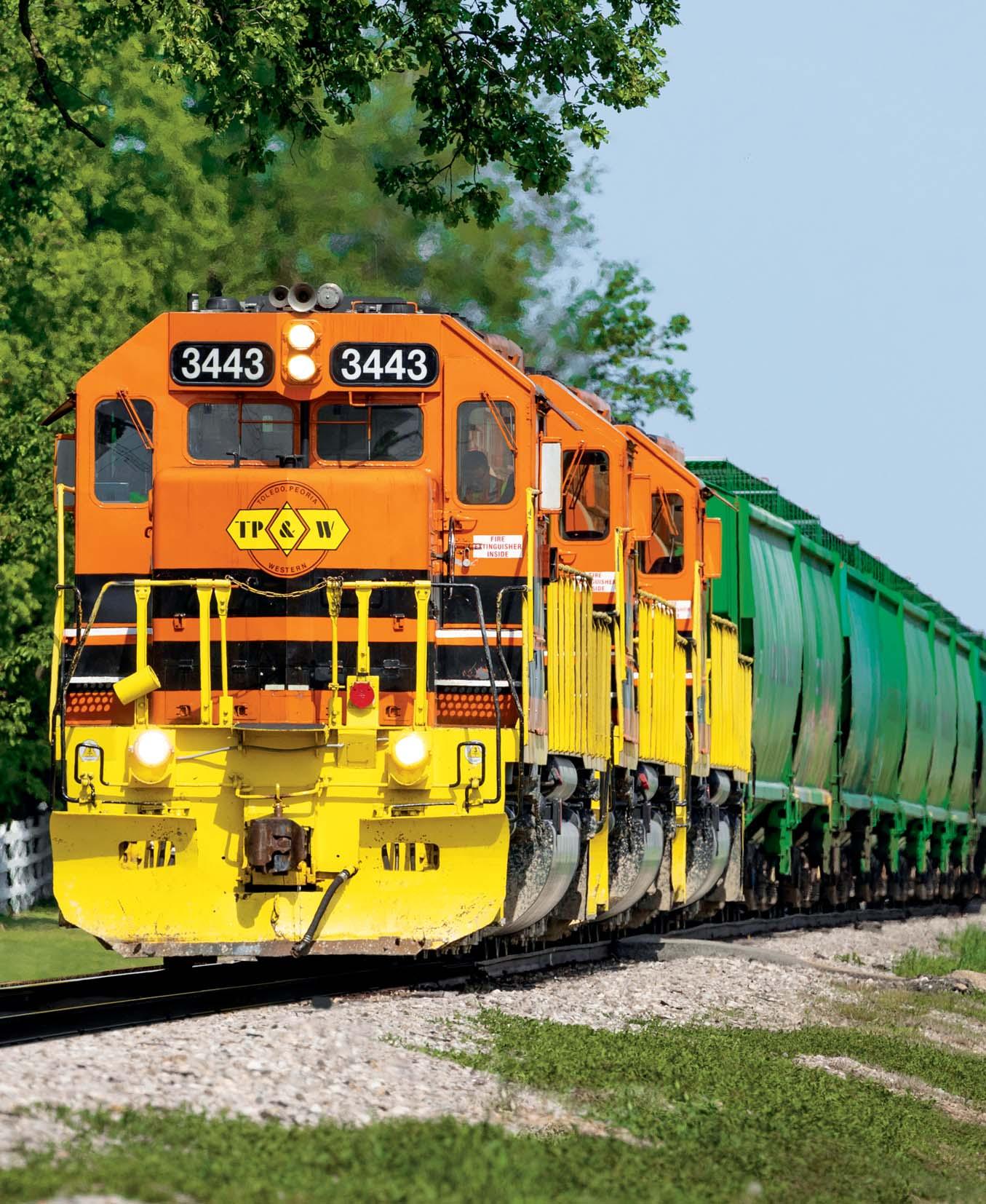
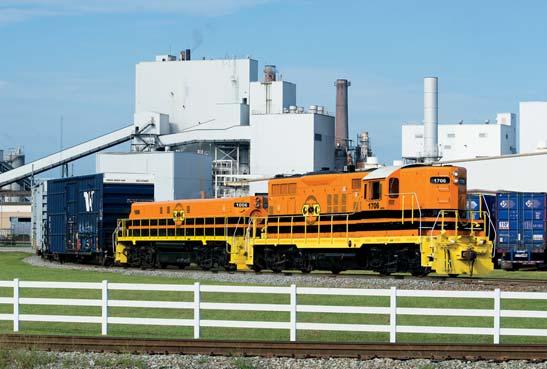
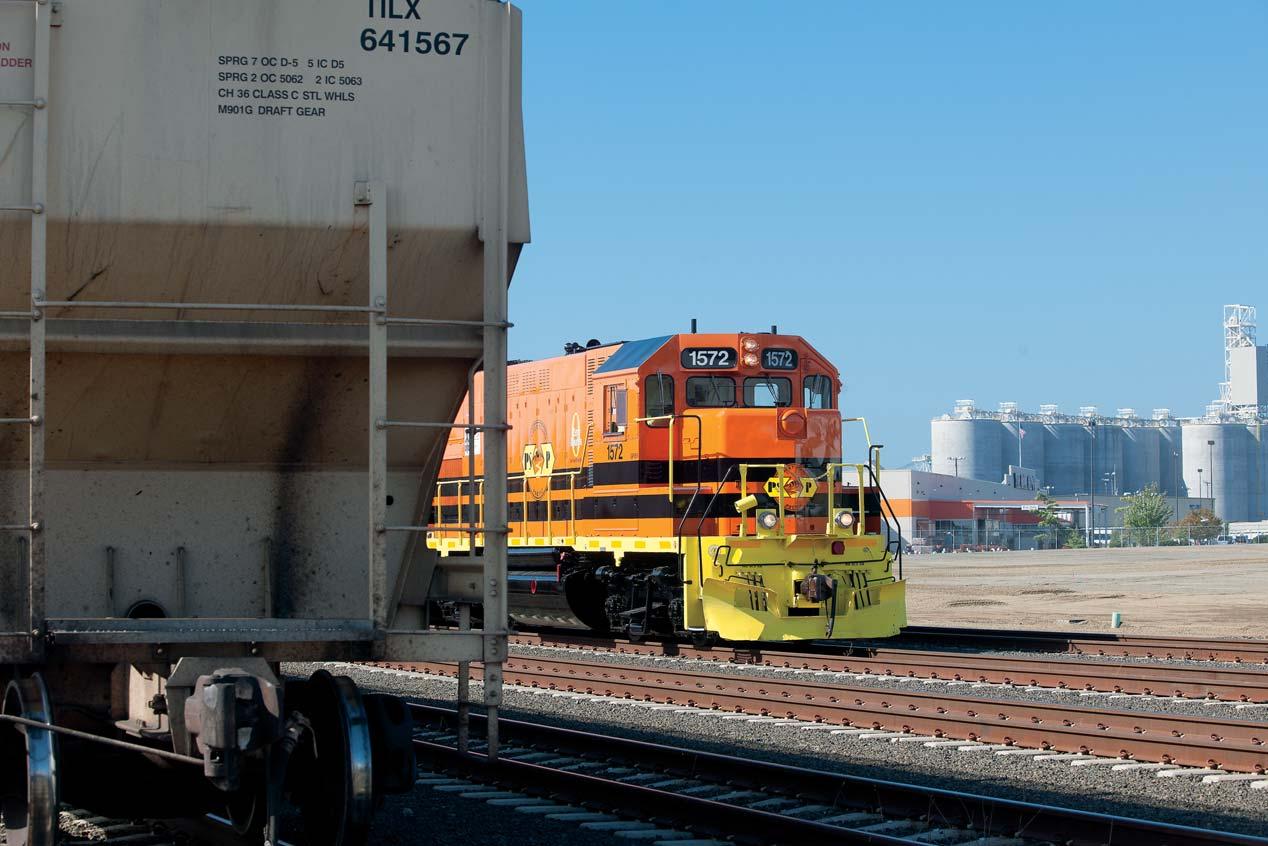
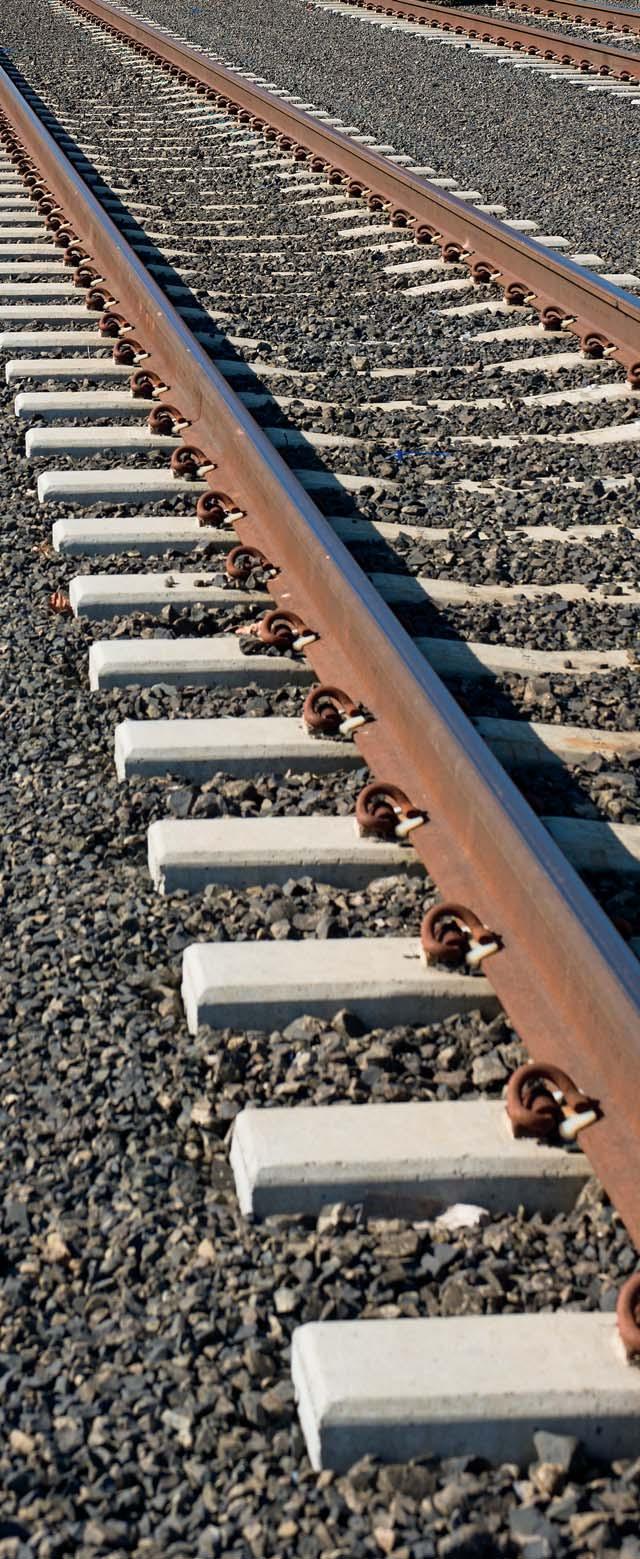
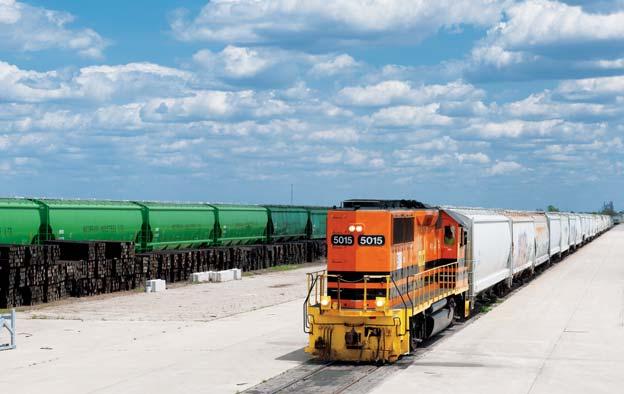
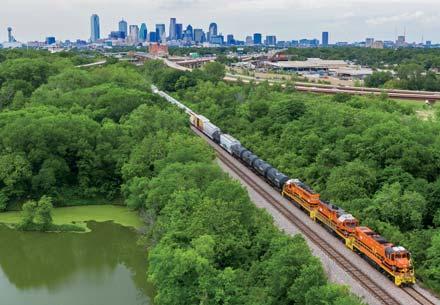
Cover: Toledo, Peoria & Western Railway (TPW) hauling Incobrasa containers
Features The terms “Genesee & Wyoming,” “G&W,” “we,” “our,” and “us” refer collectively to Genesee & Wyoming Inc. and its subsidiaries and affiliated companies.
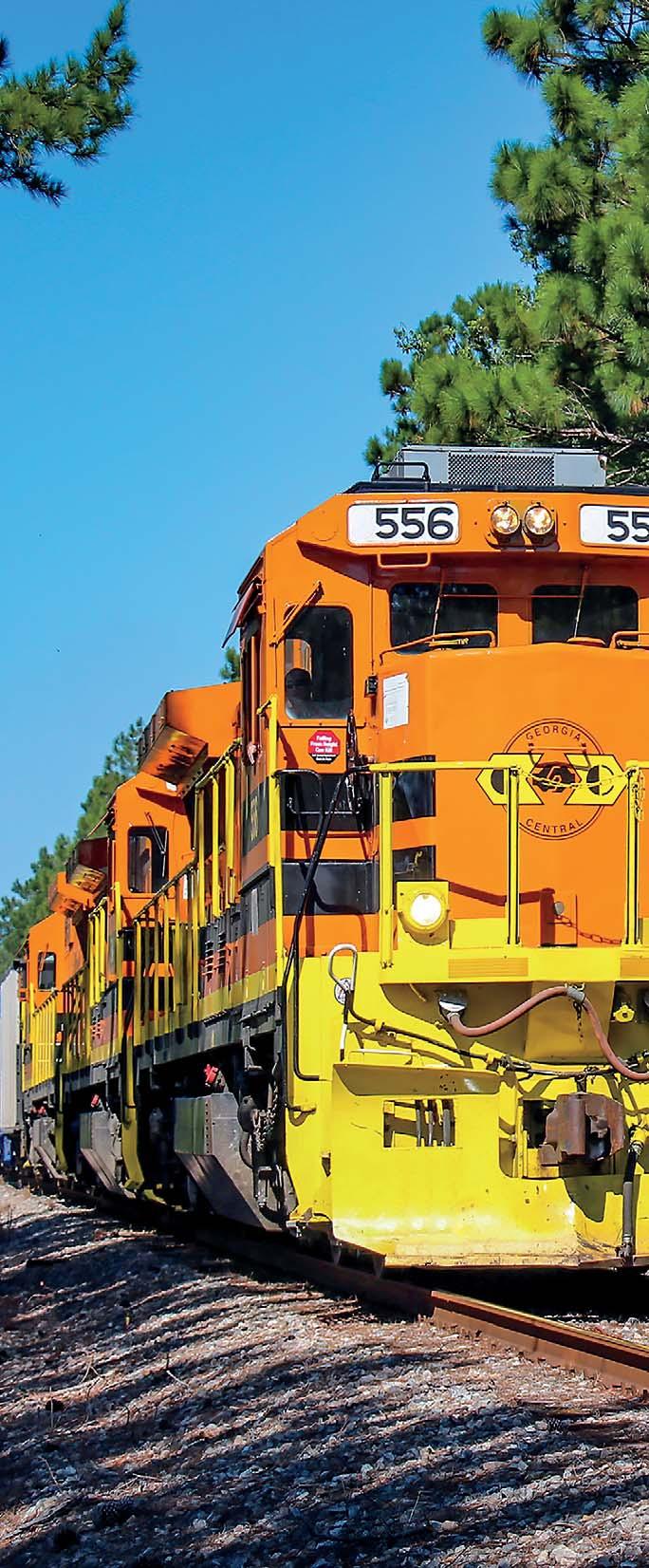
Right: Georgia Central Railway (GC) PHOTO BY ZANE WILLIAMS
From the CEO
G&W Colleagues,
As you may know, earlier this month, our Georgia Central Railway (GC) was named Regional Railroad of the Year by Railway Age magazine (the second time G&W has received this honor after Rapid City, Pierre & Eastern Railroad’s 2019 win in the same category).
This award is highly coveted within our industry, as it recognizes excellence in safety, service, operations, commercial and innovation.
Georgia Central was recognized for notable achievements in each of these areas:
• Investments to enable 286k capacity along the entire line, track speeds of 25 mph on more than one-third of the line, and more capacity via two new sidings
• 80% reduction in reportable injuries over two years
• 8.8 out of 10 in overall satisfaction on its 2025 customer survey
• Traffic growth of over 41% in five years
• From 2024-2025, a half-dozen ID projects came online, adding nearly 11,000 carloads
• One of the first two freight railroads in North America to receive FRA approval to pilot zero-emission, self-propelled bogies from Parallel Systems
• 14 newer, cleaner engines added to its fleet in 2022
This is a remarkable and well-deserved honor – with Georgia Central serving as a leading example for the company of how investing in a railroad, focusing on zero injuries and providing worldclass service every day, hustling to grow, and embracing innovation become a recipe for success.
When G&W acquired Georgia Central in 2005, it was a breakeven business at best. But just over two decades later – after a comprehensive strategy that included long-term relationship building with economic development commissions and site selectors; careful investments in employees, infrastructure and equipment; collaboration and teamwork among the railroad’s operations, sales, safety, HR, IT, finance, engineering and mechanical representatives; and, most importantly, demonstrating that we can consistently provide safe and efficient transportation service when and how customers need it – this railroad has secured a bright future for years to come.
Georgia Central’s success shows what’s possible across all our railroads when we stay committed to our long-term vision and deliver safe, reliable service that delights our customers every single day.
My thanks to the GC team for setting a standard we can all be proud of. Please join me in congratulating them and finding inspiration in their success as we work to improve our safety performance, grow our revenues and enhance our capital efficiency across all our operations in 2026.
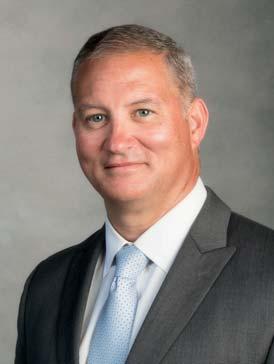
Michael February 27, 2026
Inside G&W’s Industrial Development Success Stories
G&W’s most recent industrial development results — 44 projects in 16 states, more than $1 billion in customer investments and over 700 new jobs in the communities along our footprint — signal tremendous growth across nu merous industries and geographies. Collectively, these projects are anticipated to bring more than 80,000 additional carloads to our railroads and the rail industry.
“Industrial development projects are a key component of our growth strategy,” says G&W CEO Michael Miller. “Whether customers are constructing new plants, expanding existing facilities or even re-opening shuttered sites, the recent projects along our footprint demonstrate that they recognize the safety, efficiency and economic benefits of using our rail for their transportation needs.”
But these successes don’t happen overnight. They begin with a question or idea, get nurtured over time by our teams, and require mutual trust and collaboration among G&W, customers and other partners before becoming a reality.
Four recent projects — Ag Processing Inc. (AGP) in Washington, Incobrasa Industries in Illinois, Penny Newman Grain in Georgia and BURNCO in Texas — offer a closer look at how G&W’s Industrial Development team helps make big ideas happen.
Expanding the “Cadillac” of Export Facilities
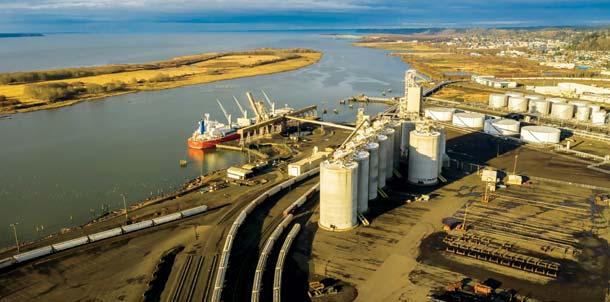
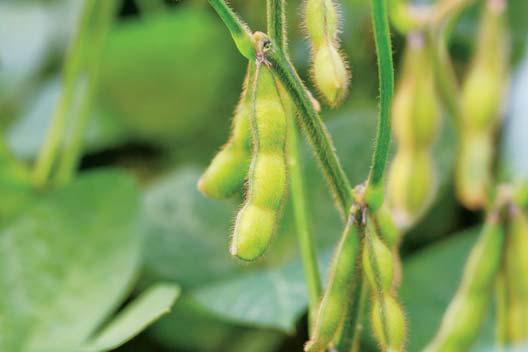
Several years back, as demand for soybean crush skyrocketed and crush plants came online across the country, soybean processor AGP approached G&W’s Puget Sound & Pacific Railroad (PSAP) and the Port of Grays Harbor for additional export capability and access to expanded global markets.
“The Port of Grays Harbor was a natural choice,” says Michael Yuen, one of G&W’s industrial development directors. “Long regarded the ‘Cadillac’ facility among soymeal exporters, the port had room to grow and a rail connection already in place through PSAP.”
In the 2000s, the Port of Grays Harbor had been underutilized, with AGP exporting primarily through the Port of Longview. This project marked a deliberate migration to Grays Harbor, leveraging port property and PSAP service to unlock new capacity.
PORT
“The $200+ million terminal expansion we’re undertaking will significantly enhance AGP’s export capabilities. We deeply value our partnership with G&W and PSAP. They make it easy to do business, and their collaboration is instrumental in delivering improvements.”
—Leonard Barnes, executive director of the Port of Grays Harbor
“This is a transformative time at the Port,” says Leonard Barnes, executive director of the Port of Grays Harbor. “The $200+ million terminal expansion we’re undertaking will significantly enhance AGP’s export capabilities. We deeply value our partnership with G&W and PSAP. They make it easy to do business, and their collaboration is instrumental in delivering improvements.”
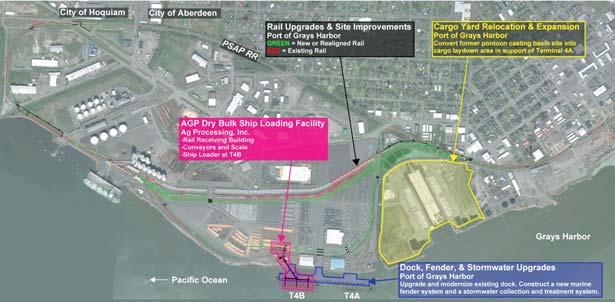
Making the expansion possible required significant groundwork on the railroad side. PSAP invested substantially to ensure it could support AGP’s future volume targets, including the rehabilitation of more than 200,000 feet of rail; upgrades to 24 mainline turnouts, 43 crossings and 19 bridges; and major improvements at Blakesly Yard to allow flat switching while handling unit trains.
“A project of this scale only works if the railroad is willing to invest alongside the customer,” Yuen adds.
“From track and bridge upgrades to yard and siding improvements, every piece was designed to reduce dwell, improve velocity and make unit train service reliable from day one.”
Additional upgrades are underway at PSAP’s Montesanto Siding, which will be lengthened to hold unit trains and improve fluidity on the line.
Meanwhile, AGP broke ground in late 2024 to install two new receiving pits as the Port continued laying concrete ties across another 50,000 feet of track.
From conception to operation, the project spanned roughly four years – with start-up of AGP’s new soymeal export facility expected mid-year.
Rebuilding Confidence and Capacity
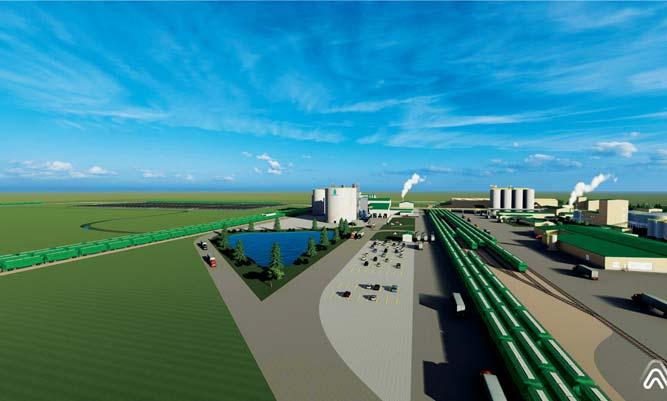
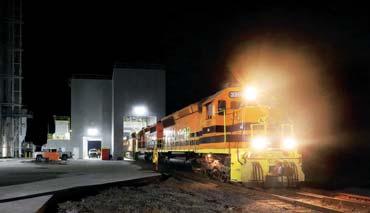
In contrast to AGP’s expansion, Incobrasa’s project began with concern as much as opportunity. In June 2022, the feed byproducts producer approached G&W’s Toledo, Peoria & Western Railway (TPW) with plans to expand its Gilman, Illinois, facility. But they had serious questions about whether TPW’s existing service levels could support that growth.
“That set the tone from the start,” says Jennifer Tanner-Bostian, also a director on our industrial development team. “This wasn’t just about growth but also rebuilding confidence and showing we could scale with the customer.”
What made TPW compelling was optionality, as the railroad essentially offers access to every Class I carrier. (Not only is Incobrasa directly served by both CN and TPW, TPW further interchanges with CSX, NS and UP as well as other G&W roads that go on to connect to BNSF and CPKC.) New unit train loop tracks are not directly accessible from CN without crossing a highway. By working closely with TPW, Incobrasa confirmed it could fund on-site rail expansion if TPW could focus on handling incremental volumes efficiently.
G&W’s commitment to the project went well beyond improved operating plans. TPW secured a $16 million CRISI grant, matched with $8 million, and invested additionally into new and extended sidings at Gilman, Effner and Hoosier Lift, Indiana.
“Our $400 million expansion represents a bold commitment to innovation and sustainability in the agricultural and energy sectors,” says Aluizio Ribeiro, Incobrasa CEO. “G&W has been integral to this growth, providing the critical infrastructure to move more product efficiently and connect to global markets.”
The results speak for themselves: TPW’s overall customer satisfaction score improved from a 7.24 out of 10 in 2023 to 8.48 out of 10 in 2025.
“This was a full team effort,” Tanner-Bostian adds. “From winning the CRISI grant to deploying growth capital, we were focused on removing every possible obstacle to their long-term success.”
Full volume ramp-up is expected in 2027.
“Our $400 million expansion represents a bold commitment to innovation and sustainability in the agricultural and energy sectors. G&W has been integral to this growth, providing the critical infrastructure to move more product efficiently and connect to global markets.”
—Aluizio Ribeiro, Incobrasa CEO
“Georgia Southwestern Railroad has been a great partner throughout the development of our facility. Their professionalism, reliability and commitment to supporting our logistical needs made this project a success from start to finish.”
Finding the Right Site and Moving Fast
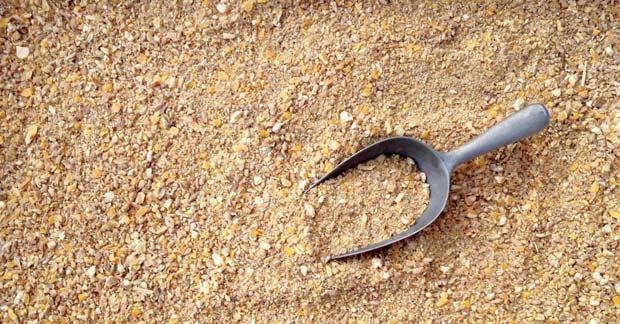
For Penny Newman Grain, the initial lead for unit train service at a planned new cottonseed facility came directly to G&W, and the search for a suitable site stretched over more than three years.
Working alongside CSX and local economic development partners, the G&W team evaluated multiple locations across southern Georgia before finding the right fit in
Bainbridge along G&W’s Georgia Southwestern Railroad (GSWR) in February 2025.
“This was a long road to get to the right location,” says Joey Johnson, director of industrial development at G&W. “The project team worked the opportunity across South Georgia for years, so when Bainbridge finally came together, everyone involved knew we had something special.”
Once the site was selected, execution followed at an impressive pace. Working with CSX, the Development Authority of Bainbridge & Decatur County, Georgia Department of Transportation and the State of Georgia, the facility was operational in roughly nine months. For its part, GSWR developed and implemented a new operating plan to accommodate the business, while G&W’s engineering team worked diligently to plan the sidings from concept to design and construction.
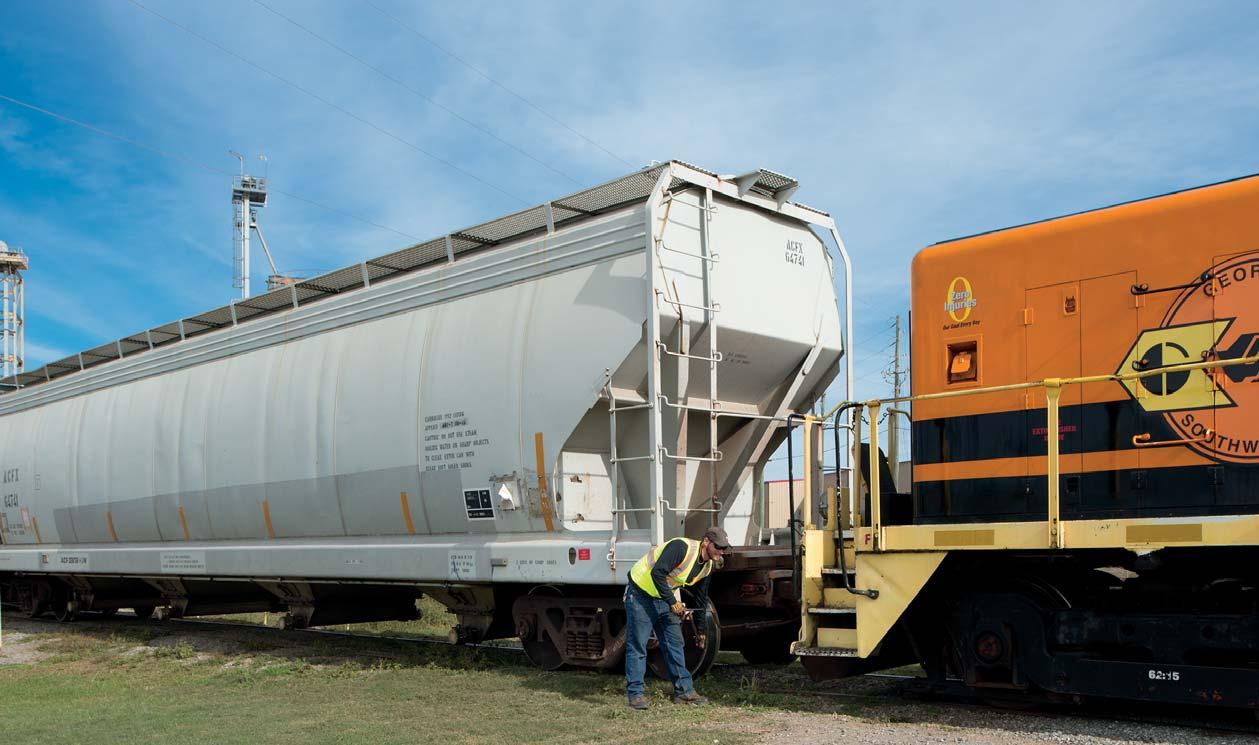
“Georgia Southwestern Railroad has been a great partner throughout the development of our facility,” says Todd Parker, director of cottonseed merchandising for Penny Newman. “Their professionalism, reliability and commitment to supporting our logistical needs made this project a success from start to finish.”
By the end of December 2025, Penny Newman Grain loaded its first unit train. The second followed shortly after.
—Todd Parker, director of cottonseed merchandising for Penny Newman
Strengthening Supply Chains in North Texas
Another recent project highlighted in G&W’s industrial development results underscores the value of location, connectivity and responsiveness – this time in the Dallas-Fort Worth (DFW) market.
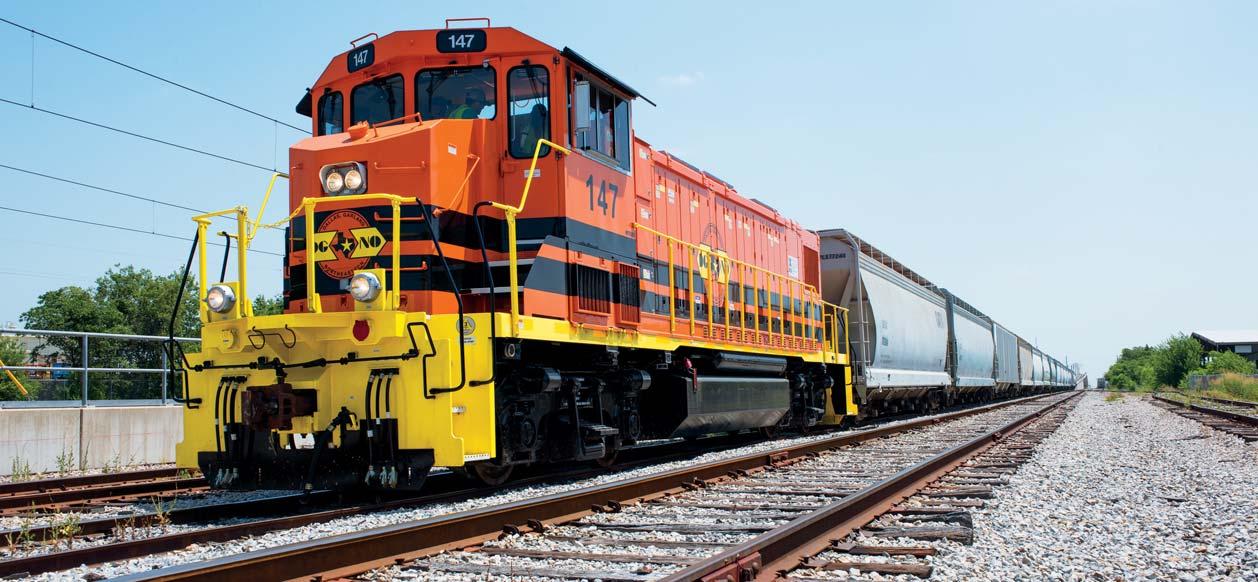
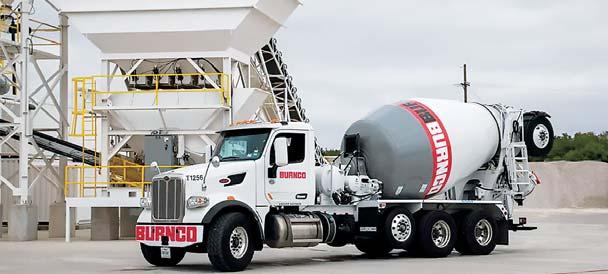
The opportunity first surfaced in 2021, when G&W was approached by an engineering firm representing an unnamed cement company interested in establishing a new terminal in the DFW area. Several potential locations were evaluated, including two sites on G&W’s Dallas, Garland & Northeastern Railroad (DGNO). Through those early discussions, the customer was ultimately identified as construction materials company BURNCO, which went on to purchase property in Trenton, Texas.
“From the start, this was about finding the right market access and the right rail connections,” says Alex Stall, a director on G&W’s industrial development team. “Trenton gave the customer proximity to the growing north and northeast Dallas markets, along with the flexibility of being served by DGNO and its access to three Class I railroads.”
That connectivity helped set the location apart from competing railroads and truck-only alternatives.
As plans moved from concept to construction, execution and timing became critical. DGNO leadership worked closely with BURNCO to ensure the railroad’s role aligned with the company’s aggressive development schedule.
After several years of planning, construction on the new terminal began in early 2025. Phase one of the facility
was completed in late 2025, marking a major milestone for both the customer and the railroad. On January 15 of this year, the first string of railcars was spotted at the facility.
“We greatly valued the opportunity to collaborate with DGNO on the development of our new facility,” says Tom Zais, BURNCO CEO. “Both of our organizations share similar attributes of professionalism, industry expertise and commitment to operational excellence. This new location represents another growth milestone in our rich 113-year history and will play a significant role in supporting our strategic plan in the region.”
The Trenton terminal adds another strategic industrial customer to the DGNO line and exemplifies how long-term engagement, market knowledge and operational flexibility help turn early-stage inquiries into revenue-generating facilities.
From the Pacific Northwest to the Midwest to the Southeast, these projects demonstrate that industrial development at G&W is not just about track access. It’s about listening first, investing strategically and staying engaged long after an initial conversation to help customers and our company grow. ■
BURNCO.COM
Driving Growth on Michigan Rails
How the Grand Rapids Eastern Railroad and King Milling Partnership Is Strengthening a Regional Supply Chain
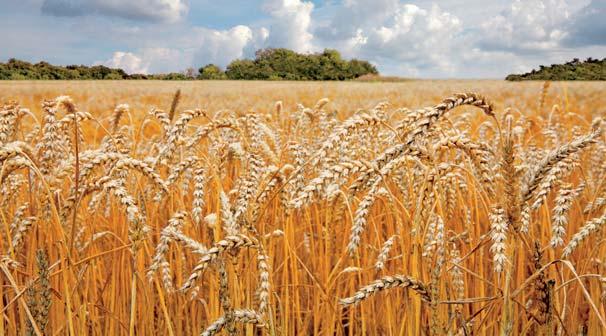
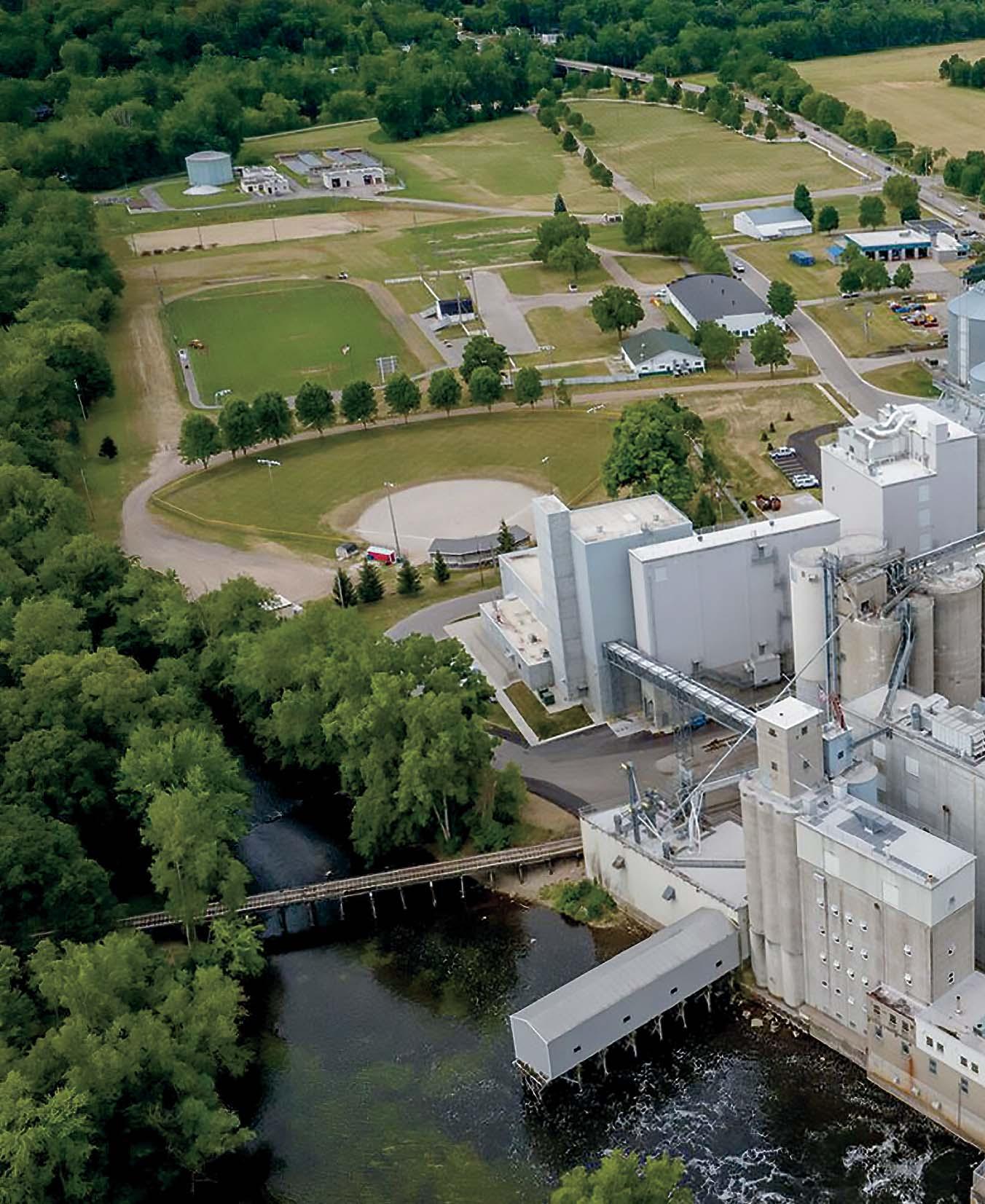
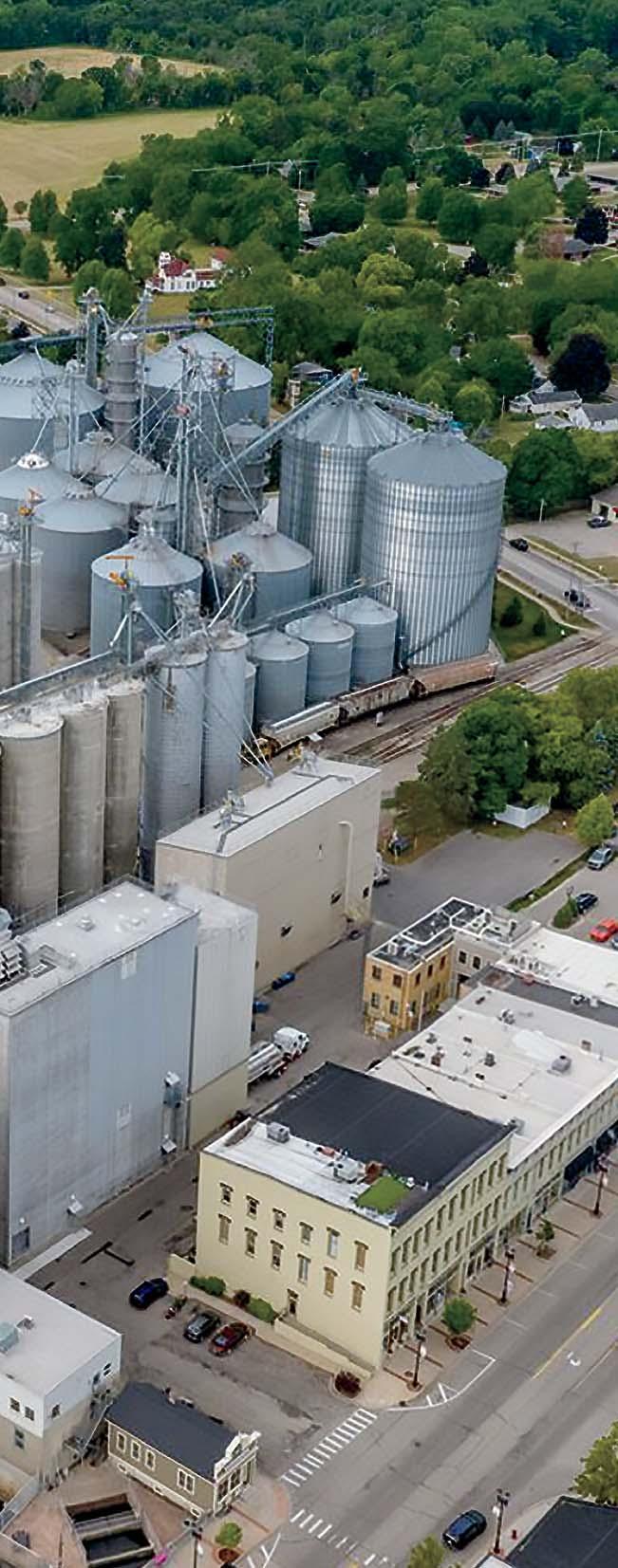
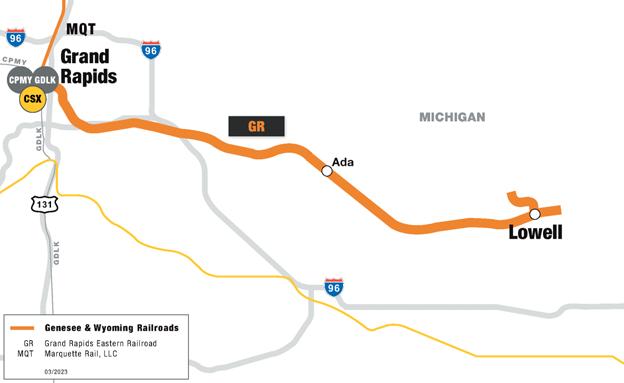
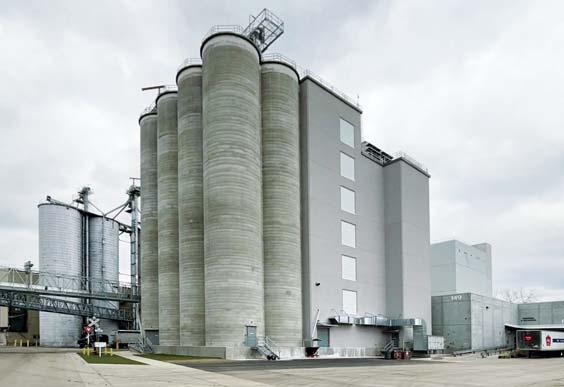
When King Milling announced a $42 million expansion to its Lowell, Michigan, facility in 2022 — including the construction of a fourth flour mill — it marked a major milestone for one of the state’s most essential food producers. As the largest flour miller in Michigan, King Milling plays a crucial role in the region’s food supply chain, transforming soft wheat grown locally and hard wheat shipped in from western states into both branded and wholesale flour.
But meeting the needs of a growing customer required more than bricks and mortar. It required a stronger rail network.
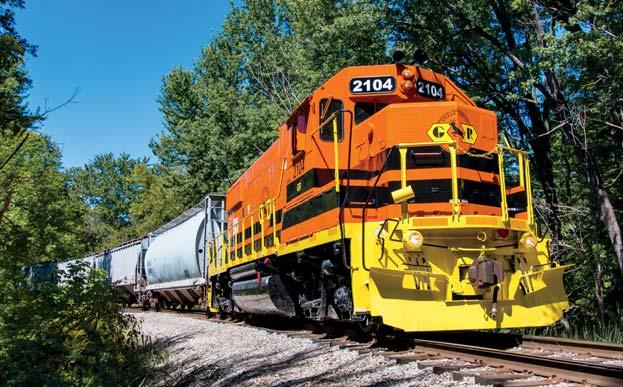
That’s where Grand Rapids Eastern Railroad (GR) stepped in.
PHOTO BY AARON C.
Rebuilding a Railroad for the Future
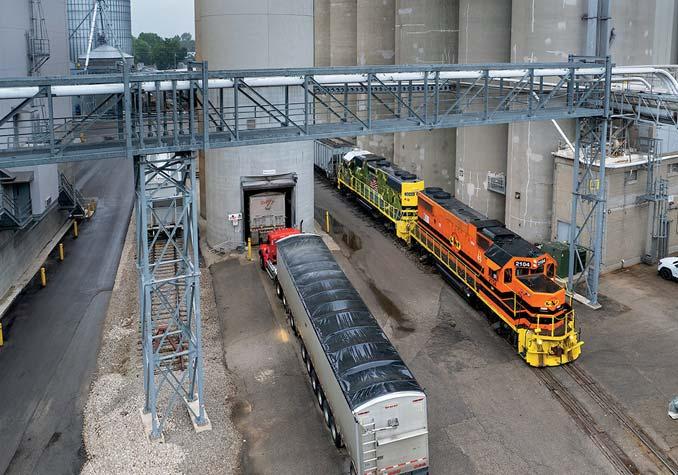
King Milling depends heavily on rail, receiving roughly 1,500 inbound railcars of wheat each year. Trucking that volume simply isn’t economically viable, making reliable, efficient rail service essential to its operations and competitiveness.
Recognizing that the mill expansion would increase rail traffic and heighten demands on the system, GR partnered with the Michigan Department of Transportation’s Rail Enhancement Program to secure a $2.5 million grant in 2023. GR matched the grant with its own $2.5 million investment, surpassing the minimum required railroad match and underscoring its commitment to the long-term success of its customers.
The resulting $5 million project wasn’t a simple upgrade. It was a comprehensive rehabilitation of the entire railroad between Grand Rapids and Lowell.
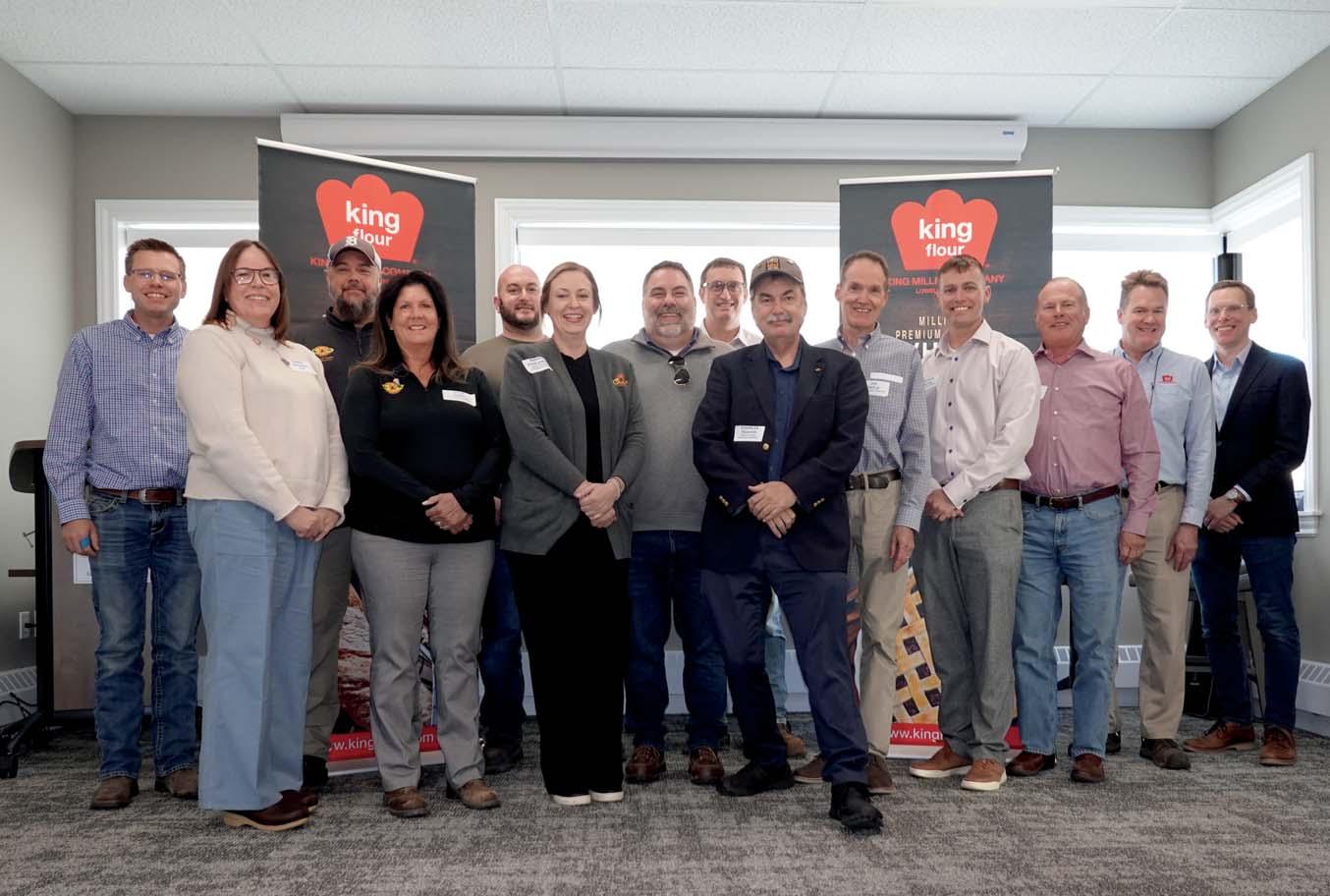
and King Milling teams gathered for a
mill in October. Left to right: Regan Doyle, King Milling; Nikki Johnson, Michigan Department of Transportation; Luke Ziesemer, G&W; Julie Eddy, G&W; Joe Prys, G&W; Sarah Pawlanta, G&W; Justin Brandt, G&W; Jared Rishel, G&W; Charles Hunter, G&W; Jim Doyle, King Milling; Patrick Doyle, King Milling; Brian Doyle, King Milling; Steve Doyle, King Milling; Chuck Lippstreu, Michigan Agri-Business Association.
MICHIGAN
G&W
tour of the new
Recognizing that the mill expansion would increase rail traffic and heighten demands on the system, GR partnered with the Michigan Department of Transportation’s Rail Enhancement Program to secure a $2.5 million grant in 2023. GR matched the grant with its own $2.5 million investment, surpassing the minimum required railroad match and underscoring its commitment to the long-term success of its customers.
Completed in fall 2025, the project delivered:
• Faster operations: Restoring track from a 10 mph slow order to a 25 mph operating speed
• Greater efficiency: A new track configuration in Lowell to simplify the movement and positioning of railcars
A Partnership Built on Collaboration
• Increased capacity: Infrastructure that supports an additional planned three pocket unloading pit, reducing unloading times to one-third of previous operations
• Enhanced safety: Installation of a new defect detector capable of identifying overheated bearings, dragging equipment or derailed cars
• Environmental benefits: An estimated annual savings of 9,016 gallons of diesel fuel, reducing carbon dioxide emissions by 92 metric tons
Behind the infrastructure improvements was a deep collaboration between GR and King Milling. Together, the teams designed a track layout that addressed longstanding inefficiencies and created new opportunities for speed and flexibility. By connecting an existing stub track to the Lowell Industrial track and reconstructing a grade crossing, the railroad paved the way for King Milling’s next phase of growth.
“This was a complex project involving coordination and collaboration among all the partners, including our King Milling team, GR and the various construction contractors,” says Patrick Doyle, president of King Milling. “It came together well, and the finished unloading system and track layout will provide for greater capacity, efficiency and enhanced safety. In turn, this will facilitate King Milling’s long-term growth plans.”
And the impact is already clear.
Strengthening Community and Supply Chain Resilience
Thanks to the combined investments, King Milling can now produce 800,000 pounds of flour per day — a remarkable increase that cements its role as a cornerstone of Michigan’s food supply chain.
The improvements also create positive ripple effects throughout the region:
• 450 additional annual carloads, a 30% increase for King Milling
• Improved efficiency and reduced delays for all GR customers
• Lower emissions and energy use, enhancing environmental sustainability
• Reduced grade crossing wait times for drivers, cyclists and pedestrians
• Cost savings of $95,000 per year from reduced delays, fuel use and equipment wear
As a result, the rail-served supply chain supporting one of Michigan’s critical industries is stronger, faster and more resilient than ever.
“These investments are strengthening supply chains, providing jobs, supporting local businesses and enhancing freight efficiency across the region,” says G&W Assistant Vice President of Sales and Marketing Sarah Pawlanta.
A Model for Railroad Customer Collaboration
From securing grant funding to executing a complex set of upgrades, Grand Rapids Eastern Railroad demonstrated what can be achieved when a regional railroad invests in its customers’ long-term success. Its experience in managing large-scale infrastructure projects — from bidding through final inspection — ensured the project met market needs and industry demands.
For King Milling, the project ensures that its ambitious expansion is not only possible, but sustainable. For GR, it represents a reaffirmation of its core mission: providing safe, efficient and reliable rail service that fuels economic growth. ■
PAS DIVISION
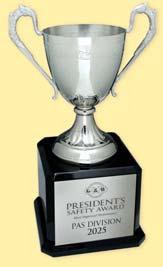
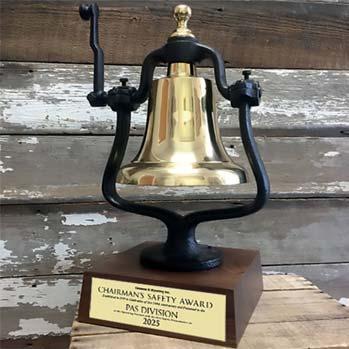
ZERO INJURIES, TWO TOP AWARDS EXEMPLIFY EMPLOYEE COMMITMENT TO SAFETY
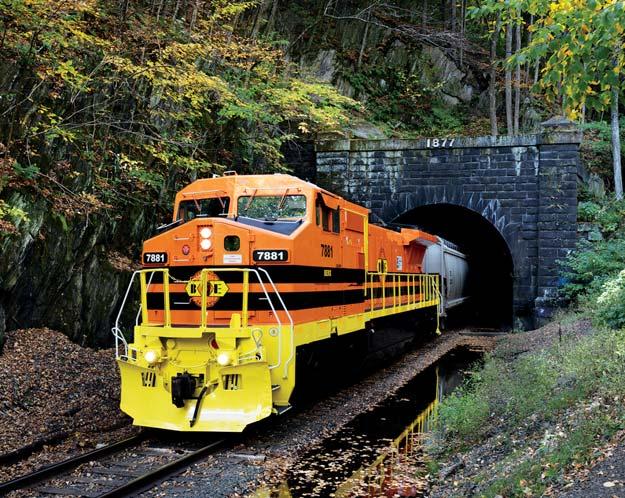
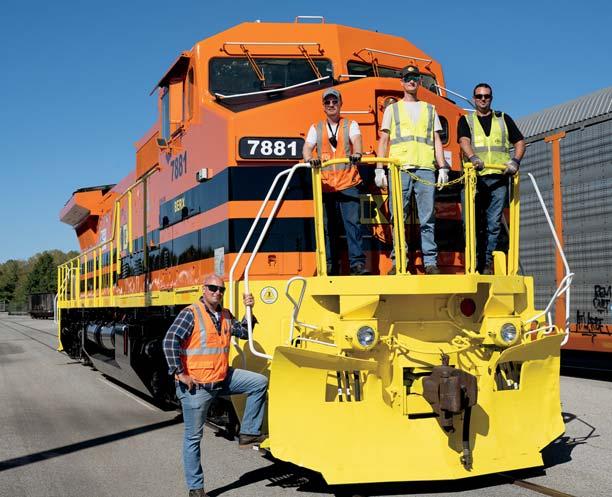
This year, both the Chairman’s and President’s safety awards were presented to the PAS Division’s sole operation, Berkshire & Eastern Railroad (BERX), which traverses more than 400 track miles across nearly all of Massachusetts and into western Connecticut and eastern New York.
The Chairman’s Award honors the G&W operating division with the strongest overall safety performance.
In 2025, BERX/the PAS Division earned this distinction by finishing the year injury-free and posting a 0.00 injury-frequency rate (IFR).
Meanwhile, the President’s Award recognizes the division with the greatest year-overyear improvement in safety, an area in which BERX/the PAS Division also stood out. Total reportable injuries were reduced from six in 2024 to zero in 2025.
“These awards mean a lot to the team and are tangible reminders that we can meet the goals we set,” says Blake Jones, vice president of the PAS Division. “We operate a high-density railroad seven days a week in a populated industrial corridor that also contends with passenger rail. Thanks to the commitment of every BERX employee and the leadership under General Manager Jerry Lewandowski and Mike Fitzgerald, our director of safety and compliance, we were able to achieve our daily goal of zero injuries 365 times against that backdrop. It’s really quite remarkable.”
BERX began operating in September 2023, hauling traffic over CSX and Norfolk Southern’s jointly owned Pan Am Southern (PAS) line.
In addition to its safety success, PAS has also seen marked service improvement under BERX’s operation. Read more in this recent story from Trains magazine:
UPPER MIDWEST DIVISION
CELEBRATING A FULL YEAR INJURY-FREE
On January 17, the Upper Midwest Division and the roughly 300 employees of its 12 operations celebrated one year injury-free.
The division comprises railroads and operations in Illinois, Indiana, Michigan and Wisconsin — all states prone to harsh winter conditions as well as high heat and humidity that not only require extra focus and attention from employees in all crafts but can impact infrastructure.
Several railroads are also heavy switching roads, according to Division Vice President Julie Eddy, and handle hi-wide shipments (such as tractors, windmill components and transformers) as well as several types of hazmat commodities that require extra operational scrutiny and care.
“Despite these obstacles, discipline, commitment to a goal of zero injuries every day, teamwork and communication are consistent across the division and helped us collectively achieve a full year injuryfree,” says Eddy. “Employees are involved in the process and are empowered to stop work to make safe decisions. We also recognize employees who make good catches on the safety front, and that helps to reinforce proactive hazard identification and generate ideas for improvement.”
This milestone comes even as some of the division’s railroads have many new employees with less than two years of service. However, Eddy notes that managers are specifically attuned to hiring employees who exhibit a drive to understand and follow all rules, protect themselves and embrace a team-first mindset where colleagues look out for one another.
“I am incredibly proud of this team,” she adds. “You have set the standard. Now protect it — one job, one decision and one safe action at a time.”
Tazewell & Peoria Railroad (TZPR)
Around G&W
CANADA DIVISION
DIRECTOR OF TRACK MAINTENANCE CORMIER USES HIS RAILROAD EXPERIENCES TO PREP FOR NEPAL MOUNTAIN HIKE
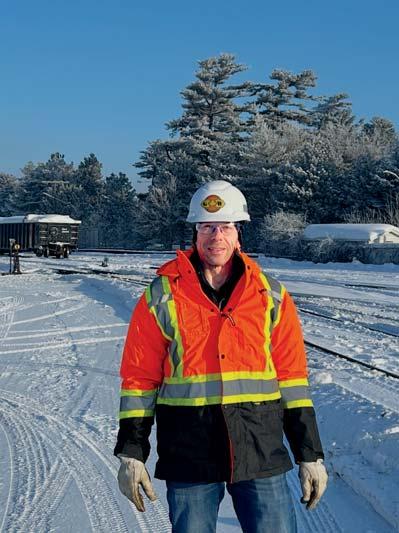
For Director of Track Maintenance Martin Cormier, preparing for a once-in-a-lifetime trip to the mountains of Nepal this March is like the daily safety briefings he has grown accustomed to in his 26 years with G&W Canada.
“Before leaving, we must analyze all the risks to determine necessary medication, scenarios and first-aid supplies,” Cormier says. “Just like a railroader, a trekker is at the mercy of nature’s conditions — cold, heat, wind, unpredictable trails. Railroaders move from station to station, while trekkers traverse from village to village. Speed doesn’t matter; finishing safely is what counts.”
Cormier decided to take this trip after battling cancer from 2022-2023.
“I realized life can stop at any moment,” he says. “Once I regained strength, I told myself it was time to make dreams a reality while I still can.”
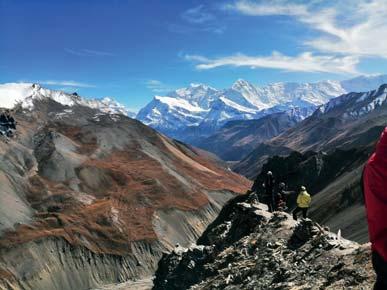
The focus of Cormier’s trip will be the Annapurna Circuit, a mountain range that includes peaks over 24,000 feet (8,000 meters) high — just like Mount Everest.
“We’ll be crossing a pass at 16,000 feet, roughly the same altitude as Everest Base Camp,” Cormier explains. “While we won’t be hiking Everest itself, we’ll be able to catch a glimpse. The Annapurna Circuit is considered one of the most beautiful treks in Nepal while offering the same challenges as Everest but fewer crowds.”
Cormier recognizes a lot of factors are out of his control on this trip.
“My partner and I have been preparing for several months to maximize our chances of reaching the pass,” he says, “but if a storm comes or symptoms of altitude sickness prevent us from doing it, we will still come back with a wealth of experience and unforgettable memories.”
Once home, Cormier is excited to continue his engineering work for G&W’s Canadian railroads. His personal successes at work include the reopening of Québec Gatineau Railway’s (QGRY) Saint Maurice Valley subdivision as well as the rehabilitation of tracks at the Québec Vehicle Yard along QGRY.
CSO BECOMES OPERATOR OF CONNECTICUT DOT’S ARMORY BRANCH
Connecticut Southern Railroad (CSO) recently extended its reach when it was selected by the Connecticut Department of Transportation to operate its Armory Branch line from South Windsor, Connecticut, to the Massachusetts state line in Enfield, Connecticut (formerly operated by Central New England Railroad, or CNZR).
“CSO was previously a haulage carrier for CSX, taking cars from West Springfield, Massachusetts, to CNZR’s interchange at East Windsor Hill, Connecticut,” says Brian McClain, vice president of G&W’s Northeast Division railroads. “CSO will now interchange cars with
CSX at West Springfield and deliver them straight to the customers on the Armory Branch, improving cycle times and efficiency.”
The 13-mile Armory Branch currently includes two customers — Nutrien Ag Solutions, who receives inbound loads of fertilizer, and Tri-State Brick of Connecticut, a leading New England supplier of various brick and stone products to the architectural, commercial and residential markets. CSO now handles inbound shipments for both companies.
CSO will operate its newest segment with existing employees, locomotives and operating schedules, according to McClain.
Annapurna Circuit, view from high camp.
Martin Cormier
OHIO VALLEY DIVISION
CFE STRENGTHENS SAFETY AND INCIDENT RESPONSE THROUGH PARTNERSHIP AND INNOVATION
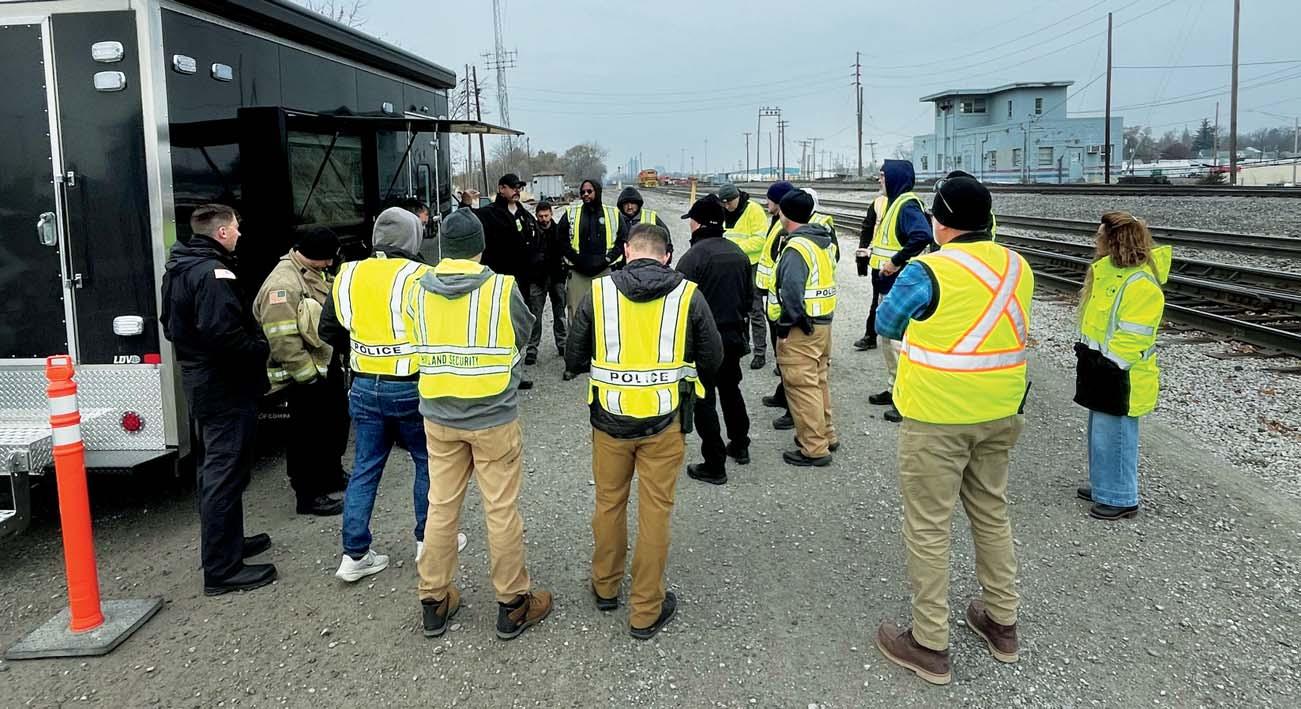
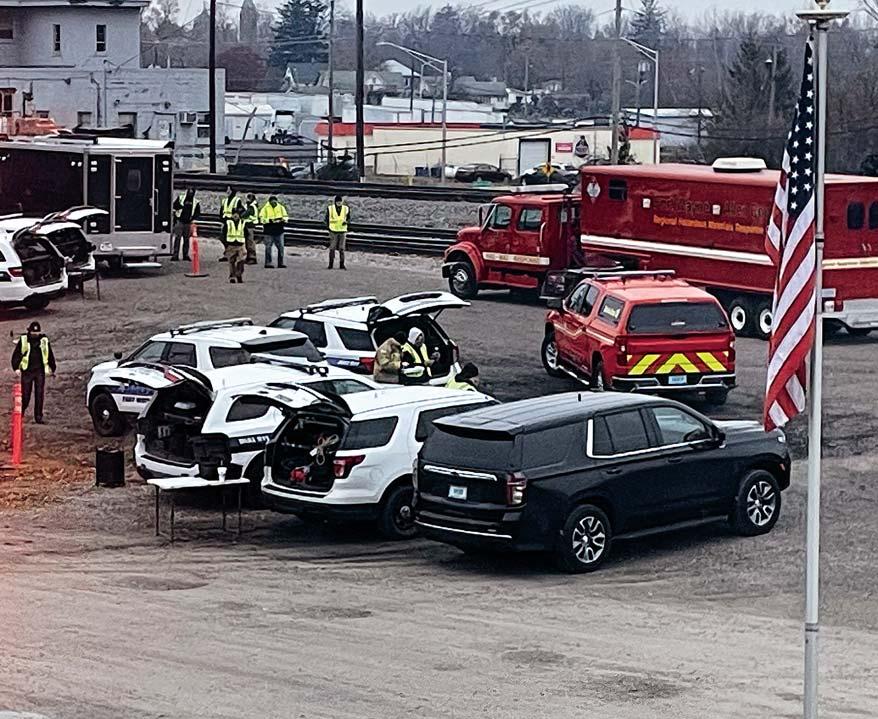
On November 19, Chicago, Ft. Wayne & Eastern Railroad (CFE) hosted emergency response units from the Fort Wayne police and fire departments at the CFE main yard in Fort Wayne, Indiana, for a collaborative training exercise focused on proactive emergency preparedness and strong coordination with local response agencies.
“Hosting a joint exercise allows us to validate response plans, strengthen working relationships and ensure everyone involved is familiar with railroad-specific environments before an actual emergency occurs,” says CFE Assistant General Manager Jim Masker.
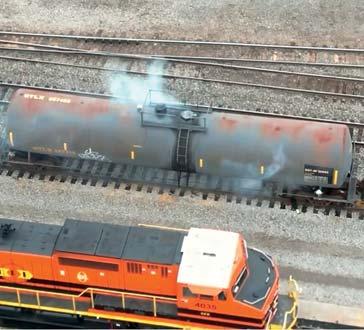
The joint exercise simulated a hazardous railcar leak involving injured personnel on the ground. To create realistic conditions,
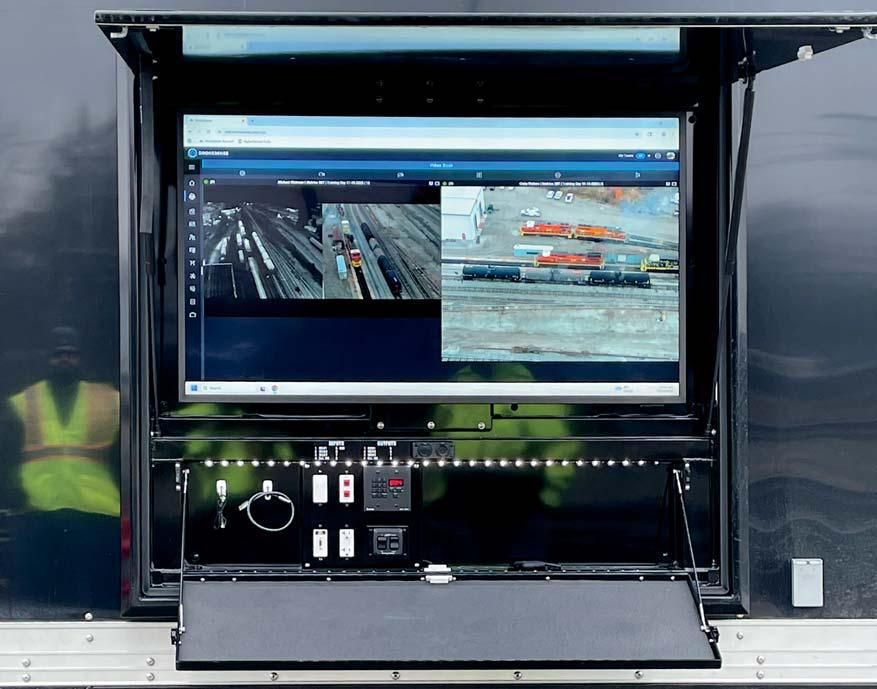
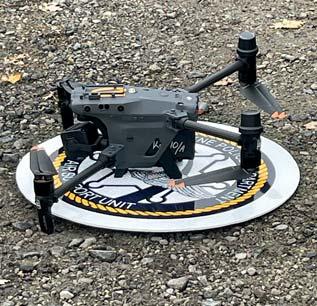
a smoke machine was used to limit aerial visibility, and training dummies were placed throughout the site. Emergency responders then deployed drones to conduct reconnaissance, gather critical situational data and plan a safe and effective rescue mission (in a real-world incident, aerial views can help responders assess conditions, identify potential hazards and make informed decisions while minimizing risk to personnel on the ground).
“Exercises like this are a key part of CFE’s broader safety strategy, which focuses on preparedness, coordination and continuous improvement,” Masker says. “By conducting realistic, multi-agency drills, we’re able to identify opportunities to refine procedures, enhance communication and ensure timely, effective
Railroad employees and first responders gather to discuss outcomes from the drill.
responses that protect employees, first responders and the communities we serve.”
This hands-on training allowed first responders to practice using advanced drone technology in a controlled but challenging environment, while CFE personnel gained valuable insight into how local emergency teams would operate during a real-world incident on railroad property.
“We are already in discussions with both emergency response departments to plan a larger-scale simulation this spring or summer,” Masker says, “which would include additional railroad personnel and potentially other external agencies.”
Around G&W
This hands-on training allowed first responders to practice using advanced drone technology in a controlled but challenging environment, while CFE personnel gained valuable insight into how local emergency teams would operate during a real-world incident on railroad property.
First responders and railroad employees work together during the drill.
Screenshot from aerial drone footage of simulated hazardous railcar leak. A smoke machine is used to simulate limited visibility.
GREAT LAKES DIVISION
CELEBRATING 30 YEARS OF DEDICATED SERVICE AT OHCR
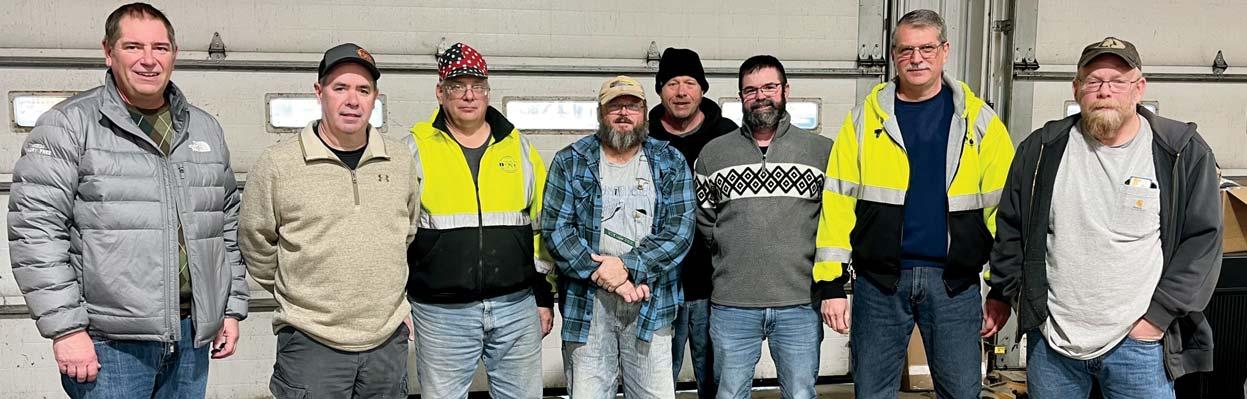
On December 16, Ohio Central Railroad (OHCR) hosted an employee appreciation breakfast to recognize team members who have dedicated three decades of service to the railroad. During the event, six employees were honored with 30-year service gifts in recognition of their contributions and commitment to safety, service and professionalism over the years.
Honorees included:
• Scott Craigo, Trainmaster
• Michael Weaver, MOW Foreman
• Bryan Beighley, Tamper Operator
• John Surdyk, Locomotive Engineer
• Andy Novak, Locomotive Engineer
• Richard Guthrie, MOW Foreman (recently retired)
GREAT LAKES DIVISION
MILITARY APPRECIATION QUILT HONORS SERVICE AND SACRIFICE
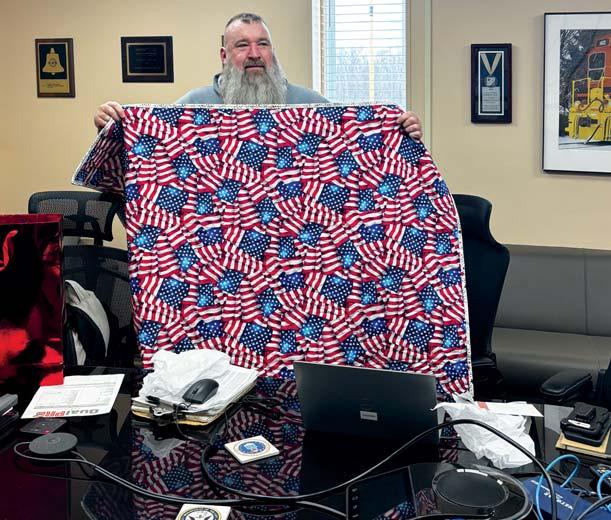
Each year, the Coshocton, Ohio, Elks Veterans Committee selects 10–15 local veterans to receive a handmade quilt as a symbol of gratitude for their service. These quilts are carefully crafted in Coshocton by the Coshocton Canal Quilters, making each one a meaningful gift rooted in community appreciation.
One of this year’s recipients was Jason Babcock, roadmaster for Ohio Central Railroad (OHCR).
“Jason proudly served in the United States Air Force, and we are honored to see his service recognized in this special way,” says OHCR General Manager Tim Slusser.
“I want to thank each of these individuals for their years of hard work and dedication,” says OHCR General Manager Tim Slusser. “Their experience and leadership have played an important role in our continued success.”
Ohio Central Railroad (OHCR) Roadmaster Jason Babcock shows off his quilt.
Left to right: Great Lakes Division Vice President Dan Pavick, Trainmaster Scott Craigo, Locomotive Engineer Andy Novak, MOW Foreman Mike Weaver, MOW Foreman Richard Guthrie (Retired), General Manager Timothy Slusser, Locomotive Engineer John Surdyk and Tamper Operator Bryan Beighley.
Around G&W
TYRONE JAMES AWARD DEMONSTRATES COMMITMENT TO LONG-TERM SAFETY
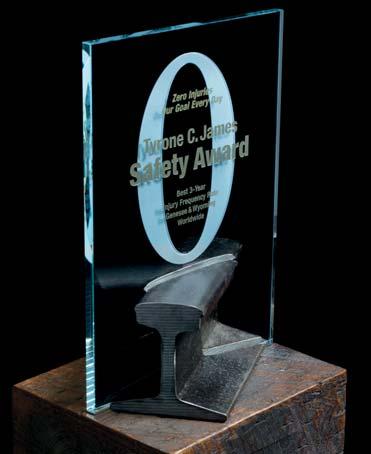
Our Southwest Division was the latest recipient of the Tyrone James Award for achieving the best three-year injury-frequency average among all G&W operating divisions. From 2023-2025, the Division’s railroads achieved a collective 0.66 injuryfrequency rate.
“Among all the G&W and industry safety awards out there, this one reflects the continuous commitment everyone showed day in and day out and proves that a positive safety culture is truly alive,” says Gary Fillingame, vice president of the Southwest Division railroads. “Our team of roughly
200 employees in the transportation, engineering and mechanical crafts, as well as management, should all be extremely proud of what they accomplished together!”
Making this milestone particularly noteworthy, the Division includes three of G&W’s larger railroads in track miles –Dallas, Garland & Northeastern Railroad (DGNO), Kiamichi Railroad (KRR) and Missouri & Northern Arkansas Railroad (MNA) – and covers territory prone to hot and humid summers, stormy springs and unpredictable winters. DGNO also operates through the densely populated Dallas Metro area.
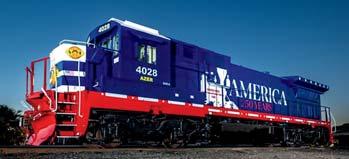
SPECIAL AMERICA 250 LOCOMOTIVE HOLDS HISTORICAL SIGNIFICANCE FOR AZER
Arizona Eastern Railway (AZER) is sporting a specially painted locomotive commemorating both America’s Semiquincentennial and the significant role that railroads have played in the nation’s 250-year history.
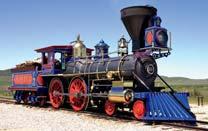
AZER #4028 features an icon of Jupiter, the engine that met Union Pacific’s locomotive #119 on May 10, 1869, at Promontory Summit in Utah to mark the completion of the first U.S. transcontinental railroad.
AZER was chosen to showcase the Jupiter rendering given the railroad’s history: AZER’s predecessor, the Gila Valley, Globe and Northern Railway, purchased and operated the original Jupiter from Central Pacific Railroad.
(Today, a replica of Jupiter can be seen at the Golden Spike National Historical Park in Promontory, Utah.)
“The engine is really unique,” says AZER General Manager Kevin Jones, “and having it on our line is a great source of pride for our employees and for history buffs in the area.”
Other location-specific designs to recognize the America 250 celebration can be found on other G&W railroads, including the Liberty Bell on Buffalo & Pittsburgh Railroad and the Statue of Liberty on some of our New England roads. Keep your eyes peeled for a special video showcasing these around the 4th of July holiday.
The special “Jupiter” commemorative America 250 locomotive on Arizona Eastern Railway (AZER).
GC CELEBRATES THE HOLIDAYS AND SAYS GOODBYE TO TEAM MEMBER
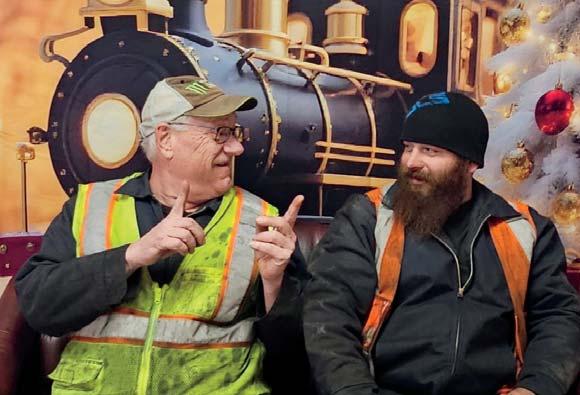
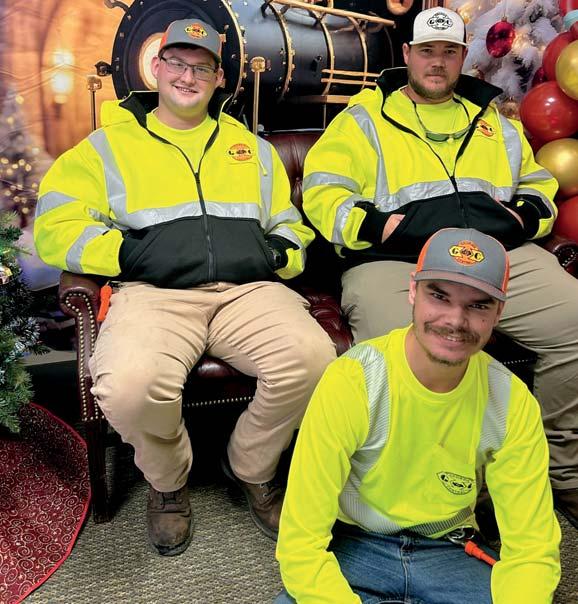
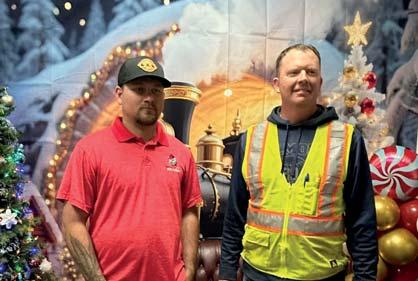
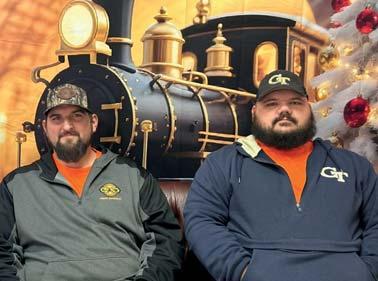
Georgia Central Railway (GC) celebrated the holidays and said a fond farewell to one of their own during their holiday luncheon in December. Thirty GC employees gathered at the Lyons, Georgia, depot for an afternoon of eating, laughing and sharing work stories as they said goodbye to locomotive engineer (and resident train enthusiast and photographer) Zane Williams, who accepted a role at sister G&W railroad, Chattooga & Chickamauga Railway (CCKY).
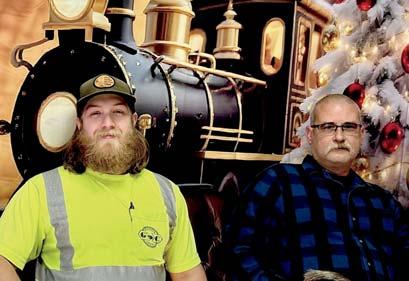
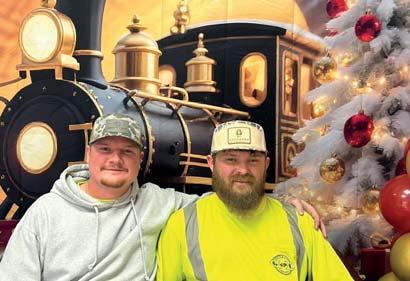
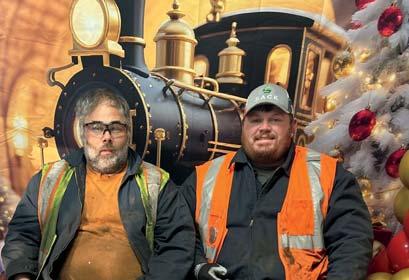
Employees had fun posing for photos in front of a train-themed photo backdrop at the event.
Locomotive Engineers Denny Sapp, Andrew Proman and Engineer / Resident Train Enthusiast and Photographer Zane Williams Mechanics Kenny Durbin and Austin Powell
Assistant Roadmaster David Best and Roadmaster David Liskey
Locomotive Engineer Robert Dowse and Trainmaster Brian Smith
Track Inspectors Will Boatright and Joe Albritton
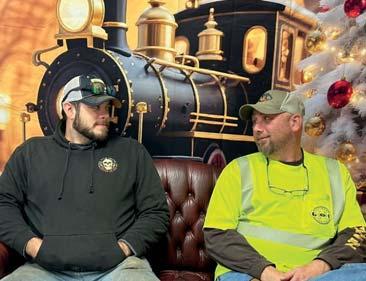
Mechanical Manager Mitch Klotz and Mechanic Cody Walker
Locomotive Engineers Avery Poythress and John Allen
The Bay Line Railroad (BAYL) Bridge Travel Team Nick Livingston and Garrison Foskey
Around G&W
CENTRAL DIVISION
A LIFE ON THE RAILS:
BOB MOGER RETIRES AFTER NEARLY 29 YEARS OF SERVICE
After 28 years and 10 months with Missouri & Northern Arkansas Railroad (MNA), Locomotive Engineer Bob Moger officially stepped off the locomotive and into retirement in January.
What drew Bob to the work — and kept him there for nearly three decades — was the nature of the job itself. He thrived in a hands-on environment that kept him outside and constantly moving.
“I’ve never really been good about working a job that’s inside,” he explains. “Being able to work outdoors, operate equipment and work with machinery was just a natural fit for me.”
But as important as the work itself were the people. Bob credits his time at MNA to the strong camaraderie among coworkers and the many long days spent working side-by-side.
“We had a phenomenal bunch of guys there,” he says. “There were times we were crazy busy and had more cars to move than we knew what to do with, but that made time pass. Between the work, the equipment and the people, it made for a great career.”
Reflecting on nearly 29 years on the rails, Bob is thoughtful when asked what advice he’d give to someone considering a career in railroading.
“It’s got to be something you enjoy doing,” he says. “The schedule is challenging. You’re living by the phone.”
But, as he points out, there’s an upside, too.
“There are perks,” he says. “Railroad retirement provides real freedom. It takes a lot of pressure off in the end game. If you like being outside in the rain and snow, and you’re okay with long days — and you love seeing beautiful sunsets while you’re at it — it can be a great career.”
Retirement hasn’t slowed Bob down one bit. He and his wife, Nancy, have already started traveling and recently returned from a trip to Key Largo, Florida. More adventures are on the horizon, including exploring more of the United States, spending time in warm-weather destinations during the winter and possibly traveling overseas (England is a top destination on his bucket list).
Family is at the heart of Bob’s next chapter. He’s a proud grandfather to five grandchildren and plans to spend as much time with them as possible.
COASTAL DIVISION
A FAMILY LEGACY OF SERVICE CONTINUES AS SON EARNS MARINE OF THE YEAR HONOR
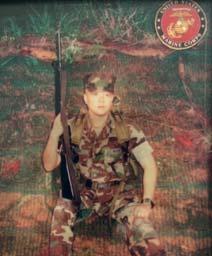
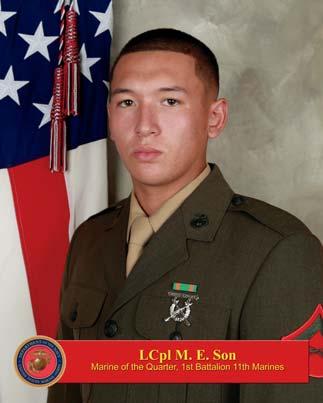
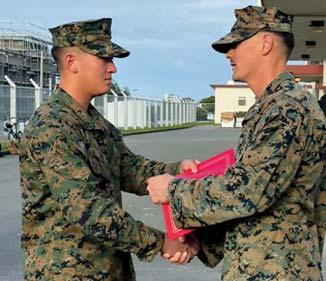
For Su Son, general manager of several G&W Coastal Division railroads, the word service has never been abstract. It’s part of his family’s story — woven into his heritage and spanning countries and conflicts. And this year, that legacy reached an extraordinary milestone when his 19-year-old son, Max Son, was named Marine of the Year for the 1st Marine Division — 1st Battalion, 11th Marines, of the United States Marine Corps.
“It’s an honor that reflects not only what Max has accomplished on duty but who he is when no one is watching,” Su says.
Max earned the recognition in November 2025 while stationed at Camp Pendleton as a lance corporal. Shortly afterward, during his deployment to Okinawa, Japan, he was promoted to corporal.
The title of Marine of the Year is not a single Corps-wide award, Su explains. Rather, each divisional unit selects one Marine who exemplifies the highest standards of excellence — making the competition within the 1st Marine Division, one of the Marine Corps’ most historic and sizable units, especially intense. Candidates are evaluated across a range of demanding criteria, including physical fitness, rifle range performance, volunteerism, education and overall character.
“It’s about being the Marine who’s always willing to roll up their sleeves,” Su says, “the one who tackles the toughest jobs, the longest hours, without expecting anything in return.”
For Su, the achievement resonates across generations. He served eight years in the U.S. Marine Corps, reaching the rank of corporal, following in the footsteps of his own father, who was a Republic of Korea Marine and Vietnam War veteran. Military service runs on Max’s mother’s side as well; his late grandfather was also a U.S. Marine.
“We’re incredibly proud of Max’s accomplishments,” Su says. “He’s on the right path and growing into a strong leader. We’re grateful for his service and the sacrifices he makes to protect our freedoms.”
And as Su jokes, even a Marine of the Year can’t change one thing: “Mom will always worry.”
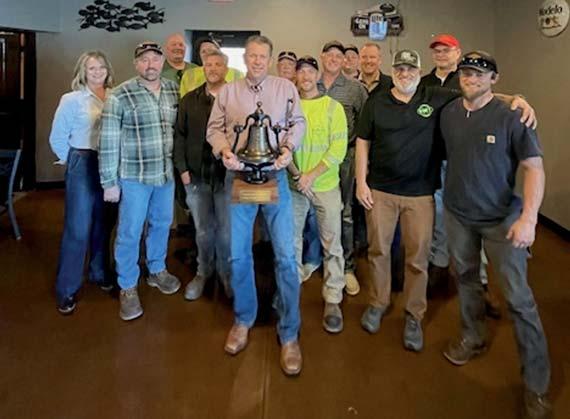
Locomotive Engineer Bob Moger and his fellow employees gathered for his retirement send-off in January.
Max Son
Su Son
Address Service Requested
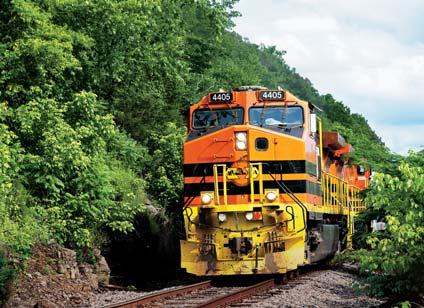
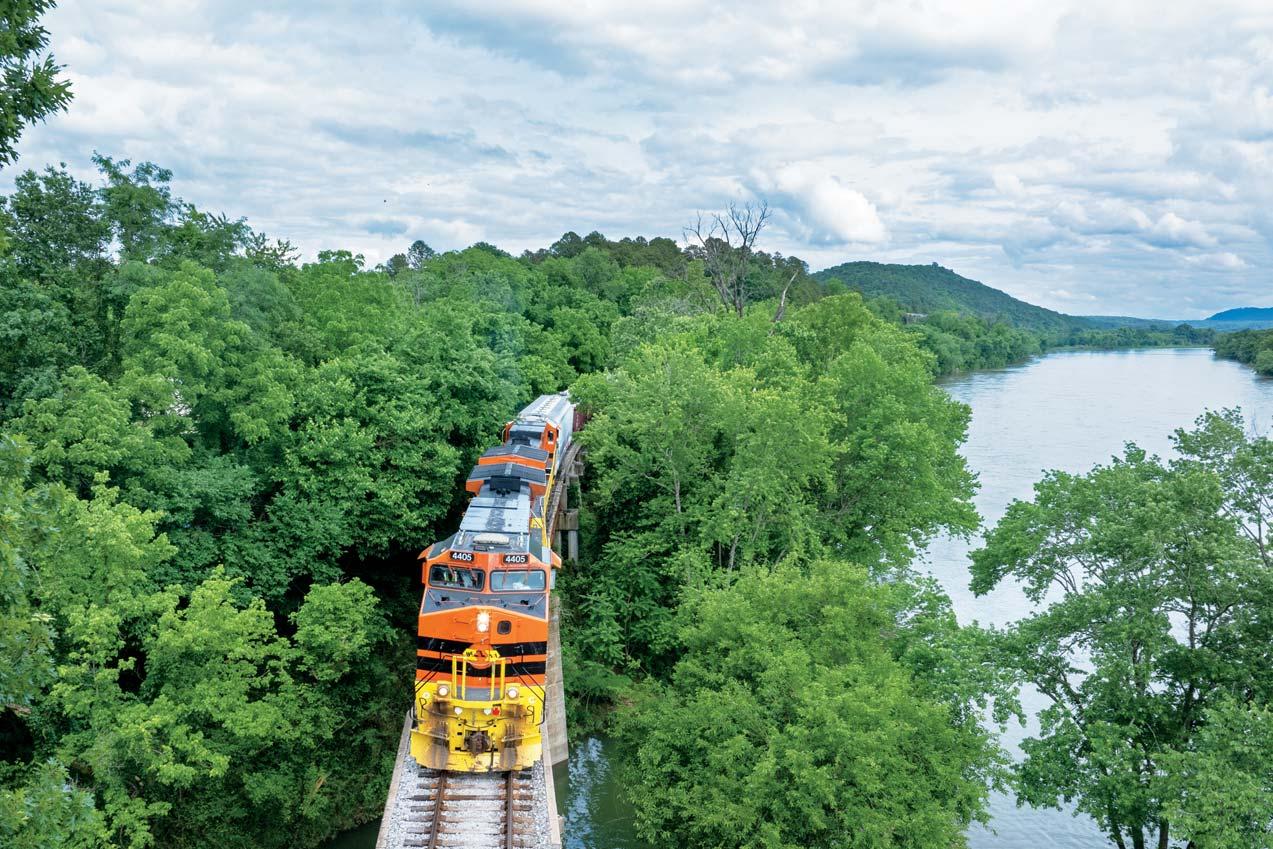
Missouri & Northern Arkansas Railroad (MNA) at Calico Rock, Arkansas, along the White River.