








Nocturno for String Orchestra Giang Vo
b. 2000
DedicatedtoKimberlyBanz,WorldPremiere
Concerto for Oboe and String Orchestra Ralph Vaughan Williams (1872 – 1958)
Amie Reardon-Cotter, Oboe
Serenade for Strings Mieczysɫaw Karɫowicz (1876 - 1909)
I. Marcz
II. Romans
III. Walc
IV. Finaɫ
On behalf of the orchestra, Giang would like to extend our thanks and gratitude towards Kevin Wilkinson and Westminster Presbyterian Church for the generous use of their facility. This program is privately funded and concerts are free and open to the public. If you’ve enjoyed our concert tonight, please consider donating to help fund future projects.
Violin I
Andrés Caveda, concertmaster
Meagan McCrary, assistantconcertmaster
Grace Cavett
Laura Pollack
Danielle Szabo
Violin II
Gabriel Parker, principal
Elizabeth Chrisman, assistantprincipal
Sarina Paolini
Stephen Gunn
Katie Barrick
Violas
Scotty Scott, principal
Qingyuan Fu
Alaina Conley
Jordan Fletcher
Cellos
Elmer Carter III, principal
Christophe Delgado
David Lee
Brandon Cobb
Cheyenne McCoy
Basses
Alex Lunday, principal
Landon Honolka
Nicholas Quinnie
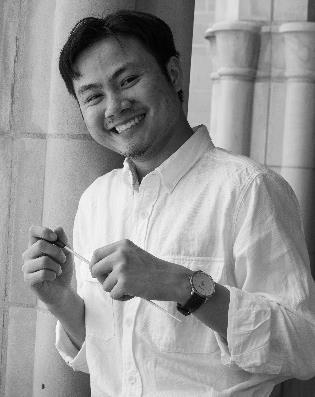
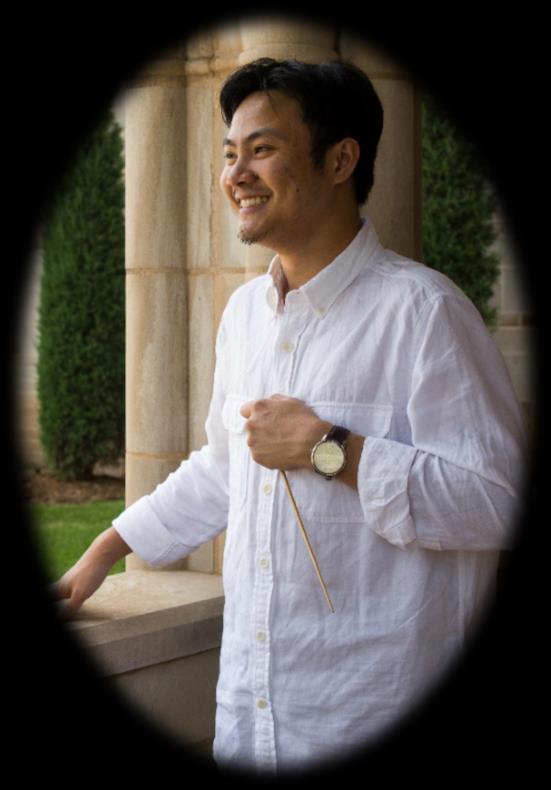
Giang Vo holds a bachelor’s degree in violin performance from Oklahoma City University. His primary teachers were Dr. Benjamin Shute and Dr. Sophia Ro, and he also studied harpsichord and historical performance with Anastasia Abu Bakar. He has participated in several violin masterclasses with renowned artists Noah Bendix-Balgley (concertmaster of Berlin Philharmonic) and Sheryl Staples (concertmaster of the New York Philharmonic). He began his conducting education with Professor Jeffrey Grogan at OKCU and studied privately with Alexander Mickelthwate, conductor of the Oklahoma City Philharmonic. Giang is currently pursuing a Master of Music in Orchestral Conducting at Northwestern University, under the tutelage of Donald Schleicher. At Northwestern University, Giang is the assistant conductor of the NU Chamber Orchestra and the NU Philharmonia Orchestra. He recently made his operatic debut, assisting maestro Benjamin Manis and conducting a production of Mozart’s Cosi Fan Tutte. Before coming to Northwestern, Giang was co-artistic director and violinist with the Oklahoma Baroque Orchestra.
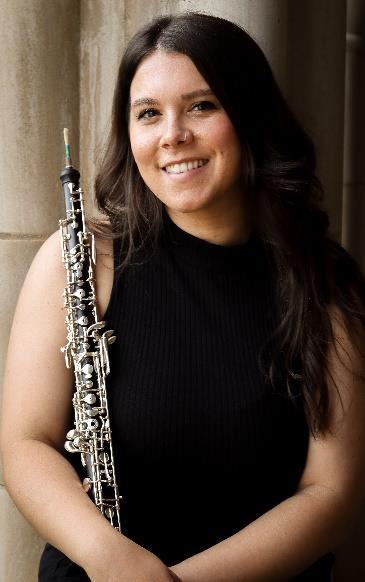
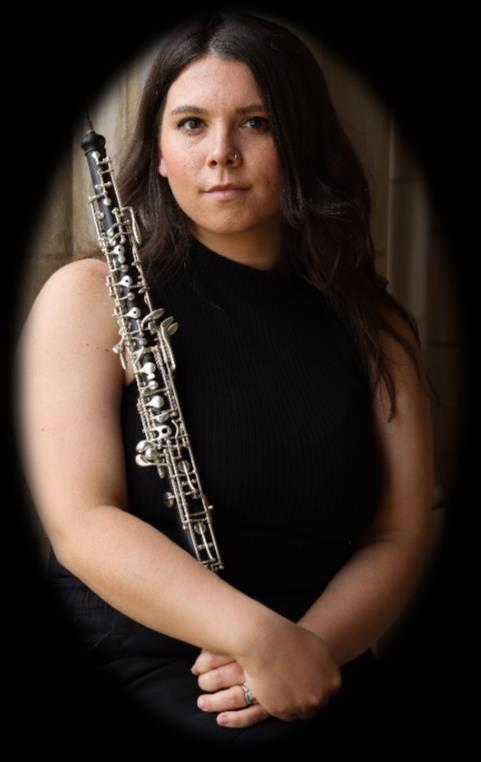
Amie is a vibrant musician and educator in the Oklahoma City metro area. She is currently pursuing her Masters in Oboe Performance with Professor Shawn Welk at the University of Oklahoma. Most recently, she performed in the KSU oboe masterclass for Ms. Katherine Needleman of the Baltimore Symphony Orchestra. In 2019, she traveled to Sicily to play in the Mediterranean Opera Studio Festival and continues to grow her love of opera as she begins her 3rd season playing in the Painted Sky Opera orchestra.
A passionate music educator, Amie holds a bachelor’s degree in Music Education from Oklahoma City University, where she got her start teaching for El Sistema Oklahoma in 2017. She just finished her fourth year as the Assistant Band Director for Casady School.
Beyond the classical realm, she plays guitar and sings for the Lifeline band at McFarlin United Methodist Church in Norman. She also plays drum (and oboe!) in local punk band, stepmom. Amie finds that the shared journey of making music with others is what fuels her passion to keep collaborating on new and exciting projects.
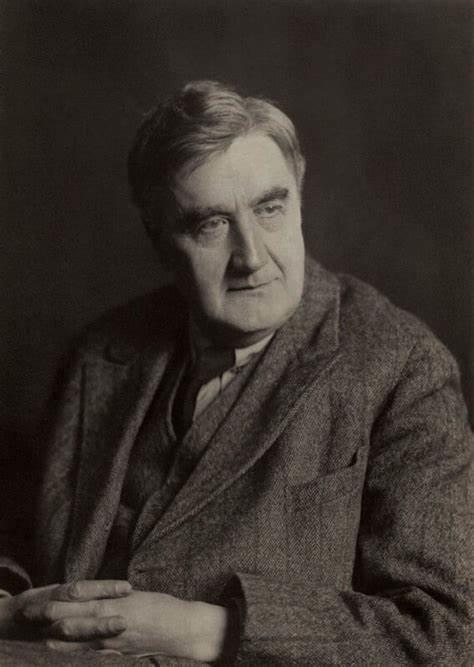
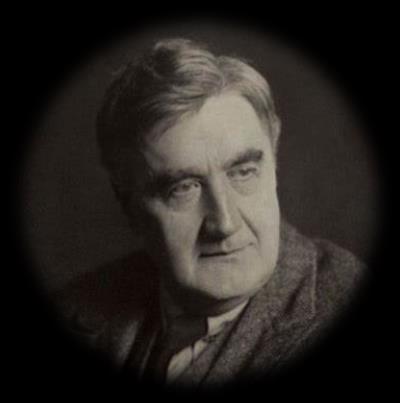
Ralph Vaughan Williams (October 12, 1872 – August 26, 1958) was an English composer of the early 20thcentury. Vaughan Williams, a graduate of Trinity College and the Royal College of Music, with further studies under Max Bruch in Berlin and Maurice Ravel in Paris, was a major figure in British nationalistic music. Notable for his pentatonicism and distinctively English music, Vaughan Williams’ Oboe Concerto revitalizes the oboe concerto form from its obscure relevance in the Romantic era. Written for the renowned oboist, Léon Goossens (1897-1988), initially for a premiere at the Proms in 1944, the work would not get its Proms debut until 1990, 46 years after its completion. The work premiered in Liverpool on September 30, 1944. The work is notable, not for its technical demands, but for the stamina required to play it fully. The work is in 3 movements but is unusual in the fact that there is not a distinct second slow movement. The first movement, marked Rondo Pastorale is very distinctively British with its pentatonicism. Throughout the movement and its bouncy, lilting oboe writing, come moments of repose and almost recitative-like passages. These recitativelike moments, where time stands still, give the oboe space to sing and show off its virtuosic potential. The second movement, titled Minuet and Musette, brings back an old form within the classical music repertoire, the minuet. Since the days of Beethoven, minuet and trio movements were replaced by scherzos and waltzes throughout the continent, but Vaughan Williams masterfully reintroduces the form, giving the work a light-hearted, and graceful atmosphere. The last movement, Finale (Scherzo), is based on a discarded Scherzo movement from his Fifth Symphony, completed around the same time as the Oboe Concerto. This movement, alongside the other proceeding two movements, is a monumental display of stamina as the soloist plays with virtually very few moments of rest. After a long and seemingly endless cadenza, the oboist must pick out a high D, sung at a piano, or soft, dynamic.
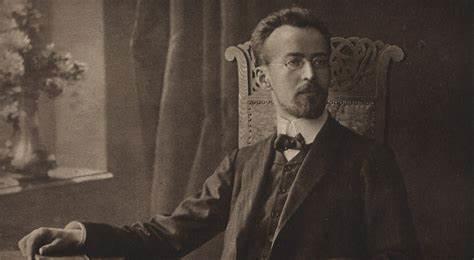
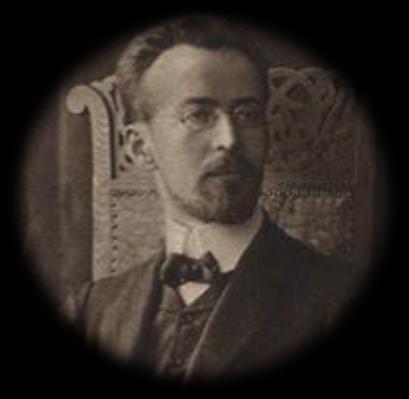
Mieczysɫaw Karɫowicz (December 11, 1876 – February 8, 1909) was a Polish-Lithuanian composer and violinist. Born into a noble family, the Ostoja clan, Karɫowicz began his music education with the violin. He studied with Heinrich Urban as well as Stanisɫaw Barcewicz, who himself was a student of Pytor Ilych Tchaikovsky. A lover of Tchaikovsky, especially his 6th symphony Pathétique,
Karɫowicz’s music is the pinnacle of late 19th century Romanticism. Filled with heartwrenching melodies, chromatic adventures, and colorful orchestration, his music resonates with other nationalistic composers from this Fin de Siècle period. This Serenade for Strings however, marks a change in his composition style, shifting away from Tchaikovskian influence, and more towards the Germanic school of writing, akin to Dvorak and Brahms. The first movement, Marsz (or March), is a noble march. What is unusual is that unlike other serenades, which were usually written in sonata form, this opening movement is similar to a Minuet and Trio form, except the minuet is replaced with a lively march. The second movement, Romans (Romance), is a nocturne-esque movement. It features the romantic trope of long cello melodies, taking the listener on long chromatic adventures. The third movement, Walc (or Waltz), follows the tradition set by Dvorak, Suk, and Tchaikovsky of replacing (or adding) a movement in a Waltz form. The final movement, the only movement without a descriptive title, is a rustic peasant dance. Karɫowicz was a nationalistic composer, often bringing musical style from his Lithuanian home to the forefront. Regarded as one of the greatest, if not the greatest, Polish Composer, his works are unfortunately not well known outside of a select circle. His life was tragically ended during an avalanche on a skiing trip. He was only 33 years old.
Nocturno et Valse (Nocturne (night music) and Valse (waltz)) was written and dedicated to Kimberly Banz, my former orchestra director. Mrs. Banz was a major source of support and compassion, without which I would most likely not have pursued an education in music. This is the first piece I wrote after moving to Chicago for school. I was already feeling homesick, despite the immense freedom I’ve attained, and decided to write a piece for Mrs. Banz, who coincidentally reached out a commissioned a piece for the opening of her school’s new auditorium. It features a prominent melody in the Violas (Mrs. Banz’s instrument) and is nostalgic in feeling. The middle section, Rêverie, calls back to a piece I wrote during my senior year with Mrs. Banz, also entitled Rêverie The two themes eventually intertwine, symbolizing her continuous support for my musical endeavors. The “Valse” movement will not be performed at this concert.