The Oracle staff discuss what qualities they’d like to see in a future superintendent.
PAGE 5

LIFESTYLE
Read about how “Project Hail Mary” incorporates art, music and science into a highly-acclaimed film.
PAGE 14
The Oracle staff discuss what qualities they’d like to see in a future superintendent.
PAGE 5
Read about how “Project Hail Mary” incorporates art, music and science into a highly-acclaimed film.
PAGE 14
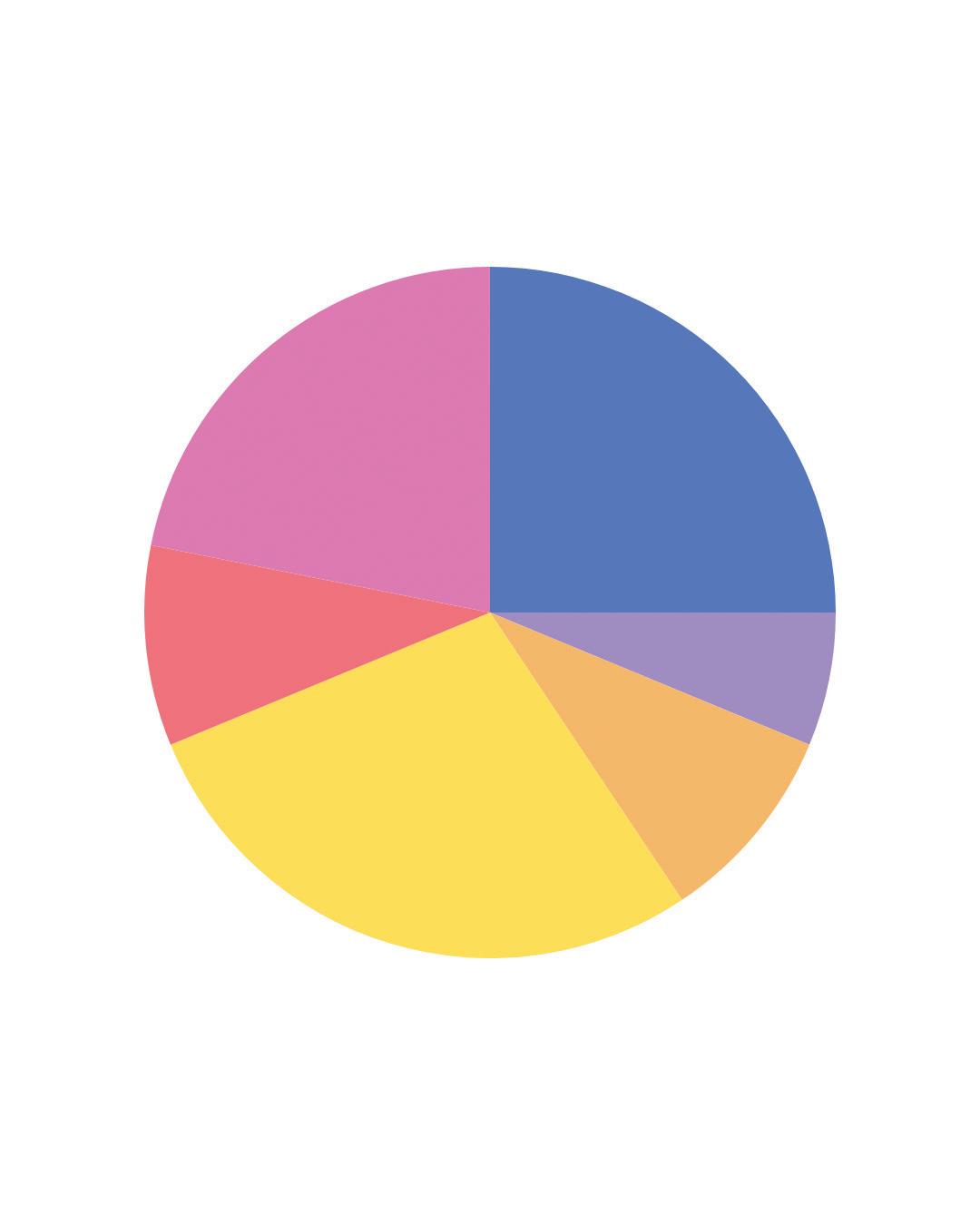
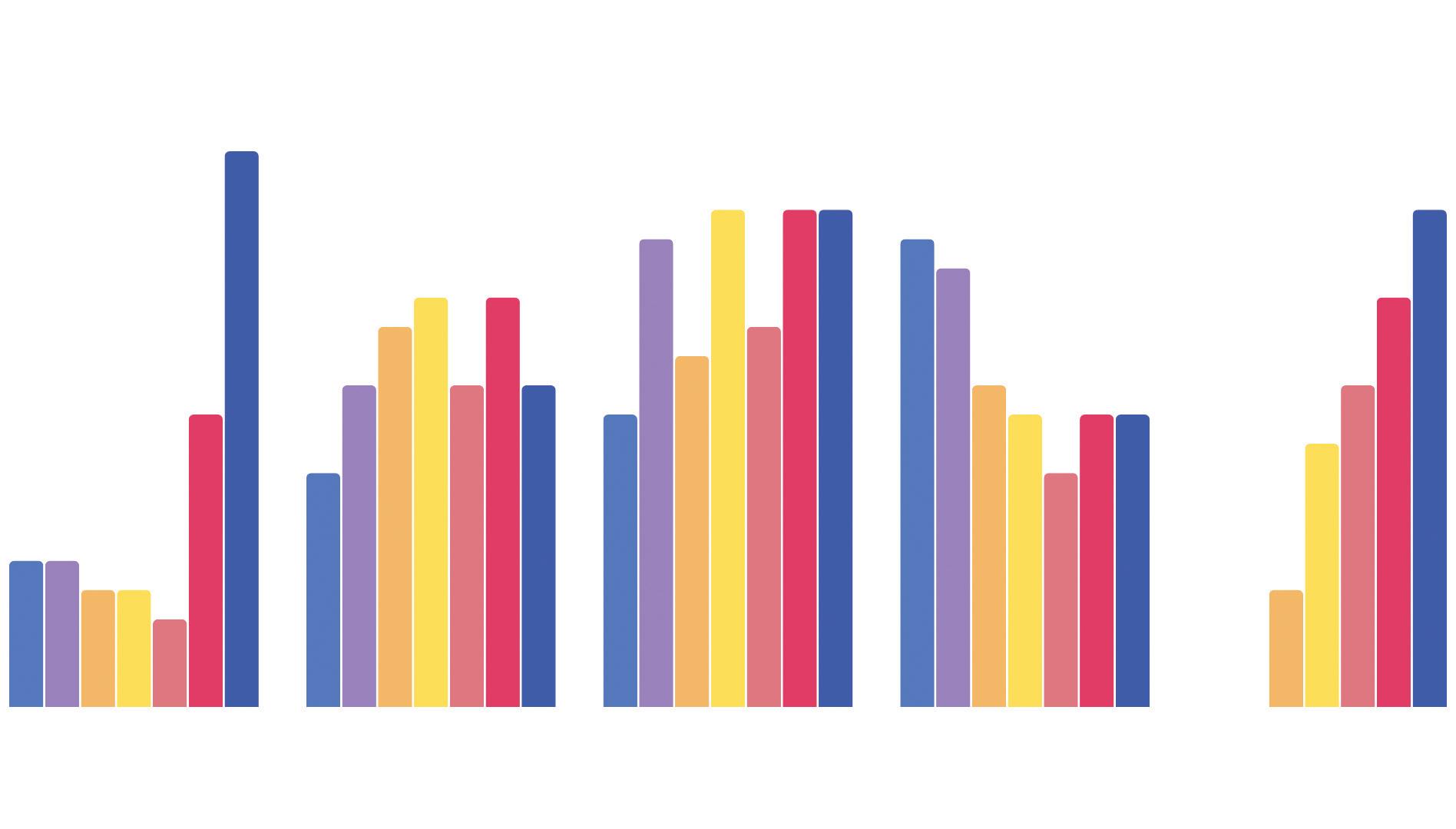
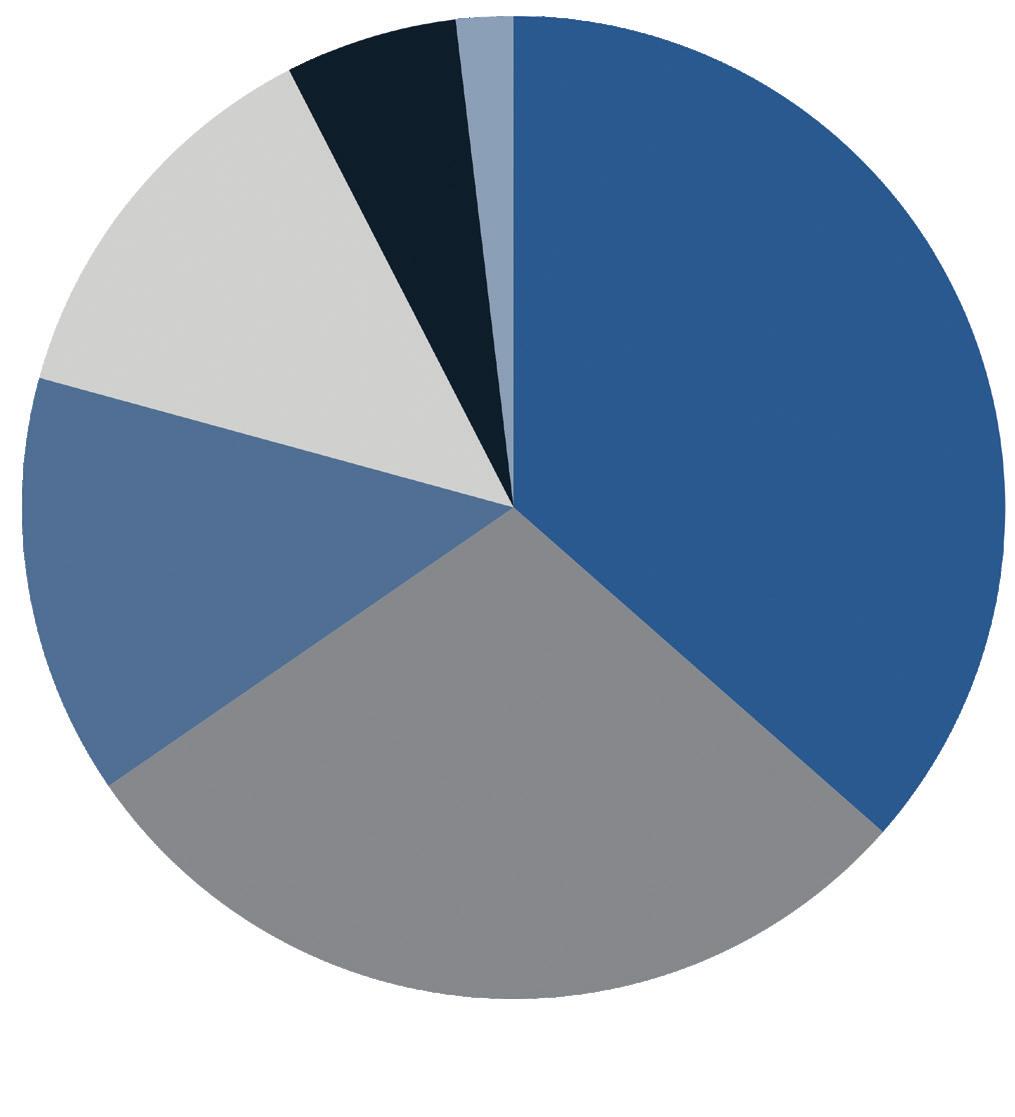
other (25.7%)
Chad BianCo (5.7%)
tom steYer (14.3%)
Xavier BeCerra (25.7%)
katie Porter (8.6%)
matt mahan (20%)
steve hilton (0%)
Source: Self-selected survey sent out to Gunn students by The Oracle from May. 11 to May. 18 with 35 responses.
40%
Source: Emerson College Polling of deCided voters for the gUBernatorial PrimarY saY theY CoUld Change their mind and vote for someone else
27% of registered YoUng voters Believe that their vote is insignifiCant in eleC tions
Sarah Grupenhoff and Vaani Saxena Editor-in-Chief & Managing Editor
s the California primary election approaches on June 2, polling projections have undergone various shifts in light of recent disclosures of candidate behavior. Campaigns reflect political nationalization and have incentivized youth civic engagement.
Following the withdrawal of former leading candidate Democrat Eric Swalwell, who faces multiple allegations of sexual misconduct, other candidates have gained his votes, allowing new leaders to emerge.
As of May 10, Democrat Xavier Becerra has moved ahead, with Republican Steve Hilton and Democrat Tom Steyer tied behind him, per Emerson College Polling.
California’s top-two primary system establishes that, unlike federal elections, all candidates are in the same primary race, and its open voting process allows voters to vote without being registered with a political party. Regardless of political party, the two candidates with the most votes will advance to the general election, potentially overturning a longstanding pattern of two Democratic candidates ending up on the final ballot.
issues are discussed at a statewide or local level. Wu says this has become increasingly prevalent in recent years.
“(Local and state elections) used to be much less polarized and much less partisan,” he said. “(Now,) you’re seeing mayors talking about Trump, immigration (and) taxation, when really, they have nothing to do with that. But it’s because they know that party and partisanship have become such contentious issues, and people have become so attached to these identities that saying these things actually gets them a vote.”
Social studies teacher Benjamin Beresford views this increased adherence to partisan identity as a divisive force that has extended beyond political conversation, overshadowing daily interactions as well.
“Political affiliation (has) become so wed to people’s identities,” Beresford said. “The stakes of it are perceived to be so high that our ability to see humanity in other people really runs a risk of disappearing.”
Source: University of California, Berkeley
CalIfornIa 2026 gUBernatorial eleC tions raCe
Source: Emerson College Polling


According to Stanford political science doctoral candidate Brian Wu, these projected voter trends demonstrate a broader trend of increasing polarization across the U.S., and with that pattern, a shift in voters’ priority from platform policies to party identity.
“A lot of people have started to ignore candidate characteristics or candidate qualifications when they’re choosing who to vote for,” Wu said. “Most people focus on just partisanship. So, even with allegations of sexual misconduct, or even criminal allegations, a lot of people have either become numb to these things, or they no longer have the same amount of care about (them).”
This exacerbated polarization has given rise to campaigns that involve political nationalization, a practice where national
Wu also has concerns about the excessive platforming of addressing national issues as part of local and statewide campaigns. But freshman Aspen Gonzalez Sonderhoff, who manages social media for the Civic Engagement and Education Project club, believes this trend of political nationalization is a positive, necessary change that has pushed politicians to advocate for programs aligned with voters’ interests. She holds that local or state roles, such as the governor, partially exist to serve as a check on federal power.
“We should push back on some (federal programs) like ICE,” Gonzalez Sonderhoff said. “A lot of the people that ICE is deporting (are being deported) inhumanely, and I think the governor should fight back on that because it does happen in California.”
Social media, Wu said, has contributed significantly to nationalizing local candidates’ campaigns as well.
“In the past, the way you advertised a campaign — newspapers, radio, television — cost a lot of money, but social media is





focus on student safety. Holm highlights that this part of the construction project will involve creating a smoother transition from the off-campus bike path to the oncampus lane.
Gunn entered the final phase of the Village construction project during spring break, beginning with the removal of portables for a new student plaza and an enhanced bike lane.
According to PAUSD Facilities and Construction Director Eric Holm, the new plaza, featuring benches and shade structures, will serve as an entrance to Titan Gym and a space where students can easily gather for lunch and other events.
“While the main lunch area is over by the new food service, we know the students go all over campus and find their little nooks and crannies to hang out with their small group of friends,” he said. “This would be another area with benches where they can find some shade and hang out during lunch.”
“We’ll be able to strengthen the connection (between) the bike lane (and) the bike path,” he said. “(The bike path) comes all the way from Bol Park, and (the plan is to) run (the lane) along as a protected bike lane, separate from the traffic and get you into campus if you come via bike, because a lot of the community comes that way.”
The remaining space will be used as an additional bike parking area. These new features will not only provide extra room, but also increase protection for students.
I was like, ‘how can we work around that tree to make it beautiful, promote belonging and allow teachers (to teach) an outdoor class by having some (outlets) in some of the structures?’ ”
principal dr. wendy stratton
Principal Dr. Wendy Stratton notes receiving input from English teachers Diane Ichikawa and Jordan Wells to incorporate concepts such as a Zen garden, a mindfulness labyrinth and Greek mythology in the new structures. To integrate these ideas, Stratton worked closely with PAUSD Senior Construction Manager Mohammed Sedqi when planning the project.
“The whole process of imagining (the possibilities for) that space that would serve our community and bring a certain energy to it (was cool),” she said. “The shade structure is a very (sunny) area and there is a really beautiful tree out there, but I was like, ‘How can we work around that tree to make it beautiful, promote belonging and allow teachers (to teach) an outdoor class by having some (outlets) in some of the structures?’”
Next to the plaza, improvements to the bike lane will
“We always are trying to find ways to make it easier to bike, and having a place to park your bike is a big part of that,” he said. “Ultimately, the next phase (of) the enhanced bike lane (will) improve student safety.”
Assistant Principal of Facilities Dr. Mycal Hixon says this project requires increased communication between the construction team and school faculty to provide the most benefit for everyone on campus.
“This is a positive move in the right direction for our school,” he said. “We have to make sure that we’re supporting students and staff as well, (and that we’re) coordinating with our teachers and our students and our staff in terms of how we can help support that need now that (the village is) gone.”
According to Holm, with the completion of A-, B- and K-buildings, the decade-long construction projects on the temporary portables will end when the construction of the additional features finishes. The remaining portables are projected to be transported and repurposed at the district office in the summer.
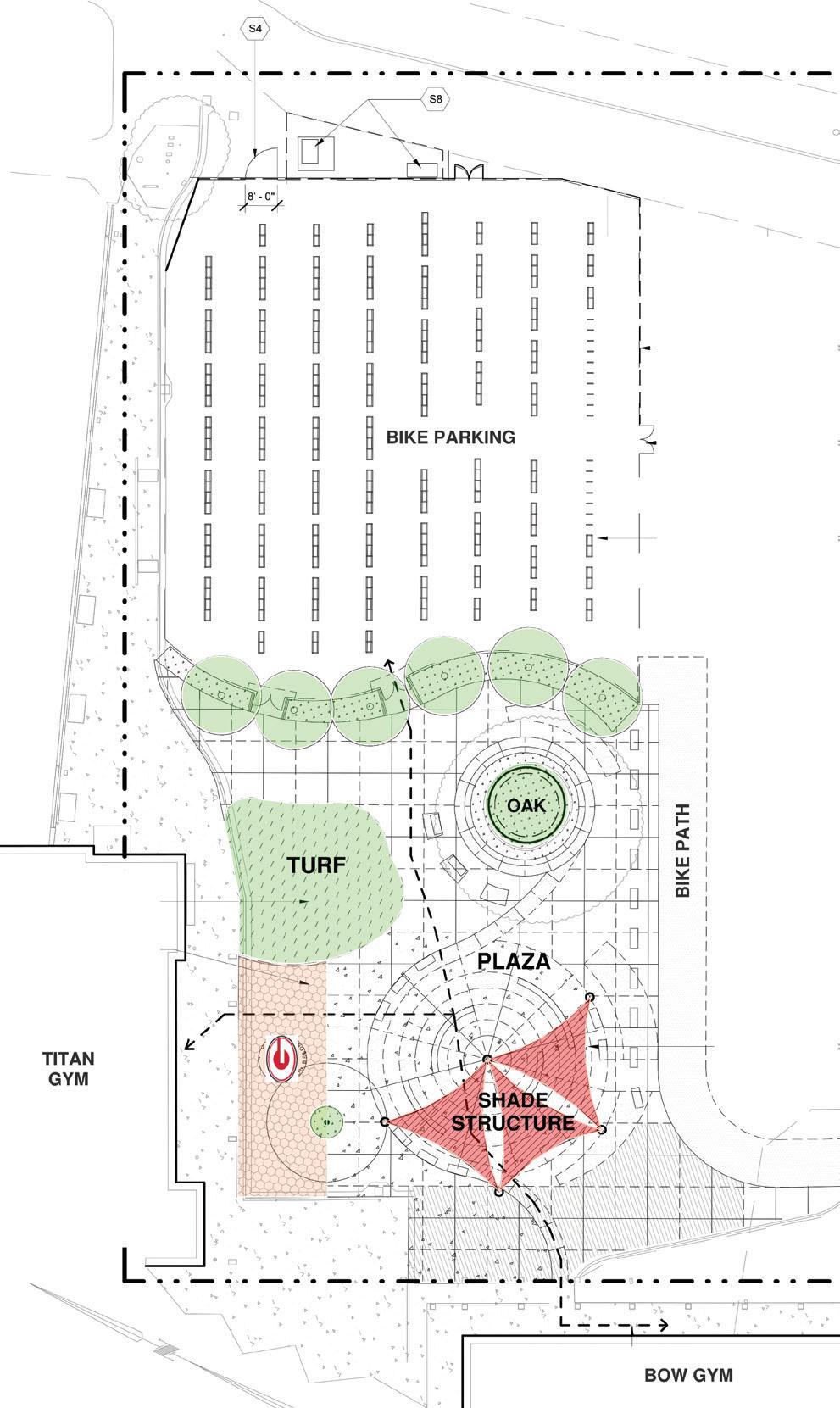
Multiple rows of V-building portables were removed from campus the week of April 6. The area that previously housed the portables is planned to be revamped with a plaza, new bike parking and a shade structure.
• Voted to extend the government’s ability to collect electronic information of non-citizens outside the country, as originally authorized by the Foreign Intelligence Survey Act.
• Alongside other California representatives, pushed the House Transportation and Infrastructure Committee to provide more federal infrastructure funding for non-motorized transportation.
• Introduced the Save Willy Act, establishing a “Whale Desk” at San Francisco Coast Guard station to report sightings and prevent whale deaths.
• Authored Battery Integration and Grid Reliability Act, allowing electric vehicles to support the electrical grid using vehicle-to-grid technology. The stated goal is to avoid spending money on electrical infrastructure by using batteries Californians already own.
• Working to permanently extend his 2022 Free Community College Pilot Program, which provided free tuition at San Mateo County community colleges for county residents.
• Introduced Digital Dignity Act, requiring ‘online platforms,’ with AI tools that can generate digital replicas of people to create a way for individuals to report deepfakes that violate identity fraud laws.
• Introduced Assembly Bill 2003 to develop free, standardized suicide prevention training for staff in K-12 schools.
• Introduced Assembly Bill 1810 to apply stricter requirements for registered firearms dealers.
• Introduced the Defending Student Equity and Access Act, allowing community colleges to exclude expenditures that use school money to maintain programs that were previously funded by federal grants from their “Current Expense of Education” (CEE) calculation. Allows community colleges to compensate for missing federal funding without raising instructor salaries, which must make up 50% of CEE value.
• Currently deciding how to divide Santa Clara County’s $2.8 billion discretionary budget — money the county can decide how to use — facing “a devastating (economic) downturn” and a $787 million budget deficit as a result of federal funding cuts.
• Despite budget difficulties, oversaw the opening of a county-run mobile health clinic at De Anza College, providing healthcare for adults and students regardless of insurance.
• Pushed to approve $1.75 million in funding to keep allcove Palo Alto, a free youth mental health center, open.


780 Arastradero Rd.
Palo Alto, CA 94306
(650) 354-8238 www.gunnoracle.com
Editorial Board
Editor-in-Chief
Sarah Grupenhoff
Ma naging
Editors
Vaani Saxena
Melody Song
News
Vin Bhat
Melody Na
Fiona Wu
Forum
Olivia Lee
Michelle Zhou
Features
Arjum Ahluwalia
Noa Zeitlin
In-Depth
Ezra Rosenberg
Cici Zhang
Sports
Mayher Dulani
Athena Gao
Lifestyle
Annabel Brown
Ellen Kim
Yuji Song
Social Media
Athena Gao
Ellen Kim
Noa Zeitlin
Photo Editor
Laura Wang
Graphics Editor
Dani Massarweh
Staff
Business/Circulation
Olivia Lee
Graphics
Artists
Vin Bhat
Kai Knutson
Sophie Kou
Alexandra Liu
Sahana Mahadevan
Photographers
Inaaya Ahmed
Vin Bhat
Adviser
Kristy Blackburn
Mission Statement
The

Ezra Rosenberg
77.5% of surVeyed students haVe V rick’s ice cream & pints of joy before
Source: Self-selected survey sent out to Gunn students by Oracle from May 11 to May 18 with 89 responses.



Governor’s race. —p.1
relatively free,” Wu said. “(Candidates can now) take a bigger stance and become more of a nationalized image, because (social media) allows them to reach out to more people.”
Beresford notes that though a candidate may be a proponent of uncontroversial policies, their popularity and established public image still hold more influence over voters.
“Social media has made (elections) even more about media and popularity,” Beresford said. “It’s more like public relations, so successful candidates are ones who have effective media campaigns.”
Though they are the heaviest social media users, young voters remain one of the lowest turnout blocks, Wu said. The Institute of Governmental Studies at the University of California, Berkeley,
explains this pattern, reporting that 47% of registered young voters feel young voters’ lack of education will result in a low turnout in the June primary, 33% feel pressure from special interest groups, 31% don’t have time and 27% believe their vote is insignificant.
Gonzalez Sonderhoff has noticed this pattern of scarce civic engagement among her peers, most of whom cannot vote right now but will likely maintain such a level of political apathy even when they become legally eligible. While she recognizes the limitations of the school curriculum’s ability to incorporate modern politics, she stresses the criticality of being educated on these matters to push back against low voter turnout.
“It’s important that we know what’s happening in our government,” Gonzalez Sonderhoff said. “The teachers at school
do what they can, but also they are meant to be neutral, so they can’t talk about current (events) that much. You need to be able to learn (somehow) so that you’re making informed votes.”
Beresford echoes these sentiments, pointing out that there are civic activities beyond voting that are still effective.
“Even if you’re not old enough to vote yet, there are lots of things that you can do in your community, whether that’s getting involved with an organization or knocking on doors,” Beresford said.
As part of his U.S. Government class, Beresford guides students in completing civic action projects to increase their active engagement with the community and demonstrate their ability to make an impact, despite their age group’s legal limitations.
Some of these projects, he notes, have received unexpected responses from city
officials and opened up opportunities for meaningful conversation.
Beresford nevertheless stresses that young people who have the power to vote should exercise that privilege and responsibly educate themselves before doing so. Withdrawing from political engagement under the assumption of being powerless, he says, is a missed opportunity to shape the future they will live in.
“The irony of lower levels of political participation among youth is that they’re the ones who have the most to gain or lose from the changes that happen, because it’s very likely they are going to outlive other voting populations,” he said. “They have more at stake, and their voice matters. Voting is one of the great levelers.”

PAUSD has spent the better part of the last couple of decades lurching from one leadership crisis to the next. Former superintendent Don Austin’s tenure was defined by top-down decision making and a persistent disconnect from the community he was hired to serve.
Trent Bahadursingh’s brief, turbulent stint offered little correction before it, too, collapsed. The revolving door at the top of this district is destabilizing, and students are the ones paying the price.
actually understand this district — not from a briefing document, but from showing up. Austin’s failure was, at its core, a lack of connection. PAUSD has a specific culture, a specific set of pressures and a community that can immediately tell when its leader is present versus performing. The next superintendent
the next SuPerintendent needS to be Someone who liStenS and StayS cloSe to StudentS, teacherS and familieS — not Someone who manageS from a diStance.
The Board of Education now has an opportunity to change the way they’ve done things and select a superintendent that truly values community input. Whether they squander it the way they have before is up to them.
PAUSD is not a broken district. Its teachers are dedicated, its academic achievement is real and the community’s investment is genuine. That foundation is worth protecting — which is exactly why the leadership failures of the past few years are so frustrating. Poor communication, a lack of transparency and fiscal decisions that never seemed to prioritize students have eroded the trust this district on. Students struggling with their mental health have watched resources fall short year after year. Transparency has been a backof-mind issue. And through it all, student voice has been treated as an afterthought rather than a starting point.
The Board must do better. Here is what should be prioritized. The next superintendent must

They must also treat transparency as a baseline, not a concession. Where is the money going? Why? Those are not unreasonable questions, and this community has been waiting too long for answers. Fiscal accountability and honest communication through regular budget updates are not, and should not be, extras.

Mental health resources must be a genuine priority, backed by real funding. This is not a new problem, and the incoming superintendent should arrive with a concrete plan. The pressure students face in this district is serious. The institutional response has to
thiS time, hire Someone who haS taught, who underStandS thiS community’S culture and who SeeS the StudentS of PauSd not a S metric S to manage but a S PeoPle to Serve.
Finally, students need to be heard. Not through a student advisory committee that meets a couple of times a year and changes nothing, but gathering input that gets built into how decisions are made. Our next superintendent should be willing to immerse themselves in the Palo Alto community, visit our schools and gather student-focused data that informs their decisions. You have hired for credentials before, Board. You have hired for impressiveness. You have seen where that leads. This time, hire someone who has taught, who understands this community’s culture and who sees the students of PAUSD not as metrics to manage
We are asking for accountability, connection and leadership
—Unsigned editorials represent the majority opinion of the staff (assenting: 17; dissenting: 0; abstaining: 0).

For most students, school and home are the two places where they spend the most time. At school, they worry about grades and face academic pressure. At home, they rest, spend time with family and study. But students need spaces beyond home and school, where they can connect with people, besides family, in non-academic settings. Third spaces should be publicized more, and students should take advantage of the ones available to them. Libraries, parks, cafes, student lounges and community centers are all examples of third spaces. In sociologist Ray Oldenburg’s book “The Great Good Place,” he describes the importance of such spaces in allowing individuals to “put aside concerns and simply enjoy the company and conversation around them.” This means third spaces are not just places where people unwind, but also where they build and maintain meaningful relationships. Without third spaces, students become more isolated. They spend a majority of their free time scrolling on social media — a University of Rochester Medicine survey shows an average phone screen time of 5.4 hours for teens. This does not always create real connections. According to the Centers for Disease Control and Prevention (CDC), public places like neighborhoods, workplaces and parks and recreation centers support and strengthen social connections. The Atlantic International University states that in-person communication “offers deeper emotional connections and more nuanced communication,” while digital connections have limitations like loss of nonverbal cues, tendencies to disengage and inattentiveness.
The CDC also states that safe access to public spaces encourages connection, less social isolation and community engagement and altruism, ultimately strengthening social bonds. If these third spaces are more widely publicized and well-known throughout student communities, they are more likely to be utilized and benefit students.

The availability of third spaces should also be emphasized because many students do not have the equal resources and opportunities at home and school. While some students have the privilege of a quiet place to work at home, others don’t, exemplifying the importance of providing other environments for students. According to Skyted, a headphone company, “low-level background noise subtly drains mental energy. The brain must repeatedly reorient attention, breaking concentration cycles that typically take 20 minutes to restore.” Since some students do not have access to the proper studying environment at home, it is important to have third spaces and provide equity.
Some may argue that students already have enough spaces available to them, especially on school campuses. However, having a space available does not mean that students are aware of it or feel entirely comfortable using them, and third spaces on school campuses are often not open beyond school hours. In a survey related to awareness and belonging, Tyton Partners found that of 2000 students from 900 different institutions, only 60% were aware of the available third spaces at their institutions. If poorly advertised, these spaces will not maximize their potential. Promoting third spaces not only raises awareness of their availability, but also ensures that students feel encouraged to use them.
Schools and local community members can make third spaces more visible through simple actions like mentioning them during announcements or hosting events in them. While third spaces will not solve every social or mental health challenge that students face, they provide
opportunities in ways that schools and homes cannot offer: relationships beyond families, friendships without academic comparisons and environments where students can find a sense of belonging. Third spaces should be more publicized, and students should take advantage of the valuable resources that are part of their community.
8.9%

Mayher Dulani Sports Editor
Bright colors and intricate patterns of childhood. As the years pass by, personal styles evolve and are influenced by the media. This evolution, however, oftentimes results in the loss of unique, vibrant clothing.
Social media promotes neutral colors and plain clothes, fostering an atmosphere where wearing color can be seen as childish or out of place. However, wearing color is a form of expression — one that people should consider when assembling their wardrobe.
Clothing is the most powerful form of nonverbal communication, and societal pressures can repress one’s true self. Color offers an outlet for people to express themselves, and outfits depict personal characteristics and stylistic choices.
monotone shades, it would be harder to be unique. Not to mention, dressing in maximalist explosions of colors, patterns and textures stimulates the brain. A 2025 study by Ahead Magazine found that wearing clothes that align with personal image causes the brain’s reward center to light up. Moreover, a 2025 Hyperflux article adds that human beings naturally crave variety and vibrancy, with maximalist design offering a constant source of visual interest. Dressing colorfully
of students prefer to wear neutral- colored clothes than colorful clothes 64.8%
neutral colors to be their preferred form of selfexpression, wearing color has the potential to make anyone feel happier, regardless of one’s usual style. Similar to how rainy, gloomy weather can trigger seasonal depression, wearing dull colors can have the same effect.
Source: Self-selected survey sent to Gunn students by The Oracle from May 11 to 18 with 82 responses.
According to internal project data from the research-compiling agency Digital Silk, branding requests citing “quiet luxury” principles have increased by more than 60% from year to year. But if everyone dressed in
Source:Self-selectedsurveysenttoGunn studentsbyTheOraclefromMay11to18 with88responses. of students think that trends are generally leaning towards minimalist styles 46.3%
In fact, fashion and mental health are far more connected than they may seem. According to a study conducted in 2024 by the Journal of Environmental Psychology, self-esteem and emotions shift depending on what an individual wears. Color of clothing influences mood, with bright, vibrant clothes being linked to higher reported levels of happiness and confidence, and darker or muted shades lining up with lower emotional energy.
Vaani Saxena

This can be explained by enclothed cognition, which is the psychological term for outfit color choice playing a role in cognitive processes, mental well-being and behavior. When individuals wear vibrant colors, it releases neurotransmitters like dopamine and serotonin, the brain’s “feel good” chemicals, throughout the body. This act of “dopamine dressing” — wearing bright colors to achieve a sense of calm and happiness from a release of dopamine — raises moods by stimulating a positive feedback loop that boosts
Even incorporating small splashes of color in outfits can be beneficial. This is not to say that neutral colors cannot be representative and empowering. Rather, a maximalist approach to the wardrobe increases confidence and self-
Although today’s fashion industry embraces a safer, more neutral approach, individuals should embrace risktaking in their clothing choices and in their personal style, as it encourages a culture where individuality thrives.

Annabel Brown Lifestyle Editor
Collecting is an activity humans have been doing since the beginning of our existence. Before currency, certain items were an indication of power and were cherished as opposed to being thrown away. Fastforward to today, the trending hashtags #Minimalism and #DeclutterYourLife seem to challenge the hobby we have stuck to for so long, pressuring viewers to only keep the “essentials.” Although collecting is now seen as a disorganized lifestyle, keeping items evokes nostalgia and fosters a sense of community through trading culture and establishing authentic connections, both of which act as mood boosters.
According to Dr. Jennifer Brown from Cottonwood Psychology, a team of professional psychologists, identity is formed through memories, and photos act as cues to initiate them. Keeping objects brings humans joy and serves as a physical reminder of various memories. For example, mementos remind collectors of personal experiences and defining moments.
People who find joy in keeping things are also more open to new experiences, per a 2025 study conducted at the
University of California, Berkeley, by assistant professors Ellen Evers and William Ryan. While many people may consider collecting a passive hobby, the study finds that it actually shows curiosity and willingness to explore new activities that may not have been considered before. Most collectors keep things for to preserve experiences even though the stereotype links the hobby to materialism and physical accumulation instead of sentimental value.
Communities often form around finding a common
in highly regarded franchises like “Pokémon.” The iconic video game and trading card empire is currently the biggest media franchise on the planet, according to The British Times, with 489 million game units sold in 90 countries. Its popularity didn’t surface out of nowhere: People began hopping on to the trend, and many began to love searching for rare cards and trading with their fellow card connoisseurs.
Building a sense of belonging across diverse groups of people to find a common interest is extremely beneficial, and participating in collecting-oriented groups can also mitigate loneliness, a significant risk factor for depression, as stated by Psychology Today. Having the opportunity to experience authentic human bonds adds
Collecting, however, does not imply keeping all of one’s possessions — there are always strategies to cherish belongings while also remaining tidy. The minimalism movement’s original intent was to eliminate meaningless “junk” while still keeping memorabilia. Still, it has snowballed into extremes, as people have begun to throw away items holding personal significance to achieve the “clean” look. Marie Kondo, a pioneer of the organizing empire who rose to popularity from her cleaning methods, always said to “take each item in one’s hand and ask: ‘Does this spark joy?’” Kondo, known for her book “The Life-Changing Magic of Tidying Up,” does not instruct us to get rid of our cherished belongings but to hold on to the ones we value most and care for them. While it is beneficial to occasionally take a peek into the disorderly nooks and crannies of our living spaces and tidy up here and there, we must remember that the things we choose to keep reflect out memories and who
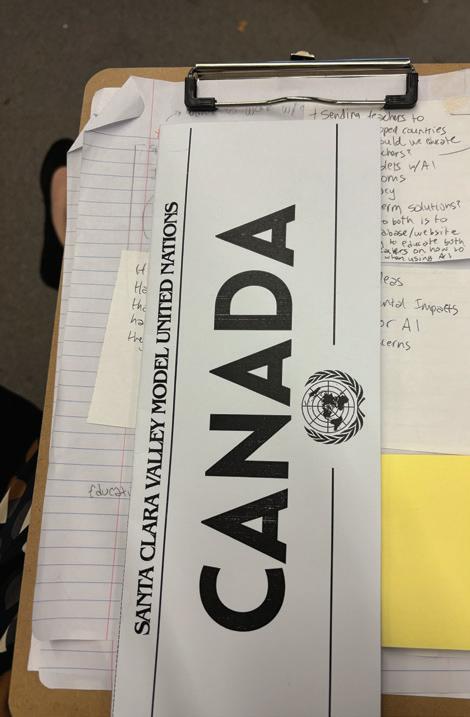
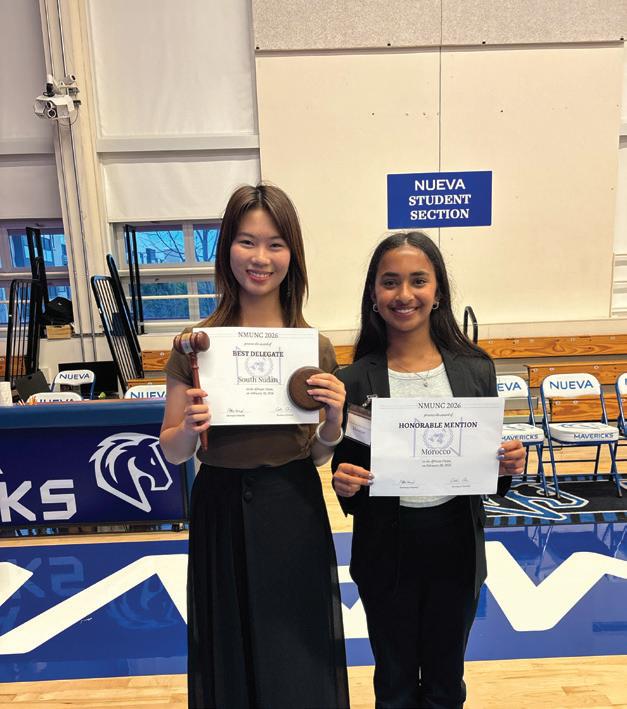
Growing up surrounded by both Japanese and Taiwanese culture, freshman Emma Chen often felt conflicted and ashamed of her multicultural heritage. But through her experience representing a variety of countries in Model United Nations, Chen has found pride for her culture and hope of future change in the world.
With the rise of the Stop Asian Hate Movement during the COVID-19 pandemic, many people questioned Chen’s ethnicity and assumed she was Chinese. Because of China’s tense history with Taiwan, when she revealed her heritage, she felt her identity was being questioned.
“I felt ashamed that I couldn’t really go outside and say I’m Taiwanese,” she said. “There’s this stigma about (being) Taiwanese and Chinese.”
The different social expectations of her two cultures have only exacerbated this view of her identity. For Chen, the traditional social expectations in Japanese culture of being reserved contradicted the outgoing nature of Taiwanese people. Despite this, Model UN has taught her that her culture and authentic personality were limitations but rather valuable assets.
“Taiwanese people, we’re loud, we talk,” she said. “Now after (exploring) more foreign policy, (I
understand) that (the reason) I had felt ashamed of myself (can) actually make a difference in how we approach the world.”
At her most recent conference, Chen represents Estonia, a small, northern European country she describes as the “Silicon Valley of Europe.” Representing Estonia has revealed to her that small countries, like Taiwan, have just as many ambitions as larger ones.
“(Small countries) have a spot in the world,” she said. “(They) have goals, people and (shouldn’t) be overlooked just because (they) are small.”
Prior to representing countries in Model UN, she was introduced to foreign policy by her mother. Since then, she has been hooked by the potential to make real change in the world through international collaboration.
“Seeing (solutions being developed in Model UN) gives me hope that maybe someday I’ll be there,” she said. “Maybe someday what I’m doing now will actually make an impact.”
—Written by Noa Zeitlin



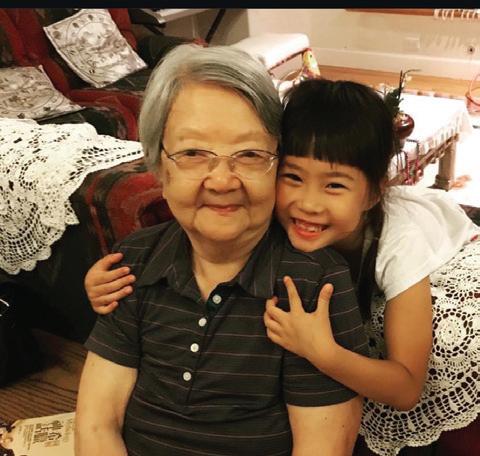
While many childhood memories relate to vacations or school, for sophomore Erin Tsutsui, it was her grandfather’s stories. Tsutsui’s grandfather, Kōki, was four years old when the United States dropped an atomic bomb on Hiroshima where he lived. With immediate death tolls estimated at 70,000 to 80,000 people, Kōki and his family were very fortunate to have survived.
Since then, Tsutsui has heard firsthand accounts of what transpired, and those stories, filled with both resilience and loss, left a lasting impression on her. These accounts have helped her develop an interest in foreign policy.
“(I’m interested in) how we can shape a future that’s oriented towards peace, especially (stepping) away from nuclear weapons,” she said.
For Tsutsui, these global issues aren’t distant headlines. Hearing about the horror of nuclear weapons from someone who experienced it themselves gave her a perspective that most people never see. To share her family’s history, Tsutsui delivered a TED Talk. She feels that despite their youth, teenagers can still contribute

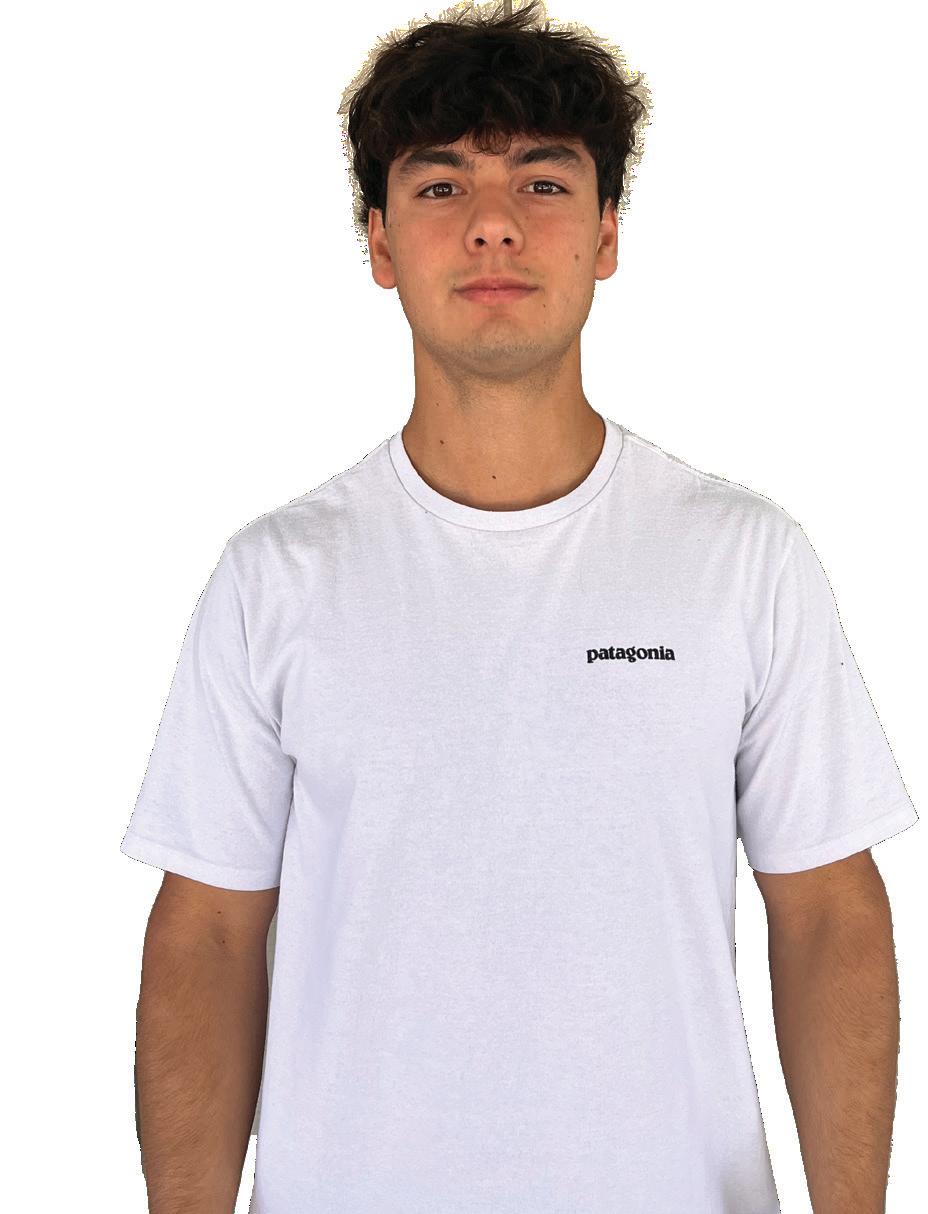
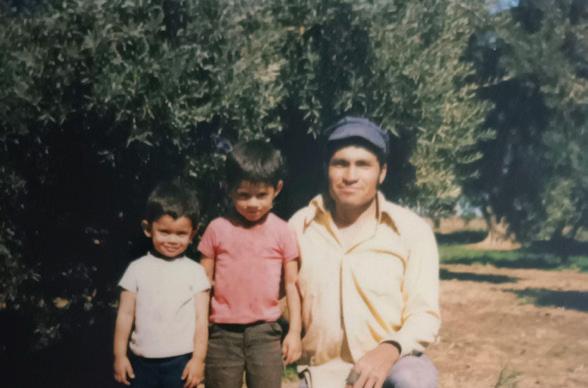
Migration, diplomacy and political change shape family histories, leaving indelible marks on the cultural inheritance of future generations. These experiences often shape how people understand themselves and their relation to global issues. For junior Gabriel Espinoza, hearing about his family’s intercontinental experiences — from living abroad to stories of government service — has sparked a curiosity about global relationships and how they can shape people’s lives. Espinoza’s family on his father’s side immigrated to the United States through the Bracero Program, a system that contracted Mexican laborers to work in the U.S agricultural industry during World War II. On his mother’s side, he has an uncle who worked for the Central Intelligence Agency during the height of the Cold War.
“Hearing stories about (my uncle’s) work, such as his involvement with the ‘Bridge of Spies’ hostage exchange, makes working in diplomacy or intelligence intriguing to me,” he said. “I also have family that still resides in Mexico, and connecting with them makes me very interested in our countries’ relationship, which is something I’m currently researching for (my foreign policy class).”
These family experiences also deepen how Espinoza understands global relationships and cultural differences, exposing him early on to
to moving in a positive direction globally.
“I think that we are able to change the trajectory of our world,” she said.
True to her word, Tsutsui ventures outside the classroom to participate in the Stanford Program on International and Cross-Cultural Education, where she takes part in discussions regarding relations between the U.S. and Japan, with a focus on how the U.S. and Japan can cooperate in a global context.
Tsutsui has also used her passion to try and create real change: she has spoken with California Congressman Sam Liccardo to discuss current legislation about limiting presidential power to launch nuclear weapons and is currently working on a research paper on atomic bomb survivors and nuclear policy within the U.S. and Japan.
Rooted in her grandfather’s survival, Tsutsui is turning inherited memory into actions, working to ensure that the
—Written by Arjum Ahluwalia
cross-cultural perspectives and the connectivity between separate countries. Due to this perspective, Espinoza pays closer attention to current events and the government decisions.
“I think (my relation to foreign policy) definitely makes me more conscious about decisions that are made at the federal level, and how these decisions affect people within or outside a country,” he said.
His awareness has only increased in U.S. Foreign Policy Honors, a class where Espinoza has been able to connect his personal interest in international relations with formal academic study.
“The class gives you a lot of segue to further interest in foreign policy,” he said. “It (provides) a good learning opportunity for anyone who wants to get a better sense of how the world works.”
As he continues exploring the subject, Espinoza has also begun to see how his passion could shape his future.
“(I’ve become) interested in working in a career in public service,” he said. “I think being in (U.S. Foreign Policy Honors) has really made me more interested in working in something connected to diplomacy, and I want to be able to impact and help people around the world.”
—Written by Fiona Wu



Athena Gao and Noa Zeitlin Sports Editor and Features Editor
The lack of affordable housing options in California has caused a statewide crisis in which low-income communities especially struggle to afford homes. The current shortage of housing is rooted in racially motivated urban zoning codes that historically targeted minorities and mandated massive plots of land for single-family housing. This has forced cities to grow out in an “urban sprawl,” a network of spread-out, car-dependent cities, leading to an increased carbon footprint and a deficiency of space for dense, affordable communities. Although the Fair Housing Act outlawed these exclusionary urban zoning codes in 1968, the effects of discriminatory policies still contribute to California’s current housing deficit. The lack of available homes leaves few options for vulnerable communities: according to the Public Policy Institute of California, the state faces a three-million-housing-unit shortage. Now, as policymakers push to end the housing crisis, conversations about urbanization have shifted to include racially and socioeconomically diverse community voices to pursue more sustainable and equitable legislation.
According to an article by news nonprofit Berkeleyside, urban planner Duncan McDuffie spearheaded California’s first discriminatory zoning laws in 1916. He implemented these zoning laws to preserve wealthy, white communities at the expense of density. Zoning laws reserved one-acre plots for single-family homes, resulting in a statewide network built on urban sprawl. McDuffie’s policies also included legally enforceable contracts that prevented homeowners from renting or selling their homes to people of color, called racial covenants. Even after racial covenants were outlawed in 1948, McDuffie continued to champion exclusionary zoning codes targeting the type of housing permitted, shutting out people based on income instead of race.
Urban planner and Stanford University urban studies lecturer Dehan Glanz says those zoning codes primarily affected people of color.
“(They) were policies born of racial bias,” he said. “The thought was that if you only zone for single-family homes and one-acre lots, that’s going to mean wealthy people (will be) in your neighborhood, and you’re not going to have ‘poor people,’ which was a kind of dog whistle (to exclude) people of color.”
These codes have driven up the demand for and therefore the cost of existing homes. Nonprofit news organization Davis Vanguard reports that 56% of the 2.8 million coststressed households in California devote more than half of their income to rent, a figure 50% above the national average.
New urbanization legislation taking effect on July 1 includes SB 79 and AB 130, bills that will reform the California Environmental Quality Act. CEQA is a state law that requires state and local agencies to identify, disclose and lessen any significant environmental impact from proposed infrastructure projects, such as building homes. Not following CEQA results in severe legal and financial risks, which can halt projects for years or force complete cancellation. SB 79 and AB 130 simplify infill development and make it easier to build concentrated housing on unused urban land areas, such as parking lots or abandoned buildings. For California policymakers, infill development is ideal for combating the housing crisis due to its low infrastructural cost and environmental benefits compared to suburban sprawl. Infill development is also environmentally beneficial in that it is less reliant on cars. It facilitates a communal shift toward greener modes of commute, including biking, walking and public transportation. In Executive Order N-224, a 2024 initiative to improve infill development, Gov. Gavin Newsom emphasized that streamlining infill development will encourage inexpensive housing production and achieve California’s climate goals.
Also known as the Abundant and Affordable Homes Near Transit Act,
zoning laws to allow for high-density housing within half a mile of major transit, including Bay Area Rapid Transit and Caltrain. To use SB 79, development projects with more than 10 residential units must provide varying affordable housing units based on the median income of the area.
According to the San Francisco Municipal Transportation Agency, around 53% of San Francisco households earning under $100,000 have no access to a personal vehicle. As SB 79 develops more accessible housing near public transportation, surrounding communities stand to benefit the most, particularly low-income households without access to a personal vehicle. Increased public transportation usage is also directly linked to lower city carbon footprints.
Glanz maintains statewide initiatives for infill development and improved transportation such as SB 79 stem directly from youth interest.
“People, young people especially, don’t want to live in the suburbs,” he said. “There’s a strong market demand (from youth) for more diverse, integrated and dense suburban areas, (which is) why we’re seeing so many of these new (infill development) policies.”
SB 79 has garnered significant support from nonprofit community organizations, including Yes in My Back Yard. YIMBY Action has mobilized 10,303 new calls to state legislators and organized 35 people from across the state, including young and diverse people, to testify for the approval of the bill at the Senate Housing Committee hearing in Sacramento. YIMBY’s inclusion of a variety of voices successfully pressured California policymakers to pass SB 79, marking a step towards supporting underserved communities.
Supporting SB 79, California Assembly Bill 130 speeds up affordable housing initiatives by allowing qualifying infill development projects to skip CEQA’s lengthy review process. AB 130 will also establish the Vehicle Miles Traveled Mitigation Bank that provides developers in need of meeting CEQA transportation requirements the opportunity to pay into a state fund, financing affordable housing and transit initiatives. While the program is voluntary, the VMT Mitigation Bank will to consolidate CEQA’s transportation review process, prevent the delay of infrastructure and provide higher-quality transportation.
Palo Alto councilmember and Santa Clara Valley Transportation Authority board member Pat Burt believes that quality transportation is extremely valuable, not only to people limited by income or location, but to the entire community.
“Some people may argue that the housing issue is so important that nothing else matters, and we don’t need to worry about parks and transportation and retail, but that is poor urban planning,” he said. “We can (improve) both housing and transportation and not repeat eras of the past (with harmful legislation).”
In an effort to ensure the well-being of all community members, AB 130 includes additional protection for tribal and cultural resources. Infill development is often built upon previous and current tribal land, as many of today’s major cities were built directly on top of historical tribal sites. AB 130 establishes limitations to prevent this. According to the environmental consulting firm First Carbon Solutions, the bill ensures that the creation of these homes under infill development includes input from indigenous tribes by requiring local governments to consult tribes within 14 days after the project application is approved. If tribal cultural resources are identified, the project must include measures to prevent damage to cultural heritage.
SB 79, AB 130 and similar initiatives use infill development to build more low-cost housing, as well as more housing in general. Created in 1970, CEQA’s original purpose was to hold state and local agencies accountable for the environmental impacts of their projects. However, CEQA’s review process for mitigating these environmental impacts can take several years to complete, causing delays in affordable housing initiatives. Documents that infrastructure developers must obtain to meet the CEQA environmental review process can take up to seven years to produce, says environmental law and land use lawyer Shaye Diveley. Even after a city council approves a development project, public opposition groups referred to as Not In My Backyard’s can sue the city and often do on the basis of CEQA, arguing that the project should not be completed because of significant environmental effects, such as noise pollution or traffic. If NIMBYs can prove the city missed a significant environmental effect in the Environmental Impact Report, the court can order further review, thereby slowing the progress of the entire project by several years. According to the California Center for Jobs and the Economy, anti-housing CEQA

significantly impeding the process of approval, which prevents vulnerable communities from securing a home.
NIMBYs’ lawsuits against affordable housing initiatives are a local occurrence. In 2013, the Palo Alto City Council unanimously approved Palo Alto Housing Corporation’s development project of 60 affordable senior apartments and 12 to 15 market-rate homes on Maybell and Clemo Avenues, an approved exemption of the density limit allowed in that zone. However, local NIMBYs threatened lawsuits over how the dense infrastructure of the project would increase noise pollution and traffic, negatively impacting a single-family neighborhood’s character. The NIMBYs successfully petitioned to put the rezoning to a citywide vote, leading 56% of voters to reject the proposal and effectively end the initiative. In 2014, PAHC sold the land to another developer who, in accordance with existing zoning codes, as well as community support and city approval, finished construction of 16 luxury single-family homes in 2020.
”The story behind Maybell and Clemo Avenues demonstrates one of many statewide patterns delaying affordable housing: NIMBYs use CEQA to sue or threaten to sue the city to challenge dense affordable housing initiatives. NIMBYs claim that these projects will damage the character of their neighborhoods, which are often single-family communities built on urban sprawl. Dense infrastructure like high-rise buildings can not only appear unpleasant but can also block natural light from neighboring homes, leading to increased heating and artificial light costs. However, for California policymakers, the housing crisis outweighs NIMBYs’ concerns. According to the Terner Center for Housing Innovation, 65% of California communities met statewide standards of housing projects that supported infill development and inclusive housing initiatives in 2023. In 2026, the State of California reported increased pressure from the state has led to 92% of California communities complying with these standards. This 27% increase in the last three years demonstrates how affordable housing initiatives have taken state priority over NIMBY concerns of neighborhood character.
community in conversations about urban development to support social and environmental equity. Kos urges students to be engaged in conversations on urban policy.
“Unless youth are involved in (urban development) conversations, they’re going to be left out and subjected to whatever older generations impose upon them,” he said. “I would very much encourage students to get involved in discussions around shaping urban policy.”
At Gunn, students are already participating in local environmental advocacy. Green Commissioner senior Doyoon Kim’s research on heat mapping in Palo Alto is one of many student-led sustainability initiatives in the area. She believes focusing on smaller-scale issues in outreach, such as heat mitigation, is key to increasing community engagement.
“Although difficult, grassroots outreach is so much more efficient in convincing residents (to engage in environmental issues),” she said. “(Educating people about) smaller issues is so much better to talk about than focusing on the macro level to help people become interested.”
some people maY aRGue tHat tHe HousInG Issue Is so ImpoRtant tHat notHInG else matteRs, and We don’t need to WoRRY aBout paRKs and tRanspoRtatIon and RetaIl, But tHat Is pooR uRBan plannInG. We Can (ImpRoVe) BotH HousInG and tRanspoRtatIon and not Repeat eRas of tHe past (WItH HaRmful leGIslatIon).
palo alto CounCIlmemBeR and santa ClaR a ValleY tR anspoRtatIon autHoRIt Y BoaRd memBeR pat BuRt
Complex land use attorney and former chair of the Oakland Planning Commission Amanda Monchamp asserts that because of increased priority and financing from the state, more affordable housing projects have been progressing in the last year and a half. However, this does not mean NIMBY input was not taken into consideration. During her time on the commission, Monchamp balanced NIMBY community input with necessary affordable housing initiatives. Most of the time, the commission would prioritize the development project moving forward, but made some modifications and concessions to satisfy the neighbors’ concerns with what was being developed.
“The public coming forth and complaining is a valuable part of the process,” she said. “I do think that there are also some people who come to the planning commission, and what they really want is for no (housing) to ever be built, usually because of their (NIMBY) view. That’s just not realistic — change happens, and if we’re going to solve the affordable housing crisis, we have to build more homes.”
Community engagement and diverse voices
California policymakers have shifted to include more community voices in the conversation of urbanization to achieve more equitable urban legislation. In 2009, the San Francisco Better Neighborhoods program initiated a housing and infrastructure development project in the West of Twin Peaks area. In 2015, district supervisor Norman Yee supported the project by creating an advisory committee of park, residential, high school, utilities, local business and neighborhood representatives. Statistics from the San Francisco Planning Organization reveal that, after the project’s unanimous approval by the planning commission and board supervisors in 2020, 1,100 units are now under construction and scheduled for completion in 2031. Of those units, 50% were affordable and 150 were intended for education staff. All of the project’s buildings are required to meet the Leadership in Energy and Environmental Design Gold or Platinum certification standard, ensuring infrastructure with premier energy efficiency. The input from these groups helped inform this sustainable and low-cost housing initiative, which is intended to benefit those very community members.
To urban planner and Stanford University sustainable cities professor Rick Kos, it is an urban planner’s ethical responsibility to include all aspects of a
Within PAUSD, there is an active effort to include community voices in the development of the district’s climate action plan. PAUSD’s first-ever sustainability manager Karina Takemoto believes reaching out to all members of the community, including PAUSD staff, vendors, utility management and students, is crucial for the plan’s success.
“It’s really important to try to take input from everyone that you can, not just the loudest voice in the room,” she said. “Go out there and give people who wouldn’t have reached you otherwise a microphone.”
SB 79 and AB 130 are just a few of many future laws aiming to end the growing climate crisis while accommodating the urbanization of cities. Urban and environmental issues affect every community member, whether in the form of not being able to take the bus to work or struggling to find affordable housing.
The complex history behind California’s housing crisis, namely discriminatory zoning laws, reveals that exclusionary planning leaves lasting generational impacts. Now, California policymakers have shifted to prioritize hearing different groups in the planning and application of urbanization legislation to support the growth of equitable and sustainable cities.
Program Director of Equitable Development at Urban Habitat Amanda Chang believes that to make meaningful progress, all need to be heard.
“If we want to get past (a history of non-inclusive legislation), we need to keep including (all) voices to make sure that we are not repeating (the past) in development of our cities, counties and regions,” she said.
90.7%
Source: self-selected survey sent to Gunn students by The Oracle from May 11 to May 18 with 86 responses.

Dear Reader,
There are a lot of humans at Gunn. How many of them do you think you know? The Oracle’s “Humans of Gunn” series aims to showcase the unique personalities, inner lives and interests of the community. Inspired by the series Humans of New York, we hope you learn that everyone has a story to tell.
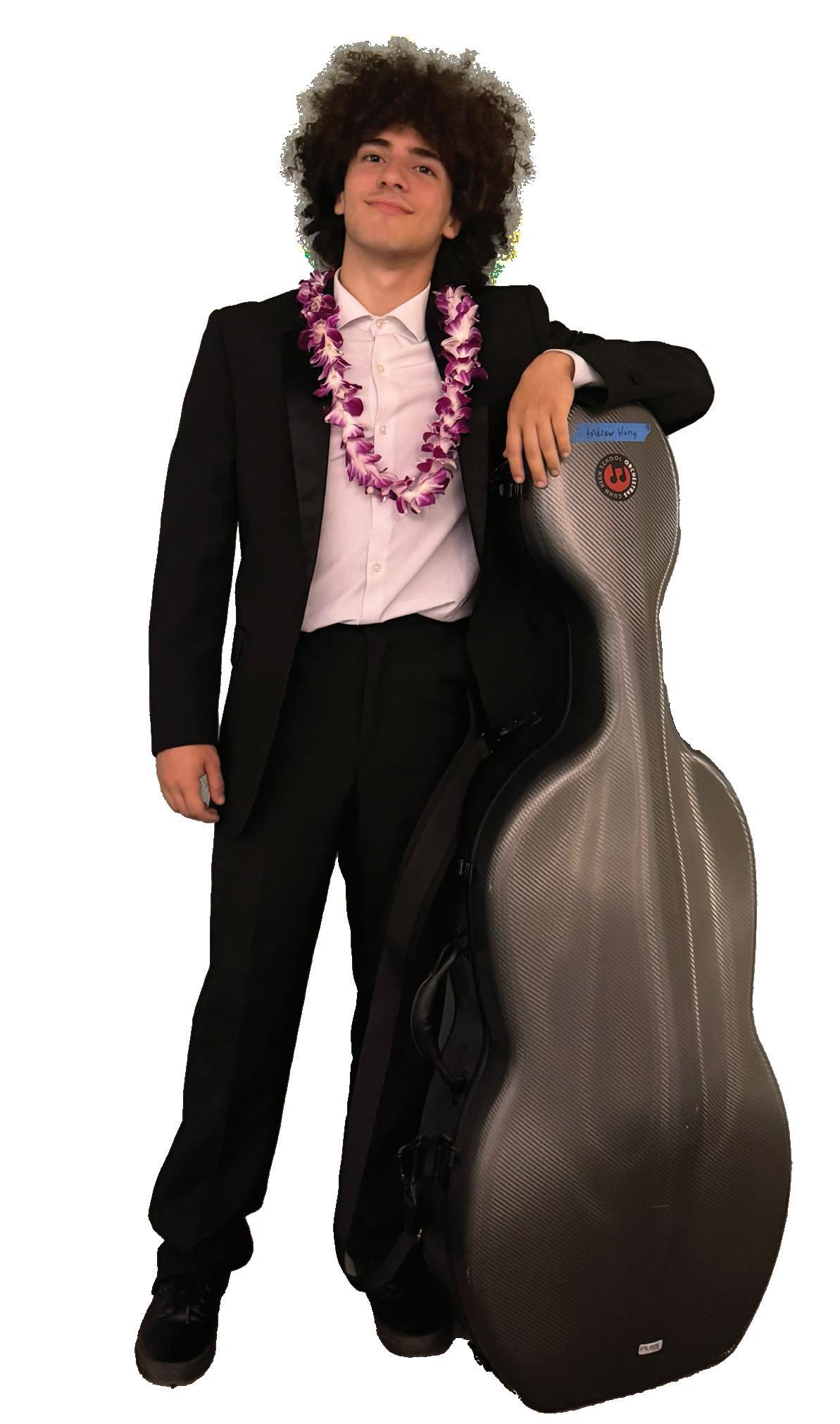
This is sophomore Suleiman Rawashdeh, but you can call him Sully. He plays volleyball as an outside hitter and football as a wide receiver. When he’s searching for a good bite to eat, his go-to spot is Marugame Udon in downtown Palo Alto.
“I’m a big man,” he said. “I like food. I do prefer Asian cuisines. UMe Tea has really good popcorn chicken at Cal Ave. This is a really weird one, but the Safeway sushi (is also really good). I just have weird taste. I like food that other people don’t like, sometimes.”
As it turns out, Rawashdeh likes a whole lot of things besides food. He likes the Japanese pop singer Ado and reading fantasy books. He likes watching TV shows like “Attack on Titan,” “Haikyu!!” and “When Life Gives You Tangerines.” He likes keeping things clean, sanitary and organized, though the state of his room says otherwise. He likes sports, and working out at the gym. He likes third period orchestra where he plays cello.
Rawashdeh feels that building a community through participation in orchestra and volleyball programs has contributed to his sense of belonging.
“(In orchestra), in the least corny way possible, we’re just one big old family,” he said.
One of Rawashdeh’s most treasured memories is the Instrumental Music program’s recent trip to Hawaii.
“(The trip) was one of the best weeks of my life,” he said. “It was incredibly fun. After one of our performances (the orchestra) headed to the beach and that was really fun. We were all in a huge circle playing volleyball. I really lived in the moment (on the trip) and didn’t stress about what (would come) tomorrow.”
Fitting with his wide range of interests, Rawashdeh finds that rather than excelling in one area, he is more of a jack-of-all-trades type.
“I’m not really good at anything,” he said. “I’m just decently good at everything.”
Especially in an environment that emphasizes college applications, he sometimes feels jealous of those who are very talented at one specific skill and wishes he was different.
“I’d say that I get pretty jealous when other people are really good at things that I love, too,” he said. “It does kind of suck that I’m not great (at) anything and just good at everything. There are some times where I do wish
that I was really good at one thing so that I could just (differentiate) myself.”
“There’s no need to get so worked up because the reason why I started in the first place is just to have fun,” he said. “So if I start getting worked up over something that I can’t really control, I’m just like ‘it’s not that serious.’”
Rawashdeh says that having fun is one of his main motivations in life, and that tends to be easier because he is a natural optimist. But at the beginning of this year, when he struggled to feel a sense of connection to others and occasionally self-isolated, he had to learn to overcome his tendency to overthink, and to lean on his friends.
“There was this point in time where I felt as though I wasn’t cared for or thought of and I felt left out of a ton of things,” he said. “(It was) really little stuff, like let’s say I drop something, bend down to pick it up, and (my friends) keep walking away. It’s so minor that it’s not something I should (have been) overthinking. I’d be with a group, but I’d feel like a ghost.”
To overcome that feeling, Rawashdeh decided to talk to a close friend about it.
“I talked to a friend (from orchestra) first and they helped me open up my feelings to everyone else,” he said. “It felt great because it was stuff that I had been bottling up for a long time, and having that come out in the open made me feel like a huge weight was off my chest.”
Having his friends help him through this experience led Rawashdeh to redefine what he values in his friendships.
“I think friendship means being able to share memories with the (people) that you care about deeply,” he said. “Being there for them when they’re having a tough time or just things like that.”
Remembering how others made him feel and using it to inform his own behavior has made Rawashdeh a better friend.
“I feel like I have started to care a lot more for everybody and try to be mindful of what I do or say just not to bring anybody down,” he said. “And nowadays I don’t expect (the little things) from other people, but that’s who I am as a person so I will do them (for others).”
—Written by Ezra Rosenberg
For sophomore Gia Vakklaganti, an outfit is never complete without at least one piece of jewelry. Whether it be through adding a pair of glittering gold earrings or a dazzling necklace, Vakklaganti’s passion for jewelry extends beyond her outfits and into her online business.
Vakklaganti’s interest in jewelrymaking began with a casual visit to her mom’s friend’s house where she noticed a set of tools lying around, and quickly blossomed into a passion she is deeply invested in.
“I literally fell in love with (jewelry-making) as soon as I (was introduced),” she said. “I bought so many materials, and I just kind of redid what (my mom’s friend) had taught me to do over and over again, and it just evolved from there.”

While her journey began with beads and wire, a popular introductory medium, Vakklaganti now finds her favorite material to be resin. Resin is a versatile, clear liquid material that can be dyed or shaped using molds and cures into a glass-like solid. Although she prefers resin, her style is inspired by the florals and intricacy of clay jewelry.
to create her decorations and bases for her jewelry. Colors depend on what she imagines she would want as a customer herself, or a selection from various color palettes she sees in the environment around her and online.
Assembling jewelry requires a steady hand and an eye for detail. While Vakklaganti loves her pieces and ensures each one reflects her passion for creating, she wouldn’t personally wear it.

“I’ve always said this, and I’ve always heard mixed responses, but I never wear my own jewelry,” she said. “I would love to, but it’s really not my style. I feel like my jewelry definitely doesn’t reflect who I am, but it definitely reflects my creativity.”
Vakklaganti finds that the style of her jewelry better suits her audience, which consists of mainly people around her mom’s age. Although she did not initially plan on turning her hobby into a business, the support from her friends and family encouraged her to start selling her jewelry online and at markets. Handling her business can be challenging, but Vakklaganti finds it to be an avenue for her to express her creativity and divert her attention from school.
“I think resin is such a creative medium to use because it allows me to literally do anything,” she said. Obviously, there are some restrictions, like the molds that I use, but you really don’t have to limit yourself (when designing) so that’s why I feel like I embody it.”
Vakklaganti’s process begins with a search for inspiration either in her head or on Pinterest if she is struggling to think of an idea. Afterwards, she begins to pick out her molds. Since Vakklaganti’s style is inspired by clay jewelry, she often uses a mix of clay and resin molds
“Obviously, marketing is a pain, managing the website’s a pain, and it’s also expensive, but making the jewelry is just so fun that it can be used as a break from studying or a break from everything,” she said. “I just turn on my music and do my thing.”
—Written by Michelle Zhou

It’s common for freshly minted high school graduates to step into college with the overwhelming pressure
Affairs hospital as a data analyst during the peak of the COVID-19 pandemic. Little did she know, taking this job would completely change her perspective on her future. There, Lee helped analyze healthcare system operations to improve clinical efficiency and patient care. While she enjoyed the analytical aspect of the job, her lingering curiosity of the healthcare field still stayed with her.
“Being in the healthcare system made me realize that I wasn’t as passionate about computers as I might want to be for a career,” she said.
In her junior year, Lee was offered an opportunity to shadow a family friend in a primary healthcare clinic. Observing patient-doctor interactions opened her eyes to a side of medicine she had never known.
“I was really impressed by how (my family friend) was able to connect with patients and help them in ways that they didn’t necessarily go in for,” she said.
What struck Lee was not just the intriguing science behind medicine but also the social connections and critical thinking involved. Realizing that medicine combined many of the problem-solving skills she enjoyed in computer science with a level of human connection she
40.7%
of surveyed students feel that they must decide their career path prior to graduating
Source:
Most people expect their career after high school to be picture-perfect: graduate high school, choose a college major and build a life around that field. However for Gunn alumna Lisa Waltuch, reality was different from. She spent years after graduation in a series of creative jobs, each one outlining new curiosities, adapting to family circumstances and developing a growing interest in helping people navigate change.
After graduating, Waltuch followed the creative. She first attended the UCLA to study design but ended up transferring to Stanford University, where she received a general design and art history major. Her interest in art and design started when she taught art to her class in third grade. She later joined the yearbook, and eventually became the editor-in-chief.
“(Being on the yearbook in high school) was such a fun experience for me that when I went to college at UCLA, I also became part of the yearbook staff,” she said. “That influenced choosing graphic design as a major.”
After college, Waltuch worked in graphic design for several years before attending the Rhode Island School of Design to get a Master of Fine Arts degree in graphic design. RISD sparked her interest in the relationship between people and technology, and in how digital interfaces could feel engaging to users.
This interest led her to pursue creative and technologybased jobs. She worked as an art director for the Discovery Channel Online, creative director for the Metropolitan Museum of Art’s website and in multiple roles at Walmart, including working on their in-store kiosks and becoming head of trend and color, a role focused on identifying visual and consumer trends for product development.
Although Walmart had been a part of her successful career in design, her career shifted after having children. Leaving Walmart was not just a professional choice, but also one to balance work, family and personal fulfillment.
Waltuch’s decision to leave Walmart came from realizing that the structure of her job did not fully align with the style of family life that she envisioned.
“I hadn’t expected Walmart’s maternity leave to be so short, and I wanted to be able to decide what I wanted to do with my time with my family,” she said.
During her career transition, Waltuch experienced many mixed emotions about her experience.
“I felt excitement, fear and uncertainty, and there were times when I felt frustration,” she said.
After leaving Walmart, she became an entrepreneur in making visual art out of children’s artwork and old clothing, creating personalized pieces for major life events by painting on silk. While she and her family lived in Costa Rica for three years, silk painting became a portable form of her work.
While Waltuch’s graphic design career reflected her life circumstances at this time, after moving to Palo Alto, she moved toward a different career path: life coaching. The transition was gradual, based on her deep interest in people, collaboration and personal growth.
“(It was based on) having kids, wanting more flexibility
However, by her junior year, Lee had taken too many computer science related courses to fully switch into a common pre-med major. Instead, she pivoted into data science, which allowed her to stay with her technical
After graduating from Berkeley, Lee applied for a Columbia University’s post-baccalaureate program to complete undergraduate science courses required for
“You hear horror stories about how difficult medical school is, and I was never the type of student that was really dedicated to academics,” she said. “Looking back,
Now applying for medical school, Lee says she still uses the computer science and data science skills she developed at Berkeley in her current major. Her experience taught her that career paths do not need to be solidified from the start, and growth comes from fostering change in
—Written by Yuji Song
with my time and being able to live in Costa Rica with my family,” she said.
Looking back, Waltuch said the roots of her interest in coaching started at Stanford, where she worked as a resident assistant, where weekly meetings with residents introduced her to how people build a relationship of honesty within groups. This interest continued at RISD, where Waltuch focused her master’s thesis on collaboration. For the project, she worked with jewelers, actors, writers, artists, professionals and experts. Through this process, she discovered that she thrived when working with others and bringing different perspectives together.
“It was all about group dynamics and developing people as individuals,” she said.
Her interest in coaching also developed while she was living in New York City, where some of her friends went through the Co-Active Institute program where she developed stronger communication skills, learned transformational coaching and relationship-building skills. She was intrigued by what they were learning, leading her to go through the same program herself.

During the pandemic, Waltuch moved back to Palo Alto, where she was invited to lead storytelling workshops at a women’s retreat in Mexico. The workshop inspired her to continue helping people. She started running women’s retreats with a friend, focusing on guiding women going through life transitions. She used Stanford’s “Design Your Life” coaching methodology to do the work, while also taking classes on becoming a leadership and life coach.
The process of becoming a life coach took around four years. It required training, mentorship and fulfilling required courses to earn her coaching certification.
Throughout this process, Waltuch has wondered what her career would have looked like if she had stayed in interactive design as it has grown immensely since she left. However, Waltuch does not view her career change as a mistake in any way. Rather, she views it as a part of a larger process of learning, experimenting and growing.
“Life is long,” she said. “It’s fun to experiment, try new things and evolve with your interests or as new opportunities arise.”
—Written by Olivia Lee
Arrows whiz downrange as sophomore Max Hernandez assumes his position on the shooting line, slinging a quiver across his hip. His bow — complete with a stabilizer, a sight and a small metal device called a clicker — creaks as he draws back and fires.
Aside from school, archery is the most time-consuming activity in Hernandez’s life. He was previously a competitive swimmer in New York, but switched to archery during the COVID-19 pandemic, as it was the only sport that met the mandatory social distance requirements. Now, he shoots for an average of three hours every day, building strength and stamina in a separate gym session from 6 to 8 a.m. On weekends, Hernandez may spend as many as eight hours at the archery range, methodically loading, firing and retrieving his arrows.
“I cross-train by going on runs and lifting weights,” he said. “I’m currently working on my nutrition plan and setting health and fitness goals.”
Hernandez trains at Hye-Youn Park, an Olympic recurve archery club named after its founder. Youn is a former Korean national team member, the head coach of the club and Hernandez’s role model. For Hernandez, her kindness and diligence
both on and off the shooting line inspire him to train harder.
“I’m most inspired by my coach; she works hard everyday and cares so much about her students,” he said.
“She is always so nice to us (students) while still helping us to compete well.”
Although technique and stamina are both important qualities for an archer to possess, mental strength plays a crucial role in the sport. Hernandez comments on the intense atmosphere of competitions, sharing the strategies that he uses to stay calm.
“Competitions are a lot more stressful and high-pressure (than practice),” he said. “I try to stay calm and focused (by) taking deep breaths to ensure that my heart rate lowers.”
Currently, Hernandez competes at the state and national level. If given the opportunity, he would like to make the U.S. Archery Team.
“It would be a big commitment and take up much of my life,” he said. “However, it would also be an amazing experience.”
—Written by Cici Zhang





For freshman Chloe Hong, archery isn’t simply a sport. It’s a discipline that has changed her approach to school and her personal life.
After suffering multiple concussions from playing soccer, Hong looked for a new sport that could bring her the same excitement soccer did but with less physical contact. At the suggestion of a family friend, she settled on archery last summer and has become increasingly competitive.
Despite transitioning from soccer to archery not long ago, Hong has been able to find motivation in how her efforts can produce tangible results. Her growth has been manifested in her recent achievements, having placed second in the 2025 California State ranking and third in the 2026 International Vegas Shoot.
“This (past) summer, I started practicing every single day,” she said. “During competitions, (my efforts) reflected what I was practicing, and I started doing better.”
Alongside the skill improvement, Hong highlighted the formation of new, unique friendships as a meaningful aspect of competing in tournaments. Despite communication challenges, meeting new people has allowed Hong to expand her global perspective at international competitions.
“A difficult part is (the) language barrier,” she said. “I (met) this girl from China, and she couldn’t really speak English that well, but we tried getting past that. I think making new friends from different places around the world and learning about their lives is really cool.”
However, this high-level competition requires a balance in Hong’s two lives as a student and as a competitive archer. She faces difficulties in allocating enough time for both, as competing has led to missing multiple school days. Despite this struggle between school and archery, Hong has learned to apply the principles of her sport in her academic and personal life, enabling her to retain the same focused mindset and forge ahead.
“For archery, it’s one arrow at a time,” she said. “If there’s a tiny distraction, (it) could change where the arrow goes drastically, so I think (that is) one skill I’ve learned. This helps with school, too, because I am able to focus on one thing at a time, and then move on, rather than multitask or (get distracted) while studying.”
—Written by Melody Na

I am positive that most NBA fans have spent months meticulously analyzing player statistics and studying mock drafts to predict the next NBA draft. On the other hand, I have spent maybe about ten minutes on TikTok scrolling through highlights and listening to energetic commentators yell about the way 10 different hoopers played on the court. With this expert level of research, I can confidently predict that the three future stars of the NBA draft will be A.J. Dybansta, Darryn Peterson and Cameron Boozer.
Let’s begin with A.J. Dybansta on the Brigham Young University Cougars, whose name already sounds pretty professional. Based on short clips of his playing, he seems like a difficult target to guard, with the agility of a cheetah and the hops of a kangaroo. Even though I have barely ever touched a basketball, I am sure that a player who can leave his opponents in confusion each time he passes is a perfect asset to have on the court. His footwork seems pretty elite, accompanied with his 6’ 9” strong frame he uses to bulldoze his way to the rim.
Next up is Darryn Peterson, who currently plays as a guard for the Kansas Jayhawks. Peterson seems know he was meant to be in the NBA since birth. In every highlight I’ve seen of him play, his eyes were locked on the ball, followed by his smooth, quick
movements as he dribbled across the court. His tough act works — the defenders always look at the camera for help. Beyond his natural athleticism, Peterson demonstrates strong leadership skills that can empower a team’s confidence. Peterson once said that he wanted to bring “a leader and a hardworker” mentality to the team during Big 12 media day. He is a smooth operator and is fearless when it comes to taking difficult, hard-angled shots.
Lastly, Cameron Boozer, playing for the Duke Blue Devils, completes the ultimate trio. As one of the few freshmen in National Collegiate Athletic Association history, he was nominated as National Player of the Year with his sharp, efficient shooting precision and averaging of twenty-two points. I didn’t even have to know what a pick-and-roll was, but I knew whatever he did was working.
Even though I am not the most devoted basketball fan out there, one glance at these players’ talents and personal fortes is enough to indicate their success. Like they alway say, it’s best when you look like you know what you are doing. No one questions it if you have good form. If my prediction is wrong, that just means it is a rebuilding year.
—Written by Yuji Song
When Oakland native Alysa Liu won the women’s individual figure skating gold at the 2026 Winter Olympics in Milano, what captured the hearts of fans was not just her striped hair and shining medal, but her fresh approach to competition.
The “Alysa Liu mindset” refers to Liu’s new mentality around competitive figure skating, focusing on balancing necessary breaks with ambitious drive and prioritizing personal fulfillment over results. At just 16 years old, Liu had retired after the 2022 Beijing Winter Olympics, where she placed sixth, citing burnout and frustration over her career’s lack of control.
article by the American Academy of Pediatrics states that while more than 60 million children and adolescents participate in organized sports, over 70% of youth athletes quit by age 13, with injury and burnout among the top reasons. Elevated physical and mental exhaustion from overwork call for a prioritization of rest in approach to competition.
Stanford sports psychologist and former Yale football player Dr. Roy Collins believes that a more balanced approach to sports minimizes burnout and can lead to higher rates of success.
gEtting a chancE to ExprEss all your diffErEnt idEntitiEs and carE for thEm likE plants in thE gardEn ovErall lEads to bEttEr pErformancEs, as wE’rE ablE to bE multidimEnsional and truE (to oursElvEs).
However, in 2024, she returned to the sport on her own terms. In an interview with the NBC after winning Olympic gold, Liu described her approach to skating as focused on enjoying the process of competing instead of the reward, prioritizing mental and physical health over scores.
stanford sports psychologist dr. roy collins
“Winning isn’t all that, and neither is losing,” Liu said. “It’s just something that happens. It’s the outcome. But what matters is the input and the journey. And I would say take a break. I take breaks even now, and I think that’s the way to (succeed).”
Varsity volleyball player junior Richard de la Garza previously struggled with comparison to others in his sport and feeling as if he was behind. Now, Liu’s success while keeping a balanced attitude proves to him that he can achieve his goals on his own terms.
“(Liu) is living proof that you may fail the first time, but if you come back with a different mindset, and when you live in a way that you know you can succeed in, rather than what other people think, you can accomplish a lot,” he said.
Liu’s radical competition mentality, combined with her mastery in performance despite an unexpected return, has skyrocketed both her international and local media impact. Especially in the Bay Area, the teen mental health crisis has called attention to stressors in teens’ everyday lives, including burnout. Burnout is defined as physical, emotional or mental exhaustion, accompanied by decreased motivation, lowered performance and increased negativity.
“We’re meant to be, as human beings, well-rounded to a certain extent,” he said. “Getting a chance to express all your different identities and care for them like plants in the garden overall leads to better performances, as we’re able to be multidimensional and true (to ourselves).”
Many believe the pressure placed on child athletes is especially prevalent in figure skating, where skaters, mainly young girls, face pressure to peak as teenagers and endure extreme training for the promise of success.

Liu’s experience with these standards is a key factor, as to why her return became so widely discussed within the figure skating community, even before the Olympics.
At 13, she made history by becoming the U.S. National Champion, the youngest to ever do so, after landing a historic three triple axels. At 14, she landed a quadruple lutz in competition, making her the first American woman to land a quadruple jump. From a young age, Liu had felt outside pressure to fulfill her role as the American hope for figure skating, no matter the physical toll.
for (liu) to rEally bEcomE that skatEr that pEoplE fElt shE could always bE and to succEEd in ways that pEoplE thought no onE would EvEr do was hugE. shE rEally was ablE to undErstand that at thE End of thE day, this is just figurE skating. It’s not a lifE or dEath situation, and it should rEally nEvEr bEcomE that.
stanford fIgurE skatIng club mEmbEr audrEy akkErman
According to the student-led research initiative AIM Youth Mental Health in 2025, 75.5% of Bay Area students know of peers struggling with high stress levels or burnout. These high levels of burnout directly result in a decline of youth participation in sports. An
Liu broke free from this cycle at 16 when she announced her retirement due to mental and physical exhaustion. For two years, she remained completely removed from the figure skating world, until her sudden comeback announcement in 2024. Many fans doubted she could replicate her former success, arguing that she would never be able to compete with current, younger skaters. Yet Liu surpassed public expectations by winning the 2025 World Championships and eventually, the Olympics.
For Stanford figure skating club member Audrey Akkerman, Liu’s success showed how age shouldn’t be a limit to success.
“For (Liu) to really become that skater that people felt she could always be and to succeed in ways that people

• ExErcisE incrEasEs hEart ratE, dElivEring oxygEnrich blood to thE brain
• rElEasEs protEins that promotE thE growth of nEw nEurons and strEngthEns lEarning and mEmory
• producEs various typEs of nEutrotransmittErs likE sErotonin and dopaminE, improving mood
Many students receive lectures from their parents about the benefits of exercise and venturing outdoors. Guardians wrestle their elementary-and-middleschool-aged children into hockey uniforms, swimsuits and basketball jerseys every afternoon, hoping that they will reap the mental and physical benefits of participating in sports.
Indeed, a 2025 study done by the Center for Disease Control found that regular physical activity can improve memory, reduce anxiety and depression and even improve brain health. Consistent, short bursts of physical activity have been correlated with increased neurological functions of memory and thinking skills. Physical activity aids the development of children’s mental health and cognitive function, as children learn to rely on an increased working memory and critical thinking skills when transitioning to secondary education. These perks can translate directly into the gradebook. According to the National Library of Medicine, students who exercise daily are 30% more likely to pass classes than other students. Exercise changes how a child’s brain develops, as steady exercise is directly linked to longer attention spans and memory retention.
Working out can also significantly support mental health, a major aspect of student and adult life. An article by Heart and Stroke Foundation of Canada states that the type of activity has minimal impact — just 10 minutes of any form of exercise such as walking, biking or team sports has been reported to make people feel happier. During exercise, the
body naturally releases endorphins, a feel-good hormone that reduces pain and discomfort, and endocannabinoids, a molecule produced by the body’s endocannabinoid system to improve mood. This has led exercise to be a key component of recovery for people suffering from mental health disorders.
Student-athletes have felt the benefits of an improved working memory, less anxiety and better critical thinking skills. Sophomore Lily Oralevich, varsity dancer and junior varsity swimmer, considers herself better equipped to handle schoolwork after participating in sports.
“I usually feel less tired after practice,” she said. “It’s the combination of being with my friends and moving my body that energizes me.”
As many students in the Bay Area face societal pressure to sacrifice mental and physical health for academic achievements, participating in sports can provide an outlet for stress while simultaneously building healthy habits. P.E. teacher Paul Medeiros says sports can not only reduce stress and lead to better cognitive function, but also offer skills that carry into all areas of life.
“When I was an undergrad, I had a professor who challenged me to look at sports as more than just competition,” Medeiros said. “This made me reflect on my own journey (with exercise). Sports shape how we perceive the world.”
Whether it be in high school cliques or college applications, students are often pushed into two categories: creative or analytical, an artist or an engineer. Rarely are the two treated as compatible, but “Project Hail Mary” manages to blend the two into something all audiences can enjoy.
Adapted from Andy Weir’s bestselling novel, the film follows Ryland Grace, a former science teacher who wakes up alone on a spaceship with no memory of who he is or why he’s there. As his memories gradually return, Grace realizes he has been sent on a mission to stop astrophage – a sun-eating bacteria — from killing all life on earth. Using scientific experimentation and the help of an unexpected friend, Grace must piece together a solution to save humanity from extinction.
For many viewers, one of the film’s most compelling aspects was that it maintained a realistic portrayal of science while conveying an out-of-this-world wonder. Freshman Noa Neufeld appreciates how the film shows Grace working on his scientific discoveries through a process of trial and error.
“It wasn’t just this ‘Eureka!’ moment where he would hear a word and (immediately understand what to do),” she said. “Instead, you got to actually see him test all these things, which is so important in science and also funny to watch.”
Beyond its scientific and logical depth, “Project Hail Mary” offers something science fiction films don’t always prioritize: a strong sense of artistry and sentimental warmth. Sophomore Ben Blauwkamp notes that the film’s use of visuals and color creates a distinct emotional impact.

The film’s attention to STEM problem-solving extends beyond scientific research and into communication, particularly through the way it approaches language development between Grace and his alien companion Rocky.
“Rocky doesn’t have vocal chords or a tongue, so it isn’t physically possible for him to make any of the sounds we can,” Neufeld said. “So, it was really interesting to see how Rocky would talk, and it got me really interested in linguistics and how humans (rely on tonation) to communicate.”
in space who’s fighting for humanity, and gives him a moment to breathe.”

“I really liked how they portrayed the space scenes,” he said. “In the scene where Grace is surrounded by all the astrophage, it lights up in this brilliant pinkish- red color, and I find it very calming. It kind of takes (the viewers) away from the whole harsh story about this guy
While the movie stands out for its visuals, its soundtrack also plays a major role in shaping the film’s ambience. Through orchestral pieces that utilize crystal organs, glass harmonicas and steel drums, the score emphasizes both the magic and mystery of space exploration. According to sophomore Marie Frank, the movie’s music further amplifies its emotional impact.
“It definitely added to the atmosphere a lot,” she said. “This might sound like an obvious answer, but I feel like (the film) used music or certain instruments to express his awe really well. When Grace entered the Petrova line, the music swelled and showed his wonder towards (being in) space.”


The “Project Hail Mary” resonance with audiences comes from its ability to blend technical ideas with emotional storytelling through character writing, stunning visuals and a striking soundtrack. Especially during a time where people are increasingly placed into boxes of being STEM or art-oriented, a successful film that highlights the value of combining both serves as a reminder of how interconnected those strengths can be.
“I think it’s not very often that we can find media that has accurate science-related topics while also appealing a lot to the emotional side,” Frank said. “And while I don’t know exactly how accurate it is scientifically, I just think that it’s really impressive how the movie was able to balance both aspects while doing each part well.”
—Written by Fiona Wu
From Apr. 28 to May 3, the Space Cookies First Robotics Competition Team 1868 took on the For Inspiration and Recognition of Science and Technology Championship in Austin, Texas, placing 23rd in the Andromeda Division overall. The team, formed in 2006 as a partnership between the NASA and Girl Scouts, is comprised of around 50 high school girls in the Bay Area interested in STEM. To be eligible for Champs, Space Cookies participated in three state-level qualifying competitions. According to project manager sophomore Kavya Mathan, there are four main divisions that each member falls under during competitions: mechanical, electrical, programming and operations.
“You don’t need to have any sort of mechanism to participate. Even if your robot just drives, there’s still something you can do to help out,” she said. “I think our team isn’t just good at one (division and) that’s why we did pretty well.”
Space Cookies spent the eight weeks before Champs, the “build season,” designing, building and prepping their robot. The team’s lab is located at NASA’s Ames Research Center, where several staff mentors provide insight to ensure the robot is as successful as possible.
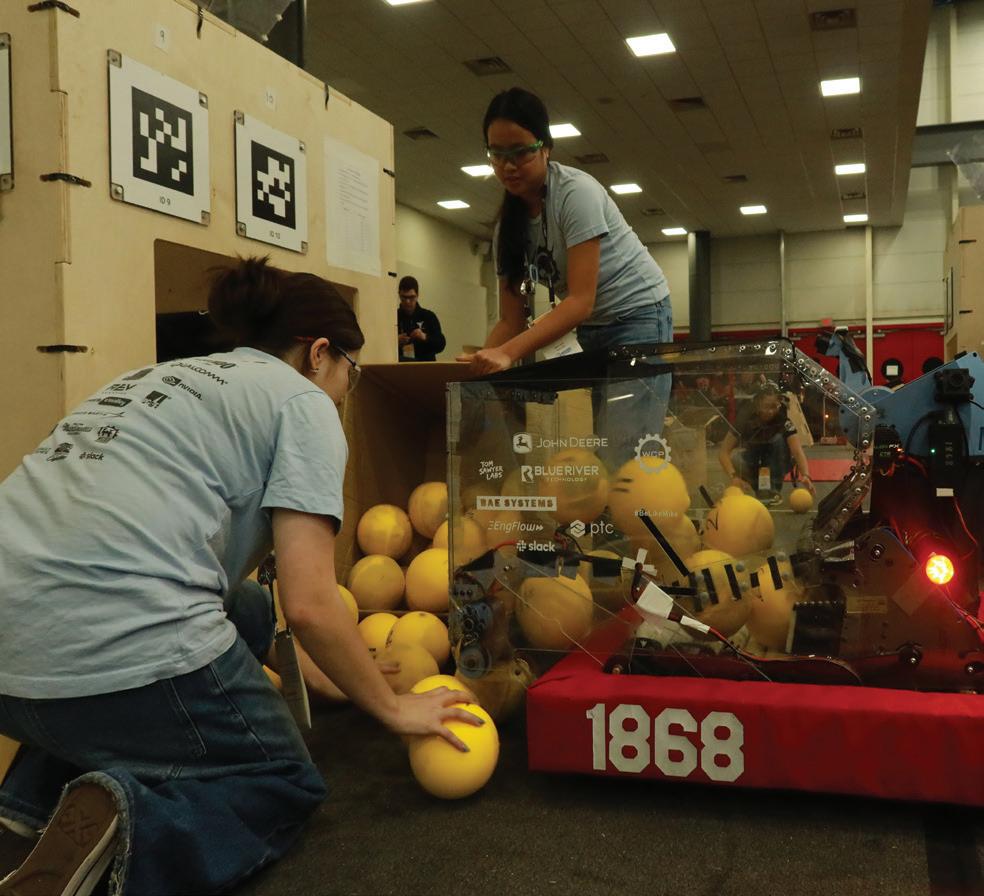
Space Cookies’ robot, dubbed “Supernova,” was built with a fixed double shooter designed to propel balls into baskets as quickly as possible. The shooter features two synchronized, stationary launching mechanisms. Sophomore programmer Anika Datta says that Space Cookies’ success can be attributed to this powerful instrument.
“I’m really happy with our performance this year,” Datta said. “Especially if you look at our robot, our design is really unique…Originally, with our strategy, there was a lot of variation, and then everybody converged onto one main strategy that worked really well.”
Beyond building robots for competitions, Space Cookies also gives back to the community through outreach events. They have won the Regional Impact Award several years in a row, which recognizes robotics teams that are exemplary in community service.
Programming director junior Caitlin Cai appreciates the importance of incorporating Girl Scout values such as civic engagement and cultivating inclusion into Space Cookies’ activities. As part of this mission, they help elementary and middle-school-aged Girl Scout troops participate in hands-on science and engineering projects
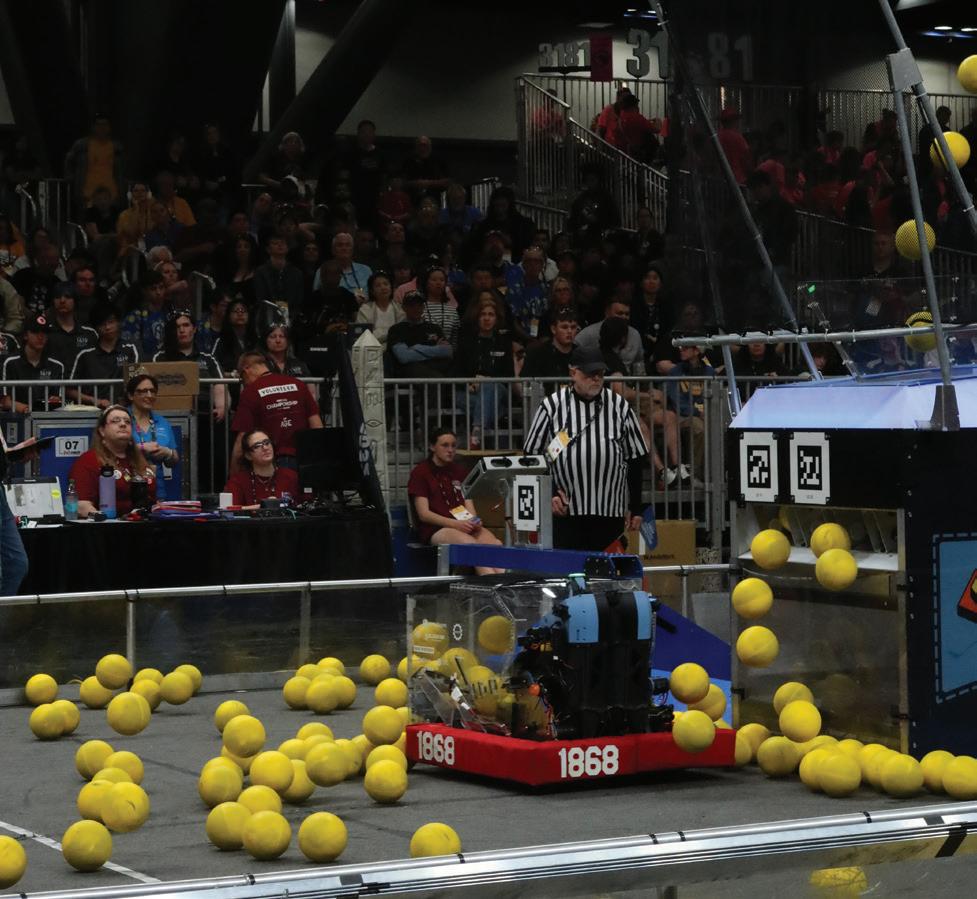
through workshops and badge-earning opportunities.
“(These community events help) harness our leadership skills and our teamwork and encourage (young girls) to go into STEM,” Cai said. “I think that women tend to be a very marginalized community within STEM, (but Space Cookies) has given me a way to exercise my experience and skills.”
During Champs, the team participated in several other activities besides robotics, including Robo Prom, a stand-in prom for students who had to miss their high school prom to compete, as well as team dress-ups. Drive Team member freshman Ellie Hu’s favorite parts about the competition are how Space Cookies gets spirited by dressing up in light blue, their team color, and bonding with other teams through dinners.
“Especially when you go to competitions of larger scale … you get to meet a lot of new people on different teams,” she said. “It’s really cool to get to socialize (because) you see teams from (all over). Apart from having a competitive robot, we’re also competitive in the sense that we make a really strong impact on the FIRST community.”
—Written by Annabel Brown
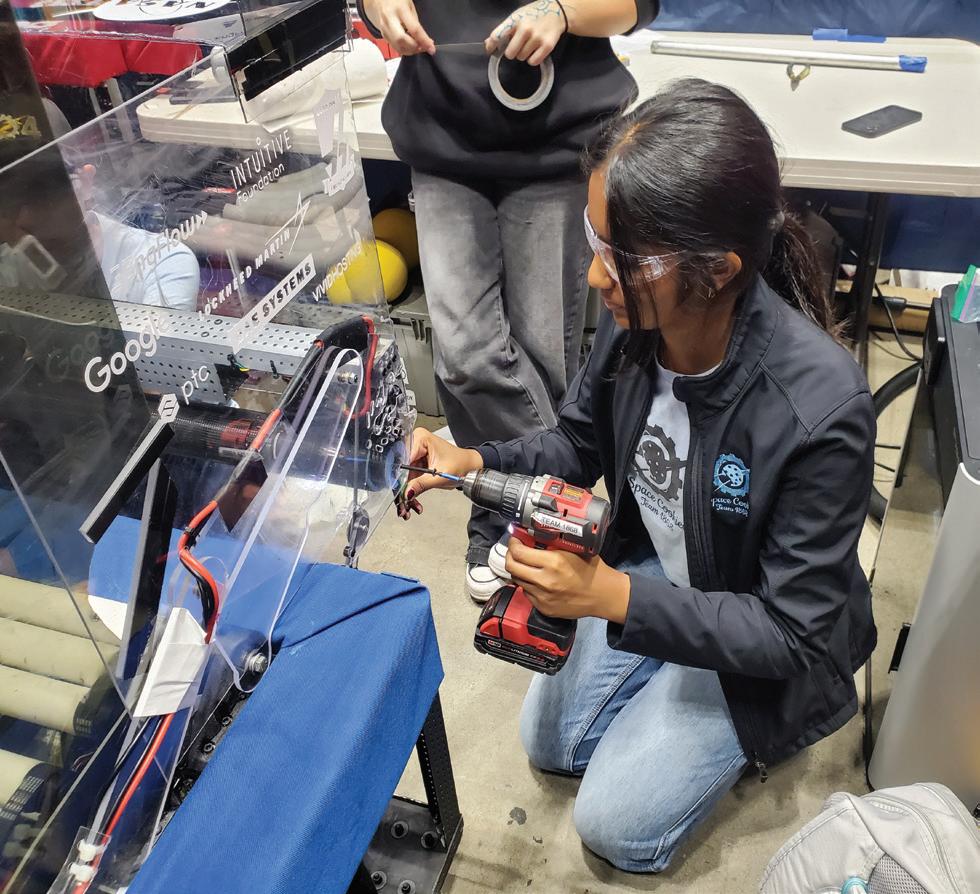
After Apollo 17’s successful mission to the moon in 1972, space exploration seemed to have come to a standstill. For fifty years after, no country sent any astronauts to the moon. But half a century later on April 1, 2026, the NASA Artemis II space mission finally broke the spell. The 10-day mission sent four crew members aboard an Orion spacecraft looping around the moon, within 4,600 miles of its surface. They traveled 250,000 miles away from Earth, breaking the record for the furthest any humans have ventured into space. It was also the first mission to take a crewed flight beyond low Earth orbit since Apollo 17.
Gunn Robotics member sophomore Shrishti Sinha watched the launch during a robotics competition, which was exciting as a student in STEM.
“In one of our (robotics) competitions, there were so many students from different schools working and they played the Artemis II landing,” Sinha said. “It was this moment where everyone dropped what they were doing to watch the launch of Artemis in awe.”
Conceptual physics teacher Laurie Pennington emphasizes the importance of the space mission, especially having grown up hearing discussions centered around space travel and watched the 1972 launch of Apollo 17.
“When I was a kid, everybody was pretty excited when we would go to the moon,” Pennington said. “I think that interest has been lost since Apollo 17, (because it’s) ‘out of sight, out of mind.’”
Junior Aeronautics Club president Tony Wu views Artemis II as a huge accomplishment and says the launch has altered his club’s perspective on space.
“The only impressive launches in our lifetimes as high schoolers were just random SpaceX rockets, but to see an actual NASA rocket go to the moon (is huge),” he said. “I thought we were never going back (to the moon).”
According to Sinha, from a robotics perspective, the Artemis missions are what young engineers like her aspire to work on one day.
“It’s just really cool,” Sinha said. “We’re just working

61.3% OFSURVEYEDSTUDENTSgaiNEDapOSiTiVE OUTlOOkFROmThEaRTEmiSIImiSSiON studentsSource:Self-selectedsurveysenttoGunn byTheOraclefromMay11toMay18with80responses.
DaniMassarweh

1. She don’t need no stinkin’ ___
6. Food service giant
11. Home state
14. What she does best
15. What else she does best
16. ___ glance (2)
17. Her two favorite subjects (2)
19. Hesitation of speech
20. Not her retirement org.
21. Element 26
22. It’s AGFA, don’t ask me what that is
23. Supporter of instructors (2)
28. I hope she’ll do this with
30. John of Three’s Company
31. Rodeo horse
32. Awards show
35. Indent five spaces
36. Scavengers on Tatooine
37. Boba
40. Part of the electronics lab
42. Dramatic singing
44. Move over a bit
47. Do this loudly at a graduation
48. ___ is retiring! (2)
53. _ _ therefore I am full (2)
54. One cent (in the H-1) (2)
55. High card
58. Double helix
59. _-_ years of teaching (2)
What Leo says
1. Hidden recipents
2. Appreciative sounds with 10 down
3. Teaching? (2)
4. Alexandrite for June
5. Psychic’s claim
6. (C8H8) with foam)
7. _ _ no? (2)
8. Virtuous one
9. V x LX
10. Appreciative sounds with 2 down
11. Captured
12. Pay for money (2)
13. Actress and inventor
18. Blockbuster
22. Parts of a play
24. A long time
25. The big apple
26. Swift’s tour
27. 80% N2, 20% O2
28. Acronym with “And Learning”
29. The other Gunn’s lobby group
32. Gluten free grain
33. Neighbor of Nor.
34. Learn this from Ms. Granlund
Moyer
36. Mr. Pennington
37. Her specialty age group
38. Poetically before
39. Research class
40. Source of tension
41. H2O(s)
42. With ane for gasoline
43. Beef rice noodle soup
44. Just a little
45. Send her a thousand ___
46. Hot ones in astrophysics (2)
49. Innocent
50. After 20 years at Gunn, most of her wardrobe ____ (2)
51. Fill her mail box with thank you ___
52. Mr. Smiley on Sesame Street
56. Her original subject
57. SJO numbers
59. Special care, for short
60. We will miss __
61. __ drop project
62. Wrath
My alarm goes off at 5:43 a.m. because 5:45 is for quitters. I wake up completely fine and not at all like a raccoon that got hit by a Waymo (true story — Vin has actually seen this).
First up on my agenda: gymmaxxing. I do pull-ups until my arms stop working, chug something called “Alpha Surge Pre-Workout” that I bought because the guy on the label has abs along with a Celsius and finish with a seventeen-minute mobility flow I found online. I don’t know what mobility means. I do the moves anyway. And of course, I’m at the YMCA with the teen summer membership because who doesn’t love free stuff?

By 7 a.m. I am built different.
Then I open the APUSH summer packet.
Chapter 2: Colonial America. I read the first sentence four times before accepting that this isn’t going to happen. I open Jocz Productions on YouTube like every other APUSH student in America (he’s better than Heimler, trust) and watch Mr. Jocz explain the Columbian Exchange in eleven minutes while I eat cereal directly from the box. Honestly? Better than the textbook. Jocz gets me.
I write two sentences of notes and decide I’ve done enough for my future.


Time for boba. I deserve it. I survived Colonial America, and I also managed to read a sentence about Jamestown. I bike to Boba Bliss in Mountain View, which — as my sources had not warned me — is permanently closed. The sign says “Thank you for your support!” I did not support them enough, apparently. I stand outside in the sun like an idiot while a man in a Rivian drives past and doesn’t help. On the bike ride home I pass Alta Mesa Cemetery, which hits different in July. During prep you at least go with a few people, united in avoiding whatever’s happening in the J-building bathroom. Alone in summer it’s just me, the silence and the awareness that Steve Jobs is buried fifteen feet away
I’m home by noon. The day is young. The packet is not done. Life is good?
P.S. to the boba addicts: Boba Bliss in Mountain View is not actually closed.
—Written by Vin Bhat

Although the ice that Alysa Liu skated on at the Winter Olympics gala may have melted away, the fiery epicness of her performance song “Stateside + Zara Larsson” is still hot as ever. Listen to the pure heat of this upbeat 2026 remix this summer as PinkPantheress sings about the thrill of a cross-continental crush.
—Written by Ezra Rosenberg
“NORMAL,” the ninth track from BTS’s long-awaited tenth studio album, “ARIRANG,” is fiery and loud — definitely a summer song. The growly, sizzling bass brings to mind brutal heat and steaming pavements; the reckless, aggressive lyrics (“kerosene, dopamine, chemical-induced…”) convey the liberation we’re all bound to feel with the absence of school.
—Written
by
Melody Song
“Tongue Tied,” indie band Grouplove’s most commercially successful song, communicates the summer-like warmth of both platonic and romantic love through its strumming beat and hopeful instrumentals. The song captures the freedom that I associate with the holidays, and “Tongue Tied” has livened plenty of monotonous days filled with relentless heat.
—Written by Cici Zhang
Alexandra Liu