Welcome to The Importance of Being Earnest at Gulfshore Playhouse!
By John Perine, Director of Education
Welcome to The Importance of Being Earnest at Gulfshore Playhouse This classic comedy by Oscar Wilde follows two bachelors, Jack and Algernon, each lead a hidden double life to avoid responsibilities and follow their whims But when their alter egos have the chance to win the hearts of two society ladies, hijinks ensue as they try not to get tangled up in their own web of lies.
The Importance of Being Earnest falls into a genre of theatre we refer to as a “Comedy of Manners.” Wilde’s classic comedy has all the right ingredients: witty, fast-paced dialogue, romantic entanglements, and satirical commentary on the manners of high society. Since its unanimously beloved premiere in 1895, the play has been revived and revisited countless times in the following 130 years all over the world In fact, Gulfshore Playhouse produced Earnest in our 2012-2013 season, making this the first twice-produced script for the company.
CEO and Producing Artistic Director Kristen Coury believes The Importance of Being Earnest feels more alive and timely than it was when she directed it 13 years ago, citing the eerie parallels between the gossip culture of 19th century London and the ever-present pressure to be “on” in the social media age we find ourselves in today. As you watch this production, take particular notice of the ways characters discuss social reputations, appearances, income, family lineage, and romantic interests. How do the characters present themselves publicly, and how does that reflect (or conflict with) their inner truths? How does that compare with the way we present ourselves and perceive others today?
We hope this performance guide provides a deeper understanding of the historical context surrounding The Importance of Being Earnest. Thank you, and enjoy the show!
John Perine Director of Education
Meet the Playwright
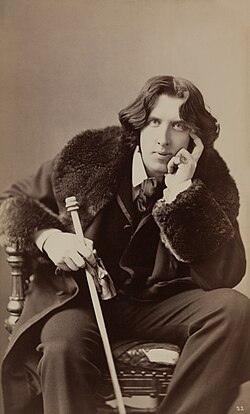
Oscar Wilde
Playwright
Oscar Wilde was an Irish playwright, poet, and novelist Born in Dublin in 1854, Wilde excelled in his studies as a child, earning many academic achievements for writing and drawing. He enjoyed studying classics, or Greek and Roman writings. This went on to inspire his first creative writing pieces as a student at Oxford University. His love of classics also led to his creation of a literary and social movement called aestheticism. Aestheticism refers to the idea that people should pursue beauty for its own sake (i.e. loving beautiful things simply because they are beautiful and not for any other reason).
After leaving Oxford, Wilde became a prominent figure in English society. He frequently lectured on art, literature, history, and philosophy. In the late 1880s and early 1890s, Wilde wrote some of his most important works, including his only novel. The Portrait of Dorian Gray tells the story of an eternally young man who lives a decadent lifestyle. While he indulges his vices, a portrait of him in his home ages deteriorates on his behalf while he stays young and beautiful. He also wrote several plays at this time, including A Woman of No Importance (1893), An Ideal Husband (1895), and The Importance of Being Earnest (1895).
In 1895, Oscar Wilde was arrested on charges of “gross indecency” (homosexuality). He spent two years in prison and the arrest shattered his reputation in England and ruined his relationship with his wife and children. He moved to Paris with no money and nowhere to live. During this time, his only notable work was a long-form poem called “The Ballad of Reading Gaol” which focused on his time in prison.
Wilde died in a hotel in Paris in 1900. He was 46 years old. His last words are often attributed as, “My wallpaper and I are fighting a duel to the death. One or the other of us must go.”
Meet The Cast
John Worthing
Played by Tony Carter
A man who lives in a large home in the country. When he wants to escape his duties, he says that he is going to visit his unfortunate brother Earnest in the city. All of his friends in the city know him by the name Earnest.
Algernon Moncrieff
Played by James Evan
A man who lives in a luxurious apartment in the city. When he wants to escape his duties, he says that he is going to visit his friend Bunbury in the country.
Gwendolen Fairfax
Played by Kate Marilley
Algernon’s cousin. She and John are romantically but involved, but she believes his name is Earnest.
Cecily Cardew
Played by Ella Olesen
A young woman who is in John’s care. She calls him “Uncle Jack”. She wants to meet her uncle’s unfortunate brother very much and finds the idea of him charming.
Meet The Cast
Lady Augusta Bracknell
Played by Kate Eastwood Norris
Gwendolen’s mother and Algernon’s aunt. Upright and proper, she is the pinnacle of Victorian society. She has a list of rules that she expects all young men and women to follow.
Rev. Canon Chasuble
Played by Richard Hollis
A reverend that lives near John’s country home. He is well-read and happy to provide his services to the people in his community.
Miss Prism
Played by Karen Peakes
Cecily’s tutor. She is a fervent reader and writer, and wishes Cecily would focus more on her studies.
The Butlers (Merriman and Lane)
Played by Michael Ehlers
Lane is Algernon’s butler and Merriman is John’s butler. Both butlers are upright and ready to serve.
Before You Read:
This play includes:
References to alcohol
References to smoking
References to sex (euphemism only)
Moments of onstage intimacy (limited to kissing and hugging)
ACT 1
Act 1 opens on Algernon Moncrieff, a dandyish young man who is getting his apartment ready for an upcoming visit from his aunt, Lady Augusta Bracknell, his cousin, Gwendolen Fairfax, and his friend, Ernest Worthing.
Ernest arrives early, as he is planning on proposing to Gwendolen at this visit, but Algernon refuses to give his consent. After their last visit, Algernon found Ernest’s cigarette case, which has an inscription that reads, “From little Cecily, with her fondest love to her dear Uncle Jack”. His friend admits that his name is not actually Ernest, but John Worthing, with Jack being a nickname for John. He has been living a secret double life.
When John is in the country, he goes by John. He has many duties that he must oversee on his estate, including the care of his young ward Cecily, who was left in his care after her father died. In order to escape his duties, John made up a fake younger brother named Ernest who is always getting into trouble in the city. When he feels he needs a break, he “visits” Ernest in the city. In reality, he uses the name Ernest to live his life to the fullest with fewer social repercussions Algernon happily admits that he has done something similar! Instead of a rakish younger brother, Algernon made up a sickly friend who lives the country named Bunbury. Algernon “visits” Bunbury to escape his engagements in the city.
At the mention of a pretty young ward, Algernon begs John to tell him the address of country estate John refuses because he does not trust Algernon’s intentions
ACT 1 Synopsis
Once John has revealed his secret, Algernon’s aunt and cousin arrive. The men do not tell the women about their secret double lives, keeping those secrets to themselves. Gwendolen is pretty and charming, and she and John flirt with each other from across the room. Algernon escorts his aunt Lady Bracknell to another room in the house so that John and Gwendolen cane be alone. John proposes to Gwendolen, and she accepts. She tells him that it has always been her dream to marry a man named Ernest, ever since she was a small girl. John promises to himself to be re-Christened by a minister as soon as possible, letting Gwendolen believe his name really is Ernest.
Suddenly, Lady Bracknell re-enters the room and finds John on one knee, which she heartily disapproves of. She then thoroughly interviews John to see if he really is the best match for her daughter. He answers her questions, but when she asks about his parents, John is forced to admit that he was adopted. As a baby, he was left in a woman’s handbag, which the police found in Victoria Train Station. Lady Bracknell refuses to let John and Gwendolen get married because of John’s lack of status.
Lady Bracknell leaves in a huff, promising to never let her daughter see John again and demanding that Gwendolen follow her out at once. Gwendolen stays behind for a moment to talk to John. She still loves him and wants to be with him. John gives her the address of his home in the country so that the two can meet again. Algernon, who has been listening in, notes the address so that he can visit John’s lovely young ward.
ACT 2
Act 2 shifts to John’s country estate. His young ward Cecily is studying with her teacher Miss Prism in the garden. Cecily is daydreaming instead of working. Cecily and Miss Prism are approached by the town’s reverend, Canon Chausible. Chausible and Miss Prism exchange flirtatious remarks and Cecily encourages them to take a walk through the garden together, leaving Cecily to goof off instead of studying.
Algernon arrives at the estate, posing as John’s mysterious, rakish, and fictional brother Ernest. Cecily has been enraptured with him since first learning about him. She and Algernon chat, flirt, and get acquainted.
John arrives and breaks the news to Canon Chausible and Miss Prism that his brother has “died,” meaning that he no longer has an excuse to visit the city. Just then, Cecily and Algernon (“Ernest”) re-enter. John threatens to have Algernon sent back to London and goes into the house to collect his bags. With a moment to themselves, Algernon confesses that he has immediately fallen in love with Cecily She admits that she has always dreamed of marrying a man named Ernest. The two get engaged and Algernon vows to be rechristened at once. He leaves to meet with the reverend.
Gwendolen arrives to meet with John at his estate as they had planned. She encounters Cecily in the garden first. The two chat and quickly become friends until Cecily mentions that she is “Mr. Worthing’s ward”. Gwendolen wishes that Cecily was not so young and pretty out of a sense of jealousy. She announces that she is engaged to Mr. Ernest Worthing. This confuses Cecily; the man she knows as Ernest Worthing is, she believes, her guardian’s brother Cecily announces that she is engaged to Mr Ernest Worthing The fast friendship that the woman had developed immediately evaporates, as they believe that they are competing for the same man.
John re-enters from inside the house and immediately approaches Gwendolen. When she calls him “Ernest”, Cecily is quick to point out that his name is not Ernest, but John. Algernon enters and immediately approaches Cecily. When she calls him “Ernest”, Gwendolen points out that his name is actually Algernon. The women resume their friendship, sharing mutual feelings of betrayal and disgust in light of the men’s lies.
The two men are left alone on stage. They lecture each other about the other’s horrible treatment of their fiancé. Both men admit that they had separately made appointments with Canon Chausible to be re-christened Ernest.
ACT 3
From inside the house, Cecily and Gwendolen watch Algernon and John fight in the garden below. Algernon and John enter the house in hopes of apologizing, but the women give them the silent treatment, ignoring all of their attempts. They say that they cannot forgive the men, stating in unison, “Your Christian are still an insuperable barrier.” Once the men let them know that they are both going to be re-christened Ernest, they forgive them immediately and see their actions as impossibly romantic
Before they can celebrate, Lady Bracknell arrives, having heard of Gwendolen’s plans to visit John in the country. She immediately sets out to put a stop to the wedding planning, for both couples. She still takes issue with the fact that John was found in a woman’s handbag in a train station as an infant, meaning that to her knowledge neither he nor Cecily have a family name. John tells her that he does know who Cecily’s parents were and that they were rather prominent in society. Not only that, but she has many notable accomplishments and a sizable fortune to her name. At the mention of the money, Lady Bracknell quickly changes her tune, now believing that Cecily would be a perfect match for Algernon. She gives her consent for Cecily and Algernon to get married.
John, who still wants to marry Gwendolen, does not give his consent for the match. Cecily would not be able to marry Algernon until she comes of age, which because of many convoluted details in her grandfather’s will, will not be until she is 35 years old. John says that he will give his consent once Lady Bracknell allows John and Gwendoloen to get married. She refuses.
Just then, Canon Chausible enters and says that everything is ready for the two christenings. He and Miss Prism have been waiting in the church for hours. At the mention of Miss Prism, Lady Bracknell becomes very angry. She demands to see Miss Prism at once. Miss Prism enters and approaches Lady Bracknell.
ACT 3
Lady Bracknell begins to tell a story. She had known Miss Prism from years ago. Miss Prism was a governess in the Bracknell household. 28 years ago, Miss Prism left the house with a baby in a carriage. A few weeks later, the baby carriage was found by police, but the baby was not there. Instead, there was a novel that Miss Prism had been writing. Miss Prism admits that she had taken the baby in the carriage for a walk through the town She was also carrying a handbag at the time, which contained the manuscript for the novel she was writing. In a moment of confusion, Miss Prism accidentally put the baby in the nadbag and the manuscript in the baby carriage. She left the handbag at the Victoria Train Station. The baby in question was John Worthing. After confirming this, Lady Bracknell reveals that John is her sister’s child, meaning that he and Algernon are brothers He was named after his father, General Ernest John Moncrieff, meaning that John’s name is in fact Ernest (to Gwendolen’s delight). The couples embrace, and Ernest Worthing realizes, for the first time in his life, the vital Importance of Being Earnest.
If you are a teacher or school administrator with questions about the play’s content, please reach out to msingleton@gulfshoreplayhouse.org.
Life in Victorian Society
Oscar Wilde and the characters in Earnest live during the Victorian Era, which lasted from 1837 to 1901. Wilde and his characters lived and operated in a similar place in society. During this time, there was a very strict and complex social system that people had to abide by. Society operated under rules of etiquette, a separate set for men and women. These rules dictated how people should appear, speak, and act in public and at home.
These rules were printed in guide books, such as The Lady’s Guide to Perfect Gentility, in Manners, Dress, and Conversation, in the Family, in Company, at the Piano Forte, the Table, and the Street, and in Gentlemen’s Society by Emily Thornwell. This book outlined what was socially acceptable for women in Victorian England. it also included recipes for at-home beauty products.
While many of these rules seem intense (and silly) by today’s standards, in the Victorian time, they were thought to help keep up the strict divisions in social class, meaning that they kept the wealthier people and the poorer people separate. It also helped to protect people from scandals. When everyone is on their best behavior and using good manners, it is harder for people to find faults with each other to gossip about.
On the next page are a few of the rules from The Lady’s Guide to Perfect Gentility. Which rules seem excessive? Do we still follow some of them today?
Life in Victorian Society
Introductions in the street Should you, whilst walking with your friend, meet an acquaintance, it is better not to stop to speak, but merely recognize by a bow the one thus met; if you do stop to speak, do not introduce your friend.
Beauty must be natural — In order to have its full effect, beauty must be natural, and connected with perfect health. A fair skin and rosy cheek are calculated to. excite admiration; but if it be discovered that they are entirely produced by paint, that admiration becomes disgust; or if owing to disease, it is changed to pity
Table Manners – Bite not your bread, but break it with your fingers ; be careful not to crumb it upon the table-cloth.
Treatment of the hair
The hair should be kept as clean as possible, by daily brushing and removal of the scurf that forms upon the skin, and occasional washing with pure water, which will have no in jurious effect upon the health, provided the hair is not very long, so as to make the operation of drying it very tedious.
Invitations to sing or play
Never exhibit any anxiety to sing or to play. You may bare a fine voice, have a brilliant instrumental execution, but your friends may by possibility neither admire nor appreciate either.
Care of the feet — Wash the feet regularly every morning in water, at the temperature of the weather in summer, and in that which has stood in a warm room during the winter. A little soap should also be used. In very hot weather they should be washed both morning and evening, and the stockings should be changed twice a week in winter, and three times in summer
Sketch to Stage
Ever wondered how the beautiful costumes you see on stage are made? Read on to learn more about the design and build process it took to build a single costume in thie production of The Importance of Being Earnest.
Step 1: Research
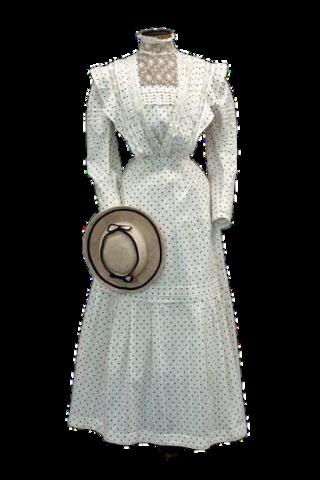
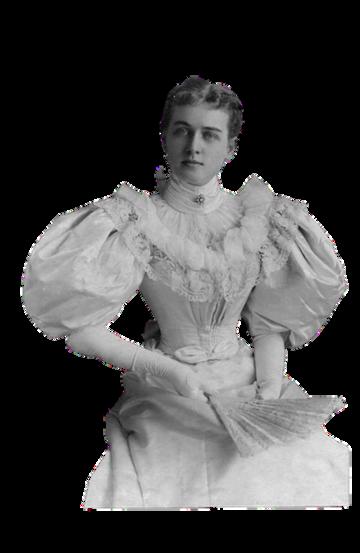
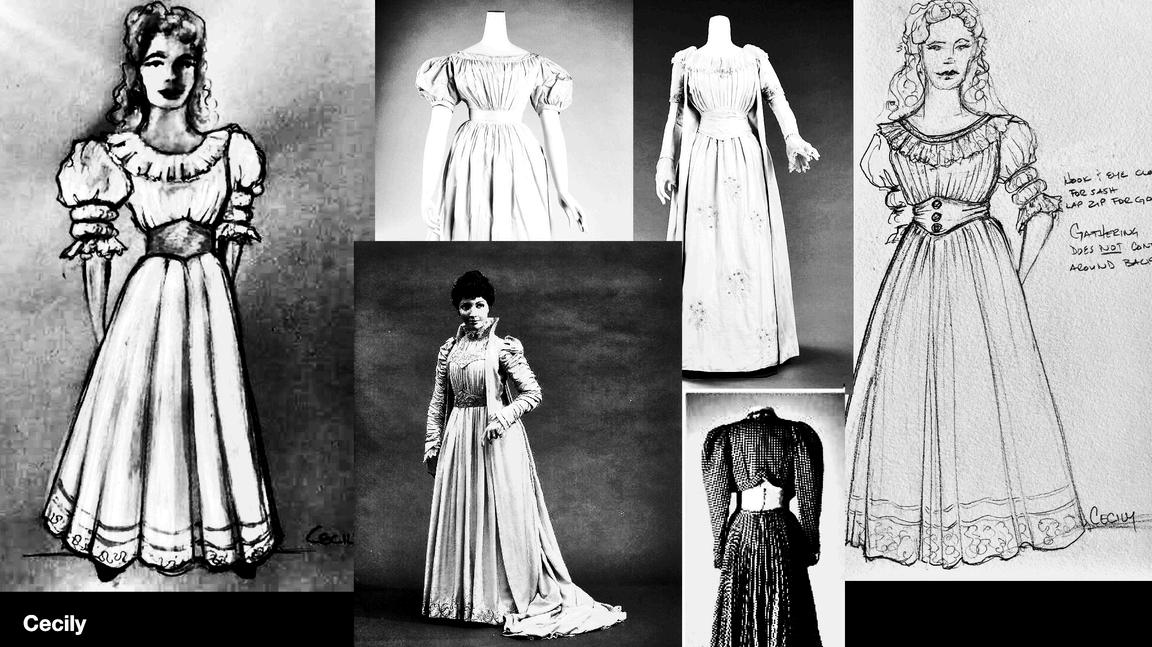
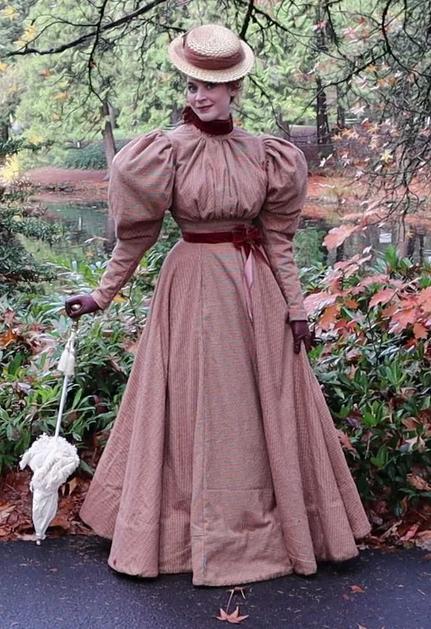
A costume designer’s first job is always research, even if they’re designing for a modern play. They must have images and references to show the director what they imagine for the show when they are beginning the design process. The designer and director will have conversations about what they want for weeks, until they decide on a solid idea of what each character’s style should look like For a historical show like Earnest, costume designer Kirche Zeile did research into actual clothing worn during the time. Some directors will want a show to be fully historically accurate, while others prefer a historical show that is more of an interpretation of a historical period. In the second scenario, designers have more freedom to find costumes, colors, and fabrics that represent a time period, but aren’t historically accurate.
Step 2: Sketches and Renderings
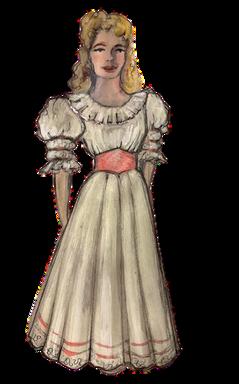
After a designer has decided on a style for each character and pulled reference images, they will sketch up a rendering for each costume This sketch will be what the drapers and costume team are working off of It’s a final vision of the character and very limited changes are made to it. They will have a sketch for every outfit worn by every character.
Designs and Renderings by Kirche Zeile
Sketch to Stage
Step 3: Build and Fittings
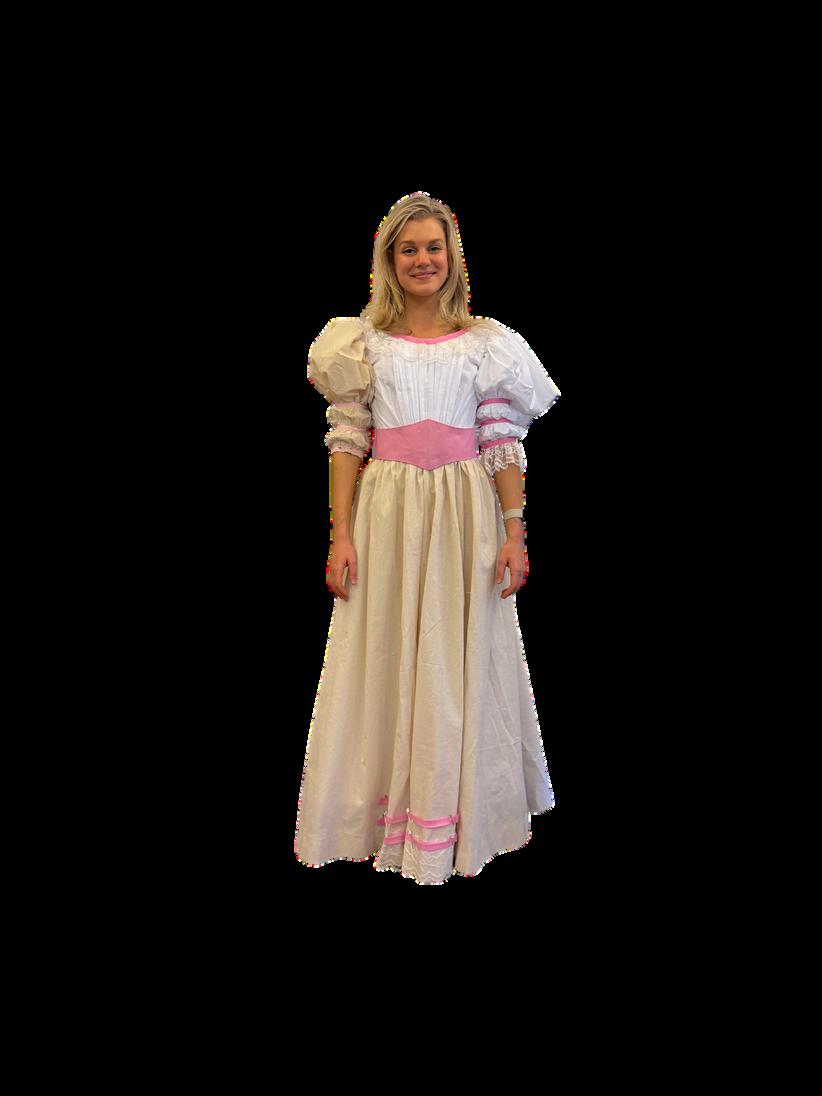
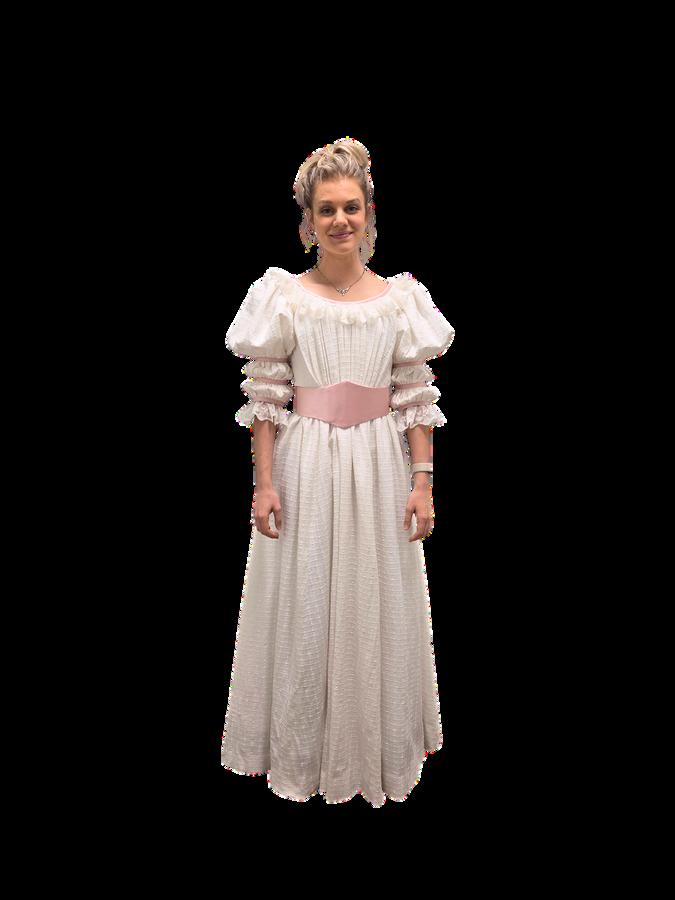
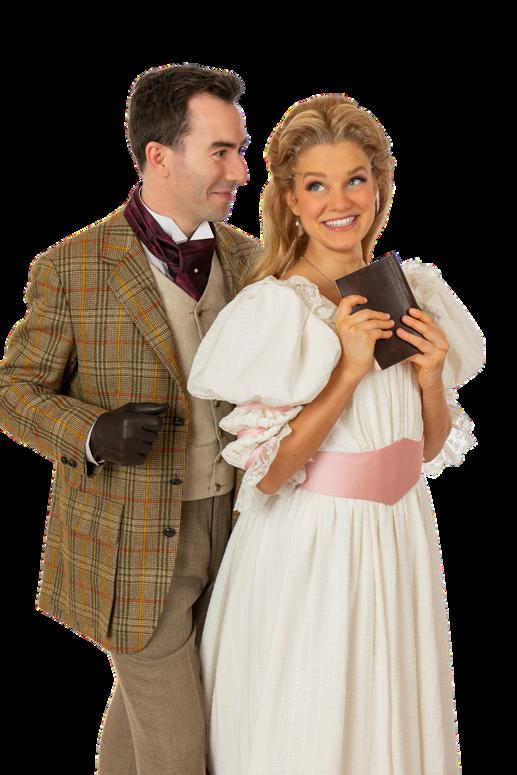
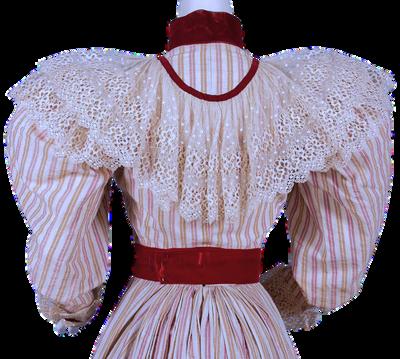
The designer is a resource during the fittings and build, but they are not actively creating the costume. The creation of the costume is the job of the costume department. The costume team and designer will have frequent conversations about the material and the fit of a garment Actors are called in for fittings every couple of weeks to check that the pattern, costume items, and fabric is what the designer wants The costume technicians will adjust the costume to fit the designers specifications. Often, costume departments will see how many items they can rent from theatres near them and how many items they will need to make by hand. Cecily’s dress - shown here - was entirely made by our department. First Fitting
Step 4: Final Product
Once the product is finished, it becomes the job of the wardrobe team to ensure that it is safely handled throughout the show. They will help the actor change into their costume and monitor to see if there are any new rips, tears, or stains on the costume Wear and tear is normal during the run of a show, since performers are wearing the same costume for 8 shows a week. The wardrobe team is also in charge of cleaning and caring for the garment. They have a variety of tools that they use to ensure that the garment is clean and that it won’t be damaged during the cleaning process.
Careers in Theatre: Drapers
Drapers are an essential part of the costuming process. Their job is to turn the costume designer’s vision into clothes an actor can wear. Drapers are involved with every step of the costuming process. They test out the fabric and design the pattern pieces to find the best way to construct the garment. They attend fittings for the actors to ensure that the costume fits and looks how the designer wants it to. Finally, they help supervise the construction of the costume piece. A costume wouldn’t exist without the work of a draper.
At Gulfshore Playhouse, we have two drapers on staff, Sarah Greene and Lana Grant. Sarah Greene was the lead draper on Cecily’s costume - pictured above!
Behind The Scenes
An Interview with Kate Marriley
Kate Marilley is overjoyed to return to Gulfshore Playhouse after starring as Charity Hope Valentine in Sweet Charity last season and Ilona Ritter in She Loves Me in the final production at the Norris Center! Recently she played Alice Beane in Titanic at Ogunquit Playhouse, and starred as Delia Deetz in the Beetlejuice original cast Broadway 1st National Tour. Other Broadway: original cast of Flying Over Sunset at Lincoln Center Theater, The Prom, My Fair Lady, and Billy Elliot tour! TV/Film: “The Gilded Age (HBO),” “Skwidz (Nickelodeon).” BFA from Carnegie Mellon. Acting Certificate from London Academy of Music & Dramatic Art
Kate is playing Gwendolen Fairfax. Below is an interview about her acting experience and her time at Gulfshore Playhouse.
The Importance of Being Earnest is an incredibly popular play that is performed all over the world. Have you been in it before or is this your first time?
This is my first time performing in Earnest and my first time acting in an Oscar Wilde piece! It’s a wonderful challenge to tackle since this is a play with such high language and incredible wit! I’m loving discovering Gwendolen Fairfax and exploring comedy in the Victorian world.
Did you do theatre in Middle or High School? What got you interested in theatre?
Oh yes! I’ve actually been a professional actor since I was 11 years old! My first professional production was the musical The Secret Garden as the lead role of Mary Lennox. I studied acting/musical theatre/dance/singing all through middle school and high school and participated in Show Choir in high school which was extraordinarily helpful for holding harmonies with others (which I struggled with when I was a kid!). I became interested in theatre since I was a baby because both my parents were professional actors! They both studied acting and worked frequently on Shakespeare, plays, and musicals!
Behind The Scenes
An Interview with Kate Marriley
Marilley is overjoyed to return to Gulfshore Playhouse after ing as Charity Hope Valentine in Sweet Charity last season and Ritter in She Loves Me in the final production at the Norris er! Recently she played Alice Beane in Titanic at Ogunquit house, and starred as Delia Deetz in the Beetlejuice original cast dway 1st National Tour. Other Broadway: original cast of Flying Sunset at Lincoln Center Theater, The Prom, My Fair Lady, and Elliot tour! TV/Film: “The Gilded Age (HBO),” “Skwidz elodeon).” BFA from Carnegie Mellon. Acting Certificate from on Academy of Music & Dramatic Art
is playing Gwendolen Fairfax. Below is an interview about her g experience and her time at Gulfshore Playhouse.
You have been in several shows at Gulfshore Playhouse recently, including playing Charity in last year’s production of Sweet Charity. What keeps bringing you back here?
The fabulous Kristen Coury and equally fabulous Dann Dann are the ones who continue to bring me back! I love working here so much, and I think Gulfshore Playhouse is doing extraordinary things in art and education as well I’m honored that this theater continues to give me opportunities to explore new shows/roles, and expand my own artistic craft!
Why is The Importance of Being Earnest relevant to students today?
One of the fascinating parts of Earnest is how the play repeatedly mentions characters or people who actually aren’t in the play itself… almost in a “gossipy trendy” and “newsworthy” manner In connects well with how social media (TikTok, Instagram etc) is with “newsworthy trendy” way! Very “have you heard of this new style” or “did you know that her hair has changed color because of this”. Also, I love how my character Gwendolen has her own ideas of how she wants to live her life and who she wants to marry regardless of how society deems it proper!
Do you have any advice for students who are thinking about pursuing a career in theatre?
Always continue to study and hone your craft! See theater, watch actors on film and TV, read plays and scripts, learn from each other’s work too! We as artists are always learning and evolving which man’s art itself evolve! And if this is a career you want to pursue, don’t let anyone tell you you can’t… or that it’s not right for you, or you’re not good enough. Don’t listen to those people! Go after what drives you and lights you up inside
Behind The Scenes
An Interview with Tony Carter
ony Carter is a Chicago-based actor who’s excited to be returning to lorida where he recently played Tony Wendice in Dial M for Murder t Asolo Repertory Theatre in Sarasota! He also just barely made his ulfshore Playhouse debut as Giles Ralston in The Mousetrap and is so appy they asked him to stick around for Earnest! Chicago credits nclude: Oliver in As You Like It (Chicago Shakespeare Theatre), umiere in Beauty and the Beast (Drury Lane Theatre), Dr. Mesmer in Mesmerized (Chicago Children’s Theatre), and Demetrius in A Midsummer Night’s Dream (First Folio Theatre).
ony is playing John Worthing. Below is an interview about his cting experience and his time at Gulfshore Playhouse.
The Importance of Being Earnest is an incredibly popular play that is performed all over the world. Have you been in it before or is this your first time?
This is my very first time being in it! I first saw it when I was a freshman in college and absolutely loved it. It feels like an incredible honor --and a little daunting-- to be playing this role in this famously witty play!
Did you do theatre in Middle or High School? What got you interested in theatre?
I did! I actually started doing community theatre and acting classes when I was a little kid in Logan, Utah I was once cast as the Big Bad Wolf when I was 8 years old, only to discover that all the other actors were significantly older and taller than me. I offhandedly mentioned at our first read-thru, "Shouldn't I be the LITTLE bad wolf?" And they re-wrote the show to be "The Trials and Tribulations of the Little Bad Wolf"! The truth is, I was a very precocious child, used to being the only kid surrounded by adults and I've always been a story teller. So theatre found me pretty early. I continued to do theatre in middle school and high school, but it wasn't until my high school theatre teacher convinced me that I could actually do this as a career, that I thought about dedicating my life to it. Now I've been acting professionally for almost 20 years and I don't regret it for a moment
Earnest is famous for its witty one-liners. Do you have a favorite line from the show?
Oh I have so many! How to pick? One of my absolute favorites is from Lady Bracknell, "To lose one parent, Mr Worthing, may be regarded as a misfortune; to lose both looks like carelessness." and then there's this one from Algernon, "All women become like their mothers. That is their tragedy. No man does. That's his."
Behind The Scenes
An Interview with Tony Carter
ony Carter is a Chicago-based actor who’s excited to be returning to lorida where he recently played Tony Wendice in Dial M for Murder t Asolo Repertory Theatre in Sarasota! He also just barely made his ulfshore Playhouse debut as Giles Ralston in The Mousetrap and is so appy they asked him to stick around for Earnest! Chicago credits nclude: Oliver in As You Like It (Chicago Shakespeare Theatre), umiere in Beauty and the Beast (Drury Lane Theatre), Dr. Mesmer in Mesmerized (Chicago Children’s Theatre), and Demetrius in A Midsummer Night’s Dream (First Folio Theatre).
ony is playing John Worthing. Below is an interview about his cting experience and his time at Gulfshore Playhouse.
Some audience members may remember seeing you at Gulfshore Playhouse last month in The Mousetrap, which was the show just before Earnest in the season. What was it like working on two shows back to back?
Oh man it was grueling! I had 20 days straight without a day off! I would arrive at the theatre at 10 in the morning and wouldn't leave until 10 at night. Rehearsal all day and then shows every evening, sometimes a few hours of rehearsal and the two shows! My brain ached from trying to fit even more words into it, especially ones as heightened and verbose as Oscar Wilde's. But even though it was exhausting, it was also deeply fulfilling. I was at both ends of a process at the same time: A comfortable and fully realized play nearing the end of its run, and the very beginning of a brand new creative process. I remember one night, standing in the wings of The Mousetrap and thinking to myself, "How lucky I am to get to fill my life with all of this art!"
Do you have any advice for students who are thinking about pursuing a career in theatre?
My recommendation would be to consume as much art as you can. Read plays, watch shows, listen to musicals. Your school and public libraries are treasure troves of material Learn as much as you can from as many people as you can and seek out every opportunity you can get to practice and perform. As actors your education is never done, we're always learning and I love to learn from every performance I see and to steal like an artist from the best!
LESSON PLANS LESSON PLANS
Drama can be done anywhere and at any age!
Adapt the following lessons to fit you and your learners.
Lesson Plan #1
Costume Design
Age Range: 6-12th Grade
Lesson Objectives:
Time Frame: 50 - 60 min
Students will use textual analysis, visual research, and basic design theory to create a historically inspired outfit for a character in The Importance of Being Earnest.
Students will work in a small group to create a series of compelling costume designs and communicate their design inspiration to their peers in a short verbal presentation
Standards:
ELA.6.C.1.3 - Write and support a claim using logical reasoning, relevant evidence from sources, elaboration, and a logical organizational structure with varied transitions.
ELA.11.C.2.1 - Present information orally, with a logical organization, coherent focus, and credible evidence, while employing effective rhetorical devices where appropriate.
SS.912.H.1 : Identify and analyze the historical, social, and cultural contexts of the arts.
SS.912.H.2.3: Apply various types of critical analysis (contextual, formal, and intuitive criticism) to works in the arts, including the types and use of symbolism within art forms and their philosophical implications
VA.912.C.1.2: Use critical-thinking skills for various contexts to develop, refine, and reflect on an artistic theme.
TH.912.S.2: Development of skills, techniques, and processes in the arts strengthens our ability to remember, focus on, process, and sequence information.
Language Demands:
Speaking - Whole class brainstorming and response, small group interpersonal communication, small group communication of design concept and ideas, whole group communication of design concept and ideas.
Listening - Listening to whole class instruction. Working with and listening to peers in small group settings.
Reading - Reading written materials about characters, setting, and design statements. Written materials are written in relatively accessible English, with some difficult or new vocabulary words - at a 5th grade - 9th grade reading level
Writing - Students will write a short concept statement following a formula
Materials:
Costume Design Essential Questions (pg. 25 of Performance Guide, Director’s Cheat Sheet (pg. 26 of Performance Guide), Importance of Being Earnest Key Character Guide (pg. 27 & 28 of Performance Guide), Computer/Personal Device, Paper for entry-ticket/brainstorming, Projector/white board.
Preparation
Before class, print out the following materials:
Director’s Cheat Sheet (pg. 26 of Performance Guide) - Enough for each student
Costume Design Essential Questions (pg. 25 of Performance Guide) - 1 per group of 3 students.
Importance of Being Earnest Key Character Guide (pg. 27 & 28) - Enough for each student.
Ensure that students have access to a computer or device that they can use during the lesson
Part 1: Personal Style Exploration 15 minutes
DO NOW:
As students enter the class, ask them to describe their personal style in 2 - 3 words. Have them write it down on a piece of paper. The instructor can either collect this paper or let students keep it as a personal exploration.
INSTRUCTION:
In this lesson, students will be designing a costume for the Importance of Being Earnest. Before we begin designing characters, we’ll start by determining our own sense of style and design.
Personal Design:
Students will take out their laptop or personal device Using this device, students will have 5- 8 minutes to find the following:
An outfit that they would wear.
3 colors they like.
A fabric sample or pattern they like.
2 images of something that are not clothes that they think describe their personal identity/style.
1 shoe.
1 dress, shirt, pants/short/skirt, or jacket.
1 accessory Students will add these images to a google document
Reflection:
Invite students to reflect on their personal design. Did they see any of the words they wrote down at the start of class reflected in their design?
OPTIONAL: Silent Gallery Walk.
Invite students to silently walk around the classroom, observing other students’ outfit collections. Give them 2 minutes to silently observe, then call them back to their seats.
Ask them to report out on what they noticed. Did the outfits make sense? Could you tell whose collection was whose?
INSTRUCTION:
Much like personal style, costume design is about finding the style of the play and the character. Costume designers use the script, research, and design qualities to develop a costume that fits the character, tone, and world of a script.
Part 2: Intro to Costume Design & Earnest 15 minutes
INSTRUCTION:
A costume designer needs to pay attention to a few key pieces of information in a script. These details are:
a) when does the play take place?
b) What is the financial status of the character? (Rich, Poor, Middle Class)
c) Where does the play take place? Does it take place in multiple locations? Where are these locations?
d) What is the weather like?
e) What is the director’s vision of the play?
We don’t wear the same thing everyday. We also don’t wear the same thing in different places - it’s the same for costume design. As a class, brainstorm what the answer to these questions would look like for a hypothetical student/teacher.
Brainstorm how the different answers to these questions could change what the design looks like.
Hand out the Costume Design EQ Sheet. SMALL GROUP GUIDED PRACTICE:
Split students into Groups of 3 One student will be the designated “scribe”, they will write down all of the information the group gathers. Hand out the Importance of Being Earnest Director’s Cheat-Sheet. Ask the groups to read through the Director’s CheatSheet and answer the questions on the Costume Design EQ Sheet. The only thing they should not have the answer to is the character’s name and their socioeconomic status.
After students have answered the questions on the Costume Design paper, take a second to talk through the work they just did.
INSTRUCTION:
Students should’ve identified that the play takes place in 1895, but that the director is interested in a mixture of 2026 and 1895 fashion in the costume design
Ask the students what they know about 1895 - this was the Victorian age in England People were driving horse drawn carriages. They did have telephones. They also had automobiles/cars.
Victorians had very strict ideas of behavior when it came to social status and wealth. Everyone in society had to follow strict rules for how to behave.
Ask the students if they can think of any social rules/etiquette that we have today. Examples: Don’t look at someone’s phone without asking. Wear headphones when listening to music. Let the passenger in your vehicle be the one who plays the music. Say thank you when someone holds the door
Victorians also followed very strict rules for how to dress There were different types of outfits for different events If you didn’t follow these rules, you were shunned and made-fun of. It was kind of like cancelling is today, except for much smaller mistakes. Professional costume designers for Earnest will research the rules and find examples of what outfits from the time looked like to come up with their image. After they have done their research, they will come up with a concept statement. That statement normally looks like this:
My design for Earnest conveys the hypocritical side of Victorian society by contrasting the bright, overdramatic designs of the wealthy classes with the serious, dark colors of the people who work for them
The formula is: My design for conveys by and
Part 3: Costume Design 20 - 30 minutes
SMALL GROUP COSTUME DESIGN:
Split the students back into the same small groups from before. In this small group, they will receive the paper with the Importance of Being Earnest character descriptions on it.
Give the students 2 minutes to read through the paper and highlight/underline interesting descriptions or words
After 2 minutes, ask the students to decide on 3 characters to create a costume design for.
The students will add the character’s name and socioeconomic status to the shared sheet they’ve already started working on.
On a school device, they will do the same thing for the characters that they did for themselves, only this time the research has to include some historically accurate items. They will find:
An outfit that the character would wear.
3 colors that fit the character
A fabric sample or pattern
2 images of something that is not clothes that they think describe the character’s identity/style.
1 pair of shoes.
1 dress, shirt, pants/short/skirt, or jacket.
1 accessory.
Students will add the images to a document and share it with their group members. Students must ensure that their images are either a) based on historical outfits or b) fulfill the director’s vision.
After they add images, they should write a 1 sentence concept statement for their personal design It should look like this:
My design for Cecily included a lot of soft colors and bows, because she’s meant to be innocent. She can also be manipulative and the pastel colors can hide her evil genius.
FORMULA: MY DESIGN FOR (character’s name) INCLUDES (description of design) AND (description of design) BECAUSE (justification 1), (justification 2), AND (justification 3).
After students finish their mood board, they will share what they found with their peers in the small group.
The small group will collaborate to come up with a design concept statement.
The design concept statement should follow the following formula:
OUR DESIGN FOR (show) REPRESENTS/CONVEYS (theme or idea) BY (element of their design) AND (element 2 of their design).
PRESENTATION:
After the groups have finished their designs and concept statement, they will share their documents with the instructor.
The instructor can project them onto the board, or students can show their designs from their seats.
As a group, students will show their design mood boards and one student will read out their group concept statement.
Students are encouraged to give brief neutral feedback- for example: I noticed that Sally chose the color pink as the color for Cecily To me, it really portrayed innocence (Feedback can also more formally be given as a virtual discussion board for Homework/in class individual work).
Part 4: Reflection 5 minutes
REVIEW:
We all have our own personal style, and so do all of the characters in a play! A costume designer’s job is to work with the director to make sure those styles are portrayed on stage. Today, you took on the role of costume designer for The Importance of Being Earnest. You did visual research into actual outfits from 1895 and found places where you could include and incorporate the modern take of the director
As costume designers, you used scriptural analysis of the character to help justify your choices Your concept statements drew justifications from your readings and helped support your design choices.
Invite students to reflect on the process. Was there anything that stood out to them? Did they learn anything new about The Importance of Being Earnest? Students will turn in their group sheet, their mood boards, and their concept statements.
/12pts Beginning Developing Proficient
Exceeding Expectations
Costume design EQs
/4pts
Student did not show an understanding of the character and was unable to correctly answer the questions.
Student correctly identified most information and showed some understandinf of the character’s traits.
Student correctly identified all information, but did not show profound understanding of their character traits
Student clearly understood the character. They correctly identified socio-economic status, character traits, and had a clear idea of personal style.
Concept Statement
/4pts
Concept statement was incomplete.
Mood Board/ Research
/4pts
Mood Board was incomplete. Images were low quality or entirely unrelated to the character/time period.
Concept statement included a few justifications, but did not reference the script or the director’s vision.
Some images were high quality, some were blurry. Research was somewhat related to the time period/character.
Concept statement included a few justifications that referenced the script and/or the director’s vision.
Images pulled were high quality and interesting and showed some relation to the character/time period.
Concept statement included clear justifications for the design and references to elements in the script/director’s vision.
Images pulled were high quality, visually interesting and clearly related to the time period (1895) and/or the character.
Costume Design Essential Questions
When does the play take place?
Character Name(s):
What is the financial status of the character(s)? (Rich, Poor, Middle Class)
Where does the play take place? Does it take place in multiple locations?
What is the weather like in these locations?
What is the director’s vision of the play? Find key words. Example: Dark, Contrasting colors, Dusty.
Concept Statement:
Example: My design for (SHOW/CHARACTER) uses (DARK COLORS), (ROUGH FABRICS), and (OLD FASHIONED OUTFITS) to show (THAT MY CHARACTER IS SERIOUS AND DOESN’T REALLY CARE ABOUT CLOTHES).
The Importance of Being Earnest
Background:
Director’s Cheat-Sheet
First performed on February 14th, 1895. Written by Oscar Wilde, a famous Irish author, playwright, and lover of beautiful, ridiculous things.
Synopsis:
Hoping to escape their responsibilities, Algernon Moncrieff and Jack Worthing have both invented alternate identities. Jack’s alter-ego, his fictional brother Ernest, has taken on a life of its own. Jack’s niece, Cecily, and Algernon's cousin, Gwendolen, have both fallen in love with Ernest. Gwendolen loves that Ernest’s name is so honest. Cecily loves that Ernest is a bit wild. Seeing an opportunity, Algernon pretends to be “Ernest” to date Cecily. Meanwhile, Jack is ready to change his name to “Ernest” to marry Gwendolen. Mistaken identity, confusion, and judgmental elders lead to a hilarious tale of truth, fiction, and falling in love.
Characters Present: Algernon, Lady Bracknell, Jack/Ernest, Gwendolen Fairfax. The garden at the Cardew Manor House, Woolton, England. Summer, 1895.
Characters Present: Miss Prism, Cecily Cardew, Algernon/Ernest, Dr. Chasuble, Jack/Ernest, Gwendolen Fairfax. Drawing Room (Living Room) of the Manor House, Woolton, England. Summer, 1895.
Characters Present: Miss Prism, Cecily Cardew, Algernon/Ernest, Dr. Chasuble, Jack/Ernest, Gwendolen Fairfax, Lady Bracknell.
Directors Vision:
The Importance of Being Earnest is a hilarious play about gossip, truth, and social expectation. With modern social media, we deal with mistaken identity, over-dramatic lies, and ridiculous expectations all the time. I would like the costumes to mix modern and Victorian elements to create a bright, vivid, and fun design. I’m looking for designs that have a lot of interesting patterns, look beautiful, and seem like they could fit in either 2026 or 1895.
The Importance of Being Earnest Key Characters
John “Jack” Worthing, also goes by Ernest. Worthing is an orphan who was adopted by a major landowner and Judge named Cardew. Jack is relatively rich, but not as rich as Lady Bracknell and Gwendolen. Jack lives in the country with his adoptive father’s granddaughter, Cecily. When he’s in the country, Jack is a solemn, smart, honest man with a reckless brother named Ernest who causes problems for him to solve in London. In reality, Jack doesn’t have a brother. “Ernest” is Jack’s alter-ego in London. He pretends to be “Ernest” so that he can have fun and goof around in the city, while maintaining his image in the country. Jack Worthing is in love with Gwendolen.
Algernon Moncrieff
Algernon is a smart, silly bachelor with a lot of money. He uses his money to live a nice life and do whatever he wants. He doesn't care much for good or evil, he simply enjoys the chaos around him. Algernon invented a close friend named “Bunbury” to get him out of difficult social situations. Bunbury is often terribly sick and Algernon has to rush to his side. Algernon and Jack are on a similar social standing, but Algernon knows he’s chaotic and Jack believes he’s a model citizen. Algernon is considered to be a stand-in for the Playwright Oscar Wilde.
Lady Bracknell
Lady Bracknell is extremely wealthy. She believes no one is good enough and is judgemental of everything. She is the most important person in the entire world, or so she thinks. Her blunt statements, judgements, and strict expectations make her seem silly and outdated. She only cares about money and social status. Lady Bracknell is Algernon’s aunt and Gwendolen’s mother. She is the play’s main antagonist because she gets in the way of other people’s relationships and schemes.
Hon. Gwendolen Fairfax
The daughter of a viscount or baron. Gwendolen is wealthy. She is image conscious and superficial - meaning she values things for appearing beautiful, even though their appearance may not match what is real. She is incredibly smart, strong-minded, and authoritative. She has excellent taste. Everything she does is calculated to get a reaction out of someone. She loves Worthing because his name is Ernest.
The Importance of Being Earnest Key Characters
Cecily Cardew
Cecily is smart and sweet. She is innocent and sheltered, but she loves the idea of danger and chaos. Cecily has fallen in love with Worthing’s fake brother “Ernest”, after hearing all of Jack’s tales. Cecily is strange, but sweet. She has a big imagination and can be manipulative if it will help her.
Cecily is extremely wealthy, which surprises Lady Bracknell.
Miss Prism, governess
Miss Prism is Cecily’s teacher. She is very strict and has a clear view of what is good and what is bad. Despite her serious expression, she is easily flustered by romance and she isn’t sure how to deal with Dr. Chasuble’s interest in her. She is easily manipulated by Cecily. She is willing to forget her strong views on a subject when it benefits her. Miss Prism is working class.
Rev. Canon Chasuble
Reverend Dr. Chasuble is a clergyman for the area that Worthing’s home is in. Dr. Chasuble is in love with Miss Prism. He is very intellectual, but a bit oblivious to what is going on around him. Dr. Chasuble is middle class.
Example Mood Board
An outfit that the character would wear.
3 colors that fit the character.
A fabric sample or pattern.
2 images of something that is not clothes that they think describe the character’s identity/style.
1 pair of shoes.
1 dress, shirt, pants/short/skirt, or jacket.
1 accessory
DISCUSSION QUESTIONS
After viewing this performance with your students, use the questions to have a guided discussion!
John’s origins (where he came from, what his family life was like) are subjected to Lady Bracknell’s intense scrutiny during Act 1. What is Oscar Wilde trying to say about the class system in his society in the conversation between these two characters?
What expectations are the characters in Earnest living with? Whose expectations are these? And what do the characters do in the face of these expectations?
What unspoken “rules” does our society have for people today? How do these rules compare to the ones that the characters in Earnest have to follow?
Glossary
Abstraction Distraction.
Apprised To tell someone of something.
Arduous Hard to accomplish, difficult.
Aspect The appearance or state of something.
Bassinet A baby’s crib, normally with a hood.
Betoken be a sign of; indicate.
Button-Hole a small bouquet worn in the lapel of a man’s jacket.
Calamity an event causing great damage.
Calling Card
A card with a person’s name and address sent or given to an individual with the hopes of continuing your relationship with them.
Candidly Honestly.
Candor The quality of being open and honest.
Capacious Roomy.
Christening A baptism.
Constituted Made up, resolute.
Constitution Health, physique.
Demonstrative To demonstrate or show how to do something.
Demoralizing cause someone to lose confidence or hope.
Detestable Someone who deserves hatred.
Domesticity Married life.
Earnest Showing honest, real, and intense conviction.
Glossary
Eccentric Strange.
Effeminate A man having characteristics associated with women.
Effrontery Rude Behavior
Egeria
A Greek Nymph. Known for being an advisor and a giver of laws and counsel.
Emigrating to leave your place to live somewhere else.
Equanimity Balance.
Garb Outfit, style of dressing.
Ghastly
Gravity
Frightening, unpleasant, terrible.
Very serious.
Gross Big, significant.
Grotesque Unnatural, ugly.
Heretical
Horticulturally
Hypocrisy
Going against the common religious belief
From the perspective of growing plants.
Behaving in a way that contradicts what you say you do.
Impetuous Impulsive.
Interment Burying.
Invalid Someone who is sick and can’t take care of themselves.
Invariably Always.
Irretrievably
Cannot be fixed or returned.
Lax Relaxed
Machinations Plot or scheme.
Glossary
Manna (biblical) Miraculous food supplied from the wilderness.
Manuscript
Marechal-Niel
Melodramatic
Metaphysical
Misanthrope
Morbidity
Neologistic
Unpublished story or text.
Fragrant, yellow climbing rose.
Exaggerated, overemotional
Abstract theory. Alt: Philosophical thought that examines the basic structure of reality.
A person who dislike and avoids other humans.
Being gloomy and dark.
Creating a new verbal expression.
Nigh Near.
Ostentatiously
Oxonian
Perambulator
Portmanteau
Precept
Preliminary
Presumptuous
Propounding
Provincial
Quixotic
Showy, over-the-top, meant to impress.
Someone who went to Oxford.
A baby carriage, similar to a stroller
A large trunk or suitcase.
A rule o regulate behavior or thought.
Done in preparation or before an event.
Too confident in an assumption or expectation.
Put forward for consideration of others.
An inhabitant of a countryside or province. Someone lacking urban polish and refinement.
Foolish and impractical, often: big romantic ideas that are doomed to fail.
Glossary
Reap Harvest, gather.
Reconciliation
Restoring friendship and compatibility.
Reform Make changes to improve oneself/a system.
Repellent
Repentence
Causing disgust
Sincere regret or remorse.
Reproach To express disapproval.
The currency of India.
Rupee
In Context: India was on a silver standard, which meant that the rupee lost value with the global silver price crash in the 1800s. The silver’s loss of value led to a large financial panic from the 1870s until 1893, 2 years before Earnest was debuted.
Scepticism Doubt.
Scrapes
Sensational
Shilly-Shallying
An altercation or rough situation.
Shocking, intense, creating a strong reaction.
Hesitation, going back-and-forth.
Slightingly To disrespect or disregard something
Snare A trap.
Sow To plant.
Temperance Beverage A soda.
Terminus The end of a railroad.
Triviality
Tutelage
Utilitarian
Something of little importance.
Teaching, guiding influence.
Relating to something useful.
Glossary
Vacillating To go back-and-forth.
Vulgar Offensive.
Wagnerian
Similar to Richard Wagner, a German Composer, known for The Ride of the Valkyries and much more. Known for showy, over-confident, bombastic, loud, and complex music. In Context: Meaning long, loud, and overdramatic.
Woe Suffering.
Mr.ErnestWorthing
B4, the Albany,London Mr. ErnestWorthing
Spring Programs
STORY EXPLORERS: SUPERHERO ACADEMY (GRADES K-2)
Heroes Assemble! It’s time to save the world!
March 9-13 at 9:00AM-12:00PM | Tuition: $150
BROADWAY BOOTCAMP: SCHOOL’S OUT! (GRADES 3-5)
Develop a showcase featuring songs from your favorite school-based musicals.
March 9-13 at 1:00PM-4:00PM | Tuition: $150
STORY EXPLORERS: ROBOT ADVENTURES (GRADES K-2)
Boot up and explore a strange new world!
Tuesdays, March 17-April 14 at 5:30PM-7:30PM | Tuition: $150
BROADWAY BOOTCAMP:NOW THAT’S WHAT I CALL BROADWAY (GRADES 3-5)
Let out your inner star to Broadway’s biggest hits!
Tuesdays, April 21-May 19, at 5:30PM-7:30PM | Tuition: $150
PAINT N PARTY (AGES 8-18)
It’s like a Paint ‘n Sip but made just for kids!
Friday, April 24, 2026 at 6:00-7:30PM | Tuition: $60
MUSICAL THEATRE SKILLS DEVELOPMENT
INTENSIVE (GRADES 4-RECENT GRADS)
Led by our Newsies Jr. team, this program boosts singing, dancing, acting, and audition confidence through focused workshops.
Monday-Friday, July 6-10, 2026, 9:00AM-4:00PM | Tuition: $500
Private Lessons
PRIVATE VOCAL LESSONS
Productions
SIX
(GRADES 6-12)
Own the stage, rule the mic become a queen in Six: Teen Edition!
Auditions: March 4, 2026, 5:00-8:00PM
Tuition: $750
TEEN
CABARET (GRADES 6-12)
Flip the Script & Reimagine in Teen Miscast Cabaret!
Auditions: March 4, 2026, 5:00-8:00PM
Tuition: $300
NEWSIES JR (GRADES 4-RECENT GRADS)
Seize the Day with Disney’s rousing musical!
Dates: July 13 - August 2
Tuition: $900
FREAKY FRIDAY (GRADES 6-RECENT GRADS)
Take part in Gulfshore Playhouse’s annual teen musical!
Dates: June 1 - 28
Tuition: $1200
Spots fill up quicklySCAN HERE TO LEARN MORE
PRIVATE ACTING LESSONS
Dates and times vary
60 minute lessons
Packages available
Mondays from 3:00PM-6:00PM
30 or 45 minute lessons
Packages available
The Ultimate Exclusive Student Experience – All for Free!
Gulfshore Playhouse creates special student matinee performances for each of our mainstage productions so students in our region can experience live professional theatre free of charge.
These educational opportunities are made possible thanks to the Anthony and Beverly Petullo Endowment for Student Matinees and VIP Experiences.
Beautiful: The Carole King Musical
Appropriate for middle school and high school
Date: Friday, May 15th at 10AM
To learn more, email Frances Barnett, ArtReach Coordinator at fbarnett@gulfshoreplayhouse.org or call 239.261.7529 ext. 239
THANK YOU TO OUR SPONSORS
SEASON ANGELS
Jane & Steve Akin, Patty & Jay Baker, Glenda & Rich Struthers
SEASON BENEFACTORS
Karen & Gary Gregg, Nancy G Lauridsen, Sandi & Tom Moran, Susan Regenstein & Barry Frank, John & Carol Walter
SEASON AMBASSADORS
Anonymous, Marsha & Gary Bertrand, Grampy’s Charities- Jim & Jonatha Castle, Bev & Art Cherry, Christine & Terrance Flynn,
Nancy & Tom Gallagher, Marguerite Hambleton,Paul & Barbie Hills, Jenny & Rich Housh, George & Patricia Kraus, Laird A. Lile, Simone & Scott Lutgert, James & Brigitte Marino, Bettina McKee, Cynthia & Mike Scholl, Jane & Dave Wilson,
Debbie & Bruce Yarde
EXECUTIVE PRODUCERS+
Patricia & Jim Bosscher, Kathleen Cain, Bob & Laurie Champion, Robert & Joan Clifford, Sheila & Chris Cole, Bobbi & David Drobis, Dyan Fazzone, Kathleen & Brendan FitzGerald, The Habbershon Family, Matthew Hagan, Vicki Herche & Graeme Murray, Mitchell Hertz & Anne Carlucci, Steven & Sarah Jackson, Liz & Jim Jessee, Sarah Raup Johnson, Larry Kaye & Casey Skvorc, Pamela & Bob Krupka, Tammy & Mike Kutsch, Diane Landgren, Debra & Vince Maffeo, Geraldine Moss, F E & Jack Nortman, Joan & Mahendra Parekh, Gail Kern Paster, Anthony & Beverly Petullo, Melissa & David Shockley, Patricia Sweet & Bill Marsh, Patrick Trompeter & Monica Orcutt, Julie & Steve Vanderboom,
Jane Walsh, Tereska & Jerry Whitson, Joanne Wyss
EXECUTIVE PRODUCERS
Anonymous, Mary & Phil Beuth, Lee & Peter Bewley, Richard & Jane Borchers, Cheryl & Randall W Byrnes, Michael & Judy Cheteyan, John & Patricia Cochran, Norman & Suzanne Cohn, Margaret Cox, Jim & Shirley Curvey,
Kyla & Rich de Asla, Mary F. Drazan, Sandy & Bill Haack, Libby & Ed Harshfield, Ken & Karen Heithoff, Jean & Leo Hertzog, Catelyn Juliano & David Deutsch, Heidi & James Kargman, Barbara K Lupient, Mary Lou & Bob Maier, Sherie Marek, Phil McCabe, Carolyn & Don McCulloch, Gerry McGraw, Pat & Tony McMunn, Dan & Ann Meyer, Joanne & Jeffrey Miller, Kristin & John Miller, Kimberly Moss & Bob Fisher, Louise & Larry Ost, Cindy & Tony Panzica, Ann Ratner, Dottie & John Remondi, DeAnna & Rick Rondinelli, Kathy & Ned Sachs, Pam & Fred Sasser, Janet & Peter Swinburn, Lisa & Warren Thomson, The Vincent Von Zwehl Memorial Fund, Kathy & Paul Weaver, Blaine & Tom Wells, Kristen & Michael Wynn