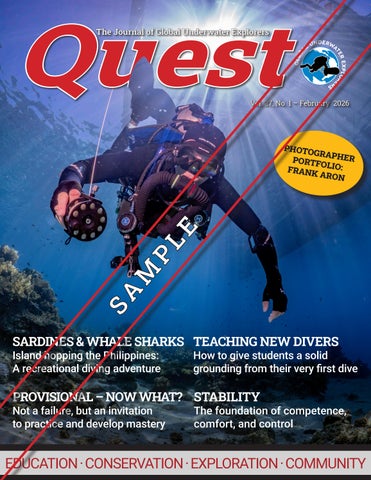
Quest SAMPLE
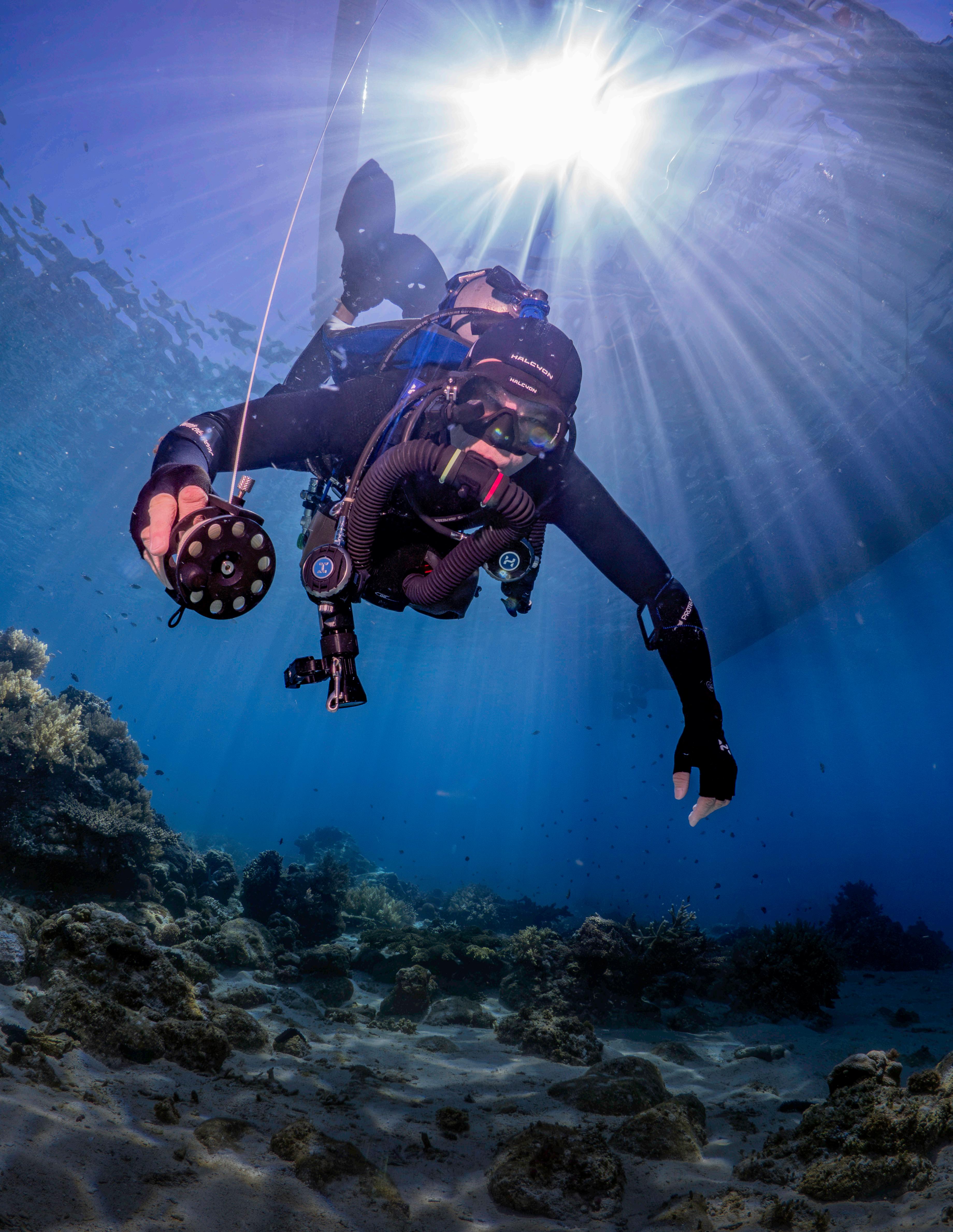
PHOTOGRAPHER FRANKPORTFOLIO: ARON
SARDINES & WHALE SHARKS
Island hopping the Philippines: A recreational diving adventure
PROVISIONAL – NOW WHAT?
Not a failure, but an invitation to practice and develop mastery
TEACHING NEW DIVERS
How to give students a solid grounding from their very first dive
STABILITY
The foundation of competence, comfort, and control
EDITOR’S LETTER
MOTHER WATER
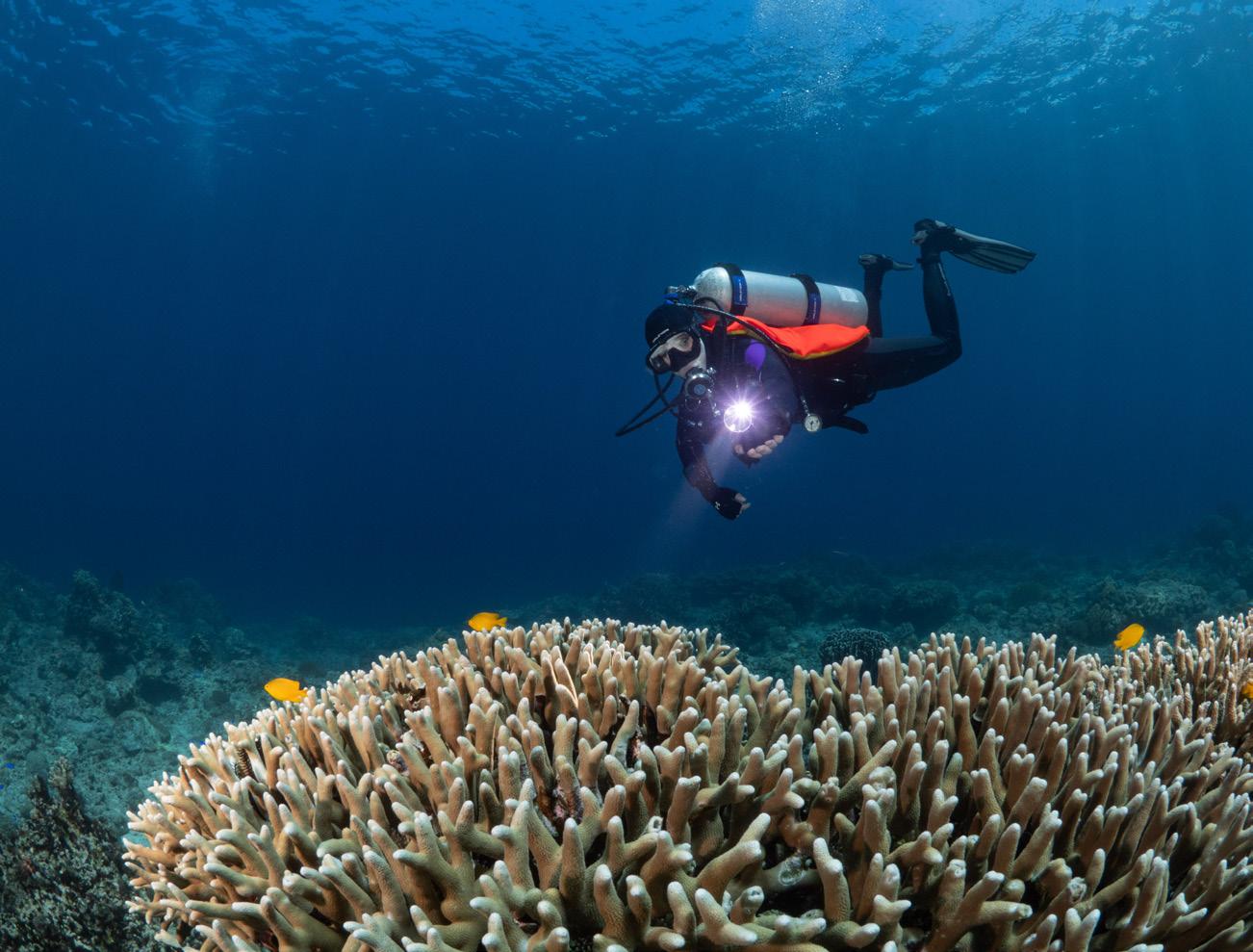
The term “Mother Earth” is a bit of a misnomer, considering almost two-thirds of our planet is covered by oceans and lakes. While calling her “Mother Water” might sound strange, it is perhaps more accurate. This issue features a piece on a recent GUE trip exploring shallow coral reefs in the Philippines. Tropical reefs occupy a relatively narrow band around the Equator, but if diving activities are limited strictly to the areas between the Tropics of Cancer and Capricorn, one is missing out on some of the finest diving available.
The appeal of the tropics is obvious. Warm water, vibrant environments, and exotic marine life attract divers from across the globe—particularly from Europe and North America. It is easy to love the carefree lifestyle of shorts, T-shirts, and sandals, even if only for a brief vacation. However, diving in temperate and cold waters has distinct merits that deserve recognition.
First, dive travel is not always carbon-friendly. Local diving closer to home leaves a significantly smaller environmental footprint than a long-haul flight to a tropical destination. Environmental stewardship is a core value for many divers, and reducing travel distance is a practical way to honor that.
Another advantage of cold-water diving is the visibility; it is often exceptional—at times even better than in nutrient-rich tropical oceans. Furthermore, some of the most significant wreck diving in the world is found far outside the tropical zone. While the diversity of marine life may not be as abundant as on a reef, many of the same fascinating biological phenomena can be observed by the patient explorer who knows where to look.
As the saying goes: It’s not cold to dive in cold water—it’s cold to be cold. Diving technology has evolved exponentially since the post-war
era when Jacques Cousteau reportedly smeared animal fat on his skin to stave off the freeze while spearfishing in the Mediterranean. Today, we have access to flexible drysuits made from space-age materials, high-performance functional undergarments, and even battery-powered heated insulation to maintain warmth on long, demanding dives.
After all, if the water is still liquid, it is warmer than the freezing point. We think nothing of skiing or participating in winter sports in temperatures far colder than the water we dive in. Staying warm is simply a matter of being appropriately dressed for the occasion. There is a profound satisfaction in using refined skills and advanced technology to master the elements, allowing us to explore beautiful, inhospitable environments that remain hidden to most. Whether in the tropics or the Great Lakes, the magic of “Mother Water” is waiting.
Dive safe and have fun!
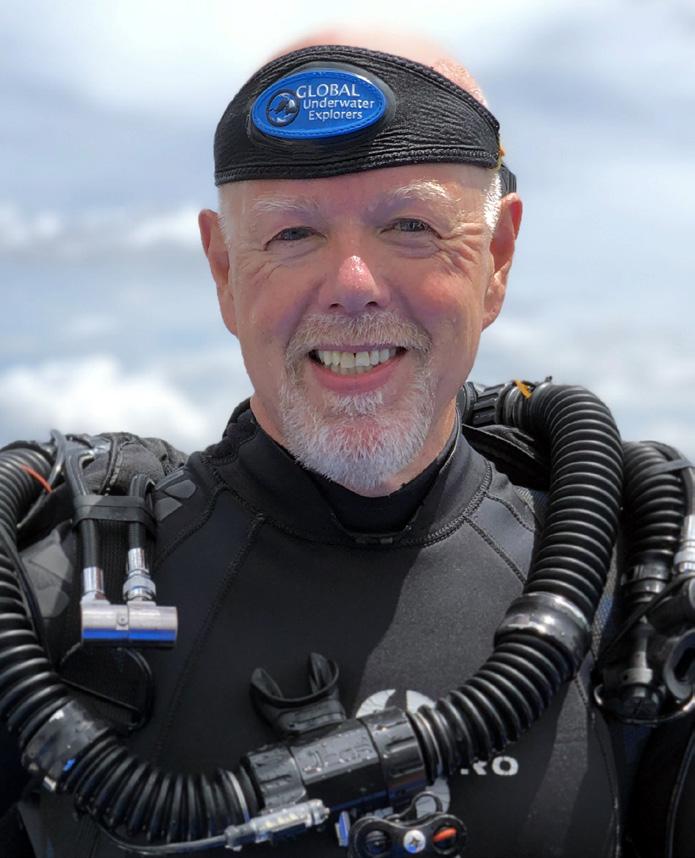
Jesper Kjøller Editor-in-Chief jk@gue.com
Quest
Editor-in-chief
// Jesper Kjøller
Design and layout
// Jesper Kjøller
Copy editing
// Pat Jablonski
// Kady Smith
Writers
// Jenn Thomson
// Gemma Thomas
// Jesper Kjøller
// Andy Wilson
// Kirill Egorov
// Jarrod Jablonski
// Daniel Riordan
// Fred Devos
// Todd Kincaid
// Chris Le Maillot
Photographers
// Kirill Egorov
// Jesper Kjøller
// Jenn Thomson
// Gemma Thomas
// Julian Mühlenhaus
// Dimitris Fifis
// Carolina Wells
// Wesley van Vliet
// Emőke Wagner
// Fabio Sagheddu
// Rich Wilson
// Frank Aron
// Martin St-Amant
// Dave Bunnell
IN THIS ISSUE
6
14
HQ CORNER // TEACHING NEW DIVERS
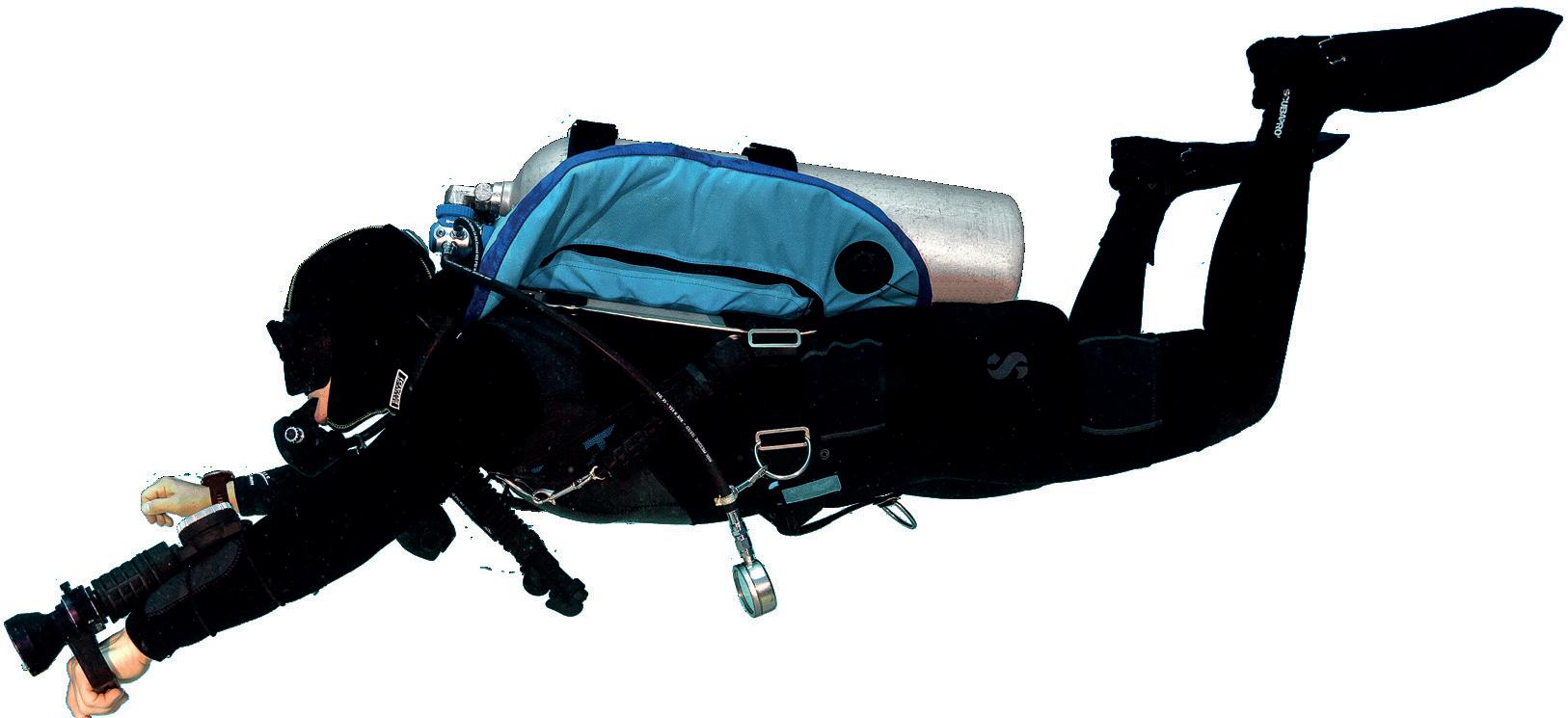
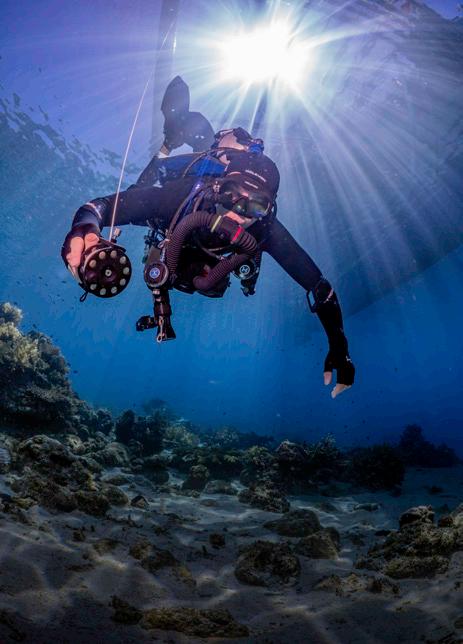
The first underwater breath mixes awe with hesitation. Great divers are built through deliberate, patient training rather than instinct. By prioritizing a thoughtful teaching philosophy over shortcuts, GUE instructors transform beginners into confident, stable divers who find genuine joy in the water.
FROM SARDINES TO WHALE SHARKS
Last August, GUE divers embarked on a transformative Philippine journey, blending a stay at the lush Atlantis Dumaguete resort with a voyage on the welcoming Atlantis Adventurer liveaboard. It was a week defined by exploration, laughter, and unforgettable magic.
28 38 44
NOT YET // THE PROVISIONAL RATING
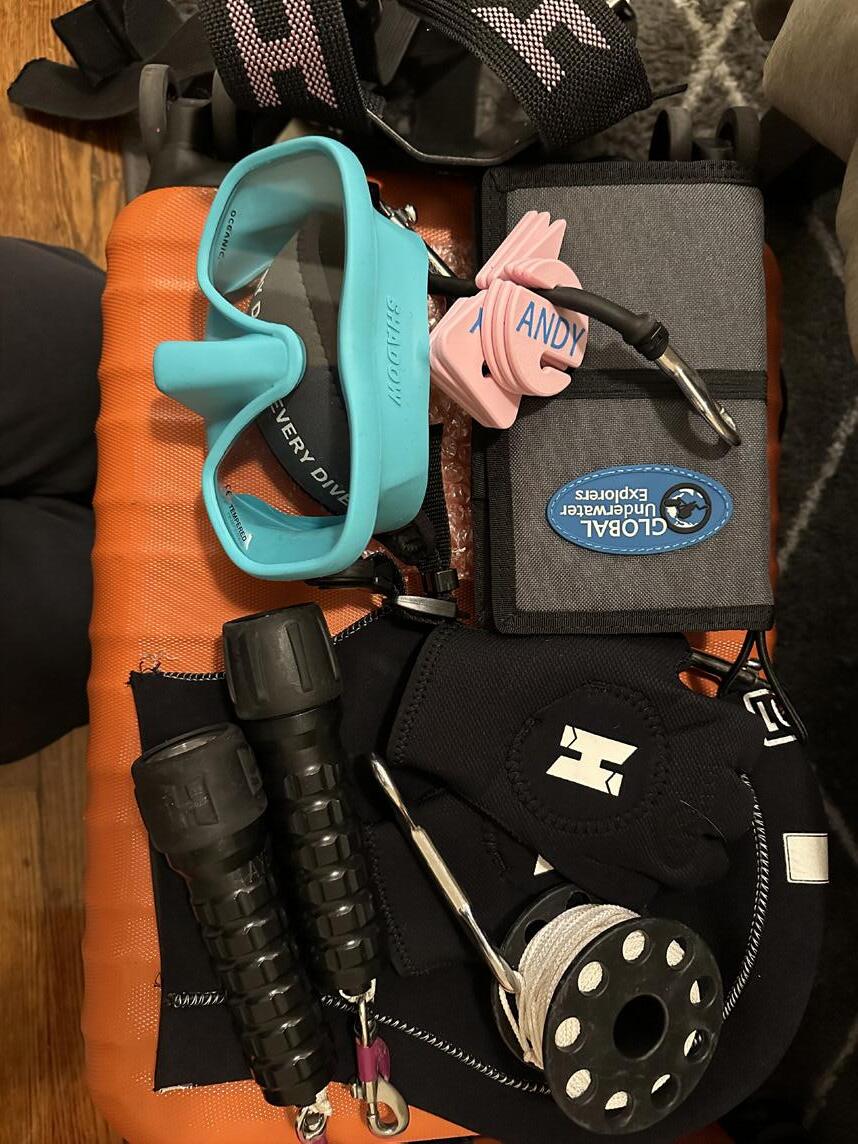
GUE trainee Andy Wilson reframes the “provisional” rating not as failure, but as an invitation to mastery. By overcoming equipment hurdles and the social media “comparison trap,” she embraces a non-linear path toward becoming New York City’s first female GUE instructor.
PORTFOLIO // FRANK ARON
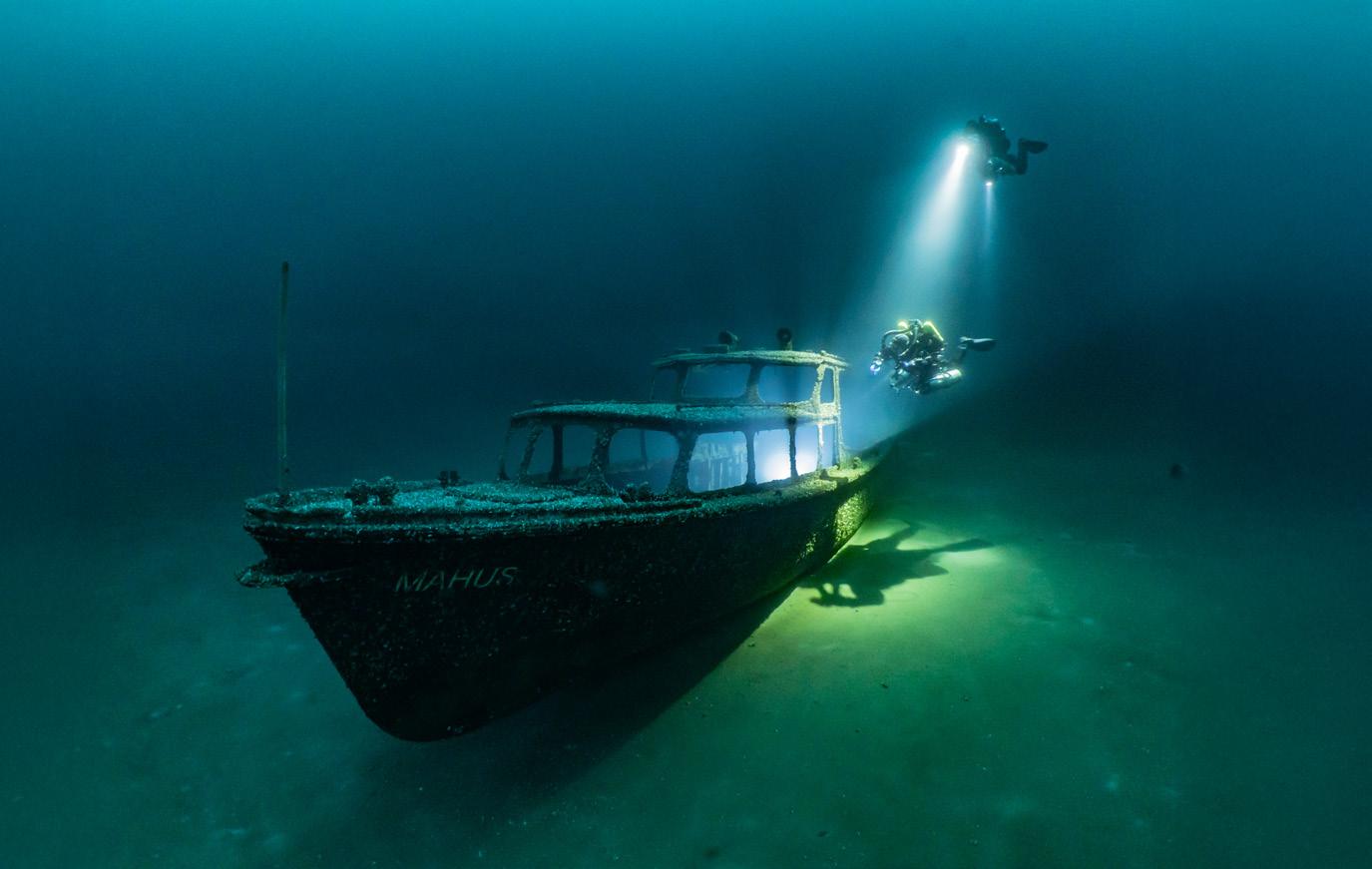
Inspired by childhood snorkeling memories, veteran diver Frank captures the ethereal play of light and shadow underwater. Using technical cave photography skills and powerful illumination, he transforms flooded mines and wrecks into dramatic, space-like landscapes that emphasize scale and structure.
STABILITY // THE FOUNDATION
GUE training prioritizes stability—the ability to remain motionless and intentional in the water. Much like a building’s foundation, stability is essential; a weak base limits progress, while a strong one enhances a diver’s capacity, safety, and overall enjoyment.
56
CAVE // FORMATION AND DEVELOPMENT
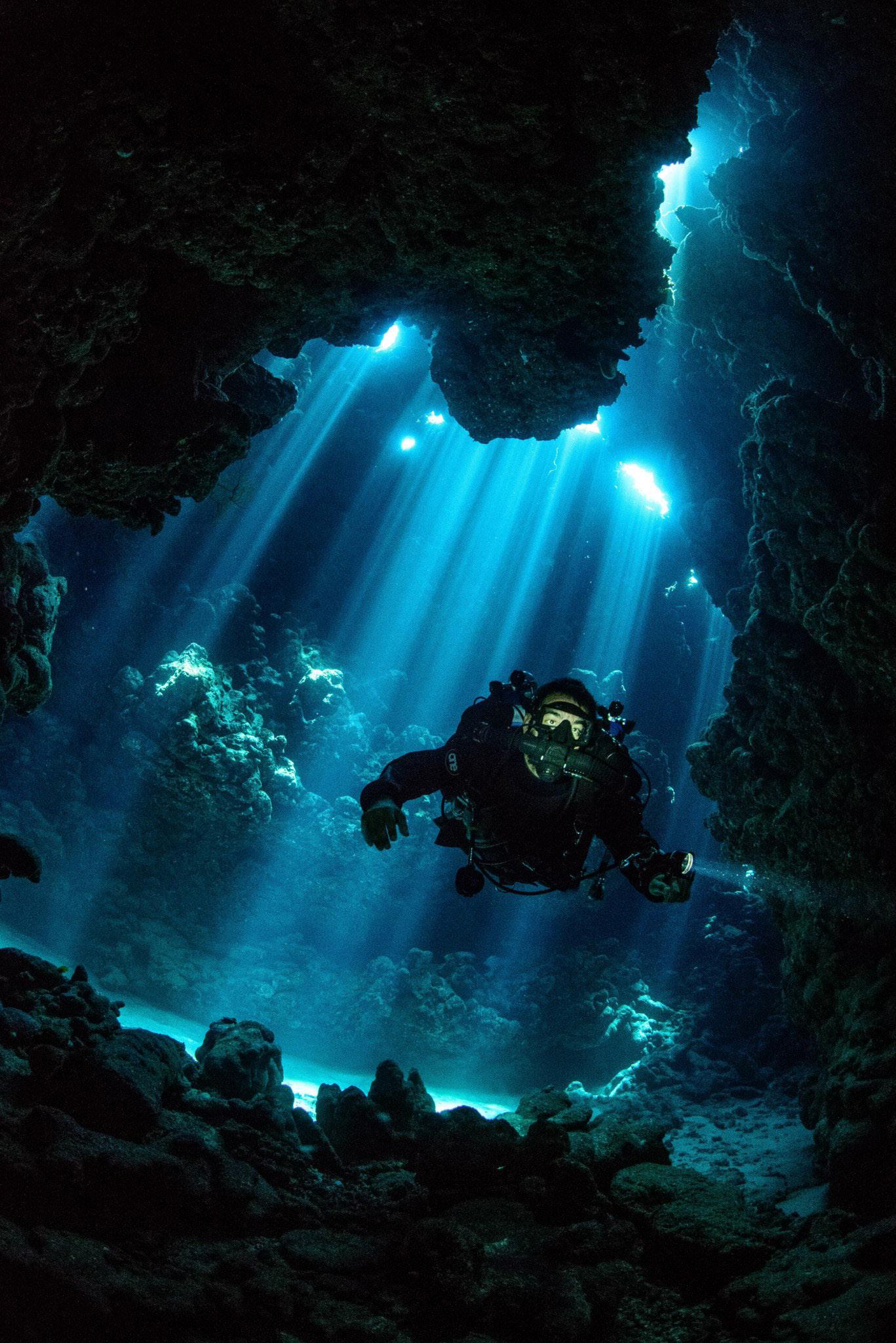
This last installment in our cave series details diverse subterranean structures beyond dissolution caves. It covers karst aquifer patterns, coral reefs, sea caves, and volcanic lava tubes, alongside tectonic movements, melting glaciers, and ancient manmade qanat water tunnels.
HQ CORNER
– Setting students up for success TEACHING NEW DIVERS
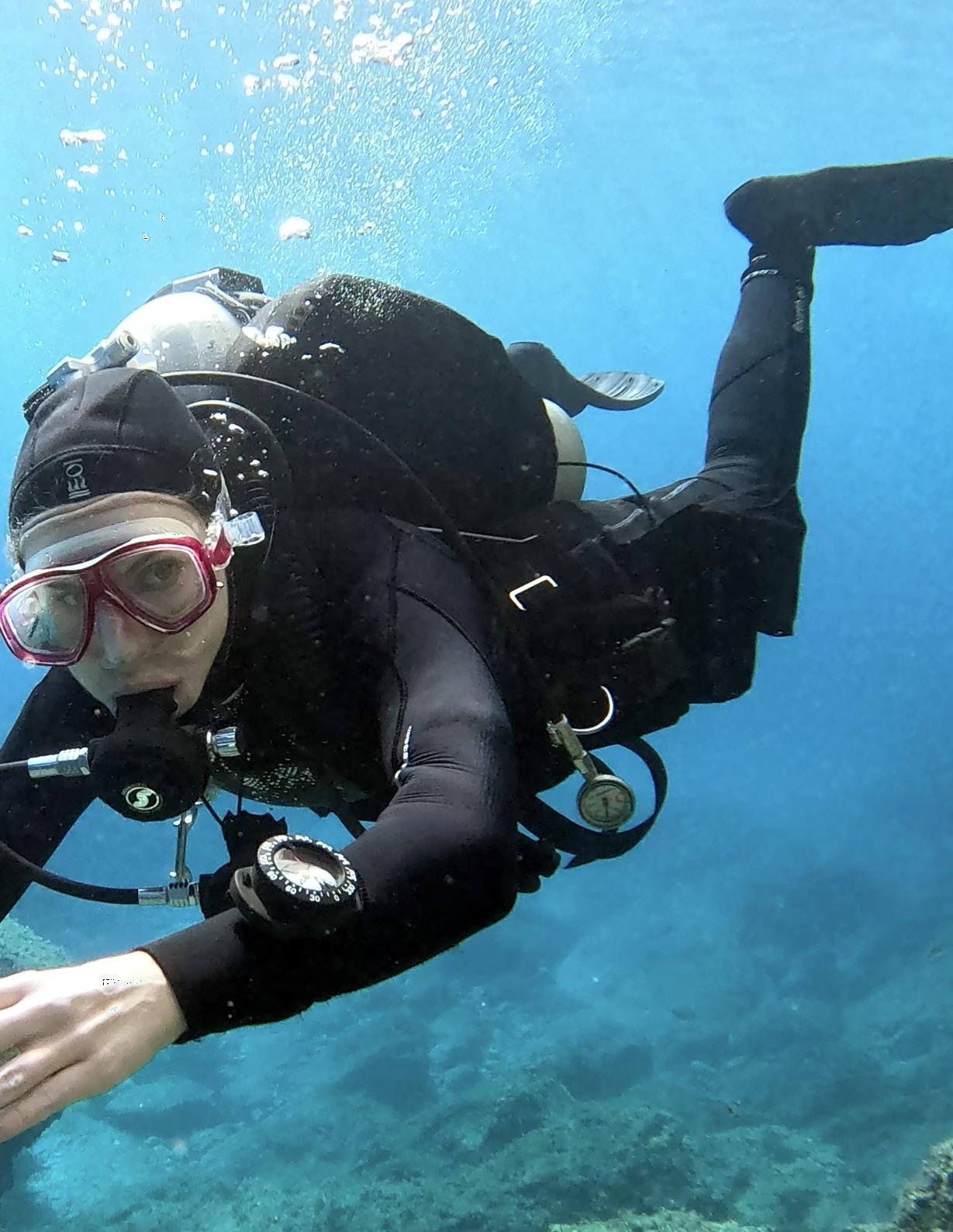
Most divers can remember the feeling of breathing underwater for the first time. It is a mix of awe, excitement, and a moment of hesitation where you wonder, “Am I really meant to do this?” For new divers, it is an instant where curiosity meets fear, and the outcome of that moment often determines whether diving becomes a lifelong passion or something they quietly set aside.
Great divers are not born. They are shaped gradually with deliberate guidance, steady practice, and more patience than most people realize. This article is not about hidden agency techniques or instructor-only secrets. Instead, it explores the teaching philosophy and the steps taken to give Open Water students the best possible foundation from their very first dive. The result? Creating confident, stable, and genuinely happy new divers. Whether you are already a diver, preparing to become one, or simply curious about what thoughtful training really looks like, you will find the process more engaging and more human than you might expect.
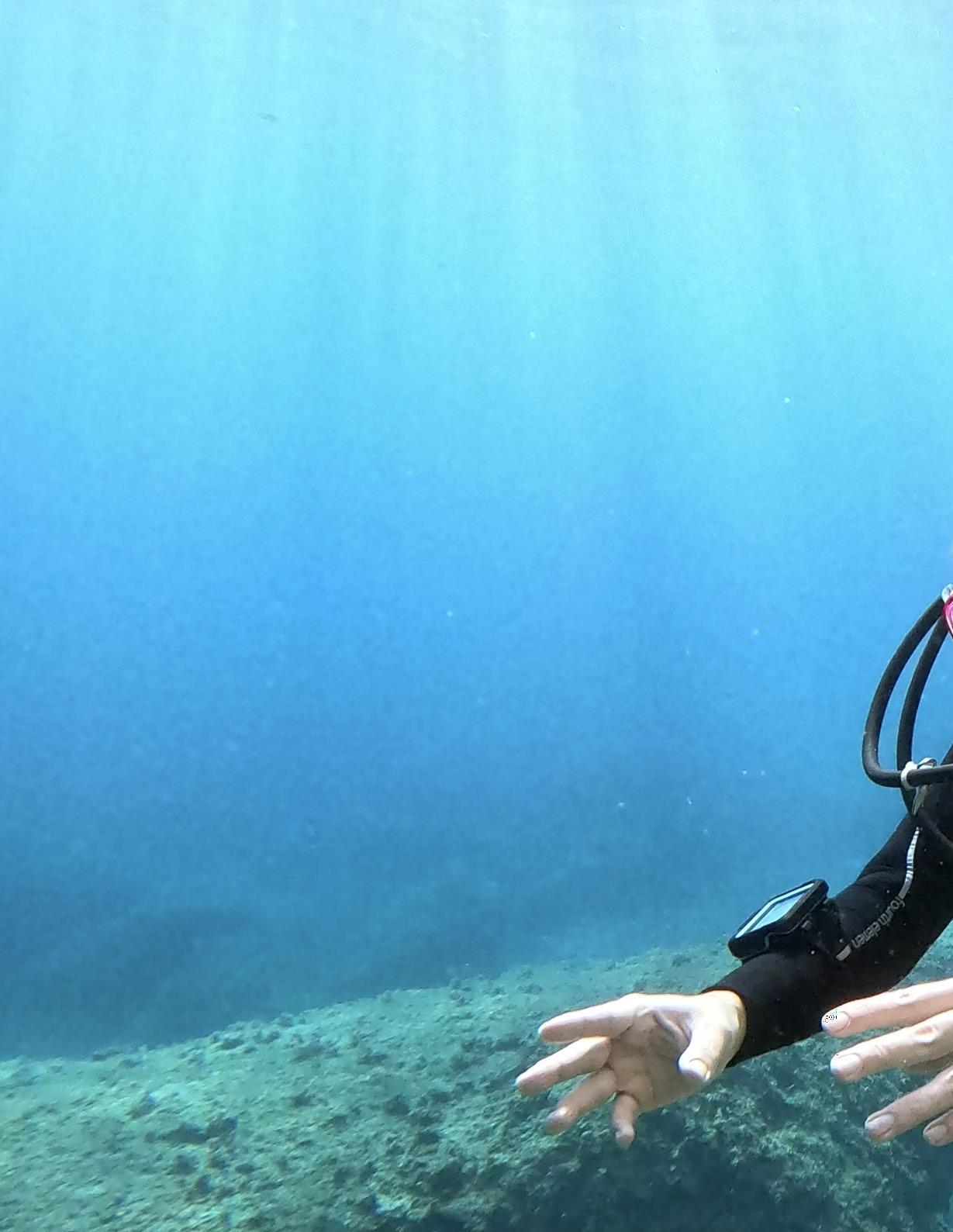
PHOTO JENN THOMSON
TEXT GEMMA THOMAS WITH JENN THOMSON
PHOTOS JENN THOMSON, GEMMA THOMAS & JULIAN MÜHLENHAUS
Across the industry, few topics generate as much discussion as this one: Should new divers be taught on their knees, or should they learn while neutrally buoyant from the very beginning?
Supporters of the kneeling approach argue that this method stabilizes students, reduces task loading, prevents them from drifting away or losing control, and keeps the learning process simple. They also claim it is the only practical option when working with larger groups. On the other hand, many instructors advocate for teaching new divers while they are neutrally buoyant. Their reasoning is that kneeling is not a position used in real diving. Achieving it requires divers to be overweighted, which often leads them to remain overweighted on future dives. When students start without any ingrained habits, they tend to develop buoyancy control, trim, and balance far more naturally and effectively.
Step one: surface clinics with a snorkel – learning to balance in the water
“I knew there had to be a better approach. The real question was how to set students up for success without overwhelming them.
When I first began teaching, I relied on the kneeling method. Students stayed still on the bottom, stable and easy to manage. Skills were checked off one by one, and then we moved directly to the first dive. At that point they were somehow expected to descend in control. Some stayed vertical and kicked themselves upward, others struggled with equalizing, and some sank unexpectedly fast. Managing these issues simultaneously was nearly impossible. It was stressful, and it was not fair to the students. They were completing skills, but they were not becoming divers.
I knew there had to be a better approach. The real question was how to set students up for success without overwhelming them. The answer, surprisingly, was to start at the surface. Not on dry land, but floating on the water, where dives actually begin.
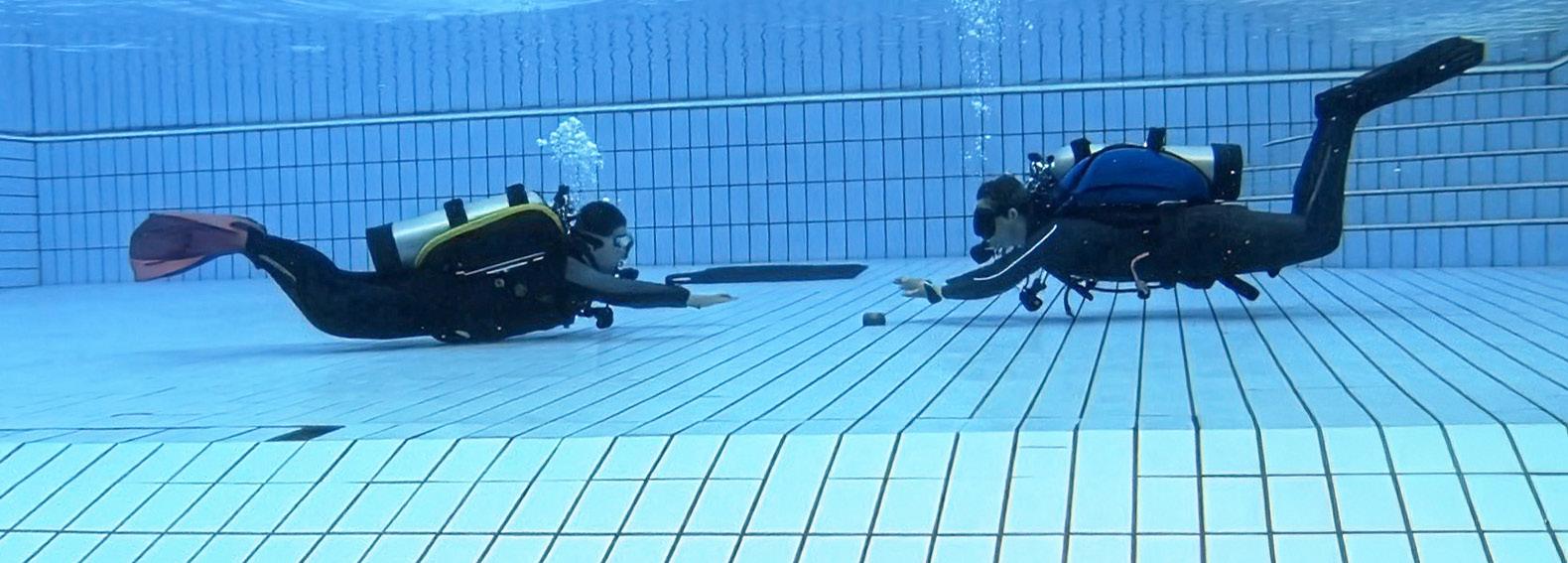
If you observe one of my beginner classes, you will not see a row of students kneeling at the bottom. Instead you will see something that looks more like a snorkelling session. Students float on the surface while wearing masks, snorkels, and fins. Yes, a snorkel! They learn to balance their bodies, breathe comfortably through their mouths, and clear their masks. For some, who might not have even snorkelled before, they will feel what it is like to get water in their mouths and use their right hand to clear a snorkel—setting themselves up for regulator clearing. It is a simple, approachable introduction that sets the tone for everything that follows. Students learn faster when they feel safe and comfortable. Their ears and their worries about equalizing do not distract them, and they are not yet dealing with buoyancy. They can learn that moving their legs to one side causes them to roll left and right, and so they can play around with correcting their balance in a contained environment, ultimately making them a more confident diver in the future. This calm, steady beginning may seem basic, but it is one of the most underrated parts of diver training, and possibly one of the most important.
Step two: building propulsion fundamentals at the surface
Once students feel relaxed on the surface, we start exploring movement. We teach finning techniques before they ever put on scuba gear. Why? Because on the surface they can clearly watch the instructor demonstrate, discuss technique in real time, and most importantly, feel the movement of their fins through the water. They do all this without worrying about buoyancy. When they feel what a proper frog kick or flutter kick should be, something clicks. Some students move backward before they ever go underwater. Some glide forward, some remain
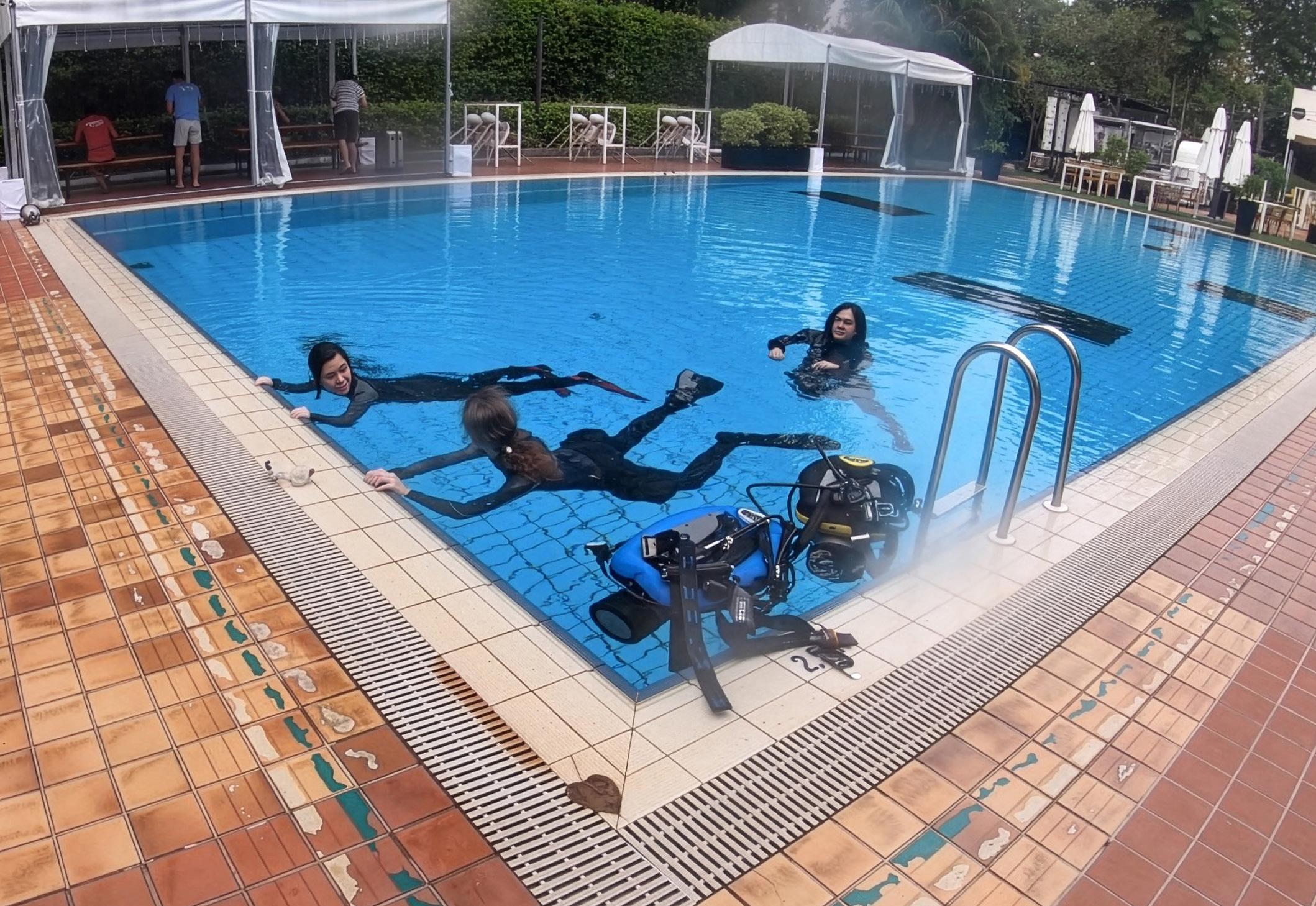
still, but all begin to understand how their bodies influence their movement. Challenging them to cross the pool in the fewest kicks turns efficiency into a fun competition. Play and technique support each other beautifully.
Some teach the propulsion techniques on land or on tables. I advocate much more for in-water surface clinics. The same reason applies—starting out where they are meant to be from the beginning. Land exercises activate different muscles than in-water exercises, and so the students are learning how the kick is mastered and feels in the correct environment. It is also a moving surface, so getting students to position themselves and each other correctly sets up the team dynamics from the start.
Step three: “dry-runs” – but make it in trim and floating on the water
Only once students know how to move do we put them into scuba gear. We revisit the mask and regulator skills and confirm they can perform them on the surface with full equipment before they ever breathe underwater.
Surface clinics build muscle memory and team dynamics in the actual environment.
Teaching at the surface was not my first idea. I initially tried having students lie on the bottom of the pool. It did not help. Equalization issues increased. Students panicked when clearing their masks. Some tried to bolt to the surface. Even that one meter of water added stress rather than reducing it. In contrast, the surface eliminated ear problems and buoyancy issues, and students could stand up anytime they needed. Yet they still learned how to control their bodies and find a balanced, horizontal position. From initial Open Water skills to more complex ones (for example, regulator/inflator hose failures and swapping masks), all can be practiced on the surface before an initial descent.
Step four: the power of productive mistakes – letting students play
When the students finally go underwater, we do not rush straight into the standard list of skills. Instead, we let them swim around in shallow water. We let them experiment with their breathing and gear. They can experiment with their propulsion and balance techniques learned
PHOTO GEMMA THOMAS
FACT FILE // GUE OPEN WATER DIVER
Whether you are new to the diving world, you’ve taken a course outside of GUE before, or you’re looking to improve your skills after a few years of not diving, the GUE Open Water Diver course is a great starting point. This course will build the foundations for your diving skills no matter what attracted you to diving.
WHAT WILL I LEARN?
The GUE Open Water Diver course is designed to develop the essential skills required for all sound diving practice. It allows the non-diver to cultivate a platform that supports comfort, confidence, and competence in the water, as well as more advanced training in the future.
A GUE Open Water Diver certification means that divers will be certified to dive with their diving team without the supervision of a dive professional, to a maximum of 21 m/70 ft.
from snorkelling and swimming around on the surface. They then start to connect theory to practice—a big inhale makes them rise; relaxed breathing keeps them steady. We observe and let students feel these effects for themselves, letting them make mistakes without getting too far, of course. For example, students eventually realize how much gas is too much to add when they make the mistake for themselves, without them being instantly corrected.
A few minutes of initial chaos gradually shifts into controlled movement in one meter of water. Students stay off the bottom and away from the surface. Only when they are calm and steady do we start repeating skills at depth. Going slow helps us go fast. That early time spent swimming builds comfort and stability, which makes the more demanding skills easier to perform cleanly.
Although still a little chaotic, the first dive of the course is now much less stressful for both instructor and students. Students are more aware of their surroundings and can appreciate
PREREQUISITES AND DURATION
Applicants for a GUE Open Water Diver program must:
• Be a minimum of 12 years of age.
• Be physically and mentally fit.
• Be a non-smoker.
• Be able to swim.
• Obtain a physician’s prior written authorization for use of prescription drugs, except for birth control, or for any medical condition that may pose a risk while diving.
The GUE Open Water Diver course is usually conducted over five to six days and includes at least ten aquatic sessions (confined water sessions) and six open water dives, and at least 40 hours of instruction, encompassing classroom, land drills, and in-water work. The student prepares using GUE’s Mastery Learning platform.
what they are seeing. Witnessing the underwater world for the first time is a memorable experience, and I am lucky enough to relive that excitement through my students. Watching their faces light up when they encounter their first turtle or shark is genuinely rewarding.
Step five: Slow is smooth and smooth is fast
At first the process appears slow. But with comfort and confidence comes a growing eagerness to learn new skills. By the end of their course they can share gas, hold stops during ascents, manage equipment failures, and even attempt rescue scenarios. Because the early steps are calm and supportive, the more complex skills at the end feel achievable and far less intimidating. And when the Open Water course ends, students often look like experienced divers. They can control their buoyancy, move against currents, and feel in control of their environment. They can plan and execute their dives confidently.
“Teaching neutrally buoyant from the beginning requires more patience, more creativity, and a willingness to rethink old habits.
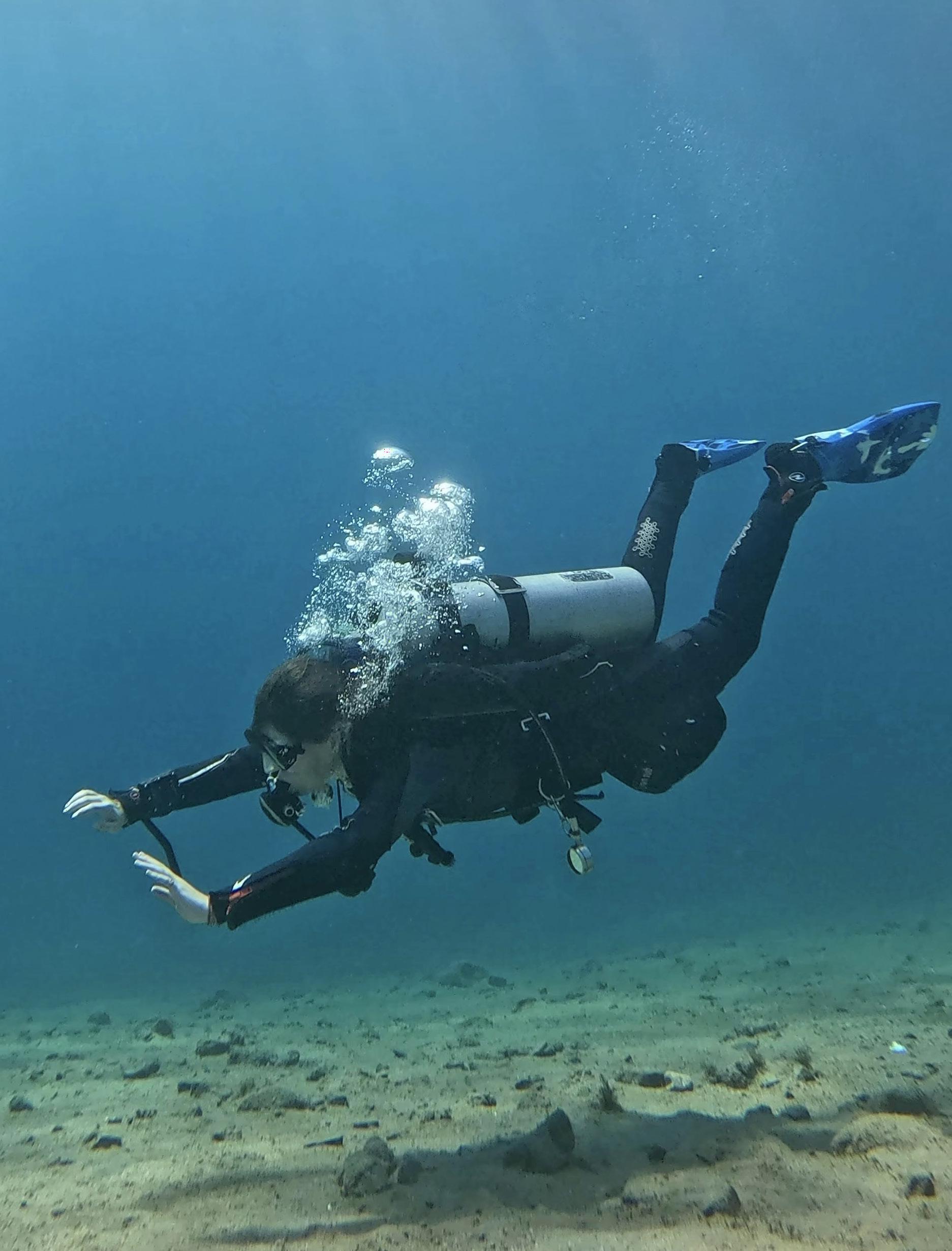
After the course, divers have the buoyancy and control necessary to plan and execute dives with confidence.
February 2026 · Quest
PHOTO JENN THOMSON
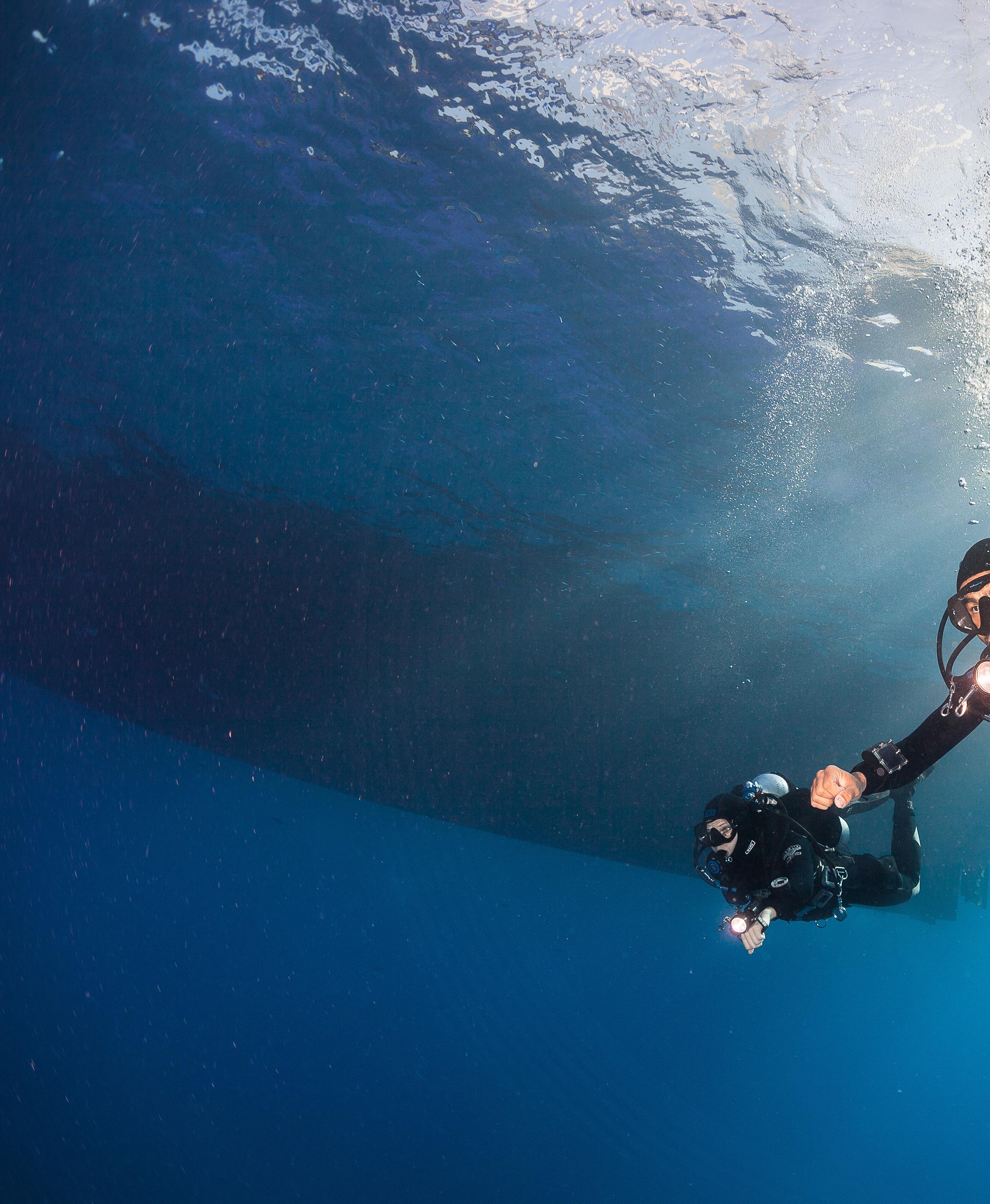
There is a myth that new divers are not capable of much. It is simply not true. When we teach with patience, progression, and respect for how people learn, new divers rise to every challenge. I have seen brand-new divers hover mid-water, swim in perfect trim, and move with the ease of people who have been diving for years. The difference is not natural talent. It is the method.
Could I teach this way with larger groups? No. Realistically, three students is the maximum I can manage at once. For newer instructors, one or two is a better starting point.
Teaching neutrally buoyant from the beginning requires more patience, more creativity, and a willingness to rethink old habits. But it gives students confidence early, builds genuine competence, and makes diving safer, smoother, and far more enjoyable. They move with confidence because they earned it through practice, support, and steady challenges that made sense. Your role shifts naturally from coach to mentor to teammate as they grow.
Your greatest success is when they “don’t need you anymore.”
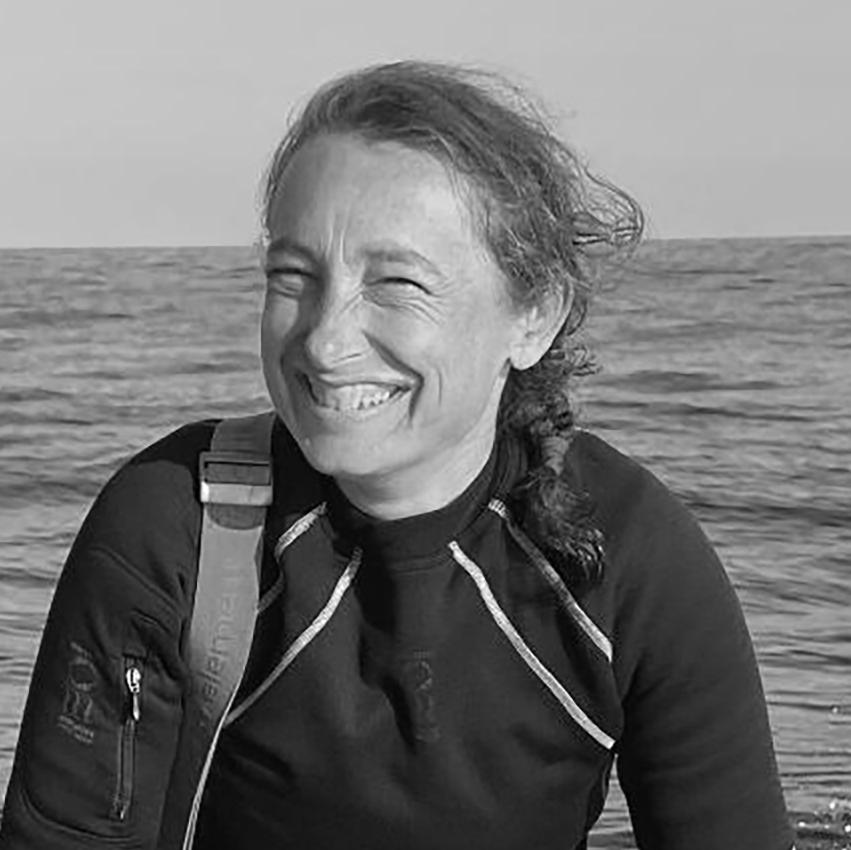
Gemma Thomas
Gemma began diving after moving to Singapore in 2009, where regular access to the water led to a long-term commitment to high-quality training and diver development. She became a GUE Instructor in 2016, focusing on recreational and foundational courses, with an emphasis on strong fundamentals, comfort, and skill mastery. She teaches GUE Open Water, Advanced Open Water,
Performance Diver, and Fundamentals, and is an Instructor Evaluator for Open Water, Advanced Open Water, and Fundamentals. Her approach emphasizes consistency, confidence, and decision-making.
Gemma has participated in projects in Italy involving photogrammetry and biological sampling, and is part of the team developing GUE’s Mastery Learning courses.
New divers can achieve perfect trim and mid-water hovering, moving with an ease typically reserved for those with years of experience.
February 2026 · Quest
FROM SARDINES
TEXT THE HALCYON/GUE DIVE TEAM
PHOTOS DIMITRIS FIFIS
WHALE
PHOTO DIMITRIS FIFIS
SARDINES TO
WHALE SHARKS
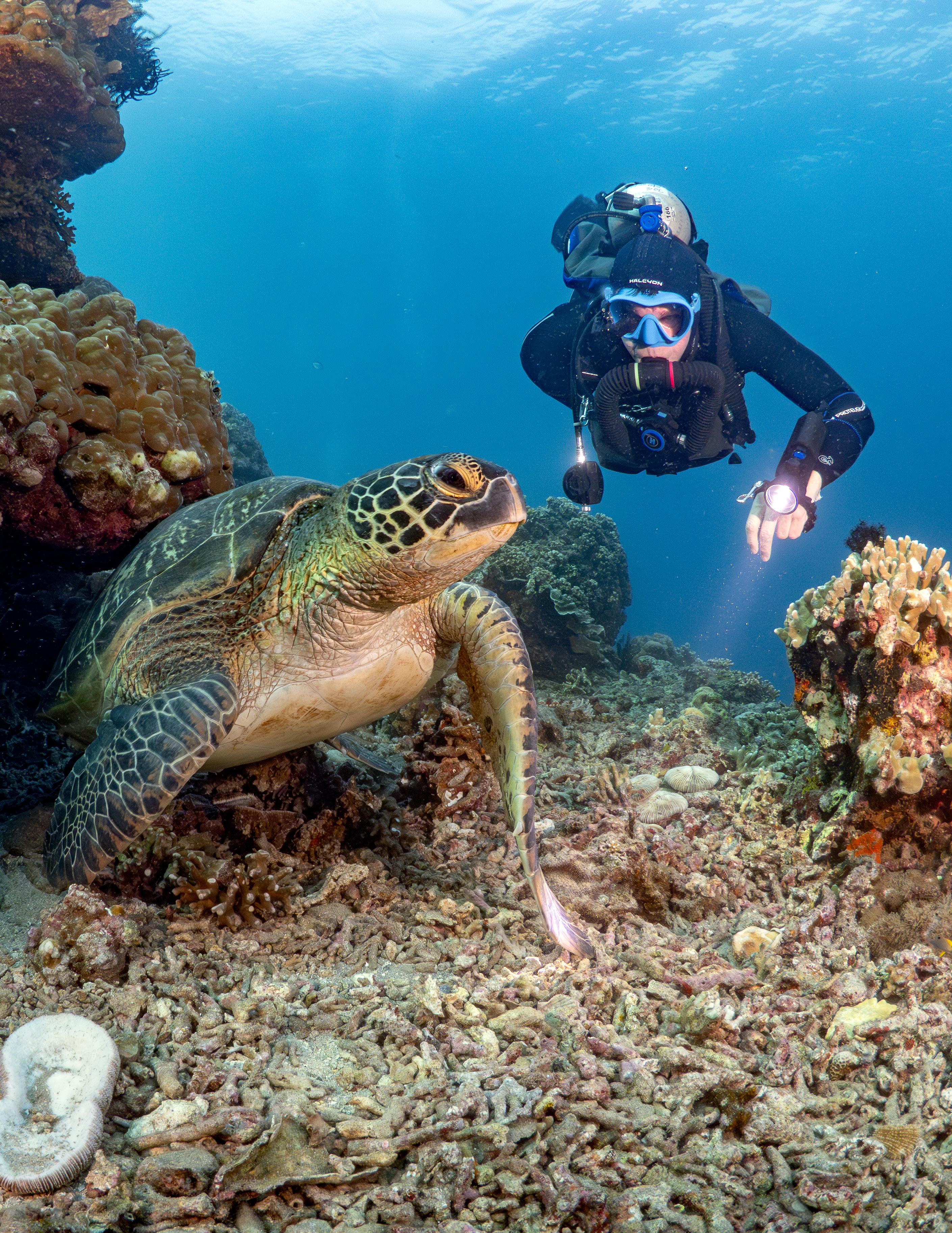
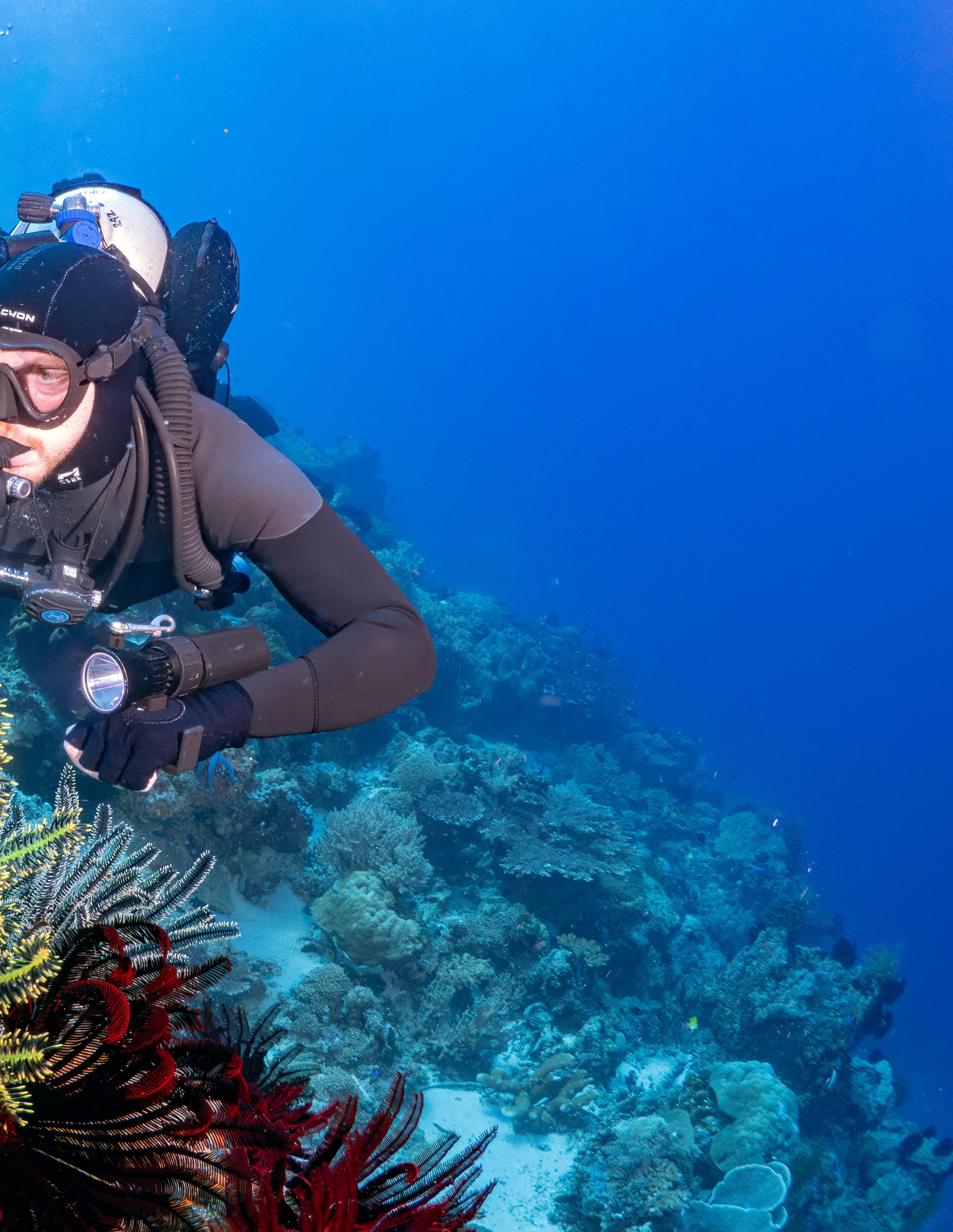
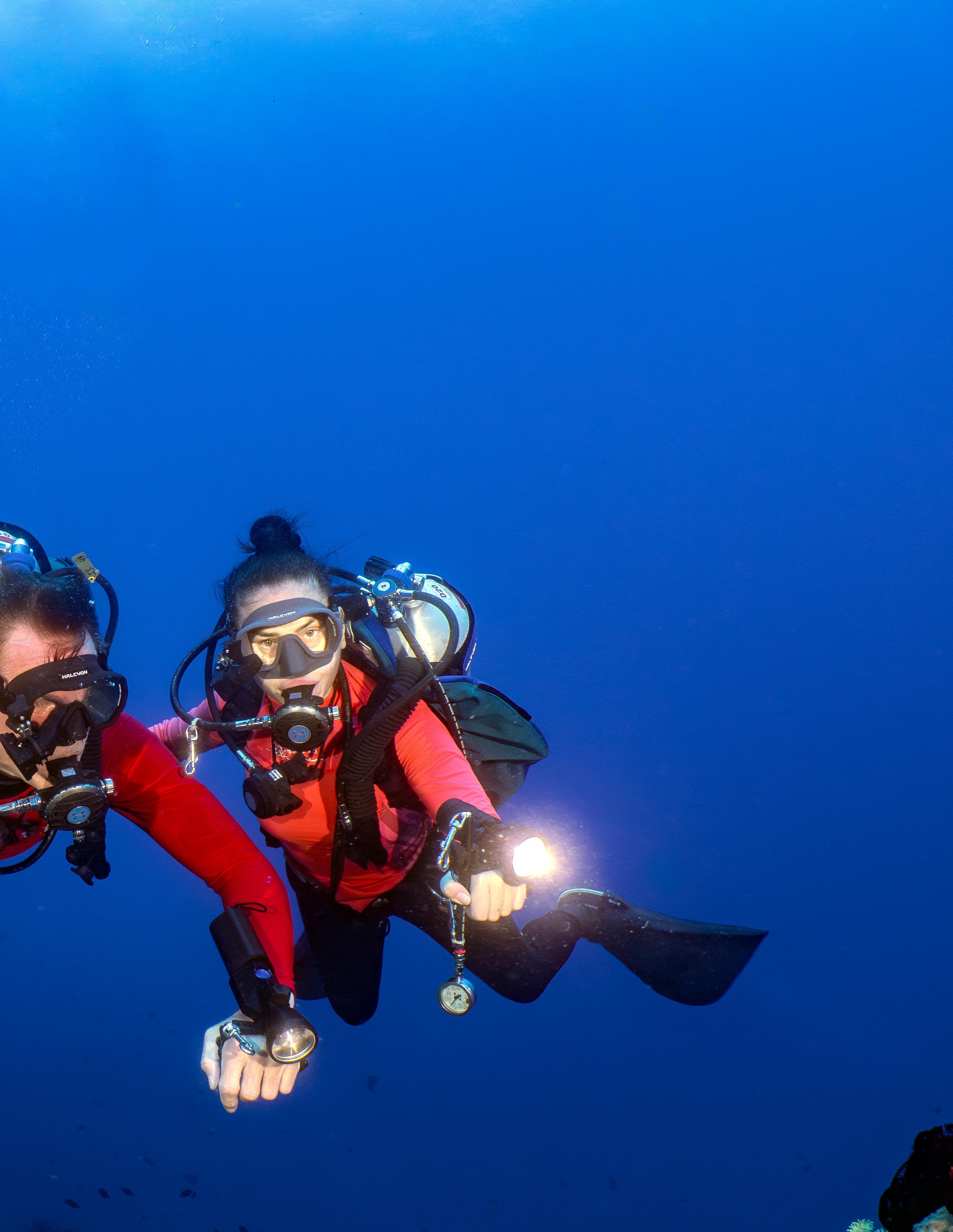
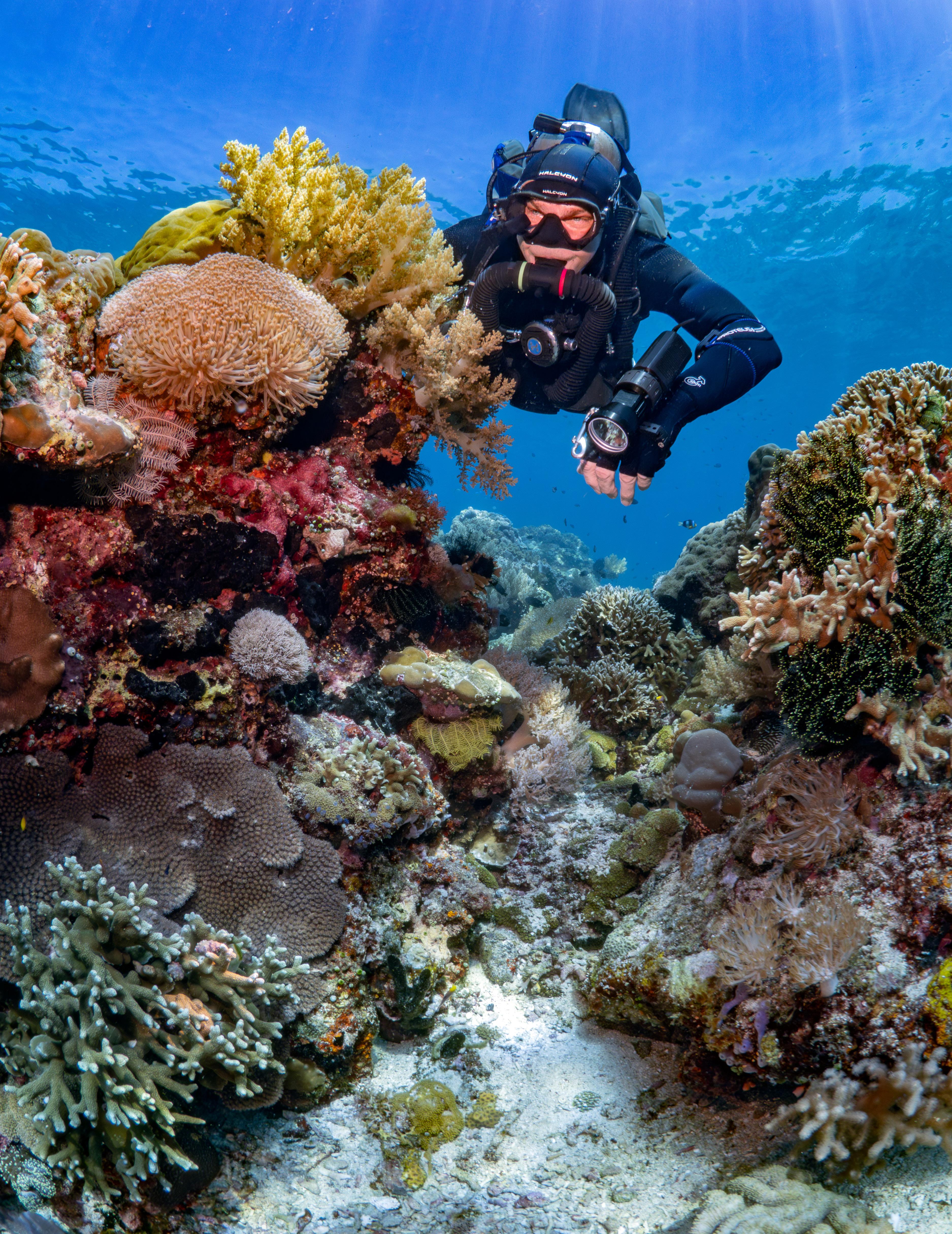
The silent, bubble-free Halcyon Symbios CCR allows divers to get closer to marine life than ever before.
PHOTO
There
are
dive trips, and then there are journeys—the kind that linger long after your gear is packed away.
This
past August,
gathered in
laughter,
a spirited group of GUE divers
the Philippines for a week of exploration,
and
underwater
magic. The trip blended the best of both worlds: tranquil days at the lush seaside resort of Atlantis Dumaguete and a liveaboard voyage aboard the Atlantis Adventurer, the most welcoming dive vessel we’ve ever experienced.
From the first sunset over the Sulu Sea to the laughter shared after or during dives, it was clear that this would be no ordinary expedition. Each day unfolded into a celebration of diving, camaraderie, and discovery—an experience that unitved technical explorers and recreational divers alike beneath a shared love for the ocean. What followed was a demonstration of how innovation, hospitality, and shared passion can come together to elevate the diving experience into something unforgettable.
Atlantis Dumaguete: Sanctuary of Life
Nestled in the province of Dauin, Atlantis Dumaguete offers a gateway to one of the most biodiverse marine regions on Earth. More than 440 species of reef-building corals flourish here, supported by thriving marine sanctuaries that protect delicate ecosystems and sustain the greater Visayas region. From the famous Apo Island to the slopes of the house reef, every dive promises wonder—turtles gliding through coral gardens, Anthias swarming like confetti, and macro life so rich it feels infinite.
The dive guides at Atlantis Dumaguete are experts not only in navigation but in storytelling. They know the names of the resident frogfish, where the mandarinfish emerge at dusk, and how to find the tiniest creatures hidden among coral branches. On any given day, you might hover over a flamboyant cuttlefish
changing color in hypnotic patterns, or watch a blue-ring octopus unfurl its warning display beneath your light. For underwater photographers, this is paradise—a place where patience is rewarded with living art.
Camera comfort
Photographers delight in the endless variety: ornate ghost pipefish, frogfish, seahorses, and the surreal play of light on coral. The Atlantis team ensures every detail—from camera handling to dive logistics—feels effortless. Dedicated camera facilities provide well-lit, climate-controlled workspaces with 110v and 220v outlets, letting image-makers prepare and maintain their systems between dives. As Atlantis Photography Ambassador Marty Snyderman notes, “Divemasters and boat captains are happy to take instructions regarding how you’d like your camera system handled, or let you do it all yourself without offense taken.”
Meals are another highlight. Served fresh and prepared with local ingredients, each dish reflects the resort’s philosophy of thoughtful indulgence. The kitchen staff, attentive and creative, happily accommodates vegan, gluten-free, and other special requests, ensuring everyone feels at home between dives. Dinners often stretch late into the evening, with stories traded across tables and the sound of waves mingling with laughter. It’s this blend of comfort and connection that makes Atlantis Dumaguete feel more like a community than a resort.
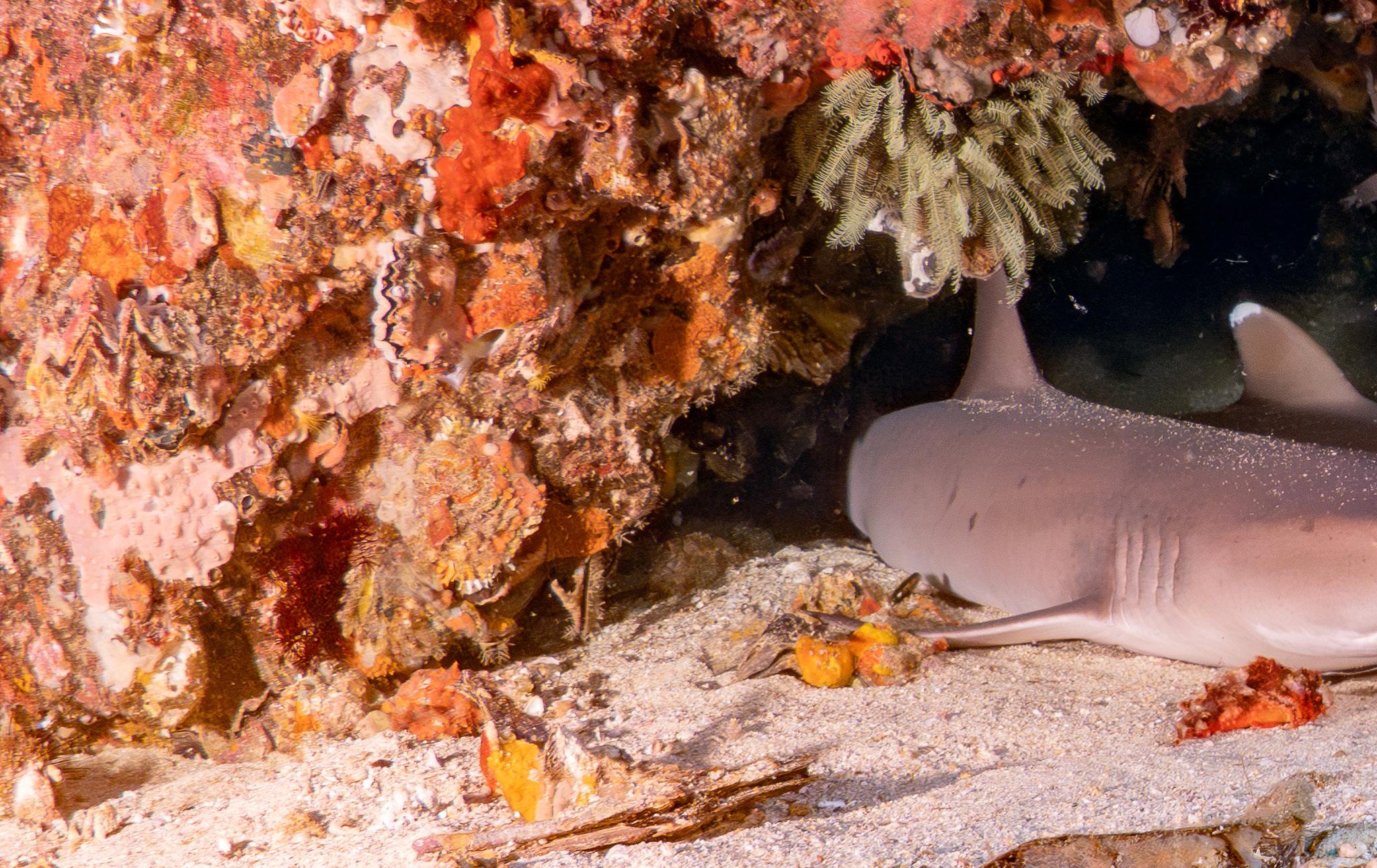
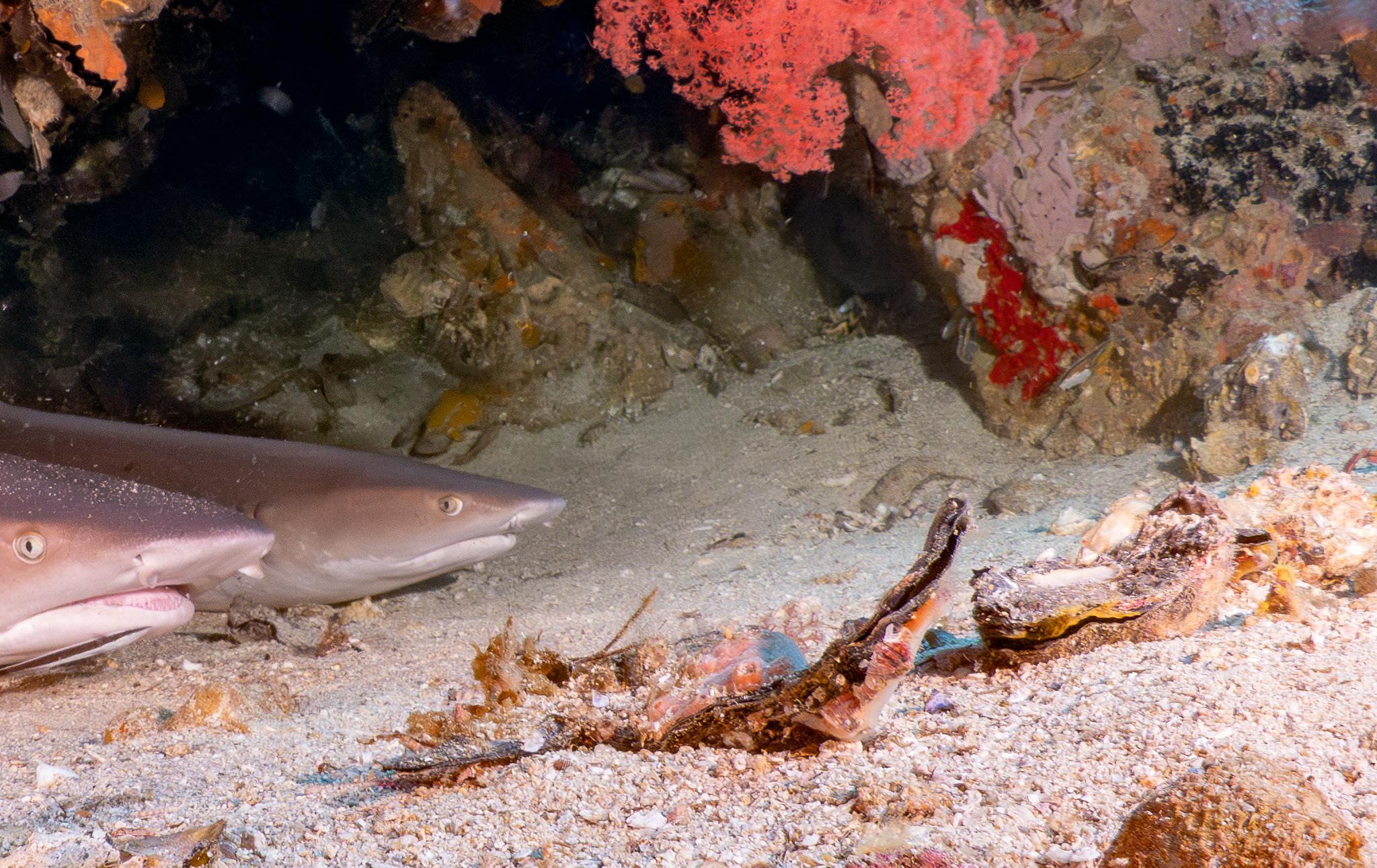
Pescador Island’s underwater caves provide a perfect sanctuary for whitetip reef sharks, which can often be found resting on the sandy floor during the day.
The Atlantis Adventurer
When it was time to board the Atlantis Adventurer, excitement rippled through the group. The liveaboard—formerly the Truk Aggressor—has been beautifully reimagined for comfort, safety, and exploration. At 32 m/107 ft long and staffed by an exceptional crew, she carries divers to some of the Philippines’ most iconic sites: Pescador, Gato, Kimud Shoal, Balicasag, Pamilacan, and Sumilon. Each site brings a new facet of the Philippines’ underwater heritage.
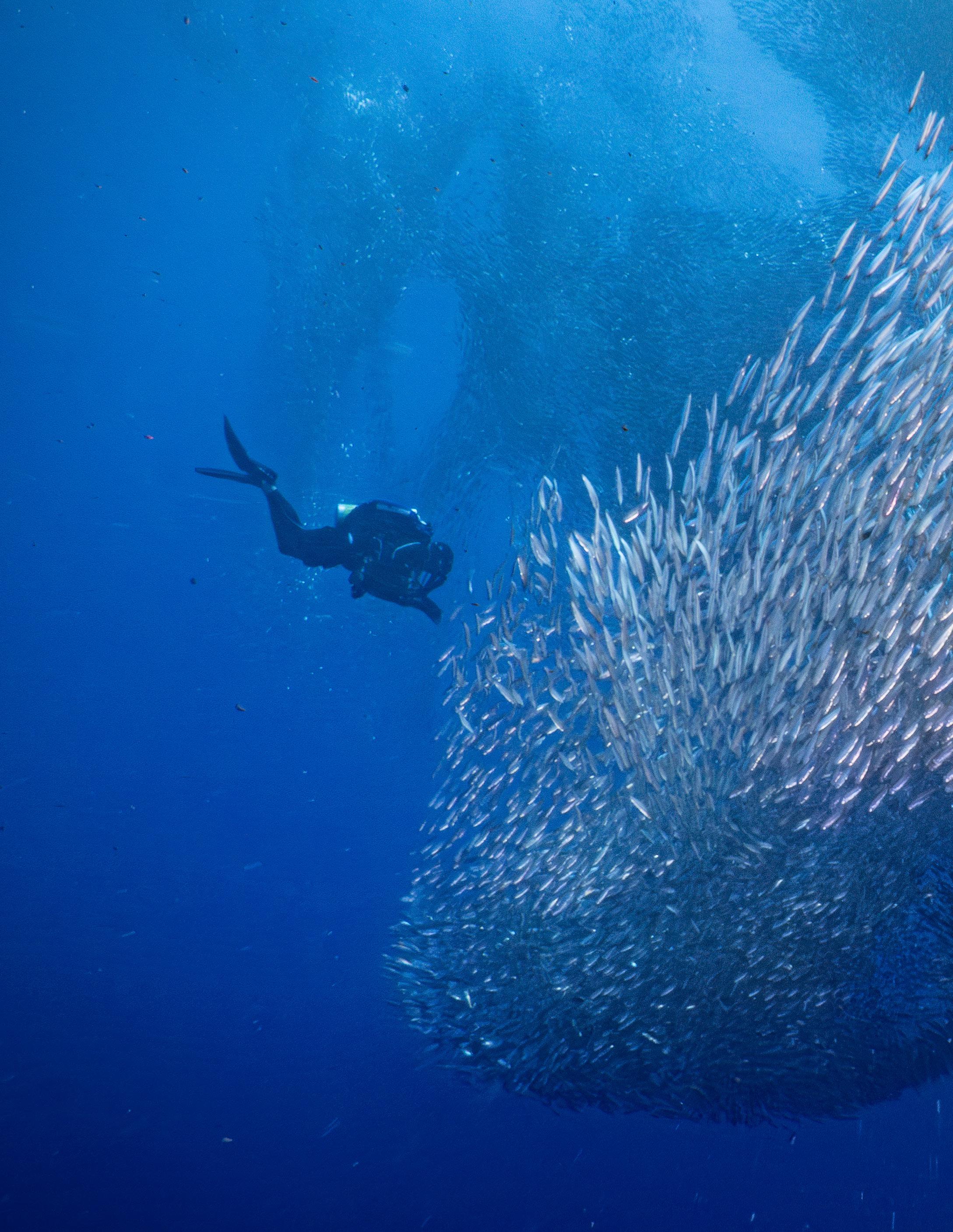
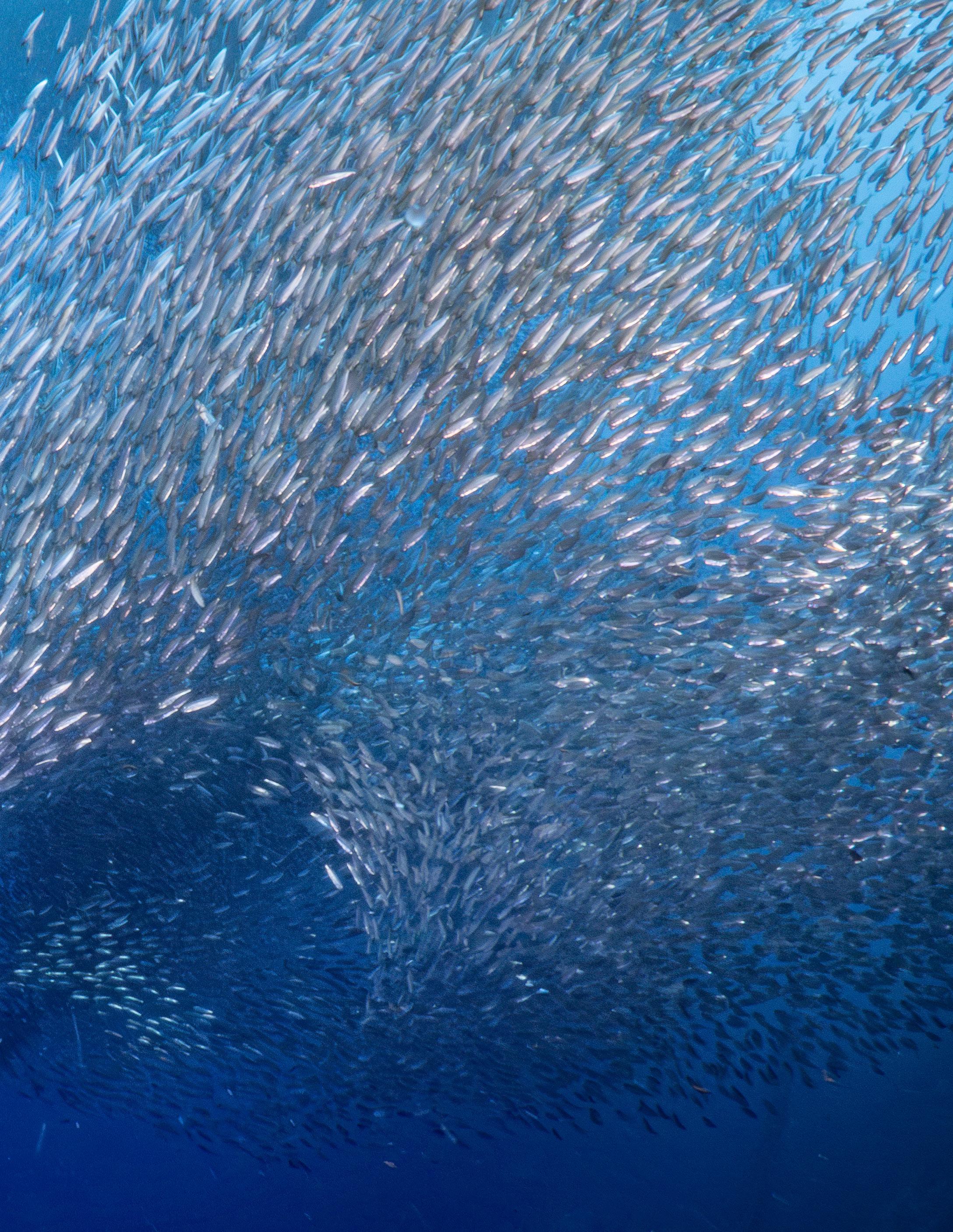
At Pescador, walls draped in coral give way to swirling sardine balls that shimmer like liquid silver. Gato Island reveals its famous tunnels and the mesmerizing dance of cuttlefish and frogfish, while Kimud Shoal delivers one of diving’s most breathtaking encounters: thresher sharks emerging from the deep. Balicasag Island enchants with turtle cleaning stations and schools of jacks, while Pamilacan’s coral walls host sea snakes, reef sharks, and vibrant gardens of hard coral. Finally, at Oslob and Sumilon, the group experienced unforgettable whale shark encounters, a fitting crescendo to a journey through the
heart of the Coral Triangle. Floating eye-to-eye with the largest fish in the sea is a humbling, intimate reminder of our place in the vast blue world. The sight of these gentle giants gliding past, unhurried and serene, stays with you long after the bubbles fade.
Carefree luxury
Life aboard the Adventurer blended professionalism with warmth. The 15-member crew greeted each returning diver with towels, snacks, and smiles. Between dives, divers relaxed on the sun deck, edited photos in the lounge, or swapped stories over tropical fruit smoothies. Some gathered on the upper deck for socializing under the stars, while others enjoyed the quiet rhythm of the ocean. Every detail—from neatly labeled gear stations to nightly briefings—reflected the precision and pride of a team that genuinely loves what they do.
Meals were chef-prepared and plated with flair—hearty breakfasts, elegant lunches, and dinners featuring grilled marlin, vegetable curry, and roasted pumpkin soup. The galley’s cre-
ative team became legends of the trip for their mastery of flavor and timing. Beer, wine, and local rum were available, but the true indulgence came from the camaraderie. Between dives, the lounge transformed into a hub of photo editing and storytelling, the air thick with laughter and the occasional burst of applause for a particularly good macro shot.
The Adventurer’s itineraries are carefully chosen to balance relaxation and adventure. The crew’s ability to anticipate needs—from adjusting schedules to setting up and preparing all relevant equipment—gave everyone a sense of calm confidence. Even on challenging dives, the professionalism shone through, and the joy of discovery never dimmed.
Innovation below the surface
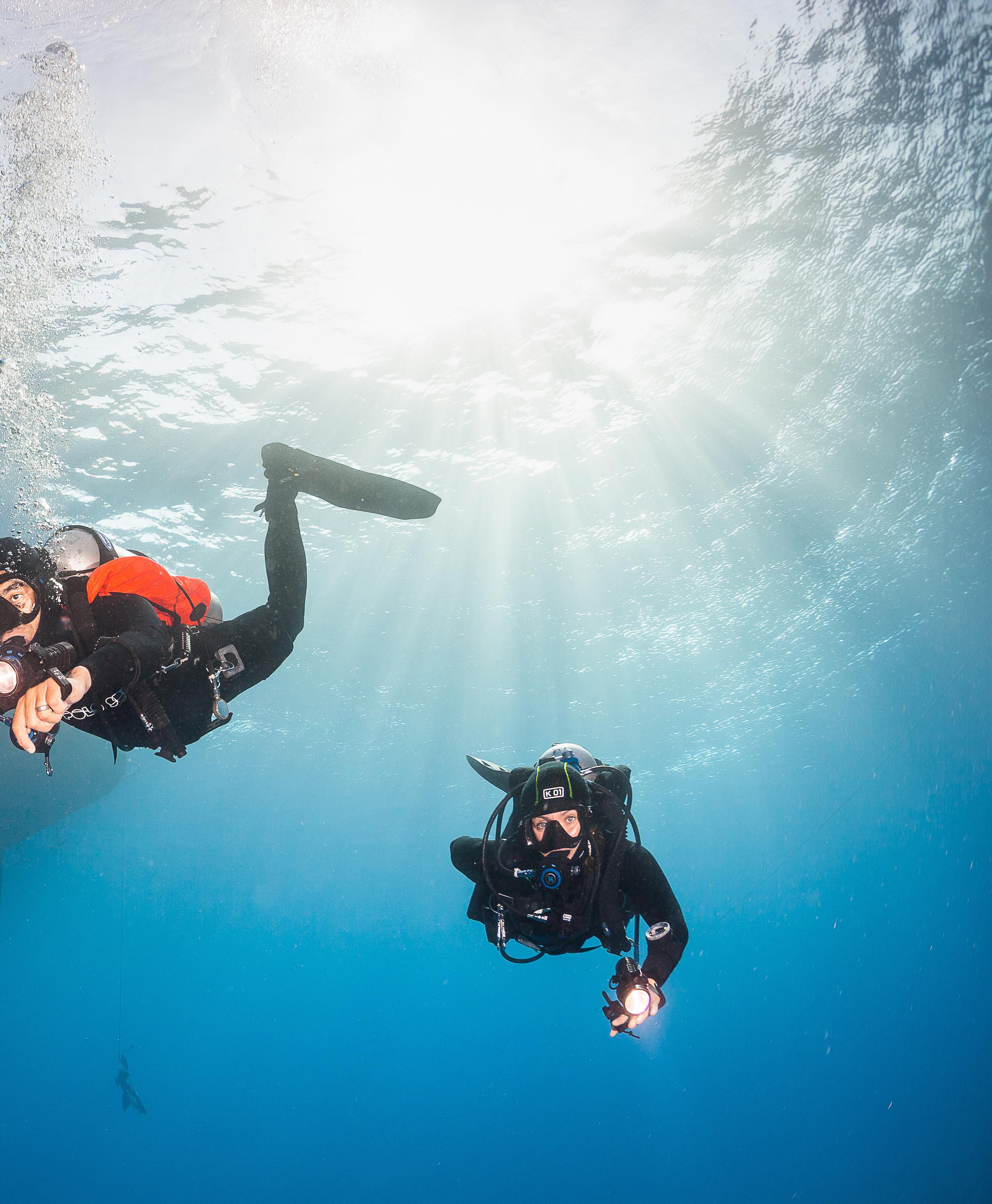
Beyond the natural beauty, this journey carried a pioneering spirit. Several members of the GUE team were conducting field testing for new features of the Halcyon Symbios™ Rebreather and its integrated ecosystem. Over multiple dives, the Symbios demonstrated flawless perfor-
mance—from shallow macro sessions to deeper profiles at Kimud Shoal and Balicasag. The unit’s intuitive controls, comfort, and minimal buoyancy shift impressed everyone.
Divers also trialed new Symbios-enabled features, including a refined Buddy Screen, allowing easy viewing of a buddy’s dive data on either rebreather or open-circuit platforms. The ability to swim by a dive buddy and quickly check critical parameters is both useful and fun. Meanwhile, some recreational divers in the team loved experimenting with the real-time trim position via the Symbios Tank Pod. The latter allowed divers to monitor trim and gas supply data directly through the Symbios HUD or Handset, fostering team awareness and safety. As one diver noted, “Having real-time data at eye level changed the way we communicate underwater—it’s like diving in the future.”
The combination of GUE’s team protocols and Halcyon’s advanced equipment provided a joyous and engaging experience for everyone, exploring the future of diving while enjoying the simple pleasures of lived experience. Symbios
“Each diver came away transformed, not only by what they saw beneath the surface but by what they shared above it.
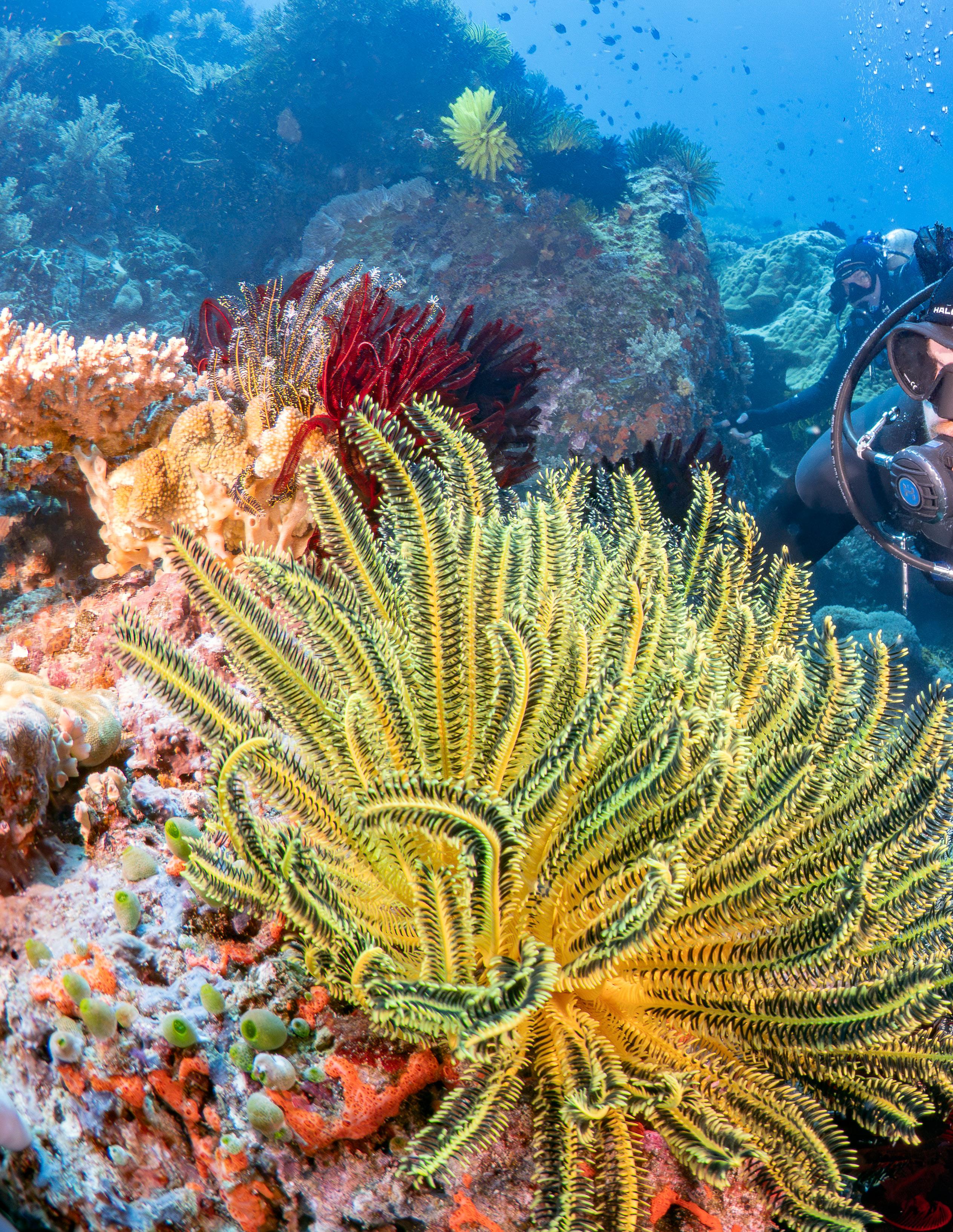
Feather stars aren't plants—they are actually echinoderms, making them distant relatives of sea stars and sea urchins. They can even "walk" or swim by waving the arms.
Renowned for its dramatic limestone geology, Pescador Island features a honeycomb of caverns and swim-throughs.

rebreather divers worked seamlessly alongside open-circuit teammates, sharing insights and data that will help refine the next generation of dive technology. Watching advanced technology operate in perfect harmony with the diver—and the ocean—was a reminder that the future of exploration is already here.
Shared moments, enduring memories
The week unfolded as a celebration of both technology and togetherness. Evenings brought sing-alongs under the stars, birthday surprises, and shared reflections over the day’s dives. One unforgettable sunset found dolphins racing the bow, while laughter and quiet satisfaction filled the air. The upper deck became a sanctuary of its own, where stories, jokes, and dreams flowed as freely as the sea breeze.
Each diver came away transformed, not only by what they saw beneath the surface but by what they shared above it. The Atlantis crew, with their warmth and meticulous care, set a standard that redefines dive hospitality. Whether helping with camera gear, remembering everyone’s
favorite snack, or ensuring a smooth liveaboard crossing, they embodied the spirit of the Atlantis motto: “Arrive as a guest, leave as a friend.”
As the trip drew to a close and gear was stowed away, no one was quite ready to leave. The Philippines had given us something beyond adventure; it offered connection, discovery, and the reminder that all dives feel like an exploration when innovation meets heart. The gentle sound of waves against the hull and the last sunset over the Sulu Sea seemed to whisper a promise: we will return.
Across all these destinations—Moalboal–Pescador, Gato–Malapascua, Kimud Shoal, Balicasag Island, Pamilacan Island, and Oslob & Sumilon—divers are treated to a stunning variety of habitats, exceptional coral health, and a wealth of marine life. From the shimmering sardine runs of Cebu to the graceful thresher sharks of Malapascua and the turtle-strewn reefs of Balicasag, these sites represent the best of Philippine diving and a living showcase of how vibrant and resilient the country’s underwater ecosystems remain.
PHOTO DIMITRIS FIFIS
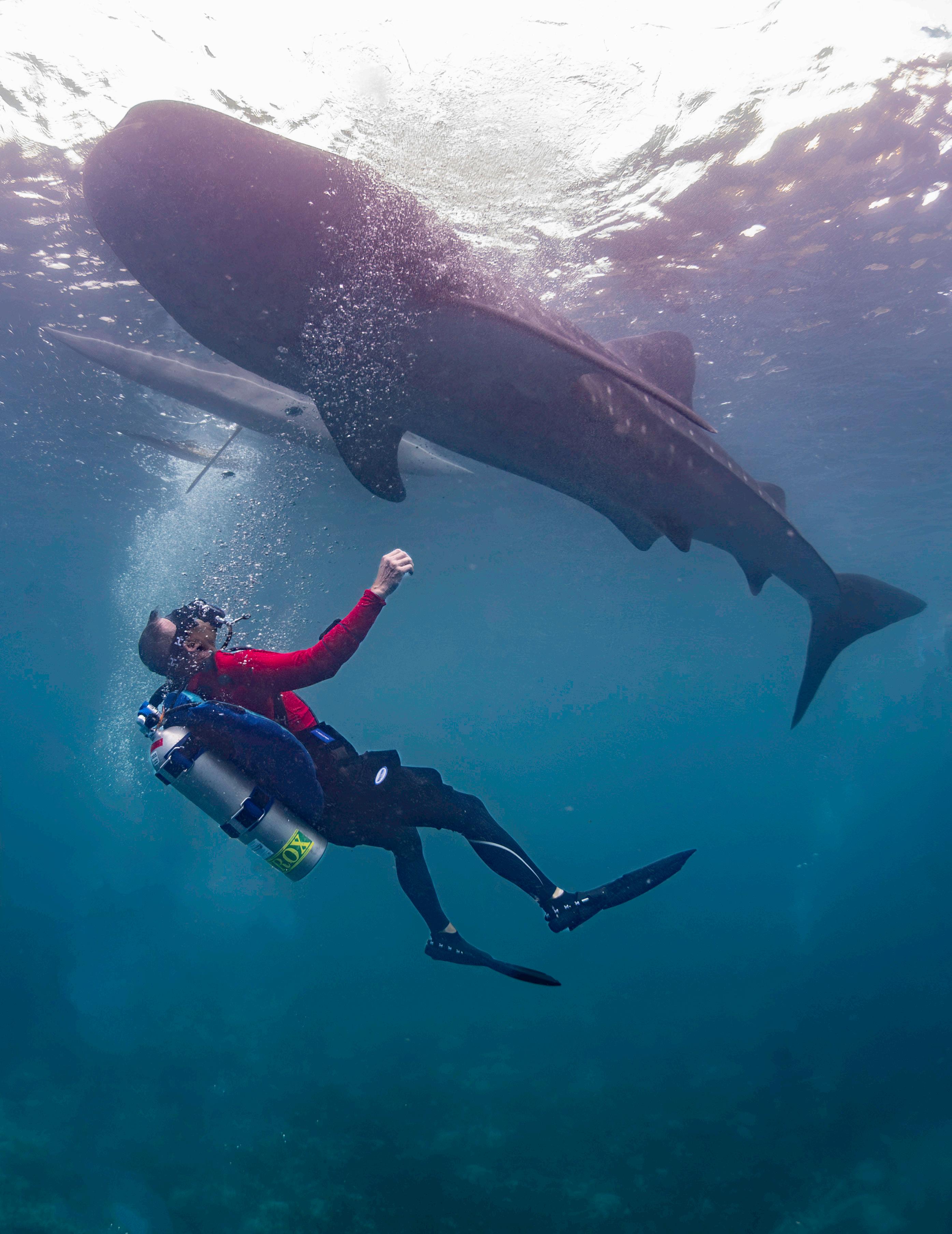
Gliding with these serene giants is a humbling dance that stays with you long after the bubbles fade.
PHOTO DIMITRIS FIFIS
FACT FILE // DIVE SITES
MOALBOAL–PESCADOR
Just off the coast of Cebu, the Moalboal–Pescador area is famed for its dramatic marine scenery and vibrant reef life where divers are surrounded by large, shimmering schools of sardines—a spectacle that blankets the reef wall and draws in predators and smaller reef fish alike. At Pescador, the reef drops away in a richly coral-covered wall adjacent to the famous Cathedral cave system, where giant frogfish and other cryptic creatures hide in the shadows. In the Coral Garden, our team found healthy hard and soft corals with scorpion fish and a host of reef dwellers making their home among the branches. The deeper coral walls remain spectacular, showcasing a dense, thriving ecosystem.
GATO–MALAPASCUA
The offshore island of Gato, near Malapascua, is a marine reserve and sea-snake sanctuary known for its impressive biodiversity. At the Southeast Corner, our team encountered cuttlefish, frogfish, and other camouflaged creatures among the coral. The East Side and Yellow Tip Reef were excellent for our team of photographers due to the abundance of nudibranchs and the vibrant mandarin fish that perform their sunset courtship dances. Gato Island’s rugged underwater terrain featured caverns and tunnels where whitetip reef sharks could be found resting, and its currents keep the

Field-testing the Symbios head-up display on Pamilacan Island’s coral reefs.
reefs swept clean and full of life. The coral here was exceptionally healthy, supporting both pelagic and macro species in equal measure.
KIMUD SHOAL
Kimud Shoal presented engaging encounters with thresher sharks with a reef life that is just as rewarding, with frogfish, anemone fish, schooling jacks, and barracuda adding variety to the spectacle. The shoal’s broad coral plateau supports a diverse marine community, and the surrounding blue water teems with pelagic life. With great visibility and robust coral growth, Kimud Shoal offers a perfect combination of big-animal excitement and healthy reef ecosystems.
BALICASAG ISLAND
Balicasag Island is renowned for its coral walls, crystal-clear waters, and rich marine biodiversity, and it did not disappoint. At Diver’s Heaven, our team was treated to numerous sea turtles gliding effortlessly over reefs covered in sponges and hard corals. The Black Forest site treated us to schooling jacks and gentle drift dives, leaving us to float magically past coral-covered slopes. Cathedral showcased a variety of reef fish in brilliant color, while Marine Bay offered the magic of a night dive filled with octopuses, crustaceans, and hunting fish emerging from the dark. Balicasag’s reefs are remarkably well-preserved, thanks to local protection efforts, making it one of the healthiest and most picturesque islands in the Visayas.
PAMILACAN ISLAND
Pamilacan Island rewarded our divers with a mix of vibrant reefs and pelagic encounters. At the North Wall, reef sharks were regularly spotted patrolling along the drop-offs, while the Coral Garden delighted our photographers with sea snakes, shrimp, and tiny reef creatures. Pamilacan is also an excellent site for observing the interaction between small reef inhabitants and larger predators, with consistently strong coral health and visibility. Its tranquil setting and variety were a striking blend of beauty and serenity.
OSLOB & SUMILON
Year-round In Oslob, divers have the extraordinary opportunity to see whale sharks—a breathtaking encounter with the ocean’s largest fish. Despite the crowds, swimming alongside these huge fish is an unforgettable experience. Meanwhile, nearby Sumilon Point and Cottage Point provide exceptional reef diving, with fields of coral teeming with reef fish and sea fans. Sumilon’s protected marine reserve status has helped preserve its excellent coral cover, making it a superb complement to Oslob’s big-animal spectacle. Together, they offer a rare mix of close-up megafauna encounters and thriving coral ecosystems.
FACT FILE // CEBU
Cebu’s allure for divers isn't just in the water— it’s in the tectonic and bathymetric drama of its location. This slender, 196-kilometerlong island sits at the heart of the Visayan archipelago, carved by the Tañon Strait to the west and the Cebu Strait to the east.
Geologically, Cebu is a raised limestone plateau, which creates the dramatic "walls" that define its coastline. In Moalboal, the island shelf drops vertically from a mere 3 m/10 ft to over 40 m/130 ft just a stone’s throw from the beach. This sheer underwater cliff face is the stage for the famous "Sardine Run," where nutrient-rich currents rising from the 500 m/640 ft deep Tañon Strait
THE PHILIPPINES
support a massive biomass of pelagics and cetaceans.
To the north, the geography shifts to submerged volcanic ridges. Monad Shoal, a massive 1.5 km/1 mi wide plateau, rises from the abyss to within 20 m/66 ft of the surface. This unique "sunken island" serves as a natural cleaning station for Pelagic Thresher Sharks, who ascend from depths of to these shallow crests at dawn.
The Danajon Bank, located off northern Cebu, is one of only six double barrier reefs in the entire world, creating a unique microecosystem of high coral density and calm lagoons.
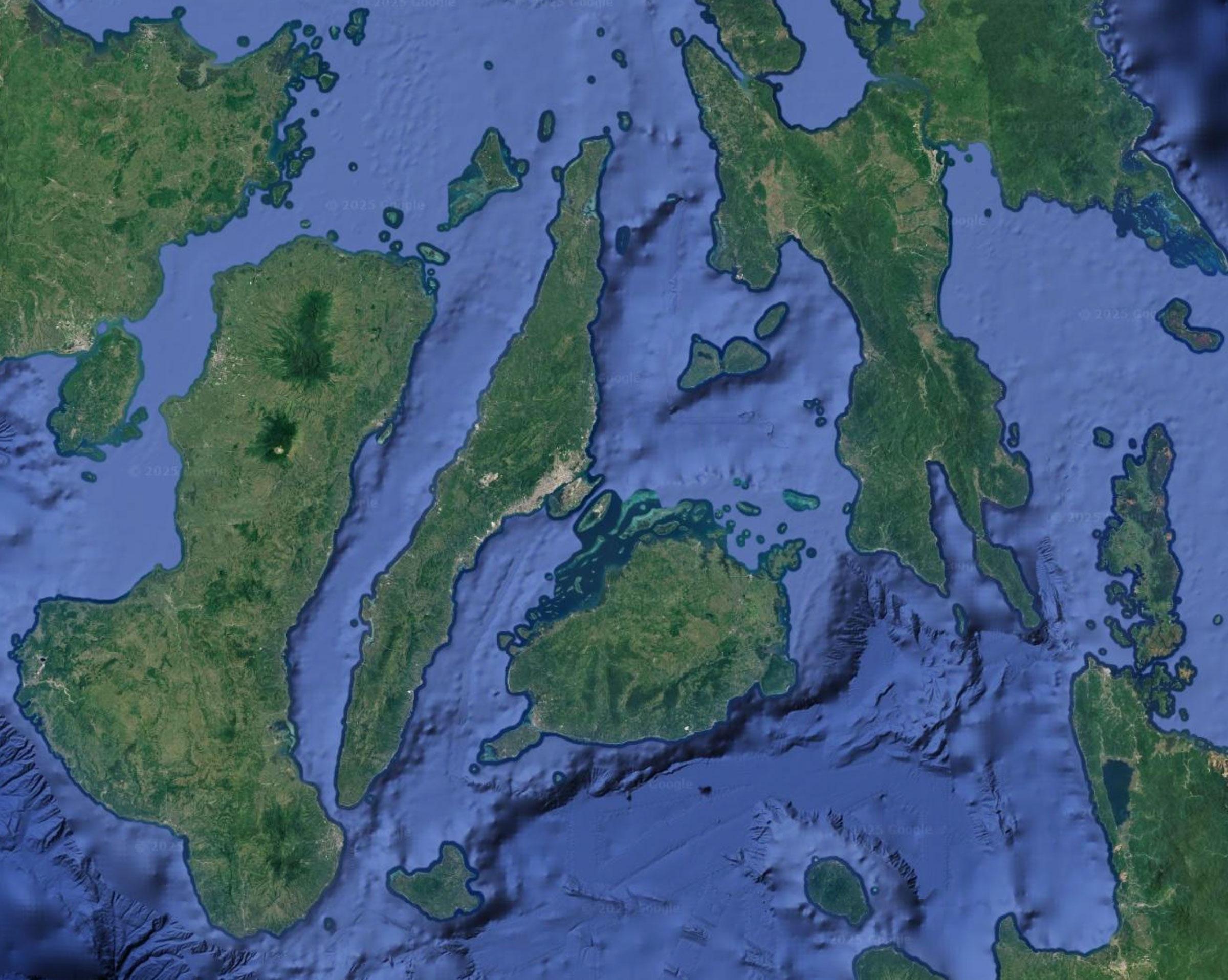
Balicasag Island
Dumaguete City Atlantis Dive Resort
CEBU
Cebu City
Moalboal
Apo Island
Malapascua
Oslob
Pamilacan Island
Born in Athens, Dimitris Fifis began diving in 1991, transitioning from a 23-year career in the Hellenic Navy to professional diving in 2009. His experience spans managing dive centers, working in the mega-yacht sector, and a long-standing involvement with GUE.
The Coral Triangle reveals exceptional biodiversity, supporting an astonishing variety of corals and reef fish.
Currently the Senior Operations Manager at Deep Dive Dubai, Dimitris focuses on diver safety, exploration, and underwater filming. A technical diving specialist, he is a core member of the Halcyon CCR development team and a factory trainer for the Symbios CCR, dedicated to advancing high-level education and equipment standards.
Dimitris Fifis
GUE PREMIUM DIVE CENTERS
Area 9 Mastery Diving – Kralendijk, Bonaire
www.masterydiving.com
Base1 – Sardinia, Italy
www.baseone.it
Deep Dive Dubai – Dubai, UAE
www.deepdivedubai.com
Dive Centre Bondi – Bondi, NSW, Australia
www.divebondi.com.au
Duikcentrum de Aalscholvers – Tilburg, Netherlands
www.aalscholvers.nl
Eight Diving – Des Moines, WA, USA
www.8diving.com
Exploration Diver – Hangzhou, China
www.facebook.com/qiandaolake
Extreme Exposure – High Springs, FL, USA
www.extreme-exposure.com
Islas Hormigas – Cabo de Palos, Spain
www.islashormigas.com
Living Oceans – Singapore
www.livingoceans.com.sg
Scuba Academie – Vinkeveen, Netherlands
www.scuba-academie.nl
Tech Korea – Incheon, South Korea
www.divetechkorea.com




GUE DIVE CENTERS
Buddy Dive Resort – Bonaire
www.buddydive.com
Dive Alaska – Anchorage, AK, USA
www.divealaska.net
Faszination-Tauchsport – Sauerlach, Germany
www.faszination-tauchsport.de
Dive in Essen – Essen, Germany
www.dive-in-essen.de
KrakenDive – Tossa de Mar, Spain
www.krakendive.com
Living Oceans Malaysia – Kuala Lumpur, Malaysia
www.livingoceans.com.my
Moby Tek Dive Center – Pahang, Malaysia
www.moby-tek.com
Paragon Dive Group – Arizona, USA
www.paragondivestore.com
Plongée Nautilus – Quebec City, QC, Canada
www.plongeenautilus.com
Scuba Adventures – Plano, TX, USA
www.scubaadventures.com
Scuba Seekers – Dahab, Egypt
www.scubaseekers.com







Tauchservice Münster – Münster, Germany
www.tauchservice.info
Tech Asia – Puerto Galera, Philippines
www.techasia.ph
Unique Diving Center – Shanghai, China
www.uniquediving.cn