
It’s no secret that computing has exploded in recent years, and is revolutionizing industry, government, media, medicine and more.
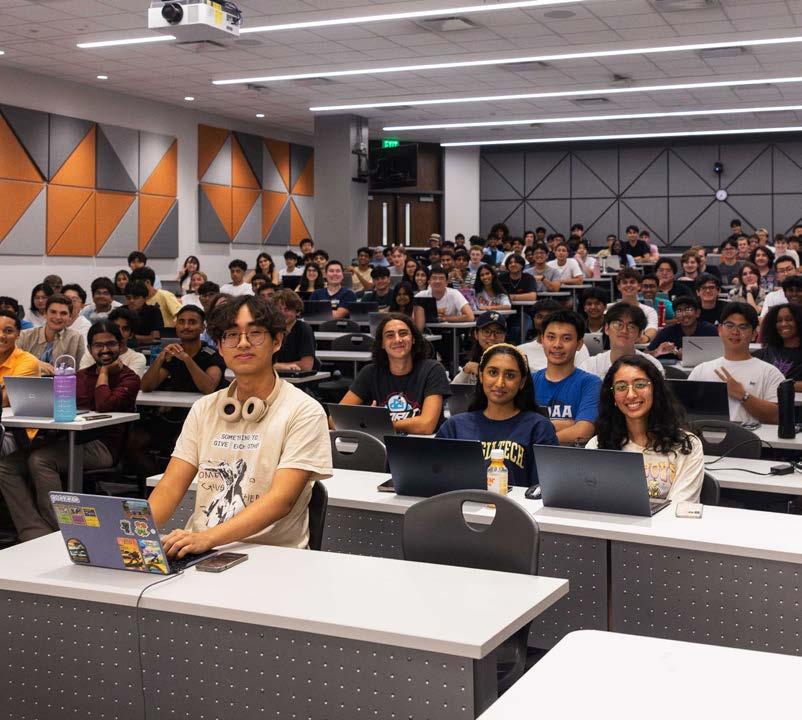
As the field has grown, so have we. The College of Computing has made a strategic decision to pursue education at hyperscale, which is to say we strive to teach as many students as possible with the resources we have. Our enrollment has doubled in the past six years, and we now have more than 7,500 students on campus, 23,000 online, and more than 38,000 alumni. Computing students are now the majority of Georgia Tech’s enrollment.
We have continued to improve our reputation, even amid explosive growth. The College of Computing is now ranked #6 for graduate and #7 for undergraduate computer science education in U.S. News & World Report. The success of our students and alumni is a key reason the Princeton Review named Georgia Tech the best value public university in the nation.
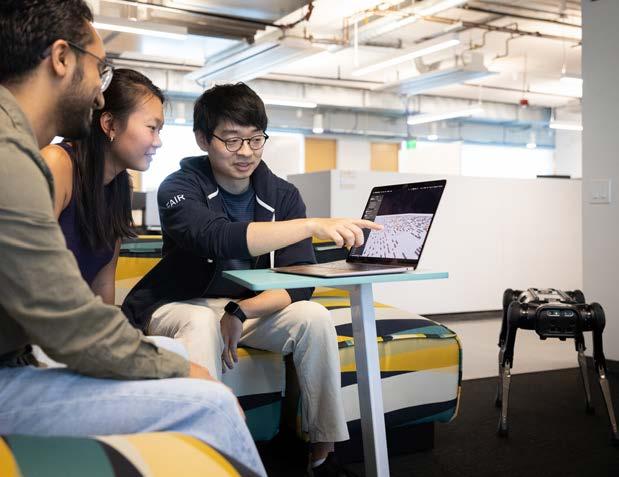
Our research also continues to expand, with an increased focus on “X + Computing,” which is combining computing with other kinds of expertise. Our researchers are working on computing-based innovations in topics ranging from robotic seeing-eye dogs, to use of generative AI in education, to security of AI applications,
to supercomputing simulations of scientific phenomena. In other words, our researchers are eager to bring their computing skills to bear on a wide range of problems of importance to society, in ways that move the needle on both sides.
We are also committed to responsible computing, which is the idea that computing professionals should understand the societal impacts of their work. Our college aims to bring together industry, government and academia stakeholders to partner in thought leadership on trustworthy computing with beneficial societal impacts
With so many people advancing so many areas of computing, it is also important that we build our community foundation. Our faculty and staff form an amazing team and our student pride and our alumni success are second to none, as we continue to create opportunities for our Yellow Jackets to come together.
I look forward to talking to you about all the exciting things we are doing, and where we plan to go next. Thank you for your friendship and support.
Sincerely,
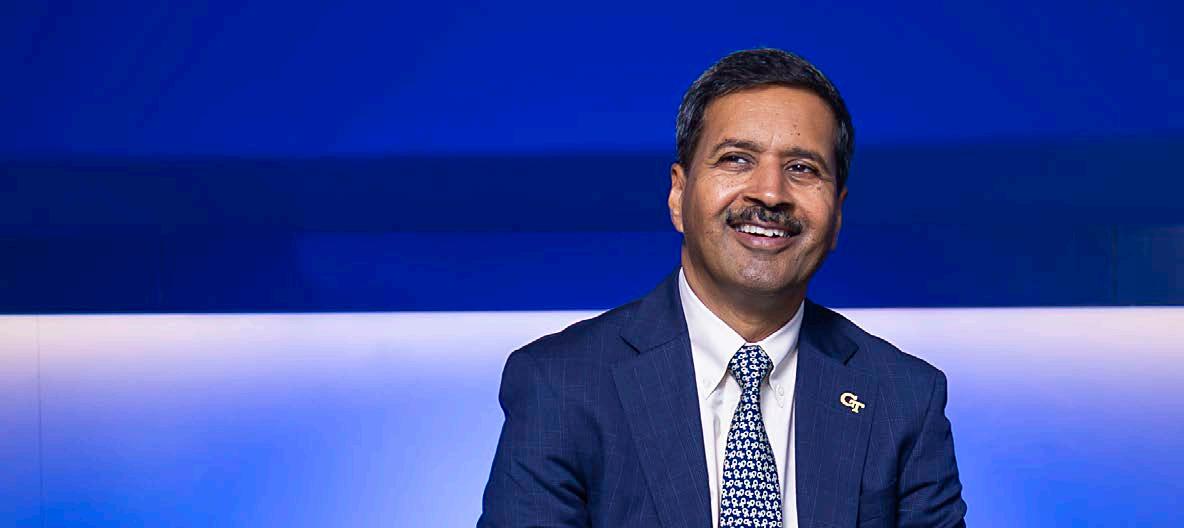
Vivek Sarkar
John P. Imlay, Jr. Dean, College of Computing
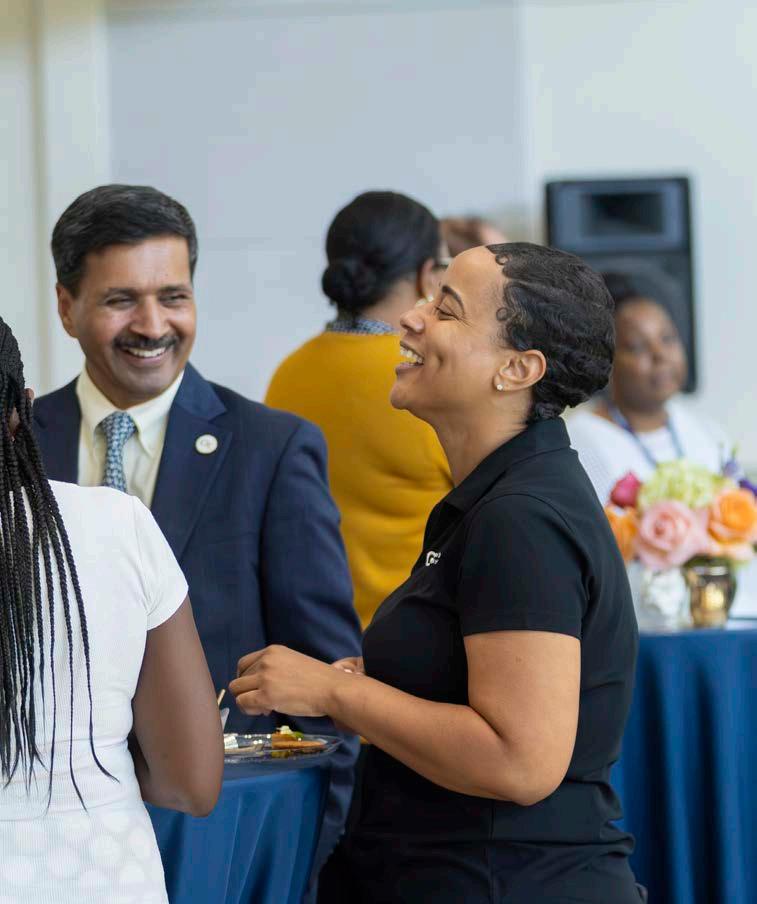
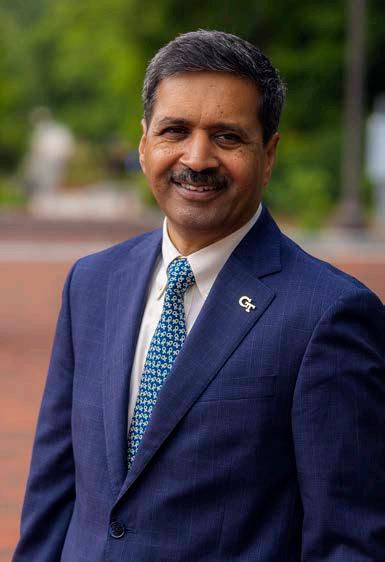
Since stepping into the role of dean in June 2024, Vivek Sarkar has brought both vision and vitality to Georgia Tech’s College of Computing.
In his first year, Sarkar—a renowned expert in parallel computing and a longtime academic leader—has made a strong impression by championing academic excellence, workforce preparedness, and a renewed sense of community.
Drawing on his research expertise and broad experience in higher education leadership, Dean Sarkar has made it a priority to elevate the College’s profile while strengthening its foundation.
As part of this effort, Dean Sarkar organized and moderated a panel discussion at the 2024 CRA Conference at Snowbird. The session, Best Practices in Industry Affiliate Programs, highlighted the critical importance of equipping students for success in a rapidly evolving tech industry. The expert panel led to an exploration of new ideas and partnership models between industry and academia that go beyond internships, career fairs, and other traditional approaches.
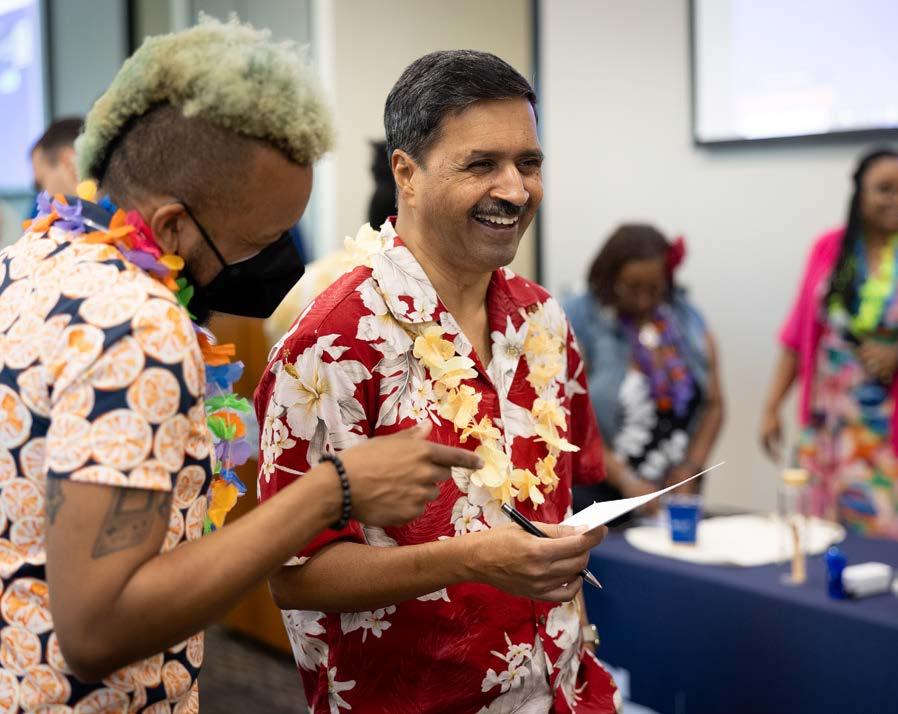
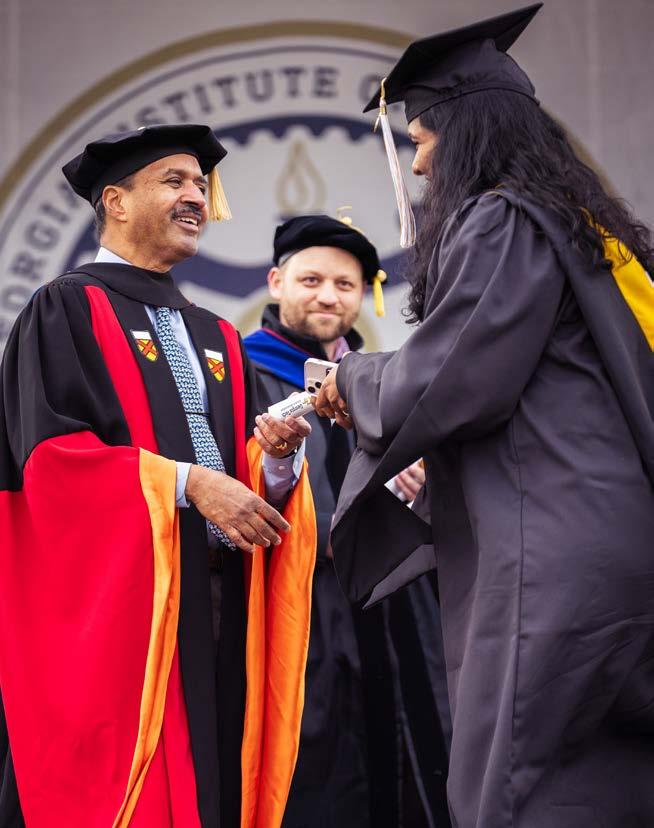
Sarkar’s leadership also emphasized student engagement and school spirit during his first year. A notable moment came this spring when the College unveiled a new chant to unite students, faculty, staff, and alumni around a shared identity. This effort reflects Sarkar’s belief in the power of community.
Behind the scenes, he has worked just as diligently to foster that sense of connection. Each week, Sarkar shares a message with the College community highlighting research accomplishments, faculty and student achievements, and other news. These weekly emails have quickly become a valued tradition, helping to keep the College informed and inspired. He also launched a series of in-person town hall meetings and virtual office hours, inviting open dialogue and ensuring every member of the College feels seen and heard.
Whether discussing Shakespeare or supercomputers, Sarkar brings curiosity, enthusiasm, and a deep commitment to excellence. As his first year concludes, the College of Computing is already feeling the impact of his leadership in its classrooms, labs, and inboxes. With Sarkar at the helm, the College is poised for continued innovation, collaboration, and community growth. n
Career programs, faculty milestones, and a top-10 national ranking underscore a year of strategic growth and innovation.
The past year brought a wave of momentum, recognition, and progress across the College of Computing, highlighting the strength of its people, programs, and priorities.
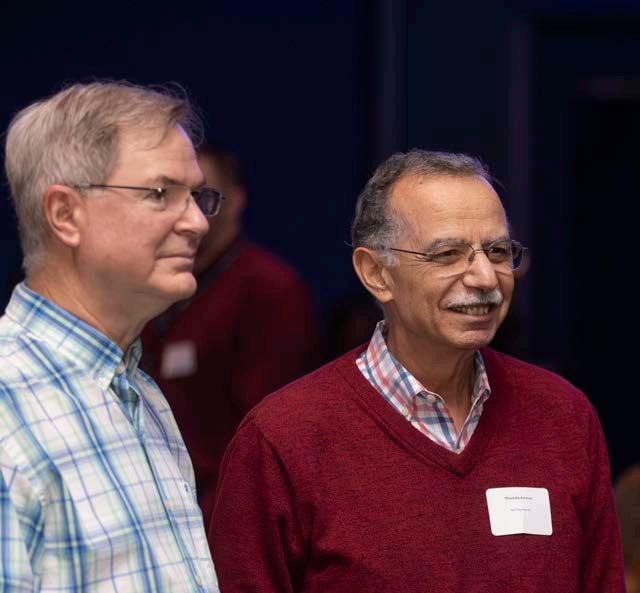
In a notable leadership transition, Regents’ Professor Mostafa Ammar returned to serve a second term as interim chair of the School of Computer Science. A longtime faculty member and respected scholar, Ammar’s appointment reflects the College’s commitment to steady, experienced leadership during times of change.
Support for student success continued to grow, particularly through a strengthened commitment to career development. The launch of an updated
bring new ideas to life more efficiently and with better guidance, encouraging innovation and community-building across all five schools.
Educational enrichment extended beyond the classroom with a new online speaker series that provided students and faculty with a rare opportunity to hear directly from Turing Award winners. The series offered deep insights into the breakthroughs that have shaped computing and the people behind them, many of whom laid the groundwork for today’s most transformative technologies.
From student initiatives and faculty growth to national rankings and visionary events, the past year underscored the College of Computing’s continued impact.
career services website, specifically designed for computing students, made it easier for them to access job postings, events, and resources tailored to their field.
Branded “All CS, All the Time,” the platform was just one part of a larger effort to expand computing-focused career programming, including new recruiter partnerships and career readiness workshops. The College also improved the student experience by simplifying the proposal process for new student organizations. The updated system empowers students to
Externally, the College continued to receive national recognition for excellence. The graduate program in computer science climbed to No. 6 in the U.S. News & World Report rankings, reflecting the impact of faculty research, the strength of academic programs, and the success of graduates. This spirit of excellence was also visible in faculty milestones. Nine lecturers and research faculty members received promotions this year, recognizing their contributions to teaching, research, and service. The College also celebrated 13 faculty members who earned promotions and/ or tenure through the 2025 promotion and tenure process, reinforcing its culture of academic rigor and leadership.
From student initiatives and faculty growth to national rankings and visionary events, the past year underscored the College of Computing’s continued impact. n
ENROLLMENT (FY25)
UNDERGRADUATE TOTAL
5,178
GRADUATE TOTAL 1,458 2,121 922
UNDERGRAD WOMEN UNDERGRAD UNDERREPRESENTED
RESEARCH / TOTAL AWARDS FUNDING
$39,034,035 FY25
ONLINE PROGRAMS ENROLLMENT (FY25)
21,721
20,730 TOTAL OMSCS 983 8 CYBERSECURITY ANALYTICS
BRIAN ALEXANDER, Instructional Associate, OMSCS
RACHEL BAKER, Research Scientist, School of Interactive Computing
TEODORA BALUTA, Assistant Professor, School of Cybersecurity & Privacy
ALEXANDRA CABRAL, Postdoctoral Fellow, School of Interactive Computing
MARY ELLEN CALLAHAN, Professor of the Practice, School of Cybersecurity & Privacy
ZONGCHEN CHEN, Assistant Professor
GLEN CHOU, Assistant Professor, School of Cybersecurity & Privacy
LYNN DOMBROWSKI, Associate Professor, School of Interactive Computing
MATTHEW FAW, Postdoctoral Fellow, School of Computer Science
EVANGELIA GERGATSOULI, Postdoctoral Fellow, School of Computer Science
MUHAMMAD IBRAHIM, Research Scientist II, , School of Cybersecurity & Privacy
NAVEENA KARUSALA, Assistant Professor, School of Interactive Computing
DONGKWAN KIM, Postdoctoral Fellow, School of Cybersecurity & Privacy
JACOB LAUREL, Assistant Professor XUN LI, Instructional Associate, OMSCS
CINDY LIN, Assistant Professor, School of Interactive Computing
YIN LU, Research Scientist II, College of Computing
MATTHEW LUEBBERS, Postdoctoral Fellow, School of Interactive Computing
WEICHENG MA, Teaching Postdoc, School of Interactive Computing
KULDEEP MEEL, Associate Professor, School of Computer Science
STEPHEN MUSSMANN, Assistant Professor, School of Computer Science
QI TANG, Assistant Professor, School of Computational Science & Engineering
DANIEL WEITEKAMP, Postdoctoral Fellow, School of Interactive Computing
RENEE YALDO, Instructional Associate, OMSCS
EREN YILDIZ, Postdoctoral Fellow, School of Interactive Computing
CEN ZHANG, Postdoctoral Fellow, School of Cybersecurity & Privacy
VASSILIS ZIKAS, Associate Professor, School of Cybersecurity & Privacy
with student innovation and expanded support
Entrepreneurial energy surged across the College of Computing this year, with students and alumni launching ventures that marry cuttingedge technology with real-world impact.
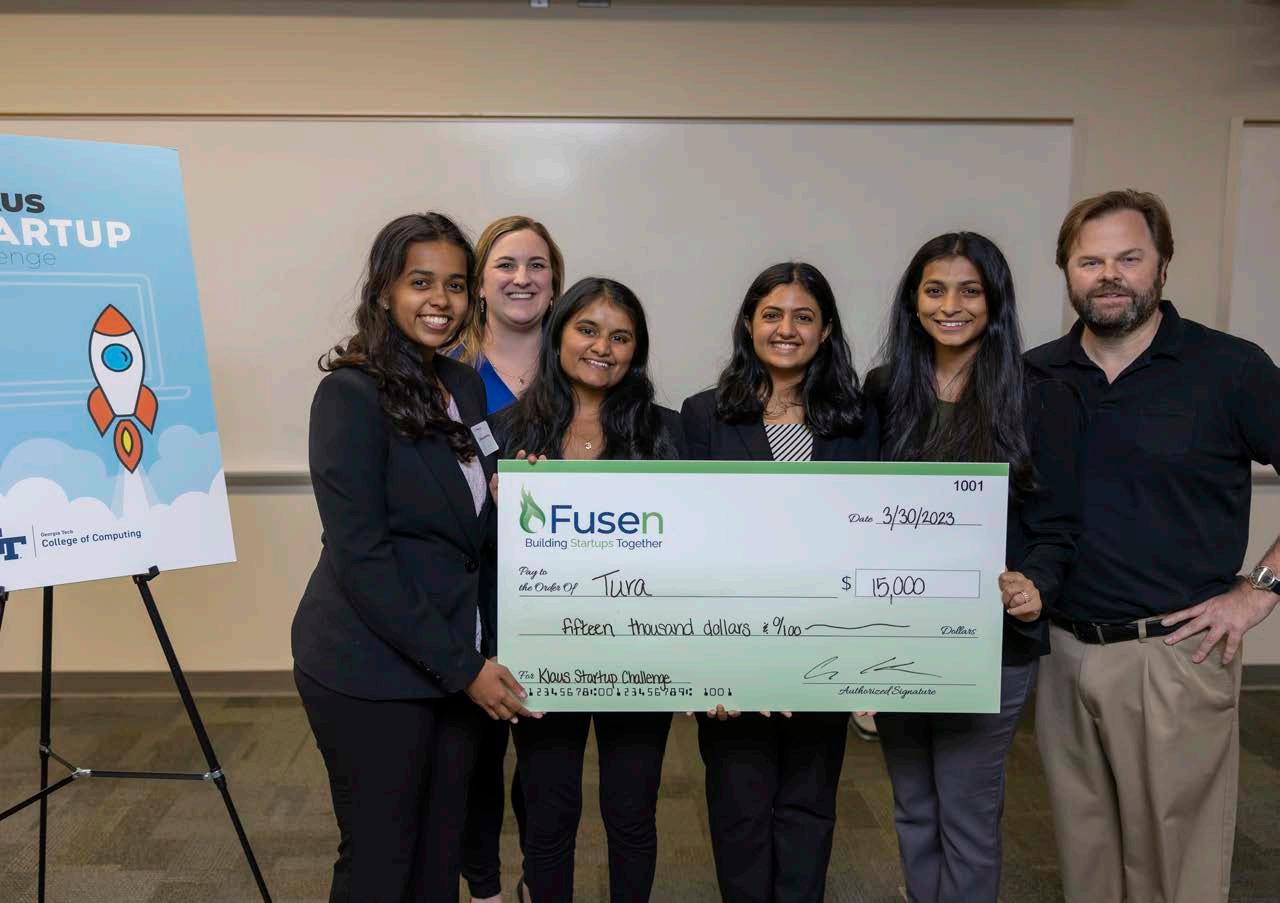
The 5th annual Klaus Startup Challenge in April underscored this drive to create practical solutions as student teams vied for $750,000 in investment funding. More than 200 students competed in the entry-level pitch competition.
Alumnus and renowned tech entrepreneur Christopher W. Klaus, the competition’s namesake, pledged $150,000 toward startup costs for five winning teams. The challenge aims to prepare beginner entrepreneurs for future competitions and funding opportunities.
Earlier in the academic year, CS majors Syed Husain and Vihaan Nagarkar took top honors at a
regional hackathon for developing an AI-powered app to support patients with Alzheimer’s disease. Their solution used natural language processing and machine learning to help users recall key memories and maintain cognitive engagement—an inspiring example of how student-led innovation can address urgent health challenges.
These ventures represent more than isolated successes—they’re part of the College’s growing entrepreneurial culture, which we enriched this year through our expanding partnership with CREATE-X. This Georgia Tech initiative empowers students to launch real startups from their academic work. The collaboration will enhance curricular support for entrepreneurial students, integrate startup thinking across computing disciplines, and ensure that future graduates leave with technical expertise and the skills and confidence to bring their boldest ideas to market.
From groundbreaking apps to multimilliondollar opportunities, our students and alumni are redefining what’s possible—and the College is committed to giving them the tools, mentorship, and opportunities to do so. n
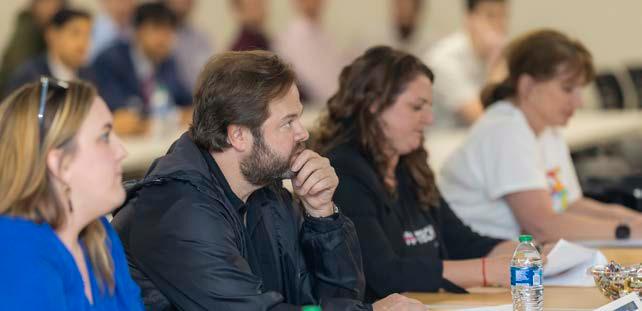
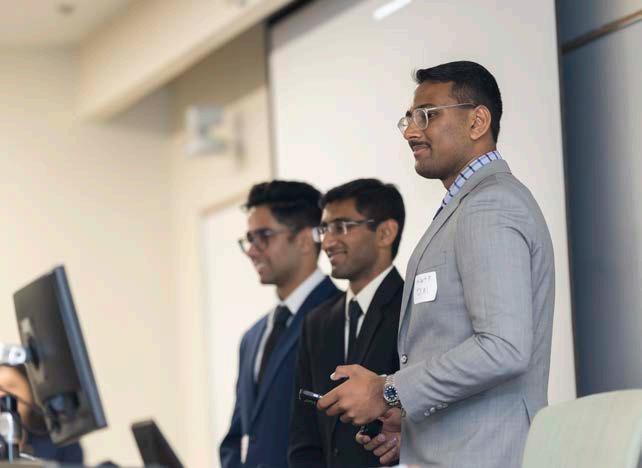
ACROSS THE COLLEGE, researchers are advancing technology to solve pressing realworld problems. Whether developing augmented reality tools to improve heart surgery outcomes, protecting individual privacy online, securing renewable energy systems, or exploring how robotics and hidden curricula can shape CS education, faculty and students are leveraging computing for human-centered impact.
Using AR to Plan Heart Surgery
A new augmented reality (AR) surgery planning tool is being developed for doctors who require closer collaboration when planning heart operations.
Georgia Tech researchers partnered with medical experts from Children’s Healthcare of Atlanta to develop and test ARCollab. The iOS-based app leverages advanced AR technologies to enable doctors to collaborate and interact with a patient’s 3D heart model during surgical planning.
Two cardiologists and three cardiothoracic surgeons tested ARCollab and found it fosters collaboration, improves surgical planning, and is easy to use and understand.
Multipurpose Model Enhances Forecasting Across Epidemics, Energy, and Economics
A new machine learning (ML) model developed at Georgia Tech could protect communities from diseases, better manage electricity consumption in cities, and promote business growth simultaneously.
The Large Pre-Trained Time-Series Model (LPTM) framework is a foundational model that completes forecasting tasks across multiple domains, like healthcare, transportation, and energy. LPTM performs as well or better than models purpose-built for their applications while requiring 40% less data and 50% less training time than current baselines.
Defending Against Unwanted Facial Recognition
New technology powered by artificial intelligence (AI) from Georgia Tech is protecting people’s photos from online privacy threats.
Chameleon creates invisible digital masks for personal photos to thwart unwanted online facial recognition while preserving the image quality.
After applying the mask, protected photos will not be detectable by someone scanning for the user’s face and will be identified as belonging to someone else.
Bolstering Internet Research Infrastructure
School of Computer Science Associate Professor Alberto Dainotti is revolutionizing network telescopes through a $1.2 million grant from the National Science Foundation (NSF).
Network telescopes use large sets of inactive IP addresses to observe unsolicited internet traffic. These observations can detect denial-of-service attacks and find viruses or other malicious activity.
Dainotti has developed a system to automatically detect this activity. Using this method, organizations can create what Dainotti calls a dynamic network telescope.
Exploring Hidden CS Curricula
The School of Computing Instruction (SCI) received its first NSF grant. The $2 million grant will enable SCI to investigate the hidden curricula in computer science education.
The three-year project led by SCI Researcher Pedro Guillermo Feijóo-García aims to identify previously unexplored factors that affect student success. The research will focus on enhancing wellbeing and academic outcomes by addressing the knowledge, skills, and experiences that students acquire outside of traditional instruction.
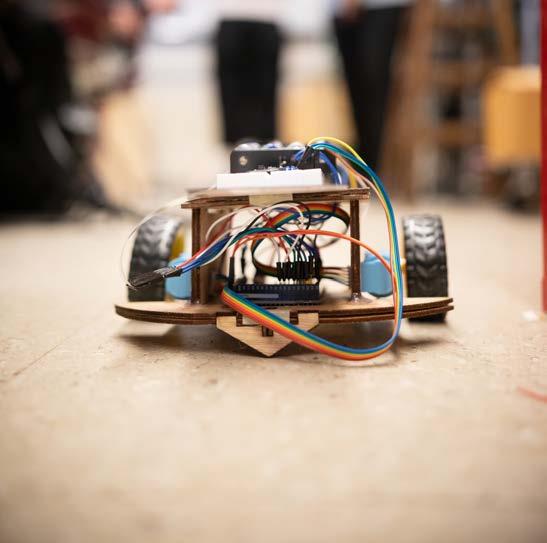
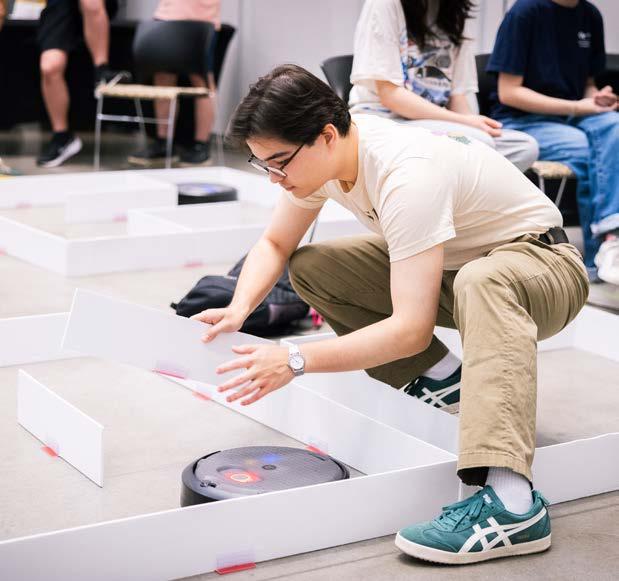
A recent study examined the impact of integrating robotics into CS. SCI faculty member Rodrigo Borela led efforts to integrate robotics into an introductory CS course. Borela introduced robotics lab assignments into his course, focusing on experiential learning.
Over the course of two semesters, more than 100 students participated, programming robots in Python to navigate mazes and avoid obstacles using sensors. The goal was to foster teamwork, problemsolving skills, and confidence in applying coding techniques to real-world scenarios.
Going Green with $4.6 Million DOE Grant
The U.S. Department of Energy (DOE) has awarded a $4.6 million grant to Georgia Tech researchers to develop enhanced cybersecurity protection for renewable energy technologies.
The new tool will anticipate cyberattacks on critical infrastructure and provide analysts with an accurate assessment of the vulnerabilities that were exploited. The AI will enable analysts and technicians to scale security efforts in response to a growing and increasingly complex power grid.
Assistant Professor Teodora Baluta studies the algorithms and datasets used to train new AI tools, assessing their security both theoretically and in practice.
She investigates whether the outputs from generative AI tools are abusing data or producing
text based on stolen data. She plans to expand on her past work by analyzing existing AI technologies and building more effective machine learning systems with security measures already in place.
Raising AI Copyright Awareness
Since OpenAI introduced ChatGPT, dozens of lawsuits have been filed, alleging that technology companies have infringed on copyright by using published works to train AI models.
Researchers Deven Desai and Mark Riedl are raising awareness about how these court rulings could compel academic researchers to develop new AI models using limited training data. Desai and Riedl aim to provide solutions that balance the interests of various stakeholders.
A new algorithmic framework enables robots to learn new skills by mimicking actions from firstperson videos of everyday activities.
A research team developed EgoMimic, which leverages data from egocentric videos, inspired by Meta’s Ego4D dataset.
The team used Meta’s Project Aria research glasses, which feature a comprehensive sensor suite and can capture video from a first-person perspective. If enough people wear Aria glasses or other smart glasses while performing daily tasks, it can create the passive data bank needed to train robots on a massive scale.
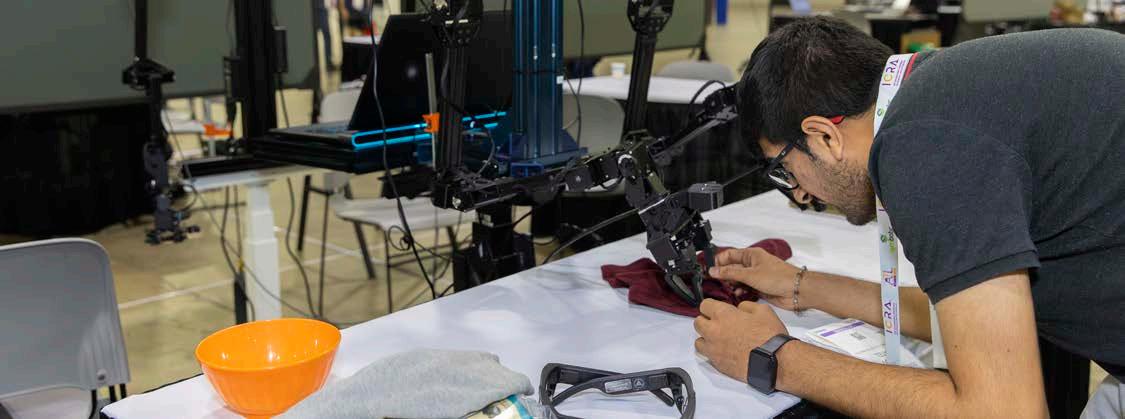


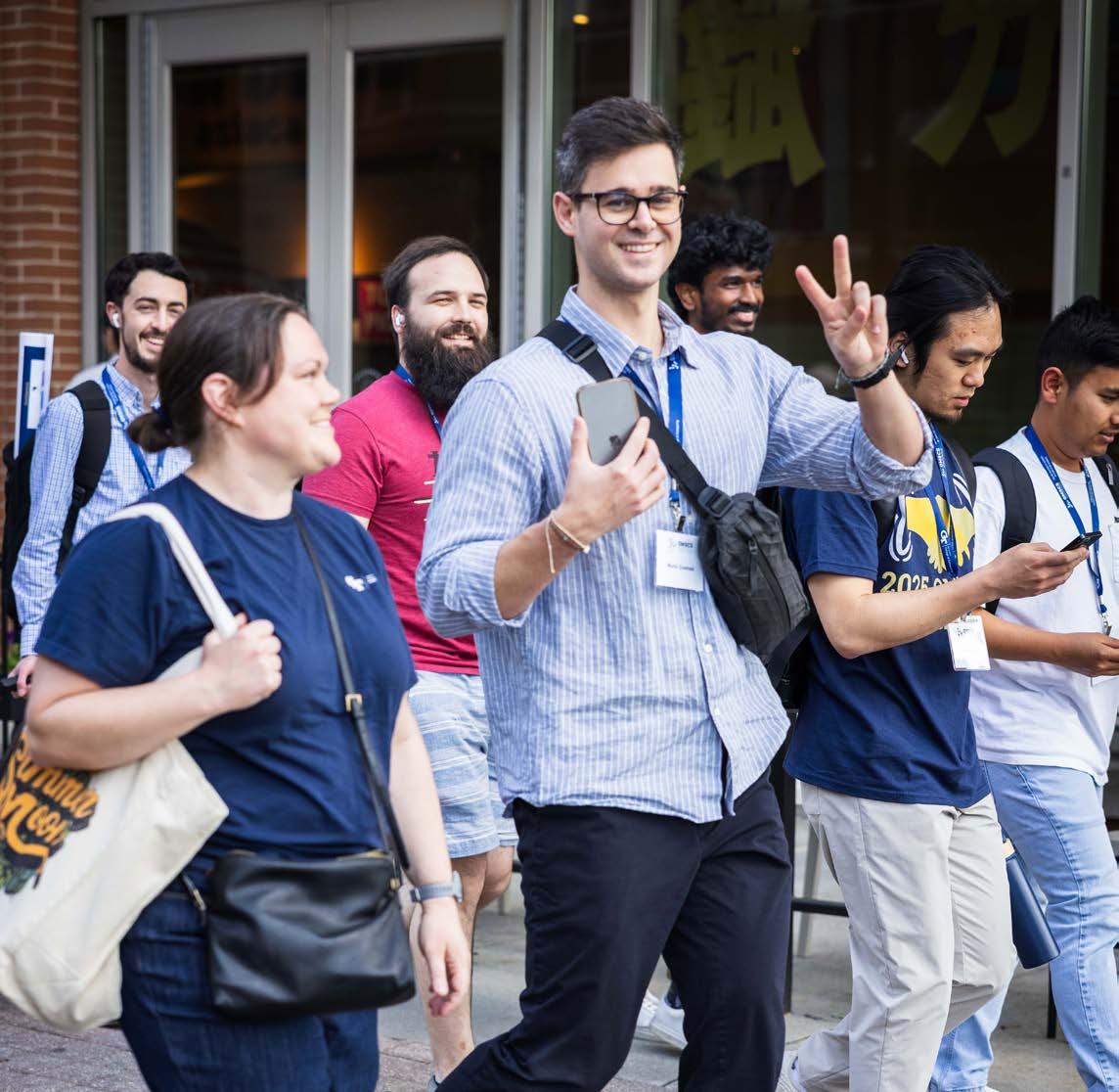
New courses, global conferences, and alumni innovation highlight the program’s far-reaching influence.
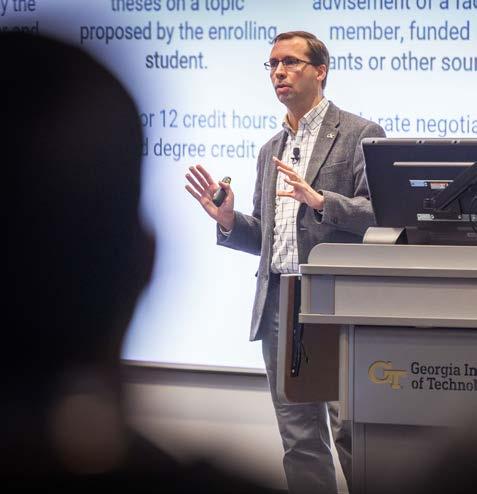
In the last year, Georgia Tech’s Online Master of Science in Computer Science (OMSCS) program marked a decade of innovation, accessibility, and global impact.
Building on the momentum of its 10th anniversary, OMSCS continued to break new ground in online education, expanding its offerings, contributing to leading research in scalable learning, and empowering students and alumni to make meaningful contributions worldwide.
As of fall 2024, the program’s enrollment stood at 14,937, with 2,494 graduates in 2024.
The program hosted its second OMSCS Conference during the 2024 spring semester, followed by two external conferences in July: the Educating Data Mining Conference and the Learning @ Scale Conference.
During Learning @ Scale, David Joyner, executive director of online education and OMSCS, and Alex Duncan, senior director of student experience and OMSCS, presented their research paper, Ten Years, Ten Trends: The First Decade of an Affordable At-Scale Degree
Launched in 2014, the OMSCS program used massive open online course (MOOC) platforms to offer an affordable, high-quality graduate degree in Computer Science, making advanced education accessible globally by overcoming cost and geographic barriers.
Joyner and Duncan’s paper identifies significant trends that have emerged over the program’s first decade:
n There is consistent application growth, with the acceptance rate increasing from 70% to 85%
n Georgia Tech’s on-campus CS program applications have tripled since the launch of OMSCS.
n Approximately half of the students hold formal degrees in computing, with others coming from engineering (40.7%), data science and mathematics (24.1%), business and accounting (17.9%), social sciences (14.3%), and natural sciences (10.8%).
n An average graduating time of 10 semesters
n Most courses have not experienced significant grade inflation or deflation over time. Program grades have increased marginally due to the introduction of new courses with higher average grades.
n The proportion of women in the program has steadily increased, particularly among non-US residents, contributing to a decline in the gender disparity.
n Significant gender differences exist in course selection, with a relationship between class size and the fraction of women students.
n There is no evidence of a difference in grades earned by men and women, indicating a level playing field for academic achievement.
Joyner stated that hosting two external conferences further demonstrated OMSCS’s national and global influence on computer science education.
“There are many ways to be leaders in the community,” Joyner said. “OMSCS has long been a leader in delivering affordable at-scale degrees, but these conferences have given us a chance to demonstrate how committed we are to developing a research community around these programs.”
OMSCS added two courses offered for the first time in the fall semester of 2024: Introduction to Research and Modern Internet Research Methods.
“OMSCS students are incredibly qualified, and we’ve found many are hungry for research opportunities,” Joyner said. “These two classes are part of our efforts to create pathways for OMSCS students to channel their skills and commitment into the institute’s overall research mission.” n
n Building Applications with ChatGPT
n HCI design, Justice-oriented Design, and Critical Computing
n Introduction to C Programming
n Large language Models
n The Language of Proofs
n Information for Ph.D. Applicants
n Robotics and Human-Robot Interaction
n Social Media and Technology
n Designing and Building User Interfaces
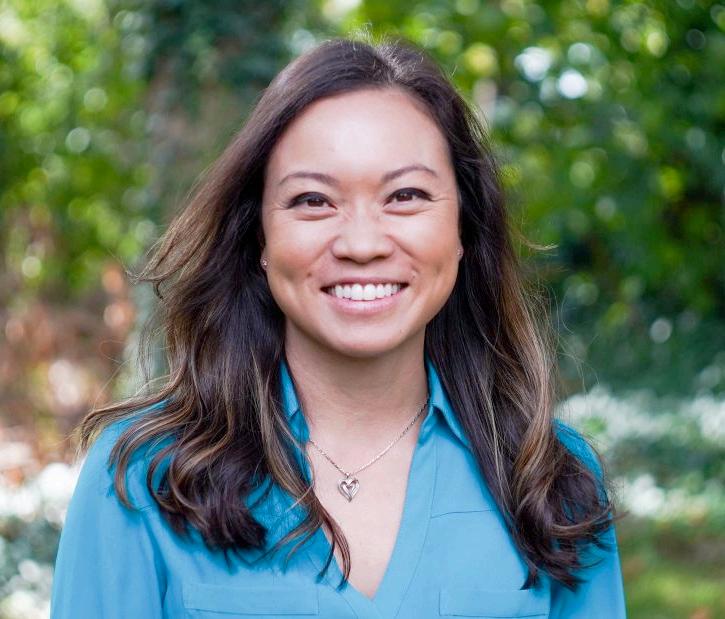
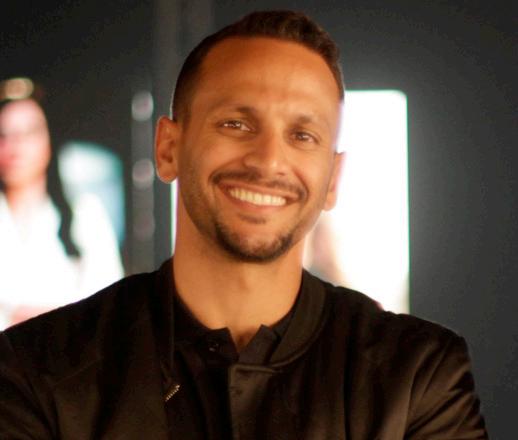
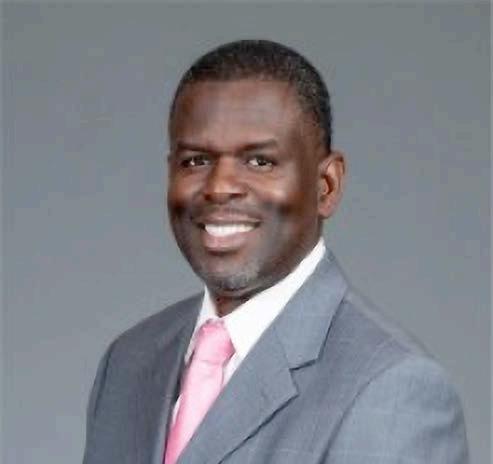
With a growing network of more than 15,300 alumni worldwide, Georgia Tech’s College of Computing continues to shape the future of technology across industries and continents. This year, five standout alumni are demonstrating the breadth and depth of that impact, from classrooms to conservation efforts and from Hollywood to Capitol Hill.
KATHY PHAM (CS 2007, M.S. 2009), a nationally recognized leader in public interest technology, was honored with the 2024 Technical Leadership Abie Award at the Grace Hopper Celebration of Women in Computing. Pham has played influential roles at the U.S. Digital Service, Mozilla, and Harvard, championing ethical and inclusive computing throughout her career.
In visual storytelling, TAMER SHAABAN (CS 2011) brought cuttingedge computing tools to Formula 1 fans by directing a cinematic promotional video for Audi’s F1 entry. Using Unreal Engine 5, Shaaban created the entire piece without the use of traditional cameras or sets, showcasing how computing and creativity are increasingly intertwined.
MICHAEL WASHINGTON (OMSCS), a high school math teacher, is integrating AI into the classroom. He’s developing tools that offer students step-by-step support on math problems, helping them think critically and build confidence. This effort reflects the growing role of computing in K-12 education.
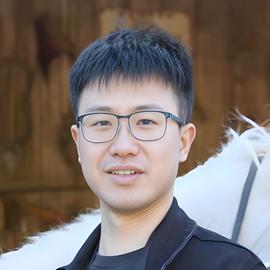

LINGKAI KONG (Ph.D. CSE 2024), now a postdoctoral fellow at Harvard, is using AI to address global challenges. His work includes designing algorithms to prevent poaching in African wildlife preserves and improving access to maternal healthcare in India, showing how computing can solve some of the world’s most pressing problems.
Inspired by his son’s special needs, TARUN CHAWDHURY (OMSCS 2022) designed an AI-powered application that helps parents and caregivers support children with echolalia and other developmental speech issues. AI4Echolalia, which is pending a patent, earned second place in the 2024 TEDAI Hackathon in San Francisco.
CHERIE LUM (OMSCS) embarked on a journey to Africa to develop leaders who advance technology and improve the human condition. She arrived in Nakuru, Kenya, to teach CS to children. She taught two to three classes a day, reaching about 75 students. She learned about their lives and the challenges they faced. With the help of fellow OMSCS classmates, she built and donated 15 tables to furnish classrooms.

From technical leadership and policy to education, science, and the arts, these alumni embody the College of Computing’s mission to advance computing for the betterment of society. With over 15,300 alumni pushing boundaries around the globe, their stories reflect a growing legacy of innovation, impact, and purpose.

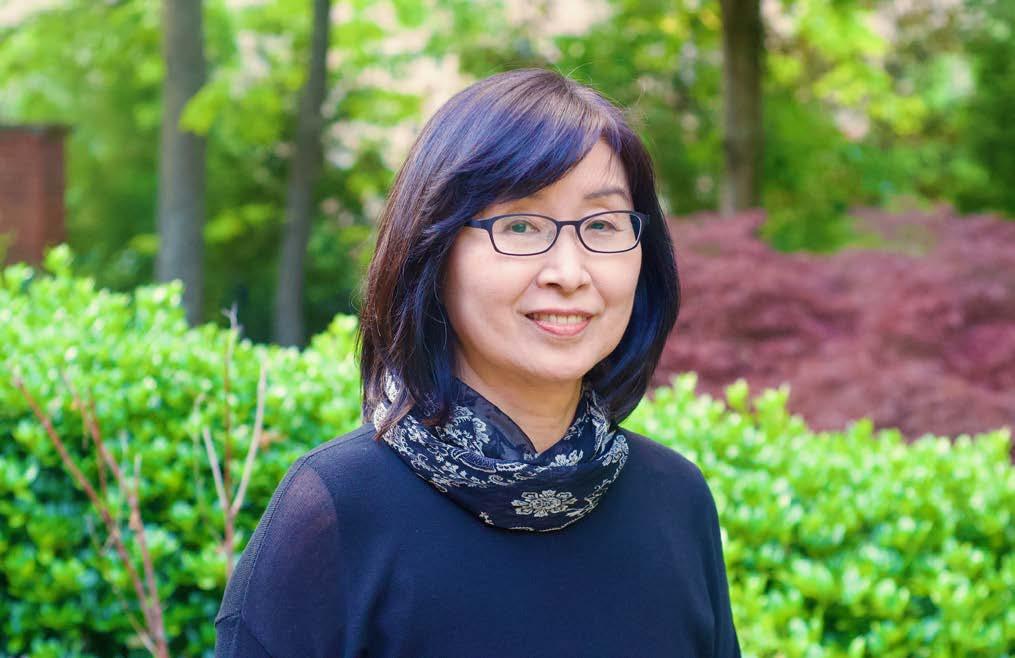
One of our missions in the School of Computational Science and Engineering (CSE) is to create leaders in academia, industry, laboratories, and government who advance CSE agendas. I am proud to say that leadership in action was the consistent theme throughout this year, and I am excited to share with you some examples in this publication.
We measure our success through the achievement of our students. From earning best paper awards at top international conferences to receiving prestigious national fellowships, student achievement this year has been nothing short of extraordinary.
National laboratories, industry, and academia actively seek out CSE graduates to hire. Everywhere they go, alumni advance the frontiers of CSE using vision, initiative, and discipline cultivated in our School.
Guiding our students are CSE faculty who themselves are rising through the ranks of Georgia Tech and beyond.
This year marked the first time that CSE faculty members ascended to leadership positions in the College of Computing as associate deans. Our faculty continue to lead Georgia Tech’s Institute for Data Engineering and Sciences (IDEaS). Georgia Tech approved all CSE faculty promotion and tenure cases this year. CSE faculty represented Georgia Tech by receiving several prestigious accolades for research and educational impact.

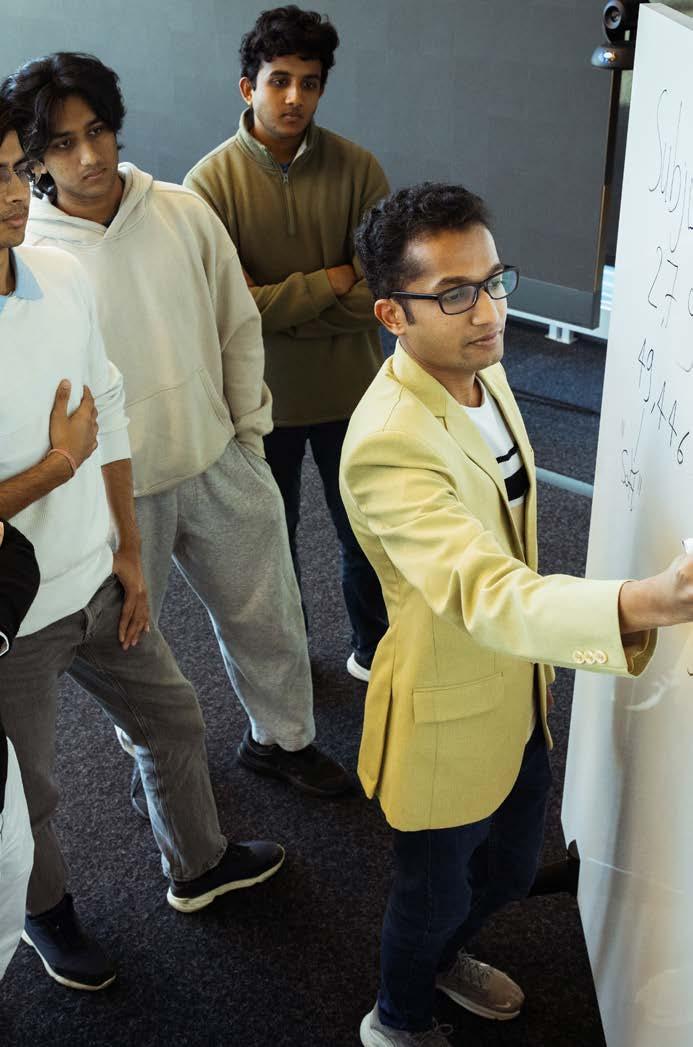
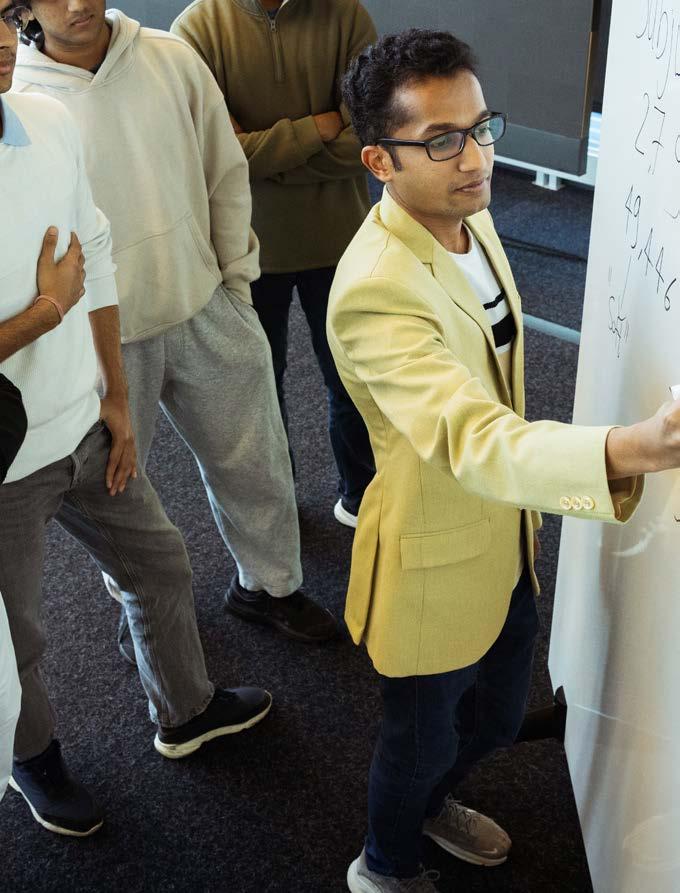
Our deliberate approach to CSE study and application has resulted in our students securing awards, fellowships, internships, and employment opportunities across national laboratories, industry, and academia.
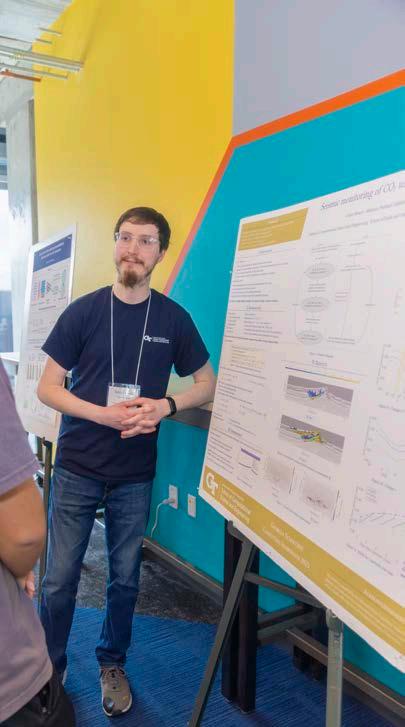

These achievements included CSE faculty earning awards and fellowships in all three major professional societies relevant to CSE: ACM, the Association for Computing Machinery, IEEE, and the Society for Industrial and Applied Mathematics (SIAM).
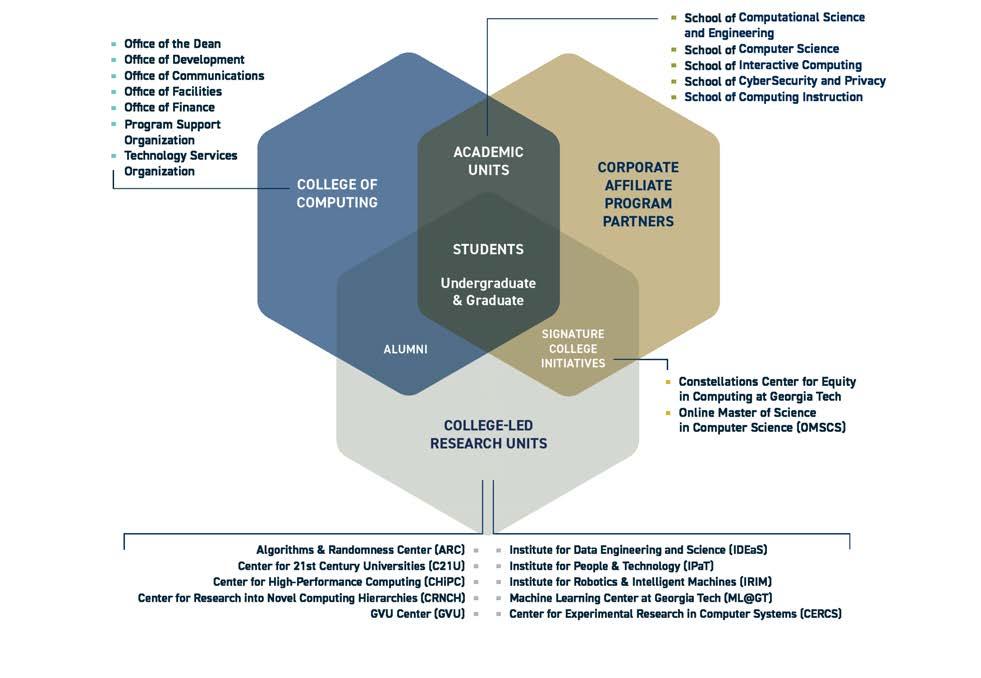
Our School develops and innovates CSE foundations, including modeling, methods, and techniques. We apply these foundational concepts to real-life impact, addressing the greatest challenges facing communities and humankind.

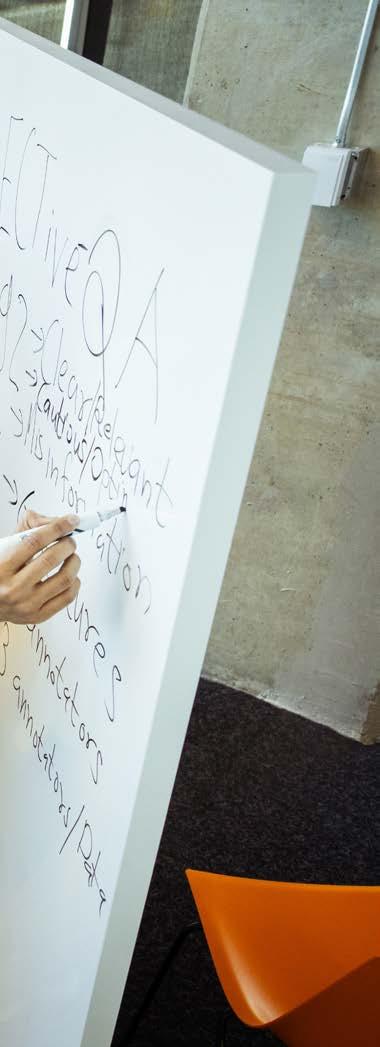
Besides being one of the first academic units dedicated to CSE and creating a CSE curriculum for graduate students, our School offers four Ph.D. programs and seven M.S. programs. These include degrees in computer science, machine learning, and analytics. Our flagship CSE Ph.D. and M.S. programs involve 12 member schools from Georgia Tech serving as ‘home’ units. This structure promotes an engaging, interdisciplinary experience for students and faculty.
Our research and educational programs center on a core body of knowledge in CSE, covering high-performance computing, data science and visual analytics, scientific computing and simulation, artificial intelligence and machine learning, as well as computational bioscience and biomedicine.
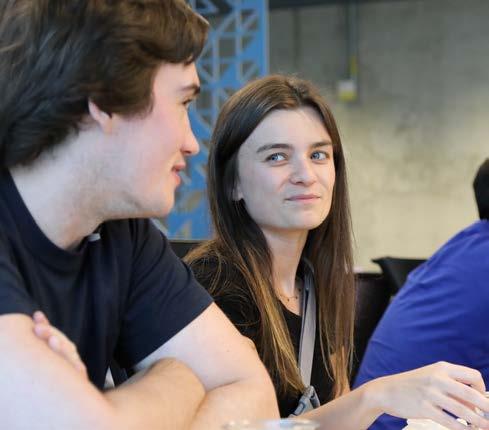
This report highlights the energy and excellence we achieve through our focus on leadership. We remain committed to developing the next generation of leaders who foster innovation and shape the future of science, technology, and society. We invite you to join us as the future of computing unfolds here in the School of CSE.
Haesun Park Regent’s Professor & Chair School of Computational Science & Engineering
Total Student Enrollment
98 CSE Ph.D. Students
5 Participating Ph.D. Programs
n Computational Science and Engineering
n Computer Science
n Machine Learning
n Bioinformatics
n Bioengineering
176 CSE M.S. Students 60
School of CSE CS/ML Ph.D. Students
8 Participating M.S. Programs
n Computational Science and Engineering
n Computer Science
n Analytics
n Urban Analytics
n Bioengineering
n OMS Analytics
n OMS Computer Science
n Dual Degree in Quantitative and Computational Finance

85
School of CSE M.S. Analytics Students
12 CSE Programs Home Units
n School of Computational Science and Engineering
n Daniel Guggenheim School of Aerospace Engineering
n School of Biological Sciences
n Wallace H. Coulter Department of Biomedical Engineering
n School of Chemistry and Biochemistry
n School of Civil and Environmental Engineering
n School of Electrical and Computer Engineering
n H. Milton Stewart School of Industrial and Systems Engineering
n School of Materials Science and Engineering
n School of Mathematics
n George W. Woodruff School of Mechanical Engineering
n School of Physics
49
15
Total Faculty and Staff Full Professors
28 6
Academic Faculty Associate Professors
2
Assistant Professors
14 5
Joint Faculty Appointments
Adjunct Faculty Appointments Staff
RESEARCH FUNDING (FY2025)
$19,505,372 TOTAL ACTIVE FUNDING
$5,712,320 RESEARCH EXPENDITURES
$248,362 RESEARCH EXPENDITURES BY FACULTY
123 CSE ACTIVE RESEARCH PROJECTS
$5,484,891 NSF (29)
$3,148,273 OTHER (SUBAWARDS, ETC.) (14)
$2,457,057 CDC, NIH (11)
7
$2,673,598 INDUSTRY/RESEARCH GIFTS (23)
$2,099,177 AIR FORCE (4)
$1,744,479 GEORGIA TECH FOUNDATION (28)
$928,619 NATIONAL LABS (8)
$683,056 NAVY (3)
$186,222 DOE (2)
$100,000 DARPA (1)
Regents’ Professor Srinivas Aluru and Associate Professor Elizabeth Cherry became the first School of CSE faculty appointed as associate deans of the College of Computing. Aluru became the Senior Associate Dean, and Cherry is the Associate Dean for Graduate Education.
Aluru won the 2025 Charles Babbage Award. The Institute of Electrical and Electronics Engineers Computer Society presented Aluru with the award for pioneering contributions that intersect parallel computing and computational biology.
Aluru ended his role as executive director of Georgia Tech’s Institute for Data Engineering and Science (IDEaS) when he accepted the position of senior associate dean. In his place, IDEaS appointed Regents’ Professor C. David Sherrill as interim executive director.
Sherrill has served as associate director of IDEaS since its founding in 2016. His appointment as interim executive director comes after his election to the International Academy of Quantum Molecular Science.
The Society for Industrial and Applied Mathematics (SIAM) selected Cherry as a Class of 2025 Fellow, recognizing her contributions to computational cardiology research and extensive service to the SIAM community. She co-chaired the organizing committee for the 2025 SIAM Conference on Computational Science and Engineering and is serving a second consecutive term as a SIAM council member-at-large.
In 2024, Cherry was one of five Georgia Tech faculty selected to the ACC Academic Leaders Network (ACC ALN) Fellows program. ACC ALN fosters cross-institutional networking and collaboration between ACC schools.
Cherry previously served as the associate chair for academic affairs at the School of CSE. When she accepted her new role as associate dean, the School appointed B. Aditya Prakash as associate chair.
Prakash was one of three faculty members from the School of CSE who received promotions in 2025. He was promoted to full professor.
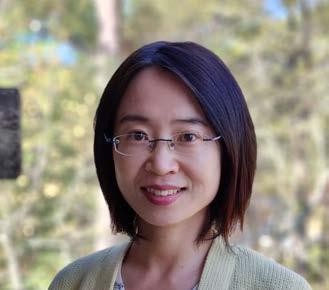
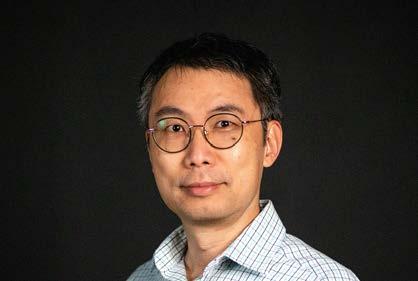

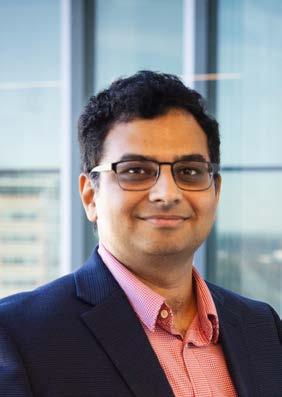

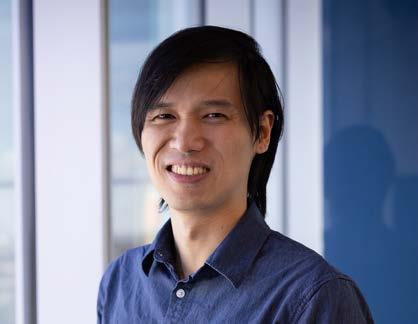
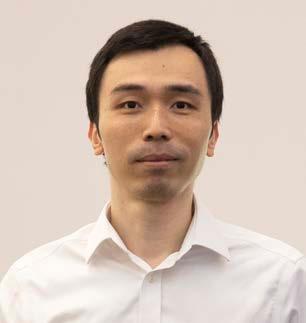
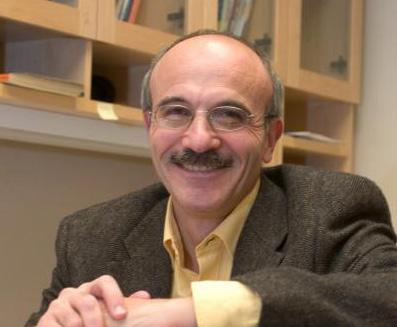
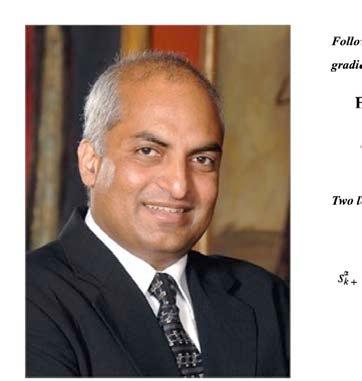
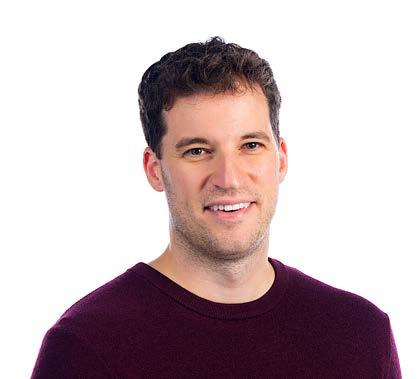
Chao Zhang and Xiuwei Zhang earned tenure and promotions. Both faculty members were promoted to associate professor.
Members of the SIAM Activity Group on Computational Science and Engineering (SIAG/CSE) elected School of CSE Professor and Associate Chair Edmond Chow as vice chair. Chow’s two-year term began in January after serving as the group’s program director.
Assistant Professor Kai Wang was selected as a Class of 2024 AI2050 Early Career Fellow by Schmidt Sciences. Wang is the first faculty member from Georgia Tech to receive the AI2050 fellowship. He joined 18 other early-career researchers in the fellowship’s second cohort, aimed at pursuing bold and multidisciplinary research in AI for societal benefit.
Professor Polo Chau won the Innovator Award at the M.S. Analytics Ten-Year Anniversary Celebration. Chau also won the Dean’s Award at the College of Computing’s 34th Annual Awards Celebration.
Regents’ Professor Mark Borodovsky won the Best Faculty Paper Award from the Georgia Tech Sigma Chi chapter.
Assistant Professor Raphaël Pestourie earned back-to-back selections onto Georgia Tech’s Course Instructor Opinion Survey (CIOS) Honor

Rolls. Students recognized Pestourie for outstanding teaching and educational impact through his Fall 2024 CSE 8803: Scientific Machine Learning and Spring 2025 CX 4230: Computer Simulation courses.
Assistant Professor Florian Schäfer co-authored a paper selected for one of the five best technical paper awards at the ACM SIGGRAPH 2024 annual conference. His work in numerical computation and statistical inference led to Schäfer’s appointment as an initiative lead within Georgia Tech’s Institute for Matter and Systems (IMS). IMS selected Schäfer to lead the initiative on Matter and Information.
The American Institute of Mining, Metallurgical, and Petroleum Engineers (AIME) awarded honorary membership to Regents’ Professor Surya Kalidindi.
Assistant Professor Spencer Bryngelson and his group received an ACCESS-CI Maximize allocation from the National Science Foundation. The award amounts to 225,000 GPU hours annually to run their multiphase fluid flow simulation algorithms on powerful supercomputers.
The National Academy of Sciences selected Assistant Professor Anqi Wu as a 2025 Kavli Fellow. She was the only scholar to represent Georgia Tech among the cohort of 87 scientists. Later, Wu received an INSPIRE award from DARPA to study neural encoding mechanisms.

RESEARCH
TRACK RECORDS

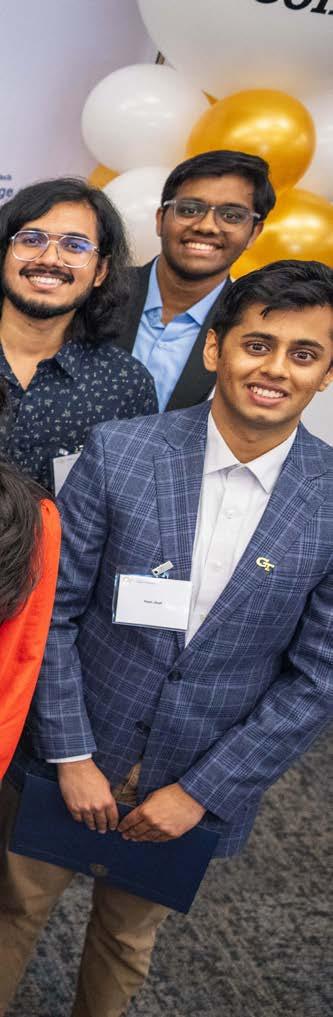
Alumnus Zijie (Jay) Wang (Ph.D. ML-CSE 2024) was one of five recipients to win a 2025 Outstanding Dissertation Award from the Association for Computing Machinery Special Interest Group on Computer-Human Interaction (ACM SIGCHI).
Earlier in the year, Forbes recognized Wang by naming him to its 30 Under 30 in Science for 2025.
Wang’s dissertation earned him the 2025 Best Ph.D. Thesis Award from the Georgia Tech Sigma Chi chapter. His thesis also earned him one of three Outstanding Doctoral Dissertation Awards from the College of Computing at the 34th Annual Awards Celebration.
While still a Ph.D. candidate, Wang won a best paper honorable mention at the ACM Special Interest Group’s 47th International Conference on Research and Development in Information Retrieval (SIGIR 2024).
At the same banquet, the College of Computing presented the Donald V. Jackson Fellowship to M.S. student Pratham Mehta, the Marshall D. Williamson Fellowship to Parisa Babolhavaeji, and the Rising Star Doctoral Student Research Award to Ph.D. student Aeree Cho, and the Outstanding Legacy Leadership Award to Sri Ranganathan Palaniappan
M.S. student Grace Driskill achieved success in the classroom, on the track, and at cross-country competitions. The first-ever School of CSE student athlete earned All-ACC Academic Team selections for outdoor track, indoor track, and cross country, raising her total to six All-ACC academic teams. Driskill also earned a selection to the 2025 College Sports Communicators Academic All-District Team.
Driskill recorded the fourth fastest 3000-meter time in the history of the Georgia Tech Women’s Indoor Track program. She clocked a 9:22.21 on Feb. 15 at Boston University’s David Hemery Valentine Invitational. Along with receiving the College of Computing’s
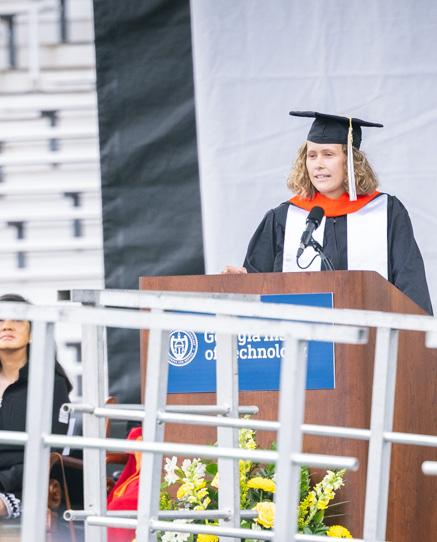
Donald V. Jackson Fellowship in 2025, Driskill was the student speaker at the College’s Spring 2025 Master’s Commencement Ceremony
Ph.D. candidate Austin Wright was the first author of a paper recognized as a runner-up for a best paper award at the 2024 ACM International Conference on Knowledge Discovery and Data Mining (KDD 2024).
Alumnus Alexander Rodríguez (Ph.D. CS 2023) won an outstanding dissertation, runner-up award at KDD 2024. Now an assistant professor at the University of Michigan, his dissertation previously earned him the College of Computing’s Outstanding Dissertation Award in 2024.
Ph.D. student Alec Helbling and undergraduate Mihir Bafna received NSF Graduate Research Fellowship Program (GRFP) awards in 2024. Ph.D. students Ben Burns and Atticus Rex also received 2025 GRFP awards.
Ph.D. student Zhiyuan (Leo) Zhao and Associate Professor B. Aditya Prakash received an award at the data.org PrivacyEnhancing Technologies (PETS) Public Health Challenge. Zhao and Prakash partnered with researchers from the University of Virginia and the University of Arizona on a project involving joint deep learning and epidemic modeling for public health analysis with differential privacy.
Irene Simó Muñoz placed second in the ACM Student Research Competition at SC24. Muñoz was a master’s student from Universitat Politècnica de Catalunya and studied at CSE in Spring 2024 under Assistant Professor Peng Chen as an exchange student.

Ph.D. student Ben Wilfong received the 2024-2025 CRNCH Fellowship. Wilfong will use the fellowship to optimize superchip architectures, such as NVIDIA Grace Hopper and AMD MI300A.
Undergraduate students Suzan Manasreh and Elizabeth Hong won President’s Undergraduate Research Awards (PURA) for Fall 2024. Manasreh studies in Assistant Professor Spencer Bryngelson’s group, and Professor Rich Vuduc advises Hong.
Ph.D. student Nand Chandravadia won first place in the junior student category at the College of Computing’s 2024 Graduate Poster Symposium. He received the award for work on computing with neural assemblies.
Alumnus Jiaming Cui (Ph.D. CS 2024) was the co-first author of a paper that won the best poster award at SIAM Data Mining 2024.
Ph.D. student Yiqiao (Ahren) Jin was the first author of a paper that won the best paper award at the Good Data Workshop, held in conjunction with the 39th Annual AAAI Conference on Artificial Intelligence (AAAI 2025).
The
of students, faculty, and staff, united by a shared mission: to advance the field of computer science through innovative teaching and groundbreaking research.
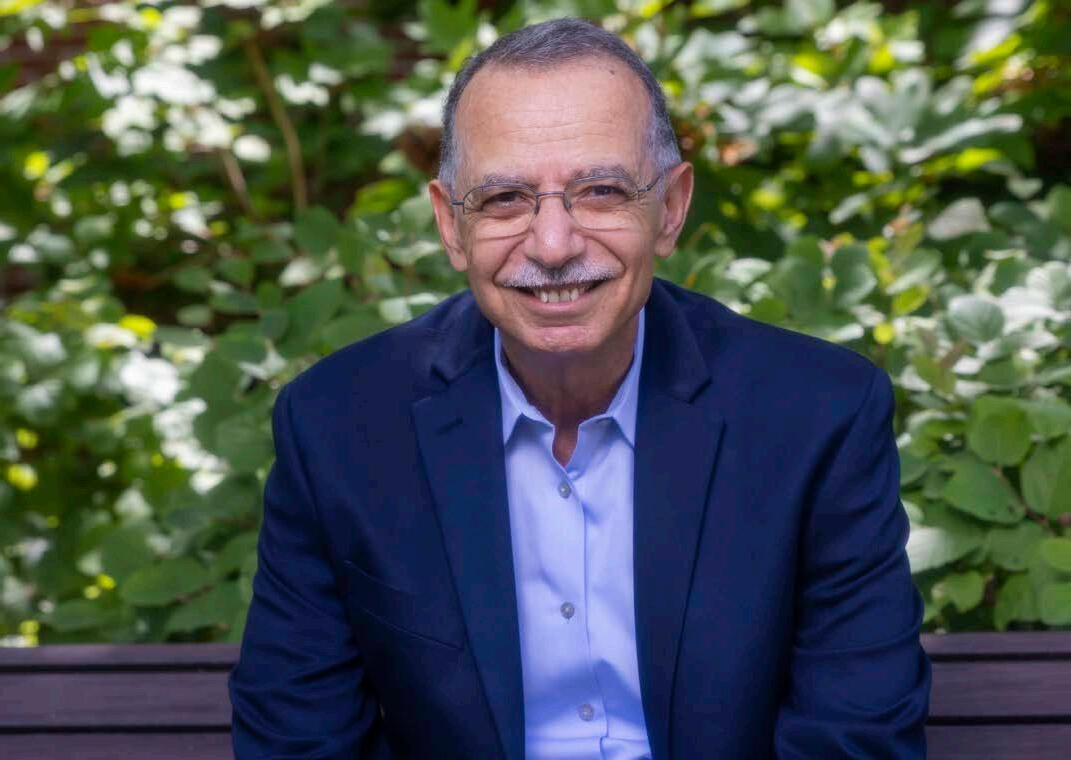
This academic year has been exceptional for the School. Our community continues to thrive in both research and education. We have seen significant faculty growth, welcoming four new academic members across a diverse range of fields. At the same time, enrollment in our courses continues to rise, reflecting the increasing interest and impact of our educational offerings.
Intellectually, we have made meaningful strides, particularly in our newest research area, the Foundations of AI. This rapidly developing field benefits from the combined expertise of our existing faculty and our newest scholars, pushing the boundaries of what is possible in AI.
Our faculty and students remain at the forefront of research innovation and pedagogical excellence. We are committed to making a positive and lasting impact on society through our scholarly and educational efforts.
We look forward to your continued engagement as we pursue excellence in our academic mission.
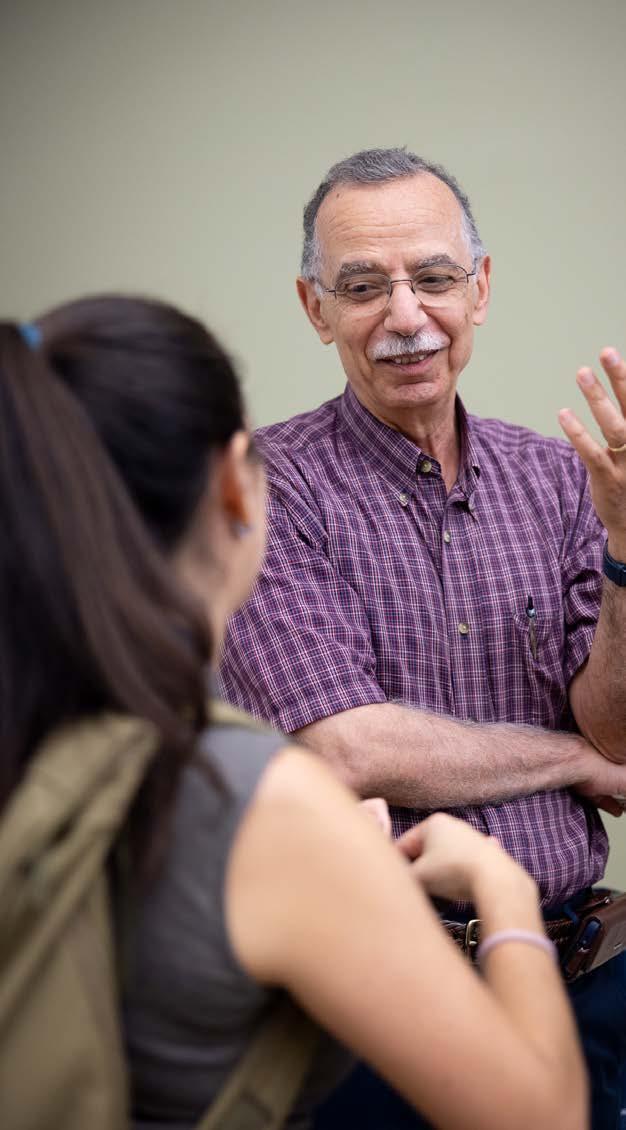
Mostafa Ammar Regents’ Professor and Interim Chair School of Computer Science


17 6 12 11 13 4 154
PROFESSORS
ASSOCIATE PROFESSORS
ASSISTANT PROFESSORS
JOINT FACULTY
STAFF MEMBERS
NEW FACULTY IN AY 24/25
PH.D. STUDENTS
PARTICIPATING ACADEMIC UNITS
School of Computational Science and Engineering
School of Cybersecurity and Privacy
School of Electrical and Computer Engineering
School of Interactive Computing
PARTICIPATING PH.D. PROGRAMS
Ph.D. in Algorithms, Combinatorics & Optimization
Ph.D. in Computer Science
Ph.D. in Machine Learning
SCS faculty members continued to prove their track record of excellence this year through groundbreaking research and recognition for their significant contributions to computing.
This year, many SCS faculty members were recognized for the impact they have made in computing during their careers.
Professor Constantine Dovrolis was selected as a 2024 Distinguished Member by his peers in the Association for Computing Machinery (ACM) for his substantial technical achievements, volunteer service, and “contributions to internet measurements, network science, and neuro-inspired machine learning.”
The ACM also recognized Regents’ Professor Dana Randall as a 2024 ACM Fellow for her significant “contributions to the theory of Markov chains and programmable active matter.”
In recognition of his exceptional contributions, Professor and former Dean of Computing Zvi Galil

was awarded an honorary Doctor of Letters degree from Columbia University in 2024.
Galil worked at Columbia for 25 years, starting in 1982. He served as chair of the computer science department from 1989 to 1994 and as dean of the Fu Foundation School of Engineering and Applied Science from 1995 to 2007.
In recognition of the lasting impact of his research, Professor Moin Qureshi received two test-oftime awards. The 57th IEEE/ACM International Symposium on Microarchitecture (MICRO 2024) honored him with one for his innovative MICRO 2006 paper on multi-core caches. The second award was presented at the 55th Annual IEEE/IFIP International Conference on Dependable Systems and Networks for his 2015 paper, AVATAR: A Variable-RetentionTime (VRT) Aware Refresh for DRAM Systems.
Two faculty members in SCS were given NSF CAREER Awards. The award is given to early-career faculty who have the potential to serve as academic role models and to lead research advances.
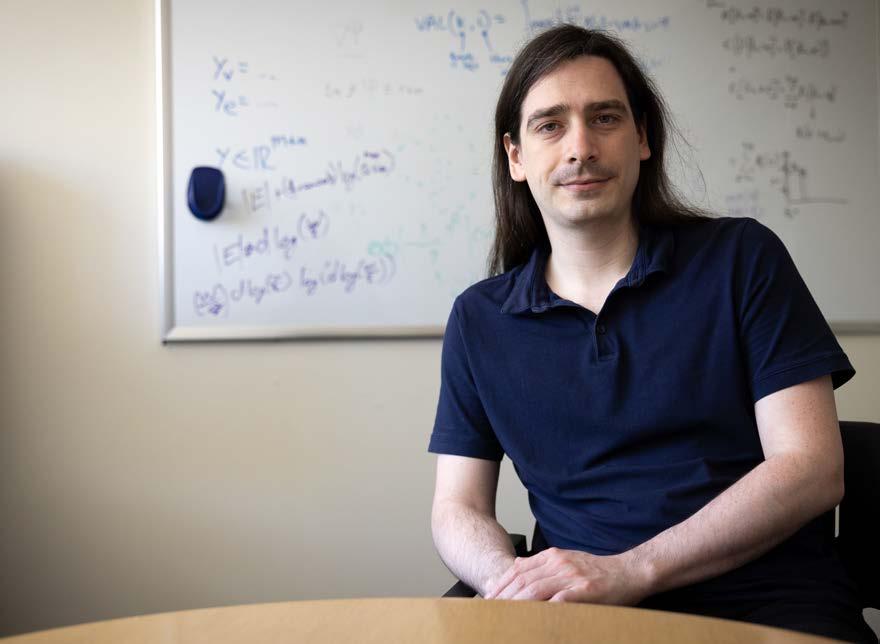
Assistant Professor Jan van den Brand Award for his groundbreaking work developing more efficient algorithms. His proposal focused on dynamic algorithms and linear programs, a type of optimization algorithm, and the relationship between the two. Van den Brand’s proposal explores the synergy between dynamic and optimization algorithms to build a theory for dynamic optimization problems.
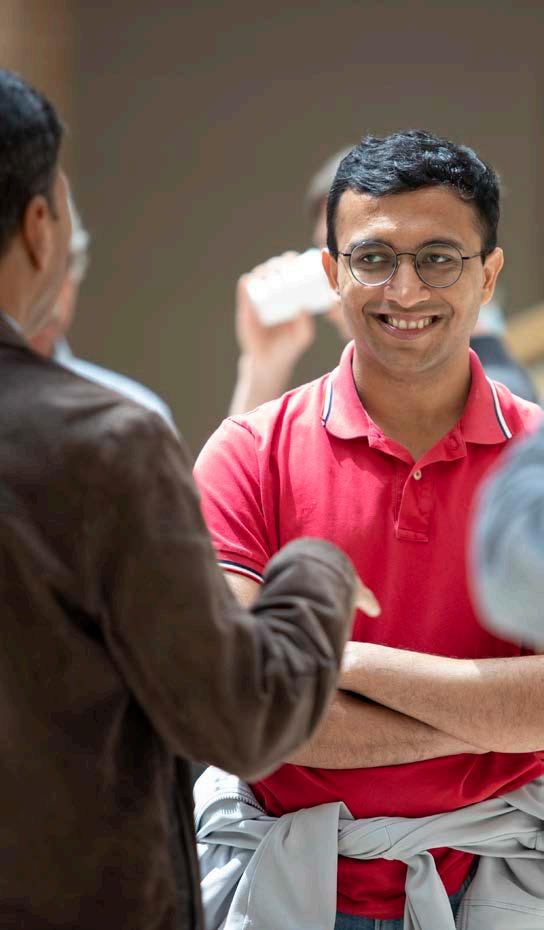
Assistant Professor Sahil Singla received an NSF CAREER Award to develop more efficient algorithms for online resource allocation.
Online resource allocation is the process of distributing resources in real-time as demands arise.
“The general problem appears in many diverse forms in all fields. The question at the heart is how to design good algorithms that maximize efficiency,” Singla said.
Professor Santosh Vempala and Ph.D. alumnus Ben Cousins (not pictured) were awarded the Fulkerson Prize for their solution to computing the volume of a convex body. Presented by the Mathematical Optimization Society and the American Mathematical Society, the Fulkerson Prize awards outstanding papers in discrete mathematics.
The research duo’s new method enables faster volume estimation by working with a sequence of Gaussian distributions — high-dimensional bell curves — within the convex body of interest. To achieve these improvements, the method involves a faster and more efficient way of picking random points inside the shape.
Giving students the tools to thrive and innovate is at the heart of SCS’s mission. In 2024-2025, SCS students were recognized for their proven ability to lead in their fields and tackle pressing research problems.

Two SCS students, Chaojian Li and Jianming Tong, were named MLCommons Rising Stars for their excellence in machine learning (ML) and computer systems research.
The MLCommons Rising Stars program provides a platform for young researchers working at the intersection of ML and systems to build connections, engage with experts, and develop their skills.
Li’s research interests are dedicated to democratizing advanced deep learning solutions by making them more accessible and eliminating reliance on costly and dedicated computing resources. He graduated with his Ph.D. from SCS in May 2025.
Tong is a Ph.D. student in SCS, researching computer architecture to achieve full-stack optimizations for privacypreserving and performance-oriented AI workloads. He has extensive experience with prototypes and internships at Alibaba DAMO Academy, Pacific Northwest National Laboratory, and Rivos. His research has previously earned him the Qualcomm Innovation Fellowship in 2023.

Ph.D. student Anish Saxena was named a 2025-2026 recipient of the NVIDIA Graduate Fellowship. NVIDIA awards students doing “outstanding work relevant to NVIDIA technologies” up to $60,000 each.
Saxena focuses on researching how to optimize data movement for large language models (LLMs). His research goal is to help overcome the GPU memory wall.
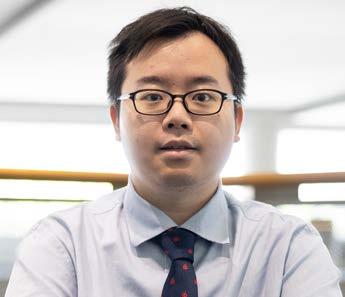
Saxena said he is also motivated to improve the efficiency of these processes so that they can be used and researched by those with limited resources.
“Being able to run these models efficiently, even with limited resources, I think, would be a very impactful way to democratize LLM research,” he said.
Saxena said he hopes to continue identifying pressing problems in the production of LLM systems and providing elegant and practical solutions to improve training and serving efficiency. He believes that the NVIDIA fellowship will help him identify these problems and allow him to work with eminent experts to solve them effectively.
Ph.D. student Guanghui Wang has been named a 2025 Apple Ph.D. Scholar in its AI/machine learning fellowship program. Wang is a fourth-year SCS Ph.D. student specializing in researching machine learning theory, with a focus on online machine learning.
Wang said he aims to make online learning more adaptable to different environments, ensuring models can learn effectively even when conditions change. This goal is vital for real-world uses like self-driving cars, financial markets, and healthcare systems, where data patterns constantly change. His research could help make AI systems more reliable and efficient in dynamic settings by improving adaptability.
As part of the award, Wang will receive funding for two years and an Apple research mentor. He is also interning with a group at Apple this summer. n
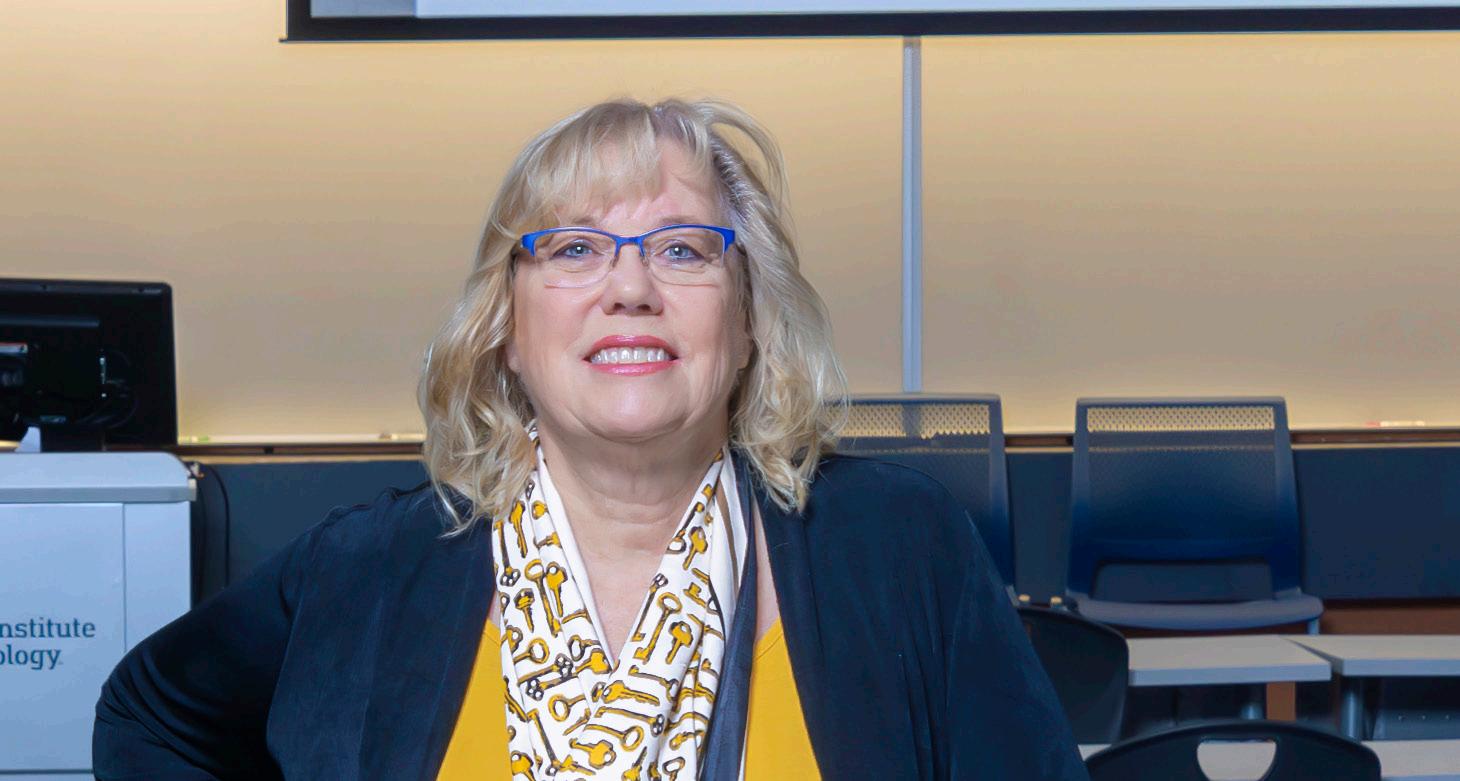
Dear Friends and Colleagues, as we close another year at the School of Computing Instruction (SCI), I am honored to reflect on the tremendous progress our faculty and students have made in advancing both the academic experience and the broader field of computer science.
Our faculty continues to demonstrate leadership in research and teaching, pushing boundaries through innovative approaches to learning and education. Whether through groundbreaking work on student-created instructional videos in large courses or handson robotics projects, SCI faculty are finding new ways to engage students and deepen their understanding of complex topics. These efforts foster an environment where students not only learn technical skills but also develop critical collaboration and communication abilities.
This year, we also saw the continued expansion of SCI’s global reach. Faculty members were involved in international collaborations and events, from leading workshops in Latin America to participating in conferences that connect us with academic leaders worldwide.
This year, our students have also once again proven their excellence. From winning prestigious hackathons like DubHacks ’24 to excelling in competitive programming and launching new entrepreneurial ventures, our students exemplify the spirit of innovation and collaboration that defines SCI. Projects such as MemoLens, an AIpowered platform for Alzheimer’s patients, and the launch of Georgia Tech’s first Hacker House showcase the creativity and problem-solving skills of our students.
At SCI, we are committed to fostering a supportive and inclusive environment for both students and faculty. As we look to the future, we are committed to fostering a culture of innovation and collaboration that will continue to shape the future of computing. Our work this year has set a strong foundation, and I am excited for what lies ahead.
Thank you for your ongoing support as we continue to make an impact on the future of computer science education and beyond.
Sincerely,
Mary Hudachek-Buswell Interim Chair, School of Computing Instruction
Students and Programs: SCI instructs every undergraduate at the Institute, over 500 Georgia high school students through the dual enrollment program, and thousands through massive open online courses (MOOCs).
SCI plays a pivotal role in educating every undergraduate student at the Institute. With a commitment to foundational computer science education, SCI ensures that all undergraduates, regardless of their major, gain essential skills in computing.
Additionally, SCI offers dual enrollment opportunities for high school students, enabling them to take college-level computer science courses and earn credits that can be applied toward their future college education.
This program provides motivated students with an early introduction to rigorous coursework in computing, equipping them with essential skills in
programming, data structures, and algorithms. By participating in dual enrollment through SCI, students not only gain advanced knowledge but also experience the academic environment of Georgia Tech, positioning them for success in their future academic and professional careers.
In the past year, SCI’s Olufisayo Omojokun and David Joyner have taught over 500 high school students from across Georgia through the dual enrollment program. These classes include CS 1301: Introduction to Computing and CS 1331: Introduction to Object-Oriented Programming with Java.
SCI also teaches tens of thousands of global learners through MOOCs and programs Georgia Tech offers via GTx. n
Faculty continue to demonstrate leadership in both research and teaching
SCI has just accepted its first pre-doctoral teaching fellow
500+
SCI instructs more than 500 GA high school students through the dual enrollment program
The faculty at the School of Computing Instruction (SCI) continues to demonstrate leadership in both research and teaching, making significant strides in fostering innovation, enhancing student engagement, and contributing to global academic collaborations.
Active learning in large-scale computer science is a key focus for SCI faculty. At the 2024 ACM Conference on Innovation and Technology in Computer Science Education (ITiCSE), SCI researchers Pedro Guillermo Feijóo-García, Nimisha Roy, and Associate Dean Olufisayo Omojokun presented groundbreaking research on the use of student-created instructional videos as a learning strategy in large software engineering courses. Their study found that 80.4% of students believed creating instructional videos enhanced their understanding of course material, demonstrating the power of peer-led teaching in fostering engagement and mastery of complex topics. This approach enhances student involvement, promotes collaboration and communication skills, and results in a more dynamic and engaging learning experience.
SCI faculty are also advancing experiential learning through innovative projects that align with both high-impact practices and sustainability goals. At the 2024 University System of Georgia (USG) Teaching and Learning Conference, Rodrigo Borela led a workshop showcasing how hands-on robotics
projects help students develop critical problemsolving skills and build confidence. This approach is designed to deepen student engagement by providing real-world applications for their coding skills, thereby enhancing their learning experience. Additionally, Roy and her team highlighted their work in integrating the sustainable development goals into the curriculum, encouraging students to approach technology development with a mindset of societal responsibility. By bridging academic learning with global issues, these initiatives enhance the educational experience and equip students with the tools to address real-world challenges.
Faculty members are also expanding the School’s global impact. Lecturer Gerandy Brito was awarded the Institute’s annual award for faculty outreach for playing a pivotal role in the Latin American and Caribbean Mathematics School (EMALCA) in Cuba. Despite disruptions from a hurricane, the event focused on advancements in probability theory, connecting students and researchers from Latin America, France, and the U.S. to foster academic exchange and strengthen Georgia Tech’s international ties. The event’s recorded lectures further extend its influence, making the content available worldwide.
In addition to enhancing teaching practices, SCI faculty have been dedicated to addressing the psychological barriers that students face in the field
These accomplishments reflect the ongoing dedication of SCI faculty to creating innovative learning experiences, advancing research in CS education, and fostering global collaborations.
of computer science—at the 2024 IEEE Frontiers in Education conference, Feijóo-García, Omojokun, and their collaborators presented research on the “impostor phenomenon,” a familiar feeling of selfdoubt among computer science students.
Their survey of over 500 students from Georgia Tech and the University of Florida revealed that more than 60% of students experience these feelings, with higher rates observed among female students. The research highlighted the importance of understanding how factors like institutional background, gender, and race influence these experiences. Moving forward, the team plans to investigate how hidden curricula in CS education contribute to these feelings and develop strategies to foster more inclusive and supportive academic environments for all students.
These accomplishments reflect the ongoing dedication of SCI faculty to creating innovative learning experiences, advancing research in CS education, and fostering global collaborations. By focusing on student-centered learning, inclusivity, and practical applications of knowledge, SCI continues to set the standard for excellence in higher education. n
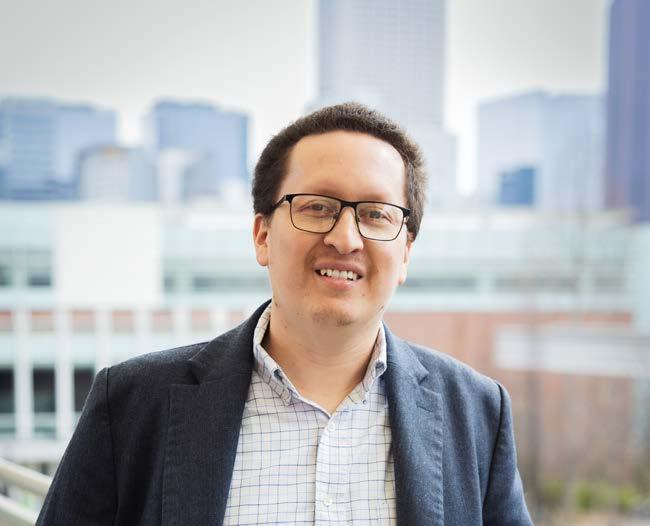
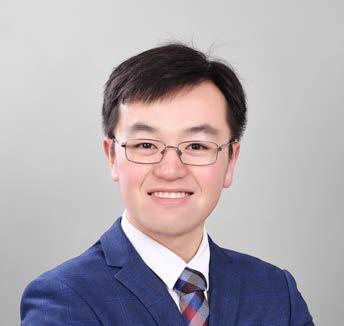
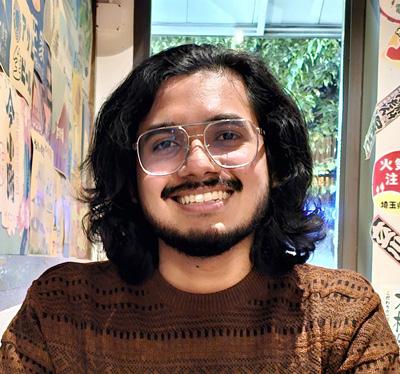
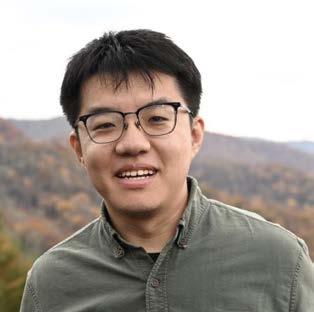
(Clockwise from left: SCI researchers Pedro Guillermo Feijóo-García, Nimisha Roy, and Associate Dean Olufisayo Omojokun
From developing cutting-edge assistive technologies to excelling in international competitions and launching entrepreneurial ventures, Georgia Tech students in the School of Computing Instruction (SCI) continue to lead by example. In 2024–2025, our students pushed boundaries across computing, using their technical skills and creativity to address real-world challenges, build inclusive communities, and champion a culture of collaboration and innovation.
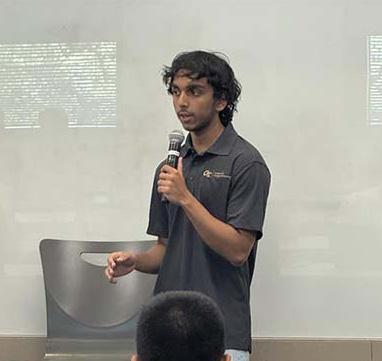
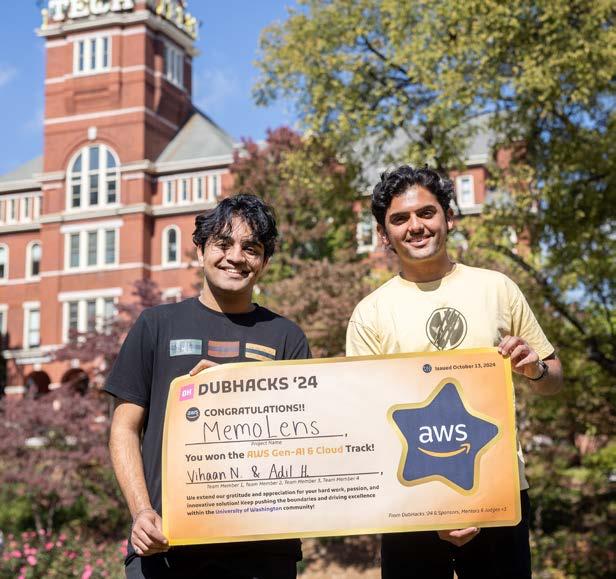
Second-year computer science (CS) majors Syed Husain and Vihaan Nagarkar earned top honors at DubHacks ’24, a premier student-organized hackathon hosted by the University of Washington. Inspired by their grandfathers’ experiences with Alzheimer’s, the duo created MemoLens, an AIpowered smart glasses platform that helps patients recognize loved ones, manage medications, and maintain independence. The project won first place in the AWS Gen-AI and Cloud Computing track, impressing judges with its human-centered design and technical sophistication.
MemoLens combines facial recognition algorithms with a customizable AI assistant, utilizing Vuzix smart glasses. Husain and Nagarkar are now developing MemoLens 2.0, aiming to enhance the system with multi-modal AI and improved hardware for faster, more personalized support.
Georgia Tech’s Competitive Programming team had a banner year, dominating two major competitions: the Meta Hacker Cup and the 2024 ICPC Regionals. Nearly 100 students participated in the Meta Hacker Cup, with standout performances from Sunghyeon Jo, who placed 13th globally. At ICPC Regionals, held at Middle Georgia State University, 15 Georgia Tech teams competed, earning four top-10 finishes in the southern region.
The team of Weiyu Chen, Kevin Shan, and Xieting Chu solved all 13 problems, placing second in the region and third nationally. Other medalists included teams led by Maksim Krylykov and Raymond Bian. Student leaders Cao and Bian, alongside faculty advisor and SCI Lecturer Abrahim Ladha, have fostered community and consistency through weekly trainings and collaborative events.
CREATIVITY AND COLLABORATION AT THE CS JUNIOR DESIGN CAPSTONE EXPOS
The CS Junior Design Capstone Expos showcased the innovative spirit of SCI students in Fall 2024 and Spring 2025. In Fall 2024, the first-place team
introduced MaxFinder, a website to help users locate lost pets using image recognition and map integration. Other standout projects included automated external defibrillator locator app and the GT Fashion Revolution mobile app.
Spring 2025 projects tackled sustainability, productivity, and social good, reflecting students’ desire to create meaningful, user-centered tools. Taking first place was the ETD Workshop App, a platform that replaces physical cards with a scalable, interactive web application to support Georgia Tech’s Effective Team Dynamics workshop.
CS student Yamil Quispe launched Georgia Tech’s first-ever Hacker House, a live-in residency designed to foster collaboration among student builders. Located near campus, the space accommodates 20 students working on startups, research, and technology projects over a nine-month period. Inspired by Quispe’s time in Bay Area hacker houses, the project transformed a vacant fraternity house into a thriving hub of innovation.
This year also saw the debut of Ramblin’ Hacks, the College of Computing’s first college-hosted hackathon. More than 30 student teams participated in the weekend event, supported by sponsors including Elevance Health, Microsoft, and Goldman Sachs. Top projects included DigitalTwin and Statside Soccer, with categories that welcomed beginners and advanced hackers.
First-year student Aarush Yadav led the effort, inspired by a hackathon at Rutgers. Backed by College staff and the Corporate Affiliates Program, the event marked a shift toward empowering students to lead with institutional support. Plans are already in motion to make Ramblin’ Hacks an annual tradition.
From technological breakthroughs to the cultivation of entrepreneurial ecosystems and interdisciplinary teamwork, SCI students are not just preparing for the future; they’re building it. n
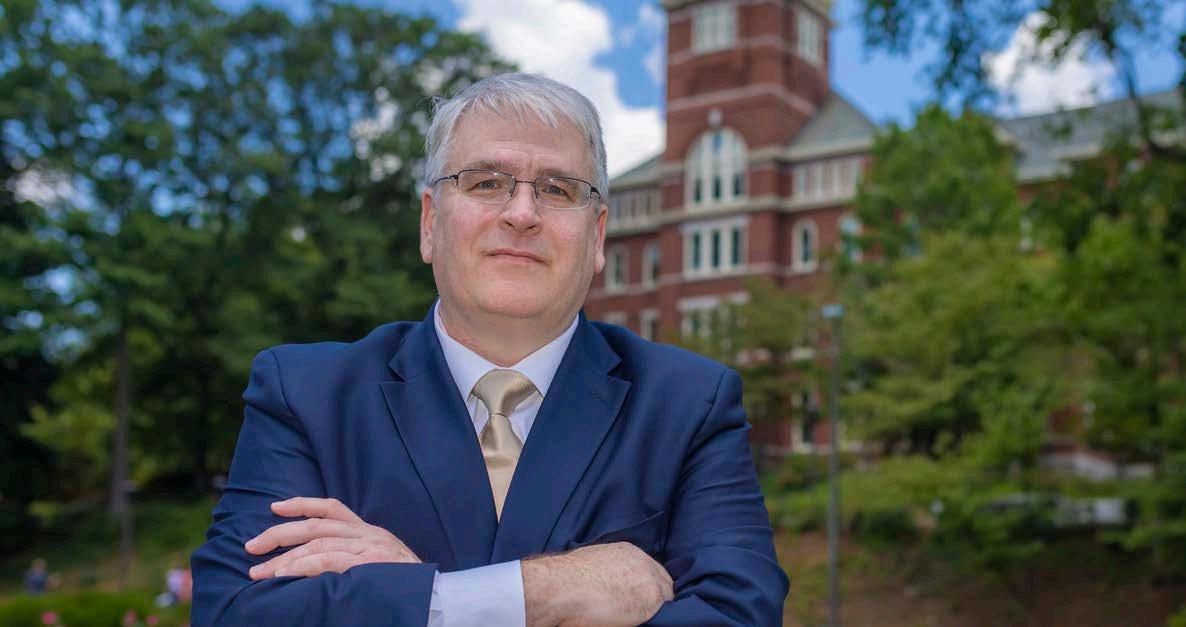
Dear Friends, when we began building the School of Cybersecurity and Privacy (SCP), we were chasing a vision: that security could be reimagined not as a reactive technology but as a proactive commitment to people, systems, and society. We believed we could design an academic home where technical depth and human impact weren’t at odds, but inseparable. That vision has gained shape, substance, and momentum in just a few years.
What started as a set of questions about who we are and what we are building, has become a community grounded in shared purpose. Since 2021, our faculty has expanded by more than 50%, our graduate programs have doubled in size, and our staff has grown fourfold. We’ve moved into a new 50,000-sqft space that better reflects the scale of our ambition and the scope of our work.
This year, we continued investing in infrastructure, people, and culture. Our administrative staff has completed over 70 professional development training sessions. Our faculty launched timely, human-centered courses, including The Human Dimension of Cybersecurity. We hosted talks, welcomed new colleagues, and deepened connections across Georgia Tech and beyond.
Our research activity grew faster than expected. In 2024,
our faculty submitted over $68 million in proposals, earned national recognition, and kept over $4.9 million in active awards. Our website reached nearly 100,000 views, and our ideas were featured in local, national, and international media. Our students gained recognition for their impactful work. Equally important, their efforts reflected our school’s values.
At the SCP, our mission is simple: To build security for everyone, in everything, every day.
We believe:
n Societal problems require multidisciplinary solutions
n Daily challenges can inspire rigorous research
n Developing tomorrow’s leaders requires revolutionizing security education
n Together, we can create a more secure future
This year felt like a turning point. Not an end, but a moment of clarity. The questions we asked at the beginning haven’t gone away, but we now ask them with the confidence that comes from shared purpose and steady progress. Thank you for being part of that journey. I’m proud of what we’ve built together and excited for what comes next.
Best,
Michael Bailey, Professor and Inaugural Chair School of Cybersecurity & Privacy
1,581
$7,505,441
Proposals
PARTICIPATING PH.D. PROGRAMS
1,525
$4,928,423
PARTICIPATING ACADEMIC UNITS
School of Computer Science
School of Electrical and Computer Engineering
Sam Nunn School of International Affairs
Daniel Guggenheim School of Aerospace Engineering

CUTTING-EDGE CYBERSECURITY FACULTY EARN REGENTS’ PROFESSOR AND ENTREPRENEUR TITLES
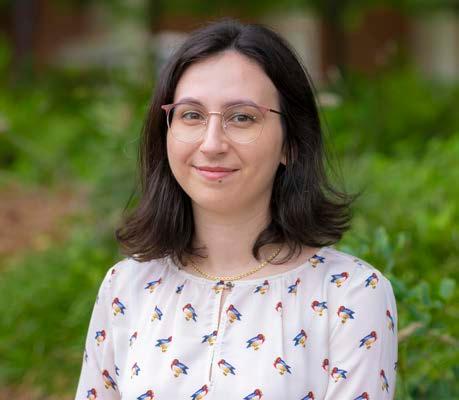
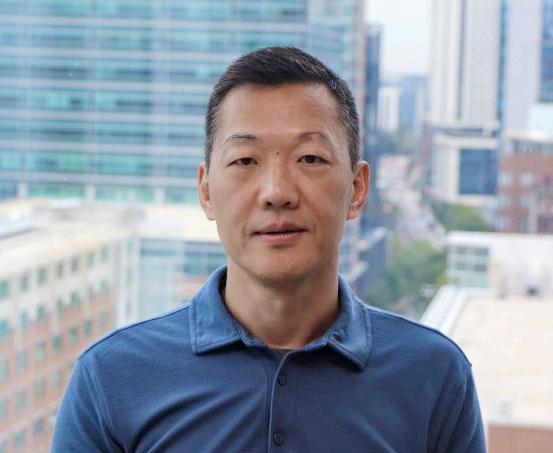
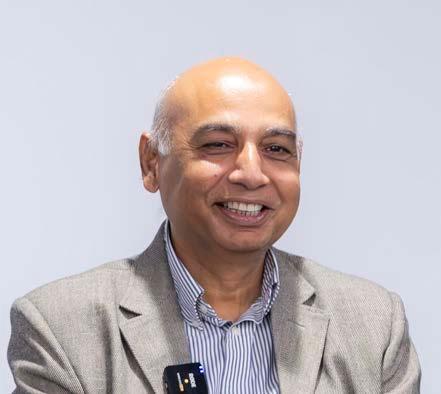
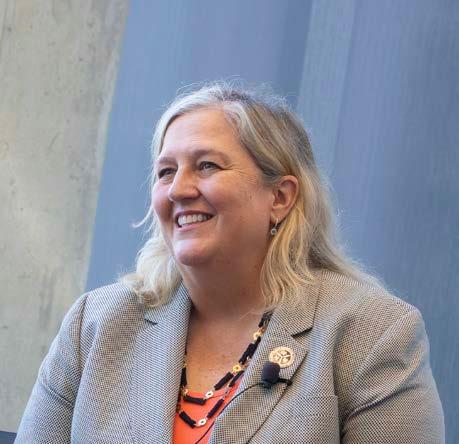
Professors Wenke Lee and Mustaque Ahamad received the prestigious Regents’ Professor and Regents’ Entrepreneur titles, respectively, last year. These are the highest honors bestowed by the University System of Georgia.
Lee is renowned for his impactful cybersecurity research, evidenced by numerous citations and awards, while Ahamad is recognized for his key role in helping startups grow through his students’ innovative work, notably Pindrop and Codoxo, which have collectively raised significant venture capital.
The professors have also played a key role in shaping cybersecurity education at Georgia Tech, from creating the Master of Science in Information Security program to co-founding SCP, showing their deep and lasting influence on both academia and industry.
Wenke Lee and Mustaque Ahamad
Bottom row: Teodora Baluta, Mary Ellen Callahan, and Glen Chou
FORMER HOMELAND SECURITY OFFICIAL JOINS SCP AS PROFESSOR OF PRACTICE
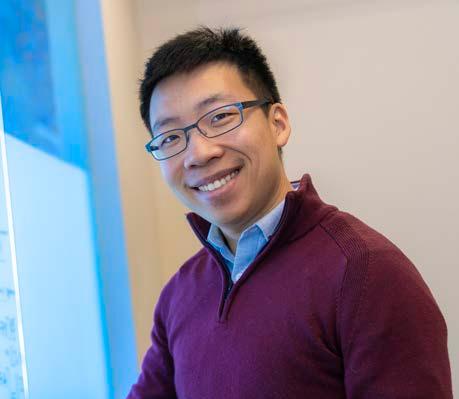
Mary Ellen Callahan, a distinguished expert in national security and privacy, joined SCP as a professor of the practice in Spring 2025. Formerly holding significant roles within the Department of Homeland Security, Callahan brought invaluable real-world experience to the classroom.
Her appointment greatly helped graduate students by providing essential insights into the legal and policy aspects of cybersecurity and privacy, especially through planned workshops on data-focused approaches to AI. This step highlights SCP’s commitment to bridging academic knowledge with real-world industry challenges, equipping students for the evolving security landscape.
Assistant Professor Glen Chou focuses on creating algorithms that enable robots to learn and adapt while ensuring their safety around humans at Georgia Tech’s new Trustworthy Robotics Lab. This proactive approach aims to develop truly robust robots that can recover from failures by analyzing sensor data and control algorithms for potential issues. Such technology has numerous applications, ranging from fighting wildfires and exploring space to assisting at home and maintaining critical infrastructure, all while being resilient to real-world uncertainties and threats.
New cybersecurity research initiatives into generative artificial intelligence (AI) tools will soon be underway at Georgia Tech, thanks to the efforts of a new assistant professor in the School of Cybersecurity and Privacy (SCP).
While some researchers seek ways to integrate AI into security practices, Teodora Baluta researches rigorous security analyses for machine learning (ML) systems.
“One thing that excites me about joining SCP is its network of experts that can weigh in on aspects that are outside of my field,” said Baluta. “I am really looking forward to building on my past works by studying the bigger security picture of AI and machine learning.”
Baluta’s research has been recognized by Google’s Ph.D. fellowship program and Georgia Tech’s EECS Rising Stars Workshop in 2023. As a Ph.D. student, she earned the Dean’s Graduate Research Excellence Award and the President’s Graduate Fellowship at the National University of Singapore. She was also selected as a finalist for the Microsoft Research Ph.D. Fellowship, Asia-Pacific.
SCP, in partnership with Trusted Science and Technology Inc., secured over $4 million from DARPA for a project called METALLIC. This initiative aims to create an advanced framework for analyzing and modeling “exploit chains,” which are organized sequences of vulnerabilities that cybercriminals exploit to breach software. The goal is to develop a prototype for a security modeling and assessment tool that can notably reduce the time needed to detect and neutralize cyberattacks, from days to just hours. The project will provide security professionals with cutting-edge tools and knowledge, marking a major step toward a safer digital future.
‘Follow the Money!’
$2 Billion of Crypto Scams Found on Ethereum
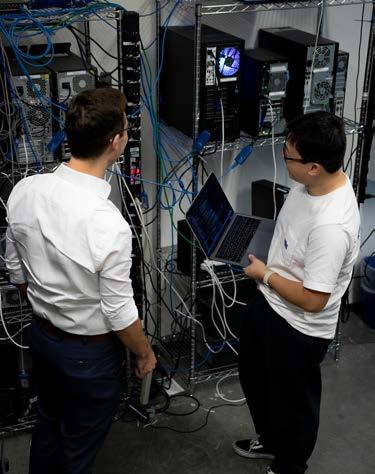
Georgia Tech’s Cyber Forensics Innovation (CyFI) Lab discovered $2 billion of illicit profits distributed across 91 digital wallets on the Ethereum blockchain. Cybersecurity Ph.D. student
Mingxuan Yao and his faculty advisor, Associate Professor Brendan Saltaformaggio, revealed their findings last year.
Yao and Saltaformaggio discovered that anonymous cybercriminals exploit smart contracts on a significantly larger scale than previously known. The team’s work revealed an additional 1.2 million unreported smart contracts.
The CyFI lab, a collaboration between SCP and the School of Electrical and Computer Engineering, specializes in digital forensic work and utilizes its skills to investigate smart contract fraud on the prominent public cryptocurrency blockchain, Ethereum.
Cybersecurity researchers have discovered new vulnerabilities that could enable criminals to gain wireless access to computer systems in automobiles, aircraft, factories, and other cyber-physical systems.
The computers used in vehicles and other cyberphysical systems rely on a specialized internal network to communicate commands between their various electronic components. Because it took place internally, it was traditionally assumed that attackers could only influence this network through physical access.
In collaboration with Hyundai, researchers from Georgia Tech’s Cyber-Physical Systems Security Research Lab (CPSec) observed that threat models used to evaluate the security of these technologies were outdated.
Led by Ph.D. student Zhaozhou Tang, the team discovered that advancements in vehicle technology have enabled attackers to launch new attacks, enhance existing ones, and circumvent current defense systems.
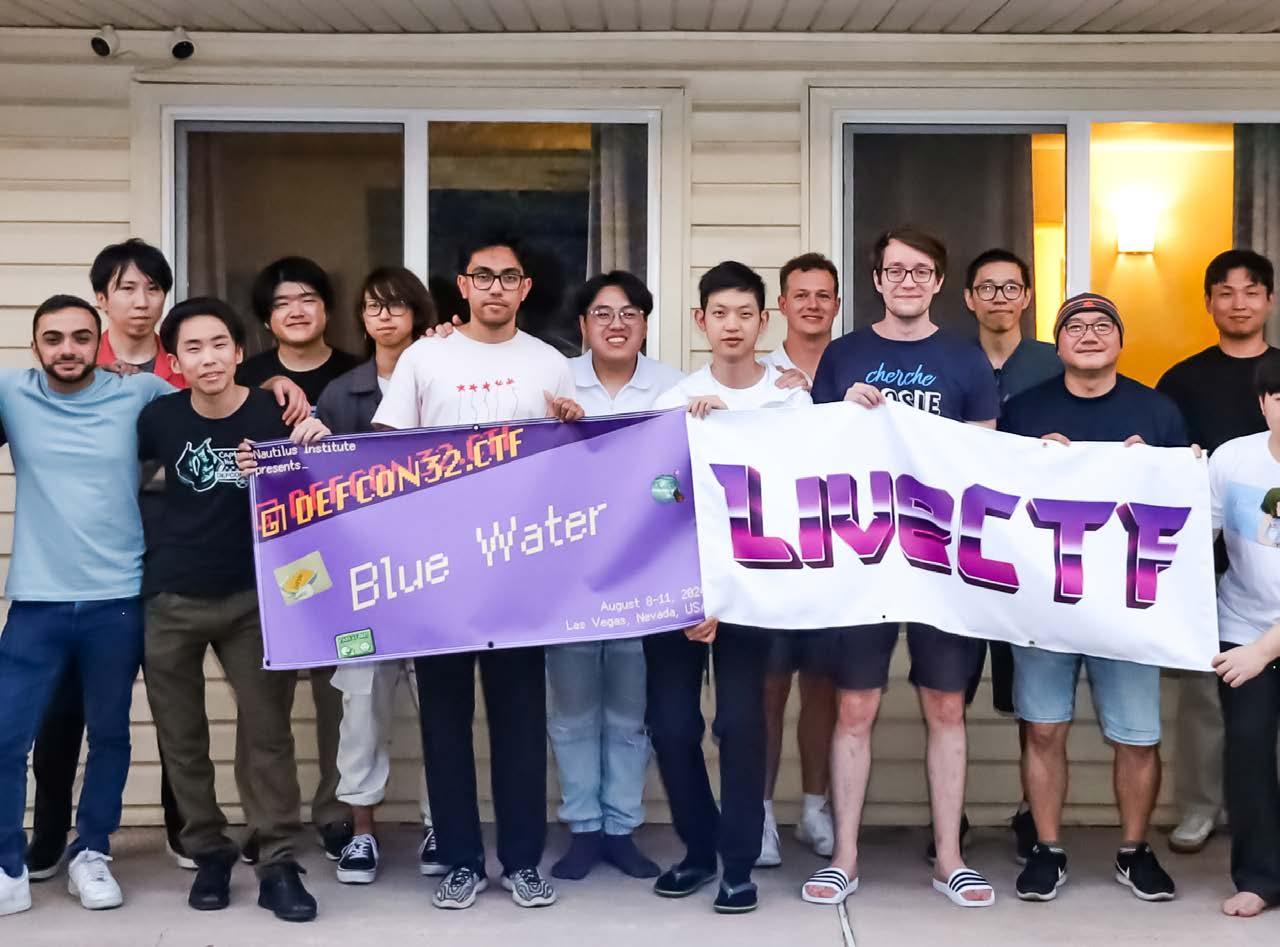
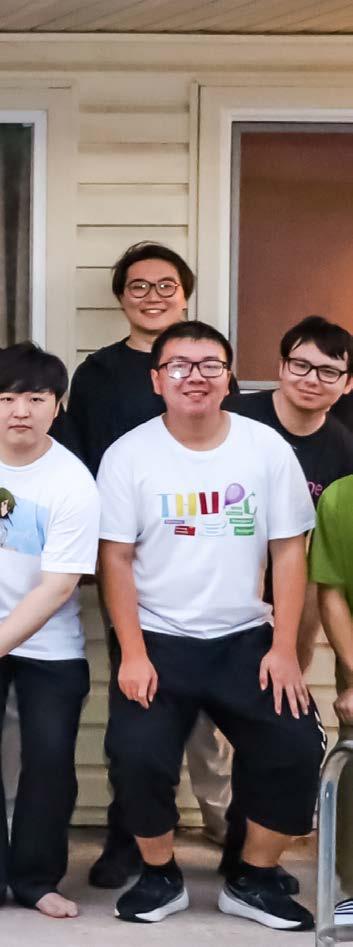
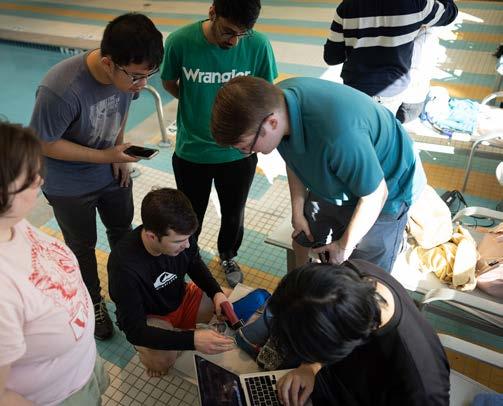
Outside the walls of DEF CON, a group of hackers prepared for the final day of the conference’s “Capture the Flag” (CTF) competition. These computer security experts used everything from dining room tables to pool tables as workstations during the final hours of the world’s largest hacking contest.
This collection of hackers comes from around the world and spends three days searching for strings of text known as “flags” hidden in vulnerable programs or websites.
They would also defend against attacks from other teams looking to gain additional flags.
A non-comprehensive list of the students and alumni on the CTF teams include:
n Yechan Bae, Ph.D. student – MMM
n Jalen Chuang, Ph.D. student – BlueWater
n Yu-Fu Fu, Ph.D. student – BlueWater
n Yonghwi Jin, Ph.D. student – MMM
n Jungwon Lim, Ph.D. student – MMM
n Daniel Lu (CS ‘24) – SuperDiceCode
n Darin Mao, Ph.D. student – SuperDiceCode
n Kevin Stevens, Ph.D. student – BlueWater
n Woosun Song, Ph.D. student – HypeBoy
n Luna Tong (CS ‘21) – BlueWater
n Josh Wang, Ph.D. student – SuperDiceCode
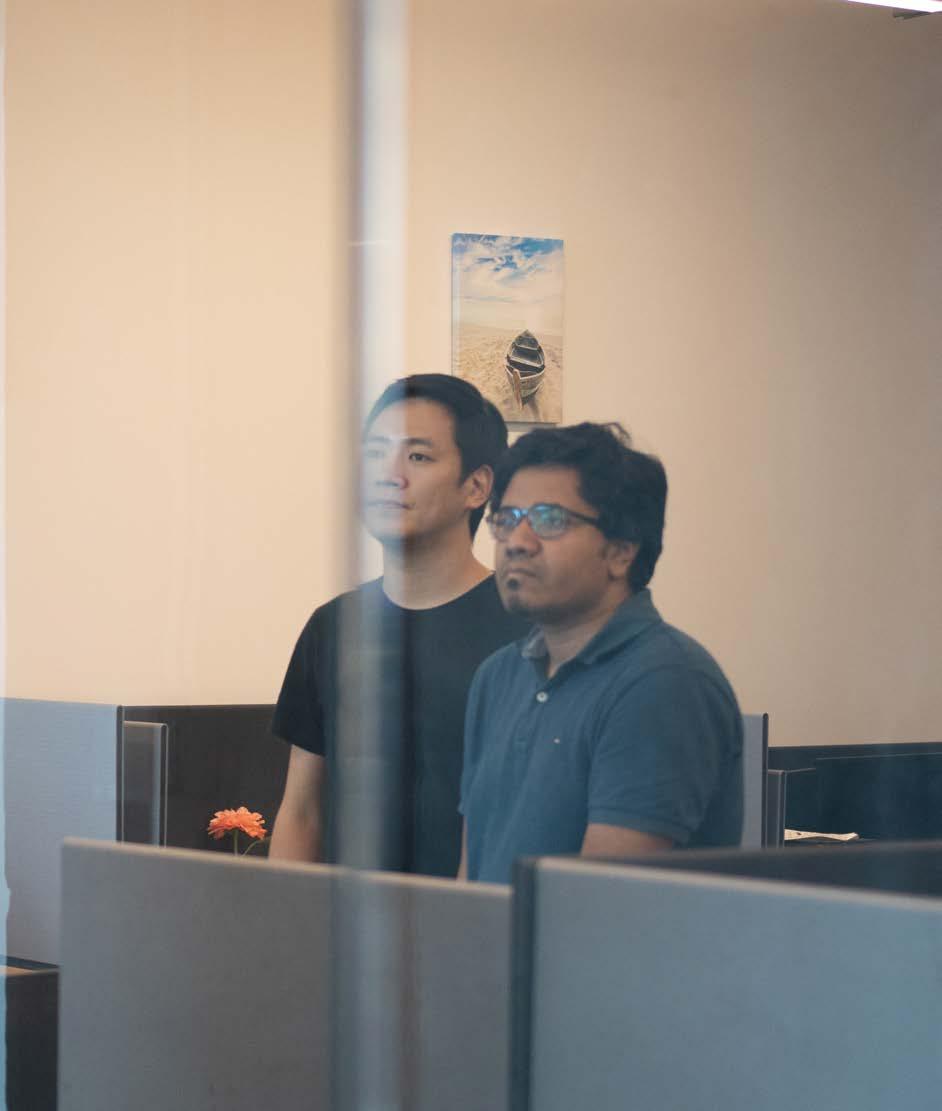
New Cybersecurity and Privacy Thread Welcomes Its First Alum
Although it’s only been offered for one academic year, Georgia Tech’s new Cybersecurity & Privacy (C&P) Thread in the Bachelor of Science in Computer Science program has its first graduate.
When senior Aliyah Crumbley found out about the new thread last summer, she was determined to complete it before walking the stage this May.
“I work in the College of Computing’s advising office, so I heard some buzz about it before the official announcement,” said Crumbley. “I started bugging my advisor about it right away and changed threads as soon as I officially could.”
Some of the courses in her other thread, Information Internetworks, overlapped with Cybersecurity and Privacy. When it came time to make the change, Crumbley had to carefully plan her last two semesters at Georgia Tech.
After walking the stage this week, Crumbley will begin preparing to start her new job as a JPMorgan Chase & Co. software engineer in the Asset and Wealth Management division. She will help the company integrate artificial intelligence technology into data management and analytics.


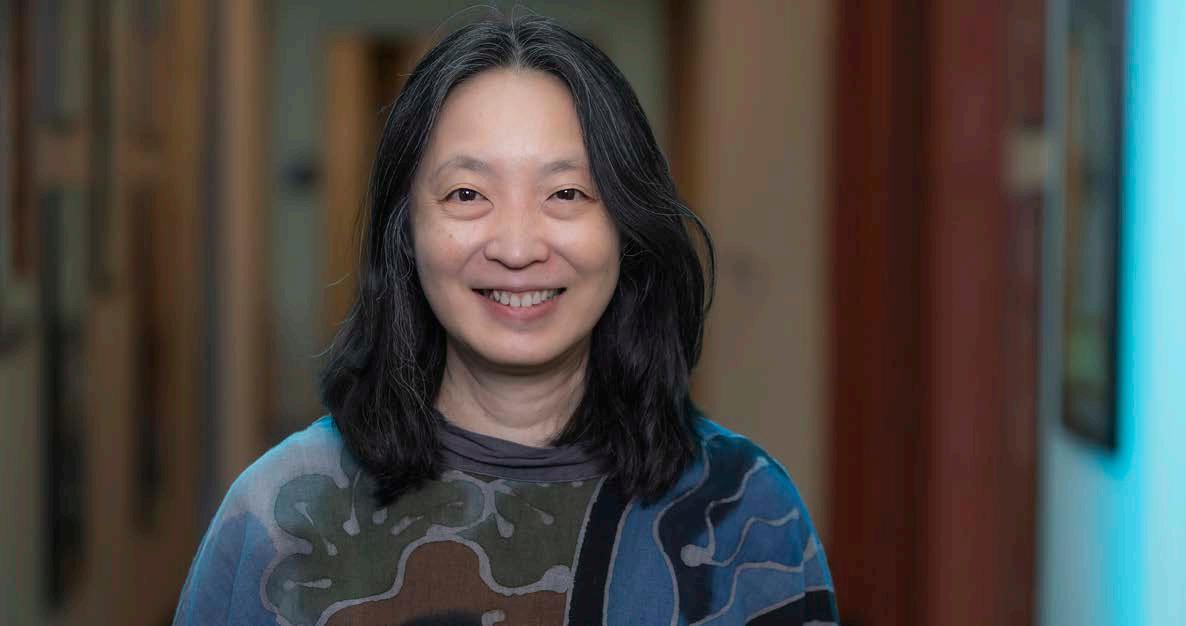
The School of Interactive Computing (IC) is driven by a powerful vision of a future where computing serves as a catalyst for individual and community empowerment, fostering thriving societies. This vision guides our foundational and applied research, transformative education, and meaningful public engagement.
A key theme for the School is our unwavering commitment to responsible computing, aligned with Georgia Tech’s strategic plan. This commitment is not just a statement, but a guiding principle that shapes our everyday actions. We are actively shaping the future of computing through our transdisciplinary and transformative research and scholarship, while keeping our broader societal and planetary responsibilities at the forefront of our efforts.
We’ve been at the forefront of leading the responsible computing agenda for nearly two decades. Our partnerships with diverse stakeholders, including communities, companies, NGOs,
and governments, are not just collaborations but a testament to our belief in the power of collective action. These partnerships have allowed us to pioneer ethical, trustworthy, and sustainable responsible computing solutions.
In October 2024, our leadership in this area was further solidified when more than 120 AI researchers, policy scholars, and experts in sustainability and health from around the world joined us for our inaugural Summit on Responsible Computing, AI, and Society. This event, which was a result of our collective efforts, sparked in-depth, meaningful discussions on the future of computing for health, sustainability, and human-centered AI, laying out the frontiers of these critical fields, plotting how they must evolve, and identifying strategies to address pressing societal and planetary issues.
This year, our faculty and students engaged in high-impact research that aims to address real-world problems. Our people have:
n DEVELOPED DATA VISUALIZATIONS FOR THE ELECTION TO MAKE THE RESULTS DATA ACCESSIBLE AND UNDERSTANDABLE.
n IDENTIFIED IMPLICATIONS OF MISINFORMATION AND DEEPFAKES IN POLITICS.
n EXAMINED ETHICAL ISSUES SURROUNDING AI AND COPYRIGHT; PARTNERED WITH DATA WORKERS TO IMPROVE WORKPLACE DEMOCRACY IN DATA WORK.
n CONDUCTED STUDIES THAT SHOWED HOW SURVIVORS OF GENDER-BASED VIOLENCE FACE MANY OF THE SAME DISCLOSURE BARRIERS ONLINE AS THEY DO OFFLINE.
n DEVELOPED A SUITE OF AI TOOLS THAT EMPOWER HAWAIIAN COMPUTER SCIENCE EDUCATORS.
n DESIGNED AN INTERACTIVE WEB BROWSER THAT CAN ANNOTATE AND CHART DATA USING 3D VISUALIZATION MODELS AND ENVIRONMENTAL MAPS, BENEFITING MICROBIAL ECOLOGISTS, GEOBIOLOGISTS, AND OCEANOGRAPHERS.
n CREATED A NEW DATASET WITH OVER 33,000 AERIAL IMAGES OF CITIES THAT COULD LEAD TO SAFER AND MORE RELIABLE AUTONOMOUS FLYING VEHICLES.
n DEVELOPED A NEW ALGORITHM THAT LAID THE GROUNDWORK FOR HUMANOID ASSISTIVE ROBOTS TO HELP WITH HOUSEHOLD CHORES FOR AGING IN PLACE.
n EXPANDED HEALTHCARE ACCESS THROUGH NOVEL SENSING SYSTEMS.
Taken together, these projects illustrate our ethos of addressing the most significant problems of our day through cutting-edge technologies, with an emphasis on diversity, partnership, and participation.
I am immensely proud of our faculty, staff, and students, whose commitment and passion have been the cornerstone of the School’s success. Our advisory board, industry partners, and community allies enhance their efforts. We will continue to pursue impactful research and innovate our educational programs to develop exceptional leaders in computing research and industry.
Shaowen Bardzell, Professor and Chair School of Interactive Computing
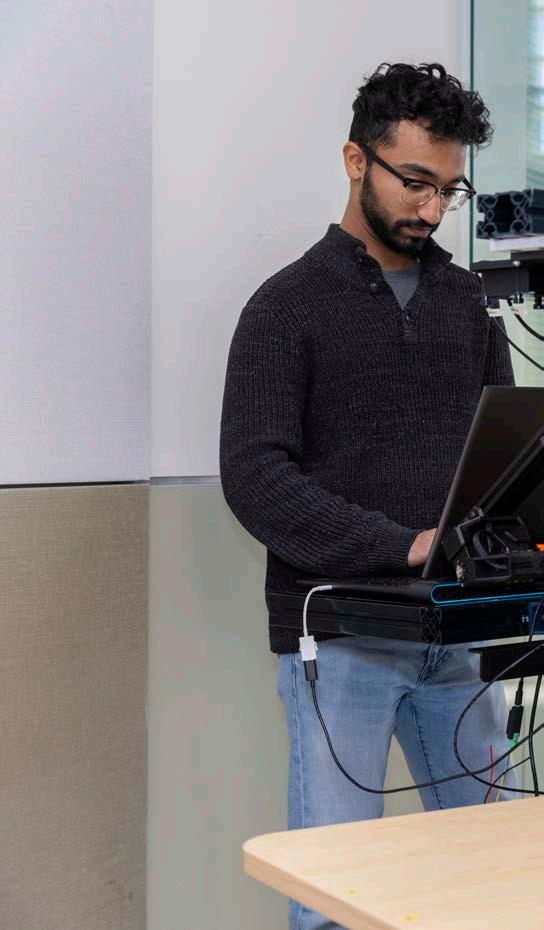
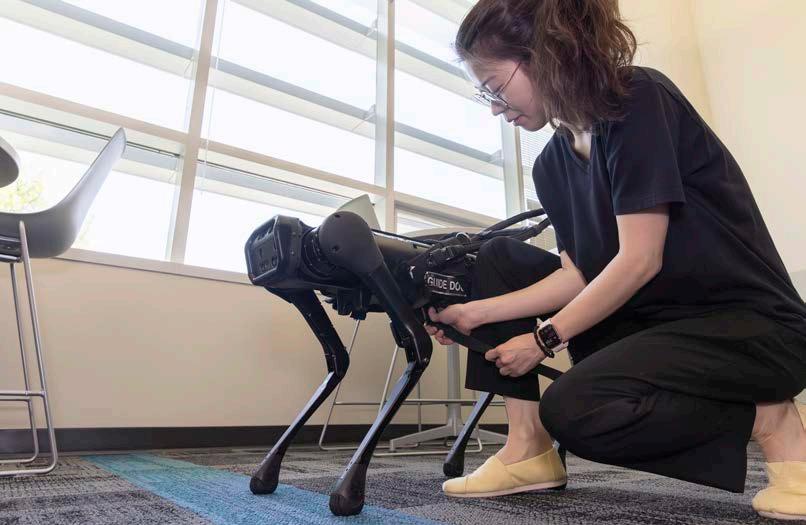
(Clockwise from top) Joanne Kim with the Robotic Seeing Eye Dog, Simar Kareer, and C.H.A.T. Pool Test
School of IC faculty-led research has garnered awards for sustainability, innovation, and legacy impact
Professor James Hays and Associate Professor Judy Hoffman earned testof-time awards for their groundbreaking research in computer vision and graphics.
Hoffman’s 2014 research on deep-learning vision models contributed to Caffe, an open-source deep learning framework widely used today. Hays’ 2012 work on sketch-based image retrieval created a dataset that remains a cornerstone for research in the field.
Their recognition by prestigious conferences such as ICML and SIGGRAPH highlights the continued influence and applicability of their work.
Meanwhile, Associate Professor Harish Ravichandar received the top accolade for junior faculty — the NSF CAREER Award. He received the award for his innovative approach to making dexterous robotic manipulation more accessible.
Ravichandar’s research focuses on developing algorithms that allow robots to learn complex tasks with limited computational resources. By combining classical robotics techniques with modern machine learning advancements, Ravichandar’s work aims to democratize robotics research, enabling institutions with limited resources to make meaningful contributions to the field.
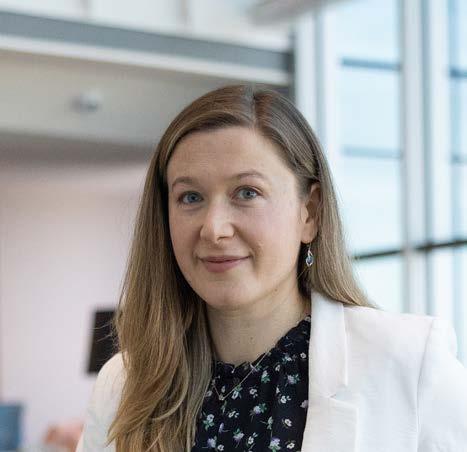
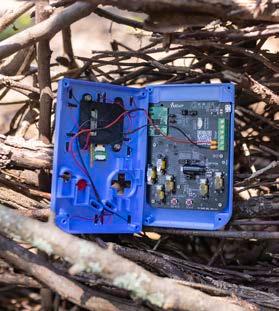
Fast Company recognized Associate Professor Josiah Hester and his Ka Moamoa Lab in its 2024 Innovation Design Awards for their work on a soil-
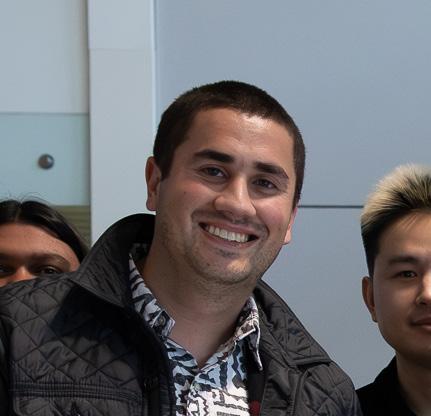
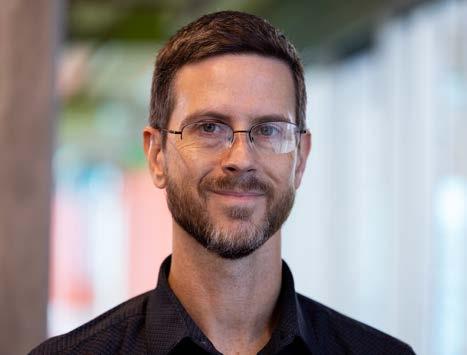
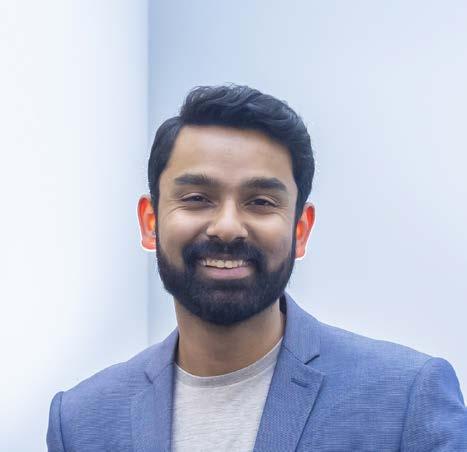
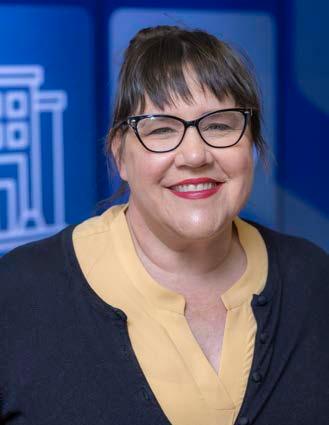
(Clockwise from left): James Hays, Judy Hoffman, Josiah Hester, and Harish Ravichandar
Terracell uses soil to power environmental monitoring devices, reducing e-waste and extending the lifespan of electronic systems. The technology has the potential to revolutionize sustainability in remote environmental monitoring, as it operates effectively in diverse soil conditions.
Hester is also a recipient of the Google Academic Research Award for his work with Kumu Connect, a suite of AI tools that empower Hawaiian computer science educators.
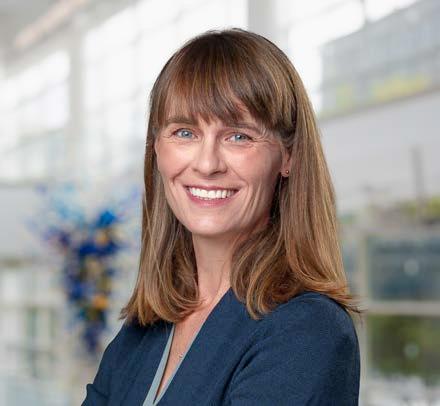
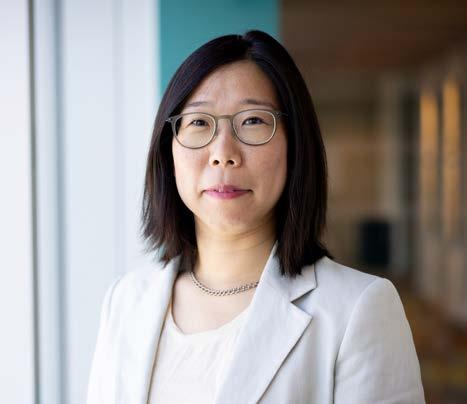
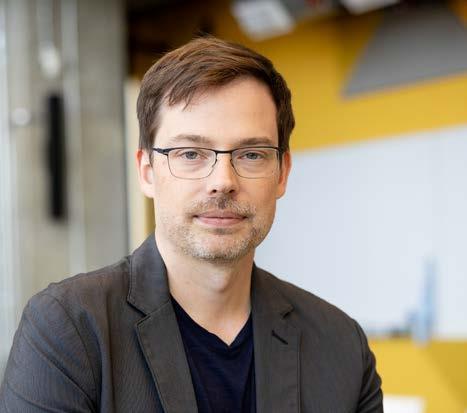
Associate Professors Betsy DiSalvo and Wei Xu also earned the Google Academic Research Award for their work on society-centered AI. Together with Charlotte Alexander, a professor of law and ethics at the Scheller College of Business, they are using AI to increase the accessibility of legal documents and support civil rights litigation.
Xu and her colleague, Associate Professor Alan Ritter, were recipients of the Faculty Innovation Award from the Sony Award Research Program.
The award provides up to $100,000 to fund cutting-edge research in Sony’s general areas of interest. The award will help fund Xu and Ritter’s latest project, Adapting LLM-based Multimodal Dialog Across Languages and Cultures. The project will adapt large multimodal models to generate culturally nuanced responses that cater to non-Western cultures. n
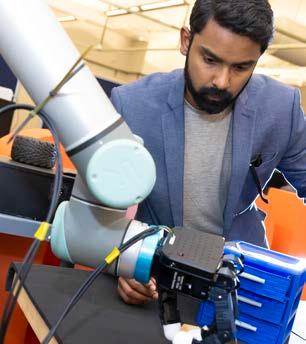
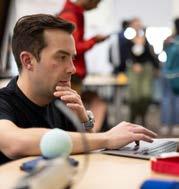
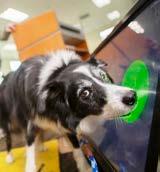
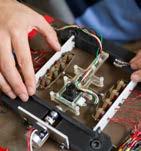
Kantwon Rogers cemented his Georgia Tech legacy when he concluded a 13-year educational journey at Georgia Tech with his fourth degree, a Ph.D. in computer science. He also holds a master’s degree in electrical and computer engineering, as well as a master’s degree in human-computer interaction, in addition to a bachelor’s degree in computer engineering.
Rogers taught a “computing for engineers” course and an introductory CS course for engineering majors for eight years. His research delved into the ethics of robots and AI, examining the complex question of whether robots should ever deceive humans. His work led to him being a finalist in Georgia Tech’s Three Minute Thesis competition.
Rogers is a postdoc at the MIT Media Lab.
Upol Ehsan, a Georgia Tech graduate, was named a fellow at Harvard University’s prestigious Berkman Klein Center for Internet & Society. The fellowship is one of the most competitive of its kind and is sought after by veteran and young career professionals. Ehsan will continue to expand upon research he began at Georgia Tech on how harm from AI systems can persist after the systems are decommissioned.
Ehsan’s research on the global implications for responsible AI development has informed the United Nations’ algorithmic reparations policies and the National Institute of Standards and Technology AI Risk Management Framework. During his fellowship, he will continue to develop a taxonomy of potentially harmful post-deployment AI effects and design interventions to mitigate them.
Ph.D. students Shravika Mittal and Naoki Yokoyama were invited into the second cohort of the Quad Fellows. The recently established fellowship is an initiative of the governments of Australia, India, Japan, and the United States. It recognizes exceptional master’s and doctoral students in STEM fields, providing $40,000 for academic support and networking opportunities.
Mittal researches the impact of publicly available content on opioid use disorder, seeking to inform policies that address the stigmatization of marginalized communities in media and AI. Yokoyama aims to develop intelligent robots that can enhance the independence and quality of life for individuals with disabilities and older people.
A paper led by Ph.D. candidate Beatriz Palacios Abad was one of the five best papers at the ACM Conference on Computer Supported Cooperative Work (CSCW), which took place in November in Costa Rica. The paper, Mending the Fabric: The Contentious, Collaborative Work of Repairing Broadband Maps, also received the conference’s Impact Recognition award.
Students Annabel Rothschild, Lara Schenck, Jasmine Foriest, Shravika Mittal, Kristen Bray, Anh-Ton Tran, and Amy Chen also wrote award-winning papers at CSCW.
©2025. This annual report was published by the College of Computing, a leading academic and research institution in the field of computing, dedicated to advancing knowledge, innovation, and technological impact. As part of Georgia Institute of Technology, the college is committed to transparency in sharing its progress, providing students, faculty, industry partners, and the wider community with a comprehensive overview of academic, research, and outreach achievements. This report highlights notable accomplishments, addresses challenges, and outlines future aspirations, reflecting our mission to prepare the next generation of computing leaders and drive transformative discoveries in areas such as artificial intelligence, cybersecurity, data science, and human-computer interaction.