Finding amber treasures in Australia The Endowment Fund: your donations at work The rare earth element uprising
From the President
Letter to the editor
GSA updates
News and views
Heritage matters
Australia’s rare earth element uprising
Finding amber treasures
Decarbonisation: a geoscience view
Endowment Fund case studies
Victorian goldfields as world heritage
Machine learning to predict fault slip
In memoriam
What’s on
Book review
Cryptic crossword
Office bearers
ISSUE 211, JULY 2024
Registered by Australia Post
Publication No. 100010917
ISSN 0312 4711
EDITOR
Anthea Batsakis
PRODUCTION EDITOR
Kath Kovac
DESIGN & TYPESETTING
Anthea Batsakis
PRODUCTION MANAGER
Amber Jarrett
PRINTED BY
Bell Print
DISTRIBUTED BY
The Pack Factory, Sydney
CENTRAL BUSINESS OFFICE
PO Box 576, Crows Nest NSW 1585
Email: info@gsa.org.au
Web: www.gsa.org.au
Phone: (02) 9160 8193
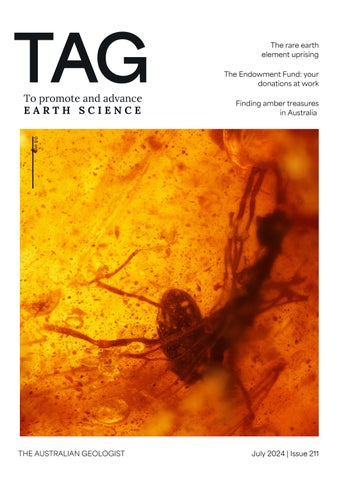
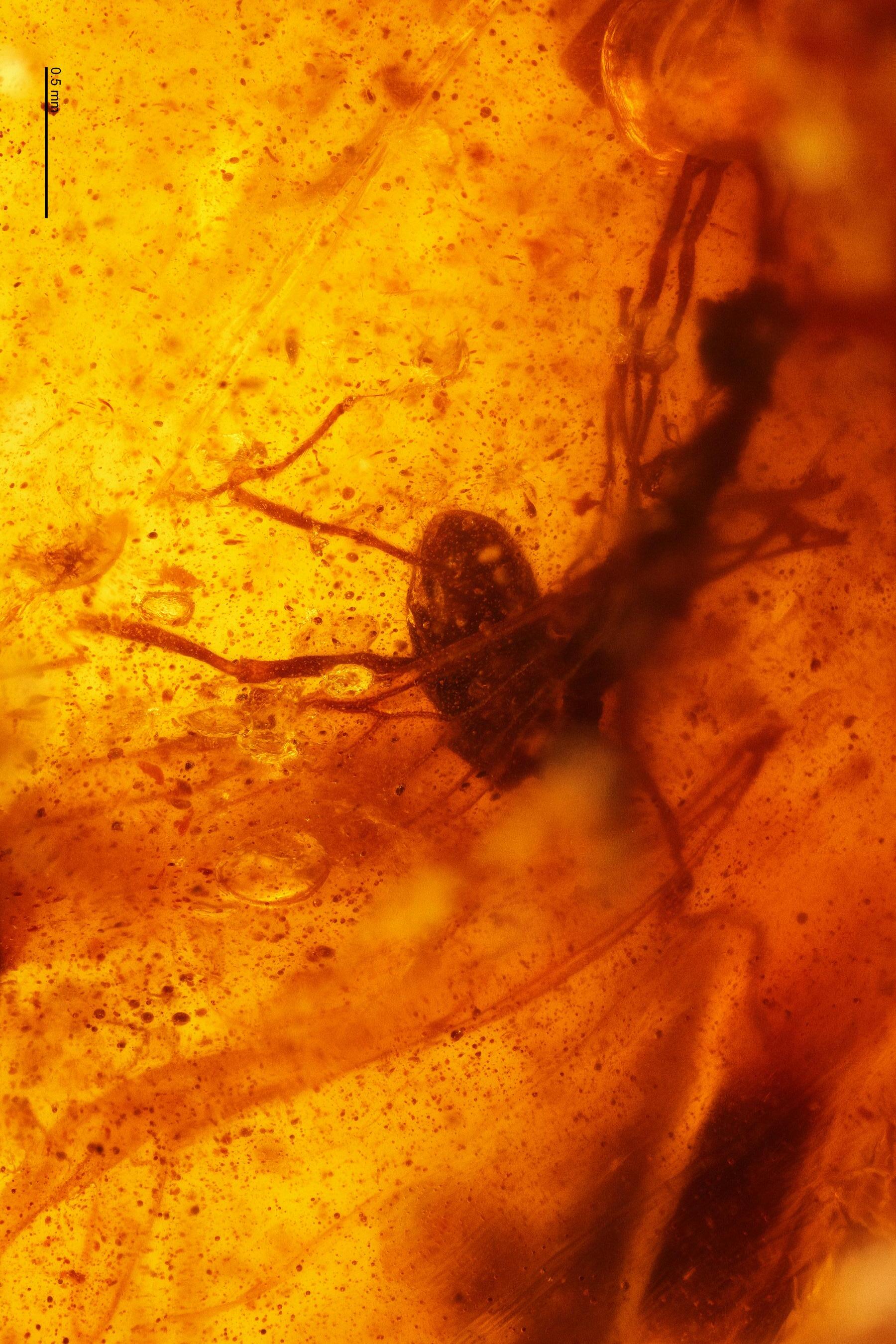
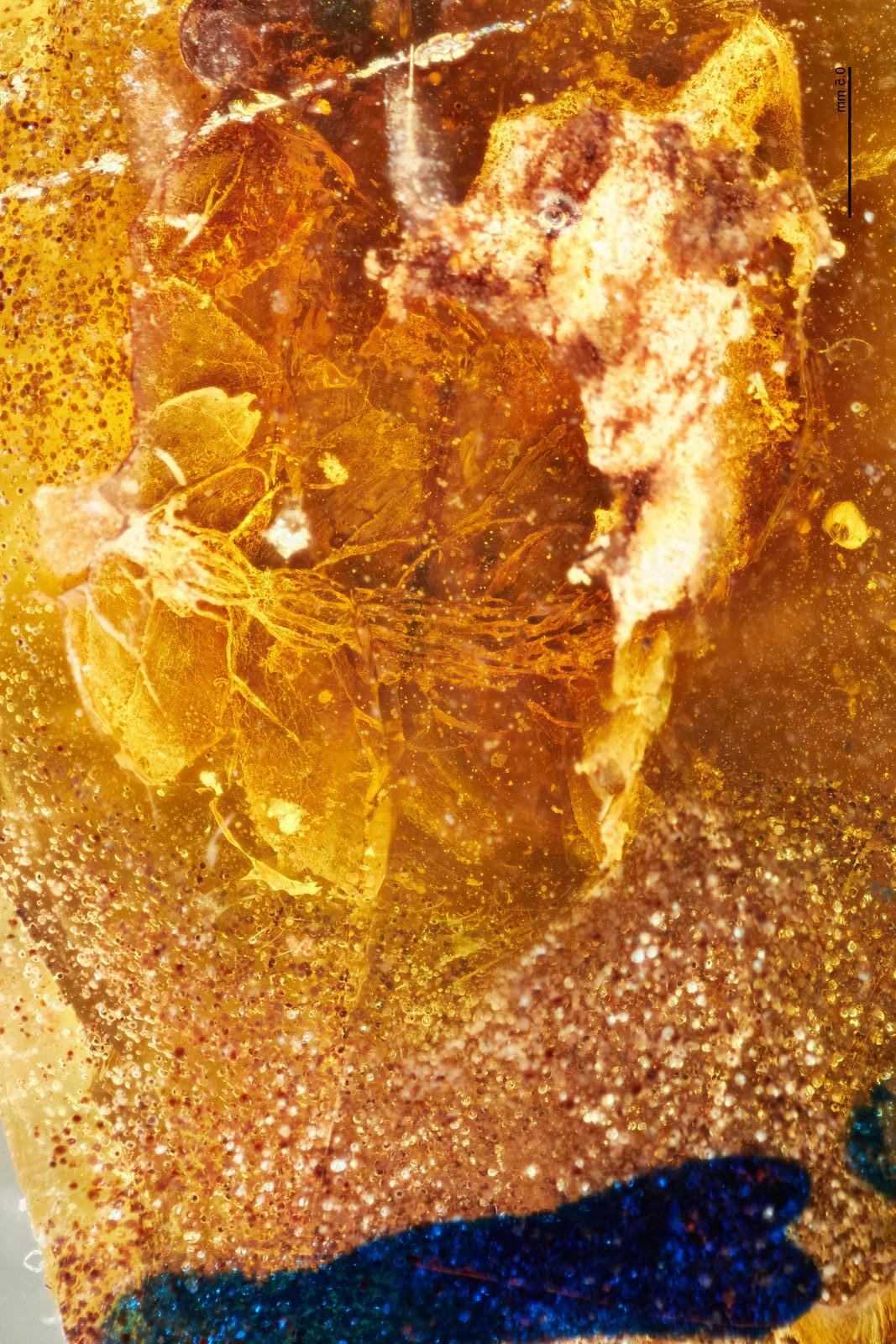
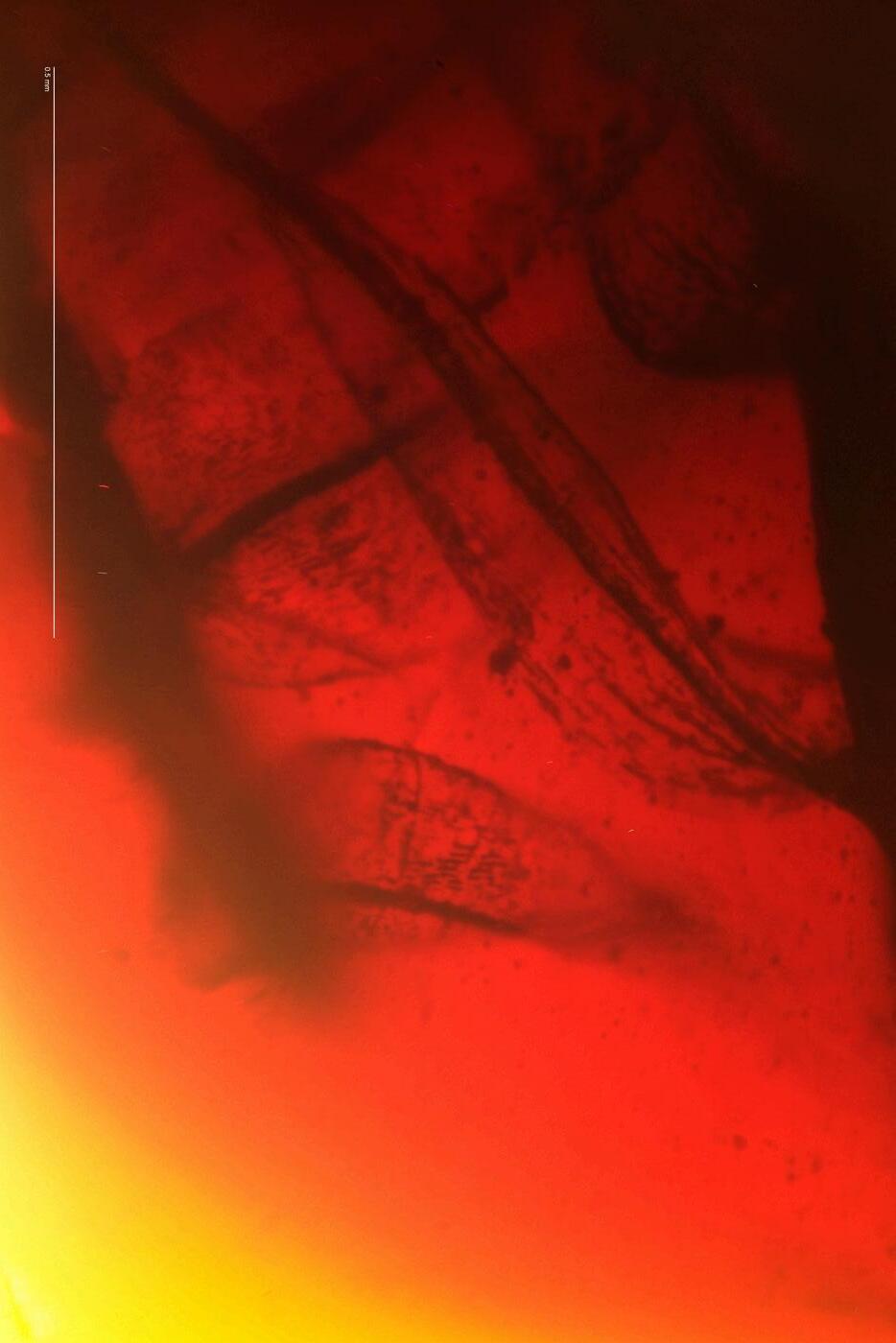
COVER IMAGE: Highly degraded Hymenoptera specimen of the family Embolemidae: trapped for millions of years in amber. Photo: Maria Blake
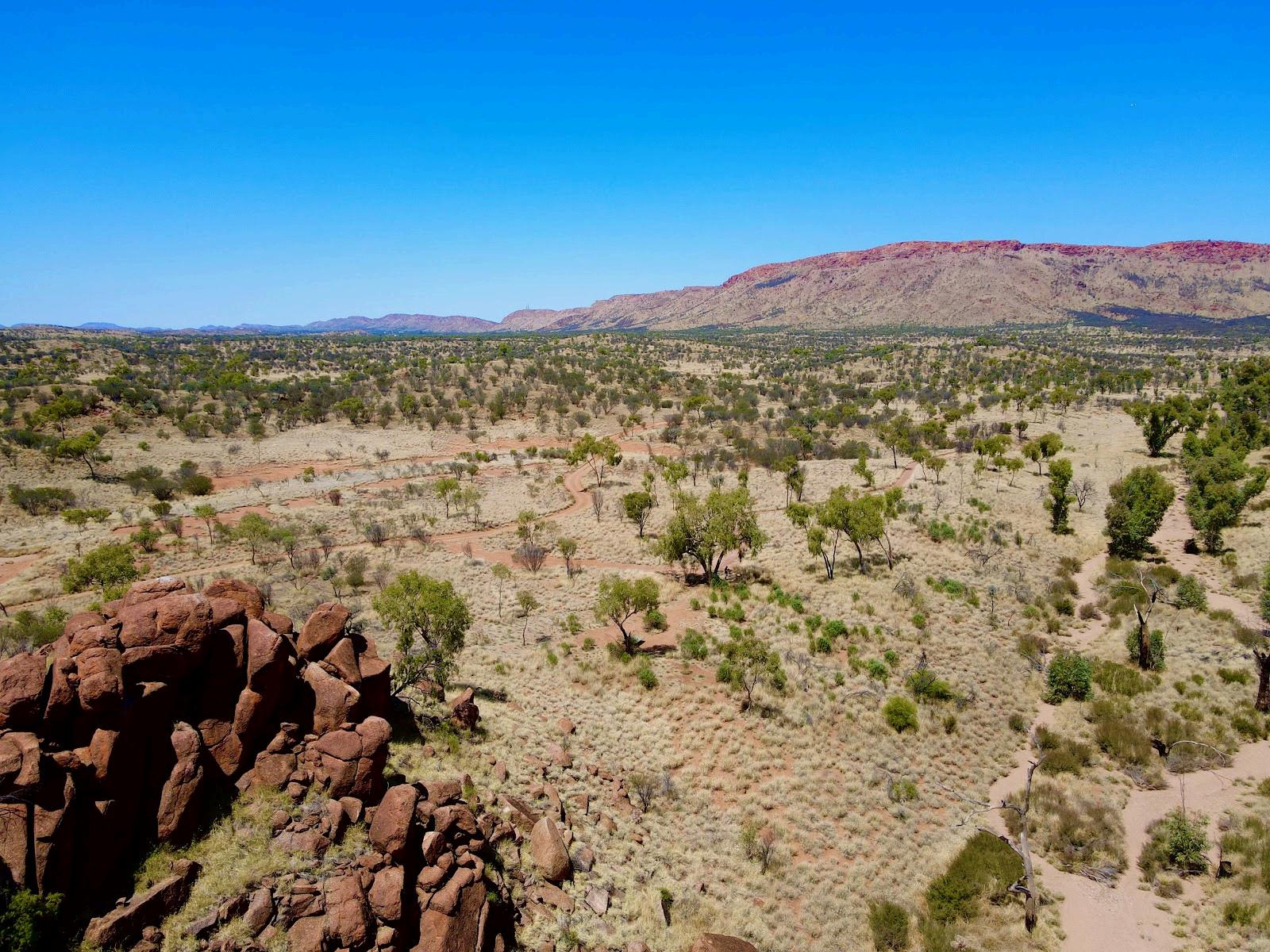
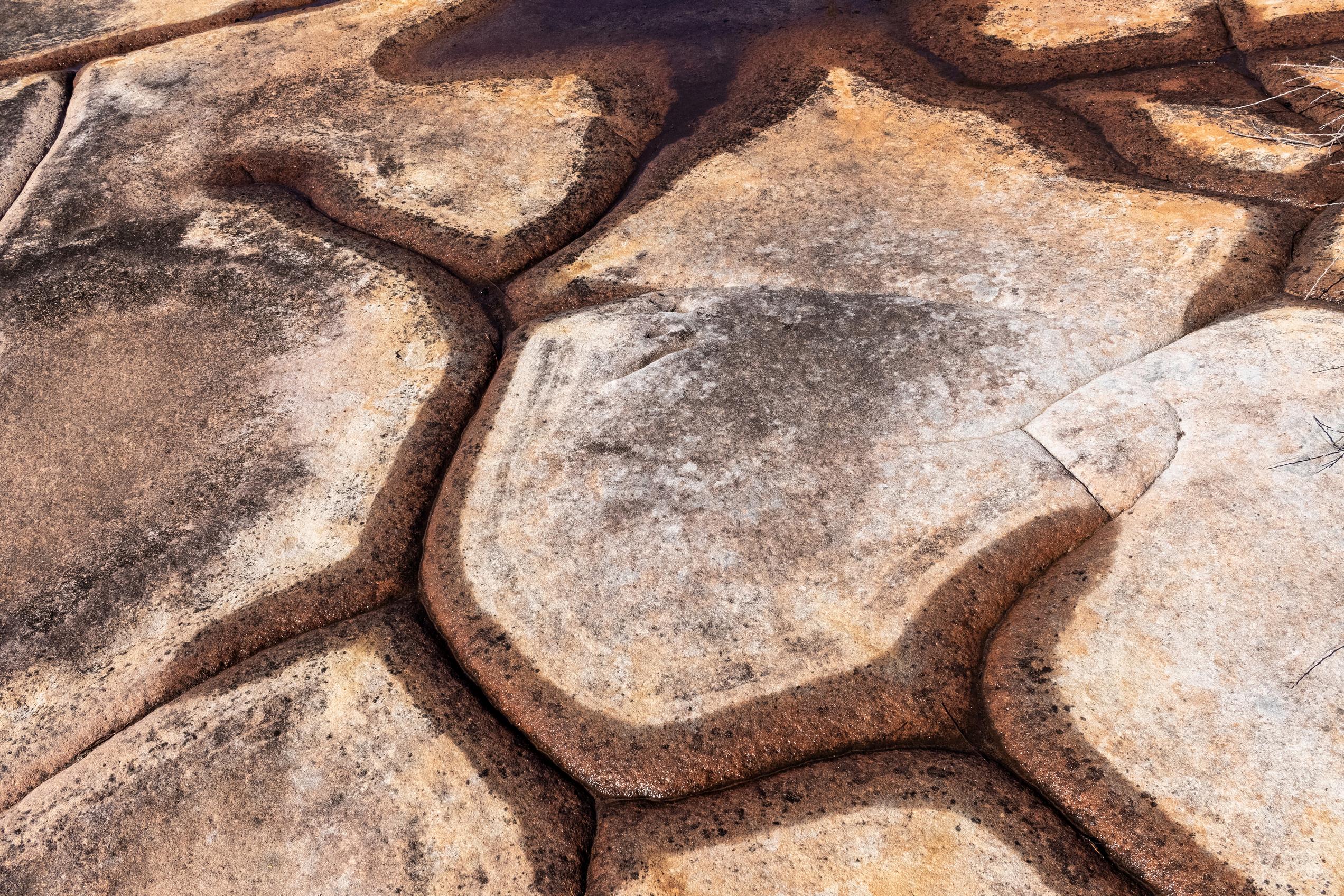
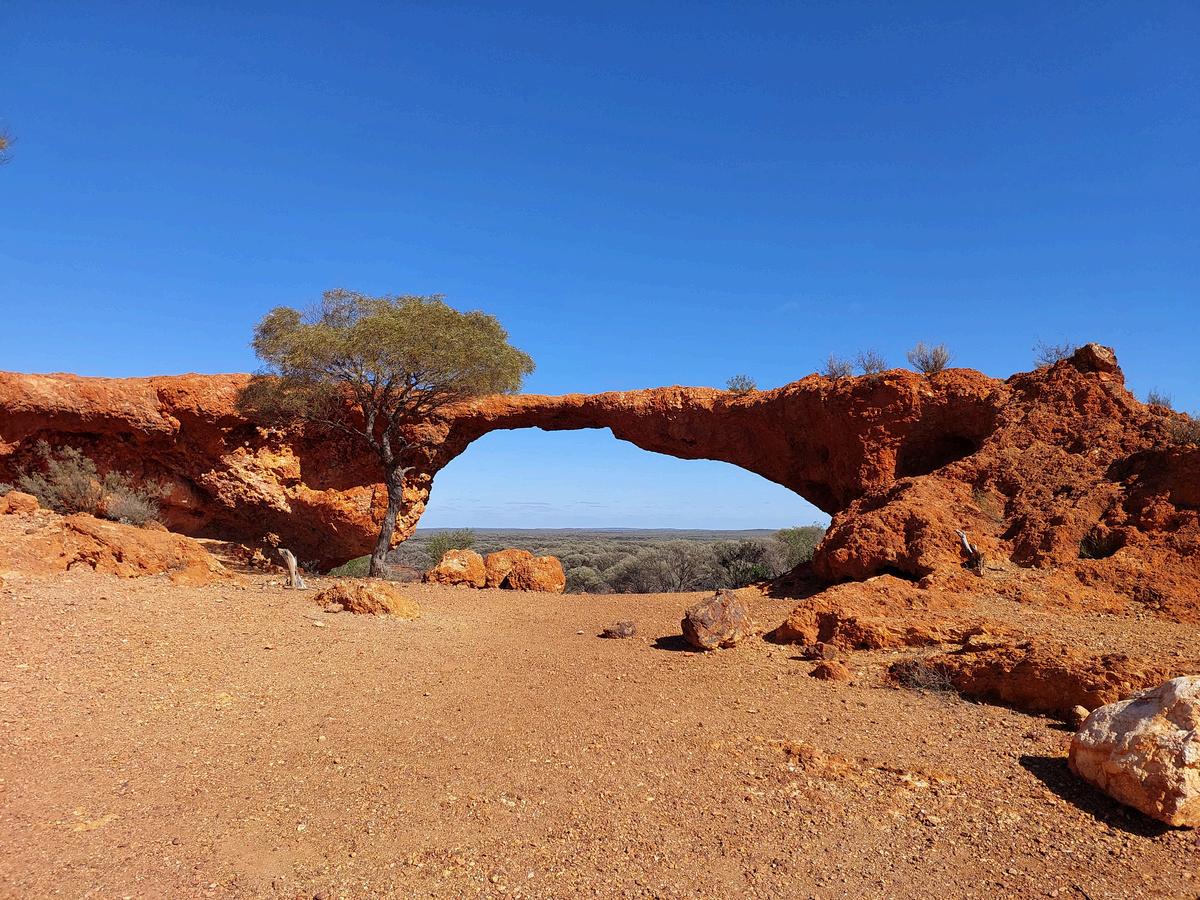
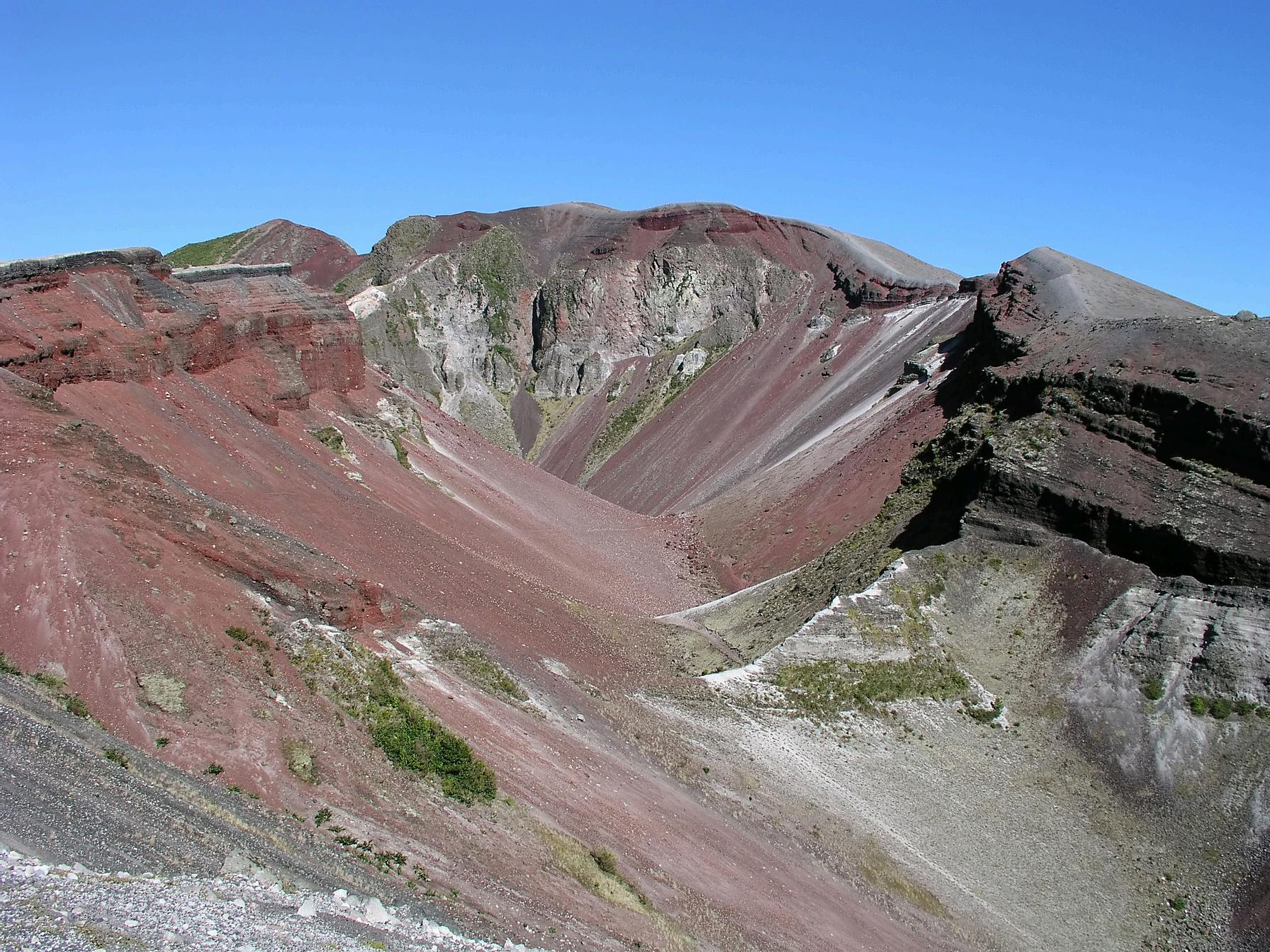
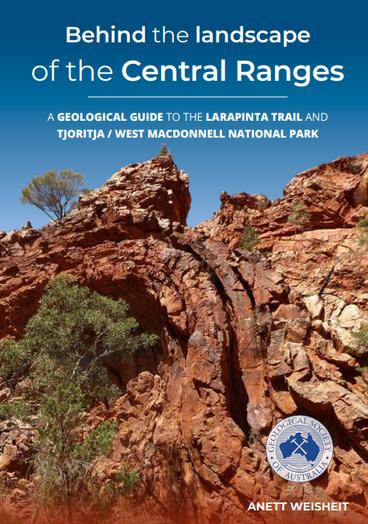
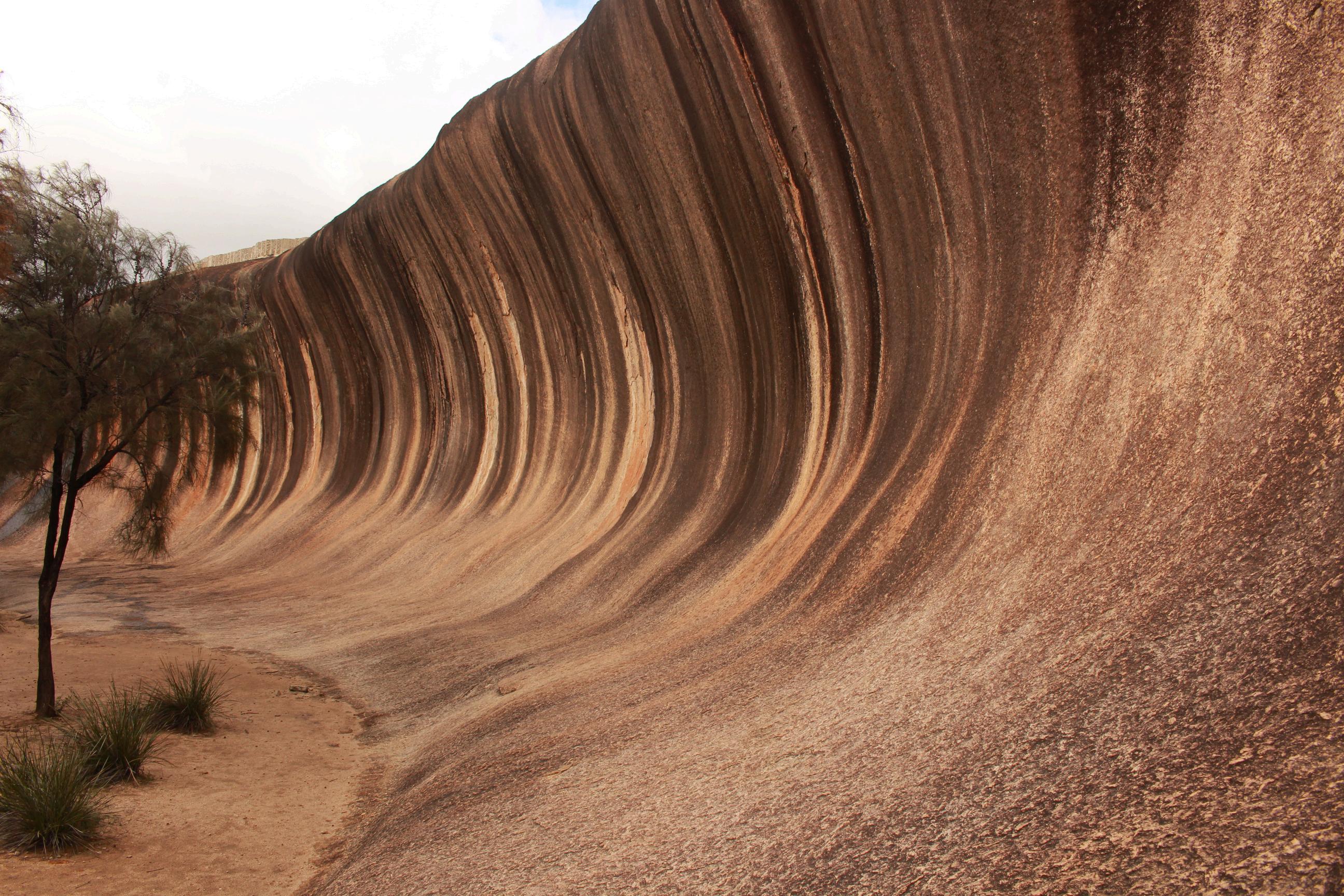
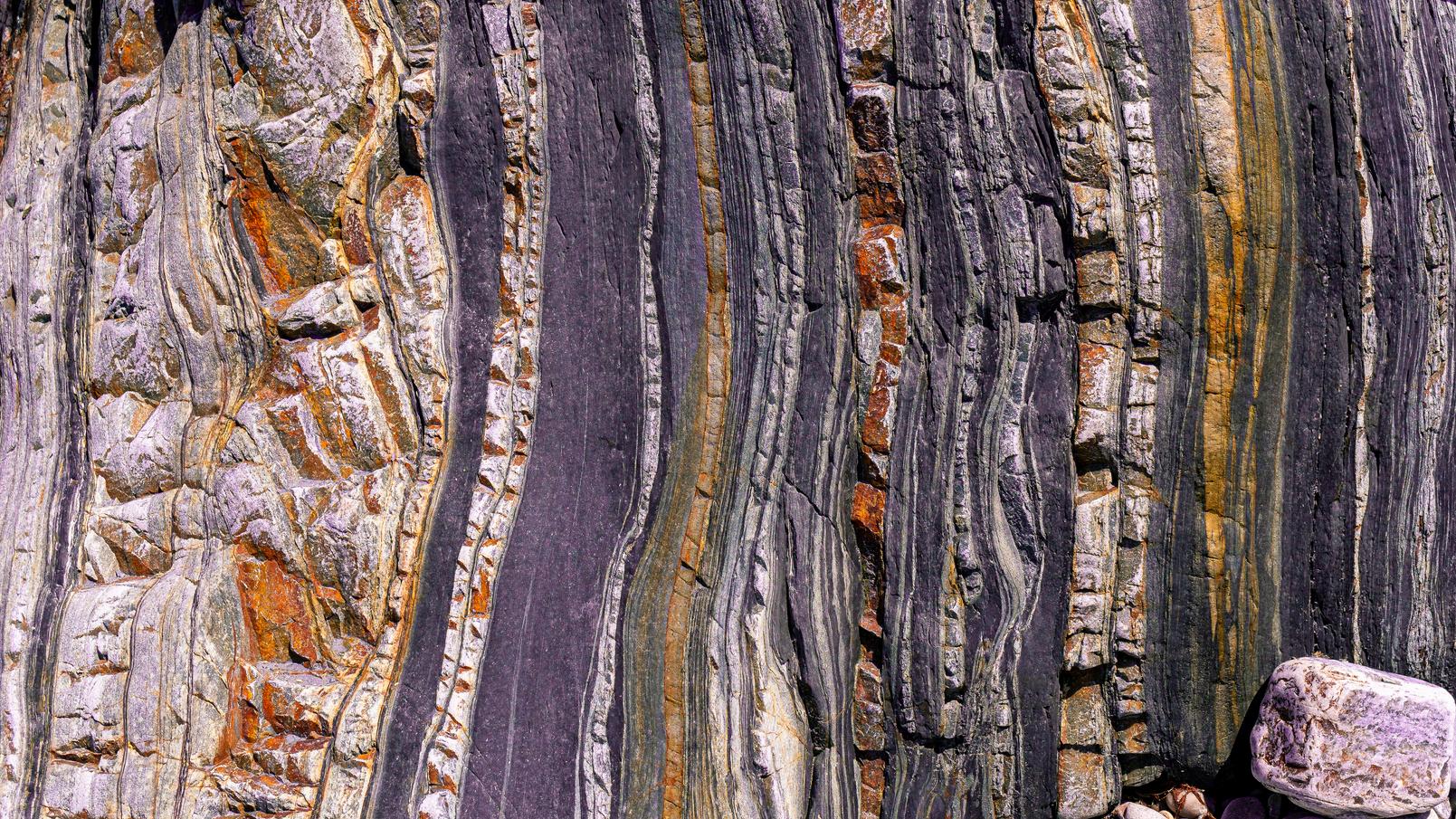
INSIDE COVER IMAGE: West MacDonnell Ranges, Tjoritja / West MacDonnell National Park. Photo: Charles Verdel
GENERAL NOTE
The Australian Geologist (TAG) is a quarterly member magazine that includes society news, conference details, special reports, feature articles, book reviews and other items of interest to Earth Scientists. Each issue has a long shelf-life and is read by more than 3,000 geologists, geophysicists, paleontologists, hydrologists, geochemists, cartographers and geoscience educators from Australia and around the world.
SUBMISSIONS
TAG is no longer accepting complete articles without prior notice. Instead, we encourage members to send in their ideas and work with editors to produce new content. If you’d like to get involved, please email tag@gsa.org.au. Artwork must be high resolution 300 dpi or larger.
COPYRIGHT
The Publication is copyright by the GSA Inc unless specifically stated otherwise. However, material in this issue may be used provided acknowledgement is made. Every effort has been made to trace and acknowledge copyright holders of material in this publication. If any rights have been omitted, apologies are offered.
The GSA is a learned Society and TAG is published by the Society to provide information for members and as a forum for the expression of their professional interests and opinions. Observations, interpretations and opinions published herein are the responsibility of the contributors and are not necessarily supported by the GSA.
The GSA has taken all reasonable precautions and made all reasonable efforts to ensure the accuracy of material contained in this publication, and makes no warranties, expressed or implied with respect to any of the material contained herein.
BUSINESS CORRESPONDENCE
All business enquiries and correspondence relating to advertising space, inserts and/or subscription matters, should be sent to tag@gsa.org.au
EDITORIAL MATTERS
Contributions: All editorial enquiries or contributions should be sent to tag@gsa.org.au
Strategy map and milestones 23/24
The GSA 2020 to 2030 Decadal plan provides strategic framework to ensure that the society continues to provide the best and most appropriate professional support to its members This strategy map outlines the priorities of the 2023-2025 Governing Council Feedback and volunteers to help us achieve our milestones are most welcome
PROMOTE AND ADVOCATE EARTH SCIENCE
Communications Standing Committee
Education and Outreach resources
PROVIDE PROFESSIONAL DEVELOPMENT
Supporting Divisional and Specialist Group activities
Social Media
Early career geoscientist advisory panel (ECGAP)
STRONG AND COLLABORATIVE MEMBER COMMUNITY
Increase digital content
PROVIDE EXPERT ADVICE GICE
Member expertise database
Attract and retain early to mid-career Earth Scientists
Education and Outreach
Geotourism and Geoheritage
Conferences Standing Committee
Safety and culture Standing Committee
Collaboration with like-minded societies
Explore options to contribute e g Geotourism Australia
COMMUNICATE AND INFORM EARTH SCIENCE COMMUNITY
Communications Standing Committee
Social Media AESC
GOOD GOVERNANCE AND MANAGEMENT
Financial uplift
Governance Training
GSA brand refresh
TAG and AJES strategy refresh
The GSA is committed to supporting the
Safety and culture Standing Committee
FROM THE PRESIDENT
It has been a busy half year for the GSA – how are we in July already?
In March, Tiah Penny and I represented the GSA at Science Meets Parliament. This is a fantastic opportunity for scientists to learn about the world of policy and government and how we can make our messages have impact. Meanwhile, parliamentarians and senior policy advisers have the opportunity to meet scientists and learn from them Highlights for me were seeing the fantastic Superstars of STEM, Caroline Tiddy and Rachelle Kernen, in their element through science outreach, networking and sharing their passion for geoscience among a supportive cohort of women
In a similar vein, the Australian Geoscience Council sponsored two early career geos to attend the conference Leah Lynham has written an article highlighting her experiences in this issue of TAG
Finally, there was no way I could miss the Geology of Parliament House Tour run by the amazing Verity Normington and Steve Hill from Geoscience Australia The tour was engaging, interactive, extremely interesting and indeed, very well received by non-geos and geos alike We even made the short trek down to the State Circle road cutting and I recalled my attempt to produce a cross section in an ANU structural geology class, which resulted in a 7 5/10 and a comment to “do better” Clearly this is why I turned to geochemistry You can read more about the Geology of Parliament House within the pages of this magazine
The GSA Annual General Meeting was held on Thursday 23 May 2024 and it was great to see more than 70 GSA members in attendance During the AGM we discussed the year that was and our aspirations for 2024. We acknowledged that while some aspects of the transition to The Association Specialists (TAS) have been relatively straightforward, there have also been challenges. The Governing Council has also needed to quickly establish some new protocols for GSA operations, such as reimbursement forms I thank everyone for your patience through this transition
A significant highlight of the AGM is our trial of free student membership for the next five years
Amber Jarrett
This is something many of us had requested in the past, but faced resistance due to perceived administrative burden After discussions with our Divisions and TAS, we will trial:
Free membership for undergraduate students, retain $25 per year for postgraduate students
Existing undergraduate students will receive an additional four years of free membership
Free membership will provide access to the digital AJES and TAG only, with an option of paying for hard copies
Students need to provide only enrolment information/transcript, and an endorsement from the Divisional Chair
Student membership would be set for a four-year period without annual renewal.
The hope is that the value and community gained by undergraduate students over their free membership may lead to their continuation as postgrad or graduate members. Thank you to our Divisions for your great ideas for business improvements. I always welcome new ideas and fresh approaches Please get in touch if you have ideas to improve the GSA
Best wishes for the next quarter I’m sure it is going to be a busy few months as we continue to modernise our communications, continue our safety journey and host National Science Week (10–18 August 2024) and Earth Science Week (13–19 October 2024) events across Australia I hope to see photos and short news articles in the next issue of TAG
Thank you for your ongoing support, participation and commitment to the GSA I look forward to continuing to work with you and the Governing Council for another 12 months
AMBER JARRETT President
LETTER TOTHEEDITOR
Despite being engaged with the GSA for roughly eight years, I am sad to say I have never attended an Australian Earth Sciences Convention (AESC). In fact, besides the locally hosted GSA Earth Sciences Student Symposia (GESSS), I have only ever attended one GSA-sponsored conference. Upon this realisation, I wondered why that was. It essentially boiled down to one principle: cost versus benefit.
In an environment where research funding has gone backwards and funding for geosciences through the Australian Research Council can be fraught, the question that mentors, group leaders, or department directors must ask is: where will my masters students, PhD researchers, post-docs, or lab managers ’ work get the required attention and engagement from the community most likely to use it? This is the hurdle the AESC must clear and, in my case as a mantle geochemist and experimental petrologist, it very clearly did not The cost outweighed the benefit
The most important part of this equation is that AESC sits in an incredibly awkward space between something like a GS America section meeting or Goldschmidt, both in size and scope Being based out of Europe now, it is clear this awkward positioning could only be remedied by increasing the size of the scientific community and geographic closeness of universities In Europe, both these factors naturally mean that coupled with increased public transport options, it is not uncommon of students and earlycareer geoscientists at all levels to access a greater range of institutions, meetings and symposia These meetings are often targeted to very niche themes, yet still attract 200 registrants through reasonable fees and sponsors accessing a well curated community The target here is to break even or generate enough profit to support the following meeting
Humorously, in some cases, large profits from meetings are frowned upon It is not uncommon to attend five to ten meetings per year ranging from twoday to week-long events because it does not represent significant cost outlay and the benefit is significant In contrast, at Macquarie University, most students would need to apply for an incredibly competitive grant to attend one conference
Attempting a budget, I found it became clear the cost to attend AESC is in the same order of attending a Goldschmidt in the US or Europe
This was, however, before COVID hit, when international flights were cheap My choice was clear and my mentors agreed: the cost–benefit of a Goldschmidt was far better than AESC A better chance at a job in academia, better prospects of my work being seen, and a better chance of a collaboration.
Another major factor is that it is completely unrealistic for most students or early-career geoscientists to cover the costs of a conference like AESC without help from their institution or employer, and this excludes a huge proportion of potential attendees This is further exacerbated when younger scientists on scholarships are expected to cover large out-of-pocket costs, such as flights, accommodation, transfers, and dining expenses, with little hope of reimbursement before their next rent is due This is not something the GSA can solve, but it is a major factor in the decision-making of younger members and something that must be considered if we want younger members to attend an AESC
I imagine the Standing Committee is already considering these issues and questions to assess the viability and format of AESC among the other GSA conference offerings moving forward But these are the things that spring to my mind:
Decide what AESC is and what it represents
Who is the target attendee? It is clear the conference market is overcrowded
What is the AESC's point of difference? What is the value proposition of the AESC to nonmembers?
Does the target attendee even support the idea of AESC and will they show up?
Does the AESC have to be profitable? Should AESC support the operation of the GSA, or is it enough that it supports itself (i e cost neutral) and the AESC works only in service of the GSA's mission?
Does the current university landscape support a large meeting format? Could AESC be more successful or deliver better outcomes for delegates by limiting attendance?
If held at or near a university, can it be scheduled at a time that would allow delegates to stay in student accommodations at a reduced or subsidised rate?
Can AESC prioritise service in its structure/execution to build a stronger identity centred around the GSA mission and the membership base we aim to attract? i e providing access to childcare; working with delegates to facilitate sampling campaigns or access to collections; noncompeting mentoring sessions or idea labs; working with local structures to make AESC the locus of a larger outreach event
The issue of AESC viability and conference strategy raises a critical point: the landscape has changed and the GSA's membership is not reflective of that landscape anymore This is a rather depressing point to make, but in eight years the calculus remains the same The GSA membership is getting older and the replacement rate is not high enough to sustain the Society long term
It is clear the Governing Council is aware of this based on the priorities of the standing committees Personally, I whole-heartedly support these focus areas, but an essential aspect that seems to be missing is the link to geoscience education
The AESC and the GSA cannot continue if the engagement of young or early-career geoscientists is not bolstered within the Society and that demands a clearer understanding about uptake and completion rates It also requires greater advocacy from within the GSA to the broader society about the value our science has for technology development; securing water and natural resources in a changing world; supporting space exploration; and ensuring the longterm environmental sustainability and health of our planet All of this is garnered through a robust geoscience education strategy
ANTHONY LANATI
Researcher & PhD candidate, University of Münster & Macquarie University
Early Career Geoscientist
GSA updates
Business update
We would like to remind you that post-nominals are reserved exclusively for our Society's Fellows and Distinguished Fellows Members must be current with their membership fees to be eligible
Additionally, nominations for Distinguished Fellows will be considered only if the nominee has demonstrated significant contributions as a volunteer Examples of qualifying volunteer activities include organising conferences, chairing Specialist Groups, serving on Division committees, or being a member of the Governing Council. These contributions will be thoroughly assessed by the Chair of the Awards Committee in consultation with the Executive Committee
Thank you for your attention to these important criteria
Our outlook
In 2024 the Governing Council will continue the themes of:
rolling out governance training for Divisions and Specialist Groups
consulting on the GSA’s positive duty obligations
investigating options for virtual credit cards and acquittals
modernising TAG magazine modernising the GSA website planning for a cost-effective AESC 2025
modernising approaches to risk assessments and field insurance providing Canva training continuing the Decadal Plan to promote and advance Earth Science
We will continue to update members on our progress through TAG, emails, and Divisional and Specialist Group forums
A new approach to TAG
Amber Jarrett: I have immensely enjoyed modernising TAG it has been rewarding to see the colour print on thicker, glossy paper The hybrid approach of having print and digital issues also allows for all members to have early access, and to read the content in their preferred format I thank members for positive feedback, for providing content as well as suggestions for future growth Some members have asked to opt out of the hard-copy versions for environmental reasons We can accommodate this in the next round of membership renewals at no cost.
Publication
I am very excited to introduce you to Anthea Batsakis, our new TAG Editor. Anthea has deep writing and editing experience, including managing a similar society magazine, plus she’s passionate about geology.
Anthea will be sourcing content for TAG and we now welcome members to provide ideas for articles, as opposed to sending complete pieces, to generate a broader range of content and to ensure content is more streamlined We will still have member-driven content, News from the Divisions and Specialist Groups, as well as our popular crosswords, and will share upcoming conferences and events or debriefs
Please email tag@gsa.org.au with your ideas for articles, questions, or just to say hello!
Society update
Our Governing Council aims to be as collaborative and consultative as possible, and I always welcome feedback on how the GSA can better support our members.
We are volunteer driven and need more assistance to help us achieve our objectives. If you are passionate about a topic and have capacity to help, please get in touch!
Publications
In the December issue of TAG, AJES editors asked GSA members to consider a move to online-only journals. With the contract renewal of AJES, Taylor and Francis have asked the GSA to advise if they would like to start online only in 2026. Feedback is welcome to tag@gsa.org.au.
The Governing Council (GC) has been reassessing our operations, governance structures and supports to ensure we are providing fit-forpurpose support and administration for the smooth running of our Society into the future
The GC has established new standing committees to provide expert membership advice for communications, conferences, and safety and culture Regular Divisional and Specialist Group meetings with the GC ensure the GSA is working in the best interests of members
The GC also welcomes direct feedback on ways the GSA can better support members
Anthea Batsakis
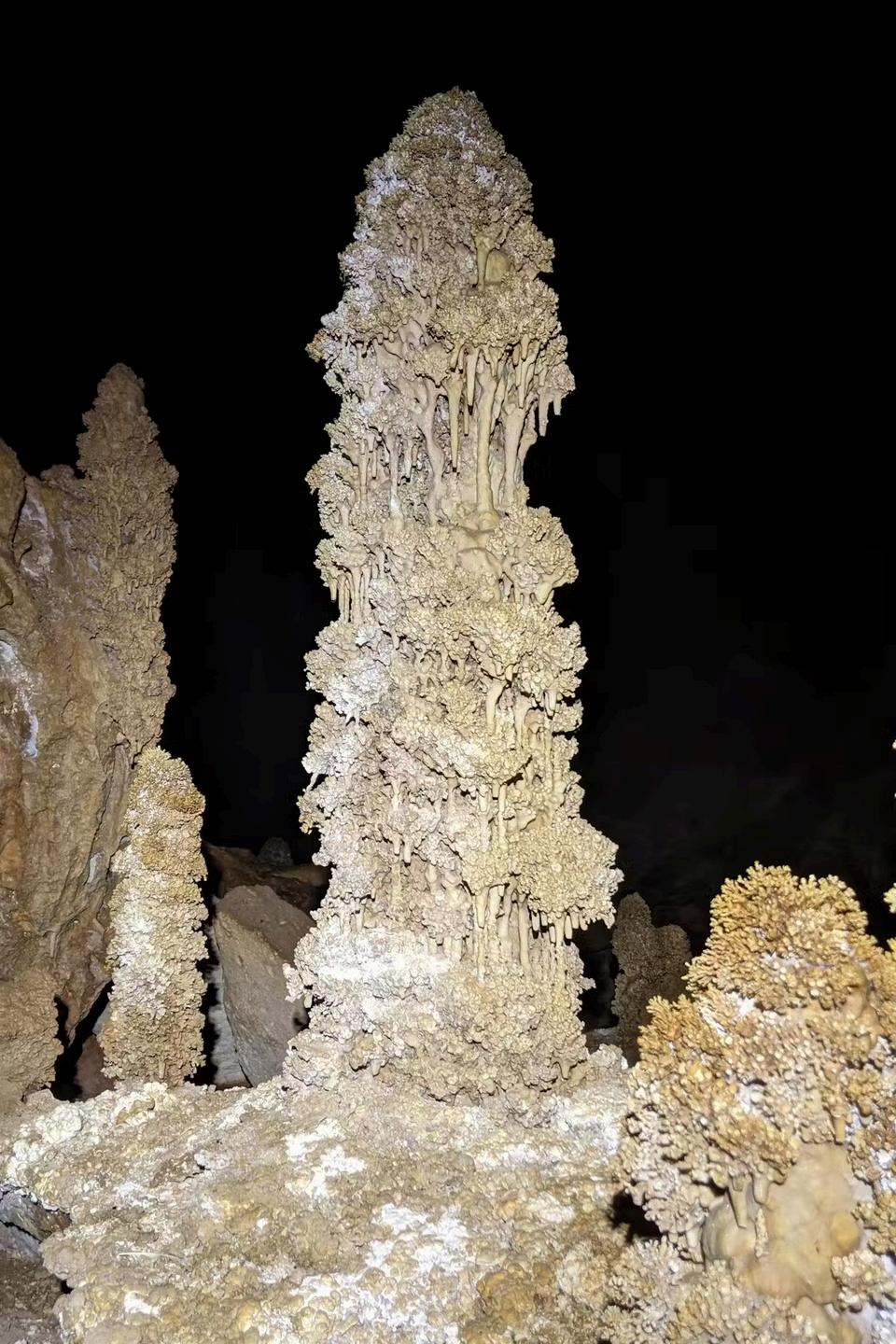
One of the many stunning stalagmites that decorate the network of caves beneath the Nullarbor Plain
PHOTO:STEVEMILNER
News and views
The Australian Research Council recently announced funding outcomes, including $22.5 million in research to support 50 new early career research projects.
A huge congratulations go to these Earth Science projects: from The Australian National University aims to use molten alkali salts to reprocess mine waste and transform rare earths to a readily exploitable form This project expects to create a scalable industrial separation process to be implemented in existing mines, with the separated ore used as input for extraction
A benefit of this project is the unlocking of a previously inaccessible Australian rare earth resource, comparable in size to the largest deposits globally
from the University of South Australia will collaboratively develop an integrated multidisciplinary geophysical modelling algorithm to improve rock imaging under cover in Australia The study will improve gravity modelling codes by integrating other datasets (physics, statistical analyses, deep learning and geological modelling)
Expected outcomes include the capability to model ‘unknown unknowns’, such as the number of rock units under cover or their relationships together This will reduce mineral exploration risks and help identify prospects for targeted exploration, all while answering scientific challenges
The GSA also acknowledges the hard work of so many members who apply for ARC Grants and Fellowships and are unfortunately not selected.
from the University of Adelaide will develop innovative techniques to document and protect the biodiversity of the Nullarbor caves, an iconic Australian ecosystem We will develop standardised methods to monitor biodiversity, detect centres of endemism, and identify threats, plus guidelines to inform conservation Novel techniques will be employed to survey areas inaccessible to humans, thus solving a major challenge to environmental monitoring of caves globally
Outcomes of this project are greater capacity to monitor cave biodiversity, prevent extinctions, and protect areas of high biodiversity importance, which we will translate to industry and the community via museum displays, talks, and conservation and sustainable development guidelines
Ben Mather
from the University of Sydney will look for potential new regions of sediment-hosted copper deposits by developing novel continent-scale groundwater models, which track the transport of mobile copper through the subsurface These deposits require less energy to mine and produce less waste than conventional copper deposits
Expected outcomes of this project include new models of copper transport within the Stuart Shelf, SA This will improve the understanding of groundwater flow rates and timescales required for copper formation, significantly impacting resource potential to power the energy transition
The ARC has also announced new Australian Laureate Fellows to support ground-breaking research excellence across a broad range of areas Congratulations to GSA Distinguished Fellow and GSA SA Division Chair Alan Collins for his project Plate Tectonics, Critical Metals and our Habitable Earth.
Alan aims to build a dynamic map of Earth’s surface spanning nearly a third of our planet’s existence, from 1,800 to 500 million years ago The project will reconstruct ancient volcanic regions, deep ocean trenches and ancient mountain belts to generate a digital testable model for how Earth uniquely developed a breathable atmosphere, a benign climate and surface chemistry that nurtured complex life and placed critical metal resources Alan’s work will transform fundamental knowledge of the function and evolution of our planet Key findings will be communicated directly to the broader public and schools through promoted animations, videos and a targeted program of general science outreach
Findings will be shared with industry and government stakeholders through industry networks, trade, popular publications, and freely available software Project outcomes are expected to benefit industry by mapping times and places in Australia to target critical metal discovery and exploration
Congratulations also to 2024 Australian Laureate Fellows Andrew Baker, Nathaniel Bindoff and Jeffrey Walker You can read all about the ARC Fellows and projects on the ARC website
Michael Anenburg
Jeremie Giraud
Jessica Marsh
Alan Collins
TAG apologises
Issue 210 congratulated eight 2024 Australia Day Honours List Awardees who are members of the Earth Science community Regrettably, we missed Leon Costermans from the list This was unintentional Leon received an Order of Australia Medal for service to conservation and environment Leon trained as a geologist and is a longstanding member of the GSA Victorian Division with experience as a science educator (Earth Science/ botany), author/publisher and co-author of the recently published Stories beneath our feet: exploring the geology and landscapes of Victoria and surrounds Congratulations to Leon Costermans, and thank you for your service to conservation, environment, earth sciences and the GSA community.
In Issue 209, a cryptic crossword competition was held with 15 respondents In Issue 210, we announced Darren Holden as the winner, but omitted answers to the crossword Crossword answers will be added to the TAG page online
Exploring for the
Future:
This National Science Week, Geoscience Australia will host the final Exploring for the Future online showcase from 13–16 August 2024, marking the conclusion of this remarkable eight-year program
Since 2016, the Exploring for the Future program has been gathering, analysing and providing precompetitive geoscience data, information and tools to help inform decision-making by government, community and industry on the sustainable development of Australia's mineral, energy and groundwater resources
The showcase is a free public event, where geoscience experts will share final results from the program and highlight its impacts, benefits and achievements.
ARGA video competition
Leah Lynham (ARGA Secretary): The Australian Regolith Geoscientists Alliance (ARGA) has had an excellent start to 2024 Our webinar series continues to thrive, with speakers scheduled through the remainder of the year. If you’d like to join us in watching a webinar, follow us on our social media platforms (we’re on Facebook, LinkedIn, Instagram and BlueSky) or check your inboxes for communications from the GSA
Publication
Building on the success of our webinars, ARGA has launched a YouTube channel @australianregolithgeosciences. This will feature our webinar series and other regolith-related content
final showcase
There will also be open Q&As and a panel discussion with leaders across government, industry and academia
With so much new science to share, this showcase will be bigger than ever It will give insights into transformational national datasets, improved mineral, energy, and groundwater resources assessments, new decision support tools, geoscience to support our transition to net zero by 2050, and much more
The event is open to anyone interested in geoscience. Keep an eye on the 2024 Showcase (ga.gov.au/showcase) page for more information
To celebrate the successful launch of our YouTube channel, we are hosting a video competition open to all.
We invite submissions on any aspect of regolith and critical zone science whether fieldwork, lab work, desktop research, or just for fun Videos can range from a short 90 seconds to 5–10 minutes in length After the competition closes, we will announce the winner The winner will receive a copy of Regolith Science by Keith Scott and Colin Pain
Submit your entries via a Dropbox (or similar) link to secretary@regolith org au
All of us at ARGA are keen to be wowed by your submissions!
Celebrating 70 years of GSA membership
The GSA extends a huge congratulations to Gordon Baker, one of the Society’s founding members, who has marked 70 years of membership with us
Keep an eye out for the October issue of TAG, where we will publish a full article celebrating this incredible milestone
In the meantime, we’d like to thank Gordon for his continued support and invaluable contributions to GSA
Christopher Wallin Prize: Excellence in Geology awarded
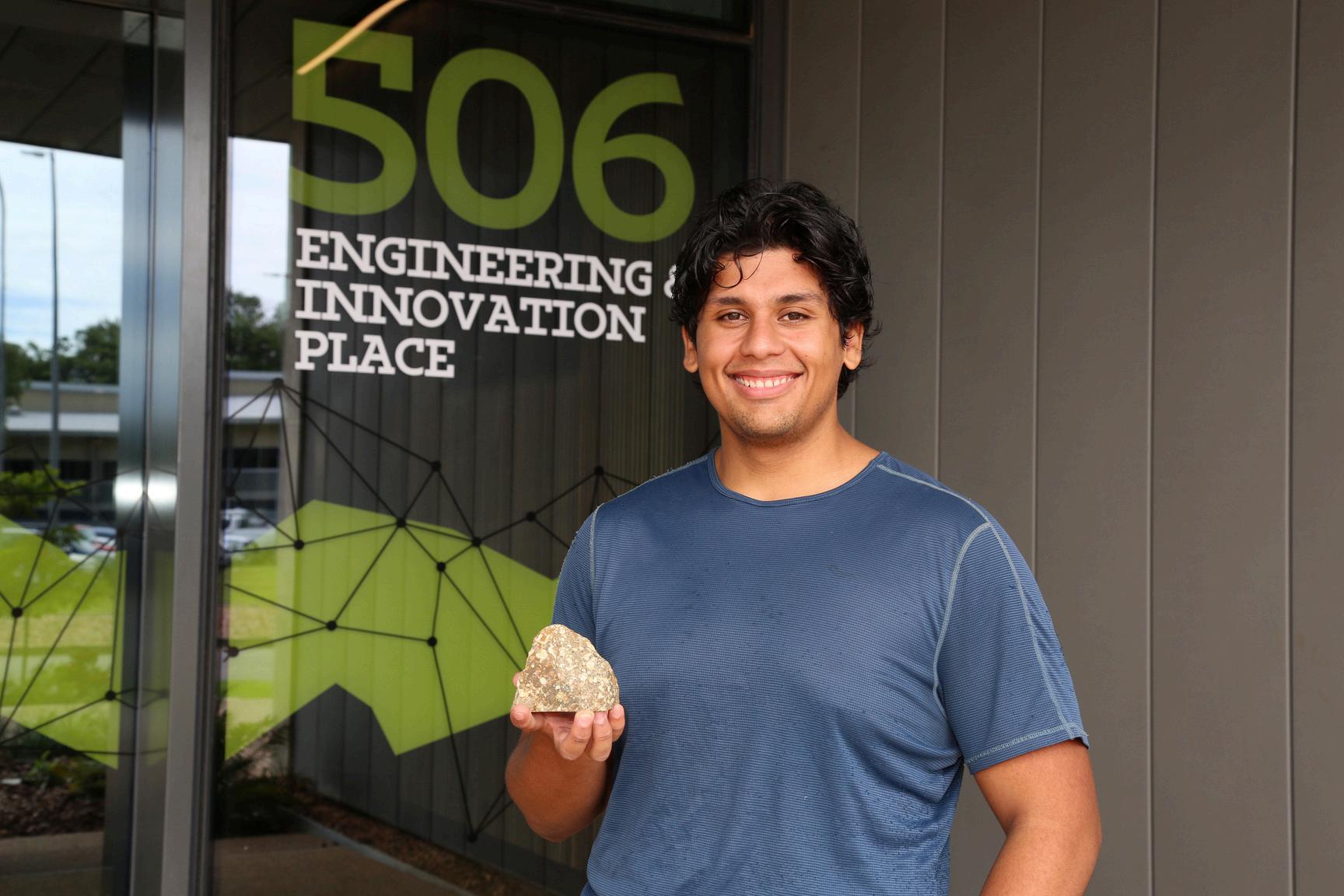
The QCoal Foundation has awarded its inaugural Christopher Wallin Prize for Excellence in Geology to student Jose Pena Araya, who is studying a Bachelor of Geology at James Cook University and achieved the highest GPA in the cohort.
This prize, which was established to recognise students striving for excellence in geology, will award Jose $2,000 and the opportunity for paid work placement with QCoal Group
Jose says he first experienced the discipline of geology during an internship in Mount Isa
“I really enjoyed my internship and working in mining geology, but I am particularly excited about exploration geology the methodology, mapping and understanding the surrounding country,” he said
Named after Christopher Wallin the QCoal Group founder and Managing Director, and former Principal Coal Geologist of Queensland the prize was launched as part of the QCoal Group’s impending 35th birthday celebrations Christopher Wallin explained the importance of supporting the best and brightest geology students to underpin the future of Queensland’s resource sector
“Continuous exploration, pursuing all opportunities and an ongoing focus on geology have been key factors in QCoal’s success to date and will also underpin the company ’ s future aspirations,” Christopher said.
PHOTO: BRAD PILLANS
National Rock Garden on the move
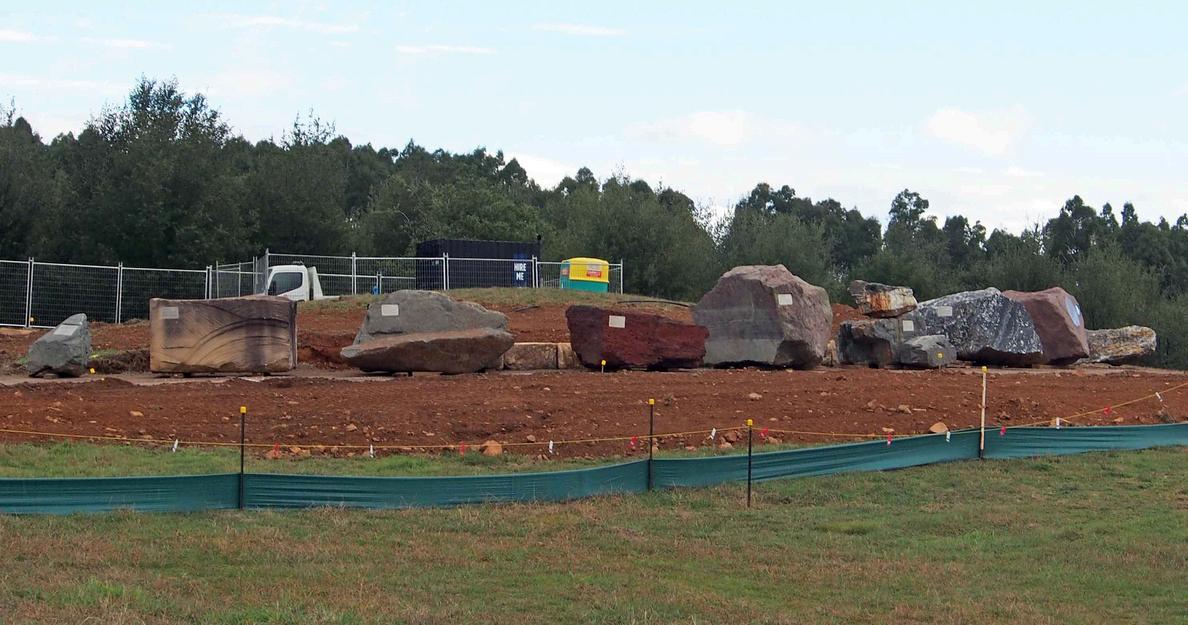
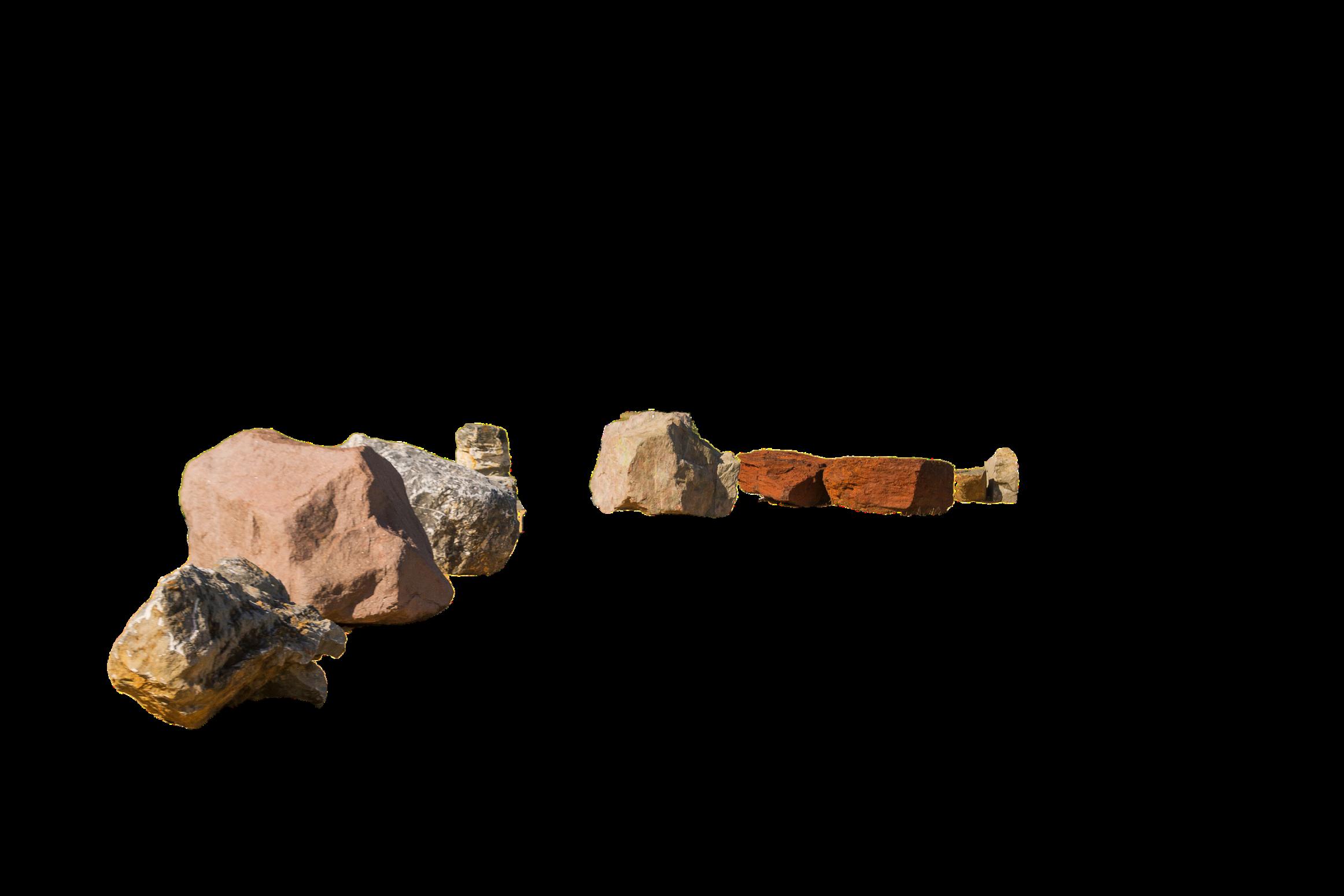
The National Rock Garden has begun its big move to the Arboretum in Canberra, where it will be far more accessible to tourists and locals.
The first rocks transported the new site are the eight Federation Rocks, each of which is significant to the state or territory it comes from This includes Hawkesbury Sandstone from NSW and dolerite from Tasmania Other rocks are also being moved to the Arboretum, including several that have not yet been on display in Canberra, including Mawson Charnockite from Antarctica and Bulahdelah alunite from NSW
and views
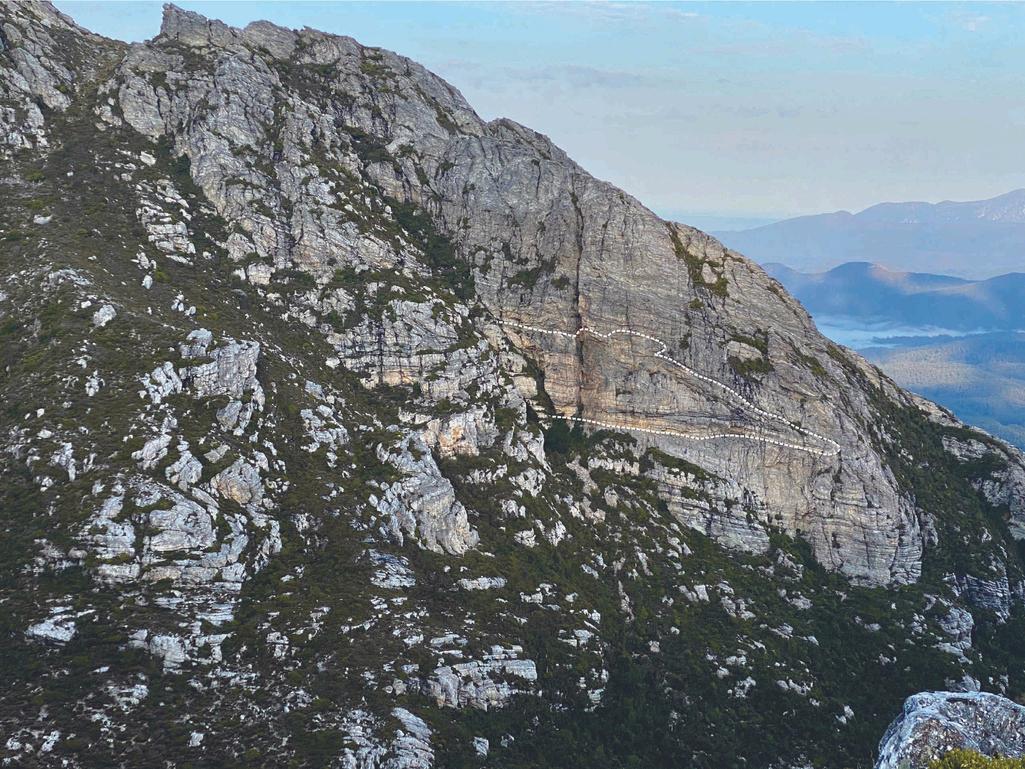
An oblique view of the west-closing Frenchman's Cap recumbent fold (dashed white line) The photograph is taken from the Lions Head ridge looking to the southwest at the cirque wall above Lake Gwendolen, the northwestern cirque coming off Frenchmans Cap Note the fold hinge line is subparallel to the cirque wall, giving a very oblique intersection
SPOTLIGHT ON AJES
Volume 70 of the Australian Journal of Earth Sciences (AJES) covered a wide variety of topics, ranging from the superbly exposed Miocene submarine volcanics in coastal northwestern Tasmania, to layered igneous intrusions in the Proterozoic Musgrave Province in central Australia and an alternative to the fault-valve model.
SOUTHWESTERN TASMANIA
In December 2023, a paper on the Cambrian Tyennan Orogeny in western Tasmania was published online and has now come out in print in 2024 (v 71(2)) Authors David Gray, Michael Vicary and Andrew McNeill undertook a major synthesis of the structurally complicated metamorphic rocks of western Tasmania deformed during island arc–passive margin continental collision
This resulted in the Proterozoic quartzite–schist rocks being subducted to depths as great as 70 km followed by exhumation The rocks are intensely ductilely deformed with multiple deformation, sheath (tongue-shaped) folds, trains of isoclinal folds and intense foliation development. The paper outlines a succession of nappe-like structures that make up the core of the region
Structures are well displayed in some of the iconic peaks in the Southwestern Tasmania Wilderness area, including Frenchmans Cap, Federation Peak, and the many peaks of the Western Arthur Range
A NOTE TO REVIEWERS: As always, we are indebted to reviewers who freely give their time to review papers submitted to AJES Their time is much appreciated, and their efforts add greatly to the final presentation of published papers
In recent months we have had difficulties in finding willing reviewers for some papers; hopefully this was seasonal associated with the holidays over Christmas. While the role of reviewers is essential to the outputs of a scientific journal, it is important reviewers do not make the job too onerous for themselves
Some reviewers seem to feel obliged to give a summary of the papers they are reviewing. While this may be useful, it is not a requirement of a review We are much more interested in the reviewer’s scientific assessment of a paper
CHRIS
FERGUSSON & ANITA ANDREW
Honorary Editors-in-Chief AJES
PHOTO: DAVID GRAY
RECAP: SCIENCE MEETS PARLIAMENT
In March I had the immense privilege to attend Science Meets Parliament 2024 as a delegate of the Australian Geoscience Council, funded by their generous Early Career Grant As a resident of outback WA and primary caregiver to a disabled child, my attendance would not have been possible without their generosity Not only did I get to converse with (and share a sparkling wine with) some rockstar fellow geoscientists, but also a whole host of STEM and policy professionals from across every discipline in Australia. We connected over how we can engage science and policy together to create a better future for all
After some major drama with Perth airport, a bushfire and a very delayed flight, I unfortunately missed the morning of the first day of Science Meets Parliament, but what I did get to see was so incredibly useful for me The keynote discussion (titled ‘The Science Life of Brians’) was a highlight, as was the discussion panel with various science communicators The wisdom they imparted on how we can get our science out there and recognised was very welcome
The gala dinner was fabulous, and a real chance for me to dress up Like many geologists, I’m typically in jeans or high-vis, so being fancy was a welcome change I was seated at a
table with astrophysicists, scientists reducing cow farts, and a glaciologist We had a fantastic time networking and discussing our science
The highlight for me, however, was meeting with Senator Penny AllmanPayne, Greens Senator for Queensland We discussed the image problem geology and mining has, why we need to fix that and why bringing better STEM education to the outback is the solution Our outback kids are on the frontline of mining, resources and agriculture They grow up connected in ways their metro counterparts never can be Yet, their public STEM education falls far below what their metro peers experience We have unique opportunities to uplift these kids, and I think that’s essential for our transition away from fossil fuels and towards greening our technology and energy In addition to meeting with the Senator, I found the session on elevating First Nations knowledge most engaging It gave me so much to take back to my corner of the outback I will be using many of the connections I gained to continue advocating for our outback kids, including using Two Way Science, a CSIRO initiative for integrating Traditional Knowledge of desert communities with westernised science The themes for Two Way Science match my own regolith and landscape evolution research well and I’m excited for the growing connections I can make
But it wasn’t all panels, networking and key notes I was also lucky enough to attend an amazing geology tour of Parliament House with Geoscience Australia’s Chief Scientist Steve Hill and Verity Normington It was fascinating, and if you ’ re in the Capital when it’s on offer I highly recommend attending
I was shocked by the number of imported stones used to build Parliament House, but equally awestruck by the level of detail that went into the planning with regards to the stone used There was deliberate control of the construction relating to light and movement within the building and outside, down to colour matching each stone quarried for the mosaic in the forecourt The Paradise White marble was even recorded in space before quarrying This meant when it was used in the building of Parliament House it could be fixed back in order, so features and inclusions within the blocks ran on smoothly I have to say, though, as a fossil lover the highlight for me was the Granitello Nero, a Carboniferous limestone filled with fossils and the Pareidolia that is Shawn the Prawn I know that truly he’s a coral, but that didn’t stop me from getting a fridge magnet
On a more serious note, I did also have many discussions with other parents an overwhelming number were mothers These discussions centred on how inaccessible science and research is to us. Many had left academia or industry due to this, had to give up positions due to the instability, had been forced to relocate their entire family for a temporary contract or were made to feel like they had made the wrong choices by having a family Coupled with the cost and accessibility of childcare, it really does show that science is still not fully accessible for mothers I’ll certainly continue my advocacy work in this space.
I’m so pleased I got to attend Science Meets Parliament, and I know I’ll be incorporating the lessons learned and discussions I had for the rest of my career Science Meets Parliament is an annual event, and if you are interested in shaping policy surrounding science in Australia, I encourage you to attend
PhD candidate
James Cook University
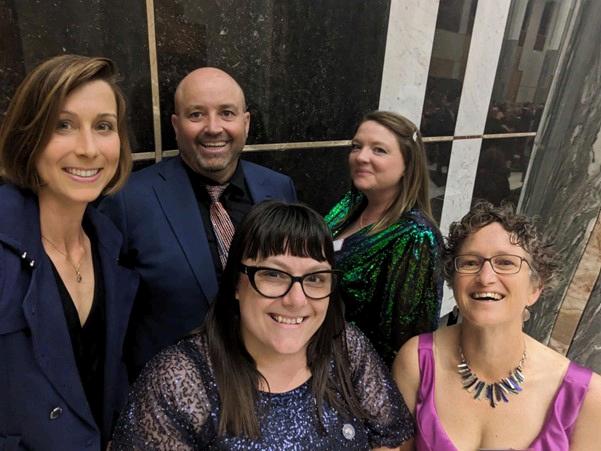
Geologists at Parliament House: Back L-R Tiah Penny, Steve Hill and Leah Lynham. Front L-R Amber Jarett and Caroline Tiddy
LEAH LYNHAM
PHOTO: AMBER JARRETT
NT DIVISION
CONGRATULATES
DOROTHY
CLOSE
Congratulations to GSA NT member Dorothy Close, who has been awarded the NT News Woman of the Year for Public Service!
Dot joined the NT Geological Survey (NTGS) almost 30 years ago as a junior geologist and has worked right across the Territory, both in the field exploring the diverse NT geology and later into leadership roles Dot is now Director of Regional Geoscience Her passion for both the Territory and geoscience shines through in all that she does.
In her role as director Regional Geoscience at NTGS, Dot leads a team of highly trained experts to collect and analyse geoscientific data, ensuring access to accurate information to aid the discovery and development of the Territory’s mineral and energy resources
Amber Jarrett
Earth Science at STEMbiosis
On 4 May, Charles Darwin University held a professional learning day to equip educators with the skills and tools to increase STEM education in their lesson plans and inspire the next generation of science enthusiasts
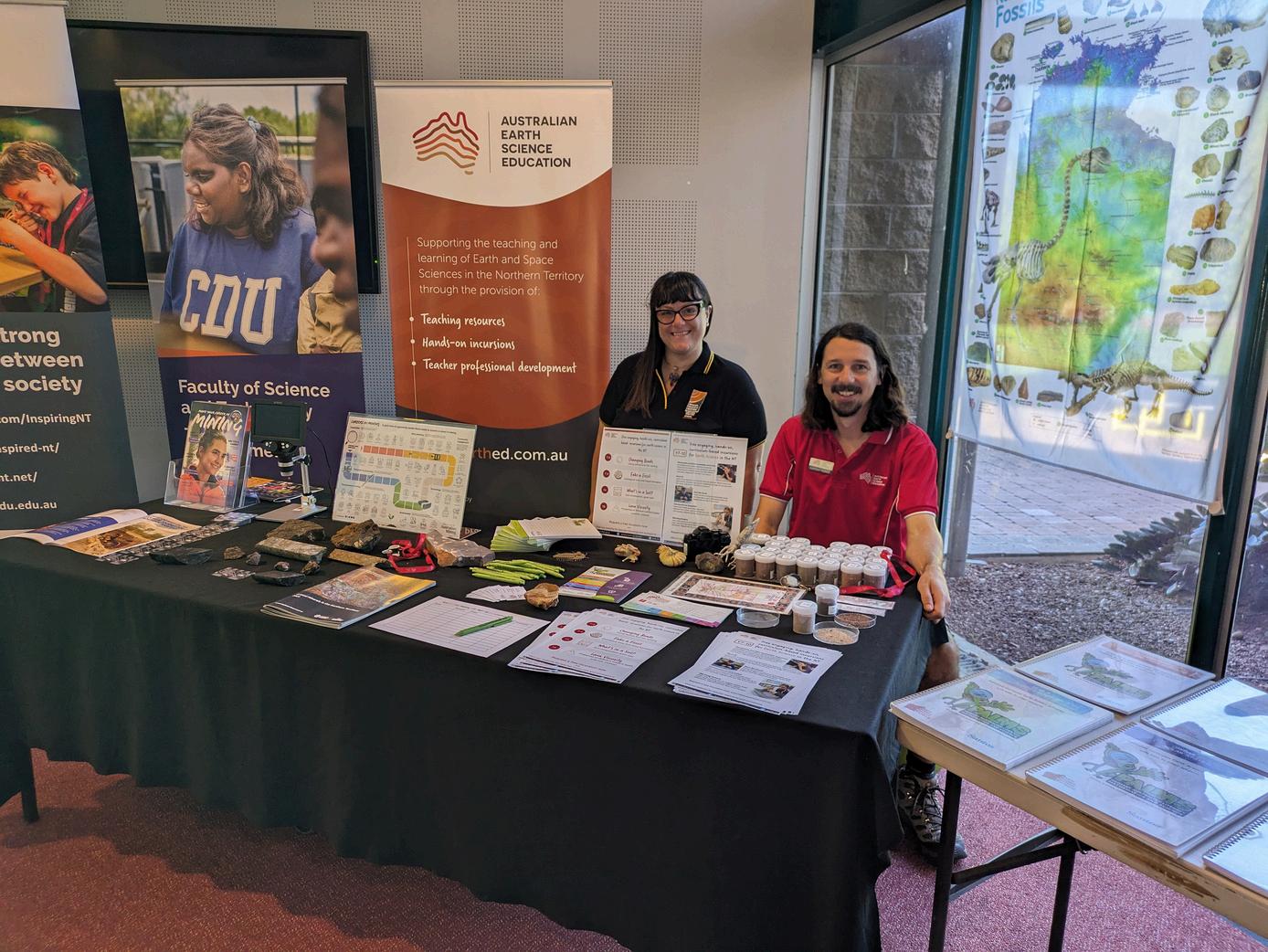
GSA NT members Lachlan Hallet and Amber Jarrett, wearing multiple hats as representatives of AusEarthEd and Minerals Council of Australia NT, represented Earth Science with a stall Lachlan ran a well-attended workshop for teachers
May the 4th be with you! Fitting with the theme, NT minerals such as aluminium, titanium, gold and copper are essential for space travel and satellites
Earth Science Student Symposium back in South Australia
GESSS-SA is back again this year, to be held at the University of Adelaide on 27 November Join us for talks and posters by SA students detailing some of their exciting, leading-edge research All members of the community are welcome to come along Stay tuned for more details
Amber Jarrett and Lachlan Hallet at the STEMbiosis professional development learning day
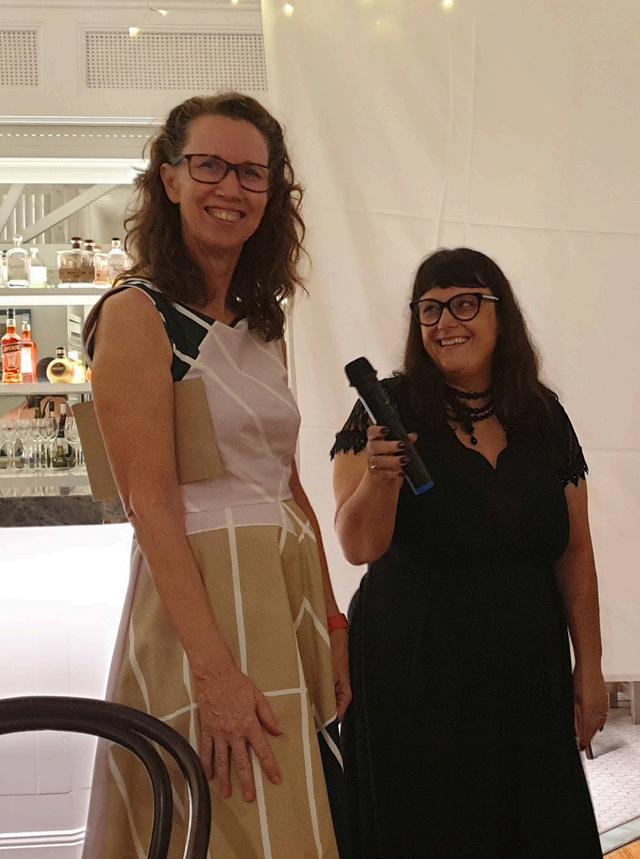
Dorothy Close and
News and views
GEOTOURISM AUSTRALIA ESTABLISHED
The Australian Geoscience Council (AGC) has this year rebranded the National Geotourism Strategy and the team that supports it as a new AGC entity: Geotourism Australia.
Three years ago, the AGC launched its National Geotourism Strategy as a unique means of promoting geoscience to the broader Australian community, as well as offering significant benefits in regional and rural development AGC President Sandra Occhipinti says the AGC is particularly interested in, and supportive of, geotourism opportunities that help provide economic activity for traditional landowners and regional communities alike within identified cultural landscapes.
The concept of geotourism includes the inter-relationship between natural and cultural heritage. By focusing on the geology and geomorphology (physical geography) as well as the ecology and cultural history of these geological characteristics, the AGC believes geotourism adds considerable value to nature-based tourism inclusive of cultural tourism led by Traditional Owners
Based on this proposition, over the past three years the National Geotourism Strategy was developed through the dedicated volunteer efforts of more than 50 experienced professionals under seven working groups, each of which has focused on advancing a key strategic theme
Jon Hronsky, chair of the Steering Committee (and GSA Fellow), will continue to direct the work of Geotourism
Australia He says that some of the more significant achievements since the initiation of this strategy include the systematic compilation and documentation of geotrails and geosites, and the formal acceptance by government geoscience agencies for the development of GeoRegions
This includes three GeoRegion projects: Ku-ring-gai and Glen Innes Highlands in NSW, and Murchison in WA. The development of a prototype Australian Geotourism Discovery Portal, which is intended to be a national-scale, freely available portal into extensive geotourism resources such as geosite and geotrail locations, has proved a significant step forward
Geotourism Australia is now ready to move beyond strategy development and on to our next phase: sustainable promotion and development of major geotourism projects However, several challenges need to be addressed, such as:
Positioning far more effectively in the minds of the geoscience profession that the outcomes of the National Geotourism Strategy are leading to geotourism being accepted as a growing area of geoscience expertise, both in Australia and overseas
Determining a placement for geotourism development beyond the life of a strategy such as the NGS
To address these challenges, Geotourism Australia will use the current structure and relationships with the AGC. In short, all working group members can consider themselves an integral part of the newly branded entity
Further information: www geotourismaustralia org au
ANGUS M ROBINSON Coordinator, Geotourism
Australia, Australian Geoscience Council Inc London Bridge, Murchison
SA DIVISION MINI-SYMPOSIUM:
EARTHSPHERES
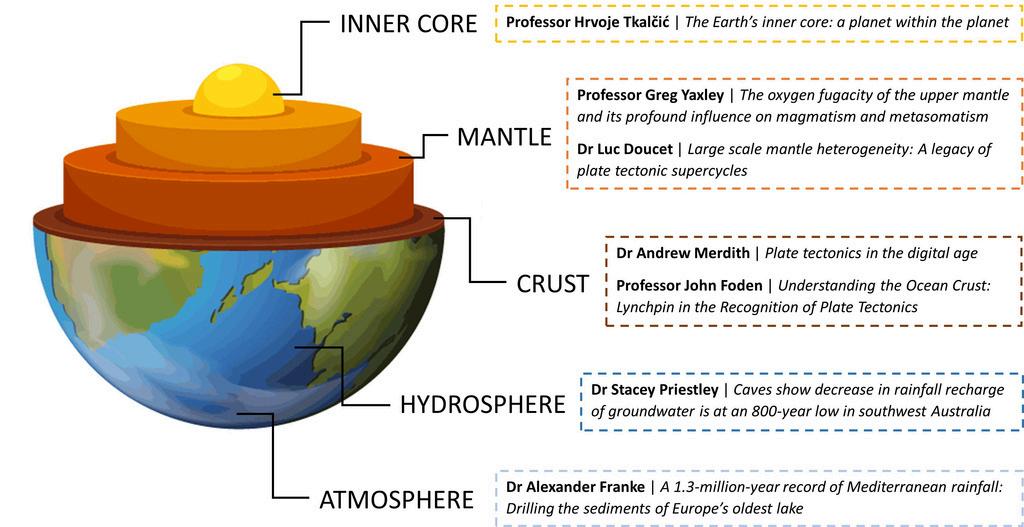
Have you ever wondered how the different ‘spheres’ of the planet are connected? How much do we know about Earth’s different shells, and what research questions are geoscientists today trying to answer?
So much research in Earth spheres is happening across Australia that sometimes it’s hard to keep up with it all! The SA Division decided it was time to bring together experts from across Australia to present at their May meeting in a symposium at the University of Adelaide, over three jam-packed hours on Friday 17 May
IMAGE: GEORGINA VIRGO
The SA Division had an excellent attendance for the ‘Spheres MiniSymposium’, with 70 attendees in person and online Researchers presented a talk about each of Earth’s spheres from the inner core to the atmosphere.
Beginning with the INNER CORE, ‘ a planet within the planet’ Hrvoje Tkalčić (Head of Geophysics, ANU) explained how large earthquakes can help researchers understand the structure and evolution of the Earth’s inner core by comparing digital waveforms recorded at different locations many hours after an earthquake’s onset
The MANTLE was covered by two talks First, Greg Yaxley (Professor of Experimental Petrology, ANU) presented on ‘The oxygen fugacity of the upper mantle and its profound influence on magmatism and metasomatism’ (metasomatism is the chemical alteration of rock by hydrothermal and other fluids) This was about taking measurements of the ferric content of mantle garnets in kimberlite-borne peridotite xenoliths, and how we use this data to determine oxygen fugacity variations as a function of depth, location and metasomatic style These can be then used for experimental simulations of metasomatism and diamond formation in the deep cratonic lithospheric mantle This was followed by Luc Doucet (Senior Lecturer, Curtin University) who demonstrated that tectonic supercycles over the past 1 billion years involving two supercontinents and two superoceans could be explained by the chemical dichotomy between mid-ocean ridges, plume-related ocean islands and oceanic plateaus, in his talk, ‘Large scale mantle heterogeneity: A legacy of plate tectonic supercycles’
The CRUST was presented in two parts. First, by Andrew Merdith (Postdoctoral Research Fellow, The University of Adelaide), in a talk titled ‘Plate tectonics in the digital age ’ . The focus was to lay the starting framework for an integrated model connecting
lithosphere with atmosphere and hydrosphere on geological timescales, dissecting the many models of plate tectonics used to explain major events in Earth’s history that have lacked any additional verification of mantle, lithospheric, tectonic, or surface processes Second, by John Foden (Emeritus Professor, The University of Adelaide) in his talk, ‘Understanding the Ocean Crust: Lynchpin in the Recognition of Plate Tectonics’ He highlighted the vital role of the generation of ocean crust in driving continents apart and the many pioneers in geology, geophysics, ocean surveying and geography who contributed to defining plate tectonics as we understand it today
The HYDROSPHERE was presented by Stacey Priestley (Research Scientist for the Drought Resilience Mission, CSIRO) on the topic ‘Caves show decrease in rainfall recharge of groundwater is at an 800-year low in southwest Australia’ This talk deep dived into the impacts of climate change on groundwater recharge This was a world-first study
Finally, the ATMOSPHERE was presented by Alexander Francke (Postdoctoral Research Fellow, The University of Adelaide) in a great final talk, ‘A 1 3-million-year record of Mediterranean rainfall: Drilling the sediments of Europe’s oldest lake’ The talk linked a 1 3-million-year-old continuous, temporally highly resolved climate archive recovered from Lake Ohrid (North Macedonia, Albania) under the umbrella of a deep drilling campaign Using tephrochronologic (a geochronological technique that uses discrete layers of tephra: volcanic ash from a single eruption) and paleomagnetic work, the Lake Ohrid sediments provided unprecedented insights into past rainfall dynamics in the Mediterranean.
The SA Division committee would like to thank all speakers for their time and providing such excellent talks on a Friday night
Also, thanks to the committee volunteers who organised the evening and refreshments, plus a great dinner afterwards
FOOTNOTE: A great piece of feedback by SA Division's Wolfgang Preiss:
"There was actually a time before Plate Tectonics at Adelaide University – even a time before John Foden arrived here! In those heady days, the lecturing staff in the Geology Department were generally unimpressed by the idea of continents drifting aimlessly across the globe There was a brief mention of this whacky idea in undergraduate lectures, but not much was made of it. We did have some students that were more sympathetic Of my contemporaries, Alan Goode was one who looked into it and was inclined to think Wegener was onto something. In 1965, Alan Moore arrived from South Africa to do a PhD on the Giles Complex With the legacy of Alex du Toit, Alan Moore had no problem with continental drift either. But as far as our rather conservative lecturers were concerned, the continents have always been stuck where they are now. No wonder that Allan White, an Adelaide graduate, didn’t go along with it either
All that changed at the start of 1966 when the university appointed a young English tectonic geologist, Rupert William Roye Rutland, as Professor in the Department, replacing the retired Professor Alderman Roye swept in with the new ideas, especially the nascent science of Plate Tectonics which was still being developed at the time. He gave us Hons students some brilliant lectures on the subject all the things John discussed in his talk on Friday. He soon became fascinated by our arcuate fold belts, which he later named the Nackara and Fleurieu Arcs In the ensuing years, as the evidence mounted, most of my lecturers did come on board with the Theory of Plate Tectonics and started applying it to their own research.”
PRESERVING AN ANCIENT RELIC
The fragility of modern microbialite sites
In a world where eco-warriors are encouraged to visit natural wonders and leave nothing but footprints, how do we start the narrative that footprints in microbial matground can last more than a human lifetime?
Microbialites, including stromatolites and thrombolites, have a fossil record spanning at least 3.48 billion years. Yet, this longevity belies their fragility These living windows into Earth's past biosphere are some of the most vulnerable ecosystems today Well-documented living microbialites are located at only a handful of sites globally
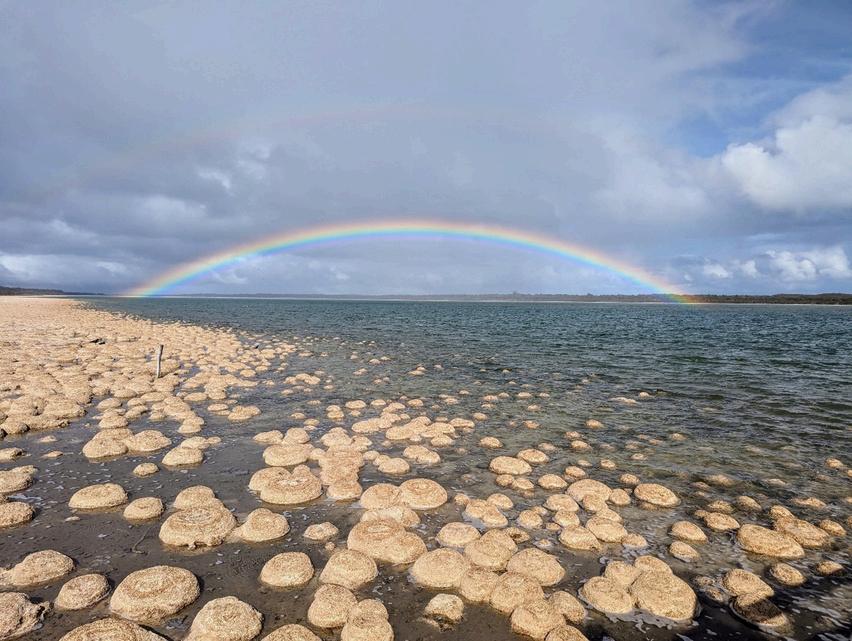
The stromatolites in the UNESCO World Heritage site of Hamelin Pool, Shark Bay, and the thrombolites at Lake Clifton in Yalgorup National Park, recognised as a RAMSAR wetland of international significance, are among the most exceptional examples
Microbialites are organosedimentary deposits formed by a benthic microbial community They are found in many subaqueous settings including lakes, pools, ponds, caves and oceanic reefs, throughout the entire fossil record Notably, the earliest widely accepted textural evidence for life on Earth are stromatolites preserved within the 3 48-billion-yearold Dresser and 3.43-billion-year-old Strelley Pool Formations of the Pilbara region, Western Australia
Additionally, many microbialite sites can hold considerable cultural importance In many Aboriginal cultures, modern microbialites are sacred, viewed as living entities and referred to as living or ancestral rocks Many sites in WA are connected to local creation stories and associated with the origins of life. The site of Lake Clifton is also known as Woggaal Noorook to the local Bindjareb Noongar people, holding special significance in their creation stories as a site where Woggaal Thaadjit (the creator of waterways) laid her eggs in the form of thrombolites
Despite their scholarly and cultural significance, modern microbialite sites remain in peril, and public awareness of their importance and vulnerability is lacking
Lake Clifton has seen a rapid increase in salinity since regular monitoring began in the 1980s due to decreased groundwater recharge and precipitation.
Thrombolites at Lake Clifton
It is unknown how the microbialites and matgrounds will adapt to these rapid changes. Some evidence suggests accretion at the site has already ceased
Compounding this threat is the increased visitation in recent years due to the explosion in popularity of astrophotography and the installation of a Giants of Mandurah sculpture A recent incident at Lake Clifton, where media promoted the boardwalk site as a vantage spot for viewing the aurora, resulted in widespread damage to the matground associated with the thrombolites Visitors ignored signage, walked among the microbial matground, set up tripods around the thrombolites, and even placed camp chairs directly atop them This occurred despite the site being a RAMSAR wetland and Threatened Ecological Community, which affords legal protection
Similarly, concerns have arisen for Shark Bay, where cyclone Seroja in 2021 damaged a boardwalk used for viewing the stromatolites Reports indicate many tourists have bypassed temporary fencing and walked among the stromatolites, trampling vulnerable matground to get a closer look
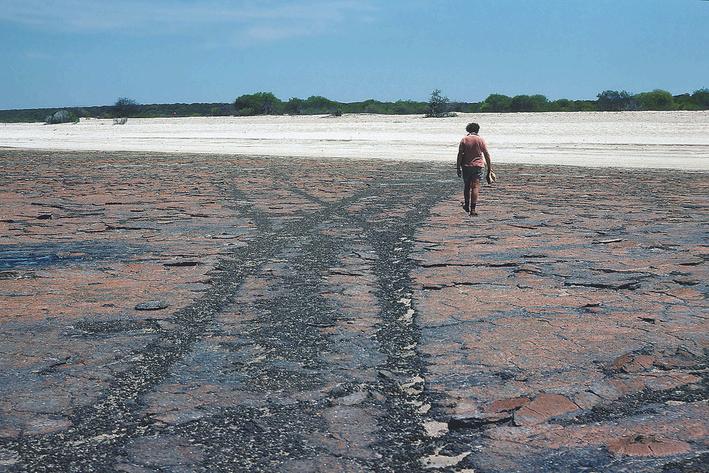
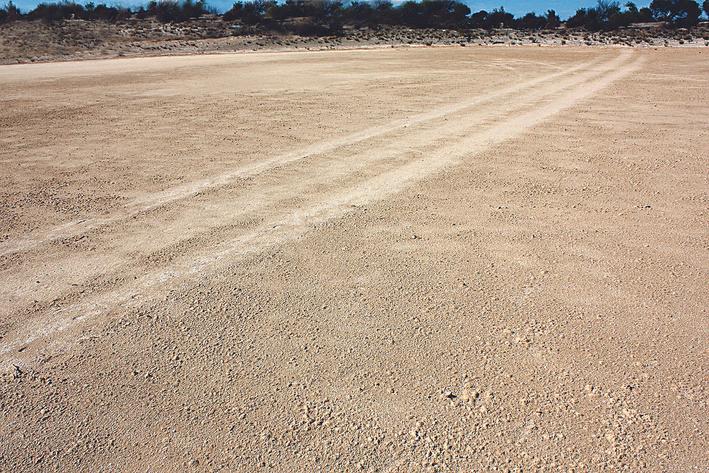
Still-visible damage to microbial matground caused by a cameldrawn dray about 90 years ago Nilemah Embayment, Shark Bay (after Playford et al , 2013)
90-year-old tracks made by a camel-drawn dray with imprints of camel hooves still visible between (after Playford et al., 2013)
Damage to microbialites and microbial matgrounds is very slow to repair, possibly due to their slow growth rates of as little as 0.5 millimetres per year. Damage to microbial matgrounds and stromatolites in Hamelin Pool, Shark Bay, occurred until the mid1930s when camel-drawn drays were used to load bales of wool into dinghies for transport to ships
The resulting damage to both the stromatolites and microbial matground has remained largely unrepaired after all this time and is still visible 80 years later (Playford et al , 2013)
Paleontologist
Geological Survey of Western Australia
Reference: Playford PE, Cockbain AE, Berry PF, Roberts AP, Haines PW & Brooke BP 2013, The geology of Shark Bay, Western Australia. Geological Survey of Western Australia Bulletin 146, 297
HEIDI ALLEN
GEOHERITAGE: A SPOTLIGHT ON SHARK BAY
During the 1990s, a working group of the International Union of Geological Sciences (IUGS) started developing a database of sites of international geoheritage significance. Since 2021, I have been involved in the newly developed IUGS International Commission on Geoheritage IGCP Project 731 under the International Geoscience and Geoparks Program. This new IUGS Global Geosites project provided an opportunity to accomplish a worldwide inventory of geological heritage of scientific international relevance
A IUGS Geological Heritage Site has been defined as a key place with geological elements and/or processes of scientific international relevance, used as a reference, and/or with a substantial contribution to the development of geological sciences through history
Geoheritage specialists, geological surveys, research institutions, and geoparks personnel from 56 countries nominated 181 sites to be considered
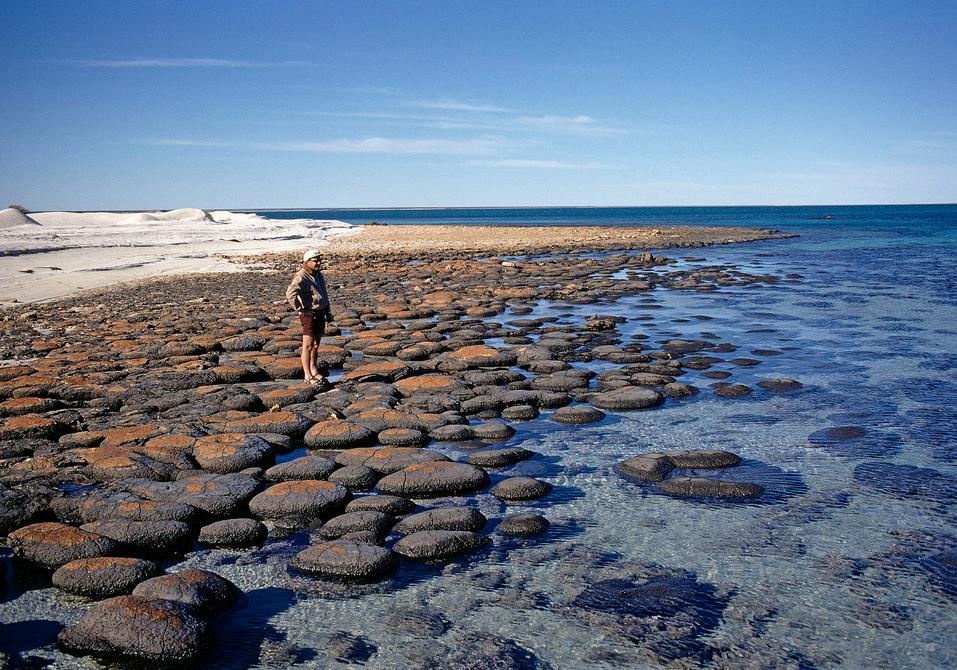
Figure 2 Stromatolite heads forming a coalesced reef-like body in southern Hamelin Pool (location shown in Figure 1).
for the publication of The First 100 IUGS Geological Heritage Sites These were assessed by 33 geoheritage experts
The sites include some of the Earth’s oldest rocks from South Africa, traces of primitive life from Australia and China, some of the best dinosaur fossil remains from Canada, the first evidence of early hominin development from Tanzania, marine rocks from Mount Everest, and iconic sites like the Grand Canyon (USA), Perito Moreno glacier (Argentina), Santorini Caldera (Greece) and Uluru in Australia
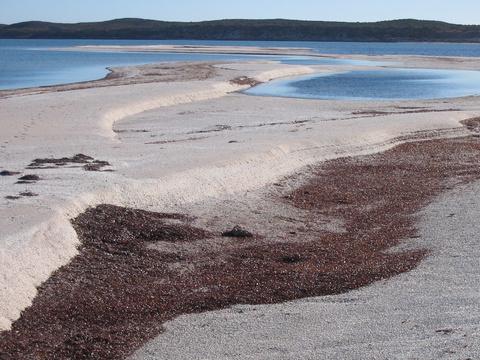
Figure 3 Southerly wind-generated shore-parallel sand bars and spits with seagrass wrack in swales, eastern shore Hopeless Reach
PHOTOS: V SEMENIUK
Following the publication of The First 100 IUGS Geological Heritage Sites (available online) in 2022, a second 100 sites was called for Again, Australia fared well out of the 181 sites submitted, with acceptance of the Broken Hill lead–zinc–silver deposit, and Shark Bay, for its internationally significant natural history features
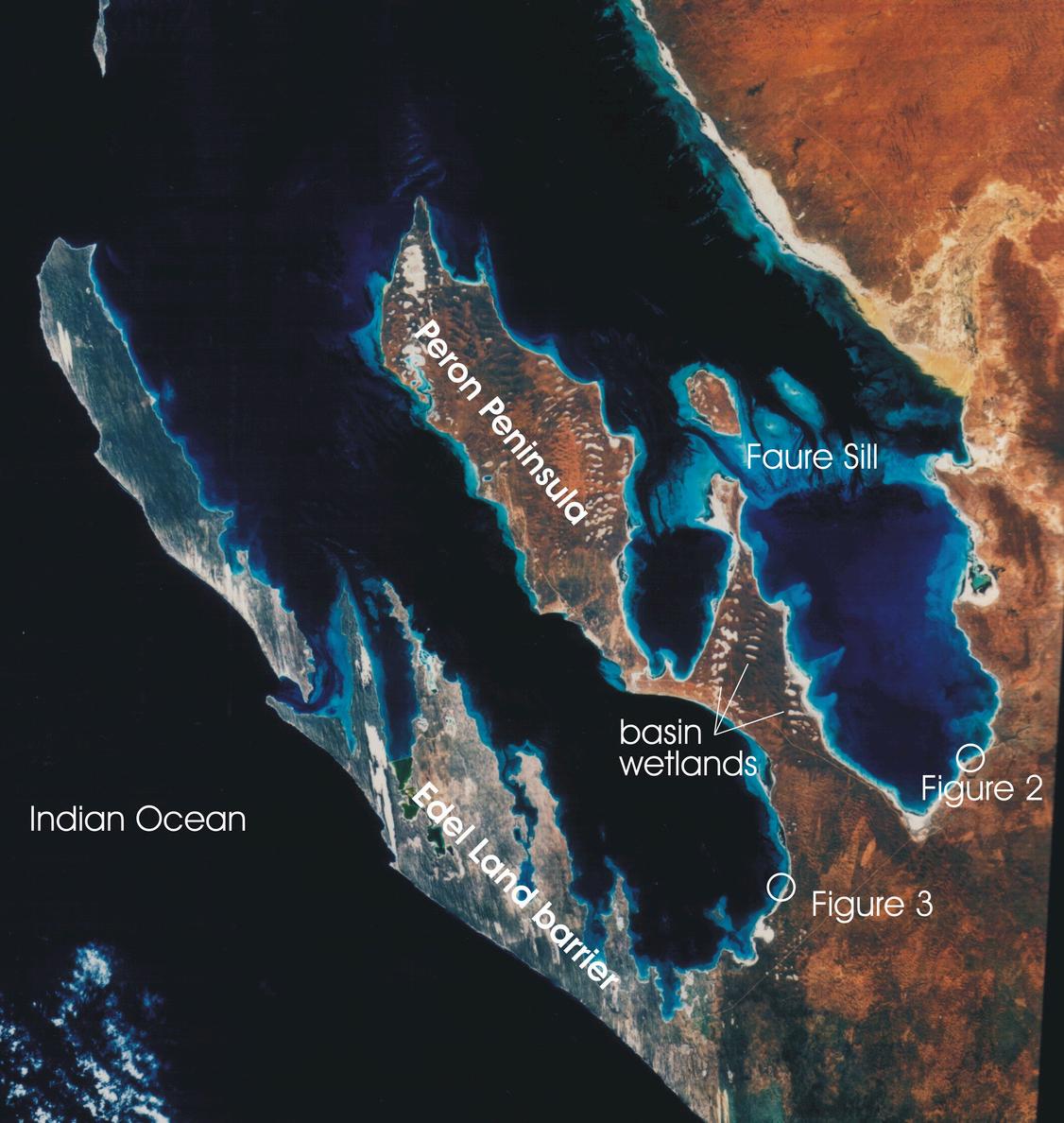
Shark Bay comprises large, semi-enclosed, elongate coastline-hugging twin embayments on the low-lying coast of the Indian Ocean on the most western point of Australia Set in a climate with high evaporation, low rainfall and strong southerly winds, Shark Bay is complex geomorphologically, sedimentologically, hydrochemically and diagenetically
The embayments are framed by two Pleistocene linear barriers a western limestone barrier (the Edel Land barrier), and an eastern red aeolian quartz sand peninsula (Peron Peninsula), a former barrier studded with gypsum-filled wetland basins (birridas)
Generally, these embayments have geomorphic units of a deep-water basin, shoreline-fringing subtidal shallow-water platforms and/or seagrass banks, beaches, tidal flats and beach ridges
Hydrochemically, Shark Bay borders ocean water Through evaporation, low circulation and crossembayment barriers, its salinity progressively grades southwards to metahaline and hypersaline Where it is metahaline, the embayments are fringed by shore-hugging seagrass banks, beaches and shore-parallel spits It becomes hypersaline in the far southeast, where there are smaller embayments, ooid shoals and beach ridges, coquina sheets and beach ridges, tidal algal mats and stromatolites, tidal/supratidal gypsum crusts, subtidal to supratidal cemented carbonate crusts and pavements, and breccia sheets
Shark Bay is one of only a few World Heritage areas listed for all four outstanding natural values The region is a globally important classroom for aspects of megascale coastal geomorphology, arid zone marine sedimentation, the interplay of sedimentation and coastal geomorphology with Quaternary tectonics, and smaller features such as stratigraphy, stromatolites and crystal beds.
The Shark Bay stromatolites are unique, providing valuable analogues of the early history of life on Earth. Geodiversity underpins the unique vegetation associations, and the region supports abundant marine flora and fauna
MARGARET BROCX
National Convenor, Standing Committee for Geological Heritage
Figure 1 Satellite photograph of Shark Bay showing the twin elongate northwest-oriented embayments, deep water basins (dark blue), shorehugging shallow water sandy platforms (light blue), invaginated eastern shoreline and cliffed straight western shore of the western peninsula, wetland-rich nature of the eastern peninsula, and the submarine sill bisecting the eastern embayment.
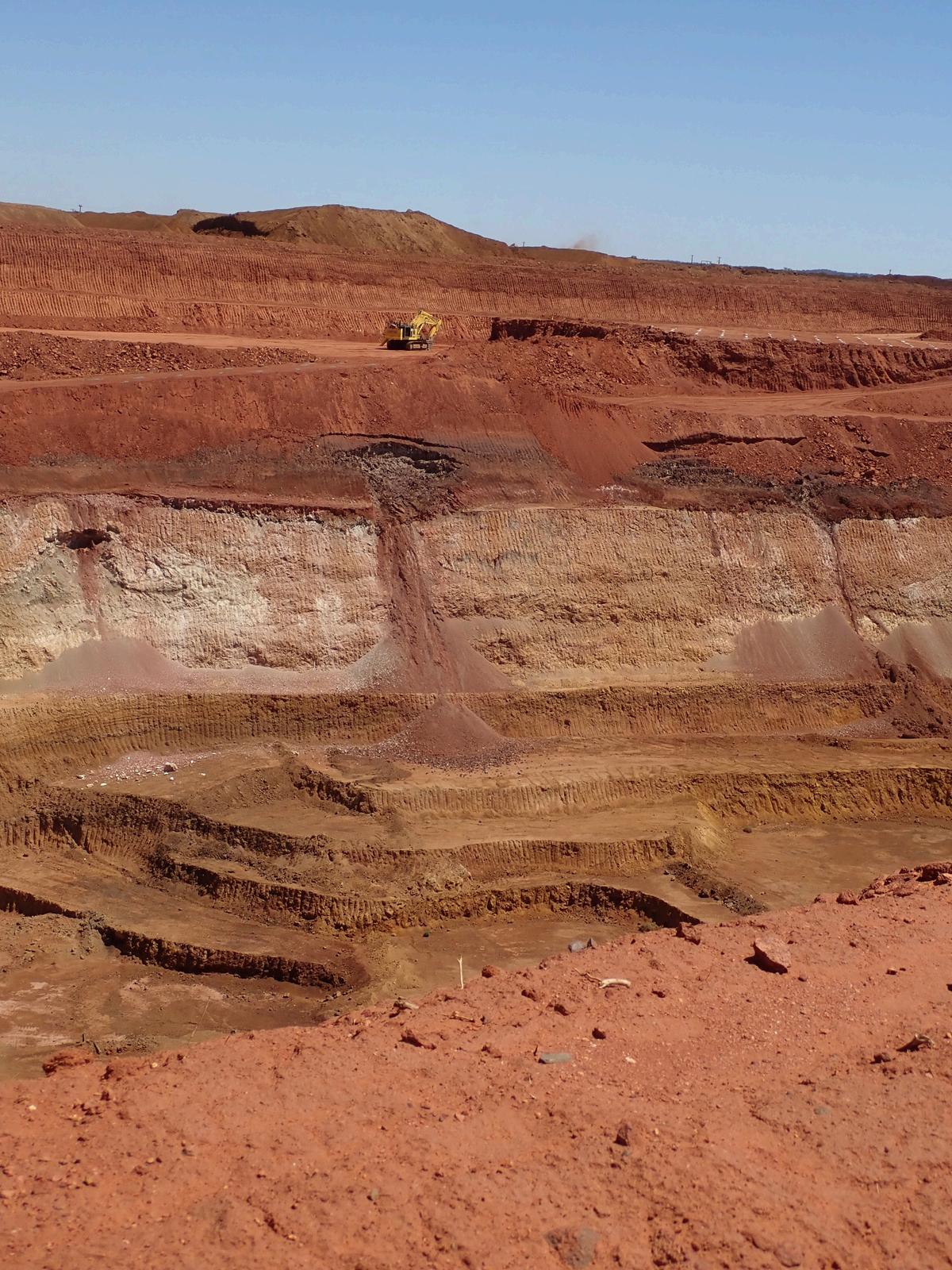
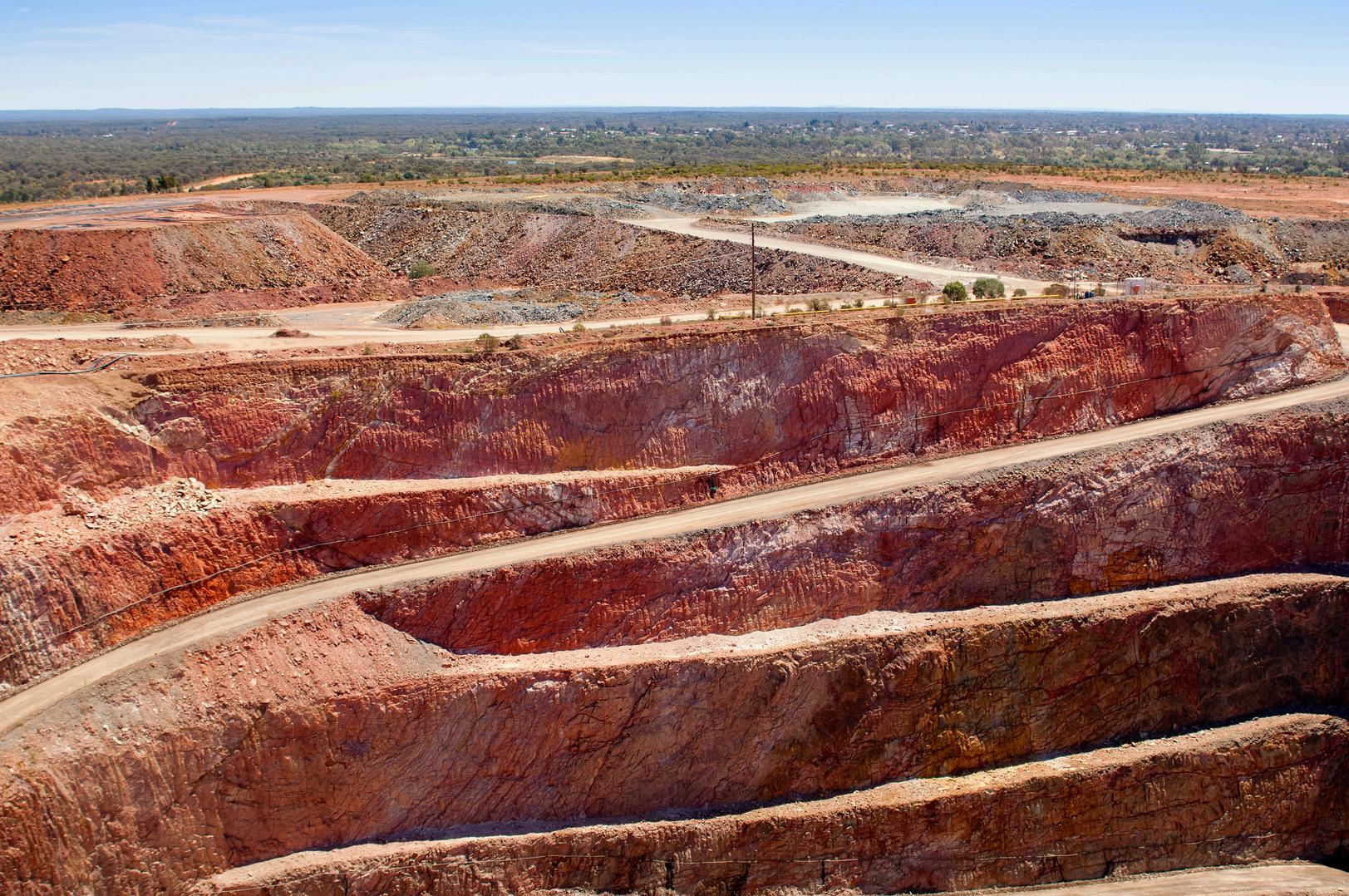
The Mount Weld open pit mine displays a weathered profile where the REE enrichment formed overlying the fresh carbonatite Excellent example of a ‘piercing point’ (where geochemical gradients converge) between the basement and the cover
THE RARE EARTH ELEMENT UPRISING IN AUSTRALIA: CONTEXT, CHALLENGES AND POTENTIAL
Rare earth elements (REE) form the bedrock of a staggering US$3 trillion market annually. This represents approximately 3% of global GDP, and nearly double the GDP of Australia. We could be a key player, but we must bolster our efforts.
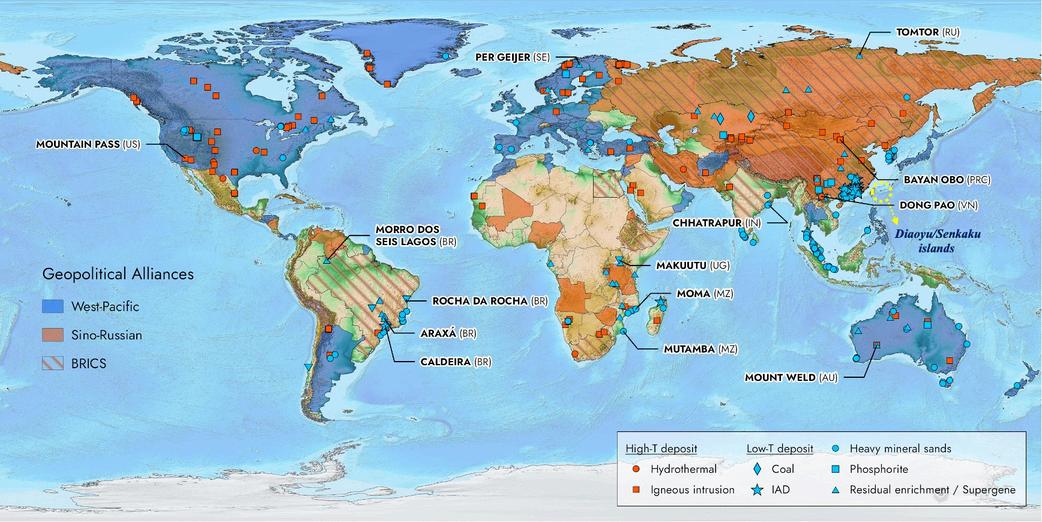
Location of the major REE deposits and their geopolitical context, as well as the Diaoyu/Senkaku islands
GLOBAL CONTEXT
Back in the 1980s, the USA dominated the REE market with around 90% of global production and processing This switched as Ronald Reagan and Margaret Thatcher engineered the globalisation agenda for freely moving capital worldwide The REE capability and production shifted to the People’s Republic of China due to a more competitive market framework Today, China provides a roaring 60% REE supply, 85% refined supply, and 95% recycling REE supply This REE market shift was promoted by the Chinese government’s farsighted strategy, as stated in the famous sentence from Deng Xiaoping in 1987: “While the Middle East has oil, China has rare earths”
In September 2010, a REE ‘black swan ’ event hit the market, when a diplomatic incident occurred in the Diaoyu/Senkaku disputed islands between Japan and China This resulted in a REE supply crisis between the two countries, sending a shockwave through the rest of the world as it flagged the vulnerability of the high-technology market to an interruption of the global REE supply chain
The Diaoyu/Senkaku incident marked the early stages of deglobalisation, transitioning from a unipolar (dominated by a single state) to a multipolar global system over the past decade This shift has altered market demand, trade policies, resource ownership, and political influence Previously, strategic commodities and locations were crucial, but now technological advancements are the key competitive asset High-tech capabilities are essential for the green energy transition, global remilitarisation, trade restructuring, sustainability, and digital transformation
In this context, today’s REE strategic significance cannot be overstated As EU President Ursula von der Leyen stated in her 2022 State of the European Union address: “Lithium and rare earths will soon be more important than oil and gas Our demand for rare earths alone will increase fivefold by 2030 ” The Department of Defence (DOD) of the US, in their 2021 Budget, stated that: “Relying on foreign sources for these critical materials [REE] poses a risk to the DOD’s readiness to deter and defeat adversaries ” This further highlights the strategic importance of REE
REEs are crucial to produce high-tech devices, and neodymium, dysprosium, praseodymium and terbium are the most sought after The demand for dysprosium and neodymium is expected to increase by more than 2 600% and 700% over the next 25 years
The global economic reserves of REE in 2023 have been estimated at 110 megatonnes The largest reserves of REEs are in China (40%), Vietnam (20%), Brazil (20%), Russia (10%), India (6%) and Australia (4%) Total global production in 2023 was 350 kilotonnes, dominated by China (60%), the US (12%), Australia (5%) and other countries accounting for 22% (with productions less than 1%)
REE DEPOSITS AND AUSTRALIA’S REE CONTEXT
REEs are abundant, with concentrations around 150 parts per million in the upper continental crust (excluding scandium and yttrium), which is shockingly high compared with gold, silver or any other precious metal’s average continental values The real challenge is not finding REE, but identifying economically viable deposits to process, located in geopolitically favourable areas, which can be extracted with minimal environmental impact and positive social engagement
REE deposits can be classified into two categories: those formed due to magmatic and hydrothermal events at high temperatures and those formed due to weathering and sedimentary processes at low temperatures REE deposits associated with carbonatites (under high temperature) are currently considered the most promising host rocks, as they provide around 80% of the global REE supply from three deposits: Bayan Obo in China, Mountain Pass in the US, and Mount Weld in Western Australia However, global REE reserves are split between carbonatites/alkaline complexes and heavy mineral sands (HMS: a low-temperature deposit type), with around 40% each
Although ion-adsorption deposits are showing promising signs of becoming a significant global source of REE, they are not as established as major REE supply sources yet However, deposits such as Makuutu in Uganda, Caldeira in Minas Gerais and the Rocha da Rocha project in Bahia in Brazil have an extraordinary potential
This is because, although they have low REE concentrations, their REE content is easy and low cost to process, with less aggressive reagents and very limited environmental impact when compared with other deposit types It is essential to understand that the REE family exhibits complex behaviour, distinguishing it from other commodities such as nickel and gold With more than 250 mineral species containing REE, viewing it as a standard single commodity would be an oversight This broad REE mineralogy brings processing into a new land of challenges Some REE are redox sensitive (such as cerium and europium), and others fractionate depending on pH and Eh (redox potential) conditions.
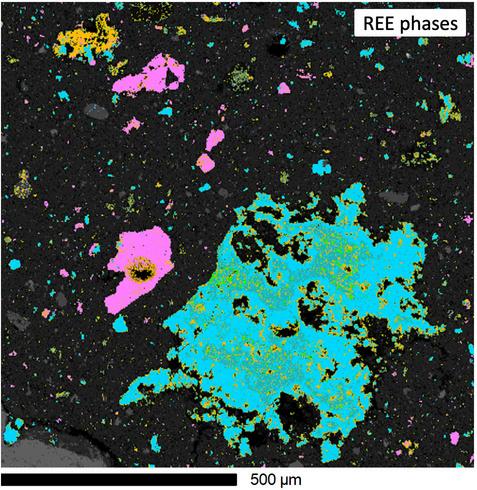
The complexity of the REE family also includes the challenges associated with their behaviour during fractionation and the development of technology to process REE-rich minerals This complexity is showcased at Mount Weld in WA, where REE mineral hosts exhibit significant variability These hosts include monazite, cerianite, synchysite/bastnaesite, REE-crandallite (florencite) and churchite, and are distributed throughout iron (Fe) and manganese (Mn) nodules and oxides,
Fe–Mn matrix and apatite Adding to the wide mineral diversity and variability is grain size differences All these factors directly impact the cost and environmental footprint of REE processing
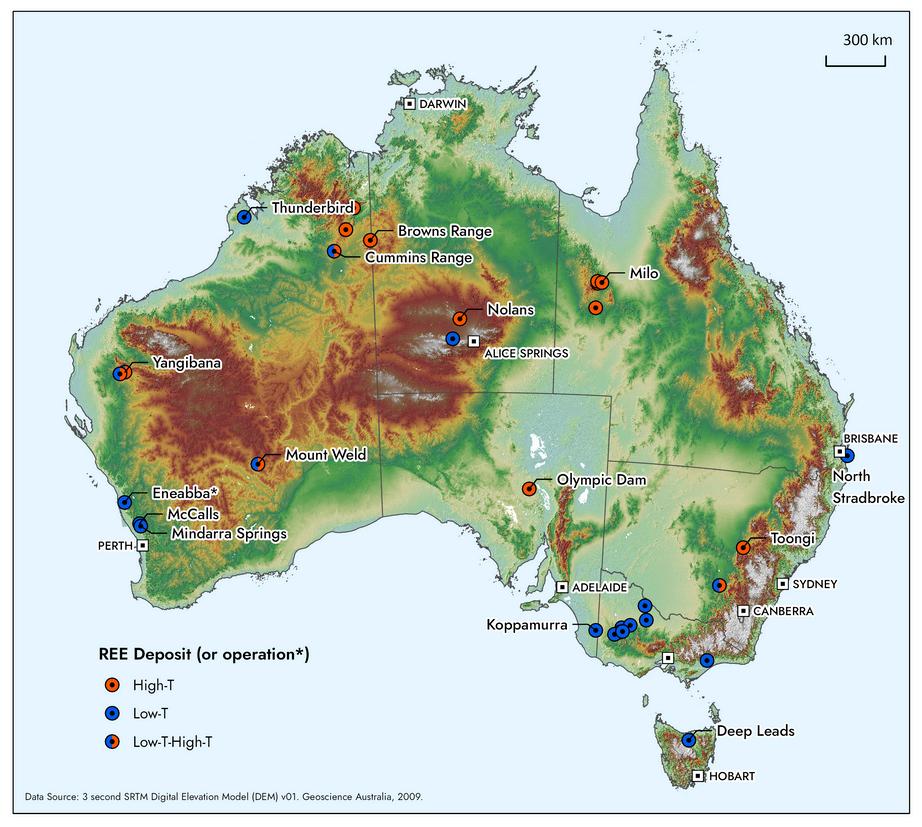
The REE in SA’s Olympic Dam mine present another example of complexity Despite this major copper, uranium and gold deposit containing around 2 000 megatonnes (at 0 5% total rare earth oxide), it requires a substantial investment in processing facilities, which has hitherto prevented REE extraction despite its significant content This means REE exploration should have processing targeting criteria embedded as much as exploration footprint detection criteria. For instance, REE in phosphorites illustrate their potential as valuable byproducts, yet their extraction remains challenging due to mineralogical complexity
Australia has reported fewer than 20 carbonatites This is a strikingly low number when compared with other countries such as Namibia or India, with almost double that amount This low number could be the result of a combination of factors, such as lack of carbonatite exploration interest in the past decade and the difficulty detecting them in low-relief and intensely weathered terrains
However, the Gascoyne and West Arunta carbonatites are excellent recent Australian examples of exploration and discovery successes Almost 200 heavy mineral sands deposits have been reported in Australia, making them the most common REE deposit in the country These deposits are mostly found along the continent's coastline The historical strategy behind the Eneabba HMS operation is a great example of the potential of these deposits as a REE source In India, HMS are the primary source of REE
However, their global potential remains largely untapped One advantage for producers is that HMS also contain economic quantities of critical minerals such rutile and ilmenite and zircon, which spreads the risk and raises profitability
Ionic-clay REE deposits have raised considerable attention in the last three years, though they are still puzzling in terms of how they form, evolve, and are preserved through time Some studies relate the formation of these deposit types to the weathering of the underneath granitic basement and vertical weathering processes. Interestingly, the two main ionic-clay deposits in Australia are not related to either of these processes.
REE ion adsorption clays are not merely anomalous REE concentrations in weathered profiles, but are REE accumulations adsorbed onto clays by weak ionic forces, making them easy to process Contrary to popular belief, the evidence available at this time shows that these deposits are not necessarily heavy REE-enriched, except when formed by weathering of heavy REErich source rocks.
Other REE deposit types, such as unconformity-related/hydrothermal deposits, also demonstrate significant importance despite being rarer than those associated with carbonatites Examples include the Dubbo Project, Browns Range and Nolans Bore, which illustrate three very different REE deposit types, each with significantly different minerals These highlight the complexities of REE-rich mineralogy and processing
Australian major REE deposits and sites
CHALLENGES AND OPPORTUNITIES
Australia is the third-largest global supplier of REE today, and its REE reserves are an order of magnitude less than those of China, Brazil, Russia and Vietnam However, Australia has a vast potential to increase its REE reserves This is because over 80% of the continent's surface displays deeply and intensely weathered cover and a rich sedimentary basin history that has preserved a large amount of large-scale paleocoastlines across the continent
The ‘piercing points’ between the basement and the cover (where geochemical gradients converge), have been proven to be of exceptional importance in discovering REE (and niobium deposits), such as Mt Weld in WA, Araxa in Brazil (supplying around 90% of global niobium), and Morro do Seis Lagos in Brazil (the largest reserve of niobium in the world).
Australian potential for discovery of Tier 1 REE deposits is self-evident. Australia has prospective tectonic settings for finding basement REE deposits, vast areas of immature carbonatite exploration ground, numerous undefined and underexplored inland paleocoastlines, and vast extension of the cover capable of hosting ionic-clay REE deposits, supergene REE deposits associated with carbonatites and alkaline complexes, and REE sedimentary deposits (such as phosphorites) In this context, Australia’s potential to discover new world-class REE deposits is further sustained by our world-renowned expertise in mineral exploration in weathered terrains, second to none.
Identifying mappable proxies and favourable settings for REE deposits is crucial, but we have not yet developed this science Recognising fertile signs and geochemical footprints is challenging, especially with small carbonatite outcrops and limited regional datasets Effective targeting needs a data analytics approach, combining geometrical, spectral, lithological and geophysical data with landscape evolution knowledge tailored to specific REE deposits Addressing these knowledge gaps is essential
STRATEGIC CONSIDERATIONS
Australia began intensifying its efforts for REE production around 2021, responding to the increasing awareness of REE supply chain risks This shift was partly driven by the political spotlight in the US, which recognised its low REE reserves, lack of stockpiles and exponentially increasing internal demand
Australia's strategic move mirrored actions taken by other nations and political entities, such as Japan in 2010 and Europe in 2014, to secure their own REE supplies amid growing global demand
The Australian Critical Minerals Strategy 2023–2030 marked an initial milestone in establishing the necessary framework for REE production. Building upon this, securing stable funding insulated from market fluctuations is essential If the goal is to elevate Australia into a major, reliable REE supplier, capable of meeting global demand and contributing to national and international REE stockpiles, a coordinated effort is imperative This effort must align government resources, academic expertise and industry access to REE discoveries and datasets.
Future success relies on advancing knowledge of REE behaviour, distribution and use across Earth's cycles Research should guide exploration, mining, and processing practices in line with international environmental, social and governance standards to ensure Australia's global competitiveness
Australia's REE industry readiness should be bolstered through meaningful and coordinated domestic research endeavours and strategic collaborations with international partners Failure to increase readiness will relegate Australia to irrelevance in the global market, particularly in comparison with emerging strong players like Brazil, India and Vietnam
The collaboration bridges between Australia, India, Korea, Japan, the US, the UK, Canada and the EU for critical metals paves the way for a REE international framework approach
Crucially, it is paramount to invest in training a new generation of REE researchers and industry professionals within the next three to five years. Without such investment, Australia risks being outpaced by its counterparts, jeopardising its position and significance amid increasing investment and research activity in the sector.
The gauntlet has been thrown down
IGNACIO GONZÁLEZ-ÁLVAREZ
CSIRO, Mineral Resources, Discovery Program; University of Western Australia, Centre for Exploration Targeting; James Cook University
NOTE: The opinions expressed in this article are solely those of the author
The author acknowledges the Noongar people as the Traditional Owners of the land he works on and pays his respect to Elders past and present Tania Ibrahimi is thanked for her outstanding drafting of the figure maps Antony Burnham and Paul Duuring are thanked for their detailed suggestions and comments as reviewers Anthea Batsakis is thanked for the editing
Example of Mount Weld ore mineralogy complexity Blue: monazite; pink, cerianite; orange, REE oxyfluoride; and green, La-rich-P oxyfluoride
AMBER TREASURES IN AUSTRALIA
We are calling on our Earth Science community in Australia to reach out about amber findings across the country.
Amber, or fossilised tree resin, possesses exceptional biopreservative properties, and is an invaluable medium for paleontological studies Unlike traditional terrestrial and marine fossil environments, amber exhibits the unique ability to preserve a diverse range of small organisms (microfauna, flora and even microorganisms) in exquisite, three-dimensional detail
Recordings of amber are well known from all over the world, but are predominantly reported from Northern Hemisphere and northern Gondwana locations, with few reports from southern regions Recent finds in Victorian coal deposits in Anglesea offer a new window into the past of a 42-millionyear-old polar and subpolar terrestrial ecosystem, which helps us determine the biodiversity and persistence of Gondwanan lineages within contemporary Australian rainforests
We have recently developed a method to advance imaging of amber bioinclusions at the new microcomputed tomography beamline at Australia’s Synchrotron in Clayton This has vastly improved taxonomic identifications and will elevate the importance of amber inclusions from Victoria Preliminary results indicate that preserved insects such as Diptera: Chironomidae and Hymenoptera: Chrysidoidea are indeed ancestral to Gondwanan taxa that persist within Australia's remaining tropical and subtropical rainforests
Comparisons of their paleogeographic distribution reveal that some insects were reaching further into high southern paleolatitudes during that time than previously suggested This research delves beyond the fossil record, with critical implications for modern conservation and impacts of climate change and habitat/biodiversity loss Understanding the resilience of Gondwanan lineages informs efforts to protect these irreplaceable elements of Australian biodiversity.
We are therefore calling on Australia’s Earth Science community to reach out to us about amber findings across the country, especially from mines or beaches, to reveal the incredible diversity of life
So, dust off your Indiana Jones hat, keep an eye out for these amber treasures, and help us unlock the secrets of Australia's ancient past!
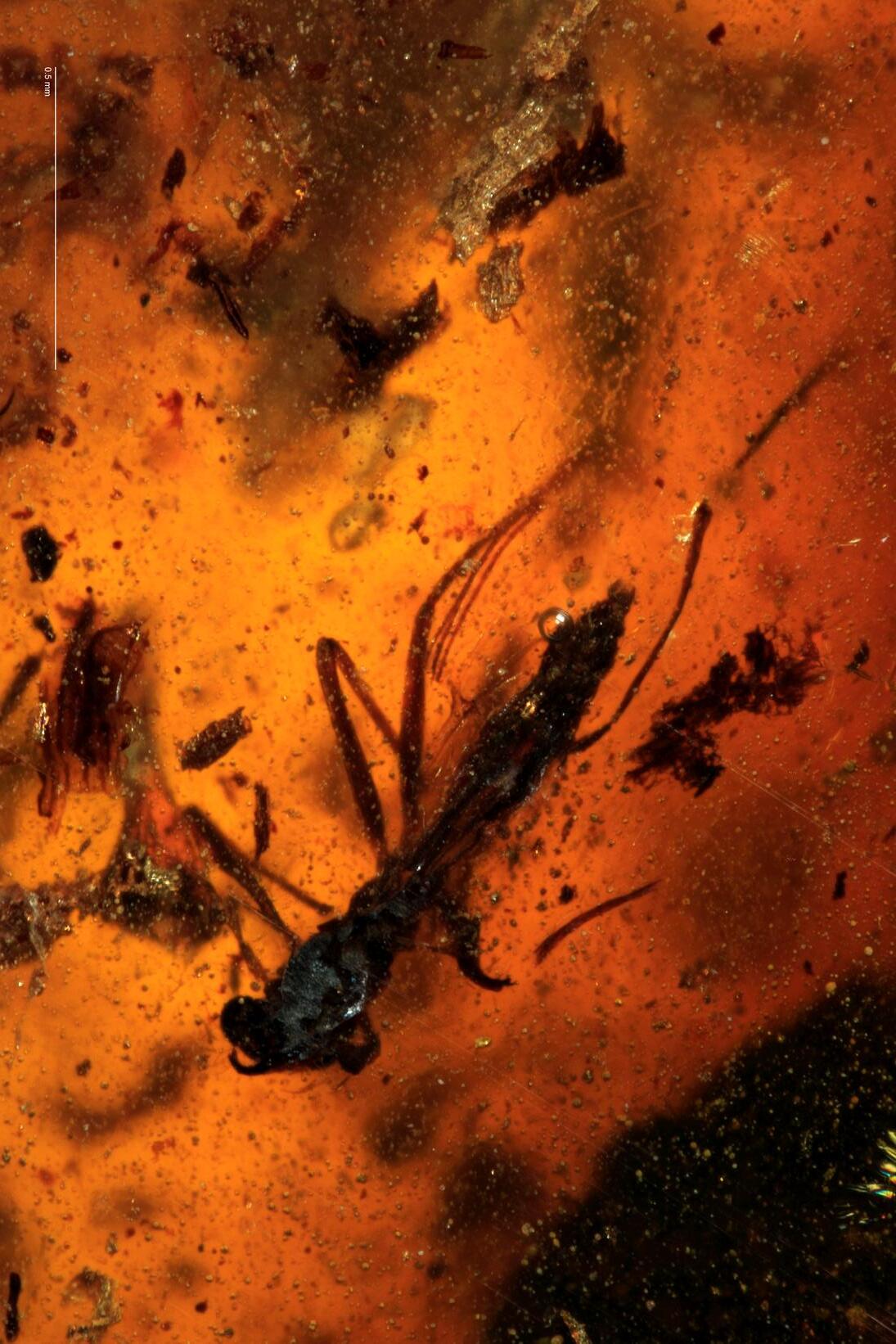
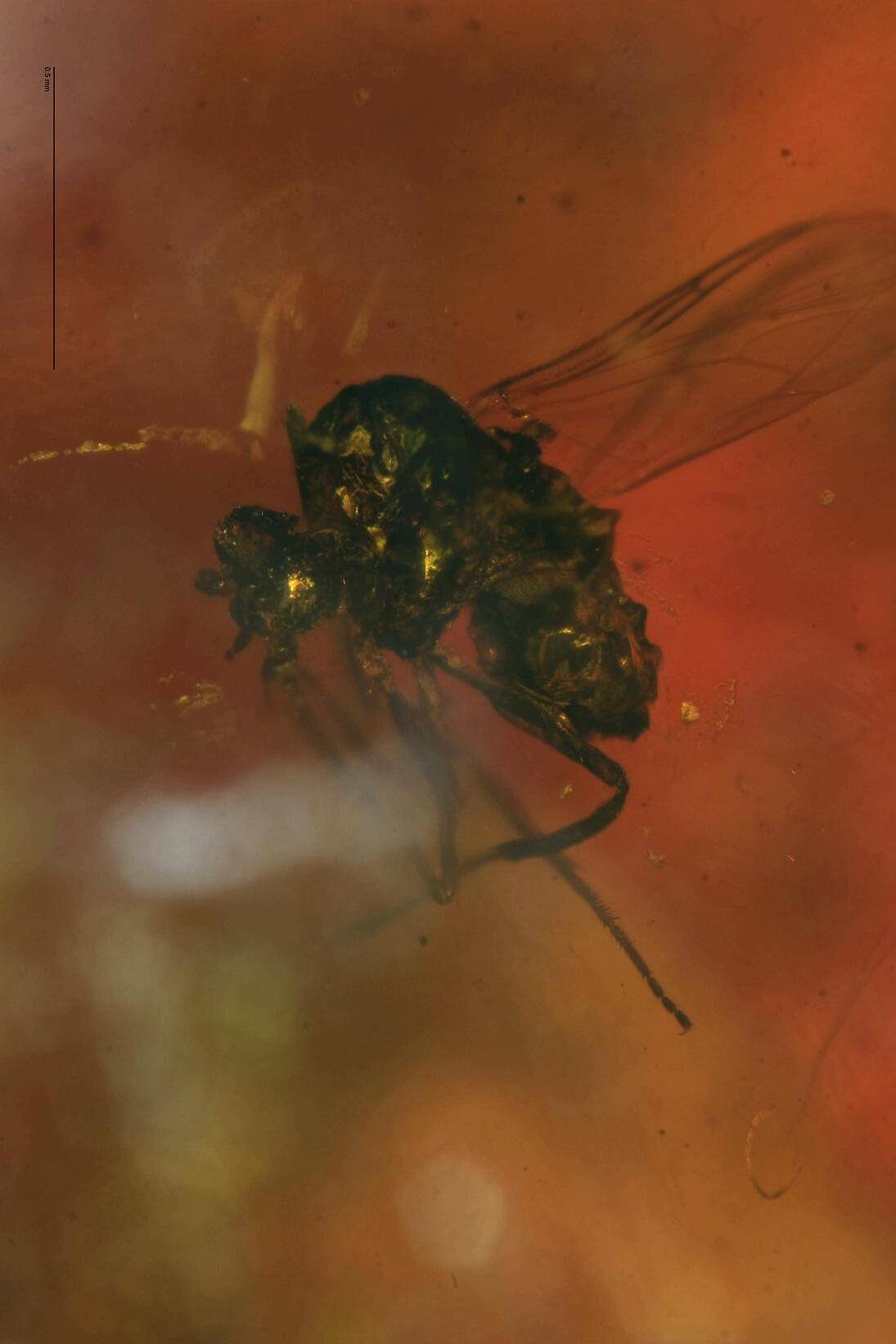
The following photos show bioinclusions of plants and animals in Southern Gondwana late middle Eocene (42 million-year-old) amber of Anglesea, Victoria
Email maria blake@monash edu
MARIA BLAKE PhD candidate Monash University
Unknown degraded Hymenoptera
A biting midge of the living genus Austroconops, first fossil specimen from the Tertiary of Australia
Psocoptera (booklice) hidden underneath plant material
Elongated cellular leaf structure of fossil moss of the family Amblystegiaceae
AUSTRALIA‘S ROLE IN GLOBAL DECARBONISATION:
A GEOSCIENCE PERSPECTIVE
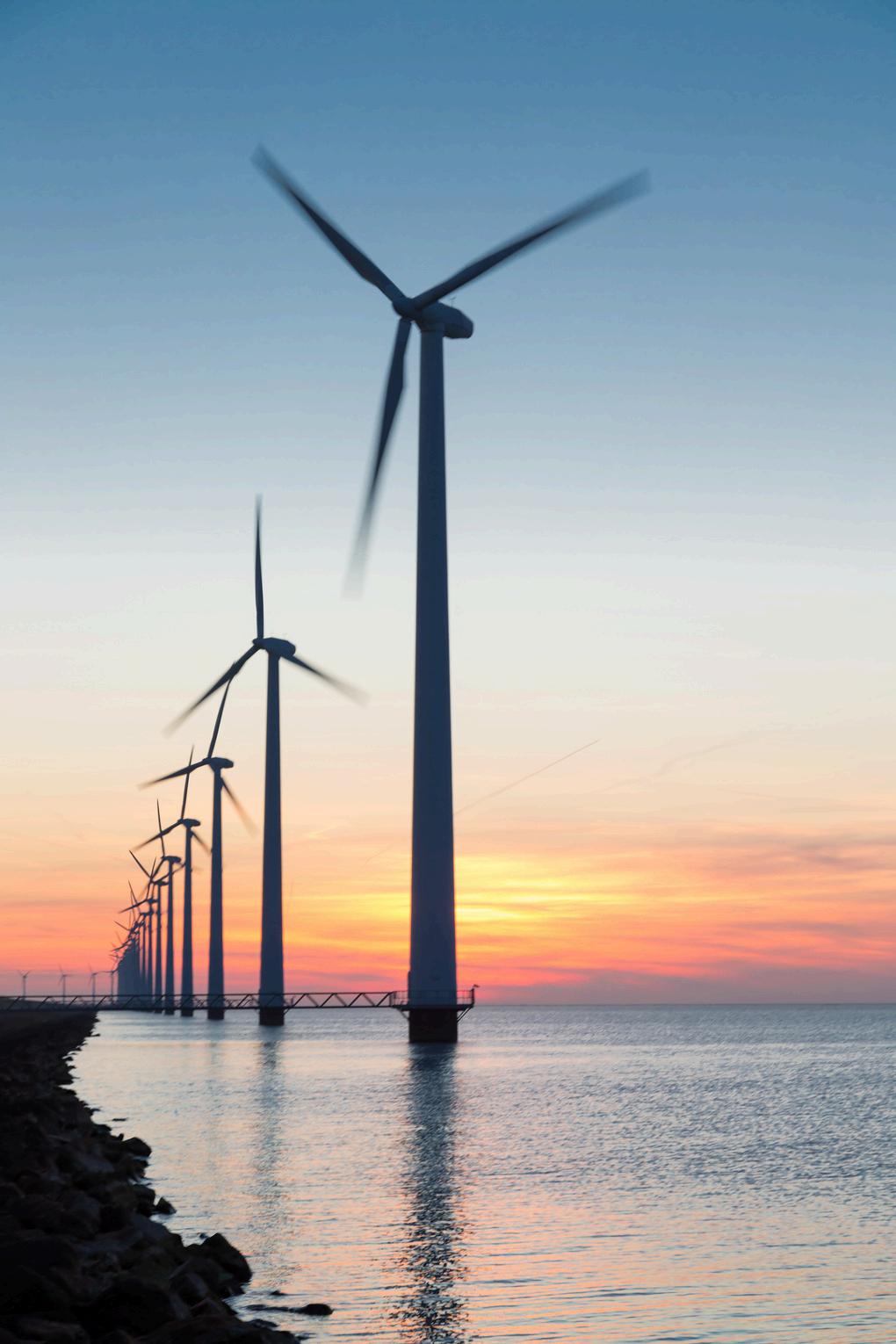
Australia faces various challenges as it endeavours to become an important supplier of critical minerals to global markets, add value to its mineral wealth, build energy storage systems, phase out coal mining and develop an advanced green economy.
PHOTO: CANVA
There are clear but complex relationships between rising carbon dioxide levels, increasing temperatures and climate change Experts from the UN Framework Convention on Climate Change have concluded in their increasingly alarming reports that human activities are the main cause of the recent trends, which are too rapid for extensive adaptation They warn there will be disastrous impacts if carbon emissions are not curtailed in the near term, so as to limit temperature increase to 1 5°C
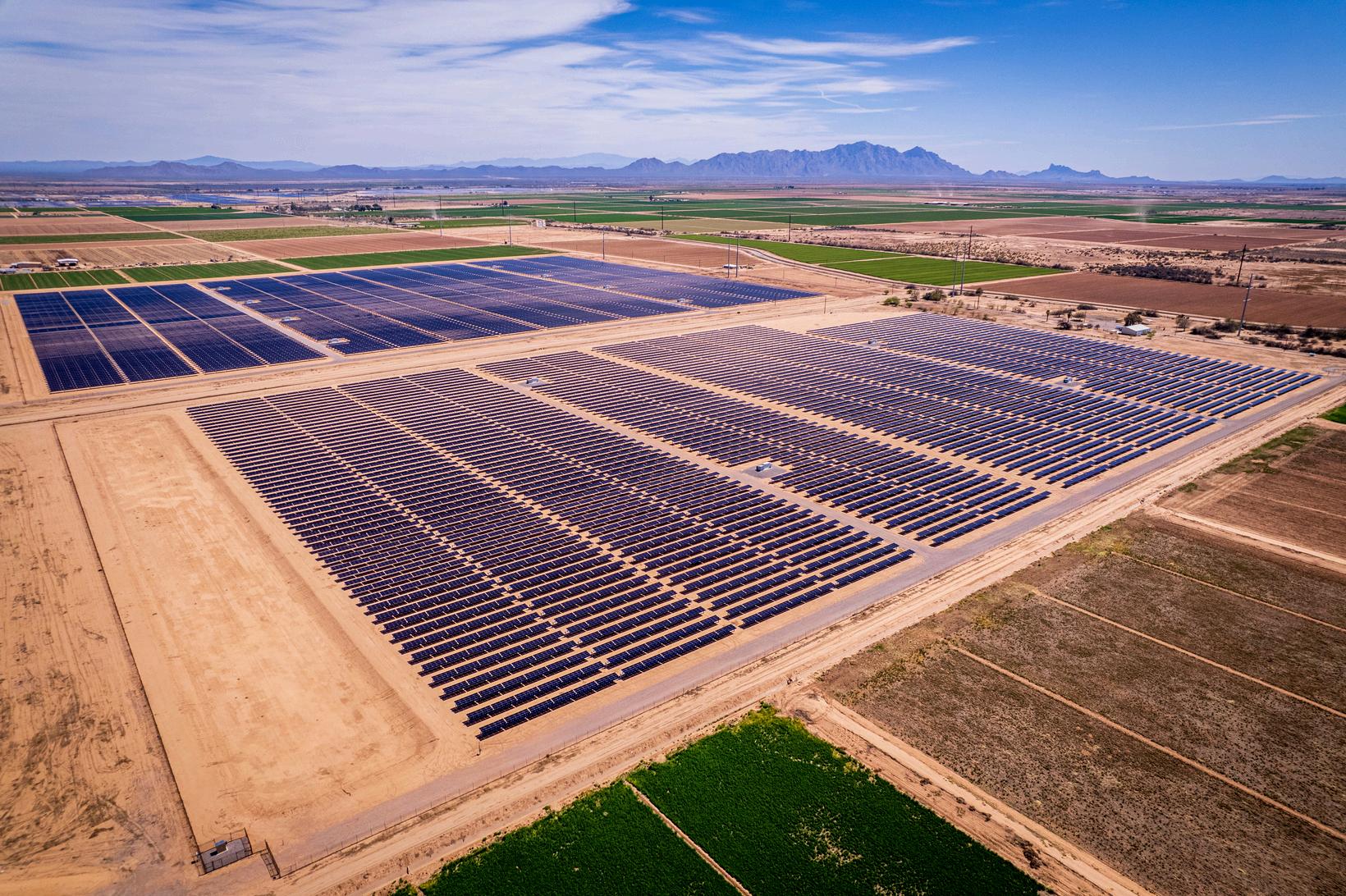
Decarbonisation will be transformational and must be pursued in ways that minimise environmental, social and economic impacts It requires major growth in renewable/zero-emissions energy generation, upgrading of transmission infrastructure, on-demand back-up power for the grid, building energy storage systems and phasing out coal mining Another fundamental requirement is major increases in mining of critical minerals (CM), which are required for clean energy technologies and have supply chains at risk of disruption
Australia is indeed well placed to contribute significantly to, and benefit from, the transformational global energy transition, given its mineral potential and freely available geoscientific data to guide exploration for sub-surface mineralisation, and best practice mining and rehabilitation This will require long-term planning; increased CM exploration; more support for training, research, development and innovation; strategic alliances; and resetting of the nation’s economy
In addition, decarbonisation will require broad public buy-in Ongoing authoritative information and public relations programs are needed to address the limited community understanding of what the energy transition will involve and why Australia should be pursuing international leadership roles
CONCERNS ABOUT CRITICAL MINERAL SUPPLIES
Demand for CM was modest and progressively growing until roughly the turn of the century, when it began increasing more rapidly While supplies have, more or less, kept up with demand to date, increasing acceptance of the urgency of decarbonising is resulting in much higher and rising overall demand for CM This is a major issue as supplies are being threatened by war, growing tensions between nations and human rights concerns
Rare earths from China and the Republic of the Union Myanmar are a case in point Another is cobalt from Democratic Republic of Congo (DRC), which produces about 70% of global cobalt for batteries, partly from artisanal mines, accompanied by concerning social and environmental issues DRC sells a lot of its cobalt to China under a metal-for-infrastructure arrangement
While nickel and copper have not been commonly included in CM lists, they are required in large quantities for modern technologies, and have mounting supply concerns Russia was a major global supplier of nickel until its invasion of Ukraine in 2022 Adequate supplies of copper also present a considerable challenge because of its limited global inventory and concerns about supplies from the African Copperbelt (including DRC), and about nationalisation of mining in some copper-rich South American countries
Note: this article is an edited extract from Ian Lambert’s full, more detailed paper. Read the full paper online via the QR code.
Indonesia is currently the leading producer of nickel, which is mined from extensive laterite deposits and processed in country, mainly by Chinese companies with poor safety and environmental records Australia is a significant producer of nickel from relatively ‘clean and green ’ sulfide deposits, and has significant copper resources and potential
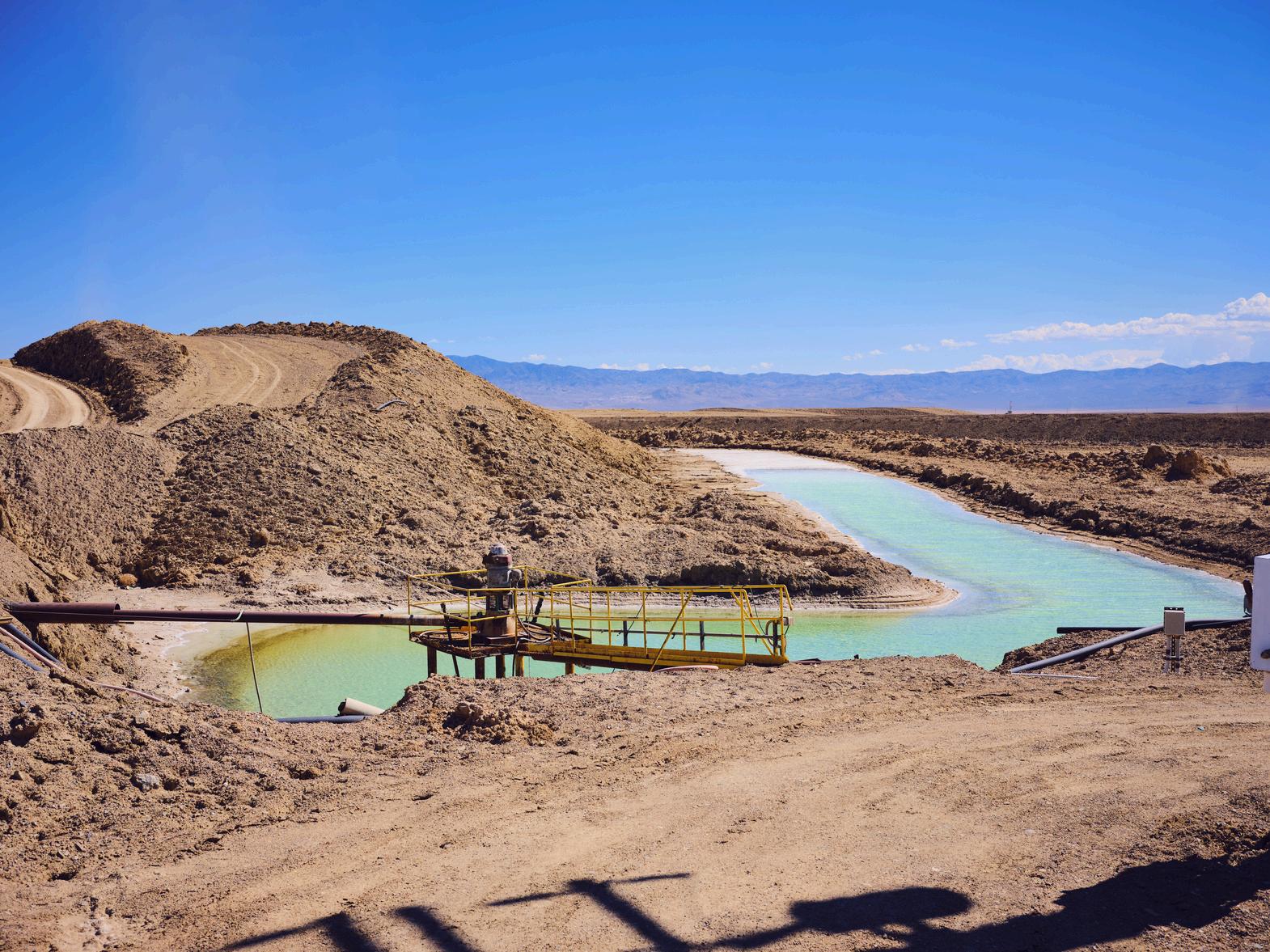
China on the back of its exceptionally large resource base and processing/refining capacity, and limited concerns about impacts produces around 80% of the global supply of refined rare earths In addition, it has been very strategic in designing and building processing facilities for a range of other CM that it is not well-endowed with, and buying into significant mines and processing plants internationally For example, China is the dominant producer of lithium-ion batteries, despite having only modest indigenous resources of this metal, because it has achieved control of at least half of global lithium production and two-thirds of lithium processing
China’s monopolies mean it controls access to the bulk of the feedstock needed for high-tech manufacturing In the meantime, there are some unsettling tit-for-tat developments involving China and the US China is introducing strict export controls on gallium-derived and germanium-based products integral to manufacturing semiconductors for artificial intelligence systems This is in response to the US-imposed sanctions that effectively stop China from accessing advanced semiconductor technologies from the West
This illustrates the urgent imperative for the West to find alternative, reliable suppliers of CM The US is leading efforts with strong support from Australia and Canada The EU is planning to play significant roles in processing critical raw materials, mainly from other Western countries, for its own use
A notable, comprehensive report by Simon Michaud (2022) concludes the entire volume of metals needed to bring one generation of solar panels, wind-farms and electric vehicles into the global energy mix that is, the quantities of raw CM materials needed to entirely replace fossil fuel energy with renewables over the next 20 or so years are staggeringly high: 9 920 years ’ worth of 2018 lithium production, 733 years of cobalt production, 3 287 years of graphite production, 189 years of copper production and 400 years of nickel production It further concluded that global metal reserves are nowhere near sufficient to underpin such increases in production: global copper reserves fell short by 80%, nickel by 90%, and cobalt by around 96%
These are very sobering estimates indeed, which have been seized on by deniers However, production will increase with growing demand, favourable policies and rising prices Further, the calculations of metal shortfalls are based on US Geological Survey data for ‘ reserves ’ – that is, ores that are already established to be of sufficient grade to mine, all else being equal With further exploration and rising metal prices, lower-grade resources will become economic, new discoveries can be confidently predicted and more CM will be produced by recycling and recovery from mining wastes Another important observation is that specific metal requirements will change substantially as new battery chemistries are commercialised
AUSTRALIAN OPPORTUNITIES AND CHALLENGES
Australia possesses the fundamental requirements for growing a major CM sector It has a vibrant, world-class minerals sector, reflecting its impressive resource inventory for many commodities, and its regular very high rankings in the authoritative Fraser Institute’s Annual Surveys of Mining Companies, which assess perceptions of mineral potential and minerals policies
As there are increasing international concerns about, and planned actions to restrict poor mining and processing practices in many parts of the world, there will be no shortage of customers for Australia’s responsibly increased CM production
Of other Western-aligned countries, Canada and the Nordic countries have comparably favourable geology, mineral potential, and regulatory environments to Australia Importantly, the Australian government has formally recognised the CM opportunities and committed funding through its Critical Minerals Strategy 2023–2030
The US and Canada are partners in the geoscientific activities under this initiative, bringing international knowledge and experience another indicator of the importance of stable CM supplies to Western nations
In addition, there will be opportunities for Australia to develop more markets for its abundant uranium resources as some Western countries increase their nuclear power production, or decide to build their first nuclear reactors, to help meet stringent greenhouse emission targets Australian law does not permit nuclear power, but there is active discussion about whether this should be changed
THE CHALLENGES
Global decarbonisation presents many challenges, in addition to strong competition for skills, resources and finance.
These can be divided into the following three broad categories, which are explored in detail in the full paper
1) Scientific and technical challenges
This includes discovering and mining large quantities of new CM resources, adding value to these, recycling, repurposing, researching substitutes for highest-cost/rarest CM, energy storage, power back-up options, and phasing out coal mining
For example, in regard to energy storage, there has not yet been definitive high-level consideration of the extent pumped hydro energy storage systems will be built in Australia, beyond the huge Snowy 2 system currently under construction in NSW While there are many sites with suitable topography for such systems, potential for significant environmental impacts must be considered, along with the requirement for adequate and permanent water supplies in a drought-prone country
There are reasons to be confident challenges such as these can be overcome if the other types of challenges below can be met Australia’s prohibitively high-cost base will require considerable innovation and strategic alliances
2) Political and implementation challenges
While Australia’s Labor government, elected in May 2022, is committed to ramping up efforts to address climate change, it has not yet decided when coal mining will cease In fact, several new mines and extensions have been approved Realistically, there will need to be a reasonable timeframe for phasing out existing operations to minimise economic shocks, and because Australia’s coals are highly sought after internationally
Meeting international pledges requires long-term, non-partisan commitments, a lot of strategic planning, and considerable increases in funding to increase research, development, innovation and training/retraining
There must be measures to ensure coordination of all decarbonisation initiatives, including value adding and green manufacturing Timely policy and funding decisions are also vital, including principles for Brine
essential land access and compensation Dealing with international competition and constraints will require diplomacy and collaboration
3) Community understanding and support challenges
Australia and many other countries have histories of launching significant initiatives without adequately informing the public of their rationales and planned actions The absence of broad public understanding and support commonly leads to problems and delays
It is important to garner widespread community buy-in, including through information programs on what decarbonising will involve and the benefits it will bring Currently, many people have sketchy or illinformed understandings of these matters, and there are still significant numbers who oppose the energy transition Inadequate information sharing will lead to increasing public disquiet
WHAT NOW?
Decarbonising Australia’s economy will be facilitated by planning and funding under the comprehensive and timely Critical Minerals Strategy administered by the Australian government
Discoveries of many new CM ores, many of which will be hidden beneath the surface, will be needed in the short to medium term Exploration will draw heavily on the freely available, pre-competitive geoscientific data and research on sub-surface exploration, which will continue to be acquired
Furthermore, assessments of CM potential across the country are being updated to improve understanding of which geological settings/regions are most favourable for CM deposits
CM ores will be mined similarly to other metalliferous commodities There will not be a step change in mining activity, and lasting impacts should be minimal given best practice mining
It is important to note that developing significant new mines takes around a decade, which will constrain rates of decarbonisation
The potential for recovery of CM from wastes produced during mining of other metals should focus on substantial quantities of wastes at past and operating mines that are most likely to contain viable quantities of CM. In general, more systematic analyses for CM should be required in planning future mines
Decarbonising and growth of green mining, processing and manufacturing sectors will depend on effective actions to address issues that have limited the downstream processing of mineral commodities in Australia A large, technically competent workforce will be needed for mining, expanding green power, building and installing storage batteries, repurposing used electricvehicle batteries for grid storage, researching better processing and refining of CM, high-technology manufacturing, recycling CM, environmental protection and land rehabilitation
There needs to be a more enlightened attitude from local financial institutions and investors to funding CM developments if Australia is to maximise benefits from global decarbonising
Domestic consumption of coal is progressively decreasing, but it is unrealistic to expect an end to coal mining in Australia in the short term, because its high-quality coals are in demand internationally, making this sector a cornerstone of the economy Closure of Australian coal mines while there is genuine international demand would simply mean coals from elsewhere would be substituted
As coal mines are closed, the mining leases will be comprehensively remediated and rehabilitated, progressively freeing thousands of square kilometres of land for agreed future land uses much more than will be used for CM mining Coalassociated infrastructure such as ports and railroads will be available for other users
IAN B LAMBERT, Earth Scientist consultant
Decarbonisation requires major growth in renewable/zero-emissions energy generation, including from solar farms such as this one
PHOTO: CANVA
Mt Tarawera,, the research site of Endowment Fund recipient Acacia Clark, in Aotearoa (New Zealand).
The GSA Endowment Fund YOUR DONATIONS AT WORK
“I would simply express my most sincere thank you. Donating to this fund is voluntary, their decision to pledge some of their personal money out of the goodness of their heart has done more for students like myself than they might have thought it could.” Josh Reid, 2023 Honorary Award, PhD, UQ.
The GSA Endowment Fund was set up in 2007 to support students undertaking graduate studies in the Earth Sciences. The grants may only be used as financial assistance for field costs, laboratory associated costs, sponsorship to attend conferences and/or overseas study tours.
In 2023, the GSA Endowment Fund Committee received 28 applications and granted nine awards totalling $14,000 The significance of your donations is not lost on the award recipients I hope the significance is not lost on the GSA members who have so generously donated money to the GSA Endowment Fund over the years
Set out below are reports by some of the 2023 award recipients, as well as the 2022 PhD award recipient Acacia Clark They show the impact of receiving financial assistance and highlight the high calibre of research being undertaken With your generous donations, these students have excelled in their studies
In 2024, the GSA Endowment Fund awards opened to a whirlwind of communication Thank you to the GSA Divisions for your help getting this message to students Twenty-one eligible applications were received: 11 PhD applications (three from Qld, NSW and SA and one each from Tas and Vic); and ten Honours/Masters applications (three from NSW and SA, two from Tas and one each from Qld and ACT) Disappointingly, no Honours or Masters applications were received from Vic or WA The selection process for award recipients is underway and was expected to be finalised by June Look out for the next edition of TAG to see who was awarded GSA Endowment Fund Awards this year
CALL FOR DONATIONS
The GSA Endowment Fund has been giving out awards for ten years what a milestone! Over this time, it has awarded almost $100 000 to 58 students However, each year the overwhelming needs of our research community is evident GSA members have generously donated money to the fund and their contributions are gratefully acknowledged However, the GSA Endowment Fund still needs donations to maintain the monies currently awarded each year to support students Without donations, the GSA Endowment Fund Committee will have to stop granting awards in two years or severely reduce the awards given out each year
Your help is needed please consider making another impact on the future of Earth Sciences and donate to the GSA Endowment Fund Please give generously so we can maintain a healthy foundation that can continue to support Australian students studying Earth Sciences The GSA Endowment Fund is a charity and all donations are tax deductible.
Donations can be made via cheque, money order, credit card, electronic funds transfer or by bequest To find out more, visit www.gsa.org.au or email info@gsa.org.au.
Thank you for your generosity in supporting this initiative. Your contribution now will continue to grow into the future
DIANE JORGENSEN Chair, GSA Endowment Fund Committee
Fund PhD
recipient
ACACIA CLARK
I was never sure what I was going to do for a career. My love of the outdoors and the natural environment, especially anything to do with rocks, led me to study geology in my undergrad But it wasn’t until I went to Aotearoa (New Zealand) in my second year of university that I truly fell in love with volcanoes! It took me a few years to finally get to pursue my passion, but eventually I started a PhD in volcanology at the University of Tasmania.
Part of my PhD involves investigating deposits from the 1314 CE Kaharoa eruption preserved on Mt Tarawera, a volcano on the North Island of Aotearoa You must put this volcano on your bucket list because it is a completely unique and jawdropping place
A 17-kilometre-long fissure produced during the last eruption in 1886 cuts through the volcano and into older volcanic deposits You can walk along part of the fissure rim, and even do a 100-metre ‘ scree-run ’ down into the fissure
Down there you are surrounded by magnificent, towering volcanic deposits and you get a great understanding of how incredibly powerful this volcano is, and how small and insignificant you are
Mt Tarawera is very special in many ways It has cultural, historical and scientific importance The mountain is sacred to local Māori community and has been a part of their culture for generations It is also the site of the world-famous pink and white terraces, a natural wonder that was lost and thought destroyed in the 1886 eruption For volcanologists, the fissure provides an internal view into the volcano that is quite rare I’ve been studying deposits preserved and exposed in the fissure It’s a challenging environment to work in, and accessing all the outcrops is quite difficult Actually, it’s impossible unless you can fly…
I was fortunate enough to receive the GSA Endowment Fund PhD Award in 2022, which enabled me to bring Michael Roach from the University of Tasmania to Mt Tarawera for a week Michael is an expert in producing interactive, 3D models of geological outcrops from imagery.
His time in the field with me was spent gathering drone imagery of inaccessible outcrops all around the volcano from which 3D models could be produced I have used these high-resolution models to record outcrop characteristics, such as grain size and shape, sorting, components, bedding structures, and measured thicknesses and dipping angles of beds This has enabled me to obtain a lot of data from areas that were previously off-limits Without it, I would be missing vital information from which I wouldn’t be able to piece together the complex history of the Kaharoa eruption This included the later stage of the eruption, during which activity consisted of transient blasts that produced small plumes These were short lived and often collapsed to form pyroclastic density currents
I am extremely grateful to the GSA, GSA Endowment Fund Committee, and all the donors who make the GSA Endowment Fund possible. I was enormously excited and honoured to receive this award and it has had a significant positive impact on me, for both my research and personal development I would strongly encourage students to apply for this award as it is such a fabulous opportunity
I think geoscientists have the best job, as we get to work outside in beautiful environments and study the amazing planet we live on
Acacia Clark, 2022 GSA Endowment
Award
(UTAS), undertaking fieldwork for her PhD on Mt Tarawera, Aotearoa (New Zealand) in 2022
PHOTO: ACACIA CLARK
SAM KELLER
Early in the summer after my second year of undergraduate studies, I was hiking a section of the Bibbulmun Track west of Denmark, WA, when I stumbled across a small exposure of white sillimanite schist studded with ruby-red garnets on the beach.
I took a quick photo, and then went on my way, eager to set down my pack at the campsite (which was always “just over the next hill”).
Little did I know that a couple of years later I would return with my supervisor, Naomi Tucker, to hunt for that exact outcrop, only to find it obscured by the shifting sands and another, a spectacular biotitesillimanite-garnet schist with a purplish sheen, exposed beside it
This fieldwork was part of my Honours project investigating the pressure–temperature conditions and timing of metamorphism in the far-western Mesoproterozoic Albany–Fraser Orogen, on the lands of the Noongar people, in south-west WA
I’m tremendously grateful to have received funds from the GSA Endowment Fund Honours Award to support the instrument-access costs associated with monazite LA-ICPMS dating at the University of Western Australia It was humbling to read that I was to receive the funds, given there must be a fair discrepancy between the size of the money pot and the number of suitable and promising student proposals, but I was excited for what this would mean for my project
Mesoproterozoic metamorphism in the western Albany–Fraser Orogen has lacked recent attention In particular, there is approximately 250 kilometres of strike length for which almost no metamorphic ages exist, except for a single set of SHRIMP (sensitive high-resolution ion microprobe) ages from an unknown location near Albany These are locked up in an unpublished Honours thesis from the 1990s, the only reference to which appears in the appendix of another unpublished PhD thesis
That one-line reference indicated a possible polymetamorphic record, jump-starting my interest in dating the growth of high-temperature metamorphic monazite in metapelites from the farwestern Albany–Fraser Orogen.
Ultimately, tight Honours deadlines combined with instrument-related complications meant I could not obtain the data before thesis crunch time But by December the commitment to GSA Endowment Fund Award was honoured In retrospect the time spent troubleshooting and head scratching with Chris Fisher was, by far, some of the most valuable learning from the entire year, in that it gave me the beginnings of an appreciation for the complexity and limitations of petrochronological techniques.
The provision of funds from the GSA Endowment Fund can go a long way to benefiting the career development and future opportunities available to young geoscientists, and could have an outsized impact on the current shortage of skilled geoscientists
To current students considering applying, just take the plunge and write a proposal Compared with your thesis proposal, it will be a piece of cake It could revolutionise your project and where you go beyond that Have a good think about a key question your examiners might ask, and then consider how funding from the GSA could resolve it
I would like to sincerely thank the GSA for the opportunities they have provided, and to Naomi Tucker, Chris Fisher and many others who supported me during this challenging but ultimately rewarding year Of course, a massive thank you also to those who donate to the GSA Endowment Fund
Sam Keller soaking up the beach vibes next to a thin sliver of garnet-sillimanite metapelite, whose monazites would later be dated thanks to the GSA Endowment Fund Award
PHOTO: EMILY CONN
EMILY CONN
In 2023, I was a very fortunate recipient of the GSA Endowment Fund Honours Award, which supported my Honours research project studying submarine volcanoes at the University of Tasmania. Specifically, the grant supported my attendance at the international Oceanic Volcanism Workshop in Germany, where I presented on my Honours research I was able to seek feedback from international colleagues and make connections in the wider volcanological community.
My Honours project focused on analysing deep-sea sediment cores around Havre submarine caldera, located offshore north of New Zealand, under the supervision of Martin Jutzeler and Rebecca Carey (Honours entitled: Sediment cores stratigraphy at Havre, Kermadec arc/Rangitahua)
Before the start of my project, I was extremely fortunate to sail with Martin, Karin Orth (UTas), Steffen Kutterolf (GEOMAR), and other students from around Australia on the RV Investigator. We sailed for around five weeks from Tasmania to northern New Zealand, and sampled deep-sea sediment cores around select submarine volcanoes in the Kermadec arc.
During the 2022 VULKA voyage aboard CSIRO’s RV Investigator, four sediment cores were collected proximally and distally through the seafloor around Havre The dark basaltic units were likely derived from submarine vents proximal to coring sites, while the eruption, transport and deposition styles associated with the pale-coloured silicic units remains uncertain By investigating these layers, we can learn more about the eruption dynamics that result in deep-sea, silicic eruptions. It will uncover the eruption history of Havre beyond the 2012 eruption and have implications for hazard mitigation and deep-sea infrastructure
My project aimed to: identify silicic units of interest around Havre
reconstruct volcanic stratigraphy based on bedforms, componentry, grain-size distribution, microtextures and chemistry
determine the chemistry of the primary volcanic glass to determine provenance by geochemical fingerprinting
assess whether the vent environment (subaerial vs shallow marine vs submarine) can be identified based on microtextures
Amid accomplishing these aims, there was an opportunity to present on what I had researched so far to the wider submarine volcano research community I applied for the GSA Endowment Fund to aid with the costs of travel to Germany, as the workshop was held at GEOMAR Helmholtz Centre for Ocean Research in Kiel
Without the award, I would not have been able to attend the event in person, which led to useful inperson networking opportunities, contribution to group discussions, and the ability to visit an international research organisation that conducts top-tier research in the field of marine geology
For those thinking of applying for the GSA Endowment Fund, my advice is to back yourself in your application: make it clear how the opportunity will benefit you and why you need the award to do it Prove how you will make the opportunity successful by referencing past experiences and presentations/papers/outputs
My deepest gratitude to the GSA for facilitating this grant program, and to all who have donated to the GSA Endowment Fund
Emily Conn, 2023 GSA Endowment Fund Honours Award recipient (UTAS), presenting findings from three sediment cores collected from the Havre volcano at the Oceanic Volcanism Workshop hosted by GEOMAR in Kiel, Germany.
JOSH REID
As a PhD student, it comes with the territory that you are always begging for money to fund your research. Last year I was thrilled to receive financial aid from the GSA Endowment Fund Honorary Award to finance crucial field work
I am an aspiring sedimentologist with a particular interest in carbonates My PhD is titled ‘Age, source and diagenesis of carbonate sediments in leeward and windward coral cays: Insights from One Tree and Heron islands, Great Barrier Reef’ My aim is to document changes in early marine diagenesis, sediment sourcing and accumulation between windward and leeward coral settings. Better understanding these systems has implications for both management in the present and as analogues for understanding reef systems in the geologic record.
Anyone who has spent some time on a coral reef will know they are incredibly diverse with large geomorphic and biologic variability. Through a sedimentologist’s eyes, coral reefs are selfcontained sedimentary systems whereby growth and degradation of coral on the reef rim generates sediment that fills in the internal reef volume. Over (relatively short) geological time, this sediment will fill to the point that supratidal coral islands colloquially referred to as ‘coral cays ’ can form on reef flats under the correct conditions. These cays are vital terrestrial ecosystems that support unique flora and fauna, including migratory seabird populations and turtle nesting sites
Sand cays (Heron Island) occur on the leeward (low energy) reef flats, and rubble cays (One Tree Island) occur on the windward (high energy) reef flats The different hydrodynamic regimes create drastically different sedimentological and diagenetic environments, which in turn affect the accumulation and lithification of carbonate sediments
As part of my PhD, I assess sediment composition and early marine diagenesis of lithified reef sediment through petrographic analysis, complimented by scanning electron microscopy. Additionally, pristine coral material from samples is analysed using uranium–thorium dating techniques to provide a temporal scale for sediment accumulation.
In February 2024, I was able to make use of the GSA’s generous funding to embark on a five-day field trip to One Tree Island. It was fascinating to explore the University of Sydney’s One Tree Island Research Station, which operates with minimal outside interaction Equally fascinating was stepping
onto the windward rubble flat for the first time to see, in person, what I’d read so much about It was incredibly fulfilling
The rubble flat is unique to windward margins and is a variant of the traditional, coral-dominated reef flat observed on other reefs As the name suggests, rubble flats are dominated by the accumulation of coarse coral rubble, and I was here to investigate the rubble that had been lithified into hard limestone pavement
There were two main goals of this field trip: map the reef zonation 1. collect surface samples of lithified pavement 2
Josh Reid investigating limestone pavement with heavy karst weathering on the eastern rubble flat of One Tree Reef, Great Barrier Reef
Zones were mapped by conducting transects from lagoon to reef rim at low tide, and I collected samples along transects or at points of interest The pavement from field observations appears to be a precursor to island formation, as it sits atop reef framework Therefore, understanding the accretion and lithification of this platform may aid in understanding island-forming conditions.
Macroscopic observations have already shed light on some possible unique lithification processes: namely, the presence of extensive karst weathering hardening the surface of pavement, and microbialite cements performing lithification below the surface I am extremely excited to get a closer look at these samples in the coming weeks!
I cannot express enough how fortunate I feel for being given this opportunity from the GSA Endowment Fund Committee and, by extension, the patronage of their donors A large inhibiting factor of working on materials from exotic locations such as coral reefs is typically their inaccessibility
This trip was a vital part of my PhD and, thanks to the patronage of the GSA, I can dedicate funds that were set aside for this trip towards crucial uranium–thorium dating This has been an overwhelmingly positive experience I would strongly encourage any students who are aspiring researchers to apply for this fund in the future!
PHOTO: GREGORY WEBB
The Bendigo Visitor’s Centre (former Post Office) was designed by architect George W Watson as a French Renaissance-style building (1883-87) The clock in its tower has been silenced only once, believed to be at the request of Dame Nellie Melba trying to sleep in a nearby hotel
THE VISION FOR VICTORIAN GOLDFIELDS WORLD HERITAGE
The Victorian goldfields span a large area of state, encompassing its central and eastern regions Stretching over 40,000 square kilometres, the central region is home to half a million people and includes Ballarat and Bendigo, which are within an hour and a half’s drive from Melbourne The eastern region extends into the Victorian northeast, enveloping areas from Beechworth to Walhalla in Gippsland
Tectonic movements, erosion, volcanic activity, climate fluctuations and water flows have collectively crafted the complex alluvial, deep lead, and quartz gold-bearing landscapes that define the region. While Bendigo and Ballarat attract over 50% of tourists, serving as pivotal cultural and economic hubs, they also represent key destinations within the Victorian goldfields. For instance, Sovereign Hill in Ballarat serves as a living museum, annually drawing around 450,000 visitors keen to experience the story of Ballarat's gold rush boomtown era.
The draft Victorian Goldfields World Heritage Master Plan, unveiled in March 2024, marks a watershed moment in the region's history Led by a steering committee comprising CEOs from 15 local governments and chaired by the Victorian Goldfields Tourism Executive, this visionary initiative aims to chart a course toward a world heritage journey The draft Master Plan aspires to elevate underrecognised heritage assets, attract new domestic and international visitors, foster sustainable job creation and investment, and provide a platform for First Peoples' experiences
The historical significance of Victoria's goldfields cannot be overstated, as they stand largely intact to this day They are being hailed as the most expansive and extensive representation of a 19th century gold rush landscape anywhere in the world
The Victorian gold rush was triggered in 1851, three years after its Californian contemporary, by a discovery in Clunes This heralded, in near simultaneity, some of the most concentrated domestic and international migrations in the history of their respective countries Victoria and California established the template for gold rushes that followed in British Columbia, Colorado, New Zealand, Queensland, South Africa, Western Australia, the Klondike/Yukon, and others. The resulting demographic, environmental and social transformations took place at an electrifying pace
In addition to the historic cities of Ballarat and Bendigo, various historic townships and settlements, adorned with grand architectural buildings are scattered across a landscape peppered with gold mining sites and relics This presents an opportunity to develop a new range of experiences centred on showcasing historic reserves across the region Prominent heritage sites include the Welcome Stranger Monument, Castlemaine Diggings, the Beehive Chimney in Maldon, Whroo Historic Reserve, Pink Cliffs Geological Reserve, Heathcote, Red Knob Mining Landscape, Vaughan, Jubilee Historic Area, Ballarat and Enfield State Park.
The gold rush precipitated a mass migration that reshaped Victoria's demographics. The colony's population surged from 77,345 to 540,332 over the span of a decade, as miners from around the world flocked to seek their fortunes. Rough, temporary settlements sprang up alongside newly discovered gold deposits, with some evolving into thriving gold rush towns and cities Today, the landscapes of the Victorian goldfields continue to echo the state’s gold rush history, preserving intact remnants of gold mining activities and the heritage architecture of gold rush towns
Seventeen clusters of mining activity in the central Victorian goldfields region have been identified, and efforts are underway to ascertain their contribution to the region's outstanding universal value This may be an outstanding example of a type of building, architectural or technological ensemble or landscape that illustrates significant stage(s) in human history Importantly, World Heritage inscription hinges not on the quantity of sites and structures, but on their authenticity, integrity and thoughtful management
The draft master plan also envisages cross-regional touring routes, or World Heritage journeys, designed to immerse
PHOTO: CANVA
Former Law Courts: designed by architect George W Watson (1892-96), the law court’s bluestone podiums hide a basement where goldfields prisoners awaited their fate Basalt and cast-iron fences allowed light, air and a whiff of freedom to tease them
visitors in the region's cultural and natural heritage These journeys will traverse First Peoples' Country, key geological sites, and extensive forests and bushland, offering a holistic experience for travellers Proposed routes will cater to diverse interests, encompassing accommodation, culinary experiences, art galleries, museums and wellness facilities, positioning the Victorian goldfields as a premier Australian tourism destination
The master plan lays the groundwork for leveraging the Victorian goldfield's globally recognised heritage to attract visitors and support sustainable tourism Geotourism sites and geotrails will spotlight the region's geological, geographical and cultural attributes, offering authentic experiences for visitors of all backgrounds. By capturing stories, experiences and connections to gold, these initiatives aim to enrich visitors' understanding of the landscape and its significance.
The whole of the Victorian goldfields is dotted with mining relics, alluvial fields, open cuts and deep lead mines. These, together with grand dwellings and large, out-of-scale public buildings and works, were built on the back of the wealth from gold. This exceptional urban and rural landscape showcases the interplay between diverse cultures: from the First Peoples, many of whom were displaced from their ancient lands, to those who actively participated in Victoria's gold economy and the new inhabitants who had travelled from around the world in search of their fortune
All the components of this region play their distinctive part However, it is claimed that the sheer size and scale of the Victorian goldfields, the sum of the parts, the totality of the collection, and the diversity of the experience is what establishes its global importance and prominence
This extraordinary history and landscape are now being documented A regionally initiated campaign has gained state government backing for the nomination of the Victorian goldfields for World Heritage listing We anticipate World Heritage Inscription in 2027–2028
The central Victorian goldfields group of councils and the Victorian Goldfields Tourism Executive, together with funding from Regional Development Victoria, have commissioned the draft master plan with a large group of regional stakeholders, including registered First Nations parties, to support the proposed nomination
In summary, it sets out a comprehensive plan for the inevitable increase in visitors and demands on the region’s infrastructure, together with actions aimed to realise the opportunities for the affected communities that global recognition as a World Heritage site is predicted to bring.
DAVID ROBSON Chair, GSA Geotourism Standing Committee
Bendigo Town Hall: architect William ‘Vahland (1878-86) used muscular ‘Atlas’ sculptures to support the tower clock’s weight German artist Otto Waschatz, who had previously decorated Denmark’s royal palace, adorned the Town Hall interior with mythical figures in rich gold leaf
PHOTO: DAVID ROBSON
PHOTO: DAVID ROBSON
USING MACHINE LEARNING TO BETTER PREDICT FAULT SLIP
Understanding the potential for fault slip is critical in numerous fields, from geotechnical engineering to seismic hazard assessment. It is also critical for applications to natural resources exploration.
While faults can display extremely complex behaviours involving thermal and chemical processes, their stability can be assessed at first instance based on the concept of friction between two blocks at a fault interface
This leads to the concept of fault slip tendency analysis, which serves as a fundamental tool in quantifying the propensity of faults to slip under various stress conditions This offers crucial insights into fault behaviour and associated seismic risk. Fault slip tendency analysis consists of calculating a slip tendency index locally, defined as the ratio of shear stress over normal stress at a point on a fault
A fault will slip when the slip tendency index reaches the friction coefficient This can then be seen as an upper limit While we acknowledge the crucial role of the friction coefficient in practical analyses, this article does not consider that separate problem of identifying friction coefficient values for specific faults Instead, we focus only on computing the fault slip tendency index
geomechanical numerical simulations This is usually performed using a linear elastic rheology as first approximation Yet, this remains a complicated process, as it requires building a 3D geological model, assigning material properties for all geological units involved, setting some (usually poorly constrained) boundary conditions, and going through a tedious calibration process to match observations. Therefore, fault slip analyses are generally computed for local areas at the kilometre scale and are difficult to calculate at the continental scale
Recent computational advances are changing the picture. Physics-informed machine learning is providing the best of both worlds, allowing a datadriven approach for easy calibration, while respecting physical consistency of the results in the way numerical simulations do.
Physics-informed neural networks (PINNs) are becoming popular to invert such geomechanical problems, where appropriate displacement and stress boundary conditions can be set to obtain a well-posed problem Our recent study (2023) showed we can often use stress orientation constraints with displacement observations to solve the same problems
Even though the problem is unambiguously threedimensional (as the variation of pore pressure with depth affects the effective stress), a twodimensional approach is already
extremely informative to identify which faults are more at risk.
Regarding existing constraints, a large amount of stress orientation information is available globally through the World Stress Map project, which can be averaged by stress provinces, and global navigation satellite system data is also accessible for displacement observations This opens the door to a much simpler workflow to compute the stress field, using PINNs, to derive physically consistent displacement and stress fields over the whole Australian continent, along with the material property distributions for the two elastic parameters involved: Young’s modulus and the Poisson ratio.
The stress field obtained can be used directly to colour any given network of fault traces with the corresponding fault slip tendency index The method also identifies areas of discrepancies, such as in the NT, where stress constraints are inconsistent at the selected scale and should be revisited
In conclusion, while traditional computational methods pose challenges in accurately assessing fault behaviour, recent advancements in physics-informed machine learning offer a promising solution By combining data-driven approaches with physical principles, techniques such as PINNs enable efficient stress field calibration, directly usable for fault slip tendency analysis
Leveraging PINNs can streamline the computational process, provide insights into fault behaviour at different scales, and facilitate informed decision-making in engineering and geological contexts For more information, refer to Poulet and Behnoudfar (2023) and following work.
THOMAS POULET CSIRO, research scientist
POURIA BEHNOUDFAR CSIRO, postdoctoral fellow
Constraints used to compute stresses in Australia with physics-based machine learning approach: (a) stress orientation from World Stress Map project, and (b) displacements from global navigation satellite system observations.
Physically consistent results of the stress inversion for an effective 2D elastic model: (a) displacement fields (red arrows denote observations, grey arrows the results), (b) compressive stress orientations (averaged observations from World Stress Map in red, results in black), (c) corresponding Young’s modulus distribution, and (d) Poisson ratio distribution
RICHARD PRICE
Richard Price died on 6 March 2024 after a long illness.
He was widely recognised in Australasia as a geologist, geochemist, teacher and academic administrator. He was a Distinguished Fellow of the GSA
Richard is survived by his wife Bev and by his daughters Rachael and Robyn and their families, to whom he was devoted Bev and the girls were vitally important to him He was fundamentally a family man
Richard came from WA as a young boy In later times he often made the comment that “the two good things that originated from Western Australia were himself and the road to the east”, which underlined his sense of place and humour
Schooling in Canberra was followed by undergraduate work in the Department of Geology at ANU where he gained BSc honours in geology At ANU, Richard came under the influence of two scientists who were to have a lifelong impact: Alan White and Bruce Chappell. As was the custom at ANU in those days, Richard was encouraged to move to another university to pursue post-graduate work He chose University of Otago in New Zealand and spent a productive three years as a student of Doug Coombs working on the Dunedin volcanic system Richard’s time in New Zealand led to a lifetime appreciation of its unique environment and he
returned many times in personal and professional roles Importantly, it was in Dunedin that he met Bev and, after a whirlwind romance, married her.
My experience of Richard is from the perspective of a friend, colleague, co-author and fellow scientist I first met Richard when we were PhD students I had just started as a student at ANU under the supervision of Alan White and Bruce Chappell Richard, having just finished his undergraduate degree with Alan and Bruce, was over from Otago University First contact was somewhat fraught because we both wanted access to Bruce’s lab, but Richard as the visitor had priority However, we worked together on the preparations for the 1976 International Geological Congress in Sydney That was also a time when my wife Lydia and our two kids met Bev and Rachael, who was brand new at the time Since then, our families have enjoyed many times together
Some years later, Richard was established as a lecturer at La Trobe University and I was a postdoctoral research fellow in the University of Toronto. I received an invitation from a prestigious academic journal to review a research paper by Richard Price I decided that at the time he was more of an acquaintance than a friend and that I could therefore do the review I also expected that there would be no problems In fact there were some problems and I recommended that the manuscript should be rejected. I was then faced with the problem: should I identify myself as the reviewer and accept that any possible friendship would be over? Many of you would recognise the feeling when a manuscript is rejected After some soul searching I did identify myself as the reviewer, sure it would mark the end of any friendship with Richard About a month later I received a letter from Richard. He thanked me for my review and acknowledged my criticism Further, when the paper was eventually published I was recognised for my contribution Here was clearly a scientist who was principled and able to accept criticism I was impressed Richard’s is an example I have always tried to follow
Still later I was established at the University of Auckland in New Zealand I received a letter from Richard suggesting a joint research project on New Zealand’s volcanoes That was the beginning of a 30-year friendship, during which we experienced the camaraderie of field work, the disappointment of having papers rejected and the satisfaction when they were accepted.
Perhaps Richard’s most significant contribution to Earth Sciences was initiating ANZAP (Australian New Zealand Andesite Project) Initially conceived as a project to get to grips with the magmatic system beneath Taranaki volcano in New Zealand, this led to a wider goal of defining the role of andesitic magmatism in the evolution of Earth’s crust The contributions that Richard made to these fundamental problems are significant John Gamble, Simon Turner, Bob Steward and others were important contributors both to the science and to what I think we would all look back on as fun Richard’s research also took him to Antarctica and on research cruises to the southwest Pacific. The wide and varied scope of Richard’s publication list are a testimony to an active and receptive mind
During the ANZAP project, Richard relocated to become Dean of the Faculty of Science and Engineering at the University of Waikato from 1998 until 2010 He was instrumental in the establishment of the School of Engineering and the accreditation of the Bachelor of Engineering programmes And it was here that his straight talking and fundamental honesty came to the fore He is remembered at University of Waikato with respect and, significantly, affection
Richard was a straight talker Honest Reliable He was loyal to his friends. In his early career years at La Trobe University he made his mark as a teacher and researcher with a wide spectrum of interests granites and volcanoes in southeastern Australia
Later in his career, Richard became a respected academic administrator at the University of Waikato He didn’t suffer fools and, as he often said, he didn’t pussyfoot around.
Vale John Gorter
IN MEMORIAM
Richard and I travelled together a lot and we had adventures Lots of things happen when you travel and Richard was a great storyteller Many of his stories came out of this shared experience, but there is one that underlies his essential self-deprecating modesty. Richard and I attended a conference of the Geological Society of New Zealand The organisers decided on a theme for the conference dinner of ‘the olden days’ The idea was that we would all dress up in costumes appropriate to earlier times. As dignified older scientists, Richard and I declined to participate in the costume activity and went along in our normal ‘smart casual’ As we entered the venue, several people came up to Richard and commended him on his costume Richard turned to me and said ‘I think it’s time I bought a new jacket’
I look back on 30-plus years of friendship and scholarship I haven’t counted but we have published many academic papers together and collaborated in many more conference presentations It has been fun. Richard has been a wonderful friend, critic and mentor I feel honoured to have to shared field experiences, travel opportunities and research disappointments and successes with Richard
Richard touched many people He was an example to us all for his honesty, uncompromising standards and humour We will miss him
I am privileged to have known him
Ian E M Smith Distinguished Fellow GSA
The GSA extends its deepest condolences to the family and friends of John Gorter, who passed away suddenly on 18 May 2024 in Madagascar John was doing what he loved, exploring rocks and landscapes John had a wonderful career of over 52 years that started at the Bureau of Mineral Resources in 1972, before moving into exploration for oil and gas in Australia and abroad This year, John received his GSA 50-year membership milestone.
Vale John Talent
John Talent was an internationally renowned paleontologist, formerly of the Department of Earth and Planetary Sciences at Macquarie University He died aged 91 in a Sydney nursing home on 27 March after a long illness The family, colleagues and friends of John are saddened by his death An obituary for John will be published in a forthcoming issue of TAG
PETER LEGGE
21 July 1943 15 January 2024
Peter Legge was a very well known and highly respected, very successful Australian exploration geologist whose professional career spanned 55 years from 1965 to 2020 Peter held his tertiary degrees from the University of Tasmania graduating 1965 BSc Geology and Geophysics (distinctions) and 1967 BSc (Hons) Geology sponsored by the Tasmanian Mines Department
His early career (1965–1969) was in Tasmania, progressing from teaching matriculation physics and geology in Devonport, then regional mapping for the Geological Survey of Tasmania He then transferred to Kalgoorlie with Mideast Minerals (1969–1970), soon taking a Newmont Senior Geologist role (1970–1973) responsible for the Kalgoorlie office exploring for nickel, uranium and gold Peter participated in the discovery of both the world class Telfer gold deposit and the Weebo Bore nickel deposit.
Peter progressed his career in southern Africa as Senior Geologist, Falconbridge Explorations, South Africa (1973–1977), exploring for base metals, nickel and gold in Cape Province, Transvaal, Botswana and Southern Rhodesia Initiatives in Botswana led to the discovery of economic, diamond-bearing kimberlites subsequently mined.
Upon his return to Australia, Peter served as Manager Technical Overseas Operations, CRA Exploration (1977–1980) based in Melbourne. He managed global joint venture exploration, including the Kelian gold deposit, Kalimantan and CRAE’s zinc exploration in Canada, the US, Brazil, Germany and Eire.
Subsequently, Peter operated as a consulting economic geologist (PJ Legge & Associates, 1980–1982) identifying exploration targets for a wide range of commodities, often under retainer from CRA and BP
Peter had a long history with North Limited (1982–1995) serving initially as Chief Geologist, then Exploration Manager where he was responsible for North’s mineral and energy exploration in Australia and overseas He was closely associated with the Bottle Creek gold deposit (WA) discovery, and was also a Director of ASX-listed Norgold floated in 1987 with North’s gold projects.
The final stage of Peter’s exceptional exploration career comprised creation of New Challenge Resources Pty Ltd (2000–2020) His key success was the generation of the Stavely copper–gold project near Ararat, western Victoria Peter was successful in attracting Newcrest (2001–2004), then Beaconsfield Gold NL (2005–2013), finally Stavely Minerals Ltd (ASX: SVY, 2013–present) to manage and fund the exploration leading to discovery of several Cu–Au deposits
In addition to Peter’s exploration career, his relentless passion for geological science was demonstrated by being a very dedicated member of the GSA for 55 years He served as President (1992–1994), then as Vice President Oceania (1995–2004)
Peter’s other professional society memberships included being a Fellow of the Australasian Institute of Mining & Metallurgy, Fellow of the Society of Economic Geologists and a Member of the Australian Institute of Geoscientists His exceptional industry standing was recognised by the German government, who invited him to speak at the 1997 Geotechnics Conference, Cologne In his retirement Peter created and led the Geology of the Mornington Peninsula lecture and four-part field excursion in 2018–2019 attended by about 15 Savvy Group members.
Peter is survived by his wife Jenny, who he met while teaching at Devonport High School and married in 1968, their two daughters Miranda and Aurora, their partners Glen and Richard, and three granddaughters Magenta, Zara and Piper.
DONALD JOHN PERKIN IN
May 1940 December 2023
Donald John Perkin passed away on the 8 December 2023. His two eldest daughters were able to be with him on the previous evening Don was born in Newcastle, the second child and only son of Leona and John Perkin He had two sisters, Judy and Lyn The family moved to Roseville in Sydney when Don was in primary school, and he later attended North Sydney Boys High School He continued with tertiary studies at Sydney University, studying a Bachelor of Arts degree, majoring in geology.
On completing his BA, Don worked in mineral exploration with several mining companies, including Pickands Mather International, Mount Isa Mines Ltd and Metals Exploration Ltd He worked on projects based at Kalgoorlie, Mount Isa, Townsville and eastern Victoria During his early exploration days he met Elsie Meabank and the couple married in 1967. Their eldest daughter, Katrina, was born two years later The family soon grew to three girls and two boys In the early 1970s, the young family moved to Orange in central NSW and then to Melbourne. At some stage during this period Don enrolled in a Bachelor of Economics degree at James Cook University, graduating in April 1975
In 1978, Don successfully applied for a position with the Bureau of Mineral Resources (BMR) in Canberra, joining the Minerals Branch as the commodity specialist for uranium, tin and copper He spent the next 21 years working on documenting Australia’s mineral resources and compiling major reports including sections of the Australian Mineral Industry Annual Review and Quarterly Reports In the early 1980s Don completed a resource assessment, inspection and cost estimation of tin deposits in Australia for an International Tin Council study, and in 1982 visited major South African mines as BMR delegate to the Commonwealth Mining and Metallurgical Congress in Johannesburg He also initiated a study of the age of Australia’s 1:250 000 scale geological map coverage, which contributed to the Woods Review of the BMR During the mid1990s, Don was involved in assessing the mineral potential of the Lake Eyre Basin and establishing the Regional Forestry Agreement process
At the BMR later the Australian Geological Survey Organisation (AGSO) Don was considered a real character and loved a chat, particularly about ore deposits. His office was widely known for the vast number of books and other publications (both personal and library) that he managed to squeeze
into it In many cases he was the first person of contact for visitors seeking information on almost anything to do with ore deposits and their exploration Don retired from AGSO in September 1999
In the 1990s, Don had enrolled in a Master of Science degree (Exploration Mining Geology) at James Cook University This coursework and project-based Masters was set up by Willard (Bill) Lacey, head of the Geology Department at JCU, and the course greatly appealed to Don with his background interests in ore deposits and mineral exploration He graduated with a MSc in April 1997
Don was a devout and committed member of the GSA for more than 50 years. He attended many of its conferences and field trips, as well as actively participating in the monthly meetings of the ACT Division of the Society In May 1990, he was a founding member of GEOLACT, a small group in Canberra that included Gary Lewis (CSIRO), Ken McQueen (UC) and Tim Munson (ANU), formed to develop and improve links among geoscience organisations and schoolteachers. The group organised and led geological field trips for primary and secondary schoolteachers in the ACT and surrounding areas of NSW to assist them in understanding the local geology as part of ongoing teacher training Don loved to share his scientific knowledge with the general public and particularly
the younger generations He also had broader interests in classical music, rugby union and Australian history.
Don was also a long-term member of the Australasian Institute of Mining and Metallurgy (which he always referred to as Aus I double M) and the Australasian Mining History Association (AMHA) Again, he frequently participated in their meetings and conferences He was a member of the Sydney Mineral Exploration Discussion Group (SMEDG), a fitting organisation for Don with his love of chatting with geological and mining colleagues
Don was also a dreamer, but his dreams were often elusive After working as an exploration geologist and many years researching and compiling reports on mineral resources with the BMR, he had numerous ideas and hypotheses on ore deposit formation. When he retired, he decided to test his ideas by taking up exploration himself
As a sole explorationist he encountered many frustrations within the industry, but persisted with his ideas, including by drilling, which he funded from his superannuation
Vale Colin Dunn
He focused on three projects related to copper and gold: one in the Pilbara, one at Crowl Creek south of Cobar, and another at the Napoleon Reef, east of Bathurst He was not able to take these projects to a discovery, but the exploration tenements were taken up by companies for further work
Don also came across a mysterious survey peg from the Snowy Mountains area It was made of copper and engraved with the name Strzelecki and the date 14-21840. Was this a clever piece of scrimshaw, or a genuine relic from Strzelecki’s ascent of Mt Kosciuszko? Don was convinced it could be genuine and tried to research this; however, the origin of the artefact remains unknown.
Don will be greatly missed by his colleagues, friends and family, including his loving children Katrina, James, Rebecca, Elspeth and David, as well as his grandchildren and his two sisters Judy and Lyn He will be remembered for his kind and generous nature, his interest in the world around him and his love of geology.
KEN McQUEEN with assistance from Don’s family, particularly his daughter Rebecca, and Aert Driessen
Colin Dunn passed away in the early morning on 20 March 2024 at the age of 83 after a courageous battle with cancer. Despite this diagnosis and the related health challenges over the past year, Colin’s humour never faltered Colin worked tirelessly for decades in advancing the field of biogeochemistry as it relates to exploration and was recognised as the pre-eminent leader in the world on the topic His work has been documented through over 200 peer-reviewed publications, as well as presentations at international venues, short courses, informal conversations with many prospectors, geologists and geochemists, and through the publication of his definitive book on the subject, Biogeochemistry in Mineral Exploration Many GSA members collaborated with Colin through CRC LEME and the Geological Survey of South Australia He will be greatly missed by all
Vale Barry Peitsch
The GSA NT Division is saddened to learn of the death of renowned geologist Barry Pietsch Barry was one of the longest serving staff of the Northern Territory GeoIogical Survey with a career spanning 23 years from February 1979 to May 2002. In the course of his tenure, Barry produced over 30 co-authored publications and maps addressing all the regions of the Top End Barry’s adventures and escapades are documented in NTGS Tech Note 2002-022: Explanatory Notes: The Life and Times of Barry Arthur Pietsch
WHAT’S ON
JULY
18 July 2024: ARGA Webinar
Environmental chemistry of critical metal cobalt across semi-arid Australian regolith with Owen Missen, Centre for Ore Deposit and Earth Sciences, University of Tasmania, Hobart
Time: 11 30am AWST/1 30pm AEST
18–19 July 2024: 5th Geotourism Festival and International Conference (GEOFEST)
An Australia–Indonesia Geotourism Collaboration Project Sydney Workshop and tours: 'The Volcano as a World Class Sustainable Geotourism Destination'
Location: The University of Sydney
25 July 2024: GSA–VIC Event
Details: TBC
Location: Kathleen Syme Community Centre, 251 Faraday St, Carlton, Vic Time: 5 30pm for 6 00pm start
25 July 2024: GSA–Tas Event
Details: Earth Science Movie Night
Location: Geology Lecture Theatre, Geology Building, University of Tasmania, Sandy Bay
AUGUST
21–23 August 2024: Coal Geology Council 42nd Sydney Basin Symposium
Theme: Understanding the Sydney Basin Today is the key to Tomorrow’s Sustainability, focusing upon both the changing times in the industry, changing environmental considerations, and the sedimentary nature of the basin
We are seeking expressions of interest to present at the Symposium All submissions and topics will be considered by the committee We are also looking for half-hour workshops if you have any ideas, please reach out! Ideas for presentation topics, or an abstract of up to 500 words to: papers@sydneybasinsymposium.net.
If you are interested in helping organise the event, please contact: admin@coalfieldgeologycouncilnsw. org
Location: Newcastle City Hall, 290 King Street
29 August 2024: GSA–VIC Event
Details: TBC
Location: Kathleen Syme Community Centre, 251 Faraday St , Carlton, Vic
Time: 5 30 pm for 6 00 pm start
29 August 2024: GSA–ACT Divisional Meeting
Details: Student Speaker TBC Interested in presenting? Please email one of the GSA–ACT committee members
Keynote Speaker: TBC Networking drinks and nibbles to follow ($2 contribution per drink, CASH ONLY) Photos may be taken during the event for use in the GSA–ACT newsletter Please let a member of the ACT committee know if you do not want to be photographed
Location: ANU, Research School of Earth Sciences and online via zoom (link to be provided closer to the date) Time: Talks commence at 5:30pm
SEPTEMBER
19 September 2024: GSAVIC Student Night
Details: Student Speakers; TBC Location: Fritz Loewe Lecture Theatre, McCoy Earth Sciences Building, The University of Melbourne Time: 5 30pm for 6 00pm start
OCTOBER
10 October 2024: GSA-ACT Annual Dinner and Recognition Night
Details: Nominate your peers for their contributions and achievements in the Earth Science sector, and to the GSA Pasta and Pizza Buffet, all dietary requirements can be catered to
Cost: $40 for members, $20 for students, $50 for non-members
Keynote: Simon Lang, one of the 2024 AGC Geoscience Champions Title: ‘Analogues for Subsurface Characterisation for the Energy Transition’
Location: East Lakes Football Club
Time: 5:30pm, talk commences at 6:00pm, dinner from 7:00pm
Registration: Registration and voting form to be circulated closer to the date Places are limited to 55 people, so get in quick when tickets are available!
31 October 2024: GSA-VIC Selwyn Symposium
Location: Fritz Loewe Lecture Theatre, McCoy Earth Sciences Building, The University of Melbourne
Time: 5 30pm for 6 00pm start
NOVEMBER
18–22 November 2024: SGSTG Biennial Meeting
Details: The five–day conference will be broken up with mid-conference field trips, a series of three-day pre and postconference field trips that cover local geological highlights
Location: University of New England, Armidale, NSW
27 November 2024: GESSS SA
Details: This student-led symposium highlights the ongoing research conducted by South Australian students
Location: University of Adelaide
28 November 2024: GSA-VIC Event
Details: TBC
Location: Kathleen Syme Community Centre, 251 Faraday St, Carlton, Vic
Time: 5 30pm for 6 00pm start
28 November 2024: GSA-TAS Event
Details: 14th Tasmanian Geoscience Forum, Premier one day conference in Earth Sciences in Tasmania Learn all about the new developments across all areas of Geoscience activities on the Island State in Industry, Government and University Jointly organised by GSA, AIG and AusIMM Tasmanian Divisions
Location: Tullah Lodge, Tullah
BOOK REVIEW
Looking for a present for a friend? This might just persuade them to visit the Alice or to listen as you carry on about the scenery and how it formed.
This is a geology guide to the MacDonnell Ranges and Larapinta Trail west from Alice Springs. I happened to be in Alice Springs when the call came through in TAG, requesting a reviewer for this book, and all that was necessary for me to offer a review was to step outside and be inspired by the scenery around me One does not need to understand the geology of the west MacDonnells to be in awe of the landscapes, but a little knowledge can substantially improve that experience This guide is for those who would like to understand a little more as they look at tilted and folded rocks, irregular hillslopes, subtle changes of vegetation and rocks in central Australia that formed under the ocean
The author completed her PhD in Germany on the Arkaroola area of the Flinders Ranges and worked as a mapping geologist with the Northern Territory Geological Survey in Alice Springs The first few minutes with the book establish two things: it is well researched by an expert and her colleagues who thoroughly know their local geology, and the passion for inspiring and teaching others comes through on every page with the careful explanations in friendly language.
The arrangement of the guide is based on more than 50 stops numbered from Alice Springs westward to Mt Sonder. Each can be used by someone walking the multi-day Larapinta Trail or by someone else driving for a half-day to the many special gorges Coordinates and the degree of accessibility are given for each stop.
Stop descriptions usually mention its special feature or features (eg, the most spectacular mylonite in the area!), and then proceed to delve more deeply into that aspect of geology This is achieved without leaving non-specialists behind, as the author provides plenty of basic explanations
A typical stop might be #24, headed ‘Unconformity a break in time’ The location, accessibility and main rocks are summarised upfront, with some field photographs showing exactly where the unconformity is A small selection of the other stops highlight cross beds, fossils, shear zones and specific minerals
Many of the rock photos have helpful arrows pointing to exactly where the author is describing Just a small number are less than ideal colour mixes, which makes the text harder to read Small backing strips might have helped
Overall, the guide is 160 pages of high-quality printing and colour photos, tough paper and spiral bound This turns out to be very sensible for a field book that would be repeatedly opened with variable care in the field The editing and choice of font and layout are excellent
Any geologist visiting Alice Springs would enjoy this guide, even if all you did was look out a motel window However, it has much wider value for the whole community for long or short walks in the MacDonnell Ranges.
Neil Phillips
Honorary
Professorial Fellow., Earth Sciences, The University of Melbourne
Purchase Behind the landscape of the Central Ranges by Anett Weisheit on the GSA NT Division’s website via the QR code.
Geoscience Indigenous Collaboration and Engagement Specialist Group (GICE)
Chair: Susanne Schmid
Secretary: Marina Costelloe
Specialist Group in Planetary Geoscience and Geodynamics (SGPGG)
Chair: Fabio A Capitano
Secretary: Andy Tompkins
Specialist Group in Economic Geology (SGEG)
Chair: Marcus Willson
Secretary: Simon Buswell-Smith
Tectonics & Structural Geology Specialist Group (SGTSG)
Chair: Luke Milan
Secretary: Vasileios Chatzaras
Volcanology (LAVA)
Chair: Rebecca Carey
Secretary: Martin Jutzeler
A note to readers of TAG
Thank you so much for your continued interest in The Australian Geologist, where we celebrate Earth Science in all its forms for our community.
You will have noticed that after more than 200 issues, TAG is undergoing a transformation in both appearance and content
As we start to plan the October issue, we will be encouraging members to send in their ideas for articles, rather than full pieces without consultation
This is to ensure articles in TAG are more streamlined and cover a broader range of topics
Please send your ideas to tag@gsa.org.au so we can work together to champion Earth Science and its people
Anthea Batsakis Editor
The National Rock Garden is bringing Earth Science to the masses at the popular National Arboretum, Canberra. We need your support to relocate rocks to their new home and to provide new signage.