
February 13th, 2026
February 13th, 2026
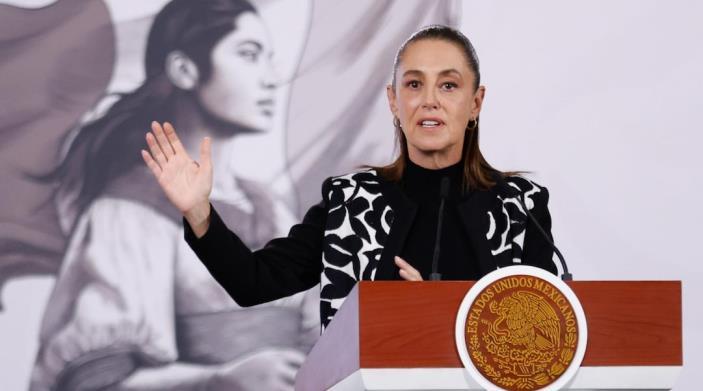
Mexico’s Senate unanimously approved a constitutional reform to gradually reduce the standard workweek from 48 to 40 hours and was immediately sent to the Chamber of Deputies to continue the constitutional process. Although opposition parties supported the reform, senators and labor unions criticized the gradual approach and the fact that it does not incorporate two mandatory rest days per week.
Meanwhile, business groups including Concanaco, Coparmex and the CCE warned of higher labor costs and potential setbacks to formal employment, calling for tax incentives to offset additional fiscal and social security burdens.
It is estimated that the initiative will be approved in the following weeks, and, while it is unlikely that the draft will be modified to implement a two-day mandatory rest, other relevant aspects and clatifiations of the law will be implemented on the secondary regulation, which has to be presented 90 days after the law's publication.
Source: LA JORNADA, EL ECONOMISTA

After the announcement last week of a joint action plan with the United States on critical minerals, President Claudia Sheinbaum and Secretary of Economy Marcelo Ebrard addressed the issue during the morning press conference, defending Mexico’s participation in the negotiations as part of the USMCA review Sheinbaum emphasized that Mexico’s sovereignty remains intact. Also, Ebrard revealed that the U.S. has invited Mexico to join a group aimed at reaching a multilateral agreement on the extraction of critical minerals, with the first meeting among participating countries scheduled for Friday 12th He argued that, geopolitically, Mexico must begin strengthening its own mineral production so it can collaboratively trade with nations that possess resources it lacks
Meanwhile, Washington has placed critical minerals at the top of its USMCA agenda, seeking to build a North American framework that reduces dependence on China’s supply chains. In line with this, Ebrard announced that next week Canada’s Minister of Economy will meet with him, to discuss this, among other topics, accompanied by more than 300 business leaders, signaling interest in supply chain integration For Mexico, deeper cooperation in critical minerals, could unlock investment and reinforce nearshoring, yet aligning with U S -led frameworks may test its sovereignty-driven mining and industrial policies at a pivotal moment for the USMCA.
Source: EL FINANCIERO, FORBES
U S President Donald Trump has reportedly asked his team to outline why the United States should not withdraw from the USMCA The request comes ahead of the treaty’s scheduled review before July 1st and amid renewed trade tensions and a campaign marked by Trump’s protectionist rhetoric. If not renewed, the pact would face annual reviews until its expiration in 2036
As a response, President Claudia Sheinbaum downplayed the possibility of a U S exit, stating that Trump has not raised the issue in bilateral calls and emphasizing the agreement’s importance for the United States. She confirmed Mexico’s intent to maintain continuity and stability in the negotiations; which was confirmed by Secretary of Economy Marcelo Ebrard, who mentioned they are trying to perfect the treaty.
Sources: EL UNIVERSAL

Mexico has significantly expanded its tariff advantage over China in the US market Washington currently applies a 4.18% weighted average tariff to Mexican exports, compared to 30 93% for Chinese goods When Donald Trump took office, the gap was under 12 percentage points; it has now more than doubled. Against a global average of 9 81%, Mexico stands as the lowest-tariff major supplier to the United States, reinforcing its position as Washington’s top trading partner
This, along with Mexico’s tariff implementation on 1,463 products from countries without trade agreements, including China, strengthens Mexico’s relative attractiveness for nearshoring, with limitations Stricter rules of origin under USMCA and the “lesser of two” rule for IMMEX firms limit automatic tariff exemptions Companies relying on maquiladora status without robust origin planning face higher risks, while those investing in compliance and tariff modeling can still leverage Mexico as a competitive export platform in a hightariff environment
Source: EL ECONOMISTA
A bipartisan delegation of eight U S lawmakers traveled to Mexico to strengthen bilateral dialogue on security, trade, migration and agriculture The group included five Republicans and three Democrats, reflecting a coordinated congressional interest in North American cooperation ahead of the USMCA review
The delegation held talks with Mexican deputies and senators at the Chamber of Deputies and with Foreign Minister Juan Ramón de la Fuente The topics of the meetings included security coordination the 1944 Water Treaty, fentanyl trafficking, arms flows, organized crime and the future of USMCA.
This is a clear sign of an overall interest from the U S and Mexico’s authorities to maintain communication channels open to address key issues of both nations
Source: LA JORNADA
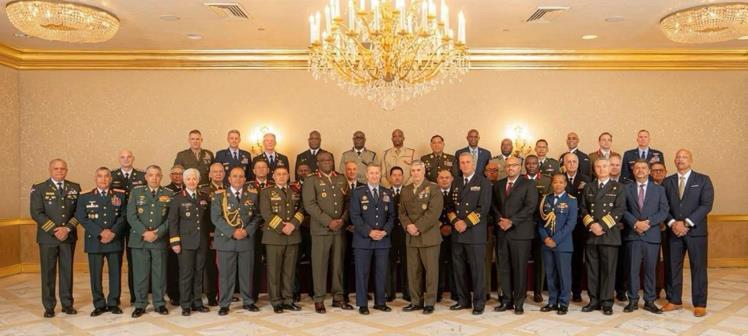
The Secretariat of National Defense (SEDENA) and Secretariat of the Navy (SEMAR) participated in the the Western Hemisphere Chiefs of Defense Conference in Washington, D.C. The meeting brought together defense ministers and military chiefs from 35 countries across the region to discuss shared security challenges and strengthen hemispheric cooperation
Discussions focused on regional stability, transnational threats and mechanisms to enhance military coordination among participating nations. Within this framework, Mexican officials reaffirmed that the implementation of Mexico’s 2024–2030 National Public Security Strategy, along with operational coordination with U S Northern Command along the shared border, has contributed to reducing drug flows into the United States
Source: EMBASSY OF MEXICO IN THE US
The U.S. Federal Aviation Administration (FAA) reopened El Paso International Airport’s airspace after briefly suspending flights after a cartel-linked drone incursion, according to Transportation Secretary Sean Duffy The restriction, set to last until February 20th was lifted when authorities found no ongoing threat.
The incident highlights growing security concerns along the U S –Mexico border, and could potentially reinforce President Trump’s narrative on the importance of U S security deployment in Mexico Also, given El Paso’s strategic role as a regional hub, even short suspensions can have economic and logistical impacts
Source: FORBES
Initiative With Draft Decree
Adding Article 3 and Article 15 of the General Law of Ecological Balance and Environmental Protection
• Presented by: Sen Maki Esther Ortiz (PVEM)
• Objective: Incorporates the definition of environmental justice as the right to fair, equitable, and participatory treatment in decisions affecting the environment and public health, regardless of social condition, and establishes environmental justice as a guiding principle in environmental policy
• Status: Published in the Parliamentary Gazette on February 10, 2026
Initiative with Draft Decree
Issuing the National Artificial Intelligence Law
• Presented by: Sen. Karina Isabel Ruiz Ruiz (MORENA)
• Objective: Establishes a national legal framework regulating the development and use of artificial intelligence in public and private sectors, creating oversight authorities and a national system, imposing data protection and risk assessment obligations
• Status: Published in the Parliamentary Gazette on February 11, 2026
Minute Amending Article 123 of the Constitution Regarding Reduction of Working Hours
• Presented by: Senate
• Objective: Establishes a fortyhour workweek with at least one paid rest day per six worked, limits overtime to twelve weekly hours, prohibits overtime for minors, mandates gradual reduction from 2026 to 2030, and prohibits salary reductions, requiring secondary legislation reforms within ninety days.
• Status: Referred to Joint Committees for opinion on February 11, 2026
Initiative with Draft Decree Amending Section Vi of Article 537 of the Federal Labor Law
• Presented by: Sen Verónica del Carmen Díaz (MORENA)
• Objective: Adds to the objectives of the National Employment Service the design, implementation, and evaluation of targeted employment programs for youth and vulnerable groups, prioritizing individuals who have successfully completed job training programs referenced in Article 123 of the Constitution.
• Status: Published in the Parliamentary Gazette on February 11, 2026
Initiative to Reform the Law On Roads, Bridges And Federal Motor Transport Regarding International Motor Transport At The Northern Border
• Presented by: Sen Juan Carlos Loera (MORENA)
• Objective: strengthen safety requirements for international passenger and cargo transport entering Mexico It establishes compliance obligations concerning safety standards, and monitoring systems; regulates foreign semitrailers; and mandates the publication of priority international corridors.
• Status: Presented to the Plenary on February 11, 2026
Agreement Amending the Instrument to Issues General Rules and Criteria on Foreign Trade
• Presented by: Ministry of Economy
• Objective: Announces amendments to rules on automatic import notices for steel products, introduces new registration requirements for suppliers in the Mill Catalog, and provides for the simplification and digitalization of administrative procedures related to foreign trade.
• Status: Published in the Official Gazette on February 12, 2026.