
April 10th, 2026
April 10th, 2026
The US Trade Representative, Jamieson Greer, signaled that the ongoing review of the USMCA will likely extend beyond the July 1 deadline, as Washington seeks to “re-balance” the agreement Greer emphasized that July 1 should be seen as a political decision point when the U.S. must determine whether to renew the agreement as is or push for deeper renegotiation rather than a hard deadline for concluding talks. This framing introduces uncertainty around the process, as it opens the door to a more prolonged and potentially complex negotiation phase.
The U S strategy centers on addressing perceived imbalances in trade flows, particularly in the automotive sector and in steel and aluminum, areas where the administration of Donald Trump has maintained a critical stance. Washington is also considering differentiated negotiation tracks with Mexico and Canada, reflecting distinct trade concerns with each partner. While technical discussions with Mexico are already underway, talks with Canada may not begin until May, further compressing the negotiation window. Additionally, the U S Trade Representative must notify Congress by June 1 on its intended course of action, a step that will shape expectations ahead of the July decision point
Source: EL FINANCIERO

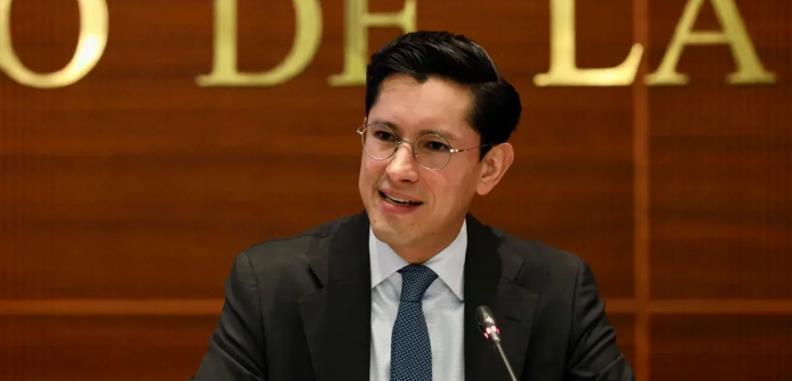
The Mexican Senate ratified Roberto Velasco as the new head of the Ministry of Foreign Affairs (SRE), following the resignation of Juan Ramón de la Fuente due to health reasons. Velasco, who previously served as undersecretary for North America, has been a key architect of Mexico’s relationship with the United States and Canada since 2020 His appointment comes at a critical juncture, as the three partners of the USMCA are engaged in a review process that will define the agreement’s continuity and scope He is also a close ally of the Secretary of Economy, Marcelo Ebrard, reinforcing the importance of collaboration between the ministries for the USMCA review.
Source: FORBES
Mexico’s Congress has moved forward on two priority legislative fronts. In the lower house, lawmakers approved in general terms the so-called “Plan B” electoral reform, a package of secondary law changes aimed at reducing the cost of the electoral system Backed by the ruling bloc, the reform introduces austerity measures such as limits on local legislative spending, salary caps for electoral authorities, reductions in municipal council seats, and a gradual budget cut for the Senate The proposal follows the failure of a prior constitutional reform
In parallel, the Senate approved secondary reforms to the Federal Labor Law to operationalize the transition to a 40-hour workweek The legislation includes mandatory electronic time tracking, a gradual adjustment of overtime limits through 2030, and provisions that effectively guarantee two rest days per week by maintaining an eight-hour daily cap. It also introduces flexibility for alternative hour distributions through mutual agreement between employers and workers
Source: MILENIO, EL ECONOMISTA

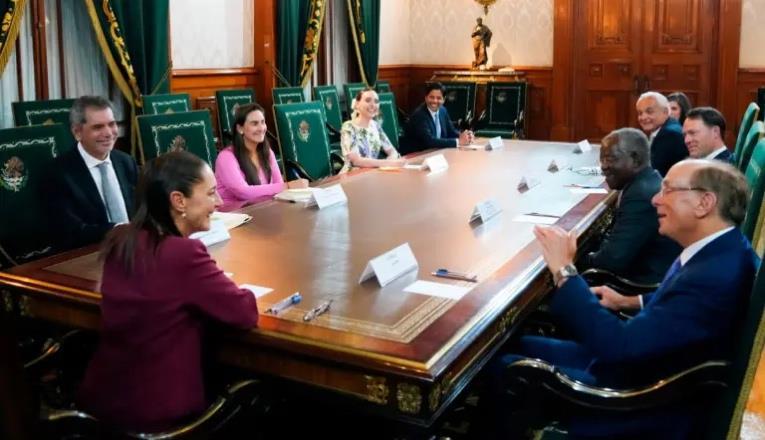
President Claudia Sheinbaum held a meeting at the National Palace with Larry Fink, CEO of BlackRock, and Adebayo Ogunlesi, head of Global Infrastructure Partners, to discuss upcoming investment opportunities in Mexico
The meeting, which included senior officials from the Finance Ministry, focused on identifying potential projects aligned with Mexico’s infrastructure and development priorities
The participation of global institutional investors highlights continued interest in the country as a destination for large-scale capital, particularly in sectors linked to nearshoring and strategic infrastructure. This engagement takes place amid a more complex global backdrop, marked by geopolitical tensions and shifting trade dynamics, including pressure from the United States on international supply chains. Against this context, Mexico is positioning itself as a stable and attractive investment hub, leveraging its integration with North America and ongoing policy efforts to expand public-private investment schemes. The meeting also signals continuity in the government’s outreach to major financial players, as Fink previously met with Sheinbaum shortly after she took office
Source: EL ECONOMISTA
President Claudia Sheinbaum appointed Héctor Alonso Romero Gutiérrez as the new head of the National Agency of Customs (ANAM), replacing Rafael Marín Mollinedo. His reassignment suggests a broader internal reorganization within key administrative posts tied to trade and fiscal collection.
Romero Gutiérrez brings a technical and policyoriented background, with experience in digital transformation, telecommunications policy, and multilateral finance His appointment comes at a critical moment, as improving customs operations is expected to be key for facilitating regional supply chains while ensuring compliance with stricter rules of origin and trade enforcement mechanisms, which is specially important in the context of the upcoming USMCA review. It is important to note that he is yet to be ratified by Congress
Source: MILENIO
Mexico climbed six positions in the 2026 Foreign Direct Investment Confidence Index, moving from 25th to 19th place, signaling a recovery in investor sentiment after years of weak positioning According to consulting firm Kearney, Mexico alongside Singapore was among the fastest risers in the ranking, with investors highlighting the country as a competitive production platform within North America. The economy also ranked as the third most attractive globally in terms of talent and workforce quality, reinforcing its role in regional supply chain integration.
However, the rebound in confidence does not fully translate into realized investment Analysts warn that structural weaknesses—including limited technological innovation, infrastructure gaps, and uneven economic performance continue to weigh on long-term attractiveness. Mexico remains near the bottom of the index in these categories
Source: FORBES
Opinion with Draft Decree Amending the Federal Labor Law on the Reduction of the Workweek
• Presented by: Joint Committees on Labor and Social Security; Legislative Studies, First
• Objective: The reform reduces the maximum workweek to 40 hours, to be implemented gradually from 2026 to 2030. It regulates overtime, limiting it to 12 hours per week and requiring premium pay, and mandates electronic tracking of working hours It also establishes fines for noncompliance and allows flexible distribution of working hours by agreement between employers and workers
• Status: Approved on April 8, 2026, and sent to the Chamber of Deputies
Opinion with Draft Decree Amending the Constitution to Reduce Privileges
• Presented by: Joint Committees on Constitutional Matters; Political and Electoral Reform
• Objective: establishes rules for municipal governance, including council composition. It caps local legislative budgets at 0 70% of state expenditures and limits compensation for electoral authorities to constitutional thresholds, aiming to reduce public sector privileges and strengthen efficiency.
• Status: Approved on April 8, 2026, and sent to Local Congresses
First Reading Opinion Enacting the Law for Promoting Investment In Strategic Infrastructure for Development with Well-being
• Presented by: Joint Committees on Legislative Studies, First; Finance and Public Credit
• Objective: establishes a legal framework to regulate strategic infrastructure investments, regulates investment contracts and creates a permanent advisory council responsible for defining technical criteria, issuing and coordination guidelines.
• Status: Approved on April 7, 2026, and sent to the Executive Branch
Decree Amending, Adding, and Repealing Various Provisions of the Federal Law for the Protection of Industrial Property
• Presented by: Federal Executive
• Objective: The decree modernizes intellectual property protection by simplifying trademark registration, strengthening legal certainty, and enhancing patent procedures. It introduces mechanisms to resolve ownership disputes, protects cultural heritage, regulates ambush marketing, incorporates AI-related infringements, and reduces administrative processing times to improve efficiency.
• Status: Published in the Official Gazette of the Federation on April 3, 2026
Education
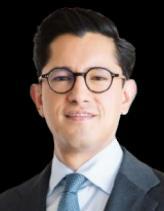
• Law Degree from Universidad Iberoamericana
• Master's in Public Policy from the University of Chicago
• Diploma in Legislative Planning and Operations from the Autonomous Technological Institute of Mexico (ITAM)
• Velasco Álvarez has held various responsibilities within the Ministry of Foreign Relations (SRE), both during Lopez Obrador’s government and the current administration, occupying strategic positions in social communications and as Undersecretary of North America.
• From 2017 to 2018, he held a position as Strategy and Policy Coordinator at the NAFTA Regional Director's office at Promexico.
• He has led high-level negotiations with the United States and Canada on issues such as migration, security, trade, and the management of shared resources.
• During Juan Ramón de la Fuente's medical leave in December 2025, Velasco assumed leadership of the SRE as acting head, from which he established a continuity stance, emphasizing that security cooperation between Mexico and the United States is based on principles and shared responsibility, and not on external pressures
• Velasco Álvarez also has extensive experience in federal, state, and local Mexican government, including positions in the Legislative Assembly of the Federal District, the Miguel Hidalgo borough, and the Ministry of Economy of the Government of Mexico

Education
• Degree in Sustainable Development Engineering from Tecnológico de Monterrey
• Master's in Energy Markets and Finance from the University of Edinburgh
• Héctor Romero held a position as General Director of Telecommunications Policy at the Agency for Digital Transformation and Telecommunications from 2025 to 2026
• He has specialized in energy markets, having held operational roles within the Federal Electricity Commission (CFE) as Director of Specialized Services and Commercial Strategy, Corporate Director of Commercial Business and Regional Assistant Manager
• He was also a consultant for the Inter-American Development Bank on structured financing and energy transition
• His technically-oriented profile, though not specialized in customs, becomes relevant in a context where ANAM is positioned as a strategic axis for the implementation of policies to strengthen customs control and streamline processes.