December 5th, 2025
December 5th, 2025
President Sheinbaum has presented an initiative to gradually reduce the workweek, with the goal of reaching 40 hours by 2030 This proposal is the outcome of a broad national dialogue that included more than 40 workshops and over 2,000 participants It builds on what had been a core priority of the labor agenda since the López Obrador administration. The initiative is scheduled for discussion during the next congressional session, beginning on February 1st , 2026. Additionally, following unanimous consensus among workers, the federal government and the private sector, the administration announced a 13% increase in the minimum wage for 2026 during the Morning Conference This agreement reflects a coordinated effort to improve labor conditions while balancing economic competitiveness
Source: EL FINANCIERO

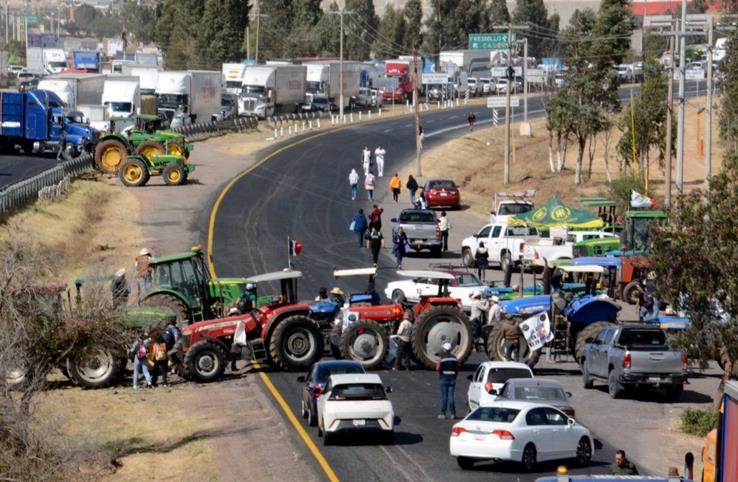
Farmers across Mexico intensified protests and blockades in response to the discussion of the new General Water Law Although federal authorities opened dialogue and introduced 68 modifications to the original draft presented by President Sheinbaum, farmers argue that changes remain insufficient and that the process is moving too quickly, without genuine consultation.
The reform, which has been approved in Congress and is waiting to be published in the Official Gazette, aims to eliminate illegal water markets, strengthen transparency, recognize community water systems, and safeguard access for vulnerable users
Opposition parties criticized the law as a tool for centralizing water control, while rural leaders described its approval as a “betrayal,” arguing that only superficial changes were added at the last minute. They have vowed to escalate nationwide mobilizations, including possible actions around Morena’s scheduled rally this weekend.
For industry, improved monitoring and transparent allocation may strengthen longterm planning, though increased bureaucracy and the risk of reduced concession volumes could complicate operations, particularly in water-stressed regions
Source: LA JORNADA
President Claudia Sheinbaum will hold her first face-to-face meeting with U S President Donald Trump today in Washington, in the context of the World Cup draw Sheinbaum emphasized that the visit is driven by the opportunity to bring the three North American leaders together and advance discussions on trade cooperation. The meeting comes amid tensions over Trump’s migration and trade policies and his statements about intervening against organized crime in Mexico.
Source: EL PAIS

U S President Donald Trump stated that he may allow the USMCA to expire next year, suggesting he would seek a new agreement with Mexico and Canada instead, arguing that both countries had “taken advantage” of the United States under previous administrations. His remarks generated immediate uncertainty given that the agreement was renegotiated during his own first term and has been central to regional economic integration. In response, the most influential business organizations in North America the Mexican Business Council (CMN), the U S Business Roundtable, and the Business Council of Canada issued a joint statement urging all three governments to move quickly to extend and strengthen the USMCA ahead of the first joint review. They stressed that North American trade and integrated supply chains have delivered decades of economic benefits and that preserving a tariff-free, stable trilateral framework is essential for long-term competitiveness, investment certainty, and job creation across the region
Source: EL UNIVERSAL
Mexico’s exports have grown approximately 5% so far this year, driven primarily by accelerated purchases from U S companies seeking to avoid the impact of newly announced tariffs. Analysts from Banamex explain that many firms front-loaded imports month after month, providing an unexpected boost to Mexican external sales. This trend reinforced Mexico’s long-standing role as the United States’ leading import supplier. According to Banamex, Mexico currently enjoys a widened tariff advantage under the USMCA: U S tariffs on Mexican goods stand at 5%, compared to 11% applied to the rest of the world This differential has expanded Mexico’s competitive edge over countries such as China and Canada. Nonetheless, structural risks such as the USMCA renegotiation, domestic inflation, and political volatility, could challenge this momentum in 2026.
Source: FORBES
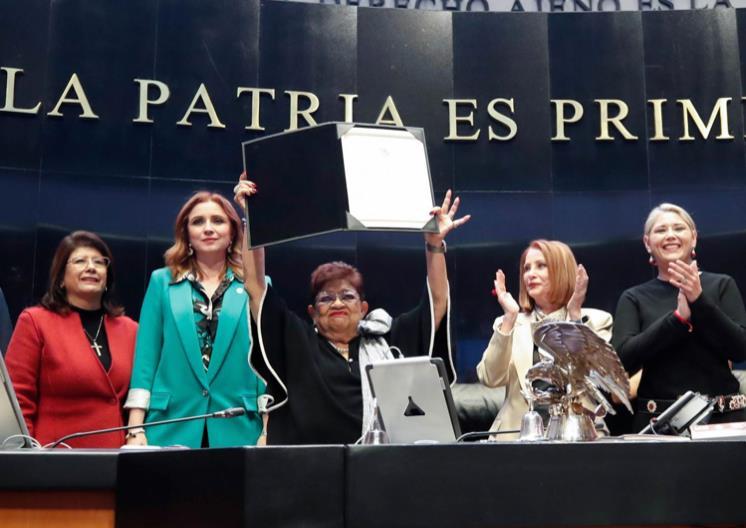
Mexico’s Senate has appointed Ernestina Godoy as the new General Attorney for a nine-year term, following the resignation of Alejandro Gertz Manero Her nomination was part of a shortlist sent the by President Claudia Sheinbaum, with whom Godoy has longstanding professional ties from her time as Mexico City General Attorney and later as Sheinbaum’s legal adviser. This closeness has raised concerns among opposition parties and analysts regarding the autonomy of the Attorney General's Office of the Republic. Godoy’s appointment marks the beginning of a new phase for the justice system, with expectations for deeper structural changes and stronger results in combating high-impact crime
Source: CNN
Bill to Amend the Federal Labor Law on Reducing the Workweek
• Presented by: Federal Executive
• Objective: The proposal sets a maximum 40-hour workweek, defines daily limits by shift type, and regulates overtime with higher pay rates It mandates at least one paid rest day per six days worked, requires employers to electronically track work hours, and introduces a gradual transition to reach 40 hours by 2030 without reducing pay.
• Status: 2025-12-03 –Referred to United Commissions for review
Minute that Issues the General Bill to Amend Article 123, Section A of the Political Constitution of the United Mexican States on Reducing the Workweek
• Presented by: Federal Executive
• Objective: The proposal introduces a 40-hour weekly work limit, mandates at least one paid rest day for every six days worked, and sets weekly overtime at a maximum of twelve hours. It includes a gradual reduction of the workweek from 48 hours in 2026 to 40 hours in 2030 without affecting compensation
• Status: 2025-12-03 –Referred to United Commissions for review.
Initiative to Issue the General Water Law and Amend the National Waters Law
• Presented by: Federal Executive
• Objective: The initiative issues a new General Water Law to guarantee access, availability, and sanitation of water, define shared responsibilities across government levels, promote sustainable use, and recognize community water systems. It also reforms the National Waters Law to strengthen state control, eliminate transfers of water rights, ensure proper use of concessions, improve transparency, deter irregular practices, and establish water-related offenses
• Status: 2025-12-04 –Approved, turned to the Federal Executive for its publication in the Official Gazette (DOF)
With the legislative period ending on December 15th, these are the priority initiatives that could see movement in this final week:
• Circular Economy Law,
• Tariff Law,
• Health Law (vaping).
Initiative to Amend the General Law on Personal Data Protection Held by Obligated Parties and the Federal Law on Personal Data Protection Held by Private Parties
• Presented by: Senator Olga Patricia Sosa Ruiz (MORENA)
• Objective: The reform requires that express consent for personal data processing also be unequivocal, demonstrated through clear evidence It mandates that consent be free, specific, and informed, and establishes rules for obtaining consent for minors or individuals under legal incapacity in accordance with applicable civil legislation
• Status: 2025-12-03 –Published in the Parliamentary Gazette.
Initiative to Amend the General Law on Humanities, Sciences, Technologies and Innovation
• Presented by: Senator Waldo Fernández González (PVEM)
• Objective: The proposal defines effective anonymization and privacyenhancing technologies, requiring authorities to promote mechanisms that protect personal data during processing. It aims to ensure data cannot be reidentified while maintaining accuracy and integrity, and aligns these obligations with existing personal data protection laws.
• Status: 2025-12-03 –Published in the Parliamentary Gazette