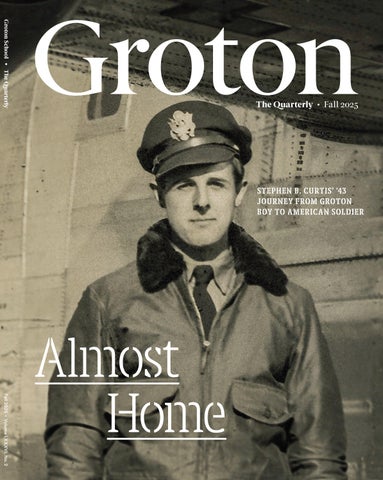
Almost Home
Groton School
The Quarterly • Fall 2025
Volume LXXXVI, No. 2
Stephen B. Curtis 1925–1945
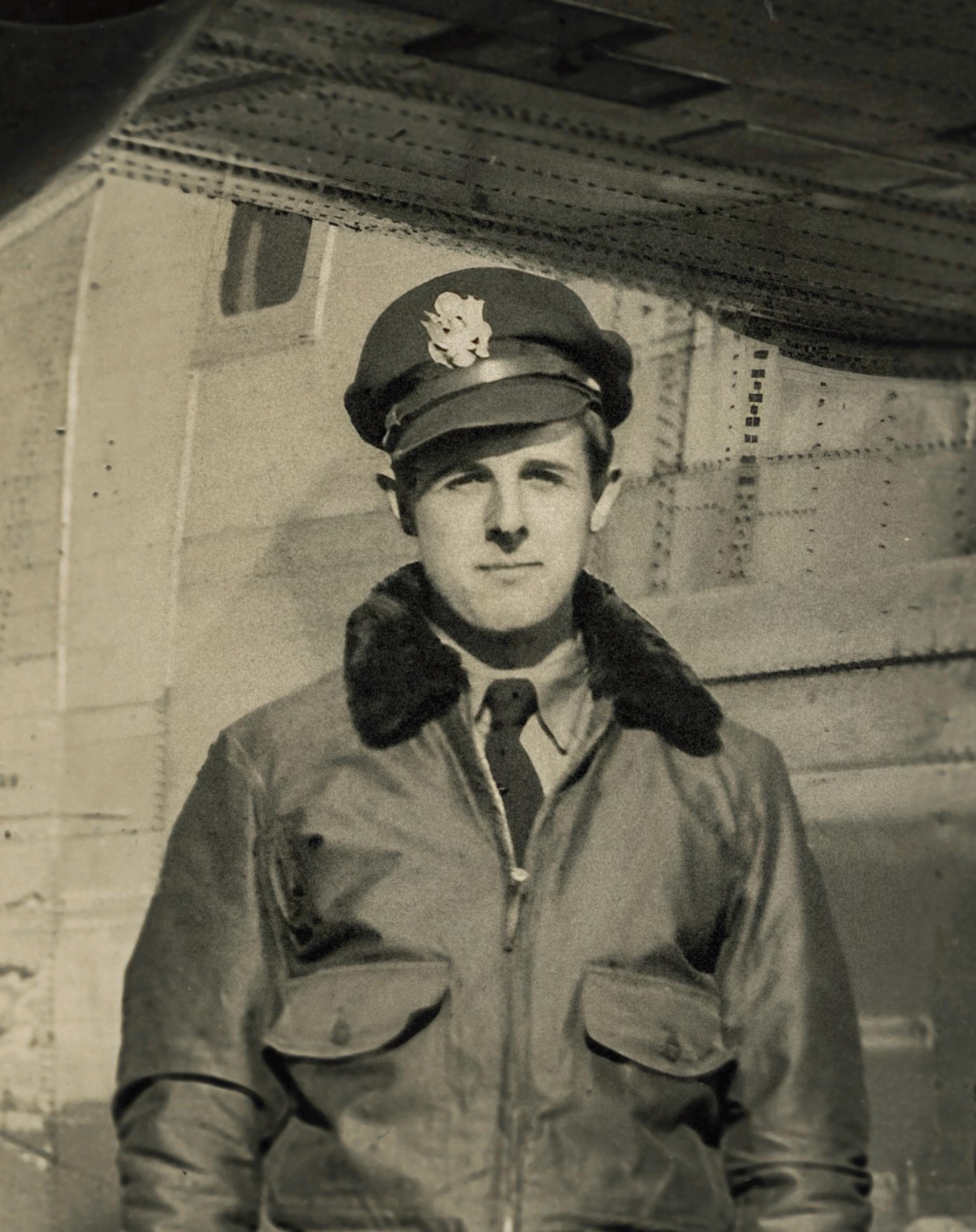
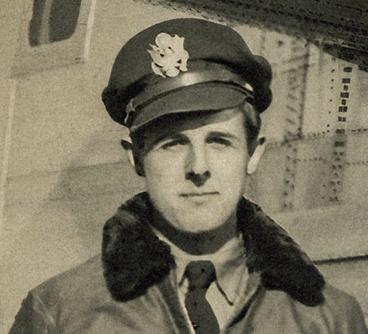
Eighty years ago this past spring, Stephen B. Curtis ’43 was killed in a plane crash, just one day before the Germans surrendered in World War II. A collection of photographs and excerpts from a small collection of his letters give a glimpse into his too-short life, and show the speed with which Groton boys were forced to become men and soldiers during wartime.
A Fond Farewell
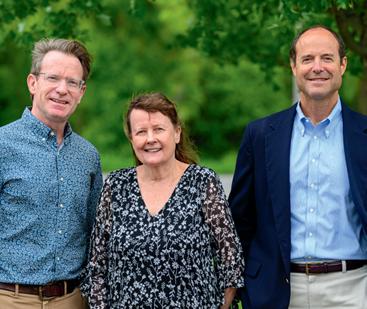
With more than seventy combined years of teaching at Groton School, Dave Prockop, Monika Andersson, and Peter Fry leave the Circle a better place for those who live and learn here.
2 M essage from the Headmaster
3 Circiter / Around the Circle
30 Prize Day
42 Reunion
58 Voces / Chapel Talks
64 De Libris / New Releases
66 Grotoniana / Athletics
80 Grotoniana / Arts
86 In Memoriam
91 Form Notes departments
Left: photo by Alyssa Mattei
Message from the Headmaster
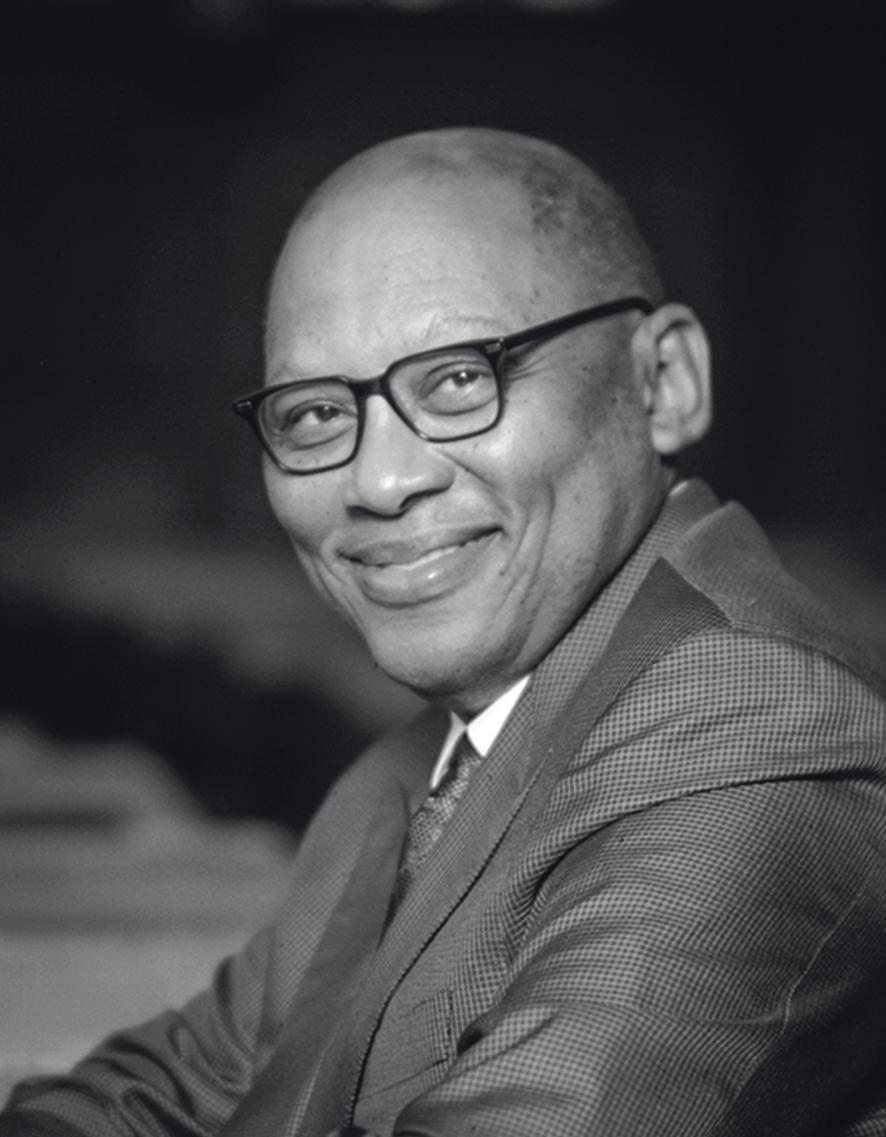
groton school has always been guided by intentionality and collective leadership. As we begin a year of celebrating the fiftieth anniversary of the first women to enroll at Groton, we should appreciate the role these two guiding principles have played in the success of coeducation on the Circle.
Who would have predicted that this school of consequence and dynamic equilibrium—a school that has opened doors far and wide—would have sprung from a simple conversation over Sunday lunch more than 140 years ago between a man in his late twenties, the Rev. Endicott Peabody, and a woman in her early thirties, Caroline Estelle Mudge Lawrence, whose husband’s family owned property in Groton on Farmers Row? During this lunch at the Lawrence homestead, Rev. Peabody described his intent to start a new school for boys—as soon as he could find the land. Inspired by the rector’s vision and intentionality, Mrs. Lawrence spoke to her husband, James, and together they decided to make available the land on which Groton is now located.
Little did Rector Peabody and Mrs. Lawrence know of the full consequences of their conversation. The Rev. John Crocker, a graduate of the school and its second headmaster, would go on to admit the first African-American student three years before Brown v. Board of Education began the march toward desegregation in 1954. Less than a century after this fateful lunch, the school would admit its first women. And less than 130 years later, a Black couple would be living in the Headmaster’s House and leading the school.
Does that optimism, openness, and dynamism to forge new paths still operate at Groton, more than 140 years later? I believe it does, as a continuum that can be traced back to that lunch conversation.
A continuum of progress is never a function of one individual. Seminal ideas only succeed when there is collective leadership and buy-in. Coeducation is a continuum that has had its fits and
starts, but it has always been driven by the pursuit of excellence, inclusion, and relevance. Not satisfied with the tradition of a boarding school exclusively for boys, our predecessors sought to improve the Circle in a dynamic and deliberate sense through coeducation. And our school got better!
As a result, we mark fifty years of coeducation this academic year with the same intense focus on inclusion that has been a hallmark of the school since its founding. Unlike most of our peers, who had the opportunity to merge with neighboring girls schools, the option of integration was not available to Groton, and therefore the process was a bit more complex. Thus, we honor both the girls who were pioneers and the trustees, alums, administrators, and teachers who were architects of this brave, deliberate, and inclusive act.
In addition to special activities and programming throughout the school year, the Winter 2026 Quarterly will be dedicated to telling the varied stories of coeducation at Groton. Please join me as we salute the pioneers and tip our hats to the architects of coeducation at Groton.

Temba Maqubela Headmaster
Editor Sean Kerrigan P’29
Design
Stoltze Design Group
Senior Editorial Advisors
Kate Machan
Alyssa Mattei
Christopher Temerson
Form Notes Editor
Jessica M. Hart
Advisory Committee
Susan Daniells
Amily E. Dunlap
Giulia King
Allison S. MacBride P’30
Editorial Offices
The Schoolhouse Groton School
Groton, MA 01450
978 - 448 - 7506 quarterly@groton.org
Send feedback, ideas, or letters to the editor to quarterly@groton.org.
Other School Offices
Alumni Office: 978 - 448 - 7520
Admission Office: 978 - 448 - 7510
Groton School publishes the Groton School Quarterly three times a year, in the fall, winter, and spring/summer, and the Annual Report once a year.

Photo by Mitch Weiss
Support for GRAIN initiative breaks $100 million mark
fundraising support for Groton School’s GRoton Affordability and INclusion initiative—better known as GRAIN—broke the $100 million mark just minutes before a special dinner held April 25 to celebrate its ten-year anniversary, bringing the school’s total fundraising since 2014 to more than $220 million.
The $2 million donation that pushed GRAIN fundraising over this historic mark was made by an anonymous donor family with long and generous ties to the initiative. In November 2014, they made the original $5 million “parking lot” commitment that launched the GRAIN movement. Then, in December 2018, their $1.7 million gift brought GRAIN to its initial $50 million goal, generating great excitement and producing critical momentum that has spurred the initiative
onward. This past Christmas, they donated another $2 million to support Groton’s announcement that tuition will now be free to students whose family income is $150,000 or less.
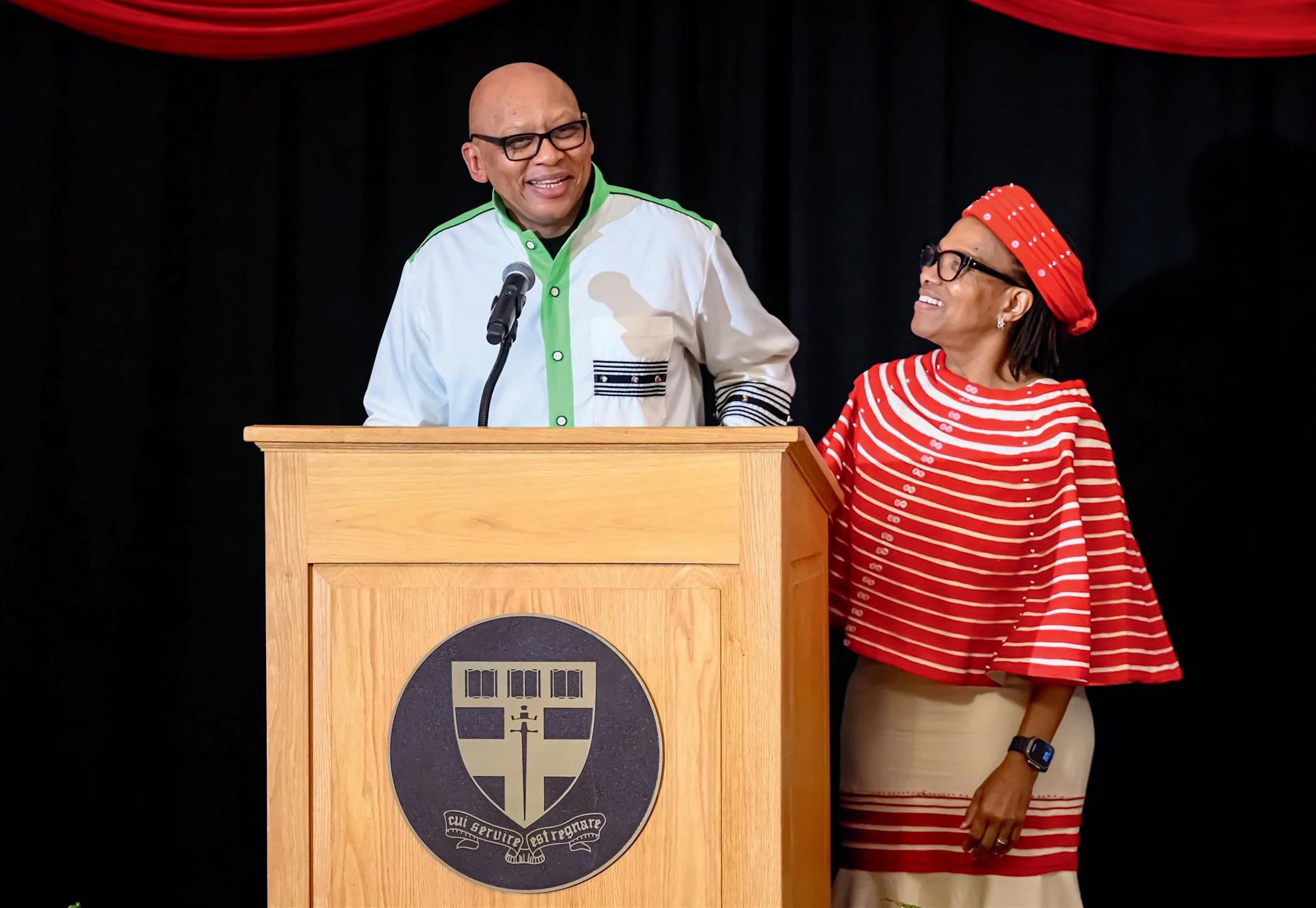
“At 5:32 p.m., we received the delta gift that got us to $100 million,” Headmaster Temba Maqubela told the assembled crowd of trustees, supporters, and special guests prior to dinner being served. “It just doesn’t get any better than this.”
In addition to putting GRAIN fundraising over $100 million, the gift also pushed the school’s larger fundraising effort—which ultimately began in 2014—over $220 million in gifts and pledges in support of the GRAIN initiative for tuition and cost containment, the GRACE summer program, debt reduction and financial stability, construction of a new track and field
complex, faculty housing, and faculty chairs. Of the $100 million GRAIN total, $87.2 million is already gifted in cash.
“Thank you, thank you, thank you so much,” said Mr. Maqubela. “You all made this possible with your time, with your talent, with your treasure. Even when you didn’t believe that this was going to be possible. There is no language that can express how grateful we are to live a life of meaning that you’ve made possible.”
The GRAIN celebration dinner started with grace offered by Groton’s sixth headmaster, Bill Polk ’58, and a toast by Jonathan Klein P’09, ’11, ’18, who, as Board of Trustees president when GRAIN began, helped rally early support for the initiative.
A lineup of speakers followed, each touching on the many ways GRAIN and its accompanying mindset—that Groton should do everything in its power to
Photo by Adam Richins
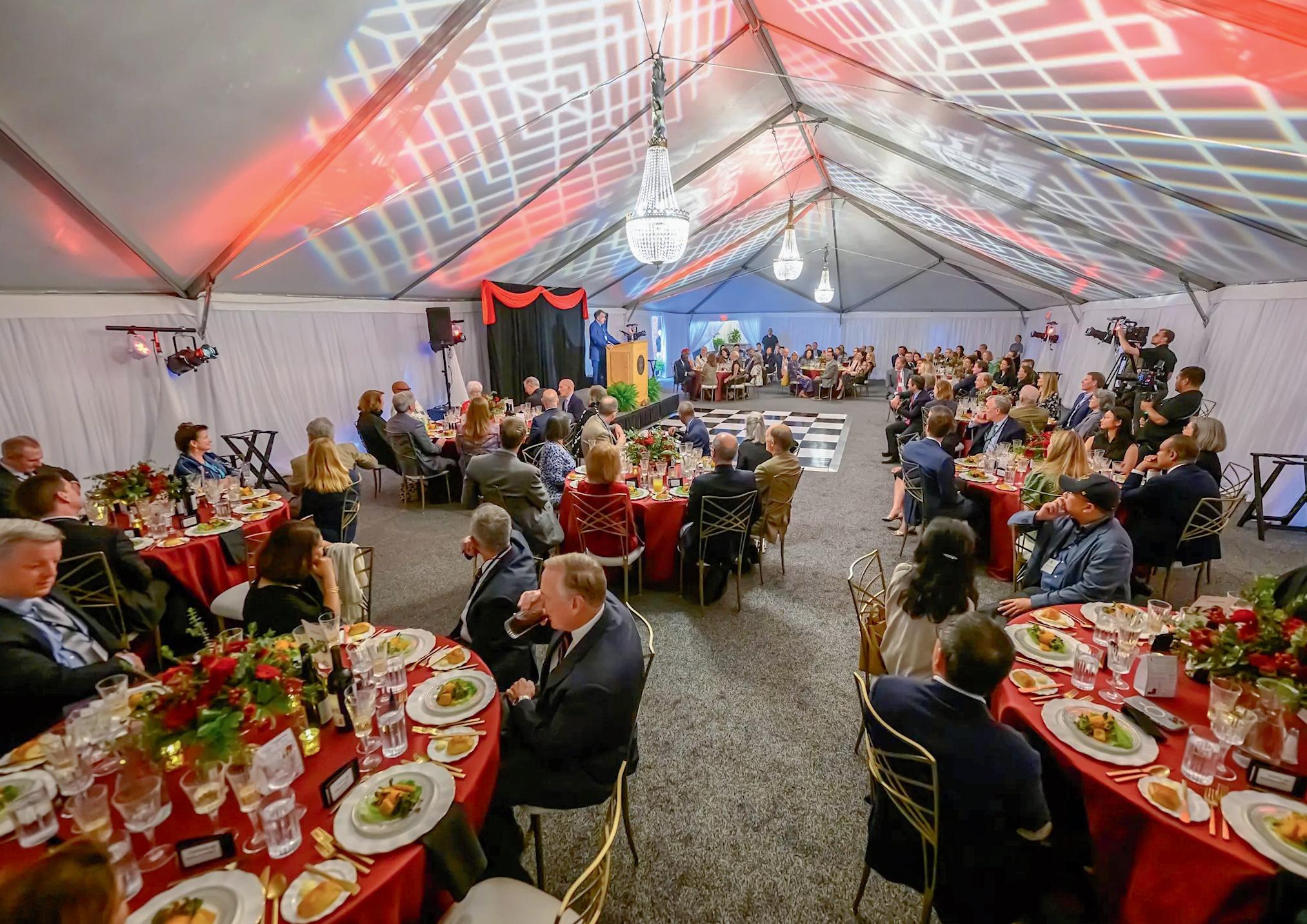
remove any barriers that prevent the school from attracting the most talented student body possible, and ensuring the success of those students once they arrive—has come to define life on the Circle.
“I consider it remarkable that GRAIN has yielded $100 million in just ten years,” said Gardner Mundy ’59. “Most capital campaigns focus on bricks and mortar, or something tangible. GRAIN instead focused on an idea. This took a lot of guts because the intangibility of the idea was coupled with deliberate tuition freezes and purposeful decisions to keep annual increases at or below the level of general inflation. These constraints directly affected the school’s revenue stream and complicated its financial planning and overall management. But look at how well it worked.”
Former trustee Diana Ferguson ’81, who served as board treasurer from 2018 until the end of her tenure in 2024, said GRAIN was more than a typical campaign.
“As I consider the journey of GRAIN— both where it began and where it’s headed—I feel an overwhelming sense of purpose and gratitude,” Ms. Ferguson said. “Seven years ago, I described GRAIN as a continuum—not a campaign with a start and finish, but a long-term commitment to affordability and inclusion that would evolve as our school and community evolved. When we launched this initiative, we knew we were undertaking something bold—something
that would challenge unconventional thinking about independent school financing.
“It’s truly fair to say that every dollar raised for GRAIN wasn’t just a donation, but an investment—an investment in Groton’s future, in its students, and in our shared vision of inclusion,” she added.
Kathy Giles, current rector of St. Paul’s School and former longtime Groton faculty member, praised Mr. Maqubela and everyone involved in making the idea of GRAIN become such a successful reality.
“I have been so pleased and proud to watch the school grow to realize what at first was Temba’s vision but has now become the shared vision of a storied school that embraces the best of its core while boldly evolving to reaffirm its relevance and leadership among independent schools today,” said Mrs. Giles. “I could not help but admire the courage and commitment of the trustees
and the alumni, family, and friends who shared the hard work of articulating and then executing these very ambitious goals within the framework of the Groton experience.”
The appeal of GRAIN is truly global, as support has come in from fourteen countries spanning five continents. In her remarks, Trustee Nancy Yang P’18, ’29 explained why.
“In my role as part of the global Groton family, sometimes people ask me, ‘Why is there such huge support for GRAIN from families in Asia?’ and my answer is always the same,” she said. “I can’t think of a single GRAIN donor in Asia whose personal life trajectory hasn’t been fundamentally altered by access to education. It could have been in their generation or in their parents’ generation but the story is the same and resonates deeply with our international Groton families: Access to education changes lives. Personally, I believe access to a Groton education changes the world.”
Adopted by the Board of Trustees in November 2014 as the school’s numberone strategic and fundraising priority, GRAIN froze tuition for four years and allowed for moderate increases in other years, while expanding the number of students receiving financial assistance and guaranteeing that Groton School would consider all applicants without regard to their ability to pay. As a result, the school’s tuition—the highest among forty peer schools in 2014–15—is now lowest, and Groton is recognized as the leader among independent schools in inclusion and tuition containment.
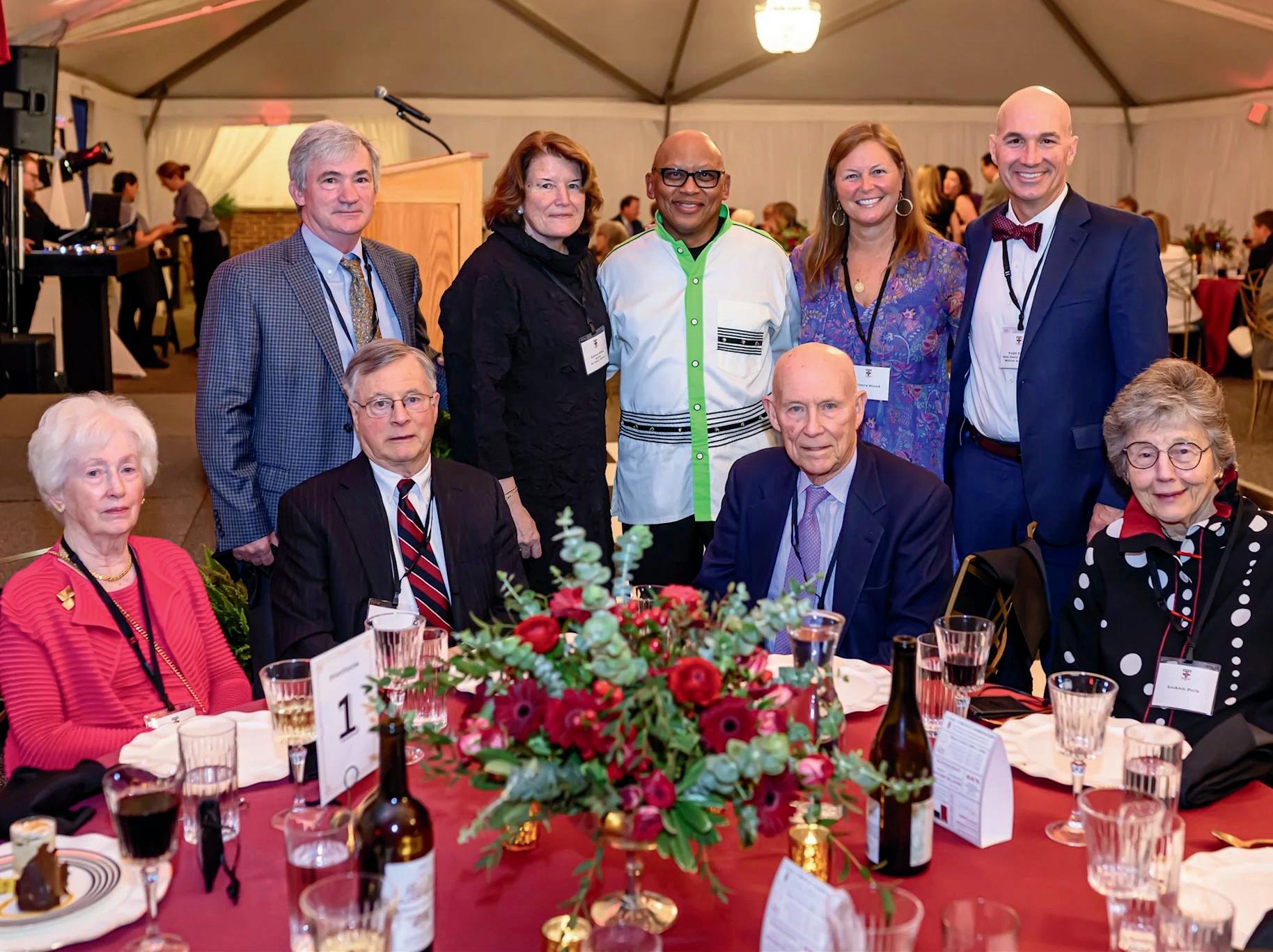
Photo by Adam Richins
Photo by Adam Richins
Groton School names Susan Daniells director of development and alumni affairs
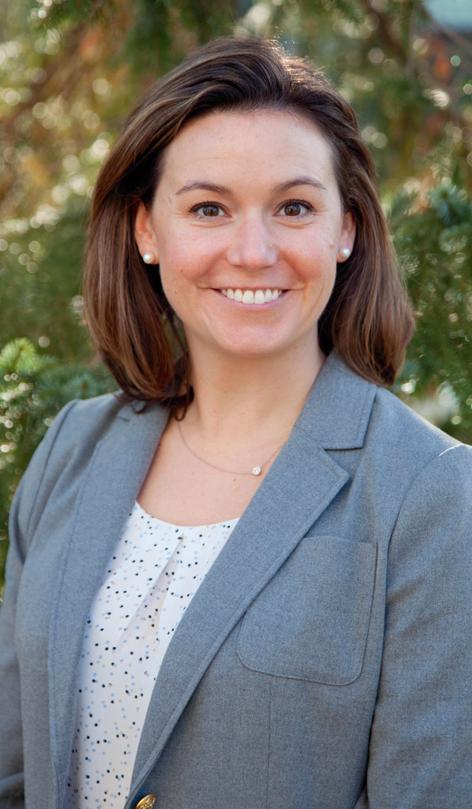
following a national search , Groton School announced the appointment of Susan Daniells as its next director of development and alumni affairs effective this past April.
Ms. Daniells comes to Groton School with twenty-two years of experience in higher education fundraising and alumni engagement. From 2018 until joining Groton, she served her alma mater, Connecticut College, as interim vice president for college advancement and director of development.
“I have dedicated my career to furthering the mission of education,” said Ms. Daniells. “My family and I are eager to become integral members of the community and move forward Groton’s ideals through meaningful philanthropy.”
Previously Ms. Daniells held leadership positions in fundraising at Yale University from 2013 to 2018, and she also worked in various development and alumni/ae affairs roles at Vassar College.
“Susan’s extensive experience in fundraising at a number of institutions at the college level and her deep interest in Groton and its mission shone through all the discussions we had with her,” said Benjamin Pyne ’77, P’12, ’15, president of Groton’s Board of Trustees and a member of the search committee. “We are so excited that she will be joining the Circle, and look forward to working with her in the years ahead.”
Ms. Daniells succeeds Director of Development and Alumni Affairs John D. MacEachern P’10, ’14, ’16, who retired at the end of the academic year after twenty-one years at Groton. Among his many accomplishments, Mr. MacEachern managed successful fundraising efforts in support of nearly every aspect of school life, and his contributions will continue to have a positive impact on the Circle far into the future.
“As John MacEachern concludes his tenure, spanning more than two decades and two headmasters, we are grateful to him for his outstanding service and loyalty to our school,” said Headmaster Temba Maqubela. “A new and exciting chapter begins with the arrival of Susan Daniells, who will take over the reins of alumni and parent relations and institutional philanthropy. We extend a Groton embrace to Susan and her family, and we look forward to her leadership during a pivotal time in the school’s history, particularly as we approach Groton’s sesquicentennial.”
Margaret Kaneb ’25 Wins Seventh Annual McCormick Library Bookplate Contest
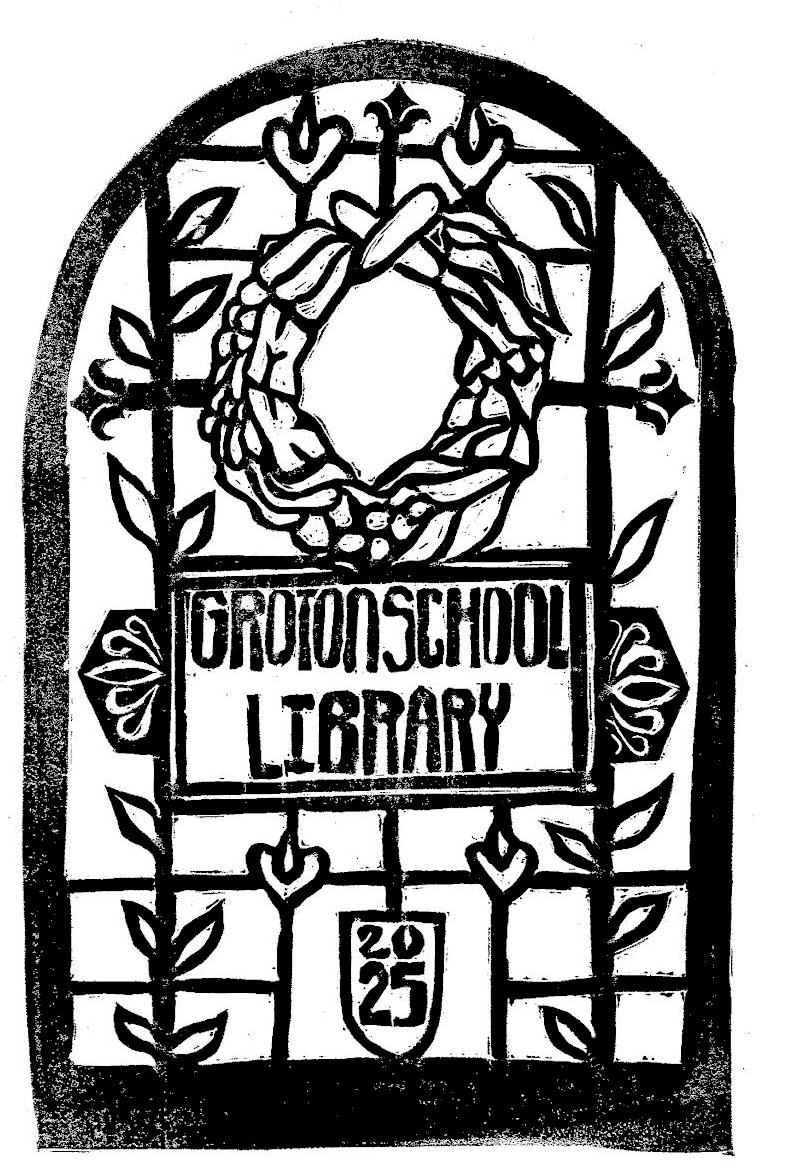
congratulations to margaret kaneb ’25, the winner of this year’s Groton School Library Bookplate contest.
Margaret’s linotype print incorporates elements from a stained glass window in Chaplain Allison Read’s classroom in the Schoolhouse. The wreath at the heart of the original design memorializes Phillips Brooks, a founding trustee of Groton School. His friend, Sarah Wyman Whitman, a noted artist and book designer from 19th century Boston, gifted this work of hers to the school following his death in 1893.
The bookplate design brings the arts-and-crafts style of the original into alignment with this 21st century “window” into the library, and elegantly fulfills other design requirements of the contest. Margaret cleverly embeds her initials (a requirement of the contest) into the
wreath, substitutes “Groton School Library” for the Brooks dedication, and incorporates the graduation year (another requirement) where the alpha and omega symbol appears in the original.
Each year, the Art Department invites select Sixth Form students to submit a design for consideration. Library Director Mark Melchior and Visual Arts Department Head Jenn Ho were thrilled with Margaret’s idea for the design after seeing the initial submissions, and Ms. Ho worked closely with Margaret on the final version of the print.
“The process of bringing a bookplate design to life each year is always a pleasure,” Ms. Ho said, “and this year was no exception.”
Margaret joins an elite group of seven previous contest winners: Sophie Park ’19,
John Donovan ’20, Zoe Park ’21, Wren Fortunoff ’22, Mei Matsui ’23, and co-winners Zimo Liu and Marlene Ma ’24. A copy of each of their original prints appears in the Schoolhouse hallway near the school store.
Spring Community Day shines spotlight on service and social awareness
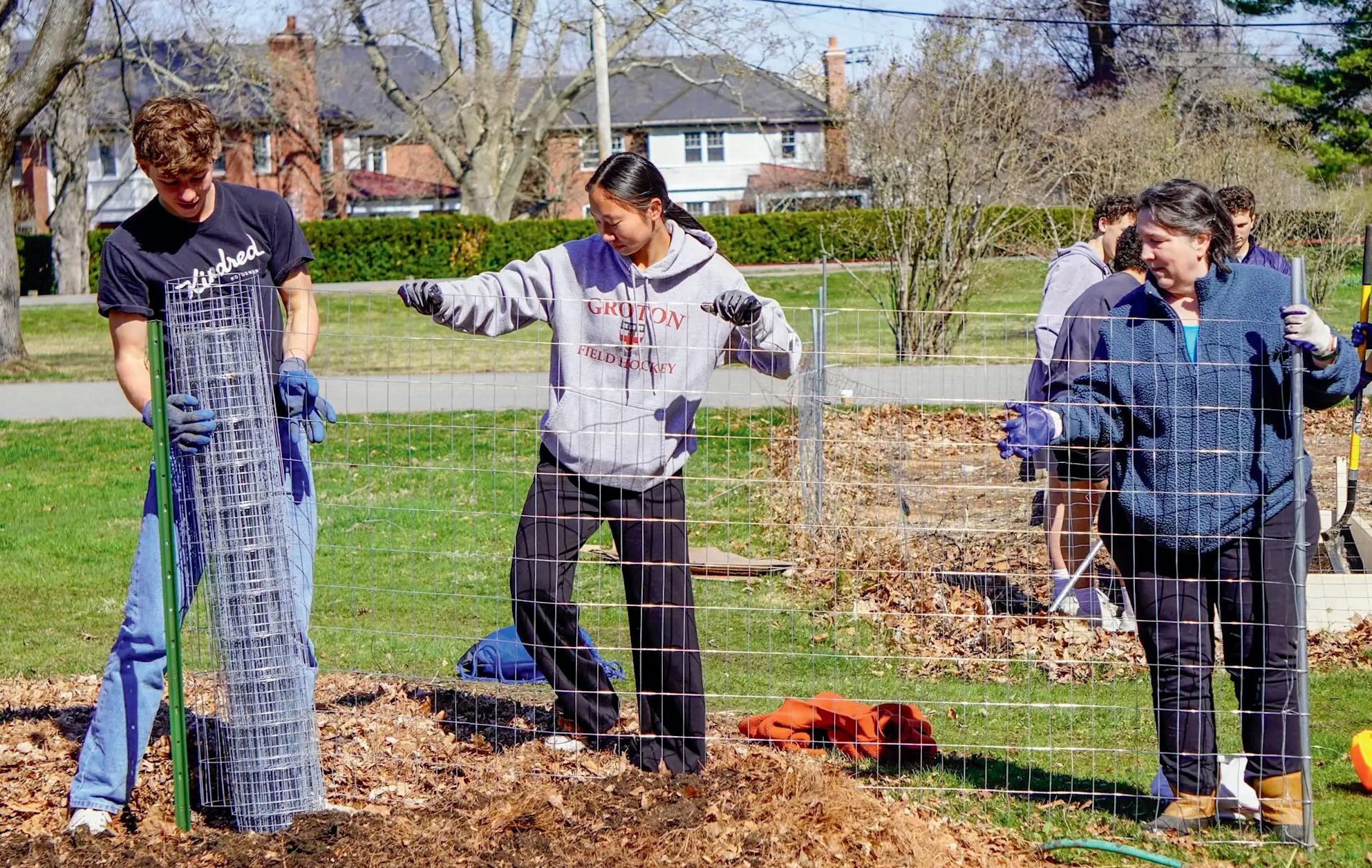
classes gave way to community building on the Circle this past April 18, as students and faculty used a day off from studies to focus on service and social awareness.
After regular Chapel service, students and faculty split into two groups: one doing service projects throughout campus and the region and the other attending student-led workshops. After lunch, the groups switched.
In total, thirty-two workshops were held on topics ranging from an exploration of free speech rights to ways to build a more inclusive world.
“I think it’s vital for our kids to not only engage in meaningful conversations about social issues to express their voice, but also to embody that through their actions and see how it affects those around them to discover their sense of purpose in the community,” said Director of Community
Engagement Elizabeth Phan, who organized the event alongside Dean of Diversity, Inclusion, and Belonging Sravani Sen-Das and Director of Alumni Engagement Allison MacBride. “They are learning through experience and how to connect their values, like gratitude, social awareness, and humility. Our hope is to develop their character as role model citizens, ready to take on the outside world beyond the Circle.”
In addition, alumni Lauren von Stackelberg ’08, Liz MeLampy ’12, and Emma Keeling ’17 took part in workshops throughout the day before joining together for an alumni panel at the end of the day.
Another highlight of the day was a visit from General Enoch “Woody” Woodhouse II, one of the last surviving Tuskegee Airmen. Born in Roxbury in 1927, General Woodhouse enlisted in the U.S. Army Air
Corps on his 17th birthday and served in the groundbreaking 332nd Fighter Wing. Commissioned as a second lieutenant at 19, he overcame the challenges of segregation and went on to a remarkable career in law and public service. General Woodhouse shared stories of his extraordinary life, military service, and legacy of courage and resilience in one of the afternoon sessions.
Groton Community Engagement public service opportunities took students throughout the region for projects at nonprofits and other community organizations in Groton, Acton, Ayer, Harvard, Leominster, Lowell, Lunenburg, North Chelmsford, Pepperell, Townsend, and Nashua, N.H. On campus, students decorated the Webb Marshall Room and arranged flower bouquets for special thank-you meals for the Eagle Cleaning crew and the Dining Hall staff.
Record-breaking admissions season yields 95 new Groton School students
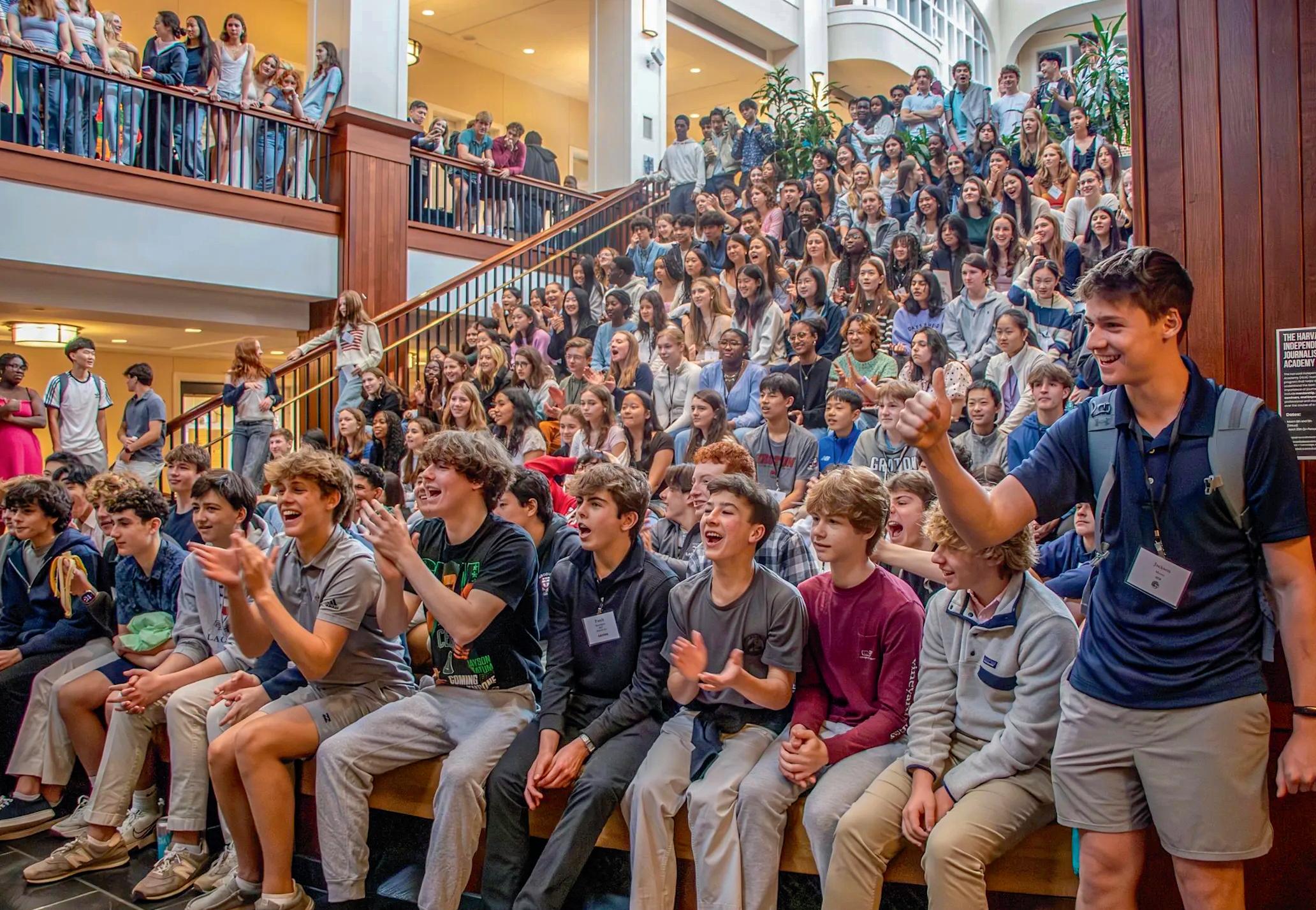
groton school welcomes its ninety-five newly enrolled students after a record-breaking admissions season.
In total, 74 percent of admitted students said yes to Groton, a modern-day record. For the third year in a row, more than 50 percent of the new Groton students are people of color.
Ten years after being adopted as the school’s number-one priority, the GRAIN (GRoton Affordability and INclusion) tuition- and cost-containment initiative continues to have a positive impact on Groton’s student body, as nearly half of newly enrolled students—46 percent—will receive financial aid as a result.
Total applicants were 1,674, up 11 percent from last year’s number of 1,512.
“An 11-percent increase in applications has not happened for years,” said Dean of Admission and Financial Aid Ian Gracey. “The enthusiasm for Groton is reflected in an historically high yield of admitted students.”
The announcement follows two special events for accepted students and their families on campus, where they could see for themselves the many things that set the Groton experience apart.
These early April events included performances by student musicians and dancers and a peek into some of the traditions Groton holds dear, including Parlor in the Headmaster’s House and morning services in St. John’s Chapel.
Parents spent mornings at panel discussions with Groton faculty and current parents and a residential life presentation with dormitory heads and prefects, while accepted students started a day with their Groton guides by attending class and seeing first-hand what a day on the Circle is like.
After lunch, families were invited to attend class or meet leaders from academic and co-curricular programs, Health and Well-Being, College Counseling, athletics, the arts, and student clubs in the Schoolhouse’s Sackett Forum.
Mr. Gracey said the events gave the Groton student body, faculty, and staff the chance to show off what makes Groton so special, and that the effort paid off with another record yield number.
“Students and faculty pulled their weight during revisit days,” he said. “Eighty-three percent of attendees chose Groton!”
Groton Student Photographers Earn Secondary School Photography Awards
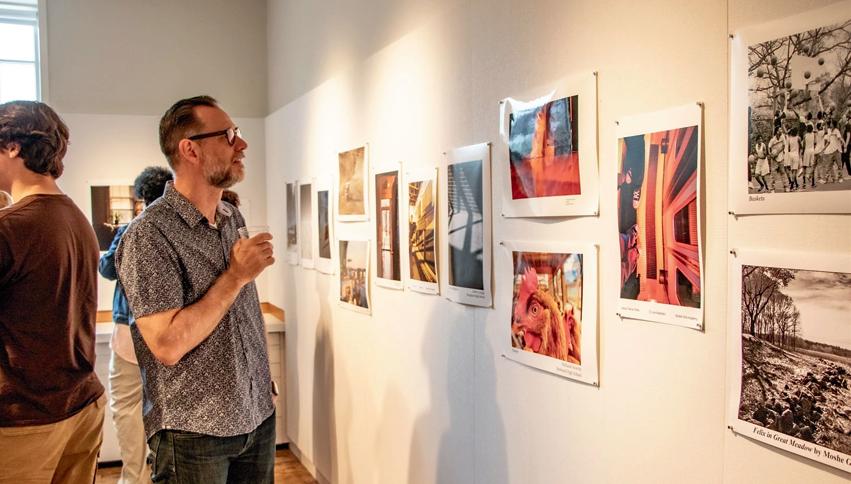
groton school student photographers were well represented at the Griffin Museum’s 2025 Secondary School Photography Exhibit, held in the school’s own Christopher Brodigan Gallery.
Alejandro Hassan ’26 took home honorable mention for his “Blue,” and Abby O’Neil ’25 won the People’s Choice Award for “Shadows.” Hazel Beastrom ’26 and Seb Lewin ’26 also had their work displayed.
“I started taking photography two years ago and really dived into it over the last year or so,” said Alejandro. “Winning the award was neat because there were a lot of really creative pictures there, so knowing people saw mine as to that level was really cool.”
“My grandma taught me photography when I was younger, but I was only able to take formal classes starting in Fourth Form,” said Abby. “I felt incredibly honored and grateful receiving my reward. It showed that the work I did with [Groton photography faculty members] Ms. [Monika] Andersson and Ms. [Blake] Fitch has paid off and it motivates me to keep pursuing photography as a storyteller.”
Since 2019, the Winchester, MA-based Griffin Museum has sponsored the Secondary School Photography Exhibit, showcasing the talent and vision of young photographers from across the greater Boston area. Students from both independent and public high schools were invited to participate, and seventeen schools took part. Photography teachers from each school selected four outstanding images to represent their programs.
Crista Dix, executive director of the Griffin Museum, was on hand May 18 to present awards at an opening reception for the exhibit. First place went to Jillian Falcione from Stoughton High School, second place to Bain Coyne from Milton Academy, and third place to Elio Franco Harrinzon from Framingham High School.
GRACE’s tenth summer attracts yet another record enrollment
grace celebrated its tenth summer with another record enrollment, expanded academic offerings, and plenty of enrichment and fun during a particularly hot Groton July.
“GRACE was a huge success this summer,” said GRACE Director Cort Pomeroy. “Despite being our largest group to date by a significant number and having to endure our hottest summer on record at GRACE, the program ran remarkably smoothly—a credit to our seventy-three scholars, teachers, dorm heads, and TA’s.”
Started in 2016, the optional GRACE (GRoton Accelerate Challenge Enrich) program is designed to prepare rising Fourth Formers for the rigors of Upper School. The flexibility of the curriculum helps all participants reach their full potential, whether that involves filling a preparation gap or accelerating access to more
advanced courses. The four-week schedule also features a healthy dose of recreation, art, and off-campus activities.
The inaugural cohort in 2016 had twenty-two students. This year’s record enrollment continued the trend of growing popularity for GRACE. Many former scholars have cited the program as a key reason for academic success in later years, and for bringing them closer together with their formmates.
Most GRACE Scholars take two courses, choosing among math, science, English, Latin, French, Spanish, Chinese, and Modern Global History. This year, for the first time, scholars could choose from four levels of Spanish, and take a new math offering: quadratics.
All GRACE classes are led by Groton School faculty, and this summer’s group once again

included Headmaster Temba Maqubela, who taught two sections of science. Thirteen teaching assistants from the Forms of 2020, 2024, and 2025 participated; eleven of the thirteen were GRACE Scholars themselves.
GRACE is primarily an academic endeavor, but scholars spent afternoons with their formmates enjoying activities like swimming in the school pool, paddleboarding, and playing games such as Capture the Flag. Wednesday nights featured off-campus outings to enjoy such activities as bowling, miniature golf, the movies, and a trampoline park. On the weekends, special off-campus excursions took the cohort to Canobie Lake Park, the Boston Red Sox, and the Berkshires for a day of whitewater rafting.
Other highlights included the first-ever GRACE open mic night, and the annual Fourth of July event with the Epiphany School’s summer program.
“Our Fourth of July event with Epiphany took the form of a carnival this summer and we once again had an ice cream truck,” said Mr. Pomeroy. “I enjoyed having all the scholars over to my house for barbecue dinner on the Fourth, which I hadn’t done in a few years.
“The Form of 2028 impressed me with their scholarship, kindness, and sense of camaraderie,” Mr. Pomeroy added. “They are poised to have a significant, positive impact on our community over the next three years.”
For a look back on GRACE’s ten-year history on the Circle, check out the Winter/Spring 2025 Quarterly
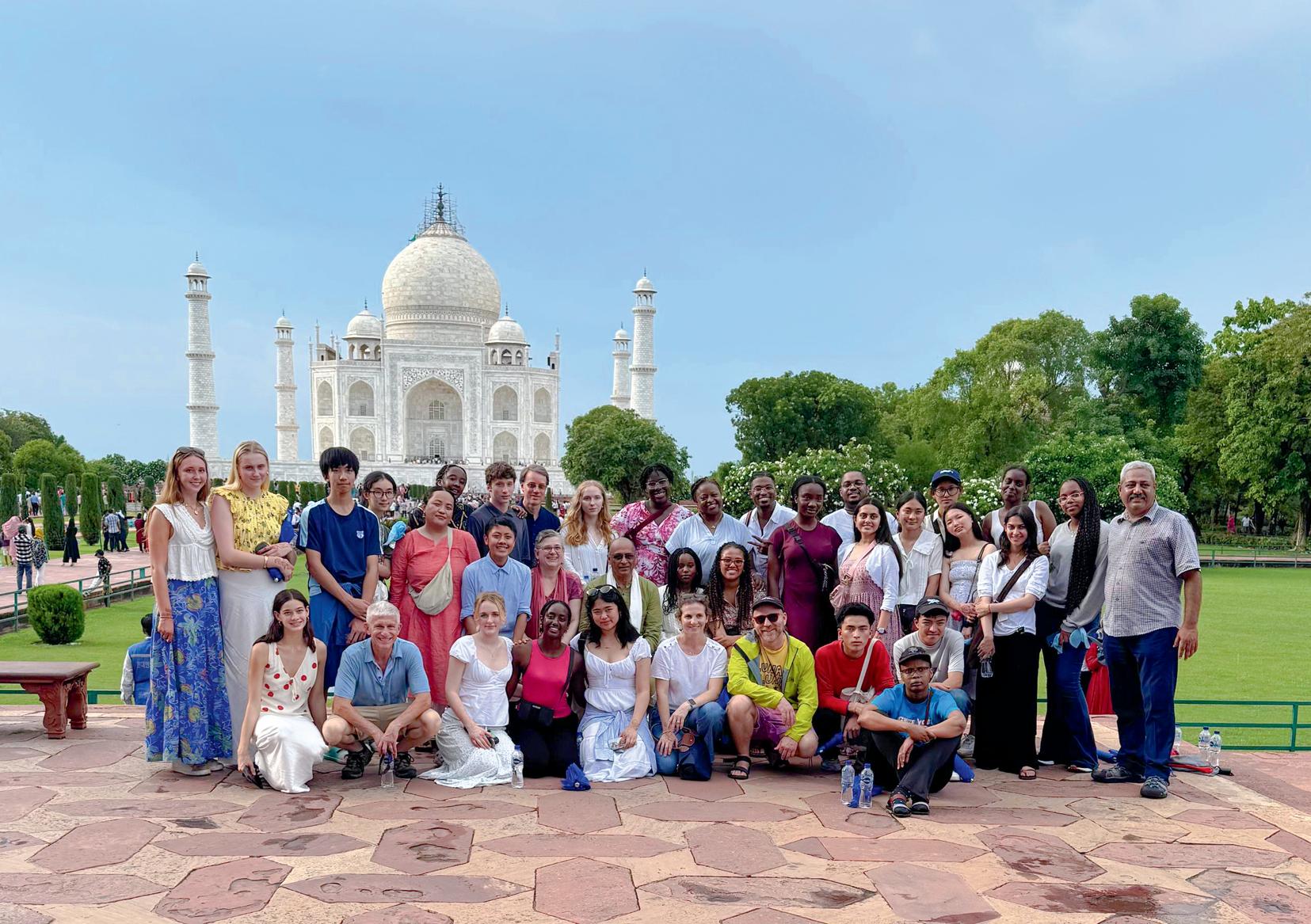
Doon School hosts second Groton Program for Intercultural Exchange
the second groton program for Intercultural Exchange (G-PIE) took place June 22–27, more than 7,000 miles from where the biennial conference kicked off in 2023.
Whereas Groton School hosted the 2023 event, G-PIE 2025 was co-hosted by the Doon School in Dehradun, Uttarakhand, India, in collaboration with Welham Girls’ School, Dehradun, and Groton.
The weeklong conference is designed to be an enriching and educational intercultural learning experience for high school students and educators from around the world. The schedule includes a variety of workshops, activities, cultural performances, and discussions guided by the themes of culture, water, and artificial intelligence and technology. G-PIE is also a professional development opportunity for educators to engage in themes through a pedagogical lens.
This year’s event brought together forty-two students from ten leading schools across Rwanda, Bhutan, China, the United States, England, and India for a week of intercultural dialogue, learning, and collaboration.
Participating Groton students were Olivia Engstrom ’26, Max Fan ’25, Tabitha Picucci ’27, Saniya Pleasants ’27, Kaeleigh Ryan-Kirby ’27, and Maria Isabelle Te ’27. In addition, Dean of Globalism and Experiential Learning at Groton School Nishad Das, Assistant Director of Globalism and Experiential Learning Mary Frances Bannard, and faculty members Sravani Sen-Das and Azmar Williams, PhD, took part.
Speakers included opening keynote speaker Dr. Darla K. Deardorff of Stellenbosch University and Duke University, noted environmentalist and activist Dr. Ravi Chopra, and Dr. Anil Prakash Joshi, a distinguished Padma Bhushan awardee.
A highlight of the week was a trip to Parmarth Niketan, Rishikesh, to witness the Ganga Aarti on the banks of the sacred river. Surrounded by chanting, lamps, and flowing waters, the experience brought the conference theme of “Water and Culture” to life in its purest form. It was a moment of shared reflection, where students connected not just across cultures, but with something deeply spiritual and universal: The fitting end to a day of deep learning, meaningful dialogue, and spiritual grounding by the Ganges.
G-PIE was funded through the generosity of a donor family who supported the headmaster’s (GRAIN) Innovation Fund, which assists projects and programming central to the school’s mission.
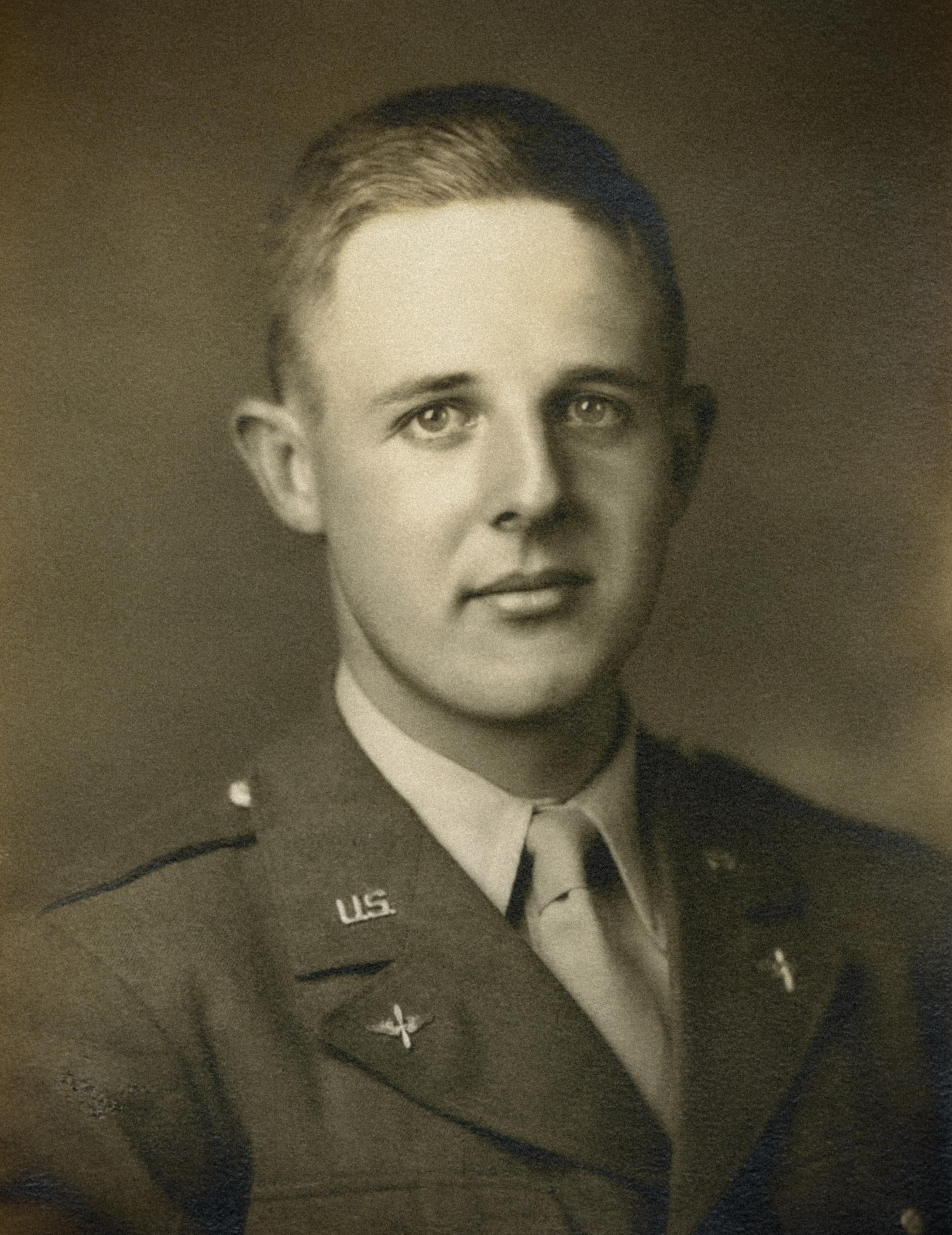
Stephen B. Curtis
1925–1945
GROTON FORM OF 1943
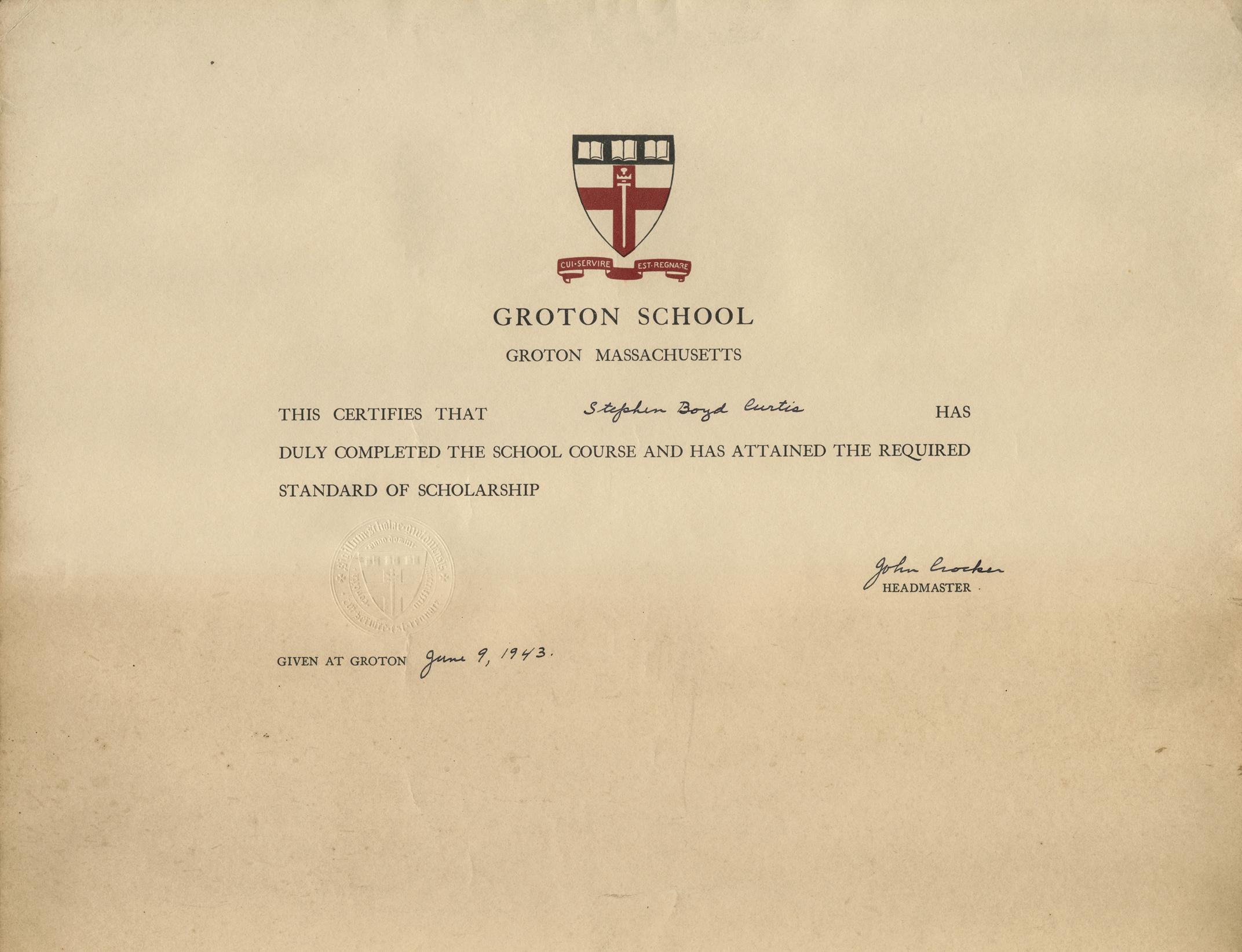
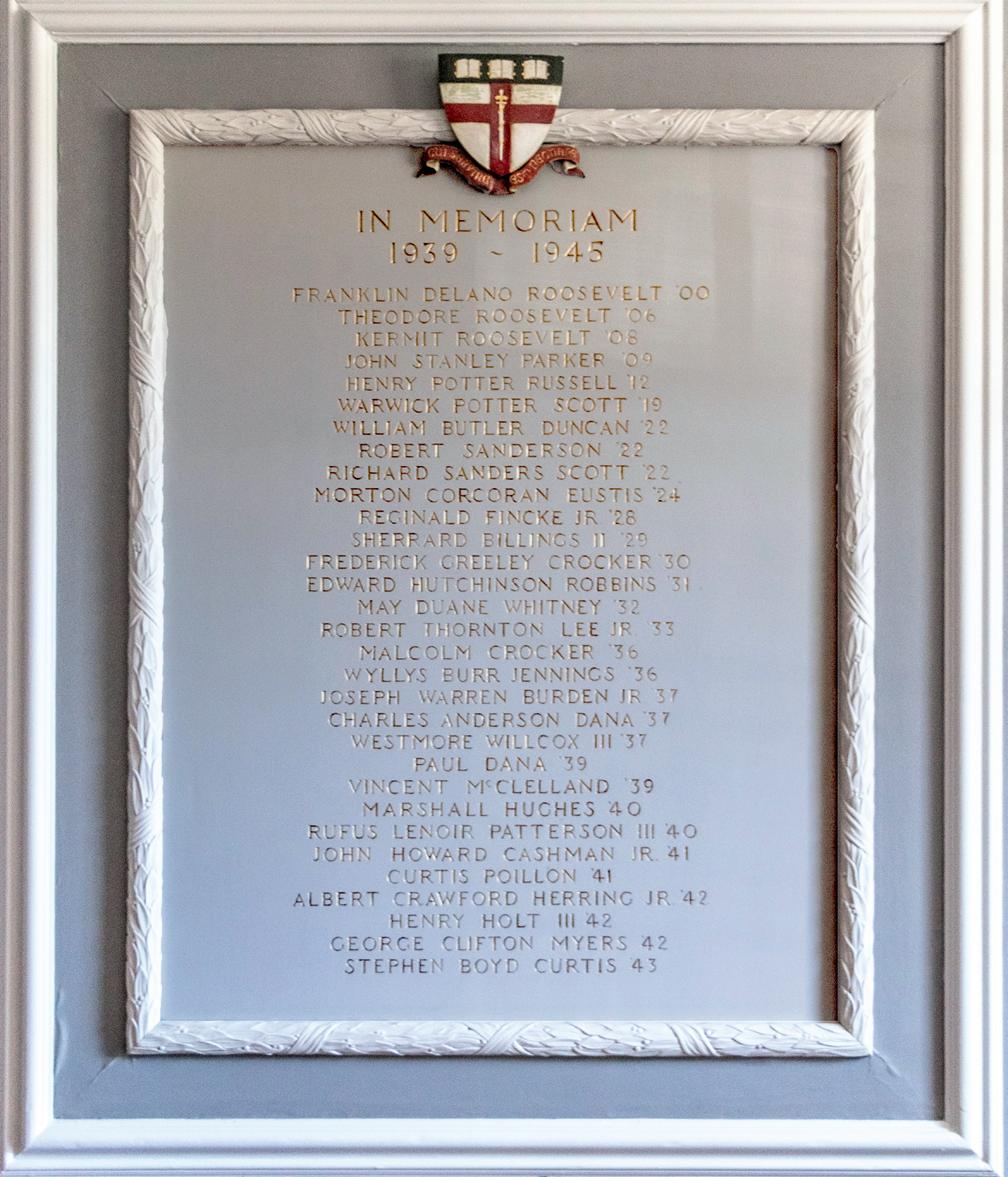
on the walls of the memorial room in Hundred House are tablets honoring the Groton alumni who perished during the two World Wars. The tablet honoring those who fell during the Second World War includes the names of great and famous men, of course, such as Franklin Delano Roosevelt (Form of 1900) and Theodore Roosevelt Jr. (Form of 1906). But the same tablet also records the passing of others, including less well known or perhaps now largely forgotten Groton students, who lost their lives before they could make their marks in the world.
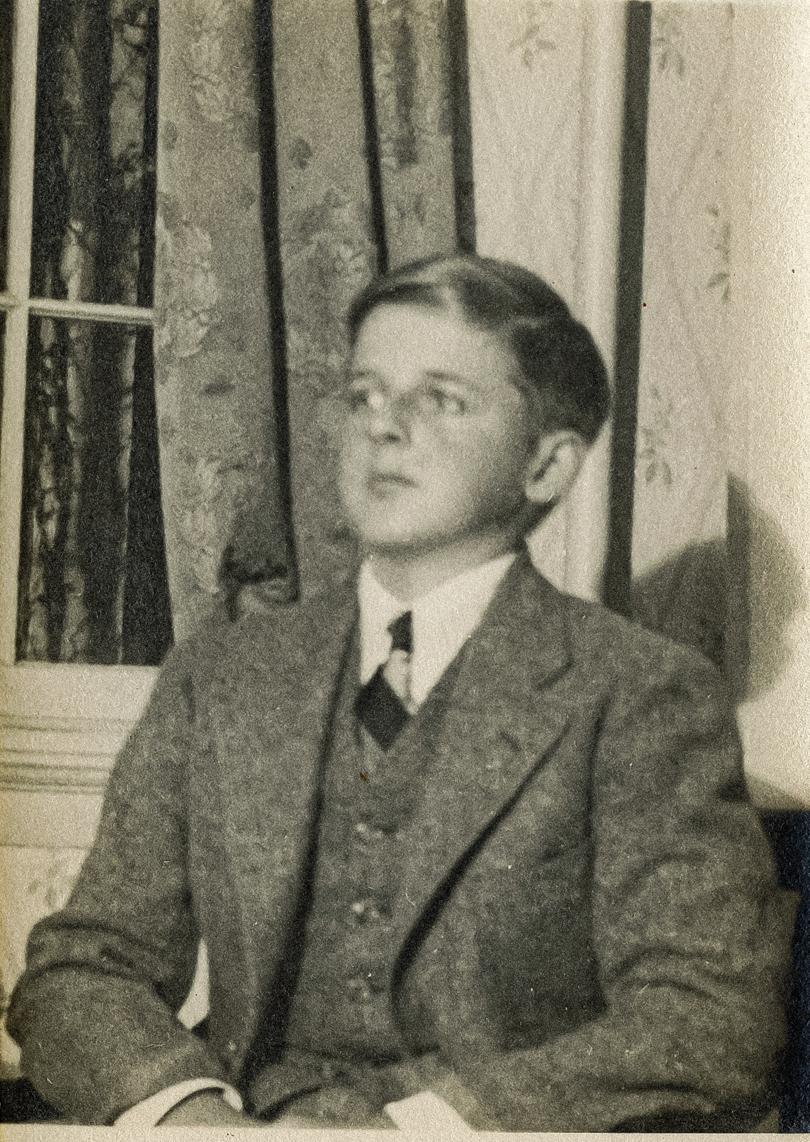
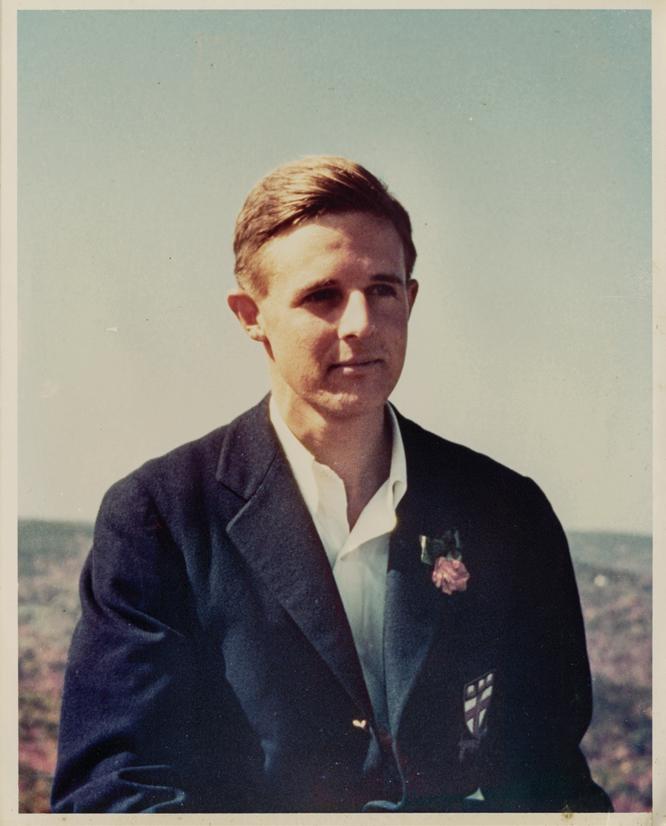
Stephen Boyd Curtis, Form of 1943, stands last on the list of Groton men lost during World War II. A second lieutenant in the U.S. Army Air Corps, 389th Bombardment Group, 567th Bomb Squadron, based in Hethel, England, Stephen died on May 7, 1945, a month and a half after his 20th birthday, when his plane crashed, killing all on board. Stephen never married, he left no children, and his story is perhaps not so different from that of the hundreds of thousands of other young men who gave their lives in World War II. Nevertheless, his life is worth remembering, as is the speed with which Groton boys were forced to become men and soldiers during wartime. In memory of Stephen Boyd Curtis, some of his photographs and excerpts from a small selection of his letters are set out below.
Left: Stephen B. Curtis ’43 was killed in a plane crash on May 7, 1945, just one day before the Germans surrendered in World War II.
September 21, 1938 (Second Form): “Dear Papa + Mama, I [can’t] think of anything I have forgotten. . . . There are about thirty first formers and four new second formers. . . . They collected the extra money tonight but Papa didn’t give me any money so I wish he’d send me a dollar. Much love, Stephen”
February 9, 1940 (Third Form): “Dear Mama, . . . Today we took History and Sacred Studies [exams]. History was very hard. Tomorrow we take the last exam, Latin. That night we are going to have the movie ‘Swiss Family Robinson.’ . . .”
May 20, 1941[?] (Fourth Form): “Dear Papa, . . . Yesterday we had an oral vocabulary test in French. I made one less mistake than anybody else but the test is going on next time and then the winner gets a free soda from Mr. Iglehart. . . .”
November 16, 1941 (Fifth Form): “Dear Mama and Papa, I suppose you’ve seen in the newspaper that we won the St. Mark’s game 26–0. . . . After supper we celebrated until 9:30, and most of our form either pulled the wagon or carried Mr. Crocker in the chair or did both. I did both and my shoulders are still just a bit sore from carrying Mr. Crocker because fifty pounds on one little spot is quite a lot. . . .”
October 18, 1942 (Sixth Form): “Dear Mama and Papa: With all the eighteen and nineteen year old drafting going on, I am thinking it would be hardly worth trying to go to college next year. . . . Of course I haven’t decided yet but I would like to volunteer in May for the Air Corps. . . . I think I will be able to finish the school year. . . . On the School birthday . . . we got ready for squibbing. . . . [One] squib was on a boy who blew up a toilet last year in Brooks House by putting sodium in it and flushing it. I set off the explosion for that, and it was so powerful it almost blew me over backward. . . . It was a mixture of sulfur and potassium chlorate which I hit with a hammer. . . .”
November 19, 1942, from Charles Boyd Curtis (father): “Dear Stephen: . . . I hate the idea of your going into either the Navy or the Army so young (though I would not make the slightest move to keep you out). . . . I hate war as much as any man, but I should be ashamed if I could and did not take my part in this war and am awfully sorry that I must send a son and not go myself. Lots of love from Papa”
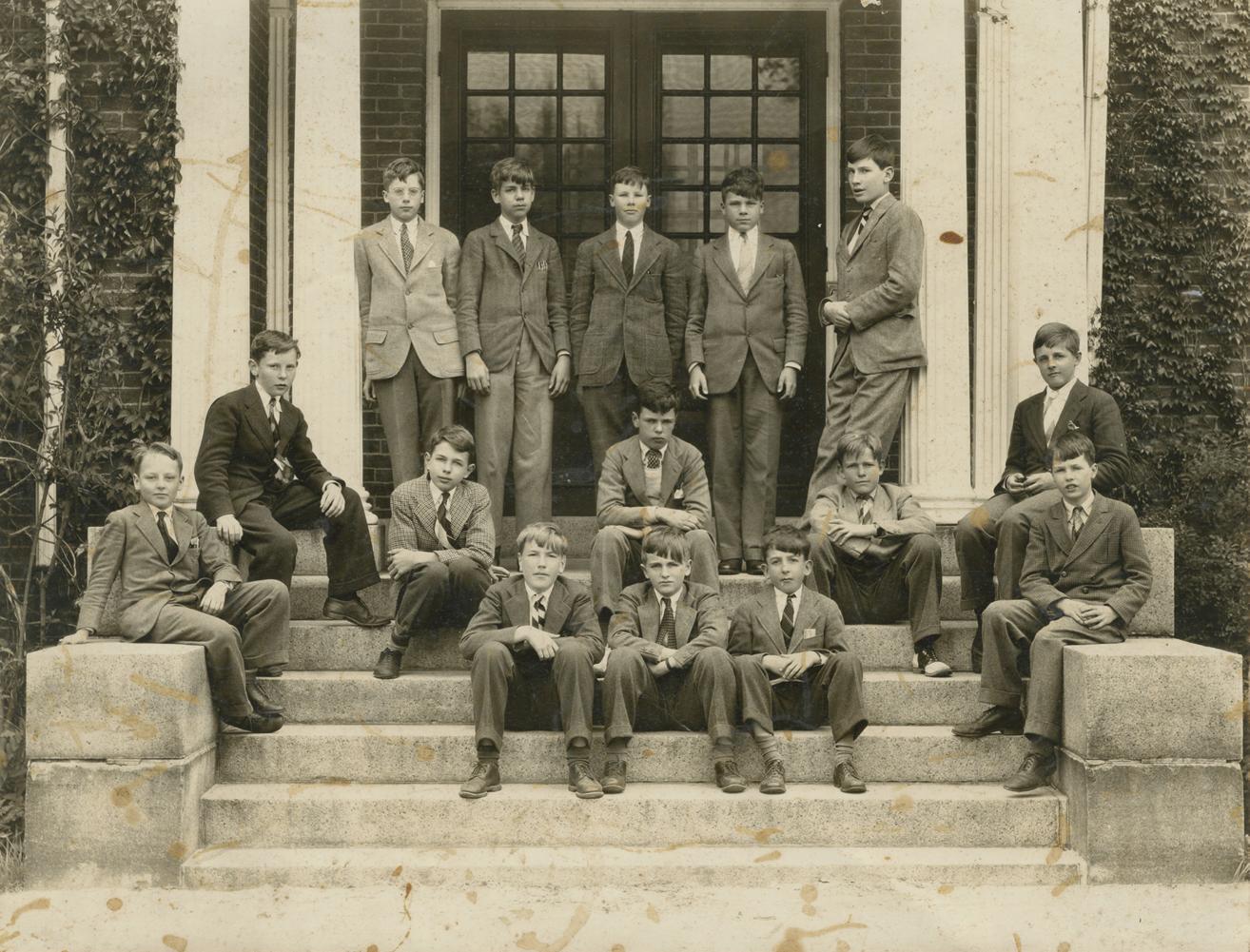
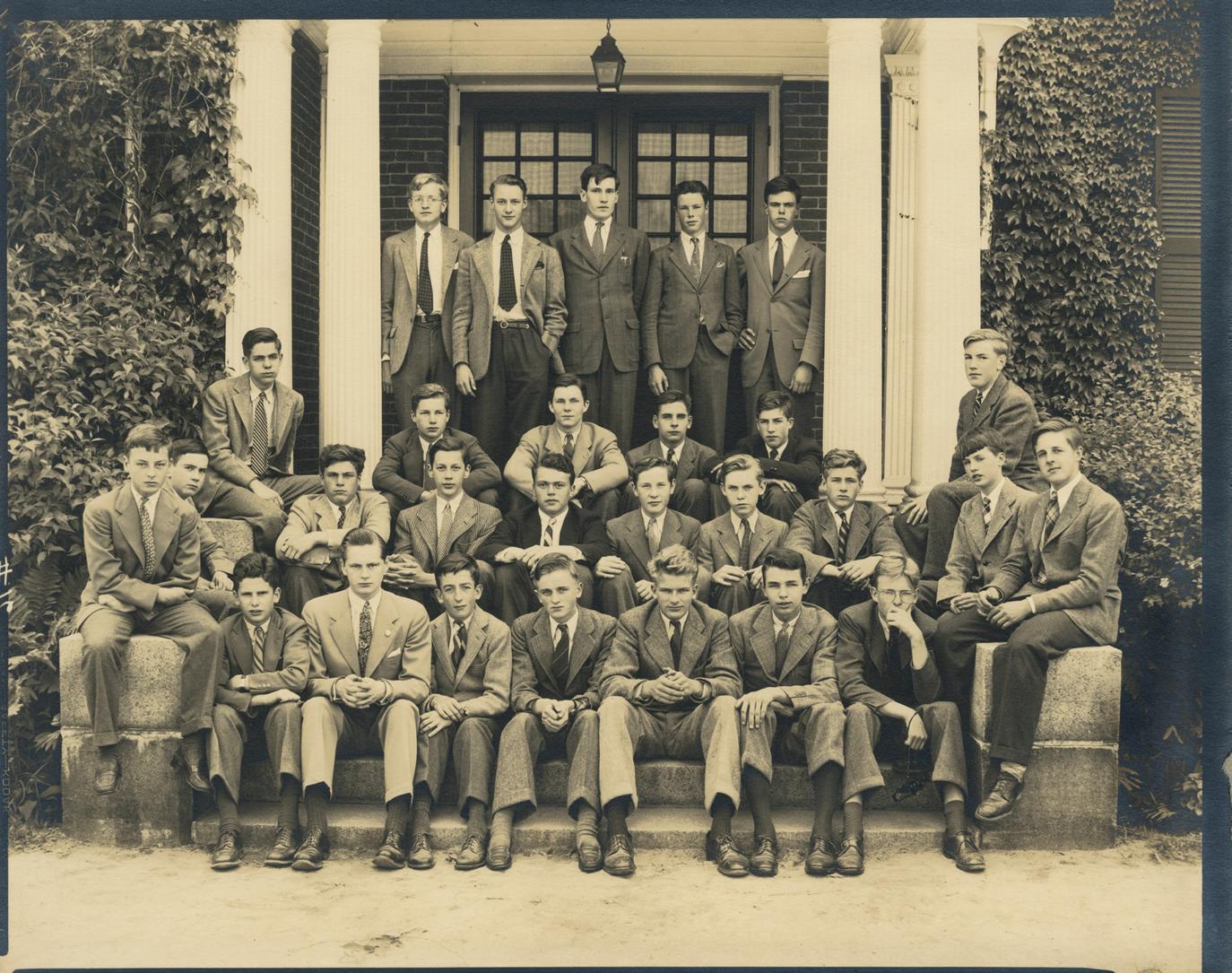
Top left: Stephen Curtis is seated in the second row, far right.
Top right: Stephen Curtis is seated in the first row, far right.
February 16, 1943, from United States Army Recruiting Office: “This letter is to advise you that Stephen B. Curtis enlisted February 16, 1943 in the Regular Army of the United States for Air Force Enlisted Reserve (deferred) for a period of Duration & 6 months. He gave his age as 17 years and 11 months.”
May 28, 1943: “Dear Papa, . . . We heard from Captain Newman that we will be ‘on call’ after July 1, so I guess we’ll go during July.”
August 18, 1943 , from 1178th Training Group Barracks, Greensboro, NC: “Dear Margi [sister], Monday morning we had to get up before five, and get breakfast and then fall out at 6:15 for roll call. . . . [after which] we started out and walked the nine miles to range with just a ten minute break in the middle in two hours and a quarter, and we had thirty pound packs on our backs, too. But it was still cool, and the walk was easy. . . .”
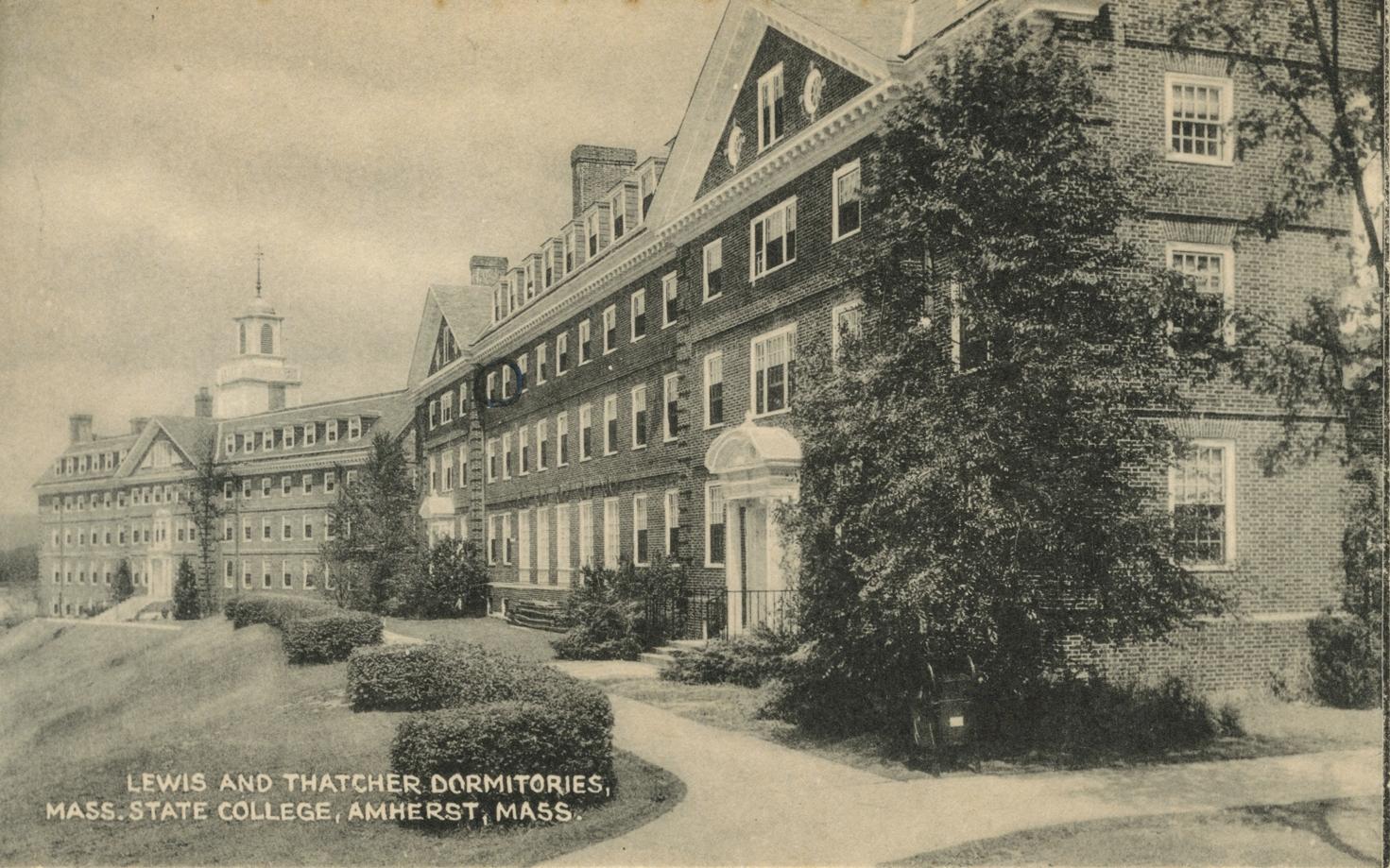
August 22, 1943, from 58th College Training Detachment (Air Crew), Amherst, MA: “Dear Mama + Papa, This is better than anything we expected. I think it’s the nearest place I could get to home. . . . We’re living in a regular college dormitory. . . . They do say that the discipline here is tough, though. . . . Here they have a demerit system and guard tours. . . . It’s a lot like Groton’s black marks and demerits. . . .”
September 20, 1943, from 58th College Training
Detachment (Air Crew), Amherst, MA: “Dear Mama and Papa, I can get my first pass this week-end, and as much as I’d like to come home, I think I’ll go up to Groton instead. This Sunday is Freshman Sunday and my only chance to see my classmates at school . . . Please don’t think too badly of me . . . it is my only chance to see some of the boys I’ve been with for six years. . . .”
October 14, 1943, from 58th College Training
Detachment (Air Crew), Amherst, MA: “Dear Mama and Papa, . . . I’ve started flying. First time I went up was Monday afternoon. I went up again Wednesday morning. . . . It was wonderful fun. . . . Wednesday morning a Flying Fortress came in just as we got there and after a while they let us all go through it. . . .”
October 27, 1943, from 58th College Training Detachment (Air Crew), Amherst, MA: “Dear Mama and Papa, . . . Our section got back some English papers that we wrote last week and I got an A on my ‘Why I want to be a Navigator.’ . . . I’m awfully pleased about it, because I was never very good in English at school. It’s certainly wonderful that Groton, besides giving a classical education, can really be such a good preparation for Army work. . . .”
December 5, 1943, from NAAC (AAFCC) Sqd B-2, Nashville, TN: “Dear Mama and Papa, At last I’m classified, but not according to my first choice. I’m going to be a pilot. . . . Being classified as a pilot came as quite a surprise but being a pilot is pretty good, too. Out of our squadron of 240 men about fifty washed out, 150 made pilot, 25 bombardiers, and 15 navigators . . .”
December 7, 1943, from NAAC (AAFCC) Sqd B-2, Nashville, TN: “Dear Mama and Papa, Somewhat to my surprise I did succeed in being reclassified as a navigator. I’m certainly glad . . .”
January 19, 1944, from Gr. 8, Sqdn. H, Fl. 2, AAFPS (N) Class 44I, Maxwell Field, AL: “Dear Mama and Papa, Here we are at Maxwell. . . . The discipline is very strict. . . . If we want someone to pass the butter we have to say ‘Sirs, would anyone like the butter? Please pass the butter.’ The plate has to be tangent to the edge of the table, the cup at one o’clock to the plate, cereal bowl at eleven o’clock, silverware parallel to the table edge on the farther side of the plate . . . [B]ut at least we’re cadets and get $75 a month . . .”
March 22, 1944, from Fl. B, Cl. 44-17, Av/Cadet Det., B.A.A.F, Fort Myers, FL: “Dear Mama and Papa, . . . I think I got into cadets at just the right time. I heard they just closed all seventeen-year-old enlistments. . . . I really don’t know what I want for my birthday. . . . Uncle Ronald sent me two dollars ‘for the betterment of my stomach or my mind.’ . . .”
April 1, 1944 from Fl. B, Cl. 44-17, Av/Cadet Det., B.A.A.F, Fort Myers, FL: “Dear Alette [sister], . . . We went on our first mission today. Eight of us student gunners go up in a B-17 and practice air to air fighting over the Gulf. Four of us fired from the waist positions. . . . We also went up to 22,000 feet to get practice with oxygen. It sure was cold near those windows. . . . I’m with a pretty swell bunch of fellows here. . . . Our group supply officer went to Trinity and knew several Groton graduates and used to sail with Mr. Nash . . .”
May 1, 1944, from Moody Field, Valdosta, GA: “Dear Mama and Papa, After several delays, we finally left Fort Myers about midnight last night and arrived here about 3 p.m. . . . Everything seems wonderful here. . . . Food is the best yet . . .”
May 23, 1944, from Moody Field, Valdosta, GA: “Dear Mama and Papa, . . . We’re leaving for Selman Field tomorrow morning . . . At last, after ten months, I’m going to learn some navigation . . .”
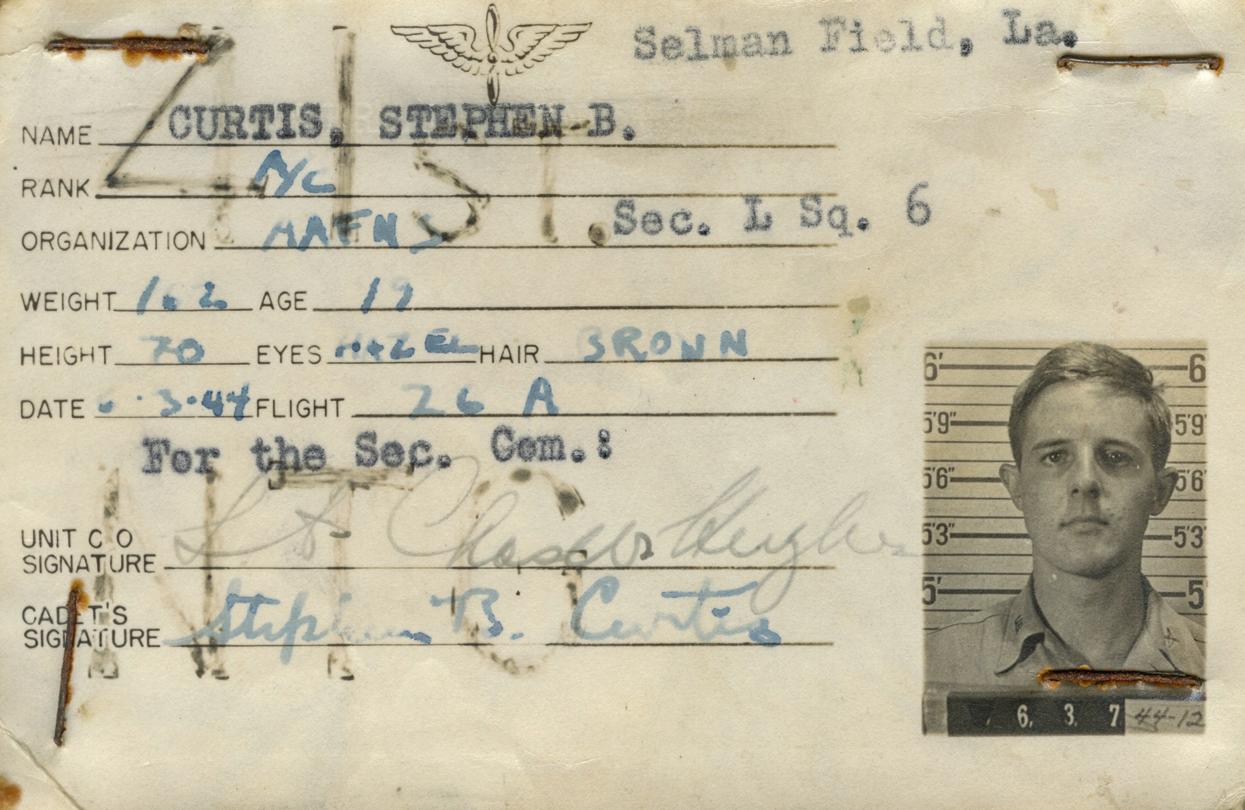
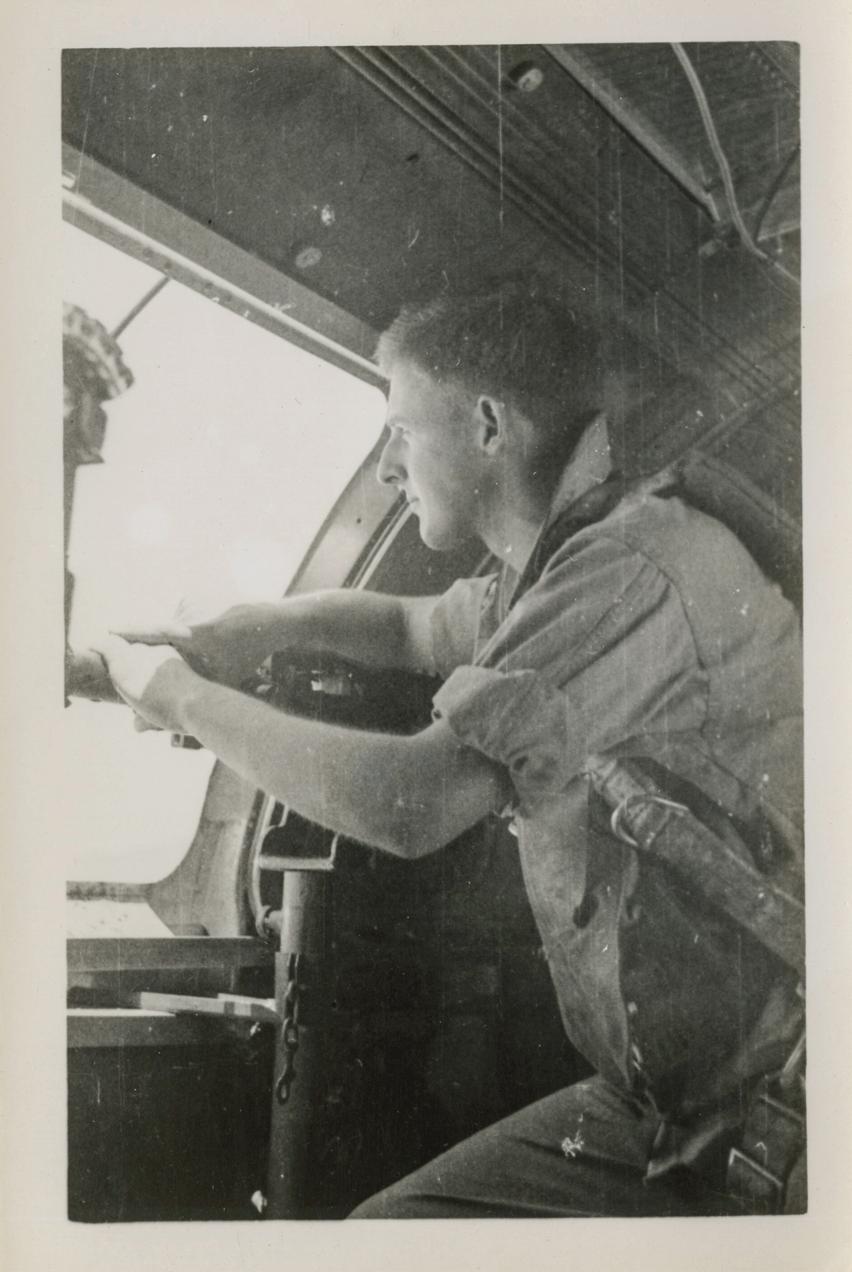
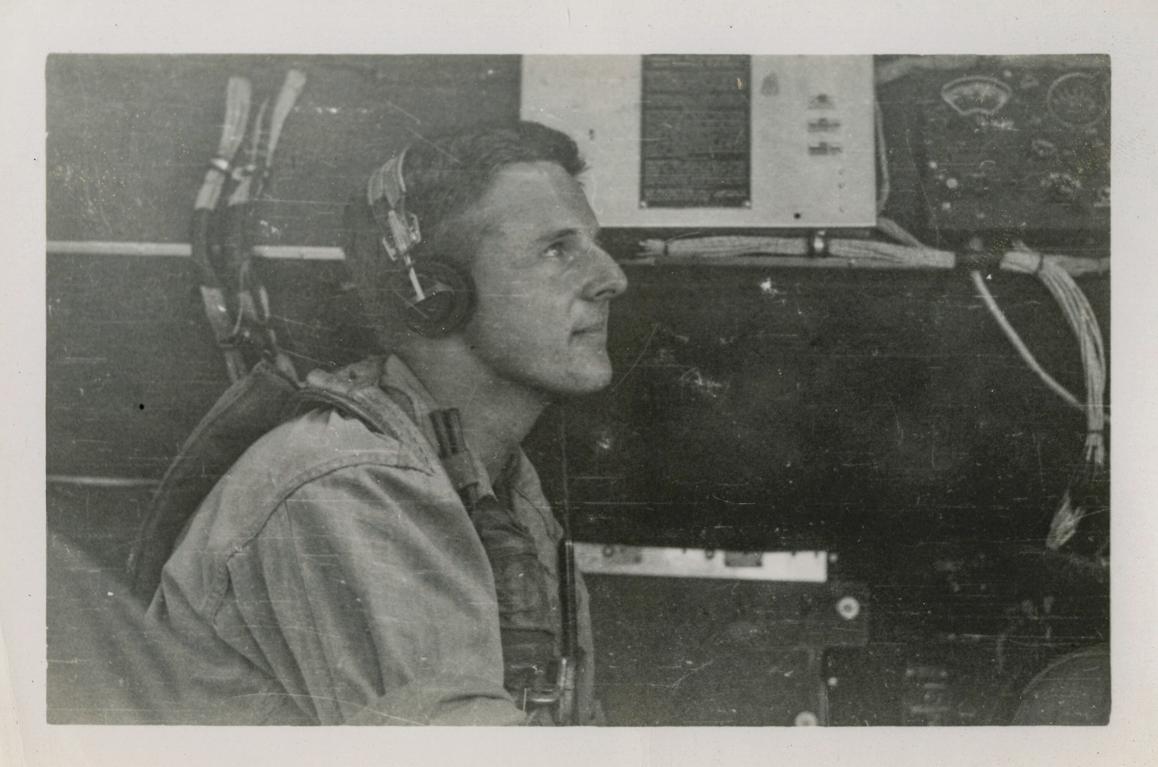
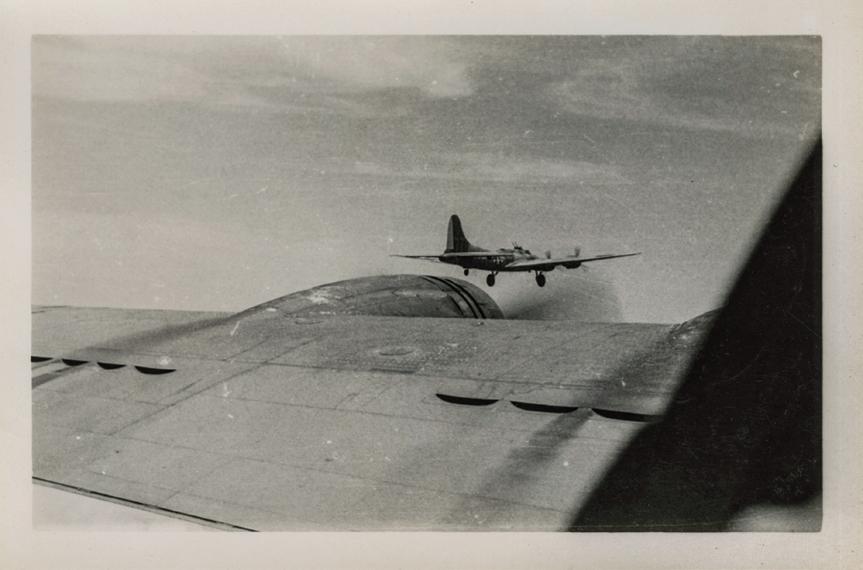
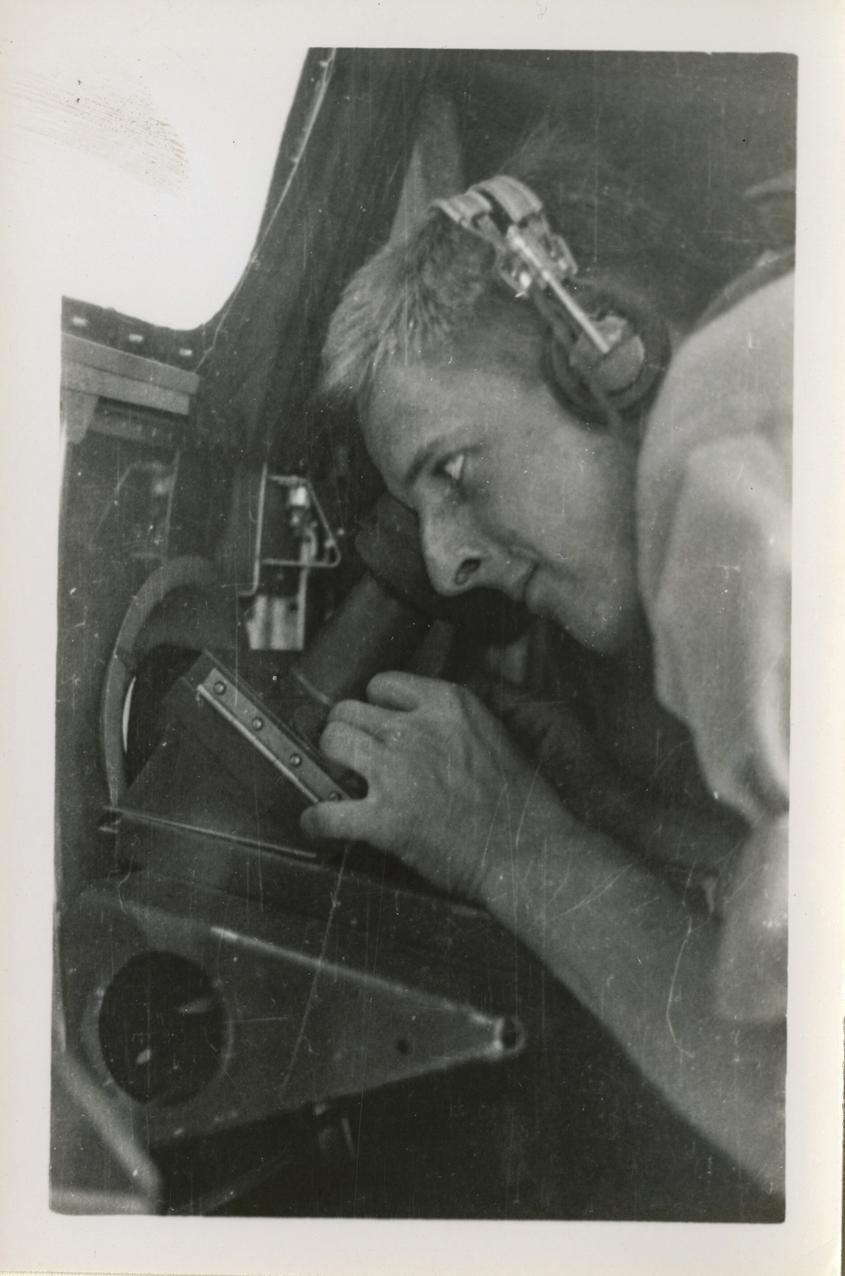
May 28, 1944, from Selman Field, LA: “Dear Mama and Papa, We’re all ready to start classes tomorrow. Yesterday we were issued all our equipment except sextants. . . . It is all beautiful equipment and most of it is new. . . . What I learned at school will give me some advantage over the rest. I know how to use the Air Almanac and one of the sextants they use, but at school of course I never got any practical experience . . .”
June 4, 1944, from Selman Field, LA: “Dear Alette [sister], . . . [I am] enclosing some of my aerial photography at Ft. Myers.”
July 13, 1944, from Selman Field, LA: “Dear Mama and Papa, . . . We’ve had six four-hour missions now . . .”
August 29, 1944, from Selman Field, LA: “Dear Mama and Papa, . . . Now we only have five weeks and six missions left. . . . You can’t imagine how I’m looking forward to a furlough after I graduate. It will be almost a year since I was home last. It ought to be almost the height of the apple season when I get there. If I get long enough I’d like to work for a few days . . .”
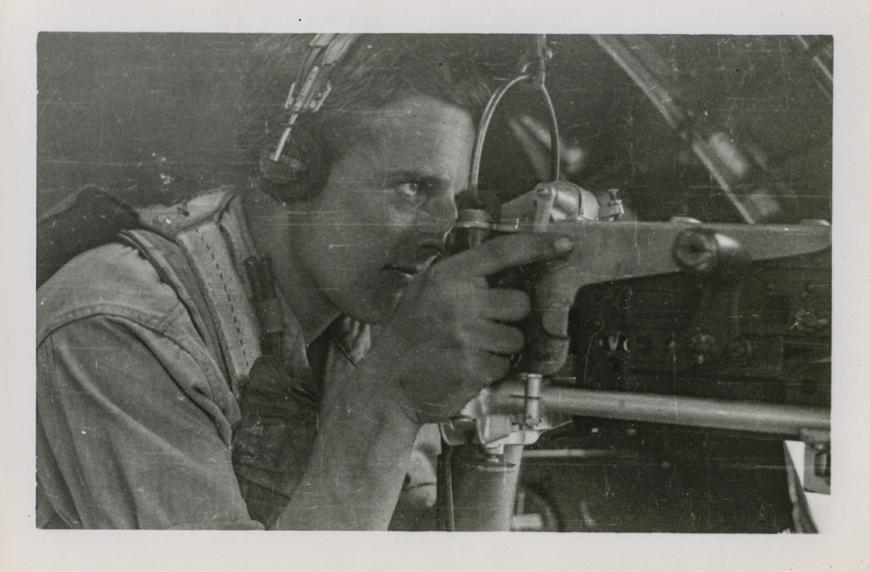
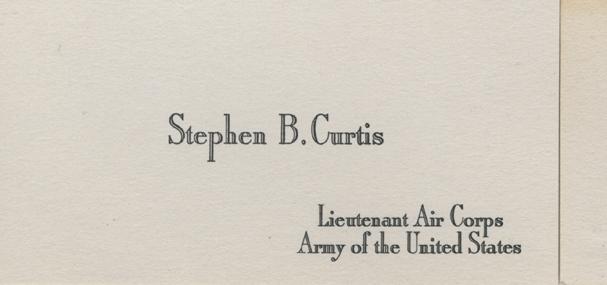
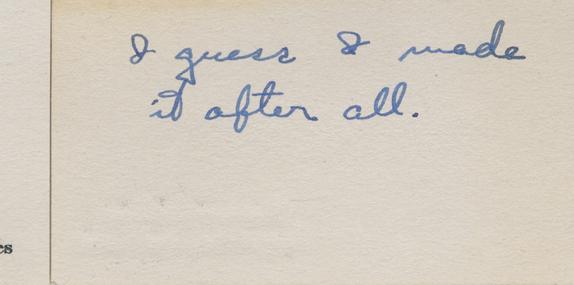
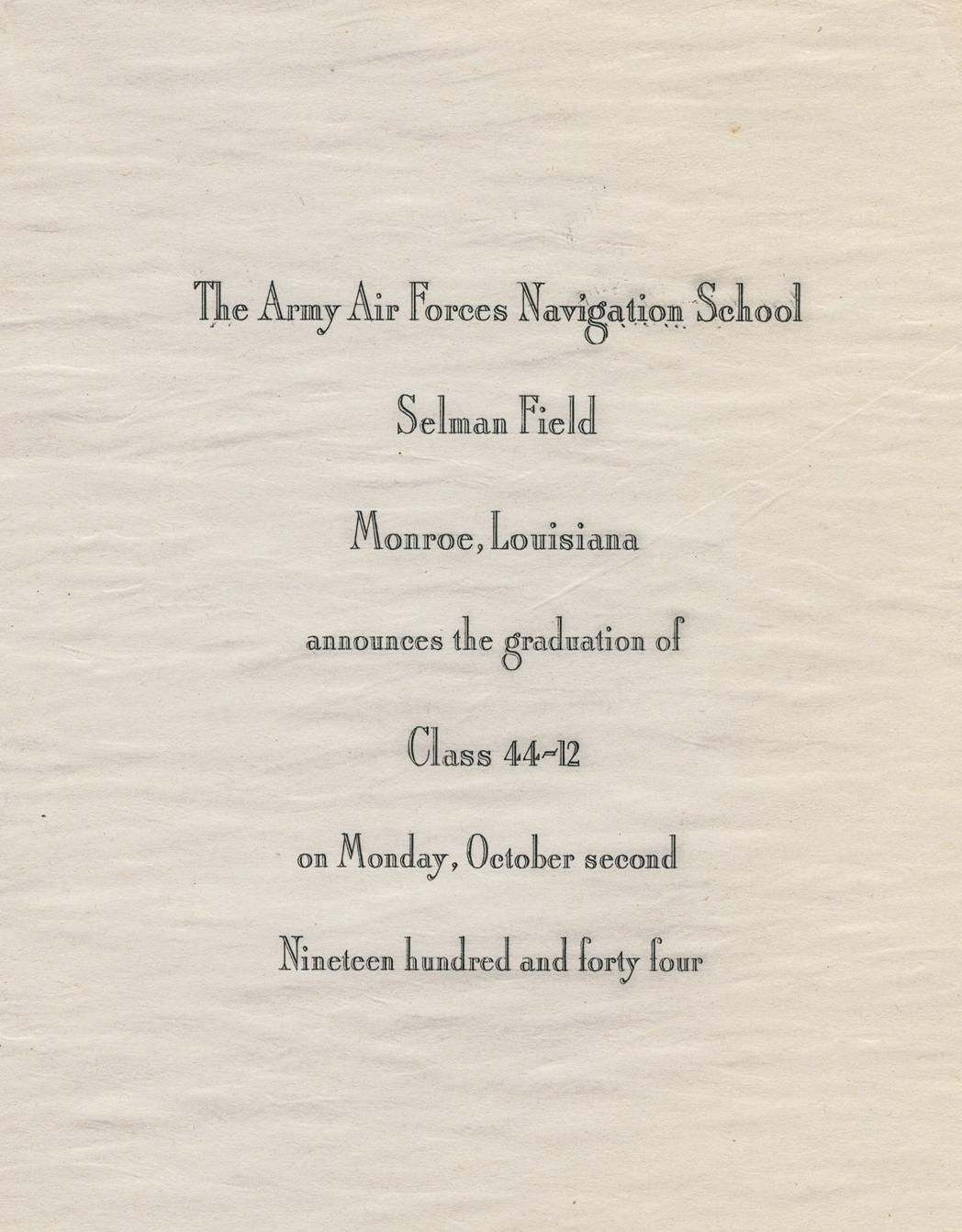
October 11, 1944, from Lincoln AAF, Lincoln, NE: “Dear Mama and Papa, . . . I never had so much fun in my life as I did in those four days at home and one day in New York and in three days I got to like [withheld name] better. . . . She liked so many things I liked, and we got along fine. . . . Do you know, someone ought to have gotten a picture of the six of us before Alette got married—our last family reunion . . .”
October 19, 1944, from Army Air Force Base, Pueblo, CO: “Dear Mama and Papa, . . . Well, in a little more than two months I probably will be [in California] on my way to the South Pacific. It’s very disappointing, but our bunch got B24s instead of seventeens, so there’s hardly a chance of being sent to the European theatre. I’ve met my pilot, copilot and bombardier and they’re swell fellows. . . . Saunders, our pilot, is twenty-two, comes from Iowa, and seems to have a sense of responsibility that a plane’s commander should have. Red [Atkins], the copilot, is from Providence, is younger . . . [and] a swell guy too. He went to Middlesex, and knew a lot of Groton boys and a few girls I know. Lee (Wright) is from Baltimore. . . . I room with him, and Saundy and Red are in the next room, which is handy when you have to get up for a night mission at 3 AM. . . . I wish I’d grabbed a few apples before I left. . . . ”
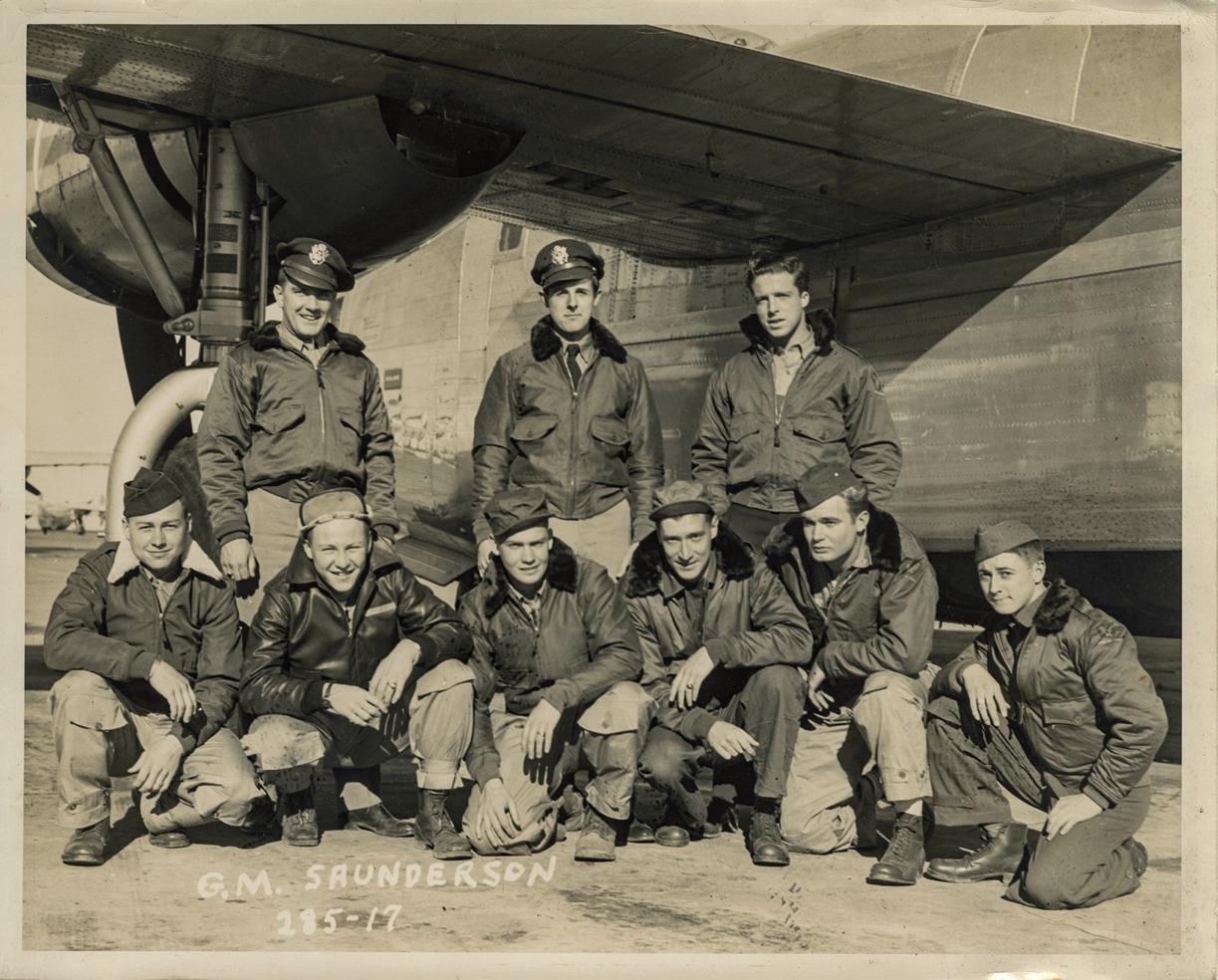
Top: The crew of B2444-10260. Standing: George Saunderson, Stephen Curtis and Cornelius (Red) Atkins.
Middle: Stephen Curtis during his early years on the Circle
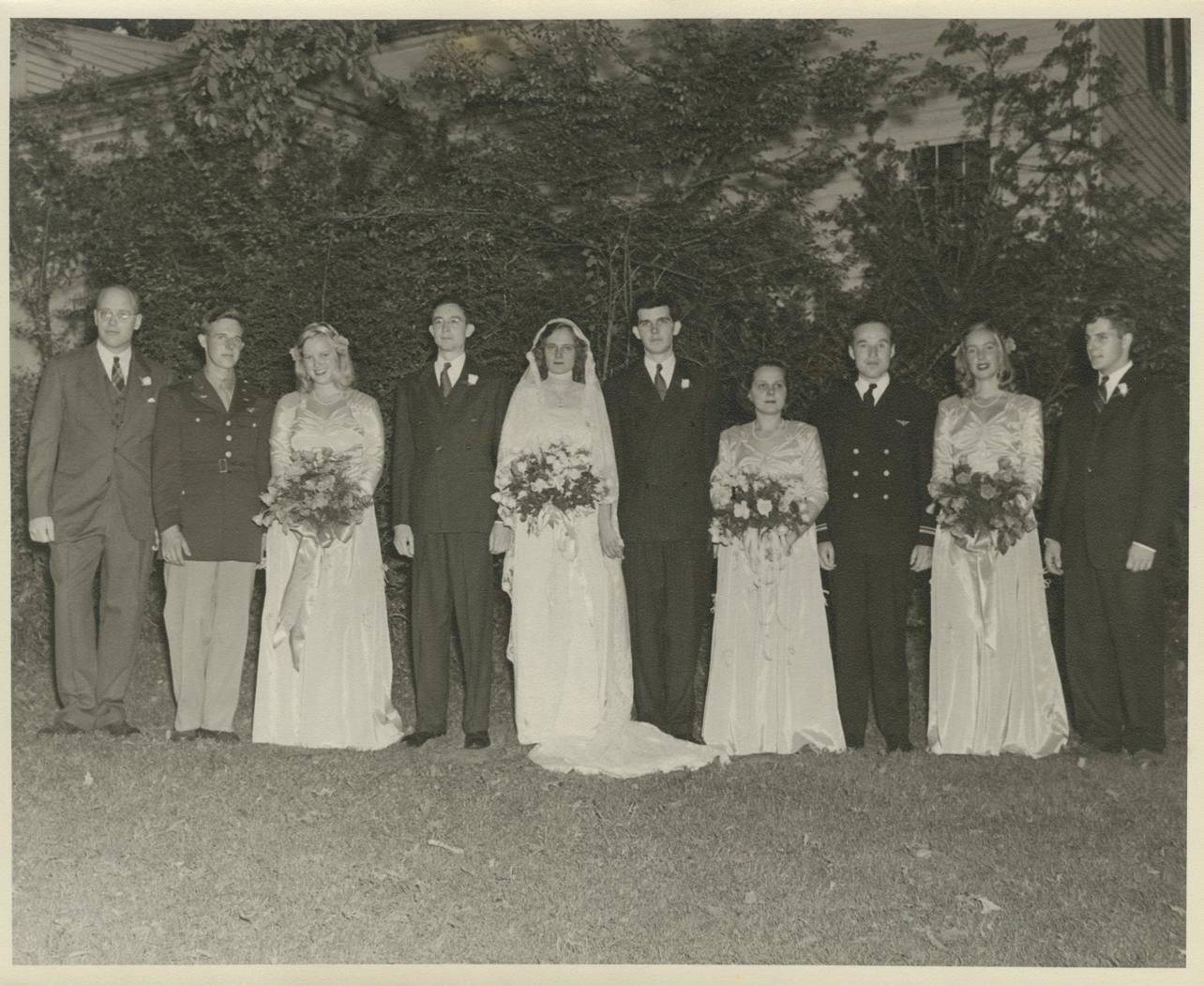
Bottom left: Marriage of Alette Curtis (m. Beard), October 7, 1944, Stephen Curtis in uniform, second from left.
November 13, 1944, from Army Air Force Base, Pueblo, CO: “Dear Mama and Papa, . . . I just received the photographer’s pictures of the wedding the other day. . . . I also got the apples, which were in very good shape, and we all enjoy them. I took a bag with me one day we flew, and the crew really liked them. . . . I think there’s a chance we may go to the European theatre after all even in B24s. . . . The other day our nose gunner was trapped in his turret and it took four of us an hour to get him out. . . .”
December 12, 1944, from Army Air Force Base, Pueblo, CO: “Dear Mama and Papa, . . . The flying we’re doing now is awfully cold. The other morning the temperature was -320 C. In an old plane with the wind blowing right through it, it’s not hard to get frostbitten. . . . I wish I could be home for Christmas. . . .”
Christmas 1944, from Army Air Force Base, Pueblo, CO: “Dear Mama and Papa, . . . Tomorrow we leave for Topeka, Kansas. . . . Merry Christmas again, and I mean that a lot more than any Christmas card can say.”
December 27, 1944, from Topeka Army Air Field, Topeka, KS: “Dear Mama and Papa, . . . I guess we won’t get any leaves from here. We were told this morning that we would probably leave very early in 1945. . . . It’s funny, but the first time I really realized that I was going overseas, was when the band at Pueblo escorted us to the train and the first thing it played was ‘Over There.’ It doesn’t really bother me, though. I think it’s about time I went over. . . .”
January 6, 1945, from Topeka Army Air Field, Topeka, KS: “Dear Mama and Papa, . . . That certainly was a nice leave while it lasted. It was better not knowing ahead of time how short it would be . . . It was wonderful to see [withheld name] again, although it was only for six hours. We went to Larue’s until it closed at four, and then walked around the streets and Central Park for a little while. . . .”
January 12, 1945, from Topeka Army Air Field, Topeka, KS: “Dear Mama and Papa, . . . I’m certainly glad we’re going to the European theatre. We have a beautiful new plane that has only been in the air ten hours. . . .”
January 14, 1945, from Topeka Army Air Field, Topeka, KS: “Dear Mama and Papa, . . . Yesterday at last we had our whole crew together and had our picture taken. . . . [T]his picture includes our own airplane, although you see the most uninteresting
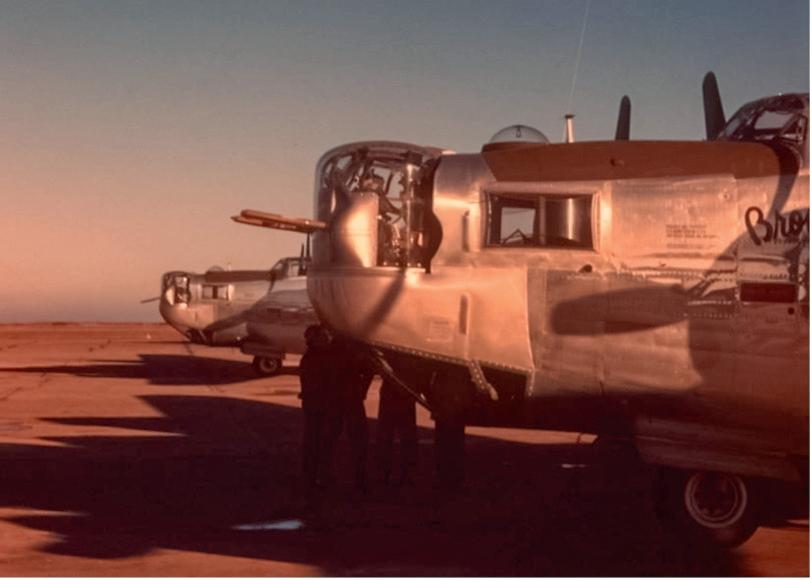
part of it. . . . It certainly was hard to leave home so quickly, but . . . I’ll be home again before long. . . .”
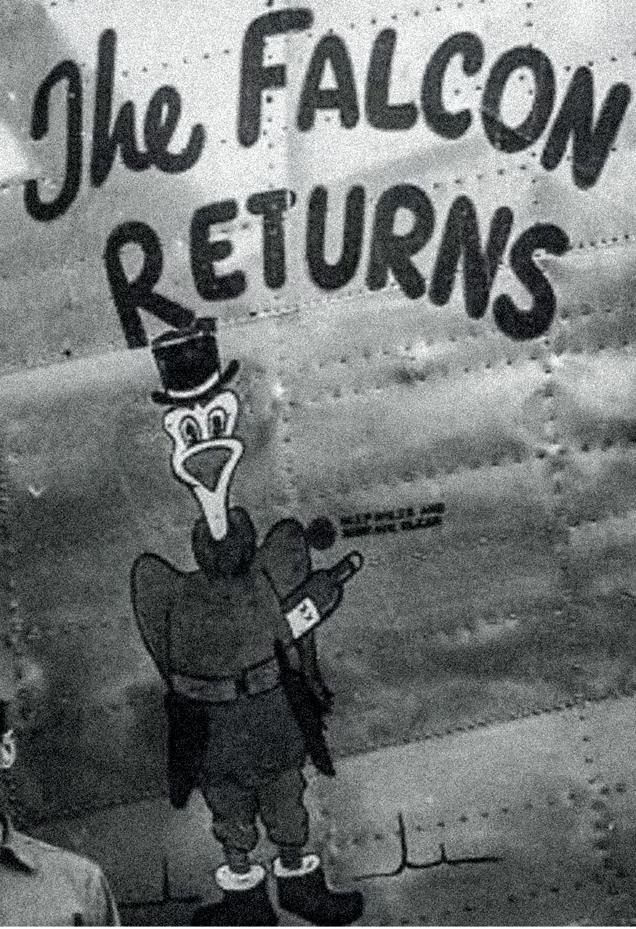
January 23, 1945, from Topeka Army Air Field, Topeka, KS: “Dear Mama and Papa, . . . Today they finally finished painting the name and picture on our plane. On the left side of the nose is ‘Brownie,’ which is what they called Saundy’s [deceased] brother-inlaw. . . . On the other side is ‘The Falcon Returns’ with a picture of a falcon in a top hat with a bottle under one arm and a pistol under the other. I’ll try to send you some pictures some time. . . .”
January 25, 1945: “Dear Mama and Papa, I can only tell you that I’m somewhere in New England, and expecting to go overseas very soon. . . . Can’t think of another thing I’m allowed to say. . . .”
March 3, 1945: “Dear Mama and Papa, . . . I thought I’d let you know that we are all alive and well and safe in Iceland. It’s warmer here and there’s nothing but slush and water and mud around here.”
Top right: photo by Stephen Curtis, 1945
Bottom right: Brownie/The Falcon Returns
March 8, 1945: “Dear Mama and Papa, At last we are in England . . . I think we are all glad to be in England and the 8th Air Force. . . .”
March 16, 1945, from 389th Bombardment Group, 567th Bomb Squadron, Hethel, England: “Dear Mama and Papa, . . . The 389th Bombardment Group is supposed to be a crack outfit, and our squadron is about the best in the group. Everything looks pretty good to me. . . .”
March 24, 1945, from 389th Bombardment Group, 567th Bomb Squadron: “Dear Mama, Happy Birthday. . . . Still no missions yet, but it won’t be long now. Don’t worry about me. These missions are almost as safe as flying at home. . . .”
From typed notes, presumably found among personal effects at the air base: “March 31, 1945 (Sat.): Mission #1. The C.O. hauled us out of the sack at quarter of two . . . I drew my electric suit and Mae West and both a back and chest type chute. . . . Priority one target was an oil depot and refinery near the town of Niehagen; priority two the Tiger tank factory in Brunswick; priority three was the marshalling yards in Brunswick. It was expected to be visual over target and there were no known flak guns at Niehagen. I felt great—a milk run to get started. There were 60 known German jets in the vicinity, but the group hadn’t been attacked in two months and they weren’t stressed. Our group put up 33 ships, and ours, Z, was the right wing of the B lead. . . . We picked up our fighters at the Dutch coast and then a curious thing happened, a 24 caught fire and was abandoned. The crew bailed out in two’s and three’s until there were nine chutes drifting down. At last the pilot got out and the ship went into a spin and exploded upon impact. . . . A 51 caught fire about the same time and the pilot bailed out. . . . Shortly before the I.P. I heard the group leader say that we would hit the Priority 3 target instead of Niehagen. At the I.P. I saw five bursts of flak, way left but level. . . . At the target, barrage flak came up; we were a little above normal bombing altitude so it was low. Just after we dropped our 12 – 500 lb. G.P. demolition bombs by radio (0915) a yellow nosed 51 dove down from 7 o’clock turning toward six o’clock. He had just entered my field of vision when his right wing broke off near the root and fluttered away. As I stared fascinated and very nearly sick, his tail tore off and then there was an enormous blob of oily orange flame and he was gone. It hadn’t been three seconds between the loss of his wing and the explosion; the pilot just didn’t have a chance. As I stared, a black shape whipped by about
three hundred yards out. He passed from seven to five o’clock before I could swing the turret. I’ll never forget the extremely swept back wings and high, shark’s fin tail of the Me 262. . . . The low left of the formation caught hell from both flak and the jets. They were attacked by four 262’s which dove out of the sun and shot down Q- of the 566. . . . Gunners next to him said they saw flame on his right wing , then the wing folded back and broke off. One of the jets attempted to pass under Q-, but with the wing off it fell down and the jet crashed into the tail turret and they both exploded. No chutes were seen or expected. . . . As we left the target I could see the succeeding groups pass through the square of flak, it had gotten more accurate and many of the ships were damaged. After we left the target area, everything was quiet except for my nerves. . . . I was really glad to see the English coast come up out of the North Sea. . . . I’d be satisfied never to see any more 262’s or flak.”
March 31, 1945, from 389th Bombardment Group, 567th Bomb Squadron: “Dear Mama and Papa, . . . Our first mission was just like a practice mission back home. Nothing to worry us. . . .”
April 6, 1945, from 389th Bombardment Group, 567th Bomb Squadron: “Dear Mama and Papa, . . . Our trip to London was fairly successful. . . . Most of the people looked worn and tired. The bombing damage had been cleaned up but not repaired. . . . Now we’re back to doing nothing. . . . Saundy is in the hospital with tonsillitis, and they won’t fly us with anyone else if they can help it.”
April 8, 1945 (notebook entry): “#2 – 8 April 1945. Nuremberg—Jet field near Fürst. 12 – 500 lb. bombs. Partially undercast GEE and pilotage all the way. Flak, moderate and accurate—one small piece hits hydraulic lines. 7 hours. Pilot – Stevenson.”
April 8, 1945, from 389th Bombardment Group, 567th Bomb Squadron: “Dear Mama and Papa, . . . Saundy is still in the hospital with his tonsillitis, but we have flown our second mission with another pilot.”
April 9, 1945 (notebook entry): “#3 – 9 April 1945. Augsburg. Jet airfield at Memmingen. 14 – 300 lb. bombs. Clear all the way. Good GEE. No flak—no fighters. 7 hours. Pilot – Stevenson.”
April 10, 1945, from 389th Bombardment Group, 567th Bomb Squadron: “Dear Mama and Papa, . . . We have flown three missions now, the last two with another pilot instead of Saundy. But Saundy is over
with his tonsillitis, out of the hospital and ready to fly. . . . The missions we are flying are interesting and sometimes exciting, and I wish I could tell you about them, but I’ll have to wait till I get back.”
April 11, 1945 (notebook entry): “#4 – 11 April 1945. Augsburg – Jet airfield. 8 – 500 lbs. Clear all the way. No flak or fighters. 7 hr. 30 minutes.”
April 13, 1945, from 389th Bombardment Group, 567th Bomb Squadron: “Dear Mama and Papa, . . . The war news certainly looks wonderful, doesn’t it? We don’t expect to finish our missions over here, but we want to get in as many missions as possible and then hope for the best.”
April 20, 1945, from 389th Bombardment Group, 567th Bomb Squadron: “Dear Mama and Papa, . . . Still only five missions and only rumors as to when and what will happen to us when it’s all over.”
May 1, 1945, from 389th Bombardment Group, 567th Bomb Squadron: “Dear Mama and Papa, . . . For all the work we’re doing, you’d think the war was over over here. I guess it is almost. . . . Today we took a 35-minute local flight—one engine went out and we were all pleased to be able to come down again so soon. . . .”
May 6, 1945, from 389th Bombardment Group, 567th Bomb Squadron: “Dear Mama and Papa, . . . I’ve just returned from [a pass]. . . . I spent the first night in London as usual. . . . Nothing more of interest, Lots of love, Steve.”
during the closing days of the conflict. On such missions, ground crews accompanied flight crews to survey the damage that aerial bombardment had inflicted on German targets. On May 7, 1945, the day before the German surrender, Saundy, Red, Stephen, and their flight crew took a ground crew on a trolley mission, accompanying a large number of other aircraft from the 389th Bombardment Group. For reasons that remain unknown—perhaps the engine that had failed just a few days before failed once again—their ship lost altitude while returning to base, and crashed into the Engers Bridge at Urmitz, near Koblenz, Germany.
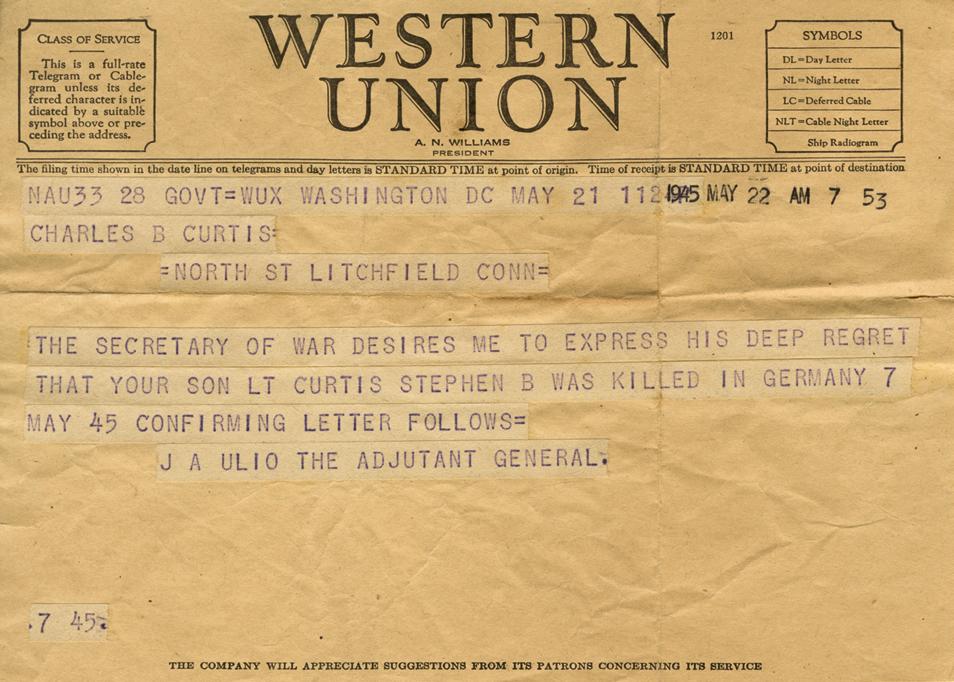
Military telegram: “‘On a scheduled non-operational flight, quite certain that aircraft crashed into bridge, part of plane seen in water and remainder up in bridge from photo, smoke seen coming from the center of span—craft No. B24-J4-10260,’ the name of the plane, ‘The Falcon Returns.’”
All nineteen men on board, ground crew as well as flight crew, lost their lives. Only some of their bodies were recovered, however, and Stephen’s remains were never found.
In appreciation of the work that its ground crews had performed so tirelessly throughout the war, the Eighth Air Force organized so-called trolley missions
The Quarterly thanks W. Cameron Beard P’20, ’22— nephew of Stephen B. Curtis—for sharing Mr. Curtis’ correspondence and diary entries, as well as the photos included in this piece.
Top left: The telegram Curtis’ family received sharing the sad news of his death.
Top right: Stephen Curtis was one of many Grotonians to die in World War II. The names of all the deceased are listed on the wall of the Memorial Room in Hundred House.
A Fond Farewell
with more than seventy combined years of teaching at Groton School, Dave Prockop, Monika Andersson, and Peter Fry leave the Circle a better place for those who live and learn here.
Dave Prockop
A member of the Science Department faculty since 1999, Dave Prockop P’15, ’17 held the Lathrop Brown Chair. He helped create and launch both the GRACE (GRoton Accelerate Challenge Enrich) summer program and Groton’s STEM (Science, Technology, Engineering, and Math) program. Besides teaching physics, astronomy, and STEM, he was a longtime boys varsity squash coach, coached girls varsity tennis, and served on a variety of administrative committees.
Mr. Prockop’s wife Hope ’86 and daughters Molly ’15 and Lyle ’17 are all alumni. He and Hope plan to travel the East Coast over the coming months, seeking out old friends and new spots to fish.
“For the past twenty-six years here on the Circle, Hope has encouraged the best in me as the two of us have done our part to help shepherd young people on their journeys through this place and through a poignant stage of their lives,” Mr. Prockop said. “In the process, we have made dear friends of students, parents, and colleagues, all the while watching with pride as our two daughters grew into the wonderful human beings they are today.”
An admirer of excellence, whether in the classroom or on the court, Mr. Prockop said he appreciated even more the inherent goodness of the many people with whom he’s crossed paths on the Circle.
“My explicit expectations of my students and athletes have been for excellence in one form or another but I sincerely hope that my implicit desire for goodness has never gone unnoticed. My lofty goal for all of us is that we find ways to do good, try to do it well, and, most importantly, do well by those around us.”
away from home with the Prockops. Thanks for all of the years you devoted to Groton—you will be missed!
Caroline (Hamilton) Langerman ’03
Jenny Desrosier ’07
Mr. Prockop was more than a teacher and coach—he was a steady, supportive presence during some of the most formative years of my life. As the girls varsity tennis coach during my Fifth and Sixth Form years, he helped us navigate every challenge—including our disproportionate share of tears—with kindness and warmth.
Jocelyn Mason ’01
Dave and Hope Prockop were a huge part of my life at Groton. They coached me in squash, patiently helped me learn challenging physics concepts, and welcomed me into their home. I loved spending time with their girls, Molly and Lyle—who were flower girls in our wedding in 2005! I felt like I had a home
Mr. Prockop was a wonderful teacher, mentor, and coach. In 2002, he led our girls varsity tennis team to the ISL championship. I remember all of the fun bus rides to our matches, and in hindsight, I see that Mr. Prockop had a lot of patience taking ten teenage girls bowling for preseason fun. Bill Polk often came to our practices (but did not participate in our “suicide” sprints, as little Molly and Lyle Prockop often did!). I signed up for Mr. Prockop’s astronomy class, where I hoped he’d take it easy on me, but his high standards for us never loosened. I remember the cold crisp night our class went outside and lay in the sports fields to see the stars. On weekends, my friends and I babysat for his kids, and on the squash team, his wife Hope would joyfully scream at us to “Get inspired!” It took a while for me to find that inspiration. At a time when I worried I would never make it through Groton, or get into college, Mr. Prockop was a steady, encouraging presence in my life. “All you need is one, Hamilton,” he kept saying to me that senior spring, while I was waiting for acceptances. I always felt accepted by Mr. Prockop, as well as pushed to do my best. When I published
my first piece of writing ten years later, his name was in my inbox, still cheering me on. Thank you, Mr. Prockop, for your service to Groton, and to all of us who learned from you!
Ronald Bogdasarian, MD ’05
Dave Prockop was a kind, understanding, supportive mentor of this very immature Grotonian! He was a fantastic teacher of physics. In his course I learned to apply math and physics to the world around me. He is the reason why I majored in physics in college. I still apply these principles to my work as a surgeon. He should be very proud of all the young people he has guided through prep school and beyond!
Osric King ’23
Mr. Prockop is the whole reason why I want to become an engineer. He taught physics with such patience and curiosity. He opened my eyes to how much physics surrounds us and inspired me to explore how we can use physics to impact today’s world.
Richard Lightburn P’25
Coach Prockop has been a wonderful coach and mentor to our son, Carter, these past four years. His level-headed guidance has been there for the team and his
Above: Dave and Hope Prockop.
advisees through all the ups and downs of boarding school. My lasting memory is Dave’s steadfast focus on sportsmanship, team spirit, and decorum for the squash team and their supporters. It’s exactly the right lesson for young men and women to take away from high school sports. We so appreciate all of Dave’s support and dedication over the years. Congratulations on an astounding twenty-six years at Groton.
Tyler Weisberg ’22
When I look back at my Groton experience, some of my best memories are from the varsity squash team. Coach Prockop helped me build my confidence and my consistency since my Third Form year, and he propelled our team to win the HS national championship my Fourth Form year. His patience, attention to detail, and high expectations for our team are qualities I’ve carried with me ever since. Wishing Coach Prockop a happy retirement!
Derek Lee ’02
Mr Prockop was my advisor back then and he has shown tremendous support both inside and outside of classrooms to help me navigate and adjust to a boarding school environment and to be able to nurture my personality. Thanks again for all the support and lessons, Mr. Prockop!!
Mary Frances Bannard P’29
Classics faculty
Dave and Hope were the first people to welcome us to Groton when we moved here in 2014, and it feels impossible to
imagine Groton without them. I have had the privilege of working with them, and both of their daughters, during my time on the Circle, and remain impressed by their family’s humility, patience, and their good humor. I will miss all of them tremendously. I admire Dave’s levelheaded approach to his work and his life, and the calm, steady energy he brings to everything he does. I will miss seeing him teaching his physics classes as I pass by his classroom off the Forum, but I especially will miss his collegiality, his kindness, and his warmth.
Jack Cohen ’11
Mr. Prockop was truly a one-of-a-kind teacher. He opened up the entire universe of physics and astronomy for thousands of students, including me. It can be daunting to learn about how everything works—but Mr. Prockop made it seem inspiring and attainable—and did it all with an ever-present smile.
Ryan Spring P’28
History and Social Science Department Head
The Prockops were among the first people we got to know on campus when we arrived in August of 2013. Lyle babysat our two children as Stacey started her doctorate at BU, and I prepared to begin teaching and coaching at a new school. Dave and Hope have been wonderful supporters and friends ever since. Dave, in particular, has been a wise and trusted resource for me and many other faculty members as we have navigated all aspects of school life.
Naveed Khalidi ’01
I have two particularly fond memories of Dave Prockop. The first was when I was a dorm prefect in the Third Form boys’ dorm (that was located in what is presently the Second Form girls’ dorm) with Dave as dorm head. We had a fantastic year in which Dave let my fellow dorm prefects and me learn how to lead a ragtag group of energetic boys in a space with nearly no natural light, but bright spirits and a real sense of joy about the place. Dave graciously let my roommate Hardy Simes ’01 and I bring in an unwanted spinet piano to the common area, where the Third Formers indulged me as I tried out my avant-garde Music Theory compositions.
Bob Low P’29
Athletic Director
As a teacher, coach, and mentor, Dave has been the consummate professional, gentleman, and colleague. I was proud and fortunate to have him representing us all as coach in NEPSAC and ISL circles. An old school multi-contact mentor, what an impact he has made on us all.
John Capen P’17, ’22
English faculty
Hope and Dave Prockop are quintessentially Groton. They have dug in for decades to make the school and our community what it is, offering us more hope, more joy, and ultimately making all of us more GRACEful. Their home was a hub of Grotitude for alumni, faculty, parents, and students, where they extended warmth, welcome, and friendship to all.
John Conner P’11, ’14, ’16, ’19, Dean of Faculty
Dave was a brilliant teacher, an inspired coach, and a person who was universally loved on campus. Dave and Hope have left a rich legacy on the Circle. They are models for what I consider to be the best in teaching and humanity.
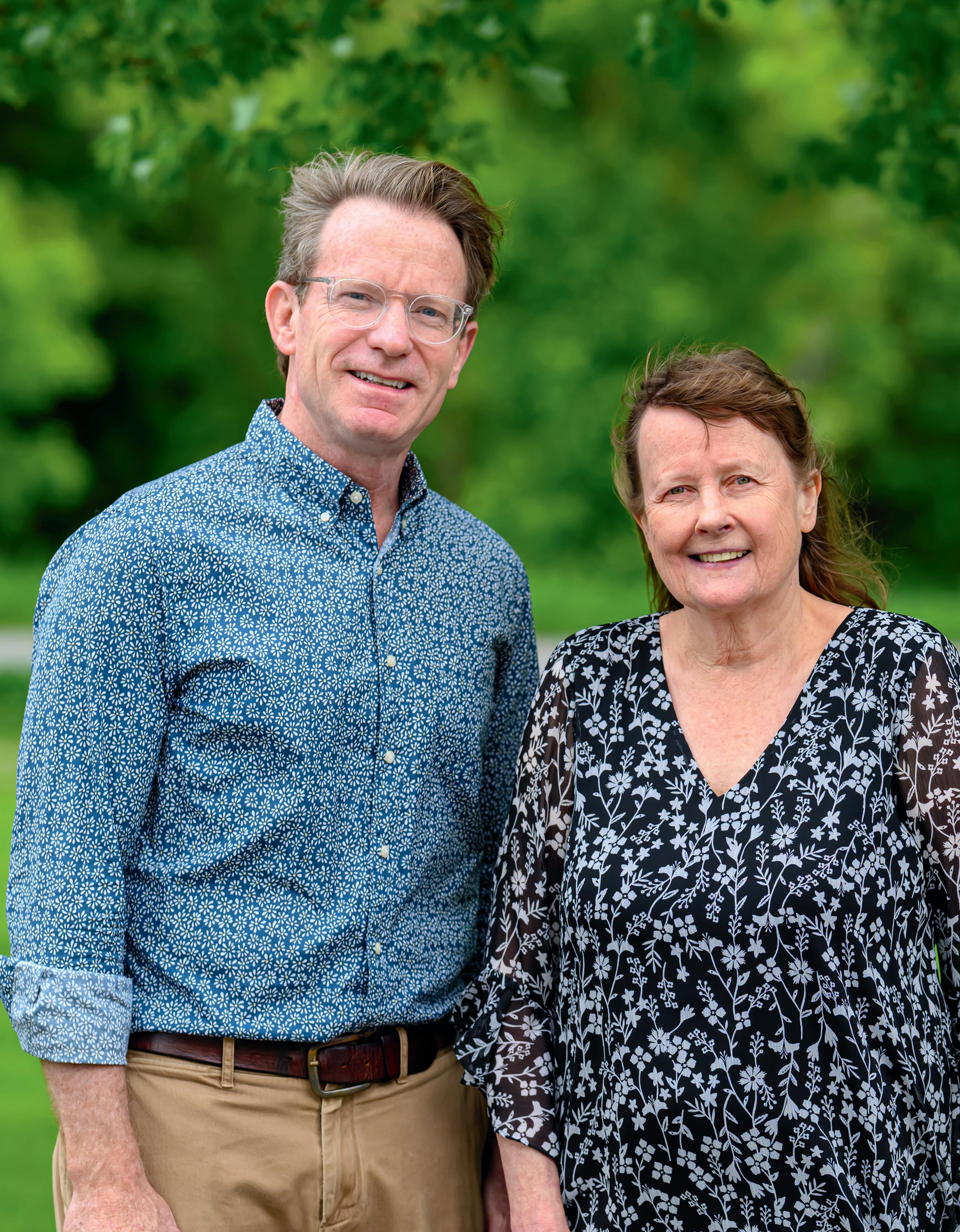
Left: From left, Hope Prockop ’86, Lyle Prockop ’17, Molly Prockop ’15, and Dave Prockop
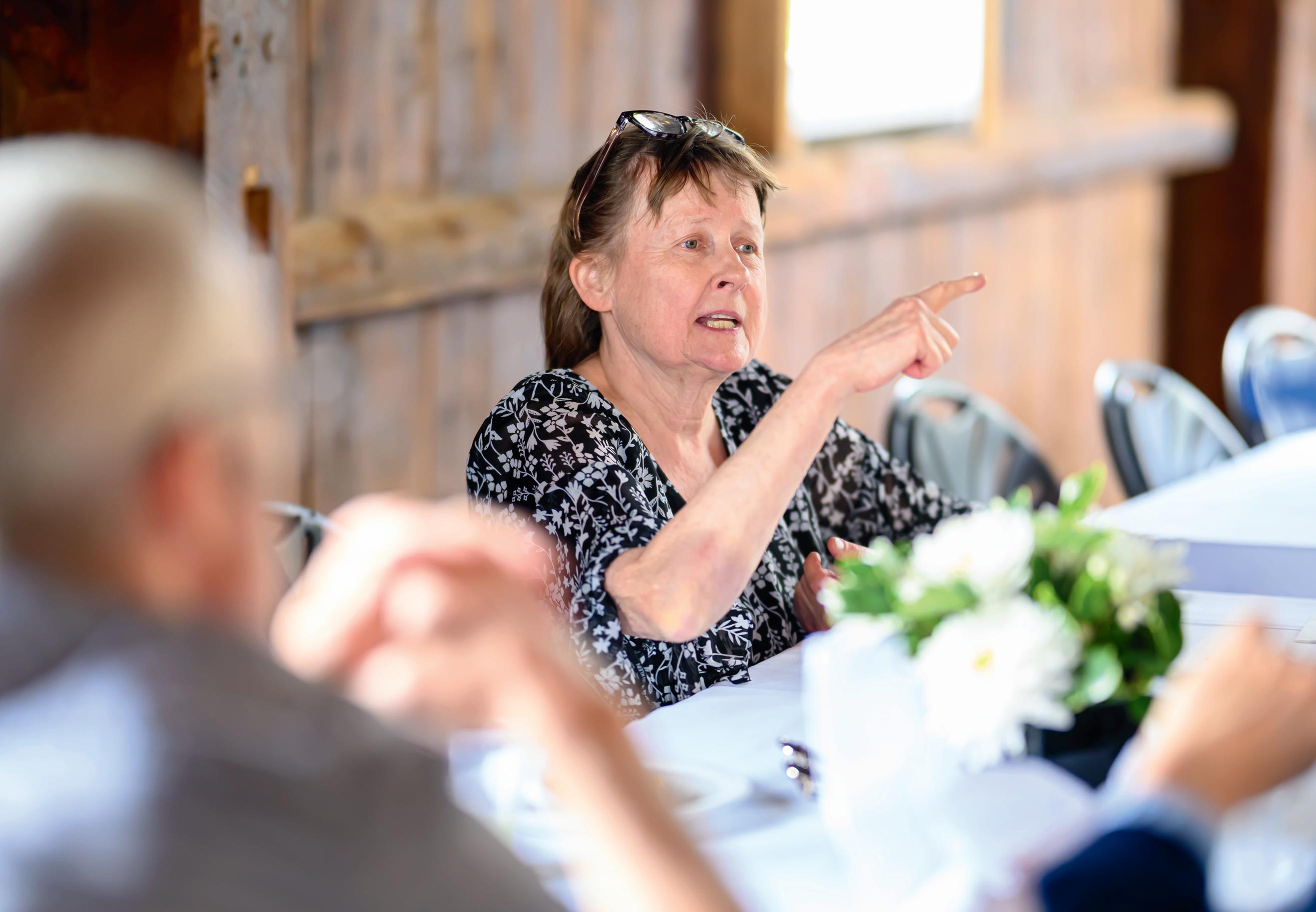
Monika Andersson
A native of Sweden, Monika Andersson was in her twenties when she decided to take a two-year photography class. Besides teaching her a lot about cameras, lenses, and light, the class showed her a new way to view the world. When it ended, Ms. Andersson applied to Massachusetts College of Art, eventually spending four years in Boston before continuing her studies at Yale School of Art in Photography.
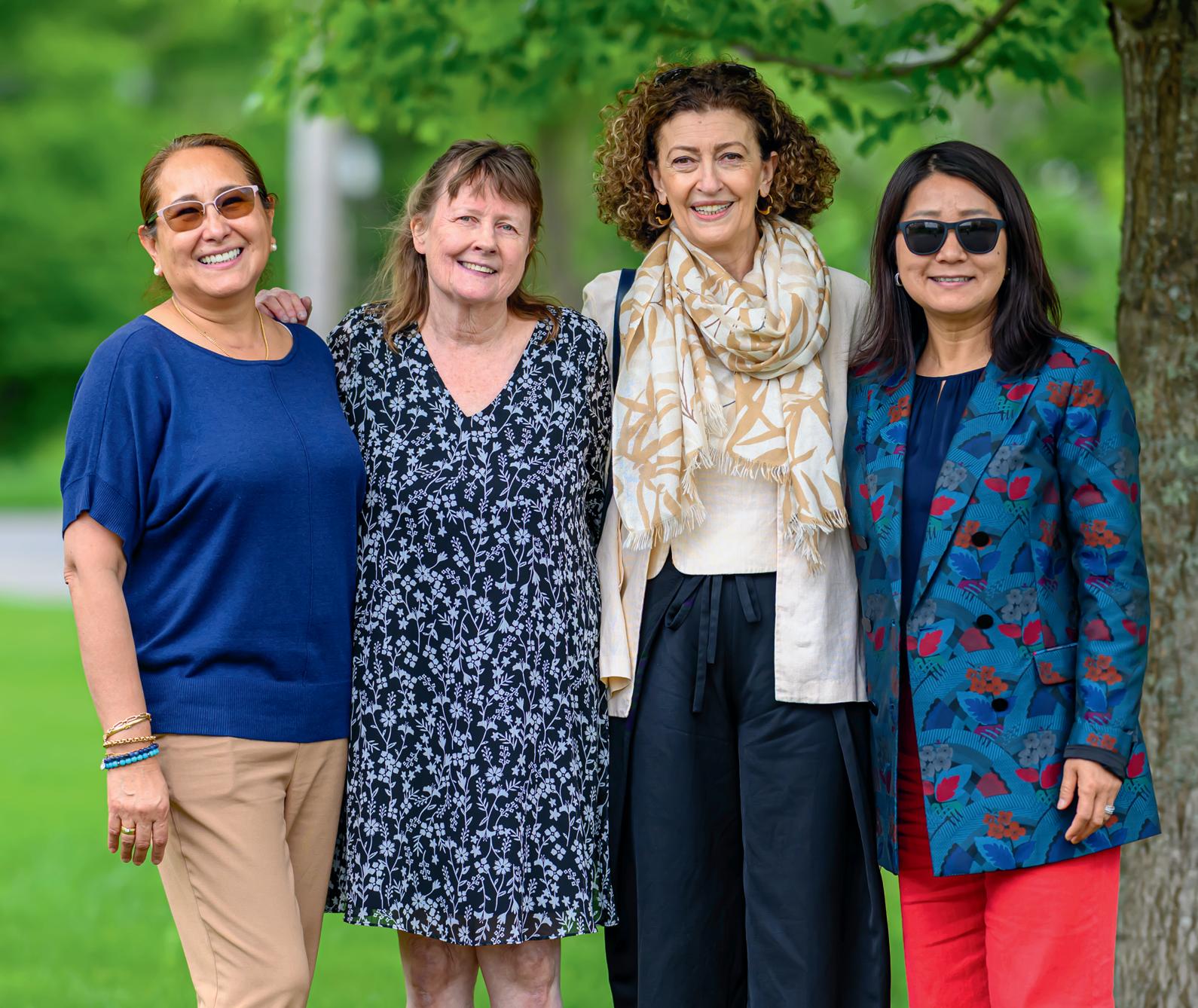
Ms. Andersson joined the Groton faculty in 2000, teaching photography and videography, among other duties. From 2007 until recently, she also served as director and curator of the school’s de Menil Gallery.
“Photography has given me insight into the world and taught me to appreciate the beauty in the ordinary things—a sliver of light on a person’s face, a profile turned in a certain way, a sudden movement,” she said. “Sometimes, as I drift off to sleep, I wonder about the people I’ve photographed. While they may not remember me, I have seen them countless times through my images, wondering where they are now and how they are doing.”
Amir Paul ’05
Before Ms. Andersson’s class, I had no clue about taking photos. She opened my eyes to the world of photography, Adobe Photoshop, and that realm of creativity. I’m not a famous photographer (yet) but I’ve been called a shutterbug many times and I attribute my love of capturing memories to Ms. Andersson with a special mention to her dog in 2005 who did awesome tricks and ate Altoids!
Tyler Weisberg ’22
During my time at Groton, Ms. Andersson taught me film photography, darkroom techniques, digital photography, and was my tutorial leader. She laid the foundation for everything I know in photography. Even now, I shoot and develop film weekly, and I’m continuing to nurture my passion by taking photography courses here at Harvard. I hope she enjoys a happy, well-deserved retirement!
Jack Cohen ’11
Ms. Andersson! As a professional photographer now, I learned an incredible amount from Ms. Andersson in a short period of time. She helped fuel a deep passion and guide our creativity in a way that certain creative teachers overdo—not her—she found the perfect balance of constructive critique and creative nurturing. Thank you!
John Capen P’17, ’22
English faculty
Monika pointed me not only to Buddha but also to Billy. She was the first person to tell me about Billy Collins, before he became the U.S. poet laureate, and I have been forever grateful. Immersing myself and students in poems by this poet has lightened my life. We have loved
Left: Monika Andersson with faculty colleagues (from left) Fanny Vera de Viacava, Rebecca Stanton, and Shannon Jin.
the way Monika sees the world with her smile, warmth, and wisdom.
John Conner P’11, ’14, ’16, ’19
Dean of Faculty
Monika was a legend on campus, a visionary artist who shared her love for art, and its power, with generations of students. Her kindness, humanity, and love for others shone brightly, and I am so grateful for all that she gave to our community.
Allison Read P’25 Chaplain
For a decade, Monika Andersson led our Buddhist Sangha. Each week, she carefully planned music, prayers, prose, and meditations for our student group. For these offerings of wisdom, peace, and beauty we are deeply grateful. A favorite meditation, one we ensure is read in Chapel services each year, is this one:
You belong to the earth, but only for a while.
This spinning globe is your home. It holds everything you know and everyone you love.
The water, air and matter of the world flow through your body, to keep you whole.
Feel your heart
It is centered and peaceful.
And your heart connects you to everything you need, the dark grass, the rustling trees, smooth stones and the songs of crickets.
You hold the world and the world holds you.
You are a part of everything.
Peter Fry
Departing English Department faculty member
Peter Fry P’15, ’17 joined the Groton faculty in 2005 after working at schools in Ohio, Vermont, Morocco, and Maryland. He held the Elizabeth R. Peabody Chair.
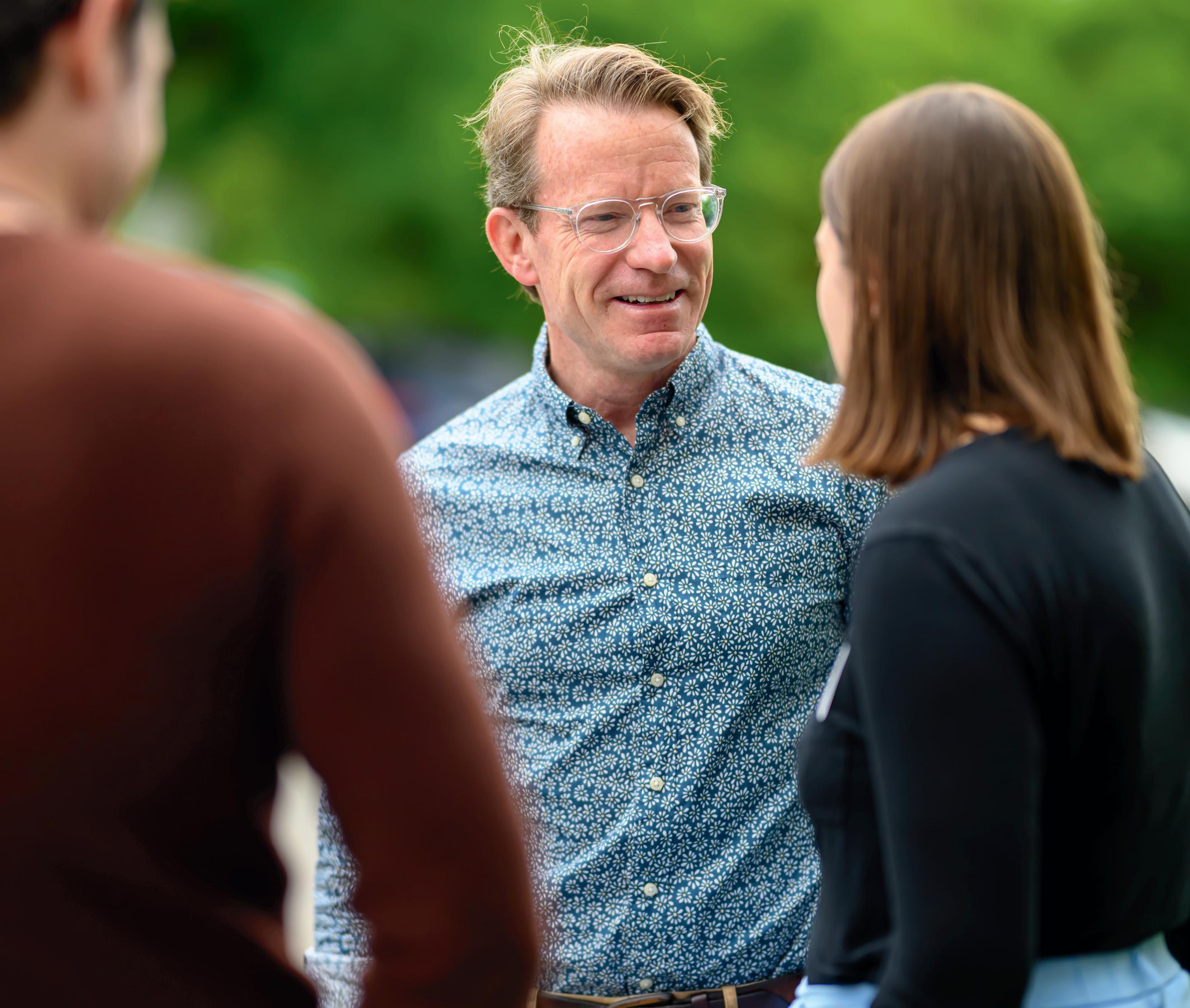
Mr. Fry credits his experience at Exeter— where he was profoundly influenced by inspiring teachers and coaches—as a key factor in deciding to pursue a career in boarding school education.
“I had a really powerful experience there and with amazing, really superb teachers,” he said.
While never a head coach at the varsity level, Mr. Fry worked with many teams as an assistant, including football, lacrosse, basketball, and squash.
Looking back over twenty years on the Circle, Mr. Fry points to the success of GRAIN (the GRoton Affordability and INclusion initiative) in attracting a more diverse student body as one of the biggest changes of his tenure.
“There was a commitment to diversity before GRAIN, but not nearly as meaningful, right?” he said. “So the student body and gradually the faculty definitely became more diverse, which is awesome. It was great.”
Mr. Fry and his wife, Gretchen, ran a dorm for many years. His children Trevor ’15 and Phoebe Fry ’17 are both Groton graduates; his son Malcolm plays professional soccer for the New England Revolution. Mr. Fry and his wife plan to move to their home in Vermont to live there full time.
George Prugh ’12
Mr. Fry was a kind advisor. He made me feel cared for as a 15 year old living away from his parents for the first time. He listened well, and encouraged me in my work and personal growth in general. He and Ms. Hummon welcomed me and the other advisees warmly into their home, and it was special to get to know his family, including his son Trevor, who was in the freshman dorm that I was a prefect in. I enjoyed having Mr. Fry in the choir with me as well, and having him as a squash coach and sparring partner.
Doyeon Grace Morris ’11
Trying to write out all the good memories I had with Mr. Fry (Sorry, Peter, I know
you said to call you Peter after graduation, but you’ll always be “Mr. Fry” in my mind. Blaming my Korean upbringing here.) as my English teacher is truly an impossible task. As an eager disciple of the humanities, I was truly lucky to have been a part of Mr. Fry’s classes during my time at Groton. Mr. Fry was an instrumental part of my journey as a scholar of English Literature, especially 19th century British literature. His Fifth Form English class was where I first discovered my favorite author of all time, Thomas Hardy. I still remember the tall wall of author postcards—and thinking Mr. Fry had an uncanny resemblance to W.B. Yeats. But the thing I remember most, and the thing I’m most grateful for, was Mr. Fry’s unwavering and sincere support that he freely gave me. It’s hard not to cringe at all the things you did back in high school, but Mr. Fry was always there, always supportive, always warm. I knew I could always run into his classroom if the door was open, and he’d let me just hang out in the classroom to use his typewriter (I’ve gotten my own since then, Mr. Fry) while he graded papers. I’d rant to him about my heartbreaks as if the world was ending, and he’d always listen (even though I’m sure he knew in his infinite wisdom that everything was going to be OK). Truth be told, I never felt like I truly fit in at Groton, and thinking back, I didn’t know how to just be. Mr. Fry was not just an English teacher for me, but almost a surrogate parent that was there for this lonely, anxious teen through all my trials and tribulations. Thank you so much, Mr. Fry. Thank you for indulging me in
my florid essays and juvenile rants. Thank you for giving me a safe space where I learned how to enjoy things. Thank you for helping me be. Thank you for everything.
Osric King ’23
I’ll never forget the spring term in my first year at Groton where we had to write an essay on Twelfth Night. However, this spring term was during the peak of the coronavirus epidemic where classes were completely remote. Classes did not meet as often due to the drastic change of the schedule and I was really struggling to come up with ideas for the essay. I emailed Mr. Fry expressing my difficulties and he replied with his phone number. I cannot express how much it meant to me, when Mr. Fry and I shared a phone call outside of class time to help me write my essay. It is the first and only time a teacher has done something like this for me, and I’ve been so thankful since. To this day, my mother raves about it as she was with me during the whole call.
Devon Mastroianni ’23
Mr. Fry was an invaluable mentor during my time at Groton. He is among the most welcoming people I have ever met and cares so deeply about both the education and the wellbeing of his students. He and his dog Remy (a student favorite) share an infectious enthusiasm that we will all miss on the Circle. Thank you, Mr. Fry!!
Winston Shi ’12
Mr. Fry taught me Third Form English. He was the first English teacher to
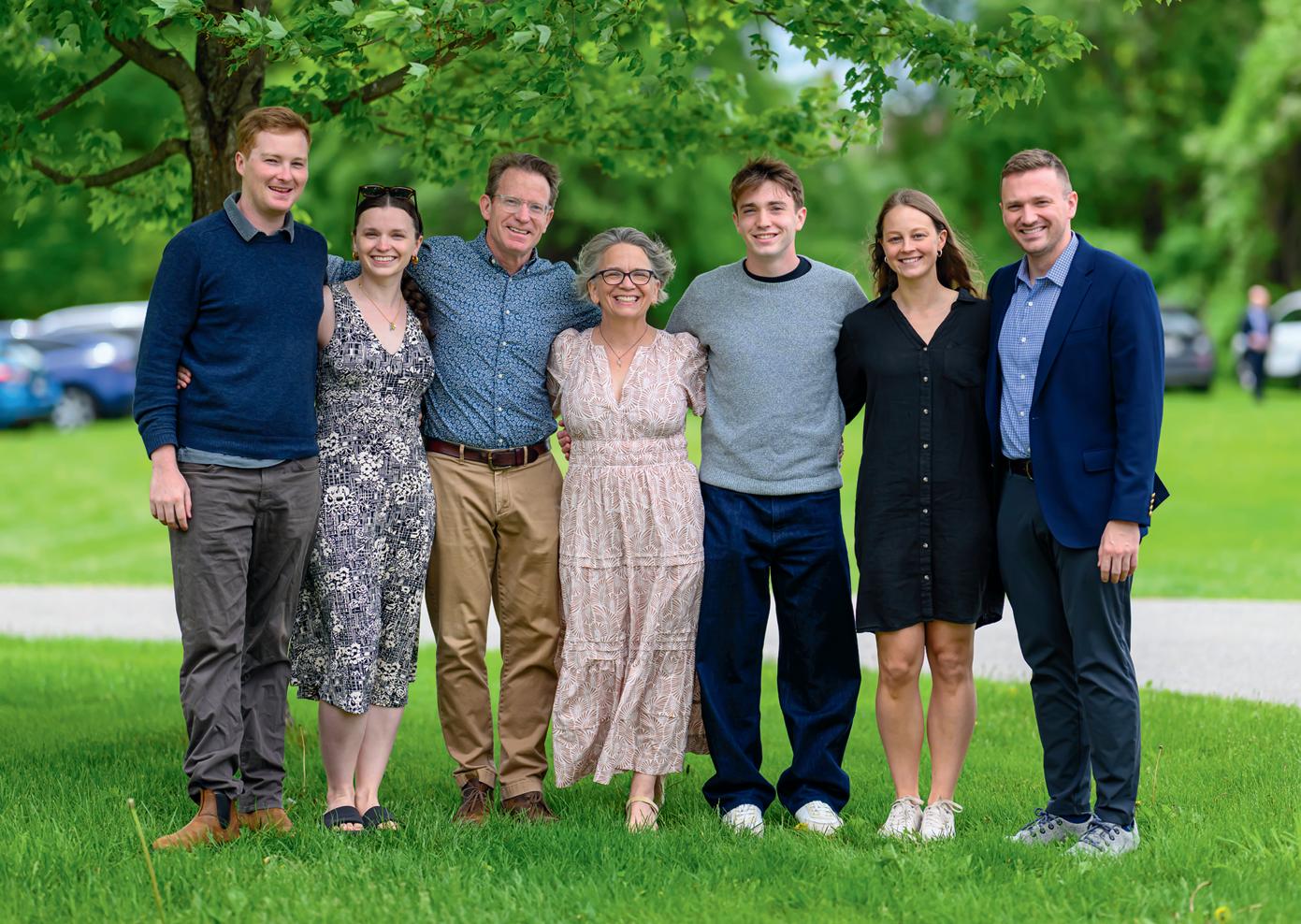
From left, Teo Burnham, Phoebe Fry ’17, Peter Fry, Gretchen Hummon, Malcolm Fry, Laura Rand, and Trevor Fry ’15.
encourage me to read substantive literature for adults. I’d occasionally branched out into more serious fare, but I was 12 and I wanted to read the sort of books that 12 year olds wanted to read. Who didn’t? Mr. Fry didn’t tell me to abandon the present but he showed me that the world was bigger than my tunnel vision. In this regard his mentorship marked an unwritten threshold in my life—not from childhood to adulthood, but from thinking I knew everything to knowing how much there still was to learn. I will always be grateful.
Mary Frances Bannard P’29
Classic faculty
I met Peter in the Dining Hall a few weeks after we had moved to Groton in the fall of 2014. We hadn’t yet been introduced, but he still greeted me by name, welcoming me to the Circle and asking me how I was settling in. Over the years that I have had the privilege of working with Peter, I have come to understand that this attention to detail, this generosity of spirit, this incredible warmth, is just who Peter is. He radiates kindness and concern for the people and communities around him, is an amazing conversationalist, and has a curiosity about the world that is contagious. I’ll never forget coaching winter running with him during the pandemic, when we ran every other day with students around a snowy Triangle, fully masked, but thrilled to be outside and to be together. I will miss him and his wonderful family very much!
Franck Koffi
World Language and Culture faculty
I remember the warm welcome we received from Peter and his family when we arrived on the circle in July 2013. Peter and his family invited us to share couscous, a popular Moroccan dish that became a French national dish, in a friendly atmosphere with music and songs. The transition was smoother for us, as our English was not very good, particularly mine. We found a family with whom we could share the language and culture we all love. Peter and his family speak French, except for the young
Malcolm, who will later become fluent. I had the three siblings in my classes at some point during their time at Groton.
Ryan Spring P’28
History and Social Science
Department Head
Peter and Gretchen will be missed in numerous ways. Their humor, warmth, and intelligence make time spent over a meal with them so interesting and such fun. Moreover, we will always be grateful for Peter’s patience and encouragement as our son’s English teacher.
Bob Low P’29
Athletic Director
As a teacher, coach, and advisor, and in his gentle, unassuming way, Peter has left a legacy of kindness, compassion, scholarship, and integrity that has made a profound difference in all the loves he has touched.
John Capen P’17, ’22
English faculty
Peter is the colleague and friend everybody wants. He is the personification of Gatsby’s smile, appreciating, encouraging, reassuring others as we would like to be, inspiring us all to be our best selves.
John Conner P’11, ’14, ’16, ’19
Dean of Faculty
I will miss Peter Fry! A brilliant teacher, an incredible writer, and a lover of both literature and world languages, Peter, along with Gretchen, set a high bar for what is possible in this profession of ours. I will miss the entire Fry family.
Sravani Sen-Das P’16, ’19, ’23
English Department Head
Peter’s exquisite attention to words and language, as well as his curiosity about the world, are things I have long admired. His many talents made Peter eminently suitable for a boarding school campus: Not only is he an inspired and exacting teacher, but he also coached football, lacrosse, and squash, ran both a Lower and Upper School dorm for years, and chaired the English
Department. If this weren’t enough, he is a gifted singer, a consummate actor, and a creative and passionate chef.
Amongst the many stories that came in the wake of the news of Peter’s departure, his students talked about enjoying homemade scones and tea around the Fry fireplace at the end of his sought-after winter term elective on Jane Austen, or piling into a toaster to go to the MFA as part of the learning in his spring elective, or of how Peter addressed everyone by their name when he passed them. This is quintessential Peter: He believes that hard work and high standards don’t have to come at the cost of community, of connection.
Peter, though I still haven’t forgiven you for leaving, I understand that go you must: the grass in your beautiful Vermont hideaway is growing even as we speak, there is a pile of unread books on your bedside table, the trails are calling for you to traverse them, your cross country skis wait patiently by the door. We are the richer for your two decades here, and we will never stop being grateful to you for showing us that we can work and live together in collegiality, mutuality, and friendship.
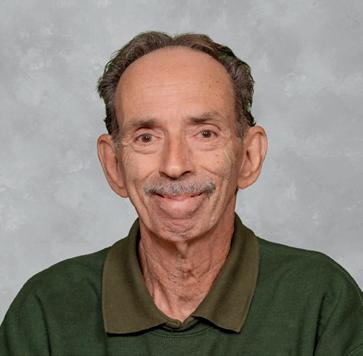
Another fond farewell
Groton School also thanks Russell Leclerc for his twenty-three years of service in the Buildings and Grounds Department.
Best wishes from everyone at Groton to Russ for a happy and healthy retirement!
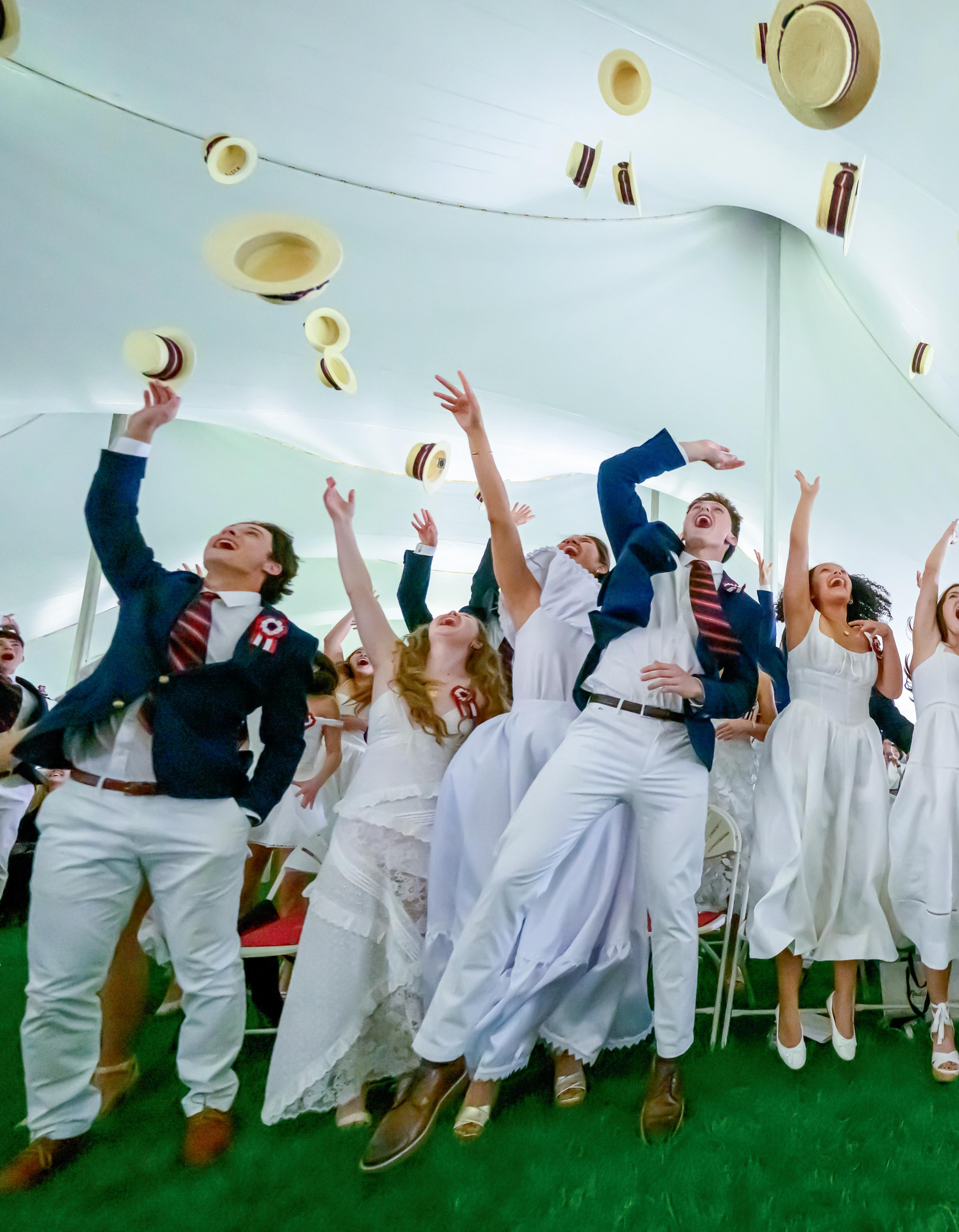
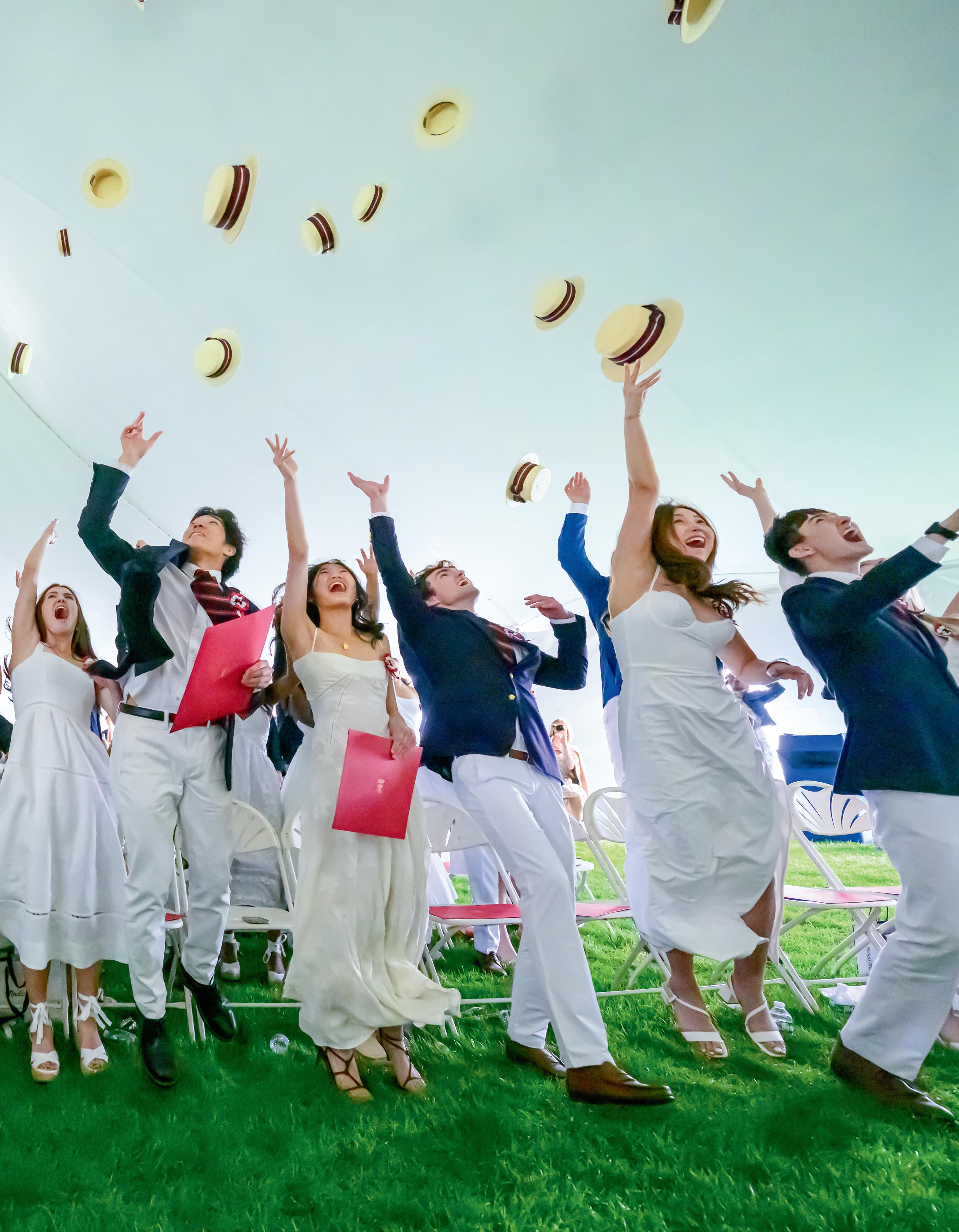
The Groton community gathered to salute the ‘phenomenal’ Form of 2025 at the school’s 140th Prize Day.
as if the sun insisted on shining for the Form of 2025, an overcast morning gave way to blue skies just as the students left St. John’s Chapel to the ring of church bells and began the school’s 140th Prize Day on June 1.
The graduates’ family, friends, and fellow students joined with faculty, staff, and distinguished guests in gathering for remarks from Board of Trustees President Ben Pyne ’77, P’12, ’15, Headmaster Temba Maqubela, student speaker Max Fan ’25, and the event’s keynote speaker, presidential historian Douglas Brinkley, PhD.
Mr. Pyne extended a welcome to all gathered from himself and the Board of Trustees, and encouraged the Form of 2025 to focus on the importance of strong character and small gestures.
“When I was your age, I always assumed that big gestures—impressive titles, important jobs—were the only way to have an impact, and to make a difference,” said Mr. Pyne. “While there is a certain truth that the bigger the platform, the bigger the potential impact, it doesn’t always start that way, or end up that way. Who you are, how you live your lives and interact with others—even in the smallest ways—can have an outsize impact.”
Mr. Maqubela praised the “phenomenal” Form of 2025, a special group that genuinely took joy in caring for each other and doing their duties as senior students.
“It was the first form that I said the words, ‘I love you’ to,” he said, “because they loved each other.”
Graduate Max Fan was elected by his fellow Sixth Formers to represent them as class speaker. A talented pianist who recently performed with the Boston Pops as a winner of the Fidelity Investments Young Artists competition, Max began his remarks by joking that he was more accustomed to appearing behind a keyboard than a microphone: “Mr. Maqubela, I thought I was supposed to be playing piano today!”
It was a doubly special day for Max, who was celebrating his birthday in addition to graduation. In a lighthearted speech, Max recalled fond and funny
memories with many of his formmates from throughout their time on the Circle, and talked about how lucky they were to have been here together.
“It’s so hard to comprehend sometimes that this place is real,” he said. “Not only the nature, but the people here. Where else in the world do you find a collection of high schoolers with such diverse backgrounds who are so uniquely positioned to succeed in so many fields?”
Dr. Brinkley, who holds the Katherine Tsanoff Brown Chair in Humanities and is a professor of History at Rice University, has written extensively on U.S. presidents, including two landmark works on perhaps Groton’s most esteemed graduate, Franklin Delano Roosevelt (Form of 1900): Rightful Heritage and FDR and the Creation of the United Nations.
“You can’t deal with American history, period, without Franklin D. Roosevelt,” he said.
As someone with polio, Roosevelt struggled with the physical and psychological aspects of the disease, but Dr. Brinkley said he never lost hope and urged the graduates to do the same.
“You should all be optimistic,” he said. “FDR said optimism in America is our oxygen.”
Special guests included Groton’s sixth headmaster Bill Polk ’58, FTR ’78–’03 and past and present members of the Board of Trustees.
In sending the graduates out into their new world, Mr. Maqubela implored them to seek positivity before invoking the Zulu phrase first used by Mr. Polk that now closes Prize Day.
“As we say in chemistry: Go and become nucleophiles,” he said. “The world needs you to do the greater good. Humanity needs you. Go well!”
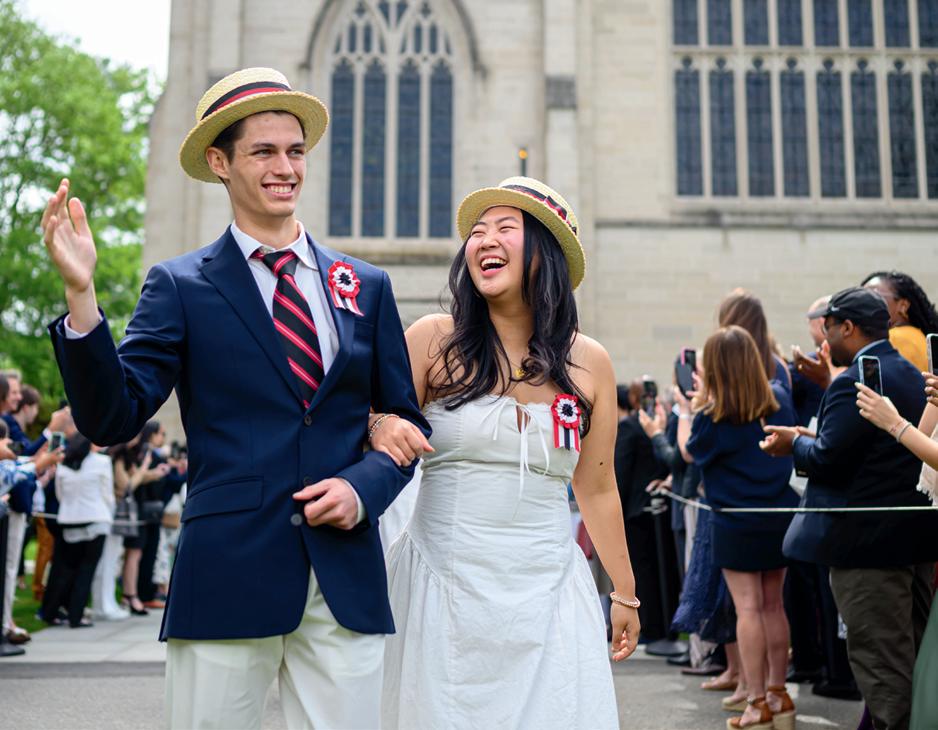
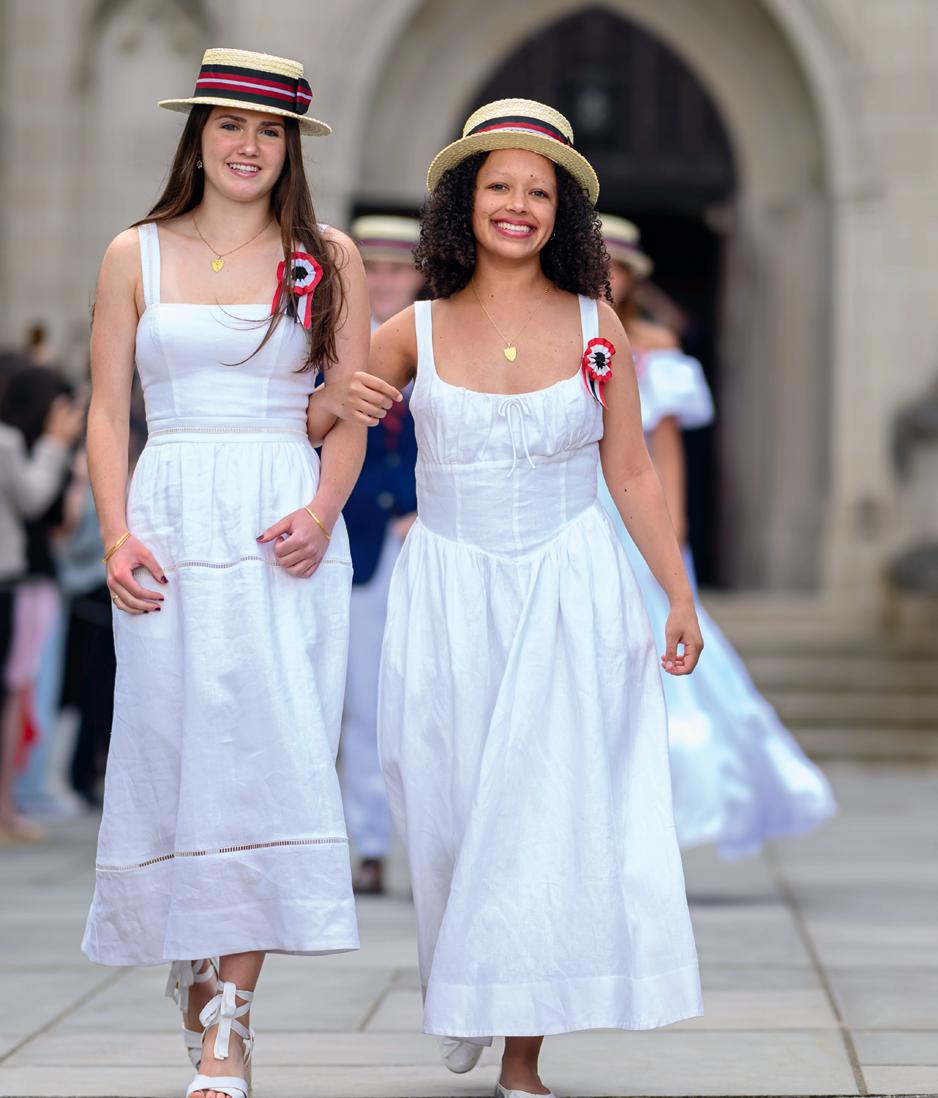
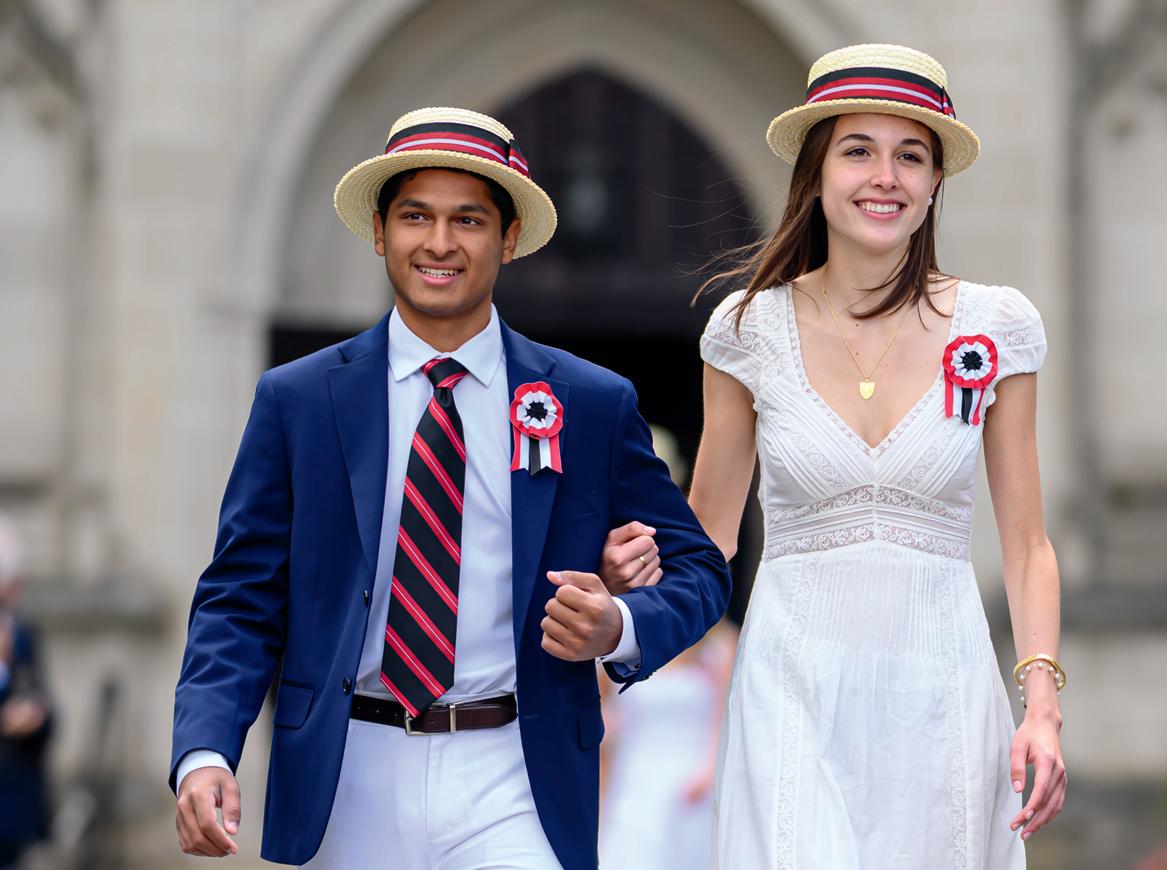
Raymond Hildreth and Chloe Han
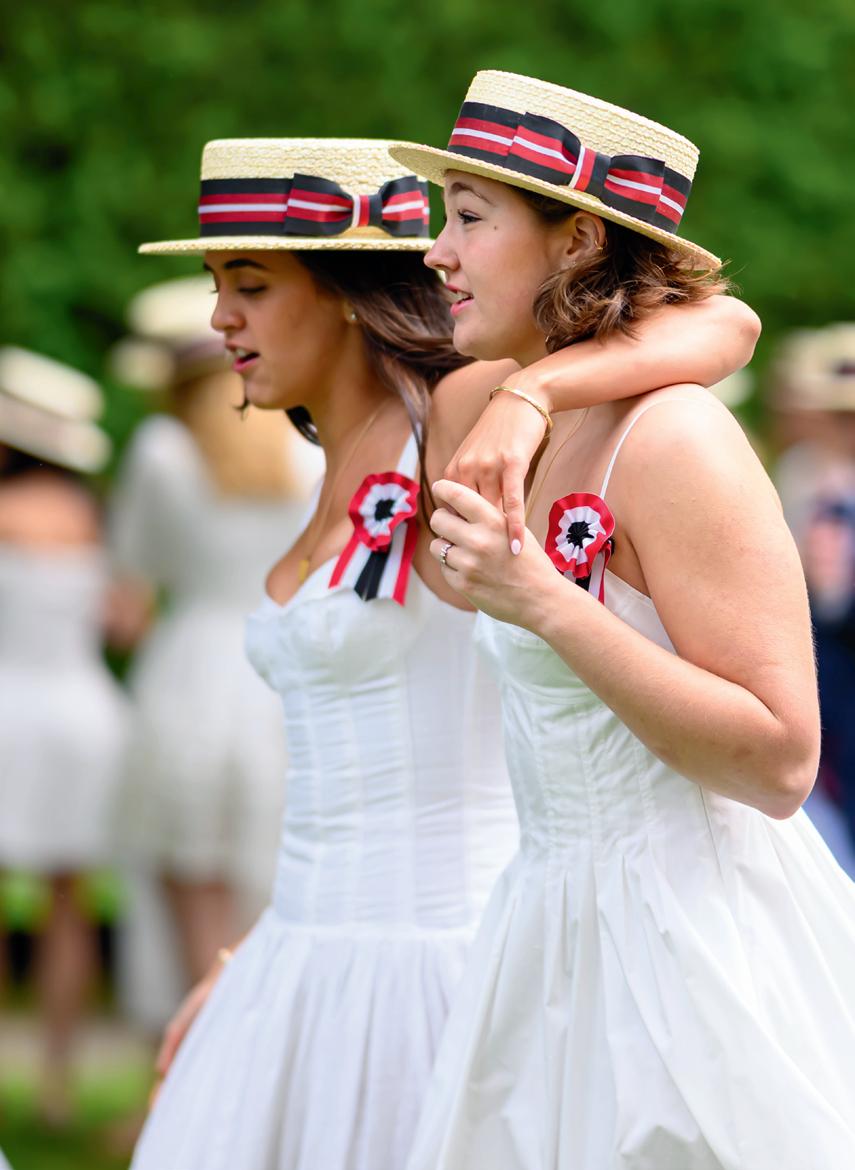
Clara Maturo and Grace McAndrew
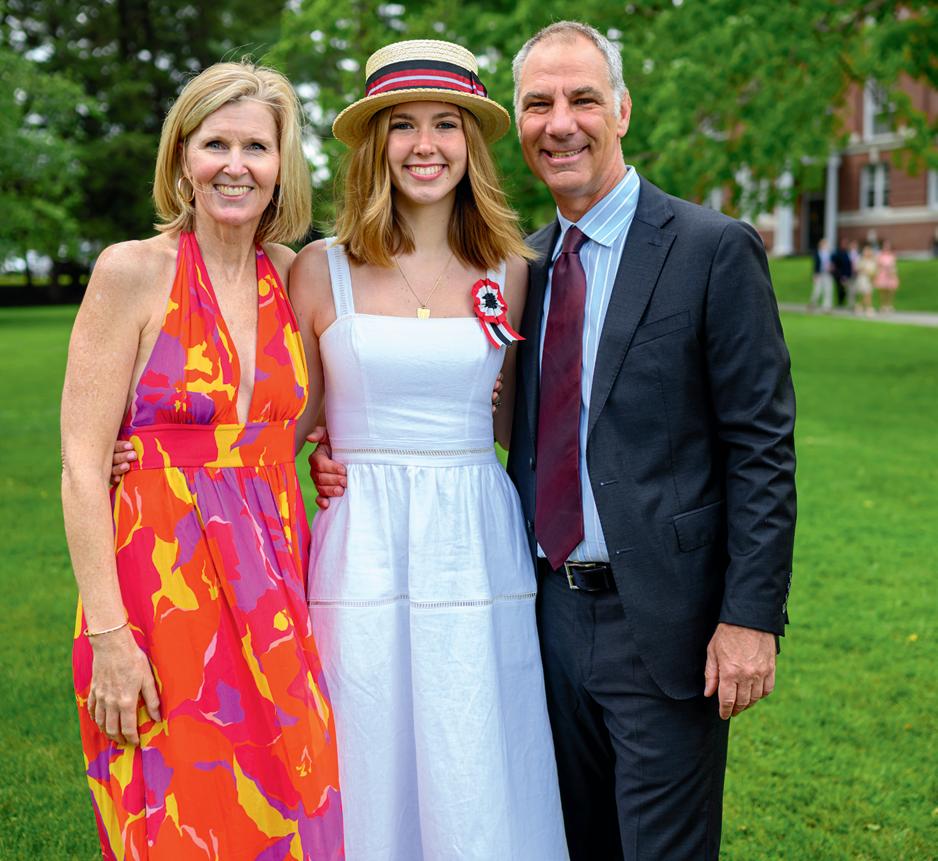
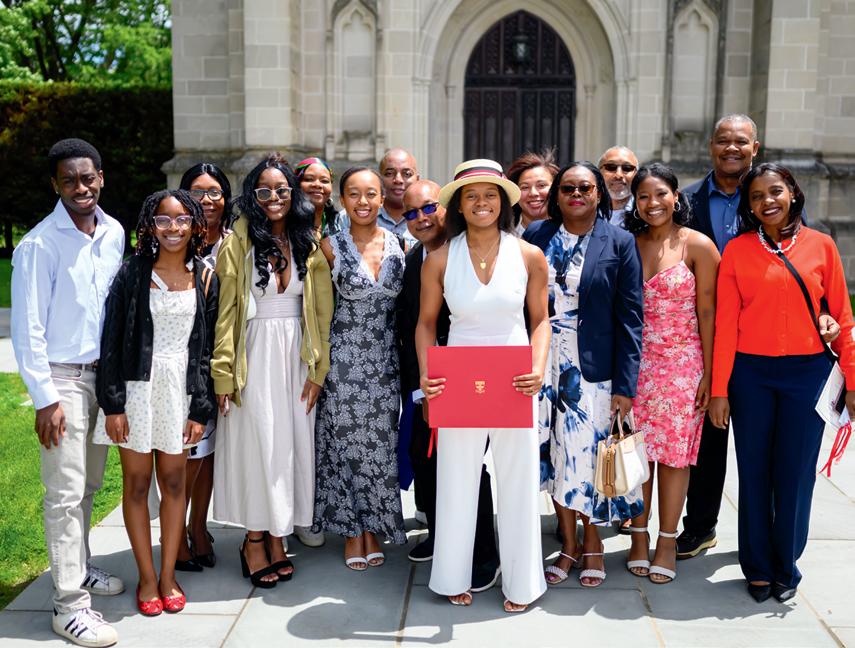
Devon Gura and family
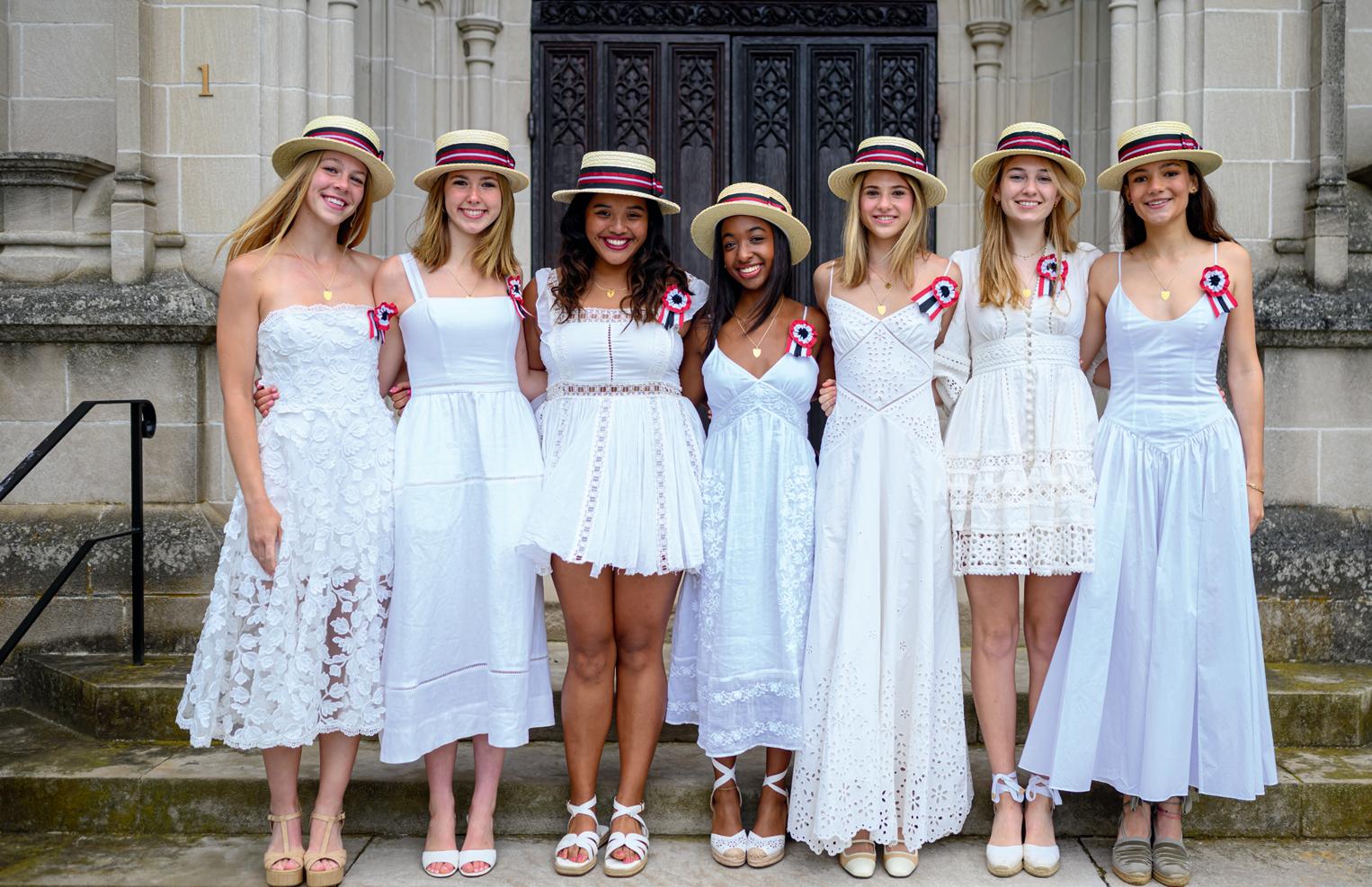
4 Left to Right: Danielle Shyjan, Devon Gura, Lola GutierrezHuang, Tori Reece, Kristen Billings, Julia Landau, and Margaret Kaneb
Anabelle Bernard and family
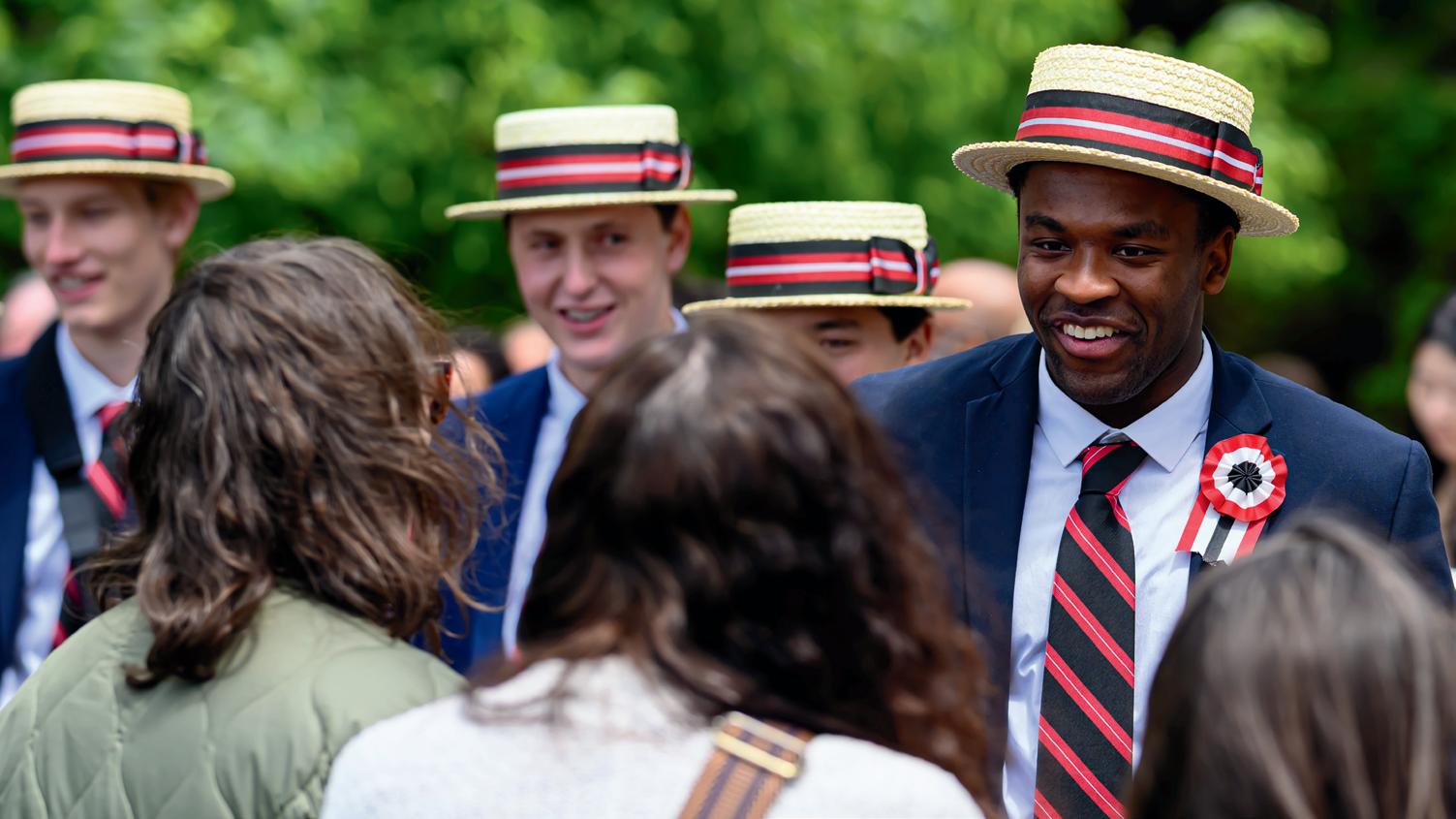
Left to Right: Angus Frew, Angus Miller, and Asante Kiio
Laurie Dubois and Clarke Trevino
Varun Gite and Gabriela Gil
Something Close to Paradise
Members of the Form of 2025 chose Max Fan ’25 to deliver the student Prize Day speech.
Mr. Maqubela—I thought I was supposed to be playing piano today . . . has anyone seen a piano?
Sorry for my confusion. The last time I was on this stage was four years ago today, and I didn’t play piano that time either— believe it or not, I was dancing. In fact, our entire Second Form was dancing. That spring, Mrs. Maqubela decided to teach us the Jerusalema, maybe because it was COVID and we needed a little something cheerful, some light entertainment for otherwise a drastically different year. I think it went something like this. But we will have plenty of time for music and dancing after this.
Without further ado, Mr. and Mrs. Maqubela, Dr. Brinkley, Mr. Pyne, trustees, faculty, staff, parents, and Grotonians, thank you all for gathering here today to celebrate a truly momentous occasion: my birthday. And Prize Day, of course. But it’s a birthday for every one of us in the Form of 2025. A new generation of Grotonians are reborn today, ready to take on the world.
Today is no ordinary day. And 2025 is no ordinary year—so extraordinary, in fact, that I honored it with a speech exactly 2,025 words long. It’s the sum of the first nine natural numbers cubed (that’s 1^3, + 2^3, all the way to 9^3), and it’s also a perfect square: 45^2. For context, the first eight natural numbers squared was the year 1296. And the last year that was a perfect square was 1936. I had no idea off the top of my head what happened in the year 1296, but the most relevant fact I found was that the self-proclaimed king of Myanmar fell off his war elephant. The year 1936, on the other hand, was a historic year for Groton for two reasons. First, the Social Security Act—signed into law by FDR a year
prior—began providing retirement pensions for millions of Americans at the height of the Great Depression, and laying the groundwork for social welfare in America. And second—perhaps even more historic—Señor Conner started teaching at Groton. Just kidding! Señor has only been here a mere forty-four years, and in that time, he has amassed a wealth of knowledge and relationships that serve generations of Grotonians on the Circle to this day.
As a Sixth Former on the varsity tennis team, a few weeks ago Señor gave me a parting gift: a book written by two Groton Form of 2011 alumni and varsity tennis captains, Ken Ballato and Ted Leonhardt. In their book, Divine Fire, they profile twenty-four notable Groton alumni and use their commonalities to piece together what makes the Groton education special. Fun fact: Dr. Brinkley has actually written a book about one of them, Secretary of State under the Truman administration Dean Acheson. And what Ken and Ted found about Groton graduates as a whole was the namesake of their book, Divine Fire: “Energetic, optimistic, and confident, Groton graduates pursue their careers and policies on behalf of the nation emboldened by a Divine Fire that seemed to be burning in their breasts.” And John Alsop, Form of 1933, writes that Groton instills this Divine Fire “in the formative years, train[ing us] to extend ourselves to the utmost.” I am proud to say, today, 125 years after FDR’s graduation, that this very Divine Fire lives on in the Form of 2025.
It was a warm spring evening, and the Fifth Formers in Williams’ Dorm were perhaps a little too full of energy from an uneventful school day. So Varun Gite approached Carter Lightburn and me with an idea: We could fill empty trash bins
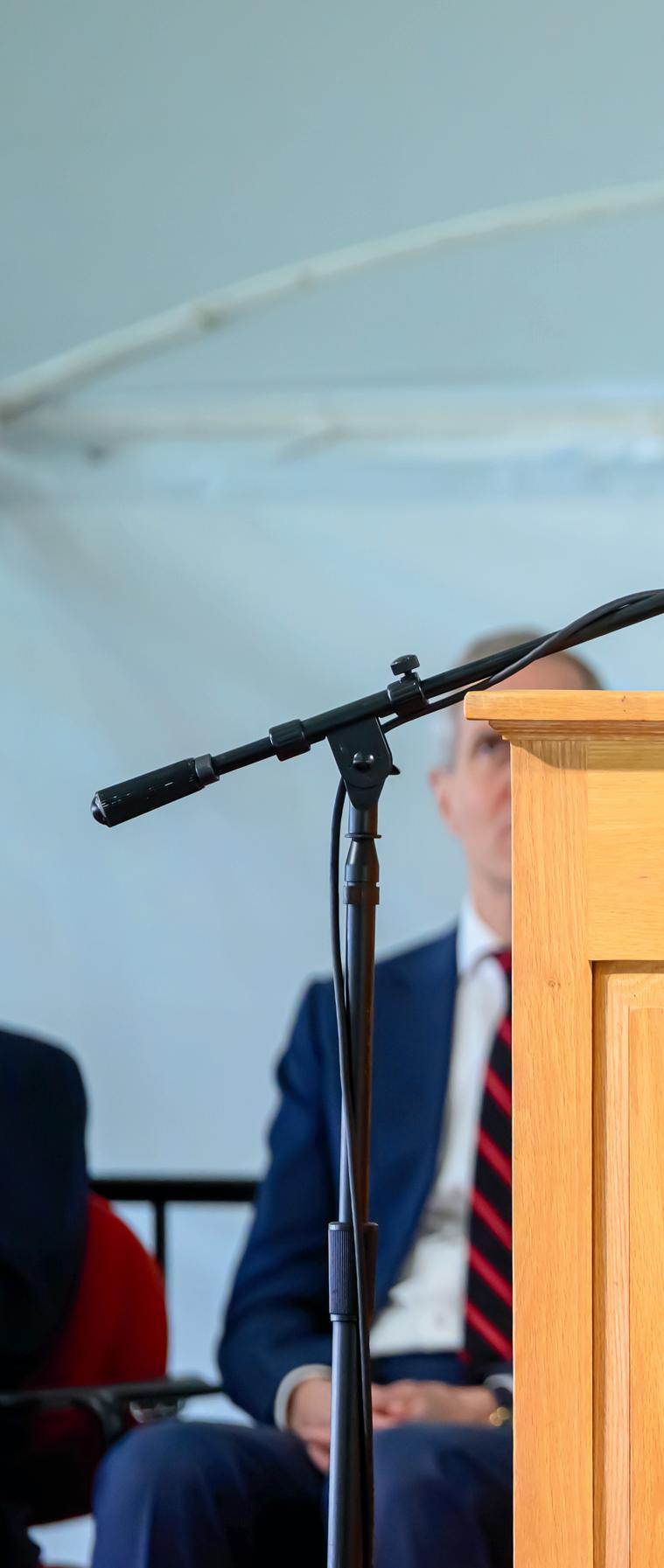
with water and pour them on each other to cool off. But by “each other” he meant just pouring them on Arman Khanna. Sounds like a pretty good idea right? I thought so too. Varun filled a trash bin, and I took the bin and began chasing Arman down the spiral staircase. And as I saw him energetically bouncing down the stairs, I thought to myself, “Wouldn’t it be really funny if I just poured the water while he was running down the stairs?” An intrusive thought, if you will.
So in my ecstatic giddiness, I poured the water out of the trash bin, drenching Arman from head to toe, splashing the wooden plaque underneath the stairs that read “FDR Form of 1900 lived here,” and spilling the rest down the staircase. You’ll never guess who was sitting at the bottom of the stairs, watching this entire spectacle unfold: our very own dorm head Dr. Williams. So it came as no surprise that later that night, Dr. Williams gathered us in the living room
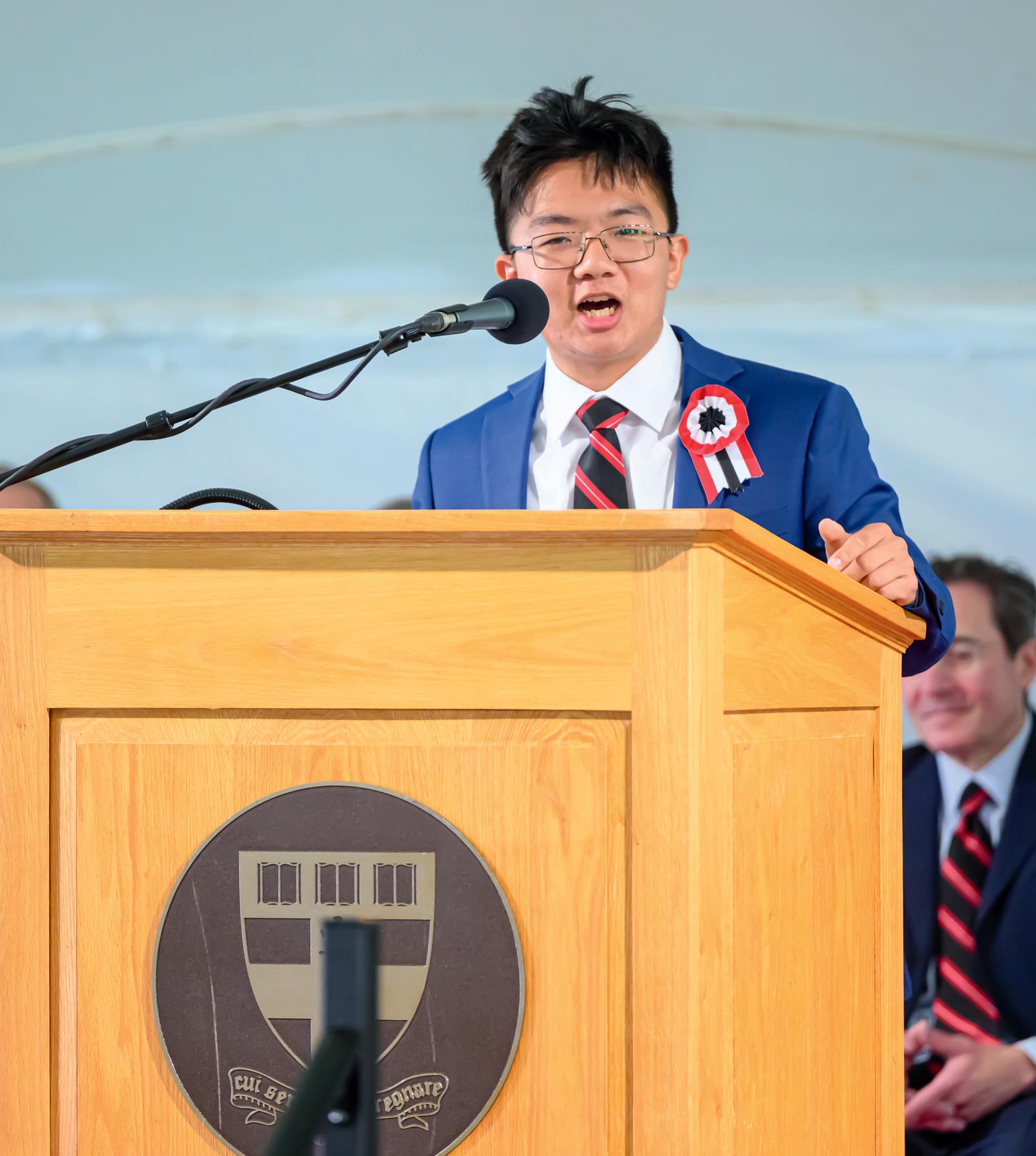
of his apartment. We sat in a semicircle facing him, and he went around asking sternly: “What was your role in this . . . affair?” “Would you say this is . . . horseplay?” “You know, I horsed around in high school, too.” As we went around and answered in turn, half trying to stifle our laughter, Varun, Carter, and Arman didn’t blame the whole incident on me. Instead, they protected me by taking some responsibility. We were within the prisoner’s dilemma, except only one prisoner had committed the crime. Or like Teddy Roosevelt’s grandsons, Kermit and Archie, Grotonians who joined the CIA and went to the Middle East in the ’50s, tactically operating to escape the wrath of Mohammad Mosaddegh, the prime minister of Iran at the time. You may be asking yourself, “what does this have to do with Divine Fire? Isn’t this more like . . . mundane water?” I bring up this story not to exemplify ourselves, but Dr. Williams. Even though we were at
times rambunctious in the dorm last year, especially me, Dr. Williams saw that we were striving to change. He went beyond cui servire est regnare—he is an example of cui concedere est regnare: “For whom to forgive is to rule.” He also gave Carter and me the opportunity to redeem ourselves this past year as a Williams’ Dorm Prefect. Perhaps the spark we have drawn from Dr. Williams’ leadership was just enough to quench the torrent of water. And perhaps the amount of trouble we prevented this past year offsets the trouble we caused last year. Divine Fire grows in our form every time we learn from our mistakes and move forward. Once we’ve acquired this flame for ourselves, we’ve learned to share it with one another. In the middle of January’s winter blues this past year, Groton received its first big snow. And Eliza Kingsland suggested to our whole form that evening: Why don’t we have a form-wide snow night?
Within half an hour, our form was mobilized on the Circle, ready for action. We headed over to the hill facing the coco to sled. We started pushing each other down the mountain, first just one by one, then assembling whole bobsled teams of three or four people piled together. The real engineering began when a few of us had the brilliant idea to build a ramp. The initially small mound became a state-ofthe-art inclined plane. If you lined up at the right angle, it would send you flying over the road and crashing into the second part of the slope on the other side. And of course, Angus Miller, Angus Frew, and Zach Baker decided that Jacques Dy was the perfect victim to test the slope. The three brawlic hockey guys loaded up and full sent Jacques down. We watched in wonder as he flew like Santa’s sleigh over the road—then crashed into the snowbank. Ouch. Cold enough for you, weather boy? At least there was enough snow that his fall was cushioned. Afterward, what started as a few playful tosses quickly escalated into an all-out snow onslaught. We began pelting ball after ball at one another, scrambling around on the Circle, looking for cover. There was no safe space. All alliances were temporary. Soon, the sleds were in play as well: doubling first as shields, then as shovels dumping snow on unsuspecting classmates.
Then, we started wrestling in the snow, trying to take each other down. Lola Huang, the undisputed champion of fighting in the mall, challenged me to a fight. So, unfortunately, I had to put her in her place, dropping her to the ground. Then, Harry Spence and I had a much better idea—why use so much of our self-generated force when we could enlist the help of gravity? We developed the “table” approach—we’d find an unsuspecting victim, and one of us would go on our knees behind them as the “table,” and the other would push them, at which point they’d stumble backward, topple over the table, and fall backward into the snow. Others caught on quickly though, and by the end of the night, I couldn’t count how many times I’d been flipped over myself.
This night, to me, is an example of our form’s divine fire: our unity and energy we put in for one another to make our experience whole. To many of you, this may have been an average night. Some of you might not even remember. But it’s moments like these, spontaneous excitement born from someone’s simple suggestion, that I’ve come to reflect on and appreciate. There’s something uniquely ours about sixty teenagers abandoning all their stress and worry to spend a night frolicking in the snow. And it will be the kind of memory, for me, that will make me smile years later, not because of what we did, but because of how we chose to be together in that moment.
Last weekend, as I was walking past the Headmaster’s House, I meandered into the midst of a sight to behold: picturesque small petals of cherry blossoms in their front lawn, floating down all around me, shimmering in the light. My first thought was not about the scene’s beauty nor its surrealness, but rather that, as my peers in my Global Science Fictions class with Dr. Aigbedion theorized last winter, if we indeed lived in a simulation, this simulation has pretty good graphics. If I was born a couple hundred years ago, without these handy things (my glasses), perhaps I wouldn’t get to appreciate the world as much. We are incredibly privileged to live on a campus where everything is beautiful. We are immersed in nature so thoroughly that we forget to appreciate it. Walking down to the Nash on senior skip day with Asante Kiio, Kiran Sen, and Matt Scheible, after playing hours of spikeball, the rays of light penetrating through the canopy of the forest absolutely stupefied me. It’s so hard to comprehend sometimes that this place is real. Not only the nature, but the people here. Where else in the world do you find a collection of high schoolers with such diverse backgrounds who are so uniquely positioned to succeed in so many fields. Trip is a Classics scholar, but nothing is as classic as his backhand down the line. Laurie is so friendly, but when she’s on the water you best believe that boat is zooming past you. And James
There’s something uniquely ours about sixty teenagers abandoning all their stress and worry to spend a night frolicking in the snow. And it will be the kind of memory, for me, that will make me smile years later, not because of what we did, but because of how we chose to be together in that moment.
is all of the above: You can talk to him about philosophy, stocks, religion, crew, or literally anything else.
Unfortunately, the world is not like Groton. Ideas are not freely discussed in many places. The grass is not so green. And no matter how much some of you Lower Schoolers complain about 6-5-4, Groton still remains a much, much more equitable place than the vast majority of countries in the world.
Mr. Maqubela said at Baccalaureate on Friday that Groton lets us start on third base. And we should be proud. But now that you’ve seen what third base looks like—the sublime beauty of all of it—aren’t you curious how we can take it home? Not only that, what do we do once we reach home?
That’s where our Divine Fire comes in. Divine Fire allows us to reach home plate, then take everyone else on base in the next inning with us with a home run. Each one of us holds a piece that we will carry onward. Alex’s presents itself in his clarinet playing—and his big warm hugs. Lindy’s in her powerful tennis strokes—
and incredible discipline. In fact, to repeat John Alsop, the very act of surviving five years at Groton leaves us with this unquenchable fire to change the world.
So, to the Phenomenal Form of 2025, I ask you: What will you do with your Divine Fire? As our flame spreads across the world, I urge you to remember the lessons we learned here today. Ideas can come from individual genius, but it takes collective courage to realize them. Your Divine Fire isn’t just a flame you carry— it’s a torch to pass. Keep lighting up rooms when you enter them. Build ramps for others to soar over obstacles. Create spaces where ideas can be discussed. And where grass is greener than the Circle in May. And when you’re thinking to yourself many years from now, whatever corner you find yourself in the world you find yourselves, remember this: We’ve spent our past two, three, four, five years together in something close to paradise. And together we left it shining even brighter.
So, the Phenomenal Form of 2025, take our fire and set the cosmos aglow. Let’s go change the world. Thank you.
2025 Groton School Prizes
The Charles Lanier Appleton Prize
Awarded to a member of the Sixth Form who has greatly served the school
Asante Austin Kiio
Katherine Moyer Bartlett
The Asma Gull Hasan 1993 Circle Voice Journalism Prize
Acknowledges outstanding leadership in creating, editing, and producing the school’s newspaper
Ella Grace Farahnakian
Chloe Sehee Han
The Tronic Award
Given in honor of Michael G. Tronic, awarded to a member of the Sixth Form who has made especially good use of the resources of the library and shown strong interest in the life of the mind
Abigail Ruth O’Neil
Margaret Loring Kaneb
The Bishop Julius Atwood
Literature and History Prize
Given by the late Right
Reverend Julius Atwood for the best scholar in the combined fields of history and literature
Ella Grace Farahnakian
The Butler Prize for Excellence in English
Sara West Agrawal
The Perry History Prize
Given by Mrs. Eliza Endicott
Perry to the best scholar in the field of history
Salim Abdel Ali Hill
Liam A.E. Warren
The George Livingston Nichols Prize
Awarded for the best essay on an historical subject
Sara West Agrawal
The Rogers V. Scudder Classics Prize
Given in memory of Rogers Scudder, a distinguished teacher of Classics and a much loved member of this community
William Needles Wight III
The Franklin D. Roosevelt Debating Prize
Given in memory of Franklin D. Roosevelt 1900 by Averell Harriman 1909
Lena Marie Aloise
Jiyoon Lee
The Endicott Peabody
Memorial Prize
Given in memory of the Reverend Endicott Peabody by the Sixth Form of 1945 for excellence in the field of religion and ethics
Angus Stirling Frew
Anjanette Lin
The Isaac Jackson Memorial Prize
Awarded to the best mathematics scholar in the Upper School
Alicia X Ye
The New England Science Teacher’s Award
Margaret Loring Kaneb
The Thorpe Science Prize
Created by Mrs. Warren Thorpe for the member of the Sixth Form who has been the most successful in developing an appreciation of the spirit and meaning of science
William Laws
The World Languages and Culture Prize
Zachary Ryan Baker
Katherine Moyer Bartlett
Penelope Constance Tregoe
The Hudson Music Prize
Given by the friends of William Clarke Hudson ’56 to show the recognition of effort and progress in music during the school year
Sara West Agrawal
Max Zimo Fan
Alexander Edwards Newman
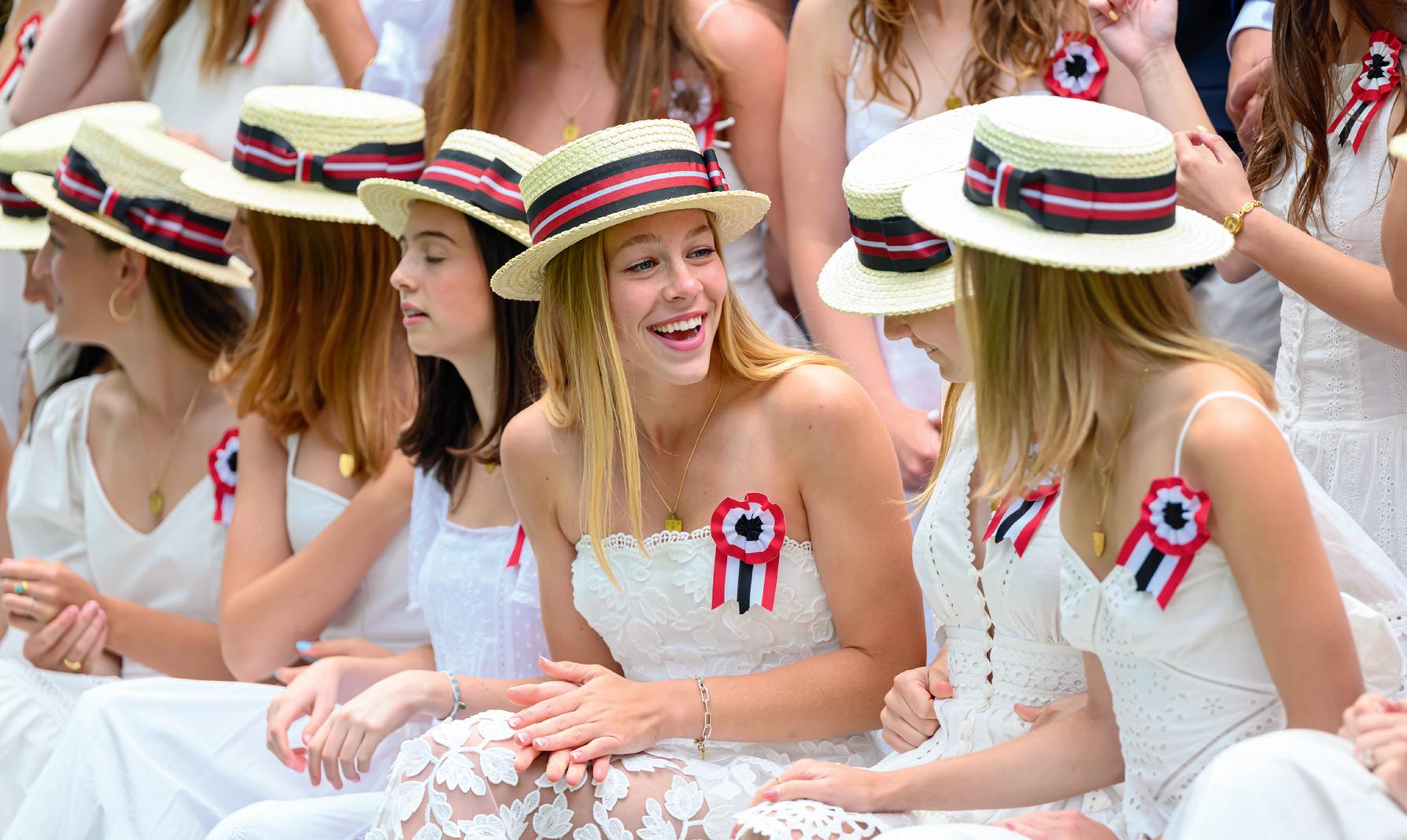
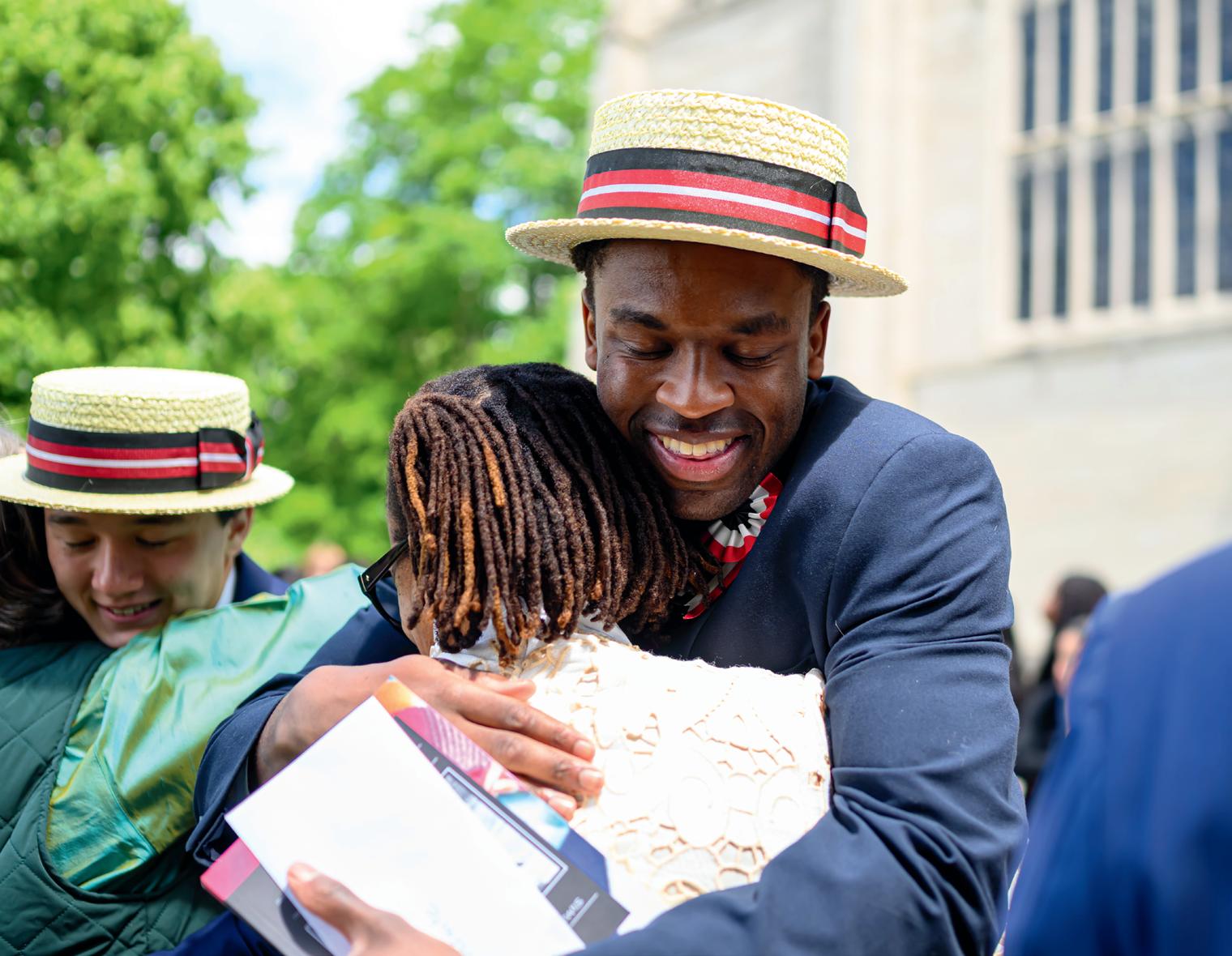
The Choir Cup Awarded to the Sixth Form choristers who have exhibited musical growth in sight reading and vocal technique
Anders Caspersen
The Photography Prize
Abigail Ruth O’Neil
The Reverend Frederic R. Kellogg Upper School
Art Prize
Given in recognition of distinguished work in art Jake Thomas Murray
The Dennis Crowley Drama Prize
Given by Todd C. Bartels ’01 to a member of the Sixth Form who has made the greatest contribution to the theater program
Naia Anabelle Kolodziej Yuehan Zhu
The Reginald Fincke Jr. Medal
Given by the Sixth Form of 1928 in memory of First Lieutenant Reginald Fincke Jr. and awarded to a member of the Sixth Form who has shown in athletics his qualities of perseverance, courage, and unselfish sportsmanship
Salim Abdel Ali Hill
The Cornelia Amory Frothingham Athletic Prize
Given by her parents and awarded to a girl in the Sixth Form who has demonstrated all-round athletic ability and has shown exemplary qualities of leadership and sportsmanship
Madison Rae Cronan
The Elizabeth and Margery Peabody Award
Given to a member of the Sixth Form, other than a school prefect, whose contributions to the community demonstrate sensitivity, strength of character, leadership, and integrity
Ella Grace Farahnakian
The William V. Larkin Award
Given to the Groton student who best exemplifies uncommon courage and perseverance in meeting a challenge or overcoming adversity
Jennifer Renee Polynice
The Carroll and John King Hodges Prize
Given in memory of Carroll Hodges 1905 and John King Hodges 1910 to a Sixth Former in recognition of his cheerfulness, generosity, and service for the greater good
Madison Rae Cronan
The Upper School Shop Prize
Eliza Abigail Kingsland
Hawkes Prize
Daniel Palmer ......
The following awards were presented on the Saturday evening before Prize Day:
The Gadsden Prize
Given in memory of Jeremiah Gadsden ’68 to a member of the Fifth Form who has demonstrated inspirational leadership encouraging social and interracial understanding in the Groton community
Sage Amina Greaves
The O’Brien Prize
Given by the Hoopes family to a member of the Lower School who has shown qualities of integrity, loyalty, enthusiasm, and concern for others
Samuel Davis Harrell
The Monte J. and Anne H. Wallace Scholar
Given to a student who has completed the Fourth Form in recognition of scholastic excellence, as well as those qualities of character and commitment so important to the Groton community
Bo Huai
The Laura J. Coolidge ’85 Poetry Prize
Given in her memory by her husband, Peter Touche, to a member of the Upper School who has shown a love for the power of poetic expression and a sustained interest in writing and reading poetry
Jessica Ellie Shapiro
Asante Kiio embracing Mrs. Maqubela in the handshaking line on Prize Day
The Lower School Creative Writing Prize
Dexin Ye
The Heard Poetry Prize
Olivia Yubai Ding
The Grotonian Creative Writing Prize
Given by the Grotonian Board of 1946 to a member of the Upper School for the best example of prose fiction written in the past year
Olivia Yubai Ding
The John Jay Pierrepont Prize
Given to the best mathematics scholar in the Lower School
Youju Lee
The Roscoe C. Thomas Mathematics Prize
Given by the Sixth Form of 1923 and awarded to a member of the Fifth Form for excellence in mathematics
Sarah Sooyen Ku
The Fels Science Prize
Given in honor of Stephen B. Fels ’58, awarded to a member of the Lower School who has demonstrated exceptional enthusiasm for and proficiency in the experimental aspects of scientific inquiry
Sunny Ma
John Henry Murray
The Rensselaer Medal Awarded to a promising Fifth Form student who has distinguished him- or herself in mathematics and science
George Fowler Carlin
The University of Rochester Honorary Science Award
Given in honor of Stephen B. Fels, Form of ’58, to a member of the Lower School who has demonstrated exceptional enthusiasm for and proficiency in the experimental aspects of scientific inquiry
Ella Grace Nannene
The Richard K. Irons Public Speaking Prize Established in 1972 by McGeorge Bundy ’36 and Arthur T. Hadley ’42 in honor of their teacher Richard K. (Doc) Irons, presented to the student who most logically and effectively presents his or her ideas during the R. K. Irons Speaking Contest, held at Groton each spring
Daniel Zijing Mao
The Lower School Studio Art Prize
Maxwell Seung-Hyuk Choi
The Anita Andres Rogerson Dance Prize
Chloe Sehee Han
The Harvard Book Prizes Awarded to two members of the Fifth Form who exemplify excellence in scholarship and high character combined with achievement in other fields
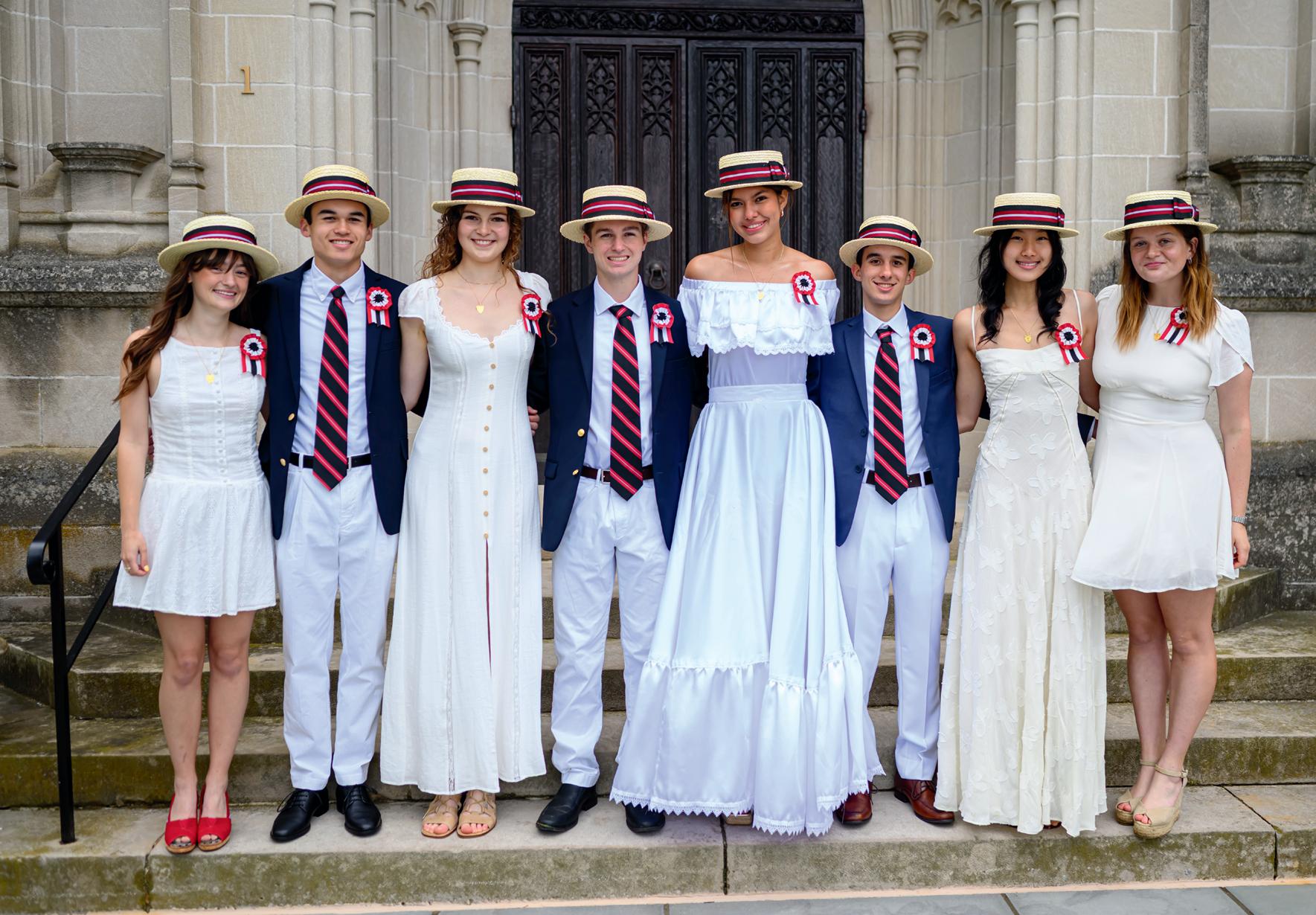
The first Harvard Book Prize given by Harry Eldridge 1920 in memory of his brother
Francis H. Eldridge 1924
Sarah Sooyen Ku
The second Harvard Book Prize given by Mark A. Medlinsky ’76 in memory of his father
Katrina Yang
The Jefferson Book Award
Given to a member of the Fifth Form the faculty considers to best represent the Jeffersonian ideals of scholarship, leadership, and citizenship
Samara Hope Gorton
The Dartmouth Book Award
Given to a member of the Fifth Form who is of strong character, has made a positive impact on the life of the school community, and has excelled in at least one non-academic area
Olivia Yubai Ding
The University of Chicago Book Prize
Given to a member of the Fifth Form the faculty considers most dedicated in deep intellectual inquiry in a range of academic disciplines
James Harris Abramson
The Frederick Greeley Crocker Memorial Award
Given to a Groton graduate whose record in their first three years since graduating from Groton has done honor to themself and their school
Nadia Fourie
The Potter Athletic Award
John Patrick Charpentier
Danielle Mary Shyjan
The Lower School Shop Prize
Sunny Ma
Left to Right: Naia Kolodziej, Liam Warren, Hannah Gally, Henry Foster, Male Montero, Daniel Palmer, Anjanette Lin, and Charlotte Jones
The Form of 2025
Sara West Agrawal
Tiyanu Judah Akinjaiyeju
Zachary Ryan Baker
Katherine Moyer Bartlett
Anabelle Michaela Bernard
Kristen Hoefling Billings
Abigail Ruth O’Neil
Macon Archer Burgess
Amelia Elizabeth Burnett
Anders Daniel Morris Caspersen
John Patrick Charpentier
Cameron Paul Cirone
Caroline Vanelle Creasy
Madison Rae Cronan
Gabriella Moreira da Silva
Sagata Das
John Wesley Davis V
Lauren Natalie Dubois
Anna Franciska Duggan
Jacques Philip Dy
James Read Ebert
Max Zimo Fan
Ella Grace Farahnakian
Henry Beecher Foster
Angus Stirling Frew
Hannah Louise Gally
Gabriela Beatriz Gil
Varun Gite
Devon Reese Gura
Lola Valentina Gutierrez-Huang
Chloe Sehee Han
Raymond James Thomas Hildreth
Salim Abdel Ali Hill
Christopher Forsyth Hovet
Hazel Elaine Hughes
Charlotte Phillips Jones
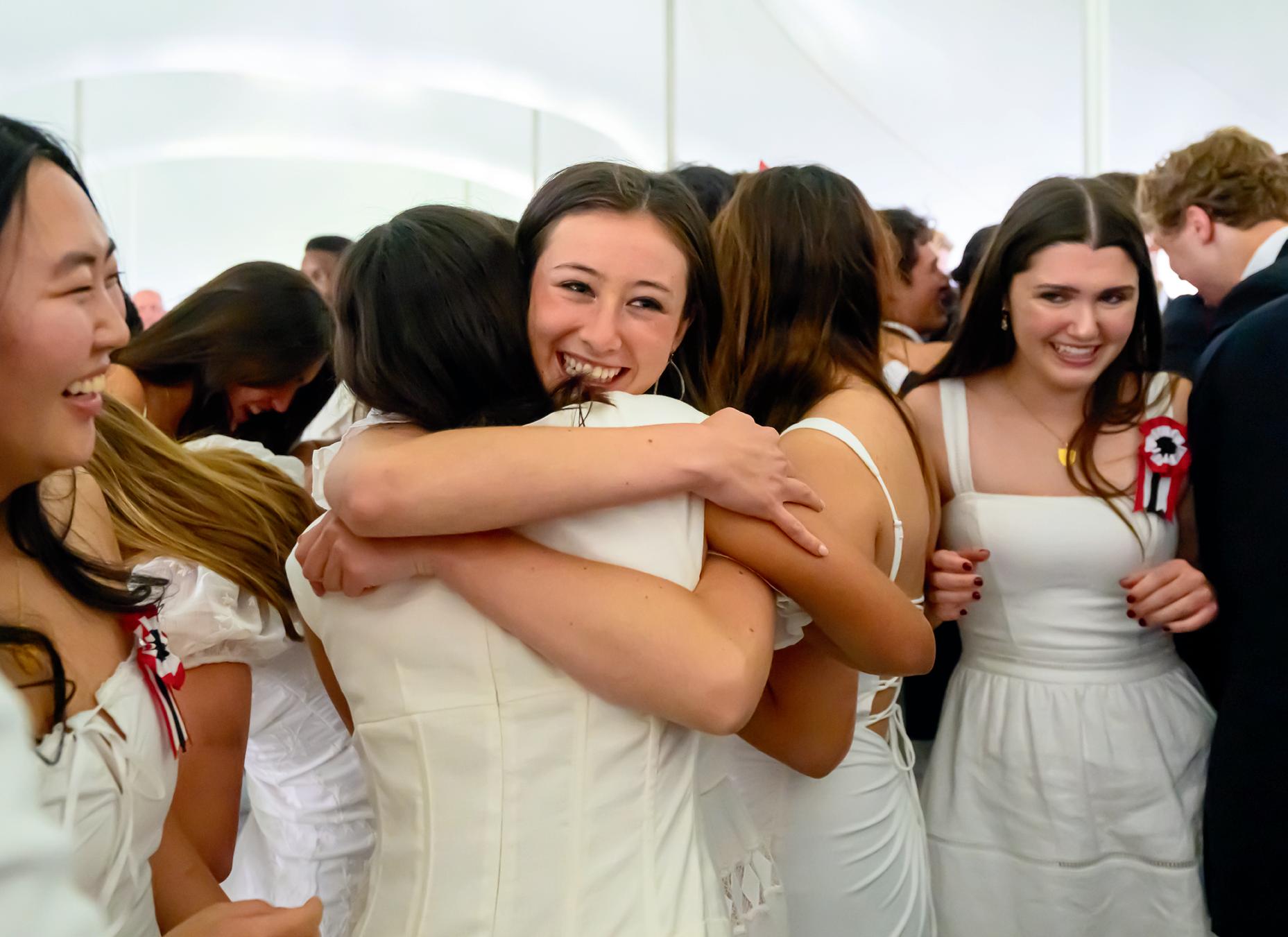
Margaret Loring Kaneb
Nina Frances Karp
Arman Khanna
Asante Austin Kiio
Beau Taylor Kimler
Eliza Abigail Kingsland
Satoshi William Klick
Naia Anabelle Kolodziej
Julia Bruce Landau
William Grayson Handy Laws
Brenda Li
Carter Charles Lightburn
Anjanette Lin
Sechang Mah
Clara Ann Maturo
Grace Malary McAndrew
Angus Fitzgerald Miller
Maria Alejandra Montero
Kiely Genevieve Murphy
Jake Thomas Murray
Genevieve Dawes Nelson
Alexander Edwards Newman
Daniel Sal Palmer
Jennifer Renee Polynice
Victoria Reece
Matthew Nahm Scheible
Kiran Kung Soo Sen
Matthew Jap Sennelius
Danielle Mary Shyjan
Dilzafer Singh
Timothy Matthew Smith
Henry Harris Spence
Natalie Jia-Ning Sun
Penelope Constance Tregoe
Clarke Abigail Trevino
Daniel Velazquez
Liam Andrew Eu Warren
William Needles Wight III
Edward Sigismund Damilola Wilkey
Daivyon Malachi Williams
Xincen Wu
Caiyu Yang
Alicia X Ye
Ziwei Zeng
Lindy Wu Zhang
Audrey Zhang
Yuehan Zhu
Chloe Han, Genevieve Nelson, and Clara Maturo
College Number Attending
University of Chicago
Harvard University
Dartmouth College
Georgetown University
Brown University
Hamilton College
Princeton University
Stanford University
Massachusetts Institute of Technology (MIT)
Middlebury College
Northwestern University
St. Lawrence University
Vanderbilt University
Williams College
Yale University
American University
Amherst College
Babson College
Boston College
Carnegie Mellon University
Claremont McKenna College
Colby College
Colgate University
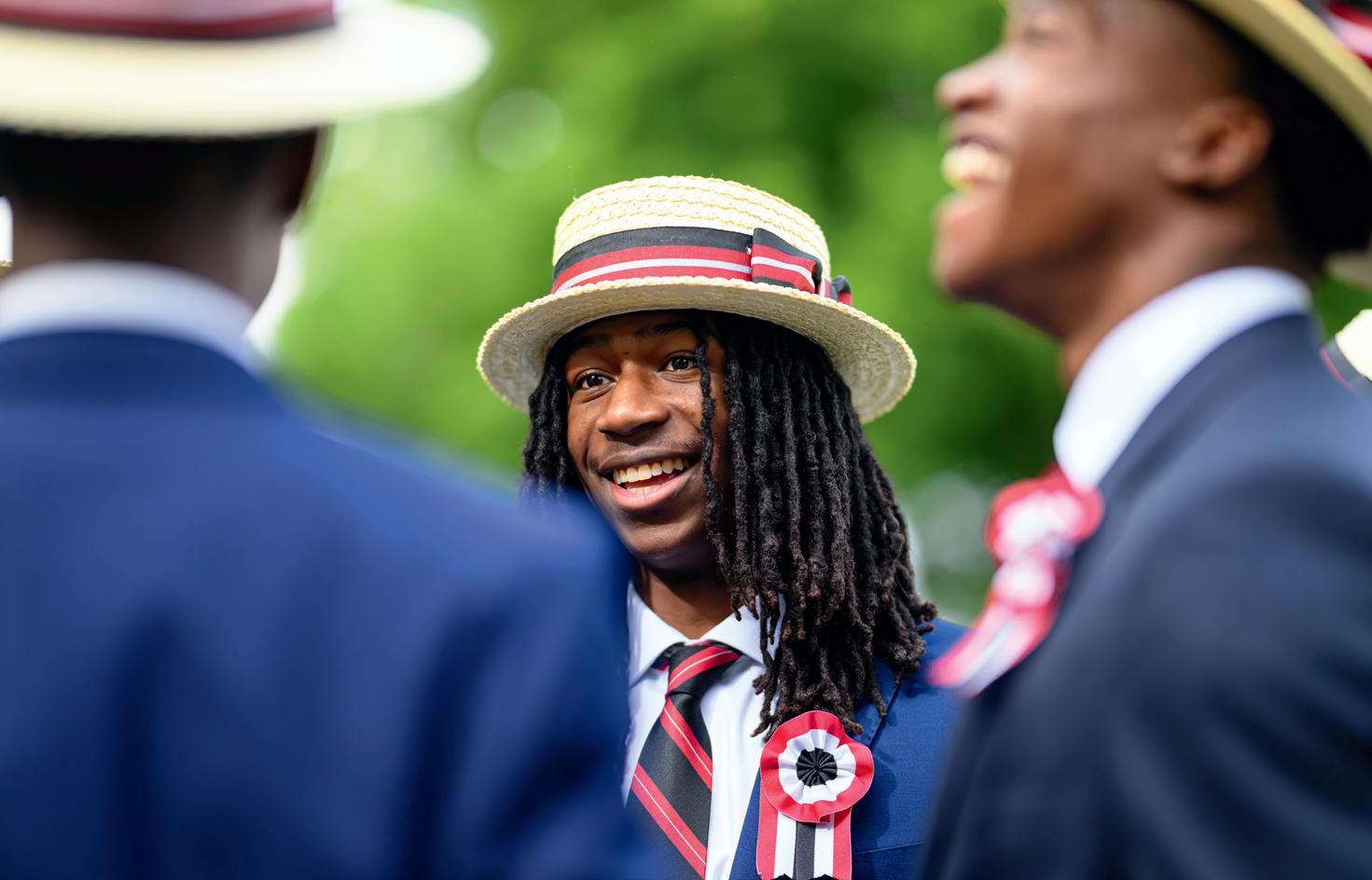
Cornell University
Davidson College
Duke University
Emory University
Florida State University
Harvey Mudd College
Haverford College
McGill University
Oberlin College | Conservatory of Music
Pitzer College
Rice University
Roger Williams University
Scripps College
Syracuse University
Trinity University (TX)
Tufts University
Union College
University of Notre Dame
University of St. Andrews (UK)
University of Toronto
University of Wisconsin Madison
Unversity of Vermont
Wake Forest University
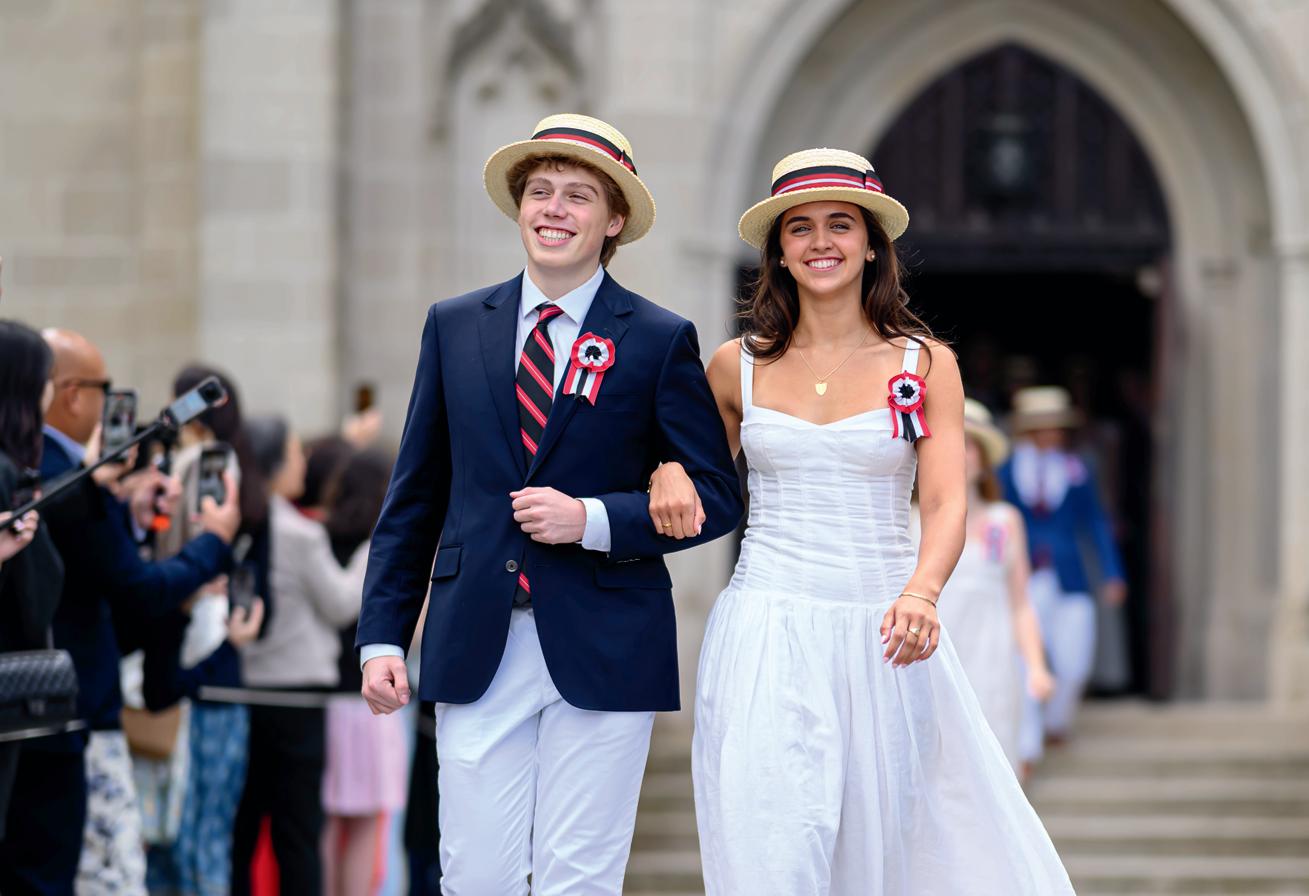
Below: Daivyon Williams Right: Quin Davis and Laurie Dubois
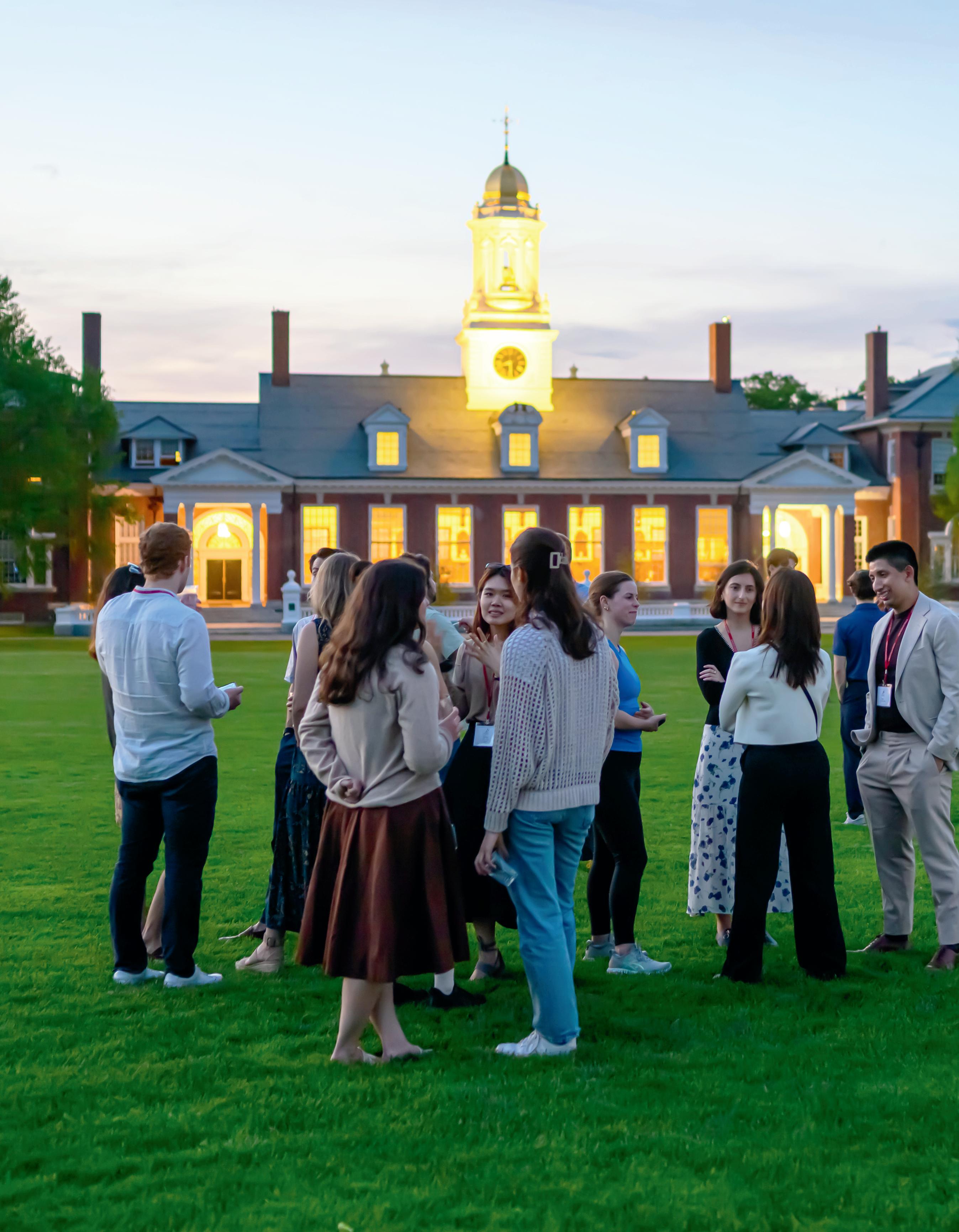
Reunion Weekend 2025
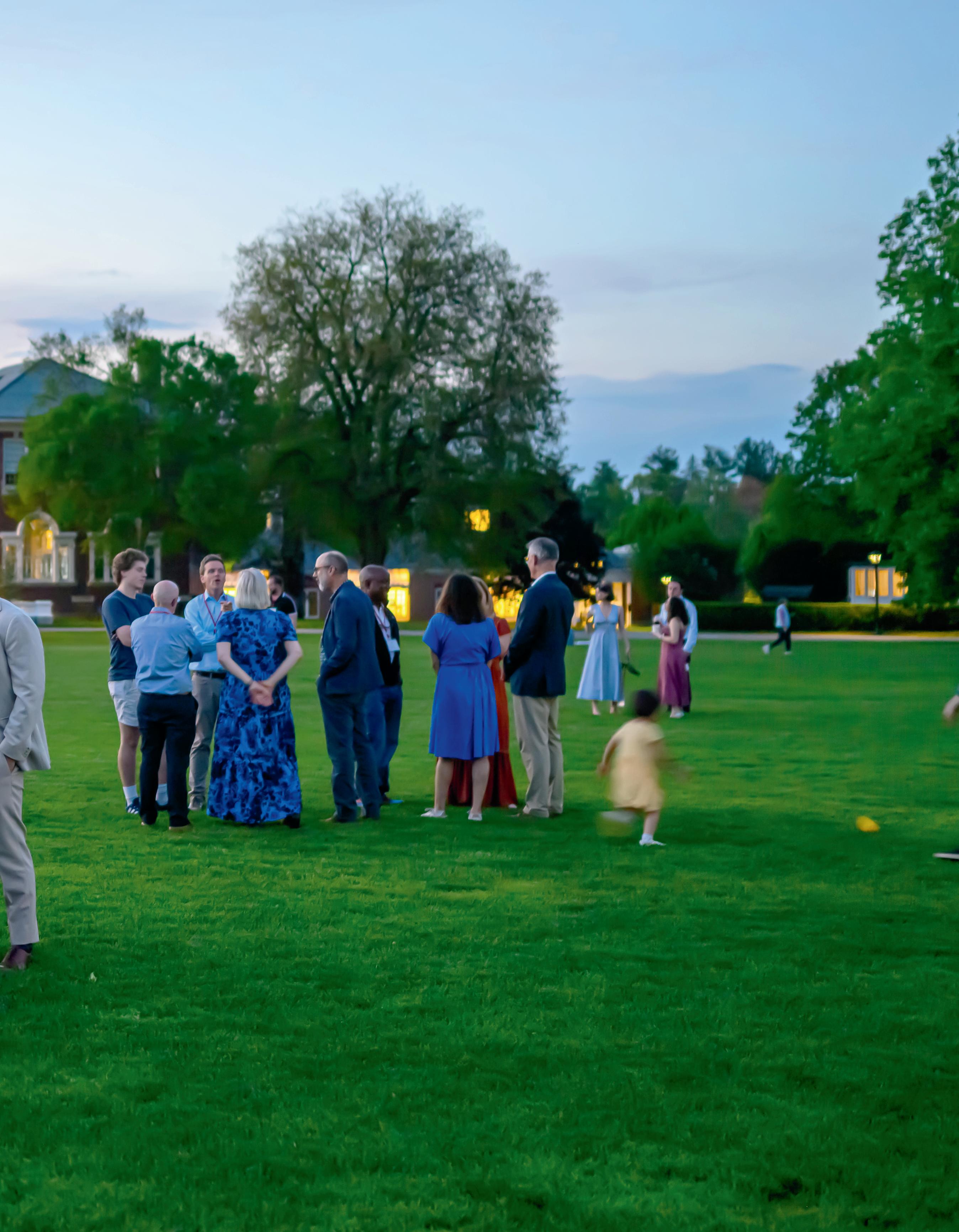
More than 400 Groton alumni and their families returned to the Circle May 16–18 for Reunion Weekend 2025.
this year’s reunion weekend celebrated alumni from form years ending in five and zero, with the oldest representing the Form of 1950 and the youngest the Form of 2020. Attendants came from thirty-two U.S. states and five countries: Canada, Germany, Hong Kong, Switzerland, and the United Kingdom.
An annual highlight of the weekend is the presentation of the school’s highest alumni honors. This year, the Cui Servire Est Regnare Award was given to David Cheever ’05 and the Distinguished Grotonian award was given to Nicole Piasecki ’80.
Other weekend activities included tours, receptions, dinners, presentations from Board of Trustees President Benjamin Pyne ’77, P’12, ’15 and the Admissions Office, open classrooms, musical performances, a special joint Black Latino Alliance and Cultural Alliance event on “The Journey from Inclusion to Belonging.” Alumni rowers took to the Nashua River and alumni soccer players enjoyed a pick-up game on the Field of Inclusion, while runners took on the annual Triangle Run challenge.
In anticipation of the celebration of fifty years of coeducation at Groton School this fall, alumni were invited to stop by the Hundred House Reading Room to search through yearbooks and identify favorite stories and photos to be included in that yearlong celebration. A live taping of the new student podcast “Girls of Groton,” hosted by Devon Gura ’25 and Lola Gutierrez-Huang ’25, was held in conjunction with this event.
One special treat this year was a book signing by longtime woodworking teacher and archivist Doug Brown ’57, who autographed copies of a new biography on him, The Man in the Blue-Striped Shirt, and caught up with a host of alumni from throughout his fifty-one-year tenure on the Circle.
Following chapel services on Sunday, alumni, faculty, and staff gathered at the Sunset Farm Barn to close out the weekend by honoring retiring faculty members Monika Andersson, Peter Fry, and David Prockop.
1 Andrew Mazza ’20, winner of this year’s Triangle Run, at the start of the race.
2 Faculty member John Capen and Jocelyn Capen P’17, ’22 take a photo of members of the Form of 2020, John Michaud, Josh Guo, Andrew Mazza, Derek Chang, and Oliver Ye.
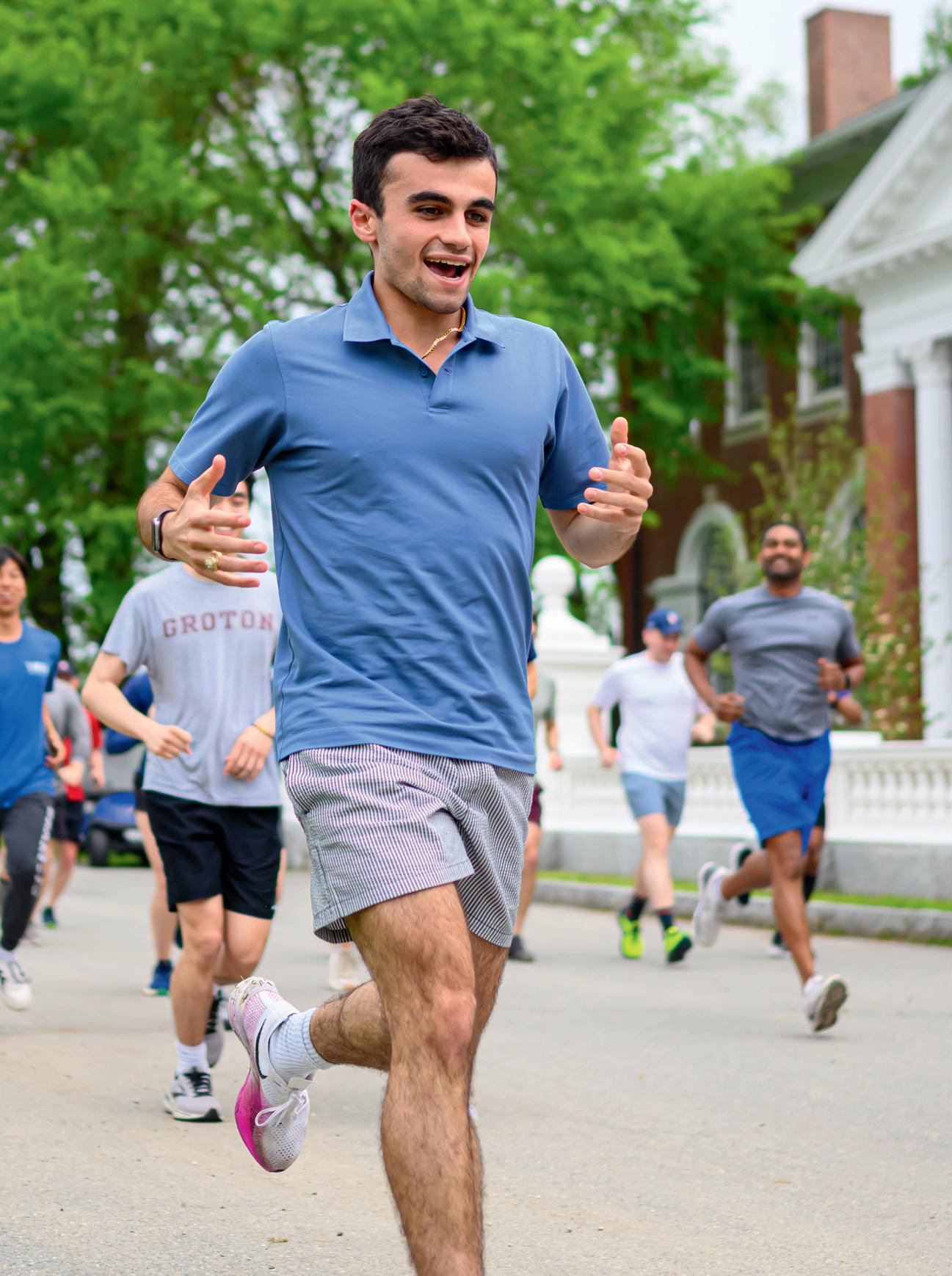
3 Always a big hit over Reunion Weekend, the ice cream truck did not disappoint.
4 Alumni and faculty children enjoy games on the Circle.
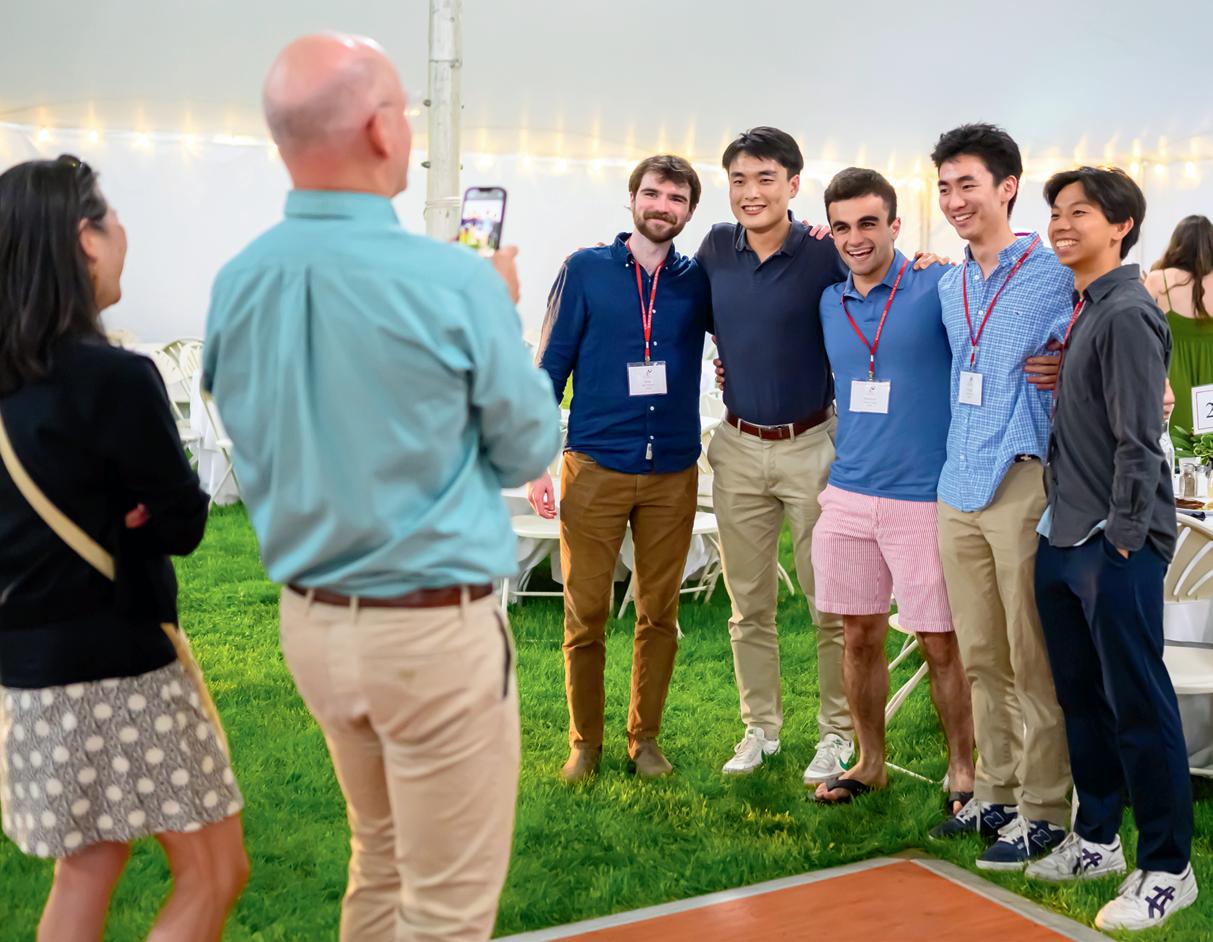
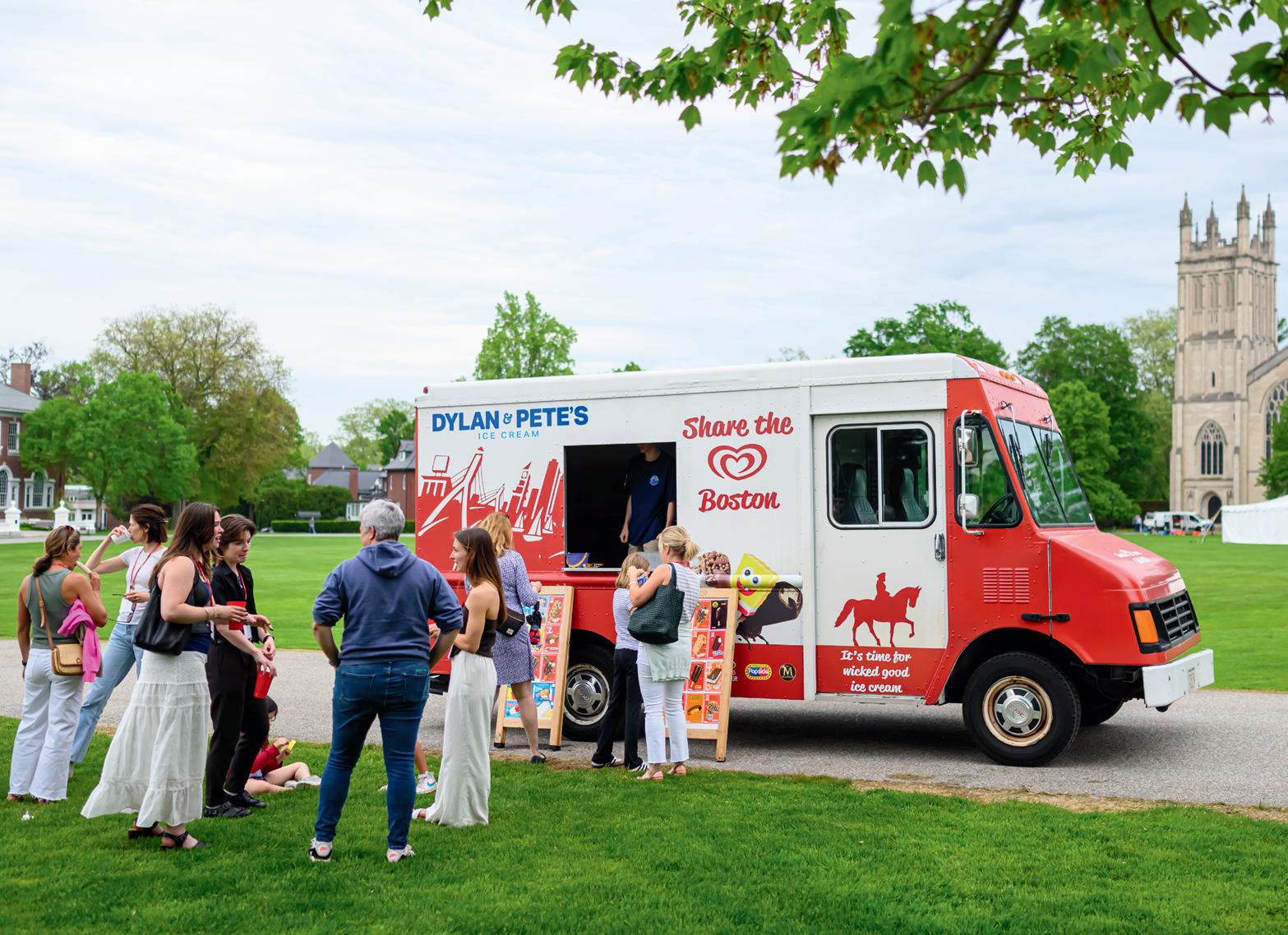
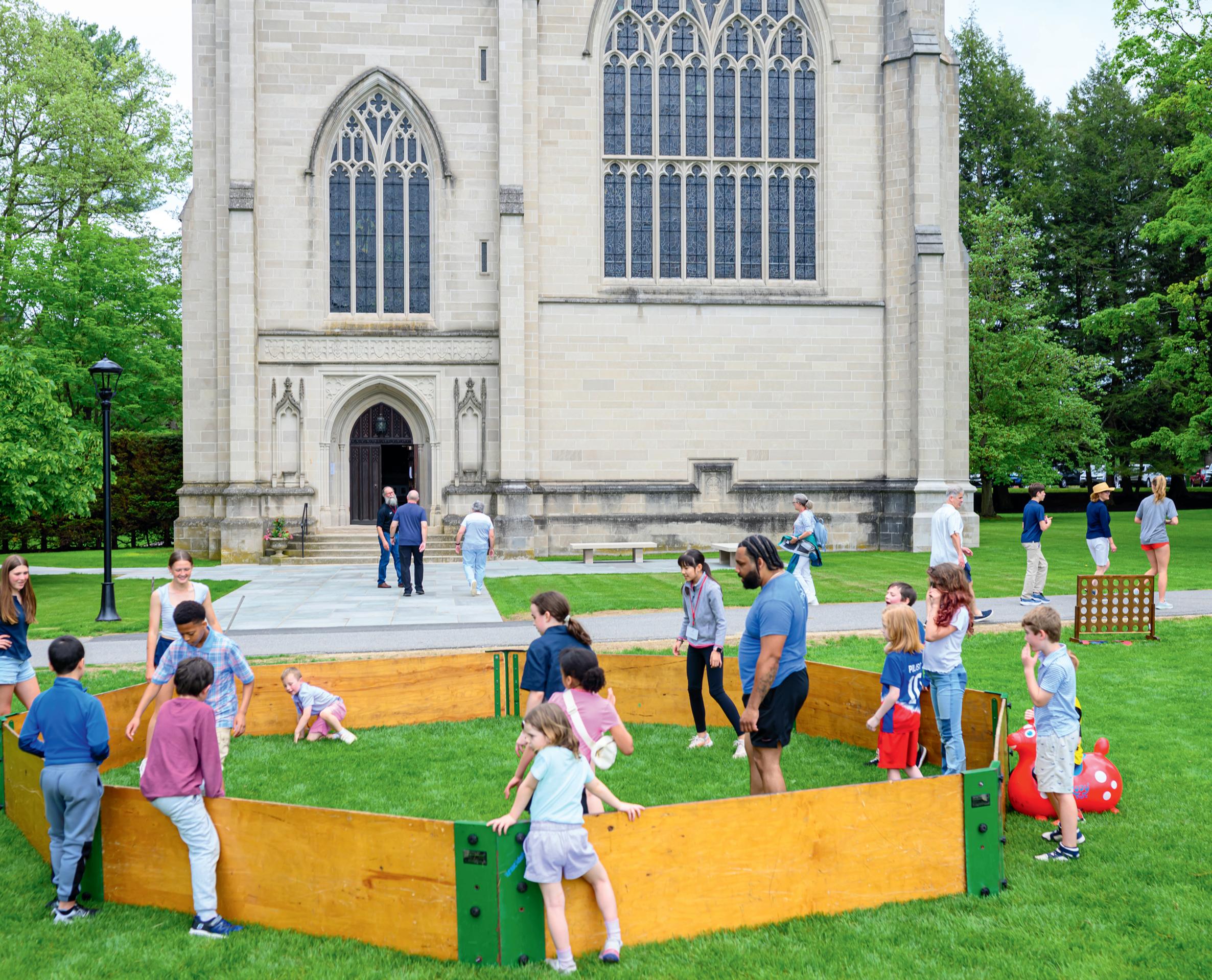
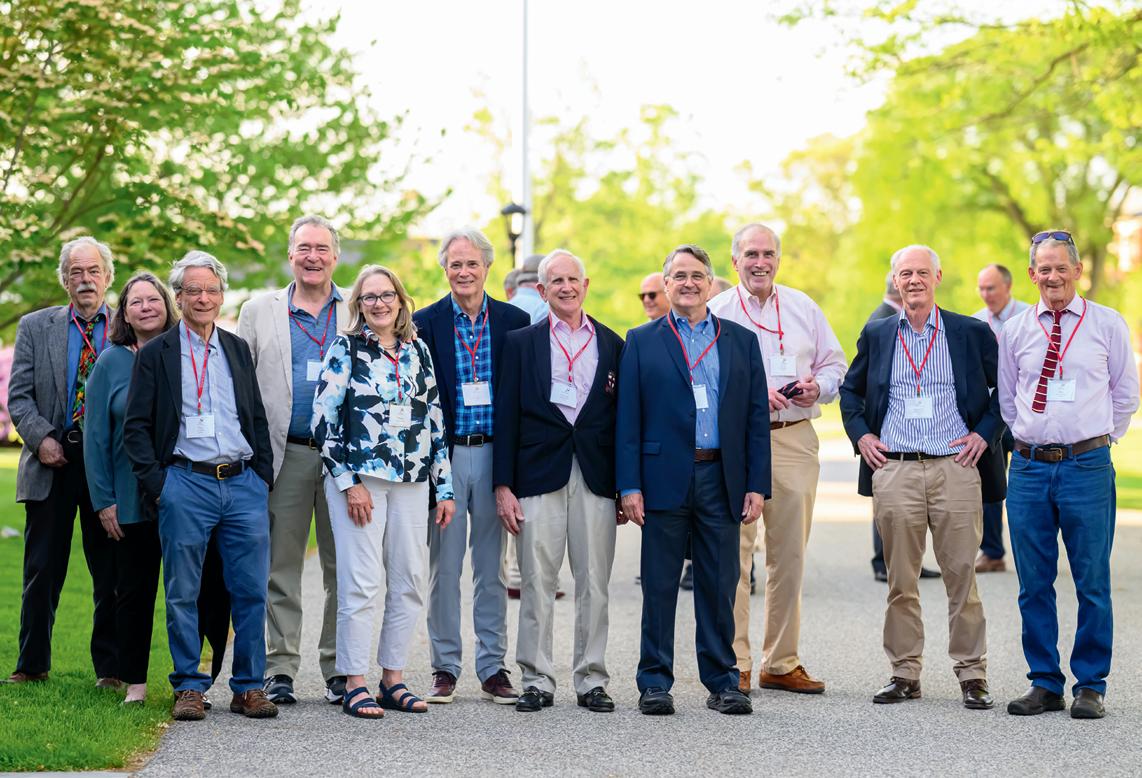
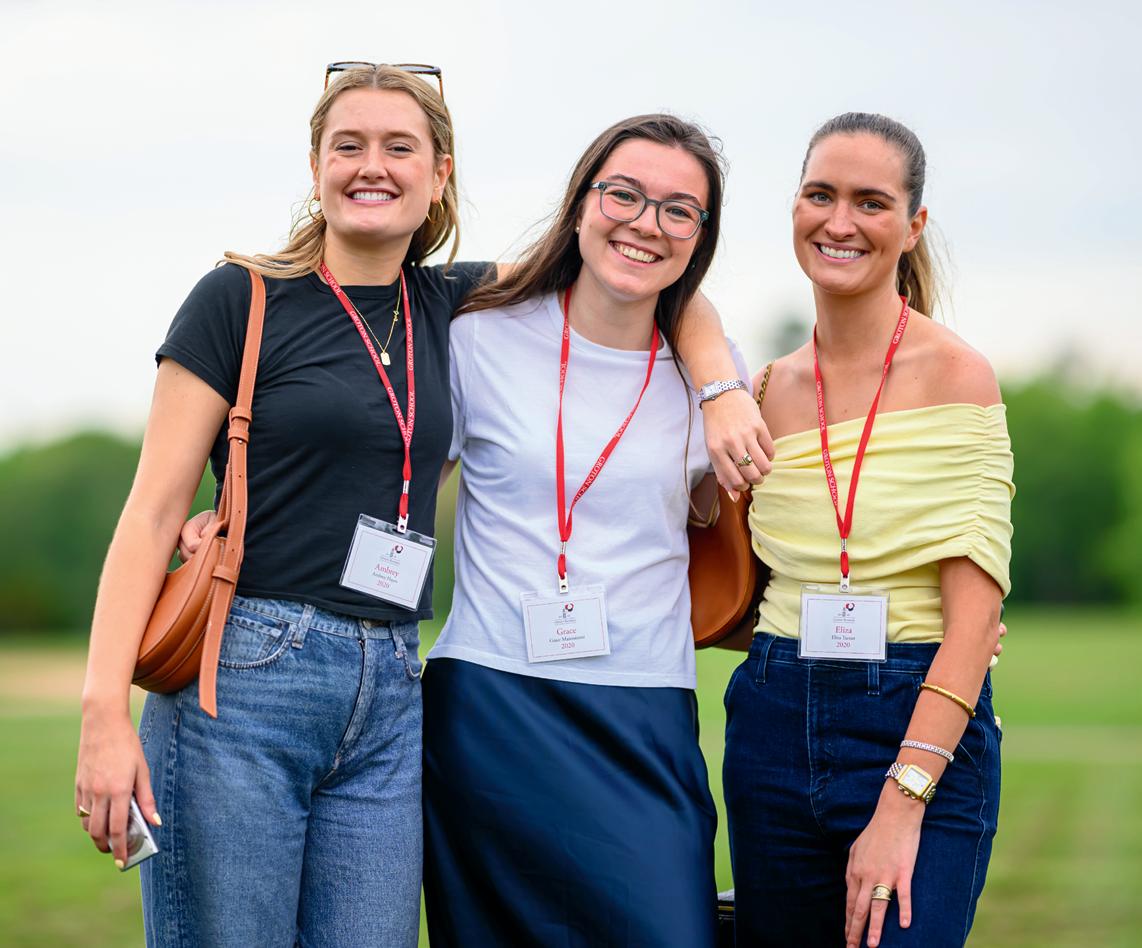
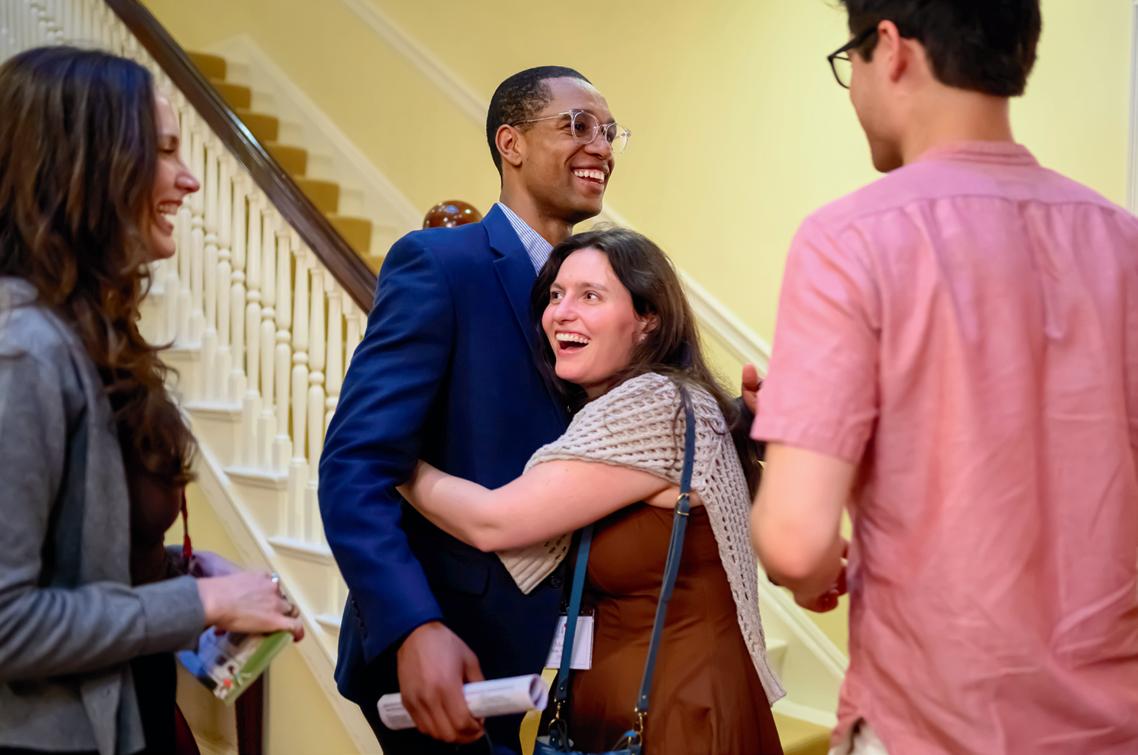
5
6
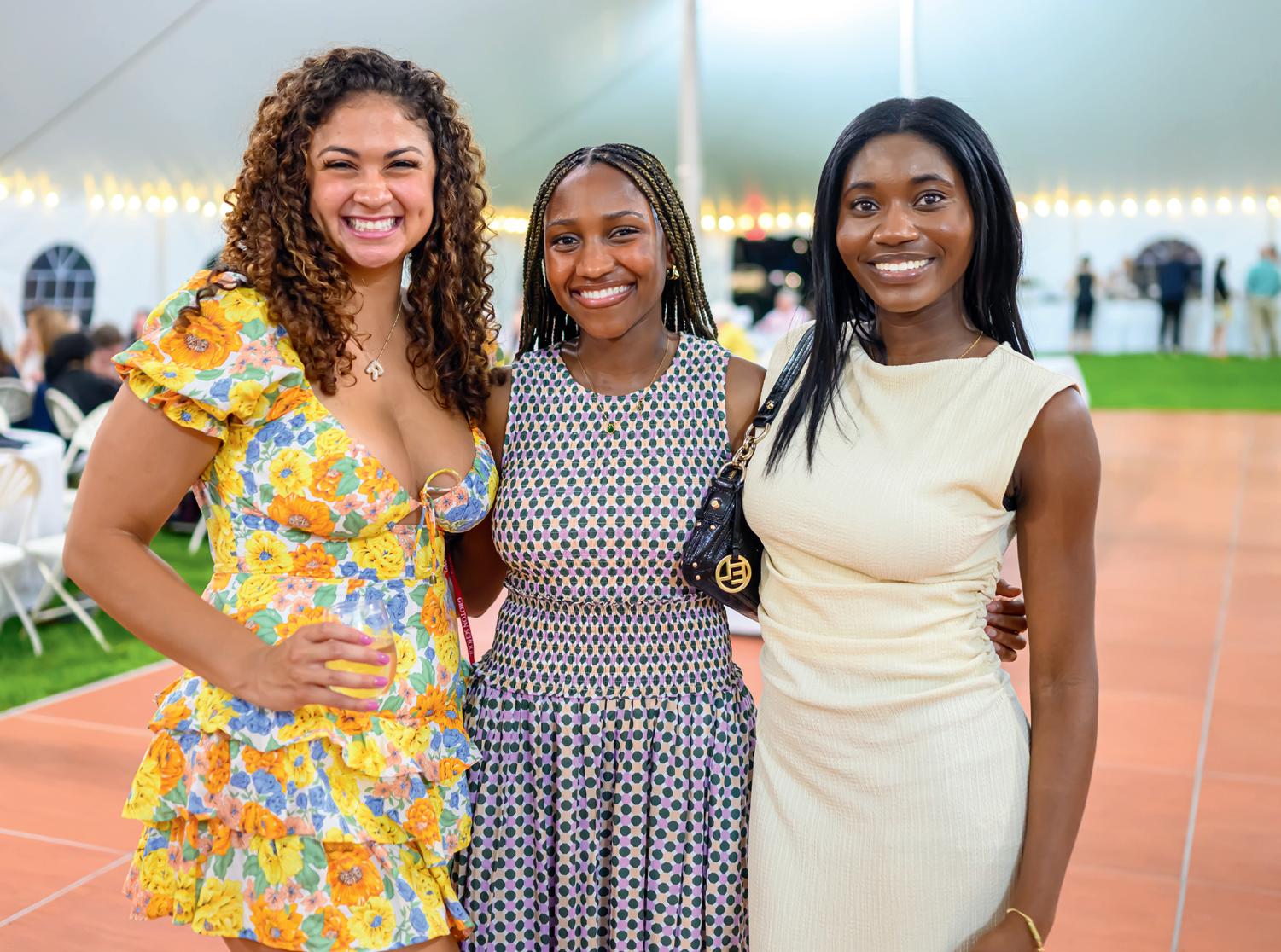
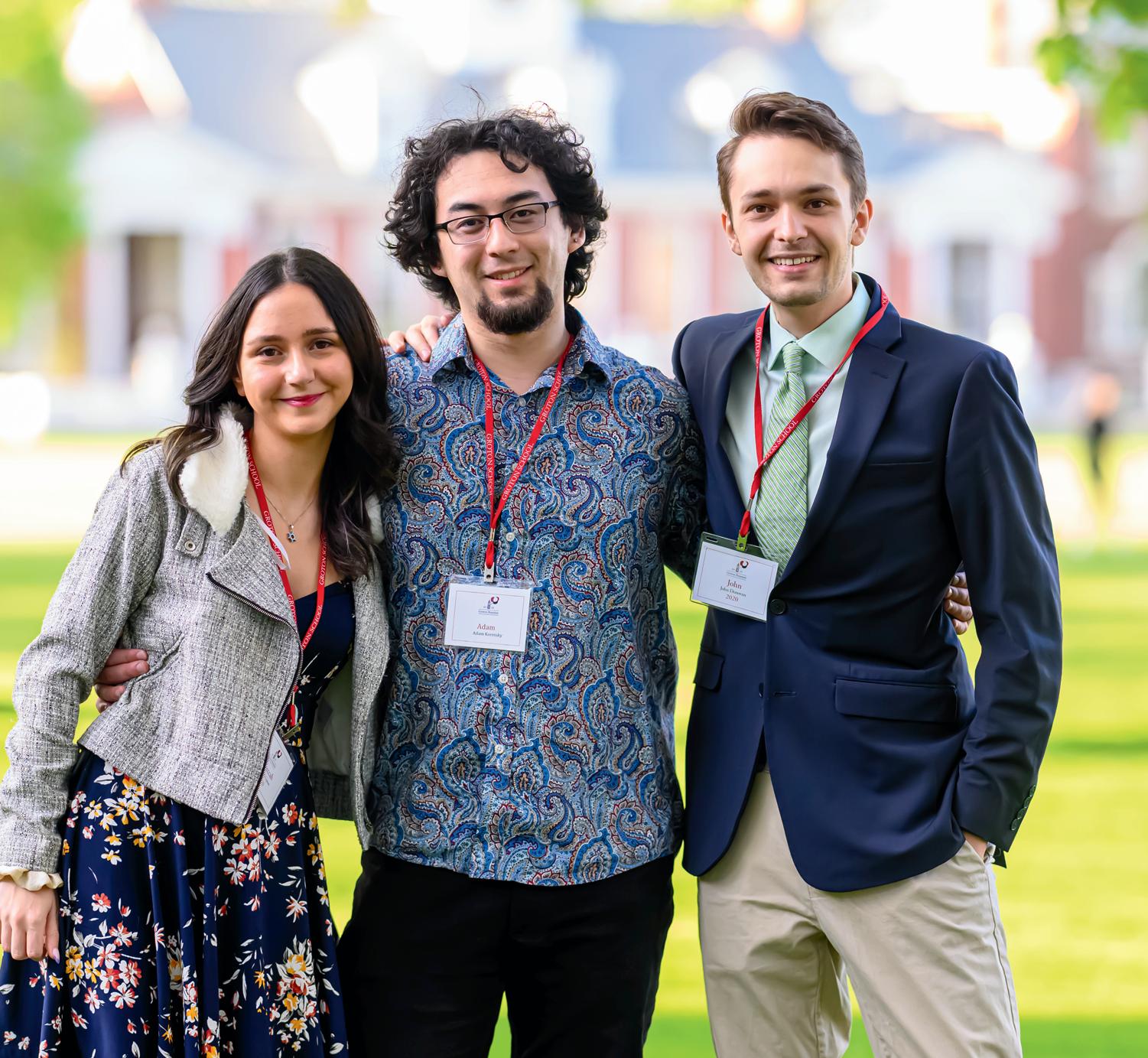
8
9
10
Members of the Form of 1970.
Rachel McMenemy ’20, Hutshie Faugas ’20, Kamsi Onwochei ’20 on Friday evening.
7 Ambrey Hayes ’20, Grace Mastroianni ’20, and Eliza Turner ’20.
Molly Prockop ’15 gives Malik Jabati ’15 a hug.
Becky Lipson ’20, her guest, and John Donovan ’20.
Alumni, parents, grandparents, and students watch student athletic competitions.
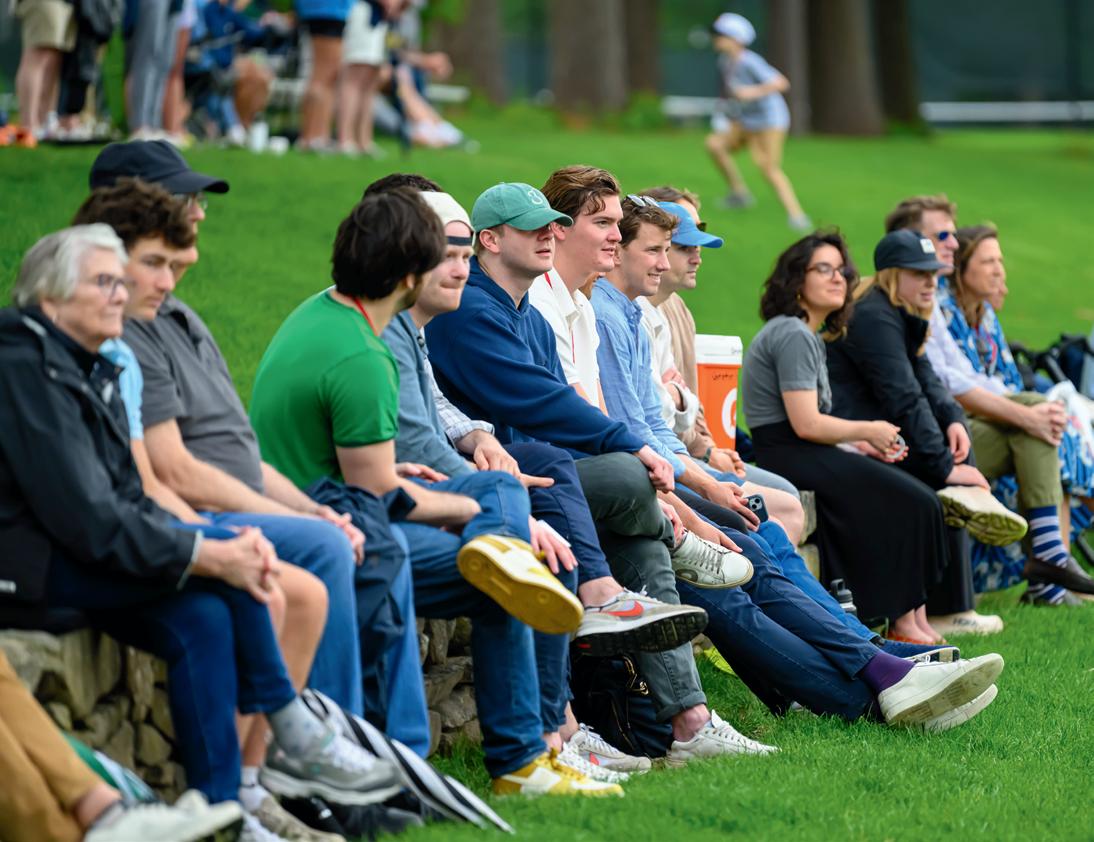
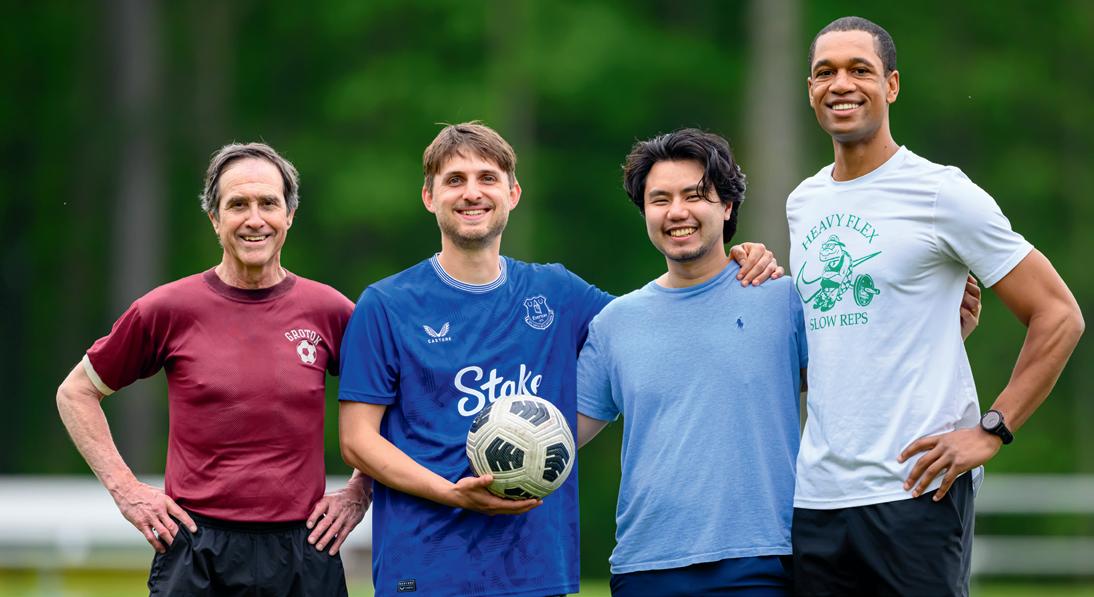
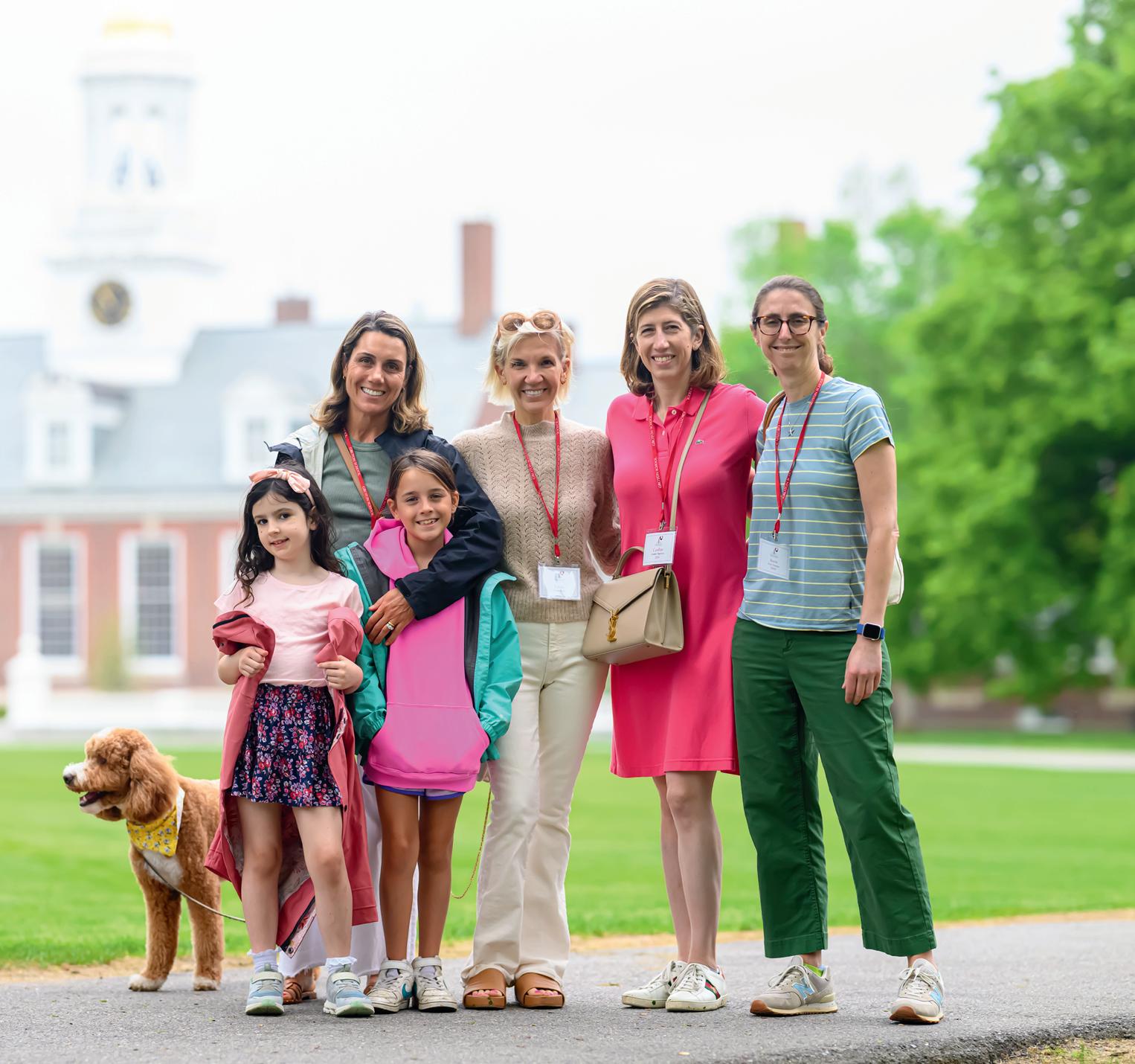
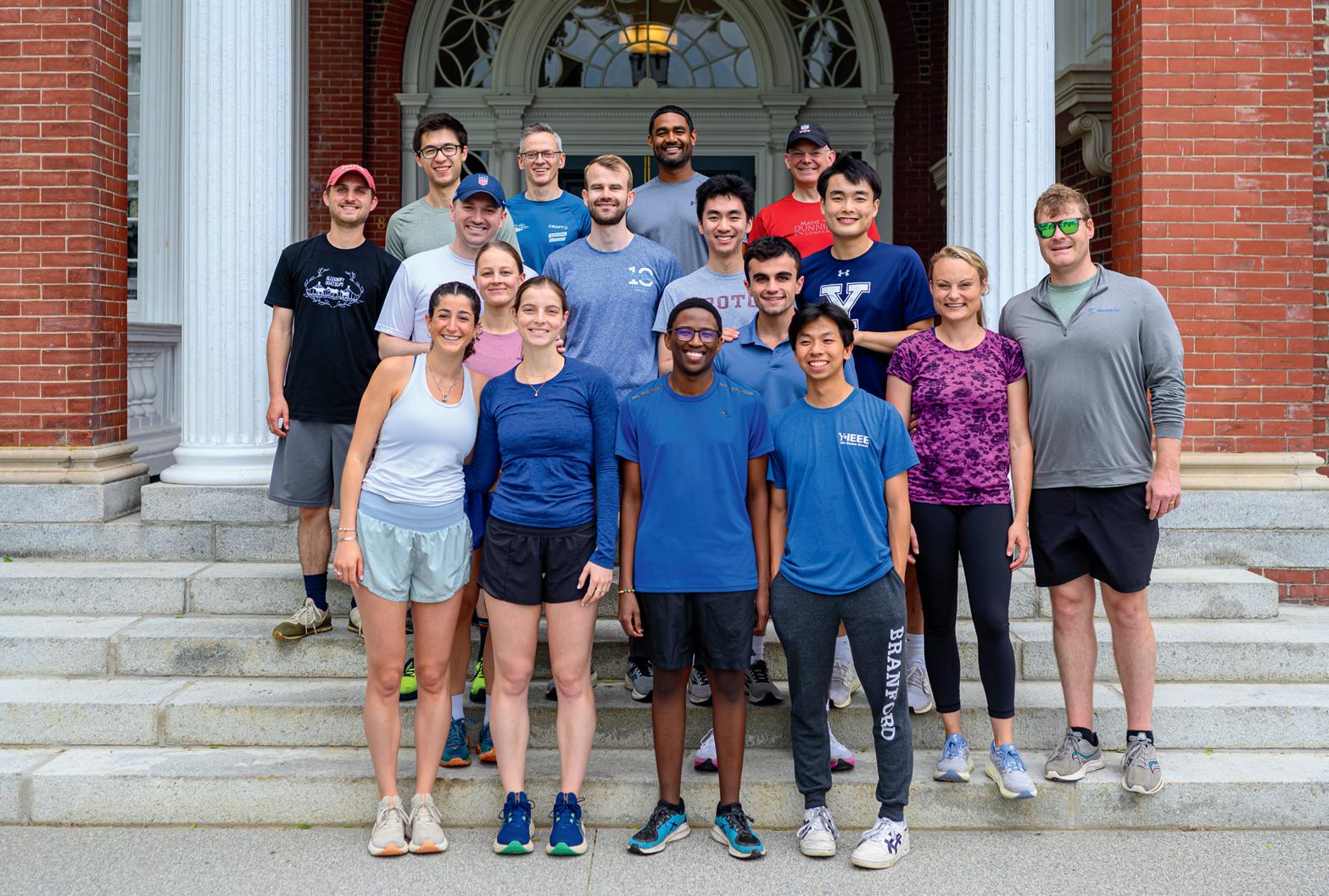
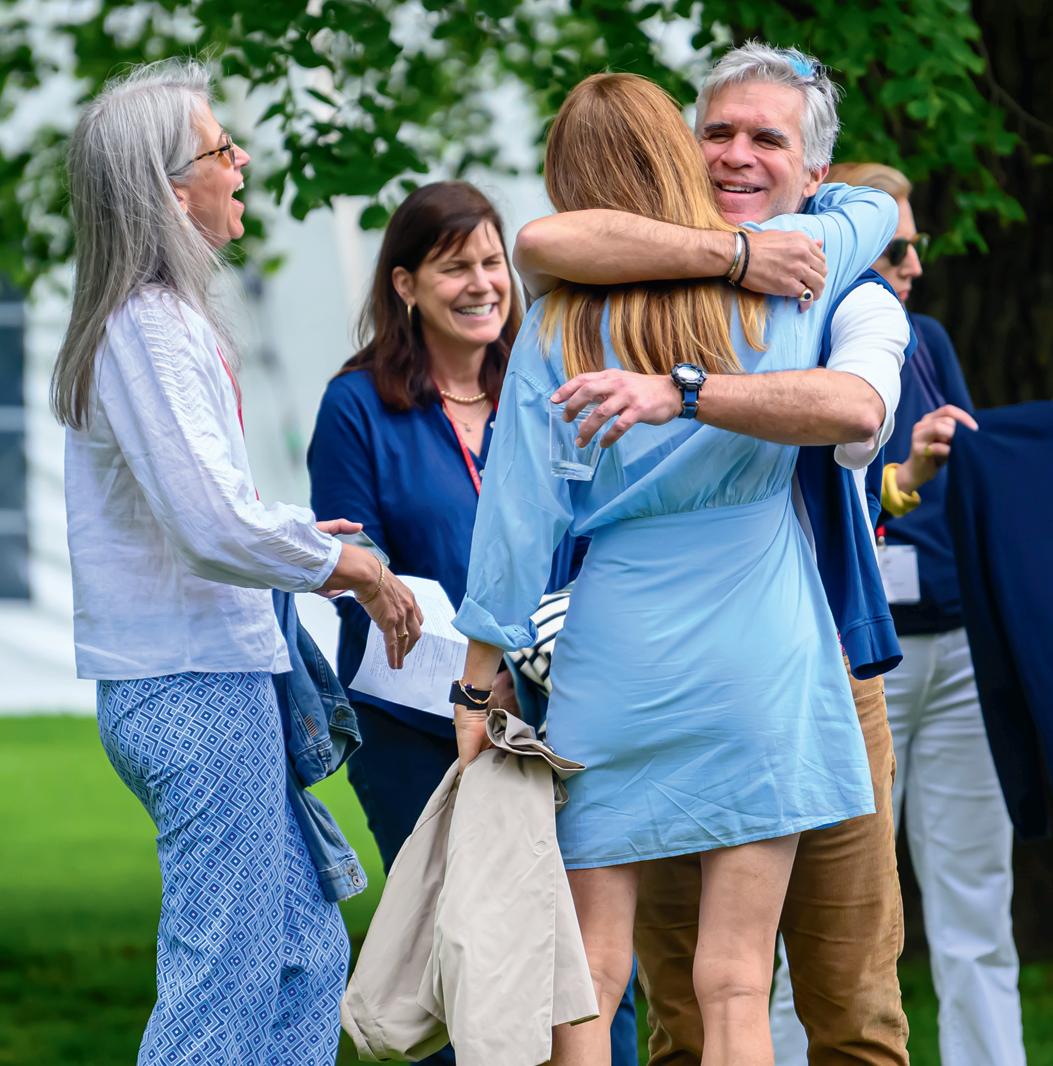
11 Stewart Cutler ’75, in his old Groton uniform, Jared Belsky ’15, Tyler Sar ’15, and Malik Jabati ’15 play a friendly game of soccer.
12 Rennie Taylor ’00 (with daughters), Linda Aiello, Caroline Murphree ’00, and Annie Huntoon ’00.
13 The Triangle Runners, before they take off on the 5k race lead by boys cross country coach John Capen P’17, 22.
14 Members of the Form of 1985 embrace.

17 Headmaster Maqubela and members of the Form of 2015 gather on Sunday to celebrate departing faculty members. Members of the Form of 2015 include: Lily Edwards, guest of Malik Jabati, Rein Irving, Layla Varkey, Tania Gray, Jenna Hong, Faith Ocitti, Molly Prockop, Caroline Morss, and Katherine McCreery.
15 Members of the Form of 2020 before heading over to their dinner: Elizabeth Girian, Lucy Anderson, Grace Mastroianni, Eliza Turner, and Caroline Wilcox.
16 Elizabeth Girian ’20 joined the students and alumni members of the Choir at Chapel on Sunday morning.
18 Members of the Form of 1990, Andrea Picott, Wesley Davis, and Kate Milliken.

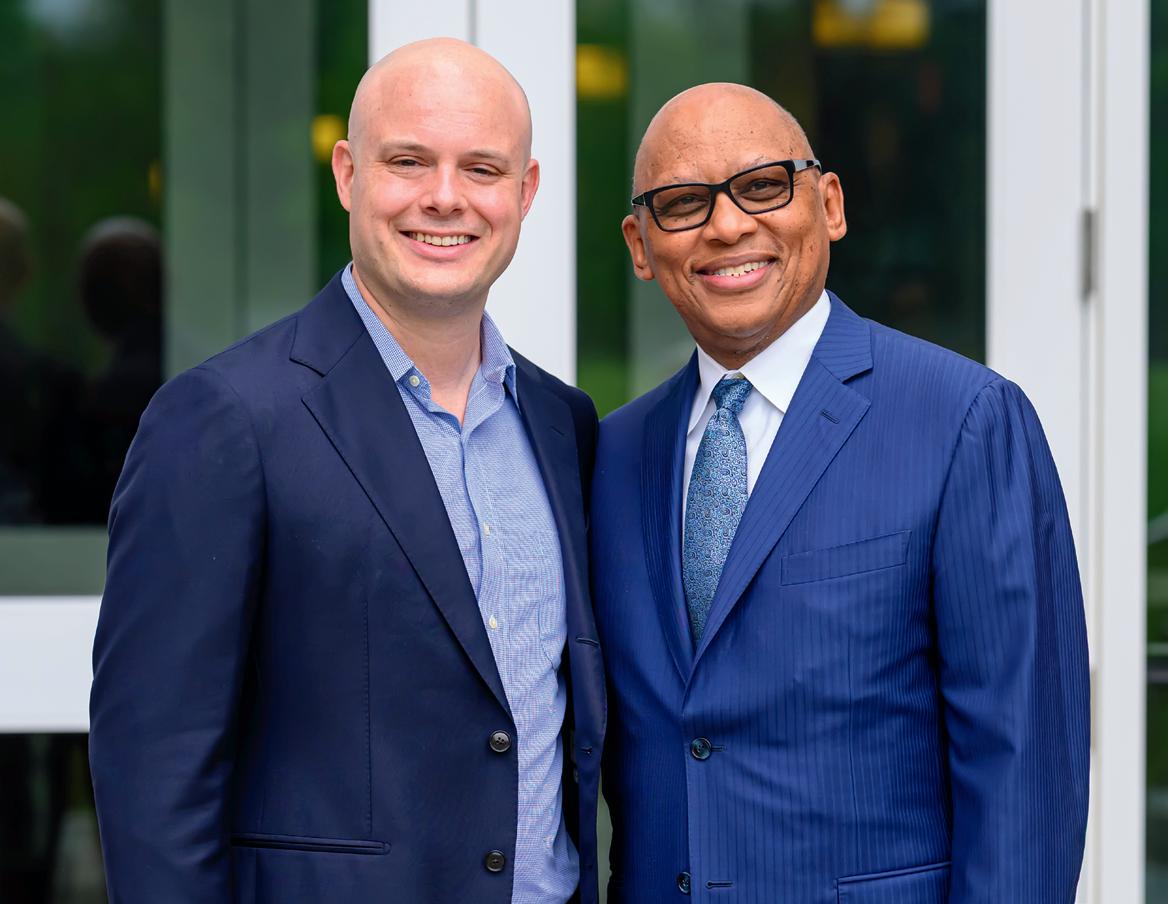
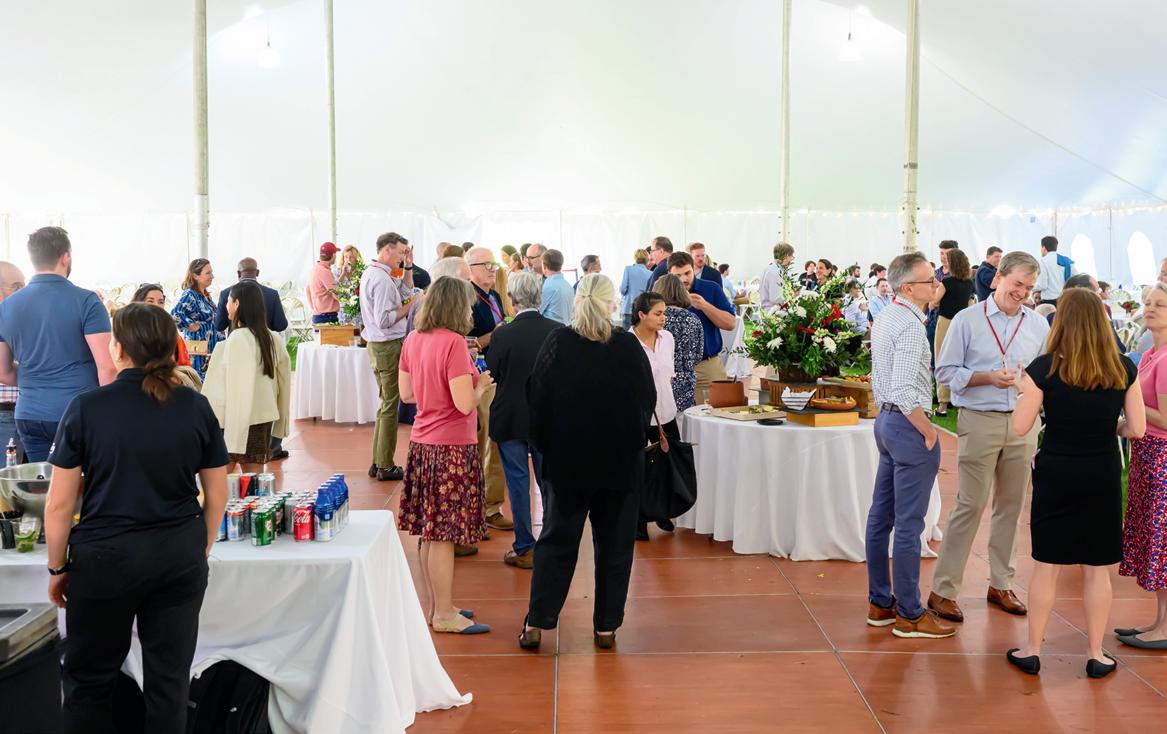
22 Alumni gather on Saturday evening before form dinners begin.
19 Members of the Form of 2015, Lillian Harris, Holly McNaughton, Katherine McCreery, and Faith Ocitti.
20 Cui Servire winner David Cheever ’05 and Headmaster Maqubela.
21 A reunion guest, Hallie Lynch Porterfield ’05 and spouse, Rebecca Lynch Rutherfurd ’00, and Libby Denniston ’05.
cui servire est regnare
award
David Cheever ’05
David Cheever ’05 received the Cui Servire Est Regnare Award—named for the school’s motto, which celebrates a long-ingrained ethos of service—for his career as an emergency medicine physician who works primarily with underserved and indigent populations in the American Southwest.
David accepted the Cui Servire Est Regnare Award with these words:
Thank you, Temba, and thank you to the entire extended Groton community for the honor of this award. I want to especially thank my partner Jess, my Uncle George (Form of 1965), Aunt Meg, and my mother Mitzi for joining today. It is very special to receive this recognition in a place that has been so personally formative. A place, where in many ways, I became the person I am today. At Groton I still feel a strong connection to my former teachers, my formmates, but most importantly to my father, Harry Cheever, who graduated in 1969. My father will have been gone for almost eighteen years this summer, but I can still feel his presence in this space.
Admittedly, while I am certainly honored by this award, it is also unexpected. I think perhaps to my mother as well. Surprising to her, because she is still scarred from a sternly written letter she received during my Fifth Form year. The letter was from Mr. Beams and strongly insinuated that I had the most demerits in my form and that I should get my act together if I wanted to graduate. While, personally, I was amused by this letter because I knew that several of my formmates were much worse offenders than myself (many of whom are sitting in this room today). I promise you my mother did not share in my amusement.
Yet for me, this recognition is unexpected for different reasons. Mostly because coming out of my Prize Day in 2005, I would not have predicted where I would end up in 2025. For the past six years I have
lived and worked in a small rural community in northwest New Mexico. My main professional work is as an emergency medicine physician serving native communities in the Navajo Nation (the largest contiguous reservation in the United States, approximately the size of West Virginia) and the small Pueblo reservations of western and central New Mexico.
The community I serve, despite its location in the wealthiest country in the world, struggles with profound social and health challenges. In addition to the health-care outcomes we typically associate with less resourced communities (high rates of diabetes, obesity, substance use disorder, and domestic violence), this community faces disease processes more commonly linked with the developing world. Complications born, in part, from a lack of consistent running water, electricity, or paved roads.
As you can imagine, in a community made vulnerable by a myriad of socio-economic and health challenges, the last few years have been particularly difficult. Throughout 2020, the small city of Gallup, where I live, had one of the highest per capita rates of COVID-19 infection and COVID-related death in the entire country. Witnessing the devastation of the COVID-19 pandemic on my patients and community will stay with me for the rest of my life.
Yet despite the significant hardships facing Native Americans, there is undeniable joy, strength, and an incredible vibrancy in the community. And
Perhaps then it shouldn’t be surprising that I ended up in a career of service and I have, in part, my experience here to thank for it.
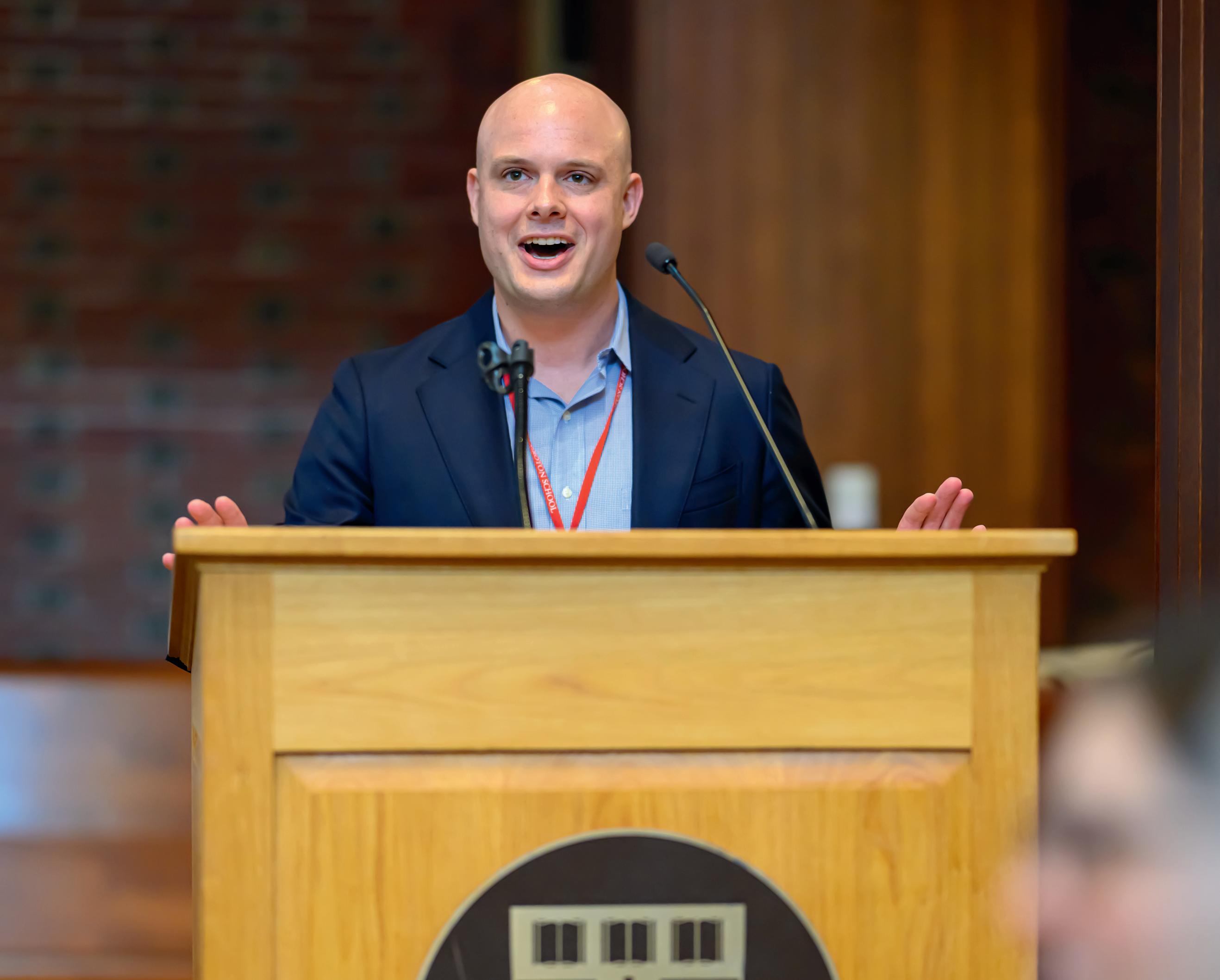
for myself, I have found happiness and contentment in a career of service. I think that, when discussing service, we too often focus on the burden of the concept, connecting service to obligation and sacrifice. But in my experience, service to others forces a separation from the personal. Instead, it shifts focus externally, allowing for a freedom and happiness that can otherwise be allusive. Because of this, I feel extraordinarily privileged to have found my current career.
I think in no small part my time at Groton was instrumental in forging this path. Obviously, the school offers incredible academic opportunities to its students, but as I have gotten older, I am more
appreciative of the unconscious transfer of values and grit a place like this can provide. I hope you forgive the awkward scientific metaphor, but the concentrated focus on values, determination, and service passes through students like osmosis, whether we are conscious of it or not. It can even pass to someone like me, who missed an occasional chapel.
Perhaps then it shouldn’t be surprising that I ended up in a career of service and I have, in part, my experience here to thank for it. Thank you all for this incredible honor.
That foundation—of discipline, curiosity, and moral courage— has stayed with me in business and in life. It’s helped me navigate uncertainty, to engage in shaping the future instead of fearing it.
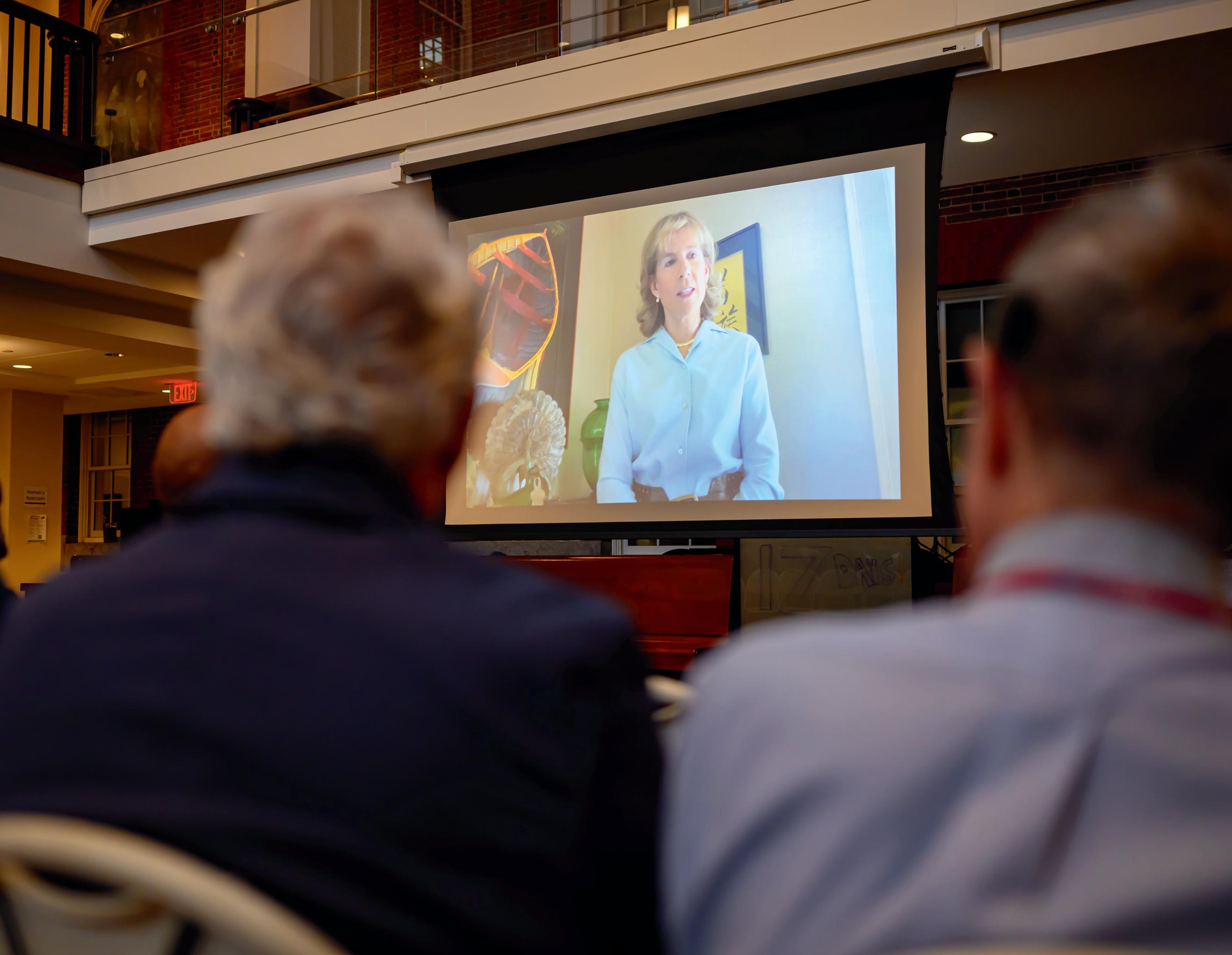
the distinguished grotonian award
Nicole Piasecki ’80
Since 1977, Groton School has presented the Distinguished Grotonian Award to a graduate whose life of highly distinguished service reflects the essential values of the school. This year’s Distinguished Grotonian, Nicole Piasecki ’80, was one of the most prominent female executives in the history of the Boeing Company until her retirement in 2017 after a distinguished twenty-five-year career.
Nicole accepted the Distinguished Grotonian honor remotely via video with these remarks:
Good morning, Groton community,
Thank you, Headmaster Maqubela, for this incredible honor. It truly means a great deal to me. I only wish I could be there with you in person today. But I’m attending another significant academic milestone— my son’s university graduation. Education has always been one of my family’s most cherished values, and days like today remind me how powerful and transformative that journey can be.
Now—funny thing about life . . . I never thought I’d one day be reflecting on NATO policy, tariffs, and AI while accepting a Distinguished Grotonian Award from Groton! But here we are.
When I think back on my time at Groton, it’s not only the academic excellence that stands out. Yes, we were challenged and well-prepared—but more importantly, we were asked to live within a moral framework. There was a shared expectation—from our faculty, our classmates, and even ourselves—that we lead lives of integrity, that we strive for excellence, and that we carry those values into whatever path we choose.
And those values matter now more than ever.
We are living through tectonic shifts—in the global economy, in geopolitics, in technology. Artificial intelligence, quantum computing—these aren’t abstract concepts any more. They are already reshaping productivity, skill sets, even how we define work. Meanwhile, social media has transformed how we receive and believe information. In many ways, we now live in fragmented realities, where facts are debatable and trust—trust in institutions, in leaders, and even in each other— has been deeply shaken.
In this complex, often divided world, I find myself deeply grateful for my Groton education. It taught me how to think with rigor, how to reason logically, and how to view events not just in the moment, but within the broader sweep of history. It also taught me to lead not just with intellect, but with conscience. That foundation—of discipline, curiosity, and moral courage—has stayed with me in business and in life. It’s helped me navigate uncertainty, to engage in shaping the future instead of fearing it.
At Groton, I played three varsity sports—where I learned teamwork, the value of practice, and perseverance. With another Grotonian, I started the tradition of school musicals, with the support of Mr. Smith—a lesson in taking initiative and building something new. I sang in the choir and Madrigals— where I found joy in tradition and expression. And of course, I worked hard in the classroom—because excellence, we were taught, isn’t a destination, but a habit.
These formative experiences empowered me—gave me confidence to lead effectively in community and business settings throughout my life and gave me the judgment to make critical decisions, collaborate globally and take on challenges. Groton gave me the skills to advocate for what I believe in.
Groton instilled in us that we are here not just to succeed, but to contribute and to seek truth. To make an impact. To lift others as we climb.
The greatest gift Groton gave me (besides all of that goodness) was lifelong friendships with classmates, roommates, and teammates who, to this day, remain a meaningful part of my life.
So, to all of you—students, faculty, alumni— I encourage you to hold fast to the values this place imparts: integrity, excellence, community, and purpose. In a world that often rewards the loudest voice or the quickest click, let us be the ones who lead with depth, clarity, and conviction.
And above all, let us imagine—and help build— a future that, while different, can be better.
Thank you, Groton. This is a full-circle moment for me, and I am deeply honored.
Reunion
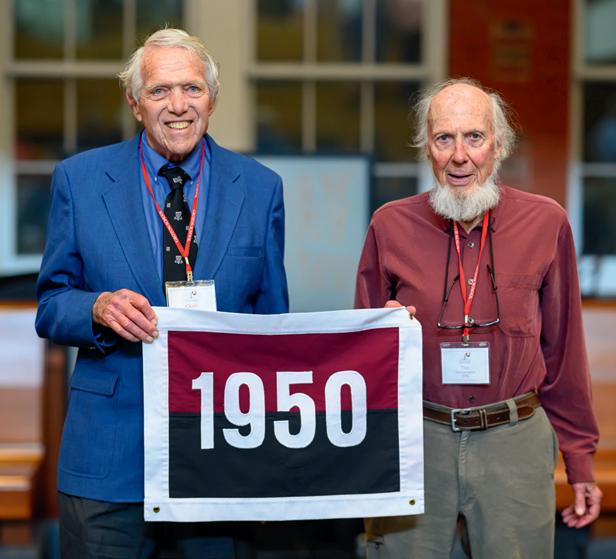
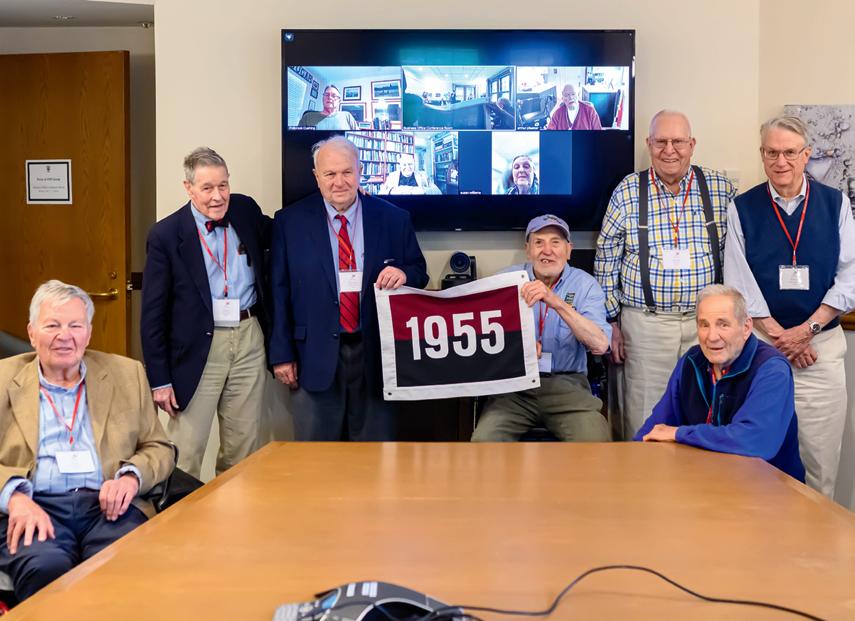
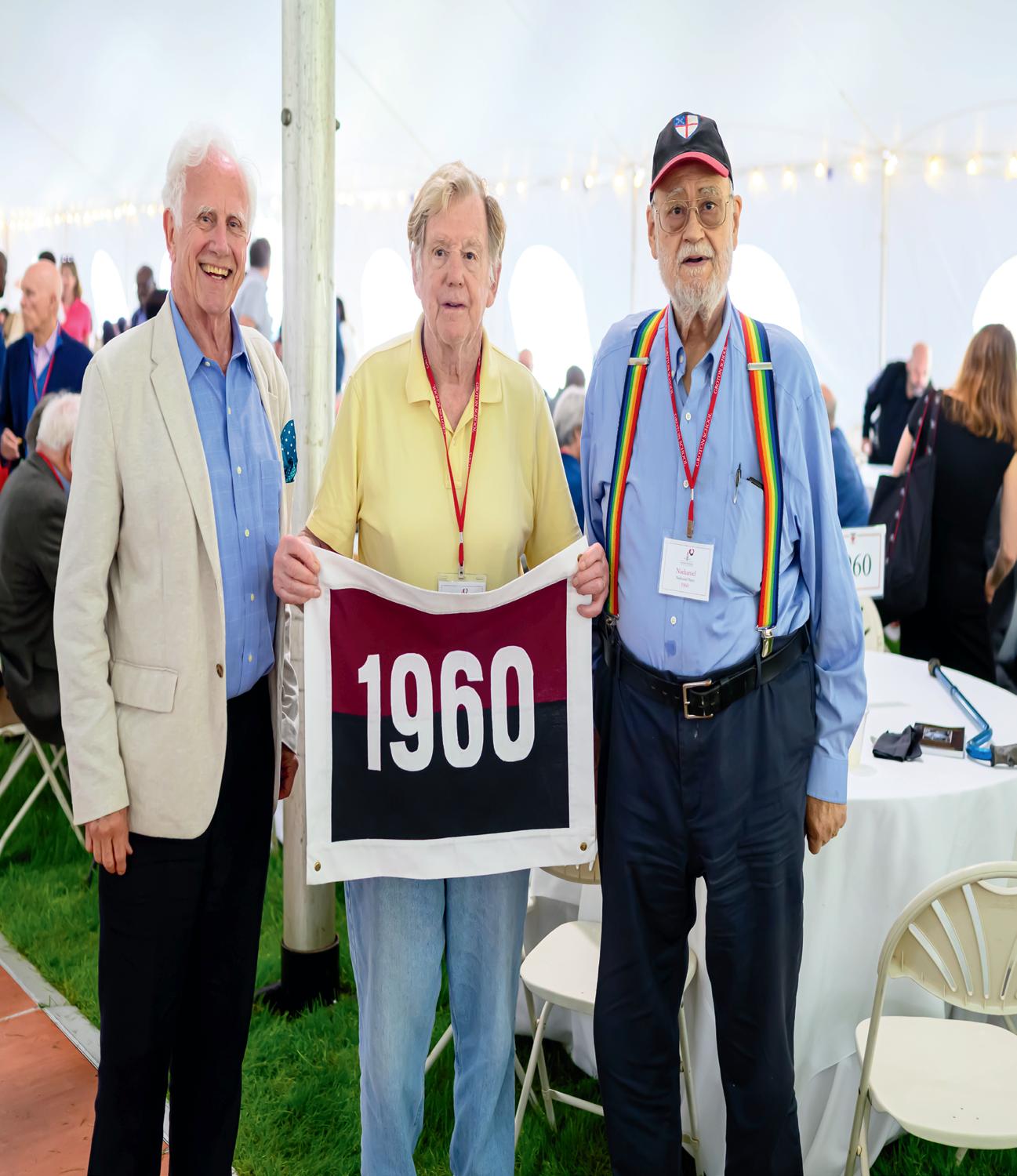
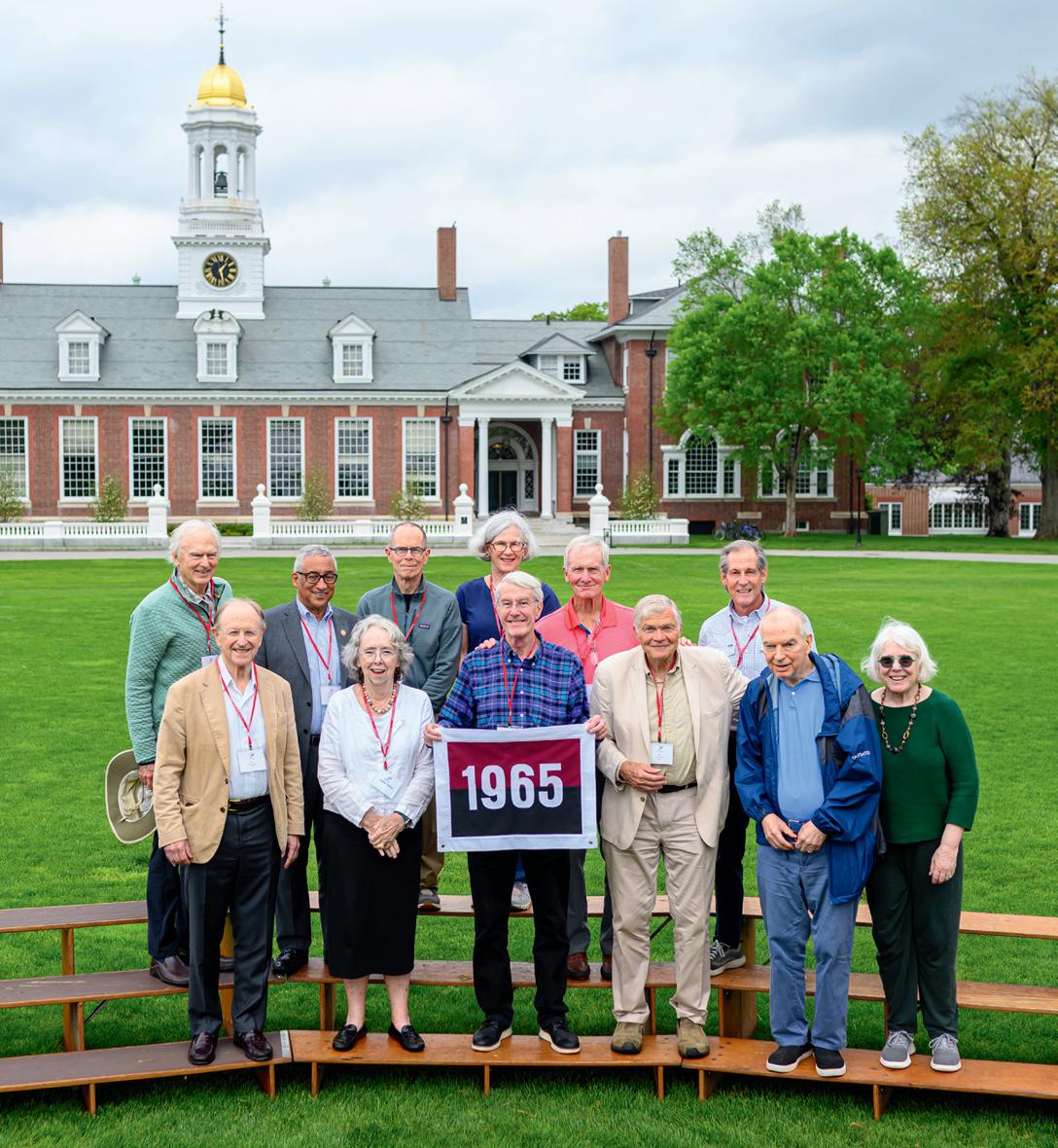
1950
Charlie Higginson and Tim Cunningham
1955
Kurt Mueller, Harry Pratt, Thatcher Adams, John Schieffelin, Woody Ives, Wheaton Vaughan, and Nick Ourusoff
1960
Peter Rand, John Choate, and Nathaniel Pierce
1965
Front row: Peter Schenkkan, Nora and Douglas Voorhies, Al Kilborne, George and Meg Cheever
Back row: Tony Barton, Bobby Scott, Donald Bordley, Priscilla Martin, Larry Irwin, and Jeremy Hubball
1970
Front row: Geoff Dunn, Richard Norton, George Motley, Steve Hartshorne, Margie Kunhardt, Alec Webb, and David Hadden
Back row: Leslie and Arthur Post, Tom Cleveland, Larry Bogard, Walt Perry, John Alsop, Janice Stuver, Philip Kunhardt, and Megan Camp
1975
First row: Dana Lanzillo, Toby Dilworth, John Tarpey, George Davison, Tim Egan, and Lou Bilionis. Second row: Bob Curry, Walter Hoh, Jake Gregory, Allen Johnson, and Britton Jones
Third row: Willie Lee Jones, John Wallace, Gordie Gardiner, Stuart Davidson, and Arch Perkins. Fourth row: Dave Howe, Briggs Cunningham, Ralph Giles, Mark Collins, Andy Shire, George Leone, Stewart Cutler, and Charles Anton.
Fifth row: Waller Finnagan and Ace Seybolt
1980
Front row: Lorayne Black, Crista Herbert Gannon ’81, John Gannon, Kevin Griffith, Bruce Carvalho, and Angie Harris. Back row: Clark Hare, Tim Forster, Warren Thaler, and David Black
1985
First row: Alfred Winkler, Ellen Curtis Boiselle, Will Knuff, Newton Brainard, Jane Liebowitz Moggio, Dave Fenner, Cannon Quigley Campbell, Kimberly Magowan, Juliette White Hyson, Jeff Hyson, and Pegram Harrison. Second row: Tommy Sutro, Lucy Stone, Anne Choate Lombardini, Amy DiBuono Graham, Kristin Smalley Priscak, Erik Walsh, and Caroline Earle Walsh ’83. Third row: Dave Calfee, Whit Knapp, Sallie Smith, Sarah Stearns Fey, Andy Kunkemueller, Jack de Valpine, and Amy Young
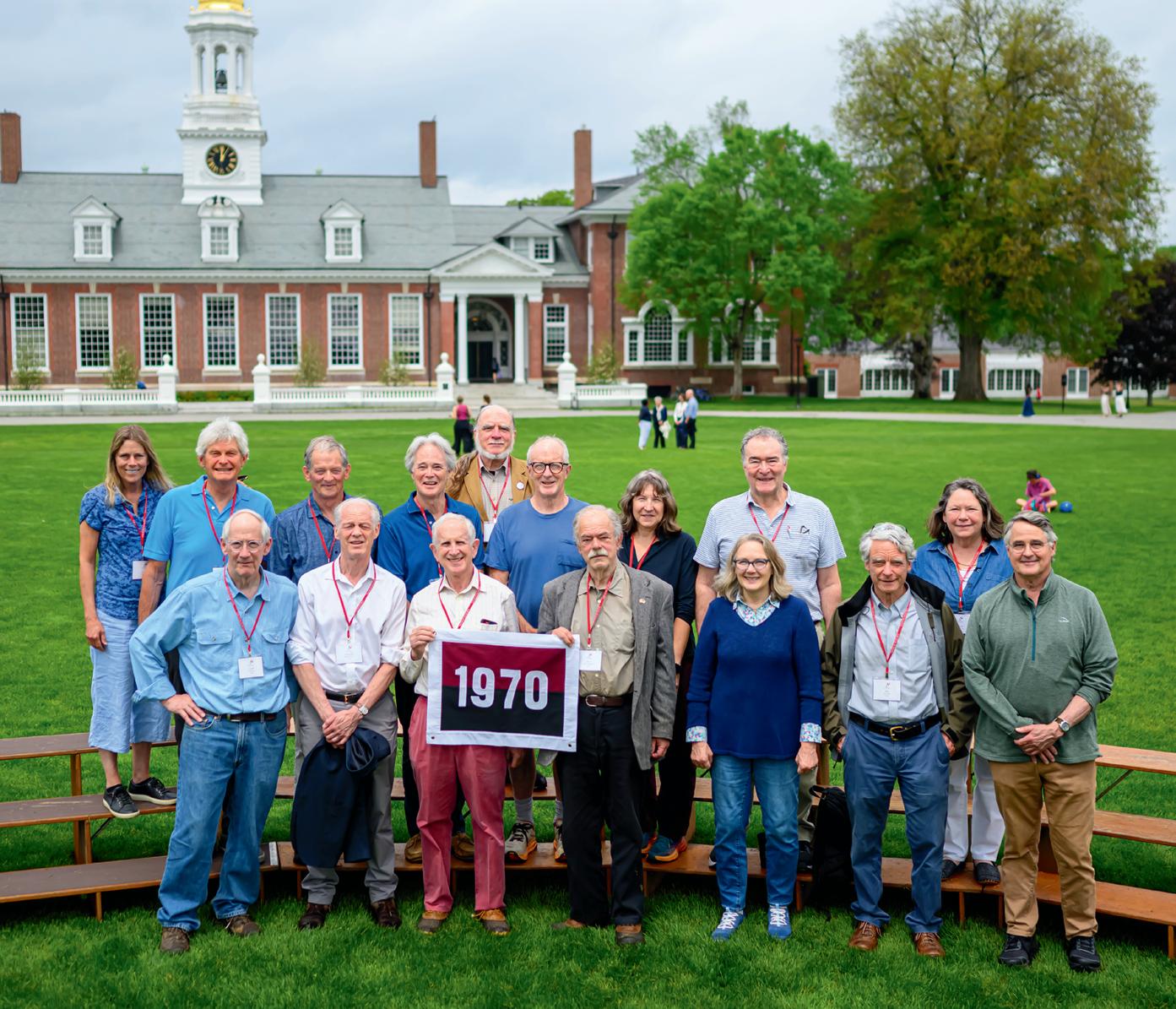
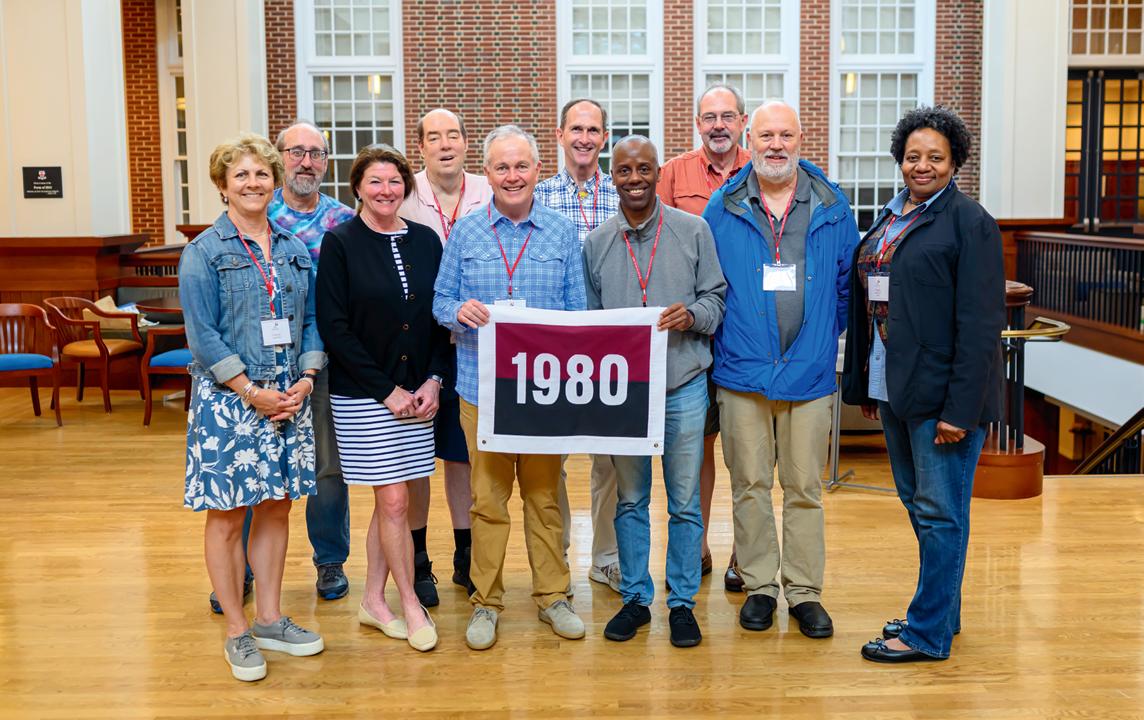
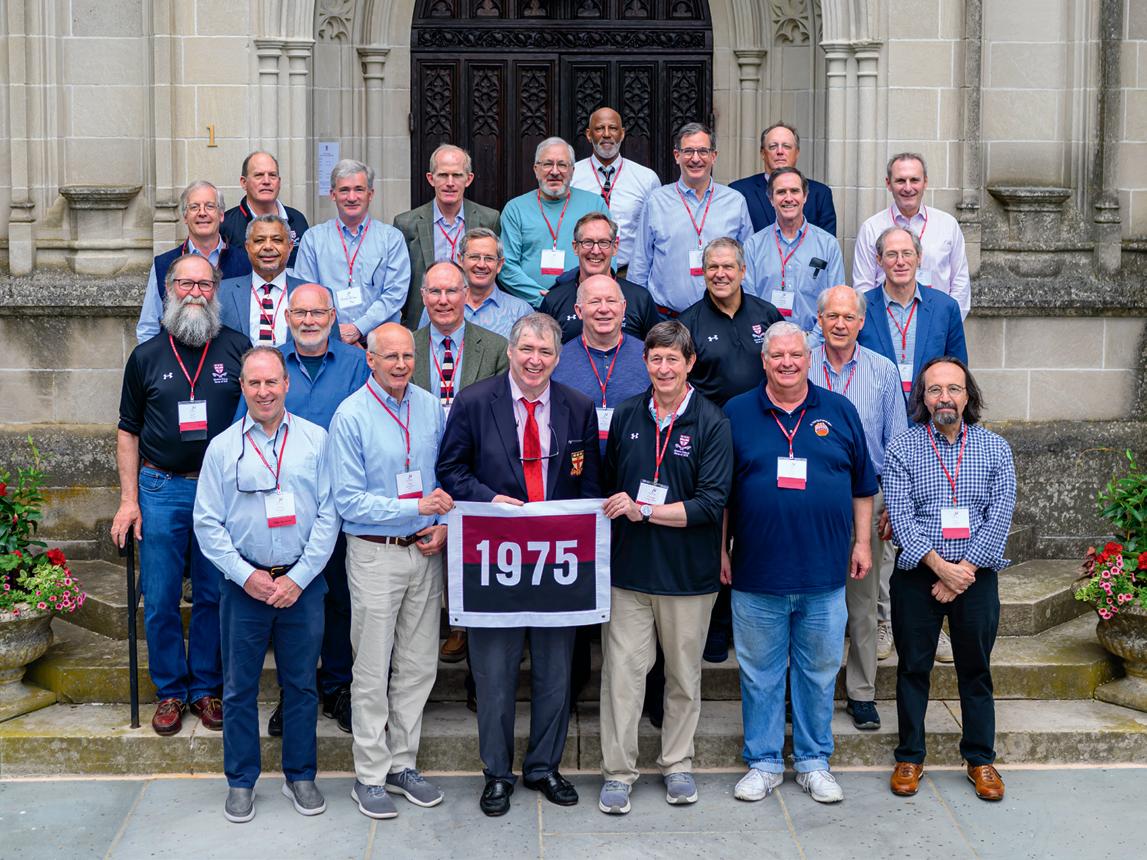

1990
Front row: Callie Rogers Emery, Adrian Clarke, Kelly and Maurie Curran (and their children), Wesley Davis, Amy Augenblick, Lisa Kang, Chris and Staci Seeley. Back row: Sarah Canner, Andrea Picott, Carrie Paterson, Alex Manugian, Kate Milliken Vaughey, Jean Song, Gwathmey Finlay Gomila, and Elizabeth Train
1995
Front row: Mike Keating, Sean Bell-Thomson, Meredith Gordon Naftalis, Jane Blair Oberle, Barkley Kinkead Walter, (alumni/ae children), Alston McCall Nelson, Aura Davies, Tony Perez-Marques, Mike and Kelly Gingras (with their daughter). Back row: John Brooks, Willing Davidson, Graham Buck, David Raabe, Jack Geary, Carol Seeley, Topher Watts, Bob Anderson, Zach Wheeler, Ware Sykes, Eugene and Elizabeth Bang (and their children), and Christian Oberle (in back)
2000
Front row: Ellis Trevor, Carter Denny, Abby Simmons Walker, Alumni/ae children, Joy Watcharaumnuay, Paul Rand, Lindsey Press and child (spouse and son of Mike Press). Middle row: Rebecca Lynch Rutherfurd, Rennie Taylor, Charlotte Howard, Carolyn Reeve Ripps and daughter, Annie Huntoon, Caroline Murphree, Alex Denniston, and Mike Press. Back row: Vern Peterson-Cassin, Oliver Storm, CB Hall, Chip Allison, Eden Self Abanese, Cate La Farge Summers, and her son
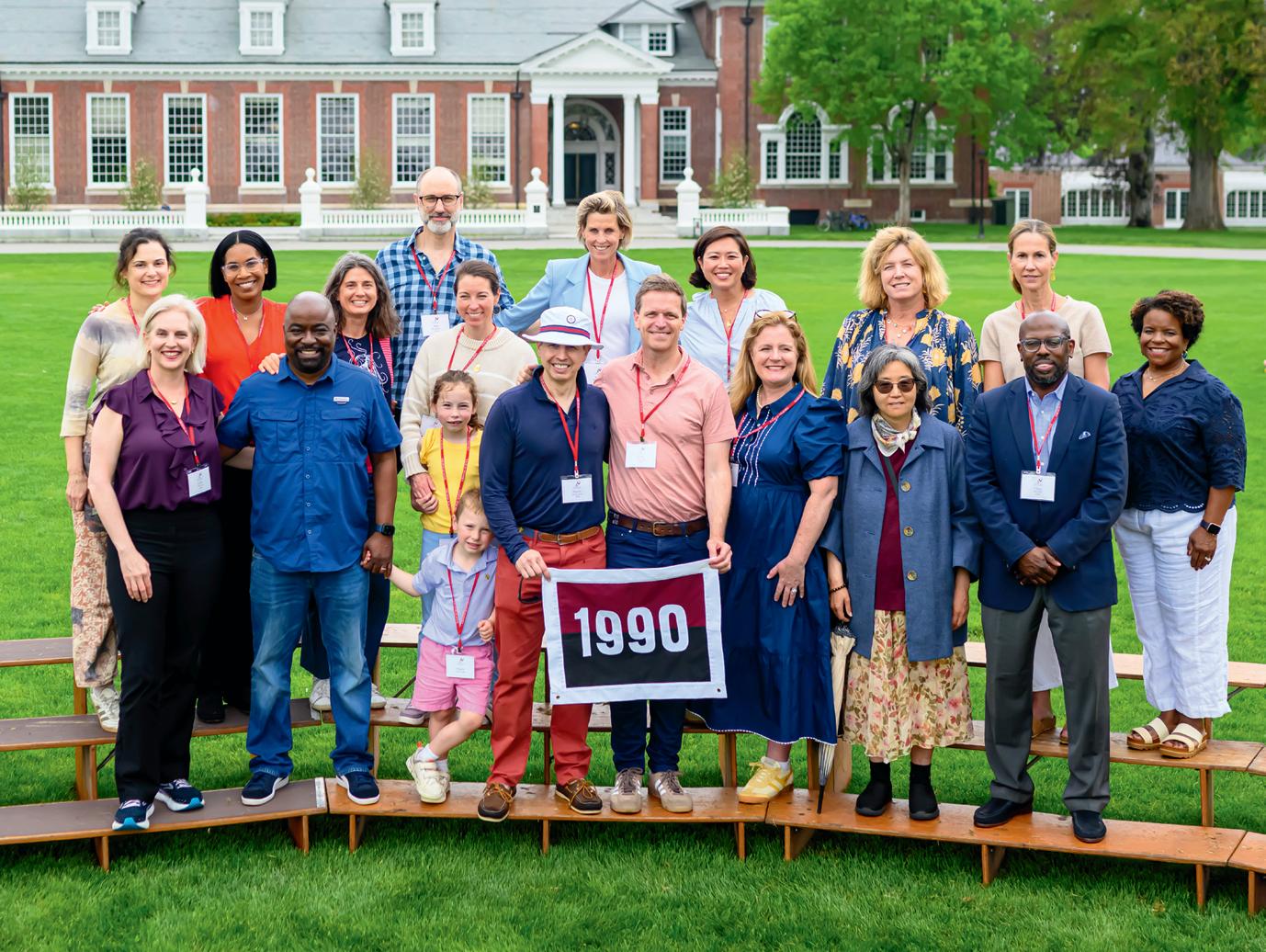
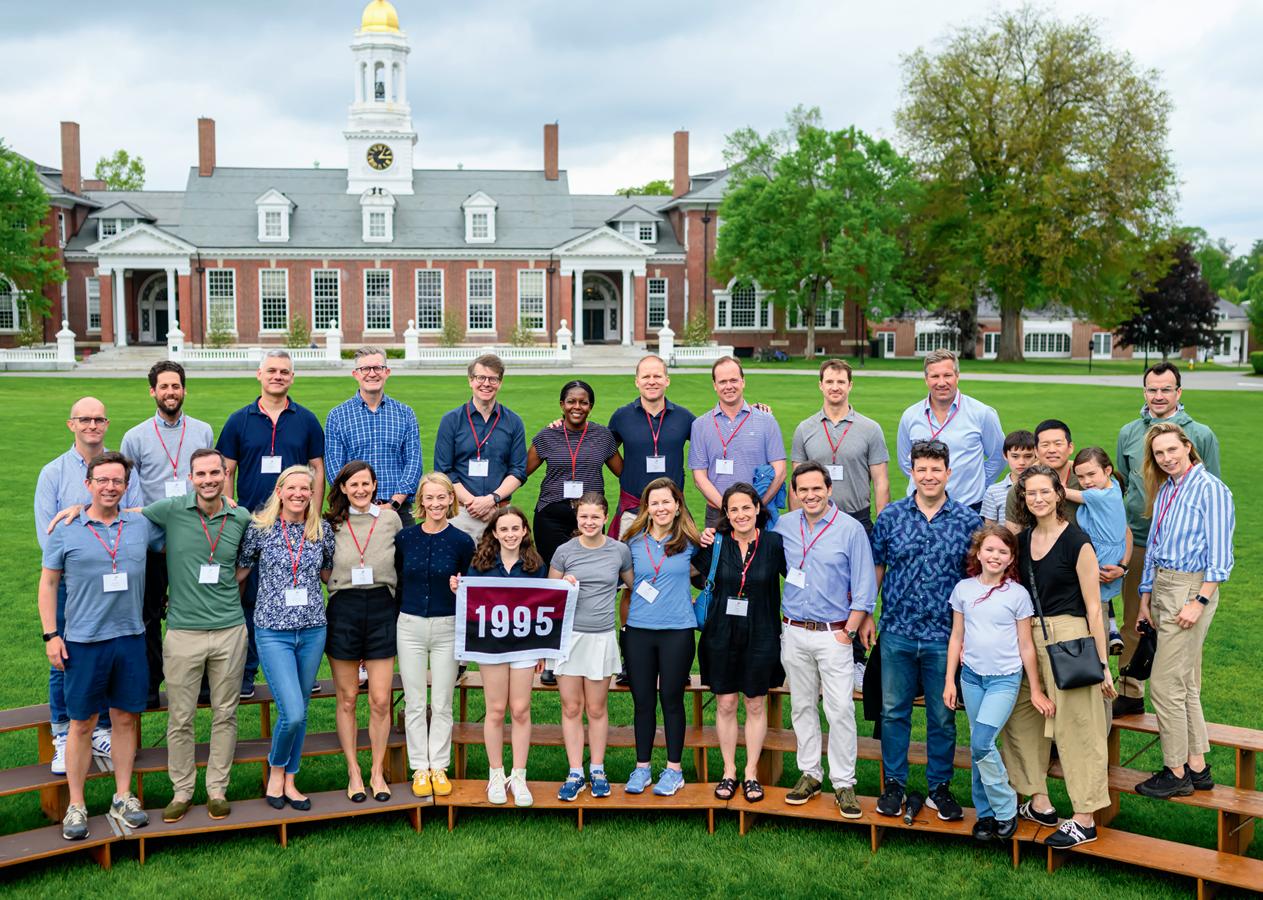
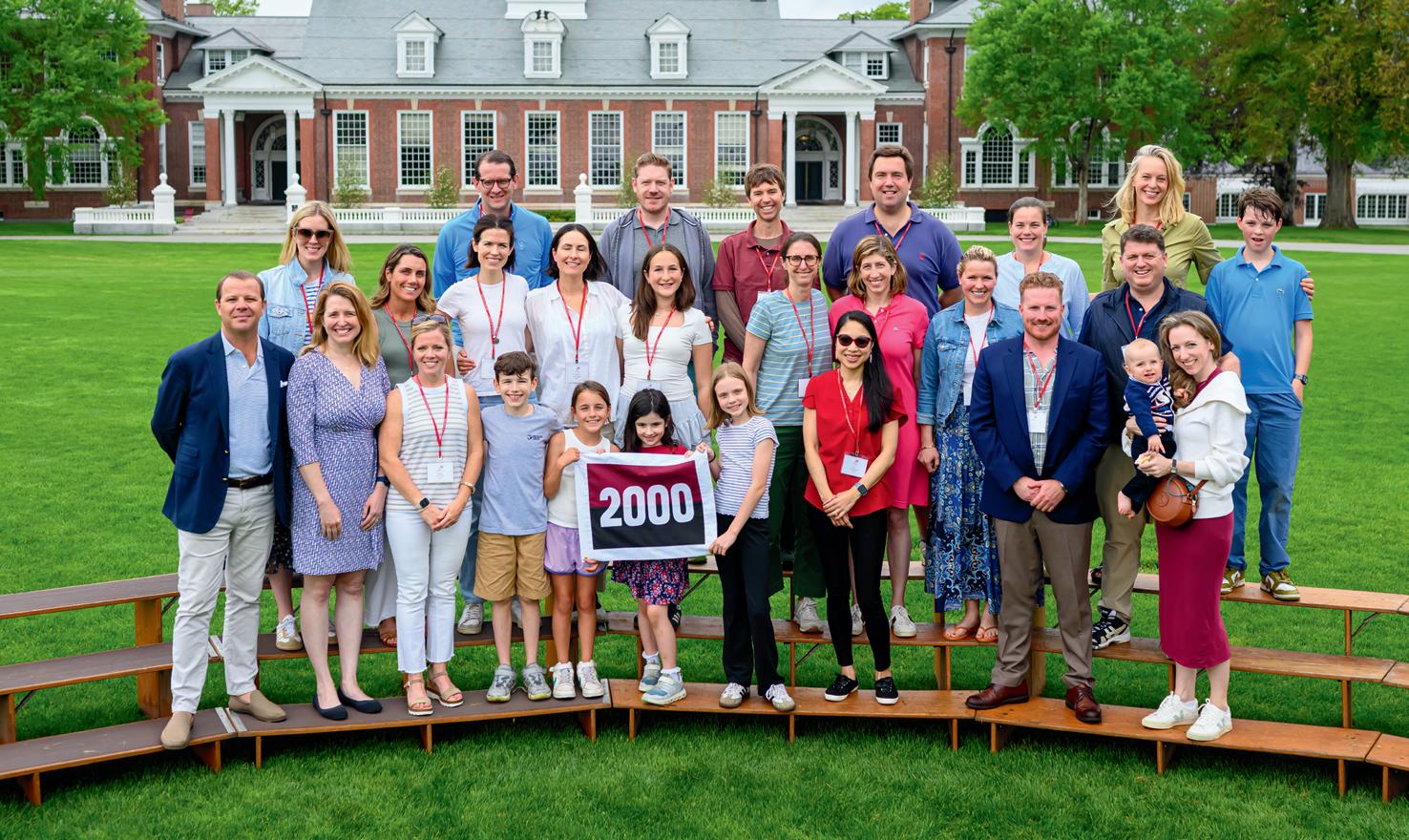
2005
Front row: Natasha Mehta, Bree Taylor, Anna Schroeder, Hallie Lynch Porterfield, Lizz Slark Carlson, Leila Higgins Gibney, Holly Sjogren Bancroft, and Alexandra Franceschi. Middle row: Ron Bogdasarian, David Cheever, Alexandra Daum, Alison Holmes, Libby Denniston, David Heller, Tom Schaefer, Caitlin Arner, and Hy Kim. Back row: Lily Howard Scott, Frances McNamara Nemeroff, Andy Kalaris, and Amir Paul
2010
Front row: Jillian Howe, Darden Callaway Cave, Liza MacEachern Carroll, Harling Ross Anton, Madeleine Hicks, Maddi Bruce, and Bridget Jeong. Back row: Harsh Govil, Rob Black, and Austin Anton
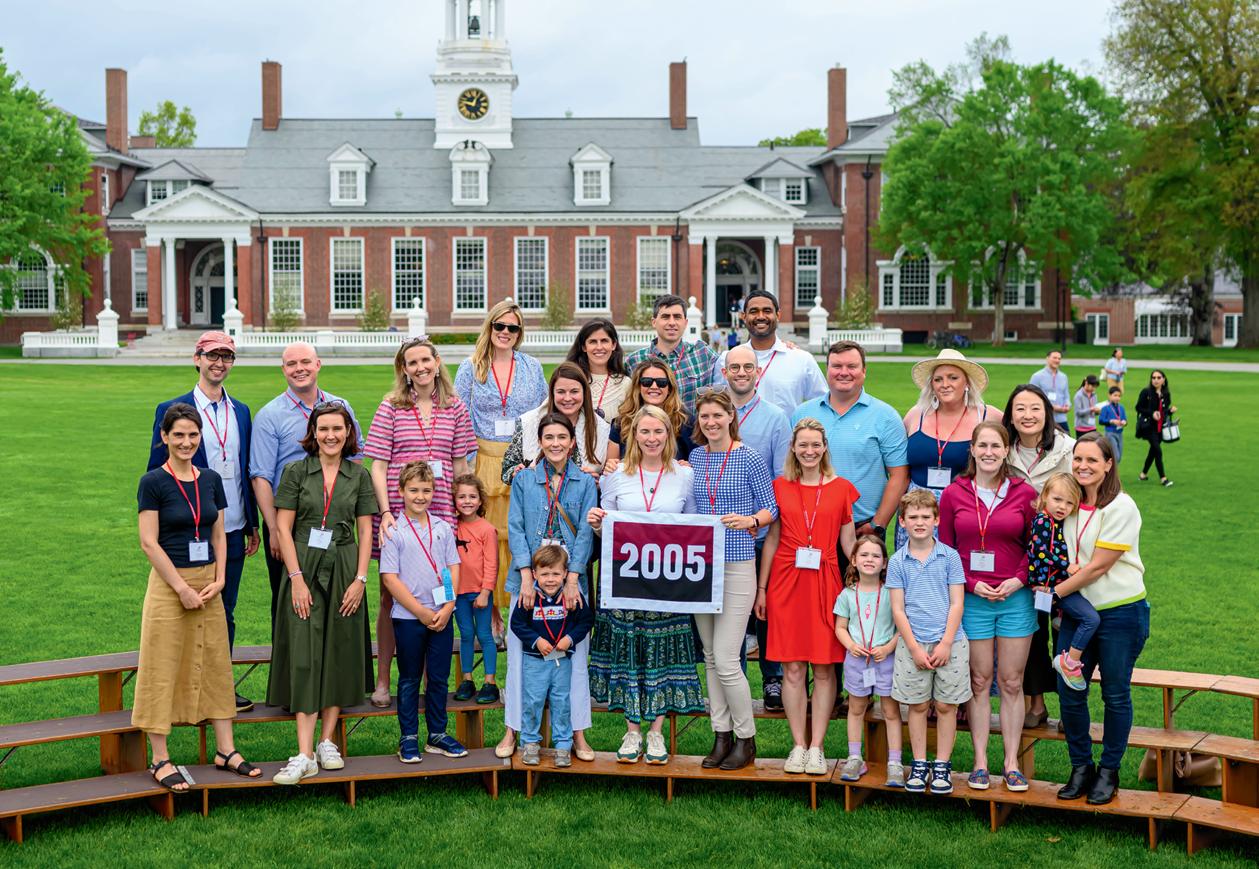
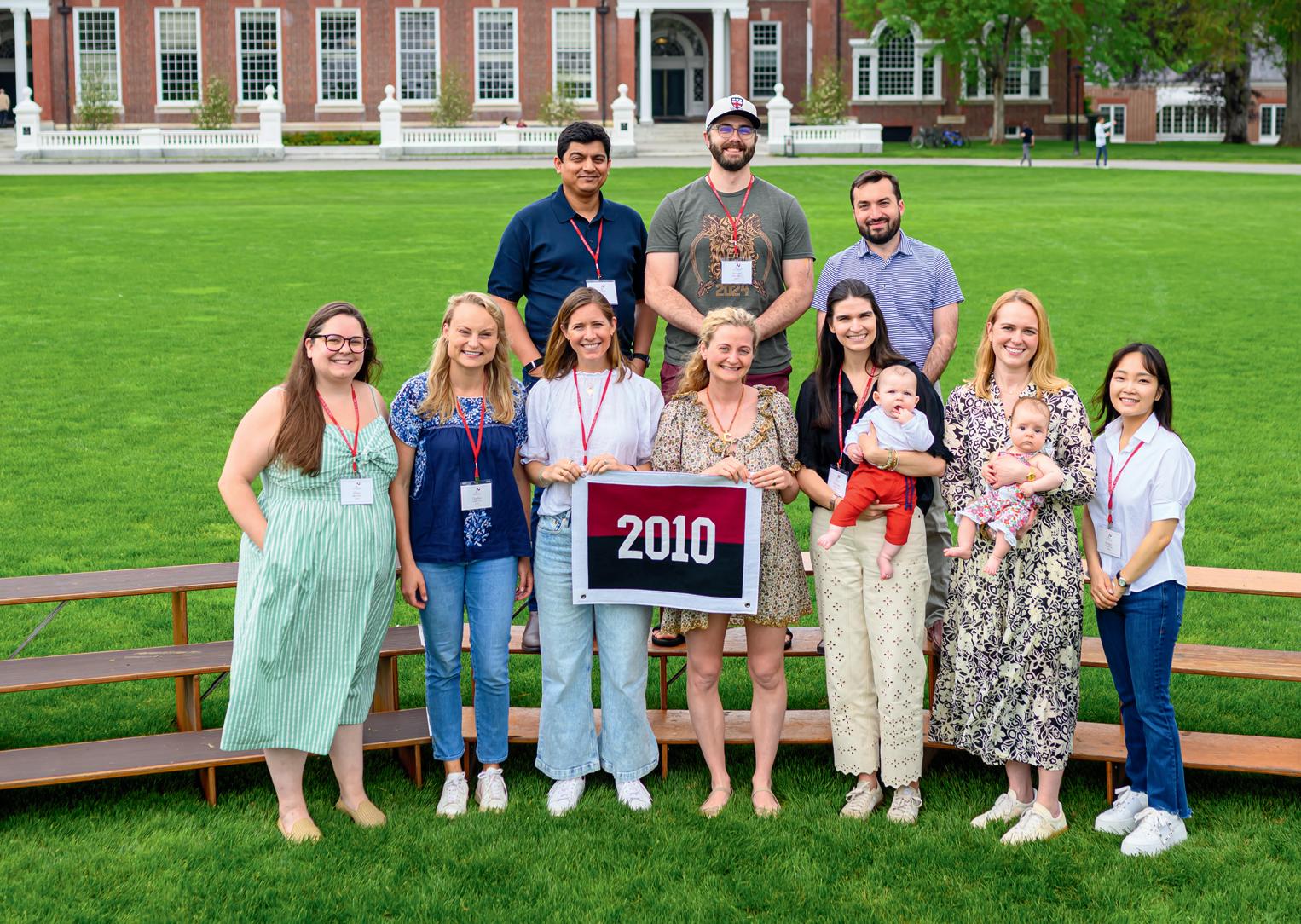
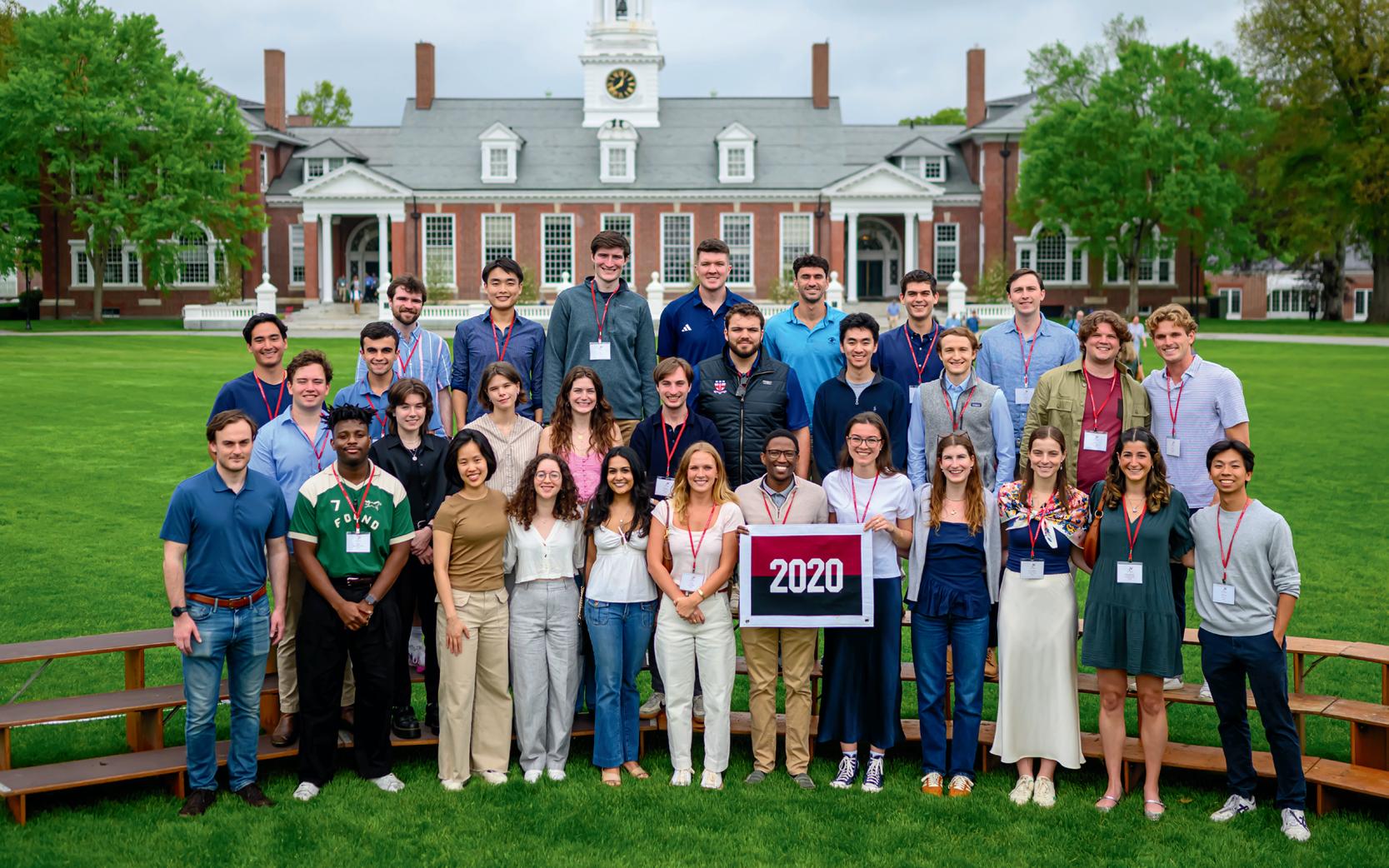
2015
Front row: Anthony Chu, Turner Banwell, Simon ColloredoMansfeld, Holly McNaughton, Lillian Harris, Katherine McCreery, Layla Varkey, Caroline Morss, Lily Edwards, Jenna Hong, Tania Gray, and Faith Ocitti. Middle row: Cam Ayles, Dorien Llewellyn, Emma Zetterberg, Jared Belsky, Tyler Sar, Molly Prockop, and Rein Irving. Back row: Noah Altshuler, Malik Jabati, Chenyu Ma, Maximilian Gomez, Britton Pyne, Frank Bruni, Ben Osterholtz, Fraser Wright, Trevor Fry, Evan Haas, and Philippe Heitzmann
2020
First row: Filip Engstrom, Papa Baffour-Awuah, Cara Chang, Aileen Kauffman, Neha Agarwal, Erin Dollard, Lwazi Bululu, Grace Mastroianni, Lucy Anderson, Caroline Wilcox, Elizabeth Girian, and Oliver Ye. Second row: Teddy Carlin, Emma Beard, Isabel Brown, Tatum Pike, and Henry Kuck. Third row: Benjamin Zaidel, Andrew Mazza, Douglas Altshuler, Derek Chang, Jay Fitzgerald, Marc Borghi, and Max Steinert. Fourth row: John Michaud, Josh Guo, Joey O’Brien, Kevin Carney, Matt Kandel, Andres Kaneb, and Liam Stuart
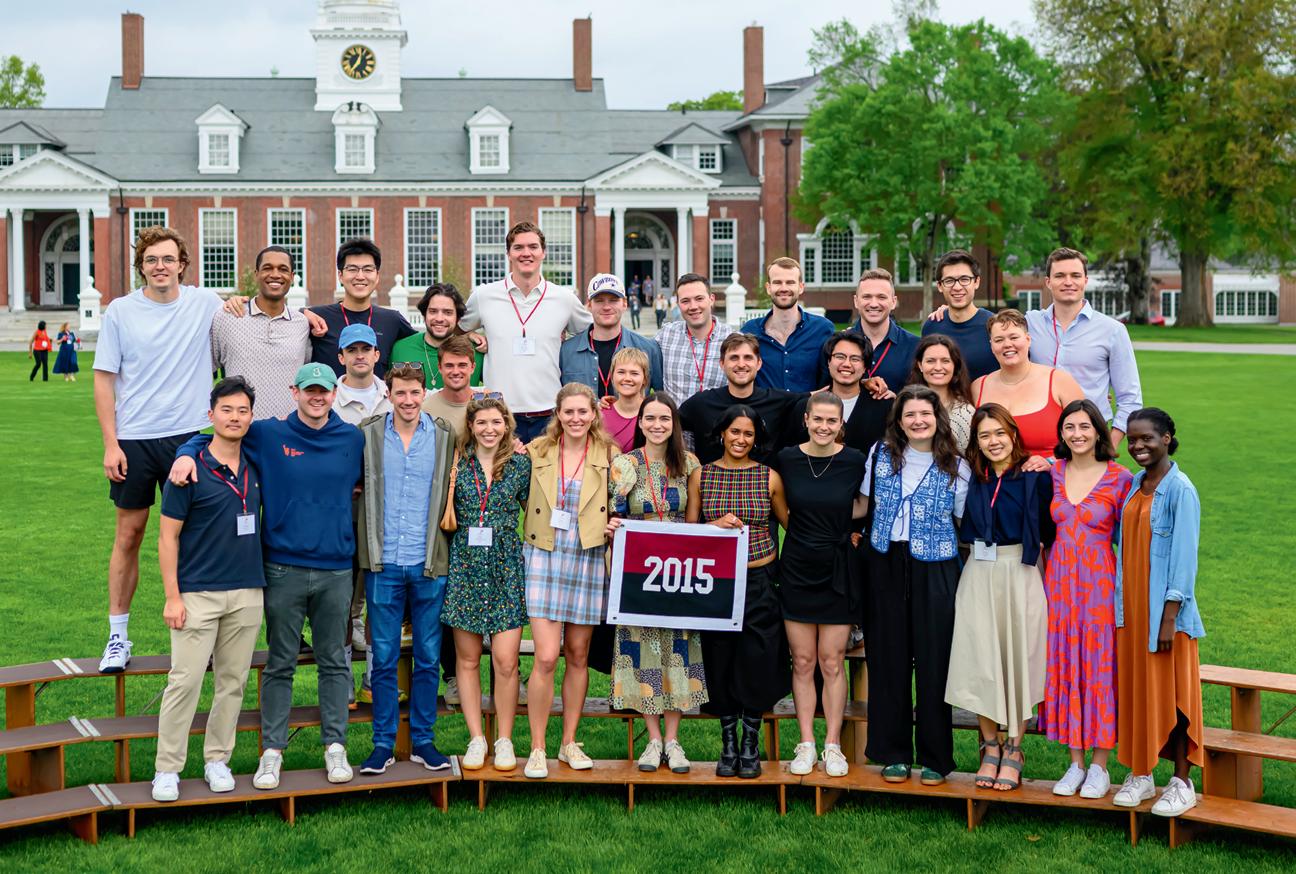
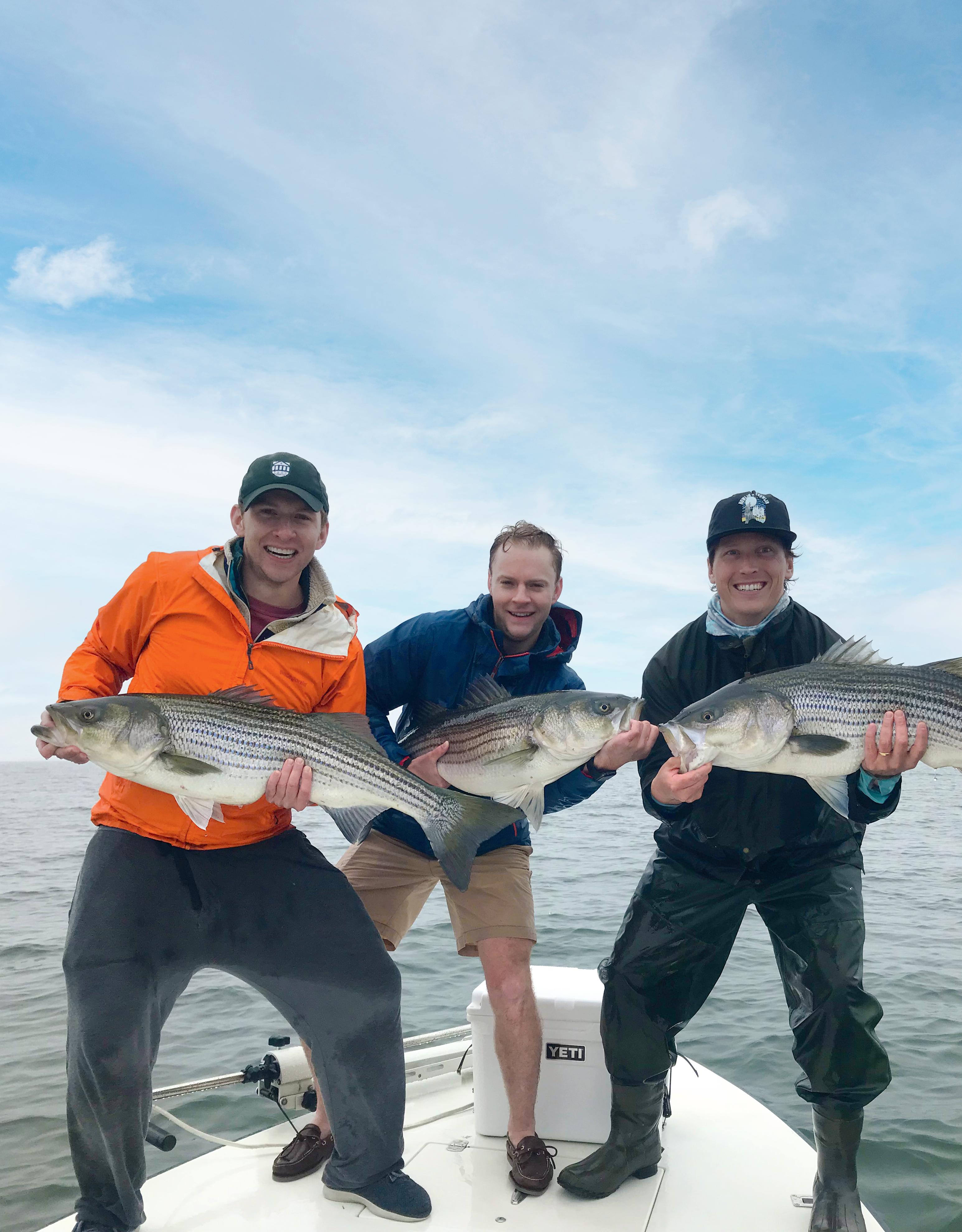

A CHAPEL TALK
By Nathaniel Bristol ’02, TR’19
January 24, 2025
Fish Stories
thank you, Headmaster Maqubela, for your kind introduction. And thank you to my fellow trustees, the faculty, staff, and especially students for indulging me this morning. Delivering a chapel talk to the Groton community is a daunting task. When I spoke at this pulpit twenty years ago, I reminisced about a summer job scraping lead paint off of boat bottoms—a very dirty business. Most of the audience snoozed, and even my closest formmates recall little of what I shared on that occasion. Since then, I’ve had the chance to serve Groton in various ways, most recently as a trustee, all of which has been a great honor and privilege. Looking around St. John’s Chapel this morning, I’m incredibly proud of our school, the accomplishments of our leaders since I first arrived, and the strong position of the institution today.
First a quick biographical sketch. My wife, Megan, and I live in New York with our two children: Cutler, age 5, and Annabelle, age 3. In fact, several of you may remember this same weekend a year ago when Cutler and Annabelle were both baptized here at St. John’s. That remains one of my most cherished memories. Upon graduating from Groton, I spent my four college years in the northwest corner of Massachusetts, then went off to New York City for Wall Street. My work in banking and finance helped prepare me for my role as the treasurer of the board. Given that position, I did consider spending today’s talk on topics including Groton’s financial model, debt policy, and innovative fundraising initiatives such as GRAIN that have positioned our school so well. Well, I’ll spare you. I will, however, volunteer, Mr. [Jay] Herlihy, our incomparable chief financial officer, should anyone find themselves keen to learn more on that matter. What I would like to do is take a few moments to recount two experiences from my Sixth Form year that I’d largely forgotten about until recently.
Although you won’t find my name on any of the prize boards around the school, I did claim one distinction my Sixth Form year that might be of interest to the recently established Log-Off Club: I was one of a handful of students, perhaps even the
first Groton student, to have a mobile phone on campus. This went against school rules at the time, mind you, so I am now owning up to this prohibited device . . . comfortably outside the statute of limitations for demerits. That first phone could accomplish remarkable tasks: It “flipped” open to reveal a push-button keyboard that enabled you to make outgoing phone calls and receive incoming ones. Other than ringing my grandparents once a month, that phone offered little else. Well, it was fairly good at screening my parents’ phone calls. I actually have my fossilized 2001 “StarTAC” here today. I believe the headmaster has a penchant for confiscating phones. Temba, I will happily contribute this to the Groton Archives so that we can all “Hang Up and Hang Out” as I understand you like to remind the students.
With that context established, I will also spare you a history of cellular telephony and turn to something different. It’s another Groton Sixth Form experience, but one that had very little to do with phones, screens, or anything but the most basic of technology. What I’d like to talk to you about is my unhealthy obsession with fishing.
One spring afternoon in Sixth Form, I found myself floating on pond with Mr. [John] Tulp, a venerable classics teacher, as well as my Third Form roommate. Mr. Tulp had overheard that we liked to fish and invited us on one of his expeditions: Classic Old Town canoe strapped to a green Subaru in search of a nearby body of water that might hold some largemouth bass. Each of us was equipped with a small spinning rod and a few poppers—basic technology. I don’t recall whether we caught any fish. I know we did not discuss Latin homework, college matriculation, or whether anyone was having a winning sports season. The three of us dropped typical teacher/student pretense as we floated on that pond in late April. Our focus was on helping each other catch a fish.
The following summer, I made an unplanned and unannounced visit to my Groton advisor, English teacher Ted Goodrich. Mr. Goodrich spent his summers on a tiny, vehicle-free island off the coast
Left: From left: Sam Bristol ’06, a friend, and Nat the day before Nat’s wedding, when they caught a “triple header” of striped bass.
of Massachusetts. Groton formmates and I had been out fishing that morning and arrived with a cooler full of fish, no shirts, no shoes, and a plea to ice our catch. Ice acquired, we spent that afternoon talking about fishing. Ted reminisced about a time during his own wedding that he’d wandered down to the shore and caught a massive striped bass. Again, teacher/ student roles quickly fell away in favor of fishing talk that summer day.
Believe it or not, a lot of people really like to go fishing. According to the American Sportfishing Association, 75 million Americans consider themselves anglers. Last year alone, 60 million Americans ages 6 and older tried to catch a swimming thing with some sort of tool, spear, trap, rod, or handline. I’d bet that many of those 60 million anglers were unsuccessful. And I bet most resolved to give it another try.
For me, fishing offers a chance to recharge my batteries and appreciate time outside by running, swishing water. But before going further, let me set the record straight. My fishing success is solid but unremarkable—the truth is that, despite my obsession, I’m not particularly good at catching fish. I have caught hundreds of fish; but I’ve tried many, many thousands of times. I have little patience and prefer instant gratification, traits you’d think ill-suited to fishing. Against all traditions, I’m mostly honest about the size of the fish I catch. My office walls are missing those big colorful trophies, and I’m better at collecting fishing derby pins than catching fish in fishing derbies. I honestly don’t fish for the stories, for the prizes and bragging rights. I like to catch fish, but I fish for the excuse to be outside and unplugged. When fishing, my phone rarely rings as though out of respect. I find my perception of the world changes. I notice the sights, sounds and, yes, definitely the smells, in a different, deeper way. I mentioned earlier that I had an unhealthy obsession with fishing. The truth is quite the opposite. In Blue Mind , late marine biologist Dr. Wallace “J.” Nichols combines cutting-edge science with personal
reflection to help us understand why time spent near, in, on, or under water in any form is very, very good for our cognitive, emotional, psychological, social, physical, and spiritual wellbeing. Fishing offers one way to find your Blue Mind. I have seen the benefits in the forms of adventure and exploration, scientific discovery, and community. To that end, I’ve caught fish off remote islands in the Indian Ocean, rivers in Iceland and Alaska, as well as in the Bhutanese Himalayas. However, the most restorative fishing has always been closer to home for me. I’ve caught a lot of big fish—prizeworthy fish—in front of JFK Airport, spitting distance from the Delta terminal. I’ve pulled up oysters in the Gowanus Canal, at one point one of the filthiest bodies of water in the country. You can travel a long distance to the most remote parts of the world for some extraordinary fishing, but good fishing can be found practically anywhere, if you have an interest and ask around.
Turning back to the present, my little 3-year-old Annabelle is just starting to learn about fishing. She’s also really good at operating my iPhone intuitively. She’s figured out how to type in my password, and the other day somehow logged into my Amazon account. I certainly never showed her how to do that; she just watched her parents. In fifteen years, when Annabelle is wrapping up high school, I have no clue how she’ll communicate. I guarantee it won’t be a flip phone such as this. Regardless, I think we’ll need our unplugged moments even more every year. For me, they’ll be near to or on top of the water chasing fins. Fishing has worked well for me. It’s a common interest that transcends age, social dynamics, physical ability, and experience. There are many antidotes to the chaos of daily life, and I know fishing isn’t for anyone (my family can attest to that). But I encourage you to consider a fishing trip big or small, in your own backyard or Groton’s.
But don’t go alone! Go with your friends, teachers, neighbors, parents, grandparents, and their friends. You’ll be surprised where conversations wander, what you learn, and how rejuvenated you’ll be the next day. And, if your luck proves better than mine often does, you’ll have a few stories to tell . . . perhaps even some snapshots—thanks to your iPhone—of your catch to prove them true.
Above: The Bristol family (from left): Megan, Cutler, Annabelle, and Nat, taken in 2024.
By Sara Agrawal ’25
May 8, 2025
New Paths
if i held onto anything from the spring of 2020, it was the turkey sandwiches. The smell of toast wafting through the kitchen of my mother’s new house as I stumble through the door from a run. The sound of her knife scraping avocado mayonnaise onto slices of bread—hot and revived from the cold breath of the freezer. From the spring of 2024 I remember the smell of jasmine flooding through me as I ride my sister’s bike to the farm, and the sound of Raymond’s tires hissing behind me, slowly losing their air.
These two past versions of myself seem worlds apart. But my time at Groton has left one thing about me untouched. I did and I still do feel my emotions in
my body. A pain in my gut lets me know that I’m anxious, and a throbbing in my temples tells me I’m overwhelmed. And when I feel at home, my senses come alive. I didn’t know it then, but eating sandwiches during quarantine made me feel cared for; farming last spring made me feel free. These moments have stayed with me and I often return to them. At the time, though, I couldn’t translate the physical sensations into the language of internal experience. I’m learning to let myself in.
I didn’t always feel at home at Groton. In fact, it took me a long time before I felt I had found my place. Third Form me resented vulnerability. Throughout the
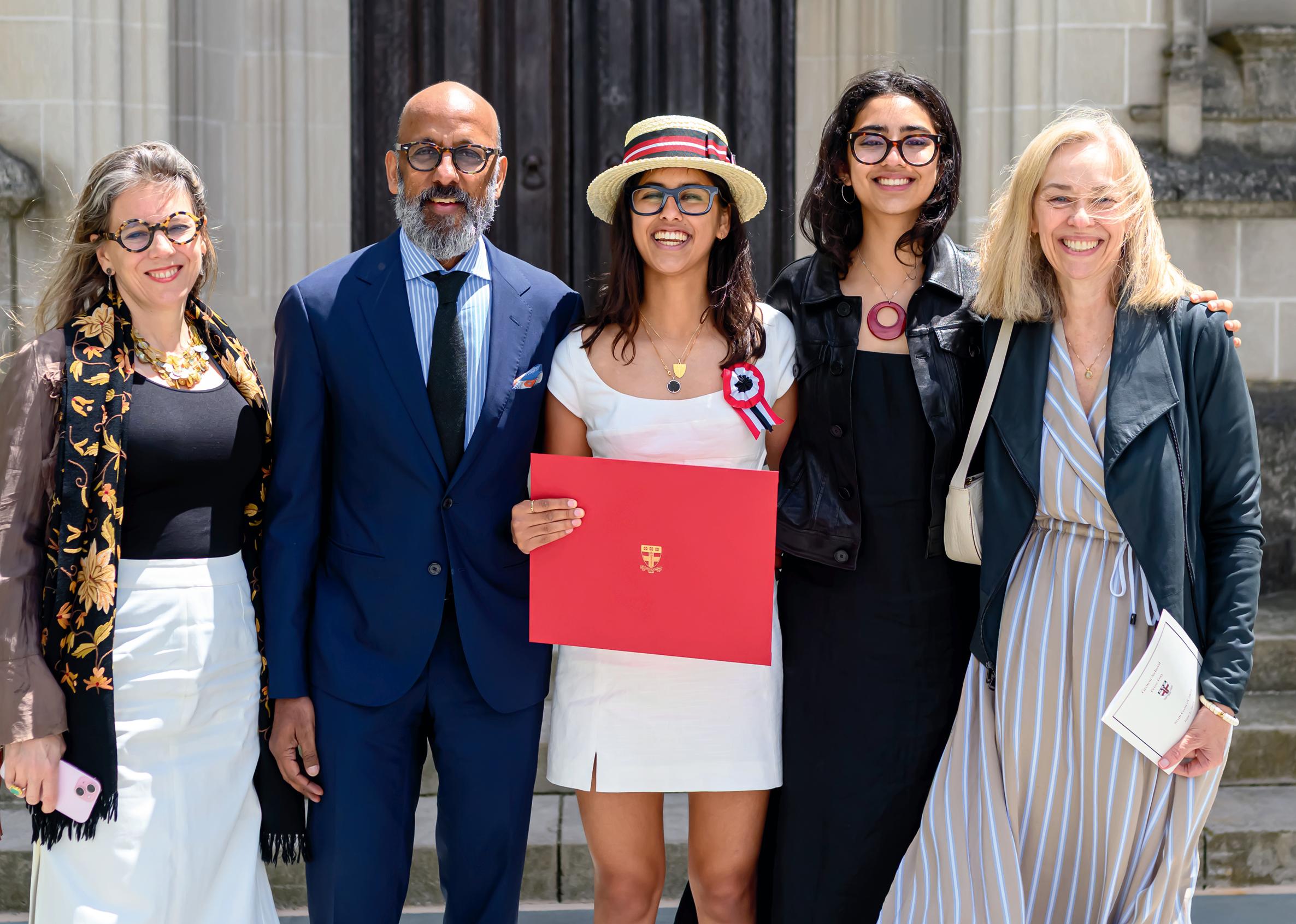
Below: Sara on Prize Day with (from left)
stepmother Molly Aitken, father Hans R. Agrawal, sister Katya Agrawal, and mother Caroline West.
year, I observed my peers form clusters before I could blink. I thought I lacked the social tools that everyone else somehow had, so despite myself, I stood out by being blunt and mean. And I literally walled myself off. In Petroskey’s dorm, I slept a few inches of plaster away from Tori. Almost every night after lights-out, Julia trekked across the hallway to Tori’s room and they spent what felt like hours giggling away. I just wanted to sleep. I banged on the wall and hissed at them through the gap below the ceiling. I never once thought of joining them because I imagined they were intentionally being unkind. I have a tendency of constructing false versions of people in my head.
Then, and for the following years, I got afraid that the relationships I had weren’t “real.” Anything that I deemed superficial, I judged. My sister Katya, who is three years older than me, was my most frequent target. Years ago, she bought a pair of flowy, velvet, golden pants. They swept the floor while she modeled them outside the dressing room with a giddy spring in her step. “It’s a waste of money. You’ll never wear them,” I said. She bought them anyway and she never wore them. That was a source of bitterness for me. I continued to chastise her because I didn’t understand that she was exploring not only ways of dressing, but also ways of being in the world. Meanwhile, I kept myself from exploring. As self-protection, I wore only jeans and J.Crew kids T-shirts, even if I didn’t like how I looked in them.
It can be hard for me to be vulnerable because I think I am afraid of loss. My father filled my childhood with magic. We spent Saturday mornings eating blueberry pancakes and reading the funnies in the Boston Globe at Grafton Street (a pub that we called Paul’s after the bartender who always gave us candy). In the afternoons, we hunted for Simpsons comic books, rode our bikes along the river, and let our goldendoodle Kingsley off the leash in the library park to have the “best day of his life.” Of course, I’m being romantic. Throughout my childhood I held sacred what had come before and expected nothing less from the future. I’m finding myself doing the same now: turning the past into something precious. So you can imagine, I felt an acute sense of betrayal and loss when I was 9 years old and it seemed to me that my father was breaking up the family. Before we moved out of my childhood home, my father explained its history to me and Katya. The house is a Mansard Victorian built in 1865; it was featured in a Walker Evans photograph in the 1920s; we bought it from one of my father’s old anthropology professors when I was less than a year old. My father said it’s not the kind of house you ever own; you just have the privilege of being part of its history for a short period of time. But I know he was heartbroken too. My father avoided walking by the house on the way to his, now our apartment down the street. I felt very dark inside for two years.
I wrote my application essay for Groton about the moment when I thought things started to change. I was maybe 11 years old, and my father, sister, and I were fishing off the dock of a lake in upstate New York. It was April, early in the season, and we only had artificial bait, not to mention very little experience. None of us expected a catch. Several times Katya or I tangled up our rods casting and had to walk back to the fishing hut to get help. And then I caught a trout. I reeled it up brimming with pride. It flailed, but its mouth was caught in the hook so it had no chance of escape. And we had no knife to cut it loose. I called my father to help me get it off the hook. I jerked the rod. The fish sprang off. The hook sprang up and planted in my father’s lip.
This story tastes stale in my mouth. I’ve told it too many times. The thesis of my Groton essay was that the incident taught me that my father was not an all-powerful superhero. We spent hours writing, printing, marking up, and rewriting that essay together. Then we spent more hours at the dinner table laid with plastic take-out containers of chicken tikka masala, paratha, and my computer watching Groton admissions webinars. I fell in love with the school while, and perhaps because, I fell back in love with my father. For my eighth-grade self, pinning down the
Top: Fishing off a dock in upstate New York at age 11, Sara was about to hook something bigger than a fish.
Above: Sara with her sister Katya.
fish-hook accident as the turning point when I learned to treat my father as a real person with flaws felt right. It was true. Now I am a slightly different person and I want to tell a slightly different story.
On one end of the fishing line was my dad, attached by the lip. On the other end was my 11-year-old self, cheeks flooded with tears, gripping the wooden rod, knowing that, as much as I might want to, I couldn’t drop it. My face was hot and my heart had dropped into my stomach. For the first time in a while everything was clear. I felt only one, unclouded emotion: fear. My sister sprinted around the lake for help; the men from the hut cut the line (releasing me); my father made the decision to drive himself to the ER so a doctor could push the barbed hook through his lip and remove it. And all the while, he was more concerned about me than himself. We were both at the mercy of each other, and I allowed myself to be entirely vulnerable. I saw that my father and I were connected. Not just because we walk with the same outturned gait and smile the same, and not just because my face once worked on his phone’s face ID. I think we both understand each other better than anyone else.
Our relationship relies on hearing and seeing one another. I listen to and collect random snatches of his story, and at times I can put them together in a more cohesive way than he can, just as he does with my story. After some time here, I began to feel seen at Groton, too. I’ve learned that I hate functional relationships. They are the opposite of Katya’s golden pants. They leave no room for exploration and they aren’t “real.” My attachment to my father and my attachment to this place don’t rely on transaction.
If the fish-hook story can tell you anything about me, it is that I have a severe spatial awareness problem. And while I’m afraid of loss, I also love getting lost. In the spring of Third Form, I started running through the Groton woods. I had no idea where any path would lead me. I listened to my body and allowed it to carry me. I willed myself to get lost and, over time, I carved out the pathways that I would run down again and again. Now I know every stump on my favorite routes (though I still sometimes trip).
I’ve worked hard to find a home here and I’m sad to be leaving Groton. I know it will take me another few years before I find my place again and find friends who can show me how to be open, like my friends here have. But going away to college is also a coming home. My sister and I, after a long time of separation, will be in the same place again. When I visited Katya a few weeks ago, my knotted stomach loosened in her presence; I have a feeling we’re finally ready to be real people to each other. I’m learning to check my judgment, even when people are so easy to poke fun at. I’m learning to acknowledge physical sensations and pains that I may not understand. And, even though I’m terrified of the loss of this home, sniffing out new paths is exciting.
Above: Sara and her friends from Chung’s dorm at a s’mores check-in feed graciously provided by faculty member John Capen.
Left: Sara with formmates Lola Huang, Devon Gura, and Raymond Hildreth.



1
Peter Brooks ’70, P’12
Survival to Success: Leading Small, High-Growth Enterprises
Survival to Success explores the unique challenges faced by the leaders of small, high-growth enterprises. According to the U.S. Census Bureau, among the approximately 6 million U.S. firms, fewer than 1,000 had annual revenue over $1 billion and approximately 97.5 percent DRAWN
had fewer than 100 employees—and yet, most leadership books refer to firms like Amazon, Apple, Walmart, and MasterCard as models.
The challenges of leading smaller growth firms—or the “97.5 percent”—are very different than those experienced by the heads of huge multinationals—and this book is written for them—small-growth, for-profit and nonprofit organizations, in a vast array of industries.
Based on interviews with thirty-five founders/CEOs and the authors’ experiences as founders, CEOs, and advisors, Brooks and Starsia distill ten common themes that help guide the entrepreneur to develop his/her own approach to leading or wrestling with issues related to growing their organization.
2
Marshall Highet ’95 and Bird Jones
The Washashore
Martha’s Vineyard, 1929. Prohibition is in full swing, and Emily, a Midwest transplant, has never met her wealthy Aunt Isabel. That is until, after her mother’s death, the courts declare Isabel her guardian. Their first meeting is a disaster. Emily’s clumsy curtsy earns her only a frosty glare, and she quickly realizes she’s in for a crash course in East Coast high society. But manners take a back seat to mystery when Isabel’s dear friend, an accomplished sailor, vanishes at sea.
Convinced it’s murder, Isabel recruits her niece to catch the killer, pointing the finger at two dangerous men: a ruthless mob boss and the fastest rumrunner in the harbor. While Emily crosses paths with gangsters on the island, she may just find home on its miles of coastline and among its quirky inhabitants—her stoic Aunt Isabel included.
3
Betsy Holmberg, PhD, ’99
Unkind Mind: The Neuroscience of Why Women Are So Hard on Themselves—and How to Quiet Your Inner Critic for Good
Whether racing thoughts keep you awake in the middle of the night, or force you to rehash that cringy thing you said at a party, self-talk can wreak havoc on your well-being.
In her work as a psychologist, Dr. Betsy Holmberg saw how most people walk around beating themselves up, leading to depression, anxiety, low self-esteem, and more. While current therapy methods try to address negative thoughts, without understanding their origin or purpose, the efforts often fail.
Published by New Harbinger, this unflinching guide shines a light on where our merciless self-judgment comes from—an evolutionary mechanism in the brain called the default mode network (DMN). Using powerful and practical skills drawn from cutting-edge neuroscience,
it explores how to flip the switch on toxic self-criticism and move past the “not good enough” mentality standing between us and the happiness we deserve.
“What’s exciting is that by distinguishing these pathways—which even extend to a heart brain—we can scientifically see how to connect to our authentic selves and experience greater fulfillment and joy,” said Dr. Holmberg.
4
Alfred T. Mahan Jr. ’56
Who Is God?: In His Own Words
Who Is God?: In His Own Words is a compelling exploration of divine identity, presenting God’s nature and character through a series of reflective and insightful discussions. The book tackles contemporary societal and governmental issues, illustrating how these challenges intersect with our understanding of God.
A.T. Mahan’s new book delves into the nature of God, advocating for a return to divine recognition amidst growing secular and governmental challenges. It offers a critical perspective on how societal changes impact our perception of God and encourages readers to reconsider divine relevance in modern contexts.
5
Curtis Sittenfeld ’93
Show Don’t Tell
In her second story collection, Sittenfeld shows why she’s as beloved for her short fiction as she is for her novels. In these dazzling stories, she conjures up characters so real that they seem like old friends, laying bare the moments when their long held beliefs are overturned.
In “The Patron Saints of Middle Age,” a woman visits two friends she hasn’t seen since her divorce. In “A for Alone,” a married artist embarks on a creative project intended to disprove the so-called Mike Pence Rule, which suggests that women and men can’t spend time alone
together without lusting after each other. And in “Lost but Not Forgotten,” Sittenfeld gives readers of her novel Prep a window into the world of her beloved character Lee Fiora, decades later, when Lee attends an alumni reunion at her boarding school.
Hilarious, thought-provoking, and full of tenderness for her characters, Sittenfeld’s stories peel back layer after layer of our inner lives, keeping us riveted to the page with her utterly distinctive voice.
6
Damian Zunino ’96
Drawn Together, Studio DB: Architecture and Interiors
Damian Zunino took his first architecture class while at Groton and his love of design has only grown since. Years later, Damian and his wife Britt started their architecture and interior design firm Studio DB with a focus on blending the two disciplines into one cohesive design process. Their debut monograph Drawn Together: Studio DB is published by Rizzoli and features a collection of projects that the firm has completed over its eighteenyear history. Their work is inspired by contextual design and eclecticism—the resulting work embraces the juxtaposition of and tension between polished and playful, modern and traditional. Their projects incorporate a mix of materials, sculptural forms, and whimsical pattern and color, all anchored by a contemporary desire for domestic ease. Design details distinguish their work, with tactile materials interpreted in fresh ways.
► Please send information about your new releases to quarterly@groton.org.
Book summaries were provided by the authors and/or publishers.

SPRING SPORTS
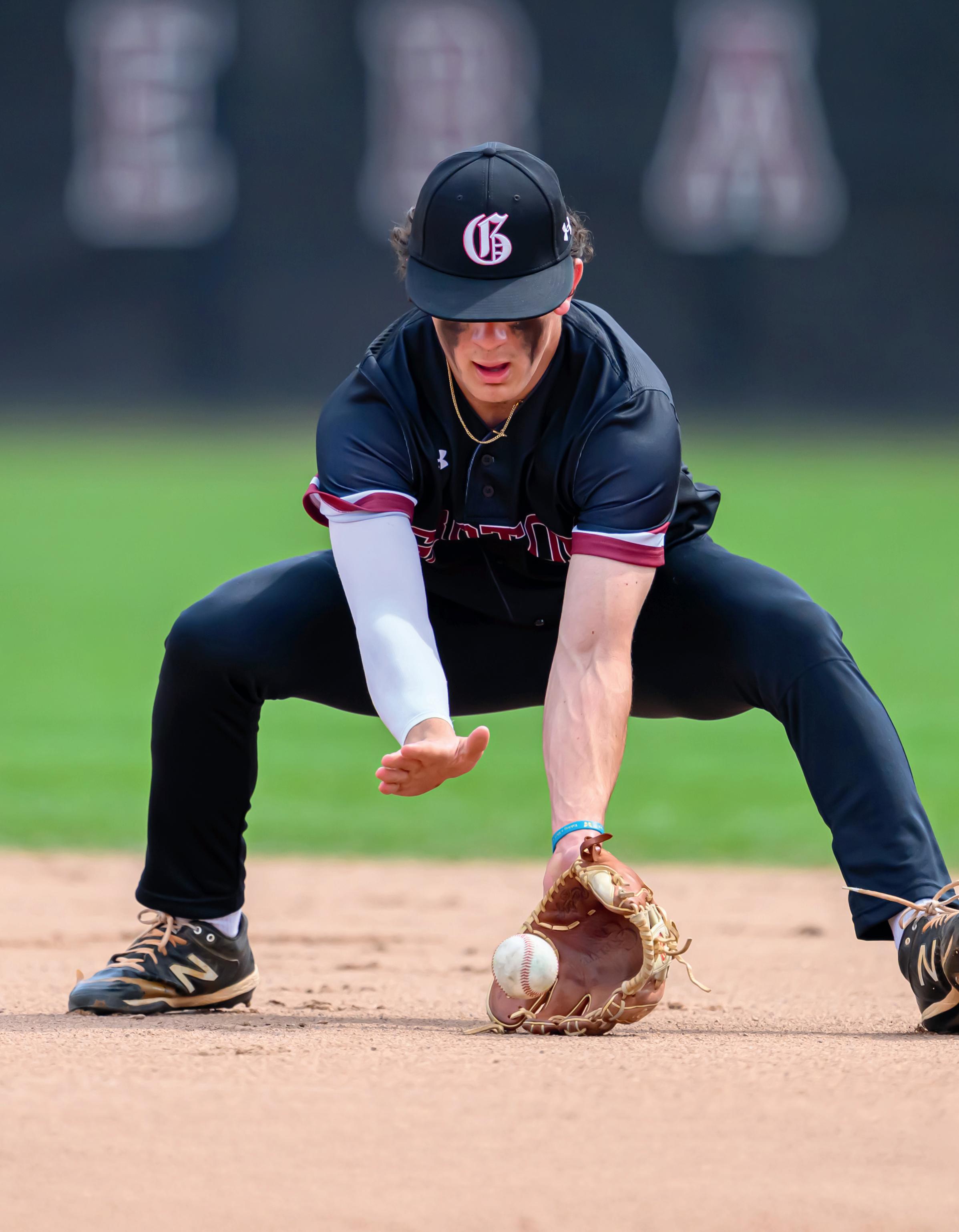
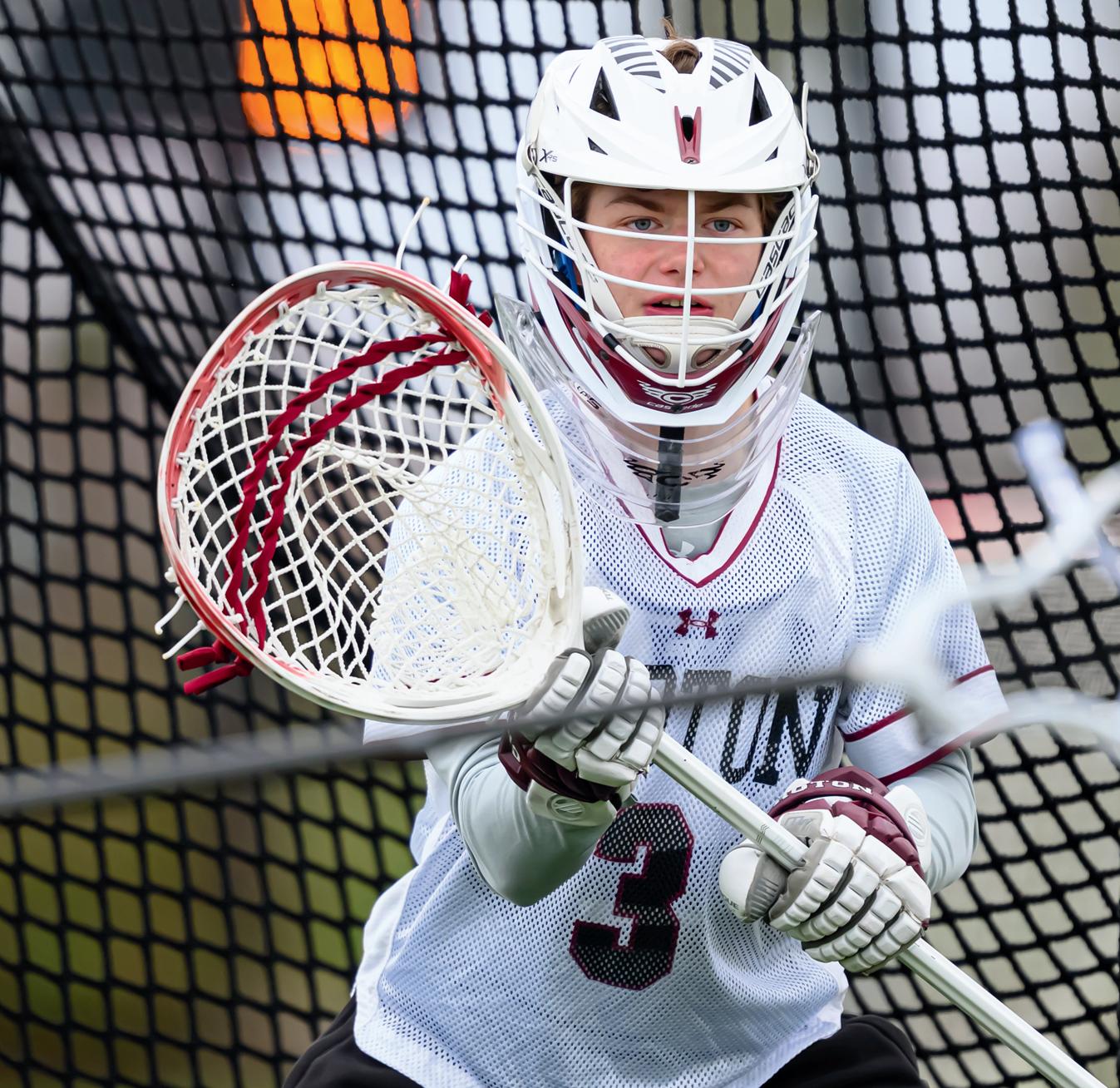
BOYS LACROSSE
If we measure success by statistics, we had a strong season: 9–7 overall ISL slate; victories over ISL/NE powers Governors, Middlesex, and Roxbury Latin; nail-biting one-goal losses against Thayer, Rivers, Milton; earning the No. 1 seed in ISL Consolation Playoffs. This data is impressive, especially seeing how deeply talented the ISL is as a league, and yet what makes the coaches most proud are the unquantifiable elements that make up successful teams: spirit, sportsmanship, camaraderie, togetherness, discipline, and grit.
Captains JP Charpentier ’25, Angus Frew ’25, Angus Miller ’25, Matt Scheible ’25 and their formmates brought together a dazzle of forty-three Zebras that started the day that students set foot on campus In September. Regular, informal toss-
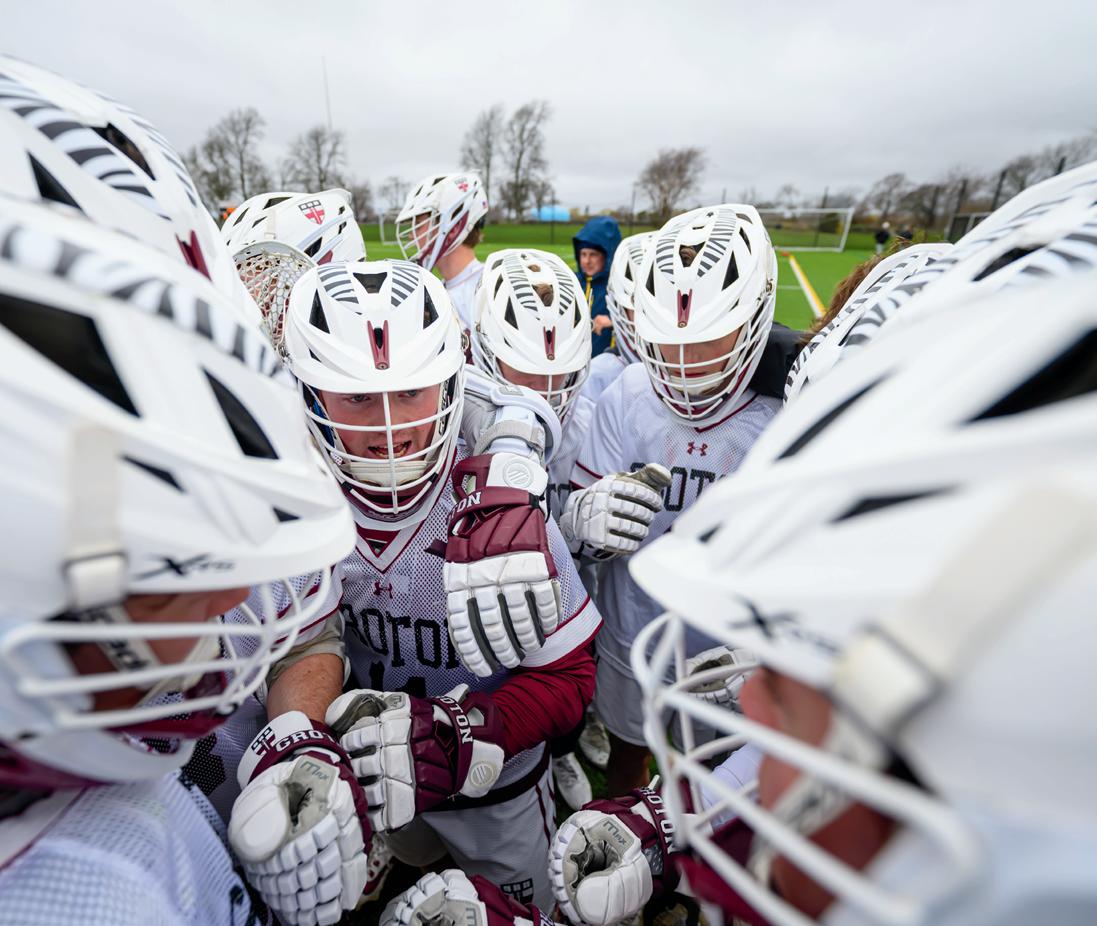

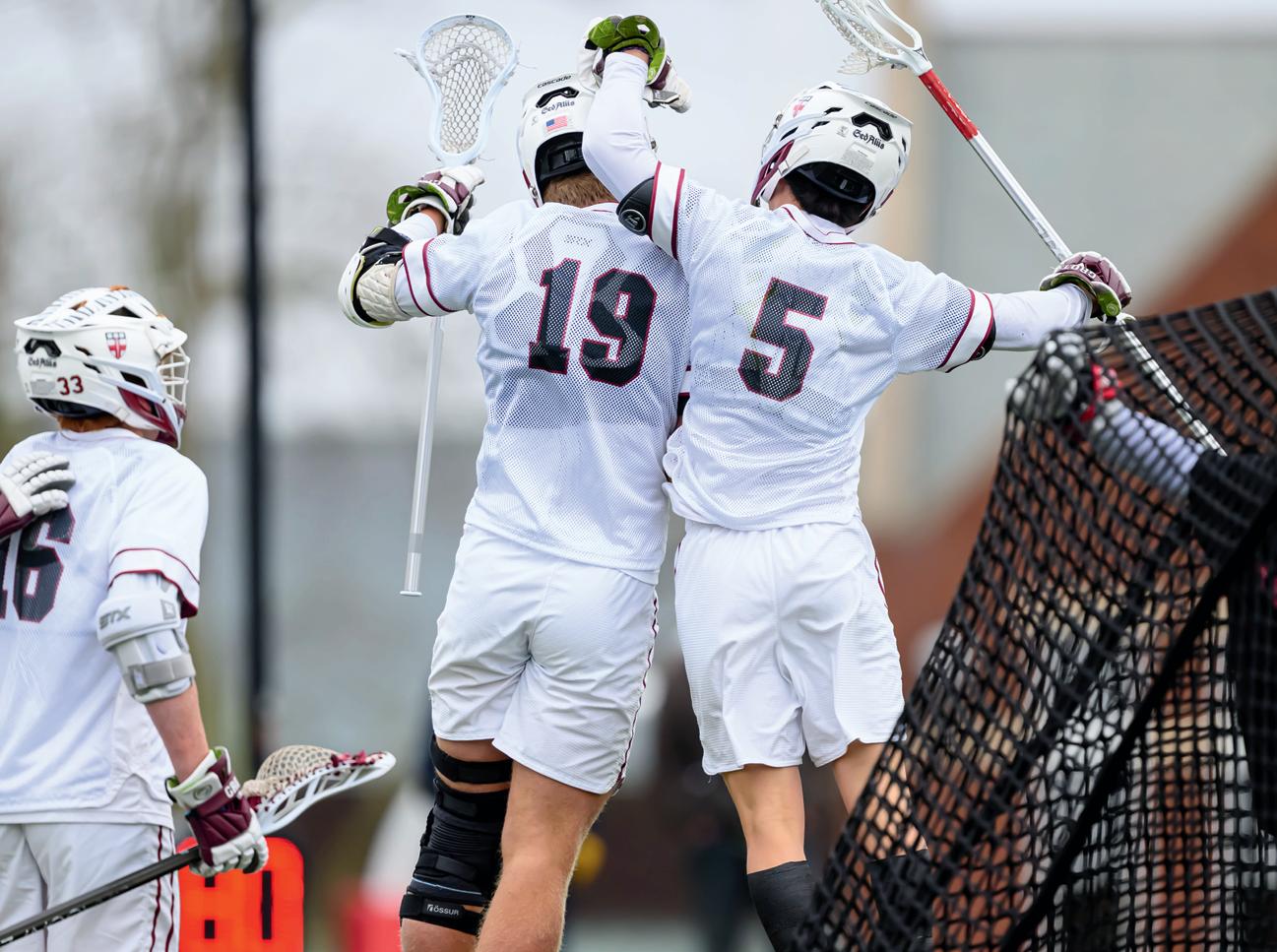
arounds in the fall developed into optional winter workouts that led to the highest number in years headed to Florida training in March. Whether beginner players or seasoned veterans, seeing the boys support each other at out-of-season soccer, football, hockey, and basketball contests fortified friendships and strengthened bonds.
Throughout the spring we soldiered through our competitive ISL schedule, competed hard in our Lower Bracket championship game loss to RL, and culminated the season with a victory over rival St. Mark’s. At the coaches’ meeting, we were awarded the Jeffrey Parker Sportsmanship Award for the second year in a row, cementing the team culture inculcated by the Form of 2025.
This legacy taught returning and JV players the way, and while we will miss
the recent graduates, we look forward to 2026 with anticipation. Many thanks to Coaches Greg Hefler, Josh Jordan, Steve Roge, and Jamie Funnell, and special gratitude to Peter Fry, who is moving off the Circle after 20 years of loyalty and dedication. We are grateful for our parents, alumni, and supporters, and thank our team managers, Lorry Manetz ’26 and Kevin Cai ’26, for their friendship and support.
coach bob low
by
Photography
Adam Richins
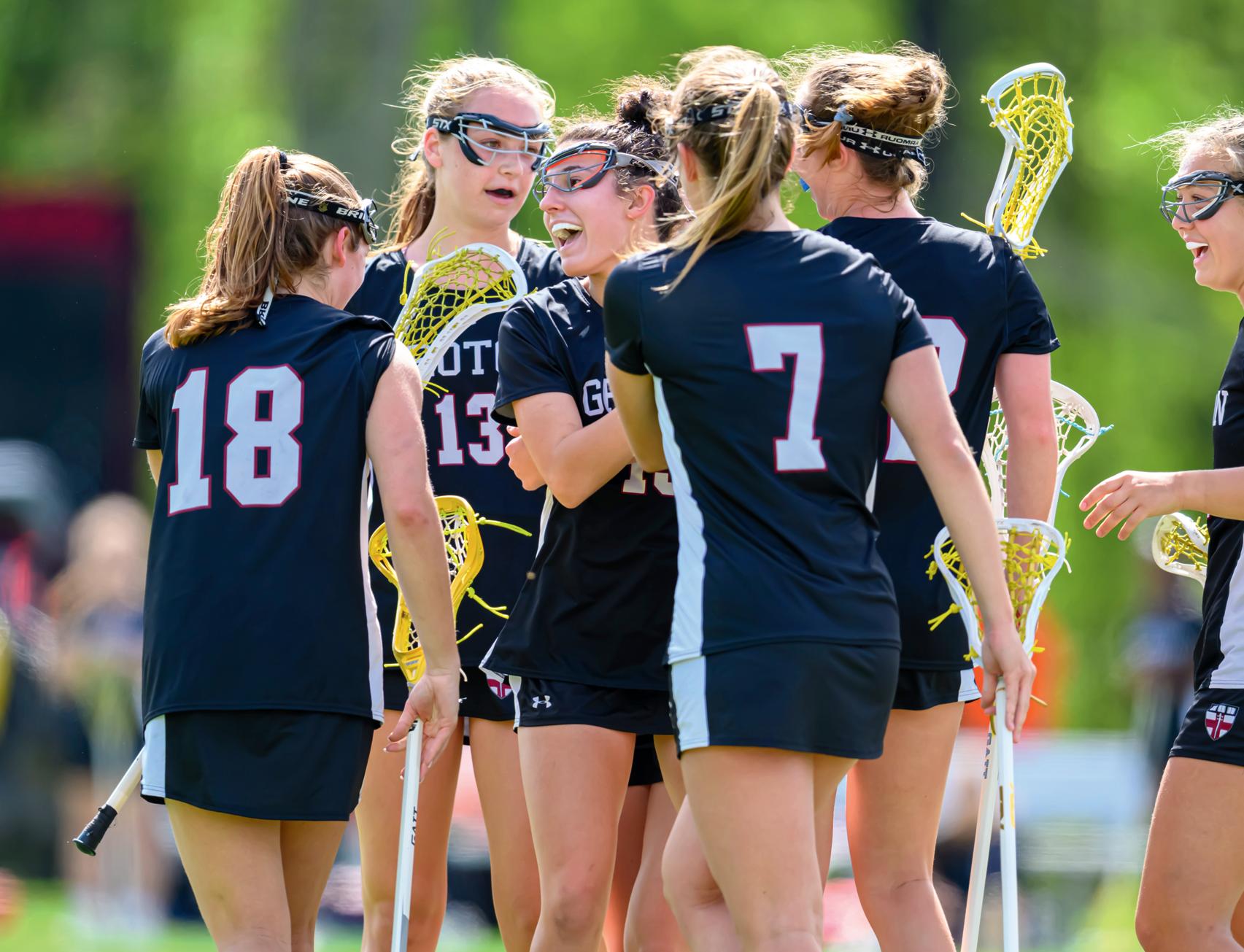
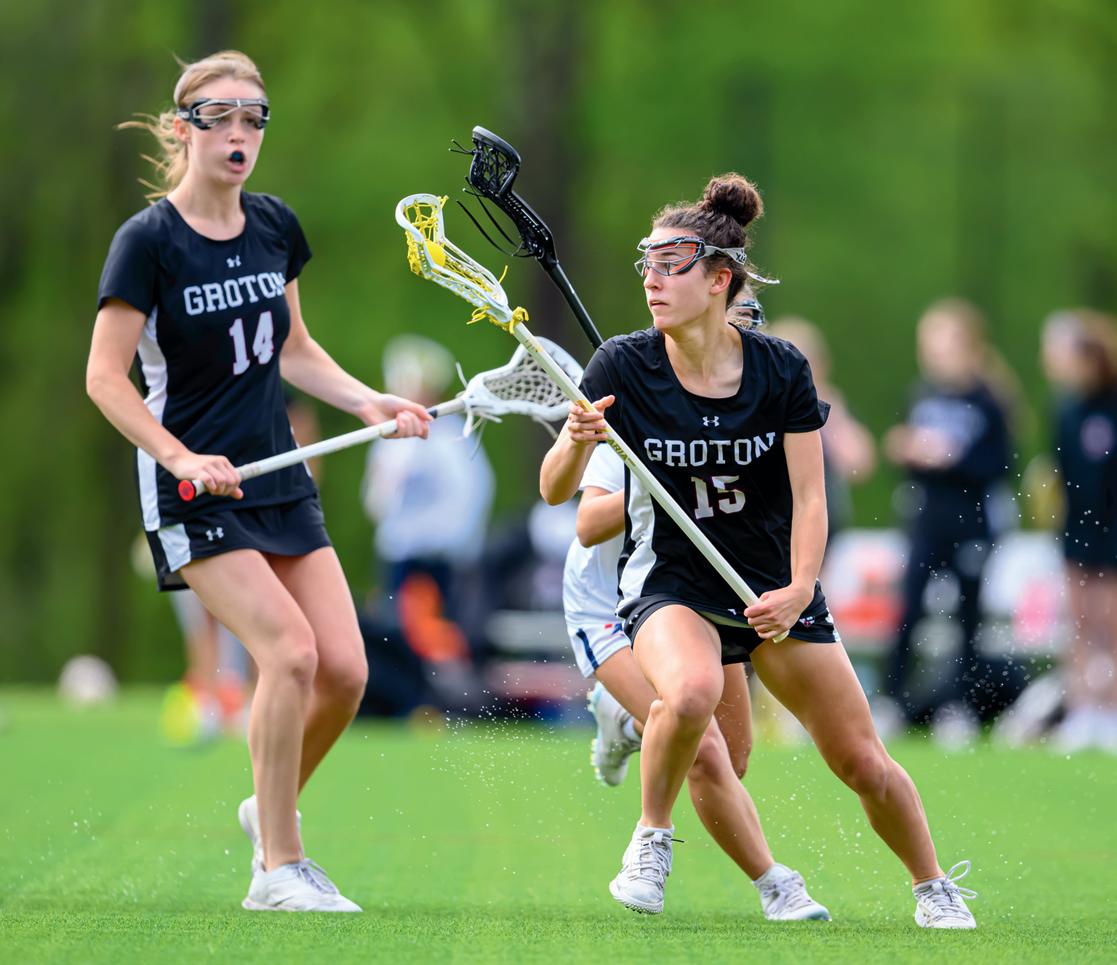
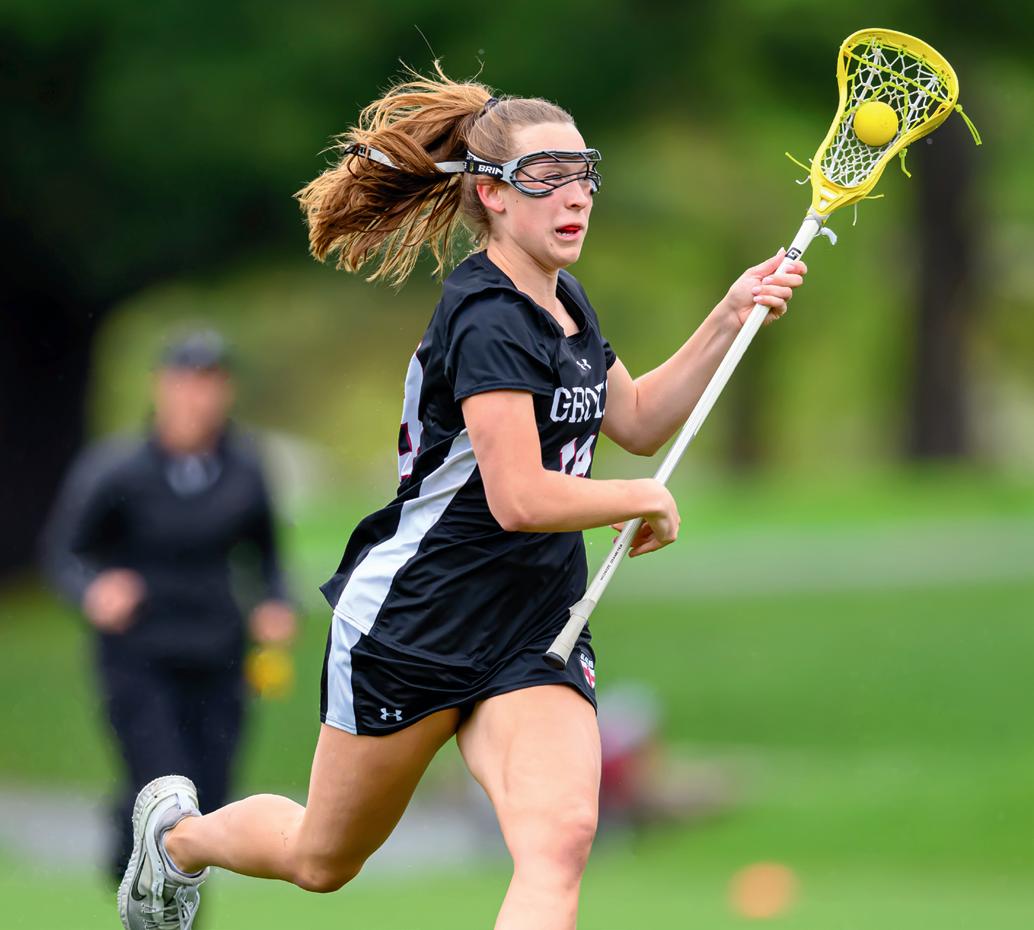
GIRLS LACROSSE
The Groton girls varsity lacrosse team experienced a cold and rainy spring 2025 season. Despite the poor weather, a lot of fun, competitive, and memorable moments were had both in practices as well as games.
The team was led by an incredibly impressive Sixth Form group: captains Kate Bartlett, Dani Shyjan, Maddie Cronan, and Gen Nelson as well as Leadership Committee members Mimi Burnett and Hazel Beastrom. The team dealt with four longterm injuries, but despite that we persevered and still showed up every day ready to work and compete. We played with a next-man-up mentality—when coach needed someone on the field, the next player was ready to go and work hard for their teammates,
regardless of what position they found themselves in (for example, our goalkeeper Eliza Brooks ’26 playing defense against St. Paul’s). Two of our highlights include beating St. Mark’s twice!
The team knows that, with a bit more work and dedication, they will push through some of their close losses to find wins on the other side. The team returns sixteen of their twenty-one players for next season.
coach julia rowland
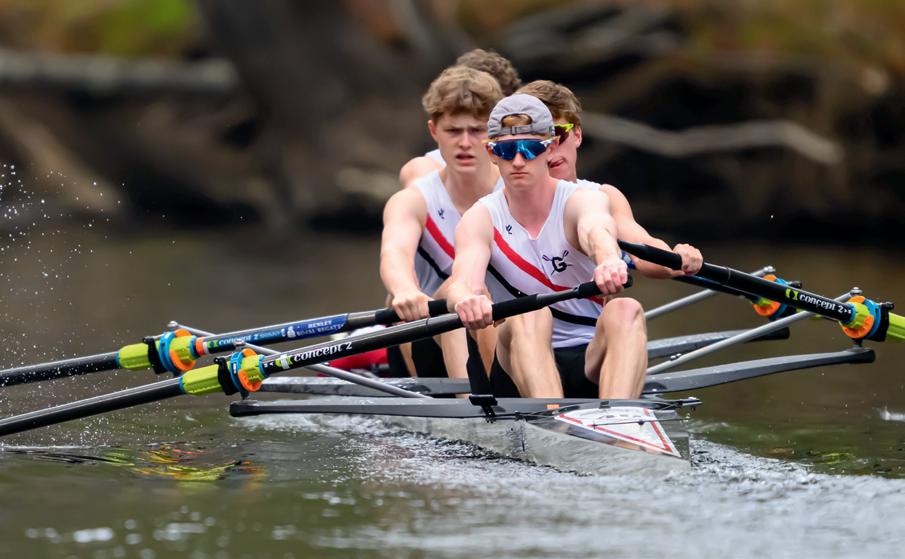

BOYS CREW
It was a good year; the atmosphere at Bingham Boathouse was great. Our captains led us in so many positive ways, encouraging the guys to do something extra. Rainy conditions prevailed throughout the spring, especially on weekends, but despite being off the water for three days due to flooding and having one of the arches on the first bridge being completely blocked for the final two weeks of the season, everyone stayed positive and worked hard.
At the NEIRA regatta on Lake Quinsigamond, all four boats made the grand final, the third boat finishing second and the first boat, seeded seventh, finishing third. As an overall team that placed us third of the 28 schools entered. It was the first medal for the first boat in ten years. That placing earned us a
qualification to the USRowing Youth Nationals.
At the Nationals, Groton’s first entry since the mid ’90s, we raced hard and finished in the B finals. The boys were very excited with the racing and earning a place in the top half of the crews in the country. It is clear that we have talent and desire but need more water time and longer training pieces. All in all, it was a very good season with a lot of fun.
coach andy anderson
GIRLS CREW
Girls crew had a great spring 2025 season. We were lucky to have had a lot of rowing in the offseason with our Henley trip last summer and we were looking forward to a strong season this spring with all our returning rowers and coxswains. Desmond Goodwin joined us as the new G3 and G4 coach.
The spring seemed especially short (and by the school calendar it was!) but we were ready to start our racing season mid April with BB&N and Nobles. Highlights of racing were an entire team sweep, girls and boys, of Taft and Pomfret, and the girls third boat beating Brooks and Choate. Every Saturday we got a little bit faster and better. Post Brooks race we were really looking forward to racing St. Mark’s at home. Mother Nature, however, was not cooperative. Torrential rains after
by
Photography
Adam Richins


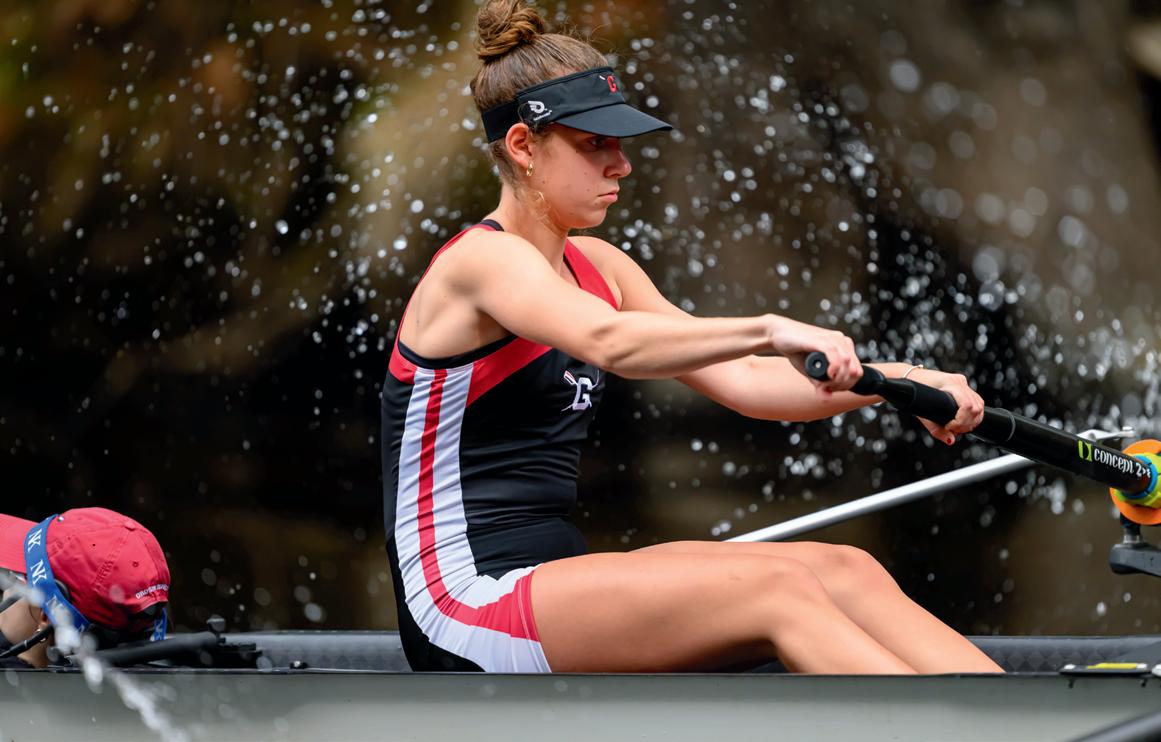
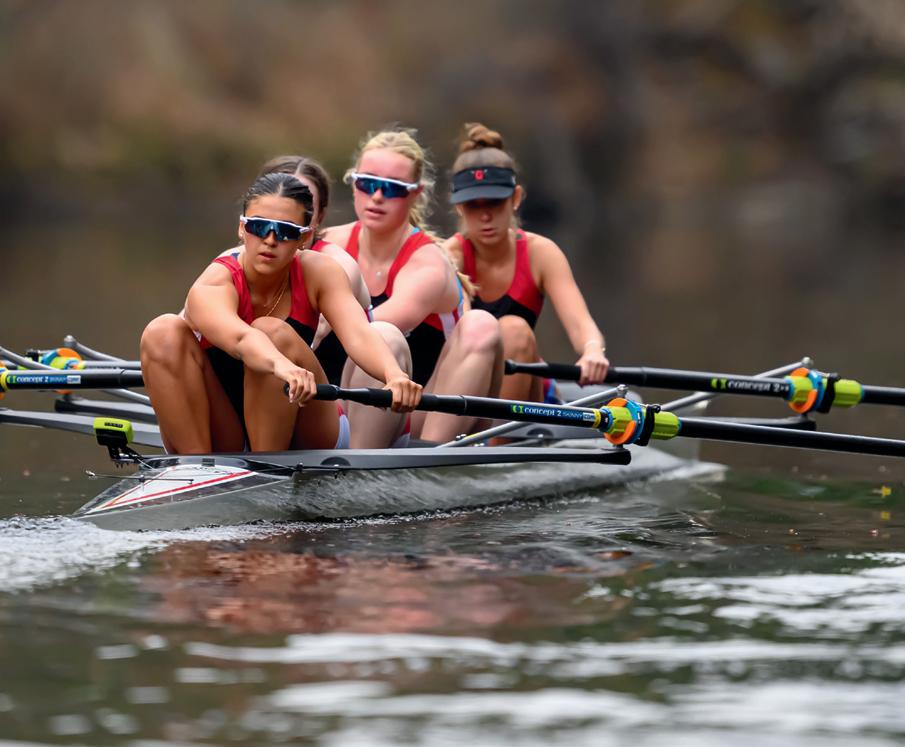
the Brooks race brought flood conditions to the Nashua, and worse, lodged a sequoia-sized pine tree in front of the first bridge. St. Mark’s races were cancelled.
At NEIRAs, the final weekend of our season, G3 finished third and, most exciting, G1 placed second, behind Nobles but ahead of Brooks, who had beaten us two weeks before. Their second-place finish earned the girls first boat (Isabel Holcomb ’26, Georgie Lick ’26, Sydney Nelson ’26, Laurie Dubois ’25 and Naia Kolodziej ’25) an invitation to the Rowing Youth Nationals in Sarasota, FL.
The US Rowing Youth Nationals is a huge regatta with 231 schools and clubs competing. Our event, girls coxed 4s, had thirty-one entries. We placed eighth in the time trial, putting us in the AB semis. Our nemesis, Brooks, placed ninth in the
time trial and was in our same semi. We had a fantastic first 1,000 meters, but Brooks had an even more amazing second 1,000 meters, ultimately beating us, which put us into the B Final.
Our B Final was as perfect a race as a boat could have. We got ahead at the start, moved ahead more in the second and third 500s, and would not let anyone catch us in the last 500 as we won by open water. It was a great way to finish up the season!
The girls learned a lot about racing and were very happy to test themselves against boats from all over the country. When you think about how many hundreds of youth-coxed fours there are, it’s pretty great that the Groton girls are the ninth fastest. Our NEIRA league is very strong. In the girls A and B finals,
four of the sixteen crews (25 percent!) were NEIRA schools, with Nobles finishing second, Brooks seventh, Groton ninth, and Winsor fifteenth.
coach cola parker
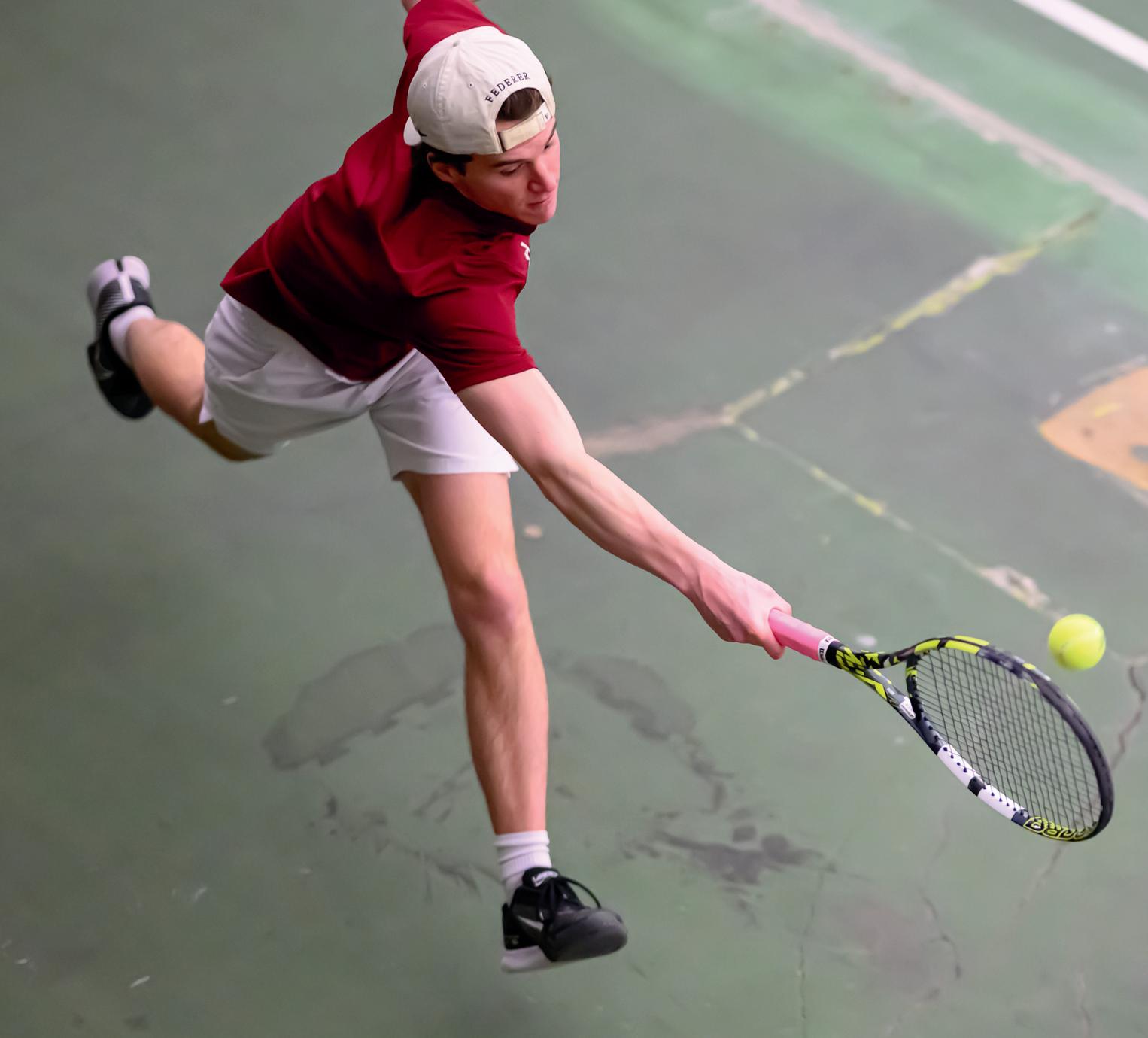
BOYS TENNIS
The boys tennis team ended its 2025 campaign with a 10–5 record in the ISL and an 0–3 record in non-league matches (Exeter, Deerfield, Andover). The squad was led by four-year varsity player Captain Trip Wight ’25, who continued to show that he is one of the stronger players ever to represent Groton at No. 1.
The boys worked hard under Trip’s leadership to improve their skills, taking advantage of challenging drills that simulated live points. The squad stayed very tough mentally, and ended the season by capturing four of its last five matches, including victories against very strong squads from St. George’s and Belmont Hill.
The team did not receive an invitation to the New England Championships this year for the first time in many, many years. Nonetheless, the squad’s efforts earned
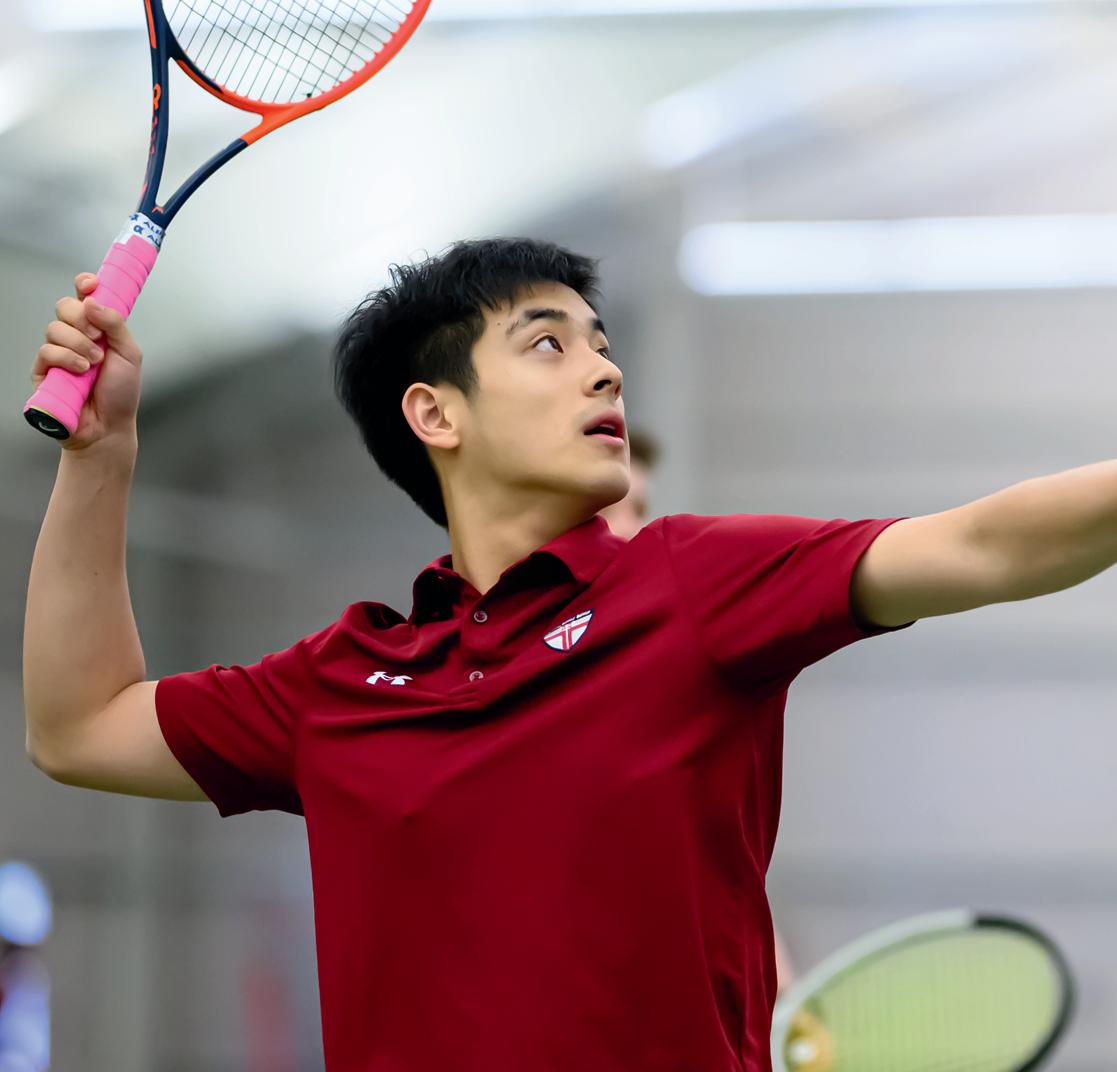
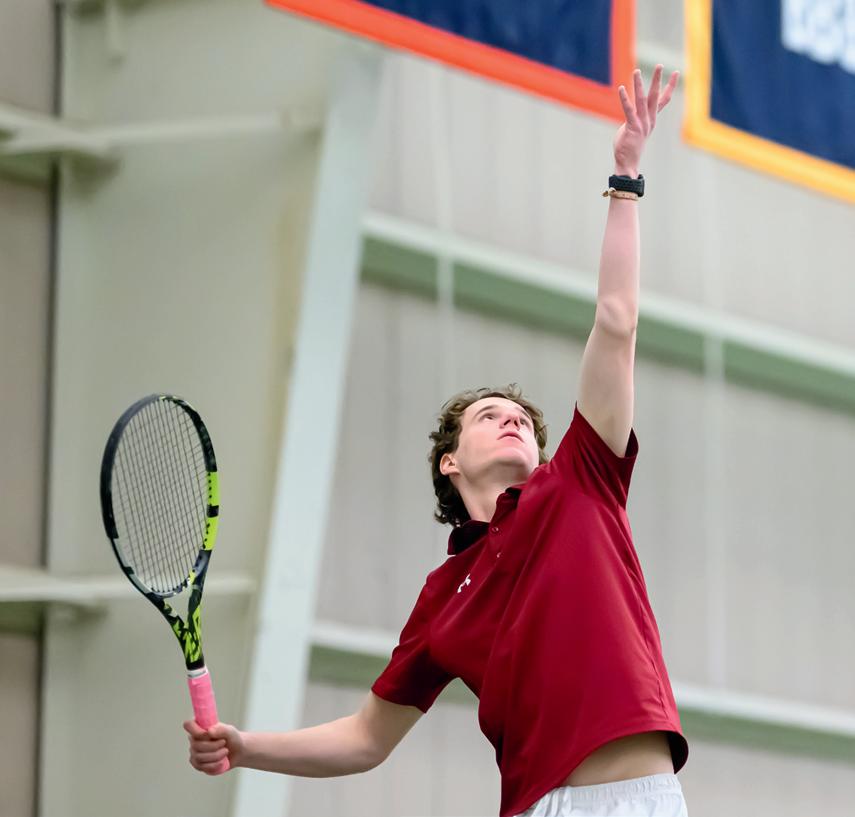
them high praise. The boys on varsity— Trip Wight ’25, Samuel Lu ’27, Miles Zhang ’26, Thaddaeus Flatz-Ehrfeld, Charlie Stubbs ’26, Teddy Kelleher ’27, Max Fan ’25, and Varun Gite ’25—along with our managers—Manon Farel ’26, Kayla Zheng ’26, and Charlotte Ghaeli ’26—worked hard all spring to make this season a very memorable one. They showed a deep love for the game, a respect and admiration for each other, and always seemed to enjoy their moments together.
coach john conner
by
Photography
Adam Richins

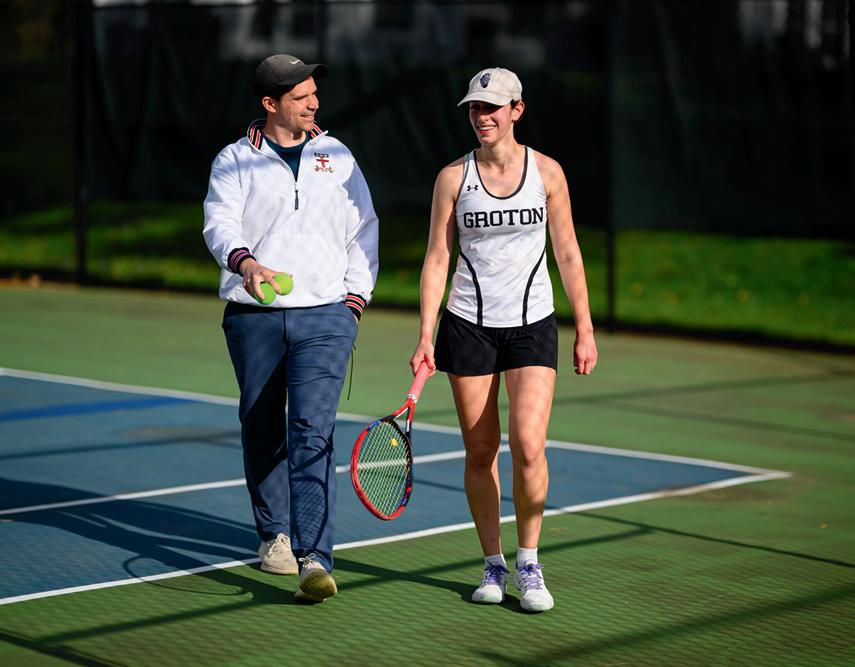
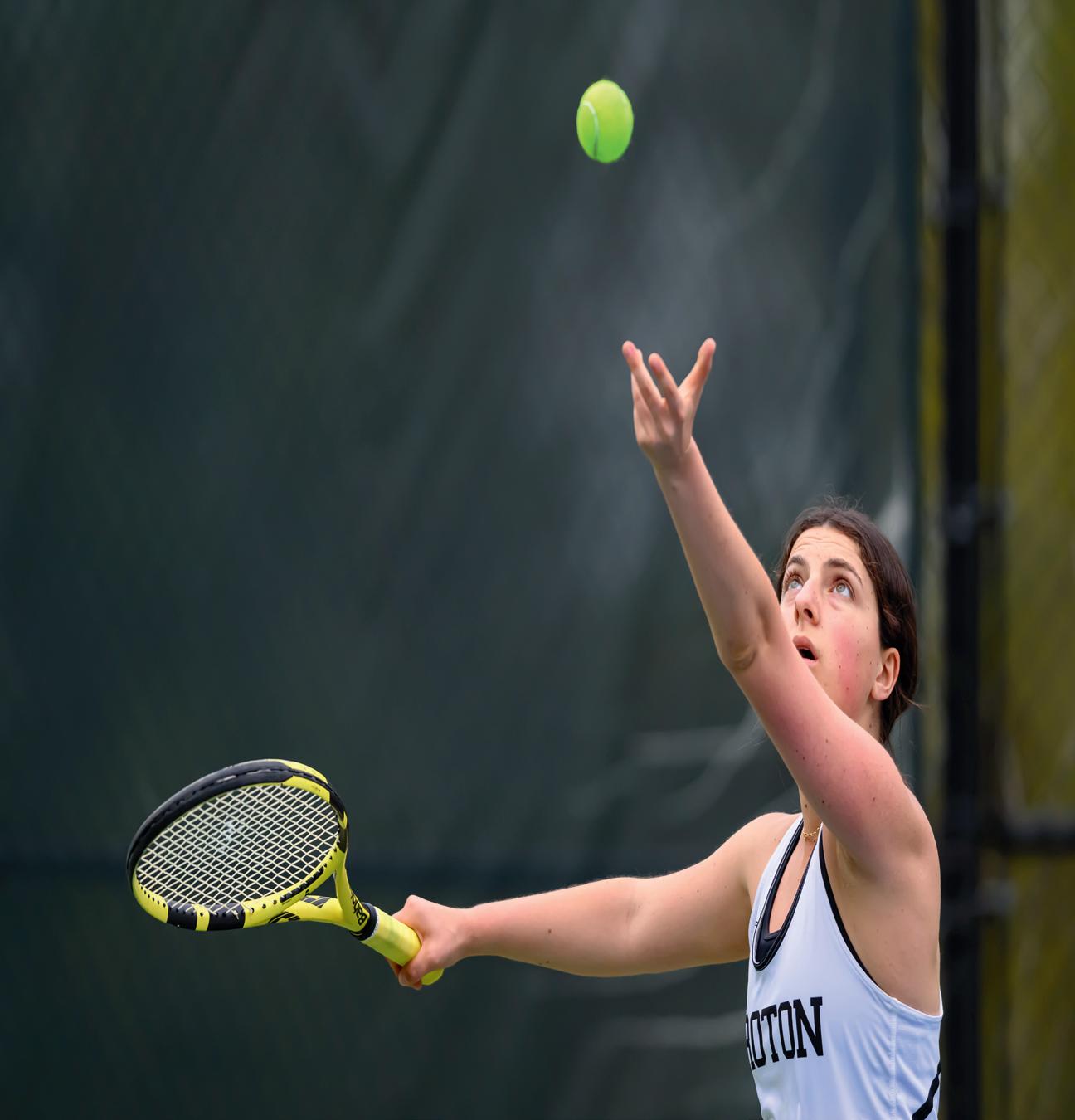
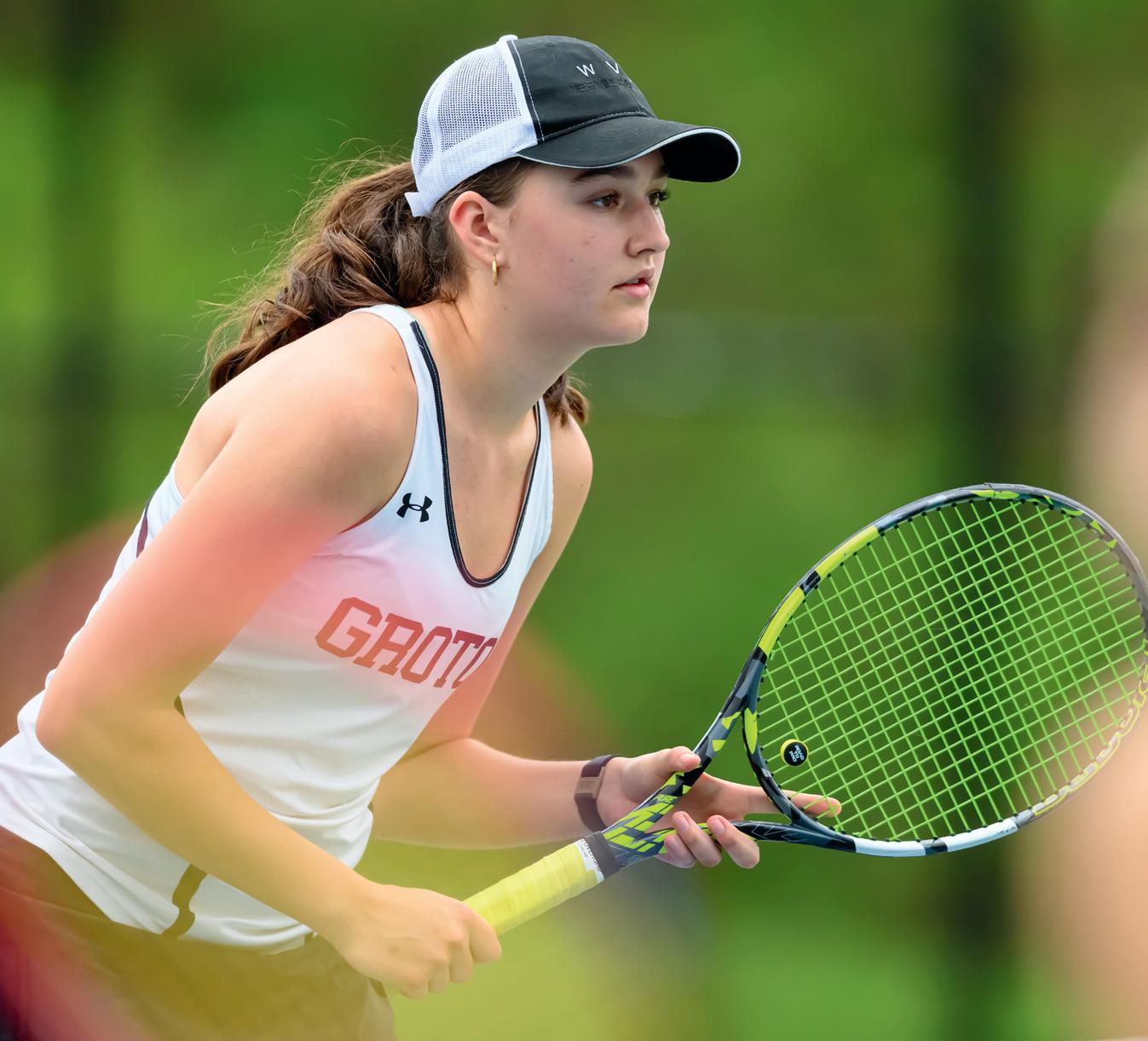
GIRLS TENNIS
The girls varsity tennis program wrapped up another outstanding season, cementing its place among the top teams in New England. Facing some of the region’s toughest competition, the team finished with an impressive 14–2 record, secured second place in the ISL, and earned a berth in the Class A NEPSAC Tournament.
Although the season began with a few early challenges, the team steadily gained momentum, finishing strong and competing at a level that made both players and the school proud. The lineup featured a balanced mix of talent and experience, with each player contributing energy, passion, and resilience throughout the season.
This year also marks the end of a remarkable era, as Sixth Form captains Ella Farahnakian, Caiyu Yang, and Lindy
Zhang concluded their illustrious Groton careers. Over their four years, the team compiled a phenomenal 59–5 record, claimed three ISL titles, and elevated the program to new heights. Their legacy of excellence, leadership, and determination leaves behind a team well-prepared to carry the torch and continue this extraordinary run.
— coach ryan holmes
TRACK AND FIELD
Opened in 2024, the Maqubela Track and Field Complex’s state-of-the-art surfaces and expanded training space has elevated the experience for our studentathletes and reenergized the entire program.
Opening the season on our brand-new track had an immediate and noticeable impact. Athletes and coaches alike have praised the layout, which fosters a dedicated team atmosphere and encouraged cross-event support.
Boys team highlights included multiple personal records shattered in the 100m, 200m, and 1,600m, and strong performances in the 4x400m relay, culminating in a first-place finish at the ISL Invitational and a new record. Girls team highlights included their first-ever second place finish at New England’s—

just shy of the top spot, domination by the girls 800m team led by a record-breaking run from sophomore Tyler Martens, and new PRs and school records in the pole vault. In addition, shot put and long jump athletes made major strides, with several top three finishes in dual meets.
We have a wonderful coaching staff, the team embraced a culture of discipline, resilience, and sportsmanship. Senior captains provided steady leadership, mentoring younger athletes and modeling a strong work ethic throughout the season. Our home meets became a point of pride this season, drawing enthusiastic support from the school community. With our new track as its foundation, we are not just running races, we are building a tradition. The future is fast and we are ready for it.
coach jamie lamoreaux
by
Photography
Adam Richins
BASEBALL
The 2025 varsity baseball team finished its season with a 7–10 season. In a spring that was full of rain, the team brought a lot of bright spots on the playing field.
The leadership from the returning players was invaluable to the development of the younger players. This year brought a year of change: six out of the nine players in the lineup were new, and five of them were Fourth Form or younger. The pitching staff was just as inexperienced.
On the field, twelve out of the seventeen games were decided by three runs or less. Offensively, the team stole 72
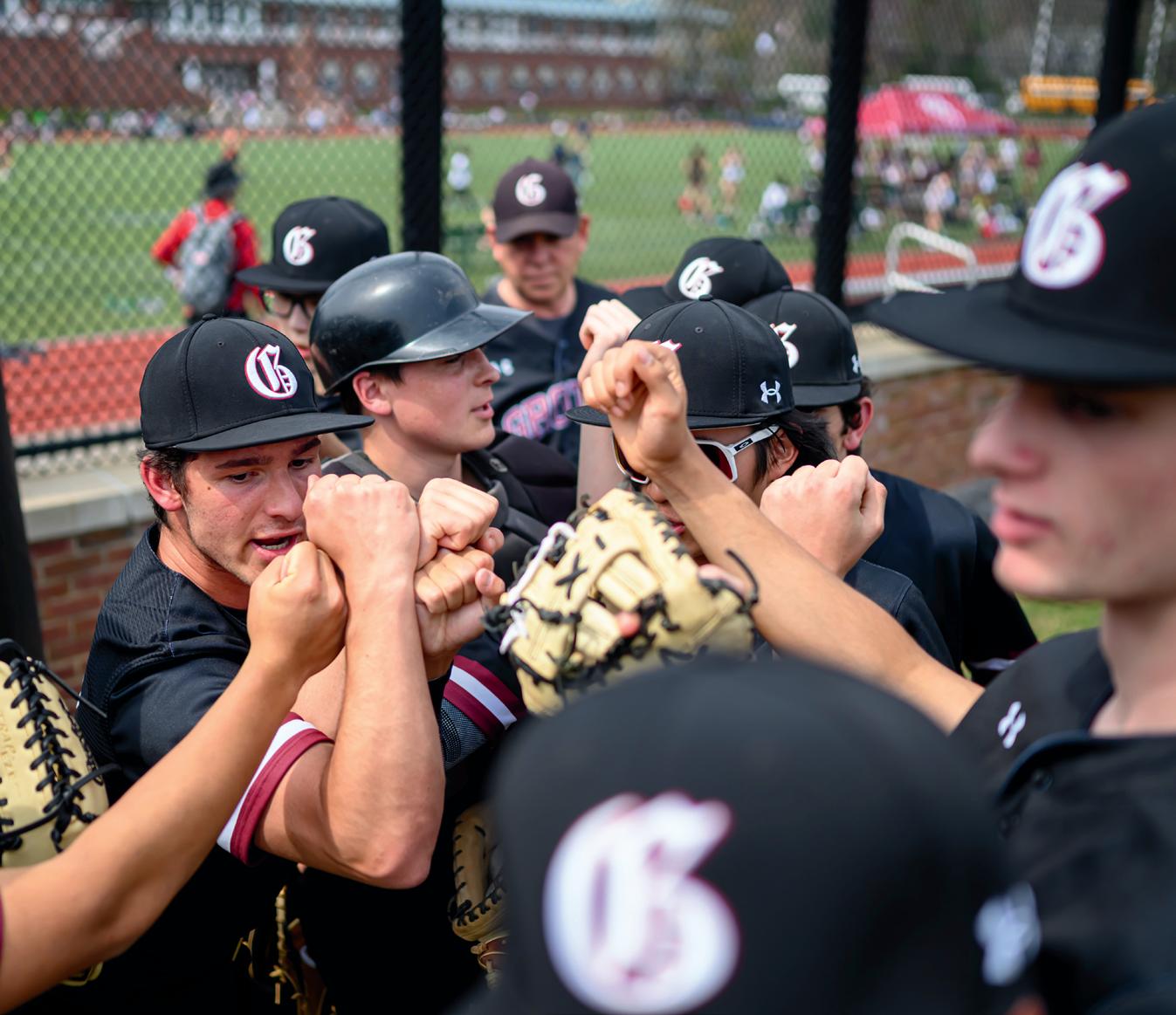
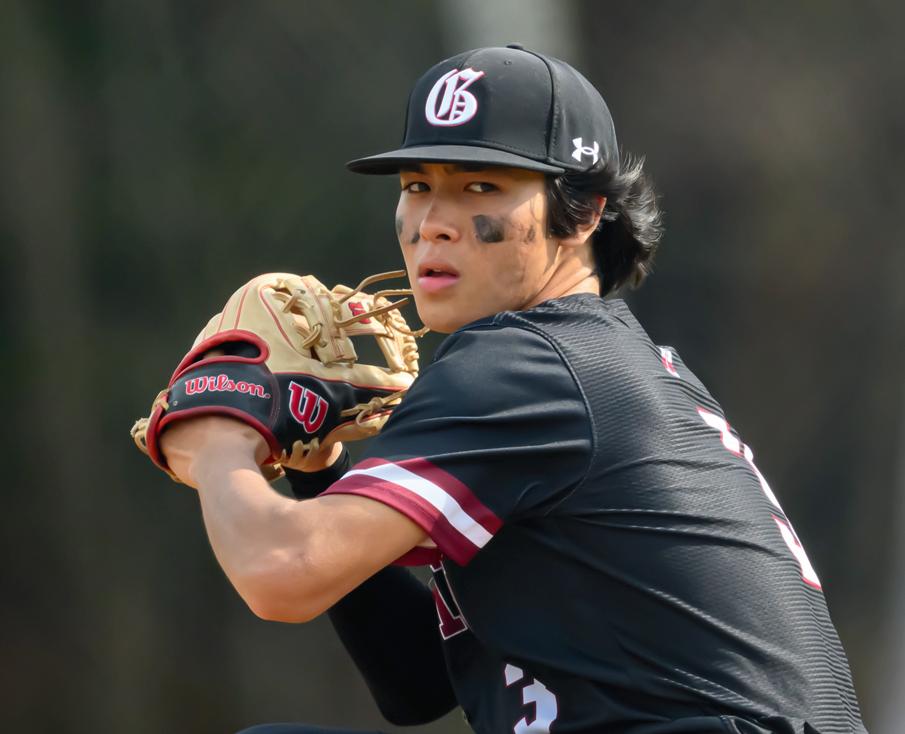
bases in just seventeen games. Kiran Sen ’25 and Yuri Tanaka ’26 were the aces on the mound, and carried the team throughout much of the season.
The future is bright for Groton baseball in large part due to the leadership of Kiran Sen ’25, Cam Cirone ’25, and Jake Murray ’25.
coach kevin barnaby
SPRING
baseball
Most Valuable Player
Yuri Tanaka ’26
Coaches’ Award
Jake Murray ’25
Cy Young Award
Kiran Sen ’25
Silver Slugger
Cam Cirone ’25
ISL Gold Glove
Kiran Sen ’25
All-ISL
Yuri Tanaka ’26
ISL Honorable Mention
Kiran Sen ’25
John “Jack” Etter
Sportsmanship Award Groton Baseball
Thomas John Flaherty
Plaque (Sportsmanship)
Groton Baseball
C oaching Staff
All-NEPSAC Honorable
Mention
Yuri Tanaka ’26
Captains-Elect
Damien Man ’26
Yuri Tanaka ’26
Michael Todd ’26
boys lacrosse
Most Valuable Players
JP Charpentier ’25
Angus Frew ’25
Angus Miller ’25
Matt Scheible ’25
Fred Beams Coaches’ Award
Macon Burgess ’25
Most Improved
Alek Chase ’27
All-ISL
JP Charpentier ’25
Angus Miller ’25
Matt Scheible ’25
ISL Honorable Mention
Zach Baker ’25
Freddy Dent ’26
Elliot Wood ’26
All-NEPSAC
Macon Burgess ’25
Angus Frew ’25
All-NEPSAC
Honorable Mention
Freddy Dent ’26
Elliot Wood ’26
Jeffrey Parker Team
Sportsmanship Award
Groton Boys Lacrosse
Captains-Elect
Freddy Dent ’26
Elliot Wood ’26
girls lacrosse
MVPs
Maddie Cronan ’25
Dani Shyjan ’25
Coaches’ Award
Kate Bartlett ’25
Unsung Hero Award
Eliza Brooks ’26
All-ISL
Maddie Cronan ’25
ISL Honorable Mention
Eliza Brooks ’26
Frankie Konigsberg ’26
Dani Shyjan ’25
All-NEPSAC
Maddie Cronan ’25
All-NEPSAC
Honorable Mention
Eliza Brooks ’26
boys tennis
All-ISL
Samuel Lu ’27
Trip Wight ’25
All-NEPSAC
Trip Wight ’25
Captains-Elect
Sam Lu ’27
Charlie Stubbs ’26
Miles Zhang ’26
girls tennis
All-ISL
Olivia Herr ’27
Caiyu Yang ’25
Lindy Zhang ’25
ISL Honorable Mention
Ella Farahnakian ’25
Sofia Guisti ’28
All-NEPSAC
Lindy Zhang ’25
All-NEPSAC
Honorable Mention
Caiyu Yang ’25
Captains-Elect
Samara Gorton ’26
Olivia Herr ’27
track and field
boys’ awards
MVP
Salim Hill ’25
Coaches’ Award
Christopher Hovet ’25
Most Improved Award
Bilal Kamil ’28
ISL Honorable Mention
Salim Hill ’25
All-NEPSAC
Christopher Hovet ’25
All-NEPSAC
Honorable Mention
Tea Austin ’26
Nasir Hill ’26
Salim Hill ’25
Christopher Hovet ’25
Will Klick ’25
Edward Wilkey ’25
Captains-Elect
Chase Bellamy ’26
Nasir Hill ’26
girls’ awards
MVP
Alicia Ye ’25
Coaches’ Award
Jenny Polynice ’25
Most Improved Award
Tabitha Picucci ’27
All-ISL
Alicia Ye ’25
ISL Honorable Mention
Kristen Billings ’25
All-NEPSAC
Honorable Mention
Semira Bakare ’26
Kristen Billings ’25
Camryn Dunn ’26
Izzy Hall ’28
Cam Kucera ’26
Male Montero ’25
Tabitha Picucci ’27
Brisa Smith ’28
Alicia Ye ’25
Captains-Elect
Semira Bakare ’26
Sage Greaves ’26
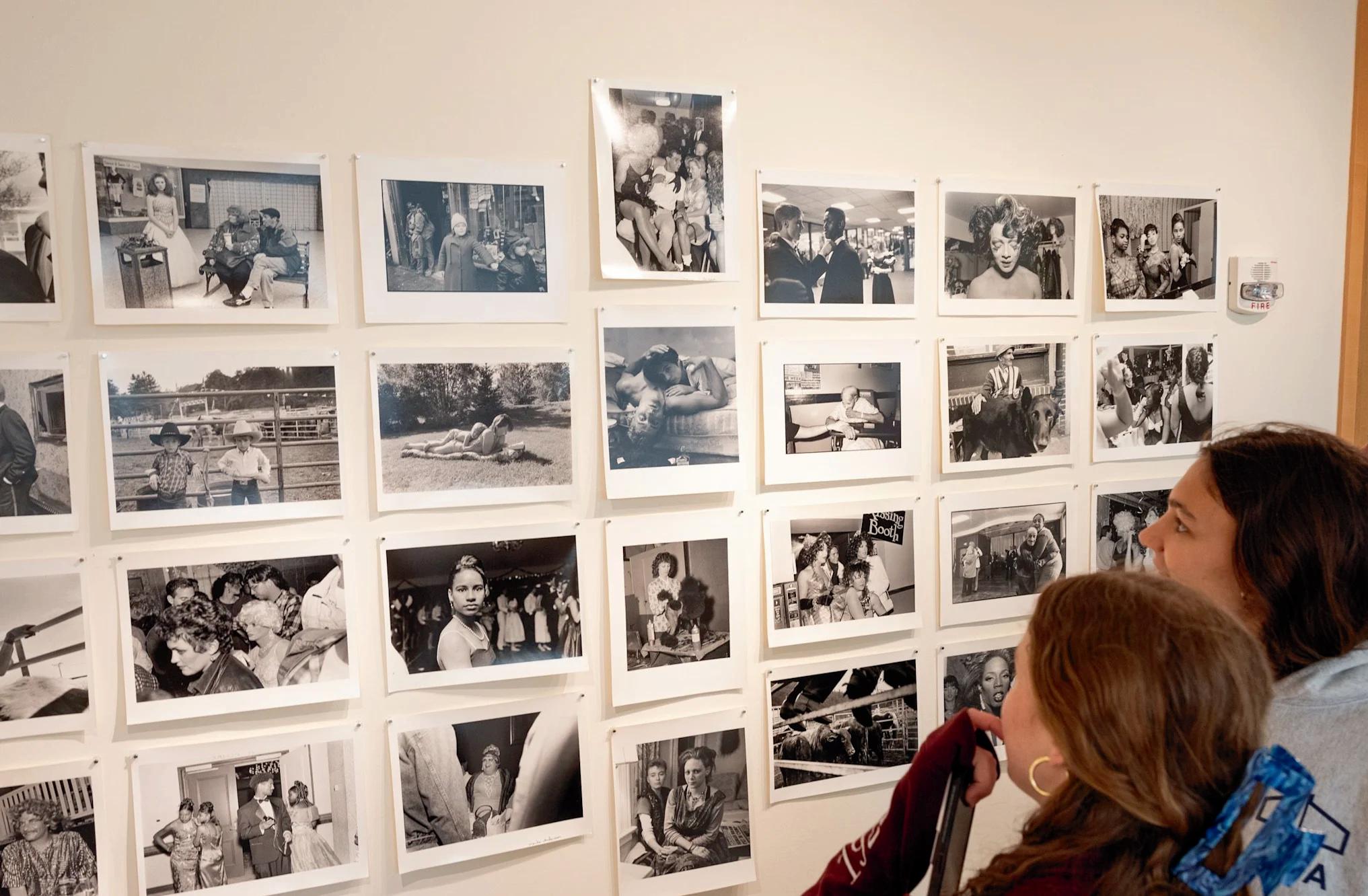
Late Spring Exhibit: A Game of Beautiful Parts
Monika Andersson
May 1–June 6, 2025
The de Menil Gallery saluted one of its own on May 10 with an artist reception in honor of retiring arts faculty member Monika Andersson’s “A Game of Beautiful Parts” photography exhibit.
Ms. Andersson served as director and curator of the gallery from 2007 until recently. “A Game of Beautiful Parts” was the final exhibition of the 2024–25 de Menil season.
“The camera has always been a magical tool for me, freezing and revealing the fleeting moments of passersby and loved ones,” said Ms. Andersson. “Not all images are the same; some hold more
mystery and depth than others.”
Growing up in Sweden, Ms. Andersson discovered photography in her twenties, when she decided to take a two-year class in the medium.
“The school taught me a lot about cameras, light, and viewing the world,” she said.
When the two-year class ended, she applied to Massachusetts College of Art for a degree in Photography, spending the next four years in Boston before continuing her studies at Yale School of Art in Photography, where she earned her MFA.
“As a photographer, I have mainly focused on capturing moments of people in the world around me,” Ms. Andersson explained. “Even without my camera, I observe many beautiful and complex moments daily, feeling as though I am swimming through the river of time.”
The de Menil Gallery, in the Dillon Art Center at Groton School, is open 9:00 a.m. to 3:00 p.m. on weekdays (except Wednesdays) and 11:00 a.m. to 4:00 p.m. on weekends (except school holidays). The gallery is free and open to the public.
Above: The final de Menil Gallery exhibition of the 2024–25 school year featured the work of departing faculty member and former gallery directory Monika Andersson.
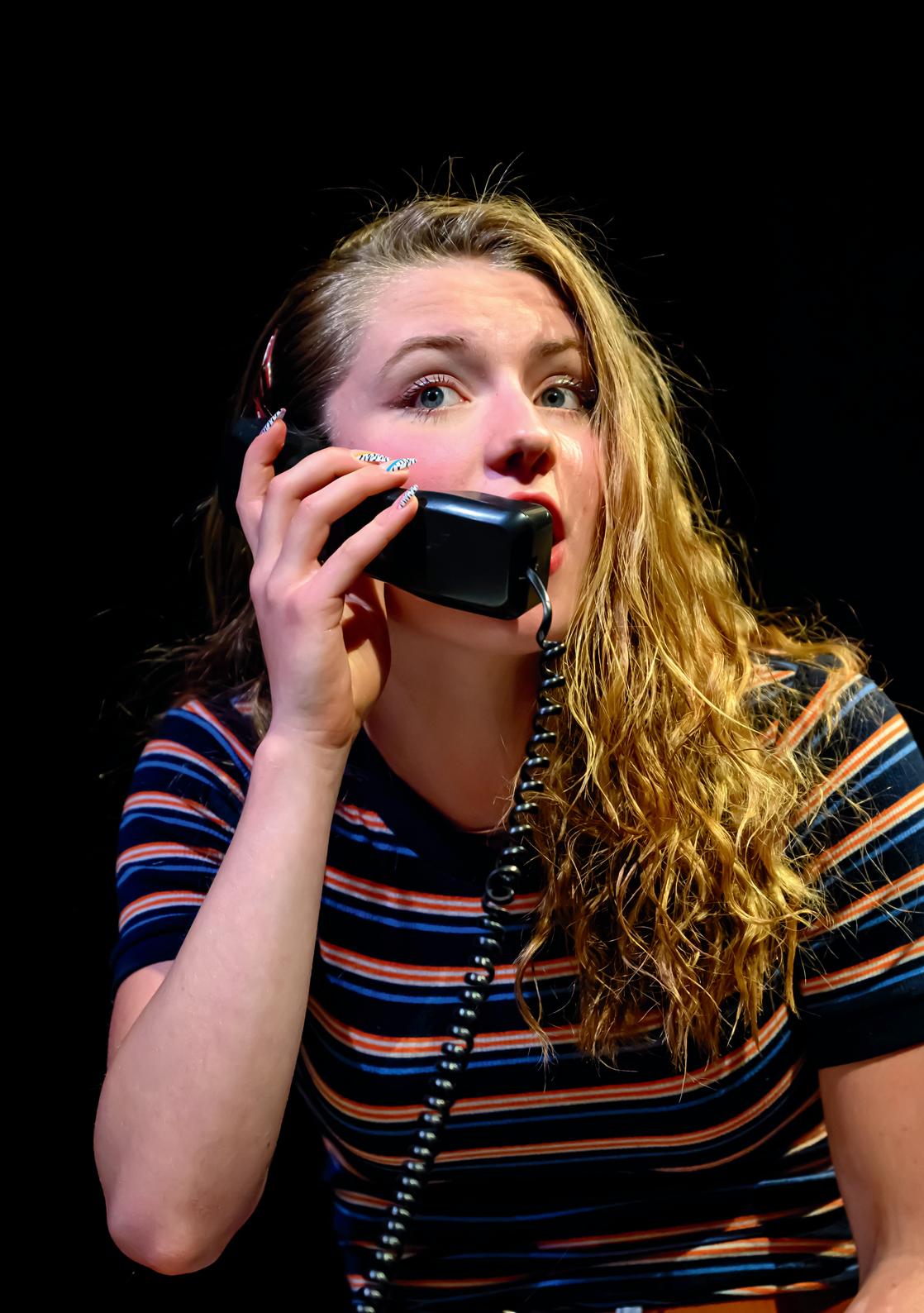
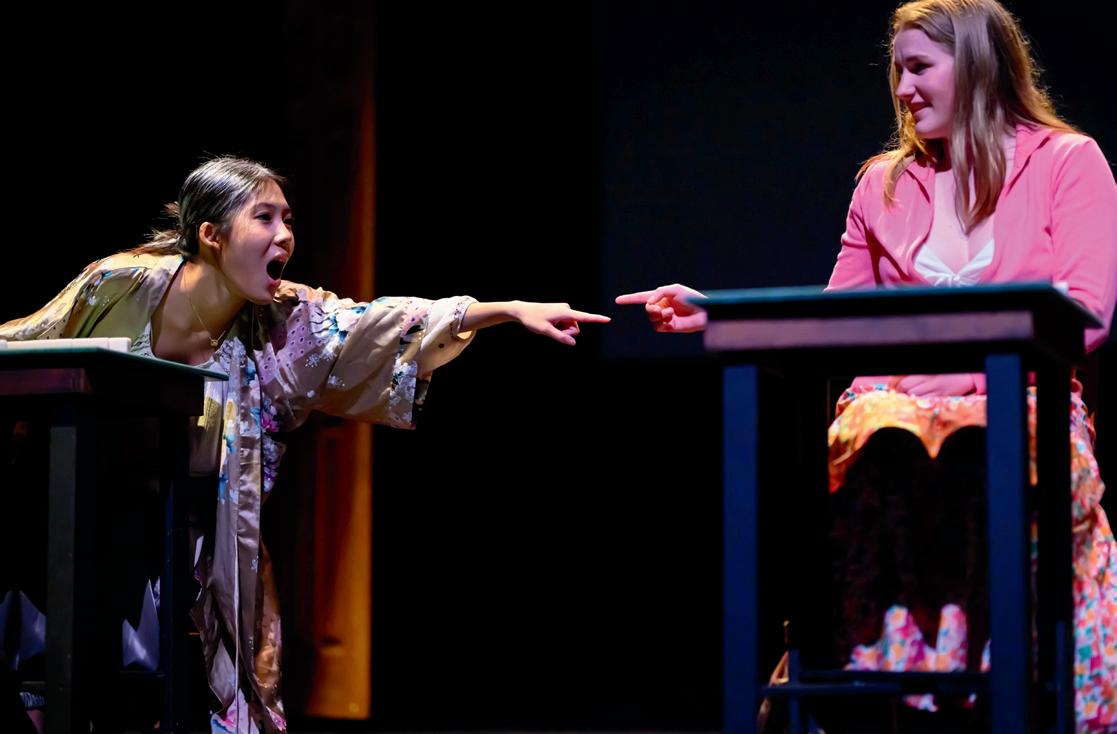
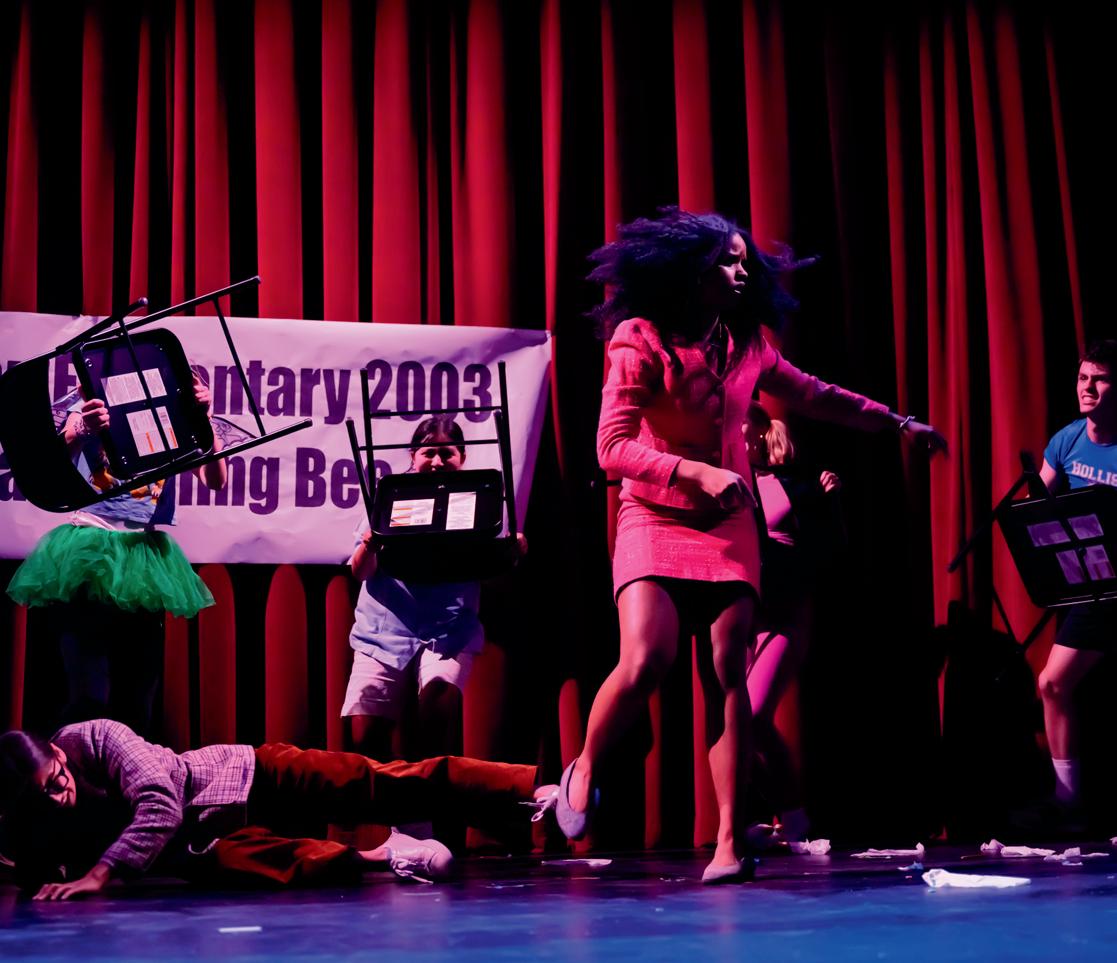
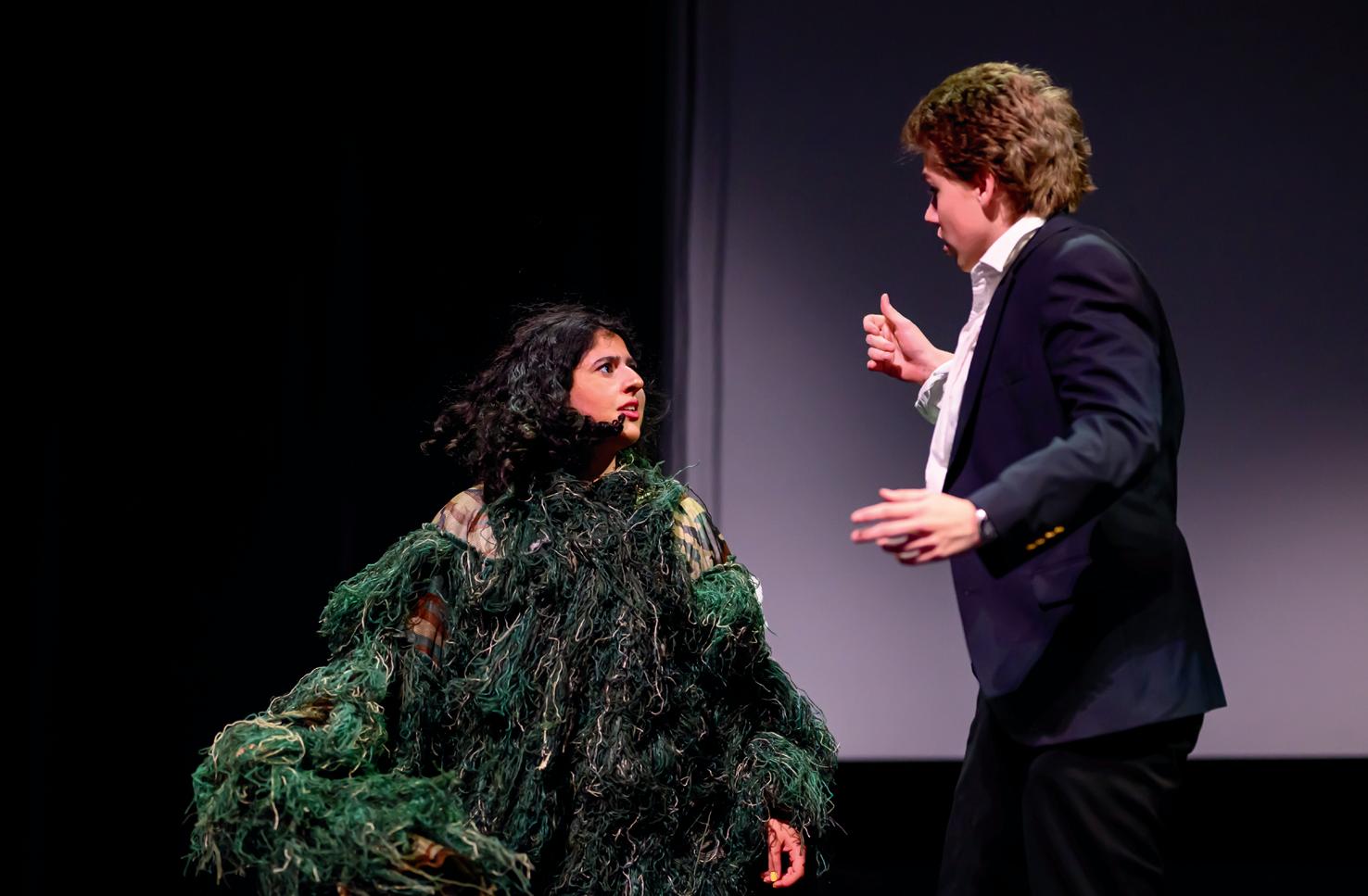
Short Works Festival
As the spring term came to a close, student artists gathered for a Short Works Festival, where one-act plays, dance performances, and musical theater pieces were performed on stage in the Campbell Performing Arts Center.
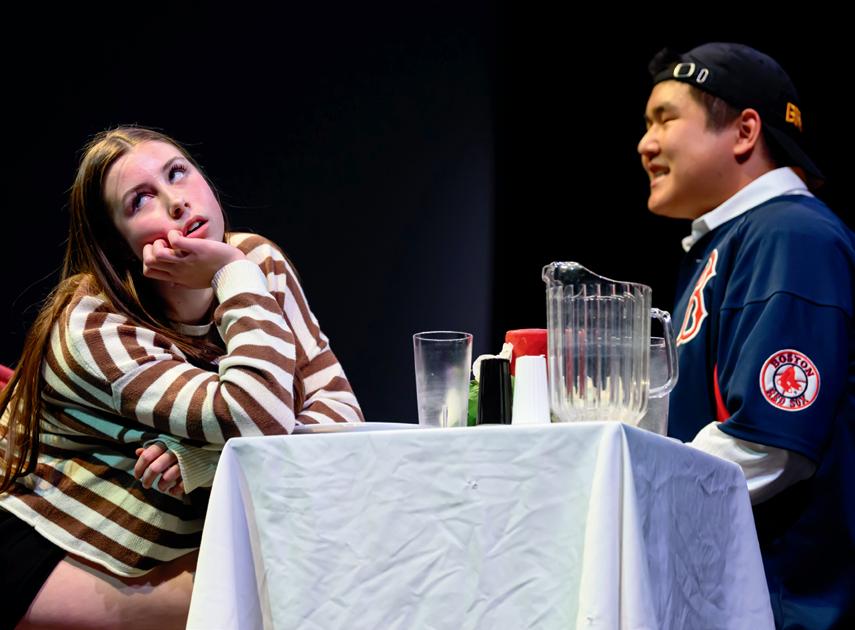
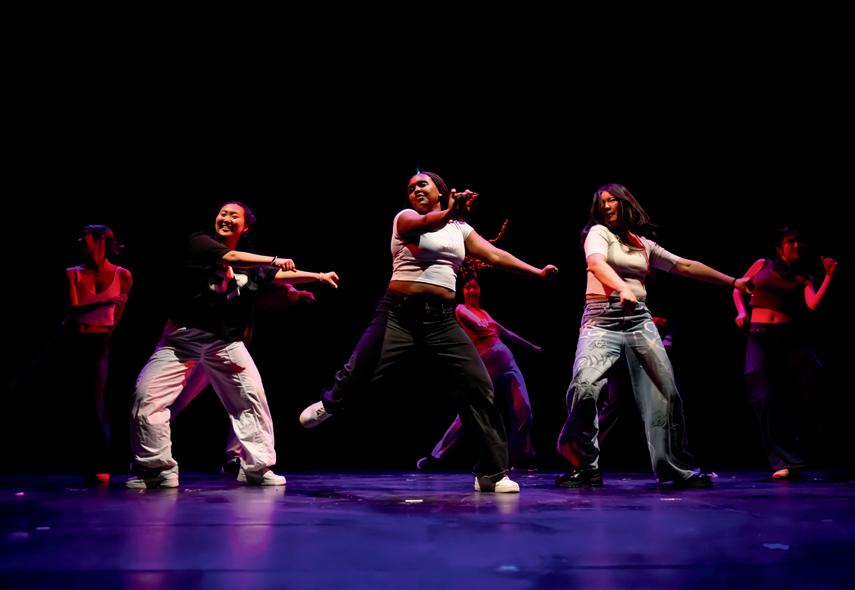



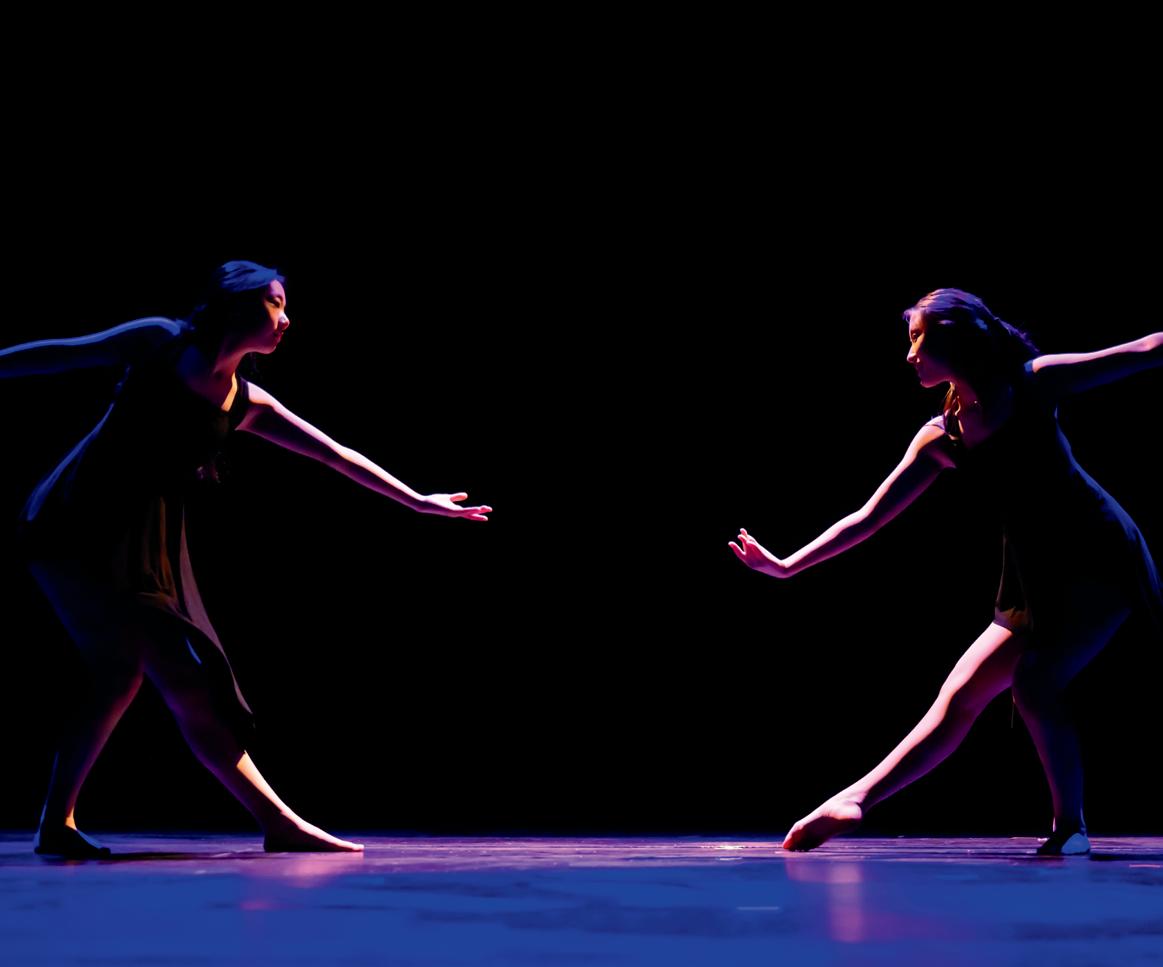
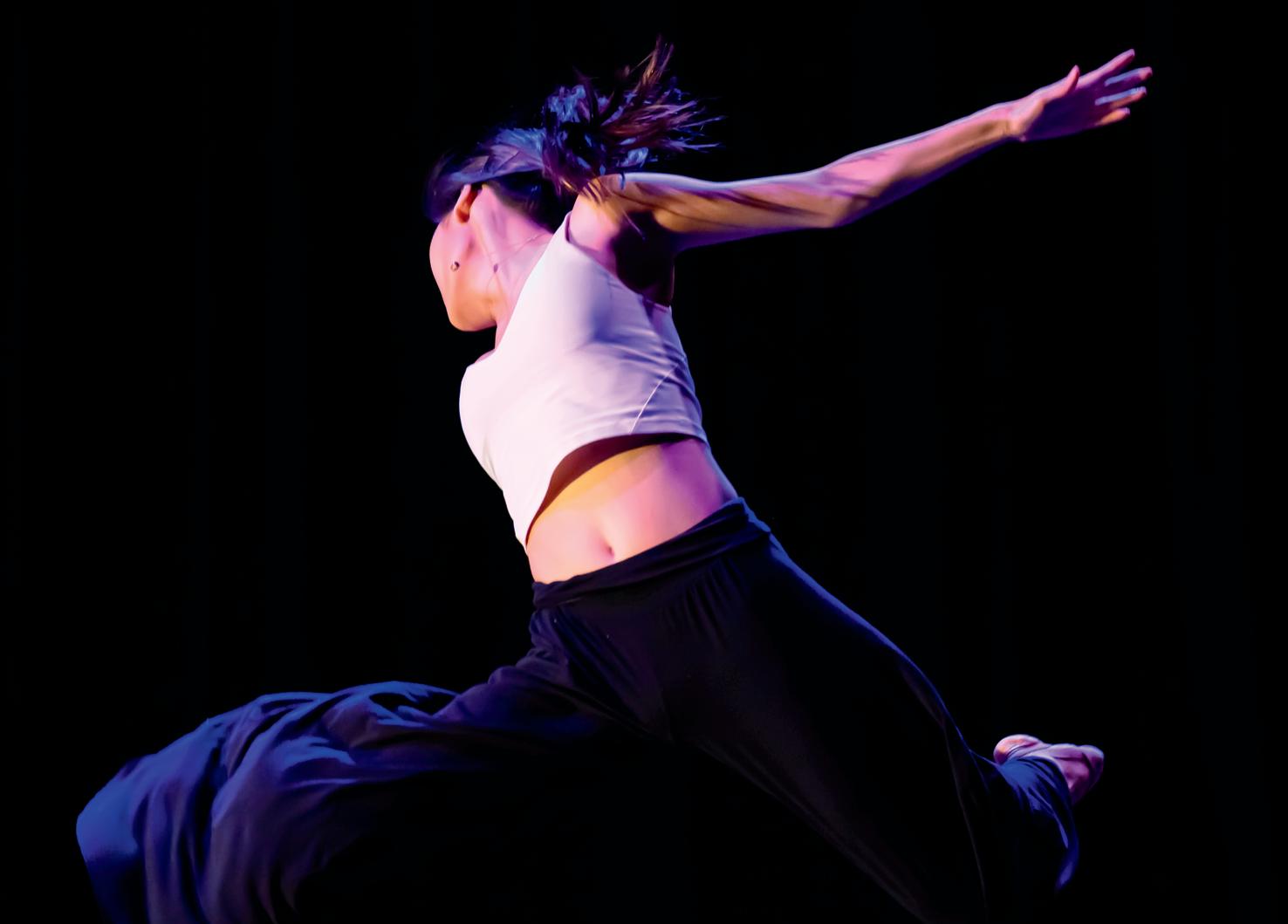
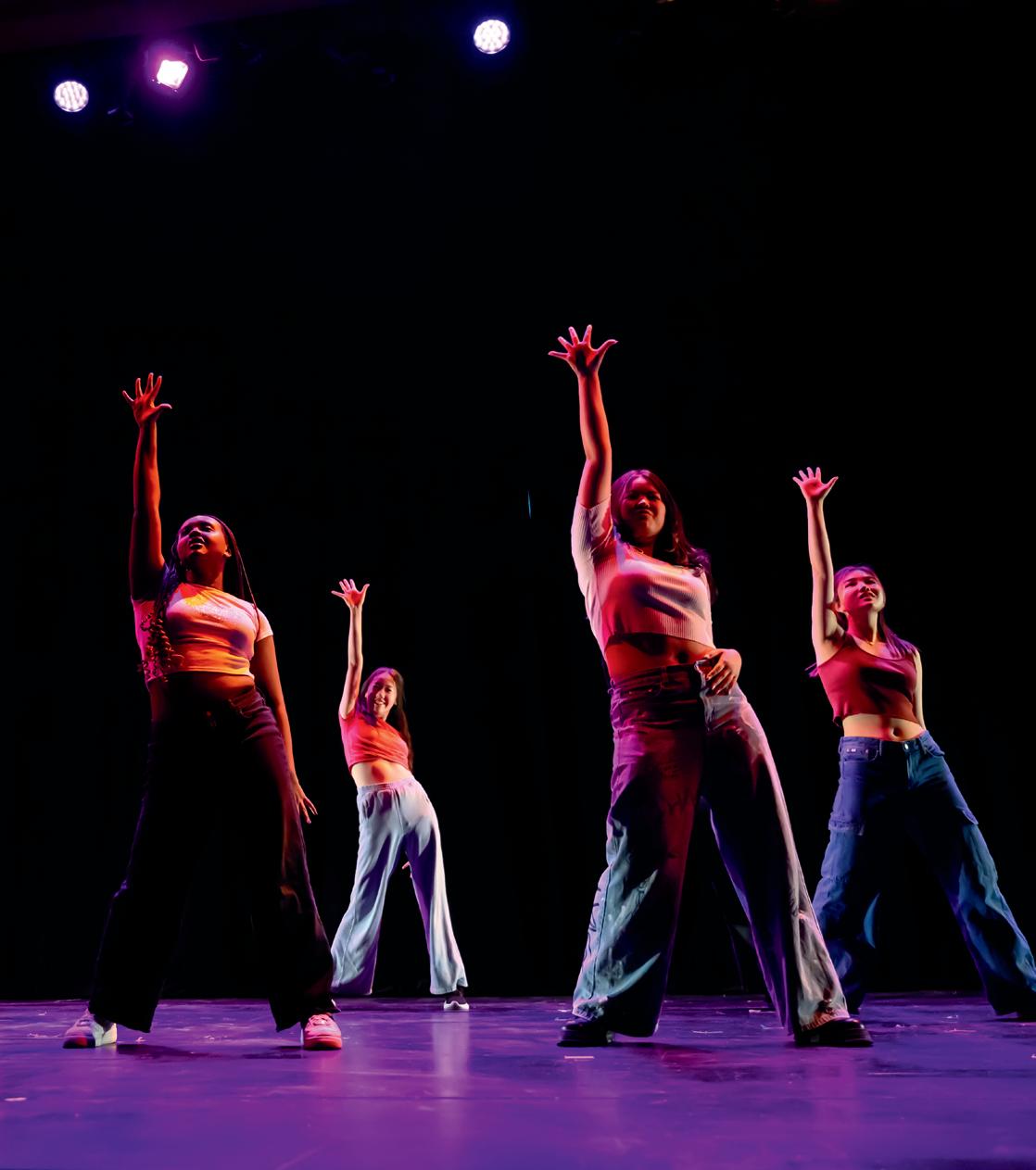
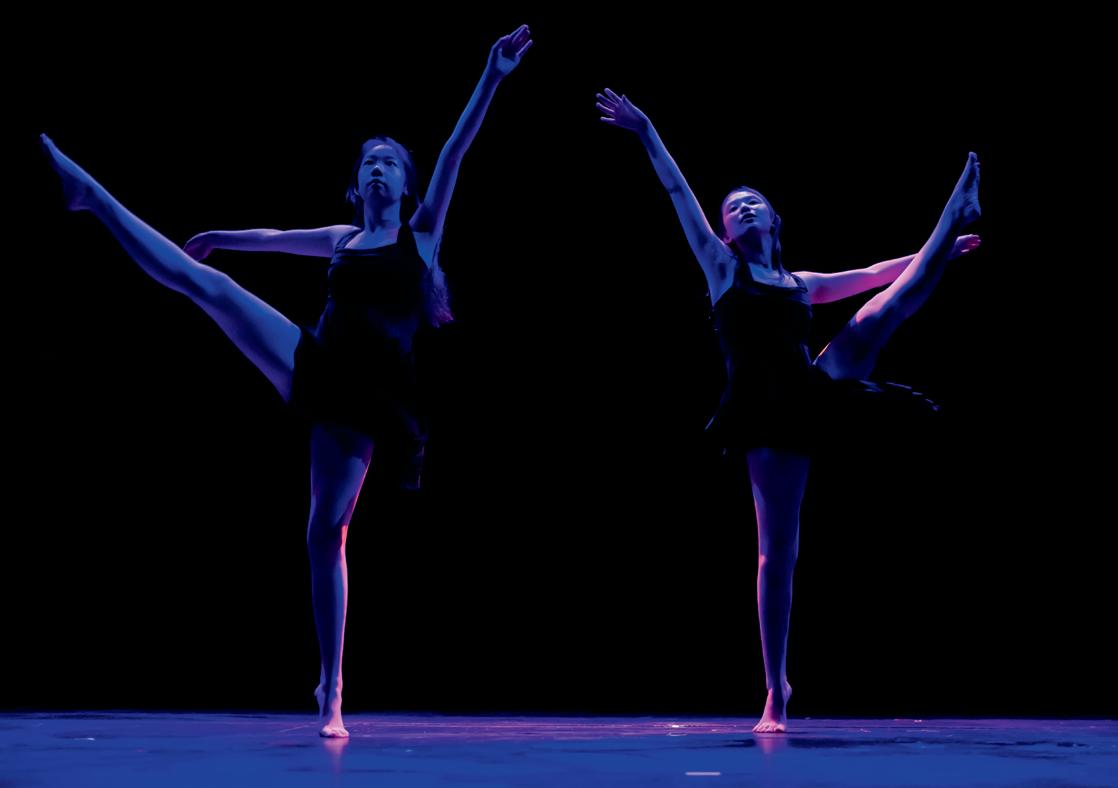
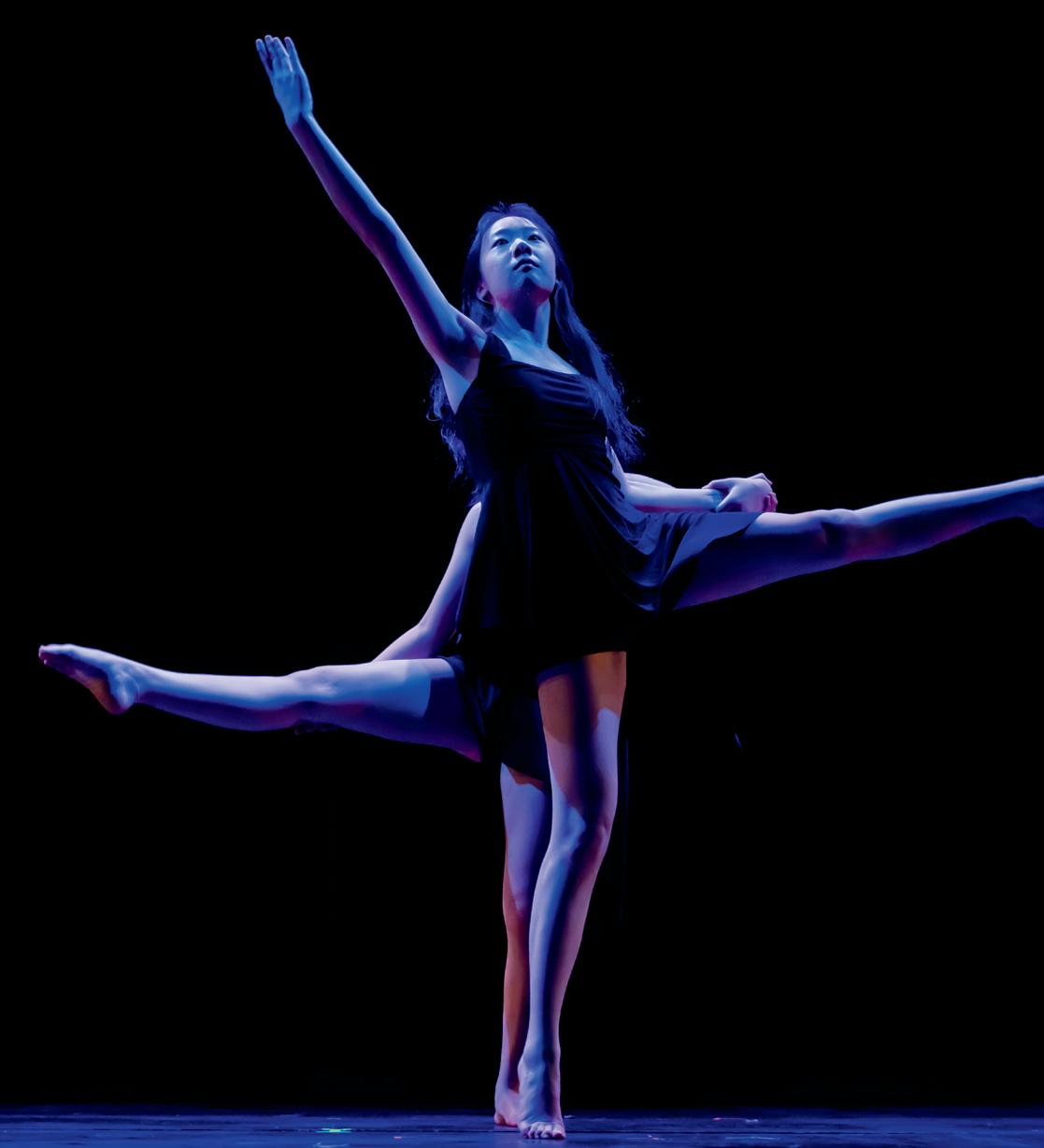
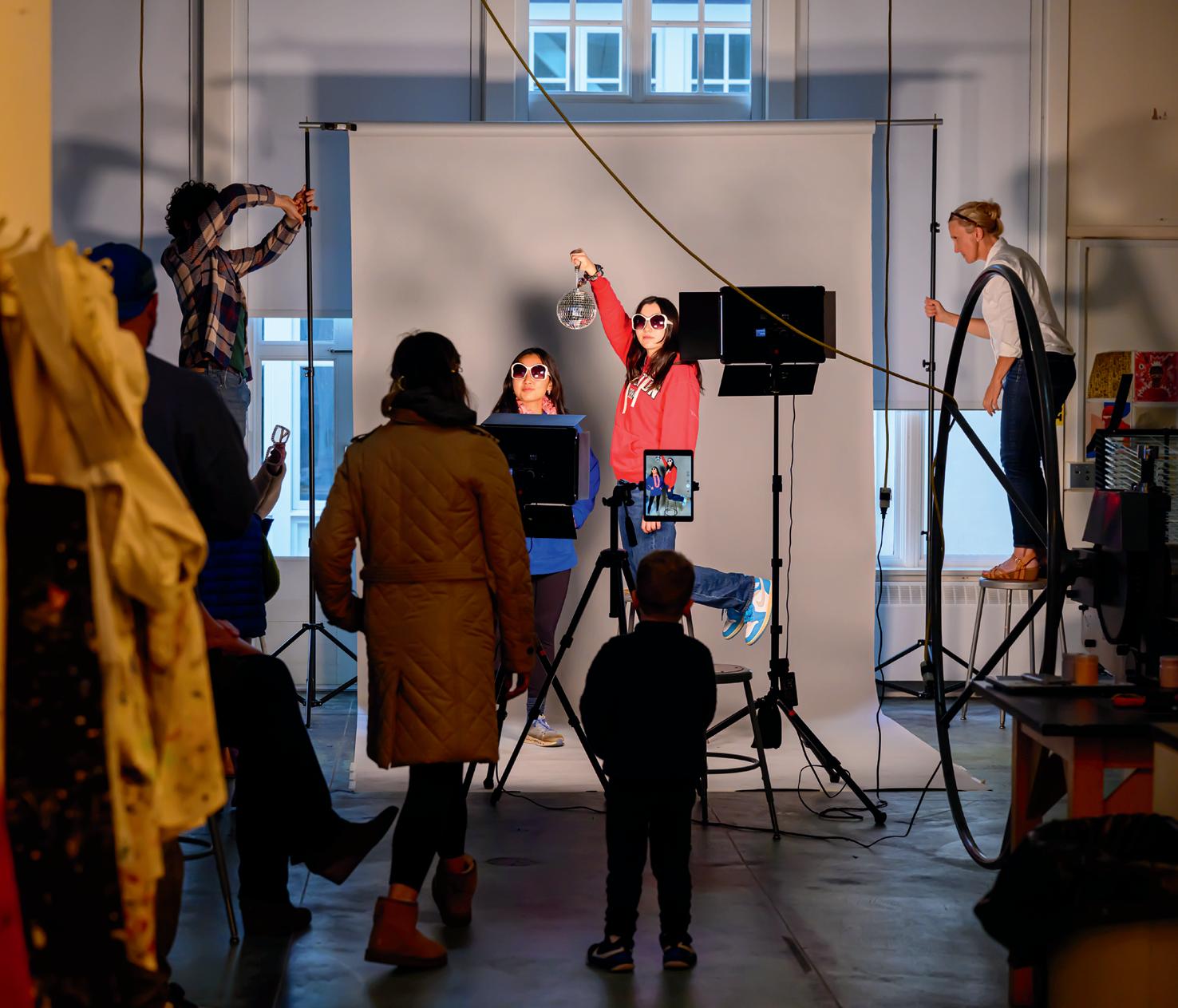
Groton students win 70 Scholastic Art and Writing awards
Thirty-two Groton School students won seventy Scholastic Art and Writing awards this year, including twelve gold keys, the highest regional distinction.
Evelyn Cai ’27 won seven awards across both divisions, including two gold keys in Mixed Media for “Polar (Bear) Opposites” and “Your Vote is Matter” and a gold key in Critical Essay for “Reclaiming the Past: Ownership, Memory, and Justice in The Man Who Ended History: A Documentary.” Evelyn also won silver keys in Painting (“Nothing to See Here”) and Short Story (“Stitch by Stitch”) and honorable mentions in Printmaking (“This is Not a Game”) and Painting (“Bleached”).
Sagata Das ’26 won five awards, including two gold keys in Personal Essay and Memoir for “A Letter to My Living Martyr” and “Thread of Fate,” and a gold key in Humor for “On Crying: A Parody of How to Win Friends and Influence People.” Sagata also received a silver key for Poetry (“Ellipsis, Eclipses, Ellipses”) and an honorable mention in Personal Essay and Memoir (“Beyond the Drop”).
Liv Ding ’26 won a gold key in Short Story (“Fifty-Seven Million Grains of Rice”) and Poetry (“Prufrock at the Symphony”), as well as a silver key for “The Fire of the Working-Class: A Comparison of Social Protest within Two Poems” (Critical Essay) and an honorable mention for “Fourth of July” (Short Story).
Amanda Chang ’26 received awards for four Critical Essays: silver keys for “Selling the Idea of Masculinity: An Exploration of Gender Expectations in Death of a Salesman” and “Immigration and Im(MA)gration in Poetry,” and honorable mentions for “A Comparison of the Epic of Gilgamesh and the Bible” and “In(QUEER)ing into the Subjugation
of the LGBTQIA+ Community in the United States: An Orwellian Perspective.”
Holly Bradsher ’26 won four honorable mentions for her Photography (“Darling,” “Industrial Age,” “Inverted,” and “Landline”). Kaylynn Cho ’29 received honorable mentions in Poetry (“Just your stereotypical Asian girl,” “Lists,” “Part of the process”) and Dramatic Script (“Promise Under Fireworks”). Ava Meyer ’26 also received four Photography honorable mentions for her “DaVinci’s Dream,” “Emilia,” “Purple Rain,” and “Still Life.”
Several other students were awarded multiple keys. Hanna El-Jeaan ’27 won a gold key in Science Fiction and Fantasy for “Gospel of Ezekiel” and a silver key in Flash Fiction for “In the Silence of Longing.” Samuel Lu ’27 won two awards in the Critical Essay category: a gold key for “Re-evaluating the Narrator in William Faulkner’s A Rose For Emily ” and a silver key for “The Spiritual Parable in Flannery O’Connor’s A Good Man is Hard to Find .”
Olivia Engstrom ’26 won two awards for Personal Essay and Memoir: a gold key for “Like Cypselae in the Breeze” and an honorable mention for “The Wind Whispers.” Kristin Qin ’27 won two awards for her painting: a gold key for “Tiger Mouth” and an honorable mention for “Old Man and His Castles.”
Ethan Yan ’27 won two silver keys in the Critical Essay category for his “Potential Cognitive Benefits of Alphabetic and Logographic Writing Systems” and “Unpacking the Dynamic of Legacy Admissions.”
For more coverage of the 2025 Scholastic Art and Writing winners, visit the News page at groton.org.
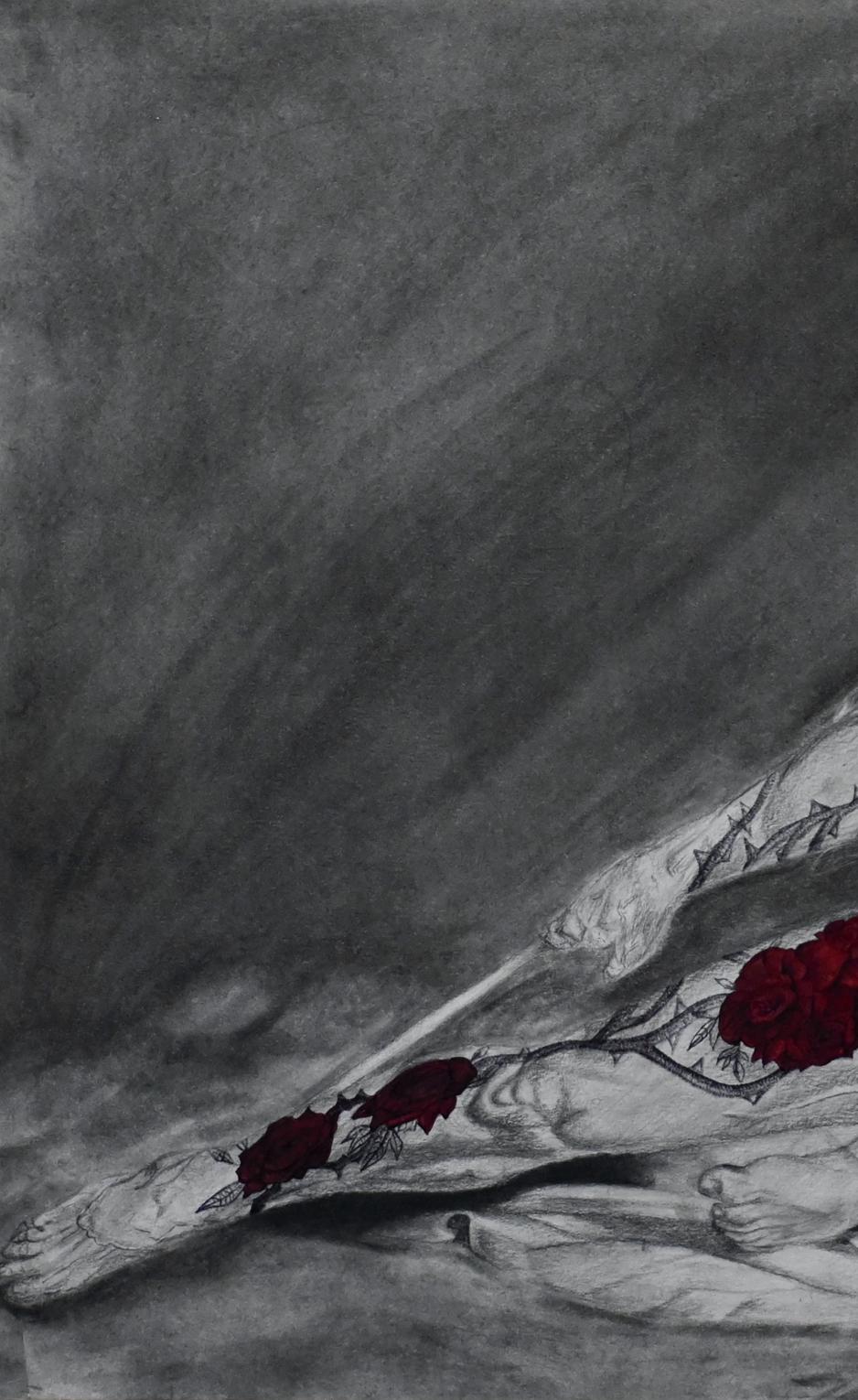
1 Weakness, Jake Murray ’25
2 Your Vote is Matter, Evelyn Cai ’27
3 American Heros 1, Julia Landau ’25
4 Old Man and His Castles, Kristin Qin ’27
5 Purple Rain, Ava Meyer ’26
6 Landline, Holly Bradsher ’26
7 Languid2, Tabitha Picucci ’27 1
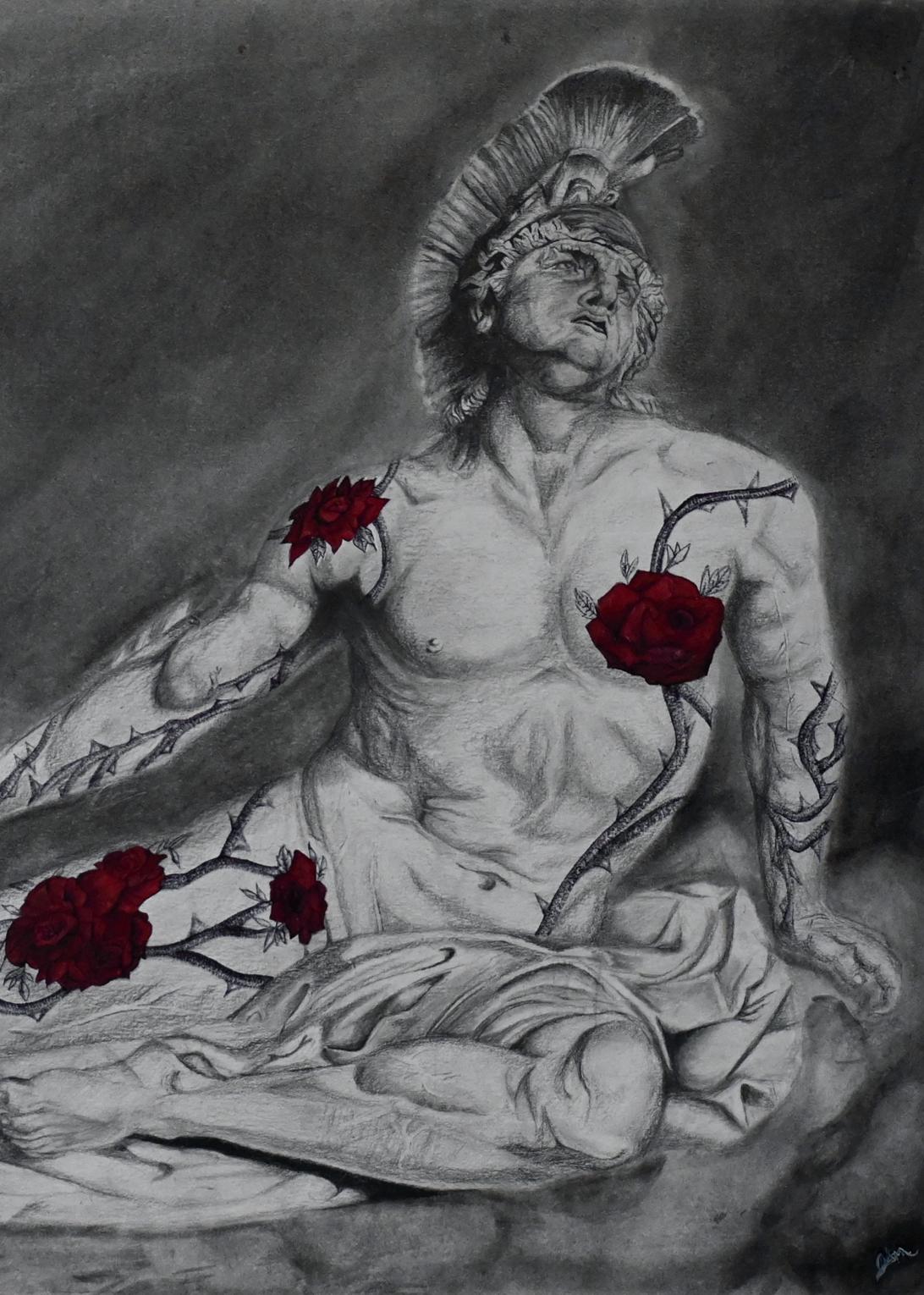
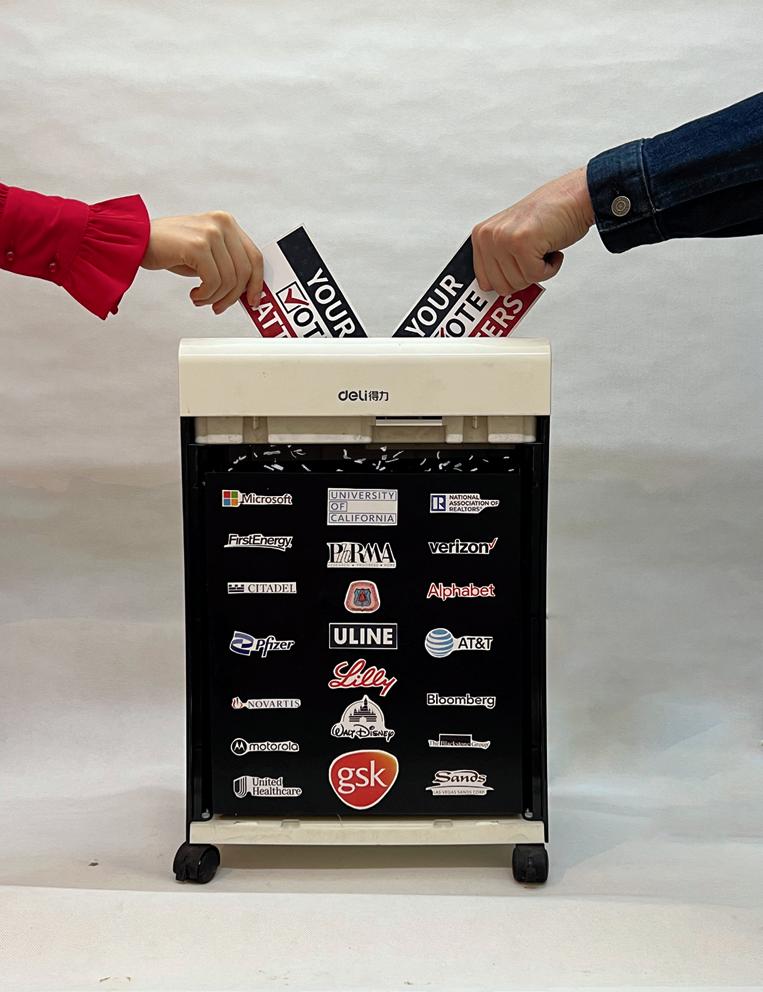

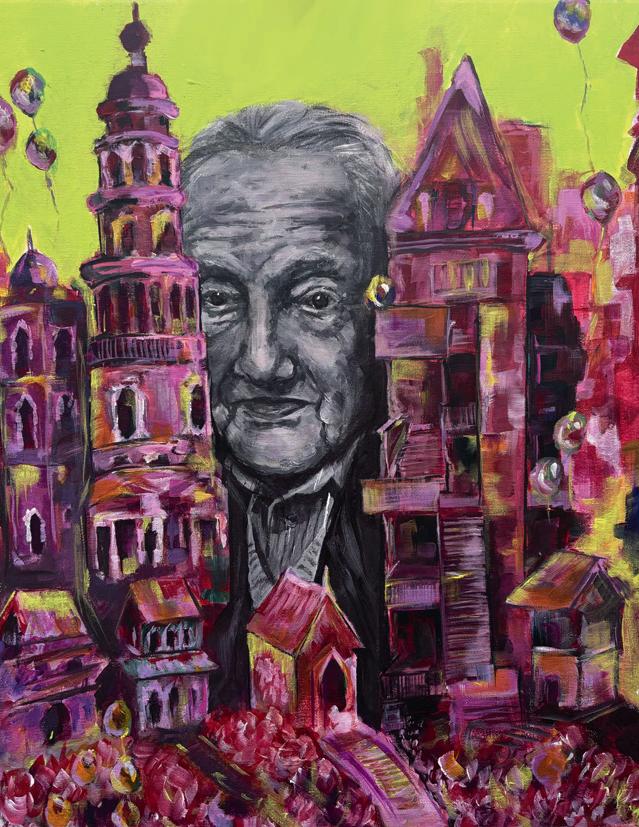
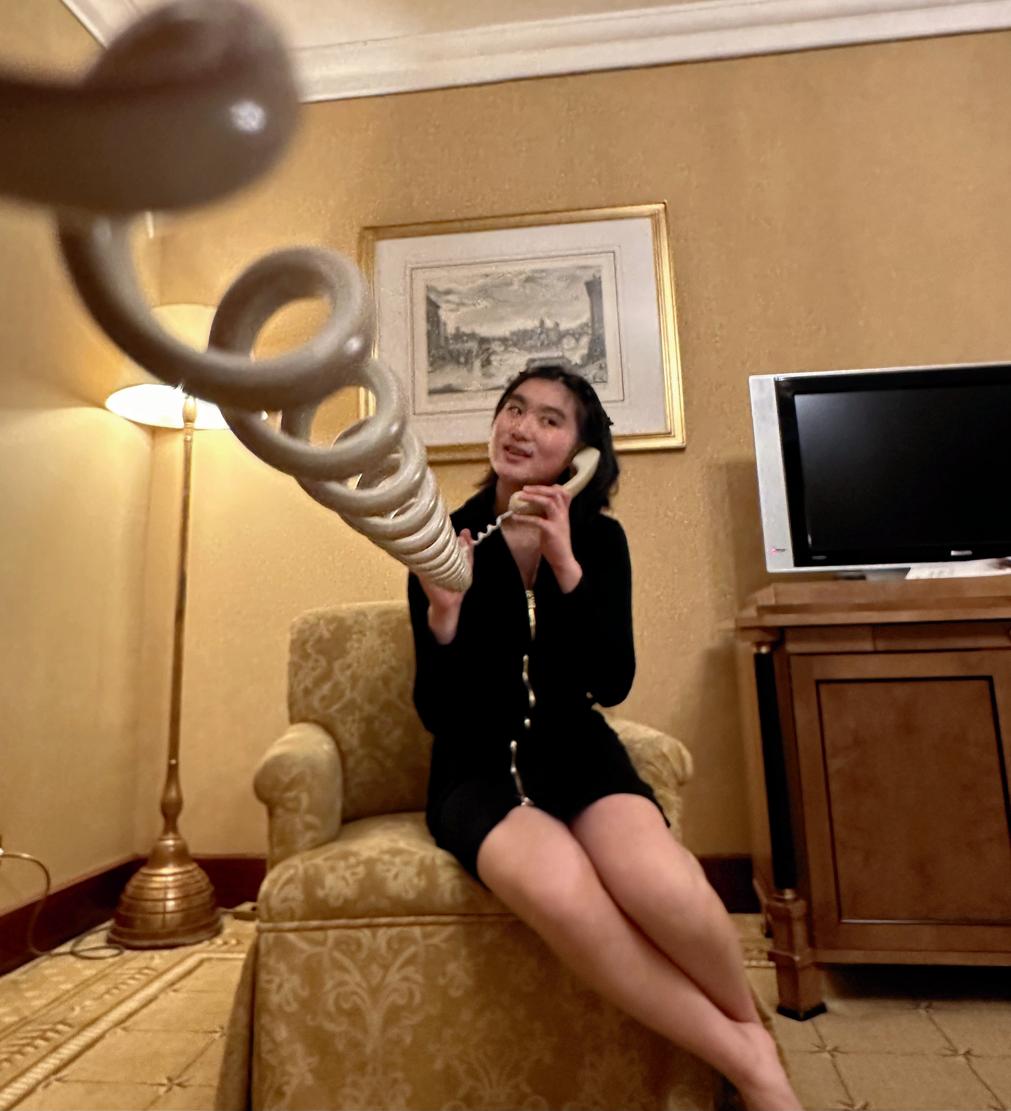
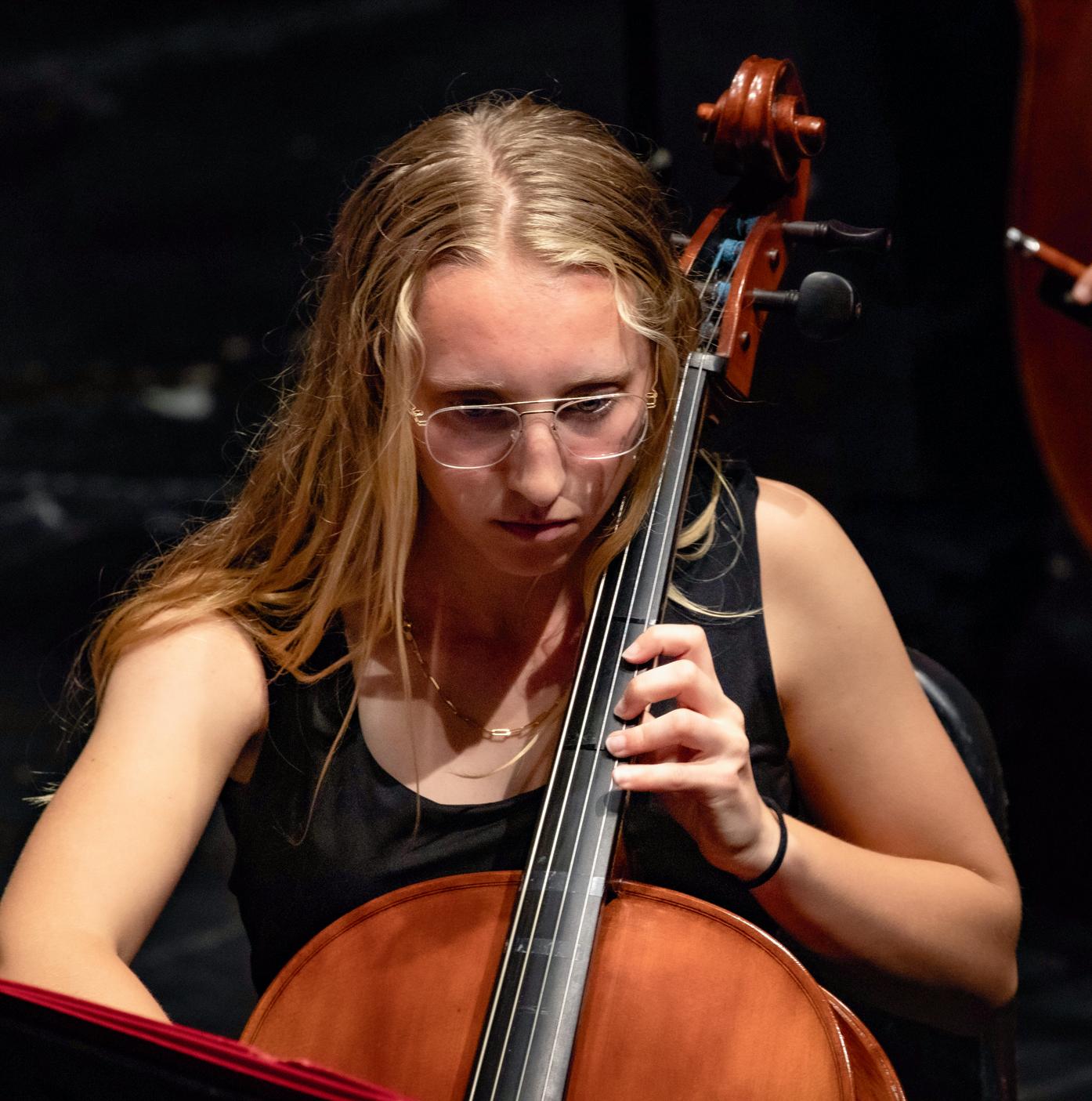
Spring Jam
At this year’s Spring Jam, the community had the chance to hear the Chamber Orchestra, Jazz Band, and Maqupellas perform in the Marion D. Campbell Performing Arts Center.
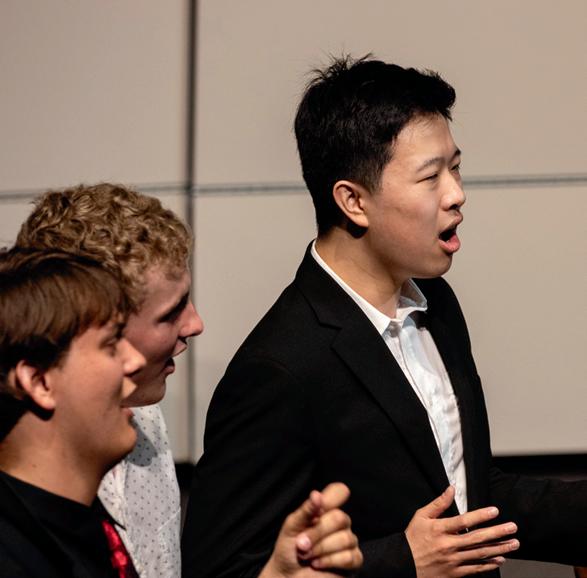
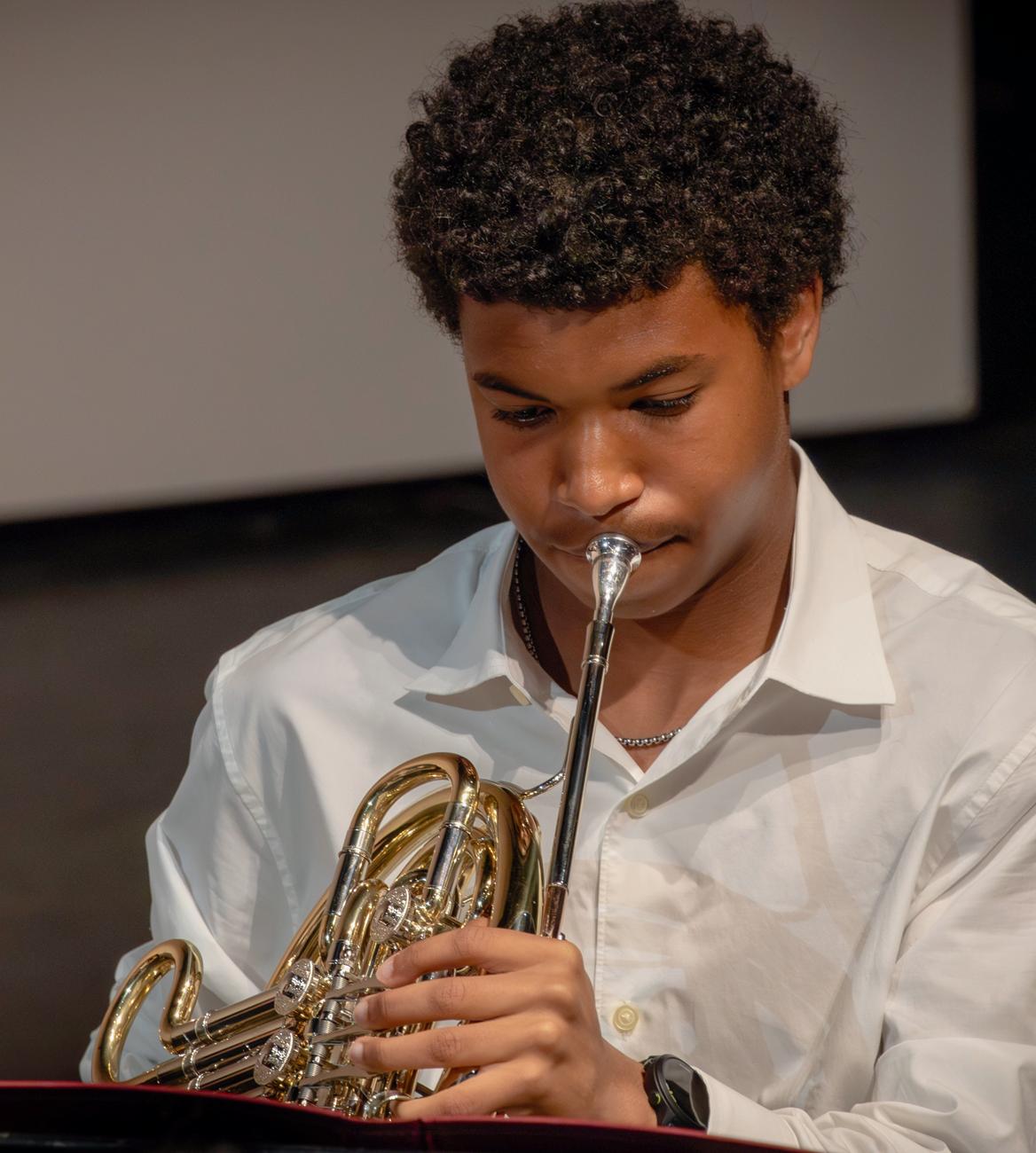
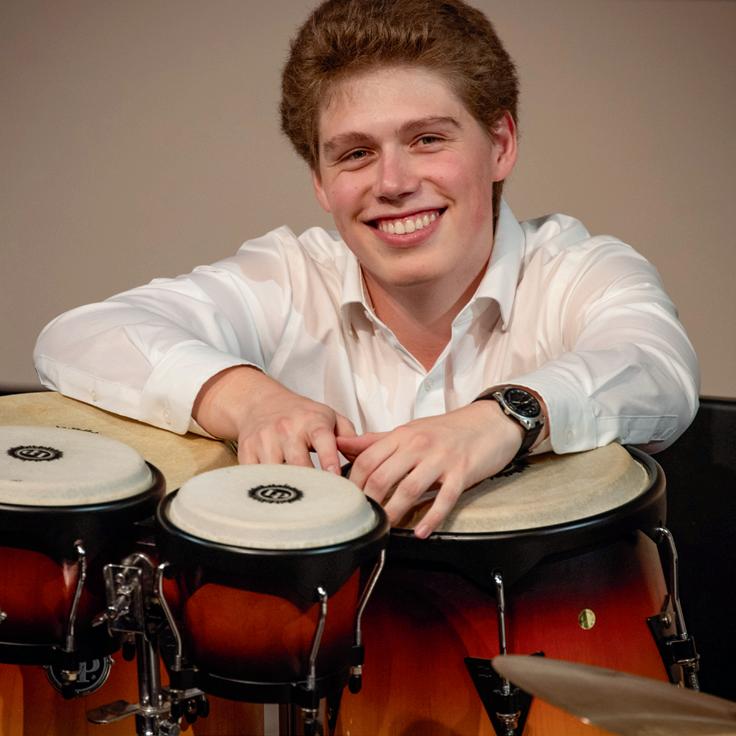
1 Ellie Burnett ’27, cello, Chamber Orchestra
2 Right to Left: Daniel Mao ’26, Anders Caspersen ’25, Alexander Newman ’25, Maqupellas
3 Eric Liang ’26, electric bass, Jazz Band
4 Sahovan Modi ’27, guitar, Jazz Band
5 Sara Agrawal ’25, bass, Jazz Band
6 Chase Bellamy ’26, French horn, Chamber Orchestra
7 Quin Davis ’25, percussion, Jazz Band
Malcolm Endicott Peabody Jr. ’46
March 26, 1928–December 19, 2024
By Payson Peabody ’82
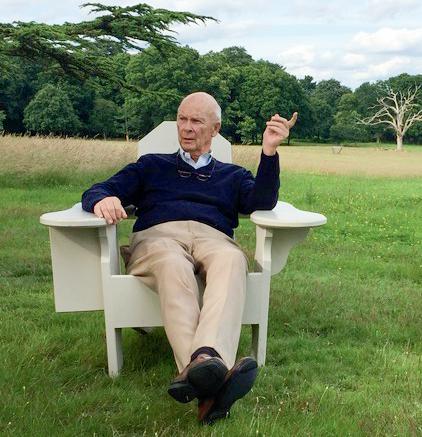
there is a photo of my Dad, Mike Peabody ’46, when he was most likely a Fifth Former at Groton. There he sits, smiling for the camera, close by his lifelong friend, first cousin and formmate Gates Davison.
On Gates’ shoulders rest the hands of his father, the uniformed Trubee Davison 1914, recipient of the Navy Cross and pioneering aviator whose face had appeared on the cover of Time magazine. His innovations in flight truly helped America prevail against the Axis powers in World War II. Below Dad, a smiling George Peabody, my uncle, a few months before he helped pilot a landing craft that happened to supply the flag raised by U.S. Marines at Iwo Jima.
On the far right of the photo stands my uncle Chub Peabody ’38, in his Navy uniform next to his lovely Bermudian wife Toni Peabody. Chub had become a celebrated Hall of Fame lineman at Harvard and would soon be awarded a Silver Star for his service on the submarine USS Tirante, narrowly escaping death in battle off the coast of South Korea. Later, he was elected governor of Massachusetts.
To Gates’ left sits my aunt Marietta Peabody Tree, oldest daughter of my grandfather Malcolm Endicott Peabody ’07, roughly above her in the photo. At the time she was married to Dad’s mentor Desmond Fitzgerald, the CIA’s future deputy director of plans and working for the British Ministry of Information. A close friend of Babe Paley, she would go on to become one of the most remarkable women of her generation.
Towards the right of the photo is Dad’s cousin Danny Davison ’43, newly commissioned in the U.S. Air Force. After working for J.P. Morgan, Danny built the U.S. Trust company into one of the largest asset management companies of its day.
More than ten years Marietta’s junior, Dad looked up to his older siblings and cousins and was humbled by their accomplishments. Perhaps this was the source of his legendary, self-deprecating sense of humor that later won my mother’s heart. “He was fun,” my Mom remarked, “and he made me laugh” when she was asked to explain
why she chose my Dad over a far more likely suitor. (And I say thank goodness for that.)
He was competitive with his siblings in the best possible sense, striving to defend and support America in his own way. Harvard Business School classmate and lifelong friend Amo Houghton recounted that Dad was always asking “What’s a project we could work on that’s really going to make a difference?” Another Groton formmate, Miles Morgan ’46 described Dad, even at Groton, as “having a sense of duty.”
It was certainly this sense of duty that drove him to his accomplishments in civil rights, public housing, and public education. Most notably, Dad worked with Dr. Martin Luther King Jr. and my grandmother Mary Parkman Peabody (to the right of my grandfather in the photo) to protest segregation in St. Augustine, Florida. As the head of Dr. King’s Southern Christian Leadership Council (SCLC) in Boston and the president of the Episcopal Society for Cultural and Racial Unity (ESCRU), Dad persuaded my 72-year-old grandmother and my mother’s mother Florence Rowe to travel to St. Augustine together. The protest, in which my grandmother Peabody was jailed, made international headlines and weakened opposition in Congress to the 1964 Civil Rights Act. In a moving telegram to my uncle, Dr. King remarked that he had been “so deeply inspired by your mother’s creative witness” and that her actions “will be an inspiration to generations yet unborn.” It was such a topic of discussion at the time that Queen Elizabeth, while visiting my aunt Marietta, is said to have remarked: “I do hope your mother goes to jail.”
Not content with his mark on history, Dad next turned to public housing. Inspired by the G.I. Bill that put college tuition vouchers in the hands of returning veterans, Dad wrote a white paper while at HUD that foreshadowed the end of mass public housing. A demonstration project that followed grew into today’s $30 billion Section 8 federal housing program. Vouchers gave
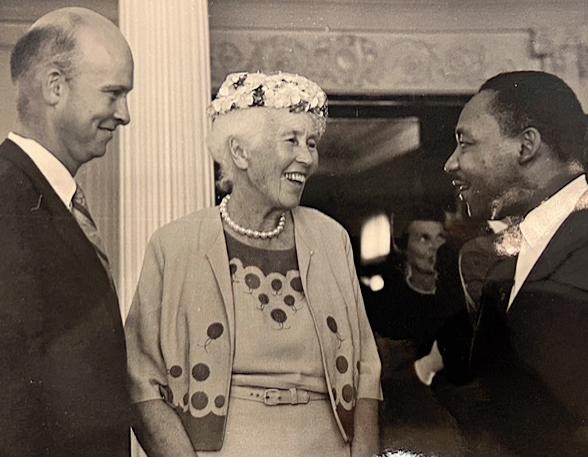
families more control over their future and ended the co-location of poor tenants in crime-ridden urban towers. Many of them have since been demolished.
Next, Dad saw an opportunity to apply the self-help principle to public education, working with the newly elected Republican Congress in 1994 to authorize charter schools in the District of Columbia. D.C. parents have demonstrated their support of the concept by flocking to charters like the one I helped to found: Meridian Public Charter School, which currently educates about 600 children. Nearly 50 percent of all D.C. schoolchildren now attend an independently governed public charter school and the competition from charters has improved academic performance in the public system as well.
Even into his ninth decade, Dad was looking for new ways to “really make a difference.” By then, he had many wealthy and influential friends and he tirelessly sought their help to build a new bipartisan nonprofit, Issue One, to curb the influence of money in politics. Dad characteristically threw himself into the task, and his legacy lives on in Issue One and many other organizations that he supported in his later years.
In his letter from the Birmingham jail, Dr. King wrote, “We must use time creatively, in the knowledge that the time is always ripe to do right.” More than anyone I know, Dad lived by that maxim; he was quick to love and wasted no time in the pursuit of what he thought was right. I will miss him dearly and I know many others will as well.
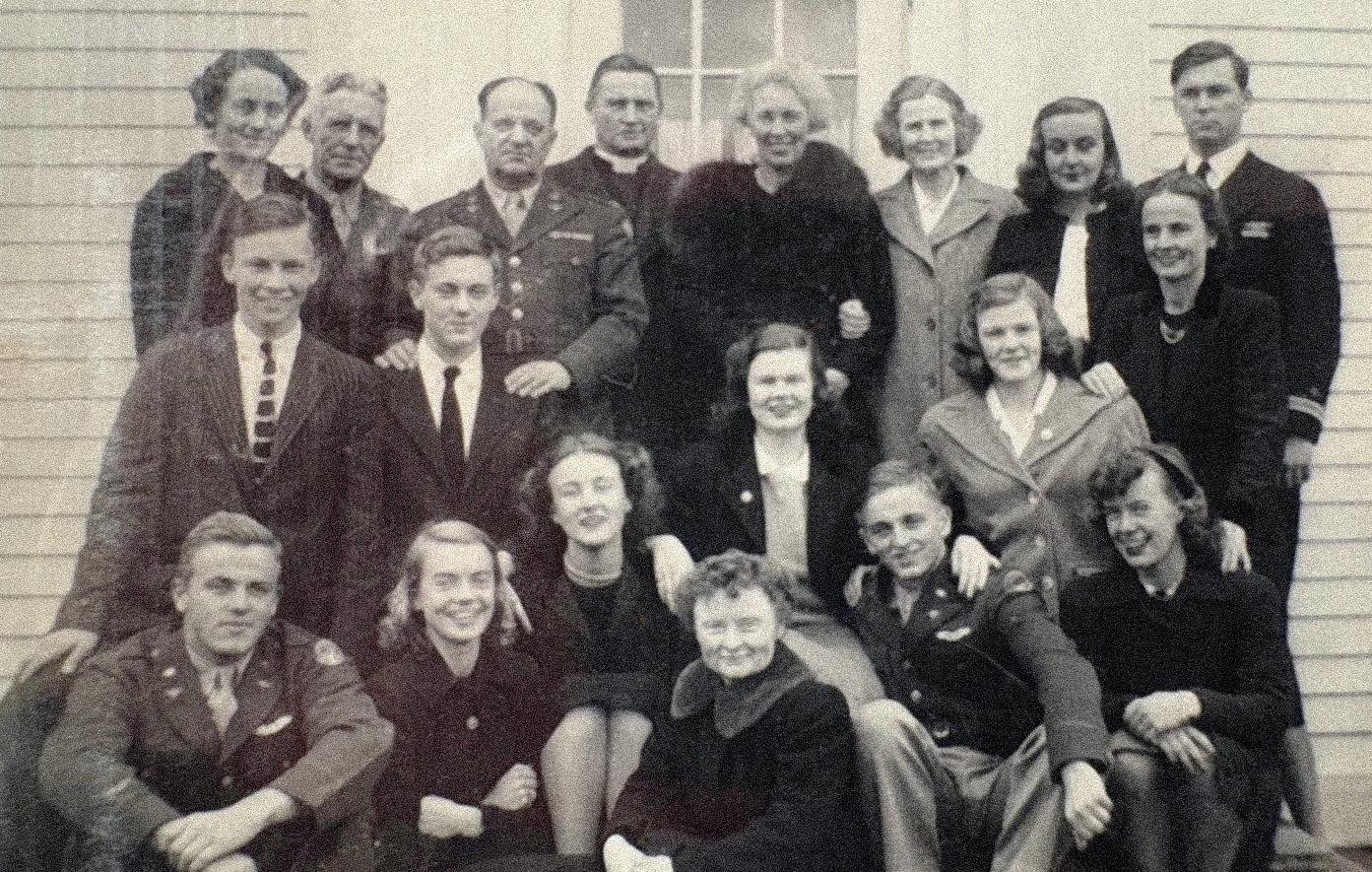
Ann Elizabeth Bennett ’81
March 16, 1963–November 15, 2024
By Alexandra Paul ’81
ann bennett ’ 81 was an Emmy- and Peabody-nominated documentary film maker who devoted her career to telling stories of the Black experience in film, television, interactive projects, installations, and live events. She died in New York City after several surgeries and a long struggle with severe rheumatoid arthritis.
Ann and I were assigned as roommates when we started Groton in Third Form, and we chose each other the next two years—in a triple with formmate Mikel Durham in Fourth Form and then Lukie [Osborne] Wells the next year. We all liked to dance on our beds, belting out the lyrics to the Saturday Night Fever and Grease albums; we’d walk to town to buy a can of vanilla frosting and a large bag of M&M’s, which
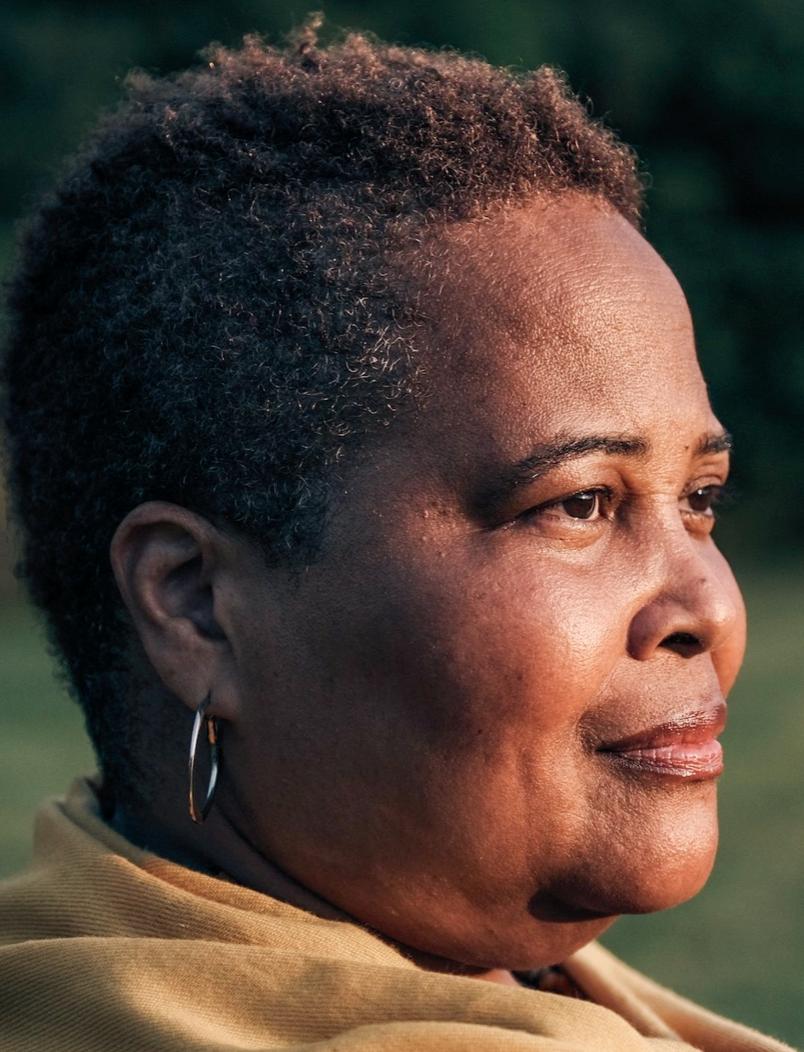
we devoured on the walk home; and we got ready for the Saturday night school dances by wearing our nicest Fair Isle sweaters, sometimes borrowing them from Diana Rathborne at the end of the hall. Mikel recalls that “Ann’s closet would look like a bomb exploded, but when she came out she always looked perfectly pressed and tidy! It was like a Mary Poppins bag of wonders!”
Before she came to Groton, Ann attended Buckingham Browne & Nichols not far from the Cambridge home where her father taught at Harvard. A BBN classmate remembers Ann and her impish grin at 7 years old, and we remember it as a teen too: One day Ann was headed to see Mr. Choate, a teacher and boys’ dorm master. She asked Lukie if she had a message for Mr. Choate.
Lukie responded, “I will give you a dime if you tell him to f*** off.” And Ann told him! Lukie laughs about it now, but she was mortified at the time!
In the dead of winter with a blanket of new snow and ice covering the ground, Ann took Lukie and me up on a dare to walk around the Circle barefoot. We lost several dollars that evening when she came back triumphant (but freezing), with Mikel as a witness that she had truly done the entire loop without shoes.
Not only was Ann funny, she was a creative even back in high school: sprightly as Puck in A Midsummer Night’s Dream , moving and honest as several characters in Our Town , and the most graceful of dancers.
It was no surprise that Ann got into every college to which she applied, and Harvard/ Radcliffe was lucky to get her. Ann worked her way through college as a National Park Service ranger, giving tours along Boston’s Freedom Trail and Black Heritage Trail. She did her own research on Black Americans in Boston which she incorporated into her presentations, and then found her niche: telling the stories of Black experience through documentary film. She produced the NAACP Image Award–winning PBS documentary Through a Lens Darkly: Black Photographers and the Emergence of a People; the award-winning series Africans in America: America’s Journey through Slavery (which is routinely shown in African American Studies courses) and the innovative Digital Diaspora Family Reunion (DDFR), among many others.
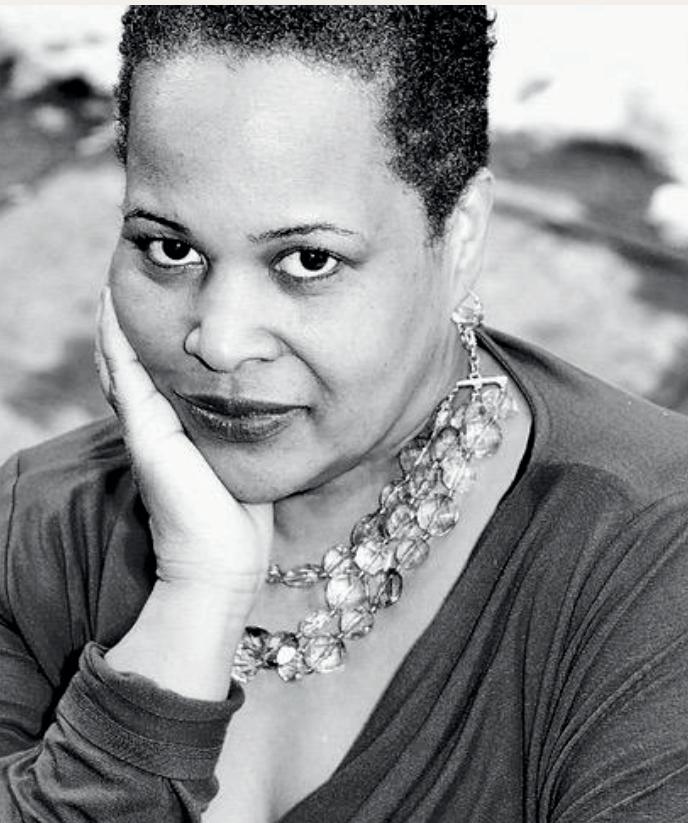
Often she would go to several events in a night. Dance, music, film—no medium was uninteresting to her. She was suffused with her love for the arts.”
Graduating with a master’s from the Columbia School of Journalism only expanded her talents in media: Ann was especially respected as an archivist, a vital part of nonfiction filmmaking (“She knew where to find things and where to get things,” commented a fellow producer in awe). But she was skilled in all aspects of filmmaking (“If Ann was attached to your project, you got three, four, five times what you paid for,” another colleague of hers told me). Ann also became the go-to person for documentary social media campaigns. Because of her talent, there is now an Ann Bennett Visionary Producers Prize for excellence in archival storytelling and emerging technologies given by the Alliance for Media Arts & Culture.
Ann was renowned for her mentoring of young, up and coming filmmakers of color. “Generous” and “kind” were descriptors I kept hearing over and over again when I spoke to her friends and colleagues. She excelled at the thankless and complicated task of production budgeting, and patiently taught workshops to help demystify it for others. Ann’s Facebook page and a newsletter she regularly emailed out to hundreds of creatives were all about letting her fellow independent filmmakers know
about work opportunities and grants. She loved the creative energy of New York City, her home for three decades, and was always out and about supporting the screenings or exhibitions of her colleagues. “Often she would go to several events in a night. Dance, music, film—no medium was uninteresting to her. She was suffused with her love for the arts,” her longtime friend Gina told me.
In her last years, Ann lived in a rehab center after several surgeries to ameliorate her advanced rheumatoid arthritis. Her brother Mark said, “She was in a lot of pain, but she never complained.” Her thoughtfulness extended to her 90-year-old Puerto Rican roommate who had no family; Ann arranged a salsa music party in their room every Sunday night to help her feel at home. Despite her physical challenges, Ann continued her work producing the documentary Razing Liberty Square, about the gentrification of an area in Miami due to climate change, which is now on PBS.
At Groton, we were both squares, but Ann bridged all cliques. She was so charming to everyone, you would be proud to have at your side anywhere—whether she was meeting the queen or feeding the homeless. Or jumping on the bed singing “Greased Lightning.”
Charles E. Brinley II ’59
November 17, 1940–April 2, 2025
by Gardner M. Mundy ’59
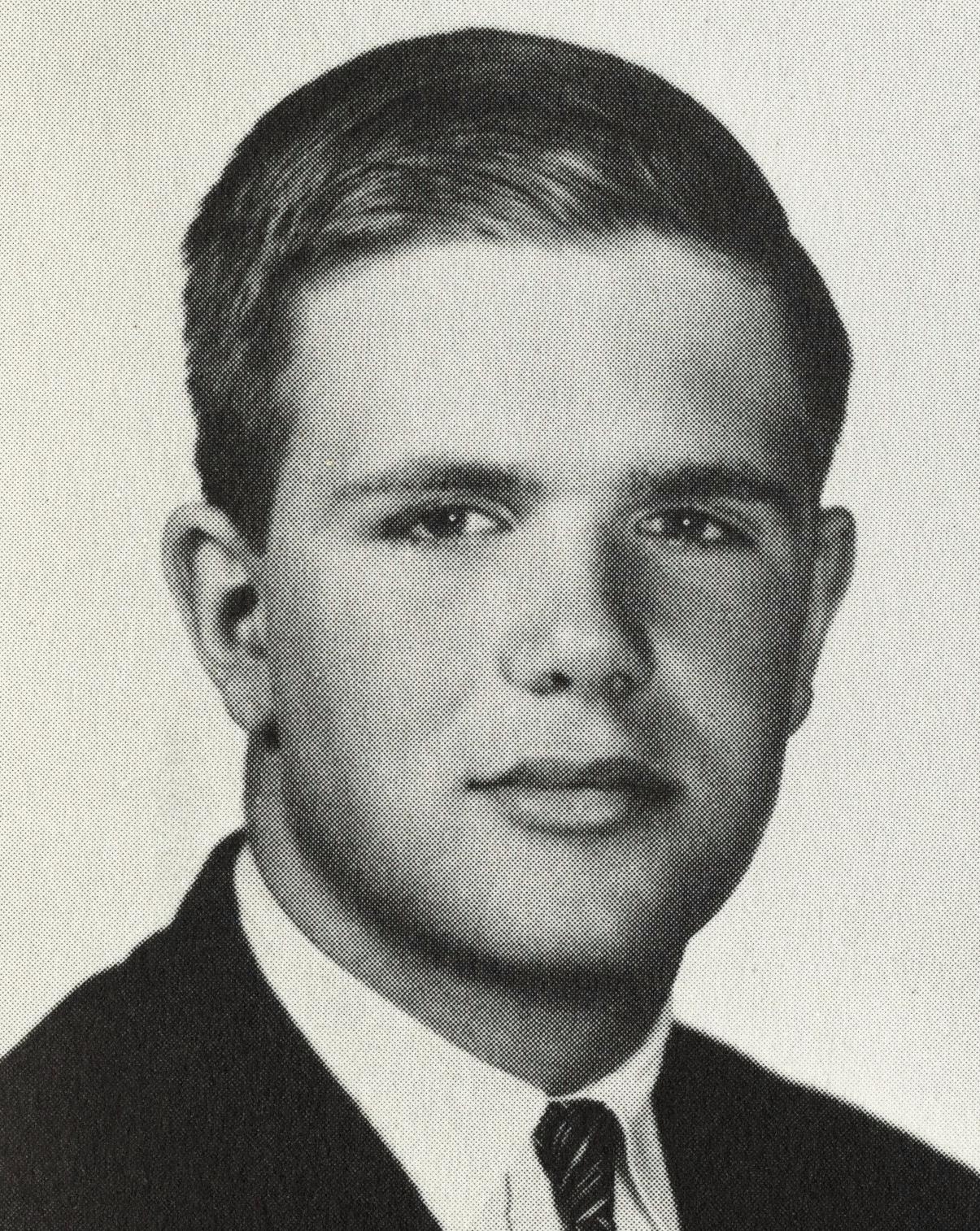
charlie brinley ’59 died on April 2, 2025, in Old Lyme, CT, after a period of declining health. He is survived by his wife of fifty-seven years, Nicoll Cadwalader Brinley, their son Charles E. Brinley III, grandchildren William, Reily, and Catherine, and siblings Dorothy Manou, Helen Abraham, and Frazier Brinley.
A third generation Grotonian, Charlie was born in Philadelphia and spent his childhood years in Chestnut Hill, PA, where he attended Chestnut Hill Academy before entering Groton as a Second Former. At Groton, he played football and tennis, served as a member of the Missionary Society, and formed friendships which remained close throughout his life, culminating in his years as form agent when he engineered the groundbreaking achievement of 100 percent
participation by our form in annual giving and started our tradition of annual luncheons between reunion years.
After Groton, he matriculated at Yale, where he was my roommate for all four of our years, along with formmates Dick Anthony in freshman year and Eddie Rogers in senior year. He was a member of Zeta Psi, Mace and Chain senior society, and served as manager of the varsity hockey team. He graduated with a degree in history.
He began his business career with the Philadelphia National Bank but switched to the coal industry when he joined Westmoreland Coal Company, where he held senior positions in the company’s home office, deep-mining operations, and surface-mining operations in Philadelphia, Tennessee, and Montana. He concluded his coal industry career as CEO of Dominion Terminal Associates in Newport News, VA.
Charlie’s many different business responsibilities naturally meant that Nicoll and he lived in a variety of locations before settling in Old Lyme, CT. In all of them, Charlie pursued his deep commitment to community building and civic engagement. Examples of organizations that he led or served in senior roles are too numerous to mention here, but they included sports programs for youths where he often volunteered as a coach. Beneficiaries of his coaching skills and intense competitive spirit included his son and grandchildren in all of their athletic endeavors, a fact which they emphasized in their personal and emotional remarks at his memorial service.
Nicoll did me the great honor of asking me to give a few remembrance remarks at that service. Of course, you don’t decline a request such as that, but you do think a lot about what to say. How do you compress a friendship such as his and mine into a few words? Despite almost continuous separation of our respective homes and places of work, we remained in close touch. Nicoll and I discussed this dilemma. She hoped for a dose of gravity, based on things she knew that I knew about Charlie that the other attendees may not have known. Because of the number of other speakers, we also agreed on brevity.
Here is a précis of what I said in St. Ann’s Church on a sunny morning last June.
After Charlie’s death I participated in the copious amount of email traffic among our shared friends. All of you know the words
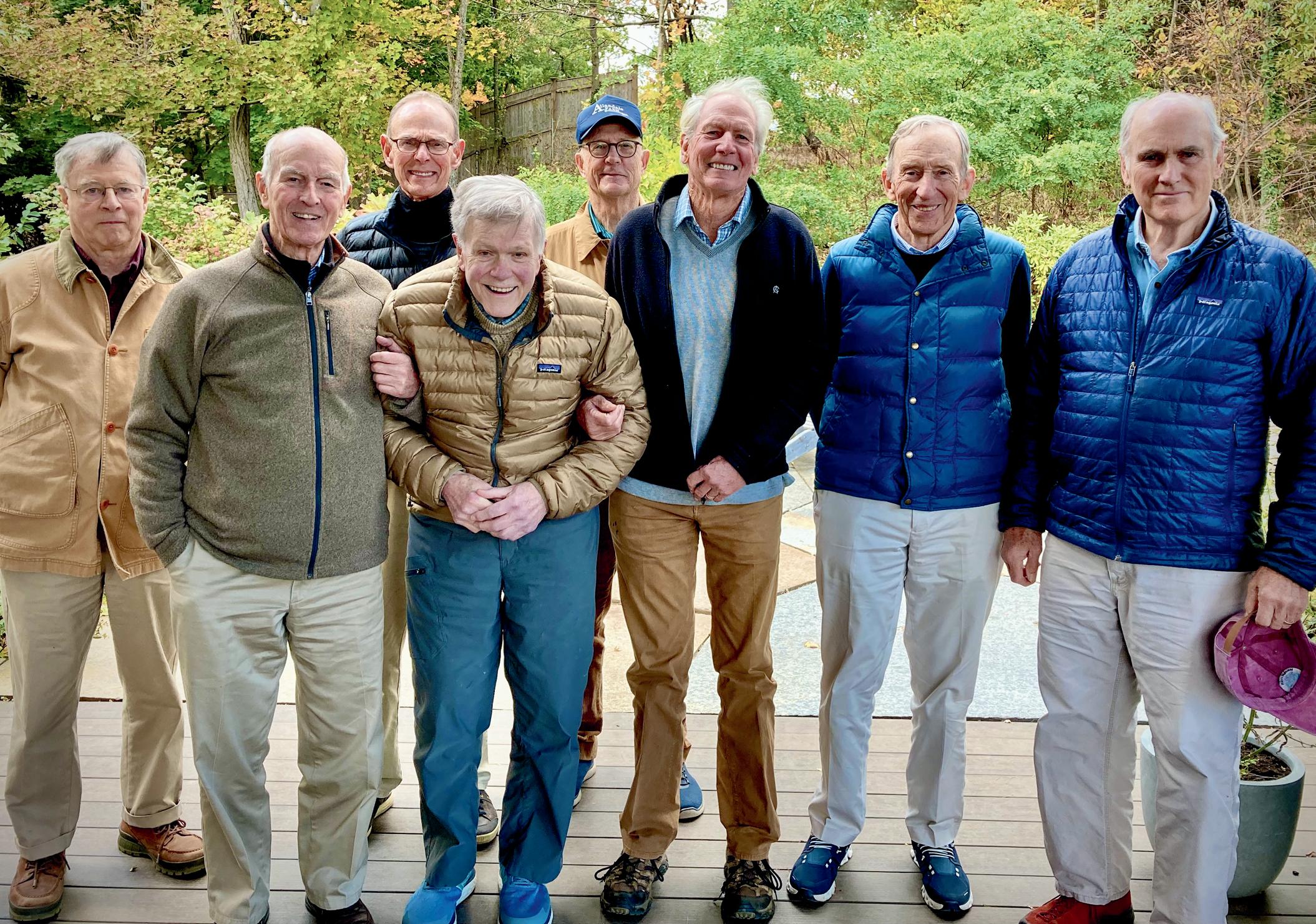
that were exchanged, such as: warm, gracious, kind, genial, positive, ever-thoughtful and considerate toward other people, and a life of service to the greater good.
This list would become very lengthy if I continued it. These and many other words and phrases accurately describe the outward and visible Charlie, and none of them will surprise you or tell you anything about him that you don’t already know. However, there was also the inner Charlie. To Nicoll’s point about gravity, he had two qualities that aren’t generally known, because he exercised them quietly, in a way that never drew attention to them, or to himself. But they were of his essence:
(1) a deep sense of right and wrong and (2) a deep sense of personal responsibility.
These started with his parents and got drilled into his bones by the experiences that his close friends and he shared at Groton and Yale. If the words mentioned a moment ago were Charlie’s velvet glove, these two qualities were his iron fist. We all aspire to exhibit such qualities, and they of course overlap. What made them distinctive
for him, however, was the way in which they were absolutely intuitive, instantaneous—present whenever circumstances called for them. They required no thought or action on his part. They just happened.
The examples in his personal and business life are legion, but the common thread was his response when presented with a situation where people were doing things he thought they shouldn’t or were pressuring him to do things he knew he shouldn’t. In his personal life, this could be as basic as refusing to renege on a commitment or promise. In his business life, it was more complicated, such as refusing to take shortcuts on mine safety or declining to follow a course of action that was not in the best interest of the people to whom he felt a sense of responsibility. These decisions were difficult to make, sometimes very difficult, but they were made without a moment’s hesitation, even when he knew the consequences for him personally might be problematic.
One result of Nicoll’s and my pledge of brevity is that you may feel by ending my remarks here they are too truncated. Of course they are, but the antidote is for all of us to continue the conversation at the reception following this service and at future gatherings of his friends. However, whenever you have those conversations, be sure to remember that, whatever the words you use to describe Charlie may be, they will be but a pale reflection of the man we know, admired, and loved.
Members of the Form of 1959 with Charlie in 2024 at a lunch in Brookline. Back row, from left: Chink Cutler, Eddie Lawrence. Front row, from left: Gardner Mundy, Pen Williamson, Charlie Brinley, Tony Zunino, Joe Frelinghuysen, Jack Lawrence.
Form Notes are password-protected. Members of the Groton community may read them online by signing into GrotonConnect at www.grotonalumni.network.
Thank you, John!
Over twenty-one years serving as Groton School’s director of development and alumni affairs, John MacEachern P’10, ’14, ’16 bridged the gap between past and present, strengthening life-long connections between the school and generations of Grotonians.
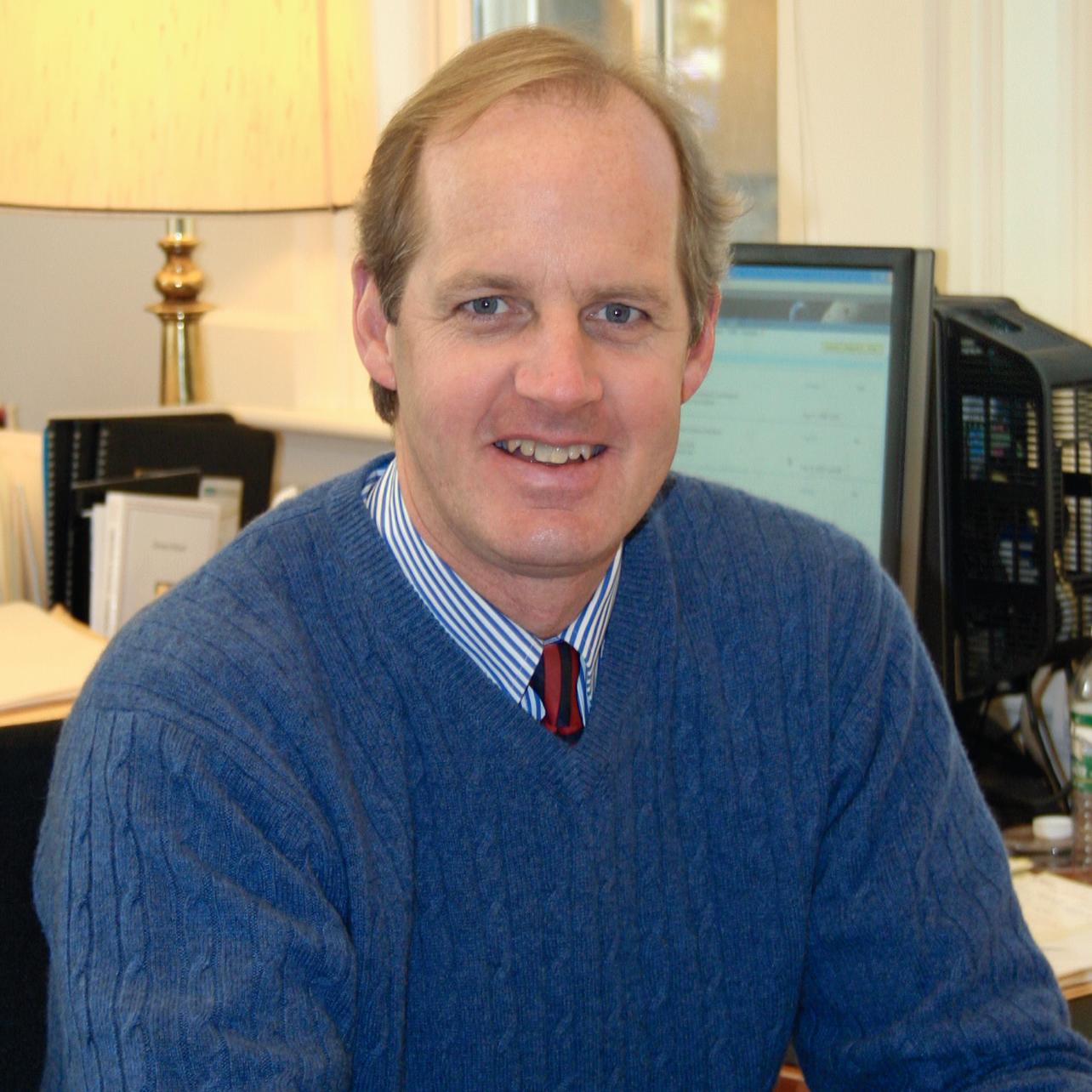
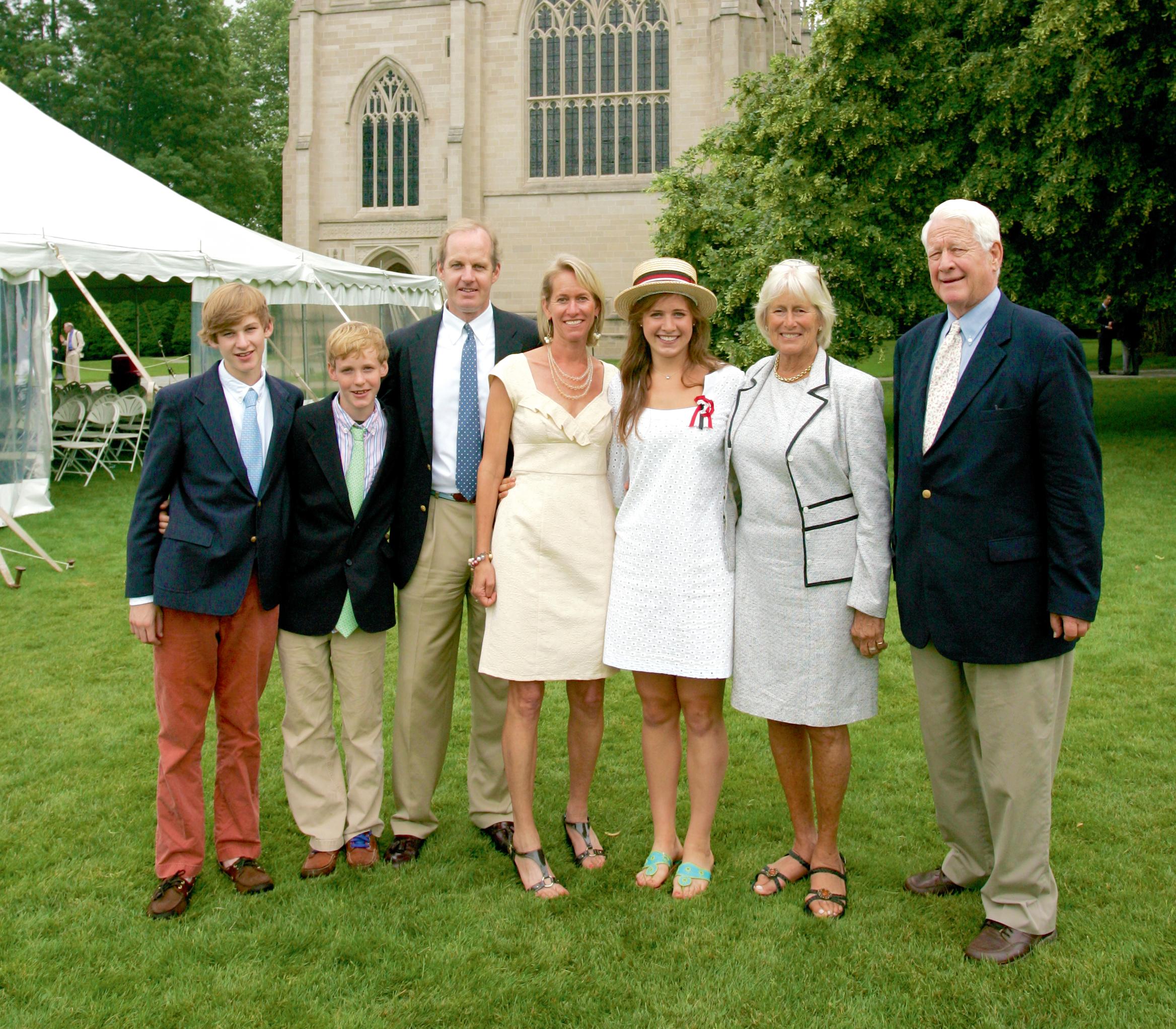
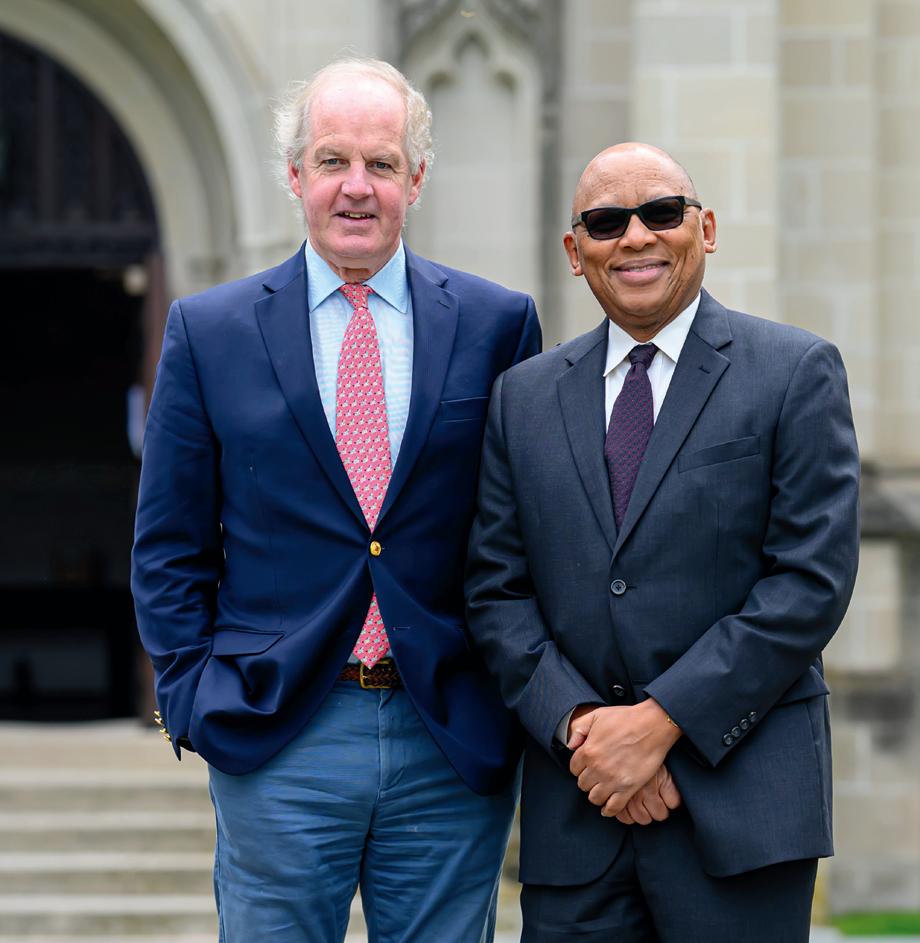
Through many successful fundraising campaigns and countless reunions, receptions, and gatherings, John’s service to the Groton community has had a lasting and positive influence on the Circle, which will continue for years to come.
Thank you, John. Enjoy your retirement!
Groton School
282 Farmers Row
Groton, Massachusetts 01450-0991
Change Service Requested
celebrating fifty years of coeducation
C I R C LING BA C K
in the spring of 1917, editors of the Grotonian solicited news and writing from Groton School alumni serving in World War I for the issue that normally would salute graduates. Quentin Roosevelt 1915, a former Grotonian editor and the youngest child of President Theodore Roosevelt and Edith Roosevelt and newly enlisted in the U.S. Army Air Service—sent a poem, “Reverie,” which appeared in the May 1917 issue.
Just about a year later, on July 14, 1918—Bastille Day— Roosevelt was killed when his plane was shot out of the sky over France. He is the only child of a U.S. president to have died in combat.
Poetry had long been a Roosevelt family touchstone. Quentin and some of his siblings were known to write poems for their parents at Christmas. This poem shows Quentin to be a dreamer of dreams as he embarks on his fatal mission. Mark Melchior, the McCormick Library director and Groton School archivist, uncovered the poem while searching on behalf of the Theodore Roosevelt Presidential Library for materials to fill out a profile of Quentin Roosevelt for National History Day’s Silent Heroes website. The poem appears online as part of the published profile.
Quentin’s poem was not the only material worthy of further consideration. Subsequently, Mr. Melchior shared it and other Grotonian materials from the World War I years with U.S. History classes that were studying the war. Students read firsthand reports from the front, accounts of how the Groton campus prepared for wartime activities, and even obituaries of graduates—and, in one case, a Groton teacher. The Groton History Department plans on using these materials again in the coming year.