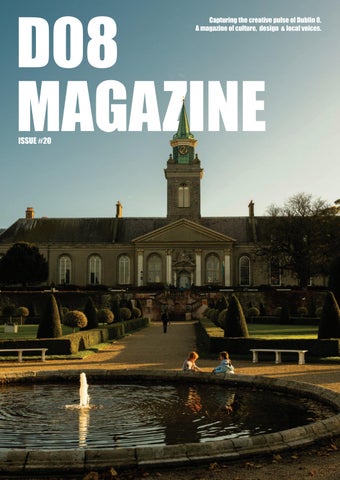
Capturing the creative pulse of Dublin 8. A magazine of culture, design & local voices.
Dublin 8 is a well-known place where the country’s past and present collide. This college project was brought to you to discover what characterises this vibrant district and to have a better understanding of how the people shape its identity. We would like you to have a better look at one of Dublin’s most iconic neighbourhoods, and its rich culture.
Walking through the streets of The Liberties, Portobello, Kilmainham and beyond, we’ve learned new stories, observed everyday rituals and had a better look into the hidden gems that give Dublin 8 its distinct character. We were not just looking to document these stories but to learn about the people behind them, to understand that history continues to resonate even today and that every single event has directly influenced the area.
Dublin 8 is defined by its contrasting heritage and landscapes that sit just steps away from experimental art studios. Where long-established families share streets with students, newcomers and innovators. We really hope to encourage our audience to experience Dublin 8 with a better look at what it really means to us. No matter if you are a longtime resident, a student or a curious visitor, hopefully these pages will inspire you to explore a little further, ask more questions and see beyond the ordinary.
We are glad you are here.
Your Editors’ Team,
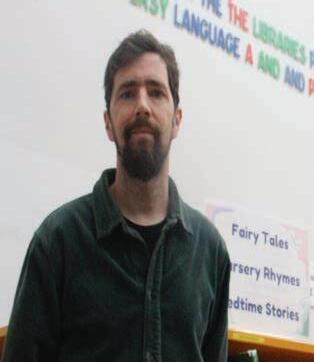
Photograph: Khai Sung Goh
CONTENTS
4 - A quiet Escape in the Heart of Dublin Irish National War Memorial Gardens.
6 - Echoes of Freedom in Kilmainham Gaol.
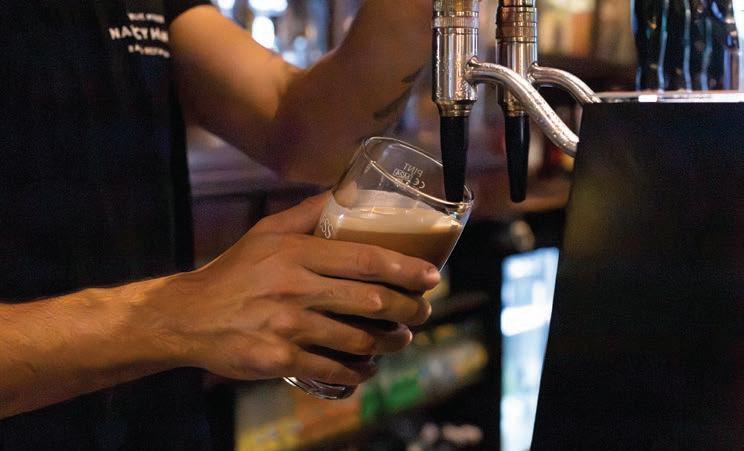
8 - A Look at Pub Culture, through ‘the Hole in the Wall’ at Nancy Hands.
10 - When Poetry Finds a Purpose.
14 - The Heart of Cork Street.
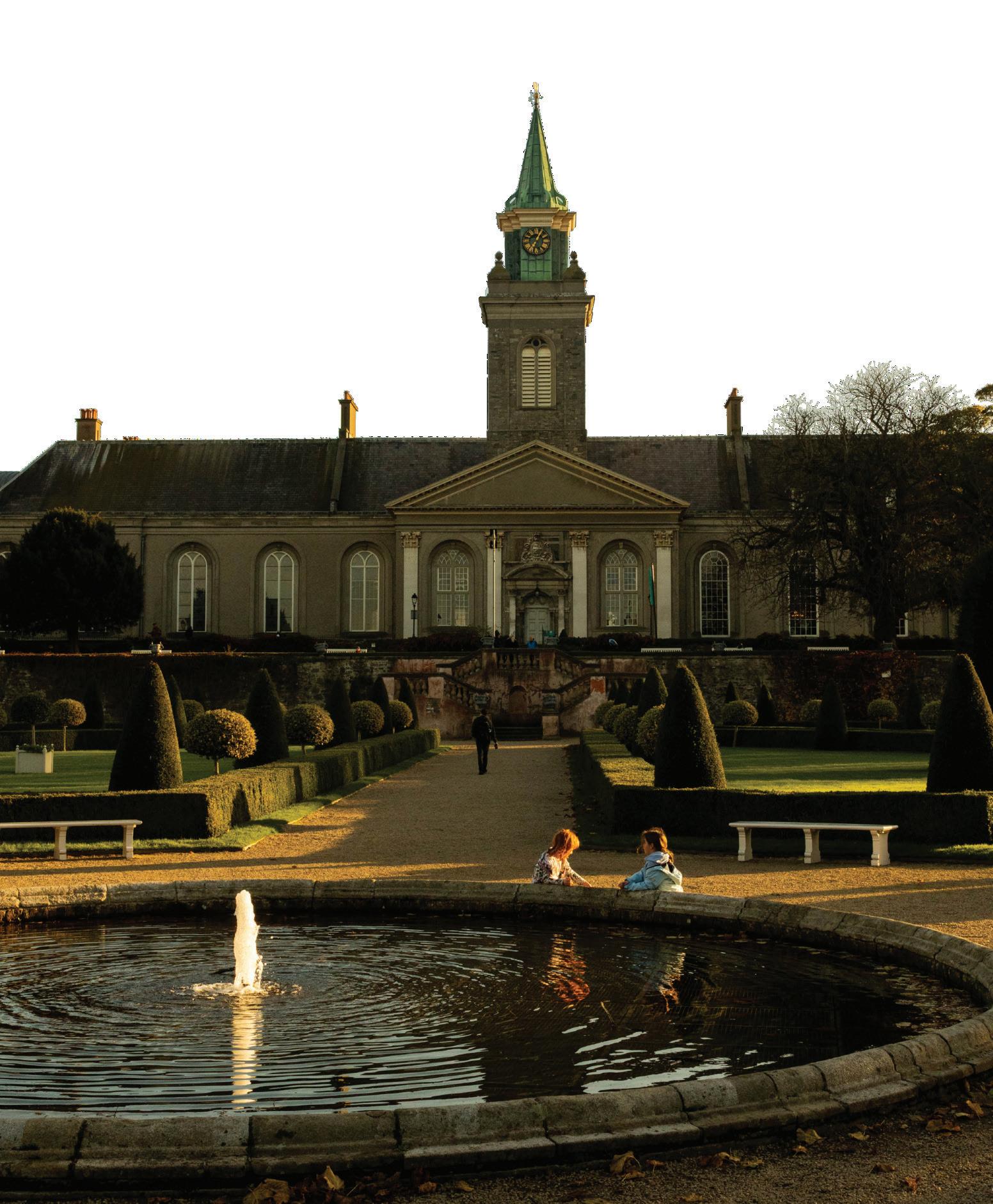
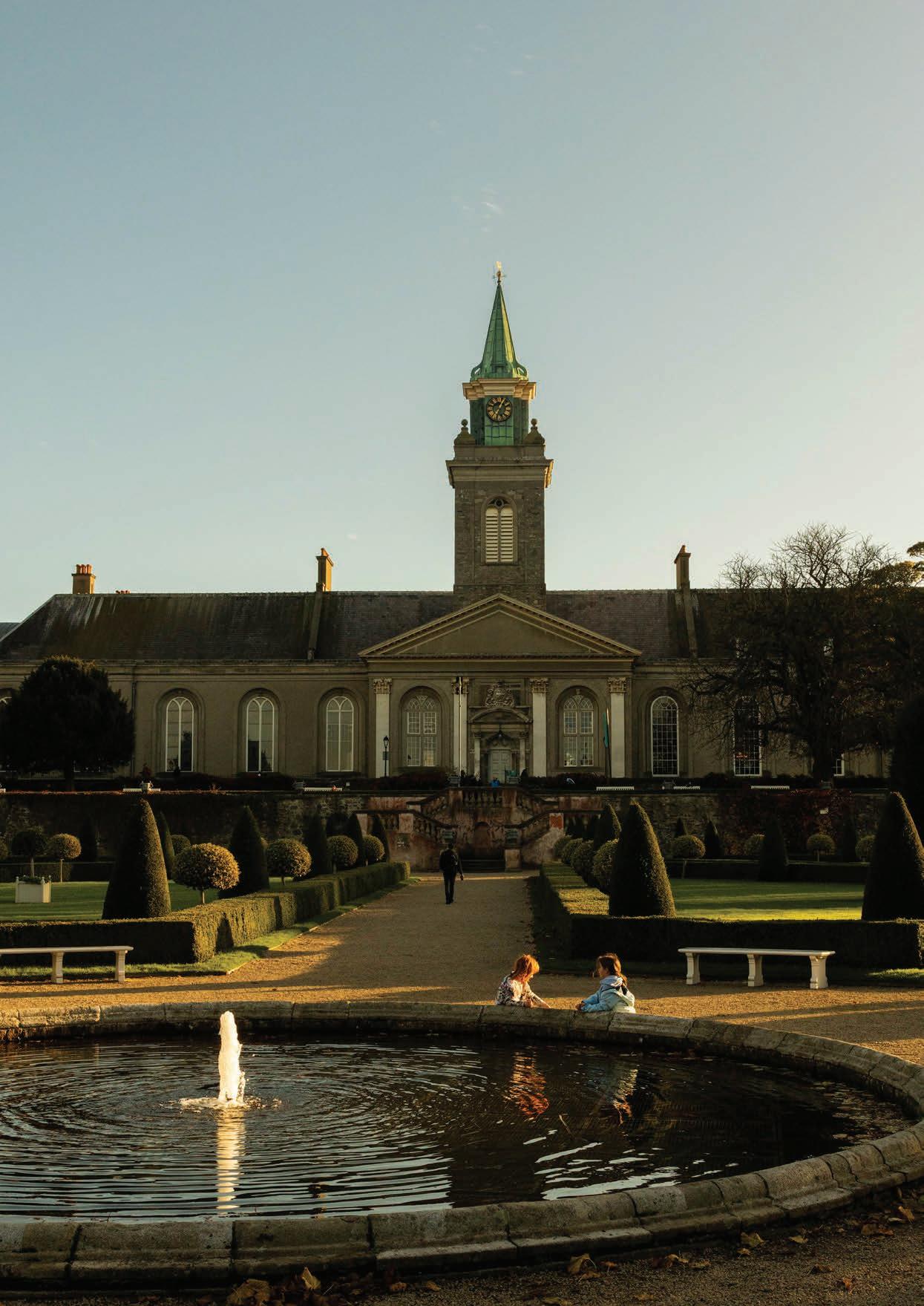
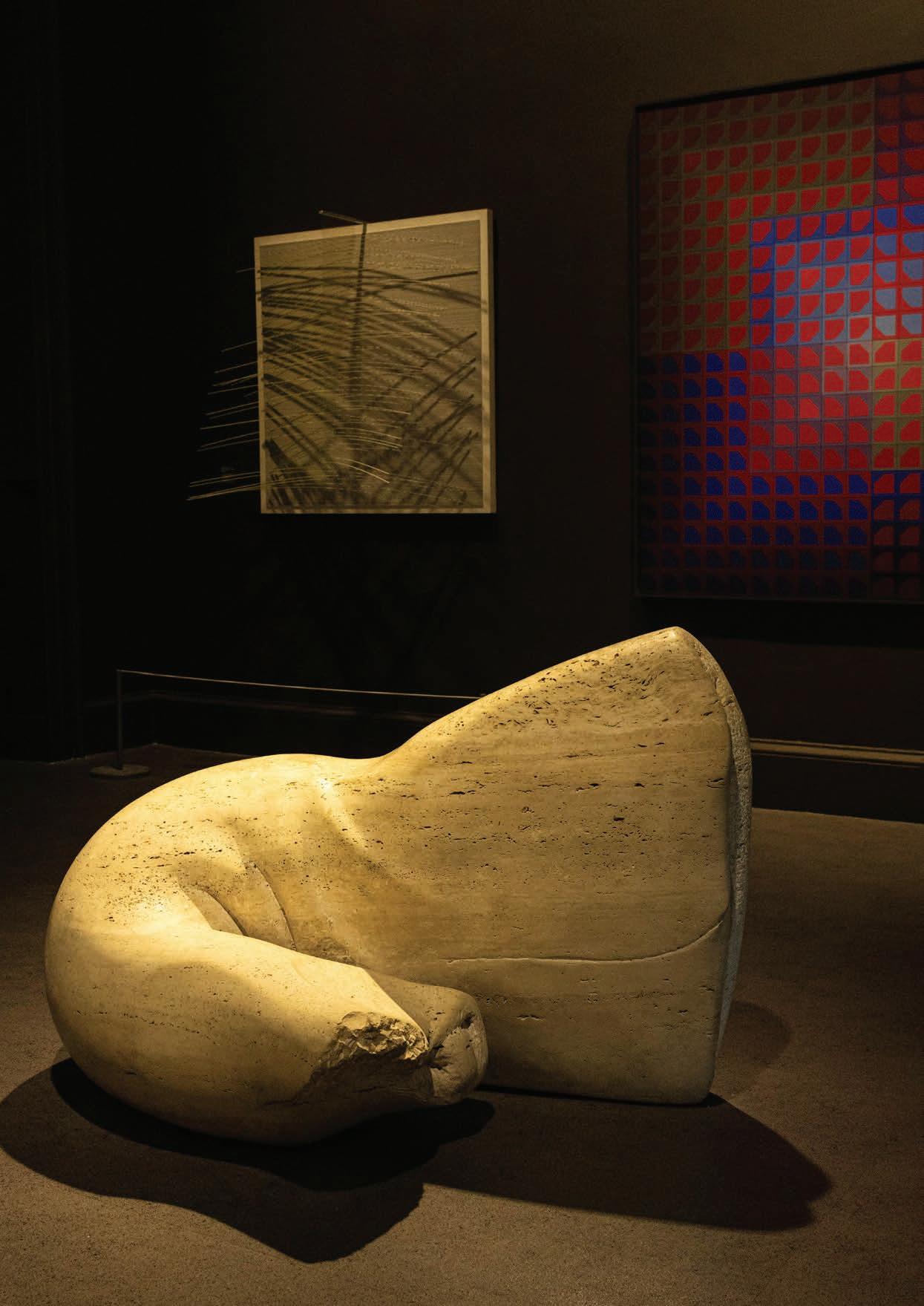
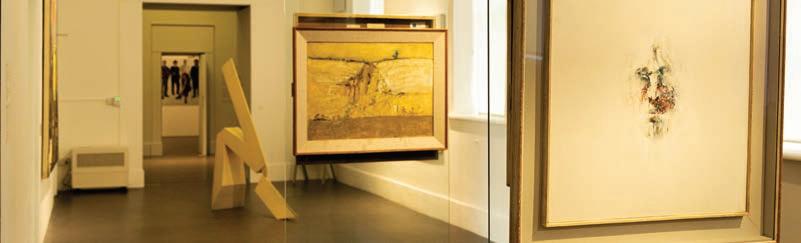
16 - Exploring IMMA’s Historic Beauty.
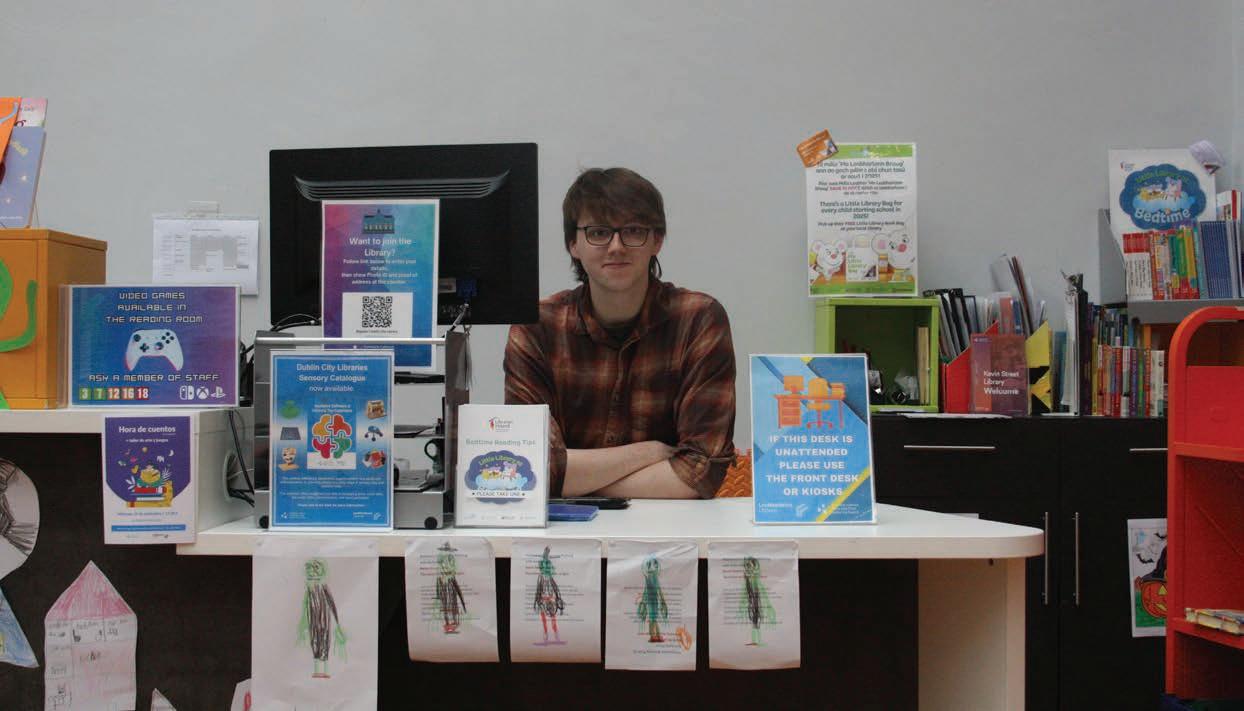
20 - Local Literature: The Colourful Employees of Kevin Street Library Cherish Their Role In The Community.
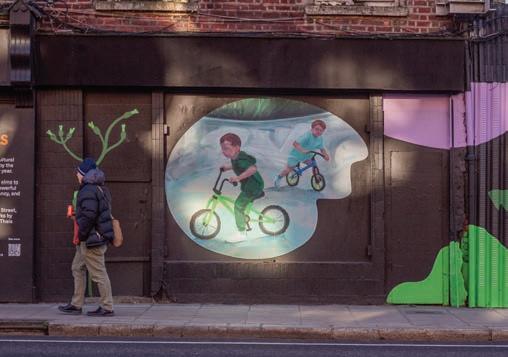
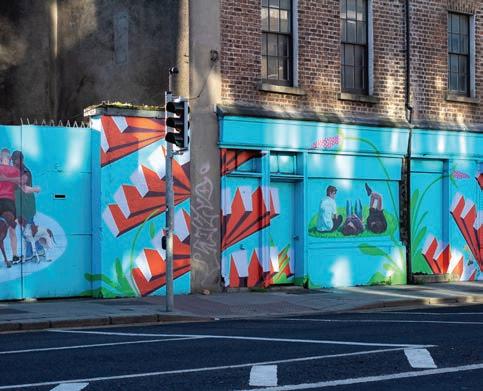
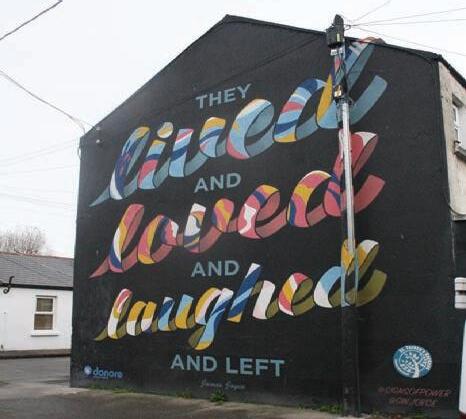
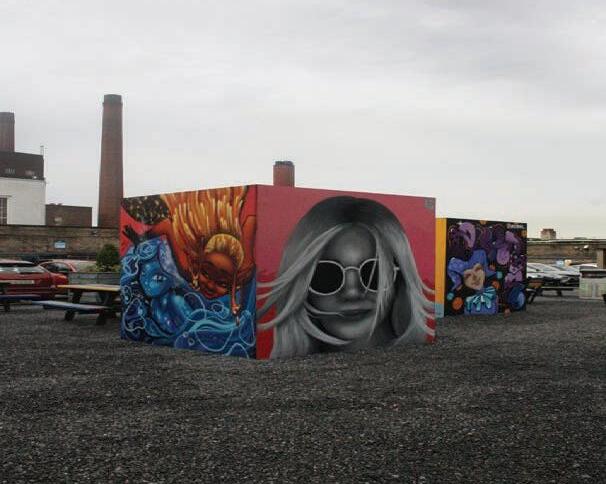
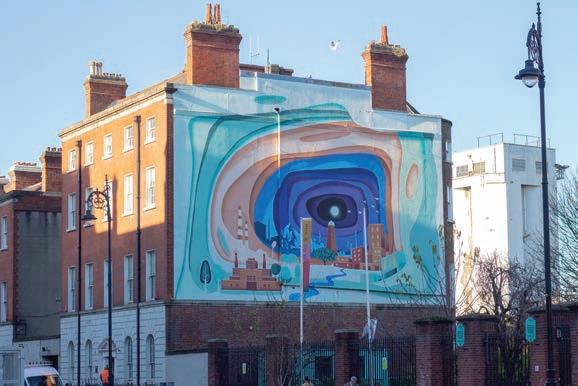
23 - Murals In Dublin 8.
26 - First come, First Served.
28 - Inside Enable Ireland’s Thomas Street Charity Shop.
30 - What’s in my bag.
32 - Space Out Sister: Embracing Vintage And Femininity.
34 - Marlowe & Co. - Brewing Coffee And Connections.
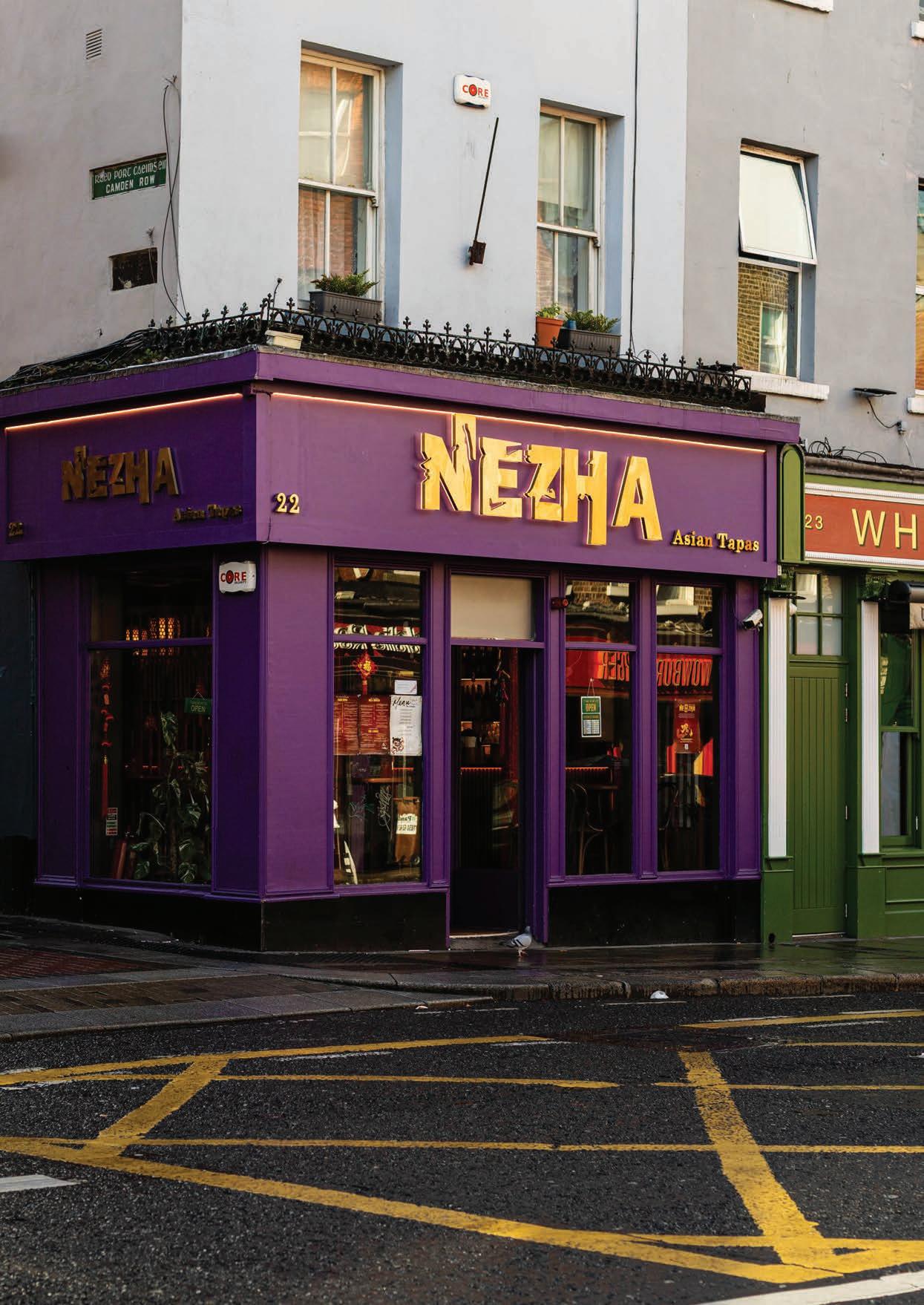
36 - Nezha: The New Taste of Rebellion.
38 - A Different Scent Every Day.
40 - Back in the Ring: The Soul of the National Stadium.
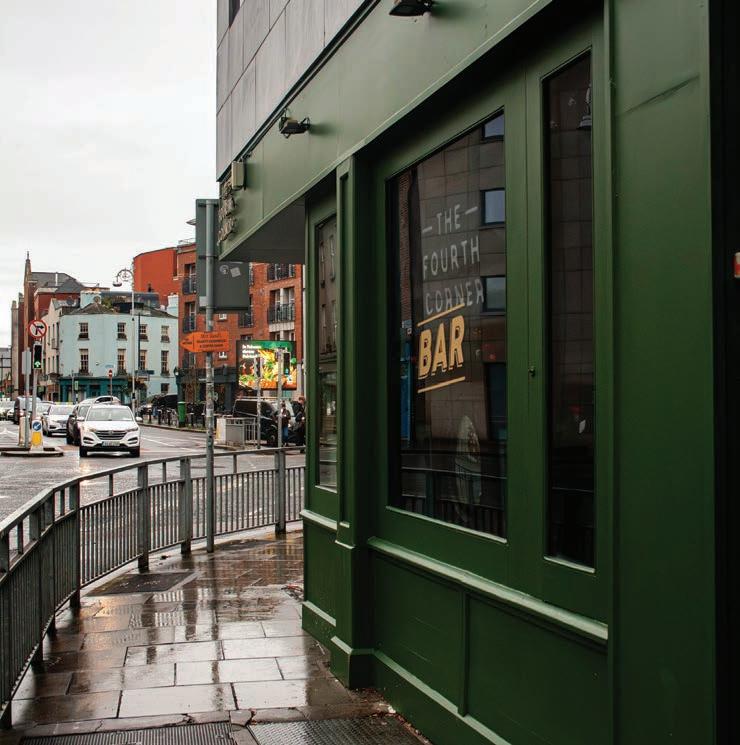
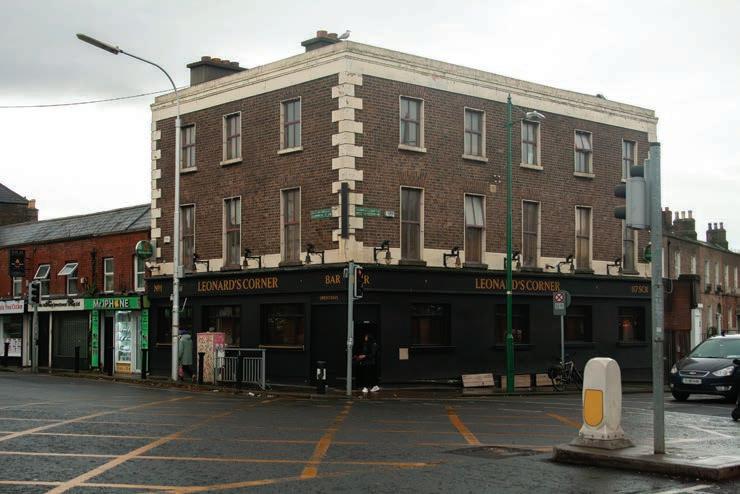
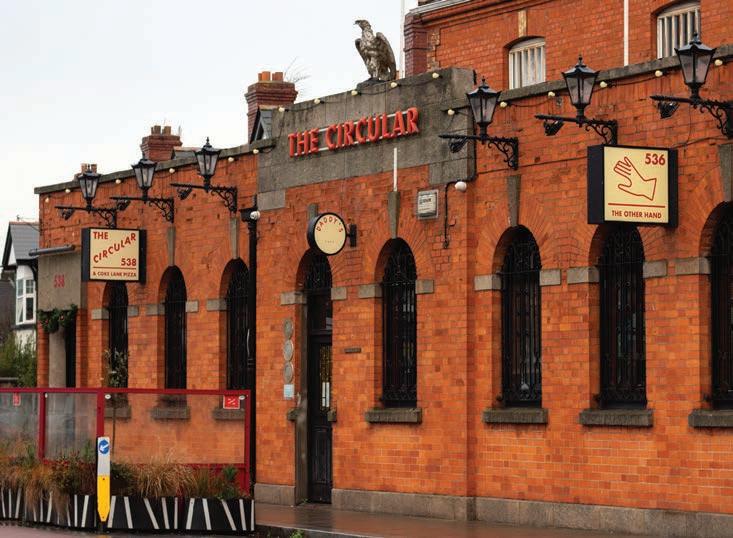
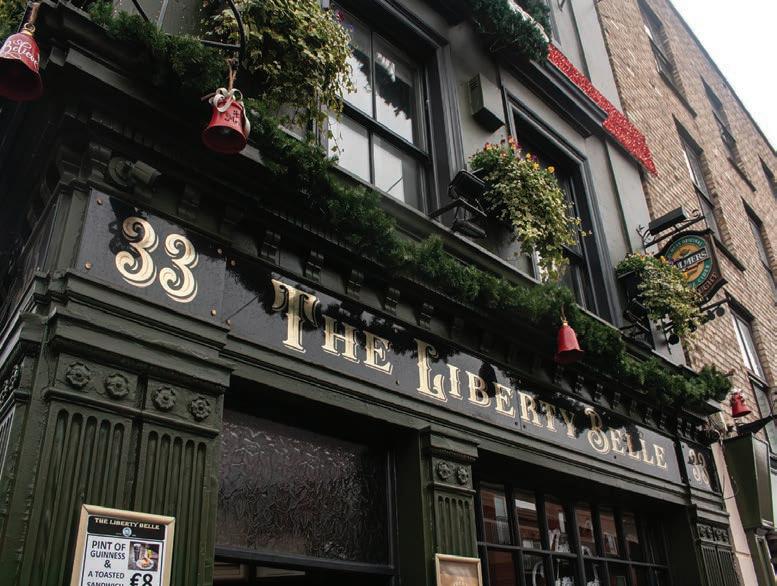
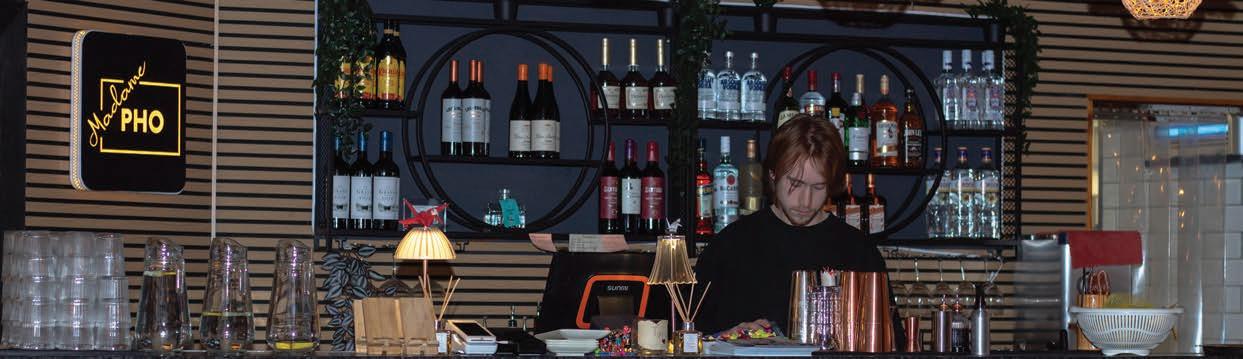
44 - Five Must-Visit Pubs of Dublin 8.
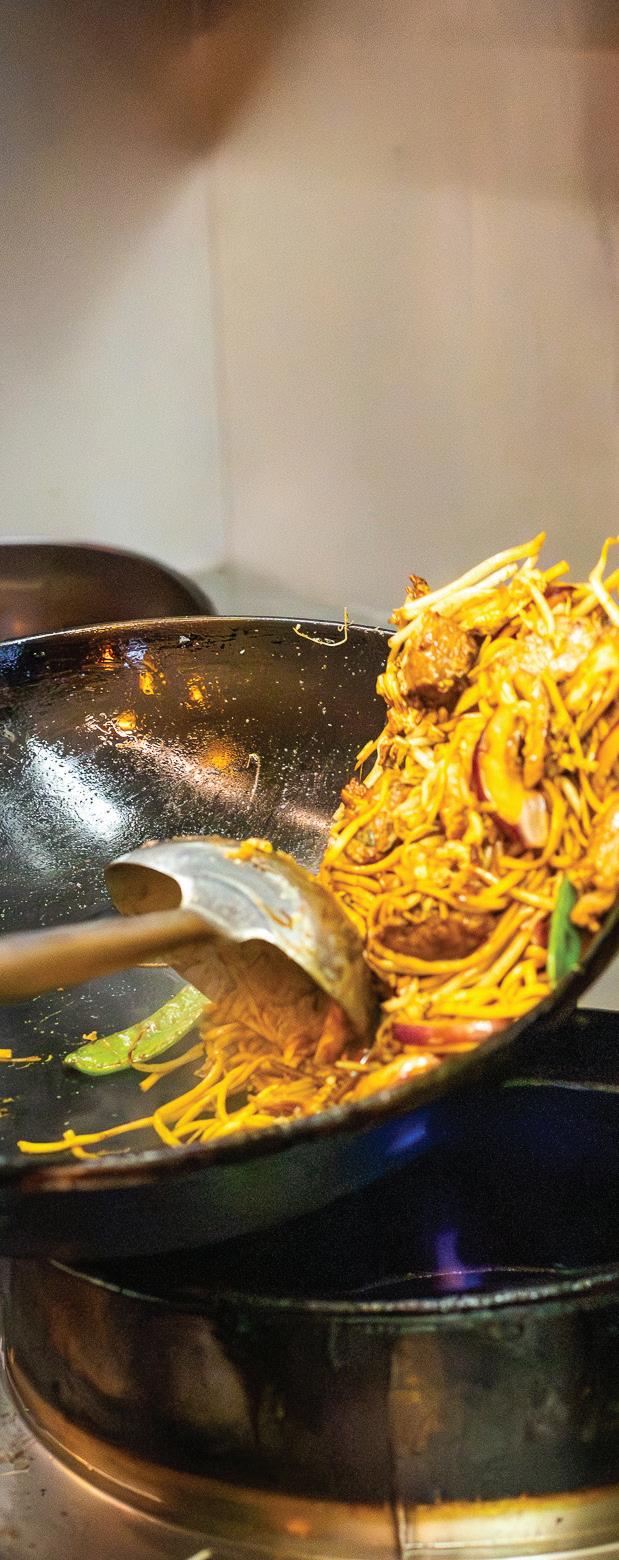
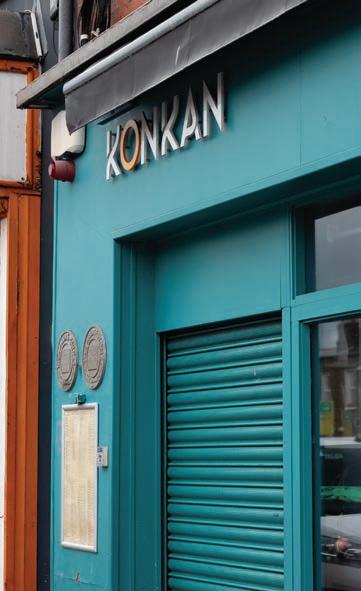
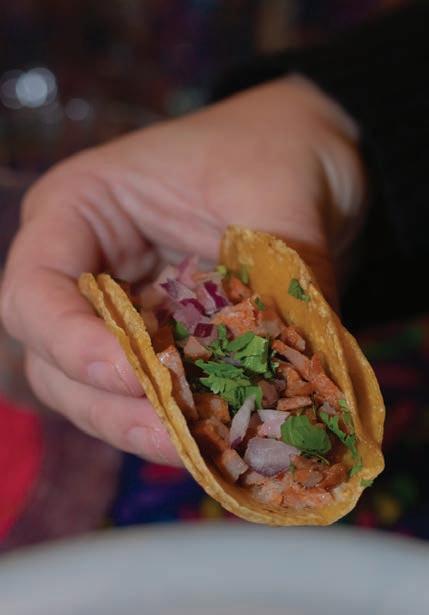
46 - Eat Your Way Around the World in Dublin 8.
48 - Word Games.
50 - Meet The Team.
A Quiet Escape in the Heart of Dublin Irish National War Memorial Gardens
By:
A gentle corner of Dublin where the city noise fades, and the past is remembered in slience
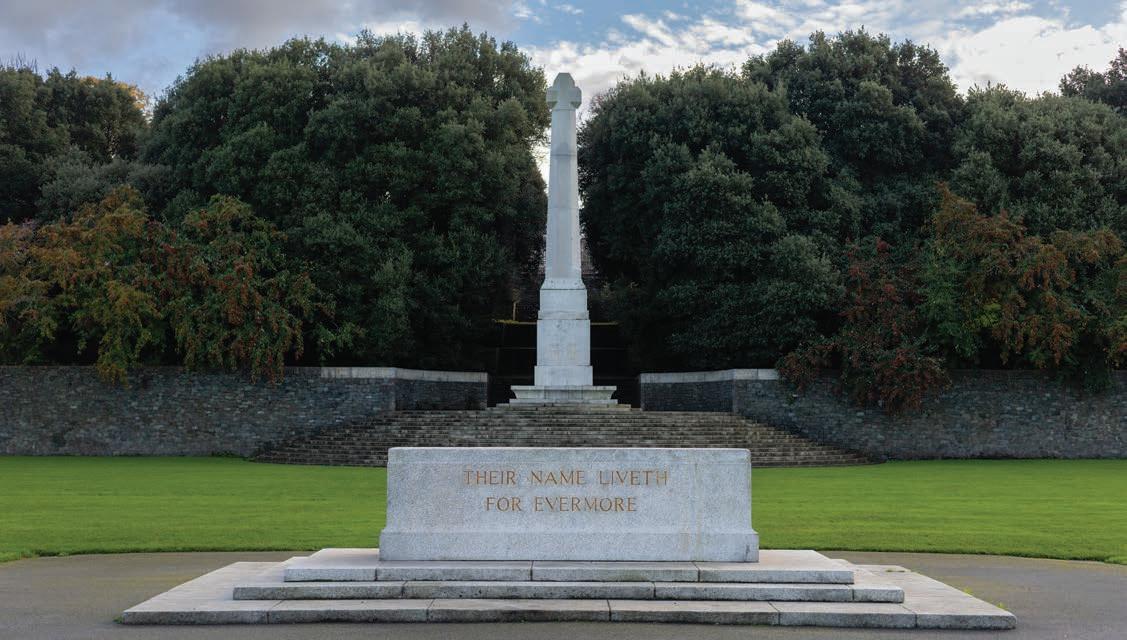
The Irish National War Memorial Gardens were established to honour the 49,400 Irish men and women who lost their lives in the First World War, a sobering number that reminds visitors of the scale of sacrifice. The idea for a national memorial emerged shortly after the war ended, as communities across Ireland sought a way to pay tribute to those who had served. While the young Irish Free State was finding its own identity, the creation of the Gardens represented a careful effort to commemorate these individuals in a way that was both meaningful and accessible to the public.
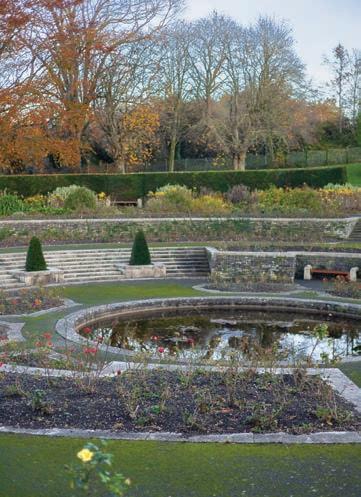
Designed in the 1930s by Sir Edwin Lutyens, one of the most celebrated architects of war memorials in the 20th century, the Gardens reflect his signature style: clean, geometric lines, symmetrical terraces, and expansive lawns that lead the eye naturally through the space. Lutyens envisioned the Gardens not just as a static monument, but as a living landscape that invites visitors to walk, pause, and reflect.
Despite its solemn purpose, the atmosphere within the Gardens is surprisingly peaceful and meditative. As you wander along the tree-lined avenues and across the terraces, there is a sense of calm that contrasts sharply with the historical weight of the site. The design carefully balances remembrance with serenity — a place where you can acknowledge history without feeling overwhelmed.
The Gardens also tell a story about Ireland’s historical context. Unlike memorials in other countries, this site had to navigate the sensitivities of a newly independent nation. The location at Islandbridge, slightly removed from the city center, was chosen partly as a compromise, providing a quiet, reflective environment while avoiding political tensions of the time. Construction during the 1930s also offered employment for local workers during a period of economic difficulty, giving the project an added social significance beyond its commemorative function.
“Even on busy days, the Gardens keep a calm that’s easy to settle into”
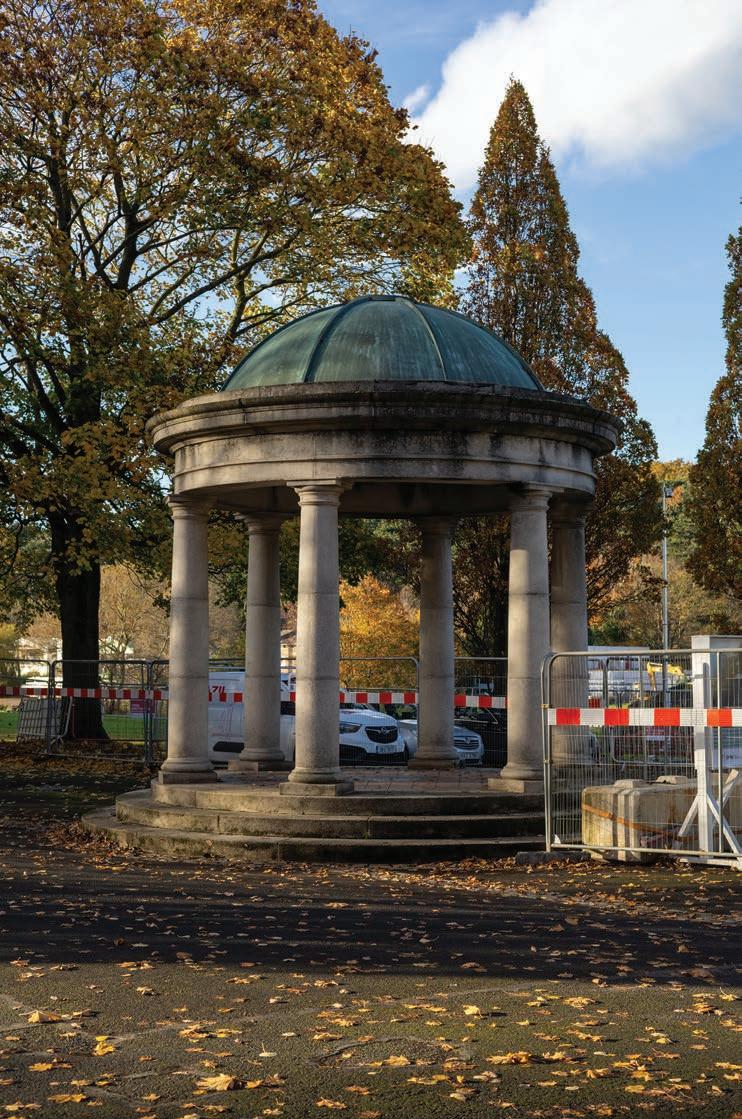
Walking through the Gardens today, visitors are not only connecting with the memory of those who served, but also experiencing a piece of Dublin’s evolving landscape, where architecture, history, and nature merge to create a space that is both informative and restorative. The Stone of Remembrance, Cross of Sacrifice, and granite bookrooms — which house records of the fallen — anchor the site, providing tangible focal points amid the soft greenery and winding pathways.
Photographs: Thai Son Tran
Thai Son Tran
Stone of Rememberance and Great Cross of Sacrifice
If you are looking for a peaceful corner in Dublin 8 where history, greenery, and reflection meet, the Irish National War Memorial Gardens at Islandbridge are a perfect spot. Nestled along the south bank of the River Liffey, this hidden gem might not be on every tourist map, but it is definitely worth a visit — whether you are into history, architecture, or just a calm stroll away from the city buzz.
A gentle corner of Dublin where the city noise fades, and the past is remembered in silence.
The Irish National War Memorial Gardens are open all year and free to enter, managed by the Office of Public Works (OPW). Whether you’re popping in for a short walk between errands or planning a longer weekend stroll, it’s an ideal spot to slow down and enjoy some quiet greenery. The paths are easy to navigate, and dogs on leads are welcome, making it a friendly destination for pet owners too. Seasonally, guided tours are available, offering extra insights into the architecture, history, and thoughtful design of the Gardens — perfect if you are curious about Sir Edwin Lutyens’ work or want to learn more about the people commemorated here.
WHAT’S NEW
Exciting changes are coming in 2026 with the construction of a commemorative bridge, which will connect the Gardens more directly with the surrounding parklands. The bridge aims to make the area more accessible and enhance the experience of exploring the terraces, lawns, and tree-lined avenues. This modern addition complements the historic setting, providing new perspectives while preserving the tranquility of the site.
Location: Islandbridge, Dublin 8, south bank of the River Liffey, Dublin. D08 T20W
Opening Hours: Open year-round, daylight hours (typically sunrise to sunset).
Admission: Free entry.
Best Time to Visit: Spring and summer for roses in bloom; early morning or late afternoon for a peaceful stroll.
What to Bring: Comfortable shoes for walking, a camera or phone for photos, and water if it’s a warm day.
Accessibility: Paths are mostly level and easy to navigate; dog-friendly on leads.
Rose Garden & Sunken Lawns
Echoes of Freedom in Kilmainham Gaol
By: Sebastián Bras Harriott
Reavealing the stories behind the walls that shaped a nation
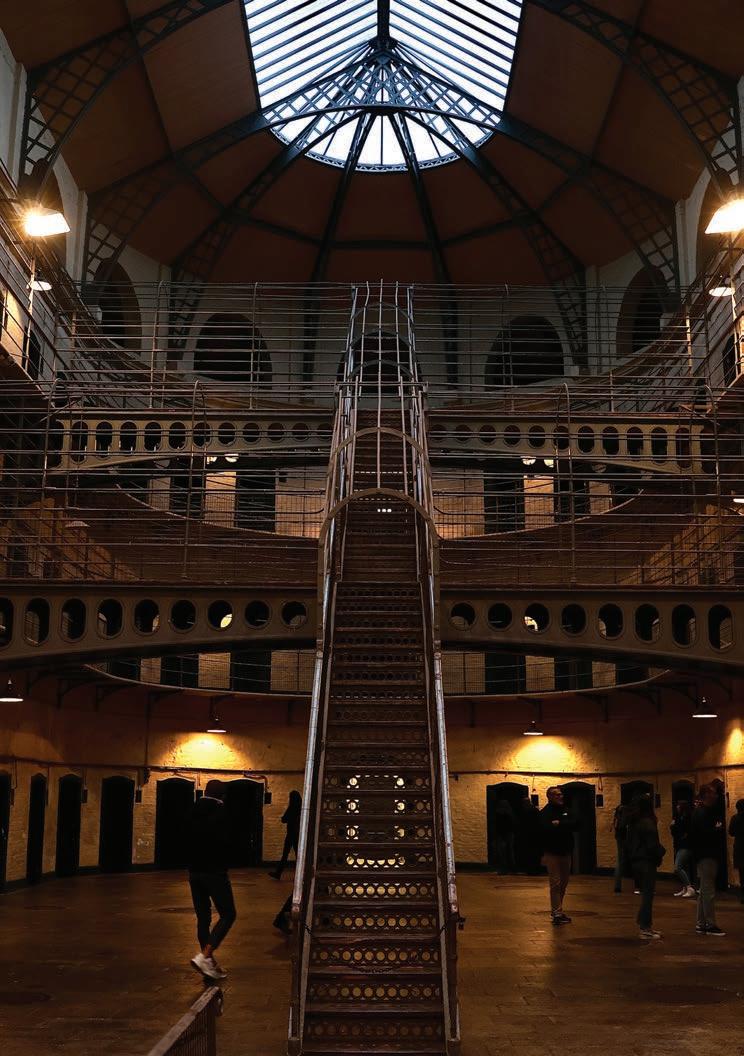
Kilmainham Gaol
Photographs: Khai Sung Goh
“If you are looking for the exits, do not bother. You are in prison.”
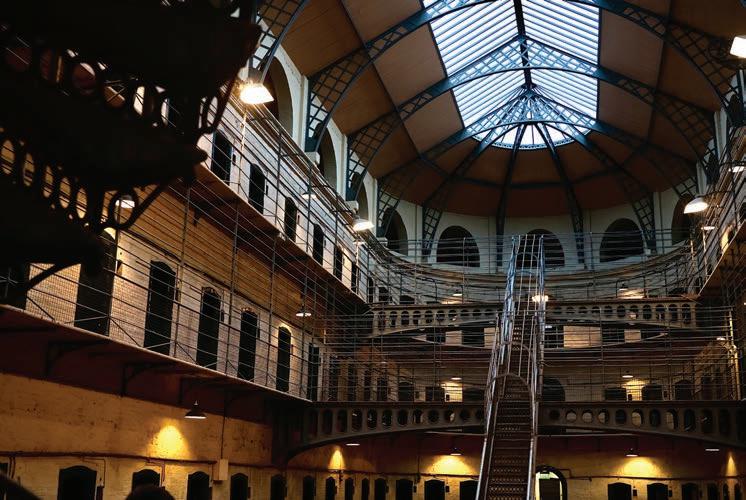
As you step through the heavy iron doors of Kilmainham Gaol, stone walls rise around you. The echo of footsteps will follow you down the corridor and be a clear reminder of the thousands who once lived through these same halls. Often seen as a simple museum of cells and keys, and located just west of Dublin’s city centre, Kilmainham Jail stands as one of Ireland’s most fascinating historical sites. A monument to the nation’s struggle for freedom, unjustified mistreatment and remarkable resilience. The best way to understand Ireland beyond its pubs, sports and music taste is a visit here; it is essential. Make sure to book your tickets in advance, as there is a high demand for this tour.
It was opened in 1796, built as a model of modern reform for its time. Yet what awaited its prisoners was far from humane. Not just talking about men, but also women and children were locked up together in freezing, dull cells with limited light, as they had no windows and straw as bedding. The youngest recorded prisoner (Thomas Roberts) was just three years old, imprisoned under the harsh “Vagrancy Act” for begging food on the streets, a heartbreaking reminder of the poverty Ireland was facing during the nineteenth century.
During the decades, the jail has evolved head-to-head with the nation’s turbulent story. Kilmainham was not just a place of punishment, but also worked as a crucible for revolution. Rebels from every major uprising, such as the United Irishmen (1798), Young Irelanders (1848) and Fenians (1867), were put behind bars. One of its most famous political prisoners, Charles S. Parnell, the great parliamentary leader who commanded Irish Home Rule, was imprisoned here in 1881. While his confinement was comfortable compared to other prison cells – Parnell was allowed books, correspondence and visitors – his time in Kilmainham reflected a changing Ireland, from rebellion to political negotiation.
In April 1916, as the city was burning due to the Easter Rising, many of the revolutionary leaders were captured and brought to Kilmainham Gaol, awaiting judgment and, for most of them, their execution.
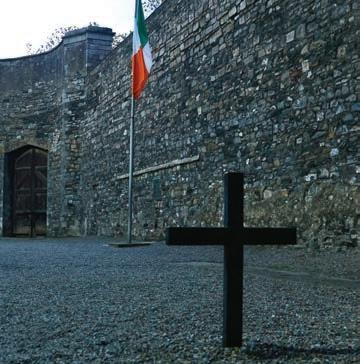
Over a ten-day period in May, fourteen men, including Patrick Pearse, James Connolly and Joseph Plunkett, among others, were shot by a firing squad in the prison’s stonebreakers yard. Their courage and sacrifice became a flag in Ireland’s journey seeking independence from the English crown.
One of the most touching stories is that of Grace Gifford, who married Joseph Plunkett in the prison’s chapel just hours before his execution. Nowadays, visitors still pause before the small, white-walled chapel, where her Madonna and Child painting hangs as a silent act of remembrance.
As you walk through the execution yard, watching every white cross marking the places of death, you can feel the weight of that week in history. “A silence so deep it seems to echo.” This monument is not only a remembrance for the dead, but also for the cause they died for: A free Ireland.
Kilmainham Gaol explains the story of Ireland’s transformation: from a colony to a nation, from despair to dignity. Every single stone holds the memory of those who suffered, amplifying the spirit of those who refused to surrender their pursuit of freedom. Visiting this historical landscape is not just a history lesson; it is an encounter with courage, conviction and conscience.
Gaol is not a comfortable place, and it should not be. As you walk through its corridors, you will understand that history is not a distant story but something built on human choices and sacrifice. As you step back into Dublin’s dim light, the echoes of those voices linger, urging to be remembered.
Important information for your visit
Tickets must be booked online and are available to book 28 days in advance. Any cancelled tickets for the day will be released online between 9:15 am and 9:30 am.
No third-party organisations have authorisation to sell tickets
The site is accessible to visitors with mobility needs.
Please arrive 15 minutes before your tour time. The visit lasts around 90 minutes, and with your tickets, you will have access to both the jail and the adjoining museum. You can also combine your visit with nearby attractions such as the Irish Museum of Modern Art (IMMA), Guinness
or
for
Location: Inchicore Rd, Kilmainham, D08 RK28
to Kilmainham Gaol.
Storehouse
the Phoenix Park
a day rich in culture and history.
Kilmainham
Kilmainham Gaol
Courthouse at Kilmainham Gaol
The Stone-Breakers’ Yard
From ‘the Hole in the Wall’ to the famous Nancy Hands
The uniqueness of this pub proves why Irish pub culture is famous worldwide
By: Ella Brody
“Nancy
Hands isn’t just a pretty old pub, it feels lived-in, warm, and full of stories”
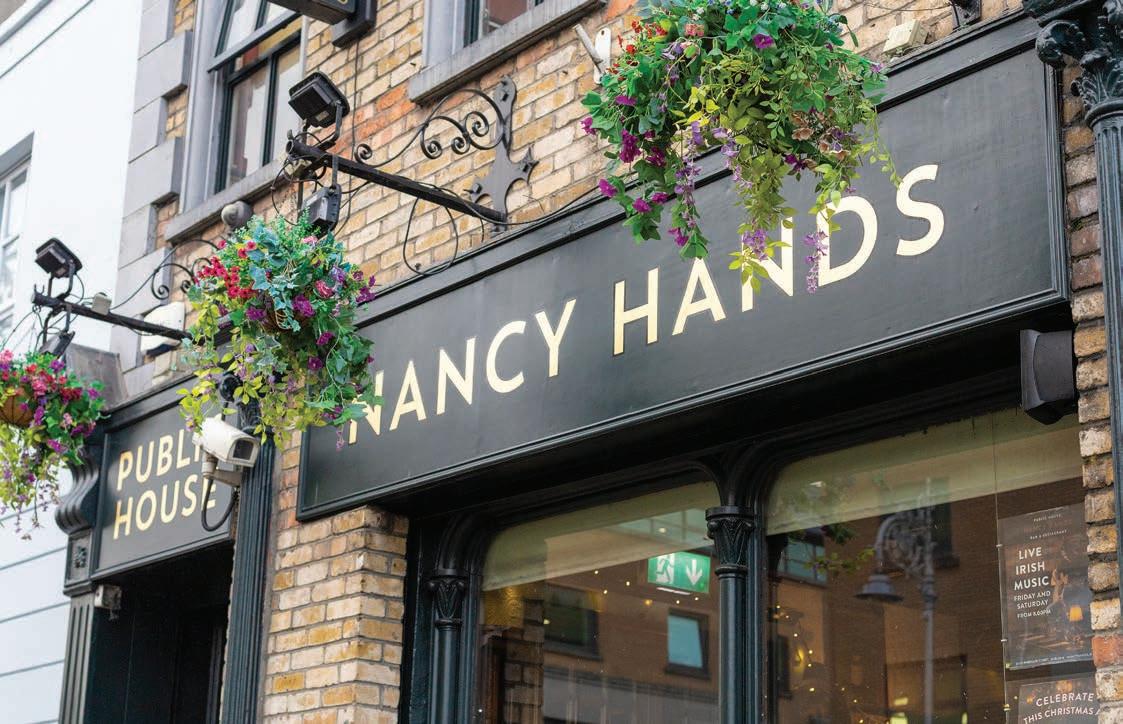
Probably the most proficient example of Irish pub culture is ‘Nancy Hands’ located just minutes from Heuston Station, not only admirable in its practice, but the story of the place itself makes it exactly what an Irish pub encapsulates across the world.
The woman who put the ‘Nancy’ in Nancy Hands was the first ever female owner of a public house, both in Dublin and in Ireland in the 1700s. In a time when religion was the ultimate rule maker in Ireland, Nancy saw the mandatory closing of public houses from two to four as just a mere obstacle in her business practices. According to Natasha Schiller, Marketing and Events manager for the pub, there is a stampage box that fits snugly into a hole that was carved by Nancy herself, only removed to serve drinks through, during the two hours of ‘religious solace’ every Sunday. All the customers could see were Nancy’s Hands, thus birthing her with the nickname and the
name of the bar following in the same way.
It was common for Irish pubs to be under strict laws concerning their operation. The Licensing Act of 1872 saw the requirement of pub owners to display their names above their businesses, in order to make it easier for police to discover where the roots of an alcohol-related incident occurred. Since the advertisement of music and bands in public, houses were forbidden in Ireland, the public created a loophole, just as Nancy did with her charade of passing drinks through a hole in the wall, which, Schiller states, is still used often to this day. Public houses began to insinuate that a traditional band was playing by announcing it as a ‘session’ taking place. This way, a musical aspect to a pub was only implied, and all laws were still being followed. The term is still being used amongst people of all generations today to describe a night out in an Irish pub.
Photographs: Ana Victoria Romero Delahanty
Nancy Hands
Nancy Hands
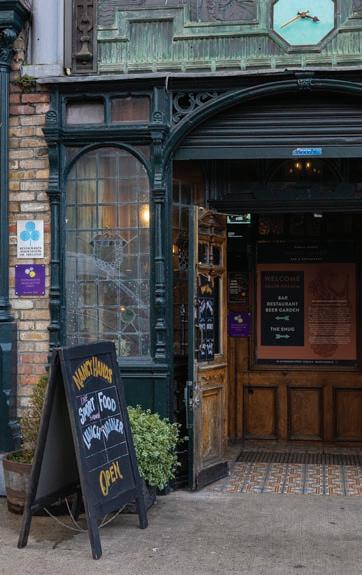
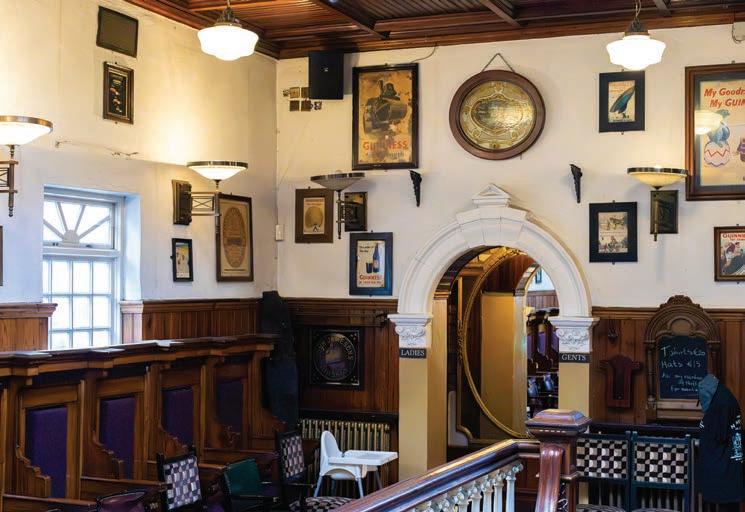
The history of creating loopholes for the law in Nancy Hands isn’t the only thing that makes the pub so appealing in Dublin 8 and beyond. The pub is steeped in historical facts and hidden gems that you can feel from the moment you walk in. Many of the woodwork and fixtures have been salvaged from old Dublin buildings, making the pub literally steeped in Irish history. The staircase being from Trinity College Dublin, adds such a rich and luxurious feel to the place without it being flashy or tacky.
The fact that history and stories are quite literally built into the pub sets a typical example for what it is to be a traditional Irish pub. The sultry darkness of the mahogany decor, with the earthy tones of copper and dark green, is traditional in an Irish pub, both in Ireland and all over the world. These dark, earthy tones of an Irish pub insulate the heat blaring from an open wood fire, which is commonly found in all old pubs. The heat from the fire gathered musicians to play around it, and enticed locals to stay longer due to the stormy, cold weather often found outside in Ireland.
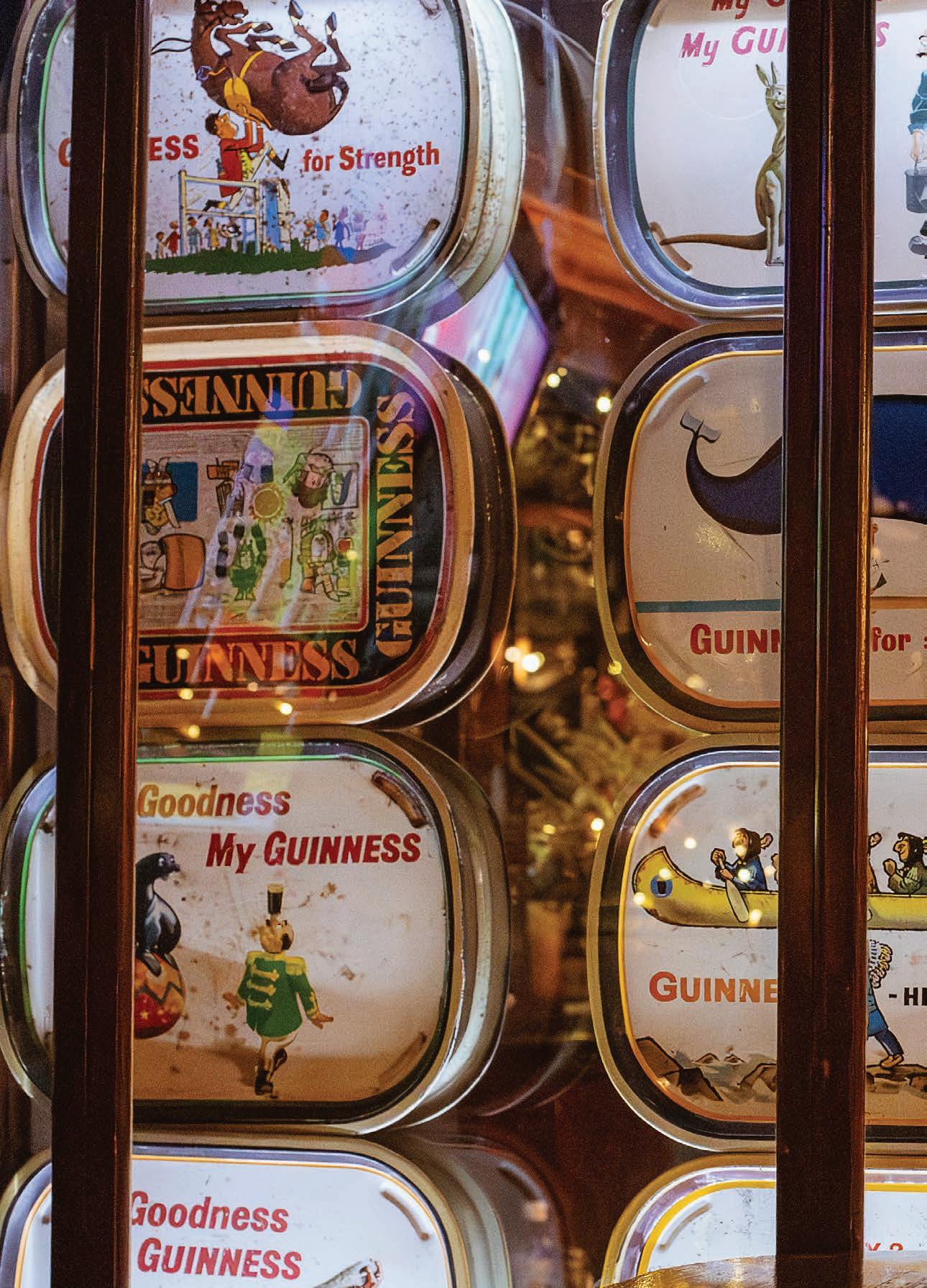
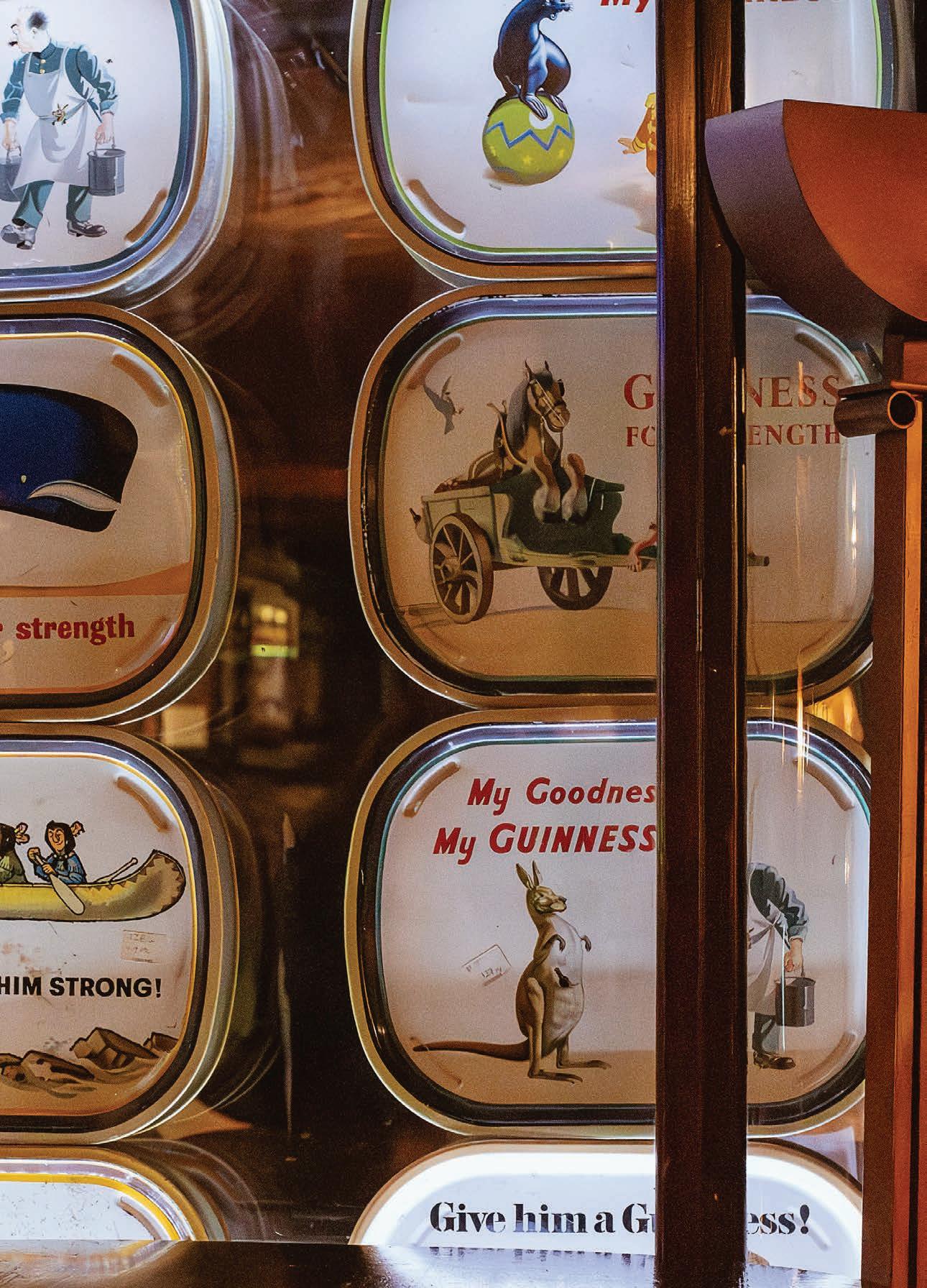
It is normal for an Irish pub to be fitted with witty, unique memorabilia such as advertisements, figurines, or even road signs. In Nancy Hands, “We have some of the oldest/ rarest Guinness posters that even the Guinness storehouse doesn’t have. We have had an archivist from Guinness come and check them out,” says Schiller. The presence of old Church pews and even a stained glass portrait of the iconic Nancy Hands herself, really showcases the ties Ireland used to, and still has with the Church and religion. Even though Nancy went out of her way to disobey the holy hours on Sundays, the fact that religious insinuations are still present across the pub shows how much it had an impact on Irish society.
The comfortable, large bar area in Nancy Hands makes it easy for both locals and visitors to mix easily, with many new friendships being formed every day. The hearty, comforting food that is often seen in pubs like Nancy Hands lets people know they can put
their trust in the pub to keep serving them the food that Irish people have always grown up on, and what visitors love to try in order to get a taste of the island.
A day in the life at Nancy Hands is what some might say is picturesque in the sense that it is a good mix between calm and lively, while serving great pints and tasty food. Schiller says, “No two days are ever the same, but that’s what makes it so great,” when describing a typical day at the pub. She states that “ Mornings start quietly, setting up the bar, polishing glasses, and getting ready for lunch. By midday, the place fills up with locals, regulars, and tourists coming from the courts or
the station. Evenings are filled with big groups for dinner, and on Fridays and Saturday nights, there is always a good buzz with our live music. Thursdays have also become one of our busiest days because of our fun speed quiz.”
It is clear that pubs are vital for Irish culture, and without them, we would not have half the traditions or even stories that we have now. Nancy Hands portrays Irish pub culture so clearly, from the religious ties to the familiar food and rich history, the pub is steeped in the history of the Irish, making it a hotspot for Dublin 8 locals to gather, but also for new visitors coming to capture the essence of what an Irish pub really is.
A look inside Nancy Hands
The Iconic Irish Guinness Beer
When Poetry Finds
a Purpose
How Stephen McGee started writing about Dublin 8 almost ten years ago.
By: Eduarda Müller
Photographs: Ana Victoria Romero Delahanty
Pubs, parks, street art, museums, coffee shops, flower shops… and poems. Dublin City is a vibrant place where culture meets knowledge, and diverse backgrounds are celebrated more as an asset than a problem. Each neighbourhood is lively, filled with people who can teach you more than just bus routes or the best pubs - though Dubliners excel at that as well. Passion for one’s country is common, but it’s truly captivating to meet someone who loves their local roots.
That is Stephen McGee, now 52, who spoke to our magazine, sharing not only his insights into Dublin 8, but also how he found purpose through poetry. Born at the well-known St. James’s Hospital, Stephen is a father of three and grandfather of four. Although he now lives in Lucan, he grew up in Dublin 8.
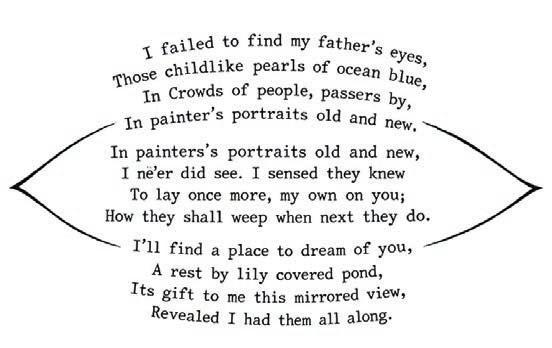
He began writing poetry after losing his father to cancer ten years ago at the very hospital where he was born, which is also his current workplace. And he tells us: “After my dad passed away, I didn’t want to, you know, the way you don’t want to deal with it, so you just put it where you don’t think about it. But then these poems and words that had come into me head, and I just started writing down. The first poem I wrote was called My Father’s Eye”.
Stephen had not expected that his first poem was about to open a new world for him. Previously, he had contributed stories about his experiences as a taxi driver to a local magazine, but those were more light-hearted and anecdotal stories.
According to him, it was through poetry that he found a way to make peace with the loss of his father. “So, I think my father passing away, it was like a catalyst which got me to write. Which started me on the road of light. And I just sort of just kept it going a little bit.” he said.
Stephen McGee, author of Dublin 8 poems. Photograph by Ana Romero Delahanty
Last August, Stephen took a big step, submitting a poem to ‘Poets Meet Painters,’ a competition organised by Mill Cove Gallery in Kenmare, Co. Kerry. The contest invites original, previously unpublished poems in English inspired by paintings featured on the Kenmare website. Entries are judged by a group of four, with prizes starting at €100 for third place.
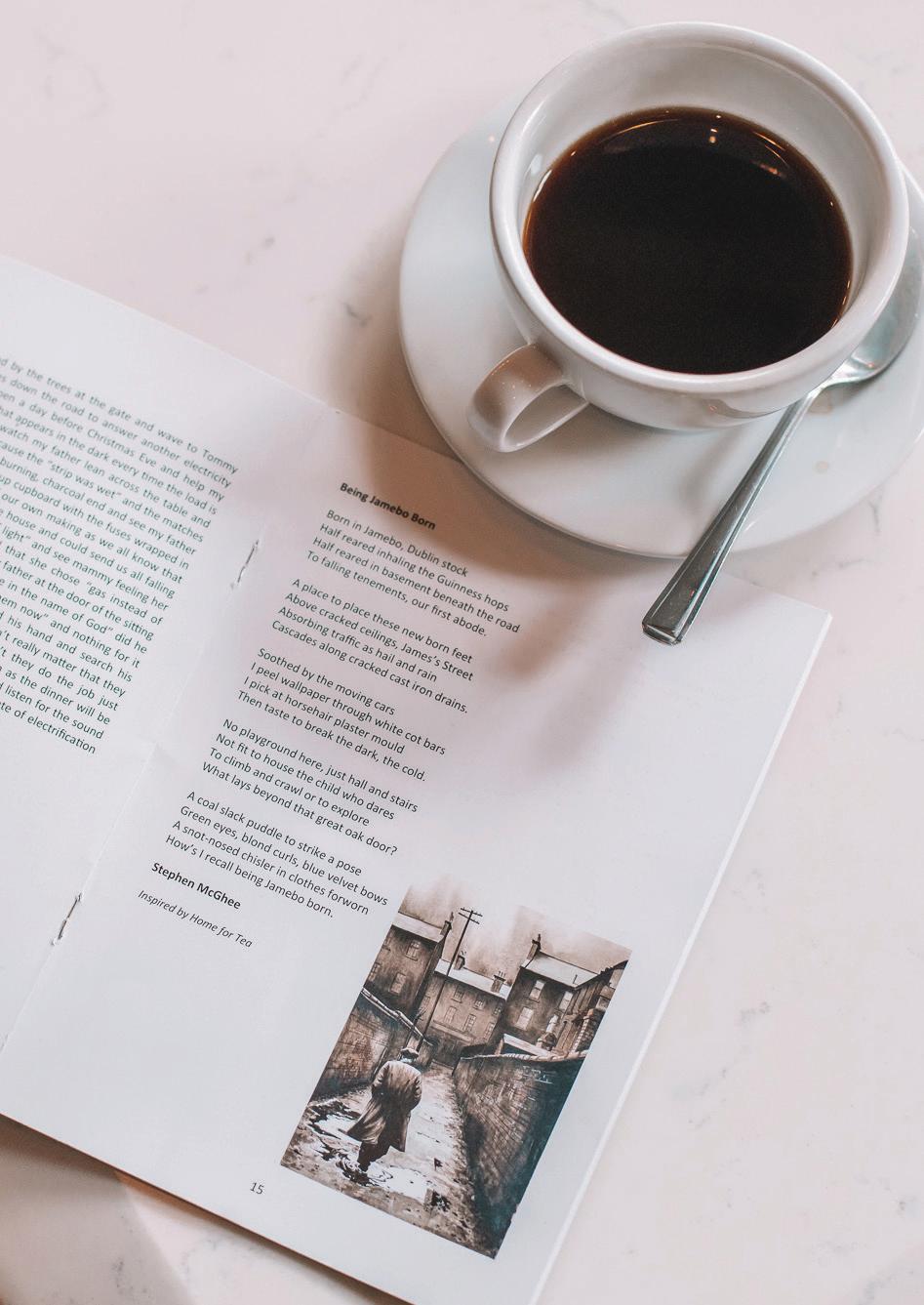
He explains, “Every year these artists are down in Kenmare, and they do portraits, and then they ask the public, anybody, anybody worldwide, they ask you to send forward a poem that reflects the painting that you see.” After his poem, ‘Being Jamebo Born,’ was accepted and published on page 15 of the 2025 issue, Stephen travelled to Co. Kerry to read it publicly - an overwhelming experience for someone who rarely shares his poems, even with family. While laughing, he told us, “I just put them in a folder and put them in the wardrobe and closed the wardrobe.”
While some of his work had previously appeared in an airline magazine, this latest experience encouraged him to share his poetry more widely, especially as his entry reflected his life in The Liberties. “The fact that I was in the tenements as
a child, and these just reminded me of tenements. This man in the painting would remind me of my father, you know, and that’s just what got me thinking about where I was born and stuff from around there,” he said.
When asked about participating in competitions and what he thinks of others’ poems, Stephen feels he belongs: “There’s a place for me, there’s a place for my poems. There is a place for me…”
“I like the idea of people... If somebody read that, say in America, Australia, I’d love people saying ‘an Irish person wrote that, and it must be true what they say about Ireland,
Recalling his days as a taxi driver, Stephen expressed frustration that tourists often flock to Temple Bar, missing out on the authentic Dublin - and paying €12 for a pint of Guinness. “Well, it’s mad, but when I was taxiing, and I had tourists, I had foreign people in the car, and they’d all be saying to me, ‘you know, Temple Bar, Temple Bar.’ And I’d be driving them that way, and they’d say to me, ‘Where do you drink?’ And I was saying, ‘Look, I’ll drop you to Temple Bar. But if you want to see real, the normal Dublin people, you’d be better off going back down to around The Liberties.”
Among Stephen’s recommended pubs are The Lark Inn on Meath Street, Dudley’s on Thomas Street, and Kennedy’s on Westland Row - still central, but with a more genuine Irish lad atmosphere, and he continues, “This is where you’ll meet authentic, genuine people from the Liberties all around that street, going about our business, not interfering with anybody.” He describes feeling like a stranger in tourist-heavy spots like Temple Bar and believes visitors should explore more to meet real Dubliners.
As twilight dispenses over cold barbed wire fences
A man roams the streets of the night
Head low, collar high as he passes on by To the streets of The Coombe he brings light.
He is the lamplighter and a fierce freedom fighter
With his ammo filled lantern and pole
As he passes through check points unchallenged
He engages all British patrols.
Proud of his roots, Stephen wants people to know the real side of his city, not a tourist trap. D08 Magazine aims to showcase the historical richness of this area - its culture, its people, its poets. Stephen McGee is not just an Irishman; he’s a son of Dublin 8, who found meaning in poetry and seeks to share his story with the world.
Returning by morning in time for dawn’s calling He takes back all the light that he gave
Though he’s wounded and weak he’s unwavering And remained so right up to his grave.
The Heart of Cork Street
By: Anastasiia Kernytska
From a hand-made counter to a kids’ corner and an evening wine bar, Flower & Bean puts people first.
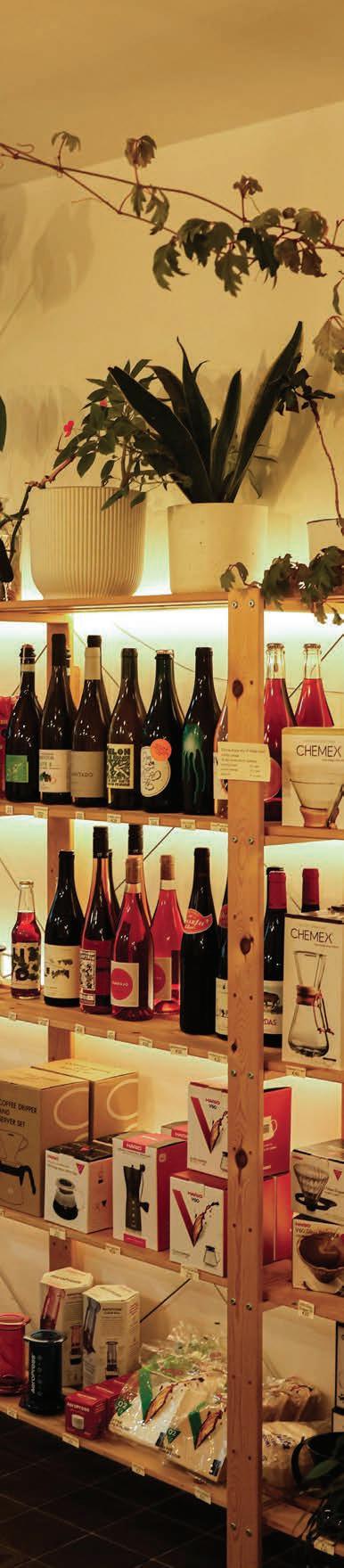
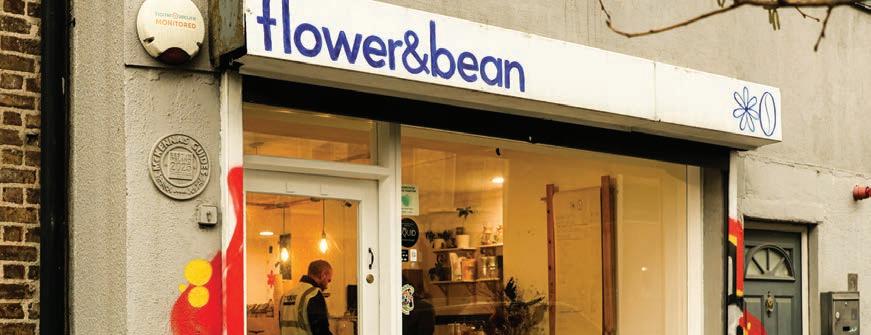
This café is not just a spot on the map but a space created with care, craft, and where feelings matter more than trends. Owner Grzegorz has 15 years of experience in the industry. He has done coffee trainings and helped open cafés, but here, he strives not for perfection but for integrity. Everything is done for people and about people. Cork Street, where the cafe is located, had been slightly forgotten. But Grzegorz understood what people needed, so he opened this coffee shop.
The café strives to be the heart of its community. Their style and interior are something that does not overwhelm. “We don’t want people just looking at the walls. Let the attention go to the coffee, the food, and the people,” says the owner. “We want this place to be what you want it to be. So, you can walk in and feel comfortable.” The café’s concept is rooted in family, children, and community.
“It’s a place for community, family, and good coffee”
“If the place is more minimalistic, people can freely come in and do whatever they want. They want people to come in and go where they should go,” the owner said. This is why they have a very good-looking coffee machine, which is in their brand’s white
and blue colours. Their falcon coffee mugs are reminiscent of childhood memories and are made in the café’s colour tone. “They don’t break, and if they chip, they just have more charm.” And that is the concept of drawing all the attention to the counter, the coffee machine, and the pastries.
They do not want customers’ attention to be directed anywhere other than to the food and coffee. If people come with friends, they can focus on them without being distracted by the decor.
Grzegorz wanted to reuse as many materials as possible and decided to use wood in the interior. He used a lot of wooden pallets and made the counter and lighting himself. Furthermore, the idea of a large wooden table in the middle of the cafe allows people to socialise and sit closer to each other.
“The decor of the place isn’t that important; the atmosphere is what it is,” says Grzegorz. The café has a lot of flowers because they want to work with flowers and paintings, so that all changes every season. After three years of talking to people and hearing that they want a place to sit in the evening with a glass of wine instead of going to a pub, the café created a wine bar. The cafe has a children’s corner with toys, books, and a writing board. “Parents can come in after 17:00 and have a glass of wine while their kids are busy in the corner. It’s important to have a place where you can be yourself.”
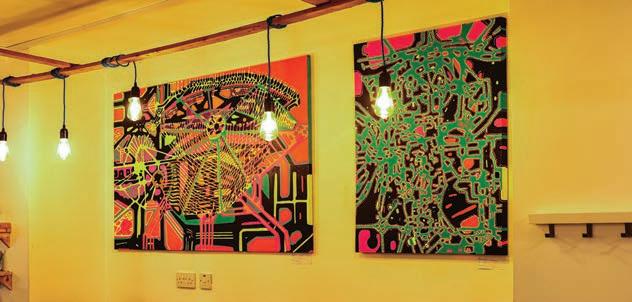
The art on the walls is the work of a famous artist, Amanda Cullen, who is also the café’s neighbour across the street. She has been coming to the café for three years now. So, for the coffee shop’s third birthday, Flower & Bean decided to hang her paintings to celebrate. Another cosy addition to the interior is the monstera plant Grzegorz brought from his own home. All of this speaks to the deep care and dedication to the coffee shop, treating it like a home and a family.
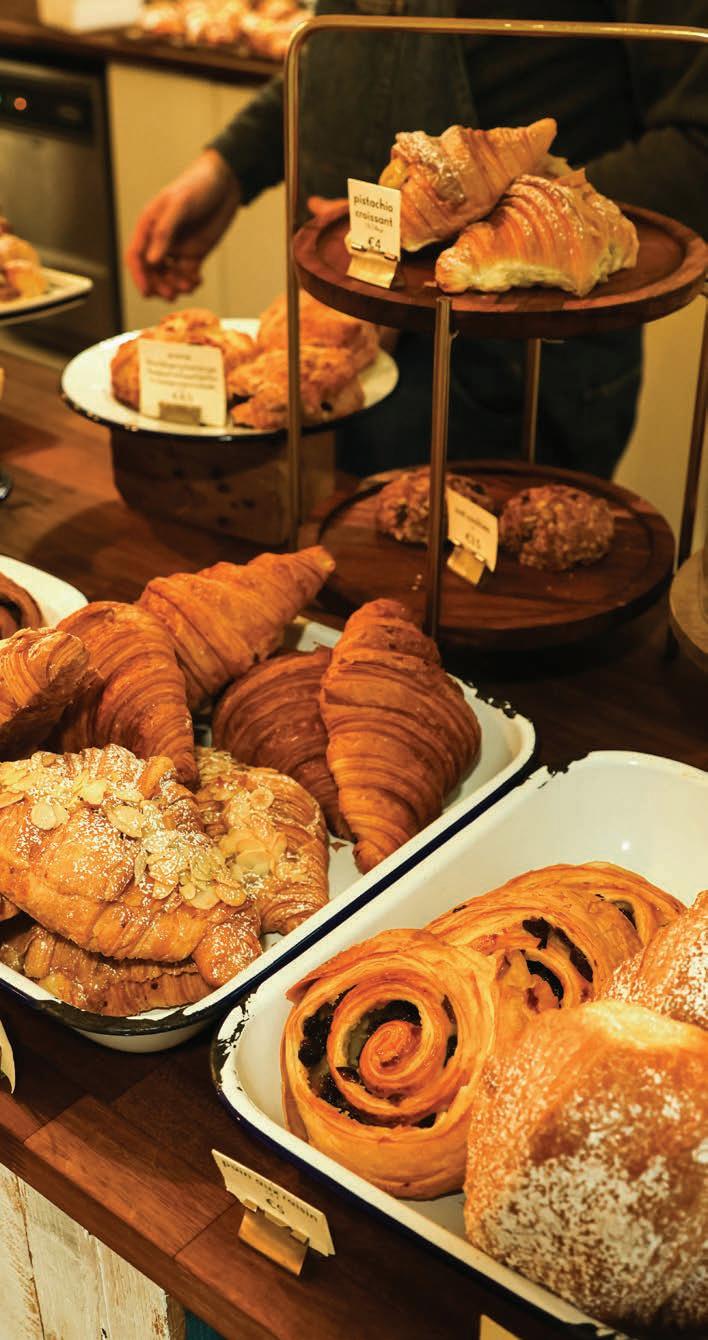
The menu changes every season, with desserts and pastries changing monthly and sandwich fillings changing weekly. Their syrups and spices are also their own. “We searched for the perfect chai latte syrup for a long time and couldn’t find it. So, we make it ourselves. Everything we serve has to be highquality and made with love.” That is why they are famous for their banana bread, which has the perfect balance of nutrients needed for energy throughout the day. People stop in before a workout for a cup of espresso and a slice of this bread to fuel up for the day, and simply have a delicious meal. The secret to their banana bread is Grzegorz’s wife’s recipe and allowing it time to cool and infuse all the ingredients. They prepare all their dishes, pastries, and desserts inhouse.
Their menu changes seasonally, as products, fruits, and vegetables also change every season. And as Grzegorz says, “Some foods are only suitable for summer, some only for winter.” They constantly strive to innovate and strive for greater things.
At Flower & Bean, honesty is not just a word or a facade; it is the core idea of doing simple things well. A handcrafted counter, a children’s corner, neighbourly creativity, banana bread that smells like home. Every choice speaks to people, not refinement. On Cork Street, the café brings a highlight and a sense of belonging. People come for a coffee and stay because the place remembers them.
Artworks by Amanda Cullen being part of the interiors
Exploring IMMA’s Historic Beauty
By Khai Sung Goh
The Royal Hospital building has gathered art and culture way before it became how it is today. Starting from 1990, IMMA being an art institute in Dublin, looked after the National Collection of Modern and Contemporary Art, has over 3,500 works by both Irish and international artists, which is honestly huge. The renovation of the Royal Hospital mixes the old, historic spaces with modern art in such a brilliant way that it really shows how the heritage and creativity can work well together. has been based at the Royal Hospital for over 30 years, and this whole transition has created a space where both artists and visitors can properly connect with art.
In the heart of Dublin, holds one of Ireland’s most captivating cultural landmarks The Irish Museum of Modern Art (IMMA). However, before it became an exhibition hall, this magnificent complex was the Royal Hospital Kilmainham, a 17th century building designed by Sir William Robinson in 1684. The building was originally a nursing home for old soldiers, thousands of army pensioners spent their final days in its walls over the past 247 years. Inspired by Les Invalides, a mu-
seum in Paris, the neo-classical Royal Kilmainham Hospital building became a classic historical site.
William Robinson was the person responsible with the design and construction of the hospital, as he made the Royal Hospital an early Baroque architecture masterpiece. The building includes a chapel, a hall, a spacious garden, a cemetery, and artists studios from medieval times, which has been like a perfect paradise for art to flourish in Dublin 8. It has also witnessed the growth of Dublin from the late medieval period into a modern city.
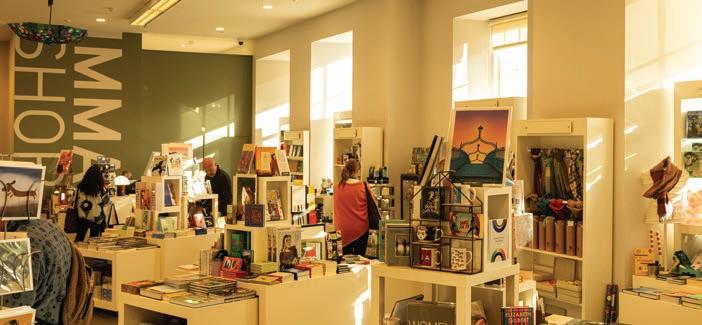
Located on the 1st floor of the main gallery building, IMMA shop also offers art inspired products that help fund the museum’s programme of exhibitions, talks, and educational activities,
making it a practical way for visitors and supporters to contribute to contemporary art in Ireland. With lovely and unique selection souvenirs, prints and books, makes here an unskippable space to shop.
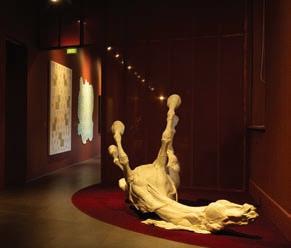
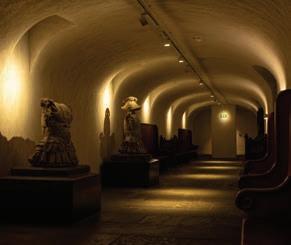
In addition, there is an on-site underground café in the IMMA too, which is located partly underground beside the cellars and the courtyard. Before stepping into the café, there is a hallway that features built-in wooden benches and several sculptural pieces displayed with atmospheric and warm lighting. A cup of coffee or a light lunch in such an artsy and cosy environment is totally an immersive experience in IMMA.
The Irish Museum of Modern Art is not just a regular museum, it is also a bridge that connects Dublin’s past to
it’s present identity. Providing a space where heritage and innovation coexist. However, IMMA’s meadows and gardens, with their groundbreaking architecture and history are meant to be experienced. The Royal Hosipital Kilmainham is a prime example of historical transition, it may change but it will not be forgotten. The building still provide its purpose, although it is no longer a nursing home for soldiers, it is now a home for ideas, creativity and the heart of modern art.
IMMA shop filled with sunlight through the large windows
Photographed by Khai Sung Goh
Since August, a new face has been quietly shaping the exhibitions at the Irish Museum of Modern Art (IMMA). Originally from Denmark, Maria has spent the last five years building exhibitions across different art spaces.
“I needed a job—and as an artist, I needed something steady, with good people, IMMA seemed like a place where I could really fit in,” she says with a smile. Working in a gallery felt natural. With years of hands-on experience, IMMA offered the perfect blend of creativity and stability.
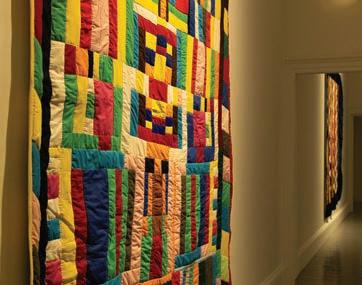
Every gallery has its overlooked treasures, and IMMA is no exception. “The quilts exhibition,” she says. “It’s closing today. It’s in Gallery Three — just a small space near the exit. It hasn’t gotten much attention, but it’s one of my favourites.”
At IMMA, magic tends to happen behind the artworks, people like her bring life to the art.
“My job as an artist, being surrounded by the artworks is very inspiring.”
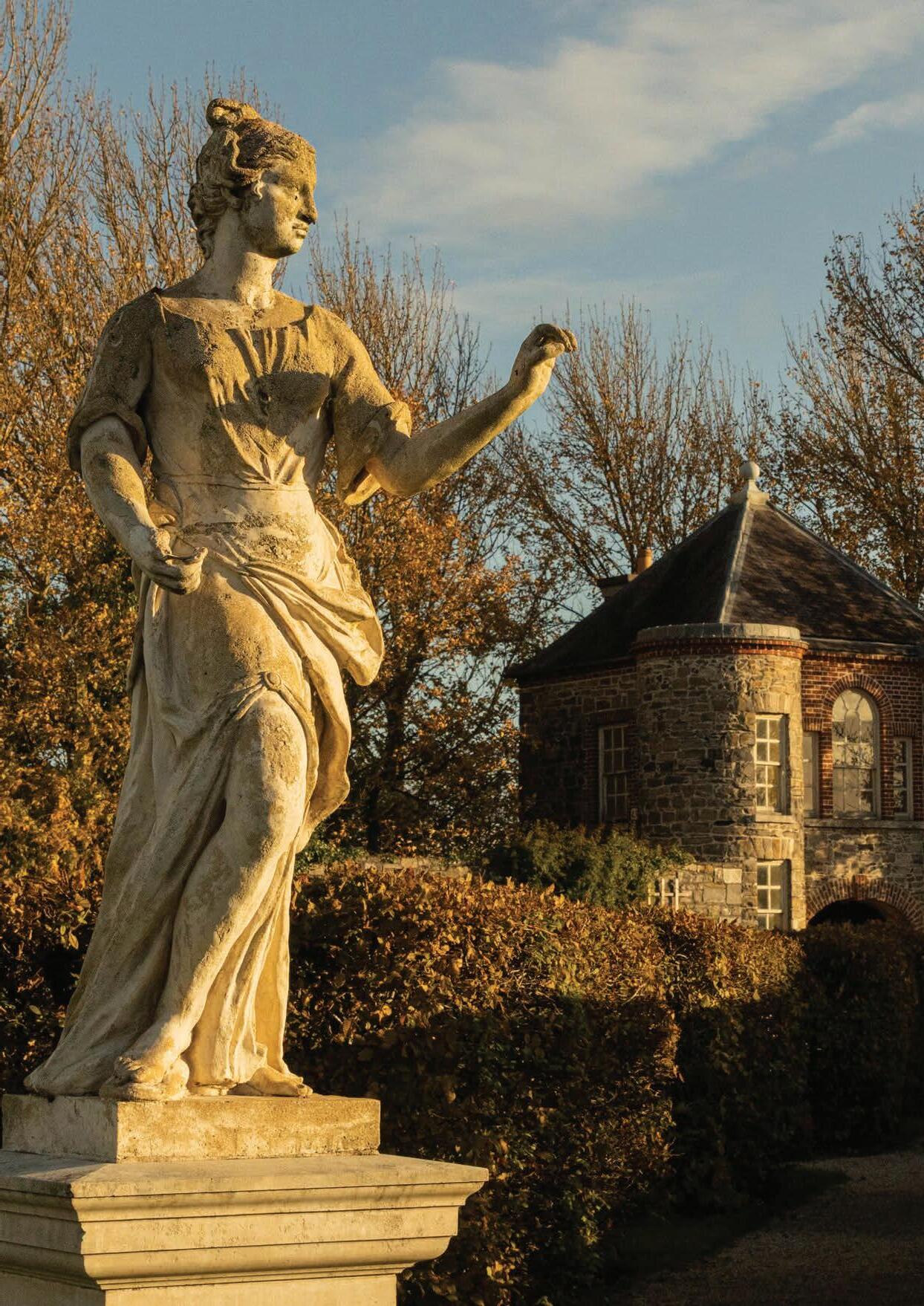
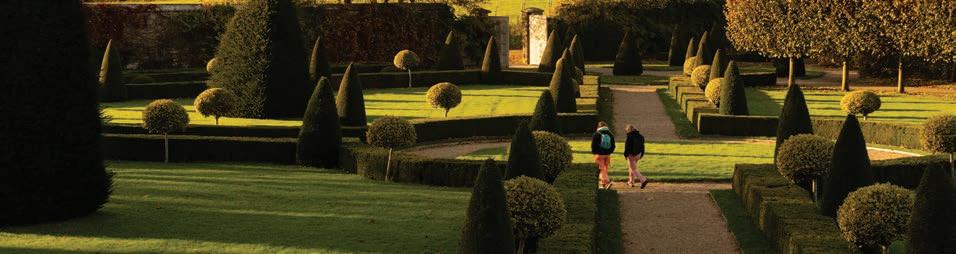
Not too far away from the museum sits one of the Dublin’s most beautiful hidden gems – the Formal Gardens of Kilmainham. The garden has all these really cool features, like a massive fountain, historic stone walls, satisfying symmetrical broad-leaved forests, and perfectly shaped pathways, showcasing the grandeur of a 17th-century French-style garden. The unique style of landscape contained many beautiful elements that attract people for chill walks, reading a book or just simply sitting on one of the benches to enjoy the breathtaking view. The garden feels completely separate from the busy city and it’s honestly the perfect spot to relax after checking out the indoor artworks.
Kith & Kin: The Quilts of Gee’s Bend
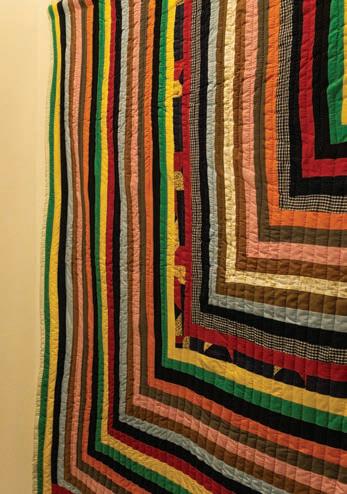
“Kith & Kin: The Quilts of Gee’s Bend” is an exhibition that focused on the long-standing traditions of quilt-making and family traditions that had passed down since the 19th century in Gee’s Bend, a remote river island in Alabama. Through different styles, patterns and colours, this exhibition explores the emotional bond and relationship between mother and daughter, and the intergenerational relationships.
The Kith & Kin exhibition celebrates the local art, activism, and family traditions. At the riverside town of Gee’s Bend, an extraordinary tradition has been passed down and flourished through the generations. The women of Gee’s Bend have been passing down the art of quilt making since the 19th-century, transforming the daily necessity into one of the most compelling visual languages in American art.
As these quilts are rooted in resilience and community spirit, they carry stories of survival, identity and creativity of being born in the shadow of slavery and the struggle for civil rights movement. Each quilt is sewn from wornout work clothes and scraps of fabric that record the lived experience - a hand-stitched historical quilt.
The central to the exhibition are the works of Rita Mae Pettway and her daughter Louisiana P. Bendolph, whose quilts connect the cultural heritage of generations of women in Gee’s Bend. Pettway’s vibrant work merge traditional “Housetop” and “Half-Log Cabin” patterns using recycled fabrics, while Bendolph transforms these patterns into dynamic, modern abstract shapes, the maze-like abstractions defined by movement and modernity. Both artists learned their craft by watching their mothers and grandmothers — a lineage that continues as Bendolph now teaches her own daughter and granddaughter.
This exhibition also features works by Mary Lee Bendolph and Essie Bendolph Pettaway, whose improvisational striped quilting skills blurred the lines between utility and fine art. Their work challenges traditional art, highlights the cultural value of creativity within black women in the American South.
Mary Lee Bendolph made outstanding contributions to Gee’s Bend, not only in her superb quilts-making skills, but also for her dedication to the community and civil rights cause. When Martin
Luther King Jr. brought the women’s suffrage movement to Gee’s Bend in 1965, Bendolph was one of his earliest supporters. She had the courage to deal with threats of violence, she and her family participated in the marches for the women’s right to vote, leaving a valuable legacy for the town.
Bendolph’s quilts embody that same spirit. She used old clothes from her family, believing that “old clothes have a spirit in them,” and infused each piece of work with memory and warmth. Her improvisational “going fast” technique — intuitive, fluid, and emotional — has become a hallmark of the Bendolph family, a skill passed down to her daughter, who also worked in sewing and quilting. Their layered, double-sided quilts blended bold compositions with a deep history.
The founding of the Freedom Quilting Bee in 1966 is marked as a pivotal moment for the women of Gee’s Bend, as their creation got brought into economic and social empowerment. Local quilters sold their works to retailers across the country through this cooperative, with proceeds to support in education, community development, and the civil rights movement.
One of the displayed artists that got inspired by this legacy was Loretta Pettway Bennett, the daughter of Ounnie Pettway, who carries the Gee’s Bend tradition of creative old-worn out fabric reuse. Bennett used crayon sketches and recycled fabrics in her quilt designs, skillfully employing colour to evoke memories of her travels and homeland.
This legacy can be traced back to Dina Miller, the oldest known quilt maker in Gee’s Bend and possibly a survivor of the Clotilda — the last known slave ship to reach U.S. From Miller’s early 19th-century work to the contemporary art of her great-granddaughters, the women of Gee’s Bend have transformed fabric, memory, and resilience into a vibrant art form.
Vibrant quilts with bold geometric strips displayed in IMMA.
Local Literature:
The Colourful Employees of Kevin Street Library Cherish Their Role In The Community
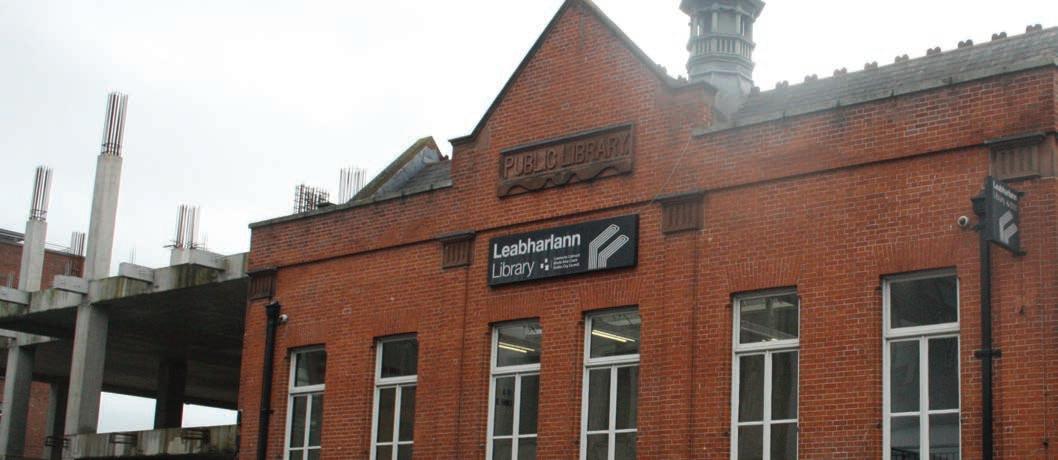
From serving the educational needs of children to serving as a point of refuge and comfort for senior citizens, this historical building has seen a lot of interesting sights.
Designed by McCarthy in 1903, the library building at Kevin Street was part of an overall complex with the original Technical School at Kevin Street that was constructed in 1898 and extended by William M. Mitchell at the beginning of the 20th Century.
Pointing out an original mission statement that dates from around 1909 hanging on the wall near the computer lab, Tyler is quick to note the historical relations with Jonathan Swift, who was dean of St. Patrick’s Cathedral in the 18th Century, and a famous satirist and writer.
Following a transfer of ownership between Technical Colleges and the old Dublin Corporation that occurred sixty years later, it became the public library that is famous within the community today.
The connections between Kevin Street and the education system are as strong as they were 130 years ago, as Paul points out to the fact that they have up to 15 class visits from schools every week, with a group of students from St.Audeons coming in that very morning. That’s about a hundred kids in each class, just from schools!
He refers to the massive junior library, where kids can come in after school and use the space to do their homework, as well as creative writing workshops, as
an example of the immense contribution that the library makes to serve the creative and educational needs of the kids.
Tyler is quick to share that sentiment, pointing to the major renovation that took place between 2013 and 2018 after a period of malnourishment and underappreciation. Paul admits that the age of the building requires a hefty amount of maintenance.
The work that was done to the junior library was immense, with Tyler pointing out that people are still surprised when they come in and see not only the old aesthetic but also the new facilities, such as a slide and a large TV set that plays movies for children to enjoy.
But it is not just the younger demographic that are looked after, for a lot of the older residents in the community, it is an ideal place to come in and spend some time, as it is relatively warm, although Paul points out that it can get cold in the winter, but even that is not a big concern to them. Nobody is going to be moving them on, and they don’t have to spend any money, as all of the resources and talks are free.
These are the words of Tyler, a recent graduate of English and Film Studies at University College Dublin (UCD), and a current employee in the library located on Kevin Street in the Dublin 8 Area.
By: Conor Delaney
“I did not realise that this would be a career opportunity that I would really like to do. It’s not something that jumped out of me since I was little, it’s one I more so found myself being in.”
Paul Flaherty, senior librarian of Kevin Street Library
Sitting in the colourful and visually appealing children’s area of the library, located near the back of the historic building, Tyler explains that despite being a proud movie buff, he has always had a love for reading.
But it was during his time working for the libraries, in Wexford County Council, during his summer breaks, that he confirmed to himself that he quite liked a lot of aspects of library work. He is keen to point out that dealing with physical media, such as movies, is what brings out a lot of joy in him.
By contrast, Paul Flaherty could not be more different to Tyler, having had a considerable amount of librarian experience under his belt before arriving at Kevin Street.
Paul points to his librarian journey as having begun during his time in Madrid, where he initially worked as a teacher along with many other jobs, but later returned to Dublin and received his master’s degree in Library and Information Studies at UCD.
Although admitting that the recruitment process was quite difficult from his perspective, he found himself spending the next ten years working at libraries in Blanchardstown, Tallaght and Ballyfermot, before finding himself in Kevin Street, where he is the senior librarian; a role he has held for a year and a half.
“At the end of the day, it’s just focusing on listening to the needs of the community as they arise”
Retiring to the comfort of his office, located beside the spacious and open study spaces on the second floor of the building, he sits down and delves into the historical treasure chest that is the history of Kevin Street Library and that of its chief architect, Charles James McCarthy.
It is the face-to-face aspect and a chance to interact with the local community that make working in the library the most enjoyable for Tyler, as he tends to
see a lot of interesting local figures who are always happy to have a chat for the most part.
But Paul is quick to point out that there will be days when somebody comes in and takes out their bad mood on them and other staff members, and you must intervene and ask them to leave. But that’s the way with any job working with the public, he says with a smile.
With all of the work that he has done dealing with people from all over the community, whether it be helping older people with the computers or finding books for kids in the junior library, Tyler believes that these experiences have shaped him to be better with customer relations for any role that he may have in the future. He will always go about it in his own way.
“At the end of the day, the good work will stand for itself; you just have to take it day by day,” he says. “You may not like shelving, but if you want to have an organised space, you’ll have to have people to organise it!”
Tyler sitting in the children area filled with colourful drawings
Photographs by: Conor Delaney
MURALS IN DUBLIN8
St. James’s Gate, Thomas Street, The Liberties
Photographs by Raquel Alves
Photographs by Raquel Alves
Photographs by Conor Delaney
Photographs by Conor Delaney
Photographs by Conor Delaney
Photography: Ana Victoria Romero Delahanty
First come, First Served,
Inside Dublin’s Broken Rental System
Ithought I was ready to find a place outside the comfort of Dublin 8, with savings set aside, an Excel sheet for tracking applications, and a clear plan. I was not. The search tested my patience, my finances, and my sanity. Leaving student accommodation should have made life easier, but it did not.
I could not afford to pay for the full year upfront; I had spent over a year sharing with difficult flatmates, and my boyfriend had just gotten a job in Dublin. Private renting made sense in theory, but in Dublin, theory does not stand a chance against the reality of the housing market.
My Criteria: I wanted a onebedroom apartment. Privacy had become non-negotiable. I needed a space where I could study, relax, and live without constant tension.
At first, I told myself I could be flexible and consider a studio; that did not last. Most were little more than a bed beside a kitchenette. One was so small you could open the oven and warm your feet from bed. They did not feel like home; they felt like boxes with inflated rent.
The rest of my criteria was simple: affordable monthly rent; close enough to the city centre, my boyfriend’s work, and my college; safe area. Nothing extravagant, just the basics for two people to live comfortably.
The Numbers: I tracked everything from the first message I sent to the
By: Ana Romero Delahanty
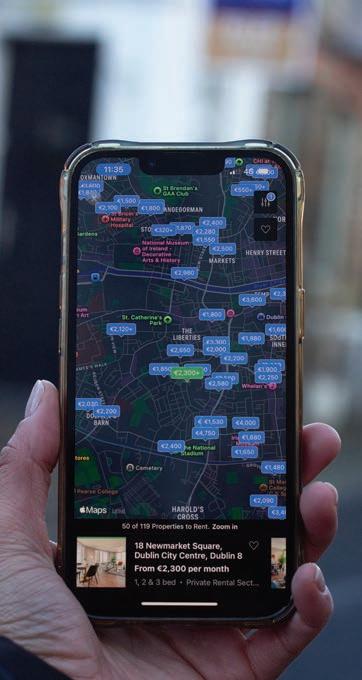
final lease I signed, thinking it would help me stay organised. Instead, it ended up showing me just how brutal the Dublin housing market really is. Around twelve per cent of my applications got a reply, and just five per cent led to a viewing.
Out of nearly 170 attempts, one apartment became my home. Shared
• A pplications sent: 169
• Replies received: 21
• Viewings attended: 9
• Final choice: 1
flats are already difficult to secure, but one-bed apartments have fewer listings, fiercer competition, and higher prices. Looking at the numbers laid out, the drop-off was shocking: from hundreds of applications to a handful of replies, to a few rushed viewings, and finally a single “yes.” It wasn’t just a housing search; it was survival through elimination.
The Pressure Cooker System: Every viewing came with the same rule: if you liked the place, apply immediately. Agents made it clear it was first come, first served, and decisions could be made within days. You either committed on the spot or risked losing it.
That urgency shaped my whole routine. Viewings were just as stressful. Queues stretched down the street, agents rushed people through, and you barely at every viewing, you could feel the tension. No time to notice
“It wasn’t just a housing search; it was survival through elimination.”
dampness, heating, or broken fittings — just a quick glance before being pushed out.
The Emotional Toll: Beyond the numbers, the hardest part was how draining it felt. Each day became a loop of hope and disappointment — sending dozens of applications into silence, then rushing to crowded viewings when a reply finally came through.
The Final Choice: After months of searching I finally found my new home. It was not perfect; nothing in Dublin’s rental market is.
It wasn’t the cheapest or the most spacious, but it was a proper onebedroom, safe, and available when I needed it. Most importantly, we got accepted. By then, my standards had changed.
“We were not just looking at apartments: we were quietly computing, wondering who looked like the ‘ideal’ tenant.”
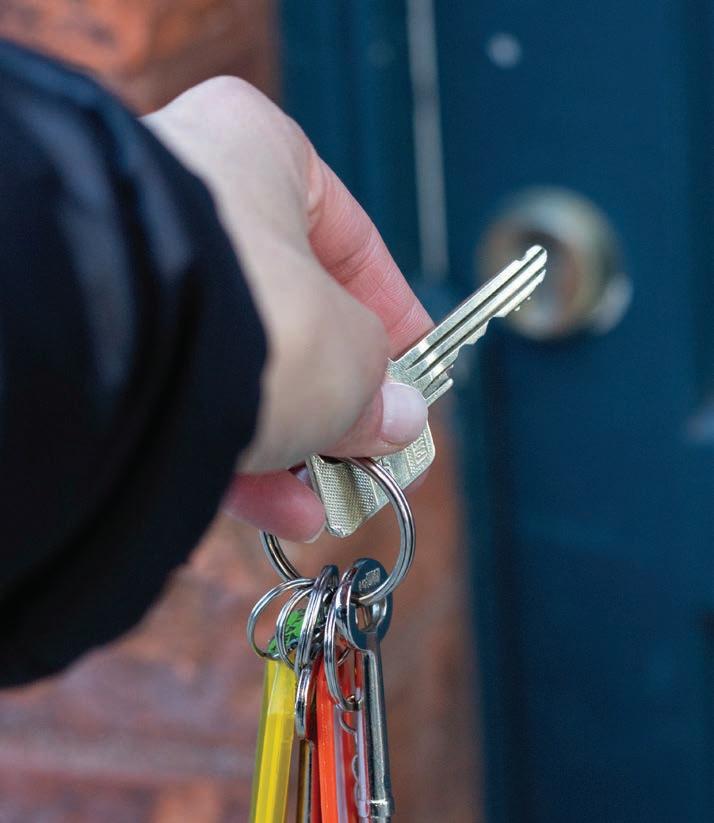
It didn’t feel like a victory, thought; it felt like relief. After so many dead ends, I finally had keys, a roof, and the space to brathe again.
What Needs to Change:
My story is not unique. If anything, it is typical of what thousands in Dublin go through every year. The difference is that I had some savings and the persistence to keep applying; without those, I might not have found a place at all.
But housing should not come down to luck, privilge, or who can handle the most stress. The system needs to change.
Finding a home should be difficult only in the sense of choosing what feels right for you and not in surviving a process that feels stacked against you from the start.
Until the system changes, “finding a place” in Dublin will remain less about choice and more about endurance.
Photographs by Raquel Alves
Inside Enable Ireland’s Thomas Street Charity Shop
By: Kateryna Gerasymenko
In the heart of Dublin 8, Enable Ireland’s shop turns clothes into life-changing support for people with disabilities.
Choosing what to wear is something we face every single day. Some people do not care much about it, while for others, the choice of clothing can determine their mood for the rest of the day. The same can be said about clothing stores.
Every person — even those who do not care about their appearance at all — has a favourite shop they return to again.
Very often, these shops are either mass-market or expensive boutiques. At the same time, we tend to forget about another, truly important type of store — the charity shop.
In the Dublin 8 area, there are many such shops, but according to residents, the real gem among them is the Enable Ireland Charity Shop on Thomas Street. This store is one of many charity projects run by the Enable Ireland organisation. “Enable Ireland is a not-for-profit or-
ganisation, and we provide services to over 13,000 children and adults in our services around the country. We have many of them. So, any money that we raise goes directly to provide those services to them,” says Deborah O’Donnell.
Deborah O’Donnell is a Regional Team Leader who works for the Enable Ireland organisation. She shared many interesting insights that reveal how charity shops operate behind the scenes. What is clear is that the work of people in charity shops is not only important but also highly diverse.
According to Deborah O’Donnell, the work in charity shops is organised as follows: first, they receive goods. “We take donations directly from the public through the door. Or we have a warehouse up in Ballycoolin that serves all our shops. So, we can put an order in every single week and get stock from there,” says Deborah.
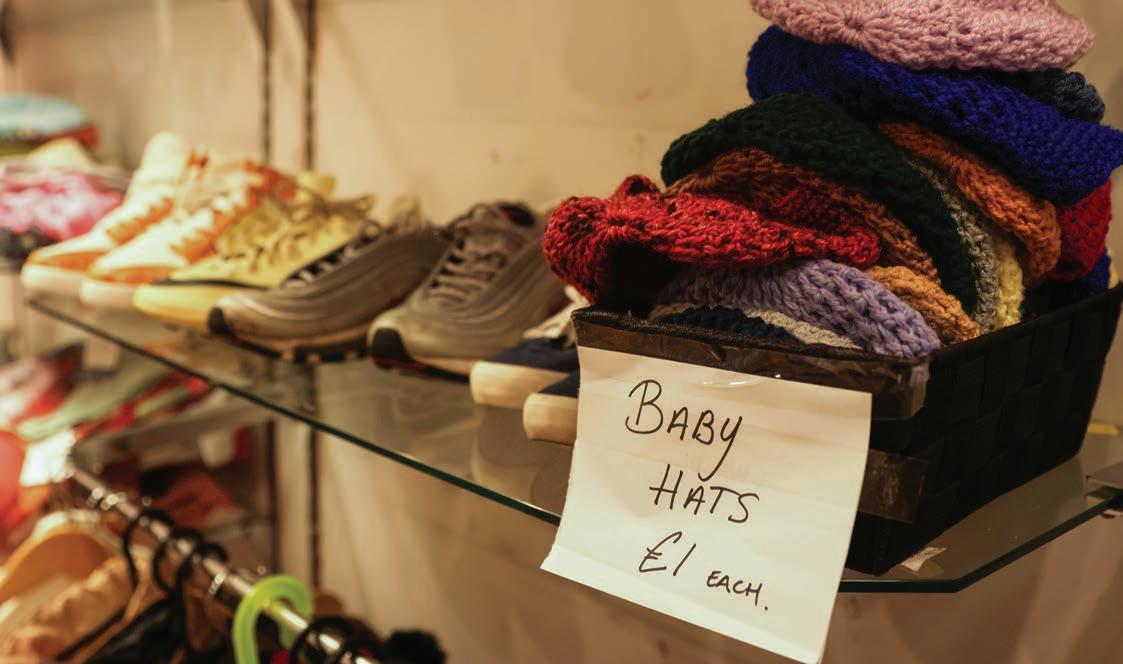
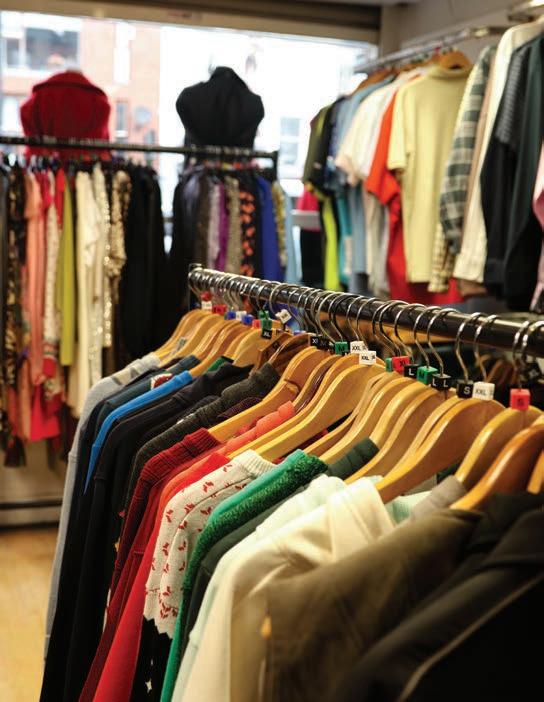
After receiving the items, everything is sorted, labelled, steamed, priced, and finally displayed on the shop floor. These stores mostly sell women’s, men’s, and children’s clothing, as well as shoes. Some also offer homeware and even furniture.
The Enable Ireland Charity Shop on Thomas Street, however, stands out from many other charity shops in Dublin — and beyond. The first thing that can be said about it is that it truly has a soul.
The moment you walk in, you’re met with positive energy — the warm atmosphere, the wide selection of quality clothes, and the smiling staff. Enable Ireland’s Thomas Street shop can truly be called more than a shop — it is a place where community meets fashion, and fashion meets purpose.
Photography: Khai Sung Goh
Adrienne Clarke, the manager of the shop, and Deborah O’Donnell both agree that the quality of their stock is probably the main reason the Thomas Street shop stands out from others — but there are a few more.
Its location, interwoven with the bustling Liberty Markets and its proximity to the National College of Art and Design (NCAD), creates a dynamic environment.
The shop also benefits from a strong base of regular customers from the local community, many of whom have been visiting for over 20 years, helping to build lasting relationships.
These customers often visit other nearby Enable Ireland shops, creating a circle of connection. Moreover, Adrienne adds that there is also a certain amount of designer clothing among the donations. For example, a few weeks ago the warehouse received Moncler jackets
and Louis Vuitton shoes. “You get a bit of everything — you never know what will come out next,” they say.
“You just kind of have to be in the right place at the right time sometimes,” Deborah says.
Times are changing, and people’s perception of charity shops is changing too. Sustainability and recycling initiatives have contributed to the growing popularity of charity shopping.
“So, at the end of the day, we have a job to do to raise as much funds as we possibly can to help people,”
Modern charity shops, like the Enable Ireland store on Thomas Street, focus on offering higher-quality goods and have a boutique-style design, moving away from the old image of
crowded, dusty second-hand stores.
However, as Deborah points out, some people still forget about the main purpose of a charity shop — to help others — and instead come in just looking for a bargain.
“People have a mindset of, ‘Well, you receive your goods for free, so why can not I have it for a cheaper price?’” says Deborah. “They are missing the point of what we’re here for.”
Therefore, after hearing Deborah and Adrienne’s stories, we can say that ‘Enable Ireland charity shop’ on Thomas street is a real highlight of Dublin 8 in the fashion world, and anyone who lives in this area should visit this shop at least once to experience the atmosphere of kindness and care that reigns in this shop among the large number of beautiful clothes on the shelves, buying which will make you happy and help other people.
Photography: Khai Sung Goh
What’s in my bag
Inside Nana’s daily carry
2 3 4
1. Wood Comb: A cultural essential I carry every where — perfect for fixing my bangs and reminding me of mom.
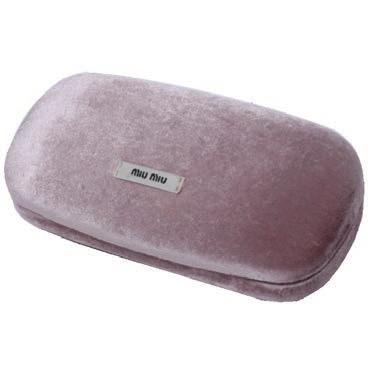
2. MiuMiu Sunglasses: My first luxury purchase — a statement piece I couldn’t stop thinking about.
3. Vaseline petroleum jelly: My lip prep must-have for smooth, glossy lips.
4. M.A.C Lipsticks: My everyday shades — 543 layered with Very Teddy & City of Angels for depth.
5. Le Labo Santal 33: My signature woody fragrance — fresh, unique, and never overpowering.
Name: Nana
“I’m 26 and work in law, but my real passion is curating everything in my life, from my outfits to how I decorate my room. My style is pretty minimalist overall, but I love throwing in a pop of something bold. My current obsession is pairing mostly dark colours with one really bright accent, both in my wardrobe and my room decor. It just makes everything feel more ‘me’.”
9
6. Sony XM5 headphones: Noise-cancelling essential for music and peaceful commutes.
7. TFI Leap Card: My Dublin transport lifeline — student discount days are missed.
8. Smartphone: When I flip my phone over, it means I’m done for the day.
9.Charger: Always in my bag — because my battery never survives the day.
Photography: Khai Sung Goh
Space Out Sister: Embracing Vintage And Femininity
By: Indira Campos
The hidden gem where the bustle of city life fades away
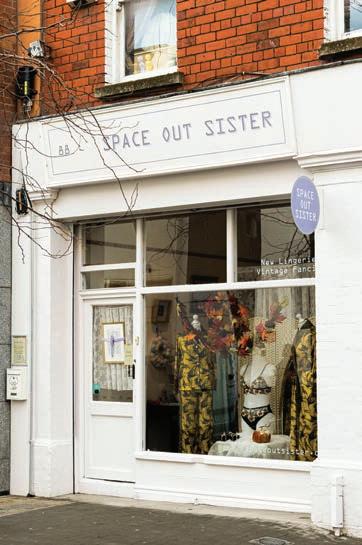
Walking on Francis Street feels like stepping into a place where innovation and vintage collide. Filled with antique shops, modern cafes, and home to the BIMM music institute, Francis Street incorporates the charming, creative, and artsy character of Dublin 8.
One of the street’s defining features is its many antique shops, a trade that has flourished for about four decades. Among all these amazing places, however, there is one shop that simultaneously stands out and fits perfectly into the scene.
The name, the display window, and the energy it radiates pique the curiosity of passers-by; it is the kind of place that draws you in after you walk past every other store.
Stepping into the store for the first time is like entering a different, gentler world: the vintage music, the pleasant fragrance and all the colourful pieces are a pleasant change from the outside world. Intrigued by the different appearance and ambience of the shop,
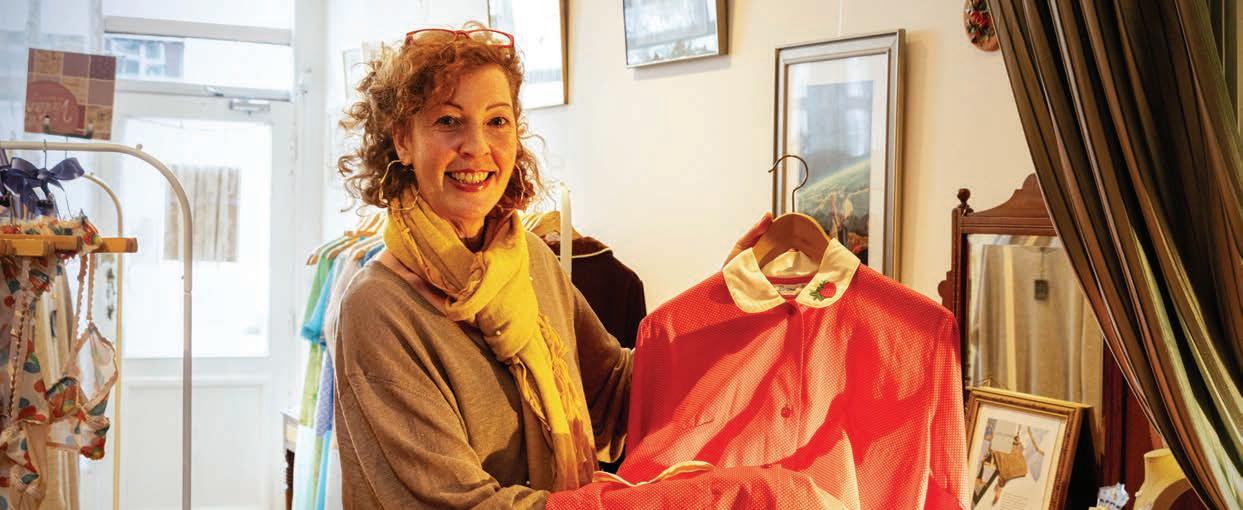
I left with wanting to know more about its history and development. I wanted to find out what makes this shop stand out from the other ones. Located on Francis Street, Space Out Sister, run by Karen “Kiki” Forrester, perfectly portrays the artsy and charming scene of the area.
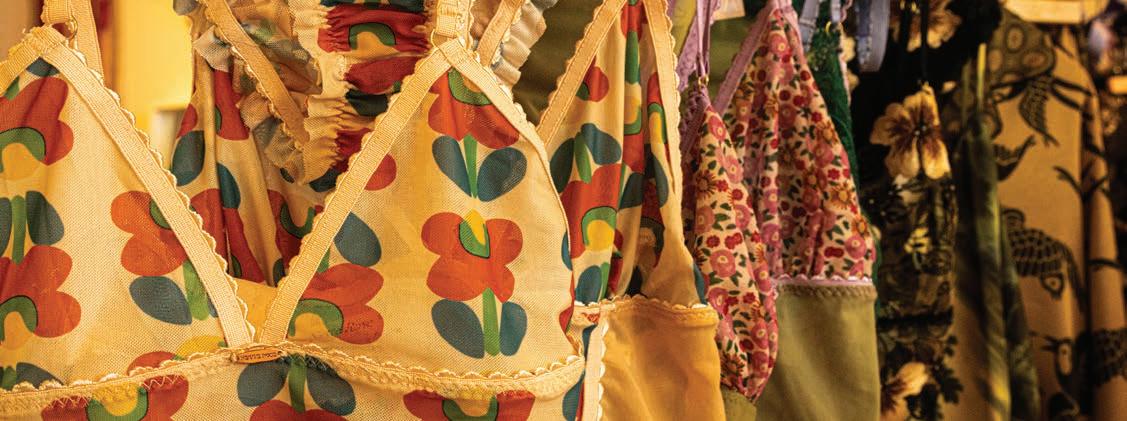
The fusion of antique and modern that characterises the area is also one of the shop’s key characteristics. Kiki offers handmade jewellery, new luxury lingerie, and vintage clothes, primarily nightwear.
“Space Out Sister is all about encouraging people to take time out, to allow your mind to tune out for a little bit of time to help imagination and creativity to take hold. ”
The pieces she presents in both her store and online shop are meticulously picked out by herself, and she is always
on the lookout for brands that she can exclusively present in Space Out Sister.
“They must be ethically made, and they must be full of colour and have something different about them to qualify,” she revealed to me. In fact, the shop’s display reflects Kiki’s love for working with “colour, tone, texture and pattern.” However, Kiki’s dream of having her own shop did not start on Francis Street but in her own home. About 12 years ago, Kiki started running Kiki’s Booteeki from her living room, a pop-up that resulted from her love for vintage and lingerie - a passion she decided to fuse.
“I have had vintage in my wardrobe since the 1990s, and vintage slips were my favourite. I used to wear a pair of vintage trousers with a vintage slip dress over to create an outfit.” Kiki told me when talking about her love for vintage and second-hand clothing.
As if she were ahead of her time, her idea of selling vintage clothing arrived at around the same time when people
Photography: Khai Sung Goh
-Karen “Kiki” Forrester, owner of Space Out Sister
started to gain awareness of the dangers of fast fashion, resulting in the rise of vintage clothing in Ireland.
Very soon, her pop-up developed into something bigger. She wasinvited to be part of a collective that developed into a combination of a vintage shop, a café, and a hair salon on Francis Street.
After being part of that collective, Kiki decided she wanted to go independent and renamed her shop to Space Out Sister. That is when she shifted her focus to vintage nightwear and colourful lingerie, one of the shop’s most prominent features to this day.
Although the delicate, feminine clothing and the beautifully handmade jewellery already make the shop the magical place it is, there is another factor that makes it so different.
The name of the shop – Space Out Sister – already hints atomers to feel. Her goal is to provide an opportunity for her customers to unwind and take some time out – the colourful items, the vintage music, and the pleasant fragrance draw customers and visitors out of the busy, stressful, and exhausting outside world and allow them to “lounge and potter.”
The peaceful and serene ambience makes the shopping experience at Space Out Sister feel like a journey of tranquillity and con-
nection, something that is supported by the calm zone it is located in.
Allowing her customers to take their time discovering what the shop has to offer and telling them stories of certain items, very often results in them telling stories of their own. “Every day brings delight,” she told me. “My customers bring me joy every day with stories and conversations.”
Regardless of all her sauccesses and achievements, Kiki raises concerns about the lack of recognition for small, local, and independent shops, an issue concerning many small businesses in Ireland.
Even though Small Medium Enterprises represent 68.4% of all Irish businesses, many difficulties they cannot
overcome persist.“It is difficult to run a small independent shop these days.
I would love to see more support for small independent retail businesses to thrive and not just survive. I think that vintage and second-hand shops will keep gaining momentum as we play an important role in the Circular Economy.”
This, however, does not discourage her from keeping her shop thriving and growing in different ways. This year, she introduced a new South African brand to her collection, worked with artists who did window display exhibitions, started a blog on her website, and took part in the Culture Date with Dublin 8 by doing a historical window display.
“This is reflected in the name Space Out Sister. It is a gentle urge to lounge and potter […]”
As a final note, I asked her where she sees herself in the future.“In ten years, I would love to still run Space Out Sister, […]. I have a dream I would love to bring to customers now that I will keep to myself for now!” As expected, the future of Space Out Sister holds a lot of mystery and magic, a reflection of Kiki’s creativity.
By: Matilda Nyren
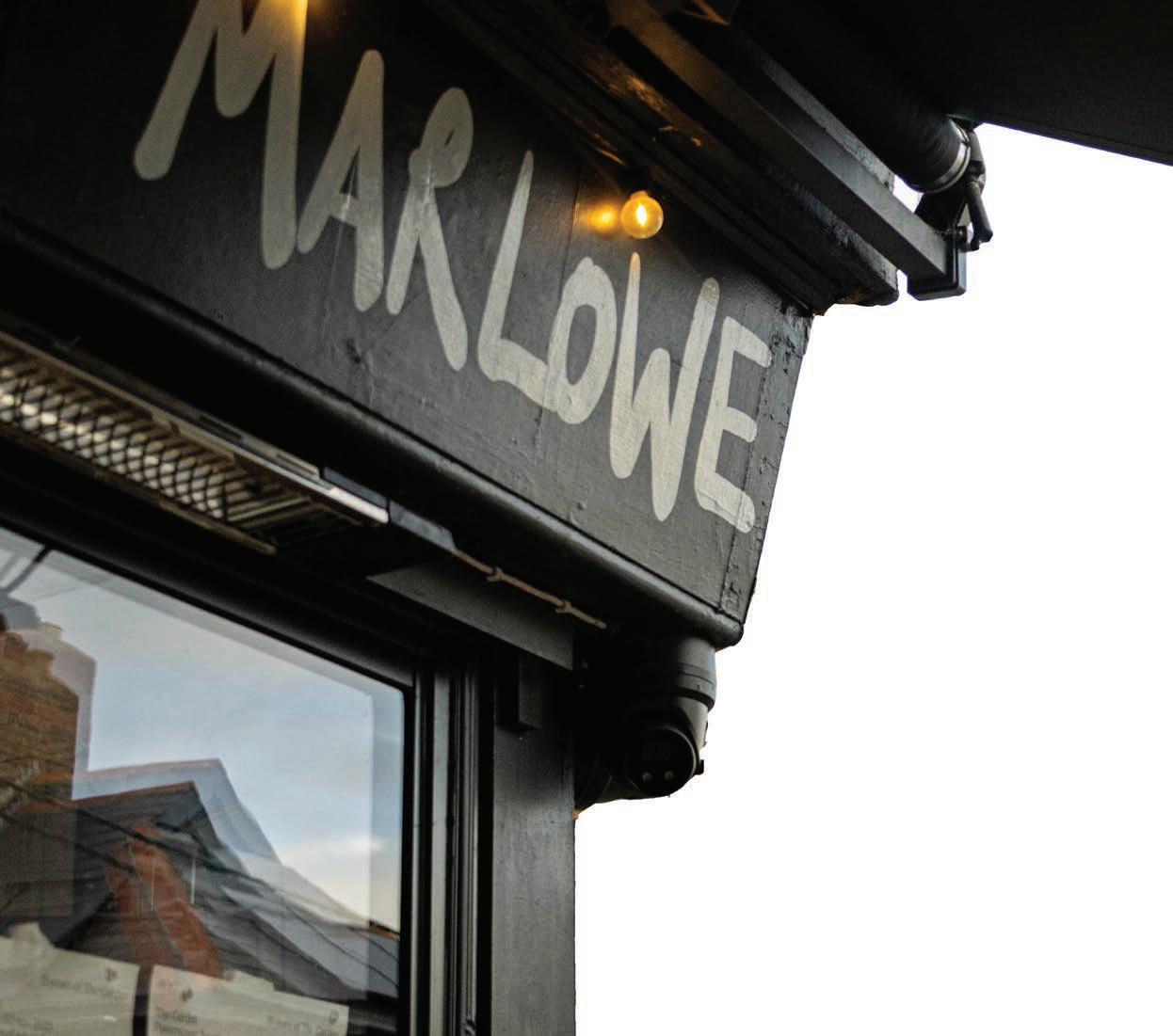
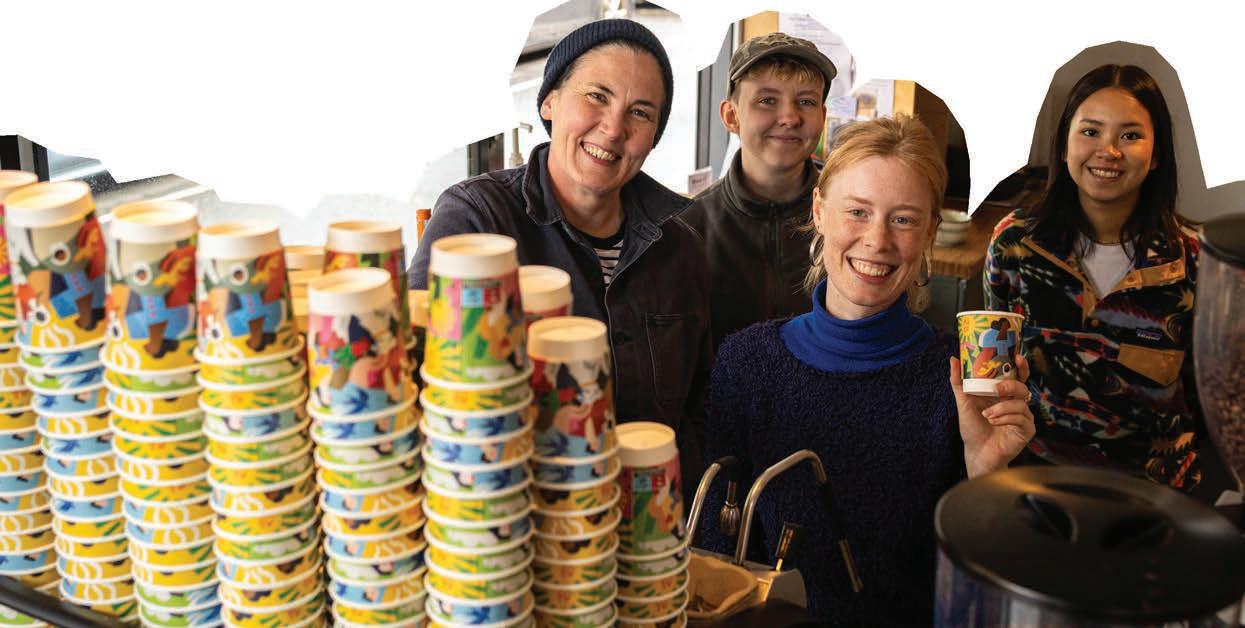
On the corner of a neighbourhood in the heart of Dublin 8 sits Noodle, a dog with honey-brown curls and a wagging tail, eagerly waiting for Lisa Farrelly, one of the owners of Marlowe & Co, to hand him a biscuit. Eileen, Noodle’s owner, is given her coffee in a locally designed cup. After careful inspection, I cannot help but notice the illustrations on the mug, one of them being the picture of a dog that looks very familiar. “That’s Noodle on the cup,” says Lisa, “He’s one
of our regulars!”. It is an interaction that encapsulates exactly the kind of place Marlowe & Co. is – a spot for people, made by people.
It was Lisa’s sister Danielle, her husband Paddy and Lisa herself who, among many others in the area, had their eyes on the little corner house that ended up being Marlowe & Co. During a time when postcards only went as far as the local restrictions let them, the pandemic became a catalyst for the coffee shop.
You can tell that the prom ise has been kept. “Because the building is based in a residential area, we started talking to people. They were all working from home, so we got to know them in a different way. We never knew what they did for work; they were not in their suits – they were all just very casual,” says Lisa.
She continues to explain that, although it might seem a bit cliché, “we were all in it together, so we had to watch out for each other.” Slowly but steadily, Marlowe & Co. became a staple coffee spot, because after all, that was all you could do at the road,” She explains.
But the small details go beyond just the products on the shelves – even the coffee mugs tell a story of the Dublin 8 community. Designed by local artist Claire Prouvost, the illustrations are a mural of the people who have made a mark, people who are all part of the Marlowe family.
“This is our tribute to Edna McGrattan, a campaigner who is working in the George but also actively fighting the stigma against HIV.” Lisa shows me the cups. “We’ve also got local carpenters who made our bench. Luke up
Marlowe & Co. - Brewing Coffee And Connections
Take a look into the friendly neighbourhood living room where coffee beans and dog biscuits meet unforgettable memories.
the road had never worked with metal before, but he did it for us. It is amazing what the shop gives back to you when you start making connections with people and just chatting.”
Battling with the fear of starting something brand new, the team were unsure how they were going to make the business go around. But people believed in the shop, and Lisa’s friend reminded her that “You can always hire people with the same attitude.” The quote seems to have made its mark, because the staff radiate the same welcoming energy as the owners.
“I have to say our staff, our crew here, are just incredible. You can always lean on them to help you out. We treat them like a family, so even when they go travelling, they return. I think that’s a really good sign,” Lisa says. Waiting for my coffee, I take
the chance to ask one of the staff members about her experience. “I love it here,” she says. “When I came back from Australia, I thought,
We were all children once, and we can all recall the feeling of stepping into a shop where we weren’t welcome.
come in, they’re very welcome. They’re little individuals themselves. We’re very lucky where we’re positioned – it’s mainly families, and you get to watch the kids grow up.” She says as I watch a man smiling at a baby in a stroller just outside the window. “It’s funny, we
‘I’m missing this enriching of my life. Hmm, what is that? And it’s always Marlowe, and so I come back,” she explains.
Whether it was being told to quiet down or wait outside, you always felt out of place. Lisa tells me that one of the goals of the coffee shop is to make sure everyone feels welcome. “Here, there’s staff who love dogs, there’s staff who love kids, and there’s staff who love both. So when kids
don’t even say ‘customers’, we kind of always say ‘neighbours’. It’s also to make it interesting for ourselves. Of course, you can just swing out for a coffee, but the connections are what make it worthwhile. It answers the
bigger question, and I keep thinking, well, why are we at it if we’re not actually connecting with people?”
Marlowe & Co. feels like a love letter to Dublin 8, and the love is more than reciprocated by the community. You can feel the impact of the neighbourhood in every nook of the small corner shop, with thoughtful details such as Lego figurines for children and wine nights for adults. But the details are not just in the things; they are in the air. It is a place where everyone contributes, so everyone belongs.
Nezha: The New Taste of Rebellion
The movie inspired restaurant opened its doors for visitors in summer 2025.
By: Melanie Watson
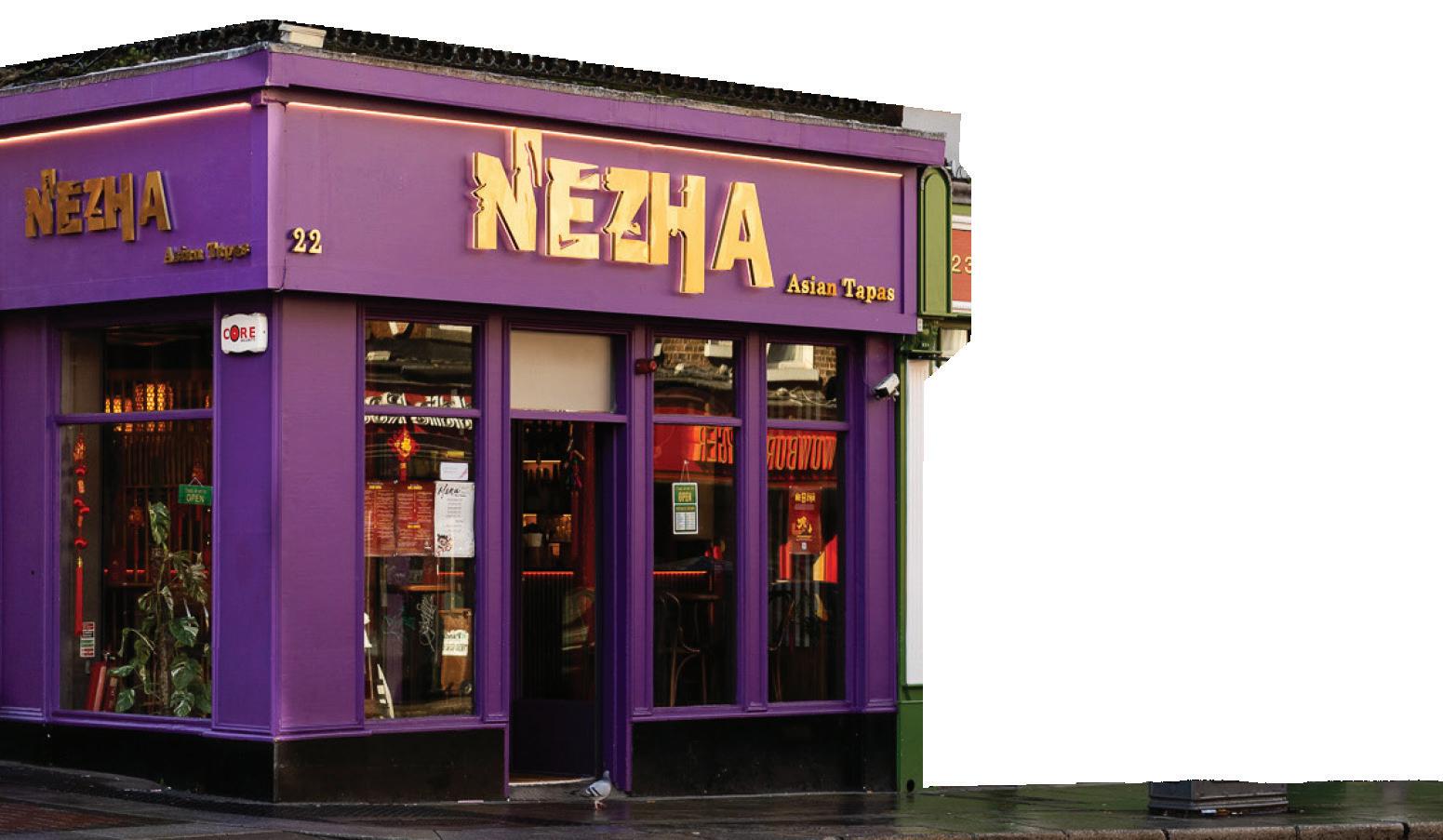
If you walk by Camden Street, you will find a small place called Nezha. It may not be flashy, with a deep purple front, but if you recognise that name, it is what you think: a Prince Nezha inspired restaurant! The restaurant is decorated thematically, from the front menu to the waiting-to-be-seated sign and the bathroom; everything features a Nezha figurine. The warm lighting and red tones evoked that brave and rebellious vibe of the movie. But who is Nezha, and why is it so important for the Asian community?
Nezha, otherwise known as Prince Nezha, is a deity in Chinese mythology and Asian Folklore in general, who represents youthfulness, piety and children. Nezha reflects a warrior soul and
embodies justice. He is not only an iconic character in mythology but has transcended to the big screen, having multiple adaptations, including a very popular one that opened recently.
This particular restaurant is inspired by the movie Nezha (2019), which shows the story of this deity, who is depicted as child-like, very playful and sometimes rebellious. Nezha also represents change in one’s destiny, and the restaurant looks to show this through their food, a variety of modern, adapted Chinese delicacies. It is a computer animated movie that shows the technological advances of China, which is why the owner, John Zhu said:
The restaurant ‘Nezha: Taste the rebellion’ opened in Camden Street at the end of July 2025 in the former Bóbós burger. The owner, John Zhu, de-
ashes, intrinsically making the name Nezha so fitting for the place since this character represents not only rebellion but changing one’s own destiny. For this reason, Mr Zhu wanted a new beginning for the place, he says, “There are too many burger restaurants…. I like creative stuff; how can I make burgers creative? It’s hard; the only thing I can do is change the toppings.
“For the Chinese community is really popular, Chinese people are very proud of the movie”.
But for Asian cuisine, not just Chinese, there are so many things.” So, after 15 years in the restaurant business and having experience with two other Chinese restaurants , he decided to go for
The rising popularity of the movie also brings attention to the place itself. Nezha 2 is coming out in theatres, being a main attraction to the restaurant as it makes the name more recognisable for the Irish public. He says, “The kids bring their parents as they recognise the movie, not only Chinese kids but Irish as well. We have a lot of Asian customers who see the name and are like ‘Nezha, Oh! let me try’ because of the movie.”
At the same time, the owner noticed that with time, Chinese products and food became increasingly popular in Ireland. This also awakens childhood memories for many and brings a nostalgic vibe when they enter the place. This is why Mr Zhu says that there is more to come in decoration as he wants to immerse his clients in the movie and make them feel the power of Nezha through the ambience. Mr Zhu explains that this was a character from his childhood that he loved and watched many of his movies. So, as an iconic character, Nezha has planted a seed in many people’s hearts and memories, giving the restaurant the charm to revive one’s childhood and share delicious meals.
If you want to know more about the journey of Nezha, check out the mov-
ies and stay tuned for more surprises at the restaurant Nezha: Taste the rebellion.
“Our name carries a story. Like Ne Zha, we believe in shaping our own path — respectfully blending tradition with creativity to bring you a dining experience that feels both familiar and new.” –Nezha.
Nezha is located at 22 Wexford St, Portobello, Dublin, D02 YW98, and you can find more about Nezha through their social media:
@Nezha.ie on Instagram or their website https://nezha.ie/.
A Different Scent Every Day.
Colours, flowers, and creativity.
By: Raquel Alves
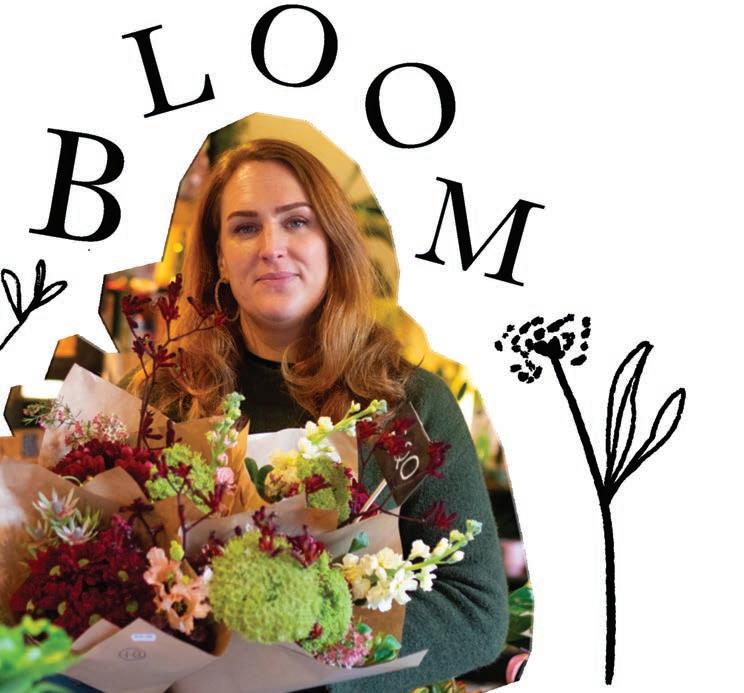
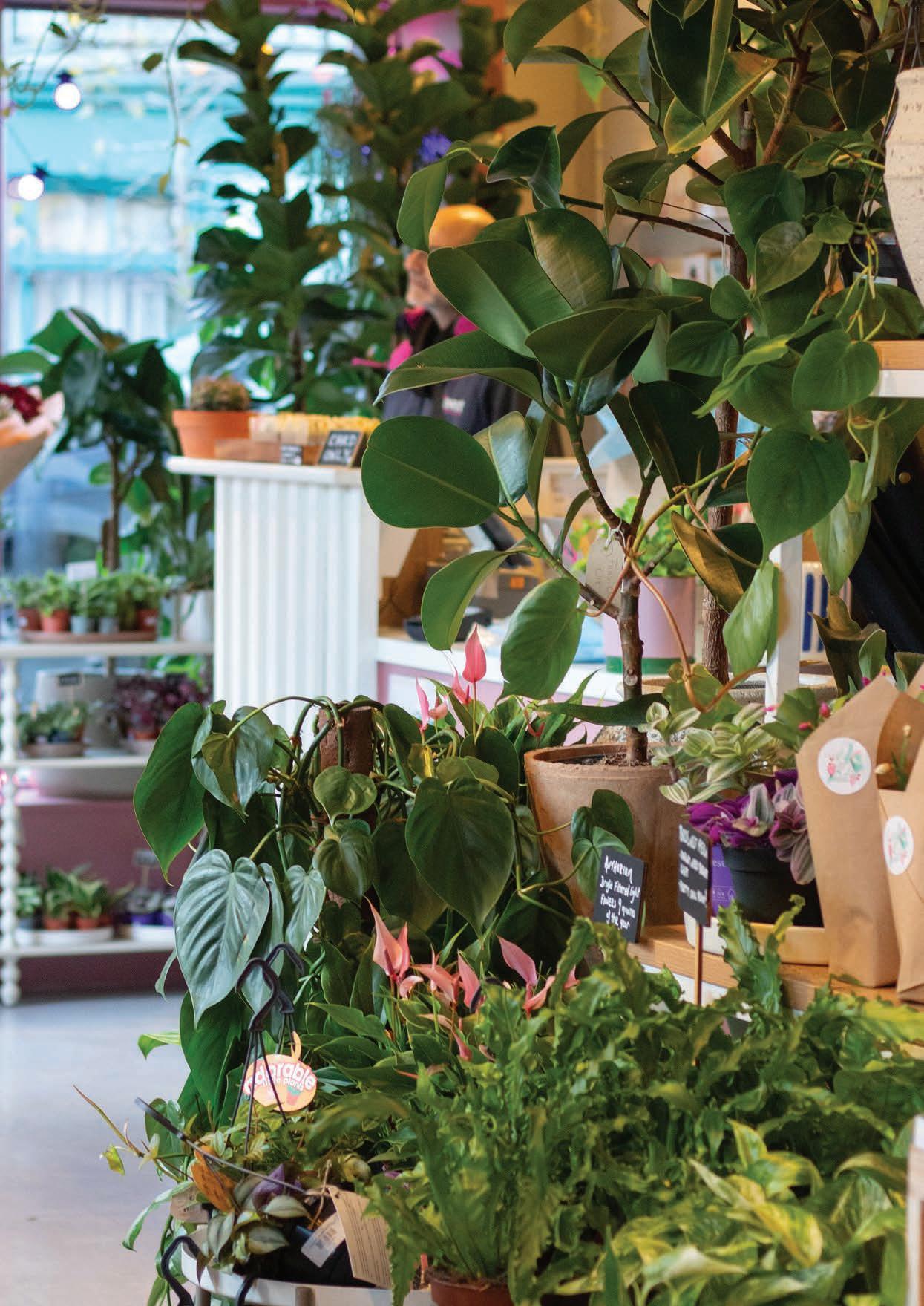
Acolorful place that brings new scents with each season, that is Hopeless Botanic (HB). During a few quick walks along one of the busy avenues in Dublin 8, I came across this place full of life and energy.
Three years ago, The Liberties gained even more life. On one of those walks, I decided to stop, go in, and enjoy the atmosphere. Erin, the owner of the shop, welcomed me and allowed me to photograph this beautiful space.
The place had been a bike shop for a while, although she was not sure exactly how long. It had also been an antique shop at one point, offering many different kinds of pieces. Before getting this physical space, Erin ran an online shop for about two years.
During my time with Erin, she shared with me some of the history and background of the HB. As I conducted
the interview, it became evident how deeply passionate she is about plants and gardening. Her enthusiasm and dedication are clear through what she has to say.
season. At the beginning it was just a hobby, but I often struggled to find the plants I wanted nearby.
So I started looking into public shops, and for a while the business was based next door in the café, upstairs, until we eventually got this larger space.
We wanted to help people take care of indoor plants more easily, because it can be difficult to grow things here due to the weather. You really have to choose the right plants for your home. We try to adapt care information specifically for Irish homes, since a lot of the advice online is written for American conditions. Our aim is simply to make plant care more accessible and easier for people.
It seems that when plants are placed too close together, or when one plant needs its own space, the conditions here make it difficult for them to grow well.
The environment is very cold, and there is very little light, which creates poor conditions for most houseplants. That is why I created Hopeless Botanics”.
“I think it started as a passion project, something that really kept me trying to keep the plants alive for months in Ireland. I have always loved gardening and plants. During COVID, especially in the winter, I began doing more indoor gardening because you can not do very much outside in that
It is more than just a flower shop and a venue of good energy, the space features beautiful plants and flowers in a wide variety of foliage, colors, and sizes. It also offers everything you need to grow or care for your garden, such as a routine plant cake kit, watering cans, houseplant nutrition, soil mix, serum, and many other options.
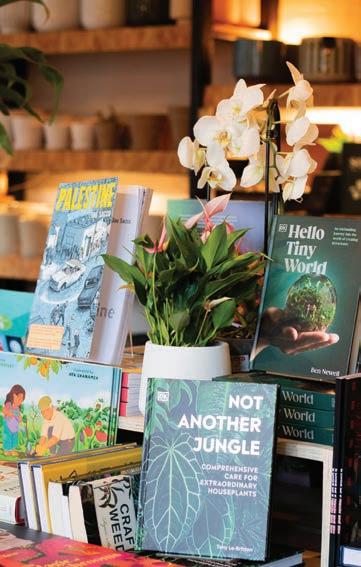
The shop also dedicates an area to prints to decorate your space, bringing a bit of HB’s colors into your home, along with other items such as vases with various designs and more organic styles, as well as books that help you care for your plants and others that add fun to your day with lighthearted themes.
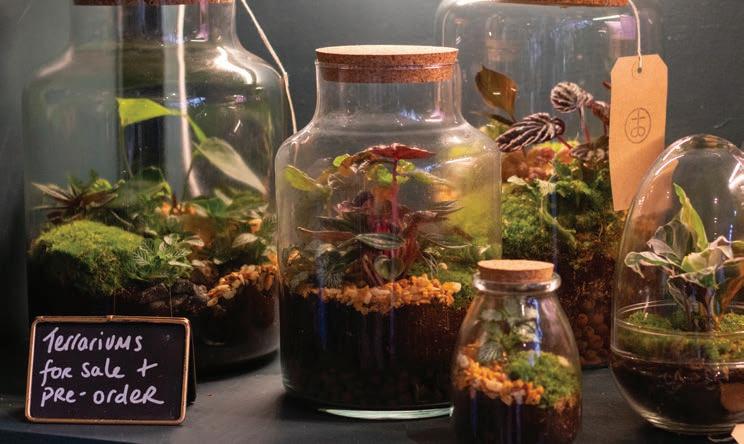
One of my favorite activities at Hopeless Botanic is creating your own terrarium. The shop offers afternoon workshops on select dates to teach you how to build them.
It is an incredible experience that shows how plants can survive in a closed environment with their own
Photography: Raquel Alves
self-sustaining ecosystem, where water, air, light, and nutrients circulate continuously, allowing the plants to live for a long time with very little care. Taking into consideration the climate of Ireland, this is a great opportunity to start from.
After creating your own terrarium, you can also take home a personalized tote bag to help you with your shopping, who would not love that classic gift!
With a bouquet of flowers in your favorite colors, with a scent that brings back happy memories and shows that
you are loved, simplicity never goes out of style, so take the opportunity to gift someone today! Oh, and do not forget to include a lovely card with a message that expresses your affection which you can find at Hopeless Botanics also.
If your day happens to be busy, do not worry, you can request delivery straight to your home or workplace, brightening your mood and creativity for the day.
When visiting on special occasions, you can also enjoy a variety of themed decorations. During the winter months, for example, the space features plants in seasonal colors and festive pumpkins during the Autumn. Naturally, Christmas is not overlooked, with the entire area beautifully decorated to create a warm and welcoming atmosphere for the holiday season, making it a truly festive experience for visitors.
If you want to learn more about their work, you can sign up for the Hopeless Botanic newsletter through their website.
Back in the Ring: The Soul of the National Stadium
Former boxer Oisin Fagan reminisces on past triumphs and current woes of the National Stadium.
By: Conor Smyth
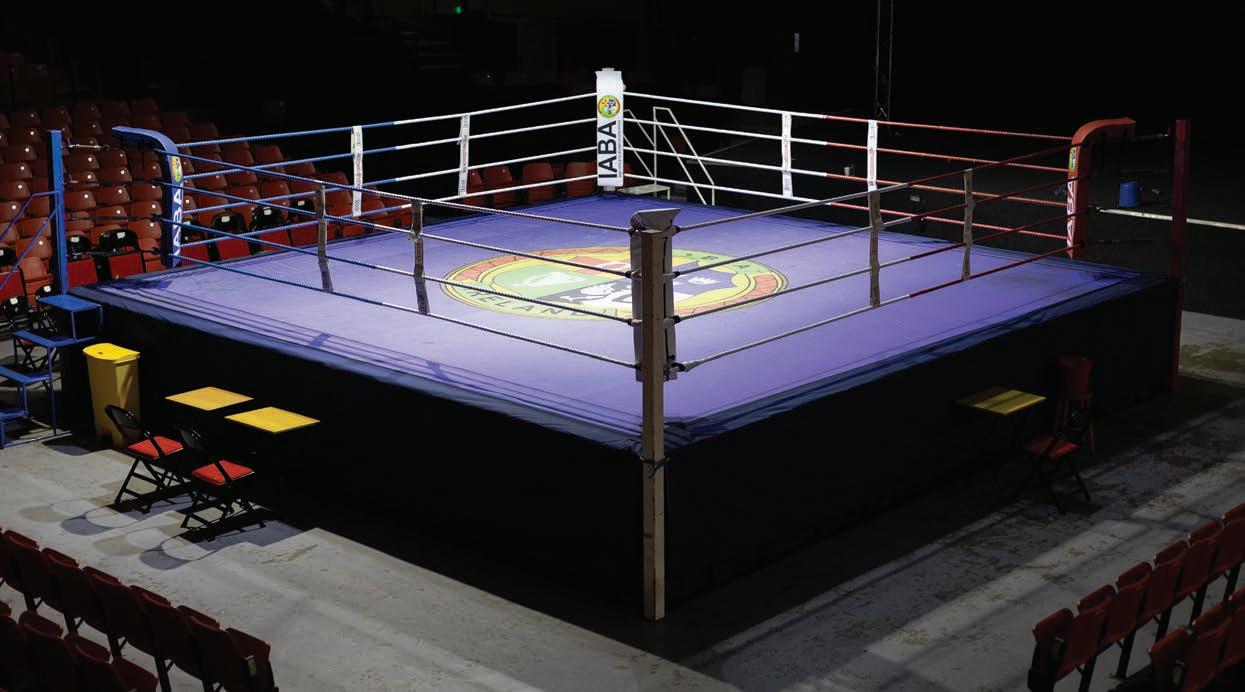
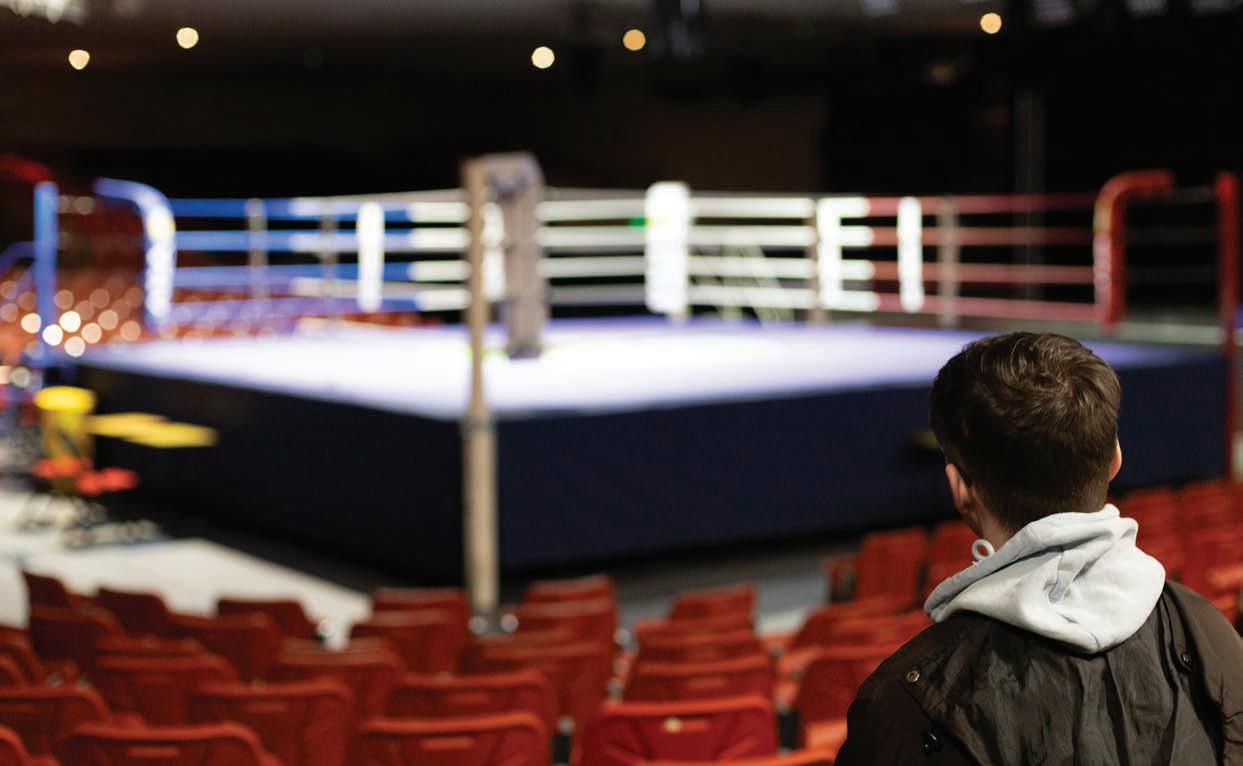
The lights still cast a steady glow on the ringside seats of Dublin’s National Stadium, where Oisín “Gael Force” Fagan once stood triumphant, bare-knuckled and unrelenting. Back then, the roars of 2,000 fans echoed off those walls as he claimed his Irish title and carved his name into Ireland’s boxing history. Now, years beyond the final bell, Fagan returns not as a competitor, but as a trainer, guiding the next generation of fighters through that same sacred Dublin ritual of footwork and heart.
Oisin’s career didn’t start in the usual way. After being kicked out of school as a teenager, Oisin thought his life was over, but he kept to the thing he loved the most, football. Oisin was incredible at football and whilst playing for his local team he got offered a scholarship in America saying:
“it was like my second chance”
After completing his degree in PE and Politics Oisin fell on hard times, and ended up living in the back of his car until an old friend, who he used to spar with for fun, offered him the chance to join a boxing gym.
In his first fight, Oisin fought Sheldon Mosley, who was also debuting but had a lot more amateur experience than Fagan. Mosley was a very large man, but Oisin did not let it faze him: “He had real long levers on him and he kept me at bay with his jab, but I’m a mad Irish so I kept on coming at him”. Oisin’s sheer power and determination led to a round four knockout, starting his career with a bang.
In June 2006 at the National Stadium, Fagan challenged Jeff Thomas for the vacant Irish light-welterweight title. After Thomas pulled out of an earlier opponent, Fagan went in determined. He worked inside, smoking the jab and body-hooks. In round five, he dropped
Thomas with a body shot. By round seven, Fagan exploded, a quick onetwo, sidestep, and a deadly left hook to the body forced a second knockdown, and the referee waved it off at 2:21. With that knockout victory, Fagan became Irish champion, celebrated by family and friends in Dublin.
This was Oisin’s favourite memory of boxing. Although he had many larger fights in his career, to be able to compete in your own backyard, in front of all of your friends and family, is something spectacular. It is safe to say the celebrations were not quiet.
This was Oisin’s first time returning to Ireland as a professional boxer. He had already won titles in Oklahoma and competed against some of the best, but now returned to compete for what he truly cared about. “Some of the lads are very professional even after a fight, won’t take a drink at all and I respect tha,t but that’s not me, certainly not
Photography: Ana Victoria Romero Delahanty
when I’m home [...] that night I went up to the Aberly court hotel, and we were there drinking and singing on tables and a real nice touch coming in the bar, as I walked through the doors everybody stood up and gave me a round of applause”.
Although Oisin had many great moments, there were also some defeats. Out of 37 fights; he had 27 wins, ten losses, with many of those losses coming via split-decision. Oisin made it clear that he believed many of these split-decision losses were false.
Most of his major fights against some of the top boxers in the sport, like Isaac Mendoza, Julio Ceaser Chavez, and Paul Spadafora, were fought in their own backyard, where Fagan believed these fighters had bias towards them. “I fought Chavez in the MGM Grand in Las Vegas in 2004. That was my 6th fight, so I was only really starting out my career, and I felt like I beat him as well, but him being him, he got the result as well.”
his Irish title, and it’s where he works currently. Formerly renowned as the only purpose-built boxing arena, it
The National Stadium was Oisin’s favourite place to fight in memory. It’s where he started, it’s where he won
has now added many large-scale concerts and pantos that are held in the arena, featuring artists such as Mac DeMarco, Franz Ferdinand, and many
others. This has generated significant income for the stadium and adds excitement for when any new boxer performs there. Oisin stated, “It was one of the only boxing-only buildings in the world at one stage, and this was a huge thing for us.” As a way of showing kids from the beginning, Oisin also explain how exciting it was when they could train in the stadium: “As a reward for the kids we’d have them all training in the stadium in the high performance gym there.
Their main event, a showcase final, would’ve had the kids getting into the same ring as Karute, an Olympic champion, and me, who won my Irish championship there. After 12 weeks, we’d teach you how to box and you’d be walking into the same ring as Karute, Kelly Harrington and all these types of people. We’d pack out the stadium with all their families, and we’d have a great time out of it.”
It’s safe to say that Oisin has had an incredible career and continues to support the growth of boxing through his involvement and help of the National Stadium.
Illustration: Matilda Nyren
Five Must-Visit Pubs of Dublin 8
As you wander from the lovely Phoenix park to the historic St. Patrick’s Cathedral, here’s a list of five pubs you cannot miss throughout Dublin 8.
By: Deirdre Gonoude
Stopping by The Brazen Head is an absolute must for anyone seeking the classic Irish pub experience. With a hostel established on the site all the way back in 1198, the Brazen Head prides itself on being the oldest pub in Dublin–and you can feel the history as you walk along the stone walls and wooden posts. With a cozy interior and sound of Irish music echoing throughout the pub, the atmosphere of The Brazen Head feels both timeless and transportive. This centuries-old pub is the perfect place to grab a pint of Guinness and listen to traditional Irish music like many generations have done before.
Just down the road from St. Patrick’s Cathedral, The Fourth Corner is a wonderful spot that offers a refreshing twist on the classic Irish pub experience. Known for its weekly pub quizzes, live music, pop-up events, and DJ nights, The Fourth Corner’s modern vibrancy blends perfectly with its classic pub charm. In October, the Fourth Corner drew a lively crowd when it hosted a launch party for popular Irish DJ Kettama, just one of the many exciting events they hold that celebrate modern Irish culture and community.
Photographs by Raquel Alves
Located on the west side of Dublin 8, The Circular is another lively spot that both locals and tourists absolutely adore. With its classic Irish pub charm and cozy interior, this is the perfect spot for a laidback night in Dublin 8. Known for its weekly events and popular Coke Lane pizza, the Circular Pub rightfully brings in a large crowd of regulars and loyal customers. Stopping in on a Wednesday night for the pub quiz and pizza, and lingering for another pint or two after, is an absolute must for anyone searching for a classic local pub in Dublin 8.
Sitting on the corner of South Circular Road, Leonard’s Corner is the perfect local gem of Dublin 8. It completely captures the true spirit of a Dublin pub with its homey feel, Irish charm, and welcoming atmosphere. Whether you’re looking for a lively pub quiz on a Friday night, a laid-back pint, or watching a match on the big screen, Leonard’s Corner is the perfect spot for a glimpse into authentic Dublin life.
Right in the heart of The Liberties neighborhood, The Liberty Belle is a lovely local favorite that contains the perfect mix of traditional Irish charm and modern influence. With its weekly bingo nights, karaoke, and trad music sessions, the pub is constantly buzzing with lively chatter and laughter. It’s the perfect place to stop in for a pint of Guinness and a toastie for only €8. Established in 1845, The Liberty Belle is another historic spot that captures the true essence of a Dublin Irish pub and is absolutely worth a visit.
Eat Your Way Around the World in Dublin 8
Whether you’re looking to expand your palate or experience new cuisines, Dublin 8 offers a worldly food adventure that satisfies every craving with no plane ticket required.
The first stop on our global food journey is a taste of India; with rich spices and vibrant Indian cuisine, Konkan Indian Restaurant is a must-visit. This cheerful, laid-back spot has been serving authentic Southwest Indian food for over a decade, making it a hidden gem for loyal locals.
The menu focuses on traditional plates with a modern presentation, using fresh ingredients and bold spices. Konkan offers both lunch and dinner menus for dine-in or takeaway, along with a special tasting menu for those wanting to try a bit of everything.
Some of their signature dishes include buttery Chicken Tikka Masala, Lamb
Rogan Josh, and fluffy garlic naan that melts in your mouth. The vegetari an options shine just as brightly, from Vegan Kadhai, a colourful mix of fresh vegetables cooked with peppers, onions & tomatoes in a spicy masala, to Chana Masala, which are chickpeas in a fla vourful curry sauce.
“Where global flavour meets local streets”
The dishes vary in spice level, giving an option for everyone’s desired spice lev el. With its joyful decor, dim lighting, and friendly service, Konkan is the kind of place that feels like home.
Only twenty minutes down the road, our journey takes a turn to Mexico, where you’ll find the colourful restaurant of Chilangos. A true taste of Mexico right within Dublin 8 is waiting for you.
With authentic Mexican music playing, Chilangos has a lively atmosphere, being the perfect place for casual dining with friends. Not only do they serve dinner, but Chilangos also serves Mexican-inspired brunch.
Their chilaquiles – crispy tortilla chips topped with sauce (green or red) and protein (eggs, shredded chicken, chorizo, or beef) – are not to be missed.
Every bite is packed with fresh, bold flavours of Mexico.
Chilango’s dinner menu features generous portions and a wide range of authentic plates. These plates include tacos, gorditas, sopes, tostadas, pambazos, quesadillas, and more. My personal favourites are the Chorizo Tacos, spiced to perfection, and the Chicharrón Gorditas, filled with slow-cooked pork belly.
Each dish is a harmony of textures and spices while still balanced and beautifully executed. With its festive atmosphere and authentic flavours, Chilangos captures the heart of Mexico.
Photographs by Raquel Alves
By: Zoe Koch
Next, we head to the Middle East, only a fifteen-minute walk. Tucked along Cork Street in the heart of Dublin 8, Fayrouz Lebanese Restaurant is a hidden gem.
With its cosy interiors and the hum of Arabic music in the background, Fayrouz instantly transports you from the bustle of Dublin to a peaceful restaurant in Lebanon. The restaurant’s modern twist on Middle Eastern food is authentic and inventive. Fayrouz has become a local favourite for good reason, as it offers high-quality ingredients and big flavours. The prices are affordable, and the menu appeals to both meat lovers and vegetarians alike.
When entering this restaurant, I was embraced by kind staff and a welcoming atmosphere. The smells of warm spices, fresh herbs, and grilled meats coming from the kitchen filled my nose.
I had the privilege of stepping into the kitchen, where the chefs handroll falafel from scratch with care and precision.
I started with their Hummus with Pita, which was easily the creamiest hummus I have ever had.
The Halloumi Bruschetta,which is grilled halloumi on toasted ciabatta with grilled tomato, rocket leaves, drizzled with thyme olive oil, is one of their signature modern creations, a clever fusion of Mediterranean and Lebanese flair.
This was an unforgettable dish, as it was unique, delicious, and beautifully presented. Finally, the falafel platter bursts with fresh herbs and perfectly balanced spices.
Fayrouz proves you don’t need to travel far to taste the best of Lebanon; it’s already here in Dublin 8.
Our last stop takes us across the globe to Vietnamese classics at Madam Pho on Thomas Street, just twenty minutes away. A burst of Vietnamese flavour awaits at Madam Pho, a modern and bustling restaurant that brings delectable and comforting dishes.
The moment you enter, you are greeted by the invigorating aroma of simmering broth and fresh herbs. Their menu showcases a variety of classic Vietnamese dishes, from hand-rolled spring rolls to curries, rice plates, and noodle salads.
The menu consists of Asian street food classics such as Bahn Mi, a Vietnamese sandwich. The most popular, “The OG”, has crispy BBQ pork neck, Vietnamese ham, pate, pickled carrots and daikon, cucumber, coriander and mayo – the perfect balance of savoury, sweet, and tangy.
However, the star of the show is the pho – a steaming dish of rice noodles, thinly sliced beef or other proteins (chicken, prawn, or tofu), and fragrant broth simmered for eight hours before serving. This is the ultimate comfort dish, especially on a cold and rainy Dublin day.
I would recommend the Irish Beef Brisket, which was so tasty and satisfying. The decor is minimalist yet stylish, letting the food take centre stage. Madam Pho captures the essence of Vietnamese cuisine: fresh, healthy, and absolutely delicious.
From India to Lebanon and Vietnam to Mexico, Dublin 8 takes your taste buds on a global journey. Every restaurant tells its own story of flavour, culture, and community, all within a few city blocks. So grab your appetite and eat your way around the world, right here in Dublin 8.
D08 Crossword Puzzle
D08 Crossword
Across
2. What turns a simple purchase at Thomas Street’s charity shop into a good deed.
Across
6. A social journey across pints and stories, reflected through the culture at Nancy Hands.
7. The craft Stephen McGee uses to give purpose and voice to his experiences.
2. What turns a simple purchase at Thomas Street’s charity shop into a good deed?
8. The style of clothing Kiki has loved since the 1990s, central to her shop’s collection.
6. A social journey across pints and stories, reflected through the culture at Nancy Hands.
9. The bold spirit behind Nezha’s flavours and identity.
7. The craft Stephen McGee uses to give purpose and voice to his experiences.
10. A theme echoing through the walls of Dublin’s historic Kilmainham Gaol.
8. The style of clothing Kiki has loved since the 1990s, central to her shop’s collection.
9. The bold spirit behind Nezha’s flavour and identity.
10. A theme echoing through the walls of Dublin’s historic Kilmainham Gaol.
Down
1. Nana’s first luxury item—saved up for after months without matcha lattes.
Down
3. A strong coffee shot at the heart of Marlowe & Co.’s warm connections.
1. Nana’s first luxury item- saved up for after months without matcha lattes.
4. A community space where Kevin Street’s colourful staff share their love of books.
5. The sport that shaped Oisín Fagan’s fighting spirit and memories of the National Stadium.
3. A strong coffee shot at the heart of Marlowe & Co.’s warm connections.
4. A community space where Kevin Street’s colourful staff share their love of books.
5. The sport that shaped Oisín Fagan’s fighting spirit and memories of National Stadium.