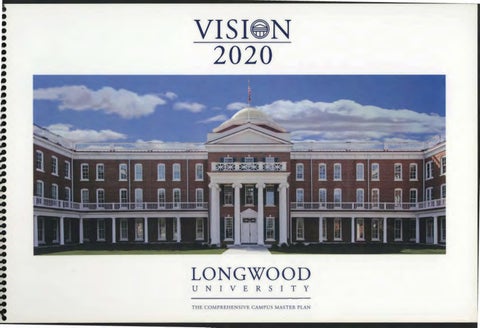
VISI9N 2020
LONGWOOD UNIVERSITY
THECOMPREHENSIVECAMPUSMASTERPLAN
SEPTEMBER12,2008 REVISION1-MARCH30,2012
201HIGHSTREET FARMVILLE,VIRGINIA23909
TEL:434.395.2000 TOLLFREE:800.281.4677

MOSELEYARCHITECTS





Messagefromthe President Overview
Acknowledgements
TheCampusMasterPlanning Process...................9
DescriptionoftheProcess Planning Goals, Guidance, andAssumptions
LongwoodUniversity............................... 13
Overview oftheInstitution
Mission,Vision, andStrategicgoals
RegionalContext
VicinityIdentification
Historic Districts, Landmarks, and100-Year Flood Plain
PreviousCampusMaster Plans
DesignPhilosophy
N TheExistingCampus...................................21
CampusGrounds
LandUseAnalysis
FloorAreaRatios
BuildingAdjacency
FacilityConditionIndex Report
PedestrianCirculation
Green Spaces
VehicularCirculationandParking
PedestrianOrientation
Housing
RecreationandSports Facilities
Landscaping, Entrances, Gateways, andBoundaries
Signage
CampusInfrastructure
PotableWater, StormWater, andSanitarySewerLines
Steam, ElectricalDistribution, CommunicationsandTechnology
RemoteFacilities InstituteforTeachingThroughTechnology andInnovativePractices
Powhatan Center
RetailMerchantsAssociation, Richmond
HullSpringsFarm V FutureCampusRequirementsandPreferences ................41
TheAcademicProgram
SpaceNeedsAnalysisOverview
StudentEnrollment, Faculty, andStaffProjections
SpaceProjections
AcademicSpaceRequirements
SupportSpaceRequirements
GroupInputsandPreferences
TransportationandParkingRequirementsandPreferences
AthleticandRecreationalRequirementsandPreferences
HousingRequirements
InfrastructureRequirements
Sustainability
DevelopmentofthePlan.................................57
AreasofOpportunity
ConceptsandAlternatives
Landscaping, Entrances, Gateways, andBoundaries
LandandBuildingUses
VehicularCirculationandParking
OpenSpacesandPedestrianCirculation
Housing
RecreationandAthleticFacilities
VII TheFinalPlan 77
Landscaping, Entrances, GatewaysandBoundaries
LandUseAnalysis
FloorAreaRatios
BuildingAdjacency
Building ProjectSummary
VehicularCirculation
Parking
Bicycle Plan
OpenSpaceandPedestrianCirculation
Housing
RecreationandAthletic Facilities
Infrastructure
Signage
HullSpringsFarm
Sustainability
Water
MaterialFlows
Energy&CO2
Transportation VIII Implementation........................101
ArchitecturalandDesignGuidelines
Project Phasing
PropertyAcquisition
MonitoringandUpdatingtheMaster Plan

Introduction I
Message From The President
Withanysuccessfulorganization,itisimperativethatthereisafocusonthe future-thevisionfortheorganizationandtheplan to makeitareality.Itiswith thisbestpracticeinmindthattheLongwoodcommunityspearheadedamaster planningprocesstodeterminethefuturelandscapeofLongwoodUniversity.
Aswestartedtheplanningprocess,theplannersweregiventwodirectives.First, theplanmustbedata-driven-accuratelyreflectingexistingconditionsand derivingrecommendationsfornewfacilitiesfrompertinentdataandspecific requirements.Second,theprocesshadtobeinclusive.Allmembersandgroups oftheuniversitycommunitymustbegiventheopportunitytoparticipateand theirinputmustbeincluded.
Icanunequivocallysaythatthesedirectiveshavebeenfulfilled.Thisplanis imaginative,effective,andefficient.Itprovidesboththevisionandthemethod tohelpusreachourgoal.
Theplanaddressesphysicalneedsofourcampustoaddressincreasedenrollment projections,includinghousing,academicspace,andstudentlifeprograms.All areasofLongwoodwereexamined-fromfacilitiestosafetyandsecurity,from classroomstobedrooms,fromathleticarenastoadmissions.Thisisacomprehensive planthatreflectsawell-roundedreviewofLongwood'sstructure.
OurnewCampusMasterPlanistrulytheresultofateameffortandeverymember ofouruniversitycommunitycontributed.TheLongwoodof2020willreflect whathasbeenaccomplishedduringthepast20months,andtheexcitementfor theplaniswidespread.Iamextraordinarilyproudofthelegacywewillleavefor oursuccessors.
Dr.PatriciaP.Cormier President

LongwoodUniversityComprehensiveCampusMasterPlan September2008

IntheSpringof2007theUniversitybegan preparingtodesignandimplementanew campusmasterP,lan.Thisplanwillprovide aframeworkforcampusgrowththrough year2020bycreatingsitesfornewbuildingswhileenhancingtheoverallquality andcharacterofLongwoodUniversity.
Theplanalsoidentifiesearlyimprovements tohelpsustainthemomentumofLongwood'srecentgrowth.Thesesuggestions andimprovementsshouldhelpmaintain anddevelopaspecificsenseofplacereflectiveofLongwood'sheritagewhileblending visuallypleasingelementswithfunctional realities.Thesesuggestionsandimprovementsinclude:
NewBuildingSites AdaptiveRe-use ReplacementRecommendations GreeningInitiatives CirculationPatterns
Comprehensivesolutionsofthebestand highestuseofavailablelandandassets weretakenintoconsiderationforeachof themanyareasofopportunitiesthatthe campuspresented.
Thecreationofthisplanwasbasedupona broadrangeofinput,detaileddocumentation,analysis,andinclusivedialogueswith thevariousconstituentsandstakeholders thatareaffectedbytheplan.Allreferenced documentationandreportscanbefound intheappendixsectionofchisdocument.
Acknowledgements
Thisextensiveandcomplexprojectcouldnothavebeencarriedoutwithouttheenthusiastic participation,support,andencouragementoftheentireLongwoodUniversitycommunity -students,faculty,staff,alumni,andcitizensofFarmvilleandthesurroundingarea.
Specialacknowledgementandthanksgotothefollowingpeople:
•PresidentPatriciaCormier,forherleadershipandsupport
•MembersoftheBoardofVisitors,fortheirinterestandguidance
•RichardBratcher,VicePresidentforFacilitiesandRealProperty,forhisstrategic vision,wisdom,initiative,andconstantsupport
MembersoftheMasterPlanSteeringCommittee,fortheirdedicationandcontinual hardwork
Reed(Jerry)Jerome,Longwood'sCampusMasterPlanCoordinator,forhis continuouseffortsandsupport
KellyMartin,Longwood'sAssociateProjectCoordinator,forherexceptionalresearch, dataanalysis,andenthusiasm
LouiseWaller,RealPropertyManager,forherwide-rangingresearchandmeticulous record-keeping
AngelaStimpson,DirectorofFacilitiesAdministrativeServices,forhersoundfinancial adviceandsupport
J.WWood,DirectorofCapitalPlanningandConstruction,andCampus Architect,forhisvision,perception,imagination,andpracticalsupport
DavidPletcher,CapitalPlanningEngineer,forhistechnicalacumenand unwaveringparticipation
KenCopeland,ExecutiveDirectoroftheLongwoodUniversityRealEstate Foundation,forhiscooperativespiritandpracticaladvice
FarmvilleMayorSydnorNewmanJr.,membersoftheFarmvilleTownCouncil, andTownManagerGerrySpatesfortheircooperativespiritandconsistentinterest
DavidHarnageandhisassociatesatMoseleyArchitects,fortheirwisdom,hard work,andunfailingcooperation

LongwoodUniversityComprehensiveCampusMasterPlan
September2008

TheCampusMasterPlanningProcess II
PROJECT & TEAM ORIE TATI0N
WHATISAMASTERPLAN
Masterplansestablishaphysicalvisionforacampus,primarilythroughtwodimensionalplansidentifyingwheredevelopmentshouldoccur,areasofopenspace,infrastructure, andotherelementsnecessarytocreateasustainable,enjoyablecommunitythatsupportstheacademicmissionofthe institution.Acomprehensivemasterplanenablesauniversitytoachieveintegrationandcohesivenesswithinacommunity.Severalkeyelementsinthedevelopmentprocessmust becarefullyconsidered,includinglanduseandadjacency, infrastructureprovision,environmentalprotection,open space,landscaping,communityfacilities,waterconservation, managementandsustainability.Asuccessfulplanguidesan institutionthroughitsgrowth,thuscontributingpositively tothestudents,community,andbroadersociety.
LONGWOOD'SPROCESS
TheLongwoodUniversitymasterplanningprocessservesas abasisforthedevelopmentofacurrentandupdatedmaster plan,aswellasthebasisforthecontinualrenewalofthemasterplan.Traditionally,campusandfacilitiesplanningwasfocusedonindividualprojects,onanas-neededandsporadic basis.
Theprocessusedtocreatethenewmasterplanwasdesigned to beparticipatoryandcollegialfromstarttofinish.Representativesfromeachacademicandadministrativedepartmentwereinvolvedinanefforttodevelopaprogramfor thecampusplan,addressingabroadlistofissuesandconcerns.Additionalinformationwasobtainedfromeachgroup throughseveralopenforawithvariousmembersoffaculty, staff,membersofthetowncouncil,schoolboards,andthe communityatlarge.
Thedefinedneedswerethenquantifiedandprioritized,and alternativeapproaches to addressthoseneedsweregenerated. ThenewComprehensiveCampusMasterPlanisasynthesis ofthebestaspectsofthemanyalternativesexplored.
PLANNINGGOALS
.AssisttheUniversityintranslatingitsvision,mission, andstrategicgoalsintoaphysicalplanwhichidentifies wheretheUniversityshouldfocusitsresourcesto meetfuturefacilitiesrequirements.
Provideguidancethroughtheyear2020,butalso identifyearlyimprovementstosustainthemomentum oftheUniversity'srecentgrowthandchanges.
Presentcomprehensivesolutionsforthebestand highestpriorityuseofavailablelandwhileretaining thecampus'historicareasandbuildings.
·Includesustainabilityasanintegralaspectofcampus planning,design,andoperations.
Informandincludeallstakeholdersintheplanning process.
·DevelopaprocessthatkeepstheCampusMasterPlan continuallyrenewedandmakesfacilitiesplanningan ongoingandintegralpartofUniversitybusiness.
PLANNINGGUIDANCE
5600undergraduatestudentsin2020
KeepLongwood"likeLongwood"
Architecture
-Compact,convenientcampus
-Pedestrianfriendly
-On-campusstudentlife
-Gatheringspaces
Greenspace
Sustainability

Planning Goals, Guidance, andAssumptions
PLANNINGASSUMPTIONS
Themasterplanningprocessdemandsthatkey assumptionsareidentifiedandadoptedtorecognize probablefutureconditionsandcircumstances.Many canbederivedfromtheuniversity'sstrategicplan.The followingisasummaryofourkeyassumptions:
EnrollmentatLongwoodUniversitywillgrowto 5600undergraduatestudents.
Sixtypercentofallstudentswillbehousedin universitycontrolledhousing.
Offcampusparkingwillbedevelopedtoimprove thepedestriannatureofthecampus.
Diningserviceswillbedistributedthroughoutthe campus.
Longwood




LONGWOOD UNIVERSITY
Withalegacyoflearningdatingbackto1839,LongwoodUniversityhas developedameaningfullearningenvironmentthatextendsfarbeyond theclassroom.FoundedastheFarmvilleFemaleSeminaryAssociation, theschoolwasapioneerfirstinprivateandlaterinpubliceducation. TheStateofVirginiaacquiredtheschoolin1884andrenameditthe NormalSchool,thefirststateinstitutionofhigherlearningforwomen inVirginia.Overtheyears,theschoolexpandedandhadasuccessionof names,becomingLongwoodCollegein1949andfullycoeducationalin 1976.OnApril24,2002,historywasagainmadeatLongwoodwhen GovernorMarkWarnersignedlegislationthatdesignatedLongwoodas auniversity,effectiveJuly1,2002.
Thelegacythatbeganin1839continuestodayasLongwoodUniversity offersmorethan100majors,minorsandconcentrationsthroughits variousacademicprograms.Givenitshistoricalroots,Longwoodenjoys anenviablereputationforteacherpreparation,andtheexcellencehas expandedthroughouttheuniversity,whichiscomprisedofthreeseparate colleges:theCook-ColeCollegeofArtsandSciences,theCollegeof BusinessandEconomics,andtheCollegeofEducationandHuman
Services;andagraduatedivisionofferingprogramsineducation, English,sociology,andanewMBAinRetailManagement.
UndertheleadershipofPresidentPatriciaP.Cormier,Longwoodis committedtodevelopingcitizenleadersandprovidesameaningful learningenvironmentwherestudentslearnskills,knowledge,and theory,andthentranslatelearningintoactionbydoingresearch, internships,fieldwork,andcommunityservice.Recognizingthevalue ofexperientiallearning,Longwoodisoneofthefewuniversitiesinthe countrytorequireallstudentstocompleteaninternshiporsimilar learningexperiencebeforegraduation.Additionally,Longwoodwasthe firstinstitutioninVirginiatorequirethateveryfreshmanhavealaptop computer.Technologyisintegratedthroughoutthelearningprocessanessentialelementforpreparingtheleadersoftomorrow.
TheLongwoodlearningenvironmentisenrichedfurtherbythe GreenwoodLibrarythatholds245,000booktitles,2,100printjournal subscriptions,andsome100electronicdatabasesincludingaccessto 11,000full-textelectronicjournals.Thelibraryprovidesintegrated
technologyforinformationretrievalfromlibrariesthroughoutthe world,aswellassatellitereceptionofforeignprogramsandwebaccess. Thisstate-of-the-artfacilityisnamedinhonorofLongwood's22nd president,Dr.JanetDalyGreenwood.
Longwoodprovidesarangeofbusinessservicestotheregionandstate throughtheLongwoodSmallBusinessDevelopmentCenter,while theLongwoodCenterfortheVisualArtsservesasanimportantand innovativestudycenterandculturalresourcefortheCommonwealth ofVirginia.

TheLongwoodUniversityCampusMasterPlanwillserveasaguideforthe futurephysicaldevelopmentoftheuniversity.Thefuturedevelopmentmustbe reflectiveandsupportiveoftheUniversity'smission,vision,andstrategicgoals.
LongwoodUniversity'smission:LongwoodUniversityisaninstitutionof higherlearningdedicatedtothedevelopmentofcitizenleaderswhoare preparedtomakepositivecontributionstothecommongoodofsociety. Buildinguponitsstrongfoundationintheliberalartsandsciences,the universityprovidesanenvironmentinwhichexceptionalteachingfosters studentlearning,scholarship,andachievement.Astheonlyfour-yearpublic institutioninsouthcentralVirginia,LongwoodUniversityservesasacatalyst forregionalprosperityandadvancement.
LongwoodUniversity'svision:LongwoodUniversitywilltransformcapable menandwomenintocitizenleaders,fullyengagedintheworldaround them.Theuniversitywillbeafirstchoiceinstitutionrenownedfordeveloping thepowerofcitizenleadershipinitsstudentsforthebenefitofthegreater community.
LongwoodUniversity'sStrategicGoals:
•DistinctiveImpact.LongwoodUniversityservesasauniqueand dynamicagentforpositiveandsustainablechangewithinandamongits communitiesandconstituencies.
•EngagedLearning.TheLongwoodUniversitycommunity demonstratesacommitmentforlifelonglearningchatresultsinpersonal andprofessionalgrowththroughemphasizingactiveinvolvement, collaboration,andapplicationofknowledge.
.SuperiorPerformance.LongwoodUniversityachievesexcellencein institutionaleffectivenessthroughcontinualimprovement.
•ResponsibleStewardship.LongwoodUniversityembracesits responsibilitytomanagehuman,cultural,environmental,fiscal,and capitalresourceseffectively. LongwoodUniversityComprehensiveCampus
Regional Context
Farmville is a town in Cumberland and Prince Edward counties in the CommonwealthofVirginia.Thepopulationwas6,845atthe2000census accordingtotheNationalAssociationofCounties,retrievedon2008-01-31.
Farmvilleisadynamiccollegetown,withaproudhistoryandexcitingfuture. TheCommonwealthofVirginiaisastatewellknownforitsrichhistory. Farmvillehostsseveralfestivalsandotherstatewidecelebrations eachyear.
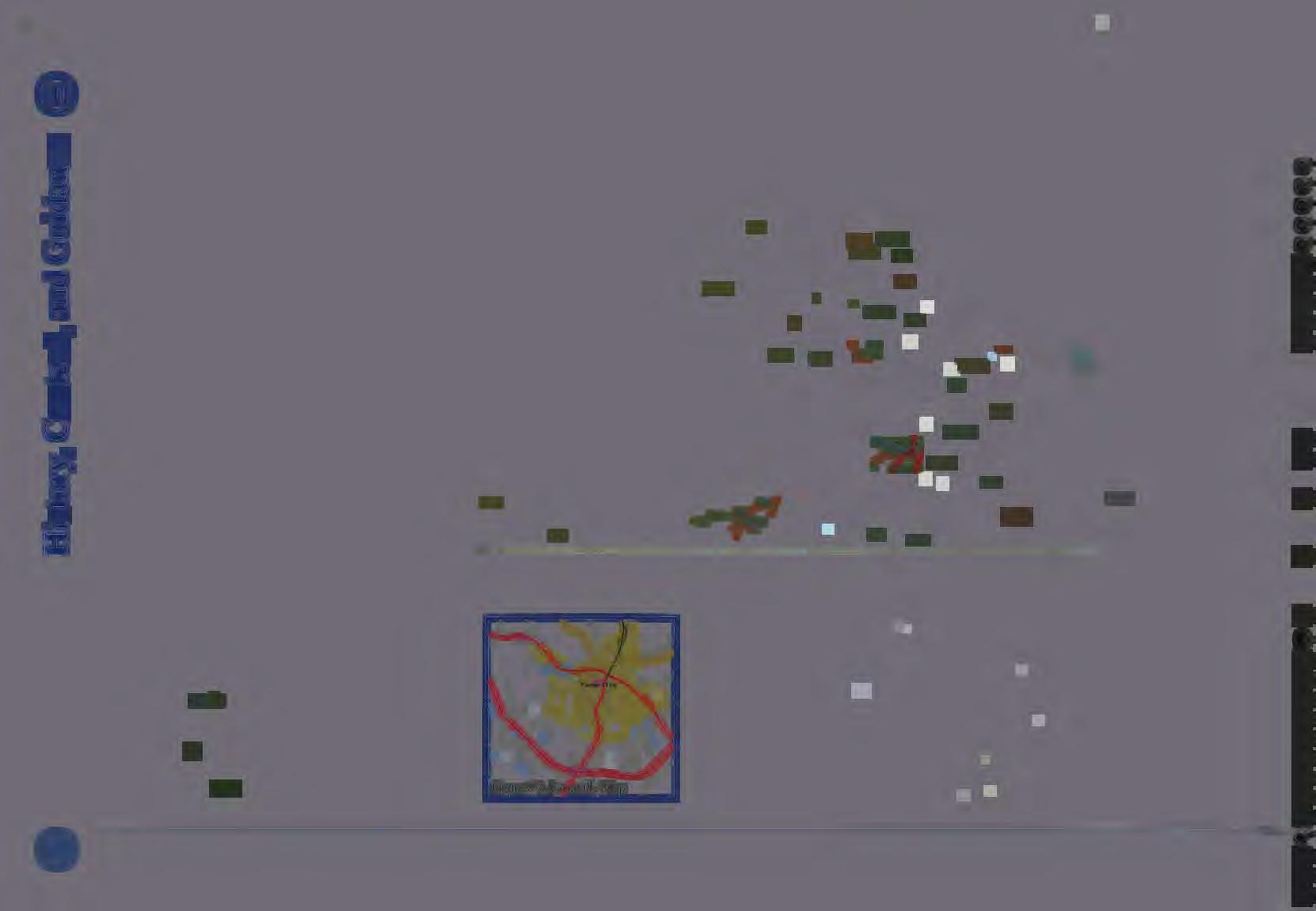
Farmville is located inVirginia's heartland - theexactgeographical center ofVirginia is located in nearby Buckingham County. Farmvilleisthecenterofeconomicactivityforawidearea,anda catalystfortravelandtourism.
Farmvilleisapproximately64 mileswestoftheCityofRichmond,47mileseastoftheCity of Lynchburg and 76 miles south oftheCityofCharlot- tesville.
Figure#2,VirginiaStateMap
LongwoodUniversityComprehensiveCampusMasterPlan
September2008
Since1798,Farmvillehasservedasthecenteroftrade,education,law,andfinancefor thesurroundingsevencounties,apositionitstillmaintainstoday.Farmvillehasseen civilwarandcivilrightsandhasservedashometoprominentgovernmentleaders. Itwasandstillishometomanysuccessfulbusinesses,industries,andculturaland educationalorganizations.After250years,theFarmvillearea,includingPrinceEdward andCumberlandcounties,continuestoexemplifyallthatisbestabouttheAmerican wayoflife.
LongwoodUniversityhasatremendouseconomicandculturalimpactonFarmville andthesurroundingcommunities.ArecentstudyconductedbytheLongwoodSmall BusinessDevelopmentCenterestimatesthatuniversityemployees,students,andvisitors spendmorethan$90millionannually-with66percentofthatamountbeingspentin Farmvilleandtheeightsurroundingcounties.

LongwoodProperty DowntownFarmville Business Residential Manufacturing
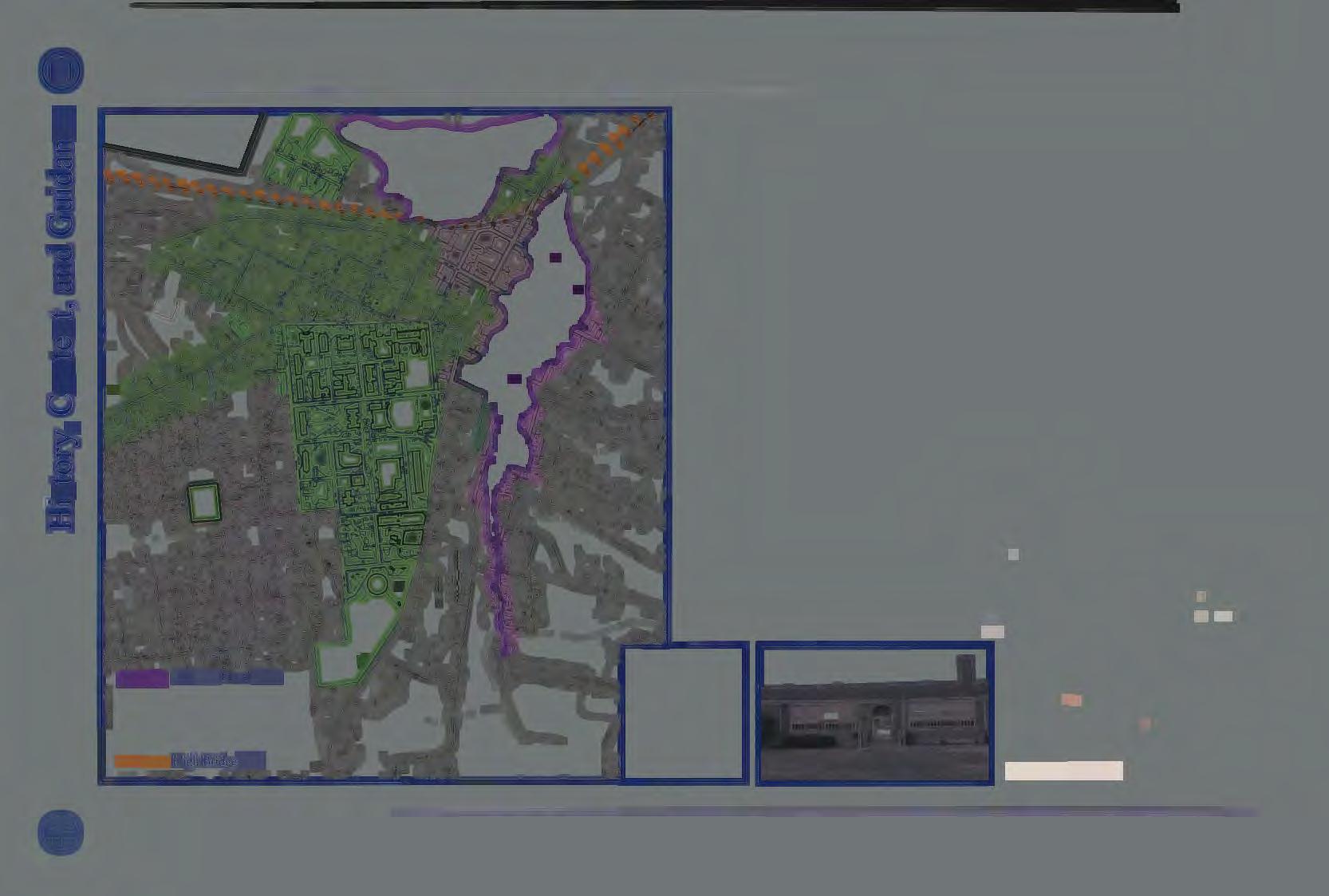
Historic Districts, Landmarks , and 100-Year Flood Plain
FLOODPLAIN
Theone-hundred-yearfloodplainistypically calculatedtobetheleveloffloodwaterexpectedtobeequaled orexceededevery100yearsonaverage.The100-yearfloodismoreaccuratelyreferredtoasthe1% flood, sinceitisafloodthathasa1%chanceofbeingequaledorexceededinanysingleyear.Basedontheexpected floodwaterlevel,thepredictedareaofinundationismappedoutinthedarkerblue.Thelighterblueincludes thefloodway,whichconsistsofthestreamchannelsandadjacentareasthatcarryfloodflows,andtheflood fringe.
HISTORICALCITATIONS
CivilRights
Farmvilleishometosomekeyplayersintheearlyfightforcivilrights itscitizens'crusadeforequalrightsin educationdrewMartinLutherKing,Jr.andothernationalleaderstovisitourarea.TheRobertRussaMoton HighSchool(seephotobottom,center),siteofthe1951studentstrike,isaNationalHistoricLandmark,a civilrightsmuseum,andthecenterpieceofVirginia'sCivilRightsintheEducationHeritageTrail,honoring theeffortsoflocalstudentsandcitizenswhopavedthewayforintegratedpubliceducationnationwide.
CivilWar
TheCivilWarleftitsmarkonFarmville,withitslastmajorbattleatnearbySayler'sCreek.Leeretreateddirectlythroughthetown,andtheConfederatescrossedandthenattemptedtoburntherailroad'simpressive HighBridge,a120-foot-high,nearlyhalf-mile-longspanacrosstheAppomattoxRiverwhichisnowhometo theHighBridgeTrailStatePark.Sayler'sCreekBattlefieldandothersitesalongLee'sRetreatarepartofthe state'sCivilWarTrails.
Railroads
Inthe1850'sarailroad,knownasSouthSideRailroad,wasbuiltbetweenthecitiesofLynchburgandPetersburgpassingthroughFarmville,Burkeville,andPamplinCity.Thisroutewassubsidizedbyacontribution fromtheTownofFarmvilleandrequiredanexpensive crossingoftheAppomattoxRiver.This crossingbecameknownastheHighBridge,whichwasheavily damagedduringthefinaldaysoftheCivilWar.When therailroadwaspurchasedintheearly1880's,itwas renamedtheNorfolkandWesternRailroad(N&W).
In1982therailroadbecamepartofthecurrentNorfolkSouthernRailwaysystem.Today,HighBridgeis beingrenovatedaspartoftheRailstoTrailsproject. Itwillbe33.5milesofnon-motorizedhiking,biking, andbirdingtrailsknownasHighBridgeTrailState Park.
1985PlanByWKRAssociates
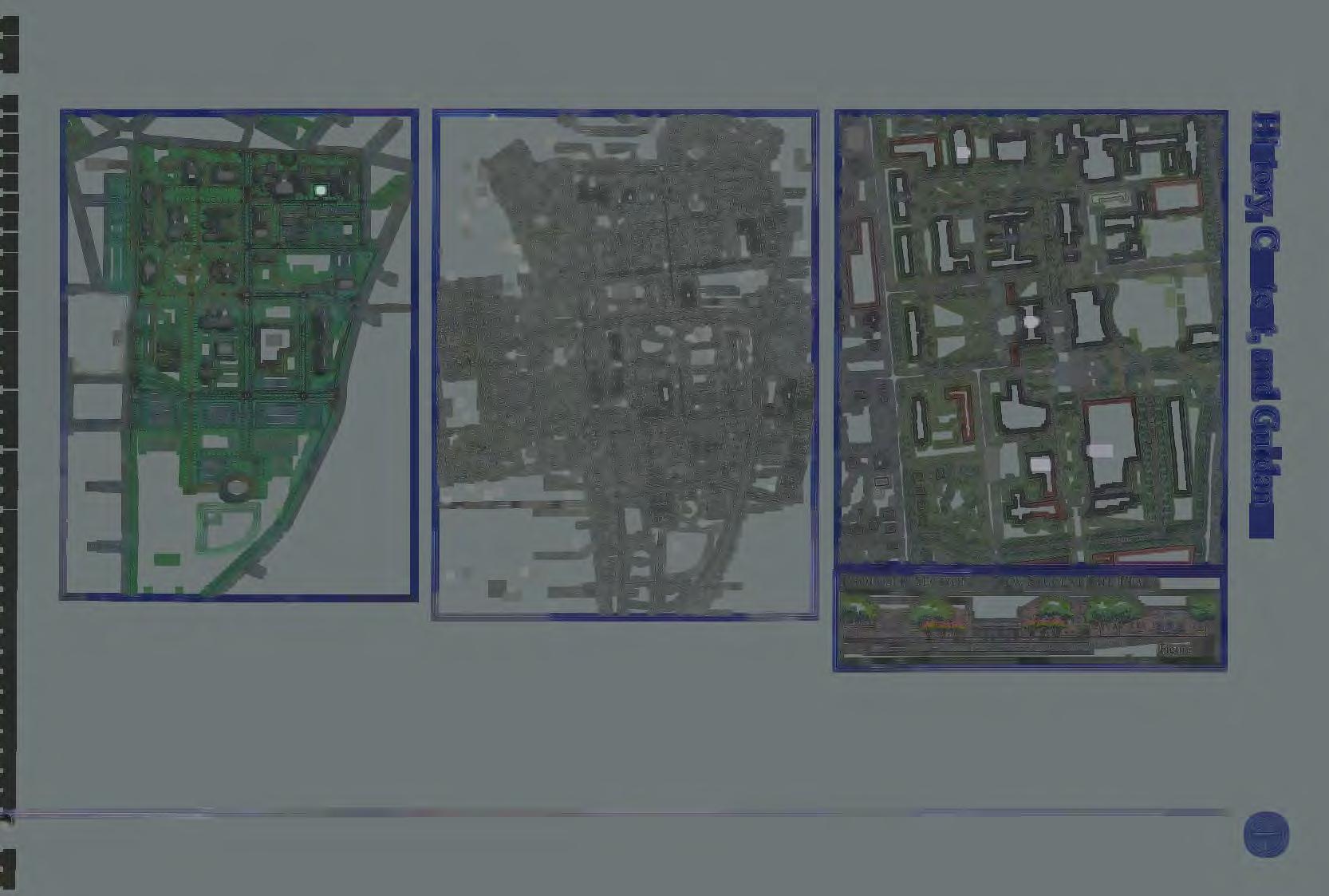
Thisinterimmasterplanwascenteredaroundandsuccessfulinaccomplishingseveralsiteselectionsforthecampus.Anewlibrarywas locatedatthesouthwestcornersofRedfordandPineStreetsand proposednewhousingwestoftheWygal/Bedfordbuildingsbetween RaceStreetandGriffinBoulevard.TheBoilerPlantExpansionwas alsoincludedinthisproposal.Thisplanalsorecommendedimprovementstopedestrianandvehicularcirculationforthecampusasa whole.Inthisproposalthecollegebeginstofocusontheremovalof vehiclesfromtheinternalcampusstreetsandconvertingthoseareas intopedestriancorridors.
1991PlanByHanburyEvansNewillVlattas&Co.
Severalspecificactionsandsiteselectionswereproposed.Whilenotall oftheserecommendationscametofruition,thefollowingproposalswere realized:anewdininghallatthecenterofcampus,LancasterBuilding renovation,anadditiontoBedfordHall,and,mostsignificantly,closing PineStreettovehiculartraffic,resultinginBrockCommons.
Previous Campus MasterPlans @
2001PlanByAyersSaintGross
Theprimaryfocusofthisplanwasinaddressingthepedestrianconnectivity issuesofthenorthandsouthendsofthecampus.Thedevelopmentofthe newstudentlifeplazareplacedtheexistingintersectionofPineandRedford Streets,whileprovidingforaparkingstructurebelow.BrockCommons createdacentralpedestrianspineforthecampusandprovidedavarietyof linkedgreenspaces,permanentlyclosingPineStreettoallvehicularaccess.
Figure#6
Figure#7
DesignPhilosophy
DESIGNPHILOSOPHYANDPLANNINGSTANDARDS
Thequalityofexteriorandinteriorarchitecturaldesign,evoking respect,inspiration,admiration,andexcitement,ispartofLongwood University'stradition.Structuresthatspeakclearlytothisquality arelocatedalongHighStreetinthehistoricnortheastquadrantof campusandhavesolidtiestotheoriginalcampusfabric.Respect forthesestructuresshouldbemaintainedwitheachnewbuilding's designandsiting,makingreferencetothescale,proportion,historical character,andqualityofconstruction.
Itisalsotheuniversity'sintentionthatthecampusremainsresidential innatureandevolvesmorefullytoapedestriancampusthat encouragesandengageshumaninteraction.Witheachnewbuilding project,opportunitiesforcreatingcommonareasandgathering spacesshouldbeexplored.Tofurtherenhancethepedestrian experience,vehicularaccesswaysandcorecampusparkingshould beminimizedand"greened"appropriatelythroughtheuseoftraffic islands,trafficcircles,andraisedmedians.
SustainabilityistoalsohaveagreaterpartintheLongwood experience.Atfreshmenorientation,studentsarebeingintroduced totheimportantrolesustainabilityplaysintoday'senvironment. Tofosterthatlearningexperienceandcarryitforward,eachnew building,buildingrenovation,andotherprogramorprocessthat impactsthecampusenvironmentwillspeaktothateffortby implementingthemostcurrentstandards.
Longwood


Campus Grounds
Longwoodmaincampussitson60-plusacresinthegentlyrolling Virginiapiedmont.Althoughasinglecampus,architecturallyspeakingthe groundsareseparatedintotwodistinctareas:thehistoric"northcore"and themoremodernsouthend.
LongwoodGolfCourse,adjacenttothePresident'shouse(aregistered historiclandmark,circa1815)onemilefromLongwoodUniversity,isone ofonlythreecollegiate-ownedgolfcoursesinVirginia. TheLongwood coursecoversmorethan100acres,andisknownforitschallenginglayout, lushfairways,andmanicuredgreens.The6,000yardlayoutplaystoapar 69formenand72forwomenandisequippedwithtwolargepractice greens,practicesandtraps,clubhouse,drivingrange,andproshop.
ThirdStreetWarehouse:Longwoodacquiredthis60,000squarefoot formertobaccowarehouseonsevenacresofpropertyin2006. Located approximately3½milesfromcampus,itisusedforgeneralstorageand surpluspropertymanagement.
LancerPark is a Longwood-managed apartment and townhouse communitylocated .6 miles from Longwood's campus. 258 students liveinoneofthreedifferenthousingstyleformats. Residentsalsoenjoy avarietyofcommunityamenitiesincludingtheLancerParkClubhouse, RECoffice,gym,studyrooms,pooltable,communitylivingroom,and vendingareas.Thisareaalsooffersvariousoutdoorplayingfields.
LongwoodLandingsatMid-TownSquare,whichopenedinthefallof 2006, consists offourfour-storybuildingswith retail-commercial space on thegroundfloorofeachandstudenthousingontheupperthreefloors.Bed spacefor408studentsisprovidedin96four-bedroomand24single-bedroom apartments.
LongwoodVillageislocatedtwomilessouthofcampusandoffersavariety ofamenitiesincludingamovietheater,fitnesscenter,swimmingpool,hottub, gameroom,andcomputerIstudyroom.Afreeshuttleserviceisavailableto transportstudentstoandfromtheLongwoodcampus.
FirstAvenueFieldaccommodatesthepracticeandgames ofMen's andWomen's Rugby Men's andWomen's Soccer andMen'sLacrossesportclubs. Intramuralflagfootballand soccercontests,aswellasopen recreationopportunitiesare available.
LongwoodCenterfortheVisualArts,theartmuseum servingLongwoodandSouthsideVirginia,featurespermanent and temporary exhibits, educational programs, and an art placementservice.
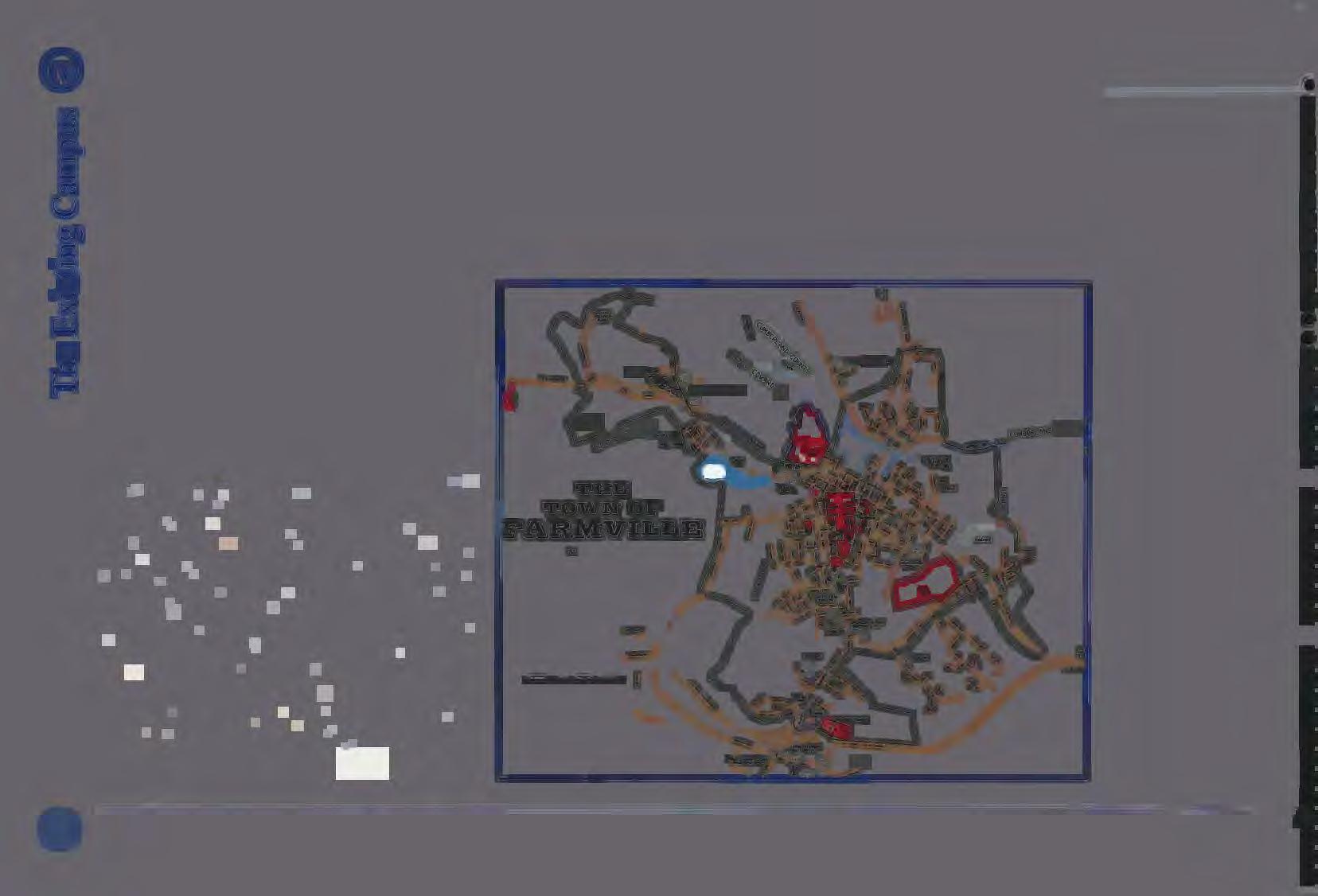
Points or Interests
Figure#9 6
TownofFarmville
Remotefacilities andgroundsare describedonpage 39.
LongwoodUniversityComprehensiveCampusMasterPlan
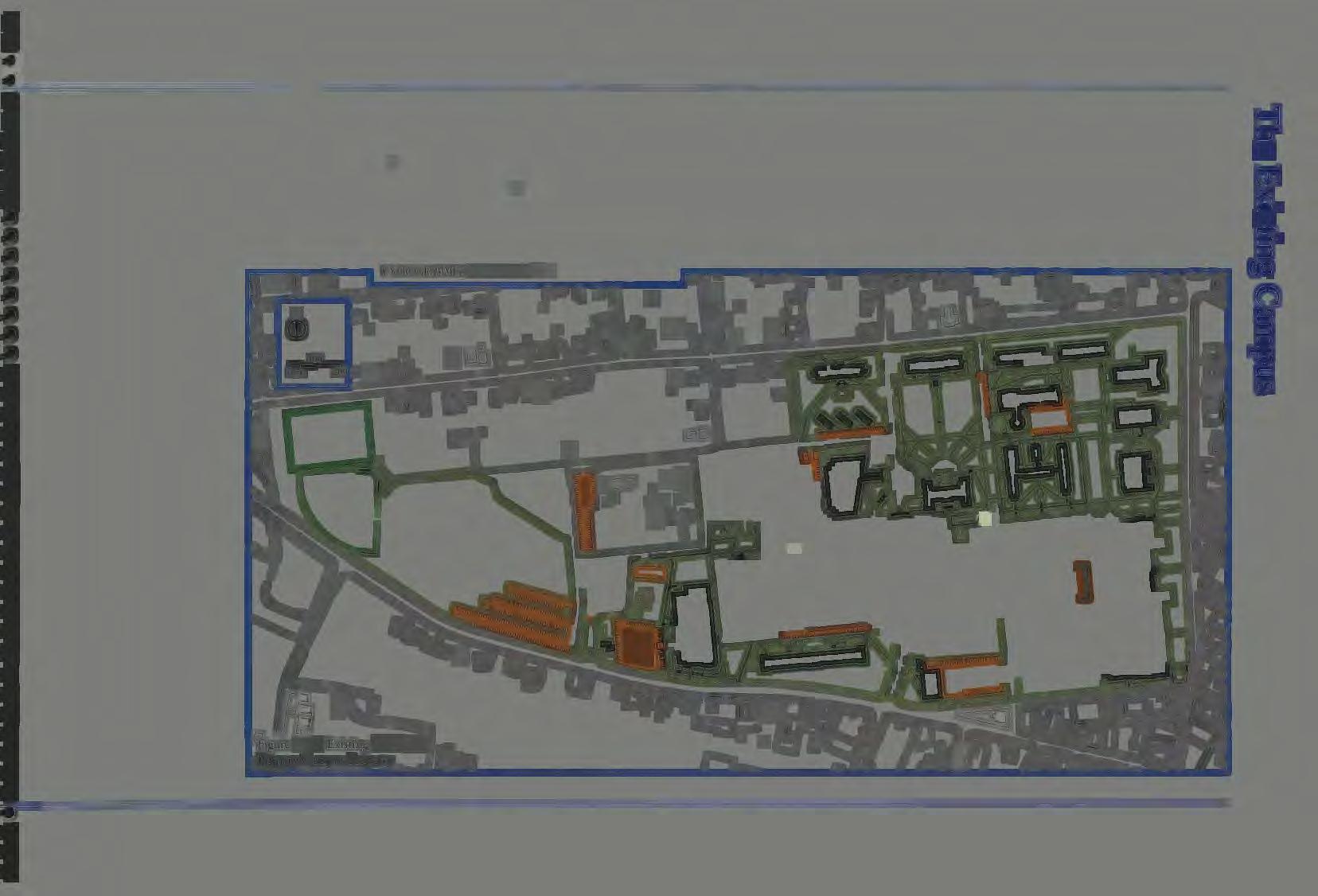
Campus
Grounds - LandUse, Main Campus
LongwoodUniversity'smaincampusisaresidential60-acrecampus,amixofred-brickcolonialrevival inthestyleofThomasJeffersonandcontemporaryarchitecture,consistingof55buildings,totaling 1,500,000squarefeet.Thecampustotalincludes13residencehalls,housingapproximately2500 undergraduatestudents.Thelanduseanalysisrevealsanequalappropriationofsurfaceparkingand programmedopenspace,whilemaintainingarelativelyhighratioofunprogrammedopenspace.
FloorAreaRatios
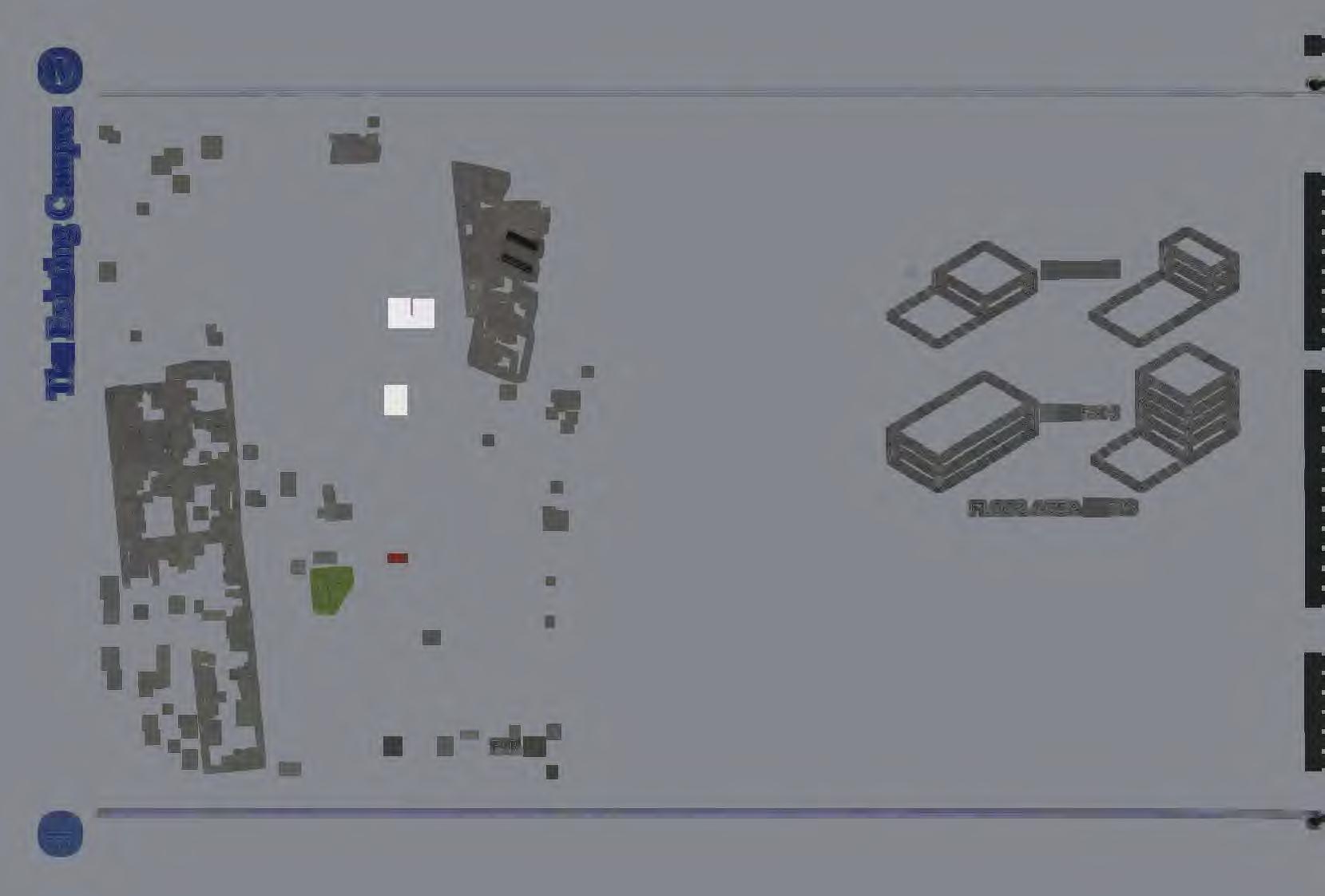
APlanner'sDictionarydefinesFARasthetotalfloorareaofallbuildingsorstructuresonazoninglotdividedbythetotal squarefootageofsaidlot.TheFloorAreaRatio, orFAR, ofapieceofpropertydescribestherelationshipbetweenthesize ofalot andtheamountoffloor space itcontains. Forexample, a 50' x 100' lot (5,000 square feet) withasingle-story50' x 50' building (2,500squarefeet)hasafloorarearatioof0.5.Ifabuildingwiththesamesizefootprinthad4stories, the FARwouldincreaseto2.00. FARisatypical measureofaparcel'sefficient useandoftenasameanstocontroldensity.
To determine the FAR for major campus areas, lot lines were drawn to include land associated with each building, including circulation and common areas.The results are shown on the accompanying diagram (left)
Generally speaking, areaswitha FARofless than 1.0 typically do not use their parcels efficiently Thediagramontheleftillustrates thattheapproximateoverallcampusdensity islow (.75).
The existing University density figures suggest that some additional densification ofthecampusispossiblewhileretainingthe character of the campus landscape. The low existingdensitiesshownsuggestthatoverall, the"triangle" is capable ofreceivingslightly higher densities in the future.With proper planning, densitiescloserto 1.0 throughout thecampuscanbeachievedsuccessfully
Reaching a FAR as close to 1.0 as possible, in combination with a building height maximum, will ensure that the campus achieves efficientdensitywhile maintaining itsresidentialcharacter.
Figure# 12FloorAreaRatioDefined, Source:American Planning Association,A PlannersDictionary, 2004
-NorthWestQuadrant0.7
-NorthEastQuadrant 0.7
-SouthWestQuadrant0.8
-SouthEastQuadrant 0.8
AthleticQuadrant .007
Campus
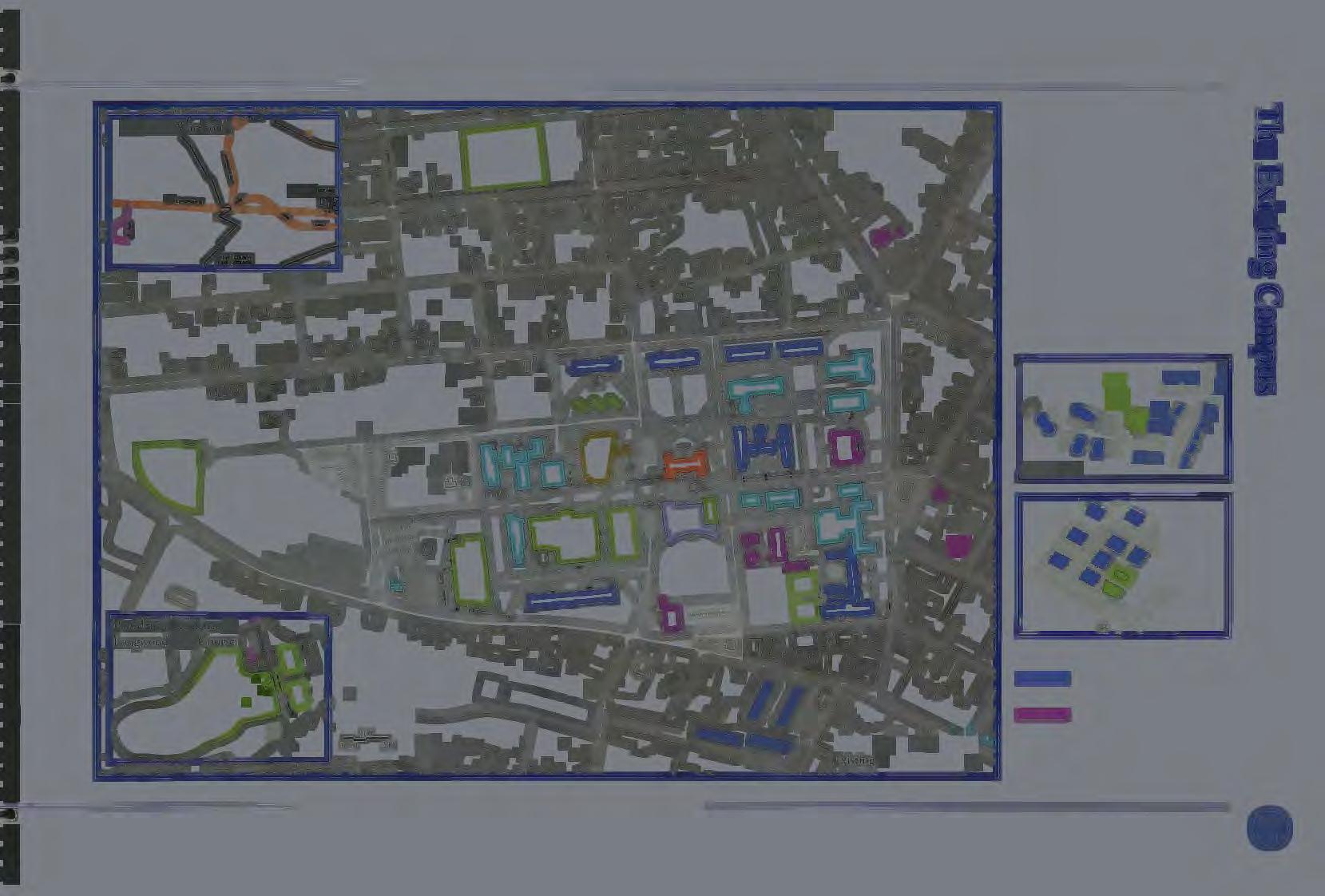
Grounds - BuildingAdjacency
Building Adjacency diagrams describe organizing principles, program relations, and connections that can help guide developmentwithincampusparameters
This diagram illustrates that Longwood's campus possesses an overall balanced distribution of buildings and functionsthatis, anefficientadjacency.
Campus Grounds - Facility Condition Index Reports
FACILITYCONDITIONINDEX(FCI)isatermusedtodescribetherelativeconditionof campusfacilitiesinrelationtothecurrentreplacementvalue(CRY)ofaparticularbuilding.
FCIRANGEANDCONDITIONRATINGS
TheseconditionratingsarefoundinManagingtheFacilitiesPortfolio, publishedbyTheNational AssociationofCollegeandUniversityBusinessOfficers(NACUBO).Theratingsweredeveloped consideringonlydeferredmaintenanceandrepairrequirements,ratherthancyclicmaintenance andcomponentrenewalneeds,inordertobenchmarkthecurrentconditionoffacilities.
Inanefforttosystematicallyanalyzetheirfacilitiesportfolio,LongwoodUniversitycontracted Carter&Burgess,Inc.andAppliedManagementEngineering,Inc.in2007toconductan objectivefacilityconditionassessmentoftheirfacilities(seeAppendix,Report1).Thefacilities conditionassessmentwasaccomplishedthroughanon-sitevisualinspectionofeachbuilding. Thegoaloftheinspectionsweretoestablishabaselineofcurrentfacilityconditionsanddevelopa tenyearmaintenanceandrepairplanwithouttheinfluenceofbudgetaryoroperationalrestraints. Detailedinspectionreportswerepreparedfor42separatebuildingsthenprovidedforreview.The followingscalewasusedinevaluatingallcampusfacilities.
Under.05(5%)=Good
Between.05(5%)and.10(10%)=Fair
Over.10(10%) = Poor
TheExistingFacilitiesAssessmentreportdocumentedthephysicalconditionfor43ofthe College'sexistingbuildingsbothonandoffcampus.The43buildingstotaled1,493,188square feet,withatotalcurrentreplacementvalueof$346.5millionandanoverallfacilitycondition index(FCI)of10%,arangerepresentingfairoverallcondition.FifteenbuildingshadFCI'sof .5%orless,therangeconsideredrepresentativeofabuildingingoodcondition.Ninefacilities rangedbetween5-10%,inthefaircategory.AllotherbuildingshadFCI'sinexcessof10%.See Appendix,Report1forcompletedescriptionsanddetails.

% Fair
LongwoodUniversityComprehensiveCampusMasterPlan
September2008
Campus Grounds - Pedestrian Circulation
EXISTINGPEDESTRIANCIRCULATION
Atpresent,themaincampushasanextensivenetworkofinternalsidewalksandpathsthatarewellutilized.TheadditionofBrockCommons providedtheUniversitywithamajornorth-southpedestrianspineandgatheringplace.Geocodedresults(seeFigure#14)showalargenumber ofstudentsresidinginareasimmediatelynorthandeastofmaincampus,aswellasasignificantnumberoffacultymembersresidingwithin walkingdistanceintheneighborhoodswestofcampus.Inaddition,newhousingdevelopmentssuchastheMid-TownSquareandLancerPark arewithinwalkingdistancetocampus(thelatterdevelopment'sproximitywillimproveuponcompletion oftheproposedpedestrianbridgeconnectingittoGroveStreet).Thecampusoverallisverywalkable-a pedestriancaneasilywalkthroughouttheentirecampusinlessthan10minutes.
Pedestrianaccesstocampusisgenerallygoodfromthenorth.IntheareanorthofHighStreet,off-campus housingdensityisquitehigh,andthetopographyfairlyflat,enablingpedestrianstowalktocampuseasily. Thesamecanbesaidinregardstotheneighborhoodswestofcampus;however,GriffinBoulevarddoesnot haveappropriatepedestriancrossings(thosethatarepresentareunsafeduetodesignissuesandexcessive vehiclesspeeds),andthereisnosidewalkonthewesternsideofthestreet.Manystudentsandfaculty membersparkinsurfacelotslocatedalongthenorthernendofGriffinBoulevard;however,pedestrianaccess tocampusfromthoselotsispoor.

Faculty/Staff concentration
Main student concentrations Campus core
Figure#14,GeocodedAddresss ofCampusPopulation:TheTown� fFarmville
Note: Largestudent concentrationsatLancer Park, SunchaseComplex, and LongwoodVillagenotshown
Campus Grounds - Pedestrian Circulation
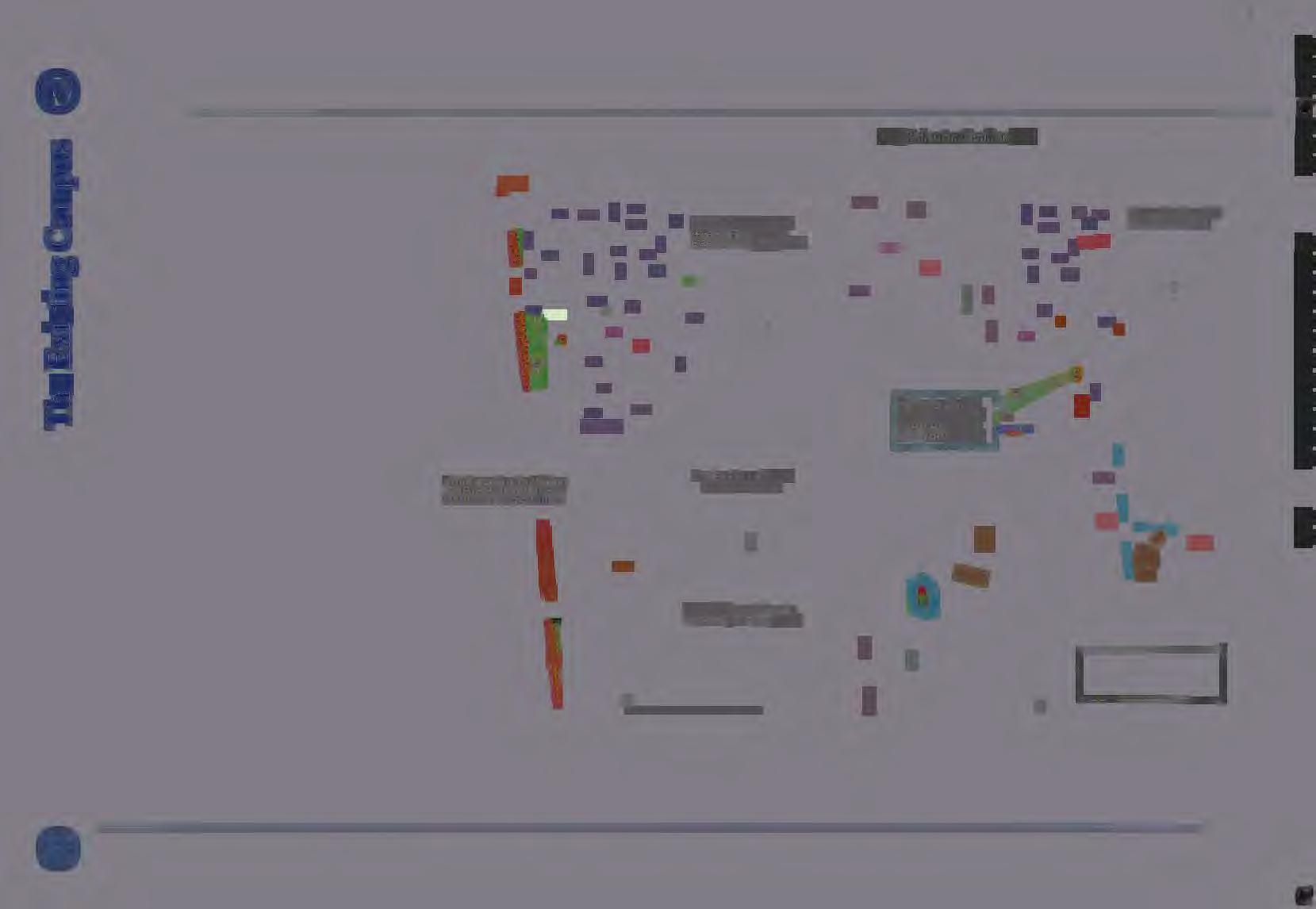
Pedestrian connections from the Mid-Town Square and areas east of campus are also generally poor. There are insufficient pedestrian crossings along South Main Street, and those that do exist are improperly designed. Furthermore, there are no directaccesspointsfromtheMid-TownSquaretocampus. Due to a lack ofsuitable crossings, students tend to use the Bank ofAmerica's drive-through facility to cut across South Main Street toVenable Street from theMid-Town Square. However, Venable Street itself constitutes a barrier - pedestrians are either forced to walk to Madison Street or use a gate and walk through the tennis courts on their way to the main campus. Commuters who park in Vernon Street and Landings South parking lots not only have to dealwith severe upward grading when walking to campus on Putney Street, but also with misaligned crosswalks at the intersection of South Main and Redford Streets. Presently these crossings do not line up with curbs or offer the shortest crossing distance. Within campus, on the eastern side, Spruce Street traffic and parking cause safetyconcernsdueto alargenumberofpedestrians comingin and out ofCurry/Frazer Halls. Residents ofthehalls must also navigate through extensive vehicle traffic while crossing East Redford Street on their way to the northern end of campus. This path, in front oftheundergroundgarage,does not provide a dedicated, safe or convenient crosswalk for pedestrians.
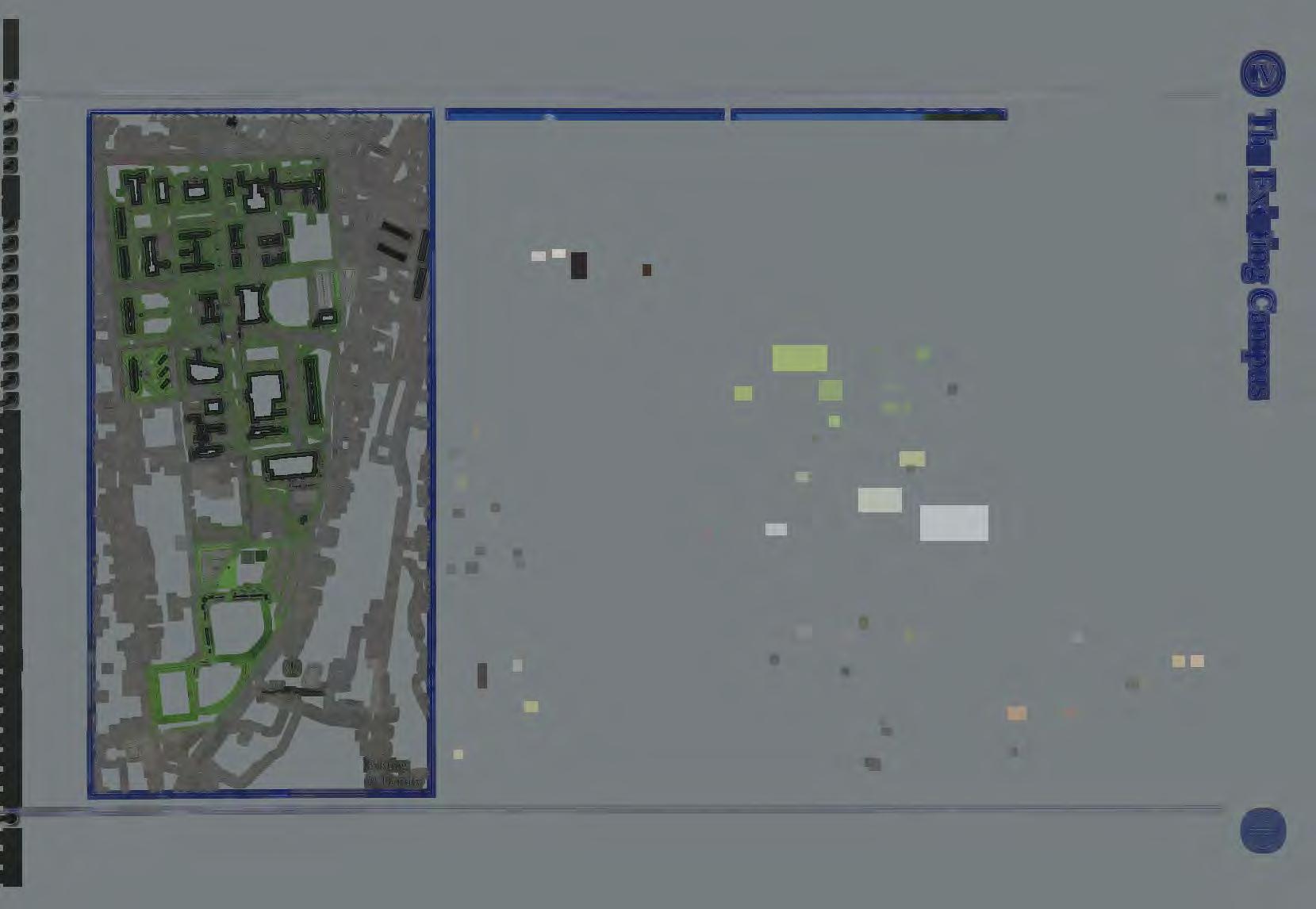
Pedestrian connections from the western side of campus are generally inadequate. Griffin Street lacks a sufficient number ofsafe pedestrian crossings and sidewalks around most ofits western edge. The corner ofHigh Street and Griffin Boulevard is not designedwithpedestriansinmind. Currently,vehicles use the southeastern curb ofthe intersection as a shortcut, where pedestrians should be waiting to cross the street. A physical barrier is needed to prevent the vehicles from doing so. Lastly, the stop sign at the intersection ofRace and Redford Streets is often blocked byparkedvehicles along the eastern side ofRace Street, endangering pedestrians and motorists alike.
Pedestrianaccess to thecampus fromthe south is also generally poor, although pedestrian activity in the area is currently relatively low. South Main Street has sidewalks on both sides ofthestreet, but pedestrian crossings are few and far between. GriffinBoulevardlackssidewalksonitswesternedgefromnorth
ofChambers Street to the South Main Street intersection, and there are no sidewalks along the eastern side ofGriffin Boulevard from Barrow Street to South Main Street. Thus, students walking to Southgate Shopping Center are forced to eitherwalk on the side ofthe road or cut across the ball fields to get to the shopping center. As the southern part ofcampus continues to
# 17 Pedestrian Conflicts East
LongwoodUniversityComprehensiveCampusMasterPlan September2008
develop and increasein residential and institutional density, moreattention to pedestrian connections and crossings in this area will be needed. The missing linksinthepedestriannetworkandpointswherepedestrian/vehicularconflicts persistareshown in Figures 16 and 17
Figure# 16 Pedestrian Conflicts West
Campus Grounds - Green Space
Existinggreenandopenspacescanbe foundthroughoutthemaincampus. Thelanduseanalysisrevealedover onehalfofthecampusiscurrently dedicatedtoopengreenspace.The physicalenvironmentofthecampus andthelandscape,inparticular-makes apowerfulfirst,andlasting,impression andcanplayakeyroleinrecruitingand retainingstudents,faculty,andstaff.In undertakingthecomprehensivecampus masterplan,Longwoodconfirmsits commitmenttocreatingacollegialand attractiveenvironmentthatsupportsthe university'smission,andacknowledges theimportanceofthelandscapeingiving orderandcontinuitytothecampus.
LongwoodUniversityComprehensiveCampusMasterPlan
Campus Grounds - Vehicular Circulation & Parking
EXISTINGSTREETNETWORK
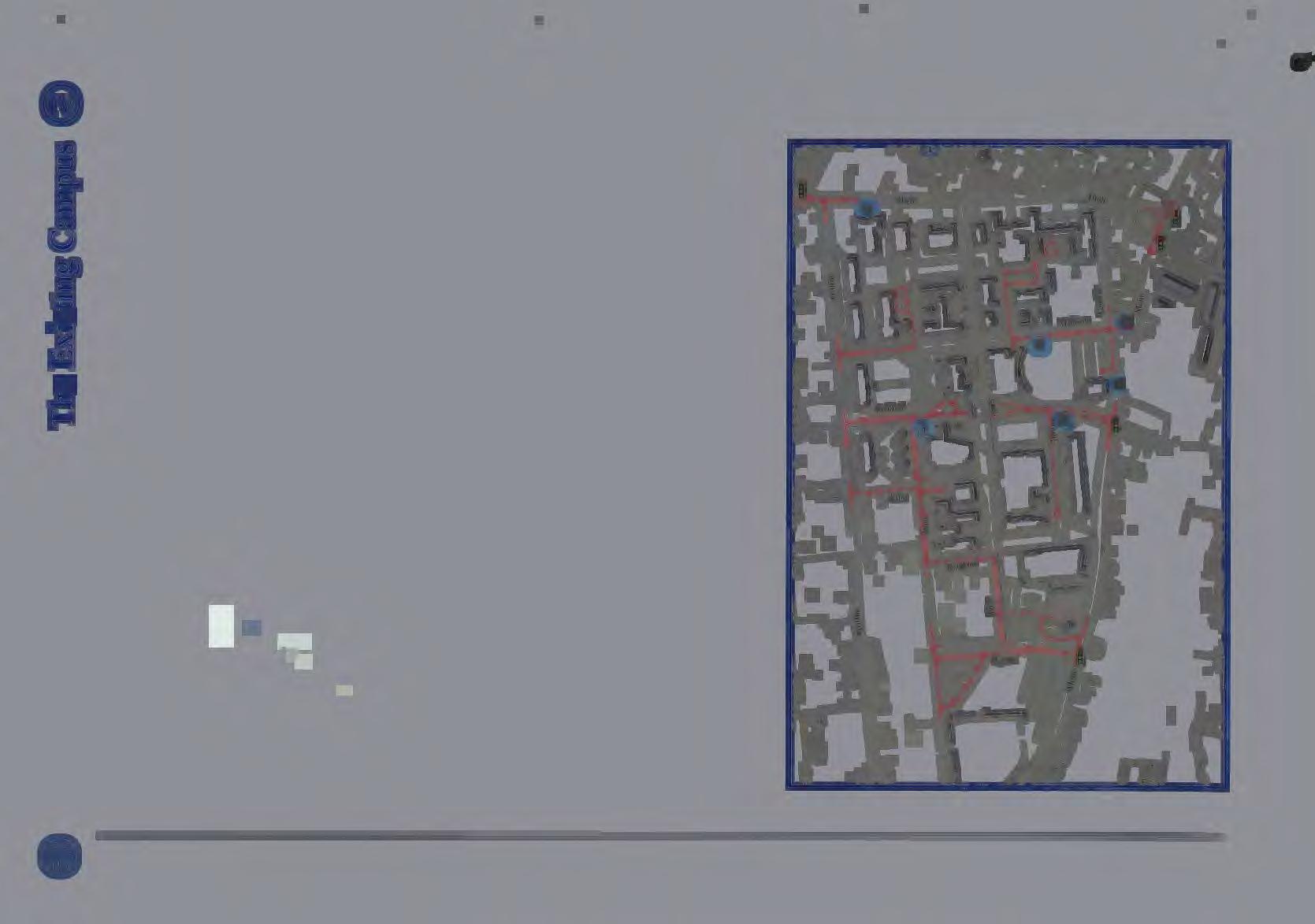
Farmville'sstreetpatternisfairlycomplex,withatypicalgrid networkdowntownandintheneighborhoodswestofthe LongwoodUniversitycampus(albeitnotfollowingeast-west ornorth-southdirection),andlargersuburban-styleblocks throughoutmostofthearea(Figure#19).Withinandnear campus,allstreetsaretwo-lane,withtheexceptionofSouth MainStreet(U.S.Route15),whichcarriestwolanesoftrafficin eachdirection.Inaddition,VenableStreettrafficisone-wayin thesouthbounddirection.Severalstreetsoncampuscontinuethe gridpatternexistentwestofcampus,butthepatternisbrokenby pedestrianizedBrockCommonsdividingMadisonandFranklin Streets,andbyanundergroundgaragethatdividesRedfordStreet intwo.Thus,vehiculartrafficthroughcampusisverylimitedin theeast-westdirection.
Thecampushasasmallfootprintandisessentiallyboundedby: HighStreetatitsnorthernedge;GriffinBlvd.atthewesternedge; SouthMainandVenableStreetattheeasternedge;andSouth MainStreetextendingalongthesouthernedgeofcampus.
Atpresent,SouthMainStreet,GriffinBoulevardandHighStreet definethecorecampusarea,butnoneoftheseroadwaysdefinea principalentrancewaytocampus.Intermsofoneinternalroadway thatservesasanobviousentrancewaytocampus,EastRedford Streetcouldbeperceivedtofulfillthatrole,withitstexturedbrick surfaceandheavilylandscapedmedianandplantingstrips(seeimage below).Itwouldbebeneficialifallinternalcampusstreetsreceived amakeoversimilar tothissectionof RedfordStreet.
LongwoodUniversityComprehensiveCampusMasterPlan September2008
EXISTINGVEHICULARISSUES
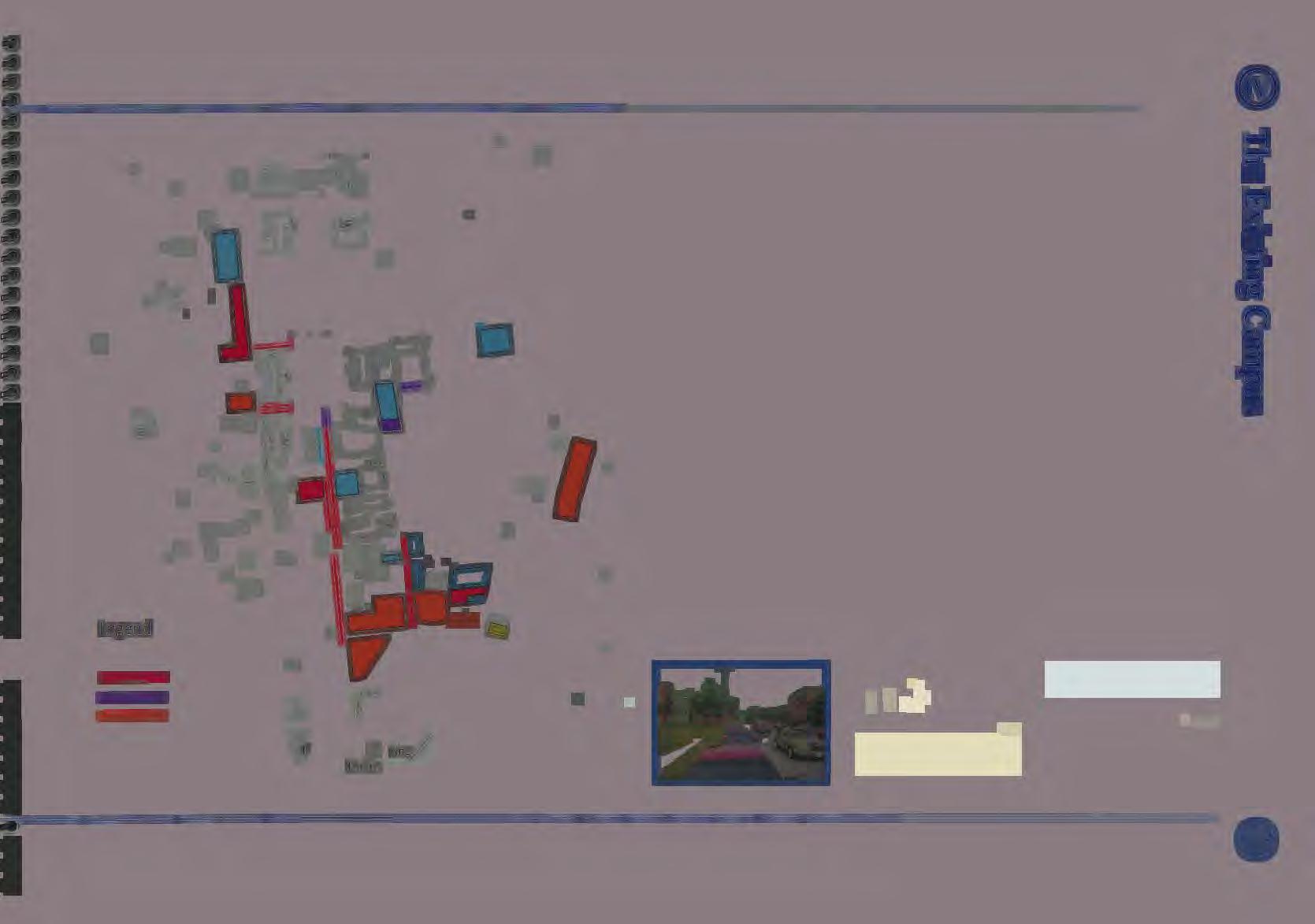
In general,issuesoftrafficcongestionanddelayappeartobe relativelyminor.Theexistingstreetsprovideadequatetraffic flow.Theonlysignificantdelaysareassociatedwithrushhour trafficheadingwestontoSouthMainStreetfromRedford Street.However,somedesignflawsresultintrafficcirculation issuesthatneedtobeaddressed(seeFigure#19).Theissuesare describedbelow:
1.DifficultvehicularaccesstoLancerPark,despiteitsrelatively closeproximitytocampus.
2.HighStreetisusedbybusesaspassengerdrop-offpoint, creatingtrafficback-upsandcompromisingpedestriansafety
3.ThestopsignlocatedattheT-junctionofRedfordandPine streetsisnotvisibletovehiclesapproachingtheintersection northboundonRaceStreet.Thesign'svisibilityisimpairedby vehiclesparkedontheeasternsideofRaceStreet.
4.Excessivetrafficcongestionisexperiencedbymotorists travelingeastboundonMadisonStreetandattemptingtoturn leftontoSouthMainStreet.
5.SawdusttrucktrafficonMadisonStreetisaconcern-upto fourdeliverytrucksadaytraveltoandfromtheheatingplant.
6.VehiclesenteringSouthMainStreetfromVenableStreet createatraffichazardduetosharpanglesandlowvisibility
7.TrucksandbusesusetheeasternendofRedfordStreet asaturnaroundarea,creatinganunsafeenvironmentfor pedestrians.
GeneralIssues
Inadequatevehicularwayfindingonandoff-campus.
SpeedingalongGriffinBoulevardandVenable,Wynne, andRacestreets.
19ExistingCampusVehicularCirculation
Figure#
Campus Grounds - VehicularCirculation and Parking
EXISTINGPARKINGDEMAND
Theexistingparkingspaces(2,252)aredosetofullonatypicalday(althoughsurfacelotssurroundingWynneStreet usuallyhavesomeavailableparking) Itshouldalsobenotedthanonanaverageday,about18vehiclesareticketed foreitherparkingillegallyorparkingwithoutdecalsoncampusproperty.Anumberofstudentsandfaculty/staff membersalsotendtoparkinthetown'sdowntownparkinglotsasthoselotsarefreeandoftenunderutilizedduring theday.Consideringthe95percentoccupancy,totalcurrentdemandisestimatedatapproximately2,350spaces.
PARKINGDECALSISSUED
In theacademicyear2007-2008,therewere2,439decalssold(datavalidasof10/2/2007) Thesedecalsinclude 175LancerParkpermitsand45freshmanpermitsforfreshmenallowedtoparkinthelotonSouthMainStreet. Thus,excludingLancerPark'spermits,thenumberofdecalssoldonmaincampuswas2,264,whichroughlyequals thenumberofactualparkingspacesavailableoncampus.However,decalssalesdonotaccountfordamaged,lost, orreplacedpermits.Approximately50parkingdecalsfallintothiscategory.Thefollowingisabreakdownofdecal allocationforthe2007/2008academicyear:
Faculty/Staff 702
CommutingStudents 818
ResidentStudents 919(includingFreshmanexceptions)
Total 2,439
EXISTINGPARKING:ISSUES
LongwoodUniversitycurrentlyhasasufficientsupplyofparkingspacestomeettheexistingdemand.However,the spacesseemtobeusedinefficiently;inthearearoughlyborderedbyGriffinBoulevard,HighStreet,Venable/South MainStreetandFranklinStreet,thedemandbarelymeetssupplysincelotslocatedthereareoftenfull.Thelotslocated outsidethemaincoreofthecampus,includinglotswestofGriffinBoulevardandsouthofFranklinStreet(particularly WynneDrivelots)areoftenunderutilizedsincethedemandforspacesinthatareaisgenerallylowerthansupply.This exemplifiesthefactthatproximitytothefinaldestinationdoesmattertodriverslookingforaparkingspot.Infact, thecommuterstendtorefertotheissuedparkingpermitsas'hunting'permits.Thefactthatcommuterswouldrather parkdosetotheirdestinationstoavoidwalkingfromparkinglotslocatedfartheroutalsopointsouttheneedfora saferandmoreattractivepedestrianenvironment.
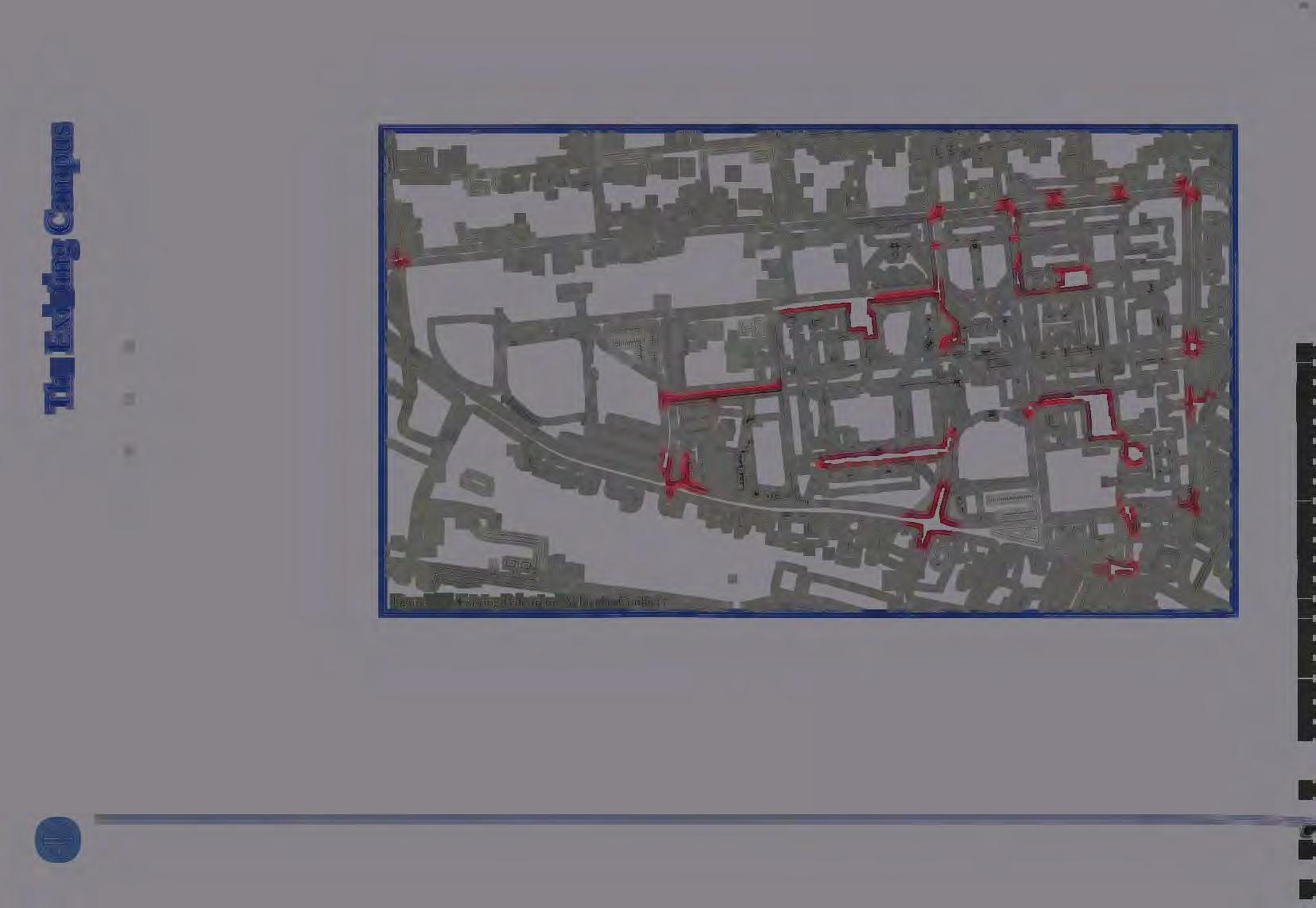
@ Pedestrian Orientation
Theprimaryconflictsoncampusarebetweenvehicles andpedestrians.Illustratedinredonthediagram totheright(Figure#21)aretheprincipalareasof concern.Inanefforttopreserveandbuildupon Longwood'sresidentialcharactertheseareaswillbe closelyexamined.Resolutionsfortheseconflicts willappearinseveraldifferingtypesofstrategies throughoutthismasterplan.Conceptsthatwillhelp addresstheseissuesare:
•Improvedwayfindingandsignage
•Appropriatecrosswalksystems
Properhardscapesandsidewalks
Properlyscaledandmaintainedlandscaping
Decreasedandcontrolledvehicularaccess
Creationofnewpedestrianpaths
Re-definitionandimprovementofexisting pedestrianpaths
•Alternatemodes·oftransportation
LongwoodUniversityComprehensiveCampusMasterPlan
Atthetimeofthenewmillennium,Longwoodhadaverytraditionalapproachtohousing.Eightyfivepercentofstudentslivedinon-campusresidencehallsdatingbetween 1923 and 1991.Over thepastseveralyears, theuniversity hasacquiredmore than400apartment stylehousingunits in three complexes tothe north, west, and southofcampus Thisarrangementpresentsunique challengesandopportunities.Withinaveryshorttime,theseunitshavegeneratedtransportation, maintenance, security, parking, studentlife, recreation, andmanagementissues.
Theuniversityisentrustedwithdefiningsolutionsthatadvanceandcomplementthetraditional residential strategies, as well as the new village concept and a growing commuter student population Thefollowingaspectsneedtobeconsideredforstudentliferesidentialplanning:
• Theuniversity usesatieredapproachtostudentliving, i.e., freshmenliveinon-campusresidential halls, while manyjuniorsandmostseniorsliveoffofthemain campusinuniversity managed residential villagesand unaffiliatedhousing;
• Thereneedstobestrongvisual, functional, andservice linksbetweentheresidentialvillagesandthecore campus;
• Theuniversity'slearning/livingphilosophyisimportant inall typesofstudentresidentialliving;
• Maintaining/enhancing"community" isoneofthe mostimportantaspectsofthephilosophy;
• Studentlivingincorporateslearningandrecreationin theliving environment, and;
• TheStudentUnionandcampusdiningmustbe expandedtomeettheincreasingdemandsandneedsof agrowingnumberstudentswhodonotresideonthe maincampus
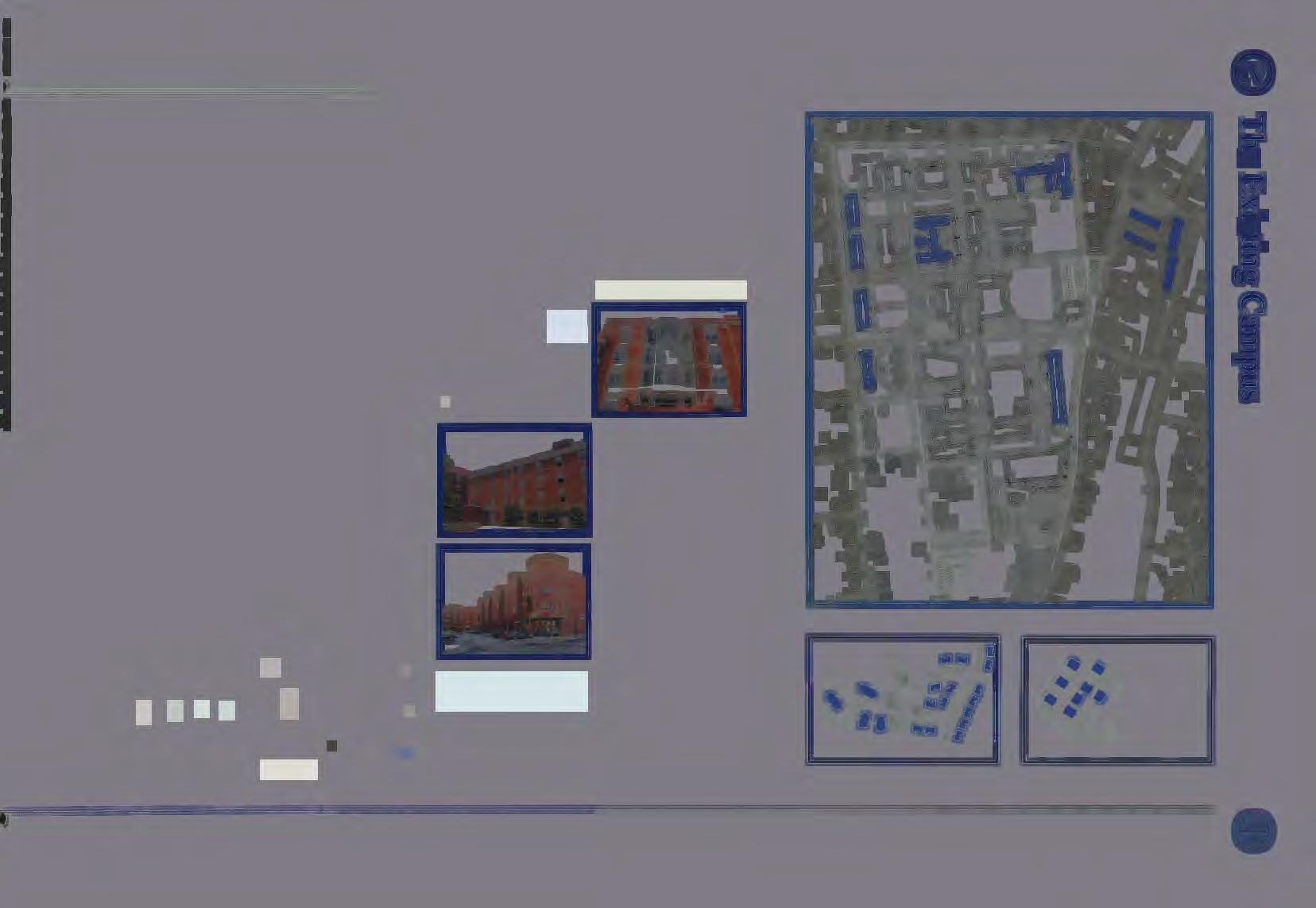
andOffCampusHousing
Campus Grounds - Housing
Figure# 22, ExistingHousing
Campus Grounds - Recreation and Sports Facilities
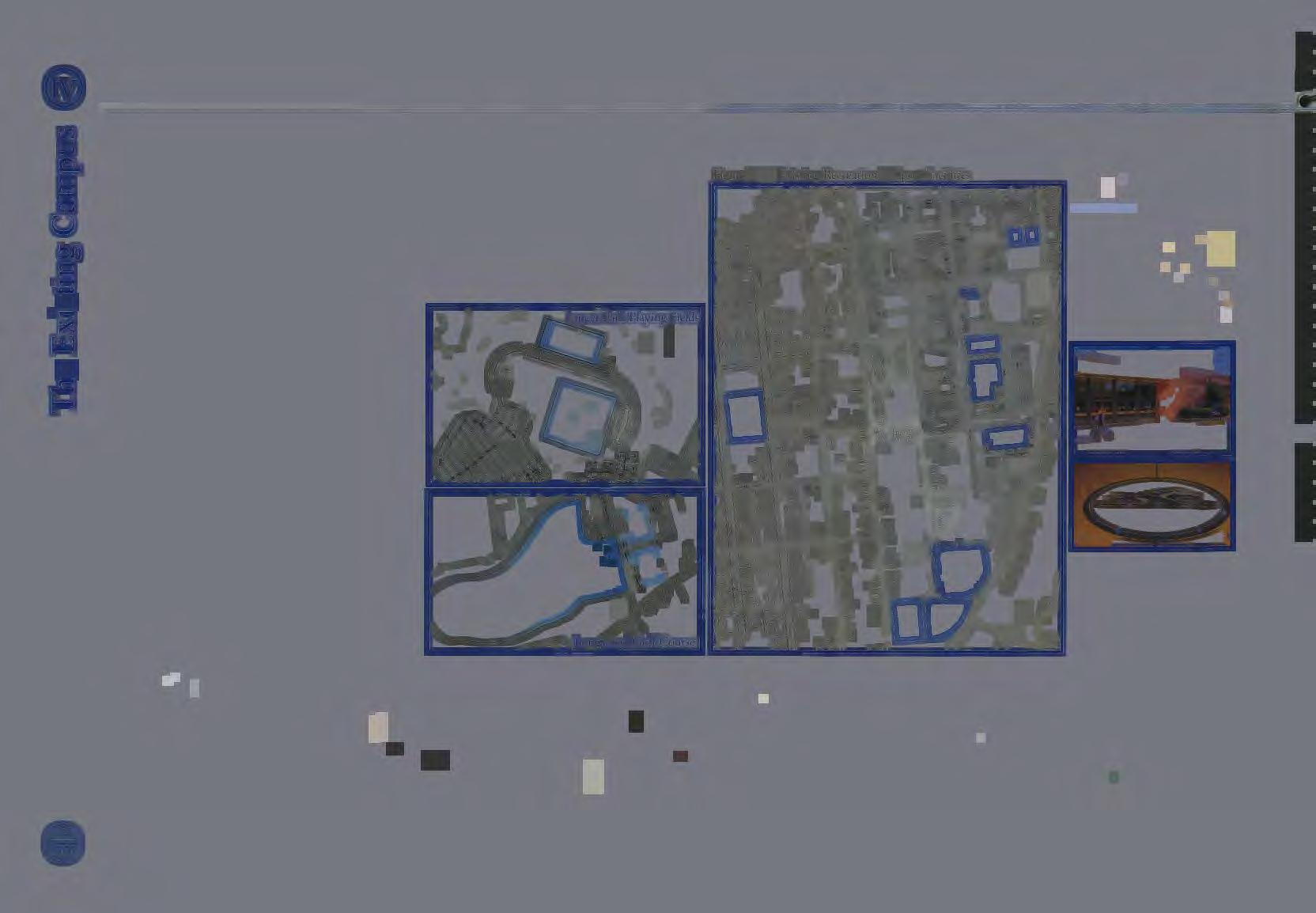
Campus Recreation provides fitness, wellness, recreational, competitive, and social opportunities to the Longwood University community.Over the past fiveyears, Longwood has been transforming its athletic programs from NCAA Division II to Division I. Near term needs of the programs are being addressed through the enhancement and addition to the existing athletic facilities The master plan should anticipatetheneedsofgrowing programs and future facility requirements.
TheHealthandFitnessCenter, which opened in August 2007, is a75,000-squarefoot facilitythat includes a 7,300-square foot fitnesscenter, two full-courtgymnasiums, a multi-purpose gym, three group exercise rooms, two racquetballcourts,a30-footclimbingwall,andaone-eighth milewalking/joggingtrack.Thefitnesscenterhas40piecesof cardiovascular equipment, 30pieces of strength equipment, and free weights.As the University's first certified LEED (LeadershipinEnergyandEnvironmentalDesign) building, the center is also the only "Gold" LEED certified Higher Education BuildinginVirginia, andtheonly "Gold" LEED certifiedrecreationcenterintheentiresoutheast.
LancerParkSportsComplex, recently constructed at theLancerParkuniversityresidentialcommunity,willbecome arecreationandsportshaven Thecomplexwillincludefields forrugby,lacrosse,soccer,flagfootballandsoftball;ajogging/ walkingpathwithfitnessstations;aFrisbeegolfcourse;tennis courts; outdoor basketball courts; an indoor activities barn; andsitesforwildlifeviewingandnaturehikes.
WillettHallComplexincludesa3,000-seatgymnasium, weight-training laboratory, human performance laboratory,
LongwoodUniversityComprehensiveCampusMasterPlan September2008
dancestudio,pool,anda500-seatnatatorium.Willett Hall is home to the Longwood University men's and women'sbasketballteams.
OtherUniversitysportandrecreationaccommodations include 4 mapped outdoor jogging trails, numerous fields,includingbaseball,softball,fieldhockey,soccer, volleyball, basketball and tennis courts Longwood also boasts a nine-hole golf course located one mile fromcampus.
Figure# 23, Existing Re~e~tion . .
Campus Grounds - Landscaping, Entrances, andBoundaries
LANDSCAPING
Openspaceandlandscapingplayanimportantroleinestablishingthe campusimage.Theexistingrollingcampustopographyiswell-maintained andfeaturesvaryingtypesoflandscaping.Themostprominentopenspaces areWheelerMall-anopengreen,andBrockCommons-alandscaped pedestrianplazaalongthenorth-southcampusaxis.
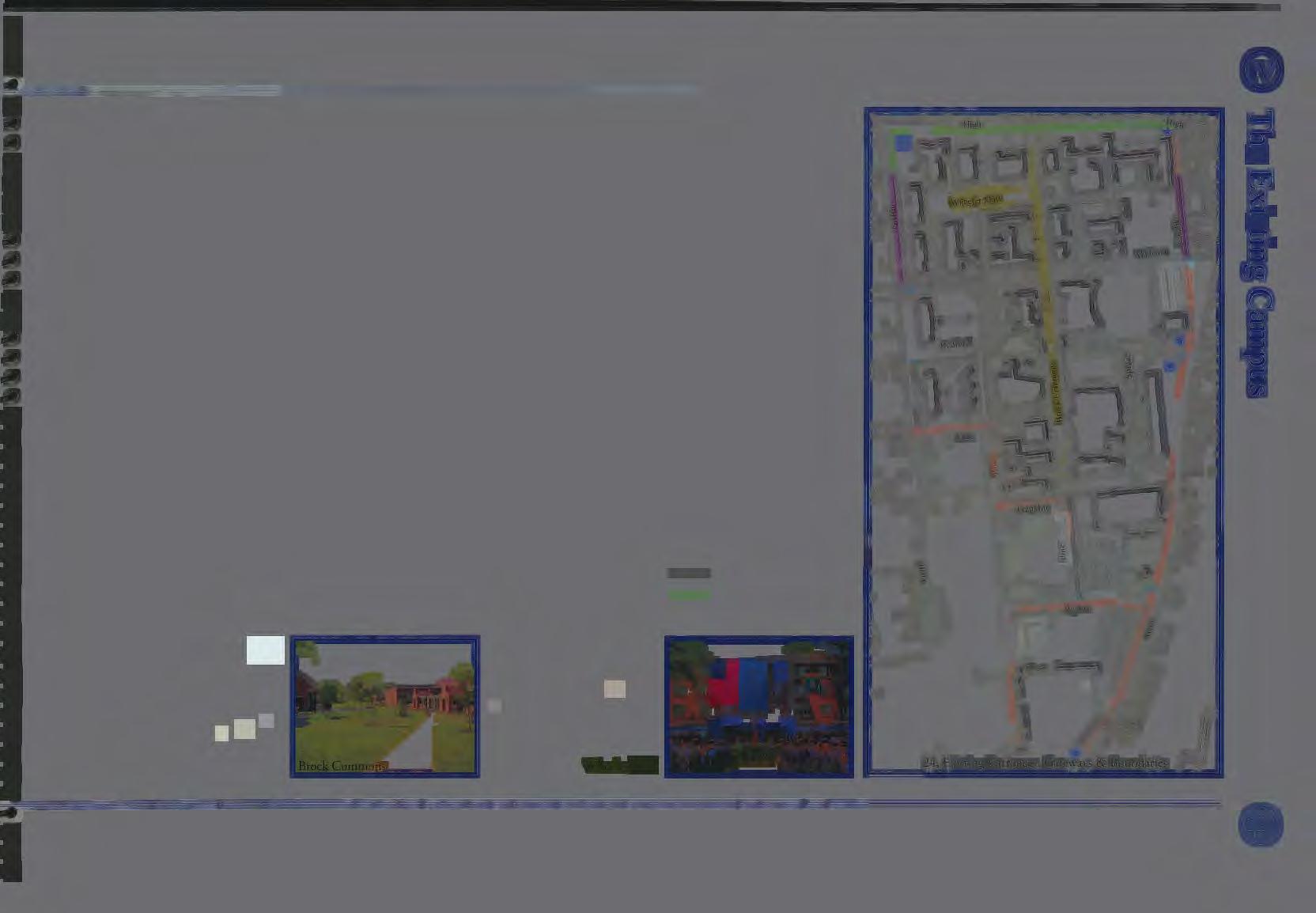
ENTRANCESANDGATEWAYS
ThedarkbluestarsandlightbluediamondsinFigure24denotetheexisting vehicularsignageandentrywaystothecampus.Thecampusedgesare boundedbySouthMainStreet,GriffinBoulevard,andHighStreet;however, amainentranceisnotdefined.Historically,HighStreetwastheprimary approachtocampus,butwithmuchofthecampus'newdevelopment shiftingsouthward,itisnolongertheprincipalaccess.Today,HighStreetis thehistoricalandarchitecturalbackboneofthecampus,butisrarelyutilized asamainentrance.
Pedestrianaccessshouldbesignifiedbyagatewaysystemortreatmentof thelandscaping,preferablywithappropriatelyscaledsignage.Whilethe currentconditionsofthecampusdonotaddressthisissue,theMasterPlan willrecommendstrategiestoestablishandincorporatethesegatewayareas/ systems.
Pedestrianaccessshouldbedenotedbyagatewaysystemorlandscapedareas, alongwithappropriatesignage.Themasterplanwillrecommendstrategies toestablishandincorporatethesegatewaysandareas.
TheSouthMain/RedfordStreetintersectionisthe"functional"primary campusvehicularentrance;however,itdoesnotpresentavisualsenseof arrivalatauniversitycampus.
GriffinBoulevardhasthepotentialtobecomeamoreimportantcampus entry,butconnectivitytothecampuscoreiscurrentlyinsufficient.Traffic calmingtechniquesarealsorequiredtomakethestreetandentrancesmore pedestrianandbicycle-friendly.
BOUNDARIES
Specificedgeconditionsarealsoshownonthisdiagram,describingthe abilityorinabilitytomakeadistinctionbetweentownanduniversity grounds.Forthepurposesofthisdocument,anedgeisdefinedasa perceivedboundarysuchasawall,building,orlandscaping.
Thegreenlinesdelineateanaturalorsoftedgedefinedbytrees, shrubs,buildingalignment,andcontinuity.Thistypeofedgeisthe mostattractiveanddesirable.Itallowsthoselookingbothinand outofcampustoenjoyuninterruptedviews,whilemaintainingan impliedyetstilldefinitiveboundary.
Thepinklinesdelineateanundefinededge,whichcontributestoa poorcampusimageandvisualconfusion.
Thehardedge,depictedinpurple,representsbrickorotherhard surface.Thistypeofboundarymightbeperceivedasharsh, uninviting,orevendangerous.
*ExistingVehicularSignage UndefinedEdge -HardEdge
SoftI NaturalEdge VehicularEntry
Campus Grounds - Signage

In2002LongwoodadoptedaGraphicIdentityStyleManualchat providedguidelinesforrecommendedusageofthenewsymboland logotype.ThesestandardshelpLongwoodUniversitycommunicate inaclearandconsistentvoicechatreflectsthereputationandgoals oftheinstitution.Asimilarsetofstandardsshouldbeimplemented specifically for signage in relation to building, vehicular, and pedestrianapplications.
Asinglegatewaysignforthesouthernentrytocampusislocated alongSouthMainStreetsouthofWynneDrive(seeimagebottom left) Othergatewaysignsexistforthe northern approaches to campusalongHighandMainStreet;however,theentirelengthof GriffinBoulevardisdevoidofsignage.
Directionalsignsformotoristsorpedestrianscanbefoundbothinand aroundcampus.Vehicularsignsareneededtoprovideclearinstruction forthevisitorinlocatingparkingfacilities,campusbuildings,athletic and entertainment venues, visitor information, and theAdmissions Office.Thesignageconnectingthecampustotheregionalcontextcould befurtheremphasized.
Theexistingmapsoncampus,suchastheoneplacedatthenorthend Brock Commons (seeimagetopleft) are used to communicatethe levelofdetailneededforadequatecampusorientationandaccessibility information.Updatingwillberequired.
Thebuildingsignagesystemforthecampus is functional andconsistent; however, changesto further thesystem's flexibility might be appropriate. RefertoAppendix,Report2foracompletedescriptionofexistingsignage conditions.
SouthernEnc
LongwoodUniversityComprehensiveCampusMasterPlan September2008
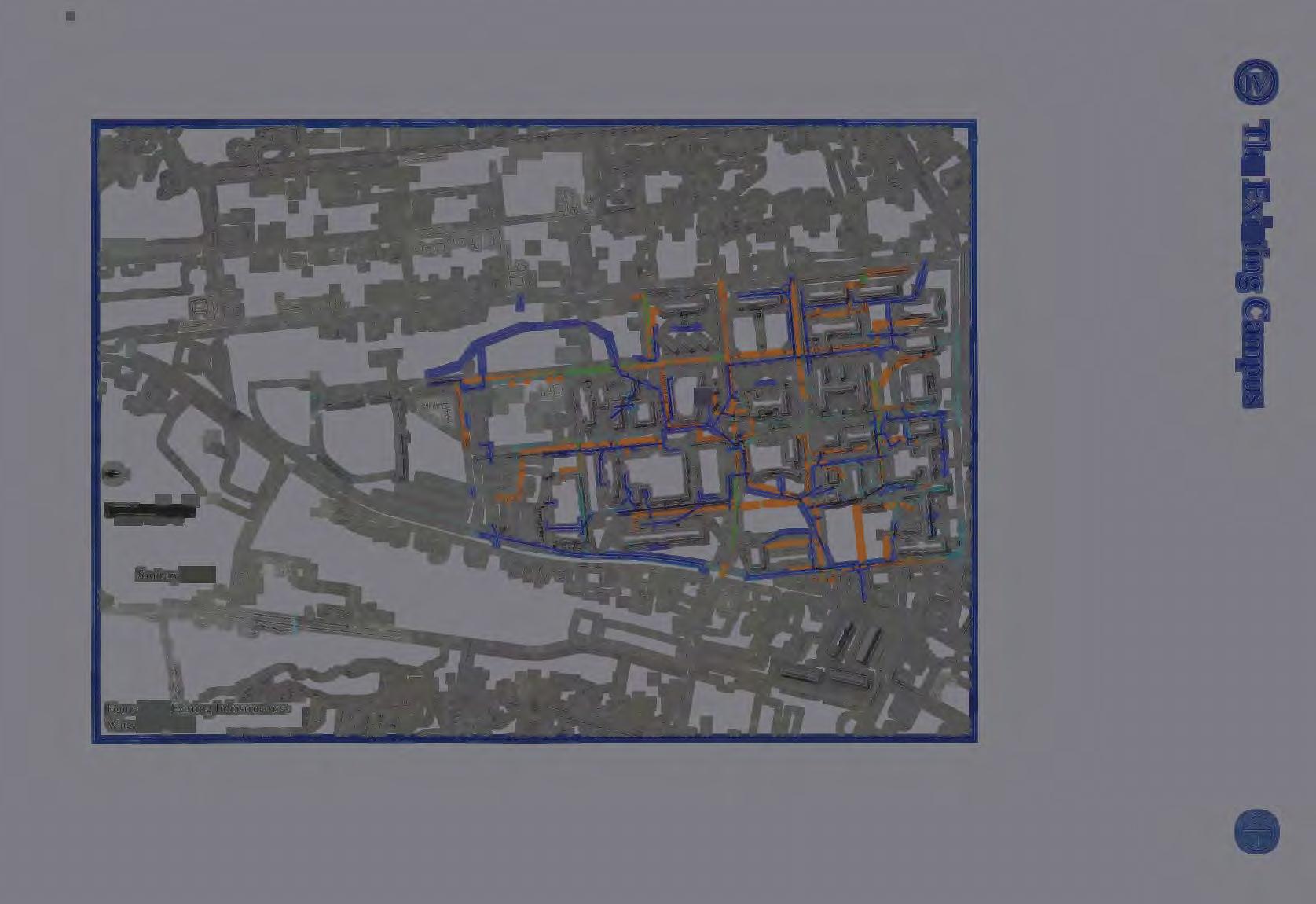
Campus Infrastructure - Potable Water, StormWater, and Sanitary SewerLines
One major purpose of a campus master plan is to identify potential utility issues surroundingfutureconstructionprojectsor other physical changes. The project team reviewedtheavailableinformationfromboth theuniversityandthetownofFarmvilleon thecampuspotablewater,stormwater,and sanitarysewersystems. Whiletheseutility systemsappeartohaveadequatecapacityfor current use, certain sections contain pipes smallerthanwhatisgenerallyconsideredto bethepresentdayminimumdiameter(eight inchesforwaterandsewermains).
Current building designs minimize water consumptionandthereforesewagegeneration asmuchaspossible. Nevertheless,utilitiesat thesiteofeachnewprojectshouldbeverified andevaluatedspecificallyfortheanticipated loadofthatproject,particularlyfortheflow offire protection water. The university's potablewatersystemhasnotbeenmodeled sufficientlytoallowacompletecomputation offuturedemands. However,certainsections arenotasrobustastheycouldbe.
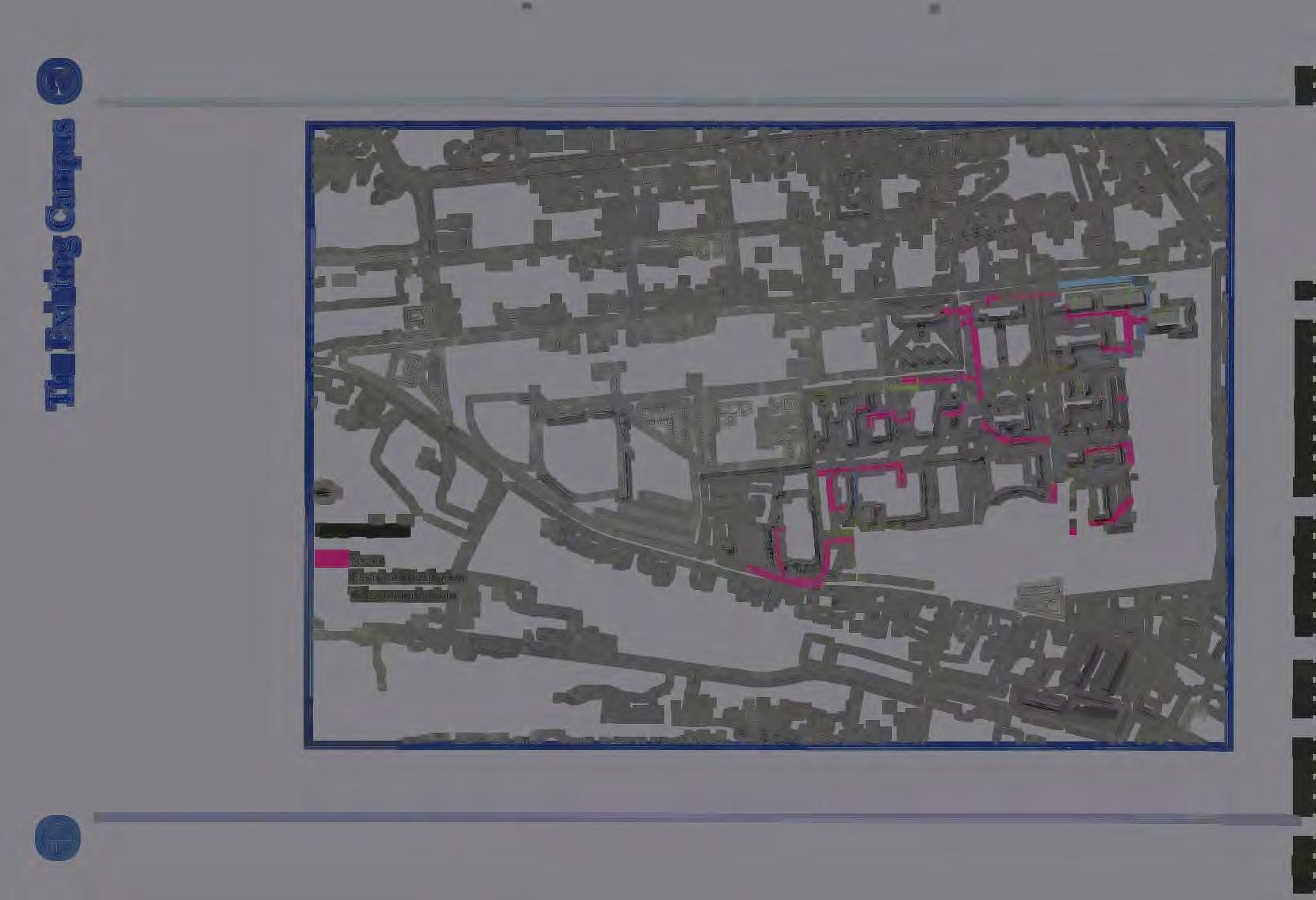
Campus Infrastructure - Steam, Electrical, andTelecommunications
STEAM
Longwood University owns and operates a central steam heating systemconsistingofoneheatingplant and campus-wide steam distribution piping. A new heating plant is currentlybeing constructedthatwill contain two biomass boilers with a combined capacity ofapproximately 40,000 poundsofsteamperhour
ELECTRICAL
DominionVirginia Powerownsand maintains the electrical distribution system on the campus. The existing peak load of approximately 3,500 kwwill ultimately increase to 5,500 kwatthe completionoftheplanned expansionandconstruction projects. Dominion Virginia Power has indicatedthattherearenoforeseeable issues with providing the campus withtherequiredadditionalpower.
TELECOMMUNICATIONS
The existing telecommunications and data systems are owned and maintained by the university. Expansion of the existing system to support the future requirements should be in accordance with the procedures established by the university's Information and Instructional Technology Services organization.
Remote Facilities
TheInstituteforTeachingthrough Technology&InnovativePractices
The Institute for Teaching through Technology & Innovative Practices (ITTIP), under the College of Education and Human Services of Longwood University,wascreatedbythe1999GeneralAssembly Itsmain founders wereLongwoodPresident Patricia Cormier and W W "Ted" Bennett Jr., a Halifax attorney who then represented the 60th district in theHouseofDelegates.
The ITTIP researches and develops effective technology-integrated instructional strategies and models that are proven to be successful. Current research on instructional strategies include the use ofasynchronouslearning,videoconferencing,digital video, andpersonaldigitalassistants Headquartered in South Boston, the Institute serves primarily 25 publicschooldivisionsextendingfromPatrickCounty eastward to the city of Franklin and as far north as BuckinghamCountyandColonialHeights.Itworks closelywith,andisthefiscalandadministrativeagent for, the Southside Virginia Regional Technology Consortium (SVRTC).
Assistanceforschooldivisionsinclude:
•Professionaldevelopmentincontentareas
• Integrationoftechnologyapplicationsin instruction
• Implementationofvideo conferencing
• Demonstrationofresearch basedinstructional practices
• Specialcareerandtechnical education projectsfor students
PowhatanCenter
Longwood University and the Powhatan County Public Schools have formalized a partnership in which Longwood graduate courses will be offered atPowhatan High School
In May of 2005 at Powhatan High School, Longwood President Dr Patricia Cormier andDr Margaret Meara, superintendent of the Powhatan schools, signedanagreementofficiallyestablishing theLongwoodPowhatanCenter.
Longwood began partnering with the Powhatan schoolsin2001toprovideprofessionaldevelopment in readingfor teachers in that school division.Dr. Barbara Chesler, who then directed the Literacy and Culture (Reading Specialist) program, led many of those classes and worked closely with Powhatanschool officials toidentifyand meet the professional development needs of teachers and administrators
Courses are taught at the Longwood Powhatan CenterfromtheprogramsofLiteracyandCulture, Special Education, Educational Leadership, and Elementary Education, as well as foundational courses forinitialteacher licensure for thosewitha bachelor'sdegreebutnotateacher'slicense.
RetailMerchantsAssociation,Richmond
HullSpringsFarm
Longwood University offers a Masters of Business Administration (with a concentration in retail management) in partnership with the Richmond, Virginia, Retail Merchants Association (RMA).
Classes are held both at Longwood and in space leasedfromtheRMAattheiroffice,5101 Monument Avenue, Richmond

Hull Springs Farm is a 638 acre farm owned by the Longwood University Foundation and located in Westmoreland County on Virginia's Northern Neck. The long-term concept for the farm is focused on evolving into an environmental education and best practices demonstration center. Current activities include shoreline preservation and protection, refining its forest stewardship plan, development of conservationeasements,andwetlandsrestoration
FutureCampusRequirementsandPreferences
V
LONGWOOD UNIVERSITY

TheAcademic Program
OVERVIEW
Foundedin1839,LongwoodUniversityisaninstitutionofhigherlearning dedicatedtothedevelopmentofcitizenleaderswhoarepreparedtomake positivecontributionstothecommongoodofsociety.Buildinguponits strongfoundationintheliberalartsandsciences,theinstitutionprovides anenvironmentinwhichexceptionalteachingfostersstudentlearning, scholarship,andachievement.Astheonlyfour-yearpublicinstitutionin southcentralVirginia,Longwoodservesasacatalystforregionalprosperity andadvancement.
LongwoodUniversityoffersmorethan100majors,minors,andconcentrations throughitsvariousacademicprograms.Givenitshistoricalroots,Longwood Universityenjoysanenviablereputationforteacherpreparation.Theculture ofexcellencehasexpandedthroughouttheuniversitywithstrongprograms intheliberalarts,sciences,business,professional,andpre-professionalareas. Today,thiscoeducational,comprehensivestateuniversityhasanenrollmentof morethan4,800students.Itiscomprisedofthreeseparatecolleges:theCookColeCollegeofArtsandSciences,theCollegeofBusinessandEconomics, andtheCollegeofEducationandHumanServices;andagraduatedivision offeringprogramsinbusinessadministration,communicationsciencesand disorders,education,English,andsociology.
Thefuturerequirementforspaceandfacilitiessupportingacademicprograms isbasedonthefollowingtwofactors:
1.Theprojectedgrowthofstudentenrollmentto5,600undergraduateand 500graduatestudentsin2020.
2.ThenewBachelorofScienceinNursingprogram,whichwillcommence infall2009.
BACHELOROFSCIENCEINNURSING
LongwoodUniversity,inpartnershipwithSouthsideCommunity Hospital,conductedastudytodeterminethefeasibilityofestablishing aBachelorofScienceinNursing(BSN)programattheUniversity.
Asaresultofthestudy,aprojecttorenovatethesecondfloorofStevens Hallforthisprogramisunderconsiderationbythecurrentlegislative budgetsessionandarequestforproposalshasbeenissued.
Thenursingprogramwillcommenceinfall2009withaninitialclass of35students.Anewclassof35studentswillbeaddedineachofthe nextthreeyears,resultingin120fulltimestudents.Thirtystudentswill graduateeachspringbeginninginMay2013andeachyearthereafter. ClassesinStevensHallwillbegininfall2010.
ENVIRONMENTALSCIENCE
AnewmajorinenvironmentalsciencewasapprovedbytheBoardof VisitorsinDecember2008.TheprogramwillbepartoftheDepartment ofBiologicalandEnvironmentalScienceswithintheCook-Cole CollegeofArtsandSciences.
MBAPROGRAMS
LongwoodUniversityisalsocurrentlymeetingaspecific regionalneedwithitsMBAinRetailing,whichwasdeveloped attherequestoftheRichmondRetailMerchantsAssociation. Additionally,theUniversityhasaddedtwoadditionalMBA programs-oneinaccountingandoneingeneralbusiness.
ADDITIONALEFFORTS
LongwoodUniversityintendsonincreasingthenumberof onlinecoursesofferedatboththeundergraduateandgraduate level.
LongwoodUniversityComprehensiveCampusMasterPlan September2008
SpaceNeedsAnalysis - Overview
OBJECTIVES
•Reflectatruepictureofexistingphysicalassets
•Portrayoptimumspaceneedsbyfunctionalareaattargetenrollment
-Analyzethedifferencebetweentheabovefromaquantitativeperspective
•Strategizethephysicalresponsetotheplanningobjectivesassuggestedbythe spaceneedsoutcomes
PLANNINGASSUMPTIONS
FacilitiesinventoryincludesallASFoncampusbelongingtoLongwoodexcept residentialhousing
ExistingandprojectedstudentenrollmentprovidedbyLongwood
•Existingenrollmentiscurrentstudentheadcount(undergraduateand graduatestudents)
•Projectionisatotalenrollmentof6100students(5,600undergraduate and500graduatestudents)
•FacultyprojectionswerecalculatedbasedonLongwood'sstatedfaculty tostudentratioof1to22
•QuantitativeratherthanQualitative
-Analysisfocusesonamountofspaceratherthanaestheticsofspace
•Analysisconsidersfuturespaceuse
• Spacereallocationcurrentlyinprogress
. Anticipatedconstructionprojectswithapprovedfunding(e.g.Bedford Hall)areincludedinthetargetyearspaceinventory
. Anticipatedconstructionprojectswithoutapprovedfunding(e.g. TechnologyCenter)arenotincludedinthetargetyearspaceinventory
. TemporarytrailersandSouthTabbbuildinghavebeenremovedfrom thetargetyearspaceinventory
SPACENEEDSPROCESS
DataCollection
•Fall2006FacilitiesInventory
•Fall2006CourseData
•Fall2006StaffingFile
•Fall2006Enrollments
WorkSessionswithLongwoodPersonnel
•Discussedprogramsandinstructionalmethodology
•Validateddataelements
ClassroomandLaboratoryUtilizationRates
University-wideSpaceNeedsAnalysisbySpaceCategory
College/UnitSpaceNeedsAnalysisbySpaceCategory
DEFINITIONS
ASF:AssignableSquareFeet
•Usablespaceassignedtoaprogram
•Measuredfrominsidewalltoinsidewall
•Excludespublicrestrooms,elevatorarea,stair wells,egresscorridors,maincirculationpaths, mechanical/electrical/plumbingspaces,and structuralareas
GSF:GrossSquareFeet
•Allspacewithinabuilding'sfootprint
•Spacecategories
•DefinedaccordingtoSpaceUseCode
Designationanddepartmental/unitassignment
SpaceUseCodes
DefinedperTheNationalCenterforEducation Statistics(NCES),PostsecondaryEducation FacilitiesInventoryandClassificationManual
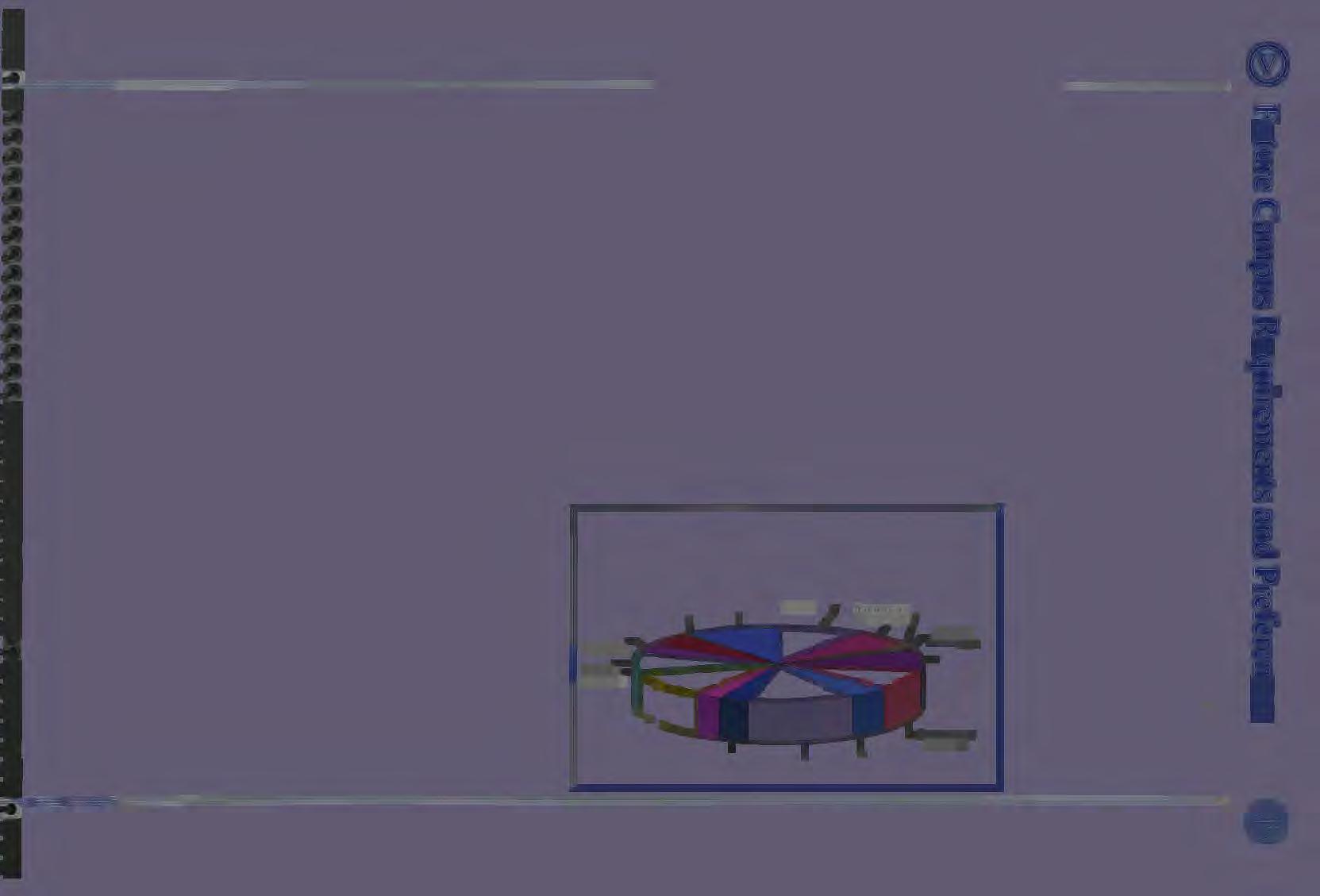
ExistingSpaceByCategory Figure#27
® Space NeedsAnalysis - Student Enrollment, Faculty, and StaffProjections
In an effort to maintain Longwood's student focusedcharacterandculture,theadministration hassetamaximumenrollmentprojectionof6100 undergraduateandgraduatestudentsbytheyear 2020.Atypicalassumptioninmakingfacultyand staffprojections istomaintainastandardratio basedonthestudentenrollment.
ENROLLMENTPROJECTIONS
•
PROJECTIONS
Space l~eeds Analysis - Space Projections

AN INTRODUCTION TO SCHEY
The State Council of Higher Education for Virginia (SCHEV) is the Commonwealth's coordinating body for higher education. SCHEV was established by the Governor and General Assembly in 1956. Then as now, their mission, which is outlined in the Code of Virginia, is "to promote the development of an educationally and economically sound, vigorous , progressive, and coordinated system of higher education" in Virginia.
To fulfill their mission, SCHEV makes higher education public policy recommendations to the Governor and General Assembly in such areas as capital and operating budget planning, enrollment projections, institutional technology needs, and student financial aid. SCHEV administers a variety of educational programs that benefit students, faculty, parents, and taxpayers. SCHEV serves as a catalyst to promote greater access, quality, affordability, and accountability throughout the system. SCHEV also helps policy makers, college administrators, and other concerned leaders work cooperatively and constructively to advance educational excellence.
GUIDELINES
Classroom (SCHEV)
• 17 ASF at 40 Weekly Room Hour (WRH) at 70% SSO = 0.5 ASF per Weekly Student Contact Hour (WSCH)
Teaching Laboratories (SCHEV)
• 24 WRH at 75% Student Station Occupancy (SSO), varied ASF by discipline
Open Laboratories
• 3 ASF per student headcount
Research Laboratories
• SCHEV requires research space to be generated as ASF per research dollars expended
• Calculated based on percentatge of faculty performing research, with an allocation for capstone
Academic Office
• Based on employee type plus an allocation for service and office conference space
Other Academic Department Space
• 3.5 ASF per student headcount
Administrative Office
• Based on employee type plus an allocation for service and office conference space
Library
•Allocation for stacks, support space, library staff, study areas, and lounge space
Physical Education/Athletics
• 15 ASF per student headcount
Recreation
•Allocation of29,000 ASF for up to 1,000 students plus additional space for every student over 1,000
Student Union
• 10 ASF per student headcount for student union
• .3 ASF per student headcount for student health facilities
Athletics
• Percent growth over guideline
Assembly and Exhibit
-A core of 27,450 ASF for an institution with active fine arts and music programs plus an additional allocation for every student over 5,000
Physical Plant
• 5% of all existing non-physical plant space excluding residential space in the base year, but inclusive of inactive/conversion space
• 5% of all non-physical plant guideline space excluding residential space, but inclusive of inactive/conversion space
Other Administrative Department Space
. 3 ASF per student headcount



SpaceNeedsAnalysis -Academic andAdministrative Space Requirements byDivision
GREATESTDEFICITS
•Cook-ColeCollegeofArts&Sciences
•CollegeofEducation&HumanServices
•Library
FacilitiesManagement&RealProperty
PhysicalEducation/Athletics
StudentUnion
FoodService
ADDITIONALAVAILIBLESPACE
58,500ASFofInactive/Conversionspace isavailableforreuse(Table27.2)

SpaceNeedsAnalysis
by Colle�e/Unit
Summary: 6,100 Projected StudentEnrollment
SpaceNeedsAnalysis - SupportandAcademic Requirements
Space NeedsAnalysis by Space Category
Support Space

TargetEnrollment
Student
SupportSpace
SpaceNeedsAnalysis by Space Category
Academic SEace
TargetEnrollment
Student
SUPPORTSPACE
AdministrativeOffices:
•increasecorrelated to theincreasein numberofstaffand administrative personnel
Library:
•increaseforadditionalreaderstationsandcollectionspace
Recreation: includesIlerHall (:::: 12,000ASF)
StudentUnion:
•additional space required for student club offices, meeting areas, food service, expandedpostoffice, etc
PhysicalPlant:
•TY existingdoesnotincludeproposedphysicalplantbuilding
•Inactive/Conversion-SupportSpace: BlackwellHall
ACADEMIC SPACE
Classrooms: surplus results in part from lower use of existing space than guideline expectations; doesnotconsideranyrevisionofclassroomsizes
TeachingLaboratories: baseyearincludes Science Center; targetyearincludes additional spaceforthearts (BedfordHalladdition).
Open Laboratories: additional spaces such as general access computer laboratories, music practice rooms, testing/tutoring (academic support areas, collaborative learningspaces)
ResearchLaboratories: increasetoprovidespaceforEducationandSr.ecialEducation, Mathematics and Computer Science, Natural Sciences, and Psychology faculty with an allocation forundergraduate capstoneexperience
AcademicOffices:
increase correlated to the increase in number of faculty and support personnel; needforadditionalofficesupportspaceandconferencerooms
OtherAcademicSpace: includessuchspaceasloungeareas,meetingrooms,greenhouse space, academicmediaproduction, etc
Inactive/Conversion:
AcadSpace: StevensHallandsomespaceinMcCorkleandJeffersHalls
Group Inputs and Preferences
ISSUEIDENTIFYINGMATRIX
Throughoutthemasterplanning process,severalforumsandmeetings wereheldinanefforttoensurethe involvementofkeystakeholders. Detailednotesweretakenateach ofthesemeetings,describingboth definitiveandintangibleperspectives, thoughts,andfeelings.Offeringthese meetingsandcharrettescreatedan opportunitytocollectsubjectiveand oftentimesotherwiseunobtainable informationandinputonimportant campusplanningissues.Informaland opengatheringssetthestageforthe participantstofeelcomfortablein voicingtheirthoughtsandperspectives onavarietyofissues.Opinionsand preferenceswereheardandtakeninto account,andarecontinuallyreferenced throughoutthisdocument.
Table#27.4,IssueIdentifyingMatrix
Town InterestGroup Council
Transportation andParking Requirements and Preferences
REMOVINGTHECARSFROMCAMPUS
During discussion forums with students, faculty, and staff, a large majority of participants expressed a strong desire to remove cars from the main campus in the future Therefore, Longwood will move toward a car-free campus, with the exception of dedicated service and emergencyvehiclecorridors
SERVICECORRIDORS
Longwoodoperates nearly40 golf carts that are used on the main campus for personnel and equipmenttransport, grounds maintenance, andfacilities repair. Provision mustbe madefor efficient routes for these vehicles so the requisite service can be provided without detracting fromthepedestriannatureofthecampus
FUTUREPARKINGDEMAND
Projectedenrollmentandstaffingnumberscanbeusedtoestimatefutureparkingrequirements, assumingthatthecurrentratioofspacesperpersonremainsunchanged AsofNovember2007, therewere4,418 studentsonthemaincampus. Thisnumberisprojectedtogrowto6,100in thefuture Thisconstitutesa38percentincrease,resultinginanincreaseinparkingdemandof 541 studentspaces (ataconstantratioof0.32spacesperstudent), foratotalof 1,961 student spaces. Thenumberoffaculty andstaffpersonnelisexpectedtoincreasefrom752to896over the course of the planning period, resulting in an increase in parking space demand of 124 spacesifthecurrentspacesperfaculty/staffpersonratioismaintained. Demandforother types ofparking(visitor, handicapped,delivery,andstatevehicles)isestimatedtobeanadditional35 spaces. Assumingnoexistingspacesareremoved, thetotaladditionalparkingdemandwould be 700 spaces (Table#20.1). On a typical day, not every student or faculty/staffperson will beoncampus; therefore, theexpectedincreaseduetopopulationgrowthwillbecloserto600 spaces Applyingaslightly reducedrationof0.25 spaces perstudentcouldreducethedeficit toaslowas 500
ANTICIPATEDPARKINGSHORTFALL
The anticipatedparking shortfallwillbe approximate;ly 1,800 spaces (Table #20.2). This numberincludes theanticipateparking losses shown inTable #53.1.
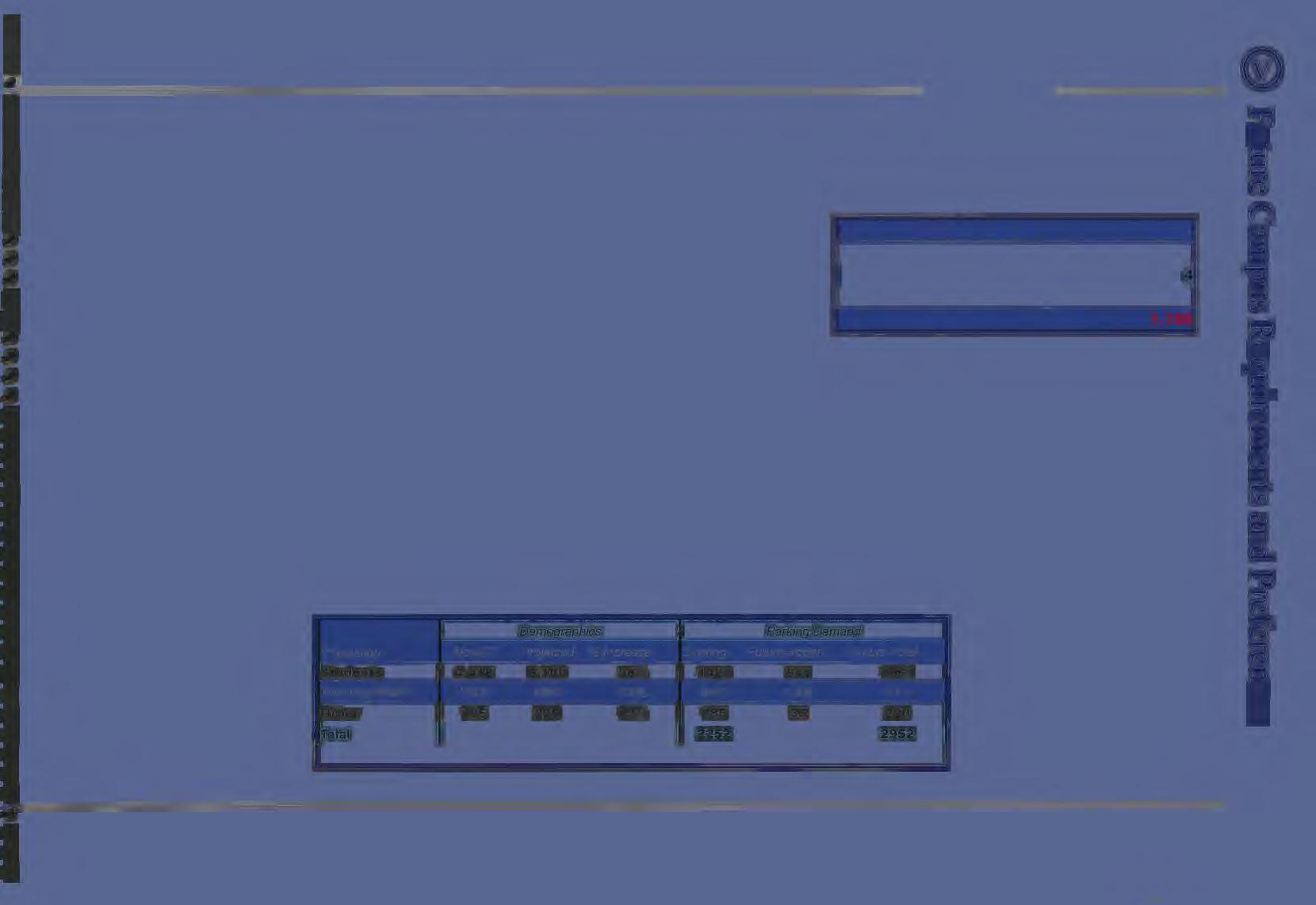
Note: Students and Faculty/Staffparking ratios unchangedin the future
Table#20.1, Existingand FutureDemographicsInducedParkingDemand
Table#20.2, FutureParkingShortfall
UNIVERSITYPARKINGPREFERENCES
Longwood will actively pursue efforts to provide off-campus parking in close proximity tothemaincampus. WiththeexceptionofAmericanswith Disability Act requirements, additional parking spaces will be placed off campusinthefuture
® Athletic andRecreational Requirements andPreferences
ATHLETICS
Willett Hallis thecurrent campusbasketballvenue; however, this facility isdatedand in need of renovation. While renovation of an existing facility is always an option, Longwood would prefer to establish a competitive facility for intercollegiate athletic events. Anewfacility wouldbeappropriatelysizedbasedonalocalandregionalmarket study, andwould seekto accommodate non-university events incooperation with the townofFarmvilleandthesurroundingcommunity.
FulfillmentofotherLongwoodpreferencesandobjectiveswillresultinthedisplacement of existing tennis courts in the northern and middle areas of campus. The university wishestoprovidetemporaryreplacementtenniscourtsandeventuallyconstruct 10-12 permanentregulationcourtselsewhereonthemaincampus
A new natatorium building has been envisioned for the future campus, and possible sites will be considered. This facility is intended to meet Division I college athletic standards, whilealsosupportingacademicandrecreationalprograms.
RECREATION
The Health & Fitness Center, completed in 2007, has been enthusiastically received bystudents, faculty, staff, andtheentirecommunity The spaceneedsanalysispredicts thatthisfacilitywillaccommodateLongwood'sgeneralindoorrecreationneedsforthe foreseeable future. The completion of the Lancer Park Sports Complex in 2009 will fulfillmostoftheneedforoutdoorintramuralsportsspace.
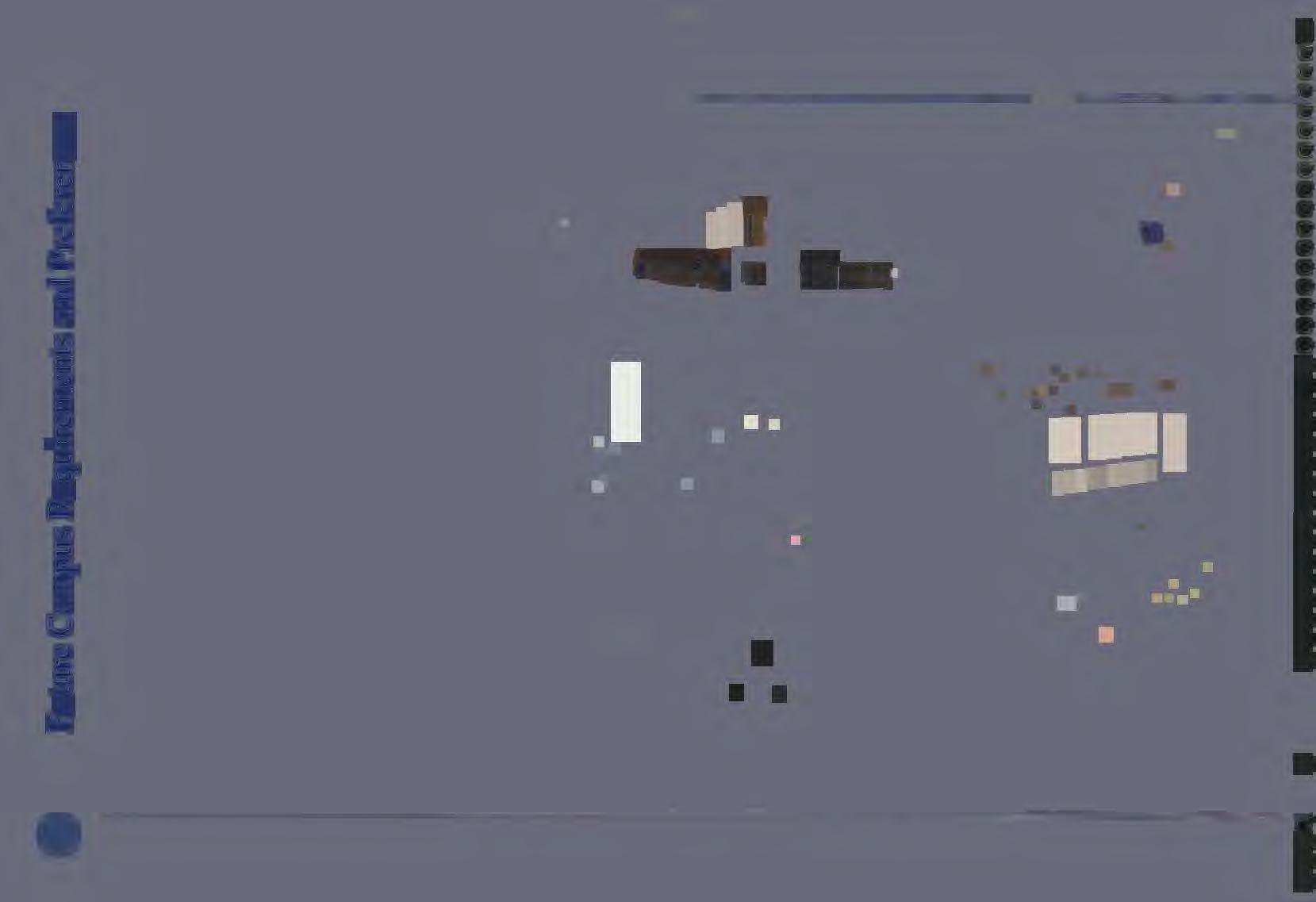
Theathleticandrecreationstaffsandthegeneralstudentpopulationexpressedthedesire for an informal outdoor recreational space on the main campus. The First Avenue field currently serves thispurpose, butislocated several blocks from themaincampus. Studentsandfaculty preferafieldonordirectlyadjacenttothemaincampusthatcould accommodateimpromptugamesandinformalactivities.
LongwoodUniversityComprehensiveCampusMasterPlan
September2008
Future Student HousingRequirements
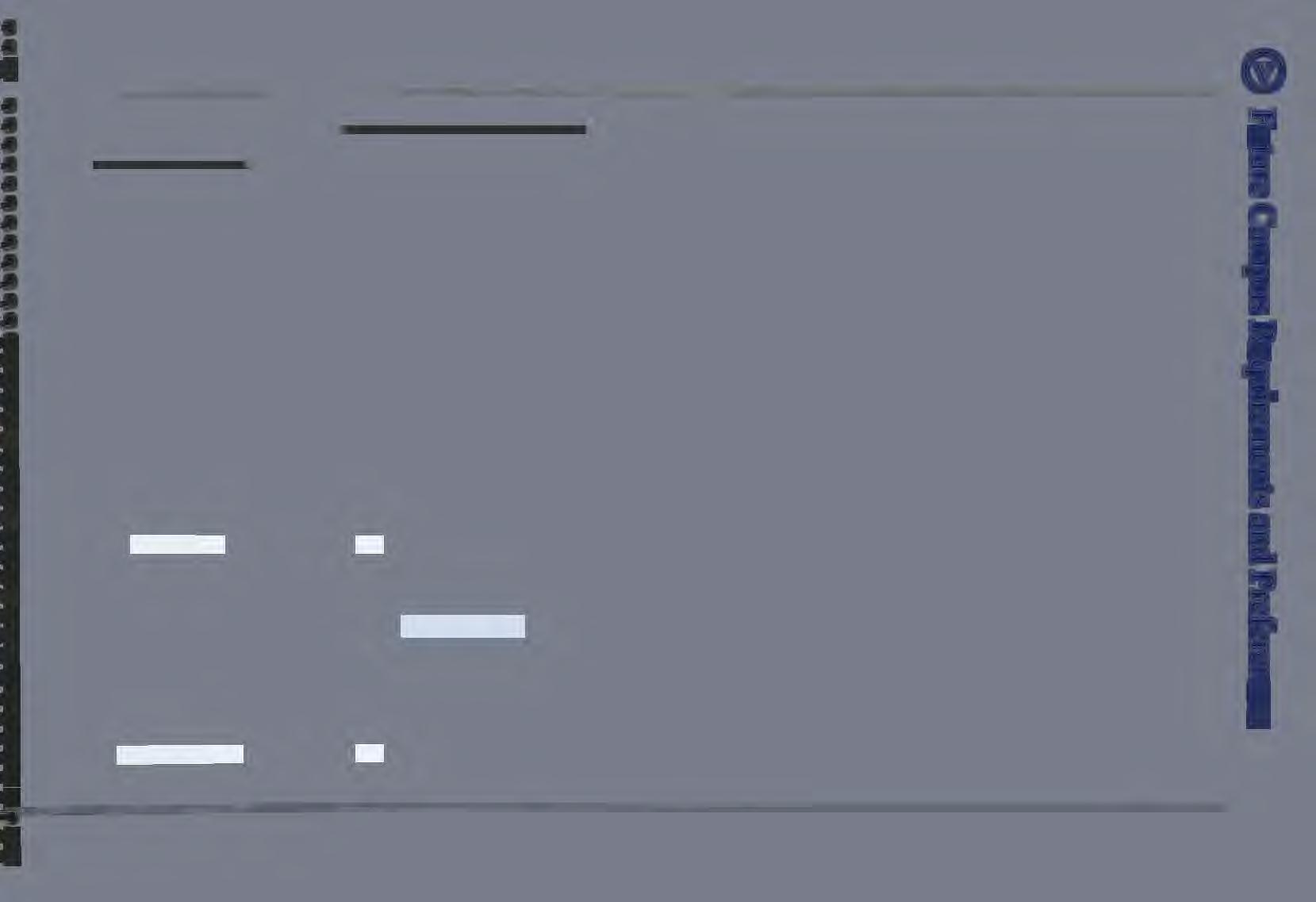
60% of5600 undergraduate students in university-controlled housing = 3360
HousingRequirements
A complete inventory and evaluation of student housing facilities was conducted Current and future preferences and guidelines were considered, andthe2007campusFacilitiesCorn;litionIndexReportwas reviewed. The Facilities Condition Index Report listed all three of the Cunningham residence halls and French Hallin the "poor" category"inneedofmajor maintenanceand/orrepair
Many students, faculty, and alumni voiced a desire to renovate the Cunningham halls. These buildings were constructed in 1928, 1938, and1958.Allthreehaveprovidedcontinuityandevokedastrongsense ofnostalgiainthestudentbodythroughoutthe20thcentury However, the cost of retaining and renovating these buildings was judged to be excessive, andthechoicewasmadetoexploreotherusesforthesite
Curry and Frazer high-rise residence halls are in the "fair" condition category. Discussions with various Longwood and community groups revealedconflictingopinionsaboutthesebuildings. Somestudentsand alumniexpressedastrongsenseofaffiliationforthe"community"aspect ofthese buildings, andbelievedthat living there contributedpositively totheir college experience. Other members of the university andlocal community found the buildings to be unsightly and.out of scale to the rest of campus. The eventual decision to retain them for housing was based on the cost and lack of campusland on which to construct replacements.
Infall2008, nearly 80% ofLongwood'sundergraduatestudentslivedin either the on-campus residence halls or off-campusuniversity-managed apartments The university's StudentAffairs organization set the 2020 goal for student housing as 60% of undergraduate students residing in university-controlled housing, with 2000 in on-campus residence halls. Theresultingfuturehousingrequirementsforon-andoff-campus housingareshowninTable#59.1. By2020,485additionalon-campus and410additionaloff-campusbedswillberequired.

Infrastructure Requirements, Steam
FuturebuildingswerelistedbasedupontheLongwoodUniversity ComprehensiveMaster Planandseparatedintofourphases: PhaseI PhaseII PhaseIII -PhaseIV 2009-2012 2012-2016 2016-2020 2020+
The current space utilization of existing buildings was used to estimatetheunitaryheatingloadsinBtu/GsfTheunitaryheating loadswerethenappliedtothefuturebuildingsinordertoestimate the building connected (design) load in pounds per hour (pph) A unidess diversity factor, calculated based upon the ratio ofthe existingpeakheatingdemandandtotalbuildingarea,wasapplied tothebuildingconnectedloadtoestimatethefuturepeakdemand onthecentralsteamplant.
Finally,thepeakheatingloadwasaddedtothecumulativeheating demandinordertoapproximatethetotalcumulativeheatingload at the end ofeach phase, hence aiding in the projection ofthe futureboilercapacityrequirements.
PHASE
Table#26.1

Notes:
1. Peaksteamloadbasedupon2004boilerlogs. 2.Peakheatingloadcalculationsbasedona0.51 diversityfactor.
LongwoodUniversityComprehensiveCampusMasterPlan September2008
1 QUAD UNIT B . DORMITORY
(2009- QUAD UNIT C DORMITORY
2012) STUDENT UNION BUILDING ASSEMBLY
MAIN CUNNINGHAM DORMITORY
NORTH CUNNINGHAM DORMITORY
SOUTH CUNNINGHAM DORMITORY
LANCER PARK PARKING PARKING
PHYSICAL PLANT BUILDING PLANT
SPRUCE STREET GREENWAY & LOOP LANDSCAPE
NORTHEAST GREENWAY & PLAZA LANDSCAPE
TENNIS COURTS PHASE FIELD
CONVOCATION CENTER ASSEMBLY
SUBTOTAL
2 ADMISSIONS/VISITORS CENTER ASSEMBLY (2012- LIBRARY EXPANSION & BRIDGE ASSEMBLY 2016) LANKFORD RENOVATION/ADDITION ASSEMBLY
ILER FIELD IMPROVEMENTS FIELD
DORRILL CANOPY CANOPY
RECREATION FIELD FIELD
TENNIS COURTS PHASE 11 FIELD
PERFORMINGARTSTHEATER ASSEMBLY
SUBTOTAL
3 HULL BUILDING ANNEX ASSEMBLY (2016- BROCK COMMONS EXT. LANDSCAPE 2020) SUBTOTAL
4 COMMUNITY OUTREACH BUILDING ASSEMBLY (2020+) NORTH EAST ACADEMIC BUILDING ASSEMBLY
NATATORIUM GYMNASIUM
CURRY FRAZER REPLACEMENT DORMITORY
CURRY RESIDENCE HALL DORMITORY
FRAZER DORMITORY



FUTURE BUILDING ELECTRIC SUMMARY
Infrastructure Requirements, Electric
Similarlytothefuturesteamsummary,buildingsweregroupedbased upontheLongwoodUniversityComprehensiveMasterPlaninto fourphases:
Theexistingandfutureunitaryloadswereestimatedtobe3W/ Gsfand4W/Gsf,respectively.Analogouslytothesteamdemand summary,unitaryelectricloadswereusedtocalculatethebuilding connected(design)loadinkilowatts(KW)_Theratiooftheexisting peakelectricdemandandtotalbuildingareawas·usedtocalculate adiversityfactorwhichwaslaterappliedtothebuildingconnected loadtoestimatethefuturepeakelectricdemand.Unlikethecentral steamplantownedbytheuniversity,electricityispurchasedthrough DominionVirginiaPowerCompany.DominionPowerwasthen presentedwiththepotentialfuturedemandattheendofPhaseN andconfirmedtheabilitytosupportanyfutureLongwoodUniversity demand.
Table#26.2
LongwoodUniversityComprehensiveCampusMasterPlan

Infrastructure Requirements, Storm Sewer


Analogouslytothefuturesteamsummary,buildingsweregroupedbased upon the Longwood University Comprehensive Master Plan into four phases:
•PhaseI
•PhaseII
•PhaseIII -PhaseN 2009-2012 2012-2016 2016-2020 2020+
Theamountofexistingimperviousareawasdeterminedfromuniversitydata tobeapproximately700,000squarefeet. Theamountoffutureimpervious areawas calculated from the Campus Master Plan project list, which delineatesnewbuildingsandchangestocampushardscapes. Thefuture imperviousareawillincreasetoapproximately1,000,000squarefeet.

FUTURE BUILDING STORM SEWER SUMMARY
LONGWOOD UNIVERSITY



Table#25.1
1 QUAD UNIT B DORMITORY (2009- QUAD UNIT C DORMITORY 2012) STUDENT UNION BUILDING ASSEMBLY
CUNNINGHAM (DEMO) DORMITORY
LANCER PARK PARKING PARKING
PHYSICAL PLANT BUILDING PLANT
SPRUCE STREET GREENWAY & LOOP LANDSCAPE
NORTHEASTGREENWAY & PLAZA LANDSCAPE
TENNIS COURTS PHASE FIELD
CONVOCATION CENTER ASSEMBLY SUBTOTAL -
2 ADMISSIONS/VISITORS CENTER ASSEMBLY (2012- LIBRARY EXPANSION & BRIDGE ASSEMBLY 2016) LANKFORD RENOVATION/ADDITION ASSEMBLY
ILER FIELD IMPROVEMENTS FIELD
DORRILL CANOPY CANOPY
RECREATION FIELD FIELD
TENNIS COURTS PHASE II FIELD
PERFORMING ARTS THEATER ASSEMBLY
SUBTOTAL -
3 HULL BUILDING ANNEX ASSEMBLY (2016- BROCK COMMONS EXT. LANDSCAPE 2020) SUBTOTAL -
4 COMMUNITY OUTREACH BUILDING ASSEMBLY (2020+) NORTH EASTACADEMIC BUILDING ASSEMBLY
GYMNASIUM
CURRY FRAZER REPLACEMENT DORMITORY
CURRY RESIDENCE HALL (DEMO) DORMITORY
FRAZER (DEMO) DORMITORY SUBTOTALTOTAL NOTES: 1. SURFACE AREAS BASED ON THE2008 MASTER PLAN

LongwoodUniversityComprehensiveCampusMasterPlan
September2008

• Develop a university water management policy
• Reduce stormwater runoff
• Reduce stormwater contaminates leaving the site
• Reduce the amount of non-food waste
• Reduce the amount of food waste
• Reduce the amount of nutrients purchased for landscaping
• Reduce greenhouse gas em1ss1ons
• Reduce the annual cost of non-renewable energy purchases
• Improve the fuel efficiency and reduce the carbon emissions from fleet vehicles
•Reduce the numbers of cars brought by commuter students, faculty, and staff
eIncrease bicycle and pedestrian trips
• Reduce carbon emissions related to vehicle trips to/from Longwood
Sustainability ®
The1987UnitedNationspublicationOurCommon Future-TheWorldCommissiononEnvironmentand Developmentestablishedthefirstcleardefinitionofthe term"sustainability"-"meetingtheneedsofthepresent withoutcompromisingtheabilityoffuturegenerations tomeettheirownneeds."TheleadershipofLongwood Universityrealizesandacknowledgestheneedto includesustainabilityinallaspectsofuniversitylifeand operations.Therefore,sustainabilitywasincludedinthe masterplanningefforttoensurethatLongwoodproceeds inasustainabledirectioninthefuture,andtodevise suitableshort-,mid-,andlong-termimplementation goalsandstrategies.
Asix-stepprocesswasfollowedbytheplanningteamto incorporatesustainabilityinthemasterplanningeffort:
1.Definedatacollectionareas,boundaries,and standards
2.DefineLongwood-specific-datatobecollected
3.Collecttherequireddata
4.Usethecollecteddatatosetgoals
5.Definestrategiesandpathwaystomeetthegoals
6.Incorporatethestrategiesandpathwaysinthe campusmasterplan
AnoverviewoftheresultantgoalsisshowninFigure #29.
Figure#29


Areas ofOpportunity
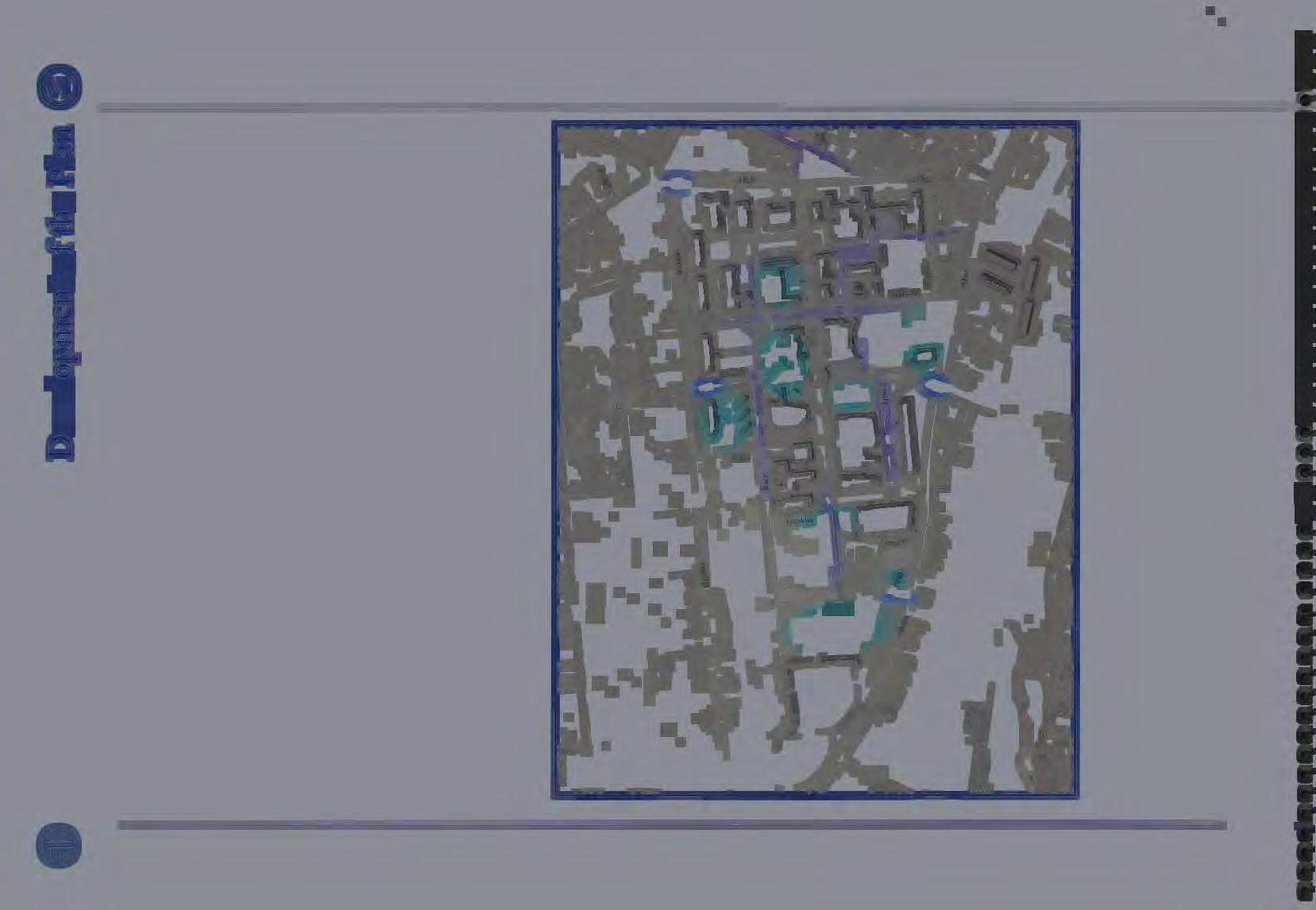
Initial areas of opportunity were identified through several avenues The reports, analysis,meetings,anduniversitypreferencesidentifiednumerouscreativeapproaches forconsiderationwithinthefollowingfocusareas:
ImprovedSiteandBuildingUseorReallocation-Theseareaswereevaluated as to whethertheymettheirbestuse,withparticularemphasisonfunctionand adjacency.
- ImprovedEntrancesandGateways - These areas were proposed to help establishandimprovefunction,image,andoveraestheticsofthecampus.
ImprovedCirculationandGreenSpace-Carefulconsiderationwastaken to affordthemostcohesivecollegiateenvironmentfortheentirecampus.
UniversityComprehensiveCampusMasterPlan
September2008
#30 AreasofOpportunity
Longwood
Figure
Concepts andAlternatives - Landscaping, Entrances, Gateways,
andBoundaries

LANDSCAPING
ThedevelopmentofBrockCommonsestablishedthenexusforthe rejuvenationoftheLongwoodcampus.BrockCommonsestablished animpressivepedestriancorridorthatprovidesapleasantpathway alongthenorth-southaxisofthecampuspromotingeasyaccessto buildingslocatedbotheastandwestofBrockCommons.
Duringtheplanningprocessmanyindividualsfromthecampus communityindicatedadesiretoenhancethegreenspacesofthe campustocontinuethepositiveimpactofBrockCommons.Theland useanalysisofthecampusindicatesthat42%oftheexistingcampusis un-programmedopenspace(Figure#10),implyingthatthequalityof theopenspace,nottheamountofopenspacemaybetheissue.
Toaddressthedesiretoenhancethegreenspaceofthecampus,several strategiesweredeveloped,illustratedingreen(futureonright)
-Abandon,wherepossible,internalstreetsandconvertthese areastogreenspace.
•ExtendWheelerMalltoincludetheareasouthofRuffnerand FrenchHallstherebycreatingacontinuouseast-westgreenspace onthenorthernpartofcampus.
•ConverttheareaimmediatelywestofCurryandFrazer residencehalls(SpruceStreet)toapedestrianmall.
•Createacampusquadthroughthedevelopmentofadditional residencehallswestofthelibrary.
•ExtendBrockCommonssouthtothesiteforthenew convocationcenterandenhancethegreenspacearoundthe newconvocationcenterandthenewadmissionsoffice-visitor informationcenter.
:Re-programtheopenspaceeastofthedininghallbychanging ususefromanactiveoutdoorspacetoanoutdoorseatingand contemplativeareawitharboretum-stylelandscaping.
Thenatureanddesignofthecampusgreenspaceshouldreflectthe institution'ssustainabilityinitiatives.Specifically,low-water-use landscapingandhigh-efficiencyirrigationsystemsshouldbeutilized.

ENTRANCES,GATEWAYS,ANDBOUNDARIES
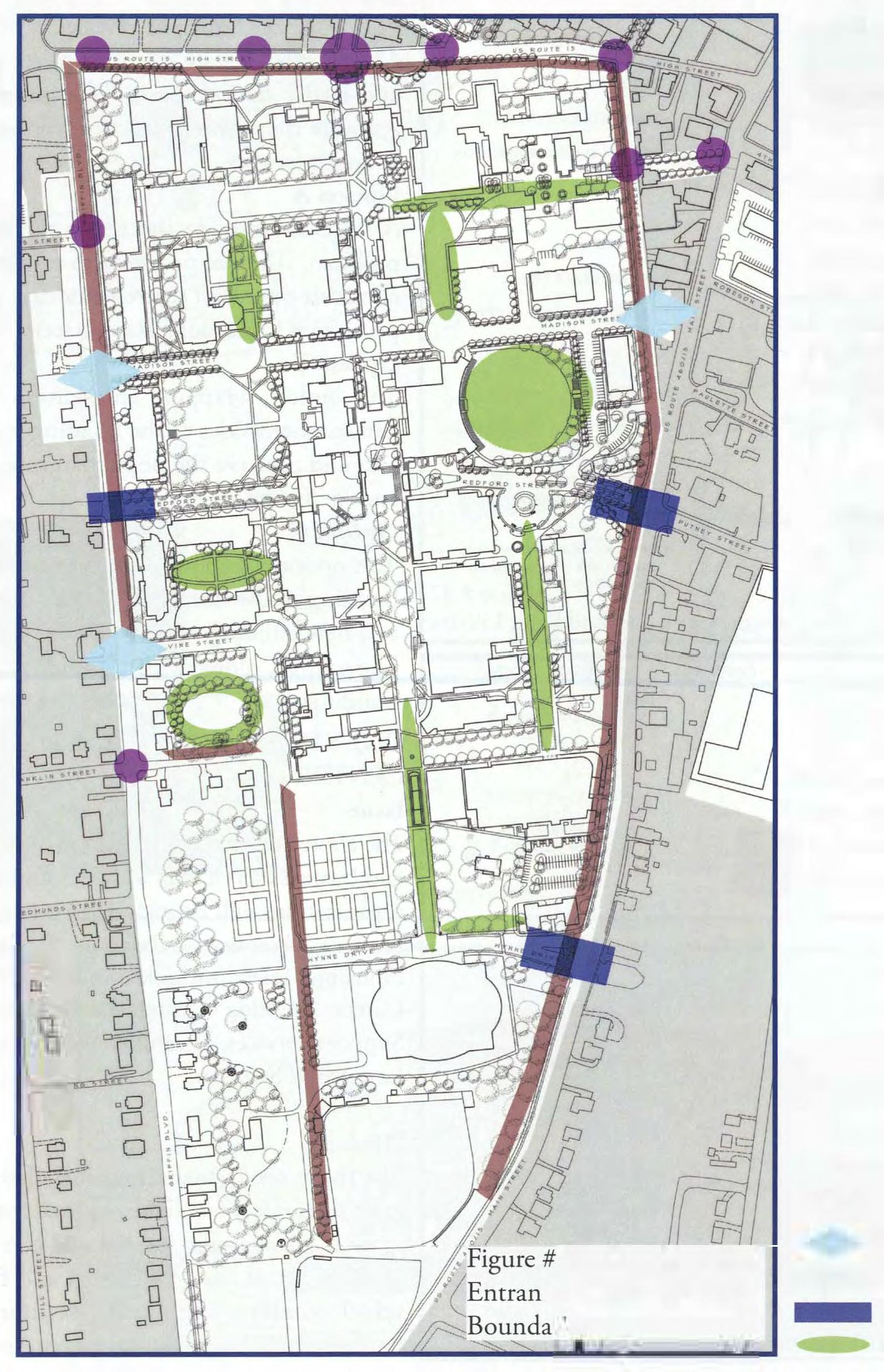
LongwoodUniversityisanintegralpartofthelargercommunityandserves asanimportantplacewithinthecommunityforemployment,services, entertainment,culturalevents,andathletics.Longwoodistrulyoneofthe supportingpillarsofthecommunity.
Consideringtheimportanceoftheinstitutiontothecommunity,lt1s imperativethatthecampushaveadistinctiveidentityandthatentry pointsintothecampuspromoteeasyaccess.Duringtheplanningprocess considerableattentionanddebatesurroundedtheissueofidentifyingthe frontdoortothecampus.Traditionally,thehistoricpartofthecampusfacing HighStreethasservedasthevisualidentityfortheinstitution.Thispartof thecampushowever,isnoteasilyaccessiblefromthemajorvehicularpath thatisusedbyvisitors.
Currentlythedefault"main"entranceforthecampusislocated�tthe intersectionofMainStreetandRedfordStreet.Thisentrancedoesprovide adequateaccesstotheundergroundparkingfacilitybutdoesnotpromotethe opennessandeaseofaccesstothecampusthatisneeded.
Aftercarefulconsideration,thedecisionwasmadetoabandonthepursuit ofasingle"main"entrance,andestablishthreelevelsofportalsthatafford accessdirectlytovarioussectionsofcampus.Thethreelevelsarevehicular andpedestrian,pedestrianonly,andservicevehicles(Figure#31)Proposed vehicular/pedestrianportalsaredepictedindarkblue,pedestrian-onlyportals inpurple,andserviceportalsinlightblue.Thesuccessofalltheseportalswill dependonnotonlyfunctionaldesign,butalsoonvisualaspectssuchasedge definition,landscape,hardscape,signage,andsignals. •PedestrianGateway
ServiceEntrance
CampusBoundary
VehicularandPedestrianEntrance
EnhancedGreenSpace




Concepts andAlternatives Land and Building Uses
GREENWOODLIBRARY
Issue
•
OPTIO'-113
•Pl!ESERVERACESTREET
•2LEVELS11.000GSFADDITIO'-1
OPTIONC
• REKOVATION AND REASSIGNMENT OF LANKFORD
•STUDENT UNION 20,000GSF ADDITION TO LANKFORD
• PEDESTRIAN BRIDCiECONSTRUCTEDTO CO�NECT TIIE EXISTING LIBRARYTO THE Aoo1110N. Figure#32 d,andBuildings,Library
ONE-STOPSERVICESBUILDING
l'l!ELIMl'-IAHYSTUDY 5.400ASF.OR2';,600GSF.
Ol'TIOJ\A
Thespaceneedanalysisrevealedadeficiencyofapproximately 42,000grosssquarefeet,comprisedmostlyofstudentlounge andreaderstationspace. Theinitialapproachwas to simply renovatetheexistingstructureandaddtoeitherthewestand/ orsouthfacades.
OptionA
Alargeaddition to thewestern sideofthebuildingposesa problem. Thesizenecessary to providetherequiredareawould eliminateoratleastseverelyinterferewiththeproposedwestern pedestrianspinealongRaceStreet
OptionB
This option,wrappinganadditionaroundboththewestern andsouthernsidesofthebuilding,wouldprovidetherequired areaandpreservethepedestrianroute,butwouldbeexpensive andinefficienttoconstruct.
OptionC
ThisoptionwouldrenovateandreassignspaceintheLankford buildingtothelibraryafterthestudentunionfunctionsmove toanewbuilding. A20,000GSFadditiontoLankfordwould berequired,alongwithapedestrianbridgebetweenthetwo buildings
ONESTOPSTUDENTSERVICESISTUDENTSUCCESS CENTER
Issue
•RENOVATIONAND , :\::::1J- RF.ASSIG'\/MENTOFBRISTOW ,;� HALL
OPTIONC
•RENOVATIONAND REASSIGNMENTOF LANKFORD
Figure#33
L.w.d.andBuildings,One-Stop
Thechoicewasmadetoconsolidateavarietyofstudentsupport andbusinessservicesinasinglecentrallocation. Thefollowing organizationswillbeincludedinthisconcept: Student Accounts, Parking, Registration, Financial Aid, Housing,Telecommunications,ITHelpDesk,Academicand Career Advising Center, Learning Center Student Athletic SupportServices,DisabilityServices,FirstYearExperience,and LongwoodSeminar.
Options
Thespaceneedsanalysisestimatedthatapproximately26,000 grosssquarefeetwouldberequiredforthisfacility.Allthreesite optionsarecentrallylocatedandcanaccommodateabuilding oftherequiredsize. OptionsAandBmightcreatepedestrian/ vehicle conflicts since botharenearmainvehicleentrances. Furthermore,thesesitescanaccommodatelargerbuildings,thus
raisingtheconcernthattheseprimelocationswouldnot beeffectivelyutilized. OptionC,theLankfordbuilding, isatthecenterofcampus. However,aswiththeother twosites, Lankfordcontainsmorearea(35,500gross squarefeet)thanrequiredforthisfunction.
RECOMMENDATION-GREENWOODLIBRARY ANDLANKFORDBUILDINGEXPANSION/ RENOVATION
Ultimately,aninterestingcombinedsolutionforboth requirementsemerged-ajointGreenwoodLibrary andLankfordbuildingexpansionandrenovation.
SincetheLankfordbuildingcontainsmorespace thanrequiredforaStudentSupportCenter,theexcess spacecouldbeutilizedforlibraryexpansion.The adjacencyofLankfordandtheGreenwoodLibrary makesconnectingthetwobuildingsstraightforward.
ThelocationofGreenwoodandLankfordis• unsurpassedforbothfunctions-libraryandstudent• support.Incorporatingbothfunctionsintoone- centralcampuslocationwouldmaximizethevalueof • thespaceintheexistingtwobuildings,andwould provideaconvenientandefficientsupportand• learningenvironmentforstudents.Theaddition• oftwinwingsonthewesternsideofLankfordwill• provideamplespacewhilestillmaintainingthe integrityoftheoutdoorcourtyardandLankfordMall. Finally,theRaceStreetpedestriancorridorwould remainunimpeded.Thissolutionispragmaticand costeffective,whileaddingexcitementandinterestto thecampusenvironment.
STUDENTUNION
Issue
Spaceneeds analysis reveleda deficit ofnearly65,000 gross squarefeetofstudentunionspaceattargetenrollment.
OptionA
TwooptionswereevaluatedforthemuchneededStudentUnion space.Thefirstoptioncalledfortherenovationandexpansion oftheexistingStudentUnionbuilding.
A65,000squarefootadditiontoLankfordwouldeliminatethe highly-usedcourtyardonthewestsideofthebuilding,intrude into LankfordMall, and impede the north-southpedestrian flowonthewestsideofcampus. Sincethegoalsofthemaster plan process include improving pedestrian circulation and maintainingthehistoricresidential characterofthecampus, thisoptionwasnotoptimal.
OptionB
The second option required the demolition ofthe beloved Cunninghams.Thissitewouldaffordthecampusanopportunity tohaveastateoftheartcentralizedstudentunionthatcould potentiallybridgethegapbetweenthe19thand21stcenturies, intermsofbotharchitecturalexpressionandtheUniversity experience. The Cunningham buildings strike an emotional chordwithmanyofthe students, faculty, staffand alumni as theyhaveplayedanimportantpartintheirexperienceat Lon�'lood.
RECOMMENDATION
ThedecisiontochooseoptionBwasbasedontwofactorstheexorbitantcostofrenovatingtheCunninghamsandthe advantagesoflocatinganewStudentUniononanoptimal site.Thissiteoffersthekeyadvantageoffacingthreeofthe mostsignificantoutdoorcampusareas-BrockCommons, BealePlaza,andWheelerMall.Thesiteisalsoatthecenter ofallthecampusprecinctsandisatthecrossroadsofstudent activityandmovementthroughouttheday.Finally,there issufficientlandareaonwhichtoconstructthissignificant campusstructure.
Concepts andAlternatives - Land and Building Uses
LANKFORDSTUDENTUNION PRELIMINARYSTUDY
OPTIONA
•RENOVATIOOFEXIST!GBUILDING
•2LEVELS65,000GSF.ADDITION (40,000ASF).
OPTIONB
•DEMOLITIONOFCUNINGHAMS
•CONSTRUCTIOOFANEWSTUDENT UNION(APPROXIMATELY120,000GSF) ONCUNINGHAMSITE
•REOVATIONANDRE-ASSIGNMENT OFLANKFORD
Land,and
Figure#35
Development,
Buildings,Lankford
re#36PreliminaSketch,Lankford
Concepts andAlternatives - LandandBuildingUses
OPTIONA
•CONTINUATIONOF CENTRALIZEDFOODSERVICES
•RENOVATIOAND REASSIGNMENTOFILER 12,000ASFOR19,000GSF
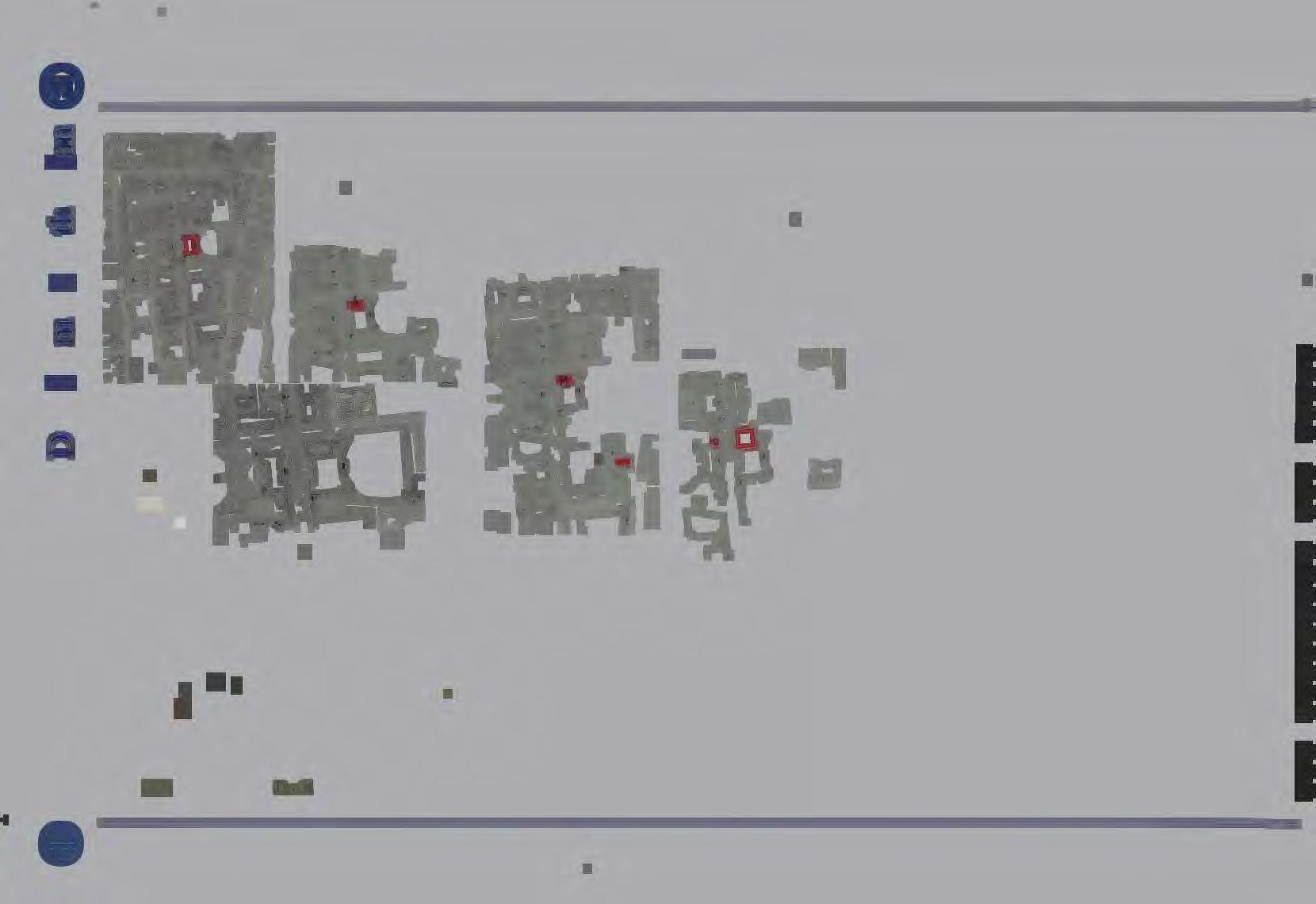
DORRILLDININGHALL
PRELIMJNARYSTUDY
225,000ASFOR40,000GSF
•DlSTRIBUTlONOFFOODSERVICES
•RENOVATIONAND REASSIGNMENTOFILER 12,000ASFOR19,000GSF.
•6,400GSFASSIGNEDAT FRAZERCURRYADDITION
EXISTINGCONDITIO s Figure#37Development,Land,,andBuildings,Dorrill
OPTIONC
•DISTIUBUTIONOFFOODSERVICES
•RENOVATIONANDREASSIGMENTOFILER 12,000ASFOR]9.000GSF
•ADDITJONTOILER8,000GSF
•CONSTRUCTIONOFNEWOUTDOOR FLEXIBLEEATERYATLANKFORD1,300GSF
•3,000GSFASSIGNEDAT FRAZERCURRYADDJTlON
•ENHANCEDFOODSERVICESINSTUDENT UNION
FOODSERVICE
Issue
LongwoodcurrentlyprovidesnearlyallfoodserviceattheDorrill DiningHall.AnadditionalsmallamountisavailableattheLankford StudentUnion,leavingthecampuswithanoveralldeficitofnearly 6,000ASFforthecurrentenrollment.Bytheyear2020,thedeficit willexceed25,000ASFforthetargetenrollment-alargeamountof spaceconsideringthesizeofthecurrentfacilities.
Options
TheIlerbuildingthatadjoinsDorrillwasconsideredinallthreeoptions. IlerwasconstructedasLongwood'sgymnasium,andcurrentlyservesas teachingandrecreationalspace.Consideringitssizeandlocationnext totheDorrillDiningHall,therenovationandconversionofIlerto foodserviceusewouldbethemosteffectiveandefficientuseofspace.
However,theoverwhelmingdesireexpressedbyallcampusgroupswas todistributefuturefoodservicethroughoutthecampus.Thegroups alsoexpressedaninterestinanoutdoororseasonalvenue.
RECOMMENDATION
Ultimately,anabbreviatedversionofthedistributedfoodservice conceptwaschosen.IlerHallwillretainitscurrentconfiguration andfunction.Substantialspacewillbedesignatedinthenew StudentUnionbuildingforfoodservice.DorrillDiningHall willreceiveanexteriorcanopyandseatingstairsonitseastern fafade,andanewoutdoorservicecapability.Anewpavilionwill beconstructeddirectlyacrossIlerFieldtoofferanotheroutdoor/ seasonalfoodservicevenue.Finally,anexpandedcoffeeshopvenue isenvisionedfortherenovatedandexpandedLibrary/Lankford complex.
LongwoodUniversityComprehensiveCampusMasterPlan September2008
Concepts andAlternatives - Land andBuildingUses
PUBLICSAFTEY&UNIVERSITY SERVICESBUILDING
ADMISSIONSOFFICE&VISITOR INFORMATIONCENTER
PRELIMINARYSITESTDY
12,000ASF.OR30,000GSF
•OPTIONA
PROXIMITTOTHEPRIMARYVEHICULAR ENTRACE
•OPTIO B
VlSUALPROMINENCEFROMTHE PRIMARYVEHJCULARAPPROACH
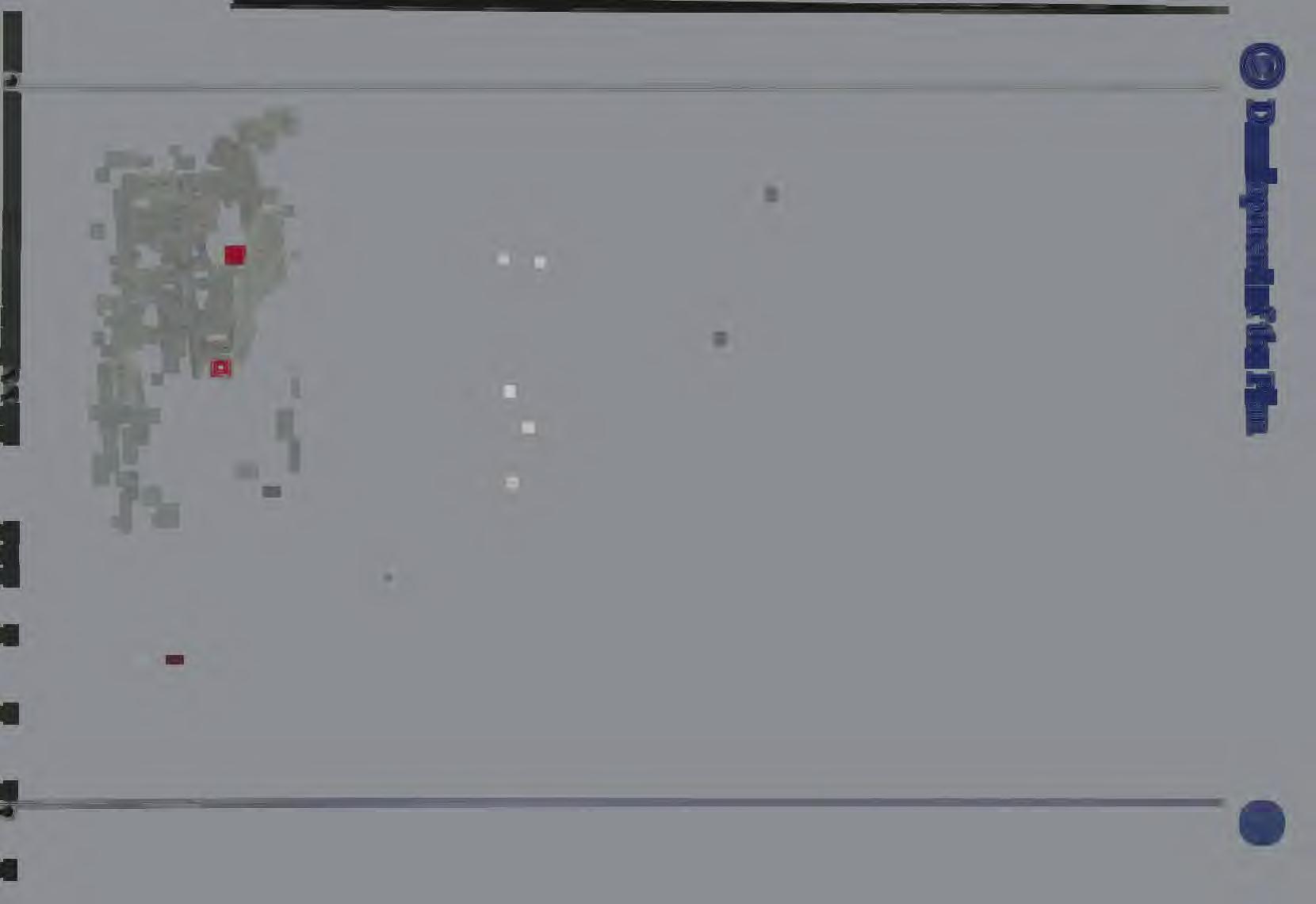
Figure#39
Development, LandandBuildings, PublicSafety andUniversity Services
PUBLICSAFETY/UNIVERSITYSERVICESAND ADMISSIONS OFFICEBUILDINGS
Issue
Choosing sites for buildings housing two major university organizations that require extensive contact with members of the public as well as the campus community. TheAdmissions Office plays asignificantandhighly visible rolein Longwood's operation and future. It is often visitors' and prospective students' first encounterwiththeuniversity, andprovidestheirinitialandlasting impression. ThePublicSafety Departmentwouldalsobenefitfrom a convenient location that is equally accessible from campus and thesurroundingarea.
Severalotherfunctionsandorganizationswereidentifiedasrequiring convenient access by both the public and campus personnelvisitorinformationcenter, employmentoffice, procurement office, safety office, and community outreach organizations s·uch as the Longwood Center for Communications, Literacy, and Learning (LCCLL)
Options
Two sites were identified for buildings housing these functions. Eachsiteisinahighlyvisiblepositionontheperipheryofcampus, and can accommodate a 30,000 GSF building and ample visitor parking.
RECOMMENDATION
SiteAwasselectedforabuildinghousingthePublicSafety, EnvironmentalHealthandSafety,andHumanResources organizations.Thissiteisclosetothepopulousareasof campus,andoffersconvenientaccesstobothuniversity personnelandmembersofthepublic.Thisbuildingwillbe sizedtoaccommodatesomeofLongwood'scommunityoutreach programs,suchasclinics.
SiteBwasselectedfortheAdmissionsOfficeandasmallvisitor informationcenter.Thissiteislocatedonthemainapproach routetocampususedbyprospectivestudentsandvisitors.This sitewillofferinstantrecognitionandimmediateaccesstothe AdmissionsOffice,andsubsequentlytoBrockCommonsand thecampuscore.
LongwoodUniversityComprehensiveCampusMasterPlan September 2008
Concepts andAlternatives -Vehicular Circulation andParking
VEHICULARCIRCUIATION
This section identifies issues and presents alternatives and recommendations about traffic circulation and parking. The recommendations also include improvements to associated pedestrianfacilitiesateachlocation.
IANCERPARK
Issue
• AccesstoLancerParkisdifficult
• Planned student recreation facilities at Lancer Park will increase the need for safe and convenient pedestrian connectionstocampus.
OptionA
• Construct two separate bridges connecting Lancer Park with the surrounding area. The first would be vehicular and connect to Third Street, while the other would be a bicycle/ pedestrianbridgeconnectingLancerParktoGroveStreet.
Advantages
Provides a convenient and safe pedestrian connection between campus and Lancer Park by the shortest and most directroute.
Providesquickershuttlebusconnectivitybetweencampus andLancer Park.
Supports the concept of a park-and-ride lot at Lancer Park.
Separates pedestrians and bicyclists from vehicles, thus providingoptimaltrafficsafety.
Disadvantages
• MorecostlyandcomplexthatOptionB.
Requires that pedestrian and bicycle routes be improved alongacontinuousroutefromthebridgestocampus Bicycle route signage shouldbe installedalongGrove, Buffalo, Oak, andAppomattoxstreets;pedestriancrossingsshouldbeclearly markedatintersections;andsidewalksandlightingshouldbe improvedasnecessary.
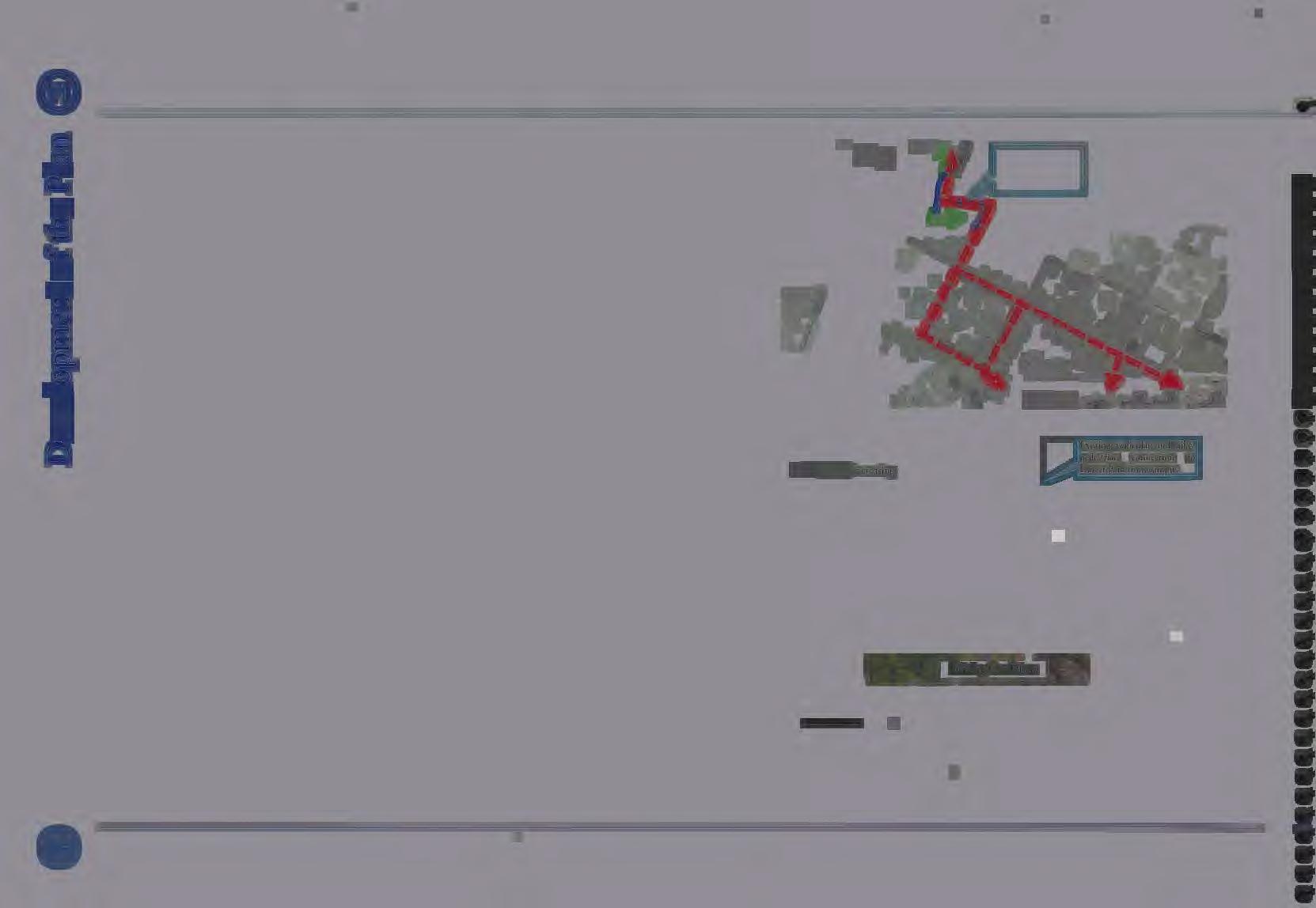
LongwoodUniversityComprehensiveCampusMasterPlan
September2008
Bike / Pedestrian bridge from Lancer ParktoGroveStreet
Vehicular bridge from Lancer Park toThirdStreet
OptionB
Construct a vehicular bridge from Lancer Park to Third Street,withstripedbicyclelanesandsidewalks.
Advantages
LesscostlythanOptionA.
Disadvantages
Despite being less expensive than OptionA, this is still a costly, long-termsolution.
Has no separatepedestrian and bicycle route across West ThirdStreet, thusofferingnosignificantsafetyimprovement Would not significantlyshorten thepedestrian andbicycle distancesbetweenLancerParkandcampus.
• Mostofthesamepedestrianandbicyclerouteimprovements calledforinOptionAwouldstillberequired.
RECOMMENDATION
OptionA:Constructtwoseparatebridges.Whilemore costly,thisoptionwillprovideoptimalseparationbetween vehicleandpedestrian/bicycletraffic,andwilldecreasethe totaltraveldistanceandtimebetweenLancerParkandcampus.
Freshman exception parking to be replaced with intramural fields
Exist gvehicular connectim
Proposed veh cularaccess
HIGHSTREET
Issue
• HighStreetisusedbybusesasapassengerdrop-offpoint,creating back-upsandcompromisingpedestriansafety
OptionA
• Createabusdrop-offpull-inareainfrontofJarmanHall.
Advantages
• BuseswouldnolongerstopandwaitonHighStreet-trafficflowis uninterruptedresultinginincreasedtrafficsafety. Createsashort-termdrop-offandloadingzone. IncreasessafetyforpedestrianscrossingHighStreet.
Disadvantages
Addsconcretetothemaincampusarea
RECOMMENDATION
Constructthedrop-offareainfrontofJarmanHall.
Figure#42OptionA, Legend Hi hStreet
-ProposedBus/VehicularAccess.,._________
PedestrianAccess
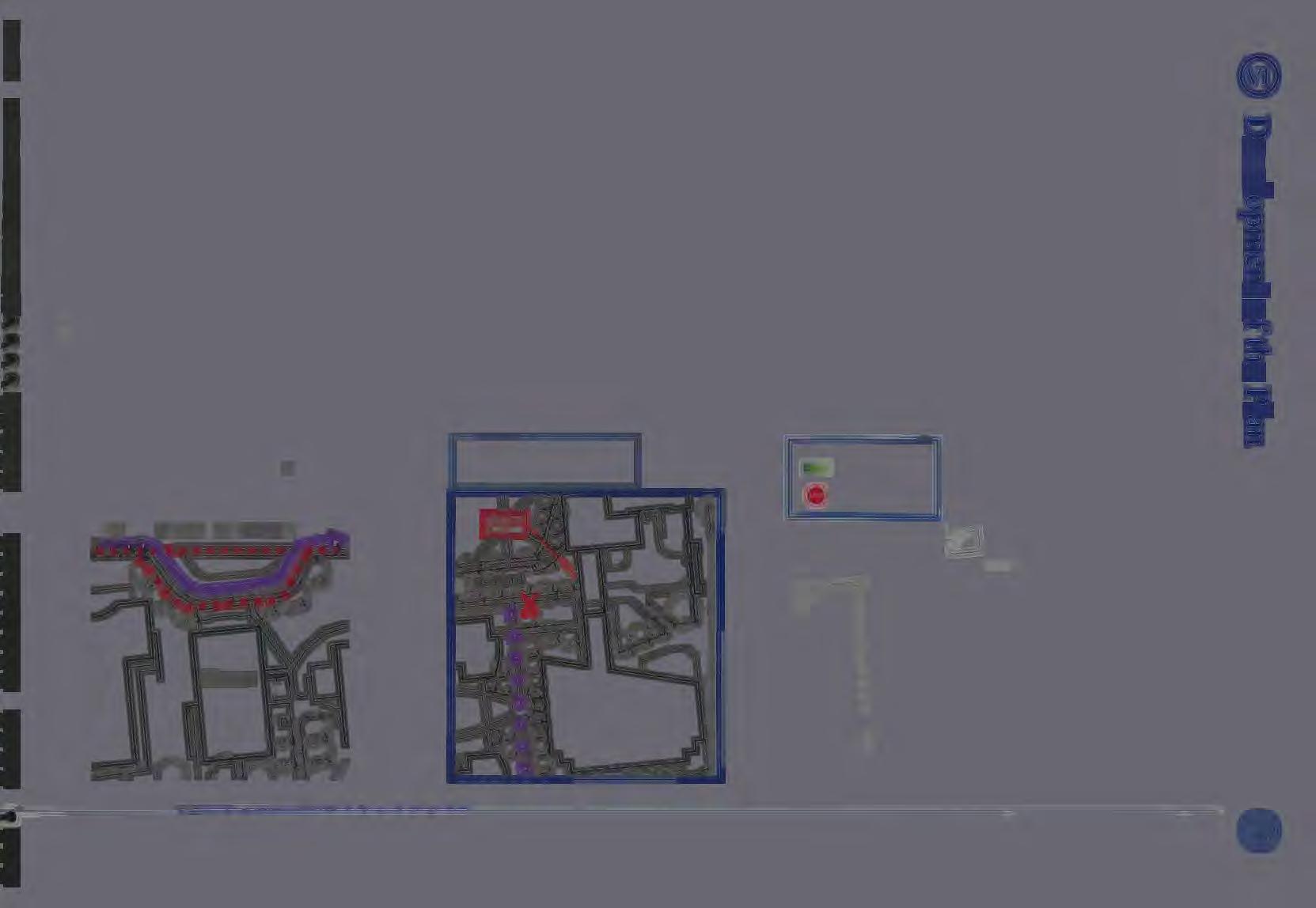
Concepts andAlternatives - Vehicular Circulation and Parking
REDFORD/RACESTREETST-JUNCTION
Issue
TheStopsignlocatedattheT-junctionofRedfordandPine streetsisnotvisibletovehiclesapproachingtheintersection northboundonRaceStreet.Thesign'svisibilityisimpairedby vehiclesparkedontheeasternsideofRaceStreet.
OptionA
Thestopsigninquestionwouldberemovedduetoclosure ofRaceStreetfromVinetoRedfordstreets.Parkingalong RaceStreetwithintheaffectedareawould beremovedas well.
Advantages
• Eliminationoftheissue, andimprovedpedestrianflow andsafety.
Disadvantages
LossofparkingalongRaceStreet.
Legend
ProposedRoadwayAbandonment X StopSignRemoved
Figure#43OptionA, RaceStreet
OptionB
• Thestop signinquestionwould remain, butitsheightwould beadjustedto complywiththeMUTCDregulations(www.mutcd.fhwa.dot.gov/pdfs/2003r1/pdfindex.htm):Chapter2A.Section2A.18:"Wherefarkingorpedestrianmovements occur,theclearancetothebottomofthesignshal beatleast2.1m(7ft)."
Inaddition,thethreeparkingspacesintheclosestproximity tothestopsign wouldberemovedinordertoimproveitsvisibility.Thesecouldbereplacedwith bicycleparking.
RaisedcrosswalkwouldbeaddedacrossRadfordStreet.
Advantages:
ParkingalongRaceStreetremainslargelyasis.
Disadvantages:
VehiculartrafficonRaceStreetremainsasis.
Legend RemovedParking Stopsignremains, heightadjustedto7 feetminimum
Figure#44Option B,RaceStreet
RECOMMENDATION
•OptionA,CloseRaceStreet tovehicletrafficbetweenWest RedfordandVinestreetsas soonaspossible. LongwoodUniversityComprehensiveCampusMasterPlan September2008
Library Extension
Concepts andAlternatives - Vehicular Circulation andParking
MADISONSTREETANDSOUTHMAINSTREET INTERSECTION
Issue
Excessivetrafficcongestionisexperiencedbymotorists travelingeastboundonMadisonStreetandattempting to turn-leftonto SouthMainStreet.Theback-upswill worsenastrafficlevelsincreaseinthefuture.
OptionA
Signalize the Madison Street/South Main Street intersection. A dedicated left turn lanewould be an option, but adedicatedleft turn signalwould not be necessary.
Advantages:
Eases traffic congestion by providing some additional capacityonMadisonStreetduetothesignalization.
Disadvantages:
Addsanother(third)trafficsignalonSouthMainStreet inthetwo-blockarea.
OptionB
Three-way stop signs placed at South Main Street southboundandnorthboundandatMadisonStreet.
Advantages:
Neither the traffic signal nor dedicated left turn lane wouldberequired.
Disadvantages
Thisoptionwouldpotentiallyresultinslowertrafficflow onSouthMainStreet-vehicleswouldberequiredtostop atMadisonStreeteventhoughtrafficcongestionisonly anissueatcertaintimesoftheday.
RECOMMENDATION
.RequestthatthetownofFarmvilleimplement OptionA,andalsoconductacomprehensivetraffic studyofSouthMainStreetfromThirdStreetto GriffinBoulevard
Figure#45OptionA, MadisonStreetCongestion
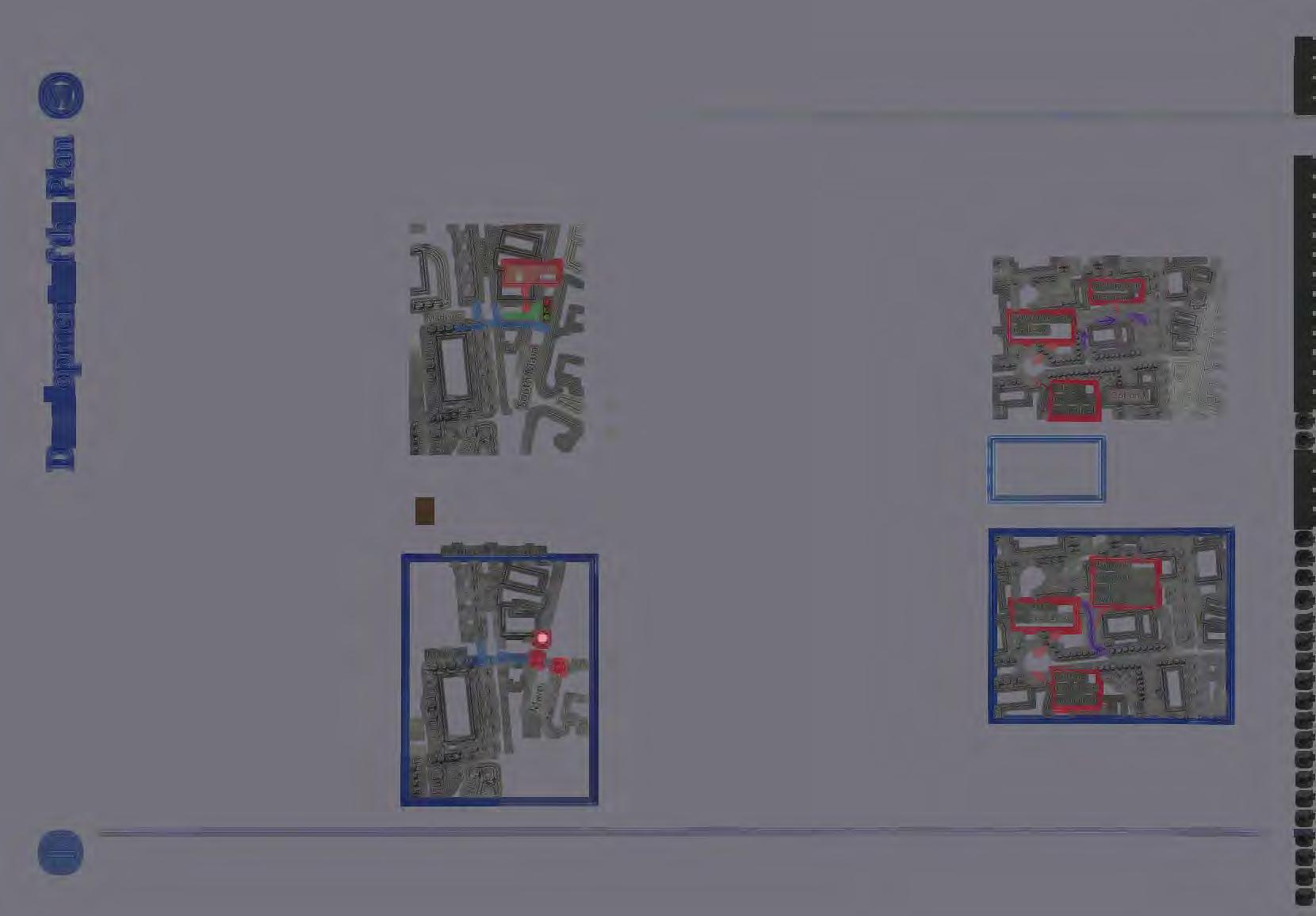
NewSidewalk New Crosswalk NewTrafficSignal
Figure#46OptionB, Madiso
MADISONSTREETTRUCKTRAFFIC
Issue
• TheamountoftrucktrafficonMadisonStreetresultsinconflictswithpedestriansandothervehiclesinthearea. Upto foursawdustdeliverytruckstraveltoandfromtheHeatingPlantdaily ManydeliverytrucksservicetheDiningHallatthe westernendofthestreetthroughouttheday. ThetrucksmustturnaroundattheendofMadisonStreet,whichisdifficult duetotherestrictedspace.
OptionA
ConstructanewtrafficcircleatthewesternendofMadisonStreet to retainaccesstotheDiningHallwhileprovidingsufficientspacefortrucks toeasilyturnaround. ConstructaroadwayaroundtheNewHeating PlanttoallowthesawdustdeliverytruckstoreachtheNewHeatingPlant withoutblockingtrafficonMadisonStreet.
Advantages
New traffic circle would enhance truck movements and reduce congestionattheturnaroundpoint.
SawdusttruckscoulddelivertheircargowithoutblockingMadison Street.
Sawdusttruckswouldhavedirectaccesstothesawdustdeliverypoint attheNewHeatingPlant.
OveralltruckaccesstoMadisonStreetwouldnotberestricted.
Disadvantages
OpenspacetotheeastoftheNewHeatingPlantwouldbelost.
OptionB
ConstructanewtrafficcircleatthewesternendofMadisonStreetto retainaccesstotheDiningHallwhileprovidingsufficientspacefortrucks toeasilyturnaround. Constructaroadwayonthenorthandeastsidesof theOldHeatingPlanttoallowthesawdustdeliverytruckstoreachthe NewHeatingPlantwithoutblockingtrafficonMadisonStreet.
Advantages:
New traffic circle would enhance truck movements and reduce congestionattheturnaroundpoint.
SawdusttruckscoulddelivertheircargowithoutblockingMadison Street.
OveralltruckaccesstoMadisonStreetwouldnotberestricted. The open space to the east ofthe New Heating Plant would be preserved.
Disadvantages:
Sawdusttruckswouldhaveto travelbeyondthetrafficcircleandbehind CoynerHalltoreachthenorthsideoftheOldHeatingPlant.
• SawdusttruckswouldnothavedirectaccesstothesawdustdeliverypointattheNewHeatingPlant.
RECOMMENDATION
•OptionA-ConstructanewtrafficcircleandaroadwayaroundtheNewHeatingPlant.
LongwoodUniversityComprehensiveCampusMasterPlan
September2008
VENABLESTREETANDSOUTHMAINSTREET
Y-JUNCTION
Issue
• VehiclesturningleftontoSouthMainStreetfromVenable Streetcreateatraffichazardduetoasharpanglesandlow visibility.
Option
• Prohibittheleftturntrafficmovementatthislocation.
• Addsidewalks and crosswalks as shown in the graphic below.
Advantages
• Increasestrafficcapacityandsafetyatthelocation.
Disadvantages
• None.
RECOMMENDATION
•RequestthatthetownofFarmvilleprohibitleftturn trafficmovementfromVenableStreetontoSouthMain Street.Longwoodshouldalsoconsiderdevelopinga coordinatedplanwithFarmvilletocloseVenableStreetto vehicletrafficfromMadisonStreetsouthboundtoSouth MainStreet,particularlyiftheintersectionofMadison andSouthMainstreetsissignalized.
cosing fVenable icular fucre
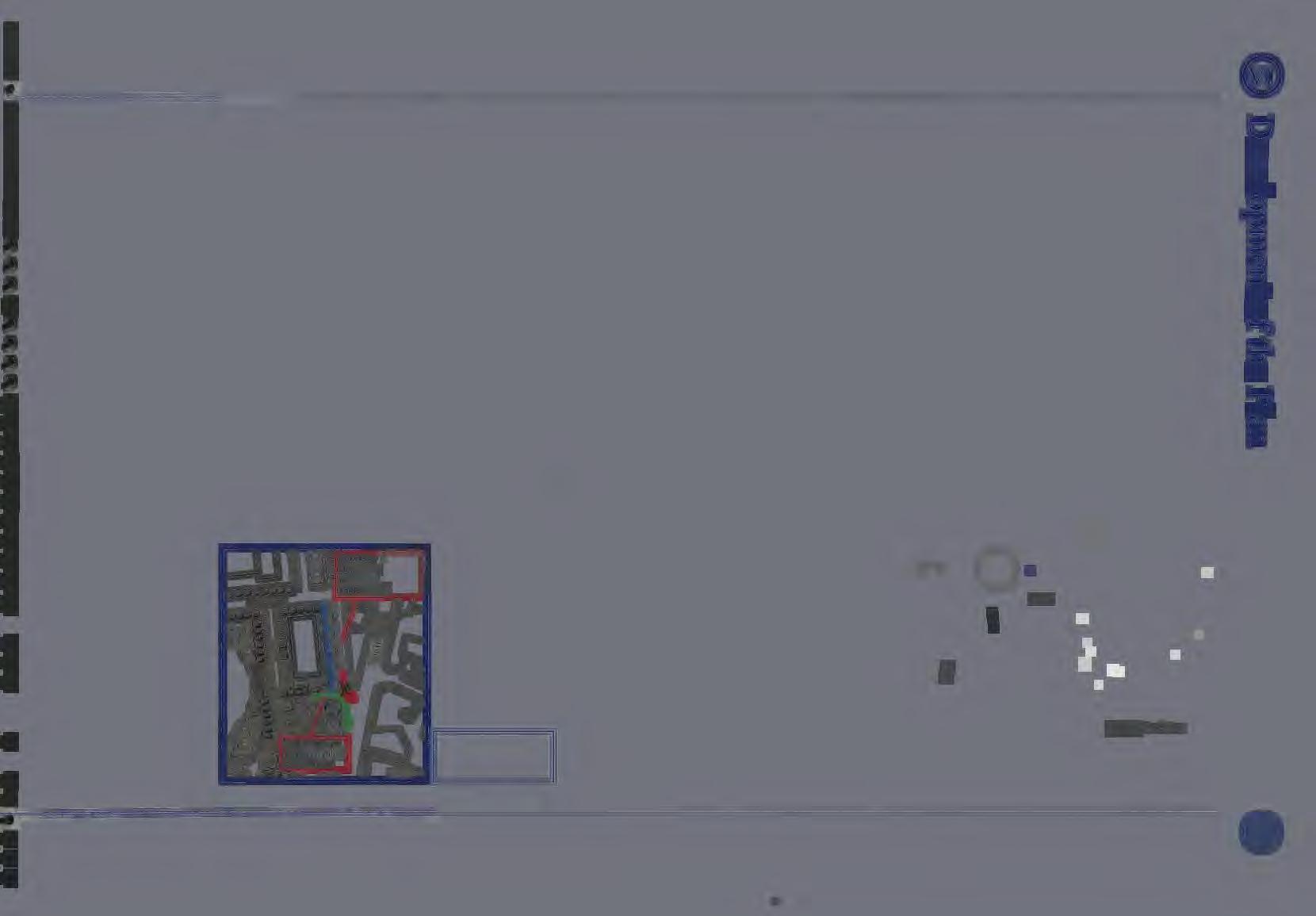
Figure#49Venable StreetandSouthMain Street Legend --•NewSidewalk X ProhibitedLeftTurn
Concepts andAlternatives - Vehicular Circulation andParking
SPRUCEANDREDFORDT-JUNCTIONTRUCKAND BUSTRAFFIC
Issue
TheonlyaccesstoWillett,Curry,andFrazerHallsforlarge trucksandbusesisviaEastRedfordStreetandSpruceStreet. However, this area has insufficient turning, backing, and parkingspaceforthesevehicles. Pedestrian/vehicleconflicts abound.
OptionA
CloseSpruceStreettogeneralvehiculartraffic.Construct a turn-around traffic circle at the northern tip ofSpruce Streetwith aminimum turningpath accommodatingboth intermediatesemitrailersandtransitbuses.
Advantages
Pedestrian/vehicular conflicts on Spruce Street are eliminated.
Disadvantages
• Eliminates direct vehicle access toWillett, Curry, Frazer, andHullHalls.
Removes40parkingspacesfromSpruceStreet.
OptionB
. CloseSpruceStreettogeneralvehiculartraffic.Constructa turn-aroundtrafficcircleattheformerT-junctionofRedford andSpruceStreetwithminimumturningpathaccommodating bothintermediatesemitrailersandtransitbuses.
Advantages
• Trucksandbuseshaveefficientandsafeaccessandsufficient turningarea.
Pedestrian/vehicular conflicts on Spruce Street are eliminated.
Disadvantages
• Eliminates directvehicle access toWillett, Curry, Frazer, andHullHalls.
Removes40parkingspacesfromSpruceStreet.
OptionC
• KeepSpruce Street opentogeneralvehiculartraffic and construct a turn-around traffic circle at its south end, at the intersectionwith Hull Promenade, ofsufficient size to accommodate intermediate semitrailers and transit busses. However, thisoptionisnotpossiblebecauseatrafficcircle largeenoughtomeettheturningrequirementswillnotfit intheavailablespaceatthesouthernendofSpruceStreet. Therefore,thisoptionwasnotconsidered.
RECOMMENDATION
CloseSpruceStreettogeneralvehiculartraffic,and implementeitherOptionAorOptionB.
•Figure#50showstheexistingconditionsintheSpruce Streetarea,andalsoillustratesapos_sibledesignforatraffic circleinthatarea.

Concepts andAlternatives - Vehicular Circulation andParking
GRIFFINBOULEVARDIMPROVEMENTS
DesignIssues
Griffin Boulevard defines the main western boundary ofthe campus, but does not project a clear or strong Longwood identity. It is a public two-lane street with a curb-to-curb width of42 feet (see imagesat right). The average 2006 dailytrafficvolumewas 5,800, andthepostedspeedlimitis 30 mph. Thereisnoon-streetparkingallowedoneithersideofthenorthernsectionofthestreet.
WhileGriffinBoulevardconstitutesacampusedge,itisalsoaninternalpartofthecampus.Itprovides several major vehicular and pedestrian entry points to the campus, and two major campus parking lots are located across this street from campus. Residential neighbors adjacent to Griffin Boulevard generate significant pedestrian traffic, since many faculty staff, and students reside there, within walkingdistance ofcampus. However, sidewalksarepresent onlyalongthe easternsideofthe street.
Pedestrian crossingsare few in number and are notADA compliant, and there are nobicycle route markings.
DesignObjectives
The keydesignobjectivesfortheroad are
Reduceaveragespeedalong theroadway.
Improve the comfort andsafety ofpedestrianswalking alongandcrossingthestreet.
Createastreetscapeenvironmentthatsignalsanentrancetoaneducationalinstitution.
Providefacilitiesallowingforasafebicyclingenvironment.
Thekeydesigncriteriasupportingtheseobjectivesinclude
Useacombinationoftrafficcalmingtoolstoslowdowntraffic
• Reducethepostedspeedlimitto25 mph.
• Incorporatingbicyclelanesalongoneorbothsides
• Installaraisedcrosswalkwithin-pavement flashinglightsattheWheeler/Coxlotcrossingto campus.
• Installbulboutsorcurbextensions (imageatright,bottomleft) or trafficbollards (imageat right,bottomright) atthesoutheastcornerofGriffin BoulevardandHighStreettoprevent vehiclesfromdrivingoverthecurbandencroachingonthepedestrianwaitingarea.
• Provideasix-footwidesidewalkonthewestsidewherenosidewalkcurrentlyexists.
• Providepedestriancrossingatallintersectionstoincreasepedestriansafety anddiscourage pedestrianfromcrossingmidblock.
Installfour-waystopsignsatthefollowingintersectionswithGriffin Boulevard: Madison, Redford, andFranklinstreets.
Install pedestrian-scalelightingonbothsidesofthestreet. Increasethenumberofbusshelters, andmarktransitstops.
Buryoverheadutility lines.
• Consider small neighborhood traffic circles (examples on page 69) at the following intersections withGriffin Boulevard: Madison, Redford, andFranklinstreets.
LongwoodUniversityComprehensiveCampusMasterPlan
September2008
Figure#51,Traffic
CalmingOptionA

Calming
Concepts andAlternatives - Vehicular Circulation andParking
InitialDesignOptions
Severalroadwaydesignoptionswereconsidered
4lanes,undivided
2-laneswithacenterlanetheentirelength
2-laneswithsmallneighborhoodroundaboutsatkeyintersections
2laneswithon-streetparkingtheentirelength
2-laneswithouton-streetparking.
FinalDesignOptions
Conceptualsketchesoftheproposedtrafficcalmingandpedestriansafetyimprovementsalong GriffinBoulevardareshowninFigures51&52.Thesegraphicsillustratethetwofinaldesign optionsthatwerechosen.Thegraphicsincludetheproposedmid-blockraisedcrosswalk.
OptionA(Figure#51)
9foottravellanes
5footmarkedbicyclelaneoneachside
8footsidewalkoneachside
3footplantingstriponeachside
OptionB(Figure#52)
9foottravellanes
7footon-streetparkingonbothsides
8footsidewalkoneachside
3footplantingstriponeachside
RECOMMENDATION
ImplementOptionA
9foottravellanes
5footmarkedbicyclelaneoneachside
8footsidewalkoneachside
3footplantingstriponeachside
Makethefollowingadditionalimprovements
Reducethepostedspeedlimitfrom30to25mph.
Installaraisedcrosswalkwithin-pavementHashinglightsattheWheeler/Coxlot crossingtocampus.
Addcrosswalksonallsidesofeachintersection.
Installfour-waystopsignsatthefollowingintersectionswithGriffinBoulevard: Madison,Redford,andFranklinstreets.
Buryoverheadutilitylines.
Addtreesalongbothsidesofthestreettocreateatreecanopyandimprovethevisual appearanceofthecorridor.
Note:Allchangesmustbecoordinatedwith,andapprovedby,thetownofFarmville.
LongwoodUniversityComprehensiveCampusMaster
Figure#5
Concepts andAlternatives - Vehicular Circulation andParking
FUTUREPARKINGSUPPLY
Theimplementationoftheproposedmasterplanwillresultintheclosureofcertainstreetsorparts thereof,resultinginthelossofon-streetparkingatvariouslocationsoncampus,includingSpruce Street,PineStreet,andRaceStreet. Furthermore,newconstructionwillreplacesomeexistingparking lots,furtherreducingparkingsupply.Theproposednewconstructionprojectsandadditionstoexisting buildingswillresultinthelossof1,058spaces. Themajorlossesareassociatedwithconstructionof theConvocationCenterandextensionofBrockCommonstoWynneDrive. Theseprojectswould essentiallyeliminateallWynneDrivelots,andtheHooperStreetlot. Inaddition,theclosureofthe northerlyextensionsofEastandWestMadisonStreetwouldleadtotheclosureofseveralmoreparking lots. Theseparkinglosseswouldreducethetotalnumberofparkingspacestoapproximately1,200. Table#53.1showstheanticipatedparkinglossesassociatedwiththeproposedchangesto·themain campus.
. Spaces Locat10n LReasonforLoss ost
BristowLot
Chambers
CraftLot
FranklinStreetLot
GovernmentSchoolLot
HooperStreetLot
JarmanLot
MainStreetLot
PineStreet
PineStreetLot
RaceStreet
RaceStreetLot
SmallBusinessLot(gravel)
SmallBusinessLot(paved)
SpruceStreet
TabbCircle
UpperFrazer
Wynne(southofWynnDrive)
WynneGravel
WynneTiers
WygalLot Various

Table#53.1,ParkingReconciliation
Longwood
Partiallossduetonew
PotentialParkingSites
Longwood will need to provide additional parking to meet future demand, due to both population growth anddisplacedsurfacelots. Atpresent,thereisonesmall parkinggaragelocatedbeneathBrockCommons,butit containsonly6.5percentofallcampusparkingspaces. In thefuture,atleasttwolargerparkingdecksorsurfacelots willberequired,onand/oroffcampus. Oneapproach would be to construct one each at the northern and southernendsofcampus. Analternativewouldbeto constructafewlargesurfacelotsonthecampusperiphery. SeveralproposedsitesareshowninFigure#53. Fora full description and discussion ofalternatives see the transportationreportlistedintheAppendix.
Deckl
OneobvioussiteforadeckistheeasternsideofSouth MainStreetattheWynneDriveintersection Itiscurrently partiallyoccupiedbyafreshmanparkingarea.Additional adjacentlandforthisdeckwouldhavetobeacquiredby theuniversity. Thisfacility,withapotentialcapacityof upto1,500spaces,couldserveboththecampusandthe ConvocationCenter.
Thissitehasgoodaccessfromboththenorthandsouth alongSouthMainStreet, andwouldnotbringvehicle traffictothecampuscore.
Concepts andAlternatives
Vehicular Circulatiol) and Parking
Deck2
Thissite,currentlythelocationoftheBristowbuildingandparking lot,wouldbeanexcellentchoicetoservetheeasternandcentral sectionsofthecampus.ThebuildingcouldhousethePublic SafetyDepartmentonthegroundlevel.Thedeck'sheightshould belimitedtofiveorsixlevelsduetoitsproximitytothecampus' historiccore.Thebenefitsofthislocationinclude:
GoodvehicularaccessfromSouthMain,Venable,andPutney streets.
Withinwalkingdistanceofmostofthecentralandeastern sectionsofcampus.
Thelandisalreadyuniversityproperty
Deck3
Thissite,atthecornerofBuffaloandSt.Georgestreets,isan excellentchoicetoservethenorthernsectionofthecampus. However,itisalsoanequallyobviouscandidateforabuildingor greenspace.DuetothehistoricLongwoodbuildingsacrossHigh Street,andtheresidentialcharacterofthesurroundingarea,the deck'sheightshouldbelimitedtonomorethanfivelevels.The benefitsofthislocationinclude:
GoodvehicularaccessfromHigh,Oak,SouthMain,and WestThirdstreets.
Withinwalkingdistanceofthenorthernandcentralsections ofcampus.
OffersdirectaccesstoBrockCommons-thepedestrianspine otthecampus.
Thelandisalreadyuniversityproperty.
OffCampusSurfaceParking
LancerParkisanobviouslocationonwhichtoconstructalargesurface parkingarea.Thissitewouldhavegoodpedestrianconnectivityto campusoncethevehicleandpedestrianbridgesfromLancerParkto WestThirdStreetandGroveStreethavebeenconstructed.Alotin thislocationcouldpotentiallyaccommodatenearly1000vehicles. Thislotwouldserveon-campusandLancerParkresidents,commuter students,andpossiblestaffpersonnel.Thebenefitsofthislocation include:
ExcellentvehicularaccessfromWestThirdStreet.
Goodaccesstocampusviamultiplemeans-pedestrian,bicycle, andshuttlebus.
ThelandisownedbytheLongwoodUniversityRealEstate Foundation.
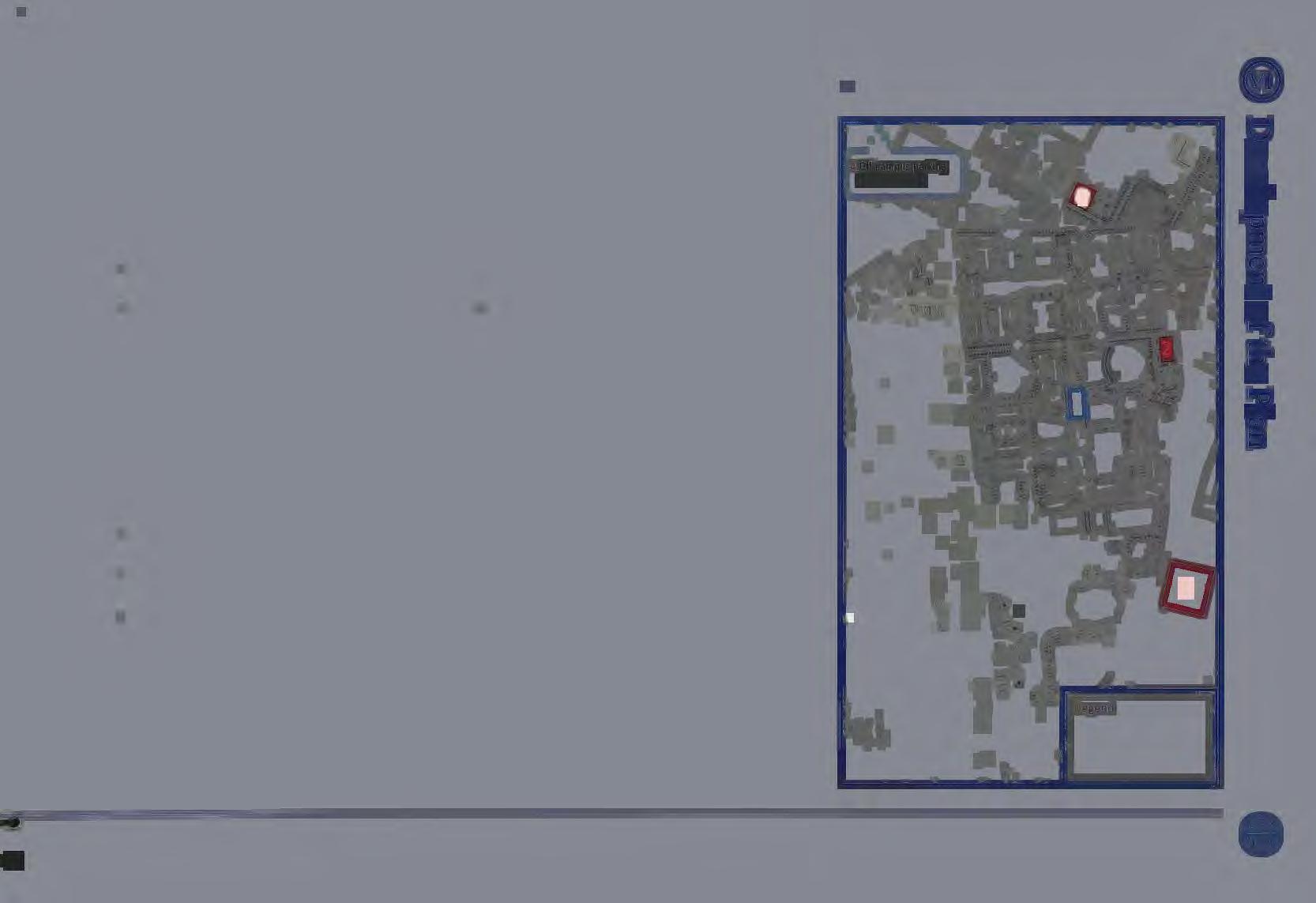
RECOMMENDATION
Theoff-campussurfaceparkingsiteisrecommendedduetoits proximitytocampus,availability,andcomparativelylowcostof constructioncomparedtothedeckoptions.Asurfacelotatthis locationwillaccommodatetheparkingdeficitcreatedbyfuture campusconstructionprojectsandstreetclosures.Thischoicewill bemuchlessofalong-termfinancialburdentoLongwoodthan constructingaparkingdeck.
ConvocationCenterAndParking
BesidesLongwoodathleticevents,itisenvisionedthatthe ConvocationCenterwillhostconventions,tradeshows,meetings, consumershows,concerts,andotherspecialevents.Theparking requirementstosupportthisfacilitywillemergewhentheseating capacityisdetermined.
#53,Potential Parking
Concepts andAlternatives - Open Spaces andPedestrian Circulation
PEDESTRIANPLAN
An important component of the master plan is to enhance and improvetheexistingcomprehensivepedestriannetworkoncampus, andtoexpandthecar-freepedestrianzone. Campusstreetsshould be designedwith pedestrians in mind, rather than motor vehicles alone. Sidewalks and paths on campus should have no missing linksorevidentconflictpointswithvehicles.Intersectioncrossings should beeasy to cross andsafe to use. Pedestrian amenities, such as benches, shade trees, and properly scaled lighting should be plentiful. Connections to campus from nearby neighborhoods, as well as connections to crucial off-campus sites, should be well establishedandcomplete.
Theenlargementofthepedestrianareaonmaincampus, asshown in Figure # 54, would substantially increase primary pedestrian corridors in the future. Extending Brock Commons will result�-=Expandeestrian
-PrimaryPedestrianPat _,SecondaryPedestrian Figure# 54, Proposed Pedestrian Pathsand Zones . in more pedestrian activity in the southern end of campus. The new promenade connecting Brock Commons to Venable Streetandfurther to Mid-Town Square would fill in the missing link in the primary westeast pedestrian corridor on campus. The proposed internal street closures would increase pedestrian activity and create two additional north-south primary pedestrian corridors: the first one extending from Jarman Hall to Bedford Hall (mostly following former Race Street), and the second one from Ruffner Hall to the Health and Fitness Center (following former Spruce Street).
The addition of the Convocation Center at LongwoodUniversityComprehensiveCampusMasterPlan September2008
the southern end of campus would also increase pedestrian traffic along Wynne Drive. Proposed future primary and secondary corridors are also shown in Figure # 54. Creating a campus environment that is more walkablewillrequirepedestrian improvements. These areshowninFigure #55 anddiscussedinmoredetailbelow.
Intermsofpedestrian improvements, Longwood shouldconsidermaking thefollowingimprovements:
ImplementthestreetimprovementslistedunderVehicularCirculation, including pedestrian safety improvements on High Street, South Main Street, andGriffinBoulevard
Install flashing crosswalks along the campus portion of South Main Street, HighStreet, andGriffin Boulevard.
Install brick crosswalks of uniform design at all pedestrian crossings on all internal campus andtown streets bordering the campus - typical designsareshownin theimagesbelow.
Where not currently installed, add pedestrian-activated signalized crossingsatallmajorintersections.
• Fill in missing links in the campus sidewalk system. Specifically, constructnewsidewalksatthefollowinglocations:
NorthsideofWynneDrive.
EastsideofRaceStreet, fromVineStreettotheBallfields.
SouthsideofEastMadisonStreet.
AlongbothsidesofVineStreet.
WestsideofGriffinBoulevard.
·OtherlocationsasshowninFigure#55
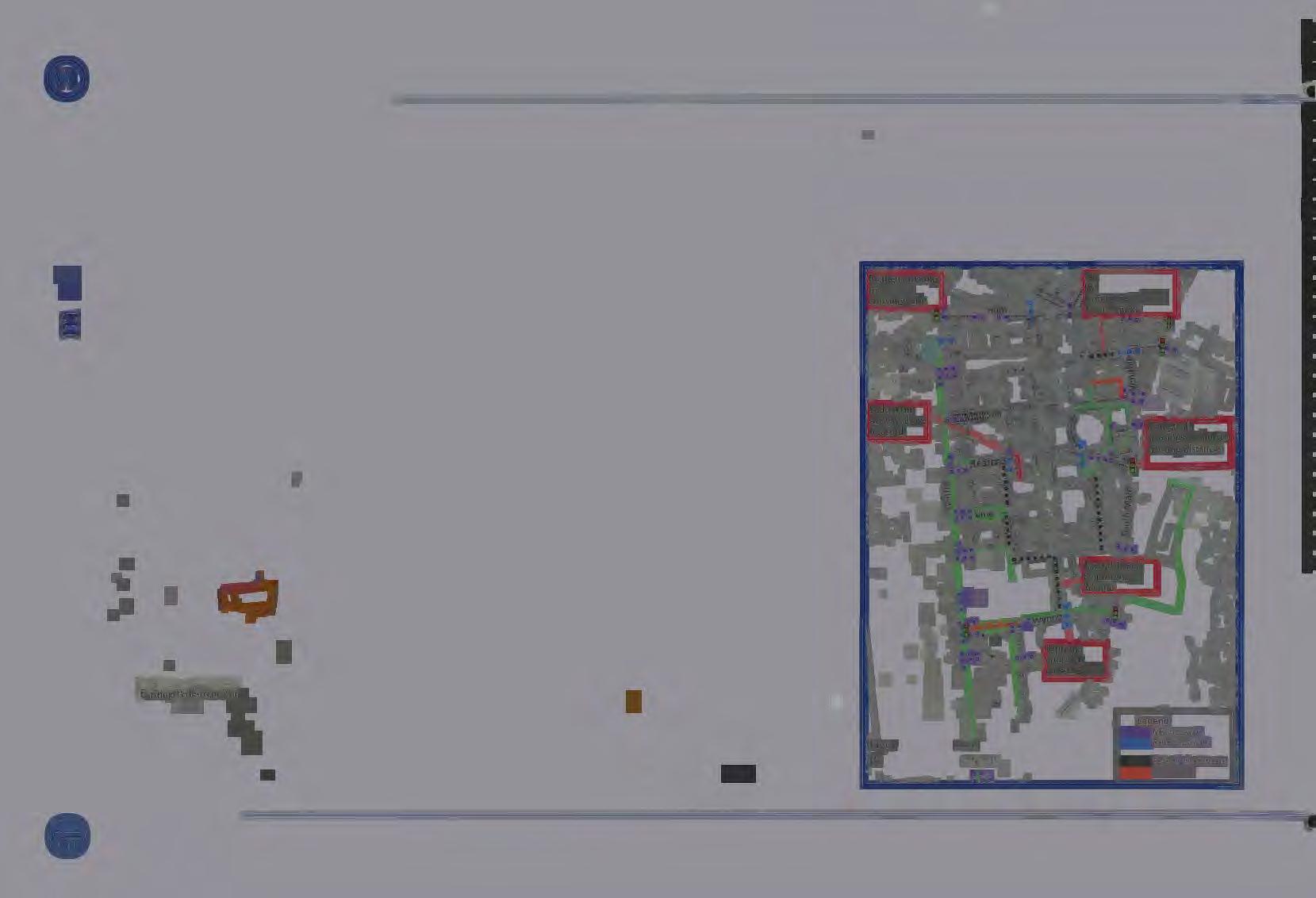
Installraisedcrosswalksatthefollowinglocations:
•Across High Street connecting St. George Street and Brock Commons.
-Across West Redford Street between Lankford Mall and the Library.
•AcrossVenableStreetbetweencampus and LongwoodLandings.
-Across East Redford Street between Spruce Street and the Dining Hall.
•AcrossGriffinBoulevardbetweencampusandtheCoxandWheeler parkinglots.
Alternatively,acrossingtableatgradecouldworkjustaswellatthislocation. Itis importantto make this crossingas safe forpedestriansas possibledue to the high number of anticipated pedestrian and motor vehicle conflicts at this location (due to extending Brock Commons, and the proposed Convocation Center). Crossingtablesdifferfrom raisedcrosswalks in that theyare wider and can accommodate a larger number of pedestrians. The examplesofthetypeofalternativeroadwaytexturetreatmentsWynneDrive couldreceiveatthislocationareshownbelow.
Concepts andAlternatives - Open Spaces andPedestrian Circulation
•Implementthesystemofmulti-usepaths,asoutlinedinthePedestrianPlan sectionoftheCampusTransportationReport. Theminimumwidthofthe multi-use path shouldbe 14 feet on primary pedestriancorridors, and 10 feetonsecondarypedestriancorridors (includesa6feetbicycling/golfcart lane) The design is flexible, but shouldseparatepedestrians andbicyclists/ golf carts onto two separate lanes that could optionally be separated by physical boundary or landscaping. Stamped, colored pavement could be usedinlieuofbricksaswell, particularlyoncemaintenancecostsandADAaccessibilityarefactoredin.
A variation of multi-use pathways is shown in the images below. This is a 14-foot wide concrete off-street pathway that can also accommodate pedestrians, bicycles, andgolfcarts. Golfcartscanusethesamesectionof thepathasbicycles.
• Install pedestrian-scale lighting on all internal campus streets and all streets bordering campus (South Main Street, Venable Street, Griffin Boulevard, andHighStreet).
• The following pedestrian safety/traffic calming tools can be used in various combinations at any location where deemed necessary and appropriate.
A typical plan showing in-paver flashing lights, pedestrian push button, and LED pedestrian crossing signs is shown in Figure #56.
• Improve off-campus pedestrian connections to the following locations:
•ToLancerPark,viapedestrianbridges, asshownonpage 64.
•LongwoodGolfCourseandtheJohnstonDriveathletic fields, byworkingwiththetownofFarmvilletoinstall sidewalksandlightingalongLongwoodAvenue.
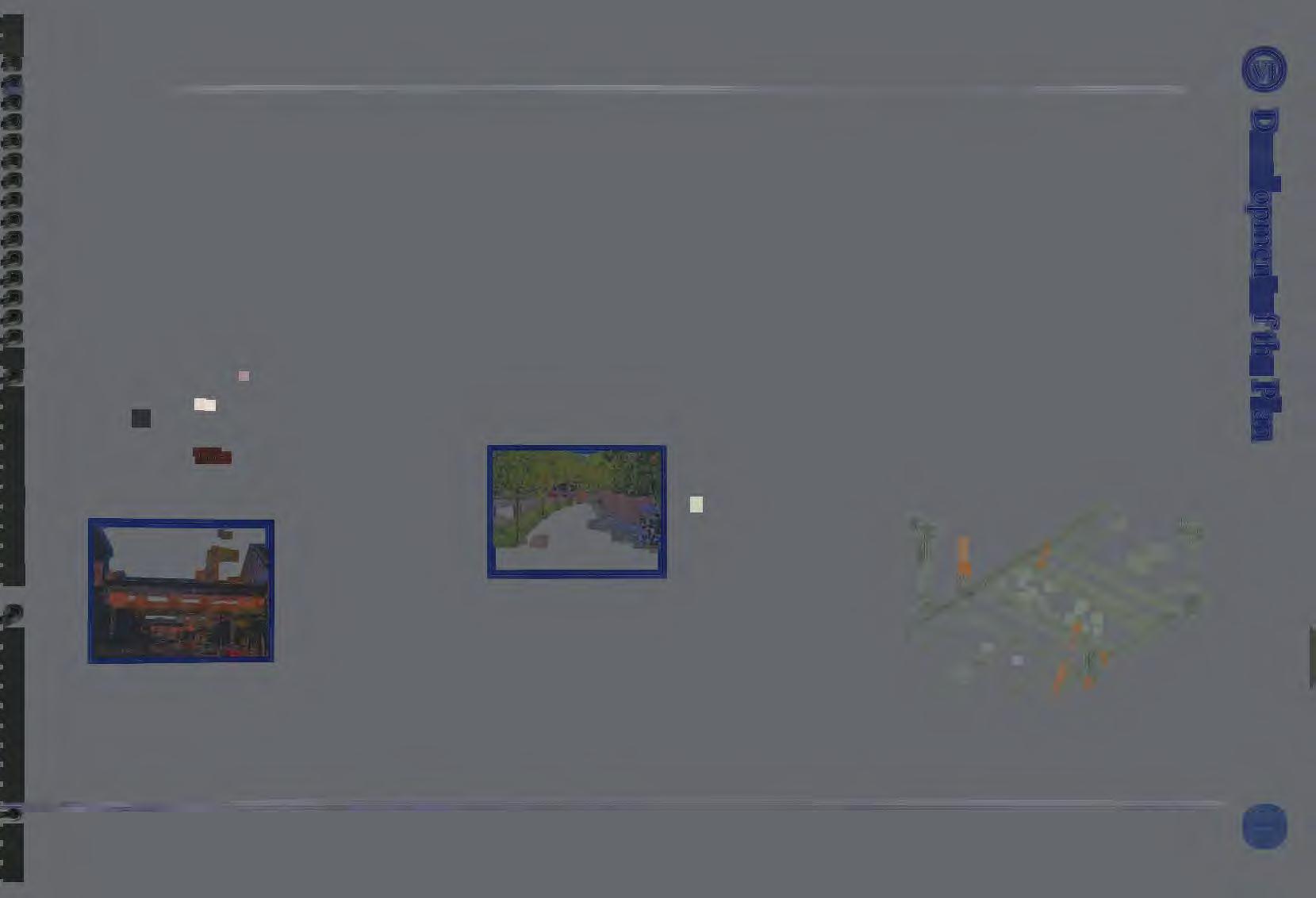
Constructapedestrianskywayatthe followinglocation:
Over West Redford Street, connecting the Library with the proposedannex andStudentSuccess Center.
. Realign pedestrian crossings at the following intersections to provide shortercrossingdistances:
SouthMainStreetandEastRedfordStreet. HighStreetandGriffinBoulevard.
.Raisedcrosswalkwithspecialpavingmaterial
•In-paverBashinglights. Thisfixtureisflushmountedonpavement surfaceandRashestowarnapproachingtrafficofpedestrian'scrossing. Thedevicecanbeactivatedbylaserormanualpushbutton.
LEDpedestriancrossingsign. Thisdeviceislocatednearcrosswalks andwarnsdriversofthepresenceofpedestrians. Itcanbescheduled toflashcontinuouslyoratspecifichours.
Lightfixtureslocateddoseto crosswalks toprovidesufficientlight at night.
CAMPUSSTANDARDPAVERS__j
SCOR.EDCOf'.ICRETE
STAMPEDASPHALT
Figure# 56, Pedestrian Crossing
PEDESTRIAN 1 PUSHIIUTTQt-..1 I r- H'+PA\IER Fl.ASHING UGH1S
Example:
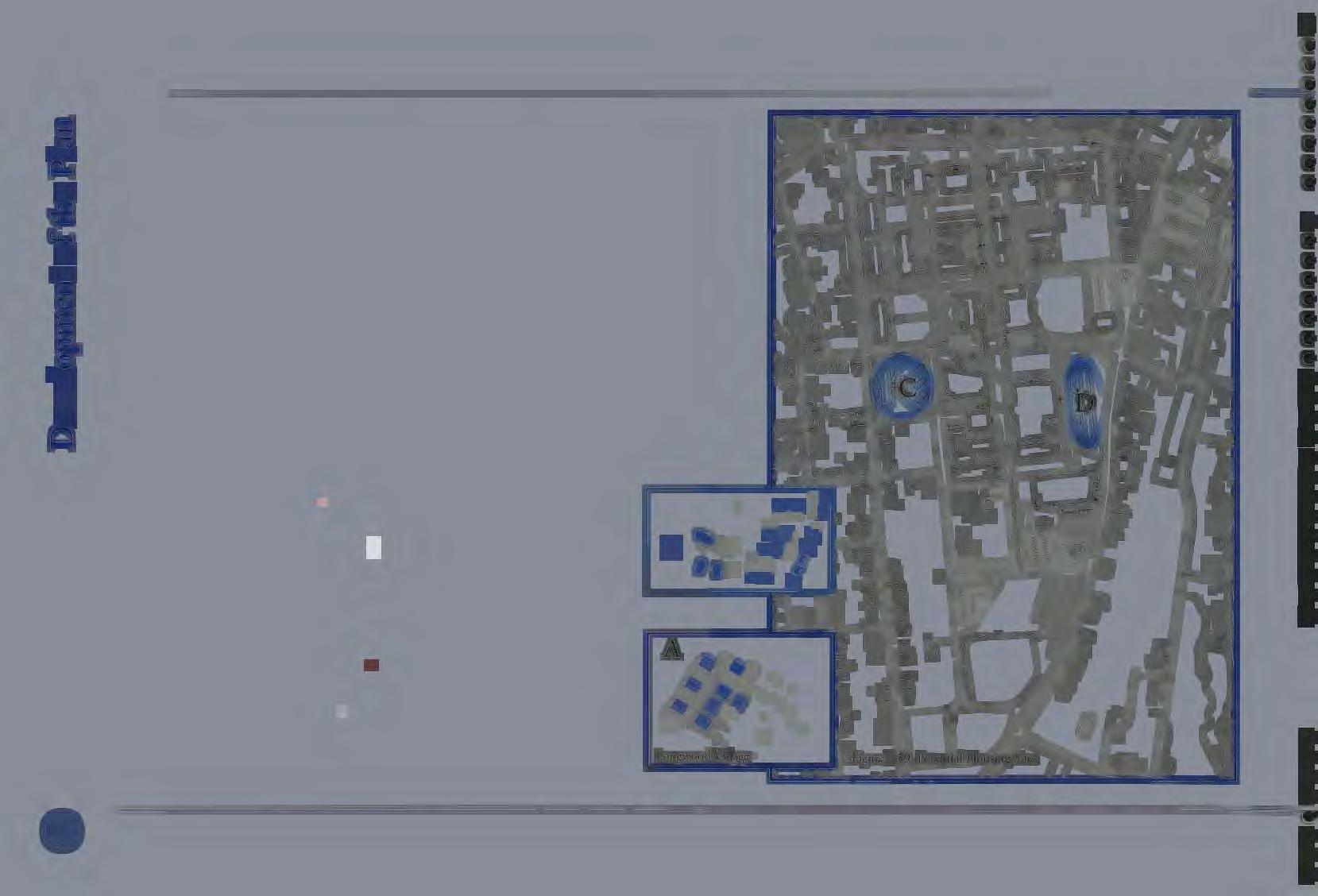
Concepts andAlternatives - Housing
STUDENTHOUSING
Issue
Longwood'sguidanceistohouse60%of5600undergraduatestudentsinuniversity-controlledhousing (3360),with2000ofthoseinon-campusresidencehalls.AfterthedemolitionoftheCunningham residencehalls,andconversionofTabb,SouthRuffner,andFrenchresidencehallstootheruses,an additional485on-campusand410universityapartmentbedswillberequiredby2020.
Options
Thefollowingoptionswereconsidered:
A.LongwoodVillage
B.LancerPark
C. AdjacenttoARCResidenceHall
D.ReplacementofCurryandFrazerResidenceHalls
RECOMMENDATIONS
AcombinationofSitesAandB-expansionofLongwoodVillageandLancerParkapartments foroff-campushousing,andSiteC-adjacenttoARCResidenceHallforon-campushousing.
Figure#58PreiminarySketch,ResidentialD
LongwoodUniversityComprehensiveCampusMasterPlan September2008
LancerPark
Concepts andAlternatives - Recreation andAthletic Facilities
/RECREATION - CONVOCATION CENTER
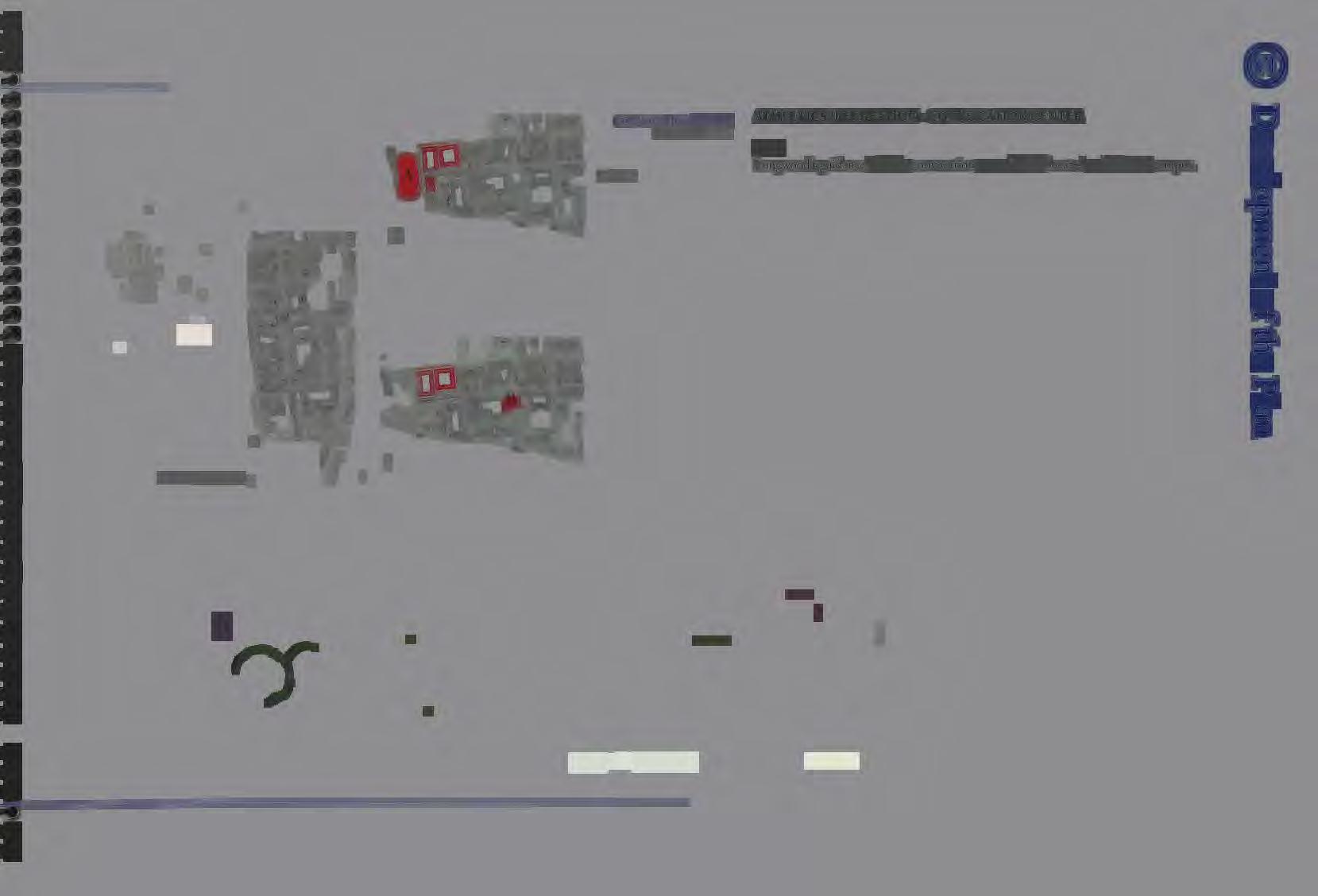
•CONSTRUCTA
•
•RELOCATETENNISCORTS
•
Issue
Longwood's guidance is that a convocation venue will be located on the main campus .
OptionA
Thisoptionconstructsanapproximately160,000grosssquarefootbuildingatthesouthern endofanextendedBrockCommons,alongwithre-aligningWynneDrive.
OptionB
ThisoptionexpandsandrenovatesWillettHall.
•
•
•RELOCATETENNISCOURTS
Figure#60Development,LandandBuildings,ConvocationCenter
RECOMMENDATION
OptionA,becausetheWillettHallsiteistooconstrainedforexpansionandlacks sufficientvehicleandserviceaccess.BrockCommonsshouldbeextendedtothenew ConvocationCenter.Figure#61presentsapossibledesign.
ATHLETICS/RECREATION-TENNIS
Issue
Theexistingtenniscourts(behindFrenchHallandnexttoWillett Hall)mustberelocatedinordertocarryoutothermasterplan recommendations.
Options
OptionA-FirstAvenueField
OptionB-Southernendofthemaincampus
RECOMMENDATION
OptionB.Thissiteiscloserandmoreconvenientforstudents andinstructors.Ageneralrecreationfieldshouldalsobesitedat thesouthernendofcampus,inthevicinityoftheConvocation Centerandtenniscourts.
LongwoodUniversityComprehensiveCampusMasterPlan September2008




TheFinalPlan VII

Landscaping, Entrances, Gateways, andBoundaries
LANDSCAPING
Longwoodwillpreserveandmaintain existingopenspacesandlandscapedareas. Additionally,newareaswillbeconverted intoopenandpedestrianlandscapedzones. Theseareasaresubdividedintoprimary andsecondarygreeningeffortzones.
Primary
•FrenchGreenwayandPlaza
•IlerFieldImprovements
•NewResidentialQuadGreenway
•SpruceStreetGreenway
•BrockCommonsExtension
Secondary
•BicentennialPark
•MadisonStreetGreening
•StevensGreenwayandPlaza •AdmissionsGreenwayconnection
ENTRANCES,GATEWAYS,AND BOUNDARIES
Boundariesaredefinedthroughspecific treatmentsofthecampusedges.A combinationofvaryingscalesoftraffic signals,crosswalkdevices,landscapes,and hardscapeswilldelineatetheapproachesto campusfrombothvehicularentrancesand pedestriangateways.
•PrimaryGreeningEffort
0 SecondaryGreeningEffort
•PrimaryPedestrianGateway
0 SecondaryPedestrianGateway
PrimaryVehicularEntrance
SecondaryorServiceEntrance Figure#62FinalPlan,Landsca
LongwoodUniversityComprehensiveCampusMasterPlan September2008
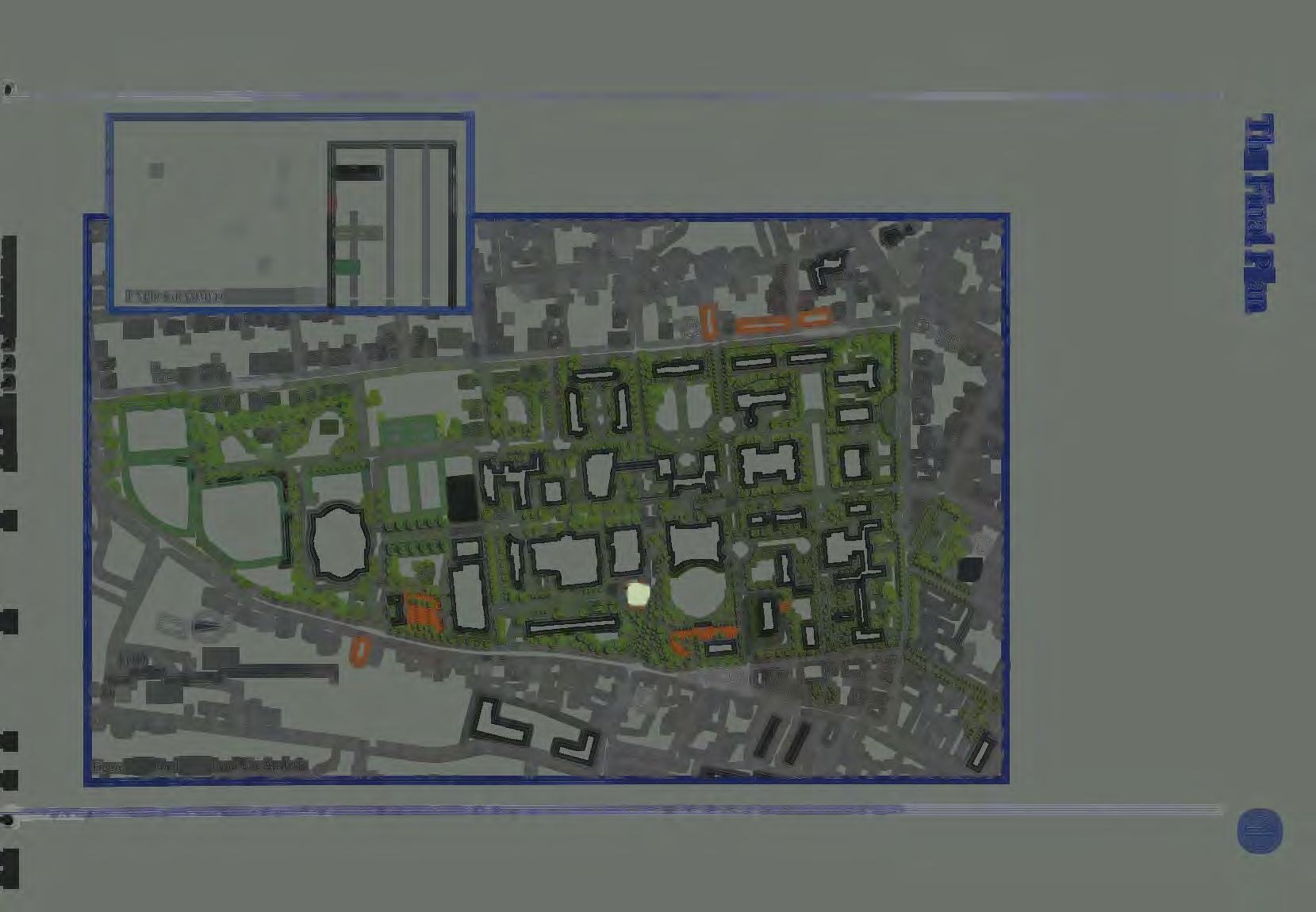
LandUseAnalysis @
The2008MasterPlanatitsfullbuild outwillincreaseUniversityproperty boundariesfromapproximately60 acresto100acres.Proportionately, surfaceparkingwilloccupyamere1% ofthecampusgrounds.Theimpervious surfacessuchasbuildings,roadways andsidewalkswillincrease3%, whiletheunprogrammedopenspace increases4%.Despitetheincreasein buildingfootprintsandprogramthe percentageofprogrammedopenspace iswellmaintainedat11%.
Considerableattentionhasbeen affordedtoensurethatthequalityas wellasthequantityofopengreenspace waswellmaintainedandelaborated upon.Throughthenewandimproved pedestriangreenspacesandreallocation ofbuildingprogram,thecampusbetter utilizesandshowcasesthemanynatural andbuiltenvironmentsithastooffer.
1000 feet

@ FloorArea Ratios
The majority ofLongwood's facilitiesexpansionwill be sitedinthesouthernsectionofcampus, resultinginan overallFloorAreaRatioof.7,whichtranslatesto2-4story structures. Morethan 450,000 grosssquarefeetofnew space will be added to this area foracademic, athletics, student life, and residential functions. A convocation centerandanewhousingquadwillattractawidediversity ofstudents,faculty staff,andvisitorstothisarea.
Thenorthwestquadrantofcampusmaintainsitscurrent density throughappropriatemassingofthenewStudent Unionbuilding.TheexpansionofLankfordwillalsobein keepingwithexistingdensityproportionswhileaddingto campusfunctionalityandadjacency.
Themasterplanarrangesthenewhigher-densitybuildings in a way that maximizes their orientation for natural ventilationandlighting,andmaintainsefficientbuilding adjacencies.
The plan also modulates the massingto maintain open space and compatibility with Longwood's residential campuscontext.
Housing
Library
InstitutionalSupport
StudentUnion
Athletic/Recreation
FoodService
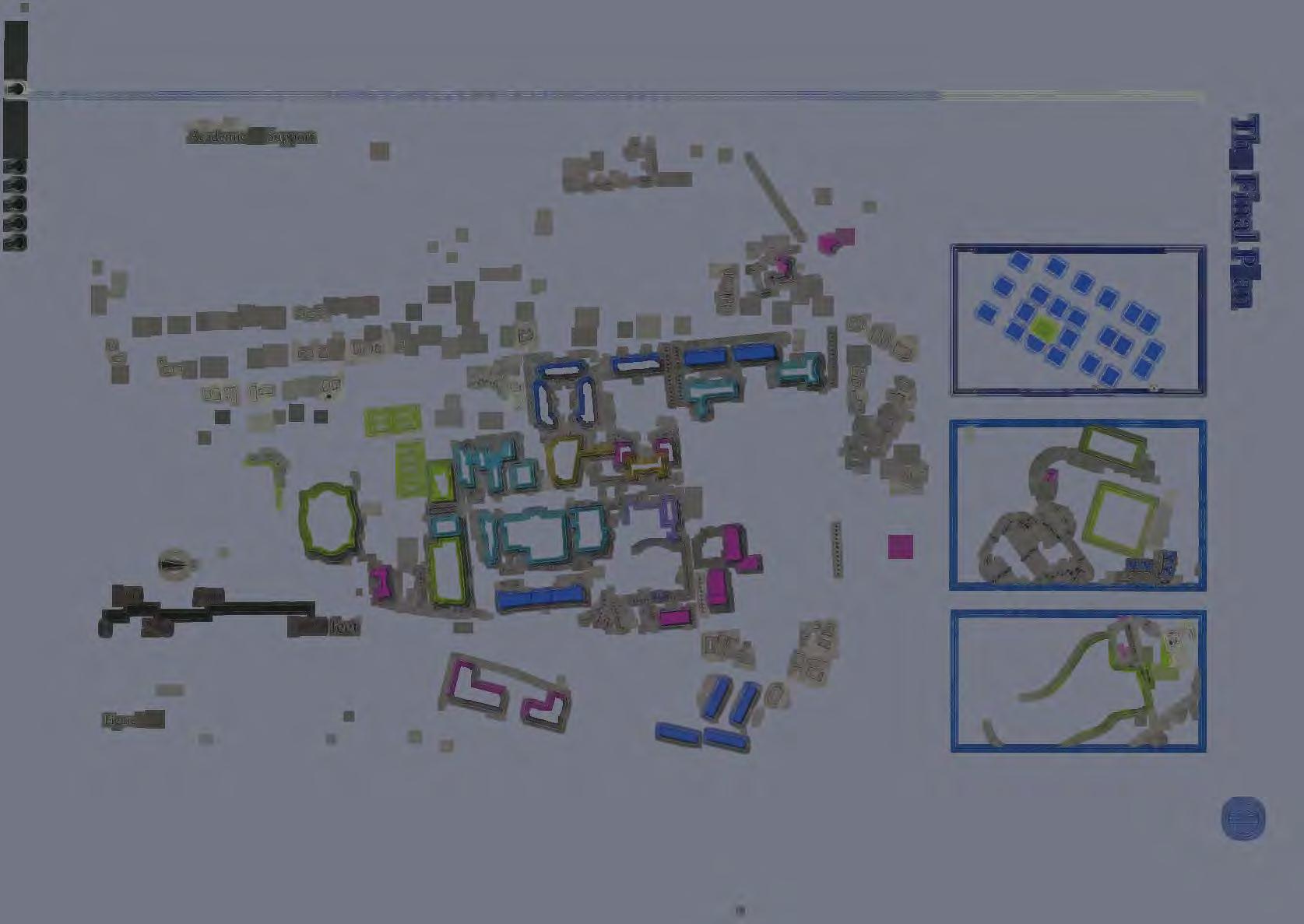
BuildingAdjacency @
The future campus adjacency arrangement evolvedfroma careful review of spaceneeds, user perceptions, currentandfuturerequirements,and overall university trends. The final arrangement maintains and supports a balance of the historic character and traditions of the existing campus withtheneedsandexpectationsoftoday'sstudent body.
LongwoodVillage
Lancer Park
@ Building Project Summary
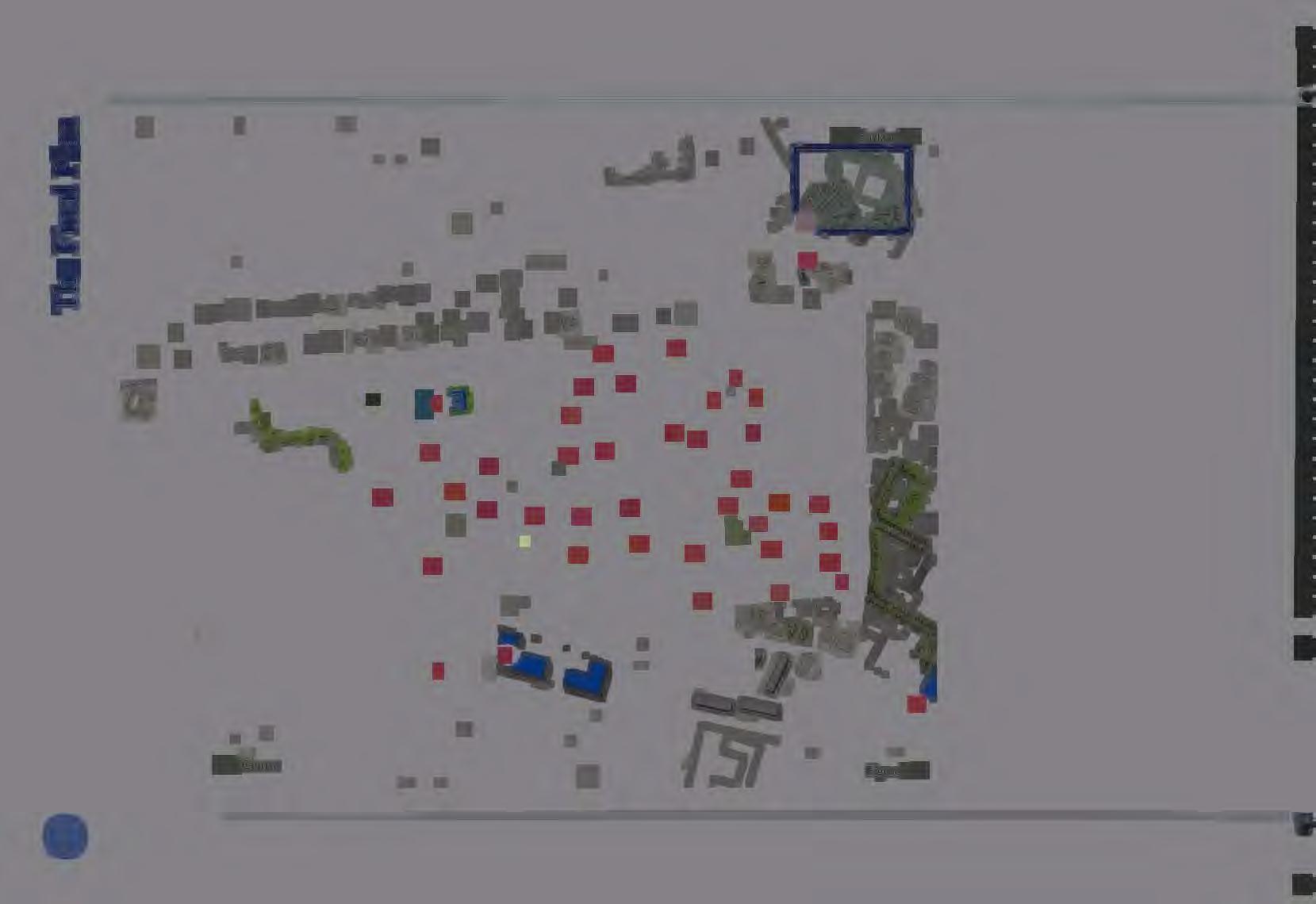
1.AdditionalOff-CampusStudentHousingatLongwood Villageand/orLancerPark
2.NewStudentUnionBuilding
3.StevensGreenwayandPlaza
4.WestMadisonStreetTrafficCircle
5.StevensBuilding
6.NewPhysicalPlantBuilding
7.ParkingLotatLancerPark
8.FrenchBuildingRenovationandGreenway/Plaza
9.TennisCourtsPhaseI
10.AdmissionsOffice/VisitorsInformationCenter
11.SouthRuffnerBuildingRenovation
12.IlerFieldImprovements
13.LibraryExpansion/Renovation
14.LankfordExpansion/Renovation
15.StubbsResidenceHallRenovation
16.AdditionalOn-CampusStudentHousing
17.VineStreetTrafficCircle
18.PerformingArtsCenter
19.EastRedfordStreetTrafficCircle
20.SpruceGreenwayandPlaza
21.PublicSafetyandUniversityServicesBuilding
22.EastMadisonStreetTrafficCircle
23.TennisCourtsPhaseII
24.WygalBuildingRenovation
25.HullBuildingAnnex
26.HullBuildingRenovation
27.HRKAdditionandRenovation
28.BrockCommonsExtension
29.BarlowBuildingRenovation
30.BlackwellBuildingRenovation/AlumniCenter
31AquaticsBuilding
32.ARCResidenceHallRenovation
33.GrahamBuildingRenovation
34.GolfCourseRenovation
35.NewAcademicBuilding
36.PossibleSouthTabbBuildingRenovation
37.ConvocationCenter
38.PotentialInstitutionalSupport
39.CoynerRenovation
40.BlackwellGreenwayandPlaza
41LongwoodCenterfortheVisualArts
Vehicular Circulation

OVERALLRECOMMENDATIONS
Oneofthemasterplan'smaingoalsistopromotesustainability. The planenvisionstheinternalcampusasamostlypedestrianarea,with walkingandbicyclingasthemaintransportationmodes. Therefore, the plan proposes street closures and reconfigurations to create a pedestrian-oriented environment. The campus will become more walkablebyrelegatingmotorvehicleslargelytoitsedgesandbeyond.
The following changes to the existing street configuration are recommended:
SpruceStreet-Closetovehiclesandconverttoagreenwayand plazaalongitsentirelength(fromEastRedfordStreettoHull Promenade)
East Chambers Street andTabbCircle-Close tovehicular trafficandincorporateintotheBlackwellandFrenchGreenways andPlazas.
RaceStreet-ClosetovehiclesfromWestRedfordStreetto VineStreetandconverttoagreenwayandplaza.
WynneDrive-ExtendfromRaceStreettoGriffinBoulevard. Thisextensionwillcreateamuchneededeast-westconnectionin thesouthernareaofcampusandimproveaccesstotheproposed convocationcenter. TheexistingsegmentofWynneDrivefrom SouthMainStreettoRaceStreetshouldbereconstructedto providebetteraccesstotheproposedconvocationcenter.
ConstructanewstreetaroundtheNewHeatingPlant.
ConstructadirectaccessfromEastRedfordStreetintothe visitorparkinglotservingthenewPublicSafetyandUniversity ServicesBuilding.
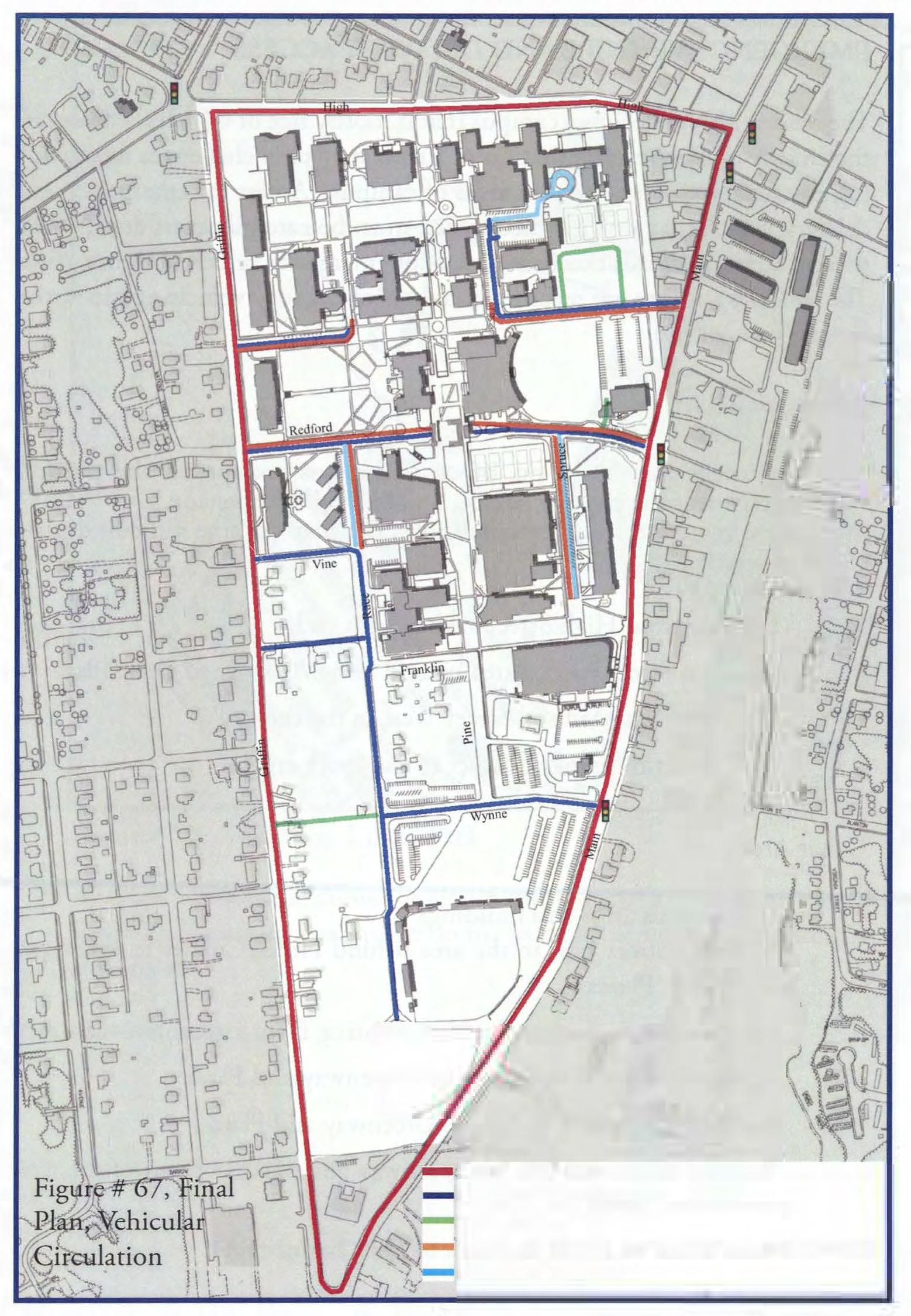
CampusAccessStreets
NewStreets
ProposedforAbandonmentbyTownofFarmville ClosedcoVehicles
ConstructnewtrafficcirclesattheintersectionofEastRedford StreetandSpruceStreet,attheendsofEasta_ndWestMadison Streets,andattheintersectionofVineStreetandRaceStreet. Short-term and handicapped parking spaces could also be createdaroundthesecircles.
Constructacul-de-sacatthenortheastcornerofHinerHall, withvehicularaccesstoGrahamParkingLot.






TherecommendedcampuscirculationpatternisshowninFigure#67. Figure#67alsodelineatesstreetsproposedforabandonmentbythe TownofFarmvilletotheuniversity. Longwood


Vehicular Circulation
LongwoodUniversityComprehensiveCampusMasterPlan
September2008
EMERGENCYVEHICLEANDDELIVERYACCESS
Themasterplanenvisionsacampusthatismostlyfreeofvehicles. However, the closureand/orreconfiguration ofstreetsmay pose challengestoprovidingemergencyaccesstocertainareasofcampus. Accessforemergencyand deliveryvehicles, aswellaswheelchairs, mustbe carefully considered. The presentcampusaffordsexcellentaccessforemergencyvehicles (Figure#68). The following routes are recommendedfor emergencyvehicle access in the future (Figure#69)
BrockCommons
Fire trucks may drive on Brock Commons, except on the portion directlyovertheparkinggarage,andonHullPromenade. Accessisgoodduringdryconditions,butmaybecomedifficultduring wetweather
Accessroutes:
DirectlyfromHighStreetatthenorthend
Madison Street East to areabehindHiner/Coynerto Beale Plaza
DirectlyfromMadisonStreetWestinthecenter
RaceStreetto FranklinStreettothesouthend
OtherAreas
Interiorcampusareasandbuildings
Madison Street East to the area behind Hiner/Coyner to Blackwell andFrench Plazas
Madison StreetEasttotheNewHeating Plantcircumferencestreet
Madison StreetWest toStevensGreenwayandPlaza
Redford Street East to Spruce GreenwayandPlaza
•Redford StreetWest to the greenwayandplaza in front of the new residenthallquad
•RaceStreetto Franklin Streetto Hull Promenade
Exteriorareasandbuildings
•DirectlyfromHighStreet
•DirectlyfromVenableStreet
•DirectlyfromSouthMainStreet
•Directlyfrom Griffin Blvd.
LANCERPARKSURFACEPARKING
Aparkinglotofnearly1000parkingspacescouldbeconstructedatLancer Park This location would serve as the primary parking for residents of Lancer Park, for commuter students, and for overflow from the main campus Thenewpedestrianbridgewillfacilitateasafe10minutewalkto themaincampus
PARKINGDEMANDREDUCTION
The traditional approach to parking management has been to meet the demandbyofferingsufficientsupply. Addingparkinghasbeentheanswer to growth experiencedby campuses.However, this approach is no longer thepreferredone,andmoreuniversitiesaremovingtowardaphilosophyof reducing parkingdemand.LongwoodUniversityhastheaddedlimitation of itsconstrainedspacethatcouldbeutilizedforavarietyof institutional usesratherthanparking. Inaddition, inlinewithLongwoodUniversity's sustainability initiative, it is crucial to recognize that increased parking supply conflicts with efforts to reduce driving and promote alternative modesoftransportation.
Notwithstandingsustainabilityefforts, financing futureparking needs is a probleminitself. Thecostqfconstructingoneparkingdeckspaceisatleast $15,000 (includingcontingency and bond issue costs). The total annual costtocoverthe debtserviceandto operate and maintaina parkingdeck isapproximately $1,500 per space annually Assumingannual revenue of $250perspacereducesthenetannualcostto$1,250. Constructingdecks tomeettheprojectedfutureparkingshortfallofnearly1,800spaceswould cost $27 million in today's dollars, and parking permit fees might have to be raised Given higher parking fees, some people will find alternate parkingoptionsortravelmodes.
Inlieuofmeetingfutureparkingdemand with supply, the recommended alternativeconsistsoffirstreducingthedemandforparkingoncampusby promotingandofferingdifferentwaysofgettingtoandaroundcampus.The goalistoenabletransportationmodesotherthantheprivateautomobileto emergeasanequallyattractivealternative. Improvedwalkingandcycling conditions, extended and more convenient transit, park-and-ride, and ridesharingaresomeoftheTransportation DemandManagement (TDM) techniquesthatcouldbeutilizedtoachievethatgoal.Theprojectedlongterm need for parking could also be lowered by augmenting the listed TDMstrategieswithloweringtheratioofparkingspacesoncampus. Page
49 ofthisdocumentshowsthesignificantreductioninparkingdemandachievedby loweringthecurrentparking ratioforstudentcommutersonlyfrom0.32 to0.25 in thefuture
Figure#70, FinalPlan, LancerPark
Figure#71 FinalPlan, WalkingCircles
LancerPark


OVERALLPARKINGPOLICY
In the long-term, as LongwoodUniversity grows and campus density increases,anoverallpolicyrelatedtoparkingandtransportationshould be adopted. Although providing adequate and convenient parking willbenecessaryin the future, thatgoal shouldnotbeattainedatthe expense of limiting open space, compromising pedestrian safety, or harmingLongwood'shistoriccharacter. Theelementsoftheproposed parkingstrategicpolicyareasfollows:



Minimizetheneedforconstructingadditionalparking facilitiesoncampusthroughTransportationDemand Managementstrategies (TDM)
•Locateadditionalfutureparkingonthecampus'periphery.
•Avoidconstructingsurfaceparkinglotswithinthemain campuscorearea.
On-campusparkingshouldbemanagedinaccordancewithahierarchy ofneeds:
•Handicappedandservicespacesshouldhavethehighest priority, sincetheyneedtobeclosesttobuildingandfacility entrances.
•Short-durationparking,includingvisitorparking, should havethenextpriority,reflectingthenecessity tosupportshortdurationvisits Priorityparkingforcarpoolersandvanpoolers shouldalsobeinthiscategory
•Faculty/staffandcommuterstudentparkingshouldhavethe nextpriority.
•Residentstudentparkingshouldhavethelowestpriority, sinceresidentstudentsgenerallyusetheircarslessfrequently thandailycommuters.
Theseparkingpolicieswill support theconceptof converting surface parking lots and some streets to pedestrian and open space, further enhancingtheappearanceofthecampusandtheeducationalexperience of Longwood's students. As these changes occur, special attention must be given to pedestrian walkways connecting the remaining or new parking facilities to all parts of the campus. Sufficient lighting,
emergency phone boxes, security patrols, convenient routing, and maximum visibility are some of the traits of a successful campus walkway.
ZONEBASEDPARKINGSYSTEM
ItisrecommendedthatLongwoodconsiderchangingatleastsome of its parking allocation from a category-based system to a zone-based system. This change could allow more parking options at differing pricelevels, andwould reducetheneedfor driverstohunt forspaces acrosstheentirecampus.
Parking in zones could still be split between resident students and commuters, and further delineated into open and reserved spaces. Under this concept, a premium rate should be charged for spaces closertothecampuscore. Currently, aparkingpermitcoststhesame whetheracommuterparksin thecampuscoreorin the farsouthern portionofcampus,eventhoughthedrivers'desireforremotespacesis muchlessthanforcorecampus spaces. Under the proposed system, apermit forareaslocatedfurther awayfromthe campuscorewould remainatthecurrentcost,whilethecostofpermitsforparkinginthe campuscorewouldincrease. A zone-basedsystemis expectedto not only better distribute parking demand, but also increase revenue in the future. Longwoodshould alsoconsiderincrementallyincreasing parking permit costs to cover the actual costs of the parking system, including the cost of constructing, operating, and maintaining new parkingareas.
ADAACCESSIBILITYANDHANDICAPPEDPARKING
Asparkingisremovedfrom thecampuscore, sufficientparking must be maintained in the core area for handicapped people and service vehicles. This requirement should constitute a key component of buildingandsurroundingareadesign.
Closure ofinternalcampusstreetswill resultin loss ofsomeparking lots along with any accessible parking spaces assigned to those lots. Federal Regulations mandate that accessible parking spaces serving particularbuildingsshouldbelocated"ontheshortestaccessibleroute oftravel fromadjacent parking toanaccessibleentrance." However,

in those instances wherever a parking lot does not serve a particularbuilding(i.e.JarmanHallwouldnolongerbeserved by theJarman lot because of its removal) "accessible parking shallbe located on theshortestaccessibleroute oftravelto an accessible pedestrianentrance." Thus, accessibleparkingspaces fromremovedparkinglotsshouldbemovedtoanyremaining ornewparkingfacilitynearesttheaffectedbuildings.
OTHERPOLICYRECOMMENDATIONS
Inordertofurtherreducefutureparkingdemandoverthelong term, Longwoodshouldconsideradditionallimitsonwhocan obtainaparkingpermit. Theselimitscouldinvolveprohibiting sophomore students from bringing their cars to campus, and prohibiting students who live within walking distance to campus or FarmvilleArea Bus transit stops from obtaining a permit.Aspreviouslydiscussed, chargingahigherfeeformore convenient parkinglocations, or a lower fee for more remote locations, shouldalsobeconsidered.
Bicycle Plan
BICYCLINGTOCAMPUS
Bicyclesareanimportanttransportationmodeonmanycampuses throughoutthecountry.Theyareatrulysustainablemodeoftransportation -non-polluting,efficient,andinexpensive,andtheiruseresultsinless trafficcongestionandlowerparkingdemand.
Legend
--- ProposedTrails
- ExistingTrails
--- DogwoodTrails (paved)
- High BridgeTrail
(proposed-Rails to Trails) .,.
Thismasterplanincorporatesabicycleplantoencourageandfacilitate cyclingto,from,andaroundcampus.Afulldescriptionofthebicycleplan isavailableintheCampusTransportationElementsReport(Appendix, Report2). Legend
--- On-street anes
--- Off-streetpaths
--- Signed routes , 'I
Figure#73�ProposedFarmville AreaBicycleRoutesbyType
RidershiptoandaroundLongwoodiscurrentlyverylow.Therolling terrainisadeterrenttobicycleuse.ThecampusandtheTownof Farmvillealsolackformalbicyclefacilities,bikeroutesignage,and otheramenitiessuchasbicycleparking(includinglockers)and bicyclerepairshops,furtherreducingtheappealofbicycling.
Themajorstreetsthatleadtocampus,includingSouthMainStreet, HighStreet,GriffinBoulevard,WestThirdStreet,andLongwood Avenuealllackbicyclelanes,andhavehightrafficlevelsandspeeds. Thesefactorsdeterpotentialbicyclistsfromridingtocampus.Figure #72depictsthecurrentandproposedbicycleroutesintheFarmville area.TheDogwoodTrailistheonlyexistingspecificoff-streetbike pathinTown,butitiscurrentlynotpartofacompletesystemthat wouldbeusefultobicyclistsridingtocampus.
Amajorgoalofthemasterplanistocreatetransportationlinks betweenthecorecampusandsignificantoff-campussites-student housingareasandrecreation/sportsfacilities.Convenientand safebicyclerouteswillcompriseamajorelementoftheselinks. Figure#73depictsproposedFarmvilleareabicycleroutesby type.TheseproposedrouteswillprovideconnectionstoLancer Parkstudentapartmentsandrecreationfields,LongwoodVillage studentapartments,LongwoodAvenueathleticfields,andSunchase Apartments.Crucialimprovementsincludesignage,bicyclelanes, andpossiblysharedoff-roadpaths,aswellastheproposedbridges connectingLancerParkwithGroveStreet
REGIONALBICYCLEPLANS
TheTownofFarmvillehasrecommendedadoptingthePiedmont RegionalBicyclePlan,along-termplantoimprovebicycle transportationintheregion.TheGreaterFarmvilleGreenway Alliancehasproposedaseriesofgreenways,blueways,walking trails,andbikewaysthroughouttheFarmvillearea.Theseinitiatives, combinedwithon-campusenhancements,willimproveandexpand theavailabilityandconvenienceofbicyclingasaviabletransportation modefortheLongwoodUniversitycommunity.
Bicycle Plan
EXISTINGANDPROPOSEDCAMPUSBICYCLEFACILITIES
BICYCLELANES,PATHS,ANDROUTES
Currently, there are nosignedbicycle routes or multi-use paths on campus While stripedbicyclelanesare notrecommendedfor campus streets, signed bicycle routes would establish effective travel patterns for bicyclists andimprovetheirvisibility todrivers. Multi-usepaths, on the other hand, provide internal accessibility within campus and provide a more pleasant bicycling experiencewhile getting around Longwood's grounds.
Proposed on-campus facilities areshown in Figure #74 The two main bicycle transportation spines oncampusrun north-south, roughlyalongRace Streeton thewestern sideofcampus andalong the former Spruce Streeton theeasternside. Griffin Boulevardwouldconstituteyetanothermajorbicycleartery,andon-streetbicyclelaneswouldprovideanopportunity formore experienced bicyclists to travel at faster speeds than allowed by the internal multi-use paths. The multi-use paths on campus would be paved, 10- to 14-feetwide, mostwithaseparatelaneforpedestrians anda mixed-uselane forbicyclesandgolfcarts. Aproposedcampusgolfcart circulation systemis shownintheCampusTransportationReport(Appendix, Report2).
BICYCLEPARKING
Thecampusingeneral,andthecampuscoreinparticular,needsmorebicycle parking. Bicycle parking should be provided at the most-used entrances to major campus buildings, including student support and athletic facilities. Longwoodshouldalsoidentifyopportunities for covered bicycle parkingto provideweatherprotectionforbothridersandbicycles. Coveredparkingcan be incorporated into building overhangs, awnings, and breezeways In addition, all future campus parkingdecks andorsurfaces shouldhaveadesignatedandprotectedareaforbicycleparking, allowingpeoplewhocommute tocampusbycartoretrieve theirbicyclesfortravelaroundcampus.
Longwoodshouldalsoadoptstandardsforbicycleparking Currently, there are a variety ofparking racks around campus. One type ofbicycle parking thatis easily recognizable andacceptednationwide, theU-Rack, isshownin theimagein thebelow. This typecanbe ganged at24inch centers, holding twobicycles per each U. The most important design criteria for U-racks is leaving clear access space on both ends Other designs could be explored -notably,manyinstitutionsincorporatemetalartandsculpturestoenhance thelookofthebicycleparkingarea.
LongwoodUniversityComprehensiveCampusMasterPlan
September2008
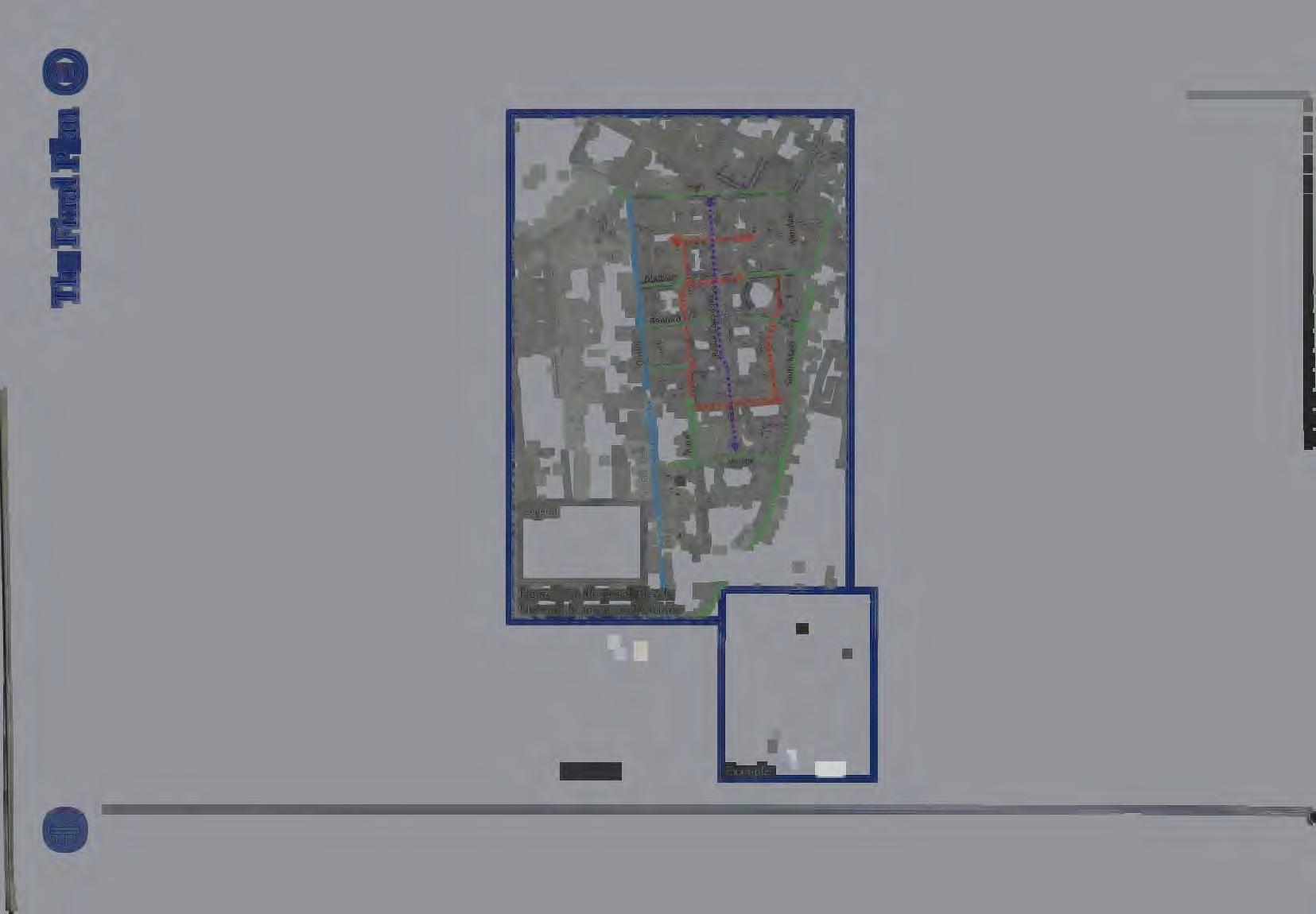
AnotherconceptthatLongwoodcouldconsiderissecuredindoorparking. This typeofstoragecouldbeutilizedbystudents, bicyclecommuters, and faculty/staffmember who would rather keep their bicycles stored inside. Anexampleofasecuredindoorparkingisshownintheimagebelow. New buildings couldincorporateshower andlocker facilities toallowbicyclists theoptionofcleaningupaftertravelingtowork. Bicyclestations, providing storage and repair facilities, often supported by a user fee, could be locatedatkeylocationsacrossthecampus
BICYCLEEDUCATIONANDPROMOTION
In addition to making physical improvements, it is also important to increasetheinformationavailabletocurrentandpotentialbicyclists. Longwood should develop and distribute a campus bicycle map. This map shouldshowbicycleroutesonandinthevicinityofthecampus,andshould differentiatebetweenexclusiveandsharedfacilities. Themapsshouldalso indicate where amenities for bicyclists are located, such as bike stations, and information on their use Rules ofthe roadand safety information shouldalsobeincluded. These maps couldbedistributedatinformation kiosks and bike shops near campus This information could be sent to townandcounty offices forinclusion intheirmapsandinformation
RECOMMENDEDPEDESTRIANIMPROVEMENTS
ON-CAMPUSIMPROVEMENTS
•Implementstreetimprovementslistedunderthetrafficcirculation sectionofthecampustransportationreport(appendix,report2) includingpedestriansafetyimprovementsonHighStreet,South MainStreet,andGriffinBoulevard.
•Buildthesystemofmulti-usepathsdescribedintheBicyclePlan sectionofthisreport.
•Implementproposedstreetabandonmentsandclosures.
•ConstructapromenadeconnectingBrockCommonstoVenable Streetandfurthertomid-townsquare.
•Createtwoadditionalnorth-southprimarypedestriancorridors: oneextendingfromJarmanHalltoFranklinStreet,andonefrom RuffnerHalltotheHealthandFitnessCenter
ConstructapedestrianskywayaboveWestRedfordStreettosupport thelibraryexpansion.
Constructallrequiredinternalwalkwaysassociatedwithnew constructiononcampus.
Installbrickcrosswalksofuniformdesignatpedestriancrossingson internalcampusandtownstreetsborderingthecampus.
Wherenotcurrenclyinstalled,addpedestrian-activatedsignalized crossings.
Constructnewsidewalksalongthefollowingstreets:
•NorthsideofWynneDrive
•EastsideofRaceStreet,fromVineStreettotheballfields
•SouthsideofEastMadisonStreet
•BothsidesofVineStreet
.WestsideofGriffinBoulevard
.OtherlocationsshowninFigure55
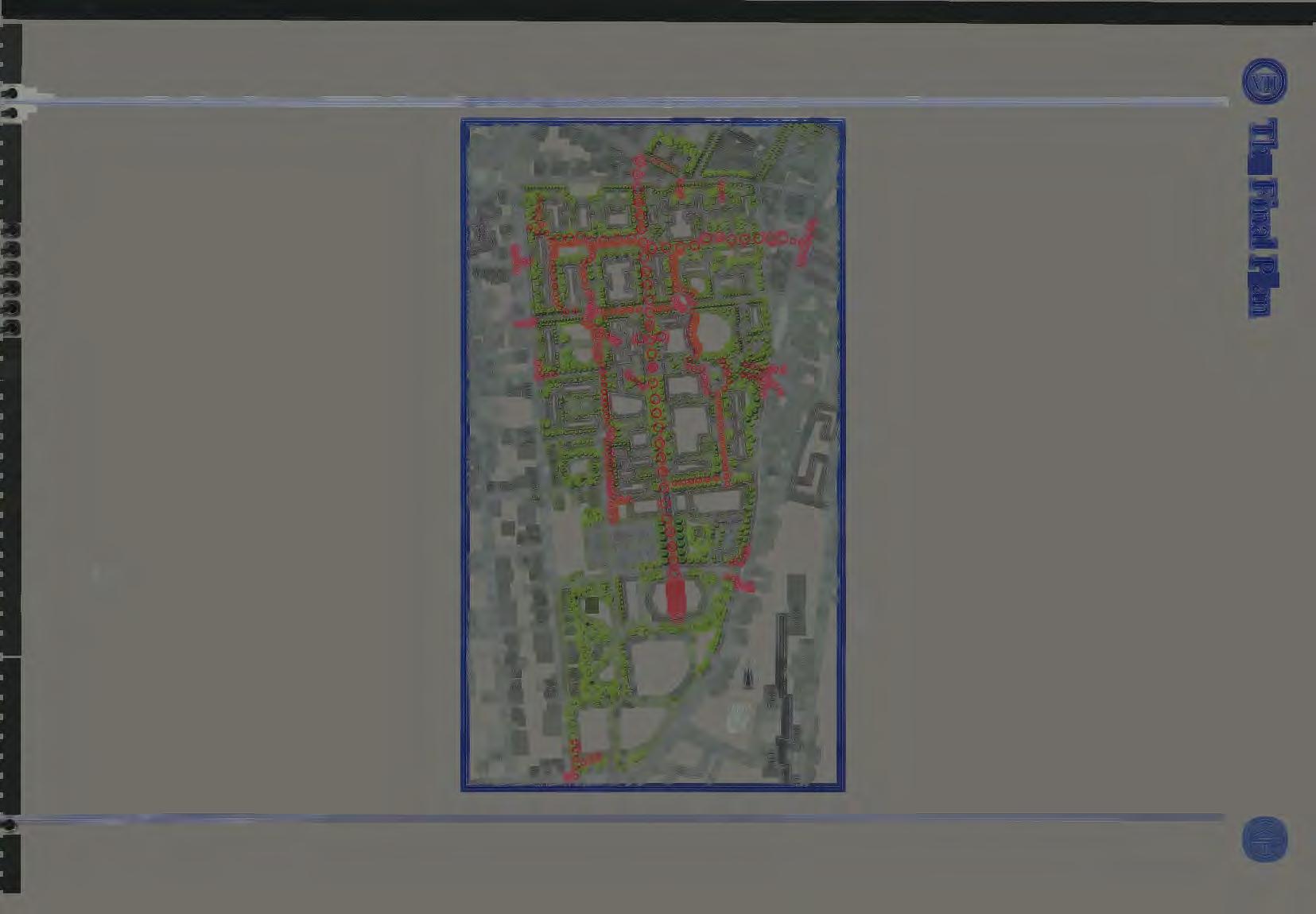
Open Spaces andPedestrian Circulation
Installraisedcrosswalksatthefollowinglocatio�s:
•AcrossHighStreetconnectingSt.GeorgeStreetandBrock Commons
•AcrossHighStreetintheJarman/Lancasterarea(Ifafuture HighStreet/OakStreetconnectorisconstructed)
•AcrossHighStreetatNorthStreet
•AcrossWestRedfordStreetbetweentheLibraryandLankford Mall
-AcrossVenableStreetontheroutefromcampustoMid-Town Square
•AcrossEastRedfordStreetbetweenSpruceGreenwayandIler Field
•AcrossGriffinBoulevardbetweenWheeler/Coxparkinglotsand campus
•AcrossWynneDriveatthesouthernendofPineStreet
Realignthepedestriancrossingsatthefollowinglocations:
•SouthMainStreetandRedfordStreet
•HighStreetandGriffinBoulevard
Installpedestrian-scalelightingonallinternalcampusstreetsandall streetsborderingcampus(SouthMainStreet,VenableStreet,Griffin Boulevard,HighStreet)
RECOMMENDEDOFF-CAMPUSIMPROVEMENTS
ConstructapedestrianbridgeconnectingLancerParktoGrove Street.
•WorkwiththeTownofFarmvilletoinstallsidewalksandlighting alongLongwoodAvenue.
000 PrimaryPedestrianPath
ooooooSecondaryPedestrianPath
Figure#75,FinalPlan,OpenSpaceandPedestrianCirculation
LongwoodUniversityComprehensiveCampusMasterPlan September2008
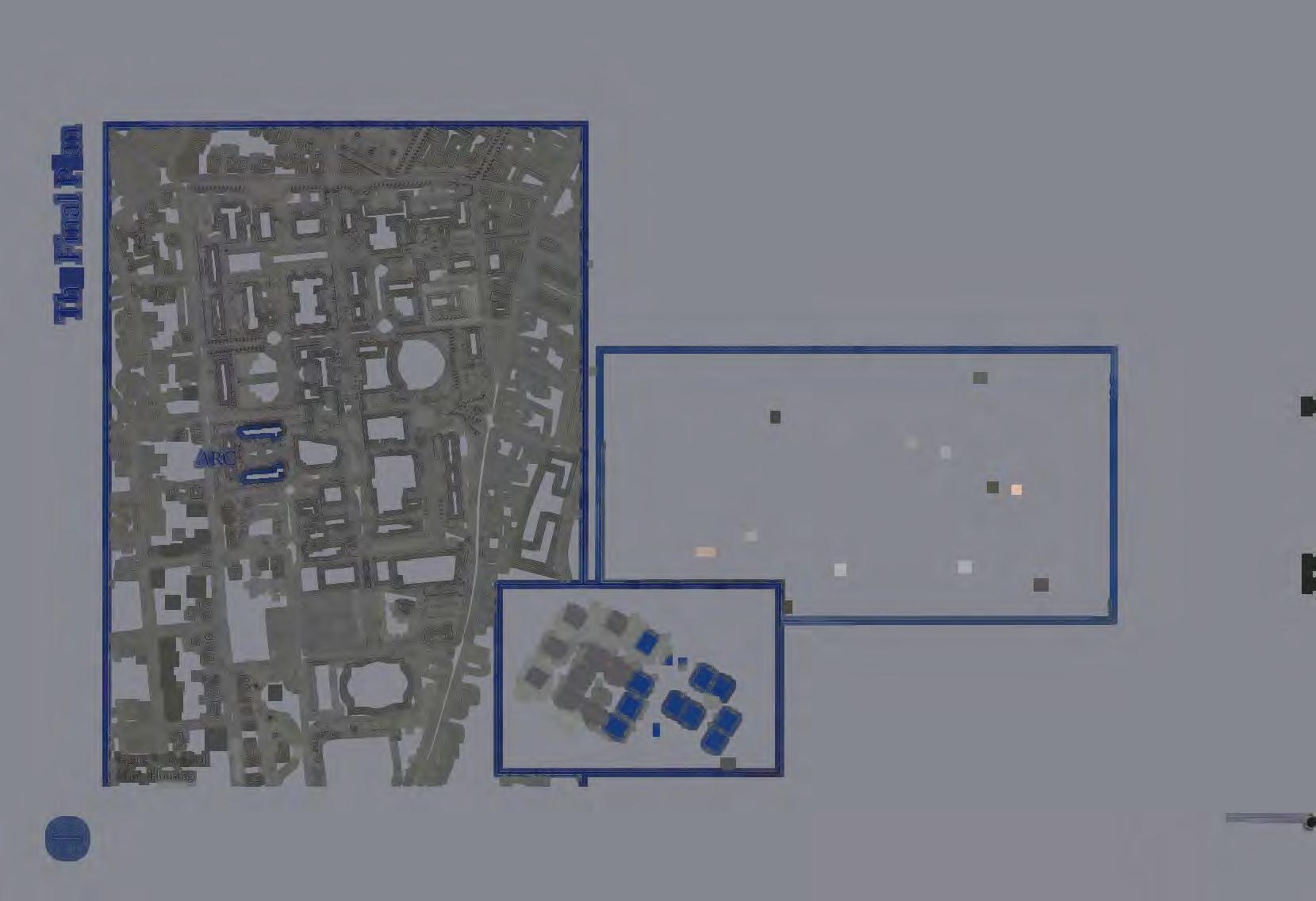
Tomeetthefuturestudenthousingrequirements,Longwoodmustconstruct485newbedsoncampus and410bedsinuniversity-managed apartment communities.
The on-campus requirement can bestbe metbyconstructingtwo new residence halls flankingARC Residence Hall (Figures #76 and #78). This configuration will create a new quadrangle, resulting in additional green space and informal gathering places. The two new buildings will be sized to compensate for the loss of lounge and meeting rooms when the Cunningham Residence Halls are demolished.
Two university-managed apartment co�munities can be enlarged to create a total of 410 new offcampusbeds. TheLongwoodVillagecommunityhasthespaceandinfrastructuretosupportadditional buildings. The Lancer Park community will be within easy walking distance of campus after the completion of the new pedestrian bridge acrossWest Third Street. A cost-effective combination of thesetwolocationsisrecommended.
Figure#78,Model Rendering, Housing
Figure#77
Recreation &Athletic Facilities
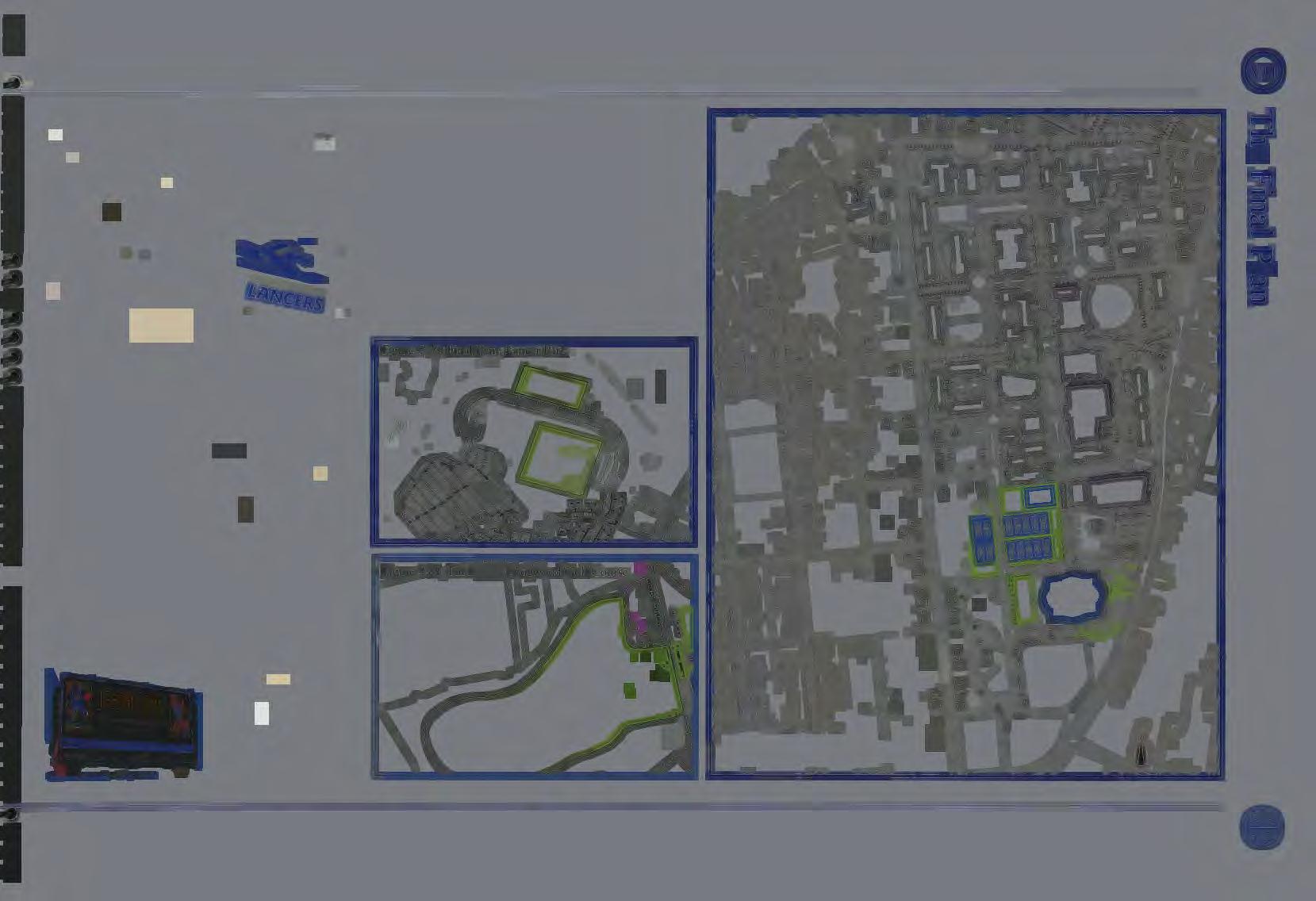
TheNCAAhasgrantedLongwoodUniversityDivisionIstatus, andLongwood's 14 teamsarenowcompetinginDivision I. ManyimmediateneedsofLongwood'sathleticprogramsare beingaddressedbyimprovementsandadditionstoexisting facilities.Themasterplanrecommendstheconstructionof tenniscourtsandanatatoriumthatmeetDivisionIstandards. StudentrecreationopportunitieswillbeenhancedbythenewlyconstructedfieldsatLancerPark,improvementstoIlerField, andanewopenfieldinthesoutherncampusarea.Thegolf courseshouldbeupdatedtobetterservethegolfteamsandthe entirecommunity.Thisupdateshouldincludearepositioned entrance,anewclubhouseandparking,are-alignedand extendeddrivingrange,andre-alignedandrenovatedtees, fairways,andgreens.
Figure#79,ModelRendering,ConvocationCenter
{Figure#80,FinalPlan, Recreation&Athletics
Infrastructure
STEAM
The two boilers in the New Heating Plant totaling 40,000 pounds per hour capacity will be minimally sufficient to support the campus throughthefirstphaseofdevelopment. A third boiler shouldbe installed as soon as possible to handle peak loads and growth. Consideration should be given to adding additional steam generation capacity in the future to provide redundancyandhandleemergentprojects.
COOLING
Air conditioning for ex1stmg buildings is provided by individual systems located within each building The same approach is currently envisioned for new buildings. However, consideration should be given to constructing a central chiller plant and a chilled water distribution system to leverage the efficiency of scale and the operational advantages of central controlandmonitoring.
TELECOMMUNICATIONS
AllfutureinstallationshouldconformtoVirginia Information Technology Agency standards and industrybestpractices.
ELECTRICITY
Longwood's supplier, Virginia Dominion Power, does not foresee any issues in meeting the anticipated growth in campus electrical demand.
POTABLEWATER,SANITARYSEWER, ANDSTORMWATERSYSTEMS
Overall, the municipal potable water and sanitary sewer systems serving the campus are currently adequate However, these services should be carefully assessed in conjunction with each future project, especially regarding the cumulative increase in demand. Adequate waterBowforfireprotectionwillbeofparticular
importance in the future. It is recommended that Longwood develop a campus watersystemmodelthatwill identifypointsoflowflowand/orpressure. Thismodel willprovidebetterunderstandingofthesystem'sfuturelimitations
Each future project will require stormwater control measures Longwood should considerestablishingacampus-widestormwaterplanthatwillevaluatethecumulative effectsoffuturebuildingsandapplycombinedandareasolutions.
LongwoodUniversityComprehensiveCampusMasterPlan
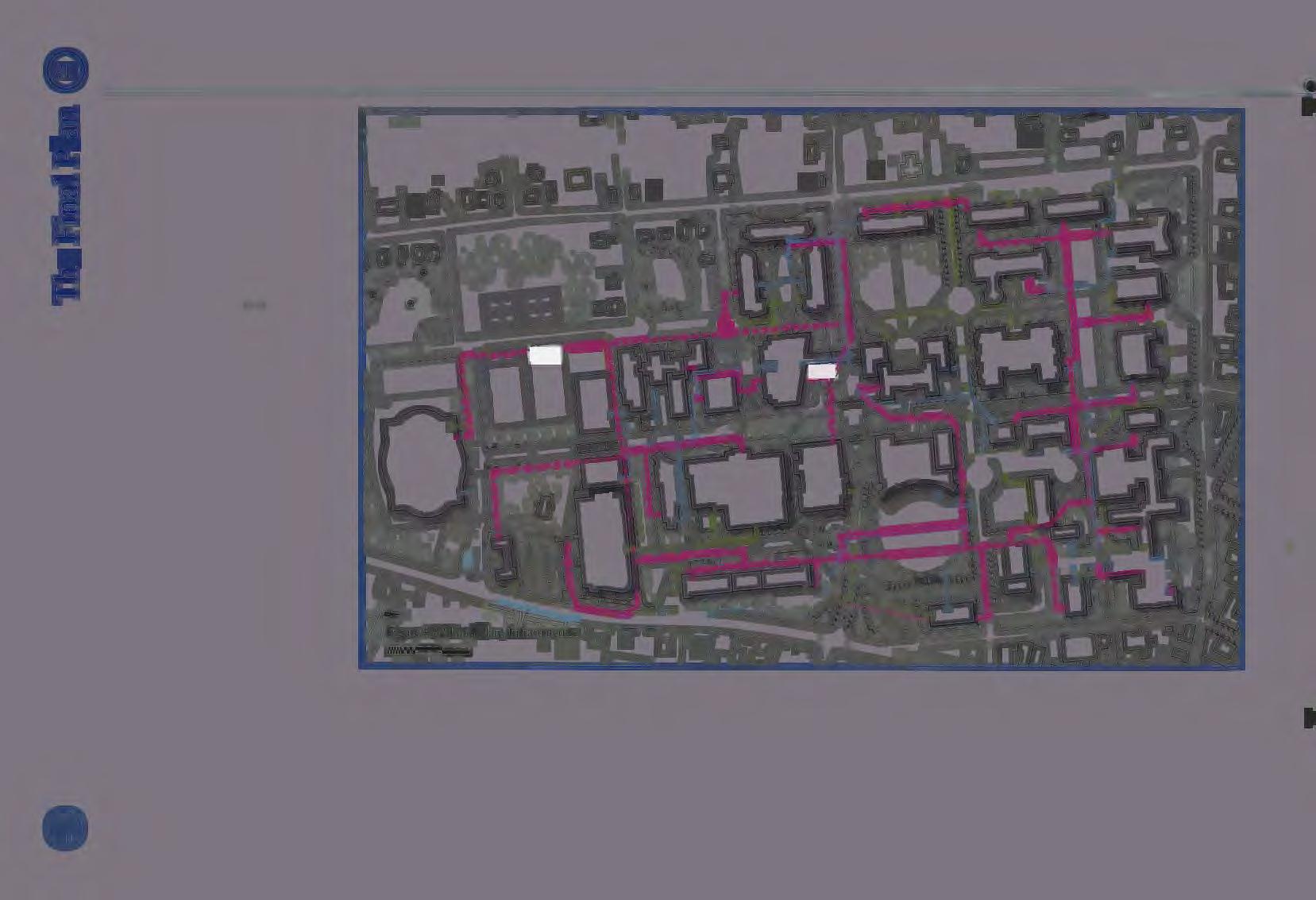
(ownedbyVirginiaDominionPower)
WAYFINDING
Asignageplanprovidesmultiplelevelsofvisitorinformation,siteand destination identification, and vehicular and pedestrian directions Therecommendationsdescribedbelowshouldformthebasisforthe developmentofacomprehensivesetofdesignguidelines.Theproposed signtypesanddescriptionsareshowninTable#31.1 Recommended locationsforvehicularwayfindingsignsareshowninFigures3and4of theCampusTransportationReport(Appendix,Report2).

RECOMMENDATIONS
•Providemotoristswithguidanceinformationalongthemajorroadways leadingintotheFarmvillearea-Route460,Route15,andRoute45 usingtrailblazersignsandhighwayguidancesigns.
•DirectvisitorsintothecampusalongSouthMainStreetandGriffin Boulevardfromthesouth,EastThirdStreetfromtheeast,WestThird Streetfromthewest, andNorthMain Streetfromthenorth using directionalsignsandtrailblazers.Onepossibledesignstandardisshown inTable#31.1VisitorsapproachingthecampusalongGriffinBoulevard andHighStreetwouldbeprovidedwithmanycuestotheinstitutional identityoncetheseroadwaysundergoplannedimprovements-new sidewalks,bicyclelanes,LongwoodUniversitybannerposts,pedestrianscalelighting,andundergroundutilities. Thesepositivecuesshouldbe reinforcedwithadditionalvisualdevices,suchasuniformstreetscape fixturesandsidewalkfurnishings. SinceSouthMainStreetwillremain theprincipalaccessroadwayleadingtocampusintheforeseeablefuture, itshouldundergoenhancementssimilartothosedescribedabove.
•Directvisitorstoaninformationcenter,orcenters,oncampus. Maps, informationbrochures,andelectronickiosksshouldbeavailableatthe center. Therecommendedlocationfortheprimaryinformationcenter isthenewAdmissionsOfficebuildingattheintersectionofSouthMain StreetandWynneDrive. Asecondary_informationcentercouldbe locatedinthefuturePublicSafetyandCommunityServicesBuildingat thenorthwesterncornerofEastRedfordStreetandSouthMainStreet. Bothoftheselocationsoffervisualcontactwiththemaincampusalong thearrivalroute,visitorparking,easyaccessto thecentral campus, andconvenientaccesstolocaltransit. Un-staffedinformationkiosks shouldbeplacedonvehicularandpedestrianapproachestocampus, atparkingfacilities,andwithinthecampus. Allkiosksshouldhave informationthatvisitorscantakewiththemandshouldprovidekey campustelephonenumbers.
•Once on footwithin the campus, visitors and otherusersshould encounteranetworkofpedestrian-scalesignsandmapsthatprovide orientation and destination information. This information should includedirectionstoaccessiblebuildingentrancesandvisitorparking areas
•Thecampusmapshouldalwaysbekeptcurrent,andshouldalso identifydestinationswithina5-10minutewalkofthevisitor's location.
LongwoodUniversityComprehensiveCampusMasterPlan September2008
Signage
WayfindingSignTypeDescriptions
Vehicular Trailbrazers
Gateways
Vehicular Directional
Parking Decks and Lots
Visitor Information Station
Pedestrian Directional
Pedestrian Trailblazer
Bicycle Trailblazer Text
Longwood University
Longwood University
Terminology
Subcomponents
as reinforcement along major Longwood University logo roadways and approaches to per MUTCD
Longwood University iogo
destination I facility names
names limited to two words, fit in one line
visitor parking, visitor information, admissions, major venues
parking, information, local and state route symbols
facility name list of Longwood University facilities with names and locations
sign location (if at named intersection), parking facilities nearby, major landmarks, and destinations major venues, accessible entrances, and routes
bike parking, major venues
names limited toI two words, to fit in one line, buildings listed alphabetically one destination per trailblazer one destination per trailblazer with facility name and directional arrow
grid-based map of campus grouped by direction of travel
parking
'You Are Here' indicator
information, accessibility, parking campus/town
main campus entrances
visible from 200 feet
100-150' prior to intersection
letters 6" min height for all capitals, 4.5" min for lower cases, font = San Serif
at vehicle street entries to parking facilities
entries/exits to parking and majorfacilities, pull-offs for motorists approaching campus, major pedestrian spines, downtown Farmville
visible from 200', legible from 100'+
accessible to elderly and I handicapped people, illuminated at night, recognizable from 200'
street corners, pedestrian intersections intersections, along routes from
parking to destinations, in front
"blt
1 Y sym Os of buildings to accessible
familiar symbols entrances along bicycle paths and lanes and designated bicycle routes, at bicycle path entrances
Table#31.1WayfindingSignType Descriptions
LongwoodUniversityComprehensiveCampusMasterPlan
September2008
Sustainability - Water
ENVIRONMENTALCONCERN

OTHERSUSTAINABLEDESIGNANDOPERATIONAL INITIATIVESFORWATER:
Developauniversitywatermanagementpolicy
Reducepotablewaterpurchase
Installwatermetersateverybuilding
Replaceolderlavatorieswith0.5gpmfixtures
Replaceolderwaterclosetswith1.28gpmfixtures
Replaceshowerheadswith2.0gpmfixtures
Correctwaterleaksassoonastheyappear
Replaceoldpipingandwaterdistributionsystemsduring buildingrepairandrenovationprojects
Createastudent,facultyandstaffeducationprogram
Reduceirrigationwithpotablewater
Useprogrammable,high-efficiencyirrigationsystems
-Installnativeordrought-resistantlandscapematerial wheneverpossible
-Investigatepossibilitiesforirrigationwithstormwater runoffand/orrecycledwater
LandscapeIrrigation
StormwaterRunoff
StormwaterRunoff
Pavement
OTHERSUSTAINABLEDESIGNANDOPERATIONAL INITIATIVESFORMATERIALFLOWS:
Reducetheamountofnon-foodwastegoingtolandfills
•Educate students, faculty, and staff about waste reduction, especially during move-in and move-out periods
•Educate students, faculty, and staffabout electronic recycling
•Incorporate solid waste reduction strategies and requirementsintouniversitypurchasingproceduresand standards
•Incorporate solid waste reduction strategies and requirements into university construction procedures andstandards
•Coordinate Longwood programs, projects, and initiatives with those of local, regional, and state governmentsandorganizations
Reduce the amount offood waste going into the sanitary sewer
•Divertfoodwastefromthedininghall andcatering foodpreparationareasintotheexistingfoodpulper
•Expandthefoodwastereduction bestpracticesinto Longwood food service facilities located outside the dininghall
Reducetheamountofnutrientspurchasedforlandscaping
.ExpandLongwood'scompostingprogram
.Expand Longwood's integrated nutrient program to include athletic fields, off-campus apartment communities,andthegolfcourse
UNIVERSITYGOAL

Reducetheamount ofnon-foodwaste goingtolandfills
Reducetheamount offoodwastegoingintothesanitary
Reducetheamount ofsyntheticnutrients purchasedfor landscaping Figure#85FinalPlan,Sustainability,MaterialFlows
Sustainability - Energy
Reduceannualcostsofnonrenewableenergypurchases (ExecutiveOrder48)
OTHERSUSTAINABLEDESIGNANDOPERATIONAL INITIATIVESFORENERGY:
ReducegreenhousegasemissionsinaccordancewiththeVirginiaEnergy PlanandGovernorofVirginiaExecutiveOrder59
•Installathirdbiomassboilerinthenewcampusheatingplant
•Investigatepurchasinglandonwhichtogrowbiomassforuse inthecampusheatingplant
•Coordinateandincorporatetherelatedstrategiesofreducing overallenergyuse,reducingvehiclefueluseandemissions,and developingasustainabletransportationprogram
•CoordinateLongwoodprograms,projects,andinitiatives withthoseoflocal,regional,andstategovernmentsand organizations
Reducethepurchaseofnon-renewableenergy
•Meter,control,andmanagetheenergyuseofeverycampus buildingindividually
•Requirethatallnewconstructionmeetorexceedtheenergy efficiencyperformancestandardssetbytheAmericanSociety ofHeating,RefrigeratingandAirConditioningEngineers (ASHRAE)
Requirethatallbuildingrenovationprojectsmeetorexceed theenergyefficiencyperformancestandardssetbyASHRAE
PurchaseEnergyStarappliances
thefuelefficiency andreducethecarbon emissionsfromfleetvehicle use(ExecutiveOrder48)
Createastudent,faculty,andstafeducationprogram
Improvethefuelefficiencyandreducecarbonemissionsfromuniversity fleetvehicles
•Implementavehicleusereductionprogram
•Purchasefuel-efficient,low-emissionvehicles
•Investigatethepurchaseofalternate-fuelvehicles
•Investigatethepurchaseofnon-traditionaltypesandsizesof vehicles
UNIVERSITYGOAL
OTHERSUSTAINABLEDESIGNANDOPERATIONAL INITIATIVESFORTRANSPORTATION:
Reducenumberofcarsbroughttocampusbycommuterstudents, faculty andstaff
•Createastudent,faculty,andstaffeducationprogram
•Implementapolicyandprogramoftransportationdemand managementbasedonbestpracticesusedbyeducational institutions
IncreasepedestrianandbicycletripsbetweenLongwoodandthe adjacentcommunity
Coordinate with, and participate in, area and regional pedestrianandbicyclerouteplanningandimplementation
Provide showers andlockers for pedestrian and bicycle commuters
Provideadequate,convenient,andsecurebicycleparking facilitiesthroughoutcampus
Include pedestrian and bicycle-friendly hardscapes and signagethroughoutcampus
Conductacampuslightinganalysisandimplementuniform campusoutdoorlightingstandards
Reduce carbon emissions related to vehicle trips to and from Longwood
Coordinate and incorporate the related strategies of reducing number ofcars brought to campus, increasing pedestrianandbicycletrips,andreducinguniversity-owned vehicleuse
.Increasetheuseofshuttleand/ortownbusesbystudent, faculty,andstaff,bothonandoffcampus
.CoordinateLongwoodprograms,projects,andinitiatives
Reducenumberofcars broughttocampusby commuterstudents, faculty,andstaff
POSSIBLE
RESERVED
Increasepedestrianand bicycletripsbetween Longwoodandthe adjacentcommunity
Reducecarbonemissions relatedtovehicletripsto andfromLongwood
with thoseoflocal, regional, and state governments and Figure#87FinalPlan,Sustainability Transportaion organizations
Carpooling
BicycleLanes
BicycleLockups
LockerRooms Showers

LONGWOOD UNIVERSITY




Architectural andDesign Guidelines
GENERAL
ItisLongwoodUniversity'sintenttomaximizethedesignpotentialofeach campusbuildingprojectintermsofaccommodatingtheprogramstobe served,fosteringcollegialityonthecampus,andcontributingtothepublic realmthatdefinestheLongwoodUniversitycampusasauniqueplace. Achievementoftheprogrammaticgoalsforeachprojectdictatesthatthe designmustcost-effectivelyoverlaythespecific,user-generatedobjectives fortheprojectwithLongwoodUniversityobjectivesofinstitutionalidentity, durability,longevity,flexibility,sustainability,andadaptability.Each projectmust,intheinterestoffosteringcollegiality,createenvironments thatencourageinteractionanddiscourseamongstudents,faculty,andstaff. Thispotentialshouldberecognizedinthedevelopmentofbothinterior andexteriorenvironments.
Onemajorrequirementofprogrammaticaccommodationisdevelopment ofaproject's"insides."However,eachprojectalsohasaresponsibilityto thegreaterwholeofthecampus,bothasanentityinitself,andpartof thecommunityinwhichitthrives.Thisresponsibilitytothepublicrealm recognizestheimportanceofthearchitecturalandplanningtraditionsat LongwoodUniversityandstrivestocontributetothefurtherdevelopment ofthecampusasahighlyimaginable,unique,andinspiringenvironment. Toachievethesegoals,itisincumbentontheprojectdesignteamtoinvest inanunderstandingnotonlyofimmediateprogramgoals,butalsoofthe planningandarchitecturehistoryforthecampus,aswellasofthegoals andobjectivessetforthinthecurrentCampusMasterPlan.
ACCESSIBLEDESIGN
LongwoodUniversity'spolicyistocreatelearningandworkingenvironments thatwillengenderparticipationbyallpersonswhovisit,attend,andare employedbytheUniversity.Newandrenovatedspacedesignsallowing inclusionofallpersonsaretoppriority.Infact,universaldesignthat incorporatesaccessforallpersonsshouldbeaprimaryplanningcriterion: accessibilitystandardsshouldbeincludedintheinitialplanningofall newfacilities,notanafterthoughtduringacodereviewofadesignthat isotherwiseconsideredcomplete.Fornewconstruction,thereisnoneed tosegregateaccessforpersonswithdisabilitiesfromthatforthegeneral population.
ENERGYEFFICIENCY
LongwoodUniversityiscommittedtotheprinciplesofenergyconservation.Alldesigns shouldmaximizeenergyefficiencyandcomplywiththeGovernor'sExecutiveOrder 48.
SUSTAINABILITY
Inordertoincorporatesustainabledesignsolutionsinnewconstructionandrenovation projects,LongwoodUniversityhasjoinedtheUSGBC(USGreenBuildingCouncil) andfollowstheguidanceoftheLEED™(LeadershipinEnergyandEnvironmental Design)BuildingRatingSystemduringthedesignprocess.Furthermore,theUniversity hasdevelopedtheSustainabilityStrategicPlan(2008).Thepursuitofhighperformance, energyefficient,andenvironmentallysensitive"green"buildingswillhelptolower operatingandenergycosts,improveemployeeproductivity,promoteimprovedlearning, andenhancethehealthandwell-beingofthestudents,facultyandstaffatLongwood University.Allprojectswillfocusonsustainabilityasitrelatestositeissues,water,and energyefficiency.
DESIGNCHARACTER
1.ThearchitectureatLongwoodUniversitygenerallyexpressesanordered,traditionaltheme,drawingfromalegacyofPalladian-Jeffersonianarchitectureinthe historicnortheastdistrictofcampus.
2.AllnewbuildingsshouldreflectthecharacterofLongwoodUniversityasan institutionwitharichpast,vibrantpresent,andpromisingfuture.
3.Buildingsshouldextendandenhancetheunderlyingplanningandarchitectural strengthsofthecampus.
4.Newbuildingsshouldbalanceindividualexpressionwithcontextualsensitivity.
5.Program,site,andbudgetparametersshouldallbeaddressedinanintegrated fashion.
LongwoodUniversityComprehensiveCampusMasterPlan
PROJECTPHASING
This campus master plan establishes the long term vision for the physical development of the LongwoodUniversitycampustosupportenrollmentgrowthandnewprograms.Toaccomplish this development, Longwood has devised a capital construction plan that follows the CommonwealthofVirginia'scapitalplanningprocess. Underthisprocess,eachstateinstitution mustdevelop andregularlyupdateaplan thatidentifies theinstitution's constructionprojects, priorities, and schedule Longwood will maintain its current capital plan as a supporting documenttothismasterplan.
The recommendation for Longwood's capital planning and construction program is divided into phases that spread the major construction projects over the master plan's horizon. Each phase includes specific physical requirements and opportunities that were identified in the master plan, along with projects from the previous capital construction plan and anticipated renovationsofseveraloldercampusbuildings.
NearTerm
•RenovationofStevens Hallfornursingprogram
.RenovationofFrench HallforUniversityTechnologyCenter
•Studenthousingconstruction
•Parking
•Newstudentunion
•Newphysicalplantbuilding
•RenovationofSouthRuffner Buildingforfaculty offices
•Newadmissionsofficeandvisitorinformationcenter
•Campusinfrastructure(renovationofoldheatingplant; generalinfrastructure improvements)
•NewAlumniCenter
Project Phasing

MidTerm
•Studenthousingconstructionandrenovation
•LibraryandLankfordBuildingexpansionandrenovation
•New performing arts center
•WygalBuildingrenovation
•HRKprogramrenovationandexpansion
•Campusinfrastructure (greenspaceandplazas; renovationof existingbuildings)


LongTerm
•CollegeofEducationrenovationandexpansion
•CollegeofBusiness expansion
•Newpublicsafetyanduniversity servicesbuilding
•LCVAexpansionandrenovation
Campus infrastructure (greenspaceandplazas)
WhenRequired
Newconvocationcenter
Tenniscourtsandrecreationfield
Natatorium
• Golfcourserenovation
Newacademicbuilding
Campusinfrastructure (southcampuschillerplan; renovationof existingbuildings)
•Studenthousingrenovation




PropertyAcquisition



OnSeptember14,2007theLongwoodUniversityBoardofdirectorsadoptedaresolutionapproving
theacquisitionofpropertieswithintheareaboundedbyGriffinBoulevard,HighStreet,andSouth
MainStreet(locallyknownas " thetriangle")astheybecomeavailableforsale.Thismasterplandoes
notdependonacquisitionofadditionalpropertyinthisareatoachievetherecommendationsforde
velopmentby2020.However,acquisitionofadditionalpropertywithinthetrianglewilleventuallybe
necessaryforfuturedevelopment,andLongwoodshouldacquirethepropertyinaccordancewiththe
Board'sresolution(Figure#88).
Otherpropertiesneededtosupportthefutureneedsoftheinstitutioninclude:
LCVA
129NorthMainStreet
Farmville,VA.23909
TheHardyHouse
303BeechStreet
Farmville,VA.23909
NewAlumniCenter
608HighStreet
Farmville,VA.23909
Propertywithinthesmalltriangleof
HighStreet,VenebuleStreetandMainStreet


LongwoodUniversity ComprehensiveCampusMasterPlan September2008
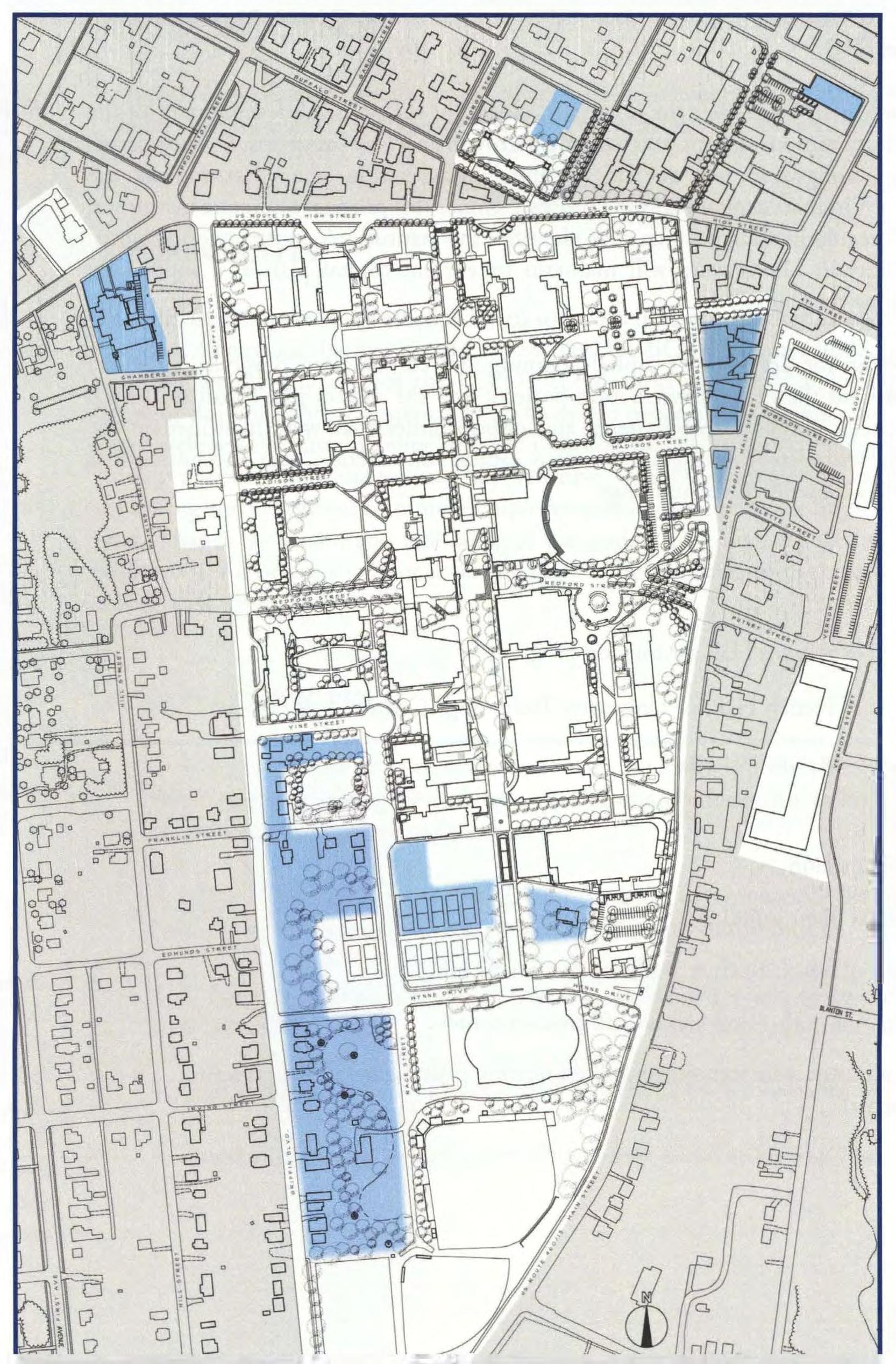
Monitoring andUpdatingthe
Theuniverseoffactorsthataffectthiscampusmasterplanisshown inFigure#89.Eachfactormustbecontinuouslymonitored; asignificantchangeinanywillrequireananalysisofpotential impactonthemasterplan.
AreviewofeachofthefactorsinFigure#89shouldbeconducted everytwoyears.AreviewoftheentireCampusMasterPlan isstronglyrecommendeduponcompletionof50%ofthe supportingcapitalplanand/oratthemid-pointoftheplanning period(6thyear),whicheveroccursfirst.
Figure#89

IITheCampusMasterPlanningProcess 9
Figure#1MasterPlanningProcessDiagram IIILongwoodUniversity...............
Figure#2VirginiaStateMap
Figure#3FarmvilleMap
Figure#4VicinityIdentification
Figure#5HistoricDistrictsandFloodPlains
Figure#61985MasterPlan
Figure#71991MasterPlan
Figure#82001MasterPlan
IVTheExistingCampus..............................21
Figure#9TownofFarmville
Figure#10ExistingLandUse,PrimaryCampusProperty
Figure#11ExistingFloorAreaRatios
Figure#12FloorAreaRatioDefined
Figure#13ExistingBuildingAdjacency
Figure#14GeocodedAddressesofCampusPopulation
Figure#15ExistingPedestrianCirculation
Figure#16PedestrianConflictsWest
Figure#17PedestrianConflictsEast
Figure#18ExistingGreenSpaceandDensity
Figure#19ExistingCampusVehicularCirculation
Figure#20ExistingCampusParking
Figure#21ExistingPedestrian/VehicularConflict
Figure#22ExistingHousing
Figure#23ExistingRecreationandSportFacilities
Figure#24ExistingEntrances,Gateways,andBoundaries
Figure#25ExistingInfrastructure,Water,andSewer

Figure#27ExistingSpaceByCategory
Figure#28EnrollmentProjections
Figure#29SustainabilityGoals VIDevelopment
Figure#30AreasofOpportunity
Figure#31Development,Entrances,Gateways,andBoundaries
Figure#32Development,Land,andBuildings,Library
Figure#33Development,Land,andBuildings,One-Stop
Figure#34PreliminarySketch,Lankford
Figure#35Development,Land,andBuildings,Lankford
Figure#36PreliminarySketch,StudentUnion
Figure#37Development,Land,andBuildings,Dorrill
Figure#38PreliminarySketch,Dorrill
Figure#39Development,LandandBuildings,PublicSafetyand UniversityServices
Figure#40PreliminarySketch,PublicSafetyandUniversity Services
Figure#41LancerParkProposedAccess
Figure#42OptionA,HighStreet
Figure#43OptionA,RaceStreet
Figure#44OptionB,RaceStreet
Figure#45OptionA,MadisonStreetCongestion
Figure#46OptionB,MadisonStreetCongestion
Figure#47OptionA,MadisonStreetTruckTraffic
Figure#48OptionB,MadisonStreetTruckTraffic
Figure#49VenableStreetandSouthMainStreet
Figure#50SpruceStreetandRadfordStreet
Figure#51TrafficCalmingOptionA
Figure#52TrafficCalmingOptionB
Figure#53PotentialParkingSites
Figure#26ExistingInfrastructure,Steam,Electrical,andTelecom VFutureCampusRequirementsandPreferences
Figure#54ProposedPedestrianPathsandZones
Figure#55ProposedPedestrianImprovements
Figure#56PedestrianCrossing
Figure#57PreliminarySketch,ResidentialC
Figure#58PreliminarySketch,ResidentialD
Figure#59PotentialHousingDevelopmentSites
Figure#60Development,Land,andBuildings,ConvocationCenter
Figure#61PreliminarySketch,ConvocationCenterA VIITheFinalPlan
Figure#62FinalPlan,Landscaping,Entrances,andBoundaries
Figure#63FinalPlan,LandUseAnalysis
Figure#64FinalPlan,FloorAreaRatios
Figure#65FinalPlan,BuildingAdjacency
Figure#66FinalPlan,BuildingProjectSummary
Figure#67FinalPlan,VehicularCirculation
Figure#68ExistingEmergencyServiceAccess
Figure#69ProposedEmergencyServiceAccess
Figure#70FinalPlan,LancerPark
Figure#71FinalPlan,WalkingCircles
Figure#72CurrentandProposedFarmvilleAreaBicycleNetwork
Figure#73ProposedFarmvilleAreaBicycleRoutesbyType
Figure#74ProposedBicyclePlanOn-campus
Figure#75FinalPlan,OpenSpace,andPedestrianCirculation
Figure#76FinalPlan,Housing
Figure#77FinalPlan,PossibleAdditionstoLongwoodVillage
Figure#78ModelRendering,Housing
Figure#79ModelRendering,ConvocationCenter
Figure#80FinalPlan,Recreation,andAthletics
Figure#81FinalPlan,LongwoodGolfCourse
Figure#82FinalPlan,Infrastructure
Figure#83HullSpringsFarmRecomendation
Figure#84FinalPlan,Sustainability,Water
Figure#85FinalPlan,Sustainability,MaterialFlows
Figure#86FinalPlan,Sustainability,Energy
Figure#87FinalPlan,Sustainability,Transportation
VIIIImplementation
Figure#88ProposedPropertyAcquisition
Figure#89MonitoringandUpdating
LIST
OFTABLES
NTheExistingCampus............................21
Table#20.1ExistingandFutureParkingDemand
Table#20.2FutureParkingShortfall
Table#25.1FutureBuildingStormSewerSummary
Table#26.1FutureBuildingSteamSummary
Table#26.2FutureBuildingElectricSummary
VFutureCampusRequirementsandPreferences 41
Table#27.1ExistingSpaceBySpaceCategory
Table#27.2SpaceRequirementsByCollege/Unit
Table#27.3SpaceRequirementsByCategory
Table#27.4IssueIdentifyingMatrix
Table#28.1StudentEnrollmentProjections
Table#28.2Faculty/StaffProjections
VIDevelopmentofthePlan......
Table#53.1ParkingReconciliation
Table#59.1FutureStudentHousingRequirements
VIITheFinalPlan
Table#31.1WayfindingSignTypeDescriptions

LIST
OFREPORTS
OtherplanningdocumentswereusedinthecompilationofthisMaster Plan.Completeversionsofthesedocumentscanbeaccessedthrough theuniversitywebsiteorLongwoodUniversityFacilitiesManagement office.
1.CarterBurgess.CampusWideFacilitiesConditionAssessment. Arlington,VA:2007.
2.MartinAlexiuoBryson.LongwoodUniversityMasterPlan,Farmville, VA,CampusTransportationElements.Raleigh,NC:2008.
3.MoseleyArchitects.LongwoodUniversityCampusSustainability AssessmentandLong-termGoalSetting.Richmond,VA:2008.
4.Paulien&AssociatesIncorporated.SpaceNeedsAnalysisand PlanningfortheMasterPlanatLongwoodUniversityDenver,CO: 2008.


PERSONNEL
President'sCabinet
Dr.PatriciaCormier
President
Ms.BrendaAtkins
ExecutiveAssistanttothePresidentforGovernmentalAffairsandSpecial Projects
MrRichardBratcher
VicePresidentforFacilitiesandRealProperty
Ms.DianeEaster
SpecialAssistanttothePresidentandDirectorofEventsandCeremonies
DrWayneMcWee
ProvostandVicePresidentforAcademicAffairs
Dr.FrankMoore
VicePresidentforInformationandInstructionalTechnology
DrKennethPerkins
ExecutiveAssistanttothePresidentforStudentSuccess
DrTimPierson
VicePresidentforStudentAffairs
Mr.CraigRogers
VicePresidentforUniversityAdvancement
Ms.KathyWorster
VicePresidentforAdministrationandFinance
SteeringCommittee
Mr.RichardBratcher
VicePresidentforFacilitiesandRealProperty
Mr.KenCopeland
ExecutiveDirectoroftheLongwoodUniversityRealEstateFoundation
Dr.FrankMoore
VicePresidentforInformationandInstructionalTechnology
Dr.TimPierson
VicePresidentforStudentAffairs
Mr.CraigRogers
VicePresidentforUniversityAdvancement
Dr.WayneMcWee
ProvostandVicePresidentforAcademicAffairs
MrJ.WWood
DirectorofCapitalPlanningandConstruction,andUniversity
Architect
Ms.KathyWorster
VicePresidentforAdministrationandFinance
UniversityMasterPlanTeam
Mr.RichardBratcher
VicePresidentforFacilitiesandRealProperty
Mr.R.WJerome
CampusMasterPlanCoordinator
Ms.KellyA.Martin
AssistantCampusMasterPlanCoordinator
Ms.LouiseWaller
SpacePlanningandRealPropertyManager
PLANNINGANDDESIGNTEAMS
MasterPlanning
MoseleyArchitects
DavidHarnage
DirectorofHigherEducation,VicePresident

EdwardPawlowski
SeniorAssociate
NicoleWarmsley AssociateAIA
PlanningConsultants
Paulien&AssociatesIncorporated
KateHerbolsheimer
Associate EngineeringConsultants
PattonHarrisRust&AssociatesEngineering
JohnRenoPE
SeniorProjectEngineer
RMFEngineeringIncorporated
StephenE.McAdamsPE
Associate
OlegShifrin
DesignEngineer
TransportationPlanningandTrafficEngineering Consultant
MartinAlexiouBryson
GeorgeAlexiou,PE
Principal
AdamWroblewski
Associate