





BY NELSON MORAIS STAFF WRITER
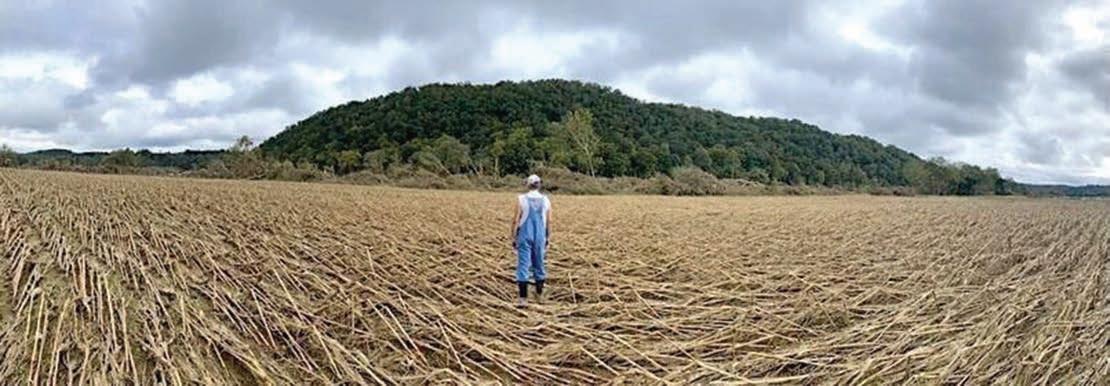
Farmers with land along the Nolichucky River continue to recover from the devastating remnants of Hurricane Helene in September 2024.
Hundreds of acres of farmland were affected by the storm in late September of that year.
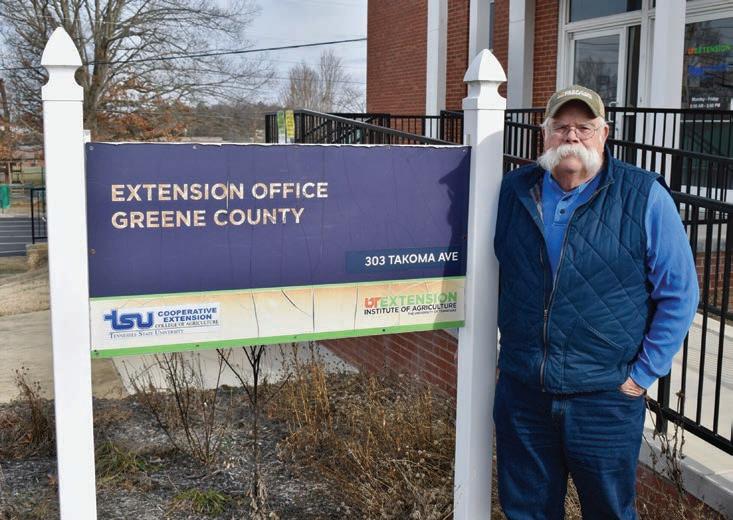
Milton Orr, extension agent for University of Tennessee Extension Greene County, said in a February interview that he “guesses” at least 1,000 farmers in Greene County were impacted severely by the flooding river. He said that was his estimate, noting there has been no official count done of the number of affected farms.
From the week following the flood on Sept. 27, 2024 through March of the following year, the Greene County Fairgrounds was open 2-4 days a week with donated supplies that were handed out to affected farmers.
The effort was manned by volunteers with the local UT Extension Office and the Greene County Livestock Association.
Orr estimated the following items were donated by businesses, farmers and other individuals from 11 different states, including some from as far away as Arizona, Wisconsin and New Jersey: around 4,000 round bales, over 6,000 square bales of hay and straw, over 100 tons of bagged feeds, about $65,000 worth of fencing supplies, 20 tons of what he called “taco flour,” and “lots” of other items.
Orr said when the first load of donated items came in on a truck – the 20 tons of taco flour – volunteers at the Fairgrounds dutifully unloaded and stored it, but were puzzled initially what to do with it.
Stated Orr, “It turns out chickens and pigs love taco flour,” and it was eventually all distributed.
On one Saturday of the month following the storm, about 66 trucks, mostly 18-wheelers, formed a convoy and arrived at the Fairgrounds with supplies.
The Tennessee Highway Patrol had to shut down part of Highway 11E to allow the caravan to reach Greeneville, Orr recalled.
The farmers’ biggest challenges the year following the storm were crusted soils, which made the planting of small seeds like fescue almost impossible to break through them, Orr said.
“Big seeds like corn and soybeans tended to be able to break the crust, so we encouraged that for summer crops” last year, Orr stated.
In areas where big-seeded crops were planted, which broke up the crusted soil, farmers then successfully returned to planting smaller seeds like fescue and wheat, he explained.
“The ones I’ve seen lately look really good,” he said of winter crops.
Orr said, however, some farmers continue to face what he called “a temporary challenge” of farms that remain saturated with water and need drainage work.
Orr said the Natural Resources Conservation Services, a division of USDA, “has done a great job in getting some of these fields back in shape” by moving soil, improving drainage and helping farmers stabilize stream banks.
Summarized Orr of the effect of the remnants of Hurricane Helene on area farms, “You couldn’t understand the complete devastation until you walked around in some of these places.”
However, he boasted on local farmers, saying they are made of “grit and steel. The resiliency of these farmers just amazes me,” Orr stated.
John Ottinger Jr. said in an interview this year that about 45 acres of his 250-acre farm on the river was damaged during the storm, which included corn and soybean crops. He stated he lost close to 100 additional acres on farm land that he leases.
Ottinger said in the February interview, “We’re still farming. We’ve got most of the land back where we can use,” though a few drainage ditches might still need to be built.
He stated, “We didn’t lose any land to erosion. We gained more silt and sand. We removed the sand, or all that we could.”
Ottinger said that during the storm, some corn that was not flooded was blown over by heavy winds. His cattle were on higher ground and fenced in, and he stated that he did not lose any hay.
Ottinger and his brother, Jake, said a massive debris field about one-quarter mile long washed into a creek on their property. They stated it was almost 50 feet wide and 30 feet tall.
Ottinger said they had to remove mud from the barn, and were able to clean up the equipment that was stored in it.
The barn got picked up by the storm and ended up about 4 or 5 feet further away, according to Ottinger. They were able to bolt posts under it and are using it now, he said.
He said in an interview shortly after the 2024 storm that he estimated the crops he lost had a market value of around $100,000, and they did not have insurance.
He stated in February of this year, “Financially, we’ve not bought anything. We pinch pennies.”
Ottinger works the farm full-time with his father, Johnny Ottinger. His brother Jake and a nephew

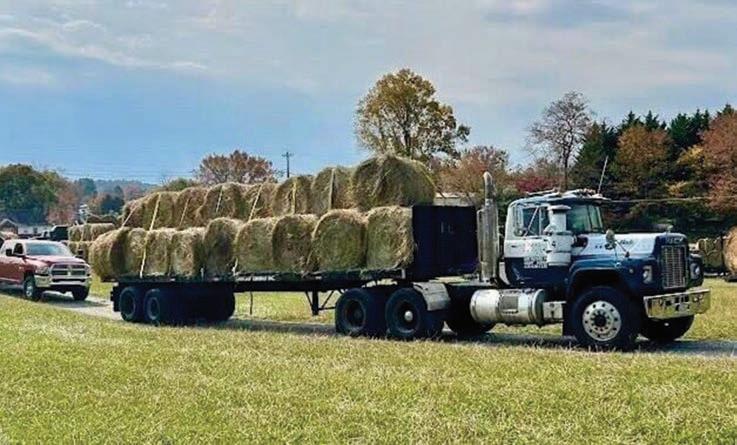
Farmers Helping Farmers, an ad hoc, grassroots movement of farmers based in Claiborne County wanting to help farmers in storm-affected areas, brought an estimated 750 bales of hay and other supplies to distribute to hurting Greene County farmers soon after Hurricane Helene hit the region in September 2024. The bales of hay and supplies were stored at the Greene County Fairgrounds for distribution.
who attends South Greene High School assist him on a part-time basis, as they can.
Ottinger said he planted cover crops on 45 acres of the farm for the most recent winter months: wheat, rye, winter peas and crimson clover. He also planted about 5 acres of radishes.
With some hesitation in his voice, Ottinger said, “Overall, we’ve recovered” from the remnants of Hurricane Helene.
Kyle Wills owns 77 acres of farm land on Poplar Springs Road, along the Nolichucky River adjacent to the Easterly Bridge.
He said in a phone interview February that, “Very frankly, I’ve had a terrible, terrible time getting into my property.” Despite attempts to get it fixed, his driveway remains washed out, he
stated.
Wills said the remnants of Hurricane Helene took down his barn, a tractor, feeders and a concrete silo full of corn silage that was washed away by the river when it flooded.
He stated that about 240 round bales of hay on his farm washed away, as well. Will estimated the river reached about 8-10 feet high on his farm, covering it completely.
“It was rough,” he recalled of the devastation.
“I didn’t lose a lot of cattle. They can swim a lot better than we think,” he said.
When the Easterly Bridge came down, it changed the river’s path and washed away roughly 2-4 acres of his shoreline property, Wills said.


BY AMY ROSE STAFF WRITER
The number of agritourism business in Greene County continued to grow in 2025.
Agritourism is a unique blend of agriculture and tourism that invites the public to farms for education, entertainment, and other festivities.
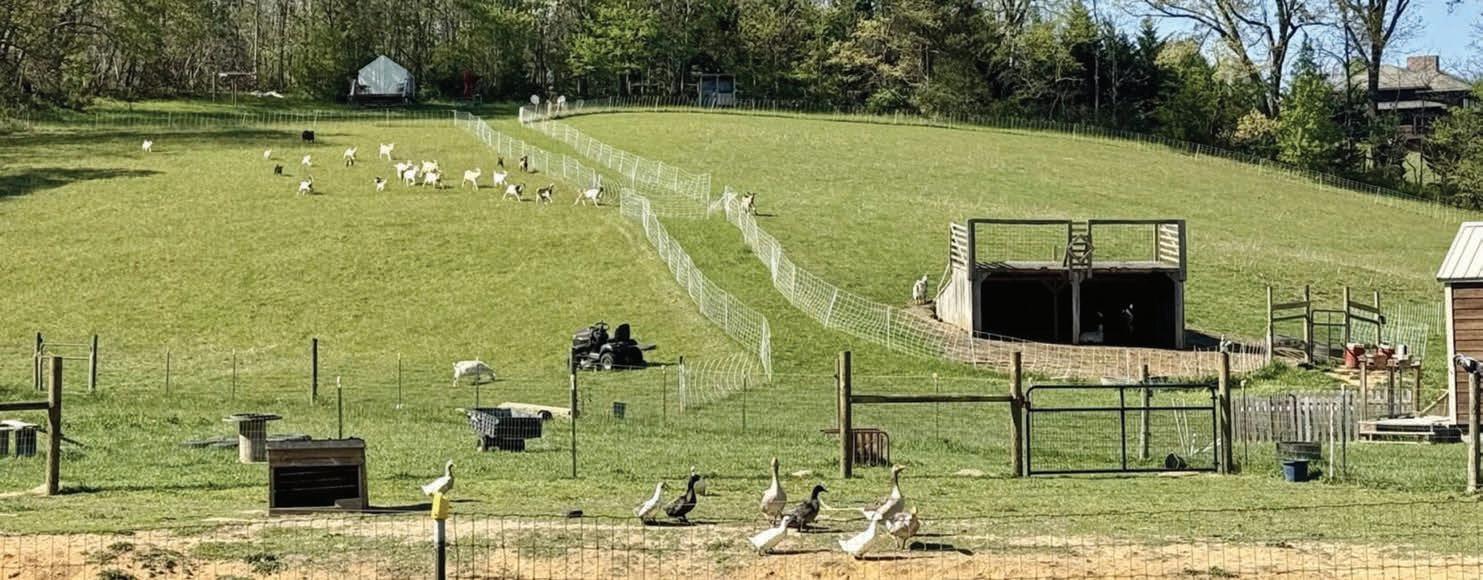
Some farms offer the opportunity to pick produce and pet livestock,
and some offer corn mazes, hayrides, and other fun activities.
Perhaps the most established agritourism farm in the region is Myers Pumpkin Patch in Bulls Gap.
The fifth-generation Myers Farm has been an agritourism innovator in east Tennessee since the 1990s. Vera Ann Myers was the first president of the Tennessee Agritourism Association and
April

remains active in the organization, which promotes agritourism offered by farms across the state.
Some of the newest active agritourism ventures in Greene County include: DMD Family Farm, 10210 Warrensburg Road in Midway; The Funny Farm, 4957 Old Stage Road, Chuckey; Gnome Hollow, 1000 Mt. Hebron Road; Little Lou’s Creamery, 1028 Wilhoit Road, Chuckey; Maple Grove Farms, 610 Jud Neal Loop, Afton; and Rock Batter Farm, 710 Tabor
Road.
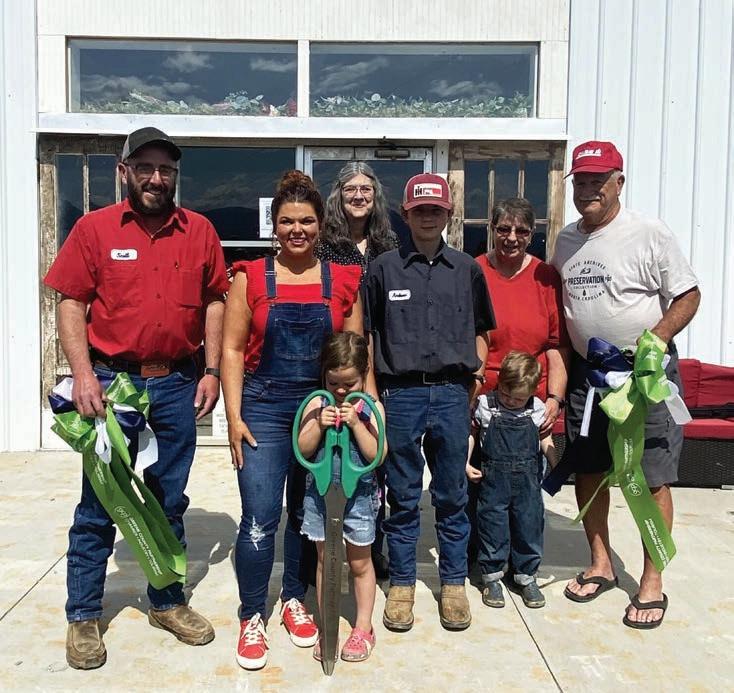
Several local farms participated in the new Hay Bale Trail organized in fall 2025 by the Greene County Partnership. Motorists could drive all across the county to see elaborate displays using hay bales.
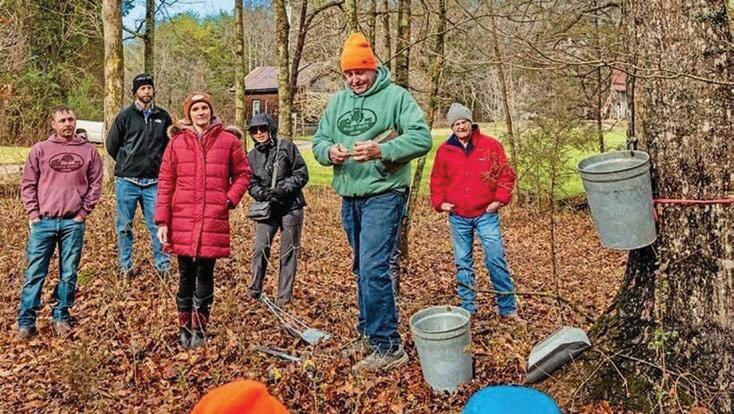
Maple Grove Farms, and syrup farm, created a display that resembled a stack of pancakes. For more information on agritourism, visit tennesseeagritourism.org .
BY AMY ROSE STAFF WRITER
Future Farmers of America (FFA) chapters in Greene County thrived in 2025 with a local student being elected state president, a barn being built at a local high school, and several other accomplishments and awards at the state and national level.
Weston Brown, a fifthgeneration Mosheim farmer, was a senior at West Greene High School when he was elected statewide president during the 97th Tennessee FFA State Convention & Expo at Gatlinburg Convention Center.
“It was like nothing I’ve ever felt before because I’ve been working so hard since I was a freshman to achieve this goal,” Brown said. Brown is the second Greene Countian to be elected to the office in 97 years and the first in nearly 80 years. The now-late Max Cobble was a student at Mosheim High School when he was named state FFA president in 1946-47. According to his obituary, Cobble also served as National Secretary of FFA.
Becoming a leader in the FFA organization is no easy task, and to become state president, Brown had to complete a strenuous, multi-faceted process.
He had to participate in three separate interviews during the state convention.
A leadership interview was conducted by a panel that included the state commissioners of agriculture and education, Brown noted.
Another interview focused on agricultural issues like bird flu and the price of eggs, and federal funding for agriculture through the American Relief Act, Brown recalled.
The third interview was in a group setting with other candidates for office, Brown said.
In addition to the interviews, a nominating committee evaluates the candidates’ credentials and capabilities based on a number of elements including an application submitted by each candidate, a knowledge exam, and a letterwriting exercise.
As state president, Brown said he will try his best to make an impact on the lives of Tennessee’s record number of 33,508 FFA members.
He recalled the moment he was announced as the new state president, saying he felt “a rush of nervousness and also relief when my name was called.”
He said he was in the back of the room when all the other officers had been announced, so he briefly thought he wasn’t going to get elected.
Then, he heard the announcer say “West Greene,” and he instantly realized he had gotten the position.
When his name was called, the audience cheered and upbeat music played while Brown ran to the stage in tears and was greeted by a group hug from fellow FFA members.
Beef production is Brown’s Supervised Agricultural Experience (SAE), an integral part of FFA education.
Through SAEs, students work with their instructors to complete work-based learning experiences.
Brown actually has had two SAEs, an extraordinary accomplishment. His second specialty is related to his work with honey bees.
Brown said he plans to attend college and major in agriculture

education. He has since enrolled at Tennessee Tech University in Cookeville. He hopes to teach agriculture in Greene County or the surrounding area so he can stay close to the family farm.
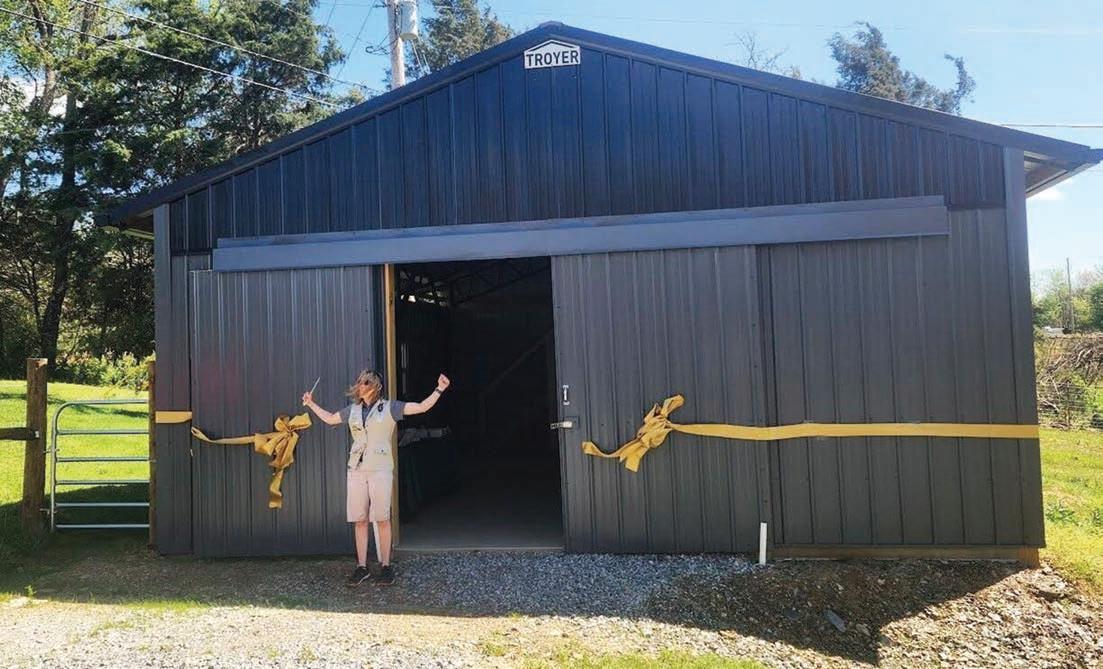
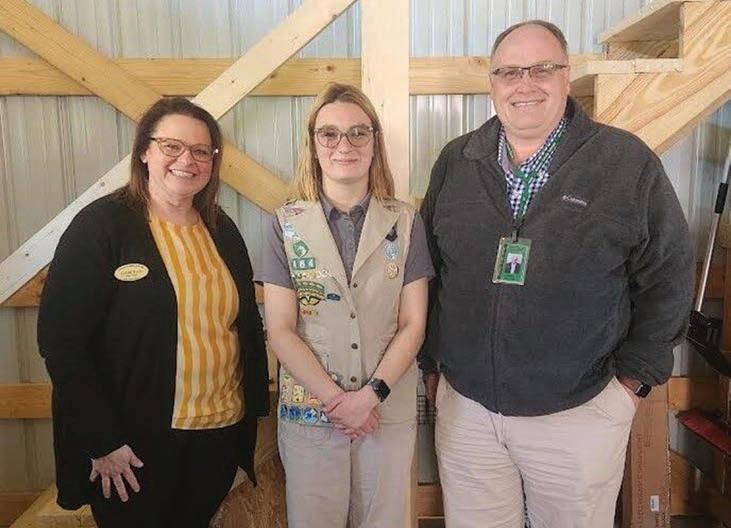
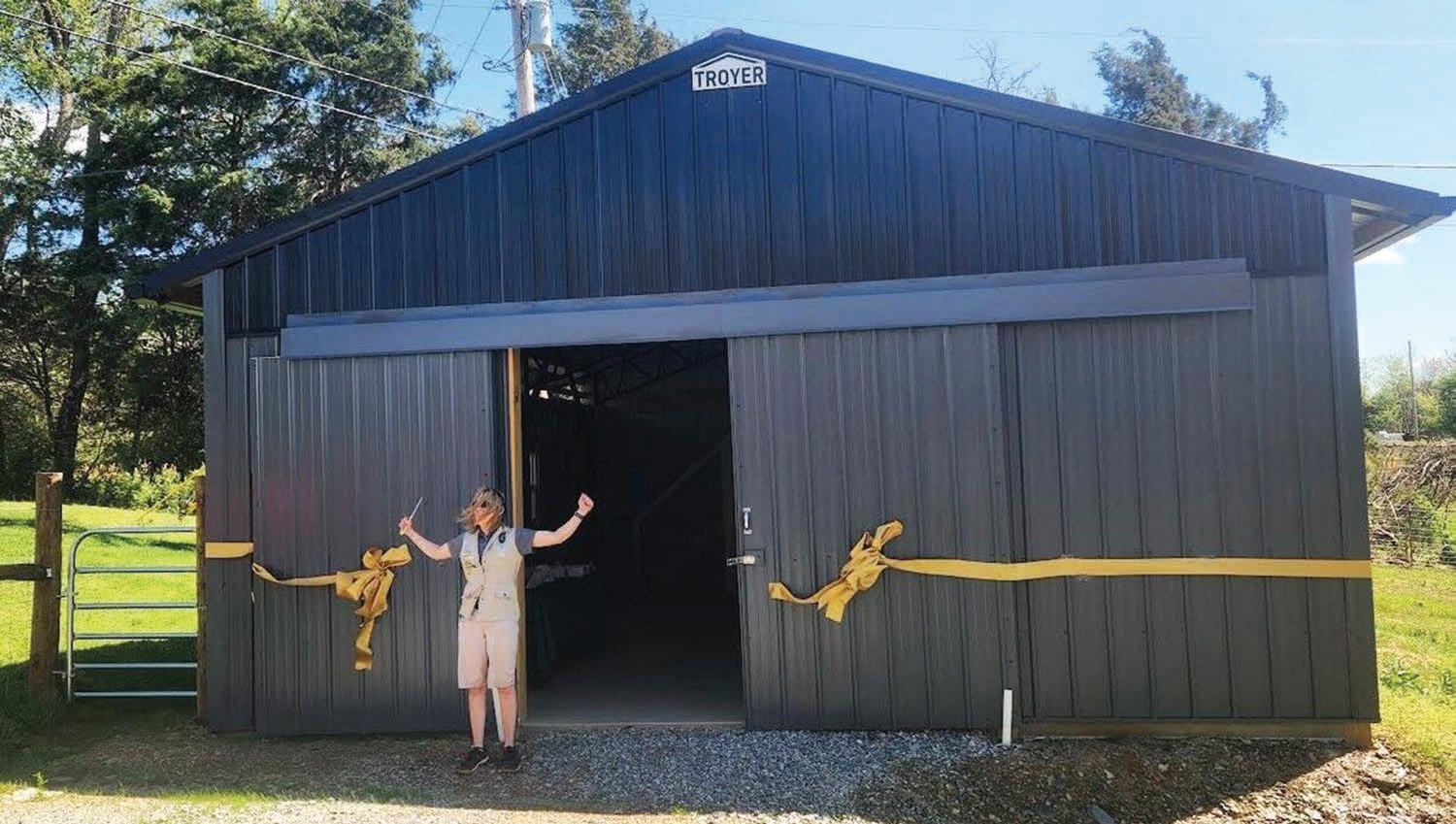
At South Greene High School, a new barn was built for the FFA program through the Girl Scout Gold Award project of Reese Ottinger, who graduated in 2025.
SGHS Principal Lori Wilhoit described Ottinger’s work as a legacy project for the school.
“Reese has literally made a lasting impact on South Greene,” Wilhoit said. “She is an amazing young woman. Her contribution to our Agriculture program and school will impact students for decades to come.”
Ottinger’s yearlong project was approved by the Greene County Board of Education in February 2024 when she presented plans for a 20-foot by 30-foot barn.
In a PowerPoint presentation, Ottinger showed the school board photos, digital renderings, and a floor plan of the barn, to be located near the school’s greenhouses.
The barn includes birthing pens, a feeding area, feed storage area, hayloft, and sliding doors. The project also included installation of a new fence, so animals using the barn can graze.
Ottinger told the school board the project was estimated to cost $10,000 to $20,000.
Ottinger said the project was made possible through donations of money and materials and a spaghetti supper fundraiser, which was held in May 2024.
Ottinger is attending the University of Tennessee at Martin and majoring in animal science.
Emma Grace Meadows, a student at North Greene High School, received the State Star Greenhand award during the state FFA convention in Gatlinburg.
The award recognizes a

first-year FFA member who demonstrates strong involvement in the organization, an exceptional SAE program, and a dedication to hard work.
Each FFA chapter in Tennessee can submit one applicant for the award each year.
The Tennessee FFA Association
consists of more than 33,000 members from nearly 250 chapters.
To be eligible for the State Star Greenhand award, students must have earned the Greenhand degree at the chapter level and participated in at least five FFA

activities at the chapter level and at least two FFA activities above the chapter level.
Entries are judged on a point system of 150 points, including 100 points for the application, 25 points for an exam, and 25 points for an interview.
The application includes a personal history portion, written in essay style.
Meadows’ SAE is diversified livestock production. She farms goats and sheep in the Ottway community.
Chuck Michel, FFA advisor at North Greene, spoke highly of Meadows, describing her as a “phenomenal young lady” and “very driven” with a knack for connecting with her peers to share her love of agriculture with others.
The North Greene FFA Dairy Evaluation Team placed first in the Tennessee State Dairy Evaluation held Aug. 21 in Lebanon.
The team consisted of Meadows, Jackson Britton, Hayden Cooter, and Erin Casteel.
Meadows placed first in individual score, followed by Castle placing third, Britton placing fourth, and Cooter placing seventh.
Meadows placed first in the state Creed Speaking competition.
North Greene also placed in the silver division in both Dairy Evaluation and Creed Speaking in the national FFA convention held in October in Indianapolis, Indiana.
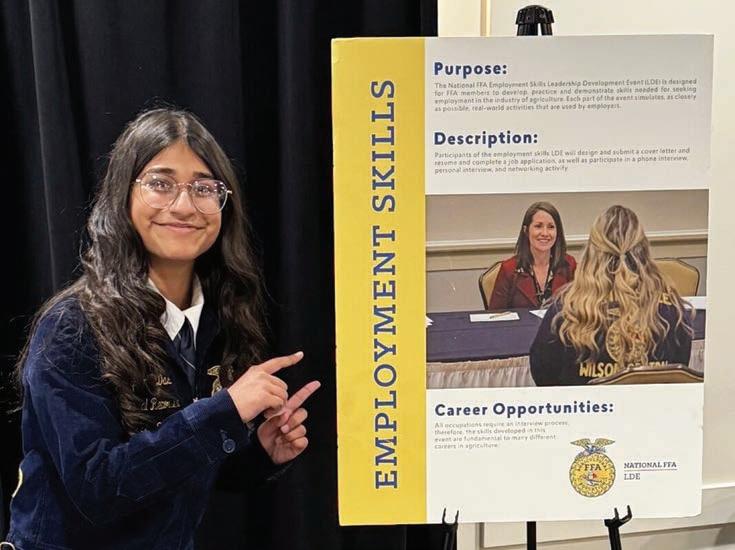
Also placing in the silver division at the national level was Sapana Das, a student at Chuckey-Doak High School, Das competed in the Employment Skills Leadership Development Event (LDE) and finished 27th in the nation after she placed second at the state convention.
The Employment Skills LDE challenges students to prepare a professional résumé and cover letter, complete a job application, participate in a rigorous mock interview, and demonstrate strong workplace communication skills.
“We are incredibly proud of Sapana and the effort she put forth to represent our chapter on the national stage,” said chapter advisors. “Her accomplishment is a testament to her commitment to excellence and her bright future ahead.”
Three local residents were awarded the Tennessee FFA Honorary State Degree during a formal ceremony at the State FFA Convention.
In recognition of their outstanding service and lasting impact on FFA programs in Greene County, honorary degrees went to George Clemmer, Kathy Clemmer and David McLain
The Honorary State FFA Degree is one of the highest honors bestowed by the Tennessee FFA Association, a press release from the Chuckey-Doak High School FFA chapter said.
It recognizes individuals who have provided exceptional service to agriculture, agricultural education, and the FFA organization, going above and beyond in their support and advocacy, the press release said.
The Clemmers have been longtime champions of youth in agriculture, offering decades of support through volunteering, mentoring, and helping facilitate opportunities for FFA students in Greene County. Their dedication has touched the lives of countless students, from organizing







BY AMY ROSE STAFF WRITER
The award-winning Greene County Fair celebrated its 75th anniversary in 2025 with new events, record attendance, and a fireworks show to end the week of festivities.
“Growing Greene for 75 Years” was the theme of the 2025 fair which began in 1949 as the “Greene County Agricultural Fair.”
Two leaders of the local fair received special recognition in January 2026 at the annual convention of the Tennessee Association of Fairs in Murfreesboro.
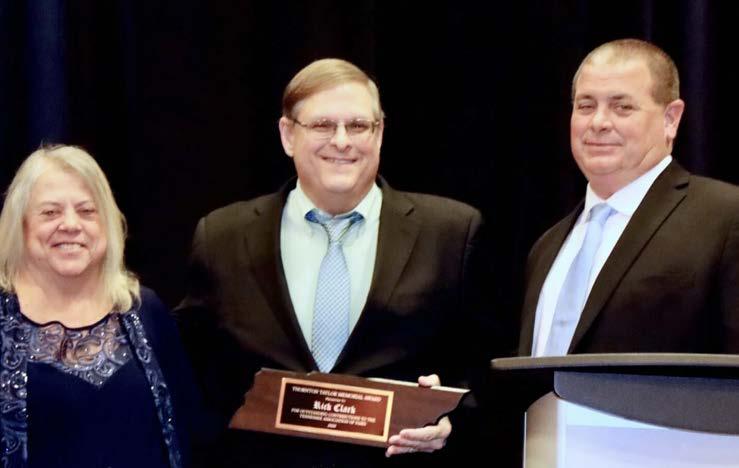
Rick Clark, board president, was awarded the Thornton Taylor Award for Outstanding Dedication to Fair programs in Tennessee.
Rhonda Humbert was appointed as the state president of the Tennessee Association of Fairs.
Humbert has been involved with the Greene County Fair for over 37 years and has served on the fair’s board of directors for over 30 years.
She currently serves as the 1st Vice President on Greene County Fair Board. Her responsibilities include chairman of the Fairest of The Fair committee as well as chairman of the fair’s entertainment, carnival, and grounds rental committees.
For the Tennessee Association of Fairs Board of Directors, Humbert has served on various committees and as an East Tennessee director for two terms — 2013-2015 and

2017-2019.
75TH ANNUAL FAIR
For the six days of the 2025 fair, 33,912 people attended, up about 2,000 over last year and the highest in about 20 years, according to Clark.
Opening night, July 21, saw the crowning of the 2025 Miss Fairest of the Fair, Riley Rhea, and the welcoming of past winners, including the first Miss Fairest of the Fair in 1958, Mary Jo Solomon Slagle
Clark said 4,859 people attended the fair on opening night, a 22% increase in attendance from the previous year’s opening day.
A special “Parade of Champions” was held Monday evening that featured past Fairest of the Fair winners, and Faye Collier, who is believed to be Greene County’s oldest resident.
The Greene County Partnership held a ribbon-cutting ceremony



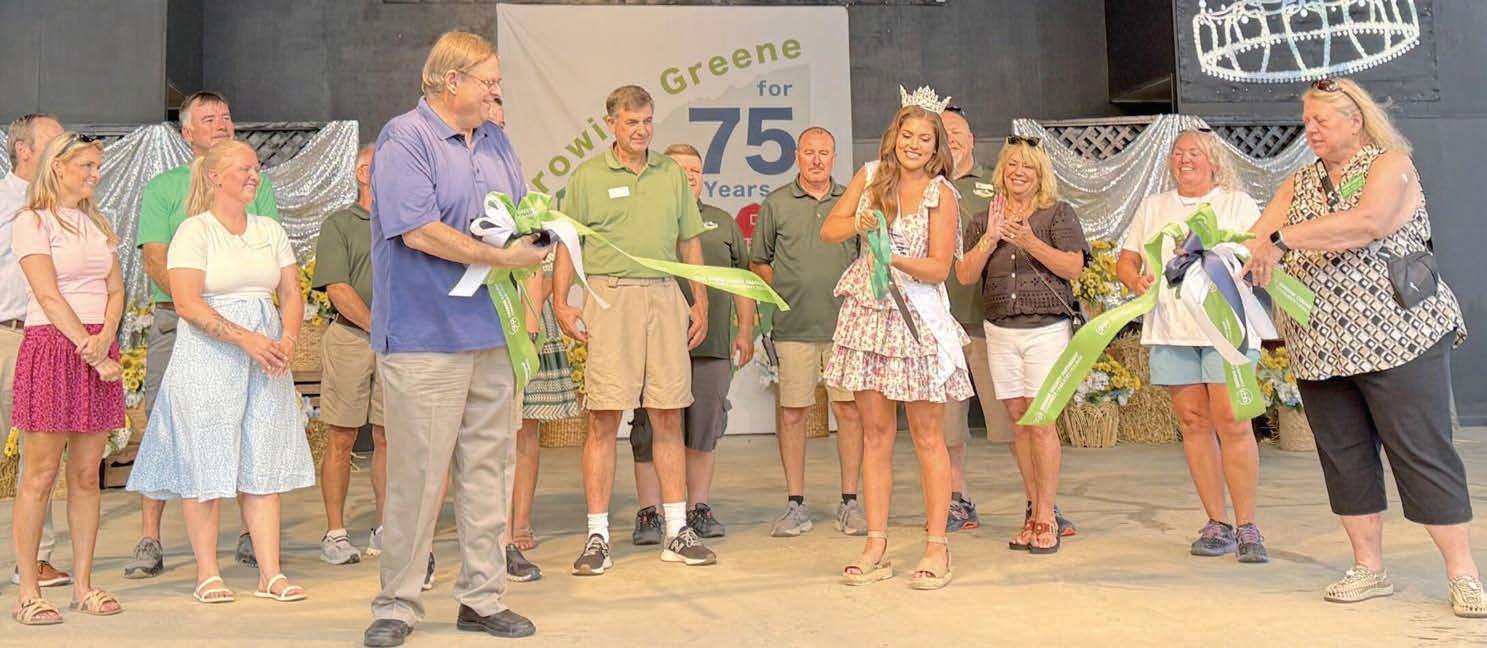
A
Monday evening.
Greene County Partnership
President Jeff Taylor the fair helps keep Greene County’s history of agriculture alive.
“Thank you Fair Board for all that you do in our community for keeping agriculture, agribusiness and agriculture education first and foremost in our county,” Taylor
From RECOVER | page C2
Wills said a cab tractor in his barn rolled “over and over and over,” at least 1,500 feet, during the flooding. “One more turn, and it would have been on” his neighbor’s farm, he said.
Even now, he said, “I have to drive an extra 4 or 5 miles to get to my farm … It’s really hurt me financially.”
Wills, who is in his late 80s, said he had the property about 50-60 years.
“It was one of my favorite farms because it was adjacent to the river,” he said.
Since the storm, he has put in a new barn.
“It’s just not over yet,” Wills said of being restored to the pre-storm status of the farm.
Rocky Ottinger (no relation to John
said on opening night. “It’s part of our culture, it’s part of our history and we’re glad to be part of this celebration tonight.”
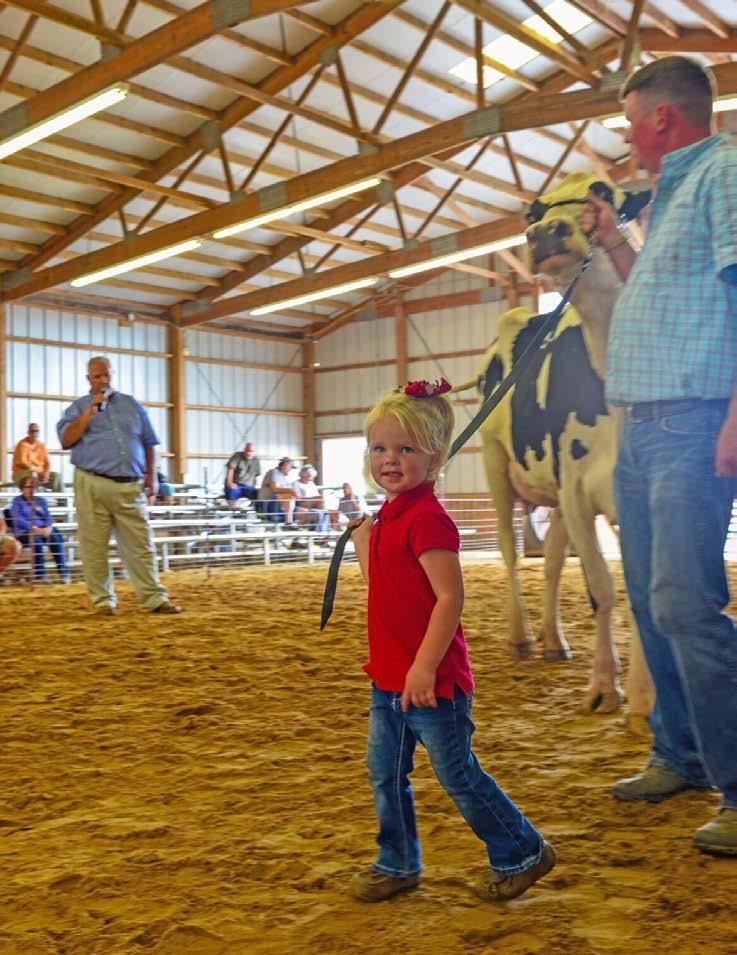
In addition to livestock shows and other agricultural exhibits, the annual fair features a wide variety of festivities, from demolition derbies to musical entertainment, and a midway filled with thrill rides and carnival games.
Ottinger) said he had about 85 acres of farmland get flooded during the storm. He said 4 or 5 acres of it was “unrecoverable, washed away.”
Ottinger stated that 1.25 acres of trees on his farm “went down the river” during the storm, but he has planted “some” trees since then.
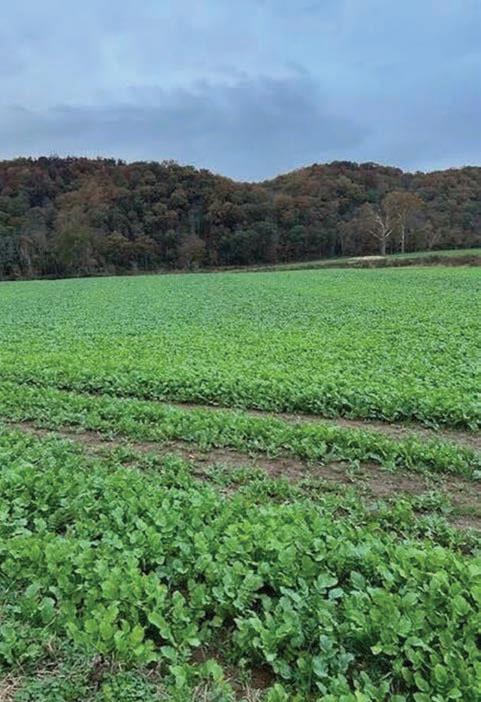
Ottinger said that 6 acres of pasture were “really flooded,” and only able to be reused beginning in July of 2025.
He said during the most recent winter, he planted 10 acres of wheat, “which seems to be doing fairly good.”
Since the September 2024 storm, Ottinger also put in 3,000-4,000 feet of fences that had been destroyed. Soybeans have been planted on 31-32 acres of the farm.
He said, “The University of Tennessee people did
A 60-pound birthday cake celebrating 75 years of the fair was sliced and handed out to fairgoers on Wednesday.
2025 also saw several upgrades to the Greene County Fairgrounds, including renovations to the commercial exhibit building and to the skybox at the Jim Saulsbury Motorsports Arena.
The Greene County Fair was
soil testing and gave us seed for 21 acres, so that helped us.
named 2024 Champion of Champions Fair by the Tennessee Association of Fairs.
The 76th annual Greene County Fair is scheduled for July 20-25.
For more information on the local fair, visit www. greenecountyfair.com or www. facebook.com/GreeneCountyFair. com .
“It’s been a long year,” Ottinger recalled, but added,
“A lot of people got hit a lot worse than us.”





events to ensuring members had the resources they needed to succeed, the press release said.
McLain, a devoted advocate for agriculture education, has played a critical role in fostering the growth of FFA programs throughout the county. His commitment to student leadership and hands-on agricultural learning has left a lasting legacy in the community, the press release said.
Several local FFA students got to see Gov. Bill Lee sign the Farmland Preservation Act in July while visiting the historic Rocky Field Farm in Afton.
For more information on each of the local FFA chapters, visit their Facebook pages: