OTTAWA’S FASTEST-GROWING COMPANIES FOR 2026
OBJ CELEBRATES 30 YEARS

OTTAWA’S FASTEST-GROWING COMPANIES FOR 2026
OBJ CELEBRATES 30 YEARS
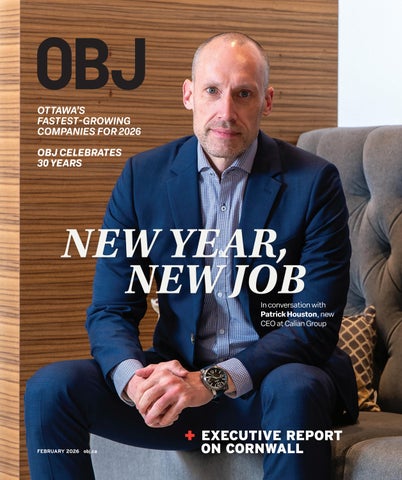
In conversation with Patrick Houston, new CEO at Calian Group
+ EXECUTIVE REPORT ON CORNWALL
Mark Motors Group delivers an unmatched selection of premium and performance vehicles, paired with service that redefines the dealership experience. From purchase to maintenance, our expert team ensures a seamless journey and exceptional care. Representing world-renowned brands, Mark Motors is Ottawa’s trusted destination for drivers who expect more.



Be part of a strategic initiative designed to mobilize the resources necessary to drive positive, long-term outcomes in city-building decisions.
Premium Access: Enjoy priority access to high-profile events, valueadded sponsorship opportunities, and exclusive networking and policy forums.
Strategic Recognition: Gain visibility across the community, with brand recognition on OBOT materials, at events, and through highimpact signage and acknowledgments.
Influence and Engagement: Secure a seat at decision-making and thought leadership tables, positioning your business at the forefront of regional transformation.
Strengthening Our Collective Voice: The Pillar Partner program aims to establish a best-in-class Board of Trade for Ottawa and the National Capital Region, amplifying the voice and influence of the business community. By uniting business and community leaders, we are creating a shared vision and actionable plan for the region’s sustainable economic prosperity.
Investing in Growth and Excellence: As a Pillar Partner, you’re not just supporting your business, you’re investing in the broader Ottawa community. Your commitment strengthens the local business environment, enhances workforce capabilities, and attracts clients, investors, and talent to our city.
Contact Kara Higdon, OBOT’s Director of Business & Community Partnerships, at kara.higdon@ottawabot.ca to learn more.
Thank you to our Pillar Partners:















PUBLISHER’S LETTER
As we mark the milestone of OBJ’s 30th anniversary, I need to get something off my chest: This is a weird business.
While it’s not rocket science, the media business involves complexities that few people consider. Strictly speaking, economists call this a two-sided market. Let me explain.
In the vast majority of businesses, the person consuming the product is the one who pays for it. That really isn’t the case in media.
In media, there are two vastly different customers and a church-and-state divide between them. The journalism side of the business produces the content, builds the audience and earns trust by following ethical guidelines. However, this audience doesn’t pay the freight.
That responsibility largely falls to marketing customers who want access to the audience.
Given your business savvy, let me go one level deeper. By definition, the two-sided market manifests itself internally with teams who are imperfectly aligned or sometimes opposed.
If I’ve left you scratching your head, let me bring this into focus.
OBJ exists today because of a delicate balancing act performed by many dozens of committed media professionals over 30 years. This includes the editors and reporters, the sales managers and account executives, the graphic designers and event planners, the marketers and distribution workers, and the admin and finance staff.
All of them navigating through an ever-changing and constantly disrupted media business. (If you want the inside story of OBJ, keep flipping pages until the 30th anniversary section.)
If you take this as a lament, you’ve mistaken my purpose. The media business, and OBJ by extension, is a glorious place to work. With all of its imperfections, it’s exciting and challenging.
Best of all is the opportunity to contribute to the community. To share stories. To explore issues. To help readers understand. To persuade leaders to tackle problems.
While OBJ has a balance sheet, it also has a social contract.
This beautiful new glossy magazine format is a demonstration of the need to constantly evolve. With its original features, sharp photography, clean design, this magazine format is a great fit for OBJ’s premium audience. This investment in our “flagship” magazine is intended to provide additional value to our subscribers, the OBJ Insiders.
Fully appreciating this digital world, changes are also coming to OBJ’s website with redesigned news article pages and a homepage that better reflects the totality of OBJ’s offerings. And because we can no longer trust social media intermediaries, stay tuned for an OBJ smartphone app, too.
On a momentous occasion such as this, my final words must be words of appreciation to three groups. First, to OBJers past and present, nothing is better than working with a great team. I’m so grateful for your talent and effort.
Second, to our valued marketing clients, thanks for your continued support and investment. We are committed to providing great value.
Finally, to you, dear readers, we appreciate your time and attention. It’s a privilege to serve you.
MICHAEL CURRAN PUBLISHER publisher@obj.ca


EDITOR’S LETTER
Twenty-three years ago, I arrived at the Ottawa Business Journal as editor. At that time, our main focus was producing a weekly newspaper. We had journalists, a researcher, a photographer. It was a busy newsroom. We also had a strange, new position: a full-time reporter who posted stories on a website. We regularly broke news about venture capital deals and real estate transactions — in real time, it seemed. I had never seen such a thing. None of us knew if it would catch on or make any money, but it was exciting.
And, as it turned out, extremely prescient. I had just come from a thriving community newspaper where digital news had barely been on the radar. And two years later I would leave OBJ to join a large media organization where it seemed impossible that the daily print product would ever be displaced by some website.
Well, I, along with many of my colleagues, paid the price for that misjudgment. Ultimately, I left the media, but I watched from the sidelines as the industry went into the throes of a digital transformation that continues to this day, with my beloved profession of journalism caught up in the middle of it.
Then, as life would have it, four years ago I returned to OBJ as editor. I arrived to find that our main focus was writing news on a website, producing email newsletters, and sharing content on social media. Cool. Except that … our quarterly newsmagazine languished (for many reasons — a pandemic didn’t help). It seemed sad. But, I thought, even a trad editor like myself had to move with the times.
And so you can only imagine how excited I was when we started talking about reviving our print product, calling it our “flagship” publication. Quality stock, original photography, gorgeous design, thoughtful features. It was music to my ears. But also scary. Could we do it? Would it make money? Would our readers like it? The digital-print balance for any media outlet remains precarious. A glossy (costly) publication seemed like a daring step in that ongoing dance.
Well, 12 months or so later, and here we are. I’m very proud to be sharing this publication with our readers. In the following pages, you’ll see our annual Fastest Growing Companies program gain new life. You’ll find engaging lifestyle stories aimed at an OBJ audience. And you’ll see colourful features about local businesses and businesspeople. All of this content is print-first, digital-second. It’s been quite the transformation.
And it’s been a team effort, just like in the olden days when all the functions of a news outlet would combine to create one great product. For you, our readers.
We hope you’ll join us in celebrating this achievement, especially as OBJ itself marks its 30th anniversary. It’s an amazing milestone that could not have been reached without the vision, skill and daring of so many OBJers, surrounded by the support of our community.
Enjoy,
ANNE HOWLAND EDITOR IN CHIEF editor@obj.ca



ESSENTIALS DATEBOOK
Mark your calendars for 2026 12
ICYMI
Don’t miss these web hits 14
MAKING AN IMPACT
It’s personal for Rumi Prince 92
THE LIST
Ottawa’s oldest companies 94
FEATURES A TASTE FOR TECH
Allan Zander’s passions combine 19
TECHOPIA
We talk to Calian’s new CEO 59
LIFESTYLE ALL THE RACKET
The new ‘net’ in networking 22
GAME GRUB
What’s hot to eat at the CTC 26
OBJ INSIDER SUBSCRIPTIONS
Ottawa Business Journal PO Box 91585 Ottawa, ON K1W 1K0 subscribe@obj.ca
OFFICE OF THE PUBLISHER 613-696-9491 publisher@obj.ca
OFFICE OF THE EDITOR IN CHIEF 613-696-9480 editor@obj.ca
LETTERS TO THE EDITOR editor@obj.ca obj.ca/submit/story No faxes
GENERAL SALES
613-696-9494 sales@obj.ca obj.ca/advertise
PERMISSIONS + REPRINTS 613-696-9494 info@obj.ca obj.ca/submit/reprints
SUBSCRIBE

PUBLISHER MICHAEL CURRAN
EDITOR IN CHIEF ANNE HOWLAND
CREATIVE DIRECTOR TANYA CONNOLLY-HOLMES
EDITORIAL
REPORTER MARISSA GALKO 613-696-9492 marissa@obj.ca
REPORTER MIA JENSEN 613-696-9501 mia@obj.ca
CONTRIBUTORS: DAVID SALI, ROB THOMAS, JORDAN PIZZUTI, KRYSTLE KUNG
PRINT + DIGITAL DESIGN
CREATIVE DIRECTOR TANYA CONNOLLY-HOLMES 613-696-9487 creative@greatriver.ca
GRAPHIC DESIGNER CELINE PAQUETTE 613-696-9486 celine@greatriver.ca
SALES + MARKETING
ADVERTISING SALES CINDY CUTTS 613-696-9580 cindy@obj.ca
ADVERTISING SALES ERIC DUPUIS 613-696-9485 eric@obj.ca
ADVERTISING SALES ROBYN HUNTER 613-696-9483 robyn@obj.ca
MARKETING CAMPAIGN MANAGER NIKI ABDOLWAHABI 613-696-5931 niki@obj.ca
SALES + CAMPAIGN EXECUTION SPECIALIST IHSAN (ISSY) YOUSIF
613-696-9536 issy@obj.ca
FINANCE OPERATIONS
FINANCE MANAGER CHERYL SCHUNK
613-696-9490 cheryl@obj.ca
OPERATIONS + SUBSCRIPTION SUPPORT
AUDIENCE DEVELOPMENT & EVENTS SPECIALIST SUSAN HABIB
613-696-9572 susan@obj.ca
OTTAWA BUSINESS JOURNAL IS PUBLISHED BY
CO-FOUNDER MARK SUTCLIFFE
PUBLISHER MICHAEL CURRAN
All content of Ottawa Business Journal is copyright 2026. Great River Media Inc. and may not be reproduced in any form without permission of the publisher. Publisher’s Liability for error: The Publisher shall not be liable for slight changes or typographical errors that do not lessen the value of an advertisement. The publisher’s liability for other errors or omissions in connection with any advertisement is strictly limited to publication of the advertisement in any subsequent issue or the refund of monies paid for the advertisement.
A guaranteed minimum of 3,500 copies are printed and distributed.


An OBJ Insider subscription gives you access to powerful news and data. Keep informed and identify new business opportunities.
Exclusive online content
OBJ Data Centre
Printed publications mailed
Email newsletter summaries
Monthly prize draws

obj.ca/subscribe
Networking and events to get your
Hear from local experts as they dive into Ottawa’s housing market trends, forecast 2026 and review the achievements and challenges in 2025.
When: Feb. 12, 7 a.m. to 9:30 a.m.
Where: Saint Elias Centre, 750 Ridgewood Ave., Ottawa
Find out more: tinyurl.com/yrw5e4uc
Downtown Ottawa Forum 2026: A Living Capital
This event will bring together business and community leaders to discuss the future of downtown Ottawa.
When: Feb. 19, from 8:30 a.m. to 1 p.m.
Where: Rogers Centre Ottawa, 55 Colonel By Dr., Ottawa
Find out more: tinyurl.com/2vyad6mh
This national event brings the community together for a fundraising walk to support local charities such as The Ottawa Mission, Cornerstone Housing for Women, Youth Services Bureau and more.
When: Feb. 28
Where: Various locations


Find out more: tinyurl.com/44pht9mu
Do you have an event of interest to the business community? Let us know at editor@obj.ca
This annual event promises a night of live music, beauty bars, auctions and multiple chef stations in support of the Snowsuit Fund of Ottawa.
When: March 4
Where: 50 Sussex Dr., Ottawa
Presented by the Canadian Film Institute, this festival shows the best of contemporary Canadian and international films.
When: March 11-22
Where: 2 Daly Ave., Ottawa
Find out more: tinyurl.com/4r43am93
An annual event presented by the Ottawa Board of Trade and OBJ that brings together city-builders to discuss what is on the horizon for Ottawa’s future.
When: April 28
Where: Rogers Centre Ottawa
Find out more: tinyurl.com/2x77y3km
Canadian Franchise Association
National Convention
This event brings together franchise leaders from across Canada, the U.S. and beyond for three days of networking and learning.
When: April 18-20
Where: The Westin Ottawa, 11 Colonel By Dr., Ottawa
Find out more: tinyurl com/267dt8x4

The National Angel Capital Organization Summit brings together delegates from across the innovation ecosystem, including founders, investors and innovation leaders.
When: May 5-7
Where: National Arts Centre, 1 Elgin St., Ottawa
Find out more: tinyurl.com/yrfnyc6n
Join the Regroupement des Gens d’Affaires de la capital nationale for its annual gala celebrating the region’s business leaders.
When: May 7, from 5 p.m. to 9:30 p.m.
Where: Chateau Cartier Hotel & Resort, 1170 chemin d’Aylmer, Gatineau
Find out more: tinyurl.com/ezjn7m8b
In support of The Ottawa Hospital, join hundreds of other racers in 5K, 10K, halfmarathon and marathon races to create a healthier tomorrow.
When: May 23-24
Where: Downtown Ottawa
Find out more: tinyurl.com/5xz4cz6k

Forty Under 40 is one of the most sought-after and distinguished business awards for young business leaders in the National Capital Region. Its 1,000+ recipients include some of the region’s most successful and community-minded executives.
When: June 18
Find out more: fortyunder40.ca



In the summer of 2016, Mike George took time off from his job in the military to visit family in Italy. On the last day of his trip, his uncle gave him some local olive oil to try and asked a question that would stick in George’s mind: “Do you think Canadians would like real olive oil?”
In the years since, he has built and grown Aurelius Fine Oils & Balsamic Vinegars, working with several well-known Ottawa restaurants, such as Riviera Ottawa, e18hteen and North & Navy. Building a business “from scratch” has paid off for the army vet. In 2025, Aurelius’s revenue was up 20 per cent yearover-year and he acquired local competitor The Unrefined Olive.
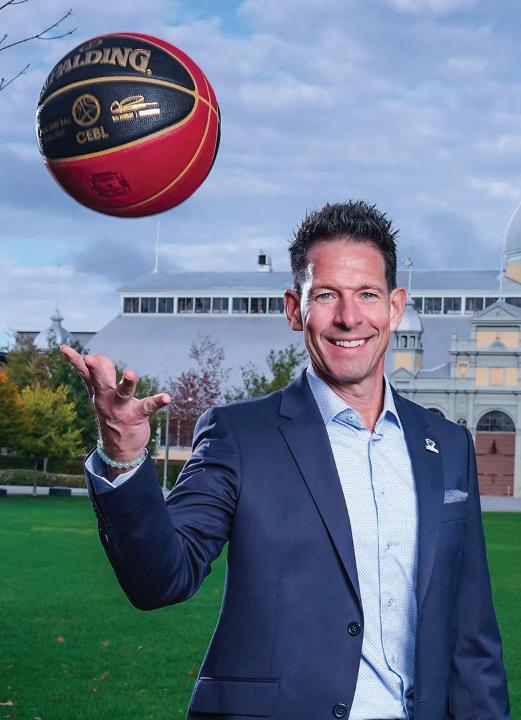
As the new president of the Ottawa BlackJacks, local businessman and sports fan Jason Winters is looking forward to bringing his franchise experience and his teambuilding skills into play. The appointment comes after the team was acquired by Australian sports investment group Diamond Sports Canada Inc. in September 2025.
OBJ spoke with Winters about what he brings to the management of the team, how he plans to reach out to the local business community, and how he sees the BlackJacks fitting into a growing sports and entertainment scene in Ottawa.
An Ottawa-based consignment shop is harnessing the power of AI to streamline the buying process for sellers and push the luxury resale industry forward.
Uju Nweze, founder of online luxury consignment store Reluxify, told OBJ she is looking to modernize the luxury resale experience by “increasing speed, authenticity and transparency for both buyers and sellers.”
Ottawa’s robust retail leasing market is showing a few cracks as more large pockets of space vacated by “big-box” tenants are going unfilled amid ongoing global economic turmoil.

Research from CBRE last fall shows that a growing number of retail spaces ranging from 5,000 to 20,000 square feet are sitting empty in suburban Ottawa shopping malls. The real estate brokerage says typical users in this size category such as furniture stores and household goods retailers are reluctant to take on bigger pockets of space when they come to market, “citing caution due to tariffs and other economic uncertainty.”
its use
After 29 years in telecommunications at Bell Canada, Heather Black was pulled in a different direction. Now, she’s a leader in the cybersecurity space. Since 2023, Black, who is based in Ottawa, has represented publicsector clients across the country as regional vice-president of Palo Alto Networks.
Black breaks down the cybersecurity concerns plaguing the public sector, how AI is changing the way hackers attack, and how AI developers are addressing users’ biggest worries.

Swagger: What is it and should Ottawa’s tech community have it?
When Nortel collapsed in 2009, it left a scar across a city that thought of itself as “Silicon Valley North.”
Almost two decades later, Ottawa is home to the greatest concentration of world-class tech companies per capita in North America, according to Invest Ottawa. And, the city boasts startups in everything from quantum computing and AI to healthtech and SaaS. Yet some observers would say that the tech community has lost its “swagger.” So what is swagger, and does Ottawa’s tech sector need it?

Ottawa’s ‘cool little sister’: Outaouais finding a niche as a tourist destination
From rising air passenger volumes to an influx of sporting events and conferences, tourism in Ottawa has bounced back from pandemic lows over the past few years. Across the river, the city’s smaller, outdoorsy neighbour is also reaping the benefits.
Over the past two years, tourist traffic has stabilized in the Outaouais region, which includes the City of Gatineau and other nearby municipalities in the western Quebec region.
great RTO debate: What does it look like in the charitable sector?
As many private-sector and government employees spend more time in the office, what are organizations in the charity and non-profit sectors deciding to do? Choosing between various work models can be a difficult decision for any organization, but,

according to those in the field, charities have unique factors to consider.
After more than two decades in an office on Parkdale Avenue, ABLE2, which provides services and programming for people with disabilities, made the decision to go fully remote. On the other end of the spectrum, the Ottawa Humane Society is one of many charities that never went remote during the pandemic.
As employees head back to the office, hungry professionals return to restaurants in search of a fantastic lunch to make the day feel that much better. But sometimes a sandwich or takeout meal won’t do and you need a dining
experience that is a touch more elevated. Thankfully, Ottawa has a multitude of options for a higher-end lunch and they’re all delicious.



Will AI spell the end of the harried young intern?
How
professional services firms are finding new ways to engage younger workers
BY MIA JENSEN


They’re a staple in movies and TV shows everywhere: fresh-faced interns buried in piles of paperwork, burning the midnight oil at the office, jumping to the commands of the boss.
But with artificial intelligence replacing much of the work once done by junior employees, what’s to become of those eager young workers? And what will be the impact on professional services firms looking to attract and retain younger workers in order to feed their talent pipelines?
Traditionally, companies in fields such as accounting, finance and law have used internships and entry-level positions to identify talented young people and train them to take on leadership roles in future, said David French, president of Performance Management Consultants in Ottawa.
However, with technologies such as AI on the rise, circumstances are changing.
“You have the old world of professional services where you spend your time actually with a partner there as you climb and seek the leadership rungs,” French explained to OBJ “Now when someone leaves, instead of replacing them with someone, (firms) can do that through technology. There’s a lot of good technology out there that is making it feasible to replace some of the individuals, which means there’s going to be a vacuum forming behind the existing leadership.”
Susan Richards, co-founder and managing partner of Ottawa financial services firm numbercrunch, agrees.
“We’ve been faced with lots of changes and AI is an interesting opportunity for us,” she said. “It creates a nuance to the younger talent pool that we’re tapping into. Historically, if somebody was a junior bookkeeper, we’re giving them an opportunity to learn the rhythm, the cadence to that type of work. There were different functions that humans performed that are now performed through AI. So now we’re more dependent on the personality of the individual.”
So, how to keep a younger generation of workers happy and engaged?
As AI takes over tasks typically reserved for juniors, many professional services firms are adjusting, Richards said, pointing out that each generation has its own priorities and the most recent cohorts of young professionals are no exception.
Millennials, who are now starting to have families of their own, are seeking more personal time and are more likely to value flexibility and seek hybrid working environments, especially those that provide


“The challenge for managers is to ensure that they appreciate the speed at which these younger workers can work and ensure they’re providing a challenging environment.”
Susan Richards, co-founder and managing partner, numbercrunch
programming, perks and initiatives that offer added support, she said.
At the same time, Gen Z, which includes new and recent graduates, don’t yet have those personal responsibilities, which can create its own challenges. According to Richards, while Gen Z workers might not want to work countless overtime hours to make partner, many of them are just as ambitious in other ways.
“They’re very strategic, wanting to understand the career path in an organization.
“There’s a lot of good technology out there that is making it feasible to replace some individuals, which means there’s going to be a vacuum forming behind existing leadership.”
— David French, president, Performance Management Consultants
I think they work at a much more rapid pace than their 40- and 50-year-old counterparts. The challenge for managers is to ensure that they appreciate the speed at which these younger workers can work and ensure they’re providing a challenging environment,” she said.
“It’s hard to keep them fed with challenging opportunities, but if you do, they’re willing to work. I hear people talk about, oh, you can’t get anything out of them. I just don’t see it. I see evidence to support a very smart, efficient crop of young people coming up.”
With younger workers tending to be techsavvy, French said that professional services firms are leaning toward teaching more soft skills to create a talent pool ready to lead in the future.
“Critical thinking, for example, is acquired through years of experience,” he said. “To be able to really understand and critique work and, over the years, learn how to communicate this effectively with various stakeholders. Communication is also honed over time. Juniors don’t necessarily have the right tonality and experience, so the next rung is too high for them to reach. It can create a barrier where they’re not equipped for the future.”
But, he cautioned, training can be a doubleedged sword. Young people aren’t making careers at a single company anymore, he said, and are more likely to be picked up by the competition.
“It takes time to train,” he said. “If organizations are investing in the next generation, they could become targeted by their competitors. They’re going to do the hard lifting for them. So there’s a disincentive to do it because you’re basically a training ground for other organizations. So we could create some awkward scenarios going forward.”
Eric Saumure, a partner at Ottawa’s Zenbooks, believes newer, more modern professional services firms have an edge when it comes to attracting younger workers. u
Technical skills haven’t always been a priority for employers filling junior positions in the professional services industry, according to David French, president of Performance Management Consultants in Ottawa.
Before the advent of computers, young workers were expected to have a strong foundation of soft skills such as attention to detail, organizational and time management skills, and an aptitude for writing and communication.
“Curiosity and initiative were really big things,” French said.
With these kinds of soft skillsets, juniors didn’t need many technical skills when they entered a company, he said. Instead, they learned about spreadsheets, formatting, data entry and basic analysis while on the job, working alongside senior partners. The trial-anderror process, he added, was an essential aspect of early career positions, allowing young workers to develop resilience.
But that began to change as young people became digitally literate.
Starting in 2010, as computers and smartphones changed the way people work, French said more emphasis was placed on technical skills during the hiring process. Juniors were expected to bring more technical skills to the job and improve their soft skills through repetitive, procedural work.
But with AI now in the mix, many of those repetitive tasks have been automated. And without a strong foundation of soft skills, a portion of young people are ill-prepared for the modern professional services world, French said.
In response, he is expecting to see a return to more traditional ways.
“For so long, technical skills were the critical skills that you needed to have, and soft skills were the things that you just assumed people had,” said French. “Now it’s almost the opposite, where the soft skills — communication, leadership, time management, adaptability, resilience — are actually the new critical skills that ensure the workforce is actually able to be effective in whatever they undertake.”

“Our perspective, and a lot of modern firms’, is that overtime isn’t a badge of honour, it’s really a management failure.”
Eric Saumure, partner, Zenbooks
t“Modern firms are a lot more technologywise, or just adept at technology,” Saumure told OBJ
“We tend to remove inefficiencies and, whether it’s accounting or not, remove the overtime perspective. Our perspective, and a lot of modern firms’, is that overtime isn’t a badge of honour, it’s really a management failure. So most modern firms don’t want their team to actually be working overtime. So that’s kind of a big difference.”
Saumure argues that the work models at newer professional services firms are popular with younger employees, while more traditional firms, including some of his own clients, struggle to fill junior positions.
“From my perspective, I don’t think there’s a talent shortage,” he said. “I think there’s a shortage of great places to work. There’s a disproportionate amount of applicants that go to modern firms versus the old school firms. In our case, we’re getting hundreds of applicants for every role from across the country.”
In fact, while the ways in which organizations hire and train young professionals has changed significantly, Richards said there isn’t a talent gap at that level. Instead, the shortage is at the leadership level.
“Our struggle on the hiring front is with the seniors, like comptrollers and CFOs, and having to grow them from within,” she said. “That’s the part that takes time, since (those are) more innovative, new, didn’t-exist-before type roles and services that we provide. Finding people with 15, 20 years of experience at the senior level has been tricky for us.”
Those with qualifications, she said, aren’t easy to find. “They’re often inside a company working and they’re not necessarily active on LinkedIn and social media,” she said. “They’re not networking. So really, you have to find them where they’re at. Because the good ones, they haven’t been eliminated from their company. They’re not necessarily actively looking for jobs.”
At the same time, mid-level managers and supervisors are looking to climb the ladder. In the past year, French said he’s seen a decline in interest for his company’s foundational skills workshops, which target early career professionals, and a surge in demand from professionals seeking intermediate and advanced training opportunities.
“People are investing more in seniors to take on other new goals or hone their skills,” he said. “It’s not the juniors trying to acquire skills anymore; it’s seniors acquiring the skills they need to progress.”
For organizations struggling to fill gaps in the talent pipeline, making investments in staff at all levels is an essential part of filling those spaces and retaining personnel, he said.
“Whether the person is junior, intermediate or senior, people will always gravitate to places that invest in them personally,” he said. “There’s an opportunity to accelerate. In professional services, if it takes four years to become a manager and another four to become partner, how do you accelerate that? How do you give them the right tools and evaluate if they’re on the right trajectory, to ensure you’re investing in the right people?”
Despite the challenges, Richards said that firms such as hers are well-positioned to fill out their talent pipelines over the coming years.
“I feel very optimistic about the future,” she said. “There are a lot of young, ambitious people out there and they have the aptitude with the leveraging of technology to really advance quickly in their careers. I see this as a great opportunity for young people and a great opportunity for us as we grow our pipeline. We will eventually work ourselves out of the problem with internal growth of our team by helping our people grow internally through their careers.”n

DataKinetics CEO Allan Zander has melded his tech smarts with a passion for food
BY MARISSA GALKO
Allan Zander has two passions in life. One is his interest in computer science, which led him to Ottawa’s DataKinetics where he took over as CEO in 2008. The other is a lifelong interest in the culinary arts. Now, he thinks he’s found the perfect recipe that will allow him to blend both passions.
Headquartered in the Kanata North tech park, DataKinetics powers nearly a billion transactions for the world’s largest banking, insurance, credit card, brokerage houses and retail organizations each day. To put this in perspective, Zander says that whenever anyone uses their bank card to pay for a product or gets a paycheque deposited automatically, there’s a good chance it’s DataKinetics “doing that here, from the heart of Ottawa, and we continue to grow and innovate based on that technology.”
However, he admits that growth opportunities for the company that was founded in 1977 are scarce.
“We can go find other mainframe software companies but they tend to have the same problems that we do. They’ve got a large number of banking and financial services customers and would probably have the same customers that we would have. It adds revenue, but it doesn’t really add growth opportunities,” Zander told OBJ.
It was a conundrum that caused him to think more about his love of food and cooking, which he’s had since childhood.
“When I was a teenager, thinking about what it is (I) wanted to do for the rest of my life, I did really think I wanted to be a chef.”
He recalls that, growing up in Toronto in the mid-1980s, his parents’ favourite restaurant was Loon’s, owned by Charles Part and Jennifer Warren-Part. Wanting to get his start in the food industry, Zander applied for a job at Loon’s, but never heard back. At the same time, he’d applied to work at a nearby burger restaurant and got the gig.
“It was a very made-from-scratch hamburger restaurant. They made a lot of their own things, (such as) the buns, the meat and the fries. It was a great opportunity to learn about preparing food in a relatively casual environment,” he said.
His next step was to work at the restaurant at The Westin Harbour Castle. “I had the opportunity to work with a chef who was very patient and he really fuelled my interest in food. I went from just being a prep chef to actually working on the line,” Zander said.
No matter what time of day Zander clocked in, the head chef was always there. “(It’s) a little

bit of a downside of being an executive chef in a big hotel. I would work mornings, he’d be there. I would work evenings, he’d be there. I thought to myself, ‘Maybe this isn’t the career that I wanted.’ I would look at him and think about whether he had any time for himself.”
And so Zander headed to Western University, where he completed a degree in computer science and started a career in tech that would lead him to becoming the CEO of DataKinetics in 2008.
the kitchen and decompress by making dinner.”
Fast forward to the pandemic, and Zander said he spent a lot of time at home cooking for his family — something that reinforced his passion for the culinary arts. “I cooked a lot. We weren’t an UberEats sort of a crowd. I really enjoyed the opportunity to cook for my kids and sit down over a meal and have that connection and warmth.”
“We’re going to teach a restaurant how passion can come through innovation as well as through service.”
Still, Zander said his passion for food remained. “Some people come home and veg on the couch to watch TV or read for their happy place. For me, it was always food. I would go in
It was an experience that pushed him to go on sabbatical and pursue a degree in gastronomy from the Université de Reims Champagne-Ardenne and a diplôme de cuisine at Le Cordon Bleu in Ottawa.
“I was a good amateur cook but I wasn’t a chef and I wanted to become a chef. In the same way as an engineer designs a car and the
mechanic services it, gastronomy is a bit of the engineering of food … The next step was to properly implement those ideas by going to culinary school.”
In 2024, Zander achieved his dream of becoming a chef, but there was one element that was missing.
“Culinary school is awesome. It teaches chefs to be chefs but it doesn’t teach you how to run a restaurant. That was an enormous surprise to me. I really thought we might have spent more time understanding the business behind food.
“I would love nothing more than to be a brand ambassador for a restaurant or a chef to help them understand how to run a business well by understanding who their customers are and what are smart things to put on a menu.”
And so the answer to growing DataKinetics and feeding his passion for food started to come together. Last year, Zander heard of the opportunity to acquire Les Fougères in Chelsea, Que., and its frozen grocery business. In a post announcing the acquisition on LinkedIn last September, Zander described the move as “a full-circle moment.”
This was in part because the owners of Les Fougères had also owned Loon’s until they’d closed it in the 1990s and moved to Chelsea. The couple sold Les Fougères to Zander last year after 32 years running the business.
In bringing together DataKinetics and Les Fougères, both “senior businesses,” Zander said he isn’t looking for something to fix. “Nothing’s really broken. It’s just a case of trying to figure out what the best way to augment both businesses is.”
On his LinkedIn post, Zander said he will be putting “data scientists into a restaurant, boutique retailer and wholesale food supplier.
“We’re going to learn from Les Fougères, which is going to complement our growth desires,” he said, adding that he will apply DataKinetics’ competencies in finance, HR and marketing to the restaurant. In the meantime, he hopes to better understand the customer base and optimize the restaurant’s output.
“What trends and data can we use to inform us to make better decisions about what might be on a menu? That’s the kind of stuff I mean when we say we want to put data scientists in a restaurant. It’s the place we think there is an opportunity to be disruptive in hospitality.”
While the plan is to curate the menu and guest experience based on data, Zander said he doesn’t want to take away from the creativity that comes with food preparation.
“Every chef that’s worth his or her salt wants
to put love on a plate. It’s their way of expressing their art and we don’t want to take anything away from that. DataKinetics just understands performance and optimization, particularly around data. We’ve done phenomenally well in the banking and financial services industry for 40-odd years, but now we think we can bring it to the guest experience.”
He hopes that the acquisition of Les Fougères will be a new way of breaking into the food industry, different from the attempt he made in 2015 when he created a subsidiary called omNovos to focus on restaurant management solutions. Unfortunately, the pandemic stalled his plans there.
“We tried in the past but we came at it the way a software company would. Maybe we weren’t as successful as we were hoping we would be, but now if we came at it the way a restaurant would, it might turn out better.”
task that much easier.
“There aren’t many part-timers at Les Fougères. A lot of the people there have been there for years. They are career people in hospitality. They understand the service, and the mere fact that the majority of their staff hasn’t really turned over in years speaks volumes about the place.”
He’s now focused on Les Fougères, leaving DataKinetics in the capable hands of his executive team. “My CFO, Randy McCoy, is going to be very intimately involved in both businesses (and so is) Larry Strickland, who’s my chief product officer at DataKinetics. He brings the vision of what we can do with data and how we can use it to be more efficient in how we run our businesses. We’re going to rely on him to be the glue between both things.”
“Culinary school ... teaches chefs to be chefs but it doesn’t teach you how to run a restaurant.”
To bring his aspirations to life, Zander plans to surround himself with people with a can-do attitude and a passion for the work.
“I think we need people around us that can put an idea on a board and start to imagine, ‘How are we going to make this happen?’ I often say there is value in people that say why it won’t work — and you need that — but you also need people that will imagine what is possible. It’s a change in mindset for a lot of management teams,” he said.
“DataKinetics is a company that understands passion through innovation extremely well. We’re going to teach a restaurant how passion can come through innovation as well as through service.”
In fact, in looking to expand DataKinetics, Zander said he chose Les Fougères because it aligned with his company. “We wanted to find a restaurant that was like us,” he said. “One that had a great leadership team and a good culture.”
Zander is keen to learn more about what it takes to run a successful restaurant. “We’re good businesspeople, but just because we’re good businesspeople it doesn’t necessarily make us good restaurateurs. We wanted to be sure that as we got into the business that the business would be able to carry us through that transition period of becoming restaurateurs.”
The fact that the team at Les Fougères is made up of hospitality professionals makes the
As time goes on, Zander said he hopes to separate his time equally between both businesses, maybe even getting in the kitchen.
“If I had a full-time job before, I’ve got a fulltime job-and-a-half now. It’s like 80 per cent Les Fougères and 20 per cent DataKinetics now, but I intend for it to be fifty-fifty as months carry on,” he said. “I fully intend to be hands-on (at Les Fougères.) There is already a chef there and he’s great. I see myself augmenting him.”
His main role at the restaurant will be as culinary director, applying his knowledge from DataKinetics and culinary school to augment the guest experience and menu.
“I have the luxury of coming in with a fresh perspective … We have great stuff on the menu but how does it fit in our story? How do we see that vision for food propelling us into the future? How can we create those wow moments for people?” Zander said.
While he may not have landed a job at Loon’s all those years ago, Zander said he got to be a server for a night at Les Fougères to get a feel for the restaurant.
“I did my first shift at the restaurant last night. I hadn’t been a server in, oh boy, 38 years! It was awesome to be there and watch how the restaurant came together. A lesson I remembered from that chef at the Westin Harbour Castle was that the best executive chefs in the world will mop the floor with their brigade when service is done. I’ve never forgotten that and I’ve carried that forward in my career, even in computer science.”n
How pickleball and padel are becoming the alternative to golf
BY ROB THOMAS PHOTOGRAPHY BY MARK HOLLERON


Squint and you might think it’s pickleball, but the lack of that distinctive “dinking” noise gives the game away. Instead, paddles thwack and under-inflated tennis balls thwap off the turf court and plexiglass rear walls.
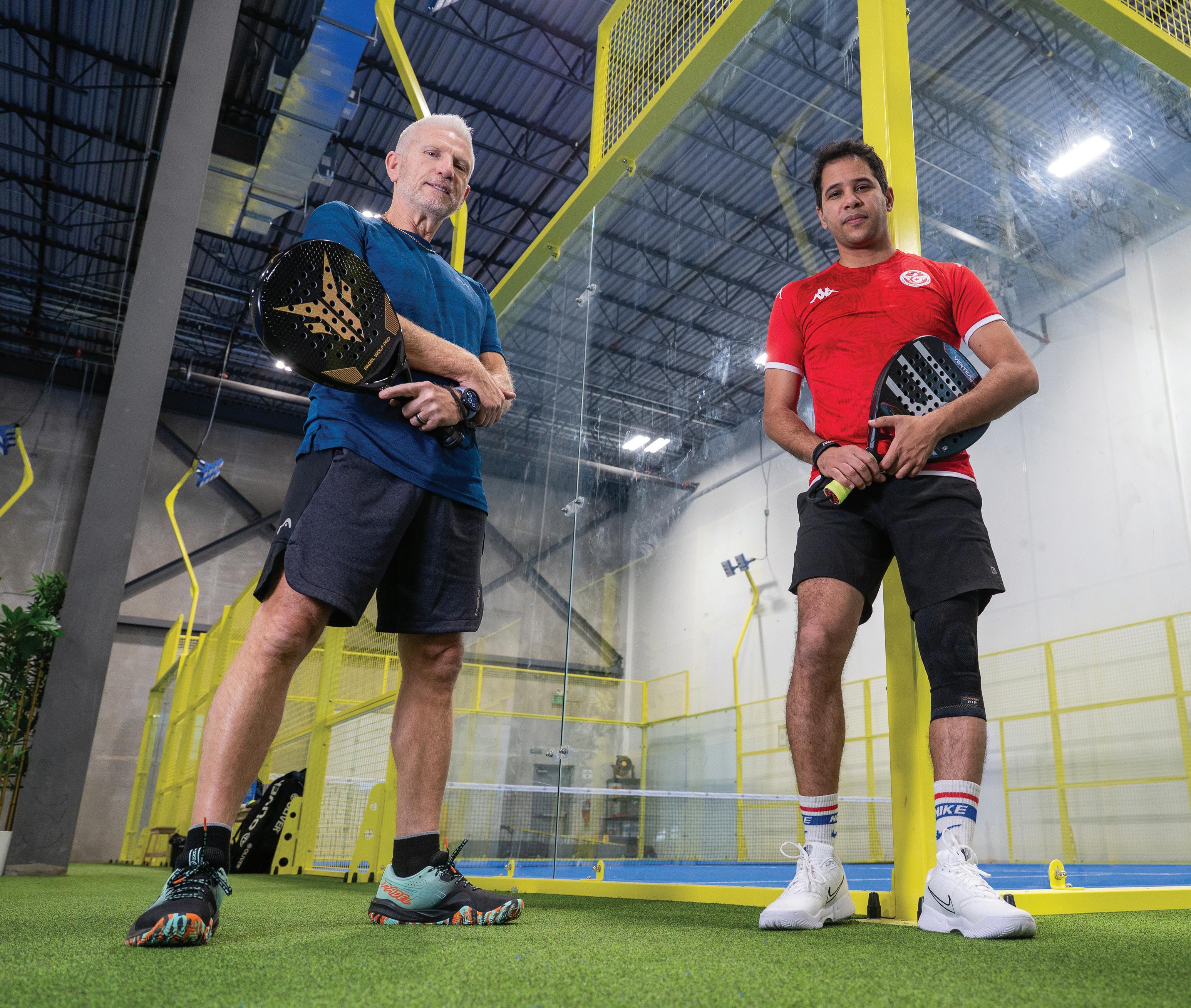
It’s Friday night at Ottawa’s first indoor padel facility, Padel and Friends, where a dynamic A-level tournament match is in full swing.
“How do they even get that good?” Ottawa CRM consultant Joel Morghese muses from the lounge area, sipping a post-match beer with his tournament partner. “The facility has only been open for a month or so.”
Morghese, a longtime squash player, says he’s met more people in a shorter period of time playing padel than he did playing on a squash ladder. That includes his tournament partner, Fares Yossef, who hails from Tunisia where the sport is better known. In fact, paddle sports are redefining how some professionals play and connect.
Pickleball’s North American boom has prompted millions to pick up the paddle, while padel, with an estimated 30 million players worldwide, is gaining traction as a more exclusive, club-based alternative.
Both sports promise more than casual exercise and social connection. For Ottawa’s
business community, they also offer readymade settings for team building, executive networking and even deal-making.
Kevin Nie, a software engineer with Ericsson, knows all about padel’s teambuilding potential. Nie was introduced to padel by coworkers in Gothenburg, Sweden where he studied and worked until 2023. Friday meetups for padel were just part of the office culture.
“There’s a much bigger padel community there,” Nie explains. “The club where we would usually go there has five courts and that would be considered a small club.”
The three courts at Padel and Friends would be considered a “mini club,” he jokes. But he’s not complaining. He’s just happy to see the Swedish padel craze catching up with him here in Ottawa.
Padel and Friends has its own Swedish connections. Business partners and brothers Dan and Jorge Vila have prominent investors: hockey hall of famer Daniel Alfredsson, his brother Henric and Syntronic president Hans Molin.
While pickleball fever rages in North America, padel is on the upswing across Europe and the Middle East. Padel ranks second only to soccer in Spain and is starting to take hold

in major U.S. cities with large clubs already open or soon to open in Miami, Houston and Los Angeles. Precise numbers are hard to pin down, but proponents of both pickleball and padel claim the title “fastest-growing sport” with some justification.
While pickleball has surged as an accessible leisure sport, padel is making gains as a more exclusive, club-based and highly social doubles game. Forbes has reported a padel-court building boom at U.S. luxury resorts where the courts are now considered a “baseline” expectation.
Canadian padel pioneer Bill Stamile calls pickleball and padel “cousins.” Both are played with paddles on courts smaller than those for tennis and have their origins in the 1960s. While pickleball is a hybrid of badminton, tennis and ping pong, padel is a mix of tennis and squash, using a bouncy ball and allowing for play off the court walls.
Stamile brought padel to Canada more than 30 years ago, becoming North America’s first certified instructor, establishing a national governing body and securing Canadian membership in the International Padel Federation. He jokes that padel “died three times in Canada” but he kept it alive through sheer stubbornness. u




t “I always knew it was going to take off and be a great sport,” says Stamile, who is thrilled to see padel finally finding traction in the U.S. thanks, in part, to its popular “cousin” pickleball.
When the Calgary Padel Club opened in 2017, Stamile hedged his bets by painting pickleball lines on the courts. But he soon discovered that seeing padel played was the best advertisement for the sport.
“A lot of my members that play padel came to the courts with the idea that they were going to play pickleball. And I’m not saying they never play again, but they certainly play padel a lot more than they thought.”
In Ottawa, pickleball is a victim of its own popularity. Diana Dowthwaite, president of Ottawa’s largest pickleball association, says finding a court remains the biggest challenge for players. The City of Ottawa hosts 172 public pickleball courts, mostly shared with tennis, with plans to add 39 over the next six years.
Meanwhile, there are a growing number of courts in private clubs and gyms, probably 65 to 75 based on available information, but Dowthwaite says demand for courts still far outstrips supply. “Even hundreds of courts would not be enough,” she says.
Call it growing pains. Pickleball has
proven it’s not a fad and, as it matures, private ventures are stepping in to monetize the sport and provide courts to a growing player base.
“It is a baby in the world of these big sports that have been around for a long time,” Dowthwaite says of pickleball. “So it’s trying to kind of find its feet. Where does it go? What does that look like?
The Forge is a new 11-court facility in Ottawa’s east end that bills itself as Ottawa’s largest premier facility and proposes a vision for pickleball’s future in the city. What that looks like is club-style amenities like a bar/lounge, an upper mezzanine, pro-shop, showers and changing facilities. It also boasts cushioned court floors, individual court fencing to block wayward balls and a champions court to livestream tournament matches.

And that may be just the beginning. GTA-based Fairgrounds, which currently has 40 pickleball courts and seven padel courts, has announced similar plans for an indoor pickleball facility at the former Zellers location in Bells Corners.
It is part of a national expansion that would see Fairgrounds facilities open in Vancouver, Red Deer, Kingston and Hamilton. At the same time, U.S.-based Picklr has announced Canadian plans, although none for Ottawa specifically. With growth comes new business models. Dowthwaite notes that, in the past, a senior might have paid
$2.50 to $3 to play at a community centre and complained when the price went up 25 cents. Now, a top-tier annual membership at The Forge is $1,949. The price for non-members is $24/hour.
“There’s going to be some costs. If they want to make money, they’re going to charge a lot. And so there’s a lot of people that maybe can’t afford the $2,000 to play,” she says.
Padel and Friends has drawn buzz for novelty and the Alfie-factor, but remains a small part of a broader paddle-sport transformation.
Over at the Forge, president and general manager Brett Conway says the 500 top-tier memberships sold out before the facility opened. Part of the strategy is presenting the sport as an accessible alternative to golf, he says.
“We’ve already hosted groups ranging from Ottawa Sports and Entertainment Group and major financial institutions to small businesses and private organizations,” he says.
He frames pickleball as a “new vector” that combines athleticism, competition and networking.
Whether the appeal to professionals and executives will take hold remains to be seen, but there are some indicators of corporate appetite. The Ottawa Pickleball Classic, a fundraiser for the Ottawa Heart Institute, is Ottawa’s biggest pickleball event. Organizer Madison Tackaberry notes that the event has nearly doubled in size and fundraising goals each year since it started in 2023.
It also directly solicits corporate sponsors and teams. Tackaberry says 40 of the 100 registered teams in 2025 were corporate teams from a variety of fields, many connected to sponsors. She describes it as a “fun-first” activity and sees networking and teambuilding as part of the return on investment for corporate partners. And yes, organizers have already reserved twice as much space at the EY Centre for the 2026 event.n

BY JORDAN PIZZUTI
As fans gather to watch the Ottawa Senators play, hoping for more goals, wins and reasons to celebrate, they may also find themselves craving something delicious to fuel their fandom.
The food available at the Canadian Tire Centre changes yearly, with new and exciting dishes continuing to be introduced. Aramark, the food service company behind the CTC’s concession offerings, has a goal to change the way people feel about stadium food by making it more obvious the thought that goes into it. With a focus on integration of local businesses, variety and finding ways to give back, Aramark has upped its game this season with what’s available for hungry fans.



the catering game, Meatings expanded by partnering with other businesses to serve food out of the kitchens of multiple restaurants, most notably Broadhead Brewing Company.
Now, Meatings is at the CTC with its delicious pulled-pork sandwiches. The slowcooked pork is placed in a toasted potato bun and dressed with a maple butter BBQ sauce, special seasoning and pickles. Each sandwich comes with a side of incredibly seasoned tater tots and chipotle aioli for dipping.
Now THIS is what I want during a sporting event. Easy to eat with one hand (the other hand reserved for an adult beverage, perhaps?) and even easier to enjoy.
more dishes of note on the Chef’s Kitchen menu. The first is the crispy Korean chicken bowl, where fried chicken tenders are tossed in a gochujang teriyaki sauce and sit atop a bed of rice and kimchi and are served alongside cabbage, carrots and edamame. The whole bowl is drizzled with sriracha mayo for an extra spicy finish. One word: delicious.
The second is an option for our veggie-loving friends at Sens games: the fried cauliflower bao. Think of this as the handheld counterpart to the chicken bowl. The same sticky gochujang teriyaki sauce coats fried cauliflower bites that sit in a pillowy bao bun. Carrots, slaw and spicy Thai chilies round out the dish.
It should be noted that the Chef’s Kitchen team also offers great flexibility. If you want the bowl with cauliflower or the bao with chicken, it’s no problem. In fact, pretty much any dietary restriction can be accommodated in one way or another.
As mentioned, Aramark has a goal of giving back and is partnering with La Tablée des Chefs and other local charitable organizations to make sure leftover food or any potential waste can be donated to members of the community. Minimizing waste and maximizing community involvement are core pillars of the Aramark team.
Let’s check it out!
The newest and perhaps most exciting addition to the Sens concession family is Ottawa’s Meatings BBQ. Meatings has taken the city by storm in recent years.
It feels like you can’t hop on instagram without seeing a new event or expansion in the works with the Meatings team. The most recent endeavour is a fully functional food stand at Sens home games.
For those of you not familiar with Meatings, let me enlighten you. The BBQ spot began as a catering company based in Orléans, serving up a multi-faceted American BBQ menu for back yard parties and events. After success in
So, what else is on the CTC concession menu?
The next stop is the Chef’s Kitchen. This concession offers multiple options that are researched, developed and executed by the Aramark team led by executive chef John Mitchell, all with the CTC consumer in mind. Each dish is designed to be delicious and inspired and has its own unique way of giving back.
Perhaps the most famous dish on the Chef’s Kitchen menu is one the kitchen doesn’t execute itself but is a must-have: egg rolls from Ottawa’s renown Golden Palace. I’m drooling on my keyboard just thinking about it. It’s safe to say almost everyone has experienced the bliss that is a Golden Palace egg roll and, if you haven’t, it’s about time you do.
There are two
The last stop on our concession journey is the ByTown Grill. Spoiler alert: this one is going to be indulgent, craveable and addictive.
I wasn’t sure what to expect when I first heard the words “birria grilled cheese,” but what I was presented with did not disappoint. An overnight-braised beef shank cooked down to a fall-apart tenderness is dipped in a jus made from its own juices and placed between two pieces of sourdough bread that have been toasted in garlic butter alongside melty mixed cheeses. The whole thing is grilled and served with a side of a reduced, concentrated version of the beef jus for dipping.
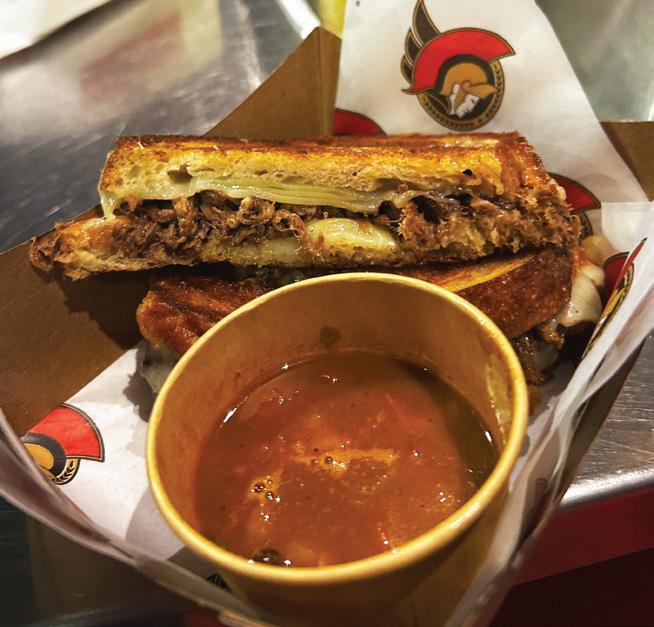
If you’re not salivating, then you may want to check your pulse, because the first bite of this sandwich nearly transcended me to a new dimension. The birria grilled cheese is a must-try at any and maybe every Sens game you go to this year.
Happy eating Senators fans!


A ban on asking for ‘Canadian experience’ in publicly advertised job postings and a requirement to retain job posting records for three years are just some of the changes on the horizon
Advertising or posting a job pportunity is about to get more complicated for many local organizations with 25 or more employees.
That’s because of a slew of updates to Ontario’s Employment Standards Act (ESA) that include new job posting rules effective Jan. 1, 2026. The updates require, amongst other things, that provincially regulated employers disclose expected compensation ranges and AI usage during the recruitment process, as well as ban Canadian experience requirements in job postings. They also add new administrative requirements.
Ottawa law firm Emond Harnden’s Jake Tolton, a labour and employment lawyer, says the upcoming changes have broad implications for businesses across the province.
“There’s going to be a lot of front-loaded work for employers,” he explains. “They’ll need to take a hard look at their hiring and recruitment templates and make sure they’re compliant with these requirements.”
But that’s not the only potential issue facing qualifying local organizations, who have just a few weeks to prepare until the new laws take effect.
The updates touch a broad range of recruitment-related elements. They apply
specifically in the context of publicly advertised job postings as follows:
• Postings must include transparency about the expected compensation or range of compensation (the range can’t be more than $50,000 annually, but an exception to this rule applies to positions with a salary of $200,000 per year or more)
• Postings must disclose the use of AI for screening, assessing, or selecting applicants
• Postings must disclose the vacancy status of a position (must disclose whether the post is for an open position, or to fill a pool)
• Postings are prohibited from including any requirement for “Canadian experience”
• Interviewed candidates must be informed within 45 days of their last interview of whether the employer has made a hiring decision
• Employers must retain, for a period of three years, all publicly advertised job postings and related application forms, and records of any information provided to candidates
Tolton says the new requirements have created several areas of ambiguity for employers, with the prohibition on asking for Canadian experience causing particular concern.
“It’s confusing, because there are obviously bona fide requirements around, for example, knowledge of a certain statutory framework that is Canadian,” he says. “I think it’s obvious that the government’s not trying to prohibit that, but it’s not entirely clear to me what they’re trying to eliminate with this prohibition.”
While the risks of non-compliance will likely range from a warning for a first offense to fines for repeat offenders or egregious breaches, Tolton says the impacts even on compliant employers will be significant.
The new record-keeping obligations and related increased administrative burden – especially for larger employers –will likely require organizational changes.
“It’s going to become a significant part of someone’s role,” he explains. “If you’re an organization with hundreds of employees, then we’re talking about a significant amount of data retention and organization. And someone is going to have to get trained on that. It’s going to become part of their mandate.”
Still, he says the level of record-keeping required will actually be a net positive for employers, who don’t always keep meticulous records, if they’re ever involved in employment litigation.
He also says the new rules will likely give a boost to professional recruiters, who aren’t subject to the same updates –at least, not yet.
“I can see a world where it changes the way that employers hire. Employers that want to keep their compensation structure closer to their chest could be going through recruiters now.”

“They’ll need to take a hard look at their hiring and recruitment templates and make sure they’re compliant with these requirements.”
— JAKE TOLTON, LABOUR AND EMPLOYMENT LAWYER EMOND HARNDEN
The first step for organizations is to educate themselves on the new requirements, then take proactive measures to prepare for their implementation. Depending on an employer’s existing recruitment processes, that may be a fairly significant endeavour that includes:
• Auditing or implementing standard job postings and templates
• Reviewing existing compensation structures
• Adjusting communication processes
• Adjusting or implementing data retention systems
• Implementing measures to protect privacy and cybersecurity
• Training hiring managers on obligations, risks, and best practices
“I would say it’s about a checklist. Employers need to sit down with their
HR departments and look at the specific requirements and make sure they’re onside anytime a job gets posted.”
Even organizations falling slightly below the 25 employee threshold should strongly consider adhering to the new rules, Tolton says, because it’s unclear whether companies who grow to exceed the 25 employee mark will need to meet backdated record-keeping requirements.
Qualified legal counsel should be consulted, where appropriate, if organizations have questions or concerns about the incoming changes.
To receive regular updates on labour and employment law, subscribe to Emond Harnden’s complimentary Focus Alerts.
This article is intended to provide readers with general information only. It should not be regarded or relied upon as legal advice or opinion. Accessing, reading, relying on or otherwise using this article does not, under any circumstances, create a lawyer-client relationship between you and Emond Harnden.

When you think fastest-growing companies, do you think tech? Well, you wouldn’t be wrong. This year’s ranking of Ottawa’s fastest-growing businesses includes a variety of tech firms, large and small, doing incredible things. But it also includes companies that come from more “traditional” sectors, including marketing and consulting firms, retailers, and businesses operating in the skilled trades. So what makes them grow? We profiled three of the top 20 to better understand how they’re applying modern technology and management practices to create incredible revenue growth.
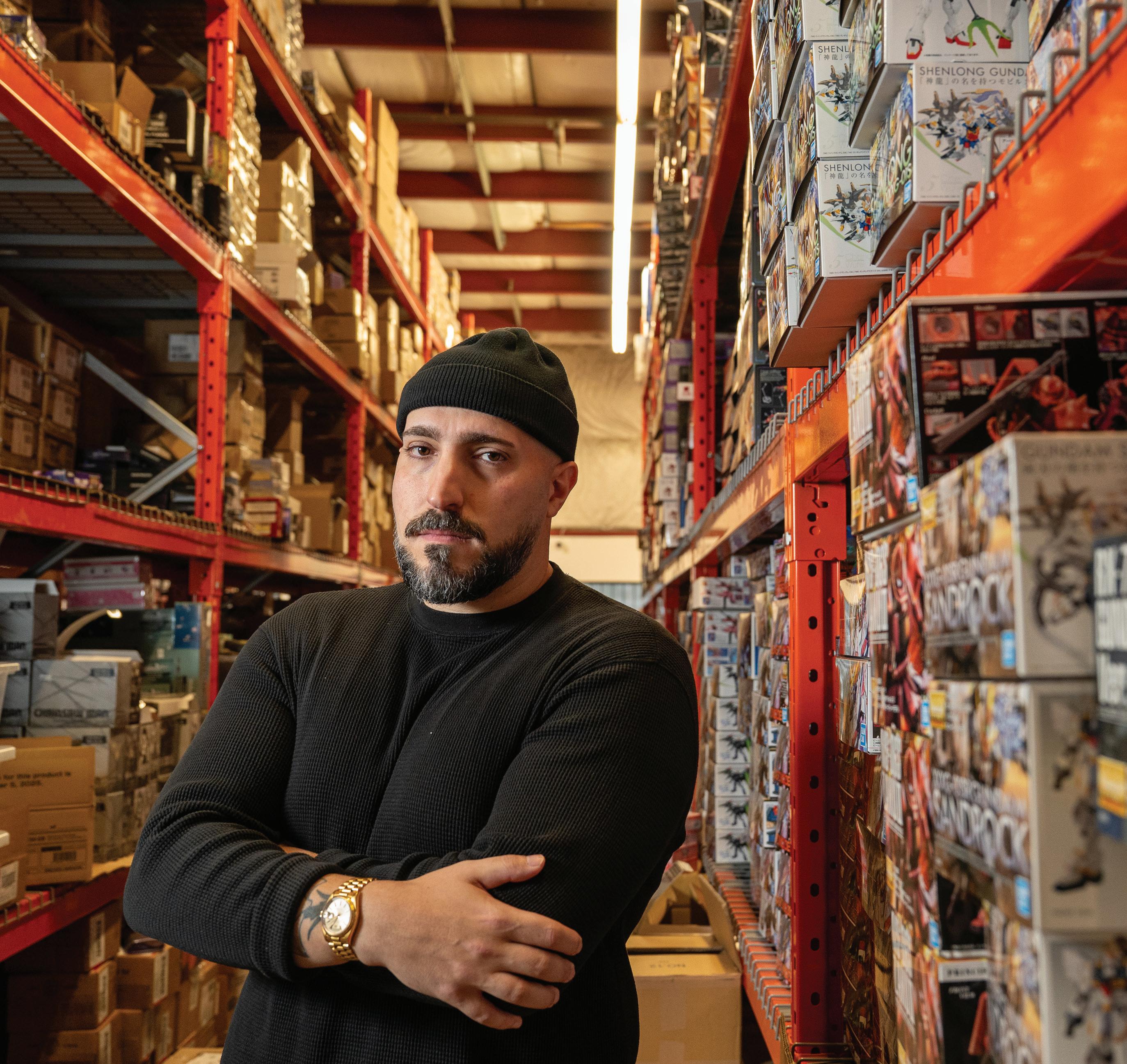
“Every possible factor was against us leading into this year, but we’ve managed to not only stick around, but also thrive.”
While the COVID-19 pandemic marked the end for some businesses, for two Ottawa entrepreneurs it was the start of something new.
In the spring of 2020, just a few months into lockdown, Edmond Georges and Logan Fournier sat down to hash out an idea for a new e-commerce business: a hobby shop offering trading cards, games and other collectibles.
“We got together and worked through some numbers,” Georges told OBJ. “We ended up incorporating kind of on the spot and then we launched in August of 2020. The first four months were a bit of a whirlwind, where it was kind of like right place, right time. We just caught the full boom of the early COVID days and the collectibles craze.”
While Fournier’s passion drove the initial idea for the business, Georges took on a more operations and strategy-heavy role based on his previous career experience.
“Logan got his start by rediscovering some old traded cards that he had collected,” recalled Georges. “It’s a bit of a fairy tale story at this point. He found his cards, turned around, sold them online and decided to start up a shop. I wasn’t as familiar with the market. That’s why he’s still our product expert. But (I’ve learned) there’s something for everyone.”
And Fournier hasn’t been the only one reconnecting with old interests over the past few years. According to Georges, late 1990s nostalgia is creating a resurgence of interest in the kinds of hobbies and collectibles that Hobbiesville specializes in. And now that those adults have kids of their own, there’s an increasingly large demographic looking for trading cards, board games and merchandise from their favourite franchises.
The types of products Hobbiesville carries tend to lead to repeat purchases. Georges said there are whole communities based around
trading products such as Pokémon cards and many enthusiasts regularly compete in tournaments. As a result, those customers tend to stop by regularly to see what’s in stock.
“The big thing, looking back now, is the overall consumption on the North American side of animé in general,” he said, referring to a style of animation that originated in Japan and has been gaining worldwide popularity over the past several decades. “The market is estimated to double in the next five to seven years, which is substantial.”
As the market changes and grows, Georges said, Hobbiesville always keeps an eye on products and brands making waves in foreign markets.
newest trading card set, we try our best to be that portal into Japan and give people access to products that are not as readily available in the North American market.”
While the pandemic created an opportunity, it came with its own challenges, including rising costs and interest rates and a dip in consumer spending. Today’s economy is equally challenging.
“Every possible factor was against us leading into this year, but we’ve managed to not only stick around, but also thrive,” Georges said. “It’s harder than ever to be an entrepreneur in Canada. It’s tariffs now, as an importer. Almost nothing that we sell is produced locally. That’s what makes us special and different, but having to navigate difficult times has been a ton of pressure.”
Being built for the digital world, without a physical location to manage, was a major advantage, Georges added.
“I think e-commerce is often neglected in terms of understanding the scale at which it operates and the foundational elements that allow a business to grow that fast,” he said. “We couldn’t open stores as fast as we grew online, especially not bootstrapped. And I think if we put more emphasis on how fast e-commerce can grow, a lot of other brands would get more recognition.”
Most recently, blind boxes — where customers purchase a mystery item in hopes of collecting every product in a themed series — have gained traction on social media. Hobbiesville was already an authorized retailer for the Labubu toys, one of many fast-sellers that allowed the Ottawa company to continue its consistent revenue growth.
“Over time we’ve diversified into other products under the same IP,” Georges said. “If you’re a big Hello Kitty customer, we carry different products that cater to that clientele. Whether it’s board games or plush dolls or the
In the five years since its launch, Hobbiesville has grown its platform beyond Canada to attract international customers. And as demand continues to rise, the company will continue pursuing growth, Georges said.
“We’re nowhere near our ceiling,” he said. “I think we just continue to do what we’re doing today and try to get better at providing people with access to things that maybe don’t have a Canadian distributor yet. We’re a portal into discovering new things that are bigger in the rest of the world that haven’t hit our shores yet. We’re trying to be that gateway.”
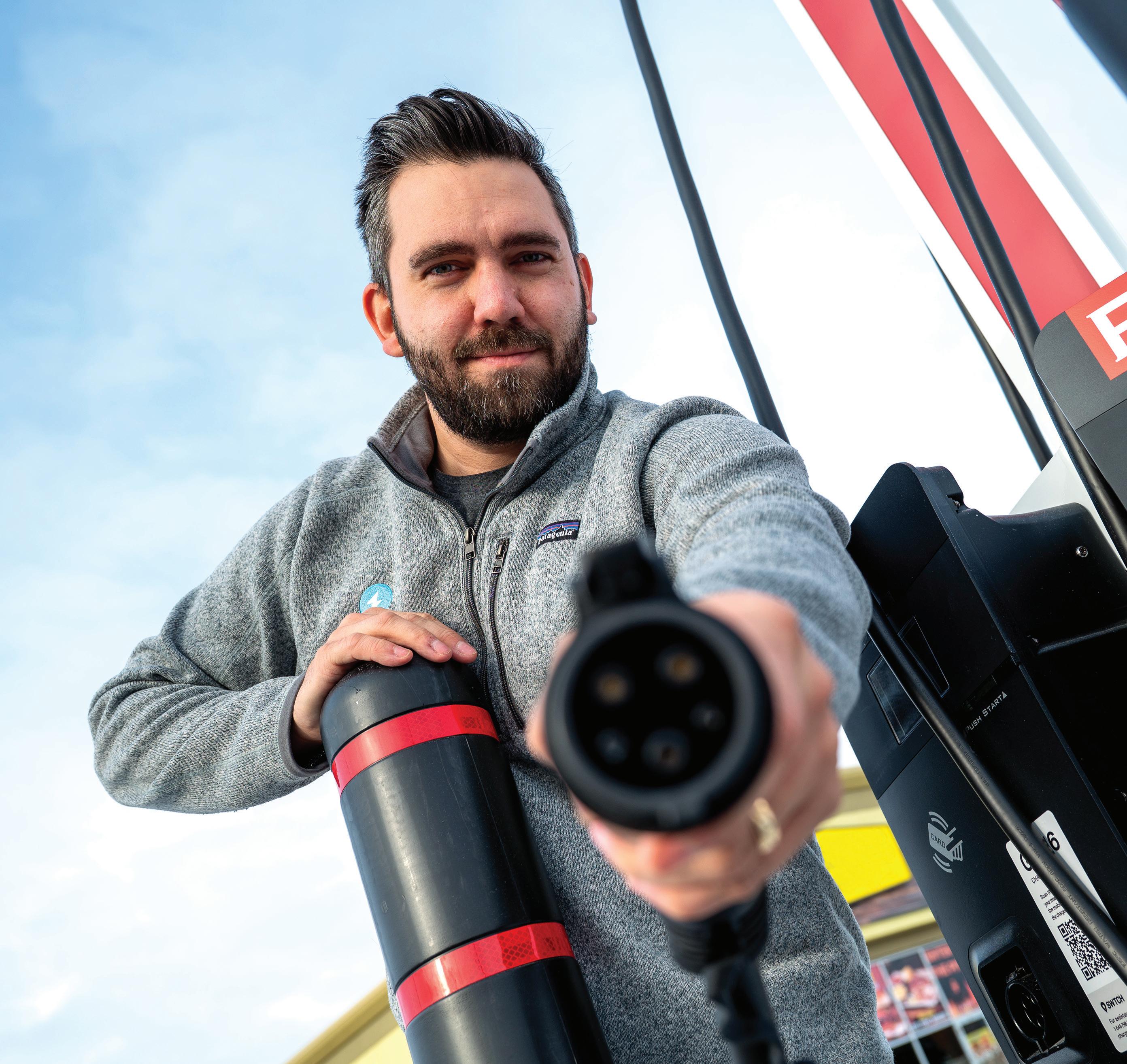
“Long-term, we want to be a company in Ottawa that people are familiar with.”
MARTIN MASK, CEO AND MASTER ELECTRICIAN, EVOLTA
In a growing city where energy requirements are only set to increase, Evolta Electric wants to lead the charge.
The Ottawa-based electrical contractor specializes in LED lighting and building automation, as well as EV charging and battery storage. Evolta’s CEO and master electrician Martin Mask said the company set the foundation for growth early on with a focus on becoming experts in emerging sustainable technologies.
“We came in seeing a gap in the market where we wanted to come in and be experts,” he told OBJ. “We wanted to know and understand the technologies. And not just that, but also know how to help customers, engage with them and make it accessible for people. Electrification can be daunting and we wanted to be able to answer those questions and help people along.”
With more EVs and hybrid vehicles hitting the roads every day, the company started with EV charging. Mask said there was a missing piece, which was EV owners looking for solutions.
“It was a growing segment of the market and there were a lot of questions there. So we thought, let’s get some answers that we can translate to a day-to-day person, where we have an understanding of the electrical requirements in the system. We translate that into what will work, what won’t work and how we work within the bounds of what you already have. Whether that’s commercial or residential.”
After EV charging, Mask said the company started branching out. Sustainability, he said, had become a market of its own, with new technologies cropping up constantly.
In some cases, sustainability incentives were driving demand. If businesses retrofitted their facilities with new energy-saving lighting
systems, they could save money and access energy rebates. And so LED lighting for commercial clients became another area of Evolta’s expertise.
More recently, Mask said clients are looking for battery energy storage solutions.
“We’re seeing fairly rapid growth in battery energy storage for load displacement or storage for solar or even back-up power,” he explained. “That’s something of a new market and we’re finding that there are maybe even more questions than there were on the EV side of things.”
REVENUE GROWTH
233.86%
YEARS IN BUSINESS 1-4
EMPLOYEES 5-9
And there are other frontiers yet to uncover. In the past year, Mask said Evolta has focused on residential battery needs, but there is a growing demand on the commercial side as well. And that, he said, will be its own challenge.
“The large-scale commercial is going to be almost a different but similar technology,” he said. “It’s a different market altogether. In the next year or two, it’s going to be about getting up to speed there and making sure we can be leaders on that side as well so we can know how to support those projects.”
The company’s growth has not come
without difficulties. During COVID, Evolta struggled with manufacturing delays and long waits for equipment shipments, making project timelines unreliable.
“That put us in a tough spot with clients,” Mask said. “They tend to understand, which is great, but it was hard for the team. They worked really hard and it was a lot of work to make sure they stayed steady.”
And with the sustainability sector changing so quickly — with legislation and regulations trying to keep up — Mask said one of the biggest challenges is staying on top of industry news.
“We’re working every day to help people understand it and to better understand it ourselves,” he said. “It’s rapidly changing. The requirements from all jurisdictions — the utilities, the inspection authorities — everyone is working on it at the same time. So we’re trying to be proactive to make sure our clients know what they need and what’s going to work for them.”
Mask said growth has always been part of the plan for Evolta. In the next year, the company plans to expand into Gatineau and in the longer-term is eyeing nearby cities such as Kingston and Brockville.
Even with rapid growth, Mask said Evolta wants to ensure that its future is much like the technology it deals in: sustainable.
“We want to grow in a way that we can continue to grow and make sure we support our team. Long-term, we want to be a company in Ottawa that people are familiar with. People know our name and that we’re trustworthy. They’re going to be treated well and know that we are a reliable source of services and information,” he said.
“We’re excited by the growth and really looking forward to those next steps. There’s no shortage of opportunity.”
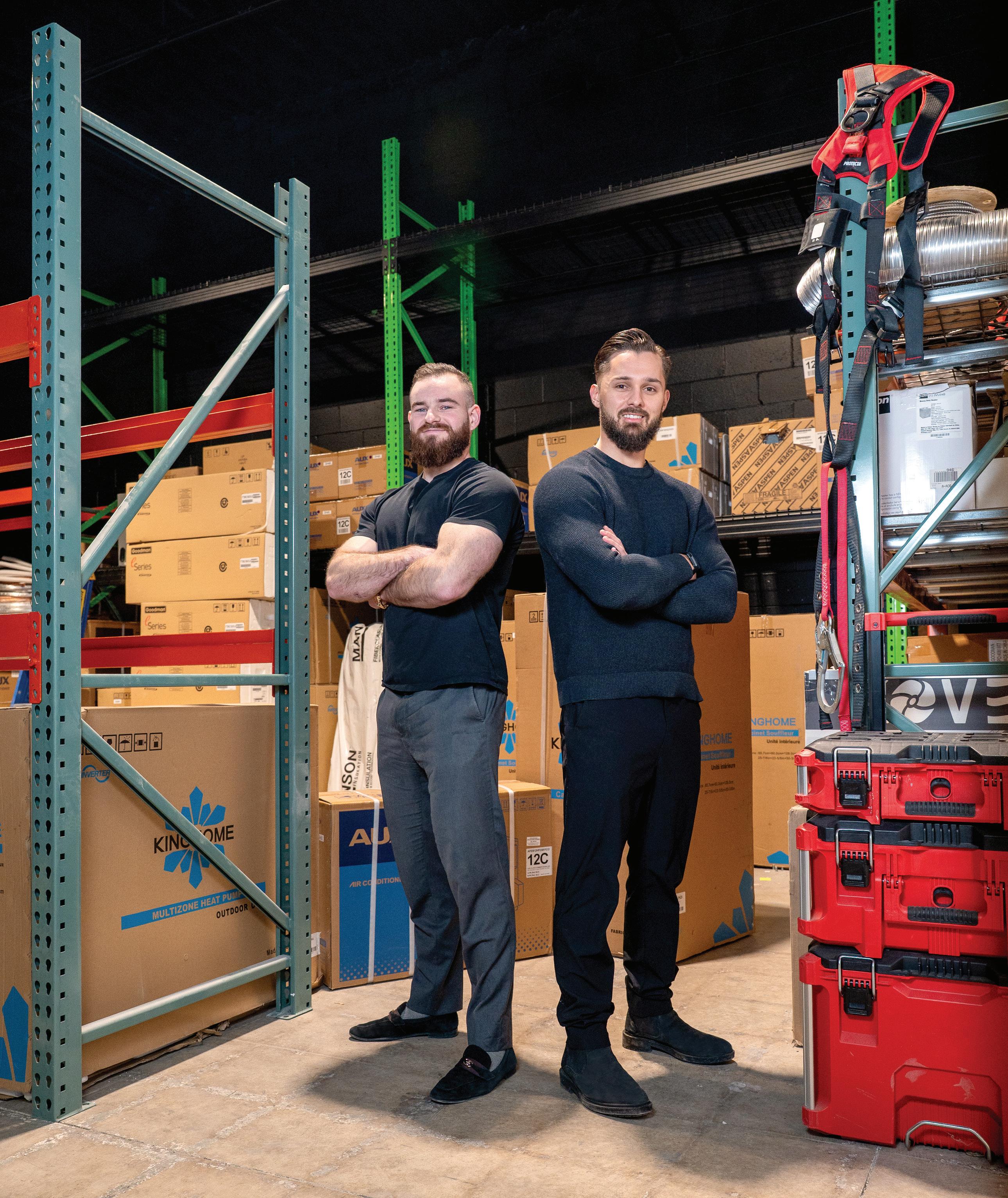
“We’re extremely optimistic about the future. There’s a lot of potential.”
TRAVIS
MORIARTY AND LOUIS LACOMBE-DENIS, CO-FOUNDERS, PRESTIGE HOME IMPROVEMENT
The typical heating, ventilation and air conditioning system is more than 100 years old, and while the technology has evolved, the business model behind it has remained much the same.
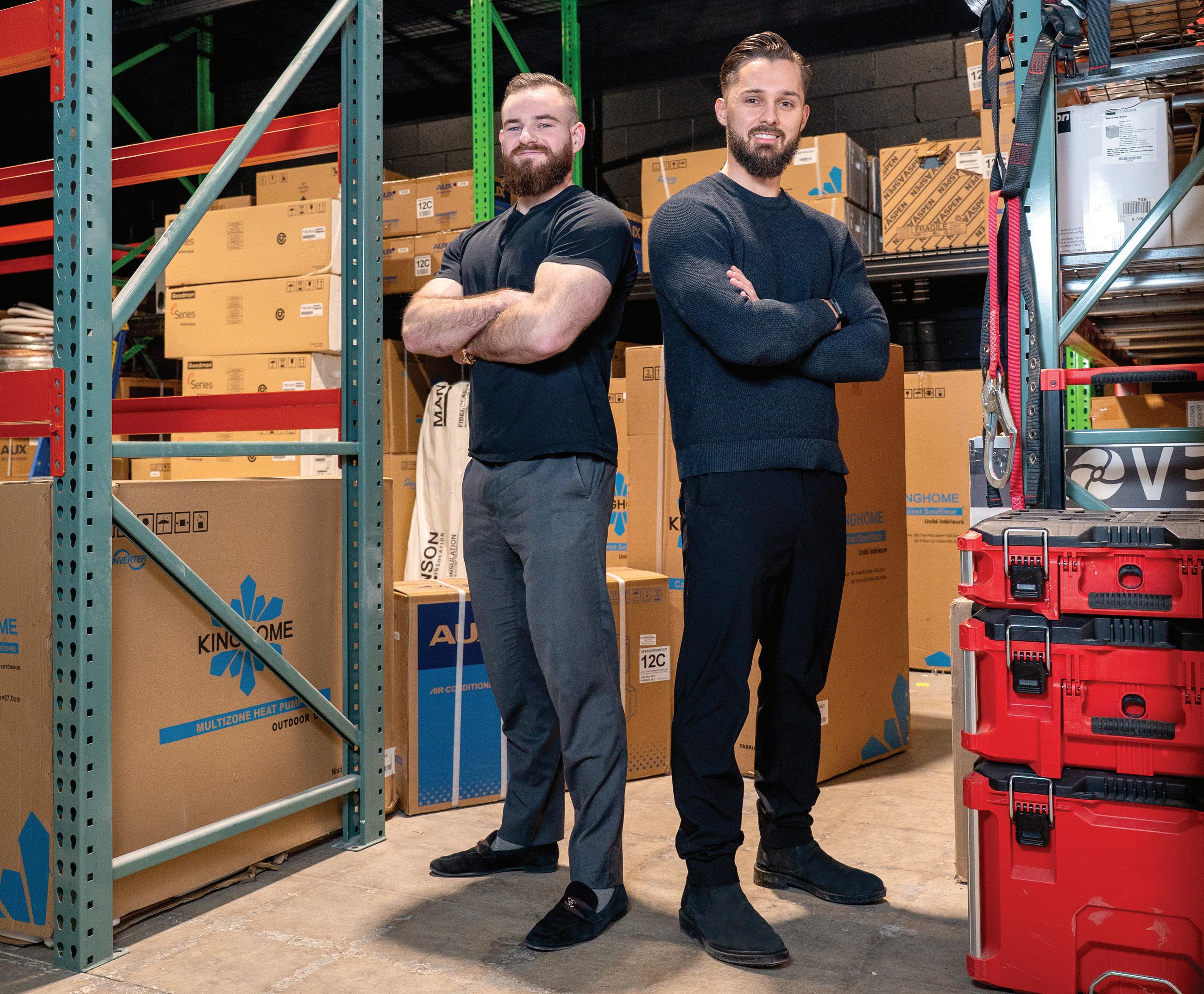
But one Ottawa company has a new vision when it comes to HVAC. In 2022, Louis Lacombe-Denis and Travis Moriarty cofounded Prestige Home Improvement with the sense that they could do things differently.
In its first three years, the Ottawa-based HVAC contractor has already expanded into Nova Scotia, and its ambitions don’t stop there.
“In the next eight to 10 years, we’ll be the biggest HVAC company in Canada,” LacombeDenis told OBJ
Both co-founders began their careers in sales at other HVAC companies. As LacombeDenis said, it was that experience that inspired them to take a chance in the traditional sector.
“As sales representatives for other companies, we realized that we thought we could probably do it better.”
“A lot of the companies that we worked with, we really didn’t see a big vision or didn’t align with their values,” added Moriarty. “That was kind of the foundation of starting our company. We focused on customer service and were very customer-centric externally. And internally we focus on personal development and leadership development.”
The company gained traction early, said Lacombe-Denis. Its business model included working with trusted sub-contractors to install systems in homes across the city, and a primary focus was on growing the sales team, which initially consisted of friends and family members.
From the get-go, the company focused on
expansion. In 2023, it opened its first office outside of Ontario in Halifax. In the first six months of operation, the team there grew from four employees to 25.
Those efforts allowed the company to develop an expansion playbook, which Lacombe-Denis said he and Moriarty plan to deploy as they continue growing across Canada. For example, in cities where the company will have a smaller presence, the playbook includes working with mom-andpop shops and local sub-contractors to keep up with demand.
Prestige has been ahead of the game with heat pump technology and other eco-alternatives.
“As more time goes on, it’s going that way, where the West seems to be pushing for more sustainable energy solutions — removing natural gas and propane and getting rid of oil as a heating source,” said Moriarty. “As for us, we were early with heat pump technology and implementing that in our systems. We’ve continuously tried to improve and offer that to homeowners and explain the value.”
And as technology evolves, so does the business itself.
To keep up with demand and set itself apart from the competition, Prestige launched its own software designed to evaluate subcontractors. In 2026, the company will test it in-house. Longer-term, it will be launched publicly as an operations management software, adding another revenue stream to the company.
“It’s designed to essentially be the Uber of trades,” said Lacombe-Denis. “We’re going to create a network of sub-contractors where they can be rated on friendliness, responsiveness, cleanliness, all the different factors that homeowners care about.”
“A big part of the vision was to just open many offices and have a presence in different cities,” Lacombe-Denis said. “We’ve always had this massive vision. You wouldn’t necessarily expect a company in year two to open in another province, but it’s almost this delusional belief that we have that we can grow such a massive company.”
According to Moriarty, the company broke into the market at the right time. As more Canadians prioritize sustainability, he said
And while it’s grown quickly, LacombeDenis said the company is nowhere close to its ceiling.
“The world is changing so fast nowadays that it’s very hard to actually put together a plan. Next year, there could be a new AI tool that comes out and changes the game completely. So our philosophy has been to have a large vision, but being very flexible — strict on the vision, but flexible on the details.
“We’re extremely optimistic about the future. There’s a lot of potential.”





For more than 25 years, Sezlik.com has represented Ottawa’s most significant homes and discerning clients. Today, that experience is paired with a world-class digital platform built specifically for the Ottawa market.
For more than 25 years, Sezlik.com has represented Ottawa’s most significant homes and discerning clients. Today, that experience is paired with a world-class digital platform built specifically for the Ottawa market.
MAKING YOUR DREAMS REALITY
Charles Sezlik, One of North America’s top Realtors® for over 25 years.
Charles Sezlik, One of North America’s top Realtors® for over 25 years.
Royal LePage Team Realty, Brokerage
Royal LePage Team Realty, Brokerage
Here are Ottawa’s fastest-growing companies for 2026. Recipients hail from the National Capital Region and eastern Ontario, from a variety of sectors, both large and small businesses, startups and established firms. They’re ranked by their percentage revenue growth between year one and year three of their most recent three-year fiscal period.
Fastest Growing Companies is supported by GGFL LLP.
REVENUE GROWTH: 979.52%
YEARS IN BUSINESS: 1-4
NUMBER OF EMPLOYEES: 20-49
Prestige is a fast-scaling HVAC company revolutionizing home energy efficiency through turnkey heat pump solutions, rebate navigation and technology-driven operations across Canada. See profile on page 37.
REVENUE GROWTH: 668.86%
YEARS IN BUSINESS: 5-9
EMPLOYEES: 1-4
Meerkat Marketing is a local B2B and B2C boutique marketing agency in Ottawa with deep specializations in branding, strategy and digital marketing.
How did you grow your company’s revenue over the past three years?
Our company has achieved consistent revenue growth by providing boutique-level service tailored to each client’s unique goals. We’ve focused on building strong, longterm relationships and remaining deeply committed to our clients’ success, which has fuelled steady, sustainable growth and repeat business. Our dedication to delivering measurable results and exceptional service has allowed us to stand out in a competitive market and expand our client base.
What was your biggest challenge during that time?
Finding and retaining the right talent to match the growing needs of our clients. As our company expanded, it became essential to recruit team members who not only had the technical expertise, but also shared our client-first values and commitment to excellence. Building a team capable of delivering boutique-level service at-scale required patience, precision and a deep
understanding of our clients’ goals and our company culture.
What is your biggest opportunity going forward?
Our acquisition by seoplus+ has provided us with access to greater resources, deeper expertise and more refined processes. This partnership allows us to elevate our service offerings and deliver even stronger results for our clients. With the support of a larger, awardwinning team and enhanced operational capabilities, we can scale our impact while maintaining the personalized, boutique-level service that defines our approach.
REVENUE GROWTH: 495.75%
YEARS IN BUSINESS: 5-9
EMPLOYEES: 20-49
Corfix is a mobile app that construction companies use to manage job-site compliance.
How did you grow your company’s revenue over the past three years?
We spent an enormous amount of time speaking to companies and potential prospects to understand what they require as a solution. We started off strictly as an outbound engine making hundreds of cold calls a week. Once we proved product-market fit, we began to expand our sales channels to include partnerships and marketing.
What was your biggest challenge during that time?
Trying to stay focused on the product. Customers try to take us in many different directions and we needed to stay disciplined in what we decided to build. We were constantly building one-offs for customers to get deals done, regardless of ICP or potential long-term value of that customer, which ended up causing us problems years later.
What is your biggest opportunity going forward?
U.S. expansion. The market is obviously much bigger and they are further behind on the regulatory curve. There are more companies, they live the same problem as we do and there’s no single competitor who has the lion’s share of the market. Increasing our presence in the U.S. will be key in continuing to double our revenue.
REVENUE GROWTH: 314.43%
YEARS IN BUSINESS: 5-9
NUMBER OF EMPLOYEES: 10-19
App8 helps foodservice brands take more orders and move them faster by making the entire process digital, from guest ordering to kitchen prep and fulfillment.
How did you grow your company’s revenue over the past three years?
We grew revenue by focusing on enterprise partnerships with national foodservice brands and building repeatable rollouts from pilots to chain-wide deployments. We honed in on verticals where we could deliver clear 10x value: catering, K-12 schools and sports and entertainment. By staying in constant communication with clients, we identified their greatest pain points and built differentiators that solved them directly, which translated into stronger adoption, higher order volume and faster throughput across locations.
What was your biggest challenge during that time?
Navigating the post-pandemic labour environment in foodservice. Operators were often short-staffed, which created uneven adoption timelines and pressure on how quickly new technology could be absorbed. To respond, we delivered lighter deployments, stronger integrations and faster time-to-value so clients could go live without stretching already limited resources. This approach allowed us to remain flexible, support our partners on their timelines and still expand steadily across locations as results became clear.
What is your biggest opportunity going forward?
Our opportunity is to become the category leader in digital ordering across catering, K-12 schools and sports and entertainment;

three sectors where speed, volume and operational precision matter most. We are extending deeper into enterprise operations, from ordering flows through payments and consumer engagement, creating a unified experience that benefits both guests and operators.
REVENUE GROWTH: 289.09%
YEARS IN BUSINESS: 5-9
EMPLOYEES: 20-49
Trellis is an AI-driven, profit-optimization platform for Amazon and Walmart sellers, combining advertising automation, dynamic pricing, promotions and marketplace insights to scale revenue.
How did you grow your company’s revenue over the past three years?
We’ve grown our revenue through a combination of strategic outbound and inbound initiatives. Our dedicated outbound sales team has been instrumental in building relationships and driving new business, while our marketing efforts — including content, partnerships and thought leadership — have consistently generated high-quality inbound leads. We’ve also invested heavily in attending and exhibiting at key industry events, which have helped increase brand visibility, strengthen partnerships and convert pipeline opportunities.
What was your biggest challenge during that time?
Scaling our growth sustainably while maintaining operational excellence. As demand increased, we needed to expand our team, processes and infrastructure without compromising the level of service and innovation that set us apart. Balancing rapid customer acquisition with product quality, financial discipline and a strong company culture required constant prioritization and adaptability.
What is your biggest opportunity going forward?
Our biggest opportunity lies in leading the next wave of disruption in e-commerce automation. The industry is ripe for transformation and advances in large language models (LLMs) and intelligent agents are redefining how brands manage growth across marketplaces. We see Trellis at the centre of that disruption: leveraging AI to move from reactive campaign management to proactive, profit-driven automation.
REVENUE GROWTH: 271.33%
YEARS IN BUSINESS: 5-9
NUMBER OF EMPLOYEES: 10-19
Blue Collar Marketing is a digital marketing agency for contractors. We help blue-collar businesses get more customers by providing effective and straightforward marketing solutions.
How did you grow your company’s revenue over the past three years?
We went all in on our niche. Our revenue growth comes from deep market knowledge and aggressive digital campaigns targeting blue-collar business owners. We backed that with smart investment in great people and robust systems to handle the increased client demand.
What was your biggest challenge during that time?
The toughest part was scaling without sacrificing quality. As we grew fast, we put a lot of effort into building robust systems and making sure the right team was in place to meet the high demand from our clients. It comes down to trusting our people and process.
What is your biggest opportunity going forward?
Our biggest opportunity is doubling down on performance and results. We’re becoming a dedicated lead generation agency, shifting to performance-based models. We’re also launching key AI products that naturally integrate with our existing client services to amplify their growth, like Workphone.io.
REVENUE GROWTH: 233.86%
YEARS IN BUSINESS: 1-4
EMPLOYEES: 5-9
Evolta is a sustainability-focused electrical contractor specializing in EV charging, battery storage, LED lighting and building automation. See profile on page 35.
REVENUE GROWTH: 228.70%
YEARS IN BUSINESS: 5-9
EMPLOYEES: 1-4
Soutar provides strategic fractional CFO services for founders looking to take control of their finances, optimize cash flow and make informed decisions with confidence.
How did you grow your company’s revenue over the past three years?
We grew by focusing where Soutar Capital creates the most value, then building a repeatable engine around that focus. We simplified our offer, improved pricing and positioning and moved from one-off wins to durable relationships and recurring value, supported by selective partnerships and strong delivery. We raised engagement size and retention.
What was your biggest challenge during that time?
Scaling beyond founder-led momentum while maintaining quality was our greatest challenge. Demand outpaced capacity, so we prioritized discipline over speed, standardized delivery, built a reliable bench and enhanced onboarding and quality reviews. Better forecasting and cash protected reputation and margins, while growth compounded and client outcomes.
What is your biggest opportunity going forward?
To deepen our core, productize more of our IP into subscription-like offerings and expand selectively into adjacent verticals and regions. Data-rich operations and a few strategic partnerships will help Soutar Capital scale with discipline, trust and healthy unit economics. We will keep capital efficiency at the centre as we grow.
REVENUE GROWTH: 180.18%
YEARS IN BUSINESS: 5-9
EMPLOYEES: 50-99
Hobbiesville is a Canadian hobby shop offering trading cards, games and collectibles from top brands. See profile on page 33.
REVENUE GROWTH: 154.57%
YEARS IN BUSINESS: 1-4
EMPLOYEES: 20-49
Autocorp.ai’s AVA platform helps dealerships sell more with Equifax-powered prequalification, ID verification, predictive credit scoring and real-time trade-in valuations.
How did you grow your company’s revenue over the past three years?
Instead of chasing every channel, we built a disciplined inside sales motion, clarified our value proposition and delivered consistent
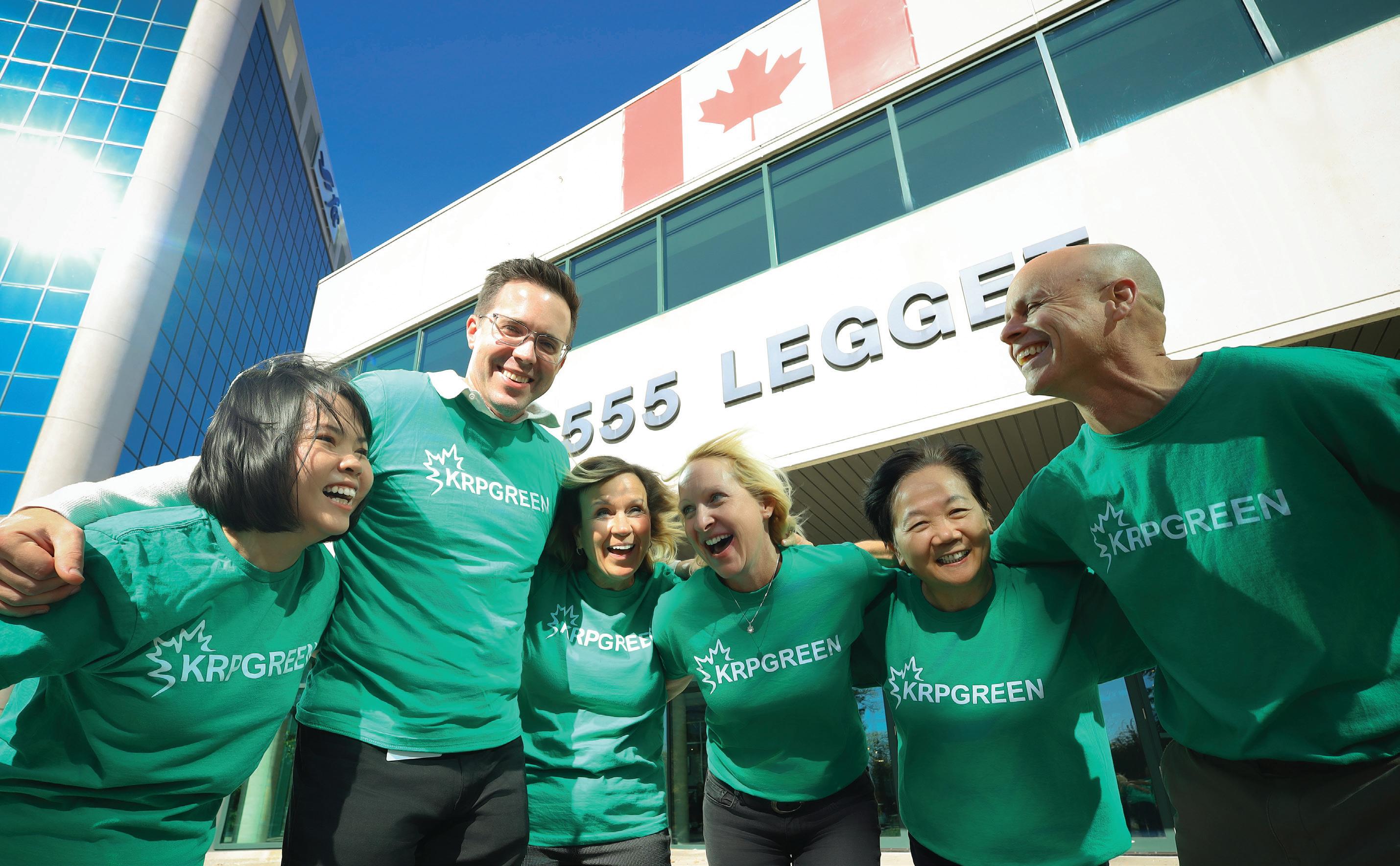


outcomes for early customers. That created a flywheel: references led to multi-location rollouts, which strengthened our credibility and shortened sales cycles. We paired this with product improvements that removed friction in onboarding and day-to-day use, letting customers realize value quickly and expand organically.
What was your biggest challenge during that time?
Maintaining quality at speed. As demand increased, we had to scale onboarding, support and compliance without diluting customer outcomes. That meant tightening processes, setting clearer expectations and investing in training and systems that make excellence the default, whether for a single rooftop or a national group.
What is your biggest opportunity going forward?
Broader adoption across North America and deeper integration with the automotive retail ecosystem. As the industry standardizes digital intake, verification and financing workflows, there’s an opportunity to become the default layer that connects dealers, lenders and retail platforms, thereby removing steps, reducing risk and improving conversion for everyone.
Here are numbers 11 through 20:
REVENUE GROWTH: 134.83%
YEARS IN BUSINESS: 5-9
EMPLOYEES: 5-9
GenesisLink helps immigrant founders launch and grow innovative businesses, contributing to Canada’s economy while strengthening the region’s entrepreneurial and innovation ecosystem.
REVENUE GROWTH: 131.88%
YEARS IN BUSINESS: 5-9
EMPLOYEES: 50-99
Celebright designs, manufactures and installs permanent smart LED holiday and architectural lighting systems.
REVENUE GROWTH: 129.18%
YEARS IN BUSINESS: 10-14
EMPLOYEES: 10-19
ZeroTek enables managed service providers
(MSPs) to deliver enterprise-grade identity management.
REVENUE GROWTH: 93.57%
YEARS IN BUSINESS: 15-19
NUMBER OF EMPLOYEES: 250-499
Solink allows clients to protect and monitor their business with insights from existing video and point-of-sale data.
REVENUE GROWTH: 80.77%
YEARS IN BUSINESS: 5-9
NUMBER OF EMPLOYEES: 50-99
Fellow.ai is building an AI meeting assistant and chief of staff that will define the future of work.
REVENUE GROWTH: 79.78%
YEARS IN BUSINESS: 10-14
EMPLOYEES: 100-249
Knak is an email and landing page creation platform that helps enterprise companies make on-brand digital marketing campaigns quicker and easier.
REVENUE GROWTH: 79.03%
YEARS IN BUSINESS: 10-14
EMPLOYEES: 20-49
Lightenco is a leader in sustainable energy management through turnkey LED lighting solutions, the provision of EV charging and the development of solar power generation.
REVENUE GROWTH: 76.95%
YEARS IN BUSINESS: 5-9
NUMBER OF EMPLOYEES: 10-19
Mass Excavation & Demolition is a heavy construction company that offers quality construction services in Ottawa and eastern Ontario.
REVENUE GROWTH: 64.29%
YEARS IN BUSINESS: 5-9
EMPLOYEES: 10-19
NotaryPro is a technology company producing legal-tech software.
REVENUE GROWTH: 58.56%
YEARS IN BUSINESS: 20-49
NUMBER OF EMPLOYEES: 100-249
BluMetric is a publicly traded environmental consulting and water-tech company providing complete water, environmental and health/ safety solutions to industrial/commercial, mining, government and military clients.
Kudos also go to:
YEARS IN BUSINESS: 5-9
EMPLOYEES: 10-19
Numetrica is a modern accounting and advisory firm delivering cloud-based solutions, tax planning and business coaching to help entrepreneurs streamline finances and drive sustainable growth.
YEARS IN BUSINESS: 15-19
NUMBER OF EMPLOYEES: 100-249
Giatec develops innovative, sustainable technologies that transform concrete testing, helping producers and contractors save time, labour and costs while improving project profitability and industry efficiency.
YEARS IN BUSINESS: 5-9
EMPLOYEES: 10-19
Direct-to-consumer, farm-to-plate e-commerce, the “Amazon of local meats.”
YEARS IN BUSINESS: 5-9
EMPLOYEES: 50-99
GlassHouse is an EU-GMP certified producer of medicinal cannabis for international markets.
YEARS IN BUSINESS: 5-9
NUMBER OF EMPLOYEES: 5-9
Pineglen Builder’s range of services caters to both residential and commercial needs in the Ottawa area, ensuring that every project receives the attention it deserves.
YEARS IN BUSINESS: 20-49
NUMBER OF EMPLOYEES: 250-499
Kettlemans Bagel opened in Ottawa in August 1993. By rolling, kettling and baking traditional Montreal bagels in a woodburning oven using hand-picked hardwood and maintaining an unwavering commitment to the traditional quality of the food, we have become a food institution for over 25 years.

















The inside story, milestones and new beginnings

TMICHAEL CURRAN OBJ PUBLISHER
elling the behind-the-scenes story of OBJ is risky for three reasons. First, it’s mostly undocumented, which is ironic, given OBJ’s role in telling thousands of local business stories. Second, as you will read, it’s a story with lots of protagonists and plenty of twists and turns. Third, my start at OBJ dates back more than a quarter-century, and my memory is a bit foggy. Despite all these risks, I feel compelled to at least share my version of the story as OBJ celebrates its 30th. Inevitably, I may inadvertently omit some names or misstate some facts.
Final point: this isn’t the story of the biggest scoop, the best issue, the greatest award winner or anything like that. It’s the story of OBJ as a media business that has endured an industry collapse, yet stubbornly remains strong and poised for future growth.
My journey at OBJ began at a Chinese restaurant at the corner of Bronson Avenue
and Somerset Street, where I first met Mark Sutcliffe. It was mid-winter 1999. (Mark was a co-founder of OBJ in 1995 and held both the editor and publisher positions at the time.)
I was coming off my first entrepreneurial venture, a community newspaper in the east end of Ottawa. Founded in 1995 with my business partner Caroline Andrews and the generous support of local investors, that community newspaper was sold to Transcontinental Media, a Montreal-based media and printing company, around 1998. I spent about 12 months with Transcontinental and then started to look for bigger challenges.
After graduating from Carleton J-school in the early 1990s, I had a very defined career goal: to cover national politics on Parliament Hill, which I did briefly. I had all the prerequisite drive and skills, but I couldn’t overcome the economic realities of daily newspapers, which at the time were shedding staff, not hiring budding journalists.
Fortunately, another career path materialized. My experience launching and operating a weekly newspaper sparked a real passion for business, which seemed much more anchored in the real world compared to the ambiguity of national politics. With great advice from investors such as Gerry Dust, a
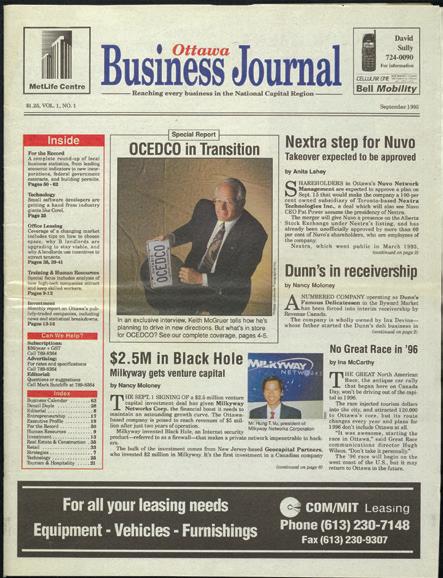
1995
OBJ founded by David Luxton and Mark Sutcliffe, volume one, issue one newspaper published 1997
well-known lawyer, and Andre Gagnon, an owner of the Mr. Gas empire, I started down an entrepreneurial path. The weekly newspaper won some big awards, but the business couldn’t support its cost structure, which forced the sale to Transcontinental. It was incredibly stressful, with investor cash calls and uncertainty about meeting payroll. I swore off any future entrepreneurial ventures, but I was still enamored by business.
Back at Yang Sheng restaurant with Mark, I sensed a big opportunity. After enjoying a meal together, Mark suggested we meet again, this time with David Luxton, majority owner of OBJ. I left the restaurant and cracked open my fortune cookie. It read: “Now is time for something new.”
A few days later, I met Mark and David in the boardroom of OBJ’s second floor office at 424 Catherine St. I have two vivid memories of that meeting. First, David painted this incredibly ambitious plan involving multiple websites, daily news broadcasts, large events and much more. Second, I remember Mark’s words to me. They were something like this: “You can make this job what you want. It really depends on you, it has no ceiling.” That was intriguing to me, the opportunity to scale a modern media company and pursue my interest in business. I enthusiastically accepted the job offer to become OBJ’s editor, initially focused on its weekly newspaper and some specialty magazines. (Mark was giving up the editor role to focus on growing the business.)
Those early days were challenging. I wasn’t new to publishing weekly newspapers, having sent hundreds of issues to press before I was 30 years old. However, this was a different niche (local business) and OBJ had a particular editorial approach, crafted by Mark.
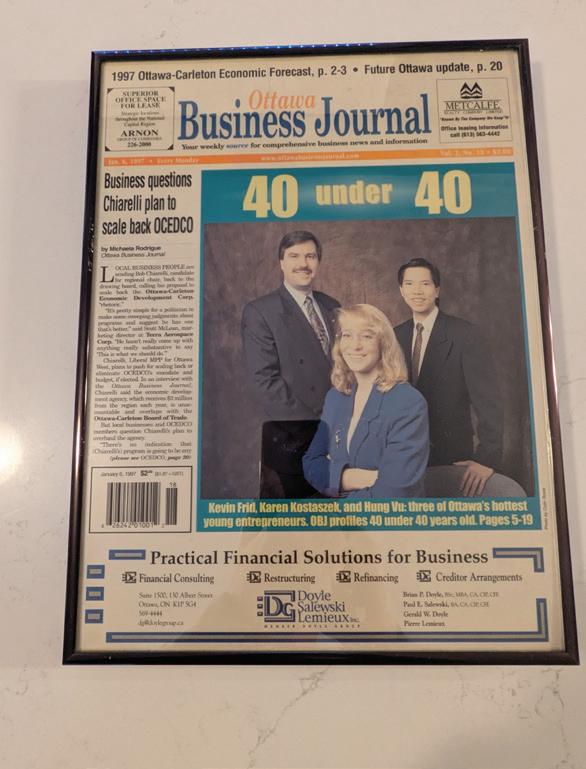

First Forty Under 40 selection; no event, just a newspaper feature 1997 Book of Lists
When I think back on those first few months, I have mixed emotions: excitement and dread. The work weeks were tough. It was a tight fiveday cycle. Four days of frantic work and then a big final push on Friday to send the paper to press. Fridays started around 9:00 am and often finished after 1:00 am. I faced that challenge with a small but mighty news team (mainly Christine Wong, Kate Chappell and later Julia Fields) and hardworking graphic designers, Brian McCambridge and James Bonifacio. (As an aside, there is nothing like running out of editorial copy around midnight and having four more pages to fill. Remember, there was not a treasure trove of local online content at the time. We only had access to what we wrote.)
As mentioned, David had an incredibly ambitious picture of OBJ in the internet era. The implementers of OBJ’s digital strategy were J.D. Robbins and Trevor Boicey. From a technical point of view, I was on the periphery of OBJ’s first daily journalism website, but very involved in executing on the content strategy. Mark explained it like this: just like CFRA provided hourly news updates, OBJ would do the same on its website. Got it.
That might not sound like a disruptive idea these days, but let me set the local media context in 1999. The concept of digital first reporting was very new in Ottawa and beyond. (In fact, David and Mark earned a reputation as futurists, prodding print-centric U.S. business journal owners to enter the digital age.)
Layering a daily news operation on top of OBJ’s weekly newspaper and specialty publications (such as the Book of Lists) was a daunting task, but also a thrill.
Then David and Mark took things up a notch. This chapter at OBJ is far too complex to fully recount, so I’ll simply touch on the key points. Around 2000, as the dot-com bubble was growing with concepts such as “content is king,” OBJ merged with Ottawa-based publicly traded technology company, Newsys Solutions, co-founded by Mark Quigg. OBJ was core to the company’s dot-com strategy. What we learned in web development and editorial strategy in 1999 and 2000 would be implemented on a national scale. In March 2001, Newsys rebranded as InBusiness Solutions with Mark Sutcliffe taking the reins of InBusiness Media Network. With millions in cash and the “irrational exuberance” of the internet era, InBusiness created more than 50 local business portals that combined business news and business services. (Eventually, even BMO got involved.) What started as a small OBJ newsroom now included a couple dozen reporters producing local daily business news across Canada.
Meanwhile in Ottawa, the telecom boom was transforming the business landscape as billions in venture capital was invested in “business plans written on napkins.” OBJ blanketed Ottawa with business news, including a daily radio show on CFRA — giving broadcaster Rob Snow his start in business reporting — and a TV show on Rogers TV hosted by Scott Evans. OBJ played an important role in telling the tech boom story with reporters such as Derek Mellon, Brian Salisbury, Steve Ladurantaye, Leo Valiquette, Michael Hammond and others.
When the bubble burst, InBusiness felt the economic shock, its stock reduced to
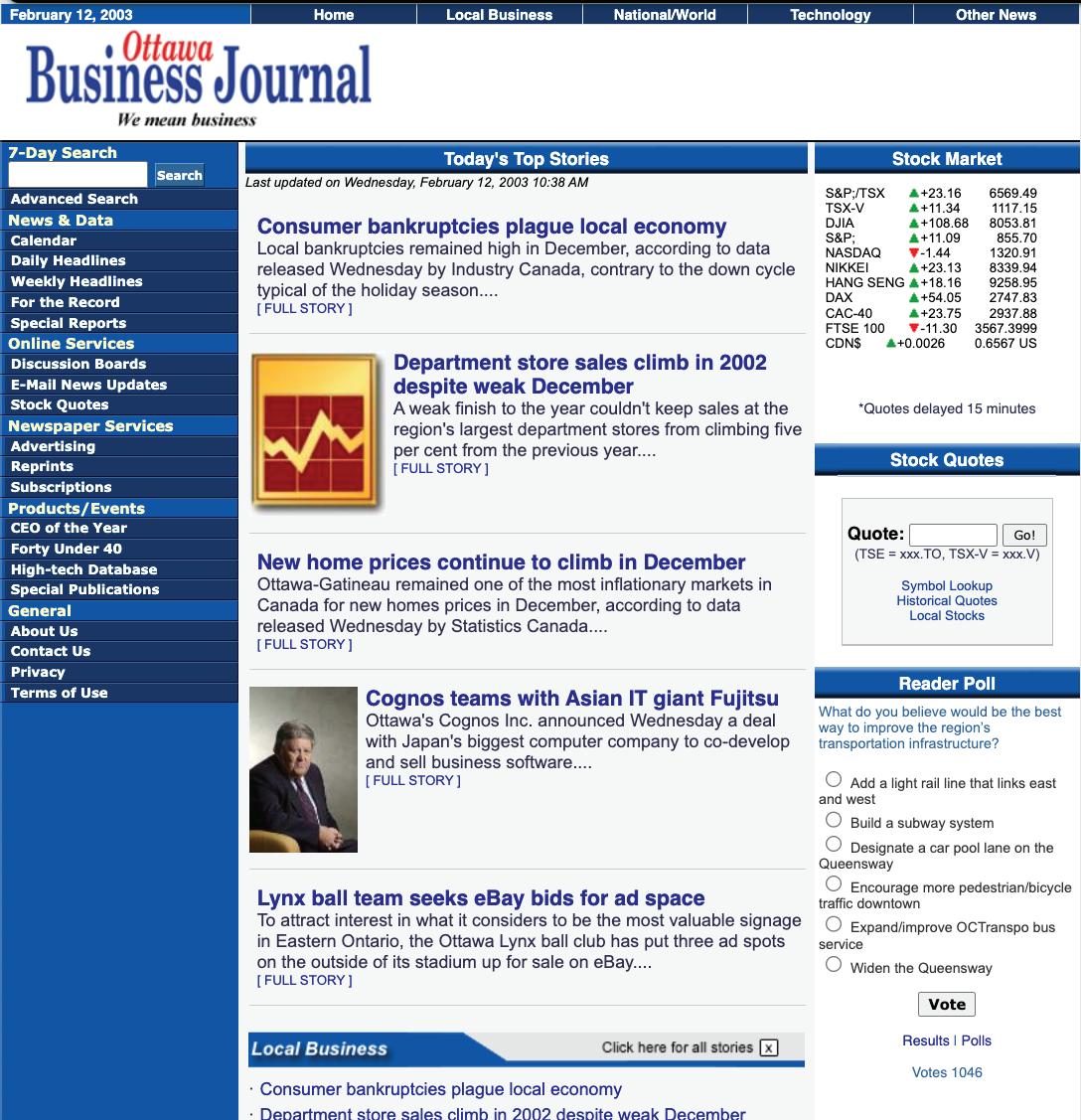
pennies on the TSX. As advertising revenues dried up, entire media brands at InBusiness Media were shuttered, including Silicon Valley North, the Toronto Business Journal and the Montreal Business Journal. The parent company had no choice but to find a buyer and exit the media business. Even in those turbulent economic times, OBJ had value as a business. Eventually, Transcontinental — yes, the same company that purchased my eastend community weekly — purchased OBJ for a couple million dollars. The 2002 acquisition was led by André Préfontaine at Transcontinental. It was roughly around this time when most OBJ and InBusiness leaders exited, including Mark, Donna Neil, Kerry Mitchell, Glenn McLeish and Adrian Spitzer. It also reacquainted me with my former business partner, Caroline Andrews, who was now leading Transcontinental’s local operations. In the next several months, I went from editor-in-chief of InBusiness Media to publisher of OBJ and then regional manager of Transcontinental’s Quebec and Ontario local media unit.
1999
Commerce99 conference and trade show at Lansdowne with Stephen Covey and Jeffrey Moore; also, first Forty Under 40 awards gala emceed by Mark Sutcliffe.

1999
Michael Curran joins as editor
2000
OBJ acquired by Newsys Solutions Inc., later known as InBusiness Solutions
2000
First CEO of the Year, Rod Bryden of WorldHeart

2002
OBJ purchased by Montreal-based Transcontinental Media
2010
OBJ purchased by Great River Media, led by Mark Sutcliffe, Donna Neil and Michael Curran
This was another new chapter for OBJ, moving from the dot-com frenzy at InBusiness to Transcontinental’s kaizen business philosophy. OBJ found itself inside a division with more than $100 million in annual revenue and hundreds of employees, meaning strict adherence to budgets and constant benchmarking, but also a media-savvy culture built on growth and digital innovation. Transcontinental provided a stable business structure for OBJ to mature, sustaining the brand and boosting my own business skills. OBJ remained committed to daily reporting, expanded its events and awards programs and launched several specialty magazines, including Ottawa At Home, eventually edited by Mary Taggart.
Transcontinental initially wanted to leverage OBJ to create a network of business journals across English Canada. It already owned Les Affaires, the business bible of Quebec, which was led by Pierre Marcoux. Ultimately, as I understand it, Transcontinental decided to focus on lifestyles, homes and women in its $600-million media empire. Business publications unfortunately took the back seat. Nevertheless, Transcontinental played a key role in OBJ’s success after the dot-com bubble burst. (Special shout-out to many seasoned media execs at Transcontinental, namely Marc Ouellette, Serge Lemieux, Pascale Fortin, Denis Hénault, and Jean Roy).
The global financial crisis in 2008 put an end to that stability. With home builders and auto manufacturers under duress, big advertising
budgets evaporated. Combined with the “Craigslist effect” on newspaper classifieds and other hits to traditional advertising, the media industry was in full-blown crisis. Transcontinental saw the writing on the wall for its printing and media business. All of that meant that OBJ and its ancillary publications were for sale again.
Marc Ouellette, who led Transcontinental Media, was given the task of selling many media titles, including OBJ and Ottawa At Home. Marc knew about my previous media venture in Ottawa’s east end and thought I might be a logical buyer. Discussions ensued for many months as a valuation and terms were defined. Meanwhile, I was scrambling trying to determine if I wanted to own a business again, and how any acquisition of OBJ would be financed. It was actually Marc that reconnected me with Mark Sutcliffe to organize an offer. (After leaving InBusiness in 2001, Mark teamed up with the aforementioned Donna Neil to establish Great River Media and launch the Kitchissippi Times.) All was going to plan with the bid until the founder of Transcontinental, Remi Marcoux, a towering figure in Quebec business, insisted on a higher price. Fortunately, OBJ was a devalued asset at the time and the price tag made sense. Mark and I contributed the funds and completed the purchase in August 2010. I joined Great River Media as its president. Mark was the big picture guy. Donna and I ran operations.
Again, there are far too many details to outline in this post-acquisition chapter, but here is the gist of it. Under local ownership once again,
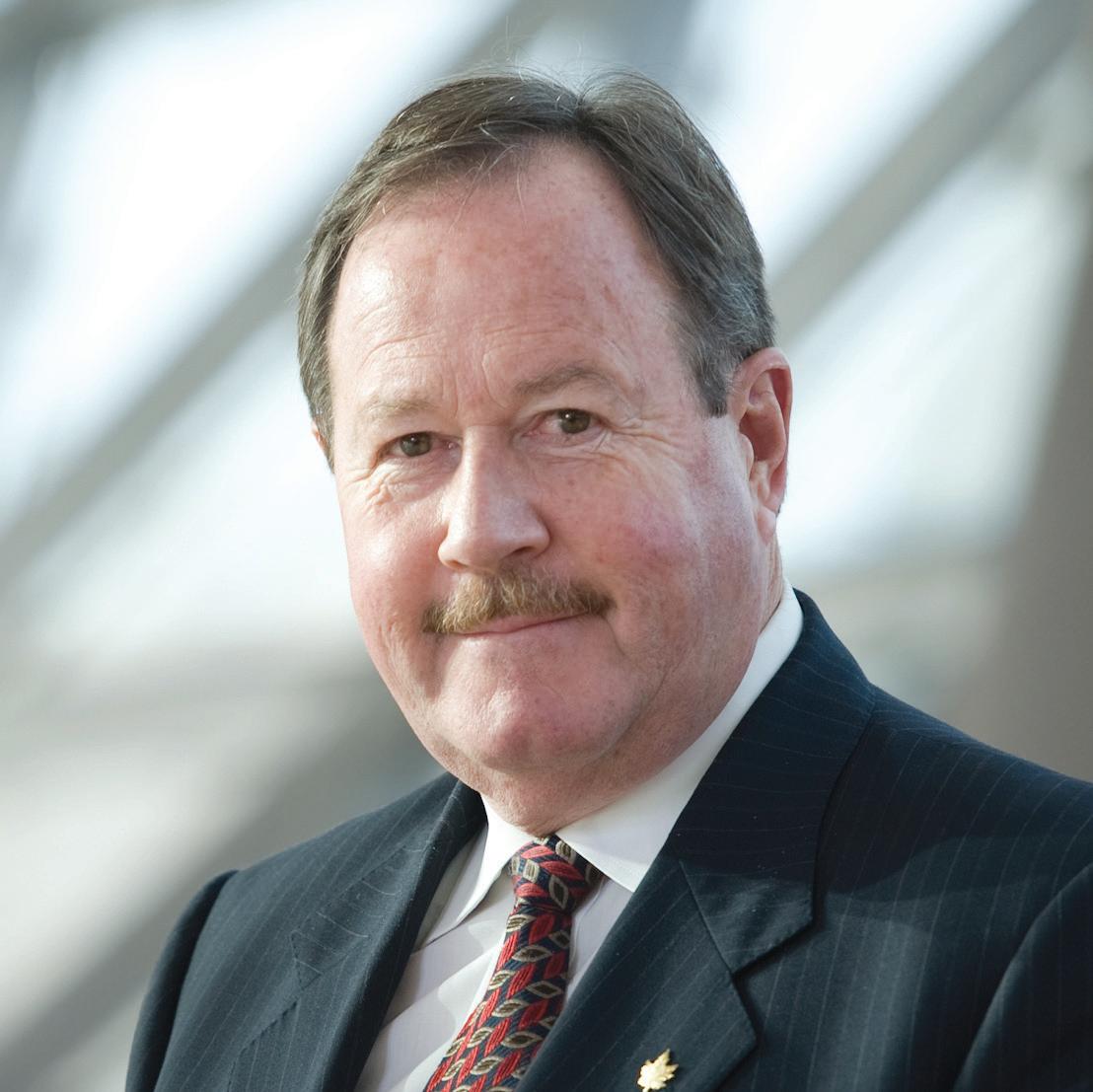
2011
First Lifetime Achievement Award co-presented by OBJ and OBOT to Jim Durrell
2014
OBJ and OBOT form joint venture corporation, Ottawa Business Events
2015
OBJ spins off a digital-first technology journalism project, Techopia
Mark, Donna and I set out on a mission to create niche, vertically integrated media titles in business, homes, food and living, running, hockey, and parenting. There were a couple more acquisitions (namely Capital Parent and Centre Ice) and a foray into consumer events. There were many wins, but our team was still fighting against the continued shift away from print advertising. The company would make money on one title and lose it on the other. It was frustrating.
In 2013, I suffered a personal crisis that forever changed my family. Combined with mounting business pressures, all three Great River Media partners knew it was time for change. With the guidance of financial guru Bob Plamandon, we crafted a vision for a smaller company, mainly anchored around OBJ. (This meant abandoning some titles and selling others, namely Ottawa At Home, purchased by its editor, Mary Taggart. Thankfully, Kitchissippi Times, now 23 years old and thriving, remains part of Great River Media.)
Over the next couple of years, the plan worked. The company regained its financial footing. This refocus on OBJ also allowed me to reconnect with an association of independently owned business journals in the U.S. This incredibly collaborative association is a mastermind group for business journals, sharing success strategies and identifying important trends in media. With about 60 member publications, it blankets the U.S. from big markets like Chicago to smaller markets such as Worcester, Mass. (I should pause to thank Joe Zwiebel, Peter Stanton, Dan Meyer, Julio Melara and others for all the input and
Craig Lord (centre) interviewing for OBJ’s Techopia at Bayview Yards.

support over the years.)
Around this time, Mark, then volunteer chair of the Ottawa Chamber of Commerce, started to think about rationalizing the messy local business events scene. The idea coincided with the transition of OCRI to Invest Ottawa, complete with a mandate to sharpen its focus, which meant producing fewer events. OBJ’s early partner was Erin Kelly, then president and CEO of the Ottawa Chamber of Commerce. Initial efforts included rethinking the Business Achievement Awards (now called the BOBs) and some breakfast series. By 2014, OBJ’s co-operation with the chamber of commerce evolved into a formal joint venture with the incorporation of Ottawa Business Events Inc., owned 50-50. That shared business continued to flourish under Ian Faris and now Sueling Ching.
Seasoned business leaders must wonder sometimes if they are like boats traversing on an ocean, always with an eye on the horizon for powerful storms. In 2020, all business leaders faced something no one could have reasonably spotted. The pandemic shuttered businesses, confounded supply chains and created unprecedented levels of economic turmoil. OBJ’s story isn’t very different from most private businesses in Ottawa. We initially had temporary layoffs, thankfully received public money to shore up finances and then made lots of difficult decisions.
One of those decisions, albeit less difficult thanks to terrific business partners, was the decision for Mark to exit the business. This mutual decision was made years earlier, but

the pandemic pressed the fast-forward button on everything. Mark was simplifying his work life — eventually leaving multiple high-profile media jobs to mostly focus on coaching entrepreneurs — and I was still passionate about evolving OBJ, trying to realize its full potential. In spring 2021, Mark formally left OBJ, leaving me as the last partner in Great River Media. (Donna Neil had left a few years earlier.)
As a sole proprietor, I was reinvigorated and determined to make changes. During the pandemic, I came to understand that OBJ needed to reboot its business model. After years of digital disruption in all forms — AdWords to blogging to social media to podcasts — small independent publishers in the U.S. were finding sustainable business models. The need for OBJ to transform became more clear with Google News Initiative training, which I completed with OBJ editor Peter Kovessy. We couldn’t delay any longer. Using funds once dedicated to OBJ’s office lease, we had our warchest.
The agent of change, as it turned out, was a savvy and experienced consultant based in Colorado. Eric Shanfelt had already proven his worth with business journals in Milwaukee, Delaware, Baton Rouge and other U.S. markets. In 2022, we started rebuilding OBJ’s tech stack from the ground up, tossing away all existing platforms and processes.
This was way bigger than a new website. It was a strategy to create tighter relationships with OBJ’s exclusive readers, double-down on premium local business journalism (a neverending battle) and launch a subscription program for the first time in a quarter-century.
OBJ Insider was born. We recognized that many longtime readers might be unhappy at the prospect of paying to access local business news that had always been free. We needed to balance the subscription paywall and sustain traffic, a very tricky balancing act managed by OBJ editor Anne Howland. There were many risks, but the status quo posed a greater threat. After three years, the strategy continues to evolve, but we’re very satisfied.
At a high level, that is the business story behind OBJ. Of course, it’s written from my first-person perspective. Others might have different memories and different takes on OBJ’s threedecade long battle to survive and thrive.
My final words must go to all those whom I have not mentioned. More than 100 people have played a part in OBJ’s story and they are not forgotten here. Like any business, a few occupy leadership positions and get acknowledgement, but there is zero success without a talented and committed team of people striving to make an impact. They deserve full credit.
As OBJ moves into the next decade, that’s all any of us are (and were) trying to achieve. A positive impact on the city we know and love.
• Mark Sutcliffe
• Brian Gallant
• Pauline Comeau
• Kevin Bell
• Christine Wong
• Michael Curran
• Steve Ladurantaye
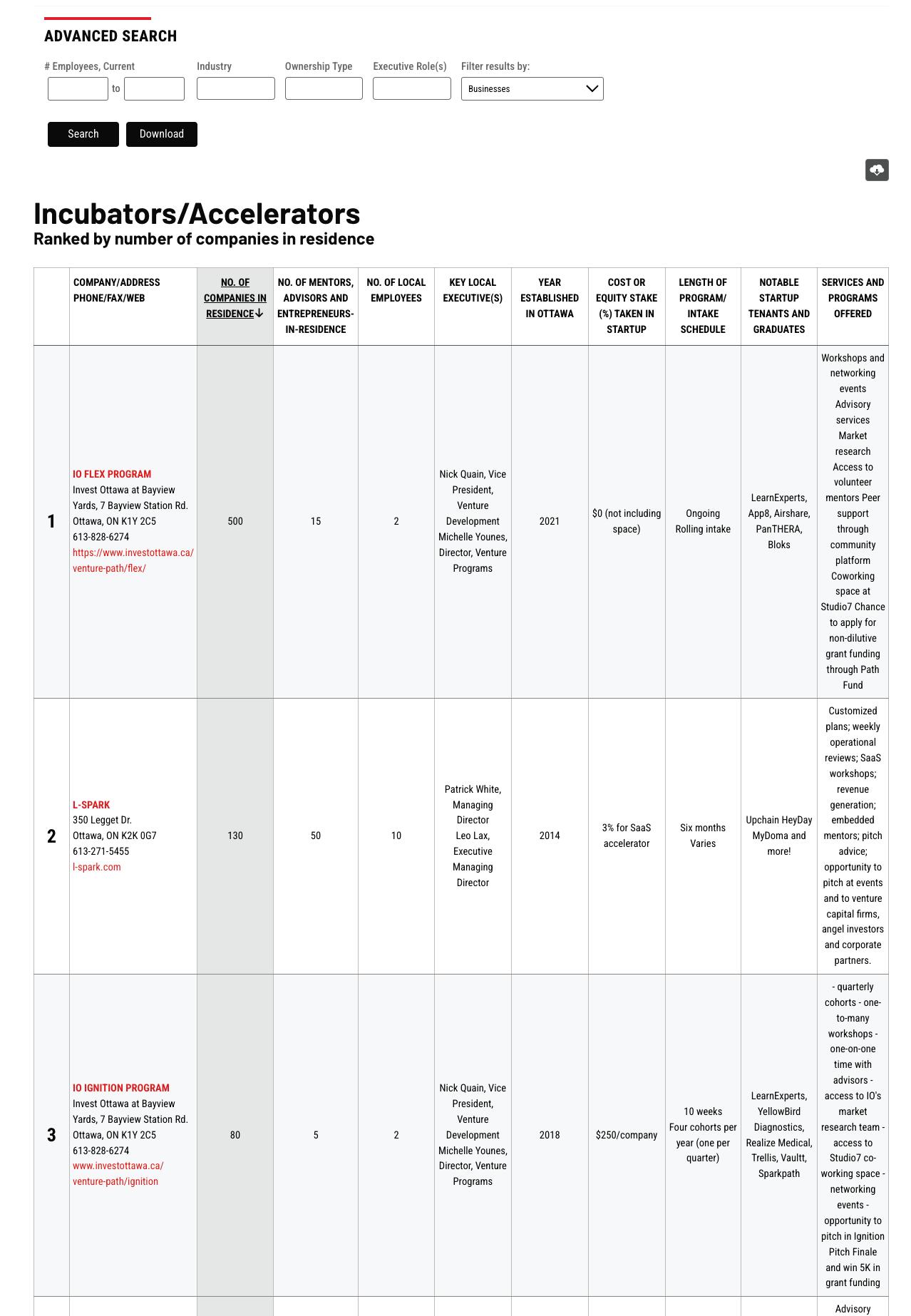
OBJ introduces Data Centre, the first digitization of Book of Lists
• Anne Howland
• Leo Valiquette
• Jim Donnelly
• David Sali
• Peter Kovessy
• Anne Howland
SALES VPS AND LEADERS
• Glenn McLeish
• Adrian Spitzer
• Donna Neil
• Susan Blain
• Terry Tyo
• Don Mersereau
• Victoria Stewart
DESIGN DIRECTORS
• Jeff England
• Patti Moran
• Tanya Connolly-Holmes
EVENT DIRECTORS AND VPs
• Monique (Trotter) Stone
• Kevin d’Entremont
• Krystal (Wallace) Walters
• Susan Blain
• Brittney Meagher (OBE)
FINANCE MANAGERS
• Stephen Berry
• Angela Lochtie-Crispim
• Irene Korablin
• Susan Ross
• Jackie Whalen
• Cheryl Schunk
Mark Sutcliffe, co-founder Ottawa Business Journal
It always rankles me when media headlines refer to the federal government as “Ottawa.” Those who live here know that there is so much more to this city than Parliament Hill and the federal bureaucracy.
We’re proud to be the nation’s capital, and we’re grateful for the strong, steady employment of the federal public service and the investments in national institutions, museums and galleries. But despite the impressions of many Canadians, Ottawa is also home to a thriving, diverse and creative private sector. It is a city of entrepreneurs, innovators and world-leading companies.
The Ottawa Business Journal was created to tell the stories of Ottawa’s private-sector heroes and to support them in their journey. It was
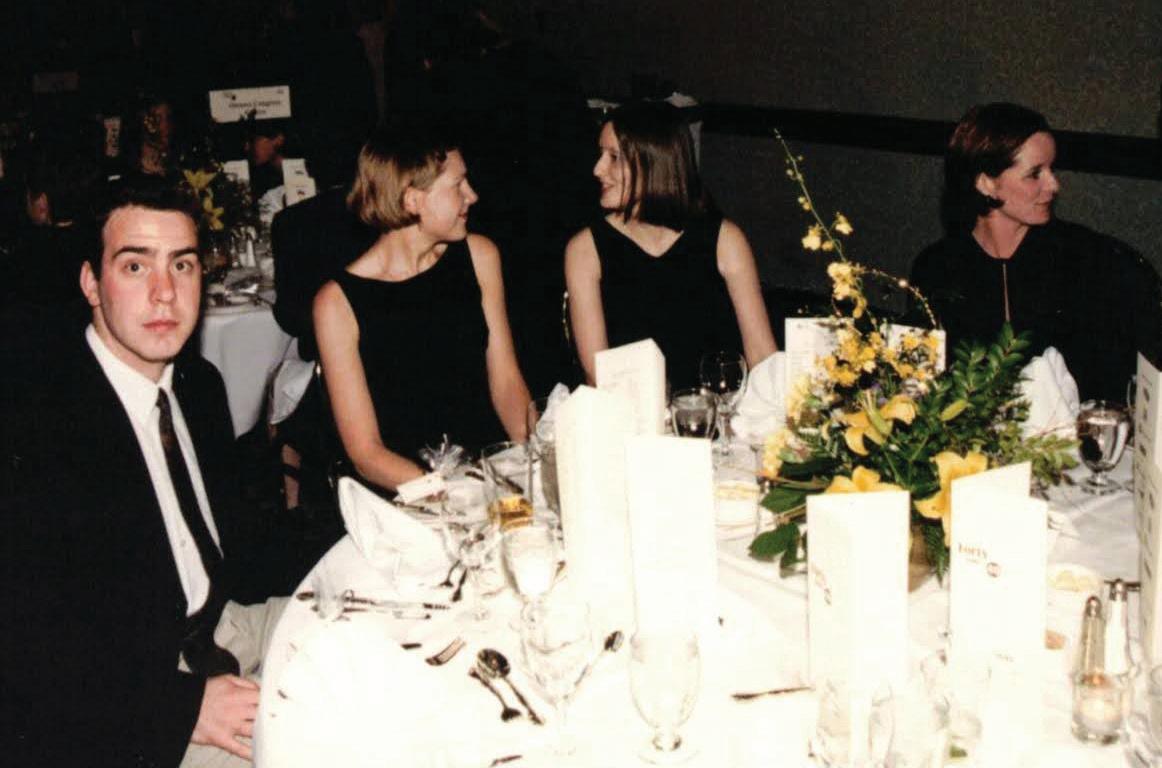
always more than just a newspaper: the goal was to be the gathering place for the business community, with a media platform, a roster of events and a package of tools that would help entrepreneurs grow their companies.
I had worked previously at the Ottawa Business News (founded by Bruce Firestone, the same visionary who launched the modernday Ottawa Senators) and Ottawa Business Magazine, both of which made valiant efforts to report on local business activities, but were chronically underfunded and under-resourced.
When David Luxton and Steve Caron asked me in the summer of 1995 to join them in launching the new publication, with an ambitious vision and the investment required to support it, I was excited to have another opportunity to fully and comprehensively demonstrate to the world the scope and success of Ottawa’s private-sector economy.
technology boom, with world-leading telecom juggernauts such as Nortel and JDS Uniphase, dozens of startups and a growing cohort of legal, accounting and marketing companies supporting their growth. The tourism industry was expanding rapidly, drawing millions of visitors to historic shows at the National Gallery of Canada and other attractions.

Not everyone was a believer. There were many people who were skeptical of a newspaper devoted entirely to business in Ottawa. Was there really enough happening to warrant an entire media business devoted to its activities?
There was. Ottawa was on the verge of a
We filled the pages of OBJ with their stories. We launched an events division and created the Forty Under 40 and the CEO of the Year awards. We purchased and created trade shows. In the late 1990s, I also teamed up with Jim Watson, in his first term as mayor, to create the Mayor’s Breakfast series. (I had no idea that, 25 years later, I’d become the mayor and host the event myself.)
We created spinoff publications that continue to be distributed today, including the Book of Lists. Long before Invest Ottawa became the repository of relevant data about the local economy, we set out to count and catalog every technology company in the city and publish a directory, the Technology Industry Guide.
We innovated and pioneered in broadcast and digital media. We launched a nightly radio show and a weekly television show about local
business. And in the infancy of the digital age, we launched a website. We experimented with ideas like online classified ads, we bought dozens of domain names and we dove headfirst into the revolutionary and taxing concept of live online news coverage.
It was a different time, when many of the digital platforms and immediacy of information that we take for granted today had still not even been imagined. I have a vivid memory of Michael Curran, standing in the OBJ newsroom, telling me that a new search engine had been launched that was better than Yahoo. “It’s called Google,” he said.
It was a labour of love, but it was also a grind. In the early days of publishing a weekly newspaper, we sometimes worked all night to put out the latest issue. There were long days and nights preparing for some of the events. But it was more than a business; it was a mission. Our efforts were fuelled by a passionate belief that the local business community not only warranted, but deserved its own media platform. We were not just reporting on business, we were championing Ottawa’s private-sector economy.
In the early 2000s, we sought to expand outside Ottawa, launching similar regional business publications in Toronto and Montreal, and purchasing the technology newspaper Silicon Valley North. When the dotcom bubble burst, the project was halted and the media business was sold. But a few years later, I had the opportunity to reunite with Michael and Donna Neil to acquire OBJ and reaffirm the original, local vision.
Under Michael’s strong leadership today, OBJ has evolved even further (as necessitated by a rapidly changing media landscape). But that original mission persists. Today, more than ever, our city is so much more than federal Ottawa. We have a strong, innovative, passionate entrepreneurial spirit. And OBJ continues to capture, support, stimulate and drive the success of our entrepreneurs.
Donna Neil, partner Great River Media
I haven’t been with OBJ for close to 12 years. My memories go back a ways. An early memory is sharing an office with Majella Lecours. I was new to the team in 1997. Both of us were account executives. Majella would just pick up the phone and start dialling, in efforts to make appointments and meet potential advertising clients. I was more hesitant. We shared a lot of laughs in that office and, as you might deduce, Majella was the better salesperson.
Sadly, Majella passed away in 2023. She really brightened up those early days for me. I suspect she brightened everyone’s day.
I also remember several late nights in the production office. It was a very dedicated bunch to stay up working into the early morning to get the paper to the printer. It’s a common theme, I know, when people talk about hard work in the newspaper business. It’s so true.
While I have memories of many events, one of the fundraising events that springs to mind is the Ottawa Dragon Boat Race Festival. OBJ entered a team. Boy, that hard paddling is physically challenging. Also very fun.
In the larger picture, I have memories of the always agile OBJ evolving over time, endeavouring to be a step ahead of a rapidly changing media environment, with digital playing a bigger and bigger role. Challenging, but fun.
I must say, too, that I often reflect on the good fortune I had to work with a trusted leadership team in Mike and Mark.
Glenn McLeish, director of sales
Ottawa Business Journal
I loved my time at OBJ. It was the height of the dot-com boom and everything was so positive. It felt like there was opportunity for OBJ everywhere. Pretty much every week we were creating a new magazine or special features in the paper or starting a new trade show. Best of all, we had such great teams: inside and outside sales, events, distribution and editorial. Mark was leading the way. It seemed we could take on any project with ease.
Christine Wong, editor
Ottawa Business Journal
In university, I hated anything to do with business. But I needed a job right after journalism school — and OBJ hired me. I learned everything at OBJ. I got to interview everyone from the mayor to cabinet ministers and top CEOs. The best training ground with the best people. The pulse of local business.
Steve Ladurantaye, editor
Ottawa Business Journal
In the early 2000s the editorial team was growing so quickly we’d have five writers in an office meant for one. Great for camaraderie and sharing ideas, terrible for choosing music.
Peter Kovessy, editor
Ottawa Business Journal
In the late 2000s, a review of redevelopment applications led me to walk Vanier with the local BIA director and write a feature on the real estate activity taking shape there. I was later uneasy to receive media recognition from the BIA — journalists aren’t cheerleaders — until they explained it recognized coverage that looked past stereotypes and was grounded in what was actually happening in the community. It underscored for me that Ottawa is made up of many distinct business communities, and that local journalism has both reach and responsibility.
Kate Chappell, reporter
Ottawa Business Journal
I joined the Ottawa Business Journal fresh out of school, hired by Mark Sutcliffe. I will never forget the editorial meeting when we were going over the previous week’s issue. Mark looked at my cover story and said: “This is the kind of writing we need.” This comment helped me to start believing in myself.
Lauren Byrne Paquet, reporter
Ottawa Business News
I was actually on staff before OBJ was OBJ! I was the first reporter hired back when it was Ottawa Business News. Bruce Firestone owned it. I started as a summer student in 1986, then joined as a full-time reporter in June 1987. It was quite the crazy circus then. I stayed until mid-1988 and by that time I had outlasted four managing editors and most of the sales staff! One of the funniest stories involved a managing editor who didn’t show up for work one day. We finally heard from him two weeks later, when we received a postcard from Thunder Bay. Before joining OBN, he was a Great Lakes longshoreman. He got fed up at OBN and went back to his old job.

BY KRYSTLE KUNG
The year was 1995 and Paul Martin was finance minister in Jean Chretien’s government. With a $36.6-billion federal deficit in the previous fiscal year, the Liberals looked to achieve savings by cutting $25.3 billion in expenditures over three years — and set the public service in their sights. The budget called for 45,000 cuts to public-sector employment, or a reduction of 14 per cent, and since the National Capital Region employed about one-third of the public service workforce, the job losses had a major impact locally. Some of the cuts would be accomplished through “golden handshake” programs that encouraged people to take early retirement with no penalty or to voluntarily leave the public service in exchange for a cashbased incentive. The incentive programs were widely regarded as a success, but critics argued they left a demoralized workforce, programs and services were simply offloaded to lower levels of government, and that the reductions ended up being reversed in later years.
Before the home arena of the Ottawa Senators opened in 1996, the area was farmland and Kanata was still a separate municipality. Real estate developer Bruce Firestone, hockey executive Randy Sexton and Cyril Leeder — currently president of the Ottawa Senators — banded together in a bid to bring a National Hockey League expansion team to the capital. Key to this endeavour was a plan to turn the land surrounding the future site of the arena into a booming commercial and residential development, creating value for Firestone’s company, Terrace Investments, that would enable the group to finance the franchise.
While that plan ran into several roadblocks and high-tech entrepreneur Rod Bryden was eventually brought in to replace Firestone and bring in more financing for the project, Firestone’s group was indeed successful in winning the NHL’s approval for the franchise. The Palladium opened in January 1996 with a Bryan Adams concert and the Ottawa Senators playing the Montreal Canadiens two days later.
When local fibre-optic company JDS Fitel Inc. merged with California-based laser maker Uniphase in 1999 in a US$6.1-billion deal, it created one of the largest-ever Canadian tech firms, with joint headquarters in Ottawa and San Jose, Calif. At its peak, it boasted a staggering 10,000 employees at its Nepean head office and reached a market capitalization of $64.2 billion — equalling the combined value for Canada’s three biggest banks. Just four years later, however, JDS announced it would no longer be headquartered in Ottawa following a series of layoffs totalling in the thousands.
Of all the ventures by Welsh-Canadian serial entrepreneur and local tech legend Terry Matthews, one of the most notable was digital networking company Newbridge Networks. In 1986, Matthews invested $13 million of his own funds to found Newbridge, a maker of equipment enabling high-speed transmission of voice and data signals over telecommunications networks. By 2000, Matthews had led the company to new heights, with about $2 billion in annual revenues and 6,500 employees across the globe, including about 3,000 staff and contractors in Ottawa
alone. The US$7.1-billion sale of Newbridge to French telecom company Alcatel SA — one of Europe’s largest makers of mobile phones at the time — came at this opportune moment and amid analysts’ rumblings that Newbridge was struggling against larger competitors such as Cisco and Nortel. What’s more, the successful exit helped Matthews and his Wesley Clover investment firm support numerous Ottawa startups and shape Kanata’s real estate landscape.
New Year’s Day in 2001 brought the dawn of a new era for the city as 12 municipalities dissolved to form an amalgamated City of Ottawa. The decision came from on high, as Mike Harris’s provincial government looked to reduce the number of municipalities to 444 from 850 through the baldly named Fewer Municipal Politicians Act. The idea was that the consolidation would result in greater efficiency by eliminating service duplication and create economies of scale that would allow for major infrastructure projects to be undertaken, along with producing cost savings for both the government and the public. However, a 2015 Fraser Institute study on various amalgamations across the province indicated that those savings were never realized, with property taxes, spending on services and long-term debt actually increasing in many cases. Still, for better or worse, there’s no doubt amalgamation did result in lasting impacts on the region — one in particular being the formation of Hydro Ottawa.
The Kanata Research Park and its sister complex on the other side of March Road, the Kanata North Technology Park, have long been important hubs for Ottawa’s tech sector, housing major companies including BlackBerry, Mitel, Ciena and Dell. With people coming into Kanata to do business with some of those firms, it made sense to have a nearby place for those travellers to stay — and play — rather than having to drive all the way across the city. The parks’ owner, Terry Matthews, already had experience with the hospitality industry, having purchased and refurbished the Celtic Manor golf and spa resort in his homeland of Wales in the early 1980s, and set his sights on
developing a new property at the heart of the Kanata Research Park. The Marshes Golf Course opened in 2002, followed by the Brookstreet Hotel in 2003. In the years since, there have been ups and downs aplenty — the tech bust and later the effects of the COVID-19 pandemic both put a dent in the corporate business that had served as the initial focus, but Brookstreet was able to undertake two major renovations in 2018 and 2023.
When Stephen Beckta returned home to Ottawa after a stint working as a sommelier under culinary giants in Manhattan and Paris, he brought that experience to his new namesake restaurant on Nepean Street, which opened in May 2003. With its excellent wine menu, innovative tasting menus and refined but unfussy service, Beckta Dining & Wine made its name as a gastronomic destination that offered accessible fine dining. More than two decades on, the restaurant — now on Elgin Street — is still an Ottawa institution that has been visited by the likes of the Rolling Stones and Saturday Night Live’s Lorne Michaels. Beckta built on that success with the 2009 opening of Play Food & Wine in the ByWard Market, a slightly more casual location serving small plates for sharing, followed by the cozy Gezellig in Westboro in 2012.
Corel’s US$124-million acquisition by San Francisco-based private equity firm Vector Capital in 2003 marked the closing of a significant chapter in the software company’s history. Once a household name as the maker of popular graphic design program CorelDraw, Corel lost three-quarters of its stock price and posted a US$230-million loss in 1997. Vector Capital’s friendly offer to take Corel private for US$1.05 per share, submitted at the invitation of the software company’s board, represented a chance to regroup and refocus the business without the additional risks of being a public company. Despite opposition and the threat of court action from a shareholder group, the deal went through in August 2003 and Corel was delisted from the NASDAQ and Toronto Stock Exchange.
Oct. 13, 2003 marked the beginning of a
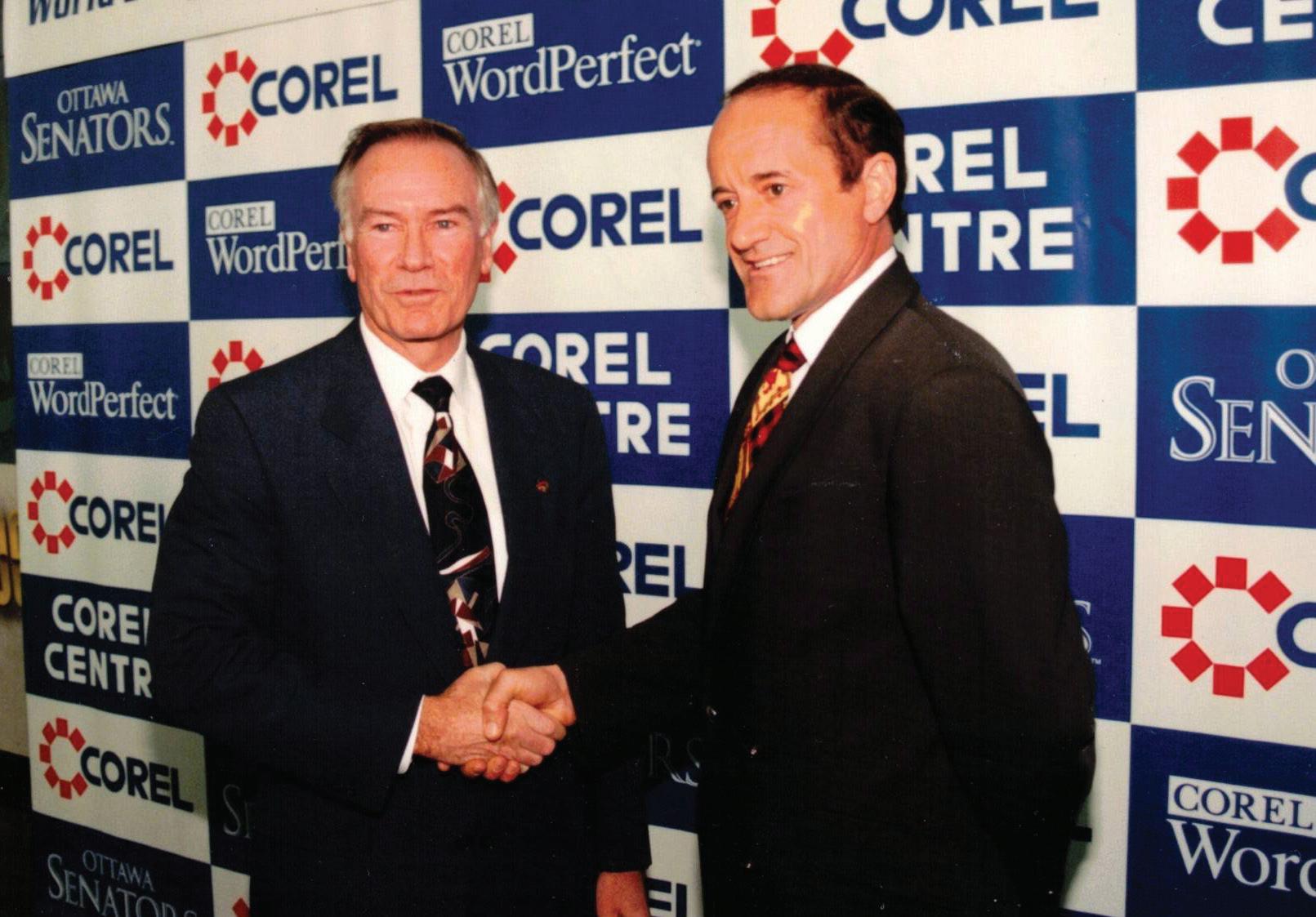
new chapter for the Ottawa International Airport, with the opening of its $310-million, 61,000-square-metre passenger terminal as well as a covered parkade. Six months early and on budget, the new facility was intended to relieve the pressure on the over-capacity, 40-year-old terminal. The project was a triumph for the Ottawa International Airport Authority, which funded the terminal’s construction through an airport improvement fee levied on travellers over four years, meaning no government subsidies were needed. It was just the first leg of a multistage expansion. In the spring of 2008, the $95-million Phase II opened with 12 new gates, seven passenger bridges and an Air Canada rooftop lounge, followed shortly after by additional restaurant and shop space. The old terminal was demolished later that year to accommodate further exterior work on the tarmac. Then, in 2018, the airport authority announced a redevelopment plan including $25 million in terminal renovations as well as an adjoining hotel and LRT station.
For a century, The Ottawa Hospital’s Civic Campus has served the National Capital Region and far beyond as a crucial centre for medical care and research. The plan to build a new state-of-the-art campus is a significant
story not only for the future of health care in eastern Ontario, western Quebec and parts of Nunavut, but also in terms of it being one of the largest infrastructure projects in the city. The project kicked off with TOH’s 2006 master plan, which determined that the aging Civic campus would need to be rebuilt. Following a multi-year consultation with various levels of government, other stakeholders and the public, the province greenlit the redevelopment in 2022 and committed to providing more than $2 billion of the estimated $2.8-billion price tag for construction. The new 2.5-million-square-foot campus will occupy a 50-acre site right next to Dow’s Lake, providing 641 single-patient rooms and an advanced trauma centre, with more than 6,000 staff employed at the facility. According to TOH, the project is expected to generate more than $3.75 billion in economic output for the region. The new campus is slated to open its doors by 2029.
While the hope is usually for a company to grow to a point that it can comfortably be a market leader and remain independent, sometimes a takeover may be an inevitable — and even positive — outcome. That was the case for Cognos, which rose from a bootstrapped, homegrown consulting firm that created custom software for the government to a billion-dollar business intelligence solutions company. In 2007, Cognos
employed approximately 4,000 people globally, about 1,600 of that number in Ottawa, and more than 25,000 customers were using its software to analyze business data with the goal of optimizing processes and performance. That meant it was swimming in the same waters as big fish such as IBM, SAP and Oracle. As competitors started getting reeled in by those larger firms, the resulting market consolidation raised concerns about Cognos’s ability to keep up. IBM was no stranger to Cognos since the two already enjoyed a longstanding partnership, so Big Blue’s $5-billion all-cash acquisition offer was seen as a welcome development. The deal closed in January 2008, with Cognos becoming a new business unit within IBM’s information management software division.
Smiths Falls suffered one blow after another between 2006 and 2009 as its three largest employers each announced closures, eliminating more than 1,000 local jobs in a town with a population of only about 9,000 people. Among them was the 44-year-old Hershey chocolate factory, which had more than 500 workers, making it the second-biggest workplace in Smiths Falls. The factory and its attached Chocolate Shoppe were tourism draws as well, attracting more than 400,000 visitors in 2005. However, in 2007 the Pennsylvania-based confectioner announced it would close its Smiths Falls and Oakdale, Calif. plants the following year as it restructured its operations. Hershey Co. did repurchase the facility for $53 million in 2023 from cannabis company Canopy Growth, which set up shop in the abandoned factory in 2013.
To this day, the 2009 collapse of
telecommunications giant Nortel Networks remains a story deeply embedded in the lore of Ottawa’s tech landscape. Representing more than one-third of the Toronto Stock Exchange 300 composite index and standing as an anchor employer in Ottawa with about 16,000 on the payroll in 2000, it saw a dramatic plunge in its stock value following the dot-com bust to just 67 cents from a high of $124.50. Amid scrutiny of Nortel’s accounting practices, the Royal Canadian Mounted Police laid criminal fraud charges against three of the company’s top executives and investors filed several class action lawsuits related to misrepresentation of financial performance. Then, the bankruptcy filing, which sent shock waves through Ottawa’s tech industry and decimated the value of pensions for thousands of retired Nortel employees. Nortel’s demise has produced a silver lining in the years hence, however. Alumni have found success at companies such as optical networking firm Ciena and some former Nortel engineers have even invented novel consumer items such as the Instant Pot multicooker and We-Vibe sex toy.
With its striking curved-glass facade that evokes an enormous crystal tulip and a prime location offering unparalleled views of downtown and the Rideau Canal, the Rogers Centre Ottawa has been an iconic part of Ottawa’s skyline since its opening in 2011. Originally named the Ottawa Convention Centre before becoming the Shaw Centre in 2014 and then receiving its present moniker in 2024, the four-storey, 192,000-square-foot facility was built to replace its much smaller predecessor, the Ottawa Congress Centre. Pat
Nortel’s demise has produced a silver lining in the years hence, however. Alumni have found success at companies such as optical networking firm Ciena and some former Nortel engineers have even invented novel consumer items such as the Instant Pot multicooker and We-Vibe sex toy.
Kelly, the centre’s president at the time, noted that Ottawa was losing out on convention business because the old facility wasn’t big enough, at only 70,000 square feet of rentable space. The $170-million redevelopment project broke ground in June 2009 following the demolition of the Ottawa Congress Centre and the new convention centre made its debut in April 2011 to considerable fanfare, with almost 100 conventions already booked.
Halogen Software’s oversubscribed
$55.2-million initial public offering broke a year-and-a-half-long drought for tech IPOs in Canada. It was also the largest public debut for a technology company in Ottawa since Mitel’s $147-million IPO in 2010. In a market battered by the loss of Nortel Networks and the overall decline of the telecom sector, the success of Halogen’s IPO sparked interest among investors and observers. Halogen’s focus on cloudbased talent management software marked a considerable departure from the Ottawa tech companies of old and offered an intriguing opportunity to get in on the ground floor of an emerging sector. The software-as-a-service model also represented a disruptive new way of generating revenue. These factors propelled the stock by almost 40 per cent to a high of $16.07 about a month after the IPO. However, its value began declining soon after and struggled to recover amid weaker-than-expected growth and failure to turn a profit. Almost exactly four years after its IPO, Halogen was acquired for $293 million by California-based Saba Software.
The year 2014 was an important one for pot producer Canopy Growth (back when it was still known as Tweed). In January, Health Canada gave its approval for the firm to join a handful of licensed medical marijuana suppliers. With the green light to produce 15,000 kilograms a year, the company announced it would turn the old Hershey chocolate factory in Smiths Falls — where it had set up shop a year earlier — into a medical marijuana facility. In April of the same year, the cannabis company went public on the TSX Venture Exchange through a reverse takeover, becoming the first federally approved, publicly traded cannabis producer in North America. Renamed Canopy Growth in 2015, the firm was poised at the forefront of the market

and ready to capitalize on the push for legalized marijuana south of the border, as well as for recreational cannabis in Canada. It reached a $1-billion valuation in 2016, graduated to the Toronto Stock Exchange and enjoyed several years of success that even included a deal with Hollywood actor Seth Rogen to launch the Houseplant cannabis brand. Unfortunately, the bubble would burst for the legal pot industry.
Kinaxis’s $100-million IPO was Ottawa’s biggest business deal of 2014, showcasing investor interest in the supply chain management software firm’s healthy financials, impressive client list and solid position in a growing sector. The company offered an attractive investment opportunity with its subscription-based, software-as-a-service solution ensuring a predictable revenue source and its supply chain planning and analytics capabilities enabling customers to manage shifts across increasingly complex global operations. At the time of the offering, Kinaxis had revenues of $60.8 million — a 60-per-cent jump from two years earlier and a three-year compound annual growth rate of 23 per cent — and big-name enterprise customers across multiple markets, including Cisco, Ford and Lockheed Martin. A decade later, Kinaxis has expanded its offering by capitalizing on newer technology, including AI, as well as by allowing third-party developers to access its platform. The company has stated its commitment to
ensuring shareholder value and continues to exhibit growth in its financials.
When cracks were discovered in the concrete structure for Frank Clair Stadium at Lansdowne Park, the City of Ottawa took it as the push needed to transform the aging sports venue and fairgrounds into a vibrant centre for work, shopping and play. The international Design Lansdowne competition was launched at first, but then jettisoned when the Ottawa Sports and Entertainment Group came forward with its own Lansdowne Live! plan to redevelop Lansdowne through a private-public partnership with the city. OSEG, which included the involvement of Ottawa 67’s owner Jeff Hunt and Minto Group’s Roger Greenberg, had received a Canadian Football League franchise on the condition that it would secure an appropriate stadium for the team to play in and the group identified a revitalized Lansdowne as the perfect location. The partnership called for the city to take care of the development of an urban park on the Rideau Canal side of Lansdowne, while OSEG would rebuild Frank Clair Stadium and develop new residential units along with spaces for restaurants, shops and parking. The addition of the Ottawa Fury soccer team to the partnership added yet another element to make Lansdowne a real destination for entertainment and business. In July 2014, the new football and soccer stadium — which together with the Civic Centre got the new name of TD Place.
Thousands of Ottawans lined up on Oct. 17, 2014 to check out the deals and designer labels at the new Tanger Outlets location in Kanata, right next to the Canadian Tire Centre.The opening of the 293,000-square-foot, openair-concept retail centre was the first foray for North Carolina-based Tanger into the Canadian market, representing an estimated $120-million investment in the Ottawa area. The development created a bump in retail activity in and around the area, in line with the vision for a vibrant commercial and residential space near the home arena for the Ottawa Senators. Shortly after the Tanger Outlets opening, outdoor gear company Cabela’s unveiled plans for a 70,000-square-foot store in the Kanata West Centre mall next door. The west-end swell was also part of a larger wave of new retail across the city, including the $360-million expansion of the Rideau Centre, the $200-million Bayshore Shopping Centre redevelopment, as well as the additions as part of the Lansdowne Live! project.
Shopify debuted on both the Toronto Stock Exchange and the New York Stock Exchange in May 2015 with an initial public offering of 7.7 million shares at US$17 each. The IPO raised $131 million, exceeding the company’s $100-million goal and pointing to a market value of $1.27 billion. The firm’s IPO filing noted that, in the preceding year, more than 162,000 businesses in 150 countries had used its technology to sell their wares online and that the cloud-based platform processed $3.8 billion in transactions. It marked quite the trajectory from Shopify’s origin story as the Snowdevil online snowboard store, which was powered by a software solution cofounder Tobias Lütke custom-built to fit his e-commerce needs.
Mechanical creatures roaming the streets, giant plant sculptures … rather than being signs of an impending alien invasion, these were among the crowd-pleasing events that helped make the celebration of Canada’s sesquicentennial in the capital a resounding success. Ottawa-Gatineau went all out for
the country’s 150th birthday, with local organizers using the opportunity to offer unique experiences to draw visitors to the National Capital Region. As an example, an estimated 1.3 million people flocked to Gatineau’s Jacques Cartier Park over almost four months to see the MosaïCanada outdoor exhibit featuring living plants shaped into 33 fantastical sculptures. The show included several creations by Indigenous artists, as well as the stunning 15-metre-tall Mother Earth installation that personified nature as a gently smiling lady with flowing green, flowerfestooned hair. Meanwhile, an estimated 750,000 people thronged the core over four days to watch the La Machine spectacle, which saw Long Ma the dragon-horse and Kumo the spider making their way downtown before meeting and clashing in an epic battle. Along with numerous other tourist attractions, these events helped to boost total visitors to 11 million and visitor spending to $2.3 billion in 2017.
After two years of negotiations between the National Capital Commission and the RendezVous LeBreton consortium in the hopes of a viable plan to redevelop LeBreton Flats, talks fell apart in late 2018 and the group’s partners sued each other in a dramatic turn of events. RendezVous LeBreton, a partnership between the Ottawa Senators owner Eugene Melnyk and Trinity Development Group, had proposed a plan that would include the construction of a downtown arena for the NHL team and residential units. However, the plan stalled amid internal disagreements among the consortium members and in November 2018, Melynk’s Capital Sports Management launched a $700-million suit against Trinity and its executive chairman John Ruddy, as well as against developer Graham Bird and his company. Ruddy countersued for $1 billion about a month later and the project was shelved until the new owner of the Sens revived the redevelopment in 2022.
Analysts hailed the $800-million acquisition of beloved Ottawa-based grocer Farm Boy by Empire Co. Ltd. as a smart strategic move for the Nova Scotia owner of Sobeys. Described by Empire CEO Michael Medline as a “jewel of an asset” with good growth potential when the deal was first announced, Farm Boy had 26 locations across Ontario at the time and a healthy
Since the LRT was expected to replace several bus routes, the ensuing service reductions combined with the O-Train’s other troubles created even more headaches for riders. Then, the pandemic hit and ridership plunged as workers stopped commuting altogether. Since then, there’s been progress in making the O-Train a convenient and reliable option for transit users, including a connection to the Ottawa International Airport that opened in January 2025.
following for its fresh, locally sourced foods and thoughtfully curated private-label products. The sale closed in December 2018 and Empire kept its promise to maintain the experience Farm Boy shoppers had come to love, while also continuing to expand its footprint and opening dozens of stores in choice locations in downtown Toronto, the Greater Toronto Area and beyond. There are now 51 Farm Boy stores throughout the province.
A 1.02-million-square-foot facility, the arrival of one of the world’s largest companies in the National Capital Region, about 600 new fulltime jobs and an increase in local industrial space of roughly four per cent — the 2019 opening of Amazon’s massive distribution centre on Boundary Road in the southeast end of the city was a major story for real estate, employment and construction. What’s more, it was just the first such facility in Ottawa for Amazon and its Montreal-based development partner Broccolini, which would go on to build another, even larger multi-level warehouse in Barrhaven’s Citigate Business Park in 2021, with more than 2.6 million square feet of space over four floors, bringing another 2,500 jobs. Then in July 2025, Broccolini broke ground on a third distribution centre on Bill Leathem Drive with 3.1 million square feet of space, which is slated to open in 2026. The facilities, together with two other smaller warehouses,
position Ottawa as a central location in the e-commerce giant’s distribution network.
When the $2.1-billion Confederation light rail transit (LRT) line officially opened to the public on Sept. 14, 2019, then-mayor Jim Watson hailed it as the “future of transit in Ottawa.” Commuters had been eagerly awaiting the launch of the 13-station O-Train line, which had originally been slated to be completed in May 2018 but instead was delayed four times. Developers such as RioCan and Trinity Development Group came along for the ride, anticipating there would be demand for highrise apartments, office space and mixed-use buildings near LRT stops. Local coffee company Happy Goat Coffee Co. saw it as an opportunity to reach an estimated 10,000 passengers per hour during busy periods and secured retail space at four stations. However, technical and mechanical problems, hours of delays and even horrible smells plagued the LRT in the first few months of service, leading to trains being taken offline and frustrated commuters. Since the LRT was expected to replace several bus routes, the ensuing service reductions combined with the O-Train’s other troubles created even more headaches for riders. Then, the pandemic hit and ridership plunged as workers stopped commuting altogether. Since then, there’s been progress in making the O-Train a convenient and reliable option for transit users, including a connection to
the Ottawa International Airport that opened in January 2025.
Arguably the most significant local economic impacts of one of the greatest global events of the 21st century were felt in Ottawa’s downtown core, from steadily climbing office vacancy rates to the state of emergency declared amid an occupation of Parliament Hill that shuttered roads, businesses and facilities and terrorized residents for nearly a month. Opposition to vaccination mandates and other COVID-19 restrictions saw hundreds of truckers rolling up to Parliament Hill to protest in January 2022. The parked trucks blocked streets and thousands of people gathered to support the “Freedom Convoy,” contributing to gridlock and the downtown core filling to the point that it was necessary for the three bridges connecting Gatineau to Ottawa to close. As protestors huddled in the Rideau Centre for warmth, many ignoring masking requirements, the mall was shut down too, along with Ottawa City Hall and other municipal facilities in the area. On a less dramatic note, the pandemic also sped up implementation of a plan that was already in motion for the federal public service to drastically reduce its office space portfolio by as much as 30 per cent over 25 years.
APPROVES CITY OF OTTAWA’S $129M PLAN FOR HISTORIC DOWNTOWN DISTRICT
Amid safety issues that have included breakins, open drug use and homelessness in the area, all of which have led to frustration and concerns for local businesses and residents, the ByWard Market was ripe for renewal when the City of Ottawa released its public realm plan to restore the downtown district’s local and national significance. With a focus on optimizing pedestrian and visitor experience while capitalizing on the “unique character” and history of the ByWard Market, the City of Ottawa’s vision received council approval in 2021. The plan calls for the renewal of William Street, ByWard Market Square and the historic market building at the heart of the neighbourhood, the creation of a “flex plaza” on York Street offering flexible space for events and vendors, as well as the redevelopment of the 70 Clarence St. municipal parkade and other parking options. It also seeks to address some of the safety issues through design principles
and lighting. Following a survey of Ottawans in the summer of 2025 and a public information session in the fall of 2025, construction on William Street is expected to kick off in 2026 — ahead of the ByWard Market’s 200th anniversary in 2027.
Leading to about $1 billion in damage across Ontario and Quebec — and adding a new weather-related word to many Ottawans’ vocabularies — the May 2022 derecho is considered the most devastating storm in the city’s history. The 190 km/h winds whipping through the area felled more than 400 Hydro Ottawa poles and snapped power lines, leaving 180,000 customers without electricity, with some still affected two weeks later. Trees were downed across the city, with some damaging homes and other buildings, while trains, planes and automobiles experienced hours of delays due to debris, live wires and fallen power lines and trees on tracks and roads. The resulting cleanup and repairs cost Hydro Ottawa about $25 million, with the utility comparing it to doing four years’ worth of construction work and emergency repairs in just 14 days. The Insurance Bureau of Canada reported that the storm was the country’s sixth-largest-ever weather disaster in terms of insurable losses.
In the end, it wasn’t Snoop Dogg or Ryan Reynolds that ended up buying the Ottawa Senators. While health-care transportation company CEO Michael Andlauer isn’t a celebrity in the regular sense, his role in the US$950-million purchase of a 90 per cent stake in the National Hockey League team has certainly made him a household name in the city. Andlauer’s group — which included local businesspeople such as Claridge Homes owners the Malhotra family and Jeff York, former head of Farm Boy — became the successful bidders for the Ottawa Senators in September 2023, 10 months after the launch of the process to sell the team and 16 months following the death of former owner Eugene Melnyk. The Andlauer group emerged as the winners in a high-profile race among several groups that included the rapper, comedian Russell Peters, the Weeknd and four of the celebrity investors from Dragons’ Den among their members. The new ownership team has since made exciting strides towards the long-discussed dream of an arena closer to the
core, with the August 2025 signing of a deal to purchase roughly 11 acres at LeBreton Flats.
2024 | PLAY THAT FUNKY MUSIC: OTTAWA BLUESFEST MARKS 30 YEARS Ottawa Bluesfest’s 30th anniversary in July 2024, which counted Mötley Crüe, 50 Cent and Maroon 5 among the headliners for its starstudded, multi-genre lineup, was a world away from its inaugural outing on Major’s Hill Park. It all started with a three-day event with one stage featuring Clarence Clemons, saxophonist for Bruce Springsteen’s E Street Band, The Guess Who’s Randy Bachman, as well as accordionist Buckwheat Zydeco. Tickets were just $4 for a full day or $5 at the gate. That year, 5,000 people attended. In the years since, the city’s biggest outdoor music festival has evolved into a multi-stage extravaganza at LeBreton Flats that now boasts an average annual attendance of a quarter of a million people and an estimated economic impact of $40 million on the National Capital Region. From Lady Gaga and the Backstreet Boys to Bob Dylan, Snoop Dogg and James Brown, Ottawa Bluesfest has featured some of the biggest names in music.
What’s in a name? Beyond being the equivalent of a fresh coat of paint, new identities can also herald significant changes in focus or ways of working. These three rebranding stories were among the biggest developments over the past couple of decades.
OCRI’s transformation in 2012 into Invest Ottawa with a mandate to support entrepreneurs and businesses of all stripes, attract investment and create jobs marked an evolution for the organization, although it wasn’t its first rebrand.
Established as the Ottawa Carleton Research Institute with the goal of fostering research and development and accelerating the technology ecosystem, it was known for decades as the Ottawa Centre for Research and Innovation before becoming the Ottawa Centre for Regional Innovation in 2011.
In the wake of the dot-com bust and the demise of Silicon Valley North, the City of Ottawa unveiled OCRI’s new identity as Invest Ottawa, with a focus beyond high tech. Many programs
and services remained the same, including mentorship, providing access to capital and supporting “knowledge-based” industries such as life sciences, cleantech and aerospace. The city touted the agency as the cornerstone of its $5.5-million annual economic development strategy, noting that it would add sectors such as the film, TV and digital media industry to its roster and provide enhanced services to incubate and accelerate new businesses. Two years later, council approved a $30-million plan to turn a rundown municipal works building near the Bayview LRT station into an Innovation Centre that would serve as Invest Ottawa’s new headquarters as well as house a digital media lab and a space offering prototyping tools.
In the decade since, Invest Ottawa has supported more than 14,000 companies “from startups to global enterprises,” helped Canadian firms raise more than $1.86 billion in capital and attracted more than $1.47 billion in domestic and foreign direct investment.
Things have changed in the century-and-ahalf since the original Ottawa Board of Trade was established in 1857 to advance economic development with such things as the city’s first public abattoir, the introduction of tap water and the maintenance and expansion of the railway system. But, sometimes, the more things change, the more they stay the same. One could argue that was the case when the 2018 merger of the Ottawa and Orleans chambers of commerce and the West Ottawa Board of Trade reinstated the Ottawa Board of Trade. The three organizations agreed to join forces and bring approximately 1,500 members under one roof to ensure a strong, unified voice in advocating to the government.
It wasn’t all smooth sailing. While members of the West Ottawa Board of Trade and Ottawa Chamber of Commerce voted nearly unanimously in favour of the union in June 2018, it took another two months for the Orléans Chamber of Commerce to agree to join amid a desire for financial independence and concerns that east-end businesses would not be adequately represented. Ultimately, it came down to the promise of being able to leverage the resources of the combined organization to help with lobbying and promoting business interests, allowing east-end advocates to focus on addressing issues closer to home.
The new Ottawa Board of Trade immediately focused on member recruitment and diversification, noting that its constituents made
In the wake of the dot-com bust and the demise of Silicon Valley North, the City of Ottawa unveiled OCRI’s new identity as Invest Ottawa, with a focus beyond high tech.
up only four per cent of all Ottawa businesses. The pandemic swiftly altered priorities, with OBOT dedicating itself to advocacy and consulting with local businesses on relief programs, campaigns encouraging residents to buy local and frequent meetings with stakeholders at home and across Canada.
Once the pandemic was in the rearview mirror, OBOT pushed to revitalize the downtown core, launching an ambitious plan in 2023 to create 50,000 jobs, add 40,000 residents and attract $500 million in private investment, all with the goal of opening up $1.3 billion in new annual economic activity.
For a business school, a new label can establish a fresh identity, create visibility and can often be accompanied by a cash infusion. Both of Ottawa’s universities looked to build new brands for their business schools in this way, with Carleton’s named for philanthropist and billionaire Eric Sprott in 2001 and the University of Ottawa’s Telfer School of Management taking on its present identity in 2007.
Sprott, who graduated from Carleton in 1965 with a bachelor of commerce, donated $10 million to his alma mater following the sale of his eponymous securities firm to his employees. Meanwhile, the $25-million donation to uOttawa’s school of management also came from an alumnus, former Goldcorp Inc. CEO Ian Telfer, with the university noting that it was the largest single gift ever given to a Canadian business school.
The events marked new chapters for the two universities, although both had begun offering business studies earlier. Carleton awarded its first commerce degree in 1940 and the University of Ottawa founded its faculty of management science in 1969. The schools’
programs evolved over decades to introduce different MBA options, international exchange opportunities and professional development for new audiences, including women.
Nevertheless, the 2000s brought many updates for the business schools. The Sprott School of Business achieved faculty status in 2006, putting it in the same league as other business schools and allowing it to pursue accreditation. The following year, the school introduced the Sprott Student Investment Fund, established through a $50,000 endowment to provide students with real-life experience managing an equity portfolio. In 2021, Sprott unveiled the $65-million, 115,000-squarefoot Nicol Building as its new home, featuring collaborative learning and meeting spaces and the Innovation Hub incubator to foster student entrepreneurship. The building was named for the late Wes Nicol, another Carleton graduate who donated $10 million in 2014 to help fund a facility for the business school and was known for the Nicol Entrepreneurial Award competition.
At the Telfer School of Management, the 12-storey Desmarais Hall was completed in 2007, providing a location for the business school and uOttawa’s arts faculty. Construction was funded in part by a $15-million gift from Paul G. Desmarais Sr., former chairman and CEO of Power Corp. of Canada, who graduated from uOttawa in 1950 with a bachelor of commerce. Two years later, Telfer achieved the “triple crown” when it became one of only three North American schools to be accredited by three major international accreditation organizations. In 2017, it was recognized as the top Executive MBA program in the world by U.K.-based CEO Magazine, which, as of the 2025 rankings, is a distinction it has maintained. The school also launched PhD and master of science programs in management, along with a chartered professional accountants Canada-accredited graduate diploma program.
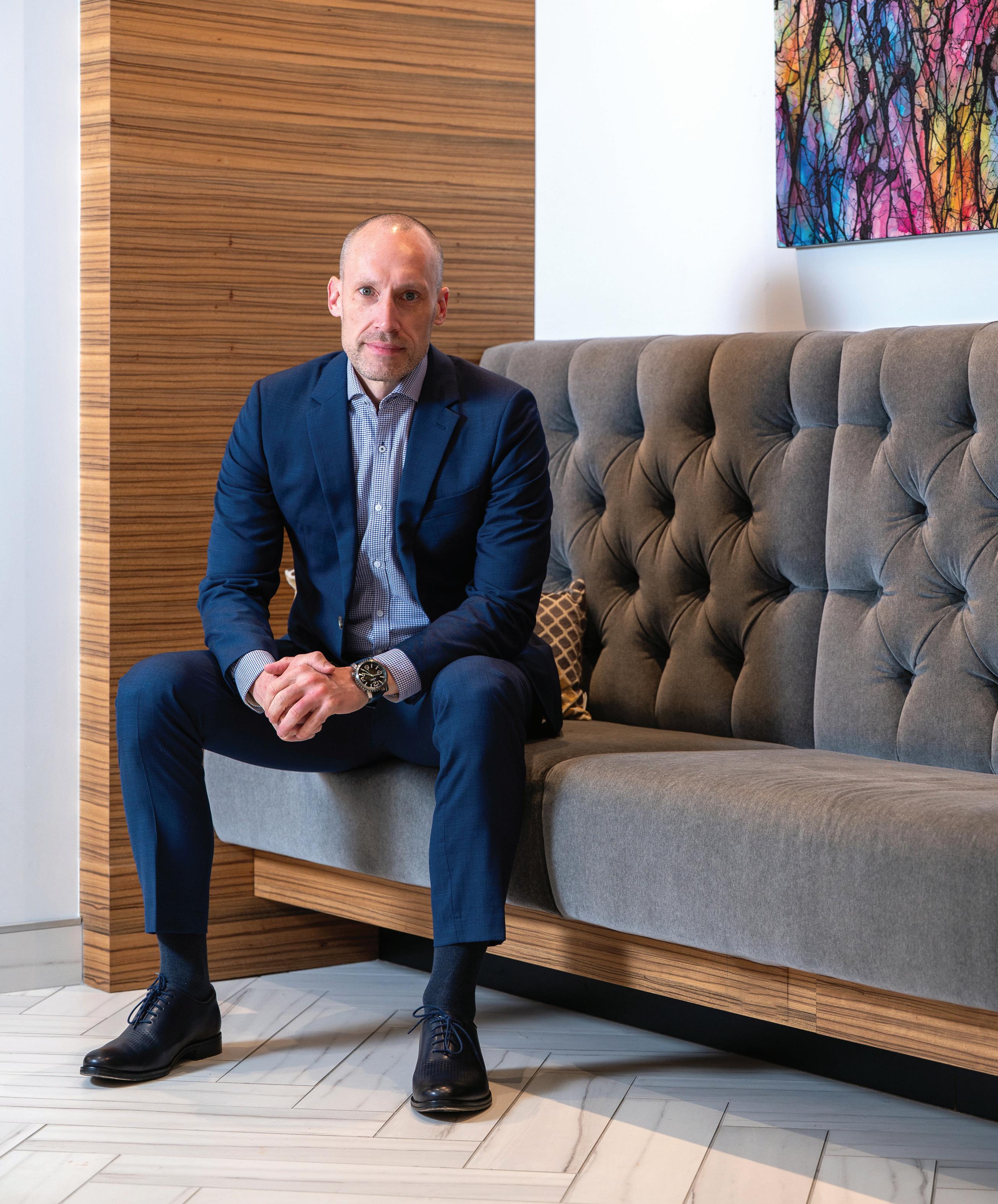
BY DAVID SALI
We’re simplifying agentic AI to drive real enterprise value.

Learn how today
Patrick Houston knows he has some big shoes to fill as he starts 2026 with a new job: CEO at Calian Group.
As Calian’s chief financial officer since 2019, the 44-year-old Ottawa native was instrumental in creating and implementing the Kanata-based firm’s aggressive M&A strategy, while also spearheading 15 acquisitions that have helped grow the business and further its international expansion, all while Calian moves closer to its goal of becoming a billiondollar-revenue company.
Now, Houston has taken on an even bigger challenge: moving into the CEO suite, which has been occupied for the past decade by Kevin Ford, who retired at the end of December.
Ford, one of Ottawa’s most successful — and down-to-earth — chief executives, took Calian from $200 million in annual revenues to nearly $900 million during his 10 years at the helm.
Along the way, he expanded Calian’s reach into Europe, grew its footprint in the United States, and helped re-orient its focus to tackle Canada’s growing need for defence and space technology.
It will be up to Houston to carry on that legacy, and he recently spoke to OBJ about the task ahead and his priorities as he assumes the most important corporate leadership role of his career.
The transcript has been edited for length and clarity.
Canada’s defence sector is having arguably its biggest moment since the Second World War. Where do you see Calian fitting in?
We want people to see us as a mission-critical solutions company. Really, those missioncritical markets are where I think we can differentiate ourselves and where we bring deep expertise and value. From a technology perspective, we’re trying to come up with solutions for the defence market. People say, what are solutions? I think it’s knowing the customers, specifically in defence. The people we have on the team that have lived and breathed that their entire career and really bringing that deep expertise, the technology that we have out in Saskatoon, and putting together solutions — including bringing in partners that can fill in the whole solutions set. You saw that with our Calian Ventures announcement. It’s bringing together that deep expertise, technology, the people, partnering with industry and really showing up and taking on big scopes of projects where Calian is the
lead. We’re bringing all these things together. Northern modernization is going to be a big push for us — think communications, training, bringing all those pieces together for a solution that Canadian defence can enable. They haven’t operated up there for a very long time, so they’re almost trying to figure out as they go what capabilities they want. They’re talking about marine bases, communication centres, all these things. So I think working with them to identify what they want and then putting that solution together is going to be a key growth driver for us.
Often with these big projects, it’s hard to do everything yourself, just because they’re so big. If you can bring in a Canadian SMB and really show up as a team, I think you can get there faster and provide a better solution for the customer.
Calian is also making a big investment in space technology. How do you see that rolling out?
What we’re doing there is really developing our antenna portfolio. We’ve made this huge investment in our global navigation satellite systems facility here in Ottawa and we want to be leading-edge technology there. We’ve got facilities in Saskatoon and Montreal doing really cool antenna design and we’re really using that as a starting point. Then bringing together all of our other solutions, software management, so that we can be that endto-end solution for the customer so that if they launch a satellite, we’ve got the antenna infrastructure, we’ve got the software, all the way to the data. There’s a lot of investment going on there. You’re going to see a significant amount of R&D done here in Canada in the next couple of years from us on developing that portfolio. There’s always more we can do there. That’s a big push for us.
What else tops your list of priorities as you move into the CEO role?
The last one, I think, is using technology internally, AI and things like that. Mike Muldner, who’s our CIO, is leading that initiative. If we’re successful on the other opportunities, I think we’re going to see a significant amount of growth here in the next couple of years. It’s really about how do we scale that business efficiently? We’ve seen some pains as we’ve gone from a $200-million Calian to a $900-million Calian. Those things are evident. So how do we use technology to streamline our business, to respond even faster, manage what is now a workforce across Canada, the U.S., Europe, and


613-238-2022


really meet the challenge from our customers. We are looking at a lot of those technologies, and we’ve started implementing some of them to find efficiencies and pair them up with the people we have. I think that’s a big opportunity to move even faster here in the next four, five years.
How big a north star is getting to a billion dollars in annual revenue?
To be honest, we’re almost there, so we’re almost starting to look beyond that. I think the way we think of the business is double-digit growth the right way: profitable growth that we’re doing with strong customer relationships that will last for decades. If we keep doing that, we’ll be a billion (in annual revenues) and well beyond a billion very quickly. So I think that’s the focus in building a business that can do that consistently. I think we have shown that. If you go back over the last six, seven years, it’s been 14, 15 per cent consistent growth that we’ve posted. Now we just have to do it at a bigger scale. The numbers just keep getting bigger every year. Fifteen per cent on a billion is a big number.

I believe in this city. And I believe in its power to change the world. That’s why I’ve joined The Ottawa Hospital Foundation’s Campaign to Create Tomorrow, the most ambitious campaign in our city’s history: a $500-million push to build a next-generation healthcare campus that is data-enabled, AI-informed, innovation-driven, and deeply patient-centred.

I think my challenge is working with the team to set up a company that can deliver that double-digit growth. We’re starting to get into that size now where there’s not a lot of Canadian companies that look like Calian; that have the scale, that have the deep expertise in space and defence. I think it’s a moment for us to differentiate ourselves here in the next couple of years.
Everyone is talking about AI these days. How do you think Calian can use it best?
I think there are two near-term opportunities for us. One is the internal one: using it for ourselves in terms of trying to improve our processes and being able to respond quicker. The customer-facing one is working with the Canadian Armed Forces on some of their initiatives. They’re looking at sovereign cloud capabilities that they want to have in Canada that are not reliant on other nations. It’s becoming an important thing, maybe even more so than it was a couple of years ago. They certainly want to start using AI more, but obviously in defence it’s a much more complicated area than in a commercial application. I think that’s where we can differentiate ourselves. We bring the expertise of knowing how the customer operates. We’ve seen some early demand from the Department of National Defence, so we’re trying to lean in there and bring our best foot forward.
A lifetime of working in complex, fast-moving environments has taught me how to recognize moments that matter the moments that drive lasting change. This is one of them: a chance for our community to transform how care is delivered, how research is done, and how people are healed.
Great healthcare doesn’t just treat illness; it powers prosperity. It attracts top talent and fuels discovery. It builds a city where the best and brightest want to live, work, and grow their companies.
This is Ottawa’s moment to lead. With your support, we will create a hospital built for the future of medicine and life sciences a campus that reflects our city’s leadership in health and technology and delivers care that improves lives not just here at home but across our great country, too. This is more than a building. It’s a once-in-a-generation opportunity to reshape the future of healthcare. I’ve stepped up. Now, I’m asking you to do the same.
Join me. Help lead what’s next ― for care, for research, for all of us.

Co-chair, Campaign to Create Tomorrow

CONSECUTIVE YEARS 13

Find out how we’re reshaping the future of healthcare
Caroline Cao hopes to continue to bridge the gap between academia and entrepreneurship through high impact industry partnerships
Caroline Cao has been impressed by many aspects of uOttawa’s Faculty of Engineering since being appointed dean in August. But it was after the faculty’s recent Design Day – a showcase of student technology projects for real-world clients –that she says she fully appreciated the true scale of the faculty’s potential.
“The atmosphere on campus was electric”, she recalls. “And these exchanges between students and the business community help foster the dynamic environment that brings about new possibilities.”
As a former startup founder and Fulbright Scholar with 25 years of academic experience in the U.S., Europe, and Australia, Cao plans to harness that energy to guide the faculty into a new era defined by innovation, inclusion, and an accelerating entrepreneurial spirit.
“I’m continually struck by the depth and breadth of expertise in the faculty,” she adds. “They relentlessly tackle the difficult challenges of our time, creating solutions that help everyone.”
After earning a Ph.D. in mechanical and industrial engineering from the University of Toronto, Cao’s entrepreneurial experience took root in the U.S. National Science Foundation (NSF)’s I-Corps program.
The program trains academics to develop an entrepreneurial mindset and to appreciate and navigate the journey of technology translation and commercialization.

Just a few years later, as a professor at Ohio’s Wright State University, Cao launched her own medical technology startup.
“After going through that program my mindset completely changed,” she explains. She realized that technology development and engineering doesn’t matter if people don’t benefit from it.
“Understanding what it takes to get funding, to translate technology, and to scale it,” Cao adds. “It allows me to bring a different perspective to how we can move our Faculty, the business community, and the country forward.”
Cao says her mission for the faculty includes doubling down on its already existing entrepreneurial ecosystem, along with strengths in AI, quantum photonics, and cybersecurity.
“My vision is that the Faculty of Engineering will become pre-eminent in these specific areas of research and
innovation,” she says, adding that she has set a series of tangible goals:
• Connecting more faculty members and researchers to industry partners.
• Engaging with communities and serving them through technological improvement.
• Developing more innovative teaching methodologies, including online learning, VR and AI.
• Improving the student experience with inclusive curriculum and methodologies.
• Smoothing the path of technology translation, including more flexibility around IP protection, licensing, and open access.
That last point, she says, is key for the Faculty to make its biggest impact. “Because our technology, our research, is very translatable to the marketplace.”
Above all, Cao says that a rising tide helps lift all boats – and that uOttawa’s Faculty of Engineering is open to exploring any and all industry and governmental partnerships, as well as with communities and organizations across the city, province, and country.
“The future for us is not only about interdisciplinary research, but also collaboration with industry and government,” she says.
“And this future is not only for us, but for Canada to ensure our sovereignty in security, the economy, and technology. We’re part of this, and more than ever, we are open for business.”
Elevating the prestige and impact of an event is effortless when it unfolds at one of Canada’s most iconic national museums.
The Canadian Museum of History and the Canadian War Museum offer more than beautiful spaces; they provide meaningful settings celebrating heritage, culture and design.
An architectural landmark overlooking Parliament Hill and the Ottawa River, the Canadian Museum of History honours Canada’s diverse heritage while providing a breathtaking backdrop for any event. The Canadian War Museum offers a bold, contemporary environment in which each architectural element evokes strength, remembrance and humanity.
At the Canadian Museum of History, the Grand Hall is a magnificent setting for galas and celebrations featuring a permanent stage and audio and lighting systems. It can host up to 550 guests for a seated dinner, and 1,000 guests for a cocktail reception.
The Museum of History’s Theatre can host up to 500 guests in an attractive auditorium that is perfectly suited for conferences, product launches, and awards ceremonies.
At the Canadian War Museum, the LeBreton Gallery is a striking open space with glass walls and views of the city skyline. It accommodates up to 500 seated guests for a banquet, or 800 guests for a reception. This impressive hall is ideal for dinners, large-scale events, and cocktail receptions.
The War Museum’s Barney Danson Theatre is a modern venue designed for presentations, conferences and meetings. Fully equipped with advanced audio,

“Here, architecture and atmosphere work together to transform events into standout experiences guests will remember.”
Cathy Mitchell, Head, Facility Rentals, Canadian Museum of History and Canadian War Museum.
lighting and video technology, it can accommodate 231 guests in comfortable, retractable bleacher-style seats, and 170 guests for a seated dinner.
Both Museums offer a variety of distinctive venues for conferences, galas, and other events. Organizers can alternate between locations to provide new experiences for guests, while private access to exhibitions adds cultural depth and creates memorable moments.
Both Museums are managed by a unified team of professionals dedicated to excellence, ensuring that each occasion is delivered with precision and creativity. Event specialists provide expert guidance on logistics, technical requirements, and setup, ensuring every detail is handled with precision. Their collaborative approach allows organizers to focus on their vision, while the team ensures a seamless experience from start to finish.
My Catering Group provides in-house catering at both Museums, offering creative, sustainable menus with locally sourced ingredients. They participate in À la Carte, donating surplus food to fight food insecurity. An additional curated list of approved caterers ensures a wide variety of dining options to suit any event’s needs.
With their combination of prestige, adaptability and expertise, the Canadian Museum of History and the Canadian War Museum remain two of Canada’s most distinctive destinations for memorable events.
Contact: banquets@historymuseum.ca
Without a shareholder agreement, founders and business owners can leave themselves exposed to shareholder oppression claims
The scenario: You’re a 60 per cent shareholder. Your business partner holds the other 40 per cent. And you’ve just found a third party who wants to buy you out.
Does your company have a shareholder agreement in place?
If not, the buyout could lead your partner to claim shareholder oppression, potentially triggering serious liability and forcing costly, disruptive remedies.
“They could be left in the wilderness if they’re now the minority shareholder to a completely different person that they have no formal relationship with,” explains James Wilding, a business lawyer at PerleyRobertson, Hill & McDougall. “One thing your shareholder agreement should specify is whether the third party also has to buy your shares.”
Situations like this illustrate why it’s vital for founders and business owners to establish a shareholder agreement as soon as possible.
Shareholder relationships are supposed to run on trust, transparency, and a shared vision. But when trust breaks down, minority shareholders often find themselves sidelined and searching for recourse – which sometimes leads them to allege shareholder oppression under either the Canada Business Corporations Act or the Ontario Business Corporations Act.
Wilding says business owners – especially of smaller, privately-held companies – need shareholder agreements in place.
James Wilding
“It’s extremely important for all founders to set things out in a shareholders agreement as plainly as possible,” he explains, “so they’re protecting themselves and making sure they can continue to run their company as they need to.
“Ideally, a shareholder’s agreement should give the parties the framework for resolving disputes internally. As soon as you have to go to court, everyone loses. Legal fees are going to be eaten up. No one’s going to be happy with the resolution.”
Shareholder oppression claims are typically made when the claimant believes one or more “reasonable expectations” have been breached by the company or its controlling shareholders. These reasonable expectations can be enforceable even if they aren’t set out in a written agreement.
While every case is unique, courts have identified several situations where shareholders typically hold legitimate expectations deserving of protection, including:
• Participation in management: Courts consistently recognize the right to participate in management as a reasonable expectation.
• Fair distribution of profits: Every shareholder invests with the expectation of receiving a fair economic return, and courts have consistently held that this expectation is reasonable.
• Protection against unfair dilution: Shareholders reasonably expect that their proportionate ownership and voting power will not be undermined through manipulative corporate maneuvers.
• Access to information and transparency: Shareholders have a legitimate expectation of access to accurate information about the company’s financial position, operations, and governance.
“If push comes to shove, you have no intrinsic right to sit on the board of directors of a corporation,” he explains. “If you get removed from your position as a director, your recourse would be to make a shareholder oppression claim. But the only way to be certain is to set the actual expectations of the parties in an agreement.”
The first and most obvious step, says Wilding, is to contact your lawyer and draft a shareholder agreement right away.
“You just need a basic agreement,” Wilding adds. “And the earlier you can do it, the better. Who manages things on a dayto-day basis? Under what circumstances can we separate if you’re strapped for cash?”
Additional steps companies should take are to always follow corporate due process, such as calling regular shareholders meetings and providing reasonable financial details when requested, along with always communicating significant changes to shareholders.
“One of the most dangerous times for a shareholder oppression claim is when a big change is coming. Make sure that you’re communicating as early as possible, being open and transparent and not surprising people.”
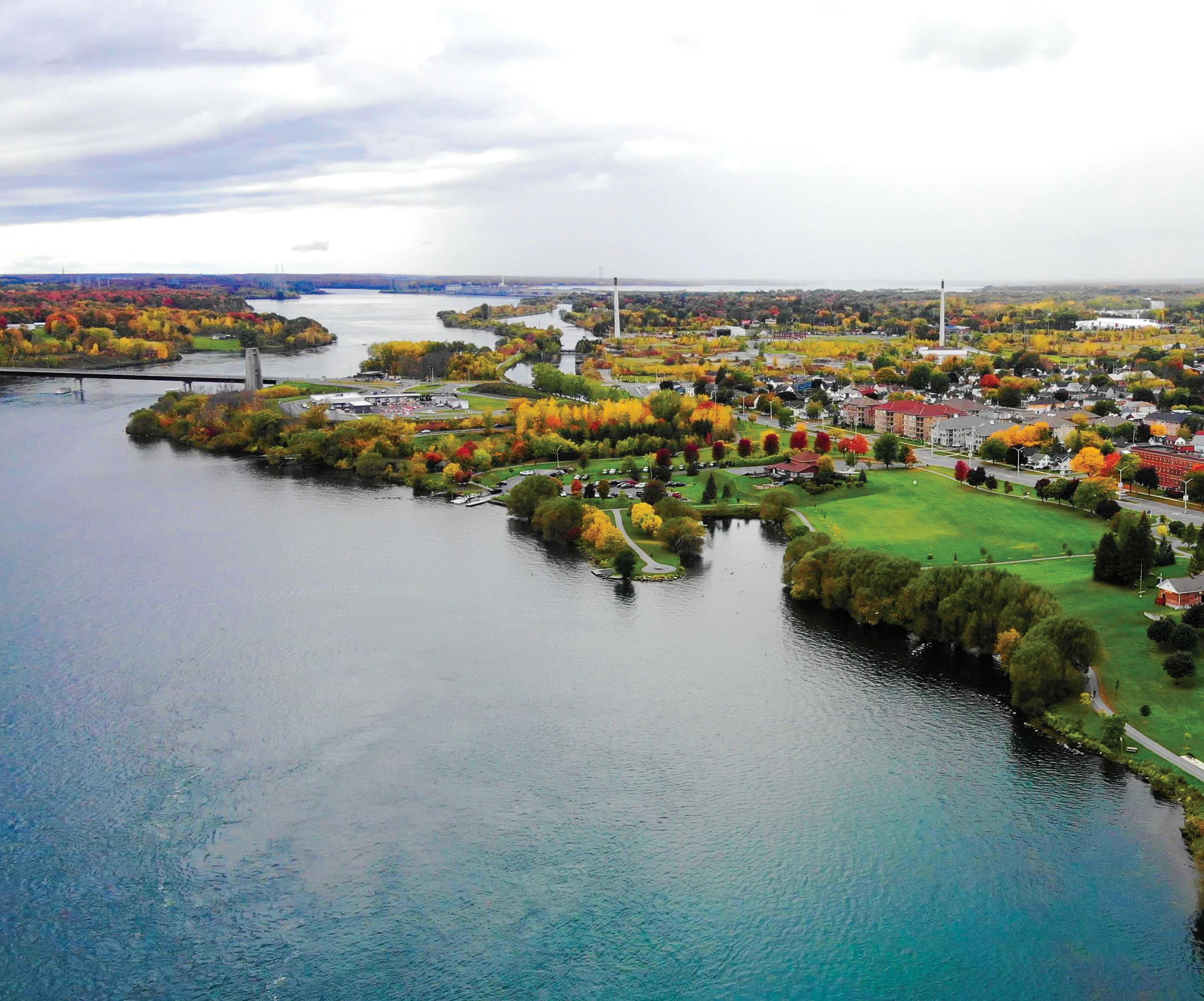
TOURISM
Future home of Great Wolf Lodge
MANUFACTURING
Automotive, defence and textiles live here
LOGISTICS
Walmart, Loblaw and many more to come

Cornwall has emerged as one of Eastern Ontario’s most compelling locations for business investment, thanks to a combination of affordability, strategic positioning, and a steadily growing economic base. For companies seeking room to expand, Cornwall offers a rare combination of available industrial and commercial space, competitive operating costs, and a supportive business environment that makes it easier to start, scale, and sustain long-term success.
As I learned more about Cornwall writing for this special report, there were plenty of benefits our local panelists highlighted – and one they all agreed on was its location. Cornwall provides businesses with efficient access to suppliers and customers across Ontario, Quebec, and the northeastern United States via land and water. The city’s modern logistics infrastructure, including a well-connected transportation network and a growing distribution sector, positions Cornwall as a natural hub for companies that rely on speed, reliability, and crossborder reach.
Cornwall’s workforce adds another advantage. With training programs delivered through St. Lawrence College and partnerships across local industries, employers benefit from a steady pipeline of skilled talent, including many bilingual workers, in fields ranging from logistics and manufacturing to health care and technology.
For forward-thinking investors, Cornwall presents a compelling value proposition. The city is growing, its business landscape is diversifying, and its commitment to sustainable, long-term economic development continues to open new doors for companies ready to make their mark.
Don’t take my word for it. Check out this Executive Report on Cornwall and maybe we’ll see you and your company in a future edition!
Sincerely,
Phil Gaudreau Editor
For over 240 years, the City of Cornwall has been a hub of business and industry. In 1883, Thomas Edison pulled the switch which marked the first industrial application of the light bulb in all of Canada at the Weave Shed, as part of the Canada Mill, located right here in Cornwall. The first Premier of Ontario, John Sandfield Macdonald, represented the riding of Cornwall. Ours is a rich and vibrant history and heritage.
From paper and paint to military uniforms and jeans, Cornwall has historically been the home of manufacturing for numerous items. Over the years, our economy has shifted and evolved, following the ebbs and flows of the markets. Today, you will find circuit boards to automotive finishes and bacon to breakfast bars being made in our community.
Beyond manufacturing, you will find a robust logistics sector, which highlights our strategic location. Travel east and you will reach Montreal within an hour. Travel the same distance in a northwestern direction and you will reach Ottawa. Travel south and you will enter the First Nation of Akwesasne, followed by New York State. Highway 401, the Quebec City-Windsor rail corridor, and the mighty St. Lawrence all pass alongside our community.
I am proud to present a small snapshot of our region in these pages. It represents a much larger image of a modern, forward-focused, diverse community. We are continuing to invest in our green initiatives, infrastructure, and our people.
I welcome you to discover Cornwall and to see who we are and why we are growing. Interested in knowing more? Feel free to reach out at any time.
Sincerely,
Justin Towndale Mayor City of Cornwall






We gathered several of Cornwall's business and community leaders to discuss the local economy, here is what they had to say

“We'd like to see continued encouragement of all skilled trades. The labour segment of the construction industry is weak. There just aren't enough people going into the less skilled trades, but it's a great entry point to anything from management through to other trades. We want to see continued welcoming of new people to the province into those trades for sure.
Cornwall is due for a boom. I think it's been quieter than normal for a little while. It's time for some big projects, and they do seem to be coming.”
-Chris Markell, Bourgon Construction
“I followed a couple of people who checked out the new music store that just opened in town and I said, "I'll just drop in." A few of the locals that walked in, their jaws dropped. They were thinking why would someone open a music store like this in Cornwall? They know something perhaps that we don't know. One of the most challenging businesses to open right now is a restaurant - meanwhile, we've got people investing hundreds of thousands of dollars into new restaurants in town. We've been working on investment readiness and we're adding something new every day.”
-Tim
Mills, Chief Administrative Officer, City of
Cornwall

“This is a community that really supports its hospital. We’re fortunate to have a strong clinical team and to be able to provide them with the tools they need to do a good job and provide quality care, because people have invested.
We’re facing the same challenges as everyone else in recruiting physicians, and an aging population. We’re fortunate over the last number of years to have and retain strong specialists, and we really benefit from St. Lawrence College’s nursing and paramedics programs.”
- Jeannette Despatie, CEO, Cornwall Community Hospital

“There are discussions about having the river cruise lines come in because they're already stopping in the ports along the same routes. We have a deep water port, so we can accommodate that. The question is, if they're to come now, what would they see, what would they do? And so, we are working with neighbouring Akwesasne on more options.
I think Great Wolf is exciting because of the potential jobs, tourism, and everything tied into that. But it’s not just the tourism aspect that excites me. It will bring jobs and those workers will require homes. We need apartments. We need condominiums. Same thing with business. We need different sectors. We need a diversity of employment in the city in order to be successful.”
-Mayor Justin Towndale
There are lots of reasons for optimism going forward. We’ve had our ups and downs as a city but, right now, I see nothing but good times for Cornwall.
- terry landon

“Our River Strategy project has changed the way people look at Cornwall from what was sort of a mill town, kind of blue-collar, to this increased awareness of what we have. Suddenly we have all these partners who want to work with us. Our project was named a candidate program by the UN-supported Intergovernmental Science-Policy Platform on Biodiversity and Ecosystem Services. And that creates the opportunity for a bigger impact for our little project.”
-Jeff Ridal, Executive Director, River Institute

“This is a city and a region that punches above its weight and flies under the radar, but has a quiet confidence because we’ve survived some major changes… the face of Cornwall has evolved a lot in the last 10 years. We have a much more diverse population. It feels positive.
We’re all friendly with each other and the people get along. That’s a big deal. There's a close-knit type of sense, and we're respectful no matter what's going on. I think that's really important. And we all have a place where we sit and watch the river.”
-Senator Bernadette Clement

“We want to grow because we've seen the opportunity in the increased defence spending. We want to triple our business in the next five years. We want to bring quality people to our industry. We want to invest, and see investments in residential spaces and services, because we need specialized people.”
-Claude Losier, TIMILA COO and President
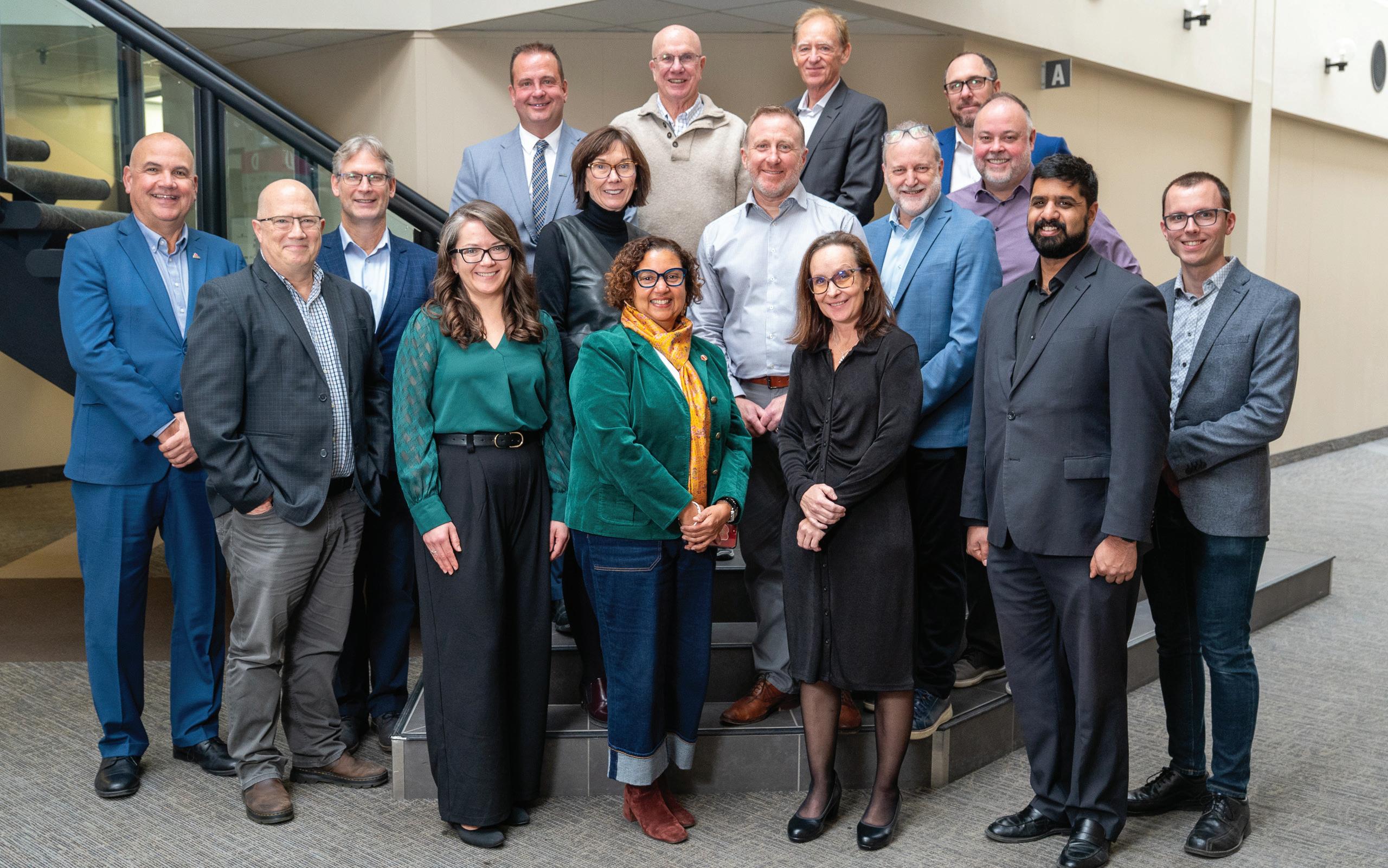
It has been the talk of the region since it was first announced in 2022 – a massive investment which would create a destination tourism draw for Cornwall and hundreds of jobs.
It takes time to cross all the t’s and dot the i’s on an investment of this size, and Cornwallites as well as tourists within the broader region continue to wait for that process to take its next step. As it stands, the company has a conditional offer to acquire 53 acres of land and is working its way through necessary due diligence. The company recently released an architectural rendering of the latest designs for the Cornwall
lodge, which includes hotel rooms, an indoor activity centre, and the popular indoor water park.
While Canada already has one Great Wolf Lodge location in Niagara Falls, this location would be wholly owned by Great Wolf Lodge’s American parent company.
Great Wolf Lodge bills itself as North America’s largest family of indoor water park resorts with 22 locations in the U.S. These family-friendly resorts include pools and waterslides, Northwoods-inspired suites, dining options, and complimentary daily activities.
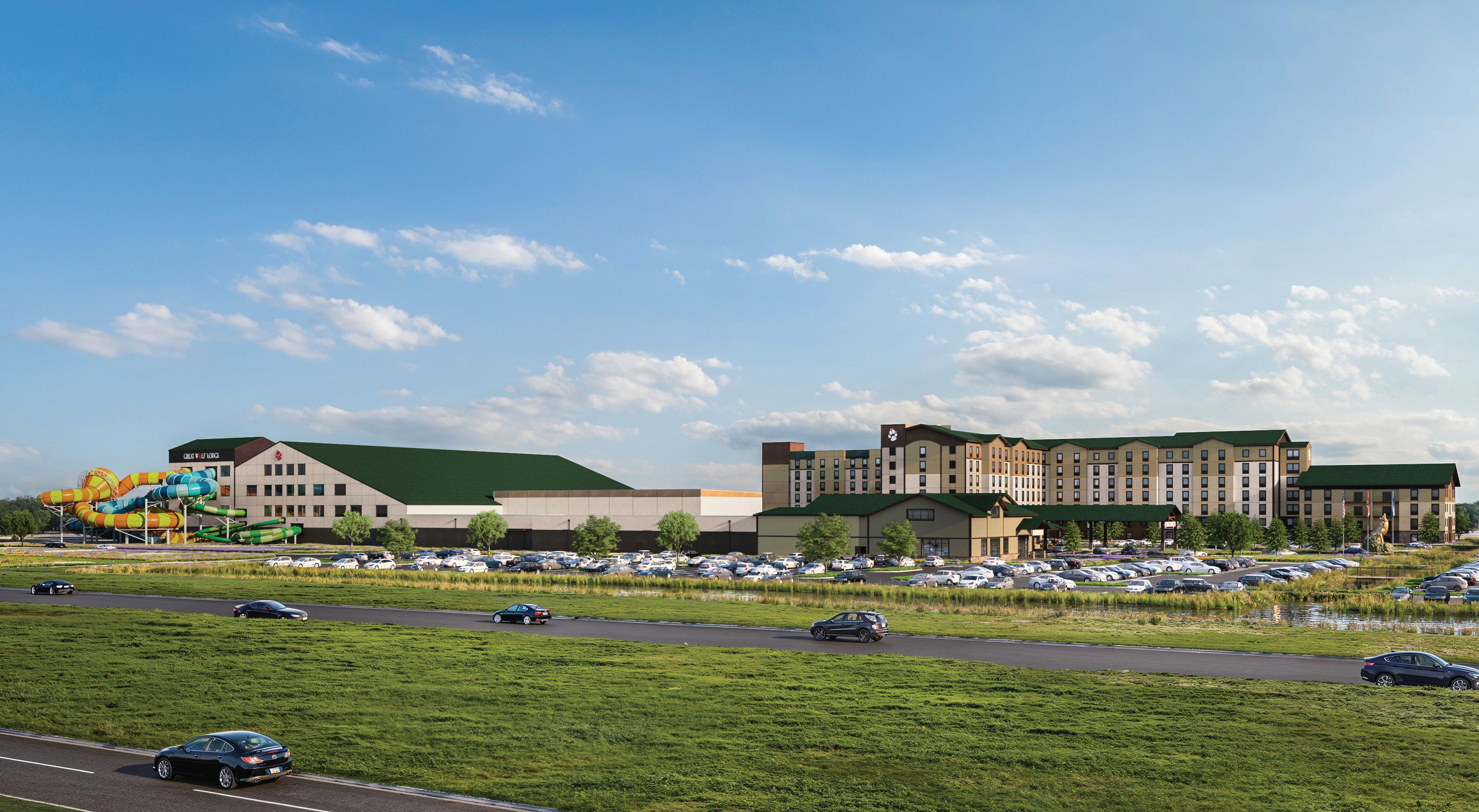

This summer should see the conclusion of a multi-year effort to increase the amount of business park land available in the City of Cornwall.
The City invested $23 million into an extension of Nick Kaneb Drive, as well as the creation of Great Wolf Drive, and to service the land with new water mains, sanitary sewers, traffic signals, and the other necessary assets to allow businesses to set up shop in the area.
“The long awaited expansion of Nick Kaneb Drive unlocks over 200 acres of developable land within the City of Cornwall,” said Mayor Justin Towndale. “Much of this land is already spoken for, and Cornwall will see significant construction activity in this part of the city for years to come. This activity will bring investment, jobs, and tax base along with it, contributing to the future success of our community.”
Cornwall’s Economic Development Manager Bob Peters also noted the development of these employment lands would enable the further development of both commercial and residential lots in the area, increase the City’s tax revenues, and create additional jobs.
Shovels could be in the ground this year at the former NAV CENTRE property in Cornwall.
Since the site’s purchase in 2022 by Devcore, the company has been working on plans for a mixed-use development spread over the site’s 75 acres, featuring thousands of housing units, commercial spaces, and the existing hotel and conference centre among other amenities. The property also remains home to NAV CANADA employees and the Canadian Forces School of Aerospace Control Operations under a leaseback agreement.
Initial work on the roads and supporting infrastructure is expected this year while the development’s plans continue to work their way through city approvals.
The full vision of the project is expected to be achieved over 15 years, at a price tag nearing $1 billion. While that work is ongoing, the DEV Hotel and Conference Centre continues to attract visitors and events to the region, boasting 535 rooms and 70,000 square feet of meeting space. The centre also features a gym, sauna and double gymnasium along with outdoor sporting facilities. In 2025, it played host to a cohort of Ontario Police College trainees.
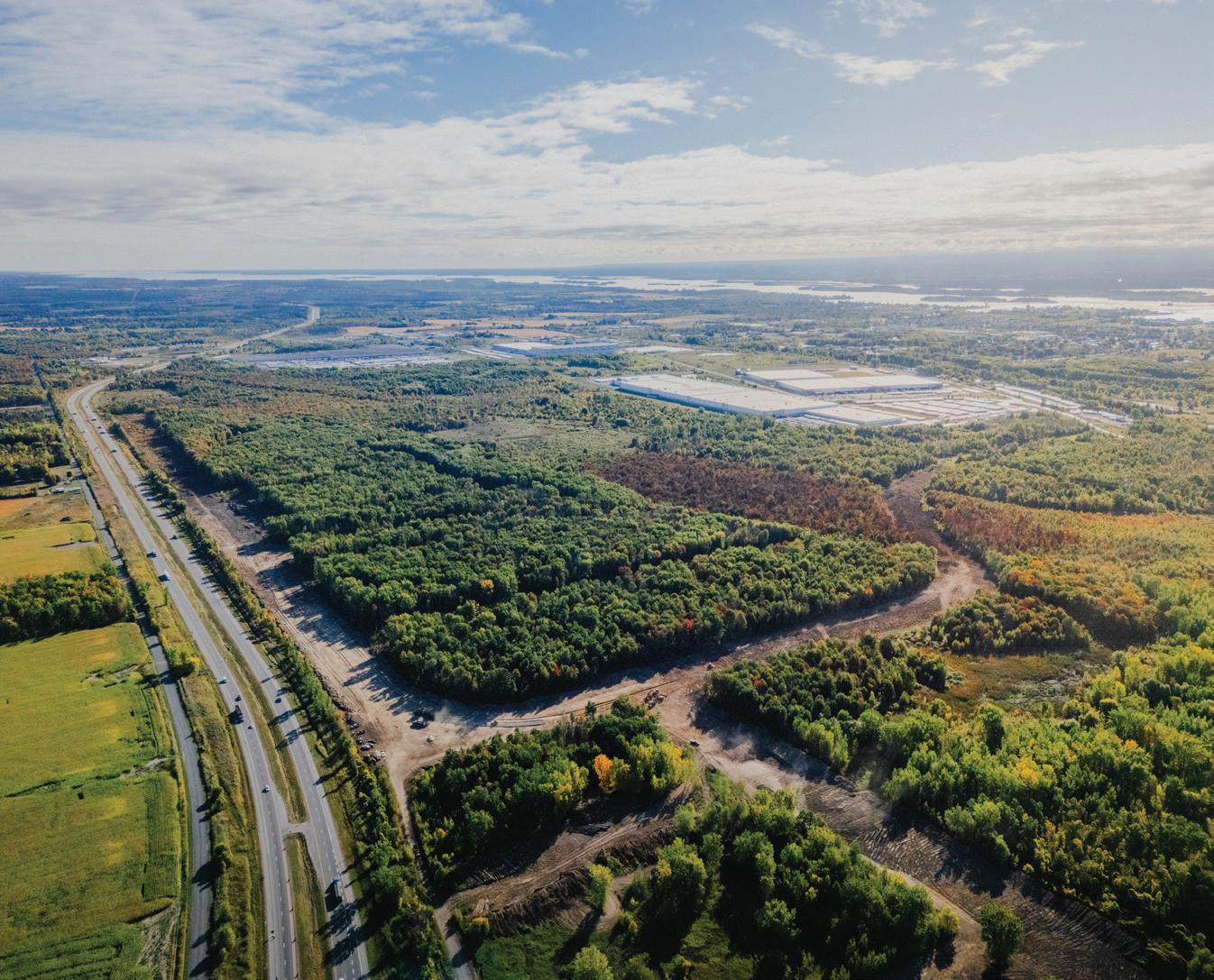
With Cornwall’s prime position along the St. Lawrence Seaway and close to many major municipalities, it’s only logical that distribution centres would set up in town.
Walmart’s distribution centres in Cornwall have been serving 130 Walmart stores in Quebec, the Maritimes, and parts of eastern Ontario since 2005. Since its establishment, other bluechip companies have caught on and placed their logistics operations in the Cornwall Business Park, including Shoppers Drug Mart, Loblaw, Benson Group, and, just recently, Michelin, capitalizing on Cornwall’s strategic location, reasonable land costs, and affordable electricity. All those companies, and many others, add up to over five million square feet of warehouse space in Cornwall, the equivalent of about 11,000 transport trucks of space.
These warehouses have benefitted from programs at St. Lawrence College focused on supply chain management, providing a steady stream of skilled labour to keep the goods and materials flowing.
They also benefit from Cornwall’s strong transportation links by land and water. In addition to the Seaway, Cornwall sits directly on Highway 401, boasts a nearby U.S. border crossing, and a Canadian National Railway main line.
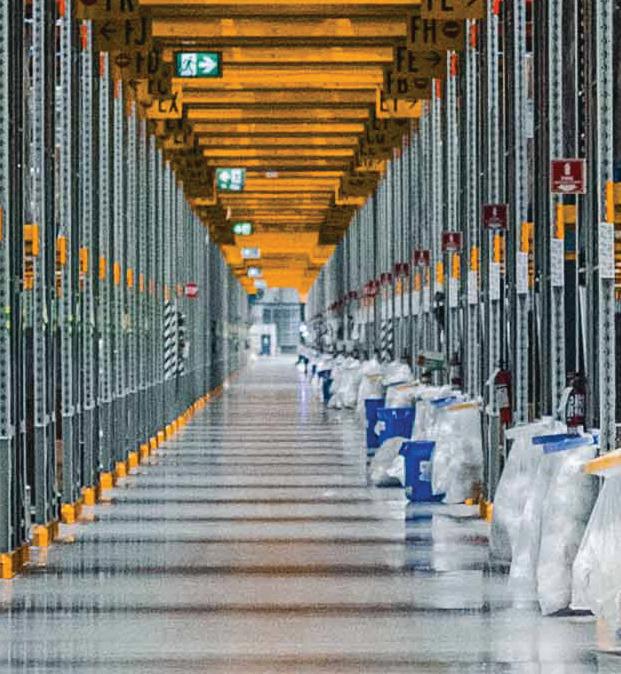

The face of tourism in Cornwall is set to change in a big way with the arrival of Great Wolf Lodge.
The American tourism giant announced in 2023 its intent to make a $350-million investment in the city by building an indoor waterpark on a 40-acre site off the 401. Once opened, Great Wolf Lodge Cornwall will boast 600 guest rooms and is expected to bring 670,000 people through its doors each year. This would be the first corporately owned Great Wolf Lodge location outside of the U.S.
While the project continues its progress, the city is not standing still. The Riverside Trail, an 18 km cycling path along the river is gaining international attention, and film makers and cruise ship operators are active in the city.
The downtown core also continues to receive some attention, with a new arts centre soon to open, and the city’s Heart of the City Community Improvement Programs offering grants and loans which are designed to revitalize the downtown core and Le Village shopping district.
There is also increasing attention being paid to waterfront tourism, with potential projects brewing between the City of Cornwall and its neighbours in Akwesasne.
Even before all these new assets come online, tourism is enjoying strong increases with 2025 seeing a 26 percent increase in visitors as guests stop in to enjoy the water, explore the downtown, and take in regional events like the Glengarry Highland Games and Akwesasne International Powwow. Cornwall Tourism anticipates the local hospitality sector will need more hotel rooms to accommodate future growth.

While Great Wolf Lodge and the DEV Centre grab some of the biggest headlines, there’s a lot more exciting commercial activity underway in the Seaway City.
It has been just over a year since Michelin’s 984,000 square foot distribution centre opened in Cornwall, located alongside others for major brands like Walmart, Loblaw, Benson Group, and Shoppers Drug Mart. In the meantime, dozens of companies have lined up for a slice of the 200-acre expansion of the Cornwall business park, which is expected to be shovel-ready this summer. Local commercial realtors say the interest in setting up shop in Cornwall is as high as it has ever been, with particular interest in deals relating to the transportation and logistics sectors.
Cornwall’s location and affordability are the two main draws, especially for exciting new retail offerings. Long & McQuade and Mavericks Donuts have recently set up shop, while Starbucks has expanded to four locations and major pizza and ice cream chains are expected to open in the Seaway City in 2026.
The public sector is also getting in on the infrastructure boom. The province has started a 16-year refurbishment effort to improve the RH Saunders Generating Station, while the city invested in a new arts centre and upgrades to the civic arena.
Cornwall offers a uniquely affordable and accessible residential real estate market compared with many other cities in Ontario and Canada. Average sale prices for homes in Cornwall remain well below provincial and national averages.
While Cornwall has seen an increase in prices, like many other Canadian cities, the market has been quite stable with the number of listings at about the ten-year average – according to the Cornwall and District Real Estate Board – and a healthy apartment vacancy rate of approximately 2.7 percent according to 2024 Canada Mortgage and Housing Corporation (CMHC) statistics.
The city’s population growth is being met with the creation of new units, including a Swimko high rise on Montreal Road close to the St. Lawrence College campus, and proposed new developments on the former Courtaulds lands, former Domtar lands, and the DEV Centre site.
The balance between housing affordability, available housing types (from condos to houses with yards), and a relaxed yet well-served community environment makes Cornwall a place where you can realistically settle, build equity, and enjoy life without the steep cost pressures typical of larger Ontario cities.


Healthcare remains a major employer in Cornwall, with Cornwall Community Hospital providing acute care and St. Joseph's Continuing Care Centre focusing on continuing care and rehabilitation.
Thanks to the presence of St. Lawrence College, the City is able to staff most of its nursing and paramedic needs locally, and the community hospital did not need to rely on private staffing agency support through the pandemic.
Doctor recruitment remains an ongoing priority, as it does in many other cities, and Cornwall has been successful in attracting physicians from the U.S. and across Canada. There has also been additional investment in existing medical clinics – McConnell Medical Centre recently received new ownership, Seaway Valley Community Health Centre opened a second location, and Bayshore Health expanded its local offices and debuted a new training centre to support staffing needs up north. Developing collaborative, team-based care spaces is seen as a priority to help address the local doctor shortage.
Cornwall is also home to medical innovators like heart-catheter pioneers NuMed Canada, and CNTRL+, which launched sales of its patent protected bladder support device for women in Canada and the US and grew to nine full-time employees.
It’s that time of year again: You’ve been tasked with planning your company or department training program, convention, or team-building event. You know how important this initiative is for strengthening your organization’s culture,
building relationships, and creating space to learn and grow together.
But taking the team out of town can be complicated, and destinations like Montreal or Toronto often turn into costly and distracting experiences.
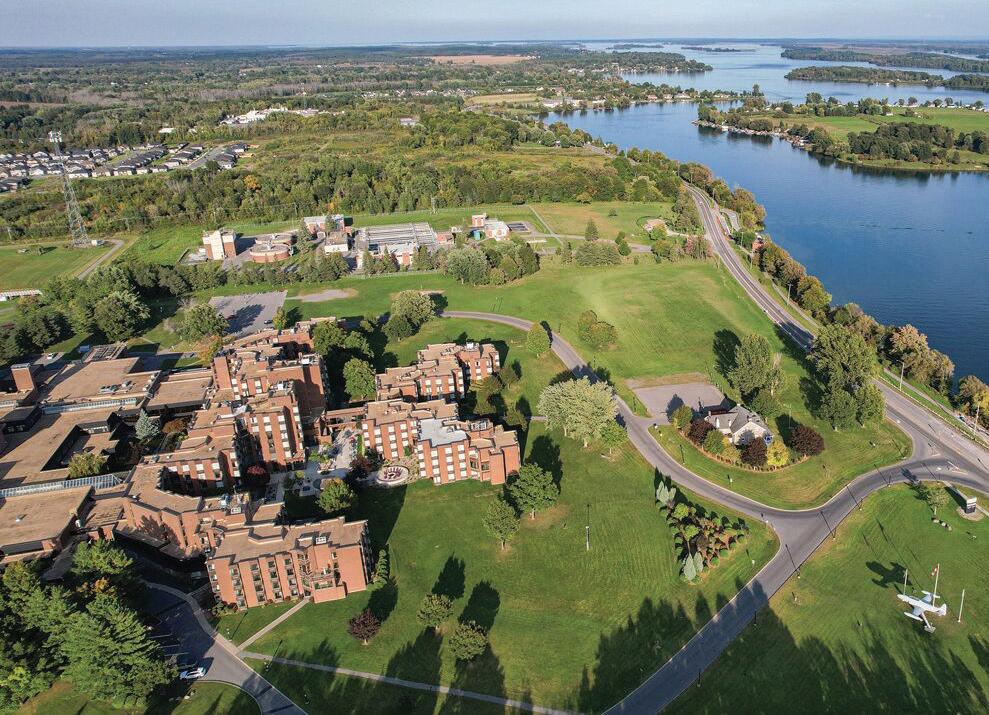
DEV Centre, located in Cornwall – a onehour drive from Ottawa and Montreal – has established itself as a more focused and affordable option. Surrounded by nature yet fully equipped for business, it offers the best of both worlds – space to think, connect, and collaborate without the high costs and distractions of the big city.
DEV Centre’s list of amenities is impressive: a 350-seat restaurant, Jet Set (a traditional Irish pub), two fully equipped fitness centres, a double gymnasium, a sauna, and a 25-metre indoor pool.
“It’s a one-stop shop,” says DEV Centre general manager Ian Bentley. “Everything you need is under one roof. You never have to leave the property.”
The DEV Centre seamlessly blends business with comfort and fun, offering meeting spaces, entertainment, and recreation under the same roof. Guests can unwind with a walk through 75 scenic acres overlooking the St. Lawrence River or recharge at the on-site Sky Serenity Spa, complete with a full-service hair salon, esthetics, and massage therapy.
For a touch of luxury guests can consider the Commander suites, adds Bentley. Or the Pilot’s Lounge – a two-bedroom, two-bath suite featuring a living room, boardroom table, kitchenette, pool table, and four big-screen televisions.
The DEV Centre is one of the largest event venues in Eastern Ontario, boasting 70,000 square feet of flexible, customizable meeting spaces, making the facility perfect for groups of 30 to 800. Easily accessed by
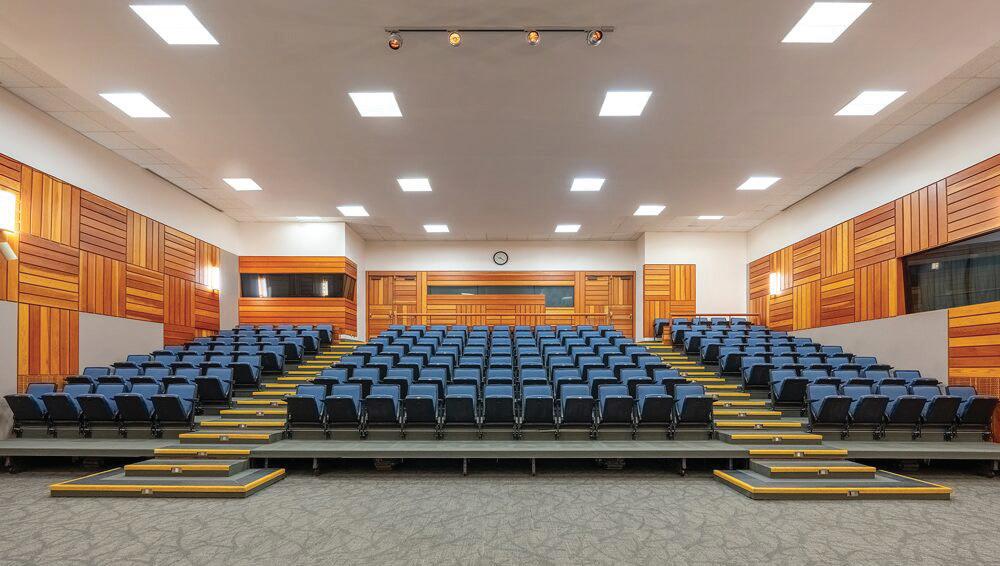
car, rail, bus, plane, or helicopter, the facility includes 540 guest rooms equipped with the latest in smart room technologies. For added convenience, the DEV Centre offers a 24-hour shuttle service ready to pick up your team from either Ottawa or Montreal.
The tranquil atmosphere inside the DEV Centre is achieved thanks to its numerous windows, an abundance of plants, and a central open-air courtyard perfect for special events and ceremonies. Ample indoor spaces provide plenty of options should planned outdoor activities need to be relocated in case of inclement weather.
Adding to the ambiance is the DEV Centre’s super-friendly staff, many of whom have been with the facility for decades. “We pride ourselves on running a very smooth and efficient operation, which allows all our guests to truly relax and enjoy their time with us,” says Bentley.
Top-notch food offerings play an important role, as well, showcasing the freshest local ingredients, including honey harvested from the DEV Centre’s rooftop hive. If you’re looking for a customized event menu or meals adapted to meet
The DEV Hotel and Conference Centre seamlessly blends business with comfort and fun, offering meeting spaces, entertainment and recreation under the same roof.
dietary restrictions or special nutritional requirements for athletic training, the DEV Centre’s executive chef, Jeff Bradfield, looks forward to working with you.
The DEV Centre is proud to continue its tradition as an integral part of the community, sponsoring and hosting events and serving as a premier conference centre in Ontario since 1976. Special pricing is available for military guests, seniors, and CAA/AAA members.
For more information or to book your stay, contact info@devcentre.ca or visit www.devhotelandconference.ca

There are lots of reasons for optimism in the Seaway City

Great Wolf Lodge’s opening will provide a bona fide anchor attraction
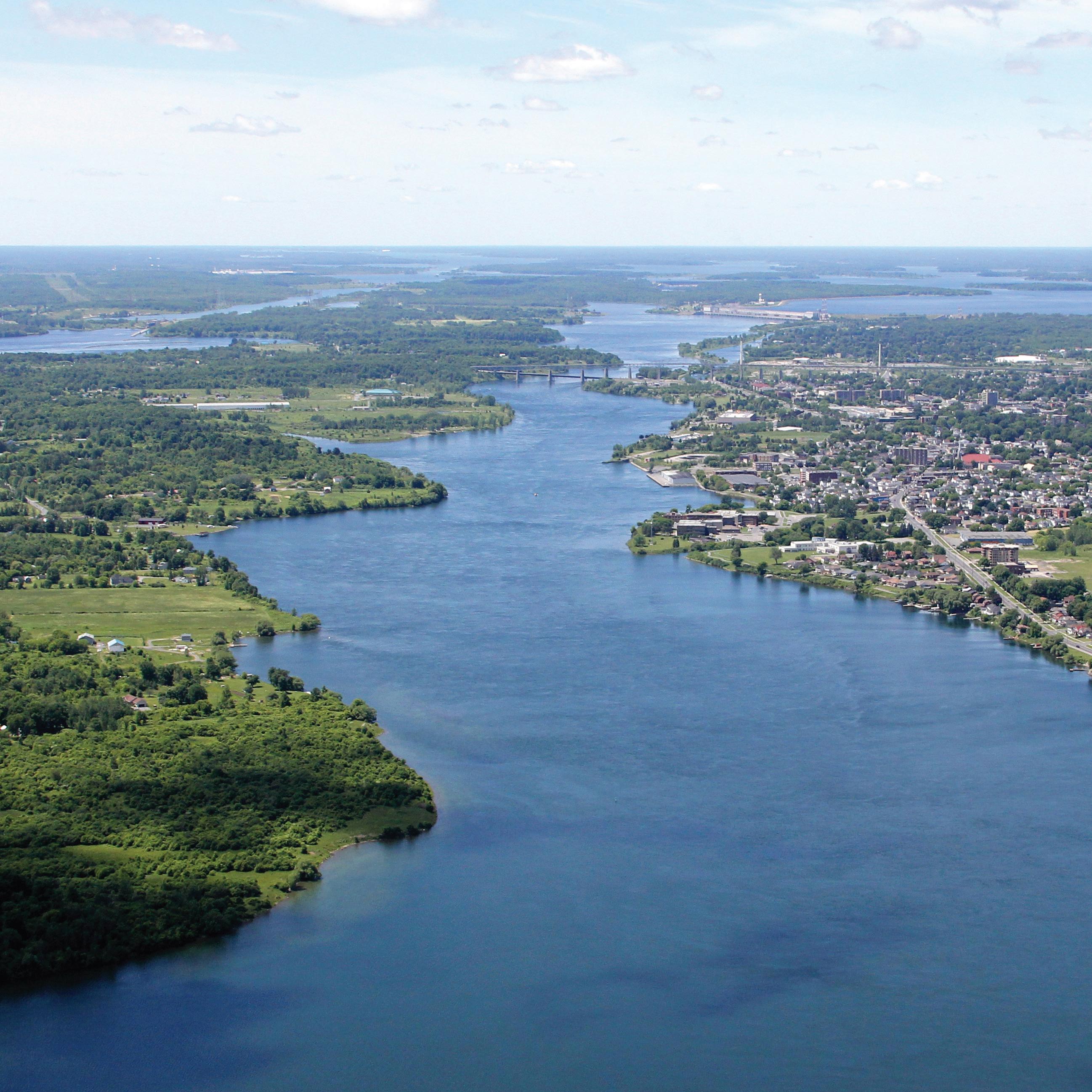
Location, location, location
Cornwall’s prime location becomes even more relevant as new development occurs
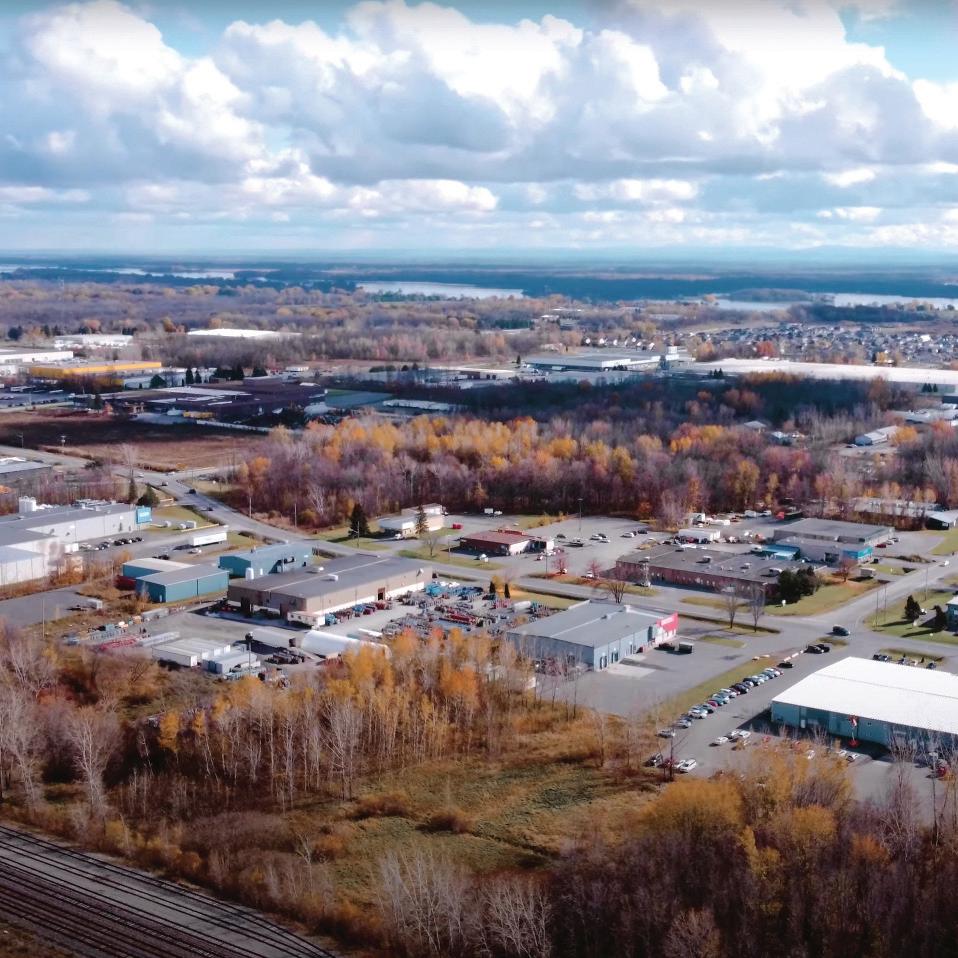
The City has created over 200 acres of new employment lands

Small business renaissance
Entrepreneurs are leading the way as new restaurants and retailers open their doors
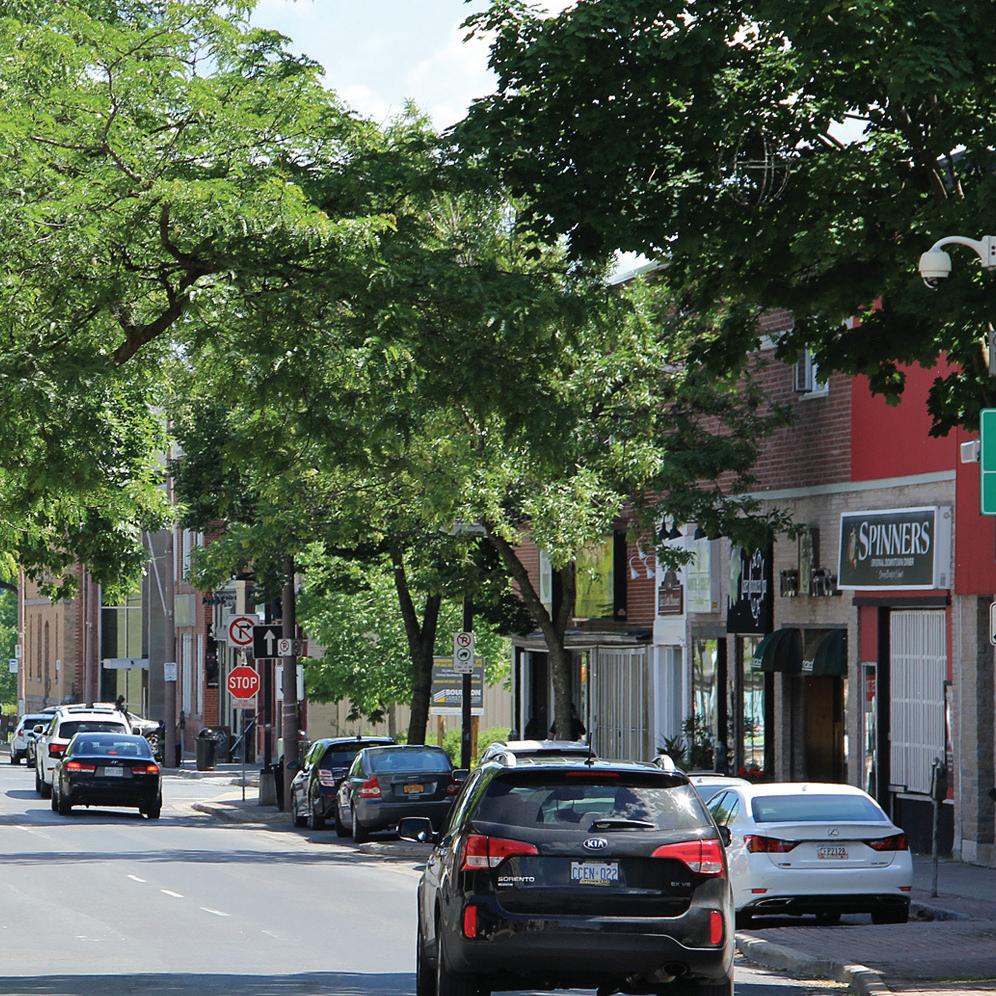
Young people looking to own their own home can still afford to do so in Cornwall

Turning the page
A diversified economy and a growing population is changing the face of Cornwall

St. Lawrence College is committed to staying in Cornwall, but what will post-secondary education look like?
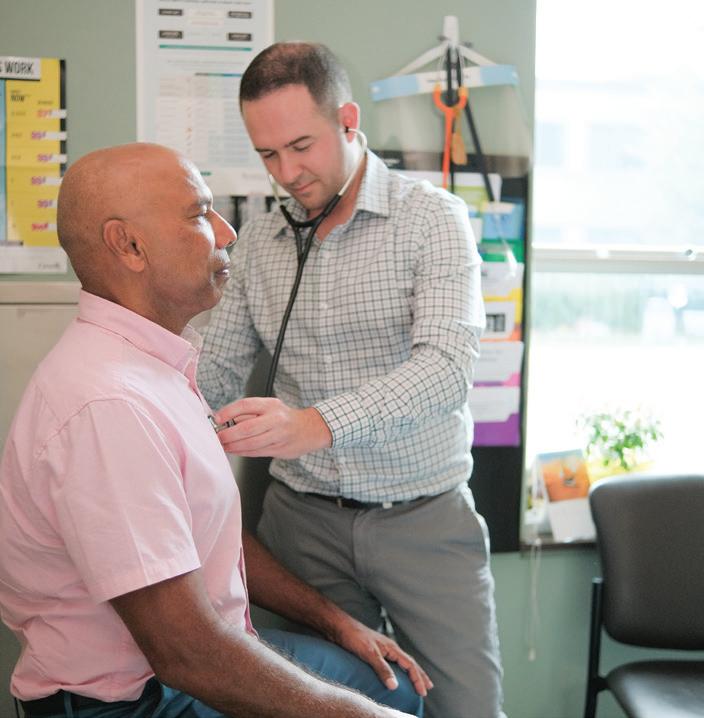
A growing population needs access to local health professionals

Cornwall’s population is more diverse than ever before and Cornwall's business community is adapting
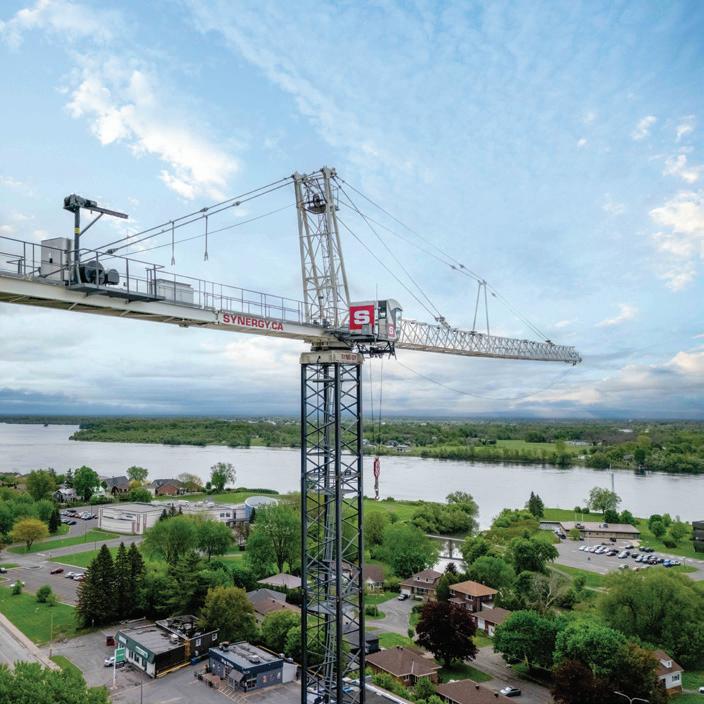
With many opportunities before it, the city needs to be choosy about its projects

Maintaining public infrastructure is costly, and can put a strain on municipal budgets

As a border town, the city’s businesses have to remain flexible yet friendly with the U.S.


Sean is well known both as a talented lawyer with Adams Sherwood Swabey & Follon, and as a generous philanthropist. The Cornwall native is a recipient of the Sovereign's Medal for Volunteers from the Governor General as well as the Queen’s Diamond Jubilee Medal, and is a former Citizen of the Year due to his many contributions over four decades of service. Some of the causes near and dear to Sean are the United Way, the Cornwall Community Hospital Foundation, the Heart and Stroke Foundation of Canada, and the Children's Treatment Centre.

Co-owner, Emard Lumber
Chris is part of the third generation of family leadership at Emard Lumber, which celebrated its 100th anniversary in 2025. Under his watch, Emard Lumber has expanded beyond Cornwall into Ingleside and Morrisburg, took home the 2024 Lifetime Achievement Award at the Chamber’s annual Business Excellence Awards, and invested in a new warehouse. The company has also maintained its strong community ties, contributing to local events, youth sports teams, and charities.
Since selling the family business over 25 years ago, the Kanebs have not stood still. They remain among Cornwall’s most generous philanthropists and active investors, contributing to large causes like the Cornwall Community Hospital’s fundraising campaign as well as through micro-finance loans facilitated through international NGOs. The Kanebs also have ties to Cornwall success stories like SigmaPoint Technologies and Fieldless Farms. Tom Kaneb describes his focus as “finding novel solutions to longstanding problems that are entrepreneurial in nature.”

If you’re looking to get married in Cornwall, Love and Lee should be on your vendor list. Kelsey Lee’s business was founded in 2019 when she won a year of free rent in a downtown commercial space from the Business Improvement Area. Keeping a new retail business flourishing through a pandemic was challenging, but her perseverance has paid off, with Kelsey most recently taking home Young Professional of the Year at the 2024 Cornwall Business Excellence Awards.
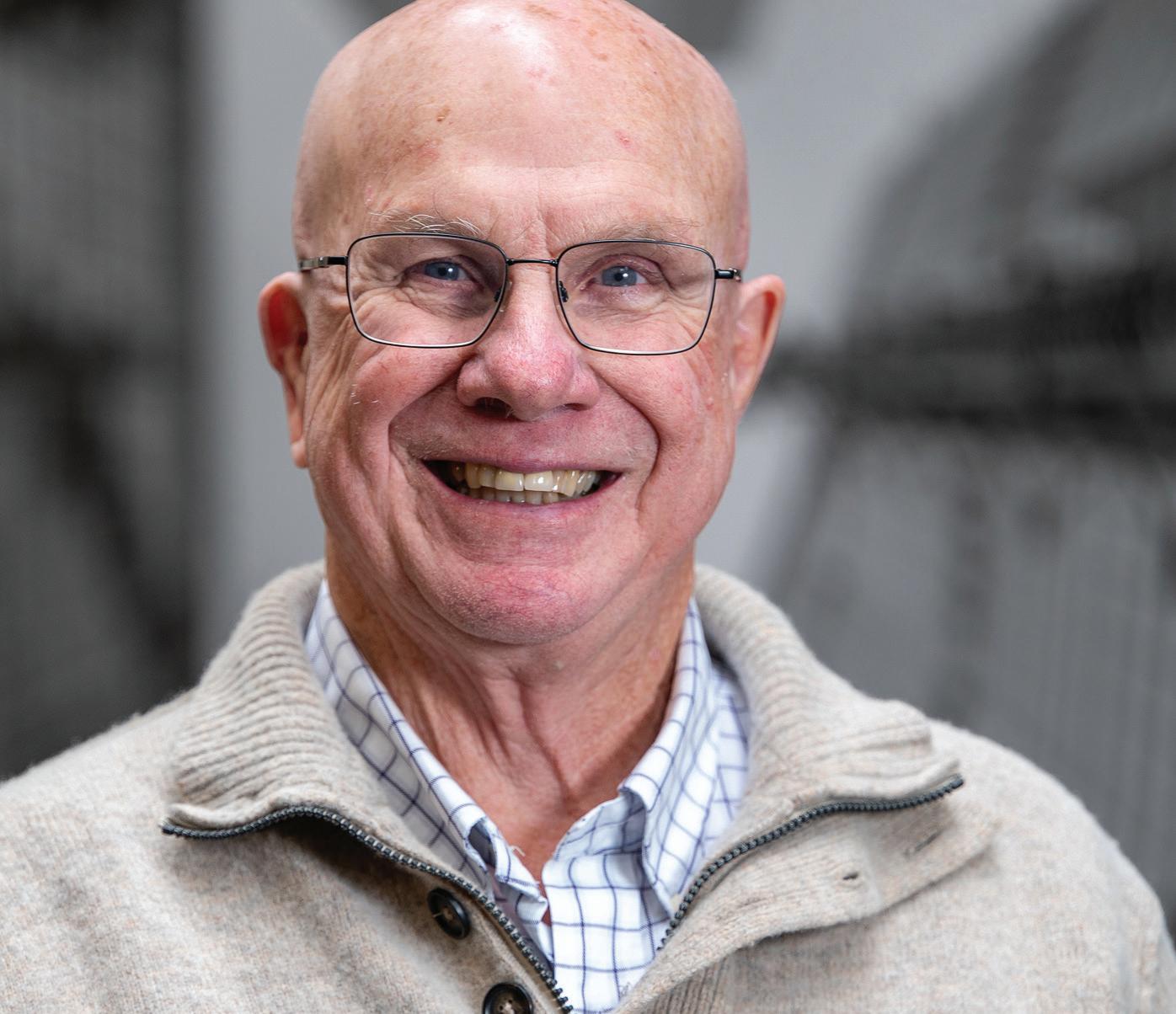
In five decades of serving Cornwall, Terry Landon has seen it all. A broker with RE/ MAX Commercial, Terry is one of a small number of realtors specializing in industrial, commercial, and investment real estate within the Seaway City. He specializes in business opportunities, commercial and industrial properties, investments, farmland, and property management. Over the years, he’s helped shape the local commercial market and played a key role in many major property transactions in Cornwall’s business community.

As vice-president of distribution centre operations for Walmart Canada’s eastern region, Jeremiah oversees two facilities that supply 130 Walmart locations in eastern Ontario, Quebec, and the Maritimes. Those two centres handle nearly one million packages a day, and undergo regular upgrades and improvements to include new technologies such as a robotic arm system. He is a graduate of the University of Calgary, and before moving to Cornwall in 2021 he was a general manager for Walmart in Calgary. He has been with the company for over 25 years.

Jennifer Haley has been the Dean of the Cornwall Campus of St. Lawrence College, as well as its Interdisciplinary Studies and Pathways programs, since February of 2024. Prior to joining the college’s management team, the Cornwall native taught at SLC for nine years, and worked for the River Institute. She is known for her approachable style, strong organizational skills, and dedication to creating a positive learning environment. Her local involvement makes her a valued and trusted presence both on campus and in the wider community.

9. Angela Bero General Manager, Cornwall & Area Chamber of Commerce
Born and raised in Cornwall, Angela Bero is a dedicated and accomplished business leader with a strong commitment to community development and economic growth. In addition to leading the Cornwall & Area Chamber, she also serves on the Eastern Ontario Training Board board of directors and the Cornwall Planning Programs and Evaluation Group, contributing her insight to workforce development, city planning, and regional growth. These roles harness her 20 years of entrepreneurial experience in event planning.

Executive Director, Seaway Valley Community
Erin’s experience and contributions to the healthcare sector date back over 26 years. In that time, she has worked for the Heart and Stroke Foundation, Cornwall Community Hospital Foundation, CHEO, and, most recently, the Seaway Valley Community Health Centre as its Executive Director.
Erin is part of the city’s response to the family doctor shortage, advocating for recommendations such as creating pathways for internationally trained professionals, speeding up of applications, and expanding financial incentive programs.

10. Bob Peters Manager, Economic Development
Bob has spent over 25 years promoting Cornwall’s growth, supporting local businesses, and highlighting the region’s strengths to investors and residents. His work has helped raise the city’s profile and encourage long term investment in the region.
As part of the economic development team, Bob assists prospective investors by helping developers and investors find land and opportunities in Cornwall, providing advice and overseeing research activities that support informed purchases.
Did you know Cornwall's electricity is 100% renewable?
Over a century ago Cornwall was known as Canada’s factory town. It was a nod to the textile and paper mills that dominated the city’s skyline. It was also a reflection of the strategic location of Cornwall on the St. Lawrence River and the productivity of its workforce.
Cornwall’s economic landscape has changed significantly since the city was founded in 1784. Factories have been replaced by modern, innovative companies that are competing on a global scale. Industrial activity has moved away from the river to the 1600-acre Cornwall Business Park, a well designed modern home to logistics companies, manufacturers and food processors.
In 2025 work began on a $23-million expansion of the Cornwall Business Park. This work includes the extension of over three kilometres of roadway, recreational trails, utility networks and municipal services. The project is creating 250 acres of new employment lands and has generated a lot of interest from developers and end-users.
One of those projects is the planned development of a new Great Wolf Lodge, which is forecast to attract over 600,000 visitors annually to Cornwall. That in turn has sparked a flurry of interest from hotels, restaurants and retailers — all looking to find a home at what has become one of the hottest addresses in the area.
Companies that call Cornwall home today rely upon the same strategic location and productive workforce as their forebears did a century and a half ago. What’s new is the innovative approach that these companies are taking to adapting and making the most out of new technologies such as robotics and AI. The workforce of today is a combination of strategic thinkers and skilled trades with a strong work ethic and desire to build a community for their families and neighbours.
The largest employer in Cornwall is Walmart Logistics which operates two large distribution centres each totaling approximately 1.5 million square feet. These facilities ensure goods flow to Walmart stores throughout Central and Eastern Canada. Neighbours include distribution centres for Loblaw, Shoppers Drug Mart, Benson and Michelin, making Cornwall one of Canada’s most important supply chain hubs.
Just down the road from these large distribution centres are world class food processors Fieldless Farms, Leclerc and Olymel. These Canadian companies continually innovate and invest in new technology to introduce new products for their customers. Contract electronic manufacturers Timila and Kontron are using advanced techniques to service clients in the telecommunications, aerospace, medical and defence sectors. Nautel C-Tech is making sonar for the world’s navies and Numed Canada is making heart catheters that are helping save lives around the world.
Today, Cornwall’s skies are clear blue and residents enjoy a quality of life second to none. The St. Lawrence River is home to amazing bike paths and tree-lined parks. Companies are well connected by robust telecommunication networks and powered by affordable hydro-electricity. It is time to take a closer look and do what so many others have done in recent years – Choose Cornwall. Cornwall Economic Development supports companies both large and small looking to invest in the city. The office is in charge of land enquiries in the Business Park, and also supports entrepreneurs, tourism operators and medical professionals. More information can be found at ChooseCornwall.ca
Right: Work has begun on a 160-unit apartment building in the city’s east end.


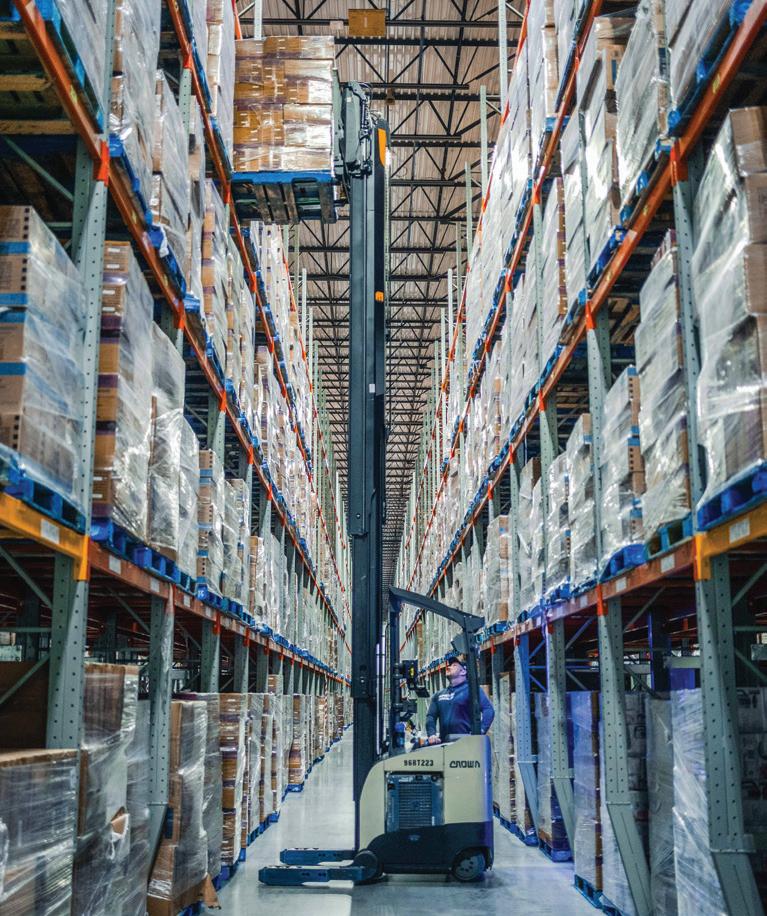
Walmart’s influence in the region is impossible to miss. Their two state-of-the-art distribution centres in the Seaway City make Walmart the largest private sector employer, and their choice of Cornwall in 2005 for an eastern Canada distribution hub caught the attention of others, creating a major new industry for the city. The company continues to invest in and improve its warehouse operations in the city.
In just over 12 years, Weaving Baskets Group has acquired over 700,000 square feet of real estate space in Cornwall and Stormont, Dundas, and Glengarry County, picking up over 100 tenants along the way. The splashiest deal of the time was the acquisition of Cornwall Square in 2021, with a multi-year redevelopment effort following the purchase, but their portfolio has also grown to include heritage commercial properties, a golf course, campgrounds, distribution centres, and vacant land primed for development.
The proposed redevelopment of the former NAV Centre property ensures Cornwallites and visitors to the city will know the name Devcore for years to come. They’re about to embark on a nearly $1 billion redevelopment of the property they acquired in 2022, which includes renovations to the hotel and conference centre, development of residential properties, mixed-use buildings, commercial uses, and public spaces.
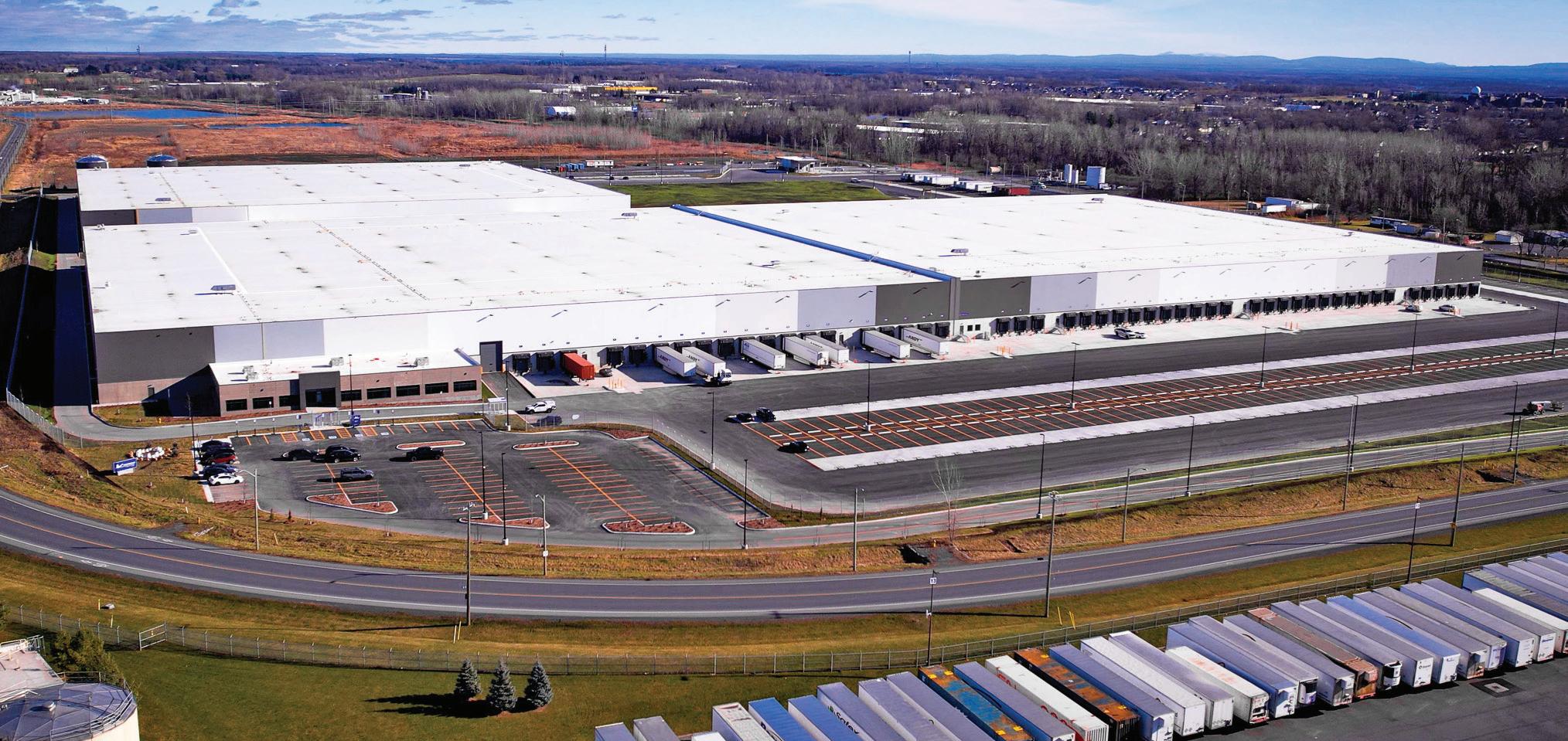
Laminacorr is the only Canadian-owned company producing corrugated plastics and is the largest independent manufacturer of the product in North America. This familyowned company marks 28 years in business this year, and their products are used in a variety of applications from packaging to fencing to signage. Laminacorr counts GM, Toyota, Ford, Walmart, and Amazon among its clients.
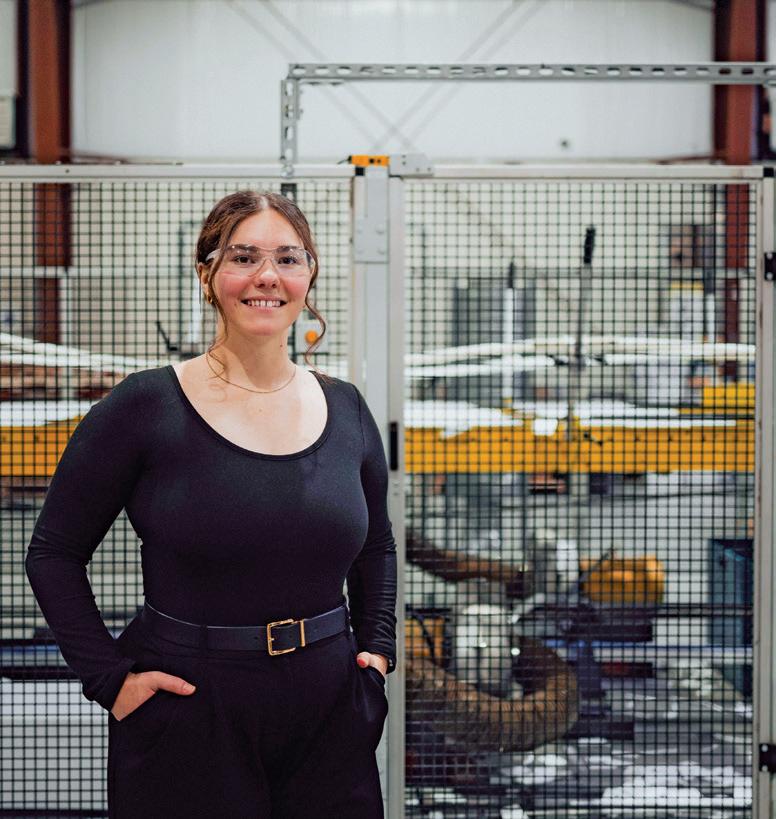
Michelin entered the Seaway City in late 2024 via a new distribution centre built by Broccolini. The 984,000 square foot building sits on 63 acres and is the company’s flagship distribution centre in Canada, serving the entire country. The facility is operated by Ryder, and is home to 140 supply chain workers. There is space for further expansion, if needed. The company cited Cornwall’s strategic location as a reason for choosing the city for its newest facility.
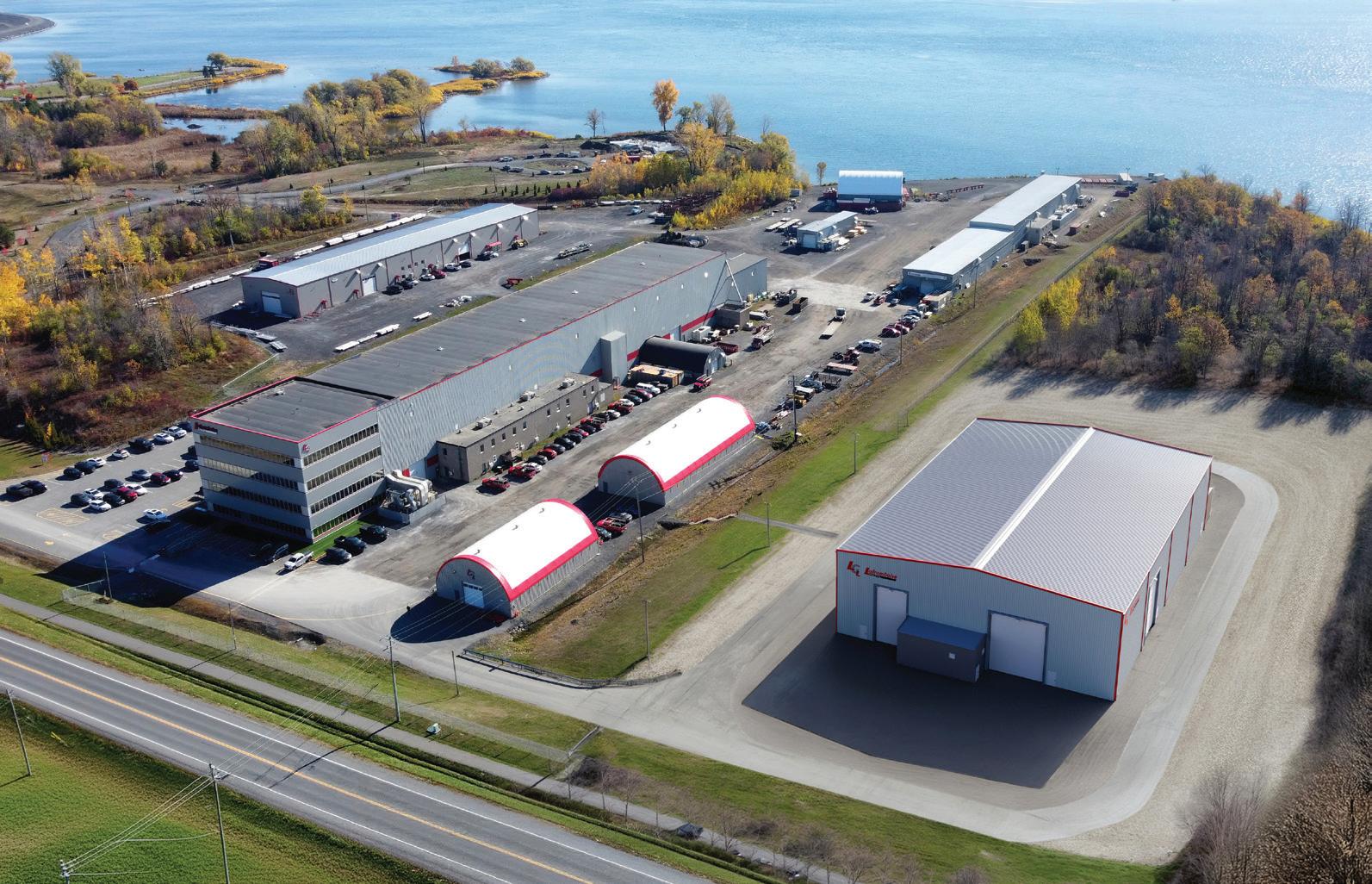
Timila is the new name of MPIQC, a manufacturer with a 50-year history in the Seaway City. The new name was chosen as part of the company’s evolution as it seeks to grow its contract electronics manufacturing business to capitalize on Canada’s increased defence spending and Buy Canadian initiatives. The company is also active in the telecom, satcom, industrial and medical industries, to name a few.
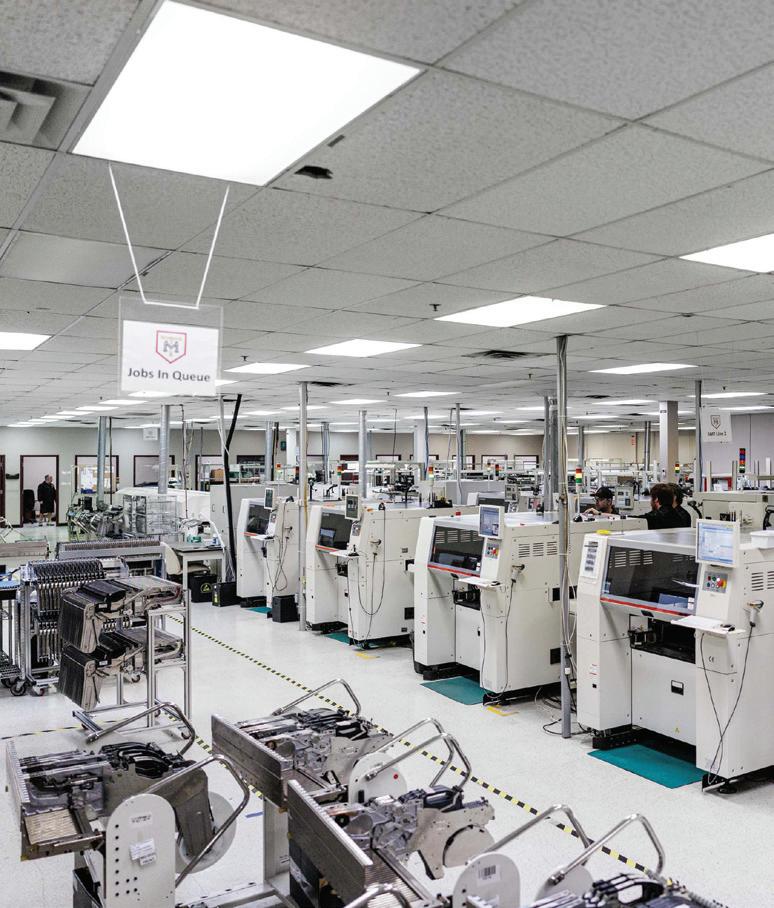
With 25 years in business, De Saulniers Construction has grown to become an innovative and hands-on construction company providing cutting-edge general contracting services for both public and private sectors. This family-owned company has tackled both residential and commercial projects across Eastern Ontario, particularly working alongside Cornwall success story Benson Group as well as local county government projects. A high profile job they tackled in 2025 involved renovations to the entrance of the Cornwall Civic Complex arena.
The team behind Ontario Hockey Academy (OHA) says they wanted to help driven, focused student athletes follow the path of their dreams without compromise. OHA is a private boarding school which blends strong academics with the skills and knowledge needed for successful hockey careers. Graduates from OHA have gone on to studies at major American universities like Harvard and Princeton, and one was recently drafted into the NHL.
Marking over 60 years in business, Laframboise Group aims to deliver safe, innovative, and sustainable industrial construction solutions with uncompromising quality and reliability. From their Cornwall headquarters, they offer a range of construction and manufacturing solutions, taking on projects as far north as Nunavut and as far south as Florida, and from B.C. to Newfoundland. One of their largest, recent projects is an asphalt shingle plant in the Sunshine state.

One in three women deal with bladder leaks, and CNTRL+ wants to do something about it. They have developed what they call the most effective and comfortable bladder support for active women. Their patented device provides discreet leak support for up to 90 times, 12 hours per day while exercising and has received Health Canada and U.S. FDA approval. The company recently launched sales and has grown to employ nine.
What local leaders told us about Cornwall
Which of these local industries in Cornwall are you most optimistic about?
Logistics and Transportation
Tourism and Hospitality
Healthcare
Best Aspects of Living in Cornwall
Location
Affordability
Education
Bilingualism
Safety Nature and Recreation
What makes you most optimistic about the economic future of Cornwall?
“Cornwall has all the tools and infrastructure to make the step to the next level.”
-Ian Bentley, DEV Hotel & Conference Centre
“There appears to be a renewal underway in the City's administration. A strong vision and leadership will be needed to develop opportunities.”
-Chris Markell, Bourgon Construction
“The ongoing work to attract more business and people to the region, and looking for ways to make the city more relevant – they want to grow.”
-Glenn Vollebregt, St. Lawrence College
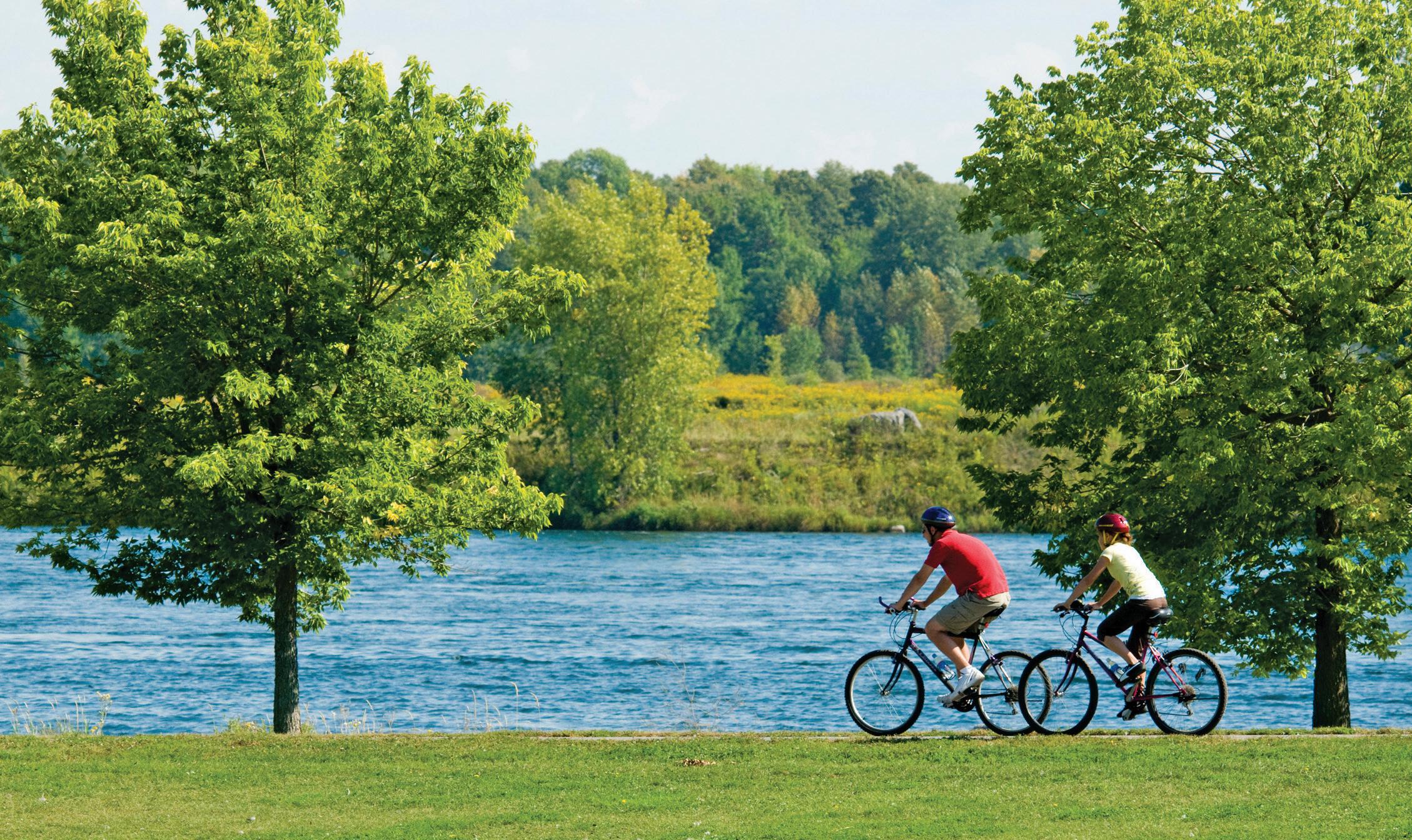
The numbers that tell the story of Cornwall
Nearly 42% of Cornwallites are bilingual (English / French)
Cost of acre of industrial land: $100,000
Average house sale price: $500,000
Increase in visitors: 26%
Typical commute: 10 minutes (7 minutes to get across town)
Over
5 million square feet of dedicated distribution space Cornwall is 241 years old (126 years older than Canada, 42 years older than Ottawa)
0% increase in electrical costs this year
18 km of traffic free cycling trails along the St. Lawrence River
Cornwall’s electricity is 100% renewable
Over 50,000 people call Cornwall home (highest population total ever)
Over
3 million people live within a 90 minute drive of Cornwall






$2,010,339 WAS RAISED FOR THE OTTAWA HOSPITAL THIS PAST YEAR.
$2,046,992























ABI
Aiana
Al’s Steakhouse
Altea Ottawa
Bar Lupulus
BDA Lighting
Brassica
Calabogie MotorSport Park
Cantina Gia
Capital Office Interiors
Carisma
Carrickhill Construction
Certified Building Systems
Cheshire Cat Pub
chmiel architects
CIBUS
Citymark Construction and Drywall Ltd.
Clocktower Pub





& Associates
Deb Cherry Engers & Volkers
DragonFly Golf Links Elise Evoo
Faleena’s FCi First Service Residential First Service Security
Flippers Seafood Restaurant
Giovanni’s Restaurant & Dining Lounge
Gitanes Gray Line Ottawa
Greensmere Golf & Country Club
Harmon’s Steakhouse








Joe’s Italian Restaurant
KJP Select Hardwoods
La Strada
Loch March Golf
Lonergan Engineering

Marshes Golf
Melica Management
Consulting
Mati
Mississippi Golf
Mood Moss Florist
Napoli’s Cafe
Non Stop Racing
North & Navy
Omni Hotels & Resorts –
The King Edward Hotel
OSEG
Ottawa BlackJacks
Ottawa Charge
Ottawa RedBlacks
Ottawa Senators
Parlour








PBC Development & Construction Management Group Inc.
Perch
Petit Bills
Pierre Courteau
Management Inc.
Plasterers Local 124
Pomerleau
Preston Hardware
Pye & Richards — Temprano & Young Architects
Renfrew Golf Club
Restaurant e18hteen
Riviera







Rooney, Irving & Associates Ltd.
Royal Oak
Sandpoint Golf
Sense Engineering


Shurway Contracting Ltd.
Silverwood’s Golf & Lounge
Social Supply & Demand
The Brew Table
The Keg
The Shore Club
Thomas Fuller Construction
Trattoria Caffe Italia
Turner Fleisher
UCC Group
The tournament was attended by 212 golfers and 21 NHL alumni at the Canadian Golf and Country Club on June 19, 2025. OVER THE PAST 8
OVER THE PAST 8 TOURNAMENTS THE GOLF QUEST 4 CLINICAL TRIALS HAS RAISED $12,654,179 FOR THE OTTAWA HOSPITAL FOUNDATION.
Next year’s date is June 18, 2026. For more information contact Greg Moore at greg@quantumprojects.ca.
This year’s date is June 18, 2026. For more information contact Greg Moore at greg@quantumprojects.ca.
This September, 25 senior high school students stepped inside Canada’s largest technology park for a unique, hands-on learning experience designed to ignite future careers in tech.
Students enrolled in the School Within Innovative & Future Technologies (SWIFT) Program have been learning in the heart of the Kanata North Technology Park. Their personalized learning pathways—aligned with Ontario’s Ministry of Education curriculum—are enhanced by dedicating 50% of instruction to technology-driven programming led by industry professionals. This includes hands-on workshops, simulation labs, virtual reality, media production, and other immersive, real-world experiences.
“SWIFT is more than a learning opportunity – it’s a launchpad for Canada’s future tech talent,” says Kelly Daize, Executive Director of KNBA. “The secret sauce is bringing industry into the classroom, giving the students firsthand experience with the technology, tools, challenges, and breakthroughs that shape real-world careers. The goal is to have a technology focused High School in Canada’s largest technology park.”
The focus is to break down misconceptions, showcase the diversity of tech careers, and build confidence through practical, work-integrated learning. By immersing students with real companies, real projects, and real technologies, the program connects education directly to career pathways.
KNBA’s member companies have lead technical workshops, hackathons, mentorship sessions, tours and more. Students also utilized the Hub350 spaces including the Ross Video media lab to document their experiences and enjoy full access to KNBA facilities and enjoy KNBA community programs such as volleyball and yoga, promoting both professional and personal development.
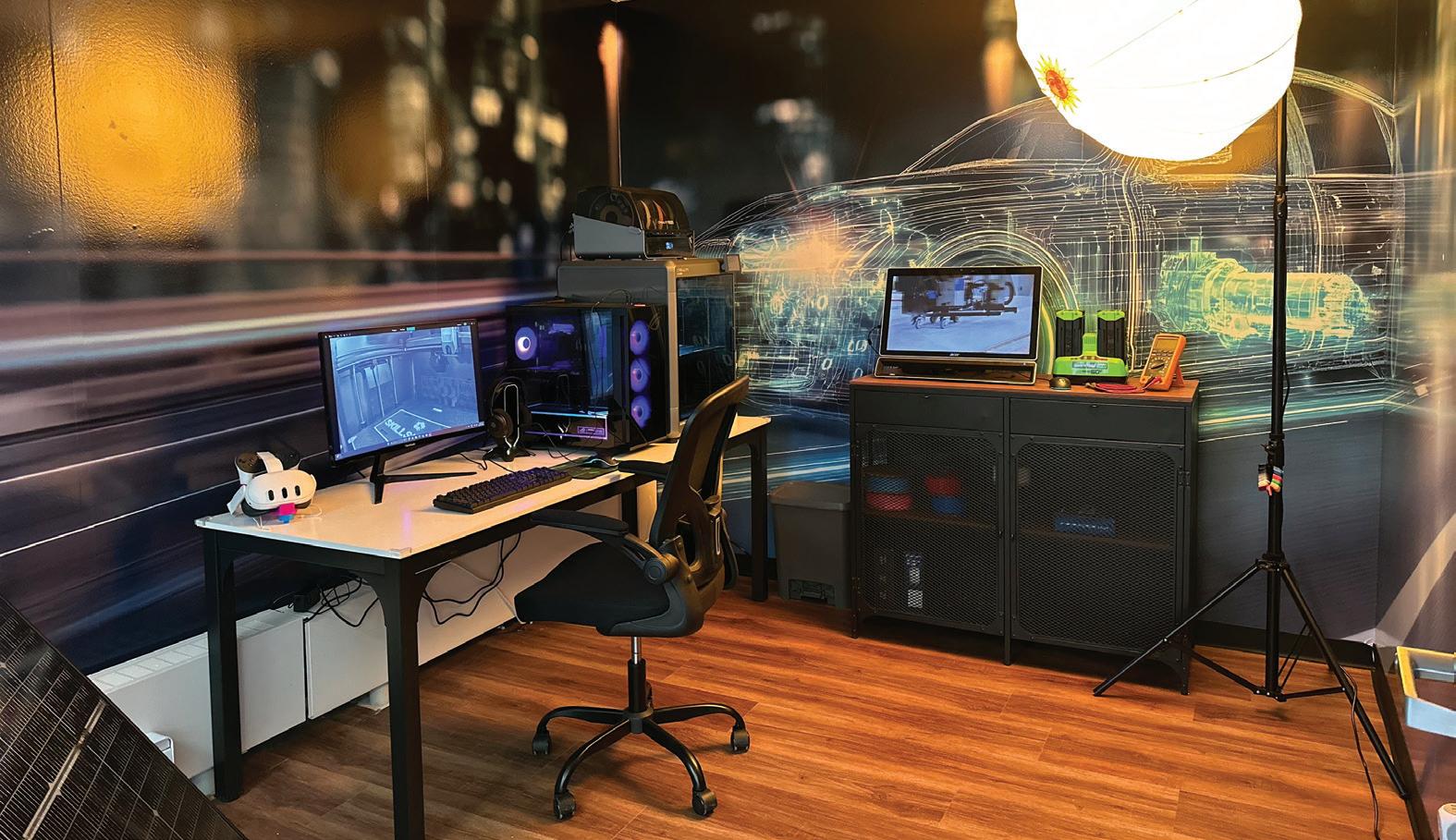
The program has the support of Terry Matthews, tech pioneer and chairman of Wesley Clover.
“Educating young talent and introducing them to technology has always been a priority for me,” says Matthews. “This is exactly the kind of opportunity we need to nurture future innovators. There is no better place for students to explore tech than in, Kanata North, home to Canada’s largest tech park.”
“We always work to make our classrooms meaningful and relevant,” says Jennifer Coleman, Systems Principal of Student Success and Experiential Learning at OCDSB. “The outcomes from our students will be impressive and inspiring.”
Student recruitment and education delivery will be led by OCDSB, KNBA will provide the technology programming delivered by industry and SCC is responsible for the infrastructure, and the immersive technology experiences in the classroom.
“It creates this ultimate work-integrated learning experience,” says Brad Loiselle, CEO of Skills Council of Canada (“SCC”). “When students walk into our SkillsHub training environment, it’s going to be completely different from a typical high school. Every day will bring something new and innovative.”
Loiselle adds that SCC’s contribution included setting up an immersive training center with gaming powered computers, a fully equipped virtual reality lab with dozens of headsets, several simulator rooms, an EV room, and 3D printing capabilities. In collaboration with KNBA and member companies, SCC is also helping shape curriculum pathways that reflect the latest industry needs—from semiconductors and mobility to AI, cybersecurity to innovation in skilled trades and green energy.
“Our role is to ensure students are immersed in real-world tech and develop the skills industry needs today and tomorrow,” Loiselle says. “SWIFT is a model for how education, industry, and community can come together to shape the future of talent development in Canada.”
“I wanted to channel my grief into something that was very meaningful.”

Rumi Prince, co-founder and general manager of Prince Mortgage Team, had a big year in 2025. She completed her executive MBA at the Telfer School of Management and was a recipient of a 2025 Forty Under 40 award from OBJ and the Ottawa Board of Trade.
However, Prince’s impact reaches beyond business. Prince’s son Rudhro died in 2018 at the age of eight after a severe asthma attack. As a result, Prince started the Rudhro Prince Hope Foundation to raise awareness about asthma and funds for life-saving research and equipment.
Since 2018, the foundation has raised more than $100,000 for Asthma Canada, the Children’s Hospital of Eastern Ontario (CHEO) and local schools.
Through the foundation, the Prince family has donated more than $7,000 to the Ottawa Catholic School Board toward the Rudhro Prince Friendship Award, given to a graduating sixth-grade student who demonstrates Rudhro’s qualities of friendship and helping others.
OBJ spoke with Prince about the foundation and its impact.
By Marissa Galko
How has this work impacted you?
After two to three years of depression and grief, I just woke up one day and I said, ‘What can I do?’ I have to survive for my daughter and I wanted to channel my grief into something that was very meaningful. Rudhro, my son, was such a kind, joyful child who always put others first. We wanted to give back in his honour.
What have you learned about the Ottawa charitable sector?
Ottawa is a city where you can grow a business and run a charity but also, at the same time, have fun and raise your kids. It’s a city where everybody really comes together to show their support, to show friendship. We received 400 letters at the hospital when he was in the ICU fighting for his life from people at his school. Each letter told us what kind of person Rudhro was.
What has been your most memorable experience to come out of this work?
When other parents reach out to me because they want to hear, not only about Rudhro’s story and what work we do, but to learn about asthma. Many parents have told me that in schools they don’t have a protocol set up or an asthma action plan.
What has inspired you to continue?
Rudhro. He keeps me going. He’s the reason why we are doing what we’re doing, so that another parent is not sitting in my position in the future. Rudhro inspires me every day.
(RANKED BY YEAR FOUNDED)
1
2
Company/Address
Chateau Lafayette of Ottawa Ltd. 42 York St, Ottawa, ON K1N 5S6 613-241-4747 https://www.thelaff.ca/
Carefor Health & Community Services 760 Belfast Rd, Ottawa, ON K1G 6M8 613-749-7557 / 613-749-4002 carefor.ca/
3
4
J.T. Bradley’s 1220 Colonial Rd. Navan, ON K4B 1J4 613-835-3781
Pye & Richards - Temprano & Young Architects Inc. 824 Meath Street Ottawa, ON K1Z 6E8 613-724-7700 https://www.prty.ca
5
6
E.R. Fisher Ltd. 199 Richmond Rd. Ottawa, ON K1Z 6W4 613-829-8313 erfisher.com
McIntosh & Watts 855 Industrial Ave., Ste 1 Ottawa, ON K1G 4L4 613-233-2332 mcintoshshop.com
7
Dustbane Products Ltd. 1000 Last Mile Drive Ottawa, ON K1G 6Y1 1-800-387-8226 www.dustbane.ca
8
9
10
Halpenny 55 Metcalfe Street Ottawa, ON K1P 6L5 613-722-7626 https://halpenny.com
Welch LLP 350 Albert Street, Suite 700 Ottawa, ON K1R 1A4 613-236-9191 / 613-236-8258 welchllp.com
Tanner Insurance 2435 Holly Lane Ottawa, ON K1V7P2 613-232-5704 / 613-232-6486 https://tannerinsurance.com/
1898
Werner
Eliseo
Carefor provides home care, community support services, retirement residences and a hospice for 20,000 seniors and people living with disabilities a year across eastern Ontario.
Retail and country store hosting an LCBO agency store and distributing Purina Agrifeed.
Full service architectural consulting firm.
1905 Emerson Ralph Snr. Ralph Fisher Sonia Fisher
Fine men’s tailored clothing, portswear, outerwear and footwear retail store established in Ottawa in 1905.
1906 Grant McIntosh Christina Watts Peter McIntosh
Retail, fine tableware and gifts. Specializes in fine bone china coffee mugs designed in Ottawa under the “McIntosh” brand. Founded on Bank Street in Ottawa in 1906.
Dustbane, a family-owned business since 1908, is Canada’s trusted leader in sustainable cleaning solutions. We are dedicated to simplifying the cleaning process and exceeding expectations with our comprehensive range of EcoLogo certified products.
Trusted insurance specialists providing customized risk management and insurance solutions.
Since 1918, Welch LLP has delivered accounting, tax and advisory services to private, public and non-profit clients. Welch LLP takes a collaborative, relationshipdriven approach, using in-depth industry expertise to make the complex simple.
As independently owned and family operated insurance brokerage, we keep insurance simple with real people, clear advice and strong claims support. Services: Business insurance, home and auto insurance, group auto and home insurance tailored to you.