
ISSN 2398-2667

ISSN 2398-2667
Christopher taught himself to be a very good cook and when he came to our house each year (usually with Fergus) on what we called state visits, food was always much more on my mind than the garden. If possible, his stays were planned to coincide with the oyster season. Christopher was inordinately fond of oysters and, as far as he was concerned, one of the great advantages of us living in Dorset was that there was an oyster farm, owned by the Abbotsbury Estate, along the coast near Portland Bill.
I know nothing about oysters but fortunately one of Christopher’s vast web of friends, head of horticulture at Kingston Maurward college, near Dorchester, used to take charge of the commission. This was Bob Wadey and he came with the oysters and his wife, Bridget, to join the feast. Bob even had the right sort of knife to open the venerable beasts. Christopher’s job was to collect the laurel leaves on which the oysters were laid, a centrepiece on the table. And so the first course of a dinner was provided without me having even to rattle a saucepan. Perfect.
On another visit, Christopher learned how to make what’s now sold as guacamole, but which we just called avocado dip. It’s what Christopher called it too, when he included it in his book Gardener Cook, as one of the things you can do with shallots. That was a bit of a stretch, as the dip only needed one shallot to three avocados, but showed, perhaps, how delighted he was with this new addition to his repertoire.
I never quite caught his enthusiasm for the buds of day lilies, snapped off just before they opened into flower and crunched with gusto as we walked in July to admire the Long Border at Great Dixter. Christopher wrote that they tasted of green figs. I’ll stick with the figs. ■
by Anna Pavord, Patron







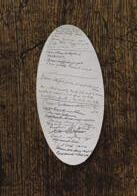
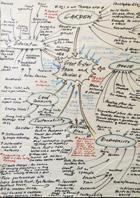





This, the 10th Journal, continues with the original idea of encapsulating the many facets of Great Dixter in a publication for its Friends. From the start it was the archive held in the house - a bonanza of papers and photographs - that was brought to vivid life by archivist Roy Brigden in each edition that made the project so worthwhile. But also it is the stories told by so many people of their experiences in the place that has made a joyous jigsaw of its uniqueness.
The here-and-now of it each year came from the input of the young from around the world with contributions full of the throb and curiosity of the young for the world of plants and the opportunities and networking that being at Dixter provides.
An historian would have the analytical eye to give the last decade a title, but uppermost in its current success is due to its CEO and Head Gardener Fergus Garrett, a remarkable man. Linda Jones
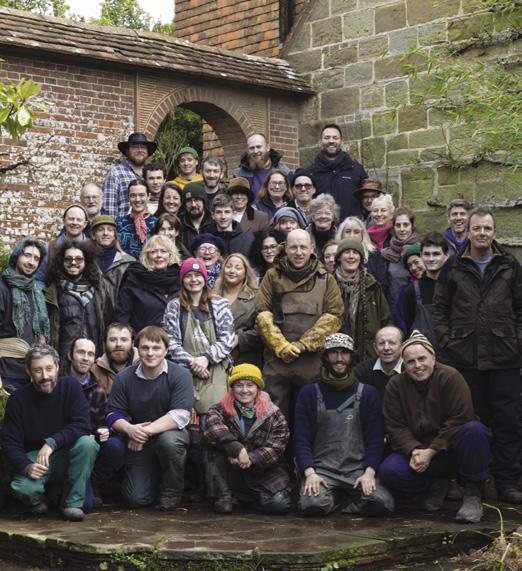
From top left, Luke Senior, Bill Ludgrove, Guy Hagan, James Stewart, George Game, Richard Burns, Mary-Anne Brightwell, Carol Joughin, Ben Robbins, Peter Chowney, Nigel Ford, Talitha Slabbert, Catherine Haydock, Matt Padbury, Jake Martin, Sarah Seymour, Linda Jones, Jodie Jones, Nicky Smith, Coralie Thomas, Dan Vidler, Jamie Todd, Becky Reader, Alice Rodriguez, Emily Heard, Lewis Bosher, Hayden Bosher, Claire Rooney, Rachel Deacon, Jo Mcleod, Freya Hubbard, Michael Wachter, Jess Sandford, Hannah Phillips, Michael McGowan, Michael Morphy, Ben Jones, John Sharratt, Ed Lorimore, Savva Podkopov, Connie Hudson, Rob Flack, Nick Lorimore, Fergus Garrett.
6. Daisy Lloyd... The middle years Roy Brigden
22. 10 things with tales
26. In the cracks Shaun Blower, Ros Crowhurst and Jamie Todd
30. 12 Months of Dixter Jodie Jones
48. My 36 years of Great Dixter Anny Evason
52. Early difficulties with water supply at Dixer Roy Brigden
58. A year in the life of the Dixter water Ben Robbins and Sarah Seymour
62. A pitchfork perspective Heather Tuckman
64. An informal Q&A with David Dimbleby Chris Lloyd
68. My 10 tools for a wet February day in the garden Fergus Garrett
70. The Great Dixter influence Emma Seniuk
74. The scholars
80. More than just a pretty space Peter Chowney
84. Repair Restore Renovate appeal
86. Donor pages

by Roy Brigden, Great Dixter archivist
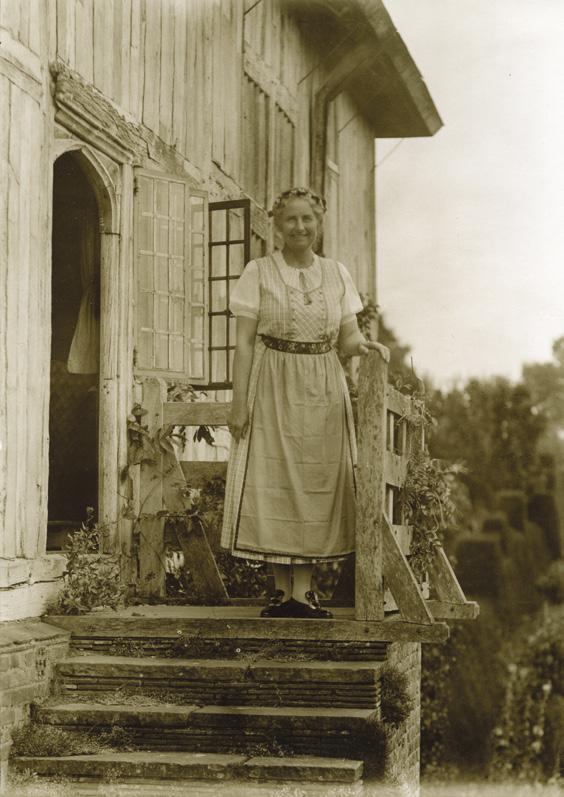
AFTER SETTLING INTO a new life at Great Dixter and getting through the First World War, the period of the 1920s and 30s saw Daisy in her prime and firing on all cylinders, but also facing many challenges for herself and her growing family. It was all recorded so colourfully in her letters.
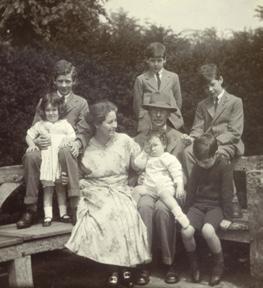
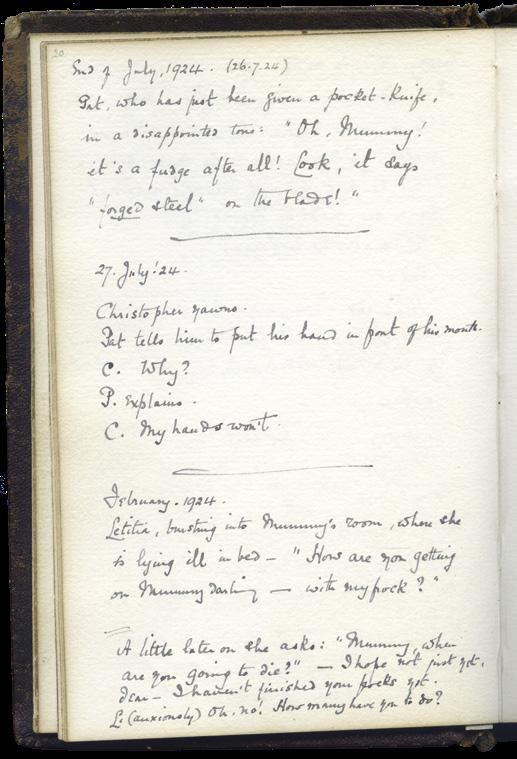
Above, The Lloyd family, clockwise: Letitia (born 1919), Selwyn (1908), Patrick (1913), Oliver (1911), Quentin (1915), Christopher (1921), Nathaniel (1867), and Daisy (1881). Left, a page from Daisy’s book of her children’s sayings.
With six children born over a period of 13 years from 1908 to 1921, their needs were the principal call on Daisy’s time and energy. Her engagement diaries throughout the inter-war years reflect this. Four different public schools, not counting the prep school in Broadstairs, all boarding, in outlying parts of the country, with dissimilar term times and requirements, were an ongoing logistical challenge that stretched on into the various forms of further education.
Then there was the almost constant round of ailments and afflictions: colds, and flu – more serious then than now – enteritis, chicken pox, mumps, scarlet fever and meningitis that resulted in children being sent home to isolate for different reasons at different times. On top of that there was the broken bone here and there, tonsillectomies, mastoidectomies and Quentin even having a little toe removed. Nathaniel was often away for several days at a time, in his London club, on architectural and photographic assignments, or golfing excursions around the country. There were staff in the house to assist, of course, but actually throughout this whole period the difficulties of recruiting and retaining – not to mention managing –appropriate domestic staff presented an ongoing headache. In this undercurrent of chaos, Daisy thrived and managed to keep open house for any number of friends and relatives, from near and far, who regularly passed through to savour the Dixter magic.
There is in the Parlour at Great Dixter a little book in which Daisy carefully recorded memorable moments and conversations of her young children. It runs from February 1919 through to Christmas Day 1931. For example, the entry for 3rd October 1928: Christo wakes at 1.0am, thoroughly frightened, declaring he can hear something – “a kind of growly noise” - & until that “something” is satisfactorily explained, announces his firm intention of “going on being frightened”. What a dilemma for a deaf and very sleepy Mummy! I suggest that it is Letitia snoring, & am met by an indignant disclaimer from the cot on my left (I didn’t know she was awake)! Then she suggests that it is more likely to be Quentin, who immediately proclaims his wakefulness with no uncertain sound. As a last effort I suggest that it is a little bat snoring up in the rafters! Then Christo turns & rends me! With the greatest scorn he exclaims: “Mummy, you ought to know better! All bats are wide awake at this time of night!” I feel such a fool, but natural history was never my strong point at one o’clock in the morning! The noise is finally traced to a hiccoughing radiator. Christo satisfied as to the cause, & further fortified by a couple of toy rabbits, falls fast asleep again immediately.
Daisy retained a close personal involvement in the ups and downs of all her children as they passed into adulthood, and experienced every emotion along the way. There was the excitement, for example, of Selwyn’s marriage to Elaine in August 1934, topped by the arrival of Angus, the first grandchild, the following summer. But agony lay just around the corner because Selwyn was already seriously ill by then with the tuberculosis from which he died in a specialist Norfolk hospital in November 1935, aged only 26. Daisy kept making him pyjamas, as she did out of love for all her sons, to the very end.
IN THIS UNDERCURRENT OF CHAOS, DAISY THRIVED AND MANAGED TO KEEP OPEN HOUSE FOR ANY NUMBER OF FRIENDS AND RELATIVES, FROM NEAR AND FAR
The 8th December 1933 was a very cold day. Nathaniel had gone off to play golf in Camber, while Daisy had been busy all day working on the tapestry curtains in the Solar. Nathaniel had arranged with Perigoe, the builder from the village, to have them re-hung on a system using hooks and a steel rod that would make them run more easily. But four dozen hooks were required to be sewn on each tapestry and nobody could be found locally to do it. So Daisy had insisted that she would tackle it and have them


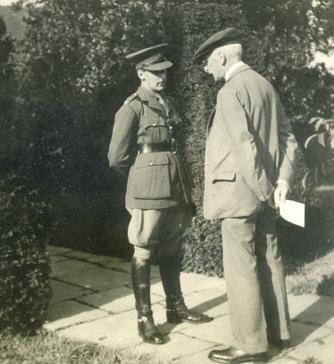
The last photo of Nathaniel, as he says goodbye to Patrick about to leave for India with the Royal Artillery, September 1933.
all up and finished by Christmas as her present to the house and her husband. At four o’clock the phone rang with the news that Nathaniel had been taken ill on the course at Camber. Daisy went over at once with Booth the chauffeur, and brought him back in the car, propped up with pillows and covered in rugs and blankets. They put him into his bed in the Yeomans Hall where the doctor found his pulse to be weak but steady, and advised that warmth and quiet were the best hope. Daisy kept vigil from her adjoining room where she worked on a new nightdress and picked at the dinner provided by Mabel the parlourmaid. Suddenly, at 8pm, there was a change in Nathaniel’s breathing pattern, Daisy rushed over, and he died shortly afterwards.
Daisy’s exhaustive account of Nathaniel’s death from a heart attack, written in a letter the following day to Patrick, runs to over 4,000 words and is a tender outpouring of recollection and emotion from someone obviously in shock but determined to hold herself together. Recalling those final moments, she writes, ‘Suddenly I wasn’t frightened any more, for I knew he was safe, & I said to him: “Now the only thing I can do for you is to be good to your children, & brave, & I will” – and I am’. None of the children were home at the time: the three youngest were in school, Patrick was in India with the Royal Artillery, and Oliver was with Selwyn in Surrey. Steps were immediately taken to inform them all in the most appropriate way. Next morning a procession of friends and neighbours arrived, followed by Selwyn, Elaine and Oliver:
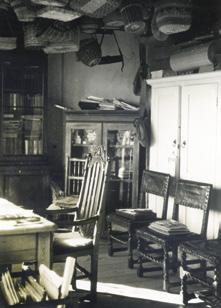
The little office at the back of the Great Hall where Daisy wrote her letters.
‘When they came in Selwyn rushed to me and flung himself into my arms & I could feel his whole body shaking against mine – poor darling, I was sorry for him, But I managed to keep a stiff upper lip, & it is extraordinary how he has followed my lead now that he realises courage is the order of the day. Then came little Elaine with tears very near the surface, but I kissed them away, & told her she must not be sad - & then came my Oliver, very handsome and debonair, with a welcoming smile & so relieved to find I could smile back! And he hugged & kissed me so tenderly. Thank God for children! They are a comfort! Oliver watches me as a cat watches a mouse – when I am writing
to you & if he thinks he detects a tear he immediately reads aloud a passage from ‘Punch’, so that I shall “Keep the Corners Up” (one of Daddy’s favourite expressions). I keep on thinking, very conceitedly, how proud D must be of us all!’
The following morning, Sunday 10th December, after a cheering breakfast of Daisy’s drop scones, a distraction was provided with the whole crew, by now including Letitia, taking to ice skating on the frozen ox pond. More visitors arrived to pay their respects in the afternoon. All the while, Daisy was saying her own goodbyes to Nathaniel: ‘Of course I visited him constantly & kissed him & talked to him – it was beautiful being so unafraid of death – I who had always so dreaded it!’ On Monday afternoon she engineered a walk around the estate with everyone so that the undertakers could slip in and remove Nathaniel’s body for cremation. ‘That’s all they did take’, Daisy wrote, ‘his beautiful spirit is still very definitely all around us’. There was no funeral. Robin Lloyd arrived too late to witness his brother’s final departure from Dixter, leading to a testy exchange with Daisy. For her part, she was upset at an error-strewn obituary he had hastily entered in his own newspaper, The Morning Post, but played the genial hostess during his short stay for the sake of the family and the uncertain future.
Plans were soon in hand to bring in a couple of new puppies to provide solace for Daisy when the house was quiet. They arrived in April in the form of two black cocker spaniels, Binkie and Bunch, both eight weeks old, who would frequently appear in photographs over the coming years. ‘Christo is nearly beside himself with joy’, Daisy wrote, ‘(how Daddy would have loved to see it!)’.
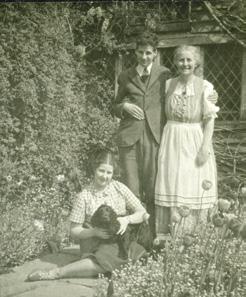
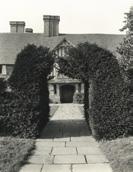
Left, Daisy – favouring Alpine dress by this time - with Christo, Letitia and Bunch in the garden, 1935. Right, the yew arch (not yet fully formed when this photograph was taken) at the entrance to Great Dixter that Daisy was happy to see removed in 1931.
Daisy’s efforts in the garden were prodigious throughout this period, covering all the bases from manager, creative and labourer, to host and tour guide.
Daisy’s weekly letters to Christo at school are a valuable garden record, such as when she reported on November 6th 1931 that two old pear trees had been cut down in the High Garden. When she wanted things done, against the wishes of Nathaniel, she would sometimes conspire with the young Christo to work out a way forward. One success was the removal of the yew arch on the front path, which Nathaniel was persuaded to arrange in time for her birthday in November 1931, and which much improved the view of the house from the gate. ‘We must plead hard with Daddy about the mulberries’, she wrote to Christo in November of that year, after reporting that she was furious with his plans to remove all branches below 6ft from the ground. In a follow-up, she says, ‘This morning Sands & I pruned the mulberry trees, & if only Daddy will be contented with what we have done, they don’t look at all
bad. I have asked Sands to save all the branches & twigs, so you can see just what has been taken off, & make a little bonfire of them yourself at Xmas’.
All her letters reveal Daisy’s unswerving personal commitment to the garden. She was usually up by six in the morning and hard at it well before the gardeners turned up for work. The early months of 1934 saw very little rainfall so that by May the garden was ‘fearfully dry & I’m doing my devilest to keep things going. This morning I started on the Long Border at 8.30, & it took me five hours! Of course I do the thing thoroughly and weed as I go along. This is a lovely place, & the longer I live here, & the more I see of it, the more I love it.’ Again, in 1937: ‘May is a lovely month in England, & our garden is looking beautiful. I bought a thousand May flowering tulip bulbs last autumn as a little ‘extra’ for Christo, & they are now just about at their best in the High, Sunk & Solar Gardens – the lilac pond is in full swing, wallflowers & forget-me-nots still very decorative, though past their prime, & one sunny day would bring the lily-of-the-valley border to perfection. I do hope Dixter goes on after me – it is too good for The National Trust or anything but a real home’.
ALL HER LETTERS REVEAL DAISY’S UNSWERVING PERSONAL COMMITMENT TO THE GARDEN. SHE WAS USUALLY UP BY SIX IN THE MORNING AND HARD AT IT WELL BEFORE THE GARDENERS TURNED UP FOR WORK.
Opening the garden to visitors became during the inter-war years a developing part of the Dixter calendar. Daisy was a regular participant in the scheme run by the Queen’s Institute of District Nursing whereby the funds raised by a programme of opening on occasional days over the summer months – in Dixter’s case of both house and garden - were split between the host and the charity. In the 1930s she was usually sending in a cheque of around £100 at the end of the season (equivalent to something like £6,000 today). This was after deductions for renewals and repairs, which in 1937 included a new coir mat in the Porch and a £5 tip for Mabel the housekeeper who not only provided some of the guided tours but also handled all the extra cleaning required.
When showing visitors around her house and garden, Daisy was in her element, an entertaining host and much in demand. The Clergy Union for Hastings & St Leonards brought a group of 60 in June 1937 on the occasion of its centenary meeting. In June
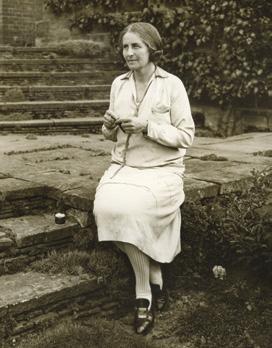
Below, Daisy and Letitia preparing crab apples, 14 September 1936. Right, Daisy sewing in the garden, 1928.
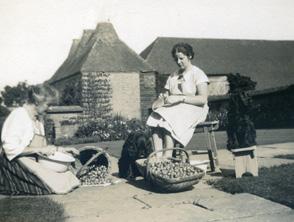


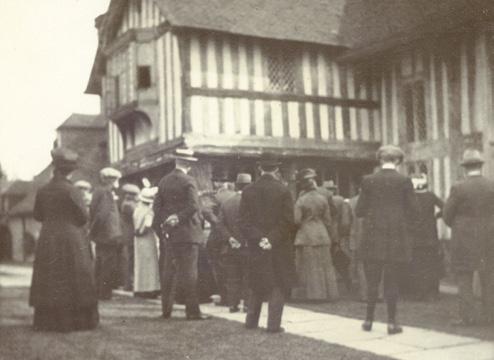
1938, a school party of 130 girls and teachers arrived in four motor buses and were treated to tea and tours. A good time was had by all and they helped with the washing up before they left, with Daisy directing operations and in the thick of it. They were followed in July by 33 members of the Primrose League, a right-leaning organisation promoting the cause of Toryism. Tongue in cheek, Daisy made sure that there were examples of Oliver’s socialist literature and copies of the Daily Worker strewn around the house to put the visitors off their stride. The Rector of St Leonards arranged a tea-party for 60 people at Dixter for June 2nd 1939 and on Sunday 11th Mr Catt of Hastings Laundry brought his staff, all 62 of them, along for tea and a tour.
Constantly busy would probably best describe a normal day for Daisy at Dixter. When the garden’s fruit was in season there was bottling, preserving, pickling and jam making taking place on an almost industrial scale. On one day in September 1937, the
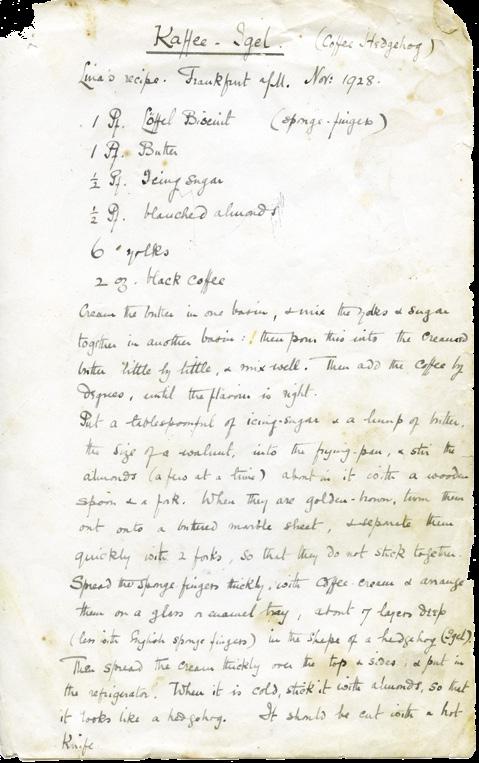
Daisy kept a large dossier of recipes written in her own hand. This one, for Kaffee Igel (Coffee Hedgehog) she collected from her friends in Germany in 1928.
gardeners brought in 60 lbs of blackberries, part of which was for jelly, Christo’s favourite, and the other for bramble and apple cheese. This after Daisy had made 29lbs of tomato chutney the previous day. Marmalade production featured prominently after Christmas so on February 22nd 1939 Daisy reported that she had just completed her 17th batch of the year to bring the total output to 734lbs. Most of this, as with everything else, would be sent off and given away to family, friends, neighbours, and visitors.
There was usually, too, whatever the season, some craft endeavour in progress, often with family involvement as a bonding activity between mother and children. The results can still be seen around the House. The little embroidered footstool in the Solar, Daisy was finishing in June 1937 and commenting on the progress of Christo’s version. In November, she was preparing to make a new needlework cover for the high-backed armchair in the Great Hall using a design lent to her by the needlework shop Carter & Parry in Hastings – but first she would consult with Christo to see if he approved. In these years Daisy was an active participant in the work of the Women’s Institute and its off-shoot, The Guild of Learners of Home Crafts. Certificates awarded at their shows are commonplace in the archive, including one from the NFWI exhibition in London in 1938 where the rug Daisy had been invited to make incorporating her ‘N.L.1938.D.L.’ motif was part of the show.
On March 18th 1935, Queen Mary made a private visit to Great Dixter. She was Patron of both the Queen’s Institute of District Nursing, for which Daisy had been raising funds by opening the garden, and of Queen Mary’s Needlework Guild which made and distributed garments and surgical items to deserving causes at home and abroad. The Queen was herself a skilled embroiderer so it was that she requested a visit whilst staying at Compton Place, the Duke of Devonshire’s home in Eastbourne. Because of its private nature, there are no photographs of the visit but Daisy wrote a 5,000 word letter to Patrick shortly afterwards thereby placing it firmly on the record. Letitia was pulled out of school at the last minute to assist and Oliver was persuaded to delay his return to London and suppress his socialist/communist principles for a few
BECAUSE OF ITS PRIVATE NATURE, THERE ARE NO PHOTOGRAPHS OF THE VISIT BUT DAISY WROTE A 5,000 WORD LETTER TO PATRICK SHORTLY AFTERWARDS THEREBY PLACING IT FIRMLY ON THE RECORD.
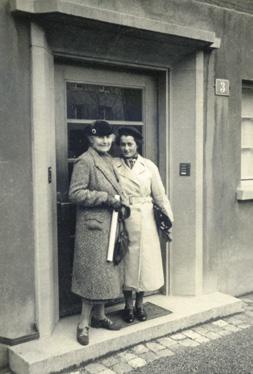
Daisy with Renate Hirsch, Zurich, March 1937.

Above, visiting friends in Austria, August 1937. Right, from Daisy’s passport, 1939.
hours. Daisy, too, held back on openly mentioning her Cromwellian antecedents and, wearing a blue frock of her own making, even managed a curtsy for the Queen on arrival.
It was a sunny afternoon for a tour of the garden during which Daisy writes that, ‘I was terrified she might bump the Royal Head going through the Rose Garden Hovel, so I urged her to be careful, & she fairly doubled up! It looked so funny!’ All was met with approval and even Christo’s ducks on the Lower Moat ‘stood on their tails in the water, flapped their wings & quacked loudly! A perfect Royal Salute!’ The Queen insisted on seeing all over the house, upstairs and down, and admired the many items of family embroidery and other handiwork that had been strategically placed on view, right down to the pyjamas that Daisy was currently making for Patrick in India. A tiny tufted rug that Daisy had made ‘just to show how fine a tufted rug could be’ caught the Royal eye and was snapped up for Queen Mary’s Dolls’ House at Windsor Castle, where it remains still.
Daisy continued to make regular visits to Germany in the inter-war years, often taking one or more of the children, to stay with her old
friends, the Hirschs, who constituted a second extended family. Furthermore, after leaving school Letitia went off in 1937 for a year in Vienna, where she was looked after and kept in line by another friend, Baroness Désirée von Morsey. That same year, a specialist recommended that Quentin spend six months in Switzerland to relieve the problems he was having with his feet and joints. He returned as often as he could and became an active member of The Alpine Ski Club. So this was another destination for Daisy to visit and make new friends, like Contessa Etta Bonacossa, a leading Italian ski mountaineer who subsequently became known as ‘Mother of the Partisans’ for her exploits in World War Two.
During their stay with the Hirschs in Frankfurt in August 1933, Daisy and Christo were confronted with the impact of recent changes that had taken a sinister turn. The ‘ugly’ Nazi uniform, described by Christo as ‘sickly yellow’ was everywhere and ‘all schoolchildren must give the Nazi salute to their teachers & each other!’ As the Hirschs were Jewish, the implications were clear. Learning the following year that Paul and Olga Hirsch’s daughter, Renate, had been taken aside at a golf tournament and told not to win because her nonAyrian status would cause difficulties, Daisy later assisted in her safe move to England, where she became a Dixter regular.
LEARNING THAT THEIR DAUGHTER, RENATE, HAD BEEN TAKEN ASIDE AT A GOLF TOURNAMENT AND TOLD NOT TO WIN BECAUSE HER NON-AYRIAN STATUS WOULD CAUSE DIFFICULTIES, DAISY LATER ASSISTED IN HER SAFE MOVE TO ENGLAND
Daisy was involved with the German Jewish Aid Committee and the Inter-Aid Committee for Children From Germany which found holiday placements for refugees. Her first guest was a young Karl Leyser who became a lifelong honorary family member and eventually a distinguished Oxford professor. She applied for work permits to allow young German and Austrian women to come to Dixter as domestic employees. For her friend Muriel Goldstein, Daisy acted as guarantor to enable her niece, Thea Grunfeld, to escape from Berlin in March 1939. On June 6, she wrote to Patrick, ‘We had 7 refugees under the Dixter roof here this weekend, and altogether 9 Jews: Sholem & Rose, Muriel, Thea, Mrs Leyser, Frau Dr Coblenz & the 3 maids!’.
Reading and going to the cinema or theatre, were two ways for Daisy to switch off from all this activity and industry. Whenever family or friends were staying in the house, Booth the chauffeur


would be driving parties off to the cinema in Rye or Hastings to watch the latest releases. These would then be discussed and recommended or not by Daisy in her letters. In the archive, there are two substantial scrapbooks of all her favourite film-stars that Letitia put together as a child in the 1930s. Similarly, if family or other business took Daisy to London, it would often be followed by lunch at The Farmers Club in Whitehall Court and then a matinee. In February 1937, she and Christo went to see a matinee performance of Bernard Shaw’s ‘Candida’, with Ann Harding, a star of both Broadway and Hollywood, in the title role. Daisy wrote that ‘Christo, as usual, was the only young spectator there – he has a taste for plays beyond his years’. Daisy’s favourite reading was Jane Austen’s ‘Pride and Prejudice’. Her sister Myrtle gave her a copy for her 18th birthday and she read it many times, read it to her children and they read it to her. She wrote: ‘Elizabeth Bennet is the one heroine in fiction whom, if I had been a man, I would have wanted to marry (though I could have been in love with dozens). In her a man would have found a wife, a mother, and a mistress, & someone to laugh with all his life – something like Tan and I were together’. There was no film of the book at the time but there was a theatrical version on in London in the later 1930s. Daisy took a party including Christo to see it at St James’s Theatre at the end of 1936 where they all agreed that Angela Baddeley, star of stage and screen and the ‘new’ Elizabeth Bennet, wasn’t a patch on Celia Johnson who they had seen in the role earlier in the year. ■
Above, frontispiece from a 1911 edition of Pride & Prejudice at Great Dixter. Left, from one of Letitia’s scrapbooks of film stars. Clark Gable and Constance Bennett starred in the 1935 crime drama After Office Hours.

Christopher Lloyd owned around 30 pieces of pottery by Alan Caiger-Smith. The earliest is a jug acquired in 1963 from an exhibition at the Primavera Gallery in London. In the 1990s Christo and Fergus went annually to the Aldermaston Pottery to buy more pieces. When the Pottery closed in 2006 Alan retained samples. In 2014 a year after an exhibition at Dixter, which Victoria Williams curated, this collection of over 230 examples dating from 1950s to 200, was gifted to the GDCT. They include characteristic tin glaze and red lustre ware, as well as a huge range of items, all decorated in typical sweeping brushstrokes and swirling arabesques.
THE DOG KENNEL has never actually been a dog kennel but instead was built to house a circular saw bench for cutting firewood. There is a hole in the wall of the Thatch opposite, where the belt went through an electric motor. Motor and belt are still there, but now the little Massey Ferguson tractor does the hard work. When required the whole structure was taken apart into six sections. Sarah Hudson, Gardener

Right, drawing by Karen Edwards, Volunteer Garden Guide
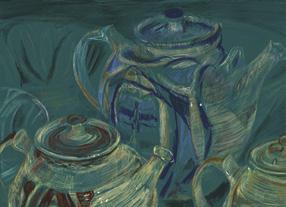

LENSES FOR ECLIPSES Christopher Lloyd was a member of the RHS Floral Trials Sub-Committee when I was the Trials Officer. On 11th August 1999 a meeting was held down on the Portsmouth Field to judge the Yellow Daisies Trial. It was known that there was going to be an eclipse of the sun at 11am and Christo gathered the Committee around as an eerie silence and darkness fell and looking down patches of light and dark flickered on the grass. Christo took from his jacket pocket this box labelled in Daisy’s handwriting. It having been acquired for the 1927 event and is now back in Christo’s desk drawer in the Parlour ready for the next one in 2090. Linda Jones

DACHSHUND BOOT SCRAPER
Made by a man called Simple, an amazing quirky metal sculptor who used to meet up with Christo and Fergus whenever they were in Philadelphia. He gave the boot scraper to Christo, who put it in the High Garden. Since a visitor tripped over it, it has been in the Porch by the front door.
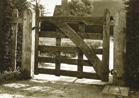
LITTLE FRONT GATE
The wooden entrance gate was made on site at Great Dixter over 100 years ago (the original drawings are in the archive), complete with squeaky two-way hinge. This photo was taken in 1926.



This 19th Century woolwork picture of a drummer girl hangs in the Solar. It is Isabelle Sambrook’s favourite piece in the House. It is beautifully sewn in tent stitch in red and blue thread with gold froggings on the jacket. It was listed in the 1998 Sale Inventory and Valuation Index of the contents of Great Dixter at £60. Gillian Roder
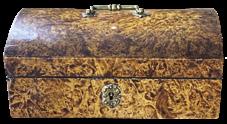
I was privileged to work with a number of long-time guides who knew Christopher Lloyd and protected the house fiercely. None more so than Audrey Pharo. A kind, humorous lady who shared her love and knowledge of Great Dixter generously. Audrey loved wooden boxes and in the early 1990s, there was an auction of furniture etc at Great Dixter and Audrey heard that a little box made of Amboyna wood would be in the sale. It was an uncharacteristic reaction, but Audrey slipped it into her bag and took it home until danger was passed. Then quietly returned it to its home in the Solar where it remains safe to this day. I told this story to her son Craig Pharo not long before his premature death on January 31st this year (2024). He roared with laughter. Anne Ainsley MBE
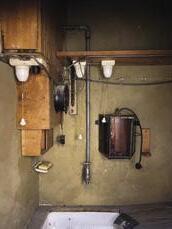
THE DARKROOM down in the basement was created by Quentin Lloyd in the early 1950s. He was a keen photographer and used his DIY skills to install the necessary electrics and equipment. Some of the postcards sold to visitors in those early days were made from photographs taken by him. He inherited this interest from his father Nathaniel who took many thousands of photographs of his family, of Great Dixter, and of other historic buildings around the country. Coming from an earlier age of photography, however, Nathaniel did not process his images himself but instead sent them away to Seaman & Sons in Derbyshire to be printed.
‘‘If we do get it when we should (“it” being the nastiness of winter, which resulted in some thousand gallons of water rushing through the centre of the house last night, while I slept), then we shall have ‘earned’ some lovely spring weather.’
Christo writing on the day after the house was flooded in February 1985

In May 1994, there was a sale at Great Dixter of furniture and other items. One was the chair on which Nathaniel was sitting before his 18th century ‘architect’s’ table, in the photograph on display in the Solar. I would have liked to buy it but at an estimate of £200-300 (it sold for £750), it was way beyond my means. It was bought by the National Trust on the assumption that it had been designed by Sir Edwin Lutyens and it was displayed at Castle Drogo. Later we found that it had been designed by Nathaniel and made by his son Patrick Lloyd. After some years the National Trust returned it, with the support of the Monument Trust, which had given the NT the money to buy it in the first place. Now it is back home, where it belongs, with Nathaniel’s table.

Charles Hind, Trustee
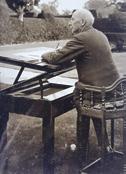
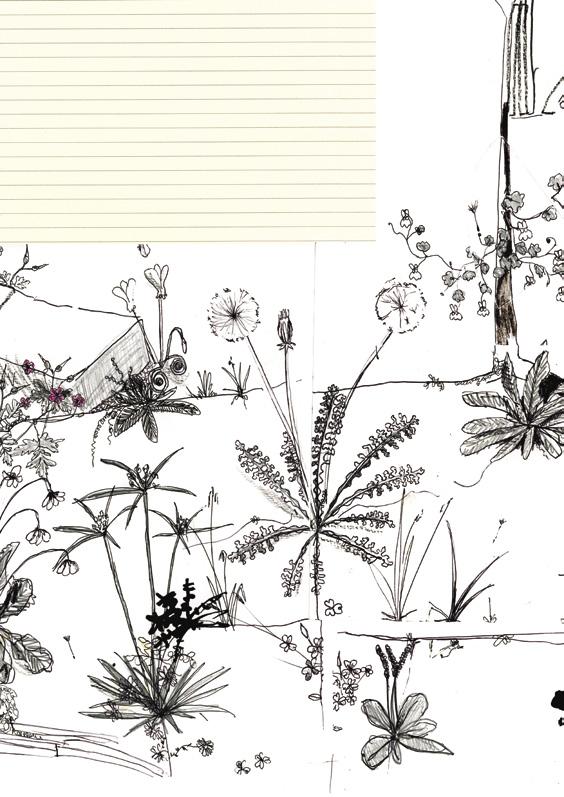
ILLUSTRATION BY SHAUN BLOWER VERSE BY ROS CROWHURST & JAMIE TODD OF THE GREAT DIXTER NURSERY
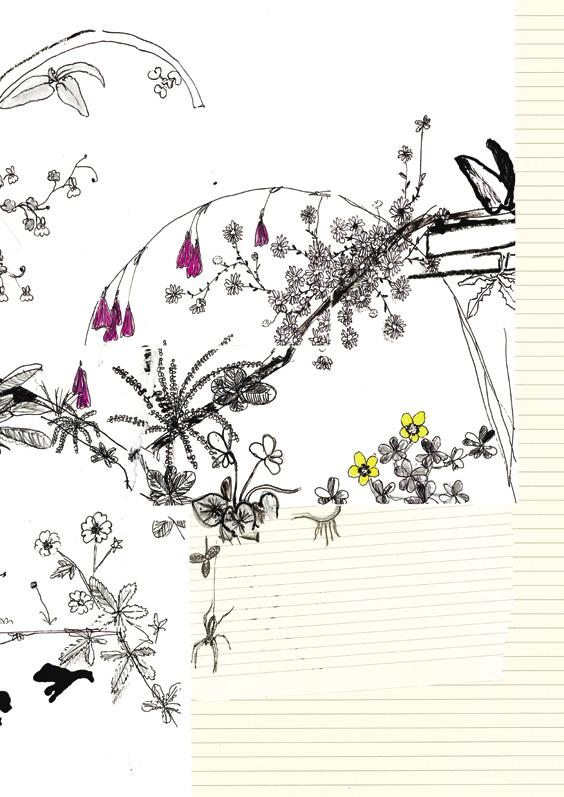
Hidden away in pockets of soil
Special plants creep in via hands that toil
Roots creeping down into that clay
Spontaneous opportunities found on the day
Seeds by hand that have been scattered
Pop up with daisies and they become matted
Other jewels and riches have been planted small
But the bees, like us, are in love with them all
MA J O R

Grasses, perennials, even the odd tree
All appreciated down on your knee Verbena, poppies and the odd thistle Goldfinches visit and give us a whistle
Hoses, weeders and nursery managers
All pose a threat and make little damages
Still they thrive, growing tall and strong Forgotten spaces that now live on!
“Whose this?” and “What’s that?” and “Oh look there’s Neil the cat!”
Visitors enquire after these treasures
Many find joy and take home pleasures

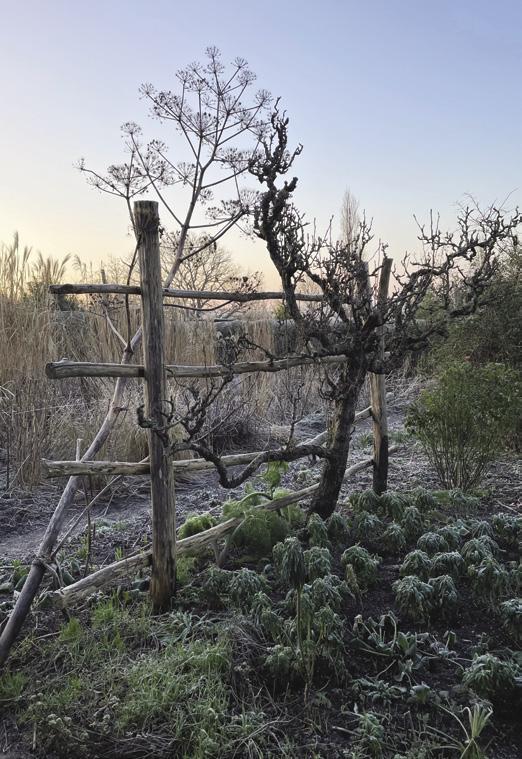
WRITER JODIE JONES VOLUNTEERS IN THE GARDEN AT DIXTER, AND ON INSTAGRAM AS @ GREENWICHGARDENER SHE RECORDS WHAT SHE HAS BEEN DOING
This week at Dixter it was -2 C when I arrived in the golden glow of a perfect morning. Wisps of smoke curled from the Long Shed chimney as we piled in there to divide and pot up the last few bags of lifted perennials. There were, arguably, several more of us squashed up against the wood burner than strictly fitted into the space, but it was a satisfyingly productive session, and there are now many crates of eupatorium, rudbeckia, sedum, phlox and crocosmia lined out in the car park.
This regular lifting and dividing helps to keep the plant stock healthy, and increases availability of the particularly good forms, such as crocosmias ‘Walberton Yellow’ and ‘Dixter Flame’, which grow here but are hard to find elsewhere.
My next job was to watch Fergus, Ernie and Ben clamber around inside the biggest dwarf conifer in the world. This Chamaecyparis lawsoniana ‘Ellwood’s Gold’ was planted in 1957 as a nice little marker at the corner of a bed in the High Garden but now has several perilously flapping limbs which needed to be trussed. It made for highly entertaining viewing.
By the time that was done, the ground in the Peacock Garden had thawed just enough for us to plant out many small pots of tulips, running through a slightly mad combination including macleaya, euphorbia, Salix exigua and Thalictrum ‘Elin’. It will be interesting to see what happens as they slug it out with the Helianthus angustifolius which currently dominates this bed.
And then there was an awful lot of tidying up of tools, barrows, boards, canes and buckets. I went home, feeling cold, tired and happy.
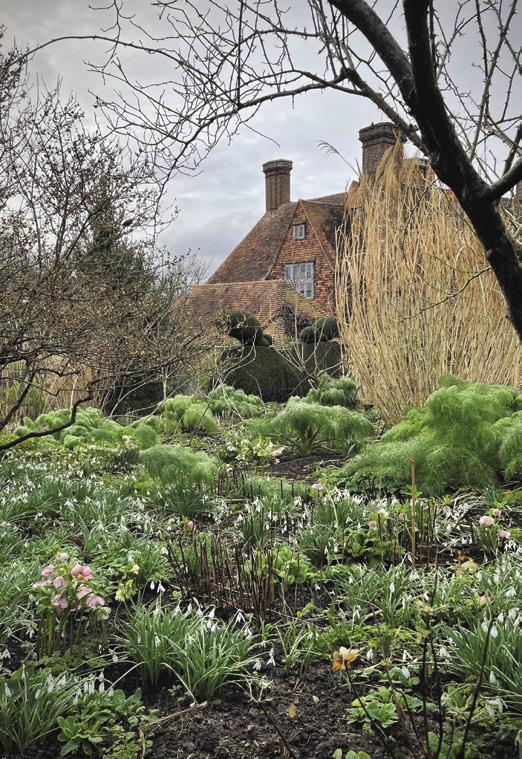
This week at Dixter it was tediously grey, but there were carpets of snowdrops mingling with cyclamen and the hellebores were just getting into their stride.
Our mission was to rejuvenate one bindweed-plagued quadrant of the High Garden. Last spring we removed barrow loads of snappy roots from this area, but they aren’t easily eradicated by hand so we were back for another skirmish in the battle.
First we cut back and cleared the area (and I mowed down a miscanthus with a chainsaw, which was very satisfying), then set to work lifting and dividing perennials while searching for signs of the enemy. As usual when we are all working together the chat was stimulating, ranging from Taylor Swift to

the pros and cons of anaerobic digestate as a soil improver.
In my small corner I helped dig up a large group of ‘Harrington’s Pink’ asters, splitting and replanting one half of each clump with a generous dollop of compost once we were sure the area was clear of bindweed, topped off with a layer of mulch to protect the soil, suppress weed seeds, and stop a particularly greedy robin from eating any more earthworms. The remaining aster clumps were bagged up and taken down to the Long Shed, ready to be split down further, then potted up and grown on.
Fergus spent his lunch break whittling clothes pegs from willow branches, to give to the winner of a fund-raising raffle, while Coralie answered more questions from online symposium participants. I just watched and ate my stew. Then we all went back to the High Garden for more digging, sifting and sorting.
It was a highly productive day which ended with Fergus sketching out an impromptu planting plan for the area on one of our work boards. Expect the season to start with a surprisingly classic combination of lime greens and alliums, before the colour combinations heat up into something more characteristically colourful later in the year. The precise contents are still tbc, but bindweed will definitely not be included, I hope…
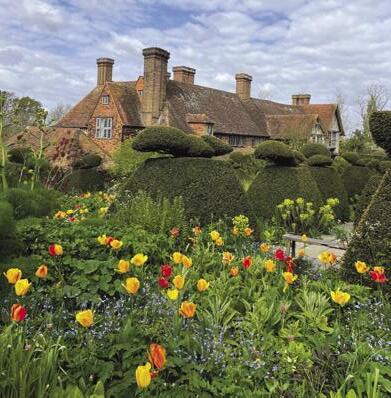
This week at Dixter it didn’t rain, and that made me ridiculously happy after many, many wet weeks in a row. There was even a bit of sunshine, making the newly opened tulips and fading crocuses glow like scattered handfuls of sweeties.
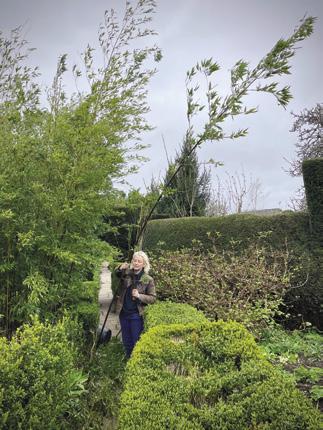
I spent most of the day thinning out a large clump of bamboo (possibly Phyllostachys nigra, but there was some debate) in the Orchard Garden. I enjoy wielding a pruning saw, and happily worked my way through the thicket of canes in consultation with my fellow volunteer Peter. Apparently, new canes emerge from the soil with the girth they will display in maturity so anything skinny, regardless of height, was removed first. Then we took out the dead and dying canes, which is definitely a two-person job because when you are head down in a forest of bamboo you need someone with the perspective of distance to confirm that you are wiggling the right cane before you start cutting it out.
At coffee break, Dan Pearson and Midori Shintani dropped into the Mess Room. They had stayed in the house the previous night and were just heading off to Sissinghurst to check on Dan’s reimagining of the Delos garden. Midori reminded me that we first met at Dixter ten years ago, when I was interviewing her for Gardens Illustrated, so it was lovely that our paths briefly crossed here again.
Then Peter and I went back to our bamboo, where he proved himself to be a dab hand with a bill hook (and I didn’t) as we stripped the cut canes for future use in the garden.
For the rest of the day we operated on a more delicate scale, trimming back a pretty violet vinca that was spilling across a path in the Blue Garden. Everything is getting a final trim and tidy up, because next Tuesday the garden reopens to visitors for yet another year…
27 th APRIL
This week at Dixter the tulips were still stealing the show, from elegantly highbrow species to blowzily cultivated clickbait. As well as the bedding displays, there are lots in pots, which I had ample opportunity to observe since my first task was to water all of them.
This was not a quick job.
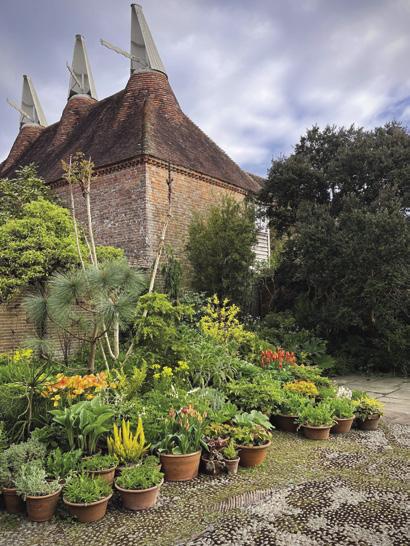
Wrangling a very long and wayward hosepipe through borders filled with precious plants is quite stressful, and there were an awful lot of pots, most famously in the front porch display (currently 49 containers), but also 60 flanking the Blue Garden steps, 5 huge pots by the Topiary Lawn, 10 in the Sunk Garden and 59 in the Wall Garden.
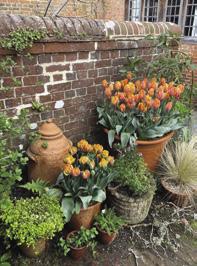
For ages this display has been staged in one corner, but was recently recentred on the back wall and it makes such a difference. Somehow the whole area suddenly feels richer and more welcoming.
It took me well over an hour to water
everything, including a sweet little pot garden that Naciim has created in the kitchen yard just for the joy of it (only taller visitors can really see over the gate).
It was extremely cold, and I was more than usually happy to warm up over morning coffee, before joining the others repotting young plants down at the nursery. Some were for the garden and the rest for sale and, honestly, I can’t remember most of the plants I handled but I do know there was an awful lot of Helenium ‘Sahin’s Early Flowerer’.
This is a cracking cultivar which often gets namechecked in lectures by Fergus and consequently is much in demand. It’s a lush mix of deep red, yellow and burnt marmalade, and last summer a display on the Long Border was covered in pollinators for a good three or four months.
All in all, it was a gentle sort of day.
Fergus and Coralie were away at the Wisley tulip trials, and half the team had gone to Hastings to plant up container displays at a community project, but those of us left back at base got through a satisfying amount of work and, by the time I cranked up the car heater for the drive back to London, I was pre-warmed by a quiet sense of accomplishment.
25 th MAY
This week at Dixter, with tedious predictability, it rained. I really have had just about enough of getting soaked for this year…
Although, to be fair, it was dry for the first hour or so, as the team took an inspection tour of the gardens, where things were looking pretty ship shape. With no major maintenance issues to worry about, our To Do list included nipping off the odd yellowing leaf, tweaking out a cheeky weed here and there.
Grass snakes have recently been spotted around the Sunk Garden, so there was some discussion about whether they might be a threat to the huge number of great crested newts that live here. Conclusion – get an informed opinion from expert ecologist Andy Philips, who regularly audits the biodiversity here.
We were all out with our brooms and buckets, doing the morning titivate, when the skies opened and even the hardy full timers rapidly retreated under cover. Back in the Long Shed – again – I helped pot on module grown Campanula persicifolia ‘Blue Bell’.
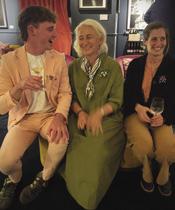
And after lunch I loaded my car with a projector, white screen, several boxes of cut flowers, scholar Naciim and Carol, who leads the fundraising drive here (amongst many other responsibilities), and drove into London.

Ticket sales aren’t enough to fund all the work that goes on at Dixter, so the team were taking Dixter to town to spread the word about what they do, why it is important, and how they need financial support to carry on.
Fergus spoke about ecology, education, community and legacy. News that the intensively gardened heart of Dixter is one of the most biodiverse sites in the whole country (including rewilded sites) went down well with the audience, He certainly convinced me.
And so the day ended, in posh frocks and pink suits (Luke looking sharp), but with much the same great camaraderie that I value so much in the garden.
29 th JUNE
This week at Dixter it was hot – very hot. I hate to complain, after my endless moans about rain over the last few months, but it would have been nice to ease into summer a bit more gently…
Although I was working in the Exotic Garden so the weather was, arguably, appropriate. This elevated jungle bulges with bananas and weird conifers, but a lot of its summer interest comes from an exotica of very tender plants, so we were bedding out masses of begonias, hedychiums, colocasias and maidenhair ferns, plus several things I couldn’t name without reading the labels.
The garden was packed with visitors, and I had to adopt such contorted positions to clear out a bedding pocket under a Chusan palm that I kept impaling my scalp on its viciously spikey foliage. Then, very cautiously, I put in a big clivia, a leggy Eupatorium sordidum (to ‘introduce a bit of weird’, said Fergus), and a Plectranthus ciliatus ‘Sasha’.

For afternoon break, someone had put a whole watermelon in the freezer and we ate icy slices while listening to the eclectic chat. Michael had just spent two weeks on a Stone Age retreat in Spain, Rob was back from a trip to Japan, and the scholars had been to the opera (Christo’s favourite, Glyndebourne, as guests of a generous donor). It was all very ‘Dixter’.
Then we straggled back out into the blazing sunshine to finish planting, followed by an awful lot of watering, lugging can after can in from a hose point outside. At the end of which, I was grateful to have a car with air conditioning for the long drive home.
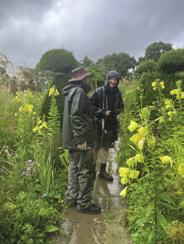
This week at Dixter we were getting ready for the plant fair, which had to be rescheduled from its usual spring slot thanks to the endless blinking rain. (Did I already mention that it has been a bit damp this year?)
I started work in the Peacock Garden, helping with a general tidy up. The knapweeds, geraniums, bronze fennel and ox eye daisies are rapidly going over, and anything that had slid from relaxed to reprobate was getting cut hard back. There were no firm rules, just a series of small judgement calls about which edits would improve the overall picture.
Halfway through proceedings, inevitably, the heavens opened and we legged it back to the mess room to climb into full waterproofs, again. And then we went back to work. And then it stopped raining and turned humid and we had to take it all off again.
At lunchtime the conversation turned to weddings - one the previous weekend which sounded brilliant, several sentimentally recalled from years past, and one vividly imagined wedding for a couple who aren’t yet engaged but

clearly should be.
Then in the afternoon, as so often, we tidied up pots of things awaiting their turn in the garden, although this time the main impetus was to free up the driveways and parking spaces in anticipation of the crowds who will be streaming into the gardens for the plant fair this weekend.
It felt a bit like plumping cushions ahead of a visit from your mother-in-law, and concluded with we three volunteers rejigging a pot display of our own - not the iconic front porch assembly, you understand… this one runs down the side of the loggia café, but it was a proud moment nonetheless.
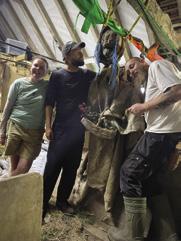
By the time we had finished it all looked very pretty, unlike the Dixter witch - a sinister new take on the traditional scarecrow route markers for plant fair parking - which had been conjured up by Sean, Lauren and Bill.
Picture making of a very different sort, but just as creative and original as everything else that goes on here.
st AUGUST
This week at Dixter there were riots of colour everywhere, and not the tiniest trace of an August slump. The quadrant of the High Garden replanted this spring looked particularly fabulous, with clever manipulation of height opening up riverine views right into the heart of what is essentially an absolutely enormous flower bed.
I expected to be on meadow-cutting duty but, in my absence, a lot of that work had already been done and the final sections are being left for a few more days to fully ripen. This produced the only report of a negative comment I heard that day, from a visitor who was outraged to find ‘the grass in such a mess’. It’s sad that some people still think meadows are a shaker-pack fantasy of pretty annuals… Instead, I spent most of the day with
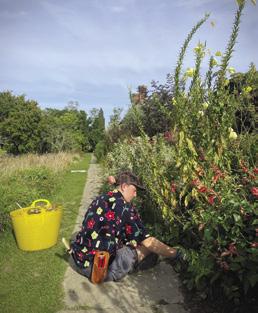
Connie, working our way slowly down the Long Border. The ‘messy grass’ of the orchard meadow thrummed with insect life as we deadheaded cosmos and dahlias, cut back alchemilla and yarrow, and generally had a good tidy-up.
The work was gentle but satisfying and left time for chat. Connie is the new Adam Greathead scholar, spending six months each at Dixter and Ashwood Nurseries in the Midlands, and it was fascinating to hear her thoughts on working in two such excellent but different gardens.
On my way to the compost heap I came across Neil in a comfy nest of ‘messy’ long grass and then headed to the mess room for tea, where there was an enormous chocolate cake and a certain amount of sadness as we said goodbye to Naciim and Ernie on their last day as scholars. This annual changeover is as much a part of the cycle of the garden as the meadow scalping, and in much the same way it produces a sense of stark absence even as it makes way for new life and opportunity.
We finished the day down at the nursery benches with a spot of potting on, and then there was just time for one final hug with two really great guys (and gardeners) before I headed for home, thinking about how much I will miss them both.


This week at Dixter, everywhere I looked there was an awful lot of everything. The garden is full to bursting with a frenzied explosion of colour that teeters on the verge of self-destruction but, for now, is absolutely intoxicating.
I started the day, as usual, with a spot of sweeping and debrowning, but the housekeeping was brightened by a very cheerful catch up with former scholar Andrew Wiley, back from the US of A to work at Dixter for the next month.
Then we started to shift a mountain of bagged meadow clippings from the orchard up to the top compost heap. (There was a big backlog because the tractor had broken down the day before.) This involved heaving heavily loaded bags onto the trailer in the meadow, then trotting up to the top compost heap, ready to hoik the bags back off the
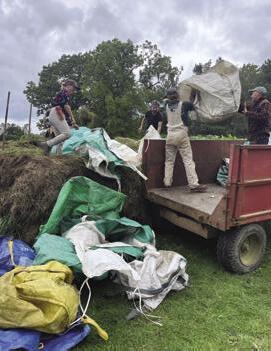
trailer and spread their contents onto the already towering pile.
It was heavy work but great fun, right up until the moment when I sandwiched my dodgy ankle between a dip in the compost heap and a fully loaded bag of wet grass.
And so my day ended in the Long Shed, taking cuttings of Burle Marx and Metallica begonias, Salvia confertiflora and Plectranthus ‘Mona Lavender’, while perching daintily on a high stool.
As I limped back to my car at the end of the day, I reflected that there are probably easier ways to get out of meadow cutting duties.
This week at Dixter everyone was a bit tired after a manically busy but really excellent Plant Fair weekend. Lolling on the Mess Room hay-bale sofas, they discussed the venison which Fergus had cooked for 36 hours in the compost heap (delicious, apparently), and who had bought what plants from which nurserymen. Even the younger students, with no gardens of their own and little cash in the bank, always succumb to temptation.
Then there was a debate about which hardy annuals should be sown in the next couple of weeks. The list was very long and included such Dixter favourites as Ladybird and Beth’s poppies, Silene ‘Blue Angel’, Campanula patula, Bupleurum rotundifolium and ‘Matucana’ sweet peas. Apparently Michael Wachter has already sown some ragwort, with an eye to including it in a bedding display next year, which should raise a few eyebrows...
And then we got down to work, raking up clippings from the Horse Pond meadow, which were reedy, wet and
extremely heavy. The weather flitted from glorious blue skies to drenching torrents and back again, and again, but we eventually managed to load up the little red tractor (driven by Luke in a matching bright red coat) and shift it all up to the compost heap.
In the afternoon I worked with my fellow volunteers Peter and ‘the other’ Luke. We brand ourselves Team Tuesday, and operate under the delusion that we are the most productive of all the volunteer teams that help out here. Events had kept us apart for the last couple of months so we had lots of news to catch up on as we potted several hundred giant fennel (Ferula communis) plugs and some wonderfully plump looking Gladiolus communis subsp. byzantinus corms which had come from the High Garden stock bed and therefore will have the eye-poppingly intense colouring of the true form. They should be available from the nursery in the spring, and I would strongly recommend that you bag a few if you are visiting.
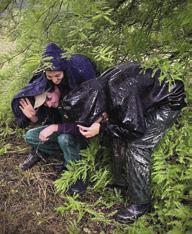
This week at Dixter, the air was crisp, the bee buzz and birdsong were deafening, and the borders were looking ridiculously good, especially the salvias –S. confertiflora, S. leucantha, ‘Phyllis Fancy’, ‘Amistad’ and friends just don’t seem to want the party to end.
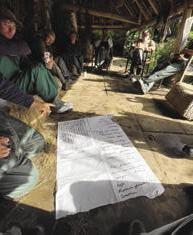
Of course it will, probably next week, when temperatures are forecast to fall below zero for the first time this season, and we started the day with a planning session in the Education Room. Fergus sketched out one of his swirling mind maps with plenty of jobs for the next week or two, but the number one priority was getting everything tender under cover before that first frost comes.
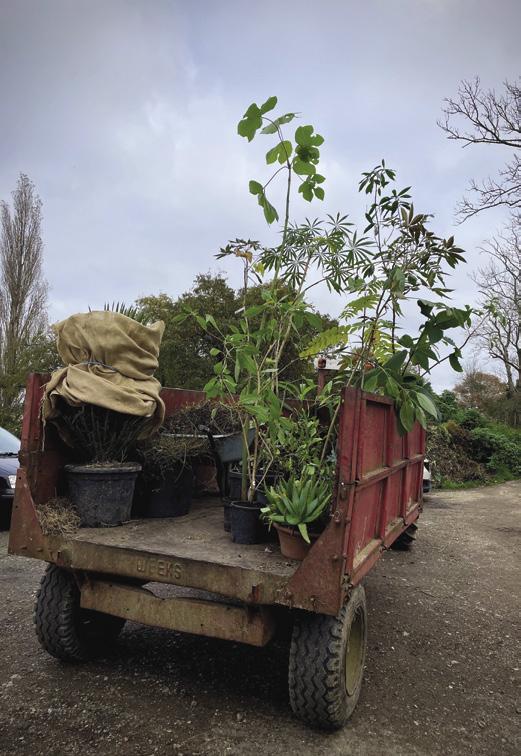
So we headed out to dismantle the Exotic Garden, which is full of enormous and un-nameable plants that would not enjoy a winter outside in East Sussex. Lifting them from between the permanent plants without damaging anything can be tricky, and getting them
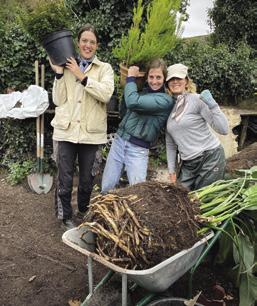
safely out through the remaining jungle is even harder, so it was all hands on deck.
We got quite a production line going, and soon the hardest challenge was finding enough large pots to put everything in. In the end, the whole big team joined in, loading the tractor trailer for multiple trips down to the farm, where there are a couple of lightly heated houses that we proceeded to pack to the gunwales.
In the final frenzy to finish in time for the weekend it all got quite entertaining, and I snapped a shot of Coralie in jubilant jumping-for-joy mode which is a bit fuzzy but pretty good considering it was nearly dark and she was moving at pace. Then I swung by the nursery to pick up a couple of plants, popped into the shop to treat myself to some waterproof gardening gloves, and headed back to my car in a cheerful glow of lamplight and good will.
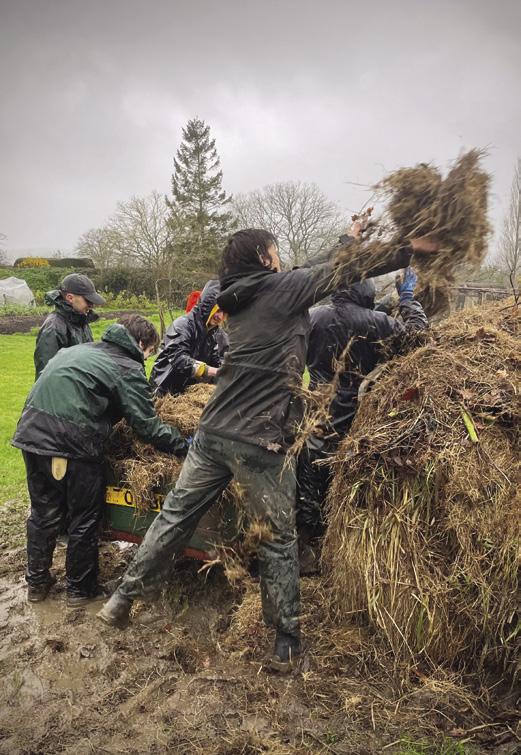
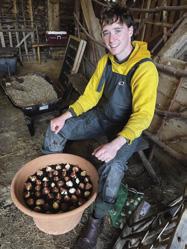
This week at Dixter we started work in a soft drizzle which turned to heavy rain. And then it got properly wet. It’s days like these when you really appreciate the companionship of the team around you.
Our first job was to lift the floor mats and strewn hay which had protected the car park grass from the onslaught of visitors to a recent event. Sodden hay is surprisingly heavy to lift, and the poor little tractor trailer needed considerable help to make it up a slope of liquid mud to the compost heap.
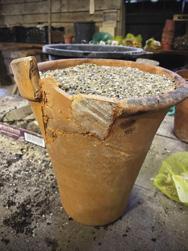
After that we retreated to the Great Barn to drip dry while potting up bulbs (always dense groupings of a single cultivar) in a selection of terracotta pots, including a couple of glamorous new beauties from Whichford, and some fabulously battered old pots repaired with eccentric individuality by Hayden, the wizard of Dixter make-do-and-mend.
As the temperature fell, we retreated to the Long Shed, where the wood burner and hessian curtains made it almost cosy, and a good few hundred bulbs needed temporary potting up before heading off to be planted in the Silk Route garden at Woolbeding. The Muscari comosum, Allium caeruleum, and a couple of other things were planted in varying multiples up to four or five per very small pot so that when they are finally bedded out we will have a head start on creating the random, naturalistic groupings that always require so much artistic effort to achieve.
Then it was time to go home, using my phone torch to navigate back to the car in almost total darkness, and the end of another great year at Dixter.
PS – There was cake – a delicious gingerbread blondie baked by Coralie. After all, it is nearly Christmas… ■
ANNY EVASON, FRIEND AND ARTIST

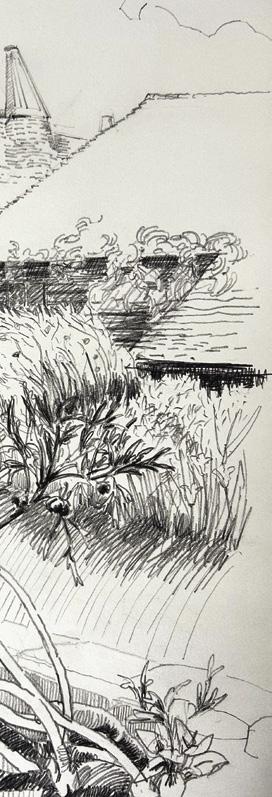
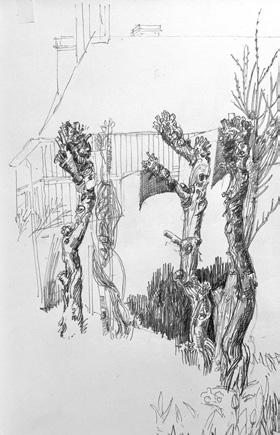
I THINK I FIRST HEARD about Christopher Lloyd and his wonderful creation, Great Dixter Gardens from my mother, a keen gardener who enjoyed finding new destinations for horticultural exploration. So I arrived at Great Dixter full of expectation in late summer 1988. It was a revelation, so unlike other gardens open to the public at that time; it felt like someone’s home, as though one had been personally invited to share the delights of the planting, the massive yew structure, the narrow paths revealing and introducing each planted room almost like characters in a play, they were so individual, providing different delights within a cohesive framework. I recall nervously asking Christopher Lloyd, who was working on the area in front of the house, what he thought was ailing a Cistus in my garden, a daft question really and he was rightly a bit terse in reply to my horticultural inanity and worse, bothering him in his own garden. I still cringe with embarrassment thinking about it. The next time I visited was the day of the big auction in 1994, when the Lloyd family were selling some of the furniture and artefacts from the house. There was a large marquee in the car park, good weather I think, a lot of people, we didn’t buy anything though. There were many visits over the next twenty years, by which time I was studying landscape architecture, so particularly interested in any new planting ideas, plant combinations, unusual plants. Each visit revealed some new delight, a subtle, or sometimes not so subtle colour combination,
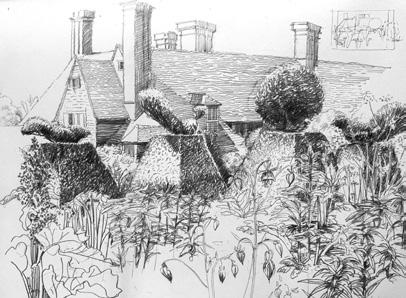
contrasting texture or form. I learnt a lot. In 2011 I emailed Great Dixter office and asked if I would be allowed to come and draw in the garden. Fergus agreed and I spent a fantastic season from March till November happily ensconced in different areas of the garden on Mondays, studying the hedge structure, the planting, the buildings. It was completely magical. I developed the plein air sketchbook work into larger charcoal and pastel drawings which were shown at The First Sight Gallery in Hastings Old Town, sadly no longer there. I was particularly intrigued by the exotic garden, which had been the rose garden when I first visited, the way in which the exotics were protected from frosty winter temperatures. Bananas and other tender plants were carefully wrapped in hessian and insulated with straw and dry bracken, trussed like chickens, turning the familiar growth into mysterious sculptural beasts. I made several large charcoal drawings from these studies. Recently I have been intrigued by the great barn, the materials and construction, the history of industry, labour and creativity. To be alone in the barn loft surrounded by pots and overwintering bulbs, the sounds of human activity below, the creaking beams, the wind creeping under the roof is a unique experience, poetic actually. I have been making some drawings which I hope reflect this unique atmosphere. Truly there is always something new to discover at Dixter. ■
IT FELT LIKE SOMEONE’S HOME, AS THOUGH ONE HAD BEEN PERSONALLY INVITED TO SHARE THE DELIGHTS OF THE PLANTING, THE MASSIVE YEW STRUCTURE, THE NARROW PATHS REVEALING AND INTRODUCING EACH PLANTED ROOM ALMOST LIKE CHARACTERS IN A PLAY


BY ROY BRIGDEN
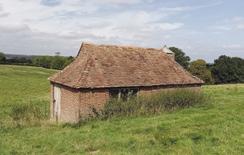
The pump house in Great Park today with the roof alteration made to pump house in 1913 so that the long tubes of the artesian well could be accessed.
SECURING A CLEAN and adequate supply of water was a matter of obvious importance following the purchase of Great Dixter by the Lloyds in 1910. Samples from the original well on the terrace at the rear of the house were tested in October and found to be highly polluted with decomposing nitrogenous matter, and large amounts of chloride and free ammonia that made it quite impossible for use in a domestic setting. Establishing a new source was therefore imperative, but not without its problems early on. Here is Daisy writing to her son Patrick on June 4th 1935, and recalling the day back in 1912 when the family first moved in:
Pat Darling, Twenty-three years ago today Daddy and I left our little honeymoon house for ever, & moved into Dixter – how excited we both were, & how we loved it all – and each other! Except, of course, that we had to give our babies away to Granny for a fortnight while we settled in. Daddy was very naughty about this, & thought we could perfectly well keep them with us – after all were there not 2 nurses to dance attendance on them! – but I was firm and bore his displeasure bravely; & when it was all over, & he realised how very primitive & handto-mouth our life here had to be for the first few weeks (there were still 40 workmen in & about the house!), he admitted that it “wouldn’t have done”. For one thing, I remember the water tasted and smelt perfectly awful – plumber’s red lead! I was an extravagant young woman & used to pour heaps of


Receipt from John Mullins & Sons for sinking the new well in Great Park field, November 1910. Drawing of the new pump house built by Edward Sharpey in 1912.

Plan of the arrangement inside the pump house in 1912 with the pump gear driven by an oil engine.

FOR ONE THING, I REMEMBER THE WATER TASTED AND SMELT PERFECTLY AWFUL –PLUMBER’S RED LEAD! I WAS AN EXTRAVAGANT YOUNG WOMAN & USED TO POUR HEAPS OF EAU DE COLOGNE INTO N.L’S BATH, SO AS TO DISGUISE THE UNPLEASANT ODOUR!
Eau de Cologne into N.L’s bath, so as to disguise the unpleasant odour! I hadn’t met bath salts in those days, though I’ve no doubt they were already in vogue with elegant females. We slept the first night or two in the North Bedroom, & then moved into the Porch Room, which we simply loved. There wasn’t a peg to hang anything on in those days, & Berry, the head carpenter (a delightful fellow with a cast in his eye, who, to our great regret, died of some disease during the War), was my devoted slave & used to follow me about making notes of my requirements, with the result that shelves, cupboards, pegs etc seemed to sprout in the night. Two of his carpenters were North Country men with beautiful voices who used to sing part songs while they worked (they were putting up the Wind-Porch in the Gt Hall) & I used to take my sewing (curtainmaking for the most part) & sit where I could listen to them.
The problem was not so much, or not only, ‘plumber’s red lead’ in the pipes, as a lack of purity in the water itself. Back in 1910, Nathaniel Lloyd commissioned water diviners and engineers J.Mullins & Sons of Bath to find a new water source for the house and come up with a plan for delivering it. Of the four potential sites around the estate that were discovered, they recommended one in Great Park field, approximately 250 metres north east of the House. Here there was a spring at a depth of around 21 metres (70 feet) into the Wadhurst clay from which water could be pumped at a rate of up to 3,000 gallons a day. This would feed into a new enclosed reservoir of brick and concrete that would supply the house from its position on high ground beyond the horse pond.
After the new well had been dug in Great Park, Lloyd grew increasingly impatient with the lack of further progress from Mullins & Sons, and so he paid them off in November 1910. He then turned to a local builder, Edward Sharpey of Rye, to complete the task of installing the well-head gear and engine, building the pump-house and reservoir, and putting in all the pipe work for supply to the house at a total estimated cost of £383. The new reservoir, with a capacity of 30,000 gallons, accounted for £208 of the total. The contract was agreed in January 1912 for completion in March so that everything would be up and running when the Lloyds moved in to the house in June. The system was indeed in place but there was an issue with the volume of water the well was capable of delivering – down to as little as 200 gallons a day - and, as Daisy’s description indicated, with the look and smell of the water itself.
In autumn 1912, Lloyd was searching for an alternative and turned for assistance to Duke & Ockenden Ltd, consulting water engineers of London and Littlehampton. Their proposal was to sink an artesian well through the bottom of the existing well and bore in to more abundant supplies of clean water associated with the Ashdown Sand Beds at a much greater depth. This was achieved in June 1913 at a depth of 87 metres (286 feet) and, with the requirements of a new pump and steel lining tube all the way down, cost a further £395. In addition, Edward Sharpey had to modify the roof of the pump house to allow for the periodic removal of the long sections of pump rod. The expected capacity of the system was 1,000 gallons per hour. Although passed fit for human consumption, there were continuing worries about the ‘turbidity’ or cloudiness of the water that gradually eased over time. The borehole was operating up until 2010 when it was discovered that a rupture in the casing somewhere along its length was contaminating the water with a combination of clay and iron oxide. ■
OF THE FOUR POTENTIAL SITES AROUND THE ESTATE THAT WERE DISCOVERED, THEY RECOMMENDED ONE IN GREAT PARK FIELD... HERE THERE WAS A SPRING AT A DEPTH OF AROUND 21 METRES INTO THE WADHURST CLAY FROM WHICH WATER COULD BE PUMPED AT A RATE OF UP TO 3,000 GALLONS A DAY.

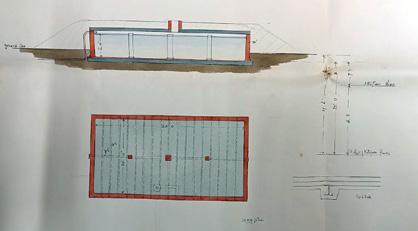
Above, Plan and elevation of the reservoir constructed in 1912, showing its height relative to the house to allow for gravity flow.
Left, Section of the new borehole down to 286ft, made by Duke & Ockenden Ltd in 1913.
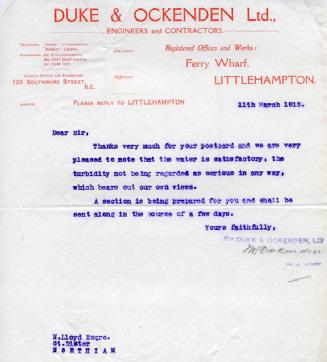
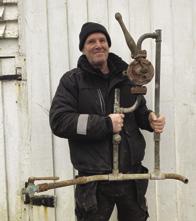
Below, Letter from Duke & Ockenden Ltd, March 1913, mentioning continuing turbidity of water supply at Great Dixter. Left, Ben with the hand pump which was used to get the water from the resevoir to the top of the house.
BY BEN ROBBINS & SARAH SEYMOUR
Much has been made in the news about water quality and water companies maintaining the infrastructure. Here at Dixter it is not a case of simply just turning on the tap. The historical story of the water (see Roy’s article) starts off the complex story of water supply here. The problem solving continues today, with a constant maintenance programme and monitoring by Ben Robbins that keeps the water flowing.
Throughout the year, ensuring the quality and availability of water, is a mixture of science, ‘out of the box’ thinking and brute force. There are some engineering plans for some areas of supply and drainage, but also many puzzling non documented conundrums with leaks from apparently ‘nowhere’ or pipes heading off in random directions…
A continuing saga of the Sunk garden living up to its name has been the bane of Ben’s life – and the gardeners, as the repercussions for the plants that are inundated, is deleterious. The drain from
the pond goes out under the beds and wall to the walled garden and out towards the edge of the oast houses. The pipe has been blocked over the years by the roots of the myrtle in the walled garden in the pipe. Drain rodding is no longer an option and a company was brought in to find exactly where the blockage is. Cameras were deployed and the ingressing roots were discovered, and some of the roots dislodged but not all –another strategy will be needed.
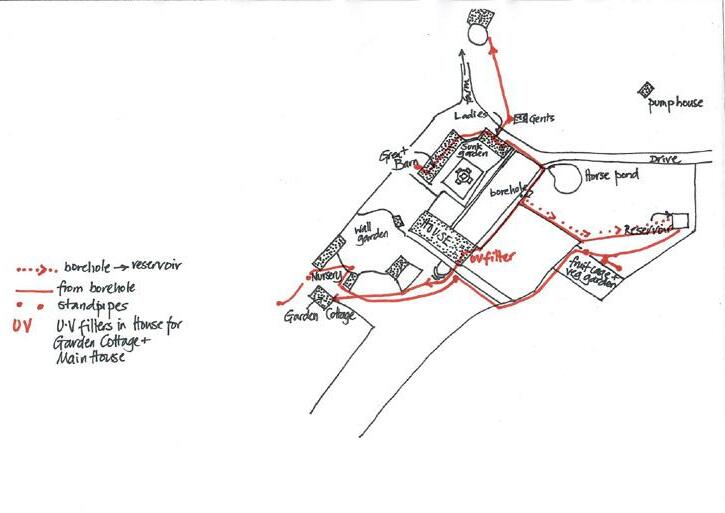
There are many elements for the supply and removal of water on the wider estate. The map shows the water is pumped from the borehole to the reservoir and from there either to the House or for irrigation when required. The House supply goes through UV filters and is tested regularly to ensure it is potable. The well used for the House had to be discontinued in the Lloyd’s time due to contamination and so the Pump house in Great Park field was constructed. It still remains, under a flag stone on the terrace.
BY SARAH
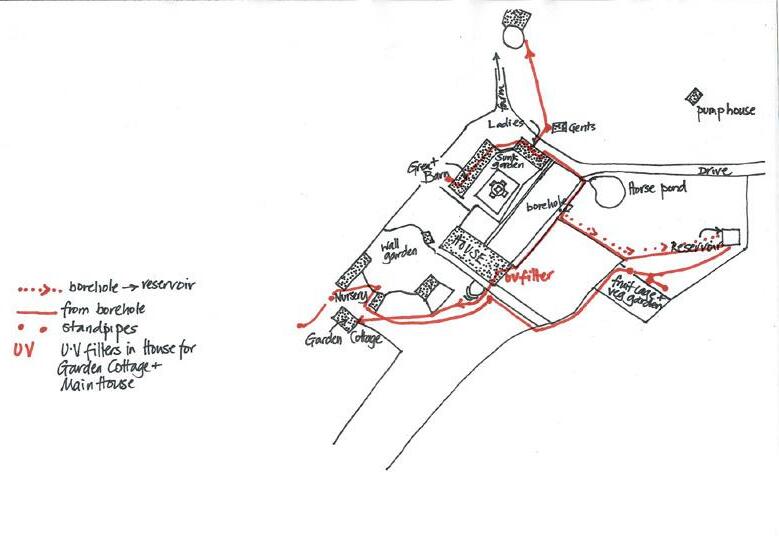
Overflow in the Sunk Garden – a root suspected of blocking the pipe 10m from the pond and about 1.6m under the surface (device goes over the surface to see how deep the pipe is). Blockage located following camera investigation – but could not be removed.
Cat Garden- Mysteriously keeps flooding- possible from rainfall? Unable to locate an overflow, not on the plans. Reservoir – The new tanks have been running for a year now and are due to be cleaned. Pump engineer Richard to do it. Possible leak, as water disappeared over Christmas. Weird. Horse pond – overflow pipe joins sunk garden – all pipes join up and the rainwater off the Great Barn and White Barn end up in Sunk garden.
Sewers – glazed tiles – pumped up to White Barn tank – originally waste was pumped out to below the Plant Fair field.
Nursery use tanks of rainwater.
Farm – fitted to collect rain water off the barn, and linked to the reservoir for irrigation in the summer, and disconnected in the winter in case it freezes.
Minimum rain = 86.5mm
Legionella Testing once a month –stored water temperature, hot and cold, must be between 20c- 45c. Stale water is run off once a week, but it is not ingested but inhaled water droplets that carries the risk.
Minimum rainfall =158.5mm
Sunk garden flooded again – so much so that a coracle was launched and Ernie Weller was cast off.
Cat garden – also flooding.
Reservoir- annual clean needs to be scheduled as the water will need to be shut off.
Minimum rainfall = 96.9mm
Water back on after frost protection. Waiting for Sunk garden to dry out before putting camera down.
Cat garden mystery goes on – where does it come from? What’s leaking?
Pipes rather than rain? – so will have to wait for rain to stop ? long border –leak there?
Rain stopped play for Plant fair – due to relentless rain beforehand.
Reservoir – lighting still not working. –don’t last long in the damp.
Nursery – has underground water tanks as well as the water butts – filled from the reservoir, which is filled from the borehole.
Minimum rainfall = 63.7mm
Lights replaced in the reservoir – ‘wet friendly’ lights.
Sunk garden - Engineer came to assess but as it had flooded again after the previous days continuous rain was unable to do anything.
Borehole pump - ball valve to reservoir
Gutter water goes to the moat Legionella testing – ongoing June minimum rainfall = 11.6mm
M. Paul Kent – pumps and drains –services the sewage at GD annual check.
Sunk garden – camera in the pipe and jetted with high pressure water to clear root (photo) 4000 psi Company sending footage of pipe film, next step will require device to cut out root. –pricey and could risk collapse which would leave the option of digging up under the myrtle.
Reservoir – got be cleaned to get rid of sediment at the bottom – winter job.
Minimum rainfall = 112.1mm
Flash flood – flooded kitchen from kitchen drive and drains couldn’t cope – dining room also flooded, and carpet had to be removed to dry out.
Nursery – water pump tripping out –needs surface put in about 15 years ago.
Minimum rainfall = 87.5mm
More torrential rain – but Sunk garden didn’t flood – so boring worked! Still waiting for the company to return to line the drain.
2nd deluge overwhelmed the garden again.
Minimum rainfall = 174.6mm
– UV lights in the House boiler treatment for sterilizing and are replaced annually. Water for the House and Garden Cottage.
Annual Iron removal filter checked and tested for Ph and iron content to make sure it’s working.
Minimum rainfall = 78.5mm
Irrigation tanks in reservoir have been professionally cleaned. They hoover the sediment off the bottom – mostly iron and clay – just a fine layer and then sterilize them.
Sunk garden – improved but not yet solved
Minimum rainfall = 73.4mm
Total recorded rainfall for 2024 = 1,269.41mm
Rainfall recording from Nursery readings. ■

BY HEATHER TUCKMAN, US GARDEN VOLUNTEER
Returning this autumn, I carried a mental representation of Great Dixter in my head, believing I understood its distinctive qualities. But, as many gardeners know, a well-designed garden doesn’t reveal itself all at once; instead, it draws in the patient observer who commits to exploring it.
As expected, the color riot was out in force, punctuated by the poetic confrontation in the Solar Garden. While observing it, Fergus invited me into his discussion with a couple who own a nursery in France. This episode became notable as the first of many special moments, extraordinary opportunities to interact with and learn from people deeply connected to horticulture and the community who are committed to bringing plants, gardens, and knowledge to others: professional gardeners and
growers, designers, thought leaders, naturalists, and conservationists.
While I improved my seedling identification during a treasure hunt culling self-sowers on the front walk, I was delighted by conversations shared with employees walking in and out of work. Later, prepping bulbs in the Great Barn, the effervescent Hayden Bosher explained the green woodworker’s tasks. Likewise, on a rain-drenched day, gardener Rob Flack patiently demonstrated Dixter’s distinctive staking method, gently correcting my initial effort and clarifying the subtleties of knot technique and location. Another day, Michael Morphy described variables to consider when taking successful cuttings, executing a skill repeated innumerable times, followed by a gentle inquiry to confirm understanding.
On other days, we worked as a large team collecting newly cut hay and building a monstrous compost pile rivaling the engineering complexity and community involvement of a barn raising. What could have been drudgery, gathering sodden hay into totes, became a jovial blood-pumping activity, with everyone working together toward the common good. All were invited to consider how to modify the pile’s components to produce the desired consistency, and I listened to the informed recommendations of Michael Wachter and others.
Over the course of my visit, the ethos of Great Dixter became palpable; however, it is more complicated to articulate. I began to envision it much like the prongs of a pitchfork, in which each tine is of equal size and value and attaches to the handle that makes up the whole of the garden. Tine one
represents the tremendously creative and daring planting design – often the most visible part of the garden. Tine two is encapsulated as biodiversity but reflects something far more dynamic - a commitment to ecological justice and the protection and promotion of both living species and non-living resources. Tine three is education; it is the emphasis and devotion to learning, teaching, and mentoring imbued into all interactions— from dedication to scholarship to communication with the public.
Finally, tine four depicts the people associated with Dixter. Dixter collects those with vital emotional, intellectual, and skilled gifts to contribute to the collective. It is apparent at every turn that these people are championed by Fergus, who is always curious, looking for the best parts of them, considering how each person will contribute, and then lighting a fire for them to navigate their own way forward. This thoughtful nurturing results in dedicated and considerate work, and hand in hand, they are trying to do big things together.
On my final night, I stumbled into
Coralie Thomas. I again noticed traits she shared with Fergus—her ready laugh, enthusiasm, and thoughtful encouragement. A capable, talented woman leading a garden team imparts a lasting mark in a profession that so often favors men.
That evening, I shared dinner with several of the scholars. I felt genuinely moved by the chance to get to know them and the former scholars over the past weeks. There is a certain glitter around each one, representing such hope for the future of horticulture. Eventually, they all go out on their own paths, like shooting stars, bringing magic bits of Dixter dust around the world.
Dixter is a glorious garden, but moreover, it bestows tremendous value to the broader field of horticulture as a beacon of education and a hub of community connectedness. Becoming a small part of that has been life-affirming, and I will take forward not only improved horticultural skills but also knowledge of what persistent, focused vision and effort can produce. ■
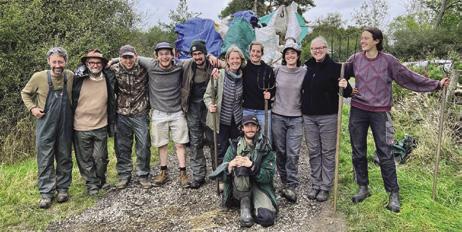
Heather (centre) amongst Dixter gardeners
BY CHRIS LLOYD, CHRISTO'S GREAT NEPHEW AND AUTHOR OF 'WHAT ON EARTH' PUBLICATIONS
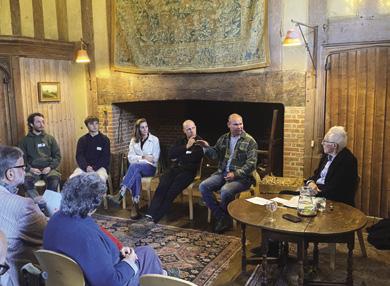
PEOPLE OFTEN TALK about “The Dixter Way” of gardening. What is it? What makes it so special? If you ever wanted to know more, there was no better occasion than witnessing the inspiring David Dimbleby interviewing the scholars, which took place in the Great Hall on Friday 13th September.
The occasion was to celebrate the Christopher Lloyd scholarship programme that has seen more than 42 scholars spend from several weeks to a year or more learning about gardening at Great Dixter. Over the last 14 years, since the programme began, Christopher Lloyd scholars have spread their learnings and the inspiration of Great Dixter across the globe.


David Dimbleby first got to know Fergus and Christo over 30 years when they came for lunch at his home, Folkington Place, in East Sussex. “It had been gardened for years by a plantswoman called Miss Coventry, who was an austere, difficult woman but she was a great friend of Christopher Lloyd…. We invited him for lunch and after which we toured the garden and a glimmer of light came as we were walking down a border and Christopher turned to Fergus and said ‘Fergus, why can’t we grow those like that!’ - we thought, Hooray – we’re on track!”
So began David’s association with Christo and Great Dixter, now manifested in this inspiring hour interviewing no less than five

MICHAEL WACHTE R
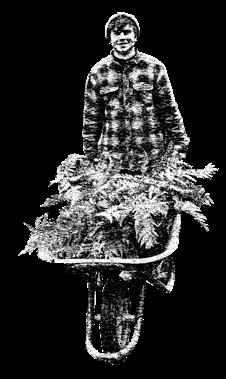

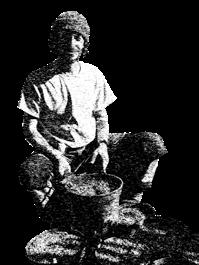

Christopher Lloyd scholars: Coralie Thomas – Christopher Lloyd scholar in 2016 and now assistant head gardener at Great Dixter; Tom Coward, who first came to Dixter in 1997 and is now head gardener at Gravetye Manor; Rob Flack, a former cocktail bar chef at the old Ivy and Christopher Lloyd scholar in 2022; Ernie Weller, scholar in 2023 and Michael Wachter from Bavaria, who arrived at Dixter in 2014 and is now a senior gardener.
To start with David asked the panel what the difference is between being a gardener and a garden designer. You may think gardening the Dixter Way hasn’t got much to do with traditional garden design, particularly when a designer comes in and says this is what you should, or should not do…
“English is not my mother tongue,” explained Michael from Bavaria, ‘but the word ‘should’ is one of the most destructive words there is. Sometimes it’s really refreshing to have a garden designer come in and say, you know, that is really not a good plant…. But then there is a layer in the landscape that we gardeners are emotionally connected to…”
But having someone NOT so emotionally connected to the garden can sometimes be a good thing.
“Christo used to say ‘It pays to be ruthless’” recalled Tom, “so a designer can come in and see the purpose and implement structural changes that a gardener might find very difficult.”
“So Christo said you had to be ruthless?” David asked “Well, he said it pays to be ruthless” clarified Tom
‘Was he ruthless?”
“Sometimes”
“Oh dear”
“Yeah….”
David then turned to Rob, asking about how his amazing ability to make cocktails might have influenced him as a gardener and designer.
“A designer might come in and put a garden in place and walk away, whereas a gardener will be there constantly to hold it and to observe and assess, contemplate, look, develop and change. And the same goes for cooking and making drinks as well. You know, you’re always amending and changing it until you get it right.”
IN THE EVENING CHRISTO AND I SAT BY THIS FIRE IN THE GREAT HALL AND DRANK RATHER A LOT OF WHISKEY. AND I FELL ASLEEP IN THE DOG BED… IT REALLY OPENED MY EYES THAT HORTICULTURE IS MORE OF A LIFESTYLE THAN A JOB.
WHAT I LOVE MOST IS THE DISCUSSION BETWEEN AND AMONGST PEOPLE. DIXTER IS A GARDEN THAT DOESN’T GIVE YOU ANSWERS, IT JUST EVOKES QUESTIONS AND POLARIZES AND STIMULATES AND OVER STIMULATES
A few moments later Tom explained how, when he was 18, he spent a long working weekend at Dixter.
“In the evening Christo and I sat by this fire in the Great Hall and drank rather a lot of whiskey. And I fell asleep in the dog bed... it really opened my eyes that horticulture is more of a lifestyle than a job. Technically, you learn how to grow plants and you learn the craft of planting them and caring for them, but what is really interesting is how to combine plants to evoke a certain feeling. And that’s very challenging and it’s something that Fergus does so, so well here.”
As the evening loosened up even more, it turned into a celebration of feelings and humour.
And what’s your enemy as a gardener,’ quizzed David.
‘My bad back,” Said Tom.
“I thought you’d say slugs and snails!”
Tom elaborated.
“Time and Space, they are the two limiting factors in everything you do… You never have enough time. And you never have enough space - whether you have a farm or a little window box – you will always fill that space and you will always want more…”
His wisdom reminded me of Laozi’s famous dictum; “He who knows he has enough is rich…”
The forum then turned outright philosophical:
“Why do you garden?”, asked David.
“I garden for myself, for my own curiosity,” said Michael from Bavaria, “but also what I love is that we garden with contrast not with harmony. It’s such a joy to see some people liking it and some people not liking it. and what I love most is the discussion between and amongst people. Dixter is a garden that doesn’t give you answers, it just evokes questions and polarizes and stimulates and over stimulates”.
Thanks to David, the wonderful panel of Christopher Lloyd scholars and, of course, Fergus for his enormous welcome, I defy anyone in that audience, who came that night, not to have been immersed in the meaning, essence and spirit of The Dixter Way. ■
BULLDOG FORK FROM 1984 BRIGHTON PARKS DEPARTMENT

MINI SHOVEL FOR PUTTING COMPOST ON BORDERS
BAMBOO CANES FOR MARKING PLANT POSITIONS
BOARD SCRAPER (from Bob Common)
SCAFFOLDING PLANK FOR WALKING ON BORDERS BALIN G TWINE F O R
SNEEBOER WIDE TROWEL
NIWAKI KNEELING MAT
STONE SPADE FOR DIFFICULT JOBS

FERGUS GARRETT, HEAD GARDENER
I’VE BEEN GARDENING at The Farm at Doe Run for eight years now and I can still honestly say that it is a dream job. Most days I feel like one lucky dog. It hasn’t been a straight forward path to arrive at such a beautiful place. I stumbled around in my teenage years and into my early twenties knowing I wanted to learn a craft and I was looking for my “thing”. I had always prided myself on being blue collar and I knew that the only way to master a craft was years of hard work and unwavering observation. I remember the first time I went for a job interview at a crumbling Mom and Pop greenhouse operation. I pulled into the parking lot and it felt like coming home.
More opportunities arrived over the years and with each garden job, nursery work or studentship I saw it as a gift of knowledge. All of my mentors have shown me the blessings of consistency and the fruits of fascination. Fergus and the legacy of Christopher Lloyd fed the coals of that fire. Every day at Dixter we would show up. It didn’t matter if it was cold or raining or snowing. There was work to be done and displays to push forward. Gardening I realized was a race against time and, as each day or week or season unfolded, we were ready.
During my time at Great Dixter I learned the true value of growing from seed. Not just because we were making thousands of plants on what was seemingly the cheap but because of the control we had over the quality and the timing of our plants. Just this past autumn at Doe Run we plugged thousands of hardy annuals into the ground. Lunaria, Hesperis and Myosotis litter the property’s beds not only because they’re outstanding biennials and



self sowers but because they can withstand the harsh late spring frosts and freezes that the valley where we garden consistently slams us with.
Great Dixter also taught me to have fun in the garden. Never the same display each year. To this day I’m always trying new plants but also having reverence for the ones that consistently come around and cheer you up like old friends. We have an impressive greenhouse at Doe Run which is one of the main reasons I was drawn to the place. With our team we’re able to grow most of our crops and it gives me a tremendous thrill to have access to such facilities. Just this past winter I started rare cycads from seed for our interior spaces and every leaf that unfolds on those babies is a spark of joy.
When I came to Dixter I was twenty five years old and this spring I’ll be turning forty. I feel so fortunate to still be gardening and growing. There’s nothing I’d rather be doing. And somehow I lucked out with wonderful employers at Doe Run who actively support creativity. Being a part of the wider horticultural community is an absolute delight too. It’s an honor to be part of a cast of characters that is just as colorful as it has ever been and surrounded by a team who is supportive and reliable. The practices I’ve been taught are part of a continuum which I’m proud to be a part of. And after all these years, I still feel like a student at heart. ■
Emma Seniuk was the first US Christopher Lloyd Scholar sponsored by US Friend, Barbara Baker, in 2011


MICHAEL MCGOWAN
CHANTICLEER USA
CHRISTOPHER LLOYD
SCHOLAR 2024 - 2025
Michael studied Plant Science at the University of Delaware, and has already gained a broad variety of practical experience, working in seasonal gardener positions in a potager garden at Hagley Museum and Library, at North Creek nurseries and as an intern at Lotusland and Chanticleer.
CONNIE HUDSON
ADAM GREATHEAD AWARD
2024 - 2025
I have always been obsessed with all things nature, but the Adam Greathead Award is my first experience in horticulture, and for me, has opened the gates to a career as a gardener.
My first job following A Levels was as a professional cyclist, but I soon realised that the environments around me had captured my heart, and stopping to look at plants and animals at the roadside wasn’t going to win me many races.
Quitting cycling was daunting, but I knew I wanted to learn more about fauna and flora in a practical way and I was
BY LUKE SENIOR
Following his experiences so far at gardens with a strong sense of place, Michael is particularly interested in understanding how this develops and is maintained, as well as developing and cementing his gardening skills and learning more about how to garden for succession.

very fortunate to begin with an ecology job, translocating great crested newts (and any other animals found) away from development sites. It was during this time that I learned badger, bats, birds and native plant survey techniques. I found myself becoming extremely interested in how fauna and flora are dependent on each other, and spotted the opportunity of the Adam Greathead Award.
The Award gives 6 months to train at John Massey’s Garden at Ashwood Nurseries before spending 6 months in
the garden at Dixter. John created it for people who desperately want to start a career in horticulture. I found the handson experience the perfect way for me to start this journey. My vision is to bring horticulture and ecology together. Great Dixter has been the ideal place for me, having so much support and learning opportunities. From Dixter I know my next career stepping stones will be easy to place.
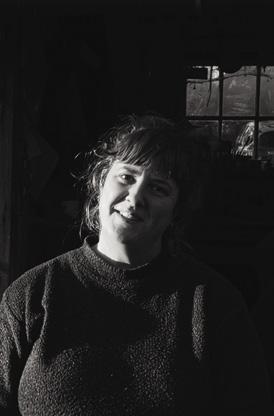
US RUTH BORUN SCHOLAR
2024 - 2025
NURSERY SCHOLAR 2024 - 2025
So much to get my eyes, head and heart around. Which is interesting, fun and challenging! Nobody clips anything!
Some things really really stand out from the very start like Eryngium pandanifolium ‘Physic Purple’ and Malva canabina but I am slowly starting to see and appreciate all of the carefully considered layers of planting.
The Kitchen Drive is one of my favourite spots in the garden and that bit on the peacock garden close to the Euonymus europaeus “Red Cascade”. Also that little bit on the long border where the Libertia peregrinum has seeded into the path cracks! Oh, and the terrace! I think it's because they are
What an enormous journey it’s been already and to think we’re still just beginning! The gardens here at Great Dixter are amazing, and an endless source of fascination and inspiration. It’s such a privilege to be able to study, work and live here for the year. The garden team are so welcoming. They’ve encouraged me and my unending questions, offering the support I need to dive in deep. Three months in and everyday the beauty of this garden has me in awe. On my first walk through I was baffled at how it was all done. Luckily for me I’m here to learn and deconstructing the densely layered late summer gardens, along with many conversations, lectures and study days with Fergus have all helped me to see the map for the iconic and intensive succession that awaits.
I’m so grateful to be here at Dixter. I’ve come from Vermont, which is my home state. It’s a place I feel deeply connected to through my background in farming and land stewardship there. The past few years I’ve been gardening for Helen O’Donnell, a plantswoman and gardener who is herself a ‘Dixterite’, for lack of a better word. I see now she’d
BY
so dense with the variety of types and sizes of plants. And have lots of nooks and crannies and varied hard landscape textures (walls to grow in or up, walls with indentations – as in not just straight, paving, enclosures. I would like to think more about this and make sure to keep going back and looking at these areas to appreciate their evolution.
Even the dwarf Cynara cardunculus are gigantic! The dwarf form is also much spinier! Bonkers comparing it to the wild forms in Greece, the ones I have seen are 1.5m max!
Collecting these seeds is quite treacherous, also need to cut the heads as soon as they start to floof out but before
the seeds have blown away or been eaten. It’s been fun finding similarities and familiarities between here and home..
I enjoyed collecting and planting Lilium lancifolia var. fortunei which is a super gorgeous plant and I am very excited to be part of growing it! This was the first plant I propped!! Bulbils growing from leaf axils and some of them had roots forming already. We took the plumpest ones and I planted nearly 200. Isabel is from Greece where for the last 10 years she has been a gardener including a 2 year apprenticeship at Sparoza Garden (the garden of the Mediterranean Garden Society). She has an MA in History of Art and an MSc in sustainable heritage
already instilled in me many values from her time at Dixter. Now it’s like a dream come true to actually be here myself getting a serious training from this brilliant team and in this magical place. That opportunity is only possible thanks to the Ruth Borun Scholarship. Ruth Borun was a gardener in Los Angeles and a friend of Christopher Lloyd’s. She was a keen admirer of English gardens and of Great Dixter in particular. It’s a real honor to be here as a scholar and it’s entirely thanks to these two incredible plantswomen who each drew so much inspiration from Dixter.
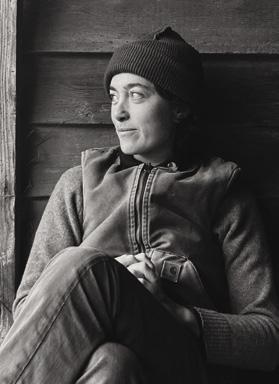
UK CHRISTOPHER LLOYD SCHOLAR 2024 - 2025
‘I grew up in Devon, on the northern edge of Dartmoor, without a keen interest in gardening, but with a deep appreciation for wild spaces and the lanes and their wildflowers. Gardening crept up on me – and got its claws into me, and I left Devon for Scotland and training in the spring of 2021.
I visited Great Dixter for the first time in 2022, and left a little overwhelmed and totally in awe – May/ June, when the meadows look their best, is still my favourite time of year at Dixter. The working weekend in January last year 2023 provided an opportunity to see the garden in a different light, and set in motion a serious of events culminating in a three month placement in late summer/ autumn. I left Dixter in November feeling lucky to have had the time I did, and determined to return for more.

I feel I still have a lot learn, and Great Dixter is the garden I would most like to learn from. I am eager to learn the skills required to garden in the way I would like, and working as part of the team at Great Dixter I feel I am doing just that. Great Dixter is different to other gardens, not least in its approach to layered planting and in the way the place functions ecologically and culturally. I am here for it all.
BY LUKE SENIOR
I am into my fourth month, and I am still enormously grateful for the opportunity to spend a year in such a special place, and to those at Dixter and beyond who have given me this opportunity – thank you. I will do my best to make the most of every minute.’ ■ ALL PORTRAITS

Great Dixter has been the ideal place for me, having so much support and learning opportunities. From Dixter I know my necxt career stepping stones will be easy to place.
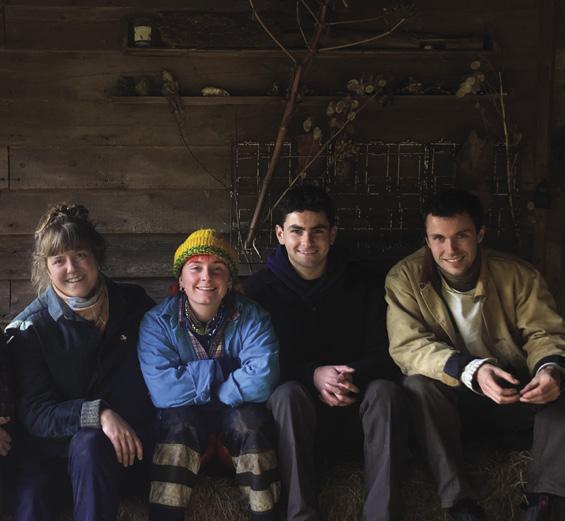
PETER CHOWNEY, GARDEN VOLUNTEER
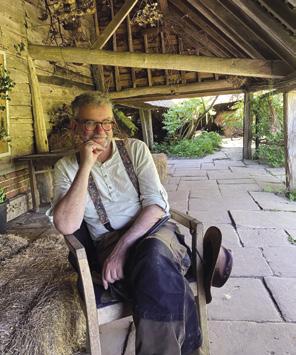
GREAT DIXTER IS an exquisitely beautiful place. As a volunteer, it’s an enormous privilege to be there once a week and see the garden change through the seasons: from the brash, busy colours of its mid-summer splendour to the quiet, misty calm of its mid-winter serenity.
But there’s more to it than charm and good looks. Great Dixter educates students from around the world, helping them to become the next generation of world-class gardeners. It works with local horticultural societies. And it promotes biodiversity and sustainability through its practices and methods. But there’s more. While
its immediate surroundings are comfortably bucolic, just twelve miles away lies Hastings, the seventeenth most deprived council district in England (from a total of over 300). What can Dixter do to help Hastings’s most disadvantaged communities?
As a former leader of Hastings Borough Council, I am aware of the intergenerational worklessness, poor educational outcomes,
and short life expectancies that plague these more disadvantaged areas. And as the chair of Ore Community Land Trust I see dayto-day the benefits that access to green spaces can have for poorer families. In Hastings, there are many groups that use volunteers to maintain these local green spaces, for the benefit of local people. Dixter has helped several of them.
I asked Fergus Garrett, CEO of the Great Dixter Trust and Head Gardener, what he believed Dixter’s contribution could be.
“When Christo died, I didn’t want Dixter to be just a garden. I wanted a strong reason for the place being here, to use its influence, its products, its skills and so on, to work in particular with groups with similar aims.”
As Fergus suggested, Great Dixter has helped communities in Hastings in different ways, both directly and indirectly. Sometimes, the support to deprived communities is achieved through the development of individuals, equipping them with new skills. Suzanne Horgan completed a bursary on Dixter’s year-long Art and Craft of Gardening course. Since then, she has set up a new group called Friends of Ore Station, to bring life and colour to a neglected part of Hastings. As well as creating garden spaces on the platform, she has also leased a small, derelict site next to the station to create a community garden.
I met Suz at Ore Station. She’s an exuberant personality, fizzing with excitement and enthusiasm:
“It was two years ago when I took up the bursary place at Great Dixter. It was an advanced course, for one year; it was absolutely mind-blowing, life changing.
I’m involved in quite a few different projects around town,” she said, “And I’m now able to advise them, particularly on encouraging biodiversity. I’m able to train others, little things like autumn sowing, propagating, using good compost. These mean their projects will work, so they won’t give up. Dixter has also supplied free plants, their generosity is amazing.”
The role of Dixter in helping organisations that work with disadvantaged people can be subtle. Rossana Leal co-ordinates the Hastings Refugee Buddy Project, helping refugees settle in Hastings. Rossana herself was a child refugee to the UK from Chile. I met her in the garden of Dove Café, an establishment run by refugees for the local community.
“ Many of our refugees, particularly from Syria, had a lifetime experience of gardening and vegetable growing on allotments, they
love growing things. Fergus invited us to visit; they loved Dixter. So we got Great Dixter to help us create our café garden. They gave us planters, and the plants, and the gardeners from Dixter set it up for us. I can’t overestimate how important those interventions are to what we do here.”
Where organisations work directly with young people from disadvantaged backgrounds, providing training and qualifications, connections with Great Dixter can be particularly helpful. Education Futures Trust (EFT) is a good example. EFT operates from The Firs, a former football ground close to Broomgrove Estate, easily in the one percent most deprived neighbourhoods in England . They support local families, through activities including forest schools, after school clubs, sports, and outdoor learning activities for children, as well as courses for adults.
I met Perry Rodriguez, the Facilities Manager at EFT, to talk about how Dixter has worked with them. Perry’s connections to Great Dixter go back a long way.
“I worked for Great Dixter for thirty years, originally as a sort of handyman. Eventually, I became business manager. I moved to Education Futures Trust last year. We’ve just built a new classroom, which is used by Plumpton College for a City & Guilds qualification in horticulture.”
Perry showed me around The Firs, clearly pleased with what they’ve created at the site.
“I worked on a planting plan to create something visually exciting. Plumpton College wanted to involve their students in realising the planting plan. Dixter provided a lot of the plants for it. We’re also taking the students on visits to Dixter, to enhance their training and build their enthusiasm for gardening. It feels worthwhile; someone from the local estate could end up as a scholar at Dixter, and their life could be changed.”
And then there’s the help Fergus has provided to Ore Community Land Trust (OCLT). We’re an unusual organisation, starting off as a ‘guerilla’ land management group. Using volunteers, OCLT opened up Speckled Wood, an abandoned and inaccessible steep-sided valley in north-east Hastings. It’s now well-used by local people. The trust puts on some organised activities too, creating a community garden, holding open days, and a forest school. Great Dixter has donated plants for the community garden, and for OCLT to sell at open days. But Fergus is keen to
offer other help and advice, too.
These examples are perhaps a beginning, a start of what Great Dixter could achieve through an interventionist approach, working with organisations that want to improve lives in areas where residents’ expectations are low. I asked Fergus what more he thought Dixter could do. He didn’t need to think long before answering.
“I want us to do as much as we can, while still running Dixter of course. We could spend our time going out and doing fancy garden designs, but that’s not our way. We can always find time to help those who are as enthusiastic as we are. If someone comes searching for us, we’ll help them, we’ll always see what we can do.”
WORKING TOGETHER, ALL THESE ORGANISATIONS CAN ACHIEVE SO MUCH MORE; THE WHOLE WILL ALWAYS BE GREATER THAN SUM OF ITS PARTS. ACHIEVING THAT FOR UNDERPRIVILEGED PEOPLE, GIVING THEM HOPE AND NEW DIRECTIONS CAN BE LIFE-CHANGING
That open approach, the desire to help anyone with a good cause, is promising for developing a more collaborative approach for organisations in Hastings that share similar, regenerative goals. At Ore Community Land Trust, our activities will soon be expanding, as we acquire a seven-hectare site that borders the Broomgrove Estate. Exactly what we’ll do with the site will be subject to consultation with the local community, but Fergus wants to involve Great Dixter in that project too.
Suzanne Horgan is also keen to develop her work with Dixter, targeting young people to provide new experiences and broader horizons.
“It would be good to do more of that, family days with free transport, for kids who never get the chance to do that sort of thing. Teenagers too, the ones who struggle with school, could get interested in horticulture as a career. But you need to get them young, before they get disillusioned.”
At EFT, Perry too was keen to expand and develop the way they work with Great Dixter.
Working together, all these organisations can achieve so much more; the whole will always be greater than sum of its parts. Achieving that for underprivileged people, giving them hope and new directions, can be life-changing, breaking them out of the degradational spirals that overwhelm so many from such neglected places. Working with others, Great Dixter can help to realise these transformational ambitions. It makes a real difference, to real lives. ■
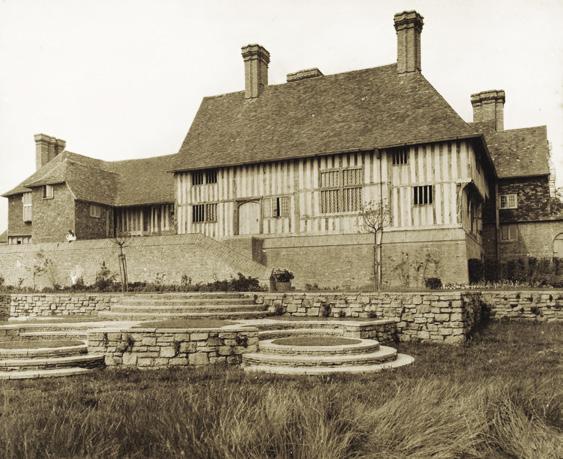
Great Dixter represents a sublime mix of landscape, buildings and gardens. The buildings provide context, framework and a setting for the gardens. They are dominated by the majestic manor house and its great barn, both over five hundred years old. Then there are the humbler buildings, half that age, of timber, brick and tile – a wagon lodge here, a cow byre there – that are dotted around what was once a working farmstead. When Edwin Lutyens restored and extended the house in 1910, he knitted these subsidiary elements together using his signature steps, walls and pathways to design a structured outside space in perfect harmony with the gardens. The lower status former farm buildings in particular have an inevitable tendency to want to fall down. They can’t just be roughly patched up because the whole site is Grade 1 on the National Heritage List and so all work must be carried out with the utmost skill and care.
Restoring and making safe the Long Shed, the leak in the swept valley of the roof of the House, the Cart Lodge and the complete renovation of the south west window in the Great Hall. Our initial aim is to raise £200,000 ($240,000)
GO TO: www.greatdixter.co.uk/support-us/ the-repair-restore-renovate-appeal-fund
FOR US FRIENDS: www.greatdixter.co.uk/support-us/ the-north-american-friends-of-great-dixter/ us-donation-form-the-rrr-appeal/
SCHOLAR 2024-2025: GEORGE GAME
Sponsored by: CLUB 22
The Christopher Lloyd Scholars Programme is an important and integral part of the work of Great Dixter. These scholars spend a year of intensive training in the gardens and learn the skills and ways of working that Christo taught to youngsters in his day. When they leave they take a part of Dixter, its ethos and traditions with them. The Scholarship was created in 2010 to address the skills shortage in professional horticulture and to inspire and educate the gardeners of tomorrow. The following donors secured funding to allow the Trust to continue this work for the five years from 2022 to 2026
Dr Patrick Bates
Marian Boswall
The Viscountess Alice Boyd of Merton
Prof Martin and Dr Susan Brown
Louise Cartledge
Finnis Scott Foundation
Annette and John Hampshire
David Harrison
Griff and Sally Holliday
Lady Mary Keen
F J Mayor
Prof John and Stella Nicholls
The Revd Howard Norton
James and Michele O'Connell
Dan Pearson
J and J P E Podger
Hilary Smith
Liz Winant
SCHOLAR 2024 -2025: ISABEL
Sponsored by: Dr Patrick Bates
Tim Brotzman
Julie Coley
Stephen Crisp
The Elaine and Angus Lloyd Foundation
Sarah Guest
Philip Johnson
Troy Marden
Charlotte Molesworth
Mike Monaghan
The Northiam Horticultural Society
Kirsten Prichard-Jones
Melvyn Smith
The Revd Dr Andrew Walker
Pat Williams and Friends Events Raffles
The Christopher Lloyd Bursary was launched at the first Plant Fair in October 2010 since when it has enabled many young gardeners to attend conferences, go on field trips or visit horticultural establishments. Fourteen years on, in 2024, the following nurseries gave a percentage of their takings towards it:
Australasian Plant Society Cally Gardens
CB Plants of Lower Severalls Edulis
Hardys Cottage Plants Hoyland Plants
Julian Reed Heritage Fern Collection
Jurassic The Laurels Nursery Longacre
Madrona No Name Nursery Pelham Plants
Plantsman’s Preference Pottertons
Rotherview Nursery Wildegoose Nursery
Hartnett Conservation Trust
High Weald Landscape Trust
Ian and Megan Richardson
Lund Trust, a charitable fund of Lisbet Rausing and Peter Baldwin

The Chanticleer Board, R W (Bill) Thomas and all working in that remarkable garden and organisation who have funded, and continue to fund, the Chanticleer US Christopher Lloyd Scholar program.
The Chanticleer USA Christopher Lloyd Scholar 2024-2025: Michael McGowan

THE HARRY H AND ANNA BORUN FOUNDATION for sponsoring the Ruth Borun Scholar program since 2019. The 2024-2025 Scholar: Hannah Phillips
THE RICK MATHER AND DAVID SCRASE FOUNDATION for funding an annual scholarship, enabling an outstanding existing scholar to extend their study at Great Dixter beyond the first year.
The 2nd Year RMDS Senior Scholar: Dr. Talitha Slabbert for 2024-2025
THE GREAT DIXTER STUDENT FUND
2nd Year Senior Scholar, Matt Padbury for 2024 to 2025
THE ANNE H BASS FOUNDATION
3rd Year Anne Bass Senior Scholar, Luke Senior for 2024 to 2025
THE ROTHERMERE FOUNDATION
3rd Year Rothermere Senior Scholar, Rob Flack for 2024 to 2025
THE ADAM GREATHEAD SCHOLARSHIP
Created by John Massey in memory of his previous head gardener Adam Greathead, who died at just 27. Its aim is to provide solid horticultural experience in two exceptional gardens.
The second Adam Greathead Scholar: Connie Hudson (pictured with John Massey)
MURRAY SCHOLARSHIP



In honour of Elizabeth Murray who died in April 2023 aged 63. A GP and Professor of Primary Care at UCL. The scholarship combines her love of gardening and her passion for education and creating opportunities for under-served communities. The 2024-2025 Scholar: Andrew Foster from Hastings

THE GREAT DIXTER CHARITABLE TRUST IS INDEBTED TO THE FOLLOWING DONORS, AND THOSE WHO WISH TO REMAIN ANONYMOUS, FOR THEIR GENEROSITY WITHOUT WHOM SO MUCH OF ITS WORK WOULD NOT BE POSSIBLE
Major individual donors
Dr Marla Angermeier
Patrick Bates
Eleanor Briggs
Amy and Andy Burnes
Linda Cobb
Thomas and Emily Cooper
June and Henry B Dupont Smith
Stewart Grimshaw
Susan Hering
Ian and Madeline Hooper
Jeremy and Elizabeth Hosking
Charlotte Mathey
Victoria Mills
Greg Moga
Portia Pirnia
J and J P E Podger
Kirsten Prichard-Jones
Donna Raftery and Vince Inconiglios
Frank and Linda Smith
Liz and Clint Winant
Peter and Jan Winslow
United States of America Marla Angermeier
Ramona Bannayan Grace Bates Bonnie Berk
Peter Bevacqua and Stephen King Alice
Bickers Barron Bozeman Steve and Liz
Brandon Eleanor Briggs Tim Brotzman Bren
Buras-Elsen Amy and Andy Burnes Allen Bush
Jenny Carey Yvon and Melinda Chouinard
Linda and William Cobb Nancy Connell Mary
Anderson Cooper Thomas and Emily Cooper
Catherine Cox Page Dicky Martha Doer Toppin
Susan Drews Barbara Duncan June and Henry B Dupont Smith John Emmanuel and Kallyn Krash David Fox Serena Glover Dr
Michael Gordon Pria Graves Kurt Gress Amy
Grotland Maria Gutierrez John Gwynne and Mikel Folcarelli
Nancy Heckler James Hess Deborah HicksRogoff Anne Hillen Glenn and Heather
Hilliard Ian and Madeline Hooper Timothy
Jennings Jane Jones Sid Jones Jon Kaplan
Emily Kauff John Kosta Elizabeth Kozleski
Dr Kyle Landt Clare Le Brun Charlotte Mathey
Linda and Gary McHam Mary Mishu Greg
Moga Katherine Moore Ilona Ontscherenki
Phyllis Owens Eunice Panetta Leslie Pargament
Christie Peck Ann Perkowski Portia Pirnia
Sandy Power Dr Robin Prater Alejandro
Prigollini Elizabeth Quackenbush Donna
Raftery and Vincent Inconiglios Alice Reilly Anna Reilly David Reilly Jim Reilly Laura Reilly
Bill Ripley Barbara Paul Robinson Jennifer Rowe Mitchell Gail Sanders Janet Scarborough
Robert B Schlather Ellen Schumann Jill
Selinger Marian Simmons St Clair Linda and Frank Smith Nick Spain Nancy Sweet
Mary Te Selle R M W (Bill) Thomas Coleman
Townsend Donna Tucker Heather Tuckman
Deborah Wagner Chuck and Louise Weed Julie Weiss Mary Jane Wheeler Irene Williams Liz and Clint Winant Glenn Withey and Charles
Price Julie and James Witmer Canada Patricia
French Bill and Jacqui Jeffers Mary McBride
Michael Monaghan Robin Rankin Susan
Reece Australia Dr Doug McEachern Belgium
Jasper Pauwels France Olivia Eller Germany
Michael Martens Dr Agnes Meuser Ulrike
Kreidt-Schanzenbach Netherlands Josine Bakker
United Kingdom Sue Abel Jill Aberdour
Bridget Adam Carolyn Agius George Agnew
Sigrid Aiken Rosemary Alexander Sandra
Alexander Ann Allen Elizabeth Allen John Allen
Margaux Allfrey Jamuna Amara Ruth Angel
Daniel Applegate Jane Archutowska Gavin
Arendt Gabrielle Argent Merlin Armstrong
Charlotte Ashburner Frances Ashlin Bridget
Ashplant Gerti Ashton Alexander Ashworth
Carol Atkinson Olivier Autret Jenny Bacon
Marylyn Bacon Hugh Bailey Revd Kate Bailey
Jane Baker Oana Bakovic Robin Baldwin Alex
Balfour Brian Banks Roy Barker Benjamin
Barnard Jan Barnes Michael Barrett Peter and Lesley Barrett Simon Basey Parick Baes Yvonne
Bates Sandra Beal Michael Beanland Dee
Beecroft Emma Beer Sarah Beeson John and
Sue Beeston Sussie Bell Linda and Michael
Belton Nicholas Benefield Glenda Bennett Tim and Diane Bentley Gill Beveridge Kenneth and
Margaret Bird Clare Birks Rhian Bishop Shona
Bishop Catherine Black Gillian Blackmore Julia
Blackwell Thomas Blaikie Lesley Blay Sonia
Blizzard Robin Bloomfield Claudia Blunden
Andrew Boddington Michele Bolt Fiona
Booth Marian Boswall Paul Boucher Barbara
Bovington Nigel Bowles Winifred Boyd Fiona
Bradley Colin Brazier Caroline Brennan Jill
Briggs Jo Britcher Carol Britton Linda Brockas
Andrew Brodrick Elizabeth Brook Linda
Brooks Caroline Brown Richard Brown Jill
Bruce Alan Buckingham Ian Buckley Juliet
Bullick Peter Bullock Cathy Burczac Michelle
Burford Dr Oliver Burgel David Burgess
Bryan and Philippa Burrough Ethel Butler
Adrian Butler-Manuel Valerie Butt Christina
Byrne Paddy Byrne Stephen Campbell
Gunda Cannon Adrienne Carr Peter Carter
John Case Sheila Cather Peter Chadwick
Molly Chambers Alastair Chapman Fiona
Chapman Irene Chapman Mark Charles Dr
Marilyn Charlesworth Carole Child Antonia
Chitty Jane Chudleigh Hilary Chuter Penny
Ciniewicz Judith Clark Lady Rosemary Clarke
Sally Clarke Sarah Clarke Frances Claydon
Frankie Cleary Judy Cligman Chris Coady
S Coates Steven Cockburn Dawn Cole Sally
Cole Julie Coley Richard Collisson Richard
Comet Dr A J Conway Daria Cook David Cook
Danny Coope Dr Adrian Cooper David Cooper
Gary Coppins Julia Corden Cathy Corneille
Kate Cox Elizabeth Coulson Christine Cozic
Charlotte Crabtree Roz Cran Kate Crook
Penny Cross Dr Ashley Crosthwaite Daren
Crouch Susan Crouch Tessa Crowe David and Hazel Cruickshank Clare Cumberlidge Colin
Curl Dr Georgina Cuthbertson Matthew Dalby
Dr Lis Davidson Charlotte Davies Christine
Davies Pauline Davies Paul Dawdry Janet
Dawes Anthony Dawson Christine Dawson
Christine Deacon Natasha Delliston Mr and Mrs R Demper Alex Denman Nick and Jill
Denman Anne Derksen Tina Devereux Stephen
Dickens Wendy Dickens David Dickson
Alex Diebel Monique Dix Jonathan Dixey
John Dixon Val Dobson Pip Dodd Stephanie
Donaldson Ian Donovan Elspeth Dougall
Sarah Dowler Helen Dowsey Janet DoyleBlunden Sue Duff Rachel Duffield Susan Dulley Tom Duncan Bridget Dungey Brenda
Dunn Mary-Lynne Durrell Jackie Dyche Alan Easterby Anne-Marie Edgell David Edwards
Susan Elford Dr Roger Elias Judith Elliott
Anne Ellis Naida Ellis Margaret Emeleus Sara
Emmerson Catherine Emmitt David England
Steve English Valerie Escombe Lesley Etherton
Doug Evans Val Evans Richard Everson
Maire Fahey Catherine Farr Alison Farthing
Elizabeth Faure-Walker Alice Favell Kenyon
Frances Fawcett Aloysius Fekete Catherine Fewlass Ann Fitsell Barbara Flynn-Taylor
Joanne Foakes Jane Fogg Michael Foley Paula Foord Anthony Forwood Timothy Fosberry Dr
John Foster Lucinda Fouch David Fox Fiona
Fox Gaye Fox Lesley Francis Andrew Franklin
Tara Franklin Sarah Franklin-Cooke Nicola
Freshwater and Andrew Parkinson Michael
Freyone Barbara Frost Dr Barbara Fulton Clive
Galbraith Caroline Gardner Caroline Garland
Keith Garnish Karina Garrick Fiona Gault Clare
Gethin Diana Gibbons John Gilbert Barry Giles
James Glasheen Siobhan Godfrey-Cass Judith
Good Amanda Gould Catherine Graham
Michael Granatt Olive Green Shelagh Green
Veronica Greenwood Sally Gregson John Greig
Richard F Grieve Catherine Griffiths Susan
Grimsdale Stewart Grimshaw Linda Guest Sarah
Guest Birgit Gunz Carol Hagland Dorothy
Halfhide Amanda Hammond John and Annette
Hampshire Prof Alan Handyside Suzanna
Hardman Diana Hare Dr Catherine Hargreaves
Sean Harkin Linda † and Stuart Harland Dr
James and Sarah Harmer The Hon Geraldine
Harmsworth Fran Harper John Harris Sue
Hatt Moira Hatton Bernard Hawes Rachel Hay
Stephen Hazell-Smith Emily Heard Monica
Henriquez Jurrien Hensen Zoe Hersom Michal
Hes Belinda Heys Nicola Hilliard Jo Hillier
Julia Hilton Jill Hitchcock Jennifer Hitchens
Janet Hobday
Lou Hodgson Sue Hodgson Patricia Hold
Brian Holdstock Robert Holland Griff and Sally Holliday Louise Holliday Janet Hollins
Frank Holloway Sandy Holman Sue Holmes
Sylvia Holmes Dr Catherine Horwood Barwise
Sue Hoyle Michael Hughes Martin Hulbert
Tim Hunt Judy Hutchings Leone Hutchinson
Chris and Robin Hutt Judy Illman Derval
Ingleton Elaine Jackson Annie James Caroline
James Krysia Januszczyk Denise Jeffery Penny
Jenden Sandra Jenkins Susan Johns Angus
Johnson Jane Johnson Jennifer Johnson Nicola
Jones Paul Jones Susan Jones Timothy Jones
Caroline Judge Lara Jukes Julia Keem Lady
Mary Keen Francesca Kelly Tim Kendall and Flo Whitaker Lesley and Peter Kennedy
Caroline Kent Joanna Kent Susan Keyte Andrew
Khosravani Jeanette King Rosemary King
Philippa Kinsey Hugh Kirby Rita Kirk Manfred
Klotzsch Larissa Knepper Julian Knott John
Kosta Jackie Kyte Rosemary Laidlaw-Waller
Kathy Lamoon Mark Lane Elizabeth Lang
Celia Langrish Sheena Lavery Edwin Lawlor
Tam Lawson Stephen Leach Clare Leahy Fiona
Leathers Rod Leeds Christine Leman Rebecca
Lemonius Gillian Lenton Amanda Leonard
Victoria Lessey Graham Lewis Rosemary Lindsay
Heather Linington Kim Little Jane Livesey
Jenny Lloyd Graham Lloyd-Brunt Lady Maggie
Lockett Jane Lockwood Carolyn Lovell Andrew
Loxton Julian Luckett and Judith O'Connor
Monique Luker Monika Machon Patricia
Macmullan Hilary Magee Shirley Maile Charles
Maisey Jane Maitland Hudson Shirley Major
Judith Davies & Kingsley Manning Sophie
Mancais Maynard Marceau Trevor Marlow
Gary Marriott David Marshall Jim Marshall
Nancy Marten Godfrey Martin Sue Martin Anne
Masefield Harriet Mason Lalage Mason Peter
Masters Luke Mather Hugh Maxwell Charlie
Maynard F J Mayor Quentin McCabe Jane
McCarthy Kendra McConnell John McCutchan
Danielle McDonald Fiona McKinley Juliet
Mckoen Stephanie McMahon Nicola Mehdi
Gordon Melvin Gary Mewis Shirley Meyer John
Middleton Michael Miller Ralph Miller Virginia
Millington Victoria Mills Carol Mitchell
Sharon Moncur Caroline Moore Valerie Moore
Wanda Moore Anne Moore-Bick Anthea
Moore-Ede Amy Mordan Lauris MorganGriffiths Jane Morris Kathryn Morris Simon and Fiona Mortimore Judith Mosely Sue Mott
Christine Moulder Jennifer Mountford Jennie
Mowatt Amanda Mozley Christine Muddiman
Emily Muffett Hilary Mundella Stephen Myatt
Michael Naris Elizabeth Nash Ann Naylor
Charles Neal Marie-Louise Neill Julia Newman
Alan Newnham Prof John and Stella Nicholls
Rev Howard Norton Alexandra Nutting
Andrew O'Brien James and Michele O'Connell
Tessa Oldaker Amicia Oldfield Brian Oldman
Simon Oliphant Mark O'Neil Catherine Orbach
Rowena Outram Colin Page Emma Page
Anthony Parker Frank† and Ann Parker Linda
Parker Pennie Parker Stephen Parker Rhoda
Parry Annie Patch Philippa Pearson Michael
Pearson John Perkins Sarah Peters Susan
Phyall Elizabeth Pilditch Mariel and Joseph
Pilgrim Richard and Gail Pinder Michael
Pitcher Andrea Planas Roger Platts Jeremy
Pletts Sylvia Pocock Elena Popa Christopher and Sarah Pope Mary Potter Phillip Potter
Dr Max Powling Kirsten Prichard-Jones Gary and Jane Priddis Karin Proudfoot Liz Purkis
Lisa Quinn Tim Radford Amanda Rainger
Christine Rampling Chris Ramsden Rosemary
Randall Andrew and Sarah Ratcliffe Chris
Redknap Florian Reiche Nima Reid Dr Philip
Renshaw Cindy Reriti Peter Rhodes Angharad
Rhys Dr Patrick Rice-Oxley Barbara Rich
Janet Rich Giles Richardson Pauline Ridley
Jonathon Ringer Dereck Roalfe Eleanor Robbins
Harriet Roberts Collins Charlie Robinson
Miles and Maggie Robinson Alexandra RoseDutch Celia Rosenbaum Vanessa Rossi Kate
Rouse Chrisopher and Jocelyn Rowe William
Rowe Gail Rowlands Lynda Rowlinson Nadine
Rulliere James Russ Alison Russell Shirley
Sabin Isabelle Sambrook Gillian Sandhu Martin
Sarbicki Joanna Scanlan Jacqueline Schalburg
Naomi Schillinger Sue Schlesinger Tom and Carol Schollar Karena Schuessler Jon Scott
Jane Scruton Paul Seaborne Julia Sebline Alexa
Shaw Paul Short Christine Sibley Jean Sidwell
Barbara Simms Julie Simpson Paul Simpson
Richard Simpson Shelley Sishton Anna Sixsmith
Victoria Skeet Christine Sladden Ailsa Sleigh
Martin Small Peter Smalley Sue Smart Elliott
Smedley Anne Smith Hilary Smith Maggie
Smith Angela Soderberg Marion Spain Nigel
Spalding David Spence Lynne Spon-Smith
Margaret Springbett Robert Stanley Colin and Jan Steadman Jane Steen Patti Steeples Lee
Stephenson Kate Steven Lynda Stevens Jo
Stevenson Elizabeth Stewart Molly Stewart Jean
Stock Sally Stockwell Caroline Stone Susan
Stoodley Susan Stradling Kate Straus Jonathan
Strong Robert Stuart Tom Stuart-Smith Karl
Suchy Janet Sullivan Cheryl Summers Jonathan
Sunley Rosemary Swainson Jane Swift Jennifer
Tait Nicola Talbot Kathy Taphouse Liz Tapper
Brian Tattersfield AmandaTaylor Andrew
Templeton Rodger Terrell Jake Thomas Matthew
Thomas Ralph Thomas Diana Thompson
Kevin Thompson Norman Thompson Susan
Thompson Sally Thorne Mary Thorp Jean Tilby Rosanna Timothy Graham Tippen Claire
Tolliday Colin and Laura Towns Pi Townsend
Sally Tripp Jane Tuckley Andrew Turnbull
Sarah Turner Joyce Turton Abi Tyler Yvonne
Underhill Kate van Grutten Kathryn van Howe
Vija Vilcins Barbara Vincent Michael Voice
Margaret Wagner Carolyn Waite Dr Martyn
Wake Lady Brigid Wakehurst Elizabeth Wallfisch Rev Dr Andrew Walker Angela Walker
Peter Walker Liza Waller Deborah Walsh
Clare Wand Debbie Ward Frances Warner
Sarah Warren Andrew Waters Merrill Watson
Sally Watson Nigel Watts Melanie Weatherall
Catherine Weaver Stephen Weaver Amanda
Webb Gillian Webb-Wilson Caroline Wedmore
Nigel Wellard Bea Wheeler Clare White Susan
Whitehead Shirley Wiggs Deborah Wilcock
Patricia Wilkie Edwin Williams Helen Williams
Lucy Williams Marilyn Williams Pat Williams
Tim Williams Victoria Williams Andrew Willson
Elizabeth Winant Linda Windebank Peter
Winslow Diane Wiseman Elizabeth Witchell
Richard Wolfe Khui Wong Christine Wood
Annabel Wood Sarah Woodhouse Christine
Woodroffe Stephan Work John and Linde
Wotton Jane Wragg Marina Wyatt Rozzy Wyatt
Elizabeth Wylie Patricia Yates Alan Young
Andrew Young Timothy Youngman Kim Zanes
Kris Zielicki ■
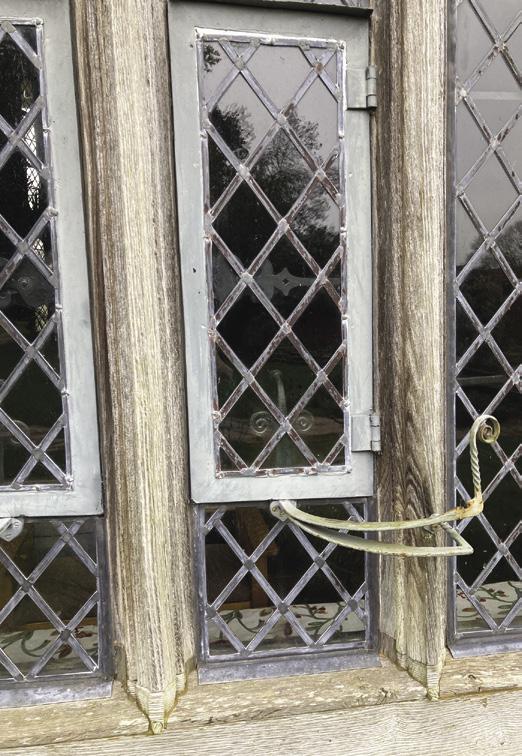
The cover suggests the Roman figure ten - X to mark the 10th edition of the Journal.
Quadrant stay on a casement window at Great Dixter. These often date from the seventeenth or eighteenth centuries. The upper part of the split bar acts as a spring and will hold the window open at any point along the arc.
Produced
by
Linda Jones & Sarah Seymour
Designed
by
Helen Bratby
by