GRAYSON X SHEPARD
architecture portfolio 2017 - 2022
University
graysonxshepard@gmail.com graysonxarch.com (469) 734-0638
architecture portfolio 2017 - 2022
University
graysonxshepard@gmail.com graysonxarch.com (469) 734-0638
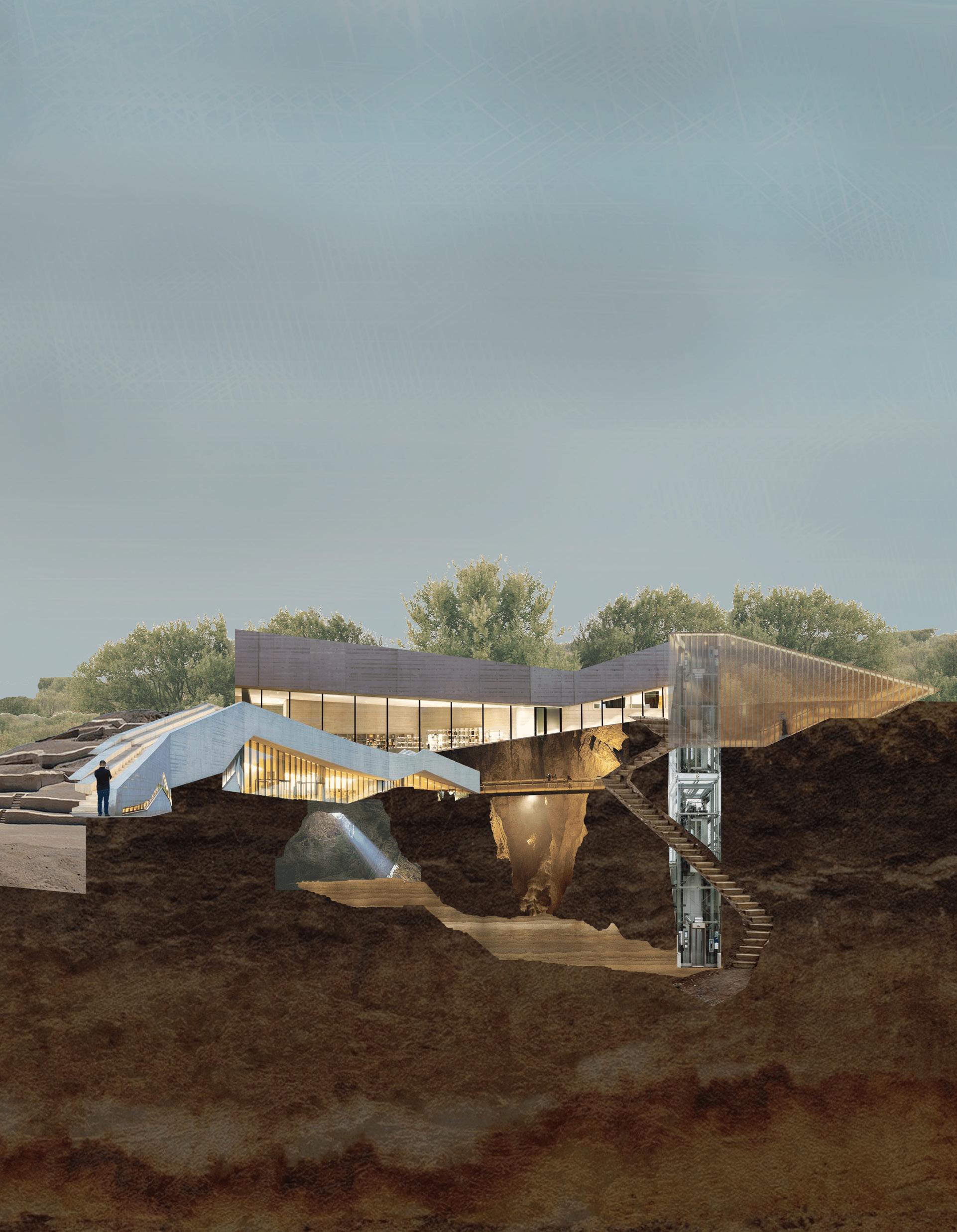
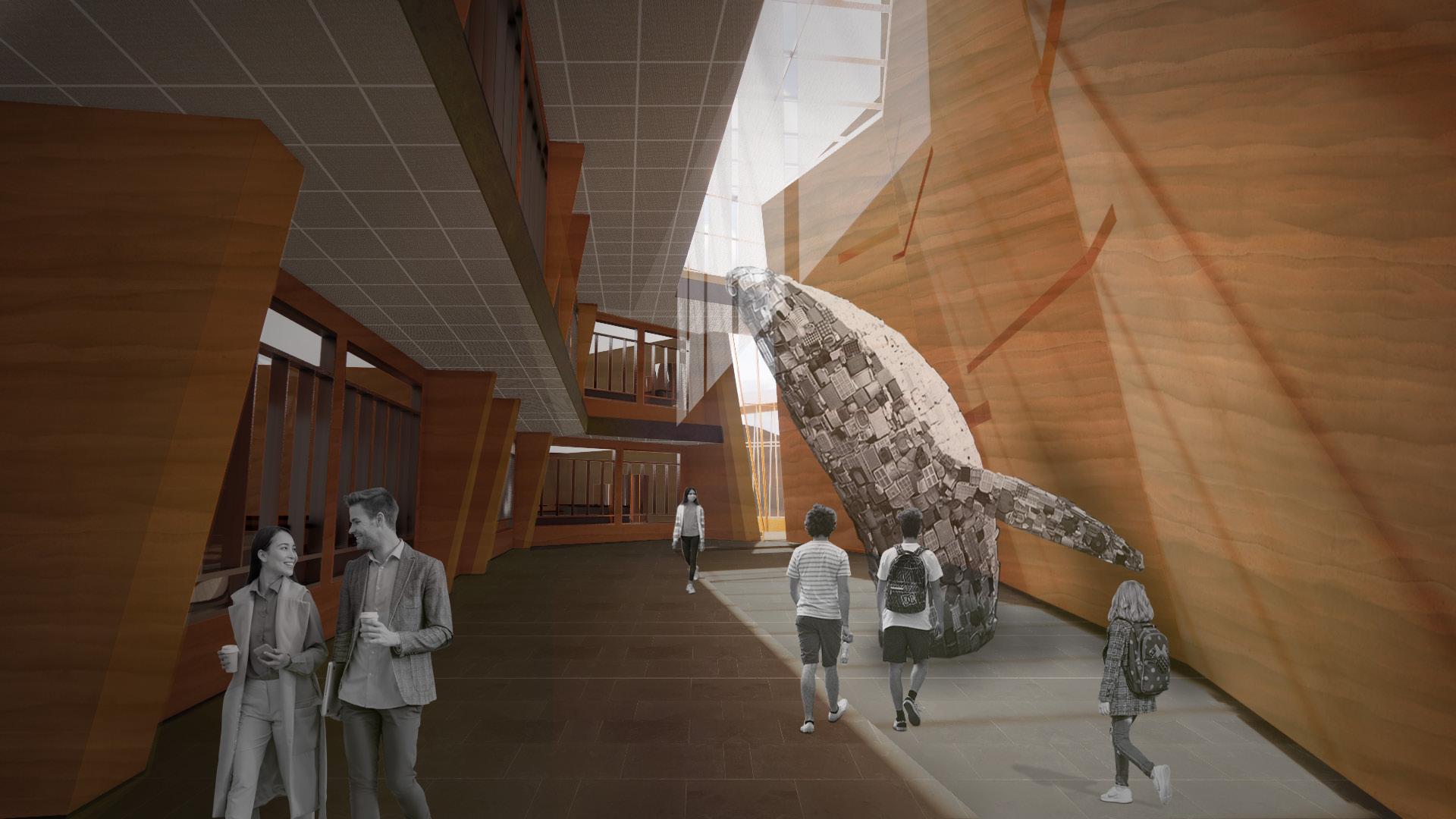
The city of Austin faces an impending environmental crisis - experts predict that the city will drain major water reservoirs within the next six years if human behaviors are not altered. However, the most alarming fact is the utter lack of awareness, education and urgency about the situation. The Source intends to take each visitor on a cathartic emotional journey. First one is struck with awe and fear as they take on the perspective of water itself. Next, will be humbled with respect for the power and beauty of earth’s greatest resource, and finally, uplifting hope that comes with the new found knowledge of how one can live a lifestyle in harmony with water and the earth.
WATER LEARNING AND RESEARCH CENTER
Project completed with Maggie Laird
Comprehensive Studio
Michael Garrison
Spring 2021

we are not important to water it is the other way around
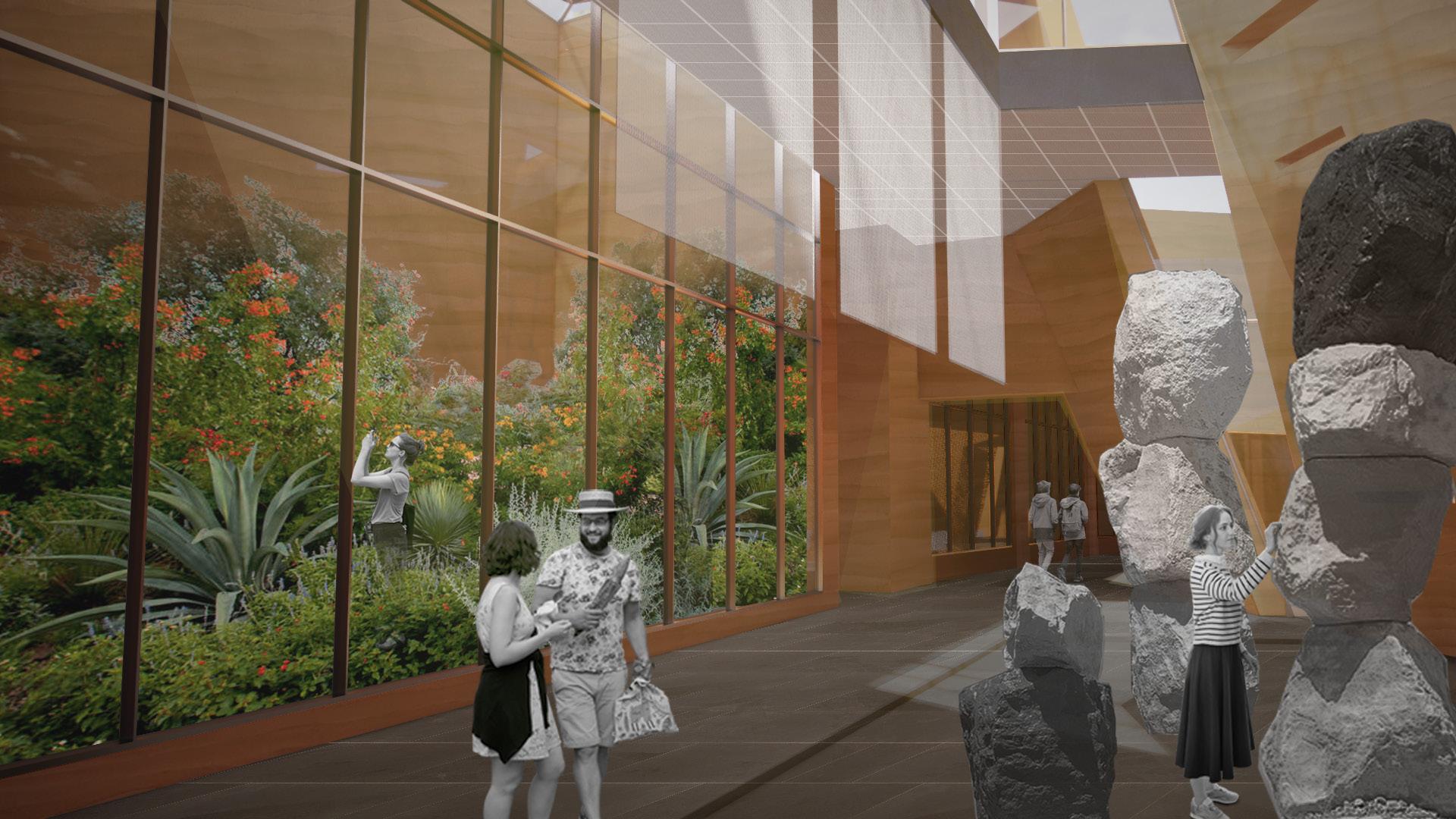
Given the theme of this studio, water, there were many considerations into the building’s performance so it could serve as an example and a teaching tool for better water use practices.
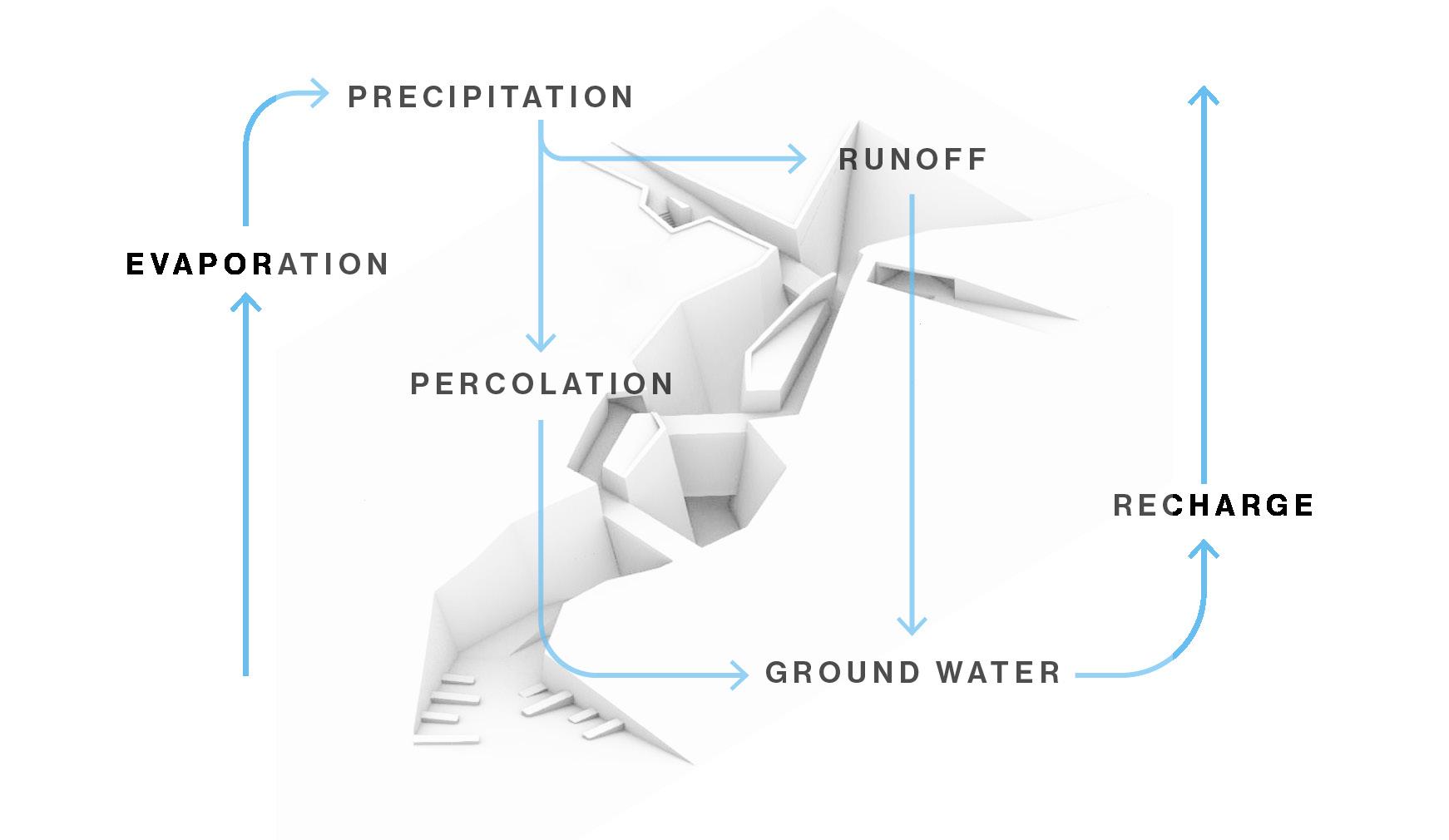
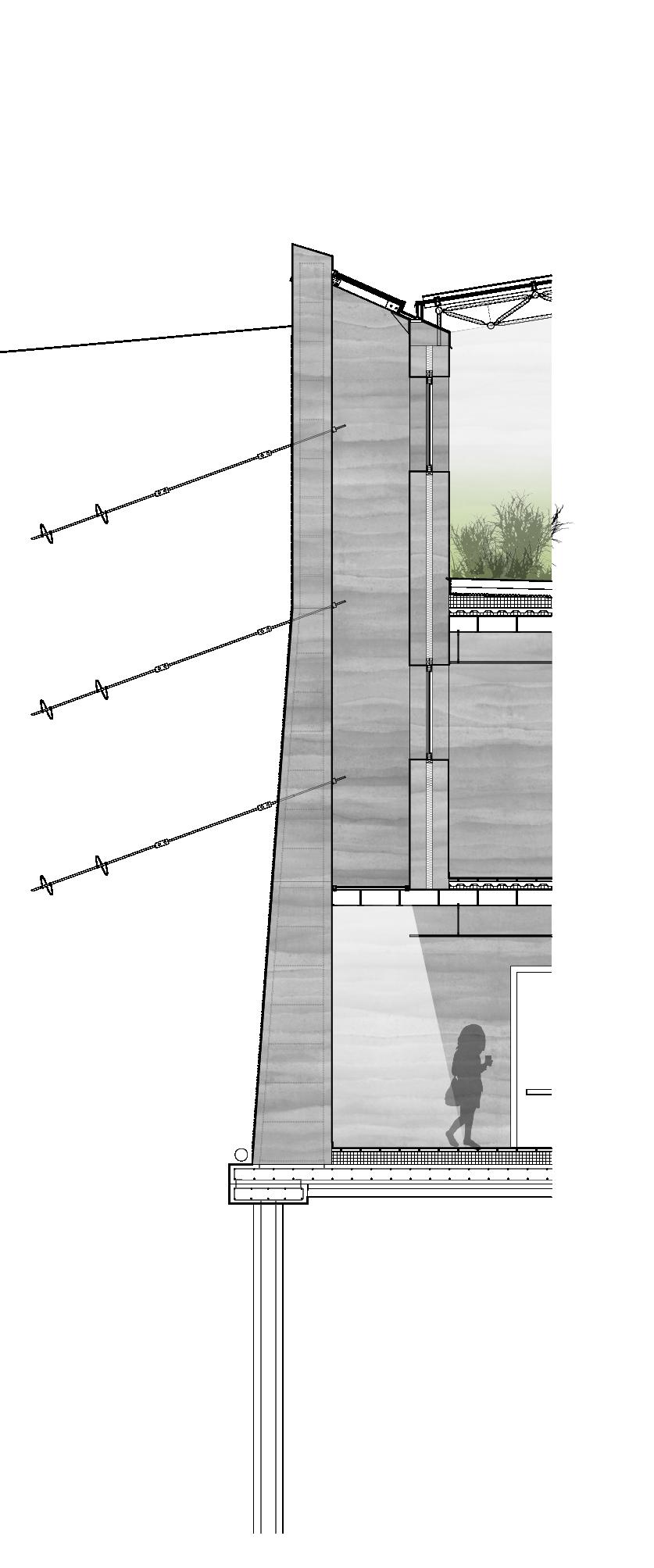
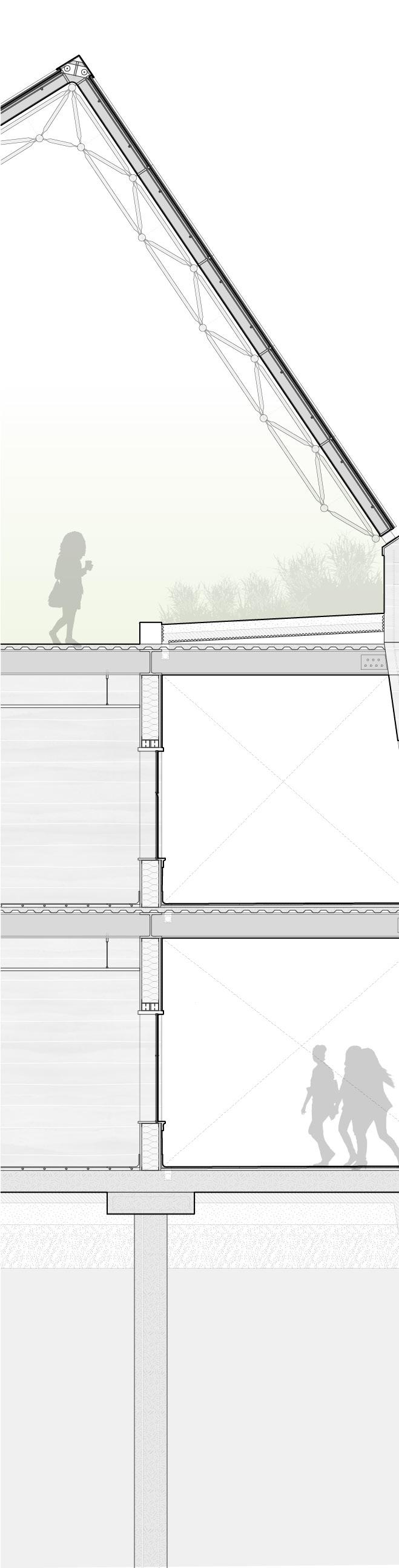
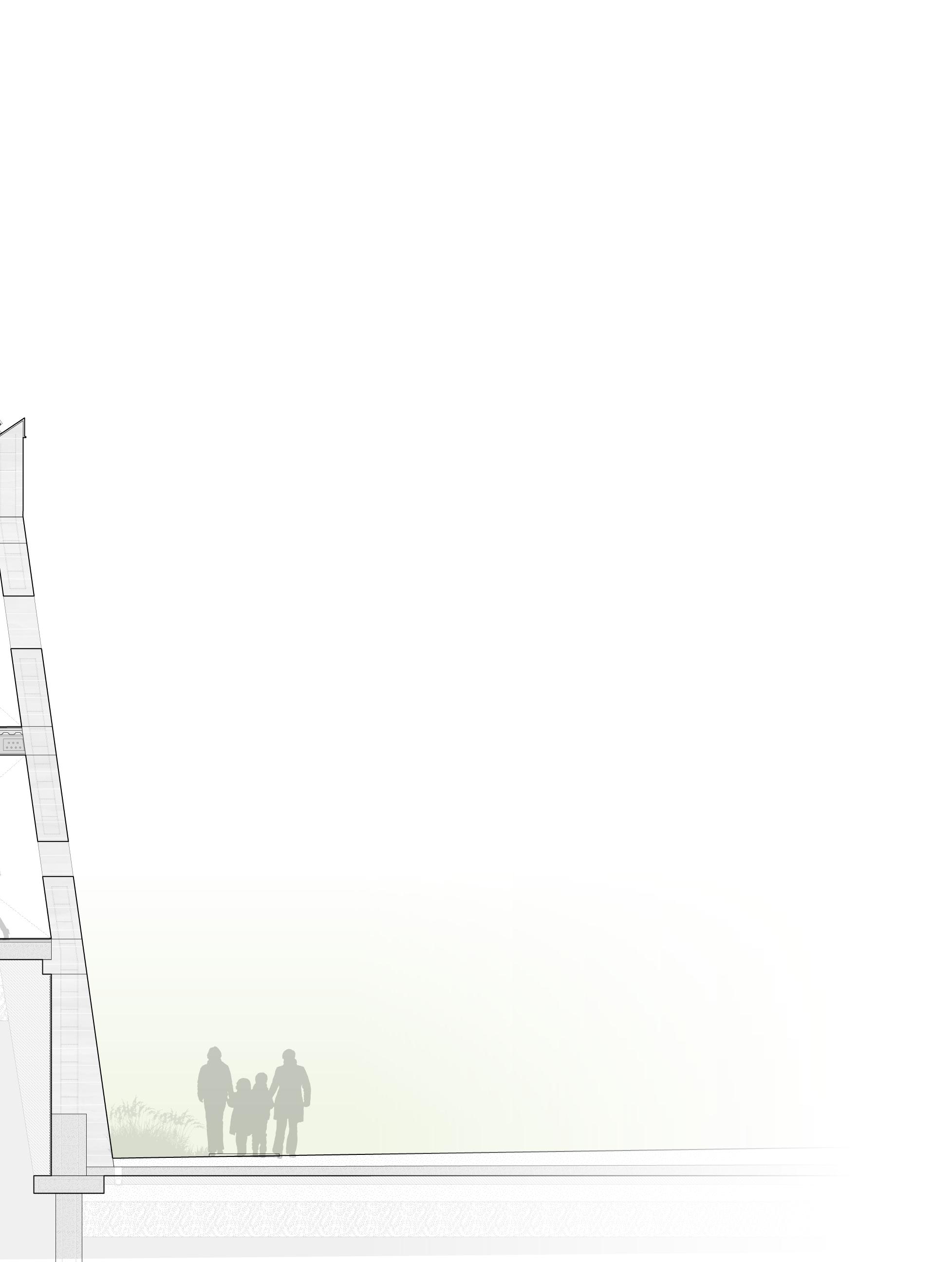
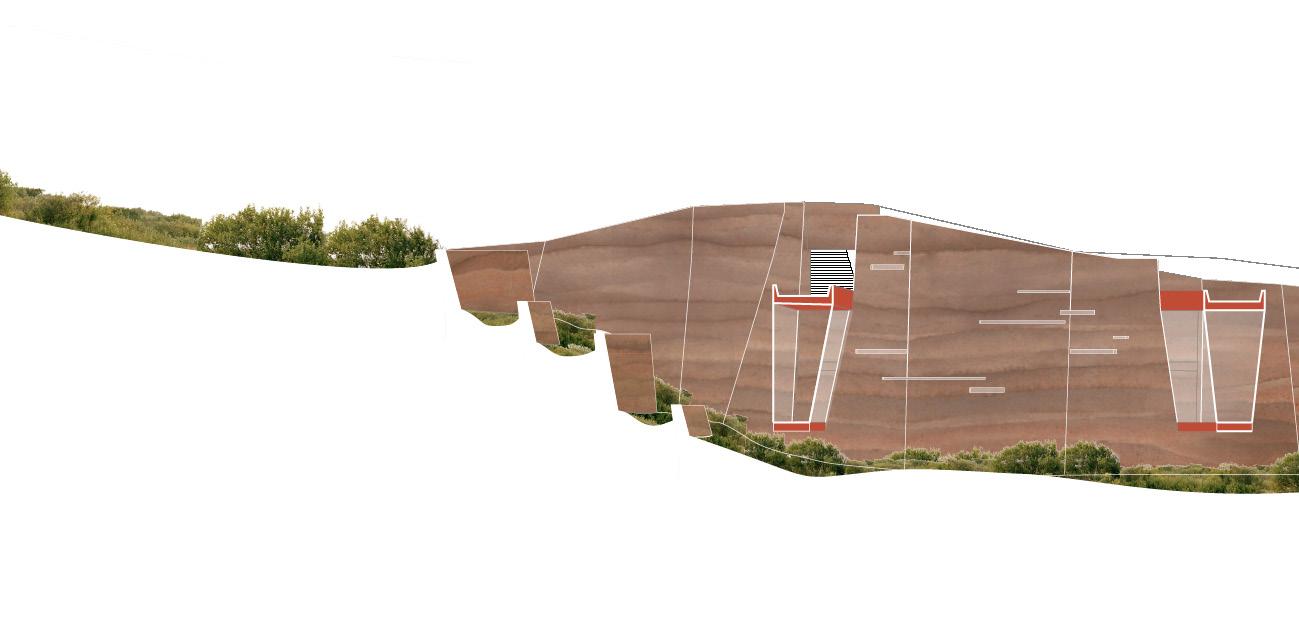
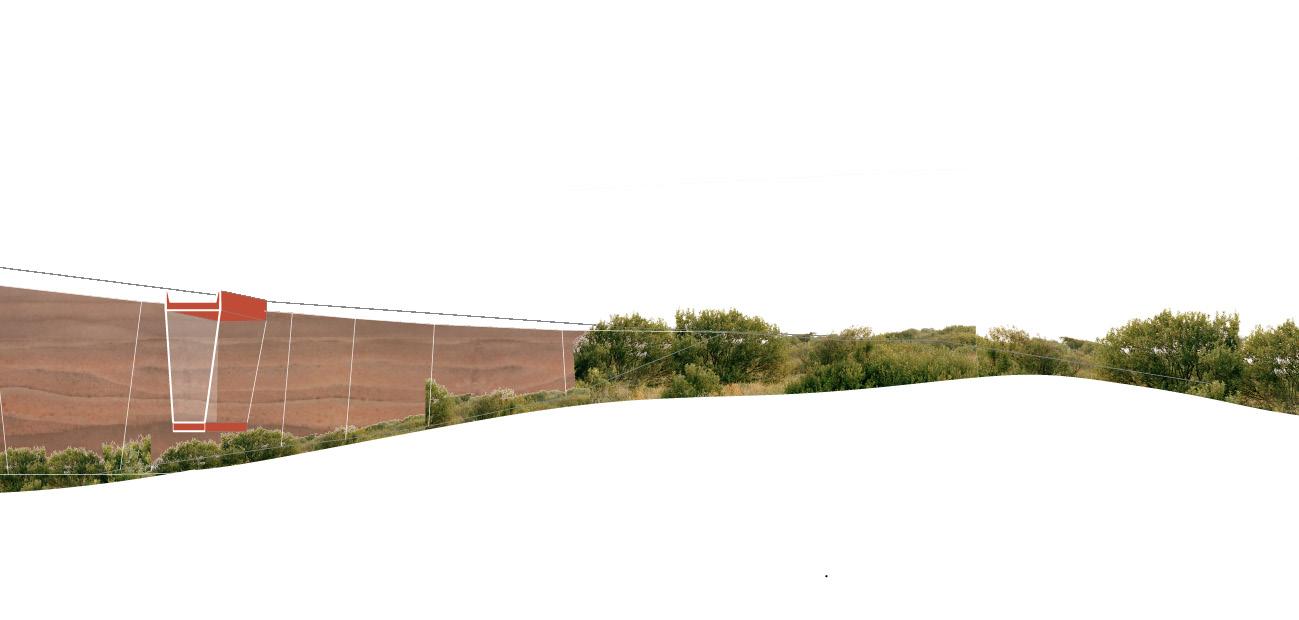
Firstly, the canyon form is inspired by the beautiful water worn forms found in nature, a symbol of the complexity and strength of the fluvial system. Additionally, the form serves the purpose of funneling storm-water, allowing it to permeate through the bioswell at the canyon floor and recharge the water basin.
Secondly, the procession through the building mirrors the water cycle itself. From the entrance of the building, one can run over the building like run-off or one can descend or percolate into the ground. Below-grade, the user delves into the exhibition experience, where they are privileged to views of the water research labs and artist installations. Following this, the user will re-emerge into the above-ground world, evaporating to where they began again.
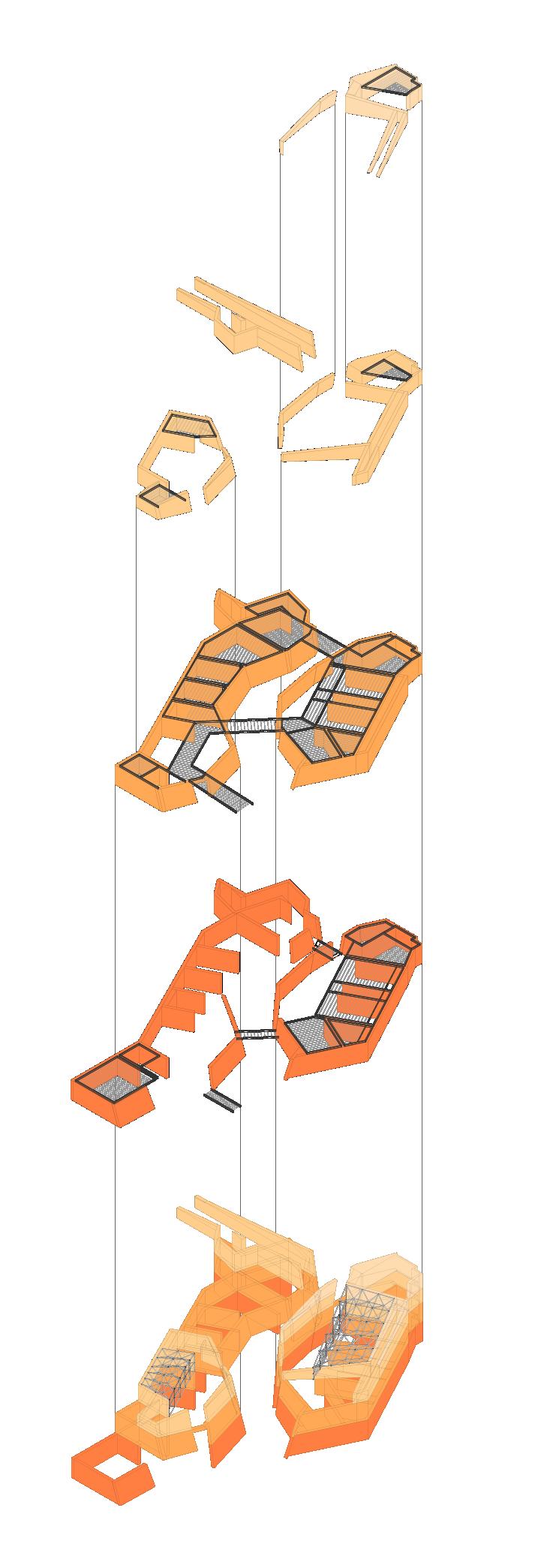
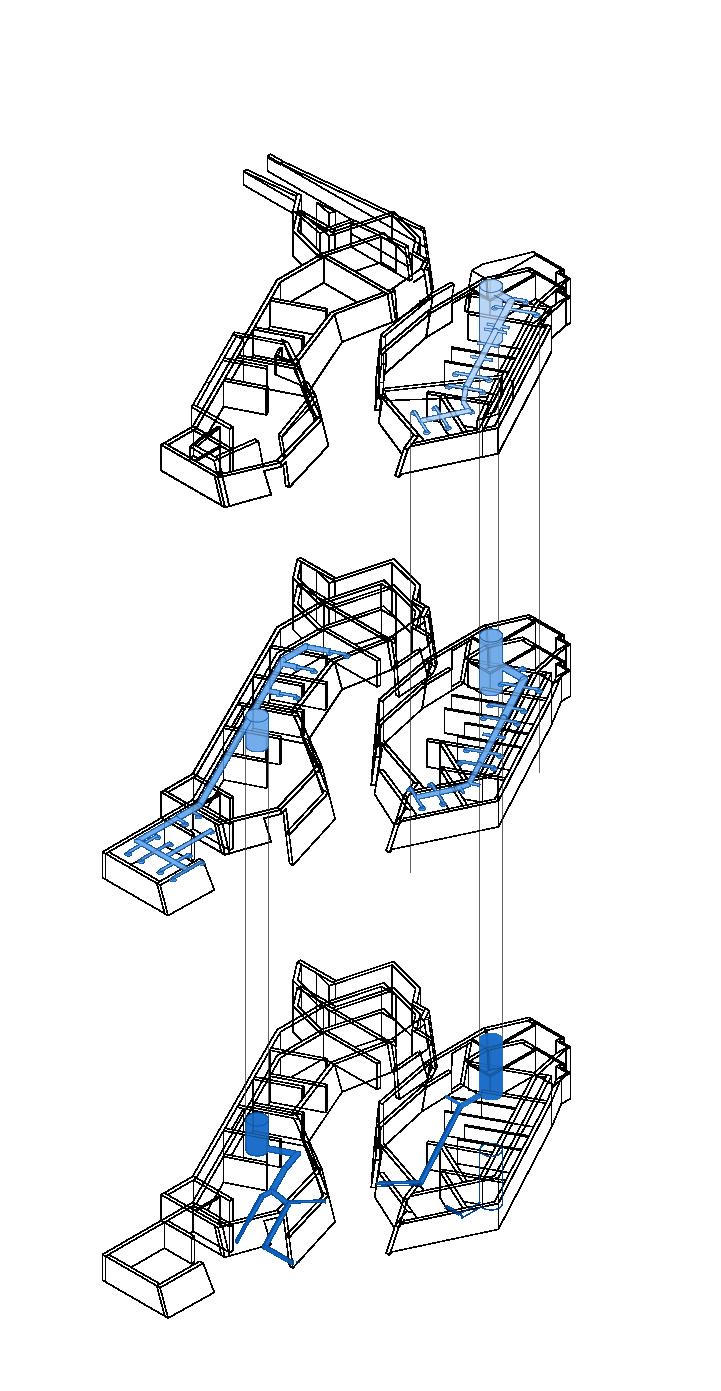
earth bearing walls with steel ventilation system
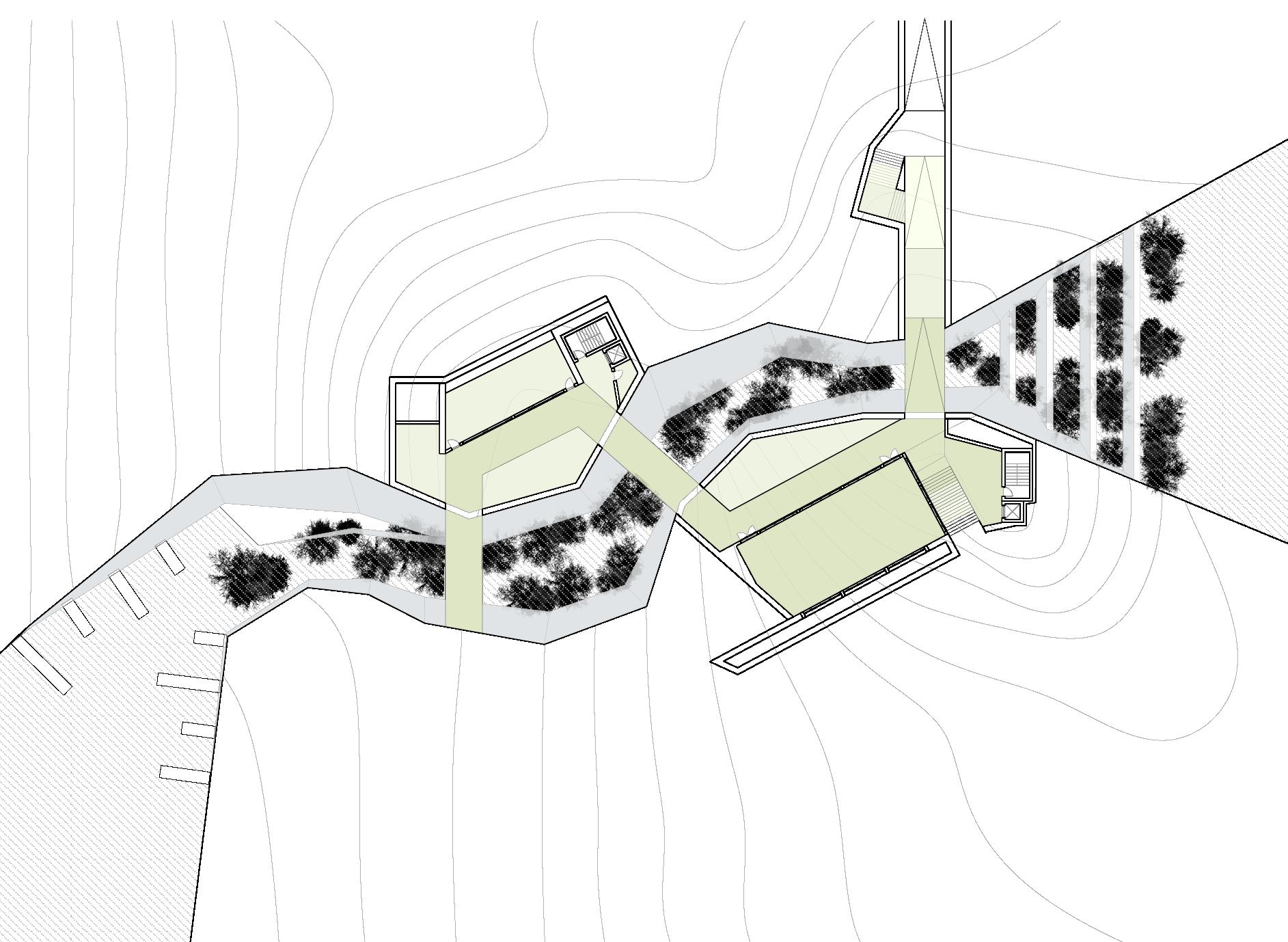
plan at grade
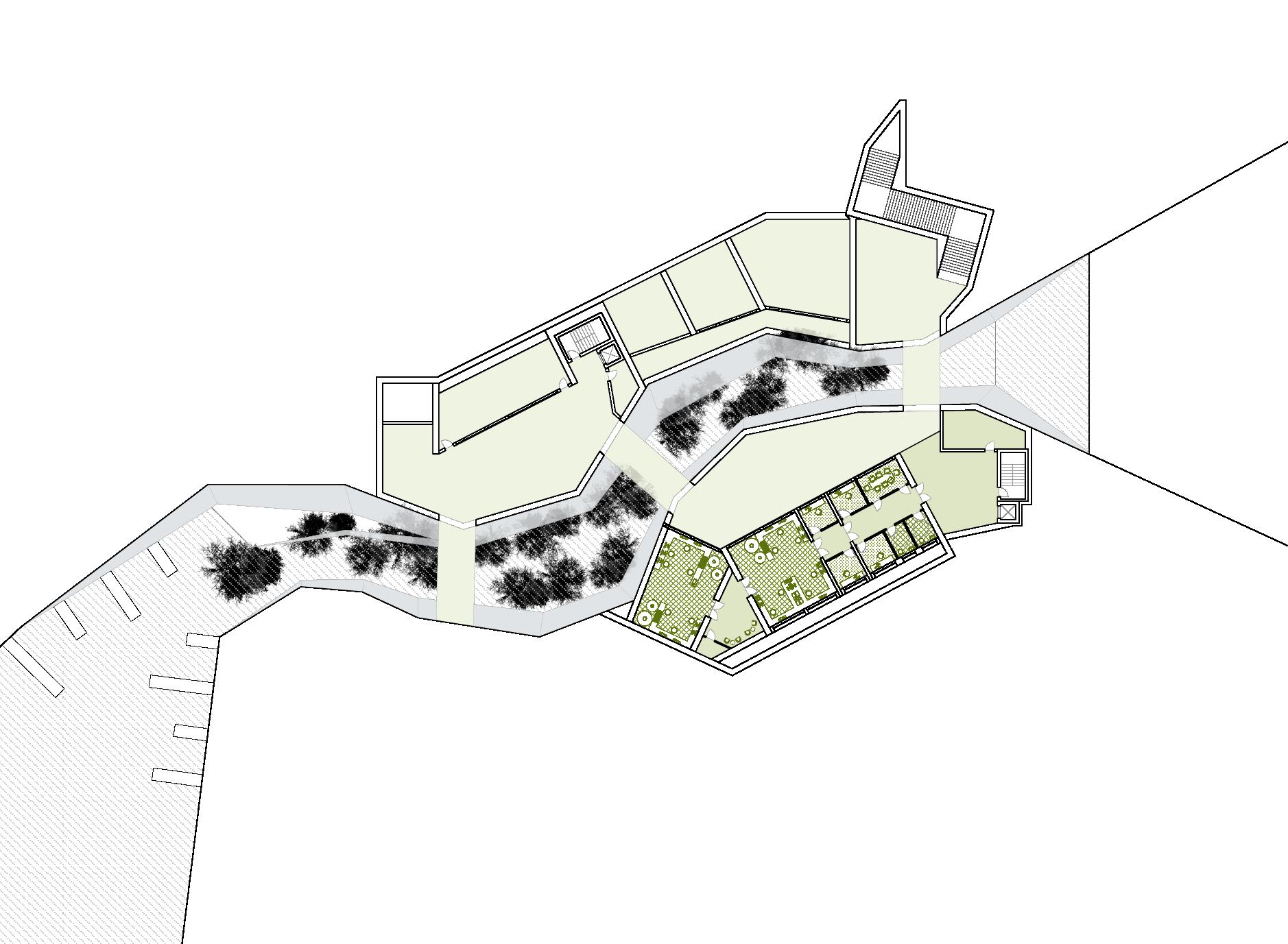
plan at -1
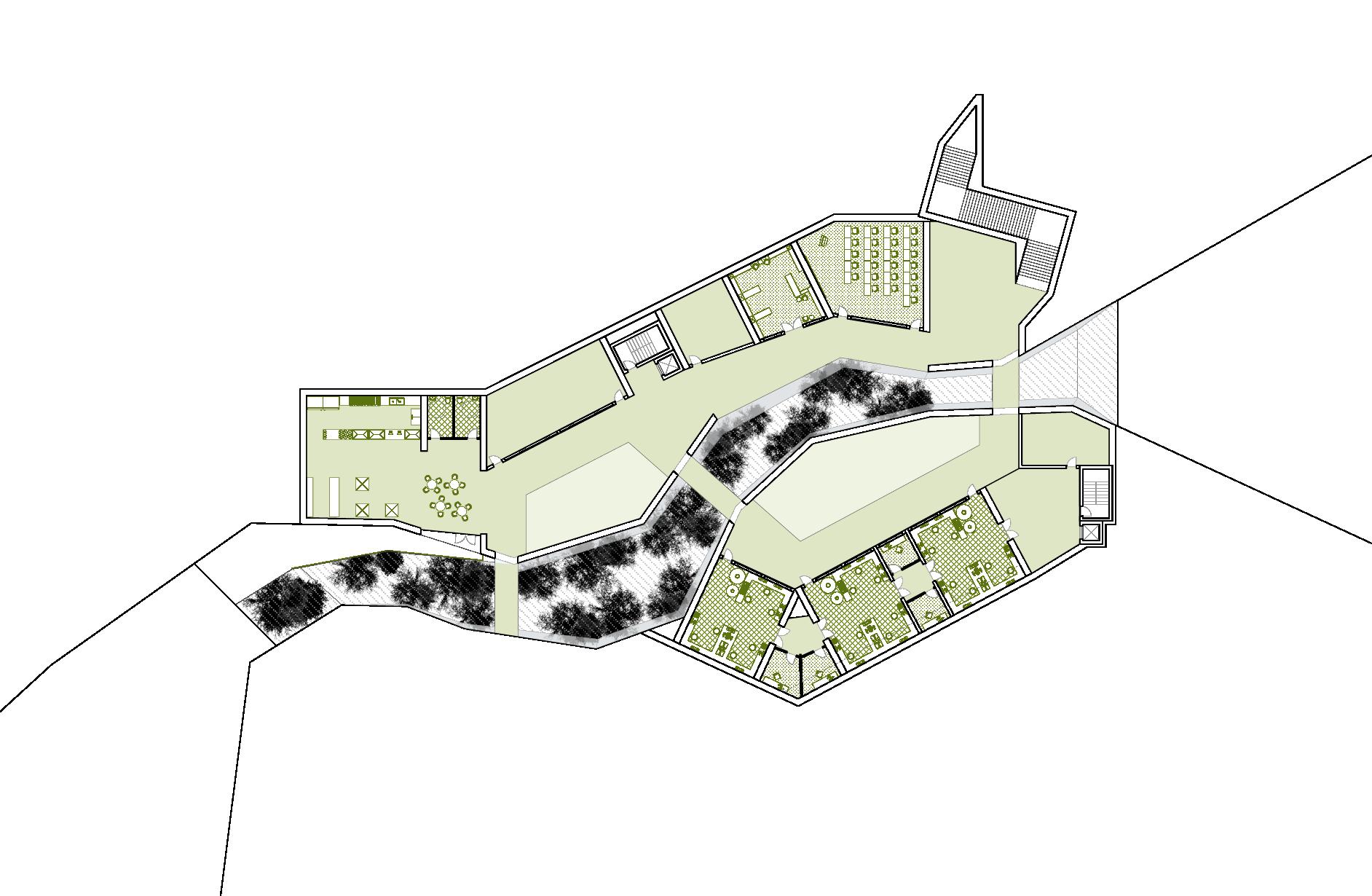
plan at -2
transverse section reference
1. double glazing
2. steel space frame truss
3. gutter
4. tie back
5. lightweight growth medium
6. vapor barrier / drainage mat
7. acoustical drop ceiling
8. stabilized rammed earth
9. light well
10. horizontal glazing
11. stone tile
12. radiant heating system
13. concrete slab on grade
14. concrete footing
15. pile foundation
16. fill over metal deck
17. steel beam
18. interior partition
19. interior storefront
20. reinforcing steel
21. french drain
22. overflow drain to cistern
metal gutter
flashing
vapor barrier
aluminum storefront system
tile floor finish
vapor barrier
rigid insulation
radiant heat/cool system
concrete topping slab
corrugated steel sheeting
rigid insulation
gyp. sheathing
vapor barrier
ceiling finish
details a1. & a2.
double-glazing
steel framing @4'
steel angle
aluminum mullion (beyond)
aluminum storefront
rammed earth sill
embedded reglet
flashing
steel joists @ 2' blocking
steel W beam (parallel)
metal cap
scrim support
steel reinforcing
stabilized rammedearth retaining wall vapor barrier
mat
steel W beam (parallel) flashing
into light well
steel joists @ 2'
channel welded to rammed earth wall
rammedearth retaining wall
double-glazed celerestory windows into light well filter mat steel W beam @ 6' rigid insulation
well]
well]
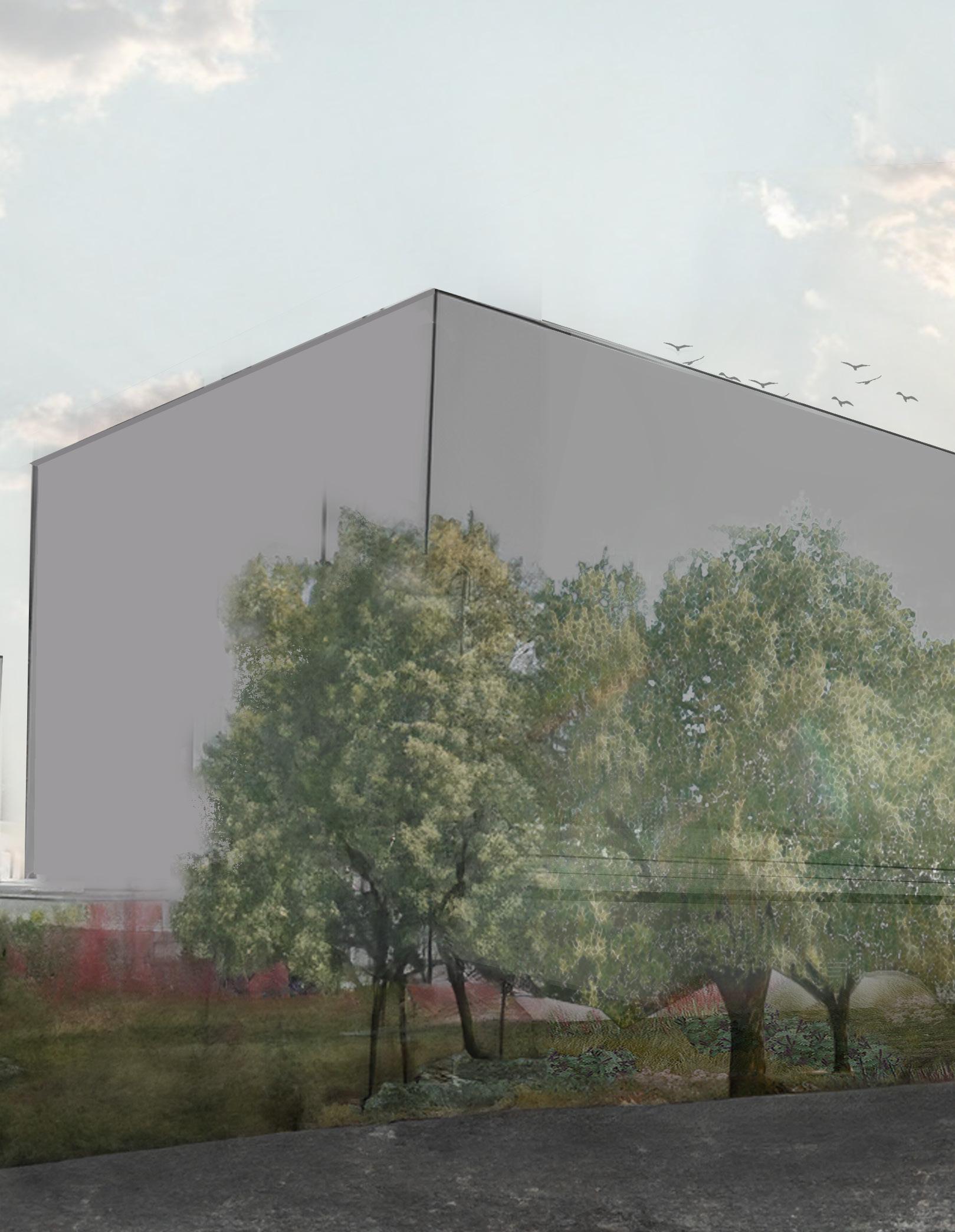
Highways in this country have a reproachful history of enabling unsustainable suburban sprawl, cleaving cities along cultural lines, and have become a symbol of the vehicular culture that is destroying our planet. This project first seeks to re-imagine these spaces as a mechanism for bringing people together, restoring the public space that once was, and allowing for sustainable growth of the city. Beyond a larger urban redevelopment strategy, this project also explores design for economic diversity, social justice, and a unique urban character.
MIDDLE GROUND
AFFORDABLE HOUSING FOR DOWNTOWN AUSTIN
Urban Strategy completed with ShaCari
Alexander & Christopher Sanchez
Urban Design Studio
Nichole Weidemann
Spring 2020
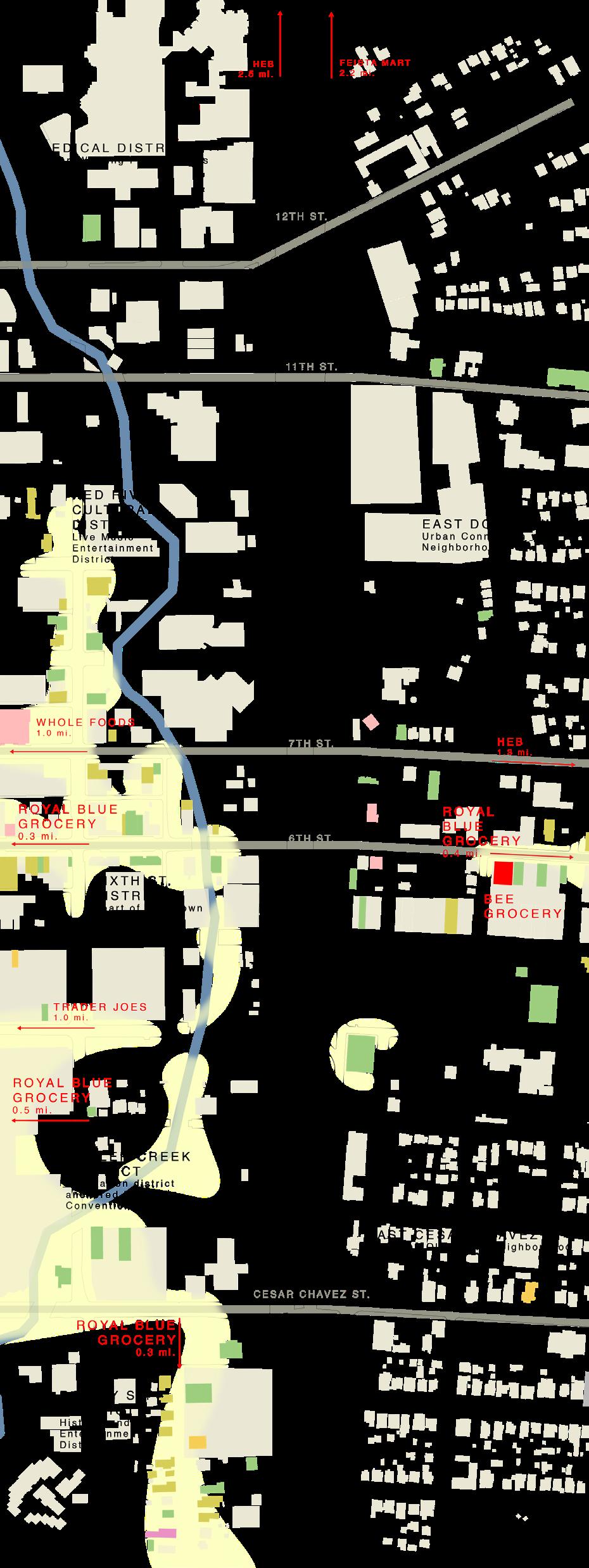
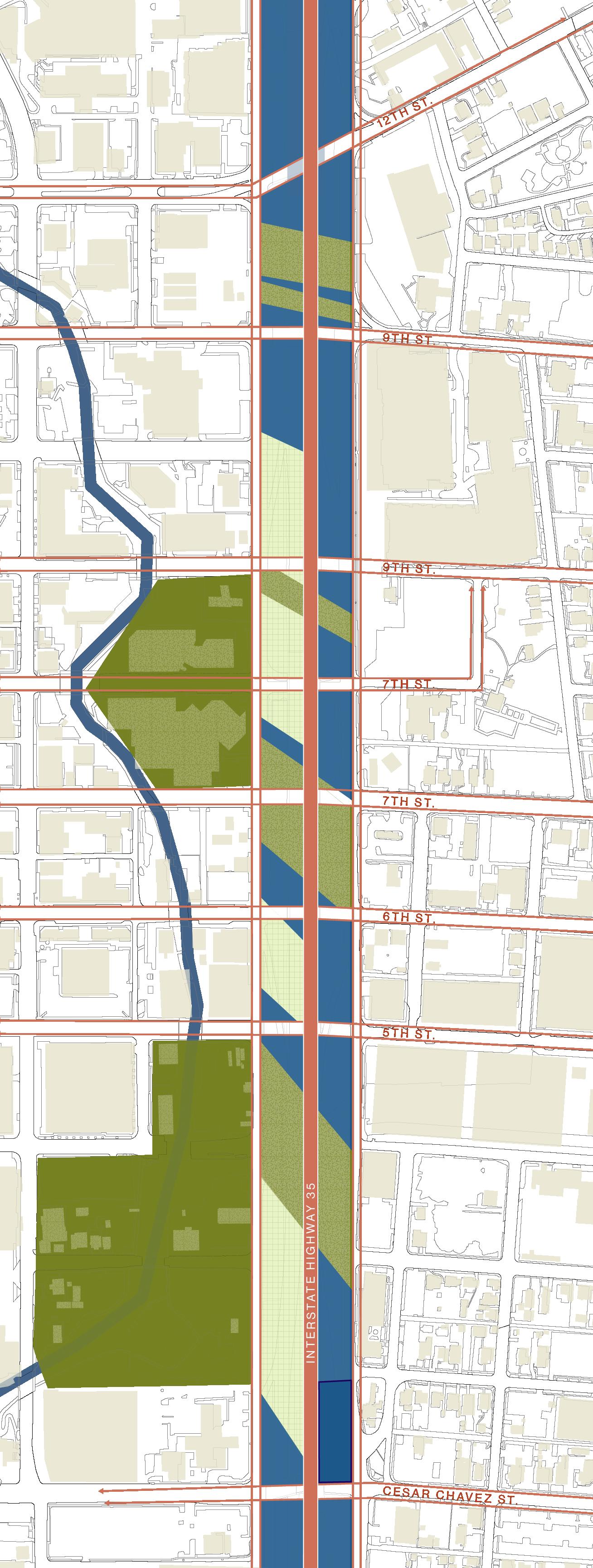
The first half of this project was an urban strategy designed in teams. Our group’s strategy utilizes the skeleton of the raised highway, reclaiming it for the public and reviving the ghost of East Avenue, a public avenue that existed in the space prior to the highway’s construction. It was important to us to keep some of the physical highway as relic of Austin and America’s charged and divisive history, to not erase our mistakes so we can learn and grow.
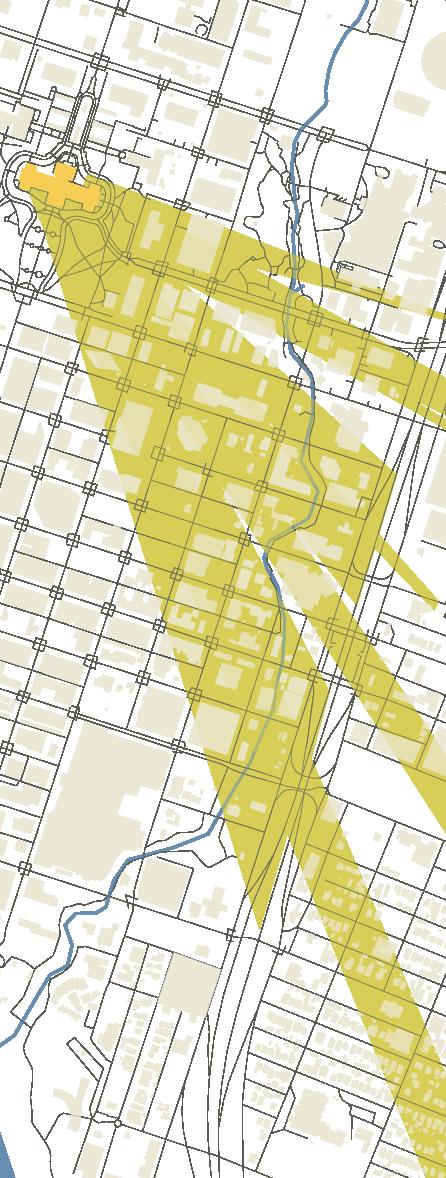
The next part of our strategy is the zoning of the rest of the space around the old highway infrastructure. The capitol view corridors, overlay zoning, were used to divide the space. The first zone was designated for development, with mixed used and diverse housing options for the rapidly gentrifying city. The second zone is reserved for public open space. The final zone allows nature free reign, areas where the native Central Texas wildlife can flourish and rebuild the ecosystems that have been lost due to environmental carelessness.

site strategy plan

circulation across site
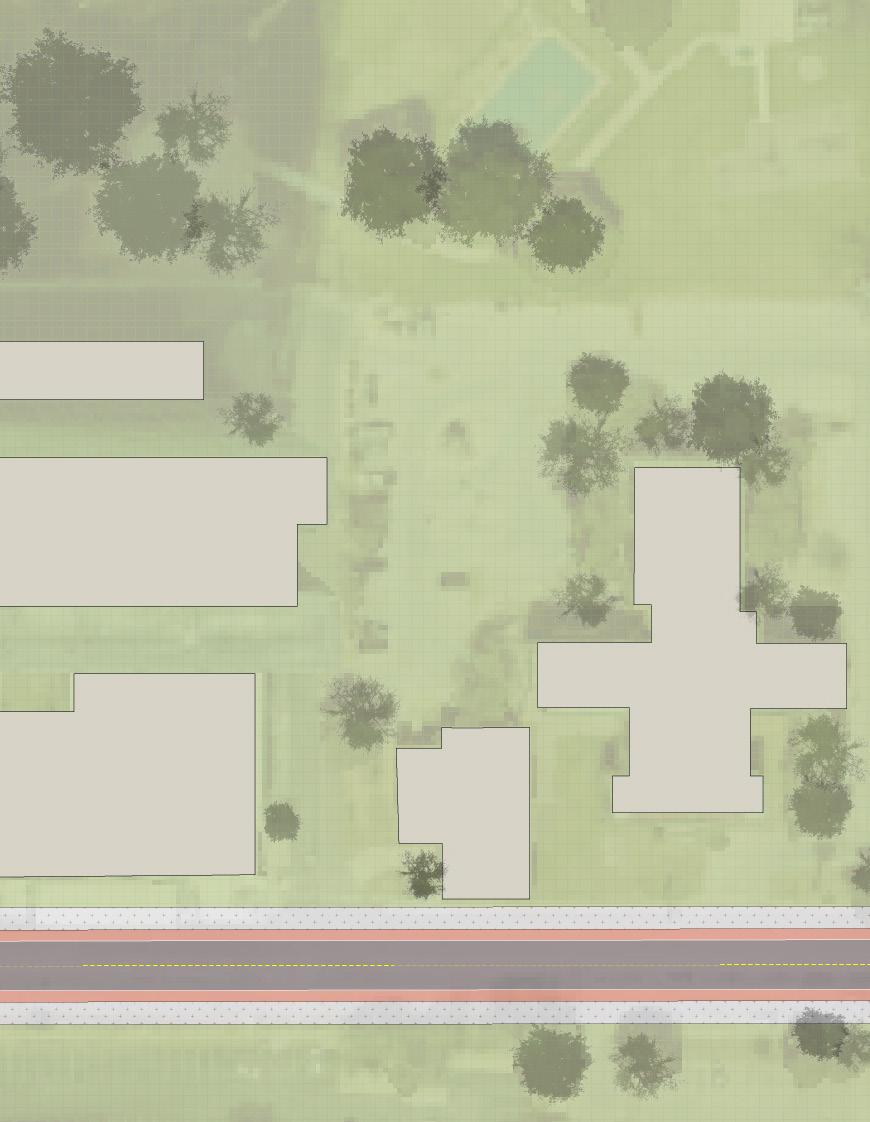
circulation about promenade
residential entry
vertical circulation
plinth level
circulation diagram
residential amenities
residential floors
common east-west views
punched metal shade screen
whole building
(promenade above)








base plans
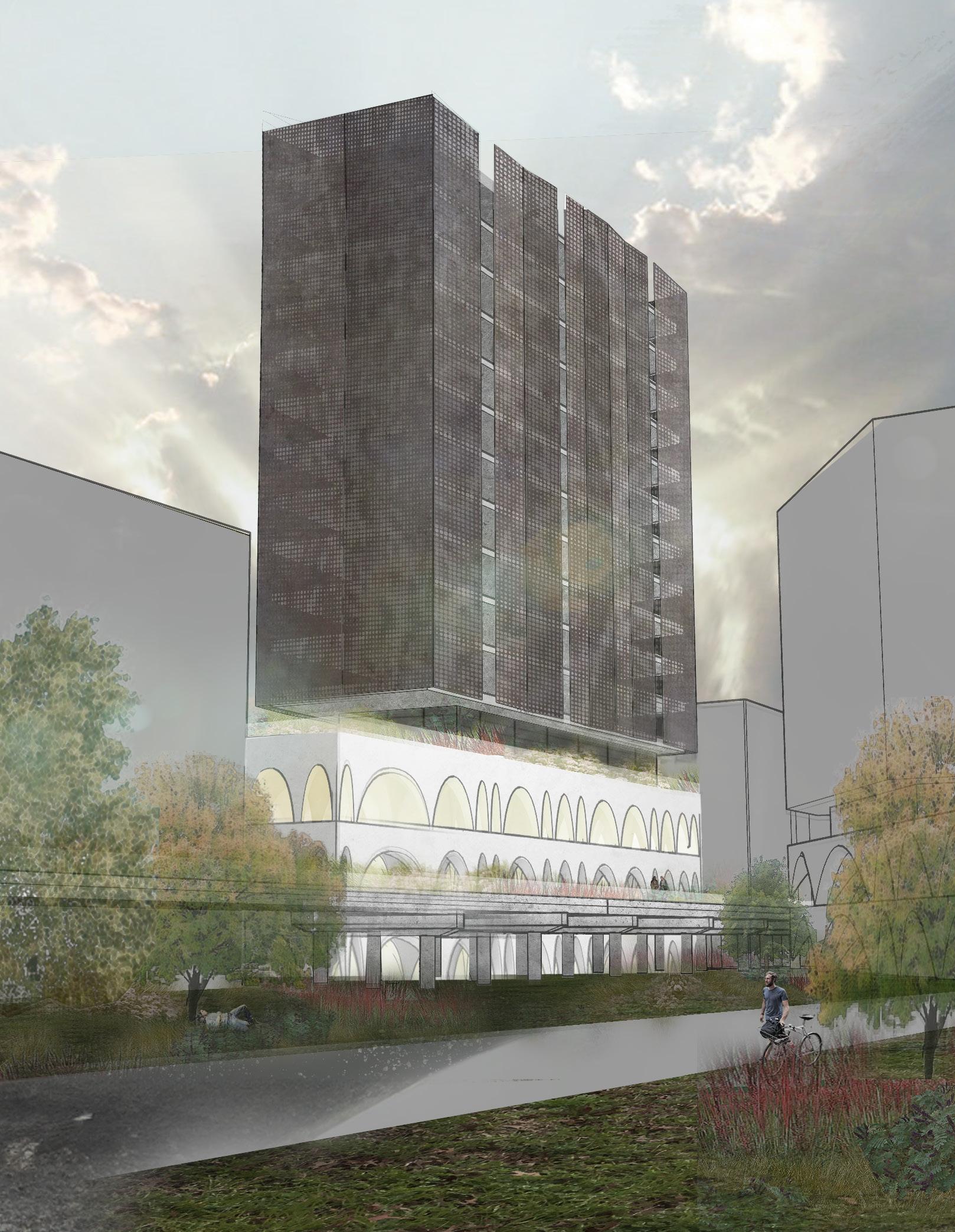
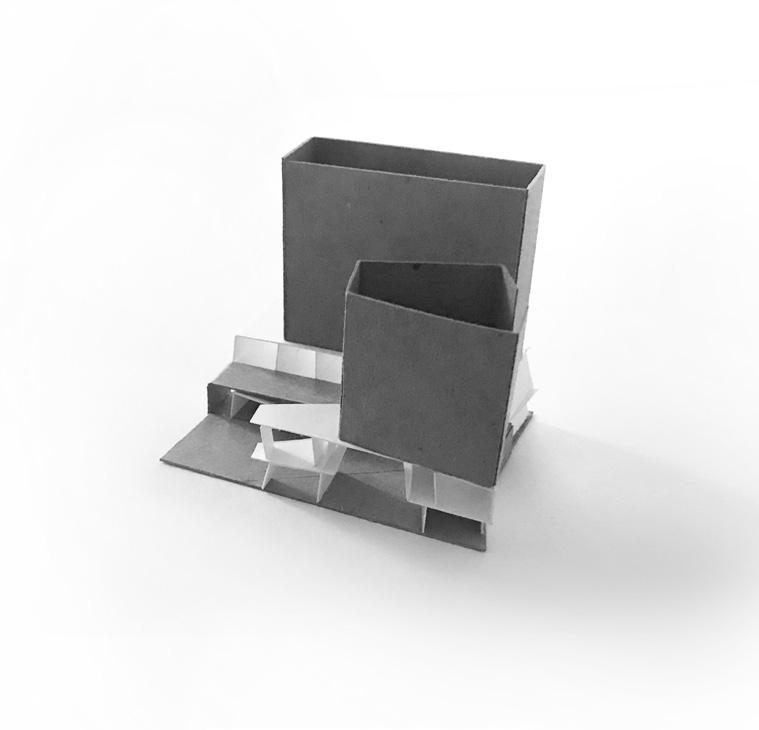
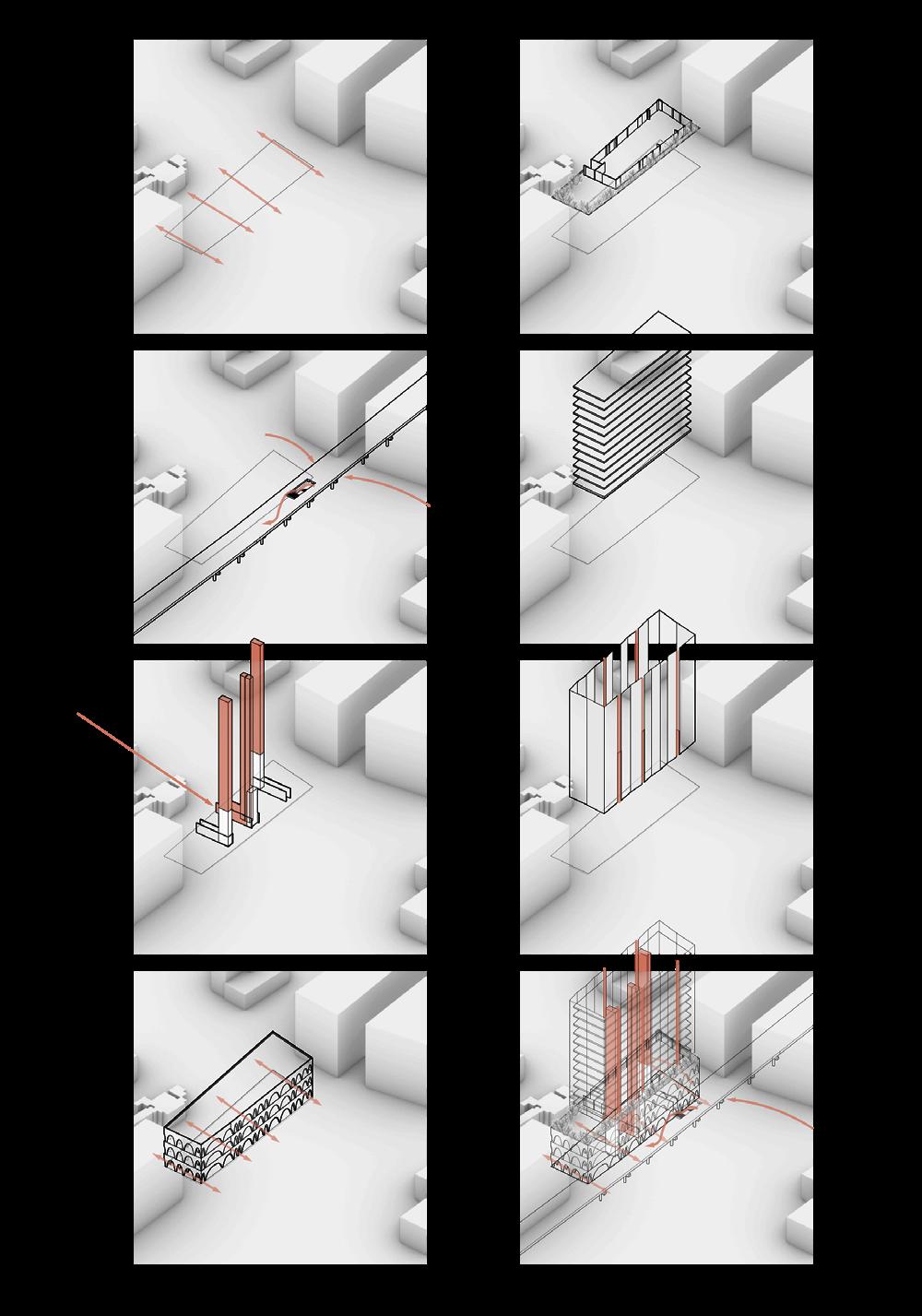
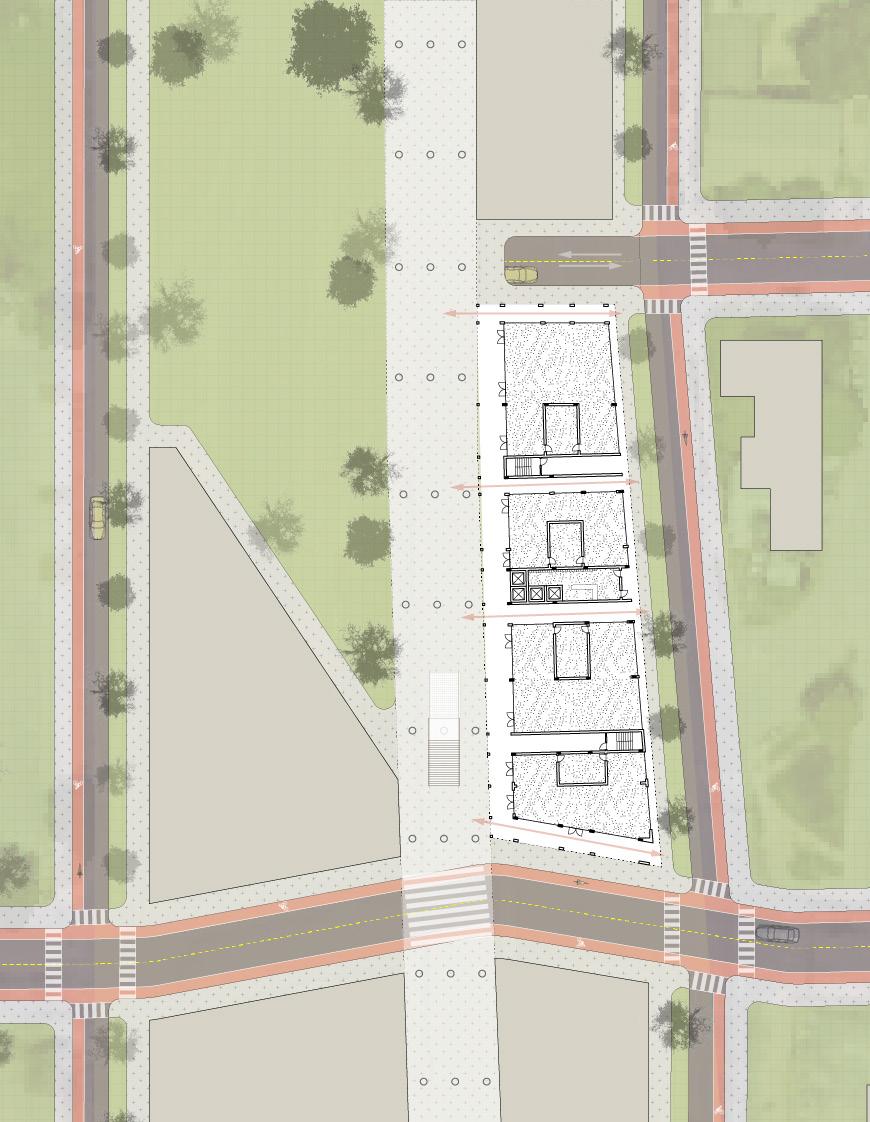
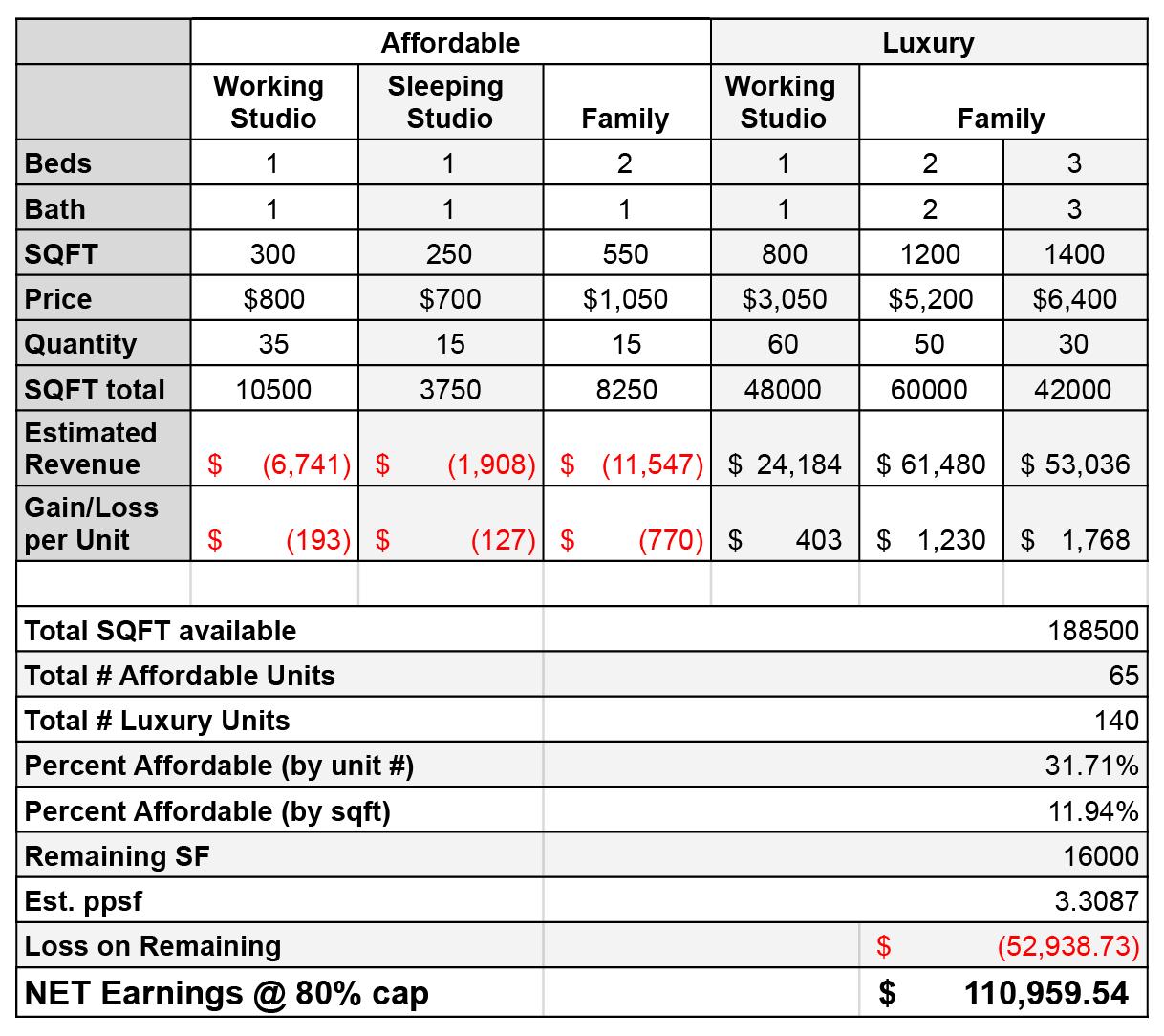
The design of my building serves as a model for other developments along the Middle Ground Master Plan. The ground floor facilitates east-west pedestrian access through retail spaces. The second story has a direct connection to the raised pedestrian promenade composed of the old structure of I-35 and provides more lease-able space to offset the affordable housing. Finally beyond the plinth, are the residences, wrapped in perforated metal screen which provides shade and privacy each unit. Additionally, on every floor is a mix of luxury and affordable units to break down divisions in the two populations of Austin that have so long been segregated. feasibility study
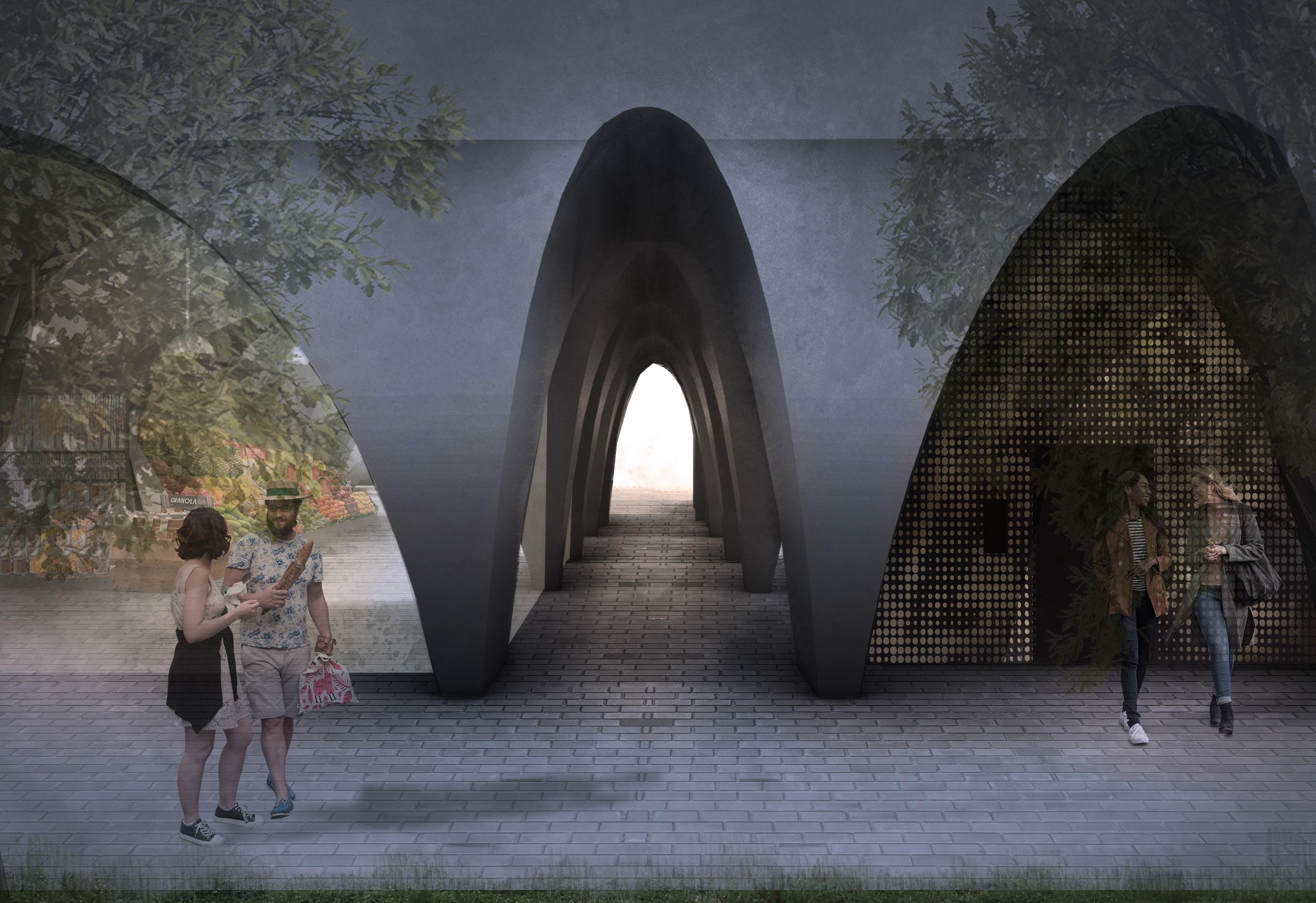
ground level retail and residential entry
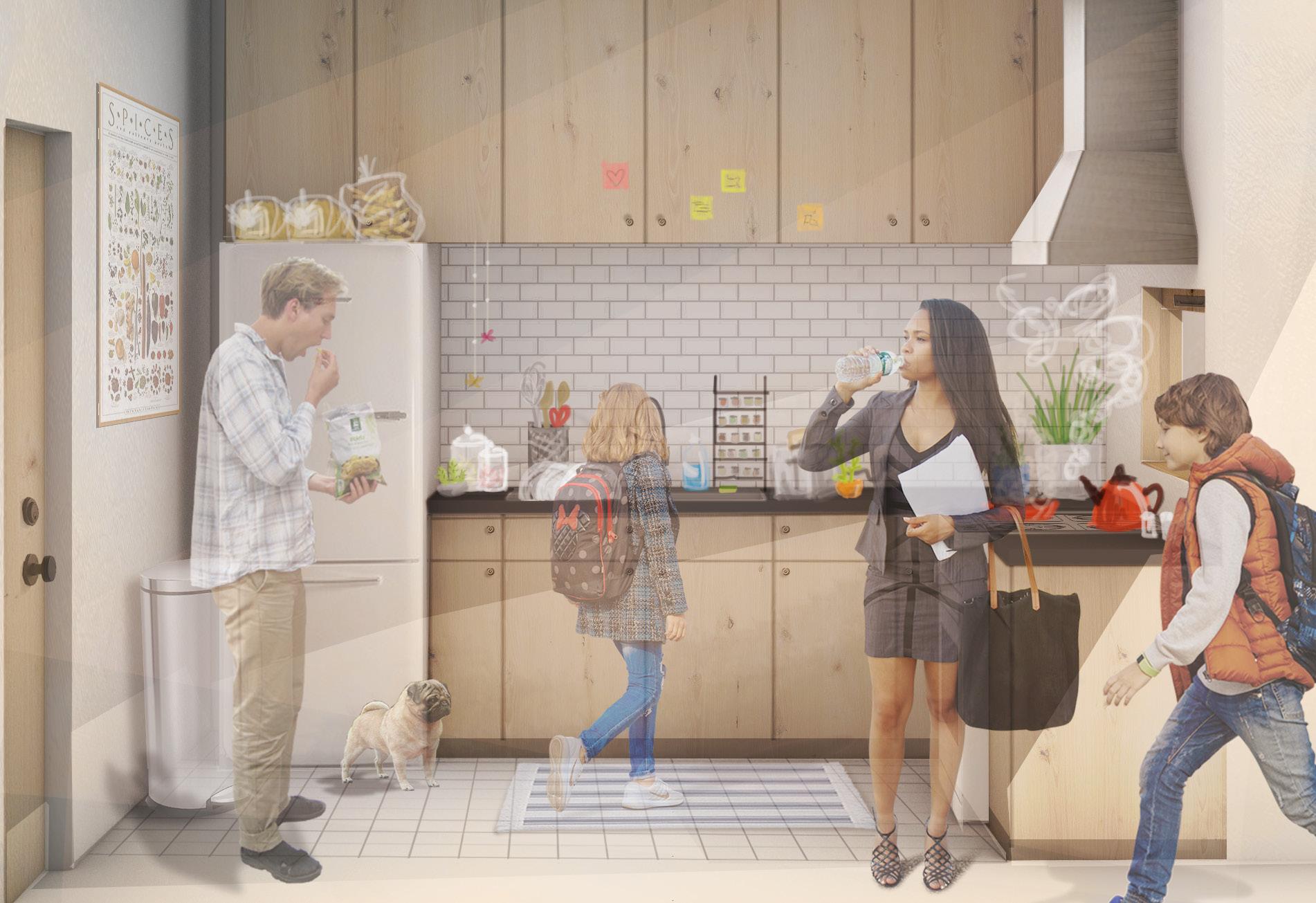
residential kitchen
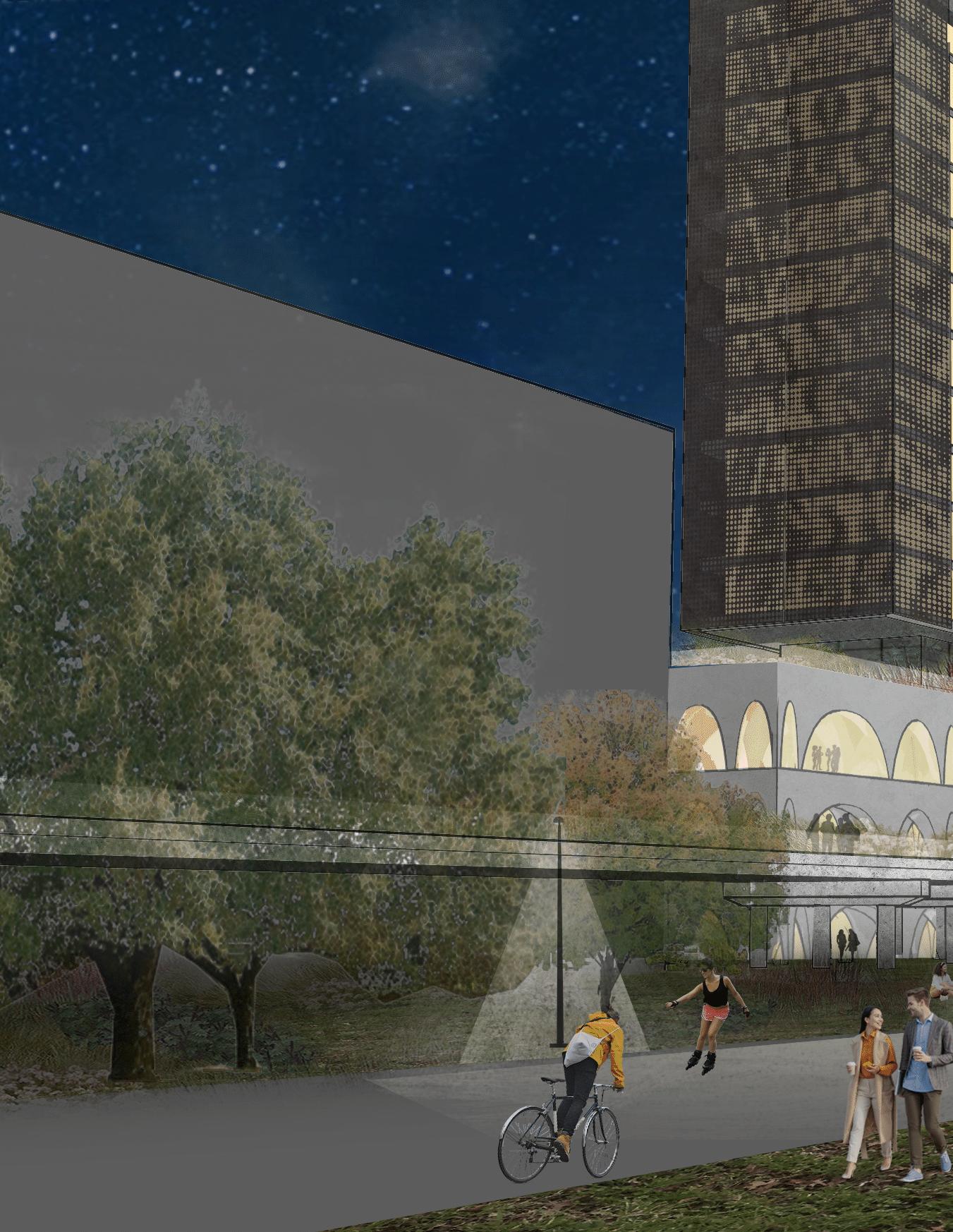
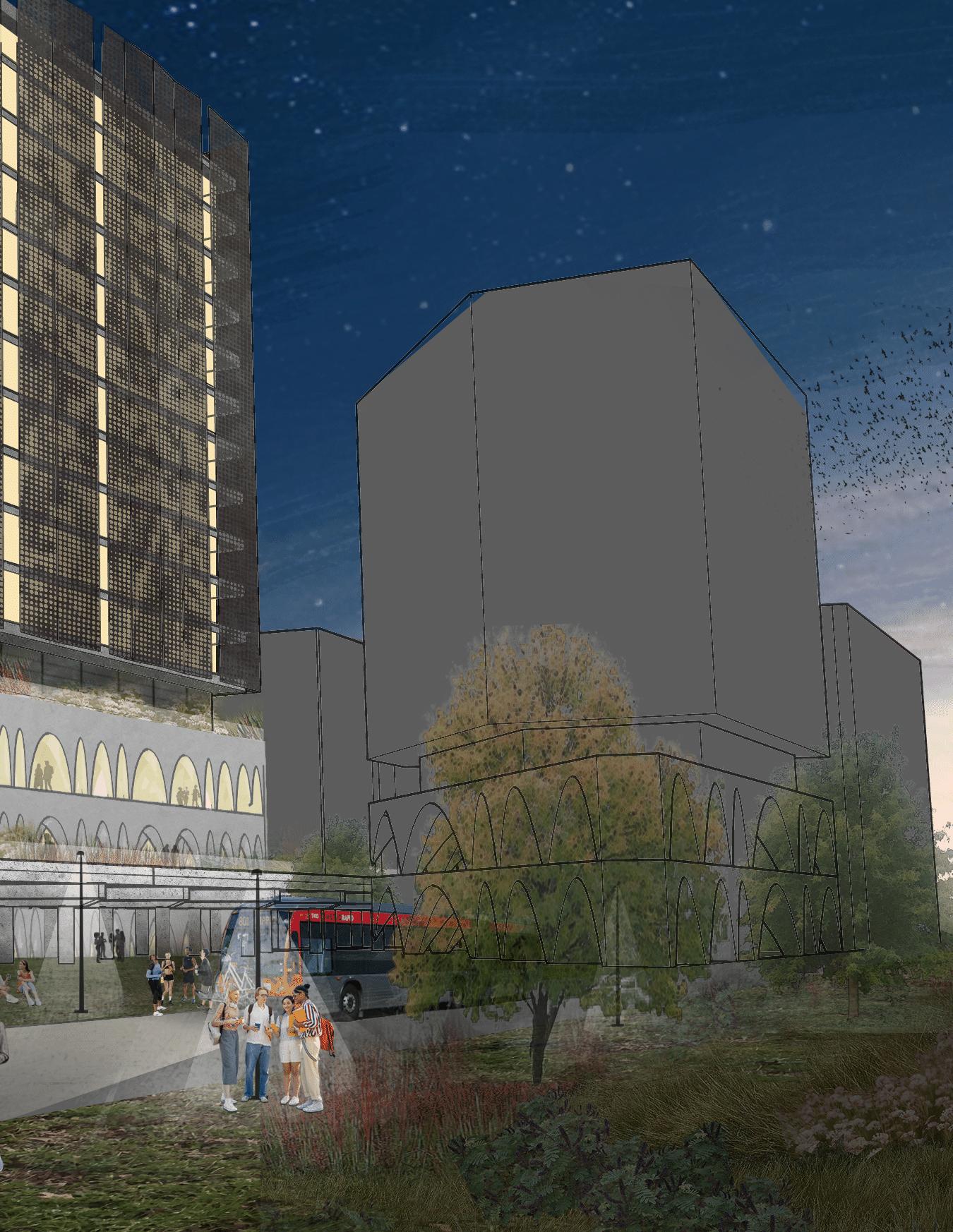
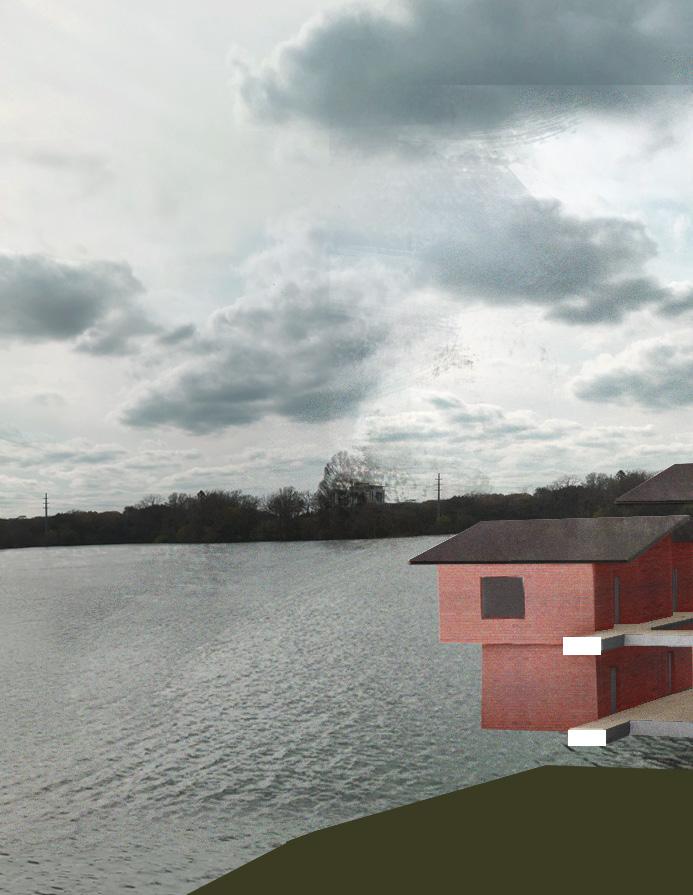
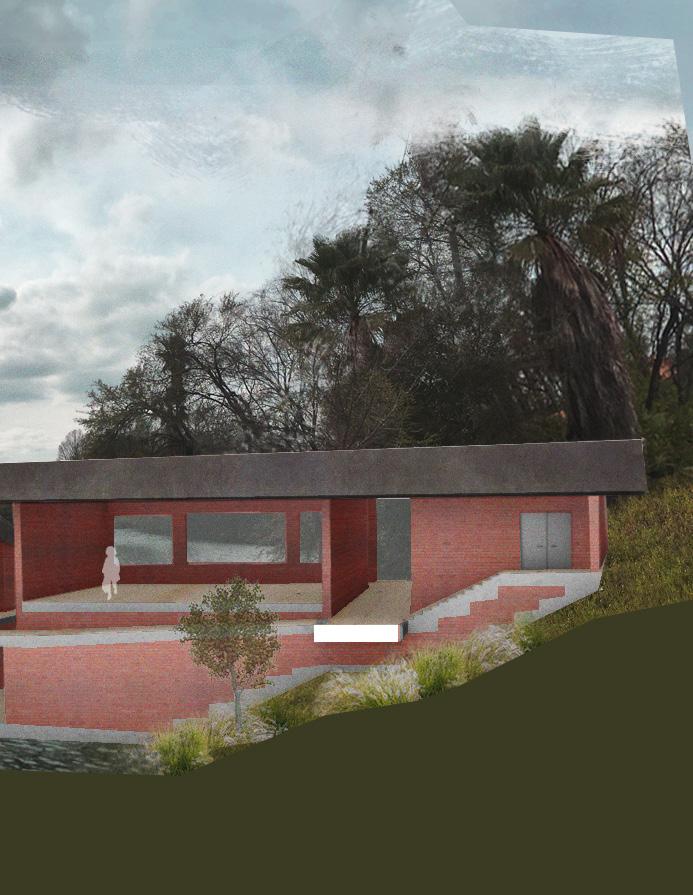
This studio challenged the students to design spaces for healing, specifically for healing the mind. There is a strong connection between one’s interaction with nature and healing process, thus it is was the main concept of this project. The building is eroded by the quiet landscape so that throughout the building greenery is always seen, fresh air always felt and lapping water always heard. This human existence with nature, can also echo the process of healing from mental illness itself in that healing comes from learning to come into balance with it.
RENEWAL
MENTAL HEALTH RESIDENTIAL TREATMENT FACILITY
Speculative Studio
Jeffery Blocksidge
Spring 2019
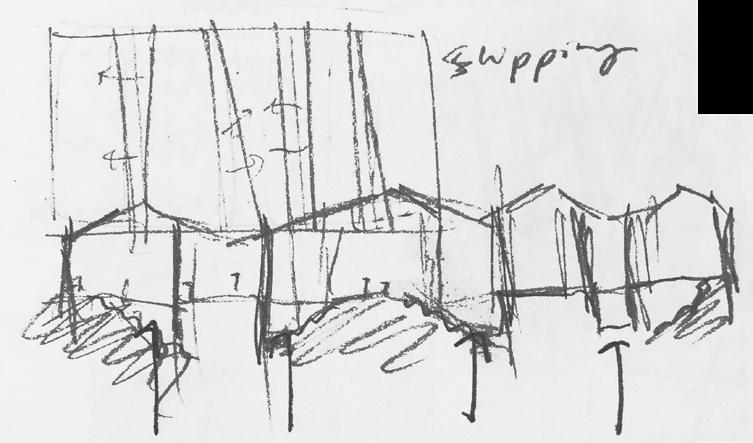
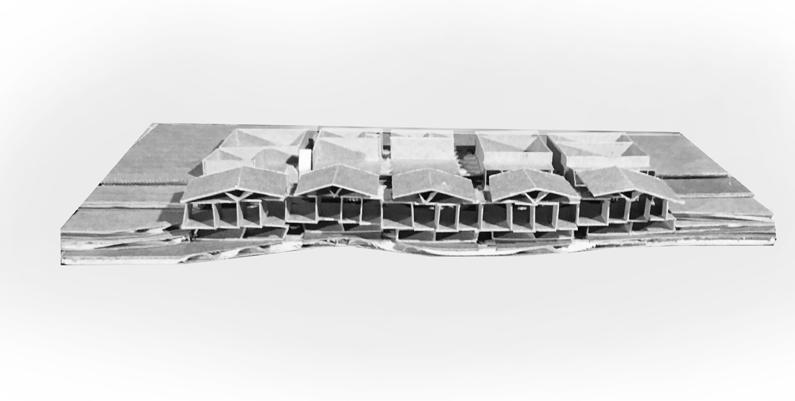
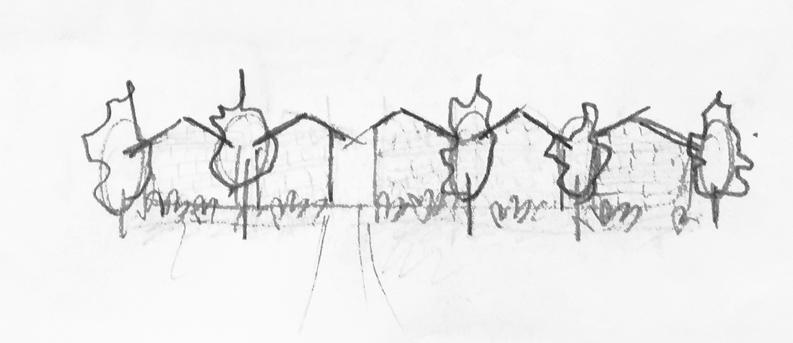
concept sketches and study model
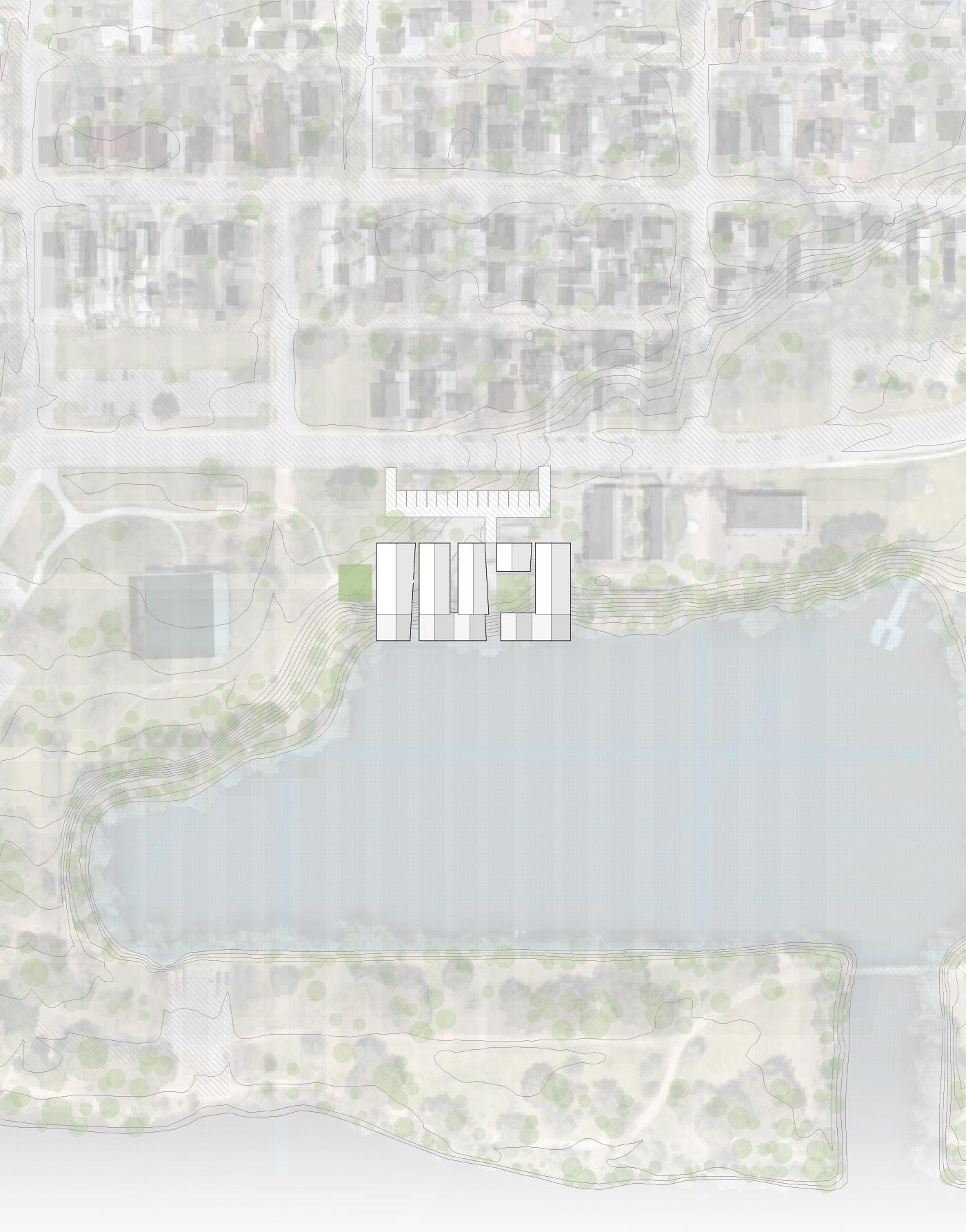
One of the challenges and blessings of this project was the site. Situated next to a public park, within a residential area, how could the building provide privacy and sensitivity to both the patients and the surrounding neighbors?
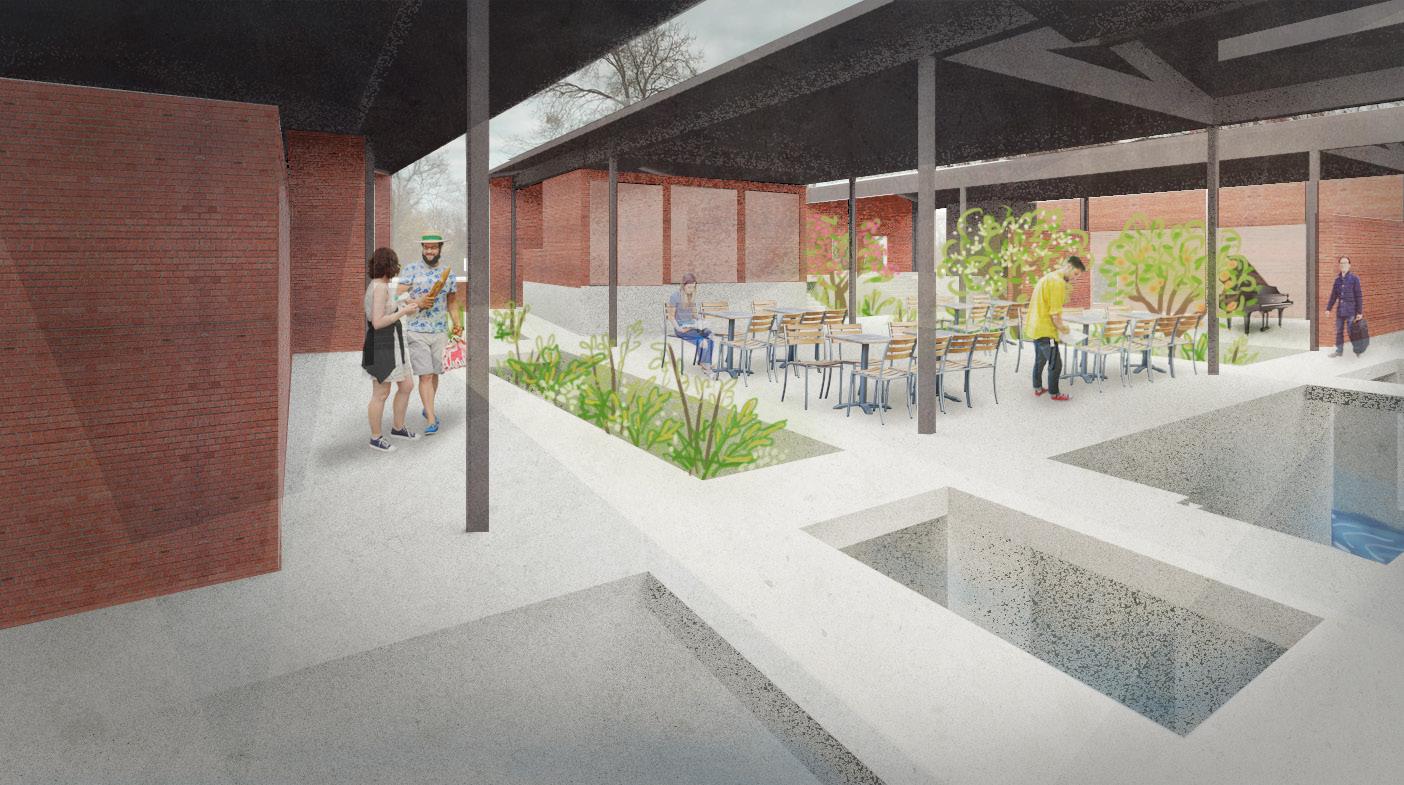
The building is composed of a series of open rectilinear volumes that from the exterior mimic residential forms, however from within, these normal volumes are spliced with voids where nature can infest the building.
The circulation in this building is linear with long walkways parallel to the nature filled voids. This circulation orients the user toward the water and creates a sense of regularity and understanding of the building. This regularity contributes to the healing process because healthy ritual and habit-building are a very important to coping with mental illness.
Lastly, the design conveys an ideal order over the land, taking over the waterfront and imposing a system over the wild shoreline. This order slightly raises the building from the natural order, acting as an oasis or sanctuary for the patients who come here in need of help.

front elevation

back elevation
entry level

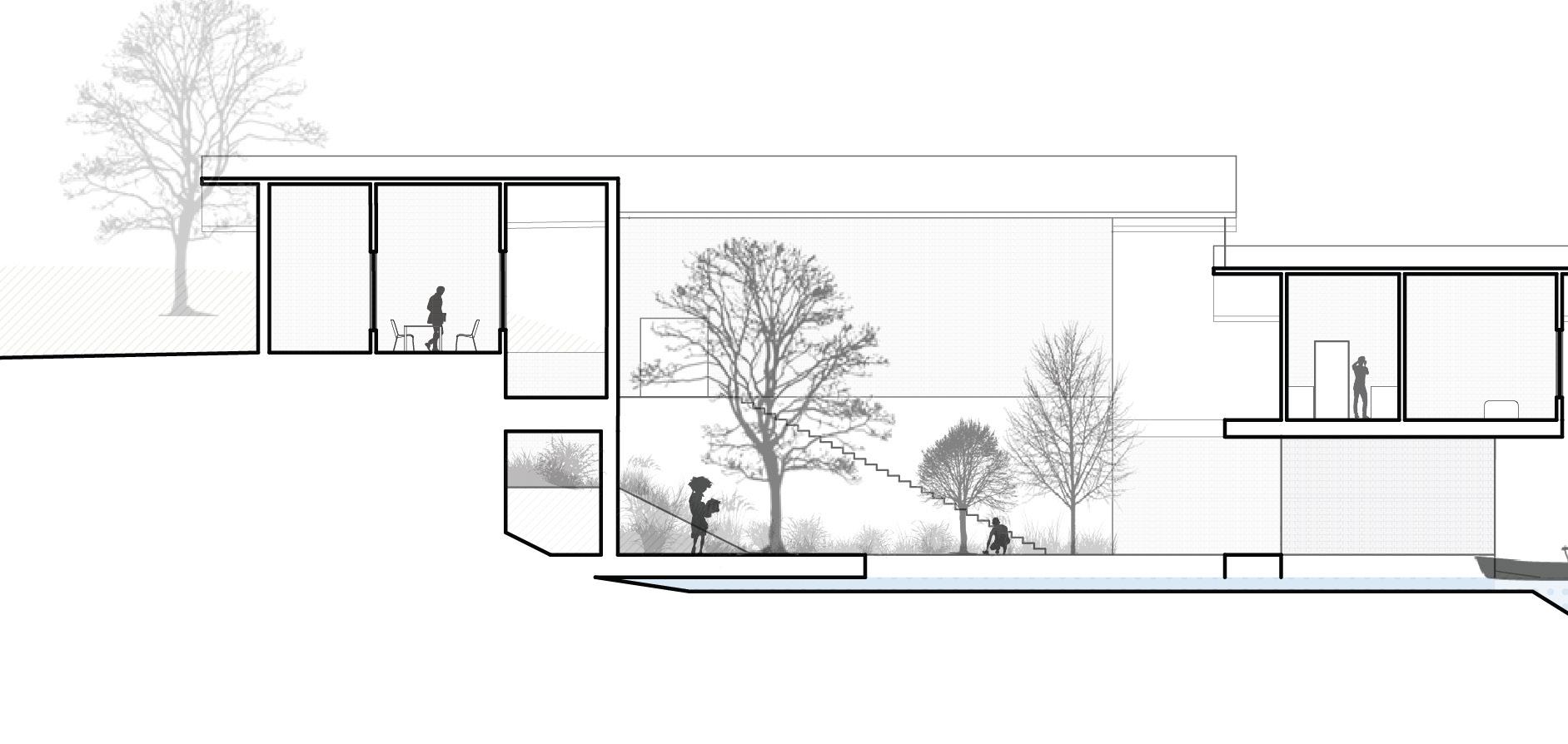
section through open air garden
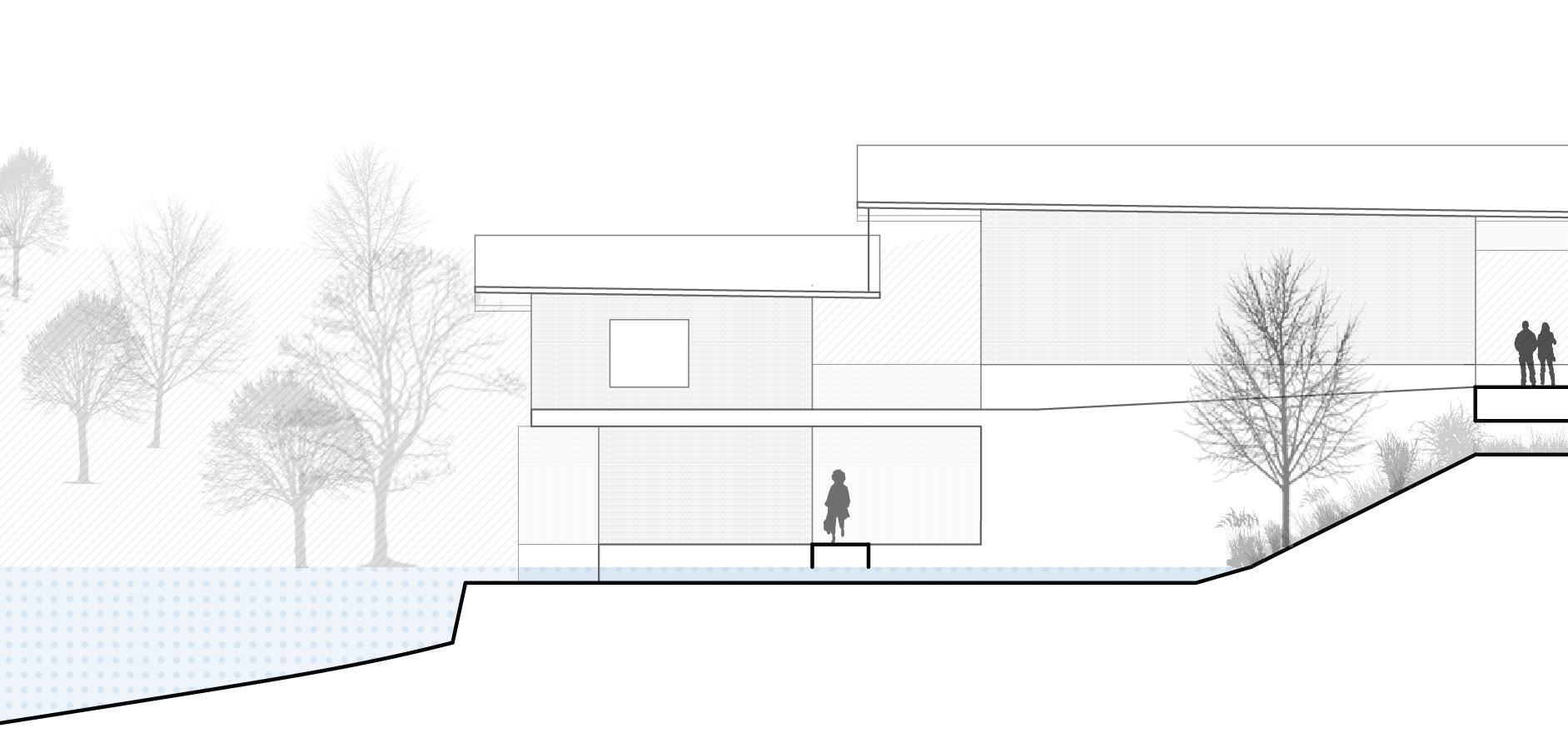
b. section through nature slice
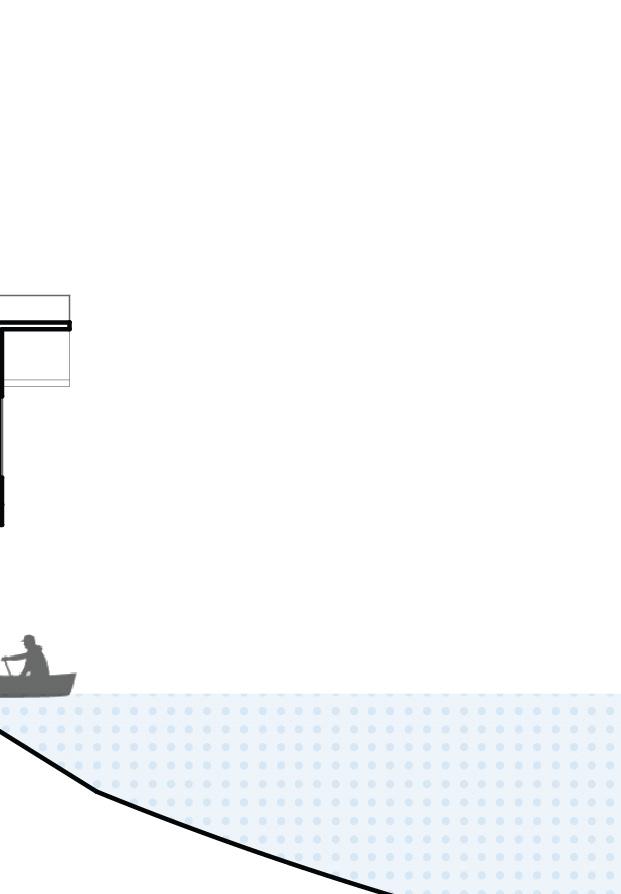
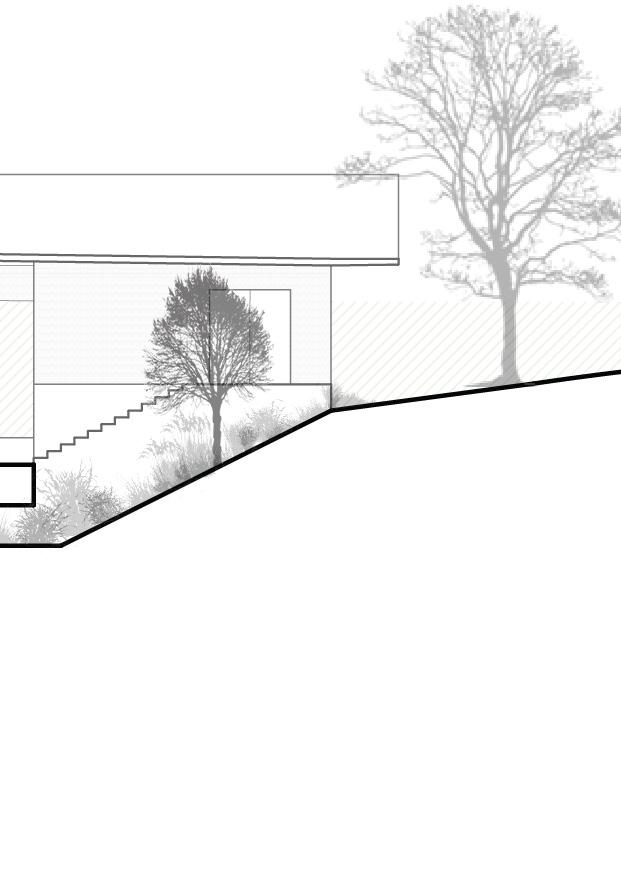
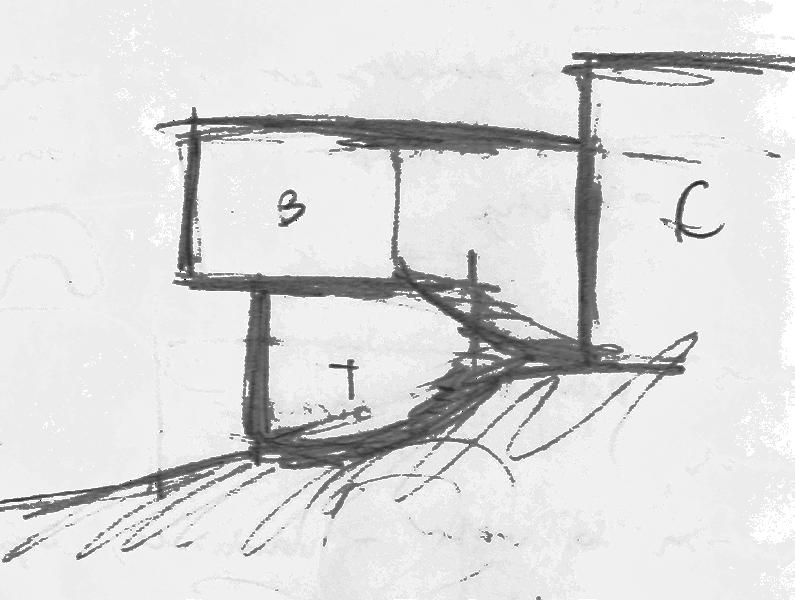
Section was a crucial view in which to approach this design. Many studies have highlighted the connection between healing and closeness to nature, specifically the association of mental health and water, a calming and ever present force in our world. This association inspired the site selection and the concept of the building.
It was important that the most private and self-reflective spaces were close to the water, the residential rooms and the individual therapy spaces. Thus the sketch above was made very early on in the design process, the bedroom above the therapy room, right on the waters edge.
Zooming out to examine the whole length of the building, the level of the entrance is at grade with upper ridge of the lagoon. From there, one descends into the building, stepping down towards the water as if they are drawing deeper into one’s consciousness.
Additionally this led to a flood solution where the lower levels were allowed to flood variably with the changing levels in the lagoon, giving the upper level a measure of protection.
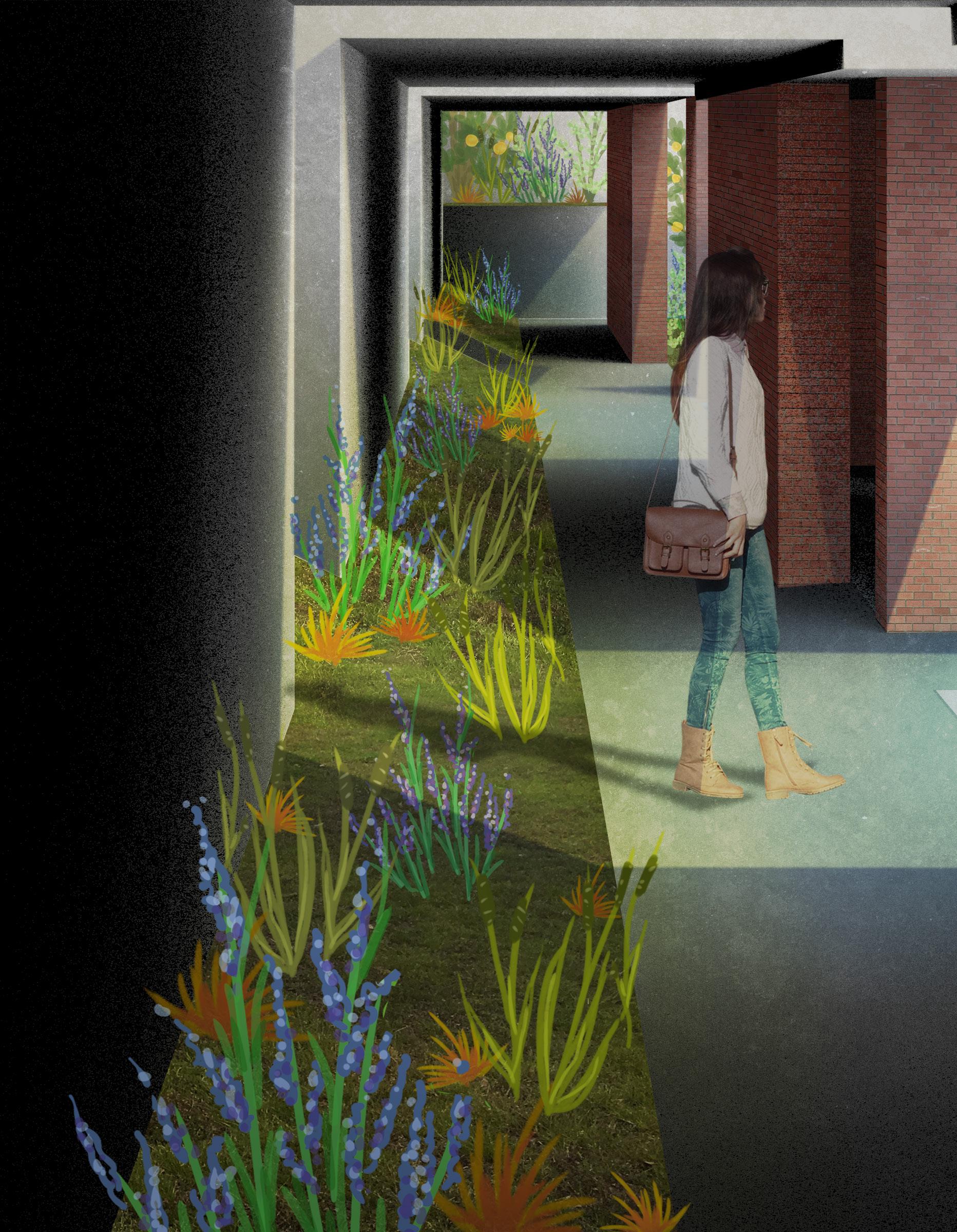
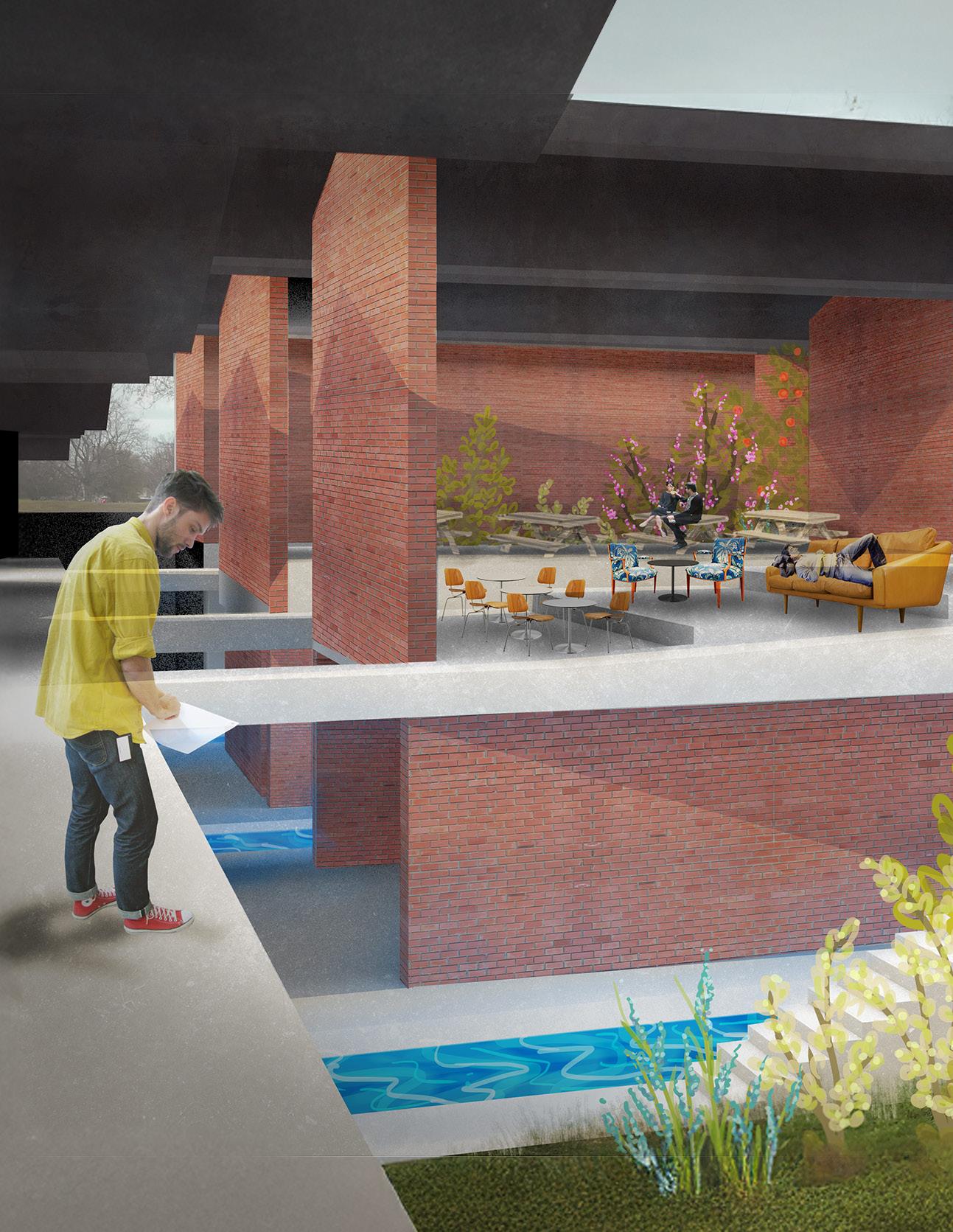
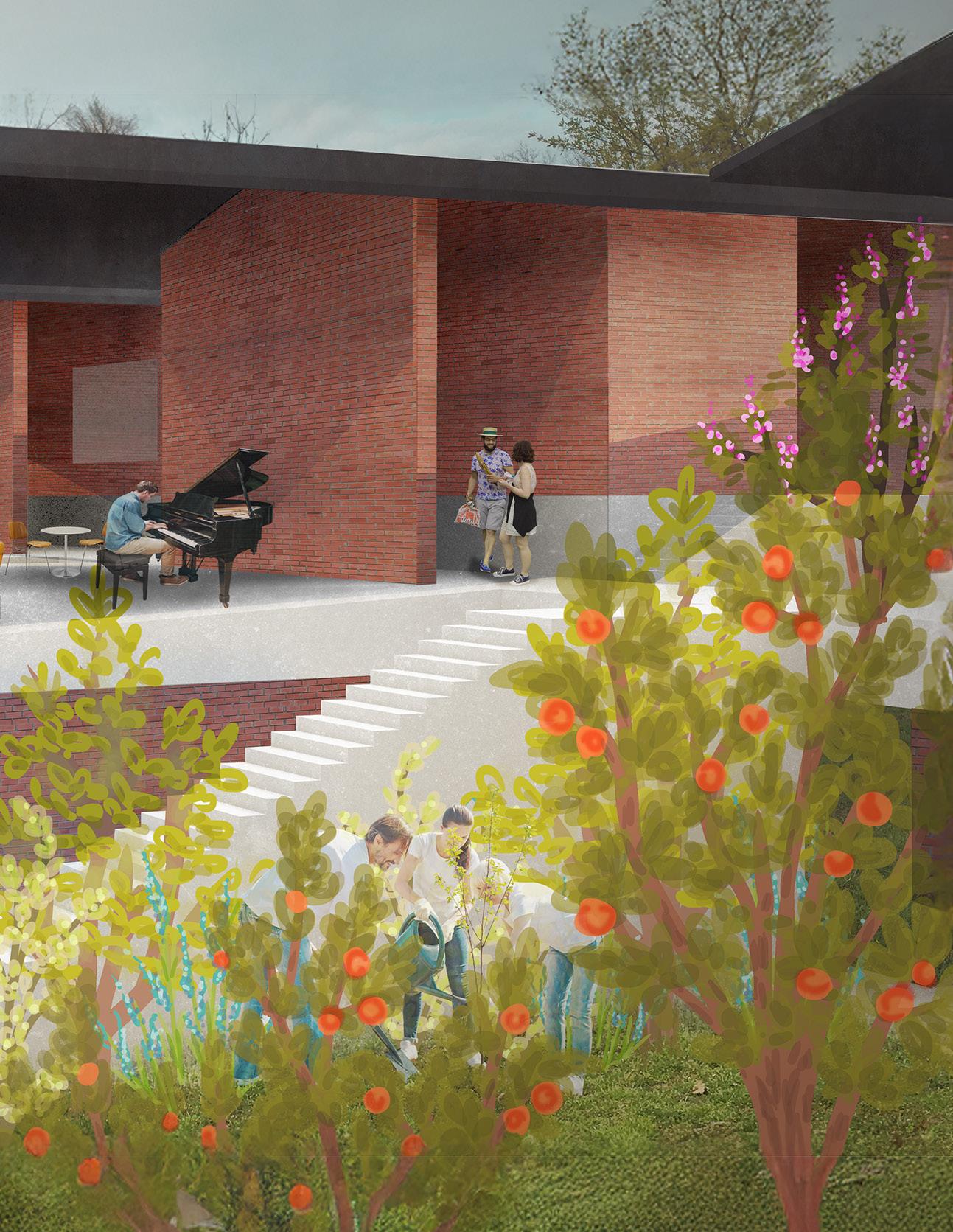
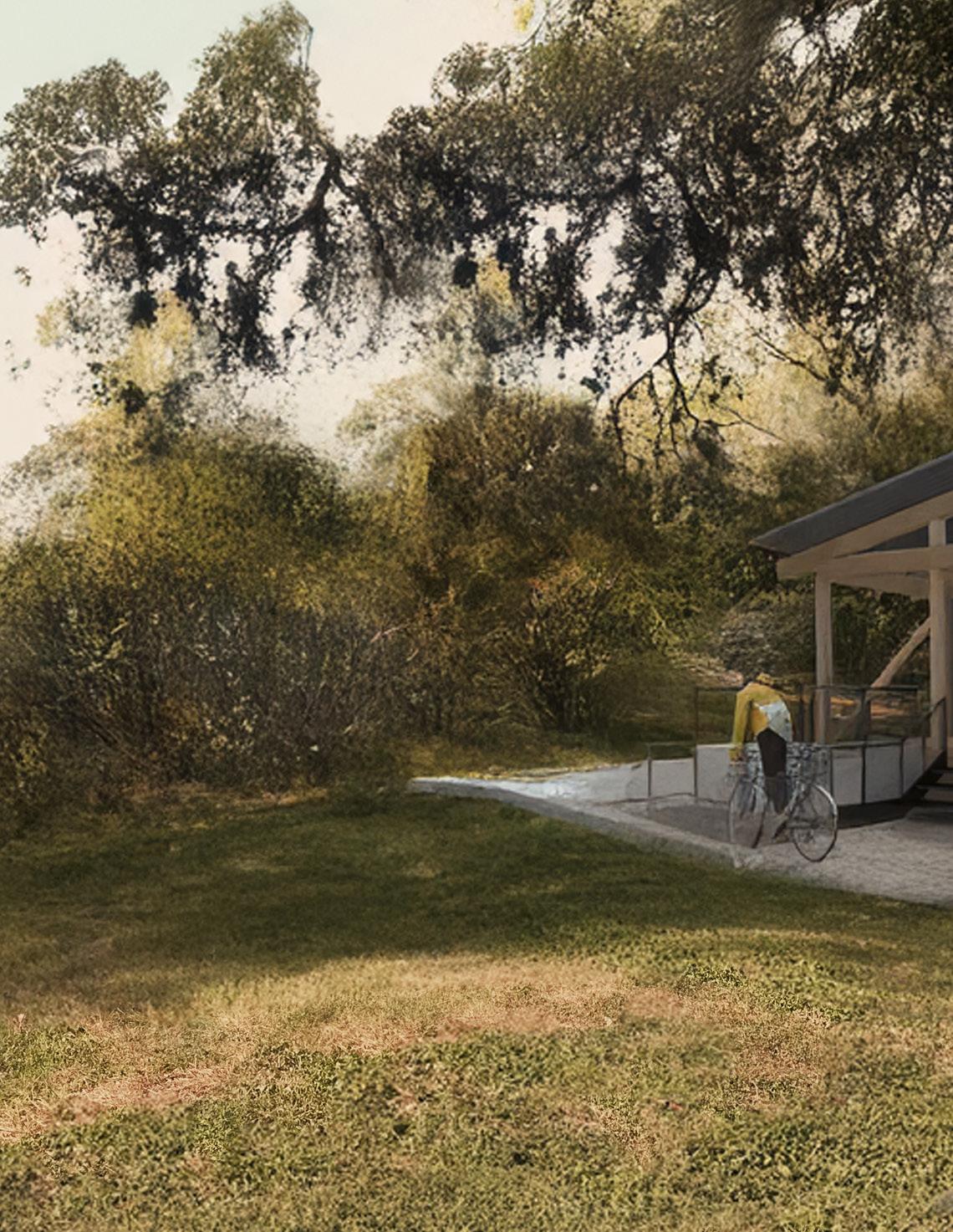
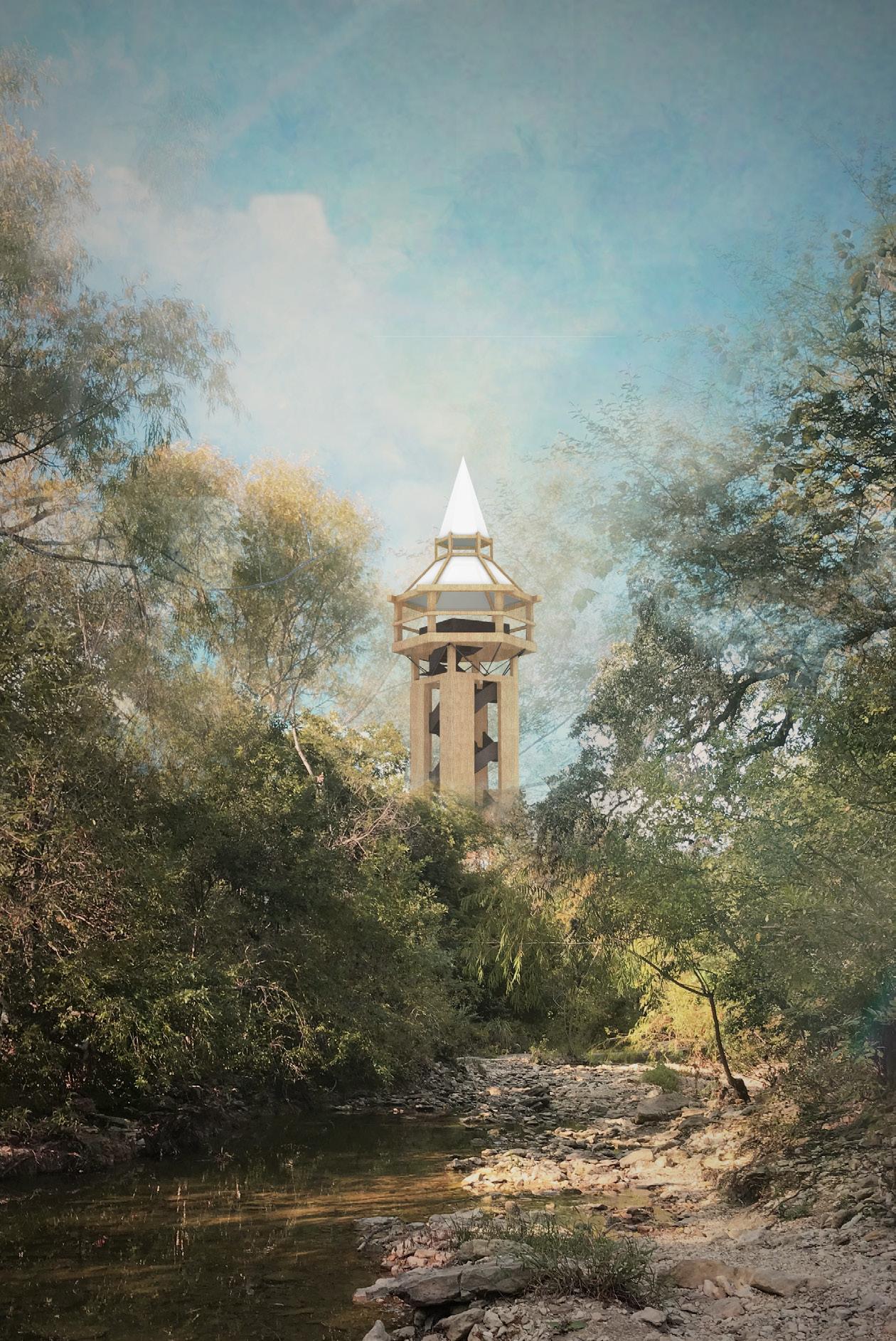
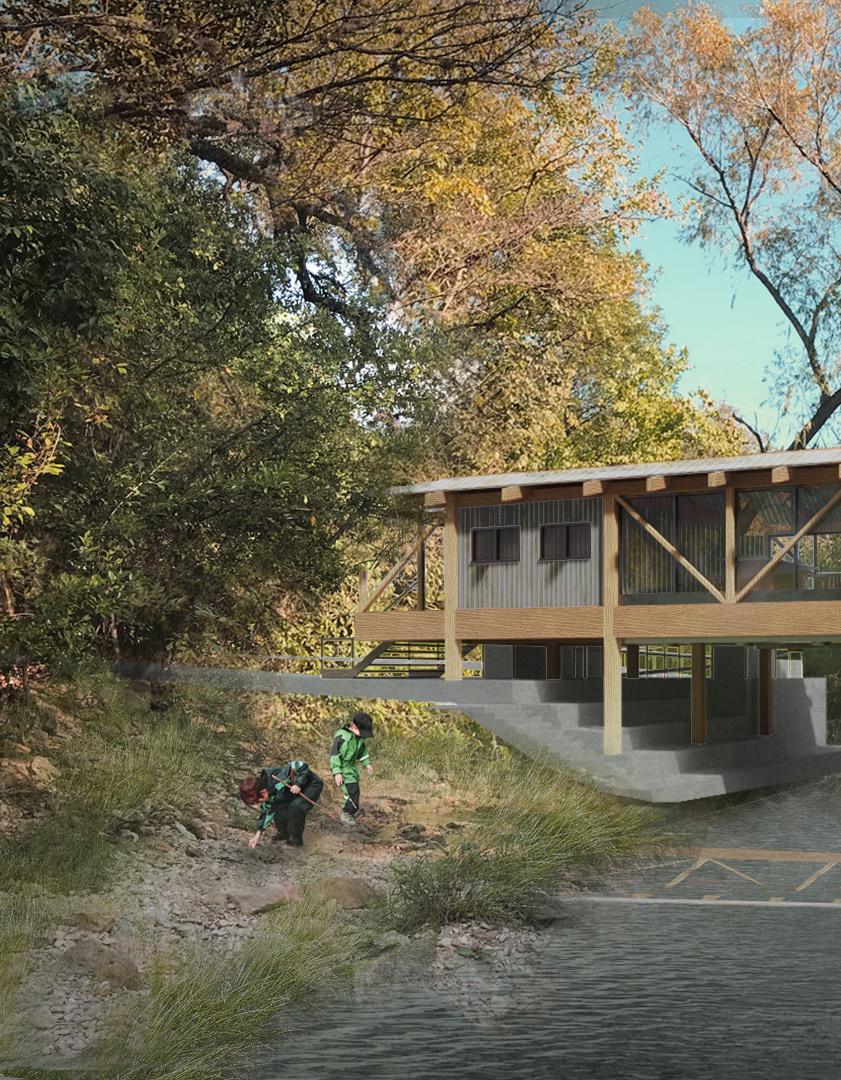
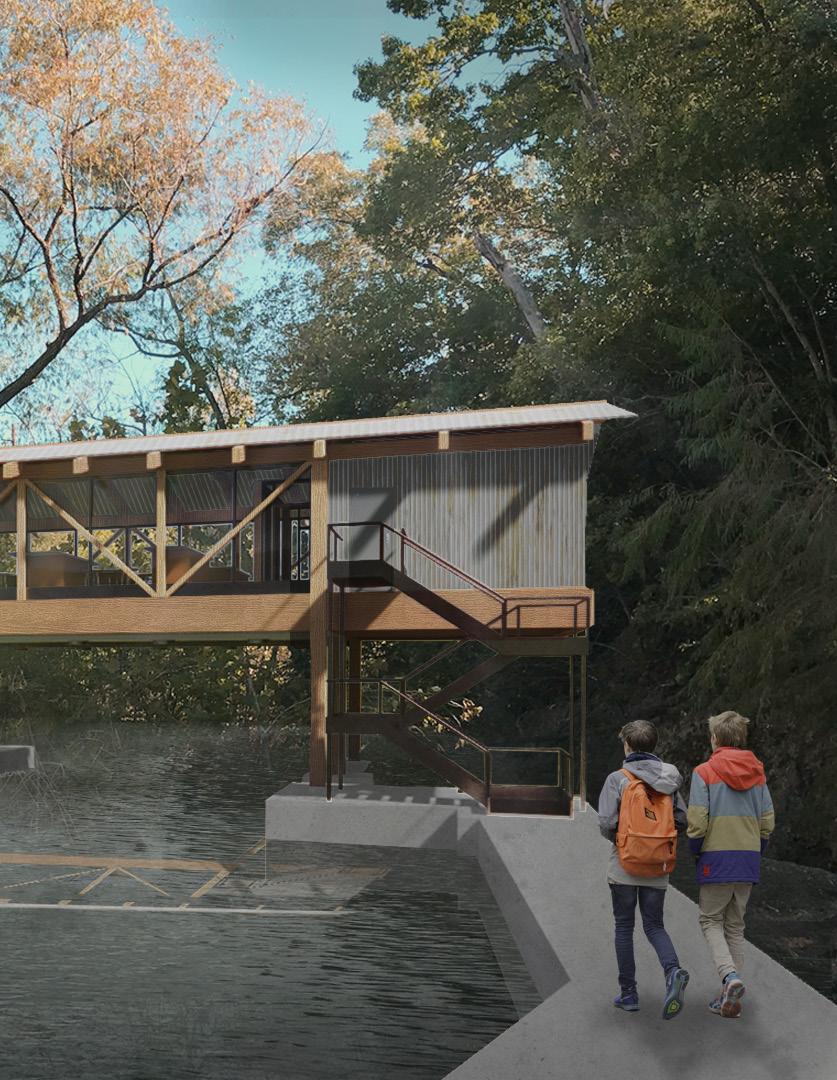
The function of the artist and scientist in society is to challenge the status quo and imagine a brighter future. As a generation defined by the global climate crisis begins to come forth in the world, a comprehensive understanding, respect and symbiosis of the natural world is imperative. This design attempts to utilize the site as a living classroom with pavilion structures as destinations of repose and contemplation.
SUMMER ACADEMY OF SCIENCE AND ART
Advanced Studio
Michael Bendikt
Fall 2020
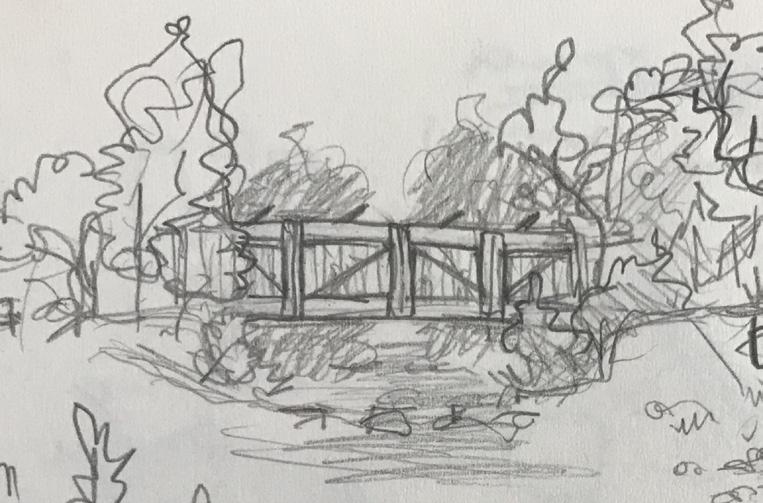
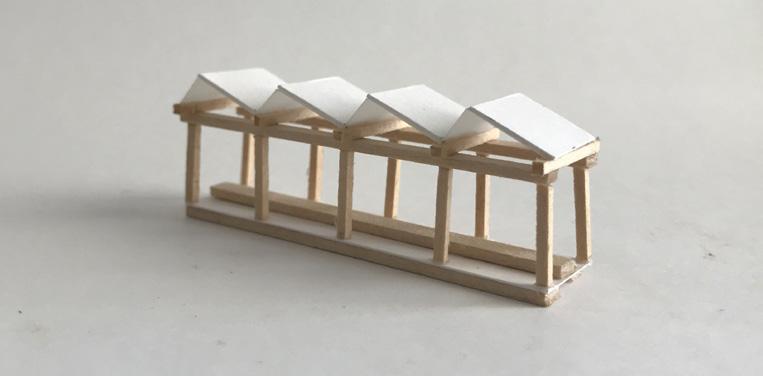
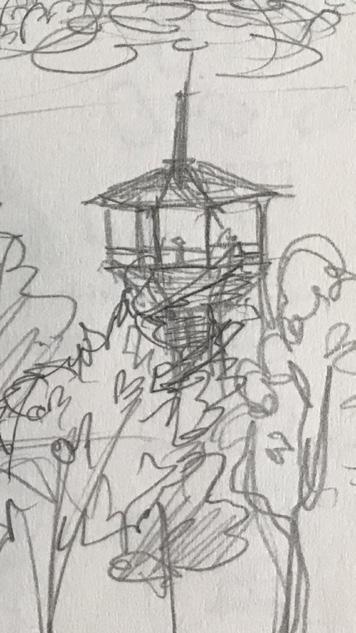
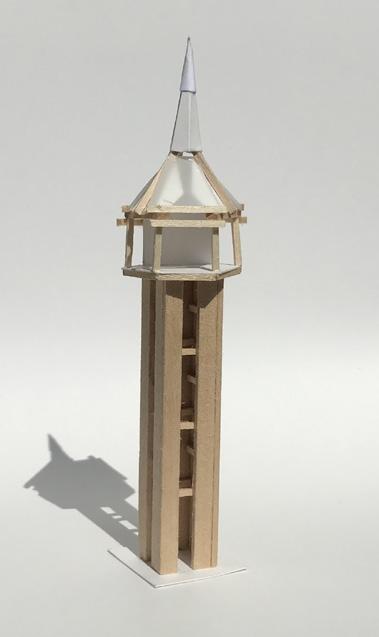
concept sketches and study model
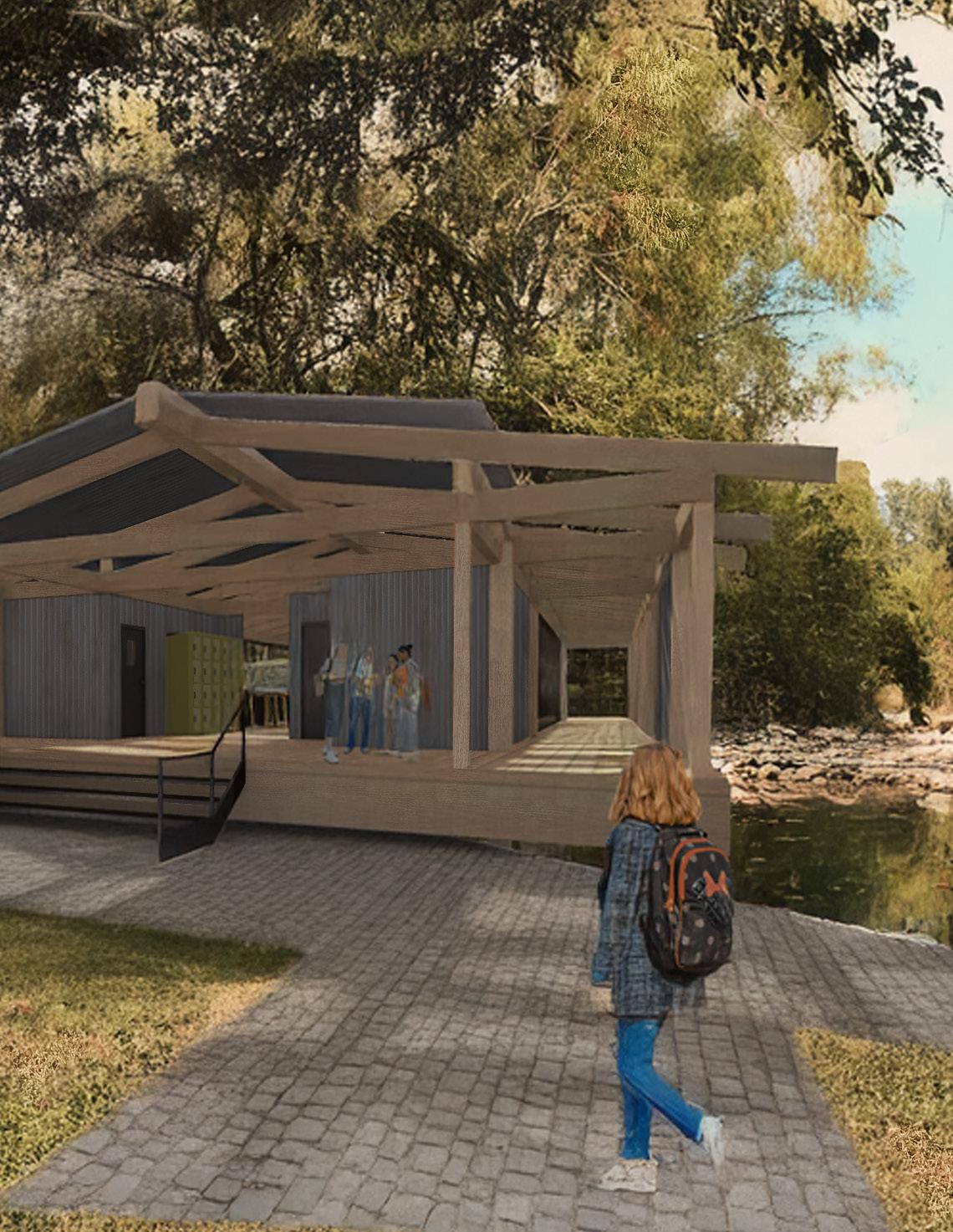
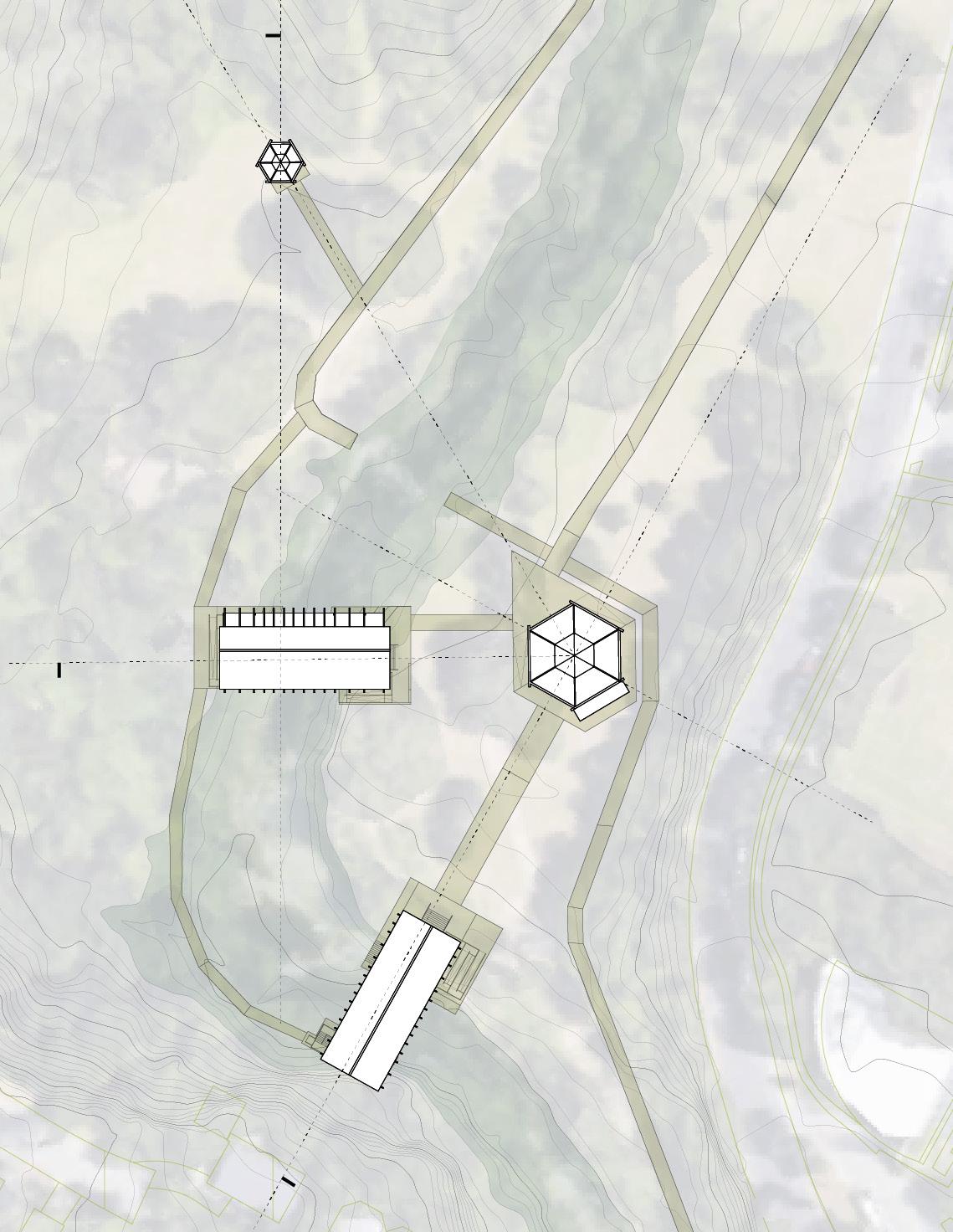
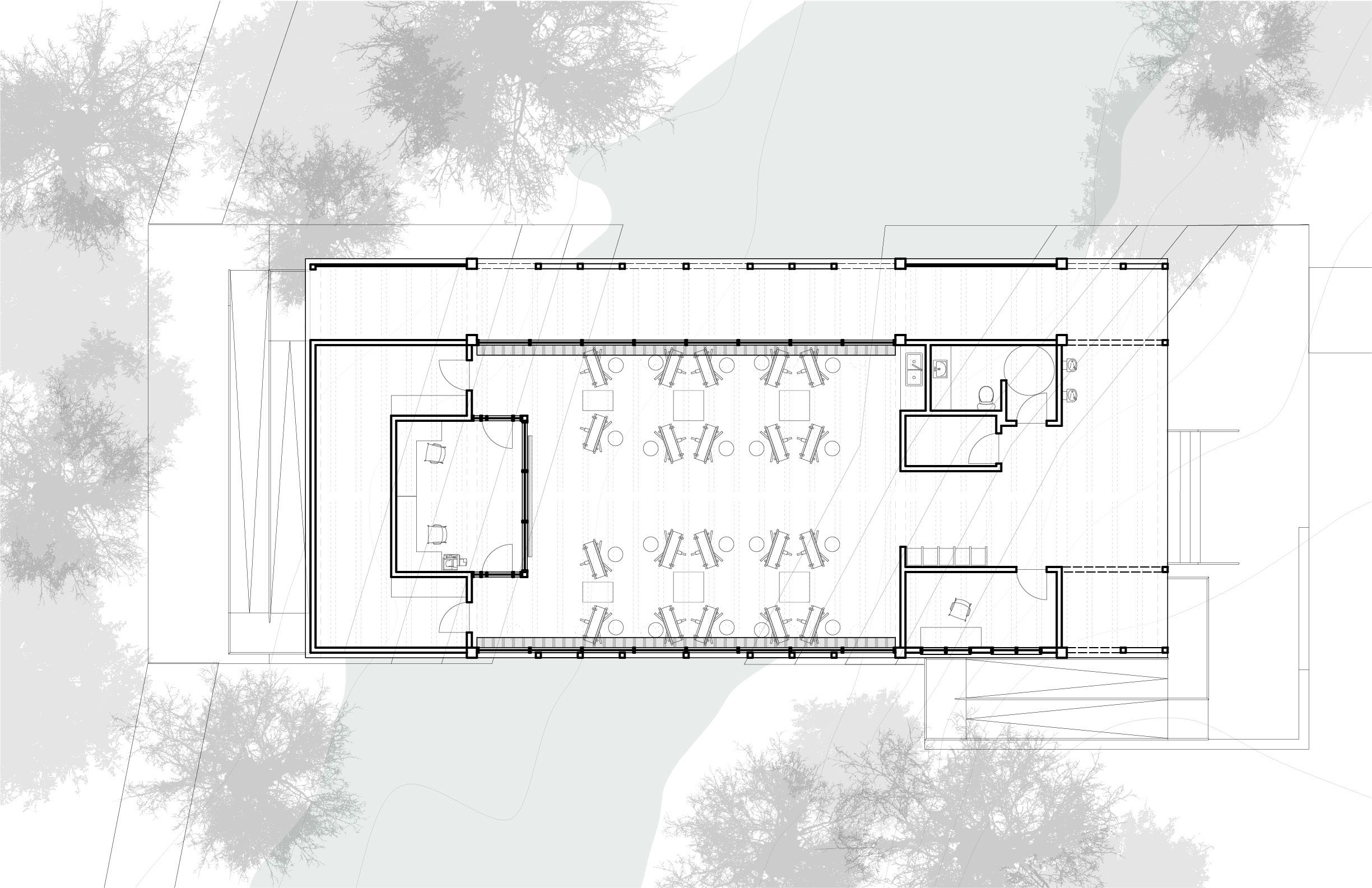
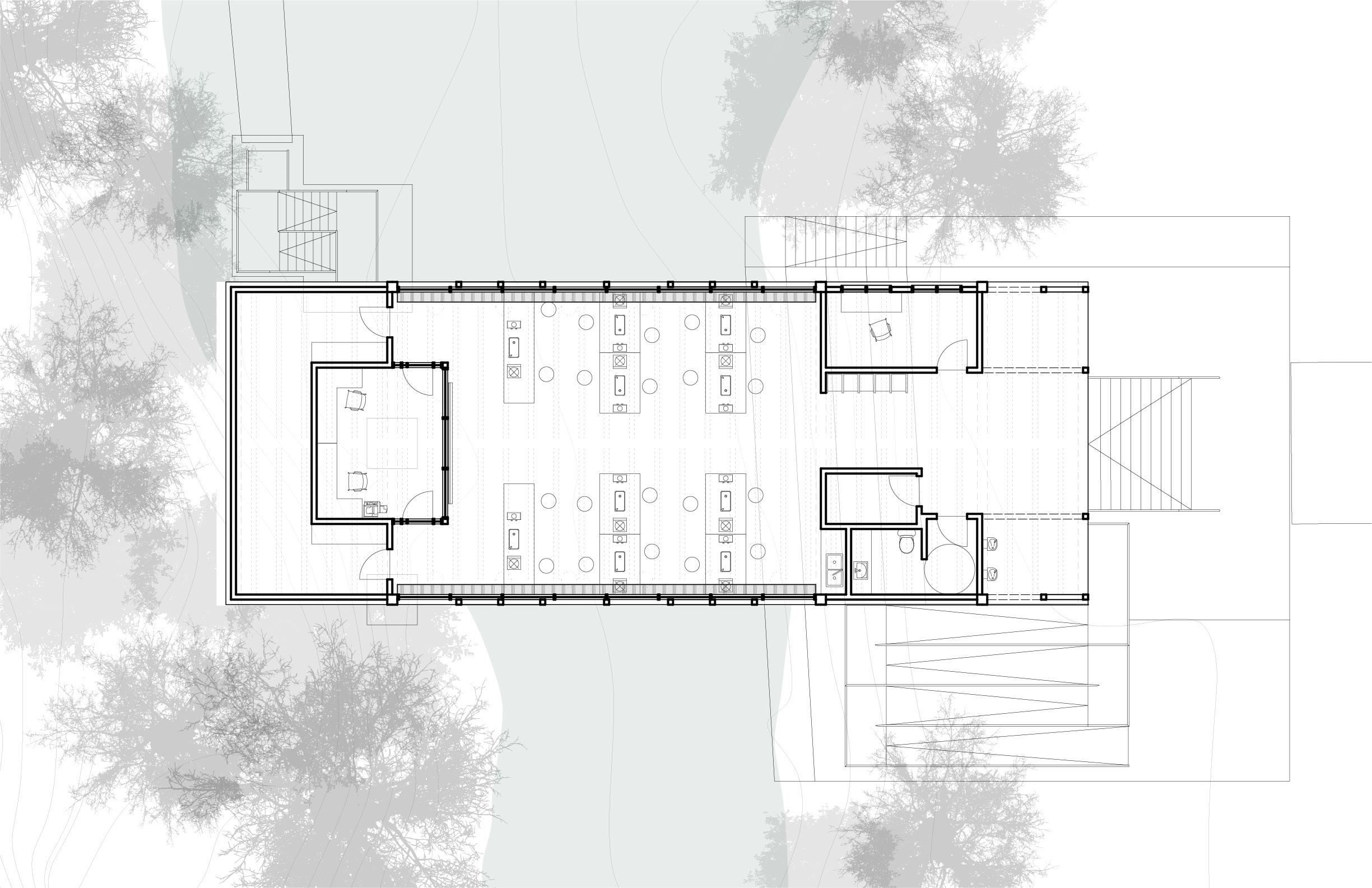
Upon visiting the site, currently a public park along a popular running and cycling trail, the goal of my design was to create a school that wouldn’t take away from the beauty of the park, and also be able to serve the public at times when the school is not in use, which would be most of the year.
The creation of icon sketches of aided in the genesis of this nodal campus. Multiple points within the site based on tree locations or topography swells inspired the various structures.
The school consists of four pavilions: a well, a tower, and two bridges. The well serves as flexible social classroom, mimicking how creatures and organisms gather around a watering hole. This open air amphitheater provides a relaxed central gathering space for the school.
The tower is an introspective observatory; withdrawn from the other structures, it stands as a noble landmark among the trees. This is a space for gaining new perspective on the world around us.
The twin bridges serve as the art and science classrooms, highlighting the duality and singularity of the tow disciplines. Suspended above the creek, they settle gently into the site, leaving a minimal building foot print. The transparent facades shallow in comparison to the beautiful views down shoal creek, backdropped by the exposed Balcones fault.
stone abuttments and mass timber columns
mass timber floor girders
wooden floor with forced air ventilation
complete wall and truss arrangement
complete floor stuctual system
complete roof stuctual system
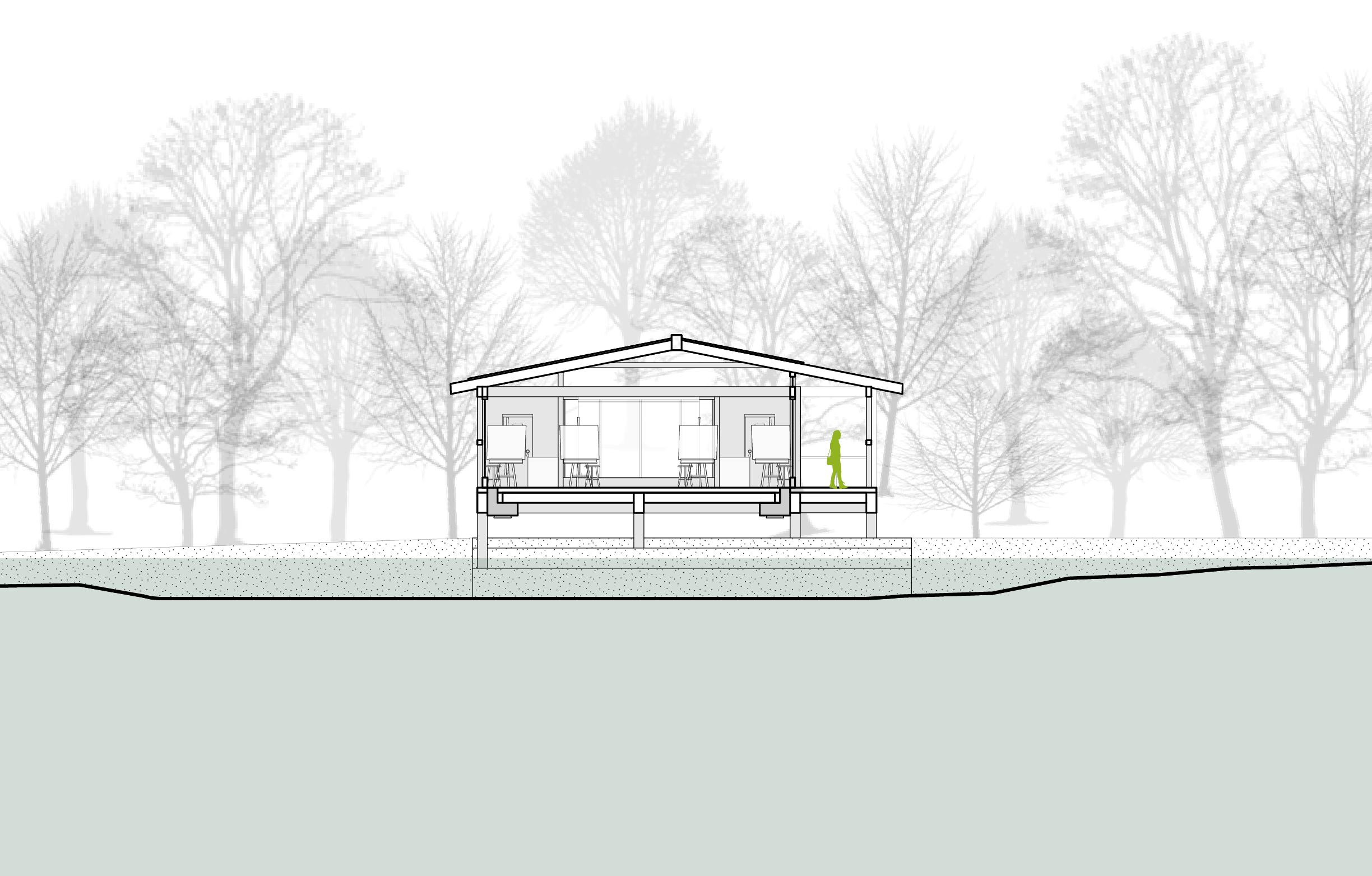
a. transverse section through art bridge
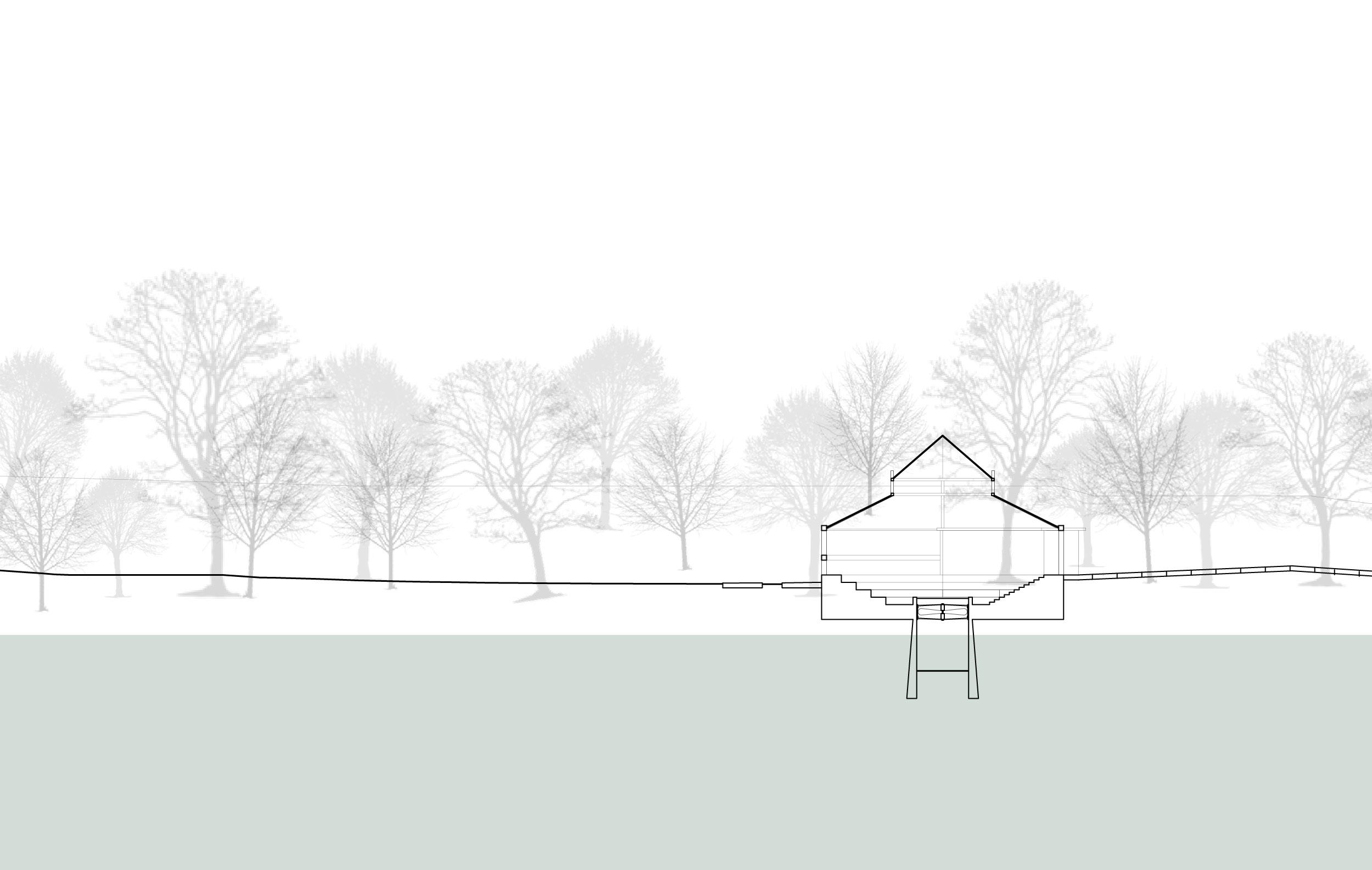
Another goal of the project was to avoid mechanical cooling solutions at all costs, instead favoring passive ventilation and forced air cooling. Having a connection to bodies of water then lent itself favorably to this. Ground water, insulated by the earth, cools the air in the well and that air can be blown into the well classroom for cooling.
Similarly, the moving water in the creek, stays relatively cool and fans beneath the bridge structure pull cool air into the classroom above.
Additionally, stack ventilation techniques are used to allow hot air to escape through the roof structures and operable windows can be opened to add cross ventilation.
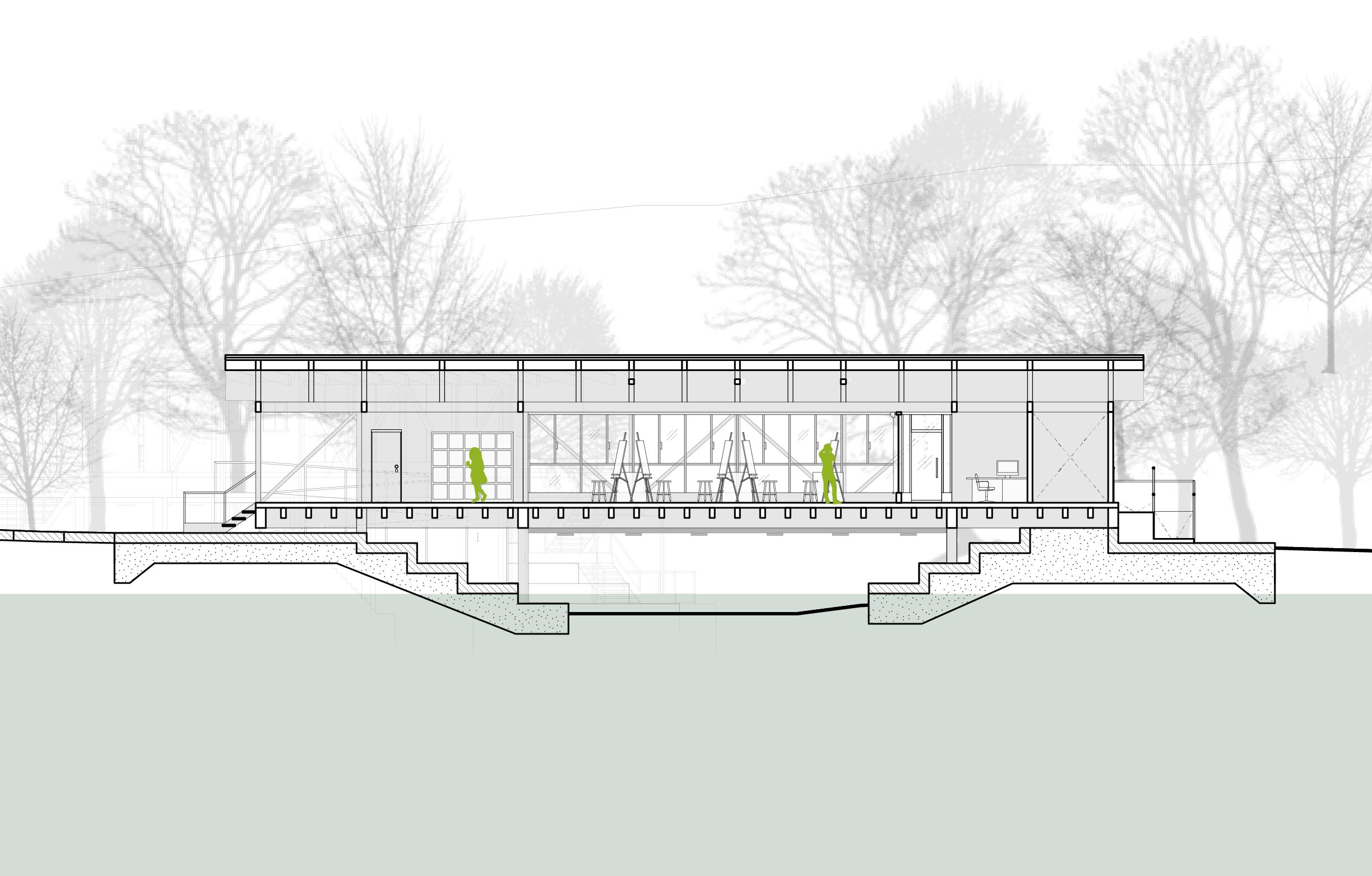
b . longitudinal section through art bridge
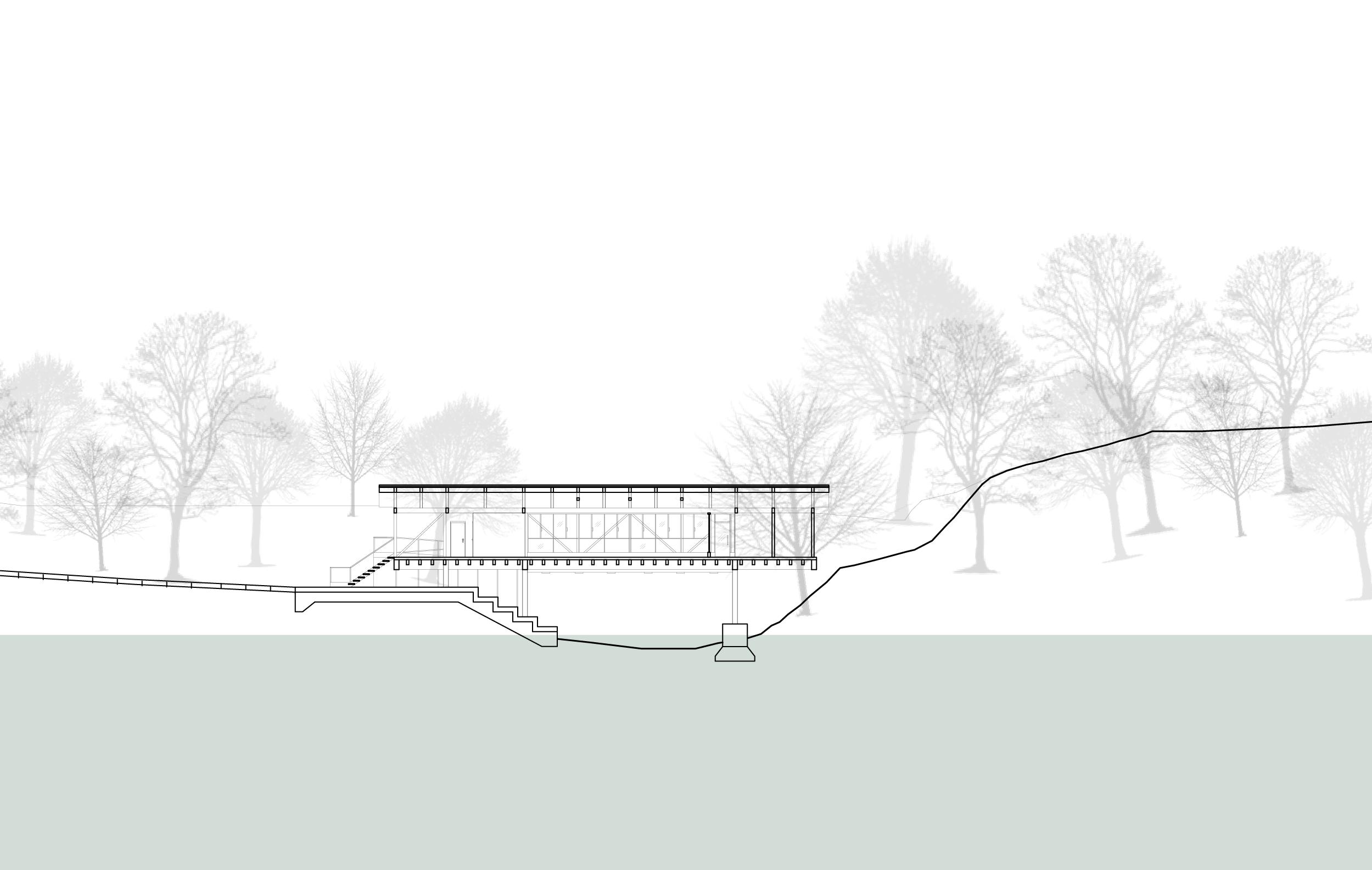
c . longitudinal section through well and science bridge
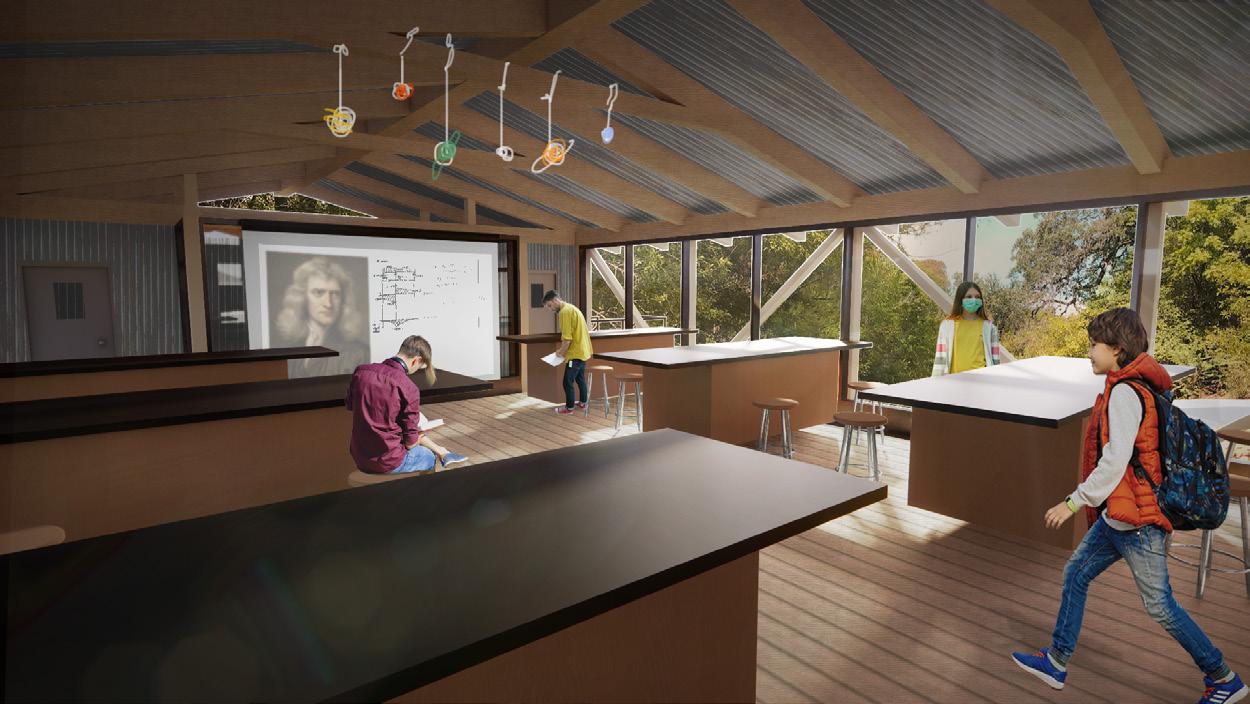
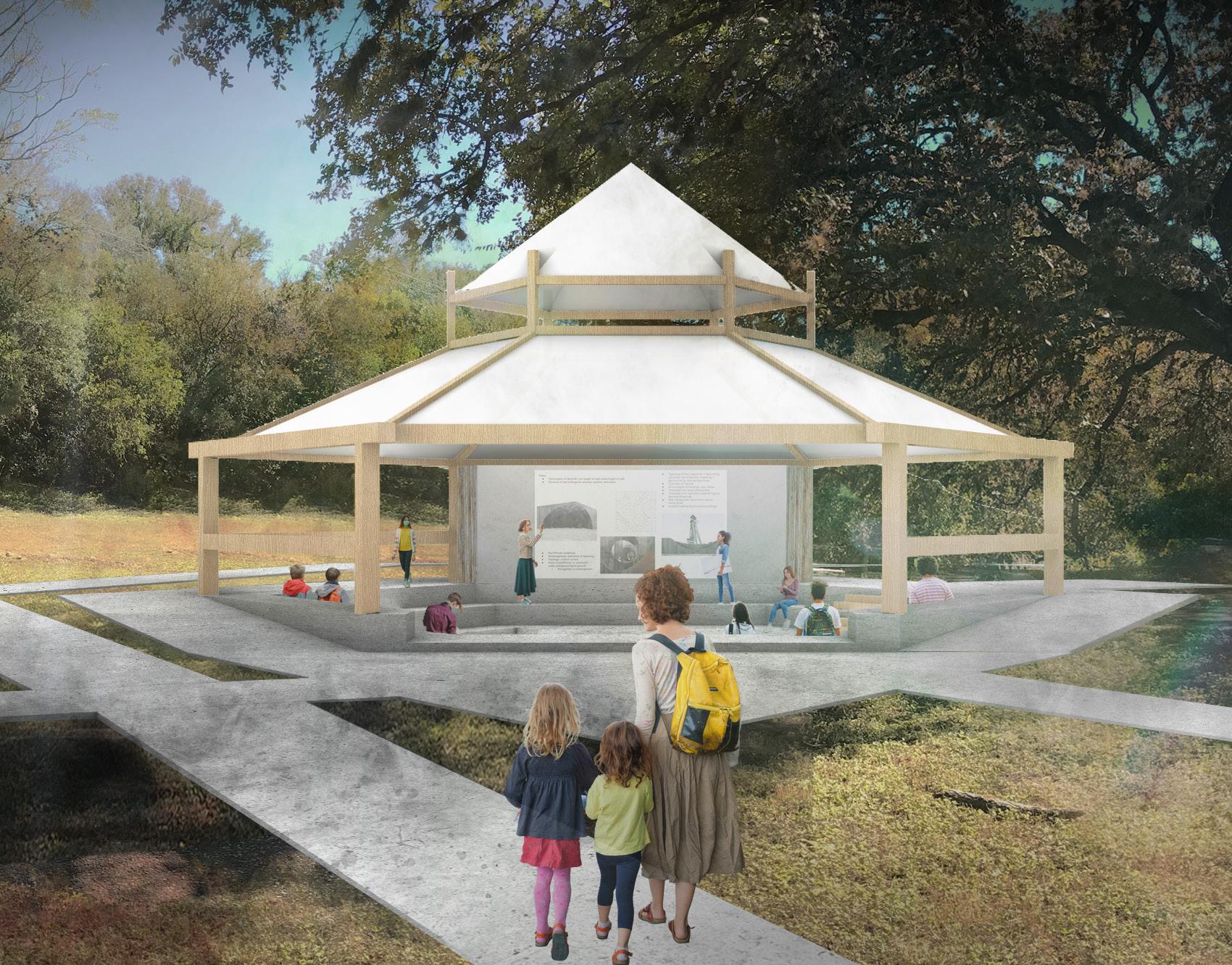
well assembly space
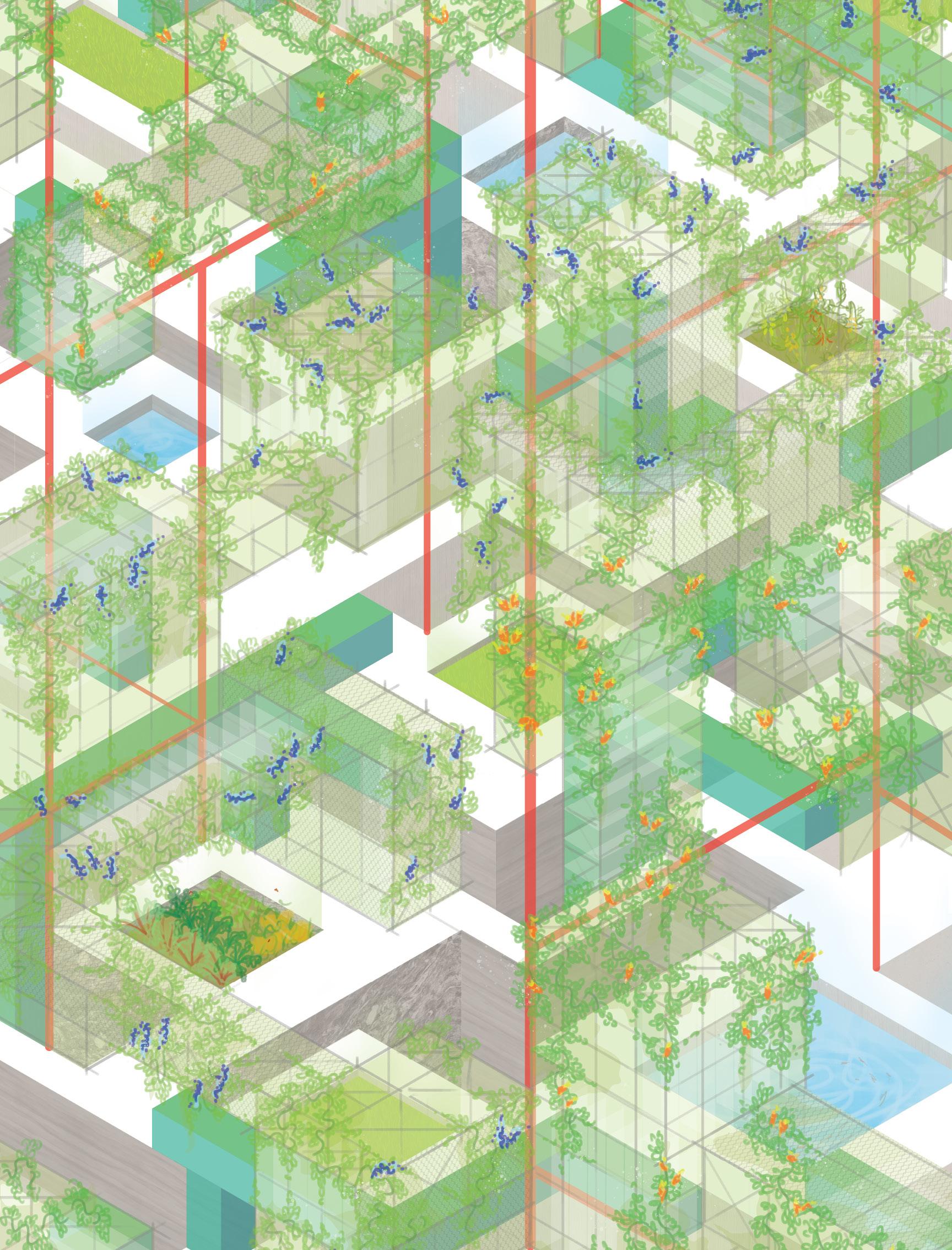
This design for a UN Headquarters in Austin, TX dedicated to fighting global warming, strives to celebrate the potential for mankind to cooperate and rebuild our dying planet. A dense, mixed-use program was intensified to further exemplify an urban, collaborative environment that reduces the individual carbon footprints and increases the sharing of resources. The form leans into the intersecting nature of urban environments with labyrinth of circulation pathways, connecting programs of various adjacencies. The weaving of greenery throughout the building introduces an emerging idea about integrating the manmade world with the natural and the sustainable mass timber structure highlights the potential for beauty and efficiency of integrated design.
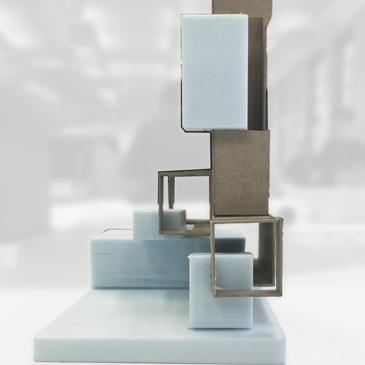
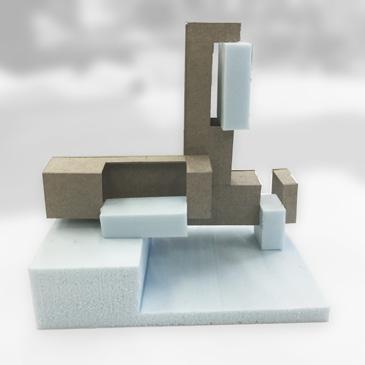
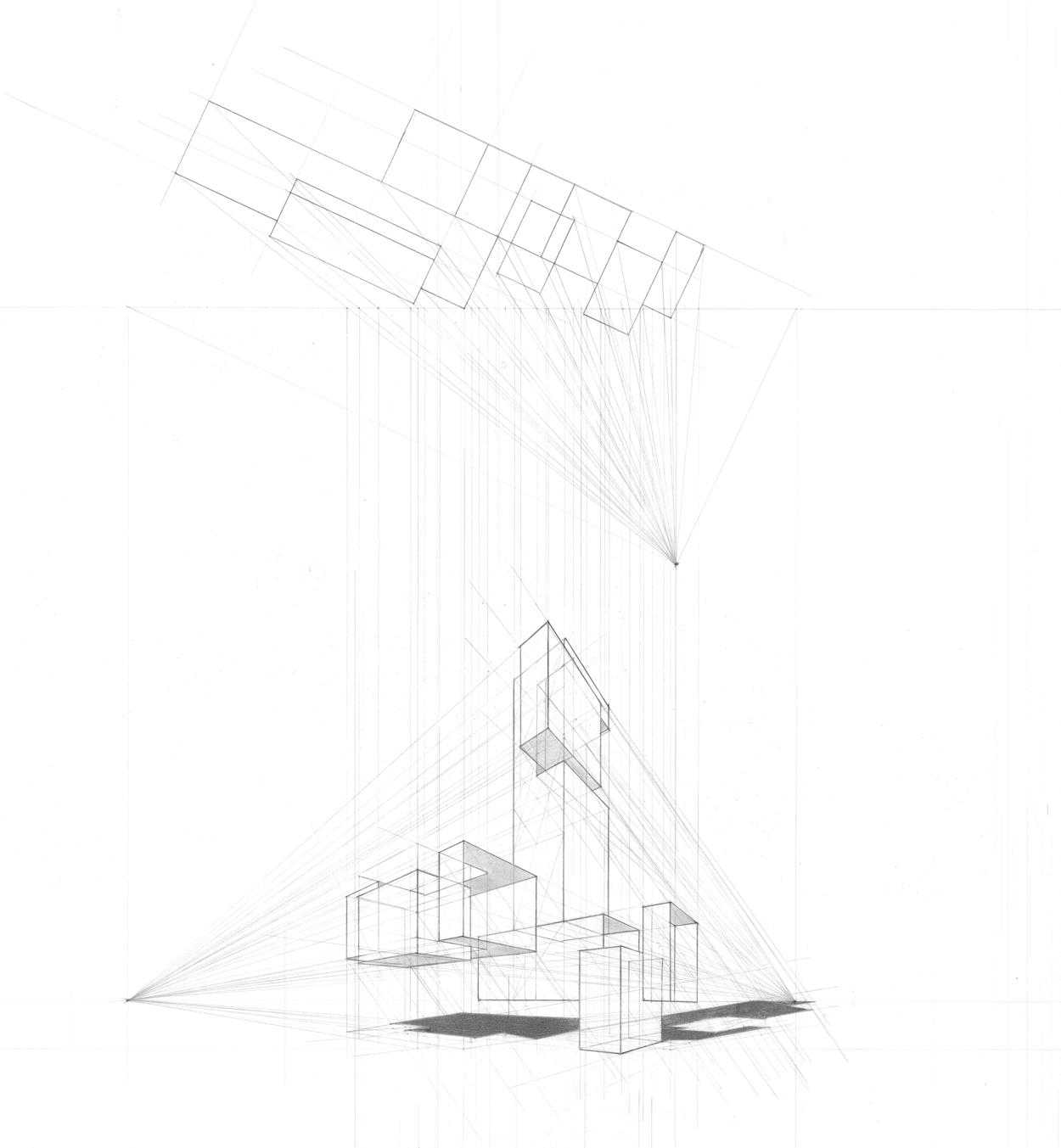
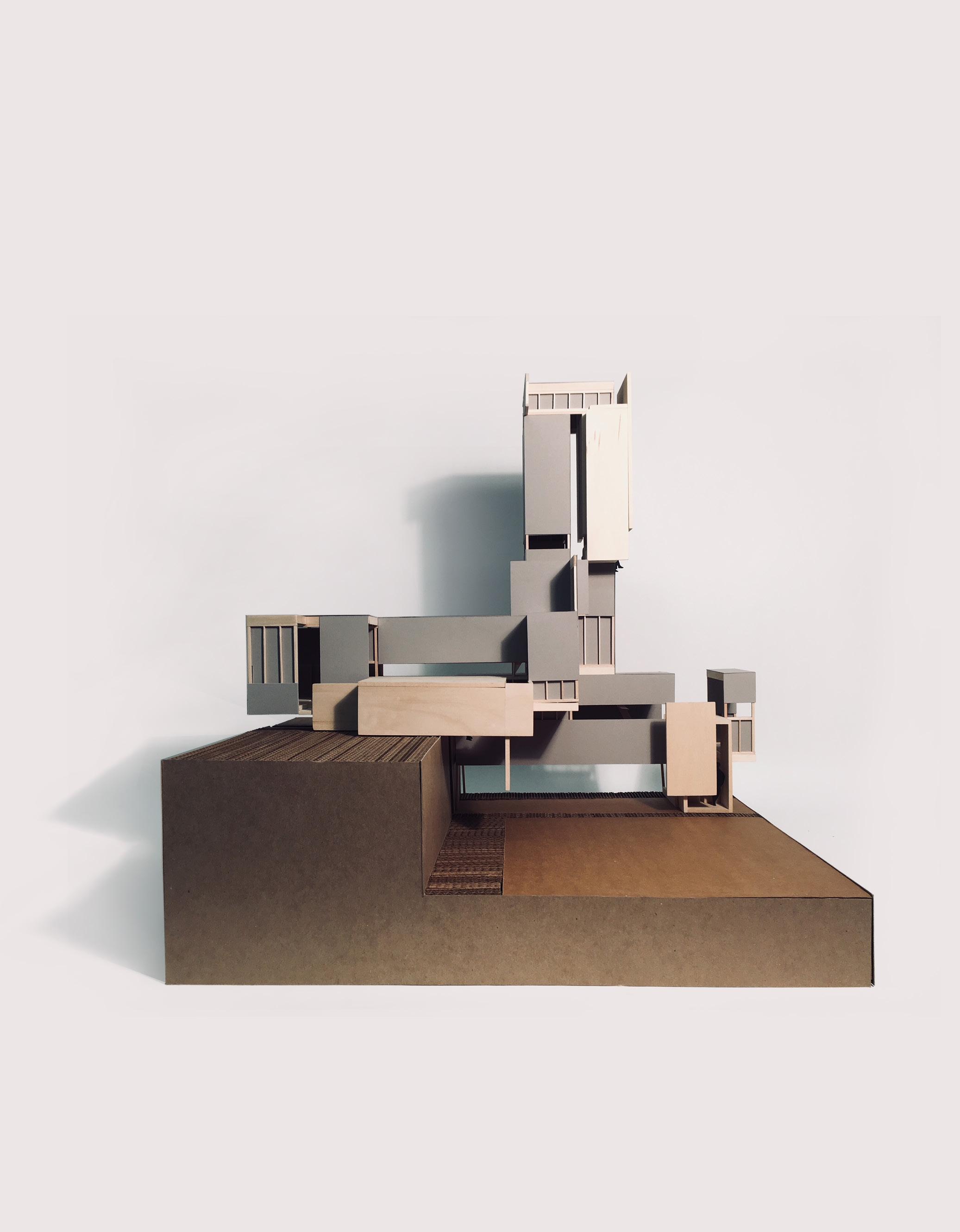
This was my first project completed in the university setting and it served to break down my preconceived notions of space and architecture. The form developed out of a series of operations and experimentations of mass and void, inverting them, shifting, rotating. The final form is composed of three hollow tubes, clad in varying levels of opacity, and each tube has an embedded programmatic volume. From there a circulation system was designed, creating a procession through the form. Beginning the journey from the back of the site one moves horizontally and down into a sunken meditation space. From there, up a ship’s ladder, the user scales the mountain to a breezy overlook. Upon the final descent, stepping back down to earth, one may meander into the final destination - a porous social space that spills onto an open plateau.
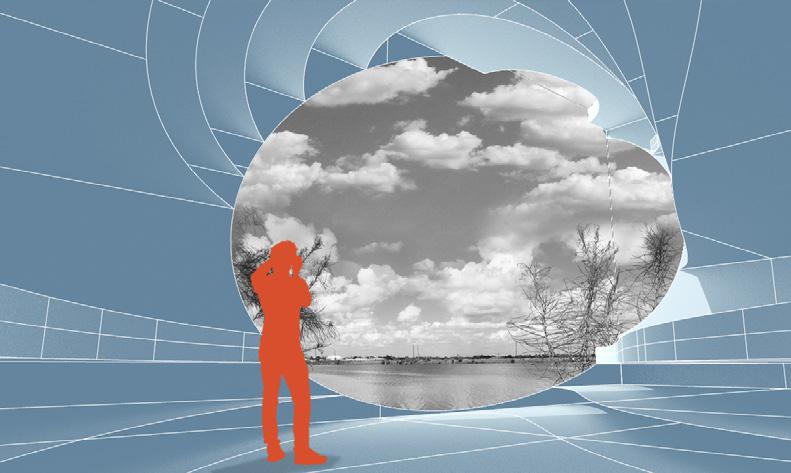
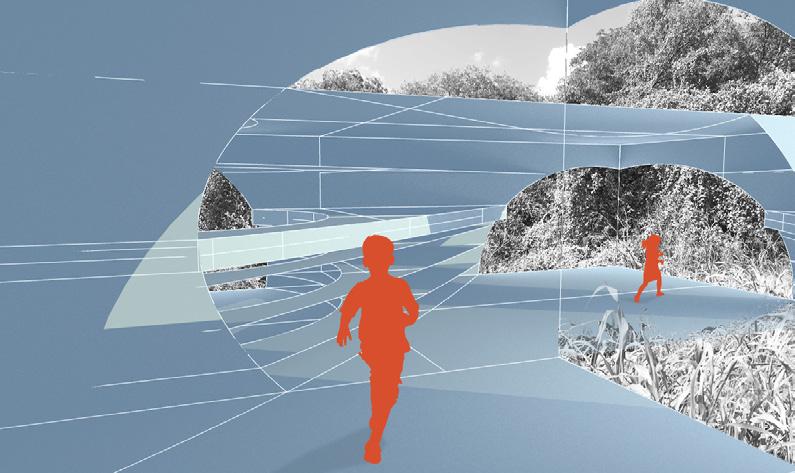
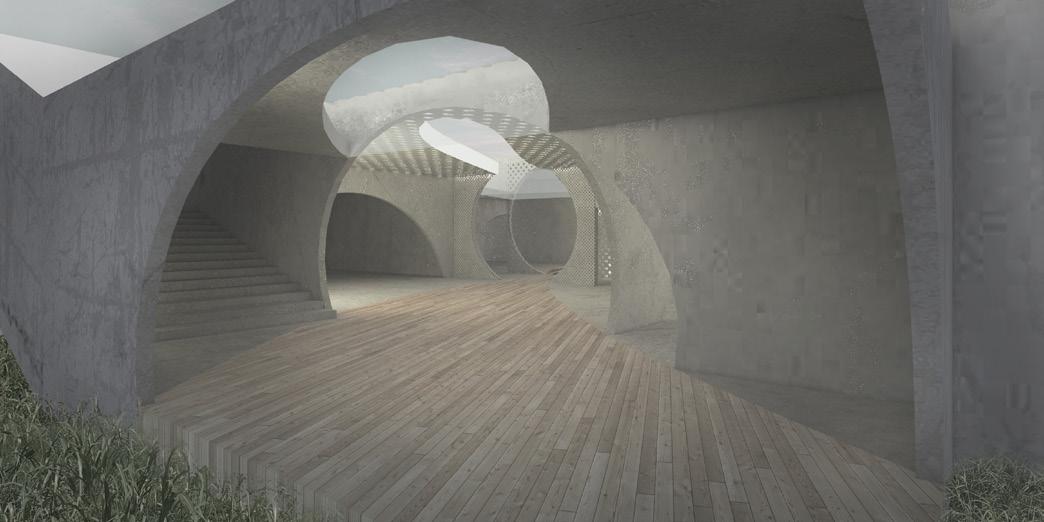
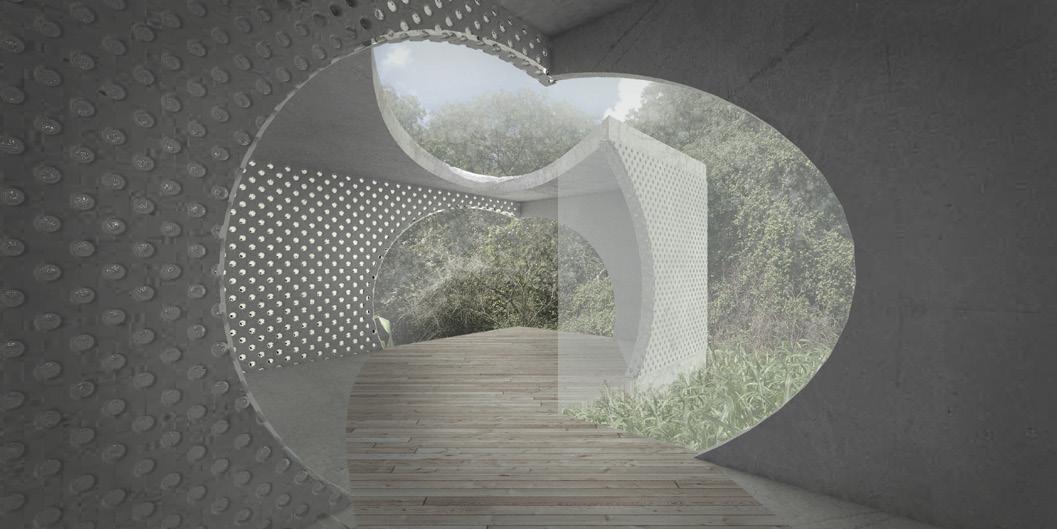
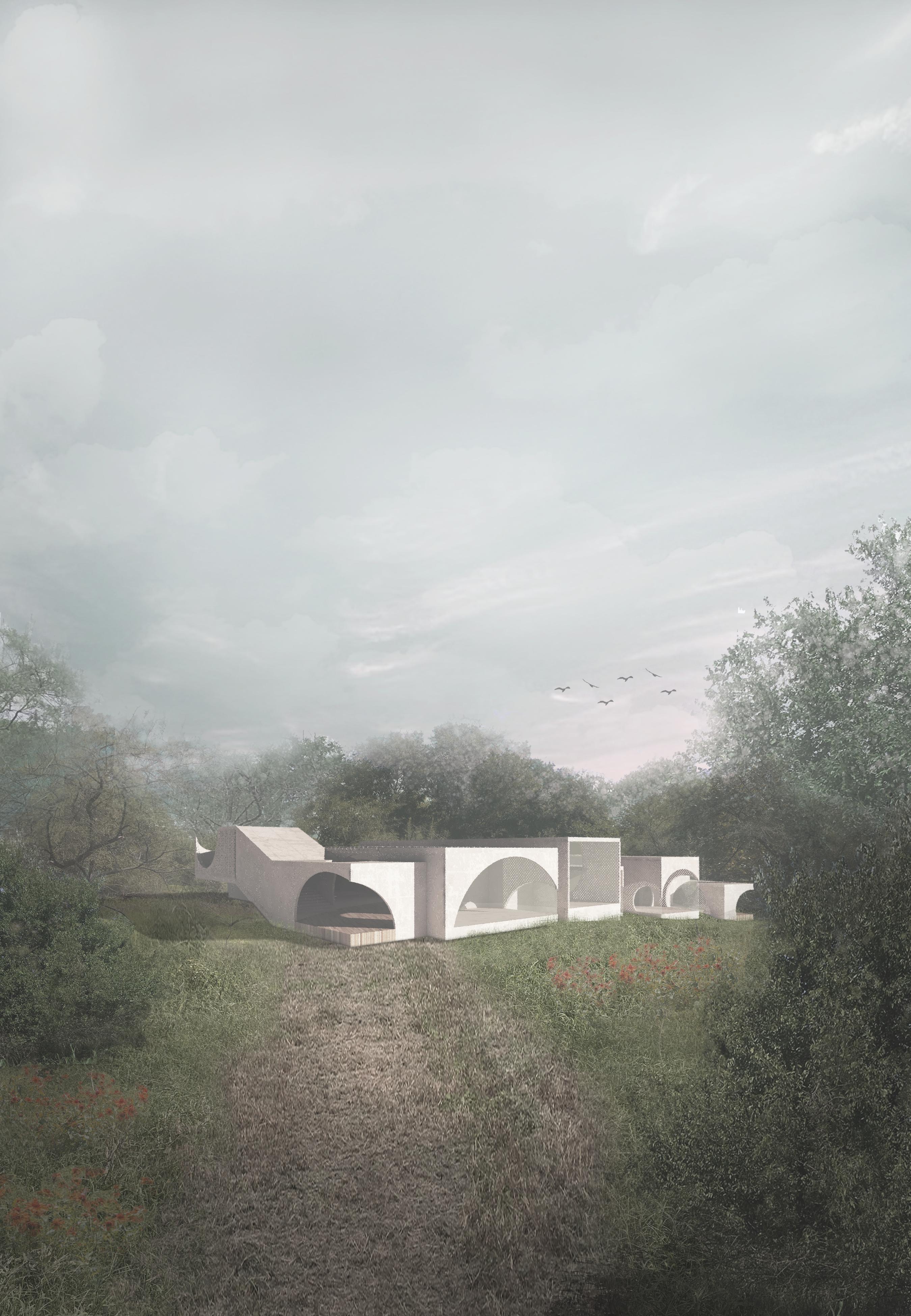
The theme of this studio, which prompted us to design an environmental research center, was parametric design. This project explores the superposition of contrasting systems - geometric and organic - playing with the idea of using a subtractive operation to add areas of discovery and inquiry. In essence, it forces people to question which system is more prominent, as some areas became more ambiguous, as the subtraction process leaves behind a fossil where people an only speculate what might have been there. The design began with a system of horizontal volumes organizing the program and stepping down the site. Next, a tube volume was subtracted to serve as the main processional artery. Finally, spherical volumes were subtracted to create apertures and thresholds. The spherical voids create connections between the outside and in, serving as looking glasses to frame the unique environment being studied on this site.



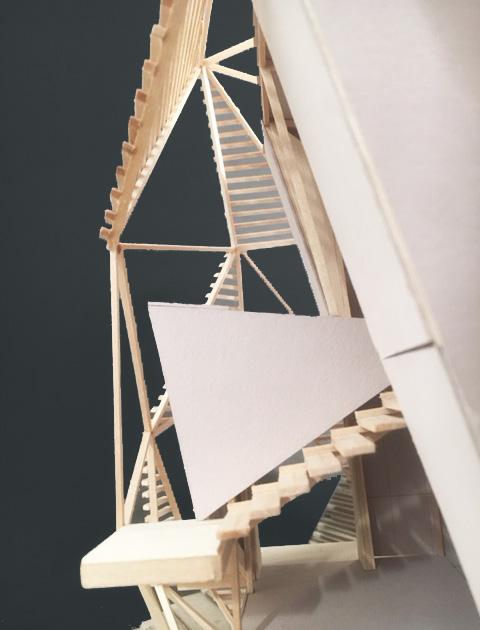
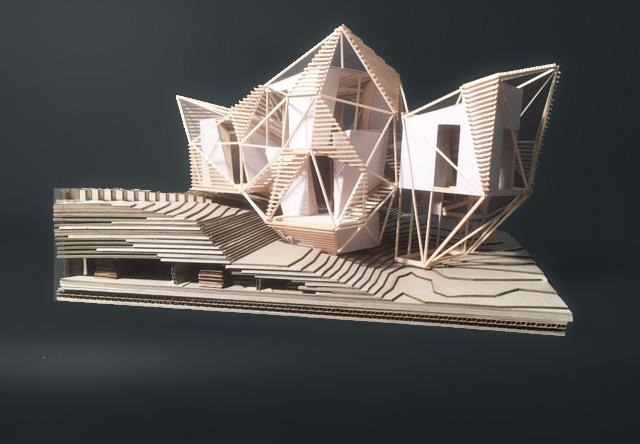
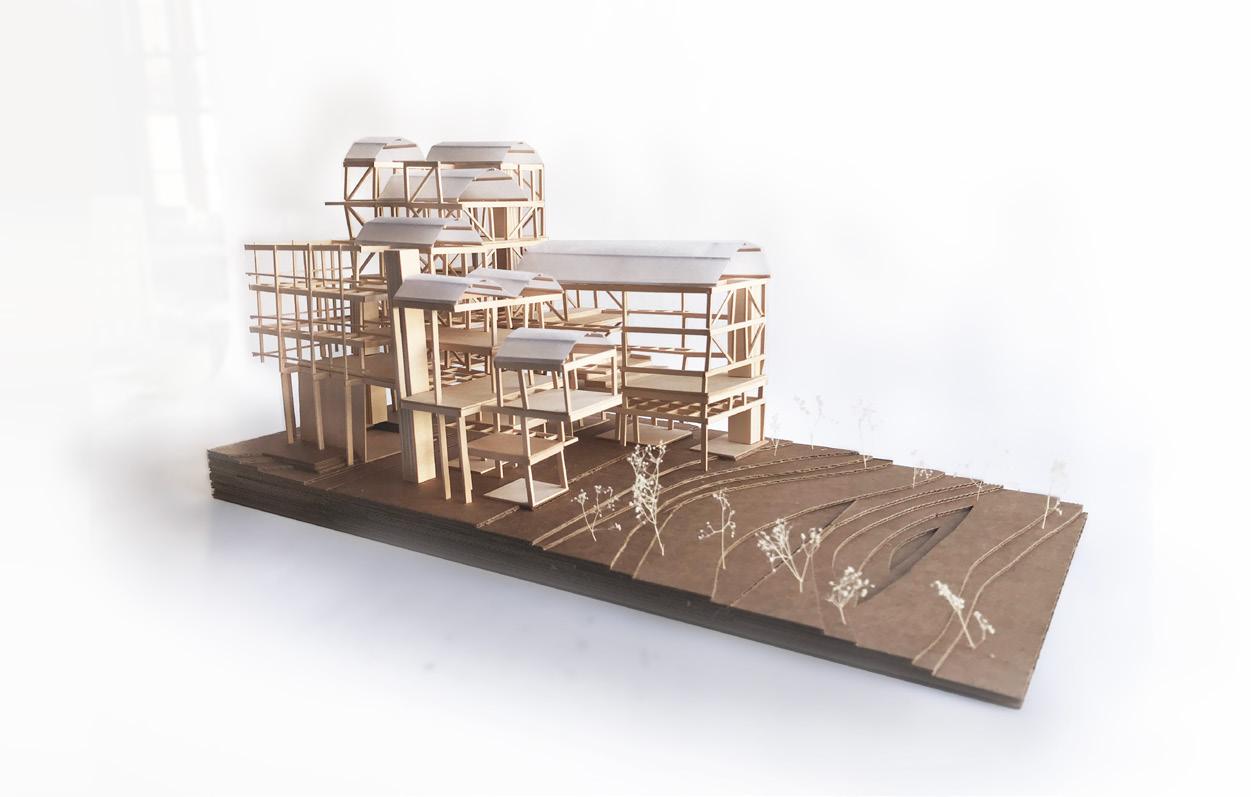
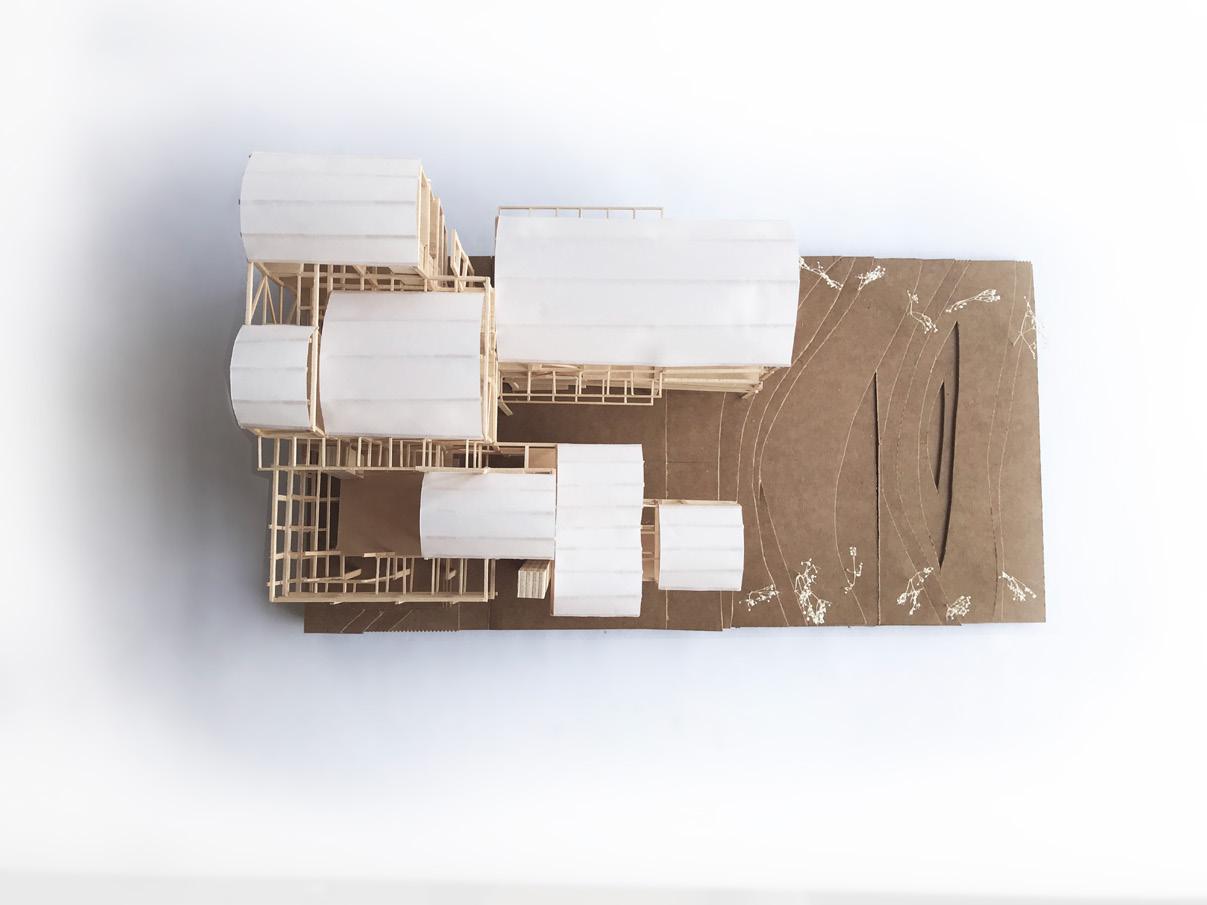
This studio was focused on the articulation of space between layers of construction. This facilitated the exploration of the manipulation of interstitial spaces and how this changes the experiential qualities of the design. In this unconventional residence, the inner layer reads as solid “trunks”. The outer layer is composed of completely tectonic frame elements that tessellate and fly out from the inner layer. While the inner layer provides stability and solidity, the outer layer captures an imaginative space where one can dances along the changing elevations like meandering branches. The tessellated frame still provides some protection and fragmentation of sunlight like a permeable canopy.
Many ideas of this early project are further developed, in later projects like Middle Ground and The Source.