





























































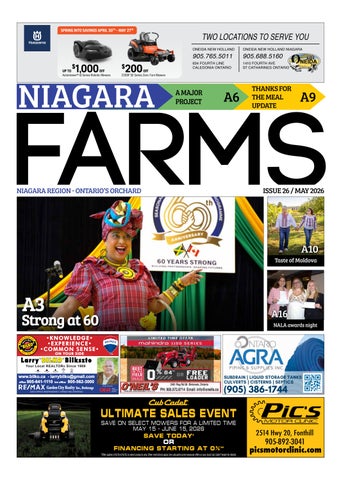
Workers and longtime employers honoured at special anniversary event
By Luke Edwards
The Seasonal Agricultural Worker Program in Ontario is so old that some of its inaugural participants may have actually seen the Toronto Maple Leafs win a Stanley Cup.
As Robert Shuh, the president of the FARMS, which manages the SAWP program, reminisced during a 60th anniversary event held in Niagara-on-the-Lake last month, he contemplated some of the things that have come and gone over that time, 8-tracks and Blackberries, for instance. However, the Leafs fabled drought - they last won the cup in 1967, a year after SAWP began - put the anniversary in perspective.
One of the secrets, suggested Shuh, for the success of the SAWP has been a nonstop drive to get better.
“Continuous improvement is a hallmark of our SAWP program,” he said.
SAWP began as an agreement between the governments of Canada and Jamaica, which at the time had only just gained independence four years prior. Canadian farmers, in desperate need of labour during
key periods of the growing season, could access that labour. Jamaicans, in turn, could receive jobs with income that was difficult to find in the fledgling island country.
It has since expanded to several other countries in Central America and the Caribbean, growing from a few hundred workers to several thousand.
In Ontario, fruit growing regions like Niagara have been one of the key areas for the program. In other areas, vegetable growers who require manual labour to maintain and harvest their crops have also benefited.
“So many of our workers have been welcomed over the many decades,” said Althea Riley, chief liaison officer with the Jamaican Liaison Service.
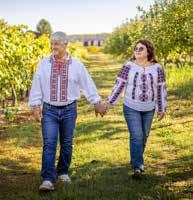
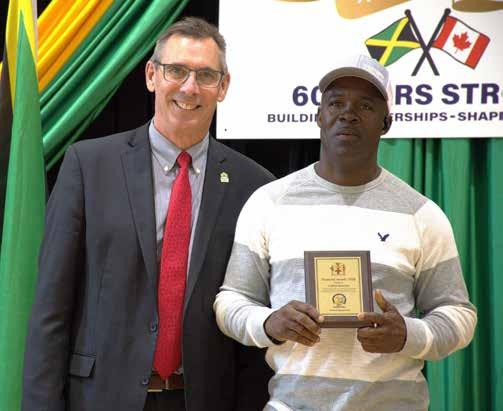
To celebrate those workers and employers who have made the program a success, several awards and plaques were handed out at the 60th anniversary event. That included “day one” employers who have been with the program since 1966, as well as workers who have faithfully returned each growing season for several decades.
“You represent the very best of our program,” said Colette Roberts Risden, permanent secretary assigned to the Overseas Employ-
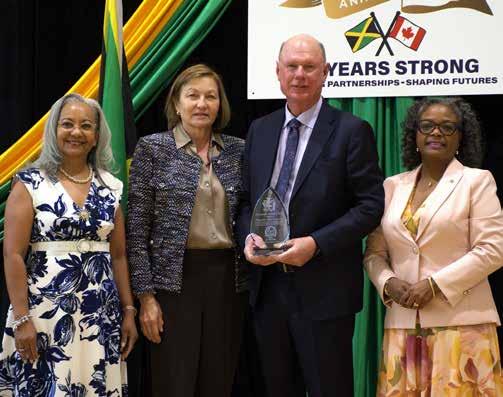
ment Program, who brought greetings on behalf of Pearnel Charles, Jamaica’s minister of labour and social security.
“This program has entirely been built on trust and respect,” said Riley.
25 would also have seen the falls lit up in the colours of the Jamaican flag.
Throughout the celebration, dignitaries and SAWP employers put the spotlight on the workers.

Publisher
Editor
Business Development
Stewart Grant • stew@granthaven.com
Luke Edwards • luke@granthaven.com
Heather Dunbar • heather@granthaven.com
Graphic Design
Erin Parsons • niagarafarmsnewspaper@gmail.com
Billing Administrator
Jen Gaetan • jen@granthaven.com
Contributor
Ann Marie Chechalk

Restoring small-town journalism, one community at a time!

And while they acknowledged challenges the program has faced, supporters said they remained committed to Shuh’s description of continuous improvement to make sure it’s a program that works for everyone.
In addition to the awards banquet, the weekend celebration also included a special church service at Cornerstone Community Church. Those peering out at Niagara Falls on the night of April
“None of this happens without the people who come here to work,” said Erwin Wiens, NOTL’s deputy lord mayor, and a local farmer who utilizes SAWP.
Wiens pointed out that even as they were all gathered to enjoy the afternoon celebration, there were workers out in the fields tending the crops.
“They are members of our community. They are our community,” Wiens said.
By Luke Edwards
Like the people on screen, many in the audience knew full well the healing power of equine therapy.
The hugs, tears and words of thanks proved it.
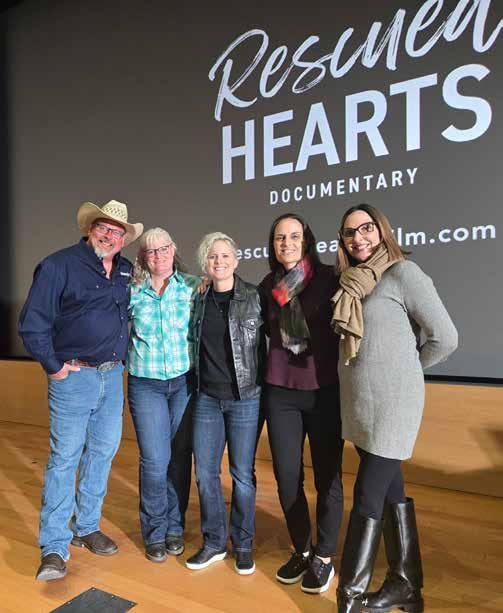
Horse Sense for Kids and Pathstone Mental Health jointly hosted the Canadian premiere of Rescued Hearts, an American documentary that shares the stories of several people who have benefited from horse therapy, including producer Dana Croshere. It was held last month at the FirstOntario Performing Arts Centre.
For Brenda and Rob Langendoen, the documentary hit close to home. The pair operate BnR Stables in Fenwick, where they run the Horse Sense for Kids program. Youth can receive free equine therapy, which can help with a wide variety of issues from autism spectrum disorder, to anxiety and mental health issues, to trauma-related issues. They work with organizations like Pathstone to make it happen. Rob said the documentary came as close as possible to highlighting what they see on a daily basis.
“It’s really hard to articulate what we see, but this film does a great job,” he said.
“There’s a kind of magic that happens, that’s not quantifiable,” said Pathstone’s Erin Clayton.

Rescued Hearts was produced by Croshere and directed by her partner Krisanna Sexton. The duo, from Arizona, didn’t have much of a horse background. In fact, Sexton admitted to being slightly uncomfortable around the animals.
But when Croshere began volunteering with a group similar to Horse Sense for Kids she saw a potential film in the making.
It features two distinct parts.
The first shows the power of equine therapy in its various forms: A military vet with post-traumatic stress disorder, a child with autism who broke seven years of silence by speaking to his horse, and even Croshere and her father.
While they said they didn’t plan it at the time, as they interviewed therapy providers, recipients and researchers about the benefits of horse therapy, Croshere’s father Frank expressed an interest in participating. The experience helped him come to terms with the guilt he felt over what he considered his failure to protect his young daughter from the attacker who raped her.
The film follows the two as they come to terms with an event they had both buried.
The second half of the film turns the attention from horses rescuing people to people rescuing horses, highlighting several organizations who take in abused, neglected


and injured horses. They’re animals who would otherwise be unwanted.
Following the showing, several people in the audience shared their experiences of participating with Horse Sense for Kids or other equine therapy organizations. Their stories mirrored some of the stories shared on film, including a young woman who credited the support she received on the Langendoen farm for overcoming the
anxiety and self esteem issues that plagued her in her younger years.
Another woman said it was her horse that played a huge role in her making it through the grieving process when her son died.
BnR Stables runs an annual Wild West open house in June that supports the Horse Sense for Kids program. This year’s event takes place on June 13, from 1 to 4 p.m. BnR Stables is located at 2250 Balfour St. For more information visit hsfk.ca.

By Luke Edwards
Even though he has a relatively small space for his garden, last year Jay Millington was more than happy to see some of his produce overripen.
Other plants he dug up and stored over the winter, with no intention of actually eating.
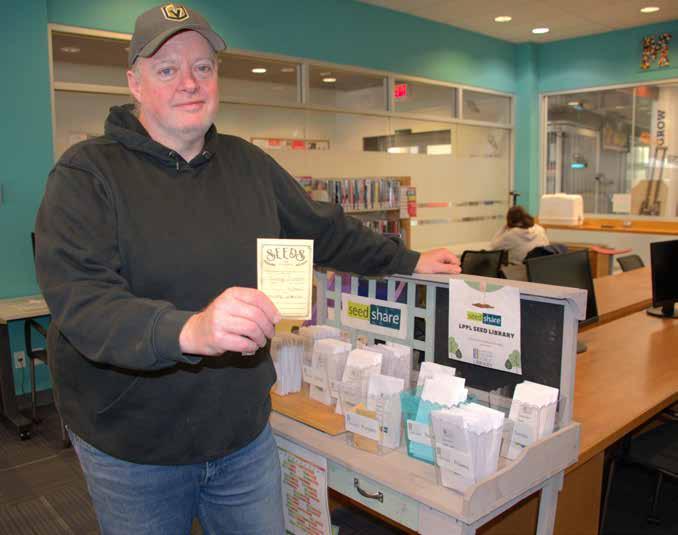
That’s because the Lincoln man has started the Niagara Seed Project, a volunteer effort to help ensure local seed libraries are well stocked throughout the planting season.
“I noticed that the selection and the quantity were very limited in what they had. So I wanted to help expand that,” he said from the Fleming Centre branch of the Lincoln Pelham Public Library.
With food prices at the grocery store going up and people looking for alternative ways to get produce, seed libraries offer an opportunity for aspiring gardeners. Several libraries throughout the region have seed libraries, where visitors can come in and pick up a packet of seeds for free. The idea is that they’ll then save some of the seeds to return in the fall.
However, that doesn’t always happen, and sometimes the seed libraries can get a little lean.
Discovering this, Millington reached out to his local community and partnered with some fellow gardeners. One resident offered up some space on her land to grow plants for seed. He also received some donations from seed companies.
The goal is to provide a sustained contribution to the local seed libraries, offering consistent supply of a wide range of vegetables, herbs and flowers. For flowers, Millington is prioritizing native, pollinator-friendly options.
While he doesn’t consider himself an expert, Millington has researched what he can online and by talking to other gardeners. One of the benefits of the project is that he’s learned seeds from plants grown locally tend to be better suited for that local setting.
“Seeds tend to adapt to where they’re grown, the micro climates, the soil, and weather. It actually creates genetic differences so that they have adapted to grow best in that area,” he said.
Ahead of this year’s planting season he was able to donate more than 900 packets of seeds. This year he’s planning a wide mix of vegetables, herbs and flowers totalling more than 200 varieties of heirloom, open-pollinated plants.
There is some extra work required for seed saving. It starts in the spring with careful planning of the garden beds and ensuring the right plant varieties are used.
When it comes time to harvest the seeds, different plants have different needs. In some cases the fruit should be overripe to allow time for the seeds to develop. This is what makes tomatoes a favourite, Millington said with a laugh, since he can collect seeds while also enjoying the produce.




There are also some processing requirements that vary from plant to plant, including drying and fermenting.
And then there are the biennial plants like beets and carrots, which don’t go to seed until the second year.
Despite the work, Millington said he enjoys doing something that can be a benefit to his neighbours and the local environment.
The project has received some donations and support, and Millington said he’s also gotten some help from volunteers, including at West Niagara Secondary School where students can gain volunteer hours helping out.
For more information follow the Niagara Seed Project Facebook or Instagram pages
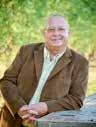



By Luke Edwards
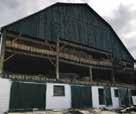
More than 20 years after it was donated to the Marshville Heritage Society, the Minor house may soon be open to the public.
But before that can happen, community support and donations are being requested to help fund the rebuilding and restoration of the nearly 200-year-old home that was once home to the village’s postmaster and later a doctor’s office.
“It’s well on its way,” said society member and co-chair of the annual Labour Day weekend Marshville festival Margaret Robertson.
The road to opening the house has been a long and winding one, with a few speed bumps along the way.
Originally built in 1842 on the south side of the Feeder Canal, with an addition put on later in that century, the Minor House was home to several postmasters in the village. Later it became the office of Dr. Marshall. The Minor family, longtime supporters of Marshville and well known in the Wainfleet community, eventually came into possession of the building, with Gerald Minor calling it home.
After his death, the Minor family donated the house to Marshville, in 2005.
In need of some repairs, the society slowly but diligently worked away at renovations.
“It took us a long while to get going on it,” Robertson said.
But finally, in 2018 it was ready to be unveiled, with plans to open it up for that year’s Marshville festival.
The unveiling never took place, as mere days before the festival kicked off, a fire broke out at the house.
“It was tough to see, it was sad,” said Robertson.
Rebuilding efforts have since restarted, and Robertson said the goal is to have it at least partially open for this year’s festival. Volunteers have done some work, but they had to bring in professionals to get the home rebuilt.
“We’re making it as original as we can,” Robertson said.
More information on the project can be found online at marshvilleheritagesociety. org, where there’s also a link for donations.
Alternatively, donations can be sent to Lori Heemskerk at lori.heemskerk@outlook. com, or Marshville Heritage Festival, Box 54 Wainfleet, On. L0S 1V0.

Planning for this year’s heritage festival is also underway. Once again set for the Labour Day weekend, visitors can expect a familiar mix of music, food, and history as the village and society pays tribute to the area’s pioneer past.








By Niagara Farms Staff
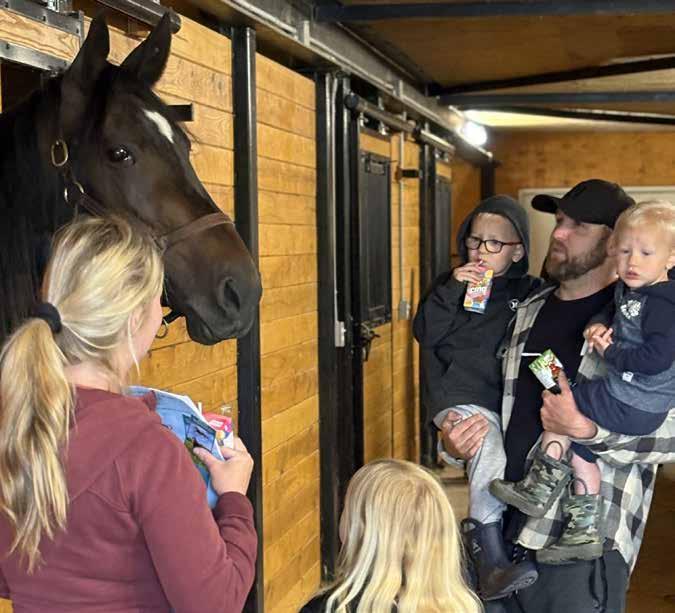
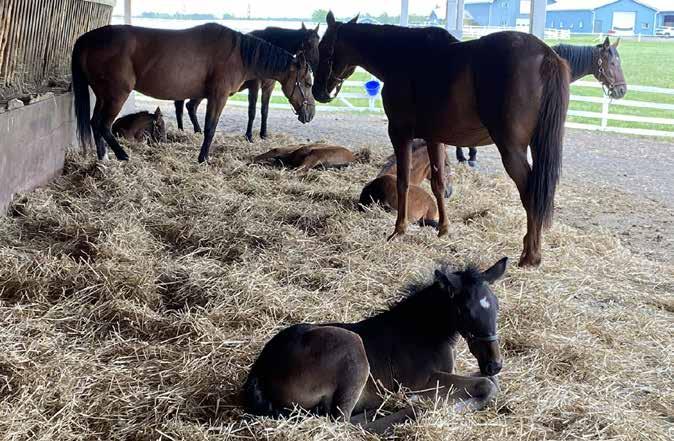
A St. Catharines horse farm will once again welcome the public in to see what goes into breeding standardbred horses for racing.
Beth and Tom Rankin host their annual open house on Saturday, May 30. The yearly event supports the Bill Galvin Racing Alliance’s two spring youth contests, a literary derby and art derby.
“We love sharing our passion for horses with young people,” said Tom Rankin, in a press release. “Seeing their faces light up when they meet a foal for the first time is really special. Many of them have never been this close to a horse before, and it’s a great opportunity to introduce them to these amazing animals and the sport of harness racing.”
The Rankins have been longtime horsebreeders, producing more than 300 foals at their St. Paul Street West farm since 1990. Visitors to the May 30 event can expect to get up close with the farm’s broodmares and their foals, take pictures and get a taste of life on a horse farm. There are expected to be seven or eight foals born by the time the open house rolls around.
A “name the foal” contest returns, with guests able to submit suggestions. The winning selection as chosen by the Rankins will receive a $100 cash prize.
More than 800 people have attended the open house in its first three years.
“We were thrilled with last year’s turnout despite the inclement weather. Many visitors told us they often drive past the farm and wondered about the horses, so this event gave them a chance to learn more about the breed,” Rankin said.
The BGRA promotes harness racing in Ontario, with a focus on introducing youth to the sport and creating the next generation of harness racing enthusiasts. One of the ways they do so is with the annual literary and art derbies. The literary derby is open to young people from Grade 3 to 8 and the art derby is open to youth from Grade 3 to 12. It encourages kids to create literary or visual artwork with a horse or harness racing theme, with cash prizes for top winners. All told, $2000 for the literary derby and $1,500 for the art derby is up for grabs.
The deadline to submit for this year’s contest is Aug. 31.
Organizers of the open house say it’s a great chance for young people to come and get some inspiration for the contest.
Those planning to come for the open house are asked to register by May 27. They can do so by calling Rankin Construction at 905-684-1111 during regular business hours. The open house runs from 10 a.m. to 1 p.m. on Saturday, May 30. The farm is located at 1490 St. Paul St. West.



By Luke Edwards
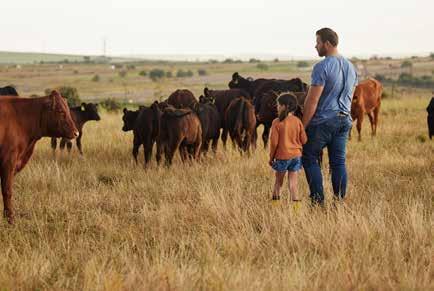
In farming, failure is often not an option. The crops simply must be planted, the cattle simply must be fed.
When Grimsby and the West Niagara community faced a possible closure of its hospital, community members utilized that agricultural spirit and simply didn’t accept failure as an option.
Now, after a decades long battle has resulted in a brand new West Lincoln Memorial Hospital, the area’s agricultural heritage will soon be honoured there.
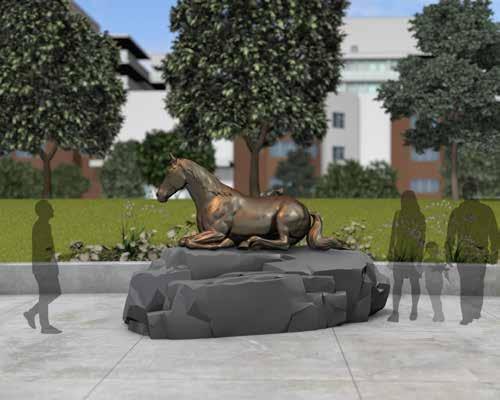
Later this year a new sculpture will be installed in front of the newly built hospital.
Hamilton based sculptor and York University professor Brandon Vickerd was recently selected to create a public art piece to be placed in a parkette area in front of the hospital. He was one of five finalists, and following his selection went through a collaboration process with the community to determine what identify the piece should explore.
“In the consultation with the community, it was really clear that the two main things they wanted to see was something that connected to the community’s agricultural history, and also the significance of the escarpment to the town’s identity,” said Vickerd.
With agricultural history front of mind, Vickerd set out trying to determine exactly how to represent it in a sculpture. Given the diverse rural heritage of the area, there was no shortage of options. However, when combined with the hospital setting and creating something that aesthetically fit with a health care facility, the options quickly narrowed.
“How do you represent an agricultural community in a way, while also making a piece for a hospital that’s calming and relaxing?” Vickerd said.
“Ultimately people who are coming to the hospital - it can be the worst possible day of their life, or it could be the best possible day of their life. And you don’t want a work that’s adding to any sense of anxiety. You want something that’s calming,” he said.
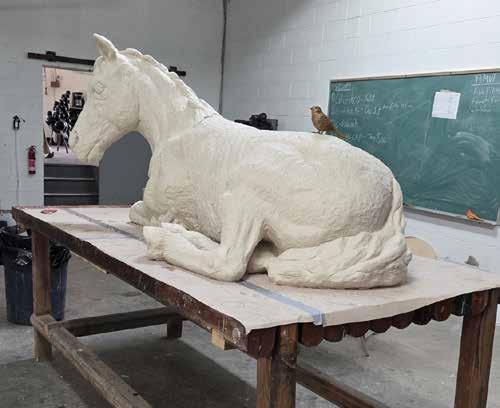
That ruled out any animals that might be raised for meat. So, turning his attention to companion animals, Vickerd settled on a horse, creating a sculpture where the animal is shown resting. Not only does it offer a nod to the area’s agricultural past when beasts of burden like horses were relied upon for a lot of farm work, but Vickerd said it also connects the past to the present, and to the escarpment.
“The role of horses going all the way back to the War of 1812 in the area and on use on agricultural farms, but also, even now as a recreational form of experiencing the area. There’s a number of times I’ve been on the Bruce Trail and you come across people on their horses,” Vickerd said.
He completed a two thirds model of the sculpture in clay, which was then digitally scanned. A foundry Vickerd often works with is turning it into the final bronze piece, which will ultimately be placed on a limestone platform that comes from a vein of limestone from the Niagara Escarpment, once again tying in the local land.
Vickerd grew up in southern Ontario, and as a child had summer jobs on farms, from picking stones to harvesting tomatoes or tobacco. Working on this project offered a small reminder of those younger days.
But perhaps more than that was the sense of community that the area’s farming history has
forged even to this day. Vickerd said he often comes with his family to Grimsby and he’s struck by the number of roadside stands and the vibrancy of the weekly farmer’s market as locals maintain that close connection to the land and how their food is produced.
“It really speaks about community resilience. And I think that kind of resilience can only really happen in agricultural communities to a certain degree,” he said, adding residents needed to tap into that resilience for years as they fought to keep WLMH.
“In agricultural communities, you kind of have to rely on your neighbours. If something goes wrong, those are the people you go to. And so it kind of stitches people together in a shared sense of identity. And I think the hospital is a really great representation of that.”
The sculpture is expected to be finished in time to be installed this summer.
By Luke Edwards
A group of Niagara art enthusiasts who are hoping to honour the local farming community ran into a spring issue that many farmers would find only too familiar: An uncooperative Mother Nature.
Fortunately, a wet spring is basically the only thing holding the Thanks for the Meal project from launching. And unlike growers who are often on a tight timeline, Ron Clavier and the Art Gallery of Niagara-on-the-Lake team can afford to wait a few months.
Thanks for the Meal is a take on a similar art installation project in the United States that started with a tribute to John Steinbeck and his home in the Salinas Valley in California. American artist John Cerney began installing giant displays featuring rural Americana that have since expanded throughout the U.S.
Clavier’s idea is to do something similar in NOTL, honouring different aspects of the area’s farming community. He has a Canadian twist, though, taking a line from The Farmer’s Song by Murray McLaughlan to name the project Thanks for the Meal.
“We want people to understand the life of the Niagara farmer,” Clavier said.
The group was hoping to get the first piecea nod to Niagara’s Indigenous agricultural history - up this spring. To do so they needed to find a location, an artist, and above all some funds. Each task came with its own set of challenges, but challenges they could overcome.
For location, they worked with municipal officials and found a willing partner in St. Davids Hydroponics, which offered up some land on Niagara Stone Road, an ideal gateway for their debut.
They also teamed up with Niagara College and other partners to help with the installation and some of the logistics.
For the artwork, Clavier said it was important to have artwork that was authentic and realistic.
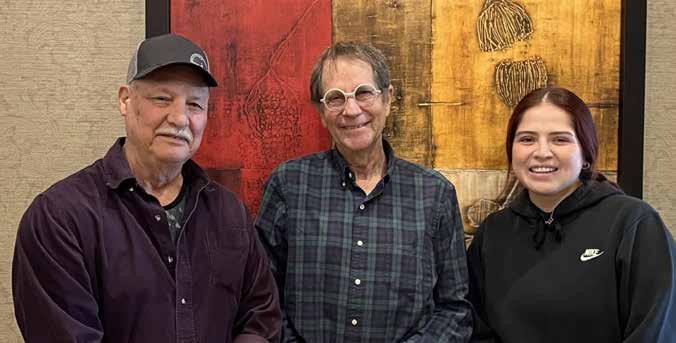
He didn’t want an abstract piece, but he did want to ensure the artist came from the community being depicted. Through well known Indigenous artist Raymond Skye the team connected with Shayde Sandy, a Haudenosaunee artist from Six Nations of the Grand River.
Sandy and Skye helped develop a piece depicting three women Indigenous farmers, representing the three sisters: squash, beans and corn, which were vital for early Indigenous farmers.
At a community meeting held late last year, Clavier said they needed to raise about $15,000 to get the first piece installed. His belief is that once there’s a proof of concept they’ll be able to more easily raise funds.
“I think that will generate a lot of excitement,” he said.
With some community donations the group started approaching their goal. But it was a
donation from the James A. Burton and Family Foundation that really put the fundraising over the top.
“That brings us over the line, just,” Clavier said.
With all the pieces in place, all they needed were relatively dry conditions before the Niagara College students wrapped up their school year.
Alas, it wasn’t to be.
“It’s not a tragedy, but it can’t be helped,” Clavier said.
Instead, the plan now is to install the 16-foottall structures in late summer or early fall, when the students return and are able to offer their expertise. It gives the group some time to plan a public unveiling, and possibly a private event for the local Indigenous community.
For more information on the project, visit thanksforthemeal.com.
By Luke Edwards
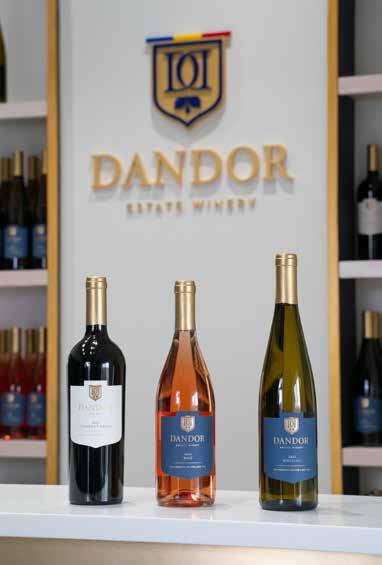
The glasses may have been filled with wine, but they were vessels that carried far more than a well crafted cabernet.
Shortly after arriving in Canada in the early 2000s, Alexei Bodistean and his wife Lilia made their inaugural trek down to Niagara to see Niagara-on-the-Lake wine country. What they saw reminded them, in a lot of ways, of their home country in Eastern Europe.
“It was the same vineyards, the same orchards we see in Moldova,” Bodistean said from his newly opened Dandor Estates Winery, at a century farm property on Concession 2 Road.
Other than it being a little more flat than the hills of home, Bodistean found plenty of familiarity in NOTL.
He and Lilia began purchasing Niagara grapes, making their own homemade wine by 2002, following a tradition that remains strong back home. Even into her 90s, Alexei’s mom still makes a small batch of wine each year in the small Moldovan village where Alexei grew up.
A few years after they started making their own wine from Niagara grapes, the Bodisteans started a cultural festival based on homemade wine, but so much more. Wanting to keep their culture alive, not only for their fellow Moldovans who came to Canada after the fall of the Soviet Union, but for their two sons, Daniel and Dorin.
“To get together, as family and friends,” Bodistean said. Appropriately, the festival ran on the Family Day holiday weekend each year.
In time the festival would grow, as hundreds would share in local dress, food, music and art, reminding themselves of the Moldovan culture. It was also a chance to share wine, and wine-
making tips. Bodistean handed out awards to some of the homemade winemakers.
“They increased their quality a lot,” he said. Sadly, the COVID-19 pandemic marked the end of Polobocul De Aur. But then, in 2022, the Bodisteans purchased the Concession 2 Road property, getting to work right away on turning the 25-acre property into a winery.
They planted new vines, and by 2023 already made their first wine: a Riesling Bodistean called special.
A few fruit trees still remain, as well.
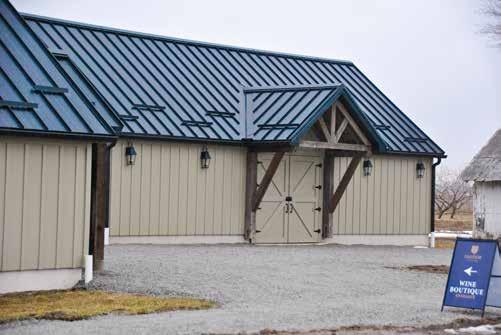
With an acute understanding of the value of culture and heritage, Bodistean said they also set about renovating the buildings on the property to combine the history of the farm - it’s over 100 years old and the Bodisteans bought it from a family that had maintained it for decades - with the culture and heritage of their home country.
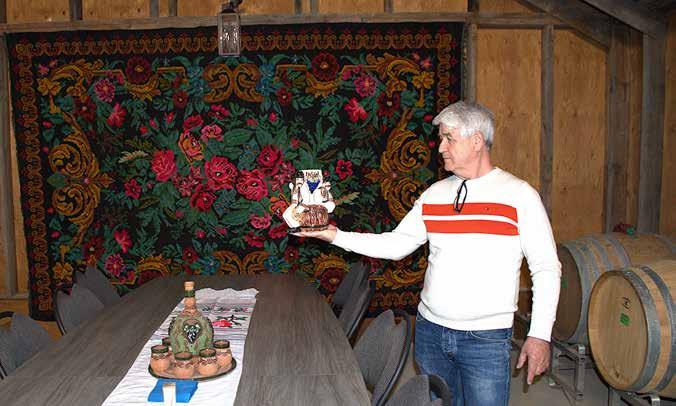
Former barns and farm buildings now house tasting rooms and cellars, with tributes to Moldova in the forms of a handmade rug hanging



on the wall or Moldovan ceramics and pottery welcoming visitors.
Work continues on the property. One of the buildings can’t be salvaged and Bodistean said it will need to be replaced. However, they’re planning to preserve some of the wood to be used in the new building as a nod to the history. They also hope to showcase old equipment, like a collection of horse harnesses Bodistean found in one of the old barns.
Landscaping work is also in the plans, should the weather decide to cooperate.
In the vineyard, Bodistean has a mix of varieties. One he’s most excited about, though, is called saperavi, a variety native to Georgia but is a mainstay in Moldovan winemaking.
“It’s very bold, a very intense grape and juice,” said Chris Fuccillo, who works at Dandor.
“Hopefully we’ll plant more varieties related to our region of Moldova,” Bodistean added.
In addition to the new varieties, they’re also using other techniques like a Hungarian oak barrel that helps Dandor with its goal to carve out a unique niche in Niagara’s wine scene.
“It produces a really nice, soft, richer wine,” said Fuccillo.
“We’re trying to focus on what our flavour is here at the winery.”
Winemaker Adam Kern has also been a welcomed addition, Bodistean said.
The family is also hoping to bring back something like their cultural festival, using the winery to host something similar. In Toronto, their focus was mostly on the Moldovan immigrant community, helping keep the culture alive. And while Bodistean stressed the importance of that, he said he’s also interested in sharing that culture with others.
“I want to continue some kind of tradition from Moldova here in Niagara,” he said.
Moldova’s day of national independence is Aug. 27, and Bodistean suggested that could be an appropriate time for an event.
Ultimately, Bodistean said the winery needs to be able to pay the bills, but the venture is more about a passion for him.
“It was my dream to have this winery,” he said.
The name Dandor is derived from his children’s names: Daniel and Dorin.
Dandor Estates took part in the Days of Wine and Chocolate event hosted by the Wineries of Niagara-on-the-Lake earlier this year, and also plan to be a part of May’s Sip and Sizzle event. Bodistean said early reviews have been positive.
A special opening event also took place in early April, a special time of year for the Bodisteans as it marks both their arrival to Canada and Alexei’s and Lilia’s anniversary.
The winery is open Wednesday to Sunday, 11 a.m. to 5 p.m. It’s located at 780 Concession 2 Road, and more information can be found at dandorestatewinery.ca.
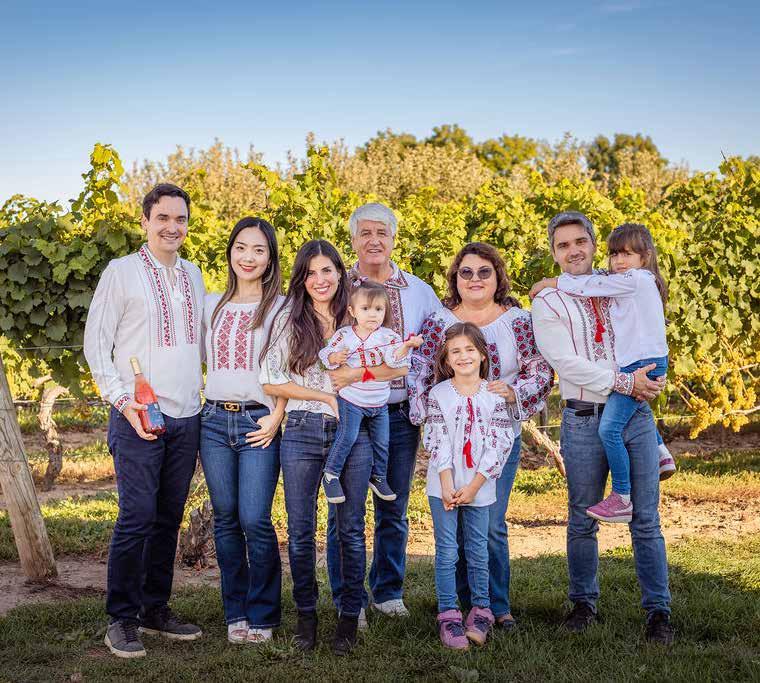
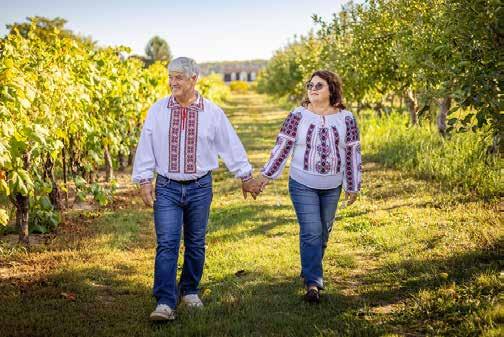
~ Submitted photos


By Luke Edwards
On tires or phones. In the dust or the feed. Carried by wild birds or well meaning humans.
When it comes to many farm operations, the threat of disease can take many forms. At an event held last month by the Haldimand Federation of Agriculture with the help of Haldimand County, HFA members got a refresher course on how to minimize the risk of a pathogen like avian influenza wreaking havoc on their operation.
Al Dam, a provincial poultry specialist with the Ontario Ministry of Agriculture, Food and Agribusiness, shared some of the things he prioritizes for flock health when talking to farmers in the province. And for Dam, it starts by looking in the mirror.
“We are very good at spreading disease and pests ourselves,” he said.
Human movement and activity allows for pathogens to spread from barn to barn. Sometimes it’s obvious, for instance going from barn to barn in the same clothes or with the same boots on or without proper disinfecting. And sometimes it’s less obvious, like storing the very equipment used to
clean the barns in an inappropriate location.
Dam promoted the Danish entry system as an effective and relatively simple way to reduce risk. It uses a physical barrier to delineate the dirty outside area from the clean inside area of a barn. His example had a bench, where farmers would enter the barn, removing their outdoor clothes and sitting on the bench to remove their boots. Then they’d swing their legs over to the other side of the bench, essentially entering the clean area.
“Proper barricades and changing of boots is always better than trying to disinfect,” he said.
That doesn’t mean disinfectants and sanitizers can be ignored. They should just be used properly.
Dam cautioned against disinfectant baths for a couple reasons. First, it takes time for the baths to do their work, something people rarely take into account. Second, it only takes a few uses before the bath becomes just as dirty as the outside world.
Other human activity can also cause risks. Dam said he’s always careful driving onto a farm, avoiding taking his vehicle anywhere that could kick up dust that could


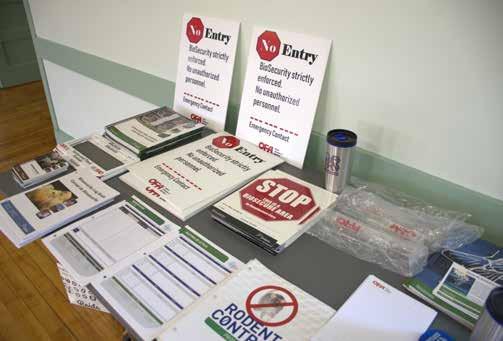
get into the barn. Similarly, his barn visits are planned out in advance. If he’s on a farm with an outbreak of some kind, the infected barn will always be the last place he visits.
Common things he checks for on farms include whether the farmer keeps the area around the barn clear of vegetation.
“Rodents love weeds,” he said. Discouraging rats and rodents from coming close to the barn helps keep the flock healthy.
Farm layout is also important.
“One of the first things I look at is if the barn is below grade,” he said.
A below grade barn can cause problems during storms and spring melting, as infiltration can bring with it nasty outside pathogens.
While few people enjoy doing paperwork and developing protocols, Dam said it’s an important aspect of bio security. Access management plans that describe the various areas of a farm - including control access zones, restricted access zones and control access points - should be well thought out. Log books are important, in case an outbreak does occur.
One of the biggest challenges is when disease gets into the wildlife populations. With avian influenza, for instance, waterfowl and other birds can continually pose risk to farms. And it’s not just birds. The United States has been dealing with AI in dairy cattle, and Dam said it’s been found in a wide range of wild mammals as well.
“If disease gets into the wildlife, it gets a lot more complicated,” he said.
That’s why he encouraged farmers to contact officials if they find dead birds on their property. If it’s livestock, they can contact their local Canadian Food Inspection Agency office or their vet. And for wild birds, he encouraged people
to call the Canadian Wildlife Health Cooperative at 866-673-4781.
Unfortunately, nothing’s perfect and even with the best protocols in place infections can still happen. Since December 2021 more than 17 million domestic birds in Canada have been affected by the avian influenza outbreak. That includes more than 1.3 million in Ontario, which Dam said is a low number compared to the total number of birds in the province.
A mixture of good geography, good luck and good practice has likely led to those relatively low numbers, Dam said. B.C. has struggled with AI outbreaks, in part due to the Fraser Valley acting like a huge bowl that keeps the disease in.
The general approach falls into three steps: Keep out, keep in, shut it down. Ideally farmers will keep disease out of the herd or flock, but should there be an outbreak, the next step is to keep it in and confined to just that barn or herd/ flock. Testing, confirmation and quarantine becomes the priority. Dam described the the process of culling flocks, and the steps that are taken to kill the pathogen and properly dispose of the carcasses to keep the disease from spreading.
Disinfecting the premises can then be a challenging and time consuming endeavour.
“This can take months, from when the feathers hit the fan to when you can restock again,” he said.
While vaccination is an option, Dam said it’s not currently the route being taken in Canada. Testing in other countries can’t differentiate between antibodies created from infection and antibodies created from vaccination, which causes
By Niagara Farms Staff
Farms who are off the stormwater system will be off the hook for additional stormwater fees.
The Ontario Federation of Agriculture welcomed the move by the provincial government to change regulations around stormwater fees. The changes mean municipalities will no longer have the authority to impose stormwater fees and charges on portions of properties classified as farmland or managed forests, as long as they’re not connected to a municipal storm sewer system.
“Farmers understand the importance of paying for the services they use, but they should not be burdened with costs for infrastructure they’re not connected to,” said OFA President Drew Spoelstra in a press release. “Farmers have been asking for this regulatory change to help level the playing field, support farm competitiveness and ensure our sector can continue to grow and invest in Ontario’s food system.”
Agricultural groups alongside the OFA have been advocating for policy change in this area for a while. As municipalities looked for ways to address funding shortfalls in water and wastewater systems, various fee
Continued from page A12
problems for operations such as genetics companies looking to export.
While his presentation focused on avian influenza - given his job, it’s essentially been his life the past few years - Dam said it’s not just AI, and it’s not just poultry farmers who should be careful. Other diseases like foot and mouth and African swine fever pose risks to other operations like cows and pigs.
Following Dam’s presentation, attendees participated in smaller roundtable discussions. They shared some of the issues and challenges they face such as with record keeping and controlled access issues, getting newer types of livestock operations into the fold, and a lack of awareness from consumers and the general public.


Scan the QR code and read us online
systems were proposed that could have cost farmers upwards of thousands of dollars. A Richmond Hill farmer told Farms.com last year that stormwater fees cost him $15,000 in 2022, despite his property not being connected to the municipal water system.
“This is about aligning costs with actual use; where farms are not connected to municipal systems, it makes sense that they should not be paying into infrastructure they don’t have access to or rely on,” said Mike Chromczak, chair of the Ontario Fruit and Vegetable Growers’ Association. “We look forward to continued collaboration with the province and municipalities to ensure stormwater policies are fair, transparent and reflective of the realities of farming across Ontario.”
The Province will use Municipal Property Assessment Corporation classifications to deter-
mine farms and managed forests. For many of these instances, properties are not connected to municipal stormwater infrastructure at all, and their typically large, permeable areas naturally absorb rainfall.
“Farmers put in long hours to keep food on our tables and play a critical role in keeping our economy strong,” said Rob Flack, minister of municipal affairs and housing. “That is why we’re taking action and implementing practical solutions to cut out unfair costs so farmers aren’t paying for services they don’t use and can put their money into producing the food we eat.”
Additional changes more clearly define a connection, and separate stormwater infrastructure from agricultural drainage features like ditches, culverts and works carried out under the Drainage Act.


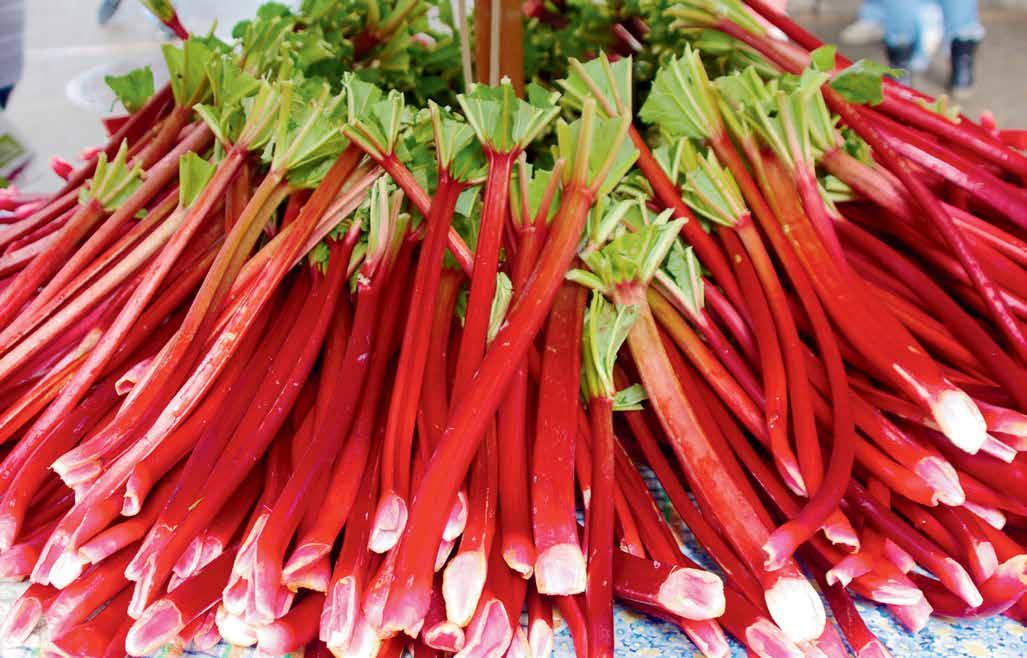
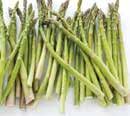
tastes of something grown locally. And that’s where early crops like asparagus and rhubarb comes in.
A hardy perennial, rhubarb offers a distinctive tartness that can be used paired with its close partner strawberries, or on its own in a mix of desserts, drinks and main meals.
Here are a few options to try this spring, courtesy our friends at Foodland Ontario.
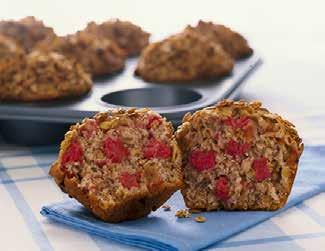
Rhubarb Granola Muffins
Ingredients
• 1-3/4 cup (425 mL) all-purpose flour
• 1-3/4 cup (425 mL) honey almond granola (without raisins)
• 3/4 cup (175 mL) granulated sugar
• 2 tsp (10 mL) baking powder
• 2 tsp (10 mL) cinnamon
• 1/2 tsp (2 mL) salt
• 1/4 tsp (1 mL) nutmeg
• 2 Ontario eggs
• 3/4 cup (175 mL) 2% Ontario milk
• 1/3 cup (75 mL) Ontario sunflower or vegetable oil
• 1 tsp (5 mL) vanilla
• 2 cups (500 mL) chopped (1/2-inch/1cm pieces) Ontario rhubarb (or apple)
Instructions
In medium bowl, mix together flour, 1-1/4 cups (300 mL) of the granola, sugar, baking powder, cinnamon, salt and nutmeg, breaking up any lumps in granola. In large bowl, beat eggs; whisk in milk, oil and vanilla; stir in dry ingredients until almost combined. Stir in rhubarb.
Spoon into well-greased large muffin tins. Sprinkle remaining 1/2 cup (125 mL) granola over batter; press lightly on top. Bake in 375 F (190 C) oven for 15 to 18 minutes or until tester comes out clean.
Ingredients
• 2 tbsp (25 mL) olive or vegetable oil
• 1 clove garlic, minced
• 1/2 tsp (2 mL) dried thyme leaves
• A pinch each of salt and pepper (approx)
• 3 lb (1.5 kg) boneless Ontario pork loin roast (centre cut)
• 2 tbsp (25 mL) each of Dijon mustard and Ontario maple syrup
• 6 medium Ontario potatoes, about 1-1/2 lbs (750 g)
• Rhubarb apple chutney (recipe follows) Rhubarb Apple Chutney:
• 2 cups (500 mL) chopped Ontario rhubarb (about 8 oz/250 g)
• 1 small Ontario onion, diced
• 1 small Ontario apple, peeled and diced
• 1/4 cup (50 mL) packed brown sugar
• 1/4 cup (50 mL) apple cider vinegar
• 1/2 tsp (2 mL) ground cumin
• 1/4 tsp (1 mL) each of salt, dried thyme and dry mustard
• A pinch of pepper
Instructions
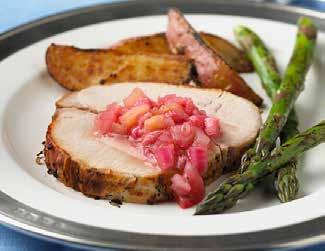
Combine 1 tbsp (15 mL) oil, garlic, thyme, salt and pepper; rub all over pork. Cook roast on greased grill over indirect medium heat until internal temperature reaches 155°F (70°C) on meat thermometer, about 1-1/2 hours. During last 20 minutes of cooking, mix mustard with maple syrup; brush over roast.
Meanwhile, scrub potatoes; cut into wedges. Toss with remaining oil, salt and pepper. Place in grill basket and cook over direct heat (beside roast) until tender, but crisp and golden, 30 to 40 minutes, shaking potatoes occasionally for even browning. Remove to craving board; cover with foil and let stand for 10 to 15 minutes before slicing.
Rhubarb Apple Chutney:
This can be made ahead and served at room temperature with roast.
In nonreactive saucepan, combine rhubarb, onion, apple, sugar, vinegar, cumin, salt, thyme, mustard and pepper; bring to boil over medium-high heat, stirring constantly. Reduce heat and simmer, uncovered, until rhubarb has softened but still has some texture, about 2 minutes. Let cool. Store in airtight container in refrigerator for up to 2 weeks. Makes about 1-1/2 cups (375 mL).
Ingredients
Rhubarb Ketchup:
• 2 cups (500 mL) chopped Ontario rhubarb
• Half small Ontario onion, chopped
• 1/4 cup (50 mL) each granulated sugar and water
• 2 tbsp (25 mL) cider vinegar
• 1/4 tsp (1 mL) each salt and pepper
• 1/4 tsp (1 mL) celery seeds
• Pinch each ground allspice and cloves
Cutlets:
• 1 lb (500 g) Ontario turkey breast cutlets
• 1/2 cup (125 mL) fine cornmeal
• 1/4 tsp (1 mL) each salt and pepper
• 1/4 cup (50 mL) Ontario Milk
• 2 tbsp (25 mL) vegetable oil
Instructions
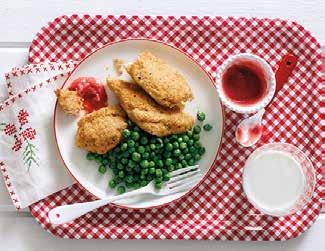
Rhubarb Ketchup: In small saucepan, combine rhubarb, onion, sugar, water, vinegar, salt, pepper, celery seeds, allspice and cloves. Cover and bring to boil over medium-high heat. Uncover, reduce heat and boil gently, stirring often, until onions are translucent, rhubarb is very soft and mixture is thickened, about 15 minutes. Let cool slightly, then purée in blender or in tall cup with an immersion blender until smooth. (Serve warm or refrigerate in airtight container for up to 2 weeks.)
Cutlets: Line large baking sheet with foil and place in oven. Preheat oven to 400°F (200°C).
Cut turkey cutlets into small pieces (about 4-inches/10 cm) In shallow dish, combine cornmeal, salt and pepper; pour milk into separate shallow dish. Working with a few pieces at a time, dip turkey first into milk, then into cornmeal mixture, turning and pressing to coat. Place on plate.
Heat large skillet over medium-high heat. Add 1 tbsp (15 mL) of the oil and swirl to coat. In batches, add cutlets and cook until golden brown, 1 to 2 minutes per side. Transfer to the hot baking sheet. Repeat with remaining cutlets, adding oil and adjusting heat as necessary to prevent burning.
Bake cutlets until no longer pink inside, about 8 minutes. Serve with Rhubarb Ketchup.

Strawberry and Rhubarb Pie
Ingredients
• 3 cups (750 mL) halved or thickly sliced Ontario strawberries
• 2 cups (500 mL) sliced 1-inch (2.5 cm) pieces Ontario rhubarb
• 3/4 cup (175 mL) granulated sugar
• 1/4 cup (50 mL) cornstarch
• 1 Ontario egg, lightly beaten
• Pastry for 9-inch (23 cm) double-crust pie
Instructions
In large bowl, combine strawberries and rhubarb. In small bowl, combine sugar and cornstarch; sprinkle over fruit, tossing gently to blend. Add beaten egg to fruit and mix lightly. Spoon mixture into bottom crust. Fit pastry over filling. Crimp edges, cut steam vent in centre. Place on baking sheet and bake in 450°F (230°C) oven for 15 minutes. Reduce temperature to 350°F (180°C) and bake 35 to 40 minutes or until pastry is golden and filling is bubbly.
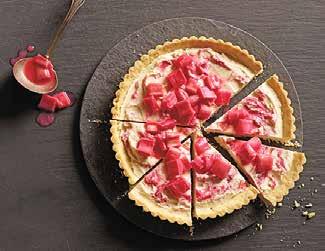
Rhubarb Ripple Mascarpone Tart
Ingredients
• 3-1/2 cups (875 mL) chopped Ontario rhubarb, cut into 1-inch (2.5 cm) pieces
• 3/4 cup (175 mL) granulated sugar
• 2 tbsp (25 mL) cornstarch
• 1-1/4 cups (300 mL) all-purpose flour
• 3 tbsp (45 mL) icing sugar
• 2/3 cup (150 mL) cold butter, cut into cubes
• 1 cup (250 mL) Ontario mascarpone cheese
• 1/2 cup (125 mL) sour cream
• 1/4 tsp (1 mL) grated lemon rind
• Instructions
In large saucepan, combine rhubarb, 1/2 cup (125 mL) of the sugar and cornstarch; cook, stirring, over low heat until sugar dissolves. Cover and cook until rhubarb is tender, stirring occasionally. Cool and chill.
In large bowl, combine flour and icing sugar; cut in butter until mixture is crumbly. Press evenly into 9-inch (23 cm) flan pan with removable bottom. Prick all over with fork. Bake in 350°F (180°C) oven 18 to 20 minutes or until lightly browned; cool.
In large bowl, combine mascarpone cheese, sour cream, remaining sugar and lemon rind; spoon into flan shell alternately with half the rhubarb sauce; swirl gently with knife to create rippled effect. Chill 1 hour or until set. To serve, top with reserved rhubarb sauce.

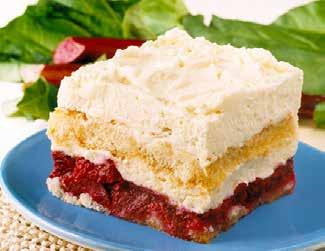
Rhubarb Tiramisu
Ingredients
• 1/2 cup (125 mL) orange juice
• 1/3 cup (75 mL) orange liqueur
• 1 pkg (375 g) lady fingers
• 2 cups (500 mL) whipping cream
• 1/3 cup (75 mL) granulated sugar
• 1 lb (500 g) mascarpone cheese
• Rhubarb Sauce:
• 6 cups (1.5 L) chopped Ontario rhubarb
• 1-1/4 cups (300 mL) granulated sugar
Instructions
Rhubarb Sauce: In large saucepan over medium-high heat, stir together rhubarb and sugar until sugar dissolves. Cook, stirring frequently, for 15 to 20 minutes or until a thick sauce. Let cool.
In shallow dish, stir together orange juice and 1/4 cup (50 mL) of the orange liqueur. Dip half (about 19) of the lady fingers into mixture; arrange in single layer in 13-x 9-inch (3 L) baking dish. Set aside.
In deep bowl and using electric mixer, whip cream, gradually adding sugar. Stir remaining orange liqueur into mascarpone cheese. Fold whipped cream into mascarpone cheese mixture.
Spread rhubarb sauce over lady fingers. Top with half of the mascarpone cheese mixture. Dip remaining lady fingers into orange juice mixture; arrange on mascarpone mixture. Spread with remaining mascarpone cream mixture, making decorative swirls. Cover and refrigerate for at least 4 hours or up to 48 hours. Use sharp knife and pie lifter to cut and serve in neat squares.
By Luke Edwards
The future of farming is far from certain, but locally talent is one thing the industry need not worry about.
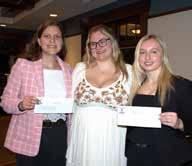
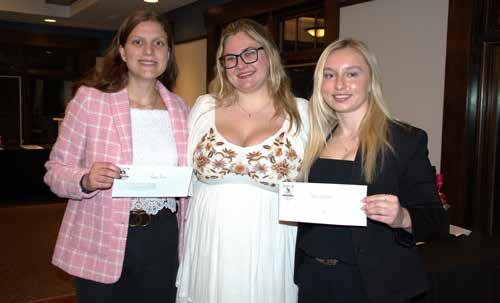
Last month the Niagara Federation of Agriculture recognized four talented young people currently furthering their knowledge and skills, and who have a plan to put those skills to good use in the agricultural sector. They were this year’s recipients of the Jeff Yungblut Memorial Scholarship, and the Niagara Federation of Agriculture Scholarship.
Winners of the Jeff Yungblut scholarship included Emily O’Connell and Caleb Fretz, while Tessa Fois and Gabby Kott won the NFA scholarship.
While they’re all taking their own unique paths, their plans to contribute to agriculture in the future will be welcomed by those in the industry.
Kott is currently attending the University of Guelph, where she’s working towards her bachelor of arts in agriculture while majoring in animal science. She grew up on a cash crop and purebred shorthorn cattle farm in West Lincoln. Her
passion seems to be falling on the animal side of things and not the plant side, as she wants to become a livestock veterinarian.
“I am particularly interested in improving herd health, productivity, and sustainability within the beef industry. I plan to use my education to support producers and advance animal welfare and agricultural practices in Ontario and beyond,” she said in her application.
Fois, meanwhile, is more interested in the business of agriculture.
“At first, I thought I was going to do something very business like and live in a big city,” she said. “And honestly I am not sure why I thought that because farming and living in the country is the best part about my life.”
So instead, Fois is now planning to use the skills she’s gaining at Western University’s Ivey Business School and apply them to the ag sector. She’s had some internships and summer work for ADM and Farm Credit Canada, giving her a glimpse into the business world of agriculture.
Fois grew up on a broiler operation in Wellandport.
Fretz is one of the two Jeff Yungblut Memorial Scholarship
winners, and is currently working through his PhD studies at Purdue University, after receiving a biological engineering degree from Guelph.
“My research focuses on controlled agrochemical delivery, including nanoparticle-based systems for systemic pesticide delivery and polymer composite systems for sustained-release fertilizers,” Fretz said, in his application.
Once finished schooling, his goal is to enter the research world with a focus on agricultural technology.
He grew up on a dairy farm turned cash crop operation in Stevensville, but spent three years as a child in Croatia, where his family moved to help support local farmers following the Yugoslavian War.
Though her son is south of the border continuing his studies, mom Heather said the award is a special one for Caleb.

“I started volunteering my weekends there and from there I bought my own horse a few years later,” she said.
She’s currently studying agriculture at Guelph.
The Jeff Yungblut scholarship is made possible thanks to the successful memorial hockey tournament that takes place each year in his name. Yungblut died unexpectedly in 2013, but grew up on a dairy and grape farm.
He was a familiar face around the hockey arena, where he played and coached throughout his life. After his death the family came up with the idea of holding an annual tournament in his honour, with money raised going to local causes.
“We wanted to keep his memory alive,” said Jeff’s father Jim.


“It means a lot to him to stay connected with his roots in Niagara,” she said.
Finally, O’Connell fell in love with farm life when she began taking horseback riding lessons in 2020.
And they’ve clearly succeeded. In the nearly 10 years the tournament has run, it grew from six teams to 34. Last year they managed to give $10,000 to local charity and non-profits.
“It’s quite a community that comes together to do this,” said Jeff’s mother Nancy.
By Luke Edwards
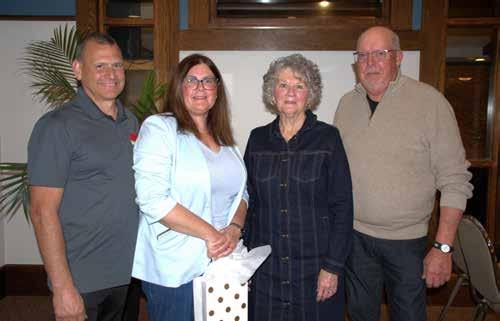
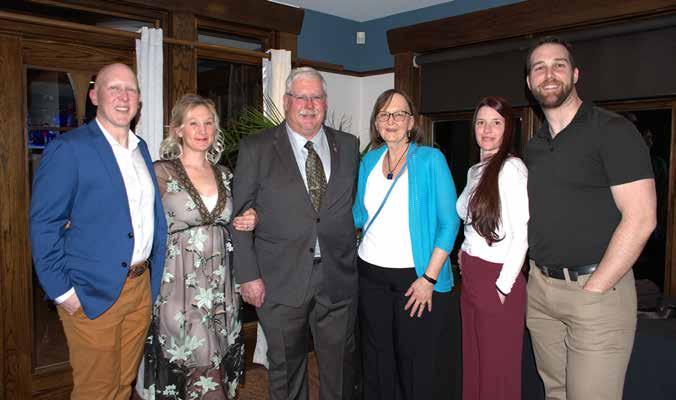
If anyone knows just how prestigious the Niagara Federation of Agriculture’s annual lifetime achievement award is, it’s Rob Cosby.
For more than 20 years the West Lincoln farmer has got up in front of the audience at the annual NALA banquet and waxed poetic about the farmers, ag advocates, volunteers and others who have made Niagara’s agricultural community the success it is. And while last month he was once again up at the podium, this time the roles were reversed, as Cosby was the 2026 recipient of the lifetime achievement award.
“It’s really different to be on this side of the presentation,” Cosby said after receiving recognition from local political and agricultural dignitaries.
“Thank you very much for this honour. I’ll cherish it greatly.”
Cosby grew up on the family farm in West Lincoln. He went straight to work under his parents Roy and Pauline after finishing high school in 1976. The farm had several iterations over Cosby’s life - at times selling weaner pigs in a small farrowing operation, growing hybrid and labrusca grapes, along with conventional crops like hay, winter wheat and spring grain. The family also had a trucking business that Cosby took over.
When he was 20 years old he bought a new combine and got into custom combining, helping his neighbouring farmers harvest up to 1,500 acres of crops each year.
That drive to innovate continued with his adoption of no-till practices for winter wheat and corn. From 1998 to 2024 he served as the custodian for the Niagara North Soil and Crop Association’s no-till drill and lime spreader that farmers could rent.
“Embracing conservation practices wasn’t just about efficiency, it was about stewardship and leaving the land in better condition for the next generation,” said Cathy Mous, who was tapped as the person to take up Cosby’s usual role as presenter.
In fact, Cosby said one of his first questions when he was approached about accepting the award was one of logistics.
“The first thing I said to Chris (Mullet-Koop, NFA president) was ‘who is going to present?’” Cosby said. He was pleased to hear Mous, a Niagara ag community stalwart in her own right, had volunteered.
In her presentation, Mous joked that Cosby was somewhat “voluntold” he was going to be the presenter of the award back in the early 2000s. However, Cosby said it was never forced.
“I felt like if I had time to contribute, I wanted to do that,” he said.
His involvement started young, when he joined the Niagara North Junior Farmers at 12 years old. He eventually became president of the organization in 1981. Throughout the years he was involved with the Smithville Agricultural Society, Lincoln Agricultural Society and the amalgamated West Niagara Agricultural Society.
Overall, his involvement with the Niagara North Federation of Agriculture and Ontario Federation of Agriculture - where he served as provincial director and policy advisory committee member - has lasted nearly 50
years. He also spent roughly 15 years with the Grape Growers of Ontario, including as a director from 2001 to 2003.
Cosby said a lot of the credit needs to go to his family, including wife Barb and sons Steve and Adam. Joining boards and committees often means evenings and weekends away from home, and Cosby said the support he received from his wife and kids allowed him to do the work.
Cosby gave up the trucking business, but still operates the remaining vineyards on his farm. Since 2008 he’s worked as a part-time crop insurance adjuster for Agricorp.
During her decade in municipal politics, West Lincoln Mayor Cheryl Ganann said Cosby’s name was one that frequently surfaced, as he was someone who was always willing to offer his thoughts on a municipal project or budget, especially when it affected the local farming community.
“He always offers well thought out opinions,” said Ganann, adding his rural voice gives township staff and councillors a new perspective to consider whenever they’re debating a topic.
Thinking back on some of the previous winners, Cosby said there’s a mix of people whose work garnered attention and others who worked more behind the scenes, preferring to stay in the background. But either way, the work of building up the ag community is an important one.
“When looking back over the years, what stands out most is not just the acres farmed or positions held, but the relationships built - with neighbours, fellow farmers, community members, and family,” Mous said.
“Agriculture is more than an occupation, it’s a way of life built on resilience, adaptation, stewardship and service.”

By Niagara Farms Staff
The Egg Farmers of Ontario have decided against scrambling up their leadership.
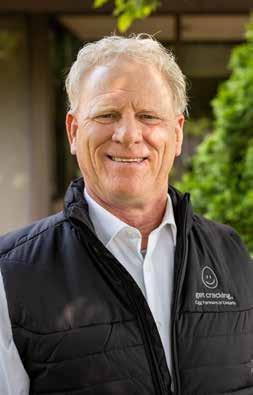
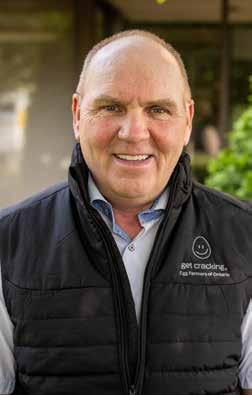
At a late March annual general meeting held in Niagara Falls, EFO re-elected Scott Helps as chair and Dan Veldmand as vice chair. The pair have been in their respective positions since 2020.
“Being re-elected chair is a humbling privilege,” said Helps, in a press release. “I am honoured to continue this responsibility and work collaboratively with my board colleagues to help guide the egg and pullet industry into the future.”
Helps is an egg farmer from Lambton County. Prior to becoming chair, he spent several years on the board, first elected there in 2012. He’s also a Zone 1 board member.
Veldman joined the board in 2011, and is an egg farmer from Oxford County.
Veldmand is also a Zone 3 director, which covers Elgin, Oxford and a portion of Haldimand-Norfolk.

Roger Pelissero, who’s also chair of the Egg Farmers of Canada, will sit as the Zone 4 board member, which covers Brant, Hamilton-Wentworth, Niagara and parts of Haldimand-Norfolk.
Joining the trio on the board are: Lorne Benedict, Zone 2; Rick Kootstra, Zone 5; Sally Van Straaten, Zone 6; Scott Brookshaw, Zone 7; George Pilgrim, Zone 8; Ted Hudson, Zone 9; Marcel Jr. Laviolette, Zone 10; and Alvin Brunsveld, pullet director.
The organization honoured Ian McFall, a retiring board director for Zone 9 who spent five years on the board.
This year’s meeting focused on consumer marketing, and featured a presentation from Natalie Rumscheidt, director of marketing and nutrition for Egg Farmers of Canada. She shared some insights and trends for the Canadian egg market.
World Egg Organization’s Mary Spicer also presented some marketing and consumer engagement programs from around the world.
Several other speakers also presented throughout the meeting, while Premier Doug Ford offered a
video message and Minister of Agriculture, Food and Agribusiness
Jones attended in person, bringing greetings from Queen’s Park.
The organization paid tribute to Masterfeeds’ Charlie Elliott during an evening banquet. Elliott
worked for more than 45 years, primarily in feed inputs. He was an active member of the Poultry Industry Council board, and spent his career being an advocate for education, extension and making the best information accessible to the province’s poultry farmers.



New rules one of several changes proposed under Protecting Ontario’s
By Niagara Farms Staff
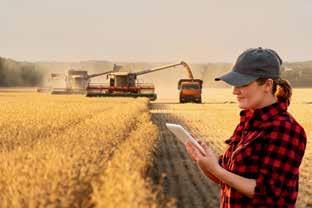
New legislation is aimed at ensuring Ontario farmland stays in the hands of Ontario residents.
The provincial government announced proposed legislation, called the Protecting Ontario’s Food Independence Act, last month. It calls for several changes meant to improve food sovereignty in the province, including restricting foreign ownership of Ontario farmland. Other proposed changes include continuing work to modernize veterinary medicine in Ontario, modernizing and streamlining regulations to reduce red tape, and expanding agricultural production in northern Ontario.
“Our agriculture sector is a cornerstone of Ontario’s economy, employing more than 10 per cent of the province’s workforce and helping put food on tables at home and around the world,” said Trevor Jones, minister of agriculture, food and agribusiness in a press release announcing the proposed legislation. “In a time of global uncertainty, it’s vital we give our farmers and businesses the tools they need to succeed. With these changes, we are continuing to build a more productive and self-reliant agriculture and food sector.”
For the foreign ownership changes, the Province said similar policies are in place in Alberta, Manitoba, Quebec, Saskatchewan, and Prince Edward Island. They also said they’ll look to include “reasonable exceptions” for the restrictions.
Alongside the changes, the government said it’s also reviewing and updating the Grow Ontario Strategy “to build a more competitive, resilient and self-reliant agri-food sector in the face of U.S. tariffs and economic uncertainty,” the release said.
The Grow Ontario Strategy is a 10-year plan that was launched in 2022. The release said the Province is planning discussions with farmers,



agri-food business and other industry partners to update the strategy.
To date, they said the strategy has helped lead to a 13 per cent average annual increase in exports, a 15 per cent rise in employment and a 20 per cent increase in farm sales.
The announcement was welcomed by cattle producers in the province, with both leadership at the Dairy Farmers of Ontario and with the Beef Farmers of Ontario applauding the moves.
“We welcome the Milk Act amendments that will align Ontario’s milk pricing policies with national standards, enabling a level playing field and continued stability in delivery of high-quality milk from Ontario farms for processing in Ontario,” said DFO chair Mark Hamel. “DFO shares the government’s commitment to ensuring a stronger, trusted domestic food system, with a
regulatory framework that supports continuous improvement and compliance of world-class, high-quality food safety standards for cow’s milk in Ontario.”
Likewise, BFO president Jason Leblond said a more equitable fee structure under the Beef Cattle Marketing Act will help producers in his sector.
“This change addresses a long-standing gap and ensures all producers contribute fairly to efforts that help strengthen the sustainability and collective success of Ontario’s beef sector,” he said. “We are also pleased to see much of the sector’s feedback reflected in the recent updates to the Livestock Financial Protection Program, which are a positive step toward a more effective and responsive system.”
Raising beef is vital to your family, your farm, your community, and Ontario as a whole The product you raise deserves to reach appreciative family tables close to home, ensuring you r eceive the best value for your hard work At VG Meats, we’ve partnered with small beef farmers across Ontario who share our commitment to quality, sustainability, and continuous improvement Now, we d like to work with you
We re looking to purchase your finished cattle and provide you with valuable data on each animal’s tenderness, yield, quality, and weight This information not only helps you secure a premium for your beef but also supports better management and genetic decisions for generations to come By working together we can help regenerate the lives, profits, and land of Ontario s beef farming families
Over t he years, we’ve also expanded our connections across Ontario’s retail landscape, creating more opportunities for locally raised beef to reach appreciative consumers You can learn more about this exciting initiative and how it benefits Ontario farmers at harvesttogather ca
If your family finishes cattle and you’re ready to explore this opportunity, reach out to me, Cory Van Groningen, at cory@vgmeats ca, and I’ll share the details of our program Let s schedule a time to discuss how VG Meats can help bring your beef to market while supporting your farm’s growth We look forward to hearing from you soon





By Luke Edwards
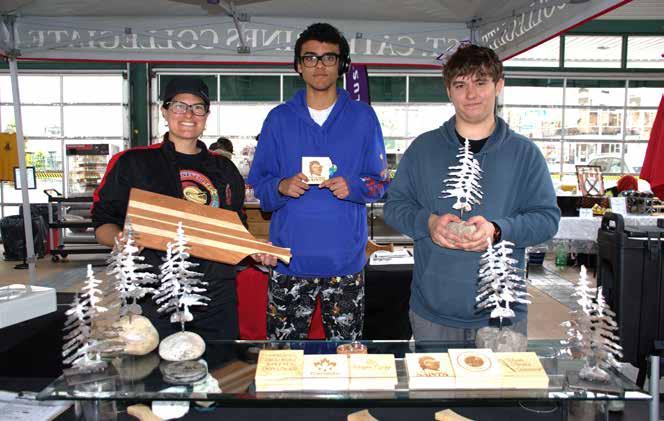
A vendor stall at the St. Catharines farmer’s market means the work of its students isn’t just going towards good grades, they’re also supporting the school and providing tasty treats or keepsakes for the public.
tally
Farmers realize they are part
solution to a lot of things, like climate change mitigation, biodiversity, species-at-risk and flood control.”
One of the offshoots of Norfolk’s initial efforts occurred after Prince Edward Island environment George Webster attended the pilot launch in 2008. The island was having an environmental issue at the time and ALUS quickly became the solution and a well-funded provincial program.
Today, nationally ALUS is approaching 1,000 farmers participating through 27 different community based programs in six provinces. Together they have enrolled 27,183 acres in the program.
and wife Cathy raise Texas longhorns on the YU Ranch, south of Tillsonburg.
For a few weeks each spring and fall, the downtown market welcomes students from St. Catharines Collegiate, who sell a mixture of items created by members of technology classes like culinary, manufacturing and construction. The partnership gives the students real world experience, while also raising some money to go back into their school departments.
“It showcases our students’ work,” said Collegiate teacher Lisa Koster.
The vendor booth at the market is just one of several ways the school offers experiential learning for the students, in addition to running the school cafeteria and offering some catering at the District School Board of Niagara offices.
“This is just another one of our ways to build community relationships and give students hands-on learning,” Koster said.
Money raised through the sales goes back into the school departments, allowing classes to buy additional items that may not be available through regular school funding. For instance, Koster showed off some charcuterie boards students made that utilized hardwood types that aren’t often available in construction classrooms.
Officially, ALUS Canada’s mantra now is: “ALUS Canada makes it possible to offset your environmental footprint through agricultural stewardship. ALUS invests in farmers and landowners who are producing acres of clean air, clean water, wildlife habitat and other ecosystem services in communities across Canada.”
Credit was given to some of the programs largest advocates by Gilvesy. Local MPP Toby Barrett has been a large ALUS proponent since the early days, and introduced a Private Member’s Bill promoting the concept. Wishart is now a MLA in Manitoba, and promoting it there. Bob Sopuck, who was Delta Waterfowl’s western vice-president of policy was an early advocate and became elected as an MP and was the program’s champion on Parliament Hill. Dave Reid co-wrote the ALUS concept documents with Dr. Bob Bailey, Delta’s eastern vice-president of policy.
Koster said it usually picks up around lunchtime, when nearby residents and office workers search for lunch options. Fortunately the students had some homemade pizza, along with baked treats to go with the charcuterie boards, coasters, and other items.
An additional bonus, she said, is that Collegiate alumni often stop by, offering a chance
Over the years, Gilvesy has talked to thousands of people about ALUS at hundreds of speaking engagements across Canada. Recognition for the program has included a Premier’s Ag Innovation Award
for former students to connect with current students or reconnect with their high school teachers.
Gilvesy is proud ALUS is a farmer-led program and farmers fell they are the program owners.
The school’s stay at the St. Catharines market wraps up in mid-May. The school is also planning its annual plant sale, on Wednesday, May 13 from 9 a.m. to 2 p.m. at the St. Catherine Street school.
“People feel they are partners in ALUS,” he said. “It’s the value of developing a grassroots program that recognizes the value of community.”


By Michelle Seaborn
The first month of spring has sure been a roller coaster of weather, with warm, sunny skies one day, snow the next, and sometimes rain, sun and snow all in the same day. I think greenhouse growers may have the advantage this year.
Despite the unpredictable weather, spring bulbs are in full bloom, fruit trees are showing early buds, and cherry trees have started blooming. In home gardens, peas have been started, strawberry plants have pushed up from their winter bed, and raspberry stalks are showing their first sign of life. Plants are coming back to life!
Meanwhile, seasonal farmers’ markets are busy putting together their vendor lists and getting all the details ready for opening dates. Most will re-open during the last week of May or early June. Often these markets will feature over-wintered crops such as potatoes, carrots, and onions, apples and pears. Fresh asparagus will be ready in May as will rhubarb. Of course, hot house products such as peppers, tomatoes and cucumbers provide shoppers with a local opportunity to enjoy fresh vegetables all year long. Many vendors will offer vegetable and herb plants for home garden enthusiasts.
But farmers’ markets have so much more to offer. What a great place to pick up fresh baked breads and other baked goods, eggs,
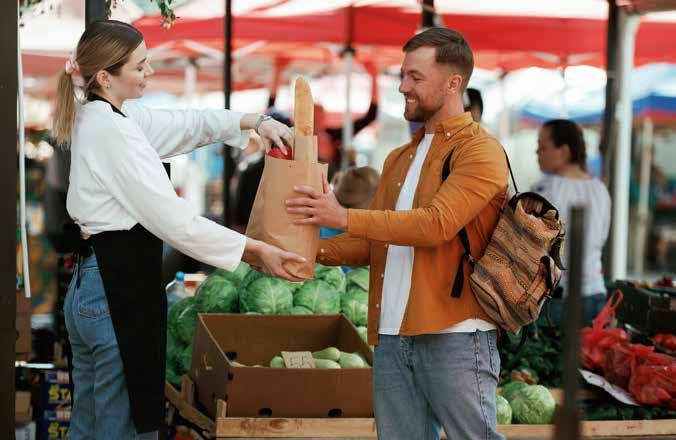
fish, meats, and preserves. Many vendors will offer ready-to-eat options such as samosas, perogies, meat pies, pizza, and the list goes on.
The added bonus of farmer’s markets is being able to get outside and enjoy the fresh
By Niagara Farms Staff
Most farmers markets in the region take a rest over the winter months.
But even for those markets that keep going throughout the year, May usually sees a reinvigoration and the promise of a, hopefully, bountiful growing season returns.
In St. Catharines, the downtown market kicks into high gear on Saturday, May 16, when the year-round market expands for the busy spring and summer months. Visitors can expect more vendors, including more growers, along with the Discovery Table, Music in the Square concert series and more. It runs Thursdays from 8 a.m. to 2 p.m. and Saturdays from 7 a.m. to 2 p.m.
Here’s a rundown of some of the region’s other farmers’ markets and when they’ll be starting.
• Welland (a year round market), Saturdays from 7 a.m. to noon at 70 Young St.
• Port Colborne, Fridays beginning May 1, 7 a.m. to noon at Market Square in the downtown.
• Dunnville, Tuesdays from 2 to 7 p.m. (May to December), and Saturdays from 7 a.m. to noon (April to December). 218 Main St. East.
• Caledonia, Thursdays from 2 to 7 p.m. (May to December) at the Caledonia Baptist Church, 401 Argyle St. South.
• Hagersville, Wednesdays from 7 a.m. to noon (May to October) at Market Square behind the post office.
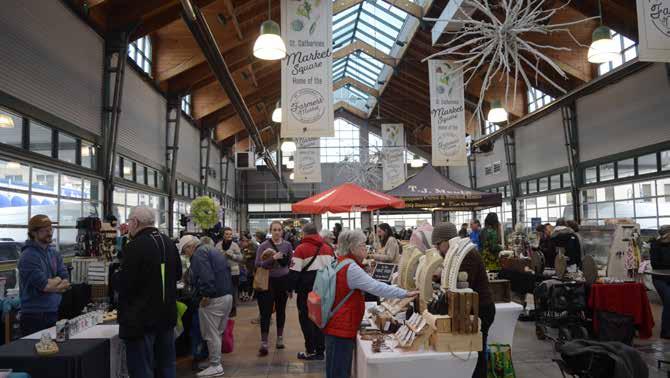
With warmer weather arriving and early crops starting to appear, farmers’ markets will be ramping up activity. In St. Catharines, the main season starts on May 17. ~ Luke Edwards photo
• Niagara Falls, two locations in 2026: Saturdays from May 23 to June 27, 7 a.m. to 1 p.m. at Niagara Square, 7555 Montrose Rd., and Saturdays, from July 4 to Oct. 10, 7 a.m. to 1 p.m. at the MacBain Centre, 7150 Montrose Rd.
• Niagara-on-the-Lake, Saturdays from 8 a.m. to 1 p.m. beginning May 23 at Garrison Village.
• Stevensville, Wednesdays from noon to 6 p.m. beginning June 3 at the Stevensville Library.
• Grimsby, Thursdays from 3 to 7 p.m. beginning June 4. Due to construction, location details are still being ironed out, but the majority of the season will likely be at the Peach King Centre.
• Wainfleet, Tuesdays 3 to 7 p.m. beginning June 9. 32081 Side Rd 20
• Thorold, Wednesdays from 5 to 9 p.m. beginning June 17 at Battle of Beaverdams Park
• West Lincoln’s six-week Music, Market and Park It event returns July 15. It runs Wednesdays from 5 p.m. until dusk at the West Lincoln Community Centre.
By Amanda Nelson
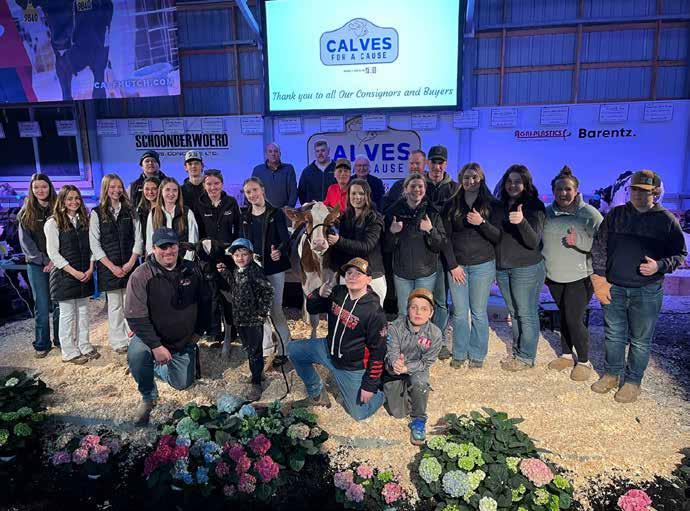
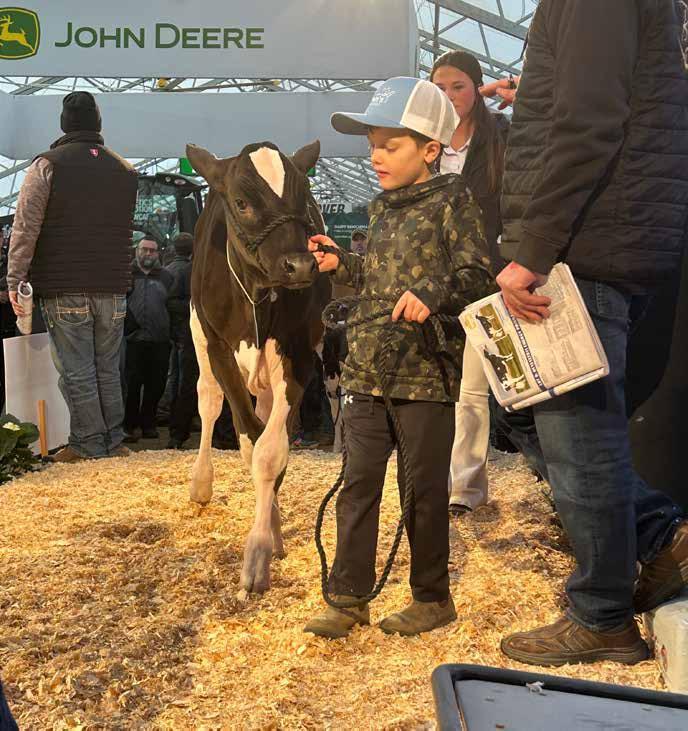
The Canadian Dairy XPO’s annual Calves for a Cause auction raised more than $484,000 during this year’s live sale April 1 in the Cow Coliseum at the Stratford Agriplex. Thousands attended to show their support and submit bids on this year’s lineup.
Calves for a Cause is a live auction featuring elite dairy calves, embryos and genetics from breeders across Canada. Proceeds from the sale support programs and care for children at London Children’s Hospital.
The initiative was started by dairy producers Darryl and Sarah Markus to give back after their son, Brooks Markus, received care at the hospital.
The average sale price was $6,942 across 47 live lots, with a total gross of $484,248, including frozen genetics. Jordan Underhill, CDX director, said more than $72,000 will be directly sent to Children’s Health Foundation.
“The cool part about it is that this donation helps people outside of the agricultural industry,” said Underhill. “It’s a bigger picture. Everybody knows somebody who’s had a child who’s been in a children’s hospital, and it’s such an important cause. I like the fact that the cause is helping all children, even those outside of the ag industry.”
Top sellers at this year’s auction included Lot 20, Hilrose-I Altitude Red Annalee, which sold for $19,000 to Alphie Stoltzfus of Pennsylvania. Coming in second was Lot 21, Budjon-Vail Ec Citron, purchased for $17,000 by Mark-A-Valley Holsteins in Arthur. Third was Lot 44, Echo Glen Major Irene, which sold for $13,500 to Martin-View - David Martin, also of Arthur.
“The calves are selected for a combination of conformation, but also genomics,” said Underhill. “So some of it is about physical appearance, and some of it is genomics. The top-selling calf happened to have both, and when you get that combination, then you hit those kinds of sale numbers.”
The sale attracted buyers from across Canada and the United States, something Underhill said is encouraging.
“The show definitely started off in the first couple of years mostly with southwestern Ontario farmers, and obviously, there’s a high concentration of dairy farms in this region,” said Underhill. “But over time, it’s definitely pulling from the east coast to the west coast of Canada, and other parts of the world as well. It’s pretty cool to see that it’s become the industry show.”
Those in attendance who purchased calves included dairy farmers from Quebec, New Brunswick, Prince Edward Island, Manitoba, Saskatchewan, Pennsylvania and California.
“We want to say a huge thank you to everyone who attended our sale last night,” the Markus family wrote in a follow-up post on Facebook on April 2. “Thank you to all the consignors and the buyers who invested in these great heifers. As a family, we are also so grateful for everyone who has played any part in this sale. Your dedication to our sale does not go unnoticed.”
The Markus family also thanked the Canadian Dairy XPO for its support and for providing a platform to run the Calves for a Cause auction.
By Niagara Farms Staff
Two Niagara grape growers have taken over as the newest chair and vice chair for the agency that represents the industry in Ontario.
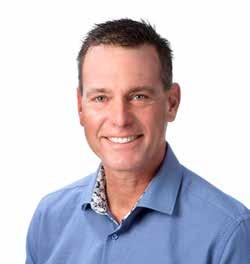
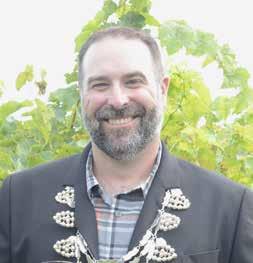
Last month the Grape Growers of Ontario announced Kevin Watson was elected as the newest chair of the organization, with Jeff Duc becoming vice chair. Watson was previously vice chair and takes over for Matthias Oppenlaender, while Duc takes over Watson’s vacated position.
Watson farms about 100 acres of certified sustainable vineyards with his family in Niagara-on-the-Lake. They’ve been in the industry since 1978 and in addition to his stint as vice chair, Watson has also spent time on the growers’ committee and board of directors. He was also named Grape King in 2007 and represents GGO on the Canadian Grapevine Certification Network and Ontario Wine Appellation Authority (VQA).
Beyond the vineyards, Watson and his wife Cathy operate a home winemaking and barrel business, Watson’s Barrels & Winemaking supplies.
Duc, meanwhile, is a third-generation grape grower, also from NOTL. He manages Forrer Farms with his dad Ray Duc, himself a former chair of the GGO board. The Ducs operate 250 acres of vineyards.
The younger Duc was elected to the board in 2024 and named Grape Kings the same year. He also represents GGO on FARMS and serves on the board of directors with the Niagara Peninsula Fruit and Vegetable Growers’ Association.
GGO also welcomed two new directors to the organization. Aaron Oppenlaender joins as a District 1 director, while Andrew Wilson is representing District 3. Oppenlaender spent three years on the Next Gen committee and serves on the IT committee as well, while Wilson is a third-generation grower in the Lake Erie Northshore region, having also spent three years on the Next Gen committee.
GGO CEO Debbie Zimmerman said the infusion of youth into leadership positions is a great sign for the future.
“At the Grape Growers of Ontario, the Next Generation Committee was established in 2019 with a
clear purpose: to nurture, mentor, and build a strong foundation for the future of Ontario’s grape growers,” she said. “It is incredibly rewarding to see that vision in action, as several members of the Next Gen committee are now serving in leadership roles at the board level…This is a strong reflection of the committee’s impact in developing the next generation of leadership for our industry.” says Debbie Zimmerman.
Other board of director members include: Steve Pohorly and Dan Lambert, Niagara-on-the-Lake;
Will George and Joe Schenck, St. Catharines; Brock Puddicombe, Winona; and Robert Peck, Prince Edward County.
The GGO offered its sincere appreciation to Matthias Oppenlaender and his steady guidance and commitment during his time as chair.
Likewise, the organization thanked Murray Wilson, who finished up five years of service as a District 3 director. He was credited with bringing valuable insight, business perspective and a strong voice for growers.




By Amanda Nelson
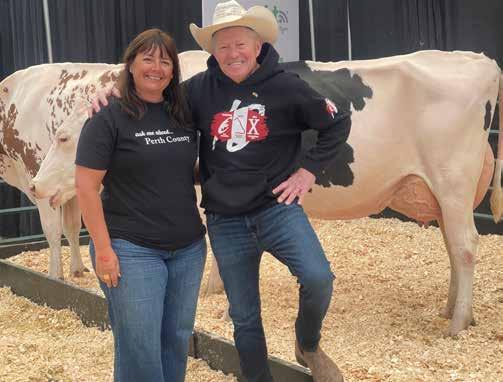
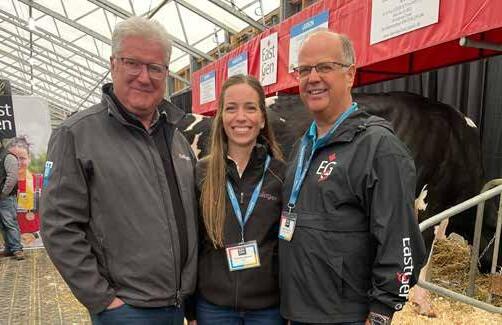
The Canadian Dairy XPO was held in Stratford from April 1 to 3, drawing a record 18,000 attendees. The show, considered Canada’s largest dairy showcase, featured more than 350 exhibiting companies from around the world, bringing innovation, education, genetics and hospitality to Canadian dairy producers.
Opening ceremonies included several Canadian dignitaries, among them federal Minister of Agriculture and Agri-Food Heath MacDonald, Senator Rob Black and Stratford Mayor Martin Ritsma.
“It’s really great to see these people show up and stick their neck out,” said Jordan Underhill, CDX director. “Getting in front of and speaking to the people who produce their food means a lot to the farmers and everyone they talk to.”
Underhill said the record attendance is notable at a time when the dairy sector is consolidating across Canada, with farms growing larger.
“We don’t have fewer cows or less milk being produced; we just see small farms getting bigger and medium farms getting even bigger,” he said.
“We’re seeing consolidation in the dairy and agricultural sector by up to five per cent a year, so the fact that we’re holding attendance and even slightly growing each year is pretty incredible. It really comes down to the quality of the audience, which obviously we have with dairy farmers, but we’re still seeing more people attending each year.”
Event features included the Canadian Dairy Business Sum-
mit, held March 31. The one-day educational program focused on discussions about the future of Canadian dairy, including market outlooks, trade pressures, artificial intelligence, profitability and farm succession.
DairyFEST also hosted its annual Irish-themed opening night, presented by Enterprise Ireland, featuring food, networking and entertainment.
Youth Day was held April 2, offering students a career-focused program connecting them with dairy employers for résumé reviews and networking.
“It’s a chance for youth to drop off résumés at the companies that are hiring,” said Underhill. “Over half of the 150 companies that participate in CDX are actively hiring. There are a lot of great job opportunities not only in agriculture but also in agri-food.”
Featured events also included the Youth Dairy Showing Clinic, Calves for a Cause sale, producer pancake breakfast, Hoof Trimming Corral show presented by Diamond Hoof Care, Blondin Sires Youth Clipping Clinic, John Deere Kids Zone, Genetics in Motion showcase and international pavilions from Germany and the Netherlands.
“The Canadian Dairy Expo is for Canadian dairy producers, but the idea is that we give them access to international innovations,” said Underhill. “We’ve had the German pavilion for years, and this year we added a Netherlands pavilion showcasing companies interested in doing business in Canada and North America.”
Underhill emphasized the importance of encouraging youth to consider careers in dairy farming,
noting innovation is helping improve work-life balance on farms.
“You hear people say this is an industry show, and it’s become the place to be seen, whether you’re an agribusiness or a producer,” he said. “You see families walking around with their sons and daughters, and it becomes more than just a trade show. There’s a cultural component - a real need for it.
Underhill said the event is a chance to get out and meet with others, sharing ideas. There’s an important camaraderie aspect to it, he said.
“The magical thing about the dairy industry in Canada is that it’s attracting young people. Whether it’s robotics or the ability to have some work-life balance - which is important to younger people now - those opportunities weren’t really part of agriculture in the past, but with robotics, they are.”
Underhill said innovation plays a key role in attracting and retaining
the next generation of dairy farmers.
“It’s attracting and keeping intelligent young people on dairy operations. Youth and innovation go hand in hand. I don’t think we’d have the youth without the innovation, but we do,” he said.
“The show’s concept is giving Canadian dairy producers access to international innovation to make them more efficient and help them produce a safer product for consumers. In turn, that’s keeping young people on these dairy operations.
Overall, he said the event is important both for Canada and the world.
“I think the Dairy Expo does a good job of capturing and showcasing the Canadian dairy industry to the rest of the world. We have so much to be proud of living here in Canada and being dairy farmers in Canada. It’s a great snapshot of what the industry has to offer.”
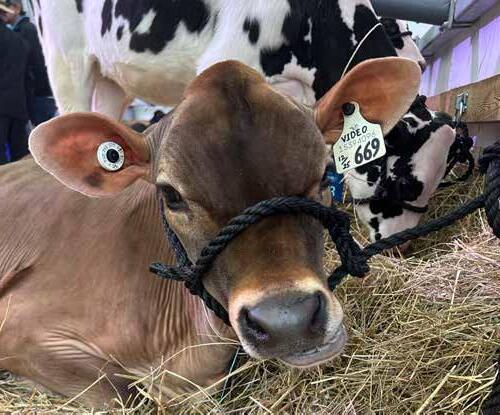
By Luke Edwards
There was a time when Caroline Jager could take no more than a few steps into the barn on her family property in Port Dover.
But she had a vision, and with plenty of blood, sweat and tears, that vision has become a reality.
Jager, who runs Homegrown Hideaway in neighbouring Norfolk County, spoke at an event held last month by the Haldimand Federation of Agriculture, with the help of Haldimand County. The day featured two sessions, a morning talk on biosecurity, and a series of afternoon discussions about on-farm diversified uses.
For Jager, along with Jay and Linda Howell, of Brantview Apples and Cider in Brant County, their forays into agritourism were not for the faint of heart. But with the right plan and dedication, agritourism efforts can provide a solid revenue source, and plenty of fun too.
“You’re not working with your land anymore, you’re working with people,” Jager said.
And people, at times, can be complicated.
Homegrown Hideaway offers glamping opportunities for people who want to get out of town and have a little taste of the quiet country life. The property went through a few iterations, from a former farm to a rewilded plot when Jager’s parents bought the property, to today’s hideaway business.
“It’s the same property, but it’s gone through quite the transformation,” Jager said.
The transformation began as she was starting her family and working elsewhere. It left her little time to spend with her children. So Jager began talking about starting an agritourism business with her husband. The old barn had promise, but was filled to the rafters with so much stuff she could hardly move around inside.
They began clearing out, cleaning and fixing things up, and installing glamping tent sites in multiple natural alcoves throughout the property. This was around 2019, a year before


the world got turned upside down with the COVID-19 pandemic.
“It turned out to be a blessing,” Jager said. Glamping became an appealing option for people who had little else they could do and who realized how much they wanted to be outdoors.
That didn’t mean there weren’t challenges. Jager said many of their visitors don’t know the first thing about rural life, and she’s always answering questions most locals would consider common sense.
She’s come to expect the unexpected and learned to be flexible and ready to adapt on the fly. Normally a quiet and introverted type, she recalled one evening when they planned an outdoor dinner and jazz night in the renovated barn. Mother Nature reared her ugly head and the rain meant plans needed to change on the fly. Jager found herself having to get the attention of the large crowd who’d all arrived in their nice clothes for a fancy night out.
Fortunately, everything worked out, and Jager became slightly more comfortable as a public speaker.
For her, it’s all worth it for that one moment, when visitors truly settle in. When they arrive, they’re often a little anxious and tense, many have just braved a busy 400 series highway or two to get there. Eventually, though, they relax.
“It’s that moment when their shoulders drop,” she said. The power of rural life and nature can ease the tension.
In Brant County, the Howells’ entry into agritourism came when the sector wasn’t nearly as well developed as it is today.
“You have to have a passion for it,” said Jay, a seventh-generation apple farmer on the family property.
They started back in the late 1980s when they began selling apples at markets, realizing they could make more money that way. That would lead to a burgeoning u-pick business.
Then, as they were getting ready to slow down and thinking about retirement, the couple’s three children decided they had great plans for the farm.
That led to each of them creating a new arm of the farm. A daughter decided she didn’t want to become a teacher and instead wanted to make “a ton of booze on the family farm” in the form of cider. Jay said he was quite alright with that idea.
Another wanted to create an event space.
So now, there’s Howell Road Cider Co., an events pavilion, bakery and u-pick operation to keep the entire family busy.
The expansion required permissions and approvals from government, which at the time Linda said was especially challenging, since local government officials didn’t have much experience with what Brantview was trying to do. However, Linda said going through official channels was important.
“It’s a lot of work, but if you’re going to do it, do it the right way,” she said, adding municipalities are now more aware of agritourism.
Neil Stoop, supervisor of planning and development for Haldimand County, said the county is open to working with farms to develop their plans. There are some criteria, but also flexibility. One of the main things is making sure your project won’t impact neighbours.
On top of that, there is some criteria about how big the on-farm diversified use can be. A common measure, which Haldimand follows, is that the use can’t exceed two per cent of the property, up to an acre. That might seem like a lot, but when considering septic needs, as well as laneways and parking, it can quickly add up.
Even if plans take a property owner beyond the two-per-cent threshold, they can still receive approval by applying for relief from county bylaws to Haldimand council.


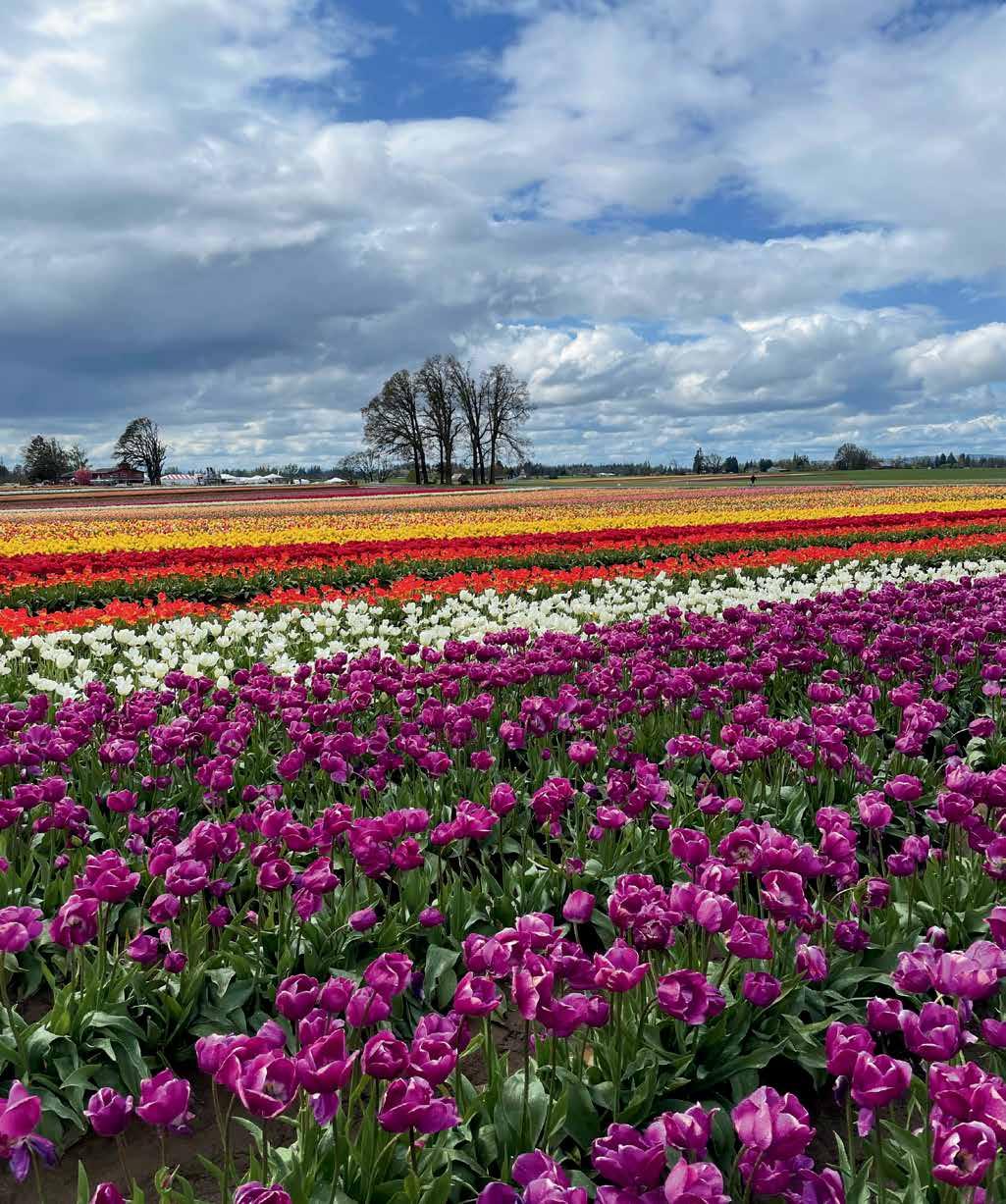

deluge of showers in April and March. With the days getting longer and weather warmer it’s time to get back outside in earnest and enjoy what will hopefully be a lovely spring and summer and an excellent growing season. In Niagara, there’s plenty of ag-related fun to be had in the coming weeks and months. Here are a few things to look forward to.
SATURDAY, MAY 9
10 A.M. TO 3 P.M.
MARKETS STARTING THROUGHOUT MAY
SATURDAY, JUNE 13
SATURDAY, JUNE 13
9 A.M. TO 1 P.M.
TUESDAY, JUNE 16

celebration of Niagara’s agricultural sector, Farm Day returns to the West Niagara Agricultural Centre on Saturday, May 9. Visitors can take in a mix of education displays and demonstrations throughout the day. There will also be some contests, including chicken wing eating, chocolate milk drinking, pie eating and more. It runs from 10 a.m. to 3 p.m. The ag centre is located at 7402 Mud St. West.


ets, as several kick off this month or move into their enhanced spring and summer programming. Local markets restarting for the year in May include Dunnville, Hagersville, Caledonia, Port Colborne, Niagara Falls, and Niagara-on-the-Lake. St. Catharines will also switch over to its busier summer program, starting with special welcome back on Saturday, May 16. See page 21 for more information on local farmer’s market dates and times.

annual fundraiser for the Horse Sense for Kids program returns to BnR Stables on Saturday, June 13 from 1 to 4 p.m. Families are invited out to the Fenwick farm for an afternoon of horse rides, grooming, face painting, games and food. There’s also an online auction running from June 7 to 21. Admission is free, the farm is located at 2250 Balfour St.
oy-a-Lea Farms in Binbrook is one of the hosts of a Breakfast on the Farm event this summer. Running from 9 a.m. to 1 p.m. on Saturday, June 13, Drew and Heather Spoelstra will welcome visitors onto their mixed farm for a farm fresh breakfast and a tour of their facilities. Children and adults alike can play games, meet the animals and learn about life on the farm. Tickets are $5 for adults, while children get in for free. Visit for details.
ouse Canada is hosting a grower day at the Holiday Inn on Ontario Street in St. Catharines on Tuesday, June 16
Focusing on ornamental plants, fruits and vegetables, it features a full day trade show and conference. Experts in several areas will be presenting research on topics like pest and pest control, UV light and converting waste into something of value. Registration can be done online through , under the “Grower Day 2026” by Greenhouse Canada event.