Goderich Sun



While a particularly challenging budget yet, recently Huron County Council passed the 2026 Budget.
To maintain a 4.55 per cent tax levy increase and support long-term financial sustainability, Huron County Council identified opportunities for significant cost savings. Some difficult decisions were made.
Huron County Warden Jamie Heffer stressed how these decisions were not made lightly.
“While the tough choices made in this budget will impact some County services, the 2026 Budget reflects a responsible, forward-looking approach that will strengthen the County of Huron’s ability to serve our community well into the future,” explained Heffer.
As a result of Council’s decision, several programs will be significantly scaled back or cancelled.
Those programs include the Huron Multicultural Festival, Main Street Arts Festival, Jane’s Walks, National Indigenous Peoples Day programming, Huron County Museum Summer Day Camps, Huron Clean Water Project, Huron County Climate Change Report, Sustainable Huron Steering Committee, Sustainable Huron Action Plan, Water Protection Steering Committee, Octoberfest on Ontario’s West Coast, Huron County Community Calendar, Supporting Local Economic Development (SLED) Initiative, and diminished digital marketing and engagement for Ontario’s West Coast.
Additionally, the participation of the County of Huron in numerous projects will no longer be possible.

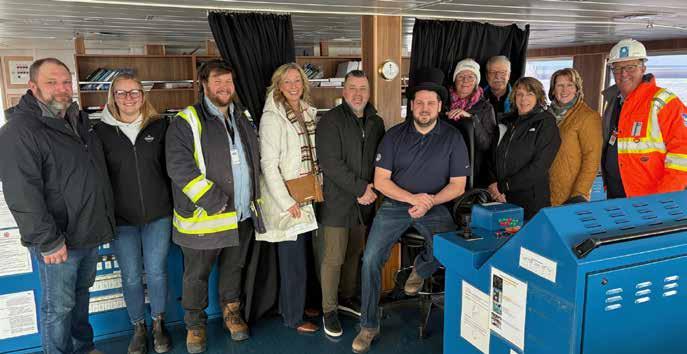
The Port of Goderich is the only deepwater port on the eastern shore of Lake Huron, and each year, the Town of Goderich holds a Top Hat ceremony to celebrate the first ship to dock each spring.
On Monday, March 23, the arrival of the Algoma Intrepid was celebrated as the first ship to dock at the Goderich port under the command of Captain Joe Costello.
The first ship to port symbolizes the official opening of
the shipping season.
“We are delighted to welcome the Algoma Intrepid to Goderich as the first vessel of the season,” said Mayor Trevor Bazinet.
“This tradition not only celebrates our maritime heritage but also underscores the importance of the shipping industry to our town’s economy and community development.”
Captain Costello had the honour of signing the inside of the ceremonial Top Hat, a cherished tradition dating back

to 1932. This was the 94th Top Hat ceremony.
According to Mayor Bazinet, after 93 years, it was time to retire the near-century old top hat, which is currently on display at the Huron County Museum.
A new top hat will continue with the long-standing tradition celebrating the role Goderich’s port plays in supporting local industry and economic growth.
“The Top Hat Ceremony is more than a tradition; it is a celebration of our rich maritime heritage and a reminder of the strong connection between our harbour, our industries, and the Great Lakes shipping community,” wrote Mayor Bazinet on social media.
“The signing of the Top Hat represents hospitality, appreciation, and respect for the captains and crews who help keep Goderich moving forward year after year.”
Servicing regional mining, manufacturing, aggregates and agricultural industries, the Goderich Port is an important hub of commercial shipping in southwestern Ontario.
According to the Town of Goderich, the port facilities the movement of goods, which remains crucial for the town’s economic sustainability and growth.
11, 2026 Prizes and Refreshments
Tickets $10 each

2:00pm Knights of Columbus Hall 390 Parsons Court, Goderich ON
Tickets available at Home Hardware Goderich or at the door To book a table call Kim 519-524-8312
The port also enhances the region’s transportation network, connecting Goderich to both national and international markets. For more information about the Port and the Goderich Port Management Corporation (GPMC) visit www.goderichport.ca/Port_Corporation

That includes Counties EV Charger Network, Huron Stewardship Council, Healthy Lake Huron Steering Committee, County Climate Action Plan and reduced support for sector organisations such as Huron Manufacturing Association (HMA).
According to Heffer, the County of Huron recognises these changes may impact residents and community partners, and that the County remains committed to working collaboratively with partners as these changes take effect.
For more information visit https://www.huroncounty.ca







AMANDA NELSON Sun Reporter
Recently, with my change in title to Director of Community Engagement for Grant Haven Media, I’ve had the opportunity to connect with more of our local papers than ever before, including our rural publications and farming papers. It’s something I don’t take for granted — in fact, I feel incredibly lucky to now be writing about rural Ontario and the agricultural communities that shaped me.
Although people often look at me and assume I’m a city girl, I actually grew up on a small beef farm in Chesley, Ont. The only thing Chesley is really known for
is Chesley Lake — which, ironically, isn’t even in Chesley and is actually located about a halfhour northwest of the town.
We had about 30 head of Simmental cattle, and at one point I even had six of my own cows and calves. Raising them gave me a head start on saving for college, but it also opened the door to countless pets along the way, including a pot-bellied pig named Jamie, a donkey named Francis and even a peacock named Iago. My sisters and I loved living on the farm, but I think I was the most animal-loving out of all of us.
Growing up, I showed calves in 4-H and even went to The Royal a few times. I also generally came home from livestock sales with at least a few rabbits or chickens. At one point, my dad blocked off an entire pen just for my animals. Through one winter, I kept Jake, Iago, several ducks and chickens, and a few guinea hens together before letting them roam free around the farm — including up by the house — in the spring.
One of my favourite things about being the local animal-lov-
ing farm kid was that whenever someone had a newborn animal whose mother died, I was usually the first person they called. At one point, I had a pet sheep named Oscar that I raised from birth. He sucked on a soother, knew how to unlatch gates and sometimes slept outside with my dog. He even tried to sit in my lap when he was fully grown.
I loved living on the farm. I loved the scratches down my legs every summer from unloading hay, and I loved connecting with the land in a way few people ever get to experience. Beyond all the pets, farm life grounded me, and I feel blessed to have grown up that way.
Now, through journalism, I’ve been able to reconnect with those roots in a completely unexpected way. Writing for our rural community newspapers and farming publications has allowed me to re-establish that connection more every day. Recently, I attended the annual general meeting for the Ontario Agri-Food Discovery Centre concept — a future STEM-based learning centre designed to teach kids where their


Publisher
Stewart Grant • stew@granthaven.com
Editor
Kathleen Smith • kate@goderichsun.com
Graphic Design / Sales Inquiries
Sarah Cairns • info@goderichsun.com
Business Development
Heather Dunbar • heather@granthaven.com
Billing Administrator
Cindy Boakes • boakescindy1576@gmail.com
Administrative Assistant
Wendy Lamond • wendylamond74@gmail.com
Contributors
Annette Gerdis, Tanya MacIntyre, David Yates, Paul Knowles, Brittany McKay, John Miner
36 Water St. St. Marys, ON, PO Box 2310 N4X 1A2 info@goderichsun.com | 519.655.2341 | granthaven.com

food comes from. I’ve written about soybeans and the challenges farmers across Ontario face, as well as issues affecting dry bean producers. I’ve spoken with local representatives and community leaders who care deeply about supporting rural communities and agriculture.
In a roundabout way, I’ve come back to farming — not by working the land, but by telling the stories of those who do. And I feel incredibly fortunate to be able to connect with farmers and those in the agri-food industry after leaving that life so many years ago.
Through my work, I’ve also been reminded of the emotional connection farmers have with their land and livestock. Recently, there was a fire on a local farm, and I felt deeply for the family. I know the pain of losing livestock. I think the first time I ever saw my dad cry was when we lost a cow during a difficult birth. While animals provide income, they also become part of the family, no matter the size of the operation. It’s something people who haven’t lived it don’t always understand.
The same goes for the land. Yes, crops represent livelihood, but farmers also care deeply about their growth. They prepare the soil, plant the seeds and watch them grow. They wake up at night hoping frost won’t damage early crops and pray rain holds off after hay is cut. Farmers know their land, their crops and their livestock better than anyone. Now, I’m privileged to write about them from a new perspective — someone who no longer lives on a farm, but still appreciates it deeply and wants to share their stories.
While farming isn’t the path I see for myself now, I still dream of owning a home with a bit of land — maybe a few chickens and perhaps another pot-bellied pig someday. My parents no longer have livestock and now focus on soybeans and grain, but they still own more than 200 acres. When I return, my shoulders drop and I finally relax. That’s the feeling of going home, I suppose.
And for me, home will always be the farm.
By midMarch, something shifts. After the time change and the impact it has on some people, and all our pets, it’s delightful to see the evening light lingering longer which has already brought us some stunning sunsets.
It brings us the realization we’ve made it through the darkest stretch of the year. Spring isn’t fully here yet, but the promise is unmistakable.
There’s also a sense of relief in this moment like a gentle lifting of the spirit. We’ve weathered the storms, endured the cold, and carried ourselves through the heaviness of winter and snow. And now, slowly, the world feels like it’s waking again.
This time of year reminds us that resilience doesn’t al-
ways look bold or heroic. Sometimes it looks like simply showing up and getting through the day. Other times it’s like holding onto hope even when the path feels uncertain. There is grace in that kind of perseverance.
As the snow recedes and the earth softens, we’re invited to soften too. As the gardens release the first shoots of spring it’s a reminder to let go of what weighed us down through the long winter months, make space for new beginnings and step forward with a little more courage and a little lighter.
Spring shows us that renewal is possible — not just for the world around us, but for our hearts as well. As we move toward Easter and the brighter, warmer days ahead, may we carry with us the quiet strength that got us here.
Happy Spring.
To subscribe, please e-transfer granthavenmedia@gmail.com and include your full mailing address in the comments, or send a
GODERICH
info@goderichsun.com
A lineup of nearly 20 local organizations will gather on Saturday, April 18 to celebrate Earth Day, each bringing their own unique connection to the natural world.
Participating groups include the Maitland Trail Association (MTA), Huron County Museum, Butterflyway Rangers, Menesetung Bridge, Tri-County Master Gardeners, and the Goderich Horticultural Society among many others.
At the Earth Day celebration hosted at Lakeshore United Church in Goderich, guest speakers will shed light on timely topics.
These discussion points include health benefits of spending time in nature, on how native plants support biodiversity and on active transportation.
Michele Melady Young, who is seen as the spark behind this event, explained that health communities depend on healthy people, animals and ecosystems.
“Earth Day is the perfect time to celebrate that connection, and to remind ourselves that even the smallest acts of caring for our planet can make a joyful difference,” added Melady Young.
“By celebrating Earth Day together, our entire community stronger.”
In addition to guest speakers, WorldRooted: the Art Project for People led by artist Bethany Ann will be there to help children of all ages create their own,
wearable butterfly wings.
Come early to make sure your wings dry in time for the children’s parade, or come and meet some of the goats, invasive plant warriors. Grazing goats are one of nature’s most effective tools for managing and removing invasive plants.
Whether a lifelong environmentalist or someone who loves this corner of the world, there is something for everyone on April 18 from 9 a.m. until 12 p.m.
Come with curiosity, bring the kids, enjoy a snack bar (cash only) and leave with new ideas and a renewed sense of hope.
Lakeshore’s Outreach Committee member Andy Ross said this event fits well with the mandate of the committee, and Lakeshore United’s mission statement to nurture the community and serve the wider world.
“Environmental stewardship is a spiritual activity, and it is appropriate that the church facilitates it and promotes it,” added Ross.
“Care for creation benefits all.”
Join on Saturday, April 18 from 9 a.m. to 12 p.m. to celebrate Earth Day, at this free event, and round out your Earth Day by joining the Lake Huron Coastal Centre (LHCC) for a Beach Clean-Up and BBQ at St. Christopher's Beach from 1 p.m. – 3 p.m.
The celebrations continue at Lakeshore United Church at 10:30 a.m. on Sunday, April 19 with a special Earth Day worship service.
GODERICH
info@goderichsun.com
The annual Home and Lifestyle Show is returning to Bayfield on April 25 and April 26. This year promises a vibrant mix of indoor and outdoor exhibitions, a bustling food court and free face painting for children.
This year, the Bayfield Lions are thrilled to announce a new 50-50 draw, where attendees of the event can have the change to win over $1,000.
This year, the Lions will shine a spotlight on Happy Hollow Campground Inc. and RV Sales, a family-owned campground and on-site RV dealership located just minutes from Goderich along Lake Huron.
Visitors to their site can tour a selection of RVs and trailers, get hands-on with the latest accessories, and chat with knowledgeable staff about everything from camping tips to RV service and mainte -
and other confidential paperwork, while helping raise funds for local initiatives.
nance.
“Being part of the Bayfield Home Show gives us a chance to meet new people and share our passion for RVs and camping,” says Joe Paola, owner of Happy Hollow Campground.
Adding to the excitement, Happy Hollow will give away a 22-inch Blackstone Griddle valued at $400.
With the Lions Club providing a fantastic outdoor setup, the Home and Lifestyle Show is a perfect opportunity to enjoy sights, ask questions and imagine your next adventure on the shores of Lake Huron.
Whether you’re enhancing your home, enjoying great food or spending quality time with family, the Bayfield Lions Home and Lifestyle Show has something for everyone.
For more information visit www.happyhollowcampground.com or www.bayfieldlions.ca
Residents looking to safely dispose of confidential documents while supporting a local cause will have the opportunity to do both next month.
The Rotary Club of Goderich is hosting its annual Shred-It fundraiser on Saturday, May 9, 2026, at the Libro Credit Union parking lot, 74 Kingston St. The event will run from 9 a.m. to 1 p.m.
Community members are invited to bring old personal and business documents for secure, on-site shredding. The service is offered by donation, with a suggested minimum contribution of $12 per banker’s box or equivalent.
The event provides a convenient and secure way to dispose of sensitive materials such as tax records, financial statements
Last year’s event saw strong participation, with enough paper collected to fill two full shredding trucks.
Funds raised through the initiative are reinvested directly into the community.
Following last year’s event, one of the first major contributions was a $5,000 donation to the Huron Hurricane Aquatics Club in support of its swimming block program.
The Rotary Club of Goderich has been active in the community for more than 64 years and has raised and donated over $4.5 million to local initiatives during that time.
Organizers say the Shred-It fundraiser is a simple way for residents to protect their personal information while making a meaningful impact close to home.



KATHLEEN SMITH Editor
Results of a recent study published in Patterns, a Cell Press Journal, reveal a mechanistic framework for understanding vaccine outcomes in immunocompromised populations.
Led by Goderich resident and study lead author, Chapin Korosec, the study looked at how COVID-19 vaccination elicits distinct immune responses in people with HIV, versus those without HIV.
Vaccines are key to controlling the impact of viruses during a pandemic, yet immune responses vary between individuals.
People with immune compromised conditions such as Rheumatoid Arthritis or cancer have different responses not only to viruses but to treatments and vaccines.
Those living with HIV (PLWH) represent an important group of people whom vaccine efficacy and immune response remain under-characterised.
People living with HIV are at a much larger risk of severe outcomes to viral diseases, due to the immune compromising nature of HIV.
At the same time, in general, immune response is extremely complicated.
Korosec explains that our immune response to viruses and vaccines varies considerably across healthy individuals depending on how efficient our immune system is.
The body contains a lymphatic system. It runs parallel to our circulatory system (blood), but it is not pumped by the heart.
According to Korosec, the lymphatic system is the entire system of lymph nodes (there are 400-600 depending on the person), connected via the lymph (conceptually like veins but contain lymph fluid, not blood).
Within each of our lymph nodes is everything needed to mount an immune response to a virus, vaccine, cancer or bacterial infection.
In the lymph node, ‘helper T cells’ play the central role of coordinating the immune response. T cells turn the immune system on, tell all other cells through chemical signals about the threat, and ultimately turn off the response when the threat has been dealt with.
Helper T cells are the immune system’s control board managers, coordinating which responses to turn on, how strong they are, and when to shut them down.
“HIV is a virus that specifically targets and infects these Helper T cells, so you can imagine how important it is to get that infection under control very quickly, or in our case, when it is under control with a drug regimen called ART, how well do vaccines work?” said Korosec.
This study was conducted to build an immune signature of vaccine responses in people living with HIV, compared to an agematched, non-HIV group of individuals.
“In this way, we can use a machine learning model to pick up and learn the varied responses among individuals,” says Korosec.
“It learns the patterns that distinguish the individuals.”
A total of 91 participants were recruited
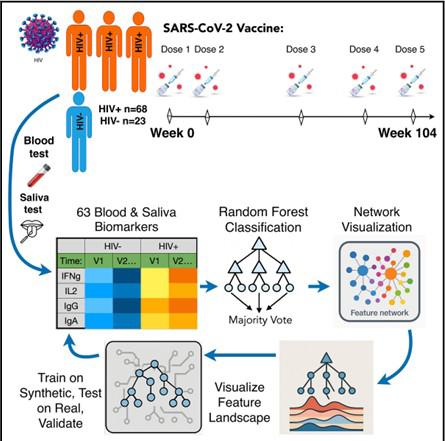
into the study – 23 HIV-negative individuals and 68 living with HIV. Study participants were given five vaccine doses.
Data for the study was collected through the clinical lab of Dr. Mario Ostrowski and the University of Toronto.
All real people were used in the study, which helped build the virtual patient cohort.
Notably, the study demonstrates that virtual patients can be used to train models that generalise to real individuals. This supports precision-guided vaccination strategies.
While HIV remains a global health burden, with approximately 40 million current infections and more than 40 million deaths to date, millions of new infections are expected by 2050 according to the Global Burden of Disease Study 2021.
According to the study, individuals with advanced HIV disease are susceptible to more severe COVID-19 outcomes.
While vaccines are the intervention to reduce severity and morbidity of infectious diseases, the immunogenic response to COVID-19 vaccines among those living with HIV depends on the vaccine type, and disease progression.
More specifically, this study illustrates how data-driven immunology can inform precision vaccination strategies and improve continuity of care for immunologically compromised people.
The work from the study is an interdisciplinary effort with faculty of York, UofT (all data came from the lab of Dr. Mario Ostrowski, Dept. of Medicine), U Penn and National Research Council Canada, with Korosec as lead.
The team applied machine learning approaches to identify immunogenic signa-
cepts.
AI is the broad field of creating systems that perform tasks requiring human-like intelligence, while ML is a subset of AI, which enables systems to learn patterns from data and improve their performance.
ML models specialise in learning patterns from data.
“You can, with enough data, pick out really complex connections,” added Korosec. “In our case, between the many varied components of the immune system response.”
Results of the study revealed the power of ML to both create dominant response signatures and still identify outliers, that there is no different pattern between people with HIV and those without HIV in terms of producing antibodies despite differences in immune components, and using virtual patients can help scientists track how immune responses evolve over time.
Korosec explains that by using computer-generated virtual patients, outcomes can be better predicted, and better treatments or vaccines can be designed through simulation.
tures distinguishing vaccine responses in people living with HIV.
Korosec stresses there are broader implications for data-driven immunology, including vaccine science and AI applications in health.
According to Korosec, machine learning (ML) holds significant promise to revolutionizing HIV diagnostics by uncovering complex immune patterns and facilitating precision health interventions.
Knowledge produced from theses studies could inform customized vaccination strategies and reduce the risk of severe outcomes for immunologically vulnerable people.
AI (artificial intelligence) and ML (machine learning) models are becoming increasingly good at picking up and learning intricate patterns, while the immune system response remains very complicated.
According to Korosec, blood-based and saliva-based antibodies, the many different types of antibodies, the white blood cells and their subtypes and molecules that regular them all have difficult to predict responses.
Using ML or AI can allow scientists to make steps towards individualized healthcare. Both ML and AI can take in a set of data and learn how these complex responses are connected.
“Individualized healthcare means that your therapeutic or vaccine regimen is tailored especially to you, so that you as an individual get optimal outcomes to whatever medical intervention you are undertaking,” explained Korosec.
“In our work, we focused on immune compromised group – people living with HIV.”
ML and AI are two slightly different con-
“If the models can capture the key relationships between the real data, and create accurate virtual data, we can synthesize virtual data for hypothesis testing to aid in future clinical studies,” explained Korosec. Now that this study is complete and results have been printed in this journal, what’s next?
Korosec explains that much like how MRI and CT scanners are built by specialists, for AI models to be used by medical doctors, so should every use-case of AI models.
For example, it took a lot of time and specialist research to develop the specific brain scan protocols, or every specific organ scan protocol, used by an MRI machine.
Similarly, Korosec sees AI as an important tool in healthcare. However, he explains that every specific use-case of this tool needs to be built and tested before medical professionals can safely use it in their practice.
“Our research, as well as that of others, have shown that AI can be utilised in diagnosing outcomes and aiding in the individualization of healthcare,” explained Korosec.
“Administratively, there are hurdles to overcome, but many companies and research groups are working on this.”
Korosec furthers that the specific contribution from this study was to show that ML can discern immune differences from vaccination for people living with HIV.
“There is no reason why one could not do the same for individuals who smoke, or have other health issues such as diabetes or cancer,” Korosec added.
“For me, I would like to make my next step forward towards clinical implementation with real use-case scenarios.”
Chapin S. Korosec lives in Goderich and is an Adjunct Professor in the Department of Mathematics and Statistics at the University of Guelph.
Korosec’s article was selected to grace the cover for the March 2026 issue of the journal Patterns (by Cell Press).
and brings up more sap again.”
Local maple syrup farms are ending the season on a high note despite inconsistent and unpredictable weather at the beginning of March.
Recent warm weather has caused the sap to flow, and temperatures dipping below freezing at night create the perfect atmosphere within the tree.
“That’s kind of what you want, but it needs to freeze — that’s important. If it doesn’t freeze then that’s the killer,” said Steven Hern of Hern Line Heritage Maple Products.
“During the season, you can go two or three days with the warm, and then it needs to freeze and the tree kind of resets
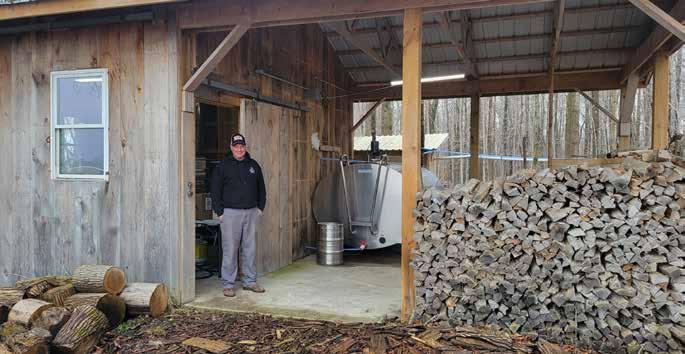
Hern lives on a century farm outside of Exeter and has made use of a wood lot on the property to make maple syrup for the past five years. He said he taps four hundred trees on the 12-acre woodlot in mid-February to mark the beginning of the maple syrup season.
Hern said the trees haven’t let him down this year.
“So far so good,” he said. “We’re right on track I think to make a good crop so, can’t complain at all.
“I’ve only been doing it for five years, I haven’t seen a bad season, really. I’m a bit of a novice that way, as far as experience goes and long-term stuff.”
Hern Line Heritage Maple Products aims to produce 1.5 litres of maple syr-
up per tap. And for 400 tapped trees, that adds up to a total yield of 600 litres of syrup.
Hern said they have produced over 300 litres as of mid-March.
“I think, with the way the weather looks, we’ll get a few runs yet,” Hern said.
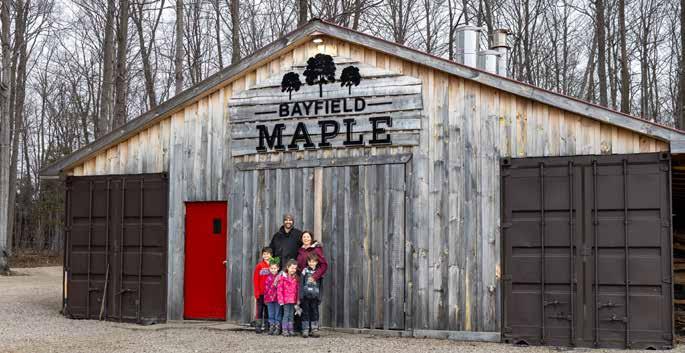
Over at Bayfield Maple, with a larger production established, they’re looking at a yield of roughly 2,650 litres for the season.
Owner Tom Genoch said his bush on Pavillion Road has about 2,800 taps. The production trucks in sap from an additional 1,000 taps on a property owned by Genoch’s mother-in-law, Dianne Brandon, on the north side of Bayfield.
Brandon said they had an uncertain start to the season but still expect to get a good crop.
quite warm, but it was early enough in the season that the trees didn’t start to bud,” Brandon said.
Brandon is a long-seasoned syrup producer, having made maple syrup with her husband Brian for the past 21 years.
The business has stayed within the family with Brandon’s daughter, Cathy, and her husband, Tom, now carrying on the sweet tradition.
Bayfield Maple stocks their product on the shelves of numerous local businesses, including Shop Bike Coffee, and sells wholesale to Cait’s Cafe in Goderich to be used in the cafe’s food and drinks.
Whether it’s large-scale or small-scale, making maple syrup has its ups and downs and remains entirely dependent on the weather.
“We were really worried because it got
In the end, a few weather hiccups weren’t enough to sour the season. Thanks to a timely turn, local producers are set to enjoy a sweet spring harvest.


By Jake Grant
What is the birthstone for April?
Who is the newly elected leader of the NDP? 3. The Cooper's Hill Cheese-Rolling and Wake takes place annually in which country?
Children born from 2025 to 2039 will belong to which generation?
5. What are the three main macronutrients?
6. Who stars as the lead role in Shutter Island(2010)?
7. Canada’s federal minimum wage grew April 1st, 2026. What is minimum wage?
Angkor Wat is the largest religious monument in the world found in what country?
How far is 1-light year in kilometers?
How many sides does a heptagon have?
ricultural Adaptation Council, allowing the project to move forward with architectural proposals and the concept phase.
At the Ontario Agri-Food Discovery Centre’s 2026 annual general meeting March 26, board chair Steve Dolson introduced the team from Moriyama Teshima Architects, which developed concept designs for the future 10-acre site in Listowel.
The Ontario Agri-Food Discovery Centre aims to become a place for learning and play that showcases the innovation and importance of the agriculture and agri-food sector across Ontario, while highlighting what Huron and Perth counties have to offer.
Although still in the conceptual phase, the centre is already drawing attention and praise from local politicians, including Matthew Rae.
“This centre will showcase the strength of Ontario’s agri-food sector and the people behind it,” he said.
“It’s an industry that drives our economy and puts food on our tables every day.”
The STEM-based centre is envisioned as a hub for science, education and community engagement, promoting curiosity and bridging the gap between consumers and agricultural practices. It will also highlight diverse career opportunities in the agri-food industry.
At the meeting, plans were discussed for an expanded facility, growing from 20,000 square feet to 34,000 square feet, with estimated costs increasing to $38 million.
The board secured $100,000 in grants from the Gay Lea Foundation and the Ag-
A total of 41 proposals were received before selecting Moriyama Teshima Architects. The overall project is expected to raise $40 million to $50 million, including $100,000 for concept design, $300,000 for planning and $150,000 for fundraising support.
The firm has worked on several civic and cultural institutions, including the Canadian War Museum, the Aga Khan Museum, the Discovery Centre and the Honey Bee Research Centre. They are currently leading new design work at Science North, as well as the Rouge National Urban Park Visitor, Learning and Community Centre.
Their approach to the project focuses on helping the public better understand Ontario agriculture and making food systems more visible.
“Food is everything. Food is national security. Food is economy. It’s employment. It is energy, history. If we approached many of today’s issues understanding the importance our food makes, we would be making much better decisions,” said Diarmuid Nash, partner.
“Food is infrastructure, it is climate resilience, it is economic strength and it is community stability, and yet, for something so fundamental to our lives, much of this food system remains invisible to the public.”
He reiterated that the centre is about making the agri-food system visible to everyone, including those in urban centres, like Toronto.
“It’s a place for agriculture, technolo -
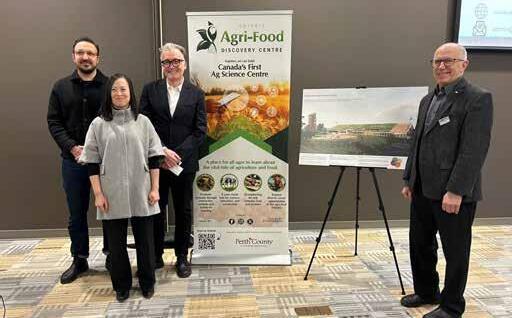
gy, sustainability and education to come together — a place where Ontarians can better understand the land that sustains them, the systems that support it and the innovation shaping its future,” he said.
“While the building is about agriculture, it’s also a civic institution about stewardship. It reflects resilience, and it’s about the future of food in Ontario.”
Olivia Keung, director of sustainability, said the concept will focus not only on the agri-food sector but also on sustainability and land use.
“Our projects focus on public engagement, learning and connections to the landscape,” she said.
“We were inspired by the conversa-
tions during the tour and throughout the months we have been working together with the board, and we are deeply committed to sustainability and innovation.”
Keung said sustainability is a top priority for the concept.
“Architecture must embody environmental sustainability. That same belief — that buildings can actively demonstrate stewardship, innovation and responsibility to the land — is central to how we approach the Ontario Agri-Food Discovery Centre,” she said.
The board plans to launch a capital campaign next year.
More information is available at oafdc.ca.
Huron County are not occasional or temporary, they are a chronic challenge.
One of the realities of doing business in Huron County is that our labour market does not look like the labour market in many other parts of Ontario. We are part of a region that consistently records the lowest unemployment rate in the province. On the surface, that sounds positive. Low unemployment usually suggests that most people who want to work are working, that businesses are active, and that families have income to spend in their communities. Those are good things. But low unemployment has another side, especially in a rural economy. For employers, it often means there are not enough available workers to fill open positions.
In February, the unemployment rate in the Stratford-Bruce Peninsula economic region was 5.1 per cent, compared with 7.3 per cent for Ontario as a whole. That gap helps explain why labour shortages in
Employers may be able to find some applicants, but not always in the right numbers, with the right skills, or in the right locations. Often, vacancies go unfilled for months.
That is why a recent announcement from the federal government regarding the Temporary Foreign Worker Program matters.
The new measures create a limited rural exemption that would allow local employers to maintain current numbers of low-wage temporary foreign workers and temporarily raise the cap from 10 per cent to 15 per cent of the workforce through next March.
More importantly, the announcement recognizes something rural communities have been saying for years, that labour market conditions in places like Huron County are fundamentally different from those in urban centres.
This as a positive step for Huron County
employers – not because temporary foreign workers are anyone’s first choice, but because they are often the only practical option when local recruitment has been exhausted and businesses still cannot fill essential jobs.
In Huron County, this affects agriculture, manufacturing, hospitality, food processing, health care, and other sectors that communities depend on.
This is an issue on which I have been directly involved. Through the Huron Chamber’s advocacy, I have worked to ensure that rural Ontario’s voice is heard in conversations with local, provincial, and federal policymakers about immigration and workforce pressures.
That has included my participation in the Reimagining Immigration Task Force, a national coalition of chambers of commerce and employer associations that continues to meet regularly and advocate for practical reforms.
Among its proposals is the Canadian International Workforce Program, a mod-
el that we have argued should replace the Temporary Foreign Worker Program with a more realistic and responsive approach to chronic labour shortages.
This federal announcement is, at least in part, a direct result of advocacy efforts that included the Huron Chamber’s role in helping bring rural Ontario’s perspective to that national table. That matters, because too often policies are shaped around urban assumptions and then applied broadly, even where they do not fit local realities.
The larger point is that public policy must start with reality. In Huron County, employers are often not deciding between a local worker and a foreign worker. They are trying to keep businesses operating when the local labour pool is already stretched thin.
Recognizing that reality is not about lowering expectations. It is about making sure rural communities have workable tools that reflect the actual labour market conditions on the ground.
The Alzheimer Society Huron Perth is pleased to announce that the Memory & Aging Program™ will be offered this June at the MacKay Centre for Seniors in Goderich.
This evidenceinformed program supports adults who are experiencing normal, agerelated memory changes or who wish to learn more about how memory works.
The Memory & Aging Program™ explores how memory functions, how it naturally changes over time, and when changes may warrant further attention.
Participants will learn practical, everyday memory strategies and brainhealthy
lifestyle approaches that can help with common challenges such as remembering names, locating misplaced items, and keeping track of daily tasks.
The program is designed to be informative, enjoyable, and confidencebuilding.
The program consists of four weekly sessions, held on Wednesdays from 10 a.m. - 12 p.m., May 6, May 13, May 27 and June 3, at the MacKay Centre for Seniors, located at 10 Nelson St. E., Goderich.
A $25 registration fee covers the cost of the program workbook and all materials.
Community members are encouraged to register early, as space is limited.
To register or learn more, please contact the Alzheimer Society Huron Perth by phone: 18005615012.
GODERICH SUN STAFF
info@goderichsun.com
A tree planting workshop at Lucknow Legion invites farmers across Saugeen, Maitland and Pine River watersheds.
The workshop on April 9 will focus on how farmers can access up to 100 per cent funding coverage for on-farm projects.
The aim of the workshop is to provide farmers with an understanding of how trees on their farm can improve soil health, water quality, and farmland resiliency.
According to organisers of the event, the morning will feature guest speakers Kate Procter of Bodmin Farms Ltd and Christine MacIntyre of Rail Line Farms. Both Procter and MacIntyre are local farmers who will share firsthand experience and practical tips of planting trees on their farms, from pasture windbreaks to reforesting flood-prone farmland.
Furthermore, conservation specialists including those from Maitland Conservation, will outline how eligible farmers can access 100 per cent funding for tree planting projects, including planning and coordination services.
Attendees will also leave understanding the next steps towards transforming their ideas into on-the-ground projects.
Full funding coverage requires agricul-
GODERICH SUN STAFF
info@goderichsun.com
Residents of Huron and Perth counties can learn about brain health and dementia through the Alzheimer Society Huron Perth’s free, accessible online education programs.
Launching this spring, the Living Well series features guest speakers to discuss hearing and dementia, and bereavement and the grief process.
Hearing and Dementia will take place on Monday, May 4 at 2 p.m. Danielle and Shannon from HearingLife will discuss the relationship between hearing health and cognitive well-being.
Bereavement and the Grief Process will take place on Tuesday, June 2 at 1:30 p.m. Sally Brodie from Huron Hospice will offer guidance for navigating grief and life transitions.
The Society will also offer one-hour Zoom sessions to provide practical in-
formation and support for anyone wanting to learn more about dementia.
The popular Dementia Basics Series begins April 14, with afternoon and evening options, covering topics such as the 10 Warning Signs, Types of Dementia, Mild Cognitive Impairment, and Dementia Overview.
Another offer coming in July, is a four-week program for family members in caregiving roles.
Care-Partners: Dealing with the Feelings will begin on Wednesday, July 22. This series focuses on the emotional aspects of caregiving, including stress, role changes, and coping strategies.
For details and registration for these online programs, visit www.bit.ly/ASHPEducationhour or visit the Education Hour banner at our website at www.alzheimer.ca/huronperth.
For assistance, contact 18005615012 or email info@alzhp.ca.
tural lands, but all are welcome to attend to explore other available options. A light lunch will be provided with registration by March 31.
For more information or to register, contact Marisa Roefs by emailing mroefs@ mvca.on.ca or calling 519-335-3557 ext. 235.
This project is funded by the Governments of Canada and Ontario under the Sustainable Canadian Agricultural Partnership (Sustainable CAP), a five-year, federal-provincial-territorial initiative.
Funding is administered by Conservation Ontario under the Marginal Lands Initiative and delivered through the Resilient Agricultural Landscape Program by local partners.
Maitland Conservation is a community-based organization that seeks to protect and enhance the quality of water, forests, and soils in the Maitland Valley watershed.
Saugeen Conservation is a community-based environmental organization, dedicated to protecting, restoring, and managing the natural resources of the Saugeen watershed.
Pine River Watershed Initiative Network is a not-for-profit, local environmental initiative who implement projects that contribute to clean water and a healthy ecosystem in the Pine River watershed.
The Goderich Memorial Community Committee is inviting proposals from qualified firms for the upgrade and replacement of the heating and cooling systems at the Goderich Memorial Arena.
The project includes:
• Replacement of existing unserviceable furnaces and rooftop HVAC units serving the lobby, foyer, and auditorium
• Design and installation of a new heating system for the former ice arena space
• Consideration of innovative, energy-efficient, and cost-effective solutions for a large multi-use community facility
Mandatory Site Meeting: April 15, 2026
Or by approved appointment
Proposal Closing Date: April 30, 2026 at 1:00 PM local time
Qualified proponents must have experience with commercial or institutional HVAC systems and provide references from similar projects.
To request the full RFP package or register for the mandatory site visit, please contact:
Matt Hoy
Goderich Memorial Community Committee
Email: matthewalexanderhoy@gmail.com
Proposals must be submitted electronically in PDF format with the subject line:
RFP – Heating and Cooling System Upgrade, Goderich Memorial Arena
GODERICH SUN STAFF
info@goderichsun.com
Keynote speaker Lauren Van Ewyk, a co-founder of the National Farmer Mental Health Alliance will discuss mental resiliency in rural spaces amid loss at the upcoming Gateway webinar on grief.
On Tuesday, April 14 from 12 p.m. until 1 p.m. via ZOOM, Van Ewyk, a registered social worker and PhD student at the University of Guelph will introduce the complicated relationship between grief and mental wellness among rural families.
Joining Van Ewyk are Diane Bergsma, co-founder of the Three Oaks Respite Cabin, and Ben Tobias-Murray, Farmland Access and Agricultural Planning Coordinator at Ontario Farmland Trust (OFT).
According to Gateway, this webinar will explore complicated grief as it shows up in rural life, where loss often affects not only families but also farms, businesses
and community roles.
Van Ewyk will discuss generational loss, including people, land, health and identity, and how all these losses are carried forward within rural families.
Discussion during the webinar will examine how abrupt changes can reshape roles and responsibilities over time.
According to guest panelist Bergsma, there are many ways people can find support during a time of loss, including the Three Oaks Respite Cabin.
This is a quiet place where farmers and first responders can receive support.
Tobias-Murray aims to shed light on the Ontario Farmland’s Trust activities that aid in farm succession planning, preserving Ontario’s rich agricultural industry.
All are welcome to join the webinar on April 14. To attend this discussion and future presentations, please register on Gateway’s website: https://www.gatewayruralhealth.ca/lectureseries









KATHLEEN SMITH Editor
A fundraising event to support the Alexandra Marine and General Hospital’s (AMGH) Foundation’s MRI campaign will return, while introducing residents to a spring tradition marked in the Punjab region of India.
The local Sikh community will bring back its annual Vaisakhi celebration on April 19 at the Knights of Columbus Centre in Goderich.
The fundraising cultural event will feature Indian food, Bhangra dancers, henna art and turban tying demonstrations, as well as a short presentation informing participants about the significance of Vaisakhi and the MRI campaign.
“When we heard the Goderich hospital was raising funds for the MRI machine, we wanted to contribute to it,” said Gurpreet Singh, a member of the Huron Seva Foundation, the group organising the event.
"We thought this event was perfect; we could share our culture and donate to the campaign."
Funds will support the AMGH Foun-
dation’s Magnetic Moments campaign, a two-year $6.5 million initiative to bring an MRI machine to serve the health care needs of residents in Huron County.
Currently, the nearest MRI machine is in Owen Sound, London or Stratford.
“We need an MRI machine in our area,” added Singh.
“We will all benefit from it.”
According to Singh, this is the second time the Huron Seva Foundation is organising Vaisakhi in Goderich.
Last year, the group held an event at Lakeshore United Church, and saw 170 people attend to enjoy delicious food, exciting dancing, and to learn about an unfamiliar tradition.
“The heart of Vaisakhi is about building connections and celebrating together,” added Pam Somers, community volunteer.
Somers has been instrumental in organising this year’s Vaisakhi event and ambassador on the Magnetic Moments campaign team.
Vaisakhi tickets for April 19 cost $10, with donation opportunities available. Tickets are available at Circle K in Goderich or online via Eventbrite: https://bit.ly/vaisakhitickets
KATHLEEN SMITH Editor
Welcoming participants from across Canada for four days of writing, reflection and creative exploration, local writer and mentor Susan Regier will once again host the Soulful Writer’s Retreat for Women this summer at her lakeside home.
The retreats began in 2017 and have since become a sought-after writing getaway for women who want to deepen their craft while stepping away from distractions of everyday life.
In its tenth year, two retreats will be held – from June 15 to June 18 and again from August 24 to August 27.
According to Regier, each gathering brings together a small group of writers for guided sessions, quiet writing time and thoughtful conversation.
“The retreat is intentionally small and personal to create a deeply connected space for growth,” said Regier.
“Women come here to reconnect with their creativity, step away from their busy lives, and discover the stories that are waiting to be written.”
Regier finds is meaningful to see participants return more than once.
According to Regier, the retreats are open to women at any stage of their writing journey – whether they are working on a novel, a memoir, a personal essay or writing for

GODERICH SUN STAFF
info@goderichsun.com
their business.
During the retreats, Regier shares techniques drawn from her years of teaching creative writing at Fanshawe College, along with insights gained from more than 25 years running her own copywriting business.
Participants will also be introduced to the conscious writing process, a reflective approach that helps them write with deeper purpose and presence.
Guests stay at Regier’s private home in St. Joseph. The retreat includes daily lessons, writing prompts, group discussions, delicious home-cooked meals and daily walks along the beach or through the forest trails.
The atmosphere provides everything needed to feel supported, inspired and free to write.
According to past participants, these retreats are both creatively inspiring and deeply restorative.
“It was truly transformative,” said Petra Remy of Edmonton, Alberta who has attended twice.
“Susan creates a safe, inspiring space where creativity flows naturally. Her beautiful home, nourishing food, peaceful setting and the morning swims all added to the magic. I left the retreat with renewed confidence in my voice and a deeper believe in my writing journey.”
For more details visit www.SoulfulWritersRetreat.com
As conflict in the Middle East heightens concerns about the rising cost of inputs, Farm Credit Canada (FCC) is expanding its trade disruption customer support program to help agribusinesses, farm operators and food processors affected by rising fertilizer costs and energy prices.
FCC president and CEO Justine Hendricks said rising global tensions can leave producers wondering how it may affect the inputs they rely on.
“While we cannot control those events, we can ensure producers have the financial flexibility and support they need to navigate uncertainty,” said Hendricks. “FCC is ready to help producers keep their operations moving forward.”
Originally introduced in response to trade tariffs affecting Canadian agriculture, this FCC program will now also offer support to help producers and agribusinesses manage financial pressures caused by unexpected market shocks.
Global urea prices have already risen amid concerns about potential supply disruptions from a region that plays a major role in global nitrogen fertilizer exports. Through the trade disruption customer support program, FCC is offering relief for existing customers and new clients who meet lending criteria. The program offerings include access to an additional credit line of up to $500,000, new term loans and the option for existing FCC customers to defer principal payments for up to 12 months on existing loans.
FCC said it will continue to work with industry partners to ensure that Canadian agriculture and food businesses can navigate changing market conditions and keep the industry moving forward despite uncertainty.
Customers and noncustomers who are interested in finding out more may contact their local FCC office or call 1-800 -387-3232 to discuss their individual situation. Lending due diligence will be carried out on all applications.







info@goderichsun.com
Making it the company’s first expansion beyond its flagship brewery in Blyth, Cowbell Brewing Co. recently purchased the Dark Horse Estate Winery property in Grand Bend.
According to Cowbell Brewing Co., this purchase is a significant investment in the future of hospitality and tourism in Huron County.
The property in Grand Bend will continue to operate as a winery, preserving its role as a destination for both locals and visitors.
“It’s incredibly meaningful for us that our first expansion is right here at home,” said Natasha Fritzley, President of Cowbell Brewing Co.
“The Lake Huron region is where we built Cowbell, and we’re deeply committed to continuing to invest in this region, its people and its future.”
According to Fritzley, plans for the site also include two distinct dining experiences, featuring a broad menu of local fare and Huron County favourites, and unique spaces for special events.
Fritzley says the goal is to create a fun, welcoming, year-round destination that reflects the character, geography, and community of the region.
In the coming weeks, the winery will be renamed, yet Cowbell Brewing Co. emphasised its deep respect for the legacy of the property and its founders.
“The Rasenberg and Horlor families created something truly special,” Fritzley said.
“The Dark Horse story is theirs, and we honour the care, vision and dedication they brought to this property.”
Looking forward, Fritzley says the new name will reflect the next chapter of this incredible pace, rooted in its history and inspired by its future.
Cowbell’s Brewing Co.’s Board of Directors has been a driving force behind

this expansion and acknowledges the strength of its hospitality peers across the region.
Cowbell Brewing Co. looks forward to continuing to collaborate in building the region as a premier destination for food, beverage and tourism.
“We’ve always believed that a rising tide lifts all boats,” added Fritzley.
“Huron County is home to an incredible network of hospitality operators and craft beverage producers, and we’re proud to grow alongside them.”
Updates including the announcement of the winery’s new name will be shared in the coming weeks on Cowbell Brewing Co.’s Facebook and Instagram accounts.
For more information visit https://cowbellbrewing.com


The ice was alive with celebration, community spirit, and history from March 1322 as Goderich proudly hosted the 75th Young Canada Week (YCW) Tournament, marking a remarkable milestone as the longest running minor hockey tournament in Canada.
There were three age divisions of Tournament games:
• U13B and Local League from Mar 1315
• U15B and Local League from Mar 1719
• U18B and Local League from Mar 2022
Players, families, and fans gathered from near and far to be part of this historic event, continuing a cherished tradition that has defined generations of hockey in the community.
The tournament once again showcased not only competitive play, but the deep-rooted passion for the game that runs through Goderich.
Organizers extended heartfelt thanks to the Goderich Lions Club for their continued partnership with Goderich Minor Hockey, helping preserve and grow the legacy of Young Canada Week. Their collaboration remains a cornerstone of the tournament’s enduring success.
The event would not have been possible without the tremendous support of sponsors and the broader community. Their contributions played a vital role in ensuring a successful and memorable experience for all involved.
Behind the scenes, the dedication of the Maitland Recreation/Sifto Arena staff, referees, timekeepers, and student volunteers kept the tournament running seamlessly. Their hard work, energy, and at-

tention to detail ensured every game and event unfolded without a hitch.
A highlight of this year’s tournament was the record-breaking 50/50 draw, which reached an impressive $30,835 in just 10 days. The lucky winner, Jon Collins, took home half, while the remaining proceeds from ticket sales will continue to support minor hockey initiatives and community needs through the Goderich Lions Club.
Additional excitement came from two early bird draws, where Al Shanahan and Derek Taylor each won a coveted Young Canada Week jersey signed by the Toronto Maple Leafs Alumni Team, who took part in the tournament’s special Celebration Day on March 16.
Adding to the historic atmosphere was an extensive 5,000 square foot Hockey

Hall of Fame exhibit, featuring 20 unique displays and 5 trophies, the Calder, Hart, President’s, Vezina and Conn Smythe. Visitors explored memorabilia spanning from 1950 to the present, celebrating decades of YCW history. Interactive fun was also provided by Top Shot Hockey, which brought six engaging games for attendees of all ages.
An additional highlight of Celebration Day was the outstanding participation from several elite teams who helped showcase the strength and growth of the game. Special thanks go out to the Huron Heat girl’s hockey organization for bringing their U13A and U15 A/B teams, along with the Kincardine Kinucks U13A girls, Southwest Admirals U13A & U14A, Mount Brydges U13A and Southeast Surge U14A teams.
The showcase was further elevated by the presence of the Grey Bruce Highlanders U18 AAA team and the Sarnia Junior Sting U18 AAA team. Their high level of play, sportsmanship, and commitment made the Celebration Day games a memorable and inspiring experience for players and fans alike.
The celebration day was capped off by the presence of Toronto Maple Leafs alumni players featuring Doug Gilmour, Rick Vaive, Al Iafrate, Nik Antropov, Todd Gill, Gary Leeman and more, alongside Young Canada Week alumni, creating a memorable evening that bridged past and present generations of the game.
As the final buzzer sounded on this landmark year, one thing was clear: the legacy of Young Canada Week remains stronger than ever, fuelled by community pride,


volunteer dedication, and a shared love of hockey that continues to unite Goderich year after year.
Congratulations to the following teams:
U13 B Division
Champ - Twin Centre Stars
Runner Up - WestCoast Whitecaps
Consolation - Clearview Canucks
U13 LL Division
Champ - Wingham Ironmen Blue
Runner Up - Saugeen Valley Steelheads LL1
Consolation - Goderich Sailors White
U15 B Division
Champ - SouthWest Admirals
Runner Up - Tri Centre Jr Attack
Consolation - Tavistock Titans
U15 LL Division
Champ - Walkerton Capitals LL1
Runner Up - Mitchell Meteors Black
Consolation - Saugeen Valley Steelheads LL2
U18 B Division
Champ - Twin Centre Jr Jacks (Double OT winner)
Runner Up - Strathroy Jr Rockets
Consolation - West Coast Whitecaps
U18 LL Division
Champ - MidHuron Huskies LL1
Runner Up - Huron Bruce Blizzard Consolation - Goderich Sailors



















KATHLEEN SMITH Editor
Over 180 student musicians from across the region gathered on March 11 at Blyth Festival for Ontario’s West Coast Musicfest.
Central Huron Secondary School (CHSS) and the Blyth Festival partnered to put on this educational event, also made possible through the County of Huron’s Supporting Local Youth Program.
Students from CHSS, Stratford District, St. Anne’s Catholic and St. Michael Catholic school showcased their musical talents and dedication.
According to Aaron Neeb, Chair of Ontario’s West Coast Musicfest, Blyth Festival offered the space for the young musicians to showcase their talents.
“It is important for our local youth to have spaces and opportunities to perform, improve and collaborate in Huron County,” admitted Neeb.
Ontario’s West Coast Musicfest offers local school ensembles the opportunity to perform and to be evaluated against a national standard.
Ensembles that meet this high standard of performance receive exclusive invitations to the National Competition, held in Niagara Falls this year.
According to Neeb, ensembles were required to perform at least one piece composed by a Canadian composer.

Hannah Hewitt, youth organiser and volunteer, believes it is important for schools to have a local option where they have a space to play the music they’ve been working on while sharing it with peers.
“In many cases, bands would be travelling up to three hours away to attend a musicfest regional competition,” said Hewitt.
“Hosting it locally makes the event more accessible.”
Performances were adjudicated by music professionals including Paula Ortelli, a retired music teacher from Stratford, and Laura Lee Matthie, a retired music educator from Orillia and former president of the Ontario Music Educators’ Association (OMEA).
Four ensemble bands were assessed as
performing at an exceptionally high standard and received official invites to perform on the National Stage in Niagara Falls.
The four bands were the Stratford District Secondary School B100 Band, the St. Anne’s Catholic Secondary School Concert Band, the CHSS Jazz Band and the CHSS Senior Band.
After dropping slightly in 2024, farmland values continued their upward climb in Huron County last year, according to the latest report by real estate appraisal firm Valco Consultants.
The report pegged average land values for Huron County at slightly more than $30,000 an acre in 2025, a 4.1 per cent increase from the year before.
At the high end, some Huron County farms sold for just shy of $50,000 an acre. At the low end, some land went for under $20,000.
The annual Valco land value report covers 11 southwestern Ontario counties - Huron, Perth, Oxford, Middlesex, Elgin, Lambton, Kent, Essex, Bruce, Grey, and Wellington.
Huron had the fourth highest average prices of the 11 counties with Oxford the highest at more than $35,000 an acre. Essex had the lowest at under $20,000 an acre on average. The overall average for the 11 counties was $27,258 an acre.
A decade ago, farmland in Huron County was selling on average for less than $15,000 an acre.
Report author Ryan Parker said livestock appeared to be a major factor in the land price difference between counties in 2025.
Beef and hog operations enjoyed very good margins in 2025 and livestock-dense areas had firm land values. But in areas southwest of London and along Lake Erie, where there are fewer livestock operations, demand was lacking.
One change in the farmland market that Parker observed is the number of listings
of farm properties is up significantly from three years ago. There has also been an increase in the number of farms put on the market that do not sell.
“As margins have tightened, especially in the crop sector, buyers have logically become more selective, which has resulted in overpriced farms not selling,” he said.
Buyers have had more time to consider a purchase, unlike a few years ago when they needed to make a snap decision if they wanted a shot at buying land.
“To me, it’s a better market. It is more sustainable,” Parker said in an interview.
He sees the trends from 2025 continuing in 2026 with crop prices flat.
Demand is likely to be higher in livestock-dense areas and further north, while it will likely be lower in southern areas with fewer livestock farms, he said.
What could swing prices would be a
significant change in interest rates. Lower rates could trigger higher land prices, while a jump in rates could push farmland values down.
Another key factor to watch is the response of sellers to the slower market.
“If vendors lower their expectations, it is possible that could drag overall farmland values down.”
In the past year, the vast majority of farmland was purchased by local farmers, Parker said.
Investment funds have been less active in the market the last couple of years because land prices haven’t been climbing as fast, making land less attractive. Parker estimates that investment fund action in the market is now at the lowest level it has been in the last 10 years.
“We actually have some pockets where investors are trying to sell right now.”
The Goderich Duplicate Bridge Club meets every Tuesday at 12:45 p.m. at the Christian Reform Church, Mill Road, Goderich.
4th
The Goderich Duplicate Bridge Club's Website is https://bridgewebs.com/goderichbridge/home. html
If you are interested in playing, we are welcoming new members. If you have a partner, you can simply arrive to play if you need a partner, we will do our best to find someone from our spare list.
For more information, please call Club President: Michele Hansen 519-441-3275.
BRITTANY McKAY Sun Reporter
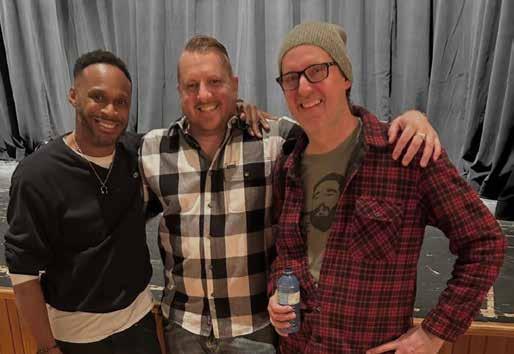
An evening of food, drink, and laughter brought the community together at the recent Plates & Pours Comedy Night, hosted by The Central Huron BIA.
Held on Saturday, March 28 at Clinton Town Hall, the event delivered a thoughtfully curated experience that showcased the best of Huron County’s local producers, paired with live comedy that kept guests entertained throughout the night.
Guests were welcomed with a handcrafted cocktail from Bayfield Berry Farm and a locally inspired appetizer before mingling ahead of the evening’s opening comedy set by Cedric Newman.
For more than two decades, Newman’s a familiar and dynamic presence on comedy stages across Canada. His career highlights include performances at Yuk Yuk’s, a finalist finish in the Great Canadian Laugh Off, and a featured appearance at the Halifax Comedy Festival.
Beyond the stage, Newman has shown his determination in a different arena, testing his endurance as a competitor on The Amazing Race Season 8 and his mastermind strategy in The Traitors Canada Season 2.
Despite his national experience, Newman says performing in smaller communities remains especially rewarding. He believes audiences everywhere deserve the chance to enjoy live comedy.
“Clinton is another speck on the map,” Newman said.
“I’ve been all over Canada, so it’s just another place—but it’s also a place that doesn’t get a lot of comedy. That’s what makes it fun. They’re ready to laugh.”
The vibrant energy carried seamlessly through intermission and into the second act, as guests indulged in crisp beer or refreshing ciders from Cowbell Brewing Co., paired with a mouthwatering spread of tender pulled pork tacos, juicy turkey
sliders, and fresh, flavourful salad skewers. Dessert was equally enticing, featuring a mouthwatering tart served with a perfectly chilled scoop of ice cream.
The second comedy set was performed by Ryan Hillis. Hillis is the producer of both the Cannabis Comedy Festival and the Whitby Comedy Festival. He brought his passion for stand-up to audiences beyond the big city lights and straight into the heart of small-town communities.
He’s a seasoned performer who has been behind the mic since 2011, Hillis has developed a style rooted in personal storytelling, drawing heavily from his own life experiences. His approach to comedy emphasizes relatability, weaving humor into everyday moments that resonate with a wide range of audiences.
“I’m a storyteller,” Hillis explained.
“I tell jokes that have to do with my life, and I embellish it. For the most part, I just
tell stories about my life, and usually it’s relatable to most people.”
Hillis found a special appreciation for more small-town settings. He says performing in smaller towns offers a unique and rewarding experience that keeps him coming back.
“I love coming to small towns and doing comedy,” he said. “It’s one of my favourite things to do. Every time I visit, people are looking to have a good time—they want to come out, have a great laugh, and it’s always a welcoming community crowd."
According to Hillis, it’s that sense of connection and enthusiasm that makes small-town performances stand out.
“It’s always really fun,” he added.
“I enjoy small crowds for that reason.”
The event proudly featured a wide range of local partners and sponsors from; 2nd Streetlight Estate Winery, Salt Mine Creamery, Hayter’s Farm, Lipman Fami-
ly Farms, Bartliff’s Bakery & Restaurant, Corrie’s Foodland, Community Futures Huron, 5 Chicks and a Farmer, and Gateway Casinos Clinton.
The evening made a positive impact by supporting a meaningful cause. Proceeds were donated to United Way Perth-Huron, helping to fund programs and services for community members facing challenges.
The third comedian of the night was Paul Haywood. He’s a big presence on Canada’s comedy circuit. He’s won the Toronto New Comic Search, earned a reputation for both versatility and relatability. His career highlights include a one-hour special on Comedy Now! and a standout appearance at CBC’s Halifax Comedy Festival.
For Haywood, the strongest comedy doesn’t come from punchlines or farfetched scenarios, but from real-life experience.
“Real kind of stuff is the best,” he said.
“Something’s happened to you that you can’t repeat. It’s your experience, so you can bring it back exactly how it happened on the day. It’s unique to you.”
He believes being authentic truly resonates with audiences.
“It’s funny because it’s true,” he added. Haywood finds a different kind of reward performing in smaller communities.
“It’s exciting,” he explained.
“There are so many options in the big city, and it’s nice to get away from that and bring comedy directly to people. In my opinion, they appreciate it more.”
With a career that spans national standup comedy, advertising, and on-screen acting, Haywood has proven himself to be a jack of all talent.
The strong turnout and positive response highlighted the community’s enthusiasm for events that celebrate local flavour, talent, and connection, which making Plates & Pours a memorable night for all who attended.
info@goderichsun.com
Since 2021, the Wood family of COAST Goderich has made generous contributions to and have support local families in need.
These generous contributions have played a pivotal role in ensuring the continuation of vital services provided by the Society of St. Vincent de Paul (SSVP) Goderich.
Each year, the Wood family’s generosity has enabled SSVP to include a $100 gift card in every Christmas hamper. This adds an extra layer of comfort and joy for families facing difficult circumstances.
“We are truly blessed to have Rob Wood
and the COAST Goderich team as steadfast supports of our mission,” admitted Anne-Marie Foucault, SSVP Goderich.
Over the past five years, COAST’s commitment has only grown stronger.
According to SSVP Goderich, in 2025, when Rob Wood was speaking with Mary Barry, Family Service Coordinator of SSVP, she noted the rising challenges of keeping up with increasing cost of living.
In 2025, Rob Wood committed $30,000 from COAST Goderich to help bridge the gap.
“Their generosity continues to make a tangible difference in the lives of so many in our community,” added Foucault.
“Their support allows us to keep up with
the increasing demand for food, while also ensuring that no family goes without during the holidays.”
Contributions from COAST Goderich and the Wood family ensure that over the coming months, the SSVP’s food bank will maintain its high standards of service without reducing the size of its hampers, despite the growing need within the community.
SSVP Goderich provides services including a food bank, soup kitchen, thrift store, furniture store and family services.
According to SSVP Goderich, the food bank alone serves over 75 families, equating to over 200 individuals, each month, while the soup kitchen provides meals for
around 400 people every month.
Regardless of their background or circumstances, the SSVP Goderich provides practical support to those in need.
“Our gratitude cannot be adequately expressed in simple words,” added Foucault. Rooted in the spirit of charity and compassion, the SSVP Goderich encourages partnerships like the one with the Wood family of COAST Goderich that allow the organisation to carry out its mission each year.
The ongoing support from the Wood family has helped ease the burden of struggling families with food insecurity and has served as an example of how local businesses can make a lasting impact.
CAROL McDONNELL
Sun Contributor
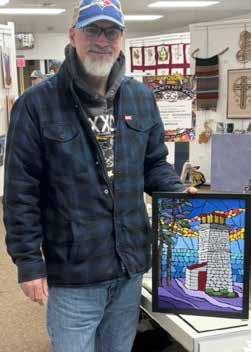
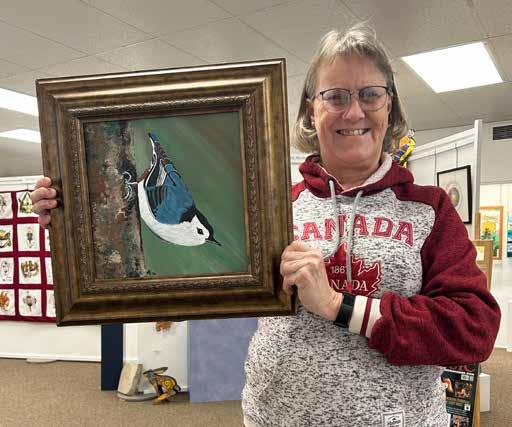
Spring has arrived and with it, a fresh bloom of new art at the Goderich Co-op Gallery.
The annual exhibit, known as Exposure, invites the community to discover new artists and new artwork. The exhibit is always full of surprises.
Throughout March, artists have been submitting their creations. Each artist has submitted up to four pieces, in preparation for a month-long celebration of local and regional art.
Some works will be available for purchase, offering a wonderful opportunity to bring home a piece by one of the area’s emerging talents.
Exposure runs from April 1 until April 30, with an opening reception on Saturday, April 4 from 2 p.m. until 4 p.m.
Many of the participating artists will be on hand, alongside Co-op members, to welcome visitors and share in the excitement of the occasion.
Goderich Co-op Gallery warmly invites you to visit the gallery at 54 Courthouse Square, lower level throughout the month of April, to expose yourself to local, emerging talent.
gcgallery.ca
“I know the paper is free, but can I get a subscription anyway?”
Yes. We understand that some people might like the convenience of the Goderich Sun arriving at their home (located near or far) through Canada Post, so we do have subscriptions available for this purpose. The price for a subscription is $53.33 + GST = $56.00
To subscribe, please e-transfer granthavenmedia@gmail.com and include your full mailing address in the comments, or send a cheque with mailing address to Grant Haven Media, PO Box 2310, St. Marys, ON N4X 1A2.



In the late nineteenth century, Ontario farmers thought fondly of common buckthorn (Rhamnus cathartica), a small, shrubby tree brought here from its native range in Europe and Asia. It grows quickly, forming dense thickets that make excellent windbreaks and hedgerows. As an added benefit, it was considered medicine for various conditions including constipation and rheumatism. As farming spread throughout Ontario so did buckthorn, framing fields throughout the province.
In the twenty-first century, buckthorn is known as one of the most widespread and troublesome plants on the landscape. Able to thrive in sun or shade and a wide range of soils, it’s now found in woodlots, hydro corridors and along roadsides and riverbanks across all of southern Ontario. Whether you're driving a sideroad outside Exeter or wandering the trails at the Pinery, there's likely a buckthorn in sight both ahead and behind you.
The problems with buckthorn are plentiful. Classified as a noxious weed under Ontario’s Weed Control Act, our farmers are probably aware of the agricultural issues. Over winter, buckthorns host the soybean aphid (Aphis glycines matsumura), an invasive insect that feeds on the crop, reducing yields. It also hosts the fungi that causes oat crown rust (Puccinia coronata corda. f. sp. avenae) and barley crown rust (Puccinia coronata var. hordei), which cause serious damage to these grains. For these reasons alone, buckthorn is an often-used example when discussing the economic impacts of invasive species on industry which the Invasive Species Centre recently estimated could be as high as $3.6 billion each year in Ontario.
Buckthorn's impact on our natural world is more severe. As is the case with many plants introduced from abroad, buckthorn is of little ecological value to local insects and wildlife. Deer, for example, avoid browsing buckthorn in favour of just about anything else. This puts additional pressures on other food sources,
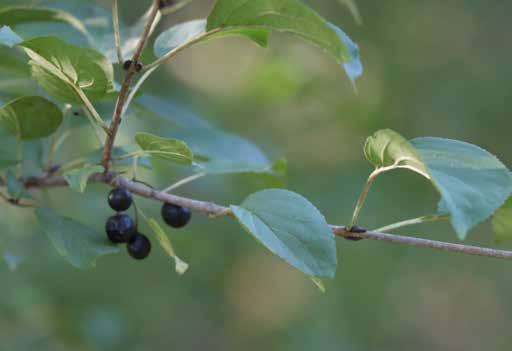
Common buckthorn is known as one of the most troublesome plants in the landscape, causing as much as $3.6 billion in damage to Ontario’s agricultural industry.
reducing opportunities for those species to spread while more and more buckthorn fills the void. On the flip side, many of our most common birds, like American robins (Turdus migratorius) and cedar waxwings (Bombycilla cedrorum), will feed on buckthorn berries. Unfortunately, these provide them little nutrition and have a notable laxative effect. The birds fly away full but poorly nourished and quickly pass the seeds elsewhere furthering the spread of buckthorn.
Once buckthorn has taken root it's likely to form dense thickets with alarming speed. The shade produced can severely limit nearby plants access to sunlight. For all but their most shade-loving neighbours, this is likely a kiss of death.
Buckthorn's impact on soil is just as vicious. Its leaves are high in nitrogen, and when they decompose they deliver that nitrogen to the soil. This may sound like a good thing, but it's important to understand that our native plants, species that could have been found here long before settlement, generally prefer much lower
levels of nitrogen than those brought here from elsewhere. Buckthorn's impact on the soil makes it less suitable for natives and more friendly to exotic species. Where the spread of buckthorn leads, other species of questionable ecological value follow.
As one might expect, Ausable Bayfield Conservation Authority (ABCA) routinely works to manage buckthorn on their properties. In 2024, they conducted an important management trial in Hay Swamp supported by a grant from the Invasive Species Action Fund. The trial evaluated three different techniques involving varying degrees of mechanical mulching and herbicide application to assess their success rates and costs per acre. Trial results will be compiled later this year.
Public lands, like those managed by ABCA, benefit from large-scale solutions and the experience of practiced professionals. Private lands are a different beast. Most of us may not even recognize buckthorn to see it, let alone understand how best to battle this scourge.
Buckthorn is a tall understory shrub with multiple stems that can eventually reach the heights of a small tree, some six to eight me-
tres. Its grey-brown bark is often cracked or flaky and dotted with small spots called lenticels. Leaves are egg-shaped with jagged edges and veins that curve towards the tip. You'd think its characteristic thorns would be the tell-tale sign but there's a more distinctive trait: look just beneath the bark for a layer of orange tissue called the cambium. Any of the popular plant identification apps should prove reliable in confirming identification.
Strategies for removal depend on size. The Ontario Invasive Plant Council offers a comprehensive Best Management Practices document on their website, ontarioinvasiveplants.ca, which is full of excellent advice.
Seedlings and small plants are easy to pull by hand. Be sure to get as much of the root as possible and tamp down the disturbed soil after. Saplings will likely require use of a weed-pulling tool as the roots hold soil firmly. Removed materials are best stashed in a sealed bin or contractor bag for a year before disposal. When that's not possible, hang the plant upside-down from a nearby branch with its roots exposed to sunlight.
Significant challenges come when you're dealing with mature buckthorn. The most common approach is to cut it down close to soil level. Girdling can work but is not nearly as effective. With either approach, be prepared to manage resprouts for up to three years. Stumps can be tarped over to minimize resprouting.
Making the best use of your time is key to long-term success. Removing a dozen trees is a great start, but preventing three dozen from spreading their seeds may be an even greater victory. Prioritize the removal of females before they start fruiting in July. Lob off all branches in reach while waiting for girdling to do its job.
The next two years are critical. Buckthorn can produce a huge number of seeds, which stay viable for many years after they fall. Expect those to sprout. The best defense is to introduce competition by planting natives. An outstanding choice is black elderberry (Sambucus nigra) which has leaf-out and leaf-fall timing similar to buckthorn. Another suitable choice might be northern spicebush (Lindera benzoin) which is fast-growing and plentiful around these parts. Look for local native plant sales and nurseries to source these and other suitable choices. If planting isn't an option, consider mulching or tarping the exposed soil to help suppress that next generation of buckthorn.

We have had very changeable weather with large temperature swings recently. One day it is sunny, then snow, then wet, then windy and it seems in random order, making it difficult to know which days to hike.
On March 15 I originally planned to hike the Maitland Trail East of Sharpes Creek Line but due to a cold easterly wind we decided to hike on the west side of Sharpes Creek Line where there was more shelter from the wind.
On Wednesday, March 18, seven of us hiked into the Morris Tract from Londesboro Road. It can be tricky to get to this area, as I found out that putting 36833 Londesboro Road into google directions misleads you to go down Falls Road. To get google directions to work properly you must enter “Morris Tract Trailhead” to direct you to the correct entry on Londesboro Road.
The trail was mostly covered with a thin skim of snow.
Along the trail we admired the work done by the volunteer chainsaw crew clearing the windfall across the bridge at the creek. They still have plenty more work to do to clear several other windfalls.
On Saturday, March 21, around 10 of us hiked the trails at Exeter, the trail on the south side of the Ausable River was clear of snow, but there were a few patches on the north side that had significant amounts.
On our Thursday morning hike on March 26, we hiked the Maitland Trail at the Auburn end and in the Robertson Tract for about 1.5 hours. There were several windfalls, but they were all very easy to step over.
Although most of the trails were free

of snow, there were parts with snow and a section with ice. Recently I have found most trails have been free of snow for most of their length but usually have sections with snow still across the whole width of the trail, which can be quite high if part of snow drifts.
During this hike, we saw a bald eagle sitting in a tree before flying off.
Lampton Museum reports that most Tundra swans have moved North of Grand Bend, but several hikers including me have seen flocks of various sizes flying overhead.
When I went up Sanctuary Line on March 19, I did not see any swans but instead saw two Sandhill cranes and a couple of muskrats. While hiking, there is always something to catch your eye.
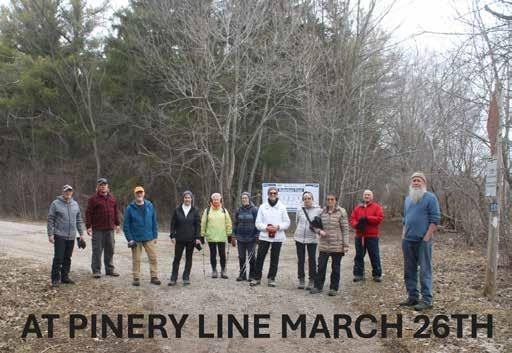
I am still eagerly waiting to see spring flowers other than snowdrops and crocuses. Some skunk cabbages now have a purple spadix which contains tiny flowers. I expect to be able to see some coltsfoot and hepatica in bloom before this issue is published, due to a few days of warm sunny weather. One thing I look out for when there are no interesting flowers or insects is looking for interesting patterns. Recently I saw an interesting C in the ice on a pond.
Both the Maitland and Bayfield Rivers have receded from their near record high flood levels.
EVENTS:
Saturday, April 11 at 7:30 p.m. – 9:30 p.m. - BRVTA Candlelit Memorial walk on the Taylor Trail at Varna.
Sunday, April 12 at 1:30 p.m. – 4 p.m. - Hike from Sharpes Creek Line to Cherrydale road. Meet at Cherrydale Road at the Maitland Trail entrance and carpool to Bishop’s Road to hike back along the Maitland Trail. This section does not have any big hills except at the end with a climb up 104 steps to Cherrydale Road. This is a forested area with many views of the Maitland River. For more information and to confirm your attendance, please contact Patrick Capper at pcapper99@gmail.com. This is a moderately fast paced, 2.5 hours Sunday, April 19 at 1 p.m. – 3 p.m.Hike: Millenium Trail Hike Meet at East St. Cider at 01:00 p.m. We will walk to the Millenium Trailhead at Nelson St, downstream and return to East St. This is a co-promotion event with East St. Cider. You can register with either organization. Maitland Trail registrants must sign the online waiver annually. For more information and to confirm your attendance, please contact Con Melady at 519 – 5308998.
NOTES:
Tuesday Trompers meet at 9 a.m. on Tuesday to hike for about an hour. If you wish to be on this email list, send an email to mta@maitlandtrail.ca
Midweek hikers meet at 9 a.m. and hike for 1.5 to 2 hours on Wednesdays and Thursdays. Contact Patrick Capper at pcapper99@gmail.com
LIFE hikers meet every Friday for a hike of about 1.5 hours, with a choice of pace, striders moving a little faster than the strollers. The hikes now start at 9a.m. and can be joined through One Care. Tuesday Trompers meet at 9 a.m. on Tuesday to hike for about an hour. If you wish to be on this email list, send an email to mta@maitlandtrail.ca
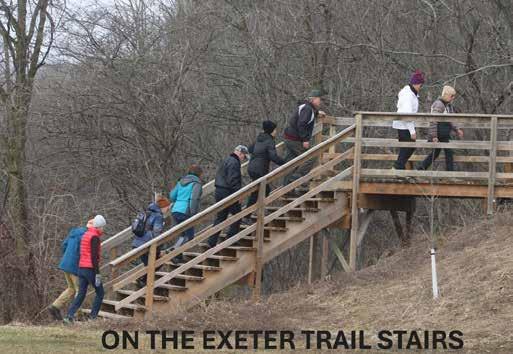

ANNETTE GERDES, Sun Contributor
April is often a time of fresh starts. As the snow melts and we open the windows to let in the spring air, many of us feel the urge to reset, reorganize, and look ahead.
It’s also a natural time for families to start having important conversations especially when it comes to aging and living arrangements.
One of the most common things I hear from residents and families is: “We wish we had made the move sooner.”
For many older adults, the goal
is to stay at home as long as possible, and that makes sense as home is familiar, comfortable, and filled with memories. This is often referred to as “aging in place,” and for some, it can work well for a period.
What families often don’t realize is how quickly things can change. A small fall, missed medication, increased isolation, or even just the gradual decline in mobility can shift a situation from manageable to concerning overnight.
When decisions are made during a crisis, options can feel rushed, stressful, and limited. On the other hand, choosing to move into a retirement community earlier while still independent can completely change the experience.
Instead of reacting to a problem, you’re planning. Residents who make the move sooner often settle in more easily, build friendships faster, and take full advantage of everything available to them. They’re not recovering from a crisis they’re starting a new chapter.
We see it every day, and the residents who come in earlier tend to:
• Participate more in activities
• Form meaningful social connections
• Maintain their independence longer
• Experience less stress during the transition
And just as importantly, their families feel a sense of relief knowing their loved one is safe, supported, and no longer alone. That’s not to say the decision is easy. There are real emotions tied to leaving a home, decades of memories, milestones, and comfort.
It’s not just a physical move; it’s an emotional one. But when the decision is made with time, support, and open conversation, it can be a positive and empowering step rather than a difficult last resort.
So how do you know when it might be time to start thinking about a change?
Some early signs families should pay attention to include:
• Increased difficulty with dai-
ly tasks like cooking or housekeeping
• Changes in mobility or balance
• Missed medications or appointments
• Withdrawal from social activities
• Concerns about safety at home
• Isolation, loneliness, depression or just unable to get out and about in some case loss of their drivers licence.
These don’t always mean an immediate move is needed but they are signals that it’s time to start the conversation. Spring is a perfect opportunity to do just that. Talk openly, ask questions, and explore options before they’re urgently needed.
Even just visiting a retirement community, joining for a meal, or attending an event can help take away some of the uncertainty. At the end of the day, it’s about making informed choices, ones that support not just safety, but quality of life, connection, and peace of mind.
Sometimes, the best move isn’t
about leaving something behind, but about stepping into something better.
In my role, as Director of Care and as General Manager, I’ve had the privilege of walking alongside many residents and families during this transition.
Time and time again, I hear the same words: “We wish we hadn’t waited so long.” Just as often, I see the relief and renewed energy that comes when the decision is made before a crisis.
If this is something you’ve been thinking about for yourself or a loved one, I encourage you to start the conversation. Ask questions, explore your options, and don’t be afraid to reach out or visit a local retirement community to learn more.
Even taking that first small step can bring a great sense of clarity and comfort.
Wishing you and your loved ones a beautiful spring filled with fresh beginnings, renewed energy, and moments of connection.
Annette Gerdes is the General Manager at the Goderich Place Retirement Residence

On the last Saturday of every month, a small group gathers at the Nelson Street East entrance of the Millennium Trail in Goderich.
Some people often arrive with a mix of curiosity and hesitation, unsure of what a mindfulness walk entails.
Mindfulness is the practice of paying attention to the present moment, focusing on your breath, noticing your thoughts and doing it all without judgement.
It sounds simple, but it’s not easy for many of us. It gets easier, and more beneficial with patience, practice and persistence.
I like to think of this monthly walk as meditation for people who prefer to move.
We begin by walking slowly and silently for 20 minutes toward the first river lookout. This mindful movement transitions us from the speed of daily life into the serenity of the woods. At the lookout, we pause to reflect on the experience and discuss the benefits of forest therapy and mindfulness.
It is here that many participants realise that mindfulness isn’t about escaping reality; it’s about finally arriving in it.
A common misconception is that mindfulness or meditation requires clearing the mind completely so we can reach a blissful, thought-free state. In reality, the mind is designed to think. Trying to force our thoughts away is like trying to stop the wind; it only creates more resistance and turbulence.
Once you begin practicing mindfulness, one thing becomes clear – the mind is always busy.
We are constantly thinking –thousands of thoughts per day –and many of those thoughts are negative or unhelpful.
When left unchecked, those thoughts can shape our moods and our behaviours.
How might it be beneficial for us to change our relationship with thoughts?
Instead of viewing thoughts as noise to be silenced, it can be more helpful to see them as weather patterns. Some days our mental landscape will be clear and calm, and other days it might be cloudy or stormy.
By observing your thoughts with curiosity, rather than frustration, you begin to understand that you are not the weather, you are the sky.
When you create this distance, you notice that thoughts are not facts.
They are transient, like a bubble rising to the surface of water. A thought emerges, lingers for
a moment and eventually dissolves.
When we stop reacting to every mental cloud that passes by, something shifts for us. We create space and from that space, we can observe our fears or self-criticisms with more neutrality, kindness and self-compassion.
We aren’t trying to eliminate thinking, but simply choosing which thoughts deserve our belief, and which thoughts can be allowed to drift away.
The goal of mindfulness isn’t necessarily to think less. Thinking is essential for creativity and problem-solving.
We just want to create a larger, calmer mental landscape where thoughts can come-and-go without taking us with them.
Sometimes, that journey toward internal space simply begins with a slow and silent walk in the woods. Sometimes, you can also benefit from a tree-hug along the way.
If you’d like to join our next walk, send an email to redroof-
recovery@gmail.com
The Maitland Trail Association (MTA) requires signing of a waiver: https://www.maitlandtrail.ca/mta-annual-waiver/ and please consider supporting the MTA with a membership. If you’re unable to make a monthly Mindfulness Walk, try this technique on your next walk: Inhale for four steps and exhale for four steps. This practice can anchor your mind to your body’s rhythm.
Tanya MacIntyre is a Certified CBT Specialist, Mental Health Fitness Trainer, and owner/operator of Red Roof Recovery (RRR) and its training division – Mental Health Fitness Alliance (MHFA).
DISCLAIMER: This content is not intended to constitute, or be a substitute for, medical diagnosis or treatment. Never disregard medical advice from a doctor, or delay in seeking it, because of something you have watched, read or heard from anyone at RRR or MHFA.
Let’s be honest, there are an increasing number of would-be travellers who are getting rather chilly feet about venturing abroad. Many of us have chosen not to travel to the U.S. Others are understandably nervous about popular destinations like Mexico after the cartel uprising, Cuba with its collapsing infrastructure, or Egypt or Turkey, considering their proximity to the current war in the Middle East. As well, several African nations are doubling down on their oppression of LGBTQ2+ folk.
And then there are the issues that don’t involve personal dangers, such as the new requirements in the U.K. for pre-travel documentation or, if you were born there, a British passport. This sort of clearance before arrival in countries is also being initiated in many European countries.
As a travel writer, I will admit I still plan to travel. My near-future plans include Italy and even Mexico, with other trips in the works.
But I do understand we are all looking for alternatives. So, as we get closer to spring, I want to suggest a few drivable destinations that don’t involve leaving the province but will, I promise, provide visitors with a great vacation.
Let’s start with the Niagara peninsula. I don’t say “Niagara Falls” because while this wonder of the world is undoubtedly the biggest draw on the peninsula, there is so much more to explore here. Although it might be wise to consider staying in Niagara Falls, proper, because now, in the off-season, many of the hotels offer great deals on rooms, which often come with discounts on dining and even a casino voucher. If you’re heading toward the Falls, check out those options.
But if you go, don’t spend all your time in Niagara Falls. Niagara-on-the-Lake is one of my favourite towns in Ontario where you can browse in interesting shops, dine in good restaurants and pubs, and wander a couple of blocks off the main street to the banks of the Niagara River for terrific views of Lake Ontario, the riverscape and our neigh-
bouring country that sadly shall not be named.
My favourite pastime in the Niagara Region – as regular readers will know – is visiting wineries, and there are dozens to choose from. Many also have good restaurants, and some offer unique accommodations. For a full and informative list of wineries, see winecountryontario. ca. And please note that the Niagara peninsula has now been divided into two official wine regions – Niagara Benchlands and Area and Niagara-on-the-Lake and Area. If I had to choose only two in each, it would be Fielding and Ridgepoint in the Benchlands; Bighead and Konzelman in Niagara-on-the-Lake region.
Now, let’s head east. It will also not be a surprise to regular readers that I recommend a getaway to our nation’s capital, Ottawa. I simply don’t think there is any equivalent

destination in Canada, with as much to see and do, almost all accessible on foot.
Highlights for me include two art galleries – the phenomenal National Gallery of Canada and the unexpected Ottawa Art Gallery with a terrific Group of Seven exhibition. I recently wrote enthusiastically about the National War Museum, and I haven’t changed my mind – it’s really enthralling. In total, Ottawa is home to seven of Canada’s national museums.
I always enjoy the quirky artifacts at Laurier House, which housed two prime ministers – Wilfrid Laurier and William Lyon Mackenzie King. The display of memorabilia from King’s immersion in the occult is worth the price of admission.
There are many unique sites open for tours in Ottawa, from the temporary House of Commons and the
current home of the Senate (once the railway station) to the Royal Canadian Mint and Rideau Hall, home of the governor general.
For my last stay-at-home alternative to foreign travel, I am going to suggest a vacation that covers a distance of less than an hour and a half – the region that runs along the north shore of Lake Ontario and the western end of the St. Lawrence River, from Quinte West to Gananoque, including Kingston. We’ve had the chance to explore this region in the last couple of years, and there were a lot of unexpected delights throughout the area.
I would probably opt to stay in Kingston because this historic city offers some unique and special bed and breakfasts and inns. And over the course of my week or so in the area, I would be sure to visit the truly fascinating National Air Force Museum in Trenton and the Great Lakes Museum in Kingston (with a note that the highlight, there, the S.S. Keewatin, is not open for tours until May). I would also join Kouri’s Kopters in Gananoque for one of their breathtaking helicopter tours of the Thousand Islands (also starting in mid-May).
All of the communities in this lakeside stretch offer unique dining experiences, local live theatre and concerts, and on-the-water adventures in the warmer months.
So, if you are eager to travel but hesitant to leave the comfort of your own province, these three areas provide terrific travel experiences. I have been there, I have done that and I truly intend to do it all again.
Paul Knowles is an author and travel writer, and past-president of the Travel Media Association of Canada. To contact Paul about travel, his books, or speaking engagements, email pknowles@golden.net.
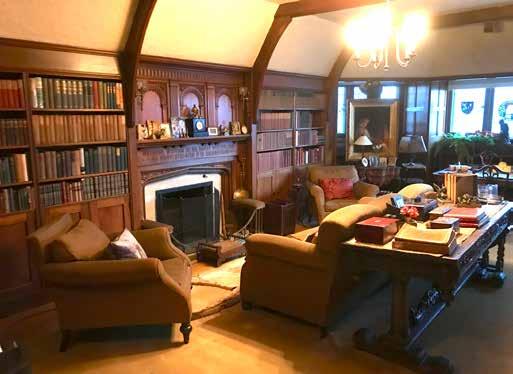
Teresa Van Raay is looking ahead to three more years of advocacy on behalf of the province’s farmers.
Van Raay, a Dashwood native, was re-elected as an Ontario Federation of Agriculture (OFA) director-at-large in November 2025, beginning her third three-year term with the organization.
Before she was first elected to serve in the OFA, Van Raay was a director with Ontario Pork for 14 years—an experience she described as eye-opening as she got to hear about the issues that farmers in the industry were facing.
“I realized how many more issues there are,” she said. “When you look at taking on the diversity of concerns in all Ontario, it’s daunting.”
Van Raay said some of the most prominent issues facing farmers in Ontario include trade and land use, which she noted is vital to the future of growing food in Canada.
“Once land is asphalted or cemented over, you’re not going to grow too much,” she said. “Getting the word out about how important it is for Canadians to grow our own food, that’s one of my biggest goals.
“The decisions made today affect our futures, and our next generation of farmers,” she added.
When asked why she decided to seek a third term with the federation, Van Raay was clear that there’s still work to do when it comes to advocating on behalf of Ontario’s farmers.
“We’re not done yet,” she said. “It’s a big portfolio, but the people in our industry who are elected to do this, all the ones who I’ve met, are in the positions for the right reasons. They want to make it better for their industry and for the next generations, all because we understand the importance of growing food.”
Van Raay said she’s taking many les-

sons from her time as director-at-large so far as she looks ahead to at least three more years of representing farmers. She said networking remains one of the most vital parts of the work.
“One of the things that I love to do is put the right people together,” she said.
“That can make a difference.”
Stepping outside the “agricultural bubble” is also important when speaking about issues facing farmers throughout Ontario, according to Van Raay, particularly with those not in the industry who live busy lives and may not be aware of those issues until they start seeing empty grocery store shelves.
“We are such a small population that we’re not getting the news out there,” she said. “If there comes a time that there’s a shortage, then people are going to stand up and be aware. But it might be too late if we haven’t realized the importance of food security in Canada.”
Van Raay said the upcoming municipal elections scheduled for later this year are an important issue that has her attention. With OFA regularly organizing all-candidates meetings for elections, she said it’s important to present the correct questions to those who could be making decisions in council chambers in the future, ensuring they understand their communities, particularly when it comes to land use.
“We don’t want to be collateral damage because no one’s thought about how a decision might affect the farmer,” she said.
Ontario’s recent announcement about the amalgamation of conservation authorities also has Van Raay’s attention. Under the government’s plan, the province’s 36 authorities will be consolidated into nine, removing representation from lower-tier municipalities.
“That’s a big deal,” she said. “One of the things we were really pushing with OFA is to have agricultural representa-
tives.
“From what we did see, that’s not there. That’s very important to our communities.”
A topic that has been getting more attention, particularly after the COVID-19 pandemic, has been mental health in the agricultural community—an issue that Van Raay said is close to her heart.
“It’s just become okay in the last seven or eight years to talk about it at the farm level,” she said. “When a farmer’s having a bad day, you just can’t take a week off. The pigs still have to be fed, or the crops still have to get planted.”
Speaking to farmers who may be struggling with mental health, Van Raay said Ontario’s Farmer Wellness Initiative and the Guardian Network are programs worth highlighting. The Farmer Wellness Initiative provides mental health counselling to Ontario’s farmers, farm families and employees at no cost.
The Guardian Network is a program driven by volunteers who are trained to identify those struggling with their mental health in the agricultural community, and Van Raay said she’d personally completed the training to become a guardian in the network.
“It’s a really good program,” Van Raay said. “The more we talk about it, the more it’s okay to talk about it.”
With such a wide range of issues needing attention, Van Raay said OFA’s supporting staff have made the expansive task manageable.
“It’s a great team, and a really diversified team,” she said.
With at least another three years ahead of her where she’ll be advocating for Ontario’s farmers, Van Raay said it’s her love for her home that will keep her going.
“It’s so important to have strong rural communities,” she said. “I love where I live. I love my Ontario. But we can’t keep coasting and think that somebody else is going to take up the baton.”


Why did the Easter egg hide? Because it was a little chicken.
What do you call a mischievous Easter egg? A practical yolker.
Why don’t Easter eggs tell jokes? They’d crack each other up.
What kind of music do Easter bunnies like? Hip hop.
How does the Easter Bunny stay in shape? Egg-cercise.
Why was the Easter Bunny so upset? He was having a bad hare day.
What do you call a bunny with a large brain? An egghead.
Why did the Easter egg go to school? To get egg-ucated.
What do you get if you cross the Easter Bunny with a bee? A honey bunny.
Why did the bunny go to the doctor? Because he was feeling a little hop-less.
What do you call an Easter egg from outer space? An egg-straterrestrial.
Paul,

December 11th, 1933- March 20th, 2026
Mildred Jessica Johnston passed away peacefully at Southbridge Nursing Home on Friday March 20th, 2026 in her 93rd year. She is reunited with her beloved husband Charles and son Don. Loving mother to Bonnie (Stan), Larry (Ann), and Gary (Cheryl), and Daughterin-law Linda. She will be missed by her brothers George and Dennis Vanderburgh, and sister Pat Good. Beloved Grandma to 10 grandchildren; Kim and Tracy Dungale, Mark and Alicia Johnston, Sam and Jamie Johnston, Phillip and Ashton Johnston, Scott Agnello and Teresa Rubinski. She will be missed by her 23 great grandchildren, and 4 great- great grandchildren. She will also be missed by many friends and family. Mildred is predeceased by her sisters Dianne Buchanan and Marion Hodges. Brothers- in-law John Buchanan, Harvey Hodges, Keith Good, and Bill Johnston. A private family service to take place. A Celebration of Mildred’s Life will take place in the spring. In lieu of flowers, donations to the Goderich Legion Ladies Auxiliary or the Alexandra Marine & General Hospital Foundation MRI Fund are appreciated by the family. Family and friends may sign the book of condolences at www.mccallumpalla.ca.

The family of the late Vivian Schilbe would like to express their appreciation for the condolences, sympathies and donations given by our family and friends.
Thank you to the staff at Alexandra Marine and General Hospital, Goderich for the compassionate care she received over the years and especially in her final days.
Everyone knew her as Betty. Born in Sault Ste. Marie on October 13, 1928, Betty lived a remarkable life. She left us to be with Jesus on March 23, 2026. Family focussed always, generous, and highly organized, she managed to live in her own home until the age of 97. As a child she spent summers in southern Ontario and on Manitoulin Island with members of a large extended family. After completing Grade 10 she worked in the payroll department at the Algoma Central Railway in the Sault. She left that job in 1948 to marry Harvey Edward Burns and start a family.
The second oldest and only girl in a family with five children, she kept in regular touch with her siblings and helped her parents Arthur and Margaret Hurdle. For many years Harvey was a long-haul trucker and frequently away from the home. Betty was in charge of all things on the home front including the raising of three sons. Her interests included cooking, reading, primarily Harlequin Romance novels, and keeping up with family and the news.
Betty and Harv moved to Huron County in 1990 to be closer to family. They lived in Blyth for several years and then moved to Goderich in 2002. A reader of several newspapers, she discovered IPADs and Facebook in 2011 and it opened a whole new world. She could keep an eye on her grandchildren and great-grandchildren and even learned to order groceries by email.
Pre-deceased by Harvey in 2011, three brothers; James, William, and Charles Hurdle, and daughter-in-law Judie (Jeltje) Burns. Survived by brother Wayne Hurdle in Victoria, B.C. Loving mother to Steve (Port Albert), Terry (Virginia) in Blyth, and Scott (Marisa Roy) in Wawa and 10 grandchildren and 12 great-grandchildren.
Special thanks to all those who helped her live at home until near the end including her special caregiver Patricia, Dr. Hilary Watson, and the staff at Huron Hospice that took care of Betty at the end.
A Celebration of Betty’s life will be held at McCallum and Palla Funeral Home on Saturday, April 11, 2026, at 11:00 am, preceded by an opportunity to gather with family and friends starting at 10:00 am. Following the service there will be an opportunity to gather at Trinity Church at 245 Mill Road in Goderich. In lieu of flowers, donations in Betty’s memory may be made to Trinity Christian Reformed Church or the charity of your choice. Family and friends may sign the book of condolences at www.mccallumpalla.ca.
Wanted for busy scrap yards, secondary resources (Perth) Ltd. Goderich and Sebringville yards, check our website www.secondaryresources.ca Roll off, and luggers and track trailers, part time and full time drivers. Must have clean driving abstract (3 years). Please send resume attention Tom Joyes to secondaryres@hotmail.com or call 519-393-5390.
Hundreds of shade trees, fruit trees, apples, pears, peaches, plums, sweet and sour cherries, apricots, nectarines, blueberries, haskapp grapes, raspberries, elderberries etc. Lots of spruce, pine, cedars for windbreak and privacy hedges. Sizes 1-8 ft. in containers ready to go. Flowering shrubs and much more. Mon-Sat 7:00am to 6:00pm
Martin's Nursery, 42661 Orangehill Rd Wroxeter, ON N0G 2X0 (1 Conc. North of Wroexter on Belmore Line)
CAMPFIRE WOOD Seasoned hardwood, bagged and ready for your summer enjoyment. $7.00/bag $20/3 bags $30/5 bags. Face cords available. Call or text for pick up. Delivery available in the Goderich/Point Farms/Bayfield area. Jim 519-301-1395
Pitiane Automotive is searching for a highly skilled professional with a unique blend of expertise in automotive technology and computer science. The ideal candidate will possess advanced diagnostic and repair skills for complex automotive systems, demonstrate significant knowledge in electrical systems repair. This role carries a profound reponsibility for ensuring the safety and reliability of vehicles.
• Fully licenced 'G" class driver with a clean drivers abstract.
• Proven ability to troubleshoot vehicle firmware and electrical components.
• Proficiency in diagnostics and repair of advanced automotive systems.
• Advanced skills in interpreting diverse automotive computers and complex wiring diagrams.
• Adaptability in a fast paced technological advancement within the automotive industry with a commitment of staying ahead of trends.
• Highly organized and detail oriented.
• Professional demeanor with strong interpersonal and communication skills.
• Strong commitment to service excellence and delivering high quality outcomes.
Please apply in person with a resume to Pitlane Automotive at 200 Suncoast Drive East Goderich or send resume to rawlings-pitlane@hotmail.com. Please note only those considered for an interview will be contacted.
MACKAY CHORISTERS
On Thursday mornings from 9:30 a.m. until 11:30 a.m. at Lakeshore United Church.
Looking for a choir family? Come join the MacKay Choristers, Huron County’s daytime choir. Weekly rehearsals every Thursday morning. For more information: singers@mackaychoristers.ca
GODERICH CHESS CLUB
On Tuesday evenings from 6 p.m. until 8 p.m. at the Goderich Library in the activity room.
This club warmly welcomes all chess enthusiasts of any age to join. Whether a seasoned player or a newcomer eager to learn the game, this is the perfect opportunity to immerse yourself in the world of chess.
Participants may come and go as they please during this timeframe.
Admission is free.
Equipment will be provided.
SMART RECOVERY MEETINGS
Hosted every Sunday from 11 a.m. until 12 p.m. at Red Roof Recovery.
EXPOSURE SHOW AT GC GALLERY
From April 1 until April 30, with an opening reception on Saturday, April 4 from 2 p.m. until 4 p.m.
Many of the participating artists will be on hand, alongside Co-op members, to welcome visitors and share in the excitement of the occasion.
Connect with Goderich Co-op Gallery on Facebook or Instagram, or explore the website: gcgallery.ca
COMMUNITY JOB FAIR
On Thursday, April 2 from 3 p.m. until 6 p.m. at Maitland Recreation Centre (MRC).
Opening on Saturday, April 4 at 2 p.m. at Goderich Coop Gallery.
Join in the celebration of a free, community art show run-
Deadline: Friday prior at 3 p.m.
ning from April 1 until April 30.
Show off your talents and your love of art. Entries are available on our website and at the gallery, lower level.
Visit gcgallery.ca for more information.
Join this book club that meets every two weeks at the Goderich Legion and come work with a variety of books. There are nearly 140 members online and a core group of locals who come out to in-person meetings at Café 109. Upcoming meetings are April 6, April 20 and May 4 at 10 a.m. at Café 109 at the Goderich Legion.
Contact head of book club Holly Smith: 519-630-3962 for more information.
On Saturday, April 18 from 9 a.m. until 12 p.m. at Lakeshore United Church.
Sharing knowledge across generations to care for the Earth.
Join in the Lake Huron Coastla Centre’s (LHCC) beach clean-up and barbecue from 1 p.m. until 3 p.m. at St. Christopher’s Beach.
Sponsored by Rotary Goderich, Kin Canada, Lakeshore United Church, and LHCC.
On Tuesday, April 21 at 7 p.m. at the MacKay Centre in Goderich.
Join the Goderich District Horticultural Society as Hope Brock gives a presentation on Healthy Watersheds. Everyone is welcome to attend this free event.
On May 1, May 2, and May 8 at 7:30 p.m. as well as May 9 and May 10 at 2 p.m.
A live theatre production at Huron County Museum Theatre in Goderich.
Tickets are $25 for general admission; early purchases recommended due to limited seating.
Tickets and information: http://everybrilliantthingmay2026.eventbrite.ca
TREK TO ELORA
On Wednesday, May 13 join for a day of history, culture and exploration as the Huron County Historical Society treks to Elora in Wellington County.
The coach leaves the Huron County Museum at 8 a.m. on May 13, headed for Elora. Historical background commentary on route provided by Elysia DeLaurentis.
A stop at Drew House to enjoy coffee and snacks.
Guided historical walking tour of downtown Elora with free time to explore the shops.
Lunch at The Wild Tart.
Experience the Elora Gorge up close. Visit the ‘hole in the rock’ and learn about the local history of the Grand River.
Price is $100 per person, all inclusive.
Pre-register with David Armstrong by May 1: 519-5241156 or Davidarmstrong@hurontel.on.ca
On Saturday, June 6 from 10 a.m. until 4 p.m. at Vauxhall Park in London.
Includes a silent auction, a 50/50 draw, classic cars, kid activities and free face painting, vendors and food trucks, and hourly prize draws.
Fun for the whole family.
On Saturday, July 11 the Goderich District Horticultural Society will host its 2026 Garden Tour from 9 a.m. until 3 p.m.
This non-profit group takes care of several flower beds around Goderich and hold several events.
The money raised at this tour is spent on plants for these gardens and to support other community groups that work hard to make Goderich the Prettiest Town in Canada. Tickets can be purchased at the MacKay Centre on July 11.
The Community Calendar is for non-profit organizations to promote their free admission events at no charge. Event listings can include your event name, date, time and location as well as a phone number, email address or website.
If your event is not free admission or you would like to include more details than stated above, you have the following options:
Coming Events Boxed Word Ad in Classified section (50 word max.) - $15 + hst
Display Ad - Sizes begin at a classified business card size for $35 + hst







As Canada stares down economic uncertainty, we’re ready with a plan to protect Ontario.
Diversifying our trade will connect our province to new markets.
That’s how we protect Ontario.