

WELCOME TO GRAFTON
Welcome! The following sections in this manual will give you information and hopefully answer many of your questions concerning the enrollment process and the treatment services you are seeking.
A. Grafton: Who We Are
1. Our History
Grafton began because one mother was determined to see that her child received an education in spite of his learning problems and in spite of the fact that public schools turned him away. That was in 1958 before we had laws that protected children’s rights to education. For over 60 years we have provided innovative and comprehensive behavioral health services. Today, residents enrolled may present with academic, developmental, social, and/or mental health needs that cannot be adequately addressed in a traditional educational program. True to Ruth Birch’s early determination, we continue to serve individuals with complex disabilities whose options for services are limited.
2. Our Work
The individuals we serve are at the center of all our work. We bring families, friends, and professionals together on their behalf. Our work is to help a resident progress toward maximum independence and community inclusion. Our goal is to support individuals in developing the skills necessary to be successful in their community of choice.
3. Our Mission
The Grafton Integrated Health Network is dedicated to providing a specialized environment that combines both the academic and therapeutic components necessary to facilitate the optimal development of each individual resident. Grafton creates solution-focused opportunities for individuals challenged by complex disabilities.
4. Our Vision
Grafton is committed to excellence in the delivery of person-centered care and value-added services. We believe that by operationalizing our core values of adaptability, human dignity, integrity, accountability, and excellence. , Grafton will become internationally recognized as the preferred:
Provider of choice, Employer of choice, and Strategic partner of choice.
Grafton believes that its commitment to utilizing evidence-based best practices and continuous quality improvement as its standard business model is the best way to ensure that optimal outcomes define our standard of care.
5. Our Core Values
ADAPTABILITY We respond in a quickly-changing environment. We shift our focus and react thoughtfully to new challenges and assignments.
HUMAN DIGNITY We recognize and respect the inherent value and unique qualities of every individual. We treat everyone with compassion, empathy, and respect.
INTEGRITY We commit to doing the right thing even when no one is watching or acknowledging our actions. We hold ourselves to the highest standards of honesty and ethical behavior.
ACCOUNTABILITY We earn and build trust by taking responsibility for our statements, actions, and outcomes. We recognize our mistakes and apply the lessons learned to foster continuous improvement.
EXCELLENCE We innovate to achieve the highest quality results. We strive for continuous improvement, inspiring and bringing out the best in everyone.
B. Admissions
1. Non-Discrimination
Title VI of the Civil Rights Act of 1964 prohibits discrimination on the basis of race, color, or national origin in programs and activities receiving Federal financial assistance. Specifically, Title VI provides that “no person in the United States shall, on the ground of race, color, or national origin, be excluded from participation in, be denied the benefits of, or be subjected to discrimination under any program or activity receiving Federal financial assistance” (42 U.S.C. Section 2000d).
Grafton is committed to ensuring that no person is excluded from participation in, or denied the benefits of its transportation services on the basis of race, color, or national origin, as protected by the Title VI in Federal Transit Administration (FTA) Circular 4702.1B. If a person receiving services feels they are being denied participation in or being denied benefits of the transit services provided by Grafton, or otherwise being discriminated against because of race, color, national origin, gender, age, or disability, Grafton’s contact information is:
James Stewart, Title VI Manager
Grafton Integrated Health Network
P.O. Box 2500 Winchester, VA 22604
540-542-0200
James.h.stewart01@grafton.org
You may access a copy of Grafton’s complete Title VI Plan and associated procedures at www.grafton.org.
2. Admissions
We welcome and admit individuals of any race, color, national and ethnic origin, socio-economic background to all the rights, privileges, programs, and activities made available to all individuals supported by Grafton. Grafton does not discriminate on the basis of race, color, sex, physical or mental disability.
Grafton’s admission decision for each individual is based on examination of the materials presented by the referring organization and the parent. We often conduct an interview with potential clients prior to placement with us. The exchange of information and the scheduling of any pre-placement interview is coordinated through out Access Department. The staff in our Admissions Department will work with you making the arrangements for enrollment including the day, time and place of your arrival.
Each Grafton resident is required to have a record of a recent physical (no older than 90 days or within the last 12 months if transferring from another state-licensed facility), a dental exam completed within the last 12 months, and record of immunizations prior to enrollment. If your child is currently taking medication, we will need original prescriptions (when possible one week prior to enrollment) as well as the remaining supply in the original container. Our staff will discuss specific state requirements for medication distribution with you. Grafton will ask for primary care physician information for the purpose of keeping the PCP apprised of progress.
You will receive a packet that contains all the forms that Grafton is required by licensing to maintain in your child’s case record. These forms help us better serve your child. Most require your input; all require your signature. Without this information, enrollment cannot occur. Additionally, only the LEGAL GUARDIAN may sign the forms. Please note that the permission forms will be updated annually.
Forms are to be faxed to the Admissions Department prior to enrollment (1-540-542-1721). An Admissions Case Manager will review the information received and contact you should additional information be required. Hard copies are to be brought with you the day of enrollment.
Our staff will be glad to answer any questions you may have so please call. You may reach the Admissions Department at 1-888-955-5205 x5000. If the line is busy, please leave a voice mail message and they will return your call as soon as possible. The mailing address for the Admissions Department is:
Grafton
Admissions Department
P.O. Box 2500 Winchester, VA 22604
3. Special Notes for First Day
When you arrive on enrollment day, your child’s case manager or other knowledgeable staff will meet with you. They will review the intake packet and help you complete forms if you have questions about them.
An Information Sheet that lists important contacts will be given to you before you leave. This will be a handy reference sheet for you. Parents may also access Grafton’s Emergency Preparedness Plan which addresses various types of emergencies on www.grafton.org or by requesting a printed copy from a Grafton staff member.
Please Note: To promote a safe and healthy environment, Grafton prohibits smoking and vaping on all company premises and during any service or work-related activity. This prohibition applies to everyone, including residents, family members, employees, and visitors. Grafton also prohibits the possession of tobacco or vaping products by residents. Any visitor or employee with tobacco or vaping products must keep such products securely locked in vehicles; no tobacco or vaping products are permitted within Grafton facilities.
4. What to Bring
CLOTHING: Approximately two weeks of clothing appropriate to the weather/season is needed. PLEASE DO NOT EXCEED this guideline as closet and drawer space is limited. It is not necessary to purchase new clothing. You child’s everyday clothes are fine. Just bring what your child normally wears, e.g., there is no need to buy pajamas if your child wears sweats and a tee shirt to sleep.
Residents who shave (male and female) may be asked to bring electric shavers because of the dangers of razors and razor blades.
ALL ITEMS NEED TO BE PERMANENTLY MARKED. We need to be able to track your child’s clothes. However, all clothing marks should be in the interior bands or seams so that the child cannot be identified by exterior markings.
LAUNDRY is done at least weekly, so plan with this in mind. If your child wets the bed at night, PLEASE include extra sleepwear.
TOILETRIES will be furnished by Grafton. This includes shampoo, soap, deodorant, toothpaste, feminine hygiene products, etc. You may furnish your child with specific brands of toiletries if you would prefer.
HYGIENE: For residents who utilize toileting supplies such as pull-ups, please send an ample supply no less than daily, however, weekly, or monthly supplies are also welcome.
5. What Not to Bring
While your child is at Grafton, he or she will be sharing space with others, so if something is irreplaceable, please do not send it.
Please see attachment D for a list of prohibited items.
Clothing or other items with messages that promote alcohol or drug use or violence are not permitted.
GRAFTON DOES NOT ASSUME RESPONSIBILITY FOR ITEMS THAT ARE BROKEN, LOST, OR STOLEN. PARENTS/ GUARDIANS SHOULD CAREFULLY SUPERVISE PACKING AND NOT ALLOW RESIDENTS TO BRING ITEMS THAT CANNOT BE EASILY REPLACED.
6. Multidisciplinary Team
At Grafton, a team supports each resident. The make-up of this team will reflect the individual’s needs. The following is a description of the Grafton staff most likely to be a part of the multidisciplinary treatment team that supports your child.
Case Manager: Each individual enrolled at Grafton is assigned a case manager. The case manager coordinates all activities and programs for your child. The case manager will be Grafton’s communication link for you and for the agencies supporting your child. The case manager is responsible for contacts with the local school divisions (LEA) for the children they have placed at Grafton. The frequency of this contact is determined by the LEA and includes at minimum, progress updates as often as required by IDEA.
Clinical Staff: Each individual is supported by a variety of professional clinical staff depending on their individual needs. These may include physicians, nurses, therapists, board certified behavior analysts, speech therapists, and occupational therapists.
Teachers: Your child will receive education services on site with a teacher provided by the Ricori School District. This individual, in coordination with Grafton staff, will be responsible for the implementation of the Individualized Education Program (IEP) or Individualized Instruction Plan (IIP).
Instructional Assistants: The school is staffed with individuals who have a range of experience and training to meet identified resident needs during school hours. Instructional Assistants support treatment and assist the teacher in providing instructional opportunities related to core academics, physical education, art/music appreciation, social behaviors, daily living, community life, and leisure/recreation.
Unit Manager/Residential Instructors: The program is staffed with individuals who have a range of experience and training to meet identified resident needs during residential hours. Residential instructors support treatment and teach skills related to social behaviors, daily living, community life, and leisure/recreation.
Overnight Residential Assistants: The program is staffed with individuals who remain awake to monitor residents during sleeping hours and to provide assistance and instruction overnight and during morning routines.
*All Grafton staff who are responsible for client care are certified in Adult/Child CPR and First Aid. Additionally, all Teachers are certified in Automated External Defibrillator.
On enrollment day, you will be given an Information Sheet listing the specific people who will be working with your child. Please keep this sheet as a handy reference guide, especially when you wish to talk to the person who works with your child.
7. Keeping in Touch through Family Engagement
It is important for residents to remain in contact with family and other members of their home communities. This may occur through the sending and receipt of mail, through telephone contact, and through direct visits. Staff will call a parent/guardian weekly at Grafton’s expense. This is an opportunity for parents/guardians to talk with their child and a knowledgeable staff member about progress during the week. However, parents/guardians may place calls to their child and Grafton will accommodate this contact as much as possible.
Parents/Guardians may visit while the resident is at Grafton. In order to ensure the resident is not away from the home or campus or that the resident is not involved in a scheduled therapy session, it is important to schedule visits in advance with the case manager. If parents or guardians wish for extended family or friends to visit, specific written permission from the legal guardian must be given before the person will be allowed to visit. This requirement also applies to non-custodial parents.
It is our goal to help residents return to the community of their choice. Weekend and vacation visits are opportunities to maintain family connections and coordinate efforts to help residents make progress. Individual schedules will be worked out among the parents, agency/guardians (if applicable), and the multidisciplinary support team.
The schedule for home visits will always reflect:
The individual’s needs and abilities to cope with his/her home and community setting at each stage of progress at Grafton.
The ability to ensure the safety and well-being of the resident throughout the visit.
The creative possibilities for using the time at home in trial experiences and to ensure that the skills learned in Grafton programs generalize to new environments.
The involved case manager will communicate directly (by telephone, email, or letter) with parents/ guardians regarding all travel arrangements. If you need to change any plans and make alternative arrangements, please contact the case manager or on-call manager so that the changes can be communicated to your child as soon as possible.
Professional Visits: Parents/guardians may be scheduled to attend meetings with staff such as the case manager, therapist, or academic teacher. Please make arrangements to have other children (under 18) who come with you supervised by another adult who is not participating in the professional meeting.
C. Program Information
1. Facilities & Equipment
Grafton’s academic program includes space for classrooms, therapy services (such as speech-language therapy, occupational therapy, and individual therapy), recreational space, and storage space for teacher instructional materials and resource supplies. There are offices and meeting areas housed within both the school and the dormitory. Teachers and residents have access to computers, iPads, iPods, SMART boards, and additional ancillary technology in each classroom along with a computer lab available for use. All meals are prepared and served onsite. Specialized resource facilities such as art and music rooms are also available.
2. Service Plans
All students entering a Grafton program will have a Treatment Plan based on the student’s symptoms of concern and reason for referral which includes a detailed discharge plan including associated measurable goals and objectives. An Initial Treatment Plan is completed upon enrollment and includes initial treatment strategies. The next Treatment Plan, the North Star* meeting, is typically completed within 14 days after enrollment and is updated by the multidisciplinary team during the student’s team meeting within 30 days. Refer to attachment E. This second Treatment Plan is developed from historical information, parent/guardian and agency interviews, and current clinical, educational and medical assessments. The ongoing Treatment Plan is designed based on this information, as well as behavioral data collected on a weekly basis. Transition to a lesser restrictive setting is the continued focus of the treatment plan process including monthly updates to the discharge criteria and review of applicable data associated with discharge goals and objectives.
*For residential students only.
Residents enrolling within the Residential Treatment Center may enroll with either an IEP, 504 plan, or an IIP. If it is determined by the resident's local education agency that an IEP should be created, Grafton staff will assist the resident’s LEA (local school system) in the development, review, and approval of an IEP in accordance with all State and Federal requirements. Participation in the IEP process by the resident, parents/legal guardians, and the LEA is documented.
3. Progress Reports
All residents have multidisciplinary team (MDT) meetings conducted at least monthly to support and monitor their education and treatment progress. Specific progress on goals and objectives in the Plan of Care (behavioral health) and the IEP/IIP (education) are discussed and reviewed. If progress is not on track, according to the minimum growth prediction for accomplishment based on the plan timelines, the MDT designs strategies, and interventions to facilitate resident progress.
Additionally, during every month, the supervising administrators (Educational, Clinical) review current scores to ensure satisfactory progress. Specific feedback and guidance is given to staff as indicated. IEP progress updates are sent to the parents, the local school system and other associated team members in accordance with IDEIA guidelines.
4. Recreation and Physical Exercise
Grafton provides and promotes recreational and physical exercise activities consistent with an individual’s age, developmental level, interests, and needs. These activities may occur at Grafton School or residential sites or in the community. Recreational activities occur indoors and outdoors and are structured to enhance the learning opportunities for students. Community recreational resources are utilized including, in some service regions, community athletic leagues.
In school, physical exercise schedules are developed as part of the general school day and are integrated into the individual classroom schedule. Activities may be developed and led by a Grafton teacher and/or a contracted licensed provider. All necessary modifications or accommodations are made to account for medical or physical disabilities which may impede full participation in typically offered physical education activities.
Residential activity schedules are developed by direct care staff and students to allow opportunities for individual and group activities, and for free time for students to pursue personal interests. Consideration is given to the schedule for meals, religious services, educational programs or other regular events when planning for recreational activities.
Recreational activities and field trips are directed and supervised by staff knowledgeable in the safeguards required for the activities.
5. Religious Activities
By law, Grafton operates in a non-sectarian manner, neither requiring participation in religious activities nor denying admission on the basis of religious preference. Grafton staff will provide opportunities for residents to participate in religious activities of the residents' choice. However, religious service selection may be limited by the variety of choices in the local community. Staff and/or residents’ illnesses, activity schedule conflicts, bad weather, etc. may prevent attendance to a particular religious service.
6. Transportation
While at Grafton your child will be involved in a variety of activities. Many of these activities will be in the community. Grafton residents are transported in vehicles (cars or vans) which are owned or leased by Grafton and operated by Grafton employees. Grafton verifies valid drivers’ licenses for all staff transporting residents. All of Grafton vehicles are properly insured and licensed according to State requirements.
D. Medical Care for Residents
Nursing care is provided for Grafton clients by professional nursing staff or the resident's own health care provider. All medications must be packaged in a "cold pack" distribution format and will be disposed of by nursing staff as per all applicable state and federal guidelines. Written prescriptions for 34 days and the remaining supply of each medication in the original container are to be given to the nurses or case manager at enrollment. Only trained personnel may administer medications and must document administration on the medication administration record.
Grafton staff will support medical needs through provision of scheduling coordination, staffing support, and transportation to and from community medical providers.
Parents/guardians will be notified within 24 hours of any serious incident, accident, or injury to the resident. Staff attending the resident at the time of the incident, illness, accident, or injury will determine whether or not the resident requires the attention of a community health care professional or emergency room visit based on training guidelines. If the Grafton nurse is immediately available, he/she will make the determination.
Injuries that are not serious enough to require a doctor visit but have left marks, such as bruises or scrapes (i.e. resident falling on the playground) will be reported in the weekly parent telephone calls. Parents who cannot be reached by telephone will be notified by letter. All attempts at notification will be documented.
The case manager or nurse will call parents/guardians regarding medication, or any other health related problems or needs. Should a Grafton nurse or external healthcare provider determine that a resident is unable to attend school due to illness, he/she will be cared for in the residential setting by direct care staff and assessed periodically by a Grafton nurse or external healthcare provider. Return to school will be determined by the attending medical provider.
Grafton uses community hospital services. Local rescue squads provide emergency services on-site and transportation to the hospital.
All individuals enrolled in the Psychiatric Residential Treatment Center receiving weekly medication reviews.
Unspecified epinephrine injectors are available at the school site and all school staff are trained as per regulation in proper identification of a crisis event and administration of the injection. Specific locations for each site are monitored by nursing, clearly labeled, communicated to staff via written correspondence, and included in annual refresher trainings.
E. Protection from Abuse and Neglect
All Grafton staff are mandated reporters of any suspected abuse and/or neglect. Staff is trained annually in accordance with all applicable state and federal regulations. Policies and procedures for reporting any suspected occurrences of abuse and/or neglect are detailed within the Grafton Policy Manual. These policies are available at your request.
F. Behavioral Supports
General Information:
Residents who receive services through Grafton often display serious acting out behaviors. Grafton is committed to helping our residents develop positive behavior patterns that they will be able to take with them when they leave Grafton. As such, all staff is trained in approved behavior management and de-escalation techniques. Ukeru is Grafton's innovative approach to crisis management that provides real and useful alternatives to the use of restraint. Please do not hesitate to ask your assigned staff members for information on this nationally accepted approach, or learn more at www.ukerusystems.com Functional Behavioral Assessments are completed to identify the functions that the behaviors serve for the client. Individualized positive behavior plans are then developed to teach alternative/ replacement behaviors. These new skills are reinforced using a variety of individualized reinforcers.
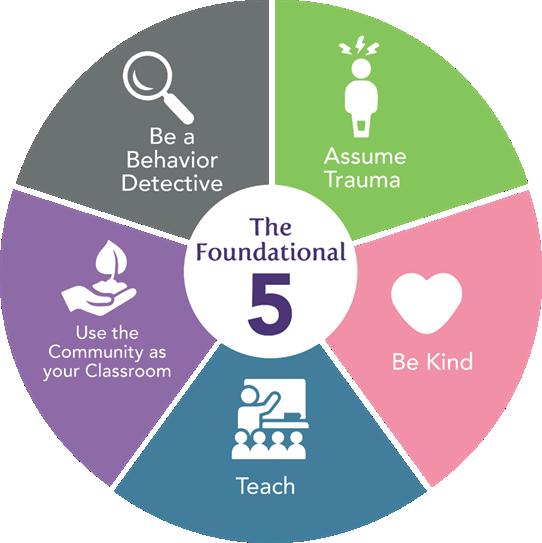
Grafton's treatment plans are developed with a focus upon the use of evidence based treatment methods, and data-driven decision making. (see attachments) Your case manager will help you understand how our plans are constructed and answer any questions you may have. At the end of the day, the foundation of our treatment approach is depicted in this graphic:
Program Rules:
Grafton emphasizes the following expectations for behavior (rules) with each student communicating in a manner that ensures comprehension:
Refrain from verbal aggression (to include threats, bullying, profanity or other extreme defiance);
Refrain from physical aggression towards anyone (staff and peers);
Refrain from theft of items that do not belong to you;
Follow the directions of staff to the best of your ability (especially as related to participation in activities, and remaining in an area designated for an activity)
Maintain the cleanliness of your living space (making bed, folding cloths, keeping hygiene items organized);
Engage in treatment.
Why? These behavioral expectations are in place solely to facilitate the human rights of each member of the community, to help Grafton offer a structured program of care, and to ensure safety and security for all. While these expectations may not be met at times, supports and strategies will be developed and implemented to address them. Grafton does not espouse a single process for addressing violation of rules. Instead we see rule violation as an expression of an unlearned skill or an unmet need. The clinical treatment plan will detail the therapeutic interventions and strategies that will be employed to meet these needs or teach these skills. The treatment plan is reviewed at least monthly with all involved stakeholders, both internal to Grafton and external.
All of this being said, these areas are often the exact reasons a youth is referred for this level of care! We strongly believe that all children want to do well. We also believe that it is our responsibility to figure out what each individual's specific needs are, or what specific lagging skills they possess, and then help them overcome their individual behavioral challenges. There are many reasons that a child might become incoherent and aggressive – we do not believe it is because they "lack accountability for their actions", or "they simply like to break rules" – we believe that all children want to do well, and it is our responsibility to help them reach that goal.
Motivation, however, sometimes is lacking in children. Why? Because they have been attuned to certain patterns of behavior as the result of previous challenges and trauma experiences. Perhaps because what worked for them previously (to ensure a feeling of safety) may not work anymore, and in fact may have become counter-productive. Or perhaps they just feel hopeless and lack any sense of self-efficacy anymore.
We believe that the best approach to this is to build motivation by making work on a specific challenge or lagging skill so incredibly rewarding that they are drawn to it even though it is hard. We believe that we should in all situations inspire – point out possibilities that the child hasn't even thought of yet or admitted to themselves might even be possible.
Ultimately, the following behaviors are unacceptable within this program:
Intentional fire setting
Engaging in homicidal behavior
Actively attempting suicide
Predatory sexual behavior
Use of illegal substances
In the event any of these behaviors are displayed, emergency community services/ resources will be notified and involved, as needed. An emergency team meeting will be held, including external stakeholders such as parents/guardians and involved community agencies. Consideration will be given to the safety of the environment, other residents, staff, and the resident involved. An action plan will be developed with the safety and well-being of all involved as the primary focus.
From time to time however, despite our best attempts, restrictive consequences may be required to build motivation for behavior change, or simply to ensure that we can offer a safe and stable program of care to our residents. All restrictive consequences are designed to reduce the reoccurrence of the unwanted behavior. Restrictive interventions are described below.
2. Restriction
While receiving Grafton supports, each individual is entitled to:
Enjoy all the freedoms of everyday life that are consistent with his need for services, his protection, and the protection of others, and that do not interfere with his services or the services of others.
Receive services in that setting and under those conditions that are least restrictive of his freedom. Grafton encourages each individual's participation in normal activities and conditions of everyday living and supports each individual's freedoms. Limitations or restrictions on an individual's freedom will not be more than needed to achieve a therapeutic benefit, maintain a safe and orderly environment, or intervene in an emergency. There will be no "across the board" restriction protocols. All restrictions on access to program spaces or activities will be individually designed by the multidisciplinary team. Restrictions will not be imposed on an individual unless the restriction is justified and carried out according to State rights regulations. A qualified professional team will regularly review every restriction and ensure the restriction is discontinued when the individual has met the criteria for removal.
3. Physical Restraint
Physical restraint will not be used as punishment, reprisal, or for the convenience of staff. Physical restraints will only be used as emergency measures to assure safety of individuals supported and others. The use of physical restraints will be in accordance with all applicable laws and regulations to include the prohibition of prone or supine restraint of any type. Only employees who hold current certification in Grafton’s approved behavior intervention system may implement a physical restraint. For more information on the specific system(s) approved by Grafton, please contact a case manager. Only approved physical restraint procedures as taught in this curriculum may be used.
Less restrictive alternatives must have been tried and failed before physical restraint can be used. The only exception would be for individuals engaging in behavior so quickly or so dangerous that there is not time to attempt alternative strategies. Each use of a physical restraint must be documented and placed in the individual's record.
If an individual requires the use of physical restraints as demonstrated by a defined pattern, emergency use of such procedures must be incorporated in his Behavior Support Plan. There must be approval from a clinical and rights review of the plan. The plan may not be approved for longer than a one-year period. The plan must also include the consent of the individual receiving services and/or his guardian/ authorized representative, as applicable.
4. Restitution
Restitution may be approved in an effort to provide for more naturalistic consequences for the destruction of property by any of the following methods as part of an approved individualized behavioral support
Chores may be performed within the following parameters:
Chores may not displace or replace an employee. Chores assigned do not release an individual paid to perform that chore from doing that chore. (Example: If an individual messes up the bathroom, he may be required to clean it up, but his compliance does not release the housekeeping staff from having to clean it.)
Chore assignments must be time limited.
Chores that benefit an individual staff member must be avoided.
Chores assigned should be concretely related to the infraction.
The individual may be asked to fix what he has broken, if able.
The individualized behavioral support plan will:
Specify the behaviors that may result in the use of restitution.
Provide a menu of specific tasks that will be used for restitution.
Designate who has the authority to approve the restitution assigned to a specific incident (manager or therapist – someone not directly involved in the incident);
Specify the maximum amount or total duration of restitution that can be assigned for any one incident.
5. PROHIBITED Punishments/Actions at Grafton
Deprivation of drinking water or food necessary to meet an individual's daily nutritional needs except as ordered by a licensed physician for a legitimate medical purpose and documented in the individual's record.
Limitation on contacts and visits with the individual's attorney, a probation officer, regulators or placing agency representative.
Bans on contacts and visits with family or legal guardians except as permitted by other applicable state regulations or by order of a court of competent jurisdiction.
Delay or withholding of incoming or outgoing mail except as permitted by other applicable state and federal regulations or by order of a court of competent jurisdiction.
Any action which is humiliating, degrading, or abusive.
Corporal punishment.
Subjection to unsanitary living conditions.
Deprivation of opportunities for bathing or access to toilet facilities except as ordered by a licensed physician for a legitimate medical purpose and documented in the individual's record.
Deprivation of health care.
Deprivation of appropriate services and treatment.
Application of aversive stimuli except as permitted pursuant to applicable state regulations.
Administration of laxatives, enemas, or emetics except as ordered by a licensed physician or poison control center for a legitimate medical purpose and documented in the individual's record.
Deprivation of opportunities for sleep or rest except as ordered by a licensed physician for a legitimate medical purpose and documented in the individual's record; and
Limitation on contacts and visits with advocates and external stakeholders who appear on the youth's approved contact list or are requested by the youth's parent or guardian.
G. Complaint Resolution
Parents, guardians, Grafton staff, and/or individuals receiving services may bring a complaint or concern to the attention of any member of the multidisciplinary treatment team. The person receiving the problem attempts to resolve it at the time of contact. If the team member is unable to provide immediate resolution, the concern is forwarded to the individual’s case manager. The case manager determines the nature of the concern and who must be involved in its resolution. The person making the complaint will be contacted within 24 hours by the case manager concerning the matter. At any point in the process, if the person making the complaint is not satisfied with the proposed solution, the case manager or other team members may request help as needed and/or appropriate to the issue from the regional management team and the corporate office.
H. Confidentiality
Each individual receiving services is entitled to have all information that Grafton maintains or knows about him remain confidential. Each individual has a right to give his consent before Grafton shares information about him or his care unless another law, federal regulation, or State rights regulations specifically require or permit Grafton to disclose certain specific information. Grafton will prevent unauthorized disclosures of information from service records and will convey the information in a secure manner.
If consent to disclosure is required, Grafton gets written consent of the individual or the parent/guardian/ legally authorized representative, as applicable, before disclosing information.
When information is disclosed, Grafton will attach a statement that informs the person receiving the information that it must not be disclosed to anyone else unless the individual consents or unless the law allows or requires further disclosure without consent.
Upon request, Grafton will tell individuals the sources of information contained in their services records and the names of anyone, other than Grafton employees, who has received information about them from Grafton. Individuals receiving services will be informed that regulatory authorities may have access to their records.
I. Inspection & Review of Records
Each individual receiving Grafton services has a right to see, read and get a copy of his own services record. Minors must have their parent or guardian's permission first. If this right is restricted according to law, the individual has a right to let certain other people see his record. Each individual has a right to challenge, correct or explain anything in his record. Whether or not corrections are made as a result, each individual has a right to let anyone who sees his record know that he tried to correct or explain his position and what happened as a result. An individual's legally authorized representative has the same rights as the individual himself has.
Grafton will permit each individual to see his records when he requests them and to provide corrections if necessary. Grafton, without charge, will give individuals any help they may need to read and understand their service records and provide corrections to them.
If Grafton limits or refuses to let an individual see his service records, Grafton will notify the human rights advocate and tell the individual that he can ask to have a lawyer, physician, or psychologist of his choice see his records. If the individual makes this request, the provider will disclose the record to that lawyer, physician, or psychologist.
Grafton will document in the record the decision and reason for the decision to limit or refuse access to the individual’s medical record. The individual will be notified of time limits and conditions for removal of the restriction. These time limits and conditions will also be specified in the record.
If an individual asks to challenge, correct, or explain any information contained in his service record, Grafton will investigate and file in the service record a written report concerning the individual’s request.
If the report finds that the services record is incomplete, inaccurate, not pertinent, not timely, or not necessary, Grafton will: 1. Either mark that part of the services record clearly to say so, or else remove that part of the services record and file it separately with an appropriate cross reference to indicate that the information was removed; 2. Not disclose the original services record without separate specific consent or legal authority (e.g., if compelled by subpoena or other court order); 3. Promptly notify in writing all persons who have received the incorrect information that the service record has been corrected and request that recipients acknowledge the correction.
If the report does not result in action satisfactory to the individual, Grafton will, upon request, file in the service record the individual’s statement explaining his position. If needed, Grafton will help the individual to write this statement. If a statement is filed, Grafton will: 1. Give all persons who have copies of the record a copy of the individual’s statement; 2. Clearly note in any later disclosure of the record that it is disputed and include a copy of the statement with the disputed record.
Grafton may deny access to all or a part of an individual's services record only if a physician or a licensed psychologist involved in providing services to the individual talks to the individual, looks over the services record as a result of the individual's request for access, signs and puts in the services record permanently a written statement that he thinks access to the services records by the individual at this time would be physically or mentally harmful to the individual. The physician or licensed psychologist must also tell the individual as much about his service record as he can without risking harm to the individual.
An access log will be signed by anyone that uses a resident’s file for any reason, with the date and purpose for its use. Education Administrator or designee is always available to explain the records to parents on request. A designated person will be provided for any parents who need any translation of the records.
If the school closes, resident records will be returned to the home school, Local Education Agency (LEA), from which the residents came.
Grafton Integrated Health Network resident records include the following: Access/Disclosure Record, Current IEP, Phone call record, Transcripts/Grade Cards, Standard of Learning Scores, Diagnostic or Educational Testing, Application, a Parent Rights Form receipt and understanding signature, Correspondence, Physician’s Certificate (no more than 3 years old), Critical Incident Reports, if any (Only one resident’s name appears in any resident file).
Previous school information provided may include Grade cards/Transcripts, Past/current IEP’s, triennial reviews, School test evaluation, Psycho-educational evaluations, Speech-Hearing screening or reports, Physician’s Certificate.
School files are maintained in accordance with legal and regulatory requirements regarding confidentiality and access.
J. Discharge
It is the goal of Grafton staff to teach skills in education, vocation, community living, residential living, leisure and recreation, language and social interactions. Any individual whose skill levels permit movement to a less restrictive or preferred residence will be transitioned into that residence with appropriate approvals from guardians and funding agencies, as long as funding is possible.
Discharge from any of Grafton’s programs can be classified in one of four ways: Planned, Emergency, Parent/Agency-initiated, or Individual-initiated. Whatever basis a discharge has, its purpose is to assist the individual in pursuing individual growth and development. Discharge planning is carried out in coordination with the sponsoring agency and other involved agencies, the individual and the parents/guardians to ensure that the best possible alternative placement is selected. In all cases, the agency which referred the individual for placement will be notified immediately regarding a discharge.
Planned Discharge: A planned discharge may occur under circumstances such as an individual has met their treatment goals, or the multidisciplinary team and the parent agree that the individual should transition to a different service or return to their home community.
Emergency Transition: Emergency discharges may be required for individuals who cannot receive necessary and appropriate services from Grafton. This includes individuals who require medical services not provided by Grafton, individuals who require psychiatric hospitalization, and individuals who present clear danger to themselves or others. Grafton will facilitate an emergency transition in consultation with the child's parent/guardian.
Parent/Agency-Initiated Discharge: A decision for discharge may be made by a parent/legal guardian or agency for their own purposes and reasons. A minimum of 30 days notice is requested for such a discharge. The specific time of discharge may be negotiated with the parent/legal guardian and funding agency.
If a local school system requests discharge and parents/legal guardians go to due process to prevent the discharge, Grafton will maintain the placement as long as there is a contract to pay for the services rendered. Grafton will support movement to an alternative placement only if the parent/legal guardian has agreed to the alternative placement.
Individual-Initiated Discharge: When individuals 18 years of age or older initiate discharge from Grafton services, Grafton staff will work cooperatively with them. Notification of this decision will be made to the funding agency and parents. Individuals who are their own legal guardian, and are not legally entrusted into someone else’s care such as the court system, are legally entitled to make such a decision.
Within one year of discharge, Grafton may contact parents, guardians, social workers, other care providers or the individual served by Grafton about adjustments and progress as part of Grafton's on-going quality improvement efforts.
ATTACHMENT A
Client Search Procedure
Searching of the resident, by using a metal detector of their belongings and the therapeutic environment may under certain circumstances and conditions are required to insure resident and staff safety. Consideration shall be given to safeguard resident privacy.
Searches are to be conducted any time staff suspects a resident is concealing a potentially dangerous or prohibited object or substance.
Desks and storage spaces provided to the residents are the property of the school. The Education Administrator or designee may conduct general inspections on a periodic or random basis and may open desks or storage spaces in the presence of a witness and examine the contents, including personal belongings of the residents.
Desks, storage spaces and personal belongings may be similarly inspected on an individual basis when there are reasonable grounds to believe that they contain illegal drugs, weapons, stolen property, or other contraband, provided the search is conducted primarily for enforcing order in the school. Reasonable efforts to locate the resident shall be made prior to the circumstances justifying the search and seizure of the objects that the official believes the search may disclose. If the resident is not present, he or she shall be informed of the search. Stolen items and items that are specifically prohibited by law, school policy, or other regulations may be impounded. The resident shall be given a receipt for items of monetary value should they be impounded.
Residents believed to have any such contraband on their person may be searched and metal detectors may be used. Such personal search may extend to pockets, to the removal and search of outer garments such as jackets, coats, sweaters, or shoes, and to items such as pocketbooks or backpacks. Residents suspected of alcohol consumption may also be administered a Breathalyzer test.
Prohibited Property, Personal Belongings and Food – Clients, Families, Agencies Prohibited Property
To promote a safe and therapeutic environment for client and employees, clients are prohibited from having the following items or any other item deemed in appropriate or unsafe by the Operating Team or Treatment Team. The list is applicable to all clients.
Food or drink (except when approved by the Treatment Team), no canned items, such as energy drinks or soda
Alcoholic beverages, or any other product with alcohol (including hand sanitizer and perfume/sprays)
Tobacco or Vaping products – cigarettes, cigars, smokeless tobacco
Drugs or drug paraphernalia
Excessive quantities of clothing – no more than 2 suitcases full Steel-toed footwear
Clothing or other items (posters, music, videos) that reflect or promote gang involvement, alcohol or drug use, violence, or offensive language
Prescription or over the counter medications (all medications must be kept in locked areas and administered per physician orders)
Pornography
Cleaning or first aid items
Explosive or flammable materials (fireworks, lighters, matches, aerosols, candles).
Weapons – any instrument, material, or substance, animate or inanimate, that is used for or is readily capable of causing death or serious injury including but not limited to knives, chemicals, metallic knuckles, joined rings, firearms, BB guns, pellet guns, slingshots, pepper, or mace spray
Sharp objects - including but not limited to razor blades, metal fingernail files and clippers, metal paper clips, hair picks, tweezers, scissors, mirrors, metal fidget spinners, spiral notebooks, glass items
Tools, including but not limited to hammers, pliers, screwdrivers, rope, extension cords
Laser pointers
Metal, hooks, or tools
Bicycles, minibikes, motor bikes, Skateboards, scooters, roller skates
Pets – including fish
Electronic devices including but not limited to cell phones, tablets, e-readers, fire sticks, games systems, video games, mp3 players, iPod, beepers, pagers, 2-way radios, cd’s, Nintendo switch, DVD's, computers
Jewelry – no earring or necklaces. No parachute line bracelets. No body piercing items (No exceptions)
Fitbit Watches
Prohibited Property (made available by Grafton)
Microwaves, refrigerators, popcorn poppers, air diffusers, or other electrical equipment
Electronic items, including but not limited to radios, cassette players, televisions, MP3 players, video cameras, electronic games, speakers, tablets, gaming systems, DVD's.
Items
permitted, but
to be stored in staff office
Clothing irons, Hair dryers, curling irons, flat irons (will be available for use, with staff supervision, but kept in staff offices when not in use)
Nail polish (plastic bottles only)
Glue, including nail glue (available in offices)
Diamond Dots, and plastic knitting needles
Plastic bey blades, battery operated cars, and other toy cars
Musical instruments
Washable only Pens, magic markers
Rights of Residents
rights while receiving services at Grafton.
You have rights related to your living conditions
A reasonable degree of privacy.
Nutritious and sufficient meals and sufficient clothing and housing.
Clean, safe surroundings.
Daily bathing or showering and reasonable use of materials (including culturally specific appropriate skin care and hair care products or any special assistance necessary to maintain an acceptable level of personal hygiene);
A reasonable amount of personal property that you can keep and use.
You have rights related to how you are treated
Positive and proactive adult guidance, support, and supervision.
Freedom from abuse, neglect, inhumane treatment, and sexual exploitation.
Courteous and respectful treatment.
Freedom from bias and harassment regarding race, gender, age, disability, spirituality, and sexual orientation.
Freedom from restraint and seclusion, of any form, used as a means of coercion, discipline, convenience, or retaliation.
Reasonable observance of cultural and ethnic practice and religion.
Protection of personal and health information that will be kept private according to laws and regulations.
Reasonable communication and visitation with adults outside the facility, (including parents, extended family members, siblings, a legal guardian, a caseworker, an attorney, a therapist, a physician, a religious advisor, a case manager, or another important person in your life), in accordance with your treatment plan.
Access to protection and advocacy services, including the state-appointed ombudsman and federal protection and advocacy program, parent, guardian and/or legal representative present for debriefing after the use of seclusion and restraint;
Be informed of and to use a grievance procedure.
If you have any questions about your rights, or concerns about people respecting them, please talk with any staff including your Therapist.
Minnesota Health Care Bill of Rights
As a resident at Grafton, you have rights as stated in Minnesota’s Health Care Bill of Rights. If you would like a copy of the full Minnesota Statute, 144.651, please ask your Therapist for a copy. Your Therapist will help you understand your rights and serve as your advocate.
Note: If you are 16 years old or older, you have the right to leave Grafton within 12 hours of making a request to leave unless there is a legal reason why you have to stay. Your request to leave has to be in writing and directed to Grafton’s Executive Director. You will be given the names and telephone numbers of individuals and organizations that provide advocacy and legal services for residents. Grafton will make accommodations for residents who have communication challenges and those who speak a language other than English.
You have rights related to
Courteous treatment. Appropriate health care.
Physician's or advanced practice registered nurse's identity.
Relationship with other health services. Information about treatment.
Participation in planning treatment; notification of family members.
Continuity of care.
Right to refuse care. Experimental research. Freedom from maltreatment. Treatment privacy. Confidentiality of records. Disclosure of services available.
Responsive service. Personal privacy. Grievances.
Communication privacy.
Personal property. Services for the facility. Choice of supplier. Financial affairs.
Right to associate (meet with visitors and participate in activities). Advisory councils. Married residents. Transfers and discharges.
Protection and advocacy services. Isolation and restraints. (Grafton does not use isolation.)
Treatment plan.
ATTACHMENT B
GRAFTON Policy and Procedures
Name of Policy:
Policy Number:
Policy Manual Section:
Policy Owner:
Approval/Revision Date:
Definitions:
Policy
Photographs of Clients
CRP 150
Client Records/Privacy Privacy Officer
July 1, 2022; December 1, 2008; December 5, 2008 Revised
Manager: For the purposes of this policy, manager is defined as Assistant Education Administrator, Assistant Residential Administrator, Chief Operating Officer, Clinical Administrator, Education Administrator, Executive Director, House Manager, Program Support Manager, Program Support Supervisor, Quality Assurance and Compliance Director, Quality Assurance Supervisor, Residential Administrator, Residential Manager
Grafton assures that photographs of clients are handled with sensitivity to confidentiality and with respect for the client.
Guardian authorization for the use of photographs in compliance with this policy will be obtained and placed in the client’s case record at the time of admission. This authorization will stand in effect until such time as it is revoked in writing by the guardian. If authorization is not granted, this will be indicated on the client’s face sheet.
Grafton acknowledges that photographs of friends and family enrich our lives and an client who lives at Grafton should be able to have such photographs. Grafton is not able to assure confidentiality of photographs of clients when those photographs are used for clients’ personal purposes.
INTERNAL USE
When clients are admitted, a photograph will be taken and placed in the client record for purposes such as to support identification by new staff, in the event of a runaway, and for possible verification of a client prior to medication administration. This photograph included in the case record is released following established protocol for release of information from the client record.
Additionally, photographs may be taken of clients WITH permission of a manager in accordance with these specific guidelines:
Photograph is to be used in construction of daily activity schedule when photograph is key element in the client’s ability to understand the schedule.
Photograph is to be used in construction of teaching tool (such as task analysis) when use of photograph is key element in client’s ability to comprehend instruction.
Photograph is used to recognize and celebrate client accomplishments and activities, such as on an internal bulletin board. Such photographs will not be placed in public areas such as the site’s entry area or lobby but may be placed in hallways and other areas.
Procedure:
Photographs may be given to clients who are included in the picture for their personal use.
As part of a state’s alternative assessment program, photographs may be sent to a third party assigned to evaluate the client’s assessment portfolio. Specific guardian consent is secured for this use in accordance with other external guidelines.
Photographs must be taken with a Grafton-owned camera.
All photographic images must be respectful of clients.
Storage of photographic images of clients (prints, negatives, digital storage such as CD’s and memory sticks) will be handled in such a way as to protect the privacy and confidentiality of clients. For example, digital images will not be e-mailed outside of Grafton’s protected intranet (grafton.org).
Restrictions on Use:
Photographs must NOT be taken or used for an employee’s personal use.
Photographs must NOT be exploitive, embarrassing, or demeaning.
Photographs must NOT be taken with a cell phone.
Photographs must NOT be taken with a personal camera.
Copies of negatives or digital images, including CDs, must NOT be personally retained by employees.
EXTERNAL USE
Specific guardian and client permission will be secured prior to taking photographs of a client for marketing or collateral use.
Guardian authorization for the use of photographs in compliance with this policy will be obtained upon admission. This authorization or lack of authorization, and any subsequent changes in authorization, will be placed in the client’s record and included on the client’s face sheet.
INTERNAL USE
Prior to an employee taking a picture of a client, a manager must give permission for the photograph(s) as noted in the above policy.
EXTERNAL USE
Use of client images conveys important information about Grafton as a service organization and gives potential clients an image that may help them relate to what the organization can offer them. To insure proper use of such images and to avoid exploitation of Grafton clients, in addition to receiving informed consent for this purpose, if a client’s picture is used in marketing materials, the parent/guardian will be informed that such use has occurred.
Referenced Policies:
Referenced Forms: To access click on form(s) below: Client Photograph Policy – Acknowledgment by Guardian/Authorized Representative N/A
ATTACHMENT C Grafton Integrated Health Network
Your Information.
Your Rights.
Our Responsibilities.
This notice describes how medical information about you may be used and disclosed and how you can get access to this information.
Please review it carefully.
YOUR RIGHTS
When it comes to your health information, you have certain rights. This section explains your rights and some of our responsibilities to help you.
Get a paper copy of your medical record
You can ask to see or get a paper copy of your medical record and other health information we have about you. Ask us how to do this.
We will provide a copy or a summary of your health information, usually within 30 days of your request. We may charge a reasonable, cost-based fee.
Ask us to correct your medical record
You can ask us to correct health information about you that you think is incorrect or incomplete. Ask us how to do this.
We may say “no” to your request, but we’ll tell you why in writing within 60 days.
Request confidential communications
Ask us to limit what we use or share
You can ask us to contact you in a specific way (for example, home or office phone) or to send mail to a different address.
We will say “yes” to all reasonable requests.
You can ask us not to use or share certain health information for treatment or our operations.
We are not required to agree to your request, and we may say “no” if it would affect your care.
If you pay for a service or health care item out-of-pocket in full, you can ask us not to share that information for the purpose of payment or our operations with your health insurer.
We will say “yes” unless a law requires us to share that information.
Get a list of those with whom we’ve shared information
You can ask for a list (accounting) of the times we’ve shared your health information for six years prior to the date you ask, who we shared it with, and why.
We will include all the disclosures except for those about treatment, payment, and health care operations, and certain other disclosures (such as any you asked us to make). We’ll provide one accounting a year for free but will charge a reasonable, cost-based fee if you ask for another one within 12 months.
Get a copy of this privacy notice
Choose someone to act for you
File a complaint if you feel your rights are violated
You can ask for a paper copy of this notice at any time, even if you have agreed to receive the notice electronically. We will provide you with a paper copy promptly.
If you have given someone medical power of attorney or if someone is your legal guardian, that person can exercise your rights and make choices about your health information.
We will make sure the person has this authority and can act for you before we take any action.
You can complain if you feel we have violated your rights by contacting us using the information on page 1.
You can file a complaint with the U.S. Department of Health and Human Services Office for Civil Rights by sending a letter to 200 Independence Avenue, S.W., Washington, D.C. 20201, calling 1-877-696-6775, or visiting www.hhs.gov/ocr/privacy/hipaa/complaints/.
We will not retaliate against you for filing a complaint.
YOUR CHOICES
For certain health information, you can tell us your choices about what we share. If you have a clear preference for how we share your information in the situations described below, talk to us. Tell us what you want us to do, and we will follow your instructions.
In these cases, you have both the right and choice to tell us to:
Share information with your family, close friends, or others involved in your care
Share information in a disaster relief situation
Include your information in a hospital directory
Contact you for fundraising efforts
If you are not able to tell us your preference, for example if you are unconscious, we may go ahead and share your information if we believe it is in your best interest. We may also share your information when needed to lessen a serious and imminent threat to health or safety.
In these cases we never share your information unless you give us written permission:
In the case of fundraising:
Marketing purposes
Sale of your information
Most sharing of psychotherapy notes
We may contact you for fundraising efforts, but you can tell us not to contact you again.
OUR USES AND DISCLOSURES
How do we typically use or share your health information? We typically use or share your health information in the following ways.
Treat you
Run our organization
Bill for your services
We can use your health information and share it with other professionals who are treating you
We can use and share your health information to run our practice, improve your care, and contact you when necessary.
We can use and share your health information to bill and get payment from health plans or other entities.
Example: A doctor treating you for an injury asks another doctor about your overall health condition.
Example: We use health information about you to manage your treatment and services.
Example: We give information about you to your health insurance plan so it will pay for your services.
How else can we use or share your health information? We are allowed or required to share your information in other ways – usually in ways that contribute to the public good, such as public health and research. We have to meet many conditions in the law before we can share your information for these purposes.
For more information see: www.hhs.gov/ocr/privacy/hipaa/understanding/consumers/index.html.
Help with public health and safety issues
We can share health information about you for certain situations such as:
Preventing disease
Helping with product recalls
Reporting adverse reactions to medications
Reporting suspected abuse, neglect, or domestic violence
Preventing or reducing a serious threat to anyone’s health or safety
Do research
Comply with the law
Work with a medical examiner or funeral director
Address workers’ compensation, law enforcement, and other government requests
Respond to lawsuits and legal actions
We can use or share your information for health research.
We will share information about you if state or federal laws require it, including with the Department of Health and Human Services if it wants to see that we’re complying with federal privacy law.
We can share health information with a coroner, medical examiner, or funeral director when an individual dies.
We can use or share health information about you:
For workers’ compensation claims
U For law enforcement purposes or with a law enforcement official
With health oversight agencies for activities authorized by law
For special government functions such as military, national security, and presidential protective services
We can share health information about you in response to a court or administrative order, or in response to a subpoena.
OUR RESPONSIBILITIES
We are required by law to maintain the privacy and security of your protected health information. We will let you know promptly if a breach occurs that may have compromised the privacy or security of your information.
We must follow the duties and privacy practices described in this notice and give you a copy of it. We will not use or share your information other than as described here unless you tell us we can in writing. If you tell us we can, you may change your mind at any time. Let us know in writing if you change your mind.
For more information see: www.hhs.gov/ocr/privacy/hipaa/understanding/consumers/noticepp.html.
Changes to the Terms of This Notice
We can change the terms of this notice, and the changes will apply to all information we have about you. The new notice will be available upon request, in our office, and on our web site.
Effective date: July 1, 2015
This Notice of Privacy Practices applies to the following organizations.
Grafton Integrated Health Network
120 Bellview Avenue, Winchester, VA www.grafton.org email: Privacy@grafton.org Phone: 888-955-5205 ext. 6400
The North Star Meeting
In recent years, Grafton has manualized it’s approach to residential treatment for children in a document called “We Are Grafton”. This document lays out all the components of our program, from the days just prior to admission, to discharge day. It spells out our treatment philosophy and mandates that we have a shared understanding of program rules, expectations for each other, and strategies when things are getting challenging. At the heart of this document is our belief that parents and guardians are not “cus tomers” of our process, they are members of our treatment team.
State regulations mandate that every child have an initial plan of care, which is developed into a “comprehensive plan of care” within 14-20 days (depending on jurisdiction). We believe that this process should be deeply informed by the voice and lived experience of the parent or guardian, as well as the child. At the end of the day we do not view parents just as “customers” of our services, but also as “member of our treatment team”.
To accomplish this, we developed the North Star Meeting. The purpose of this meeting is for the entire treatment team to sit with and learn from you, and from the child. It is a structured process that the case manager facilitates, wherein we try to illustrate the “north star” or ultimate goal of care from your perspective, and the steps we will have to take to get there together. We encourage you to invite whomever you feel is important to help you get to your north star – friends, other family members, key community supports – it’s totally up to you to determine who should be there with you. Please remember that we will be discussing details of the challenges that you and your child face, so please only include those you feel comfortable sharing this with. Ultimately you will leave this meeting with a roadmap of care that we will be following to reach your goal, and some specific steps to “stay strong” if or when things get challenging.
If you have any questions about this process, please reach out to your assigned case manager. We look forward to partnering with you to build a comprehensive plan of care for your family and child!